EP1329601A1 - Holding seal material for catalytic converter and method of manufacturing the holding seal material - Google Patents
Holding seal material for catalytic converter and method of manufacturing the holding seal material Download PDFInfo
- Publication number
- EP1329601A1 EP1329601A1 EP01976709A EP01976709A EP1329601A1 EP 1329601 A1 EP1329601 A1 EP 1329601A1 EP 01976709 A EP01976709 A EP 01976709A EP 01976709 A EP01976709 A EP 01976709A EP 1329601 A1 EP1329601 A1 EP 1329601A1
- Authority
- EP
- European Patent Office
- Prior art keywords
- holding
- sealing material
- catalyst carrier
- fiber aggregate
- alumina
- Prior art date
- Legal status (The legal status is an assumption and is not a legal conclusion. Google has not performed a legal analysis and makes no representation as to the accuracy of the status listed.)
- Granted
Links
Images

Classifications
-
- D—TEXTILES; PAPER
- D04—BRAIDING; LACE-MAKING; KNITTING; TRIMMINGS; NON-WOVEN FABRICS
- D04H—MAKING TEXTILE FABRICS, e.g. FROM FIBRES OR FILAMENTARY MATERIAL; FABRICS MADE BY SUCH PROCESSES OR APPARATUS, e.g. FELTS, NON-WOVEN FABRICS; COTTON-WOOL; WADDING ; NON-WOVEN FABRICS FROM STAPLE FIBRES, FILAMENTS OR YARNS, BONDED WITH AT LEAST ONE WEB-LIKE MATERIAL DURING THEIR CONSOLIDATION
- D04H1/00—Non-woven fabrics formed wholly or mainly of staple fibres or like relatively short fibres
- D04H1/40—Non-woven fabrics formed wholly or mainly of staple fibres or like relatively short fibres from fleeces or layers composed of fibres without existing or potential cohesive properties
- D04H1/44—Non-woven fabrics formed wholly or mainly of staple fibres or like relatively short fibres from fleeces or layers composed of fibres without existing or potential cohesive properties the fleeces or layers being consolidated by mechanical means, e.g. by rolling
- D04H1/46—Non-woven fabrics formed wholly or mainly of staple fibres or like relatively short fibres from fleeces or layers composed of fibres without existing or potential cohesive properties the fleeces or layers being consolidated by mechanical means, e.g. by rolling by needling or like operations to cause entanglement of fibres
-
- F—MECHANICAL ENGINEERING; LIGHTING; HEATING; WEAPONS; BLASTING
- F01—MACHINES OR ENGINES IN GENERAL; ENGINE PLANTS IN GENERAL; STEAM ENGINES
- F01N—GAS-FLOW SILENCERS OR EXHAUST APPARATUS FOR MACHINES OR ENGINES IN GENERAL; GAS-FLOW SILENCERS OR EXHAUST APPARATUS FOR INTERNAL-COMBUSTION ENGINES
- F01N3/00—Exhaust or silencing apparatus having means for purifying, rendering innocuous, or otherwise treating exhaust
- F01N3/08—Exhaust or silencing apparatus having means for purifying, rendering innocuous, or otherwise treating exhaust for rendering innocuous
- F01N3/10—Exhaust or silencing apparatus having means for purifying, rendering innocuous, or otherwise treating exhaust for rendering innocuous by thermal or catalytic conversion of noxious components of exhaust
- F01N3/24—Exhaust or silencing apparatus having means for purifying, rendering innocuous, or otherwise treating exhaust for rendering innocuous by thermal or catalytic conversion of noxious components of exhaust characterised by constructional aspects of converting apparatus
- F01N3/28—Construction of catalytic reactors
-
- C—CHEMISTRY; METALLURGY
- C04—CEMENTS; CONCRETE; ARTIFICIAL STONE; CERAMICS; REFRACTORIES
- C04B—LIME, MAGNESIA; SLAG; CEMENTS; COMPOSITIONS THEREOF, e.g. MORTARS, CONCRETE OR LIKE BUILDING MATERIALS; ARTIFICIAL STONE; CERAMICS; REFRACTORIES; TREATMENT OF NATURAL STONE
- C04B35/00—Shaped ceramic products characterised by their composition; Ceramics compositions; Processing powders of inorganic compounds preparatory to the manufacturing of ceramic products
- C04B35/622—Forming processes; Processing powders of inorganic compounds preparatory to the manufacturing of ceramic products
- C04B35/62227—Forming processes; Processing powders of inorganic compounds preparatory to the manufacturing of ceramic products obtaining fibres
- C04B35/62231—Forming processes; Processing powders of inorganic compounds preparatory to the manufacturing of ceramic products obtaining fibres based on oxide ceramics
- C04B35/6224—Fibres based on silica
- C04B35/62245—Fibres based on silica rich in aluminium oxide
-
- C—CHEMISTRY; METALLURGY
- C04—CEMENTS; CONCRETE; ARTIFICIAL STONE; CERAMICS; REFRACTORIES
- C04B—LIME, MAGNESIA; SLAG; CEMENTS; COMPOSITIONS THEREOF, e.g. MORTARS, CONCRETE OR LIKE BUILDING MATERIALS; ARTIFICIAL STONE; CERAMICS; REFRACTORIES; TREATMENT OF NATURAL STONE
- C04B35/00—Shaped ceramic products characterised by their composition; Ceramics compositions; Processing powders of inorganic compounds preparatory to the manufacturing of ceramic products
- C04B35/622—Forming processes; Processing powders of inorganic compounds preparatory to the manufacturing of ceramic products
- C04B35/626—Preparing or treating the powders individually or as batches ; preparing or treating macroscopic reinforcing agents for ceramic products, e.g. fibres; mechanical aspects section B
- C04B35/62605—Treating the starting powders individually or as mixtures
- C04B35/62625—Wet mixtures
- C04B35/6263—Wet mixtures characterised by their solids loadings, i.e. the percentage of solids
-
- C—CHEMISTRY; METALLURGY
- C04—CEMENTS; CONCRETE; ARTIFICIAL STONE; CERAMICS; REFRACTORIES
- C04B—LIME, MAGNESIA; SLAG; CEMENTS; COMPOSITIONS THEREOF, e.g. MORTARS, CONCRETE OR LIKE BUILDING MATERIALS; ARTIFICIAL STONE; CERAMICS; REFRACTORIES; TREATMENT OF NATURAL STONE
- C04B35/00—Shaped ceramic products characterised by their composition; Ceramics compositions; Processing powders of inorganic compounds preparatory to the manufacturing of ceramic products
- C04B35/622—Forming processes; Processing powders of inorganic compounds preparatory to the manufacturing of ceramic products
- C04B35/626—Preparing or treating the powders individually or as batches ; preparing or treating macroscopic reinforcing agents for ceramic products, e.g. fibres; mechanical aspects section B
- C04B35/62605—Treating the starting powders individually or as mixtures
- C04B35/62645—Thermal treatment of powders or mixtures thereof other than sintering
- C04B35/62675—Thermal treatment of powders or mixtures thereof other than sintering characterised by the treatment temperature
-
- C—CHEMISTRY; METALLURGY
- C04—CEMENTS; CONCRETE; ARTIFICIAL STONE; CERAMICS; REFRACTORIES
- C04B—LIME, MAGNESIA; SLAG; CEMENTS; COMPOSITIONS THEREOF, e.g. MORTARS, CONCRETE OR LIKE BUILDING MATERIALS; ARTIFICIAL STONE; CERAMICS; REFRACTORIES; TREATMENT OF NATURAL STONE
- C04B35/00—Shaped ceramic products characterised by their composition; Ceramics compositions; Processing powders of inorganic compounds preparatory to the manufacturing of ceramic products
- C04B35/622—Forming processes; Processing powders of inorganic compounds preparatory to the manufacturing of ceramic products
- C04B35/626—Preparing or treating the powders individually or as batches ; preparing or treating macroscopic reinforcing agents for ceramic products, e.g. fibres; mechanical aspects section B
- C04B35/63—Preparing or treating the powders individually or as batches ; preparing or treating macroscopic reinforcing agents for ceramic products, e.g. fibres; mechanical aspects section B using additives specially adapted for forming the products, e.g.. binder binders
- C04B35/632—Organic additives
- C04B35/634—Polymers
- C04B35/63404—Polymers obtained by reactions only involving carbon-to-carbon unsaturated bonds
- C04B35/63416—Polyvinylalcohols [PVA]; Polyvinylacetates
-
- D—TEXTILES; PAPER
- D04—BRAIDING; LACE-MAKING; KNITTING; TRIMMINGS; NON-WOVEN FABRICS
- D04H—MAKING TEXTILE FABRICS, e.g. FROM FIBRES OR FILAMENTARY MATERIAL; FABRICS MADE BY SUCH PROCESSES OR APPARATUS, e.g. FELTS, NON-WOVEN FABRICS; COTTON-WOOL; WADDING ; NON-WOVEN FABRICS FROM STAPLE FIBRES, FILAMENTS OR YARNS, BONDED WITH AT LEAST ONE WEB-LIKE MATERIAL DURING THEIR CONSOLIDATION
- D04H1/00—Non-woven fabrics formed wholly or mainly of staple fibres or like relatively short fibres
- D04H1/40—Non-woven fabrics formed wholly or mainly of staple fibres or like relatively short fibres from fleeces or layers composed of fibres without existing or potential cohesive properties
- D04H1/42—Non-woven fabrics formed wholly or mainly of staple fibres or like relatively short fibres from fleeces or layers composed of fibres without existing or potential cohesive properties characterised by the use of certain kinds of fibres insofar as this use has no preponderant influence on the consolidation of the fleece
- D04H1/4209—Inorganic fibres
-
- C—CHEMISTRY; METALLURGY
- C04—CEMENTS; CONCRETE; ARTIFICIAL STONE; CERAMICS; REFRACTORIES
- C04B—LIME, MAGNESIA; SLAG; CEMENTS; COMPOSITIONS THEREOF, e.g. MORTARS, CONCRETE OR LIKE BUILDING MATERIALS; ARTIFICIAL STONE; CERAMICS; REFRACTORIES; TREATMENT OF NATURAL STONE
- C04B2235/00—Aspects relating to ceramic starting mixtures or sintered ceramic products
- C04B2235/02—Composition of constituents of the starting material or of secondary phases of the final product
- C04B2235/30—Constituents and secondary phases not being of a fibrous nature
- C04B2235/34—Non-metal oxides, non-metal mixed oxides, or salts thereof that form the non-metal oxides upon heating, e.g. carbonates, nitrates, (oxy)hydroxides, chlorides
- C04B2235/3427—Silicates other than clay, e.g. water glass
- C04B2235/3463—Alumino-silicates other than clay, e.g. mullite
-
- C—CHEMISTRY; METALLURGY
- C04—CEMENTS; CONCRETE; ARTIFICIAL STONE; CERAMICS; REFRACTORIES
- C04B—LIME, MAGNESIA; SLAG; CEMENTS; COMPOSITIONS THEREOF, e.g. MORTARS, CONCRETE OR LIKE BUILDING MATERIALS; ARTIFICIAL STONE; CERAMICS; REFRACTORIES; TREATMENT OF NATURAL STONE
- C04B2235/00—Aspects relating to ceramic starting mixtures or sintered ceramic products
- C04B2235/02—Composition of constituents of the starting material or of secondary phases of the final product
- C04B2235/30—Constituents and secondary phases not being of a fibrous nature
- C04B2235/44—Metal salt constituents or additives chosen for the nature of the anions, e.g. hydrides or acetylacetonate
- C04B2235/444—Halide containing anions, e.g. bromide, iodate, chlorite
-
- C—CHEMISTRY; METALLURGY
- C04—CEMENTS; CONCRETE; ARTIFICIAL STONE; CERAMICS; REFRACTORIES
- C04B—LIME, MAGNESIA; SLAG; CEMENTS; COMPOSITIONS THEREOF, e.g. MORTARS, CONCRETE OR LIKE BUILDING MATERIALS; ARTIFICIAL STONE; CERAMICS; REFRACTORIES; TREATMENT OF NATURAL STONE
- C04B2235/00—Aspects relating to ceramic starting mixtures or sintered ceramic products
- C04B2235/02—Composition of constituents of the starting material or of secondary phases of the final product
- C04B2235/50—Constituents or additives of the starting mixture chosen for their shape or used because of their shape or their physical appearance
- C04B2235/52—Constituents or additives characterised by their shapes
- C04B2235/5208—Fibers
- C04B2235/526—Fibers characterised by the length of the fibers
-
- C—CHEMISTRY; METALLURGY
- C04—CEMENTS; CONCRETE; ARTIFICIAL STONE; CERAMICS; REFRACTORIES
- C04B—LIME, MAGNESIA; SLAG; CEMENTS; COMPOSITIONS THEREOF, e.g. MORTARS, CONCRETE OR LIKE BUILDING MATERIALS; ARTIFICIAL STONE; CERAMICS; REFRACTORIES; TREATMENT OF NATURAL STONE
- C04B2235/00—Aspects relating to ceramic starting mixtures or sintered ceramic products
- C04B2235/02—Composition of constituents of the starting material or of secondary phases of the final product
- C04B2235/50—Constituents or additives of the starting mixture chosen for their shape or used because of their shape or their physical appearance
- C04B2235/52—Constituents or additives characterised by their shapes
- C04B2235/5208—Fibers
- C04B2235/5264—Fibers characterised by the diameter of the fibers
-
- C—CHEMISTRY; METALLURGY
- C04—CEMENTS; CONCRETE; ARTIFICIAL STONE; CERAMICS; REFRACTORIES
- C04B—LIME, MAGNESIA; SLAG; CEMENTS; COMPOSITIONS THEREOF, e.g. MORTARS, CONCRETE OR LIKE BUILDING MATERIALS; ARTIFICIAL STONE; CERAMICS; REFRACTORIES; TREATMENT OF NATURAL STONE
- C04B2235/00—Aspects relating to ceramic starting mixtures or sintered ceramic products
- C04B2235/02—Composition of constituents of the starting material or of secondary phases of the final product
- C04B2235/50—Constituents or additives of the starting mixture chosen for their shape or used because of their shape or their physical appearance
- C04B2235/52—Constituents or additives characterised by their shapes
- C04B2235/5208—Fibers
- C04B2235/5268—Orientation of the fibers
-
- C—CHEMISTRY; METALLURGY
- C04—CEMENTS; CONCRETE; ARTIFICIAL STONE; CERAMICS; REFRACTORIES
- C04B—LIME, MAGNESIA; SLAG; CEMENTS; COMPOSITIONS THEREOF, e.g. MORTARS, CONCRETE OR LIKE BUILDING MATERIALS; ARTIFICIAL STONE; CERAMICS; REFRACTORIES; TREATMENT OF NATURAL STONE
- C04B2235/00—Aspects relating to ceramic starting mixtures or sintered ceramic products
- C04B2235/70—Aspects relating to sintered or melt-casted ceramic products
- C04B2235/74—Physical characteristics
- C04B2235/76—Crystal structural characteristics, e.g. symmetry
- C04B2235/762—Cubic symmetry, e.g. beta-SiC
- C04B2235/763—Spinel structure AB2O4
-
- C—CHEMISTRY; METALLURGY
- C04—CEMENTS; CONCRETE; ARTIFICIAL STONE; CERAMICS; REFRACTORIES
- C04B—LIME, MAGNESIA; SLAG; CEMENTS; COMPOSITIONS THEREOF, e.g. MORTARS, CONCRETE OR LIKE BUILDING MATERIALS; ARTIFICIAL STONE; CERAMICS; REFRACTORIES; TREATMENT OF NATURAL STONE
- C04B2235/00—Aspects relating to ceramic starting mixtures or sintered ceramic products
- C04B2235/70—Aspects relating to sintered or melt-casted ceramic products
- C04B2235/80—Phases present in the sintered or melt-cast ceramic products other than the main phase
-
- F—MECHANICAL ENGINEERING; LIGHTING; HEATING; WEAPONS; BLASTING
- F01—MACHINES OR ENGINES IN GENERAL; ENGINE PLANTS IN GENERAL; STEAM ENGINES
- F01N—GAS-FLOW SILENCERS OR EXHAUST APPARATUS FOR MACHINES OR ENGINES IN GENERAL; GAS-FLOW SILENCERS OR EXHAUST APPARATUS FOR INTERNAL-COMBUSTION ENGINES
- F01N3/00—Exhaust or silencing apparatus having means for purifying, rendering innocuous, or otherwise treating exhaust
- F01N3/08—Exhaust or silencing apparatus having means for purifying, rendering innocuous, or otherwise treating exhaust for rendering innocuous
- F01N3/10—Exhaust or silencing apparatus having means for purifying, rendering innocuous, or otherwise treating exhaust for rendering innocuous by thermal or catalytic conversion of noxious components of exhaust
- F01N3/24—Exhaust or silencing apparatus having means for purifying, rendering innocuous, or otherwise treating exhaust for rendering innocuous by thermal or catalytic conversion of noxious components of exhaust characterised by constructional aspects of converting apparatus
- F01N3/28—Construction of catalytic reactors
- F01N3/2839—Arrangements for mounting catalyst support in housing, e.g. with means for compensating thermal expansion or vibration
- F01N3/2853—Arrangements for mounting catalyst support in housing, e.g. with means for compensating thermal expansion or vibration using mats or gaskets between catalyst body and housing
Definitions
- the present invention relates to a catalytic converter, and particularly relates to a holding and sealing material for catalytic converters and a method for manufacturing the same.
- a usual exhaust gas cleaning catalytic converter comprises a catalyst carrier, a metal shell covering the outer periphery of the catalyst carrier, and a holding and sealing material disposed in a gap between the former and the latter.
- a honeycomb-shaped cogierite carrier for example, is used for the catalyst carrier, and a catalyst such as platinum is carried on the cogierite carrier.
- the holding and sealing material of the catalytic converter serves to prevent damage to the catalyst carrier due to contact between the catalyst carrier and the metal shell when the car is traveling, while preventing leakage of gas from the gap between the metal shell and the catalyst carrier.
- the holding and sealing material also serves to establish thermal insulation from the metal shell in order to make the catalyst undergo efficient reaction from the initial stage of its use.
- a suitable material capable of performing these roles is a mat-like material made of alumina-silica based ceramic fibers.
- the mat-like material made of alumina-silica based ceramic fibers is bulky. Therefore, for the holding and sealing material, assemblage in the catalyst carrier should be improved.
- techniques, which reduce the thickness of the mat-like material by impregnating a mat-like material made of inorganic fibers with an organic binder, have been proposed.
- the organic binder In the case of the holding and sealing material impregnated with the organic binder, however, when the holding and sealing material is used while it is arranged in a gap, the organic binder is decomposed due to the heat from the exhaust gas, and the decomposition gas is released into the atmosphere. At least several wt% or more of such organic binder should be used for impregnating the holding and sealing material in order to improve assemblage. Therefore, with the conventional technique, it is very difficult to achieve a low-pollution characteristic surpassing the conventionally achievable level while maintaining suitable assemblage.
- a first object of the present invention is to provide a catalytic converter having an extremely low-pollution characteristic while being excellent in durability and assemblage.
- the second object of the present invention is to provide a holding and sealing material for catalytic converters suitable for achieving the above described excellent catalytic converter, and a method for manufacturing the same.
- a holding and sealing material disposed between a catalyst carrier and a metal shell covering the catalyst carrier is provided.
- the holding and sealing material includes a fiber aggregate mainly comprised of alumina-silica based ceramic fibers having a mullite crystal content of 10 wt% or less, and the fiber aggregate having been subjected to a needle punch treatment.
- a holding and sealing material disposed between a catalyst carrier and a metal shell covering the catalyst carrier is provided.
- the holding and sealing material includes a fiber aggregate mainly comprised of alumina-silica based ceramic fibers having a mullite crystal content of 0.5 to 4 wt%, and the fiber aggregate having been subjected to a needle punch treatment.
- a holding and sealing material disposed between a catalyst carrier and a metal shell covering the catalyst carrier includes a fiber aggregate mainly comprised of alumina-silica based ceramic fibers having a mullite crystal content of 10% or less, with some of the ceramic fibers intertwined in the direction of thickness of the fiber aggregate.
- a method for manufacturing a holding and sealing material for a catalytic converter, disposed between a catalyst carrier and a metal shell covering the catalyst carrier includes the steps of performing fiber spinning using as a raw material an aqueous solution composed of a mixture of an aluminum salt, a silica sol and an organic polymer to prepare alumina-silica based ceramic fibers, stacking the alumina-silica based ceramic fibers to prepare a fiber aggregate, subjecting the fiber aggregate to a needle punch treatment, and baking the fiber aggregate, having been subjected to a needle punch treatment, to prepare a holding and sealing material comprising a fiber aggregate having a mullite crystal content of 10 wt% or less.
- a catalytic converter in a fifth aspect of the present invention, includes a catalyst carrier, a metal shell covering the catalyst carrier, and a holding and sealing material disposed between the catalyst carrier and the metal shell.
- the holding and sealing material includes a fiber aggregate mainly comprised of alumina-silica based ceramic fibers having a mullite crystal content of 10 wt% or less, and the fiber aggregate having been subjected to a needle punch treatment.
- a catalytic converter in a sixth aspect of the present invention, includes a catalyst carrier, a metal shell covering the catalyst carrier, and a holding and sealing material disposed between the catalyst carrier and the metal shell.
- the holding and sealing material includes a fiber aggregate mainly comprised of alumina-silica based ceramic fibers having a mullite crystal content of 0.5 to 4 wt%, with the fiber aggregate having been subjected to a needle punch treatment.
- a catalytic converter in the seventh aspect of the present invention, includes a catalyst carrier, a metal shell covering the catalyst carrier, and a holding and sealing material disposed between the catalyst carrier and the metal shell.
- the holding and sealing material includes a fiber aggregate mainly comprised of alumina-silica based ceramic fibers having a mullite crystal content of 10% or less, with some of the ceramic fibers intertwined in the direction of thickness of the fiber aggregate.
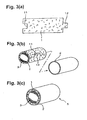
- a catalytic converter 5 for an automobile exhaust gas cleaning apparatus of one embodiment according to the present invention will be described in detail below based on Figs. 1 to 4.
- the catalytic converter 5 is provided at some position along an exhaust pipe 91 of an engine 9 along a body 92 of a vehicle. Furthermore, since the distance between the engine 9 and the catalytic converter 5 is relatively small, a high temperature exhaust gas of about 700° C to 900° C is supplied to the catalytic converter 5. In the case where the engine is a lean burn engine, an exhaust gas of higher temperature of about 900°C to 1000°C is supplied to the catalytic converter 5.
- the catalytic converter 5 comprises a cylindrical catalyst carrier 3, a metal shell 2 covering the outer periphery of the catalyst carrier 3, and a holding and sealing material 1 disposed in a gap between the catalyst carrier 3 and the metal shell 2.
- the catalyst carrier 3 is prepared using a ceramic material represented by cogierite or the like. Also, the catalyst carrier 3 is preferably a honeycomb structure having a large number of cells 31, 32 extending along the axis line. Furthermore, a catalyst such as platinum or rhodium capable of cleaning exhaust gas components is carried on the wall of cells.
- the metal shell 2 is preferably a cylindrical metal member having an O-shaped section, for example, if a press fitting method is employed for mounting. Furthermore, for the metal material for forming the cylindrical member, a metal having excellent heat resistance and impact resistance is preferably selected. If a so-called canning method is employed instead of the press fitting method, a metal shell (i.e., clam shell), which is formed by dividing the cylindrical metal member having an O-shaped section into a plurality of sections along the axis line, is used.
- a metal shell i.e., clam shell
- a cylindrical metal member which has a C-shaped or U-shaped section (i.e., a cylindrical metal member is formed with one slit (opening) extending along the axis).
- the catalyst carrier 3 with the holding and sealing material 1 fixed on the surface is disposed in the metal shell 2, the metal shell 2 is rolled up in this state, and thereafter the end of the slit opening is sealed (welded, bonded, bolted or the like). Sealing such as welding, bonding or bolting is also performed when the canning method is employed.
- the holding and sealing material 1 is an elongated mat-like material, with a concave mating portion 11 provided at one end thereof, while a convex mating portion 12 is provided at the other end.
- the convex mating portion 12 is engaged with the concave mating portion 11.
- the holding and sealing material 1 comprises a fiber aggregate mainly comprised of alumina-silica based ceramic fibers having a mullite crystal content of 0 to 10 wt%.
- the holding and sealing material 1 comprises a fiber aggregate mainly comprised of ceramic fibers made of an aluminum-silicon spinel compound containing no mullite crystal or containing 10 wt% or less of mullite crystal.
- the holding and sealing material 1 has excellent heat resistance and high resiliency against an applied compression load.
- the contact pressure hardly drops even when the holding and sealing material 1 is exposed to high temperature while it is situated in the gap.
- the mullite crystal content is more preferably in the range of from 0.5 to 4 wt%.
- the aluminum-silicon spinel compound is, for example, ⁇ -alumina, 8-alumina, or ⁇ -alumina.
- the content of alumina is less than 68 wt% or the content of silica exceeds 32 wt%, it may be impossible to achieve sufficient improvement in heat resistance and in resiliency against an applied compression load.
- the content of alumina exceeds 83 wt% or the content of silica is less than 17 wt%, it may be impossible to achieve sufficiently improvement in heat resistance and in resiliency against an applied compression load.
- the fiber aggregate is prepared by a needle punch treatment that is one type of a fiber intertwinement treatment. Consequently, some of the ceramic fibers are intertwined at needle punch spots in the direction of thickness of the fiber aggregate. Furthermore, in the needle punch treatment, for example, a tabular jig (needle board) with a large number of needles erected thereon is used.
- the abundance density of needle punch spots is preferably 10 to 500 spots, more preferably 20 to 250 spots per 100 cm 2 .
- the holding and sealing material 1 cannot reliably be compressed in the direction of thickness, and thus it may be impossible to reduce the thickness of the holding and sealing material 1 sufficiently to a level allowing achievement of suitable assemblage. If the abundance density of needle punch spots exceeds 500 spots per 100 cm 2 , on the other hand, the thickness of the holding and sealing material 1 can be reduced sufficiently, but it may be impossible to enhance resiliency against an applied compression load due to the existence of the large number of needle punch spots.
- the bulk density (GBD) of the holding and sealing material 1 is 0.1 g/cm 3 to 0.6 g/cm 3 , further preferably 0.2 g/cm 3 to 0.4 g/cm 3 .
- the pack density with the holding and sealing material 1 assembled is preferably set to a level the same as described above. If the bulk density and the pack density are too small, it may be impossible to reliably hold the catalyst carrier 3 due to a reduction in generated contact pressure. If the bulk density and the pack density are too large, on the other hand, rigidity is improved, but it may be difficult to carry out assembly due to a reduction in deformability.
- the content of the organic component (organic binder) contained in ceramic fibers constituting the holding and sealing material 1 is preferably 1 wt% or less, further preferably 0.1 wt% or less, particularly preferably 0.01 wt% or less. If the content of organic binder is increased to several wt% or more, the organic binder is decomposed by the heat from exhaust gas, thereby increasing the amount of gas released into the atmosphere. Therefore, it is very difficult to achieve low-pollution characteristics surpassing the conventionally achievable level.
- the thickness of the holding and sealing material 1 before being assembled is equivalent to preferably about 1.1 to 4.0 times, further preferably about 1.5 to 3.0 times as large as the size of the gap between the catalyst carrier 3 and the metal shell 2. If the thickness is smaller than 1.1 times the size of the gap, it may be impossible to obtain a high level of carrier holding performance, thus raising the possibility that the catalyst carrier 3 is shifted relative to the metal shell 2 and worn. In this case, it is also impossible to obtain a high level of sealing performance, and therefore the exhaust gas is more easily leaked through the gap portion, thus making it impossible to achieve a high level low-pollution characteristic.
- the thickness of the holding and sealing material 1 is larger than 4.0 times the size of the gap, it is difficult to place the catalyst carrier 3 in the metal shell 2, especially if a press fitting method is employed. Thus, it may be impossible to achieve an improvement in assemblage.
- the average diameter of alumina-silica based ceramic fibers constituting the holding and sealing material 1 is preferably about 5 to 20 ⁇ m, more preferably about 7 to 13 ⁇ m.
- the average length of the ceramic fibers is preferably about 0.1 to 100 mm, more preferably about 2 to 50 mm.
- the tensile strength of the ceramic fiber itself is preferably 0.1 GPa or more, particularly preferably 0.5 GPa or more.
- an aluminum salt, a silica sol and an organic polymer are mixed with water as a solvent to prepare a spinning solution.
- an anti-foam agent and the like may be added to the spinning solution.
- the chemical composition of alumina-silica based ceramic fibers can be controlled to some extent.
- the obtained spinning solution is concentrated under reduced pressure, thereby preparing a spinning solution of which concentration, temperature, viscosity and the like are suitable for spinning.
- the spinning solution with the concentration of about 20 wt% is preferably concentrated to about 30 to 40 wt%.
- the prepared spinning solution is made to continuously issue into the atmosphere from the nozzle of a spinning apparatus, and formed alumina-silica based ceramic fibers are drawn and wound up.
- a dry pressure spinning method may be employed.
- Long fibers of the alumina-silica based ceramic fibers obtained through the above described spinning step are chopped into a predetermined length to form relatively short fibers, and thereafter the fibers are dispersed in water.
- the obtained fiber dispersion is caused to flow into a molding jig to pressurize and dry the fiber dispersant, thereby obtaining a mat-like material with fibers stacked thereon.
- the mat-like material (fiber aggregate) obtained through the above described stacking step is subjected to a needle punch treatment using the above described needle punch. By this processing, uncured and flexible fibers are reliably and uniformly intertwined.
- the fiber aggregate subjected to a needle punch treatment is baked, whereby the uncured and flexible fibers are dried and baked, and are thereby cured.
- baking conditions should be set so that the content of mullite crystal in the fiber aggregate obtained by baking is 10 wt% or less.
- the baking temperature in the baking step is set to preferably 1100°C to 1300°C. If the baking temperature is lower than 1100°C, the alumina-silica based fibers may not be sufficiently dried and baked, and it may thus be impossible to reliably achieve excellent heat-resistance and a high level of resiliency against an applied compression load to the holding and sealing material 1. Conversely, if the baking temperature is higher than 1300°C, formation of the mullite crystal easily proceeds in the alumina-silica based ceramic fibers. Consequently, the content of mullite crystal can hardly be kept at 10 wt% or less, and it may thus be impossible to reliably achieve excellent heat-resistance and a high level of resiliency against an applied compression load to the holding and sealing material 1.
- the baking time is set to preferably 1 to 60 minutes. If the baking time is shorter than 1 minute, the alumina-silica based fibers may not be sufficiently dried and baked, and it may thus be impossible to reliably achieve excellent heat-resistance and a high level of resiliency against an applied compression load to the holding and sealing material 1. Conversely, if the baking time exceeds 60 minutes, formation of the mullite crystal easily proceeds in the alumina-silica based ceramic fibers. Consequently, the content of mullite crystal can hardly be kept at 10 wt% or less, and it may thus be impossible to reliably achieve excellent heat-resistance and a high level of resiliency against an applied compression load to the holding and sealing material 1.
- the fiber aggregate for baking the fiber aggregate at a high temperature of 1100°C to 1300°C, it is preferably heated at 200°C to 400°C for about 10 to 60 minutes as a pretreatment.
- the holding and sealing material 1 may be impregnated with the organic binder, and thereafter compressed in the direction of thickness as necessary.
- the organic binder in this case is polyvinyl alcohol, acryl resin as well as latex such as acryl rubber or nitrile rubber or the like.
- a well known method such as a dipping, spray, or roll-coater method may be employed.
- the holding and sealing material 1 prepared through the above described steps is wound around the outer periphery of the catalyst carrier 3 and thereby fixed, followed by carrying out press fitting, canning or rolling-up to complete the catalytic converter 5.
- Example 1 a cogierite monolith having an outer diameter of 130 mm and a length of 100 mm was used as the catalyst carrier 3. Also, a cylindrical shell made of SUS 304 and having a thickness of 1.5 mm and an inner diameter of 140 mm was used as the metal shell 2. The mat-like holding and sealing material 1 was prepared in the following way.
- the obtained spinning solution was concentrated under reduced pressure using an evaporator, whereby the concentration, temperature and viscosity of the spinning solution was adjusted.
- the concentration of the spinning solution was set to 38 wt%
- the temperature was set to 50°C
- the viscosity was set to 1000 poise
- the spinning solution was left standing for one day.
- the prepared spinning solution after being left standing for one day or longer was made to continuously issue into the atmosphere (20°C, humidity of 50%) from the nozzle of a dry pressure spinning apparatus and stacked.
- the fiber aggregate obtained through the above described stacking step was subjected to a needle punch treatment using the above described jig.
- the abundance density of needle punch spots was set to 100 spots per 100 cm 2 .
- the fiber aggregate subjected to the needle punch treatment was heated at 25°C for 30 minutes as a pretreatment, and was thereafter baked at 1250°C for 10 minutes under a normal oxidizing atmosphere in a box type electric furnace.
- alumina-silica based ceramic fibers with the mullite crystal content of 2 wt% were obtained.
- the average diameter of alumina silica based ceramic fibers obtained by baking was 9.1 ⁇ m, and the average length was 5 mm, and the fiber had an almost circular section and a linear structure. Also, the density of the ceramic fiber itself was 3.0 g/cm 3 , and the tensile strength thereof was 0.65 GPa.
- the holding and sealing material 1 was impregnated with the organic binder by the dipping method, followed by compressing the holding and sealing material 1 in the direction of thickness.
- latex was selected as the organic binder, and the concentration of latex was set to 1 wt% or less at this point.
- the obtained bulk density of the holding and sealing material 1 was about 0.15 g/cm 3 at this time.
- the holding and sealing material 1 prepared through the above described steps was then wound around the outer periphery of the catalyst carrier 3 and thereby fixed, and was thereafter press-fitted in the metal shell 2 to complete the catalytic converter 5.
- Example 2 to 5 fundamentally, the holding and sealing material 1 was prepared in accordance with the procedure and conditions in Example 1, and was mounted in the same manner as Example 1 to complete the catalytic converter 5.
- the temperature during baking was set to a temperature higher than that of Example 1 so that the mullite crystal content was 3 wt% and 9.8 wt%, respectively.
- the temperature during baking was set to a temperature lower than that of Example 1 so that the mullite crystal content was 0 wt% and 1 wt%, respectively.
- the baking temperature and the baking time were set within the range of from 1100°C to 1300°C and from 1 to 60 minutes, respectively.
- Comparative Examples 1 and 2 fundamentally, the holding and sealing material 1 was prepared in accordance with the procedure and conditions in Example 1, and was assembled in the same manner as Example 1 to complete the catalytic converter 5. However, in Comparative Examples 1 and 2, the temperature for baking was set to a temperature higher than 1300°C. As a result, the mullite crystal contents were 15 wt% and 20 wt%, respectively, both of which exceeded the mullite crystal contents of Examples.
- Comparative Example 3 fundamentally, the holding and sealing material 1 was prepared in accordance with the procedure and conditions in Example 1, and was mounted in the same manner as Example 1 to complete the catalytic converter 5. In Comparative Example 3, however, a needle punch treatment was not carried out and instead, the content of organic binder was increased to 15 wt% to prepare the holding and sealing material 1. Furthermore, the mullite crystal content was set to 15 wt%.
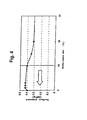
- the catalytic converters 5 of Examples 1 to 5 and Comparative Examples 1 to 3 described above were set in a testing apparatus, and an exhaust gas of 100°C was caused o flow therethrough for 30 minutes, followed by measuring generated contact pressure (MPa) of the holding and sealing material 1. The results are shown in the graph of Fig. 4.
- the assemblage of the holding and sealing material 1 is satisfactory in any case.
- the holding and sealing material 1 of this embodiment achieves the following advantages.
- the holding and sealing material 1 of this embodiment comprises a fiber aggregate mainly comprised of alumina-silica based ceramic fibers having a mullite crystal content of 10 wt% or less. Consequently, it has excellent heat resistance and a high level of resiliency against an applied compression load. Therefore, even when the holding and sealing material 1 disposed in the gap is exposed to high temperature, the generated contact pressure hardly drops. Thus, if the catalytic converter 5 is fabricated using the holding and sealing material 1, the catalytic converter 5 capable of maintaining a high level of sealing performance and carrier holding performance for a long period and having excellent durability can be obtained.
- the fiber aggregate of the holding and sealing material 1 is subjected to a needle punch treatment. Consequently, some ceramic fibers are intertwined at needle punch spots in the direction of thickness of the fiber aggregate, and thus the thickness of the fiber aggregate is reduced such that it is compressed in the direction of thickness. Therefore, bulkiness of the fiber aggregate is alleviated, thus bringing about excellent assemblage.
- the amount of organic binder required for reducing the thickness of the fiber aggregate can be reduced as it is subjected to a needle punch treatment. Therefore, extremely low-pollution characteristics can be achieved while maintaining satisfactory assemblage.
- Fibers may be intertwined by a mechanical fiber intertwinement processing method other than the needle punch treatment.
- a non-mechanical fiber intertwinement processing method utilizing water power, air power or the like may be employed.
- the form of the holding and sealing material 1 may freely be changed.
- concave and convex positional mating portions 11 and 12 may be eliminated to provide a simpler form.
- the sectional form of the catalyst carrier 3 is not limited to a circle, and for example, an elliptical or oblong form is acceptable. In this case, the sectional form of the metal shell 2 may be changed to an elliptical or oblong form in accordance therewith.
- a material other than precious metals may be carried on the catalyst carrier 3 as a catalyst.
- a cogierite carrier formed into a honeycomb shape is used, but a honeycomb porous sintered body such as silicon carbide or silicon nitride, for example, may also be used.
- the holding and sealing material 1 of the present invention may be used not only in the catalytic converter 5 for an exhaust gas cleaning apparatus, but also in, for example, a diesel particulate filter (DPF) and a catalytic converter for a fuel cell reforming apparatus.
- DPF diesel particulate filter
Landscapes
- Engineering & Computer Science (AREA)
- Chemical & Material Sciences (AREA)
- Manufacturing & Machinery (AREA)
- Ceramic Engineering (AREA)
- Inorganic Chemistry (AREA)
- Materials Engineering (AREA)
- Structural Engineering (AREA)
- Organic Chemistry (AREA)
- Chemical Kinetics & Catalysis (AREA)
- Textile Engineering (AREA)
- Mechanical Engineering (AREA)
- Physics & Mathematics (AREA)
- Thermal Sciences (AREA)
- Health & Medical Sciences (AREA)
- Toxicology (AREA)
- Combustion & Propulsion (AREA)
- General Engineering & Computer Science (AREA)
- Exhaust Gas After Treatment (AREA)
- Catalysts (AREA)
- Inorganic Fibers (AREA)
- Exhaust Gas Treatment By Means Of Catalyst (AREA)
- Nonwoven Fabrics (AREA)
Abstract
Description
Claims (15)
- A holding and sealing material (1) disposed between a catalyst carrier (3) and a metal shell (2) covering the catalyst carrier, the holding and sealing material (1) comprising a fiber aggregate mainly comprised of alumina-silica based ceramic fibers having a mullite crystal content of 10 wt% or less, and the fiber aggregate having been subjected to a needle punch treatment.
- A holding and sealing material (1) disposed between a catalyst carrier (3) and a metal shell (2) covering the catalyst carrier, the holding and sealing material (1) comprising a fiber aggregate mainly comprised of alumina-silica based ceramic fibers having a mullite crystal content of 0.5 to 4 wt%, and the fiber aggregate having been subjected to a needle punch treatment.
- The holding and sealing material according to claim 1 or 2, wherein said alumina-silica based ceramic fibers have a chemical composition with the alumina content being 68 wt% to 83 wt% and the silica content being 17 wt% to 32 wt%.
- The holding and sealing material according to any one of claims 1 to 3, wherein the seal material disposed between the catalyst carrier (3) and the metal shell (2) generates a contact pressure of 0.02 MPa or more.
- The holding and sealing material according to any one of claims 1 to 4, wherein the abundance density of said needle punch spots is from 10 to 500 spots per 100 cm2.
- A holding and sealing material (1) disposed between a catalyst carrier (3) and a metal shell (2) covering the catalyst carrier, the holding and sealing material comprising a fiber aggregate mainly comprised of alumina-silica based ceramic fibers having a mullite crystal content of 10% or less, with some of said ceramic fibers intertwined in the direction of thickness of said fiber aggregate.
- A method for manufacturing a holding and sealing material (1) for a catalytic converter disposed between a catalyst carrier (3) and a metal shell (2) covering the catalyst carrier, the method comprises the steps of:performing fiber spinning using as a raw material an aqueous solution composed of a mixture of an aluminum salt, a silica sol and an organic polymer to prepare alumina-silica based ceramic fibers;stacking the alumina-silica based ceramic fibers to prepare a fiber aggregate;subjecting said fiber aggregate to a needle punch treatment; andbaking said fiber aggregate subjected to the needle punch treatment to prepare a holding and sealing material (1) comprising a fiber aggregate having a mullite crystal content of 10 wt% or less.
- The method for manufacturing a holding and sealing material according to claim 7, wherein the baking temperature in said baking step is 1100°C to 1300°C.
- The method for manufacturing a holding and sealing material according to claim 8, wherein the baking time in said baking step is 1 to 60 minutes.
- A catalytic converter (5) comprising:a catalyst carrier (3);a metal shell (2) covering said catalyst carrier; anda holding and sealing material (1) disposed between the catalyst carrier (3) and the metal shell (2), the holding and sealing material (1) including a fiber aggregate mainly comprised of alumina-silica based ceramic fibers having a mullite crystal content of 10 wt% or less, and the fiber aggregate having been subjected to a needle punch treatment.
- A catalytic converter (5) comprising:a catalyst carrier (3);a metal shell (2) covering said catalyst carrier; anda holding and sealing material (1) disposed between the catalyst carrier (3) and the metal shell (2), the holding and sealing material (1) including a fiber aggregate mainly comprised of alumina-silica based ceramic fibers having a mullite crystal content of 0.5 to 4 wt%, and the fiber aggregate having been subjected to a needle punch treatment.
- The catalytic converter according to claim 10 or 11, wherein said alumina-silica based ceramic fibers have a chemical composition with the alumina content being 68 wt% to 83 wt% and the silica content being 17 wt% to 32 wt%.
- The catalytic converter according to any one of claims 10 to 12, wherein contact pressure generated in the seal material disposed between the catalyst carrier (3) and the metal shell (2) is 0.02 MPa or more.
- The catalytic converter according to any one of claims 10 to 13, wherein the abundance density of said needle punch spots is 10 to 500 spots per 100 cm2.
- A catalytic converter (5) comprising:a catalyst carrier (3);a metal shell (2) covering said catalyst carrier; anda holding and sealing material (1) disposed between the catalyst carrier (3) and the metal shell (2), said holding and sealing material including a fiber aggregate mainly comprised of alumina-silica based ceramic fibers having a mullite crystal content of 10% or less, with some of said ceramic fibers intertwined in the direction of thickness of said fiber aggregate.
Priority Applications (2)
| Application Number | Priority Date | Filing Date | Title |
|---|---|---|---|
| EP06120489A EP1736644B1 (en) | 2000-10-17 | 2001-10-17 | Holding and sealing material for catalytic converter and corresponding manufacturing method |
| EP06123777A EP1757782B1 (en) | 2000-10-17 | 2001-10-17 | Catalytic converter comprising a holding and sealing material and corresponding manufacturing method |
Applications Claiming Priority (3)
| Application Number | Priority Date | Filing Date | Title |
|---|---|---|---|
| JP2000316798 | 2000-10-17 | ||
| JP2000316798A JP2002129455A (en) | 2000-10-17 | 2000-10-17 | Holding seal material for catalytic converter, method of manufacturing the same, and catalytic converter |
| PCT/JP2001/009103 WO2002033233A1 (en) | 2000-10-17 | 2001-10-17 | Holding seal material for catalytic converter and method of manufacturing the holding seal material |
Related Child Applications (2)
| Application Number | Title | Priority Date | Filing Date |
|---|---|---|---|
| EP06120489A Division EP1736644B1 (en) | 2000-10-17 | 2001-10-17 | Holding and sealing material for catalytic converter and corresponding manufacturing method |
| EP06123777A Division EP1757782B1 (en) | 2000-10-17 | 2001-10-17 | Catalytic converter comprising a holding and sealing material and corresponding manufacturing method |
Publications (3)
| Publication Number | Publication Date |
|---|---|
| EP1329601A1 true EP1329601A1 (en) | 2003-07-23 |
| EP1329601A4 EP1329601A4 (en) | 2005-02-02 |
| EP1329601B1 EP1329601B1 (en) | 2006-11-15 |
Family
ID=18795696
Family Applications (3)
| Application Number | Title | Priority Date | Filing Date |
|---|---|---|---|
| EP06120489A Revoked EP1736644B1 (en) | 2000-10-17 | 2001-10-17 | Holding and sealing material for catalytic converter and corresponding manufacturing method |
| EP06123777A Revoked EP1757782B1 (en) | 2000-10-17 | 2001-10-17 | Catalytic converter comprising a holding and sealing material and corresponding manufacturing method |
| EP01976709A Revoked EP1329601B1 (en) | 2000-10-17 | 2001-10-17 | Holding seal material for catalytic converter and method of manufacturing the holding seal material |
Family Applications Before (2)
| Application Number | Title | Priority Date | Filing Date |
|---|---|---|---|
| EP06120489A Revoked EP1736644B1 (en) | 2000-10-17 | 2001-10-17 | Holding and sealing material for catalytic converter and corresponding manufacturing method |
| EP06123777A Revoked EP1757782B1 (en) | 2000-10-17 | 2001-10-17 | Catalytic converter comprising a holding and sealing material and corresponding manufacturing method |
Country Status (7)
| Country | Link |
|---|---|
| US (2) | US20040052694A1 (en) |
| EP (3) | EP1736644B1 (en) |
| JP (1) | JP2002129455A (en) |
| KR (6) | KR20080065705A (en) |
| CN (1) | CN1289801C (en) |
| DE (2) | DE60124579T2 (en) |
| WO (1) | WO2002033233A1 (en) |
Cited By (7)
| Publication number | Priority date | Publication date | Assignee | Title |
|---|---|---|---|---|
| EP1840346A1 (en) * | 2006-03-31 | 2007-10-03 | Ibiden Co., Ltd. | Sheet member and exhaust gas processing device and manufacturing method of the same |
| EP1908935A1 (en) | 2005-12-28 | 2008-04-09 | Ibiden Co., Ltd. | Holding seal member for exhaust gas purifying body and method for manufacturing the holding seal member |
| EP2034153A2 (en) * | 2001-05-25 | 2009-03-11 | Ibiden Co., Ltd. | Alumina-silica based fiber, ceramic fiber, ceramic fiber aggregation, holding seal material and manufacturing methods thereof, as well as manufacturing method of alumina fiber aggregation |
| EP2042634A1 (en) | 2007-09-28 | 2009-04-01 | Ibiden Co., Ltd. | Mat material, exhaust gas treating apparatus, and muffler |
| EP2112342A1 (en) * | 2008-04-23 | 2009-10-28 | Ibiden Co., Ltd. | Holding sealing material, method for manufacturing holding sealing material, and exhaust gas purifying apparatus |
| EP2172625A1 (en) * | 2008-09-25 | 2010-04-07 | Ibiden Co., Ltd. | Mat product, manufacturing method of the mat product, exhaust gas treating apparatus, and muffler apparatus |
| EP2985435A4 (en) * | 2013-04-12 | 2017-01-25 | Ibiden Co., Ltd. | Holding seal member, method for producing holding seal member, and exhaust gas purification device |
Families Citing this family (53)
| Publication number | Priority date | Publication date | Assignee | Title |
|---|---|---|---|---|
| KR100518111B1 (en) * | 2000-03-22 | 2005-10-04 | 이비덴 가부시키가이샤 | Catalyst converter and diesel particulate filter system |
| JP4174474B2 (en) * | 2002-06-28 | 2008-10-29 | 電気化学工業株式会社 | Inorganic short fiber aggregate for holding material, method for producing the same, and holding material |
| KR20040013835A (en) * | 2002-08-08 | 2004-02-14 | 현대자동차주식회사 | Supporter and its manufacturing method of catalytic converter for automobile |
| EP1761324B1 (en) * | 2004-06-29 | 2018-10-17 | Unifrax I LLC | Exhaust gas treatment device and method for making the same |
| JP4663341B2 (en) * | 2005-01-25 | 2011-04-06 | イビデン株式会社 | Heat insulation material for end cone part of exhaust gas purifier |
| JP4665618B2 (en) * | 2005-06-10 | 2011-04-06 | イビデン株式会社 | Manufacturing method of holding sealing material |
| TWI301169B (en) * | 2005-08-10 | 2008-09-21 | Ibiden Co Ltd | Holding seal member for exhaust gas purifier, exhaust gas purification apparatus employing the same, jig for chamfering holding seal member, and method for manufacturing holding seal member |
| JP4688614B2 (en) * | 2005-09-02 | 2011-05-25 | イビデン株式会社 | Holding sealing material and exhaust gas purification device |
| JP4687483B2 (en) * | 2006-02-03 | 2011-05-25 | 三菱樹脂株式会社 | Monolith holding material |
| JP4863828B2 (en) * | 2006-09-29 | 2012-01-25 | イビデン株式会社 | Sheet material, method for manufacturing the same, and exhaust gas treatment apparatus |
| JP5112029B2 (en) * | 2007-01-26 | 2013-01-09 | イビデン株式会社 | Sheet material and manufacturing method thereof, exhaust gas treatment device and manufacturing method thereof, and silencer |
| JP5046829B2 (en) * | 2007-09-26 | 2012-10-10 | イビデン株式会社 | Holding sealing material and manufacturing method of holding sealing material |
| JP2009257422A (en) * | 2008-04-15 | 2009-11-05 | Ibiden Co Ltd | Holding sealing material and exhaust emission control device |
| KR20090117969A (en) | 2008-04-30 | 2009-11-17 | 이비덴 가부시키가이샤 | Mat materials, method for producing mat materials, silencer and method for producing silencer |
| KR101527623B1 (en) * | 2008-06-30 | 2015-06-09 | 썬에디슨, 인크. | Fluidized bed reactor systems and methods for reducing the deposition of silicon on reactor walls |
| JP5033176B2 (en) * | 2008-07-10 | 2012-09-26 | イビデン株式会社 | Holding sealing material, exhaust gas purification device, and method of manufacturing exhaust gas purification device |
| AU2009286013A1 (en) * | 2008-08-29 | 2010-03-04 | Unifrax I Llc | Mounting mat with flexible edge protection and exhaust gas treatment device incorporating the mounting mat |
| WO2010062591A1 (en) | 2008-11-03 | 2010-06-03 | 3M Innovative Properties Company | Mounting mat and pollution control device with the same |
| KR101719007B1 (en) | 2008-11-03 | 2017-04-04 | 쓰리엠 이노베이티브 프로퍼티즈 컴파니 | Mounting mat and pollution control device with the same |
| BRPI0923515A2 (en) | 2008-12-15 | 2016-01-26 | Unifrax I Llc | honeycomb ceramic structure roof covering |
| WO2010077360A2 (en) * | 2009-01-05 | 2010-07-08 | Unifrax I Llc | High strength biosoluble inorganic fiber insulation mat |
| JP2010168706A (en) * | 2009-01-26 | 2010-08-05 | Ibiden Co Ltd | Mat material, apparatus for treating exhaust gas and method for manufacturing mat material |
| JP5347595B2 (en) * | 2009-03-12 | 2013-11-20 | 三菱樹脂株式会社 | Manufacturing method of inorganic fiber blanket |
| JP2010223083A (en) * | 2009-03-23 | 2010-10-07 | Ibiden Co Ltd | Exhaust gas control apparatus and method for manufacturing exhaust gas control apparatus |
| JP2012524206A (en) | 2009-04-17 | 2012-10-11 | ユニフラックス ワン リミテッド ライアビリティ カンパニー | Exhaust gas treatment equipment |
| GB0906837D0 (en) | 2009-04-21 | 2009-06-03 | Saffil Automotive Ltd | Mats |
| US8679415B2 (en) * | 2009-08-10 | 2014-03-25 | Unifrax I Llc | Variable basis weight mounting mat or pre-form and exhaust gas treatment device |
| EP2464838A1 (en) | 2009-08-14 | 2012-06-20 | Unifrax I LLC | Multiple layer substrate support and exhaust gas treatment device |
| US9174169B2 (en) | 2009-08-14 | 2015-11-03 | Unifrax I Llc | Mounting mat for exhaust gas treatment device |
| US8071040B2 (en) | 2009-09-23 | 2011-12-06 | Unifax I LLC | Low shear mounting mat for pollution control devices |
| CN104129114B (en) * | 2009-09-24 | 2017-01-11 | 尤尼弗瑞克斯 I 有限责任公司 | Multiple-layer mat and exhaust gas treatment device |
| JP5499644B2 (en) * | 2009-11-06 | 2014-05-21 | 三菱樹脂株式会社 | Inorganic fiber molded body and method for producing the same |
| EP2507490B1 (en) | 2009-12-01 | 2017-01-25 | Unifrax Emission Control Europe Ltd. | Mounting mat |
| JP2013514495A (en) | 2009-12-17 | 2013-04-25 | ユニフラックス ワン リミテッド ライアビリティ カンパニー | Multilayer mounting mat for contaminant control devices |
| CN106884701A (en) | 2009-12-17 | 2017-06-23 | 尤尼弗瑞克斯 I 有限责任公司 | For the installation pad of emission-control equipment |
| CN102753795B (en) | 2009-12-17 | 2016-02-17 | 尤尼弗瑞克斯I有限责任公司 | The purposes of microsphere in emission-control equipment mounting mat |
| WO2011090689A1 (en) * | 2009-12-29 | 2011-07-28 | Memc Electronic Materials, Inc. | Methods for reducing the deposition of silicon on reactor walls using peripheral silicon tetrachloride |
| EP2558631B1 (en) | 2010-04-13 | 2015-07-29 | 3M Innovative Properties Company | Thick inorganic fiber webs and methods of making and using |
| US8562879B2 (en) | 2010-04-13 | 2013-10-22 | 3M Innovative Properties Company | Inorganic fiber webs and methods of making and using |
| CA2796039A1 (en) | 2010-04-13 | 2011-10-20 | 3M Innovative Properties Company | Inorganic fiber webs and methods of making and using |
| KR20130056866A (en) | 2010-04-13 | 2013-05-30 | 쓰리엠 이노베이티브 프로퍼티즈 캄파니 | Methods of making inorganic fiber webs |
| US8765069B2 (en) | 2010-08-12 | 2014-07-01 | Unifrax I Llc | Exhaust gas treatment device |
| EP2603676B1 (en) | 2010-08-13 | 2016-03-23 | Unifrax I LLC | Mounting mat with flexible edge protection and exhaust gas treatment device incorporating the mounting mat |
| US9924564B2 (en) | 2010-11-11 | 2018-03-20 | Unifrax I Llc | Heated mat and exhaust gas treatment device |
| US9120703B2 (en) | 2010-11-11 | 2015-09-01 | Unifrax I Llc | Mounting mat and exhaust gas treatment device |
| JP5971894B2 (en) * | 2011-01-31 | 2016-08-17 | スリーエム イノベイティブ プロパティズ カンパニー | Contamination control element holding material, manufacturing method thereof and contamination control apparatus |
| US20140272363A1 (en) * | 2011-09-08 | 2014-09-18 | Mitsubishi Plastics, Inc. | Inorganic fiber molded body |
| JP5990393B2 (en) | 2012-04-03 | 2016-09-14 | イビデン株式会社 | Holding sealing material and exhaust gas purification device |
| WO2016137530A1 (en) | 2015-02-24 | 2016-09-01 | Unifrax I Llc | High temperature resistant insulation mat |
| JP2019074033A (en) * | 2017-10-17 | 2019-05-16 | トヨタ自動車株式会社 | Electric heating type catalyst |
| CN111714964B (en) * | 2020-06-29 | 2021-08-17 | 浙江严牌过滤技术股份有限公司 | Dedusting and dioxin removing integrated filter material and preparation method thereof |
| CN115742351B (en) * | 2022-11-04 | 2024-10-29 | 航天特种材料及工艺技术研究所 | High-elasticity sandwich structure static sealing material component and preparation method thereof |
| DE102023208170A1 (en) * | 2023-08-25 | 2025-02-27 | Tenneco Gmbh | A SUPPORT STRUCTURE FOR A HEATING PANELS OR HEATING RESISTANCE, A SUPPORT SYSTEM AND AN ELECTRIC EXHAUST GAS HEATER |
Family Cites Families (31)
| Publication number | Priority date | Publication date | Assignee | Title |
|---|---|---|---|---|
| US4047965A (en) * | 1976-05-04 | 1977-09-13 | Minnesota Mining And Manufacturing Company | Non-frangible alumina-silica fibers |
| JPS6088162A (en) * | 1983-10-20 | 1985-05-17 | 三菱化学株式会社 | Production of ceramic fiber blanket |
| JPS60215815A (en) * | 1984-04-10 | 1985-10-29 | Sumitomo Chem Co Ltd | Production of inorganic fiber |
| JPS62231019A (en) * | 1986-03-27 | 1987-10-09 | Ibiden Co Ltd | Ceramic fiber having high acid resistance |
| EP0258547A3 (en) * | 1986-09-04 | 1989-11-08 | Asahi Kasei Kogyo Kabushiki Kaisha | Refractory fiber spatial structure and manufacturing method thereof |
| JP2521081B2 (en) * | 1987-03-05 | 1996-07-31 | 住友化学工業株式会社 | Alumina fiber manufacturing method |
| JPH0376872A (en) * | 1989-06-08 | 1991-04-02 | Kanebo Ltd | Production of high-purity alumina filament cloth |
| JPH05319949A (en) * | 1992-05-15 | 1993-12-03 | Mitsui Mining Co Ltd | Production of alumina based fiber formed product |
| US5290522A (en) * | 1993-01-07 | 1994-03-01 | Minnesota Mining And Manufacturing Company | Catalytic converter mounting mat |
| WO1994024425A1 (en) * | 1993-04-22 | 1994-10-27 | The Carborundum Company | Mounting mat for fragile structures such as catalytic converters |
| US5866079A (en) * | 1993-09-03 | 1999-02-02 | Ngk Insulators, Ltd. | Ceramic honeycomb catalytic converter |
| JPH07251018A (en) * | 1994-03-16 | 1995-10-03 | Mitsubishi Chem Corp | Oil mist adsorption filter and method of regenerating the same |
| JP3282362B2 (en) * | 1994-04-15 | 2002-05-13 | 三菱化学株式会社 | Grasping material for exhaust gas purification equipment |
| US5523059A (en) * | 1995-06-30 | 1996-06-04 | Minnesota Mining And Manufacturing Company | Intumescent sheet material with glass fibers |
| JPH1182006A (en) * | 1997-09-12 | 1999-03-26 | Denki Kagaku Kogyo Kk | Insulating sealing material and its use |
| JP4652553B2 (en) * | 2000-11-10 | 2011-03-16 | イビデン株式会社 | Catalytic converter and manufacturing method thereof |
| EP2034153A3 (en) * | 2001-05-25 | 2012-10-03 | Ibiden Co., Ltd. | Alumina-silica based fiber, ceramic fiber, ceramic fiber aggregation, holding seal material and manufacturing methods thereof, as well as manufacturing method of alumina fiber aggregation |
| JP4730495B2 (en) * | 2001-05-25 | 2011-07-20 | イビデン株式会社 | Holding seal material for catalytic converter and method for manufacturing the same, catalytic converter |
| JP4665618B2 (en) * | 2005-06-10 | 2011-04-06 | イビデン株式会社 | Manufacturing method of holding sealing material |
| JP4959206B2 (en) * | 2006-03-02 | 2012-06-20 | イビデン株式会社 | Heat-resistant sheet and exhaust gas purification device |
| JP2007292040A (en) * | 2006-03-31 | 2007-11-08 | Ibiden Co Ltd | Sheet member and exhaust gas processing device and manufacturing method of the same |
| JP4802048B2 (en) * | 2006-06-16 | 2011-10-26 | イビデン株式会社 | Holding sealing material, exhaust gas treatment apparatus, and manufacturing method thereof |
| JP2008045521A (en) * | 2006-08-21 | 2008-02-28 | Ibiden Co Ltd | Holding sealing material and exhaust gas treatment device |
| JP2008051004A (en) * | 2006-08-24 | 2008-03-06 | Ibiden Co Ltd | Retention seal material and exhaust gas treatment device |
| EP1953357B1 (en) * | 2007-01-26 | 2009-08-26 | Ibiden Co., Ltd. | Sheet member and manufacturing method thereof, exhaust gas treating apparatus and manufacturing method thereof, and silencing device |
| JP5014113B2 (en) * | 2007-01-26 | 2012-08-29 | イビデン株式会社 | Sheet material, method for manufacturing the same, exhaust gas treatment device, and silencer |
| JP5046829B2 (en) * | 2007-09-26 | 2012-10-10 | イビデン株式会社 | Holding sealing material and manufacturing method of holding sealing material |
| JP2009085091A (en) * | 2007-09-28 | 2009-04-23 | Ibiden Co Ltd | Mat material, exhaust gas treating device, and muffler |
| JP2009085093A (en) * | 2007-09-28 | 2009-04-23 | Ibiden Co Ltd | Mat member, method for manufacturing mat member, exhaust gas treatment apparatus and muffler |
| JP4959499B2 (en) * | 2007-09-28 | 2012-06-20 | イビデン株式会社 | Mat material, exhaust gas treatment device and silencer |
| JP5014070B2 (en) * | 2007-11-06 | 2012-08-29 | イビデン株式会社 | Mat material and exhaust gas treatment device |
-
2000
- 2000-10-17 JP JP2000316798A patent/JP2002129455A/en active Pending
-
2001
- 2001-10-17 KR KR1020087014778A patent/KR20080065705A/en not_active Ceased
- 2001-10-17 DE DE60124579T patent/DE60124579T2/en not_active Expired - Lifetime
- 2001-10-17 US US10/399,036 patent/US20040052694A1/en not_active Abandoned
- 2001-10-17 WO PCT/JP2001/009103 patent/WO2002033233A1/en not_active Ceased
- 2001-10-17 DE DE20122864U patent/DE20122864U1/en not_active Expired - Lifetime
- 2001-10-17 KR KR1020107001040A patent/KR20100018086A/en not_active Ceased
- 2001-10-17 KR KR1020107028367A patent/KR101153763B1/en not_active Expired - Lifetime
- 2001-10-17 KR KR1020077016312A patent/KR20070087127A/en not_active Ceased
- 2001-10-17 KR KR1020027007670A patent/KR20020068056A/en not_active Ceased
- 2001-10-17 KR KR1020117021072A patent/KR101232957B1/en not_active Expired - Lifetime
- 2001-10-17 CN CNB018031374A patent/CN1289801C/en not_active Expired - Lifetime
- 2001-10-17 EP EP06120489A patent/EP1736644B1/en not_active Revoked
- 2001-10-17 EP EP06123777A patent/EP1757782B1/en not_active Revoked
- 2001-10-17 EP EP01976709A patent/EP1329601B1/en not_active Revoked
-
2007
- 2007-08-03 US US11/833,804 patent/US20080312071A1/en not_active Abandoned
Cited By (22)
| Publication number | Priority date | Publication date | Assignee | Title |
|---|---|---|---|---|
| EP2246538A2 (en) * | 2001-05-25 | 2010-11-03 | Ibiden Co., Ltd. | Alumina-silica based fiber, ceramic fiber, ceramic fiber aggregation, holding seal material and manufacturing methods thereof, as well as manufacturing method of alumina fiber aggregation |
| EP2042699A3 (en) * | 2001-05-25 | 2012-10-10 | Ibiden Co., Ltd. | Alumina-silica based fiber, ceramic fiber, ceramic fiber aggregation, holding seal material and manufacturing methods thereof, as well as manufacturing method of alumina fiber aggregation |
| EP2034153A2 (en) * | 2001-05-25 | 2009-03-11 | Ibiden Co., Ltd. | Alumina-silica based fiber, ceramic fiber, ceramic fiber aggregation, holding seal material and manufacturing methods thereof, as well as manufacturing method of alumina fiber aggregation |
| EP2034152A2 (en) * | 2001-05-25 | 2009-03-11 | Ibiden Co., Ltd. | Alumina-silica based fiber, ceramic fiber aggregation, holding seal material and manufacturing methods thereof, as well as manufacturing method of alumina fiber aggregation |
| EP2037093A2 (en) * | 2001-05-25 | 2009-03-18 | Ibiden Co., Ltd. | Alumnia-silica based fiber, ceramic fiber, ceramic fiber aggregation, holding seal material and manufacturing methods thereof, as well as manufacturing method of alumnia fiber aggregation |
| US8540941B2 (en) | 2001-05-25 | 2013-09-24 | Ibiden Co., Ltd. | Alumina-silica-based fiber, ceramic fiber, ceramic fiber complex, retaining seal material, production method thereof, and alumina fiber complex production method |
| US8303901B2 (en) | 2001-05-25 | 2012-11-06 | Ibiden Co., Ltd. | Alumina-silica-based fiber, ceramic fiber, ceramic fiber complex, retaining seal material, production method thereof, and alumina fiber complex production method |
| US8790581B2 (en) | 2001-05-25 | 2014-07-29 | Ibiden Co., Ltd. | Alumina-silica-based fiber, ceramic fiber, ceramic fiber complex, retaining seal material, production method thereof, and alumina fiber complex production method |
| EP2267283B1 (en) | 2005-12-28 | 2018-11-14 | Ibiden Co., Ltd. | Method for manufacturing a holding seal member |
| EP2267283A1 (en) * | 2005-12-28 | 2010-12-29 | Ibiden Co., Ltd. | Holding seal member for exhaust gas purifying body and method for manufacturing the holding seal member |
| EP1908935B1 (en) * | 2005-12-28 | 2014-10-29 | Ibiden Co., Ltd. | Method for manufacturing a holding seal member for exhaust gas purifying body |
| EP2933454A1 (en) * | 2005-12-28 | 2015-10-21 | Ibiden Co., Ltd. | Holding seal member for exhaust gas purifying body, exhaust gas purifier, and method for manufacturing holding seal member |
| CN102619599A (en) * | 2005-12-28 | 2012-08-01 | 揖斐电株式会社 | Holding seal member, exhaust gas purifier, and method for manufacturing holding seal member |
| EP1908935A1 (en) | 2005-12-28 | 2008-04-09 | Ibiden Co., Ltd. | Holding seal member for exhaust gas purifying body and method for manufacturing the holding seal member |
| EP1840346A1 (en) * | 2006-03-31 | 2007-10-03 | Ibiden Co., Ltd. | Sheet member and exhaust gas processing device and manufacturing method of the same |
| EP2042634A1 (en) | 2007-09-28 | 2009-04-01 | Ibiden Co., Ltd. | Mat material, exhaust gas treating apparatus, and muffler |
| US8038953B2 (en) | 2007-09-28 | 2011-10-18 | Ibiden Co., Ltd. | Mat material, exhaust gas treating apparatus, and muffler |
| US8268256B2 (en) | 2008-04-23 | 2012-09-18 | Ibiden Co., Ltd. | Holding sealing material, method for manufacturing holding sealing material, and exhaust gas purifying apparatus |
| EP2112342A1 (en) * | 2008-04-23 | 2009-10-28 | Ibiden Co., Ltd. | Holding sealing material, method for manufacturing holding sealing material, and exhaust gas purifying apparatus |
| US8231835B2 (en) | 2008-09-25 | 2012-07-31 | Ibiden Co., Ltd. | Mat product, manufacturing method of the mat product, exhaust gas treating apparatus, and muffler apparatus |
| EP2172625A1 (en) * | 2008-09-25 | 2010-04-07 | Ibiden Co., Ltd. | Mat product, manufacturing method of the mat product, exhaust gas treating apparatus, and muffler apparatus |
| EP2985435A4 (en) * | 2013-04-12 | 2017-01-25 | Ibiden Co., Ltd. | Holding seal member, method for producing holding seal member, and exhaust gas purification device |
Also Published As
| Publication number | Publication date |
|---|---|
| JP2002129455A (en) | 2002-05-09 |
| KR101232957B1 (en) | 2013-02-13 |
| KR20080065705A (en) | 2008-07-14 |
| EP1757782A2 (en) | 2007-02-28 |
| US20040052694A1 (en) | 2004-03-18 |
| KR20020068056A (en) | 2002-08-24 |
| WO2002033233A1 (en) | 2002-04-25 |
| EP1736644A1 (en) | 2006-12-27 |
| EP1329601A4 (en) | 2005-02-02 |
| EP1757782B1 (en) | 2011-08-03 |
| EP1736644B1 (en) | 2011-07-20 |
| KR20110113776A (en) | 2011-10-18 |
| EP1757782A3 (en) | 2007-03-07 |
| DE60124579D1 (en) | 2006-12-28 |
| KR20100018086A (en) | 2010-02-16 |
| DE60124579T2 (en) | 2007-10-25 |
| US20080312071A1 (en) | 2008-12-18 |
| CN1289801C (en) | 2006-12-13 |
| EP1329601B1 (en) | 2006-11-15 |
| CN1392921A (en) | 2003-01-22 |
| DE20122864U1 (en) | 2008-08-28 |
| KR101153763B1 (en) | 2012-06-13 |
| KR20070087127A (en) | 2007-08-27 |
| KR20110003403A (en) | 2011-01-11 |
Similar Documents
| Publication | Publication Date | Title |
|---|---|---|
| EP1329601B1 (en) | Holding seal material for catalytic converter and method of manufacturing the holding seal material | |
| JP4730495B2 (en) | Holding seal material for catalytic converter and method for manufacturing the same, catalytic converter | |
| JP2007504385A (en) | Contamination control element holding material and contamination control device | |
| EP1736220A1 (en) | Honeycomb structured body | |
| US20040022699A1 (en) | Catalytic converter and method for manufacture thereof | |
| US8580207B2 (en) | Holding sealing material, exhaust gas purifying apparatus, and method for manufacturing holding sealing material | |
| CN1419627A (en) | Catalytic Converters and Diesel Particulate Filtration Systems | |
| US20090049831A1 (en) | Pollution control element-mounting member and pollution control device | |
| JP2002206421A (en) | Holding seal material for catalytic converter, ceramic fiber and method for producing ceramic fiber | |
| WO2013111428A1 (en) | Holding material for gas treatment device, gas treatment device, and production processes therefor | |
| EP1342888B1 (en) | Catalytic converter and method for manufacture thereof | |
| JP2011231774A (en) | Method of manufacturing holding seal material for catalytic converter | |
| JP4730497B2 (en) | Holding seal material for catalytic converter and manufacturing method thereof | |
| JP4993816B2 (en) | Alumina-silica fiber and method for producing the same, holding seal material for catalytic converter | |
| JP4730496B2 (en) | Holding seal material for catalytic converter and method for producing the same, ceramic fiber assembly, ceramic fiber | |
| JP2013155750A (en) | Holding seal material for catalytic converter | |
| JP4671536B2 (en) | Holding seal material for catalytic converter and manufacturing method thereof | |
| JP2011169325A (en) | Holding and sealing material for catalytic converters, method for producing the same, ceramic fiber assembly and ceramic fiber | |
| JP4663885B2 (en) | Method for producing alumina-silica fiber | |
| JP2002221031A (en) | Holding seal material for catalytic converter, method of manufacturing the same, and ceramic fiber assembly | |
| JP2015078702A (en) | Method for manufacturing holding seal material for catalytic converter | |
| JP2011169326A (en) | Holding and sealing material for catalytic converters and catalytic converter |
Legal Events
| Date | Code | Title | Description |
|---|---|---|---|
| PUAI | Public reference made under article 153(3) epc to a published international application that has entered the european phase |
Free format text: ORIGINAL CODE: 0009012 |
|
| 17P | Request for examination filed |
Effective date: 20030423 |
|
| AK | Designated contracting states |
Designated state(s): AT BE CH CY DE DK ES FI FR GB GR IE IT LI LU MC NL PT SE TR |
|
| A4 | Supplementary search report drawn up and despatched |
Effective date: 20041221 |
|
| RIC1 | Information provided on ipc code assigned before grant |
Ipc: 7D 04H 1/46 B Ipc: 7F 01N 3/28 A Ipc: 7D 04H 1/42 B |
|
| 17Q | First examination report despatched |
Effective date: 20050301 |
|
| GRAP | Despatch of communication of intention to grant a patent |
Free format text: ORIGINAL CODE: EPIDOSNIGR1 |
|
| RBV | Designated contracting states (corrected) |
Designated state(s): DE FR GB IT |
|
| GRAS | Grant fee paid |
Free format text: ORIGINAL CODE: EPIDOSNIGR3 |
|
| GRAA | (expected) grant |
Free format text: ORIGINAL CODE: 0009210 |
|
| AK | Designated contracting states |
Kind code of ref document: B1 Designated state(s): DE FR GB IT |
|
| PG25 | Lapsed in a contracting state [announced via postgrant information from national office to epo] |
Ref country code: IT Free format text: LAPSE BECAUSE OF FAILURE TO SUBMIT A TRANSLATION OF THE DESCRIPTION OR TO PAY THE FEE WITHIN THE PRESCRIBED TIME-LIMIT;WARNING: LAPSES OF ITALIAN PATENTS WITH EFFECTIVE DATE BEFORE 2007 MAY HAVE OCCURRED AT ANY TIME BEFORE 2007. THE CORRECT EFFECTIVE DATE MAY BE DIFFERENT FROM THE ONE RECORDED. Effective date: 20061115 |
|
| REG | Reference to a national code |
Ref country code: GB Ref legal event code: FG4D |
|
| REF | Corresponds to: |
Ref document number: 60124579 Country of ref document: DE Date of ref document: 20061228 Kind code of ref document: P |
|
| ET | Fr: translation filed | ||
| PLBI | Opposition filed |
Free format text: ORIGINAL CODE: 0009260 |
|
| PLAX | Notice of opposition and request to file observation + time limit sent |
Free format text: ORIGINAL CODE: EPIDOSNOBS2 |
|
| 26 | Opposition filed |
Opponent name: 3M INNOVATIVE PROPERTIES COMPANY Effective date: 20070814 |
|
| PLAF | Information modified related to communication of a notice of opposition and request to file observations + time limit |
Free format text: ORIGINAL CODE: EPIDOSCOBS2 |
|
| PLBB | Reply of patent proprietor to notice(s) of opposition received |
Free format text: ORIGINAL CODE: EPIDOSNOBS3 |
|
| PLAB | Opposition data, opponent's data or that of the opponent's representative modified |
Free format text: ORIGINAL CODE: 0009299OPPO |
|
| PLAB | Opposition data, opponent's data or that of the opponent's representative modified |
Free format text: ORIGINAL CODE: 0009299OPPO |
|
| R26 | Opposition filed (corrected) |
Opponent name: 3M INNOVATIVE PROPERTIES COMPANY Effective date: 20070814 |
|
| PLAB | Opposition data, opponent's data or that of the opponent's representative modified |
Free format text: ORIGINAL CODE: 0009299OPPO |
|
| RDAF | Communication despatched that patent is revoked |
Free format text: ORIGINAL CODE: EPIDOSNREV1 |
|
| APBM | Appeal reference recorded |
Free format text: ORIGINAL CODE: EPIDOSNREFNO |
|
| APBP | Date of receipt of notice of appeal recorded |
Free format text: ORIGINAL CODE: EPIDOSNNOA2O |
|
| APAH | Appeal reference modified |
Free format text: ORIGINAL CODE: EPIDOSCREFNO |
|
| APBQ | Date of receipt of statement of grounds of appeal recorded |
Free format text: ORIGINAL CODE: EPIDOSNNOA3O |
|
| PLAB | Opposition data, opponent's data or that of the opponent's representative modified |
Free format text: ORIGINAL CODE: 0009299OPPO |
|
| R26 | Opposition filed (corrected) |
Opponent name: 3M INNOVATIVE PROPERTIES COMPANY Effective date: 20070814 |
|
| PGFP | Annual fee paid to national office [announced via postgrant information from national office to epo] |
Ref country code: FR Payment date: 20121018 Year of fee payment: 12 |
|
| PGFP | Annual fee paid to national office [announced via postgrant information from national office to epo] |
Ref country code: GB Payment date: 20121017 Year of fee payment: 12 |
|
| APBU | Appeal procedure closed |
Free format text: ORIGINAL CODE: EPIDOSNNOA9O |
|
| REG | Reference to a national code |
Ref country code: DE Ref legal event code: R064 Ref document number: 60124579 Country of ref document: DE Ref country code: DE Ref legal event code: R103 Ref document number: 60124579 Country of ref document: DE |
|
| PGFP | Annual fee paid to national office [announced via postgrant information from national office to epo] |
Ref country code: DE Payment date: 20131009 Year of fee payment: 13 |
|
| RDAG | Patent revoked |
Free format text: ORIGINAL CODE: 0009271 |
|
| STAA | Information on the status of an ep patent application or granted ep patent |
Free format text: STATUS: PATENT REVOKED |
|
| 27W | Patent revoked |
Effective date: 20130715 |
|
| GBPR | Gb: patent revoked under art. 102 of the ep convention designating the uk as contracting state |
Effective date: 20130715 |
|
| REG | Reference to a national code |
Ref country code: DE Ref legal event code: R107 Ref document number: 60124579 Country of ref document: DE Effective date: 20140424 |