EP1327003B1 - Mammalian two-hybrid system for screening for modulators of the accumulation of metabolic products - Google Patents
Mammalian two-hybrid system for screening for modulators of the accumulation of metabolic products Download PDFInfo
- Publication number
- EP1327003B1 EP1327003B1 EP01977707A EP01977707A EP1327003B1 EP 1327003 B1 EP1327003 B1 EP 1327003B1 EP 01977707 A EP01977707 A EP 01977707A EP 01977707 A EP01977707 A EP 01977707A EP 1327003 B1 EP1327003 B1 EP 1327003B1
- Authority
- EP
- European Patent Office
- Prior art keywords
- cell
- metabolic product
- nucleic acid
- chimeric protein
- gene
- Prior art date
- Legal status (The legal status is an assumption and is not a legal conclusion. Google has not performed a legal analysis and makes no representation as to the accuracy of the status listed.)
- Expired - Lifetime
Links
Images


Classifications
-
- C—CHEMISTRY; METALLURGY
- C12—BIOCHEMISTRY; BEER; SPIRITS; WINE; VINEGAR; MICROBIOLOGY; ENZYMOLOGY; MUTATION OR GENETIC ENGINEERING
- C12N—MICROORGANISMS OR ENZYMES; COMPOSITIONS THEREOF; PROPAGATING, PRESERVING, OR MAINTAINING MICROORGANISMS; MUTATION OR GENETIC ENGINEERING; CULTURE MEDIA
- C12N15/00—Mutation or genetic engineering; DNA or RNA concerning genetic engineering, vectors, e.g. plasmids, or their isolation, preparation or purification; Use of hosts therefor
- C12N15/09—Recombinant DNA-technology
- C12N15/10—Processes for the isolation, preparation or purification of DNA or RNA
- C12N15/1034—Isolating an individual clone by screening libraries
- C12N15/1055—Protein x Protein interaction, e.g. two hybrid selection
-
- A—HUMAN NECESSITIES
- A61—MEDICAL OR VETERINARY SCIENCE; HYGIENE
- A61K—PREPARATIONS FOR MEDICAL, DENTAL OR TOILETRY PURPOSES
- A61K48/00—Medicinal preparations containing genetic material which is inserted into cells of the living body to treat genetic diseases; Gene therapy
- A61K48/005—Medicinal preparations containing genetic material which is inserted into cells of the living body to treat genetic diseases; Gene therapy characterised by an aspect of the 'active' part of the composition delivered, i.e. the nucleic acid delivered
- A61K48/0058—Nucleic acids adapted for tissue specific expression, e.g. having tissue specific promoters as part of a contruct
-
- A—HUMAN NECESSITIES
- A61—MEDICAL OR VETERINARY SCIENCE; HYGIENE
- A61P—SPECIFIC THERAPEUTIC ACTIVITY OF CHEMICAL COMPOUNDS OR MEDICINAL PREPARATIONS
- A61P35/00—Antineoplastic agents
-
- C—CHEMISTRY; METALLURGY
- C12—BIOCHEMISTRY; BEER; SPIRITS; WINE; VINEGAR; MICROBIOLOGY; ENZYMOLOGY; MUTATION OR GENETIC ENGINEERING
- C12Q—MEASURING OR TESTING PROCESSES INVOLVING ENZYMES, NUCLEIC ACIDS OR MICROORGANISMS; COMPOSITIONS OR TEST PAPERS THEREFOR; PROCESSES OF PREPARING SUCH COMPOSITIONS; CONDITION-RESPONSIVE CONTROL IN MICROBIOLOGICAL OR ENZYMOLOGICAL PROCESSES
- C12Q1/00—Measuring or testing processes involving enzymes, nucleic acids or microorganisms; Compositions therefor; Processes of preparing such compositions
- C12Q1/68—Measuring or testing processes involving enzymes, nucleic acids or microorganisms; Compositions therefor; Processes of preparing such compositions involving nucleic acids
- C12Q1/6897—Measuring or testing processes involving enzymes, nucleic acids or microorganisms; Compositions therefor; Processes of preparing such compositions involving nucleic acids involving reporter genes operably linked to promoters
-
- A—HUMAN NECESSITIES
- A61—MEDICAL OR VETERINARY SCIENCE; HYGIENE
- A61K—PREPARATIONS FOR MEDICAL, DENTAL OR TOILETRY PURPOSES
- A61K48/00—Medicinal preparations containing genetic material which is inserted into cells of the living body to treat genetic diseases; Gene therapy
Definitions
- This invention pertains to the fields of molecular biology and oncology.
- this invention provides a novel two-hybrid system two-hybrid system to screen for agents that modulate the ability of a cell to degrade a metabolic product (e.g . certain cancer cells) or to selectively kill a cell that has a defect in its ability to degrade a metabolic product.
- a metabolic product e.g . certain cancer cells
- a wide variety of diseases are characterized by the abnormal accumulation of one or more metabolic products.
- Such diseases sometimes referred to as “storage diseases” are typically caused by the increased accumulation of metabolic products (e.g ., lipids, proteins, complex carbohydrates, etc .) due to either the inactivity of an enzyme that degrades the products or the hyperactivity of an enzyme that creates the products.
- metabolic products e.g ., lipids, proteins, complex carbohydrates, etc .
- Storage disease include but are not limited to glycogen storage disease I, GM1 gangliosidoses, MPS IV B (Morquio B), GM2 gangliosidoses (O, B, AB, B1 variants), Niemann-Pick disease (A, B, and C), Metachromatic leukodystrophy (arylsulfatase A and SAP-1 deficient), Krabbe disease, Fabry disease, Gaucher disease, Farber disease, Wolman disease (cholesterol ester storage disease), MPS I (Hurler and Scheie syndromes), MPS II (Hunter syndrome), MPS III A, C, and D (Sanfilippo A, C, and D), PS III B (Sanfilippo B), MPS IV A (Morquio A), MPS VI (Maroteaux-Lamy syndrome), MPS VII (beta-glucuronidase deficiency), Multiple sulfatase deficiency, Mucolipidosis I (Sialidosis), Muco
- Gaucher's disease can be treated by use of a glucocerebrosidase targeted to spleen cells.
- superoxide dismutase can be targeted to the liver as an anti-oxidant, and so forth.
- therapeutic agents typically have seen limited success. Often the "therapeutic agent" must be specifically targeted to a particular organ or tissue. In addition consistent delivery of the targeted therapeutic agent at physiologically relevant concentrations has proven difficult. In addition, the identification of viable therapeutic agents has proven difficult.
- US 6,051,381 describes a two-hybrid system for detecting modulators of protein-protein interactions in yeast and/or bacterial cells.
- EP 370,813 describes a method for screening for compounds which cause a mutation or alteration in expression of a nucleic acid sequence whereby expression of a reporter gene in an animal cell is prevented when test mutagens mutate the reporter's regulatory sequence or the gene encoding its regulatory protein.
- US 5,905,025 describes a two-hybrid system consisting of a cell comprising the expression of a reporter gene which is transcribed by polymerase III and which comprises a protein binding site.
- This invention provides effective systems in which to screen for agents that modulate the ability of a cell to accumulate and/or degrade a metabolic product.
- This invention utilizes a two-hybrid system to screen for agents that modulate the ability of a cell to degrade or to accumulate a metabolic product or to selectively kill a cell or to selectively express a gene or cDNA in a cell that has a defect in its ability to degrade or to accumulate a metabolic product.
- this invention provides a method of screening for an agent that modulates the accumulation or degradation of a metabolic product in a cell.
- the method involves providing a mammalian cell comprising a nucleic acid encoding a peptide binding domain and an effector gene; a first chimeric protein comprising a nucleic acid binding domain that binds the peptide binding domain attached to the metabolic product or to a ligand that binds to the metabolic product; and a second chimeric protein comprising an expression control protein attached to the metabolic product or to the ligand that binds to the metabolic product such that when the first chimeric protein comprises the metabolic product, said second chimeric protein comprises the ligand and when the first chimeric protein comprises the ligand, said second chimeric protein comprises the metabolic productwherein said mammalian cell comprises an Adenomatous Polyposis Coli (APC) mutationresulting in a functional loss of the APC gene product, said metabolic product comprises abeta-catenin, said ligand comprises a Tcf4, said nucleic acid binding domain comprises aGal4, said expression control protein comprises a VP16 and said effector gene
- the cell is contacted with one or more test agent(s) and alteration of alteration of expression of the effector gene is detected wherein a difference in the expression of the effector gene in the test cell, as compared to a control cell contacted with a lower concentration of test agent or no test agent indicates that the test agent(s) modulate the ability of said cell to accumulate or degrade the metabolic product.
- the expression control protein is the transactivator VP16.
- preferred effectors include, but are not limited to, a reporter gene (e.g ., chloramphenicol acetyl transferase (CAT), luciferase, b -galactosidase (b-gal), alkaline phosphatase, horse radish peroxidase (HRP), growth hormone (GH), green fluorescent protein (GFP), etc .), a cytotoxin (e.g ., thymidine kinase, pseudomonas exotoxin, diphtheria toxin, ricin, abrin, etc .), and/or an apoptosis inducing ( e.g ., P53, P73, Bax, Bad, FADD, a caspase gene, etc .).
- the ligand and metabolic product respectively may include, a NF-kB and I-kB, a P53 and MDM
- the first and/or the second chimeric protein(s) are expressed from a nucleic acid in the cell (e.g . under control of an inducible (e.g . ecdysone promoter), tissue-specific, or constitutive promoter), or the first and/or the second chimeric protein is a protein transported into the cell, e.g . by using a protein comprising an HIV TAT domain.
- an inducible e.g . ecdysone promoter
- Preferred cells for the practice of the methods of this invention include, but are not limited to SW480, SW48, DLD-1, HCT-116, HT29, 293, U-20S, T-47D, MCF-7, HeLa, A549, Hep G2, and/or Jarkat cell.
- the nucleic acid encodes a GAL-4 binding site
- the effector gene is a reporter gene
- the first chimeric protein comprises a GAL-4 nucleic acid binding protein and a beta catenin or a Tcf
- the second chimeric protein comprises a VP-16 and beta catenin or a Tcf.
- Tcf is Tcf4.
- the cell further comprises a second nucleic acid encoding the ligand or metabolic product operably linked to an inducible promoter (e.g . an ecdysone promoter).
- an inducible promoter e.g . an ecdysone promoter
- Described herein is a method of selectively expressing an effector gene in a cell that accumulates or degrades a metabolic product.
- the method involves providing a cell comprising a nucleic acid encoding a peptide binding site and an effector gene, a first chimeric protein comprising a nucleic acid binding protein that binds the peptide binding domain where the nucleic acid binding protein is attached to the metabolic product or to a ligand that binds to said metabolic product, and a second chimeric protein comprising an expression control protein attached to the metabolic product or to a ligand that binds to the metabolic product such that when said first chimeric protein comprises the metabolic product, said second chimeric protein comprises the ligand and when the first chimeric protein comprises the ligand, said second chimeric protein comprises the metabolic product; whereby the cell, in the absence of the ability to degrade the metabolic product or the ligand that binds the metabolic product activates or represses expression of said effector gene.
- the first and/or the second chimeric protein(s) are expressed from a nucleic acid in the cell (e.g. under control of an inducible (e.g . ecdysone promoter), tissue-specific, or constitutive promoter), or the first and/or the second chimeric protein is a protein transported into the cell, e.g . by using a protein comprising ah HIV TAT domain.
- an inducible e.g . ecdysone promoter
- tissue-specific, or constitutive promoter tissue-specific, or constitutive promoter
- Preferred cells for the practice of the methods of this invention include, but are not limited to SW480, SW48, DLD-1, HCT-116, HT29, 293, U-20S, T-47D, MCF-7, HeLa, A549, Hep G2, and/or Jarkat cell.
- the nucleic acid encodes a GAL-4 binding site
- the effector gene is a reporter gene
- the first chimeric protein comprises a GAL-4 nucleic acid binding protein and a beta catenin or a Tcf
- the second chimeric protein comprises a VP-16 and beta catenin or a Tcf.
- Tcf is Tcf4.
- Also described are methods of selectively killing a cell that accumulates a metabolic product e.g . certain cancer cells.
- the methods involve transfecting the cell with a nucleic acid encoding a peptide binding site and an effector that is a cytotoxin or an apoptosis-inducing gene; introducing into the cell a first chimeric protein comprising a nucleic acid binding protein that binds the peptide binding domain where said nucleic acid binding protein is attached to said metabolic product or to a ligand that binds to said metabolic product; and introducing into the cell a second chimeric protein comprising a transactivator (e.g .
- nucleic acid binding proteins include, but are not limited to, GAL-4 and GAL-4-Y.
- the effector is a cytotoxin (e.g . thymidine kinase, pseudomonas exotoxin, diphtheria toxin, ricin, abrin, etc .).
- the effector is an apoptosis-inducing gene (e.g , P53, P73; Bax, Bad, FADD, a caspase ( e.g . Casp3, Casp9, Apafl, etc .), etc .).
- the ligand and metabolic product respectively include, but are not limited to a beta-catenin and a Tcf, a NF-kB and I-kB, a P53 and MDM2, a receptor and its heteromelic receptor partner.
- the first and/or the second chimeric protein(s) are expressed from a nucleic acid in the cell (e.g . under control of an inducible (e.g . eodysone promoter), tissue-specific, or constitutive promoter), or the first and/or the second chimeric protein is a protein transported into the cell, e.g . by using a protein comprising an HIV TAT domain.
- Suitable cells include, but are not limited to SW480, SW48, DLD-1, HCT-116, HT29, 293, U-20S, T-47D, MCF-7, HeLa, A549, Hep G2, Jarkat cells, etc.
- the nucleic acid encodes a GAL-4 binding site
- the first chimeric protein comprises a GAL-4 nucleic acid binding protein and a beta catenin or a Tcf
- the second chimeric protein comprises a VP-16 and beta catenin or a Tcf ( e.g . Tcf4).
- this invention provides mammalian cells, in vitro, comprising one or more constructs of this invention.
- the cell is a cell comprising a nucleic acid encoding a peptide binding site and an effector gene, a first chimeric protein comprising a nucleic acid binding protein that binds the peptide binding domain where the nucleic acid binding protein is attached to the metabolic product or to a ligand that binds to the metabolic product; and a second chimeric protein comprising an expression control protein attached to the metabolic product or to the ligand that binds to the metabolic product such that when the first chimeric protein comprises said metabolic product, the second chimeric protein comprises the ligand and when said first chimeric protein comprises the ligand, the second chimeric protein comprises the metabolic product.
- Expression control proteins, first and second nucleic acids, effector genes, nucleic acid binding domains are as described above.
- nucleic acid selected from the group consisting of: a nucleic acid encoding a chimeric protein comprising a nucleic acid binding domain attached to a Tcf or to a beta catenin, and a nucleic acid encoding a transactivator attached to a beta catenin or to a Tcf.
- nucleic acids include a nucleic acid encoding a nucleic acid binding protein attached to a Tcf4, a nucleic acid encoding a nucleic acid binding protein attached to a beta catenin, a nucleic acid encoding a Tcf4 attached to a transactivator, and a nucleic acid encoding a beta catenin, attached to a transactivator ( e.g . VP16).
- Preferred nucleic acids include DNAs or RNAs and in certain embodiments, the nucleic acid comprises a vector.
- kits for screening for an agent that modulates the ability of a cell to accumulate or to degrade a metabolic product.
- Preferred kits comprise a container containing a mammalian cell comprising a nucleic acid encoding a protein binding site and an effector gene; a first chimeric protein comprising a nucleic acid binding protein that binds said peptide binding domain attached to said metabolic product or to a ligand that binds to said metabolic product; a second chimeric protein comprising an expression control protein attached to said metabolic product or to said ligand that binds to said metabolic product such that when said first chimeric protein comprises said metabolic product, said second chimeric protein comprises said ligand and when said first chimeric protein comprises said ligand, said second chimeric protein comprises said metabolic product.
- kits containing a nucleic acid as described herein.
- kits for selectively killing a cell include a container containing a two-hybrid system component selected from the group consisting of one or more nucleic acids as described herein, and/or one or two chimeric proteins as described herein.
- a "chimeric molecule” is a molecule comprising two or more molecules typically found separately in their native state that are joined together typically through one or more covalent bonds.
- the molecules may be directly joined or joined through a linker. Where the molecules are both polypeptides they may be joined through a peptide bond or a peptide linker forming a fusion protein.
- a “fusion protein” refers to a polypeptide formed by the joining of two or more polypeptides through a peptide bond formed between the amino terminus of one polypeptide and the carboxyl terminus of another polypeptide.
- the fusion protein may be formed by the chemical coupling of the constituent polypeptides or it may be expressed as a single polypeptide from nucleic acid sequence encoding the single contiguous fusion protein.
- a single chain fusion protein is a fusion protein having a single contiguous polypeptide backbone.
- a “spacer” or “linker” as used in reference to a fusion protein refers to a peptide that joins the proteins comprising a fusion protein. Generally a spacer has no specific biological activity other than to join the proteins or to preserve some minimum distance or other spatial relationship between them. However, the constituent amino acids of a spacer may be selected to influence some property of the molecule such as the folding, net charge, or hydrophobicity of the molecule.
- a “spacer” or “linker” as used in reference to a chemically conjugated chimeric molecule refers to any molecule that links/joins the constituent molecules of the chemically conjugated chimeric molecule.
- the "metabolic product” refers to a molecule formed as an intermediate or an end product of a metabolic pathway. The term may also include such products as they may be subsequently modified by member of a different pathway in a cell. When used as a domain of a chimeric molecule in this invention the metabolic product may be a full-length/full-size metabolic product or a fragment thereof sufficient to be specifically bound by another molecule.
- kill or inhibit a cell refers to the death of a cell or a decrease in cellular growth and/or proliferation.
- the term "specifically binds", when referring to the interaction of a nucleic acid binding protein and a nucleic acid binding site or two proteins or other binding pairs refers to a binding reaction which is determinative of the presence of the one or other member of the binding pair in the presence of a heterogeneous population of molecules (e.g., proteins and other biologics).
- a heterogeneous population of molecules e.g., proteins and other biologics.
- an enzyme would specifically bind to its substrate, etc .
- the binding may be by one or more of a variety of mechanisms including, but not limited to ionic interactions, covalent interactions, hydrophobic interactions, van der Waals interactions, etc .
- binding partner or a member of a “binding pair”, or “cognate ligand” refers to molecules that specifically bind other molecules to form a binding complex such as antibody/antigen, lectin/carbohydrate, nucleic acid/nucleic acid, receptor/receptor ligand ( e.g . IL-4 receptor and IL-4), avidin/biotin, etc.
- ligand is used to refer to a molecule that specifically binds to another molecule.
- a ligand is a soluble molecule, e.g. a hormone or cytokine, that binds to a receptor.
- the decision as to which member of a binding pair is the ligand and which the "receptor" is often a little arbitrary when the broader sense of receptor is used (e.g., where there is no implication of transduction of signal). In these cases, typically the smaller of the two members of the binding pair is called the ligand.
- the sugar would be the ligand (even if it is attached to a much larger molecule, recognition is of the saccharide).
- two-hybrid system refers to a system comprising two chimeric molecules one of which bears a nucleic acid binding region, the other of which bears an expression control element (e.g . a transactivation or repressor domain).
- the molecules further a cognate binding pair such that one chimeric molecule is capable of specifically binding to the other chimeric molecule.
- the two-hybrid system further comprises a nucleic acid encoding a protein binding site that is specifically bound by the protein binding domain on the chimeric molecule thereby anchoring the chimeric molecule to the nucleic acid.
- the domain of the chimeric molecule recognizes and binds to its cognate binding partner on the second chimeric molecule thereby recruiting that molecule to the nucleic acid whereby the expression control element alters ( e.g . activates) expression of a gene or cDNA comprising the underlying nucleic acid.
- one or more components of the two-hybrid systems of this invention refers to either or both of the chimeric molecules comprising the two-hybrid system and/or the nucleic acid(s) encoding them and/or the nucleic acid comprising the protein recognition site and effector.
- Transfection is used herein to mean the delivery of expressible nucleic acid to a target cell, such that the target cell is rendered capable of expressing said nucleic acid.
- nucleic acid includes both DNA and RNA without regard to molecular weight
- expression means any manifestation of the functional presence of the nucleic acid within the cell, including without limitation, both transient expression and stable expression.
- Delivery is used to denote a process by which a desired compound is transferred to a target cell such that the desired compound is ultimately located inside the target cell or in, or on the target cell membrane.
- the desired compound is not readily taken up by the target cell and delivery via lipid aggregates is a means for getting the desired compound into the cell.
- delivery to a specific target cell type is preferable and can be facilitated by compounds of the invention.
- polypeptide polypeptide
- peptide protein
- protein protein
- amino acid polymers in which one or more amino acid residue is an artificial chemical analogue of a corresponding naturally occurring amino acid, as well as to naturally occurring amino acid polymers.
- amino acid polymers in which one or more amino acid residue is an artificial chemical analogue of a corresponding naturally occurring amino acid, as well as to naturally occurring amino acid polymers.
- the term also includes variants on the traditional peptide linkage joining the amino acids making up the polypeptide.
- nucleic acid or “oligonucleotide” refer to at least two nucleotides covalently linked together.
- a nucleic acid of the present invention is preferably single-stranded or double stranded and will generally contain phosphodiester bonds, although in some cases, as outlined below, nucleic acid analogs are included that may have alternate backbones, comprising, for example, phosphoramide ( Beaucage et al. (1993) Tetrahedron 49(10):1925 ) and references therein; Letsinger (1970) J. Org. Chem. 35:3800 ; Sblul et al. (1977) Eur. J. Biochem. 81: 579 ; Letsinger et al.
- a “recombinant expression cassette” or simply an “expression cassette” is a nucleic acid construct, generated recombinantly or synthetically, with nucleic acid elements that are capable of effecting expression of a gene or cDNA in hosts compatible with such sequences.
- Expression cassettes include at least promoters and optionally, transcription termination signals.
- the recombinant expression cassette includes a nucleic acid to be transcribed (e.g ., a nucleic acid encoding a desired polypeptide), and a promoter. Additional factors necessary or helpful in effecting expression may also be used as described herein.
- a reporter gene can comprise a genomic nucleic acid (e.g ., comprising introns and exons) or a cDNA.
- genomic DNA and cDNA will not be used interchangeably. This may be determined from the context of the usage.
- apoptosis inducing gene refers to a gene or cDNA implicated in apoptosis. Preferred apoptosis genes induce or increase apoptosis when they are activated. Apoptosis inducing genes include, but are not limited to P53, P73, Bax, Bad, FADD, caspases, etc. ).
- a method of "selectively killing” refers to a method that induces death of a particular cell type more frequently and/or sooner than the death of a different cell type (e.g. a cell lacking the particular distinguishing feature(s)) of the "targeted" cell.
- transactivator refers to a molecule that induces transcription and/or upregulates transcription of a gene or cDNA.
- the transactivator may be a complete "native" molecule or a domain of a molecule that is capable of inducing and/or upregulating transcription of a gene or cDNA.
- an "expression control domain” or “expression control protein” is typically a polypeptide that alters the expression of a gene or cDNA.
- Typical expression control proteins are transactivators (that upregulate expression of a gene or cDNA) or repressors (that downregulate the expression of a gene or cDNA).
- a "cytotoxin” is an agent (e.g . a protein) that kills a cell.
- apoptosis gene refers to a gene whose expression is involved in an apoptosis pathway.
- apoptosis genes include, but are not limited to P53, P73, Bax, Bad, FADD, a a caspase gene, etc.
- test agent refers to any agent that is to be screened for a desired activity.
- test composition can be any molecule or mixture of molecules, optionally in a suitable carrier.
- small organic molecule typically refers to molecules of a size comparable to those organic molecules generally used in pharmaceuticals.
- Preferred small organic molecules range in size up to about 5000 Da, more preferably up to 2000 Da, and most preferably up to about 1000 Da.
- effector molecule is any molecule whose expression is to be controlled by the two-hybrid system of this invention. Suitable effector molecules include, but are not limited to cytotoxins, reporter genes, enzymes, apoptosis genes, and the like.
- Reporter genes are genes or cDNAs that express an easily assayable (detectable and/or quantifiable) product. Detection of the assayable product indicates the expression and/or level of expression of the reporter gene. Reporter genes are well known to those of skill in the art.
- genes include, but are not limited to, genes expressing bacterial chloramphenicol acetyl transferase (CAT), beta-galactosidase ( ⁇ -gal), green fluorescent protein (GFP) and other fluorescent proteins, various bacterial luciferase genes, e.g ., the luciferase genes encoded by Vibrio harveyi, Vibrio fischeri, and Xenorhabdus luminescens, the firefly luciferase gene FFlux, and the like.
- CAT bacterial chloramphenicol acetyl transferase
- ⁇ -gal beta-galactosidase
- GFP green fluorescent protein
- bacterial luciferase genes e.g ., the luciferase genes encoded by Vibrio harveyi, Vibrio fischeri, and Xenorhabdus luminescens, the firefly luciferase gene FFlux, and the like.
- modulate when used with reference to the ability of a cell to accumulate or to degrade a metabolic product.
- peptide binding site or “protein binding site” refer to a nucleic acid sequence that is recognized and/or bound by a nucleic acid binding protein (e.g . a DNA binding protein).
- nucleic acid binding domain refers to a protein or a region of a protein that recognizes and/or binds to a nucleic acid.
- a nucleic acid binding protein e.g ., a DNA binding protein
- kit refers to a collection of materials, more preferably a packaged collection of materials (preferably related materials) to perform a particular function (e.g . to run a screening assay, to express a protein, to culture a cell, etc. ).
- a kit may optionally comprise instructional materials describing the use of the materials present in the kit.
- this invention provides effective systems in which to screen for agents that modulate the ability of a cell to degrade or accumulate a metabolic product (e.g . ⁇ -catenin).
- the methods of this invention utilize a two-hybrid system, more preferably a mammalian two-hybrid system (e.g . Promega Check Mate TM ).
- a cell is provided containing constructs forming a two-hybrid system.
- the first construct comprises a first chimeric protein comprising having a nucleic acid binding domain attached to either the metabolic product that accumulates, an enzyme in the metabolic pathway that produces or degrades the metabolic product, or to a ligand that binds to the metabolic product of to the enzyme.
- a second construct is provided that is a chimeric protein comprising a transactivating domain attached to a cognate binding partner of the metabolic product, ligand, or enzyme component of the first construct.
- the second construct comprises a ligand that binds the metabolic product attached to a transactivating domain.
- a third construct in the cell is a nucleic acid comprising a nucleic acid sequence capable of being bound by the nucleic acid binding domain of the first construct and a gene/cDNA encoding an effector.
- the effector is any nucleic acid or protein whose transcription and/or translation is to be regulated by this two-hybrid system.
- the effector is a reporter or a cytotoxin.
- the construct bearing the metabolic product specifically binds to the construct bearing the cognate binding partner of that product.
- the two-protein complex is anchored to the nucleic acid by the component bearing the nucleic acid binding domain and the attached transactivator domain upregulates (or in some embodiments, down-regulates) expression of the effector gene.
- the construct bearing that product is all, or partially, degraded. No complex is formed between the two constructs transcription and/or translation of the effector gene is unaffected ( e.g . there is no signal).
- Figure 1 pertains to functional loss of the Adenomatous Polyposis Coli (APC) gene product originally discovered in familial Adenomatous Polyposis patients (and also found in varieties of sporadic cancers including colon cancer).
- the tumor suppressor APC gene product is a member of the Wnt signaling pathway. This pathway is believed to play a critical and evolutionarily conserved role in directing cell fates during embryogenesis. In addition, inappropriate activation of the Wnt signal transduction pathway plays a role in a variety of human cancers.
- APC Adenomatous Polyposis Coli
- Wnt signaling is regulated by the presence or absence of the intracellular protein ⁇ -catenin.
- a large multiprotein machine that includes proteins of the APC and Axin families normally facilitates the addition of phosphate groups to ⁇ -catenin by glycogen synthase kinase -3 ⁇ (GSK3 ⁇ ).
- GSK3 ⁇ glycogen synthase kinase -3 ⁇
- Phosphorylated ⁇ -catenin binds to a protein called ⁇ TrCP and is then modified by the covalent addition of a small protein called ubiquitin. Proteins tagged with ubiquitin are normally degraded by the proteosome.
- Mutated APC is unable to form an APC/Axin complex.
- the ⁇ -catenin is not phosphorylated and ultimately not degraded.
- ⁇ -catenin accumulates in the cell.
- the excess ⁇ -catenin accumulates and enters the nucleus, where it finds a partner, e.g ., a DNA binding protein of the TCF/LEF family.
- they activate new gene expression programs, e.g . oncogenic target genes such as cyclin D1. This condition is observed in a large number of cancers (e.g . in 80 to 85%,of all colon cancers).
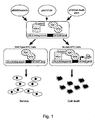
- FIG. 1 shows a first chimeric molecule comprising a nucleic acid binding domain, in this case Gal4 attached to a ⁇ -catenin.
- a second chimeric molecule comprises a T-cell factor (e.g ., Tcf-4) attached to a transactivator (VP16).
- the third construct is a nucleic acid encoding a Gal4 binding domain and an effector (e.g . a thymidine kinase) gene.
- a cell having a defective APC will accumulate ⁇ -catenin, in this case, the Gal4- ⁇ -catenin construct.
- the Gal-4- ⁇ -catenin construct binds to the Gal4 binding site on the nucleic acid.
- the Tcf4-VP16 chimeric molecule binds to the ⁇ -catenin, via the ⁇ -catenin/Tcf4 interaction thereby juxtaposing the VP16 transactivator to the nucleic acid which then induces transcription of the effector gene. If the effector gene is a cytotoxin the cell having a defective APC is killed. If the effector is a reporter the resulting signal identifies the cells a cell comprising a defective APC. Where the cell is contacted with a test agent and the effector is a reporter, a change in signal indicates that the test agent modulates activity of the Wnt pathway in particular with respect to the accumulation of ⁇ -catenin.
- a cell having a normal APC will degrade ⁇ -catenin (in this case the Gal4- ⁇ -catenin chimeric molecule.
- the Tcf4-VP16 chimeric molecule then is not directed to the nucleic acid and there is no alteration in expression (or non-expression) of the effector gene.
- the effector gene is a cytotoxin
- a cell having normal APC and therefore able to degrade ⁇ -catenin will not express the cytotoxin and will not be killed.
- the use of this system with a cytotoxic effector thus specifically eliminates cells having a defective APC.
- the above-described system, or variants thereof, can be used in a wide variety of contexts to screen for agents (e.g . drugs or lead compounds) that modulate (e.g . increase or decrease) the ability of a cell to accumulate or to degrade a metabolic product.
- agents e.g . drugs or lead compounds
- modulate e.g . increase or decrease
- the methods described herein can be used to selectively kill or inhibit cells that abnormally accumulate or degrade metabolic products and thereby mitigate symptoms of pathological states characterized by the abnormal accumulation or degradation of metabolic products.
- the methods of this invention are well suited to screening for an agent or agents that modulate the ability of a cell to accumulate or to degrade a metabolic product.
- such assays involve providing a cell, as described above, containing the two chimeric proteins (binding-domain/metabolite, ligand-transactivator) and the nucleic acid comprising an effector.
- the effector preferably encodes a reporter gene or another gene that encodes a detectable, but not lethal product. In this instance, the gene expression is detected.
- the gene encodes a lethal gene product (e.g . P53 or a cytotoxin) and the assay involves measuring the number of viable cells.
- the cell is then contacted with the agent or agents of interest and activity of the reporter gene is detected.
- the reporter gene shows an expression level and/or activity level different that the level shown in a cell of the same type harboring the same constructs, but contacted with a different concentration of test agent (or no test agent)
- the test agent is presumed to have altered the metabolic pathway leading to the accumulation or degradation of the metabolic product.
- the effect of the test agent can be direct, e.g . by binding or degradation of the metabolic product or an enzyme or other ligand that normally binds to the metabolic product, or the effect can be indirect, e.g . by binding, degrading, or otherwise altering a different component of the pathway that ultimately alters the ability of the cell to accumulate or to degrade the metabolic product of interest.
- the test agent may alter the cells accumulation of ⁇ -catenin directly by binding to or otherwise interacting with APC, axin, or with Tcf.
- the test agent may act indirectly, for example, by altering the phosphorylation of ⁇ -catenin by binding to or otherwise altering the activity of GSK3 ⁇ .
- test agent This is, of course, only one illustrative mechanism for indirect action by a possible test agent and numerous other possibilities also exist.
- test agent regardless of the mechanism of action of the test agent, as long as it alters the accumulation or degradation of ⁇ -catenin, its activity will be detected in the assays of this invention.
- the assays of this invention are scored according to standard methods well known to those of skill in the art. Typically the expression level of the reporter gene is assayed according to standard methods. Reporter genes are genes or cDNAs that express an easily assayable (detectable and/or quantifiable) product. Detection of the assayable product indicates the expression and/or level of expression of the reporter gene. Reporter genes are well known to those of skill in the art.
- genes include, but are not limited to, genes expressing bacterial chloramphenicol acetyl transferase (CAT), beta-galactosidase ( ⁇ -gal), green fluorescent protein (GFP) and other fluorescent proteins, various bacterial luciferase genes, e.g ., the luciferase genes encoded by Vibrio harveyi, Vibrio fischeri, and Xenorhabdus luminescens, the firefly luciferase gene FFlux, and the like.
- the reporter gene can be the sole gene under the control of the promoter activated or inhibited by the transcription factor (e.g . VP-16) comprising the "second chimeric molecule) or there may be one or more other genes also under control of the subject promoter ( e.g . P53-eGFP).
- the assays of this invention are not limited to the use of reporter genes.
- the transcription, translation, or activity of any gene or cDNA can routinely be detected.
- the transcribed mRNA can be detected by methods including, but not limited to, Northern blots, amplification techniques (e.g . PCR), and the like.
- the translated protein product can be detected by detecting the characteristic activity of the protein or by detecting the protein product itself ( e.g . via Western blot, capillary electrophoresis, and the like).
- the expression of the "reporter" gene or cDNA is evaluated with respect to one or more controls.
- Typical embodiments utilize a negative control comprising the test agent(s) at a lower concentration or in the absence of the test agent(s).
- a difference in expression of the "reporter" gene in the presence of the test agent(s) as compared to the expression of the reporter gene where the test agent is present at a lower concentration or absent indicates that the test agent has an activity on the metabolic pathway being assayed.
- a positive control comprising a cell administered the test agent or, more preferably, a reference agent at a particular concentration. The effect of the test agent is then measured relative to the particular concentration of test agent or reference agent.
- Still other controls may be utilized to assay for the specificity of the activity of the test agent.
- the test agent may act thorough generalized activity of the cell (e.g . by diminishing metabolic rate, cell viability, proliferation rate, growth rate, etc.) rather than through specific activity on the pathway of interest.
- the Gal4- ⁇ -catenin chimera may be under control of a inducible promoter (e.g ., ecdysone inducible system or tetracycline inducible system). If the test agent still has an effect in the absence of induced Gal4- ⁇ -catenin or if varying the level of induction of Gal4- ⁇ -catenin does not alter the effect of the test agent(s) then the test agent(s) are presumed to act through a non-specific mechanism. Conversely, where altering the expression level of Gal4- ⁇ -catenin alters the apparent activity of the test agent(s) the agent(s) are presumed to act specifically on the pathway of interest (in this example, the Wnt signaling pathway).
- a inducible promoter e.g ., ecdysone inducible system or tetracycline inducible system.
- the assays of this invention are typically scored as positive where there is a difference between the activity seen with the test agent present and the (usually negative) control, preferably where the difference is statistically significant (e.g . at greater than 80%, preferably greater than about 90%, more preferably greater than about 98%, and most preferably greater than about 99% confidence level).
- Most preferred "positive" assays show at least a 1.2 fold, preferably at least a 1.5 fold, more preferably at least a 2 fold, and most preferably at least a 4 fold or even a 10-fold difference from the negative control.
- agent can be screened according to the methods of this invention.
- agents include, but are not limited to nucleic acids, proteins, sugars, polysaccharides, glycoproteins, lipids, and small organic molecules.
- small organic molecules typically refers to molecules of a size comparable to those organic molecules generally used in pharmaceuticals. The term excludes biological macromolecules ( e.g ., proteins, nucleic acids, etc .). Preferred small organic molecules range in size up to about 5000 Da, more preferably up to 2000 Da, and most preferably up to about 1000 Da.
- high throughput screening methods involve providing a library containing a large number of potential therapeutic compounds (candidate compounds). Such "combinatorial chemical libraries" are then screened in one or more assays, as described herein to identify those library members (particular chemical species or subclasses) that display a desired characteristic activity. The compounds thus identified can serve as conventional "lead compounds" or can themselves be used as potential or actual therapeutics.
- a combinatorial chemical library is a collection of diverse chemical compounds generated by either chemical synthesis or biological synthesis by combining a number of chemical "building blocks" such as reagents.
- a linear combinatorial chemical library such as a polypeptide (e.g ., mutein) library is formed by combining a set of chemical building blocks called amino acids in every possible way for a given compound length ( i.e ., the number of amino acids in a polypeptide compound). Millions of chemical compounds can be synthesized through such combinatorial mixing of chemical building blocks.
- combinatorial chemical libraries include, but are not limited to, peptide libraries (see, e.g., U.S. Patent 5,010,175 , Furka (1991) Int. J. Pept. Prot. Res., 37: 487-493 , Houghton et al. (1991) Nature, 354: 84-88 ).
- Peptide synthesis is by no means the only approach envisioned and intended for use with the present invention.
- Other chemistries for generating chemical diversity libraries can also be used. Such chemistries include, but are not limited to: peptoids ( PCT Publication No WO 91/19735, 26 Dec.
- nucleic acid libraries see, e.g., Strategene, Corp.
- peptide nucleic acid libraries see, e.g., U.S. Patent 5,539,083
- antibody libraries see, e.g., Vaughn et al. (1996) Nature Biotechnology, 14(3): 309-314 ), and PCT/US96/10287
- carbohydrate libraries see, e.g., Liang et al. (1996) Science, 274: 1520-1522 , and U.S.
- Patent 5,593,853 small organic molecule libraries
- small organic molecule libraries see, e.g., benzodiazepines, Baum (1993) C&EN, Jan 18, page 33 , isoprenoids U.S. Patent 5,569,588 , thiazolidinones and metathiazanones U.S. Patent 5,549,974 , pyrrolidines U.S. Patents 5,525,735 and 5,519,134 , morpholino compounds U.S. Patent 5,506,337 , benzodiazepines 5,288,514 , and the like).
- a number of well known robotic systems have also been developed for solution phase chemistries. These systems include, but are not limited to, automated workstations like the automated synthesis apparatus developed by Takeda Chemical Industries, LTD. (Osaka, Japan) and many robotic systems utilizing robotic arms (Zymate II, Zymark Corporation, Hopkinton, Mass.; Orca, Hewlett-Packard, Palo Alto, Calif.) which mimic the manual synthetic operations performed by a chemist and the Venture TM platform, an ultra-high-throughput synthesizer that can run between 576 and 9,600 simultaneous reactions from start to finish ( see Advanced ChemTech, Inc. Louisville, KY)). Any of the above devices are suitable for use with the present invention.
- any of the assays for compounds modulating the accumulation or degradation of metabolic products described herein are amenable to high throughput screening.
- Preferred assays detect increases or decreases in the transcription and/or translation of a reporter gene in response to the presence of a test compound.
- a single cell may be contacted by at least two, preferably by at least 5, more preferably by at least 10, and most preferably by at least 20 test compounds. If the cell scores positive, it can be subsequently tested with a subset of the test agents until the agents having the activity are identified
- high throughput screening systems are commercially available (see; e.g., Zymark Corp., Hopkinton, MA; Air Technical Industries, Mentor, OH, Beckman Instruments, Inc. Fullerton, CA; Precision Systems, Inc., Natick, MA, etc .). These systems typically automate entire procedures including all sample and reagent pipetting, liquid dispensing, timed incubations, and final readings of the microplate in detector(s) appropriate for the assay.
- These configurable systems provide high throughput and rapid start up as well as a high degree of flexibility and customization. The manufacturers of such systems provide detailed protocols the various high throughput.
- Zymark Corp. provides technical bulletins describing screening systems for detecting the modulation of gene transcription, ligand binding, and the like.
- the methods described can also be used to selectively kill or inhibit a cell showing an abnormality in a metabolic pathway. This is accomplished simply by using a cytotoxic gene or cDNA as the effector. Cells able to degrade the metabolic product in question (e.g . ⁇ -catenin) will also degrade the metabolic product producing the chimeric molecule and the effector gene will not be transactivated. Conversely, cells unable to degrade the metabolic product will have a functioning two-hybrid system that transactivates the cytotoxic effector thereby killing or inhibiting the cell. The method is thus highly selective for cells showing an abnormality in the metabolic pathway of interest.
- a cytotoxic gene or cDNA refers to a gene or cDNA that when expressed results in cell death or renders the cell susceptible to killing by another reagent.
- expression of a herpes virus thymidine kinase gene will render a cell susceptible to the drug gangcyclovir which will cause the selective killing of any cell producing tk.
- Suitable cytotoxic genes include, but are not limited to genes for cytotoxins such as Psuedomonas exotoxin, Diphtheria toxin, ricin, abrin, thymidine kinase, apoptosis genes, and genes involved in an apoptosis related pathway ( e.g . P53, P73, Bax, Bad, FADD, caspases, etc .).
- the gene is an anti-apoptotic gene such as Bcl2 or MDM2, etc.
- Example 1 the method is illustrated for the selective killing of cells having a defective APC.
- a two-hybrid system comprising Gal4- ⁇ -catenin and Tcf-VP16 chimeric molecules is used to transactivate an effector comprising a P53 or a tk gene.
- the method provides highly specific killing of APC-defective cells.
- the method is not limited to the in vitro use.
- the chimeric molecules, or nucleic acids comprising the chimeric molecules can be delivered to cells in vivo ( e.g. using gene therapy delivery methods as described herein) where they provide highly effective killing of the defective cell(s).
- the methods thus offer a means to treat a large number of cancers and other diseases of accumulation.
- the methods herein can also be used to selectively compensate for one or more metabolic defects.
- the effector is a gene or cDNA that encodes the protein (e.g . an enzyme) for which the cell is deficient.
- the two-hybrid system When the two-hybrid system is inserted into a cell that is deficient for the desired activity, the two-hybrid system turns on the effector thereby initiating the desired metabolic activity (e.g , degrading the particular metabolic product).
- the methods of this invention can be used to assay for agents having activity in essentially any condition characterized by the accumulation of a metabolic product. Similarly, the methods can be used to selectively kill cells that show a degradation defect. Thus, the methods are useful in the treatment of diseases of accumulation or in screening for agents that are also useful in the treatment of diseases of accumulation.
- Storage diseases include but are not limited to glycogen storage disease I, GM1 gangliosidoses, MPS IV B (Morquio B), GM2 gangliosidoses (O B, AB, B1 variants), Niemann-Pick disease (A, B, and C), metachromatic leukodystrophy (arylsulfatase A and SAP-1 deficient), Krabbe disease, Fabry disease, Gaucher disease, Farber disease, Wolman disease (cholesterol ester storage disease),MPS I (Hurler and Scheie syndromes), MPS II (Hunter syndrome), MPS III A, C, and D (Sanfilippo A, C, and D), PS III B (Sanfilippo B), MPS IV A (Morquio A), MPS VI (Maroteaux-Lamy syndrome), MPS VII (beta-glucuronidase deficiency), Multiple
- Krabbe disease is a lethal demelinating condition caused by a deficiency of galactosylceramidase (GALC) enzyme activity. This leads to accumulation of cerebroside and psycosine.
- GLC galactosylceramidase
- Use of either metabolic product in a two-hybrid system and galactosylceramidase enzyme as the effector, according to the methods of this invention provides a system that selectively replaces the desired metabolic activity in cells in need of such activity.
- the methods herein are also useful in the treatment of a number of cancers or for screening for therapeutic agents useful in the treatment of a number of cancers.
- defective APC is observed in a large number of cancers (e.g . in 80 to 85% of all colon cancers).
- viral activation of Wnt-1 causes mammary tumors in mice and mutations that make ⁇ -catenin refractory to destruction are found in a wide variety of cancers ( see, e.g., Polakis (1999) Curr. Opin. Gene. Dev., 9: 15 ).
- the methods of this invention utilize a mammalian two-hybrid system involving a first chimeric molecule having a nucleic acid binding domain and a second chimeric molecule having a regulatory domain (e.g . a transactivator or a repressor).
- the first chimeric molecule preferably comprises a domain that is the metabolic product of interest (e.g . ⁇ -catenin) while the second chimeric molecule comprises a domain that is a ligand, enzyme, etc. that binds the metabolic product domain comprising the first chimeric molecule.
- the ligand and the metabolic product are interchangeable. That is, the first chimeric molecule may comprise the ligand and the second chimeric molecule may comprise the metabolic product.
- the first chimeric molecule comprises a Gal4 domain and a ⁇ -catenin domain
- the second chimeric molecule comprises a Tcf4 domain and a VP16 domain.
- the components can be reversed, so the first chimeric molecule comprises Gal4 and Tcf4, while the second chimeric molecule comprises ⁇ -catenin and VP16.
- the ligand need not be Tcf4.
- any molecule in the Wnt pathway that binds to ⁇ -catenin is suitable.
- Tcf4 may be substituted with Tcf1, Tcf3, Lef1, or other members of the Tcf family.
- Wnt signaling pathway Other molecules involved in the Wnt signaling pathway include, but are not limited to axin, disheveled, GSK3 ⁇ , ⁇ -TrCP, casein kinases 1 ⁇ and II, protein phosphatase 2A, and FRAT (frequently rearranged in advanced T cell lyphomas).
- the two-hybrid systems used in this invention thus comprise: 1) A metabolic product (or fragment thereof), 2) A ligand that binds to the metabolic product or fragment thereof, 3) A regulatory (expression control) domain, and 4) A nucleic acid binding domain.
- the nucleic acid binding domain and the regulatory domain are on different chimeric molecules.
- Selection of the metabolic product (or fragment thereof) for use in the two-hybrid system according to the methods of this invention is a function of the particular metabolic pathway or pathology of interest. As illustrated in example 1, one metabolic product useful for the Wnt signaling pathway is ⁇ -catenin.
- glucosylceramide or the glucocerebrosidase provide effective targets (metabolic products or enzymes) for use in the methods of this invention.
- Krabbe's disease a lethal demyelinating condition is caused by a deficiency of galactosylceramidase (GALC) enzyme activity leading to the accumulation of cerebroside and psychosine.
- GLC galactosylceramidase
- the ligand that binds the metabolic product may be a naturally occurring molecule found in the metabolic pathway that produces or degrades the metabolic product.
- the ligand used to bind the metabolic product of interest need not be a ligand found in the pathway that normally produces the metabolic product. Any ligand that binds the metabolic product, and more preferably that specifically binds the metabolic product is suitable.
- the system illustrated in example 1 utilizes a member of the TCF/LEF family.
- the TCF family members are known to bind to ⁇ -catenin, but are not believed to be participants in the pathway that produces or degrades ⁇ -catenin.
- the ligand need not even be a naturally-occurring molecule.
- a ligand is needed for a particular molecule (e.g. glucosylceramide in Gaucher's disease)
- a particular molecule e.g. glucosylceramide in Gaucher's disease
- phage display or other methods of directed evolution.
- the use of phage display libraries to identify single chain polypeptides that specifically bind a particular molecule with high affinity is well known to those of skill in the art (see, e.g., McCafferty et al. (1990) Nature, 348: 552-554 ; Hoogenboom et al. (1991) Nucleic Acids Res. 19: 4133-4137 ; Marks et al.
- the expression control domain is typically a polypeptide that alters the expression of a gene or cDNA.
- Typical expression control proteins are transactivators (that upregulate expression of a gene or cDNA) or repressors (that downregulate the expression of a gene or cDNA).
- the expression control protein is VP16. Any TATA box binding domain of a known transactivating protein may replace VP16.
- Other suitable transactivators will be known to those of skill in the art.
- Various transactivators include, but are not limited to, E2F-4 ( U.S. Patent 6,045,999 ), human transcription factor ( see U.S. Patent 4 6,001,971 ), transcription factor Islet-Brain 1 (IB1) ( U.S. Patent 5,880,261 ), TFIIB transcription factor from Candida albicans ( U.S. Patent 5,863,762 ), DP1 ( U.S. Patent 5,863,757 ), DP-3 ( U.S. Patent 5,859,199 ), Liver enriched transcription factor ( U.S.
- Patent 5,849,485 RNA polymerase transcription factor ( U.S. Patent 5,792,634 ), transcription factor APRF (acute phase response factor) ( U.S. Patent 5,719,042 ), cell-type specific transcription factor ( U.S. Patent 5,710,025 ), p300 transcription factor ( U.S. Patent 5,658,784 ), human transcription factor IIA ( U.S. Patent 5,652,117 ), S-II transcription factor ( U.S. Patent 5,196,303 ), and the like.
- RNA polymerase transcription factor U.S. Patent 5,792,634
- transcription factor APRF acute phase response factor
- U.S. Patent 5,719,042 cell-type specific transcription factor
- U.S. Patent 5,710,025 cell-type specific transcription factor
- U.S. Patent 5,658,784 human transcription factor IIA
- S-II transcription factor U.S. Patent 5,196,303
- This invention utilizes an expression control domain that is a transactivators.
- a control element may be used that is a repressor of gene or cDNA transcription.
- Various transcription repressors are known to those of skill in the art. These include, but are not limited to Kruppel-like factor ( U.S. Patent 6,077,933 ), tetracycline repressor ( U.S. Patents 5,972,650 and 5,917,122 ), ETS2 repressor ( U.S. Patent 5,856,125 ), papillomavirus E2 transactivation repressor ( U.S. Patent 5,595,884 ), the CI434 repressor, plasmids ( U.S. Patent 5,147,789 ), and the like.
- any nucleic acid binding protein or the binding domain therein may be used in these two-hybrid systems.
- the binding protein preferably binds to a particular nucleic acid sequences with sufficient affinity that an attached transactivator is able to upregulate expression of an appropriately positioned gene or cDNA.
- the Gal4 domain provides a well characterized and particular preferred embodiment, many other nucleic acid binding molecules are known to those of skill in the art.
- U.S. Patents 6,010,849 and 5,578,444 provide assays for the ready identification of (typically non-protein) nucleic acid binding molecules and also provide a number of illustrative molecules.
- nucleic acid binding proteins comprise various transactivators and are often characterized by the presence of a zinc-finger motif. Suitable nucleic acid binding proteins and assays for identifying these and other nucleic acid binding proteins are well known to those of skill in the art. Thus, for example, U.S. Patent 6,066,452 teaches methods for simultaneously selecting binding site sequences for multiple DNA binding proteins. U.S. Patent 6,07,988 discloses method of designing zinc finger binding polypeptides for binding to a particular target sequence and lists a number of suitable zinc finger polypeptides. U.S. Patent 5,773,583 discloses a number of "Egr" proteins that bind to specific DNA sequences.
- nucleic acid binding proteins/binding domains can be readily determined by one of ordinary skill in the art without undue experimentation.
- the chimeric molecules comprising the two-hybrid systems of this invention may be chemically conjugated domains, or, where the domains are linked by an amino acid or peptide linker the chimeric molecules may be recombinantly expressed fusion proteins.
- the chimeric molecules are chemically conjugated, the chimeric molecule is delivered to the cell.
- the chimeric molecules are fusion proteins either the fusion protein itself is delivered to the cell or a nucleic acid encoding the fusion protein is transfected into the cell where it produces the desired fusion protein(s).
- Polypeptides typically contain variety of functional groups; e.g ., carboxylic acid (COOH) or free amine (-NH 2 ) groups, which are available for reaction with a suitable functional group on an effector molecule to bind the effector thereto.
- the components comprising the chimeric molecule(s) e.g . Gal4 and ⁇ -catenin
- a “linker”, as used herein, is a molecule that is used to join the two domains of the chimeric molecule(s) to each other.
- the linker is capable of forming covalent bonds to both the domains.
- Suitable linkers are well known to those of skill in the art and include, but are not limited to, straight or branched-chain carbon linkers, heterocyclic carbon linkers, or peptide linkers.
- the linkers may be joined to amino acids comprising the domains through their side groups ( e.g ., through a disulfide linkage to cysteine).
- the linkers will be joined to the alpha carbon amino and carboxyl groups of the terminal amino acids.
- the linker may be bifunctional, having one functional group reactive with a substituent on the first domain (e.g . Gal4) and a different functional group reactive with a substituent on the second domain (e.g . ⁇ -catenin).
- the two domains may be derivatized to react with a "mono-functional" linker (see, e.g., U.S. Patent No. 4,671,958 and 4,659,839 for procedures to generate reactive groups on peptides).
- the chimeric molecules of this invention are fusion proteins.
- the fusion protein can be chemically synthesized using standard chemical peptide synthesis techniques, or, more preferably, recombinantly expressed.. Where both molecules are relatively short the chimeric molecule may be chemically synthesized as a single contiguous polypeptide.
- Solid phase synthesis in which the C-terminal amino acid of the sequence is attached to an insoluble support followed by sequential addition of the remaining amino acids in the sequence is a preferred method for the chemical synthesis of the polypeptides of this invention. Techniques for solid phase synthesis are described by Barany and Merrifield, Solid-Phase Peptide Synthesis; pp. 3-284 in The Peptides: Analysis, Synthesis, Biology. Vol.
- the chimeric molecules of the present invention are synthesized using recombinant DNA methodology. Generally this involves creating a DNA sequence that encodes the fusion protein, placing the DNA in an expression cassette under the control of a particular promoter, and expressing the chimeric (fusion) protein in a host cell.
- DNA encoding the fusion protein(s) used in the methods of this invention may be prepared by any suitable method, including, for example, cloning and restriction of appropriate sequences or direct chemical synthesis by methods such as the phosphotriester method of Narang et al. (1979) Meth. Enzymol. 68: 90-99 ; the phosphodiester method of Brown et al. (1979) Meth. Enzymol. 68: 109-151 ; the diethylphosphoramidite method of Beaucage et al. (1981) Tetra. Lett., 22: 1859-1862 ; and the solid support method of U.S. Patent No. 4,458,066 .
- Chemical synthesis produces a single stranded oligonucleotide. This may be converted into double stranded DNA by hybridization with a complementary sequence, or by polymerization with a DNA polymerase using the single strand as a template.
- a complementary sequence or by polymerization with a DNA polymerase using the single strand as a template.
- One of skill would recognize that while chemical synthesis of DNA is limited to sequences of about 100 to 500 bases, longer sequences may be obtained by the ligation of shorter sequences.
- subsequences may be cloned and the appropriate subsequences cleaved using appropriate restriction enzymes. The fragments may then be ligated to produce the desired DNA sequence.
- DNA encoding fusion proteins of the present invention is using DNA amplification methods such as polymerase chain reaction (PCR).
- PCR polymerase chain reaction
- a human ⁇ -catenin cDNA is PCR amplified with the BamHI linker and coned into a Bam HI site of pBIND.
- the human Tcf4 cDNA with Bam HI linker is PCR amplified and cloned into the Bam HI site of pACT.
- a linker may be introduced into the chimeric molecules, e.g., between the nucleic acid binding domain and the metabolic product or between the ligand and the transactivator.
- the linker is used to separate the two domains comprising the chimeric molecule by a distance sufficient to ensure that, in a preferred embodiment, each domain properly folds into its secondary and tertiary structures.
- Preferred peptide linker sequences adopt a flexible extended conformation, do not exhibit a propensity for developing an ordered secondary structure that could interact with the functional GM-CSF and G250 domains.
- Typical amino acids in flexible protein regions include Gly, Asn and Ser.
- the length of the peptide linker sequence may vary without significantly affecting the biological activity of the fusion protein. In one preferred embodiment of the present invention, a peptide linker sequence length of about 2 amino acids is used to provide a suitable separation of functional protein domains, although longer linker sequences also may be used.
- the linker sequence may be from 1 to 50 amino acids in length. In the most preferred aspects of the present invention, the linker sequence is from about 1-20 amino acids in length. In the specific embodiments disclosed herein, the linker sequence is from about 2 to about 15 amino acids, and is advantageously from about 2 to about 10 amino acids. Peptide linker sequences not necessarily required in the fusion proteins of this invention.
- the linker will have no specific biological activity other than to join the proteins or to preserve some minimum distance or other spatial relationship between them.
- the constituent amino acids of the spacer may be selected to influence some property of the molecule such as the folding, net charge, or hydrophobicity.
- the nucleic acid sequences encoding the desired protein are typically operably linked to suitable transcriptional or translational regulatory elements.
- the regulatory elements typically include a transcriptional promoter, an optional operator sequence to control transcription, a sequence encoding suitable mRNA ribosomal binding sites, and sequences that control the termination of transcription and translation.
- the ability to replicate in a host, usually conferred by an origin of replication, and a selection gene to facilitate recognition of transformants may additionally be incorporated.
- the nucleic acid sequences encoding the fusion proteins may be expressed in a variety of host cells, including E. coli and other bacterial hosts, and most preferably eukaryotic host cells including but not limited to yeast, insect cells, and mammalian cells.
- the recombinant protein gene will be operably linked to appropriate expression control sequences for each host.
- the plasmids of the invention can be transferred into the chosen host cell by well-known methods such as calcium chloride transformation for E. coli and calcium phosphate treatment or electroporation for mammalian cells. In vivo transfection can be accomplished using standard gene therapy methods, e.g . as described herein.
- the nucleic acid component of the two-hybrid systems of this invention is produced according to standard methods.
- the nucleic acid comprises a binding domain recognized by a nucleic acid binding molecule (e.g . GAL4) and an expression cassette comprising one or more genes or cDNAs.
- the expression cassette positioned with respect to the protein binding site such that a two-hybrid complex bound to the binding site can effect transcription of the gene or cDNA comprising the expression cassette.
- any cell can harbor the two-hybrid systems of this invention.
- Preferred cells are eukaryotic cells and even more preferred cells are mammalian cells and most preferred cells are human cells.
- the cells can include cells in long term culture (e.g . HeLa cells, CHO cells, SW480 cells, SW48 cells, DLD-1, HCT-116, HT29, 293 cells, U-20S, T-47D, MCF-7, A549, Hep G, Jarkat cells, and the like.
- the cells can also include acute (unpassaged) cells.
- the cells may be transfected with nucleic acids encoding the chimeric molecules comprising the two-hybrid components of this invention or the chimeric molecules may be directly introduced into the cells ( e.g . via microinjection, lipid encapsulation, HIV TAT protein mediated transfer, etc.).
- HIV ⁇ TAT human immunodeficiency virus TAT protein
- when fused to considerably larger proteins results in delivery of the biologically active protein even across the blood brain barrier (see, e.g., Schwarze et al. (1999) Science, 285: 1569-1572 , and references cited therein).
- the cells also preferably include the nucleic acid encoding the protein binding site and an effector molecule according to the methods of this invention.
- the cells may comprise one or more components of the two-hybrid systems of this invention.
- the cell can include either or both chimeric molecules and/or nucleic acids encoding either or both of the chimeric molecules and/or the nucleic acid comprising the binding site and the effector gene.
- the chimeric molecules can be introduced directly into the cells, or where the chimeric molecules are fusion proteins, the nucleic acids encoding the proteins can be introduced into the cells according to standard methods known to those of skill in the art.
- ex vivo transfection may be utilized. These include, but are not limited to, microinjection, biolistic transfer, lipid-mediated transfer, dendrimer-mediated transfer, electroporation, calcium phosphate transfection, and the like.
- chimeric molecules themselves are to be introduced into the cell
- standard methods for transferring pharmaceuticals into cells may be used. Such methods include, but are not limited to liposome encapsulation, microinjection, the use of HIV TAT domains to facilitate transfer, and the like.
- A) Constructs for expression of components of the two-hybrid system.
- the gene/cDNA encoding the chimeric molecule is typically placed in an expression cassette.
- the expression cassette typically comprising regulatory machinery (e.g . eukaryotic promoter, initiation site, stop site, etc .) sufficient to direct expression of the gene and/or cDNA.
- the gene/cDNA is typically placed under the control of ( i.e ., operably linked to) a promoter that directs transcription of the subject nucleic acid.
- the promoter may be constitutive or inducible. Where tissue-specific expression is desired the promoter may be tissue-specific promoter.
- tissue-specific promoters may be utilized within the context of the present invention.
- Representative examples of such promoters include, but are not limited to liver-specific promoters such as phosphoenolpyruvate carboxykinase ("PEPCK”) ( Hatzogiou et al., (1988) J. Biol Chem. 263: 17798-808 ; Benvenisty et al., (1989) Proc. Natl. Acad. Sci. USA 86: 1118-1122 ; Vaulont et al. (1989) Mol. Cell. Biol.
- PEPCK phosphoenolpyruvate carboxykinase
- B cell specific promoters such as the IgG promoter; breast carcinoma or hepatocellular carcinoma specific promoters such as Carcinoembryonic Antigen promoter (CEA) ( Schrewe et al. (1990) Mol. and Cell. Biol. 10: 2738 ); pancreatic acinar cell specific promoters such as the elastase promoter ( Swift et al. (1989) Genes Develop. 3: 687-96 ); breast epithelial specific promoters such as the casein promoter ( Doppler et al. (1989) Proc. Natl. Acad Sci.
- CEA Carcinoembryonic Antigen promoter
- erythoid specific-transcription promoters which are active in erythroid cells, such as the porphobilinogen deaminase promoter ( Mignotte et al. (1990) Proc. Natl. Acad. Sci. USA 86: 6458-6452 ); ⁇ - or ⁇ -globin specific promoters ( van Assendelft et al. (1989) Cell 56:969-977 ; Forrester et al. (1989) Proc. Natl. Acad. Sci.
- porphobilinogen deaminase promoter Mignotte et al. (1990) Proc. Natl. Acad. Sci. USA 86: 6458-6452
- ⁇ - or ⁇ -globin specific promoters van Assendelft et al. (1989) Cell 56:969-977 ; Forrester et al. (1989) Proc. Natl. Acad. Sci.
- promoters which are specific for the pituitary gland such as the growth hormone factor promoter ( Ingraham et al. (1988) Cell 55: 519-529 ; Bodner et al. (1988) Cell 55:505-518 ); promoters which are specific for melanosomes, such as the tyrosine hydroxylase promoter; liver-specific promoters such as the albumin promoter and the alphafetoprotein promoter ( Feuerman et all. (1989) Mol. Cell. Biol. 9: 4204-4212 ; Camper and Tilghman (1989) Genes Develop. 3: 537-546 ); breast carcinoma specific promoters such as the HER2/neu promoter ( Tal et al.
- liver-specific promoters such as the alcohol dehydrogenase promoter ( Felder (1989) Proc. Natl. Acad Sci. USA 86: 5903-5907 ); T-cell specific promoters such as the T-cell receptor promoter ( Anderson et al. (1988) Proc. Natl. Acad. Sci. USA 85: 3551-3554 ; Winoto and Baltimore (1989) EMBO J. 8:729-733 ); bone-specific promoters such as the osteocalcin promoter ( Markose et al. (1990) Proc. Natl. Acad. Sci. USA 87: 1701-1705 ; McDonnell et al.
- the constructs may, optionally, include flanking sequences complementary to a region of the host genomic DNA to facilitate integration of the cassette into the host genome ( e.g . through homologous recombination as described below).
- the flanking sequences may optionally comprise one or more recombinase recognition sites (e.g . LoxP or FLP) to facilitate integration of the expression cassette through the use of a recombinase ( e.g. Cre).
- the two-hybrid systems of this invention may be introduced into cells in vivo to selectively kill cells showing metabolic defects (e.g . certain cancer cells) or to introduce a particular enzymatic activity in a cell where such activity is diminished or lacking.
- the chimeric molecules are introduced into the cells "directly" (e.g. not recombinantly expressed), e.g ., using an HIV TAT fusion protein (see, e.g., Schwarze et al. (1999) Science, 285: 1569-1572 , and references cited therein), in preferred embodiments, the chimeric molecules are recombinantly expressed fusion proteins.
- both proteins can be expressed from a single nucleic acid or from separate nucleic acids.
- the nucleic acid encoding the protein binding site and the effector cDNA can be a component of the nucleic acid(s) encoding the chimeric molecules or it can be a separate nucleic acid.
- the nucleic acid(s) encoding the chimeric molecule(s) and/or the nucleic acid comprising the binding site and the effector are introduced into the cells using standard methods of "gene therapy".
- lipid or liposome based gene delivery WO 96/18372 ; WO 93/24640 ; Mannino and Gould-Fogerite (1988) BioTechniques 6(7): 682-691 ; Rose U.S. Pat No. 5,279,833 ; WO 91/06309 ; and Felgner et al. (1987) Proc. Natl. Acad. Sci.
- Widely used retroviral vectors include those based upon murine leukemia virus (MuLV), gibbon ape leukemia virus (GaLV), Simian Immunodeficiency virus (SIV), human immunodeficiency virus (HIV), alphavirus, and combinations thereof (see , e.g. , Buchscher et al. (1992) J. Virol. 66(5) 2731-2739 ; Johann et al. (1992) J. Virol. 66 (5):1635-1640 (1992 ); Sommerfelt et al., (1990) Virol. 176:58-59 ; Wilson et al. (1989) J. Virol. 63:2374-2378 ; Miller et al., J. Virol.
- the vectors are optionally pseudotyped to extend the host range of the vector to cells which are not infected by the retrovirus corresponding to the vector.
- VSV-G vesicular stomatitis virus envelope glycoprotein
- the vectors have been used to construct VSV-G-pseudotyped HIV vectors which can infect hematopoietic stem cells ( Naldini et al. (1996) Science 272:263 , and Akkina et al. (1996) J Virol 70:2581 ).
- Adeno-associated virus (AAV)-based vectors are also used to transduce cells with target nucleic acids, e.g. , in the in vitro production of nucleic acids and peptides, and in in vivo and ex vivo gene therapy procedures.
- target nucleic acids e.g. , in the in vitro production of nucleic acids and peptides, and in in vivo and ex vivo gene therapy procedures.
- Cell lines that can be transformed by rAAV include those described in Lebkowski et al. (1988) Mol. Cell. Biol., 8:3988-3996 .
- Other suitable viral vectors include herpes virus, lentivirus, and vaccinia virus.
- retroviruses e.g. lentiviruses
- retroviruses are used to transfect the target cell(s) with nucleic acids encoding the various components to the two-hybrid systems of this invention.
- Retroviruses in particular lentiviruses (e.g. HIV, SIV, etc. ) are particularly well suited for this application because they are capable of infecting a non-dividing cell.
- Methods of using retroviruses for nucleic acid transfection are known to those of skill in the art ( see , e.g. , U.S. Patent 6,013, 576 ).
- Retroviruses are RNA viruses wherein the viral genome is RNA.
- the genomic RNA is reverse transcribed into a DNA intermediate which is integrated very efficiently into the chromosomal DNA of infected cells.
- This integrated DNA intermediate is referred to as a provirus.
- Transcription of the provirus and assembly into infectious virus occurs in the presence of an appropriate helper virus or in a cell line containing appropriate sequences enabling encapsidation without coincident production of a contaminating helper virus.
- a helper virus need not be utilized for the production of the recombinant retrovirus since the sequences for encapsidation can be provided by co-transfection with appropriate vectors.
- the retroviral genome and the proviral DNA have three genes: the gag , the pol , and the env , which are flanked by two long terminal repeat (LTR) sequences.
- the gag gene encodes the internal structural (matrix, capsid, and nucleocapsid) proteins; the pol gene encodes the RNA-directed DNA polymerase (reverse transcriptase) and the env gene encodes viral envelope glycoproteins.
- the 5' and 3' LTRs serve to promote transcription and polyadenylation of the virion RNAs.
- the LTR contains all other cis-acting sequences necessary for viral replication.
- Lentiviruses have additional genes including vit , vpr , tat , rev , vpu , nef , and vpx (in HIV-1, HIV-2 and/or SIV).
- Adjacent to the 5' LTR are sequences necessary for reverse transcription of the genome (the tRNA primer binding site) and for efficient encapsidation of viral RNA into particles (the Psi site). If the sequences necessary for encapsidation (or packaging of retroviral RNA into infectious virions) are missing from the viral genome, the result is a cis defect which prevents encapsidation of genomic RNA. However, the resulting mutant is still capable of directing the synthesis of all virion proteins.
- the invention provides a recombinant retrovirus capable of infecting a non-dividing cell.
- the recombinant retrovirus comprises a viral GAG, a viral POL, a viral ENV, a heterologous nucleic acid sequence operably linked to a regulatory nucleic acid sequence, and cis-acting nucleic acid sequences necessary for packaging, reverse transcription and integration, as described above. It should be understood that the recombinant retrovirus of the invention is capable of infecting dividing cells as well as non-dividing cells.
- the recombinant retrovirus is therefore genetically modified in such a way that some of the structural, infectious genes of the native virus (e.g. env , gag , pol ) have been removed and replaced instead with a nucleic acid sequence to be delivered to a target non-dividing cell (e.g. , a sequence encoding various components of the two-hybrid systems of this invention).
- a target non-dividing cell e.g. , a sequence encoding various components of the two-hybrid systems of this invention.
- the virus injects its nucleic acid into the cell and the retrovirus genetic material may on occasion integrate into the host cell genome. Whether integrated or episomal, the transferred retrovirus genetic material is then transcribed and translated into the various components of the two-hybrid system of this invention within the host cell.
- one or more components of the two-hybrid systems of this invention are expressed in an adenoviral vector suitable for gene therapy.
- adenoviral vectors is described in detail in WO 96/25507 . Particularly preferred adenoviral vectors are described by Wills et al. (1994) Hum. Gene Therap. 5: 1079-1088 .
- adenoviral vectors contain a deletion in the adenovirus early region 3 and/or early region 4 and this deletion may include a deletion of some or all of the protein IX gene.
- the adenoviral vectors include deletions of the E1a and/or E1b sequences.
- adenoviral vector A number of different adenoviral vectors have been optimized for gene transfer.
- One such adenoviral vector is described in U.S. patent 6,020,191 .
- This vector comprises a CMV promoter to which a transgene may be operably linked and further contains an E1 deletion and a partial deletion of 1.6 kb from the E3 region.
- This is a replication defective vector containing a deletion in the E1 region into which a transgene (e.g. the ⁇ subunit gene) and its expression control sequences can be inserted, preferably the CMV promoter contained in this vector. It further contains the wild-type adenovirus E2 and E4 regions.
- the vector contains a deletion in the E3 region which encompasses 1549 nucleotides from adenovirus nucleotides 29292 to 30840 ( Roberts et al. (1986) Adenovirus DNA, in Developments in Molecular Virology, W. Doerfler, ed., 8: 1-51 ).
- These modifications to the E3 region in the vector result in the following: (a) all the downstream splice acceptor sites in the E3 region are deleted and only mRNA a would be synthesized from the E3 promoter ( Tollefson et al. (1996) J, Virol. 70:2 296-2306, 1996 ; Tollefson et al.
- Such adenoviral vectors can utilize adenovirus genomic sequences from any adenovirus serotypes, including but not limited to, adenovirus serotypes 2, 5, and all other preferably non-oncogenic serotypes.
- the cytomegalovirus (CMV) immediate early promoter ( Boshart et al. (1985) Cell 41: 521-530 ) is used to control expression of the chimeric molecules comprising the two-hybrid systems of this invention.
- the CMV promoter is positioned 5' to the transgene(s) in a transcription unit. Portions of the full-length promoter can be tested for their ability to allow persistent expression of the transgene.
- Polyadenylation signals which may be positioned at the 3' end of the transgene in include, but are not limited to, those derived from bovine growth hormone (BGH) and SV40.
- a plasmid containing the transcription unit inserted into an adenovirus genomic fragment is co-transfected with a linearized viral genome derived from an adenoviral vector of interest into a recipient cell under conditions whereby homologous recombination occurs between the genomic fragment and the virus.
- the transcription unit is engineered into the site of an E1 deletion.
- the transcription unit encoding a desired transgene is inserted into the adenoviral genome at the site in which it was cloned into the plasmid, creating a recombinant adenoviral vector.
- the vector genome is encapsidated into virions as evidenced by the formation of viral plaques.
- Preparation of replication-defective vector stocks can be accomplished using cell lines that complement viral genes deleted from the vector, e.g. , 293 or A549 cells containing the deleted adenovirus E1 genomic sequences.
- viruses After amplification of plaques in suitable complementing cell lines, the viruses can be recovered by freeze-thawing and subsequently purified using cesium chloride centrifugation. Alternatively, virus purification can be performed using chromatographic techniques (e.g. , as set forth in International Application No. PCT/US96/13872 .
- Titers of replication-defective adenoviral vector stocks can be determined by plaque formation in a complementing cell line, e.g. , 293 cells. For example, end-point dilution using an antibody to the adenoviral hexon protein may be used to quantitate virus production ( Armentano et al. (195) Hum. Gene Ther. 6:1343-1353 ).
- non-viral vectors are also useful for transfecting cells with the nucleic acid constructs described herein.
- Suitable non-viral vectors include, but are not limited to, plasmids, cosmids, phagemids, liposomes, water-oil emulsions, polethylene imines, biolistic pellets/beads, and dendrimers.
- Liposomes were first described in 1965 as a model of cellular membranes and quickly were applied to the delivery of substances to cells. Liposomes entrap DNA by one of two mechanisms which has resulted in their classification as either cationic liposomes or pH-sensitive liposomes. Cationic liposomes are positively charged liposomes which interact with the negatively charged DNA molecules to form a stable complex. Cationic liposomes typically consist of a positively charged lipid and a co-lipid. Commonly used co-lipids include dioleoyl phosphatidylethanolamine (DOPE) or dioleoyl phosphatidylcholine (DOPC).
- DOPE dioleoyl phosphatidylethanolamine
- DOPC dioleoyl phosphatidylcholine
- Co-lipids also called helper lipids
- helper lipids are in most cases required for stabilization of liposome complex.
- a variety of positively charged lipid formulations are commercially available and many other are under development.
- Two of the most frequently cited cationic lipids are lipofectamine and lipofectin.
- Lipofectin is a commercially available cationic lipid first reported by Phil Felgner in 1987 to deliver genes to cells in culture. Lipofectin is a mixture of N-[1-(2, 3-dioleyloyx) propyl]-N-N-N-trimethyl ammonia chloride (DOTMA) and DOPE.
- DOTMA N-[1-(2, 3-dioleyloyx) propyl]-N-N-N-trimethyl ammonia chloride
- DNA and lipofectin or lipofectamine interact spontaneously to form complexes that have a 100% loading efficiency. In other words, essentially all of the DNA is complexed with the lipid, provided enough lipid is available. It is assumed that the negative charge of the DNA molecule interacts with the positively charged groups of the DOTMA. The lipid:DNA ratio and overall lipid concentrations used in forming these complexes are extremely important for efficient gene transfer and vary with application. Lipofectin has been used to deliver linear DNA, plasmid DNA, and RNA to a variety of cells in culture. Shortly after its introduction, it was shown that lipofectin could be used to deliver genes in vivo.
- lipofectin-DNA complexes Following intravenous administration of lipofectin-DNA complexes, both the lung and liver showed marked affinity for uptake of these complexes and transgene expression. Injection of these complexes into other tissues has had varying results and, for the most part, are much less efficient than lipofectin-mediated gene transfer into either the lung or the liver.
- PH-sensitive, or negatively-charged liposomes entrap DNA rather than complex with it. Since both the DNA and the lipid are similarly charged, repulsion rather than complex formation occurs. Yet, some DNA does manage to get entrapped within the aqueous interior of these liposomes. In some cases, these liposomes are destabilized by low pH and hence the term pH- sensitive. To date, cationic liposomes have been much more efficient at gene delivery both in vivo and in vitro than pH-sensitive liposomes. pH-sensitive liposomes have the potential to be much more efficient at in vivo DNA delivery than their cationic counterparts and should be able to do so with reduced toxicity and interference from serum protein.
- dendrimers complexed to the DNA have been used to transfect cells.
- dendrimers include, but are not limited to, "starburst” dendrimers and various dendrimer polycations.
- Dendrimer polycations are three dimensional, highly ordered oligomeric and/or polymeric compounds typically formed on a core molecule or designated initiator by reiterative reaction sequences adding the oligomers and/or polymers and providing an outer surface that is positively changed.
- These dendrimers may be prepared as disclosed in PCT/US83/02052 , and U.S. Pat. Nos. 4,507,466 , 4,558,120 , 4,568,737 , 4,587,329 , 4,631,337 , 4,694,064 , 4,713,975 , 4,737,550 , 4,871,779 , 4,857,599 .
- the dendrimer polycations comprise a core molecule upon which polymers are added.
- the polymers may be oligomers or polymers which comprise terminal groups capable of acquiring a positive charge.
- Suitable core molecules comprise at least two reactive residues which can be utilized for the binding of the core molecule to the oligomers and/or polymers. Examples of the reactive residues are hydroxyl, ester, amino, imino, imido, halide, carboxyl, carboxyhalide maleimide, dithiopyridyl, and sulfhydryl, among others.
- Preferred core molecules are ammonia, tris-(2-aminoethyl)amine, lysine, ornithine, pentaerythritol and ethylenediamine, among others. Combinations of these residues are also suitable as are other reactive residues.
- Oligomers and polymers suitable for the preparation of the dendrimer polycations of the invention are pharmaceutically-acceptable oligomers and/or polymers that are well accepted in the body.
- examples of these are polyamidoamines derived from the reaction of an alkyl ester of an ⁇ , ⁇ -ethylenically unsaturated carboxylic acid or an ⁇ , ⁇ -ethylenically unsaturated amide and an alkylene polyamine or a polyalkylene polyamine, among others.
- Preferred are methyl acrylate and ethylenediamine.
- the polymer is preferably covalently bound to the core molecule.
- the terminal groups that may be attached to the oligomers and/or polymers should be capable of acquiring a positive charge. Examples of these are azoles and primary, secondary, tertiary and quaternary aliphatic and aromatic amines and azoles, which may be substituted with S or O, guanidinium, and combinations thereof.
- the terminal cationic groups are preferably attached in a covalent manner to the oligomers and/or polymers.
- Preferred terminal cationic groups are amines and guanidinium. However, others may also be utilized.
- the terminal cationic groups may be present in a proportion of about 10 to 100% of all terminal groups of the oligomer and/or polymer, and more preferably about 50 to 100%.
- the dendrimer polycation may also comprise 0 to about 90% terminal reactive residues other than the cationic groups.
- Suitable terminal reactive residues other than the terminal cationic groups are hydroxyl: cyano, carboxyl, sulfhydryl, amide and thioether, among others, and combinations thereof. However others may also be utilized.
- the dendrimer polycation is generally and preferably non-covalently associated with the polynucleotide. This permits an easy disassociation or disassembling of the composition once it is delivered into the cell.
- Typical dendrimer polycation suitable for use herein have a molecular weight ranging from about 2,000 to 1,000,000 Da, and more preferably about 5,000 to 500,000 Da. However, other molecule weights are also suitable.
- Preferred dendrimer polycations have a hydrodynamic radius of about 11 to 60 ⁇ ., and more preferably about 15 to 55 ⁇ . Other sizes, however, are also suitable. Methods for the preparation and use of dendrimers in gene therapy are well known to those of skill in the art and describe in detail, for example, in U.S. Patent 5,661.025 .
- a plasmid vector may be used in conjunction with liposomes.
- nucleic acid may be incorporated into the non-viral vectors by any suitable means known in the art
- this typically involves ligating the construct into a suitable restriction site.
- vectors such as liposomes, water-oil emulsions, polyethylene amines and dendrimers, the vector and construct may be associated by mixing under suitable conditions known in the art.
- Ex vivo cell transformation for diagnostics, research, or for gene therapy e.g. , via re-infusion of the transformed cells into the host organism
- cells are isolated from the subject organism, transfected with the constructs of this invention and, optionally, re-infused back into the subject organism ( e.g. , patient).
- kits for practice of the methods described herein may comprise a nucleic acid encoding one or both of the chimeric molecules used in the two-hybrid systems of this invention.
- the kit may comprise a nucleic acid encoding a Gal4- ⁇ -catenin, and/or a Tcf-VP16, and/or a Gal4-Tcf, and/or a ⁇ -catenin-VP16.
- Certain kits may comprise the chimeric molecules themselves ( e.g. the fusion proteins).
- the kits_ may alternatively or additionally include a nucleic acid encoding a polypeptide binding site and an effector gene.
- the nucleic acids may be provided as components of vectors ( e.g. flanked by appropriate restriction sites and/or PCR primer binding sites).
- the nucleic acid constructs encoding the chimeric molecules may contain the "fusion gene" under the control of a constitutive, an inducible, or a tissue specific promoter. Such promoters are well known to those of skill in the art.
- kits may comprise a cell (e.g. a mammalian cell, more preferably a human cell) comprising one or more of the components of a two-hybrid system as described herein.
- a cell e.g. a mammalian cell, more preferably a human cell
- kits may optionally include any reagents and/or apparatus to facilitate practice of the methods described herein.
- reagents include, but are not limited to buffers, instrumentation (e.g. bandpass filter), reagents for detecting a signal from a reporter gene, transfection reagents, cell lines, vectors, and the like.
- kits may include instructional materials containing directions (i.e. , protocols) for the practice of the methods of this invention.
- Preferred instructional materials provide protocols utilizing the kit contents for screening for modulators of a cells ability to accumulate or to degrade a metabolic product, and/or for methods of selectively killing a cell that is has an abnormal metabolic pathway, and/or for methods of selectively expressing an enzymatic activity to supplement a cell having said activity diminished or non-existant as described herein.
- the instructional materials typically comprise written or printed materials they are not limited to such. Any medium capable of storing such instructions and communicating them to an end user is contemplated by this invention. Such media include, but are not limited to electronic storage media (e.g. , magnetic discs, tapes, cartridges, chips), optical media ( e.g. , CD ROM), and the like. Such media may include addresses to internet sites that provide such instructional materials.
- Accumulation of ⁇ -catenin in cytoplasm is one of the crucial events found in adenomatous polyposis coli (APC) gene-mutated colon cancer cells.
- the mutated APC gene produces truncated form of APC protein that lacks the affinity to ⁇ -catenin protein.
- the accumulation of ⁇ -catenin protein is caused by ⁇ -catenin avoiding from degradation mechanisms via the ubiquitin-proteasome pathway, which requires phosphorylation of ⁇ -catenin/APC complex by glycogen synthase kinase 3 ⁇ (GSK-3 ⁇ ).
- GSK-3 ⁇ glycogen synthase kinase 3 ⁇
- This system is made of mammalian two-hybrid system that consists of GAL4/ ⁇ -catenin, VP16/Tcf4 and the suicide gene generated output gene DNA construct.
- This system is designed to works only when accumulation of GAL4/ ⁇ -catenin occurs.
- APC-mutated human colon cancer cell line SW480 accumulation of GAL4/ ⁇ -catenin in the presence of VP16/TCF4 proteins caused a high expression level of the output gene.
- APC wild type such as SW48
- degradation of GAL4/ ⁇ -catenin was observed and expression levels of the output gene was kept low.
- APC adenomatous polyposis coli
- Tcf4 transcription factor 4
- Korinek et al. (1997) Science, 275: 1784-1787 ; Morin et al. (1997) Science, 275: 1787-1790 ) and intensifies the Tcf/lef-1-dependent oncogenic genes expression such as cyclin D1 ( Tetsu and McCormick (1999) Nature, 398: 422-426 , c-myc ( He et al. (1998) Science, 281: 1509-1512 ) and peroxisome proliferator-activated receptor ⁇ ( He et al. (1999) Cell, 99: 335-345 ).
- the yeast two-hybrid system has been used as one of the most convenient tools to study protein-protein interactions or to identify the interacting partners for certain proteins ( Dang et al. (1991) Mol. Cell. Biol., 11: 954-962 ).
- This system consists of basically three components.
- the first component is the fusion protein that contains the DNA binding domain of a transcription factor.
- the second component is the fusion protein that contains the transcription activation domain of a transcription factor.
- the third component is the output gene expression construct that has the consensus sequence for the first component and is followed by the transcription activation site, such as TATA box, for the second component.
- the yeast GAL4 DNA binding domain is widely used
- the herpes simplex virus VP16 transcription activation domain is widely used.
- Human cancer cell lines used here were obtained from the American Type Culture Collection (Rockville, MD).
- Human colon cancer cell lines SW480 and SW48 were maintained in Leivovitz's L-15 medium (Life Technologies Inc., Gaithersburg, MD) supplemented with 10% heat-inactivated FBS (Life Technologies Inc.) in a 0.8% CO 2 incubator at 37°C.
- the human osteosarcoma cell line U2-OS and embryonic kidney cell line 293 were maintained in RPMI1640 medium (Life Technologies Inc) supplemented with 10% FBS in a 5% CO 2 incubator at 37 °C.
- the pBIND, pBIND/Id, pACT and pG5Luc plasmids were purchased from Promega (Madison, WI).
- the pp53-EGFP was purchased from Clontech (Palo Alto, CA).
- the GALA fusion ⁇ -catenin expression plasmid, pBIND/ ⁇ -catenin, and VP16 fusion Tcf4 expression plasmids, pACT/Tcf4 were prepared as followed.
- the human ⁇ -catenin cDNA with Bam HI linker was prepared with PCR and cloned into Bam HI site of pBIND.
- the human Tcf4 cDNA with Bam HI linker was prepared with PCR and cloned into Bam HI site of pACT.
- the pcDNA3/p53-EGFP was prepared by generating Kpn I and Xba I fragment of the pp53-EGFP, into Kpn I / Xba I site of pcDNA3.1 (Invitrogen, Carlsbad, CA).
- the pG5/p53-EGFP plasmid was constructed by inserting the p53-EGFP cDNA fragment of pp53-EGFP to Bgl II and Hind III site of pG5Luc.
- the pG5/EGFP plasmid was constructed by deleting p53 cDNA from the pG5/p53-EGFP plasmid.
- the p53-Luc, pAP-1-Luc and pCRE-Luc plasmids were purchased from Stratagene (La Jolla, CA).
- Cells grown to 50-80% confluency were trypsinized and washed twice with phosphate buffer saline (PBS), and lysed in TE buffer (10 mM Tris, 1 mM EDTA) containing protease inhibitors (Complete Mini TM , Boehringer Mannheim).
- TE buffer 10 mM Tris, 1 mM EDTA
- protease inhibitors Complete Mini TM , Boehringer Mannheim.
- Cell lysate samples were separated with 4-20% acrylamide linear gradient SDS-PAGE gel (Bio-Rad, Cambridge, MA), transferred onto nitrocellulose membrane, incubated with primary antibodies, horseradish peroxydase-conjugated secondary antibodies, and detected with Enhanced Chemiluminescence (ECL) kit (Amersham Pharmacia Biotech, Uppsala, Sweden).
- ECL Enhanced Chemiluminescence
- Anti ⁇ -catenin (sc-7199), GAL4 (sc-577), VP16 (sc-7546), p53 (sc-126) antibodies were purchased from Santa Cruz Biotechnology (Santa Cruz, CA).
- Anti-APC (OP44) antibody was from Calbiochem Novabiochem (Sandiego, CA).
- Anti-Tcf4 antibody was obtained from Upstate Biotechnology Inc. (Lake Placid, NY). Horseradish-conjugated anti-mouse or anti rabbit IgG antibodies were from Amersham Pharmacia Biotech.
- the pBIND/ ⁇ - catenin, pACT/Tcf4 and pG5/luc plasmids were co-transfected to cells using TransFast TM (Promega) according to the manufacturer's recommended protocol. Briefly, cells were seeded in 24-well plates at a density of 5 x 10 4 cells/well and cultured for 24 h. Total 1 ⁇ g/well of plasmids were transfected and cultured for another 24h. Finally, luciferase activity was measured with a commercially available kit (Promega). The transfection efficiency was normalized by renilla luciferase activity, which was simultaneously expressed from the pBIND plasmids.
- the pG5/p53-EGFP or pG5/EGFP plasmid was co-transfected with pBIND/WT- ⁇ -catenin and pACT/FL-Tcf4 plasmids to SW480 cells. After 48-72 h incubation, cells were trypsinized and washed twice with PBS. Cells were suspended in PBS containing 10 ⁇ M propydium iodide, and analyzed on a FACScan flow cytometer (Becton Dickinson, San Jose, CA). Cell viability profile of EGFP-positive cells were analyzed by the uptake of propydium Iodide.
- GAL4/WT-P-catenin is a fusion protein that consists of the DNA binding domain of yeast GAL4 protein and full length human ⁇ -catenin.
- GAL4/MT- ⁇ -catenin has a truncated form of ⁇ -catenin, which lacks GSK-3 ⁇ recognition site.
- VP16/FL-Tcf4 is a fusion protein which consists of the transcription activation domain of herpes simplex virus VP16 and full length human Tcf4.
- VP16/DN-Tcf4 has a truncated form of Tcf4, which lacks the ⁇ -catenin binding site.
- GAL4/ ⁇ -catenin fusion proteins were recognized by both anti-GAL4 and anti- ⁇ -catenin antibodies, as well as VP16/Tcf4 proteins, which were recognized by both anti-VP16 and anti-Tcf4 antibodies ( Figure 2B ).
- This output gene expression level was strictly controlled by the expression of the GAL4/ ⁇ -catenin and VP16/FL-Tcf4 combination, as the replacement of pBIND/WT- ⁇ -catenin plasmid to pBIND/Id or pACT/FL-Tcf4 plasmid to pACT/DN-Tcf4 failed to raise the firefly luciferase activity.
- SW48 which is known as a ⁇ -catenin mutated-cell line, exhibited high levels of ⁇ -catenin despite of having wild type APC.
- Figure 4B shows the expression levels of GAL4/WT or h4T- ⁇ -catenin proteins in SW480 cells and SW48 cells. There was a specific lower band observed only in SW48 cells that expressed GAL4/WT- ⁇ -catenin which implied GAL4/WT- ⁇ -catenin but not GAL4/MT- ⁇ -catenin was degraded in APC wild type cell line. All of the cell lines examined that have wild type APC showed lower output gene expression levels than SW480 cells ( Figure 4C ).
- SW48 cells showed similar amount of the output gene expression levels to SW480 cells, when transfected with the two-hybrid system using GAL4/MT- ⁇ -catenin (data not shown). These results implied that APC profile of the cells was a very important factor to control the output gene expression levels.
- the p53-EGFP expression was observed as green light under the fluorescent microscope (data not shown), and also recognized as 80 kDa protein by anti-p53 antibody ( Figure 5B ).
- the viability of those p53-EGFP expressing cells was analyzed by flowcytometory using the propydium iodide incorporation method.
- the two-hybrid plasmids-transfected cells were harvested after 48 h or 72 h incubation. About 20% of the pG5/p53-EGFP plasmid-transfected cells survived, while about 80% of the pG5/EGFP-transfected cells survived ( Figure 5C ).
- pG5/EGFP transfected cells showed a higher intensity of GFP light than pG5/p53-EGFP transfected cells (data not shown). Probably, p53-EGFP expressing cells started dying before the expression levels of p53-EGFP reached those as high as EGFP.
- the ⁇ -catenin in this system should not necessarily be a full-length wild type protein, as far as it can activate output gene expression and can be degradable via the APC-dependent pathway.
- the minimum component of the ⁇ -catenin protein for this two-hybrid system is the phosphorylation site for GSK-3 ⁇ , binding domain for APC and Tcf4.
- the C terminus part, after the last armadillo domain of ⁇ -catenin, might not be necessary as this part is considered to have a transcription activation function.
- the affinity of GAL4/WT- ⁇ -catein can be preferable to APC but not to E-cadherin by deleting or mutating some part of armadillo structure.
- the N terminus ⁇ -catenin binding domain is the only necessary domain from Tcf4 protein for the two-hybrid system. This truncation of DNA binding domain may reduce the possibility of unnecessary gene expression by VP16/Tcf4 recognizing Tcf consensus sequence in the nuclei.
- co-transfection of pACT/FL-Tcf4 and Top Flash Korinek et al.
- plasmids did not induce any significant Tcf consensus sequence based gene transactivation (data not shown).
- Another possible event that may occur is that over-expression of VP16/Tcf4 does not cause unwanted gene activation because the Tcf4 on the DNA without ⁇ -catenin forms a complex with groucho ( Roose et al. (1998) Nature, 395: 608-612 ) and would rather work as a target gene suppressor than gene transcription activator.
- a promoter that has a functional Tcf4 responsive element for the expression of GAL4 fusion protein and VP16 fusion protein, so that the expression levels of those proteins would be selectively higher in colon cancer cells.
- the cyclin D1 ( Tetsu and McCormick (1999) Nature, 398: 422-426 ) or c-myc ( He et al. (1998) Science, 281: 1509-1512 ) promoters may be good candidates for this purpose.
- the VP16/FL-Tcf4 and pG5/p53-EGFP constructs should be introduced first with some marker expression plasmid such as blue fluorescence protein (BFP) using methods such as infectious RNA with GeneGun ( Mandl et al. (1998) Nat Med., 4: 1438-1440 ) or adenovirus delivery system to obtain enough expression levels of VP16/FL-Tcf4.
- GAL4/WT- ⁇ -catenin should be introduced by using the method that you can manipulate the expression levels of out put gene, i.e. using Tcf4 responsive element-driven promoter.
- this system may be applicable to other diseases than colon cancer, as far as the diseases involve a protein degradation disorder and the abnormally accumulated protein has an interacting partner.
- the two-hybrid part may work as a bio-sensor for a specific signal transduction and detect the event in vivo , i.e. increase of blood glucose concentration, the gene which modulates the event can be chosen as an output gene, i.e. insulin or insulin receptor for diabetes patients.
Landscapes
- Health & Medical Sciences (AREA)
- Life Sciences & Earth Sciences (AREA)
- Chemical & Material Sciences (AREA)
- Engineering & Computer Science (AREA)
- Genetics & Genomics (AREA)
- Organic Chemistry (AREA)
- Zoology (AREA)
- Wood Science & Technology (AREA)
- Biotechnology (AREA)
- General Health & Medical Sciences (AREA)
- Molecular Biology (AREA)
- General Engineering & Computer Science (AREA)
- Bioinformatics & Cheminformatics (AREA)
- Biochemistry (AREA)
- Biomedical Technology (AREA)
- Physics & Mathematics (AREA)
- Microbiology (AREA)
- Proteomics, Peptides & Aminoacids (AREA)
- Biophysics (AREA)
- Medicinal Chemistry (AREA)
- Pharmacology & Pharmacy (AREA)
- Veterinary Medicine (AREA)
- Public Health (AREA)
- Animal Behavior & Ethology (AREA)
- Immunology (AREA)
- Bioinformatics & Computational Biology (AREA)
- Plant Pathology (AREA)
- Crystallography & Structural Chemistry (AREA)
- Epidemiology (AREA)
- Analytical Chemistry (AREA)
- Nuclear Medicine, Radiotherapy & Molecular Imaging (AREA)
- Chemical Kinetics & Catalysis (AREA)
- General Chemical & Material Sciences (AREA)
- Micro-Organisms Or Cultivation Processes Thereof (AREA)
- Medicines That Contain Protein Lipid Enzymes And Other Medicines (AREA)
- Measuring Or Testing Involving Enzymes Or Micro-Organisms (AREA)
- Investigating Or Analysing Biological Materials (AREA)
- Pharmaceuticals Containing Other Organic And Inorganic Compounds (AREA)
- Investigating Or Analysing Materials By Optical Means (AREA)
Applications Claiming Priority (3)
| Application Number | Priority Date | Filing Date | Title |
|---|---|---|---|
| US687593 | 2000-10-13 | ||
| US09/687,593 US6787321B1 (en) | 2000-10-13 | 2000-10-13 | Mammalian two-hybrid system for screening for modulators of the accumulation of metabolic products |
| PCT/US2001/031745 WO2002031201A2 (en) | 2000-10-13 | 2001-10-09 | Mammalian two-hybrid system for screening for modulators of the accumulation of metabolic products |
Publications (2)
| Publication Number | Publication Date |
|---|---|
| EP1327003A2 EP1327003A2 (en) | 2003-07-16 |
| EP1327003B1 true EP1327003B1 (en) | 2011-08-17 |
Family
ID=24761035
Family Applications (1)
| Application Number | Title | Priority Date | Filing Date |
|---|---|---|---|
| EP01977707A Expired - Lifetime EP1327003B1 (en) | 2000-10-13 | 2001-10-09 | Mammalian two-hybrid system for screening for modulators of the accumulation of metabolic products |
Country Status (7)
| Country | Link |
|---|---|
| US (2) | US6787321B1 (enExample) |
| EP (1) | EP1327003B1 (enExample) |
| JP (1) | JP2004511237A (enExample) |
| AT (1) | ATE520788T1 (enExample) |
| AU (1) | AU2001296805A1 (enExample) |
| CA (1) | CA2424317A1 (enExample) |
| WO (1) | WO2002031201A2 (enExample) |
Families Citing this family (7)
| Publication number | Priority date | Publication date | Assignee | Title |
|---|---|---|---|---|
| DK1573058T3 (da) * | 2002-12-18 | 2012-01-16 | Chromagenics Bv | Fremgangsmåde til forbedring af proteinproduktion |
| BRPI0610821A2 (pt) * | 2005-05-19 | 2010-07-27 | Wyeth Corp | método de identificação de compostos que modulam a interação de receptor de androgênio com beta-catenina |
| US20100099096A1 (en) * | 2007-02-28 | 2010-04-22 | The Brigham And Women's Hospital, Inc. | Compositions and Methods for Identifying Factors Affecting Protein Stability |
| US20100197767A1 (en) * | 2007-07-11 | 2010-08-05 | Lior Nissim | Nucleic acid construct systems capable of daignosing or treating a cell state |
| US20120156180A1 (en) * | 2009-08-10 | 2012-06-21 | The Board Of Trustees Of The University Of Illinois | Compositions and methods for the treatment of krabbe and other neurodegenerative diseases |
| GB2584211B (en) * | 2017-11-16 | 2023-05-24 | Synthex Inc | Selective modulation of protein-protein interactions |
| JP7773376B2 (ja) | 2019-05-15 | 2025-11-19 | シンセックス, インコーポレイテッド | タンパク質の選択的分解 |
Family Cites Families (12)
| Publication number | Priority date | Publication date | Assignee | Title |
|---|---|---|---|---|
| EP0370813A3 (en) | 1988-11-25 | 1991-06-19 | Exemplar Corporation | Rapid screening mutagenesis and teratogenesis assay |
| US5283173A (en) | 1990-01-24 | 1994-02-01 | The Research Foundation Of State University Of New York | System to detect protein-protein interactions |
| US5525490A (en) | 1994-03-29 | 1996-06-11 | Onyx Pharmaceuticals, Inc. | Reverse two-hybrid method |
| EP0830459B1 (en) | 1995-04-11 | 2007-01-24 | The General Hospital Corporation | Reverse two-hybrid systems |
| FR2734567B1 (fr) | 1995-05-26 | 1997-08-08 | Commissariat Energie Atomique | Proteines chimeriques activant la transcription par la polymerase iii, leur utilisation pour la detection et l'analyse des interactions entre proteines, et genes codant pour lesdites proteines |
| USH1892H (en) | 1995-07-27 | 2000-10-03 | Pharmacia And Upjohn Company | High volume nutrient based yeast two-hybrid assay for the identification of specific protein:protein interacting inhibitors |
| US5948620A (en) | 1996-08-05 | 1999-09-07 | Amersham International Plc | Reverse two-hybrid system employing post-translation signal modulation |
| US6133027A (en) | 1996-08-07 | 2000-10-17 | City Of Hope | Inducible expression system |
| ATE289353T1 (de) | 1996-12-11 | 2005-03-15 | Bristol Myers Squibb Co | Prokaryotisches zwei-hybrid system |
| US5851775A (en) * | 1997-03-20 | 1998-12-22 | Johns Hopkins University | β-catenin, Tcf-4, and APC interact to prevent cancer |
| US5885779A (en) * | 1997-09-09 | 1999-03-23 | University Of British Columbia | Repressed trans-activator system for characterization of protein-protein interactions |
| US6242253B1 (en) * | 1997-10-09 | 2001-06-05 | Regents Of The University Of California | IkB kinase, subunits thereof, and methods of using same |
-
2000
- 2000-10-13 US US09/687,593 patent/US6787321B1/en not_active Expired - Lifetime
-
2001
- 2001-10-09 AT AT01977707T patent/ATE520788T1/de not_active IP Right Cessation
- 2001-10-09 JP JP2002534565A patent/JP2004511237A/ja active Pending
- 2001-10-09 EP EP01977707A patent/EP1327003B1/en not_active Expired - Lifetime
- 2001-10-09 WO PCT/US2001/031745 patent/WO2002031201A2/en not_active Ceased
- 2001-10-09 AU AU2001296805A patent/AU2001296805A1/en not_active Abandoned
- 2001-10-09 CA CA002424317A patent/CA2424317A1/en not_active Abandoned
-
2004
- 2004-07-21 US US10/896,600 patent/US7358086B2/en not_active Expired - Fee Related
Also Published As
| Publication number | Publication date |
|---|---|
| ATE520788T1 (de) | 2011-09-15 |
| WO2002031201A2 (en) | 2002-04-18 |
| EP1327003A2 (en) | 2003-07-16 |
| US6787321B1 (en) | 2004-09-07 |
| CA2424317A1 (en) | 2002-04-18 |
| US7358086B2 (en) | 2008-04-15 |
| AU2001296805A1 (en) | 2002-04-22 |
| JP2004511237A (ja) | 2004-04-15 |
| US20040265791A1 (en) | 2004-12-30 |
| WO2002031201A3 (en) | 2002-11-21 |
Similar Documents
| Publication | Publication Date | Title |
|---|---|---|
| US6737523B1 (en) | Nucleic acids comprising regions of the rat PEG-3 promoter that display elevated expression in human cancer cells and uses thereof | |
| US20050037390A1 (en) | Methods and compositions for modulating erythropoietin expression | |
| Kohler et al. | Functional definition of the mutation cluster region of adenomatous polyposis coli in colorectal tumours | |
| US20090041740A1 (en) | Cancer treatment by metabolic modulations | |
| Wybranietz et al. | Enhanced suicide gene effect by adenoviral transduction of a VP22-cytosine deaminase (CD) fusion gene | |
| US20100099108A1 (en) | Method for Detecting, Isolating, and Characterizing Cells from Body Samples by Transfection with Nucleic Acid Constructs | |
| Kumagai et al. | Eradication of Myc-overexpressing small cell lung cancer cells transfected with herpes simplex virus thymidine kinase gene containing Myc-Max response elements | |
| Bergelson et al. | Cooperative interaction between Ets and AP-1 transcription factors regulates induction of glutathione S-transferase Ya gene expression | |
| US7358086B2 (en) | Mammalian two-hybrid system for screening for modulators of the accumulation of metabolic products | |
| WO2001075168A1 (en) | Control of a gene induced by oxidized lipids in human artery wall cells | |
| US6316223B1 (en) | Mammalian protein interaction cloning system | |
| Emiliusen et al. | A transcriptional feedback loop for tissue-specific expression of highly cytotoxic genes which incorporates an immunostimulatory component | |
| US20100099096A1 (en) | Compositions and Methods for Identifying Factors Affecting Protein Stability | |
| US7741113B2 (en) | Cell-specific molecule and method for importing DNA into osteoblast nuclei | |
| EP0842426B1 (en) | Improvements in or relating to methods of screening substances | |
| Strauss et al. | A novel gene transfer strategy that combines promoter and transgene activities for improved tumor cell inhibition | |
| Wu et al. | Shen et al. | |
| US20040171035A1 (en) | Methods and compositions for modulating P53 transcription factor | |
| EP1147208A2 (en) | Compositions and methods for intraductal gene therapy | |
| AU2003245342A1 (en) | Control sequences of the human corin gene | |
| AU6943598A (en) | Methods to screen for transcription factor-coactivator interactions | |
| US6982148B2 (en) | Progressive elevated gene-3 (PEG-3) induces aggressive cancer phenotype and regulates angiogenesis | |
| US20070287153A1 (en) | Methods for the identification and validation of functional intracellular targets with intramers or in vivo selection | |
| AU2001249761B2 (en) | Control of a gene induced by oxidized lipids in human artery wall cells | |
| AU2001249761A1 (en) | Control of a gene induced by oxidized lipids in human artery wall cells |
Legal Events
| Date | Code | Title | Description |
|---|---|---|---|
| PUAI | Public reference made under article 153(3) epc to a published international application that has entered the european phase |
Free format text: ORIGINAL CODE: 0009012 |
|
| 17P | Request for examination filed |
Effective date: 20030513 |
|
| AK | Designated contracting states |
Designated state(s): AT BE CH CY DE DK ES FI FR GB GR IE IT LI LU MC NL PT SE TR |
|
| AX | Request for extension of the european patent |
Extension state: AL LT LV MK RO SI |
|
| 17Q | First examination report despatched |
Effective date: 20050823 |
|
| GRAP | Despatch of communication of intention to grant a patent |
Free format text: ORIGINAL CODE: EPIDOSNIGR1 |
|
| GRAS | Grant fee paid |
Free format text: ORIGINAL CODE: EPIDOSNIGR3 |
|
| GRAA | (expected) grant |
Free format text: ORIGINAL CODE: 0009210 |
|
| RIN1 | Information on inventor provided before grant (corrected) |
Inventor name: TETSU, OSAMU Inventor name: MCCORMICK, FRANK Inventor name: WAKITA, KENICHI |
|
| AK | Designated contracting states |
Kind code of ref document: B1 Designated state(s): AT BE CH CY DE DK ES FI FR GB GR IE IT LI LU MC NL PT SE TR |
|
| REG | Reference to a national code |
Ref country code: GB Ref legal event code: FG4D |
|
| REG | Reference to a national code |
Ref country code: CH Ref legal event code: EP |
|
| REG | Reference to a national code |
Ref country code: IE Ref legal event code: FG4D |
|
| REG | Reference to a national code |
Ref country code: DE Ref legal event code: R096 Ref document number: 60145168 Country of ref document: DE Effective date: 20111027 |
|
| REG | Reference to a national code |
Ref country code: NL Ref legal event code: VDEP Effective date: 20110817 |
|
| PG25 | Lapsed in a contracting state [announced via postgrant information from national office to epo] |
Ref country code: PT Free format text: LAPSE BECAUSE OF FAILURE TO SUBMIT A TRANSLATION OF THE DESCRIPTION OR TO PAY THE FEE WITHIN THE PRESCRIBED TIME-LIMIT Effective date: 20111219 Ref country code: SE Free format text: LAPSE BECAUSE OF FAILURE TO SUBMIT A TRANSLATION OF THE DESCRIPTION OR TO PAY THE FEE WITHIN THE PRESCRIBED TIME-LIMIT Effective date: 20110817 Ref country code: FI Free format text: LAPSE BECAUSE OF FAILURE TO SUBMIT A TRANSLATION OF THE DESCRIPTION OR TO PAY THE FEE WITHIN THE PRESCRIBED TIME-LIMIT Effective date: 20110817 Ref country code: NL Free format text: LAPSE BECAUSE OF FAILURE TO SUBMIT A TRANSLATION OF THE DESCRIPTION OR TO PAY THE FEE WITHIN THE PRESCRIBED TIME-LIMIT Effective date: 20110817 |
|
| REG | Reference to a national code |
Ref country code: AT Ref legal event code: MK05 Ref document number: 520788 Country of ref document: AT Kind code of ref document: T Effective date: 20110817 |
|
| PG25 | Lapsed in a contracting state [announced via postgrant information from national office to epo] |
Ref country code: GR Free format text: LAPSE BECAUSE OF FAILURE TO SUBMIT A TRANSLATION OF THE DESCRIPTION OR TO PAY THE FEE WITHIN THE PRESCRIBED TIME-LIMIT Effective date: 20111118 Ref country code: AT Free format text: LAPSE BECAUSE OF FAILURE TO SUBMIT A TRANSLATION OF THE DESCRIPTION OR TO PAY THE FEE WITHIN THE PRESCRIBED TIME-LIMIT Effective date: 20110817 Ref country code: CY Free format text: LAPSE BECAUSE OF FAILURE TO SUBMIT A TRANSLATION OF THE DESCRIPTION OR TO PAY THE FEE WITHIN THE PRESCRIBED TIME-LIMIT Effective date: 20110817 |
|
| PG25 | Lapsed in a contracting state [announced via postgrant information from national office to epo] |
Ref country code: BE Free format text: LAPSE BECAUSE OF FAILURE TO SUBMIT A TRANSLATION OF THE DESCRIPTION OR TO PAY THE FEE WITHIN THE PRESCRIBED TIME-LIMIT Effective date: 20110817 |
|
| PG25 | Lapsed in a contracting state [announced via postgrant information from national office to epo] |
Ref country code: MC Free format text: LAPSE BECAUSE OF NON-PAYMENT OF DUE FEES Effective date: 20111031 Ref country code: IT Free format text: LAPSE BECAUSE OF FAILURE TO SUBMIT A TRANSLATION OF THE DESCRIPTION OR TO PAY THE FEE WITHIN THE PRESCRIBED TIME-LIMIT Effective date: 20110817 |
|
| PLBE | No opposition filed within time limit |
Free format text: ORIGINAL CODE: 0009261 |
|
| STAA | Information on the status of an ep patent application or granted ep patent |
Free format text: STATUS: NO OPPOSITION FILED WITHIN TIME LIMIT |
|
| PG25 | Lapsed in a contracting state [announced via postgrant information from national office to epo] |
Ref country code: DK Free format text: LAPSE BECAUSE OF FAILURE TO SUBMIT A TRANSLATION OF THE DESCRIPTION OR TO PAY THE FEE WITHIN THE PRESCRIBED TIME-LIMIT Effective date: 20110817 |
|
| 26N | No opposition filed |
Effective date: 20120521 |
|
| REG | Reference to a national code |
Ref country code: IE Ref legal event code: MM4A |
|
| REG | Reference to a national code |
Ref country code: DE Ref legal event code: R097 Ref document number: 60145168 Country of ref document: DE Effective date: 20120521 |
|
| PG25 | Lapsed in a contracting state [announced via postgrant information from national office to epo] |
Ref country code: IE Free format text: LAPSE BECAUSE OF NON-PAYMENT OF DUE FEES Effective date: 20111009 |
|
| PGFP | Annual fee paid to national office [announced via postgrant information from national office to epo] |
Ref country code: CH Payment date: 20121025 Year of fee payment: 12 Ref country code: DE Payment date: 20121029 Year of fee payment: 12 Ref country code: FR Payment date: 20121107 Year of fee payment: 12 |
|
| PGFP | Annual fee paid to national office [announced via postgrant information from national office to epo] |
Ref country code: GB Payment date: 20121025 Year of fee payment: 12 |
|
| PG25 | Lapsed in a contracting state [announced via postgrant information from national office to epo] |
Ref country code: LU Free format text: LAPSE BECAUSE OF NON-PAYMENT OF DUE FEES Effective date: 20111009 |
|
| PG25 | Lapsed in a contracting state [announced via postgrant information from national office to epo] |
Ref country code: TR Free format text: LAPSE BECAUSE OF FAILURE TO SUBMIT A TRANSLATION OF THE DESCRIPTION OR TO PAY THE FEE WITHIN THE PRESCRIBED TIME-LIMIT Effective date: 20110817 |
|
| PG25 | Lapsed in a contracting state [announced via postgrant information from national office to epo] |
Ref country code: ES Free format text: LAPSE BECAUSE OF FAILURE TO SUBMIT A TRANSLATION OF THE DESCRIPTION OR TO PAY THE FEE WITHIN THE PRESCRIBED TIME-LIMIT Effective date: 20111128 |
|
| REG | Reference to a national code |
Ref country code: CH Ref legal event code: PL |
|
| GBPC | Gb: european patent ceased through non-payment of renewal fee |
Effective date: 20131009 |
|
| REG | Reference to a national code |
Ref country code: DE Ref legal event code: R119 Ref document number: 60145168 Country of ref document: DE Effective date: 20140501 |
|
| PG25 | Lapsed in a contracting state [announced via postgrant information from national office to epo] |
Ref country code: GB Free format text: LAPSE BECAUSE OF NON-PAYMENT OF DUE FEES Effective date: 20131009 Ref country code: CH Free format text: LAPSE BECAUSE OF NON-PAYMENT OF DUE FEES Effective date: 20131031 Ref country code: LI Free format text: LAPSE BECAUSE OF NON-PAYMENT OF DUE FEES Effective date: 20131031 |
|
| REG | Reference to a national code |
Ref country code: FR Ref legal event code: ST Effective date: 20140630 |
|
| PG25 | Lapsed in a contracting state [announced via postgrant information from national office to epo] |
Ref country code: DE Free format text: LAPSE BECAUSE OF NON-PAYMENT OF DUE FEES Effective date: 20140501 Ref country code: FR Free format text: LAPSE BECAUSE OF NON-PAYMENT OF DUE FEES Effective date: 20131031 |