EP1324609A1 - Information accessing device and method and information providing device and method - Google Patents
Information accessing device and method and information providing device and method Download PDFInfo
- Publication number
- EP1324609A1 EP1324609A1 EP01951929A EP01951929A EP1324609A1 EP 1324609 A1 EP1324609 A1 EP 1324609A1 EP 01951929 A EP01951929 A EP 01951929A EP 01951929 A EP01951929 A EP 01951929A EP 1324609 A1 EP1324609 A1 EP 1324609A1
- Authority
- EP
- European Patent Office
- Prior art keywords
- content
- user
- data
- broadcast
- specifying data
- Prior art date
- Legal status (The legal status is an assumption and is not a legal conclusion. Google has not performed a legal analysis and makes no representation as to the accuracy of the status listed.)
- Withdrawn
Links
Images





Classifications
-
- H—ELECTRICITY
- H04—ELECTRIC COMMUNICATION TECHNIQUE
- H04N—PICTORIAL COMMUNICATION, e.g. TELEVISION
- H04N21/00—Selective content distribution, e.g. interactive television or video on demand [VOD]
- H04N21/40—Client devices specifically adapted for the reception of or interaction with content, e.g. set-top-box [STB]; Operations thereof
- H04N21/41—Structure of client; Structure of client peripherals
- H04N21/414—Specialised client platforms, e.g. receiver in car or embedded in a mobile appliance
- H04N21/41407—Specialised client platforms, e.g. receiver in car or embedded in a mobile appliance embedded in a portable device, e.g. video client on a mobile phone, PDA, laptop
-
- H—ELECTRICITY
- H04—ELECTRIC COMMUNICATION TECHNIQUE
- H04N—PICTORIAL COMMUNICATION, e.g. TELEVISION
- H04N21/00—Selective content distribution, e.g. interactive television or video on demand [VOD]
- H04N21/20—Servers specifically adapted for the distribution of content, e.g. VOD servers; Operations thereof
- H04N21/25—Management operations performed by the server for facilitating the content distribution or administrating data related to end-users or client devices, e.g. end-user or client device authentication, learning user preferences for recommending movies
- H04N21/258—Client or end-user data management, e.g. managing client capabilities, user preferences or demographics, processing of multiple end-users preferences to derive collaborative data
-
- H—ELECTRICITY
- H04—ELECTRIC COMMUNICATION TECHNIQUE
- H04N—PICTORIAL COMMUNICATION, e.g. TELEVISION
- H04N21/00—Selective content distribution, e.g. interactive television or video on demand [VOD]
- H04N21/20—Servers specifically adapted for the distribution of content, e.g. VOD servers; Operations thereof
- H04N21/27—Server based end-user applications
- H04N21/274—Storing end-user multimedia data in response to end-user request, e.g. network recorder
- H04N21/2747—Remote storage of video programmes received via the downstream path, e.g. from the server
-
- H—ELECTRICITY
- H04—ELECTRIC COMMUNICATION TECHNIQUE
- H04N—PICTORIAL COMMUNICATION, e.g. TELEVISION
- H04N21/00—Selective content distribution, e.g. interactive television or video on demand [VOD]
- H04N21/40—Client devices specifically adapted for the reception of or interaction with content, e.g. set-top-box [STB]; Operations thereof
- H04N21/47—End-user applications
- H04N21/472—End-user interface for requesting content, additional data or services; End-user interface for interacting with content, e.g. for content reservation or setting reminders, for requesting event notification, for manipulating displayed content
- H04N21/47202—End-user interface for requesting content, additional data or services; End-user interface for interacting with content, e.g. for content reservation or setting reminders, for requesting event notification, for manipulating displayed content for requesting content on demand, e.g. video on demand
-
- H—ELECTRICITY
- H04—ELECTRIC COMMUNICATION TECHNIQUE
- H04N—PICTORIAL COMMUNICATION, e.g. TELEVISION
- H04N21/00—Selective content distribution, e.g. interactive television or video on demand [VOD]
- H04N21/40—Client devices specifically adapted for the reception of or interaction with content, e.g. set-top-box [STB]; Operations thereof
- H04N21/47—End-user applications
- H04N21/472—End-user interface for requesting content, additional data or services; End-user interface for interacting with content, e.g. for content reservation or setting reminders, for requesting event notification, for manipulating displayed content
- H04N21/47214—End-user interface for requesting content, additional data or services; End-user interface for interacting with content, e.g. for content reservation or setting reminders, for requesting event notification, for manipulating displayed content for content reservation or setting reminders; for requesting event notification, e.g. of sport results or stock market
-
- H—ELECTRICITY
- H04—ELECTRIC COMMUNICATION TECHNIQUE
- H04N—PICTORIAL COMMUNICATION, e.g. TELEVISION
- H04N21/00—Selective content distribution, e.g. interactive television or video on demand [VOD]
- H04N21/60—Network structure or processes for video distribution between server and client or between remote clients; Control signalling between clients, server and network components; Transmission of management data between server and client, e.g. sending from server to client commands for recording incoming content stream; Communication details between server and client
- H04N21/61—Network physical structure; Signal processing
- H04N21/6106—Network physical structure; Signal processing specially adapted to the downstream path of the transmission network
- H04N21/6131—Network physical structure; Signal processing specially adapted to the downstream path of the transmission network involving transmission via a mobile phone network
-
- H—ELECTRICITY
- H04—ELECTRIC COMMUNICATION TECHNIQUE
- H04N—PICTORIAL COMMUNICATION, e.g. TELEVISION
- H04N21/00—Selective content distribution, e.g. interactive television or video on demand [VOD]
- H04N21/80—Generation or processing of content or additional data by content creator independently of the distribution process; Content per se
- H04N21/81—Monomedia components thereof
- H04N21/816—Monomedia components thereof involving special video data, e.g 3D video
-
- H—ELECTRICITY
- H04—ELECTRIC COMMUNICATION TECHNIQUE
- H04N—PICTORIAL COMMUNICATION, e.g. TELEVISION
- H04N21/00—Selective content distribution, e.g. interactive television or video on demand [VOD]
- H04N21/80—Generation or processing of content or additional data by content creator independently of the distribution process; Content per se
- H04N21/85—Assembly of content; Generation of multimedia applications
- H04N21/854—Content authoring
- H04N21/8543—Content authoring using a description language, e.g. Multimedia and Hypermedia information coding Expert Group [MHEG], eXtensible Markup Language [XML]
-
- H—ELECTRICITY
- H04—ELECTRIC COMMUNICATION TECHNIQUE
- H04N—PICTORIAL COMMUNICATION, e.g. TELEVISION
- H04N21/00—Selective content distribution, e.g. interactive television or video on demand [VOD]
- H04N21/80—Generation or processing of content or additional data by content creator independently of the distribution process; Content per se
- H04N21/85—Assembly of content; Generation of multimedia applications
- H04N21/858—Linking data to content, e.g. by linking an URL to a video object, by creating a hotspot
-
- H—ELECTRICITY
- H04—ELECTRIC COMMUNICATION TECHNIQUE
- H04N—PICTORIAL COMMUNICATION, e.g. TELEVISION
- H04N7/00—Television systems
- H04N7/16—Analogue secrecy systems; Analogue subscription systems
- H04N7/173—Analogue secrecy systems; Analogue subscription systems with two-way working, e.g. subscriber sending a programme selection signal
- H04N7/17309—Transmission or handling of upstream communications
- H04N7/17318—Direct or substantially direct transmission and handling of requests
Definitions
- the present invention relates to a data access or data provision technology that allows a user to access content of a broadcasting service or related content via a network.
- This client apparatus can use a client apparatus to access and browse various web pages stored on a web server connected to the Internet.
- This client apparatus is not restricted to a fixed data terminal.
- a mobile station for mobile communications such as a portable telephone or a car navigation system.
- broadcast content includes an identifier for uniquely identifying that content.
- a user viewing a broadcast desires data related to that broadcast, the user submits a request to accumulate the data by a clicking a mouse, pushing a button on a television remote control, or the like.
- a content identifier and user identifier for the user requesting data accumulation are transmitted to the server via a network.
- the content identifier is stored in a virtual directory uniquely determined by the user identifier.
- Broadcast content is accumulated in advance or when a request is received from the user.
- a content identifier is extracted based on the user identifier and data is supplied to the user based on the content identifier.
- This data is converted to a format compatible with the user' s mobile communication terminal or other terminal that can be connected to the Internet. Such conversion can be executed at the time a browsing request is received or in advance.
- a data access apparatus comprising means for receiving a broadcast signal; means for playing broadcast content included in the broadcast signal; means for transmitting an association request, including user-specifying data and content-specifying data specifying the broadcast content or content related to the broadcast content and requesting that the content specified by the content-specifying data be associated to a user account identified by the user-specifying data, to a prescribed transmission destination ; and means for requesting the transmission of content associated with a user account specified by the user-specifying data.
- broadcast content or the like can be associated with a user account. Subsequently, desired data can be extracted by specifying the user account.
- One or a plurality of user accounts can be assigned for each user. Users may also acquire separate accounts for different terminals or different objectives. These terminals could include a portable telephone, car navigation system, or normal data terminal. To associate broadcast content or the like with a user account, a content identifier assigned to the broadcast content or the like is recorded in the user account.
- User-specifying data provided in an association request can be a user ID, a subscriber number for a portable telephone or other user apparatus, one including a sub address or control code added to a subscriber number, an IP address, a MAC address or other number physically recorded in the communication device, or the like. Subscriber numbers can be provided by a caller ID service.
- Subscriber numbers can be provided by a caller ID service.
- When making an association request on a subscriber network, at least part of the user-specifying data and content-specifying data is transmitted with a call setup message.
- One user account can be associated with one or more user-specifying data. It is also possible to treat a plurality of user accounts in the same way using one user-specifying data (recording data simultaneously in a plurality of user accounts).
- User accounts may not necessarily be managed as a "user account" on the system. For example, user accounts can be managed as user IDs or other user-specifying data.
- Content identifying data in an association request can be a content identifier or a content broadcast time and channel.
- the broadcast time can be sent to the broadcast signal receiving site with the broadcast signal from the broadcast site, or can be kept by a clock at the receiving site or at the content managing site.
- a clock at the content receiving site or the content managing site it is desirable to synchronize this clock with the clock on the broadcast end. If the clock on the content managing site is keeping time of when an association request is received and treating this time as the content broadcasting time, there is no need to send time data as content-specifying data.
- the broadcast time can be sent along with the content or sent as part of the content.
- the data can be described as an element accompanying the body of the content as set forth in Japanese unexamined patent application publication No. HEI-10-51752, for example.
- the time data can be sent using a tag in XML or a metatag in HTML.
- Broadcast signals may be either for a television or radio broadcast and may be either digital or analog.
- the transmission channel can be broadcast on land, via satellite, or via cable.
- broadcast content is Broadcast Markup Language (BML) content.
- BML Broadcast Markup Language
- related content are HTML documents and data (telephone numbers, maps, URLS, etc.) describing sound and video data in the broadcast content.
- Association requests can be sent using TCP/IP protocol or a normal telephone protocol.
- TCP/IP protocol various applications for HTTP or the like can be used.
- the communication network can be the Internet, a private IP network, or a packet network or the like provided by a company operating a communication network.
- MFT multifrequency tone
- CTI computer telephony integration
- An association request can be made using a device for receiving broadcast signals (including a data terminal with a receiving function), a remote controller for this device, a fixed telephone, a portable telephone, or the like.
- a subscriber number and IP address indicate the destination address.
- a request for transmitting content can be sent using TCP/IP protocol or a normal telephone protocol.
- TCP/IP protocol various applications for HTTP or the like can be used.
- the communication network can be the Internet, a private IP network, or a packet network or the like provided by a company operating a communication network.
- MFT signals or the like are used as control signals.
- CTI may also be used.
- a data provision apparatus comprises means for transmitting a broadcast signal including broadcast content; means for storing the broadcast content included in the broadcast signal or content related to the broadcast content in association with content-specifying data specifying the broadcast content or related content; means for receiving an association request transmitted from a user device, the association request including user-specifying data and content-specifying data and requesting that the content specified by the content-specifying data be associated to a user account identified by the user-specifying data; means for associating content specified by the content-specifying data to a user account identified by the user-specifying data based on the association request; and means for extracting content associated with a user account from the content storing means based on a content transmission request sent from a user device and transmitting the content to the user device.
- broadcast content or the like is associated with a user account based on a request from the user. Subsequently, desired content can be acquired by specifying the user account.
- This configuration can also be provided with means for determining the type of user device and for transmitting content compatible with that device.
- the format for content transmitted to the user device can be normal HTML, compact HTML employed by portable telephones, Mobile Markup Language (MML), Wireless Markup Language (WML), Handheld Device Markup Language (HDML), or the like. Accordingly, data can be provided in conformance to a variety of user devices, not just ordinary web terminals.
- the present invention can be implemented not only as a device or system, but also as a method. Naturally, part of the invention can be configured in software. It is also obvious that the software product (recording medium) enabling the software program to be executed on a computer also falls within the technical scope of the present invention.
- content is stored as XML documents or the like in a information content database 220 provided in a clipping center 20.
- the content is converted to broadcast content and transmitted by the broadcasting facility 10. While viewing broadcast programs, the user marks desired programs in the clipping center 20.
- the clipping center 20 records content corresponding to the marked program in association with user-specifying data. Later when the user requests to browse data, content converted to a format that conforms to specifications of the user's data terminal is supplied to the user's data terminal.
- Fig. 1 shows the overall construction of the data provision system according to the first embodiment.
- the data provision system includes the broadcasting facility 10 of a broadcasting station and the clipping center 20.
- the broadcasting facility 10 and clipping center 20 are connected to each other via a communication line 70, such as a dedicated line service, an IP network service, or a virtual LAN service. It is also possible to provide both the broadcasting facility 10 and clipping center 20 at the same site and link the two with a LAN.
- the broadcasting facility 10 provides a broadcast satellite digital television service. Of course the broadcasting facility 10 may also provide a ground wave broadcast, communication satellite broadcast, or cable broadcast service.
- the broadcast content can be in a format for television, radio, data or a combination thereof.
- the broadcast signal can also be in a digital or an analog form.
- the user receives and plays broadcast signals using a television receiver 600 in a receiving facility 60, such as the user's home.
- the television receiver 600 is a set-top box, a data terminal with a television receiving function or the like.
- the user can mark broadcast programs in the user's own account using the clipping center 20. Subsequently, the user can access the clipping center 20 from any location using a portable terminal, such as a portable telephone 300 or car navigation system 400, and can browse the marked programs.
- the user can also browse programs using a fixed data terminal, such as a desktop computer (not shown), that is connected to the network.
- the broadcasting facility 10 includes a broadcast signal transmitter 100, an external storage device 110 for storing broadcast content, an editing apparatus 120 for editing programs, or the like.
- the clipping center 20 includes a clipping server 200, an information content database 220, a user information database 230, a user content server 240, and the like.
- the information content database 220 stores content described in XML, for example, while the clipping server 200 or other server converts other media to XML or the like using XSLT (Extensible Stylesheet Language Transformation), for example, enabling the use of content in other formats, such as MML, HTML, CHTML, WML, BML, and HDML.
- Content converted to the BML format is transferred to the broadcasting facility 10 and stored in the external storage device 110 as broadcast content.
- Content converted to other document formats for portable telephones and navigation systems is stored in the user content server 240.
- the clipping server 200 of the clipping center 20 provides a variety of services.
- the clipping server 200 shown in Fig. 2 has a command receiver 201, a terminal checker 202, a menu generator 204, and a content converter 203.
- the television receiver 600 of the receiving facility 60 receives and plays broadcast signals and also has a communication function for transmitting marking requests and the like to the clipping center 20.
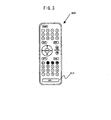
- Fig. 3 shows a remote controller 610 for controlling the television receiver 600.
- the remote controller 610 is equipped with keys used to control the television receiver 600 and transmits control signals to the television receiver 600 using infrared light, for example. Control signals can also be transferred to the television receiver 600 using a low-power communication channel, such as Bluetooth (trademark).
- the remote controller 610 has a Mark button 611 for marking content. When the Mark button 611 is pressed, prescribed control signals are transmitted to the television receiver 600, causing the transmitter of the television receiver 600 to send a mark request to the clipping center 20.
- the remote controller 610 can have a communication function for transmitting a mark request or the like to the clipping center 20.
- the mark request is transmitted to the command receiver 201 via a network 80.
- the request is transmitted according to HTTP protocol on a TCP/IP connection, for example.
- the network 80 differs according to what type of public network the clipping center 20 is connected to.
- the network 80 may be a packet-switching network provided by a company managing mobile communications, a telephone network for mobile or fixed communications, the Internet, or a private communication network.
- the portable telephone 300 and car navigation system 400 can be connected to the clipping center 20 via the network 80.
- the portable telephone 300 includes an Information button 302 for requesting data browsing.
- the Information button 302 is manipulated, a request for data browsing is sent to the clipping center 20, enabling the user to browse prescribed data. This operation will be described later with reference to Fig. 7.
- the car navigation system 400 can also be provided with a similar button to request information browsing. Of course it is also possible to display a menu that enables the user to send requests.
- the portable telephone 300 in Fig. 4 can also be provided with a Mark button 301 for marking data.
- Content for a broadcast is extracted from the information content database 220 and transmitted to the broadcasting facility 10 (Fig. 1). At this time, the content is converted to a portable terminal format or the like by the content converter 203 and stored in the user content server 240 (X0 in Fig. 2).
- the user views the television broadcast using the television receiver 600 in the receiving facility 60.
- the user presses the Mark button 611 (Fig. 3) on the remote controller 610 to mark desired television programs.
- the television receiver 600 connects to the clipping server 200 by TCP/IP and transmits identifying data and a program identifier to the clipping server 200 using HTTP (X1).
- An account (entry) is provided for each user or user terminal in the user database 230.
- identifying data including a program identifier is transmitted when the user performs a marking operation.
- the program identifier is recorded in the account corresponding to the identifying data (X2).
- Data such as that shown in Fig. 8 is stored for each marking operation in the user database 230.
- the user identifier in Fig. 8 is the personal identifying data (also called personal identifier) or terminal identifying data (also called terminal identifier).
- a browsing request is sent to the clipping server 200 by the user using the portable telephone 300 and is received by the command receiver 201 (X3).
- a menu display and content are transmitted to the portable telephone 300 from the clipping server 200 (X4).
- the terminal checker 202 determines the type of terminal used by the user and transmits a menu and content compatible with this terminal type.
- Fig. 5 shows operations for generating and editing content.
- the content converter 203 extracts an XML file from the information content database 220 and, in S1001, generates broadcast content and assigns an identifier uniquely identifying the program in the broadcast content.
- the content converter 203 generates content compatible with other media.
- the generated broadcast content is stored in the external storage device 110 (broadcast content database).
- content for each terminal is stored in the user content server 240 in association with the identifier uniquely identifying the program.
- Fig. 6 shows the operations conducted when the viewer executes a marking operation.
- S2000 of Fig. 6 the viewer is watching a program on the television receiver 600 shown in Fig. 2.
- the viewer presses the Mark button 611 on the remote controller 610 (Fig. 3) or the Mark button 301 on the portable telephone 300 (Fig. 4) in S2001.
- S2002 a command is sent to the command receiver 201 to mark program data for the current program.
- the command receiver 201 receives an identifier for identifying the user (also called a user identifier, personal identifier, or terminal identifier) and an identifier specifying the program content (also called a program identifier or content identifier) that are sent with the marking request and stores these identifiers in the user database 230 according to a format such as that shown in Fig. 8. In this way, program identifiers are stored for each user in S2003.
- an identifier for identifying the user also called a user identifier, personal identifier, or terminal identifier
- an identifier specifying the program content also called a program identifier or content identifier
- Fig. 7 shows operations performed when browsing marked programs.
- a user wishing to browse specified program data from a portable telephone or the like transmits a command for requesting a display to the command receiver 201 in S3001 by pressing either the Information button 302 of the portable telephone 300 (Fig. 4) or a similar button (not shown) in the remote controller 610 (Fig. 3).
- the terminal checker 202 extracts in S3002 data indicating the type of terminal that generated the command and an identifier identifying either the user or the terminal.
- the menu generator 204 creates a menu displaying a list of data marked by the user from user data stored in the user database 230.
- the menu generator 204 transmits this menu to the portable telephone 300 or the television receiver 600 via the network 80.
- the user can select desired content from the displayed menu and view the desired data.
- the user identifier personal identifier, terminal identifier
- HTML content is generated in the editing apparatus 120 and stored in the external storage device 110 as broadcast content.
- a program editing/recording device 122 assigns identification data to the content.
- the content is recorded in the information content database 220 of the clipping center 20.
- the remaining configuration is basically the same as that in the first embodiment.
- the editing apparatus 120 of the broadcasting facility 10 includes a content generator 121 and the program editing/recording device 122.
- the content generator 121 specifies external or internal content described in HTML and generates content for broadcasting.
- the program editing/recording device 122 specifies a broadcast time and channel, edits the program, and stores the edited content in the external storage device 110.
- the clipping server 200 in the clipping center 20 stores the content for broadcast in association with the broadcast time and channel in the information content database 220.
- the content in the information content database 220 is further converted to various document formats for portable telephones and car navigation systems, which are stored in the user content server 240.
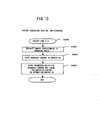
- Fig. 10 shows the operations for generating, editing, and recording content.
- an HTML file is specified.
- the HTML file is converted to content corresponding to the broadcast medium.
- the converted content is stored in the external storage device 110.
- Parameters specifying the time and channel for broadcasting the generated content are stored in the information content database 220 in S4003.
- the information content database 220 stores content and the like as shown in the example of Fig. 13.
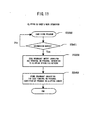
- Fig. 11 shows the operations performed when a viewer executes a marking operation.
- S5000 of Fig. 11 the viewer is watching a program on the television receiver 600.
- the viewer presses the Mark button 611 in the remote controller 610 (Fig. 3) or the Mark button 301 in the portable telephone 300 (Fig. 4) in S5001.
- a command is sent to the command receiver 201 to mark program data for the current program.
- the command receiver 201 receives an identifier for identifying the user and the broadcast time and channel that are sent with the marking request.
- the broadcast times and channels of programs are stored in the user database 230 for each user, as in the example shown in Fig. 14.
- the broadcast time data can also be transmitted from the broadcasting facility 10.
- This data may be time data kept by a clock in the television receiver 600, remote controller 610, or portable telephone 300 (and may be time data taken at the time of the marking). Time data kept by the clock in the clipping center 20 (data for the time at which a marking request is received) may also be used. In the latter case, the clipping center 20 must be notified of the broadcast time.
- Fig. 12 shows operations performed when browsing marked programs.
- a user wishing to browse specified program data from a portable telephone or the like transmits a command for requesting a display to the command receiver 201 in S6001 by pressing either the Information button 302 of the portable telephone 300 (Fig. 4) or a similar button (not shown) in the remote controller 610 (Fig. 3).
- the terminal checker 202 extracts in S6002 data indicating the type of terminal that generated the command and an identifier identifying either the user or the terminal.
- the menu generator 204 creates menu displaying a list of data marked by the user from user data stored in the user database 230. The menu generator 204 transmits this menu to the portable telephone 300 or the television receiver 600.
- the user can select desired content from the displayed menu and view the desired data.
- the command receiver 201 sends commands in conformance with a TCP/IP connection.
- marking can be conducted via a telephone call (sending control signals) using the CTI center.
- the clipping server can be publicly accessible on the Internet. In this case, mobile stations of a mobile communications service access the clipping service via a gateway. Normal fixed data terminals can also be used to browse data at the clipping center via the Internet.
- the clipping service may also be provided on a proprietary packet-switching network belonging to a company in charge of a mobile communications network. In this case, the clipping service can be provided as a special service on the packet-switching network.
- the user can also input data for identifying programs (program identifiers, channels, and time data). For example, program identifiers can be displayed on a broadcast screen and inputted therein. Time data on the clipping server can be used as the time at which the server received the marking request.
- Mark and Information commands can be specified through the menu, instead of providing special Mark and Information buttons on the remote controller and portable telephone.
- These functions can be provided as a special service of a portable telephone such as i-mode, for example, wherein mark and information operations are selected from a menu. Of course, these selections can also be made in a menu provided on a normal website. Mark and Information operations can also be performed using a normal personal computer.
- a normal user ID as data for identifying a user, it is also possible to use a subscriber number (phone number), IP address, MAC address, one including sub-address or control code attached to a subscriber number, or the like.
- mark and information operations are executed from a fixed or portable telephone, it is possible to include user-specifying data when sending a call placing message. Another possibility is extracting the sender's membership number for use as identifying data using a caller ID service.
- the present invention allows content viewed or heard during a broadcast or related content to be easily entered in an external database and subsequently extracted from any location.
Landscapes
- Engineering & Computer Science (AREA)
- Multimedia (AREA)
- Signal Processing (AREA)
- Databases & Information Systems (AREA)
- Human Computer Interaction (AREA)
- Business, Economics & Management (AREA)
- General Engineering & Computer Science (AREA)
- Finance (AREA)
- Strategic Management (AREA)
- Computer Security & Cryptography (AREA)
- Computer Networks & Wireless Communication (AREA)
- Computer Graphics (AREA)
- Two-Way Televisions, Distribution Of Moving Picture Or The Like (AREA)
- Information Transfer Between Computers (AREA)
Abstract
A data provision apparatus enabling users to browse
previously viewed broadcast content or related content. While
viewing a television broadcast on a TV receiver, the user pushes
a button labeled "Mark" on the remote controller to clip content.
As a result, a request to "clip" content including program and user
identifiers is transmitted via a network to a server at a "clipping
center." The program identifier is recorded under the user
identifier in a user database. Subsequently, the user can browse
recorded content by pushing an "Information" button on a cellular
phone or the like to transmit a browsing request to the server at
the clipping center. The server references program content
recorded under the corresponding user identifier to generate a menu
of the content that is transmitted back to the cellular phone. By
selecting content in the menu displayed on the cellular phone, the
user can send a transmission request to the clipping server and
view the broadcast content returned in response to this request.
Description
The present invention relates to a data access or data
provision technology that allows a user to access content of a
broadcasting service or related content via a network.
Today we can use a client apparatus to access and browse
various web pages stored on a web server connected to the Internet.
This client apparatus is not restricted to a fixed data terminal.
For example, it is now possible to connect to the Internet and access
web pages using a mobile station for mobile communications, such
as a portable telephone or a car navigation system.
We are now beginning to distribute content using terrestrial
analog broadcasting, digital broadcasting via satellite, and the
like. It has also become possible to convert a universal data
structure that can be used when creating this content, such as XML
(Extensible Markup Language), for various media including portable
telephones and car navigation systems. Accordingly, there is hope
that we can merge content from broadcast services with content on
networks. For example, it is desirable to be able to access
broadcast content or related content via the Internet in order to
browse such content at a later time using a data terminal, portable
telephone, car navigation system, or the like.
However, even if the original content is related to the
broadcast service, as long as the user is browsing content via the
Internet, the user must either use a search engine on the Internet
or specify an address using a URL or the like advertised during
the broadcast in order to access that content. Conventionally,
data that has been sent by broadcast services cannot be used
effectively, making it necessary to merge broadcast services and
communication services.
In view of the foregoing, it is an object of the present
invention to provide a technology for seamlessly merging program
data that is broadcast by a broadcast service in the form of radio
waves, CATV, or the like with content on a communication network,
such as the Internet, and to enable users to access broadcast data
and related data without the need for conducting searches or
inputting addresses.
These objects and others will be attained according to the
present invention employing the configurations described in the
attached claims. These configurations are described in more detail
below.
In the detailed configuration of the present invention,
broadcast content includes an identifier for uniquely identifying
that content. When a user viewing a broadcast desires data related
to that broadcast, the user submits a request to accumulate the
data by a clicking a mouse, pushing a button on a television remote
control, or the like. As a result of this action, a content
identifier and user identifier for the user requesting data
accumulation are transmitted to the server via a network. The
content identifier is stored in a virtual directory uniquely
determined by the user identifier. Broadcast content is
accumulated in advance or when a request is received from the user.
When the user sends a request to browse data, a content identifier
is extracted based on the user identifier and data is supplied to
the user based on the content identifier. This data is converted
to a format compatible with the user' s mobile communication terminal
or other terminal that can be connected to the Internet. Such
conversion can be executed at the time a browsing request is received
or in advance.
These objects and others are achieved by a data access
apparatus comprising means for receiving a broadcast signal; means
for playing broadcast content included in the broadcast signal;
means for transmitting an association request, including user-specifying
data and content-specifying data specifying the
broadcast content or content related to the broadcast content and
requesting that the content specified by the content-specifying
data be associated to a user account identified by the user-specifying
data, to a prescribed transmission destination ; and
means for requesting the transmission of content associated with
a user account specified by the user-specifying data.
With this configuration, broadcast content or the like can
be associated with a user account. Subsequently, desired data can
be extracted by specifying the user account.
One or a plurality of user accounts can be assigned for each
user. Users may also acquire separate accounts for different
terminals or different objectives. These terminals could include
a portable telephone, car navigation system, or normal data terminal.
To associate broadcast content or the like with a user account,
a content identifier assigned to the broadcast content or the like
is recorded in the user account.
User-specifying data provided in an association request can
be a user ID, a subscriber number for a portable telephone or other
user apparatus, one including a sub address or control code added
to a subscriber number, an IP address, a MAC address or other number
physically recorded in the communication device, or the like.
Subscriber numbers can be provided by a caller ID service. When
making an association request on a subscriber network, at least
part of the user-specifying data and content-specifying data is
transmitted with a call setup message. One user account can be
associated with one or more user-specifying data. It is also
possible to treat a plurality of user accounts in the same way using
one user-specifying data (recording data simultaneously in a
plurality of user accounts). User accounts may not necessarily be
managed as a "user account" on the system. For example, user
accounts can be managed as user IDs or other user-specifying data.
Content identifying data in an association request can be a
content identifier or a content broadcast time and channel. The
broadcast time can be sent to the broadcast signal receiving site
with the broadcast signal from the broadcast site, or can be kept
by a clock at the receiving site or at the content managing site.
When using a clock at the content receiving site or the content
managing site, it is desirable to synchronize this clock with the
clock on the broadcast end. If the clock on the content managing
site is keeping time of when an association request is received
and treating this time as the content broadcasting time, there is
no need to send time data as content-specifying data.
When a broadcast station site transmits the broadcast time
to the broadcast signal receiving site, the broadcast time can be
sent along with the content or sent as part of the content. When
sending identifying data along with the content, the data can be
described as an element accompanying the body of the content as
set forth in Japanese unexamined patent application publication
No. HEI-10-51752, for example. When sending the time data as part
of the content, the data can be sent using a tag in XML or a metatag
in HTML.
Broadcast signals may be either for a television or radio
broadcast and may be either digital or analog. The transmission
channel can be broadcast on land, via satellite, or via cable.
An example of broadcast content is Broadcast Markup Language
(BML) content. Examples of related content are HTML documents and
data (telephone numbers, maps, URLS, etc.) describing sound and
video data in the broadcast content.
Association requests can be sent using TCP/IP protocol or a
normal telephone protocol. When a request is sent using TCP/IP
protocol, various applications for HTTP or the like can be used.
The communication network can be the Internet, a private IP network,
or a packet network or the like provided by a company operating
a communication network. When using a telephone, MFT (multifrequency
tone) signals or the like are used as control signals.
CTI (computer telephony integration) may also be used.
An association request can be made using a device for
receiving broadcast signals (including a data terminal with a
receiving function), a remote controller for this device, a fixed
telephone, a portable telephone, or the like. A subscriber number
and IP address indicate the destination address.
A request for transmitting content can be sent using TCP/IP
protocol or a normal telephone protocol. When a request is sent
using TCP/IP protocol, various applications for HTTP or the like
can be used. The communication network can be the Internet, a
private IP network, or a packet network or the like provided by
a company operating a communication network. When using a
telephone, MFT signals or the like are used as control signals.
CTI may also be used.
According to another aspect of the present invention, a data
provision apparatus comprises means for transmitting a broadcast
signal including broadcast content; means for storing the broadcast
content included in the broadcast signal or content related to the
broadcast content in association with content-specifying data
specifying the broadcast content or related content; means for
receiving an association request transmitted from a user device,
the association request including user-specifying data and
content-specifying data and requesting that the content specified
by the content-specifying data be associated to a user account
identified by the user-specifying data; means for associating
content specified by the content-specifying data to a user account
identified by the user-specifying data based on the association
request; and means for extracting content associated with a user
account from the content storing means based on a content
transmission request sent from a user device and transmitting the
content to the user device.
With this configuration, broadcast content or the like is
associated with a user account based on a request from the user.
Subsequently, desired content can be acquired by specifying the
user account.
This configuration can also be provided with means for
determining the type of user device and for transmitting content
compatible with that device. The format for content transmitted
to the user device can be normal HTML, compact HTML employed by
portable telephones, Mobile Markup Language (MML), Wireless Markup
Language (WML), Handheld Device Markup Language (HDML), or the like.
Accordingly, data can be provided in conformance to a variety of
user devices, not just ordinary web terminals.
The present invention can be implemented not only as a device
or system, but also as a method. Naturally, part of the invention
can be configured in software. It is also obvious that the software
product (recording medium) enabling the software program to be
executed on a computer also falls within the technical scope of
the present invention.
In the drawings:
Preferred embodiments of the present invention will be
described while referring to the accompanying drawings. First a
data provision system according to a first embodiment of the present
invention will be described.
As described later in more detail, content is stored as XML
documents or the like in a information content database 220 provided
in a clipping center 20. The content is converted to broadcast
content and transmitted by the broadcasting facility 10. While
viewing broadcast programs, the user marks desired programs in the
clipping center 20. The clipping center 20 records content
corresponding to the marked program in association with user-specifying
data. Later when the user requests to browse data,
content converted to a format that conforms to specifications of
the user's data terminal is supplied to the user's data terminal.
The following assumptions are made in the present embodiment.
Of course, this is merely an example configuration and various other
configurations are possible.
Fig. 1 shows the overall construction of the data provision
system according to the first embodiment. As shown in the diagram,
the data provision system includes the broadcasting facility 10
of a broadcasting station and the clipping center 20. The
broadcasting facility 10 and clipping center 20 are connected to
each other via a communication line 70, such as a dedicated line
service, an IP network service, or a virtual LAN service. It is
also possible to provide both the broadcasting facility 10 and
clipping center 20 at the same site and link the two with a LAN.
The broadcasting facility 10 provides a broadcast satellite digital
television service. Of course the broadcasting facility 10 may
also provide a ground wave broadcast, communication satellite
broadcast, or cable broadcast service. The broadcast content can
be in a format for television, radio, data or a combination thereof.
The broadcast signal can also be in a digital or an analog form.
The user (viewer) receives and plays broadcast signals using a
television receiver 600 in a receiving facility 60, such as the
user's home. The television receiver 600 is a set-top box, a data
terminal with a television receiving function or the like. The user
can mark broadcast programs in the user's own account using the
clipping center 20. Subsequently, the user can access the clipping
center 20 from any location using a portable terminal, such as a
portable telephone 300 or car navigation system 400, and can browse
the marked programs. The user can also browse programs using a fixed
data terminal, such as a desktop computer (not shown), that is
connected to the network.
The broadcasting facility 10 includes a broadcast signal
transmitter 100, an external storage device 110 for storing
broadcast content, an editing apparatus 120 for editing programs,
or the like.
The clipping center 20 includes a clipping server 200, an
information content database 220, a user information database 230,
a user content server 240, and the like. The information content
database 220 stores content described in XML, for example, while
the clipping server 200 or other server converts other media to
XML or the like using XSLT (Extensible Stylesheet Language
Transformation), for example, enabling the use of content in other
formats, such as MML, HTML, CHTML, WML, BML, and HDML. Content
converted to the BML format is transferred to the broadcasting
facility 10 and stored in the external storage device 110 as
broadcast content. Content converted to other document formats for
portable telephones and navigation systems is stored in the user
content server 240.
The clipping server 200 of the clipping center 20 provides
a variety of services. For example, the clipping server 200 shown
in Fig. 2 has a command receiver 201, a terminal checker 202, a
menu generator 204, and a content converter 203.
The television receiver 600 of the receiving facility 60
receives and plays broadcast signals and also has a communication
function for transmitting marking requests and the like to the
clipping center 20. Fig. 3 shows a remote controller 610 for
controlling the television receiver 600. The remote controller 610
is equipped with keys used to control the television receiver 600
and transmits control signals to the television receiver 600 using
infrared light, for example. Control signals can also be
transferred to the television receiver 600 using a low-power
communication channel, such as Bluetooth (trademark). The remote
controller 610 has a Mark button 611 for marking content. When the
Mark button 611 is pressed, prescribed control signals are
transmitted to the television receiver 600, causing the transmitter
of the television receiver 600 to send a mark request to the clipping
center 20. The remote controller 610 can have a communication
function for transmitting a mark request or the like to the clipping
center 20. The mark request is transmitted to the command receiver
201 via a network 80. The request is transmitted according to HTTP
protocol on a TCP/IP connection, for example. The network 80
differs according to what type of public network the clipping center
20 is connected to. The network 80 may be a packet-switching network
provided by a company managing mobile communications, a telephone
network for mobile or fixed communications, the Internet, or a
private communication network.
The portable telephone 300 and car navigation system 400 can
be connected to the clipping center 20 via the network 80. As shown
in Fig. 4, the portable telephone 300 includes an Information button
302 for requesting data browsing. When the Information button 302
is manipulated, a request for data browsing is sent to the clipping
center 20, enabling the user to browse prescribed data. This
operation will be described later with reference to Fig. 7. The
car navigation system 400 can also be provided with a similar button
to request information browsing. Of course it is also possible to
display a menu that enables the user to send requests. The portable
telephone 300 in Fig. 4 can also be provided with a Mark button
301 for marking data.
Next, the operations of the present embodiment will be
described.
First, the operations of the embodiment will be described
while referring to Fig. 2. Content for a broadcast is extracted
from the information content database 220 and transmitted to the
broadcasting facility 10 (Fig. 1). At this time, the content is
converted to a portable terminal format or the like by the content
converter 203 and stored in the user content server 240 (X0 in Fig.
2). The user (viewer) views the television broadcast using the
television receiver 600 in the receiving facility 60. The user
presses the Mark button 611 (Fig. 3) on the remote controller 610
to mark desired television programs. When the user presses the Mark
button 611, the television receiver 600 connects to the clipping
server 200 by TCP/IP and transmits identifying data and a program
identifier to the clipping server 200 using HTTP (X1). An account
(entry) is provided for each user or user terminal in the user
database 230. Hence, identifying data including a program
identifier is transmitted when the user performs a marking operation.
At this time, the program identifier is recorded in the account
corresponding to the identifying data (X2). Data such as that shown
in Fig. 8 is stored for each marking operation in the user database
230. The user identifier in Fig. 8 is the personal identifying data
(also called personal identifier) or terminal identifying data
(also called terminal identifier). Next, a browsing request is
sent to the clipping server 200 by the user using the portable
telephone 300 and is received by the command receiver 201 (X3).
In response, a menu display and content are transmitted to the
portable telephone 300 from the clipping server 200 (X4). The
terminal checker 202 determines the type of terminal used by the
user and transmits a menu and content compatible with this terminal
type.
Fig. 5 shows operations for generating and editing content.
In S1000 of Fig. 5, the content converter 203 extracts an XML file
from the information content database 220 and, in S1001, generates
broadcast content and assigns an identifier uniquely identifying
the program in the broadcast content. In S1002, the content
converter 203 generates content compatible with other media. In
S1003, the generated broadcast content is stored in the external
storage device 110 (broadcast content database). In S1004, content
for each terminal (portable telephone, mobile communication
terminal, etc.) is stored in the user content server 240 in
association with the identifier uniquely identifying the program.
Fig. 6 shows the operations conducted when the viewer executes
a marking operation. In S2000 of Fig. 6, the viewer is watching
a program on the television receiver 600 shown in Fig. 2. When the
viewer wishes to obtain program data, the viewer presses the Mark
button 611 on the remote controller 610 (Fig. 3) or the Mark button
301 on the portable telephone 300 (Fig. 4) in S2001. In S2002, a
command is sent to the command receiver 201 to mark program data
for the current program. The command receiver 201 receives an
identifier for identifying the user (also called a user identifier,
personal identifier, or terminal identifier) and an identifier
specifying the program content (also called a program identifier
or content identifier) that are sent with the marking request and
stores these identifiers in the user database 230 according to a
format such as that shown in Fig. 8. In this way, program
identifiers are stored for each user in S2003.
Fig. 7 shows operations performed when browsing marked
programs. As shown in Fig. 7, a user wishing to browse specified
program data from a portable telephone or the like transmits a
command for requesting a display to the command receiver 201 in
S3001 by pressing either the Information button 302 of the portable
telephone 300 (Fig. 4) or a similar button (not shown) in the remote
controller 610 (Fig. 3). After the command receiver 201 receives
the command, the terminal checker 202 extracts in S3002 data
indicating the type of terminal that generated the command and an
identifier identifying either the user or the terminal. In S3003,
the menu generator 204 creates a menu displaying a list of data
marked by the user from user data stored in the user database 230.
The menu generator 204 transmits this menu to the portable telephone
300 or the television receiver 600 via the network 80. In S3004,
the user can select desired content from the displayed menu and
view the desired data. The user identifier (personal identifier,
terminal identifier) can be inputted and transmitted explicitly
from the user side (a preset user identifier can be stored and
automatically transmitted) or can be included in a control message
during a call placing procedure or the like.
Next, a second embodiment of the present invention will be
described. In this embodiment, HTML content is generated in the
editing apparatus 120 and stored in the external storage device
110 as broadcast content. A program editing/recording device 122
assigns identification data to the content. Subsequently, the
content is recorded in the information content database 220 of the
clipping center 20. The remaining configuration is basically the
same as that in the first embodiment.
Fig. 9 shows the relevant parts of the second embodiment. As
shown in the diagram, the editing apparatus 120 of the broadcasting
facility 10 includes a content generator 121 and the program
editing/recording device 122. The content generator 121 specifies
external or internal content described in HTML and generates content
for broadcasting. The program editing/recording device 122
specifies a broadcast time and channel, edits the program, and
stores the edited content in the external storage device 110. The
clipping server 200 in the clipping center 20 stores the content
for broadcast in association with the broadcast time and channel
in the information content database 220. The content in the
information content database 220 is further converted to various
document formats for portable telephones and car navigation systems,
which are stored in the user content server 240.
Fig. 10 shows the operations for generating, editing, and
recording content. In S4000 of Fig. 10, an HTML file is specified.
In S4001, the HTML file is converted to content corresponding to
the broadcast medium. In S4002, the converted content is stored
in the external storage device 110. Parameters specifying the time
and channel for broadcasting the generated content are stored in
the information content database 220 in S4003. The information
content database 220 stores content and the like as shown in the
example of Fig. 13.
Fig. 11 shows the operations performed when a viewer executes
a marking operation. In S5000 of Fig. 11, the viewer is watching
a program on the television receiver 600. When the viewer wishes
to obtain program data, the viewer presses the Mark button 611 in
the remote controller 610 (Fig. 3) or the Mark button 301 in the
portable telephone 300 (Fig. 4) in S5001. In S5002, a command is
sent to the command receiver 201 to mark program data for the current
program. The command receiver 201 receives an identifier for
identifying the user and the broadcast time and channel that are
sent with the marking request. In S5003, the broadcast times and
channels of programs are stored in the user database 230 for each
user, as in the example shown in Fig. 14. The broadcast time data
can also be transmitted from the broadcasting facility 10. This
data may be time data kept by a clock in the television receiver
600, remote controller 610, or portable telephone 300 (and may be
time data taken at the time of the marking). Time data kept by the
clock in the clipping center 20 (data for the time at which a marking
request is received) may also be used. In the latter case, the
clipping center 20 must be notified of the broadcast time.
Fig. 12 shows operations performed when browsing marked
programs. As shown in Fig. 12, a user wishing to browse specified
program data from a portable telephone or the like transmits a
command for requesting a display to the command receiver 201 in
S6001 by pressing either the Information button 302 of the portable
telephone 300 (Fig. 4) or a similar button (not shown) in the remote
controller 610 (Fig. 3). After the command receiver 201 receives
the command, the terminal checker 202 extracts in S6002 data
indicating the type of terminal that generated the command and an
identifier identifying either the user or the terminal. In S6003,
the menu generator 204 creates menu displaying a list of data marked
by the user from user data stored in the user database 230. The
menu generator 204 transmits this menu to the portable telephone
300 or the television receiver 600. In S6004, the user can select
desired content from the displayed menu and view the desired data.
While the invention has been described in detail with
reference to specific embodiments thereof, it would be apparent
to those skilled in the art that many modifications and variations
may be made therein without departing from the spirit of the
invention, the scope of which is defined by the attached claims.
For example, in the embodiments described above, the command
receiver 201 sends commands in conformance with a TCP/IP connection.
However, marking can be conducted via a telephone call (sending
control signals) using the CTI center. The clipping server can be
publicly accessible on the Internet. In this case, mobile stations
of a mobile communications service access the clipping service via
a gateway. Normal fixed data terminals can also be used to browse
data at the clipping center via the Internet. The clipping service
may also be provided on a proprietary packet-switching network
belonging to a company in charge of a mobile communications network.
In this case, the clipping service can be provided as a special
service on the packet-switching network.
The user can also input data for identifying programs (program
identifiers, channels, and time data). For example, program
identifiers can be displayed on a broadcast screen and inputted
therein. Time data on the clipping server can be used as the time
at which the server received the marking request.
In addition "Mark" and "Information" commands can be
specified through the menu, instead of providing special Mark and
Information buttons on the remote controller and portable telephone.
These functions can be provided as a special service of a portable
telephone such as i-mode, for example, wherein mark and information
operations are selected from a menu. Of course, these selections
can also be made in a menu provided on a normal website. Mark and
Information operations can also be performed using a normal personal
computer. In addition to using a normal user ID as data for
identifying a user, it is also possible to use a subscriber number
(phone number), IP address, MAC address, one including sub-address
or control code attached to a subscriber number, or the like. When
mark and information operations are executed from a fixed or
portable telephone, it is possible to include user-specifying data
when sending a call placing message. Another possibility is
extracting the sender's membership number for use as identifying
data using a caller ID service.
As described above, the present invention allows content
viewed or heard during a broadcast or related content to be easily
entered in an external database and subsequently extracted from
any location.
Claims (30)
- A data access apparatus comprising:means for receiving a broadcast signal;means for playing broadcast content included in the broadcast signal;means for transmitting an association request, including user-specifying data and content-specifying data specifying the broadcast content or content related to the broadcast content, and requesting that the content specified by the content-specifying data be associated to a user account identified by the user-specifying data, to a prescribed transmission destination ; andmeans for requesting the transmission of content associated with a user account specified by the user-specifying data.
- A data access apparatus comprising:means for transmitting an association request, including user-specifying data and content-specifying data specifying broadcast content or content related to the broadcast content, and requesting that the content specified by the content-specifying data be associated to a user account identified by the user-specifying data, to a prescribed transmission destination; andmeans for requesting the transmission of content associated with a user account specified by the user-specifying data.
- A content association requesting device for transmitting an association request, including user-specifying data and content-specifying data specifying broadcast content or content related to the broadcast content, requesting that the content specified by the content-specifying data be associated to a user account identified by the user-specifying data, to a prescribed transmission destination.
- A content association requesting device as recited in claim 3, wherein the association request is transmitted via a subscriber network.
- A content association requesting device as recited in claim 4, further comprising a function for performing telephone or packet communications via a subscriber network.
- A content association requesting device as recited in claim 4 that instructs an association request to be transmitted to a communication device having a function for performing telephone or packet communications via a subscriber network, the communication device provided separately from the content association requesting device.
- A content association requesting device as recited in claim 3, wherein the transmission destination is specified by a subscriber number.
- A content association requesting device as recited in claim 3, wherein the transmission destination is specified by an address instruction that includes an IP address.
- A content association requesting device as recited in claim 3, wherein the transmission destination is specified by a URL (uniform resource locator).
- A content association requesting device comprising:means for extracting content identifying data from a playback device that receives a broadcast signal and plays back the broadcast content included in the broadcast signal, the content identifying data identifying either the broadcast content or content related to the broadcast content; andmeans for transmitting an association request, including user-specifying data and the content-specifying data, and requesting that the content specified by the content-specifying data be associated to a user account identified by the user-specifying data, to a prescribed transmission destination.
- A content association requesting device as recited in claim 10, further comprising a function for remotely controlling the playback device.
- A content association requesting device as recited in claim 11, wherein the playback device comprises a communication function, and the content association requesting device instructs transmission of the user-specifying data and association request to the communication function.
- A data provision apparatus comprising:means for transmitting a broadcast signal including broadcast content;means for storing the broadcast content included in the broadcast signal or content related to the broadcast content in association with content-specifying data specifying the broadcast content or related content;means for receiving an association request transmitted from a user device, the association request including user-specifying data and content-specifying data and requesting that the content specified by the content-specifying data be associated to a user account identified by the user-specifying data;means for associating content specified by the content-specifying data to a user account identified by the user-specifying data based on the association request; andmeans for extracting content associated with a user account from the content storing means based on a content transmission request sent from a user device and transmitting the content to the user device.
- A data provision apparatus as recited in claim 13, wherein the content-specifying data is a content identifier included in the broadcast signal.
- A data provision apparatus as recited in claim 14, wherein the content is described by XML (Extensible Markup Language), and the content identifier is marked up by a tag representing the content identifier.
- A data provision apparatus as recited in claim 14, wherein the content is described by BML (Broadcast Markup Language), and the content identifier is marked up by a tag representing the content identifier.
- A data provision apparatus as recited in claim 14, wherein the content is described by HTML (HyperText Markup Language), and the content identifier is marked up by metatags.
- A data provision apparatus as recited in claim 13, wherein the content-specifying data includes at least a broadcast channel and specifies content based on the broadcast channel and prescribed time data.
- A data provision apparatus as recited in claim 18, wherein the prescribed time data is time data managed by the user device and is included in the content-specifying data transmitted from the user device.
- A data provision apparatus as recited in claim 18, wherein the prescribed time data is time data managed by the data provision apparatus itself, and the content-specifying data specifies content based on the broadcast channel included therein and the time data managed by the data provision apparatus itself.
- A data provision apparatus as recited in claim 18, wherein data for the broadcast channel is acquired from a tuner device that selects the broadcast signal.
- A data provision apparatus as recited in claim 13, further comprising means to determine the type of the user device, wherein content compatible with the user device is transmitted thereto.
- A data provision apparatus comprising:means for storing broadcast content included in a broadcast signal or content related to the broadcast content in association with content-specifying data specifying the broadcast content or related content;means for receiving an association request transmitted from a user device, the association request including user-specifying data and content-specifying data and requesting that the content specified by the content-specifying data be associated to a user account identified by the user-specifying data;means for associating content specified by the content-specifying data to a user account identified by the user-specifying data based on the association request; andmeans for extracting content associated with a user account from the content storing means based on a content transmission request sent from a user device and transmitting the content to the user device.
- A data provision apparatus comprising:means for storing broadcast content included in a broadcast signal or content related to the broadcast content in association with content-specifying data specifying the broadcast content or related content;means for receiving an association request transmitted from a user device, the association request including user-specifying data and content-specifying data and requesting that the content specified by the content-specifying data be associated to a user account identified by the user-specifying data;means for associating content specified by the content-specifying data to a user account identified by the user-specifying data based on the association request;means for determining the type of the user device; andmeans for extracting content associated with a user account from the content storing means based on a content transmission request sent from a user device and transmitting the content to the user device in a format compatible with the type of the user device.
- A data provision apparatus as recited in claim 24, wherein the content formats include HTML, compact HTML, WML, and HDML formats.
- A data provision apparatus comprising:means for storing broadcast content included in a broadcast signal or content related to the broadcast content in association with content-specifying data specifying the broadcast content or related content;means for receiving an association request transmitted from a user device, the association request including user-specifying data and content-specifying data and requesting that the content specified by the content-specifying data be associated to a user account identified by the user-specifying data;means for associating content specified by the content-specifying data to a user account identified by the user-specifying data based on the association request;means for generating a menu of prescribed content associated with a user account corresponding to a request to transmit a content menu transmitted from the user device and for transmitting the menu to the user device; andmeans for extracting content from the content storing means based on selections transmitted from the user device according to the selection instructions in the menu and transmitting the content to the user device.
- A data provision apparatus comprising:means for storing broadcast content included in a broadcast signal or content related to the broadcast content;means for associating the broadcast content or related content with a user account based on content-specifying data specifying the broadcast content or related content; andmeans for extracting broadcast content or related content associated with a user account from the content storing means based on a content transmission request sent from a user device and transmitting the content to the user device.
- A data access method comprising the steps of:receiving a broadcast signal;playing broadcast content included in the broadcast signal;transmitting an association request, including user-specifying data and content-specifying data, and requesting that the content specified by the content-specifying data be associated to a user account identified by the user-specifying data, to a prescribed transmission destination; andrequesting the transmission of content associated with a user account specified by the user-specifying data.
- A recording medium capable of being read by computers used for data access and storing a computer program instructing the computer to execute the steps of:receiving a broadcast signal;playing broadcast content included in the broadcast signal;transmitting an association request, including user-specifying data and content-specifying data, and requesting that the content specified by the content-specifying data be associated to a user account identified by the user-specifying data, to a prescribed transmission destination; andrequesting the transmission of content associated with a user account specified by the user-specifying data.
- A data provision method comprising the steps of:transmitting a broadcast signal including broadcast content;storing the broadcast content included in the broadcast signal or content related to the broadcast content in association with content-specifying data specifying the broadcast content or related content;receiving an association request transmitted from a user device, the association request including user-specifying data and content-specifying data and requesting that the content specified by the content-specifying data be associated to a user account identified by the user-specifying data;associating content specified by the content-specifying data to a user account based on the user-specifying data; andtransmitting content associated with a user account from the content storing means to the user device based on a content transmission request sent from a user device.
Applications Claiming Priority (3)
| Application Number | Priority Date | Filing Date | Title |
|---|---|---|---|
| JP2000227883 | 2000-07-27 | ||
| JP2000227883 | 2000-07-27 | ||
| PCT/JP2001/006267 WO2002011448A1 (en) | 2000-07-27 | 2001-07-19 | Information accessing device and method and information providing device and method |
Publications (2)
| Publication Number | Publication Date |
|---|---|
| EP1324609A1 true EP1324609A1 (en) | 2003-07-02 |
| EP1324609A4 EP1324609A4 (en) | 2006-11-02 |
Family
ID=18721275
Family Applications (1)
| Application Number | Title | Priority Date | Filing Date |
|---|---|---|---|
| EP01951929A Withdrawn EP1324609A4 (en) | 2000-07-27 | 2001-07-19 | Information accessing device and method and information providing device and method |
Country Status (5)
| Country | Link |
|---|---|
| US (1) | US20030108022A1 (en) |
| EP (1) | EP1324609A4 (en) |
| JP (1) | JP4174319B2 (en) |
| AU (1) | AU2001272758A1 (en) |
| WO (1) | WO2002011448A1 (en) |
Cited By (2)
| Publication number | Priority date | Publication date | Assignee | Title |
|---|---|---|---|---|
| EP1416710A3 (en) * | 2002-11-01 | 2006-10-18 | Canon Kabushiki Kaisha | Signal processing apparatus, perception apparatus, printing apparatus, and broadcasting method |
| EP1629672B1 (en) * | 2003-06-05 | 2015-11-11 | NDS Limited | System for transmitting information from a streamed program to external devices and media |
Families Citing this family (28)
| Publication number | Priority date | Publication date | Assignee | Title |
|---|---|---|---|---|
| JP2003131930A (en) * | 2001-10-26 | 2003-05-09 | Nec Corp | Apparatus for contents conversion processing, method for automatic selection of style sheet and program thereof |
| US7551888B2 (en) * | 2002-04-22 | 2009-06-23 | Nokia Corporation | Method and system of displaying content associated with broadcast program |
| BR0309410A (en) * | 2002-04-22 | 2005-02-01 | Nokia Corp | User method, media system and terminal for collecting audience information from a broadcasting media stream |
| US7599689B2 (en) * | 2002-04-22 | 2009-10-06 | Nokia Corporation | System and method for bookmarking radio stations and associated internet addresses |
| EP1398966A1 (en) * | 2002-09-05 | 2004-03-17 | Irdeto Access B.V. | Transaction system |
| JPWO2005031611A1 (en) * | 2003-09-26 | 2006-12-07 | ソニー株式会社 | Information transmitting apparatus, terminal apparatus and method thereof |
| WO2005039080A1 (en) * | 2003-10-21 | 2005-04-28 | Yutaka Matsushita | Information distribution system |
| KR100614276B1 (en) * | 2004-04-23 | 2006-08-22 | 바로비젼(주) | Participation Broadcasting System |
| JP4486033B2 (en) * | 2005-02-02 | 2010-06-23 | 株式会社エヌ・ティ・ティ・ドコモ | Content distribution method and relay device |
| JP2007028410A (en) * | 2005-07-20 | 2007-02-01 | Fuji Xerox Co Ltd | Program, apparatus and method for relaying registration or extraction of voice information to electronic bulletin board |
| US7344084B2 (en) * | 2005-09-19 | 2008-03-18 | Sony Corporation | Portable video programs |
| US7873974B2 (en) * | 2005-09-19 | 2011-01-18 | Sony Corporation | Identification of television programming using a portable wireless device |
| KR100728004B1 (en) * | 2005-10-19 | 2007-06-14 | 삼성전자주식회사 | Broadcast service transmission method and apparatus |
| US20070220092A1 (en) * | 2006-02-14 | 2007-09-20 | Snapvine, Inc. | System, apparatus and method for enabling mobility to virtual communities via personal and group forums |
| US8554265B1 (en) * | 2007-01-17 | 2013-10-08 | At&T Mobility Ii Llc | Distribution of user-generated multimedia broadcasts to mobile wireless telecommunication network users |
| KR101356490B1 (en) * | 2007-02-06 | 2014-01-29 | 엘지전자 주식회사 | Receiver and Method for processing a data communication between terminal and the reciver |
| US8898325B2 (en) * | 2007-03-06 | 2014-11-25 | Trion Worlds, Inc. | Apparatus, method, and computer readable media to perform transactions in association with participants interacting in a synthetic environment |
| US9104962B2 (en) * | 2007-03-06 | 2015-08-11 | Trion Worlds, Inc. | Distributed network architecture for introducing dynamic content into a synthetic environment |
| EP2140682A1 (en) * | 2007-04-27 | 2010-01-06 | MEKmedia GmbH | Device for connection to a television set, and method for the transmission of additional information for the television signal |
| JP2009159188A (en) * | 2007-12-26 | 2009-07-16 | Hitachi Ltd | Content display server |
| US9286045B2 (en) * | 2008-08-18 | 2016-03-15 | Infosys Limited | Method and system for providing applications to various devices |
| US8959536B2 (en) * | 2008-08-18 | 2015-02-17 | Infosys Limited | Method and system for providing applications to various devices |
| US8626863B2 (en) * | 2008-10-28 | 2014-01-07 | Trion Worlds, Inc. | Persistent synthetic environment message notification |
| US8694585B2 (en) * | 2009-03-06 | 2014-04-08 | Trion Worlds, Inc. | Cross-interface communication |
| US8657686B2 (en) * | 2009-03-06 | 2014-02-25 | Trion Worlds, Inc. | Synthetic environment character data sharing |
| US8661073B2 (en) * | 2009-03-06 | 2014-02-25 | Trion Worlds, Inc. | Synthetic environment character data sharing |
| US8214515B2 (en) * | 2009-06-01 | 2012-07-03 | Trion Worlds, Inc. | Web client data conversion for synthetic environment interaction |
| US20170339343A1 (en) * | 2016-05-17 | 2017-11-23 | Tijee Corporation | Multi-functional camera |
Family Cites Families (51)
| Publication number | Priority date | Publication date | Assignee | Title |
|---|---|---|---|---|
| US5862491A (en) * | 1995-02-13 | 1999-01-19 | Intel Corporation | Use of control channel information to enhance data throughput of an integrated cellular communication system |
| JP3472659B2 (en) * | 1995-02-20 | 2003-12-02 | 株式会社日立製作所 | Video supply method and video supply system |
| ES2147381T3 (en) * | 1995-07-11 | 2000-09-01 | Koninkl Philips Electronics Nv | VIDEO A LA CARTE SYSTEM. |
| WO1997004584A2 (en) * | 1995-07-21 | 1997-02-06 | Philips Electronics N.V. | Method of receiving compressed video signals |
| CA2181781C (en) * | 1995-07-26 | 2000-02-29 | Seiji Iwafune | Television system for providing interactive television programs and server system for constructing the television system |
| CA2202290A1 (en) * | 1995-09-20 | 1997-03-27 | Sasktel | Method for interconnection of tv and information service through telecommunications network |
| US6199206B1 (en) * | 1995-10-24 | 2001-03-06 | Sony Corporation | Television transmitter, television transmitting method, television receiver and television receiving method |
| JP3186960B2 (en) * | 1995-11-30 | 2001-07-11 | 松下電器産業株式会社 | Information retrieval method and apparatus |
| US5631694A (en) * | 1996-02-01 | 1997-05-20 | Ibm Corporation | Maximum factor selection policy for batching VOD requests |
| JP3523268B2 (en) * | 1996-04-04 | 2004-04-26 | パナソニックコミュニケーションズ株式会社 | Facsimile apparatus and communication result notification method |
| JP3310903B2 (en) * | 1996-05-16 | 2002-08-05 | 株式会社インフォシティ | Information transmission display method and information display device |
| US5708478A (en) * | 1996-06-26 | 1998-01-13 | Sun Microsystems, Inc. | Computer system for enabling radio listeners/television watchers to obtain advertising information |
| JP3568352B2 (en) * | 1997-03-27 | 2004-09-22 | 三洋電機株式会社 | Digital broadcasting system |
| JPH10293793A (en) * | 1997-04-21 | 1998-11-04 | Mitsubishi Electric Corp | Shopping terminal device and online shopping device |
| JP3803189B2 (en) * | 1998-01-07 | 2006-08-02 | 松下電器産業株式会社 | Program information organizing device |
| US6012086A (en) * | 1997-06-24 | 2000-01-04 | Sony Corporation | Internet event timer recording for video and/or audio |
| JP2000181421A (en) * | 1997-10-07 | 2000-06-30 | Masanobu Kujirada | Master and slave interlocking type display system |
| JPH11136658A (en) * | 1997-10-27 | 1999-05-21 | Sanyo Electric Co Ltd | Two-way tv receiver with transfer function and terminal equipment therefor |
| JP4249814B2 (en) * | 1998-01-14 | 2009-04-08 | 株式会社インフォシティ | Information access method and apparatus |
| JPH11220665A (en) * | 1998-01-30 | 1999-08-10 | Sony Corp | Communication method, wireless base station device and wireless terminal device |
| JPH11298879A (en) * | 1998-04-06 | 1999-10-29 | Sony Corp | Video information transmission and reception system |
| JP4235717B2 (en) * | 1998-04-14 | 2009-03-11 | 石井 美恵子 | Fraud prevention system, agent providing device, and fraud prevention method |
| US6788882B1 (en) * | 1998-04-17 | 2004-09-07 | Timesurf, L.L.C. | Systems and methods for storing a plurality of video streams on re-writable random-access media and time-and channel- based retrieval thereof |
| JP4337150B2 (en) * | 1998-04-24 | 2009-09-30 | ソニー株式会社 | Receiving apparatus and receiving method |
| AU4026999A (en) * | 1998-06-04 | 1999-12-20 | Imagictv Inc. | Television delivery system |
| CN1867068A (en) * | 1998-07-14 | 2006-11-22 | 联合视频制品公司 | Client-server based interactive television program guide system with remote server recording |
| JP3488092B2 (en) * | 1998-08-06 | 2004-01-19 | 松下電器産業株式会社 | Broadcast receiving apparatus and receiving program selection method |
| AU5066399A (en) * | 1998-08-24 | 2000-03-14 | Hitachi Limited | Method for displaying multimedia information processing method, processing device, and processing system |
| JP2000090033A (en) * | 1998-09-11 | 2000-03-31 | Ntt Mobil Communication Network Inc | Server device, communication terminal device, control method of server device, and control method of communication terminal device |
| US7356241B1 (en) * | 1998-11-10 | 2008-04-08 | Sony Corporation | Data recording and/or reproducing apparatus |
| JP2000183836A (en) * | 1998-12-15 | 2000-06-30 | Funai Electric Co Ltd | Information transmission system for digital satellite broadcast |
| JP2000181841A (en) * | 1998-12-18 | 2000-06-30 | Kanji Kuwabara | Information expressing method, information converting method, information viewer device and information communication system |
| JP2000181596A (en) * | 1998-12-21 | 2000-06-30 | Nippon Avionics Co Ltd | Home information terminal |
| US6282713B1 (en) * | 1998-12-21 | 2001-08-28 | Sony Corporation | Method and apparatus for providing on-demand electronic advertising |
| JP2000187666A (en) * | 1998-12-22 | 2000-07-04 | Ntt Data Corp | Related information providing system, preference similarity evaluation system, information introduction system, interest information acquisition method, preference similarity evaluation method, and recording medium |
| KR100547841B1 (en) * | 1998-12-26 | 2006-05-10 | 삼성전자주식회사 | Control Method of Operation Mode Switching of Television Mobile Phone |
| JP4280946B2 (en) * | 1998-12-28 | 2009-06-17 | ソニー株式会社 | Information processing system and method, portable terminal, information processing apparatus, and recording medium |
| JP4320814B2 (en) * | 1999-01-05 | 2009-08-26 | ソニー株式会社 | Server, control method, recording apparatus, and control method of recording apparatus |
| JP4264572B2 (en) * | 1999-01-05 | 2009-05-20 | ソニー株式会社 | Receiver |
| JP2000201117A (en) * | 1999-01-06 | 2000-07-18 | Sony Corp | Broadcast program receiving apparatus and broadcast program receiving method |
| US6850691B1 (en) * | 1999-03-30 | 2005-02-01 | Tivo, Inc. | Automatic playback overshoot correction system |
| US6711741B2 (en) * | 1999-04-07 | 2004-03-23 | Intel Corporation | Random access video playback system on a network |
| KR100624865B1 (en) * | 1999-06-02 | 2006-09-18 | 엘지전자 주식회사 | Video segmentation viewing system using user profile |
| US6349410B1 (en) * | 1999-08-04 | 2002-02-19 | Intel Corporation | Integrating broadcast television pause and web browsing |
| US6469749B1 (en) * | 1999-10-13 | 2002-10-22 | Koninklijke Philips Electronics N.V. | Automatic signature-based spotting, learning and extracting of commercials and other video content |
| US6430624B1 (en) * | 1999-10-21 | 2002-08-06 | Air2Web, Inc. | Intelligent harvesting and navigation system and method |
| US6564003B2 (en) * | 1999-11-04 | 2003-05-13 | Xm Satellite Radio Inc. | Method and apparatus for composite data stream storage and playback |
| US6678740B1 (en) * | 2000-01-14 | 2004-01-13 | Terayon Communication Systems, Inc. | Process carried out by a gateway in a home network to receive video-on-demand and other requested programs and services |
| US6771885B1 (en) * | 2000-02-07 | 2004-08-03 | Koninklijke Philips Electronics N.V. | Methods and apparatus for recording programs prior to or beyond a preset recording time period |
| US20020046407A1 (en) * | 2000-02-18 | 2002-04-18 | Alexander Franco | Use of web pages to remotely program a broadcast content recording system |
| US7103906B1 (en) * | 2000-09-29 | 2006-09-05 | International Business Machines Corporation | User controlled multi-device media-on-demand system |
-
2001
- 2001-07-19 JP JP2002515842A patent/JP4174319B2/en not_active Expired - Fee Related
- 2001-07-19 US US10/333,831 patent/US20030108022A1/en not_active Abandoned
- 2001-07-19 EP EP01951929A patent/EP1324609A4/en not_active Withdrawn
- 2001-07-19 WO PCT/JP2001/006267 patent/WO2002011448A1/en not_active Ceased
- 2001-07-19 AU AU2001272758A patent/AU2001272758A1/en not_active Abandoned
Cited By (2)
| Publication number | Priority date | Publication date | Assignee | Title |
|---|---|---|---|---|
| EP1416710A3 (en) * | 2002-11-01 | 2006-10-18 | Canon Kabushiki Kaisha | Signal processing apparatus, perception apparatus, printing apparatus, and broadcasting method |
| EP1629672B1 (en) * | 2003-06-05 | 2015-11-11 | NDS Limited | System for transmitting information from a streamed program to external devices and media |
Also Published As
| Publication number | Publication date |
|---|---|
| WO2002011448A1 (en) | 2002-02-07 |
| AU2001272758A1 (en) | 2002-02-13 |
| EP1324609A4 (en) | 2006-11-02 |
| US20030108022A1 (en) | 2003-06-12 |
| JP4174319B2 (en) | 2008-10-29 |
Similar Documents
| Publication | Publication Date | Title |
|---|---|---|
| US20030108022A1 (en) | Information accessing device and method and information providing device and method | |
| JP4903361B2 (en) | Information access apparatus and method, and information providing apparatus and method | |
| JP2004147336A6 (en) | Information access apparatus and method, and information providing apparatus and method | |
| JPWO2002011448A1 (en) | Information access device and method, and information providing device and method | |
| EP2061230B1 (en) | Portable terminal, information processing apparatus and content display system | |
| US20050015801A1 (en) | Information providing system, broadcast receiving apparatus, and server apparatus | |
| US20030232593A1 (en) | Digital data transfer through different communication paths | |
| KR20020007310A (en) | Remote delivery of multimedia content from consumer electronics devices | |
| GB2370456A (en) | Interactive television using a wireless terminal | |
| GB2364215A (en) | Providing video on demand and internet services in a wireless network environm ent | |
| JPH1056632A (en) | Broadcast system and broadcast receiving device | |
| JP3776033B2 (en) | Mobile terminal and program | |
| US7567793B1 (en) | Information system, mobile communication terminal, and information method | |
| JP2003158726A (en) | Program information providing system | |
| KR20140016695A (en) | Apparatus and method of providing broadcast and communication convergence services | |
| KR20070097678A (en) | Apparatus and method for providing additional information interworking with broadcast program and mobile information communication terminal using same | |
| JP2006246064A (en) | Digital broadcasting system and method | |
| WO2008041942A1 (en) | Method and device for downloading media products | |
| WO2003029932A9 (en) | Method and system for connecting end user with application based on broadcast code | |
| JP4174175B2 (en) | Information providing apparatus and method | |
| JP4746836B2 (en) | Information providing apparatus and method | |
| JP4461408B2 (en) | Information providing system, information providing method, and recording medium recording information providing program | |
| KR101234717B1 (en) | Method for Providing Video Contents Using Set-Top Box and Set-Top Box therefor | |
| JP2005150956A (en) | Decoder and broadcast receiver | |
| KR100866786B1 (en) | Personal mobile broadcasting service method and system |
Legal Events
| Date | Code | Title | Description |
|---|---|---|---|
| PUAI | Public reference made under article 153(3) epc to a published international application that has entered the european phase |
Free format text: ORIGINAL CODE: 0009012 |
|
| 17P | Request for examination filed |
Effective date: 20030227 |
|
| AK | Designated contracting states |
Designated state(s): AT BE CH CY DE DK ES FI FR GB GR IE IT LI LU MC NL PT SE TR |
|
| AX | Request for extension of the european patent |
Extension state: AL LT LV MK RO SI |
|
| RBV | Designated contracting states (corrected) |
Designated state(s): DE ES FR GB IT NL |
|
| A4 | Supplementary search report drawn up and despatched |
Effective date: 20060929 |
|
| 17Q | First examination report despatched |
Effective date: 20070215 |
|
| STAA | Information on the status of an ep patent application or granted ep patent |
Free format text: STATUS: THE APPLICATION IS DEEMED TO BE WITHDRAWN |
|
| 18D | Application deemed to be withdrawn |
Effective date: 20100713 |