EP1310288A1 - Antibacterial air filter medium and filter unit using the same - Google Patents
Antibacterial air filter medium and filter unit using the same Download PDFInfo
- Publication number
- EP1310288A1 EP1310288A1 EP02024947A EP02024947A EP1310288A1 EP 1310288 A1 EP1310288 A1 EP 1310288A1 EP 02024947 A EP02024947 A EP 02024947A EP 02024947 A EP02024947 A EP 02024947A EP 1310288 A1 EP1310288 A1 EP 1310288A1
- Authority
- EP
- European Patent Office
- Prior art keywords
- fibers
- antibacterial
- filter medium
- reinforcing material
- air filter
- Prior art date
- Legal status (The legal status is an assumption and is not a legal conclusion. Google has not performed a legal analysis and makes no representation as to the accuracy of the status listed.)
- Ceased
Links
- 230000000844 anti-bacterial effect Effects 0.000 title claims abstract description 42
- 239000012779 reinforcing material Substances 0.000 claims abstract description 48
- 229920001343 polytetrafluoroethylene Polymers 0.000 claims abstract description 34
- 239000004810 polytetrafluoroethylene Substances 0.000 claims abstract description 34
- -1 polytetrafluoroethylene Polymers 0.000 claims abstract description 23
- 239000000835 fiber Substances 0.000 claims description 31
- 239000004745 nonwoven fabric Substances 0.000 claims description 20
- 239000003242 anti bacterial agent Substances 0.000 claims description 17
- 239000011148 porous material Substances 0.000 claims description 5
- 239000000203 mixture Substances 0.000 claims description 4
- 229920000728 polyester Polymers 0.000 claims description 4
- 239000002759 woven fabric Substances 0.000 claims description 4
- 239000004952 Polyamide Substances 0.000 claims description 3
- 239000004642 Polyimide Substances 0.000 claims description 3
- 229920000297 Rayon Polymers 0.000 claims description 3
- 229920002492 poly(sulfone) Polymers 0.000 claims description 3
- 229920002647 polyamide Polymers 0.000 claims description 3
- 229920001721 polyimide Polymers 0.000 claims description 3
- 229920000098 polyolefin Polymers 0.000 claims description 3
- 229920000069 polyphenylene sulfide Polymers 0.000 claims description 3
- 229920002981 polyvinylidene fluoride Polymers 0.000 claims description 3
- 229920002972 Acrylic fiber Polymers 0.000 claims 2
- 229920003043 Cellulose fiber Polymers 0.000 claims 2
- 239000002245 particle Substances 0.000 abstract description 12
- XLYOFNOQVPJJNP-UHFFFAOYSA-N water Substances O XLYOFNOQVPJJNP-UHFFFAOYSA-N 0.000 abstract description 10
- 241000894006 Bacteria Species 0.000 abstract description 7
- 241000233866 Fungi Species 0.000 abstract description 6
- 238000001914 filtration Methods 0.000 abstract description 6
- 238000005406 washing Methods 0.000 abstract description 3
- 238000000034 method Methods 0.000 description 13
- 230000000843 anti-fungal effect Effects 0.000 description 12
- 230000000052 comparative effect Effects 0.000 description 8
- 239000000853 adhesive Substances 0.000 description 7
- 230000001070 adhesive effect Effects 0.000 description 7
- 229940121375 antifungal agent Drugs 0.000 description 7
- 239000000428 dust Substances 0.000 description 6
- 239000000463 material Substances 0.000 description 6
- 238000000465 moulding Methods 0.000 description 5
- 125000006850 spacer group Chemical group 0.000 description 5
- 238000002845 discoloration Methods 0.000 description 4
- 238000004140 cleaning Methods 0.000 description 3
- 238000011156 evaluation Methods 0.000 description 3
- 238000011144 upstream manufacturing Methods 0.000 description 3
- OKTJSMMVPCPJKN-UHFFFAOYSA-N Carbon Chemical compound [C] OKTJSMMVPCPJKN-UHFFFAOYSA-N 0.000 description 2
- MQIUGAXCHLFZKX-UHFFFAOYSA-N Di-n-octyl phthalate Natural products CCCCCCCCOC(=O)C1=CC=CC=C1C(=O)OCCCCCCCC MQIUGAXCHLFZKX-UHFFFAOYSA-N 0.000 description 2
- BJQHLKABXJIVAM-UHFFFAOYSA-N bis(2-ethylhexyl) phthalate Chemical compound CCCCC(CC)COC(=O)C1=CC=CC=C1C(=O)OCC(CC)CCCC BJQHLKABXJIVAM-UHFFFAOYSA-N 0.000 description 2
- 229910052799 carbon Inorganic materials 0.000 description 2
- 238000004132 cross linking Methods 0.000 description 2
- DIOQZVSQGTUSAI-UHFFFAOYSA-N decane Chemical compound CCCCCCCCCC DIOQZVSQGTUSAI-UHFFFAOYSA-N 0.000 description 2
- 239000004744 fabric Substances 0.000 description 2
- 235000013305 food Nutrition 0.000 description 2
- 239000003365 glass fiber Substances 0.000 description 2
- 238000010030 laminating Methods 0.000 description 2
- 239000010687 lubricating oil Substances 0.000 description 2
- 238000004519 manufacturing process Methods 0.000 description 2
- 238000005259 measurement Methods 0.000 description 2
- 238000002844 melting Methods 0.000 description 2
- 230000008018 melting Effects 0.000 description 2
- 239000002184 metal Substances 0.000 description 2
- 229910052751 metal Inorganic materials 0.000 description 2
- 244000005700 microbiome Species 0.000 description 2
- 239000004033 plastic Substances 0.000 description 2
- 229920003023 plastic Polymers 0.000 description 2
- 239000000843 powder Substances 0.000 description 2
- 230000001105 regulatory effect Effects 0.000 description 2
- 229920001661 Chitosan Polymers 0.000 description 1
- JPVYNHNXODAKFH-UHFFFAOYSA-N Cu2+ Chemical compound [Cu+2] JPVYNHNXODAKFH-UHFFFAOYSA-N 0.000 description 1
- VGGSQFUCUMXWEO-UHFFFAOYSA-N Ethene Chemical compound C=C VGGSQFUCUMXWEO-UHFFFAOYSA-N 0.000 description 1
- 239000005977 Ethylene Substances 0.000 description 1
- 229920002430 Fibre-reinforced plastic Polymers 0.000 description 1
- 229920006358 Fluon Polymers 0.000 description 1
- 239000004743 Polypropylene Substances 0.000 description 1
- XTXRWKRVRITETP-UHFFFAOYSA-N Vinyl acetate Chemical compound CC(=O)OC=C XTXRWKRVRITETP-UHFFFAOYSA-N 0.000 description 1
- 229910021536 Zeolite Inorganic materials 0.000 description 1
- PTFCDOFLOPIGGS-UHFFFAOYSA-N Zinc dication Chemical compound [Zn+2] PTFCDOFLOPIGGS-UHFFFAOYSA-N 0.000 description 1
- 238000009825 accumulation Methods 0.000 description 1
- NIXOWILDQLNWCW-UHFFFAOYSA-N acrylic acid group Chemical group C(C=C)(=O)O NIXOWILDQLNWCW-UHFFFAOYSA-N 0.000 description 1
- 229920005822 acrylic binder Polymers 0.000 description 1
- 238000004378 air conditioning Methods 0.000 description 1
- 229920002678 cellulose Polymers 0.000 description 1
- 239000001913 cellulose Substances 0.000 description 1
- 239000003086 colorant Substances 0.000 description 1
- 239000000470 constituent Substances 0.000 description 1
- 229920001577 copolymer Polymers 0.000 description 1
- 229910001431 copper ion Inorganic materials 0.000 description 1
- 230000006866 deterioration Effects 0.000 description 1
- HNPSIPDUKPIQMN-UHFFFAOYSA-N dioxosilane;oxo(oxoalumanyloxy)alumane Chemical group O=[Si]=O.O=[Al]O[Al]=O HNPSIPDUKPIQMN-UHFFFAOYSA-N 0.000 description 1
- 229940079593 drug Drugs 0.000 description 1
- 239000003814 drug Substances 0.000 description 1
- 239000003822 epoxy resin Substances 0.000 description 1
- 229920001038 ethylene copolymer Polymers 0.000 description 1
- 238000000605 extraction Methods 0.000 description 1
- 238000001125 extrusion Methods 0.000 description 1
- 239000003733 fiber-reinforced composite Substances 0.000 description 1
- 238000007380 fibre production Methods 0.000 description 1
- 239000011151 fibre-reinforced plastic Substances 0.000 description 1
- LNEPOXFFQSENCJ-UHFFFAOYSA-N haloperidol Chemical compound C1CC(O)(C=2C=CC(Cl)=CC=2)CCN1CCCC(=O)C1=CC=C(F)C=C1 LNEPOXFFQSENCJ-UHFFFAOYSA-N 0.000 description 1
- 238000010438 heat treatment Methods 0.000 description 1
- 238000005470 impregnation Methods 0.000 description 1
- 238000005342 ion exchange Methods 0.000 description 1
- 150000002500 ions Chemical class 0.000 description 1
- 238000004898 kneading Methods 0.000 description 1
- 229940057995 liquid paraffin Drugs 0.000 description 1
- 150000002739 metals Chemical class 0.000 description 1
- 238000012986 modification Methods 0.000 description 1
- 230000004048 modification Effects 0.000 description 1
- 230000035699 permeability Effects 0.000 description 1
- 239000012466 permeate Substances 0.000 description 1
- 239000000049 pigment Substances 0.000 description 1
- 239000002985 plastic film Substances 0.000 description 1
- 229920006255 plastic film Polymers 0.000 description 1
- 229920000647 polyepoxide Polymers 0.000 description 1
- 229920001155 polypropylene Polymers 0.000 description 1
- 239000000047 product Substances 0.000 description 1
- 229910052709 silver Inorganic materials 0.000 description 1
- 239000004332 silver Substances 0.000 description 1
- 238000005507 spraying Methods 0.000 description 1
- 239000000725 suspension Substances 0.000 description 1
- 229920002994 synthetic fiber Polymers 0.000 description 1
- 239000012209 synthetic fiber Substances 0.000 description 1
- 238000012360 testing method Methods 0.000 description 1
- 239000010457 zeolite Substances 0.000 description 1
Images


Classifications
-
- A—HUMAN NECESSITIES
- A61—MEDICAL OR VETERINARY SCIENCE; HYGIENE
- A61L—METHODS OR APPARATUS FOR STERILISING MATERIALS OR OBJECTS IN GENERAL; DISINFECTION, STERILISATION OR DEODORISATION OF AIR; CHEMICAL ASPECTS OF BANDAGES, DRESSINGS, ABSORBENT PADS OR SURGICAL ARTICLES; MATERIALS FOR BANDAGES, DRESSINGS, ABSORBENT PADS OR SURGICAL ARTICLES
- A61L9/00—Disinfection, sterilisation or deodorisation of air
- A61L9/16—Disinfection, sterilisation or deodorisation of air using physical phenomena
-
- B—PERFORMING OPERATIONS; TRANSPORTING
- B01—PHYSICAL OR CHEMICAL PROCESSES OR APPARATUS IN GENERAL
- B01D—SEPARATION
- B01D39/00—Filtering material for liquid or gaseous fluids
- B01D39/14—Other self-supporting filtering material ; Other filtering material
- B01D39/16—Other self-supporting filtering material ; Other filtering material of organic material, e.g. synthetic fibres
-
- A—HUMAN NECESSITIES
- A01—AGRICULTURE; FORESTRY; ANIMAL HUSBANDRY; HUNTING; TRAPPING; FISHING
- A01N—PRESERVATION OF BODIES OF HUMANS OR ANIMALS OR PLANTS OR PARTS THEREOF; BIOCIDES, e.g. AS DISINFECTANTS, AS PESTICIDES OR AS HERBICIDES; PEST REPELLANTS OR ATTRACTANTS; PLANT GROWTH REGULATORS
- A01N25/00—Biocides, pest repellants or attractants, or plant growth regulators, characterised by their forms, or by their non-active ingredients or by their methods of application, e.g. seed treatment or sequential application; Substances for reducing the noxious effect of the active ingredients to organisms other than pests
- A01N25/08—Biocides, pest repellants or attractants, or plant growth regulators, characterised by their forms, or by their non-active ingredients or by their methods of application, e.g. seed treatment or sequential application; Substances for reducing the noxious effect of the active ingredients to organisms other than pests containing solids as carriers or diluents
- A01N25/10—Macromolecular compounds
-
- A—HUMAN NECESSITIES
- A01—AGRICULTURE; FORESTRY; ANIMAL HUSBANDRY; HUNTING; TRAPPING; FISHING
- A01N—PRESERVATION OF BODIES OF HUMANS OR ANIMALS OR PLANTS OR PARTS THEREOF; BIOCIDES, e.g. AS DISINFECTANTS, AS PESTICIDES OR AS HERBICIDES; PEST REPELLANTS OR ATTRACTANTS; PLANT GROWTH REGULATORS
- A01N25/00—Biocides, pest repellants or attractants, or plant growth regulators, characterised by their forms, or by their non-active ingredients or by their methods of application, e.g. seed treatment or sequential application; Substances for reducing the noxious effect of the active ingredients to organisms other than pests
- A01N25/34—Shaped forms, e.g. sheets, not provided for in any other sub-group of this main group
-
- B—PERFORMING OPERATIONS; TRANSPORTING
- B01—PHYSICAL OR CHEMICAL PROCESSES OR APPARATUS IN GENERAL
- B01D—SEPARATION
- B01D39/00—Filtering material for liquid or gaseous fluids
- B01D39/14—Other self-supporting filtering material ; Other filtering material
- B01D39/16—Other self-supporting filtering material ; Other filtering material of organic material, e.g. synthetic fibres
- B01D39/1607—Other self-supporting filtering material ; Other filtering material of organic material, e.g. synthetic fibres the material being fibrous
- B01D39/1623—Other self-supporting filtering material ; Other filtering material of organic material, e.g. synthetic fibres the material being fibrous of synthetic origin
-
- B—PERFORMING OPERATIONS; TRANSPORTING
- B01—PHYSICAL OR CHEMICAL PROCESSES OR APPARATUS IN GENERAL
- B01D—SEPARATION
- B01D39/00—Filtering material for liquid or gaseous fluids
- B01D39/14—Other self-supporting filtering material ; Other filtering material
- B01D39/16—Other self-supporting filtering material ; Other filtering material of organic material, e.g. synthetic fibres
- B01D39/1692—Other shaped material, e.g. perforated or porous sheets
Definitions
- the present invention relates to an antibacterial air filter medium and a filter unit using the same.
- Japanese Patent Laid-Open No. 42715/1987 discloses a filter medium obtained by laminating an antibacterial nonwoven fabric to an electret nonwoven fabric.
- Japanese Patent Laid-Open No. 42716/1987 discloses an electret nonwoven-fabric filter medium treated with an antibacterial agent.
- Japanese Patent Laid-Open No. 92113/1993 discloses a glass fiber filter medium having an antibacterial zeolite bonded with an acrylic binder.
- the conventional filter media described above are unsuitable for use in a high-humidity environment or in an environment in which water is apt to splash on the filter.
- cleaning water splashes on the filter medium.
- the fibers of the glass fiber filter medium hydrolyze or the electret filter undergoes a considerable decrease in performance. Since the environments which are rich in water usually have conditions under which microorganisms are apt to grow, an antibacterial filter medium is highly necessary which can retain the filtering performance even in such environments.
- an aim of the invention is to provide an antibacterial filter medium capable of retaining its filtering performance even in environments rich in water.
- Another aim of the invention is to provide a filter unit using the filter medium.
- the invention provides an antibacterial air filter medium which comprises at least one layer of a porous polytetrafluoroethylene (hereinafter referred to as "PTFE") film and at least one layer of an antibacterial reinforcing material. Since this antibacterial air filter medium is based on a combination of a porous PTFE film and an antibacterial reinforcing material, it can retain its filtering performance even when used in a high-humidity environment or even through washing with water. In this filter medium, at least one layer of reinforcing material has preferably been colored.
- the invention further provides a filter unit which comprises the antibacterial air filter medium.
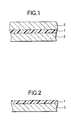
- Fig. 1 and Fig. 2 are sectional views respectively illustrating embodiments of the filter medium of the invention.
- the embodiment shown in Fig. 1 comprises a porous PTFE film 1 and a pair of antibacterial reinforcing materials 2 respectively disposed on the upper and lower sides of the film 1.
- the embodiment shown in Fig. 2 comprises a porous PTFE film and an antibacterial reinforcing material 2 disposed on one side of the film.
- only either of the reinforcing materials may be antibacterial.
- At least one layer of the reinforcing material 2 has preferably been colored.
- This coloration is intended to make the filter medium discoloration caused by collected dust particles inconspicuous.
- the discoloration caused by accumulated dirt attributable to airborne dust gives an unpleasant feeling to the user.
- the filter medium has been colored beforehand, the discoloration is inconspicuous.
- both of the reinforcing materials in the embodiment shown in Fig. 1 are preferably colored, only either of these reinforcing materials may be colored.
- the filter medium shown in Fig. 1 may have a constitution in which one of the reinforcing materials is antibacterial and the other has been colored, or may have a constitution in which one or both of the reinforcing materials are antibacterial and have been colored.
- Suitable as the antibacterial reinforcing material is an air-permeable member constituted of fibers having an antibacterial agent on the surface or in inner parts thereof.
- the form of the reinforcing material is not particularly limited as long as the material is more air-permeable than the porous PTFE film.
- the reinforcing material may be in the form of a nonwoven fabric, woven fabric, net, or the like.
- the fibers may be used, for example, semisynthetic fibers such as cellulose or viscose rayon fibers or synthetic fibers such as polyester, polyolefin, polyamide, acrylic, polysulfone, poly(amide-imide), polyimide, poly(phenylene sulfide), or poly(vinylidene fluoride) fibers.
- the antibacterial agent also is not particularly limited, and inorganic, organic, and natural antibacterial agents can be used alone or in combination of two or more thereof according to the intended use of the filter medium.
- preferred inorganic antibacterial agents are ones containing silver ions, copper ions, or zinc ions
- preferred organic antibacterial agents are ones having quaternary ammonium ions
- Preferred natural antibacterial agents are ones comprising chitosan.
- Examples of methods which can be used for fixing an antibacterial agent to fibers to be used as a reinforcing material include the impregnation method, adhesion method, and spraying method. Any of such methods may be used to adhere an antibacterial agent to the surface of fibers, to incorporate an antibacterial agent through kneading during fiber production, or to incorporate antibacterial ions into fibers by ion exchange.
- Methods for coloration are not particularly limited.
- a colorant such as a pigment or dye may be incorporated into the reinforcing material.
- the reinforcing material is preferably colored in a gray tint.
- the porous PTFE film 1 itself has water repellency. There is hence no particular need of taking care in using the filter medium in an environment rich in water, and any porous PTFE film can be used without particular limitations as long as it can exhibit the performance of an air filter.
- the porous PTFE film preferably has a thickness of from 5 to 200 ⁇ m, average pore diameter of from 0.1 to 30 ⁇ m, porosity of from 70 to 95%, and pressure loss of from 50 to 1,000 Pa (as measured at a permeation rate of 5.3 cm/sec by the method which will be described later).
- Examples of techniques for uniting a porous PTFE film with a reinforcing material include a method in which a powder or web having a lower melting point than the constituent fibers of the reinforcing material and the PTFE is interposed between the porous PTFE film and the reinforcing material and this assemblage is heated.
- the fibers of the reinforcing material may be melted to unite it with the porous PTFE film.
- use may be made of a method which comprises using an adhesive to unite the porous PTFE film with the reinforcing material.
- examples of the adhesive include two-pack type adhesives and adhesives of the thermal self-crosslinking type.
- Preferred two-pack type adhesives include epoxy resins
- preferred adhesives of the thermal self-crosslinking type include vinyl acetate/ethylene copolymers and ethylene/vinyl chloride copolymers.
- Fig. 3 is a slant view illustrating one embodiment of the filter unit of the invention.
- This filter unit comprises an air filter medium 3 comprising a porous PTFE film and an antibacterial reinforcing material.
- This filter medium 3 has been pleated into the shape of consecutive W's and housed in a supporting frame 4 (e.g., a frame made of a material having strength, such as a metal, plastic, fiber-reinforced plastic, or composite of two or more of them).
- the filter medium 3 has spacers 5 arranged in stripes on the surface thereof. These spacers 5 prevent the pleats of the filter medium 3, which has been pleated into the shape of W's, from coming into close contact with one another and thereby inhibit the pressure loss from increasing.
- spacers various materials including plastics and metals can be used as the spacers, it is preferred to employ a porous material which does not impair the air permeability of the filter medium. It is also possible to dispose a nonwoven fabric, woven fabric, plastic film, or the like as a spacer between the pleats. Air cleaning with this filter unit can be accomplished by sending the air from the direction indicated by the arrow A in the figure.
- an air filter medium and a filter unit using the same can be provide which, even when used after water washing or in a high-humidity environment, suffer no decrease in filtering property such as particle collection efficiency and can be inhibited from undergoing the growth of bacteria or mold fungi thereon.
- a sample was set on a circular holder having an effective area of 100 cm 2 .
- a pressure difference was applied between the upstream side and the downstream side, and the air permeation rate was regulated to 5.3 cm/sec with a flowmeter. Under these conditions, the pressure loss was measured with a pressure gauge (manometer). With respect to each sample, ten areas were thus examined and the average of the found values was taken as the pressure loss of the sample.
- the particles to be counted were limited to those having a particle diameter of from 0.1 to 0.2 ⁇ m.
- Antifungal properties were examined in accordance with JIS Z 2911.
- a spore suspension prepared beforehand (wet method; mixture of four kinds) was dropped onto a sheet-form specimen and incubated for 7 days. Thereafter, the specimen was examined for mold growth. The state in which the area of the mold which had grown was not larger than 1/4 the whole dropping area was judged "antifungal", while the state in which that mold area was more than 1/4 the whole dropping area was judged "not antifungal".
- a hundred parts by weight of a polytetrafluoroethylene powder (Fluon CD-123, manufactured by Asahi Glass Co., Ltd.) was evenly mixed with 30 parts by weight of a liquid lubricant (liquid paraffin).
- This mixture was preliminarily molded at 20 kg/cm 2 and then formed into a rod by extrusion molding.
- This red molding was passed through a pair of metallic pressure rolls to obtain a continuous sheet molding having a thickness of 0.2 mm.
- the liquid lubricant was removed from this sheet molding by extraction with n-decane. Thereafter, the sheet molding was wound on a tubular core.
- This sheet molding was stretched in the lengthwise direction at 250°C and a stretch ratio of 20 by the roll stretching method and further stretched in the width direction at 100°C and a stretch ratio of 5 with a tenter.
- an unburned porous PTFE film (thickness, 15 ⁇ m; average pore diameter, 0.7 ⁇ m; porosity, 93%; pressure loss, 180 Pa) was obtained.
- This film was burned by heating at 380°C for 30 seconds.
- An antibacterial nonwoven fabric having a basis weight of 12 g/m 2 (T0123WGM, manufactured by Unichika, Ltd.) was prepared as a reinforcing material to be laminated to the porous PTFE film obtained above.
- This antibacterial nonwoven fabric was disposed on each side of the porous PTFE film and these materials were laminated together by passing the resultant assemblage through 175°C rolls.
- the porous-PTFE air filter medium thus obtained was examined for pressure loss and collection efficiency.
- This filter medium was further subjected to an antifungal test by the method shown above. The results obtained are shown in Table 1. Furthermore, this porous-PTFE air filter medium was allowed to stand for 7 days in an environment having a temperature of 80°C and a humidity of 90%, and then examined for pressure loss and collection efficiency. The results obtained are shown in Table 2.
- An antibacterial nonwoven fabric having a basis weight of 30 g/m 2 (Chemitac ⁇ , manufactured by Teijin Ltd.) was prepared as a reinforcing material to be laminated to a porous PTFE film produced in the same manner as in Example 1.
- a heat-crosslinkable adhesive (S-900, manufactured by Sumitomo Chemical Co., Ltd.) was applied to one side of this antibacterial nonwoven fabric in an amount of 30 g/m 2 .
- This nonwoven fabric was superposed on one side of the porous PTFE film and laminated thereto with a 175°C roll.
- the porous-PTFE air filter medium thus obtained was subjected to the same property evaluations as in Example 1. The results obtained are shown in Tables 1 and 2.
- a nonwoven fabric of core/sheath structure having a basis weight of 30 g/m 2 (ELEVES T0303WDO, manufactured by Unichika, Ltd.) was prepared as a reinforcing material to be laminated to a porous PTFE film produced in the same manner as in Example 1.
- This nonwoven fabric had no antibacterial agent.
- This nonwoven fabric was disposed on each side of the porous PTFE film and these materials were laminated together by passing the resultant assemblage through 175°C rolls.
- the porous-PTFE air filter medium thus obtained was subjected to the same property evaluations as in Example 1. The results obtained are shown in Tables 1 and 2.
- An antibacterial nonwoven fabric having a basis weight of 12 g/m 2 (T0123WGM, manufactured by Unichika, Ltd.) was thermally laminated to one side of a filter medium which was an electret of a nonwoven polypropylene fabric. This laminating was conducted by passing an assemblage of these materials through 140°C hot rolls. The air filter medium thus obtained was subjected to the same property evaluations as in Example 1. The results obtained are shown in Tables 1 and 2.
- the filter media produced in Examples 1 and 2 were ascertained to be antifungal and to undergo no property deterioration even through standing in a high-temperature high-humidity environment.
- the filter medium of Comparative Example 2 suffered a decrease in collection efficiency through standing in the high-temperature high-humidity environment.
- a reinforcing material which had been colored and a reinforcing material which had not been colored were examined for the discoloration caused by dust accumulation.
- the colored reinforcing material was a nonwoven fabric (SB46-50503GSO, manufactured by Unichika, Ltd.) formed from polyester fibers colored gray by incorporating carbon therein.
- the reinforcing material which had not been colored was the nonwoven fabric used in Comparative Example 1. Airborne dust was caused to permeate through these reinforcing materials at a flow rate of 5.3 cm/sec for 14 days, and the reinforcing materials were then compared in the degree of dirt. The results obtained are shown in Figs. 4 and 5.
- an air filter medium was produced in the same manner as in Example 1, except that use was made of an antibacterial colored nonwoven fabric obtained by incorporating carbon into the antibacterial nonwoven fabric used in Example 1 to color the fabric gray.
- This filter medium showed the same properties as that obtained in Example 1.
Landscapes
- Life Sciences & Earth Sciences (AREA)
- Health & Medical Sciences (AREA)
- General Health & Medical Sciences (AREA)
- Chemical Kinetics & Catalysis (AREA)
- Chemical & Material Sciences (AREA)
- Dentistry (AREA)
- Zoology (AREA)
- Plant Pathology (AREA)
- Toxicology (AREA)
- Engineering & Computer Science (AREA)
- Agronomy & Crop Science (AREA)
- Wood Science & Technology (AREA)
- Pest Control & Pesticides (AREA)
- Environmental Sciences (AREA)
- Epidemiology (AREA)
- Animal Behavior & Ethology (AREA)
- Public Health (AREA)
- Veterinary Medicine (AREA)
- Filtering Materials (AREA)
- Disinfection, Sterilisation Or Deodorisation Of Air (AREA)
- Separation Using Semi-Permeable Membranes (AREA)
Abstract
An antibacterial air filter medium has at least one
layer of a porous polytetrafluoroethylene film and at least
one layer of an antibacterial reinforcing material which
may be colored so as to make dirt inconspicuous; the
antibacterial air filter medium retains its filtering
performance even in an environment rich in water and can be
inhibited from undergoing the growth of bacteria or mold
fungi even in such an environment; and the antibacterial
air filter medium, even when used after washing with water
or in a high-humidity environment, does not undergo a
decrease in filtering property such as particle collection
efficiency and can be inhibited from undergoing the growth
of bacteria or mold fungi thereon.
Description
- The present invention relates to an antibacterial air filter medium and a filter unit using the same.
- In facilities for the production of foods, medicines, or the like and in hospitals, highly clean surroundings from which microorganisms such as mold fungi and bacteria have been removed are required for securing product quality or from a hygienic standpoint. In general homes also, there is a growing interest in the removal of bacteria and mold fungi suspending in the living environment. Although bacteria and mold fungi can be caught with an air filter, the bacteria and the like caught may grow in the filter and come to fly off again or emit an offensive odor. It has hence been proposed to impart antibacterial properties to an air filter medium.
- For example, Japanese Patent Laid-Open No. 42715/1987 discloses a filter medium obtained by laminating an antibacterial nonwoven fabric to an electret nonwoven fabric. Japanese Patent Laid-Open No. 42716/1987 discloses an electret nonwoven-fabric filter medium treated with an antibacterial agent. Furthermore, Japanese Patent Laid-Open No. 92113/1993 discloses a glass fiber filter medium having an antibacterial zeolite bonded with an acrylic binder.
- However, the conventional filter media described above are unsuitable for use in a high-humidity environment or in an environment in which water is apt to splash on the filter. For example, in food production facilities where cleaning is periodically conducted, cleaning water splashes on the filter medium. As a result, there are cases where the fibers of the glass fiber filter medium hydrolyze or the electret filter undergoes a considerable decrease in performance. Since the environments which are rich in water usually have conditions under which microorganisms are apt to grow, an antibacterial filter medium is highly necessary which can retain the filtering performance even in such environments.
- Accordingly, an aim of the invention is to provide an antibacterial filter medium capable of retaining its filtering performance even in environments rich in water. Another aim of the invention is to provide a filter unit using the filter medium.
- For accomplishing those aims, the invention provides an antibacterial air filter medium which comprises at least one layer of a porous polytetrafluoroethylene (hereinafter referred to as "PTFE") film and at least one layer of an antibacterial reinforcing material. Since this antibacterial air filter medium is based on a combination of a porous PTFE film and an antibacterial reinforcing material, it can retain its filtering performance even when used in a high-humidity environment or even through washing with water. In this filter medium, at least one layer of reinforcing material has preferably been colored. The invention further provides a filter unit which comprises the antibacterial air filter medium.
-
- Fig. 1 is a sectional view illustrating one embodiment of the filter medium of the invention.
- Fig. 2 is a sectional view illustrating another embodiment of the filter medium of the invention.
- Fig. 3 is a slant view illustrating one embodiment of the filter unit of the invention.
- Fig. 4 is a photograph showing the state of the reinforcing materials before airborne dust permeation in the Reference Examples.
- Fig. 5 is a photograph showing the state of the reinforcing materials after airborne dust permeation in the Reference Examples.
-
-
- 1 porous PTFE film
- 2 antibacterial reinforcing material
- 3 air filter medium
- 4 supporting frame
- 5 spacer
-
- Preferred modes for carrying out the invention will be explained below.
- Fig. 1 and Fig. 2 are sectional views respectively illustrating embodiments of the filter medium of the invention. The embodiment shown in Fig. 1 comprises a
porous PTFE film 1 and a pair of antibacterial reinforcingmaterials 2 respectively disposed on the upper and lower sides of thefilm 1. The embodiment shown in Fig. 2 comprises a porous PTFE film and an antibacterial reinforcingmaterial 2 disposed on one side of the film. In the embodiment shown in Fig. 1, it is preferred that both of thereinforcing materials 2 be antibacterial. However, only either of the reinforcing materials may be antibacterial. - At least one layer of the reinforcing
material 2 has preferably been colored. This coloration is intended to make the filter medium discoloration caused by collected dust particles inconspicuous. In particular, there are cases where in air filters used for general air conditioning, the discoloration caused by accumulated dirt attributable to airborne dust gives an unpleasant feeling to the user. However, when the filter medium has been colored beforehand, the discoloration is inconspicuous. Although both of the reinforcing materials in the embodiment shown in Fig. 1 are preferably colored, only either of these reinforcing materials may be colored. Furthermore, the filter medium shown in Fig. 1 may have a constitution in which one of the reinforcing materials is antibacterial and the other has been colored, or may have a constitution in which one or both of the reinforcing materials are antibacterial and have been colored. - Suitable as the antibacterial reinforcing material is an air-permeable member constituted of fibers having an antibacterial agent on the surface or in inner parts thereof. The form of the reinforcing material is not particularly limited as long as the material is more air-permeable than the porous PTFE film. The reinforcing material may be in the form of a nonwoven fabric, woven fabric, net, or the like. As the fibers may be used, for example, semisynthetic fibers such as cellulose or viscose rayon fibers or synthetic fibers such as polyester, polyolefin, polyamide, acrylic, polysulfone, poly(amide-imide), polyimide, poly(phenylene sulfide), or poly(vinylidene fluoride) fibers.
- The antibacterial agent also is not particularly limited, and inorganic, organic, and natural antibacterial agents can be used alone or in combination of two or more thereof according to the intended use of the filter medium. However, preferred inorganic antibacterial agents are ones containing silver ions, copper ions, or zinc ions, and preferred organic antibacterial agents are ones having quaternary ammonium ions. Preferred natural antibacterial agents are ones comprising chitosan.
- Examples of methods which can be used for fixing an antibacterial agent to fibers to be used as a reinforcing material include the impregnation method, adhesion method, and spraying method. Any of such methods may be used to adhere an antibacterial agent to the surface of fibers, to incorporate an antibacterial agent through kneading during fiber production, or to incorporate antibacterial ions into fibers by ion exchange.
- Methods for coloration are not particularly limited. For example, a colorant such as a pigment or dye may be incorporated into the reinforcing material. From the standpoint of making the dirt inconspicuous, the reinforcing material is preferably colored in a gray tint.
- The
porous PTFE film 1 itself has water repellency. There is hence no particular need of taking care in using the filter medium in an environment rich in water, and any porous PTFE film can be used without particular limitations as long as it can exhibit the performance of an air filter. The porous PTFE film preferably has a thickness of from 5 to 200 µm, average pore diameter of from 0.1 to 30 µm, porosity of from 70 to 95%, and pressure loss of from 50 to 1,000 Pa (as measured at a permeation rate of 5.3 cm/sec by the method which will be described later). - Examples of techniques for uniting a porous PTFE film with a reinforcing material include a method in which a powder or web having a lower melting point than the constituent fibers of the reinforcing material and the PTFE is interposed between the porous PTFE film and the reinforcing material and this assemblage is heated. In the case where the constituted fibers of the reinforcing material have a lower melting point than the PTFE, the fibers of the reinforcing material may be melted to unite it with the porous PTFE film. Furthermore, use may be made of a method which comprises using an adhesive to unite the porous PTFE film with the reinforcing material. In this case, examples of the adhesive include two-pack type adhesives and adhesives of the thermal self-crosslinking type. Preferred two-pack type adhesives include epoxy resins, and preferred adhesives of the thermal self-crosslinking type include vinyl acetate/ethylene copolymers and ethylene/vinyl chloride copolymers.
- Fig. 3 is a slant view illustrating one embodiment of the filter unit of the invention. This filter unit comprises an
air filter medium 3 comprising a porous PTFE film and an antibacterial reinforcing material. Thisfilter medium 3 has been pleated into the shape of consecutive W's and housed in a supporting frame 4 (e.g., a frame made of a material having strength, such as a metal, plastic, fiber-reinforced plastic, or composite of two or more of them). - In this filter unit, the
filter medium 3 hasspacers 5 arranged in stripes on the surface thereof. Thesespacers 5 prevent the pleats of thefilter medium 3, which has been pleated into the shape of W's, from coming into close contact with one another and thereby inhibit the pressure loss from increasing. Although various materials including plastics and metals can be used as the spacers, it is preferred to employ a porous material which does not impair the air permeability of the filter medium. It is also possible to dispose a nonwoven fabric, woven fabric, plastic film, or the like as a spacer between the pleats. Air cleaning with this filter unit can be accomplished by sending the air from the direction indicated by the arrow A in the figure. - As described above, according to the invention, an air filter medium and a filter unit using the same can be provide which, even when used after water washing or in a high-humidity environment, suffer no decrease in filtering property such as particle collection efficiency and can be inhibited from undergoing the growth of bacteria or mold fungi thereon.
- The invention will be explained below in more detail by reference to Examples, but the invention should not be construed as being limited to the following Examples. Pressure loss, collection efficiency, and antifungal properties were determined by the following methods.
- A sample was set on a circular holder having an effective area of 100 cm2. A pressure difference was applied between the upstream side and the downstream side, and the air permeation rate was regulated to 5.3 cm/sec with a flowmeter. Under these conditions, the pressure loss was measured with a pressure gauge (manometer). With respect to each sample, ten areas were thus examined and the average of the found values was taken as the pressure loss of the sample.
- The same apparatus as in the measurement of pressure loss was used, and the air permeation rate was regulated to 5.3 cm/sec. Polydisperse dioctyl phthalate (DOP) was supplied to the upstream side so that the number of particles having a particle diameter of from 0.1 to 0.2 µm was about 108 per liter. The particle concentration on the upstream side and the concentration of particles which had passed through the sample to the downstream side were measured with a particle counter. The collection efficiency was determined using the following equation.
- In this measurement, the particles to be counted were limited to those having a particle diameter of from 0.1 to 0.2 µm.
- Antifungal properties were examined in accordance with JIS Z 2911. A spore suspension prepared beforehand (wet method; mixture of four kinds) was dropped onto a sheet-form specimen and incubated for 7 days. Thereafter, the specimen was examined for mold growth. The state in which the area of the mold which had grown was not larger than 1/4 the whole dropping area was judged "antifungal", while the state in which that mold area was more than 1/4 the whole dropping area was judged "not antifungal".
- A hundred parts by weight of a polytetrafluoroethylene powder (Fluon CD-123, manufactured by Asahi Glass Co., Ltd.) was evenly mixed with 30 parts by weight of a liquid lubricant (liquid paraffin). This mixture was preliminarily molded at 20 kg/cm2 and then formed into a rod by extrusion molding. This red molding was passed through a pair of metallic pressure rolls to obtain a continuous sheet molding having a thickness of 0.2 mm. The liquid lubricant was removed from this sheet molding by extraction with n-decane. Thereafter, the sheet molding was wound on a tubular core.
- This sheet molding was stretched in the lengthwise direction at 250°C and a stretch ratio of 20 by the roll stretching method and further stretched in the width direction at 100°C and a stretch ratio of 5 with a tenter. Thus, an unburned porous PTFE film (thickness, 15 µm; average pore diameter, 0.7 µm; porosity, 93%; pressure loss, 180 Pa) was obtained. This film was burned by heating at 380°C for 30 seconds.
- An antibacterial nonwoven fabric having a basis weight of 12 g/m2 (T0123WGM, manufactured by Unichika, Ltd.) was prepared as a reinforcing material to be laminated to the porous PTFE film obtained above. This antibacterial nonwoven fabric was disposed on each side of the porous PTFE film and these materials were laminated together by passing the resultant assemblage through 175°C rolls. The porous-PTFE air filter medium thus obtained was examined for pressure loss and collection efficiency. This filter medium was further subjected to an antifungal test by the method shown above. The results obtained are shown in Table 1. Furthermore, this porous-PTFE air filter medium was allowed to stand for 7 days in an environment having a temperature of 80°C and a humidity of 90%, and then examined for pressure loss and collection efficiency. The results obtained are shown in Table 2.
- An antibacterial nonwoven fabric having a basis weight of 30 g/m2 (Chemitac α, manufactured by Teijin Ltd.) was prepared as a reinforcing material to be laminated to a porous PTFE film produced in the same manner as in Example 1. A heat-crosslinkable adhesive (S-900, manufactured by Sumitomo Chemical Co., Ltd.) was applied to one side of this antibacterial nonwoven fabric in an amount of 30 g/m2. This nonwoven fabric was superposed on one side of the porous PTFE film and laminated thereto with a 175°C roll. The porous-PTFE air filter medium thus obtained was subjected to the same property evaluations as in Example 1. The results obtained are shown in Tables 1 and 2.
- A nonwoven fabric of core/sheath structure having a basis weight of 30 g/m2 (ELEVES T0303WDO, manufactured by Unichika, Ltd.) was prepared as a reinforcing material to be laminated to a porous PTFE film produced in the same manner as in Example 1. This nonwoven fabric had no antibacterial agent. This nonwoven fabric was disposed on each side of the porous PTFE film and these materials were laminated together by passing the resultant assemblage through 175°C rolls. The porous-PTFE air filter medium thus obtained was subjected to the same property evaluations as in Example 1. The results obtained are shown in Tables 1 and 2.
- An antibacterial nonwoven fabric having a basis weight of 12 g/m2 (T0123WGM, manufactured by Unichika, Ltd.) was thermally laminated to one side of a filter medium which was an electret of a nonwoven polypropylene fabric. This laminating was conducted by passing an assemblage of these materials through 140°C hot rolls. The air filter medium thus obtained was subjected to the same property evaluations as in Example 1. The results obtained are shown in Tables 1 and 2.
Pressure loss (Pa) Collection efficiency (%) Antifungal property Example 1 220 99.999 antifungal Example 2 250 99.999 antifungal Comparative Example 1 200 99.999 not antifungal Comparative Example 2 300 99.995 antifungal Properties after 7 days at 80°C, 90% RH Pressure loss (Pa) Collection efficiency (%) Example 1 220 (±0) 99.999 (±0) Example 2 250 (±0) 99.999 (±0) Comparative Example 1 200 (±0) 99.999 (±0) Comparative Example 2 300 (±0) 99.923 (-0.072) * The value in each parenthesis indicates a change from the initial value. - The filter media produced in Examples 1 and 2 were ascertained to be antifungal and to undergo no property deterioration even through standing in a high-temperature high-humidity environment. In contrast, the filter medium of Comparative Example 2 suffered a decrease in collection efficiency through standing in the high-temperature high-humidity environment.
- A reinforcing material which had been colored and a reinforcing material which had not been colored were examined for the discoloration caused by dust accumulation. The colored reinforcing material was a nonwoven fabric (SB46-50503GSO, manufactured by Unichika, Ltd.) formed from polyester fibers colored gray by incorporating carbon therein. The reinforcing material which had not been colored was the nonwoven fabric used in Comparative Example 1. Airborne dust was caused to permeate through these reinforcing materials at a flow rate of 5.3 cm/sec for 14 days, and the reinforcing materials were then compared in the degree of dirt. The results obtained are shown in Figs. 4 and 5.
- Furthermore, an air filter medium was produced in the same manner as in Example 1, except that use was made of an antibacterial colored nonwoven fabric obtained by incorporating carbon into the antibacterial nonwoven fabric used in Example 1 to color the fabric gray. This filter medium showed the same properties as that obtained in Example 1.
- While the invention has been described in detail and with reference to specific embodiments thereof, it will be apparent to one skilled in the art that various changes and modifications can be made therein without departing from the spirit and scope thereof.
Claims (12)
- An antibacterial air filter medium which comprises at least one layer of a porous polytetrafluoroethylene film and at least one layer of an antibacterial reinforcing material.
- The antibacterial air filter medium as claimed in claim 1, wherein at least one layer of said reinforcing material is colored.
- A filter unit which comprises the antibacterial air filter medium comprising at least one layer of a porous polytetrafluoroethylene film and at least one layer of an antibacterial reinforcing material.
- The filter unit as claimed in claim 3, wherein at least one layer of said reinforcing material is colored.
- The antibacterial air filter medium as claimed in claim 1, wherein said reinforcing material is in the form of a nonwoven fabric, a woven fabric or a net.
- The antibacterial air filter medium as claimed in claim 1, wherein said reinforcing material is made of cellulose fibers, viscose rayon fibers, polyester fibers, polyolefin fibers, polyamide fibers, acrylic fibers, polysulfone fibers, poly(amide-imide) fibers, polyimide fibers, poly(phenylene sulfide) fibers or poly(vinylidene fluoride) fibers.
- The antibacterial air filter medium as claimed in claim 1, wherein said reinforcing material has inorganic antibacterial agents, organic antibacterial agents, natural antibacterial agents or a mixture thereof.
- The antibacterial air filter medium as claimed in claim 1, wherein said porous polytetrafluoroethylene film has a thickness of from 5 to 200 µm, average pore diameter of from 0.1 to 30 µm, porosity of from 70 to 95% and pressure loss of from 50 to 1,000 Pa as measured at a permeation rate of 5.3 cm/sec.
- The filter unit as claimed in claim 3, wherein said reinforcing material is in the form of a nonwoven fabric, a woven fabric or a net.
- The filter unit as claimed in claim 3, wherein said reinforcing material is made of cellulose fibers, viscose rayon fibers, polyester fibers, polyolefin fibers, polyamide fibers, acrylic fibers, polysulfone fibers, poly(amide-imide) fibers, polyimide fibers, poly(phenylene sulfide) fibers or poly(vinylidene fluoride) fibers.
- The filter unit as claimed in claim 3, wherein said reinforcing material has inorganic antibacterial agents, organic antibacterial agents, natural antibacterial agents or a mixture thereof.
- The filter unit as claimed in claim 3, wherein said porous polytetrafluoroethylene film has a thickness of from 5 to 200 µm, average pore diameter of from 0.1 to 30 µm, porosity of from 70 to 95% and pressure loss of from 50 to 1,000 Pa as measured at a permeation rate of 5.3 cm/sec.
Applications Claiming Priority (4)
| Application Number | Priority Date | Filing Date | Title |
|---|---|---|---|
| JP2001344546 | 2001-11-09 | ||
| JP2001344546 | 2001-11-09 | ||
| JP2002166276 | 2002-06-06 | ||
| JP2002166276A JP2003205211A (en) | 2001-11-09 | 2002-06-06 | Antibacterial air filter medium and filter unit using the same |
Publications (1)
| Publication Number | Publication Date |
|---|---|
| EP1310288A1 true EP1310288A1 (en) | 2003-05-14 |
Family
ID=26624439
Family Applications (1)
| Application Number | Title | Priority Date | Filing Date |
|---|---|---|---|
| EP02024947A Ceased EP1310288A1 (en) | 2001-11-09 | 2002-11-06 | Antibacterial air filter medium and filter unit using the same |
Country Status (4)
| Country | Link |
|---|---|
| US (1) | US20030094102A1 (en) |
| EP (1) | EP1310288A1 (en) |
| JP (1) | JP2003205211A (en) |
| KR (1) | KR100603094B1 (en) |
Cited By (3)
| Publication number | Priority date | Publication date | Assignee | Title |
|---|---|---|---|---|
| EP1917895A1 (en) * | 2006-11-03 | 2008-05-07 | Eurofilters Holding N.V | Vacuum cleaner filter bag |
| CN102275373A (en) * | 2011-04-26 | 2011-12-14 | 中材科技股份有限公司 | Preparation method of PPs (polyphenylene sulfite) composite punched felt membrane filter material |
| EP2839871A3 (en) * | 2013-05-31 | 2015-03-11 | Goodrich Corporation | Silver-coated fabric for filter membrane integration |
Families Citing this family (24)
| Publication number | Priority date | Publication date | Assignee | Title |
|---|---|---|---|---|
| JP2002346319A (en) * | 2001-05-21 | 2002-12-03 | Nitto Denko Corp | Inlet filter media for turbine |
| KR100656169B1 (en) * | 2002-12-23 | 2006-12-12 | 삼성전자주식회사 | Method to give antimicrobial property to the surface of object using nano sized metal particles |
| WO2005058458A1 (en) * | 2003-12-17 | 2005-06-30 | Toyo Boseki Kabushiki Kaisha | Low pressure loss laminated non-woven fabric and filter |
| US7138057B2 (en) * | 2004-07-22 | 2006-11-21 | Gore Enterprise Holdings, Inc. | Filter media |
| JP2006061830A (en) * | 2004-08-26 | 2006-03-09 | Nitto Denko Corp | Air filter media for home appliances |
| EP1855780B1 (en) * | 2005-03-07 | 2014-09-17 | Gore Enterprise Holdings, Inc. | Composite filter media |
| EP1878482B1 (en) * | 2005-04-26 | 2011-07-06 | Nitto Denko Corporation | Filter medium, process for producing the same, method of use thereof, and filter unit |
| US7850766B1 (en) * | 2005-08-31 | 2010-12-14 | Cocona, Inc. | Systems and methods for preferentially heating active particles and articles produced thereof |
| US8343251B2 (en) * | 2008-04-14 | 2013-01-01 | Columbus Industries, Inc. | Composite filter media |
| US8673040B2 (en) | 2008-06-13 | 2014-03-18 | Donaldson Company, Inc. | Filter construction for use with air in-take for gas turbine and methods |
| JP5904717B2 (en) * | 2010-05-10 | 2016-04-20 | エア・ウォーター株式会社 | Drinking water server |
| JP5012990B2 (en) * | 2010-06-17 | 2012-08-29 | ダイキン工業株式会社 | Filter medium provided with porous membrane, manufacturing method thereof, filter pack, and filter unit |
| DE102011104628A1 (en) * | 2011-06-06 | 2012-12-06 | Mann + Hummel Gmbh | Antimicrobial filter medium and filter module |
| US20130199375A1 (en) * | 2012-02-06 | 2013-08-08 | Bob Wheeler | Air filter with air freshener |
| KR101584130B1 (en) * | 2014-04-30 | 2016-01-11 | 주식회사 포스코건설 | Natural antimicrobial substance supported cartridge filter and method for preparing thereof and method for treating water with separation membrane using the same |
| US10343095B2 (en) | 2014-12-19 | 2019-07-09 | Hollingsworth & Vose Company | Filter media comprising a pre-filter layer |
| TWM518119U (en) * | 2015-08-06 | 2016-03-01 | K J Filtration Technologies Ltd | Self-supporting electrostatic filter material and its filter |
| JP6372507B2 (en) * | 2016-03-11 | 2018-08-15 | ダイキン工業株式会社 | Air filter medium, air filter unit, and method of manufacturing air filter medium |
| JP7304138B2 (en) * | 2018-07-06 | 2023-07-06 | 日本無機株式会社 | Air filter media and air filters |
| KR20210104882A (en) * | 2018-12-28 | 2021-08-25 | 닛토덴코 가부시키가이샤 | Filter Fleet Pack and Air Filter Unit |
| US20220105452A1 (en) * | 2018-12-28 | 2022-04-07 | Nitto Denko Corporation | Filter pleat pack and air filter unit |
| CN113499652A (en) * | 2021-07-30 | 2021-10-15 | 苏州远浩新纺织科技有限公司 | Antibacterial air filtering material and preparation method thereof |
| CN114130123B (en) * | 2021-12-01 | 2023-03-28 | 江苏舒源空调制造有限公司 | Antibacterial and mildewproof air purification material and preparation method thereof |
| JP7787452B2 (en) | 2023-09-29 | 2025-12-17 | ダイキン工業株式会社 | Air filter media, method of using air filter media, and air treatment device |
Citations (8)
| Publication number | Priority date | Publication date | Assignee | Title |
|---|---|---|---|---|
| JPS61102469A (en) * | 1984-10-25 | 1986-05-21 | 金井 宏之 | Production of surface mirror fiber structure |
| JPS6242716A (en) | 1985-08-14 | 1987-02-24 | Toyobo Co Ltd | Filter material for electret filter |
| JPS6242715A (en) | 1985-08-14 | 1987-02-24 | Toyobo Co Ltd | Composite material for electret filter having antibacterial property |
| JPH0592113A (en) | 1991-08-30 | 1993-04-16 | Techno Ryowa:Kk | Antibacterial air filter and its manufacture |
| JPH05261145A (en) * | 1992-03-19 | 1993-10-12 | Japan Gore Tex Inc | Sheet material for wound dressing |
| WO1994004211A1 (en) * | 1992-08-26 | 1994-03-03 | Flow-Meter S.P.A. | Nebulizer apparatus for high-humidity oxygen therapy |
| GB2300368A (en) * | 1995-03-06 | 1996-11-06 | Suntory Ltd | Germ-removing filter and apparatus for maintaining sterile room under sterile condition |
| EP0960644A1 (en) * | 1997-01-20 | 1999-12-01 | Daikin Industries, Ltd. | Filter medium and air filter unit using the same |
Family Cites Families (4)
| Publication number | Priority date | Publication date | Assignee | Title |
|---|---|---|---|---|
| US5507847A (en) * | 1994-07-29 | 1996-04-16 | W. L. Gore & Associates, Inc. | ULPA filter |
| TW438678B (en) * | 1996-08-09 | 2001-06-07 | Daikin Ind Ltd | Fire-retardant filter medium and air filter unit using the same |
| JP2001129329A (en) * | 1999-11-02 | 2001-05-15 | Oshidari Kenkyusho:Kk | Reinforcing material for fluororesin membrane filter and fluororesin membrane filter |
| KR100435254B1 (en) * | 2001-08-02 | 2004-06-11 | 한국바이린주식회사 | Filter Media for Dust Removal and Its Manufacturing Method |
-
2002
- 2002-06-06 JP JP2002166276A patent/JP2003205211A/en active Pending
- 2002-11-06 EP EP02024947A patent/EP1310288A1/en not_active Ceased
- 2002-11-08 KR KR1020020069202A patent/KR100603094B1/en not_active Expired - Fee Related
- 2002-11-12 US US10/291,646 patent/US20030094102A1/en not_active Abandoned
Patent Citations (8)
| Publication number | Priority date | Publication date | Assignee | Title |
|---|---|---|---|---|
| JPS61102469A (en) * | 1984-10-25 | 1986-05-21 | 金井 宏之 | Production of surface mirror fiber structure |
| JPS6242716A (en) | 1985-08-14 | 1987-02-24 | Toyobo Co Ltd | Filter material for electret filter |
| JPS6242715A (en) | 1985-08-14 | 1987-02-24 | Toyobo Co Ltd | Composite material for electret filter having antibacterial property |
| JPH0592113A (en) | 1991-08-30 | 1993-04-16 | Techno Ryowa:Kk | Antibacterial air filter and its manufacture |
| JPH05261145A (en) * | 1992-03-19 | 1993-10-12 | Japan Gore Tex Inc | Sheet material for wound dressing |
| WO1994004211A1 (en) * | 1992-08-26 | 1994-03-03 | Flow-Meter S.P.A. | Nebulizer apparatus for high-humidity oxygen therapy |
| GB2300368A (en) * | 1995-03-06 | 1996-11-06 | Suntory Ltd | Germ-removing filter and apparatus for maintaining sterile room under sterile condition |
| EP0960644A1 (en) * | 1997-01-20 | 1999-12-01 | Daikin Industries, Ltd. | Filter medium and air filter unit using the same |
Non-Patent Citations (2)
| Title |
|---|
| DATABASE WPI Week 198627, Derwent World Patents Index; AN 1986-171597, XP002234393 * |
| PATENT ABSTRACTS OF JAPAN vol. 18, no. 30 17 January 1994 (1994-01-17) * |
Cited By (5)
| Publication number | Priority date | Publication date | Assignee | Title |
|---|---|---|---|---|
| EP1917895A1 (en) * | 2006-11-03 | 2008-05-07 | Eurofilters Holding N.V | Vacuum cleaner filter bag |
| US8066803B2 (en) | 2006-11-03 | 2011-11-29 | Eurofilters Holding N.V. | Vacuum cleaner filter bag |
| CN102275373A (en) * | 2011-04-26 | 2011-12-14 | 中材科技股份有限公司 | Preparation method of PPs (polyphenylene sulfite) composite punched felt membrane filter material |
| CN102275373B (en) * | 2011-04-26 | 2014-08-20 | 中材科技股份有限公司 | Preparation method of PPs (polyphenylene sulfite) composite punched felt membrane filter material |
| EP2839871A3 (en) * | 2013-05-31 | 2015-03-11 | Goodrich Corporation | Silver-coated fabric for filter membrane integration |
Also Published As
| Publication number | Publication date |
|---|---|
| KR100603094B1 (en) | 2006-07-20 |
| JP2003205211A (en) | 2003-07-22 |
| KR20030038528A (en) | 2003-05-16 |
| US20030094102A1 (en) | 2003-05-22 |
Similar Documents
| Publication | Publication Date | Title |
|---|---|---|
| US20030094102A1 (en) | Antibacterial air filter medium and filter unit using the same | |
| DK2809433T3 (en) | ELECTROSPUNDED POROST MEDIA | |
| CN102015080B (en) | Polyethylene membrane and method of its production | |
| JP5875180B2 (en) | Improved filter media with nanoweb layers | |
| US8900351B2 (en) | Filter medium and method of manufacturing the same and filter unit | |
| KR100570036B1 (en) | Filter media, filter packs and air filter units and methods of manufacturing the filter media using the same | |
| KR100429718B1 (en) | Air filter medium, air filter pack and air filter unit using the same and method of manufacturing the air filter medium | |
| JP6933456B2 (en) | Air filter filter media, air filter pack and air filter unit | |
| KR102487103B1 (en) | Filter media and composite filter comprising the same | |
| EP3520874B1 (en) | Air filter medium, air filter pack, and air filter unit | |
| KR20010049842A (en) | filtering material of air filter, air filter pack and air filter unit using the same, and method for manufacturing filtering material of air filter | |
| KR20000070334A (en) | Filter medium and air filter unit using the same | |
| AU2005328687B2 (en) | Composite filter media | |
| US20230415081A1 (en) | Articles comprising filter media with irregular structure and/or reversibly stretchable layers | |
| JP2001170424A (en) | Air filter medium and air filter unit using the same | |
| US20030005669A1 (en) | Turbine air filter media | |
| JP2020108881A (en) | Filter medium, filter pleat pack, and filter unit | |
| JP2002172316A (en) | Polytetrafluoroethylene porous membrane, air-permeable laminate and filter unit using the same | |
| JP2006289174A (en) | Intake filter medium and method of using the same | |
| JPH10211409A (en) | Filter media for air filters and air filters | |
| JPH11267234A (en) | Cloth for mask | |
| JP2004261737A (en) | Air filter media | |
| KR102621800B1 (en) | Nanofiber filter and preparation method thereof | |
| WO2022065515A1 (en) | Air filter filtration member, filter pleat pack, and air filter unit | |
| KR20070042729A (en) | Composite window screen material |
Legal Events
| Date | Code | Title | Description |
|---|---|---|---|
| PUAI | Public reference made under article 153(3) epc to a published international application that has entered the european phase |
Free format text: ORIGINAL CODE: 0009012 |
|
| AK | Designated contracting states |
Designated state(s): AT BE BG CH CY CZ DE DK EE ES FI FR GB GR IE IT LI LU MC NL PT SE SK TR |
|
| AX | Request for extension of the european patent |
Extension state: AL LT LV MK RO SI |
|
| 17P | Request for examination filed |
Effective date: 20030801 |
|
| AKX | Designation fees paid |
Designated state(s): CH DE FR GB LI SE |
|
| 17Q | First examination report despatched |
Effective date: 20070801 |
|
| STAA | Information on the status of an ep patent application or granted ep patent |
Free format text: STATUS: THE APPLICATION HAS BEEN REFUSED |
|
| 18R | Application refused |
Effective date: 20091008 |