EP1310238A2 - Kosmetische oder dermatologische Lichtschutzmittelzubereitung - Google Patents
Kosmetische oder dermatologische Lichtschutzmittelzubereitung Download PDFInfo
- Publication number
- EP1310238A2 EP1310238A2 EP02025192A EP02025192A EP1310238A2 EP 1310238 A2 EP1310238 A2 EP 1310238A2 EP 02025192 A EP02025192 A EP 02025192A EP 02025192 A EP02025192 A EP 02025192A EP 1310238 A2 EP1310238 A2 EP 1310238A2
- Authority
- EP
- European Patent Office
- Prior art keywords
- cholesteric
- component
- cosmetic
- radiation
- preparation according
- Prior art date
- Legal status (The legal status is an assumption and is not a legal conclusion. Google has not performed a legal analysis and makes no representation as to the accuracy of the status listed.)
- Withdrawn
Links
- 0 CC1N(*)C1(*)* Chemical compound CC1N(*)C1(*)* 0.000 description 9
- NSCZAOCDTXKTAW-HWKANZROSA-N C/C=C/COc1ccc(C=C)cc1 Chemical compound C/C=C/COc1ccc(C=C)cc1 NSCZAOCDTXKTAW-HWKANZROSA-N 0.000 description 1
- RZRSCBHENUTOSL-UHFFFAOYSA-N CC1(c2ccc(C)cc2)ON=C(c2ccc(C)cc2)N1 Chemical compound CC1(c2ccc(C)cc2)ON=C(c2ccc(C)cc2)N1 RZRSCBHENUTOSL-UHFFFAOYSA-N 0.000 description 1
- OYGSEQYNSZOSCE-UHFFFAOYSA-N Cc1nc(-c2ccc(C)cc2)n[o]1 Chemical compound Cc1nc(-c2ccc(C)cc2)n[o]1 OYGSEQYNSZOSCE-UHFFFAOYSA-N 0.000 description 1
- LSVLMFBVUQQWOQ-UHFFFAOYSA-N OC(CC1)CCC1c(cc1)ccc1O Chemical compound OC(CC1)CCC1c(cc1)ccc1O LSVLMFBVUQQWOQ-UHFFFAOYSA-N 0.000 description 1
- MNZMMCVIXORAQL-UHFFFAOYSA-N Oc(ccc1c2)cc1ccc2O Chemical compound Oc(ccc1c2)cc1ccc2O MNZMMCVIXORAQL-UHFFFAOYSA-N 0.000 description 1
- QZCVGMQHTOGGJB-WNUBJLNHSA-N [O-][NH+](c(cc1)ccc1O[NH+](c1ccccc1)[O-])O[C@H](COC12)C1OC[C@@H]2O[NH+](c(cc1)ccc1O[NH+](c1ccccc1)[O-])[O-] Chemical compound [O-][NH+](c(cc1)ccc1O[NH+](c1ccccc1)[O-])O[C@H](COC12)C1OC[C@@H]2O[NH+](c(cc1)ccc1O[NH+](c1ccccc1)[O-])[O-] QZCVGMQHTOGGJB-WNUBJLNHSA-N 0.000 description 1
Classifications
-
- A—HUMAN NECESSITIES
- A61—MEDICAL OR VETERINARY SCIENCE; HYGIENE
- A61K—PREPARATIONS FOR MEDICAL, DENTAL OR TOILETRY PURPOSES
- A61K8/00—Cosmetics or similar toiletry preparations
- A61K8/18—Cosmetics or similar toiletry preparations characterised by the composition
- A61K8/30—Cosmetics or similar toiletry preparations characterised by the composition containing organic compounds
- A61K8/33—Cosmetics or similar toiletry preparations characterised by the composition containing organic compounds containing oxygen
- A61K8/37—Esters of carboxylic acids
-
- A—HUMAN NECESSITIES
- A61—MEDICAL OR VETERINARY SCIENCE; HYGIENE
- A61K—PREPARATIONS FOR MEDICAL, DENTAL OR TOILETRY PURPOSES
- A61K8/00—Cosmetics or similar toiletry preparations
- A61K8/18—Cosmetics or similar toiletry preparations characterised by the composition
- A61K8/30—Cosmetics or similar toiletry preparations characterised by the composition containing organic compounds
- A61K8/33—Cosmetics or similar toiletry preparations characterised by the composition containing organic compounds containing oxygen
- A61K8/35—Ketones, e.g. benzophenone
-
- A—HUMAN NECESSITIES
- A61—MEDICAL OR VETERINARY SCIENCE; HYGIENE
- A61K—PREPARATIONS FOR MEDICAL, DENTAL OR TOILETRY PURPOSES
- A61K8/00—Cosmetics or similar toiletry preparations
- A61K8/18—Cosmetics or similar toiletry preparations characterised by the composition
- A61K8/30—Cosmetics or similar toiletry preparations characterised by the composition containing organic compounds
- A61K8/63—Steroids; Derivatives thereof
-
- A—HUMAN NECESSITIES
- A61—MEDICAL OR VETERINARY SCIENCE; HYGIENE
- A61K—PREPARATIONS FOR MEDICAL, DENTAL OR TOILETRY PURPOSES
- A61K8/00—Cosmetics or similar toiletry preparations
- A61K8/18—Cosmetics or similar toiletry preparations characterised by the composition
- A61K8/72—Cosmetics or similar toiletry preparations characterised by the composition containing organic macromolecular compounds
- A61K8/81—Cosmetics or similar toiletry preparations characterised by the composition containing organic macromolecular compounds obtained by reactions involving only carbon-to-carbon unsaturated bonds
- A61K8/8141—Compositions of homopolymers or copolymers of compounds having one or more unsaturated aliphatic radicals, each having only one carbon-to-carbon double bond, and at least one being terminated by only one carboxyl radical, or of salts, anhydrides, esters, amides, imides or nitriles thereof; Compositions of derivatives of such polymers
- A61K8/8152—Homopolymers or copolymers of esters, e.g. (meth)acrylic acid esters; Compositions of derivatives of such polymers
-
- A—HUMAN NECESSITIES
- A61—MEDICAL OR VETERINARY SCIENCE; HYGIENE
- A61K—PREPARATIONS FOR MEDICAL, DENTAL OR TOILETRY PURPOSES
- A61K8/00—Cosmetics or similar toiletry preparations
- A61K8/18—Cosmetics or similar toiletry preparations characterised by the composition
- A61K8/72—Cosmetics or similar toiletry preparations characterised by the composition containing organic macromolecular compounds
- A61K8/81—Cosmetics or similar toiletry preparations characterised by the composition containing organic macromolecular compounds obtained by reactions involving only carbon-to-carbon unsaturated bonds
- A61K8/8164—Compositions of homopolymers or copolymers of compounds having one or more unsaturated aliphatic radicals, each having only one carbon-to-carbon double bond, and at least one being terminated by a carboxyl radical, and containing at least one other carboxyl radical in the molecule, or of salts, anhydrides, esters, amides, imides or nitriles thereof; Compositions of derivatives of such polymers, e.g. poly (methyl vinyl ether-co-maleic anhydride)
-
- A—HUMAN NECESSITIES
- A61—MEDICAL OR VETERINARY SCIENCE; HYGIENE
- A61K—PREPARATIONS FOR MEDICAL, DENTAL OR TOILETRY PURPOSES
- A61K8/00—Cosmetics or similar toiletry preparations
- A61K8/18—Cosmetics or similar toiletry preparations characterised by the composition
- A61K8/72—Cosmetics or similar toiletry preparations characterised by the composition containing organic macromolecular compounds
- A61K8/84—Cosmetics or similar toiletry preparations characterised by the composition containing organic macromolecular compounds obtained by reactions otherwise than those involving only carbon-carbon unsaturated bonds
- A61K8/85—Polyesters
-
- A—HUMAN NECESSITIES
- A61—MEDICAL OR VETERINARY SCIENCE; HYGIENE
- A61Q—SPECIFIC USE OF COSMETICS OR SIMILAR TOILETRY PREPARATIONS
- A61Q17/00—Barrier preparations; Preparations brought into direct contact with the skin for affording protection against external influences, e.g. sunlight, X-rays or other harmful rays, corrosive materials, bacteria or insect stings
- A61Q17/04—Topical preparations for affording protection against sunlight or other radiation; Topical sun tanning preparations
Definitions
- the invention relates to cosmetic or dermatological light stabilizer preparations, the at least one in the infrared wavelength range from 750 nm to 2500 nm reflective cholesteric liquid crystalline Component, at least one from radiation in the ultraviolet radiation range from 280 nm to 449 nm protective filter substance and at least one cosmetically acceptable Carriers included and their use.
- Light protection agents have the task of damaging influences to prevent sunlight from reaching human skin or at least reduce their impact. Besides these light protection agents also serve to protect others Ingredients before destruction or degradation by UV radiation. In Hair cosmetic formulations are said to damage the keratin fiber can be reduced by UV rays.
- UV-B 280 to 320 nm
- UV-A radiation above 320 nm
- the light stabilizers contain several that absorb in the UV range Connections to the widest possible To achieve protection in the UV-A and UV-B range. You also have to Sun protection agents for cosmetic purposes a variety of other Meet requirements, for example good solubility in cosmetic oils, high stability of those made with them Emulsions, toxicological harmlessness and low intrinsic odor and low intrinsic color.
- DE-A-198 48 130 and DE-A-198 24 972 disclose the use of cholesteric pigments as UV filters in cosmetics and pharmaceutical preparations.
- DE-A-196 297 61 describes cosmetic or pharmaceutical Preparations containing pigments depending on the viewing angle Color included.
- the pigments contain at least one oriented cross-linked substance with liquid crystalline structure and with a chiral phase.
- the ones here in the cosmetic and pharmaceutical Pigments used in recipes have the disadvantage that there are colored connections, their application in cosmetic and pharmaceutical preparations, with UV protection is only possible to a limited extent.
- WO-A-99/11733 describes in general a suitability for colored ones cholesteric pigments for cosmetic applications. On Use in sunscreens to protect against IR and UV radiation is however not described.
- the present invention is therefore based on the object Easily manufactured, cosmetic or dermatological sunscreen preparations to provide an effective Offer protection against UV and heat radiation.
- the sunscreen should preferably absorb with high extinction, photostable be and no or only a little intrinsic color in the visible area, d. H. have a sharp band structure.
- the preparation according to the invention comprises as component A) cholesteric-liquid crystalline component.
- requirement for the appearance of cholesteric phases is chirality.
- the chiral Molecular part can both in the liquid crystalline molecule be specified as well as a dopant to a nematic Phase are given, creating a chiral nematic phase is induced.
- almost all known cholesteric monomers or monomer mixtures or polymers or Polymer mixtures by varying the chiral component in the Adjust the pitch of your helical superstructure so that your reflection maximum in a certain area of electromagnetic Spectrum lies.
- the covalent linkage of polymeric compounds and under polymerization the covalent linking of monomeric compounds to polymers Roger that. Hardening is crosslinking, polymerization or understood the freezing of a cholesteric phase.
- Suitable cholesteric components A) are in DE-A-197 45 647, to which reference is hereby made in full becomes.
- Preferred under the aforementioned embodiments a) to f) are variants a) and b).
- the cyanates can trimerize spontaneously to cyanurates and are therefore preferred.
- the other groups mentioned require further compounds with complementary reactive groups for the polymerization.
- isocyanates can polymerize with alcohols to form urethanes and with amines to form urea derivatives.
- Carboxyl groups can be condensed to polyesters and polyamides.
- the maleimido group is particularly suitable for radical copolymerization with olefinic compounds such as styrene.
- the complementary reactive groups can either be present in a second compound which is mixed with the former, or they can be incorporated into the polymer network by means of auxiliary compounds which contain 2 or more of these complementary groups.
- Particularly preferred groupings Z 1 -Y 1 are acrylate and methacrylate.
- the mesogenic group M 1 preferably has the structure (TY 8 ) s -T where Y 8 is a bridge member according to one of the definitions of Y 1 , s is a number from 1 to 3 and T is the same or different divalent isocycloaliphatic, heterocycloaliphatic, isoaromatic or heteroaromatic radicals. If s stands for a number> 1, the bridge members Y 8 can be the same or different.
- the radicals T can also be ring systems substituted by C 1 -C 4 alkyl, fluorine, chlorine, bromine, cyano, hydroxy or nitro.
- mesogenic groups M 1 are particularly preferred:
- chiral radicals X of the compounds of the formula I include due to the availability particularly preferred those who from sugars, binaphthyl or biphenyl derivatives as well as optically derived active glycols, dialcohols or amino acids.
- Preferred sugars are in particular pentoses and hexoses and the like derived derivatives.
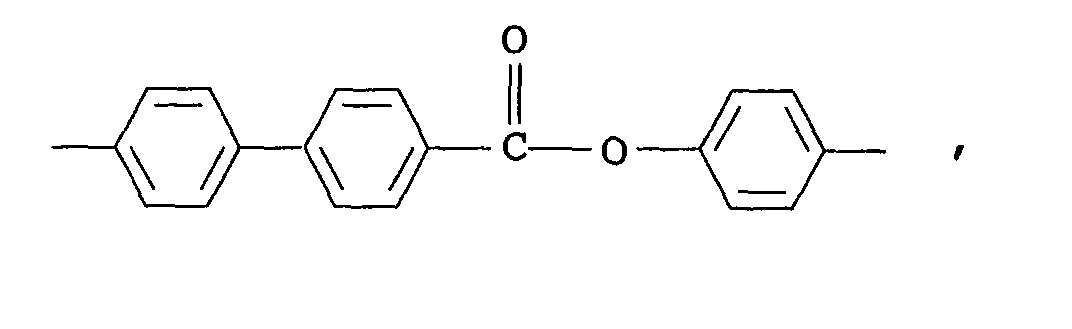
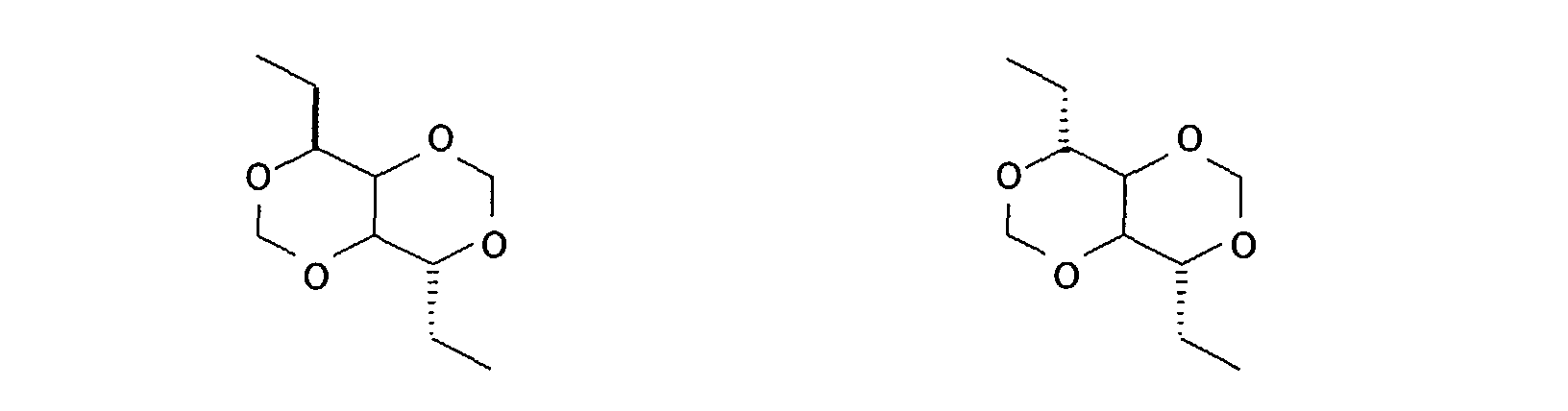
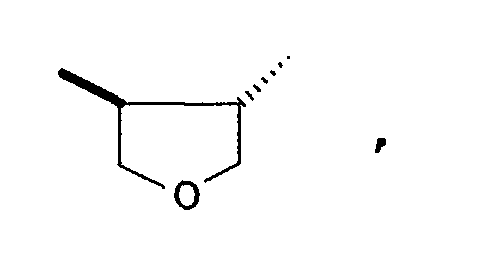
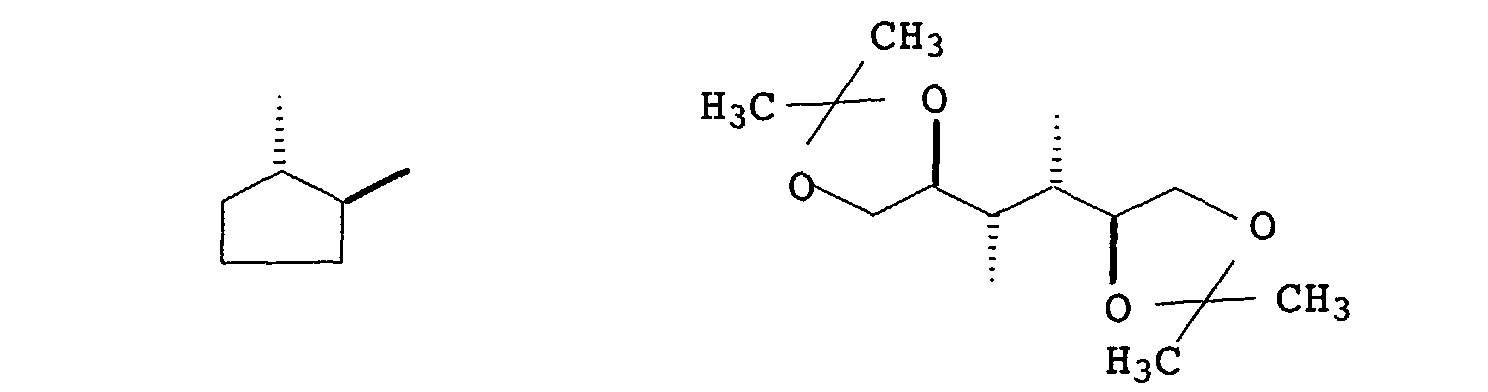
- radicals X are the following structures, where the terminal lines each denote the free valences.
- n is preferably 2.
- the mixture of group b) contains a chiral compound.
- the chiral connection causes the achiral twist liquid crystalline phase to a cholesteric phase.
- the degree of twisting depends on the ability to twist of the chiral dopant and its concentration.
- the pitch of the helix and the reflection wavelength depend on it on the concentration of the chiral dopant from. Therefore, it cannot be a general one for the dopant Concentration range can be specified.
- the dopant is added in the amount at which the desired reflection arises.
- Preferred chiral compounds are those of the formula Ia in which Z 1 , Y 1 , Y 2 , Y 3 , A 1 , X and n have the meanings given above and M a is a divalent radical which contains at least one hetero or isocyclic ring system.
- the molecular part M a is similar to the mesogenic groups described, since in this way a particularly good compatibility with the liquid-crystalline compound is achieved. However, M a does not have to be mesogenic, since the compound Ia is only intended to cause a corresponding twisting of the liquid-crystalline phase by its chiral structure.
- Preferred ring systems contained in M a are the structures T mentioned above, preferred structures M a are those of the above formula (TY 8 ) s -T. Further monomers and chiral compounds of group b) are described in WO 97/00600, to which reference is hereby made in full.
- Component A) is preferably used in the form of pigments.
- the cholesteric ones are converted Component contained monomers or polymerizable or crosslinkable groups by radical or ionic Polymerization process by a thermal or photochemical Response can be started in highly networked Polymers with a frozen liquid crystalline structure.
- the cholesteric material is preferred in the composition according to the invention in the form of a finely divided Powder used. If the polymers do not already fall into place the production as a fine powder, so you can after processes known to the person skilled in the art.
- Prefers is a two-stage shredding, the first shredding step follows a strand or ribbon extrusion.
- the strands or tapes obtained can be known Way with shredders or granulators in chips or strand granules convict.
- Known grinding units of all are suitable for further comminution Types and embodiments.
- grain sizes with a diameter of 1 to 1000 ⁇ m are produced.
- Preferred grain sizes are in the range between 1 and 100 ⁇ m, particularly preferably between 15 and 50 ⁇ m.
- the thickness of the pigments is between 0.5 and 100 ⁇ m, preferably between 1 and 50 ⁇ m, particularly preferably between 1.0 and 10 ⁇ m.
- So-called broadband reflectors are very particularly preferred, by mixing several cholesteric liquid crystalline Generate pigments with different IR reflection maxima to let.
- Pigments of different handedness can also be obtained by using two different pigments of the cholesteric Materials with opposite twists (Helicity) mixes.
- Pigments with each twisted in opposite directions, cholesteric structures are for example Add each of the individual enantiomers or diasteromers of chiral additives to the achiral liquid crystalline polymerisable Monomers available.
- the pitch of each opposite twisted structures can be the same or different his. Reflect pigments of different handedness significantly more radiation than pigments of the same handedness.
- the pigments can be easily mixed into the cosmetic and pharmaceutical preparations. It is coming no aggregation or separation of the pigment particles.
- the light stabilizer preparation according to the invention contains as a constituent B) at least one from radiation in the ultraviolet Radiation range from 280 nm to 449 nm protective component.
- a component that protects against UV radiation is understood a substance (UV filter substance), the radiation in the ultraviolet Radiation area absorbed and / or reflected.
- Component B) comprises several compounds that are UV-A and / or Absorb and / or reflect UV-B range to the Skin or hair in front of the entire range of ultraviolet Protect radiation.
- component B) is selected under the following classes: cholesteric components with a pitch less than 450 nm, aminobenzoic acids, aminobenzoic acid esters, Bicyclo [2.2.1] heptan-2-ones, hydroxybenzoic acid esters and salts, benzophenones, benzimidazoles, cinnamic acid esters, 3,3-diphenylacrylic acid esters, 3-imidazol-4-yl-acrylic acids, 3-imidazol-4-yl-acrylic acid esters, alicyclic dienones, triazines, Phenylglyoxylic acids and salts, dibenzoylmethanes, 4,4'-diarylbutadienes, Benzotriazoles, organosiloxane benzalmalonates, enamines, cyclic imino esters, inorganic pigments and mixtures from that.
- cholesteric components with a pitch less than 450 nm aminobenzoic acids
- Suitable cholesteric materials with a pitch smaller 450 nm are cholesteric components according to the variants a) to f) of the aforementioned, in the infrared wavelength range reflective components, with the proviso that the pitch the cholesteric-liquid crystalline phase of component B) is at most 449 nm.
- Preferred components are those of the variants a), b) and c).
- Particularly preferred cholesteric components Variants a) and b) are, for example, in the DE-A-198 24 972, to which reference is hereby made in its entirety is taken.
- Variant b) comprise at least one achiral liquid crystalline Monomer and a chiral compound. Differentiate these only in terms of their percentage, but not in terms of their material composition from component A) in the Embodiment of variant b).
- chiral dopants for liquid crystalline phases are numerous compounds are known (e.g. from DE-A 43 42 280 and DE-A 196 11 101, as well as what has been said above).
- the chiral dopants have good compatibility with the liquid crystalline ones Show connections so that an effective interaction between these components.
- the dopant is again added in the amount with which the desired UV reflection is achieved.
- Preferred chiral additives are compounds of the formula V. [Z 4 -Y 9 - (A 4 ) k -Y 10 -M 5 -Y 11 -] l -X wherein Z 4 , Y 9 , Y 10 , Y 11 , A 4 , X, k and l have the meanings given above and M 5 is a divalent radical which contains at least one heterocyclic or isocyclic ring system.
- M 5 part of the molecule resembles the mesogenic groups described, since particularly good compatibility with the liquid-crystalline compound is achieved in this way. However, M 5 does not have to be mesogenic, since the compound V is said to cause a corresponding twisting of the liquid-crystalline phase only by its chiral structure.
- Preferred ring systems contained in M 5 are the above-mentioned structures T, preferred structures M 5 are those of the above formula (TY 8 ) s -T.
- Further monomers and chiral compounds of group b) are described in WO 97/00600 and the underlying DE-A-195 324 08, to which reference is hereby made in full.
- the weight ratios of component IV to component V are in the range from 99 to 1 to 40 to 60, preferably in the range from 99 1 to 70 to 30, particularly preferably 98 to 2 to 85 to 15.
- Particularly preferred chiral, bifunctional monomers are:
- the chiral comonomers are preferably enantiomerically pure Form used. When using mixtures of enantiomers of a comonomer, care must be taken that a Enantiomeric form is present in an effective excess.
- carboxylic acids others can also be used by the person skilled in the art known carboxylic acid derivatives, such as carboxylic acid chlorides, anhydrides or esters are used.
- carboxylic acid derivatives such as carboxylic acid chlorides, anhydrides or esters are used.
- hydroxy components can also corresponding hydroxy derivatives, such as. the acylated hydroxy compounds are used.
- the polymers can contain components with more than two functional groups, such as dihydroxybenzoic acid or contain trihydroxybenzenes. These components act as Branching point in the polymer and are optionally only in low concentrations, for example 0 to 5 mol% added.
- the cholesteric material of the ingredient B) used in the form of pigments is used in the form of pigments.
- the suitable and preferred grain sizes and thicknesses of the pigments are in the range previously described for component A).
- the preparation according to the invention particularly preferably contains so-called UV broadband reflectors and UV multilayer reflectors.
- UV broadband reflectors and UV multilayer reflectors Regarding their manufacture and properties, please refer to the previous one for component A) said and reference is made to DE-A-198 24 972.
- Three-layer pigments are preferred in which the two outer layers each made of a hardened cholesteric Component exist and the middle layer for example one Binder matrix can contain, in addition, another UV absorber can be incorporated.
- the proportion of the cholesteric component in the pre ultraviolet Radiation protective component is preferably 10 to 90% by weight, preferably 20 to 70% by weight.
- Aminobenzoic acids and aminobenzoic acid esters suitable as component B) are, for example, p-aminobenzoic acid, 2-amino acid esters such as 5-methyl-2- (1-methylethyl) -2-aminobenzoate, 4-aminobenzoic acid esters, where the amino group can optionally be alkylated or alkoxylated, e.g. B.
- Bicyclo [2.2.1] heptan-2-ones suitable as component B) are e.g. B. 3,3 '- (1,4-phenylenedimethine) -bis (7,7-dimethyl-2-oxobicyclo [2.2.1] heptane-1-methanesulfonic acid and their salts, 3- (4'-trimethylammonium) benzylidenbornan-2-one-methylsulfate, 3- (4'-sulfo) benzylidenbornan-2-one and its salts, 3-benzylidenbornan-2-one, 3- (4-methylbenzylidene) camphor.
- Hydroxybenzoic acid esters and salts suitable as component B) are salicylic acid esters such.
- B 3,3,5-trimethylcyclohexyl salicylate, 4-tert-butylphenyl salicylate, 2-ethylhexyl salicylic acid, Salicylic acid isooctyl ester, 4-isopropylbenzyl salicylate, and the triethanolamine salt and digalloyl trioleate.
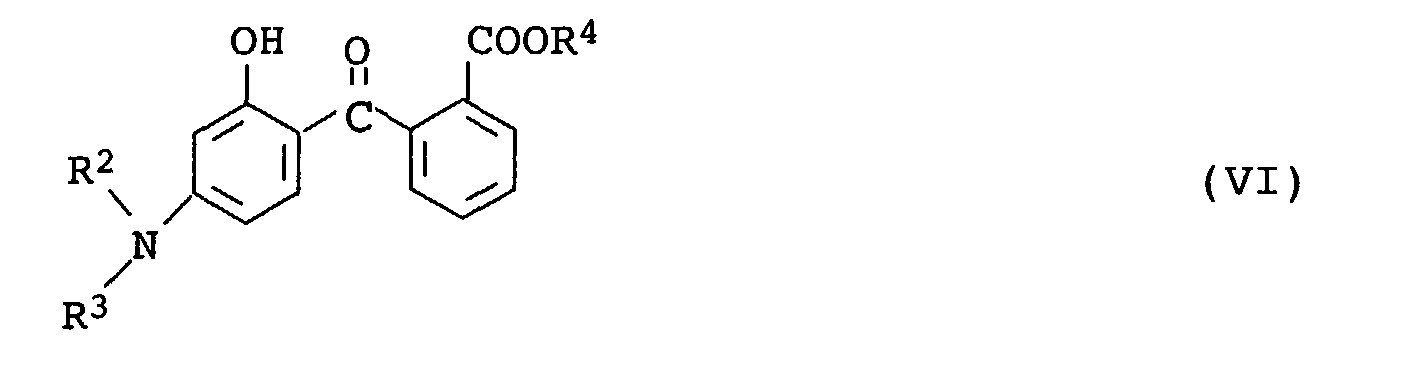
- Benzophenones suitable as component B) are, for example, 2-hydroxy-4-methoxybenzophenone, 2-hydroxy-4-methoxybenzophenone-5-sulfonic acid and its salts, 2,2'-dihydroxy-4-methoxybenzophenone (dioxybene zone), 2-hydroxy-4 -methoxy-4-methylbenzophenone (Mexenon), 2,2 ', 4,4'-tetrahydroxybenzophenone, 2,4-dihydroxybenzophenone, 2,2'-dihydroxy-4,4'-dimethoxybenzophenone-5,5'-disodium sulfonate, benzophenones -11 (mixture of tetrasubstituted benzophenones), 2,2'-dihydroxy-4,4'-dimethoxybenzophenone, compounds of the formula VI, wherein R 2 and R 3 are independently hydrogen, C 1 -C 20 alkyl, C 3 -C 10 cycloalkyl or C 3 -C 10
- Benzimidazoles suitable as component B) are, for example 2-phenylbenzimidazole-5-sulfonic acid and its potassium, sodium and Triethanolamine salts, 2,2 '- (1,4-phenylene) bis-1H-benzimidazole-4,6-disulfonic acid or their salts.
- cinnamic acid esters suitable as component B) are 2-Isoamyl 4-methoxycinnamate, 2-ethylhexyl 4-methoxycinnamate.
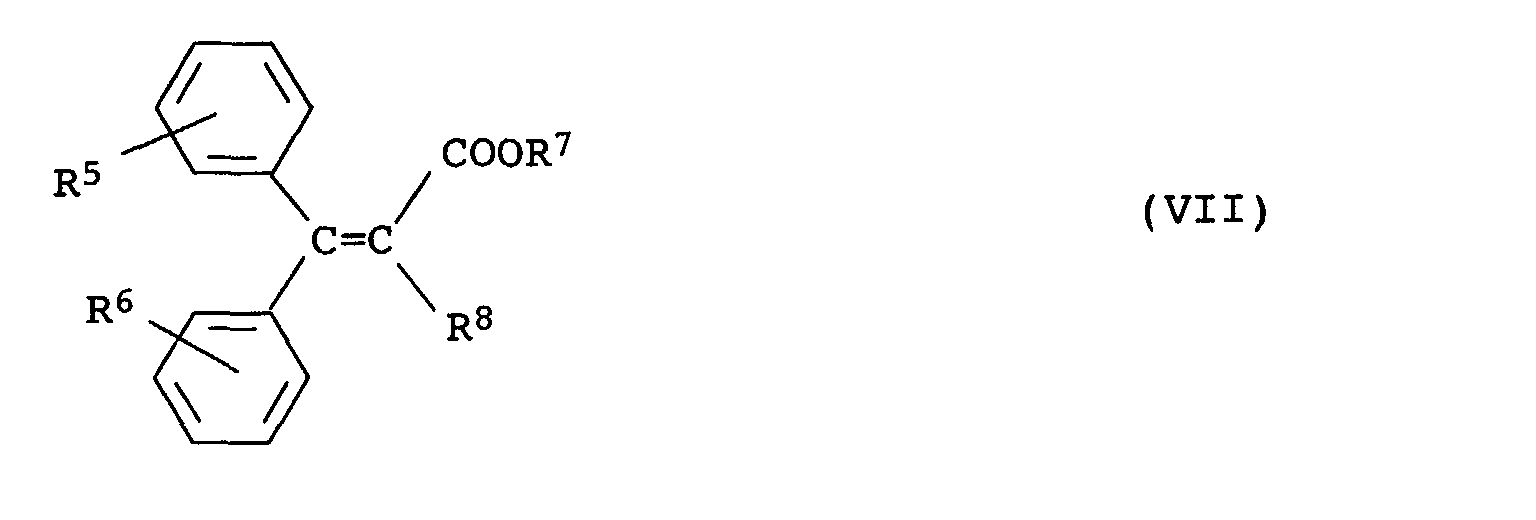
- 3,3-Diphenylacrylic acid esters suitable as component B) are, for example, those of the formula VII, wherein R 5 and R 6 independently of one another for hydrogen, linear or branched C 1 -C 12 alkyl, linear or branched C 1 -C 12 alkoxy, R 7 for C 3 -C 8 cycloalkyl, which is optionally substituted with C 1 - C 4 alkyl groups, in particular methyl, ethyl, n-propyl, 1-methylethyl, n-butyl, 1-methylpropyl, 2-methylpropyl, 1,1-dimethylethyl, and R 8 is hydrogen or CN, in particular 2- Cyclopentyl cyano-3,3-diphenylacrylate, cyclohexyl 2-cyan-3,3-diphenylacrylate, 4-tert-butylcyclohexyl 2-cyano-3,3-diphenyl, ethylhexyl 2-cyano-3,3
- a suitable 3-imidazol-4-yl-acrylic acid ester is, for example the ethyl ester.
- a phenylglyoxylic acid suitable as component B) is, for example Dimethoxyphenylglyoxylic acid and its sodium salt.
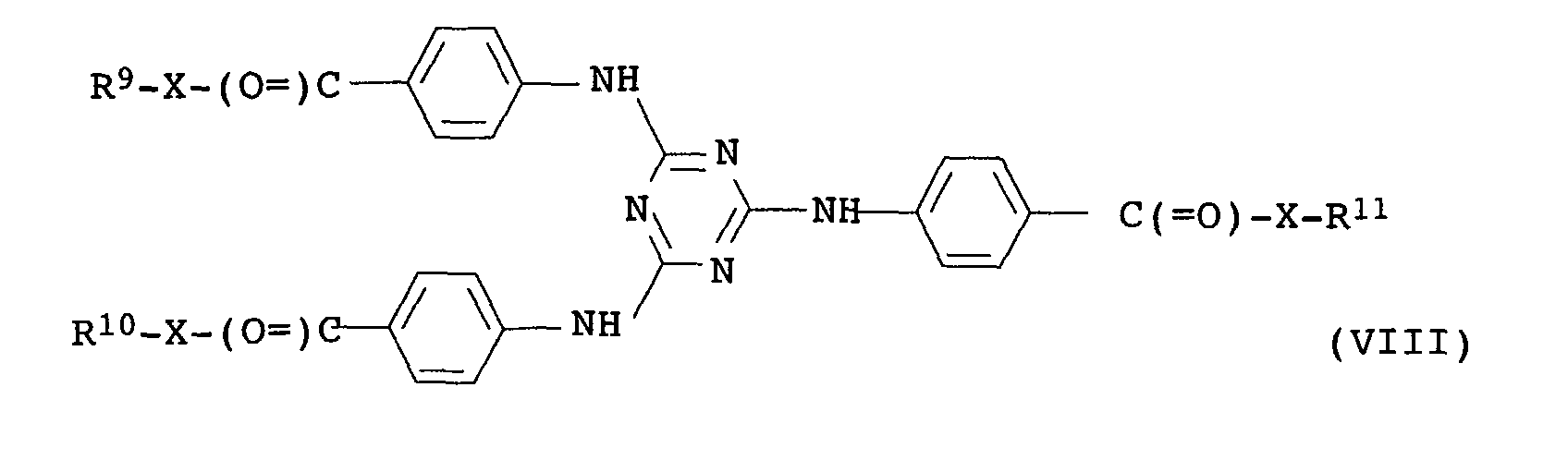
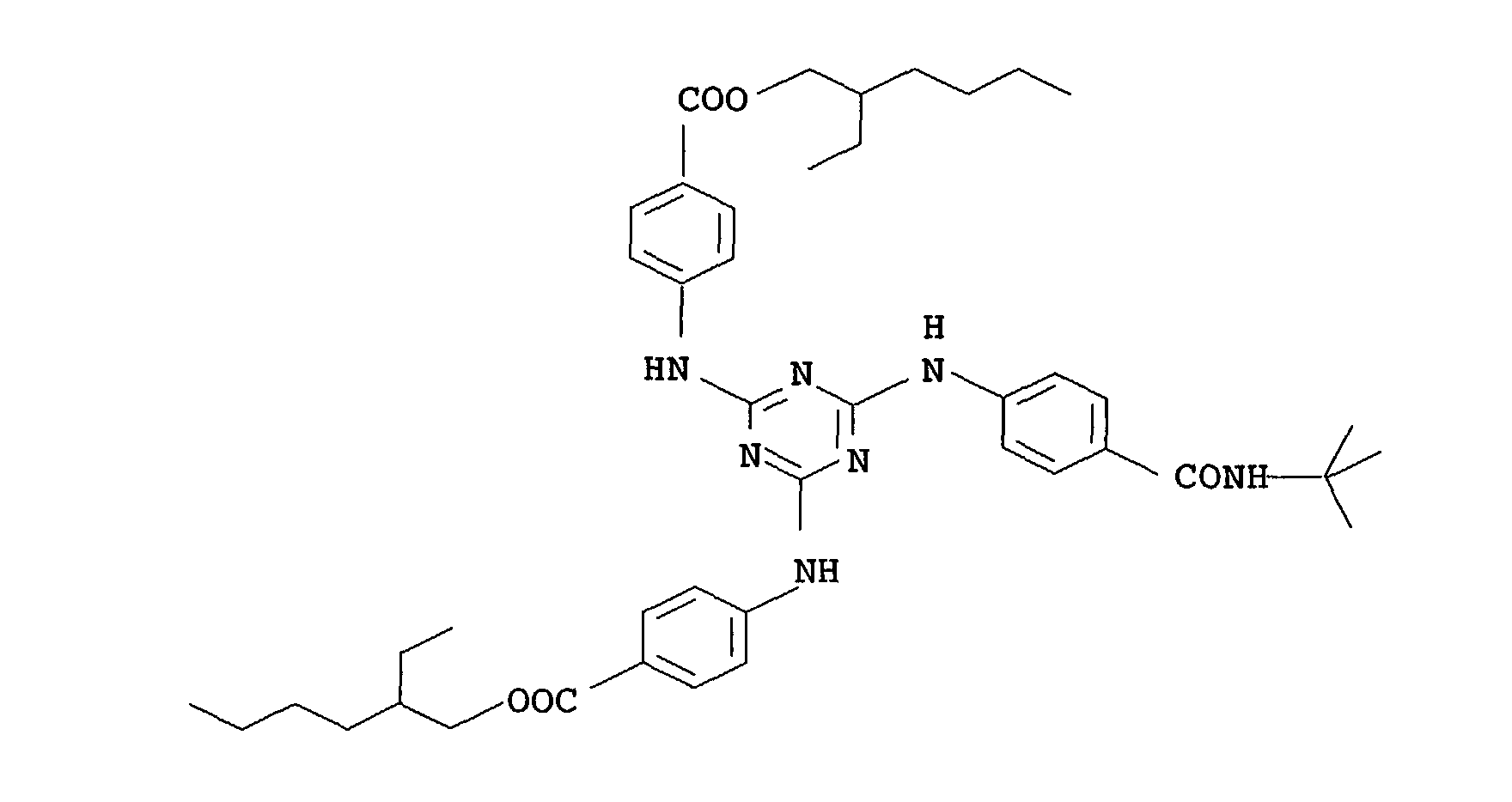
- Triazines suitable as component B) are, for example, 2,4,6-triaryl-1,3,5-triazines, in which the aryl radicals are optionally substituted, for. B. 2,4,6-trianiline (o-carbo-2'-ethylhexyl-1'-oxy) -1,3,5-triazine, 2,4-bis- [4- (2-ethylhexyloxy) -2 -hydroxy] phenyl-6- (4-methoxyphenyl) - (1,3,5) -triazine and the following compounds: also triazine derivatives of the formula VIII, wherein R 9 to R 11 independently of one another are optionally substituted C 1 -C 20 alkyl, C 5 -C 10 aryl, C 5 -C 10 heteroaryl or SpSil, Sp being a spacer and Sil being a silane, oligosilane - or polysiloxane residue X for the divalent residues ⁇ O ⁇ or NR
- Dibenzoylmethanes suitable as component B) are, for example 2-methyldibenzoylmethane, 4-methyldibenzoylmethane, 4-isopropyldibenzoylmethane, 4-tert-butyldibenzoylmethane, 2,4-dimethyldibenzoylmethane, 2,5-dimethyldibenzoylmethane, 4,4'-diisopropyldibenzoylmethane, 4-tert-butyl-4'-methoxydibenzoylmethane, 2-methyl-5-isopropyl-4'-methoxydibenzoylmethane, 2-methyl-5-tert.butyl-4'-methoxydibenzoylmethane, 2,4-dimethyl-4'-methoxydibenzoylmethane, 2,6-dimethyl-4-tert-butyl-4'-methoxydibenzoylmethane,
- 4,4'-Diarylbutadienes suitable as component B) are, for example, those of the formula IX, wherein R 13 and R 14 independently of one another are hydrogen, C 1 -C 20 alkyl, C 3 -C 10 cycloalkyl or C 3 -C 10 cycloalkenyl.
- Benzotriazoles suitable as component B) are, for example
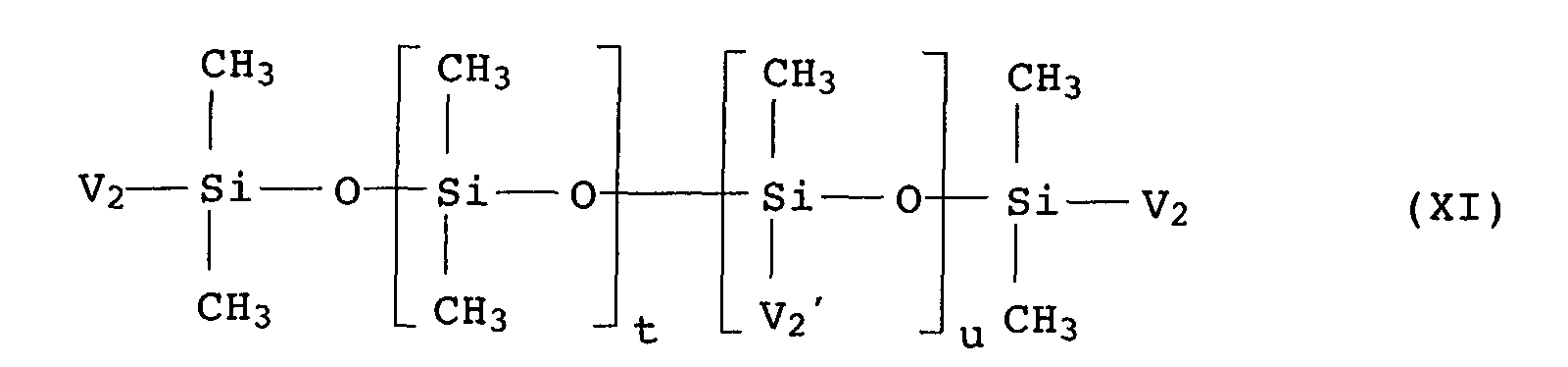
- Organosiloxane benzalmalonates suitable as component B) are, for example, those of the formula X wherein V 1 'the group V 1 represents a methyl group or V 1 'or of formula XI in the V 2 'the group of the structure V 2 represents a methyl group or V 2 '.
- Enamine suitable as component B) is, for example
- Cyclic imino esters suitable as component B) are, for example
- component B) a combination of light stabilizers containing a hydroxybenzophenone derivative includes. Suitable combinations are in DE 100 12 408.9, to which reference is hereby made.
- the component comprises B) 3,3-diphenyl acrylates and dibenzoylmethanes. suitable Embodiments are described in DE 100 09 442.2 which is hereby incorporated by reference.
- the component preferably comprises B furthermore at least one 4-methoxycinnamic acid ester.
- Preferred inorganic pigments suitable as component B) are those based on metal oxides and / or other metal compounds which are sparingly soluble or insoluble in water, for. B. the oxides of titanium (TiO 2 ), zinc (ZnO), iron (e.g. Fe 2 O 3 ), zirconium (ZrO 2 ), silicon (SiO 2 ), manganese (e.g. MnO), aluminum (Al 2 O 3 ), cerium (eg Ce 2 O 3 ), mixed oxides of the corresponding metals and mixtures of such oxides. Pigments based on titanium dioxide and zinc oxide are particularly preferred.
- the inorganic pigments are preferably in hydrophobic form before, i.e. they are treated to be water-repellent on the surface.
- This Surface treatment can consist of the pigments after in a known manner, as described in DE-A-33 14 742, with be provided with a thin hydrophobic layer.
- Advantageous TiO 2 pigments are available, for example, under the trade names MT 100 T from TAYCA, M 160 from Kemira and T 805 from Degussa.
- Cosmetic or dermatological sunscreen preparations advantageously contain inorganic pigments, in particular Micropigments, in amounts of e.g. B. 0.1 wt .-% to 30 wt .-%, preferred in amounts of 0.5% by weight to 15% by weight, particularly preferred 1% by weight to 10% by weight, very particularly preferably 1.5 to 6 % By weight, based on the total weight of the preparations.
- inorganic pigments in particular Micropigments
- the aforementioned compounds of component B) can be used individually, as mixtures of a compound class or in general can be used as mixtures.
- absorbing / reflecting substances in the UV range be used, provided that they are in the overall system of preparation are stable.
- the cosmetic and dermatological preparations containing light stabilizers contain a carrier C) which is selected from water, water-miscible liquids, hydrophobic components and mixtures. These include water, C 1 -C 4 alcohols, such as ethanol and isopropanol, fats, waxes, fatty acids, fatty alcohols, oils, oil-in-water and water-in-oil emulsions, creams and pastes, lip protection stick compounds or fat-free gels ,
- the emulsions include also O / W macroemulsions, O / W microemulsions or O / W / O emulsions in question, the emulsions through phase inversion technology, e.g. B. according to DE-A-197 26 121 are available.
- the oil phase of the emulsions, oleogels or hydrodispersions or Lipodispersions for the purposes of the present invention are advantageous selected from the group of esters from saturated and / or unsaturated, branched and / or unbranched alkane carboxylic acids a chain length of 3 to 30 carbon atoms, from the group the ester of aromatic carboxylic acids and saturated and / or unsaturated, branched and / or unbranched alcohols Chain length from 3 to 30 carbon atoms.
- ester oils can be advantageous are selected from the group of isopropyl myristate, isopropyl palmitate, Isopropyl stearate, isopropyl oleate, n-butyl stearate, N-hexyl laurate, N-decyl oleate, iosoctyl stearate, isononyl stearate, isononyl isononanoate, 2-ethylhexyl palmitate, 2-ethylhexyl laurate, 2-hexyldecyl stearate, 2-octyldodecyl palmitate, 2-ethylhexyl laurate, 2-hexyldecyl stearate, 2-octyldodecyl palmitate, oleyl oleate, olerlerucate, Erucyl oleate, erucylerucate and synthetic, semi-sy
- the oil phase can advantageously be selected from the group branched and unbranched hydrocarbons and waxes, the silicone oils, the dialkyl ethers, the group of saturated or unsaturated, branched or unbranched alcohols, and the Fatty acid triglycerides, especially the saturated triglycerol ester and / or unsaturated, branched and / or unbranched Alkane carboxylic acids with a chain length of 8 to 24, in particular 12 up to 18 carbon atoms.
- the fatty acid triglycerides can, for example advantageously selected from the group of synthetic, semi-synthetic and natural oils, e.g. B. olive oil, sunflower oil, Soybean oil, peanut oil, rapeseed oil, almond oil, palm oil, coconut oil, Palm kernel oil and the like.
- any mixtures of such oil and wax components are also possible to be used advantageously for the purposes of the present invention. It may also be advantageous, for example, waxes Cetyl palmitate, to be used as the sole lipid component of the oil phase.
- the oil phase is advantageously selected from the group consisting of 2-ethylhexyl isostearate, octyldodecanol, isotridecyl isononanoate, isoeicosane, 2-ethylhexyl cocoate, C 12 -C 15 alkyl benzoate, caprylic caprine triglyceride, dicapryl ether.
- hydrocarbons are paraffin oil, squalane and squalene to be used advantageously for the purposes of the present invention.
- the oil phase can also advantageously have a cyclic content or linear silicone oils or made entirely of such Oils exist, although it is preferred, except silicone oil or the silicone oils an additional content of other oil phase components to use.
- Cyclomethicone (octamethylcyclotetrasiloxane) is advantageous as Silicone oil to be used according to the invention. But also other silicone oils are advantageous to use in the sense of the invention, for example hexamethylcyclotrisiloxane, polydimethylsiloxane, Poly (methylphenylsiloxane).
- Mixtures of cyclomethicone are also particularly advantageous and isotridecyl isononoate, from cyclomethicone and 2-ethylhexyl isostearate.
- the preparations according to the invention can be cosmetic auxiliaries contain.
- Usual cosmetic auxiliaries used as additives can be considered are e.g. Co-emulsifiers, Stabilizers, thickeners, biogenic agents, film formers, Fragrances, dyes, pearlescent agents, preservatives, Pigments, electrolytes (e.g. magnesium sulfate); insect repellents and pH regulators.
- Preferred co-emulsifiers are known W / O and also O / W emulsifiers such as polyglycerol esters, Sorbitan esters or partially esterified glycerides in Consideration.
- Metal salts of fatty acids can be used as stabilizers such as.
- Suitable thickeners are, for example, crosslinked Polyacrylic acids and their derivatives, polysaccharides, in particular Xanthan gum, guar guar, agar agar, alginates and tyloses, carboxymethyl cellulose and hydroxyethyl cellulose, also fatty alcohols, Monoglycerides and fatty acids, polyacrylates, polyvinyl alcohol and Polyvinylpyrrolidone.
- Biogenic active ingredients are, for example Plant extracts, protein hydrolyzates and vitamin complexes too understand.
- Common film formers are, for example, hydrocolloids such as chitosan, microcrystalline chitosan or quaternized Chitosan, polyvinylpyrrolidone, vinylpyrrolidone-vinyl acetate copolymers, Polymers of the acrylic acid series, quaternary Cellulose derivatives and similar compounds.
- hydrocolloids such as chitosan, microcrystalline chitosan or quaternized Chitosan
- polyvinylpyrrolidone vinylpyrrolidone-vinyl acetate copolymers
- Polymers of the acrylic acid series quaternary Cellulose derivatives and similar compounds.
- formaldehyde solution p-hydroxybenzoate are suitable or sorbic acid.
- pearlescent agents are: Glycol distearic acid esters such as ethylene glycol distearate, but fatty acids and fatty acid monoglycol esters are also considered.
- Dyes can be those approved and suitable for cosmetic purposes Substances are used, such as in the publication "Cosmetic Dyes” by the Dye Commission the German Research Foundation, published by the publisher Chemie, Weinheim, 1984. These dyes are usually used in a concentration of 0.001 to 0.1% by weight, based on the entire mixture used.
- the preparation according to the invention can additionally at least included an insect repellent.
- insect repellents include e.g. B. 2-ethyl-1,3-hexanediol, 2-ethyl-2,3-hexanediol, 4,5-bis (2-butylene) tetrahydro-2-furaldehyde, Dimethyl phthalate, di-n-propyl isocine chomeronate and N, N, -diethyl-m-toluolamide. Possibly they are mixed in an amount of up to 15% by weight, preferably 5 up to 15% by weight, based on the total weight of the preparation.
- antioxidants are generally prefers. According to the invention can be used as favorable antioxidants all suitable for cosmetic and / or dermatological applications or common antioxidants can be used.
- the antioxidants are advantageously selected from the group consisting of amino acids (eg glycine, histidine, tyrosine, tryptophan) and their derivatives, imidazoles (eg urocanic acid) and their derivatives, peptides such as D, L-carnosine, D-carnosine, L-carnosine and their derivatives (e.g. anserine), carotenoids, carotenes (e.g. ⁇ -carotene, lycopene) and their derivatives, chlorogenic acid and their derivatives, lipoic acid and their derivatives (e.g. dihydroliponic acid), aurothioglucose, propylthiouracil and other thiols (e.g.
- amino acids eg glycine, histidine, tyrosine, tryptophan
- imidazoles eg urocanic acid
- peptides such as D, L-carnosine, D-carnosine, L
- thioredoxin glutathione, cysteine , Cystine, cystamine and their glycosyl, N-acetyl, methyl, ethyl, propyl, amyl, butyl, and lauryl, palmitoyl, oleyl, ⁇ -linoleyl, cholesteryl and glyceryl esters) and their salts, dilauryl thiodipropionate, distearyl thiodipropionate, thiodipropionic acid and their derivatives (esters, ethers, peptides, lipids, nucleotides, nucleosides and salts) as well as sulfoximine compounds (e.g.
- buthioninsulfoximines homocysteine sulfoximines, buthioninsulfones, penta-, hexa-, hep tathionine sulfoximine) in very low tolerable doses (e.g. pmol to ⁇ mol / kg), also (metal) chelators (e.g. ⁇ -hydroxy fatty acids, palmitic acid, phytic acid, lactoferrin), ⁇ -hydroxy acids (e.g. citric acid, lactic acid, malic acid), humic acid, bile acid , Biliary extracts, bilirubin, biliverdin, EDTA and their derivatives, unsaturated fatty acids and their derivatives (e.g.
- metal chelators e.g. ⁇ -hydroxy fatty acids, palmitic acid, phytic acid, lactoferrin
- ⁇ -hydroxy acids e.g. citric acid, lactic acid, malic acid
- humic acid
- ⁇ -linolenic acid linoleic acid, oleic acid
- folic acid and their derivatives ubiquinone and ubiquinol and their derivatives
- vitamin C and their derivatives e.g. ascorbyl palmitate, Mg - Ascorbyl phosphate, ascorbyl acetate
- tocopherol and derivatives e.g.
- vitamin E acetate, tocotrienol
- vitamin A and derivatives vitamin A palmitate
- the amount of the above antioxidants (one or more Compounds) in the preparations is preferably 0.001 to 30% by weight, particularly preferably 0.05 to 20% by weight, in particular 1 to 10 wt .-%, based on the total weight of the preparation.
- vitamin E and / or its derivatives, the antioxidant (s) represent, it is advantageous to their respective Concentrations in the range of 0.001-10% by weight based on the total weight of the formulation. Unless vitamin A or vitamin A derivatives or carotenes or their derivatives the or the antixoidants, it is advantageous to their respective concentrations in the range of 0.001-10% by weight, based on the total weight of the formulation.
- the preparation of the preparation can be carried out in a manner known per se, i.e. for example by hot, cold, hot-hot / cold or PIT emulsification respectively. This is a purely mechanical one Process, a chemical reaction does not take place.
- Carrier C Carrier C and auxiliaries ad 100 wt .-%.
- compositions preferably contain pharmaceutically acceptable excipients.
- Pharmaceutically acceptable are those in the field of pharmacy, food technology and related fields as is known usable auxiliaries, in particular those in relevant Pharmacopoeias (e.g. DAB Ph. Eur. BP NF) listed as well as other auxiliaries, the properties of which are physiological Do not oppose application.
- Suitable auxiliaries can be: lubricants, wetting agents, emulsifying agents and suspending agents, preservatives, antioxidants, Anti-irritants, chelating agents, emulsion stabilizers, Film formers, gel formers, odor masking agents, resins, Hydrocolloids, solvents, solubilizers, neutralizing agents, Permeation accelerators, pigments, quaternary ammonium compounds, Refatting and overfatting agents, ointments, Cream or oil base materials, silicone derivatives, stabilizers, sterilants, Blowing agents, drying agents, opacifiers, thickeners, Waxes, plasticizers, white oils.
- a related one Design is based on professional knowledge, such as, for example in Fiedler, H.P. Lexicon of excipients for pharmacy, Cosmetics and related areas, 4th ed., Aulendorf: ECV-Editio-Kantor-Verlag, 1996.
- suitable dermatological formulations are ointments, Creams, hydrogels, pastes, and liquid dosage forms, such as solutions, Emulsions, especially oil-in-water emulsions, suspensions, for example, lotions, etc.
- Liposomes or microspheres can be used.
- excipient for the production of the dermatological preparations according to the invention can actives with a suitable excipient (excipient) can be mixed or diluted.
- Excipients can be fixed, be semi-solid or liquid materials used as vehicles, carriers or medium can serve for the active ingredient.
- the admixture If desired, further auxiliaries are carried out in the skilled person known way.
- the cosmetic or dermatological agents according to the invention are used Preparations in the usual for cosmetics Apply to the skin and / or hair in sufficient quantities applied.
- the cosmetic and / or dermatological invention Sunscreen formulations can be cosmetic and / or dermatological Sun protection, also for treatment, care and cleaning the skin and / or hair and as a make-up product serve in decorative cosmetics.
- Such cosmetic and dermatological are particularly preferred Preparations in the form of a sunscreen.
- sunscreen preparations can be in liquid, pasty or are in solid form, for example as water-in-oil creams, Oil-in-water creams and lotions, aerosol foam creams, gels, Oils, fat sticks, powders, sprays, for example as spray oil or Spray emulsion or alcoholic water lotions.
- propellants for example propane, butane, pentane, dimethyl ether and others.
- the invention to preparations used in shampoos, lotions, Gels, hair spray, hair lacquer, gloss spray, hair styling products, aerosol foam creams, Conditioners, setting lotions, hair lotions, Hair dryer or emulsions can be incorporated.
- the respective Formulations can include for washing, dyeing and Hairstyles can be used.
- the preparations according to the invention are outstandingly suitable for Protection of human skin or hair from heat radiation in the infrared wavelength range from 750 to 2500 nm and before UV radiation in the range of 280 to 450 nm.
- the heating the skin treated with the preparation according to the invention or Hair is compared to untreated or only with UV light stabilizers treated skin and hair significantly less.
- the Reduction in thermal radiation is at least 20%, preferably at least 30%.
- the heat radiation in the infrared range of the electromagnetic spectrum is largely reflected and not absorbed, leaving skin and hair exposed to heat radiation do not heat up.
- the preparations according to the invention are characterized by a pleasant feeling on the skin. You feel fresher. Above 750 nm, especially in the wavelength range from 751 to 1600 nm at least 60%, in particular 70% and very particularly preferably at least 80% of the incident radiation reflected.
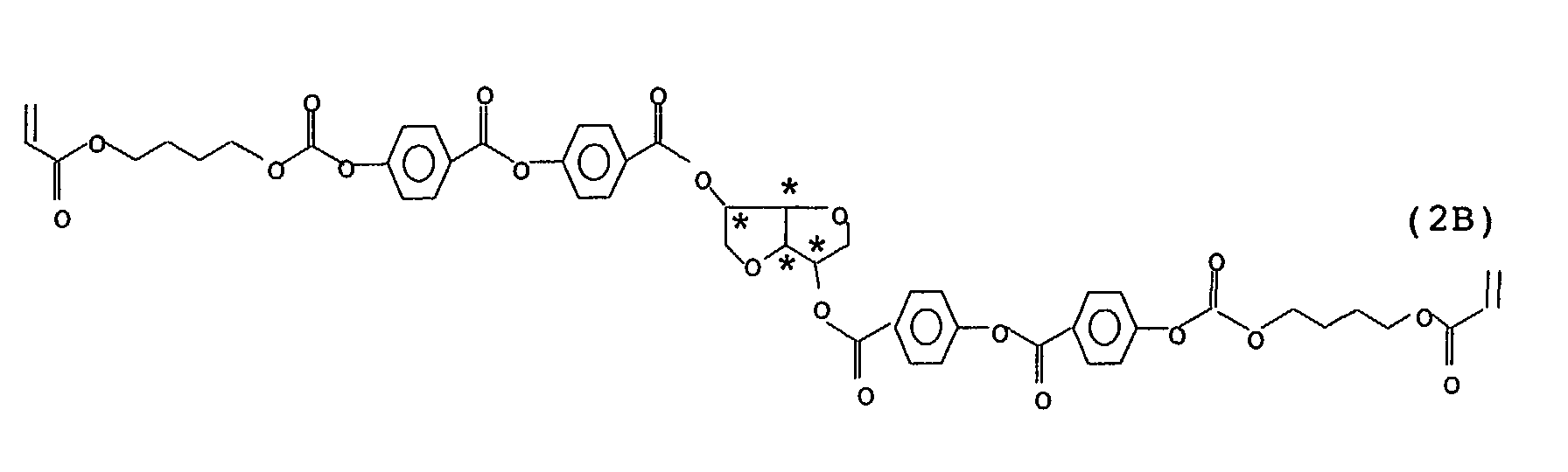
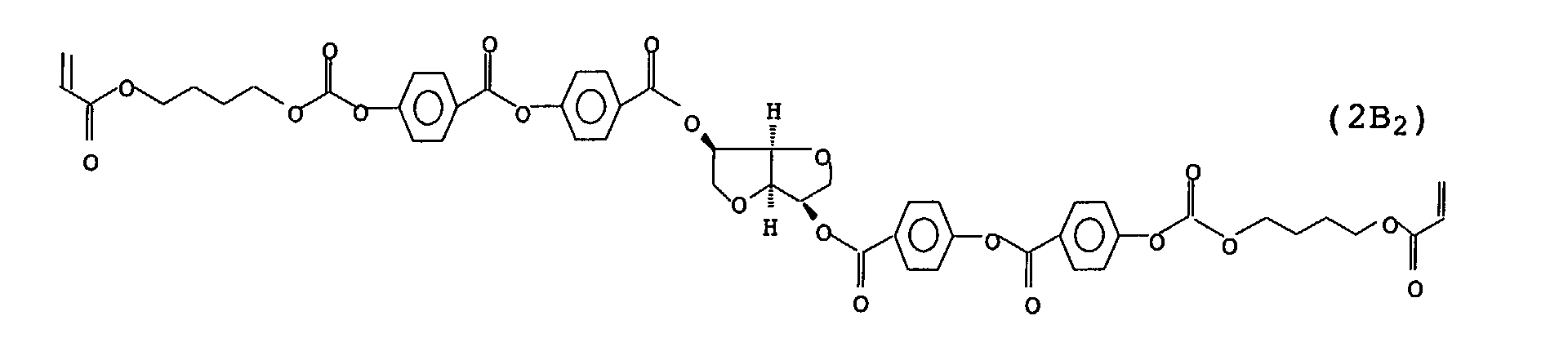
- pigments 1 and 2 To prepare pigments 1 and 2, a compound of the formula 4 was used as the achiral, nematic monomer and the compound of the formula 2B 1 and 2B 2 as the chiral dopant.
- the helical superstructure of the pigments containing compound 2B 1 was right-handed and the helical superstructure of the pigments containing compound 2B 2 was left-handed.
- Pigment 1 reflection range 750 - 1200 nm
- the individual mixtures were dissolved in methyl ethyl ketone.
- the eight mixtures were made using a doctor blade one above the other with a wet film thickness of 2.5 ⁇ m each successively applied to a polyethylene terephthalate film, stripped the solvent at 70 ° C and the resulting film crosslinked and hardened by UV radiation.
- the coating was done by a method described in DE-A 196 38 797.
- the helical superstructure of four layers was right-handed, the the other four layers left-handed.
- the hardened multi-cholesteric layer was detached from the carrier and by grinding and subsequent screening classified.
- the grain size of the pigment particles was in the range ⁇ 50 ⁇ m.
- Pigment 2 reflection range 850 - 1600 nm
- Pigment 2 was prepared in an analogous manner to pigment 1.
- the helical superstructure of three layers was right-handed, the the other three layers left-handed. Then each Layer crushed and the pigments mixed.
- composition for sunblock with micropigments Composition for sunblock with micropigments
- the test field provided with the preparation according to the invention shows a significantly lower temperature increase. It lies around almost 50% under the temperature increase of untreated skin. One is observed in the reflection range from 750 to 1200 nm Reflection intensity of 90%.
- the test field provided with the preparation according to the invention shows a significantly lower temperature increase, which is 33% below the increase in temperature of untreated skin.
- Reflection range from 850 to 1600 nm, a reflection intensity is observed of 85%.
Landscapes
- Health & Medical Sciences (AREA)
- Life Sciences & Earth Sciences (AREA)
- Animal Behavior & Ethology (AREA)
- General Health & Medical Sciences (AREA)
- Public Health (AREA)
- Veterinary Medicine (AREA)
- Birds (AREA)
- Epidemiology (AREA)
- Emergency Medicine (AREA)
- Dermatology (AREA)
- Cosmetics (AREA)
- Liquid Crystal Substances (AREA)
Abstract
Description

- Z1
- eine polymerisierbare Gruppe oder ein Rest, der eine polymerisierbare Gruppe trägt,
- Y1,Y2,Y3
- unabhängig voneinander chemische Bindungen, Sauerstoff,
Schwefel,
―CO―O―, ―O―CO―, ―O―CO―O―,
―CO―S― , ―S―CO― ,
―CO―N(R)― , ―N(R)―CO― , CH2O, OCH2 ,
―N(R)―CO―O― oder ―O―CO― N(R)― , - A1
- ein Spacer,
- M1
- eine mesogene Gruppe,
- X
- ein n-wertiger chiraler Rest,
- R
- Wasserstoff oder C1-C4-Alkyl,
- n
- 1 bis 6
CH2= CH-, CH ≡ C-,
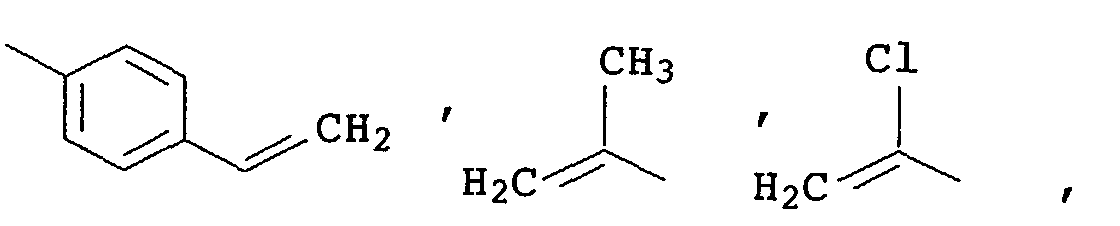

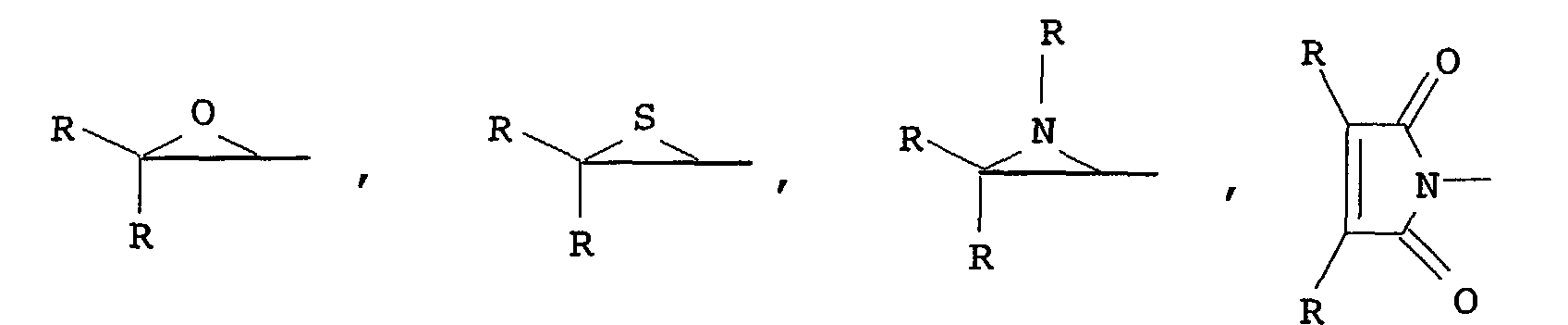
―COOH, ― OH oder ― NH2,
wobei die Reste R gleich oder verschieden sein können und Wasserstoff oder C1-C4-Alkyl, wie Methyl, Ethyl, n-Propyl, iso-Propyl, n-Butyl, iso-Butyl, sec.-Butyl oder tert.-Butyl, bedeuten. Von den reaktiven polymerisierbaren Gruppen können die Cyanate spontan zu Cyanuraten trimerisieren und sind daher bevorzugt. Die anderen genannten Gruppen benötigen zur Polymerisation weitere Verbindungen mit komplementären reaktiven Gruppen. So können beispielsweise Isocyanate mit Alkoholen zu Urethanen und mit Aminen zu Harnstoffderivaten polymerisieren. Analoges gilt für Thiirane und Aziridine. Carboxylgruppen können zu Polyestern und Polyamiden kondensiert werden. Die Maleinimidogruppe eignet sich besonders zur radikalischen Copolymerisation mit olefinischen Verbindungen wie Styrol. Die komplementären reaktiven Gruppen können dabei entweder in einer zweiten Verbindung vorhanden sein, die mit der ersteren gemischt wird, oder sie können durch Hilfsverbindungen, die 2 oder mehr dieser komplementären Gruppen enthalten, in das polymere Netzwerk eingebaut werden.
-(CH2)p-, -(CH2CH2O)mCH2CH2-, -CH2CH2SCH2CH2-, -CH2CH2NHCH2CH2-,

- m
- für 1 bis 3 und
- p
- für 1 bis 12 steht.




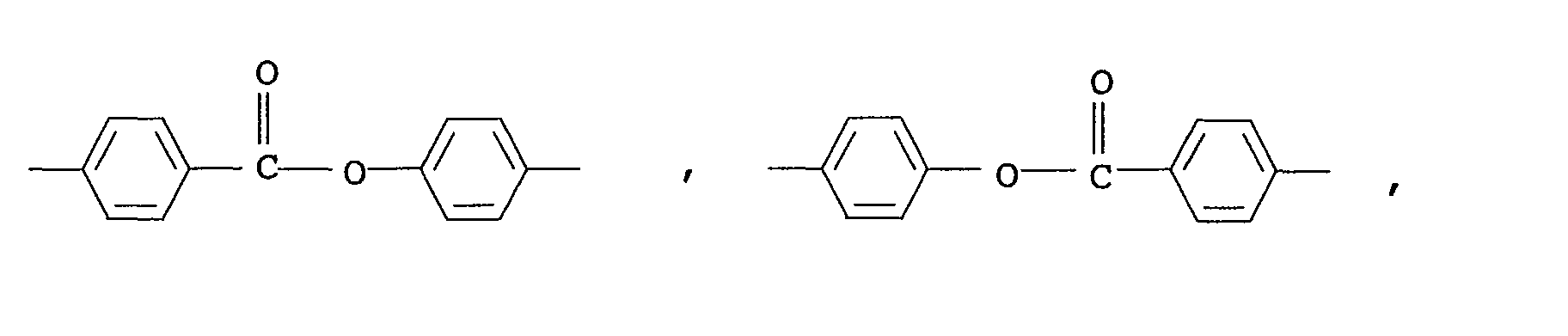
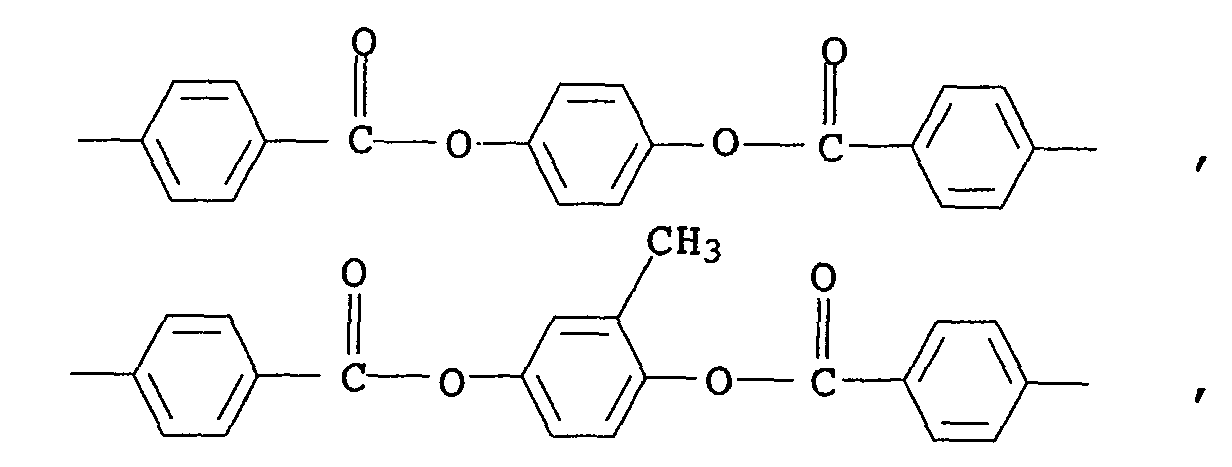

















- Z2, Z3
- gleiche oder verschiedene polymerisierbare Gruppen oder Reste, die eine polymerisierbare Gruppe enthalten
- d
- 0 oder 1
- Y4, Y5, Y6, Y7
- unabhängig voneinander chemische Bindungen, Sauerstoff,
Schwefel,
―CO―O―,―O―CO― ,―O―CO―O― ,
―CO―S― , ―S―CO― ,
―CO―N(R)― , ―N(R)―CO― , CH2O, OCH2,
― N(R)―CO―O― oder ―O―CO― N(R)― - A2, A3
- gleiche oder verschiedene Spacer und
- M2
- eine mesogene Gruppe.




und nematische Monomere der Formel 1:



- einzelne Schichten von vernetzten cholesterischem Material entgegengesetzter Verdrillung oder
- einzelne Schichten von vernetzten cholesterisch-flüssigkristallinem Material gleicher Gangrichtung aber unterschiedlicher Ganghöhe und somit unterschiedlicher Reflektionseigenschaften
- A4
- ein Spacer einer Kettenlänge von 1 bis 30 C-Atomen,
- Y9 bis Y11
- eine chemische Bindung, -O-, -S-, -C(=O)-O-, -O-C(=O)-, -CH=CH-C(=O)-O-, -O-C(=O)-O-, -C(=O)-N(R)- oder -(R)N-C(=O)-, -CH2-O-, -O-CH2-, -CH=N-, -N=CH-, -N=N-, -(R)N-C(=O)-O- oder -O-C(=O)-N(R)-,
- M3
- eine mesogene Gruppe,
- R
- Wasserstoff, C1-C4-Alkyl,
- Z4
- Wasserstoff, C1-C4-Alkyl, eine polymerisierbare Gruppe oder ein Rest, der eine polymerisierbare Gruppe trägt,
- X
- ein n-wertiger chiraler Rest,
- k
- 0 oder 1,
- l
- 1 bis 6,
- A5 und A6
- ein Spacer einer Kettenlänge von 1 bis 30 C-Atomen,
- M4
- eine mesogene Gruppe,
- Y13 bis Y16
- eine chemische Bindung, -O-, -S-, -C(=O)-O-, -O-C(=O)-, -CH=CH-C(=O)-O-, -O-C(=O)-O-, -C(=O)-N(R)-oder -(R)N-C(=O)-, -CH2-O-, -O-CH2-, -CH=N-, -N=CH-,-N=N-, -(R)N-C(=O)-O- oder -O-C(=O)-N(R)-,
- R
- Wasserstoff, C1-C4-Alkyl,
- o und q
- 0 oder 1,
- Z5 und Z6
- Wasserstoff, C1-C4-Alkyl, eine polymerisierbare Gruppe oder ein Rest, der eine polymerisierbare Gruppe trägt, wobei mindestens eine der Variablen Z5 oder Z6 eine polymerisierbare Gruppe oder einen Rest, der eine polymerisierbare Gruppe trägt, darstellt,
mindestens einen chiralen Zusatzstoff.




















W10: -O-(O=)C-O-(CH2)4-O-C(=O)-CH=CH2




W12: -O-(O=)C-O-(CH2)6-O-C(=O)-CH=CH2


W14: -O-(O=)C-O-(CH2)4-O-C(=O)-C(CH3)=CH2




W16: -O-(O=)C-O-(CH2)6-O-C(=O)-C(CH3)=CH2



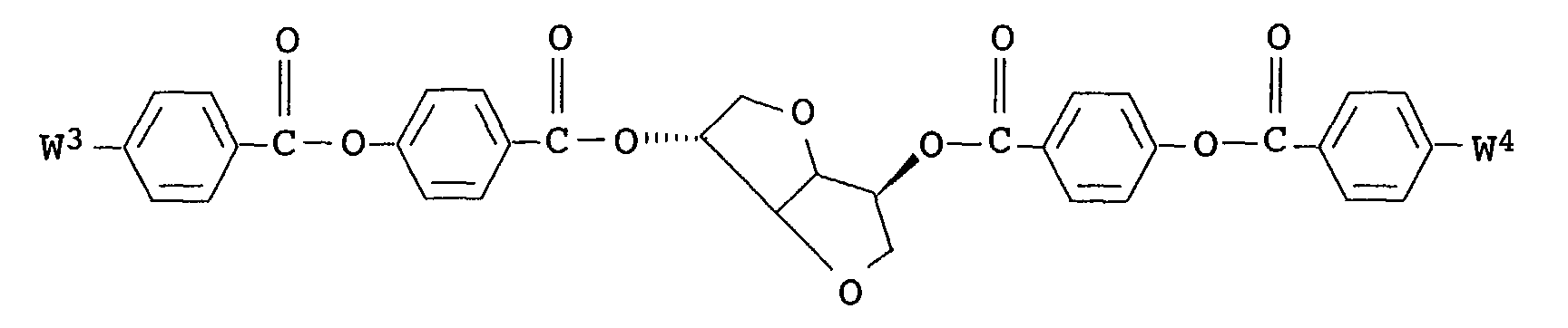


W10: -O-(O=)C-O-(CH2)4-O-C(=O)-CH=CH2
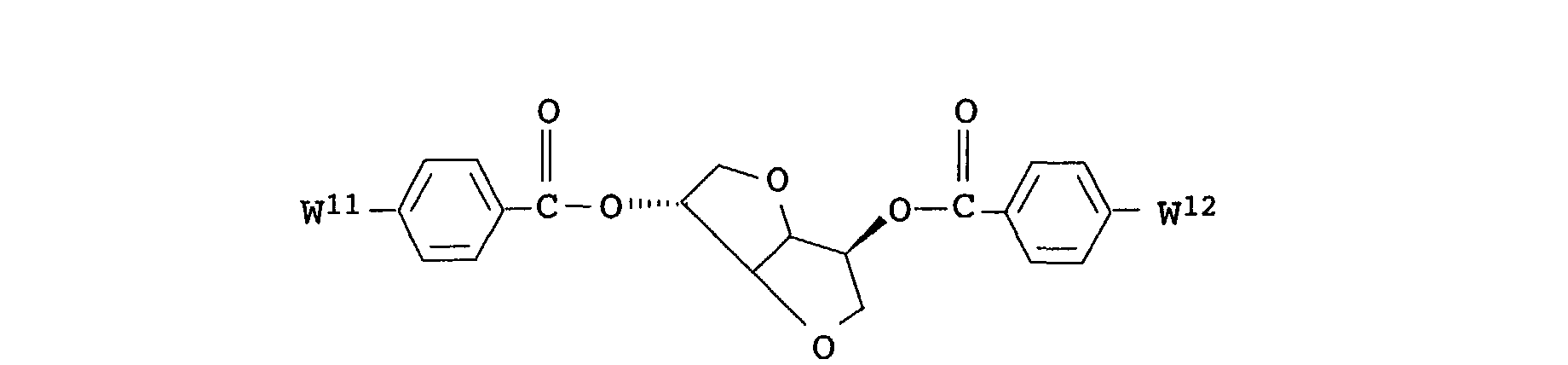

W12: -O-(O=)C-O-(CH2)6-O-C(=O)-CH=CH2


W14: -O-(O=)C-O-(CH2)4-O-C(=O)-C(CH3)=CH2


W16: -O-(O=)C-O-(CH2)6-O-C(=O)-C(CH3)=CH2








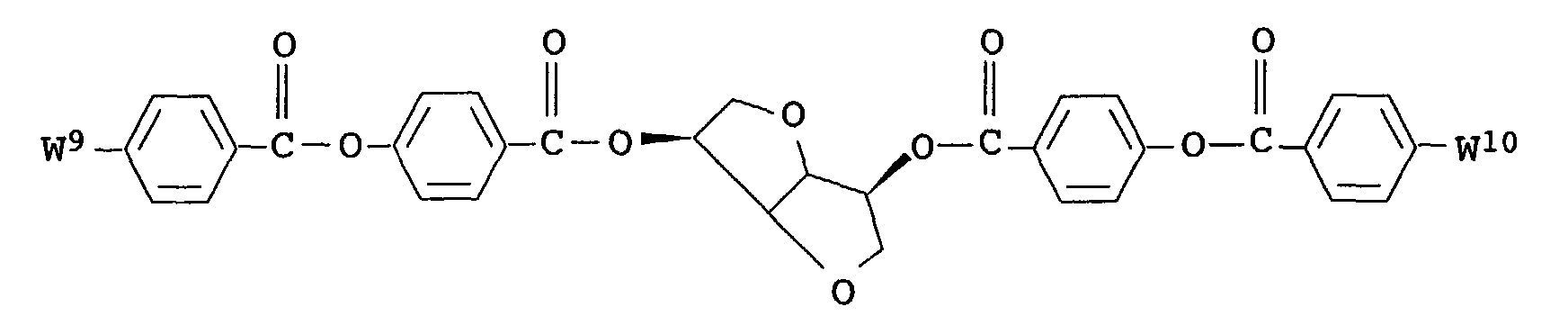
W10: -O-(O=)C-O-(CH2)4-O-C(=O)-CH=CH2


W12: -O-(O=)C-O-(CH2)6-O-C(=O)-CH=CH2


W14: O-(O=)C-O-(CH2)4-O-C(=O)-C(CH3)=CH2

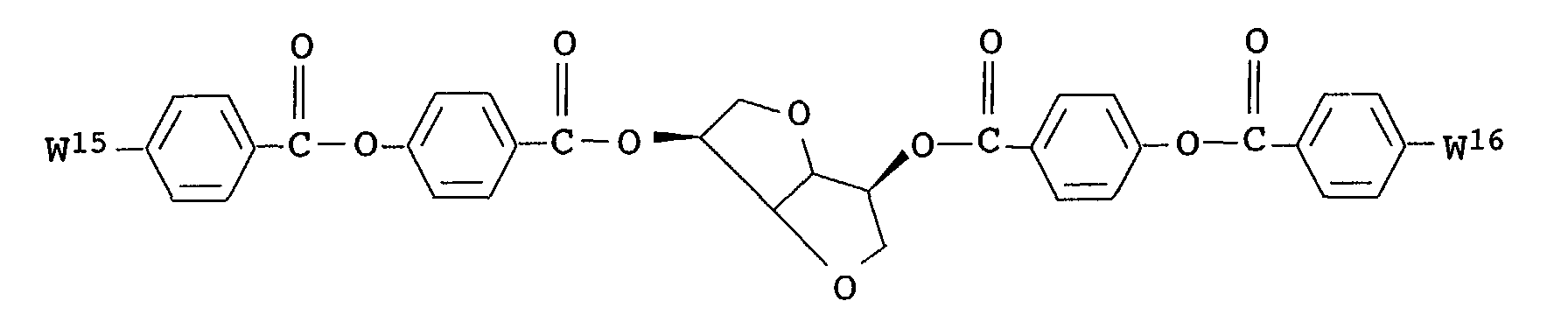
W16: -O-(O=)C-O-(CH2)6-O-C(=O)-C(CH3)=CH2
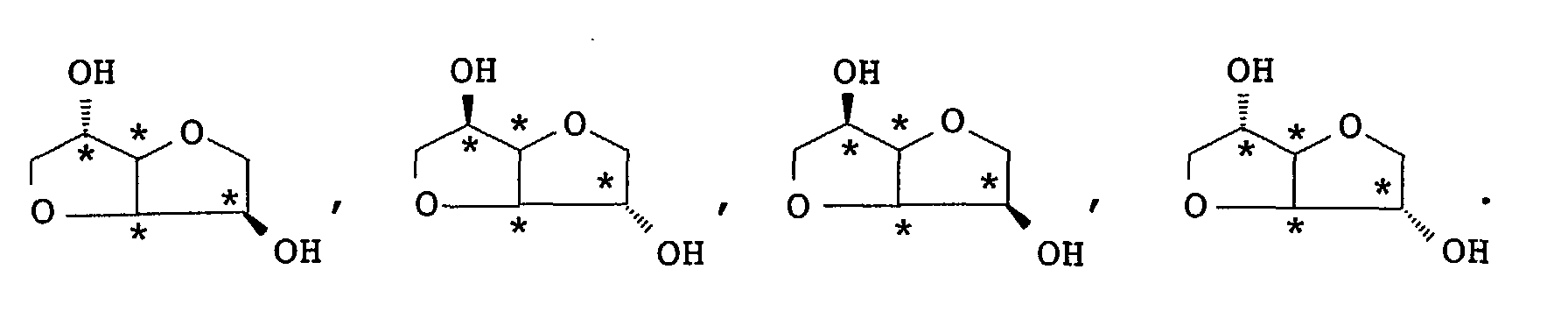




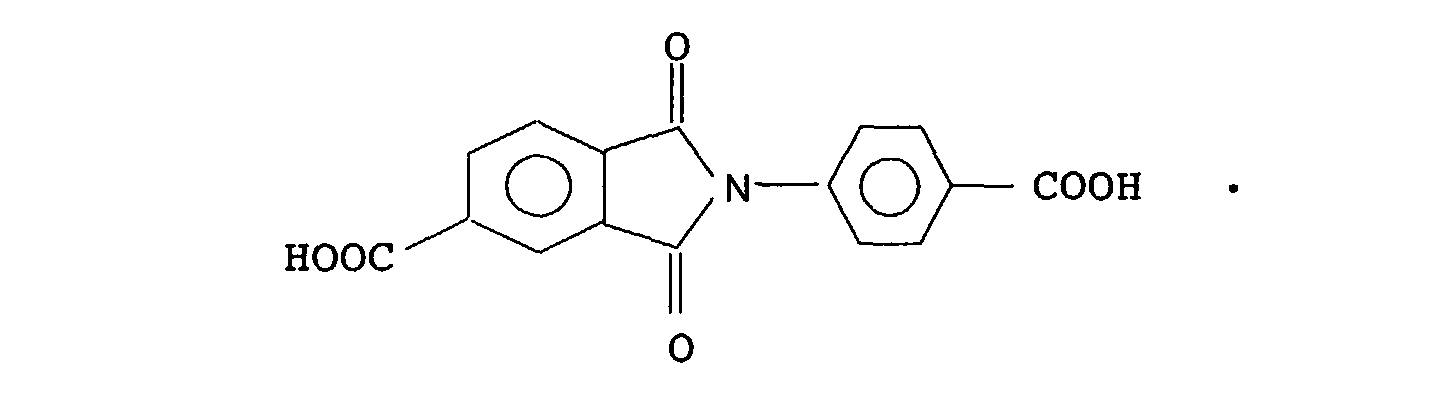
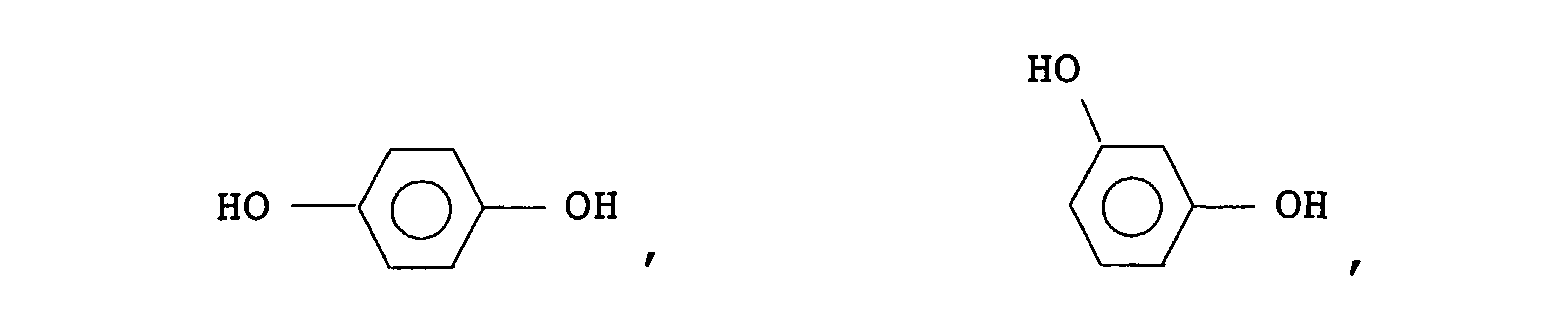


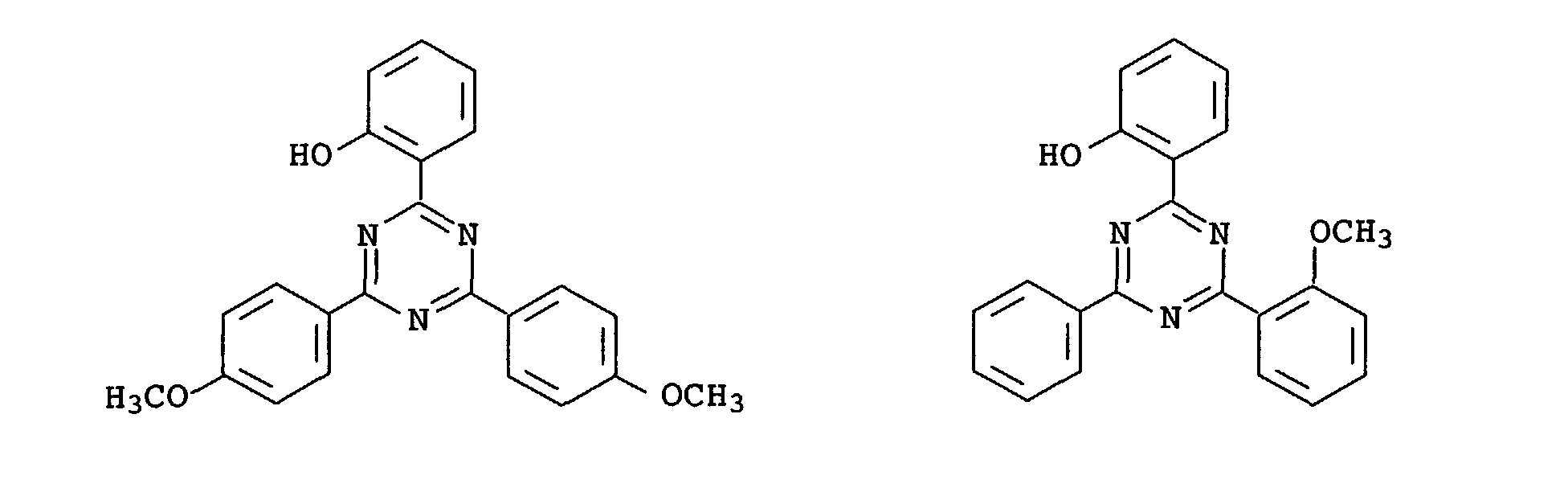

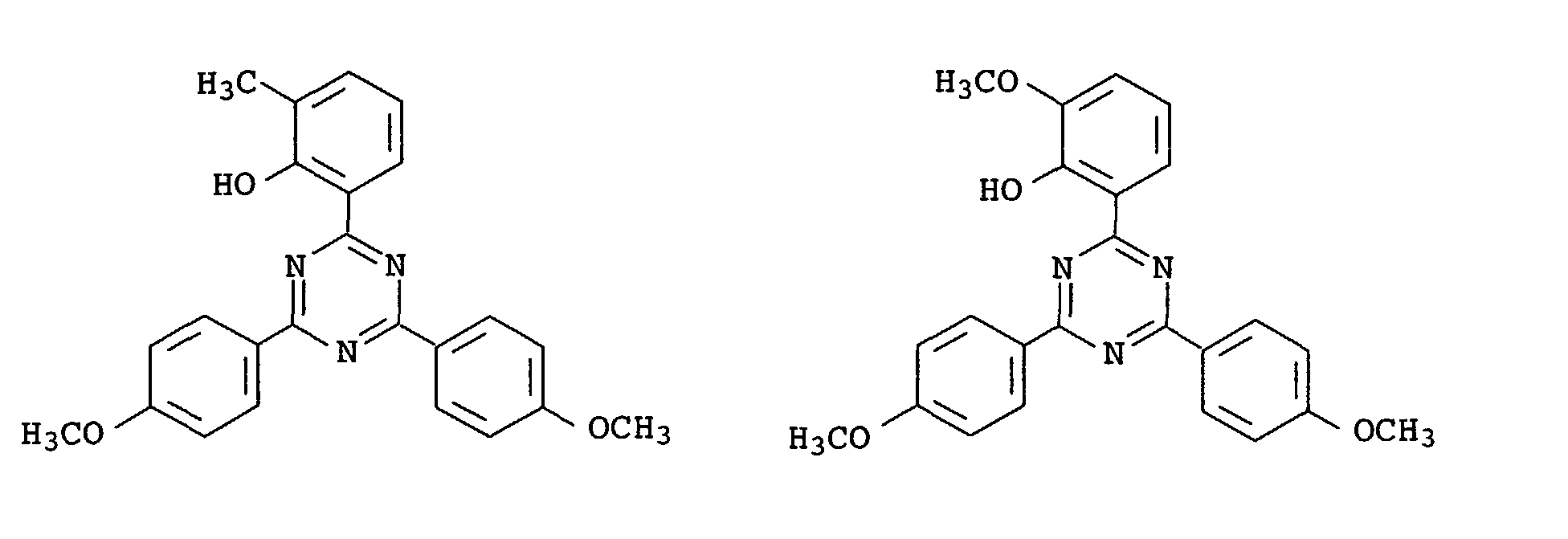

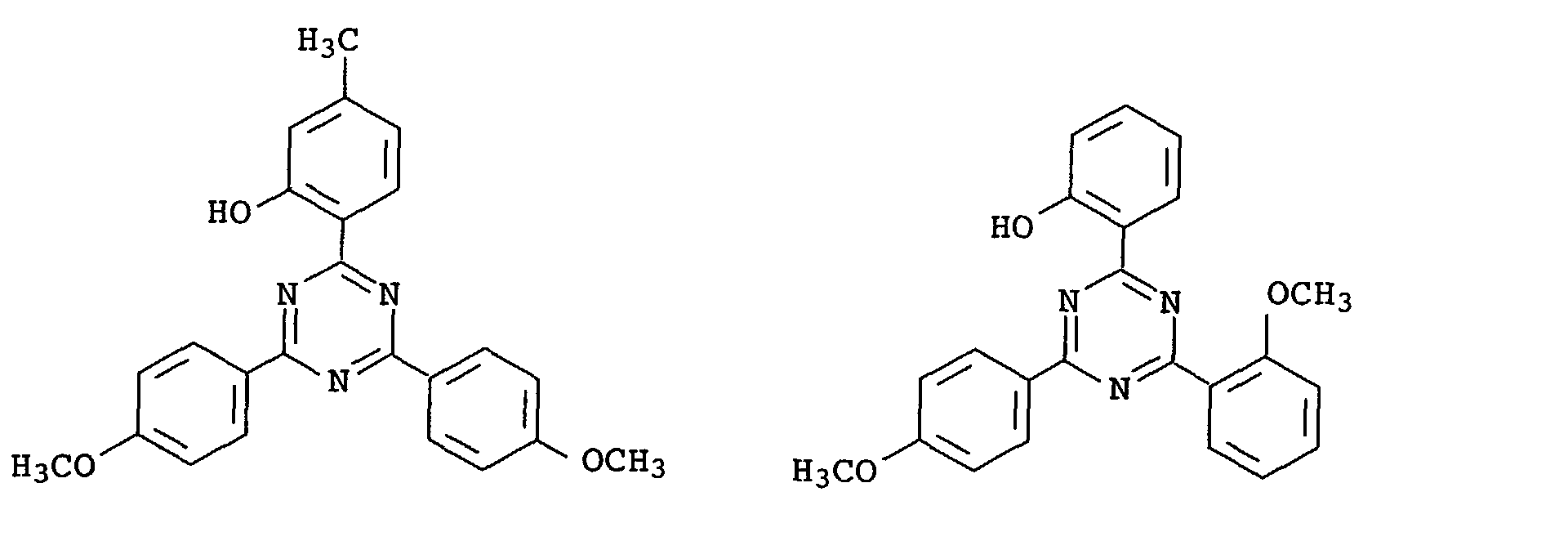
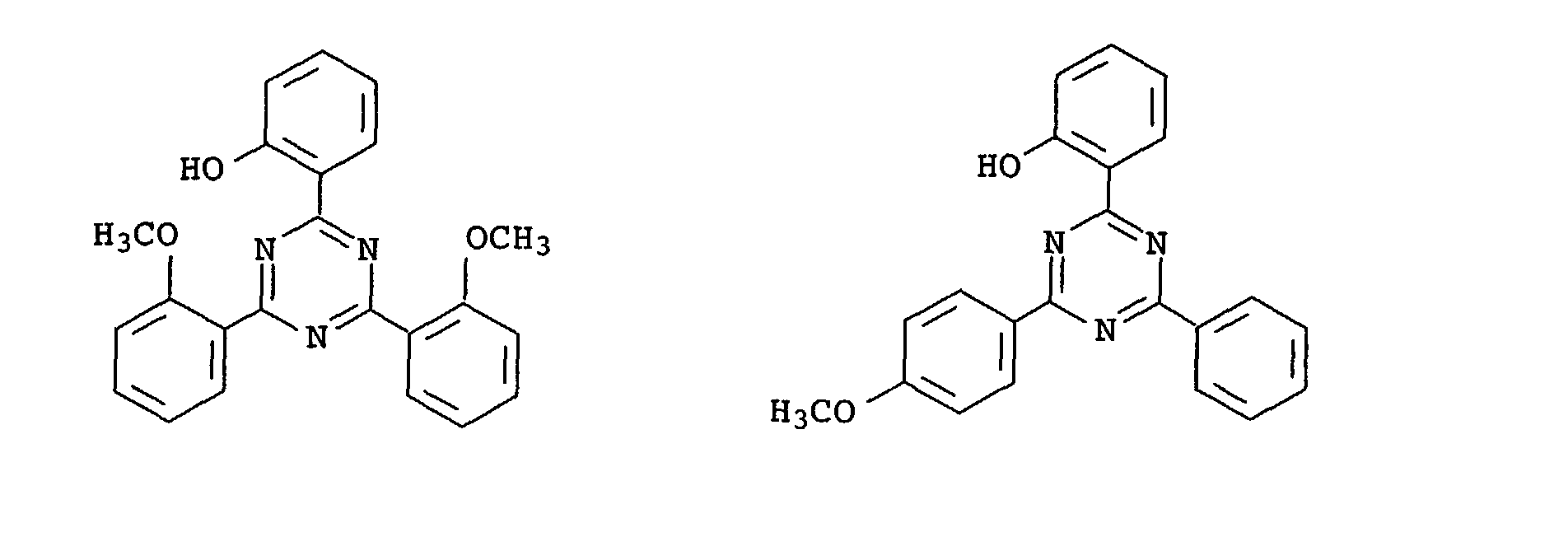


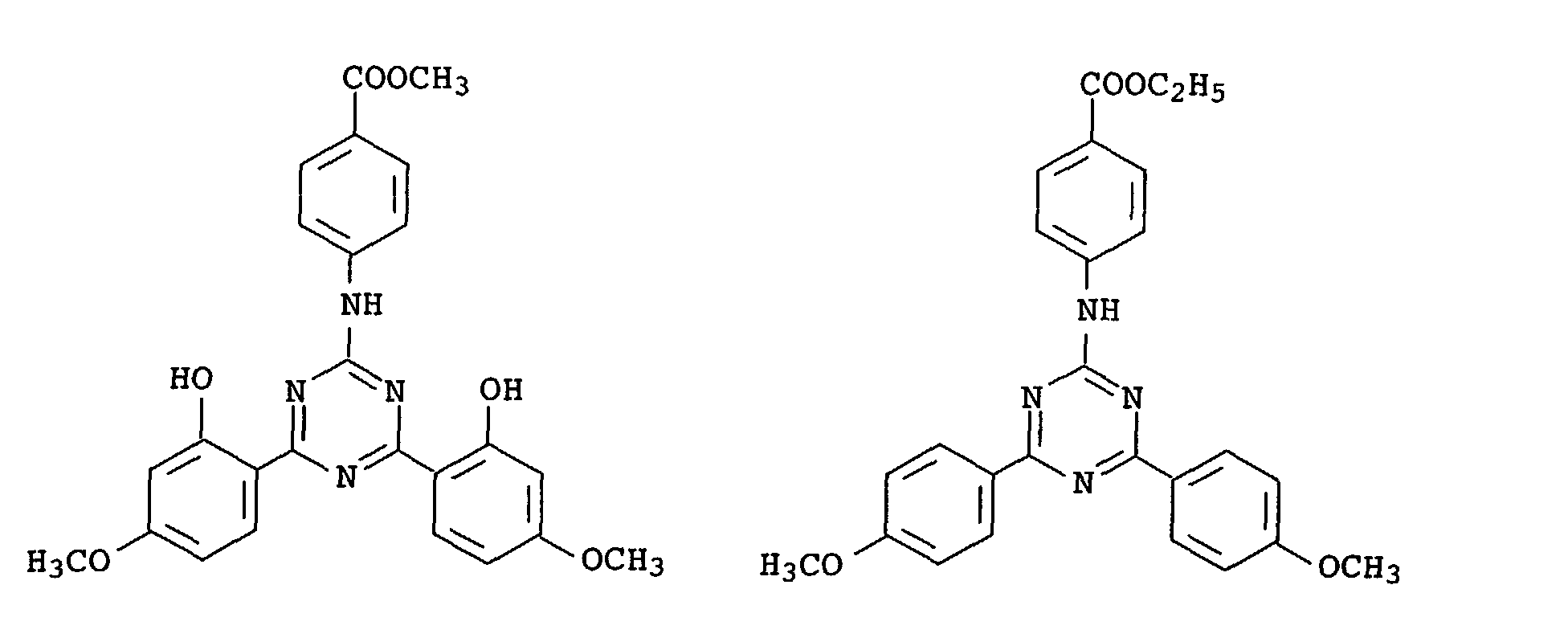

X für die zweiwertigen Reste
―O― oder N-R12
steht, wobei R12 Wasserstoff oder gegebenenfalls substituiertes C1-C20-Alkyl, C5-C10-Aryl oder C5-C10-Heteroaryl bedeutet,
vorzugsweise


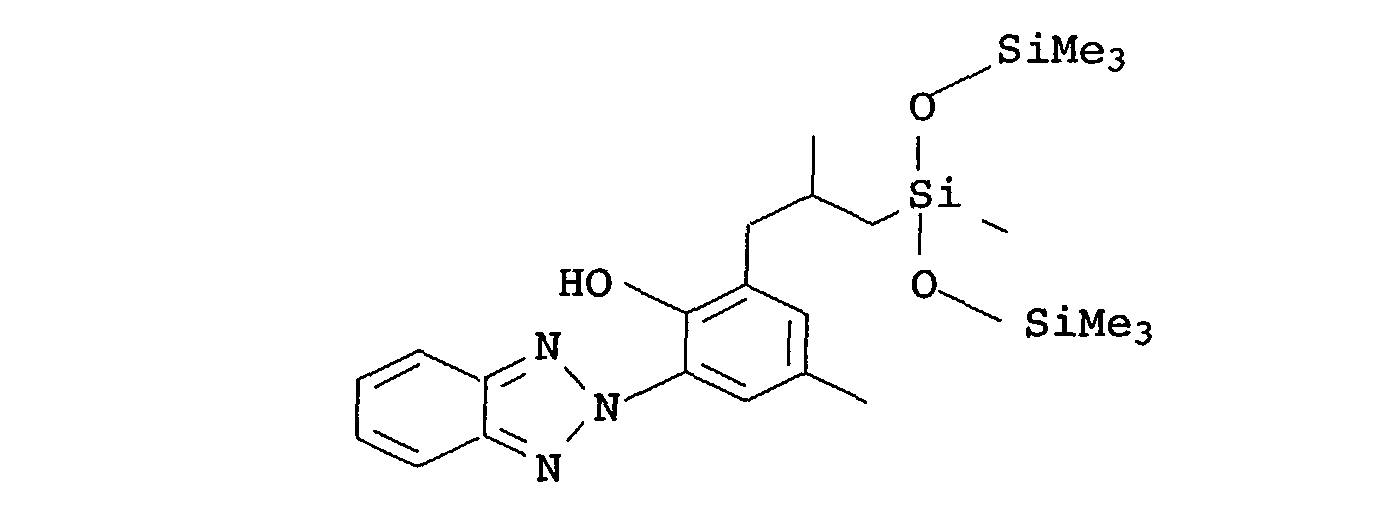


V1' die Gruppe

der Formel XI



- Mineralöle, Mineralwachse
- Öle, wie Triglyceride der Caprin- oder der Caprylsäure, vorzugsweise aber Rizinusöl;
- Fette, Wachse und andere natürliche und synthetische Fettkörper, vorzugsweise Ester von Fettsäuren mit Alkoholen niedriger C-Zahl, z. B. Isopropanol, Propylenglykol oder Glycerin, oder Ester von Fettalkoholen mit Alkansäuren niedriger C-Zahl oder mit Fettsäuren; Alkylbenzoate;
- Silikonöle wie Dimethylpolysiloxane, Diethylpolysiloxane, Diphenylpolysiloxane sowie Mischformen daraus.
- Alkohole, Diole oder Polyole niedriger C-Zahl, sowie deren Ether, vorzugsweise Ethanol, Isopropanol, Propylenglykol, Glycerin, Ethylenglykol, Ethylenglykolmonoethyl- oder -monobutylether, Propylenglykolmonomethyl, -monoethyl- oder -monobutylether, Diethylenglykolmonomethyl-, oder monoethylether und analoge Produkte.


| Formel 2B1 [Gew.-%] | Formel 2B2 [Gew.-%] | Formel 4 [Gew.-%] | λmax [nm] |
| 2,85 | - | 97,15 | 850 |
| 2,45 | - | 97,55 | 975 |
| 1,92 | - | 98,08 | 1200 |
| 1,65 | - | 98,35 | 1560 |
| - | 7,60 | 92,40 | 850 |
| - | 6,55 | 93,45 | 975 |
| - | 5,10 | 94,90 | 1200 |
| - | 4,10 | 95,90 | 1560 |
| Formel 2B1 [Gew.-%] | Formel 2B2 [Gew.-%] | Formel 4 [Gew.-%] | λmax [nm] |
| 2,45 | - | 97,55 | 975 |
| 1,92 | - | 98,08 | 1200 |
| 1,65 | - | 98,35 | 1560 |
| - | 6,55 | 93,45 | 975 |
| - | 5,10 | 94,90 | 1200 |
| - | 4,10 | 95,90 | 1560 |
| Massengehalt (Gew.-%) |
|
| ad 100 | Eucerinum anhydricum |
| 10,00 | Glycerin |
| 10,00 | Titanium Dioxid, mikronisiert |
| 3,00 | 2-Cyan-3,3-diphenylacrylsäureethylhexylester |
| 2,00 | 4-tert.-Butyl-4'-methoxy-dibenzoylmethan |
| 8,00 | IR-Pigment 1 |
| 8,00 | Octyl Methoxycinnamat |
| 5,00 | Zink Oxid |
| 4,00 | Castoröl |
| 4,00 | Pentaerythrithyl Stearat/Caprat/Caprylat/Adipat |
| 3,00 | Glyceryl Stearat SE |
| 2,00 | Bienenwachs |
| 2,00 | Microkristallines Wachs |
| 2,00 | Quaternium-18 Bentonit |
| 1,50 | PEG-45/Dodecyl Glycol Copolymer |
| Massengehalt (Gew.-%) |
|
| ad 100 | Wasser |
| 10,00 | Octyl Methoxycinnamat |
| 6,00 | PEG-7-Hydrogenated Castor Öl |
| 6,00 | Titanium Dioxid, mikronisiert |
| 3,00 | 2-Cyan-3,3-diphenylacrylsäureethylhexylester |
| 1,50 | 4-tert.-Butyl-4'-methoxy-dibenzoylmethan |
| 10,00 | IR-Pigment 2 |
| 5,00 | Mineral Öl |
| 5,00 | Isoamyl p-Methoxycinnamat |
| 5,00 | Propylen Glycol |
| 3,00 | Jojoba Öl |
| 3,00 | 4-Methylbenzyliden Campher |
| 2,00 | PEG-45/Dodecyl Glycol Copolymer |
| 1,00 | Dimethicon |
| 0,50 | PEG-40-Hydrogenated Castor Öl |
| 0,50 | Tocopheryl Acetat |
| 0,50 | Phenoxyethanol |
| 0,20 | EDTA |
| Massengehalt (Gew.-%) |
|
| ad 100 | Wasser |
| 8,00 | Octyl Methoxycinnamat |
| 7,00 | Titanium Dioxid, mikronisiert |
| 3,00 | 2-Cyan-3,3-diphenylacrylsäureethylhexylester |
| 1,50 | 4-tert.-Butyl-4'-methoxy-dibenzoylmethan |
| 13,00 | IR-Pigment 2 |
| 5,00 | Glycerin |
| 5,00 | PEG-25 PABA |
| 1,00 | 4-Methylbenzyliden Campher |
| 0,40 | Acrylate C10-C30 Alkyl Acrylat Crosspolymer |
| 0,30 | Imidazolidinyl Urea |
| 0,25 | Hydroxyethyl Cellulose |
| 0,25 | Sodium Methylparaben |
| 0,20 | Disodium EDTA |
| 0,15 | Fragrance |
| 0,15 | Sodium Propylparaben |
| 0,10 | Sodium Hydroxid |
| Massengehalt (Gew.-%) |
|
| ad 100 | Wasser |
| 8,00 | Octyl Methoxycinnamat |
| 8,00 | Titanium Dioxid, mikronisiert |
| 6,00 | PEG-7-Hydrogenated Castor Öl |
| 3,00 | 2-Cyan-3,3-diphenylacrylsäureethylhexylester |
| 1,50 | 4-tert.-Butyl-4'-methoxy-dibenzoylmethan |
| 10,00 | IR-Pigment 1 |
| 6,00 | Mineral Öl |
| 5,00 | Zink Oxid |
| 5,00 | Isopropyl Palmitat |
| 0,30 | Imidazolidinyl Urea |
| 3,00 | Jojoba Öl |
| 2,00 | PEG-45/Dodecyl Glycol Copolymer |
| 1,00 | 4-Methylbenzyliden Campher |
| 0,60 | Magnesium Stearat |
| 0,50 | Tocopheryl Acetat |
| 0,25 | Methylparaben |
| 0,20 | Disodium EDTA |
| 0,15 | Propylparaben |
| Massengehalt (Gew.-%) |
|
| ad 100 | Wasser |
| 8,00 | Octyl Methoxycinnamat |
| 5,00 | PEG-7-Hydrogenated Castor Öl |
| 5,00 | Propylene Glycol |
| 4,00 | Isopropyl Palmitat |
| 4,00 | Caprylic/Capric Triglycerid |
| 3,00 | 2-Cyan-3,3-diphenylacrylsäureethylhexylester |
| 1,50 | 4-tert.-Butyl-4'-methoxy-dibenzoylmethan |
| 20,00 | IR-Pigment 2 |
| 4,00 | Glycerin |
| 3,00 | Jojoba Öl |
| 2,00 | 4-Methylbenzyliden Campher |
| 2,00 | Titanium Dioxid, mikronisiert |
| 1,50 | PEG-45/Dodecyl Glycol Copolymer |
| 1,50 | Dimethicon |
| 0,70 | Magnesium Sulfat |
| 0,50 | Magnesium Stearat |
| 0,15 | Fragrance |
| Massengehalt (Gew.-%) |
|
| ad 100 | Wasser |
| 2,00 | Cetearyl Alkohol |
| 1,00 | Glycerinmonostearat |
| 2,00 | Vaselin |
| 7,50 | Octyl Methoxycinnamat |
| 4,00 | Octyl Salicylat |
| 3,00 | 2-Cyan-3,3-diphenylacrylsäureethylhexylester |
| 1,50 | 4-tert.-Butyl-4'-methoxy-dibenzoylmethan |
| 11,00 | Pigment 1 |
| 0,50 | Dimethicon |
| 5,00 | Propylen Glycol |
| 0,20 | EDTA |
| 0,20 | Carbomer |
| 5,00 | C12-C15 Alkyl Benzoat |
| 0,27 | Triethanolamin |
| 1,00 | Tocopheryl Acetat |
| q.s. | Fragrance |
| Massengehalt (Gew.-%) |
|
| ad 100 | Wasser |
| 2,00 | Cetearyl Alkohol |
| 2,00 | Cetyl Alkohol |
| 1,00 | Glycerinmonostearat |
| 2,00 | Vaselin |
| 7,50 | Octyl Methoxycinnamat |
| 4,00 | Octyl Salicylat |
| 3,00 | 2-Cyan-3,3-diphenylacrylsäureethylhexylester |
| 1,50 | 4-tert.-Butyl-4'-methoxy-dibenzoylmethan |
| 15,00 | Pigment 2 |
| 4,00 | Propylen Glycol |
| 0,20 | EDTA |
| 0,20 | Carbomer |
| 0,20 | Xanthan |
| 0,20 | C10-C30 Alkyl Acrylate Crosspolymer |
| 5,00 | C12-C15 Alkyl Benzoat |
| 0,54 | Triethanolamin |
| 1,00 | Tocopheryl Acetat |
| q.s. | Fragrance |
| q.s. | Konservierungsmittel |
| Massengehalt (Gew.-%) |
|
| ad 100 | Wasser |
| 2,00 | Cetearyl Alkohol |
| 2,00 | Ceteareth 25 |
| 6,00 | Glycerinmonostearat |
| 1,00 | Cetylalkohol |
| 8,00 | Paraffinöl |
| 7,00 | Cetearyl Octanoat |
| 0,2 | Dimethicon |
| 3,00 | Propylen Glycol |
| 1,00 | Panthenol |
| 3,00 | 2-Cyan-3,3-diphenylacrylsäureethylhexylester |
| 1,50 | 4-tert.-Butyl-4'-methoxy-dibenzoylmethan |
| 8,00 | Pigment 2 |
| 3,50 | Octyl Methoxycinnamat |
| 0,1 | Bisabolol |
| 5,70 | Titandioxid |
| 1,10 | Eisenoxid |
| q.s. | Fragrance |
| Massengehalt (Gew.-%) |
|
| ad 100 | Wasser |
| 1,20 | Carbomer |
| 0,50 | Hydroxyethyl Cellulose |
| 4,00 | Triethanolamin |
| 0,70 | PEG-40 Hydrogenated Castor oil |
| 1,50 | 2-Cyan-3,3-diphenylacrylsäureethylhexylester |
| 0,70 | 4-tert.-Butyl-4'-methoxy-dibenzoylmethan |
| 7,00 | Pigment 1 |
| 2,80 | Octyl Methoxycinnamat |
| 5,00 | Propylen Glycol |
| 0,01 | EDTA |
| q.s. | Fragrance |
| q.s. | Sicovit Patentblau 85 E 131 |
| Haut [°C] | Haut nach Behandlung mit UV-Lichtschutzmittel [°C] | Haut nach Behandlung mit erfindungsgemäßer Zubereitung [°C] | |
| ohne Belichtung | 32,3 | 32,3 | 32,3 |
| nach 5 min, ohne Belichtung | 32,8 | 32,8 | 32,3 |
| nach 3 min Belichtung | 40,7 | 40,5 | 36,3 |
| Δ T | 7,9 | 7,7 | 4,0 |
| Haut [°C] | Haut nach Behandlung mit UV-Lichschutzmittel [oC] | Haut nach Behandlung mit erfindungsgemäßer Zubereitung [°C] | |
| ohne Belichtung | 32,3 | 32,3 | 32,3 |
| nach 5 min, ohne Belichtung | 32,8 | 32,8 | 32,3 |
| nach 3 min Belichtung | 40,7 | 40,4 | 37,6 |
| Δ T | 7,9 | 7,6 | 5,3 |
Claims (10)
- Kosmetische oder dermatologische Zubereitung, enthaltendA) wenigstens eine im infraroten Wellenlängenbereich von 750 nm bis 2500 nm reflektierende cholesterische Komponente,B) wenigstens eine vor Strahlung im ultravioletten Strahlenbereich von 280 nm bis 449 nm schützende Komponente undC) einen kosmetisch oder dermatologisch akzeptablen Träger.
- Zubereitung nach Anpruch 1, wobei die Komponente A) ausgewählt ist unterin gehärtetem Zustand.a) mindestens einem cholesterischen polymerisierbaren Monomer;b) mindestens einem achiralen, nematischen, polymerisierbaren Monomer und einer chiralen Verbindung;c) mindestens einem cholesterischen vernetzbaren Polymer;d) mindestens einem cholesterischen Polymer in einem polymerisierbaren Verdünnungsmittel oder einem Gemisch polymerisierbarer Verdünnungsmittel;e) mindestens einem cholesterischen Polymer, dessen cholesterische Phase durch schnelles Abkühlen unter die Glasübergangstemperatur eingefroren werden kann; oderf) mindestens einem achiralem, flüssigkristallinen vernetzbaren Polymer und einer chirale Verbindung;
- Zubereitung nach einem der Ansprüche 1 oder 2, wobei die Komponente B) ausgewählt ist unter folgenden Klassen: cholesterischen Komponenten mit einer Ganghöhe kleiner 450 nm, Aminobenzoesäuren, Aminobenzoesäureestern, Bicyclo[2.2.1]heptan-2-onen, Hydroxybenzoesäureestern und -salzen, Benzophenonen, Benzimidazolen, Zimtsäureestern, 3,3-Diphenylacrylsäureestern, 3-Imidazol-4-yl-acrylsäuren, 3-Imidazol-4-yl-acrylsäureestern, alicyclischen Dienonen, Triazinen, Phenylglyoxylsäuren und -salzen, Dibenzoylmethanen, 4,4'-Diarylbutadienen, Benzotriazolen, Organosiloxanbenzalmalonaten, Enaminen, cyclischen Iminoestern, anorganischen Pigmenten und Mischungen davon.
- Zubereitung nach Anspruch 3, wobei das anorganische Pigment ausgewählt ist unter Zinkoxid, Titanoxid und Gemischen davon.
- Zubereitung nach einem der Ansprüche 3 oder 4, wobei die Komponente B) wenigstens ein 3,3-Diphenylacrylat und wenigstens ein Dibenzoylmethanderivat umfasst.
- Zubereitung nach einem der Ansprüche 3 oder 4, wobei die Komponente B) wenigstens einen 4-Methoxyzimtsäureester enthält.
- Zubereitung nach einem der vorhergehenden Ansprüche, wobei der Träger C) ausgewählt ist unter Wasser, wassermischbaren Flüssigkeiten, hydrophoben Komponenten und Mischungen davon.
- Verwendung von kosmetischen oder dermatologischen Zubereitungen nach einem der Ansprüche 1 bis 7 zum Schutz der menschliche Haut oder der menschlichen Haare vor Wärmestrahlung im infraroten Wellenlängenbereich von 750 bis 2500 nm und vor UV-Strahlung im Bereich von 280 bis 449 nm.
- Verwendung wenigstens einer im infraroten Wellenlängenbereich von 750 nm bis 2500 nm reflektierenden cholesterischen Komponente in kosmetischen oder dermatologischen Zubereitungen, die wenigstens eine vor Strahlung im ultravioletten Wellenlängenbereich von 280 bis 449 nm schützende Verbindung enthalten, zur Reduzierung einer Erwärmung der mit dieser Zubereitung behandelten Haut oder Haare.
- Verwendung nach Anspruch 9, wobei die Reduzierung der Erwärmung mindestens 20 % beträgt.
Applications Claiming Priority (2)
| Application Number | Priority Date | Filing Date | Title |
|---|---|---|---|
| DE10155542A DE10155542A1 (de) | 2001-11-12 | 2001-11-12 | Kosmetische oder dermatologische Lichtschutzmittelzubereitung |
| DE10155542 | 2001-11-12 |
Publications (2)
| Publication Number | Publication Date |
|---|---|
| EP1310238A2 true EP1310238A2 (de) | 2003-05-14 |
| EP1310238A3 EP1310238A3 (de) | 2004-01-02 |
Family
ID=7705487
Family Applications (1)
| Application Number | Title | Priority Date | Filing Date |
|---|---|---|---|
| EP02025192A Withdrawn EP1310238A3 (de) | 2001-11-12 | 2002-11-11 | Kosmetische oder dermatologische Lichtschutzmittelzubereitung |
Country Status (5)
| Country | Link |
|---|---|
| US (1) | US20030215405A1 (de) |
| EP (1) | EP1310238A3 (de) |
| JP (1) | JP2003183145A (de) |
| CN (1) | CN1418614A (de) |
| DE (1) | DE10155542A1 (de) |
Cited By (4)
| Publication number | Priority date | Publication date | Assignee | Title |
|---|---|---|---|---|
| WO2008042326A3 (en) * | 2006-10-02 | 2008-06-19 | Schering Plough Healthcare | Photoprotective compositions comprising synergistic combination of sunscreen active compounds |
| EP2769708A1 (de) * | 2013-02-21 | 2014-08-27 | Symrise AG | Inhibition der durch IR-Strahlung induzierten Hautalterung |
| WO2017101976A1 (de) | 2015-12-15 | 2017-06-22 | Symrise Ag | Zubereitungen mit carnosinen |
| WO2024061476A1 (en) | 2022-09-19 | 2024-03-28 | Symrise Ag | A method for preventing, mitigating and/or treating ptgs2-induced skin disorders and related dysfunctions |
Families Citing this family (13)
| Publication number | Priority date | Publication date | Assignee | Title |
|---|---|---|---|---|
| US8211449B2 (en) * | 2004-06-24 | 2012-07-03 | Dpt Laboratories, Ltd. | Pharmaceutically elegant, topical anhydrous aerosol foam |
| AU2014200154A1 (en) * | 2006-10-02 | 2014-01-30 | Bayer Consumer Care Ag | Photoprotective compositions comprising synergistic combination of sunscreen active compounds |
| CN103924313B (zh) * | 2014-03-18 | 2015-10-28 | 东南大学 | 一种聚离子液体功能化纳米纤维的制备方法及其应用技术 |
| MX366598B (es) | 2014-06-17 | 2019-07-12 | Procter & Gamble | Composicion para la reduccion del encrespado del cabello. |
| MX369683B (es) | 2014-12-05 | 2019-10-02 | Procter & Gamble | Composición para la reducción del encrespado del cabello. |
| US10632054B2 (en) | 2015-04-02 | 2020-04-28 | The Procter And Gamble Company | Method for hair frizz reduction |
| US10660835B2 (en) | 2015-04-02 | 2020-05-26 | The Procter And Gamble Company | Method for hair frizz reduction |
| JP6739923B2 (ja) * | 2015-10-30 | 2020-08-12 | 花王株式会社 | 皮膚化粧料 |
| WO2017096154A1 (en) | 2015-12-04 | 2017-06-08 | The Procter & Gamble Company | Hair care regimen using compositions comprising moisture control materials |
| CN108289814B (zh) | 2015-12-04 | 2022-04-01 | 宝洁公司 | 用于毛发卷曲减少的组合物 |
| US10406094B2 (en) | 2016-04-01 | 2019-09-10 | The Procter And Gamble Company | Composition for fast dry of hair |
| US10980723B2 (en) | 2017-04-10 | 2021-04-20 | The Procter And Gamble Company | Non-aqueous composition for hair frizz reduction |
| WO2025114212A1 (en) * | 2023-11-27 | 2025-06-05 | Unilever Ip Holdings B.V. | A personal care composition |
Family Cites Families (9)
| Publication number | Priority date | Publication date | Assignee | Title |
|---|---|---|---|---|
| GB2282145A (en) * | 1993-09-22 | 1995-03-29 | Central Research Lab Ltd | Coloured material comprising aligned liquid crystal laminae |
| DE4416191A1 (de) * | 1994-05-06 | 1995-11-09 | Consortium Elektrochem Ind | Interferenzpigmente aus in cholesterischer Anordnung fixierten Molekülen sowie deren Verwendung |
| DE19629761A1 (de) * | 1996-07-23 | 1997-06-05 | Wacker Chemie Gmbh | Zubereitungen mit vom Betrachtungswinkel abhängiger Farbigkeit |
| US6410130B1 (en) * | 1997-09-02 | 2002-06-25 | Basf Aktiengesellschaft | Coatings with a cholesteric effect and method for the production thereof |
| DE19756974C2 (de) * | 1997-12-20 | 2001-04-19 | Clariant Gmbh | Organisches Material mit metallischem Glanz |
| DE19824972A1 (de) * | 1998-06-04 | 1999-12-09 | Basf Ag | Verwendung von cholesterisch-flüssigkristallinen Zusammensetzungen als UV-Filter in kosmetischen und pharmazeutischen Zubereitungen |
| DE19848130A1 (de) * | 1998-10-19 | 2000-04-20 | Basf Ag | Verwendung von cholesterisch-flüssigkristallinen Polymeren als UV-Filter in kosmetischen und pharmazeutischen Zubereitungen |
| DE19949284A1 (de) * | 1999-10-12 | 2001-04-19 | Basf Ag | Chirale Verbindung und deren Verwendung als chirale Dotierstoffe zur Herstellung von cholesterisch-flüssigkristallinen Zusammensetzungen |
| TWI236496B (en) * | 2000-03-16 | 2005-07-21 | Merck Patent Gmbh | Broadband liquid crystal pigments |
-
2001
- 2001-11-12 DE DE10155542A patent/DE10155542A1/de not_active Withdrawn
-
2002
- 2002-11-07 US US10/289,334 patent/US20030215405A1/en not_active Abandoned
- 2002-11-11 EP EP02025192A patent/EP1310238A3/de not_active Withdrawn
- 2002-11-11 JP JP2002327175A patent/JP2003183145A/ja not_active Withdrawn
- 2002-11-12 CN CN02149283A patent/CN1418614A/zh active Pending
Cited By (6)
| Publication number | Priority date | Publication date | Assignee | Title |
|---|---|---|---|---|
| WO2008042326A3 (en) * | 2006-10-02 | 2008-06-19 | Schering Plough Healthcare | Photoprotective compositions comprising synergistic combination of sunscreen active compounds |
| AU2007305354B2 (en) * | 2006-10-02 | 2014-01-23 | Beiersdorf Ag | Photoprotective compositions comprising synergistic combination of sunscreen active compounds |
| EP2769708A1 (de) * | 2013-02-21 | 2014-08-27 | Symrise AG | Inhibition der durch IR-Strahlung induzierten Hautalterung |
| WO2014128228A3 (de) * | 2013-02-21 | 2014-12-24 | Symrise Ag | Medikament |
| WO2017101976A1 (de) | 2015-12-15 | 2017-06-22 | Symrise Ag | Zubereitungen mit carnosinen |
| WO2024061476A1 (en) | 2022-09-19 | 2024-03-28 | Symrise Ag | A method for preventing, mitigating and/or treating ptgs2-induced skin disorders and related dysfunctions |
Also Published As
| Publication number | Publication date |
|---|---|
| CN1418614A (zh) | 2003-05-21 |
| US20030215405A1 (en) | 2003-11-20 |
| JP2003183145A (ja) | 2003-07-03 |
| DE10155542A1 (de) | 2003-05-22 |
| EP1310238A3 (de) | 2004-01-02 |
Similar Documents
| Publication | Publication Date | Title |
|---|---|---|
| DE60001345T2 (de) | Mindestens ein unlösliches organisches UV-Filter und ein assoziatives Polymer enthaltende Emulsionen | |
| EP1038941B1 (de) | Chirale Verbindungen und deren Verwendung als chirale Dotierstoffe zur Herstellung von cholesterische-fl-ssigkristallinen Zusammensetzungen | |
| DE69726529T2 (de) | Benzoxazolderivate und ihre Verwendung als UV-Filter | |
| DE19824972A1 (de) | Verwendung von cholesterisch-flüssigkristallinen Zusammensetzungen als UV-Filter in kosmetischen und pharmazeutischen Zubereitungen | |
| EP1310238A2 (de) | Kosmetische oder dermatologische Lichtschutzmittelzubereitung | |
| EP1127567A2 (de) | Wässrige Dispersion wasserunlöslicher organischer UV-Filtersubstanzen | |
| DE19756377A1 (de) | Verwendung von C¶1¶¶8¶-¶3¶¶8¶-Alkylhydroxystearoylstearat zur Verstärkung der UV-A-Schutzleistung kosmetischer oder dermatologischer Formulierungen | |
| EP1034778A2 (de) | Verwendung von Octocrylen zur Solubilisierung von 2,4-Bis- [4-(2-Ethyl-hexyloxy)-2-hydroxy]-phenyl -6-(4-methoxyphenyl)-1,3,5-triazin in kosmetischen oder dermatologischen Lichtschutzmitteln | |
| US20080206158A1 (en) | Benzoic Acid Ester Compounds, Compositions, Uses and Methods Related Thereto | |
| EP0998900B1 (de) | Verwendung von cholesterich-flüssigkristallinen Polymeren als UV-Filter in kosmetischen und pharmazeutischen Zubereitungen | |
| EP1240894A2 (de) | Verwendung von Lichtschutzmittelkombinationen in kosmetischen und pharmazeutischen Zubereitungen | |
| EP2034949B1 (de) | Verfahren zur erhöhung des lichtschutzfaktors einer kosmetischen und/ oder dermatologischen zubereitung | |
| EP1588693A1 (de) | Verbesserte Lösungsvermittler/Lösungsmittel für organische UV-Filter | |
| EP1092721B1 (de) | Chirale Glucoside und deren Verwendung als chirale Dotierstoffe zur Herstellung von cholestrisch-flüssigkristallinen Zusammensetzungen | |
| EP0887069B1 (de) | Verwendung von synthetischem Bienenwachs zur Verstärkung des Lichtschutzfaktors kosmetischer oder dermatologischer Lichtschutzmittel | |
| EP0826360B1 (de) | Verwendung von Dibenzoylmethanderivaten zur Erzielung oder Erhöhung der Löslichkeit von Triazinderivaten in Ölkomponenten | |
| EP0887068A2 (de) | Verwendung von Bienenwachs zur Verstärkung des Lichtschutzfaktors kosmetischer oder dermatologischer Lichtschutzmittel | |
| DE19715842B4 (de) | Kosmetische und dermatologische Lichtschutzformulierungen mit einem Gehalt an Triazinderivaten und grenzflächenaktiven Substanzen sowie deren Verwendung | |
| EP0935959A2 (de) | Verwendung von Bienenwachs zur Verstärkung der UV-A-Schutzleistung kosmetischer oder dermatologischer Formulierungen | |
| DE19726785B4 (de) | Kosmetische und dermatologische Lichtschutzformulierungen mit einem Gehalt an s-Triazinderivaten und Alkylglukosiden und ihre Verwendung | |
| DE19651055B4 (de) | Kosmetische und dermatologische Lichtschutzformulierungen mit einem Gehalt an Triazinderivaten und Dimethylisosorbid und deren Verwendung | |
| EP1407758A1 (de) | Fettfreie Sonnenschutzmittel | |
| EP0895775B1 (de) | Lichtschutzbereitungen mit einem Gehalt an anorganischen Pigmenten, welche oberflächlich mit UV-Filtersubstanzen beschichtet sind | |
| DE10009442A1 (de) | Kosmetische oder dermatologische Lichtschutzmittelzubereitung | |
| DE19830461A1 (de) | Verwendung von Eisen-Titan-Mischoxiden zur Verstärkung der Lichtschutzleistung kosmetischer oder dermatologischer Lichtschutzmittel |
Legal Events
| Date | Code | Title | Description |
|---|---|---|---|
| PUAI | Public reference made under article 153(3) epc to a published international application that has entered the european phase |
Free format text: ORIGINAL CODE: 0009012 |
|
| AK | Designated contracting states |
Designated state(s): AT BE BG CH CY CZ DE DK EE ES FI FR GB GR IE IT LI LU MC NL PT SE SK TR |
|
| AX | Request for extension of the european patent |
Extension state: AL LT LV MK RO SI |
|
| PUAL | Search report despatched |
Free format text: ORIGINAL CODE: 0009013 |
|
| AK | Designated contracting states |
Kind code of ref document: A3 Designated state(s): AT BE BG CH CY CZ DE DK EE ES FI FR GB GR IE IT LI LU MC NL PT SE SK TR |
|
| AX | Request for extension of the european patent |
Extension state: AL LT LV MK RO SI |
|
| 17P | Request for examination filed |
Effective date: 20040702 |
|
| AKX | Designation fees paid |
Designated state(s): AT BE BG CH CY CZ DE DK EE ES FI FR GB GR IE IT LI LU MC NL PT SE SK TR |
|
| AXX | Extension fees paid |
Extension state: SI Payment date: 20040702 Extension state: RO Payment date: 20040702 |
|
| 17Q | First examination report despatched |
Effective date: 20050321 |
|
| STAA | Information on the status of an ep patent application or granted ep patent |
Free format text: STATUS: THE APPLICATION IS DEEMED TO BE WITHDRAWN |
|
| 18D | Application deemed to be withdrawn |
Effective date: 20050802 |