EP1308449A2 - Process for synthesizing ionic metal complex - Google Patents
Process for synthesizing ionic metal complex Download PDFInfo
- Publication number
- EP1308449A2 EP1308449A2 EP02024608A EP02024608A EP1308449A2 EP 1308449 A2 EP1308449 A2 EP 1308449A2 EP 02024608 A EP02024608 A EP 02024608A EP 02024608 A EP02024608 A EP 02024608A EP 1308449 A2 EP1308449 A2 EP 1308449A2
- Authority
- EP
- European Patent Office
- Prior art keywords
- group
- groups
- ion
- process according
- halogenated
- Prior art date
- Legal status (The legal status is an assumption and is not a legal conclusion. Google has not performed a legal analysis and makes no representation as to the accuracy of the status listed.)
- Granted
Links
Classifications
-
- C—CHEMISTRY; METALLURGY
- C07—ORGANIC CHEMISTRY
- C07F—ACYCLIC, CARBOCYCLIC OR HETEROCYCLIC COMPOUNDS CONTAINING ELEMENTS OTHER THAN CARBON, HYDROGEN, HALOGEN, OXYGEN, NITROGEN, SULFUR, SELENIUM OR TELLURIUM
- C07F5/00—Compounds containing elements of Groups 3 or 13 of the Periodic Table
- C07F5/02—Boron compounds
- C07F5/022—Boron compounds without C-boron linkages
-
- C—CHEMISTRY; METALLURGY
- C07—ORGANIC CHEMISTRY
- C07F—ACYCLIC, CARBOCYCLIC OR HETEROCYCLIC COMPOUNDS CONTAINING ELEMENTS OTHER THAN CARBON, HYDROGEN, HALOGEN, OXYGEN, NITROGEN, SULFUR, SELENIUM OR TELLURIUM
- C07F9/00—Compounds containing elements of Groups 5 or 15 of the Periodic Table
- C07F9/02—Phosphorus compounds
- C07F9/547—Heterocyclic compounds, e.g. containing phosphorus as a ring hetero atom
- C07F9/6564—Heterocyclic compounds, e.g. containing phosphorus as a ring hetero atom having phosphorus atoms, with or without nitrogen, oxygen, sulfur, selenium or tellurium atoms, as ring hetero atoms
- C07F9/6571—Heterocyclic compounds, e.g. containing phosphorus as a ring hetero atom having phosphorus atoms, with or without nitrogen, oxygen, sulfur, selenium or tellurium atoms, as ring hetero atoms having phosphorus and oxygen atoms as the only ring hetero atoms
Definitions
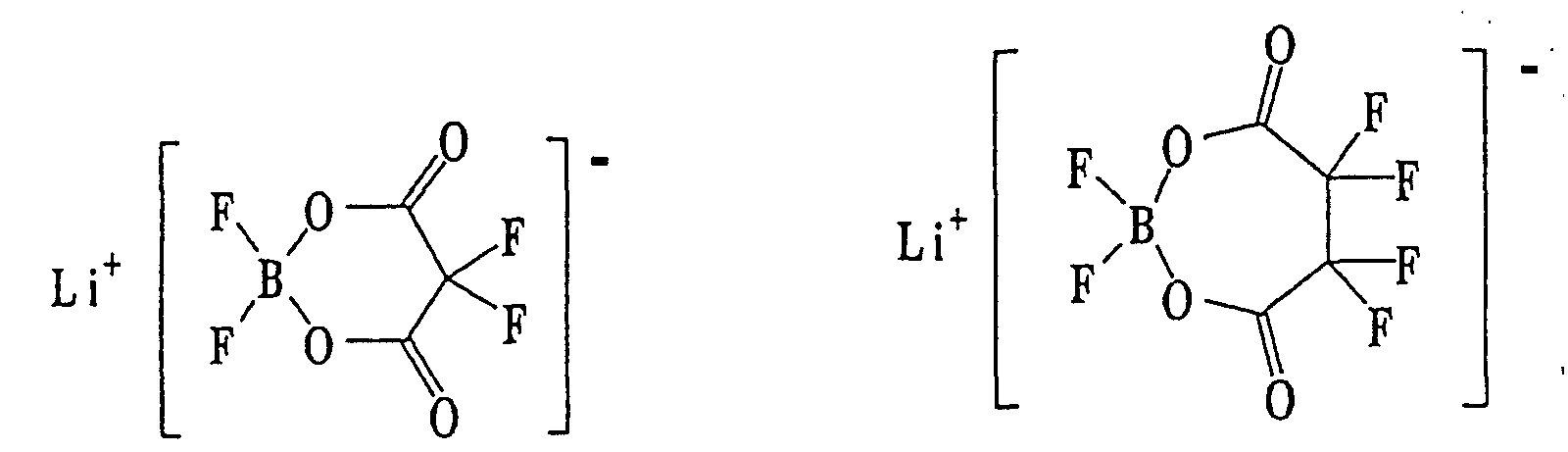
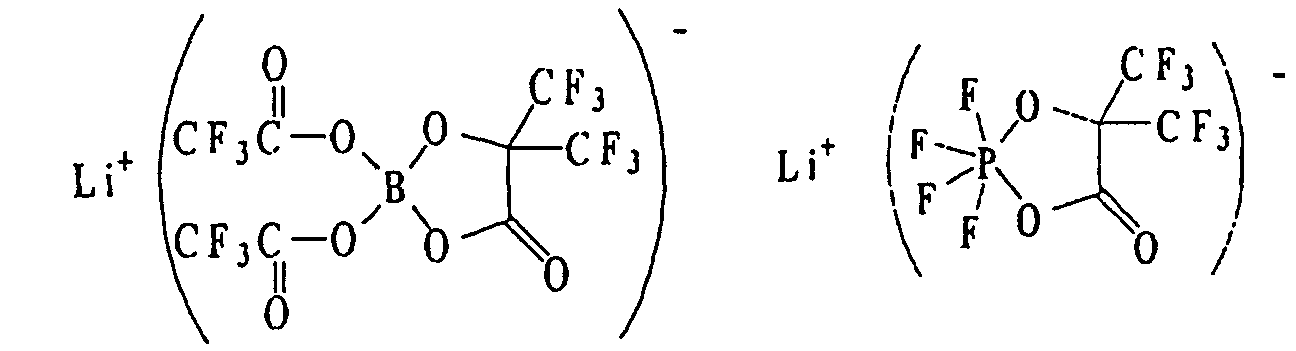
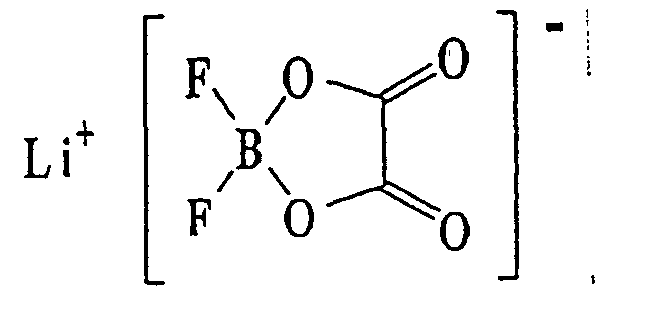
- the present invention relates to a process for synthesizing an ionic metal complex that can be used as a supporting electrolyte for lithium batteries, lithium ion batteries, electrical double-layer capacitors and other electrochemical devices, a polymerization catalyst for polyolefins and so forth, or a catalyst for organic synthesis.
- Ionic complexes such as PF 6 - , BF 4 - and AsF 6 - , formed by bonding of Lewis acids with F ion have been used in applications such as supporting electrolytes for electrochemical devices, polymerization catalysts for polyolefins and so forth or catalysts for organic synthesis due to their solubility and ion dissociation characteristics and their high activity in reactions.
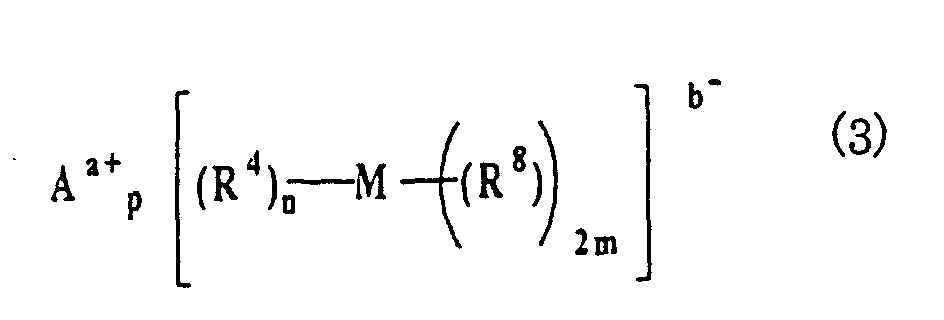
- a first process for synthesizing an ionic metal complex represented by the general formula (1) comprises reacting in an organic solvent a compound represented by the general formula (2) with a halogen-containing compound represented by the general formula (3) or (4), in the presence of a reaction aid comprising an element selected from the group consisting of elements of groups 1-4 and 11-14 of the periodic table,
- a second process for synthesizing an ionic metal complex represented by the general formula (5) comprises reacting in an organic solvent a compound represented by the general formula (6) with a halogen-containing compound represented by the general formula (3) or (4), in the presence of a reaction aid comprising an element selected from the group consisting of elements of groups 1-4 and 11-14 of the periodic table,
- M represents a transition metal selected from the group consisting of elements of groups 3-11 of the periodic table, or an element selected from the group consisting of elements of groups 12-15 of the periodic table;
- a a+ represents a metal ion, hydrogen ion or onium ion;
- a represents a number from 1 to 3;
- b represents a number from 1 to 3;
- p is b/a;
- m represents a number from 1 to 4;
- n represents a number from 0 to 8;
- q is 0 or 1;
- each of R 1 and R 2 independently represents a hydrogen, halogen, C 1 -C 10 alkyl group, or C 1 -C 10 halogenated alkyl group;
- R 3 represents a C 1 -C 10 alkylene group, C 1 -C 10 halogenated alkylene group, C 4 -C 20 arylene group or C 4 -C 20 halogenated arylene group, these alkylene and arylene
- M is selected from elements of groups 3-15 of the periodic table. It is preferably Al, B, V, Ti, Si, Zr, Ge, Sn, Cu, Y, Zn, Ga, Nb, Ta, Bi, P, As, Sc, Hf or Sb.
- a a+ is a metal ion, hydrogen ion or onium ion.
- a a+ is a lithium ion, quaternary alkylammonium ion or hydrogen ion.
- Specific examples of A a+ include lithium ion, sodium ion, potassium ion, magnesium ion, calcium ion, barium ion, cesium ion, silver ion, zinc ion, copper ion, cobalt ion, iron ion, nickel ion, manganese ion, titanium ion, lead ion, chromium ion, vanadium ion, ruthenium ion, yttrium ion, lanthanoid ion, actinoid ion, tetrabutylammonium ion, tetraethylammonium ion, tetramethylammonium ion, triethylmethylammonium ion
- Valency (valence) of the A a+ cation is preferably from 1 to 3. If the valency is larger than 3, the problem occurs in which it becomes difficult to dissolve the ionic metal complex in solvent due to the increase in crystal lattice energy. Consequently, in the case of requiring solubility of the ionic metal complex, a valency of 1 is preferable. As shown in the general formulas (1) and (5), the valency (b - ) of the anion is similarly preferably from 1 to 3, and a valency of 1 is particularly preferable.
- the constant p expresses the ratio of the valency of the anion to the valency of the cation, namely b/a.
- R 3 is selected from C 1 -C 10 alkylene groups, C 1 -C 10 halogenated alkylene groups, C 4 -C 20 arylene groups and C 4 -C 20 halogenated arylene groups. These alkylene and arylene groups may have substituents and hetero atoms in their structures.
- R 3 When R 3 exist in the plural number, they may be bonded together.
- a ligand such as ethylenediaminetetraacetic acid can be cited.
- R 3 is preferably one that forms a 5 to 10-membered ring when a chelate ring is formed with the central M.
- the case of a ring having more than 10 members is not preferable, since advantageous chelating effects are reduced.
- R 3 has a portion of hydroxyl group or carboxyl group, it is possible to form a bond between the central M and this portion.
- R 4 is selected from halogens, C 1 -C 10 alkyl groups, C 1 -C 10 halogenated alkyl groups, C 4 -C 20 aryl groups, C 4 -C 20 halogenated aryl groups and X 2 R 7 . Similar to R 3 , these alkyl and aryl groups may have substituents and hetero atoms in their structures. When R 4 exist in the plural number, they may be bonded together to form a ring. R 4 is preferably an electron attracting group, particularly fluorine. When R 4 is fluorine, the degree of dissociation of the electrolyte is improved due to its strong electron attraction. Furthermore, mobility of the electrolyte is also improved due to the reduced size of the anionic moiety of the electrolyte. Therefore, the ionic conductivity becomes very high when R 4 is fluorine.
- each of X 1 , X 2 and X 3 in the above general formulas independently represents O, S, NR 5 or NR 5 R 6 .
- the ligands are bonded to M with an interposal of these hetero atoms (O, S and N) therebetween.
- the bonding of an atom other than O, S or N is not impossible, the synthesis becomes extremely bothersome.
- the ionic metal complex represented by the general formula (1) is characterized by these ligands forming a chelate structure with M since there is bonding with M by X 1 and X 3 within the same ligand.
- the heat resistance, chemical stability and hydrolysis resistance of the ionic metal complex are improved.
- constant q in this ligand is either 0 or 1, in the case of 0 in particular, since the chelate ring becomes a five-member ring, chelating effects are demonstrated most prominently, making this preferable due to the resulting increase in stability.
- each of R 5 , R 6 and R 7 independently represents a hydrogen, C 1 -C 10 alkyl group, C 1 -C 10 halogenated alkyl group, C 4 -C 20 aryl group, or C 4 -C 20 halogenated aryl group. These alkyl and aryl groups optionally have substituents and hetero atoms.
- R 5 , R 6 and R 7 are each exist in the plural number, each of R 5 , R 6 and R 7 may be formed into a ring.
- Each of R 5 and R 6 differs from other groups (e.g., R 1 and R 2 ) in that the former is not required to be an electron attracting group.
- the electron density on N of NR 5 R 6 decreases, thereby preventing coordination on the central M.
- R 7 is preferably a C 1 -C 10 fluorinated alkyl group. Due to the presence of an electron-attracting halogenated alkyl group as R 7 , the negative charge of the central M is dissipated. Since this increases the electrical stability of the anion of the general formula (1) or (5), ion dissociation becomes extremely easy resulting in an increase of the ionic metal complex in solvent solubility, ion conductivity and catalyst activity. In addition, other properties of heat resistance, chemical stability and hydrolysis resistance are also improved. The case in which the halogenated alkyl group as R 7 is a fluorinated alkyl group in particular results in even greater advantageous effects.
- they may have structures in which carbon has been replaced with a substituent selected from nitrogen, sulfur and oxygen.
- n 0 to 8.
- each of R 1 and R 2 is independently selected from H, halogen, C 1 -C 10 alkyl groups and C 1 -C 10 halogenated alkyl groups. At least one of R 1 and R 2 is preferably a fluorinated alkyl group, and more preferably, at least one of R 1 and R 2 is a trifluoromethyl group. Due to the presence of an electron-attracting halogen and/or a halogenated alkyl group for R 1 and R 2 , the negative charge of the central M is dissipated. This results in an increase of the anion of the general formula (5) in electrical stability.
- the first or second process for synthesizing the ionic metal complex according to the present invention will be further explained in the following.
- the first or second process is characterized in that a compound represented by the general formula (2) or (6) (corresponding to ligand of the complex) is reacted with a halogen-containing compound represented by the general formula (3) or (4) (a source of the central element M of the complex) in an organic solvent in the presence of a special reaction aid.
- the compound represented by the general formula (2) or (6) contains E 1 and E 2 each independently being an active hydrogen or alkali metal, for bonding the halogen R 8 of the halogen-containing compound with E 1 and E 2 and then for eliminating the halogen R 8 .
- This compound may be classified as an alcohol, metal alkoxide, carboxylic acid, carboxylate, sulfonic acid, sulfonate, sulfinic acid, or sulfinate.
- halogen-containing compound at least one halogen is bonded with the central element M.
- this central element may be bonded with only halogens or with at least one halogen and at least one other substituent.
- R 8 is preferably fluorine.
- Specific examples of the halogen-containing compound are LiPF 6 , LiBF 4 , LiAlCl 4 , LiPF 3 (CF 3 ) 3 , LiBF 3 (Ph), BF 3 , and PF 5 , where Ph represents a phenyl group.
- the reaction aid used in the first and second processes contains an element selected from the group consisting of elements of groups 1-4 and 11-14 of the periodic table, preferably the elements being Al, B, Si, alkali metals and alkali earth metals. Due to a strong bond between the element of the reaction aid and the halogen, the reaction aid can accelerate the reactions of the first and second processes.
- the reaction aid is a compound preferably selected from chlorides, bromides, iodides, alkoxides and carboxy compounds, more preferably selected from AlCl 3 , BCl 3 and SiCl 4 .
- the compound represented by the general formula (2) or (6) (hereinafter the compound (2) or (6); other compounds may also be referred to similarly) is mixed with the halogen-containing compound (3) or (4), small amounts of E 1 R 8 and E 2 R 8 (by-products) are generated. It is possible to remove these E 1 R 8 and E 2 R 8 by the reaction aid. With this, the chemical equilibrium of the reactions of the first and second processes changes towards the production of the target product. In other words, the reaction aid can accelerate these reactions.
- the compound (2) or (6) corresponding to the ligand of the complex
- the halogen-containing compound (3) or (4) a source of the central atom M
- the reaction aid such that the by-products are smoothly precipitated or smoothly removed as a high-vapor-pressure component from the system.
- Relative amounts of the reagents used in the reactions of the first and second processes are not particularly limited. It is possible to use the compound (2) or (6) in an amount of 1-8 moles and the reaction aid in an amount of 0.1-10 moles, per mol of the halogen-containing compound (3) or (4).
- a solvent in the reactions of the first and second processes.
- This solvent is preferably one that is capable of dissolving at least very small amounts of the raw materials and that does not react with the compounds in the system. It is more preferable that such solvent has a dielectric constant of 2 or greater. It is not preferable to use a solvent having no such dissolving capacity, since such solvent lowers the reaction rate.
- the reactions can proceed very smoothly by using a solvent that is capable of dissolving at least very small amounts of the raw materials, since the target ionic metal complexes (1) and (5) have very high solubilities.
- the solvent can be selected from carbonates, esters, ethers, lactones, nitriles, amides, sulfones, alcohols, aromatic compounds, and mixtures of these. Its specific examples are propylene carbonate, ethylene carbonate, diethyl carbonate, dimethyl carbonate, methyl ethyl carbonate, dimethoxyethane, acetonitrile, propionitrile, tetrahydrofuran, 2-methyltetrahydrofuran, dioxane, nitromethane, N,N-dimethylformamide, dimethylsulfoxide, sulfolane, ⁇ -butyrolactone, toluene, ethanol, and methanol.
- the reaction temperature of the first and second processes may be in a range of-80 to 100°C, preferably 0 to 80°C.
- the reaction may not proceed sufficiently with a reaction temperature lower than -80°C.
- the solvent and the raw materials may be decomposed with a reaction temperature higher than 100°C.
- the reaction can proceed with a sufficient reaction rate without no such decomposition, if the reaction temperature is in a range of 0 to 80°C.
- Some of the raw materials used in the first and second processes may have a property to be hydrolyzed. Therefore, it is preferable to conduct the first and second processes in an atmosphere (e.g., air, nitrogen and argon) of low moisture content.
- atmosphere e.g., air, nitrogen and argon
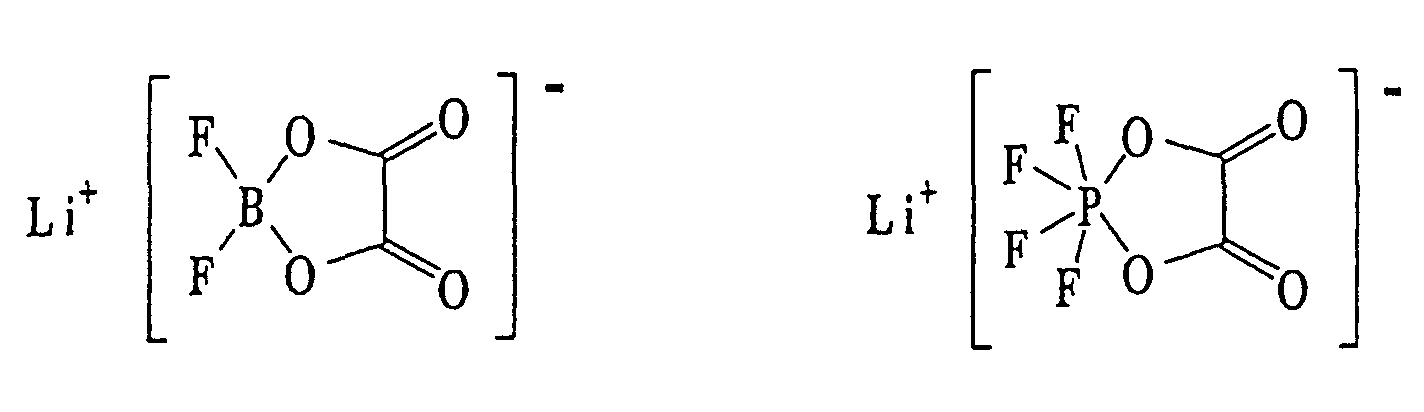
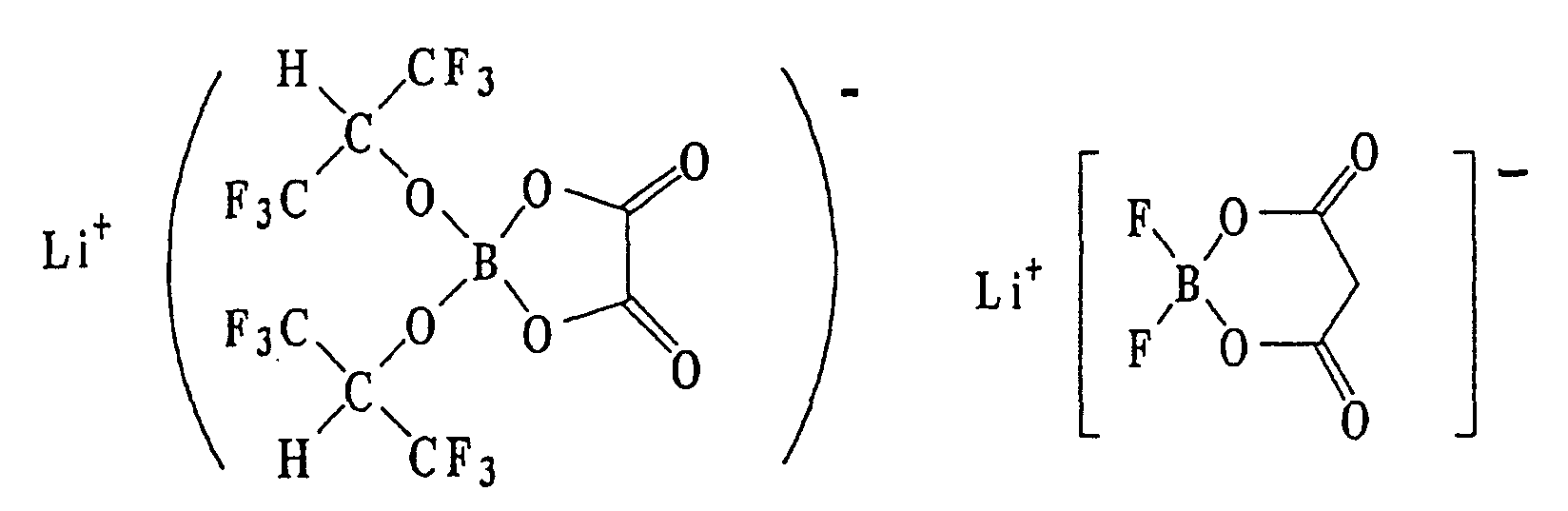
- Examples 1-1 to 1-6 are illustrative of the first process of the present invention, and Examples 2-1 to 2-4 are illustrative of the second process of the present invention.
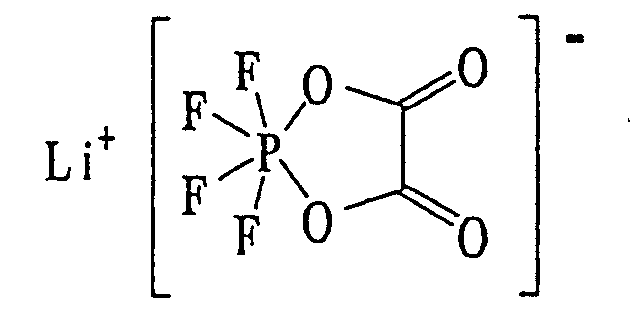
- reaction liquid was filtrated, and then diethyl ether was removed from the resulting filtrate at 60°C under a reduced pressure of 133Pa, thereby obtaining 2.93 g of lithium tetrafluoro(oxalato)phosphate represented by the following formula.
Landscapes
- Chemical & Material Sciences (AREA)
- Organic Chemistry (AREA)
- Health & Medical Sciences (AREA)
- Life Sciences & Earth Sciences (AREA)
- Biochemistry (AREA)
- General Health & Medical Sciences (AREA)
- Molecular Biology (AREA)
- Pyridine Compounds (AREA)
Abstract
Description
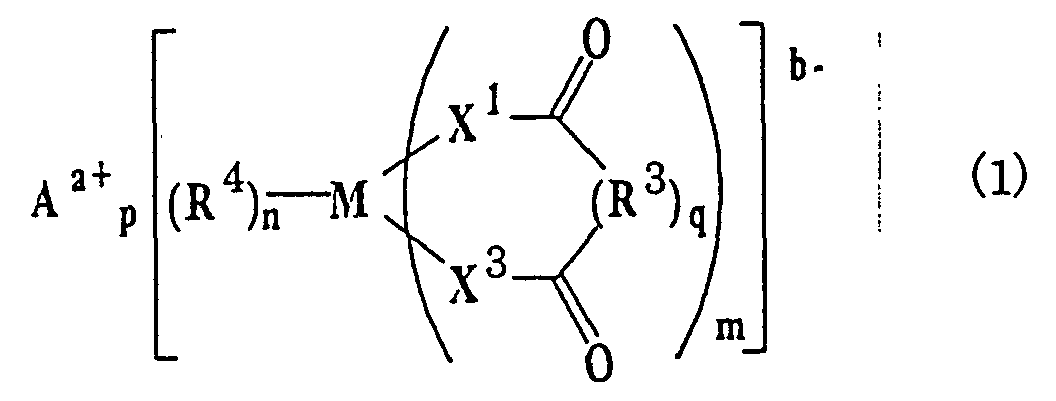
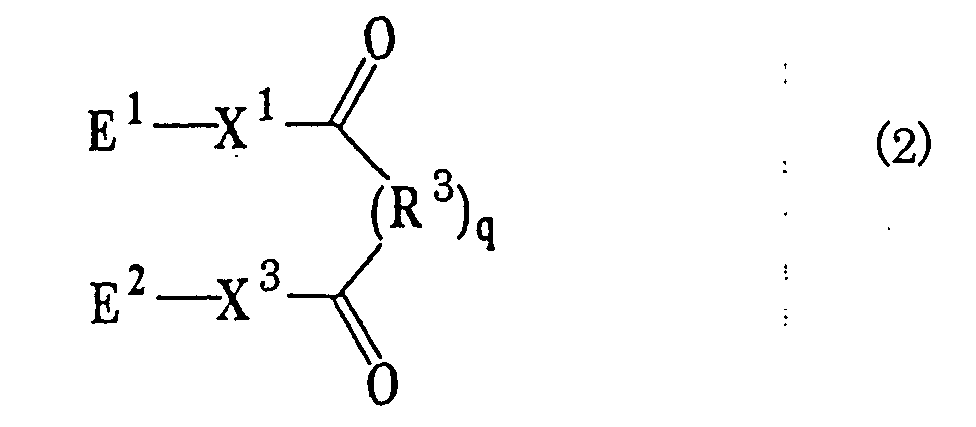
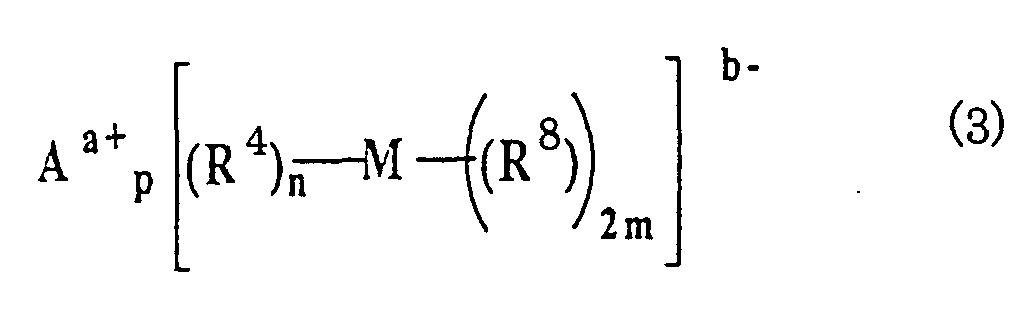
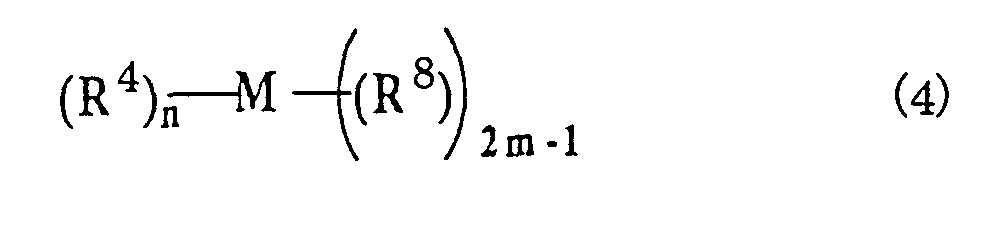
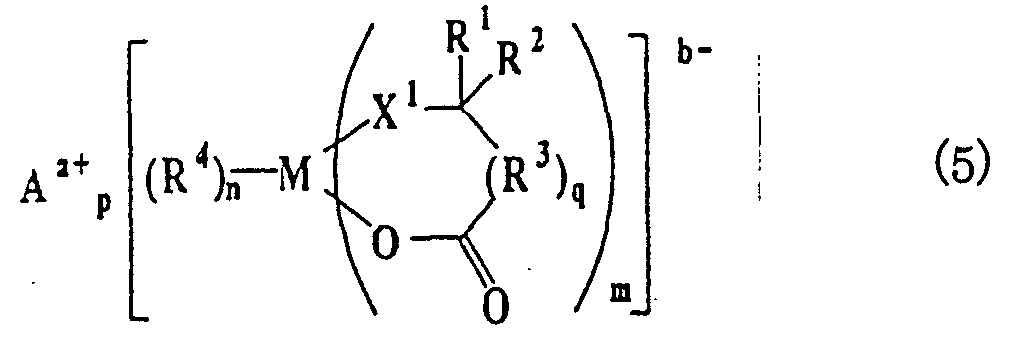
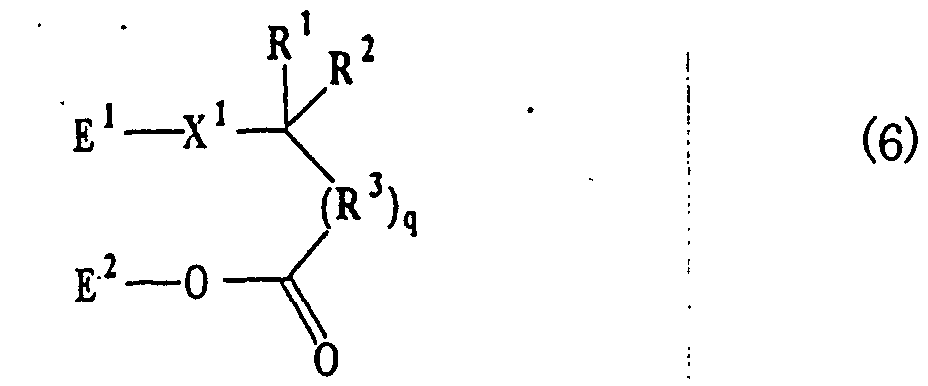
Aa+ represents a metal ion, hydrogen ion or onium ion;
a represents a number from 1 to 3; b represents a number from 1 to 3; p is b/a; m represents a number from 1 to 4; n represents a number from 0 to 8; q is 0 or 1;
each of R1 and R2 independently represents a hydrogen, halogen, C1-C10 alkyl group, or C1-C10 halogenated alkyl group;
R3 represents a C1-C10 alkylene group, C1-C10 halogenated alkylene group, C4-C20 arylene group or C4-C20 halogenated arylene group, these alkylene and arylene groups of the R3 optionally having substituents and hetero atoms, one of the R3 being optionally bonded with another of the R3;
R4 represents a halogen, C1-C10 alkyl group, C1-C10 halogenated alkyl group, C4-C20 aryl group, C4-C20 halogenated aryl group or X2R7, these alkyl and aryl groups of the R4 optionally having substituents and hetero atoms, one of the R4 being optionally bonded with another of the R4 to form a ring;
each of X1, X2 and X3 independently represents O, S, NR5 or NR5R6;
each of R5, R6 and R7 independently represents a hydrogen, C1-C10 alkyl group, C1-C10 halogenated alkyl group, C4-C20 aryl group, or C4-C20 halogenated aryl group, these alkyl and aryl groups of the R5, R6 and R7 optionally having substituents and hetero atoms, one of the R5 being optionally bonded with another of the R5 to form a ring, one of the R6 being optionally bonded with another of the R6 to form a ring, one of the R7 being optionally bonded with another of the R7 to form a ring;
each of E1 and E2 independently represents hydrogen or an alkali metal; and R8 represents a halogen.




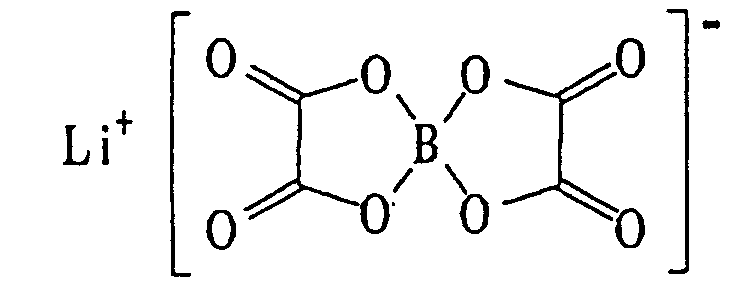
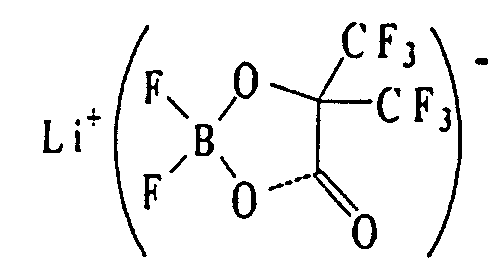

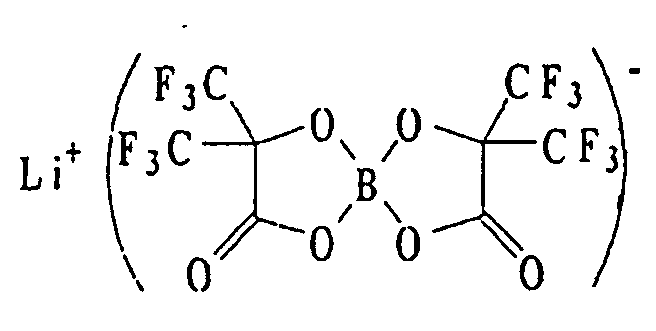
Claims (14)
- A process for synthesizing an ionic metal complex represented by the general formula (1), the process comprising reacting in an organic solvent a compound represented by the general formula (2) with a halogen-containing compound represented by the general formula (3) or (4), in the presence of a reaction aid comprising an element selected from the group consisting of elements of groups 1-4 and 11-14 of the periodic table,


 wherein M represents a transition metal selected from the group consisting of elements of groups 3-11 of the periodic table, or an element selected from the group consisting of elements of groups 12-15 of the periodic table;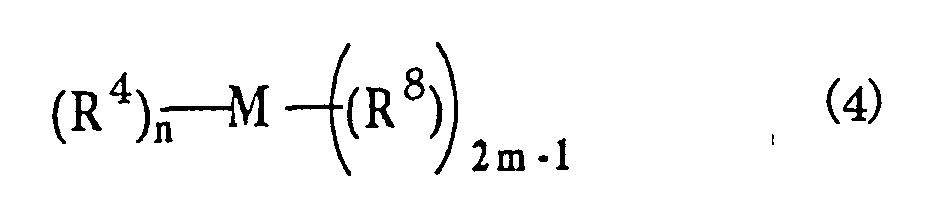
Aa+ represents a metal ion, hydrogen ion or onium ion;
a represents a number from 1 to 3; b represents a number from 1 to 3; p is b/a; m represents a number from 1 to 4; n represents a number from 0 to 8; q is 0 or 1;
R3 represents a C1-C10 alkylene group, C1-C10 halogenated alkylene group, C4-C20 arylene group or C4-C20 halogenated arylene group, these alkylene and arylene groups of the R3 optionally having substituents and hetero atoms, one of the R3 being optionally bonded with another of the R3;
R4 represents a halogen, C1-C10 alkyl group, C1-C10 halogenated alkyl group, C4-C20 aryl group, C4-C20 halogenated aryl group or X2R7, these alkyl and aryl groups of the R4 optionally having substituents and hetero atoms, one of the R4 being optionally bonded with another of the R4 to form a ring;
each of X1, X2 and X3 independently represents O, S, NR5 or NR5R6;
each of R5, R6 and R7 independently represents a hydrogen, C1-C10 alkyl group, C1-C10 halogenated alkyl group, C4-C20 aryl group, or C4-C20 halogenated aryl group, these alkyl and aryl groups of the R5 and R7 optionally having substituents and hetero atoms, one of the R5 being optionally bonded with another of the R5 to form a ring, one of the R7 being optionally bonded with another of the R7 to form a ring;
each of E1 and E2 independently represents a hydrogen or alkali metal; and
R8 represents a halogen. - A process according to claim 1, wherein the reaction aid is a compound of an element selected from the group consisting of Al, B, Si, alkali metals and alkali earth metals.
- A process according to claim 2, wherein the compound is selected from the group consisting of chlorides, bromides, iodides, alkoxides and carboxy compounds.
- A process according to claim 3, wherein the compound is AlCl3, BCl3 or SiCl4.
- A process according to claim 1, wherein the M is an element selected from the group consisting of Al, B, V, Ti, Si, Zr, Ge, Sn, Cu, Y, Zn, Ga, Nb, Ta, Bi, P, As, Sc, Hf, and Sb.
- A process according to claim 1, wherein the Aa+ is a lithium ion, quaternary alkylammonium ion or proton.
- A process according to claim 1, wherein the R8 is fluorine.
- A process for synthesizing an ionic metal complex represented by the general formula (5), the process comprising reacting in an organic solvent a compound represented by the general formula (6) with a halogen-containing compound represented by the general formula (3) or (4), in the presence of a reaction aid comprising an element selected from the group consisting of elements of groups 1-4 and 11-14 of the periodic table,


 wherein M represents a transition metal selected from the group consisting of elements of groups 3-11 of the periodic table, or an element selected from the group consisting of elements of groups 12-15 of the periodic table;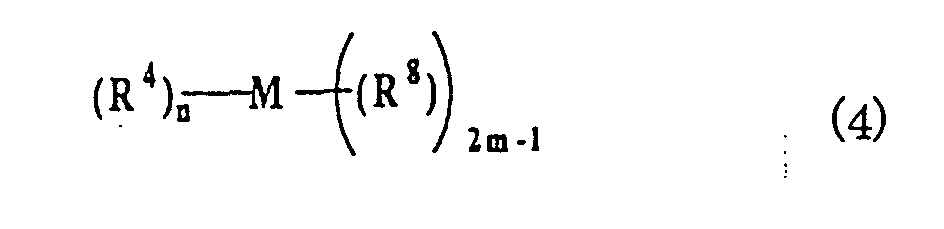
Aa+ represents a metal ion, hydrogen ion or onium ion;
a represents a number from 1 to 3; b represents a number from 1 to 3; p is b/a; m represents a number from 1 to 4; n represents a number from 0 to 8; q is 0 or 1;
each of R1 and R2 independently represents a hydrogen, halogen, C1-C10 alkyl group, or C1-C10 halogenated alkyl group;
R3 represents a C1-C10 alkylene group, C1-C10 halogenated alkylene group, C4-C20 arylene group or C4-C20 halogenated arylene group, these alkylene and arylene groups of the R3 optionally having substituents and hetero atoms, one of the R3 being optionally bonded with another of the R3;
R4 represents a halogen, C1-C10 alkyl group, C1-C10 halogenated alkyl group, C4-C20 aryl group, C4-C20 halogenated aryl group or X2R7, these alkyl and aryl groups of the R4 optionally having substituents and hetero atoms, one of the R4 being optionally bonded with another of the R4 to form a ring;
each of X1 and X2 independently represents O, S, NR5 or NR5R6;
each of R5, R6 and R7 independently represents a hydrogen, C1-C10 alkyl group, C1-C10 halogenated alkyl group, C4-C20 aryl groups of the R5, R6 and R7 optionally having substituents and hetero atoms, one of the R5 being optionally bonded with another of the R5 to form a ring, one of the R6 being optionally bonded with another of the R6 to form a ring, one of the R7 being optionally bonded with another of the R7 to form a ring;
each of E1 and E2 independently represents a hydrogen or alkali metal; and
R8 represents a halogen. - A process according to claim 8, wherein the reaction aid is a compound of an element selected from the group consisting of Al, B, Si, alkali metals and alkali earth metals.
- A process according to claim 9, wherein the compound is selected from the group consisting of chlorides, bromides, iodides, alkoxides and carboxy compounds.
- A process according to claim 10, wherein the compound is AlCl3, BCl3 or SiCl4.
- A process according to claim 8, wherein the M is an element selected from the group consisting of Al, B, V, Ti, Si, Zr, Ge, Sn, Cu, Y, Zn, Ga, Nb, Ta, Bi, P, As, Sc, Hf, and Sb.
- A process according to claim 8, wherein the Aa+ is a lithium ion, quaternary alkylammonium ion or proton.
- A process according to claim 8, wherein the R8 is fluorine.
Applications Claiming Priority (4)
| Application Number | Priority Date | Filing Date | Title |
|---|---|---|---|
| JP2001339630 | 2001-11-05 | ||
| JP2001339630A JP3907446B2 (en) | 2001-11-05 | 2001-11-05 | Synthesis of ionic metal complexes |
| JP2002009342 | 2002-01-18 | ||
| JP2002009342A JP3907483B2 (en) | 2002-01-18 | 2002-01-18 | Synthesis of ionic metal complexes |
Publications (3)
| Publication Number | Publication Date |
|---|---|
| EP1308449A2 true EP1308449A2 (en) | 2003-05-07 |
| EP1308449A3 EP1308449A3 (en) | 2003-09-24 |
| EP1308449B1 EP1308449B1 (en) | 2008-03-19 |
Family
ID=26624349
Family Applications (1)
| Application Number | Title | Priority Date | Filing Date |
|---|---|---|---|
| EP02024608A Expired - Lifetime EP1308449B1 (en) | 2001-11-05 | 2002-11-04 | Process for synthesizing ionic metal complex |
Country Status (3)
| Country | Link |
|---|---|
| US (1) | US6849752B2 (en) |
| EP (1) | EP1308449B1 (en) |
| DE (1) | DE60225651T2 (en) |
Cited By (28)
| Publication number | Priority date | Publication date | Assignee | Title |
|---|---|---|---|---|
| DE102008028331A1 (en) | 2008-06-13 | 2009-12-17 | Universität Regensburg | Producing complex fluoride salts for use e.g. as ionic liquids or in electrolytes, involves reacting fluorides such as tetrafluoroborate or hexafluorophosphate with mono- and-or bi-dentate ligands in silylated form |
| EP1842853A4 (en) * | 2005-01-24 | 2011-02-09 | Central Glass Co Ltd | METHOD FOR SYNTHESIZING IONIC COMPLEX |
| CN102070661A (en) * | 2011-01-25 | 2011-05-25 | 李荐 | Preparation method of high-purity lithium oxalyldifluoroborate |
| CN101643481B (en) * | 2009-08-28 | 2011-08-17 | 张家港市国泰华荣化工新材料有限公司 | Synthesis technique for obtaining difluoro oxalate lithium borate and di-oxalate lithium borate |
| CN101602773B (en) * | 2009-05-14 | 2012-02-22 | 河北工业大学 | A kind of preparation method of lithium dioxalate borate |
| CN102807578A (en) * | 2011-05-30 | 2012-12-05 | 比亚迪股份有限公司 | Preparation method for lithium salt |
| DE102012220793A1 (en) | 2011-11-14 | 2013-05-16 | Chemetall Gmbh | Process for the preparation of metal difluorochelato borates and use as battery electrolytes or additives in galvanic cells |
| CN103113396A (en) * | 2013-01-21 | 2013-05-22 | 张家港瀚康化工有限公司 | Preparation method of lithium difluoroborate |
| CN102216311B (en) * | 2008-12-16 | 2014-06-04 | 中央硝子株式会社 | Method for producing lithium difluorobis(oxalato)phosphate solution |
| CN104334566A (en) * | 2012-05-30 | 2015-02-04 | 中央硝子株式会社 | Method for producing tetrafluoro(oxalate)phosphate solution |
| CN104387411A (en) * | 2014-11-07 | 2015-03-04 | 周阳 | Series one-pot synthesis method of lithium oxalyldifluroborate |
| CN104557995A (en) * | 2013-10-12 | 2015-04-29 | 陈琛 | Preparation method of lithium oxalyldifluoroborate |
| CN104628754A (en) * | 2015-02-01 | 2015-05-20 | 湖南省正源储能材料与器件研究所 | Preparation method of lithium ion battery electrolyte salt LiODFB (lithium oxalyldifluroborate) |
| CN105218348A (en) * | 2015-09-10 | 2016-01-06 | 天津金牛电源材料有限责任公司 | A kind of preparation method of tetrafluoro oxalic acid Trilithium phosphate |
| CN105440066A (en) * | 2015-12-31 | 2016-03-30 | 周阳 | LiDFMB and Li secondary battery electrolyte comprising same |
| CN106946921A (en) * | 2017-04-07 | 2017-07-14 | 上海如鲲新材料有限公司 | The method that ethanedioic acid fluorine boron ester prepares difluorine oxalic acid boracic acid lithium and di-oxalate lithium borate |
| WO2017133979A1 (en) * | 2016-02-05 | 2017-08-10 | Basf Se | Preparation of difluoro chelato borate salts |
| CN109232625A (en) * | 2018-10-25 | 2019-01-18 | 河南省法恩莱特新能源科技有限公司 | A kind of preparation method of difluorine oxalic acid boracic acid lithium |
| CN110627824A (en) * | 2019-10-23 | 2019-12-31 | 上海如鲲新材料有限公司 | Preparation method of bisoxalato borate |
| CN114057784A (en) * | 2022-01-17 | 2022-02-18 | 山东海科创新研究院有限公司 | A kind of preparation method of lithium bis-oxalate borate |
| US11447584B2 (en) | 2018-03-30 | 2022-09-20 | Dow Global Technologies Llc | Olefin polymerization activators |
| US11447586B2 (en) | 2018-03-30 | 2022-09-20 | Dow Global Technologies Llc | Olefin polymerization activators |
| CN115260239A (en) * | 2022-09-02 | 2022-11-01 | 陕西纳威思创新材料有限公司 | Lithium difluorooxalate phosphate and preparation method thereof |
| US11542350B2 (en) | 2018-03-30 | 2023-01-03 | Dow Global Technologies Llc | Binuclear olefin polymerization activators |
| CN116284091A (en) * | 2023-04-04 | 2023-06-23 | 衢州市九洲化工有限公司 | A kind of method that fluorine-containing solvent is used for preparing sodium difluorooxalate borate |
| US11787880B2 (en) | 2018-03-30 | 2023-10-17 | Dow Global Technologies Llc | Highly soluble alkyl substituted carbenium borate as co-catalysts for olefin polymerizations |
| WO2023245662A1 (en) * | 2022-06-24 | 2023-12-28 | 时代思康新材料有限公司 | Sodium difluoro(oxalato)borate, and preparation method therefor and use thereof |
| US12037440B2 (en) | 2018-03-30 | 2024-07-16 | Dow Global Technologies Llc | Highly soluble bis-borate as binuclear co-catalysts for olefin polymerization |
Families Citing this family (30)
| Publication number | Priority date | Publication date | Assignee | Title |
|---|---|---|---|---|
| US20080026297A1 (en) * | 2005-01-11 | 2008-01-31 | Air Products And Chemicals, Inc. | Electrolytes, cells and methods of forming passivaton layers |
| US20060216612A1 (en) * | 2005-01-11 | 2006-09-28 | Krishnakumar Jambunathan | Electrolytes, cells and methods of forming passivation layers |
| BRPI0608355B1 (en) | 2005-02-17 | 2016-05-24 | Monsanto Technology Llc | process for oxidation of n- (phosphonomethyl) iminodiacetic acid or its salt and oxidation catalyst |
| AU2007217054A1 (en) * | 2006-02-17 | 2007-08-30 | Monsanto Technology Llc | Transition metal-containing catalysts and processes for their preparation and use as fuel cell catalysts |
| EP2122722A2 (en) * | 2007-03-08 | 2009-11-25 | The Board of Governors for Higher Education State of Rhode Island and Providence Plantations | Novel electrolyte for lithium ion batteries |
| KR20110069747A (en) * | 2008-07-03 | 2011-06-23 | 보드 오브 거버너즈 포 하이어 에듀케이션, 스테이트 오브 로드아일랜드 앤드 프로비던스 플랜테이션즈 | Inhibition of Electrolyte Oxidation in Lithium Ion Batteries Using Electrolyte Additives |
| CN102260282B (en) * | 2011-06-22 | 2013-08-21 | 常州市国亚新能源科技有限公司 | A kind of preparation method of difluorooxalate lithium borate electrolyte salt |
| US10865709B2 (en) | 2012-05-23 | 2020-12-15 | Herng Shinn Hwang | Flex-fuel hydrogen reformer for IC engines and gas turbines |
| JP6064724B2 (en) * | 2012-05-30 | 2017-01-25 | セントラル硝子株式会社 | Purified metal complex having oxalic acid as a ligand, and method for producing non-aqueous solvent purified solution of the metal complex |
| CN105765779B (en) * | 2013-09-30 | 2019-05-28 | 株式会社Lg化学 | Electrolyte containing phthalate phosphine-based anion, additive for secondary battery containing same, and secondary battery containing same |
| JP6394242B2 (en) * | 2014-09-30 | 2018-09-26 | セントラル硝子株式会社 | Method for producing difluoroionic complex |
| JP6007994B2 (en) | 2015-01-23 | 2016-10-19 | セントラル硝子株式会社 | Non-aqueous electrolyte secondary battery electrolyte and non-aqueous electrolyte secondary battery using the same |
| WO2016117279A1 (en) | 2015-01-23 | 2016-07-28 | セントラル硝子株式会社 | Electrolyte solution for nonaqueous electrolyte solution cell and nonaqueous electrolyte solution cell |
| JP2016149312A (en) * | 2015-02-13 | 2016-08-18 | ソニー株式会社 | Secondary battery, battery pack, electric vehicle, power storage system, electric tool and electronic device |
| JP6098684B2 (en) | 2015-08-12 | 2017-03-22 | セントラル硝子株式会社 | Non-aqueous electrolyte secondary battery electrolyte and non-aqueous electrolyte secondary battery using the same |
| JP6245312B2 (en) | 2016-05-30 | 2017-12-13 | セントラル硝子株式会社 | Non-aqueous electrolyte secondary battery electrolyte and non-aqueous electrolyte secondary battery using the same |
| JP6260735B1 (en) | 2016-07-06 | 2018-01-17 | セントラル硝子株式会社 | Non-aqueous electrolyte and non-aqueous electrolyte secondary battery using the same |
| US10626790B2 (en) | 2016-11-16 | 2020-04-21 | Herng Shinn Hwang | Catalytic biogas combined heat and power generator |
| CN108912156B (en) * | 2018-09-20 | 2020-09-18 | 武汉海斯普林科技发展有限公司 | Preparation method of lithium bis (oxalato) borate |
| CN111116659A (en) * | 2018-10-31 | 2020-05-08 | 张家港市国泰华荣化工新材料有限公司 | Compound, electrolyte and lithium ion battery |
| CN109438488A (en) * | 2018-11-13 | 2019-03-08 | 九江天赐高新材料有限公司 | A kind of preparation method of liquid Lithium bis (oxalate) borate salt |
| CN109535191B (en) * | 2019-01-17 | 2021-03-26 | 兰州理工大学 | A kind of preparation method of lithium bis-oxalate borate |
| CN109678898A (en) * | 2019-02-14 | 2019-04-26 | 东港华邦科技有限公司 | A kind of preparation method of difluorine oxalic acid boracic acid lithium |
| CN112480153B (en) * | 2019-09-12 | 2023-10-31 | 多氟多新材料股份有限公司 | Preparation method of lithium difluoro oxalate borate |
| CN113717205A (en) * | 2020-05-26 | 2021-11-30 | 恒大新能源技术(深圳)有限公司 | Preparation method of lithium oxalate borate and derivatives thereof, electrolyte and secondary battery |
| KR102630824B1 (en) | 2022-02-25 | 2024-01-29 | 명지대학교 산학협력단 | Preparing method of lithium difluoro(oxalato)borate, lithium difluoro(oxalato)borate prepared therefrom, electrolyte for lithium ion battery and lithium ion battery comprising the same |
| CN114891031A (en) * | 2022-04-15 | 2022-08-12 | 石家庄圣泰化工有限公司 | Preparation method of lithium difluoro (oxalato) borate |
| CN114989202B (en) * | 2022-06-02 | 2025-06-17 | 杭州四马化工科技有限公司 | A gas-liquid reaction preparation method of lithium difluorooxalatoborate |
| CN116903659A (en) * | 2023-07-25 | 2023-10-20 | 兰州理工大学 | A one-step method for preparing sodium fluoroxalate phosphate |
| CN120574253B (en) * | 2025-08-05 | 2025-11-21 | 广州天赐高新材料股份有限公司 | Method, apparatus, and lithium difluorooxalate borate solution for continuous preparation |
Family Cites Families (5)
| Publication number | Priority date | Publication date | Assignee | Title |
|---|---|---|---|---|
| DE19829030C1 (en) * | 1998-06-30 | 1999-10-07 | Metallgesellschaft Ag | Lithium bisoxalatoborate used as conducting salt in lithium ion batteries |
| DE19933898A1 (en) | 1999-07-22 | 2001-02-01 | Chemetall Gmbh | Tris (oxalato) phosphates, process for their preparation and their use |
| JP3498905B2 (en) * | 1999-08-02 | 2004-02-23 | セントラル硝子株式会社 | Electrolyte for electrochemical devices |
| JP3824465B2 (en) * | 1999-08-02 | 2006-09-20 | セントラル硝子株式会社 | Synthesis of ionic complexes |
| EP1195834B1 (en) | 2000-10-03 | 2010-09-15 | Central Glass Company, Limited | Electrolyte for electrochemical device |
-
2002
- 2002-11-01 US US10/285,680 patent/US6849752B2/en not_active Expired - Lifetime
- 2002-11-04 DE DE60225651T patent/DE60225651T2/en not_active Expired - Lifetime
- 2002-11-04 EP EP02024608A patent/EP1308449B1/en not_active Expired - Lifetime
Cited By (40)
| Publication number | Priority date | Publication date | Assignee | Title |
|---|---|---|---|---|
| EP1842853A4 (en) * | 2005-01-24 | 2011-02-09 | Central Glass Co Ltd | METHOD FOR SYNTHESIZING IONIC COMPLEX |
| DE102008028331A1 (en) | 2008-06-13 | 2009-12-17 | Universität Regensburg | Producing complex fluoride salts for use e.g. as ionic liquids or in electrolytes, involves reacting fluorides such as tetrafluoroborate or hexafluorophosphate with mono- and-or bi-dentate ligands in silylated form |
| CN102216311B (en) * | 2008-12-16 | 2014-06-04 | 中央硝子株式会社 | Method for producing lithium difluorobis(oxalato)phosphate solution |
| CN101602773B (en) * | 2009-05-14 | 2012-02-22 | 河北工业大学 | A kind of preparation method of lithium dioxalate borate |
| CN101643481B (en) * | 2009-08-28 | 2011-08-17 | 张家港市国泰华荣化工新材料有限公司 | Synthesis technique for obtaining difluoro oxalate lithium borate and di-oxalate lithium borate |
| CN102070661B (en) * | 2011-01-25 | 2012-10-17 | 李荐 | Preparation method of high-purity lithium oxalyldifluoroborate |
| CN102070661A (en) * | 2011-01-25 | 2011-05-25 | 李荐 | Preparation method of high-purity lithium oxalyldifluoroborate |
| CN102807578A (en) * | 2011-05-30 | 2012-12-05 | 比亚迪股份有限公司 | Preparation method for lithium salt |
| CN102807578B (en) * | 2011-05-30 | 2015-12-02 | 比亚迪股份有限公司 | A kind of preparation method of lithium salts |
| DE102012220793A1 (en) | 2011-11-14 | 2013-05-16 | Chemetall Gmbh | Process for the preparation of metal difluorochelato borates and use as battery electrolytes or additives in galvanic cells |
| WO2013072359A1 (en) | 2011-11-14 | 2013-05-23 | Chemetall Gmbh | Process for preparing metal difluorochelatoborates and use as battery electrolytes or additives in electrochemical cells |
| US9260456B2 (en) | 2011-11-14 | 2016-02-16 | Rockwood Lithium GmbH | Process for preparing metal difluorochelatoborates and use as battery electrolytes or additives in electrochemical cells |
| CN104334566B (en) * | 2012-05-30 | 2016-01-20 | 中央硝子株式会社 | The manufacture method of tetrafluoro (oxalate conjunction) phosphate solution |
| CN104334566A (en) * | 2012-05-30 | 2015-02-04 | 中央硝子株式会社 | Method for producing tetrafluoro(oxalate)phosphate solution |
| CN103113396A (en) * | 2013-01-21 | 2013-05-22 | 张家港瀚康化工有限公司 | Preparation method of lithium difluoroborate |
| CN103113396B (en) * | 2013-01-21 | 2015-05-20 | 张家港瀚康化工有限公司 | Preparation method of lithium difluoroborate |
| CN104557995B (en) * | 2013-10-12 | 2017-02-15 | 陈琛 | Preparation method of lithium oxalyldifluoroborate |
| CN104557995A (en) * | 2013-10-12 | 2015-04-29 | 陈琛 | Preparation method of lithium oxalyldifluoroborate |
| CN104387411B (en) * | 2014-11-07 | 2017-08-25 | 周阳 | A kind of series connection one-pot synthesis method of LiODFB salt |
| CN104387411A (en) * | 2014-11-07 | 2015-03-04 | 周阳 | Series one-pot synthesis method of lithium oxalyldifluroborate |
| CN104628754A (en) * | 2015-02-01 | 2015-05-20 | 湖南省正源储能材料与器件研究所 | Preparation method of lithium ion battery electrolyte salt LiODFB (lithium oxalyldifluroborate) |
| CN105218348A (en) * | 2015-09-10 | 2016-01-06 | 天津金牛电源材料有限责任公司 | A kind of preparation method of tetrafluoro oxalic acid Trilithium phosphate |
| CN105218348B (en) * | 2015-09-10 | 2017-12-12 | 天津金牛电源材料有限责任公司 | A kind of preparation method of tetrafluoro oxalic acid lithium phosphate |
| CN105440066A (en) * | 2015-12-31 | 2016-03-30 | 周阳 | LiDFMB and Li secondary battery electrolyte comprising same |
| KR20180113204A (en) * | 2016-02-05 | 2018-10-15 | 고션 인코포레이티드 | Preparation of a difluoroylketoborate salt |
| CN109071568A (en) * | 2016-02-05 | 2018-12-21 | 国轩高科美国研究院 | The preparation of difluoro chelating borate |
| WO2017133979A1 (en) * | 2016-02-05 | 2017-08-10 | Basf Se | Preparation of difluoro chelato borate salts |
| US10450329B2 (en) | 2016-02-05 | 2019-10-22 | Gotion Inc. | Preparation of difluoro chelato borate salts |
| CN106946921A (en) * | 2017-04-07 | 2017-07-14 | 上海如鲲新材料有限公司 | The method that ethanedioic acid fluorine boron ester prepares difluorine oxalic acid boracic acid lithium and di-oxalate lithium borate |
| US11542350B2 (en) | 2018-03-30 | 2023-01-03 | Dow Global Technologies Llc | Binuclear olefin polymerization activators |
| US12037440B2 (en) | 2018-03-30 | 2024-07-16 | Dow Global Technologies Llc | Highly soluble bis-borate as binuclear co-catalysts for olefin polymerization |
| US11787880B2 (en) | 2018-03-30 | 2023-10-17 | Dow Global Technologies Llc | Highly soluble alkyl substituted carbenium borate as co-catalysts for olefin polymerizations |
| US11447584B2 (en) | 2018-03-30 | 2022-09-20 | Dow Global Technologies Llc | Olefin polymerization activators |
| US11447586B2 (en) | 2018-03-30 | 2022-09-20 | Dow Global Technologies Llc | Olefin polymerization activators |
| CN109232625A (en) * | 2018-10-25 | 2019-01-18 | 河南省法恩莱特新能源科技有限公司 | A kind of preparation method of difluorine oxalic acid boracic acid lithium |
| CN110627824A (en) * | 2019-10-23 | 2019-12-31 | 上海如鲲新材料有限公司 | Preparation method of bisoxalato borate |
| CN114057784A (en) * | 2022-01-17 | 2022-02-18 | 山东海科创新研究院有限公司 | A kind of preparation method of lithium bis-oxalate borate |
| WO2023245662A1 (en) * | 2022-06-24 | 2023-12-28 | 时代思康新材料有限公司 | Sodium difluoro(oxalato)borate, and preparation method therefor and use thereof |
| CN115260239A (en) * | 2022-09-02 | 2022-11-01 | 陕西纳威思创新材料有限公司 | Lithium difluorooxalate phosphate and preparation method thereof |
| CN116284091A (en) * | 2023-04-04 | 2023-06-23 | 衢州市九洲化工有限公司 | A kind of method that fluorine-containing solvent is used for preparing sodium difluorooxalate borate |
Also Published As
| Publication number | Publication date |
|---|---|
| DE60225651D1 (en) | 2008-04-30 |
| EP1308449A3 (en) | 2003-09-24 |
| DE60225651T2 (en) | 2009-04-02 |
| US20030100761A1 (en) | 2003-05-29 |
| US6849752B2 (en) | 2005-02-01 |
| EP1308449B1 (en) | 2008-03-19 |
Similar Documents
| Publication | Publication Date | Title |
|---|---|---|
| EP1308449B1 (en) | Process for synthesizing ionic metal complex | |
| US6407232B1 (en) | Ionic metal complex and process for synthesizing same | |
| JP3907446B2 (en) | Synthesis of ionic metal complexes | |
| CN104334564B (en) | Method for producing purified metal complex with oxalic acid as ligand and non-aqueous solvent purified solution of the metal complex | |
| US8563761B2 (en) | Boron or aluminum complexes | |
| KR20010067049A (en) | Electrolyte for electrochemical device | |
| JP2009149666A (en) | Process for producing perfluoroalkane sulfonic acid esters | |
| TWI594489B (en) | Electrolyte solution purification method and electrolyte solution manufacturing method | |
| US6815119B2 (en) | Tetrakisfluoroalkylborate salts and their use as conducting salts | |
| KR100902963B1 (en) | Boron chelate complexes | |
| JP5211422B2 (en) | Synthesis of ionic complexes | |
| JP3907483B2 (en) | Synthesis of ionic metal complexes | |
| JP3969924B2 (en) | Method for producing ionic metal complex | |
| JP2001302675A (en) | Ionic metal complex | |
| JP4454528B2 (en) | Ionic complex | |
| JP2006111538A (en) | Method for synthesizing ionic metal complex | |
| JP5054932B2 (en) | Process for producing ionic compounds | |
| 이상우 | Development of novel ionic liquids with bis (sulfonyl) imide anions functionalized by a carboxymethyl group as electrolyte additives | |
| JP2002187892A (en) | Addition compound of ionic metal complex | |
| JP2014185094A (en) | Production method of carboxy sulfonium salt |
Legal Events
| Date | Code | Title | Description |
|---|---|---|---|
| PUAI | Public reference made under article 153(3) epc to a published international application that has entered the european phase |
Free format text: ORIGINAL CODE: 0009012 |
|
| AK | Designated contracting states |
Designated state(s): AT BE BG CH CY CZ DE DK EE ES FI FR GB GR IE IT LI LU MC NL PT SE SK TR |
|
| AX | Request for extension of the european patent |
Extension state: AL LT LV MK RO SI |
|
| PUAL | Search report despatched |
Free format text: ORIGINAL CODE: 0009013 |
|
| AK | Designated contracting states |
Kind code of ref document: A3 Designated state(s): AT BE BG CH CY CZ DE DK EE ES FI FR GB GR IE IT LI LU MC NL PT SE SK TR |
|
| AX | Request for extension of the european patent |
Extension state: AL LT LV MK RO SI |
|
| 17P | Request for examination filed |
Effective date: 20040303 |
|
| AKX | Designation fees paid |
Designated state(s): DE FR GB |
|
| 17Q | First examination report despatched |
Effective date: 20050701 |
|
| GRAP | Despatch of communication of intention to grant a patent |
Free format text: ORIGINAL CODE: EPIDOSNIGR1 |
|
| GRAS | Grant fee paid |
Free format text: ORIGINAL CODE: EPIDOSNIGR3 |
|
| GRAA | (expected) grant |
Free format text: ORIGINAL CODE: 0009210 |
|
| AK | Designated contracting states |
Kind code of ref document: B1 Designated state(s): DE FR GB |
|
| REG | Reference to a national code |
Ref country code: GB Ref legal event code: FG4D |
|
| REF | Corresponds to: |
Ref document number: 60225651 Country of ref document: DE Date of ref document: 20080430 Kind code of ref document: P |
|
| ET | Fr: translation filed | ||
| PLBE | No opposition filed within time limit |
Free format text: ORIGINAL CODE: 0009261 |
|
| STAA | Information on the status of an ep patent application or granted ep patent |
Free format text: STATUS: NO OPPOSITION FILED WITHIN TIME LIMIT |
|
| 26N | No opposition filed |
Effective date: 20081222 |
|
| REG | Reference to a national code |
Ref country code: FR Ref legal event code: PLFP Year of fee payment: 14 |
|
| REG | Reference to a national code |
Ref country code: FR Ref legal event code: PLFP Year of fee payment: 15 |
|
| REG | Reference to a national code |
Ref country code: FR Ref legal event code: PLFP Year of fee payment: 16 |
|
| REG | Reference to a national code |
Ref country code: FR Ref legal event code: PLFP Year of fee payment: 17 |
|
| PGFP | Annual fee paid to national office [announced via postgrant information from national office to epo] |
Ref country code: GB Payment date: 20191031 Year of fee payment: 18 |
|
| PGFP | Annual fee paid to national office [announced via postgrant information from national office to epo] |
Ref country code: FR Payment date: 20200914 Year of fee payment: 19 |
|
| PGFP | Annual fee paid to national office [announced via postgrant information from national office to epo] |
Ref country code: DE Payment date: 20201020 Year of fee payment: 19 |
|
| GBPC | Gb: european patent ceased through non-payment of renewal fee |
Effective date: 20201104 |
|
| PG25 | Lapsed in a contracting state [announced via postgrant information from national office to epo] |
Ref country code: GB Free format text: LAPSE BECAUSE OF NON-PAYMENT OF DUE FEES Effective date: 20201104 |
|
| REG | Reference to a national code |
Ref country code: DE Ref legal event code: R119 Ref document number: 60225651 Country of ref document: DE |
|
| PG25 | Lapsed in a contracting state [announced via postgrant information from national office to epo] |
Ref country code: DE Free format text: LAPSE BECAUSE OF NON-PAYMENT OF DUE FEES Effective date: 20220601 |
|
| PG25 | Lapsed in a contracting state [announced via postgrant information from national office to epo] |
Ref country code: FR Free format text: LAPSE BECAUSE OF NON-PAYMENT OF DUE FEES Effective date: 20211130 |