Technical Field
This invention relates to a musical composition-reproducing
device, a portable terminal device having the
musical composition-reproducing device, a musical
composition-reproducing method, and a storage medium
storing a program for executing the method, and more
particularly to those which can be suitably applied to a
car telephone and a cellular phone.
Background Art
In a cellular phone system, such as a PDC (Personal
Digital Cellular telecommunication system), known as an
analog cellular system or a digital cellular system, and
a PHS (Personal Handyphone System), when a cellular phone
or mobile phone device carried by a user receives an
incoming call, an alert sound is generated to notify the
user of the incoming call. As the alert sound, a beep
has been conventionally used, but recently, music
including a melody has come to be used in place of the
beep since the beep is offensive to the ear.
A conventional mobile phone device that is capable
of reproducing a melody is equipped with a musical
composition-reproducing device that is capable of playing
automatic performance. The musical composition-reproducing
device generally includes a CPU (Central
Processing Unit), a ROM (Read Only Memory), a RAM (Random
Access Memory), and a musical composition reproducing
section. The CPU executes an automatic performance
program read from the ROM, thereby reading data of a
musical composition from the ROM or the RAM, and setting
tone generation parameters to the musical composition
reproducing section to reproduce the musical composition.
To reproduce high-quality musical tones, some of the
recent musical composition-reproducing devices are
capable of reproducing a musical composition composed of
a plurality of channels.
A musical composition-reproducing device provided in
an electronic musical instrument or the like has many
sounding channels such as 32 channels, 64 channels and
128 channels. The musical composition-reproducing device
provided in the mobile phone device, which is capable of
reproducing music including a melody, however, had only
one sounding channel because the reduction in size took
the highest priority in developing mobile phone devices.
Recently, there is known a mobile phone device having
four sounding channels, and the number of sounding
channels in mobile phone devices has been increased
gradually. The provided musical composition data,
however, is still composed of only a small number of
channels because the currently spreading mobile phone
devices are capable of reproducing only a small number of
channels. Thus, in a musical composition-reproducing
device that is capable of reproducing many sounding
channels and a mobile phone device of a recent model
having this musical composition-reproducing device, some
sounding channels are used with only a low frequency. It
is therefore meaningless to provide those sounding
channels.
Conventionally, an effect such as a reverberation
and a chorus is given to the reproduced musical tones by
a special effect circuit. That is, there is the
necessity of providing an effect circuit in the cellular
phone in order to give an effect to an incoming call
melody, etc. It is therefore difficult to give an effect
to musical tones in the cellular phone that is required
to be compact in size.
It is therefore an object of the present invention
to provide a musical composition-reproducing device, a
portable terminal device having the musical composition-reproducing
device and a musical composition-reproducing
method, which make it possible to make the most of
sounding channels if many sounding channels are provided,
and a storage medium for executing the method.
It is another object of the present invention to
provide a musical composition-reproducing device, a
portable terminal device having the musical composition-reproducing
device and a musical composition-reproducing
method, which make it possible to impart an effect to
musical tones without providing a special effect circuit,
and a storage medium storing a program for executing the
method.
Disclosure of Invention
To attain the above objects, the present invention
provides a musical composition-reproducing device
comprising musical composition-reproducing means for
reproducing musical composition data composed of sequence
data each comprised of n (n is an integer) channels, the
musical composition-reproducing means, and control means
for controlling the musical composition-reproducing means
so as to reproduce the musical composition data composed
of the sequence data while carrying out effect sounding
related to musical tones generated by reproducing the
sequence data, by using at least one free channel among
the n×m sounding channels.
In a preferred embodiment of the present invention,
the control means controls the musical composition-reproducing
means so as to copy the at least one sequence
data and change control information for sequence data
obtained by the copying according to at least one effect
parameter to thereby generate at least one effect
imparting sequence data, and reproduce the at least one
sequence data and the generated at least one effect
imparting sequence data.
Preferably, if effect information is added to the at
least one sequence data, the control means controls the
musical composition-reproducing means so as to change the
sequence data obtained by the copying, according to at
least one effect parameter based on the effect
information to thereby generate the at least effect
imparting sequence data, and reproduce the at least one
sequence data and the generated at least one effect
imparting sequence data, and if the musical composition
data is composed of the at least one sequence data and
the at least one effect imparting sequence data, the
control means controls the musical composition-reproducing
means so as to reproduce the at least one
sequence data and the at least one effect imparting
sequence data without generating any effect imparting
sequence data.
To attain the above objects, the present invention
also provides a musical composition-reproducing device
comprising a musical composition-reproducing means for
reproducing musical composition data composed of m
sequence data each comprised of n (n is an integer)
channels, the musical composition-reproducing means
having n×m (m is an integer of not less than 2) sounding
channels, and control means for controlling the musical
composition-reproducing means so as to reproduce k (k is
a smaller integer than m) sequence data among the m
sequence data while carrying out effect sounding related
to musical tones generated by reproducing the k sequence
data, by using n×(m-k) sounding channels that have been
freed among the n×m channels.
To attain the above objects, the present invention
further provides a portable terminal device comprising
one of the above musical composition-reproducing devices
according to the present invention, and the musical
composition-reproducing device reproduces the musical
composition data to thereby output an incoming call
melody or a hold sound provided with the at least one
effect.
To attain the above objects, the present invention
also provides a portable terminal device comprising one
of the above musical composition-reproducing devices
according to the present invention, storage means storing
the musical composition data, and reading means for
reading the musical composition data from the storage
means, and the musical composition-reproducing device
reproduces the musical composition data read by the
reading means to thereby reproduce a musical composition
provided with the least one effect.
To attain the above objects, the present invention
provides a musical composition-reproducing method
comprising a musical composition-reproducing step of
reproducing musical composition data composed of sequence
data each comprised of n (n is an integer) channels, by
using n×m (m is an integer of not less than 2) sounding
channels, and a control step of controlling the musical
composition-reproducing step so as to reproduce the
musical composition data composed of the sequence data
while carrying out effect sounding related to musical
tones generated by reproducing the sequence data, by
using at least one free channel among the n×m sounding
channels.
To attain the above objects, the present invention
also provides a musical composition-reproducing method
comprising a musical composition-reproducing step of
reproducing musical composition data composed of m
sequence data each comprised of n (n is an integer)
channels, by using n×m (m is an integer of not less than
2) sounding channels, and a control step of controlling
the musical composition-reproducing step so as to
reproduce k (k is a smaller integer than m) sequence data
data among the m sequence data while carrying out effect
sounding related to musical tones generated by
reproducing the k sequence data, by using n×(m-k)
sounding channels that have been freed among the n×m
channels.
To attain the above objects, the present invention
provides a storage medium storing a program for executing
one of the above musical composition-reproducing methods
according to the present invention.
According to the present invention that is
constructed in the above-mentioned manner, when musical
composition data composed of sequence data is reproduced,
an effect sounding operation is performed to impart an
effect to musical tones that are reproduced, by using
free sounding channels. This makes it possible to make
the most of sounding channels provided in the musical
composition-reproducing device.
Further, even if musical composition data is
composed of a plurality of pieces of sequence data and
there is no free sounding channel when the musical
composition data is reproduced, the number of sequence
data reproduced is reduced to enable the effect sounding
imparting an effect to musical tones that are reproduced,
by using sounding channels having been freed as a result
of the reduction.
Thus, according to the present invention, an effect
is not imparted by a special effect circuit but is
imparted by performing the effect sounding using free or
freed sounding channels. This eliminates the necessity
of providing a special effect circuit. Therefore, the
present invention can be suitably applied to a cellular
phone that is required to be compact in size.
Brief Description of Drawings
Fig. 1 is a block diagram showing the arrangement of
a cellular phone device to which is applied a portable
terminal device according to an embodiment of the present
invention having a musical composition-reproducing device
of the present invention;
FIG. 2 is a diagram showing a configuration of a
musical composition-reproducing section of the musical
composition-reproducing device according to the present
invention provided in the mobile phone device in FIG. 1;
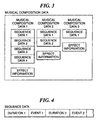
FIG. 3 is a diagram showing the structure of musical
composition data base on which a musical composition is
reproduced by the musical composition-reproducing
section;
FIG. 4 is a diagram showing the format of sequence
data forming the musical composition data based on which
a musical composition is reproduced by the musical
composition-reproducing section;
FIG. 5 is a diagram showing the format of event data
in the sequence data of the musical composition data
based on which a musical composition is reproduced by the
musical composition-reproducing section;
FIG. 6 is a diagram showing the format of effect
information on the musical composition data based on
which a musical composition is reproduced by the musical
composition-reproducing section;
FIG. 7 is a diagram showing the arrangement of an
artificial effecter that forms a part of a musical
composition-reproducing device according to the present
invention and is used to give a reverberation effect to
musical tones;
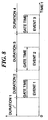
FIG. 8 is a view useful in explaining the
application of a reverberation effect to musical tones by
a musical composition-reproducing device according to the
present invention in relation to duration data; and
FIG. 9 is a diagram showing the arrangement of an
artificial effecter that is comprised of a musical
composition-reproducing device according to the present
invention and is used to give a chorus effect to musical
tones.
Best Mode of Carrying Out the Invention
The present invention will now be described in
detail with reference to the drawings showing embodiments
thereof.
FIG. 1 is a block diagram showing the arrangement of
a cellular phone device to which is applied a mobile
device according to an embodiment of the present
invention having a musical composition-reproducing device
of the present invention.
The cellular phone 1 in FIG. 1 includes a known
antenna 1a, which is usually configured to be retractable,
and connected to a communication section 13 having a
modulating/demodulating function. A system CPU (Central
Processing Unit) 10 controls the operations of component
parts of the cellular phone 1 by executing telephone
function programs, and includes a timer, not shown, for
indicating a time period elapsed during operation thereof
and generating a timer interrupt at predetermined time
intervals. Further, the system CPU 10 carries out an
effect imparting process that will be described later,
and a process for aiding a musical composition-reproducing
process in response to an intervention
required (IRQ) signal. A system RAM (Random Access
Memory) 11 has allocated thereto a musical composition
data storage area for storing musical compositions each
composed of a plurality of parts downloaded from a
download center, not shown, or the like, a user setting
data storage area for storing data set by the user, a
work area for operation of the system CPU 10, and the
like. A system ROM (Read Only Memory) 12 stores various
telephone function programs for sending and receiving
messages, and other programs for carrying out the effect
imparting process, the process for aiding the musical
composition-reproducing process, and others, and various
data such preset musical composition data, the programs
being executed by the CPU 10.
Further, a communication section 13 carries out
demodulation of a signal received by the antenna 1a, and
modulation of a signal to be transmitted via the antenna
1a to supply the modulated signal to the antenna. A
received speech signal demodulated by the communication
section 13 is decoded by a voice processing section
(coder/decoder) 14, while a speech signal input via a
microphone 21 is compression-encoded by the same. The
voice processing section 14 carries out compression-encoding/decoding
of speech with high efficiency, and is
implemented by a coder/decoder based on a CELP (Code
Excited LPC) or an ADPCM (Adaptive Differential Pulse
Code Modulation) method. A musical composition-reproducing
section 15 of the musical composition-reproducing
device according to the present invention
causes the received speech signal to be sounded via a
received speech speaker 22, or reproduces musical
composition data as an incoming call melody, a hold sound
or a BGM. The incoming call melody and the BGM are
sounded via an incoming call speaker 23, while the hold
sound is sounded via the received speech speaker 22.
The musical composition data, which is reproduced by
the musical composition-reproducing section 15, is
comprised of one or more pieces of sequence data and
effect information. Each sequence data is composed of 4-channel
performance data. The musical composition-reproducing
section 15 reproduces musical tones according
to the sequence data. When a predetermined amount of a
free area is formed in a FIFO serving as storage means
for the sequence data during reproduction of the musical
tones, the musical composition-reproducing section 15
sends an intervention required (IRQ) signal to the system
CPU 10. In response to the IRQ signal, the system CPU 10
reads out a continued portion of the sequence data stored
in a musical composition data file section 24, etc. and
forwards the same to the musical composition-reproducing
section 15. An interface (I/F) 16 provides interface for
use in downloading data of musical composition data, etc.
each composed of one or more pieces of sequence data from
an external device 20 such as a personal computer. An
input section 17 is comprised of dial buttons for
inputting numerical values "0" to "9", respectively, and
other buttons, which are provided in the mobile phone
device 1.
Further, a display 18 displays a menu of telephone
functions, and images associated with operations of
respective buttons including the dial buttons. A
vibrator 19 vibrates the body of the cellular phone 1
instead of sounding an incoming call sound upon receipt
of an incoming call to notify the user of the incoming
call. The musical composition file section 24 is
comprised of a storage device having a large storage
capacity, and stores musical composition data acquired by
downloading and the like. The musical composition data
file section 24, however, may be omitted from the mobile
phone device 1. The above-mentioned respective
functional blocks send and receives data and instructions
via a bus 25.
FIG. 2 shows a first configuration of the musical
composition-reproducing section 15 of the musical
composition-reproducing device according to the present
invention. Before describing this configuration, the
structure of musical composition data which is reproduced
by the musical composition-reproducing section 15 will be
described with reference to FIG. 3.
Musical composition data 1, musical composition data
2 and musical composition data 3 in FIG. 3 are stored in
the musical composition data file section 24. As shown
in FIG. 3, the musical composition data 1 to 3 are each
composed of one or more pieces of sequence data and
effect information. Each sequence data is composed of 4-channel
performance data: for example, a melody part, an
accompaniment part 1, an accompaniment part 2, and a
rhythm part. Each sequence data is used for controlling
the tone generation of 4 channels. As shown in FIG. 4,
each sequence data is formed by alternately arranging
duration data and event data. With this arrangement, the
sequence data forming the musical composition data 1 is
composed of four pieces of sequence data 1 to 4, the
sequence data forming the musical composition data 2 is
composed of two pieces of sequence data 1 to 2, and the
sequence data forming the musical composition data 3 is
composed of one piece of sequence data 1. The musical
composition-reproducing section 15 has, for example, 16
sounding channels so as to reproduce musical compositions
based on the above musical composition data.
The duration data in the sequence data is indicative
of a time interval between adjacent events. As shown in
FIG. 5, there are two kinds of event data: control events
and note events. In the control event, the 1st byte as a
status byte is represented by "0000 0000", and the next
2nd byte is represented by "nnmm yyyy". The characters
"nn" represent a channel number indicative of one channel
among the first to fourth channels, and the characters
"mm" indicate the type of a control event. As shown in
FIG. 5, if the characters "mm" are represented as "00",
it indicates a control event for controlling a gain. If
the characters "mm" are represented as "01", it indicates
a control event for controlling a pitch bend. If the
characters "mm" are represented as "10" or "11", it
indicates a control event relating to another message.
Further, the characters "yyyy" represent a controlled
variable. If the characters "mm" are represented as "00",
it indicates a controlled variable of a gain, and if the
characters "mm" are represented as "01", it indicates a
controlled variable of a pitch bend. If the sequence
data is reproduced after the gain or the pitch bend is
changed according to the control event, the controlled
variable after the change is applied to the gain or the
pitch bend. According to the present invention, the
control event is used to provide an effect as described
later.
The 1st byte of the note event is represented by
"nnoo xxxx", and the 2nd byte is represented by "gggg
gggg". As mentioned above, the characters "nn" represent
a channel number indicative of one channel among the
first to fourth channels. The characters "oo" represent
octave information, and the characters "xxxx" represent
note information. Musical interval and musical scale for
use in sounding are represented by "oo xxxx". The
characters "gggg gggg" represent a time corresponding to
a gate time (length of tone generation).
The effect information attached to the musical
composition data stored in the system RAM 11 or the
musical composition data file section 24 is composed of
effect imparting information, effect imparting sequence
information, effect type information, effect parameter
information and effect parameter-editing information as
shown in FIG. 6. The effect imparting information
indicates whether an effect sounding with an effect
imparted should be performed or a normal sounding should
be performed without an effect. The effect imparting
sequence information indicates a number (1 to 4) of
sequence data to which an effect is to be applied. The
effect type information indicates the type of an effect
to be applied, such as a reverberation and a chorus. The
effect parameter information indicates which parameters
will be used between preset effect parameters and effect
parameters edited by a user. The effect parameter-editing
information indicates effect parameters edited by
an effect parameter-editing process.
The effect information is configured or set by the
user beforehand and is attached to the sequence data and
stored in the system RAM 11 or the musical composition
data file section. In response to an instruction for
reproducing the musical composition data, effect
imparting sequence data is generated according to the
effect information and is reproduced by the musical
composition-reproducing section 15 together with the
sequence data to which an effect will be applied, so that
musical tones provided with the effect can be reproduced
(effect sounding).
Alternatively, the effect imparting sequence data
may be generated in advance according to the effect
information and may be stored together with the musical
composition data in the system RAM 11 or the musical
composition data file section 24. In this case as well,
the musical composition-reproducing section 15 reproduces
the effect imparting sequence data together with the
sequence data to which an effect will be applied, so that
musical tones provided with the effect can be reproduced.
In a typical embodiment, an effect is only given to
one sequence data. If sequence data to which an effect
is to be applied is selected, the effect sounding is
carried out by using all the freed channels at the
sacrifice of sound production based on the other sequence
data. According to present invention, however, an effect
should not necessarily be given to only one sequence data,
but it may be given to a plurality of sequence data.
The musical composition data can be downloaded from
a distribution center or the like, and the distributed
musical composition data is normally composed only of
sequence data. Accordingly, upon receipt of the musical
composition data, the number of sequence data in the
musical composition data is detected. Only when the
detected number of sequence data is smaller than the
number of sequence data that can be reproduced by the
musical composition-reproducing device provided in the
portable terminal device, the effect information is
produced according to the preset effect parameters and is
stored together with the musical composition data in the
system RAM 11 or the musical composition data file
section 24. In this case, the preset effect parameters
are preferably included in the distributed musical
composition data.
Further, the distribution center may distribute the
musical composition data provided with the effect
information to the portable terminal device having the
musical composition-reproducing device. Prior to the
distribution, the distribution center may acquire
information on the number of sounding channels of the
musical composition-reproducing device provided in the
portable terminal device, compare the number of sounding
channels indicated by the acquired information with the
number of sequence data in requested musical composition
data and then produce the effect information according to
the result of the comparison. For example, if the
acquired information indicates that the number of
sounding channels is 16 and the number of sequence data
in the requested musical composition data is 1 (4
channels), the distribution center produces the effect
information for imparting an effect and distributes the
musical composition data provided with the produced
effect information.
The musical composition-reproducing section 15 in
FIG. 2 is capable of reproducing musical composition data
that is composed of 4 or less sequence data as shown in
FIG. 3.
The musical composition-reproducing section 15 is
comprised of a CPU interface (CPU I/F), a register 31
composed of a plurality of registers, a FIFO (First-in
First-out) group 32 composed of FIFOs 1 to 4, a sequencer
group 33 composed of sequencers 1 to 4, a tone generator
34 composed of tone generators 1 to 4, a digital-to-analog
converter (DAC) 35, a mixer 86, and an IRQ control
section 37.
The CPU interface 30 is connected to the system CPU
10 via an 8-bit data line (Data/Index), an address
control line (A0), a readout control line (RD), and a
write control line (WR). The address control line (A0)
indicates whether a signal on the data line (Data/Index)
is data or an index. The index is information indicating
the address of one of the registers in the register 31.
The index and the data are sequentially written into the
CPU interface 30 via the data line (Data/Index), so that
the data is written into the register corresponding to
the index in the register 31. In this case, a signal on
the data line (Data/Index) is determined according to a
signal on the address control line (A0). After the index
is thus written into the CPU interface 30 via the data
line (Data/Index) ,a readout instruction is sent via the
readout control line (RD), so that the stored data is
read out from the register corresponding to the index in
the register 31.
The register 31 includes a sequencer control
register, a sequence data register, and a status register.
Sequencer control data for controlling the sequencer
group 33 is written into the sequencer control register
by the system CPU 10. The sequencer control data written
into the sequencer control register includes sequencer
operation start instruction data (Start) for giving an
instruction for starting the reproduction of musical
tones and sequencer stop instruction data (Stop) for
giving an instruction for terminating the reproduction of
musical tones.
One or more pieces of sequence data forming the
musical composition data are temporarily stored in the
sequence data register by the system CPU 10. The musical
composition data written into the sequence data register
is written into the FIFO group 32. The musical
composition data written into the register 31 is composed
only of the sequence data. If the musical composition
data is composed of a plurality of sequence data, the
first to fourth sequence data 1, 2, 3 and 4 are written
into the FIFO 1, 2, 3 and 4, respectively.
The status register indicates a musical composition-reproducing
state of the musical composition-reproducing
section 15. The status register includes a sequence data
Full flag that is outputted from the FIFO 1 to the FIFO 4
in the FIFO group 32, a sequence data IRQ flag (IRQ), and
a sequence data END flag (END) that is outputted from the
sequencer group 33. The status register is read out by
the system CPU 10.
For example, the FIFOs 1 to 4 in the FIFO group 32
each have a capacity of 32 bytes (32×8 bits). The
selected sequence data are sequentially written into the
FIFOs 1 to 4 via the sequence data register in the
register 31, and are sequentially read out from the FIFOs
1 to 4 by the sequencers 1 to 4 in the sequencer group 33
in an order in which they are written. The sequence data
read out by the sequencers 1 to 4 in the sequencer group
33 are discarded from the FIFO group 32. The FIFO group
32 has a function of monitoring the amount of the stored
sequence data as well as the above-mentioned FIFO
function. More specifically, if the amount of the stored
sequence data is 32 bytes (full state), the FIFO group 32
generates a sequence data Full signal to set the sequence
data Full flag in the status register in the register 31.
Further, if the amount of the stored sequence data
becomes equal to or smaller than an amount that is preset
by the system CPU 10 (e.g. 8 bytes), the FIFO group 32
generates a sequence data IRQ signal to set the sequence
data IRQ flag in the status register in the register 31.
The sequence data IRQ signal is also supplied to the IRQ
control section 37 to notify the CPU 10 of this fact.
When the sequencer operation start instruction data
is written into the sequencer control register in the
register 31 from the
CPU 10, the
sequencer group 33
operates as outlined below in accordance with the
instruction. Prior to the sequencer operation start
instruction, however, some sequence data must be written
into at least the
FIFO group 32. In the following
description, it is assumed that the number of sequence
data is 4.
When the sounding parameters for 4 channels such as
start/stop data and volume data are written into the tone
generators 1 to 4 in the tone generator group 34 from
corresponding ones of the sequencers 1 to 4 in the
sequencer group 33, the tone generators 1 to 4 start or
terminate the reproduction of 4 sounding channels.
According to the sounding parameters, the tone generators
1 to 4 generate and output PCM waveform data of 16
channels.
The PCM waveform data of 16 channels reproduced by
the tone generator group 34 are synthesized and converted
to an analog musical tone signal by the digital-to-analog
converter (ADC) 35. On this occasion, if the musical
composition-reproducing section 15 reproduces an incoming
melody/BGM, the reproduced musical tones are sounded by
the incoming call speaker 23. If the musical
composition-reproducing section 15 reproduces a hold
sound, the reproduced musical tones are sounded by the
received speech speaker 22. If the hold sound is
reproduced, the mixer 36 mixes the hold sound and a
received speech signal from the voice processing section
14 and then the mixed sound is sounded by the received
speech speaker 22. If the hold sound is reproduced, a
hold sound for transmission outputted from the tone
generator group 34 is supplied to the voice processing
section 4 and is compression-coded with high efficiency
and sent to a telephone of the calling party.
When the IRQ control section 37 receives the
sequence data IRQ signal from the FIFOs 1 to 4 in the
FIFO group 32, i.e. when the amount of sequence data
stored in the FIFOs 1 to 4 in the FIFO group 32 becomes
equal to or smaller than a predetermined amount, the IRQ
control section 37 supplies the IRQ signal to the system
CPU 10. In response to the IRQ signal, the system CPU 10
finds a factor leading to the supply of the IRQ signal
with reference to the sequence data IRQ flag in the
status register in the register 31 and then takes an
appropriate measure in accordance with the factor. If
the sequence data IRQ flag is set and the shortage of
sequence data in the FIFO 1 in the FIFO group 32 is
detected as being the factor leading to the supply of the
IRQ signal, the system CPU 10 forwards the sequence data
1 of 32 bytes -8 bytes = 24 bytes. A continued portion
of the sequence data 1 is read out and forwarded from the
system RAM 11 or the musical composition data file
section 24.
The sequence data of 24 bytes need not be
transferred immediately, and all the sequence data of 24
bytes need not be transferred. The sequence data of 24
bytes may be transferred in such a timing and by such an
amount as to enable the musical composition-reproducing
section 15 to reproduce the tones without a break.
As stated above, when the system CPU 10 gives an
instruction for starting the reproduction of musical
tones to the musical composition-reproducing section 15
in FIG. 2 according to the present embodiment, the
sequencer group 33 detects this instruction to cause the
musical composition-reproducing section 15 to start the
reproduction. The system CPU 10 gives the instruction
for starting the reproduction in a case where an
instruction for reproducing a BGM is given by operating a
reproduction key in the cellular phone 1 and a case where
an instruction for reproducing an incoming call sound (an
incoming call melody) is given upon receipt of an
incoming call notification. The system CPU 10 also gives
the instruction for starting the reproduction in a case
where an instruction for reproducing a hold sound is
given by operating a hold operation key.
There will now be described the reproduction of
musical tones provided with an effect according to the
present invention. The musical tones are reproduced by
the above-mentioned musical composition-reproducing
section 15 according to the present invention. First, a
description will be given of the arrangement of an
artificial effecter formed by the musical composition-reproducing
section 15.
FIG. 7 shows the arrangement of the artificial
effecter for use in applying a reverberation to musical
tones. In FIG. 7, musical composition data read out from
a musical data file FL is sequence data 1 composed of e.g.
4 channels. The sequence data 1 is read out as data of a
4-channel track 1 (Track 1) and is copied to be read out
as data of a 4-channel track 2 (Track 2), data of a 4-channel
track 3 (Track 3) and data of a 4-channel track 4
(Track 4). The system CPU 10 executes this process when
it is determined that the effect imparting information in
musical composition data to be reproduced indicates an
instruction for performing the effect sounding and the
effect imparting sequence information indicates an
instruction for imparting an effect to the sequence data
1.
Then, a reverberation is designated according to the
effect type information, and a delay time t1 of a delay
means D1 for the track 2, a delay time t2 of a delay
means D2 for the track 3 and a delay time t3 of a delay
means D3 for the track 4 are determined according to
effect parameters designated by the effect parameter
information. At the same time, an attenuation G1 of an
attenuation means G1 for the track 2, an attenuation g2
of an attenuation means G2 for the track 3 and an
attenuation g3 of an attenuation means G3 for the track 4
are determined according to the designated effect
parameters. In this case, if the effect parameter
information designates the preset effect parameters, the
delay times t1 to t3 and the attenuations g1 to g3 are
determined according to the preset effect parameters. If
the effect parameter information designates the edited
effect parameters, the delay times t1 to t3 and the
attenuations g1 to g3 are determined according to the
effect parameter-editing information. Four sequence data
in the tracks 1 to 4, for which the delay times t1 to t3
and the attenuations g1 to g3 are determined, are
reproduced by a sequencer SQ having 16 sounding channels.
In this case, the delay times t1 to t3 are
determined to gradually increase in this order and the
attenuations g1 to g3 are determined to gradually
increase in this order so as to simulate a plurality of
reflected sounds. More specifically, the musical tones
reproduced based on the effect imparting sequence data in
the tracks 2 to 4 are outputted after they are delayed
and attenuated relative to the musical tones reproduced
based on the sequence data in the track 1 by the delay
times t1 to t3 and the attenuations g1 to g3.
Consequently, the musical tones reproduced based on the
sequence data in the tracks 2 to 4 apply a reverberation
to the musical tones in the track 1 reproduced based on
the sequence data in the track 1 (effect sounding
providing a reverberation).
According to the present embodiment, the delay means
D1 to D3 are not constructed of hardware but are
implemented by changing the duration data 1 (Duration) at
the leading end of the sequence data according to the
delay times t1 to t3 as shown in FIG. 8. In other words,
all the event data (event data 1, event data 3 ···) after
the duration data 1 are delayed by period of times
indicated by the duration data 1. Further, according to
the present embodiment, the attenuation means G1 to G3
are not constructed of hardware but are implemented by
inserting control events for controlling the gains of all
the channels into the sequence data. In other words,
when the sequence data is reproduced by the tone
generator group 34, the gains of the musical tones
reproduced based on the sequence data in the respective
tracks are controlled by the control events. In this
reverberation effect imparting process, the system CPU 10
edits the sequence data in the tracks 2 to 4 into the
effect imparting sequence data according to the preset
effect parameters designated by the effect parameter
information or the edited effect parameters while the
effect type information designates the reverberation.
Referring next to FIG. 9, there will be described
the arrangement of an artificial effecter for use in
imparting a chorus effect to musical tones.
In FIG. 9, musical composition data read out from a
musical data file FL is sequence data 1 composed of e.g.
4 channels. The sequence data 1 is read out as data of a
4-channel Track 1 and is copied to be read out as data of
a 4-channel track 2, data of 4-channel track 3 and data
of a 4-channel track 4. The system CPU 10 executes this
process when it is determined that the effect imparting
information in musical composition data to be reproduced
indicates an instruction for performing the effect
sounding and the effect imparting sequence information
indicates an instruction for imparting an effect to the
sequence data 1.
Then, a chorus is designated according to the effect
type information, and a pitch bend amount b1 of a pitch
bend means P1 for the track 2, a pitch bend amount b2 of
a pitch bend means P2 for the track 3 and a pitch bend
amount b3 of a pitch bend means P3 for the track 4 are
determined according to effect parameters designated by
the effect parameter information. At the same time, an
amplification a1 of an amplification means A1 for the
track 2, an amplification a2 of an amplification means A2
for the track 3 and an amplification a3 of an
amplification means A3 for the track 4 are determined
according to the designated effect parameters. In this
case, if the effect parameter information designates the
preset effect parameters, the pitch bend amounts p1 to p3
and the amplifications a1 to a3 are determined according
to the preset effect parameters. If the effect parameter
information designates the edited effect parameters, the
pitch bend amounts p1 to p3 and the amplifications a1 to
a3 are determined according to the effect parameter-editing
information. Four sequence data in the tracks 1
to 4, for which the pitch bend amounts p1 to p3 and the
amplifications a1 to a3 are determined, are reproduced by
a sequencer SQ having 16 sounding channels.
In this case, the pitch bend amounts t1 to t3 are
determined as being slightly different from one another
and the amplifications a1 to a3 are determined as having
predetermined respective sizes to thereby simulate a
plurality of chorus sounds. In other words, the musical
tones reproduced based on the effect imparting sequence
data are outputted with a slightly different pitch and a
different volume from the musical tones reproduced based
on the sequence data in the track 1. Consequently, the
musical tones reproduced based on the sequence data in
the tracks 2 to 4 apply a chorus effect to the musical
tones reproduced based on the sequence data in the track
1 (effect sounding providing a chorus effect).
According to the present embodiment, the pitch bend
means P1 to P3 are not constructed of hardware but are
implemented by inserting control events for controlling
the pitch bend amounts of all the channels into the
sequence data. In other words, when the sequence data is
reproduced through the tone generator group 34, the gains
of the musical tones reproduced based on the sequence
data in the respective tracks are controlled by the
control events. Further, according to the present
embodiment, the amplification means A1 to A3 are not
constructed of hardware but are implemented by inserting
control events for controlling the gains of all the
channels into the sequence data. In other words, when
the sequence data is reproduced through the tone
generator group 34, the gains of the musical tones
reproduced based on the sequence data in the respective
tracks are controlled by the control events. In this
chorus effect imparting process, the system CPU 10 edits
the sequence data in the tracks 2 to 4 into the effect
imparting sequence data according to the preset effect
parameters designated by the effect parameter information
or the edited effect parameters in the case where the
effect type information designates the reverberation.
According to the embodiment described above, all the
channels in the respective tracks are controlled in the
same manner when the reverberation is provided, but the
respective channels in the respective tracks may be
controlled with different delay times and attenuations.
Moreover, according to the embodiment described
above, all the channels in the respective tracks are
controlled in the same manner when the chorus effect is
provided, but the respective channels in the respective
tracks may be controlled with different pitch bends
amounts and amplifications. Further, the attenuation
means A1 to A3 may be omitted in providing the chorus
effect.
There will now be described an effect imparting
process which is executed by the system CPU 10 to
generate the effect imparting sequence data according to
the effect information.
As stated above, the musical composition data is
stored in the form of the sequence data provided with the
effect information or in the form of the sequence data
and the effect imparting sequence data in the system RAM
11 or the musical composition data file section 24. If
the musical composition data is stored in the form of the
sequence data provided with the effect information, the
effect imparting process is executed when the musical
composition reproduction is triggered. If the musical
composition data is stored in the form of the sequence
data and the effect imparting sequence data, the effect
imparting process has already been executed. When the
musical composition reproduction is triggered in this
case, there is no necessity of executing a special
process. It is only necessary for the system CPU 10 to
forward the musical composition data to the musical
composition-reproducing section 15 as is the case with
the normal musical composition data composed of a
plurality of sequence data.
More specifically, if the musical composition data
is stored in the form of the sequence data provided with
the effect information, the effect information is
referred to when the musical composition reproduction is
triggered. If the effect information has no instruction
for providing an effect, the musical composition data is
forwarded as it is to the FIFO group 32 of the musical
composition-reproducing section 15. If the effect
information has an instruction for providing an effect,
sequence data which should be provided with the effect is
specified to produce the effect imparting sequence data.
If there is other sequence data than the sequence data
which should be provided with the effect, the other
sequence data is ignored. If the reverberation is
designated as the type of the effect, three effect
imparting sequence data with different duration data at
the leading end thereof and different gains are produced
according to the set effect parameters. In this case,
only one control message should be added to control the
gains. If the chorus is designated as the type of the
effect, the pitch bend amount is determined according to
the set effect parameters to thereby produce three effect
imparting sequence data with different pitches. In this
case as well, only one control message should be added to
control the pitches.
According to the above described embodiment, the
musical composition-reproducing process and its related
processes and the telephone function process carried out,
respectively, by the musical composition-reproducing
device and the portable terminal device according to the
present invention are implemented by executing the
program by the system CPU 10. This program is stored in
the system ROM 12, but may also be installed into the
system RAM 11 from the external device 20. The
installation of the program from the external device 20
makes it possible to easily replace the program with
another program, upgrade the version of the program and
the like. In this case, the external device 20 may be
used as a drive for a removable disk such as a CD-ROM, an
MO and an HDD.
Further, the tone generators 1 to 4 in the tone
generator group 34 of the musical composition-reproducing
section 15 may be formed by frequency-modulation (FM)
tone generators. The FM tone generator uses higher
harmonics generated by the frequency modulation to
synthesize musical tones and is able to generate
waveforms having higher harmonic waves containing non-harmonic
components using a simple circuit. Further, the
FM tone generator is able to generate musical tones over
a wide range from composite tones of natural musical
instruments to electronic tones. The FM tone generator
uses oscillators called operators that oscillate sine
waves equivalently. For example, as the tone generators
1 to 4, it is possible to use an FM tone generator that
is formed by cascading a first operator and a second
operator. In this case, the number of operators used is
not limited to two but also may be three or more. An
alternative FM tone generation may be used in which the
outputs from the operators are fed back to the same
operators.
Further, the tone generators 1 to 4 in the tone
generator group 34 of the musical composition-reproducing
section 15 need not be formed by FM tone generators, but
they may also be another type of tone generators such as
a waveform memory tone generator (PCM tone generator or
ADPCM tone generator) and a physical model tone generator.
In addition, the tone generators may be either hardware
tone generators implemented by using a DSP, etc. or
software generators implemented by executing a tone
generation program.
Further, the portable terminal device according to
present invention is by no means applied to only a
cellular phone as described above, but it may be applied
to various kinds of mobile devices, such as personal
computers and other information devices, insofar as they
include a musical composition-reproducing device
according to the present invention.
Industrial Applicability
The musical composition-reproducing device according
to the present invention is capable of effect sounding
imparting an effect to musical tones that are reproduced,
by using free sounding channels, in reproducing sequence
data. This makes it possible to make the most of the
sounding channels in the musical composition-reproducing
device.
Moreover, if there is no free sounding channel when
musical composition data composed of a plurality of
sequence data is reproduced, the number of sequence data
reproduced is reduced to enable the effect sounding
imparting the effect to musical tones that are reproduced,
by using sounding channels having been freed as a result
of the reduction.
Thus, according to the present invention, an effect
is not imparted to musical tones by a special effect
circuit but is imparted by using free sounding channels
or freed sounding channels. This eliminates the
necessity of additionally providing an effect circuit.
Therefore, the musical composition-reproducing device
according to the present invention can be suitably
applied to a cellular phone, etc. that is required to be
compact in size.