EP1296532A2 - Datenaustauschprotokoll - Google Patents
Datenaustauschprotokoll Download PDFInfo
- Publication number
- EP1296532A2 EP1296532A2 EP02256517A EP02256517A EP1296532A2 EP 1296532 A2 EP1296532 A2 EP 1296532A2 EP 02256517 A EP02256517 A EP 02256517A EP 02256517 A EP02256517 A EP 02256517A EP 1296532 A2 EP1296532 A2 EP 1296532A2
- Authority
- EP
- European Patent Office
- Prior art keywords
- timeslots
- base unit
- unit
- data
- frame
- Prior art date
- Legal status (The legal status is an assumption and is not a legal conclusion. Google has not performed a legal analysis and makes no representation as to the accuracy of the status listed.)
- Withdrawn
Links
Images

Classifications
-
- H—ELECTRICITY
- H04—ELECTRIC COMMUNICATION TECHNIQUE
- H04Q—SELECTING
- H04Q9/00—Arrangements in telecontrol or telemetry systems for selectively calling a substation from a main station, in which substation desired apparatus is selected for applying a control signal thereto or for obtaining measured values therefrom
- H04Q9/04—Arrangements for synchronous operation
-
- H—ELECTRICITY
- H04—ELECTRIC COMMUNICATION TECHNIQUE
- H04W—WIRELESS COMMUNICATION NETWORKS
- H04W72/00—Local resource management
- H04W72/04—Wireless resource allocation
- H04W72/044—Wireless resource allocation based on the type of the allocated resource
- H04W72/0446—Resources in time domain, e.g. slots or frames
-
- H—ELECTRICITY
- H04—ELECTRIC COMMUNICATION TECHNIQUE
- H04W—WIRELESS COMMUNICATION NETWORKS
- H04W28/00—Network traffic management; Network resource management
- H04W28/16—Central resource management; Negotiation of resources or communication parameters, e.g. negotiating bandwidth or QoS [Quality of Service]
- H04W28/18—Negotiating wireless communication parameters
-
- H—ELECTRICITY
- H04—ELECTRIC COMMUNICATION TECHNIQUE
- H04W—WIRELESS COMMUNICATION NETWORKS
- H04W84/00—Network topologies
- H04W84/18—Self-organising networks, e.g. ad-hoc networks or sensor networks
-
- H—ELECTRICITY
- H04—ELECTRIC COMMUNICATION TECHNIQUE
- H04W—WIRELESS COMMUNICATION NETWORKS
- H04W88/00—Devices specially adapted for wireless communication networks, e.g. terminals, base stations or access point devices
- H04W88/02—Terminal devices
- H04W88/06—Terminal devices adapted for operation in multiple networks or having at least two operational modes, e.g. multi-mode terminals
Definitions
- This invention relates to apparatus for, and methods of, communication by exchange of data, for example in radio telemetry.
- Radio telemetry systems can be optimised either for accuracy/reliability of throughput or for speed of data throughput. Historically and typically these two requirements trade off against one another. The trade-off is particularly acute as the number of transmitting units in radio range of each other increases and the amount of data traffic increases.
- the invention proposes a method whereby both requirements are met more satisfactorily than hitherto. The method of the invention permits the radio range of units involved to be extended without sacrificing performance throughput.
- Conventional telemetry systems involve means to communicate data over an RF channel between Portable Units (hereinafter 'PU') and a Base Unit (hereinafter 'BU'), either asynchronously or synchronously.
- 'PU' Portable Units
- 'BU' Base Unit
- the asynchronous method is most suited to impromptu communication of infrequent events, while synchronous transmission systems are most suited to regular scheduled update of information not changing substantially between scheduled time slots.
- the former risks radio clashes, progressively increasing in likelihood as more unscheduled events per period of unit time are to be catered for, while the latter does not readily allow for fast communication of impromptu events.
- a Repeater Unit (hereinafter 'RU') may be used to relay data from one unit to another by repeating data it hears.
- 'RU' a Repeater Unit
- a plurality of RUs is feasible provided each is allocated unique time slots.
- a plurality of RUs in an asynchronous system increases clash probability dramatically, and needs managing to ensure units did not repeat messages they had already repeated.
- the invention provides a method of communication between a base unit and a plurality of portable units, the method comprising; allocating a first set of predetermined timeslots in a frame for communication between respective predetermined ones of the portable units and the base unit; allocating a second set of predetermined timeslots in the frame to be available for communication between any of the portable units and the base unit; the time slots being arranged in the frame such that the timeslots of the first set alternate with the timeslots of the second set.
- the invention allows radio data exchange between a plurality of portable radio units in an incident and a base unit in proximity to but not directly in the incident, on a single RF channel.
- Periodical reliable telemetry data throughput is maintained by means of communication in the first set of timeslots, yet unforeseen events may be communicated successfully and quickly in timeslots of the second set.
- each base unit generating respective frames for communicating with their respective portable units and each base unit negotiating the transmission of its frame within a communication cycle with the other base units. Communication between each base unit and its associated portable units is then as described above.
- At least one repeater unit is provided and arranged to receive and retransmit data to and from the base and portable units.
- the provision of repeater units permits both routine telemetry and event exchanges while the portable units are out of range of the base units.
- a plurality of systems may coexist without loss of performance.
- the invention lends itself to inclusion in a communications system for search and rescue personnel or other emergency services personnel, for example firefighters.
- the portable units are arranged to monitor equipment used by each firefighter.
- the base unit communicates with the portable units on a routine basis. However, should there be a fault with a set of equipment, the portable unit transmits an alarm to the base unit in one of the second set of timeslots.
- This embodiment may be used to monitor, for example, a firefighter's breathing apparatus, and to indicate to the base unit should the level of available air fall below a predetermined level.
- the base unit can then signal to the firefighter that he should withdraw from the incident or exercise.
- the base unit may signal to others of the portable units in order to summon the assistance of other firefighters.
- the method of the invention comprises the generation of one or more contact frames (hereinafter CF).
- CF contact frames
- CS contact slots
- ES event slots
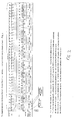
- the CS and ES are arranged alternately within the frame.
- the CS are reserved/allocated timeslots for specific units, while ES are unallocated and may be used by any unit or units wishing to communicate either non-routine information or routine information on an urgent basis.
- the overall system capacity is preordained by the designer and the number of CFs in the cycle is chosen to match the number of BUs in the system. Within each CF, the number of CSs is chosen to match the maximum number of PUs affiliated to the BU. In the particular example shown in Figure 1, two BUs are catered for, each of which may have up to twelve affiliate PUs.
- each BU has one opportunity in the cycle to poll its PUs en masse, both to advise each PU of its perceived status/data as gleaned during the previous cycle, and to enlist status updates in defined order, PU by PU, in the forthcoming CSs within that CF.
- the cycle time is preordained. It follows that every PU has a unique opportunity to transmit its data and status to its affiliate BU within the cycle.
- the first PU affiliated to the first BU (B1) may routinely be polled by, and communicate with, B1 in the CS timeslot indicated as P1/1.
- the sixth portable unit to log on to the second BU (B2) may communicate periodically in the P2/6 timeslot.
- any unit with anything out-of-the-ordinary to communicate may broadcast in any ES, each indicated as "Ev" in the drawings.
- the next ES is the space for the reply. It follows that if a unit wishes to broadcast an event, it should monitor the airwaves for the previous ES (which it will be doing anyway as a matter of course) and should transmit in the forthcoming ES, provided that the previous ES did not contain a message to which a response was solicited. In the case of the previous ES containing a message expecting a response, the unit wishing to broadcast a message shall miss an ES and then transmit in the next ES.
- the unit tries again, with the same proviso.
- the number of ESs missed between retries is determined at design stage and dependent on the maximum and typical number of event messages that are to be catered for in a given time. It also may have a small randomisation element built in, to take account of a "perfect" clash.
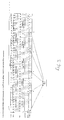
- Figure 2 illustrates a second embodiment of the invention.
- RUs are deployed at strategic positions to relay messages to/from PUs that might otherwise be out of range of the affiliate BU.
- the maximum number of repeaters per BU needs to be defined and additional CSs and ESs allocated in each CF to accommodate the RUs.
- ESs are still free-for-all, arranging these in triplets (in this example) ensures any non-clashing event is repeated.
- Repeater assignment order is chosen to give maximum propagation into an incident.
- a unit may receive either the primary signal or one or more repeated signals. If any of these is coherent then the receiving unit acts as if the primary message was received directly.
- a decision needs to be taken which RU set is to repeat an event. Provided the rule is consistent for all units in the system, several options are worthy of consideration.
- the primary mode would be for affiliate RUs to repeat PU and BU Event messages, irrespective of the timeslot in which the event was originated.
- repeated data from the plurality of PUs in each CF is compressed prior to repeating.
- six BUs with a maximum of seven repeaters per BU is catered for.
- Event messages are always repeated uncompressed; it is important that all information of an event get through to its destination.
- the system may be arranged to compress information from a plurality of PUs into one RU contact message destined for the BU. This is so because the respective PU transmissions are in preordained positions and the RU message need not contain routine unit identity information. Such information is implicit by virtue of the transmission time with respect to the start of the CF.
- PU contact messages are compressed into one Contact Repeat message; accordingly two groups of PU contact messages are required per contact frame for a system with twelve affiliate PUs per BU.
- the BU Tally slots at the end of the CF give an opportunity for each BU to confirm presence in the system within each Contact Frame.
- Further compression may be obtained if necessary by restricting the amount of routine data that is repeated from the PUs during the contact frame. For instance, only a full compliment of data could come through the repeaters for any one unit, selected by the BU in its contact request message, with selected data only being repeated from the remaining PUs affiliated to the BU.
- a third level of priority is achieved, where the BU hearing a PU directly gleans a full transmission each CF, but where the PU is not in direct range of its BU, repeated ful telemetry data is only available every few CFs. The more PUs that are in direct range of the BU, the more frequently a full report can be obtained from those units not in direct range.
- the invention provides a half-duplex radio transmission method to allow one or more outstation units each to maintain telemetry and event data for a plurality of affiliate remote units, whereby routine clash-free contact data is provided to occur once per cycle for all remote units, with an ability to handle unforeseen events on an urgent basis. The latter does not interfere with the former.
- repeater units are accommodated in the time plan, thereby extending the range. Loss-free compression of telemetry data through one or more repeaters may be achieved during contact messages.
- Loss free compression of telemetry data for one remote unit and lossy compression of telemetry data may be repeated for other units.
- the remote unit selected for loss-free compression may be decided in the contact request message.
- One or more sub-system making up the telemetry system may be from an entirely separate source that can coexist with the current system (up to the overall maximum design capacity).
- the transmission medium need not be rf, e.g., simplex serial cable, audio tones, ultrasonic tones etc. could be used.
Landscapes
- Engineering & Computer Science (AREA)
- Computer Networks & Wireless Communication (AREA)
- Signal Processing (AREA)
- Mobile Radio Communication Systems (AREA)
- Communication Control (AREA)
Applications Claiming Priority (2)
| Application Number | Priority Date | Filing Date | Title |
|---|---|---|---|
| GB0122674 | 2001-09-20 | ||
| GBGB0122674.5A GB0122674D0 (en) | 2001-09-20 | 2001-09-20 | Data exchange protocol |
Publications (2)
| Publication Number | Publication Date |
|---|---|
| EP1296532A2 true EP1296532A2 (de) | 2003-03-26 |
| EP1296532A3 EP1296532A3 (de) | 2007-10-03 |
Family
ID=9922399
Family Applications (1)
| Application Number | Title | Priority Date | Filing Date |
|---|---|---|---|
| EP02256517A Withdrawn EP1296532A3 (de) | 2001-09-20 | 2002-09-20 | Datenaustauschprotokoll |
Country Status (3)
| Country | Link |
|---|---|
| US (1) | US20030067900A1 (de) |
| EP (1) | EP1296532A3 (de) |
| GB (2) | GB0122674D0 (de) |
Cited By (1)
| Publication number | Priority date | Publication date | Assignee | Title |
|---|---|---|---|---|
| EP1720269A3 (de) * | 2005-05-04 | 2008-07-02 | ABB PATENT GmbH | Verfahren zur Konfiguration von TDMA-Datenübertragungsblöcken bei einem TDMA-Kommunikationssystem mit mehreren Knoten und einer Basisstation |
Families Citing this family (2)
| Publication number | Priority date | Publication date | Assignee | Title |
|---|---|---|---|---|
| KR101376375B1 (ko) | 2007-07-20 | 2014-03-20 | 한국과학기술원 | 가시광 통신을 이용한 무선 랜 시스템에서 모바일 노드의상태 표시 방법 및 이를 위한 장치 |
| DE102018009821A1 (de) * | 2018-12-14 | 2020-06-18 | Diehl Metering S.A.S. | Verfahren zum Sammeln von Daten sowie Sensor, Datensammler und Messdaten-lnformationsnetzwerk |
Family Cites Families (11)
| Publication number | Priority date | Publication date | Assignee | Title |
|---|---|---|---|---|
| US4688183A (en) * | 1984-12-24 | 1987-08-18 | United Technologies Corporation | Fire and security system with multi detector-occupancy-temperature-smoke (MDOTS) sensors |
| WO1987006083A1 (en) * | 1986-03-25 | 1987-10-08 | Motorola, Inc. | Tdm communication system for efficient spectrum utilization |
| US5357242A (en) * | 1992-12-08 | 1994-10-18 | Morgano Ralph R | Air pressure gauge with self contained adjustable alarms |
| US6301242B1 (en) * | 1998-07-24 | 2001-10-09 | Xircom Wireless, Inc. | Communication system with fast control traffic |
| FI114178B (fi) * | 1995-01-09 | 2004-08-31 | Nokia Corp | Radiokapasiteetin dynaaminen jakaminen TDMA-järjestelmässä |
| US5732076A (en) * | 1995-10-26 | 1998-03-24 | Omnipoint Corporation | Coexisting communication systems |
| FI103467B1 (fi) * | 1996-07-25 | 1999-06-30 | Nokia Telecommunications Oy | Solun laajentaminen aikajakoisessa solukkojärjestelmässä |
| US5898929A (en) * | 1996-08-30 | 1999-04-27 | Telefonaktiebolaget L/M Ericsson (Publ) | Method and apparatus for synchronizing private radio systems |
| WO2000013446A1 (de) * | 1998-09-01 | 2000-03-09 | Siemens Aktiengesellschaft | Verfahren zur übertragung von sprachinformationen in einem funk-kommunikationssystem |
| US6901077B1 (en) * | 2000-02-23 | 2005-05-31 | Rockwell Electronic Commerce Technologies, Llc | Timeslot interchange circuit supporting PCM, ADPCM, and multiple data channel connectivity to T1 and E1 circuits |
| US6965344B1 (en) * | 2000-10-18 | 2005-11-15 | Information Systems Laboratories, Inc. | Firefighter locator |
-
2001
- 2001-09-20 GB GBGB0122674.5A patent/GB0122674D0/en not_active Ceased
-
2002
- 2002-09-19 US US10/247,079 patent/US20030067900A1/en not_active Abandoned
- 2002-09-20 EP EP02256517A patent/EP1296532A3/de not_active Withdrawn
- 2002-09-20 GB GB0221974A patent/GB2389007B/en not_active Expired - Fee Related
Cited By (1)
| Publication number | Priority date | Publication date | Assignee | Title |
|---|---|---|---|---|
| EP1720269A3 (de) * | 2005-05-04 | 2008-07-02 | ABB PATENT GmbH | Verfahren zur Konfiguration von TDMA-Datenübertragungsblöcken bei einem TDMA-Kommunikationssystem mit mehreren Knoten und einer Basisstation |
Also Published As
| Publication number | Publication date |
|---|---|
| GB2389007A (en) | 2003-11-26 |
| GB0122674D0 (en) | 2001-11-14 |
| EP1296532A3 (de) | 2007-10-03 |
| GB2389007B (en) | 2005-06-29 |
| US20030067900A1 (en) | 2003-04-10 |
| GB0221974D0 (en) | 2002-10-30 |
Similar Documents
| Publication | Publication Date | Title |
|---|---|---|
| EP1252736B1 (de) | Digitales kommunikationssystem | |
| JP3087966B2 (ja) | トランク無線中継方式 | |
| US5734643A (en) | Method and apparatus for transmitting data over a radio communications network | |
| US5881095A (en) | Repeater assisted channel hopping system and method therefor | |
| US5058199A (en) | Inter-truncked radio systems bridge protocol | |
| US6069886A (en) | System controlled asymmetrical automatic repeat request protocol | |
| CN102577563B (zh) | 接入控制系统、接入控制方法、中继站装置、发送侧处理方法、接收侧处理系统以及接收侧处理方法 | |
| JP2777841B2 (ja) | 複数制御スロットtdm/fdm通信システム | |
| JPS6387838A (ja) | 通信ネツトワ−クにおける監視方式 | |
| EP1770910B1 (de) | Verfahren und System zur zuverlässigen Datenübertragung in drahlosen Netzen | |
| CN100433592C (zh) | 在无线上行链路系统中传输移动设备请求的方法 | |
| CN102204384A (zh) | 请求资源的方法、设备和通信系统 | |
| US7974246B1 (en) | Adaptive time division multiple access systems and methods | |
| JPH0856190A (ja) | 衛星通信方式 | |
| EP1296532A2 (de) | Datenaustauschprotokoll | |
| WO1999060722A1 (en) | Personal communication system architecture | |
| KR101516818B1 (ko) | 통신 시스템에서 맵 송수신 장치 및 방법 | |
| JPH11289335A (ja) | データ伝送装置 | |
| US6831894B1 (en) | Method and a system for reserving transmission capacity | |
| JPH11205346A (ja) | 遠隔保守管理システム | |
| US20040233873A1 (en) | Multiple access method for sharing pseudo-noise code by time division transmission in wireless telemetry system | |
| JP2850589B2 (ja) | 衛星通信方式 | |
| CN113596747A (zh) | 消防通信方法及装置 | |
| JP2000278234A (ja) | タイムスロット再割当システム | |
| JPS62291224A (ja) | デ−タ収集方式 |
Legal Events
| Date | Code | Title | Description |
|---|---|---|---|
| PUAI | Public reference made under article 153(3) epc to a published international application that has entered the european phase |
Free format text: ORIGINAL CODE: 0009012 |
|
| AK | Designated contracting states |
Kind code of ref document: A2 Designated state(s): AT BE BG CH CY CZ DE DK EE ES FI FR GB GR IE IT LI LU MC NL PT SE SK TR Designated state(s): AT BE BG CH CY CZ DE DK EE ES FI FR GB GR IE IT LI LU MC NL PT SE SK TR |
|
| AX | Request for extension of the european patent |
Extension state: AL LT LV MK RO SI |
|
| RAP1 | Party data changed (applicant data changed or rights of an application transferred) |
Owner name: E2V TECHNOLOGIES (UK) LIMITED |
|
| PUAL | Search report despatched |
Free format text: ORIGINAL CODE: 0009013 |
|
| AK | Designated contracting states |
Kind code of ref document: A3 Designated state(s): AT BE BG CH CY CZ DE DK EE ES FI FR GB GR IE IT LI LU MC NL PT SE SK TR |
|
| AX | Request for extension of the european patent |
Extension state: AL LT LV MK RO SI |
|
| RIC1 | Information provided on ipc code assigned before grant |
Ipc: H04B 7/26 20060101ALI20070824BHEP Ipc: H04Q 9/04 20060101AFI20030130BHEP |
|
| AKX | Designation fees paid | ||
| REG | Reference to a national code |
Ref country code: DE Ref legal event code: 8566 |
|
| STAA | Information on the status of an ep patent application or granted ep patent |
Free format text: STATUS: THE APPLICATION IS DEEMED TO BE WITHDRAWN |
|
| 18D | Application deemed to be withdrawn |
Effective date: 20071004 |