EP1294722B1 - Methoden zur darstellung von in 9-stellung substituierten hypoxanthinderivaten - Google Patents
Methoden zur darstellung von in 9-stellung substituierten hypoxanthinderivaten Download PDFInfo
- Publication number
- EP1294722B1 EP1294722B1 EP01944675A EP01944675A EP1294722B1 EP 1294722 B1 EP1294722 B1 EP 1294722B1 EP 01944675 A EP01944675 A EP 01944675A EP 01944675 A EP01944675 A EP 01944675A EP 1294722 B1 EP1294722 B1 EP 1294722B1
- Authority
- EP
- European Patent Office
- Prior art keywords
- group
- moiety
- derivative
- esterified
- reacting
- Prior art date
- Legal status (The legal status is an assumption and is not a legal conclusion. Google has not performed a legal analysis and makes no representation as to the accuracy of the status listed.)
- Expired - Lifetime
Links
Images


Classifications
-
- C—CHEMISTRY; METALLURGY
- C07—ORGANIC CHEMISTRY
- C07D—HETEROCYCLIC COMPOUNDS
- C07D233/00—Heterocyclic compounds containing 1,3-diazole or hydrogenated 1,3-diazole rings, not condensed with other rings
- C07D233/54—Heterocyclic compounds containing 1,3-diazole or hydrogenated 1,3-diazole rings, not condensed with other rings having two double bonds between ring members or between ring members and non-ring members
- C07D233/66—Heterocyclic compounds containing 1,3-diazole or hydrogenated 1,3-diazole rings, not condensed with other rings having two double bonds between ring members or between ring members and non-ring members with hetero atoms or with carbon atoms having three bonds to hetero atoms with at the most one bond to halogen, e.g. ester or nitrile radicals, directly attached to ring carbon atoms
- C07D233/90—Carbon atoms having three bonds to hetero atoms with at the most one bond to halogen, e.g. ester or nitrile radicals
-
- A—HUMAN NECESSITIES
- A61—MEDICAL OR VETERINARY SCIENCE; HYGIENE
- A61P—SPECIFIC THERAPEUTIC ACTIVITY OF CHEMICAL COMPOUNDS OR MEDICINAL PREPARATIONS
- A61P25/00—Drugs for disorders of the nervous system
- A61P25/28—Drugs for disorders of the nervous system for treating neurodegenerative disorders of the central nervous system, e.g. nootropic agents, cognition enhancers, drugs for treating Alzheimer's disease or other forms of dementia
-
- C—CHEMISTRY; METALLURGY
- C07—ORGANIC CHEMISTRY
- C07D—HETEROCYCLIC COMPOUNDS
- C07D473/00—Heterocyclic compounds containing purine ring systems
- C07D473/26—Heterocyclic compounds containing purine ring systems with an oxygen, sulphur, or nitrogen atom directly attached in position 2 or 6, but not in both
- C07D473/28—Oxygen atom
- C07D473/30—Oxygen atom attached in position 6, e.g. hypoxanthine
Definitions
- This invention is directed to improved synthetic methods for 9-substituted hypoxanthine compounds, particularly the 9-substituted hypoxanthine derivative N-4-carboxyphenyl-3-(6-oxohydropurin-9-yl) propanamide.
- adenosine receptors have been found in the cardiovascular system, in the central nervous system, and in the immune system. Accordingly, it was originally believed that the development of adenosine analogues would be effective at regulating or modifying the biological activities associated therewith.
- the ubiquitous distribution of adenosine receptors has resulted in the production of serious and disabling side effects in what were originally believed to be unrelated biological systems, thereby significantly reducing the therapeutic usefulness of adenosine analogues.
- Alzheimer's disease has implicated an immunological component that may be present in this neurological disorder. It has been proposed that both the anatomical and biochemical specificity of the defects seen in Alzheimer's disease could be explained by an immunological attack on the brain blood vessels themselves with secondary involvement of neuronal, glial, or synaptic constituents contributing to the formation of senile plaques, or an immune-mediated compromise of vessels associated with an immune attack on specific neuronal, glial, or synaptic constituents (S.H. Appel, Neurobiol. Aging 7:512 (1986)).
- circumstantial evidence for an immunological component in neurological disorders is also provided by the altered suppressor cell function in aging populations, and more specifically in Alzheimer's disease ( MacDonald et al., Clin. Exp. Immunol. 49:123-128 (1982) ; A.E. Miller, Ann. Neurol. 10:506-510 (1981) ; K. Stefansson in Clinical Neurology of Aging (M.L. Albert, ed., Oxford University Press, Oxford, (1984), pp. 76-94 ) the implication of the existence of HLA regions of chromosome 6 and the GM locus of chromosome 14 in a large kindred with Alzheimer's disease ( L.R. Weitkamp, Am. J. Hum. Genet. 35:443-53 (1983) ), and by the altered immunological parameters in Down's syndrome, a disease whose symptoms are similar to senile dementia of the Alzheimer's type (SDAT).
- SDAT senile dementia
- neuroimmunology has hypothesized that the defects in the function of brain cells (neurons) may be observed concomitantly as parallel defects or deficiencies in receptors on the cells of the immune system (such as peripheral blood immune cells).
- the validity of this hypothesis was recently brought to light with the aforementioned discovery of HIV infection in neurons.
- This neuroimmunologic theory has had significant impact because formerly almost all neuropsychiatric disorders were thought to be primarily due to factors such as genetic predisposition, mental attitudes, and/or resistance to natural environment rather than defects or deficiencies in cell function.
- the immune system has been implicated in numerous diseases ranging from infection to cancer to degenerative diseases such as Alzheimer's disease, arthritis, and aging, its relationship to cognitive function was previously unrealized.
- immunomodulating agents and more specifically immune enhancing agents are compounds which help to bolster the body's own defense mechanisms against the effects of infections.
- Immunomodulators either restore depressed immune function, or suppress hyperactive immune function.
- biosynthetic pathways for purines are also known and are described, for example, GM. Blackburn & M.J. Gait, Nucleic Acids in Chemistry and Biology (2d ed., Oxford University Press, 1996), pp. 148-152 .
- An improved method of synthesizing such bifunctional compounds comprises:
- the hydrocarbyl moiety has the structure (CH 2 ) n , wherein n is an integer from 1 to 6; preferably, n is 2.
- the physiologically active moiety is p-aminobenzoic acid.
- the esterified benzoyl may be esterified with a linear or branched alkyl group of from 1 to 7 carbon atoms.
- the esterified benzoyl is esterified with a group with the structure CH 3 -(CH 2 ) z , where z is an integer from 0 to 6. More preferably, z is 1.
- the compound having the reactive amino group linked to the hydrocarbyl moiety can be formed by a process comprising the steps of
- the alkyl group is ethyl
- the ⁇ -aminocarboxylic acid is 3-aminopropionic acid.
- the tertiary amine is triethylamine.
- One particularly preferred embodiment of the present invention is a process of synthesizing the 9-substituted hypoxanthine derivative N-4-carboxyphenyl-3-(6-oxohydropurin-9-yl) propanamide. This process comprises the steps of
- the benzoyl group of the physiologically active moiety remains esterified until the last step of the synthesis. At that stage, the ester group is removed by hydrolysis to produce the final product.
- the ester group is removed earlier by hydrolysis to yield a free benzoic acid moiety.
- the amino group of the compound having a reactive amino group on a hydrocarbyl moiety linked through an amide group to a physiologically active moiety is protected by a protecting group such as benzyloxycarbonyl (Z).
- protecting groups of the types generally used to protect amino termini in peptide chemistry can be used, such as t-butyloxycarbonyl (Boc), the biphenylyl analogue ofBoc (Bpoc), or 9-fluorenylmethyloxycarbonyl (Fmoc).
- Boc t-butyloxycarbonyl
- Bpoc biphenylyl analogue ofBoc
- Fmoc 9-fluorenylmethyloxycarbonyl
- Other suitable protecting groups are also known in the art.
- the general principle for choosing the protecting group is to protect the amino group during activation of the carboxyl group with ethyl chloroformate and formation of the carboxamide with ethyl 4-aminobenzoate and to eliminate the protecting group afterwards without cleaving the ⁇ -alanine-aminobenzoic acid bond.
- the routes are interconnected by the hydrolysis of the ester group at several points, as shown below.
- the first step of the reaction is formation of a compound having a reactive amino group on a hydrocarbyl moiety.
- the hydrocarbyl moiety is linked through an amide group to a physiologically active moiety or an esterified derivative of a physiologically active moiety including therein an esterified benzoyl group. This portion of the synthesis contributes the linker portion and the physiologically active compound.
- the hydrocarbyl moiety has the structure (CH 2 ) n , wherein n is an integer from 1 to 6. In one particularly preferred embodiment of a process according to the present invention, n is 2.
- the length of the hydrocarbyl moiety determines the distance between the hypoxanthine moiety and the physiologically active moiety.
- the physiologically active moiety is p-aminobenzoic acid.
- the benzoyl moiety is esterified with a linear or branched alkyl group of from 1 to 7 carbon atoms.
- the benzoyl moiety is preferably esterified with a group with the structure CH 3 -(CH 2 ) z , where z is an integer from 0 to 6. Most preferably, z is 1.
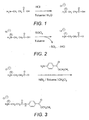
- the first step in this process is the conversion of an ⁇ -aminocarboxylic acid such as ⁇ -alanine to its hydrochloride.
- This is shown in Scheme 1 below ( Figure 1) with respect to ⁇ -alanine being converted into ⁇ -alanine hydrochloride, but, as detailed below, the steps can be performed with other ⁇ -carboxylic acids.
- Step 1 is preferably performed in toluene with a small proportion of water.
- the hydrochloric acid is typically present in molar excess (i.e. typically at least about 150% with respect to the amount of ⁇ -alanine). Water is preferably present at about 0.5% (v/v).
- the reaction preferably runs in a slurry.
- the ⁇ -alanine is preferably milled or micronized.
- the reaction can be run at room temperature or at an elevated temperature of 30-35° C.
- the reaction is preferably run for at least about 8 hours; it can be run for as long as 24 hours.
- the ⁇ -aminocarboxylic acid ⁇ -alanine is 3-aminoprapionic acid. Changing the ⁇ -aminocarboxylic acid used changes the length of the linker in the final product. For example, if 4-aminobutanoic acid is used instead of 3-aminopropionic acid, the length of the linker increases by 1 carbon atom.
- the second step is the conversion of the hydrochloride of ⁇ -aminocarboxylic acid such as ⁇ -alanine to its acyl chloride hydrochloride.
- This step is preferably performed in toluene.
- a molar excess of thionyl chloride is used of at least 200%.
- the thionyl chloride is present at about 600% molar ratio.
- the reaction is typically performed at a temperature of about 40-50° C, preferably at about 45-50° C, most preferably at about 50° C.
- the reaction time used for this step varies to some extent with the temperature, but is at least 8 hours and can be as long as 39 hours.
- a preferred set of reaction conditions is 50° C for 3 8 hours. Unreacted thionyl chloride and toluene are then removed by distillation at reduced pressure, such as at 50°C, 100 mbar.
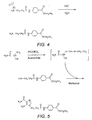
- the next step is the reaction of the acyl chloride hydrochloride formed in Scheme 2 with a lower alkyl ester of aminobenzoic acid.
- the lower alkyl ester is typically an ethyl ester.
- the term "lower alkyl” refers to a branched or unbranched alkyl group of from 1 to 7 carbon atoms.
- the alkyl group has the structure CH 3 -(CH 2 ) z , where z is an integer from 0 to 6.
- a particularly preferred lower alkyl group for the ester is ethyl and therefore a particularly preferred ester is ethyl p-aminobenzoate. This is related to the physiologically active compound p-aminobenzoic acid.
- other benzoic acid derivatives can be used at this stage.
- the aromatic ring can have other substituents.
- the reaction is performed in the presence of triethylamine at a molar ratio of about 1: 1 with the ester.
- the reaction is preferably performed in dichloromethane.
- a solution containing the ester and triethylamine in dichloromethane is slowly added to a suspension of the acyl chloride in toluene from step 2.
- addition of the ester and triethylamine to the acyl chloride occurs slowly at a temperature of about 45-55° C.
- the reaction is then allowed to proceed for about 16-20 hours at a temperature of about 40° C.
- the product is isolated by filtration at 40°C, washed three times with dichloromethane and dried under vacuum at 40° C overnight.
- other purification procedures such as extraction, can be used.
- the use of the direct filtration step is preferred.
- the next step is the neutralization of the quaternary ammonium formed by the preceding steps with a base to yield the ester with an uncharged amino group.
- This is shown in Scheme 4 ( Figure 4).
- this reaction is performed in water:ethanol (9:1; w/w).
- the neutralization reaction is typically performed at pH 10.0 by addition of an aqueous base.
- the aqueous base is typically used in a molar excess, preferably about 1.6 moles per mole of ester hydrochloride.
- the base used is sodium hydroxide, but another alkali metal hydroxide such as potassium hydroxide or lithium hydroxide or an alkaline earth hydroxide such as calcium hydroxide or barium hydroxide can be used.
- an organic alkoxide such as sodium ethoxide, potassium ethoxide, sodium methoxide, or potassium methoxide can be used. However, it is generally preferred to use sodium hydroxide.
- the crystallization process starts spontaneously at pH 9.7 and a thick and hardly stirrable slurry is obtained.
- the slurry is diluted with a mixture of water/ethanol (90:10, w/w) and the suspension is stirred.
- the ethyl ester is isolated by filtration, washed with water:ethanol, and dried under vacuum.
- the neutralization can be performed by crystallization of the free amino form from an alkaline aqueous solution after the solution of the ester hydrochloride in water (pH 2.0) and adjustment of pH with a base as discussed above, preferably sodium hydroxide, to a pH of 12.3.
- the final product contains some 4-aminobenzoic acid ethyl ester (i.e., cleavage of the amide link) but the formation of this impurity can be reduced by using an ethanol/water mixture (5% w/w) in the neutralization step.
- the ester containing the reactive amino group can be supplied in protected form, such as protected with a benzyloxycarbonyl (Z) group, deprotected, and then added in methanol solution.
- protected form such as protected with a benzyloxycarbonyl (Z) group
- Z benzyloxycarbonyl
- other protecting groups can be used.
- the next step is the formation of an imidoester from aminocyanacetamide and the reaction of the imidoester with the ester containing the reactive amino group.
- Aminocyanacetamide is commercially available or can be synthesized by a number of routes. One route for the synthesis of aminocyanacetamide is described in EPO Patent Publication No. 0924195, by Müller et aL (EPROVA Aktiengesellschaft), published December 7, 1998.
- the imidoester is typically formed in situ and is not separately isolated. Typically, the imidoester formation occurs in acetonitrile and a slight molar excess of triethyl orthoformate is used. This step is referred to as a cyclocondensation.
- a preferable molar ratio of triethyl orthoformate to aminocyanacetamide is about 1.08.
- the concentration of aminocyanacetamide in the acetonitrile is preferably about 1 gram of aminocyanacetamide per 13 ml of acetonitrile, although the reaction can be performed at higher or lower concentrations of aminocyanacetamide in acetonitrile.
- the reaction can be performed at a temperature from about 35°C to about 65°C; preferably at about 40° C to about 54° C. However, it is generally preferred to begin the reaction at a temperature in the higher portion of this range, from about 50° C to about 54° C.
- the reaction of the imidoester with the ester containing the reactive amino group can be performed in tetrahydrofuran under reflux or in other solvents such as methanol, ethanol, or ethyl acetate: However, to avoid the necessity of isolation of the unstable imidoester, it is generally preferred to perform this step in acetonitrile, as the imidoester can be formed and is relatively stable in this solvent.
- the result of this step is the formation of the derivative of 5-aminoimidazole-4-carboxamide ("AICA") substituted at the 1-position with the hydrocarbyl moiety linked through the amide group to the physiologically active moiety including therein the esterified benzoyl group. It is also preferred to dose the compound having the reactive amino group to the imidoester. This reaction is outlined below in Scheme 5 ( Figure 5). It is strongly preferred to perform the reaction at at least 35° C to prevent the formation of undesired contaminants and side reactions.
- the ester containing the reactive amino group is used at about 0.9 equivalents per mole of aminocyanacetamide.
- the product is typically isolated by suction filtration or centrifugation. It is preferred to wash the product thoroughly with methanol until the effluent is colorless.
- the product is then dried at 45-50°C in vacuo. It is preferred to use a drying temperature of no higher than about 50°C to prevent the generation of HCN.
- the next step in the reaction is the cyclization of the derivative of 5-aminoimidazole-4-carboxamide with triethyl orthoformate to produce the six-membered ring of the purine moiety.
- the cyclization reaction is performed in an organic acid. This reaction is shown in Scheme 6 ( Figure 6).
- the organic acid is formic acid or acetic acid.
- the organic acid is acetic acid.
- the cyclization reaction is preferably performed at boiling temperature.
- triethyl orthoformate is preferably present at about 3 moles per mole of derivative of 5-aminoimidazole-4-carboxamide.
- the reaction goes substantially to completion after about 2 hours and goes to completion at about 4.5 hours.
- a preferred temperature is about 97-106° C.
- the ratio of acetic acid solvent to derivative of 5-aminoimidazole-4-carboxamide typically varies from about 3 ml acetic acid per gram of derivative to about 7.2 ml of acetic acid per gram of derivative. In acetic acid, the desired product is virtually insoluble and the contaminants are soluble.
- reaction can be performed in a mixture of acetic acid and formic acid.
- the reaction product is isolated by suction filtration or centrifugation and washed thoroughly with acetic acid and then with ethanol.
- the final step in this route is the hydrolysis of the ester moiety bound to the benzoyl group.
- Hydrolysis is preferably performed in an aqueous solution. It is preferred to use a hydroxide of an alkali metal such potassium hydroxide or sodium hydroxide; potassium hydroxide is particularly preferred. Typically, a slight molar excess of base is used. This can range from about 1.037 to about 1.153 equivalents of base.
- the reaction can be performed overnight at room temperature.
- the product to be hydrolyzed dissolves exothermically, so that the temperature of the reaction begins at about 31° C.
- the preparation is neutralized with an aqueous strong acid.
- a particularly preferred strong acid is HCl.
- a preferred concentration of HCl is between about 1.0 N and 37% aqueous HCl.
- the optimal amount of HCl is approximately an equivalent amount based on the amount of KOH when the base is KOH and the acid is HCl.
- the hydrolysis can be performed with an alkali metal hydroxide without subsequent neutralization with an acid.
- the crude product can be treated in an alkaline aqueous ethanolic solution to obtain a crystal structure with maximum solubility.
- the hydrolysis is performed at a temperature of at least about 25°C but not higher than about 50°C.
- hydrolysis is carried out by adding the ester to be hydrolyzed to the aqueous solution of the alkali metal hydroxide over a period of from about 15 minutes but not longer than about 30 minutes.
- the 9-substituted hypoxanthine derivative can be synthesized by an alternative route in which the ester moiety of the benzoyl ester is hydrolyzed prior to reaction with the imidoester.
- the amino group of the compound that includes the reactive amino group on the hydrocarbyl moiety is initially blocked or protected with a protecting group such as benzyloxycarbonyl (Z) or other protecting groups of the types generally used to protect amino termini in peptide chemistry, such as t-butyloxycarbonyl (Boc), the biphenylyl analogue ofBoc (Bpoc), or 9-fluorenylmethyloxycarbonyl (Fmoc).
- a protecting group such as benzyloxycarbonyl (Z) or other protecting groups of the types generally used to protect amino termini in peptide chemistry, such as t-butyloxycarbonyl (Boc), the biphenylyl analogue ofBoc (Bpoc), or 9-fluoreny
- the benzyloxycarbonyl derivative of ⁇ -alanine is reacted with the ethyl ester of p-aminobenzoic acid to form benzyloxycarbonyl- ⁇ -alanyl aminobenzoic acid ethyl ester.
- this reaction is performed in dichloromethane in the presence of triethylamine and ethyl chloroformate.
- a preferred molar ratio of the benzyloxycarbonyl derivative of ⁇ -alanine to the ethyl ester of p-aminobenzoic acid is about 1:1.
- the second step is the hydrolysis of the ester group of benzyloxycarbonyl- ⁇ -alanyl aminobenzoic acid ethyl ester to produce benzyloxycarbonyl- ⁇ -alanyl aminobenzoic acid.
- One method of performing this hydrolysis step is basic hydrolysis, such as in sodium hydroxide at 40°-60° C for about 10 hours in a solution or a slurry.
- the resulting hydrolyzed product is then acidified under relatively mild conditions, such as at about pH 3.5 to about 4.0, preferably about pH 3.6, to precipitate the product.
- This hydrolysis is the entry point for the carboxylic acid branch of the pathway.
- the third step is the deblocking or removal of the benzyloxycarbonyl group by hydrogenolysis.
- This is preferably performed in tetrahydrofuran in the presence of a palladium catalyst slurried in methanol or ethanol; preferably the palladium catalyst is slurried in methanol.
- the catalytic hydrogenolysis can be performed at room temperature.
- the fourth step is the condensation of the deblocked intermediate with the imidoester to form a 1-substituted-5-aminoimidazole-4-carboxamide as described above. This can be performed under conditions substantially similar to those described above for the corresponding reaction forming the 1-substituted aminoimidazole-4-carboxamide in Route I, above.
- the fifth and final step in this route is the condensation of the 1-substituted-5-aminoimidazole-4-carboxamide with triethyl orthoformate to produce the six-membered ring of the purine moiety.
- This step is performed substantially as in Route I, above.
- This step directly produces the 9-substituted hypoxanthine derivative, as no final hydrolysis step is required.
- the first and second routes are interconnected by the possible hydrolysis of the ester group of intermediates of the first route to convert the intermediates into intermediates that are in the second route.
- the ⁇ -alanyl-p-aminobenzoic acid ethyl ester that is the intermediate that reacts with the imidoester in the first route can be hydrolyzed to ⁇ -alanyl p-aminobenzoic acid by treatment with 0.1 N NaOH in methanol such as at 40°C for 30 minutes.
- the resulting ⁇ -alanyl p-aminobenzoic acid can then be reacted with the imidoester in the second route.
- the 1-substituted 5-aminoimidazole-4-carboxamide intermediate containing the esterified benzoyl moiety of the first route that can undergo condensation with triethyl orthoformate to complete the six-membered purine ring can be hydrolyzed to the 1-substituted 5-aminoimidazole-4-carboxamide intermediate of the second route.
- This hydrolysis can be performed by a basic hydrolysis step, such as in 0.5 N NaOH at a temperature of 70-80°C for 10 hours. Other basic hydrolysis conditions can alternatively be used.
- the resulting intermediates can undergo the remaining reactions of the second branch as described above.
- Micronized fine powder of ⁇ -alanine (1.000 kg, 11.22 mol) was suspended in toluene (9.78 kg) containing water (0.056 kg). The white suspension was treated with HCl gas under vigorous stirring at room temperature (slightly exothermic reaction). After 8 h the salification reaction with the HCl gas (total amount used 654 g) was almost complete (97.4% chloride).
- the ester hydrochloride from Example 3 (2.000 kg, 4.58 mol) was dissolved in water (18.0 kg) and ethanol (2.0 kg).
- the acidic pH of the solution (pH 0.54) was adjusted to pH 10.0 by addition of sodium hydroxide (30% NaOH, 1059.2 g, 7.94 mol).
- the crystallization process starts spontaneously at pH 9.7 and a thick and hardly stirrable slurry was obtained.
- AIP,ester The product from the cyclocondensation of the imidoester and ⁇ -alanyl p-aminobenzoic acid ethyl ester ("AIP,ester") was cyclized with triethyl orthoformate in acetic acid.
- the AIP-ester 200 g; 0.58 mol was dissolved in glacial acetic acid (1440 ml) after the addition of triethyl orthoformate (258 g; 1.74 mol), the yellow solution was kept at boiling temperature for 4.5 h.
- the reaction product was isolated by filtration. The yield was 218 g.
- the cyclized ester from Example 6 (3.5 g) was slurried in aqueous KOH (40 ml water, 1.96 g; 0.03 mol KOH 85%). The solid dissolved exothermically (up to 31° C). The solution was left overnight at room temperature and afterwards neutralized until the pH reached 6.7 (21 ml 1.0 N HCl; 0.02 mol). Below pH 7.9 a very fine precipitate started to be formed which was isolated, washed with water and ethanol and dried at 40° C under vacuum. The yield was 2.40 g.
- the synthetic methods of the present invention provide an efficient and economical method of synthesizing 9-substituted hypoxanthine derivatives, particularly N-4-carboxyphenyl-3-(6-oxohydropurin-9-yl) propanamide.
- This method uses available starting materials, requires a minimum number of steps, and provides a product of high purity with a minimum of purification. The procedure avoids side reactions that complicate isolation and purification of the final product.
Landscapes
- Organic Chemistry (AREA)
- Chemical & Material Sciences (AREA)
- Health & Medical Sciences (AREA)
- Neurosurgery (AREA)
- Engineering & Computer Science (AREA)
- Bioinformatics & Cheminformatics (AREA)
- Biomedical Technology (AREA)
- Neurology (AREA)
- Medicinal Chemistry (AREA)
- General Health & Medical Sciences (AREA)
- Chemical Kinetics & Catalysis (AREA)
- General Chemical & Material Sciences (AREA)
- Hospice & Palliative Care (AREA)
- Nuclear Medicine, Radiotherapy & Molecular Imaging (AREA)
- Pharmacology & Pharmacy (AREA)
- Life Sciences & Earth Sciences (AREA)
- Animal Behavior & Ethology (AREA)
- Psychiatry (AREA)
- Public Health (AREA)
- Veterinary Medicine (AREA)
- Pharmaceuticals Containing Other Organic And Inorganic Compounds (AREA)
- Organic Low-Molecular-Weight Compounds And Preparation Thereof (AREA)
- Electrochromic Elements, Electrophoresis, Or Variable Reflection Or Absorption Elements (AREA)
- Instrument Panels (AREA)
- Saccharide Compounds (AREA)
Claims (12)
- Verfahren zur Synthetisierung eines 9-substituierten Hypoxanthin-Derivats, wobei das Derivat einen Hypoxanthin-Bestandteil umfasst, der an der Stickstoff-9-Position mit einem Hydrocarbyl-Bestandteil substituiert ist, der die Struktur (CH2)n besitzt, wobei n eine ganze Zahl von 1 bis 6 ist, verknüpft durch eine Amidgruppe mit einem physiologisch aktiven Bestandteil, bei dem es sich um eine p-Aminobenzoesäure handelt, wobei das Verfahren folgende Schritte umfasst:a) zur Reaktion bringen von Aminocyanacetamid mit Triethylorthoformat zur Bildung eines lmidoester-Derivats von Aminocyanacetamidb) bilden eine Verbindung, die eine reaktive Aminogruppe an einem Hydrocarbyl-Bestandteil besitzt, der die Struktur (CH2)n besitzt, wobei n eine ganze Zahl von 1 bis 6 ist, wobei der Hydrocarbyl-Bestandteil über eine Amidgruppe mit einem physiologisch aktiven Bestandteil verknüpft ist, bei dem es sich um p-Aminobenzoesäure oder ein verestertes Derivat hiervon einschließlich einer veresterten Benzoylgruppe handelt,c) zur Reaktion bringen des Imidoesters mit der Verbindung, welche die reaktive Aminogruppe an dem Hydrocarbyl-Bestandteil aufweist, zur Bildung eines Derivats von 5-Aminoimidazol-4-Carboxamid, das an der 1-Position mit dem Hydrocarbyl-Bestandteil substituiert ist, verknüpft über eine Amidgruppe mit dem physiologisch aktiven Bestandteil einschließlich einer optional veresterten Benzoylgruppe,d) Erzeugen des 6-gliedrigen heterozyklischen Rings des Purin-Bestandteils des Hypoxanthins durch zur Reaktion bringen des Derivats von 5-Aminoimidazol-4-Carboxamid, das im Schritt (c) gebildet wurde, mit Triethylorthoformat zur Bildung einer 9-substituierten Hypoxanthin-Verbindung, die an der 9-Position mit dem Hydrocarbyl-Bestandteil substituiert ist, verknüpft über eine Amidgruppe mit dem physiologisch aktiven Bestandteil, einschließlich einer optional veresterten Benzoylgruppe, unde) Hydrolysieren des Esters der optional veresterten Benzoylgruppe, wenn diese vorhanden ist.
- Verfahren nach Anspruch 1, wobei n gleich 2 ist.
- Verfahren nach Anspruch 1 oder 2, wobei der Hydrocarbyl-Bestandteil über eine Amidgruppe mit einem veresterten Derivat des physiologisch aktiveren Bestandteils verknüpft ist, einschließlich einer veresterten Benzoylgruppe.
- Verfahren nach einem der vorhergehenden Ansprüche, wobei die veresterte Benzoylgruppe mit einer linearen oder verzweigten Alkylgruppe verestert ist, die 1 bis 7 Kohlenstoffatome aufweist.
- Verfahren nach Anspruch 4, wobei die veresterte Benzoylgruppe mit einer Alkylgruppe mit der Struktur CH3-(CH2)z verestert ist, wobei z eine ganze Zahl von 0 bis 6 ist.
- Verfahren nach Anspruch 5, wobei z gleich 1 ist.
- Verfahren nach Anspruch 1, wobei der Schritt (d) folgende Schritte umfasst:(i) Aktivierung einer ω-Aminocarbonsäure mit Thionylchlorid, und(ii) zur Reaktion bringen der aktivierten ω-Aminocarbonsäure mit einem p-Aminobenzoesäure-Ester in Anwesenheit eines tertiären Amins, das aus der Gruppe ausgewählt ist, die Triethylamin und Ethyldiisopropylamin umfasst, wobei der p-Aminobenzoesäure-Ester mit einer Alkylgruppe mit 1 bis 6 Kohlenstoffatomen verestert ist.
- Verfahren nach Anspruch 7, wobei die Alkylgruppe Ethyl ist.
- Verfahren nach Anspruch 7, wobei die ω-Aminocarbonsäure 3-Aminopropionsäure ist.
- Verfahren nach Anspruch 9, wobei die Alkylgruppe Ethyl ist.
- Verfahren nach Anspruch 7, wobei das tertiäre Amin Triethylamin ist.
- Verfahren zur Synthetisierung des 9-substituierten Hypoxanthin-Derivats N-4-Carboxyphenyl-3-(6-oxohydropurin-9-yl)propanamid, das folgende Schritte umfasst:a) Bilden von Ethyl-4-(β-alanyl)aminobenzoat durch ein Verfahren, das folgende Schritte umfasst:i) Aktivieren von 3-Aminopropionsäure mit Thionylchlorid undii) Zur Reaktion bringen der aktivierten 3-Aminopropionsäure mit Ethyl-p-Aminobenzoat in Anwesenheit von Triethylamin in einem Lösemittel, das Toluen und Chloroform umfasst,b) zur Reaktion bringen von Aminocyanacetamid mit Triethylorthoformat in Anwesenheit von Acetonitril zur Bildung eines Imidoester-Derivates von Aminocyanacetamid,c) zur Reaktion bringen des Imidoesters mit Ethyl-4-(β-alanyl(aminobenzoat) in Methanol,d) Bilden des 6-gliedrigen Rings des Purinbestandteils von Hypoxanthin durch zur Reaktion bringen des in Schritt (c) gebildeten Esters mit Triethylorthoformat in Essigsäure unde) Hydrolysieren der Estergruppe der im Schritt (d) geformten Verbindung, um N-4-Carboxyphenyl-3-(6-oxohydropurin-9-yl)propanamid zu ergeben.
Applications Claiming Priority (3)
| Application Number | Priority Date | Filing Date | Title |
|---|---|---|---|
| US602048 | 2000-06-23 | ||
| US09/602,048 US6849735B1 (en) | 2000-06-23 | 2000-06-23 | Methods of synthesis for 9-substituted hypoxanthine derivatives |
| PCT/US2001/040908 WO2002000659A2 (en) | 2000-06-23 | 2001-06-08 | Methods of synthesis for 9-substituted hypoxanthine derivatives |
Publications (2)
| Publication Number | Publication Date |
|---|---|
| EP1294722A2 EP1294722A2 (de) | 2003-03-26 |
| EP1294722B1 true EP1294722B1 (de) | 2007-08-01 |
Family
ID=24409770
Family Applications (1)
| Application Number | Title | Priority Date | Filing Date |
|---|---|---|---|
| EP01944675A Expired - Lifetime EP1294722B1 (de) | 2000-06-23 | 2001-06-08 | Methoden zur darstellung von in 9-stellung substituierten hypoxanthinderivaten |
Country Status (9)
| Country | Link |
|---|---|
| US (2) | US6849735B1 (de) |
| EP (1) | EP1294722B1 (de) |
| CN (1) | CN1216046C (de) |
| AT (1) | ATE368663T1 (de) |
| AU (2) | AU6706001A (de) |
| CA (1) | CA2415275C (de) |
| DE (1) | DE60129699T2 (de) |
| ES (1) | ES2291324T3 (de) |
| WO (1) | WO2002000659A2 (de) |
Families Citing this family (4)
| Publication number | Priority date | Publication date | Assignee | Title |
|---|---|---|---|---|
| US6849735B1 (en) * | 2000-06-23 | 2005-02-01 | Merck Eprova Ag | Methods of synthesis for 9-substituted hypoxanthine derivatives |
| CN100374441C (zh) | 2003-06-06 | 2008-03-12 | 天津倍方科技发展有限公司 | 二氢吡咯[2,3-d]嘧啶-4-酮衍生物,其制备方法及其制药用途 |
| JP2005306782A (ja) * | 2004-04-22 | 2005-11-04 | Hamari Chemicals Ltd | L−カルノシンの新規合成方法 |
| CN101952455A (zh) * | 2007-12-17 | 2011-01-19 | 卢克斯创新有限公司 | 用于维护流体输导和容纳系统的组合物和方法 |
Family Cites Families (39)
| Publication number | Priority date | Publication date | Assignee | Title |
|---|---|---|---|---|
| US3300380A (en) | 1963-12-26 | 1967-01-24 | Upjohn Co | Diminishing toxicity of antiviral nu6-(hydroxyalkyl) adenines with 4-hydroxypyrazolo(3, 4-d) pyrimidine |
| US3321369A (en) | 1965-05-26 | 1967-05-23 | Abbott Lab | Method of enhancing learning rate and retention level in warm blooded animals |
| US3438968A (en) | 1966-06-23 | 1969-04-15 | Int Chem & Nuclear Corp | Substituted ammonium basic addition salts of ribonucleic acid |
| BE759011A (fr) | 1969-11-17 | 1971-05-17 | Wellcome Found | Aminopurines |
| DE2554453A1 (de) | 1974-12-18 | 1976-06-24 | Experimentales Et Cliniques De | Medikament zur glykaemieregulierung |
| GB1530912A (en) | 1975-02-13 | 1978-11-01 | Wellcome Found | Compositions containing 9-(2-hydroxy-3-alkyl)-adenines |
| US4138562A (en) | 1977-02-09 | 1979-02-06 | The Regents Of The University Of Minnesota | Adenosine deaminase resistant antiviral purine nucleosides and method of preparation |
| US4221909A (en) | 1978-09-15 | 1980-09-09 | Sloan-Kettering Institute For Cancer Research | P-Acetamidobenzoic acid salts of 9-(hydroxyalkyl) purines |
| US4221910A (en) | 1978-09-15 | 1980-09-09 | Newport Pharmaceuticals International, Inc. | 9-(Hydroxy alkyl)purines |
| US4221794A (en) | 1979-06-21 | 1980-09-09 | Newport Pharmaceuticals International, Inc. | Method of imparting immunomodulating and antiviral activity |
| US4340726A (en) | 1980-03-14 | 1982-07-20 | Newport Pharmaceuticals International, Inc. | Esters |
| US4347360A (en) | 1980-09-16 | 1982-08-31 | Ens Bio Logicals Inc. | Ring open nucleoside analogues |
| US4451478A (en) | 1982-03-12 | 1984-05-29 | Newport Pharmaceuticals International, Inc. | Imidazole compounds |
| US4643992A (en) | 1982-11-09 | 1987-02-17 | Scripps Clinic And Research Foundation | Modulation of animal cellular responses with compositions containing 8-substituted guanine derivatives |
| US5093318A (en) | 1983-11-01 | 1992-03-03 | Scripps Clinic And Research Foundation | Immunostimulating guanosine derivatives and their pharmaceutical compositions |
| US4952693A (en) | 1984-10-12 | 1990-08-28 | Warner-Lambert Company | Oxazolo-pyrimidine derivatives |
| US4983494A (en) * | 1985-10-16 | 1991-01-08 | Fuji Photo Film Co., Ltd. | Image forming process including heating step |
| US5495010A (en) | 1987-04-17 | 1996-02-27 | The United States Of America As Represented By The Department Of Health And Human Services | Acid stable purine dideoxynucleosides |
| US4914028A (en) * | 1988-02-10 | 1990-04-03 | Eli Lilly And Company | Method of preparing beta-2',2'-difluoronucleosides |
| EP0338169B1 (de) | 1988-04-19 | 1996-07-24 | Institut Pasteur | Verfahren zur Gewinnung von Schutzantigenen gegen Bordetella-Infektionen und toxische Prozesse |
| IT1227389B (it) | 1988-07-07 | 1991-04-08 | Mini Ricerca Scient Tecnolog | Dispersioni acquose di polimeri uretano-acrilici e loro impiego come vernici. |
| US5256677A (en) | 1989-05-23 | 1993-10-26 | Abbott Laboratories | Retroviral protease inhibiting compounds |
| US5187162A (en) | 1989-09-15 | 1993-02-16 | Gensia Pharmaceuticals | Methods of treating neurodegenerative conditions |
| EP0433233B1 (de) * | 1989-12-14 | 1995-01-25 | Ciba-Geigy Ag | Heterocyclische Verbindungen |
| US5026687A (en) | 1990-01-03 | 1991-06-25 | The United States Of America As Represented By The Department Of Health And Human Services | Treatment of human retroviral infections with 2',3'-dideoxyinosine alone and in combination with other antiviral compounds |
| US5091432A (en) | 1990-03-28 | 1992-02-25 | Glasky Alvin J | 9-substituted hypoxanthine bi-functional compounds and their neuroimmunological methods of use |
| US5192749A (en) * | 1990-05-21 | 1993-03-09 | Syntex (U.S.A.) Inc. | 4'-substituted nucleosides |
| US5237051A (en) | 1990-12-06 | 1993-08-17 | Vanderbilt University | Purified enterotoxin receptor protein |
| US5447936A (en) | 1993-12-22 | 1995-09-05 | Bionumerik Pharmaceuticals, Inc. | Lactone stable formulation of 10-hydroxy 7-ethyl camptothecin and methods for uses thereof |
| US5801184A (en) | 1994-07-25 | 1998-09-01 | Glasky; Alvin J. | Carbon monoxide dependent guanylyl cyclase modifiers and methods of use |
| US5795756A (en) | 1995-12-11 | 1998-08-18 | Johnson; Roger A. | Method and compounds for the inhibition of adenylyl cyclase |
| US5948771A (en) | 1996-01-31 | 1999-09-07 | The Trustees Of Columbia University In The City Of New York | Method for treating heart failure using tetrapyrroles and metallotetrapyrroles |
| US5801159A (en) | 1996-02-23 | 1998-09-01 | Galileo Laboratories, Inc. | Method and composition for inhibiting cellular irreversible changes due to stress |
| US5861532A (en) * | 1997-03-04 | 1999-01-19 | Chiron Corporation | Solid-phase synthesis of N-alkyl amides |
| CH692506A5 (de) | 1997-12-18 | 2002-07-15 | Eprova Ag | Verfahren zur Herstellung von Aminocyanacetamid. |
| US6303617B1 (en) * | 1998-05-04 | 2001-10-16 | Neotherapeutics, Inc. | Serotonin-like 9-substituted hypoxanthine and methods of use |
| AU3785799A (en) | 1998-05-04 | 1999-11-23 | Neotherapeutics, Inc. | Method for treating migraine in mammals |
| WO1999057119A1 (en) | 1998-05-04 | 1999-11-11 | Neotherapeutics, Inc. | Novel dopamine-like 9-substituted hypoxanthine and methods of use |
| US6849735B1 (en) * | 2000-06-23 | 2005-02-01 | Merck Eprova Ag | Methods of synthesis for 9-substituted hypoxanthine derivatives |
-
2000
- 2000-06-23 US US09/602,048 patent/US6849735B1/en not_active Expired - Fee Related
-
2001
- 2001-06-08 WO PCT/US2001/040908 patent/WO2002000659A2/en not_active Ceased
- 2001-06-08 AT AT01944675T patent/ATE368663T1/de not_active IP Right Cessation
- 2001-06-08 CA CA2415275A patent/CA2415275C/en not_active Expired - Fee Related
- 2001-06-08 AU AU6706001A patent/AU6706001A/xx active Pending
- 2001-06-08 CN CN018144330A patent/CN1216046C/zh not_active Expired - Fee Related
- 2001-06-08 EP EP01944675A patent/EP1294722B1/de not_active Expired - Lifetime
- 2001-06-08 AU AU2001267060A patent/AU2001267060B2/en not_active Ceased
- 2001-06-08 DE DE60129699T patent/DE60129699T2/de not_active Expired - Lifetime
- 2001-06-08 ES ES01944675T patent/ES2291324T3/es not_active Expired - Lifetime
-
2004
- 2004-05-04 US US10/838,986 patent/US20050014943A1/en not_active Abandoned
Also Published As
| Publication number | Publication date |
|---|---|
| CA2415275A1 (en) | 2002-01-03 |
| EP1294722A2 (de) | 2003-03-26 |
| WO2002000659A2 (en) | 2002-01-03 |
| CN1216046C (zh) | 2005-08-24 |
| US20050014943A1 (en) | 2005-01-20 |
| AU2001267060B2 (en) | 2006-03-09 |
| ES2291324T3 (es) | 2008-03-01 |
| CN1449387A (zh) | 2003-10-15 |
| AU6706001A (en) | 2002-01-08 |
| US6849735B1 (en) | 2005-02-01 |
| ATE368663T1 (de) | 2007-08-15 |
| DE60129699D1 (de) | 2007-09-13 |
| WO2002000659A3 (en) | 2002-03-21 |
| CA2415275C (en) | 2011-01-04 |
| DE60129699T2 (de) | 2008-04-30 |
Similar Documents
| Publication | Publication Date | Title |
|---|---|---|
| Snider et al. | Biomimetic synthesis of (.+-.)-crambines A, B, C1, and C2. Revision of the structure of crambines B and C1 | |
| CA2154721C (en) | 2-(2-amino-1,6-dihydro-6-oxo-purin-9-yl)methoxy-1,3-propanediol derivative | |
| EP0244018B1 (de) | Amino-thiazol- und -oxazolderivate | |
| JP6270742B2 (ja) | 架橋型核酸誘導体の製造方法 | |
| KR20010032686A (ko) | 2-아릴-8-옥소디히드로푸린 유도체, 그의 제조방법, 이를함유하는 의약조성물, 및 이 화합물의 중간체 | |
| CA2415683C (en) | Indoloquinazolinones | |
| US5543414A (en) | Achiral amino acid acyl esters of ganciclovir and its derivatives | |
| US6297226B1 (en) | Synthesis and methods of use of 9-substituted guanine derivatives | |
| EP1383742B1 (de) | Synthese und verfahren zu deren verwendung von tetrahydroindolon analogen und derivaten | |
| EP1294722B1 (de) | Methoden zur darstellung von in 9-stellung substituierten hypoxanthinderivaten | |
| AU2001267060A1 (en) | Methods of synthesis for 9-substituted hypoxanthine derivatives | |
| US7456294B2 (en) | Hairpin polyamide | |
| JP4531250B2 (ja) | クロロプリン中間体の合成法 | |
| JP3376479B2 (ja) | 縮合ピリミジン誘導体、その製造法および用途 | |
| MXPA02004935A (es) | Uso de derivados de hipoxantina 9-sustituida para estimular la regeneracion de tejido nervioso. | |
| HK1056872B (en) | Indoloquinazolinones | |
| HK1012339B (en) | 2-(2-amino-1, 6-dihydro-6-oxo-purin-9-yl)methoxy-1, 3-propanediol derivatives |
Legal Events
| Date | Code | Title | Description |
|---|---|---|---|
| PUAI | Public reference made under article 153(3) epc to a published international application that has entered the european phase |
Free format text: ORIGINAL CODE: 0009012 |
|
| 17P | Request for examination filed |
Effective date: 20030116 |
|
| AK | Designated contracting states |
Kind code of ref document: A2 Designated state(s): AT BE CH CY DE DK ES FI FR GB GR IE IT LI LU MC NL PT SE TR |
|
| AX | Request for extension of the european patent |
Extension state: AL LT LV MK RO SI |
|
| 17Q | First examination report despatched |
Effective date: 20040921 |
|
| RAP1 | Party data changed (applicant data changed or rights of an application transferred) |
Owner name: MERCK EPROVA AG |
|
| GRAP | Despatch of communication of intention to grant a patent |
Free format text: ORIGINAL CODE: EPIDOSNIGR1 |
|
| GRAS | Grant fee paid |
Free format text: ORIGINAL CODE: EPIDOSNIGR3 |
|
| GRAA | (expected) grant |
Free format text: ORIGINAL CODE: 0009210 |
|
| AK | Designated contracting states |
Kind code of ref document: B1 Designated state(s): AT BE CH CY DE DK ES FI FR GB GR IE IT LI LU MC NL PT SE TR |
|
| REG | Reference to a national code |
Ref country code: GB Ref legal event code: FG4D |
|
| REG | Reference to a national code |
Ref country code: CH Ref legal event code: EP |
|
| REG | Reference to a national code |
Ref country code: IE Ref legal event code: FG4D |
|
| REF | Corresponds to: |
Ref document number: 60129699 Country of ref document: DE Date of ref document: 20070913 Kind code of ref document: P |
|
| REG | Reference to a national code |
Ref country code: CH Ref legal event code: NV Representative=s name: KIRKER & CIE S.A. |
|
| ET | Fr: translation filed | ||
| PG25 | Lapsed in a contracting state [announced via postgrant information from national office to epo] |
Ref country code: FI Free format text: LAPSE BECAUSE OF FAILURE TO SUBMIT A TRANSLATION OF THE DESCRIPTION OR TO PAY THE FEE WITHIN THE PRESCRIBED TIME-LIMIT Effective date: 20070801 Ref country code: NL Free format text: LAPSE BECAUSE OF FAILURE TO SUBMIT A TRANSLATION OF THE DESCRIPTION OR TO PAY THE FEE WITHIN THE PRESCRIBED TIME-LIMIT Effective date: 20070801 |
|
| NLV1 | Nl: lapsed or annulled due to failure to fulfill the requirements of art. 29p and 29m of the patents act | ||
| PG25 | Lapsed in a contracting state [announced via postgrant information from national office to epo] |
Ref country code: AT Free format text: LAPSE BECAUSE OF FAILURE TO SUBMIT A TRANSLATION OF THE DESCRIPTION OR TO PAY THE FEE WITHIN THE PRESCRIBED TIME-LIMIT Effective date: 20070801 |
|
| REG | Reference to a national code |
Ref country code: ES Ref legal event code: FG2A Ref document number: 2291324 Country of ref document: ES Kind code of ref document: T3 |
|
| PG25 | Lapsed in a contracting state [announced via postgrant information from national office to epo] |
Ref country code: BE Free format text: LAPSE BECAUSE OF FAILURE TO SUBMIT A TRANSLATION OF THE DESCRIPTION OR TO PAY THE FEE WITHIN THE PRESCRIBED TIME-LIMIT Effective date: 20070801 |
|
| PG25 | Lapsed in a contracting state [announced via postgrant information from national office to epo] |
Ref country code: DK Free format text: LAPSE BECAUSE OF FAILURE TO SUBMIT A TRANSLATION OF THE DESCRIPTION OR TO PAY THE FEE WITHIN THE PRESCRIBED TIME-LIMIT Effective date: 20070801 Ref country code: GR Free format text: LAPSE BECAUSE OF FAILURE TO SUBMIT A TRANSLATION OF THE DESCRIPTION OR TO PAY THE FEE WITHIN THE PRESCRIBED TIME-LIMIT Effective date: 20071102 |
|
| PG25 | Lapsed in a contracting state [announced via postgrant information from national office to epo] |
Ref country code: PT Free format text: LAPSE BECAUSE OF FAILURE TO SUBMIT A TRANSLATION OF THE DESCRIPTION OR TO PAY THE FEE WITHIN THE PRESCRIBED TIME-LIMIT Effective date: 20080102 |
|
| PLBE | No opposition filed within time limit |
Free format text: ORIGINAL CODE: 0009261 |
|
| STAA | Information on the status of an ep patent application or granted ep patent |
Free format text: STATUS: NO OPPOSITION FILED WITHIN TIME LIMIT |
|
| PG25 | Lapsed in a contracting state [announced via postgrant information from national office to epo] |
Ref country code: SE Free format text: LAPSE BECAUSE OF FAILURE TO SUBMIT A TRANSLATION OF THE DESCRIPTION OR TO PAY THE FEE WITHIN THE PRESCRIBED TIME-LIMIT Effective date: 20071101 |
|
| 26N | No opposition filed |
Effective date: 20080506 |
|
| PGFP | Annual fee paid to national office [announced via postgrant information from national office to epo] |
Ref country code: LU Payment date: 20080618 Year of fee payment: 8 |
|
| PGFP | Annual fee paid to national office [announced via postgrant information from national office to epo] |
Ref country code: MC Payment date: 20080529 Year of fee payment: 8 |
|
| PGFP | Annual fee paid to national office [announced via postgrant information from national office to epo] |
Ref country code: IE Payment date: 20080613 Year of fee payment: 8 |
|
| PG25 | Lapsed in a contracting state [announced via postgrant information from national office to epo] |
Ref country code: CY Free format text: LAPSE BECAUSE OF FAILURE TO SUBMIT A TRANSLATION OF THE DESCRIPTION OR TO PAY THE FEE WITHIN THE PRESCRIBED TIME-LIMIT Effective date: 20070801 |
|
| PG25 | Lapsed in a contracting state [announced via postgrant information from national office to epo] |
Ref country code: MC Free format text: LAPSE BECAUSE OF NON-PAYMENT OF DUE FEES Effective date: 20090630 |
|
| PG25 | Lapsed in a contracting state [announced via postgrant information from national office to epo] |
Ref country code: IE Free format text: LAPSE BECAUSE OF NON-PAYMENT OF DUE FEES Effective date: 20090608 |
|
| PG25 | Lapsed in a contracting state [announced via postgrant information from national office to epo] |
Ref country code: TR Free format text: LAPSE BECAUSE OF FAILURE TO SUBMIT A TRANSLATION OF THE DESCRIPTION OR TO PAY THE FEE WITHIN THE PRESCRIBED TIME-LIMIT Effective date: 20070801 |
|
| PG25 | Lapsed in a contracting state [announced via postgrant information from national office to epo] |
Ref country code: LU Free format text: LAPSE BECAUSE OF NON-PAYMENT OF DUE FEES Effective date: 20090608 |
|
| PGFP | Annual fee paid to national office [announced via postgrant information from national office to epo] |
Ref country code: ES Payment date: 20120726 Year of fee payment: 12 |
|
| PGFP | Annual fee paid to national office [announced via postgrant information from national office to epo] |
Ref country code: DE Payment date: 20130605 Year of fee payment: 13 Ref country code: CH Payment date: 20130612 Year of fee payment: 13 Ref country code: GB Payment date: 20130605 Year of fee payment: 13 |
|
| PGFP | Annual fee paid to national office [announced via postgrant information from national office to epo] |
Ref country code: FR Payment date: 20130624 Year of fee payment: 13 Ref country code: IT Payment date: 20130619 Year of fee payment: 13 |
|
| REG | Reference to a national code |
Ref country code: DE Ref legal event code: R119 Ref document number: 60129699 Country of ref document: DE |
|
| REG | Reference to a national code |
Ref country code: CH Ref legal event code: PL |
|
| GBPC | Gb: european patent ceased through non-payment of renewal fee |
Effective date: 20140608 |
|
| REG | Reference to a national code |
Ref country code: FR Ref legal event code: ST Effective date: 20150227 |
|
| REG | Reference to a national code |
Ref country code: DE Ref legal event code: R119 Ref document number: 60129699 Country of ref document: DE Effective date: 20150101 |
|
| PG25 | Lapsed in a contracting state [announced via postgrant information from national office to epo] |
Ref country code: CH Free format text: LAPSE BECAUSE OF NON-PAYMENT OF DUE FEES Effective date: 20140630 Ref country code: IT Free format text: LAPSE BECAUSE OF NON-PAYMENT OF DUE FEES Effective date: 20140608 Ref country code: LI Free format text: LAPSE BECAUSE OF NON-PAYMENT OF DUE FEES Effective date: 20140630 Ref country code: DE Free format text: LAPSE BECAUSE OF NON-PAYMENT OF DUE FEES Effective date: 20150101 |
|
| PG25 | Lapsed in a contracting state [announced via postgrant information from national office to epo] |
Ref country code: FR Free format text: LAPSE BECAUSE OF NON-PAYMENT OF DUE FEES Effective date: 20140630 Ref country code: GB Free format text: LAPSE BECAUSE OF NON-PAYMENT OF DUE FEES Effective date: 20140608 |
|
| REG | Reference to a national code |
Ref country code: ES Ref legal event code: FD2A Effective date: 20150724 |
|
| PG25 | Lapsed in a contracting state [announced via postgrant information from national office to epo] |
Ref country code: ES Free format text: LAPSE BECAUSE OF NON-PAYMENT OF DUE FEES Effective date: 20140609 |