EP1293131A1 - Throat care agents - Google Patents
Throat care agents Download PDFInfo
- Publication number
- EP1293131A1 EP1293131A1 EP01941120A EP01941120A EP1293131A1 EP 1293131 A1 EP1293131 A1 EP 1293131A1 EP 01941120 A EP01941120 A EP 01941120A EP 01941120 A EP01941120 A EP 01941120A EP 1293131 A1 EP1293131 A1 EP 1293131A1
- Authority
- EP
- European Patent Office
- Prior art keywords
- acid
- throat
- saliva
- component
- care agent
- Prior art date
- Legal status (The legal status is an assumption and is not a legal conclusion. Google has not performed a legal analysis and makes no representation as to the accuracy of the status listed.)
- Withdrawn
Links
Images
Classifications
-
- A—HUMAN NECESSITIES
- A23—FOODS OR FOODSTUFFS; TREATMENT THEREOF, NOT COVERED BY OTHER CLASSES
- A23G—COCOA; COCOA PRODUCTS, e.g. CHOCOLATE; SUBSTITUTES FOR COCOA OR COCOA PRODUCTS; CONFECTIONERY; CHEWING GUM; ICE-CREAM; PREPARATION THEREOF
- A23G3/00—Sweetmeats; Confectionery; Marzipan; Coated or filled products
- A23G3/34—Sweetmeats, confectionery or marzipan; Processes for the preparation thereof
-
- A—HUMAN NECESSITIES
- A23—FOODS OR FOODSTUFFS; TREATMENT THEREOF, NOT COVERED BY OTHER CLASSES
- A23G—COCOA; COCOA PRODUCTS, e.g. CHOCOLATE; SUBSTITUTES FOR COCOA OR COCOA PRODUCTS; CONFECTIONERY; CHEWING GUM; ICE-CREAM; PREPARATION THEREOF
- A23G3/00—Sweetmeats; Confectionery; Marzipan; Coated or filled products
- A23G3/34—Sweetmeats, confectionery or marzipan; Processes for the preparation thereof
- A23G3/36—Sweetmeats, confectionery or marzipan; Processes for the preparation thereof characterised by the composition containing organic or inorganic compounds
-
- A—HUMAN NECESSITIES
- A23—FOODS OR FOODSTUFFS; TREATMENT THEREOF, NOT COVERED BY OTHER CLASSES
- A23L—FOODS, FOODSTUFFS OR NON-ALCOHOLIC BEVERAGES, NOT OTHERWISE PROVIDED FOR; PREPARATION OR TREATMENT THEREOF
- A23L2/00—Non-alcoholic beverages; Dry compositions or concentrates therefor; Preparation or treatment thereof
- A23L2/38—Other non-alcoholic beverages
-
- A—HUMAN NECESSITIES
- A23—FOODS OR FOODSTUFFS; TREATMENT THEREOF, NOT COVERED BY OTHER CLASSES
- A23L—FOODS, FOODSTUFFS OR NON-ALCOHOLIC BEVERAGES, NOT OTHERWISE PROVIDED FOR; PREPARATION OR TREATMENT THEREOF
- A23L2/00—Non-alcoholic beverages; Dry compositions or concentrates therefor; Preparation or treatment thereof
- A23L2/52—Adding ingredients
-
- A—HUMAN NECESSITIES
- A23—FOODS OR FOODSTUFFS; TREATMENT THEREOF, NOT COVERED BY OTHER CLASSES
- A23L—FOODS, FOODSTUFFS OR NON-ALCOHOLIC BEVERAGES, NOT OTHERWISE PROVIDED FOR; PREPARATION OR TREATMENT THEREOF
- A23L33/00—Modifying nutritive qualities of foods; Dietetic products; Preparation or treatment thereof
- A23L33/20—Reducing nutritive value; Dietetic products with reduced nutritive value
- A23L33/21—Addition of substantially indigestible substances, e.g. dietary fibres
-
- A—HUMAN NECESSITIES
- A61—MEDICAL OR VETERINARY SCIENCE; HYGIENE
- A61K—PREPARATIONS FOR MEDICAL, DENTAL OR TOILETRY PURPOSES
- A61K31/00—Medicinal preparations containing organic active ingredients
- A61K31/185—Acids; Anhydrides, halides or salts thereof, e.g. sulfur acids, imidic, hydrazonic or hydroximic acids
- A61K31/19—Carboxylic acids, e.g. valproic acid
-
- A—HUMAN NECESSITIES
- A61—MEDICAL OR VETERINARY SCIENCE; HYGIENE
- A61K—PREPARATIONS FOR MEDICAL, DENTAL OR TOILETRY PURPOSES
- A61K31/00—Medicinal preparations containing organic active ingredients
- A61K31/33—Heterocyclic compounds
- A61K31/395—Heterocyclic compounds having nitrogen as a ring hetero atom, e.g. guanethidine or rifamycins
- A61K31/40—Heterocyclic compounds having nitrogen as a ring hetero atom, e.g. guanethidine or rifamycins having five-membered rings with one nitrogen as the only ring hetero atom, e.g. sulpiride, succinimide, tolmetin, buflomedil
- A61K31/403—Heterocyclic compounds having nitrogen as a ring hetero atom, e.g. guanethidine or rifamycins having five-membered rings with one nitrogen as the only ring hetero atom, e.g. sulpiride, succinimide, tolmetin, buflomedil condensed with carbocyclic rings, e.g. carbazole
- A61K31/404—Indoles, e.g. pindolol
- A61K31/405—Indole-alkanecarboxylic acids; Derivatives thereof, e.g. tryptophan, indomethacin
-
- A—HUMAN NECESSITIES
- A61—MEDICAL OR VETERINARY SCIENCE; HYGIENE
- A61K—PREPARATIONS FOR MEDICAL, DENTAL OR TOILETRY PURPOSES
- A61K31/00—Medicinal preparations containing organic active ingredients
- A61K31/70—Carbohydrates; Sugars; Derivatives thereof
- A61K31/715—Polysaccharides, i.e. having more than five saccharide radicals attached to each other by glycosidic linkages; Derivatives thereof, e.g. ethers, esters
- A61K31/716—Glucans
- A61K31/722—Chitin, chitosan
-
- A—HUMAN NECESSITIES
- A61—MEDICAL OR VETERINARY SCIENCE; HYGIENE
- A61K—PREPARATIONS FOR MEDICAL, DENTAL OR TOILETRY PURPOSES
- A61K45/00—Medicinal preparations containing active ingredients not provided for in groups A61K31/00 - A61K41/00
- A61K45/06—Mixtures of active ingredients without chemical characterisation, e.g. antiphlogistics and cardiaca
-
- A—HUMAN NECESSITIES
- A61—MEDICAL OR VETERINARY SCIENCE; HYGIENE
- A61P—SPECIFIC THERAPEUTIC ACTIVITY OF CHEMICAL COMPOUNDS OR MEDICINAL PREPARATIONS
- A61P11/00—Drugs for disorders of the respiratory system
- A61P11/04—Drugs for disorders of the respiratory system for throat disorders
-
- A—HUMAN NECESSITIES
- A61—MEDICAL OR VETERINARY SCIENCE; HYGIENE
- A61P—SPECIFIC THERAPEUTIC ACTIVITY OF CHEMICAL COMPOUNDS OR MEDICINAL PREPARATIONS
- A61P31/00—Antiinfectives, i.e. antibiotics, antiseptics, chemotherapeutics
- A61P31/04—Antibacterial agents
Definitions
- the present invention relates to a throat care agent capable of promoting the secretion of the saliva, sterilizing and cleaning the throat, preventing a bacterial infection of the pharyngeal mucosa and keeping the throat refreshed.
- a xylitol-containing edible composition for promoting the secretion of the saliva of patients suffering from xerostomia, thereby relaxing the symptoms in the oral cavity Japanese Patent Laid-Open No. Hei 3-83920
- a halitosis inhibiting composition containing both an oral deodorant derived from plants of the Labiatae family and a saliva secretion promoter such as plants of the Sterculiaceae Family are proposed.
- lozenges containing an antitussive and expectorant, a bactericide, an anti-inflammatory or the like and acting on the throat, thereby preventing inflammatories of the throat or cough are popularly employed. These lozenges however have a limitation in their effect, because their medicinal effect is brought about by a component not existing in the human body.
- An object of the present invention is to provide a throat care agent capable of protecting the throat from infection with a cold virus or secondary bacterial infection, in other words, sterilizing and cleaning the throat, and activating the body's self protective reaction, thereby efficiently caring the throat or alleviating symptoms due to such infection.
- the present inventors have carried out an investigation and as a result, have found that a large amount of mucin contained in the saliva is effective for trapping (including in the mucin) inflammation-causing bacteria adversely affecting the throat or eliminating such inflammation-causing bacteria adhered to the throat.
- the present inventors also paid attention to that the proliferation cycle of a cold virus occurs not in the oral mucosa but only in the respiratory mucosal epithelium ("Saibo Kogaku", 19(1), 33-38) and proliferation and activation of a cold virus is enhanced by a protease produced by bacteria such as Haemophilus influenzae, Pseudomonas aeruginosa or Staphylococcus aureus ("Modern Physician", 18(11), 1339-1342).
- a protease produced by bacteria such as Haemophilus influenzae, Pseudomonas aeruginosa or Staphylococcus aureus
- a throat care agent containing a saliva-secretion promoting component.
- the throat care agent containing, in addition, a polysaccharide; and the throat care agent further containing a throat acting component are also provided.
- a throat caring method which comprises administering a saliva-secretion promoting component.
- a saliva-secretion promoting component for the preparation of a throat care agent.
- a throat care agent in the form of a lozenge or beverage.
- saliva-secretion promoting component examples include a taste stimulating component, an oral mucosa stimulating component, a salivary gland activating component and a physically stimulating component.
- saliva-secretion promoting component means a component having 1.2 or greater, preferably 2 or greater, more preferably 5 or greater, as a ratio - relative to a saliva secretion rate of a healthy person measured in a resting state within 30 minutes after wake-up without eating anything - of a saliva secretion rate after taking the saliva-secretion promoting component in a similar resting state, just after taking the taste stimulating component or oral mucosa stimulating substance, 60 to 180 minutes after taking the salivary gland activating component, or just after taking the physically stimulating component.
- Examples of the taste stimulating component include organic acids and flavoring substances.
- organic acids examples include citric acid, isocitric acid, malic acid, acetic acid, oxalic acid, malonic acid, succinic acid, glutaric acid, maleic acid, fumaric acid, aconitic acid, lactic acid, tartaric acid, pyruvic acid, ascorbic acid, aldonic acid, and uronic acid.
- plum vinegar, apple vinegar, and chips, powder or extract of citrus such as lemon, orange, citron, or Chinese citron can be given as examples.
- flavoring substance examples include amino acids (salts), nucleic acids, dipeptides, tripeptides, and oligopeptides, more specifically, sodium glutamate, inosinic acid and guanylic acid. Of these, sodium glutamate and inosinic acid are preferred.
- oral mucosa stimulating component examples include isothiocyanates, amide-series pungent components, vanillyl ketones, more specifically, allyl isothiocyanate, capsaicin, piperine, sanshool, and zingerol.
- salivary gland activating component examples include parasympathomimetic agents, cholinesterase inhibitors, and calcium ion releasing agents, more specifically, pilocarpine, muscarine, acetylcholine, ryanodine, caffeine, and plants such as Cola acuminata, Cola nitida, jaborandi, white birch, honeysuckle, American ginseng, houttuynia cordata, garlic, hibiscus, hop, Actinidia polygama, linden and rose hip.
- parasympathomimetic agents examples include parasympathomimetic agents, cholinesterase inhibitors, and calcium ion releasing agents, more specifically, pilocarpine, muscarine, acetylcholine, ryanodine, caffeine, and plants such as Cola acuminata, Cola nitida, jaborandi, white birch, honeysuckle, American ginseng,
- Examples of the physically stimulating component include a effervescent and a carbon dioxide gas, nitrogen gas or inactive gas filled under high pressure.
- a combination of an organic acid and a carbonate or bicarbonate is preferred.
- the organic acid include citric acid, tartaric acid, ascorbic acid, malic acid, fumaric acid, succinic acid and malonic acid
- those of the carbonate or bicarbonate include sodium carbonate, sodium bicarbonate, potassium carbonate, potassium bicarbonate, ammonium carbonate and sodium sesquicarbonate.
- sodium carbonate, sodium bicarbonate and potassium carbonate are especially preferred.
- gas filled under high pressure means a gas dissolved in an aqueous solution or that filled in the voids of a solid.
- inactive gas examples include argon, neon and krypton.
- saliva-secretion promoting component preferred are tartaric acid, allyl isothiocyanate, caffeine, an effervescent composed of tartaric acid and sodium bicarbonate and an effervescent composed of citric acid and sodium bicarbonate.
- saliva-secretion promoting components may be used either singly or in combination.
- the throat care agent of the present invention has improved effects when the saliva-secretion promoting component is used in combination with a polysaccharide.
- polysaccharide examples include soybean dietary fiber, guar gum, tara gum, tragacanth gum, gum arabic, xanthan gum, karaya gum, gellan gum, corn dietary fiber, alginic acid, cherry gum, mesquite gum, locust bean gun, agar and phosphoric acid polysaccharide.
- soybean dietary fiber, guar gum, tara gum, locust bean gum and phosphoric acid polysaccharide are preferred.
- phosphoric acid polysaccharide phosphoric acid mannan is especially preferred.
- polysaccharides may be used in combination.
- combinations of phosphoric acid mannan - soybean dietary fiber, soybean dietary fiber - tara gum, and phosphoric acid mannan - tara gum are preferred.
- a content weight ratio of the saliva-secretion promoting component and polysaccharide preferably ranges from 100/1 to 1/100, especially 10/1 to 1/10.
- the throat care agent of the present invention has improved effects for relaxing a throat discomfort and heightening refreshed feeling of the throat when using the saliva-secretion promoting component in combination with a throat acting component.
- throat acting component examples include a herb, an antitussive and expectorant, chitin, chitosan, honey, propolis and a salivary component.
- the herb is an edible or medicinal plant having, at its leaves, petals or stems, a flavor.
- Specific examples include spearmint, peppermint, wintergreen, sassafras, clove, sage, eucalyptus, Origanum marjorana, cinnamon, thyme, tea tree, perilla, echinacea, Rubus suauissmus, loquat honey, Pseudocydonis cinensis , Korean ginseng, ganoderma, kumquat, Japanese radish, tansy, saponin, loquat, great plantain, fennel, ginger, ginkgo, saffron and jujube, and chips, powder, juice and extracts thereof.
- Components in these herbs such as menthol, cineol, anethole and carvone may be used instead. In this case, menthol and cineol are preferred.
- dextromethorphan phenolphthalin salt methylephedrine hydrochloride, potassium guaiacolsulfonate, guaiphenesin, potassium cresolsulfonate, cetylpyridinium chloride, dequalinium chloride, chlorhexidine hydrochloride, and noscapine are especially preferred.
- salivary component mucin, secretory IgA, secretory IgM, lysozyme, lactoferrin, peroxidase, kallikrein, fucose-rich glycoprotein, fibronectin, proline-rich glycoprotein, ⁇ -amylase, statherin, histidine-rich protein, invertase, dextranase, glycosidase, estrogen, progestin, androgen, corticosteroid, thyroxine and melatonin.
- throat acting components may be used in combination.
- herbs, herb extracts, chitosan, honey, propolis and cineol are preferred, because they impart the throat with cooling and refreshing feelings.
- the former one in an amount of 0.05 to 25 wt.%, preferably 1 to 15 wt.% and the latter one in an amount of 0.01 to 5 wt.%, preferably 0.5 to 2 wt.%, each in the throat care agent of the present invention.
- throat care agent of the present invention stays on the throat, the more effectively durability of the throat acting component and secretion of the saliva are promoted. Viscous beverages such as syrup, jelly beverage and soft drink are therefore excellent in their effects.
- the viscosity of such a beverage preferably ranges from 2 to 3000 mPa ⁇ s, more preferably from 50 to 1800 mPa ⁇ s, especially from 150 to 400 mPa ⁇ s.
- a thickener for regulating the viscosity include starch syrup, sucrose, pectin, carrageenan, locust bean gum, guar gum and gelatin. When the thickener is employed, use of water as a base is especially preferred.
- the throat care agent of the present invention is preferably in the form of a lozenge such as drop or candy.
- Lozenges composed mainly of sugar and/or starch syrup are preferred, of which those obtained by boiling down at high temperature (140 to 180°C) are particularly preferred.
- Lozenges may be sugar-free type composed mainly of a sugar alcohol.
- the effervescent component may be incorporated substantially uniformly in the throat care agent of the present invention in the lozenge form.
- the lozenge may be formed to have an effervescent-containing portion and an effervescent-free portion so that the dissolution of the former finishes prior to that of the latter.
- the effervescent-containing portion may be distinguished from the effervescent-free portion by forming the lozenge to have a laminate structure, for example, of an upper layer and a lower layer, or an upper layer, an intermediate layer and a lower layer.
- the lozenge may be a coated type having an inner layer and an outer layer with which the periphery of the inner layer is covered.
- the lozenge may be partially formed of blocks, columns or spheres.
- a ratio (weight ratio) of the effervescent-containing portion to the effervescent-free portion preferably ranges from 0.1:1 to 1:0.1, especially from 0.4:1 to 1:0.4.
- the content of the effervescent component in the effervescent-containing portion is preferably from 1 to 80 wt.%, more preferably from 5 to 60 wt.%, especially from 10 to 40 wt.%, in terms of the total of an organic acid and a carbonate or bicarbonate, in consideration of the foaming property.
- the throat acting component may be incorporated in both of them or either one of them.
- the throat lozenge is preferably prepared in a conventional manner when it has a substantially uniform structure. When it has a laminate structure, it is preferred to prepare the effervescent-containing portion and the effervescent-free portion separately and then stack them one after another.
- the coated type lozenge is preferably obtained by preparing the effervescent-free portion first and then covering it with the effervescent-containing portion.
- the throat lozenge of the present invention is preferred, because it has thus excellent effervescence and saliva-secretion promoting effect.
- the throat care agent contains citric acid as the saliva-secretion promoting component and sodium bicarbonate as the effervescent, it is administered preferably in an amount of 10 g or greater/adult (60 g in weight)/day.
- 5 g/piece of it is preferably administered at least two times a day in order to prevent adhesion of bacteria to the throat, clean the throat by removing them if any, and keep the throat refreshed.
- Bacterial solutions containing 10 8 /mL, in viable cell count, of Staphylococcus aureus and Haemophilus influenzae were prepared using PBS, respectively. Each of the bacterial solutions and an equal amount of the saliva to be tested were mixed for 30 minutes.
- the human pharyngeal epithelial cells were washed with PBS to prepare a cell solution containing 2.5 x 10 4 /mL of cells.
- 0.02 mL of the bacterial solution mixed with the test solution was mixed with 0.98 mL of the cell solution, followed by reaction at 37°C for 30 minutes.
- the reaction mixture was subjected to centrifugal separation at 600 r/min for 10 minutes.
- the centrifugate was washed with PBS three times.
- the washed centrifugate was sprayed onto a plate, followed by gram staining.
- the number of bacteria within the field of the microscope was counted.
- the percentage of the bacteria adhered to the cells was counted supposing that the number of bacteria under control conditions was 100%.
- PBS was used as the test solution.
- the percentages of Staphylococcus aureus and Haemophilus influenzae were 10% and 5%, respectively.
- Bacterial solutions containing 10 8 /mL, in viable cell count, of Staphylococcus aureus and Haemophilus influenzae were prepared, respectively, with PBS.
- the human pharyngeal epithelial cells were washed with PBS to prepare a solution containing 2.5 x 10 4 /mL of the cells.
- the resulting solution was mixed with an equal amount of the saliva to be tested and they were reacted.
- the reaction mixture was then subjected to centrifugal separation at 600 r/min for 10 minutes.
- the centrifugate was washed three times with PBS to prepare a cell solution. With 0.02 mL of each bacterial solution, 0.98 mL of the cell solution was mixed and they were reacted at 37°C for 30 minutes.
- the reaction mixture was subjected to centrifugal separation at 600 r/min for 10 minutes.
- the centrifugate was washed three times with PBS.
- the washed centrifugate was sprayed onto a plate, followed by gram staining.
- the number of bacteria within the field of the microscope was counted.
- the percentage of the bacteria adhered to the cells was counted supposing that the number of bacteria under control conditions was 100%.
- PBS was used as the test solution.
- the percentage of Staphylococcus aureus and Haemophilus influenzae were 20% and 10%, respectively.
- Tests 1 and 2 were conducted using, as the test solution, a solution (0.001%) of human-derived mucin. Owing to its trapping effects, the percentages of the Staphylococcus aureus and Haemophilus influenzae were 12% and 5%, respectively, while owing to its coating effects, the percentages of Staphylococcus aureus and Haemophilus influenzae were 22% and 10%, respectively.
- the secretion flow rate of the saliva when each of the throat care agents shown in Table 1 was administered was measured in the following manner.
- the saliva secretion amount when the lozenge of the present invention was used was 52 g.
- the bacteria trapping effect and the bacteria coating effect of the resulting lozenge were analyzed in the following test method.
- Bacterial solutions containing 10 8 /mL, in viable cell count, of Staphylococcus aureus and Haemophilus influenzae were prepared, respectively, with PBS. Each of the bacterial solutions and an equal amount of the saliva to be tested were mixed for 30 minutes.
- the human pharyngeal epithelial cells were washed with PBS (phosphate buffer solution) to prepare a cell solution containing 2.5 x 10 4 /mL of cells. Then, 0.02 mL of the bacterial solution mixed with the test solution was mixed with 0.98 mL of the cell solution, followed by reaction at 37°C for 30 minutes. The reaction mixture was subjected to centrifugal separation at 600 r/min for 10 minutes.
- the centrifugate was washed three times with PBS.
- the washed centrifugate was sprayed onto a plate, followed by gram staining.
- the number of the bacteria within the field of the microscope was counted.
- the percentage of the bacteria adhered to the cells was measured supposing that the number of the bacteria under control conditions was 100%. Under the control conditions, PBS was used as the test solution.
- Bacterial solutions containing 10 8 /mL, in viable cell count, of Staphylococcus aureus and Haemophilus influenzae were prepared, respectively, with PBS.
- the human pharyngeal epithelial cells were washed with PBS to prepare a solution containing 2.5 x 10 4 /mL of cells.
- the resulting solution was mixed with an equal amount of a test solution and they were reacted.
- the reaction mixture was subjected to centrifugal separation at 600 r/min for 10 minutes.
- the centrifugate was washed three times with PBS to prepare a cell solution. With 0.02 mL of each bacteria solution, 0.98 mL of the cell solution was mixed and they were reacted at 37°C for 30 minutes.
- the reaction mixture was subjected to centrifugal separation at 600 r/min for 10 minutes, followed by washing with PBS three times.
- the washed centrifugate was sprayed onto a plate, followed by gram staining.
- the number of bacteria within the field of the microscope was counted.
- the percentage of bacteria adhered to the cells was found supposing that the number of the bacteria under control conditions was 100%.
- the PBS solution was used as the test solution.
- the secretion amount of the saliva, stimulated by the above-described lozenge of the present invention was 52 g.
- the secretion amount of the saliva was 5 g.
- the bacteria trapping effect and coating effect of a mixture of the saliva secreted, stimulated by the lozenge of the invention and the dissolved lozenge were analyzed as in Example 3.
- the percentages adhered to the cells were 0% and 0%, respectively.
- the percentages were 100% and 100%, respectively.
- a two-layer type lozenge having an outer layer and an inner layer at a weight ratio of 7:3 was prepared.
- Example 3 Evaluation was conducted as in Example 3. With regards to the above-described lozenge, the secretion amount of the saliva was 43%, the percentage as a result of the test on bacteria trapping effect was 0% and the percentage as a result of the test on bacteria coating effect was 0%.
- a syrup having the following composition was prepared.
- Starch syrup 95.5 wt.% Menthol 1 Soybean dietary fiber 1
- Guar gum 1
- Caffeine 0.5
- the secretion amount of the saliva was 17 g. With regards to the bacteria trapping effect and the bacteria coating effect evaluated as in Example 3, the percentages were each 0%.
- a beverage having the following composition was prepared. Water 95.5 wt.% Menthol 1 Soybean dietary fiber 1 Guar gum 1 Caffeine 0.5 Polyglycerin fatty acid ester 1
- the saliva secretion amount evaluated as in Example 6 was 12 g. With regards to the bacteria trapping effect and the bacteria coating effect evaluated as in Example 3, the percentages were each 0%.
- a lozenge was prepared in the following manner.
- the first layer was prepared by mixing and boiling in a similar manner to that employed for the preparation of Lozenge (A) except that neither menthol nor cineol was added.
- a mold of 20 mm ⁇ 3.5 g of the first layer composition was poured, together with 1.5 of the second layer composition, followed by molding. Upon molding, 1.5 g of the second layer composition was filled in the mold so that it came at the center of the first layer composition.
- the amount of mucin in the saliva sampled in (1) was determined in accordance with the Blyscan Assay.
- the secretory IgA and lysozyme contents in the saliva sampled in (1) were determined by the Enzyme-linked immunosorbent Assay (ELISA) and the turbidity measuring method using Micrococcus lysodeikticus cells, respectively.
- ELISA Enzyme-linked immunosorbent Assay
- the pH of the saliva sampled in (1) was measured by a pH meter using a semiconductor sensor.
- Lozenges (A) to (C) of the present invention can promote the secretion of the saliva and mucin while keeping the pH of the saliva at healthy pH.
- Lozenges (A) to (C) of the present invention containing an effervescent component secreted larger amounts of secretory IgA and lysozyme, and secreted saliva having a higher sterilizing power than Comparative lozenge 1.
- Lozenges (A) to (C) of the present invention can increase the amount of the saliva, mucin, IgA and lysozyme without lowering the pH of the saliva in the mouth.
- Component 1 Water 42 parts by weight Starch syrup 50 Citric acid 7 Sugar 1
- Component 2 Water 39 parts by weight Starch syrup 50
- Menthol 1 Polyglycerin fatty acid ester 1 Soybean dietary fiber 1
- the throat care agent of the present invention promotes secretion of the saliva, promotes secretion of a large amount of mucin which is a sterilizing component in the saliva, prevents adhesion of bacteria to the throat, removes bacteria from the throat, thereby cleaning the throat and keep the throat refreshed.
Landscapes
- Health & Medical Sciences (AREA)
- Life Sciences & Earth Sciences (AREA)
- Chemical & Material Sciences (AREA)
- Engineering & Computer Science (AREA)
- Polymers & Plastics (AREA)
- Food Science & Technology (AREA)
- Veterinary Medicine (AREA)
- Medicinal Chemistry (AREA)
- Pharmacology & Pharmacy (AREA)
- Animal Behavior & Ethology (AREA)
- General Health & Medical Sciences (AREA)
- Public Health (AREA)
- Epidemiology (AREA)
- Nutrition Science (AREA)
- Molecular Biology (AREA)
- Organic Chemistry (AREA)
- Inorganic Chemistry (AREA)
- Pulmonology (AREA)
- Mycology (AREA)
- Chemical Kinetics & Catalysis (AREA)
- General Chemical & Material Sciences (AREA)
- Nuclear Medicine, Radiotherapy & Molecular Imaging (AREA)
- Bioinformatics & Cheminformatics (AREA)
- Otolaryngology (AREA)
- Communicable Diseases (AREA)
- Oncology (AREA)
- Acyclic And Carbocyclic Compounds In Medicinal Compositions (AREA)
- Medicinal Preparation (AREA)
- Pharmaceuticals Containing Other Organic And Inorganic Compounds (AREA)
Abstract
Provided is a throat care agent which promotes the secretion of the saliva, promoting the secretion of a large amount of mucin which is a bactericidal component contained in the saliva, inhibiting the adhesion of pathogenic bacteria to the throat, and removing them from the throat to keep it refreshed. A throat care agent comprising a component promoting the secretion of the saliva.
Description
The present invention relates to a throat care agent
capable of promoting the secretion of the saliva,
sterilizing and cleaning the throat, preventing a bacterial
infection of the pharyngeal mucosa and keeping the throat
refreshed.
As an oral care agent, proposed are a xylitol-containing
edible composition for promoting the secretion
of the saliva of patients suffering from xerostomia,
thereby relaxing the symptoms in the oral cavity (Japanese
Patent Laid-Open No. Hei 3-83920) and a halitosis
inhibiting composition containing both an oral deodorant
derived from plants of the Labiatae family and a saliva
secretion promoter such as plants of the Sterculiaceae
Family.
Their aim however exists in the treatment of dry
mouth, enhancement of the halitosis preventing effect or
prolongation of duration, not in protection from the
bacteria attached to the throat which will otherwise
produce various symptoms of, for example, cold or
alleviation of such symptoms.
Various lozenges containing an antitussive and
expectorant, a bactericide, an anti-inflammatory or the
like and acting on the throat, thereby preventing
inflammatories of the throat or cough are popularly
employed. These lozenges however have a limitation in
their effect, because their medicinal effect is brought
about by a component not existing in the human body.
An object of the present invention is to provide a
throat care agent capable of protecting the throat from
infection with a cold virus or secondary bacterial
infection, in other words, sterilizing and cleaning the
throat, and activating the body's self protective reaction,
thereby efficiently caring the throat or alleviating
symptoms due to such infection.
Paying attention to the body's self protective
function of the saliva, the present inventors have carried
out an investigation and as a result, have found that a
large amount of mucin contained in the saliva is effective
for trapping (including in the mucin) inflammation-causing
bacteria adversely affecting the throat or eliminating such
inflammation-causing bacteria adhered to the throat.
The present inventors also paid attention to that the
proliferation cycle of a cold virus occurs not in the oral
mucosa but only in the respiratory mucosal epithelium
("Saibo Kogaku", 19(1), 33-38) and proliferation and
activation of a cold virus is enhanced by a protease
produced by bacteria such as Haemophilus influenzae,
Pseudomonas aeruginosa or Staphylococcus aureus ("Modern
Physician", 18(11), 1339-1342). As a result of studying
inhibition of such bacteria from adhering to the throat and
removal of them, they have found that the saliva exhibits
an action of preventing adhesion of such bacteria to the
throat or a bacteria removing action, and eliminating a
throat discomfort.
In one aspect of the present invention, there is thus
provided a throat care agent containing a saliva-secretion
promoting component. The throat care agent containing, in
addition, a polysaccharide; and the throat care agent
further containing a throat acting component are also
provided.
In another aspect of the present invention, there is
also provided a throat caring method, which comprises
administering a saliva-secretion promoting component.
In a further aspect of the present invention, there
is also provided use of a saliva-secretion promoting
component for the preparation of a throat care agent.
In a still further aspect of the present invention,
there is also provided a throat care agent in the form of a
lozenge or beverage.
Examples of the saliva-secretion promoting component
usable in the present invention include a taste stimulating
component, an oral mucosa stimulating component, a salivary
gland activating component and a physically stimulating
component. The term "saliva-secretion promoting component"
as used herein means a component having 1.2 or greater,
preferably 2 or greater, more preferably 5 or greater, as a
ratio - relative to a saliva secretion rate of a healthy
person measured in a resting state within 30 minutes after
wake-up without eating anything - of a saliva secretion
rate after taking the saliva-secretion promoting component
in a similar resting state, just after taking the taste
stimulating component or oral mucosa stimulating substance,
60 to 180 minutes after taking the salivary gland
activating component, or just after taking the physically
stimulating component.
Examples of the taste stimulating component include
organic acids and flavoring substances.
Examples of the organic acids include citric acid,
isocitric acid, malic acid, acetic acid, oxalic acid,
malonic acid, succinic acid, glutaric acid, maleic acid,
fumaric acid, aconitic acid, lactic acid, tartaric acid,
pyruvic acid, ascorbic acid, aldonic acid, and uronic acid.
In addition, plum vinegar, apple vinegar, and chips, powder
or extract of citrus such as lemon, orange, citron, or
Chinese citron can be given as examples.
Examples of the flavoring substance include amino
acids (salts), nucleic acids, dipeptides, tripeptides, and
oligopeptides, more specifically, sodium glutamate,
inosinic acid and guanylic acid. Of these, sodium
glutamate and inosinic acid are preferred.
Examples of the oral mucosa stimulating component
include isothiocyanates, amide-series pungent components,
vanillyl ketones, more specifically, allyl isothiocyanate,
capsaicin, piperine, sanshool, and zingerol.
Examples of the salivary gland activating component
include parasympathomimetic agents, cholinesterase
inhibitors, and calcium ion releasing agents, more
specifically, pilocarpine, muscarine, acetylcholine,
ryanodine, caffeine, and plants such as Cola acuminata,
Cola nitida, jaborandi, white birch, honeysuckle, American
ginseng, houttuynia cordata, garlic, hibiscus, hop,
Actinidia polygama, linden and rose hip.
Of the above-described components, those exhibiting
volatility by themselves such as allyl isothiocyanate and
sanshool have also an action of stimulating a sense of
smell and promoting the secretion of the saliva.
Examples of the physically stimulating component
include a effervescent and a carbon dioxide gas, nitrogen
gas or inactive gas filled under high pressure.
As the effervescent, a combination of an organic acid
and a carbonate or bicarbonate is preferred. Examples of
the organic acid include citric acid, tartaric acid,
ascorbic acid, malic acid, fumaric acid, succinic acid and
malonic acid, while those of the carbonate or bicarbonate
include sodium carbonate, sodium bicarbonate, potassium
carbonate, potassium bicarbonate, ammonium carbonate and
sodium sesquicarbonate. Of these, sodium carbonate, sodium
bicarbonate and potassium carbonate are especially
preferred. The term "gas filled under high pressure" means
a gas dissolved in an aqueous solution or that filled in
the voids of a solid.
Examples of the inactive gas include argon, neon and
krypton.
As the saliva-secretion promoting component,
preferred are tartaric acid, allyl isothiocyanate, caffeine,
an effervescent composed of tartaric acid and sodium
bicarbonate and an effervescent composed of citric acid and
sodium bicarbonate.
These saliva-secretion promoting components may be
used either singly or in combination.
The throat care agent of the present invention has
improved effects when the saliva-secretion promoting
component is used in combination with a polysaccharide.
Examples of the polysaccharide include soybean
dietary fiber, guar gum, tara gum, tragacanth gum, gum
arabic, xanthan gum, karaya gum, gellan gum, corn dietary
fiber, alginic acid, cherry gum, mesquite gum, locust bean
gun, agar and phosphoric acid polysaccharide. Of these,
soybean dietary fiber, guar gum, tara gum, locust bean gum
and phosphoric acid polysaccharide are preferred. As the
phosphoric acid polysaccharide, phosphoric acid mannan is
especially preferred.
These polysaccharides may be used in combination.
For example, combinations of phosphoric acid mannan -
soybean dietary fiber, soybean dietary fiber - tara gum,
and phosphoric acid mannan - tara gum are preferred.
A content weight ratio of the saliva-secretion
promoting component and polysaccharide, that is, saliva-secretion
promoting component/polysaccharide preferably
ranges from 100/1 to 1/100, especially 10/1 to 1/10.
The throat care agent of the present invention has
improved effects for relaxing a throat discomfort and
heightening refreshed feeling of the throat when using the
saliva-secretion promoting component in combination with a
throat acting component.
Examples of the throat acting component include a
herb, an antitussive and expectorant, chitin, chitosan,
honey, propolis and a salivary component.
The herb is an edible or medicinal plant having, at
its leaves, petals or stems, a flavor. Specific examples
include spearmint, peppermint, wintergreen, sassafras,
clove, sage, eucalyptus, Origanum marjorana, cinnamon,
thyme, tea tree, perilla, echinacea, Rubus suauissmus,
loquat honey, Pseudocydonis cinensis, Korean ginseng,
ganoderma, kumquat, Japanese radish, tansy, saponin, loquat,
great plantain, fennel, ginger, ginkgo, saffron and jujube,
and chips, powder, juice and extracts thereof. Components
in these herbs such as menthol, cineol, anethole and
carvone may be used instead. In this case, menthol and
cineol are preferred.
As the antitussive and expectorant, dextromethorphan
phenolphthalin salt, methylephedrine hydrochloride,
potassium guaiacolsulfonate, guaiphenesin, potassium
cresolsulfonate, cetylpyridinium chloride, dequalinium
chloride, chlorhexidine hydrochloride, and noscapine are
especially preferred.
Examples of the salivary component, mucin, secretory
IgA, secretory IgM, lysozyme, lactoferrin, peroxidase,
kallikrein, fucose-rich glycoprotein, fibronectin, proline-rich
glycoprotein, α-amylase, statherin, histidine-rich
protein, invertase, dextranase, glycosidase, estrogen,
progestin, androgen, corticosteroid, thyroxine and
melatonin.
These throat acting components may be used in
combination.
As the throat acting component, herbs, herb extracts,
chitosan, honey, propolis and cineol are preferred, because
they impart the throat with cooling and refreshing feelings.
When the saliva-secretion promoting component and
throat acting component are used in combination, it is
preferred to add the former one in an amount of 0.05 to 25
wt.%, preferably 1 to 15 wt.% and the latter one in an
amount of 0.01 to 5 wt.%, preferably 0.5 to 2 wt.%, each in
the throat care agent of the present invention.
The longer the throat care agent of the present
invention stays on the throat, the more effectively
durability of the throat acting component and secretion of
the saliva are promoted. Viscous beverages such as syrup,
jelly beverage and soft drink are therefore excellent in
their effects.
From the viewpoint of better swallowability, the
viscosity of such a beverage, as measured at 20°C by a
Brookfield viscometer, preferably ranges from 2 to 3000
mPa·s, more preferably from 50 to 1800 mPa·s, especially
from 150 to 400 mPa·s. Examples of a thickener for
regulating the viscosity include starch syrup, sucrose,
pectin, carrageenan, locust bean gum, guar gum and gelatin.
When the thickener is employed, use of water as a base is
especially preferred.
In addition, the throat care agent of the present
invention is preferably in the form of a lozenge such as
drop or candy. Lozenges composed mainly of sugar and/or
starch syrup are preferred, of which those obtained by
boiling down at high temperature (140 to 180°C) are
particularly preferred. Lozenges may be sugar-free type
composed mainly of a sugar alcohol.
The effervescent component may be incorporated
substantially uniformly in the throat care agent of the
present invention in the lozenge form. Alternatively, the
lozenge may be formed to have an effervescent-containing
portion and an effervescent-free portion so that the
dissolution of the former finishes prior to that of the
latter.
The effervescent-containing portion may be
distinguished from the effervescent-free portion by forming
the lozenge to have a laminate structure, for example, of
an upper layer and a lower layer, or an upper layer, an
intermediate layer and a lower layer. The lozenge may be a
coated type having an inner layer and an outer layer with
which the periphery of the inner layer is covered. The
lozenge may be partially formed of blocks, columns or
spheres.
A ratio (weight ratio) of the effervescent-containing
portion to the effervescent-free portion preferably ranges
from 0.1:1 to 1:0.1, especially from 0.4:1 to 1:0.4. When
the lozenge has these two portions, the content of the
effervescent component in the effervescent-containing
portion is preferably from 1 to 80 wt.%, more preferably
from 5 to 60 wt.%, especially from 10 to 40 wt.%, in terms
of the total of an organic acid and a carbonate or
bicarbonate, in consideration of the foaming property.
When the lozenge has these two portions, the throat acting
component may be incorporated in both of them or either one
of them.
The throat lozenge is preferably prepared in a
conventional manner when it has a substantially uniform
structure. When it has a laminate structure, it is
preferred to prepare the effervescent-containing portion
and the effervescent-free portion separately and then stack
them one after another. The coated type lozenge is
preferably obtained by preparing the effervescent-free
portion first and then covering it with the effervescent-containing
portion.
The throat lozenge of the present invention is
preferred, because it has thus excellent effervescence and
saliva-secretion promoting effect.
When the throat care agent contains citric acid as
the saliva-secretion promoting component and sodium
bicarbonate as the effervescent, it is administered
preferably in an amount of 10 g or greater/adult (60 g in
weight)/day. When it is in the form of a throat lozenge,
5 g/piece of it is preferably administered at least two
times a day in order to prevent adhesion of bacteria to the
throat, clean the throat by removing them if any, and keep
the throat refreshed.
When the saliva is excellent in sterilizing and
cleaning effects and the throat acting component is added
to such saliva, more improved throat care effect is
available by the synergistic action of the salivary
component and another component.
Bacterial removal by the saliva was analyzed by the
below-described test.
Bacterial solutions containing 108 /mL, in viable
cell count, of Staphylococcus aureus and Haemophilus
influenzae were prepared using PBS, respectively. Each of
the bacterial solutions and an equal amount of the saliva
to be tested were mixed for 30 minutes. The human
pharyngeal epithelial cells were washed with PBS to prepare
a cell solution containing 2.5 x 10⁴ /mL of cells. Then,
0.02 mL of the bacterial solution mixed with the test
solution was mixed with 0.98 mL of the cell solution,
followed by reaction at 37°C for 30 minutes. The reaction
mixture was subjected to centrifugal separation at 600
r/min for 10 minutes. The centrifugate was washed with PBS
three times. The washed centrifugate was sprayed onto a
plate, followed by gram staining. By an optical microscope
at a predetermined magnification, the number of bacteria
within the field of the microscope was counted. The
percentage of the bacteria adhered to the cells was counted
supposing that the number of bacteria under control
conditions was 100%. Under the control conditions, PBS was
used as the test solution. As a result, owing to the
trapping effects of the saliva, the percentages of
Staphylococcus aureus and Haemophilus influenzae were 10%
and 5%, respectively.
Bacterial solutions containing 108 /mL, in viable
cell count, of Staphylococcus aureus and Haemophilus
influenzae were prepared, respectively, with PBS. The
human pharyngeal epithelial cells were washed with PBS to
prepare a solution containing 2.5 x 10⁴ /mL of the cells.
The resulting solution was mixed with an equal amount of
the saliva to be tested and they were reacted. The
reaction mixture was then subjected to centrifugal
separation at 600 r/min for 10 minutes. The centrifugate
was washed three times with PBS to prepare a cell solution.
With 0.02 mL of each bacterial solution, 0.98 mL of the
cell solution was mixed and they were reacted at 37°C for
30 minutes. The reaction mixture was subjected to
centrifugal separation at 600 r/min for 10 minutes. The
centrifugate was washed three times with PBS. The washed
centrifugate was sprayed onto a plate, followed by gram
staining. By an optical microscope at a predetermined
magnification, the number of bacteria within the field of
the microscope was counted. The percentage of the bacteria
adhered to the cells was counted supposing that the number
of bacteria under control conditions was 100%. Under the
control conditions, PBS was used as the test solution. As
a result, owing to the coating effect of the saliva, the
percentage of Staphylococcus aureus and Haemophilus
influenzae were 20% and 10%, respectively.
Throat care agents each having the following
composition were prepared.
| g | ||||||||
| Invention products | | |||||||
| 1 | 2 | 3 | 4 | 5 | 6 | 1 | 2 | |
| Saliva-secretion promoting component | ||||||||
| | 1 | 1 | 1 | - | - | 1 | - | - |
| Allyl isothiocyanate | - | - | - | 1 | - | - | - | - |
| Caffeine | - | - | - | - | 1 | - | - | - |
| Throat acting component | ||||||||
| Menthol | - | 1 | 1 | 1 | 1 | 1 | - | 1 |
| Thickening component | ||||||||
| Starch syrup Gelatin Sucrose The other component water | 86 | 85 | 98 | 85 | 85 | - | 86 | - |
| - | - | - | - | - | 10 | - | - | |
| - | - | - | - | - | 48 | - | - | |
| 13 | 13 | - | 13 | 13 | 40 | 14 | 99 | |
| | 480 | 480 | 2800 | 450 | 430 | 320 | 470 | 1.3 |
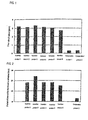
The secretion flow rate of the saliva when each of
the throat care agents shown in Table 1 was administered
was measured in the following manner.
Ten healthy adults were administered with 10 g of the
throat care agent shown in Table 1. Just after
administration of each of Invention products 1, 2, 3, 4 and
6, and Comparative products 1 and 2, or 90 minutes after
administration of Invention product 5, the saliva was wiped
off well from the mouth by absorbent cotton. They were
asked to discharge, from the mouth, the whole amount of the
saliva secreted for 5 minutes after the wiping-off. This
weight was regarded as the secretion flow rate of the
saliva. Each product was evaluated based on an arithmetic
mean of ten subjects.
The results are shown in FIG. 1. It has been
understood that the secretion flow rate of the saliva when
each of Invention products 1 to 6 was administered was 10
times as much as that when Comparative products were
administered, suggesting promotion of the secretion of the
saliva.
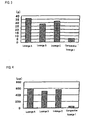
Ten adults who caught a cold and therefore had some
throat discomfort were administered with 10 g of each of
Invention products 2 to 6 and Comparative product 2 shown
in Table 1 and a time from just after administration until
disappearance of the refreshed feeling was measured.
Evaluation was conducted based on an arithmetic mean of 10
adults.
The results are shown in FIG. 2. It has been
understood that refreshed feeling of the throat lasted for
longer minutes when Invention products 2 to 6 were
administered. Especially, the refreshed feeling lasted for
about 24 minutes when Invention product 3 having a high
viscosity was administered.
Lozenges having the following composition were
prepared.
| Citric acid | 12.5 wt.% |
| Sodium bicarbonate | 12.5 |
| Starch syrup (solid content) | 15 |
| Palatinit | 59.5 |
| Menthol | 0.5 |
Ten adults were administered with 5 g of this lozenge.
They were asked to discharge from their mouth the whole
amount of the saliva secreted until the disappearance of
the lozenge. The value obtained by subtracting, from this
amount, the weight of the lozenge was regarded as the
secretion amount of the saliva. Evaluation was conducted
based on the arithmetic mean of these ten adults.
The saliva secretion amount when the lozenge of the
present invention was used was 52 g.
The bacteria trapping effect and the bacteria coating
effect of the resulting lozenge were analyzed in the
following test method.
Bacterial solutions containing 108 /mL, in viable
cell count, of Staphylococcus aureus and Haemophilus
influenzae were prepared, respectively, with PBS. Each of
the bacterial solutions and an equal amount of the saliva
to be tested were mixed for 30 minutes. The human
pharyngeal epithelial cells were washed with PBS (phosphate
buffer solution) to prepare a cell solution containing 2.5
x 104 /mL of cells. Then, 0.02 mL of the bacterial
solution mixed with the test solution was mixed with 0.98
mL of the cell solution, followed by reaction at 37°C for
30 minutes. The reaction mixture was subjected to
centrifugal separation at 600 r/min for 10 minutes. The
centrifugate was washed three times with PBS. The washed
centrifugate was sprayed onto a plate, followed by gram
staining. By an optical microscope at a predetermined
magnification, the number of the bacteria within the field
of the microscope was counted. The percentage of the
bacteria adhered to the cells was measured supposing that
the number of the bacteria under control conditions was
100%. Under the control conditions, PBS was used as the
test solution.
Bacterial solutions containing 108 /mL, in viable
cell count, of Staphylococcus aureus and Haemophilus
influenzae were prepared, respectively, with PBS. The
human pharyngeal epithelial cells were washed with PBS to
prepare a solution containing 2.5 x 10⁴ /mL of cells. The
resulting solution was mixed with an equal amount of a test
solution and they were reacted. The reaction mixture was
subjected to centrifugal separation at 600 r/min for 10
minutes. The centrifugate was washed three times with PBS
to prepare a cell solution. With 0.02 mL of each bacteria
solution, 0.98 mL of the cell solution was mixed and they
were reacted at 37°C for 30 minutes. The reaction mixture
was subjected to centrifugal separation at 600 r/min for 10
minutes, followed by washing with PBS three times. The
washed centrifugate was sprayed onto a plate, followed by
gram staining. By an optical microscope at a predetermined
magnification, the number of bacteria within the field of
the microscope was counted. The percentage of bacteria
adhered to the cells was found supposing that the number of
the bacteria under control conditions was 100%. Under the
control conditions, the PBS solution was used as the test
solution.
Owing to the trapping effect and coating effect of a
mixture of the saliva secreted, stimulated by the lozenge
of the invention and the dissolved lozenge, percentages of
Staphylococcus aureus adhered to the cells were 10% and 20%,
respectively. Owing to the trapping effect and coating
effect, the percentages of Haemophilus influenzae adhered
to the cells were, on the other hand, 5% and 10%,
respectively.
Lozenges having the following composition were
prepared.
| Citric acid | 12.5 wt.% |
| Sodium bicarbonate | 12.5 |
| Soybean dietary fiber | 0.5 |
| Starch syrup (solid content) | 15 |
| Palatinit | 59 |
| Menthol | 0.5 |
As a result of measurement in a similar manner to
Example 3, the secretion amount of the saliva, stimulated
by the above-described lozenge of the present invention was
52 g. On the other hand, in the case of a lozenge
(comparison) containing 20 wt.% of starch syrup, 79.5 wt.%
of palatinit and 0.5 wt.% of menthol, the secretion amount
of the saliva was 5 g.
The bacteria trapping effect and coating effect of a
mixture of the saliva secreted, stimulated by the lozenge
of the invention and the dissolved lozenge were analyzed as
in Example 3. The percentages adhered to the cells were 0%
and 0%, respectively. With regards to the bacteria
trapping effect and coating effect when the lozenge
(comparison) was used, the percentages were 100% and 100%,
respectively.
A two-layer type lozenge having an outer layer and an
inner layer at a weight ratio of 7:3 was prepared.
| Outer layer: | |
| Tartaric acid | 12.5 wt.% |
| Sodium bicarbonate | 12.5 |
| Starch syrup (solid content) | 16 |
| Palatinit | 59 |
| Inner layer: | |
| Starch syrup (solid content) | 20 wt.% |
| Palatinit | 78.5 |
| Soybean | 1 |
| Menthol | 0.5 |
Evaluation was conducted as in Example 3. With
regards to the above-described lozenge, the secretion
amount of the saliva was 43%, the percentage as a result of
the test on bacteria trapping effect was 0% and the
percentage as a result of the test on bacteria coating
effect was 0%.
A syrup having the following composition was prepared.
| Starch syrup | 95.5 |
| Menthol | |
| 1 | |
| Soybean | 1 |
| | 1 |
| Caffeine | 0.5 |
| Polyglycerin | 1 |
Ninety minutes after ten adults took 5 g of the syrup
thus obtained, they were asked to wipe off the saliva in
the mouth well by absorbent cotton and then, to discharge,
from the mouth, the whole amount of the saliva secreted for
5 minutes after the wiping-off. This weight was regarded
the secretion amount of the saliva. The syrup was
evaluated based on an arithmetic mean of ten subjects.
The secretion amount of the saliva was 17 g. With
regards to the bacteria trapping effect and the bacteria
coating effect evaluated as in Example 3, the percentages
were each 0%.
On the other hand, when a beverage (comparison)
containing 98 wt.% of a starch syrup, 1 wt.% of menthol and
1 wt.% of polyglycerin fatty acid ester was administered,
the saliva secretion amount was 2 g; and with regards to
the bacteria trapping effect and the bacteria coating
effect, the percentages were each 100%.
A beverage having the following composition was
prepared.
| Water | 95.5 |
| Menthol | |
| 1 | |
| Soybean | 1 |
| | 1 |
| Caffeine | 0.5 |
| Polyglycerin | 1 |
The saliva secretion amount evaluated as in Example 6
was 12 g. With regards to the bacteria trapping effect and
the bacteria coating effect evaluated as in Example 3, the
percentages were each 0%.
A lozenge was prepared in the following manner.
To 46 g of sugar and 29 g of starch syrup, 20 g of
water was added, followed by mixing. The resulting mixture
was boiled down at 150°C to completely evaporate water from
it. The boiled syrup was cooled to about 70°C, to which 12
g of tartaric acid, 12 g of sodium bicarbonate, 0.5 g of
menthol and 0.5 g of cineol were added. After mixing, 5 of
the resulting mixture was poured into a mold of 20 mm and
then cooled.
Sugar (36 g), 22 g of a starch syrup and 7.2 g of
water were mixed and the resulting mixture was boiled down
at 150°C to completely evaporate water from it. Then the
residue was cooled to about 70°C, to which 1 g of menthol
and 1 g of cineol were added, followed by mixing.
(2) Preparation of the first layer and joining thereof with
the second layer
The first layer was prepared by mixing and boiling in
a similar manner to that employed for the preparation of
Lozenge (A) except that neither menthol nor cineol was
added. In a mold of 20 mm, 3.5 g of the first layer
composition was poured, together with 1.5 of the second
layer composition, followed by molding. Upon molding, 1.5
g of the second layer composition was filled in the mold so
that it came at the center of the first layer composition.
Lozenge (C):
To 46 g of sugar and 30 g of starch syrup, 15 g of
water was added. The resulting mixture was boiled down at
150°C to completely evaporate water from it. Then, the
residue was cooled to about 70°C, to which 12 g of tartaric
acid and 12 g of sodium bicarbonate were added. After
mixing, 5 g of the resulting mixture was poured into a
mold of 20 mm, followed by cooling.
Sugar (60 g), 39 g of a starch syrup and 20 g of
water were mixed. The resulting mixture was boiled down at
150°C to completely evaporate water from it. Then, the
residue was cooled to about 70°C, to which 0.5 g of menthol
and 0.5 g of cineol were added. After mixing, 5 g of the
resulting mixture was poured into a mold of 20 mm,
followed by cooling.
Using Lozenges (A) to (C) and Comparative Lozenge 1,
the saliva secretion amount, mucin amount and content of a
sterilizing component (IgA or lysozyme) in the saliva, and
pH in the oral saliva were each measured in the following
manner.
Ten adults were asked to wipe off the saliva in the
mouth by absorbent cotton prior to the test. Then, they
were asked to lick 5 g of each of Lozenges (A) to (C) and
Comparative Lozenge 1 and discharge the whole amount of the
saliva secreted. The saliva thus secreted was weighed.
The secretion amount of the saliva was determined by
subtracting, from the whole discharged amount, the weight
of the sample in consideration of its foaming amount and
then calculating an average of the difference of ten adults.
Secretion amount of saliva = {amount of saliva
discharged - (weight of lozenge - stoichiometric production
weight of CO2)}
The amount of mucin in the saliva sampled in (1) was
determined in accordance with the Blyscan Assay.
By using the saliva sampled in (1), the secretory IgA
and lysozyme contents in the saliva sampled in (1) were
determined by the Enzyme-linked immunosorbent Assay (ELISA)
and the turbidity measuring method using Micrococcus
lysodeikticus cells, respectively.
The pH of the saliva sampled in (1) was measured by a
pH meter using a semiconductor sensor.
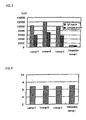
The results are shown in FIGS. 3 to 6.
From FIGS. 3 and 4, it has been understood that the
amount of the saliva and the amount of mucin in the saliva
of the lozenges (Lozenges (A) to (C)) containing an
effervescent component or an acid are greater than those of
Comparative lozenge 1 free of tartaric acid. This suggests
that Lozenges (A) to (C) of the present invention can
promote the secretion of the saliva and mucin while keeping
the pH of the saliva at healthy pH.
From FIG. 5, it has been understood that Lozenges (A)
to (C) of the present invention containing an effervescent
component secreted larger amounts of secretory IgA and
lysozyme, and secreted saliva having a higher sterilizing
power than Comparative lozenge 1.
From the above-described results, it has been found
that only Lozenges (A) to (C) of the present invention can
increase the amount of the saliva, mucin, IgA and lysozyme
without lowering the pH of the saliva in the mouth.
A panel of 20 experts having throat discomfort was
asked to slowly lick the lozenges of Examples and
Comparative Example one by one after sufficient intervals
without crunching them and to evaluate their effects on the
throat. The results are shown in Table 2.
| Invention lozenge | Comparative | ||
| A | B | ||
| 1 | |||
| Free from throat discomfort | 17 | 19 | 4 |
| No | 3 | 1 | 14 |
| Throat discomfort became severer | 0 | 0 | 2 |
From Table 2, it has been found that many experts
felt that Lozenges (A) and (B) of the present invention
were effective against the throat discomfort (removed
discomfort), compared with Comparative Lozenge 1.
A beverage for drinking after mixing equal amounts of
the following components was prepared.
| | |
| Water | 42 parts by |
| Starch syrup | |
| 50 | |
| Citric acid | 7 |
| | 1 |
| | |
| Water | 39 parts by |
| Starch syrup | |
| 50 | |
| Sodium bicarbonate | 7 |
| | 1 |
| | 1 |
| Polyglycerin | 1 |
| Soybean | 1 |
By effervescence, the secretion of the saliva was
promoted and refreshed feeling lasted.
The throat care agent of the present invention
promotes secretion of the saliva, promotes secretion of a
large amount of mucin which is a sterilizing component in
the saliva, prevents adhesion of bacteria to the throat,
removes bacteria from the throat, thereby cleaning the
throat and keep the throat refreshed.
Claims (15)
- A throat care agent comprising a saliva-secretion promoting component.
- A throat care agent of Claim 1, wherein the saliva-secretion promoting component is a taste stimulating component, an oral mucosa stimulating component, a salivary gland activating component or a physically stimulating component.
- A throat care agent of Claim 2, wherein the taste stimulating component is citric acid, isocitric acid, malic acid, acetic acid, oxalic acid, malonic acid, succinic acid, glutaric acid, maleic acid, fumaric acid, aconitic acid, lactic acid, tartaric acid, pyruvic acid, ascorbic acid, aldonic acid, uronic acid, sodium glutamate or inosinic acid.
- A throat care agent of Claim 2, wherein the oral mucosa stimulating component is allyl isothiocyanate, capsaicin, piperine, sanshool or zingerol.
- A throat care agent of Claim 2, wherein the salivary glad activating agent is pilocarpine, muscarine, acetylcholine, caffeine, Cola acuminata, Cola nitida, Jaborandi, white birch, honeysuckle, American ginseng, Houttuynia cordata, garlic, hibiscus, hop, Actinidia polygama, linden or rose hip.
- A throat care agent of Claim 2, wherein the physiologically stimulating component is an effervescent or a carbon dioxide gas, nitrogen gas or inactive gas filled under high pressure.
- A throat care agent of any one of Claims 1 to 6, which further comprises a polysaccharide.
- A throat care agent of Claim 7, wherein the polysaccharide is soybean dietary fiber, guar gum, tara gum, locust bean gun or phosphoric acid polysaccharide.
- A throat care agent of any one of Claims 1 to 8, which further comprises a component acting on the throat.
- A throat care agent of Claim 9, wherein the component acting on the throat is a herb, an antitussive and expectorant, chitin, chitosan, honey, propolis, a salivary component, menthol or cineol.
- A throat care agent of any one of Claims 1 to 10, which is in the form of a lozenge.
- A throat care agent of any one of Claims 1 to 10, which is in the form of a beverage.
- A throat care agent of Claim 12, having a viscosity ranging from 2 to 3000 mPa·s.
- A throat caring method, which comprises administering a saliva-secretion promoting component.
- Use of a saliva-secretion promoting component for the preparation of a throat care agent.
Applications Claiming Priority (5)
| Application Number | Priority Date | Filing Date | Title |
|---|---|---|---|
| JP2000186112 | 2000-06-21 | ||
| JP2000186112A JP2002000184A (en) | 2000-06-21 | 2000-06-21 | A throat care candy |
| JP2000372791A JP2002173425A (en) | 2000-12-07 | 2000-12-07 | Throat care agent |
| JP2000372791 | 2000-12-07 | ||
| PCT/JP2001/005260 WO2001097627A1 (en) | 2000-06-21 | 2001-06-20 | Throat care agents |
Publications (2)
| Publication Number | Publication Date |
|---|---|
| EP1293131A1 true EP1293131A1 (en) | 2003-03-19 |
| EP1293131A4 EP1293131A4 (en) | 2005-10-19 |
Family
ID=26594355
Family Applications (1)
| Application Number | Title | Priority Date | Filing Date |
|---|---|---|---|
| EP01941120A Withdrawn EP1293131A4 (en) | 2000-06-21 | 2001-06-20 | THERAPEUTIC AGENTS FOR THE THROAT |
Country Status (3)
| Country | Link |
|---|---|
| US (1) | US20030170322A1 (en) |
| EP (1) | EP1293131A4 (en) |
| WO (1) | WO2001097627A1 (en) |
Cited By (6)
| Publication number | Priority date | Publication date | Assignee | Title |
|---|---|---|---|---|
| AT503386B1 (en) * | 2006-03-23 | 2008-03-15 | Adolf Riegler | Safe, natural medicament composition for treating influenza infections, comprises garlic, propolis, milk and gray bread |
| ES2365283A1 (en) * | 2010-03-16 | 2011-09-28 | Primo Mendoza S.L. | Honey syrup and method for elaboration. (Machine-translation by Google Translate, not legally binding) |
| CN103749741A (en) * | 2013-12-17 | 2014-04-30 | 宁夏吴忠市汇好清真食品有限公司 | Zanthoxylum oil and its preparation method |
| CN103923750A (en) * | 2014-05-08 | 2014-07-16 | 周顺 | Method for producing pepper oil with stable quality and high spicy degree |
| US9675542B2 (en) | 2011-05-16 | 2017-06-13 | Colgate-Palmolive Company | Oral care compositions |
| EP1863466B1 (en) * | 2005-03-03 | 2017-08-09 | Takasago International Corporation (USA) | Synergistic salivation components |
Families Citing this family (11)
| Publication number | Priority date | Publication date | Assignee | Title |
|---|---|---|---|---|
| KR100615389B1 (en) * | 2002-08-23 | 2006-08-25 | (주)헬릭서 | Health food comprising the extract of Actinidia arguta and related species for the prevention and improvement of allergic disease and non-allergic inflammatory disease |
| US20100111927A1 (en) * | 2002-08-23 | 2010-05-06 | Sunyoung Kim | Compositions Comprising Actinidia and Methods of Use Thereof |
| DE102004005788A1 (en) * | 2004-02-06 | 2005-09-01 | Riemser Arzneimittel Ag | Preparations containing Echinacea extracts and thiocyanate |
| US20080175888A1 (en) * | 2005-02-25 | 2008-07-24 | Julie Lindemann | Combination Therapy Comprising Actinidia and Steroids and Uses Thereof |
| WO2007046890A1 (en) * | 2005-10-14 | 2007-04-26 | Effrx, Inc. | Lozenge for treatment of dry mouth and related conditions |
| JP5637551B2 (en) * | 2005-12-28 | 2014-12-10 | キッセイ薬品工業株式会社 | Pharmaceuticals for the treatment of salivary gland disorders |
| EP2164346A1 (en) * | 2007-04-09 | 2010-03-24 | Cadbury Adams USA LLC | Edible products for treatment of nasal passages |
| EP2008530B1 (en) * | 2007-06-19 | 2011-01-19 | Symrise AG | Aroma composition for reducing or suppressing unwanted bitter and astringent impressions |
| US20090324734A1 (en) * | 2008-06-26 | 2009-12-31 | Daniel Dickey | Throat care composition |
| FR3058871A1 (en) * | 2016-11-18 | 2018-05-25 | Adnane Remmal | AROMATIC COMPOUND SOLID STABLE COMPOSITION AND USES THEREOF |
| TW202038920A (en) * | 2018-12-27 | 2020-11-01 | 日商花王股份有限公司 | Effervescent oral solid preparation |
Family Cites Families (8)
| Publication number | Priority date | Publication date | Assignee | Title |
|---|---|---|---|---|
| US4820506A (en) * | 1987-05-01 | 1989-04-11 | Research Foundation, State University Of New York | Salivary stimulant |
| US4938963A (en) * | 1988-11-22 | 1990-07-03 | Parnell Pharmaceuticals, Inc. | Method and composition for treating xerostomia |
| SE9101076L (en) * | 1991-04-10 | 1992-10-11 | Camurus Ab | SALIVERSAETTNINGSMEDEL |
| JPH06253741A (en) * | 1993-03-03 | 1994-09-13 | Honsyu Kosan Kk | Antimicrobial throat candy |
| KR960006319B1 (en) * | 1994-06-30 | 1996-05-13 | 이승우 | Chewing gum with pilocarpine |
| US5658554A (en) * | 1995-06-01 | 1997-08-19 | Colgate-Palmolive Company | Mouth moistener for the relief of dry mouth condition |
| JP3651544B2 (en) * | 1997-08-29 | 2005-05-25 | ライオン株式会社 | Salivary secretion promoter and composition for oral cavity |
| DE69835339T2 (en) * | 1997-12-22 | 2007-07-26 | Givaudan S.A. | Component with a sharp taste |
-
2001
- 2001-06-20 US US10/275,956 patent/US20030170322A1/en not_active Abandoned
- 2001-06-20 EP EP01941120A patent/EP1293131A4/en not_active Withdrawn
- 2001-06-20 WO PCT/JP2001/005260 patent/WO2001097627A1/en not_active Ceased
Cited By (8)
| Publication number | Priority date | Publication date | Assignee | Title |
|---|---|---|---|---|
| EP1863466B1 (en) * | 2005-03-03 | 2017-08-09 | Takasago International Corporation (USA) | Synergistic salivation components |
| US9814748B2 (en) | 2005-03-03 | 2017-11-14 | Takasago International Corporation (Usa) | Synergistic salivation agents |
| AT503386B1 (en) * | 2006-03-23 | 2008-03-15 | Adolf Riegler | Safe, natural medicament composition for treating influenza infections, comprises garlic, propolis, milk and gray bread |
| ES2365283A1 (en) * | 2010-03-16 | 2011-09-28 | Primo Mendoza S.L. | Honey syrup and method for elaboration. (Machine-translation by Google Translate, not legally binding) |
| US9675542B2 (en) | 2011-05-16 | 2017-06-13 | Colgate-Palmolive Company | Oral care compositions |
| CN103749741A (en) * | 2013-12-17 | 2014-04-30 | 宁夏吴忠市汇好清真食品有限公司 | Zanthoxylum oil and its preparation method |
| CN103749741B (en) * | 2013-12-17 | 2015-07-15 | 宁夏吴忠市汇好清真食品有限公司 | Zanthoxylum oil and its preparation method |
| CN103923750A (en) * | 2014-05-08 | 2014-07-16 | 周顺 | Method for producing pepper oil with stable quality and high spicy degree |
Also Published As
| Publication number | Publication date |
|---|---|
| WO2001097627A1 (en) | 2001-12-27 |
| US20030170322A1 (en) | 2003-09-11 |
| EP1293131A4 (en) | 2005-10-19 |
Similar Documents
| Publication | Publication Date | Title |
|---|---|---|
| US20030170322A1 (en) | Throat care agents | |
| KR100268401B1 (en) | Method for improving the taste of pine extract, and orally administrable product obtained thereby | |
| KR20190086512A (en) | How to Provide Oral Care Effect | |
| US20230241165A1 (en) | Mannose-binding lectin for treatment or prophylaxis of infectious diseases | |
| ES2381851T3 (en) | Procedure for obtaining an extract of blueberry pulp for use in the prevention and treatment of conditions such as caries, gingivitis and mild throat infections | |
| US10751343B2 (en) | Nasal compositions stimulating ciliary activity | |
| US20110274728A1 (en) | Compositions and Methods for Alleviating Hyposalivation and for Providing Oral Comfort | |
| US20070087053A1 (en) | Lozenge for treatment of dry mouth and related conditions | |
| US10201582B2 (en) | Compositions and methods for alleviating hyposalivation and for providing oral comfort | |
| KR20170141053A (en) | Composition for prevention or treatment of dental disease comprising an extract of Gardenia jasminoides | |
| JP2002173425A (en) | Throat care agent | |
| KR20160090956A (en) | Composition for sanitation promotion of oral cavity comprising natural medicinal ingredient extract as effective component for halitosis inducing microoranism and infectious disease of mucous membrane | |
| KR20170141034A (en) | Composition for prevention or treatment of dental disease comprising Panax ginseng extract | |
| KR102269164B1 (en) | Composition for improvement of dental caries and periodontal disease using an extract of seeds of Phaseolus radiatus, etc. | |
| KR20120139310A (en) | Oral composition for preventing or treating caries and periodontal disease | |
| US9884082B2 (en) | Compositions and methods for alleviating hyposalivation and for providing oral comfort | |
| KR20170141027A (en) | Composition for prevention or treatment of dental disease comprising an extract of Astragalus membranaceus | |
| Galhotra et al. | Anticariogenic And Cariostatic Potential Of Components Of Diet: A Review. | |
| KR20170141030A (en) | Composition for prevention or treatment of dental disease comprising cistanoside A | |
| RU2855290C1 (en) | Therapeutic and prophylactic composition for oral care for patients with juvenile rheumatoid arthritis | |
| KR102632336B1 (en) | Composition for prevention or treatment of dental disease comprising an extract of Daphne genkwa | |
| JP6422107B2 (en) | Container drink | |
| JP2003048838A (en) | Throat care agent | |
| KR20170107149A (en) | Composition for improvement of dental caries and periodontal disease using carnosic acid | |
| Kuchmieieva et al. | Development of medicated lollipops experimental samples for catarrhal and aphthous stomatitssymptoms relief |
Legal Events
| Date | Code | Title | Description |
|---|---|---|---|
| PUAI | Public reference made under article 153(3) epc to a published international application that has entered the european phase |
Free format text: ORIGINAL CODE: 0009012 |
|
| 17P | Request for examination filed |
Effective date: 20021211 |
|
| AK | Designated contracting states |
Kind code of ref document: A1 Designated state(s): CH DE FR GB LI Designated state(s): CH DE FR GB LI |
|
| A4 | Supplementary search report drawn up and despatched |
Effective date: 20050902 |
|
| 17Q | First examination report despatched |
Effective date: 20060112 |
|
| STAA | Information on the status of an ep patent application or granted ep patent |
Free format text: STATUS: THE APPLICATION IS DEEMED TO BE WITHDRAWN |
|
| 18D | Application deemed to be withdrawn |
Effective date: 20070514 |