EP1291143A2 - Method for manufacturing modified wood - Google Patents
Method for manufacturing modified wood Download PDFInfo
- Publication number
- EP1291143A2 EP1291143A2 EP02019442A EP02019442A EP1291143A2 EP 1291143 A2 EP1291143 A2 EP 1291143A2 EP 02019442 A EP02019442 A EP 02019442A EP 02019442 A EP02019442 A EP 02019442A EP 1291143 A2 EP1291143 A2 EP 1291143A2
- Authority
- EP
- European Patent Office
- Prior art keywords
- wood
- treatment
- change
- high pressure
- pressure steam
- Prior art date
- Legal status (The legal status is an assumption and is not a legal conclusion. Google has not performed a legal analysis and makes no representation as to the accuracy of the status listed.)
- Granted
Links
- 239000002023 wood Substances 0.000 title claims abstract description 91
- 238000000034 method Methods 0.000 title claims description 21
- 238000004519 manufacturing process Methods 0.000 title claims description 10
- 238000011282 treatment Methods 0.000 abstract description 83
- 239000000463 material Substances 0.000 abstract description 70
- 230000008859 change Effects 0.000 abstract description 50
- 241000726768 Carpinus Species 0.000 abstract description 22
- 241000218657 Picea Species 0.000 abstract description 22
- WSFSSNUMVMOOMR-UHFFFAOYSA-N Formaldehyde Chemical compound O=C WSFSSNUMVMOOMR-UHFFFAOYSA-N 0.000 abstract description 9
- 241000208140 Acer Species 0.000 abstract description 7
- 239000000126 substance Substances 0.000 abstract description 7
- GHMLBKRAJCXXBS-UHFFFAOYSA-N resorcinol Chemical compound OC1=CC=CC(O)=C1 GHMLBKRAJCXXBS-UHFFFAOYSA-N 0.000 abstract description 4
- 229960001755 resorcinol Drugs 0.000 abstract description 3
- 238000002715 modification method Methods 0.000 abstract 1
- 230000000717 retained effect Effects 0.000 abstract 1
- 230000014759 maintenance of location Effects 0.000 description 40
- 230000007423 decrease Effects 0.000 description 8
- 230000010355 oscillation Effects 0.000 description 8
- 239000000243 solution Substances 0.000 description 7
- 238000001035 drying Methods 0.000 description 6
- 238000005259 measurement Methods 0.000 description 6
- 239000003795 chemical substances by application Substances 0.000 description 5
- 229920002678 cellulose Polymers 0.000 description 4
- 239000001913 cellulose Substances 0.000 description 4
- 230000000694 effects Effects 0.000 description 4
- WFDIJRYMOXRFFG-UHFFFAOYSA-N Acetic anhydride Chemical compound CC(=O)OC(C)=O WFDIJRYMOXRFFG-UHFFFAOYSA-N 0.000 description 3
- 238000006243 chemical reaction Methods 0.000 description 3
- 239000011248 coating agent Substances 0.000 description 3
- 238000000576 coating method Methods 0.000 description 3
- 230000003247 decreasing effect Effects 0.000 description 3
- 229920002488 Hemicellulose Polymers 0.000 description 2
- ISWSIDIOOBJBQZ-UHFFFAOYSA-N Phenol Chemical compound OC1=CC=CC=C1 ISWSIDIOOBJBQZ-UHFFFAOYSA-N 0.000 description 2
- RAHZWNYVWXNFOC-UHFFFAOYSA-N Sulphur dioxide Chemical compound O=S=O RAHZWNYVWXNFOC-UHFFFAOYSA-N 0.000 description 2
- 230000021736 acetylation Effects 0.000 description 2
- 238000006640 acetylation reaction Methods 0.000 description 2
- 238000007605 air drying Methods 0.000 description 2
- 238000005452 bending Methods 0.000 description 2
- KVBYPTUGEKVEIJ-UHFFFAOYSA-N benzene-1,3-diol;formaldehyde Chemical compound O=C.OC1=CC=CC(O)=C1 KVBYPTUGEKVEIJ-UHFFFAOYSA-N 0.000 description 2
- 238000010438 heat treatment Methods 0.000 description 2
- 229910052739 hydrogen Inorganic materials 0.000 description 2
- 239000001257 hydrogen Substances 0.000 description 2
- -1 hydrogen ions Chemical class 0.000 description 2
- 230000006872 improvement Effects 0.000 description 2
- 229920005610 lignin Polymers 0.000 description 2
- 230000004048 modification Effects 0.000 description 2
- 238000012986 modification Methods 0.000 description 2
- 239000005011 phenolic resin Substances 0.000 description 2
- 230000004044 response Effects 0.000 description 2
- CQRYARSYNCAZFO-UHFFFAOYSA-N salicyl alcohol Chemical compound OCC1=CC=CC=C1O CQRYARSYNCAZFO-UHFFFAOYSA-N 0.000 description 2
- 239000010875 treated wood Substances 0.000 description 2
- 239000010876 untreated wood Substances 0.000 description 2
- UYVWNPAMKCDKRB-UHFFFAOYSA-N 1,2,4,5-tetraoxane Chemical compound C1OOCOO1 UYVWNPAMKCDKRB-UHFFFAOYSA-N 0.000 description 1
- 208000023514 Barrett esophagus Diseases 0.000 description 1
- 229930040373 Paraformaldehyde Natural products 0.000 description 1
- 241000405217 Viola <butterfly> Species 0.000 description 1
- 238000010521 absorption reaction Methods 0.000 description 1
- 239000007864 aqueous solution Substances 0.000 description 1
- 239000003086 colorant Substances 0.000 description 1
- 238000013016 damping Methods 0.000 description 1
- 238000002474 experimental method Methods 0.000 description 1
- 239000000835 fiber Substances 0.000 description 1
- 125000000524 functional group Chemical group 0.000 description 1
- 229920002866 paraformaldehyde Polymers 0.000 description 1
- 230000035515 penetration Effects 0.000 description 1
- 238000009527 percussion Methods 0.000 description 1
- 230000000737 periodic effect Effects 0.000 description 1
- 239000011120 plywood Substances 0.000 description 1
- 230000005855 radiation Effects 0.000 description 1
- 230000009467 reduction Effects 0.000 description 1
- 238000011160 research Methods 0.000 description 1
- 239000011347 resin Substances 0.000 description 1
- 229920005989 resin Polymers 0.000 description 1
- 238000007493 shaping process Methods 0.000 description 1
- 238000010008 shearing Methods 0.000 description 1
- 238000002791 soaking Methods 0.000 description 1
- 238000002798 spectrophotometry method Methods 0.000 description 1
- 230000003068 static effect Effects 0.000 description 1
- XLYOFNOQVPJJNP-UHFFFAOYSA-N water Substances O XLYOFNOQVPJJNP-UHFFFAOYSA-N 0.000 description 1
Images





Classifications
-
- B—PERFORMING OPERATIONS; TRANSPORTING
- B27—WORKING OR PRESERVING WOOD OR SIMILAR MATERIAL; NAILING OR STAPLING MACHINES IN GENERAL
- B27K—PROCESSES, APPARATUS OR SELECTION OF SUBSTANCES FOR IMPREGNATING, STAINING, DYEING, BLEACHING OF WOOD OR SIMILAR MATERIALS, OR TREATING OF WOOD OR SIMILAR MATERIALS WITH PERMEANT LIQUIDS, NOT OTHERWISE PROVIDED FOR; CHEMICAL OR PHYSICAL TREATMENT OF CORK, CANE, REED, STRAW OR SIMILAR MATERIALS
- B27K5/00—Treating of wood not provided for in groups B27K1/00, B27K3/00
-
- B—PERFORMING OPERATIONS; TRANSPORTING
- B27—WORKING OR PRESERVING WOOD OR SIMILAR MATERIAL; NAILING OR STAPLING MACHINES IN GENERAL
- B27K—PROCESSES, APPARATUS OR SELECTION OF SUBSTANCES FOR IMPREGNATING, STAINING, DYEING, BLEACHING OF WOOD OR SIMILAR MATERIALS, OR TREATING OF WOOD OR SIMILAR MATERIALS WITH PERMEANT LIQUIDS, NOT OTHERWISE PROVIDED FOR; CHEMICAL OR PHYSICAL TREATMENT OF CORK, CANE, REED, STRAW OR SIMILAR MATERIALS
- B27K1/00—Damping wood
-
- B—PERFORMING OPERATIONS; TRANSPORTING
- B27—WORKING OR PRESERVING WOOD OR SIMILAR MATERIAL; NAILING OR STAPLING MACHINES IN GENERAL
- B27K—PROCESSES, APPARATUS OR SELECTION OF SUBSTANCES FOR IMPREGNATING, STAINING, DYEING, BLEACHING OF WOOD OR SIMILAR MATERIALS, OR TREATING OF WOOD OR SIMILAR MATERIALS WITH PERMEANT LIQUIDS, NOT OTHERWISE PROVIDED FOR; CHEMICAL OR PHYSICAL TREATMENT OF CORK, CANE, REED, STRAW OR SIMILAR MATERIALS
- B27K3/00—Impregnating wood, e.g. impregnation pretreatment, for example puncturing; Wood impregnation aids not directly involved in the impregnation process
- B27K3/02—Processes; Apparatus
- B27K3/08—Impregnating by pressure, e.g. vacuum impregnation
-
- B—PERFORMING OPERATIONS; TRANSPORTING
- B27—WORKING OR PRESERVING WOOD OR SIMILAR MATERIAL; NAILING OR STAPLING MACHINES IN GENERAL
- B27K—PROCESSES, APPARATUS OR SELECTION OF SUBSTANCES FOR IMPREGNATING, STAINING, DYEING, BLEACHING OF WOOD OR SIMILAR MATERIALS, OR TREATING OF WOOD OR SIMILAR MATERIALS WITH PERMEANT LIQUIDS, NOT OTHERWISE PROVIDED FOR; CHEMICAL OR PHYSICAL TREATMENT OF CORK, CANE, REED, STRAW OR SIMILAR MATERIALS
- B27K5/00—Treating of wood not provided for in groups B27K1/00, B27K3/00
- B27K5/0085—Thermal treatments, i.e. involving chemical modification of wood at temperatures well over 100°C
- B27K5/009—Thermal treatments, i.e. involving chemical modification of wood at temperatures well over 100°C using a well-defined temperature schedule
-
- G—PHYSICS
- G10—MUSICAL INSTRUMENTS; ACOUSTICS
- G10D—STRINGED MUSICAL INSTRUMENTS; WIND MUSICAL INSTRUMENTS; ACCORDIONS OR CONCERTINAS; PERCUSSION MUSICAL INSTRUMENTS; AEOLIAN HARPS; SINGING-FLAME MUSICAL INSTRUMENTS; MUSICAL INSTRUMENTS NOT OTHERWISE PROVIDED FOR
- G10D3/00—Details of, or accessories for, stringed musical instruments, e.g. slide-bars
- G10D3/22—Material for manufacturing stringed musical instruments; Treatment of the material
-
- B—PERFORMING OPERATIONS; TRANSPORTING
- B27—WORKING OR PRESERVING WOOD OR SIMILAR MATERIAL; NAILING OR STAPLING MACHINES IN GENERAL
- B27K—PROCESSES, APPARATUS OR SELECTION OF SUBSTANCES FOR IMPREGNATING, STAINING, DYEING, BLEACHING OF WOOD OR SIMILAR MATERIALS, OR TREATING OF WOOD OR SIMILAR MATERIALS WITH PERMEANT LIQUIDS, NOT OTHERWISE PROVIDED FOR; CHEMICAL OR PHYSICAL TREATMENT OF CORK, CANE, REED, STRAW OR SIMILAR MATERIALS
- B27K2240/00—Purpose of the treatment
- B27K2240/50—Ageing
-
- Y—GENERAL TAGGING OF NEW TECHNOLOGICAL DEVELOPMENTS; GENERAL TAGGING OF CROSS-SECTIONAL TECHNOLOGIES SPANNING OVER SEVERAL SECTIONS OF THE IPC; TECHNICAL SUBJECTS COVERED BY FORMER USPC CROSS-REFERENCE ART COLLECTIONS [XRACs] AND DIGESTS
- Y10—TECHNICAL SUBJECTS COVERED BY FORMER USPC
- Y10T—TECHNICAL SUBJECTS COVERED BY FORMER US CLASSIFICATION
- Y10T428/00—Stock material or miscellaneous articles
- Y10T428/24—Structurally defined web or sheet [e.g., overall dimension, etc.]
- Y10T428/24058—Structurally defined web or sheet [e.g., overall dimension, etc.] including grain, strips, or filamentary elements in respective layers or components in angular relation
- Y10T428/24066—Wood grain
-
- Y—GENERAL TAGGING OF NEW TECHNOLOGICAL DEVELOPMENTS; GENERAL TAGGING OF CROSS-SECTIONAL TECHNOLOGIES SPANNING OVER SEVERAL SECTIONS OF THE IPC; TECHNICAL SUBJECTS COVERED BY FORMER USPC CROSS-REFERENCE ART COLLECTIONS [XRACs] AND DIGESTS
- Y10—TECHNICAL SUBJECTS COVERED BY FORMER USPC
- Y10T—TECHNICAL SUBJECTS COVERED BY FORMER US CLASSIFICATION
- Y10T428/00—Stock material or miscellaneous articles
- Y10T428/31504—Composite [nonstructural laminate]
- Y10T428/31971—Of carbohydrate
- Y10T428/31989—Of wood
Definitions
- the present invention relates to a method for manufacturing modified wood by high pressure steam treatment.
- Hiroyuki Yano, et al. disclose in "The Journal of Wood Science, Vol. 38, No. 12, p. 1119-1125 (1992)" published by the Japan Wood Research Society that wood is modified by soaking in a resorcinol aqueous solution, air-drying the soaked wood, and heating the dried wood in formaldehyde vapor, and thereby, a decrease in loss angle (tan ⁇ ), an improvement of strength, a reduction in hygroscopicity, improvement of dimensional stability, and the like are achieved.
- the following treatments are also carried out to modify wood: (1) formalization, (2) acetylation, (3) a treatment by low molecular weight phenol resin, (4) a treatment by resorcin-formaldehyde, and (5) a treatment by saligenin.
- the treatment conditions therefor are as follows.
- the agents used are tetraoxane and sulfur dioxide, and the treatment conditions are 24 hours at 120°C.
- the agent used is acetic anhydride, and the treatment conditions are 24 hours at 120°C.
- the agent used is low molecular weight phenol, and the treatment conditions are 48 hours (soaked in the low molecular weight phenol) at 160°C, and three hours for curing.
- the agents used are resorcin-formaldehyde, and paraformaldehyde, and the treatment conditions are 24 hours at 120°C.
- the agent used is orthomethylolphenol, and the treatment conditions are 24 hours at 120°C.
- An object of the present invention is to obtain a method for manufacturing modified wood, which is preferably used as a material for musical instruments, in which the treatment steps are simple, chemicals are not used, and the wood after treatment has good acoustic properties.
- an aspect of the present invention is to provide a method for manufacturing modified wood comprising a step of retaining wood for 1 to 60 minutes under high pressure steam of 0.2 to 1.6 MPa at 120 to 200°C.
- the optimum conditions for the high pressure steam treatment are determined by the desired degree of the treatment, the kind of wood, the dimensions of wood, and the like.
- another aspect of the present invention is to provide a musical instrument made from the modified wood obtained by the above method as a soundboard or other parts.
- the modified wood can be developed with a transparent and deep appearance while the coating step can be shortened.
- the above modified wood is preferably used as a material for musical instruments.
- Fig. 1 is a graph showing a typical example of the temperature setting with respect to the time of high pressure steam treatment according to the present invention.
- Fig. 2 is a graph showing a retention time and a change in color of hornbeam (Carpinus) at a treatment temperature of 170°C.
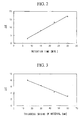
- Fig. 3 is a graph showing a thickness of a material and the change in color of hornbeam (Carpinus) at a treatment temperature of 170°C and a retention time of 15 minutes.
- Fig. 4 is a graph showing a length of a material and the change in color of hornbeam (Carpinus) at a treatment temperature of 170°C.
- Fig. 5 is a graph showing the treatment time and the change in color of spruce (Picea) at a treatment temperature of 170°C.
- Fig. 6 is a graph showing the change in loss angle (tan ⁇ ) (%) with respect to the change in retention time before and after the high pressure steam treatment on hornbeam (Carpinus) at a retention temperature of 170°C.
- Fig. 7 is a graph showing the change in loss angle (tan ⁇ ) (%) with respect to the change of the retention temperature before and after the high pressure steam treatment on hornbeam (Carpinus) at a retention time of 30 minutes.
- Fig. 8 is a graph showing the change in the dynamic modulus of elasticity (E) (%) with respect to the change in the retention time before and after the high pressure steam treatment on hornbeam (Carpinus) at a retention temperature of 170°C.
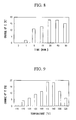
- Fig. 9 is a graph showing the change in the dynamic modulus of elasticity (E) (%) with respect to the change in the a retention temperature before and after the high pressure steam treatment on hornbeam (Carpinus) at a retention time of 30 minutes.
- Fig. 10 is a graph showing the change in the loss angle (tan ⁇ ) (%) with respect to the change in the retention time before and after the high pressure steam treatment on spruce (Picea) at a retention temperature of 170°C.
- Fig. 11 is a graph showing the change in the loss angle (tan ⁇ ) (%) with respect to the change of the retention temperature before and after the high pressure steam treatment on spruce (Picea) at a retention time of 30 minutes.
- Fig. 12 is a graph showing the change in the dynamic modulus of elasticity (E) (%) with respect to the change in the retention time before and after the high pressure steam treatment on spruce (Picea) at a retention temperature of 170°C.
- Fig. 13 is a graph showing the change in the dynamic modulus of elasticity (E) (%) with respect to the change in the retention temperature before and after the high pressure steam treatment on spruce (Picea) at a retention time of 30 minutes.
- Fig. 14 is a graph showing the change in density before and after the high pressure steam treatment of spruce (Picea) under five types of condition at a retention temperature of 150 to 170°C and a retention time of 8 to 30 minutes.
- Fig. 15 is a graph showing the change in density before and after the high pressure steam treatment of maple under five types of condition at a retention temperature of 150 to 170°C and a retention time of 8 to 30 minutes.
- Fig. 16 is a graph showing the change in E L /G LT before and after the high pressure steam treatment of spruce (Picea) under five types of condition at a retention temperature of 150 to 170°C and a retention time of 8 to 30 minutes.
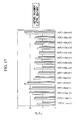
- Fig. 17 is a graph showing the change in E L /G LT before and after the high pressure steam treatment of maple under five types of condition at a retention temperature of 150 to 170°C and a retention time of 8 to 30 minutes.
- wood is held for 1 to 60 minutes in high pressure steam at a pressure of 0.2 to 1.6 MPa at 120 to 200°C in order to modify the wood.
- high pressure steam at a pressure of 0.2 to 1.6 MPa at 120 to 200°C
- the wood plate is treated in high pressure steam of 160 to 180°C for 8 to 30 minutes to be effectively modified.
- high pressure steam treatment methods there are, for example, a method for putting raw wood in an autoclave having a high pressure steam atmosphere, a method for putting wood after shaping to a dimension in an autoclave having a high pressure steam atmosphere, and the like.
- Fig. 1 shows a typical example of the setting temperature with respect to the time of the high pressure steam treatment for maple having a thickness of 20 mm.
- the retention time of the present invention indicates the time except for the period during increase and decrease of temperature and pressure, as an example shown in Fig. 1.
- the high pressure steam contains a large amount of active species such as hydrogen ions, hydroxide ions, hydrogen radicals, and hydroxide radicals, and hydrolyzes cellulose, hemicellulose, and lignin which are main components of wood.
- active species such as hydrogen ions, hydroxide ions, hydrogen radicals, and hydroxide radicals
- the above active species are impregnated into the wood with the steam, and subsequently, hydrolyze hemicellulose, partially repolymerize lignin, decompose amorphous portions of cellulose and rearrage the decomposed portion. Accordingly, residual strain in the wood is resolved, and the degree of crystallinity and the width of micells incrcases.
- E dynamic modulus of elasticity
- ⁇ loss angle
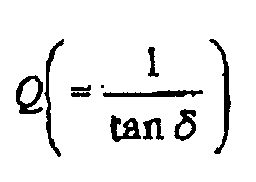
- the modified wood since sound conversion efficiency, which is described by the product of the sound radiation attenuation (external attenuation efficiency) and the inverse of the internal attenuation efficiency of the material, shown below increases, the modified wood can be used as a material for musical instruments having superior oscillation properties.
- E is a Young's modulus of material
- ⁇ is a density of material
- tan ⁇ is loss angle by vibration.
- the modified wood of the present invention can be used as a material for musical instruments, particularly, the soundboard and members of bowed stringed instruments such as violins, violas, cellos, and double basses; the soundboard and members of pluck stringed instruments such as acoustic guitars, electric guitars, harps, kotos, taisho-kotos, cembalos; the soundboard and members of struck stringed instruments such as pianos; bars of marimbas, xylophones, and the like, the bodies of drums, Japanese drums, and the like, members, and main bodies of woodblocks, wooden clappers, and the like in percussion instruments; and the main bodies and members of wood wind instruments in wind instruments, and as any wood part used to form musical instruments.
- the soundboard and members of bowed stringed instruments such as violins, violas, cellos, and double basses
- the soundboard and members of pluck stringed instruments such as acoustic guitar
- the modified wood according to the present invention is imparted with a deep color tone, the coating step(s) can be shortened and a specific appearance and deep color, which are not present in untreated wood, are obtained.
- the modified wood can be obtained with an appearance of old wood for which several hundreds of years have passed since manufacturing.
- the wood to be used as the material of the present invention is not limited, suitable wood is selected in response to the purpose of the modified wood to be obtained.
- suitable wood is selected in response to the purpose of the modified wood to be obtained.
- wood materials such as the natural wood of spruce, maple, and hornbeam; and plywood using natural wood as veneer can be used.
- the wood retaining with the high pressure steam is treated by slowly decreasing the pressure and the temperature to room pressure and temperature so that the wood does not break due to pressure differences between inside and outside of the wood, and subsequently, the wood is treated by a drying step.
- the drying step is carried out by a known method for drying wood such as air-drying, heating-drying, and heating and decompression-drying, or a combination thereof.
- the desired moisture content is determined in response to the purpose of the modified wood being obtained, in particular, the moisture content is preferably set at 5 to 15% by weight.
- the method for manufacturing modified wood according to the present invention there is no effect on the environment or the human body because there are no chemicals used at all. Furthermore, the method requires only extremely simple steps in which conventional wood is treated by the high pressure steam treatment before a usual drying step, and therefore, the treatment of the wood is completed in a short time and production costs are decreased.
- the degree of the treatment of the treated wood will advance according to the length of time.
- differences in the degree of the treatment will occur due to the type and size of the wood material. For example, if two materials from the same tree having respective thickness, width, and length is double size of the other which is a rectangular parallelepiped of a certain size are treated for the same length of time, the treatment of the former becomes slower, and in order to obtain the degree of the treatment identical to that of the latter material, the treatment requires a length of time that is two or more times greater.
- One method of quantitatively evaluating the degree of the treatment is the technique of measuring the amount of change in color of the material. The manner how the treatment advances depending on the retention time and whether differences appears in the degree of treatment depending on the dimensions of the material were examined and are shown below.
- the measurement of the color of the wood material was carried out by spectrophotometry using a D65 light source (10° field), and the measurement values were obtained as an LAB standard colorimetric system.
- the LAB standard colorimetrie system is a standard color system that represents colors as positions in a three dimensional coordinate system (L axis: luminosity; A axis and B axis: hue), and difference ⁇ E (color difference) is the distance between two color positions in the coordinate.
- the color difference ⁇ E of the material before and after treatment was used as the amount of color change of the material. After completion of the treatment the material is cut at its center of the lengthwise direction (along grain) perpendicular to the direction of the grain, and the center of the cut surface was measured.
- the color values of the material before treatment are substituted by measuring the same position of a material next to the material from the same log (lumber) (untreated material)
- Fig. 2 shows the relationship between the retention time of the broad leave tree (hornbeam material) and the change in the color of the material.
- the treatment temperature at this time is 170° C, and the shape of the end grain of the material was a rectangular parallelepiped with edge lengths of 15 mm and a length of 200 mm. From Fig. 2 the longer the retention time the more the degree of the treatment has advanced being the larger the amount of change of the color of the material, and within the measured range, it can be said that the slope formed by the retention time and the change in the color of the material is a positive linear relationship.
- the treatment conditions at this time are that the temperature is 170° C, the retention time was 15 minutes, the material is a broad leave tree (hornbeam material), and the shape of the material is a rectangular parallelepiped having a length of 200 mm. According to the graph, within the measured range, it can be said that the slope formed by the length of the edge of the grain end cross section (square) and the change in the color of the material is a negative linear relationship, and it can be understood that the longer the length of the edge of the cross section, the slower the treatment advances.
- Fig. 4 shows the relationship between the length of the material and the change in the color of the material.
- the grain end cross section of the material (rectangular parallelepiped) is a square whose edge is 45 mm, and the type of tree, the treatment conditions, the measurement location and the like are identical to the above. From Fig. 4, it can be said that in the measured range, the slope formed by the length of the material and the change in the color of the material is a negative linear relationship, and it can be understood that the longer the material, the slower the treatment advances, and time is required more in order for the degree of treatment to advance.
- Fig. 5 shows the relationship between the retention time for the coniferous trees (spruce) and the change in the color of the material.
- the treatment temperature is 170° C
- the shape of the material is a rectangular parallelepiped wherein the grain end cross-section with a length of 200 mm is a square having an edge of 15 mm. From Fig. 5, the longer the retention time, the more the treatment advances, the change in the color of the material becomes large, and it can be said that within the measured range the slope formed by the retention time and the change in the color of the material is a positive linear relationship.
- each wood sample was prepared with a wood plate which was a rectangular parallelepiped having a thickness of 15 mm, a width of 60 mm, and a height of 450 mm. The following items were measured for the wood samples.
- Thickness, width, and length were measured by digital vernier calipers to two decimal places (mm).
- Weight was measured by an electronic balance to two decimal places (g).
- Oscillation properties were measured by a method of free-free beam vibrations.
- the dynamic modulus of elasticity (E) in the fiber direction was calculated by Bernoulli-Euler's equation described below after measurement of the resonance frequency of free-free beam vibrations using an FFT analyzer.
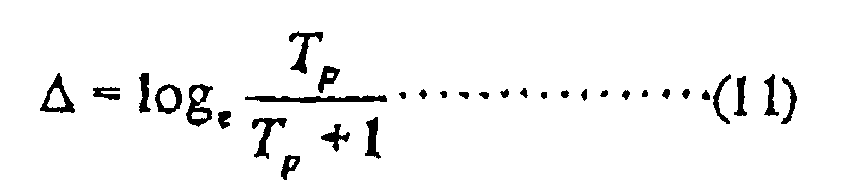
- ⁇ is called the critical loss coefficient ⁇ c .
- T st is the amount of static bending of the beam due to the exciting force, shown in the following equation:
- logarithmic decrement ⁇ is: where p is an arbitrary positive integer.
- Timoshenko's equation is:
- Timoshenko's equation unlike the case of the Bemoulli-Euler's equation, even if the characteristics of the material are determined, if the dimensional values are not determined, m n is not determined. That is, the Timoshenko's equation is a system from which a scaling effect cannot be expected in the oscillation characteristics.
- E and G are calculated by measuring the dimensions of the material, the mass, and ⁇ n .
- Oscillation properties were measured in a room adjusted at 20°C at 60% RH.
- Figs. 6 to 17 show the changes of material properties from results after the high pressure steam treatment.
- the loss angle (tan ⁇ ) tends to decrease as retention time passes or temperature increases.
- the maximum change is -35% loss angle (tan ⁇ ) in hornbeam in Fig. 6.
- the density tends to decrease.
- the maximum change is -8% density in spruce.
- the sound conversion efficiency of the wood is remarkably improved.
- the above change is similar to the change which occurs in the wood with the passage time of a few hundreds of years; therefore, it may be said that to produce the treated wood of the present invention is to make aged wood.
- E L /G LT tends to decrease, therefore, strength of the wood is increased. It is a characteristic after the high pressure steam treatment.
- the light brown colored wood turned into a dark brown colored wood with a good appearance and deep color tone due to the high pressure steam treatment. Since the color of wood changes, the coating step is shortened and the contrast in the grains is increased to improve the value of the appearance of the wood.
- the sound was changed as follows.
- Two pianos were prepared using the modified wood (spruce) according to the present invention as a soundboard.
- the pianos were compared with a piano prepared using untreated wood.
- Each piano was played by two famous players and was evaluated by 20 listeners.
- each piano using the modified wood was highly evaluated with respect to volume, sound, and expression.
- bridges prepared using the modified wood were incorporated in the above pianos, and each piano was evaluated similarly.
- each piano was highly evaluated with respect to volume, sound, and expression.
Landscapes
- Life Sciences & Earth Sciences (AREA)
- Engineering & Computer Science (AREA)
- Wood Science & Technology (AREA)
- Forests & Forestry (AREA)
- Physics & Mathematics (AREA)
- Manufacturing & Machinery (AREA)
- Acoustics & Sound (AREA)
- Multimedia (AREA)
- Thermal Sciences (AREA)
- Chemical And Physical Treatments For Wood And The Like (AREA)
- Stringed Musical Instruments (AREA)
- Polysaccharides And Polysaccharide Derivatives (AREA)
Abstract
Description




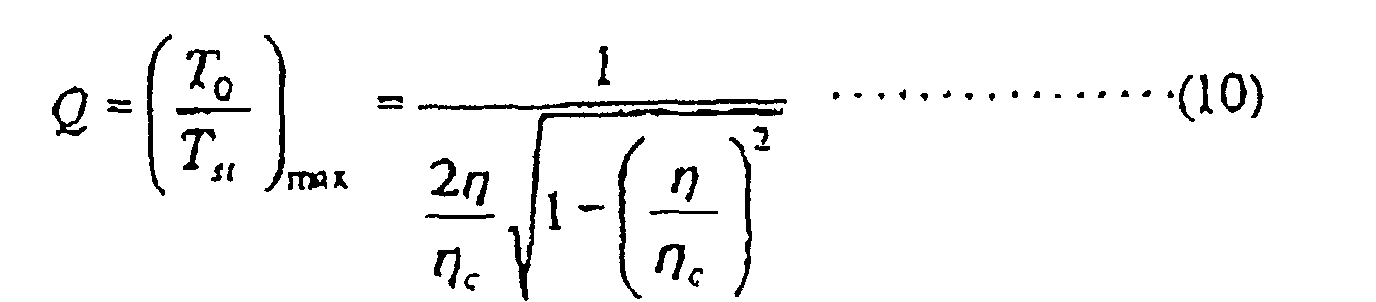



Ratio (EL/ GLT) of the Modulus of elasticity EL and the modulus of rigidity GLT: Using an FFT analyzer, the resonance frequencies from the mode 0 to mode 3 of the free-free beam vibrations were measured, and calculated using the consequences of the following Timoshenko's equation.





Claims (2)
- A method for manufacturing modified wood comprising a step of retaining wood for 1 to 60 minutes under high pressure steam of 0.2 to 1.6 MPa at 120 to 200°C.
- A musical instrument using the modified wood obtained by the method according to claim 1.
Applications Claiming Priority (4)
| Application Number | Priority Date | Filing Date | Title |
|---|---|---|---|
| JP2001262179 | 2001-08-30 | ||
| JP2001262179 | 2001-08-30 | ||
| JP2002226633 | 2002-08-02 | ||
| JP2002226633A JP3562517B2 (en) | 2001-08-30 | 2002-08-02 | Musical instrument and its manufacturing method |
Publications (3)
| Publication Number | Publication Date |
|---|---|
| EP1291143A2 true EP1291143A2 (en) | 2003-03-12 |
| EP1291143A3 EP1291143A3 (en) | 2004-11-17 |
| EP1291143B1 EP1291143B1 (en) | 2009-11-04 |
Family
ID=26621333
Family Applications (1)
| Application Number | Title | Priority Date | Filing Date |
|---|---|---|---|
| EP20020019442 Expired - Lifetime EP1291143B1 (en) | 2001-08-30 | 2002-08-30 | Method for manufacturing modified wood |
Country Status (10)
| Country | Link |
|---|---|
| US (1) | US6667429B2 (en) |
| EP (1) | EP1291143B1 (en) |
| JP (1) | JP3562517B2 (en) |
| KR (1) | KR100524434B1 (en) |
| CN (1) | CN1253291C (en) |
| AT (1) | ATE447467T1 (en) |
| DE (1) | DE60234234D1 (en) |
| ES (1) | ES2332878T3 (en) |
| HK (1) | HK1052317B (en) |
| TW (1) | TW592917B (en) |
Cited By (3)
| Publication number | Priority date | Publication date | Assignee | Title |
|---|---|---|---|---|
| WO2005052478A1 (en) | 2003-11-25 | 2005-06-09 | Youri Vasilevich Bodrov | Woodworking method and device |
| EP1759822A1 (en) * | 2005-09-02 | 2007-03-07 | Stefano Grosso | Method for artificial ageing of wood materials and the like |
| EP1696193A4 (en) * | 2003-11-25 | 2007-08-01 | Youri Vasilevich Bodrov | METHOD AND DEVICE FOR TREATING WOOD |
Families Citing this family (15)
| Publication number | Priority date | Publication date | Assignee | Title |
|---|---|---|---|---|
| NZ523295A (en) * | 2002-12-20 | 2005-10-28 | Jadewood Internat Ltd | Forming compressed wood product from softwood by second heating compression step after coating and impregnating with fatty acid |
| US7537619B2 (en) * | 2004-04-08 | 2009-05-26 | Félix Huard Inc. | Method and system for the treatment of betula wood |
| US7963048B2 (en) * | 2005-05-23 | 2011-06-21 | Pollard Levi A | Dual path kiln |
| DE102005027424A1 (en) * | 2005-06-14 | 2006-12-28 | Martin Schleske | Method for improving the acoustic properties of tone wood for musical instruments |
| DE102006058849A1 (en) * | 2006-12-13 | 2008-06-19 | Martin Schleske | Method for improvement of acoustic characteristics of spruce tone wood for music instruments, involves exposing tone wood to development of mushroom type wood decomposing for limited treatment period |
| CN104795055A (en) * | 2008-10-31 | 2015-07-22 | 株式会社河合乐器制作所 | Wood member for musical instrument and method of manufacturing same, and soundboard manufacturing system and method |
| JP5363405B2 (en) * | 2009-04-24 | 2013-12-11 | パナソニック株式会社 | Wood modification method and wood |
| US8201501B2 (en) | 2009-09-04 | 2012-06-19 | Tinsley Douglas M | Dual path kiln improvement |
| DE102014214047B4 (en) | 2014-07-18 | 2016-02-18 | Technische Universität Dresden | Process for the production of tonewood |
| DK179238B1 (en) * | 2016-07-15 | 2018-02-26 | Wtt Holding Aps | A thermo treatment process for wood |
| CN106239678B (en) * | 2016-08-19 | 2018-11-30 | 广州市拿火信息科技有限公司 | A kind of heat treatment process of acoustic guitar soundboard |
| JP6607216B2 (en) * | 2017-03-02 | 2019-11-20 | ヤマハ株式会社 | Laminated plywood for musical instruments and musical instruments |
| US10619921B2 (en) | 2018-01-29 | 2020-04-14 | Norev Dpk, Llc | Dual path kiln and method of operating a dual path kiln to continuously dry lumber |
| US11668678B1 (en) | 2018-09-12 | 2023-06-06 | Bryan John Galloup | Material selection system and method for constructing a musical instrument |
| JP7434722B2 (en) | 2019-04-24 | 2024-02-21 | ヤマハ株式会社 | Modified wood, method for producing modified wood, and musical instruments |
Family Cites Families (10)
| Publication number | Priority date | Publication date | Assignee | Title |
|---|---|---|---|---|
| GB703722A (en) * | 1950-09-05 | 1954-02-10 | Mapa Ag | Improvements in or relating to the curing of wood |
| GB822958A (en) * | 1955-03-09 | 1959-11-04 | Iroszergyar | An improved process for the manufacture of pencil wood from non-cedar woods |
| US4252863A (en) * | 1979-11-13 | 1981-02-24 | Hwehyun Song | Violin structure and process |
| DE3639015A1 (en) * | 1985-12-02 | 1987-06-04 | Schnittholz Holzwaren Leipzig | DAMPING RED BEECH WOOD IN THE PRESSURE TANK |
| US5018422A (en) * | 1990-05-17 | 1991-05-28 | Coe Jr Mayne R | Process for improvement of tone in violins and related instruments |
| JP2552961B2 (en) * | 1991-03-04 | 1996-11-13 | 兵五 泉 | Wood drying method capable of converting wind force and pressure according to changes in water content |
| JP3813690B2 (en) * | 1996-07-22 | 2006-08-23 | 永大産業株式会社 | Dimensional stabilization treatment method for wood |
| FR2770441B1 (en) * | 1997-10-30 | 2000-02-11 | Bernard Dedieu | SHEET DRYING METHOD AND DEVICE FOR IMPLEMENTING THE METHOD |
| EP0936038A2 (en) * | 1998-02-10 | 1999-08-18 | Nisshinbo Industries, Inc. | Wood molding process |
| JP3405240B2 (en) * | 1998-12-14 | 2003-05-12 | ヤマハ株式会社 | Compressed wood and its manufacturing method |
-
2002
- 2002-08-02 JP JP2002226633A patent/JP3562517B2/en not_active Expired - Fee Related
- 2002-08-26 KR KR10-2002-0050575A patent/KR100524434B1/en not_active Expired - Lifetime
- 2002-08-28 CN CNB021429863A patent/CN1253291C/en not_active Expired - Lifetime
- 2002-08-29 US US10/230,190 patent/US6667429B2/en not_active Expired - Lifetime
- 2002-08-30 AT AT02019442T patent/ATE447467T1/en not_active IP Right Cessation
- 2002-08-30 TW TW91119755A patent/TW592917B/en not_active IP Right Cessation
- 2002-08-30 EP EP20020019442 patent/EP1291143B1/en not_active Expired - Lifetime
- 2002-08-30 ES ES02019442T patent/ES2332878T3/en not_active Expired - Lifetime
- 2002-08-30 DE DE60234234T patent/DE60234234D1/en not_active Expired - Lifetime
-
2003
- 2003-06-30 HK HK03104646.7A patent/HK1052317B/en not_active IP Right Cessation
Cited By (3)
| Publication number | Priority date | Publication date | Assignee | Title |
|---|---|---|---|---|
| WO2005052478A1 (en) | 2003-11-25 | 2005-06-09 | Youri Vasilevich Bodrov | Woodworking method and device |
| EP1696193A4 (en) * | 2003-11-25 | 2007-08-01 | Youri Vasilevich Bodrov | METHOD AND DEVICE FOR TREATING WOOD |
| EP1759822A1 (en) * | 2005-09-02 | 2007-03-07 | Stefano Grosso | Method for artificial ageing of wood materials and the like |
Also Published As
| Publication number | Publication date |
|---|---|
| TW592917B (en) | 2004-06-21 |
| DE60234234D1 (en) | 2009-12-17 |
| JP3562517B2 (en) | 2004-09-08 |
| HK1052317A1 (en) | 2003-09-11 |
| KR100524434B1 (en) | 2005-10-27 |
| EP1291143B1 (en) | 2009-11-04 |
| ATE447467T1 (en) | 2009-11-15 |
| US6667429B2 (en) | 2003-12-23 |
| CN1411964A (en) | 2003-04-23 |
| ES2332878T3 (en) | 2010-02-15 |
| CN1253291C (en) | 2006-04-26 |
| HK1052317B (en) | 2010-03-05 |
| JP2003145510A (en) | 2003-05-20 |
| KR20030019110A (en) | 2003-03-06 |
| US20030084962A1 (en) | 2003-05-08 |
| EP1291143A3 (en) | 2004-11-17 |
Similar Documents
| Publication | Publication Date | Title |
|---|---|---|
| US6667429B2 (en) | Method for manufacturing modified wood | |
| Wegst | Wood for sound | |
| Obataya | Effects of natural and artificial ageing on the physical and acoustic properties of wood in musical instruments | |
| Matsunaga et al. | Vibrational property changes of spruce wood by impregnation with water-soluble extractives of pernambuco (Guilandina echinata Spreng.) | |
| Göken et al. | A study on the correlation between wood moisture and the damping behaviour of the tonewood spruce | |
| Yano et al. | Chemical treatment of wood for musical instruments | |
| Liu et al. | Study on properties of radiata pine wood treated with furfuryl alcohol as fretboard materials for string instruments | |
| Zhang et al. | Effects of boron compounds impregnation on the physical and vibro-mechanical properties of spruce (Picea sp.) | |
| Rujinirun et al. | Chemical treatment of wood for musical instruments. Part I: acoustically important properties of wood for the Ranad (Thai traditional xylophone) | |
| Zeniya et al. | Changes in vibrational properties and colour of spruce wood by hygrothermally accelerated ageing at 95–140 C and different relative humidity levels | |
| Stanciu et al. | Multiscale assessment of artificial aging treatment of polysaccharides from tonewood species | |
| Yano et al. | Controlling the timbre of wooden musical instruments by chemical modification | |
| Yano et al. | Materials for guitar back plates made from sustainable forest resources | |
| Roohnia et al. | Acoustic properties in Arizona cypress logs: a tool to select wood for sounding board | |
| Hossen et al. | Investigation of the acoustic properties of chemically impregnated kayu malam wood used for musical instrument | |
| Göken | Temperature-dependent damping of the tonewood spruce | |
| Liu et al. | Acoustic and viscoelastic properties of string instrument fretboards made of radiata pine by densification and impregnation with furfuryl alcohol resin | |
| Rowell | Acoustical properties of acetylated wood | |
| Ghaznavi et al. | Traditional varnishes and acoustical properties of wooden soundboards | |
| Lewandowski et al. | Selected aspects of resonance properties of different woods and the construction of string instruments | |
| Spycher | The application of wood decay fungi to improve the acoustic properties of resonance wood for violins | |
| JPH06262601A (en) | Manufacture of acoustic material | |
| Čulík et al. | Evaluation of properties of black mulberry wood for xylophone bars | |
| JP2974652B2 (en) | Reed instrument reed | |
| JPH0825312A (en) | Acoustic material and manufacture thereof |
Legal Events
| Date | Code | Title | Description |
|---|---|---|---|
| PUAI | Public reference made under article 153(3) epc to a published international application that has entered the european phase |
Free format text: ORIGINAL CODE: 0009012 |
|
| AK | Designated contracting states |
Kind code of ref document: A2 Designated state(s): AT BE BG CH CY CZ DE DK EE ES FI FR GB GR IE IT LI LU MC NL PT SE SK TR Designated state(s): AT BE BG CH CY CZ DE DK EE ES FI FR GB GR IE IT LI LU MC NL PT SE SK TR |
|
| AX | Request for extension of the european patent |
Extension state: AL LT LV MK RO SI |
|
| PUAL | Search report despatched |
Free format text: ORIGINAL CODE: 0009013 |
|
| AK | Designated contracting states |
Kind code of ref document: A3 Designated state(s): AT BE BG CH CY CZ DE DK EE ES FI FR GB GR IE IT LI LU MC NL PT SE SK TR |
|
| AX | Request for extension of the european patent |
Extension state: AL LT LV MK RO SI |
|
| 17P | Request for examination filed |
Effective date: 20050428 |
|
| AKX | Designation fees paid |
Designated state(s): AT BE BG CH CY CZ DE DK EE ES FI FR GB GR IE IT LI LU MC NL PT SE SK TR |
|
| 17Q | First examination report despatched |
Effective date: 20070111 |
|
| RAP1 | Party data changed (applicant data changed or rights of an application transferred) |
Owner name: YAMAHA CORPORATION |
|
| GRAP | Despatch of communication of intention to grant a patent |
Free format text: ORIGINAL CODE: EPIDOSNIGR1 |
|
| GRAS | Grant fee paid |
Free format text: ORIGINAL CODE: EPIDOSNIGR3 |
|
| GRAA | (expected) grant |
Free format text: ORIGINAL CODE: 0009210 |
|
| AK | Designated contracting states |
Kind code of ref document: B1 Designated state(s): AT BE BG CH CY CZ DE DK EE ES FI FR GB GR IE IT LI LU MC NL PT SE SK TR |
|
| REG | Reference to a national code |
Ref country code: GB Ref legal event code: FG4D |
|
| REG | Reference to a national code |
Ref country code: CH Ref legal event code: EP |
|
| REG | Reference to a national code |
Ref country code: IE Ref legal event code: FG4D |
|
| REF | Corresponds to: |
Ref document number: 60234234 Country of ref document: DE Date of ref document: 20091217 Kind code of ref document: P |
|
| REG | Reference to a national code |
Ref country code: ES Ref legal event code: FG2A Ref document number: 2332878 Country of ref document: ES Kind code of ref document: T3 |
|
| REG | Reference to a national code |
Ref country code: HK Ref legal event code: GR Ref document number: 1052317 Country of ref document: HK |
|
| NLV1 | Nl: lapsed or annulled due to failure to fulfill the requirements of art. 29p and 29m of the patents act | ||
| PG25 | Lapsed in a contracting state [announced via postgrant information from national office to epo] |
Ref country code: PT Free format text: LAPSE BECAUSE OF FAILURE TO SUBMIT A TRANSLATION OF THE DESCRIPTION OR TO PAY THE FEE WITHIN THE PRESCRIBED TIME-LIMIT Effective date: 20100304 Ref country code: SE Free format text: LAPSE BECAUSE OF FAILURE TO SUBMIT A TRANSLATION OF THE DESCRIPTION OR TO PAY THE FEE WITHIN THE PRESCRIBED TIME-LIMIT Effective date: 20091104 |
|
| PG25 | Lapsed in a contracting state [announced via postgrant information from national office to epo] |
Ref country code: CY Free format text: LAPSE BECAUSE OF FAILURE TO SUBMIT A TRANSLATION OF THE DESCRIPTION OR TO PAY THE FEE WITHIN THE PRESCRIBED TIME-LIMIT Effective date: 20091104 |
|
| PG25 | Lapsed in a contracting state [announced via postgrant information from national office to epo] |
Ref country code: BE Free format text: LAPSE BECAUSE OF FAILURE TO SUBMIT A TRANSLATION OF THE DESCRIPTION OR TO PAY THE FEE WITHIN THE PRESCRIBED TIME-LIMIT Effective date: 20091104 Ref country code: AT Free format text: LAPSE BECAUSE OF FAILURE TO SUBMIT A TRANSLATION OF THE DESCRIPTION OR TO PAY THE FEE WITHIN THE PRESCRIBED TIME-LIMIT Effective date: 20091104 |
|
| PG25 | Lapsed in a contracting state [announced via postgrant information from national office to epo] |
Ref country code: BG Free format text: LAPSE BECAUSE OF FAILURE TO SUBMIT A TRANSLATION OF THE DESCRIPTION OR TO PAY THE FEE WITHIN THE PRESCRIBED TIME-LIMIT Effective date: 20100204 Ref country code: EE Free format text: LAPSE BECAUSE OF FAILURE TO SUBMIT A TRANSLATION OF THE DESCRIPTION OR TO PAY THE FEE WITHIN THE PRESCRIBED TIME-LIMIT Effective date: 20091104 Ref country code: DK Free format text: LAPSE BECAUSE OF FAILURE TO SUBMIT A TRANSLATION OF THE DESCRIPTION OR TO PAY THE FEE WITHIN THE PRESCRIBED TIME-LIMIT Effective date: 20091104 |
|
| PG25 | Lapsed in a contracting state [announced via postgrant information from national office to epo] |
Ref country code: SK Free format text: LAPSE BECAUSE OF FAILURE TO SUBMIT A TRANSLATION OF THE DESCRIPTION OR TO PAY THE FEE WITHIN THE PRESCRIBED TIME-LIMIT Effective date: 20091104 |
|
| PLBE | No opposition filed within time limit |
Free format text: ORIGINAL CODE: 0009261 |
|
| STAA | Information on the status of an ep patent application or granted ep patent |
Free format text: STATUS: NO OPPOSITION FILED WITHIN TIME LIMIT |
|
| 26N | No opposition filed |
Effective date: 20100805 |
|
| PG25 | Lapsed in a contracting state [announced via postgrant information from national office to epo] |
Ref country code: GR Free format text: LAPSE BECAUSE OF FAILURE TO SUBMIT A TRANSLATION OF THE DESCRIPTION OR TO PAY THE FEE WITHIN THE PRESCRIBED TIME-LIMIT Effective date: 20100205 |
|
| PG25 | Lapsed in a contracting state [announced via postgrant information from national office to epo] |
Ref country code: MC Free format text: LAPSE BECAUSE OF NON-PAYMENT OF DUE FEES Effective date: 20100831 |
|
| REG | Reference to a national code |
Ref country code: CH Ref legal event code: PL |
|
| PG25 | Lapsed in a contracting state [announced via postgrant information from national office to epo] |
Ref country code: CH Free format text: LAPSE BECAUSE OF NON-PAYMENT OF DUE FEES Effective date: 20100831 Ref country code: LI Free format text: LAPSE BECAUSE OF NON-PAYMENT OF DUE FEES Effective date: 20100831 |
|
| PG25 | Lapsed in a contracting state [announced via postgrant information from national office to epo] |
Ref country code: IE Free format text: LAPSE BECAUSE OF NON-PAYMENT OF DUE FEES Effective date: 20100830 |
|
| PG25 | Lapsed in a contracting state [announced via postgrant information from national office to epo] |
Ref country code: NL Free format text: LAPSE BECAUSE OF FAILURE TO SUBMIT A TRANSLATION OF THE DESCRIPTION OR TO PAY THE FEE WITHIN THE PRESCRIBED TIME-LIMIT Effective date: 20091104 Ref country code: LU Free format text: LAPSE BECAUSE OF NON-PAYMENT OF DUE FEES Effective date: 20100830 |
|
| PG25 | Lapsed in a contracting state [announced via postgrant information from national office to epo] |
Ref country code: TR Free format text: LAPSE BECAUSE OF FAILURE TO SUBMIT A TRANSLATION OF THE DESCRIPTION OR TO PAY THE FEE WITHIN THE PRESCRIBED TIME-LIMIT Effective date: 20091104 |
|
| REG | Reference to a national code |
Ref country code: FR Ref legal event code: PLFP Year of fee payment: 15 |
|
| REG | Reference to a national code |
Ref country code: FR Ref legal event code: PLFP Year of fee payment: 16 |
|
| REG | Reference to a national code |
Ref country code: FR Ref legal event code: PLFP Year of fee payment: 17 |
|
| PGFP | Annual fee paid to national office [announced via postgrant information from national office to epo] |
Ref country code: FR Payment date: 20210819 Year of fee payment: 20 Ref country code: FI Payment date: 20210820 Year of fee payment: 20 Ref country code: CZ Payment date: 20210830 Year of fee payment: 20 Ref country code: IT Payment date: 20210830 Year of fee payment: 20 |
|
| PGFP | Annual fee paid to national office [announced via postgrant information from national office to epo] |
Ref country code: GB Payment date: 20210820 Year of fee payment: 20 Ref country code: DE Payment date: 20210819 Year of fee payment: 20 |
|
| PGFP | Annual fee paid to national office [announced via postgrant information from national office to epo] |
Ref country code: ES Payment date: 20211025 Year of fee payment: 20 |
|
| REG | Reference to a national code |
Ref country code: DE Ref legal event code: R071 Ref document number: 60234234 Country of ref document: DE |
|
| REG | Reference to a national code |
Ref country code: ES Ref legal event code: FD2A Effective date: 20220906 |
|
| REG | Reference to a national code |
Ref country code: GB Ref legal event code: PE20 Expiry date: 20220829 |
|
| REG | Reference to a national code |
Ref country code: FI Ref legal event code: MAE |
|
| PG25 | Lapsed in a contracting state [announced via postgrant information from national office to epo] |
Ref country code: GB Free format text: LAPSE BECAUSE OF EXPIRATION OF PROTECTION Effective date: 20220829 Ref country code: ES Free format text: LAPSE BECAUSE OF EXPIRATION OF PROTECTION Effective date: 20220831 Ref country code: CZ Free format text: LAPSE BECAUSE OF EXPIRATION OF PROTECTION Effective date: 20220830 |