EP1280508B1 - Skin care composition - Google Patents
Skin care composition Download PDFInfo
- Publication number
- EP1280508B1 EP1280508B1 EP01935082A EP01935082A EP1280508B1 EP 1280508 B1 EP1280508 B1 EP 1280508B1 EP 01935082 A EP01935082 A EP 01935082A EP 01935082 A EP01935082 A EP 01935082A EP 1280508 B1 EP1280508 B1 EP 1280508B1
- Authority
- EP
- European Patent Office
- Prior art keywords
- composition
- acid
- skin
- retinol
- percent
- Prior art date
- Legal status (The legal status is an assumption and is not a legal conclusion. Google has not performed a legal analysis and makes no representation as to the accuracy of the status listed.)
- Expired - Lifetime
Links
- 239000000203 mixture Substances 0.000 title claims abstract description 130
- FPIPGXGPPPQFEQ-OVSJKPMPSA-N all-trans-retinol Chemical compound OC\C=C(/C)\C=C\C=C(/C)\C=C\C1=C(C)CCCC1(C)C FPIPGXGPPPQFEQ-OVSJKPMPSA-N 0.000 claims abstract description 139
- FPIPGXGPPPQFEQ-UHFFFAOYSA-N 13-cis retinol Natural products OCC=C(C)C=CC=C(C)C=CC1=C(C)CCCC1(C)C FPIPGXGPPPQFEQ-UHFFFAOYSA-N 0.000 claims abstract description 70
- 229960003471 retinol Drugs 0.000 claims abstract description 66
- 235000020944 retinol Nutrition 0.000 claims abstract description 66
- 239000011607 retinol Substances 0.000 claims abstract description 66
- 239000003795 chemical substances by application Substances 0.000 claims abstract description 22
- 239000002253 acid Substances 0.000 claims abstract description 20
- 230000001965 increasing effect Effects 0.000 claims abstract description 16
- 238000000034 method Methods 0.000 claims abstract description 13
- 230000003472 neutralizing effect Effects 0.000 claims abstract description 12
- 150000003839 salts Chemical class 0.000 claims abstract description 10
- 230000015572 biosynthetic process Effects 0.000 claims abstract description 6
- 102000008186 Collagen Human genes 0.000 claims abstract description 5
- 108010035532 Collagen Proteins 0.000 claims abstract description 5
- 241000124008 Mammalia Species 0.000 claims abstract description 5
- 230000001413 cellular effect Effects 0.000 claims abstract description 5
- 229920001436 collagen Polymers 0.000 claims abstract description 5
- 230000037303 wrinkles Effects 0.000 claims abstract description 5
- 238000003786 synthesis reaction Methods 0.000 claims abstract description 4
- 230000007306 turnover Effects 0.000 claims abstract description 4
- 206010013786 Dry skin Diseases 0.000 claims abstract description 3
- 239000011148 porous material Substances 0.000 claims abstract description 3
- AEMRFAOFKBGASW-UHFFFAOYSA-N Glycolic acid Chemical compound OCC(O)=O AEMRFAOFKBGASW-UHFFFAOYSA-N 0.000 claims description 46
- HEMHJVSKTPXQMS-UHFFFAOYSA-M Sodium hydroxide Chemical compound [OH-].[Na+] HEMHJVSKTPXQMS-UHFFFAOYSA-M 0.000 claims description 24
- 150000001280 alpha hydroxy acids Chemical class 0.000 claims description 19
- CIWBSHSKHKDKBQ-JLAZNSOCSA-N Ascorbic acid Chemical compound OC[C@H](O)[C@H]1OC(=O)C(O)=C1O CIWBSHSKHKDKBQ-JLAZNSOCSA-N 0.000 claims description 18
- 229940061720 alpha hydroxy acid Drugs 0.000 claims description 18
- -1 alkanolamine Chemical class 0.000 claims description 15
- 150000001261 hydroxy acids Chemical class 0.000 claims description 14
- UEEJHVSXFDXPFK-UHFFFAOYSA-N N-dimethylaminoethanol Chemical compound CN(C)CCO UEEJHVSXFDXPFK-UHFFFAOYSA-N 0.000 claims description 13
- 235000010323 ascorbic acid Nutrition 0.000 claims description 9
- 239000011668 ascorbic acid Substances 0.000 claims description 9
- 229960005070 ascorbic acid Drugs 0.000 claims description 9
- KRKNYBCHXYNGOX-UHFFFAOYSA-N citric acid Chemical compound OC(=O)CC(O)(C(O)=O)CC(O)=O KRKNYBCHXYNGOX-UHFFFAOYSA-N 0.000 claims description 9
- KWYUFKZDYYNOTN-UHFFFAOYSA-M Potassium hydroxide Chemical compound [OH-].[K+] KWYUFKZDYYNOTN-UHFFFAOYSA-M 0.000 claims description 6
- BJEPYKJPYRNKOW-REOHCLBHSA-N (S)-malic acid Chemical compound OC(=O)[C@@H](O)CC(O)=O BJEPYKJPYRNKOW-REOHCLBHSA-N 0.000 claims description 5
- BJEPYKJPYRNKOW-UHFFFAOYSA-N alpha-hydroxysuccinic acid Natural products OC(=O)C(O)CC(O)=O BJEPYKJPYRNKOW-UHFFFAOYSA-N 0.000 claims description 5
- 239000001630 malic acid Substances 0.000 claims description 5
- 235000011090 malic acid Nutrition 0.000 claims description 5
- LCTONWCANYUPML-UHFFFAOYSA-N Pyruvic acid Chemical compound CC(=O)C(O)=O LCTONWCANYUPML-UHFFFAOYSA-N 0.000 claims description 4
- JVTAAEKCZFNVCJ-UHFFFAOYSA-N lactic acid Chemical compound CC(O)C(O)=O JVTAAEKCZFNVCJ-UHFFFAOYSA-N 0.000 claims description 4
- JCBPETKZIGVZRE-UHFFFAOYSA-N 2-aminobutan-1-ol Chemical compound CCC(N)CO JCBPETKZIGVZRE-UHFFFAOYSA-N 0.000 claims description 2
- 239000004475 Arginine Substances 0.000 claims description 2
- FEWJPZIEWOKRBE-JCYAYHJZSA-N Dextrotartaric acid Chemical compound OC(=O)[C@H](O)[C@@H](O)C(O)=O FEWJPZIEWOKRBE-JCYAYHJZSA-N 0.000 claims description 2
- AEMRFAOFKBGASW-UHFFFAOYSA-M Glycolate Chemical compound OCC([O-])=O AEMRFAOFKBGASW-UHFFFAOYSA-M 0.000 claims description 2
- KDXKERNSBIXSRK-UHFFFAOYSA-N Lysine Natural products NCCCCC(N)C(O)=O KDXKERNSBIXSRK-UHFFFAOYSA-N 0.000 claims description 2
- 239000004472 Lysine Substances 0.000 claims description 2
- FEWJPZIEWOKRBE-UHFFFAOYSA-N Tartaric acid Natural products [H+].[H+].[O-]C(=O)C(O)C(O)C([O-])=O FEWJPZIEWOKRBE-UHFFFAOYSA-N 0.000 claims description 2
- GSEJCLTVZPLZKY-UHFFFAOYSA-N Triethanolamine Chemical compound OCCN(CCO)CCO GSEJCLTVZPLZKY-UHFFFAOYSA-N 0.000 claims description 2
- 229910001854 alkali hydroxide Inorganic materials 0.000 claims description 2
- 150000008044 alkali metal hydroxides Chemical class 0.000 claims description 2
- 150000001413 amino acids Chemical class 0.000 claims description 2
- ODKSFYDXXFIFQN-UHFFFAOYSA-N arginine Natural products OC(=O)C(N)CCCNC(N)=N ODKSFYDXXFIFQN-UHFFFAOYSA-N 0.000 claims description 2
- 239000002537 cosmetic Substances 0.000 claims description 2
- ZBCBWPMODOFKDW-UHFFFAOYSA-N diethanolamine Chemical compound OCCNCCO ZBCBWPMODOFKDW-UHFFFAOYSA-N 0.000 claims description 2
- 239000004310 lactic acid Substances 0.000 claims description 2
- 235000014655 lactic acid Nutrition 0.000 claims description 2
- 229940107700 pyruvic acid Drugs 0.000 claims description 2
- 239000011975 tartaric acid Substances 0.000 claims description 2
- 235000002906 tartaric acid Nutrition 0.000 claims description 2
- ODKSFYDXXFIFQN-BYPYZUCNSA-P L-argininium(2+) Chemical compound NC(=[NH2+])NCCC[C@H]([NH3+])C(O)=O ODKSFYDXXFIFQN-BYPYZUCNSA-P 0.000 claims 1
- KDXKERNSBIXSRK-YFKPBYRVSA-N L-lysine Chemical compound NCCCC[C@H](N)C(O)=O KDXKERNSBIXSRK-YFKPBYRVSA-N 0.000 claims 1
- VHUUQVKOLVNVRT-UHFFFAOYSA-N Ammonium hydroxide Chemical compound [NH4+].[OH-] VHUUQVKOLVNVRT-UHFFFAOYSA-N 0.000 abstract description 23
- 239000000908 ammonium hydroxide Substances 0.000 abstract description 19
- 150000004492 retinoid derivatives Chemical class 0.000 abstract description 6
- 241001465754 Metazoa Species 0.000 abstract description 3
- 150000003863 ammonium salts Chemical class 0.000 abstract 2
- 210000003491 skin Anatomy 0.000 description 61
- GLDOVTGHNKAZLK-UHFFFAOYSA-N octadecan-1-ol Chemical compound CCCCCCCCCCCCCCCCCCO GLDOVTGHNKAZLK-UHFFFAOYSA-N 0.000 description 43
- 239000003995 emulsifying agent Substances 0.000 description 29
- XLYOFNOQVPJJNP-UHFFFAOYSA-N water Substances O XLYOFNOQVPJJNP-UHFFFAOYSA-N 0.000 description 28
- 150000002632 lipids Chemical class 0.000 description 27
- 239000012071 phase Substances 0.000 description 26
- 239000008346 aqueous phase Substances 0.000 description 25
- HVYWMOMLDIMFJA-DPAQBDIFSA-N cholesterol Chemical compound C1C=C2C[C@@H](O)CC[C@]2(C)[C@@H]2[C@@H]1[C@@H]1CC[C@H]([C@H](C)CCCC(C)C)[C@@]1(C)CC2 HVYWMOMLDIMFJA-DPAQBDIFSA-N 0.000 description 22
- 239000003755 preservative agent Substances 0.000 description 20
- 235000011114 ammonium hydroxide Nutrition 0.000 description 19
- GOQYKNQRPGWPLP-UHFFFAOYSA-N n-heptadecyl alcohol Natural products CCCCCCCCCCCCCCCCCO GOQYKNQRPGWPLP-UHFFFAOYSA-N 0.000 description 19
- 230000002335 preservative effect Effects 0.000 description 19
- 239000004322 Butylated hydroxytoluene Substances 0.000 description 18
- NLZUEZXRPGMBCV-UHFFFAOYSA-N Butylhydroxytoluene Chemical compound CC1=CC(C(C)(C)C)=C(O)C(C(C)(C)C)=C1 NLZUEZXRPGMBCV-UHFFFAOYSA-N 0.000 description 18
- 235000010354 butylated hydroxytoluene Nutrition 0.000 description 18
- 229940095259 butylated hydroxytoluene Drugs 0.000 description 18
- 239000004615 ingredient Substances 0.000 description 18
- 238000002156 mixing Methods 0.000 description 18
- 239000003963 antioxidant agent Substances 0.000 description 17
- 235000006708 antioxidants Nutrition 0.000 description 17
- 238000009472 formulation Methods 0.000 description 17
- 230000003078 antioxidant effect Effects 0.000 description 16
- LXCFILQKKLGQFO-UHFFFAOYSA-N methylparaben Chemical compound COC(=O)C1=CC=C(O)C=C1 LXCFILQKKLGQFO-UHFFFAOYSA-N 0.000 description 16
- PEDCQBHIVMGVHV-UHFFFAOYSA-N Glycerine Chemical compound OCC(O)CO PEDCQBHIVMGVHV-UHFFFAOYSA-N 0.000 description 14
- 230000000052 comparative effect Effects 0.000 description 13
- 229940008099 dimethicone Drugs 0.000 description 13
- 239000004205 dimethyl polysiloxane Substances 0.000 description 13
- 235000013870 dimethyl polysiloxane Nutrition 0.000 description 13
- 229920000435 poly(dimethylsiloxane) Polymers 0.000 description 13
- QCDWFXQBSFUVSP-UHFFFAOYSA-N 2-phenoxyethanol Chemical compound OCCOC1=CC=CC=C1 QCDWFXQBSFUVSP-UHFFFAOYSA-N 0.000 description 12
- 239000003906 humectant Substances 0.000 description 12
- QELSKZZBTMNZEB-UHFFFAOYSA-N propylparaben Chemical compound CCCOC(=O)C1=CC=C(O)C=C1 QELSKZZBTMNZEB-UHFFFAOYSA-N 0.000 description 12
- ZAKOWWREFLAJOT-CEFNRUSXSA-N D-alpha-tocopherylacetate Chemical compound CC(=O)OC1=C(C)C(C)=C2O[C@@](CCC[C@H](C)CCC[C@H](C)CCCC(C)C)(C)CCC2=C1C ZAKOWWREFLAJOT-CEFNRUSXSA-N 0.000 description 11
- 235000012000 cholesterol Nutrition 0.000 description 11
- IZHVBANLECCAGF-UHFFFAOYSA-N 2-hydroxy-3-(octadecanoyloxy)propyl octadecanoate Chemical compound CCCCCCCCCCCCCCCCCC(=O)OCC(O)COC(=O)CCCCCCCCCCCCCCCCC IZHVBANLECCAGF-UHFFFAOYSA-N 0.000 description 10
- 239000003109 Disodium ethylene diamine tetraacetate Substances 0.000 description 10
- ZGTMUACCHSMWAC-UHFFFAOYSA-L EDTA disodium salt (anhydrous) Chemical compound [Na+].[Na+].OC(=O)CN(CC([O-])=O)CCN(CC(O)=O)CC([O-])=O ZGTMUACCHSMWAC-UHFFFAOYSA-L 0.000 description 10
- 239000008367 deionised water Substances 0.000 description 10
- 229910021641 deionized water Inorganic materials 0.000 description 10
- 235000019301 disodium ethylene diamine tetraacetate Nutrition 0.000 description 10
- BXWNKGSJHAJOGX-UHFFFAOYSA-N hexadecan-1-ol Chemical compound CCCCCCCCCCCCCCCCO BXWNKGSJHAJOGX-UHFFFAOYSA-N 0.000 description 10
- 239000002502 liposome Substances 0.000 description 10
- 239000002562 thickening agent Substances 0.000 description 10
- ZAKOWWREFLAJOT-UHFFFAOYSA-N d-alpha-Tocopheryl acetate Natural products CC(=O)OC1=C(C)C(C)=C2OC(CCCC(C)CCCC(C)CCCC(C)C)(C)CCC2=C1C ZAKOWWREFLAJOT-UHFFFAOYSA-N 0.000 description 9
- 239000003974 emollient agent Substances 0.000 description 9
- 239000003921 oil Substances 0.000 description 9
- 235000010482 polyoxyethylene sorbitan monooleate Nutrition 0.000 description 9
- 229920000053 polysorbate 80 Polymers 0.000 description 9
- 238000002360 preparation method Methods 0.000 description 9
- 238000007792 addition Methods 0.000 description 8
- 239000000839 emulsion Substances 0.000 description 8
- 229940042585 tocopherol acetate Drugs 0.000 description 8
- 239000003981 vehicle Substances 0.000 description 8
- 229940073669 ceteareth 20 Drugs 0.000 description 7
- 239000002738 chelating agent Substances 0.000 description 7
- 235000011187 glycerol Nutrition 0.000 description 7
- 235000010270 methyl p-hydroxybenzoate Nutrition 0.000 description 7
- 239000004292 methyl p-hydroxybenzoate Substances 0.000 description 7
- 229960002216 methylparaben Drugs 0.000 description 7
- 239000003002 pH adjusting agent Substances 0.000 description 7
- 239000000126 substance Substances 0.000 description 7
- GLCFQKXOQDQJFZ-UHFFFAOYSA-N 2-ethylhexyl 12-hydroxyoctadecanoate Chemical compound CCCCCCC(O)CCCCCCCCCCC(=O)OCC(CC)CCCC GLCFQKXOQDQJFZ-UHFFFAOYSA-N 0.000 description 6
- 229960005323 phenoxyethanol Drugs 0.000 description 6
- GUBGYTABKSRVRQ-QKKXKWKRSA-N Lactose Natural products OC[C@H]1O[C@@H](O[C@H]2[C@H](O)[C@@H](O)C(O)O[C@@H]2CO)[C@H](O)[C@@H](O)[C@H]1O GUBGYTABKSRVRQ-QKKXKWKRSA-N 0.000 description 5
- 229920001213 Polysorbate 20 Polymers 0.000 description 5
- 229920002125 Sokalan® Polymers 0.000 description 5
- 239000000872 buffer Substances 0.000 description 5
- 239000006172 buffering agent Substances 0.000 description 5
- 229960000541 cetyl alcohol Drugs 0.000 description 5
- 230000000694 effects Effects 0.000 description 5
- 229940074045 glyceryl distearate Drugs 0.000 description 5
- 238000001727 in vivo Methods 0.000 description 5
- 239000008101 lactose Substances 0.000 description 5
- 239000001788 mono and diglycerides of fatty acids Substances 0.000 description 5
- 239000000256 polyoxyethylene sorbitan monolaurate Substances 0.000 description 5
- 235000010486 polyoxyethylene sorbitan monolaurate Nutrition 0.000 description 5
- 239000000244 polyoxyethylene sorbitan monooleate Substances 0.000 description 5
- 229940068977 polysorbate 20 Drugs 0.000 description 5
- 229940068968 polysorbate 80 Drugs 0.000 description 5
- 235000010232 propyl p-hydroxybenzoate Nutrition 0.000 description 5
- 239000004405 propyl p-hydroxybenzoate Substances 0.000 description 5
- 229960003415 propylparaben Drugs 0.000 description 5
- 230000007480 spreading Effects 0.000 description 5
- DYWNLSQWJMTVGJ-UHFFFAOYSA-N (1-hydroxy-1-phenylpropan-2-yl)azanium;chloride Chemical compound Cl.CC(N)C(O)C1=CC=CC=C1 DYWNLSQWJMTVGJ-UHFFFAOYSA-N 0.000 description 4
- HNUQMTZUNUBOLQ-UHFFFAOYSA-N 2-[2-[2-[2-[2-[2-[2-[2-[2-(2-octadecoxyethoxy)ethoxy]ethoxy]ethoxy]ethoxy]ethoxy]ethoxy]ethoxy]ethoxy]ethanol Chemical compound CCCCCCCCCCCCCCCCCCOCCOCCOCCOCCOCCOCCOCCOCCOCCOCCO HNUQMTZUNUBOLQ-UHFFFAOYSA-N 0.000 description 4
- 150000007513 acids Chemical class 0.000 description 4
- 239000002585 base Substances 0.000 description 4
- 230000003750 conditioning effect Effects 0.000 description 4
- XCWIEIVORUMFMV-UHFFFAOYSA-N methyl 4-hydroxybenzoate Chemical compound COC(=O)C1=CC=C(O)C=C1.COC(=O)C1=CC=C(O)C=C1 XCWIEIVORUMFMV-UHFFFAOYSA-N 0.000 description 4
- 239000002480 mineral oil Substances 0.000 description 4
- NJTGANWAUPEOAX-UHFFFAOYSA-N molport-023-220-454 Chemical compound OCC(O)CO.OCC(O)CO NJTGANWAUPEOAX-UHFFFAOYSA-N 0.000 description 4
- 239000002736 nonionic surfactant Substances 0.000 description 4
- NJBNJRILTKLNQZ-UHFFFAOYSA-N propyl 4-hydroxybenzoate Chemical compound CCCOC(=O)C1=CC=C(O)C=C1.CCCOC(=O)C1=CC=C(O)C=C1 NJBNJRILTKLNQZ-UHFFFAOYSA-N 0.000 description 4
- 239000000243 solution Substances 0.000 description 4
- 239000002904 solvent Substances 0.000 description 4
- HBXWUCXDUUJDRB-UHFFFAOYSA-N 1-octadecoxyoctadecane Chemical compound CCCCCCCCCCCCCCCCCCOCCCCCCCCCCCCCCCCCC HBXWUCXDUUJDRB-UHFFFAOYSA-N 0.000 description 3
- DWHIUNMOTRUVPG-UHFFFAOYSA-N 2-[2-[2-[2-[2-[2-(2-dodecoxyethoxy)ethoxy]ethoxy]ethoxy]ethoxy]ethoxy]ethanol Chemical compound CCCCCCCCCCCCOCCOCCOCCOCCOCCOCCOCCO DWHIUNMOTRUVPG-UHFFFAOYSA-N 0.000 description 3
- FZIPCQLKPTZZIM-UHFFFAOYSA-N 2-oxidanylpropane-1,2,3-tricarboxylic acid Chemical compound OC(=O)CC(O)(C(O)=O)CC(O)=O.OC(=O)CC(O)(C(O)=O)CC(O)=O FZIPCQLKPTZZIM-UHFFFAOYSA-N 0.000 description 3
- NIXOWILDQLNWCW-UHFFFAOYSA-N Acrylic acid Chemical compound OC(=O)C=C NIXOWILDQLNWCW-UHFFFAOYSA-N 0.000 description 3
- YBGZDTIWKVFICR-JLHYYAGUSA-N Octyl 4-methoxycinnamic acid Chemical compound CCCCC(CC)COC(=O)\C=C\C1=CC=C(OC)C=C1 YBGZDTIWKVFICR-JLHYYAGUSA-N 0.000 description 3
- 235000019169 all-trans-retinol Nutrition 0.000 description 3
- 239000011717 all-trans-retinol Substances 0.000 description 3
- UBKBVPONTPMQQW-UHFFFAOYSA-N azane;2-hydroxyacetic acid Chemical compound [NH4+].OCC([O-])=O UBKBVPONTPMQQW-UHFFFAOYSA-N 0.000 description 3
- WUPZNKGVDMHMBS-UHFFFAOYSA-N azane;dihydrate Chemical compound [NH4+].[NH4+].[OH-].[OH-] WUPZNKGVDMHMBS-UHFFFAOYSA-N 0.000 description 3
- 230000009286 beneficial effect Effects 0.000 description 3
- 230000008901 benefit Effects 0.000 description 3
- 229960001631 carbomer Drugs 0.000 description 3
- 230000004663 cell proliferation Effects 0.000 description 3
- 229940081733 cetearyl alcohol Drugs 0.000 description 3
- 229920006037 cross link polymer Polymers 0.000 description 3
- DLAHAXOYRFRPFQ-UHFFFAOYSA-N dodecyl benzoate Chemical compound CCCCCCCCCCCCOC(=O)C1=CC=CC=C1 DLAHAXOYRFRPFQ-UHFFFAOYSA-N 0.000 description 3
- FOYKKGHVWRFIBD-UHFFFAOYSA-N gamma-tocopherol acetate Natural products CC(=O)OC1=C(C)C(C)=C2OC(CCCC(C)CCCC(C)CCCC(C)C)(C)CCC2=C1 FOYKKGHVWRFIBD-UHFFFAOYSA-N 0.000 description 3
- 229930182478 glucoside Natural products 0.000 description 3
- 229940031674 laureth-7 Drugs 0.000 description 3
- 239000007788 liquid Substances 0.000 description 3
- 235000010446 mineral oil Nutrition 0.000 description 3
- 229920002401 polyacrylamide Polymers 0.000 description 3
- 230000002062 proliferating effect Effects 0.000 description 3
- 230000000475 sunscreen effect Effects 0.000 description 3
- 239000000516 sunscreening agent Substances 0.000 description 3
- 239000004094 surface-active agent Substances 0.000 description 3
- OQQOAWVKVDAJOI-UHFFFAOYSA-N (2-dodecanoyloxy-3-hydroxypropyl) dodecanoate Chemical compound CCCCCCCCCCCC(=O)OCC(CO)OC(=O)CCCCCCCCCCC OQQOAWVKVDAJOI-UHFFFAOYSA-N 0.000 description 2
- ZORQXIQZAOLNGE-UHFFFAOYSA-N 1,1-difluorocyclohexane Chemical compound FC1(F)CCCCC1 ZORQXIQZAOLNGE-UHFFFAOYSA-N 0.000 description 2
- AFFLGGQVNFXPEV-UHFFFAOYSA-N 1-decene Chemical compound CCCCCCCCC=C AFFLGGQVNFXPEV-UHFFFAOYSA-N 0.000 description 2
- IIZPXYDJLKNOIY-JXPKJXOSSA-N 1-palmitoyl-2-arachidonoyl-sn-glycero-3-phosphocholine Chemical class CCCCCCCCCCCCCCCC(=O)OC[C@H](COP([O-])(=O)OCC[N+](C)(C)C)OC(=O)CCC\C=C/C\C=C/C\C=C/C\C=C/CCCCC IIZPXYDJLKNOIY-JXPKJXOSSA-N 0.000 description 2
- ILCOCZBHMDEIAI-UHFFFAOYSA-N 2-(2-octadecoxyethoxy)ethanol Chemical compound CCCCCCCCCCCCCCCCCCOCCOCCO ILCOCZBHMDEIAI-UHFFFAOYSA-N 0.000 description 2
- OCKGFTQIICXDQW-ZEQRLZLVSA-N 5-[(1r)-1-hydroxy-2-[4-[(2r)-2-hydroxy-2-(4-methyl-1-oxo-3h-2-benzofuran-5-yl)ethyl]piperazin-1-yl]ethyl]-4-methyl-3h-2-benzofuran-1-one Chemical compound C1=C2C(=O)OCC2=C(C)C([C@@H](O)CN2CCN(CC2)C[C@H](O)C2=CC=C3C(=O)OCC3=C2C)=C1 OCKGFTQIICXDQW-ZEQRLZLVSA-N 0.000 description 2
- SNPLKNRPJHDVJA-ZETCQYMHSA-N D-panthenol Chemical compound OCC(C)(C)[C@@H](O)C(=O)NCCCO SNPLKNRPJHDVJA-ZETCQYMHSA-N 0.000 description 2
- KCXVZYZYPLLWCC-UHFFFAOYSA-N EDTA Chemical compound OC(=O)CN(CC(O)=O)CCN(CC(O)=O)CC(O)=O KCXVZYZYPLLWCC-UHFFFAOYSA-N 0.000 description 2
- 229920002884 Laureth 4 Polymers 0.000 description 2
- DHCJUOOZDMXKGF-UHFFFAOYSA-L [Na+].[Na+].OC(=O)CC(O)(CC([O-])=O)C(O)=O.OC(=O)CC(O)(CC([O-])=O)C(O)=O Chemical compound [Na+].[Na+].OC(=O)CC(O)(CC([O-])=O)C(O)=O.OC(=O)CC(O)(CC([O-])=O)C(O)=O DHCJUOOZDMXKGF-UHFFFAOYSA-L 0.000 description 2
- 150000001252 acrylic acid derivatives Chemical class 0.000 description 2
- 239000002671 adjuvant Substances 0.000 description 2
- 230000032683 aging Effects 0.000 description 2
- 125000005250 alkyl acrylate group Chemical group 0.000 description 2
- 230000001153 anti-wrinkle effect Effects 0.000 description 2
- 150000001277 beta hydroxy acids Chemical class 0.000 description 2
- OKBPCTLSPGDQBO-UHFFFAOYSA-L disodium;dichloride Chemical compound [Na+].[Na+].[Cl-].[Cl-] OKBPCTLSPGDQBO-UHFFFAOYSA-L 0.000 description 2
- 238000006073 displacement reaction Methods 0.000 description 2
- 229940071106 ethylenediaminetetraacetate Drugs 0.000 description 2
- 150000008131 glucosides Chemical class 0.000 description 2
- 229940074049 glyceryl dilaurate Drugs 0.000 description 2
- JEGUKCSWCFPDGT-UHFFFAOYSA-N h2o hydrate Chemical compound O.O JEGUKCSWCFPDGT-UHFFFAOYSA-N 0.000 description 2
- 238000010438 heat treatment Methods 0.000 description 2
- 230000003810 hyperpigmentation Effects 0.000 description 2
- 208000000069 hyperpigmentation Diseases 0.000 description 2
- 238000002347 injection Methods 0.000 description 2
- 239000007924 injection Substances 0.000 description 2
- 229940062711 laureth-9 Drugs 0.000 description 2
- 239000003550 marker Substances 0.000 description 2
- 229960001679 octinoxate Drugs 0.000 description 2
- DLRJIFUOBPOJNS-UHFFFAOYSA-N phenetole Chemical compound CCOC1=CC=CC=C1 DLRJIFUOBPOJNS-UHFFFAOYSA-N 0.000 description 2
- 229940068196 placebo Drugs 0.000 description 2
- 239000000902 placebo Substances 0.000 description 2
- ONJQDTZCDSESIW-UHFFFAOYSA-N polidocanol Chemical compound CCCCCCCCCCCCOCCOCCOCCOCCOCCOCCOCCOCCOCCO ONJQDTZCDSESIW-UHFFFAOYSA-N 0.000 description 2
- 230000035755 proliferation Effects 0.000 description 2
- 230000000717 retained effect Effects 0.000 description 2
- YGSDEFSMJLZEOE-UHFFFAOYSA-N salicylic acid Chemical compound OC(=O)C1=CC=CC=C1O YGSDEFSMJLZEOE-UHFFFAOYSA-N 0.000 description 2
- 229940023144 sodium glycolate Drugs 0.000 description 2
- 239000001593 sorbitan monooleate Substances 0.000 description 2
- 235000011069 sorbitan monooleate Nutrition 0.000 description 2
- 229940035049 sorbitan monooleate Drugs 0.000 description 2
- 229940012831 stearyl alcohol Drugs 0.000 description 2
- JEJAMASKDTUEBZ-UHFFFAOYSA-N tris(1,1,3-tribromo-2,2-dimethylpropyl) phosphate Chemical compound BrCC(C)(C)C(Br)(Br)OP(=O)(OC(Br)(Br)C(C)(C)CBr)OC(Br)(Br)C(C)(C)CBr JEJAMASKDTUEBZ-UHFFFAOYSA-N 0.000 description 2
- HQBKFSFXKKNIDP-GRHHLOCNSA-N (2s)-2-azanyl-3-(4-hydroxyphenyl)propanoic acid Chemical compound OC(=O)[C@@H](N)CC1=CC=C(O)C=C1.OC(=O)[C@@H](N)CC1=CC=C(O)C=C1 HQBKFSFXKKNIDP-GRHHLOCNSA-N 0.000 description 1
- RMFFCSRJWUBPBJ-UHFFFAOYSA-N 15-hydroxypentadecyl benzoate Chemical compound OCCCCCCCCCCCCCCCOC(=O)C1=CC=CC=C1 RMFFCSRJWUBPBJ-UHFFFAOYSA-N 0.000 description 1
- ICIDSZQHPUZUHC-UHFFFAOYSA-N 2-octadecoxyethanol Chemical compound CCCCCCCCCCCCCCCCCCOCCO ICIDSZQHPUZUHC-UHFFFAOYSA-N 0.000 description 1
- HIQIXEFWDLTDED-UHFFFAOYSA-N 4-hydroxy-1-piperidin-4-ylpyrrolidin-2-one Chemical compound O=C1CC(O)CN1C1CCNCC1 HIQIXEFWDLTDED-UHFFFAOYSA-N 0.000 description 1
- NIXOWILDQLNWCW-UHFFFAOYSA-M Acrylate Chemical compound [O-]C(=O)C=C NIXOWILDQLNWCW-UHFFFAOYSA-M 0.000 description 1
- GUBGYTABKSRVRQ-XLOQQCSPSA-N Alpha-Lactose Chemical compound O[C@@H]1[C@@H](O)[C@@H](O)[C@@H](CO)O[C@H]1O[C@@H]1[C@@H](CO)O[C@H](O)[C@H](O)[C@H]1O GUBGYTABKSRVRQ-XLOQQCSPSA-N 0.000 description 1
- WVDDGKGOMKODPV-UHFFFAOYSA-N Benzyl alcohol Chemical class OCC1=CC=CC=C1 WVDDGKGOMKODPV-UHFFFAOYSA-N 0.000 description 1
- 235000004866 D-panthenol Nutrition 0.000 description 1
- 239000011703 D-panthenol Substances 0.000 description 1
- XPDXVDYUQZHFPV-UHFFFAOYSA-N Dansyl Chloride Chemical compound C1=CC=C2C(N(C)C)=CC=CC2=C1S(Cl)(=O)=O XPDXVDYUQZHFPV-UHFFFAOYSA-N 0.000 description 1
- XMSXQFUHVRWGNA-UHFFFAOYSA-N Decamethylcyclopentasiloxane Chemical compound C[Si]1(C)O[Si](C)(C)O[Si](C)(C)O[Si](C)(C)O[Si](C)(C)O1 XMSXQFUHVRWGNA-UHFFFAOYSA-N 0.000 description 1
- LFQSCWFLJHTTHZ-UHFFFAOYSA-N Ethanol Chemical compound CCO LFQSCWFLJHTTHZ-UHFFFAOYSA-N 0.000 description 1
- 150000000996 L-ascorbic acids Chemical class 0.000 description 1
- OUYCCCASQSFEME-QMMMGPOBSA-N L-tyrosine Chemical compound OC(=O)[C@@H](N)CC1=CC=C(O)C=C1 OUYCCCASQSFEME-QMMMGPOBSA-N 0.000 description 1
- 239000000232 Lipid Bilayer Substances 0.000 description 1
- WWNNORNVIBDTLR-UHFFFAOYSA-H O.O.O.O.[Na+].[Na+].[Na+].[Na+].[Na+].[Na+].OC(CC([O-])=O)(CC([O-])=O)C([O-])=O.OC(CC([O-])=O)(CC([O-])=O)C([O-])=O Chemical compound O.O.O.O.[Na+].[Na+].[Na+].[Na+].[Na+].[Na+].OC(CC([O-])=O)(CC([O-])=O)C([O-])=O.OC(CC([O-])=O)(CC([O-])=O)C([O-])=O WWNNORNVIBDTLR-UHFFFAOYSA-H 0.000 description 1
- 239000004264 Petrolatum Substances 0.000 description 1
- 206010051246 Photodermatosis Diseases 0.000 description 1
- 208000012641 Pigmentation disease Diseases 0.000 description 1
- 229920001214 Polysorbate 60 Polymers 0.000 description 1
- 239000012963 UV stabilizer Substances 0.000 description 1
- FPIPGXGPPPQFEQ-BOOMUCAASA-N Vitamin A Natural products OC/C=C(/C)\C=C\C=C(\C)/C=C/C1=C(C)CCCC1(C)C FPIPGXGPPPQFEQ-BOOMUCAASA-N 0.000 description 1
- 125000000217 alkyl group Chemical group 0.000 description 1
- 229940024606 amino acid Drugs 0.000 description 1
- 239000012298 atmosphere Substances 0.000 description 1
- 239000011230 binding agent Substances 0.000 description 1
- 210000004027 cell Anatomy 0.000 description 1
- 230000003822 cell turnover Effects 0.000 description 1
- 230000008859 change Effects 0.000 description 1
- UHZZMRAGKVHANO-UHFFFAOYSA-M chlormequat chloride Chemical compound [Cl-].C[N+](C)(C)CCCl UHZZMRAGKVHANO-UHFFFAOYSA-M 0.000 description 1
- 239000003086 colorant Substances 0.000 description 1
- 230000001276 controlling effect Effects 0.000 description 1
- 238000001816 cooling Methods 0.000 description 1
- 239000008406 cosmetic ingredient Substances 0.000 description 1
- 239000006071 cream Substances 0.000 description 1
- 229940086555 cyclomethicone Drugs 0.000 description 1
- 230000003247 decreasing effect Effects 0.000 description 1
- 230000001419 dependent effect Effects 0.000 description 1
- 230000035614 depigmentation Effects 0.000 description 1
- 229960003949 dexpanthenol Drugs 0.000 description 1
- XGZRAKBCYZIBKP-UHFFFAOYSA-L disodium;dihydroxide Chemical compound [OH-].[OH-].[Na+].[Na+] XGZRAKBCYZIBKP-UHFFFAOYSA-L 0.000 description 1
- RXPRRQLKFXBCSJ-UHFFFAOYSA-N dl-Vincamin Natural products C1=CC=C2C(CCN3CCC4)=C5C3C4(CC)CC(O)(C(=O)OC)N5C2=C1 RXPRRQLKFXBCSJ-UHFFFAOYSA-N 0.000 description 1
- 210000002615 epidermis Anatomy 0.000 description 1
- 150000002148 esters Chemical class 0.000 description 1
- 238000004299 exfoliation Methods 0.000 description 1
- 230000002431 foraging effect Effects 0.000 description 1
- 239000003205 fragrance Substances 0.000 description 1
- 239000000499 gel Substances 0.000 description 1
- 239000003349 gelling agent Substances 0.000 description 1
- 230000036074 healthy skin Effects 0.000 description 1
- 230000001939 inductive effect Effects 0.000 description 1
- XUGNVMKQXJXZCD-UHFFFAOYSA-N isopropyl palmitate Chemical compound CCCCCCCCCCCCCCCC(=O)OC(C)C XUGNVMKQXJXZCD-UHFFFAOYSA-N 0.000 description 1
- 229960001375 lactose Drugs 0.000 description 1
- 239000000787 lecithin Substances 0.000 description 1
- 235000010445 lecithin Nutrition 0.000 description 1
- 229940067606 lecithin Drugs 0.000 description 1
- 239000006210 lotion Substances 0.000 description 1
- 229940078752 magnesium ascorbyl phosphate Drugs 0.000 description 1
- 238000002844 melting Methods 0.000 description 1
- 230000008018 melting Effects 0.000 description 1
- 229910052751 metal Inorganic materials 0.000 description 1
- 239000002184 metal Substances 0.000 description 1
- 230000003020 moisturizing effect Effects 0.000 description 1
- 238000012544 monitoring process Methods 0.000 description 1
- 239000002077 nanosphere Substances 0.000 description 1
- 239000007764 o/w emulsion Substances 0.000 description 1
- 150000007530 organic bases Chemical class 0.000 description 1
- 229940101267 panthenol Drugs 0.000 description 1
- 235000020957 pantothenol Nutrition 0.000 description 1
- 239000011619 pantothenol Substances 0.000 description 1
- FJKROLUGYXJWQN-UHFFFAOYSA-N papa-hydroxy-benzoic acid Natural products OC(=O)C1=CC=C(O)C=C1 FJKROLUGYXJWQN-UHFFFAOYSA-N 0.000 description 1
- 229940066842 petrolatum Drugs 0.000 description 1
- 235000019271 petrolatum Nutrition 0.000 description 1
- 229920000642 polymer Polymers 0.000 description 1
- 239000001818 polyoxyethylene sorbitan monostearate Substances 0.000 description 1
- 235000010989 polyoxyethylene sorbitan monostearate Nutrition 0.000 description 1
- 229940113124 polysorbate 60 Drugs 0.000 description 1
- 230000005855 radiation Effects 0.000 description 1
- 239000006100 radiation absorber Substances 0.000 description 1
- 230000009467 reduction Effects 0.000 description 1
- 239000011369 resultant mixture Substances 0.000 description 1
- 229960004889 salicylic acid Drugs 0.000 description 1
- 210000004927 skin cell Anatomy 0.000 description 1
- 239000002002 slurry Substances 0.000 description 1
- YRWWOAFMPXPHEJ-OFBPEYICSA-K sodium L-ascorbic acid 2-phosphate Chemical compound [Na+].[Na+].[Na+].OC[C@H](O)[C@H]1OC(=O)C(OP([O-])([O-])=O)=C1[O-] YRWWOAFMPXPHEJ-OFBPEYICSA-K 0.000 description 1
- PPASLZSBLFJQEF-RKJRWTFHSA-M sodium ascorbate Substances [Na+].OC[C@@H](O)[C@H]1OC(=O)C(O)=C1[O-] PPASLZSBLFJQEF-RKJRWTFHSA-M 0.000 description 1
- 235000010378 sodium ascorbate Nutrition 0.000 description 1
- 229960005055 sodium ascorbate Drugs 0.000 description 1
- 229940048058 sodium ascorbyl phosphate Drugs 0.000 description 1
- 239000001509 sodium citrate Substances 0.000 description 1
- NLJMYIDDQXHKNR-UHFFFAOYSA-K sodium citrate Chemical compound O.O.[Na+].[Na+].[Na+].[O-]C(=O)CC(O)(CC([O-])=O)C([O-])=O NLJMYIDDQXHKNR-UHFFFAOYSA-K 0.000 description 1
- PPASLZSBLFJQEF-RXSVEWSESA-M sodium-L-ascorbate Chemical compound [Na+].OC[C@H](O)[C@H]1OC(=O)C(O)=C1[O-] PPASLZSBLFJQEF-RXSVEWSESA-M 0.000 description 1
- 238000001228 spectrum Methods 0.000 description 1
- 229940098760 steareth-2 Drugs 0.000 description 1
- 229940100459 steareth-20 Drugs 0.000 description 1
- HTJNEBVCZXHBNJ-XCTPRCOBSA-H trimagnesium;(2r)-2-[(1s)-1,2-dihydroxyethyl]-3,4-dihydroxy-2h-furan-5-one;diphosphate Chemical compound [Mg+2].[Mg+2].[Mg+2].[O-]P([O-])([O-])=O.[O-]P([O-])([O-])=O.OC[C@H](O)[C@H]1OC(=O)C(O)=C1O HTJNEBVCZXHBNJ-XCTPRCOBSA-H 0.000 description 1
- 229960004441 tyrosine Drugs 0.000 description 1
- OUYCCCASQSFEME-UHFFFAOYSA-N tyrosine Natural products OC(=O)C(N)CC1=CC=C(O)C=C1 OUYCCCASQSFEME-UHFFFAOYSA-N 0.000 description 1
- RXPRRQLKFXBCSJ-GIVPXCGWSA-N vincamine Chemical compound C1=CC=C2C(CCN3CCC4)=C5[C@@H]3[C@]4(CC)C[C@](O)(C(=O)OC)N5C2=C1 RXPRRQLKFXBCSJ-GIVPXCGWSA-N 0.000 description 1
- 229940088594 vitamin Drugs 0.000 description 1
- 239000011782 vitamin Substances 0.000 description 1
- 235000019155 vitamin A Nutrition 0.000 description 1
- 239000011719 vitamin A Substances 0.000 description 1
- 229940045997 vitamin a Drugs 0.000 description 1
- 230000002087 whitening effect Effects 0.000 description 1
Images


Classifications
-
- A—HUMAN NECESSITIES
- A61—MEDICAL OR VETERINARY SCIENCE; HYGIENE
- A61Q—SPECIFIC USE OF COSMETICS OR SIMILAR TOILETRY PREPARATIONS
- A61Q19/00—Preparations for care of the skin
- A61Q19/08—Anti-ageing preparations
-
- A—HUMAN NECESSITIES
- A61—MEDICAL OR VETERINARY SCIENCE; HYGIENE
- A61K—PREPARATIONS FOR MEDICAL, DENTAL OR TOILETRY PURPOSES
- A61K8/00—Cosmetics or similar toiletry preparations
- A61K8/18—Cosmetics or similar toiletry preparations characterised by the composition
- A61K8/30—Cosmetics or similar toiletry preparations characterised by the composition containing organic compounds
- A61K8/33—Cosmetics or similar toiletry preparations characterised by the composition containing organic compounds containing oxygen
- A61K8/36—Carboxylic acids; Salts or anhydrides thereof
- A61K8/365—Hydroxycarboxylic acids; Ketocarboxylic acids
-
- A—HUMAN NECESSITIES
- A61—MEDICAL OR VETERINARY SCIENCE; HYGIENE
- A61K—PREPARATIONS FOR MEDICAL, DENTAL OR TOILETRY PURPOSES
- A61K8/00—Cosmetics or similar toiletry preparations
- A61K8/18—Cosmetics or similar toiletry preparations characterised by the composition
- A61K8/30—Cosmetics or similar toiletry preparations characterised by the composition containing organic compounds
- A61K8/40—Cosmetics or similar toiletry preparations characterised by the composition containing organic compounds containing nitrogen
- A61K8/41—Amines
-
- A—HUMAN NECESSITIES
- A61—MEDICAL OR VETERINARY SCIENCE; HYGIENE
- A61K—PREPARATIONS FOR MEDICAL, DENTAL OR TOILETRY PURPOSES
- A61K8/00—Cosmetics or similar toiletry preparations
- A61K8/18—Cosmetics or similar toiletry preparations characterised by the composition
- A61K8/30—Cosmetics or similar toiletry preparations characterised by the composition containing organic compounds
- A61K8/67—Vitamins
- A61K8/671—Vitamin A; Derivatives thereof, e.g. ester of vitamin A acid, ester of retinol, retinol, retinal
-
- A—HUMAN NECESSITIES
- A61—MEDICAL OR VETERINARY SCIENCE; HYGIENE
- A61Q—SPECIFIC USE OF COSMETICS OR SIMILAR TOILETRY PREPARATIONS
- A61Q19/00—Preparations for care of the skin
Definitions
- This invention relates to skin care compositions which include, in a single formulation, the beneficial ingredients for aging or photodamaged skin, retinol and an acid.
- Retinol or vitamin A alcohol is useful in the reduction of fine lines, wrinkles, and mottled hyperpigmentation in skin.
- Hydroxy acids, and particularly alpha-hydroxy acids are useful in increasing the clarity of the skin surface, increasing cellular turnover, and increasing skin radiance and smoothness.
- Ascorbic acid has skin permeation and collagen synthesis activity.
- Retinol and hydroxy acids and/or ascorbic acid have generally been packaged separately.
- Retinol typically is packaged in a vehicle at a pH above about 5, while alpha-hydroxy acids and ascorbic acid are packaged at a pH of about 4 or below. Therefore, one must apply two separate products in order to achieve the benefit of both of these ingredients.
- the present inventors have discovered a single composition which include both of these ingredients, in which both of these ingredients are stable, and in which both of these ingredients are active upon application to the skin.
- WO00/27353 which forms part of the state of the art under Article 54(3) EPC, discloses compositions containing a dermatologically active acid, a retinoid, ammonium hydroxide, and optionally a further base which may be DMAE.
- compositions preferably contain an acid neutralizing effective amount of DMAE.
- compositions examples include N 1 N-dimethylethanolammonium glycolate.
- a second neutralized salt of a dermatologically active acid is included in the compositions.
- compositions as described above are administered topically to the skin of the animal.
- the present formulations provide compositions which have a storage pH of about 5 or higher. This provides storage stability for the retinol. However, the pH of these compositions drops to below 5 when applied to the skin. This allows the hydroxy acid(s) and/or other skin beneficial acids(s) therein to become active upon application of the composition to the skin.
- Retinol is also known as vitamin A alcohol. Retinol is chemically and physically unstable at a pH below about 5. It is useful in reducing fine lines at wrinkles in skin. It is also useful in reducing mottled hyperpigmentation of skin. Other retinoids having pH dependent stability may also be used in combination with or in place of retinol in the present invention.
- Hydroxy acids useful in the present invention are either alpha- or beta-hydroxy acids, poly-hydroxy acids, or any combinations of any of the foregoing.
- the hydroxy acid is an alpha-hydroxy acid.
- alpha hydroxy acids include, but are not limited to, glycolic acid, malic acid, tartaric acid, lactic acid, pyruvic acid, citric acid, or any combination of any of the foregoing. Special mention is made of glycolic acid.
- Beta-hydroxy acids include, but are not limited to, salicylic acid.
- Suitable second neutralizing agents which may be included in the composition include, but are not limited to, alkali hydroxides, such as sodium hydroxide and potassium hydroxide; and organic bases, such as alkanolamines, including, but not limited to, diethanolamine, triethanolamine, and aminobutanol; ammonium hydroxide, and amino acids, including, but not limited to, arginine and lysine; and any combination of any of the foregoing.
- alkali hydroxides such as sodium hydroxide and potassium hydroxide
- organic bases such as alkanolamines, including, but not limited to, diethanolamine, triethanolamine, and aminobutanol
- ammonium hydroxide and amino acids, including, but not limited to, arginine and lysine; and any combination of any of the foregoing.
- a preferred second neutralizing agent is sodium hydroxide.
- ammonium hydroxide When utilized, ammonium hydroxide is typically added as a solution containing from about 27 to about 31 percent by weight of ammonium hydroxide based upon 100 percent by weight of total ammonium hydroxide solution.
- compositions of the present invention may also include other adjuvants, such as, for example, vehicles including, but not limited to, water or alcohol; humectants, including, but not limited to, glycerin; buffering agents including, but not limited to, citric acid and sodium citrate; viscosity adjusters, including, but not limited to, carbomer gelling agents, gum derivatives, and other viscosity controlling, decreasing, and increasing agents; preservatives including, but not limited to, parabens, such as methylparaben and propylparaben, and phenoxyethanol; emulsifiers including, but not limited to, polysorbate 80, glyceryl distearate, POE 10 stearyl ether, steareth 10, ceateareth 20 and stearyl alcohol, and ceteareth 20 and cetearyl alcohol; conditioning agents including, but not limited to, octyl hydroxystearate, stearyl alcohol, lactose, and dimethicone;
- compositions are typically neutralized to a pH above about 4.5, preferably ranging from about 4.5 to about 8 and most preferably from about 5 to about 6.
- the amount of DMAE and optionally second neutralizing agent useful herein is that amount sufficient to adjust the pH of the compositions to the above pH ranges.
- the amount of volatile base in the compositions of the present invention is preferably that amount sufficient to adjust the pH of the acid from about 4.0 or less to at least about 5.
- a preferred method of preparation includes neutralizing the composition to a pH of about 4.0 or less with the aforementioned second neutralizing agent and then further neutralizing the composition to a pH of at least about 5 with the DMAE .
- the amount of retinol in these compositions is typically a fine line-, wrinkle-, or mottled pigmentation-reducing effective amount.
- the amount of retinoid retinol is at least about 0.001 percent by weight, (e.g., about 0.01 to about 10 percent, such as about 0.01 to about 1 percent), based upon 100 percent by weight of total composition.
- the amount of acid, or salt of the acid is typically a skin surface clarity, cellular turnover-, skin radiance-, skin smoothness-, skin permeation-, or collagen synthesis-increasing effective amount.
- this amount ranges from about 0.1 to about 20 percent by weight based upon 100 percent by weight of total composition. More preferably this amount ranges from about 1 to about 12 percent by weight, and most preferably, this amount is from about 4 to about 8 percent by weight, based upon 100 percent by weight of total composition.
- the composition preferably contains from about 1 to about 99 percent, and more preferably from about 60 to about 95 percent by weight of water, based upon 100 percent by weight of total composition.
- the composition contains from about 0.1 to about 2 percent by weight of a viscosity adjuster, from about 3 to about 5 percent by weight of an emulsifier, from about 1 to about 2 percent by weight of a spreading agent, an antimicrobially effective amount of a preservative, and from about 3 to about 5 percent by weight of a thickener, based upon 100 percent weight of total composition.
- the storage pH of the present composition can remain above 5, thereby providing a stable atmosphere for the retinol or any other pH sensitive ingredient.
- the pH of the salt of the acid changes by volatilization of the volatile base. The pH then drops to a range in which the acid can cause beneficial changes.
- compositions can be applied topically to a mammal, and preferably a human, in need of retinol, acids, or a combination thereof.
- the amount applied will be that amount effective to accomplish the purpose of application.
- a retinol/alpha-hydroxy acid composition having the formulation of Table 1 and a pH of about 6 and containing paucilamellar vesicles was prepared by a shear mixing method.
- the apparatus used to prepare the liposomes by the shear mixing method is described in U.S. Patent No. 4,895,452 , which is hereby incorporated by reference.
- a mixture containing the appropriate amounts of the ingredients for the lipid phase was heated in a container at about 75° C until all of the lipids melted. The lipid melt was then cooled to about 65° C.
- the ingredients for the aqueous phase were mixed together, heated to about 75° C to dissolve them, and then cooled to about 60° C.
- the lipid melt and aqueous phase mixture were then poured into separate holding reservoirs of the shear mixing apparatus.
- the positive displacement pump for the lipid melt and aqueous phase mixture feed lines were turned on.
- the feed rate was adjusted to 1 part lipid to 4 parts aqueous phase.
- the aqueous phase mixture and lipid melt were fed through injection jets into a cylindrical mixing chamber tangentially with respect to the cylinder wall. In the mixing chamber, the two streams of flowing liquid intersect in such a manner as to cause shear mixing that leads to the formation of liposomes.
- the liposomes formed were then withdrawn through an exit tube and transferred to a cafero mixing vesicle.
- the liposomes were cooled to 40° C, under mixing at 200 rpm.
- the formulation was applied to the skin, and the pH of the skin was measured over time. Results are illustrated in Figure 1 .
- the pH of the preparation dropped to about 4.1 within 15 minutes of application. This reduced the skin pH to about 4.
- a retinol/alpha-hydroxy acid containing composition having the formulation of Table 2 and a pH of about 4 was prepared as described in Example 1.
- the amount of ammonium hydroxide in this composition was approximately half the amount incorporated in the composition of Example 1.
- Table 2 Retinol/Alpha-Hydroxy Acid Liposome Formulation - pH4 TRADE NAME CHEMICAL NAME FUNCTION %WT/WT AQUEOUS PHASE (qs with DI water) Deionized Water D.I.
- the formulation was applied to skin, and the pH of the skin was measured over time. Results are illustrated in Figure 1 .
- a retinol/alpha-hydroxy acid containing composition was prepared as described in Example 1 above, except sodium hydroxide was substituted for the ammonium hydroxide.
- the formulation was applied to skin, and the pH of the skin was measured over time. Results are illustrated in Figure 1 .
- the formulation was applied to skin, and the pH. of the skin was measured over time. Results are illustrated in Figure 1 .
- the marker of proliferative activity is an increase in fluorescent signal in the ultraviolet portion of the light spectrum. Over the course of 11 days of application, the fluorescence of the epidermis (exciting with 296 nm radiation, monitoring fluorescence at 340 nm) increases with increased proliferation activity. This fluorescence marker also increases after another proliferation inducing treatment such as tape-stripping, and has been shown to correlate with increased cell turnover-rate as measured by increased loss of epidermal stain, dansyl chloride.
- Example 2 An in vivo study as described in Example 2 was conducted using a preparation containing 8 percent by weight of glycolic acid partially neutralized at pH 3.8 without retinol (Neutrogena HEALTHY SKIN ® ).
- Example 2 An in vivo study as described in Example 2 was conducted on untreated skin.
- Example 1 A composition containing 0.15 percent by weight of retinol and 4 percent by weight of glycolic acid neutralized to pH 5.5 with ammonium hydroxide as in Example 1 was prepared.
- Figure 3 illustrates that while ammonium glycolate (Example 3) dissociates when applied to the skin, sodium glycolate apparently does not (Comparative Example 3A). The latter results in little change in proliferative activity of the skin, and thus no apparent skin benefit.
- Example 1 A composition prepared as in Example 1 was stored for 13 weeks at 40° C (simulating 2 years of ambient aging). This preparation retained 87% of the original retinol content after storage.
- a retinol/alpha-hydroxy acid containing composition having the formulation of Table 3 and containing paucilamellar vesicles was prepared as in Example 1 above. After the single addition components were added, a slurry of water and Cabopol ETD 2020 was added to the composition. Mirasil DM 100 and Phenoxetol were added thereto sequentially under mixing at 200 rpm for about 30 minutes. The formulation was allowed to cool to about 25E C under ambient conditions. The composition did not contain ammonium hydroxide.
- a control having the formulation of Table 3 was prepared excluding ammonium hydroxide and sodium hydroxide (Example 5A). The composition and control were applied to skin, and the pH of the skin was measured over time. Results are illustrated in Figure 4 .
- a retinol/alpha-hydroxy acid containing composition having the formulation of Table 4 and a pH of about 5.8 was prepared as described in Example 5, except 3% by weight of ammonium hydroxide was substituted for the sodium hydroxide in Example 5.
- Table 4 TRADE NAME CHEMICAL NAME FUNCTION % WT/WT Brij 76 Steareth-10 Emulsifier 1.4 LIPID PHASE Kessco GDS Glyceryl Distearate Emulsifier 2.8 Cholesterol NF Cholesterol Emulsifier 1 Procol ST 20G Ceteareth-20 & Stearyl Alcohol Emulsifier 3 Procol CS 20D Cereareth-20 & Cetearyl Alcohol Emulsifier 3 Lanol S Stearyl Alcohol Emulsifier 0.5 Wickenol 171 Octyl Hydroxystearate Emulsifier 5.8014 BHT BHT Antioxidant 0.1 Tween 80 Polysorbate 80 Emulsifier 0.7 Retinol 50CJ** Retinol
- compositions may be prepared by the following two methods.
- Each emulsion is prepared by mixing the oil phase ingredients and heating the mixture to about 85° C. The oil phase mixture is then cooled to about 60° C.
- the carbomer is slowly added to the water. After mixing for about 10 minutes the remaining aqueous phase ingredients are added and the mix is heated to about 60° C.
- the two phases are then combined, mixed for about 10 minutes, and cooled to room temperature.
- One or more depigmentation agents may be added to the formulations in these examples.
- Each emulsion is prepared by melting stearyl alcohol and mineral oil at about 70° C.
- the other oil phase ingredients are added and the mixture is heated to about 75° C.
- the aqueous phase ingredients are dissolved in water and warmed to about 70° C.
- the aqueous phase mixture is added to the oil phase mixture. The resulting mixture is stirred until it congeals.
- the emulsion is prepared by mixing the oil phase ingredients and heating the mixture to about 85° C. The oil phase mixture is then cooled to about 60° C. In a separate vessel, the water phase ingredients are added, mixed and heated to about 60° C.
- the two phases are then combined, mixed for about 10 minutes, and cooled to about 35° C, at which time the post additions are added and mixed, followed by the addition and mixing of the glycolic acid/malic acid/deionized water buffer pre-mix.
- the retinol 50C is then added and mixed last.
Landscapes
- Health & Medical Sciences (AREA)
- Life Sciences & Earth Sciences (AREA)
- Public Health (AREA)
- Animal Behavior & Ethology (AREA)
- General Health & Medical Sciences (AREA)
- Veterinary Medicine (AREA)
- Birds (AREA)
- Epidemiology (AREA)
- Dermatology (AREA)
- Gerontology & Geriatric Medicine (AREA)
- Emergency Medicine (AREA)
- Cosmetics (AREA)
- Acyclic And Carbocyclic Compounds In Medicinal Compositions (AREA)
Abstract
Description
- This invention relates to skin care compositions which include, in a single formulation, the beneficial ingredients for aging or photodamaged skin, retinol and an acid.
- Retinol or vitamin A alcohol is useful in the reduction of fine lines, wrinkles, and mottled hyperpigmentation in skin. Hydroxy acids, and particularly alpha-hydroxy acids, are useful in increasing the clarity of the skin surface, increasing cellular turnover, and increasing skin radiance and smoothness. Ascorbic acid has skin permeation and collagen synthesis activity.
- Retinol is physically unstable and rapidly degrades when stored at a pH below about 5. Acids such as hydroxy acids, and particularly alpha-hydroxy acids and ascorbic acid, on the other hand, are not active in increasing skin cell turnover, exfoliation, skin permeation, and/or collagen synthesis at pHs above about 5.
- Consequently, retinol and hydroxy acids and/or ascorbic acid have generally been packaged separately. Retinol typically is packaged in a vehicle at a pH above about 5, while alpha-hydroxy acids and ascorbic acid are packaged at a pH of about 4 or below. Therefore, one must apply two separate products in order to achieve the benefit of both of these ingredients.
- The present inventors have discovered a single composition which include both of these ingredients, in which both of these ingredients are stable, and in which both of these ingredients are active upon application to the skin.
-
WO00/27353 -
-
Figure 1 is a graphic illustration of skin pH over time after treatment. -
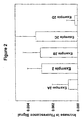
Figure 2 is a graphic illustration of cell proliferation measured as slope of fluorescence after treatment. -
Figure 3 is a graphic illustration comparing the activity of ammonium hydroxide and sodium hydroxide neutralized alpha-hydroxy acids in combination with retinol. -
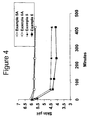
Figure 4 is a graphic illustration of skin pH over time before and after treatment. - According to one embodiment of the present invention there are provided compositions which include:
- (A) retinol;
- (B) a dermatologically active hydroxy acid; and
- (C) 2-dimethylaminoethanol (N, N-dimethylethanolkamine or DMAE).
- The compositions preferably contain an acid neutralizing effective amount of DMAE.
- Another embodiment of the present invention provides compositions which further include:
- (D) at least one second neutralizing agent.
- According to yet another embodiment of the present invention, there are provided compositions which include:
- (A) retinol; and
- (B) an N,N-dimethylethanolammonium salt of a dermatologically active hydroxy acid.
- Examples of such salts include N1N-dimethylethanolammonium glycolate. Optionally, a second neutralized salt of a dermatologically active acid is included in the compositions.
- Further provided are methods for reducing fine lines, wrinkles, skin roughness, and pore size and for increasing the clarity of a skin surface, cellular turnover, skin radiance and akin smoothness in an animal, for example, a mammal, such as a human, in need thereof.
- Compositions as described above are administered topically to the skin of the animal.
- Methods for preparing the compositions above are also provided.
- Other features and advantages of the invention will be apparent from the detailed description of the invention, the drawings, and the claims.
- In one embodiment, the present formulations provide compositions which have a storage pH of about 5 or higher. This provides storage stability for the retinol. However, the pH of these compositions drops to below 5 when applied to the skin. This allows the hydroxy acid(s) and/or other skin beneficial acids(s) therein to become active upon application of the composition to the skin.
- Retinol is also known as vitamin A alcohol. Retinol is chemically and physically unstable at a pH below about 5. It is useful in reducing fine lines at wrinkles in skin. It is also useful in reducing mottled hyperpigmentation of skin. Other retinoids having pH dependent stability may also be used in combination with or in place of retinol in the present invention.
- Hydroxy acids useful in the present invention are either alpha- or beta-hydroxy acids, poly-hydroxy acids, or any combinations of any of the foregoing. Preferably, the hydroxy acid is an alpha-hydroxy acid. Examples of alpha hydroxy acids include, but are not limited to, glycolic acid, malic acid, tartaric acid, lactic acid, pyruvic acid, citric acid, or any combination of any of the foregoing. Special mention is made of glycolic acid.
- Beta-hydroxy acids include, but are not limited to, salicylic acid.
- Other suitable hydroxy acids are disclosed in
U.S. Patent No. 5, 889, 054 . - Other acids suitable for use in the present invention include, but are not limited to, ascorbic acid and derivatives thereof. Suitable ascorbic acid derivatives include, but are not limited to, magnesium ascorbyl phosphate; sodium ascorbyl phosphate; sodium ascorbate; and ascorbyl glucosides.
- Suitable second neutralizing agents which may be included in the composition include, but are not limited to, alkali hydroxides, such as sodium hydroxide and potassium hydroxide; and organic bases, such as alkanolamines, including, but not limited to, diethanolamine, triethanolamine, and aminobutanol; ammonium hydroxide, and amino acids, including, but not limited to, arginine and lysine; and any combination of any of the foregoing. A preferred second neutralizing agent is sodium hydroxide.
- When utilized, ammonium hydroxide is typically added as a solution containing from about 27 to about 31 percent by weight of ammonium hydroxide based upon 100 percent by weight of total ammonium hydroxide solution.
- The compositions of the present invention may also include other adjuvants, such as, for example, vehicles including, but not limited to, water or alcohol; humectants, including, but not limited to, glycerin; buffering agents including, but not limited to, citric acid and sodium citrate; viscosity adjusters, including, but not limited to, carbomer gelling agents, gum derivatives, and other viscosity controlling, decreasing, and increasing agents; preservatives including, but not limited to, parabens, such as methylparaben and propylparaben, and phenoxyethanol; emulsifiers including, but not limited to, polysorbate 80, glyceryl distearate, POE 10 stearyl ether, steareth 10, ceateareth 20 and stearyl alcohol, and ceteareth 20 and cetearyl alcohol; conditioning agents including, but not limited to, octyl hydroxystearate, stearyl alcohol, lactose, and dimethicone; emollients including, but not limited to, cholesterol NF, petrolatum, mineral oils and esters including, but not limited to, isopropyl myristate, isopropyl palmitate, 1-decene polymer (hydrogenated), and C12-C15 alcohol benzoates; thickeners, including, but not limited to, binders, polyacrylamide, C13-C14 isoparafin, and laureth-7; antioxidants, including, but not limited to ascorbic acid, butylated hydroxytoluene (BHT), tocopheryl acetate, and the like; UV stabilizers; UV radiation absorbers (sunscreen filters); fragrances; colorants; chelating agents, including, but not limited to, disodium ethylenediaminetetraacetate (EDTA); or any combinations of any of the foregoing. Examples of these adjuvants are disclosed in the International Cosmetic Ingredient Dictionary and Handbook, 7th Ed. (1997)
- These compositions can be formulated as creams, gels, or liquids, and preferably are prepared as lotions. These compositions can be prepared as liposomes, including, but not limited to, unilamellar, multilamellar, or paucilamellar vesicles; nanospheres; microsponges; emulsions, such as a multiple emulsion and a cleansing emulsion; or any combination of any of the foregoing by methods known to those skilled in the art. In one embodiment, the composition is prepared as a paucilamellar vesicle (e.g. containing the retinoid and/or the dermatologically active acid or salt thereof) having, for example, between 2 and 10 lipid bilayers and a lipophilic core which may contain an apolar oil or wax.
- The compositions are typically neutralized to a pH above about 4.5, preferably ranging from about 4.5 to about 8 and most preferably from about 5 to about 6. The amount of DMAE and optionally second neutralizing agent useful herein is that amount sufficient to adjust the pH of the compositions to the above pH ranges. The amount of volatile base in the compositions of the present invention is preferably that amount sufficient to adjust the pH of the acid from about 4.0 or less to at least about 5.
- A preferred method of preparation includes neutralizing the composition to a pH of about 4.0 or less with the aforementioned second neutralizing agent and then further neutralizing the composition to a pH of at least about 5 with the DMAE .
- The amount of retinol in these compositions is typically a fine line-, wrinkle-, or mottled pigmentation-reducing effective amount. The amount of retinoid retinol is at least about 0.001 percent by weight, (e.g., about 0.01 to about 10 percent, such as about 0.01 to about 1 percent), based upon 100 percent by weight of total composition.
- The amount of acid, or salt of the acid is typically a skin surface clarity, cellular turnover-, skin radiance-, skin smoothness-, skin permeation-, or collagen synthesis-increasing effective amount. Preferably, this amount ranges from about 0.1 to about 20 percent by weight based upon 100 percent by weight of total composition. More preferably this amount ranges from about 1 to about 12 percent by weight, and most preferably, this amount is from about 4 to about 8 percent by weight, based upon 100 percent by weight of total composition.
- The composition preferably contains from about 1 to about 99 percent, and more preferably from about 60 to about 95 percent by weight of water, based upon 100 percent by weight of total composition.
- Generally, the composition contains sufficient thickener to impart body to the composition without causing it to become so viscous as to hinder spreadability of the composition. The composition also preferably contains up to about 5 percent by weight of a viscosity adjuster, up to about 20 percent by weight of an emollient, from about 0.1 to about 10 percent by weight of an emulsifier, up to about 5 percent by weight of a spreading agent, up to about 10 percent by weight of a thickener, a preservative, a chelating agent, and a humectant, based upon 100 percent weight of total composition. More preferably, the composition contains from about 0.1 to about 2 percent by weight of a viscosity adjuster, from about 3 to about 5 percent by weight of an emulsifier, from about 1 to about 2 percent by weight of a spreading agent, an antimicrobially effective amount of a preservative, and from about 3 to about 5 percent by weight of a thickener, based upon 100 percent weight of total composition.
- Without being bound by any theory, applicants believe that by using a salt of the acid and a volatile base, the storage pH of the present composition can remain above 5, thereby providing a stable atmosphere for the retinol or any other pH sensitive ingredient. However, when applied to the skin, the pH of the salt of the acid changes by volatilization of the volatile base. The pH then drops to a range in which the acid can cause beneficial changes.
- The compositions can be applied topically to a mammal, and preferably a human, in need of retinol, acids, or a combination thereof. Typically, the amount applied will be that amount effective to accomplish the purpose of application.
- The following examples illustrate the invention without limitation. Examples 1 - 12, although outside the scope of the present invention, are included to illustrate methods for preparing retinol-containing compositions, and the properties of such compositions. All amounts are given as weight percentages based upon 100 percent by weight of total composition unless noted otherwise.
- A retinol/alpha-hydroxy acid composition having the formulation of Table 1 and a pH of about 6 and containing paucilamellar vesicles was prepared by a shear mixing method. The apparatus used to prepare the liposomes by the shear mixing method is described in
U.S. Patent No. 4,895,452 , which is hereby incorporated by reference. A mixture containing the appropriate amounts of the ingredients for the lipid phase was heated in a container at about 75° C until all of the lipids melted. The lipid melt was then cooled to about 65° C. The ingredients for the aqueous phase were mixed together, heated to about 75° C to dissolve them, and then cooled to about 60° C. The lipid melt and aqueous phase mixture were then poured into separate holding reservoirs of the shear mixing apparatus. The positive displacement pump for the lipid melt and aqueous phase mixture feed lines were turned on. The feed rate was adjusted to 1 part lipid to 4 parts aqueous phase. The aqueous phase mixture and lipid melt were fed through injection jets into a cylindrical mixing chamber tangentially with respect to the cylinder wall. In the mixing chamber, the two streams of flowing liquid intersect in such a manner as to cause shear mixing that leads to the formation of liposomes. The liposomes formed were then withdrawn through an exit tube and transferred to a Cafero mixing vesicle. The liposomes were cooled to 40° C, under mixing at 200 rpm. After cooling, the single addition components listed in Table 1, were added sequentially. The resultant mixture was then mixed at 200 rpm for about 30 minutes. The formulation was allowed to cool to room temperature under ambient conditions.Table 1 Retinol/Alpha-Hydroxy Acid Liposome Formulation-pH6 TRADE NAME CHEMICAL NAME FUNCTION %WT/W T AQUEOUS PHASE Deionized Water D.I. Water Vehicle 60.93 Glycerin 916 Glycerin Humectant 4 Citric Acid Citric Acid Buffering Agent 0.13 Sodium Citrate Sodium Citrate Buffering Agent 0.5 Sodium Chloride Sodium Chloride Viscosity Adjuster 0.1 Methyl Parasept Methylparaben Preservative 0.25 Propyl Parasept Propylparaben Preservative 0.15 Tween 80 Polysorbate 80 Emulsifier 0.7 Glypure (70%) Glycolic Acid Skin Conditioner 5.71 NH4OH∧ Ammonium Hydroxide (27 to 31% Solution) pH Adjuster (pH=6) 3.2 LIPID PHASE Wickenol 171 Octyl Hydroxystearate Conditioning Agent 5.8 Kessco GDS Glyceryl Distearate Emulsifier 2.8 Cholesterol, NH Cholesterol NF Emulsifer 1 BRIJ 76 POE 10 Stearyl Ether Emulsifer 1.4 Protocol ST 20G Ceteareth 20 and Stearyl Alcohol Emulsifier 3 Protocol CS 20D Ceteareth 20 and Stearyl Alcohol Emulsifier 3 Stearyl Alcohol Stearyl Alcohol Skin Conditioner 0.5 Retinol 50CJ** Retinol in Polysorbate-20 Skin Conditioner 0.4 BHT BHT Antioxidant 0.1 Vitamin E Acetate Tocopheryl Acetate Antioxidant 0.1 SINGLE ADDITION COMPONENTS Emeressence 1160 Phenoxyethanol Preservative 0.73 Dimethicone 47V 100 Centistoke Dimethicone Skin Conditioner 2.5 Sepigel 305 Polyacrylamide, C13-24 Isoparrifin and Laureth-7 Thickener 3 **Retinol 50CJ is available from BASF of Mount Olive, NJ, and contains 50% by weight of retinol.
^Amount of NH4OH required to reach pH of 6 is estimated; each batch will be titrated to pH=6. - The formulation was applied to the skin, and the pH of the skin was measured over time. Results are illustrated in
Figure 1 . The pH of the preparation dropped to about 4.1 within 15 minutes of application. This reduced the skin pH to about 4. - A retinol/alpha-hydroxy acid containing composition having the formulation of Table 2 and a pH of about 4 was prepared as described in Example 1. The amount of ammonium hydroxide in this composition was approximately half the amount incorporated in the composition of Example 1.
Table 2 Retinol/Alpha-Hydroxy Acid Liposome Formulation - pH4 TRADE NAME CHEMICAL NAME FUNCTION %WT/WT AQUEOUS PHASE (qs with DI water) Deionized Water D.I. Water Vehicle 62.43 Glycerin 916 Glycerin Humectant 4 Citric Acid Citric Acid Buffering Agent 0.13 Sodium Citrate Sodium Citrate Buffering Agent 0.5 Sodium Chloride Sodium Chloride Viscosity Adjuster 0.1 Methyl Parasept Methylparaben Preservative 0.25 Propyl Parasept Propylparaben Preservative 0.15 Tween 80 Polysorbate 80 Emulsifier 0.7 Glypure (70%) Glycolic Acid Skin Conditioner 5.71 NH4OH∧ Ammonium Hydroxide 27 to 31% Solution pH Adjuster (pH=4) 1.7 LIPID PHASE Wickenol 171 Octyl Hydroxystearate Conditioning Agent 5.8 Kessco GDS Glyceryl Distearate Emulsifier 2.8 Cholesterol, NH Cholesterol NF Emollient 1 BRIJ 76 POE 10 Stearyl Ether Emulsifer 1.4 Protocol ST 20G Ceteareth 20 and Stearyl Alcohol Emulsifier 3 Protocol CS 20D Ceteareth 20 and Stearyl Alcohol Emulsifier 3 Stearyl Alcohol Stearyl Alcohol Skin Conditioner 0.5 Retinol 50CJ** Retinol in Polysorbate-20 Skin Conditioner 0.4 BHT BHT Antioxidant 0.1 Vitamin E Acetate Tocopheryl Acetate Antioxidant 0.1 SINGLE ADDITION COMPONENTS Emeressence 1160 Phenoxyethanol Preservative 0.73 Dimethicone 47V 100 Centistoke Dimethicone Skin Conditioner 2.5 Sepigel 305 Polyacrylamide, C13-24 Isoparrifin and Laureth-7 Thickener 3 **Retinol 50CJ is available from BASF of Mount Olive, NJ, and contains 50% by weight of retinol.
∧Amount of NH4OH required to reach pH of 4 is estimated. - The formulation was applied to skin, and the pH of the skin was measured over time. Results are illustrated in
Figure 1 . - A retinol/alpha-hydroxy acid containing composition was prepared as described in Example 1 above, except sodium hydroxide was substituted for the ammonium hydroxide.
- The formulation was applied to skin, and the pH of the skin was measured over time. Results are illustrated in
Figure 1 . - An alpha-hydroxy acid containing composition having 8 percent by weight sodium glycolate at a pH of about 3.5 and no retinol was prepared as described in Example 1 above.
- The formulation was applied to skin, and the pH. of the skin was measured over time. Results are illustrated in
Figure 1 . - A composition containing 0.15 percent by weight of retinol and 4 percent by weight of glycolic acid, neutralized with ammonium hydroxide to a pH of about 6, was prepared as described in Example 1 above.
- An in vivo study of proliferative activity on skin was conducted. The marker of proliferative activity is an increase in fluorescent signal in the ultraviolet portion of the light spectrum. Over the course of 11 days of application, the fluorescence of the epidermis (exciting with 296 nm radiation, monitoring fluorescence at 340 nm) increases with increased proliferation activity. This fluorescence marker also increases after another proliferation inducing treatment such as tape-stripping, and has been shown to correlate with increased cell turnover-rate as measured by increased loss of epidermal stain, dansyl chloride.
- The slope of the increased fluorescence is illustrated in
Figure 2 . - An in vivo study as described in Example 2 was conducted using a preparation containing no glycolic acid or retinol at pH 6 (placebo).
- The slope of the increased fluorescence is illustrated in
Figure 2 . - An in vivo study as described in Example 2 was conducted using a preparation containing 4 percent by weight of partially neutralized glycolic acid at
pH 4 without retinol (Avon ANEW®). - The slope of the increased fluorescence is illustrated in
Figure 2 . - An in vivo study as described in Example 2 was conducted using a preparation containing 8 percent by weight of glycolic acid partially neutralized at pH 3.8 without retinol (Neutrogena HEALTHY SKIN® ).
- The slope of the increased fluorescence is illustrated in
Figure 2 . - An in vivo study as described in Example 2 was conducted on untreated skin.
- The slope of the increased fluorescence is illustrated in
Figure 2 . -
Figure 2 illustrates a significant increase in fluorescence activity and, therefore, cell proliferation in the retinol/glycolic acid preparation of Example 2 in comparison with both a placebo (Example 2A) and untreated skin (Example 2D). -
Figure 2 also illustrates a significant increase in fluorescence activity and, therefore, cell proliferation in the retinol/glycolic acid preparation of Example 2 which is similar to that of glycolic acid containing products having pH=s of about 4 (Comparative Examples 2B-D). - A composition containing 0.15 percent by weight of retinol and 4 percent by weight of glycolic acid neutralized to pH 5.5 with ammonium hydroxide as in Example 1 was prepared.
- Fluorescence was measured as in Example 2. Results are illustrated in
Figure 3 . - A composition containing 0.15 percent by weight of retinol and 4 percent by weight of glycolic acid neutralized to pH 5.5 with sodium hydroxide as in Example 1 was prepared.
- Fluorescence was measured as in Example 2. Results are illustrated in
Figure 3 . - The fluorescence of untreated skin was measured as in Example 2. Results are illustrated in
Figure 3 . -
Figure 3 illustrates that while ammonium glycolate (Example 3) dissociates when applied to the skin, sodium glycolate apparently does not (Comparative Example 3A). The latter results in little change in proliferative activity of the skin, and thus no apparent skin benefit. - A composition prepared as in Example 1 was stored for 13 weeks at 40° C (simulating 2 years of ambient aging). This preparation retained 87% of the original retinol content after storage.
- A composition prepared in Comparative Example 1A was stored for 13 weeks at 40° C (simulating 2 years of ambient aging). This preparation retained only 52% of the original retinol content after storage.
- A retinol/alpha-hydroxy acid containing composition having the formulation of Table 3 and containing paucilamellar vesicles was prepared as in Example 1 above. After the single addition components were added, a slurry of water and Cabopol ETD 2020 was added to the composition.
Mirasil DM 100 and Phenoxetol were added thereto sequentially under mixing at 200 rpm for about 30 minutes. The formulation was allowed to cool to about 25E C under ambient conditions. The composition did not contain ammonium hydroxide.Table 3 TRADE NAME CHEMICAL NAME FUNCTION 1% WT/WT LIPID PHASE Brij 76 Steareth-10 Emulsifier 1.4 Kessco GDS Glyceryl Distearate Emulsifier 2.8 Cholesterol NF Cholesterol Emulsifier 1 Procol ST 20G Ceteareth-20 & Stearyl Alcohol Emulsifier 3 Procol CS 20D Cereareth-20 & Cetearyl Alcohol Emulsifier 3 Lanol S Stearyl Alcohol Skin Conditioner 0.5 Wickenol 171 Octyl Hydroxystearate Conditioning Agent 5.8014 BHT BHT Antioxidant 0.1 Tween 80 Polysorbate 80 Emulsifier 0.7 Retinol 50CJ** Retinol in Polysorbate-20 Skin Conditioner 0.25 AQUEOUS PHASE Eau purifiee Aqua Vehicle 41.0843 Pricerin 9099 Glycerin Humectant 4 Methylparaben Methylparaben Preservative 0.25 Propylparaben Propylparaben Preservative 0.15 Disodium EDTA Disodium EDTA Chelator 0.1 Lactose Rectapur Lactose Humectant 5 Glypure 70% Glycolic acid (70%) Skin Conditioner 5.7143 Sodium Hydroxide Sodium Hydroxide pH Adjuster 1.32 Eau purifiee Aqua Vehicle 20 Carbopol ETD 2020 Acrylates/ C10-30 Alkyl Acrylate crosspolymer Thickener 0.6 SINGLE ADDITION COMPONENTS Mirasil DM 100 Dimethicone Skin Conditioner 2.5 Phenoxetol Phenoxyethanol Preservative 0.73 **Retinol 50CJ is available from BASF of Mount Olive, NJ, and contains 50% by weight of retinol. - A control having the formulation of Table 3 was prepared excluding ammonium hydroxide and sodium hydroxide (Example 5A). The composition and control were applied to skin, and the pH of the skin was measured over time. Results are illustrated in
Figure 4 . - A retinol/alpha-hydroxy acid containing composition having the formulation of Table 4 and a pH of about 5.8 was prepared as described in Example 5, except 3% by weight of ammonium hydroxide was substituted for the sodium hydroxide in Example 5.
Table 4 TRADE NAME CHEMICAL NAME FUNCTION % WT/WT Brij 76 Steareth-10 Emulsifier 1.4 LIPID PHASE Kessco GDS Glyceryl Distearate Emulsifier 2.8 Cholesterol NF Cholesterol Emulsifier 1 Procol ST 20G Ceteareth-20 & Stearyl Alcohol Emulsifier 3 Procol CS 20D Cereareth-20 & Cetearyl Alcohol Emulsifier 3 Lanol S Stearyl Alcohol Emulsifier 0.5 Wickenol 171 Octyl Hydroxystearate Emulsifier 5.8014 BHT BHT Antioxidant 0.1 Tween 80 Polysorbate 80 Emulsifier 0.7 Retinol 50CJ** Retinol in Polysorbate-20 Skin Conditioner 0.25 Eau purifiee Aqua Vehicle 39.4043 AQUEOUS PHASE Pricerin 9099 Glycerin Humectant 4 Methylparaben Methylparaben Preservative 0.25 Propylparaben Propylparaben Preservative 0.15 Disodium EDTA Disodium EDTA Chelator 0.1 Lactose Rectapur Lactose Humectant 5 Glypure 70% Glycolic acid (70%) Skin Conditioner 5.7143 Ammonium Hydroxide Ammonium Hydroxide (30%) pH Adjuster 3 Eau purifiee Aqua Vehicle 20 Carbopol ETD 2020 Acrylates/ C10-30 Alkyl Acrylate crosspolymer Thickener 0.6 SINGLE ADDITION COMPONENTS Mirasil DM 100 Dimethicone Skin Conditioner 2.5 Phenoxetol Phenoxyethanol Preservative 0.73 **Retinol 50CJ is available from BASF of Mount Olive, NJ, and contains 50% by weight of retinol. - A control having the formulation of Table 4 was prepared excluding ammonium hydroxide (Example 6A). The composition and control were applied to skin, and the pH of the skin was measured over time. Results are illustrated in
Figure 4 . - Two retinol/alpha-hydroxy acid containing liposomal compositions having the formulations of Table 5 below are prepared as follows.
Table 5 TRADE NAME CHEMICAL NAME Function Example 7 (%W/W) Example 8 (% W/W) Ranges LIPID PHASE Glyceryl Dilaurate Glyceryl Dilaurate Nonionic Surfactant 2.8 2.8 1.4-8.4 Cholesterol Cholesterol Nonionic Surfactant 0.9 0.9 0.45-2.7 POE 10 Stearyl Alcohol POE 10 Stearyl Alcohol Nonionic Surfactant 2.5 2.5 1.25-7.5 Laureth-9 Laureth-9 Nonionic Surfactant 1.24 1.24 0.62-3.72 Butylated Hydroxytolue ne (BHT) BHT Anti-oxidant 0.05 0.05 0-3 Retinol 50C™ Retinol in Polysorbate-20 Skin Conditione r 0.2 0.4 0.01-2 AQUEOUS PHASE Citric Acid Citric Acid Anti-oxidant 0.4 0.4 0.1-0.8 Trisodium Citrate dihydrate Trisodium Citrate dihydrate Buffer 0.6 0.6 0.1-0.8 Ascorbic Acid Ascorbic Acid Anti-oxidant 0.01 0.01 0.01-0.1 Glycerin Glycerin Humectant 0 4.0 0-20 Disodium EDTA Disodium EDTA Chelating Agent Preservati ve 0.2 0.2 0.01-0.2 Phenoxyethan ol Phenoxyethan ol Preservati ve 0.5 0.5 0.01-0.5 Methylparabe n Methylparabe n Preservati ve 0.25 0.25 0.01-0.2 Propylparabe n Propylparabe n Preservati ve 0.15 0.15 0.01-0.2 Glypure (70%) Skin Conditione r 5.71 5.71 0.01-15 Ammonium Hydroxide (27 to 31%) Ammonium Hydroxide (27 to 31%) pH adjuster (pH=6) 3.2 3.2 0.01-10 Water Water Carrier 81.29 77.06 40-90 - These compositions may be prepared by the following two methods.
- 1. Shear Mixing Method: Appropriate amounts of the lipid phase ingredients are mixed in a container heated to about 75° C until all the lipids have melted. The lipid melt is then cooled to about 65° C. The aqueous phase ingredients are mixed and heated to about 75° C to dissolve them and then cooled to about 60° C. The lipid melt and aqueous phase mixture are poured into separate holding reservoirs of a shear mixing apparatus for preparing liposomes as described in
U.S. Patent No. 4,895,452 . The positive displacement pump for the lipid and aqueous feed lines is turned on. The feed rate will depend on the desired viscosity of the composition. For a thinner consistency, a feed rate of 1 part lipid to 9 parts aqueous phase may be utilized. For thicker consistencies, a feed rate of 1 part lipid phase to 4 parts aqueous phase may be utilized. After the feed rate is adjusted, valves to the feed lines are opened and the aqueous phase mixture and lipid melt are fed through injection jets into a cylindrical mixing chamber tangentially with respect to the cylinder wall. In the mixing chamber, the two streams of liquid intersect in such a manner as to cause shear mixing that causes the formation of liposomes. The liposomes are then withdrawn through an exit tube. - 2. Syringe Method: Appropriate amounts of the lipid phase ingredients are mixed in a beaker at 75° C until the lipids melt. The lipid melt is drawn into a syringe, which was preheated in a water bath to about 75° C. A second syringe containing appropriate amounts of the aqueous phase ingredients is preheated in a water bath to about 70° C. The two syringes were then connected via a 3-way metal stopcock. The ratio of aqueous phase mixture to lipid phase mixture was about 4:1 or 4 ml of aqueous phase mixture to 1 ml of lipid phase mixture. The ratio of aqueous phase mixture to lipid phase mixture can be adjusted to obtain the desired viscosity. After injecting the aqueous phase mixture into the lipid phase mixture, the resulting mixture is rapidly mixed back and forth between the two syringes several times until the contents cool to about 25-30° C.
- Two oil-in-water emulsions of the present invention are shown in Table 6.
Table 6 TRADE NAME CHEMICAL NAME Function Example 9 (%W/W) Example 10 (%W/W) Ranges OIL PHASE Cetearyl Glucoside Cetearyl Glucoside Surfactant 1.4 1.4 0.1-2.8 C12-15 Alkyl Benzoate C12-15 Alkyl Benzoate Surfactant 4.0 4.0 1-6 Octyl Hydroxystea rate Octyl Hydroxysteara te Emollient 1.0 1.0 0-5 Dimethicone Dimethicone Spreading Agent 1.0 1.0 0-5 Cyclomethic one Cyclomethicon e Spreading Agent 1.0 1.0 0-5 Cetyl Alcohol Cetyl Alcohol Emollient 2.5 2.5 0-4 Butylated Hydroxytolu ene BHT Anti-oxidant 0.05 0.05 0-3 Octyl Methoxycinn amate Octyl Methoxycinnam ate Sunscreen 6.0 6.0 0-10 Propylparab en Propylparaben Preservative 0.5 0.1 0-0.5 Vitamin E acetate Vitamin E acetate Anti-oxidant 0.5 0.5 0-0.5 Retinol Retinol Anti-Wrinkle 0.25 0.4 0.01-5 Tocopherol Acetate Tocopherol Acetate Anti-oxidant 0.5 0.5 0-0.5 AQUEOUS PHASE Glycerin Glycerin Humectant 3.0 3.0 0-20 D-Pathenol D-Pathenol Pro-Vitamin 0.5 0.5 0-5 Disodium EDTA Disodium EDTA Chelator, whitening agent 0.1 0.1 0.01-1 Methyl Paraben Methyl Paraben Preservative 0.2 0.2 0-0.3 Carbomer Thickener 0.35 0.35 0-3 Glycolic acid (70%) Glycolic acid (70%) Skin Conditioner 5.71 5.71 0-15 Ammonium Hydroxide Ammonium Hydroxide pH adjuster 3.2 3.2 0-1 Deionized Water Deionized Water Carrier 68.19 68.04 50-80 - Each emulsion is prepared by mixing the oil phase ingredients and heating the mixture to about 85° C. The oil phase mixture is then cooled to about 60° C.
- In a separate vessel, the carbomer is slowly added to the water. After mixing for about 10 minutes the remaining aqueous phase ingredients are added and the mix is heated to about 60° C.
- The two phases are then combined, mixed for about 10 minutes, and cooled to room temperature. One or more depigmentation agents may be added to the formulations in these examples.
- Two water-in-oil emulsions of the present invention are shown in Table 7.
Table 7 TRADE NAME CHEMICAL NAME Function Example 11 (%W/W) Example 12 (%W/W) Preferred Ranges OIL PHASE Mineral Oil Mineral Oil Emollient 25.0 25.0 40-80 Sorbitan Monooleate Sorbitan Monooleate Surfactant 5.0 5.0 1-6 Stearyl Alcohol Stearyl Alcohol Emollient 25.0 25.0 20-60 Dimethicone Dimethicone Spreading Agent 1.0 1.0 1-5 Cetyl Alcohol Cetyl Alcohol Emollient 2.0 2.0 0.1-10 Hydrogenated Lecithin Hydrogenate d Lecithin Anti-oxidant 3.0 3.0 0-10 Parsol MCX Sunscreen 3.0 3.0 0-10 Butylated Hydroxytoluene BHT Anti-oxidant 0.05 0.05 0-3 Retinol Retinol Anti-Wrinkle 0.25 0.4 0.01-5 Propylparaben Propylparab en Preservati ve 0.5 0.5 0.01-0.5 Vitamin E acetate Vitamin E acetate Anti-oxidant 0.5 0.5 0.01-0.5 AQUEOUS PHASE Glycerin Glycerin Humectant 3.0 3.0 0-20 Methyl Paraben Methyl Paraben Preservative 0.2 0.2 0.01-0.3 Water Water Carrier 22.59 22.44 20-45 Glycolic acid (70%) Glycolic acid (70%) Skin Conditioner 5.71 5.71 0-15 Ammonium Hydroxide Ammonium Hydroxide pH adjuster 3.2 3.2 0-1 - Each emulsion is prepared by melting stearyl alcohol and mineral oil at about 70° C. The other oil phase ingredients are added and the mixture is heated to about 75° C. The aqueous phase ingredients are dissolved in water and warmed to about 70° C. The aqueous phase mixture is added to the oil phase mixture. The resulting mixture is stirred until it congeals.
- An oil-in-water emulsion of the present invention is shown in Table 8.
- The emulsion is prepared by mixing the oil phase ingredients and heating the mixture to about 85° C. The oil phase mixture is then cooled to about 60° C. In a separate vessel, the water phase ingredients are added, mixed and heated to about 60° C.
- The two phases are then combined, mixed for about 10 minutes, and cooled to about 35° C, at which time the post additions are added and mixed, followed by the addition and mixing of the glycolic acid/malic acid/deionized water buffer pre-mix. The retinol 50C is then added and mixed last.
Table 8 CTFA Name Trade Name FUNCTION Wt.% OIL PHASE C12-15 Alkyl Benzoate Finsolv TN Solubilizing Agent 4.00 Octyl Hydroxystearate Wickenol 171 emolient 1.00 Dimethicone, 100 centistoke Dimethicone 47V-100 emolient 1.00 Steareth 2Brij 72 emulsifier 0.60 Cetyl Alcohol Cetal emolient, emulsifier 2.50 Steareth 20 Brij 721 emulsifier 0.90 BHT BHT antioxidant for cosmetics 0.10 Pemulen TR1 Acrylates/C10-30 Alkyl thickener/ emulsifier 0.50 Acrylate Crosspolymer WATER PHASE Deionized Water Water Solvent 62.59 Disodium EDTA EDTA Chelating Agent 0.10 Glycerin Glycerin 916 99.7% USP. humectant, emollient 3.00 Panthenol D-Panthenol U.S.P. FCC moisturizing agent 0.50 Phenoxyethanol Emeressence 1160 perservative 0.73 Methylparaben Methylparaben preservative 0.35 Propylparaben Propylparaben preservative 0.17 POST ADDITIONS DMAE/Tyrosine Premix L-Tyrosine L-Tyrosine active 0.50 Deionized Water Deionized Water solvent 15.00 DMAE 2 - (dimethylamino) - ethanol active 3.00 BUFFER PRE-MIX Glycolic Acid Glypure 70 buffer 1.20 Malic Acid Malic Acid buffer 0.84 Deionized Water Deionized water solvent 1.32 Retinol 50C Vitamin A alcohol in Polysorbate 60 vitamin A 0.10 - Many variations of the present invention will suggest themselves to those skilled in the art in light of the above, detailed description.
Claims (16)
- A composition comprising:(A) retinol;(B) a dermatologically active hydroxy acid; and(C) 2-dimethylaminoethanolwherein components (B) and (C) are optionally present in the form of the N,N-dimethylethanolammonium salt of said dermatologically active hydroxy acid.
- A composition as defined in claim 1, wherein said dermatologically active hydroxy acid is selected from the group consisting of ascorbic acid and derivatives thereof.
- A composition as defined in claim 1, wherein said hydroxy acid is an alpha-hydroxy acid.
- A composition as defined in claim 3, wherein said alpha-hydroxy acid is selected from the group consisting of malic acid, tartaric acid, lactic acid, pyruvic acid, citric acid, or any combination of any of the foregoing.
- A composition as defined in claim 4, wherein said alpha-hydroxy acid is glycolic acid.
- A composition as defined in claim 1, wherein said retinol comprises from about 0.01 to about 10 percent by weight, based upon 100 percent by weight of total composition.
- A composition as defined in claim 6, wherein the amount of said acid ranges from about 0.1 to about 20 percent by weight, based upon 100 percent by weight of total composition.
- A composition as defined in claim 6, wherein said composition comprises from about 0.01 to about 10 percent by weight of retinol and from about 0.1 to about 20 percent by weight of said glycolic acid, based upon 100 percent of total composition.
- A composition as defined in claim 1, wherein the amount of 2-dimethylaminoethanol is effective to neutralize said composition to a pH ranging from about 4.5 to about 8.
- A composition as defined in claim 9, wherein the amount of 2-dimethylaminoethanol is sufficient to neutralize said composition to a pH ranging from about 5 to about 6.
- A composition as defined in claim 1, wherein said retinol is within a paucilamellar vesicle.
- A composition as defined in claim 1, further comprising a second neutralizing agent.
- A composition as defined in claim 12, wherein said second neutralizing agent comprises an alkali hydroxide, alkanolamine, amino acid, or any combination of any of the foregoing.
- A composition as defined in claim 13, wherein said second neutralizing agent comprises sodium hydroxide, potassium hydroxide, diethanolamine, triethanolamine, aminobutanol, arginine, lysine, or any combination of any of the foregoing.
- A composition as defined in claim 1, wherein said N, N-dimethylethanolammonium salt is N,N-dimethylethanolammonium glycolate.
- A cosmetic method for reducing fine lines, wrinkles, skin roughness, and pore size and for increasing the clarity of a skin surface, cellular turnover, skin radiance, skin smoothness, skin permeation, or collagen synthesis in a mammal in need thereof, said method comprising topically administering a composition as defined in claim 1 to said mammal.
Applications Claiming Priority (3)
| Application Number | Priority Date | Filing Date | Title |
|---|---|---|---|
| US09/565,716 US7396526B1 (en) | 1998-11-12 | 2000-05-05 | Skin care composition |
| US565716 | 2000-05-05 | ||
| PCT/US2001/014533 WO2001085129A2 (en) | 2000-05-05 | 2001-05-04 | Skin care composition |
Publications (2)
| Publication Number | Publication Date |
|---|---|
| EP1280508A2 EP1280508A2 (en) | 2003-02-05 |
| EP1280508B1 true EP1280508B1 (en) | 2009-08-12 |
Family
ID=24259810
Family Applications (1)
| Application Number | Title | Priority Date | Filing Date |
|---|---|---|---|
| EP01935082A Expired - Lifetime EP1280508B1 (en) | 2000-05-05 | 2001-05-04 | Skin care composition |
Country Status (7)
| Country | Link |
|---|---|
| EP (1) | EP1280508B1 (en) |
| AT (1) | ATE439169T1 (en) |
| AU (1) | AU2001261206A1 (en) |
| CA (1) | CA2407857C (en) |
| DE (1) | DE60139551D1 (en) |
| ES (1) | ES2328451T3 (en) |
| WO (1) | WO2001085129A2 (en) |
Cited By (2)
| Publication number | Priority date | Publication date | Assignee | Title |
|---|---|---|---|---|
| RU2622020C1 (en) * | 2016-07-15 | 2017-06-08 | Максим Львович Тютиков | Complex cosmetic composition for the skin treatment |
| WO2023161201A1 (en) * | 2022-02-22 | 2023-08-31 | Dsm Ip Assets B.V. | Retinol formulation (vi) |
Families Citing this family (14)
| Publication number | Priority date | Publication date | Assignee | Title |
|---|---|---|---|---|
| US6607735B2 (en) | 2000-12-21 | 2003-08-19 | Johnson & Johnson Consumer Companies, Inc. | Method for reducing the appearance of dark circles under the eyes |
| WO2003099238A1 (en) * | 2002-05-29 | 2003-12-04 | Unilever Plc | Odor control in amine salt containing cosmetic compositions |
| WO2004096167A1 (en) * | 2003-04-25 | 2004-11-11 | Johnson & Johnson Consumer France S.A.S. | Composition containing ethanolamine derivatives and citric acid |
| GB0407908D0 (en) * | 2004-04-07 | 2004-05-12 | Univ York | Ionic liquids |
| EP1884228A1 (en) * | 2006-08-01 | 2008-02-06 | Sara Lee/DE N.V. | Emulsion composition |
| WO2008089408A1 (en) * | 2007-01-18 | 2008-07-24 | Pinsky Mark A | Materials and methods for delivering antioxidants into the skin |
| CA2686511A1 (en) * | 2007-05-11 | 2008-11-20 | Galderma Research & Development | Pharmaceutical or cosmetic preparations for topical and/or parenteral application, preparation methods thereof and use of same |
| JP2011500672A (en) * | 2007-10-18 | 2011-01-06 | サラ リー/デーエー エン.フェー. | Shaving composition having skin care properties |
| MX2011002709A (en) | 2008-09-12 | 2011-04-21 | Amcol International Corp | Low ph retinoid topical compositions. |
| WO2010068903A2 (en) * | 2008-12-11 | 2010-06-17 | L'oreal S.A. | Volumizing smudge resistant mascara composition |
| US8932571B2 (en) | 2009-03-10 | 2015-01-13 | Alfa Biogene International B.V. | Skin care product |
| US8911774B2 (en) * | 2009-05-18 | 2014-12-16 | Cellhealth Technologies Ltd. | Topical composition for anti-aging skin treatment using dual DNA repair mechanism and method of use |
| EP2928485B1 (en) | 2012-12-07 | 2018-04-04 | Alfa Biogene International B.V. | Hsp for use in treatment for imiquimod related side effects |
| US11351099B2 (en) * | 2020-09-04 | 2022-06-07 | Elyse Enterprises LLC | Skincare rejuvenation composition and method of manufacture |
Family Cites Families (3)
| Publication number | Priority date | Publication date | Assignee | Title |
|---|---|---|---|---|
| FR2714602B1 (en) * | 1993-12-30 | 1996-02-09 | Oreal | Anti-acne composition for the simultaneous treatment of the superficial and deep layers of the skin, its use. |
| US5643586A (en) * | 1995-04-27 | 1997-07-01 | Perricone; Nicholas V. | Topical compositions and methods for treatment of skin damage and aging using catecholamines and related compounds |
| US6521237B2 (en) * | 1998-11-12 | 2003-02-18 | Johnson & Johnson Consumer Companies, Inc. | Skin care composition |
-
2001
- 2001-05-04 AU AU2001261206A patent/AU2001261206A1/en not_active Abandoned
- 2001-05-04 WO PCT/US2001/014533 patent/WO2001085129A2/en not_active Ceased
- 2001-05-04 AT AT01935082T patent/ATE439169T1/en not_active IP Right Cessation
- 2001-05-04 DE DE60139551T patent/DE60139551D1/en not_active Expired - Lifetime
- 2001-05-04 CA CA002407857A patent/CA2407857C/en not_active Expired - Fee Related
- 2001-05-04 ES ES01935082T patent/ES2328451T3/en not_active Expired - Lifetime
- 2001-05-04 EP EP01935082A patent/EP1280508B1/en not_active Expired - Lifetime
Cited By (2)
| Publication number | Priority date | Publication date | Assignee | Title |
|---|---|---|---|---|
| RU2622020C1 (en) * | 2016-07-15 | 2017-06-08 | Максим Львович Тютиков | Complex cosmetic composition for the skin treatment |
| WO2023161201A1 (en) * | 2022-02-22 | 2023-08-31 | Dsm Ip Assets B.V. | Retinol formulation (vi) |
Also Published As
| Publication number | Publication date |
|---|---|
| CA2407857C (en) | 2009-11-17 |
| WO2001085129A3 (en) | 2002-03-21 |
| CA2407857A1 (en) | 2001-11-15 |
| ATE439169T1 (en) | 2009-08-15 |
| ES2328451T3 (en) | 2009-11-13 |
| DE60139551D1 (en) | 2009-09-24 |
| WO2001085129A2 (en) | 2001-11-15 |
| EP1280508A2 (en) | 2003-02-05 |
| AU2001261206A1 (en) | 2001-11-20 |
Similar Documents
| Publication | Publication Date | Title |
|---|---|---|
| EP1047399B1 (en) | Skin care composition | |
| US6281203B1 (en) | Cosmetic and/or dermatological composition containing salicyclic acid derivative and its use | |
| US6068847A (en) | Cosmetic compositions | |
| CA2407857C (en) | Skin care composition comprising a retinoid, an acid and 2-dimethyl amino ethanol | |
| US5919487A (en) | Nanoparticles coated with a lamellar phase based on silicone surfactant and compositions containing them | |
| JP3435510B2 (en) | Skin care composition | |
| AU674324B2 (en) | Compositions containing imidazoles | |
| JP5465011B2 (en) | Emulsion comprising at least one retinoid and benzoyl peroxide | |
| AU2009331482B2 (en) | A composition comprising a retinoid and method of treating skin conditions | |
| EP1349537B1 (en) | Skin care product containing retinoids and phytoestrogens in a dual compartment package | |
| US6531141B1 (en) | Oil-in-water emulsion containing tretinoin | |
| HU216434B (en) | Dihydroxyacetone-based, tanning cosmetic composition, its preparation and use | |
| US7396526B1 (en) | Skin care composition | |
| JP2004522728A (en) | Skin care products containing retinoids, retinoid boosters, and phytoestrogens in dual compartment packaging | |
| JP2001199874A (en) | Cosmetic composition containing aminophenol derivative | |
| KR20020050745A (en) | Treatment for skin | |
| WO2001043705A2 (en) | Compositions containing a retinoid and a stilbene for skin care | |
| KR102646279B1 (en) | A composition having improved emulsion stability comprising hydroquinone | |
| CZ115699A3 (en) | Cosmetic composition | |
| WO2003075882A2 (en) | Method of depigmenting skin and hairs | |
| MXPA99007373A (en) | Cosmetic and/or dermatological composition containing salicylic acid or its derivatives and its use |
Legal Events
| Date | Code | Title | Description |
|---|---|---|---|
| PUAI | Public reference made under article 153(3) epc to a published international application that has entered the european phase |
Free format text: ORIGINAL CODE: 0009012 |
|
| 17P | Request for examination filed |
Effective date: 20021107 |
|
| AK | Designated contracting states |
Designated state(s): AT BE CH CY DE DK ES FI FR GB GR IE IT LI LU MC NL PT SE TR |
|
| AX | Request for extension of the european patent |
Extension state: AL LT LV MK RO SI |
|
| 17Q | First examination report despatched |
Effective date: 20041115 |
|
| 17Q | First examination report despatched |
Effective date: 20041115 |
|
| 17Q | First examination report despatched |
Effective date: 20041115 |
|
| GRAP | Despatch of communication of intention to grant a patent |
Free format text: ORIGINAL CODE: EPIDOSNIGR1 |
|
| RIC1 | Information provided on ipc code assigned before grant |
Ipc: A61Q 19/00 20060101AFI20080910BHEP |
|
| GRAS | Grant fee paid |
Free format text: ORIGINAL CODE: EPIDOSNIGR3 |
|
| GRAA | (expected) grant |
Free format text: ORIGINAL CODE: 0009210 |
|
| RAP1 | Party data changed (applicant data changed or rights of an application transferred) |
Owner name: JOHNSON & JOHNSON CONSUMER COMPANIES, INC. |
|
| AK | Designated contracting states |
Kind code of ref document: B1 Designated state(s): AT BE CH CY DE DK ES FI FR GB GR IE IT LI LU MC NL PT SE TR |
|
| REG | Reference to a national code |
Ref country code: GB Ref legal event code: FG4D |
|
| REG | Reference to a national code |
Ref country code: CH Ref legal event code: NV Representative=s name: E. BLUM & CO. AG PATENT- UND MARKENANWAELTE VSP Ref country code: CH Ref legal event code: EP |
|
| REG | Reference to a national code |
Ref country code: IE Ref legal event code: FG4D |
|
| REF | Corresponds to: |
Ref document number: 60139551 Country of ref document: DE Date of ref document: 20090924 Kind code of ref document: P |
|
| REG | Reference to a national code |
Ref country code: SE Ref legal event code: TRGR |
|
| REG | Reference to a national code |
Ref country code: ES Ref legal event code: FG2A Ref document number: 2328451 Country of ref document: ES Kind code of ref document: T3 |
|
| PG25 | Lapsed in a contracting state [announced via postgrant information from national office to epo] |
Ref country code: FI Free format text: LAPSE BECAUSE OF FAILURE TO SUBMIT A TRANSLATION OF THE DESCRIPTION OR TO PAY THE FEE WITHIN THE PRESCRIBED TIME-LIMIT Effective date: 20090812 Ref country code: AT Free format text: LAPSE BECAUSE OF FAILURE TO SUBMIT A TRANSLATION OF THE DESCRIPTION OR TO PAY THE FEE WITHIN THE PRESCRIBED TIME-LIMIT Effective date: 20090812 |
|
| NLV1 | Nl: lapsed or annulled due to failure to fulfill the requirements of art. 29p and 29m of the patents act | ||
| PG25 | Lapsed in a contracting state [announced via postgrant information from national office to epo] |
Ref country code: NL Free format text: LAPSE BECAUSE OF FAILURE TO SUBMIT A TRANSLATION OF THE DESCRIPTION OR TO PAY THE FEE WITHIN THE PRESCRIBED TIME-LIMIT Effective date: 20090812 |
|
| PG25 | Lapsed in a contracting state [announced via postgrant information from national office to epo] |
Ref country code: PT Free format text: LAPSE BECAUSE OF FAILURE TO SUBMIT A TRANSLATION OF THE DESCRIPTION OR TO PAY THE FEE WITHIN THE PRESCRIBED TIME-LIMIT Effective date: 20091212 |
|
| PG25 | Lapsed in a contracting state [announced via postgrant information from national office to epo] |
Ref country code: DK Free format text: LAPSE BECAUSE OF FAILURE TO SUBMIT A TRANSLATION OF THE DESCRIPTION OR TO PAY THE FEE WITHIN THE PRESCRIBED TIME-LIMIT Effective date: 20090812 |
|
| PLBE | No opposition filed within time limit |
Free format text: ORIGINAL CODE: 0009261 |
|
| STAA | Information on the status of an ep patent application or granted ep patent |
Free format text: STATUS: NO OPPOSITION FILED WITHIN TIME LIMIT |
|
| PG25 | Lapsed in a contracting state [announced via postgrant information from national office to epo] |
Ref country code: BE Free format text: LAPSE BECAUSE OF FAILURE TO SUBMIT A TRANSLATION OF THE DESCRIPTION OR TO PAY THE FEE WITHIN THE PRESCRIBED TIME-LIMIT Effective date: 20090812 |
|
| 26N | No opposition filed |
Effective date: 20100517 |
|
| PGFP | Annual fee paid to national office [announced via postgrant information from national office to epo] |
Ref country code: FR Payment date: 20100525 Year of fee payment: 10 Ref country code: ES Payment date: 20100611 Year of fee payment: 10 |
|
| PGFP | Annual fee paid to national office [announced via postgrant information from national office to epo] |
Ref country code: IT Payment date: 20100515 Year of fee payment: 10 Ref country code: DE Payment date: 20100430 Year of fee payment: 10 |
|
| PG25 | Lapsed in a contracting state [announced via postgrant information from national office to epo] |
Ref country code: GR Free format text: LAPSE BECAUSE OF FAILURE TO SUBMIT A TRANSLATION OF THE DESCRIPTION OR TO PAY THE FEE WITHIN THE PRESCRIBED TIME-LIMIT Effective date: 20091113 |
|
| PGFP | Annual fee paid to national office [announced via postgrant information from national office to epo] |
Ref country code: CH Payment date: 20100514 Year of fee payment: 10 |
|
| PGFP | Annual fee paid to national office [announced via postgrant information from national office to epo] |
Ref country code: SE Payment date: 20100510 Year of fee payment: 10 |
|
| PG25 | Lapsed in a contracting state [announced via postgrant information from national office to epo] |
Ref country code: MC Free format text: LAPSE BECAUSE OF NON-PAYMENT OF DUE FEES Effective date: 20100531 |
|
| PG25 | Lapsed in a contracting state [announced via postgrant information from national office to epo] |
Ref country code: IE Free format text: LAPSE BECAUSE OF NON-PAYMENT OF DUE FEES Effective date: 20100504 |
|
| REG | Reference to a national code |
Ref country code: CH Ref legal event code: PL |
|
| REG | Reference to a national code |
Ref country code: SE Ref legal event code: EUG |
|
| PG25 | Lapsed in a contracting state [announced via postgrant information from national office to epo] |
Ref country code: CH Free format text: LAPSE BECAUSE OF NON-PAYMENT OF DUE FEES Effective date: 20110531 Ref country code: LI Free format text: LAPSE BECAUSE OF NON-PAYMENT OF DUE FEES Effective date: 20110531 |
|
| REG | Reference to a national code |
Ref country code: FR Ref legal event code: ST Effective date: 20120131 |
|
| PG25 | Lapsed in a contracting state [announced via postgrant information from national office to epo] |
Ref country code: IT Free format text: LAPSE BECAUSE OF NON-PAYMENT OF DUE FEES Effective date: 20110504 |
|
| PG25 | Lapsed in a contracting state [announced via postgrant information from national office to epo] |
Ref country code: FR Free format text: LAPSE BECAUSE OF NON-PAYMENT OF DUE FEES Effective date: 20110531 |
|
| REG | Reference to a national code |
Ref country code: DE Ref legal event code: R119 Ref document number: 60139551 Country of ref document: DE Effective date: 20111201 |
|
| PG25 | Lapsed in a contracting state [announced via postgrant information from national office to epo] |
Ref country code: CY Free format text: LAPSE BECAUSE OF FAILURE TO SUBMIT A TRANSLATION OF THE DESCRIPTION OR TO PAY THE FEE WITHIN THE PRESCRIBED TIME-LIMIT Effective date: 20090812 |
|
| PG25 | Lapsed in a contracting state [announced via postgrant information from national office to epo] |
Ref country code: LU Free format text: LAPSE BECAUSE OF NON-PAYMENT OF DUE FEES Effective date: 20100504 |
|
| PG25 | Lapsed in a contracting state [announced via postgrant information from national office to epo] |
Ref country code: TR Free format text: LAPSE BECAUSE OF FAILURE TO SUBMIT A TRANSLATION OF THE DESCRIPTION OR TO PAY THE FEE WITHIN THE PRESCRIBED TIME-LIMIT Effective date: 20090812 |
|
| PG25 | Lapsed in a contracting state [announced via postgrant information from national office to epo] |
Ref country code: SE Free format text: LAPSE BECAUSE OF NON-PAYMENT OF DUE FEES Effective date: 20110505 |
|
| REG | Reference to a national code |
Ref country code: ES Ref legal event code: FD2A Effective date: 20130610 |
|
| PG25 | Lapsed in a contracting state [announced via postgrant information from national office to epo] |
Ref country code: DE Free format text: LAPSE BECAUSE OF NON-PAYMENT OF DUE FEES Effective date: 20111201 |
|
| PG25 | Lapsed in a contracting state [announced via postgrant information from national office to epo] |
Ref country code: ES Free format text: LAPSE BECAUSE OF NON-PAYMENT OF DUE FEES Effective date: 20110505 |
|
| PGFP | Annual fee paid to national office [announced via postgrant information from national office to epo] |
Ref country code: GB Payment date: 20150429 Year of fee payment: 15 |
|
| GBPC | Gb: european patent ceased through non-payment of renewal fee |
Effective date: 20160504 |
|
| PG25 | Lapsed in a contracting state [announced via postgrant information from national office to epo] |
Ref country code: GB Free format text: LAPSE BECAUSE OF NON-PAYMENT OF DUE FEES Effective date: 20160504 |