EP1277805A1 - Thermoplastic resin composition - Google Patents
Thermoplastic resin composition Download PDFInfo
- Publication number
- EP1277805A1 EP1277805A1 EP01915658A EP01915658A EP1277805A1 EP 1277805 A1 EP1277805 A1 EP 1277805A1 EP 01915658 A EP01915658 A EP 01915658A EP 01915658 A EP01915658 A EP 01915658A EP 1277805 A1 EP1277805 A1 EP 1277805A1
- Authority
- EP
- European Patent Office
- Prior art keywords
- thermoplastic resin
- polytetrafluoroethylene
- resin
- parts
- resin composition
- Prior art date
- Legal status (The legal status is an assumption and is not a legal conclusion. Google has not performed a legal analysis and makes no representation as to the accuracy of the status listed.)
- Withdrawn
Links
Classifications
-
- C—CHEMISTRY; METALLURGY
- C08—ORGANIC MACROMOLECULAR COMPOUNDS; THEIR PREPARATION OR CHEMICAL WORKING-UP; COMPOSITIONS BASED THEREON
- C08L—COMPOSITIONS OF MACROMOLECULAR COMPOUNDS
- C08L23/00—Compositions of homopolymers or copolymers of unsaturated aliphatic hydrocarbons having only one carbon-to-carbon double bond; Compositions of derivatives of such polymers
-
- C—CHEMISTRY; METALLURGY
- C08—ORGANIC MACROMOLECULAR COMPOUNDS; THEIR PREPARATION OR CHEMICAL WORKING-UP; COMPOSITIONS BASED THEREON
- C08L—COMPOSITIONS OF MACROMOLECULAR COMPOUNDS
- C08L63/00—Compositions of epoxy resins; Compositions of derivatives of epoxy resins
-
- C—CHEMISTRY; METALLURGY
- C08—ORGANIC MACROMOLECULAR COMPOUNDS; THEIR PREPARATION OR CHEMICAL WORKING-UP; COMPOSITIONS BASED THEREON
- C08L—COMPOSITIONS OF MACROMOLECULAR COMPOUNDS
- C08L101/00—Compositions of unspecified macromolecular compounds
-
- C—CHEMISTRY; METALLURGY
- C08—ORGANIC MACROMOLECULAR COMPOUNDS; THEIR PREPARATION OR CHEMICAL WORKING-UP; COMPOSITIONS BASED THEREON
- C08L—COMPOSITIONS OF MACROMOLECULAR COMPOUNDS
- C08L101/00—Compositions of unspecified macromolecular compounds
- C08L101/02—Compositions of unspecified macromolecular compounds characterised by the presence of specified groups, e.g. terminal or pendant functional groups
- C08L101/06—Compositions of unspecified macromolecular compounds characterised by the presence of specified groups, e.g. terminal or pendant functional groups containing oxygen atoms
-
- C—CHEMISTRY; METALLURGY
- C08—ORGANIC MACROMOLECULAR COMPOUNDS; THEIR PREPARATION OR CHEMICAL WORKING-UP; COMPOSITIONS BASED THEREON
- C08L—COMPOSITIONS OF MACROMOLECULAR COMPOUNDS
- C08L27/00—Compositions of homopolymers or copolymers of compounds having one or more unsaturated aliphatic radicals, each having only one carbon-to-carbon double bond, and at least one being terminated by a halogen; Compositions of derivatives of such polymers
- C08L27/02—Compositions of homopolymers or copolymers of compounds having one or more unsaturated aliphatic radicals, each having only one carbon-to-carbon double bond, and at least one being terminated by a halogen; Compositions of derivatives of such polymers not modified by chemical after-treatment
- C08L27/12—Compositions of homopolymers or copolymers of compounds having one or more unsaturated aliphatic radicals, each having only one carbon-to-carbon double bond, and at least one being terminated by a halogen; Compositions of derivatives of such polymers not modified by chemical after-treatment containing fluorine atoms
- C08L27/18—Homopolymers or copolymers or tetrafluoroethene
-
- C—CHEMISTRY; METALLURGY
- C08—ORGANIC MACROMOLECULAR COMPOUNDS; THEIR PREPARATION OR CHEMICAL WORKING-UP; COMPOSITIONS BASED THEREON
- C08L—COMPOSITIONS OF MACROMOLECULAR COMPOUNDS
- C08L33/00—Compositions of homopolymers or copolymers of compounds having one or more unsaturated aliphatic radicals, each having only one carbon-to-carbon double bond, and only one being terminated by only one carboxyl radical, or of salts, anhydrides, esters, amides, imides or nitriles thereof; Compositions of derivatives of such polymers
- C08L33/02—Homopolymers or copolymers of acids; Metal or ammonium salts thereof
-
- C—CHEMISTRY; METALLURGY
- C08—ORGANIC MACROMOLECULAR COMPOUNDS; THEIR PREPARATION OR CHEMICAL WORKING-UP; COMPOSITIONS BASED THEREON
- C08L—COMPOSITIONS OF MACROMOLECULAR COMPOUNDS
- C08L33/00—Compositions of homopolymers or copolymers of compounds having one or more unsaturated aliphatic radicals, each having only one carbon-to-carbon double bond, and only one being terminated by only one carboxyl radical, or of salts, anhydrides, esters, amides, imides or nitriles thereof; Compositions of derivatives of such polymers
- C08L33/24—Homopolymers or copolymers of amides or imides
-
- Y—GENERAL TAGGING OF NEW TECHNOLOGICAL DEVELOPMENTS; GENERAL TAGGING OF CROSS-SECTIONAL TECHNOLOGIES SPANNING OVER SEVERAL SECTIONS OF THE IPC; TECHNICAL SUBJECTS COVERED BY FORMER USPC CROSS-REFERENCE ART COLLECTIONS [XRACs] AND DIGESTS
- Y10—TECHNICAL SUBJECTS COVERED BY FORMER USPC
- Y10S—TECHNICAL SUBJECTS COVERED BY FORMER USPC CROSS-REFERENCE ART COLLECTIONS [XRACs] AND DIGESTS
- Y10S525/00—Synthetic resins or natural rubbers -- part of the class 520 series
- Y10S525/901—Radial block
Definitions
- the present invention relates to a thermoplastic resin composition which has an improved impact resistance while maintaining mechanical properties such as strength and rigidity.
- Thermoplastic resins have been widely used in the fields of automotive parts, electrical and electronic parts, and precision instrument parts because they are superior in ease of processing, mechanical properties, and physical and chemical properties.
- this method has a drawback in that superior intrinsic properties such as rigidity and heat resistance of the thermoplastic resin are impaired when mixing a rubber in an amount required to obtain a high impact strength.
- the present invention has been made to solve the problems described above, and an object thereof is to provide a resin composition, which has improved impact strength, by the addition of a smaller amount of a rubber component while maintaining excellent intrinsic properties such as rigidity and heat resistance of the thermoplastic resin.
- the present inventors have intensively reaserched and have found that the impact strength is markedly improved by the addition of a small amount of a rubber component when adding a polytetrafluoroethylene-containing mixed powder comprising polytetrafluoroethylene particles having a particle diameter of 10 ⁇ m or less and an organic polymer having an epoxy group to a thermoplastic resin.
- the present invention has been completed.
- the gist of the present invention lies in a thermoplastic resin composition
- a thermoplastic resin composition comprising a thermoplastic resin (A) and a polytetrafluoroethylene-containing mixed powder (B) consisting of a polytetrafluoroethylene (b1) having a particle diameter of 10 ⁇ m or less and an organic polymer (b2), wherein the polytetrafluoroethylene-containing mixed powder (B) is mixed so that the amount of the polytetrafluoroethylene component is from 0.0001 to 20 parts by weight based on 100 parts by weight of the thermoplastic resin (A), and the organic polymer (b2) has an epoxy group.
- the organic polymer is preferably a rubber-like polymer having an epoxy group.
- the rubber-like polymer is preferably a polyorganosiloxane graft copolymer which is prepared by graft-polymerizing a composite rubber comprising a polyorganosiloxane rubber and a polyalkyl (meth)acrylate rubber with one or more vinyl monomers containing at least one epoxy group-containing vinyl monomer.
- thermoplastic resin (A) preferably contains, as a main component, one or more thermoplastic resins selected from polyester resin, polyamide resin, polyarylene sulfide resin, and polyolefin resin.
- thermoplastic resin (A) used in the present invention are preferably those containing, as a main component, one or more thermoplastic resins selected from polyester resin, polyamide resin, polyarylene sulfide resin, and polyolefin resin.
- the polyester resin refers to a polyester resin obtained by the polycondensation reaction of one or more dicarboxylic acids selected from terephthalic acid, isophthalic acid, naphthalenedicarboxylic acid, 4,4'-diphenyldicarboxylic acid, diphenyletherdicarboxylic acid, ⁇ , ⁇ -bis(4-carboxyphenoxy)ethane, adipic acid, sebacic acid, azelaic acid, decanedicarboxylic acid, dodecanedicarboxylic acid, cyclohexanedicarboxylic acid and dimer acid, or ester-forming derivarives thereof, and one or more glycols selected from ethylene glycol, propylene glycol, butanediol, pentanediol, neopentyl glycol, hexanediol, octanediol, decanediol, cyclo
- the polyester resin may be either a homopolyester or a copolyester.
- a hydroxycarboxylic acid such as glycolic acid, hydroxy acid, hydroxybenzoic acid, hydroxyphenylacetic acid or naphthylglycolic acid
- a lactone compound such as propiolactone, butyrolactone, caprolactone or valerolactone can be used.
- a polyester having a branched or crosslinked structure which uses a polyfunctional ester-forming component such as trimethylolpropane, trimethylolethane, pentaerythritol, trimellitic acid, trimesic acid or pyromellitic acid, may be used as long as it can maintain the thermoplasticity.
- a polyfunctional ester-forming component such as trimethylolpropane, trimethylolethane, pentaerythritol, trimellitic acid, trimesic acid or pyromellitic acid
- polyester copolymer containing a halogen which has, as a substituent, a halogen compound in aromatic carbons and uses a compound having an ester-forming group such as dibromoterephthalic acid, tetrabromoterephthalic acid, tetrachloroterephthalic acid, 1,4-dimethyloltetrabromobenzene, tetrabromobisphenol A, or an ethylene or propylene oxide adduct of tetrabromobisphenol A.
- a polyester elastomer constituting a block copolymer of a high-melting point segment and a low-melting point segment can be used.
- the polyester elastomer includes, for example, a block copolymer of a hard segment composed mainly of an alkyl terephthalate unit and a soft segment composed of an aliphatic polyester or polyether.
- these polyester resins can be used alone or in combination thereof.
- Particularly preferred polyester resins include polybutylene terephthalate, polyethylene terephthalate, and a copolymer composed thereof as a main repeating unit.
- the comonomer component constituting the copolymer include isophthalic acid, bisphenol A, 2,2-bis( ⁇ -hydroxyethoxyphenyl)propane and 2,2-bis( ⁇ -hydroxyethoxytetrabromophenyl)propane.
- the polyamide resin is not specifically limited and may be amino acid lactam, or an entire polymer composed of diamine and dicarboxylic acid, which can be subjected to melt polymerization and melt processing.
- polyamide resin used in the present invention include the following resins. They are (1) polycondensates of an organic dicarboxylic acid having 4 to 12 carbon atoms and an organic diamine having 2 to 13 carbon atoms, for example, polyhexamethyleneadipamide [6,6 nylon] as a polycondensate of hexamethylenediamine and adipic acid, polyhexamethyleneazelamide [6,9 nylon] as a polycondensate of hexamethylenediamine and azelaic acid, polyhexamethylenesebacamide [6,10 nylon] as a polycondensate of hexamethylenediamine and sebacic acid, polyhexamethylenedecanoamide [6,12 nylon] as a polycondensate of hexamethylenediamine and dodecanedioic acid, and polybis (4-aminocyclohexyl)methanedodecane as a polycondensate of bis-p-aminocyclo
- a polyamide resin prepared from adipic acid, isophthalic acid, and hexamethylenediamine can also be used.
- a blend of two or more polyamide resins such as a mixture of 6 nylon and 6,6 nylon can be used.
- the polyamide (1) can be prepared, for example, by the polycondensation of an organic dicarboxylic acid having 4 to 12 carbon atoms and an organic diamine having 2 to 13 carbon atoms in an equimolar ratio. If necessary, the organic dicarboxylic acid can be used in an amount larger than that of the organic diamine so that carboxyl groups in the polyamide resin are in excess of the amino groups. Conversely, the organic dicarboxylic acid can be used in an amount smaller than that of the organic diamine so that amino groups in the polyamide resin are in excess of the carboxyl groups.
- organic dicarboxylic acid examples include adipic acid, pimelic acid, suberic acid, sebacic acid and dodecanoic diacid.
- organic diamine examples include hexamethylenediamine and octamethylenediamine.
- the polyamide resin (1) can be prepared from a derivative capable of producing carboxylic acid such as ester or carboxylic acid chloride, and a derivative capable of producing amine such as amine salt.
- the polyamide resin (2) can be prepared, for example, by polycondensing a ⁇ -amino acid with heating in the presence of a small amount of water. Usually, a small amount of a viscosity stabilizer such as acetic acid is added.
- the polyamide resin (3) can be prepared, for example, by performing ring-opening polymerization of a lactam with heating in the presence of a small amount of water. Generally, a small amount of a viscosity stabilizer such as acetic acid is added.
- the polyarylene sulfide resin which can be used in the present invention, is a polymer having, as a main constituent unit, a repeating unit represented by the general formula: -(Ar-S)- and may be composed only of a straight-chain structure, and may have a crosslinked structure as long as it has melt processability.
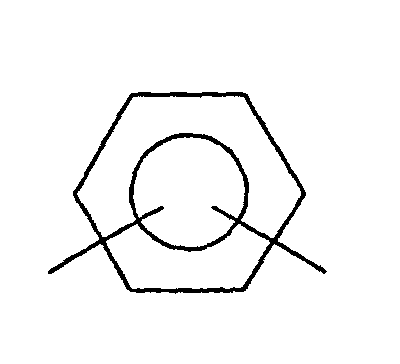
- Ar represents a group represented by the following formula or at least one group having 1 to 8 substituents such as halogen or methyl group on the aromatic ring. or wherein X represents -SO 2 -, -CO-, -O-, or a main-chain alkylene group having 1 to 5 carbon atoms, which may have a lower alkyl side chain.
- polyolefin resin used in the present invention examples include those containing, as a main component, a homopolymer or copolymer of an olefin monomer obtained by radical polymerization or ion polymerization, a copolymer of a larger amount of an olefin monomer and a smaller amount of a vinyl monomer, or a copolymer of an olefin monomer and a diene monomer.
- These polyolefin resins are used alone or in combination.
- Conventionally known catalysts such as a Ziegler catalyst, chrome catalyst and metallocene catalyst are used.
- olefin monomer examples include ethylene, propylene, butene-1, hexene-1, decene-1, octene-1 and 4-methyl-pentene-1.
- ethylene and propylene are particularly preferred.
- specific examples of the homopolymer or copolymer of the olefin monomer include low density polyethylene, ultra-low-density polyethylene, ultra-super-low density polyethylene, linear low density polyethylene, high density polyethylene, ultrahigh molecular weight polyethylene, polypropylene, ethylene-propylene copolymer, polymethylpentene and polybutene. These olefin polymers are used alone or in combination.
- a polyolefin resin containing, as a main component, a mixture of two or more kinds selected from the group consisting of polyethylene, polypropylene and ethylene-propylene copolymer is particularly preferred.
- the polytetrafluoroethylene-containing mixed powder (B) used in the present invention comprise a polytetrafluoroethylene (b1) having a particle diameter of 10 ⁇ m or less and an organic polymer (b2), and that polytetrafluoroethylene not be in the form of an agglomerate having a particle diameter of 10 ⁇ m of more than in the powder and the organic polymer is a polymer having an epoxy group.
- polytetrafluoroethylene-containing mixed powder preferred are the following polytetrafluoroethylene-containing mixed powders (i) to (iii):
- the aqueous dispersion of polytetrafluoroethylene particles having a particle diameter of 0.05 to 1.0 ⁇ m used to obtain the polytetrafluoroethylene-containing mixed powder (B) used in the present invention is obtained by polymerizing a tetrafluoroethylene monomer by means of the emulsion polymerization using a fluorine-containing surfactant.
- a fluorine-containing olefin such as hexafluoropropylene, chlorotrifluoroethylene, fluoroalkylethylene or perfluoroalkyl vinyl ether and a fluorine-containing alkyl (meth)acrylate such as perfluoroalkyl (meth)acrylate
- the content of the copolymerization component is preferably 10% by weight or less based on tetrafluoroethylene.
- Typical examples of the commercially available raw material of the polytetrafluoroethylene particle dispersion include "Fluon AD-1" and “Fluon AD936” manufactured by Asahi Fluoropolymers Co., Ltd.; “Polyflon D-1” and “Polyflon D-2” manufactured by Daikin Industries, Ltd.; and “Teflon 30J” manufactured by Du Pont-Mitsui Fluorochemicals Co., Ltd.
- the organic polymer (b2) used to obtain the polytetrafluoroethylene-containing mixed powder (B) used in the present invention is a polymer having an epoxy group and is not specifically limited as long as it is effective to improve the impact strength of the thermoplastic resin.
- the organic polymer is particularly preferably a rubber-like polymer.
- the rubber-like polymer refers to a polymer which is in the form of rubber at room temperature and preferably has a glass transition temperature of -20°C or less.
- a diene copolymer such as polybutadiene, polyisoprene, ethylene-propylene-ethylidene norbornene copolymer, ethylene-propylene-dicyclopentadiene copolymer, ethylene-propylene-5-ethylidene-2-norbornene copolymer, acrylonitrile-butadiene copolymer or isoprene-isobutylene copolymer; a acrylic rubber such as a copolymer of n-butyl acrylate and an acrylate ester monomer capable of copolymerizing with n-butyl acrylate; a silicone rubber including dimethylsiloxane unit as a main componet; and silicone-acrylic composite rubber of silicone and acrylate.
- the organic polymer is a polymer having an epoxy group
- the dispersibility in the thermoplastic resin (A) can be improved.
- the rubber-like polymer having an epoxy group for example, core-shell particles having an epoxy group or an elastomer having an epoxy group can be used.
- the core-shell particles having an epoxy group refer to a copolymer obtained by polymerizing an epoxy group-containing vinyl monomer and, if necessary, the other copolymerizable vinyl monomer in the presence of the rubber-like polymer.
- Examples of the elastomer having an epoxy group include straight-chain copolymers such as ethylene-glycidyl methacrylate copolymer and ethylene-vinyl acetate-glycidyl methacrylate copolymer; and graft copolymer composed of the straight-chain copolymer as a main chain and polystyrene or methyl polymethacrylate as a side chain.
- a polyorganosiloxane polymer obtained by graft-polymerizing a composite rubber composed of a polyorganosiloxane rubber and a polyalkyl (meth)acrylate rubber with one or more vinyl monomers containing at least one epoxy group-containing vinyl polymer.
- the content of polytetrafluoroethylene in the polytetrafluoroethylene-containing mixed powder (B) used in the present invention is preferably from 0.1 to 90% by weight.
- the polytetrafluoroethylene-containing mixed powder (B) consisting of a polytetrafluoroethylene (b1) having a particle diameter of 10 ⁇ m or less and an organic polymer (b2) is mixed in an amount of polytetrafluoroethyrene of 0.0001 to 20 parts by weight based on 100 parts by weight of the thermoplastic resin (A).
- the amount is less than 0.0001 parts by weight, the effect of improving the impact strength is poor.
- the amount exceeds 20 parts by weight the fluidity during melting is lowered too much.
- the resin composition of the present invention with various additives, for example, pigments and dyes; reinforcers and fillers, such as glass fibers, metal fibers, metal flakes and carbon fibers; phenol antioxidants such as 2,6-di-butyl-4-methylphenol and 4,4'-butylidene-bis(3-methyl-6-t-butylphenol); phosphite antioxidants such as tris(mixed, mono and diphenyl) phosphites and diphenylisodecyl phosphite; sulfur antioxidants such as dilauryl thiodipropionate, dimyristyl thiodipropionate and distearyl thiodipropionate; benzotriazole ultraviolet absorbers such as 2-hydroxy-4-octoxybenzophenone and 2-(2-hydroxy-5-methylphenyl)benzotriazole; photostabilizers such as bis(2,2,2,
- thermoplastic resin composition of the present invention with polyphenylene ether resin; polyamide resin; polycarbonate resin; vinyl copolymers such as polymethyl methacrylate (PMMA); polyolefin resins such as vinyl chloride resin, ABS resin, styrene resin, polyethylene and polypropylene; and olefin rubbers such as ethylene-propylene copolymer, ethylene-butene-1 copolymer, ethylene-propylene-dicyclopentadiene copolymer, ethylene-propylene-5-ethylidene-2-norbornene copolymer, ethylene-propylene-1,4-hexadiene copolymer, ethylene-vinyl acetate copolymer and ethylene-butyl acrylate copolymer.
- PMMA polymethyl methacrylate
- polyolefin resins such as vinyl chloride resin, ABS resin, styrene resin, polyethylene and polypropylene
- thermoplastic resin composition of the present invention is prepared by mixing the above essential components and, if necessary, arbitrary components in a predetermined amount and kneading the mixture using a conventional kneader such as roll, Banbury mixer, single-screw extruder or twin-screw extruder.
- the thermoplastic resin composition is preferably pelletized.
- thermoplastic resin composition thus obtained, it becomes possible to obtain a molded article, which has rigidity and high impact strength and is free from macroagglomerates of polytetrafluoroethylene and also has excellent surface characteristics, by various molding methods.
- thermoplastic resin composition of the present invention examples include, but are not limited to, injection molding, calendering, blow molding, extrusion molding, thermoforming, foaming and melt spinning.
- thermoplastic resin composition of the present invention examples include, but are not limited to, injection molded articles, sheets, films, hollow molded articles, pipes, square bars, profile, thermoforms, foams and fibers.
- thermoplastic resins A-1, A-2
- rubber-like polymer M-1 having an epoxy group and a portion of other materials.
- Thermoplastic resin (A-1) polybutylene terephthalate resin ("Tafpet PBT N1000", manufactured by Mitsubishi Rayon Co., Ltd.)
- Thermoplastic resin (A-2) polybutylene terephthalate resin ("Dianite PA210", manufactured by Mitsubishi Rayon Co., Ltd.)
- Rubber-like polymer (M-1) having an epoxy group: ethylene-glycidyl methacrylate copolymer (“Bond Fast E”, manufactured by Sumitomo Chemical Industries Co., Ltd.)
- ⁇ -methacryloyloxypropyldimethoxysilane and 98.0 parts of octamethylcyclotetrasiloxane were mixed to obtain 100 parts of a siloxane mixture.
- a solution prepared by dissolving 1 part of sodium dodecylbenzenesulfonate in 300 parts of distilled water was added and, after stirring in a homomixer at 10000 rpm for 2 minutes, the solution was passed twice through a homogenizer under a pressure of 30 MPa to obtain a stable pre-mixed organosiloxane latex.
- the silicone latex (L-1) thus obtained had a solid content of 18.1% and a weight-average particle diameter of 32 nm.
- the resulting rubber latex (S-1) had a solid content of 33.2% and the particle size distribution exhibited a single peak, and the weight-average particle diameter was 72 nm.
- “Fluon AD936” manufactured by Asahi Fluoropolymers Co., Ltd. was used.
- “Fluon AD936” has a solid content of 63.0% and contains polyoxyethylene alkyl phenyl ether in an amount of 5 parts based on 100 parts of polytetrafluoloethylene.
- the particle size distribution of "Fluon AD936” exhibited a single peak and the weight-average particle diameter was 290 nm.
- the polytetrafluoroethylene particle dispersion (F-1) contains 25% polytetrafluoroethylene particles and 1.3% polyoxyethylene alkyl phenyl ether.
- the latex (B-1) was added in an aqueous calcium chloride solution having a concentration of 2% at 40°C so that a weight ratio of the latex to the aqueous solution was 1:2, and then solidified by heating to 90°C. After repeating the operation of washing with water, the solid component was separated and dried at 80°C for 24 hours to obtain a dry latex powder (B-1).
- Very thin slices obtained by forming the dry latex powder (B-1) into a strip using a pressing machine at 250°C and cutting using a microtome were observed by a transmission electron microscope without staining. As a result, polytetrafluoroethylene was observed as the dark portion, and no agglomerate having a size of more than 10 ⁇ m was observed.
- Very thin slices obtained by forming the dry latex powders (B-2, B-3) into a strip using a pressing machine at 250°C and cutting using a microtome were observed by a transmission electron microscope without staining. As a result, polytetrafluoroethylene was observed as the dark portion, and no agglomerate having a size of more than 10 ⁇ m was observed.
- Very thin slices obtained by forming the dry latex powders (B-4, B-5) into a strip using a pressing machine at 250°C and cutting using a microtome were observed by a transmission electron microscope without staining. As a result, polytetrafluoroethylene was observed as the dark portion, and no agglomerate having a size of more than 10 ⁇ m was observed.
- Thermoplastic resins (A-1, A-2) and a polytetrafluoroethylene-containing mixed powder were mixed in a mixing ratio shown in Table 2 and the mixture was extruded at a screw revolution speed of 200 rpm using a twin-screw extruder (Model ZSK30, manufactured by WERNER & PFLEIDERER CO) to prepare pelletized thermoplastic resin compositions.
- Test pieces for measurement of various physical properties were made from the resulting thermoplastic resin compositions using an injection molding machine, and then the impact strength, the flexural modulus, the heat deformation temperature (HDT) and the appearance were evaluated. The results are shown in Table 2.
- thermoplastic resin compositions obtained by extruding only the thermoplastic resin (Comparative Examples 1 and 7), thermoplastic resin compositions mixed with M-1 (Comparative Examples 2 to 4), a thermoplastic resin composition mixed with M-2 (Comparative Example 5) and a thermoplastic resin composition mixed with a fine polytetrafluoroethylene powder (CD123, manufactured by Asahi ICI Co., Ltd.) (Comparative Example 6) were evaluated in the same manner. The results are shown in Table 3.
- Example 9 Comparative Example 8 6,6 nylon (Parts) 100 100 B-2 (Parts) 15 - Impact strength (J/m) 460 48 Flexural modulus (GPa) 2.35 2.85 Heat deformation temperature (°C) 221 230 Appearance ⁇ ⁇
- Example 10 Comparative Example 9 Polyphenylene sulfide (Parts) 100 100 B-1 (Parts) 15 - Impact strength (J/m) 410 35 Flexural modulus (GPa) 2.75 3.20 Heat deformation temperature (°C) 109 120 Appearance ⁇ O
- thermoplastic resin composition of the present invention can be used for various purposes because it exhibits a high impact strength by the addition of a small amount of a rubber and is also superior in surface characteristics of the resulting molded article.
Landscapes
- Chemical & Material Sciences (AREA)
- Health & Medical Sciences (AREA)
- Chemical Kinetics & Catalysis (AREA)
- Medicinal Chemistry (AREA)
- Polymers & Plastics (AREA)
- Organic Chemistry (AREA)
- Compositions Of Macromolecular Compounds (AREA)
Abstract
Description

○ : no lumpiness on the surface
×: lumpiness observed on the surface
Thermoplastic resin (A-1): polybutylene terephthalate resin ("Tafpet PBT N1000", manufactured by Mitsubishi Rayon Co., Ltd.)
Thermoplastic resin (A-2): polybutylene terephthalate resin ("Dianite PA210", manufactured by Mitsubishi Rayon Co., Ltd.)
Rubber-like polymer (M-1) having an epoxy group: ethylene-glycidyl methacrylate copolymer ("Bond Fast E", manufactured by Sumitomo Chemical Industries Co., Ltd.)
| Composition (Parts) | Si | BA | GMA | (F-1) | PTFE | MMA |
| B-1 | 8.2 | 73.8 | 8 | 16 | 4 | 10 |
| B-2 | 8.2 | 73.8 | 2 | 16 | 4 | 16 |
| B-3 | 8.2 | 73.8 | 10 | 16 | 4 | 8 |
| B-4 | 8.2 | 73.8 | 8 | 8 | 2 | 10 |
| B-5 | 8.2 | 73.8 | 8 | 32 | 8 | 10 |
| Examples | ||||||||
| 1 | 2 | 3 | 4 | 5 | 6 | 7 | 8 | |
| Composition (Parts) | ||||||||
| A-1 | 100 | 100 | 100 | 100 | 100 | 100 | 100 | |
| A-2 | 100 | |||||||
| B-1 | 5 | 10 | 20 | 10 | ||||
| B-2 | 10 | |||||||
| B-3 | 10 | |||||||
| B-4 | 10 | |||||||
| B-5 | 10 | |||||||
| M-1 | ||||||||
| M-2 | ||||||||
| CD123 | ||||||||
| Impact strength (J/m) | 190 | 830 | 1300 | 790 | 810 | 800 | 800 | 580 |
| Flexural modulus (GPa) | 2.40 | 2.25 | 2.00 | 2.23 | 2.23 | 2.20 | 2.32 | 2.07 |
| HDT (°C) | 61 | 58 | 52 | 56 | 56 | 55 | 59 | 57 |
| Appearance | ○ | ○ | ○ | ○ | ○ | ○ | ○ | ○ |
| Comparative Examples | |||||||
| 1 | 2 | 3 | 4 | 5 | 6 | 7 | |
| Composition (Parts) | |||||||
| A-1 | 100 | 100 | 100 | 100 | 100 | 100 | |
| A-2 | 100 | ||||||
| B-1 | |||||||
| B-2 | |||||||
| B-3 | |||||||
| B-4 | |||||||
| B-5 | |||||||
| M-1 | 5 | 10 | 20 | ||||
| M-2 | 10 | 10 | |||||
| CD123 | 1 | ||||||
| Impact strength (J/m) | 34 | 90 | 140 | 490 | 150 | 150 | 29 |
| Flexural modulus (GPa) | 2.59 | 2.00 | 1.84 | 1.61 | 2.03 | 2.04 | 2.40 |
| HDT (°C) | 65 | 55 | 51 | 40 | 54 | 54 | 65 |
| Appearance | ○ | ○ | ○ | ○ | ○ | × | ○ |
| Example 9 | Comparative Example 8 | |
| 6,6 nylon (Parts) | 100 | 100 |
| B-2 (Parts) | 15 | - |
| Impact strength (J/m) | 460 | 48 |
| Flexural modulus (GPa) | 2.35 | 2.85 |
| Heat deformation temperature (°C) | 221 | 230 |
| Appearance | ○ | ○ |
| Example 10 | Comparative Example 9 | |
| Polyphenylene sulfide (Parts) | 100 | 100 |
| B-1 (Parts) | 15 | - |
| Impact strength (J/m) | 410 | 35 |
| Flexural modulus (GPa) | 2.75 | 3.20 |
| Heat deformation temperature (°C) | 109 | 120 |
| Appearance | ○ | O |
Claims (9)
- A thermoplastic resin composition comprising a thermoplastic resin (A) and a polytetrafluoroethylene-containing mixed powder (B) consisting of a polytetrafluoroethylene (b1) having a particle diameter of 10 µm or less and an organic polymer (b2), wherein
the polytetrafluoroethylene-containing mixed powder (B) is mixed so that the amount of a polytetrafluoroethylene component is from 0.0001 to 20 parts by weight based on 100 parts by weight of the thermoplastic resin (A), and
the organic polymer (b2) is a polymer having an epoxy group. - The thermoplastic resin composition according to claim 1, wherein the organic polymer is a rubber-like polymer having an epoxy group.
- The thermoplastic resin composition according to claim 1, wherein the organic polymer is a polyorganosiloxane graft copolymer which is prepared by graft-polymerizing a composite rubber comprising a polyorganosiloxane rubber and a polyalkyl (meth)acrylate rubber with one or more vinyl monomers containing at least one epoxy group-containing vinyl monomer.
- The thermoplastic resin composition according to claim 2, wherein the organic polymer is a polyorganosiloxane graft copolymer which is prepared by graft-polymerizing a composite rubber comprising a polyorganosiloxane rubber and a polyalkyl (meth)acrylate rubber with one or more vinyl monomers containing at least one epoxy group-containing vinyl monomer.
- The thermoplastic resin composition according to claim 1, wherein the thermoplastic resin (A) contains, as a main component, one or more thermoplastic resins selected from polyester resin, polyamide resin, polyarylene sulfide resin, and polyolefin resin.
- The thermoplastic resin composition according to claim 2, wherein the thermoplastic resin (A) contains, as a main component, one or more thermoplastic resins selected from polyester resin, polyamide resin, polyarylene sulfide resin, and polyolefin resin.
- The thermoplastic resin composition according to claim 3, wherein the thermoplastic resin (A) contains, as a main component, one or more thermoplastic resins selected from polyester resin, polyamide resin, polyarylene sulfide resin, and polyolefin resin.
- The thermoplastic resin composition according to claim 4, wherein the thermoplastic resin (A) contains, as a main component, one or more thermoplastic resins selected from polyester resin, polyamide resin, polyarylene sulfide resin, and polyolefin resin.
- A polytetrafluoroethylene-containing mixed powder comprising a polytetrafluoroethylene having a particle diameter of 10 µm or less and an organic polymer having an epoxy group.
Applications Claiming Priority (3)
| Application Number | Priority Date | Filing Date | Title |
|---|---|---|---|
| JP2000079131A JP3576448B2 (en) | 2000-03-21 | 2000-03-21 | Thermoplastic resin composition |
| JP2000079131 | 2000-03-21 | ||
| PCT/JP2001/002214 WO2001070887A1 (en) | 2000-03-21 | 2001-03-21 | Thermoplastic resin composition |
Publications (2)
| Publication Number | Publication Date |
|---|---|
| EP1277805A1 true EP1277805A1 (en) | 2003-01-22 |
| EP1277805A4 EP1277805A4 (en) | 2003-06-11 |
Family
ID=18596429
Family Applications (1)
| Application Number | Title | Priority Date | Filing Date |
|---|---|---|---|
| EP01915658A Withdrawn EP1277805A4 (en) | 2000-03-21 | 2001-03-21 | THERMOPLASTIC RESIN COMPOSITION |
Country Status (7)
| Country | Link |
|---|---|
| US (1) | US6890991B2 (en) |
| EP (1) | EP1277805A4 (en) |
| JP (1) | JP3576448B2 (en) |
| KR (1) | KR20020089387A (en) |
| CN (1) | CN1250652C (en) |
| TW (1) | TWI294893B (en) |
| WO (1) | WO2001070887A1 (en) |
Families Citing this family (18)
| Publication number | Priority date | Publication date | Assignee | Title |
|---|---|---|---|---|
| JP2002129042A (en) * | 2000-10-24 | 2002-05-09 | Mitsubishi Rayon Co Ltd | Biodegradable resin modifier and biodegradable resin composition |
| JP2004137363A (en) | 2002-10-17 | 2004-05-13 | Nissan Motor Co Ltd | Resin composition, resin material and sliding member using the same, chain system for internal combustion engine, seal ring for vehicle |
| US20040249022A1 (en) * | 2003-06-03 | 2004-12-09 | Wen-Yi Su | Method for the preparation of flameproof hermoplastic resin compositions |
| US20070004838A1 (en) * | 2005-07-01 | 2007-01-04 | Dimanshteyn Felix A | Ultra-low petroleum plastics |
| US8030376B2 (en) | 2006-07-12 | 2011-10-04 | Minusnine Technologies, Inc. | Processes for dispersing substances and preparing composite materials |
| US20080227914A1 (en) * | 2007-03-16 | 2008-09-18 | Bfs Diversified Products, Llc | Recycled building material and method thereof |
| US20080246191A1 (en) * | 2007-04-06 | 2008-10-09 | Parminder Agarwal | Polyester Compositions, Method Of Manufacture, And Uses Thereof |
| JP2008291107A (en) * | 2007-05-24 | 2008-12-04 | Canon Inc | Thermoplastic resin composition |
| JP5293281B2 (en) * | 2009-03-06 | 2013-09-18 | 日本精工株式会社 | Rolling bearing |
| JP5718616B2 (en) * | 2010-11-08 | 2015-05-13 | 三菱エンジニアリングプラスチックス株式会社 | Polyamide resin composition, molded article and method of use thereof |
| JP6006096B2 (en) * | 2012-11-22 | 2016-10-12 | 東レ・ダウコーニング株式会社 | Lubricant coating composition |
| KR101751247B1 (en) * | 2015-06-16 | 2017-06-28 | 한국엔지니어링플라스틱 주식회사 | Anti-abrasive Polyamide Composition |
| JP2019112554A (en) * | 2017-12-25 | 2019-07-11 | 三菱ケミカル株式会社 | Polytetrafluoroethylene-containing reinforcement agent and thermoplastic resin composition |
| JP7075317B2 (en) * | 2018-09-14 | 2022-05-25 | 三菱エンジニアリングプラスチックス株式会社 | Polybutylene terephthalate resin composition and molded product |
| CN111370761B (en) | 2020-03-25 | 2021-08-20 | 中航锂电技术研究院有限公司 | PEO film and preparation method thereof and solid-state battery |
| CN114292615B (en) * | 2022-03-10 | 2022-06-03 | 武汉市三选科技有限公司 | Composition, adhesive film and chip packaging structure |
| US12441261B2 (en) * | 2022-06-28 | 2025-10-14 | Ford Global Technologies, Llc | Energy absorbing structure for vehicle |
| JP2025067640A (en) * | 2023-10-13 | 2025-04-24 | キヤノン株式会社 | Injection molding, method for manufacturing injection molding and device |
Family Cites Families (11)
| Publication number | Priority date | Publication date | Assignee | Title |
|---|---|---|---|---|
| DE3420002A1 (en) * | 1984-05-29 | 1985-12-05 | Bayer Ag, 5090 Leverkusen | POLYMER POWDER COMPOSITIONS CONTAINING TETRAFLUORETHYLENE POLYMER |
| JP3448867B2 (en) * | 1992-12-10 | 2003-09-22 | ダイキン工業株式会社 | Thermoplastic resin composition |
| GB9320874D0 (en) | 1993-10-11 | 1993-12-01 | Ici Plc | Recycling of flexible foam |
| KR100466355B1 (en) | 1996-07-31 | 2005-06-16 | 미쯔비시 레이온 가부시끼가이샤 | Polytetrafluoroethylene-containing powder mixture, thermoplastic resin compositions including same and molded articles made therefrom |
| JPH11199733A (en) * | 1998-01-14 | 1999-07-27 | Mitsubishi Rayon Co Ltd | Vinyl chloride resin composition |
| JPH11209549A (en) * | 1998-01-30 | 1999-08-03 | Mitsubishi Rayon Co Ltd | Polytetrafluoroethylene-containing mixed powder, thermoplastic resin composition containing the same, and molded article thereof |
| US6297303B1 (en) * | 1998-06-30 | 2001-10-02 | Dow Corning Toray Silicone Company, Ltd. | Dispersibility improver for fluororesin powders, and organic resin compositions |
| JP2000226523A (en) * | 1999-02-04 | 2000-08-15 | Mitsubishi Rayon Co Ltd | Thermoplastic resin composition |
| JP3209978B2 (en) * | 1999-04-15 | 2001-09-17 | 三菱レイヨン株式会社 | Thermoplastic resin composition |
| US6642310B2 (en) * | 2001-02-16 | 2003-11-04 | Dupont Dow Elastomers L.L.C. | Process aid for melt processable polymers |
| US20040143068A1 (en) * | 2001-05-08 | 2004-07-22 | Souichiro Honda | Modifier for thermoplastic resin and thermoplastic resin composition using the same |
-
2000
- 2000-03-21 JP JP2000079131A patent/JP3576448B2/en not_active Expired - Lifetime
-
2001
- 2001-03-21 US US10/221,180 patent/US6890991B2/en not_active Expired - Lifetime
- 2001-03-21 CN CNB018067840A patent/CN1250652C/en not_active Expired - Lifetime
- 2001-03-21 KR KR1020027011829A patent/KR20020089387A/en not_active Ceased
- 2001-03-21 WO PCT/JP2001/002214 patent/WO2001070887A1/en not_active Ceased
- 2001-03-21 EP EP01915658A patent/EP1277805A4/en not_active Withdrawn
- 2001-03-21 TW TW090106589A patent/TWI294893B/en not_active IP Right Cessation
Also Published As
| Publication number | Publication date |
|---|---|
| US20030088026A1 (en) | 2003-05-08 |
| KR20020089387A (en) | 2002-11-29 |
| JP3576448B2 (en) | 2004-10-13 |
| EP1277805A4 (en) | 2003-06-11 |
| JP2001261966A (en) | 2001-09-26 |
| CN1250652C (en) | 2006-04-12 |
| CN1418242A (en) | 2003-05-14 |
| TWI294893B (en) | 2008-03-21 |
| US6890991B2 (en) | 2005-05-10 |
| WO2001070887A1 (en) | 2001-09-27 |
Similar Documents
| Publication | Publication Date | Title |
|---|---|---|
| US6890991B2 (en) | Thermoplastic resin composition | |
| US5300572A (en) | Moldable polyester resin compositions and molded articles formed of the same | |
| CA1302602C (en) | Polycarbonate resin composition | |
| EP0899306B1 (en) | Modified weatherable thermoplastic resin molding compositions and articles molded therefrom | |
| KR101958884B1 (en) | Thermoplastic resin composition and molded article using the same | |
| JPWO1995029956A1 (en) | thermoplastic resin composition | |
| EP1144510B1 (en) | Polyester molding composition | |
| JP3720604B2 (en) | Polyester resin composition | |
| EP0495643A2 (en) | Polyarylene sulphide resin composition and process for producing the same | |
| JP2001261945A (en) | Polyester resin composition | |
| KR102001484B1 (en) | Thermoplastic resin composition and molded article using the same | |
| JP2960149B2 (en) | Polyester molding | |
| JP2003096307A (en) | Mixed powder and thermoplastic resin composition using the same | |
| JP7075317B2 (en) | Polybutylene terephthalate resin composition and molded product | |
| JP3433909B2 (en) | Polyester resin composition | |
| JP3645354B2 (en) | Antistatic resin composition | |
| JP2004231829A (en) | Polyacetal resin composition | |
| JP2003105177A (en) | Thermoplastic resin composition with good tracking resistance | |
| EP1657279A1 (en) | Resin composition for sliding member and sliding member | |
| JP2003183509A (en) | Flame-retardant resin composition and fiber-reinforced flame-retardant resin composition containing the same | |
| JP3433908B2 (en) | Thermoplastic resin composition | |
| JPH04146956A (en) | Polybutylene terephthalate resin composition | |
| JP3209978B2 (en) | Thermoplastic resin composition | |
| JP2597668B2 (en) | Flame retardant polyester composition | |
| JP2863020B2 (en) | Method for producing polyalkylene phthalate-based resin composition structure |
Legal Events
| Date | Code | Title | Description |
|---|---|---|---|
| PUAI | Public reference made under article 153(3) epc to a published international application that has entered the european phase |
Free format text: ORIGINAL CODE: 0009012 |
|
| 17P | Request for examination filed |
Effective date: 20020923 |
|
| AK | Designated contracting states |
Kind code of ref document: A1 Designated state(s): AT BE CH CY DE DK ES FI FR GB GR IE IT LI LU MC NL PT SE TR |
|
| A4 | Supplementary search report drawn up and despatched |
Effective date: 20030428 |
|
| RIC1 | Information provided on ipc code assigned before grant |
Ipc: 7C 08J 3/16 B Ipc: 7C 08L 27/18 B Ipc: 7C 08L 101/00 A Ipc: 7C 08L 67/02 B |
|
| RBV | Designated contracting states (corrected) |
Designated state(s): AT BE CH DE FR GB LI |
|
| STAA | Information on the status of an ep patent application or granted ep patent |
Free format text: STATUS: THE APPLICATION IS DEEMED TO BE WITHDRAWN |
|
| 18D | Application deemed to be withdrawn |
Effective date: 20060704 |