EP1269745B1 - Verfahren und system zum kombinieren von mehrfach-spektral-bildern - Google Patents
Verfahren und system zum kombinieren von mehrfach-spektral-bildern Download PDFInfo
- Publication number
- EP1269745B1 EP1269745B1 EP01920117A EP01920117A EP1269745B1 EP 1269745 B1 EP1269745 B1 EP 1269745B1 EP 01920117 A EP01920117 A EP 01920117A EP 01920117 A EP01920117 A EP 01920117A EP 1269745 B1 EP1269745 B1 EP 1269745B1
- Authority
- EP
- European Patent Office
- Prior art keywords
- image
- scene
- spectral
- transmitting
- spectral band
- Prior art date
- Legal status (The legal status is an assumption and is not a legal conclusion. Google has not performed a legal analysis and makes no representation as to the accuracy of the status listed.)
- Expired - Lifetime
Links
Images


Classifications
-
- G—PHYSICS
- G02—OPTICS
- G02B—OPTICAL ELEMENTS, SYSTEMS OR APPARATUS
- G02B23/00—Telescopes, e.g. binoculars; Periscopes; Instruments for viewing the inside of hollow bodies; Viewfinders; Optical aiming or sighting devices
- G02B23/12—Telescopes, e.g. binoculars; Periscopes; Instruments for viewing the inside of hollow bodies; Viewfinders; Optical aiming or sighting devices with means for image conversion or intensification
-
- H—ELECTRICITY
- H04—ELECTRIC COMMUNICATION TECHNIQUE
- H04N—PICTORIAL COMMUNICATION, e.g. TELEVISION
- H04N23/00—Cameras or camera modules comprising electronic image sensors; Control thereof
- H04N23/10—Cameras or camera modules comprising electronic image sensors; Control thereof for generating image signals from different wavelengths
- H04N23/11—Cameras or camera modules comprising electronic image sensors; Control thereof for generating image signals from different wavelengths for generating image signals from visible and infrared light wavelengths
-
- H—ELECTRICITY
- H04—ELECTRIC COMMUNICATION TECHNIQUE
- H04N—PICTORIAL COMMUNICATION, e.g. TELEVISION
- H04N23/00—Cameras or camera modules comprising electronic image sensors; Control thereof
- H04N23/20—Cameras or camera modules comprising electronic image sensors; Control thereof for generating image signals from infrared radiation only
Definitions
- This invention relates generally to the field of electro-optics and, more specifically, to a method and system for combining multi-spectral images of a scene.
- IR devices are employed in numerous applications for both civilian and military purposes. It is also known to observe a scene in an extreme low light environment using light amplification or intensification such as night vision equipment employing image intensifier technology.
- An example of a night vision device is the night vision goggle designated by the U.S. military as an AN/PVS-7. Another night vision device is described in U.S. Patent No. 4,463,252 .
- Different devices are needed for displaying scenes in different spectral ranges or bands because different information is conveyed through the different spectra. While various techniques have been employed to combine multi-spectral images of a single scene, they share various disadvantages and deficiencies.
- Another technique calls for detecting a scene using multiple sensors which convert the images to digital data and then algorithmically combine the data using microelectronic processors.
- the disadvantages of this approach are that it is time consuming, requires substantial processing power, and the high resolution of a night vision channel cannot be captured electronically.
- the present invention provides system for combining multi-spectral images of a scene in accordance with independent claim 1 as well as a method for combining multi-spectral images of a scene in accordance with independent claim 21. Preferred embodiments of the invention are reflected in the dependent claims.
- Multi-spectral is defined in this disclosure as two or more separate sensors with distinct response to an assigned spectral region. These regions may be completely different without any overlap, or very similar with virtually complete overlap, or anything else in-between.
- a system for combining multi-spectral images of a scene comprises a channel for transmitting a scene in a first spectral band.
- a detector for sensing the scene in a second spectral band this detector has an image output representative of the viewed scene.
- a display for receiving the representative image output and visibly displaying a displayed image in the first spectral band is provided.
- There is a collimator for receiving and projecting the displayed image.
- a beam mixer is provided for combining both the transmitted scene in the first spectral band with the displayed image and conveying the combined multi-spectral image to an output.
- the system also has an intensifier system for viewing the scene in the first spectral band.
- the intensifier system has an objective lens, an image intensifier and viewing optics.
- the combined multi-spectral image is conveyed through the output to the intensifier system to display the combined multi-spectral images of the scene.
- a method for combining multi-spectral images of a scene comprises nine steps. Step one calls for receiving an image of the scene in a secondary spectral range at a detector. Step two requires generating a video representation of the image. Step three provides transmitting the video representation to a display. In step four, the method provides for generating a visual representation of the image at the display. The next step calls for relaying the visual representation of the image. Step six calls for receiving the image in a primary spectral range. Step seven provides for combining the collimated displayed image with the image in the primary spectral range. The eighth step calls for transmitting the combined images to an output. The last step provides for viewing the combined multi-spectral image of the scene: the combined images are amplified by a primary imaging system such as an image intensifier.
- a technical advantage of the present invention is a single scene may be observed using two spectral images.
- Another technical advantage of the present invention is that existing intensifier (or other imaging) systems, such as night vision goggles, may be adapted to display multi-spectral images of a single scene.
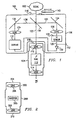
- FIGURE 1 illustrates a system for combining multi-spectral images of a scene in accordance with one embodiment of the present invention.
- a system 100 for combining multi-spectral images of a scene 102 includes a viewing system 104, such as a pre-existing image intensifier system, and a multi-spectrum image adapter 106.
- Multi-spectrum image adapter 106 is coupled to viewing system 104 at coupler 108.
- viewer 200 shown in FIGURE 2 may be attached or coupled to adapter 106 at coupler 108.
- Viewing system 104 may be a presently existing intensifier system such as a night vision goggle or monocular. Examples of currently existing night vision equipment suitable for use in connection with the present invention include the following: the AN/PVS-7, the AN/PVS-14 or the AN/PVS-18. Alternatively, a video or still camera could be used in place of viewing system 104.
- Viewing system 104 is comprised of an objective lens 110, an image intensifier tube 112 and viewing optics 114. While objective lens 110 and viewing optics 114 are each depicted as a single lens, it is intended that they may comprise multiple optical elements as is well known to those skilled in the art. Similarly, viewing optics 114 may also comprise multiple optical elements and may be either a monocular or binocular system.
- a single aperture 116 is provided for receiving an image of scene 102 in multiple spectral ranges or bands.
- the electromagnetic radiation either generated by or reflected from scene 102 passes through a broad band transmitting aperture 116 and is split at dichroic mirror 118.
- mirror 118 also performs the function of combining images as a beam mixer.
- two separate optical paths 120 and 122 are created.
- electromagnetic radiation in the mid or far IR region follows path 120 where it is reflected by mirror 124 to lens 126 which focuses the IR radiation on IR sensor 128.
- IR sensors useful in practicing the present invention are the Lockheed Martin LIMIRIS IR sensor or the Nytec Boeing IR micro-bolometer sensor U3000. Either of these sensors will generate an analog signal output representative of the IR image of scene 102.
- the video output 129 of IR sensor 128 is transmitted to electronics 130 for further processing.
- the electronic output of video output 129 is also available for external transmission through data port 142.
- symbology generated externally may be transmitted in through data port 142 for presentation at the display 132.
- data port 142 will be bi-directional. In alternative embodiments not shown, more than one data port may be provided to serve multiple functions.
- Video output 129 is then input to display 132 which converts the IR image sigr.al to a visual representation of the IR image.
- display 132 is an active matrix emissive display. That visual representation of the IR image is collimated by lens 134, and folded by mirror 136 which directs the image along path 138 to dichroic mirror 118 where the image is reflected along path 122 to the objective lens 110 of viewing system 104.
- Electromagnetic radiation such as visible light, is received from scene 102. The beam passes through aperture 116 then through mirror 118 following path 122 to the objective lens 110 of viewing system 104. In this way an image of the scene in the visible region or primary spectral range is combined with an image of the scene depicting the infrared region or secondary spectral range for observation by a user through viewing system 104.
- Adapter 106 also includes filter 140 which is operable to cover aperture 116 and is selected to filter out predetermined spectral ranges.
- filter 140 may be adapted to block visual and near infrared should it be desired to use system 100 in a mode of operation to solely view the IR portion. It is also possible to construct filter 140 so that multiple spectral ranges may be filtered out to enhance certain scenes.
- FIGURE 2 illustrates a telescopic viewer 200 used in connection with the system of FIGURE 1.
- Viewer 200 has input adapter 202 for mating with coupler 108 of adapter 106. In this way, viewer 200 is substituted for viewing system 104 if the user desires to observe the multi-spectral scene visually without an image intensifier.
- the image transmitted along path 122 enters viewer 200 at input 204 which conveys the beam through inverter 205 to objective lens 206 which then outputs the image to viewing optics 208 which presents the image to a user at eye piece 210.
- Inverter 205 inverts the image for upright presentation to the user.
- FIGURE 3 illustrates a graph of reflectance vs. wavelength useful for matching filter 118 of FIGURE 1, to a sensor, such as IR sensor 128, in connection with the embodiment of the present invention depicted in FIGURE 1.
- a selected filter with the reflectance versus wavelength characteristics shown in the graph will only permit radiation of wavelengths between approximately 600 nanometers and 1100 nanometers to pass through dichroic filter 118.
- Different spectral characteristics of filter 118 may be selected to conform to other spectral bands of operation.
- FIGURE 4 illustrates a system for combining multi-spectral images of a scene in accordance with a second embodiment of the present invention.
- Adapter module 402 is provided for coupling to a viewer 404 which may be a pre-existing intensifier system such as a night vision goggle. By coupling adapter module 402 to viewer 404, the combined system 401 permits the user of the pre-existing intensifier system to observe scene 400 in multiple spectral regions.
- Adapter module 402 has dual apertures 406 and 408 for receiving electromagnetic radiation either generated by or reflected off of scene 400. Such electromagnetic radiation enters adapter 402 at aperture 406 which is conveyed through IR objective assembly 410.
- IR objective assembly collects and focuses the IR radiation onto IR sensor 412 which converts the IR radiation to an electronic signal.
- the electronic output of IR sensor 412 is transmitted along electrical conductor 413 to display 414 where the electrical signal is converted to a visual output.
- the output of IR sensor 412 may also be externally transmitted via data port 433.
- the output of IR sensor 412 would be an electronic signal, either analog or digital that may be processed by modifying the image electronically.
- the output of display 414 is transmitted to data port 432 by a spatially coherent fiber optic bundle, or its equivalent, for observation or display to a user either locally or at a remote location.
- the visual output of display 414 is projected through optical element 418 which collimates the image and transmits the beam along path 426 to beam splitter 422.
- Beam splitter 422 combines the displayed image with the direct image of scene 400 in the visible spectrum through aperture 408.
- the image in the visible region passes through beam splitter 422.
- the combined image is transmitted to output 430 which is connected to viewer 404 where the combined images are available for viewing by a user. Both the IR image and the visible light image may be enhanced or isolated by the choice of suitable filters placed in front of apertures 406 and 408.
- FIGURE 5 illustrates a package for housing the system of FIGURE 4.
- Housing 500 is provided with opening 502 for receiving visible light in a first spectral range. Opening 502 corresponds to aperture 408 of FIGURE 4. The visible light entering housing 500 through opening 502 is transmitted to a viewing system 504 such as a pre-existing image intensifier system or night vision device.
- Housing 500 is also provided with aperture 506 for receiving infrared radiation in a second spectral range.
- Aperture 506 corresponds to aperture 406 of FIGURE 4 and is provided to convey the IR radiation to an IR sensor such as sensor 412 of FIGURE 4.
- An energy supply, such as a battery, is provided at battery compartment 508.
- a data port 510 is also provided.
- Electronic control switches 512 and 513, for controlling various functions of the system would be coupled to suitable control electronics (now shown) within housing 500.
- suitable control electronics now shown within housing 500.
- the configuration shown in FIGURE 5 provides for easy adaptation to currently existing night vision equipment such as night vision goggles or monoculars as well as normal visible day scopes of a similar configuration.
- This alternate embodiment depicted in FIGURES 4 and 5 allows for direct viewing of the multi-spectral image by positioning the eye behind aperture 430, without requiring use of a telescopic viewer such as viewer 200 shown in FIGURE 2.
- FIGURE 6 is a flowchart demonstrating a method of combining multi-spectral images of a scene in accordance with the present invention.
- Method 700 begins at step 702 where the multi-spectral adapter receives an image in a secondary spectral band.
- the secondary band might be in the infrared spectrum. Alternatively, other bands such as the UV band may also be detected.
- the image received in the secondary band is converted to a visual representation of the image.
- a hot object will be generally displayed visually as brighter than its surrounding environment.
- the visual representation of the image may be processed electronically. Processing the image includes modifying or enhancing the image as is well known to those skilled in the art.
- the visual representation of the image in the secondary band is then displayed at step 706.
- the image may be displayed externally by routing the signal to a data port for further transmission to other external display devices such as a video monitor, camera or radio transmitter for transmission to remote locations.
- the displayed visual image is then collimated at step 708 which would include collimating the image at a collimator.
- the collimated image is then transmitted in step 710 to a device for combining the visual representation with an image in the primary spectral band.
- a device useful for combining images would include a beam mixer or a beam splitter.
- an image is received in the primary spectral band such as the visible spectrum.
- the visible image is then combined, at step 714, with the visual representation derived from the image in the secondary band.
- the combined images are then intensified at step 716.
- an image intensifier system such as a night vision goggle would be suitable for this purpose.
- the intensified images are displayed as a combined single image for observation by a user.
- other data or information may be superimposed on the displayed multi-spectral image. While the invention has been illustrated as a single device, it should be understood that the various components, such as the IR sensor 128, FIGURE 1, or the IR sensor 412, FIGURE 4, may be located remotely from the various other components.
Landscapes
- Physics & Mathematics (AREA)
- Engineering & Computer Science (AREA)
- Multimedia (AREA)
- Signal Processing (AREA)
- Astronomy & Astrophysics (AREA)
- General Physics & Mathematics (AREA)
- Optics & Photonics (AREA)
- Studio Devices (AREA)
- Closed-Circuit Television Systems (AREA)
Claims (32)
- System (100; 401) zum Kombinieren mehrfach-spektraler Bilder einer Szene (102; 400), umfassend:einen Kanal (122; 432, 428) zum Übertragen eines Szenenbildes in einem ersten Spektralband,eine Fokussierlinse (126) zum Fokussieren eines Szenenbildes in einem zweiten Spektralband auf einen Detektor (128; 412);den Detektor (128; 412) zum Erkennen der Szene im zweiten Spektralband, wobei der Detektor eine die Szene kennzeichnende Bildausgabe (129; 413) aufweist;eine Anzeige (132; 414) zum Empfangen der Bildausgabe und zum Anzeigen eines Anzeigebildes im ersten Spektralband;einen Kollimator (134; 418) zum Empfangen und Kollimieren des angezeigten Bildes;einen Strahlmischer (118; 422) zum Kombinieren der im ersten Spektralband übertragenen Szene mit dem kollimierten Bild und Überführen der kombinierten mehrfach-spektralen Bilder an einen Ausgang; undein mit dem Ausgang verbundenes Sichtsystem (104; 404), das ein Bildverstärkersystem (112) aufweist.
- System nach Anspruch 1, wobei das erste Spektralband sichtbarem Licht entspricht.
- System nach Anspruch 1, wobei das zweite Spektralband im Infrarotgebiet liegt.
- System nach Anspruch 1, wobei die Anzeige eine Aktivmatrixanzeige ist.
- System nach Anspruch 1, wobei die kennzeichnende Ausgabe des Detektors ein analoges Videosignal ist.
- System nach Anspruch 1, wobei die kennzeichnende Ausgabe des Detektors ein digitales Videosignal ist.
- System nach Anspruch 1, wobei das Sichtsystem ein Nachtsichtgerät ist.
- System nach Anspruch 1, wobei das Sichtsystem eine Kamera ist.
- System nach Anspruch 1, zusätzlich umfassend einen Datenanschluss (142; 432, 433) zum Übertragen des Szenenbildes an eine abgelegene Quelle.
- System nach Anspruch 1, zusätzlich umfassend einen Datenanschluss (142) zum Empfangen von Information einer abgelegenen Quelle oder einem weiteren modularen Gerät.
- System nach Anspruch 1, zusätzlich umfassend einen Datenanschluss (142) zum Empfangen von Information von einer abgelegenen Quelle, wobei sich die Anzeige zum Empfangen und Anzeigen von Daten von der abgelegenen Quelle eignet.
- System nach Anspruch 1, wobei die ersten und zweiten spektralen Bänder eine gemeinsame Apertur (116) teilen.
- System nach Anspruch 1, wobei die ersten und zweiten spektralen Bänder getrennte Aperturen (406, 408) aufweisen.
- System nach Anspruch 1, wobei das Sichtsystem eine Objektivlinsenanordnung (110) und einen Bildverstärker (112) aufweist.
- System nach Anspruch 1, wobei das Sichtsystem eine Objektivlinsenanordnung (110), einen Bildverstärker (112) und eine Sichtoptikanordnung (114) aufweist.
- System nach einem der vorangehenden Ansprüche, wobei das System derart aufgebaut ist und sich dazu eignet, dass elektromagnetische Strahlung eines oder mehrerer spektraler Bänder durch lediglich einen dichroitischen Spiegel (118; 422) zwischen der Szene und der Ausgabe des Systems hindurchtritt.
- System nach Anspruch 16, wobei das eine oder die mehreren spektralen Bänder das erste Spektralband umfassen.
- System nach Anspruch 16 oder 17, wobei der Strahlmischer den dichroitischen Spiegel umfasst.
- System nach Anspruch 16, 17 oder 18, wobei der dichrotische Spiegel derart aufgebaut ist und sich eignet, um die von der Szene empfangene elektromagnetische Strahlung in elektromagnetische Strahlung des ersten Spektralbands und elektromagnetische Strahlung des zweiten Spektralbands zu teilen.
- System nach Anspruch 19, wobei der dichroitische Spiegel derart aufgebaut ist und sich eignet, um die elektromagnetische Strahlung des ersten Spektralbands entlang eines Pfads (122) in Richtung des Ausgangs und die elektromagnetische Strahlung des zweiten Spektralbands entlang eines Pfads (120) in Richtung des Detektors zu übertragen.
- Verfahren zum Kombinieren mehrfach-spektraler Bilder einer Szene (102; 400) umfassend:Übertragen eines Szenenbildes in ein erstes Spektralband und Übertragen eines Szenenbildes in ein zweites Spektralband;Fokussieren des Szenenbildes im zweiten Spektralband auf einen Infrarotdetektor (128; 412);Empfangen eines Infrarot (IR)-Bildes der Szene am Infrarotdetektor (128; 412);Erzeugen einer Darstellung (129; 143) des IR-Bildes;Übertragen der IR-Bilddarstellung an eine Anzeige (132; 414);Erzeugen einer sichtbaren Darstellung des IR-Bildes als auf der Anzeige angezeigtes IR-Bild;Kollimieren des angezeigten IR-Bildes;Kombinieren des kollimierten IR-Bildes mit dem Szenenbild im ersten Spektralgebiet;Übertragen der kombinierten Bilder an ein Verstärkersystem (104; 404), das zur Verstärkung von Bildern im ersten Spektralgebiet betrieben werden kann; undAnzeigen der kombinierten Bilder der Szene.
- Verfahren nach Anspruch 21, wobei das erste Spektralgebiet sichtbarem Licht entspricht.
- Verfahren nach Anspruch 21, wobei das Verstärkersystem ein Nachtsichtglupschauge ist.
- Verfahren nach Anspruch 21, wobei das IR-Bild über eine erste Apertur (406) empfangen wird und das Bild der Szene im ersten Spektralgebiet über eine zweite Apertur (408) empfangen wird.
- Verfahren nach Anspruch 21, wobei die sichtbare Darstellung des IR-Bildes an einer externen Betrachtungseinrichtung (104) angezeigt wird.
- Verfahren nach Anspruch 21, zusätzlich umfassend ein Übertragen der sichtbaren Darstellung des Bildes an einen Datenanschluss (142; 432, 433).
- Verfahren nach Anspruch 21, zusätzlich umfassend ein Überlagern von Daten mit den kombinierten mehrfach-spektralen Bildern der Szene.
- Verfahren nach Anspruch 21, zusätzlich umfassend ein Verarbeiten der IR-Bilddarstellung.
- Verfahren nach einem der Ansprüche 21-28, wobei elektromagnetische Strahlung eines oder mehrerer Spektralbänder durch lediglich einen dichroitischen Spiegel (118; 422) zwischen der Szene und der Übertragung der kombinierten Bilder hindurchtritt.
- Verfahren nach Anspruch 29, wobei das Kombinieren mittels des dichroitischen Spiegels hervorgerufen wird.
- Verfahren nach Anspruch 29 oder 30, zusätzlich umfassend ein Teilen, mittels des dichroitischen Spiegels, von elektromagnetischer Strahlung, die von der Szene empfangen wurde, in das Infrarotbild und das Bild der Szene in einem ersten Spektralgebiet.
- Verfahren nach Anspruch 31, zusätzlich umfassend ein Übertragen, mittels des dichroitischen Spiegels, des Bildes der Szene im ersten Spektralgebiet entlang eines Pfads (122) in Richtung des Verstärkersystems und Übertragen des Infrarotbildes entlang eines Pfads (120) in Richtung des Infrarotdetektors.
Applications Claiming Priority (3)
| Application Number | Priority Date | Filing Date | Title |
|---|---|---|---|
| US528552 | 1995-09-15 | ||
| US09/528,552 US7053928B1 (en) | 2000-03-20 | 2000-03-20 | Method and system for combining multi-spectral images of a scene |
| PCT/US2001/005258 WO2001072033A1 (en) | 2000-03-20 | 2001-02-20 | Method and system for combining multi-spectral images |
Publications (4)
| Publication Number | Publication Date |
|---|---|
| EP1269745A1 EP1269745A1 (de) | 2003-01-02 |
| EP1269745A4 EP1269745A4 (de) | 2004-09-01 |
| EP1269745B1 true EP1269745B1 (de) | 2007-10-17 |
| EP1269745B2 EP1269745B2 (de) | 2013-04-17 |
Family
ID=24106152
Family Applications (1)
| Application Number | Title | Priority Date | Filing Date |
|---|---|---|---|
| EP01920117.7A Expired - Lifetime EP1269745B2 (de) | 2000-03-20 | 2001-02-20 | Verfahren und system zum kombinieren von mehrfach-spektral-bildern |
Country Status (4)
| Country | Link |
|---|---|
| US (1) | US7053928B1 (de) |
| EP (1) | EP1269745B2 (de) |
| IL (2) | IL151085A0 (de) |
| WO (1) | WO2001072033A1 (de) |
Cited By (1)
| Publication number | Priority date | Publication date | Assignee | Title |
|---|---|---|---|---|
| RU2435221C2 (ru) * | 2007-12-10 | 2011-11-27 | Государственное образовательное учреждение высшего профессионального образования "Санкт-Петербургский государственный университет Аэрокосмического приборостроения" | Способ совмещения изображений, полученных с помощью различных фотодатчиков, и устройство для его реализации |
Families Citing this family (31)
| Publication number | Priority date | Publication date | Assignee | Title |
|---|---|---|---|---|
| US7092013B2 (en) | 2002-06-12 | 2006-08-15 | Litton Systems, Inc. | InGaAs image intensifier camera |
| US7129462B2 (en) | 2002-06-12 | 2006-10-31 | Litton Systems, Inc. | Digitally enhanced image intensification camera |
| WO2003104877A1 (en) | 2002-06-05 | 2003-12-18 | Litton Systems, Inc. | Enhanced night vision goggle assembly |
| EP1509880A4 (de) * | 2002-06-06 | 2007-06-13 | Litton Systems Inc | Bildintensifizierungsbaugruppe für eine integrierte anzeige |
| US6970190B2 (en) | 2002-06-12 | 2005-11-29 | Litton Systems, Inc. | Event synchronization for detector systems |
| US7274830B2 (en) | 2002-06-12 | 2007-09-25 | Litton Systems, Inc. | System for multi-sensor image fusion |
| JP2004304718A (ja) * | 2003-04-01 | 2004-10-28 | Nara Institute Of Science & Technology | 近接領域画像抽出装置及び近接領域画像抽出方法 |
| US7091930B2 (en) * | 2003-08-02 | 2006-08-15 | Litton Systems, Inc. | Centerline mounted sensor fusion device |
| US7307793B2 (en) | 2004-07-02 | 2007-12-11 | Insight Technology, Inc. | Fusion night vision system |
| US8585584B2 (en) * | 2004-10-11 | 2013-11-19 | Nitesh Ratnakar | Dual view endoscope |
| US7459684B2 (en) * | 2005-05-18 | 2008-12-02 | Lockheed Martin Corporation | Long-wavelength infra-red night vision goggles |
| US7211778B1 (en) * | 2005-10-07 | 2007-05-01 | Itt Manufacturing Enterprises, Inc. | Night vision goggle with separate camera and user output paths |
| US7483213B2 (en) * | 2006-03-24 | 2009-01-27 | Omnitech Partners | Image combining viewer |
| EP2104340A1 (de) * | 2008-03-19 | 2009-09-23 | Barco N.V. | Kombinierte Wärme- und Sicht-Abbildung |
| US20090278929A1 (en) * | 2008-05-06 | 2009-11-12 | Flir Systems Inc | Video camera with interchangable optical sensors |
| US20110141223A1 (en) * | 2008-06-13 | 2011-06-16 | Raytheon Company | Multiple Operating Mode Optical Instrument |
| CN102334333B (zh) | 2009-01-16 | 2016-05-11 | 双光圈国际株式会社 | 改善成像系统的景深 |
| CN102687502B (zh) * | 2009-08-25 | 2015-07-08 | 双光圈国际株式会社 | 减少彩色图像中的噪声 |
| US8102306B2 (en) | 2010-05-13 | 2012-01-24 | The United States Of America As Represented By The Secretary Of The Navy | Active-radar-assisted passive composite imagery for aiding navigation or detecting threats |
| US9507149B2 (en) * | 2010-10-19 | 2016-11-29 | Bae Systems Plc | Image combiner |
| US8379123B2 (en) | 2010-12-13 | 2013-02-19 | Research In Motion Limited | System and method of capturing low-light images on a mobile device |
| WO2013010272A1 (en) * | 2011-07-20 | 2013-01-24 | Power Diagnostic Technologies Ltd. | Apparatus and method for multi-spectral dual balanced imaging |
| US8638387B2 (en) * | 2012-01-25 | 2014-01-28 | Optex Systems, Inc. | Multiple spectral single image sighting system using single objective lens set |
| DE102013020598B4 (de) * | 2013-12-13 | 2017-09-14 | Steiner-Optik Gmbh | Vergrößernde optische Vorrichtung |
| US10057509B2 (en) | 2014-05-30 | 2018-08-21 | Flir Systems, Inc. | Multiple-sensor imaging system |
| US9977961B2 (en) * | 2014-10-21 | 2018-05-22 | Bae Systems Information And Electronic Systems Integration Inc. | Method for maintaining detection capability when a frame in a multispectral image is corrupted |
| US20160255323A1 (en) | 2015-02-26 | 2016-09-01 | Dual Aperture International Co. Ltd. | Multi-Aperture Depth Map Using Blur Kernels and Down-Sampling |
| US10359618B2 (en) | 2016-01-11 | 2019-07-23 | Nikon Corporation | Multispectral stereoscopic endoscope system and use of same |
| US11054629B1 (en) * | 2020-01-17 | 2021-07-06 | L3Harris Technologies, Inc. | Nightvision with integrated micro-display module |
| WO2022200836A1 (en) | 2021-03-26 | 2022-09-29 | Uab "Yukon Advanced Optics Worldwide" | Apparatus and method for combined use of two independent monoculars |
| FR3137765A1 (fr) * | 2022-07-08 | 2024-01-12 | Safran Electronics & Defense | Dispositif compact d’observation configuré pour superposer une image d’une scène observée et une image traitée de la scène observée. |
Family Cites Families (24)
| Publication number | Priority date | Publication date | Assignee | Title |
|---|---|---|---|---|
| US3626091A (en) † | 1969-12-11 | 1971-12-07 | Hughes Aircraft Co | Image converter |
| US3748471A (en) † | 1971-09-24 | 1973-07-24 | Int Imaging Syst | False color radiant energy detection method and apparatus |
| US3997762A (en) † | 1974-10-09 | 1976-12-14 | David Scarth Ritchie | Fire control system |
| US4463252A (en) | 1982-01-04 | 1984-07-31 | Baird Corporation | Night vision goggle system |
| US4602861A (en) | 1982-12-23 | 1986-07-29 | Minolta Camera Kabushiki Kaisha | Auto-focusing system |
| US4708475A (en) * | 1983-06-30 | 1987-11-24 | Atlantic Richfield Company | Portable luminescence sensor |
| DE3329590C2 (de) † | 1983-08-16 | 1985-09-19 | Eltro GmbH, Gesellschaft für Strahlungstechnik, 6900 Heidelberg | Verfahren und Vorrichtung zur Harmonisierung mehrerer optisch/optronischer Achsen einer Zieleinrichtung auf eine gemeinsame Bezugsachse |
| GB2163548B (en) * | 1984-08-09 | 1987-11-25 | Perkin Elmer Ltd | Interferometric apparatus particularly for use in ft spectrophotometer |
| US4672439A (en) * | 1985-09-04 | 1987-06-09 | Texas Instruments Incorporated | FLIR imager with hybrid optical/electronic processor |
| US4786966A (en) * | 1986-07-10 | 1988-11-22 | Varo, Inc. | Head mounted video display and remote camera system |
| IL81775A (en) † | 1987-03-04 | 1990-07-12 | Elbit Computers Ltd | Optical device particularly useful as night vision goggles |
| US4751571A (en) | 1987-07-29 | 1988-06-14 | General Electric Company | Composite visible/thermal-infrared imaging apparatus |
| US5084780A (en) † | 1989-09-12 | 1992-01-28 | Itt Corporation | Telescopic sight for day/night viewing |
| US5264961A (en) | 1989-10-10 | 1993-11-23 | Unisys Corporation | Techniques for trapping beams of infra-red energy |
| US5035472A (en) | 1990-06-20 | 1991-07-30 | The United States Of America As Represented By The Secretary Of The Army | Integrated multispectral man portable weapon sight |
| FR2665544B1 (fr) † | 1990-07-31 | 1993-07-30 | Thomson Trt Defense | Dispositif optique d'observation jour-nuit. |
| US5204774A (en) † | 1991-12-06 | 1993-04-20 | Varo Inc. | Night vision goggle with improved optical system |
| JPH0777665A (ja) * | 1993-03-29 | 1995-03-20 | Canon Inc | 画像表示装置及びその為の画像撮影装置 |
| US5497266A (en) † | 1994-07-27 | 1996-03-05 | Litton Systems, Inc. | Telescopic day and night sight |
| JP2001518241A (ja) | 1995-06-07 | 2001-10-09 | ストリカー・コーポレーション | 可視光エネルギーと赤外線光エネルギーを別個に処理する画像システム |
| US5729010A (en) | 1996-09-11 | 1998-03-17 | The United States Of America As Represented By The Secretary Of The Air Force | Night vision device localized irradiance attenuation |
| US5903996A (en) * | 1997-08-01 | 1999-05-18 | Morley; Roland M. | Day/night viewing device with laser range finder utilizing two wavelengths of laser light, and method of its operation |
| JP4304752B2 (ja) * | 1999-02-24 | 2009-07-29 | ソニー株式会社 | ホログラム記録再生方法及びホログラム記録再生装置 |
| US6088165A (en) * | 1999-04-28 | 2000-07-11 | Itt Manufacturing Enterprises | Enhanced night vision device |
-
2000
- 2000-03-20 US US09/528,552 patent/US7053928B1/en not_active Expired - Lifetime
-
2001
- 2001-02-20 EP EP01920117.7A patent/EP1269745B2/de not_active Expired - Lifetime
- 2001-02-20 WO PCT/US2001/005258 patent/WO2001072033A1/en not_active Ceased
- 2001-02-20 IL IL15108501A patent/IL151085A0/xx unknown
-
2002
- 2002-08-05 IL IL151085A patent/IL151085A/en active IP Right Review Request
Cited By (1)
| Publication number | Priority date | Publication date | Assignee | Title |
|---|---|---|---|---|
| RU2435221C2 (ru) * | 2007-12-10 | 2011-11-27 | Государственное образовательное учреждение высшего профессионального образования "Санкт-Петербургский государственный университет Аэрокосмического приборостроения" | Способ совмещения изображений, полученных с помощью различных фотодатчиков, и устройство для его реализации |
Also Published As
| Publication number | Publication date |
|---|---|
| EP1269745B2 (de) | 2013-04-17 |
| EP1269745A1 (de) | 2003-01-02 |
| IL151085A (en) | 2008-03-20 |
| IL151085A0 (en) | 2003-04-10 |
| EP1269745A4 (de) | 2004-09-01 |
| WO2001072033A1 (en) | 2001-09-27 |
| US7053928B1 (en) | 2006-05-30 |
Similar Documents
| Publication | Publication Date | Title |
|---|---|---|
| EP1269745B1 (de) | Verfahren und system zum kombinieren von mehrfach-spektral-bildern | |
| EP1549993B1 (de) | Verbesserte nachtsicht-brillenbaugruppe | |
| US7911687B2 (en) | Sighted device operable in visible-wavelength or electro-optical/visible-wavelength sighting modes | |
| US7110184B1 (en) | Method and apparatus for combining an induced image with a scene image | |
| US6570147B2 (en) | Color night vision apparatus | |
| US6798578B1 (en) | Integrated display image intensifier assembly | |
| US7755047B2 (en) | Clip-on infrared imager | |
| US5113177A (en) | Apparatus for a display system | |
| US7170057B2 (en) | Image enhancement system and method for night goggles | |
| EP3401631B1 (de) | Wärmereflexvisier | |
| US7158296B1 (en) | Vision system with eye dominance forced to fusion channel | |
| EP0206324A2 (de) | Vorrichtung zum Anzeigen von zwei Bildern | |
| US8860831B1 (en) | Brightness tracking light sensor | |
| US7813037B2 (en) | Day/night-vision device | |
| JP5953636B2 (ja) | 融合光学センサを有するモジュール式暗視システム | |
| US7092013B2 (en) | InGaAs image intensifier camera | |
| US7746551B2 (en) | Vision system with eye dominance forced to fusion channel | |
| AU2003238854B2 (en) | Enhanced night vision goggle assembly | |
| US20230333362A1 (en) | Apparatus And Method For Combined Use Of Two Independent Monoculars |
Legal Events
| Date | Code | Title | Description |
|---|---|---|---|
| PUAI | Public reference made under article 153(3) epc to a published international application that has entered the european phase |
Free format text: ORIGINAL CODE: 0009012 |
|
| 17P | Request for examination filed |
Effective date: 20020802 |
|
| AK | Designated contracting states |
Kind code of ref document: A1 Designated state(s): AT BE CH CY DE DK ES FI FR GB GR IE IT LI LU MC NL PT SE TR |
|
| AX | Request for extension of the european patent |
Free format text: AL;LT;LV;MK;RO;SI |
|
| RBV | Designated contracting states (corrected) |
Designated state(s): AT BE CH GB LI |
|
| REG | Reference to a national code |
Ref country code: DE Ref legal event code: 8566 |
|
| A4 | Supplementary search report drawn up and despatched |
Effective date: 20040720 |
|
| RIC1 | Information provided on ipc code assigned before grant |
Ipc: 7G 02F 1/01 B Ipc: 7G 02B 7/18 B Ipc: 7H 04N 5/222 A |
|
| 17Q | First examination report despatched |
Effective date: 20041129 |
|
| 17Q | First examination report despatched |
Effective date: 20041129 |
|
| GRAP | Despatch of communication of intention to grant a patent |
Free format text: ORIGINAL CODE: EPIDOSNIGR1 |
|
| GRAS | Grant fee paid |
Free format text: ORIGINAL CODE: EPIDOSNIGR3 |
|
| GRAA | (expected) grant |
Free format text: ORIGINAL CODE: 0009210 |
|
| RBV | Designated contracting states (corrected) |
Designated state(s): CH GB LI |
|
| AK | Designated contracting states |
Kind code of ref document: B1 Designated state(s): CH GB LI |
|
| REG | Reference to a national code |
Ref country code: GB Ref legal event code: FG4D |
|
| REG | Reference to a national code |
Ref country code: CH Ref legal event code: EP |
|
| REG | Reference to a national code |
Ref country code: CH Ref legal event code: NV Representative=s name: RENTSCH & PARTNER |
|
| PLBI | Opposition filed |
Free format text: ORIGINAL CODE: 0009260 |
|
| PLAX | Notice of opposition and request to file observation + time limit sent |
Free format text: ORIGINAL CODE: EPIDOSNOBS2 |
|
| 26 | Opposition filed |
Opponent name: ELBIT SYSTEMS LTD. Effective date: 20080716 |
|
| PLAB | Opposition data, opponent's data or that of the opponent's representative modified |
Free format text: ORIGINAL CODE: 0009299OPPO |
|
| PLAF | Information modified related to communication of a notice of opposition and request to file observations + time limit |
Free format text: ORIGINAL CODE: EPIDOSCOBS2 |
|
| PLBB | Reply of patent proprietor to notice(s) of opposition received |
Free format text: ORIGINAL CODE: EPIDOSNOBS3 |
|
| REG | Reference to a national code |
Ref country code: CH Ref legal event code: PFA Owner name: NORTHROP GRUMMAN GUIDANCE AND ELECTRONICS COMPANY Free format text: LITTON SYSTEMS, INC.#21240 BURBANK BOULEVARD#WOODLAND HILLS, CALIFORNIA 91367 (US) -TRANSFER TO- NORTHROP GRUMMAN GUIDANCE AND ELECTRONICS COMPANY, INC.#1840 CENTURY PARK EAST#LOS ANGELES, CA 90067 (US) Ref country code: CH Ref legal event code: NV Representative=s name: KATZAROV S.A. Ref country code: CH Ref legal event code: PUE Owner name: L-3 COMMUNICATIONS CORPORATION Free format text: NORTHROP GRUMMAN GUIDANCE AND ELECTRONICS COMPANY, INC.#1840 CENTURY PARK EAST#LOS ANGELES, CA 90067 (US) -TRANSFER TO- L-3 COMMUNICATIONS CORPORATION#600 THIRD AVENUE, 34TH FLOOR#NEW YORK, NY 10016 (US) |
|
| RAP2 | Party data changed (patent owner data changed or rights of a patent transferred) |
Owner name: L-3 COMMUNICATIONS CORPORATION |
|
| REG | Reference to a national code |
Ref country code: CH Ref legal event code: NV Representative=s name: RENTSCH & PARTNER |
|
| REG | Reference to a national code |
Ref country code: GB Ref legal event code: 732E Free format text: REGISTERED BETWEEN 20110414 AND 20110420 |
|
| REG | Reference to a national code |
Ref country code: CH Ref legal event code: PFA Owner name: L-3 COMMUNICATIONS CORPORATION Free format text: L-3 COMMUNICATIONS CORPORATION#600 THIRD AVENUE, 34TH FLOOR#NEW YORK, NY 10016 (US) -TRANSFER TO- L-3 COMMUNICATIONS CORPORATION#600 THIRD AVENUE, 34TH FLOOR#NEW YORK, NY 10016 (US) |
|
| PUAH | Patent maintained in amended form |
Free format text: ORIGINAL CODE: 0009272 |
|
| STAA | Information on the status of an ep patent application or granted ep patent |
Free format text: STATUS: PATENT MAINTAINED AS AMENDED |
|
| 27A | Patent maintained in amended form |
Effective date: 20130417 |
|
| AK | Designated contracting states |
Kind code of ref document: B2 Designated state(s): CH GB LI |
|
| PGFP | Annual fee paid to national office [announced via postgrant information from national office to epo] |
Ref country code: CH Payment date: 20130220 Year of fee payment: 13 |
|
| REG | Reference to a national code |
Ref country code: CH Ref legal event code: AELC |
|
| REG | Reference to a national code |
Ref country code: CH Ref legal event code: PL |
|
| PG25 | Lapsed in a contracting state [announced via postgrant information from national office to epo] |
Ref country code: LI Free format text: LAPSE BECAUSE OF NON-PAYMENT OF DUE FEES Effective date: 20140228 Ref country code: CH Free format text: LAPSE BECAUSE OF NON-PAYMENT OF DUE FEES Effective date: 20140228 |
|
| PGFP | Annual fee paid to national office [announced via postgrant information from national office to epo] |
Ref country code: GB Payment date: 20200219 Year of fee payment: 20 |
|
| REG | Reference to a national code |
Ref country code: GB Ref legal event code: PE20 Expiry date: 20210219 |
|
| PG25 | Lapsed in a contracting state [announced via postgrant information from national office to epo] |
Ref country code: GB Free format text: LAPSE BECAUSE OF EXPIRATION OF PROTECTION Effective date: 20210219 |