EP1221730A1 - Générateur électrochimique rechargeable au lithium - Google Patents
Générateur électrochimique rechargeable au lithium Download PDFInfo
- Publication number
- EP1221730A1 EP1221730A1 EP01403356A EP01403356A EP1221730A1 EP 1221730 A1 EP1221730 A1 EP 1221730A1 EP 01403356 A EP01403356 A EP 01403356A EP 01403356 A EP01403356 A EP 01403356A EP 1221730 A1 EP1221730 A1 EP 1221730A1
- Authority
- EP
- European Patent Office
- Prior art keywords
- binder
- generator according
- active material
- oxide
- elastomer
- Prior art date
- Legal status (The legal status is an assumption and is not a legal conclusion. Google has not performed a legal analysis and makes no representation as to the accuracy of the status listed.)
- Withdrawn
Links
- WHXSMMKQMYFTQS-UHFFFAOYSA-N Lithium Chemical compound [Li] WHXSMMKQMYFTQS-UHFFFAOYSA-N 0.000 title claims abstract description 24
- 229910052744 lithium Inorganic materials 0.000 title claims abstract description 21
- 239000011230 binding agent Substances 0.000 claims abstract description 54
- 229920002134 Carboxymethyl cellulose Polymers 0.000 claims abstract description 20
- 239000011262 electrochemically active material Substances 0.000 claims abstract description 18
- KAKZBPTYRLMSJV-UHFFFAOYSA-N Butadiene Chemical compound C=CC=C KAKZBPTYRLMSJV-UHFFFAOYSA-N 0.000 claims abstract description 15
- 239000001768 carboxy methyl cellulose Substances 0.000 claims abstract description 15
- 235000010948 carboxy methyl cellulose Nutrition 0.000 claims abstract description 15
- 239000008112 carboxymethyl-cellulose Substances 0.000 claims abstract description 15
- 229920001971 elastomer Polymers 0.000 claims abstract description 15
- 239000000806 elastomer Substances 0.000 claims abstract description 15
- 150000001875 compounds Chemical class 0.000 claims abstract description 14
- XLYOFNOQVPJJNP-UHFFFAOYSA-N water Substances O XLYOFNOQVPJJNP-UHFFFAOYSA-N 0.000 claims abstract description 14
- PPBRXRYQALVLMV-UHFFFAOYSA-N Styrene Chemical compound C=CC1=CC=CC=C1 PPBRXRYQALVLMV-UHFFFAOYSA-N 0.000 claims abstract description 13
- 229920001577 copolymer Polymers 0.000 claims abstract description 9
- NLHHRLWOUZZQLW-UHFFFAOYSA-N Acrylonitrile Chemical compound C=CC#N NLHHRLWOUZZQLW-UHFFFAOYSA-N 0.000 claims abstract description 5
- 239000011737 fluorine Substances 0.000 claims abstract description 5
- 229910052731 fluorine Inorganic materials 0.000 claims abstract description 5
- GWEVSGVZZGPLCZ-UHFFFAOYSA-N Titan oxide Chemical compound O=[Ti]=O GWEVSGVZZGPLCZ-UHFFFAOYSA-N 0.000 claims abstract description 4
- 239000000839 emulsion Substances 0.000 claims abstract description 4
- 229910001947 lithium oxide Inorganic materials 0.000 claims abstract description 4
- 229920006120 non-fluorinated polymer Polymers 0.000 claims abstract description 4
- OGIDPMRJRNCKJF-UHFFFAOYSA-N titanium oxide Inorganic materials [Ti]=O OGIDPMRJRNCKJF-UHFFFAOYSA-N 0.000 claims abstract description 4
- 229910052723 transition metal Inorganic materials 0.000 claims abstract description 4
- 150000003624 transition metals Chemical class 0.000 claims abstract description 4
- 229920000642 polymer Polymers 0.000 claims abstract description 3
- PXGOKWXKJXAPGV-UHFFFAOYSA-N Fluorine Chemical compound FF PXGOKWXKJXAPGV-UHFFFAOYSA-N 0.000 claims abstract 2
- 239000000203 mixture Substances 0.000 claims description 25
- 239000011149 active material Substances 0.000 claims description 16
- 239000010936 titanium Substances 0.000 claims description 6
- 239000003125 aqueous solvent Substances 0.000 claims description 4
- 238000003490 calendering Methods 0.000 claims description 4
- AMWRITDGCCNYAT-UHFFFAOYSA-L hydroxy(oxo)manganese;manganese Chemical compound [Mn].O[Mn]=O.O[Mn]=O AMWRITDGCCNYAT-UHFFFAOYSA-L 0.000 claims description 4
- 238000004519 manufacturing process Methods 0.000 claims description 4
- 229910000428 cobalt oxide Inorganic materials 0.000 claims description 3
- IVMYJDGYRUAWML-UHFFFAOYSA-N cobalt(ii) oxide Chemical compound [Co]=O IVMYJDGYRUAWML-UHFFFAOYSA-N 0.000 claims description 3
- 238000000034 method Methods 0.000 claims description 3
- XHCLAFWTIXFWPH-UHFFFAOYSA-N [O-2].[O-2].[O-2].[O-2].[O-2].[V+5].[V+5] Chemical compound [O-2].[O-2].[O-2].[O-2].[O-2].[V+5].[V+5] XHCLAFWTIXFWPH-UHFFFAOYSA-N 0.000 claims description 2
- 229910052751 metal Inorganic materials 0.000 claims description 2
- 239000002184 metal Substances 0.000 claims description 2
- 229910000480 nickel oxide Inorganic materials 0.000 claims description 2
- GNRSAWUEBMWBQH-UHFFFAOYSA-N oxonickel Chemical compound [Ni]=O GNRSAWUEBMWBQH-UHFFFAOYSA-N 0.000 claims description 2
- 229910001935 vanadium oxide Inorganic materials 0.000 claims description 2
- 239000006185 dispersion Substances 0.000 claims 2
- 238000001035 drying Methods 0.000 claims 1
- 230000007704 transition Effects 0.000 claims 1
- 229910014755 LixTiyO4 Inorganic materials 0.000 abstract 1
- 239000002033 PVDF binder Substances 0.000 description 12
- 229920002981 polyvinylidene fluoride Polymers 0.000 description 11
- 229920003048 styrene butadiene rubber Polymers 0.000 description 10
- 239000002904 solvent Substances 0.000 description 9
- 229910011458 Li4/3 Ti5/3O4 Inorganic materials 0.000 description 8
- 230000001351 cycling effect Effects 0.000 description 8
- 239000003792 electrolyte Substances 0.000 description 7
- KMTRUDSVKNLOMY-UHFFFAOYSA-N Ethylene carbonate Chemical compound O=C1OCCO1 KMTRUDSVKNLOMY-UHFFFAOYSA-N 0.000 description 6
- 239000004480 active ingredient Substances 0.000 description 6
- 150000005676 cyclic carbonates Chemical class 0.000 description 6
- -1 lithium cations Chemical class 0.000 description 6
- 239000004810 polytetrafluoroethylene Substances 0.000 description 6
- 229920001343 polytetrafluoroethylene Polymers 0.000 description 6
- OKTJSMMVPCPJKN-UHFFFAOYSA-N Carbon Chemical compound [C] OKTJSMMVPCPJKN-UHFFFAOYSA-N 0.000 description 5
- 229910013870 LiPF 6 Inorganic materials 0.000 description 5
- RTAQQCXQSZGOHL-UHFFFAOYSA-N Titanium Chemical compound [Ti] RTAQQCXQSZGOHL-UHFFFAOYSA-N 0.000 description 5
- 229910052782 aluminium Inorganic materials 0.000 description 5
- XAGFODPZIPBFFR-UHFFFAOYSA-N aluminium Chemical compound [Al] XAGFODPZIPBFFR-UHFFFAOYSA-N 0.000 description 5
- IEJIGPNLZYLLBP-UHFFFAOYSA-N dimethyl carbonate Chemical compound COC(=O)OC IEJIGPNLZYLLBP-UHFFFAOYSA-N 0.000 description 5
- 229910003002 lithium salt Inorganic materials 0.000 description 5
- 159000000002 lithium salts Chemical class 0.000 description 5
- 239000003960 organic solvent Substances 0.000 description 5
- RUOJZAUFBMNUDX-UHFFFAOYSA-N propylene carbonate Chemical compound CC1COC(=O)O1 RUOJZAUFBMNUDX-UHFFFAOYSA-N 0.000 description 5
- LCGLNKUTAGEVQW-UHFFFAOYSA-N Dimethyl ether Chemical compound COC LCGLNKUTAGEVQW-UHFFFAOYSA-N 0.000 description 4
- 229910012851 LiCoO 2 Inorganic materials 0.000 description 4
- SECXISVLQFMRJM-UHFFFAOYSA-N N-Methylpyrrolidone Chemical compound CN1CCCC1=O SECXISVLQFMRJM-UHFFFAOYSA-N 0.000 description 4
- 239000004020 conductor Substances 0.000 description 4
- 229910002804 graphite Inorganic materials 0.000 description 4
- 239000010439 graphite Substances 0.000 description 4
- 239000004071 soot Substances 0.000 description 4
- OIFBSDVPJOWBCH-UHFFFAOYSA-N Diethyl carbonate Chemical compound CCOC(=O)OCC OIFBSDVPJOWBCH-UHFFFAOYSA-N 0.000 description 3
- XEKOWRVHYACXOJ-UHFFFAOYSA-N Ethyl acetate Chemical compound CCOC(C)=O XEKOWRVHYACXOJ-UHFFFAOYSA-N 0.000 description 3
- YCKRFDGAMUMZLT-UHFFFAOYSA-N Fluorine atom Chemical compound [F] YCKRFDGAMUMZLT-UHFFFAOYSA-N 0.000 description 3
- 229910015014 LiNiCoAlO Inorganic materials 0.000 description 3
- 230000000052 comparative effect Effects 0.000 description 3
- 238000000113 differential scanning calorimetry Methods 0.000 description 3
- 239000000463 material Substances 0.000 description 3
- 230000002441 reversible effect Effects 0.000 description 3
- 230000009466 transformation Effects 0.000 description 3
- ZZXUZKXVROWEIF-UHFFFAOYSA-N 1,2-butylene carbonate Chemical compound CCC1COC(=O)O1 ZZXUZKXVROWEIF-UHFFFAOYSA-N 0.000 description 2
- VAYTZRYEBVHVLE-UHFFFAOYSA-N 1,3-dioxol-2-one Chemical compound O=C1OC=CO1 VAYTZRYEBVHVLE-UHFFFAOYSA-N 0.000 description 2
- RYGMFSIKBFXOCR-UHFFFAOYSA-N Copper Chemical compound [Cu] RYGMFSIKBFXOCR-UHFFFAOYSA-N 0.000 description 2
- 229920000663 Hydroxyethyl cellulose Polymers 0.000 description 2
- 239000004354 Hydroxyethyl cellulose Substances 0.000 description 2
- 229920002153 Hydroxypropyl cellulose Polymers 0.000 description 2
- PXHVJJICTQNCMI-UHFFFAOYSA-N Nickel Chemical compound [Ni] PXHVJJICTQNCMI-UHFFFAOYSA-N 0.000 description 2
- 229920002367 Polyisobutene Polymers 0.000 description 2
- 125000005907 alkyl ester group Chemical group 0.000 description 2
- NTXGQCSETZTARF-UHFFFAOYSA-N buta-1,3-diene;prop-2-enenitrile Chemical compound C=CC=C.C=CC#N NTXGQCSETZTARF-UHFFFAOYSA-N 0.000 description 2
- MTAZNLWOLGHBHU-UHFFFAOYSA-N butadiene-styrene rubber Chemical compound C=CC=C.C=CC1=CC=CC=C1 MTAZNLWOLGHBHU-UHFFFAOYSA-N 0.000 description 2
- 239000003575 carbonaceous material Substances 0.000 description 2
- 229910052802 copper Inorganic materials 0.000 description 2
- 239000010949 copper Substances 0.000 description 2
- 230000007423 decrease Effects 0.000 description 2
- 150000002170 ethers Chemical class 0.000 description 2
- FKRCODPIKNYEAC-UHFFFAOYSA-N ethyl propionate Chemical compound CCOC(=O)CC FKRCODPIKNYEAC-UHFFFAOYSA-N 0.000 description 2
- 235000019447 hydroxyethyl cellulose Nutrition 0.000 description 2
- 239000001863 hydroxypropyl cellulose Substances 0.000 description 2
- 235000010977 hydroxypropyl cellulose Nutrition 0.000 description 2
- 239000001866 hydroxypropyl methyl cellulose Substances 0.000 description 2
- 229920003088 hydroxypropyl methyl cellulose Polymers 0.000 description 2
- 235000010979 hydroxypropyl methyl cellulose Nutrition 0.000 description 2
- UFVKGYZPFZQRLF-UHFFFAOYSA-N hydroxypropyl methyl cellulose Chemical compound OC1C(O)C(OC)OC(CO)C1OC1C(O)C(O)C(OC2C(C(O)C(OC3C(C(O)C(O)C(CO)O3)O)C(CO)O2)O)C(CO)O1 UFVKGYZPFZQRLF-UHFFFAOYSA-N 0.000 description 2
- QSZMZKBZAYQGRS-UHFFFAOYSA-N lithium;bis(trifluoromethylsulfonyl)azanide Chemical compound [Li+].FC(F)(F)S(=O)(=O)[N-]S(=O)(=O)C(F)(F)F QSZMZKBZAYQGRS-UHFFFAOYSA-N 0.000 description 2
- 239000007773 negative electrode material Substances 0.000 description 2
- 229920000098 polyolefin Polymers 0.000 description 2
- 229920002635 polyurethane Polymers 0.000 description 2
- 239000004814 polyurethane Substances 0.000 description 2
- 229920006395 saturated elastomer Polymers 0.000 description 2
- 239000000725 suspension Substances 0.000 description 2
- 229920001897 terpolymer Polymers 0.000 description 2
- 239000002562 thickening agent Substances 0.000 description 2
- 229910052719 titanium Inorganic materials 0.000 description 2
- HFZLSTDPRQSZCQ-UHFFFAOYSA-N 1-pyrrolidin-3-ylpyrrolidine Chemical compound C1CCCN1C1CNCC1 HFZLSTDPRQSZCQ-UHFFFAOYSA-N 0.000 description 1
- KGIGUEBEKRSTEW-UHFFFAOYSA-N 2-vinylpyridine Chemical compound C=CC1=CC=CC=N1 KGIGUEBEKRSTEW-UHFFFAOYSA-N 0.000 description 1
- FERIUCNNQQJTOY-UHFFFAOYSA-N Butyric acid Natural products CCCC(O)=O FERIUCNNQQJTOY-UHFFFAOYSA-N 0.000 description 1
- VGGSQFUCUMXWEO-UHFFFAOYSA-N Ethene Chemical compound C=C VGGSQFUCUMXWEO-UHFFFAOYSA-N 0.000 description 1
- 239000005977 Ethylene Substances 0.000 description 1
- JGFBQFKZKSSODQ-UHFFFAOYSA-N Isothiocyanatocyclopropane Chemical compound S=C=NC1CC1 JGFBQFKZKSSODQ-UHFFFAOYSA-N 0.000 description 1
- 229910015015 LiAsF 6 Inorganic materials 0.000 description 1
- 229910013063 LiBF 4 Inorganic materials 0.000 description 1
- 229910013684 LiClO 4 Inorganic materials 0.000 description 1
- 229910015643 LiMn 2 O 4 Inorganic materials 0.000 description 1
- 229910013290 LiNiO 2 Inorganic materials 0.000 description 1
- RJUFJBKOKNCXHH-UHFFFAOYSA-N Methyl propionate Chemical compound CCC(=O)OC RJUFJBKOKNCXHH-UHFFFAOYSA-N 0.000 description 1
- XBDQKXXYIPTUBI-UHFFFAOYSA-M Propionate Chemical compound CCC([O-])=O XBDQKXXYIPTUBI-UHFFFAOYSA-M 0.000 description 1
- XBDQKXXYIPTUBI-UHFFFAOYSA-N Propionic acid Chemical class CCC(O)=O XBDQKXXYIPTUBI-UHFFFAOYSA-N 0.000 description 1
- 229910000831 Steel Inorganic materials 0.000 description 1
- QAOWNCQODCNURD-UHFFFAOYSA-L Sulfate Chemical compound [O-]S([O-])(=O)=O QAOWNCQODCNURD-UHFFFAOYSA-L 0.000 description 1
- UCKMPCXJQFINFW-UHFFFAOYSA-N Sulphide Chemical compound [S-2] UCKMPCXJQFINFW-UHFFFAOYSA-N 0.000 description 1
- 150000001242 acetic acid derivatives Chemical class 0.000 description 1
- KXKVLQRXCPHEJC-UHFFFAOYSA-N acetic acid trimethyl ester Natural products COC(C)=O KXKVLQRXCPHEJC-UHFFFAOYSA-N 0.000 description 1
- 239000000654 additive Substances 0.000 description 1
- 150000004648 butanoic acid derivatives Chemical class 0.000 description 1
- 229920005549 butyl rubber Polymers 0.000 description 1
- PWLNAUNEAKQYLH-UHFFFAOYSA-N butyric acid octyl ester Natural products CCCCCCCCOC(=O)CCC PWLNAUNEAKQYLH-UHFFFAOYSA-N 0.000 description 1
- 229910052799 carbon Inorganic materials 0.000 description 1
- 150000001768 cations Chemical class 0.000 description 1
- 229920002678 cellulose Polymers 0.000 description 1
- 239000001913 cellulose Substances 0.000 description 1
- 239000003638 chemical reducing agent Substances 0.000 description 1
- 239000002482 conductive additive Substances 0.000 description 1
- 239000006258 conductive agent Substances 0.000 description 1
- 230000000593 degrading effect Effects 0.000 description 1
- 238000000151 deposition Methods 0.000 description 1
- 150000001993 dienes Chemical class 0.000 description 1
- 239000003085 diluting agent Substances 0.000 description 1
- 230000000694 effects Effects 0.000 description 1
- 239000011883 electrode binding agent Substances 0.000 description 1
- HQQADJVZYDDRJT-UHFFFAOYSA-N ethene;prop-1-ene Chemical group C=C.CC=C HQQADJVZYDDRJT-UHFFFAOYSA-N 0.000 description 1
- JBTWLSYIZRCDFO-UHFFFAOYSA-N ethyl methyl carbonate Chemical compound CCOC(=O)OC JBTWLSYIZRCDFO-UHFFFAOYSA-N 0.000 description 1
- 230000004907 flux Effects 0.000 description 1
- 150000004675 formic acid derivatives Chemical class 0.000 description 1
- XLYOFNOQVPJJNP-UHFFFAOYSA-M hydroxide Chemical group [OH-] XLYOFNOQVPJJNP-UHFFFAOYSA-M 0.000 description 1
- 239000004615 ingredient Substances 0.000 description 1
- 230000003993 interaction Effects 0.000 description 1
- 230000002427 irreversible effect Effects 0.000 description 1
- 239000004816 latex Substances 0.000 description 1
- 229920000126 latex Polymers 0.000 description 1
- 229910003473 lithium bis(trifluoromethanesulfonyl)imide Inorganic materials 0.000 description 1
- 229910000625 lithium cobalt oxide Inorganic materials 0.000 description 1
- MHCFAGZWMAWTNR-UHFFFAOYSA-M lithium perchlorate Chemical compound [Li+].[O-]Cl(=O)(=O)=O MHCFAGZWMAWTNR-UHFFFAOYSA-M 0.000 description 1
- 229910001486 lithium perchlorate Inorganic materials 0.000 description 1
- 229910001496 lithium tetrafluoroborate Inorganic materials 0.000 description 1
- BFZPBUKRYWOWDV-UHFFFAOYSA-N lithium;oxido(oxo)cobalt Chemical compound [Li+].[O-][Co]=O BFZPBUKRYWOWDV-UHFFFAOYSA-N 0.000 description 1
- MCVFFRWZNYZUIJ-UHFFFAOYSA-M lithium;trifluoromethanesulfonate Chemical compound [Li+].[O-]S(=O)(=O)C(F)(F)F MCVFFRWZNYZUIJ-UHFFFAOYSA-M 0.000 description 1
- 230000000873 masking effect Effects 0.000 description 1
- 229940017219 methyl propionate Drugs 0.000 description 1
- UUIQMZJEGPQKFD-UHFFFAOYSA-N n-butyric acid methyl ester Natural products CCCC(=O)OC UUIQMZJEGPQKFD-UHFFFAOYSA-N 0.000 description 1
- 229910052759 nickel Inorganic materials 0.000 description 1
- 239000011255 nonaqueous electrolyte Substances 0.000 description 1
- 239000005486 organic electrolyte Substances 0.000 description 1
- 239000007800 oxidant agent Substances 0.000 description 1
- 229920001084 poly(chloroprene) Polymers 0.000 description 1
- 229920005596 polymer binder Polymers 0.000 description 1
- 239000002491 polymer binding agent Substances 0.000 description 1
- 239000007774 positive electrode material Substances 0.000 description 1
- 239000000843 powder Substances 0.000 description 1
- 230000008569 process Effects 0.000 description 1
- HUAZGNHGCJGYNP-UHFFFAOYSA-N propyl butyrate Chemical compound CCCOC(=O)CCC HUAZGNHGCJGYNP-UHFFFAOYSA-N 0.000 description 1
- 230000009257 reactivity Effects 0.000 description 1
- 238000011084 recovery Methods 0.000 description 1
- 238000004064 recycling Methods 0.000 description 1
- 239000011347 resin Substances 0.000 description 1
- 229920005989 resin Polymers 0.000 description 1
- 150000003839 salts Chemical class 0.000 description 1
- 238000007493 shaping process Methods 0.000 description 1
- 239000007787 solid Substances 0.000 description 1
- 238000001228 spectrum Methods 0.000 description 1
- 229910052596 spinel Inorganic materials 0.000 description 1
- 239000011029 spinel Substances 0.000 description 1
- 239000003381 stabilizer Substances 0.000 description 1
- 229910001220 stainless steel Inorganic materials 0.000 description 1
- 239000010935 stainless steel Substances 0.000 description 1
- 239000010959 steel Substances 0.000 description 1
- 229920006132 styrene block copolymer Polymers 0.000 description 1
- 229920001935 styrene-ethylene-butadiene-styrene Polymers 0.000 description 1
- 229910021653 sulphate ion Inorganic materials 0.000 description 1
- 125000000383 tetramethylene group Chemical group [H]C([H])([*:1])C([H])([H])C([H])([H])C([H])([H])[*:2] 0.000 description 1
- 230000001988 toxicity Effects 0.000 description 1
- 231100000419 toxicity Toxicity 0.000 description 1
- 238000000844 transformation Methods 0.000 description 1
- 229910000314 transition metal oxide Inorganic materials 0.000 description 1
- 238000009736 wetting Methods 0.000 description 1
Images


Classifications
-
- H—ELECTRICITY
- H01—ELECTRIC ELEMENTS
- H01M—PROCESSES OR MEANS, e.g. BATTERIES, FOR THE DIRECT CONVERSION OF CHEMICAL ENERGY INTO ELECTRICAL ENERGY
- H01M4/00—Electrodes
- H01M4/02—Electrodes composed of, or comprising, active material
- H01M4/36—Selection of substances as active materials, active masses, active liquids
- H01M4/48—Selection of substances as active materials, active masses, active liquids of inorganic oxides or hydroxides
- H01M4/485—Selection of substances as active materials, active masses, active liquids of inorganic oxides or hydroxides of mixed oxides or hydroxides for inserting or intercalating light metals, e.g. LiTi2O4 or LiTi2OxFy
-
- H—ELECTRICITY
- H01—ELECTRIC ELEMENTS
- H01M—PROCESSES OR MEANS, e.g. BATTERIES, FOR THE DIRECT CONVERSION OF CHEMICAL ENERGY INTO ELECTRICAL ENERGY
- H01M10/00—Secondary cells; Manufacture thereof
- H01M10/05—Accumulators with non-aqueous electrolyte
- H01M10/052—Li-accumulators
- H01M10/0525—Rocking-chair batteries, i.e. batteries with lithium insertion or intercalation in both electrodes; Lithium-ion batteries
-
- H—ELECTRICITY
- H01—ELECTRIC ELEMENTS
- H01M—PROCESSES OR MEANS, e.g. BATTERIES, FOR THE DIRECT CONVERSION OF CHEMICAL ENERGY INTO ELECTRICAL ENERGY
- H01M4/00—Electrodes
- H01M4/02—Electrodes composed of, or comprising, active material
- H01M4/04—Processes of manufacture in general
-
- H—ELECTRICITY
- H01—ELECTRIC ELEMENTS
- H01M—PROCESSES OR MEANS, e.g. BATTERIES, FOR THE DIRECT CONVERSION OF CHEMICAL ENERGY INTO ELECTRICAL ENERGY
- H01M4/00—Electrodes
- H01M4/02—Electrodes composed of, or comprising, active material
- H01M4/04—Processes of manufacture in general
- H01M4/0402—Methods of deposition of the material
- H01M4/0404—Methods of deposition of the material by coating on electrode collectors
-
- H—ELECTRICITY
- H01—ELECTRIC ELEMENTS
- H01M—PROCESSES OR MEANS, e.g. BATTERIES, FOR THE DIRECT CONVERSION OF CHEMICAL ENERGY INTO ELECTRICAL ENERGY
- H01M4/00—Electrodes
- H01M4/02—Electrodes composed of, or comprising, active material
- H01M4/04—Processes of manufacture in general
- H01M4/0402—Methods of deposition of the material
- H01M4/0409—Methods of deposition of the material by a doctor blade method, slip-casting or roller coating
-
- H—ELECTRICITY
- H01—ELECTRIC ELEMENTS
- H01M—PROCESSES OR MEANS, e.g. BATTERIES, FOR THE DIRECT CONVERSION OF CHEMICAL ENERGY INTO ELECTRICAL ENERGY
- H01M4/00—Electrodes
- H01M4/02—Electrodes composed of, or comprising, active material
- H01M4/04—Processes of manufacture in general
- H01M4/0402—Methods of deposition of the material
- H01M4/0416—Methods of deposition of the material involving impregnation with a solution, dispersion, paste or dry powder
-
- H—ELECTRICITY
- H01—ELECTRIC ELEMENTS
- H01M—PROCESSES OR MEANS, e.g. BATTERIES, FOR THE DIRECT CONVERSION OF CHEMICAL ENERGY INTO ELECTRICAL ENERGY
- H01M4/00—Electrodes
- H01M4/02—Electrodes composed of, or comprising, active material
- H01M4/62—Selection of inactive substances as ingredients for active masses, e.g. binders, fillers
- H01M4/621—Binders
-
- H—ELECTRICITY
- H01—ELECTRIC ELEMENTS
- H01M—PROCESSES OR MEANS, e.g. BATTERIES, FOR THE DIRECT CONVERSION OF CHEMICAL ENERGY INTO ELECTRICAL ENERGY
- H01M4/00—Electrodes
- H01M4/02—Electrodes composed of, or comprising, active material
- H01M4/62—Selection of inactive substances as ingredients for active masses, e.g. binders, fillers
- H01M4/621—Binders
- H01M4/622—Binders being polymers
-
- Y—GENERAL TAGGING OF NEW TECHNOLOGICAL DEVELOPMENTS; GENERAL TAGGING OF CROSS-SECTIONAL TECHNOLOGIES SPANNING OVER SEVERAL SECTIONS OF THE IPC; TECHNICAL SUBJECTS COVERED BY FORMER USPC CROSS-REFERENCE ART COLLECTIONS [XRACs] AND DIGESTS
- Y02—TECHNOLOGIES OR APPLICATIONS FOR MITIGATION OR ADAPTATION AGAINST CLIMATE CHANGE
- Y02E—REDUCTION OF GREENHOUSE GAS [GHG] EMISSIONS, RELATED TO ENERGY GENERATION, TRANSMISSION OR DISTRIBUTION
- Y02E60/00—Enabling technologies; Technologies with a potential or indirect contribution to GHG emissions mitigation
- Y02E60/10—Energy storage using batteries
-
- Y—GENERAL TAGGING OF NEW TECHNOLOGICAL DEVELOPMENTS; GENERAL TAGGING OF CROSS-SECTIONAL TECHNOLOGIES SPANNING OVER SEVERAL SECTIONS OF THE IPC; TECHNICAL SUBJECTS COVERED BY FORMER USPC CROSS-REFERENCE ART COLLECTIONS [XRACs] AND DIGESTS
- Y10—TECHNICAL SUBJECTS COVERED BY FORMER USPC
- Y10T—TECHNICAL SUBJECTS COVERED BY FORMER US CLASSIFICATION
- Y10T29/00—Metal working
- Y10T29/49—Method of mechanical manufacture
- Y10T29/49002—Electrical device making
- Y10T29/49108—Electric battery cell making
Definitions
- the present invention relates to an electrochemical generator rechargeable lithium battery with a negative electrode, the material of which electrochemically active is a mixed oxide of lithium and titanium.
- the electrodes of conventional organic electrolyte accumulators contain an electrochemically active material which constitutes a receiving structure in which the cations, for example the lithium cations, are inserted and removed during cycling.
- Each electrode consists of a conductive support serving as a current collector and at least one active layer. It is produced by depositing on the support a paste containing the electrochemically active material, optionally conductive additives, a polymeric binder and a diluent.
- the polymer binder of the electrode must first of all ensure the cohesion of the active material which is in powder form, without masking a large part of the electrochemically active surface; this effect depends on the wetting properties of the binder.
- a compromise must be found because too strong interaction of the binder with the active material leads to too much recovery which results in a decrease in the active surface and, consequently, in the capacity at high speed.
- the reducers / oxidants used as active material are very powerful; the binder must have the lowest possible reactivity to be able to withstand without degrading the extreme operating conditions.
- the polymeric binder must also allow the paste to adhere to the current collector and accompany the dimensional variations of the active material during the charge and discharge cycles. It must of course be compatible with the electrolytes used.
- the positive electrode is prepared by mixing 70% to 90% by weight of lithium titanate, 5% to 20% by weight of a conductive agent and 1% to 10% by weight of a binder, then compressing the mixture. got.
- the binder is preferably a fluorinated resin such as polytetrafluoroethylene (PTFE), polyvinylidene fluoride (PVDF), etc.
- PTFE polytetrafluoroethylene
- PVDF polyvinylidene fluoride
- Document JP-2000 106 217 relates to a secondary electrochemical generator with non-aqueous electrolyte comprising a positive electrode containing Li 4/3 Ti 5/3 O 4 as active material and a negative electrode containing a carbon material doped with lithium.
- Document EP-0 617 474 describes a rechargeable lithium electrochemical generator comprising a positive electrode, the electrochemically active material of which has a discharge potential of at least 2V with respect to Li / Li + , such as V 2 O 5 , LiMn 2 O 4 , LiCoO 2 , or LiNiO 2 , and a negative electrode whose electrochemically active material is a lithium and titanium oxide of spinel structure represented by the formula Li x Ti y O 4 in which 0.8 ⁇ x ⁇ 1.4 and 1.6 ⁇ y ⁇ 2.2.
- the negative active material preferably corresponds to the formula Li 4/3 Ti 5/3 O 4 .
- the negative electrode further contains up to 5% by weight of a fluorine-containing binder such as polytetrafluoroethylene (PTFE).
- a fluorine-containing binder such as polytetrafluoroethylene (PTFE).
- PTFE and PVDF as a negative electrode binder gives rise to significant decreases in capacity during cycling.
- non-stick properties of PTFE prohibit the use of a thin conductive support such as a strip, essential for obtaining high volume energies.
- the object of the present invention is to propose a generator electrochemical rechargeable lithium battery comprising a negative electrode of which the electrochemically active material is a mixed oxide of titanium and lithium, the capacity of this negative electrode remaining more stable during cycles of charge / discharge than that of known electrodes.
- the cellulosic compound is a carboxymethylcellulose (CMC). More preferably, the carboxymethylcellulose (CMC) has an average molecular weight greater than approximately 200,000. The proportion of the cellulose compound is preferably between 30% and 70% by weight of the binder.
- the binder comprises a mixture of an elastomer and a cellulosic compound. According to a first variant, the binder comprises a mixture of an acrylonitrile / butadiene copolymer (NBR) and of carboxymethylcellulose (CMC).
- said binder comprises a mixture of a styrene / butadiene copolymer (SBR) and of carboxymethylcellulose (CMC).
- SBR styrene / butadiene copolymer
- CMC carboxymethylcellulose
- the proportion of the elastomer is between 30% and 70% by weight of the binder and the proportion of the cellulosic compound is between 30% and 70% by weight of the binder. More preferably, the proportion of the elastomer is between 50% and 70% by weight of the binder and the proportion of the cellulosic compound is between 30 and 50% of the binder.
- the rechargeable lithium electrochemical generator according to the invention comprises a negative electrode and a positive electrode, a separator placed between the positive electrode and the negative electrode, and an electrolyte containing a conductive lithium salt dissolved in an organic solvent.
- the current collector is preferably a two-dimensional conductive support, such as a solid or perforated strip based on carbon or metal, for example copper, nickel, steel, stainless steel or aluminum.
- the positive electrochemically active material can be one of the materials known to be usable in a rechargeable lithium generator such as a transition metal oxide, a sulphide, a sulphate and their mixtures.
- the active material of the positive electrode comprises at least one oxide of a transition metal chosen from a vanadium oxide, a lithiated manganese oxide, a lithiated nickel oxide, a lithiated cobalt oxide, and their mixtures.
- the organic solvent is a solvent or a mixture of solvents chosen from the usual solvents, in particular saturated cyclic carbonates, unsaturated cyclic carbonates, non-cyclic carbonates, alkyl esters, such as formates, acetates, propionates or butyrates, ethers, and mixtures thereof.
- saturated cyclic carbonates there may be mentioned, for example, ethylene carbonate (EC), propylene carbonate (PC), butylene carbonate (BC), and mixtures thereof.
- unsaturated cyclic carbonates there may be mentioned for example vinylene carbonate (VC), its derivatives, and mixtures thereof.
- non-cyclic carbonates that may be mentioned, for example, dimethyl carbonate (DMC), diethyl carbonate (DEC), methyl ethyl carbonate (EMC), and mixtures thereof.
- the lithium conductive salt can be lithium perchlorate LiClO 4 , lithium hexafluoroarsenate LiAsF 6 , lithium hexafluorophosphate LiPF 6 , lithium tetrafluoroborate LiBF 4 , lithium trifluoromethanesulfonate LiCF 3 SO 3 , lithium trifluoromethanesulfonimide LiN (CF 3 SO 2 ) 2 (LiTFSI) or lithium trifluoromethanesulfonemethide LiC (CF 3 SO 2 ) 3 (LiTFSM).
- the invention also relates to a method of manufacturing a generator electrochemical rechargeable lithium battery comprising the following stages of realization of the negative electrode.
- the binder is put in the form of a solution or suspension in an aqueous solvent.
- Non-fluorinated polymers which can be used as binder must be soluble in water or else form a stable emulsion (latex) when suspended in water.
- To form a paste add to the solution or suspension of the powdery active ingredient and possibly manufacturing aids such as a thickener, etc.
- FIG. 1 represents the evolution of the reversible mass capacity during a cycling of a button format generator according to the invention and a generator of the prior art; the reversible mass capacity C in mAh / g of active material is given on the ordinate and the number of cycles N is shown on the abscissa.
- Figure 2 is similar to Figure 1 for a different electrolyte.
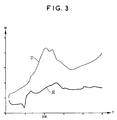
- FIG. 3 is the spectrum obtained by the so-called "DSC” test (Differential Scanning Calorimetry) on a negative electrode of a generator according to the invention; the thermal power W in mW / mg of active material is given on the ordinate, and on the abscissa the temperature T in ° C.
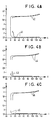
- Figures 4a, 4b and 4c show the first three cycles of an electrochemical generator according to the invention.
- Figures 5a, 5b and 5c are similar to Figures 4a, 4b and 4c respectively, but for an electrochemical generator comprising a positive electrode whose active material is different.
- the voltage U in V with respect to Li + is given on the ordinate, and on the abscissa the capacity C in mAh / g of active material of the electrode considered (the capacity is expressed for the positive electrode in mAh / g of positive active material and for the negative electrode in mAh / g of negative active material).
- a negative electrode according to the invention is prepared, consisting of a paste supported by a conductive aluminum strip.
- the dough has the following composition: - electrochemically active material Li 4/3 Ti 5/3 O 4 94% - binder SBR 2% PM CMC greater than 200,000 2% - conductive material highly divided soot 2%
- the powdery active ingredient is added to the SBR in a 51% solution in weight in water. Then the CMC in solution in water at a concentration of 1% by weight is added to the previous mixture.
- the carboxymethylcellulose used is a high viscosity CMC, i.e. having an average molecular weight between 325,000 and 435,000.
- the dough obtained is spread on a strip of copper, the electrode is then air-dried at room temperature and calendered until a porosity of between 40 and 60% is obtained.
- the counter electrode is a sheet of metallic lithium.
- a microporous polyolefin separator is placed between the electrodes to form an electrochemical bundle.
- the electrochemical bundle is impregnated with an electrolyte composed of the lithium salt LiPF 6 in 1M solution in an EC / DMC / DEC 2/2/1 solvent by volume. We then obtain a button format test cell.
- test cell Ib of button format analogous to that of Example 1 is manufactured, except that it contains an electrolyte composed of the lithium salt LiPF 6 in 1M solution in a PC / EC / DMC 1 / solvent. 1/3 by volume.
- test cell IIa is manufactured in button format similar to that of Example 1, except that it contains an electrode according to the invention, the paste of which has the following composition: - electrochemically active material Li 4/3 Ti 5/3 O 4 94% - binder NBR 2% PM CMC greater than 200,000 2% - conductive material highly divided soot 2%
- the powdery active ingredient is added to the NBR in a 41% solution in weight in water. Then the CMC in solution in water at a concentration of 1% by weight is added to the previous mixture.
- the carboxymethylcellulose used is a high viscosity CMC, i.e. having an average molecular weight between 325,000 and 435,000.
- the dough obtained is spread on a strip aluminum, the electrode is then air-dried at room temperature and calendered until a porosity of between 40 and 60% is obtained.
- test cell IIIa is manufactured in button format similar to that of Example 1 except that it contains an electrode according to the invention, the paste of which has the following composition: - electrochemically active material Li 4/3 Ti 5/3 O 4 91% - binder PVDF 7% - conductive material highly divided soot 2%
- a 7% PVDF solution in N-methylpyrrolidone (NMP) is prepared, then the powdery active ingredient is gradually added to this solution.
- NMP N-methylpyrrolidone
- the paste obtained is spread on an aluminum strip, the electrode is then dried under vacuum at 120 ° C and then calendered until a porosity between 40 and 60%.
- test cell IIIb of button format analogous to that of Example 4 is manufactured, except that it contains an electrolyte composed of the lithium salt LiPF 6 in 1M solution in a PC / EC / DMC 1 / solvent. 1/3 by volume.
- An IVa test cell of button format similar to that of Example 4 is manufactured, except that it contains an electrode according to the invention, the paste of which has the following composition: - electrochemically active material Li 4/3 Ti 5/3 O 4 88% - binder PVDF 10% - conductive material highly divided soot 2%
- FIG. 1 shows that, starting from a comparable initial capacity, the test cell containing it an electrode with a fluorine-free binder (curve 10) has a loss of capacity in cycling which is at least five times less than that observed for cells IIIa and IVa containing an electrode with a fluorinated binder (curves 11 and 12).
- FIG. 2 shows that the test cell Ib containing an electrode with a fluorine-free binder (curve 20) has an initial capacity greater than the cell IIIb containing an electrode with a fluorinated binder (curve 21), and has a loss of capacity in cycling three times lower than this cell.
- the thermal stability of the active material is evaluated by the so-called "DSC” test (Differential Scanning Calorimetry) which is a technique determining the variation of the heat flux in a sample subjected to programming in temperature.
- DSC Different Scanning Calorimetry
- the electrode containing a fluorine-free binder (curve 30) has an energy of the order of 330 J / g without significant peak, while the electrode containing a fluorinated binder (curve 31) has a peak at around 200-250 ° C corresponding to an energy of 1.40KJ / g.
- the absence of fluorine in the binder therefore makes it possible to thermally stabilize the electrode.
- a button format electrochemical generator is manufactured according to the invention containing a negative electrode similar to that of Example 1, and a positive electrode produced in known manner comprising an active layer on a support which is an aluminum strip, the layer active ingredient containing an active ingredient which is a lithium cobalt oxide LiCoO 2 and a PVDF binder.
- a microporous polyolefin separator is placed between the positive and negative electrodes to form an electrochemical beam.
- the electrochemical bundle is impregnated with an electrolyte composed of the lithium salt LiPF 6 in solution 1 M in a PC / EC / DMC solvent 1/1/3 by volume. We then obtain an electrochemical generator Vb in button format.
- a Vlb electrochemical generator is produced in a button format analogous to that of Example 7 except for the fact that it contains a positive electrode, the active material of which is a lithiated mixed oxide LiNiCoAlO 2 .
- FIGS. 4a, 4b and 4c and 5a, 5b and 5c show good stability of the negative electrode according to the invention (curves 41, 43, 45 and curves 51, 53, 55) with respect to two positive electrodes containing a different active material, respectively a lithiated cobalt oxide LiCoO 2 (curves 42, 44, 46) and a mixed lithiated oxide LiNiCoAlO 2 (curves 52, 54, 56).
Landscapes
- Chemical & Material Sciences (AREA)
- Chemical Kinetics & Catalysis (AREA)
- Electrochemistry (AREA)
- General Chemical & Material Sciences (AREA)
- Engineering & Computer Science (AREA)
- Manufacturing & Machinery (AREA)
- Inorganic Chemistry (AREA)
- Materials Engineering (AREA)
- Dispersion Chemistry (AREA)
- Battery Electrode And Active Subsutance (AREA)
Abstract
Description
Le liant polymère de l'électrode doit en premier lieu assurer la cohésion de la matière active qui est sous forme pulvérulente, sans masquer une part importante de la surface électrochimiquement active; cet effet dépend des propriétés de mouillage du liant. Un compromis doit être trouvé car une interaction trop forte du liant avec la matière active conduit à un recouvrement trop important qui entraíne une baisse de la surface active et, par voie de conséquence, de la capacité à régime élevé. Les réducteurs / oxydants utilisés comme matière active sont très puissants ; le liant doit posséder une réactivité la plus faible possible pour être capable de supporter sans dégradation des conditions extrêmes de fonctionnement. En outre le liant polymère doit aussi permettre l'adhésion de la pâte sur le collecteur de courant et accompagner les variations dimensionnelles de la matière active lors des cycles de charge et de décharge. Il doit bien entendu être compatible avec les électrolytes utilisés.
Ces objectifs doivent être remplis non seulement à l'assemblage de l'accumulateur, mais encore tout au long de son fonctionnement. A chaque matière active correspond donc un ou plusieurs liants qui lui permettent de fonctionner dans les meilleures conditions.
Le document JP-2000 106 217 concerne un générateur électrochimique secondaire à électrolyte non-aqueux comprenant une électrode positive contenant Li4/3Ti5/3O4 comme matière active et une électrode négative contenant un matériau carboné dopé au lithium.
L'utilisation du PTFE et du PVDF comme liant d'électrode négative donne lieu à des baisses importantes de capacité au cours du cyclage. En outre les propriétés anti-adhérentes du PTFE interdisent l'utilisation d'un support conducteur mince tel qu'un feuillard, indispensable à l'obtention de fortes énergies volumiques.
Selon un premier mode de réalisation de l'invention, le liant contient un élastomère. Parmi les élastomères utilisables, on peut citer les terpolymères éthylène / propylène / diène (EPDM), les copolymères styrène / butadiène (SBR), les copolymères acrylonitrile / butadiène (NBR), les copolymères bloc styrène / butadiène / styrène (SBS) ou styrène / acrylonitrile / styrène (SIS), les copolymères styrène / éthylène / butylène / styrène (SEBS), les terpolymère styrène / butadiène / vinylpyridine (SBVR), les polyuréthanes (PU), les néoprènes, les polyisobutylènes (PIB), les caoutchoucs butyle, etc... et les mélanges de ceux-ci. De préférence l'élastomère est un copolymère du butadiène; et de préférence encore l'élastomère est choisi parmi un copolymère acrylonitrile / butadiène (NBR) et un copolymère styrène / butadiène (SBR). La proportion de l'élastomère est de préférence comprise entre 30% et 70% en poids du liant.
Selon un deuxième mode de réalisation de l'invention, le liant contient un composé cellulosique. De préférence le composé cellulosique est choisi parmi une carboxyméthylcellulose (CMC), une hydroxypropylméthylcellulose (HPMC), une hydroxypropylcellulose (HPC), et une hydroxyéthylcellulose (HEC). De préférence le composé cellulosique est une carboxyméthylcellulose (CMC). De préférence encore la carboxyméthylcellulose (CMC) a un poids moléculaire moyen supérieur à environ 200 000. La proportion du composé cellulosique est de préférence comprise entre 30% et 70% en poids du liant.
Selon un troisième mode de réalisation de l'invention, le liant comprend un mélange d'un élastomère et d'un composé cellulosique. Selon une première variante, le liant comprend un mélange d'un copolymère acrylonitrile / butadiène (NBR) et de carboxyméthylcellulose (CMC). Selon une deuxième variante, ledit liant comprend un mélange d'un copolymère styrène / butadiène (SBR) et de carboxyméthylcellulose (CMC). De préférence, la proportion de l'élastomère est comprise entre 30% et 70% en poids du liant et la proportion du composé cellulosique est comprise entre 30% et 70% en poids du liant. De préférence encore, la proportion de l'élastomère est comprise entre 50% et 70% en poids du liant et la proportion du composé cellulosique est comprise entre 30 et 50% du liant.
Le collecteur de courant est de préférence un support conducteur bidimensionnel, comme un feuillard plein ou perforé à base de carbone ou de métal, par exemple en cuivre, nickel, acier, inox ou aluminium.
La matière électrochimiquement active positive peut être un des matériaux connus pour être utilisables dans un générateur rechargeable au lithium comme un oxyde de métaux de transition, un sulfure, un sulfate et leurs mélanges. De préférence la matière active de l'électrode positive comprend au moins un oxyde d'un métal de transition choisi parmi un oxyde de vanadium, un oxyde lithié de manganèse, un oxyde lithié de nickel, un oxyde lithié de cobalt, et leurs mélanges.
Le solvant organique est un solvant ou un mélange de solvants choisi parmi les solvants usuels notamment les carbonates cycliques saturés, les carbonates cycliques insaturés, les carbonates non-cycliques, les esters d'alkyle, comme les formiates, les acétates, les propionates ou les butyrates, les éthers, et les mélanges de ceux-ci. Parmi les carbonates cycliques saturés, on peut citer par exemple le carbonate d'éthylène (EC), le carbonate de propylène (PC), le carbonate de butylène (BC), et les mélanges de ceux-ci. Parmi les carbonates cycliques insaturés, on peut citer par exemple le carbonate de vinylène (VC), ses dérivés, et les mélanges de ceux-ci. Parmi les carbonates non-cycliques, on peut citer par exemple le carbonate de diméthyle (DMC), le carbonate de diéthyle (DEC), le carbonate de méthyle éthyle (EMC), et les mélanges de ceux-ci. Parmi les esters d'alkyle, on peut citer par exemple l'acétate de méthyle, l'acétate d'éthyle, le propionate de méthyle, le propionate d'éthyle, le propionate de butyle, le butyrate de méthyle, le butyrate d'éthyle, le butyrate de propyle, et les mélanges de ceux-ci. Parmi les éthers, on peut citer par exemple le l'éther de diméthyle (DME) et les mélanges de ceux-ci.
Le sel conducteur de lithium peut être le perchlorate de lithium LiClO4, l'hexafluoroarsénate de lithium LiAsF6, l'hexafluorophosphate de lithium LiPF6, le tétrafluoroborate de lithium LiBF4, le trifluorométhanesulfonate de lithium LiCF3SO3, le trifluorométhanesulfonimide de lithium LiN(CF3SO2)2 (LiTFSI) ou le trifluorométhanesulfoneméthide de lithium LiC(CF3SO2)3 (LiTFSM).
La figure 1 représente l'évolution de la capacité réversible massique au cours d'un cyclage d'un générateur de format bouton selon l'invention et un générateur de l'art antérieur ; la capacité réversible massique C en mAh/g de matière active est donnée en ordonnée et le nombre de cycles N figure en abscisse.
La figure 2 est analogue à la figure 1 pour un électrolyte différent.
La figure 3 est le spectre obtenu par le test dit "D.S.C." (Differential Scanning Calorimetry) sur une électrode négative d'un générateur selon l'invention ; la puissance thermique W en mW/mg de matière active est donné en ordonnée, et en abscisse la température T en °C.
Les figures 4a, 4b et 4c représentent les trois premiers cycles d'un générateur électrochimique selon l'invention.
Sur les figures 4a, 4b et 4c et les figures 5a, 5b et 5c, la tension U en V par rapport à Li+ est donné en ordonnée, et en abscisse la capacité C en mAh/g de matière active de l'électrode considérée (la capacité est exprimée pour l'électrode positive en mAh/g de matière active positive et pour l'électrode négative en mAh/g de matière active négative).
| - matière électrochimiquement active | Li4/3Ti5/3O4 | 94% |
| - liant | SBR | 2% |
| CMC de PM supérieur à 200 000 | 2% | |
| - matériau conducteur | suie hautement divisée | 2% |
| - matière électrochimiquement active | Li4/3Ti5/3O4 | 94% |
| - liant | NBR | 2% |
| CMC de PM supérieur à 200 000 | 2% | |
| - matériau conducteur | suie hautement divisée | 2% |
| - matière électrochimiquement active | Li4/3Ti5/3O4 | 91% |
| - liant | PVDF | 7% |
| - matériau conducteur | suie hautement divisée | 2% |
| - matière électrochimiquement active | Li4/3Ti5/3O4 | 88% |
| - liant | PVDF | 10% |
| - matériau conducteur | suie hautement divisée | 2% |
- cycle 1 à température ambiante à un régime de 10mA/g de graphite,
- cycles 2 à 50 à 60°C à un régime de 20mA/g de graphite.
| Référence | Liant | Cir | Crev | N | ΔC |
| Ia | 2%SBR + 2%CMC | 10 | 137 | 50 | 0.03 |
| IIa | 2%NBR + 2%CMC | 10 | 137 | 50 | |
| IIIa | PVDF 7% | 10 | 137 | 50 | 0.15 |
| IVa | PVDF 10% | 12 | 136 | 10 | 0.53 |
| Ib | 2%SBR + 2%CMC | 7 | 140 | 50 | 0.03 |
| IIIb | PVDF 7% | 11 | 137 | 50 | 0.10 |
La figure 1 montre qu'en partant d'une capacité initiale comparable, la cellule de test la contenant une électrode avec un liant exempt de fluor (courbe 10) a une perte de capacité en cyclage qui est au moins cinq fois inférieure à celle que l'on observe pour les cellules IIIa et IVa contenant une électrode avec un liant fluoré (courbes 11 et 12).
La figure 2 montre que la cellule de test Ib contenant une électrode avec un liant exempt de fluor (courbe 20) possède une capacité initiale supérieure à la cellule IIIb contenant une électrode avec un liant fluoré (courbe 21), et présente une perte de capacité en cyclage trois fois moins élevée que cette cellule.
La figure 3 montre que l'électrode contenant un liant exempt de fluor (courbe 30) présente une énergie de l'ordre de 330J/g sans pic important, alors que l'électrode contenant un liant fluoré (courbe 31) présente un pic aux alentours de 200-250°C correspondant à une énergie de 1.40KJ/g. L'absence de fluor dans le liant permet donc de stabiliser thermiquement l'électrode.
Les figures 4a, 4b et 4c et 5a, 5b et 5c montrent une bonne stabilité de l'électrode négative selon l'invention (courbes 41, 43, 45 et courbes 51, 53, 55) vis à vis de deux électrodes positives contenant une matière active différente, respectivement un oxyde de cobalt lithié LiCoO2 (courbes 42, 44, 46) et un oxyde mixte lithié LiNiCoAlO2 (courbes 52, 54, 56). Les courbes sont peu polarisées et les capacités C en mAh/g sont quasiment constantes comme le montre le tableau II ci-dessous.
| Référence | électrode | 1er cycle | 2ème cycle | 3ème cycle |
| Vb | (-) Li4/3Ti5/3O4 | 127 | 125 | 125 |
| (+) LiCoO2 | 126 | 124 | 122 | |
| Vib | (-) Li4/3Ti5/3O4 | 116 | 116 | 113 |
| (+) LiNiCoAlO2 | 163 | 163 | 161 |
Claims (15)
- Générateur électrochimique rechargeable au lithium comprenant une électrode positive dont la matière électrochimiquement active comprend au moins un oxyde d'un métal de transition et une électrode négative composée d'un support conducteur et d'une couche active contenant un liant et une matière électrochimiquement active qui est un oxyde mixte de lithium et de titane de formule générale LixTiyO4 dans laquelle 0,8 ≤ x ≤ 1,4 et 1,6 ≤ y ≤ 2,2, caractérisé en ce que ledit liant est un polymère ne contenant pas de fluor.
- Générateur selon la revendication 1, dans lequel ledit polymère non-fluoré est soluble dans l'eau ou capable de former une émulsion stable lorsqu'il est mis en suspension dans l'eau.
- Générateur selon l'une des revendications 1 et 2, dans lequel ledit liant contient un élastomère.
- Générateur selon l'une des revendications précédentes, dans lequel ledit élastomère est choisi parmi un copolymère d'acrylonitrile et de butadiène et un copolymère de styrène et de butadiène.
- Générateur selon l'une des revendications précédentes, dans lequel la proportion dudit élastomère est comprise entre 30% et 70% en poids dudit liant.
- Générateur selon l'une des revendications 1 et 2, dans lequel ledit liant contient un composé cellulosique.
- Générateur selon la revendication 6, dans lequel ledit composé cellulosique est une carboxyméthylcellulose.
- Générateur selon l'une des revendications 6 et 7, dans lequel la proportion dudit composé cellulosique est comprise entre 30% et 70% en poids dudit liant.
- Générateur selon l'une des revendications 1 et 2, dans lequel ledit liant comprend le mélange d'un élastomère et d'un composé cellulosique.
- Générateur selon la revendication 9, dans lequel ledit liant comprend un mélange d'un copolymère d'acrylonitrile et de butadiène et de carboxyméthylcellulose.
- Générateur selon la revendication 9, dans lequel ledit liant comprend un mélange d'un copolymère de styrène et de butadiène et de carboxyméthylcellulose.
- Générateur selon l'une des revendications 9 à 11, dans lequel la proportion dudit élastomère est comprise entre 30% et 70% en poids dudit liant et la proportion dudit composé cellulosique est comprise entre 30% et 70% en poids dudit liant.
- Générateur selon l'une des revendications 9 à 12, dans lequel la proportion dudit élastomère est comprise entre 50% et 70% en poids dudit liant et la proportion dudit composé cellulosique est comprise entre 30% et 50% en poids dudit liant.
- Générateur selon l'une des revendications précédentes, dans lequel la matière active de l'électrode positive comprend au moins un oxyde d'un métal de transition choisi parmi un oxyde de vanadium, un oxyde lithié de manganèse, un oxyde lithié de nickel, un oxyde lithié de cobalt, et leurs mélanges.
- Procédé de fabrication d'un générateur selon l'une des revendications précédentes, comprenant les étapes suivantes de réalisation de ladite électrode négative :on met ledit liant sous forme de solution ou de dispersion dans un solvant aqueux,on ajoute à ladite solution ou dispersion, ladite matière active pulvérulente et éventuellement des auxiliaires de fabrication pour former une pâte,on ajuste la viscosité de la pâte avec de l'eau,on recouvre de pâte au moins une face dudit support conducteur pour former ladite couche active,on sèche et on calandre ledit support recouvert de ladite couche active pour obtenir ladite électrode.
Applications Claiming Priority (2)
| Application Number | Priority Date | Filing Date | Title |
|---|---|---|---|
| FR0100075A FR2819106B1 (fr) | 2001-01-04 | 2001-01-04 | Electrode pour generateur electrochimique rechargeable au lithium et son procede de fabrication |
| FR0100075 | 2001-01-04 |
Publications (1)
| Publication Number | Publication Date |
|---|---|
| EP1221730A1 true EP1221730A1 (fr) | 2002-07-10 |
Family
ID=8858513
Family Applications (1)
| Application Number | Title | Priority Date | Filing Date |
|---|---|---|---|
| EP01403356A Withdrawn EP1221730A1 (fr) | 2001-01-04 | 2001-12-24 | Générateur électrochimique rechargeable au lithium |
Country Status (3)
| Country | Link |
|---|---|
| US (1) | US20020127471A1 (fr) |
| EP (1) | EP1221730A1 (fr) |
| FR (1) | FR2819106B1 (fr) |
Cited By (1)
| Publication number | Priority date | Publication date | Assignee | Title |
|---|---|---|---|---|
| FR2902929A1 (fr) * | 2006-06-26 | 2007-12-28 | Commissariat Energie Atomique | Dispersion aqueuse a base d'amidon et d'oxyde mixte de lithium et de titane, pour une electrode d'accumulateur au lithium. |
Families Citing this family (5)
| Publication number | Priority date | Publication date | Assignee | Title |
|---|---|---|---|---|
| US7033698B2 (en) * | 2002-11-08 | 2006-04-25 | The Gillette Company | Flexible cathodes |
| KR100560546B1 (ko) * | 2003-11-27 | 2006-03-15 | 삼성에스디아이 주식회사 | 리튬 이차 전지용 음극 및 이를 포함하는 리튬 이차 전지 |
| WO2013042720A1 (fr) * | 2011-09-20 | 2013-03-28 | 日産化学工業株式会社 | Composition de bouillie pour utilisation dans la formation d'électrode de batterie secondaire au lithium-ion, contenant une fibre de cellulose en tant que liant, et électrode de batterie secondaire au lithium-ion |
| EP2997612B1 (fr) * | 2013-05-17 | 2019-11-20 | Miltec Corporation | Liants d'électrode à base d'eau pouvant durcir sous un rayonnement actinique ou un faisceau d'électrons et électrodes incorporant ce dernier |
| JP7080584B2 (ja) * | 2017-03-17 | 2022-06-06 | 株式会社東芝 | 二次電池、電池パック、および車両 |
Citations (5)
| Publication number | Priority date | Publication date | Assignee | Title |
|---|---|---|---|---|
| US5378560A (en) * | 1993-01-21 | 1995-01-03 | Fuji Photo Film Co., Ltd. | Nonaqueous secondary battery |
| EP0845828A1 (fr) * | 1996-11-29 | 1998-06-03 | Seiko Instruments Inc. | Batterie secondaire à électrolyte non-aqueux et procédé de fabrication |
| JP2000106217A (ja) * | 1998-09-30 | 2000-04-11 | Toshiba Battery Co Ltd | 非水電解液二次電池 |
| EP1009057A1 (fr) * | 1998-12-10 | 2000-06-14 | Alcatel | Générateur électrochimique rechargeable au lithium utilisable à basse temperature |
| EP1032064A1 (fr) * | 1999-02-25 | 2000-08-30 | Alcatel | Electrode positive de générateur électrochimique rechargeable au lithium à collecteur de courant en aluminium |
Family Cites Families (2)
| Publication number | Priority date | Publication date | Assignee | Title |
|---|---|---|---|---|
| US6159637A (en) * | 1998-02-16 | 2000-12-12 | Mitsubishi Chemical Corporation | Lithium secondary cell and positive electrode material therefor |
| US6489062B1 (en) * | 1998-12-24 | 2002-12-03 | Seiko Instruments Inc. | Non-aqueous electrolyte secondary battery having heat-resistant electrodes |
-
2001
- 2001-01-04 FR FR0100075A patent/FR2819106B1/fr not_active Expired - Fee Related
- 2001-12-24 EP EP01403356A patent/EP1221730A1/fr not_active Withdrawn
- 2001-12-28 US US10/028,918 patent/US20020127471A1/en not_active Abandoned
Patent Citations (5)
| Publication number | Priority date | Publication date | Assignee | Title |
|---|---|---|---|---|
| US5378560A (en) * | 1993-01-21 | 1995-01-03 | Fuji Photo Film Co., Ltd. | Nonaqueous secondary battery |
| EP0845828A1 (fr) * | 1996-11-29 | 1998-06-03 | Seiko Instruments Inc. | Batterie secondaire à électrolyte non-aqueux et procédé de fabrication |
| JP2000106217A (ja) * | 1998-09-30 | 2000-04-11 | Toshiba Battery Co Ltd | 非水電解液二次電池 |
| EP1009057A1 (fr) * | 1998-12-10 | 2000-06-14 | Alcatel | Générateur électrochimique rechargeable au lithium utilisable à basse temperature |
| EP1032064A1 (fr) * | 1999-02-25 | 2000-08-30 | Alcatel | Electrode positive de générateur électrochimique rechargeable au lithium à collecteur de courant en aluminium |
Non-Patent Citations (1)
| Title |
|---|
| PATENT ABSTRACTS OF JAPAN vol. 2000, no. 07 29 September 2000 (2000-09-29) * |
Cited By (3)
| Publication number | Priority date | Publication date | Assignee | Title |
|---|---|---|---|---|
| FR2902929A1 (fr) * | 2006-06-26 | 2007-12-28 | Commissariat Energie Atomique | Dispersion aqueuse a base d'amidon et d'oxyde mixte de lithium et de titane, pour une electrode d'accumulateur au lithium. |
| EP1873848A3 (fr) * | 2006-06-26 | 2008-09-03 | Commissariat à l'Energie Atomique | Dispersion aqueuse à base d'amidon et d'oxyde mixte de lithium et de titane, pour une électrode d'accumulateur au lithium |
| US7914929B2 (en) | 2006-06-26 | 2011-03-29 | Commissariat A L'energie Atomique | Aqueous dispersion with a starch and lithium and titanium mixed oxide base for a lithium storage battery electrode |
Also Published As
| Publication number | Publication date |
|---|---|
| FR2819106A1 (fr) | 2002-07-05 |
| FR2819106B1 (fr) | 2004-10-08 |
| US20020127471A1 (en) | 2002-09-12 |
Similar Documents
| Publication | Publication Date | Title |
|---|---|---|
| CN111480251B (zh) | 锂二次电池用负极、其制备方法以及包含该锂二次电池用负极的锂二次电池 | |
| KR100362283B1 (ko) | 리튬 2차 전지의 제조방법 | |
| JP3573521B2 (ja) | 炭素アノードを有するリチウム蓄電池 | |
| US7659036B2 (en) | Lithium rechargeable battery including a porous membrane separator formed of ceramic secondary particles and a binder | |
| KR100509604B1 (ko) | 유기 전해액 및 이를 채용한 리튬 전지 | |
| KR100467696B1 (ko) | 유기 전해액 및 이를 채용한 리튬 전지 | |
| US20110195314A1 (en) | Method of preparing gel polymer electrolyte secondary battery and gel polymer electrolyte secondary battery | |
| KR101117695B1 (ko) | 리튬 전지용 전해액, 이를 포함한 리튬 전지 및 상기 리튬 전지의 작동 방법 | |
| KR20120100868A (ko) | 리튬 전지 | |
| JP4368114B2 (ja) | リチウムイオン二次電池および二次電池の製造法 | |
| KR20090066031A (ko) | 이차 전지용 음극활물질 및 그 제조방법 | |
| EP1548861A1 (fr) | Matière électrochimiquement active pour électrode positive de générateur électrochimique rechargeable au lithium | |
| KR20040084858A (ko) | 정극, 비수전해질 이차 전지 및 그의 제조 방법 | |
| KR20210109896A (ko) | 이차전지의 제조방법 | |
| EP1311013A2 (fr) | Composé d'insertion du lithium à haute tension utilisable comme matière active cathodique de générateur électrochimique rechargeable au lithium | |
| JP2025508686A (ja) | 放射線硬化性ポリマー及び/又は分散添加剤を用いた電極及び製造方法 | |
| EP1221730A1 (fr) | Générateur électrochimique rechargeable au lithium | |
| JP2007173014A (ja) | 非水電解質二次電池 | |
| KR100592235B1 (ko) | 유기 전해액 및 이를 채용한 리튬 전지 | |
| KR20040053200A (ko) | 비수전해질 및 비수전해질 이차전지 | |
| JP2001351690A (ja) | 非水電解質電池 | |
| US20250372707A1 (en) | Non-Aqueous Electrolyte and Lithium Secondary Battery Using the Same | |
| JP4406946B2 (ja) | 固体電解質 | |
| EP3648205A1 (fr) | Générateur électrochimique au lithium et au fluorure de carbone comprenant un matériau d'électrode négative spécifique | |
| KR102835309B1 (ko) | 리튬 이차전지용 전해액 첨가제 화합물 및 이를 포함하는 리튬 이차전지 |
Legal Events
| Date | Code | Title | Description |
|---|---|---|---|
| PUAI | Public reference made under article 153(3) epc to a published international application that has entered the european phase |
Free format text: ORIGINAL CODE: 0009012 |
|
| AK | Designated contracting states |
Kind code of ref document: A1 Designated state(s): AT BE CH CY DE DK ES FI FR GB GR IE IT LI LU MC NL PT SE TR |
|
| AX | Request for extension of the european patent |
Free format text: AL;LT;LV;MK;RO;SI |
|
| 17P | Request for examination filed |
Effective date: 20030110 |
|
| AKX | Designation fees paid |
Designated state(s): DE FR GB |
|
| RAP1 | Party data changed (applicant data changed or rights of an application transferred) |
Owner name: SAFT FINANCE S.AE.R.L. |
|
| 17Q | First examination report despatched |
Effective date: 20080122 |
|
| STAA | Information on the status of an ep patent application or granted ep patent |
Free format text: STATUS: THE APPLICATION IS DEEMED TO BE WITHDRAWN |
|
| 18D | Application deemed to be withdrawn |
Effective date: 20090623 |