BACKGROUND OF THE INVENTION
Field of the Invention
This invention relates to a singing voice-synthesizing
method and apparatus for synthesizing
singing voices based on performance data being input in
real time, and a storage medium storing a program for
executing the method.
Prior Art
Conventionally, a singing voice-synthesizing method
of the above-mentioned kind has been proposed which makes
the rise time of a phoneme to be sounded first (first
phoneme) in accordance with a note-on signal based on
performance data shorter than the rise time of the same
phoneme when it is sounded in succession to another
phoneme during the note-on period (see e.g. Japanese
Laid-Open Patent Publication (Kokai) No. 10-49169).
FIG. 40A shows consonant singing-starting timing and
vowel singing-starting timing of human singing, and this
example shows a case in which words of a song, "sa" - "i"
- "ta", are sung at the respective pitches of "C3(do)",
"D3(re)", and "E3(mi)". In FIG. 40A, phonetic units each
formed by a combination of a consonant and a vowel, such
as "sa" and "ta", are produced such that the consonant
starts to be sounded earlier than the vowel.
On the other hand, FIG. 40B shows singing-starting
timing of singing voices synthesized by the above-described
conventional singing voice-synthesizing method.
In this example, the same words of the lyric as in FIG.
40A are sung. Actual singing-starting time points T1 to
T3 indicate respective starting time points at which
singing voices start to be generated in response to
respective note-on signals. According to the
conventional method, when the singing voice of "sa" is
generated, the singing-starting time point of the
consonant "s" is set equal to or coincident with the
actual singing-starting time point T1, and the amplitude
level of the consonant "s" is rapidly increased from the
time point T1 so as to avoid giving an impression of the
singing voice being delayed compared with instrument
sound (accompaniment sound).
The conventional singing voice-synthesizing method
suffers from the following problems:
SUMMARY OF THE INVENTION
It is an object of the present invention to provide
a singing voice-synthesizing method and apparatus which
is capable of synthesizing natural singing voices close
to human singing voices based on performance data being
input in real time, and a storage medium storing a
program for executing the method.
To attain the above object, according to a first
aspect of the invention, there is provided a singing
voice-synthesizing method comprising the steps of
inputting phonetic unit information representative of a
phonetic unit, time information representative of a
singing-starting time point, and singing length
information representative of a singing length, in timing
earlier than the singing-starting time point, for a
singing phonetic unit including a sequence of a first
phoneme and a second phoneme, generating a phonetic unit
transition time length formed by a generation time length
of the first phoneme and a generation time length of the
second phoneme, based on the inputted phonetic unit
information, determining a singing-starting time point
and a singing duration time of the first phoneme and a
singing-starting time point and a singing duration time
of the second phoneme, based on the generated phonetic
unit transition time length, the inputted time
information and singing length information, and starting
generation of a first singing voice and a second singing
voice formed by the first phoneme and the second phoneme
at the singing-starting time point of the first phoneme
and the singing-starting time point of the second phoneme,
respectively, and continuing generation of the first
singing voice and the second singing voice for the
singing duration time of the first phoneme and the
singing duration time of the second phoneme, respectively.
Preferably, the determining step includes setting
the singing-starting time point of the first phoneme to a
time point earlier than the signing-starting time point
represented by the time information.
According to this singing voice-synthesizing method,
the phonetic unit information, the time information, and
the singing length information are inputted in timing
earlier than the singing-starting time point represented
by the time information, and a phonetic unit transition
time length is formed based on the phonetic unit
information. Further, a singing-starting time point and
a singing duration time of the first phoneme and a
singing-starting time point and a singing duration time
of the second phoneme are determined based on the
generated phonetic unit transition time length. As a
result, as to the first and second phonemes, it is
possible to determine desired signing-starting time
points before or after the singing-starting time point
represented by the time information, or determine singing
duration times different from the singing length
represented by the singing length information, whereby
natural signing sounds can be produced as the first and
second singing phonetic units. For example, if the
singing-starting time point of the first phoneme can be
set to a time point earlier than the singing-starting
time point represented by the time information, it is
possible to make the rise of a consonant sufficiently
earlier than the rise of a vowel to thereby synthesize
singing voices close to human singing voices.
To attain the above object, according to a second
aspect of the invention, there is provided a singing
voice-synthesizing method comprising the steps of
inputting phonetic unit information representative of a
phonetic unit, time information representative of a
singing-starting time point, and singing length
information representative of a singing length, for a
singing phonetic unit, generating a state transition time
length corresponding to a rise portion, a note transition
portion, or a fall portion of the singing phonetic unit,
based on the inputted phonetic unit information, and
generating a singing voice formed by the phonetic unit,
based on the phonetic unit information, the time
information, and the singing length information which
have been inputted, the generating step including adding
a change in at least one of pitch and amplitude to the
singing voice during a time period corresponding to the
generated state transition time length.
According to this singing voice-synthesizing method,
the state transition time length is generated based on
the inputted phonetic unit, and a change in at least one
of pitch and amplitude is added to the singing voice
during a time period corresponding to the generated state
transition time length. This makes it possible to
synthesize natural singing voices with feelings of attack,
note transition, or release.
To attain the above object, according to a third
aspect of the invention, there is provided a singing
voice-synthesizing apparatus comprising an input section
that inputs phonetic unit information representative of a
phonetic unit, time information representative of a
singing-starting time point, and singing length
information representative of a singing length, in timing
earlier than the singing-starting time point, for a
phonetic unit including a sequence of a first phoneme and
a second phoneme, a storage section that stores a
phonetic unit transition time length formed by a
generation time length of the first phoneme and a
generation time length of the second phoneme, a readout
section that reads out the phonetic unit transition time
length from the storage section based on the phonetic
unit information inputted by the input section, a
calculating section that calculates a singing-starting
time point and a singing duration time of the first
phoneme, and a singing-starting time point and a singing
duration time of the second phoneme, based on the
phonetic unit transition time length read by the readout
section and the time information and the singing length
information which have been inputted by the input section,
and a singing voice-synthesizing section that starts
generation of a first singing voice and a second singing
voice formed by the first phoneme and the second phoneme
at the singing-starting time point of the first phoneme
and the singing-starting time point of the second phoneme
calculated by the calculating section, respectively, and
continuing generation of the first singing voice and the
second singing voice for the singing duration time of the
first phoneme and the singing duration time of the second
phoneme calculated by the calculating section,
respectively.
This singing voice-synthesizing apparatus implements
the signing sound-synthesizing method according to the
first aspect of the invention, and hence the same
advantageous effects described as to this method can be
obtained. Further, since the apparatus is configured
such that the phonetic unit transition time length is
read from the storage section, the construction of the
apparatus or the processing executed thereby can be
simple even if the number of signing phonetic units is
increased.
Preferably, the input section inputs modifying
information for modifying the generation time length of
the first phoneme, and the calculating section modifies
the generation time length of the first phoneme in the
phonetic unit transition time length read by the readout
section according to the modifying information inputted
by the input section, and then calculates the singing-starting
time point and the singing duration time of the
first phoneme and the singing-starting time point and the
singing duration time of the second phoneme, based on the
phonetic unit transition time length including the
modified generation time length of the first phoneme.
According to this preferred embodiment, it is
possible to reflect the operator's intention on the
singing-starting time points and singing duration times
of the first and second phonemes, and hence synthesize
more natural singing voices.
To attain the above object, according to a fourth
aspect of the invention, there is provided a singing
voice-synthesizing apparatus comprising an input section
that inputs phonetic unit information representative of a
phonetic unit, time information representative of a
singing-starting time point, and singing length
information representative of a singing length, for a
singing phonetic unit, a storage section that stores
state transition time lengths corresponding to a rise
portion, a note transition portion, or a fall portion of
the singing phonetic unit, a readout section that reads
out the state transition time length from the storage
section based on the phonetic unit information inputted
by the input section, and a singing voice-synthesizing
section that generates a singing voice formed by the
phonetic unit, based on the phonetic unit information,
the time information, and the singing length information
which have been inputted by the input section, the
singing voice-synthesizing section adding a change in at
least one of pitch and amplitude to the singing voice
during a time period corresponding to the state
transition time length read out by the readout section.
This singing voice-synthesizing apparatus implements
the signing sound-synthesizing method according to the
second aspect of the invention, and hence the same
advantageous effects described as to this method can be
obtained. Further, since the apparatus is configured
such that the state transition time length is read from
the storage section, the construction of the apparatus or
the processing executed thereby can be simple even if the
number of signing phonetic units is increased.
Preferably, the input section inputs modifying
information for modifying the state transition time
lengths, and the singing voice-synthesizing apparatus
includes a modifying section that modifies the
corresponding state transition time length read out by
the readout section based on the modifying information
inputted by the input section, the singing voice-synthesizing
section adding a change in at least one of
pitch and amplitude to the singing voice during a time
period corresponding to the state transition time length
modified by the modifying section.
According to this preferred embodiment, it is
possible to reflect the operator's intention on the state
transition time length, and hence synthesize more natural
singing voices.
To attain the above object, according to a fifth
aspect of the invention, there is provided a signing
sound-synthesizing apparatus comprising an input section
that inputs phonetic unit information representative of a
phonetic unit, time information representative of a
singing-starting time point, singing length information
representative of a singing length, and effects-imparting
information, for a singing phonetic unit, and a singing
voice-synthesizing section that generates a singing voice
formed by the phonetic unit, based on the phonetic unit
information, the time information, and the singing length
information which have been inputted by the input section,
the singing voice synthesizing section imparting effects
to the singing voice based on the effects-imparting
information inputted by the input section.
According to this singing voice-synthesizing
apparatus, it is possible to add minute changes in pitch
and amplitude, e.g. those in vibrato effect, to singing
voices, whereby more natural singing voices can be
synthesized.
Preferably, the effects-imparting information
inputted by the input section represents an effects-imparting
time period, and the singing voice-synthesizing
apparatus further comprises a setting section that sets a
new effects-imparting time period corresponding to both
the effects-imparting time period represented by the
effects-imparting information and a second effects-imparting
time period of a singing phonetic unit
preceding the singing phonetic unit if the effects-imparting
time period is continuous from the second
effects-imparting time period, the singing voice-synthesizing
section imparting effects to the singing
voice during the new effects-imparting time period set by
the setting section.
According to this preferred embodiment, since
effects are imparted by setting a new effects-imparting
time period corresponding to effects imparting-time
periods continuous to each other, effects are not
interrupted to improve the continuity thereof.
To attain the above object, according to a sixth
aspect of the invention, there is provided a singing
voice-synthesizing apparatus comprising an input section
that inputs phonetic unit information representative of a
phonetic unit, time information representative of a
singing-starting time point, and singing length
information representative of a singing length, for a
singing phonetic unit, in timing earlier than the
signing-starting time point, a setting section that
randomly sets a new singing-starting time point, within a
predetermined time range extending before and after the
singing-starting time point, based on the time
information inputted by the input section, and a singing
voice-synthesizing section that generates a singing voice
formed by the phonetic unit, based on the phonetic unit
information and the singing length information which have
been inputted by the input section, and the singing-starting
time point set by the setting section, the
singing voice synthesizing section starting generation of
the signing sound at the new singing-starting time point
set by the setting section.
According to this singing voice-synthesizing
apparatus, a new singing-starting time point is randomly
set within a predetermined time range extending before
and after the singing-starting time point represented by
the time information, and a singing voice is generated at
the set singing-starting time point. This makes it
possible to synthesize more natural singing voices with
variations in signing-starting timing.
To attain the above object, there is provided a
storage medium storing a program for executing the
singing voice-synthesizing method according to the first
aspect of the invention.
Similarly, there is provided a storage medium
storing a program for executing the singing voice-synthesizing
method according to the second aspect of the
invention.
The above and other objects, features and advantages
of the present invention will become more apparent from
the following detailed description taken in conjunction
with the accompanying drawings.
BRIEF DESCRIPTION OF THE DRAWINGS
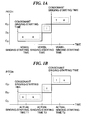
FIGS. 1A and 1B show singing-starting timing of
human singing, and singing-starting timing of a singing
voice synthesized by a singing voice-synthesizing method
according to the present invention, for comparison;
FIG. 2 is a block diagram showing the circuit
configuration of a singing voice-synthesizing apparatus
according to an embodiment of the present invention;
FIG. 3 is a flowchart useful in explaining the
outline of a singing voice-synthesizing process executed
by the FIG. 2 apparatus;
FIG. 4 is a diagram showing information stored in
performance data;
FIG. 5 is a diagram showing information stored in a
phonetic unit database (DB);
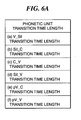
FIGS. 6A and 6B are diagrams showing information
stored in a phonetic unit transition DB;
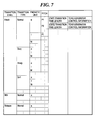
FIG. 7 is a diagram showing information stored in a
state transition DB;
FIG. 8 is a diagram showing stored in a vibrato DB;
FIG. 9 is a diagram useful in explaining a process
of singing voice synthesis based on performance data;
FIG. 10 is a diagram showing a state of a reference
score and a singing voice synthesis score being formed;
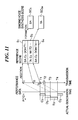
FIG. 11 is a diagram showing a manner of forming a
singing voice synthesis score when performance data is
added to the reference score;
FIG. 12 is a diagram showing a manner of forming the
singing voice synthesis score when performance data is
inserted into the reference score;
FIG. 13 is a diagram showing a manner of forming the
singing voice synthesis score and a manner of
synthesizing singing voices;
FIG. 14 is a diagram useful in explaining various
items in a phonetic unit track in FIG. 13;
FIG. 15 is a diagram useful in explaining various
items in a transition track in FIG. 13;
FIG. 16 is a diagram useful in explaining various
items in a vibrato track in FIG. 13;
FIGS. 17 is a flowchart showing a performance data-receiving
process/singing voice synthesis score-forming
process;
FIG. 18 is a flowchart showing the details of the
singing voice synthesis score-forming process;
FIG. 19 is a flowchart showing a management data-forming
process;
FIG. 20 is a diagram useful in explaining a
management data-forming process in the case of Event
State = Transition;
FIG. 21 is a diagram useful in explaining a
management data-forming process in the case of Event
State = Attack;
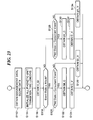
FIG. 22 is a flowchart showing a phonetic unit
track-forming process;
FIG. 23 is a flowchart showing a phonetic unit
transition length-retrieving process;
FIG. 24 is a flowchart showing a silence singing
length -calculating process;
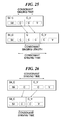
FIG. 25 is a diagram showing a consonant singing
length-calculating process in the case of a consonant
expansion/compression ratio being larger than 1, in the
FIG. 24 process;
FIG. 26 is a diagram showing a consonant singing
length-calculating process in the case of the consonant
expansion/compression ratio being smaller than 1, in the
FIG. 24 process;
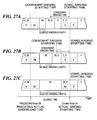
FIGS. 27A to 27C are diagrams showing examples of
silence singing length calculation;
FIG. 28 is a flowchart showing a preceding vowel
singing length-calculating process;
FIG. 29 is a diagram showing a consonant singing
length-calculating process in the case of the consonant
expansion/compression ratio being larger than 1, in the
FIG. 28 process;
FIG. 30 is a diagram showing a consonant singing
length-calculating process in the case of the consonant
expansion/compression ratio being smaller than 1, in the
FIG. 28 process;
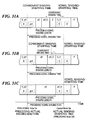
FIGS. 31A to 31C are diagrams showing examples of
preceding vowel singing length calculation;
FIG. 32 is a flowchart showing a vowel singing
length-calculating process
FIG. 33 is a diagram showing an example of vowel
singing length calculation;
FIG. 34 is a flowchart showing a transition track-forming
process;
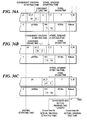
FIGS. 35A to 35C are diagrams showing examples of
calculation of transition time lengths NONEn and NONEs;
FIGS. 36A to 36C are diagrams showing an example of
calculation of transition time lengths pNONEn and NONEs;
FIG. 37 is a flowchart showing a vibrato track-forming
process;
FIGS. 38A to 38E are diagrams showing examples of
vibrato track formation;
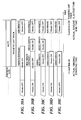
FIG. 39A to 39E show diagrams showing examples of
variations of silence singing length calculation; and
FIG. 40A and 40B show singing-starting timing of
human singing, and singing-starting timing of singing
voices synthesized according to the prior art,
respectively, for comparison.
DETAILED DESCRIPTION OF PREFERRED EMBODIMENTS
The present invention will now be described in
detail with reference to the drawings showing a preferred
embodiment thereof.
Referring first to FIGS. 1A and 1B, the outline of a
singing voice-synthesizing method according to an
embodiment of the present invention will be described.
FIG. 1A shows consonant singing-starting timing and vowel
singing-starting timing of human singing, similarly to
FIG. 40A, while FIG. 1B shows singing-starting timing of
singing voices synthesized by the singing voice-synthesizing
method according to the present embodiment.
In the present embodiment, performance data which is
comprised of phonetic unit information, singing-starting
time information, and singing length information is
inputted for each of phonetic units which constitute a
lyric such as "saita", each phonetic unit consisting of
"sa", "i", or "ta". The singing-starting time
information represents an actual singing-starting time
point (e.g. timing of a first beat of a time), such as T1
shown in FIG. 1B. Each performance data is inputted in
timing earlier than the actual singing-starting time
point, and has its phonetic unit information converted to
a phonetic unit transition time length. The phonetic
unit transition time length consists of a first phoneme
generation time length and a second phoneme generation
time length, for a phonetic unit, e.g. "sa", formed by a
first phoneme ("s") and a second phoneme ("a"). This
phonetic unit transition time, the singing-starting time
information, and the singing length information are used
to determine the respective singing-starting time points
of the first and second phonemes and the respective
singing duration times of the first and second phonemes.
At this time, the singing-starting time point of the
consonant "s" is set to be earlier than the actual
singing-starting time point T1. This also applies to the
phonetic unit "ta". The singing-starting time point of
the vowel "a" is set equal to or earlier or later than
the actual singing-starting time point T1. This also
applies to the phonetic units "i" and "ta". In the FIG.
1B example, for the phonetic unit "sa", the singing-starting
time point of the consonant "s" is set earlier
than the actual singing-starting time point T1 so as to
be adapted to the FIG. 1A case of human singing, and the
singing-starting time point of the vowel "a" is set equal
to the actual singing-starting time point T1; for the
phonetic unit "i", the singing-starting time point
thereof is set to the actual singing-starting time point
T2; and for the phonetic unit "ta", the singing-starting
time point of the consonant "t" is set earlier than the
actual singing-starting time point T3 so as to be adapted
to the FIG. 1A case of human singing, and the singing-starting
time point of the vowel "a" is set equal to the
actual singing-starting time point T3.
In the singing voice synthesis, the consonant "s"
starts to be generated at the determined singing-starting
time point and continues to be generated over the
determined singing duration time. This also applies to
the phonetic units "i" and "ta". As a result, the
singing voices synthesized by the present method become
very natural in which the singing-starting time points
and the singing duration times thereof are approximate to
those of the FIG. 1A case of human singing.
FIG. 2 shows the circuit configuration of a singing
voice-synthesizing apparatus according to an embodiment
of the present invention. This singing voice-synthesizing
apparatus has its operation controlled by a
small-sized computer.
The singing voice-synthesizing apparatus is
comprised of a CPU (Central Processing Unit) 12, a ROM
(Read Only Memory) 14, a RAM (Random Access Memory) 16, a
detection circuit 20, a display circuit 22, an external
storage device 24, a timer 26, a tone generator circuit
28, and a MIDI (Musical Instrument Digital Interface)
interface 30, all connected to each other via a bus 10.
The CPU 12 performs operations of various processes
concerning the generation of musical tones, the synthesis
of singing voices, etc. according to programs stored in
the ROM 14. The process concerning the synthesis of
singing voices (singing voice-synthesizing process) will
be described in detail hereinafter with reference to
flowcharts shown in FIG. 17 etc.
The RAM 16 includes various storage sections used as
working areas for processing operations of the CPU 12,
and is provided with a receiving buffer in which received
performance data are written, etc. as a storage section
related to the execution of the present invention.
The detection circuit 20 detects operating
information concerning operations of various operating
elements of an operating element group 34 arranged on a
panel, not shown.
The display circuit 22 controls the operation of a
display 36 to thereby enable various images to be
displayed thereon.
The external storage device 24 is comprised of a
drive in which at least one type of storage medium, e.g.
a HD (hard disk), an FD (floppy disk), a CD (compact
disk), a DVD (digital versatile disk), and an MO
(magneto-optical disk) can be removably mounted. When a
desired storage medium is mounted in the external storage
device 24, data can be transferred from the storage
medium to the RAM 16. Further, when the storage medium
is a writable one, such as a HD and an FD, data can be
transferred from the RAM 16 to the storage medium.
As program-recording means, there may be employed a
storage medium mounted in the external storage section 24
instead of the ROM 14. In this case, a program stored in
the storage medium is transferred from the storage medium
24 to the RAM 16. Then, the CPU 12 is operated according
to the program stored in the RAM 16. This makes it
possible to add a program or upgrade the same, with ease.
The timer 26 generates a tempo clock signal TCL
having a repetition period corresponding to a tempo
designated by tempo data TM, and the tempo clock signal
TCL is supplied to the CPU 12 as an interrupt command.
The CPU 12 carries out the singing voice synthesis by
executing an interrupt-handling process in response to
the tempo clock signal TCL. The tempo designated by the
tempo data TM can be varied according to the operation of
a tempo-setting operating element of the operating
element group 34. The repetition period of generation of
the tempo clock signal TCL can be set e.g. to 5 ms.
The tone generator circuit 28 includes a large
number of tone-generating channels and a large number of
singing voice-synthesizing channels. The singing voice-synthesizing
channels synthesize singing voices based on
a formant-synthesizing method. In the singing voice-synthesizing
process, described hereinafter, singing
voice signals are generated from the respective singing
voice-synthesizing channels. The thus generated tone
signals and/or singing voice signals are converted to
sound or acoustic waves by a sound system 38.
The MIDI interface 30 is provided for MIDI
communication between the present singing voice-synthesizing
apparatus and an MIDI apparatus 39 provided
as a separate unit. In the present embodiment, the MIDI
interface 30 is used for receiving performance data from
the MIDI apparatus 39, so as to synthesize singing voices.
The singing voice-synthesizing apparatus may be
configured such that performance data for accompaniment
for singing may be received together with performance
data for the singing voice synthesis from the MIDI
apparatus 39, and the tone generator circuit 28 generates
musical tone signals for the accompaniment based on the
performance data for the accompaniment of singing, so
that the sound system 38 generates accompaniment sounds.
Next, the outline of the singing voice-synthesizing
process carried out by the singing voice-synthesizing
apparatus according to the present embodiment will be
described with reference to FIG. 3. In a step S40,
performance data is inputted. More specifically, the
performance data is received from the MIDI apparatus 39
via the MIDI interface 30. The details of the
performance data will be described hereinafter with
reference to FIG. 4.
In a step S42, based on each received performance
data, a phonetic unit transition time length and a state
transition time length are retrieved from a phonetic unit
transition DB (database) 14b and a state transition DB
(database) 14c within a singing voice synthesis DB
(database) 14. Based on the phonetic unit transition
time length, the state transition time length and the
performance data, a singing voice synthesis score is
formed. The singing voice synthesis score is comprised
of three tracks of a phonetic unit track, a transition
track, and a vibrato track. The phonetic unit track
contains information of singing-starting time points,
singing duration times, etc., the transition track
contains information of starting time points and duration
times of transition states, such as attack, and the
vibrato track contains information of starting time
points and duration times of a vibrato-added state, and
the like.
In a step S44, the singing voice synthesis is
performed by a singing voice-synthesizing engine. More
particularly, the singing voice synthesis is carried out
based on the performance data inputted in the step S40,
the singing voice synthesis scores formed in the step S42,
and tone generator control information retrieved from the
phonetic unit DB 14a, the phonetic unit transition DB 14b,
the state transition DB 14c and the vibrato DB 14d,
whereby singing voice signals are generated in the order
of voices to be sung. In the singing voice-synthesizing
process, a singing voice formed by a single phonetic unit
(e.g. "a") designated by the phonetic unit track or a
transitional phonetic unit (e.g. "sa" in which transition
from "s" to "a" occurs) and at the same time having pitch
designated by the performance data starts to be generated
at a singing-starting time point designated by the
phonetic unit track and continues to be generated over a
singing duration time designated by the phonetic unit
track.
To the singing voice thus generated, minute changes
in pitch, amplitude and the like can be added at and
after the starting time of a transition state, such as
attack, designated by the transition track, and the state
in which such changes are added to the singing voice can
be continued over a duration time of the transition state,
such as attack, designated by the transition track.
Further, to the singing voice, a vibrato can be added at
and after a starting time designated by the vibrato track
and the state in which the vibrato is added to the
singing voice can be continued over a duration time
designated by the vibrato track.
In steps S46 and S48, processes are carried out
within the tone generator circuit 28. In the step S46,
the singing voice signal is subjected to D/A (digital-to-analog)
conversion, and in the step S48, the singing
voice signal subjected to the D/A conversion is outputted
to the sound system 38 to cause the same to be sounded as
a singing voice.
FIG. 4 shows information contained in the
performance data. The performance data contains
performance information necessary for singing one
syllable, and the performance information contains note
information, phonetic unit track information, transition
truck information, and vibrato track information.
The note information contains note-on information
indicative of an actual singing-starting time point,
duration information indicative of actual singing length,
and pitch information indicative of the pitch of singing
voice. The phonetic unit track information contains
information of a singing phonetic unit (denoted by PhU),
consonant modification information representative of a
singing consonant expansion/compression ratio, etc. In
the present embodiment, it is assumed that the singing
voice synthesis is carried out to synthesize singing
voices of a Japanese-language song, and hence the
phonemes appearing in the singing voices are consonants
and vowels, and further, the phonetic unit state (PhU
State) can be a combination of a consonant and a vowel, a
vowel alone, or a voiced consonant (nasal sound, half
vowel) alone. If the phonetic unit state is the voiced
consonant alone, the singing-starting time point of the
voiced consonant is similar to that of a vowel alone case,
and hence the phonetic unit state is handled as the vowel
alone.
The transition track information contains attack
type information indicative of a singing attack type,
attack rate information indicative of a singing attack
expansion/compression ratio, release type information
indicative of a singing release type, release rate
information indicative of a singing release
expansion/compression ratio, note transition type
information indicative of a singing note transition type,
etc. The attack type designated by the attack type
information includes "normal", "sexy", "sharp", "soft",
etc. The release type information and the note
transition type information can also designate one of a
plurality of types, similar to the attack type. The note
transition means a transition from the present
performance data (performance event) to the next
performance data (performance event). The singing attack
expansion/compression ratio, the singing release
expansion/compression ratio, and the note transition
expansion/compression ratio are each set to a value
larger than 1 when the state transition time length
associated therewith is desired to be increased, and to a
value smaller than 1 when the same is desired to be
decreased. These ratios can be also set to 1, and in
this case, addition of minute changes in pitch, amplitude
and the like accompanying the attack, release and note
transition is not carried out.
The vibrato track information contains information
of a vibrato number indicative of the number of vibrato
events in the present performance data, information of
vibrato delay 1 indicative of a delay time of a first
vibrato, information of vibrato duration 1 indicative of
a duration time of the first vibrato, information of
vibrato delay K indicative of a delay time of a K-th
vibrato, where K is equal to or larger than 2,
information of vibrato duration K indicative of a
duration time of the K-th vibrato, and information of
vibrato type K indicative of a type of the K-th vibrato.
When the number of vibrato events is 0, the information
of vibrato delay 1, et seq. are not contained in the
vibrato track information. The vibrato type designated
by the information of vibrato type 1 to vibrato type K
includes "normal", "sexy", and "enka (Japanese
traditional popular song)".
Although the singing voice synthesis DB 14A shown in
FIG. 3 is provided within the ROM 14 in the present
embodiment, this is not limitative, but the same may be
provided in the external storage device 24 and
transferred therefrom when it is used. Within the
singing voice synthesis DB 14A, there are provided the
phonetic unit DB 14a, the phonetic unit transition DB 14b,
the state transition DB 14c, the vibrato DB 14d, ··· ,
another DB 14n.
Next, the information stored in the phonetic unit DB
14a, the phonetic unit transition DB 14b, the state
transition DB 14c, and the vibrato DB 14d will be
described with reference to FIGS. 5 to 8. The phonetic
unit DB 14a and the vibrato DB 14d store tone generator
control information as shown in FIGS. 5 and 8,
respectively. The phonetic unit transition DB 14b stores
phonetic unit transition time lengths and tone generator
control information, as shown in FIG. 6B, and the state
transition DB 14c stores state transition time lengths
and tone generator control information, as shown in FIG.
7. When such storage information is prepared, singing
voices of a singer are analyzed to determine tone
generator control information, phonetic unit transition
time lengths and state transition time lengths. Further,
as to the types of "normal", "sexy", "soft", "enka", etc.,
singing voices are recorded by asking the singer to sing
the song with the same type of tinged sound (e.g. by
asking "Please sing by adding a sexy attack." or "Please
sing by adding enka-tinged vibrato.), and the recorded
singing voices are analyzed to determine the tone
generation control information, the phonetic unit
transition time lengths, the state transition time
lengths for the specific type. The tone generator
control information is comprised of formant frequency and
control parameters of a formant level necessary for
synthesizing desired singing voices.
The phonetic unit DB 14a shown in FIG. 5 stores tone
generator control information for each pitch, such as
"P1" and "P2" within each phonetic unit, such as "a", "i",
"M", and "Sil". In FIGS. 5 to 8 and the following
description, the symbol "M" represents a phonetic unit
"u", and "Sil" represents silence. During the singing
voice synthesis, the tone generator control information
adapted to the phonetic unit and pitch of a singing voice
to be synthesized is selected from the phonetic unit DB
14a.
FIG. 6A shows phonetic unit transition time lengths
(a) to (f) stored in the phonetic
unit transition DB 14b.
In FIGS. 6A and the following description, the symbols
"V_Sil" etc. represent the following:
The phonetic unit DB 14b shown in FIG. 6B stores a
phonetic unit transition time length and tone generation
control information for each pitch, such as "P1" and "P2"
within each combination of phonetic units (i.e.
transition in the phonetic units), such as "a" - "i". In
FIG. 6B, "aspiration" represents a sound of aspiration.
The phonetic unit transition time length consists of a
combination of a time length of the preceding phonetic
unit and a time length of the following phonetic unit,
with the boundary between the two time lengths being held
as time slot information. When the singing voice
synthesis score is formed, a phonetic unit transition
time length suitable for the combination of phonetic
units which should form the phonetic track and the pitch
thereof is selected from the phonetic unit transition DB
14b. Further, during the singing voice synthesis, tone
generator control information suitable for the
combination of phonetic units of a singing voice to be
synthesized and the pitch thereof is selected from the
phonetic unit transition DB 14b.
The state transition DB 14c shown in FIG. 7 stores a
state transition time length and tone generator control
information for each pitch, such as "P1" and "P2", within
each phonetic unit, such as "a" and "i", for each of the
state types, i.e. "normal", "sexy", "sharp" and "soft",
within each of the transition states, i.e. attack, note
transition (denoted as "NtN") and release. The state
transition time length corresponds to a duration time of
a transition state, such as attack, note transition and
release. When the singing voice synthesis score is
formed, a state transition time length suitable for the
transition state, transition track, transition type,
phonetic unit, and pitch of a singing voice to be
synthesized, which should form the transition track, is
selected from the state transition DB 14c.
The vibrato DB 14d shown in FIG. 8 stores tone
generator control information for each pitch, such as
"P1"and "P2", within each phonetic unit, such as "a" and
"i", for each of the vibrato types, "normal", "sexy", ···
and "enka". When the singing voice synthesis score is
formed, the tone generator control information suitable
for the vibrato type, phonetic unit, and pitch of a
singing voice to be synthesized is selected from the
vibrato DB 14d.
FIG. 9 illustrates a manner of singing voice
synthesis based on performance data. Assuming that
performance data S1, S2, and S3 designates, similarly to
FIG. 1B, "sa: C3: T1···" , "i: D3: T2···", and "ta: E3: T3···",
respectively, the performance data S1, S2, S3 are
transmitted at respective time points t1, t2, t3 earlier
than the actual singing-starting time points T1, T2, T3,
and received via the MIDI interface 30. The process of
transmitting/receiving the performance data corresponds
to the process of inputting performance data in the step
S40. Whenever each performance data is received, in the
step S42, a singing voice synthesis score is formed for
the performance data.
Then, in the step S44, according to the formed
singing voice synthesis scores, singing voices SS1, SS2,
SS3 are synthesized. As a result of the singing voice
synthesis, it is possible to start generation of the
consonant "s" of the singing voice SS1 at a time point T11
earlier than the time point T1, and further the vowel "a"
of the singing voice SS1 at the time point T1. Also, it
is possible to start generation of the vowel "i" of the
singing voice SS2 at the time point T2. Further, it is
possible to start generation of the consonant "t" of the
singing voice SS3 at a time point T31 earlier than the
time point T3, and further the vowel "a" of the singing
voice SS3 at the time point T3. If desired, it is also
possible to start generation of the vowel "a" of the
phonetic unit "sa" or the vowel "i" of the phonetic unit
"i" earlier than the respective time points T1 and T2.
FIG. 10 illustrates a procedure of generation of
reference scores and singing voice synthesis scores in
the step S42. In the present embodiment, a reference
score-forming process is carried out as preprocessing
prior to the singing voice synthesis score-forming
process. More specifically, performance data transmitted
at the time points t1, t2, t3 are sequentially received
and written into the receiving buffer within the RAM 16.
From the receiving buffer, the performance data are
transferred to a storage section, referred to as
"reference score", within the RAM 16, in the order of
actual singing-starting time points designated by the
performance data, and sequentially written thereinto, e.g.
in the order of performance data S1, S2, S3. Then,
singing voice synthesis scores are formed in the order of
actual singing-starting time points based on the
performance data in the reference score. For example,
based on the performance data S1, a singing voice
synthesis score SC1 is formed, and based on the
performance data S2, a singing voice synthesis score SC2
is formed. Thereafter, as described hereinbefore with
reference to FIG. 9, the singing voice synthesis is
carried out according to the singing voice synthesis
scores SC1, SC2, ...
The above description concerns the processes of
forming reference scores and singing voice synthesis
scores when the transmission and reception of performance
data are carried out in the order of actual singing-starting
time points. When the transmission and
reception of performance data are not carried out in the
order of actual singing-starting time points, reference
scores and singing voice synthesis scores are formed in
manners as illustrated in FIGS. 11 and 12. More
specifically, it is assumed that performance data S1, S3,
S4 are transmitted at respective time points t1, t2, t3,
and sequentially received, as shown in FIG. 11. Then,
after the performance data S1 is written into the
reference score, the performance data S3 and S4 are
sequentially written thereinto, and based on the
performance data S1, S3, singing voice synthesis scores
SC1, SC3a are respectively formed. The writing of
performance data into the reference score at a second or
later time point will be referred to as "addition" if
they are simply written into the reference score in an
adding fashion as illustrated in FIGS. 10 and 11, while
the same will be referred to as "insertion" if they are
written in an inserting fashion as illustrated in FIG. 12.
Assuming that thereafter, at a time point t4, performance
data S2 is transmitted and received, as shown in FIG. 12,
the performance data S2 is added between the performance
data S1 and S3 within the reference score. The reference
score(s) after the actual singing-starting time point at
which the insertion of performance data has occurred
is/are discarded, and based on the performance data thus
updated after the actual singing-starting time point at
which the insertion of performance data has occurred, new
singing voice synthesis scores are formed. For example,
the singing voice synthesis score SC3a is discarded, and
based on the performance data S2, S3, singing voice
synthesis scores SC2, SC3b are formed, respectively.
FIG. 13 shows an example of singing voice synthesis
scores formed based on performance data in the step S42,
and an example of singing voices synthesized in the step
S44. The singing voice synthesis scores SC are formed
within the RAM 16, and are each formed by a phonetic unit
track TP, a transition track TR, and a vibrato track TB.
Data of singing voice synthesis scores SC are updated or
added whenever performance data is received.
Assuming, for example, that performance data S1, S2,
and S3 designate, similarly to FIG. 1B, "sa: C3: T1···",
"i: D3: T2···", and "ta: E3: T3···", respectively,
information as shown in FIGS. 13 and 14 is stored in a
phonetic unit track TP. More specifically, items of
information are arranged in the order of singing, i.e.
silence (Sil), a transition (Sil_s) from the silence to a
consonant "s", a transition (s_a) from the consonant "s"
to a vowel "a", the vowel (a), etc. The information of
silence Sil is comprised of items of information
representative of a starting time point (Begin Time =
T11), a duration time (Duration = D11), and a phonetic
unit (PhU = Sil). The information of the transition
Sil_s is comprised of items of information representative
of a starting time point (Begin Time = T12), a duration
time (Duration = D12), a preceding phonetic unit (PhU1 =
Sil) and the following phonetic unit (PhU2 = s). The
information of the transition s_a is comprised of items
of information representative of a starting time point
(Begin Time = T13), a duration time (Duration = D13), the
preceding phonetic unit (PhU1 = s) and the following
phonetic unit (PhU2 = a). The information of the vowel a
is comprised of items of information representative of a
starting time point (Begin Time = T14), a duration time
(Duration = D14), and a phonetic unit (PhU = a).
The information of duration times of phonetic unit
transitions, such as "Sil_a" and "s_a" is comprised of a
combination of the time length of the preceding phonetic
unit and the time length of the following phonetic unit,
with the boundary between the time lengths being held as
time slot information. Therefore, the time slot
information can be used to instruct the tone generator
circuit 28 to operate according to the duration time of
the preceding phonetic unit and the starting time point
and duration time of the following phonetic unit. For
example, based on the duration time information of the
transition Sil_s, the circuit 28 can be instructed to
operate according to the duration time of silence and the
singing-starting time point T11 and singing duration time
of the consonant "s", and based on the duration time
information of the transition s_a, the circuit 28 can be
instructed to operate according to the duration time of
the consonant "a" and the singing-starting time point T1
and singing duration time of the vowel "a".
Information as shown in FIG. 13 and 15 is stored in
the transition track TR. More specifically, items of
state information are arranged in the order of occurrence
of transition states, e.g. no transition state (denoted
as NONE), an attack transition state (Attack), a note
transition state (NtN), NONE, a release transition state
(Release), NONE, etc. The state information in the
transition track TR is formed based on the performance
data and information in the phonetic unit track TP. The
state information of the attack transition state Attack
corresponds to the information of the phonetic unit
transition from "s" to "a" in the phonetic unit track TP,
the state information of the note transition state NtN to
the information of the phonetic unit transition from "a"
to "i", and the state information of the release
transition state Release to the information of the
phonetic unit transition from "a" to "Sil" in the
phonetic unit track TP. Each state information is used
for adding minute changes in pitch and amplitude, to a
singing voice synthesized based on the information of a
corresponding phonetic unit transition.. Further, in the
example of FIG. 13, the state information of NtN
corresponding to the phonetic unit transition from "t" to
"a" is not provided.
As shown in FIG. 15, the state information of the
first no transition state NONE is comprised of items of
information representative of a starting time point
(Begin Time = T21), a duration time (Duration = D21), and
a transition index (Index = NONE). The state information
of the attack transition state Attack is comprised of
items of information representative of a starting time
point (Begin Time = T22), a duration time (Duration =
D22), a transition index (Index = Attack), and the type
of the transition index (e.g. "normal", Type = Type22).
The transition information of the second no transition
state NONE is the same as that of the first no transition
state NONE except that the starting time point and the
duration time are T23 and D23, respectively. The state
information of the note transition state NtN is comprised
of items of information representative of a starting time
point (Begin Time = T24), a duration time (Duration =
D24), a transition index (Index = NtN), and the type of
the transition index (e.g. "normal", Type = Type24). The
state information of the third no transition state NONE
is the same as that of the first no transition state NONE
except that the starting time point and the duration time
are T25 and D25, respectively. The state information of
the release transition state Release is comprised of
respective items of information representative of a
starting time point (Begin Time = T26), a duration time
(Duration = D26), a transition index (Index = Release),
and the type of the transition index (e.g. "normal", Type
= Type26).
Information as shown in FIGS. 13 and 16 is stored in
the vibrato track TB. More specifically, items of the
information are arranged in the order of occurrence of
vibrato events, e.g. vibrato off, vibrato on, vibrato off,
and so forth. The information of a first vibrato off
event is comprised of items of information representative
of a starting time point (Begin Time = T31), a duration
time (Duration = D31), and a transition index (Index =
OFF). The information of a vibrato on event is comprised
of items of information representative of a starting time
point (Begin Time = T32), a duration time (Duration =
D32), a transition index (Index = ON), and the type of
the vibrato (e.g. "normal", Type = Type32). The
information of a second vibrato off event is the same as
that of the first one except that the starting time point
and the duration time are T33 and D33, respectively.
The information of the vibrato on event corresponds
to the information of the vowel "a" of the phonetic unit
"ta" in the phonetic unit track TP, and is used for
adding vibrato-like changes in pitch and amplitude to a
singing voice synthesized based on the information of the
vowel "a". In the information of the vibrato on event,
by setting the starting time point later than the
starting time point T3 at which the singing voice "a" is
to start being generated, by a delay time DL, a delayed
vibrato can be realized. It should be noted that
starting time points T11 to T14, T21 to T26, T31 to T33,
etc., and duration times D11 to D14, D21 to D26, D31 to
D33, etc. can be set as desired by using the number of
clocks of the tempo clock signal TCL.
By using the singing voice synthesis score SC and
the performance data S1 to S3, the singing voice-synthesizing
process in the step S44 can synthesize the
singing voice as shown in FIG. 13. After realizing
silence time before starting the singing based on the
information of silence Sil in the phonetic unit track TP,
the tone generator control information corresponding to
the information of the transition Sil_s in the track TP
and the pitch information of C3 in the performance data
S1 is read out from the phonetic unit transition DB 14b
shown in FIG. 6B to control the tone generator circuit 28,
whereby the consonant "s" starts to be generated at the
time point T11. The control time period at this time
corresponds to the duration time designated by the
information of the transition Sil_s in the track TP.
Then, the tone generator control information
corresponding to the information of the transition s_a in
the track TP and the pitch information of C3 in the
performance data S1 is read out from the DB 14b to
control the tone generator circuit 28, whereby the vowel
"a" starts to be generated at the time point T1. The
control time period at this time corresponds to the
duration time designated by the information of the
transition s_a in the track TP. As a result, the
phonetic unit "sa" is generated as the singing voice SS1.
Following this, the tone generator control
information corresponding to the information of the vowel
"a" in the track TP and the pitch information of C3 in
the performance data S1 is read out from the phonetic
unit DB 14a to control the tone generator circuit 28,
whereby the vowel "a" continues to be generated. The
control time period at this time corresponds to the
duration time designated by the information of the vowel
"a" in the track TP. Then, the tone generator control
information corresponding to the information of the
transition a_i in the track TP and the pitch information
of D3 in the performance data S2 is read out from the DB
14b to control the tone generator circuit 28, whereby the
generation of the vowel "a" is stopped and at the same
time the generation of the vowel "i" is started at the
time point T2. The control time period at this time
corresponds to the duration time designated by the
information of the transition "a_i" in the track TP.
Following this, similarly to the above, the tone
generator control information corresponding to the
information of the vowel "i" and the pitch information of
D3 and one corresponding to the information of a
transition i_t in the track TP and the pitch information
of D3 are sequentially read out to control the tone
generator circuit 28, whereby the generation of the vowel
"i" is continued until the time point T31, and at this
time point T31, the generation of the consonant "t" is
started. Then, after starting the generation of the
vowel "a" at the time point T3, based on the tone
generator control information corresponding to the
information of the transition t_a and the pitch
information of E3, the tone generator control information
corresponding to the information of the vowel a in the
track TP and the pitch information of E3 and one
corresponding to the information of the transition a_Sil
in the track TP and the pitch information of E3 are
sequentially read out to control the tone generator
circuit 28, whereby the generation of the vowel "a" is
continued until the time point T4, and at this time point
T4, the state of silence is started. As a result, as the
singing voices SS2, SS3, the phonetic units "i" and "ta"
are sequentially generated.
In accordance with the generation of the singing
voices as described above, the singing voice control is
carried out based on the information in the performance
data S1 to S3 and the information in the transition track
TR. More specifically, before and after the time point
T1, the tone generator control information corresponding
to the state information of the transition sate Attack in
the track TR and the information of the transition s_a in
the track TP are read out from the state transition DB
14c in FIG. 7 to control the tone generator circuit 28,
whereby minute changes in pitch, amplitude, and the like
are added to the singing voice "s_a". The control time
period at this time corresponds to the duration time
designated by the state information of the attack
transition state Attack. Further, before and after the
time point T2, the tone generator control information
corresponding to the state information of the note
transition state NtN in the track TR and the information
of the transition a_i in the track TP, and the pitch
information D3 in the performance data S2 is read out
from the DB 14c to control the tone generator circuit 28,
whereby minute changes in pitch, amplitude, and the like
are added to the singing voice "a_i". The control time
period at this time corresponds to the duration time
designated by the state information of the note
transition state NtN. Further, immediately before the
time point T4, the tone generator control information
corresponding to the state information of the release
transition state Release in the track TR and the
information of the vowel a in the track TP, and the pitch
information E3 in the performance data S3 is read out
from the DB 14c to control the tone generator circuit 28,
whereby minute changes in pitch, amplitude, and the like
are added to the singing voice "a". The control time
period at this time corresponds to the duration time
designated by the state information of the release
transition state Release. According to the singing voice
control described above, it is possible to synthesize
natural singing voices with the feelings of attack, note
transition, and release.
Further, in accordance with generation of the
singing voices described above, the singing voice control
is carried out based on the information of the
performance data S1 to S3, and the information in the
vibrato track TB. More specifically, at a time later
than the time point T3 by the delay time DL, the tone
generator control information corresponding to the
information of a vibrato on event in the track TB, the
information of the vowel a in the track TP, and the pitch
information of E3 in the performance data S3 is read out
from the vibrato DB 14d shown in FIG. 8 to control the
tone generator circuit 28, whereby vibrato-like changes
in pitch, amplitude and the like are added to the singing
voice "a", and such addition is continued until the time
point T4. The control time period at this time
corresponds to the duration time designated by the
information of the vibrato on event in the track TB.
Further, the depth and speed of vibrato are determined by
the information of the vibrato type in the performance
data S3. According to the singing voice control
described above, it is possible to synthesize natural
singing voices by adding vibrato to desired portions of
the singing.
Next, the performance data-receiving and singing
voice synthesis score-forming process will be described
with reference to FIG. 17.
In a step S50, the initialization of the system is
carried out, whereby, for example, the count n of a
reception counter in the RAM 16 is set to 0.
In a step S52, the count n of the reception counter
is incremented by 1 (n = n + 1). Then, in a step S54, a
variable m is set to the value or count n of the counter,
and performance data at an m-th (m = n) position in the
sequence of performance data (hereinafter simply refereed
to as the "m-th performance data") is received and
written into the receiving buffer in the RAM 16.
In a step S56, it is determined whether or not the
m-th (m = n) performance data is at the end of the data,
i.e. the last data. If first (m = 1) data is received in
the step S54, the answer to the question of the step S56
becomes negative (N), and hence the process proceeds to a
step S58. In the step S58, m-th (m = n) performance data
is read out from the receiving buffer and written into
the reference score in the RAM 16. It should be noted
that once the first (m = 1) performance data has been
written into the reference score, subsequent performance
data are either added to or inserted into the reference
score, as described hereinabove with reference to FIGS.
10 to 12.
Then, in a step S60, it is determined whether or not
n > 1 holds. If the first (m = 1) performance data has
been received, the answer to the question of the step S60
becomes negative (N), so that the process returns to the
step S52, wherein the count n is incremented to 2, and in
the following step S54, second (m = 2) performance data
is received and written into the receiving buffer. Then,
the process proceeds via the step 56 to the step S58,
wherein the second (m = 2) performance data is added to
the reference score.
Then, it is determined in the step S60 whether or
not n > 1 holds, and in the present case, since the count
n is equal to 2, the answer to this question becomes
affirmative (Y), so that the singing voice synthesis
score-forming process is carried out in a step S61.
Although the process in the step S61 will be described in
detail with reference to FIG. 18, the outline thereof can
be described as follows: It is determined in a step S62
whether or not m-th (m = n -1) performance data has been
inserted into the reference score. For example, since
the m-th (m = 1) performance data has not been inserted
but simply written into the reference score, the answer
to the question of the step S62 becomes negative (N), so
that the process proceeds to a step S64, wherein a
singing voice synthesis score is formed concerning the m-th
(m = n - 1) performance data. For example, when the
second (m = 2) performance data is received in the step
S54, a singing voice synthesis score is formed concerning
the first (m = 1) performance data in the step S64.
After the processing in the step S64 is completed,
the process returns to the step S52, wherein similarly to
the above, the reception of performance data and writing
of the received performance data into the reference score
are carried out. For example, after forming the singing
voice synthesis score is formed concerning the first (m =
1) performance data in the step S64, third (m = 3)
performance data is received in the step S54, and in the
step S58, this data is added to or inserted into the
reference score.
If the answer to the question of the step S62 is
affirmative (Y), this means that m-th (m = n - 1)
performance data has been inserted into the reference
score, so that the process proceeds to a step S66,
wherein singing voice synthesis scores whose actual
singing-starting time points are later than that of the
m-th (m = n - 1) performance data are discarded, and
singing voice synthesis scores are newly formed
concerning the m-th (m = n - 1) data and performance data
subsequent thereto in the reference score. For example,
assuming that after receiving performance data S1, S3, S4,
as shown in FIGS. 11 and 12, performance data S2 is
received, the m-th (m = 4) performance data S2 is added
to the reference score in the step S58. Then, the
process proceeds via the step S60 to the step S62, and
since the third (m = 4 - 1 = 3) performance data S4 has
been added to the reference score, the answer to the
question of the step S62 becomes negative (N), so that
the process returns via the step S64 to the step 52.
Then, after receiving fifth (m = 5) performance data in
the step S54, the process proceeds via the steps S56, S58,
S60 to the step S62, wherein since the fourth (m = 4)
performance data S4 has been inserted into the reference
score, the answer to the question of this step becomes
affirmative (Y), so that the process proceeds to the step
S66, wherein singing voice synthesis scores (SC3a etc. in
FIG. 12) whose actual singing-starting time points are
later than that of the fourth (m = 4) performance data
are discarded, and singing voice synthesis scores are
newly formed concerning the fourth (m = 4) performance
data and subsequent performance data in the reference
score (S2, S3, S4 in FIG. 12).
After the processing in the step S66 is completed,
the process returns to the step S52, the processing
similar to the above is repeatedly carried out. When the
m-th (m = n) performance data is at the end of the data,
the answer to the question of the step S56 becomes
affirmative (Y), and in a step S68, a terminating process
(e.g. addition of end information) is carried out. The
execution of the step S68 is followed by the singing
voice-synthesizing process being carried out in the step
S44 in FIG. 3.
FIG. 18 shows the singing voice synthesis score-forming
process. First, in a step S70, performance data
containing performance information shown in FIG. 4 is
obtained from the reference score. In a step S72, the
performance information contained in the obtained
performance data is analyzed. In a step S74, based on
the analyzed performance information and the stored
management data (management data of preceding performance
data), management data for forming the singing voice
synthesis score is prepared. The processing in the step
S74 will be described in detail hereinafter with
reference to FIG. 19.
Then, in a step S76, it is determined whether or not
the obtained performance data has been inserted into the
reference score when it has been written into the
reference score. If the answer to this question is
affirmative (Y), in a step S78, singing voice synthesis
scores whose actual singing-starting time points are
later than that of the obtained performance data are
discarded.
When the processing in the step S78 is completed or
if the answer to the question of the step S76 is negative
(N), the process proceeds to a step S80, wherein a
phonetic unit track-forming process is carried out. This
process in the step S80 forms a phonetic unit track TP
based on performance data, the management data formed in
the step S74, and the stored score data (score data of
the preceding performance data). The details of the
process will be described hereinafter with reference to
FIG. 22.
In a step S82, a transition track TR is formed based
on the performance information, the management data
formed in the step S74, the stored score data, and the
phonetic unit track TP. The details of the process in
the step S82 will be described hereinafter with reference
to FIG. 34.
In a step S84, a vibrato track TB is formed based on
the performance information, the management data formed
in the step S74, the stored score data, and the phonetic
unit track TP. The details of the process in the step
S84 will be described hereinafter with reference to FIG.
37.
In a step S86, score data for the next performance
data is formed based on the performance information, the
management data formed in the step S74, the phonetic unit
track TP, the transition track TR, and the vibrato track
TB, and stored. The score data contains an NtN
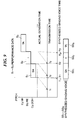
transition time length from the preceding vowel. As
shown in FIG. 36, the NtN transition time length consists
of a combination of a time length T1 of the preceding
note (preceding vowel) and a time length T2 of the
following note (present performance data), with the
boundary between the two time lengths being held as time
slot information. To calculate the NtN transition time
length, the state transition time length of the note
transition state NtN corresponding to phonetic units,
pitch, and a note transition type (e.g. "normal") in the
performance information is read from the state transition
DB 14c shown in FIG. 7, and this state transition time
length is multiplied by the singing note transition
expansion/compression ratio in the performance data. The
NtN transition time length obtained as the result of
multiplication is used as the duration time information
in the state information of note transition state NtN,
shown in FIGS. 13 and 15.
FIG. 19 shows the management data-forming process.
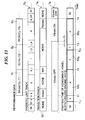
The management data includes, as shown in FIGS. 20 and 21,
items of information of a phonetic unit state (PhU state),
a phoneme, pitch, current note on, current note duration,
current note off, full duration, and an event state.
When the performance data is obtained in a step S90,
at the following step S92, the singing phonetic unit in
the performance data is analyzed. The information of a
phonetic unit state represents a combination of a
consonant and a vowel, a vowel alone, or a voiced
consonant alone. In the following, for convenience, the
combination of a consonant and a vowel will be referred
to as PhU State = Consonant Vowel, and the vowel alone or
the voiced consonant alone as PhU State = Vowel. The
information of a phoneme represents the name of a phoneme
(name of a consonant and/or name of a vowel), the
category of the consonant (nasal sound, plosive sound,
half vowel, etc.), whether the consonant is voiced or
unvoiced, and so forth.
In a step S94, the pitch of a singing voice in the
performance data is analyzed, and the analyzed pitch of
the singing voice is set as the pitch information "Pitch".
In a step S96, the actual singing time in the performance
data is analyzed, and the actual singing-starting time
point of the analyzed actual singing time is set as the
current note-on information "Current Note On". Further,
the actual singing length is set as the current note
duration information "Current Note Duration", and a time
point later than the actual singing-starting time point
by the actual singing length is set as the current note-off
information "Current Note Off".
As the current note-on information, the time point
obtained by modifying the actual singing-starting time
point may be employed. For example, a time point (t0 ± Δ
t, where t0 indicates the actual singing-starting time
point) obtained by randomly changing the actual singing-starting
time point through a random number-generating
process or the like, by Δt within a predetermined time
range (indicated by two broken lines in FIGS. 20 and 21)
before and after the actual singing-starting time point
(indicated by a solid line in FIGS. 20 and 21) may be set
as the current note-on information.
In a step S98, by using the management data of
preceding performance data, the singing time points of
the present performance data are analyzed. In the
management data of the preceding performance data, the
information " Preceding Event Number" represents the
number of preceding performance data received, of which
the rearrangement has been completed. The data
"Preceding Score Data" is score data formed and stored in
the step S86 when a singing voice synthesis score was
formed concerning the preceding performance data. The
information "Preceding Note Off" represents a time point
at which the preceding actual singing should be
terminated. The information "Event State" represents a
state of connection (whether silence is interposed)
between a preceding singing event and a current singing
event determined based on the information "Preceding Note
Off" and the current note-on information. In the
following, for convenience, a state in which the current
singing event is continuous from the preceding singing
event (i.e. without silence), as shown in FIG. 20, will
be indicated by Event State = Transition, and a state in
which silence is interposed between the preceding singing
event and the current singing event, as shown in FIG. 21,
will be indicated by Event State = Attack. The
information "Full Duration" represents a time length
between a time point designated by the information
"Preceding Note Off" at which the preceding actual
singing should be terminated and a time designated by the
current note-off information "Current Note Off" at which
the current actual singing should be terminated.
Next, the phonetic unit track-forming process will
be described with reference to FIG. 22. In a step S100,
performance information (contents of performance data),
the management data and the score data are obtained. In
a step S102, a phonetic unit transition time length is
obtained (read out) from the phonetic unit transition DB
14b shown in FIG. 6B based on the obtained data. The
details of the processing in the step S102 will be
described hereinafter with reference to FIG. 23.
In a step S104, based on the management data, it is
determined whether or not Event State = Attack holds. If
the answer to this question is affirmative (Y), it means
that preceding silence exists, and in a step S106, a
silence singing length is calculated. The details of the
processing in the step S106 will be described hereinafter
with reference to FIG. 24.
If the answer to the determination in the step S104
is negative (N), it means that Event State = Transition
holds, and hence a preceding vowel exists, so that in a
step S108, a preceding vowel singing length is calculated.
The details of the process in the step S108 will be
described hereinafter with reference to FIG. 28.
When the processing in the step S106 or S108 is
completed, in a step S110, a vowel singing length is
calculated. The details of the processing in the step
S110 will be described hereinafter with reference to FIG.
32.
FIG. 23 shows the phonetic unit transition time
length-acquisition process carried out in the step S102.
In a step S112, management data and score data are
obtained. Then, in a step S114, all phonetic unit
transition time lengths (phonetic unit transition time
lengths obtained in steps S116, S122, S124, S126, S130,
S132, S134, all hereinafter referred to) are initialized.
In a step S116, a phonetic unit transition time
length of V_Sil (vowel to silence) is retrieved from the
DB 14b based on the management data. Assuming, for
example, that the vowel is "a", and the pitch of the
vowel is "P1", the phonetic unit transition time length
corresponding to "a_Sil" and "P1" is retrieved from the
DB 14b. The processing in the step S116 is related to
the fact that in the Japanese language syllables
terminate in vowel.
In a step S118, based on the management data, it is
determined whether or not Event State = Attack holds. If
the answer to this question is affirmative (Y), it is
determined based on the management data in a step S120
whether or not PhU State = Consonant Vowel holds. If the
answer to this question is affirmative (Y), a phonetic
unit transition time length of Sil_C (silence to
consonant) is retrieved from the DB 14b based on the
management data in a step S122. Thereafter, in a step
S124, based on the management data, a phonetic unit
transition time length of C_V (consonant to vowel) is
retrieved from the DB 14b.
If the answer to the question of the step S120 is
negative (N), it means that PhU State = Vowel holds, so
that in a step S126, a phonetic unit transition time
length of Sil_V is retrieved from the DB 14b based on the
management data. It should be noted that the details of
the manner of retrieving the transition time lengths at
the respective steps S122 to S126 are the same as
described as to the step S116.
If the answer to the question of the step S118 is
negative (N), similarly to the step S120, it is
determined in a step S128 whether or not PhU state =
Consonant Vowel holds. If the answer to this question is
affirmative (Y), in a step S130, based on the management
data and the score data, a phonetic unit transition time
length of pV_C (preceding vowel to consonant) is
retrieved from the DB 14b. Assuming, for example, that
the score data indicates that the preceding vowel is "a",
and the management data indicates that the consonant is
"s" and its pitch is "P2", a phonetic unit transition
time length corresponding to "a_s" and "P2" is retrieved
from the DB 14b. Thereafter, in a step S132, similarly
to the step S116, a phonetic unit transition time length
of C_V (consonant to vowel) is retrieved from the DB 14b
based on the management data.
If the answer to the question of the step S128 is
negative (N), the process proceeds to a step S134,
wherein similarly to the step S130, a phonetic unit
transition time length of pV_V (preceding vowel to vowel)
is retrieved from the DB 14b based on the management data
and the score data.
FIG. 24 shows the silence singing length-calculating
process carried out in the step S106.
First, in a step S136, performance data, management
data and score data are obtained. In a step S138, it is
determined whether or not PhU State = Consonant Vowel
holds. If the answer to this question is affirmative (Y),
in a step S140, a consonant singing length is calculated.
In this case, as shown in FIG. 25, the consonant singing
time is determined by adding together a consonant portion
of the silence-to-consonant phonetic unit transition time
length, the consonant singing length, and a consonant
portion of the consonant-to-vowel phonetic unit
transition time length. Accordingly, the consonant
singing length is part of the consonant singing time.
FIG. 25 shows an example of determination of the
consonant singing length carried out when the singing
consonant expansion/compression ratio contained in the
performance information is larger than 1. In this case,
the sum of the consonant length of Sil_C and the
consonant length of C_V added together is used as a basic
unit, and this basic unit is multiplied by the singing
consonant expansion/compression ratio to obtain the
consonant singing length C. Then, the consonant singing
time is lengthened by interposing the consonant singing
length C between Sil_C and C_V.
FIG. 26 shows an example of determination of the
consonant singing length carried out when the singing
consonant expansion/compression ratio contained in the
performance information is smaller than 1. In this case,
the consonant length of Sil_C and the consonant length of
C_V are each multiplied by the singing consonant
expansion/compression ratio to shorten the respective
consonant lengths. As a result, the consonant singing
time formed by the consonant length of Sil_C and the
consonant length of C_V is shortened.
In a step S142, the silence singing length is
calculated. As shown in FIG. 27, silence time is
determined by adding together a silence portion of a
preceding vowel-to-silence phonetic unit transition time
length, a silence singing length, a silence portion of a
silence-to-consonant phonetic unit transition time length,
and a consonant singing time, or adding together a
silence portion of a preceding vowel-to-silence phonetic
unit transition time length, a silence singing length, a
silence portion of a silence-to-vowel phonetic unit
transition time length. Therefore, the silence singing
length is part of the silence time. In the step S142, in
accordance with the order of singing, the silence singing
length is calculated such that the boundary between the
consonant portion of C_V and the vowel portion of the
same, or the boundary between the silence portion of
Sil_V and the vowel portion of the same coincides with
the actual singing-starting time point (Current Note On).
In short, the silence singing length is calculated such
that the singing-starting time point of the vowel of the
present performance data coincides with the actual
singing-starting time point.
FIGS. 27A to 27C show phonetic unit connection
patterns different from each other. The pattern shown in
FIG. 27A corresponds to a case of a preceding vowel "a" -
silence - "sa", for example, in which to lengthen the
consonant "s", the consonant singing length C is inserted.
The pattern shown in FIG. 27B corresponds to a case of a
preceding vowel "a" - silence - "pa", for example. The
pattern shown in FIG. 27C corresponds to a case of a
preceding vowel "a" - silence - "i", for example.
FIG. 28 shows the preceding vowel singing length-calculating
process executed in the step S108.
First, in a step S146, performance data, management
data, and score data are obtained. In a step S148, it is
determined whether or not PhU State = Consonant Vowel
holds. If the answer to this question is affirmative (Y),
in a step S150, the consonant singing length is
calculated. In this case, as shown in FIG. 29, the
consonant singing length is determined by adding together
a consonant portion of the preceding vowel-to-consonant
phonetic unit transition time length, a consonant singing
length, a consonant portion of the consonant-to-vowel
phonetic unit transition time length. Therefore, the
consonant singing length is part of the consonant singing
time.
FIG. 29 shows an example of determination of the
consonant singing length carried out when the singing
consonant expansion/compression ratio contained in the
performance information is larger than 1. In this case,
the sum of the consonant length of pV_C and the consonant
length of C_V added together is used as a basic unit, and
this basic unit is multiplied by the singing consonant
expansion/compression ratio to obtain the consonant
singing length C. Then, the consonant singing time is
lengthened by interposing the consonant singing length C
between pV_C and C_V.
FIG. 30 shows an example of determination of the
consonant singing length carried out when the singing
consonant expansion/compression ratio contained in the
performance information is smaller than 1. In this case,
the consonant length of pV_C and the consonant length of
C_V are each multiplied by the singing consonant
expansion/compression ratio to shorten the respective
consonant lengths. As a result, the consonant singing
time formed by the consonant length of pV_C and the
consonant length of C_V is shortened.
Then, in a step S152, the preceding vowel singing
length is calculated. As shown in FIG. 31, a preceding
vowel singing time is determined by adding together a
vowel portion of X (Sil_Consonant or vowel)-to-preceding
vowel phonetic unit transition time length, a preceding
vowel singing length, and a vowel portion of the
preceding vowel-to-consonant or vowel phonetic unit
transition time length. Therefore, the preceding vowel
singing length is part of the preceding vowel singing
time. Further, the reception of the present performance
data makes definite the connection between the preceding
performance data and the present performance data, so
that the vowel singing length and V_Sil formed based on
the preceding performance data are discarded. More
specifically, the assumption that "silence is interposed
between the present performance data and the next
performance data" for use in the vowel singing length-calculating
process in FIG. 32, described hereinafter, is
annuled. In the step S152, in accordance with the order
of singing, the preceding vowel singing length is
calculated such that the boundary between the consonant
portion of C_V and the vowel portion of the same, or the
boundary between the preceding vowel portion of pV_V and
the vowel portion of the same coincides with the actual
singing-starting time point (Current Note On). In short,
the preceding vowel singing length is calculated such
that the singing-starting time point of the vowel of the
present performance data coincides with the actual
singing-starting time point.
FIGS. 31A to 31C show phonetic unit connection
patterns different from each other. The pattern shown in
FIG. 31A corresponds to a case of a preceding vowel "a" -
"sa", for example, in which to lengthen the consonant "s",
the consonant singing length C is inserted. The pattern
shown in FIG. 31B corresponds to a case of a preceding
vowel "a" - "pa", for example. The pattern shown in FIG.
31C corresponds to a case of a preceding vowel "a" - "i",
for example.
FIG. 32 shows the vowel singing length-calculating
process in the step S110.
First, in a step S154, performance information,
management data and score data are obtained. In a step
S156, the vowel singing length is calculated. In this
case, until the next performance data is received, a
vowel connecting portion is not made definite. Therefore,
it is assumed that "silence is interposed between the
present performance data and the next performance data",
and as shown in FIG. 33, the vowel singing length is
calculated by connecting V_Sil to the vowel portion as
shown in FIG. 33. At this time, the vowel singing time
is temporarily determined by adding together a vowel
portion of an X-to-vowel phonetic unit transition time
length, a vowel singing length, and a vowel portion of a
vowel-to-silence phonetic unit transition time length.
Therefore, the vowel singing length becomes part of the
vowel singing time. In the step S156, in accordance with
the order of singing, the vowel singing length is
calculated such that the boundary between the vowel
portion and silence portion of V_Sil_Coincides with the
actual singing end time point (Current Note Off).
When the next performance data is received, the
state of connection (Event State) between the present
performance data and the next performance data becomes
definite, and if Event State = Attack holds for the next
performance data, the vowel singing length of the present
performance data is not updated, while if Event State =
Transition holds for the next performance data, the vowel
singing length of the present performance data is updated
by the process in the step S152 described above.
FIG. 34 shows the transition track-forming process
carried out in the step S82.
First in a step S160, performance information,
management data, score data, and data of the phonetic
unit track are obtained. In a step S162, an attack
transition time length is calculated. To this end, the
state transition time length of an attack transition
state Attack corresponding to a singing attack type, a
phonetic unit, and pitch, is retrieved from the state
transition DB 14c shown in FIG. 7 based on the
performance information and the management data. Then,
the retrieved state transition time length is multiplied
by a singing attack expansion/compression ratio in the
performance information to obtain the attack transition
time length (duration time of the attack portion).
In a step S164, a release transition time length is
calculated. To this end, the state transition time
length of a release transition state Release
corresponding to a singing release type, a phonetic unit,
and pitch, is retrieved from the state transition DB 14c
based on the performance information and the management
data. Then, the retrieved state transition time length
is multiplied by a singing release expansion/compression
ratio in the performance information to obtain the
release transition time length (duration time of the
release portion).
In a step S166, an NtN transition time length is
obtained. More specifically, from score data stored in
the step 86 in FIG. 18, the NtN transition time length
from the preceding vowel (duration time of a note
transition portion) is obtained.
In a step S168, it is determined whether or not
Event State = Attack holds. If the answer to this
question is affirmative (Y), a NONE transition time
length corresponding to the silence portion (referred to
as "NONEn transition time length") is calculated in a
step S170. More specifically, in the case of PhU State =
Consonant Vowel, as shown in FIGS. 35A and 35B, the NONEn
transition time length is calculated such that the
singing-starting time point of the consonant coincides
with an attack transition-starting time point (leading
end of the attack transition time length). The FIG. 35A
example differs from the FIG. 35B example in that a
consonant singing length C is interposed in the consonant
singing time. In the case of PhU State = Vowel, as shown
in FIG. 35C, the NONEn transition time length is
calculated such that the singing-starting time point of
the vowel coincides with the attack transition-starting
time point.
In the step S170, the NONE transition time length
corresponding to the steady portion(referred to as "NONEs
transition time length) is calculated. In this case,
until the next performance data is received, the state of
connection following the NONEs transition time length is
not made definite. Therefore, it is assumed that
"silence is interposed between the present performance
data and the next performance data", and as shown in FIG.
35A to 35C, the NONEs transition time length is
calculated with the release transition connected thereto.
More specifically, the NONEs transition time length is
calculated such that a release transition end time point
(trailing end of the release transition time length)
coincides with an end time point of V_Sil, based on an
end time point of the preceding performance data, the end
time point of V_Sil, the attack transition time length,
the release time length and the NONEn transition time
length.
If the answer to the question of the step S168 is
negative (N), in a step S174, a NONE transition time
length corresponding to the steady portion of the
preceding performance data (referred to as "pNONEs
transition time length") is calculated. Since the
reception of the present performance data has made
definite the state of connection with the preceding
performance data, the NONEs transition time length and
the preceding release transition time length formed based
on the preceding performance data are discarded. More
specifically, the assumption "silence is interposed
between the present performance data and the next
performance data" employed in the processing in a step
S176, described hereinafter, is annuled. In the step
S174, as shown in FIGS. 36A to 36C, in both of the cases
of PhU State = Cosonant Vowel and PhU State = Vowel, the
pNONEs transition time length is calculated such that the
boundary between T1 and T2 of the NtN transition time
length from the preceding vowel coincides with the actual
singing-starting time point (Current Note On) of the
present performance data based on the actual singing-starting
time point and the actual singing end time point
of the preset performance data and the NtN transition
time length. The FIG. 36A example differs from the FIG.
36B example in that the consonant singing length C is
interposed in the consonant singing time.
In the step S176, the NONE transition time length
corresponding to the steady portion (NONEs transition
time length) is calculated. In this case, until the next
performance data is received, the state of connection
with the NONEs transition time length is not made
definite. Therefore, it is assumed that "silence is
interposed between the present performance data and the
next performance data", and as shown in FIG. 36A to 36C,
the NONEs transition time length is calculated with the
release transition connected thereto. More specifically,
the NONEs transition time length is calculated such that
the boundary between T1 and T2 of the NtN transition time
length continued from the preceding vowel coincides with
the actual singing-starting time point (Current Note On)
of the present performance data and at the same time, the
release transition end time point (trailing end of the
release transition time length) coincides with the end
time point of V_Sil, based on the actual singing-starting
time point of the present performance data, the end time
point of V_Sil, the NtN transition time length continued
from the preceding vowel, and the release transition time
length.
FIG. 37 shows the vibrato track-forming process
carried out in the step S84.
First, in a step S180, performance information,
management data, score data, and data of a phonetic unit
track are obtained. In a step S182, it is determined
based on the obtained data whether or not the vibrato
event should be continued. If vibrato is started at the
actual singing-starting time point of the present
performance data, and at the same time the vibrato-added
state is continued from the preceding performance data,
the answer to this question is affirmative (Y), so that
the process proceeds to a step S184. On the other hand,
although vibrato is started at the actual singing-starting
time point of the present performance data, the
vibrato-added state is not continued from the preceding
performance data, or if vibrato is not started at the
actual singing-starting time point of the present
performance data, the answer to this question is negative
(N), so that the process proceeds to a step S188.
In many cases, vibrato is sung over a plurality of
performance data (notes). Even if vibrato is started at
the actual singing-starting time point of the present
performance data, there are a case as shown in FIG. 38A
in which the vibrato-added state is continued from the
preceding note, and a case as shown in FIGS. 38D, 38E in
which the vibrato is additionally started at the actual
singing-starting time point of the present note.
Similarly, even as to the non-vibrato state (vibrato-non-added
state), there are a case as shown in FIG. 38B in
which the non-vibrato state is continued from the
preceding note and a case as shown in FIG. 38C in which
the non-vibrato state is started at the actual singing-starting
time point of the present note:
If the vibrato event is to be continued, in the step
S184, the preceding vibrato time length is discarded.
Then, in a step S186, a new vibrato time length is
calculated by connecting (adding) together the preceding
vibrato time length and a vibrato time length of vibrato
to be started at the actual singing-starting time point
of the present note. Then, the process proceeds to the
step S194.
If the non-vibrato event is to be continued, in the
step S190, the preceding non-vibrato event time length is
discarded. Then, a new non-vibrato event time length is
calculated by connecting (adding) together the preceding
non-vibrato time length and a non-vibrato time length of
non-vibrato to be started at the actual singing-starting
time point of the present note. Then, the process
proceeds to the step S194.
In the step S194, it is determined whether or not
the vibrato time length should be added. If the answer
to this question is affirmative (Y), first, in a step
S196, a non-additional vibrato time length is calculated.
More specifically, a non-vibrato time length from the
trailing end of the vibrato time length calculated in the
step S186 to a vibrato time length to be added is
calculated as the non-additional vibrato time length.
Then, in a step S198, an additional vibrato time
length is calculated. Then, the process returns to the
step S194, wherein the above-described process is
repeated. This makes it possible to add a plurality of
additional vibrato time lengths.
If the answer to the question of the step S194 is
negative (N), the non-vibrato time length is calculated
in a step S200. More specifically, a time period from
the final time point of a final vibrato event to the end
time point of V_Sil within the actual singing time length
(time length between Current Note On to Current Note Off)
is calculated as the non-vibrato time length.
Although in the above steps S142 to S152, the
silence singing length or the preceding vowel singing
length is calculated such that the singing-starting time
point of the vowel of the present performance data
coincides with the actual singing-starting time point,
this is not limitative, but for the purpose of
synthesizing more natural singing voices, the silence
singing length, the preceding vowel singing length and
the vowel singing length may be calculated as in (1) to
(11) described below:
The present invention is by no means limited to the
embodiment described hereinabove by way of example, but
can be practiced in various modifications and variations.
Examples of such modifications and variations include the
following:
It goes without saying that the above described
embodiment, modifications or variations may be realized
even in the form of a program as software to thereby
accomplish the object of the present invention.
Further, it also goes without saying that the object
of the present invention may be accomplished by supplying
a storage medium in which is stored software program code
executing the singing voice-synthesizing method or
realizing the functions of the singing voice-synthesizing
apparatus according to the above described embodiment,
modifications or variations, and causing a computer (CPU
or MPU) of the apparatus to read out and execute the
program code stored in the storage medium.
In this case, the program code itself read out from
the storage medium achieves the novel functions of the
above embodiment, modifications or variations, and the
storage medium storing the program constitutes the
present invention.
The storage medium for supplying the program code to
the system or apparatus may be in the form of a floppy
disk, a hard disk, an optical memory disk, an magneto-optical
disk, a CD-ROM, a CD-R (CD-Recordable), DVD-ROM,
a semiconductor memory, a magnetic tape, a nonvolatile
memory card, or a ROM, for example. Further, the program
code may be supplied from a server computer via a MIDI
apparatus or a communication network.
Further, needless to say, not only the functions of
the above embodiment, modifications or variations can be
realized by carrying out the program code read out by the
computer but also an OS (operating system) or the like
operating on the computer can carry out part or whole of
actual processing in response to instructions of the
program code, thereby making it possible to implement the
functions of the above embodiment, modifications or
variations.
Furthermore, it goes without saying that after the
program code read out from the storage medium has been
written in a memory incorporated in a function extension
board inserted in the computer or in a function extension
unit connected to the computer, a CPU or the like
arranged in the function extension board or the function
extension unit may carry out part or whole of actual
processing in response to the instructions of the code of
the next program, thereby making it possible to achieve
the functions of the above embodiment, modifications or
variations.