EP1219718A1 - Silver braze alloy - Google Patents
Silver braze alloy Download PDFInfo
- Publication number
- EP1219718A1 EP1219718A1 EP01310708A EP01310708A EP1219718A1 EP 1219718 A1 EP1219718 A1 EP 1219718A1 EP 01310708 A EP01310708 A EP 01310708A EP 01310708 A EP01310708 A EP 01310708A EP 1219718 A1 EP1219718 A1 EP 1219718A1
- Authority
- EP
- European Patent Office
- Prior art keywords
- silver
- alloy
- manganese
- brazing
- brazing material
- Prior art date
- Legal status (The legal status is an assumption and is not a legal conclusion. Google has not performed a legal analysis and makes no representation as to the accuracy of the status listed.)
- Granted
Links
Images
Classifications
-
- B—PERFORMING OPERATIONS; TRANSPORTING
- B23—MACHINE TOOLS; METAL-WORKING NOT OTHERWISE PROVIDED FOR
- B23K—SOLDERING OR UNSOLDERING; WELDING; CLADDING OR PLATING BY SOLDERING OR WELDING; CUTTING BY APPLYING HEAT LOCALLY, e.g. FLAME CUTTING; WORKING BY LASER BEAM
- B23K35/00—Rods, electrodes, materials, or media, for use in soldering, welding, or cutting
- B23K35/22—Rods, electrodes, materials, or media, for use in soldering, welding, or cutting characterised by the composition or nature of the material
- B23K35/24—Selection of soldering or welding materials proper
- B23K35/30—Selection of soldering or welding materials proper with the principal constituent melting at less than 1550°C
- B23K35/3006—Ag as the principal constituent
-
- C—CHEMISTRY; METALLURGY
- C22—METALLURGY; FERROUS OR NON-FERROUS ALLOYS; TREATMENT OF ALLOYS OR NON-FERROUS METALS
- C22C—ALLOYS
- C22C5/00—Alloys based on noble metals
- C22C5/06—Alloys based on silver
- C22C5/08—Alloys based on silver with copper as the next major constituent
Definitions
- the present invention relates to a silver brazing alloy and to a method of brazing metal parts.
- filler metals include silver, gold, nickel, and copper brazing alloys. Silver brazing alloys are more costly and, in general, melt at lower temperatures than copper alloys.
- One silver brazing alloy which has been used in the prior art is an alloy containing 56 wt% silver, 42 wt% copper, and 2.0 wt% nickel. Despite the wide spread use of this silver brazing alloy, there remains a need for an alloy which has improved brazing characteristics, particularly wettability.
- a silver braze alloy consists essentially of from about 52.25 wt% to about 57.0 wt% silver, from about 38.95 wt% to about 43.0 wt% copper, from about 0.5 wt% to about 5.5 wt%, preferably from about 1.0 wt% to about 5.5 wt%, manganese and up to about 2.5 wt%, preferably from about 1.5 wt% to about 2.5 wt% nickel.
- a method for brazing a part in accordance with the present invention broadly comprises providing an article formed from a ferrous material, applying a brazing material to the article formed from an alloy consisting essentially of from about 52.25 wt% to about 57.0 wt% silver, from about 38.95 wt% to about 43.0 wt% copper, from about 0.5 wt% to about 5.5 wt% manganese, and up to about 2.5 wt% nickel, and heating the article and the brazing material at a temperature in the range of from about 900°C to about 1050°C for a time period sufficient to melt the brazing material.
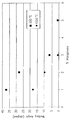
- the figure is a graph showing the wetting angle which can be obtained by the preferred alloys in accordance with the present invention as a function of the manganese content of the alloy.
- a silver braze alloy in accordance with the present invention consists essentially of from about 52.25 wt% to about 57.0 wt% silver, from about 38.95 wt% to about 43.0 wt% copper, from about 0.5 wt% to about 5.5 wt%, preferably from about 1.0 wt% to about 5.5 wt%, manganese and up to about 2.5 wt%, preferably from about 1.5 wt% to about 2.5 wt%, nickel.
- the alloys of the present invention may also contain up to about 0.15 wt% total of other trace elements such as iron, zinc, silicon, phosphorous, sulfur, platinum, palladium, lead, gold, aluminum, magnesium, tin, germanium, carbon, and oxygen.
- a manganese addition within the foregoing ranges has been found to improve the brazing characteristics of the alloy of the present invention, particularly the wetting characteristics, as compared to a silver-copper-nickel brazing alloy consisting of 56wt% silver, 42 wt% copper, and 2.0 wt% nickel.
- brazing alloys in accordance with the present invention include: (1) a silver brazing alloy consisting essentially of 56 wt% silver, 42 wt% copper and 2.0 wt% manganese; and (2) a silver brazing alloy consisting essentially of 0.5 to 5.5 wt% manganese with the remaining composition proportional to the 56 wt% silver, 42 wt% copper, and 2.0 wt% nickel alloy.
- the silver braze alloys of the present invention may be formed in any suitable manner known in the art and may be cast using any suitable technique known in the art into any desired form.
- the silver braze alloys of the present invention can be in strip form, wire form, rod form, sheet form, foil form, pig form, powder form, shot form, chip form, paste form.
- the silver braze alloys of the present invention may be brazed at a temperature in the range of from about 900°C to about 1050°C, preferably from about 950°C to about 1050°C, for a time sufficient to melt the brazing alloy onto a substrate formed from a ferrous material such as steel and stainless steel.
- brazing can be done using a furnace, locally using a torch, using an induction heater, dipped in a braze or flux bath, resistance heated, laser heated, or infrared heated.
- brazing may be carried out in an inert gas atmosphere, such as an argon atmosphere, or some other type of protective atmosphere.
- the silver braze alloy of the present invention melts at the aforementioned brazing temperatures and readily wets the ferrous substrate material to be joined without melting the ferrous substrate material.
- the silver braze alloys of the present invention may be used to braze steel surfaces, particularly stainless steel surfaces.
- One of the advantages of the silver braze alloys of the present invention is that in an inert gas atmosphere, such as an argon atmosphere, no flux needs to be used and no nickel plating of the ferrous substrate material is required.
- the silver brazing alloys of the present invention have better wettability and flow characteristics than other brazing alloys such as an alloy consisting of 56 wt% silver, 42 wt% copper, and 2.0 wt% nickel.
- braze alloy consistent with the alloys of the present invention were applied to a series of stainless steel pieces.
- the braze volume was kept small to prevent excessive spreading of the alloy during the test.
- Each sample was then heated to a braze temperature of 900°C or 1000°C in a brazing furnace under a protective argon atmosphere.
- the braze alloy under the aforementioned brazing conditions melted and formed a wetting angle with the stainless steel piece.
- the angle at the line of contact between the liquid or solidified braze alloy and the stainless steel piece was then measured. This was done either in situ or after the piece had been cooled to room temperature. The resulting angle is an indicator of wettability.
- braze alloys of the present invention heated to a temperature of 1000°C exhibited wetting angles in the range of from approximately 1 degree to about 19 degrees and braze alloys of the present invention heated to a temperature of 900°C exhibited wetting angles which ranged from approximately 1 degree to about 37 degrees.
- the typical wetting angle for a 56Ag-42Cu-2Ni alloy can range anywhere from 10 to 90 degrees depending on the surface conditions of the stainless steel and the brazing temperature.
- the silver brazing alloys of the present invention significantly reduce this wide range of wetting variability, producing generally low wetting angles and improved braze flow.
- the foregoing test shows that the higher the manganese content of the alloy, the lower the wetting angle.
- Fig. 1 clearly shows that alloys in accordance with the present invention having a manganese content greater than about 1.0 wt% to about 5.0 wt% provide excellent wettability properties.
Landscapes
- Engineering & Computer Science (AREA)
- Mechanical Engineering (AREA)
- Chemical & Material Sciences (AREA)
- Materials Engineering (AREA)
- Metallurgy (AREA)
- Organic Chemistry (AREA)
- Electric Connection Of Electric Components To Printed Circuits (AREA)
- Other Surface Treatments For Metallic Materials (AREA)
- Powder Metallurgy (AREA)
- Contacts (AREA)
- Ceramic Products (AREA)
Abstract
The alloy further may contain 0.15 wt% total of other trace elements.
Description
- The present invention relates to a silver brazing alloy and to a method of brazing metal parts.
- It is known to torch braze, induction braze, furnace braze, or vacuum braze metal parts, such as steel parts, using non-ferrous brazing alloys, also known as filler metals. Typical filler metals include silver, gold, nickel, and copper brazing alloys. Silver brazing alloys are more costly and, in general, melt at lower temperatures than copper alloys.
- One silver brazing alloy which has been used in the prior art is an alloy containing 56 wt% silver, 42 wt% copper, and 2.0 wt% nickel. Despite the wide spread use of this silver brazing alloy, there remains a need for an alloy which has improved brazing characteristics, particularly wettability.
- Accordingly, it would be desirable to provide a silver braze alloy having improved wettability.
- It is further desirable to provide an improved brazing method which does not require nickel plating of a stainless steel substrate prior to brazing.
- The foregoing desires are attained by the silver braze alloy and the brazing method in accordance with at least the preferred embodiments of the present invention.
- In accordance with the present invention, a silver braze alloy consists essentially of from about 52.25 wt% to about 57.0 wt% silver, from about 38.95 wt% to about 43.0 wt% copper, from about 0.5 wt% to about 5.5 wt%, preferably from about 1.0 wt% to about 5.5 wt%, manganese and up to about 2.5 wt%, preferably from about 1.5 wt% to about 2.5 wt% nickel.
- A method for brazing a part in accordance with the present invention broadly comprises providing an article formed from a ferrous material, applying a brazing material to the article formed from an alloy consisting essentially of from about 52.25 wt% to about 57.0 wt% silver, from about 38.95 wt% to about 43.0 wt% copper, from about 0.5 wt% to about 5.5 wt% manganese, and up to about 2.5 wt% nickel, and heating the article and the brazing material at a temperature in the range of from about 900°C to about 1050°C for a time period sufficient to melt the brazing material.
- Certain preferred embodiments of the silver braze alloy and the method of the present invention, will now be described in greater detail by way of example only and with reference to the accompanying drawing.
- The figure is a graph showing the wetting angle which can be obtained by the preferred alloys in accordance with the present invention as a function of the manganese content of the alloy.
- A silver braze alloy in accordance with the present invention consists essentially of from about 52.25 wt% to about 57.0 wt% silver, from about 38.95 wt% to about 43.0 wt% copper, from about 0.5 wt% to about 5.5 wt%, preferably from about 1.0 wt% to about 5.5 wt%, manganese and up to about 2.5 wt%, preferably from about 1.5 wt% to about 2.5 wt%, nickel. The alloys of the present invention may also contain up to about 0.15 wt% total of other trace elements such as iron, zinc, silicon, phosphorous, sulfur, platinum, palladium, lead, gold, aluminum, magnesium, tin, germanium, carbon, and oxygen. A manganese addition within the foregoing ranges has been found to improve the brazing characteristics of the alloy of the present invention, particularly the wetting characteristics, as compared to a silver-copper-nickel brazing alloy consisting of 56wt% silver, 42 wt% copper, and 2.0 wt% nickel.
- Particularly useful brazing alloys in accordance with the present invention include: (1) a silver brazing alloy consisting essentially of 56 wt% silver, 42 wt% copper and 2.0 wt% manganese; and (2) a silver brazing alloy consisting essentially of 0.5 to 5.5 wt% manganese with the remaining composition proportional to the 56 wt% silver, 42 wt% copper, and 2.0 wt% nickel alloy.
- The silver braze alloys of the present invention may be formed in any suitable manner known in the art and may be cast using any suitable technique known in the art into any desired form. For example, the silver braze alloys of the present invention can be in strip form, wire form, rod form, sheet form, foil form, pig form, powder form, shot form, chip form, paste form.
- The silver braze alloys of the present invention may be brazed at a temperature in the range of from about 900°C to about 1050°C, preferably from about 950°C to about 1050°C, for a time sufficient to melt the brazing alloy onto a substrate formed from a ferrous material such as steel and stainless steel. Using the alloys of the present invention, brazing can be done using a furnace, locally using a torch, using an induction heater, dipped in a braze or flux bath, resistance heated, laser heated, or infrared heated. Depending on the brazing technique being employed, brazing may be carried out in an inert gas atmosphere, such as an argon atmosphere, or some other type of protective atmosphere. The silver braze alloy of the present invention melts at the aforementioned brazing temperatures and readily wets the ferrous substrate material to be joined without melting the ferrous substrate material.
- The silver braze alloys of the present invention may be used to braze steel surfaces, particularly stainless steel surfaces. One of the advantages of the silver braze alloys of the present invention is that in an inert gas atmosphere, such as an argon atmosphere, no flux needs to be used and no nickel plating of the ferrous substrate material is required.
- It has been found that the silver brazing alloys of the present invention have better wettability and flow characteristics than other brazing alloys such as an alloy consisting of 56 wt% silver, 42 wt% copper, and 2.0 wt% nickel.
- To demonstrate the improved properties of the alloys of the present invention, a controlled amount of braze alloy consistent with the alloys of the present invention were applied to a series of stainless steel pieces. The braze volume was kept small to prevent excessive spreading of the alloy during the test. Each sample was then heated to a braze temperature of 900°C or 1000°C in a brazing furnace under a protective argon atmosphere. The braze alloy under the aforementioned brazing conditions melted and formed a wetting angle with the stainless steel piece. The angle at the line of contact between the liquid or solidified braze alloy and the stainless steel piece was then measured. This was done either in situ or after the piece had been cooled to room temperature. The resulting angle is an indicator of wettability. The lower the contact or wetting angle, the better the wetting behaviour between the silver braze alloy and the base material. As can be seen from Fig. 1, the braze alloys of the present invention heated to a temperature of 1000°C exhibited wetting angles in the range of from approximately 1 degree to about 19 degrees and braze alloys of the present invention heated to a temperature of 900°C exhibited wetting angles which ranged from approximately 1 degree to about 37 degrees.
- The typical wetting angle for a 56Ag-42Cu-2Ni alloy can range anywhere from 10 to 90 degrees depending on the surface conditions of the stainless steel and the brazing temperature. As can be seen from the foregoing discussion, the silver brazing alloys of the present invention significantly reduce this wide range of wetting variability, producing generally low wetting angles and improved braze flow. The foregoing test shows that the higher the manganese content of the alloy, the lower the wetting angle. Fig. 1 clearly shows that alloys in accordance with the present invention having a manganese content greater than about 1.0 wt% to about 5.0 wt% provide excellent wettability properties.
- It is apparent that there has been provided in accordance with the present invention a silver braze alloy which fully meets the foregoing objects, means and advantages. While the present invention has been described in the context of specific embodiments thereof, other alternatives, modifications, and variations will become apparent to those skilled in the art having read the foregoing description. Therefore, it is intended to embrace those alternatives, modifications, and variations as fall within the broad scope of the appended claims.
Claims (14)
- A silver braze alloy consisting essentially of from about 52.25 wt% to about 57.0 wt% silver, from about 38.95 to about 43.0 wt% copper, from about 0.5 wt% to about 5.5 wt% manganese, and up to about 2.5 wt% nickel.
- A silver braze alloy according to claim 1, wherein said nickel content of said alloy is in a range from about 1.5 wt% to about 2.5 wt%.
- A silver braze alloy according to claim 1 or 2, wherein said manganese content is in a range from about 1.0 wt% to about 5.5 wt%.
- A silver braze alloy according to claim 1, 2 or 3, wherein said alloy further has 0.15 wt% total of other elements.
- A silver braze alloy consisting essentially of 56 wt% silver, 42 wt% copper and 2.0 wt% manganese.
- A silver braze alloy consisting essentially of 0.5 to 5.5 wt% manganese with the remaining composition proportional to the 56 wt% silver, 42 wt% copper, and 2.0 wt% nickel alloy.
- A method for brazing an article comprising of: (1) providing an article formed from a ferrous material; (2) applying a brazing material to said article formed from an alloy consisting essentially of from about 52.25 wt% to about 57.0 wt% silver, from about 38.95 wt% to about 43.0 wt% copper, from about 0.5 wt% to about 5.5 wt% manganese, and up to about 2.5 wt% nickel; and (3) heating said article and said brazing material at a temperature in the range of from about 900°C to about 1050°C for a time sufficient to melt said brazing material.
- The method of claim 7, wherein said heating step comprises heating said article and said brazing material at a temperature in the range of from about 950°C to about 1050°C.
- The method of claim 7 or 8, wherein said brazing material applying step comprises applying a brazing material consisting essentially of 56 wt% silver, 42 wt% copper, and 2.0 wt% manganese.
- The method of claim 7 or 8, wherein said brazing material applying step comprises applying a brazing material consisting substantially of 0.5 to 5.5 wt% manganese with the remaining composition proportional to the 56 wt% silver, 42 wt% copper, and 2.0 wt% nickel alloy.
- The method according to claim 7, 8 or 9, wherein said brazing material being applied has a nickel content in the range of from about 1.5 wt% to about 2.5 wt%.
- The method according to any of claims 7 to 11, wherein said brazing material being applied has a manganese content in the range of from about 1.0 wt% to about 5.5 wt%.
- The method according to any of claims 7 to 12, wherein said article providing step comprises providing an article formed from steel.
- The method according to claim 13, wherein said article providing step comprises providing an article formed from stainless steel.
Applications Claiming Priority (2)
| Application Number | Priority Date | Filing Date | Title |
|---|---|---|---|
| US09/752,000 US6596229B2 (en) | 2000-12-29 | 2000-12-29 | Silver braze alloy |
| US752000 | 2000-12-29 |
Publications (2)
| Publication Number | Publication Date |
|---|---|
| EP1219718A1 true EP1219718A1 (en) | 2002-07-03 |
| EP1219718B1 EP1219718B1 (en) | 2003-11-12 |
Family
ID=25024417
Family Applications (1)
| Application Number | Title | Priority Date | Filing Date |
|---|---|---|---|
| EP01310708A Expired - Lifetime EP1219718B1 (en) | 2000-12-29 | 2001-12-20 | Silver braze alloy |
Country Status (5)
| Country | Link |
|---|---|
| US (2) | US6596229B2 (en) |
| EP (1) | EP1219718B1 (en) |
| JP (1) | JP4022397B2 (en) |
| DE (1) | DE60101205T2 (en) |
| SG (1) | SG105518A1 (en) |
Families Citing this family (16)
| Publication number | Priority date | Publication date | Assignee | Title |
|---|---|---|---|---|
| US7166133B2 (en) * | 2002-06-13 | 2007-01-23 | Kensey Nash Corporation | Devices and methods for treating defects in the tissue of a living being |
| US8464781B2 (en) | 2002-11-01 | 2013-06-18 | Cooligy Inc. | Cooling systems incorporating heat exchangers and thermoelectric layers |
| DE10261073A1 (en) * | 2002-12-24 | 2004-07-08 | Rolls-Royce Deutschland Ltd & Co Kg | Process for joining workpieces made of titanium aluminide using a soldering process |
| JP4535682B2 (en) * | 2003-01-30 | 2010-09-01 | 株式会社ベステックスキョーエイ | Manufacturing method of fuel inlet |
| US7591302B1 (en) | 2003-07-23 | 2009-09-22 | Cooligy Inc. | Pump and fan control concepts in a cooling system |
| US7389834B1 (en) | 2003-09-29 | 2008-06-24 | Smith International, Inc. | Braze alloys |
| US7792254B2 (en) * | 2004-10-19 | 2010-09-07 | Genesys Telecommunications Laboratories, Inc. | System for distributing VXML capabilities for execution on client devices |
| US9297571B1 (en) | 2008-03-10 | 2016-03-29 | Liebert Corporation | Device and methodology for the removal of heat from an equipment rack by means of heat exchangers mounted to a door |
| AU2008354066B2 (en) * | 2008-04-04 | 2013-02-21 | Alfa Laval Corporate Ab | A plate heat exchanger |
| US8042721B2 (en) * | 2008-06-12 | 2011-10-25 | Nicholas Maropis | Ultrasonic device having exponential horn sleeve portion |
| JP4801757B2 (en) * | 2009-05-29 | 2011-10-26 | 田中貴金属工業株式会社 | Probe pins with excellent contact resistance and antifouling properties |
| US20110073292A1 (en) * | 2009-09-30 | 2011-03-31 | Madhav Datta | Fabrication of high surface area, high aspect ratio mini-channels and their application in liquid cooling systems |
| JP5954818B2 (en) * | 2012-04-18 | 2016-07-20 | 株式会社昭和テックス | Rail surface treatment method and rail |
| RU2526023C1 (en) * | 2013-10-21 | 2014-08-20 | Юлия Алексеевна Щепочкина | Silver-based alloy |
| CN104191105B (en) * | 2014-08-29 | 2016-08-24 | 西安瑞鑫科金属材料有限责任公司 | A kind of cadmium-free silver-base solder for titanium/steel dissimilar alloy TIG welding-braze |
| US9731384B2 (en) * | 2014-11-18 | 2017-08-15 | Baker Hughes Incorporated | Methods and compositions for brazing |
Citations (3)
| Publication number | Priority date | Publication date | Assignee | Title |
|---|---|---|---|---|
| US2303272A (en) * | 1941-09-18 | 1942-11-24 | Fansteel Metallurgical Corp | Metal alloy |
| JPS57149092A (en) * | 1981-03-11 | 1982-09-14 | Tokuriki Honten Co Ltd | Silver solder material |
| JPS57149093A (en) * | 1981-03-11 | 1982-09-14 | Tokuriki Honten Co Ltd | Silver solder material |
Family Cites Families (4)
| Publication number | Priority date | Publication date | Assignee | Title |
|---|---|---|---|---|
| US2138638A (en) * | 1938-04-23 | 1938-11-29 | Handy & Harman | Alloys |
| US2196303A (en) * | 1939-02-21 | 1940-04-09 | Mallory & Co Inc P R | Silver copper alloy |
| JPS596753B2 (en) * | 1976-11-25 | 1984-02-14 | 株式会社徳力本店 | silver solder alloy |
| JPS61216887A (en) * | 1986-03-22 | 1986-09-26 | Tokuriki Honten Co Ltd | Silver brazing filler metal |
-
2000
- 2000-12-29 US US09/752,000 patent/US6596229B2/en not_active Expired - Lifetime
-
2001
- 2001-11-27 SG SG200107320A patent/SG105518A1/en unknown
- 2001-12-20 EP EP01310708A patent/EP1219718B1/en not_active Expired - Lifetime
- 2001-12-20 DE DE60101205T patent/DE60101205T2/en not_active Expired - Lifetime
- 2001-12-27 JP JP2001395594A patent/JP4022397B2/en not_active Expired - Fee Related
-
2003
- 2003-04-15 US US10/413,885 patent/US6936218B2/en not_active Expired - Lifetime
Patent Citations (3)
| Publication number | Priority date | Publication date | Assignee | Title |
|---|---|---|---|---|
| US2303272A (en) * | 1941-09-18 | 1942-11-24 | Fansteel Metallurgical Corp | Metal alloy |
| JPS57149092A (en) * | 1981-03-11 | 1982-09-14 | Tokuriki Honten Co Ltd | Silver solder material |
| JPS57149093A (en) * | 1981-03-11 | 1982-09-14 | Tokuriki Honten Co Ltd | Silver solder material |
Non-Patent Citations (5)
| Title |
|---|
| CHEMICAL ABSTRACTS, vol. 114, no. 20, 20 May 1991, Columbus, Ohio, US; abstract no. 189881, HEIPLE, C. R. ET AL: "Wettability differences of Braze 580 on 304 stainless steel" XP002193259 * |
| CHEMICAL ABSTRACTS, vol. 116, no. 4, 27 January 1992, Columbus, Ohio, US; abstract no. 25323, KELLER, D. L. ET AL: "Wettability of brazing filler metals" XP002193258 * |
| PATENT ABSTRACTS OF JAPAN vol. 006, no. 253 (M - 178) 11 December 1982 (1982-12-11) * |
| WELD. J. (MIAMI) (1990), 69(10), 31-4, 1990 * |
| WELD. J. (MIAMI) (1990), 69(9), 41-3, 1990 * |
Also Published As
| Publication number | Publication date |
|---|---|
| EP1219718B1 (en) | 2003-11-12 |
| US20030180176A1 (en) | 2003-09-25 |
| SG105518A1 (en) | 2004-08-27 |
| JP4022397B2 (en) | 2007-12-19 |
| US6596229B2 (en) | 2003-07-22 |
| US20020085944A1 (en) | 2002-07-04 |
| DE60101205D1 (en) | 2003-12-18 |
| JP2002254196A (en) | 2002-09-10 |
| US6936218B2 (en) | 2005-08-30 |
| DE60101205T2 (en) | 2004-09-09 |
Similar Documents
| Publication | Publication Date | Title |
|---|---|---|
| US6596229B2 (en) | Silver braze alloy | |
| EP3027350B1 (en) | Brazing alloys | |
| US5527628A (en) | Pb-free Sn-Ag-Cu ternary eutectic solder | |
| US6613123B2 (en) | Variable melting point solders and brazes | |
| EP0010866B1 (en) | Homogeneous brazing foils of copper based metallic glasses | |
| JPH0970687A (en) | Lead-free solder alloy | |
| US20170127531A1 (en) | Lead-free solder alloy | |
| JP3736819B2 (en) | Lead-free solder alloy | |
| JP3081230B2 (en) | Copper alloy used as brazing filler metal | |
| JPS60187452A (en) | Low-temperature brazing alloy based on aluminum | |
| EP1598142A1 (en) | Lead-free solder alloy and preparation thereof | |
| US6413649B2 (en) | Silver-copper-nickel infiltration brazing filler metal and composites made therefrom | |
| JPH1043886A (en) | Manufacturing method of brazing filler metal | |
| US20050247757A1 (en) | Silver braze alloy | |
| JPH11172353A (en) | Zn alloy for high temperature soldering | |
| US4078713A (en) | Brazing sintered ferrous powder metal articles | |
| JPH081373A (en) | Sn-based low melting point brazing material | |
| JP3210766B2 (en) | Sn-based low melting point brazing material | |
| CA1223759A (en) | Homogeneous low melting point copper based alloys | |
| JPH0446695A (en) | Brazing filler metal for brazing to aluminum member | |
| CN117203359A (en) | Nickel solder with excellent wettability and spreadability | |
| CA1293394C (en) | Copper-zinc-manganese-nickel alloys | |
| CN108213764A (en) | A kind of tin base leadless soldering-flux alloy for effectively reducing base material meltage | |
| JPS5812117B2 (en) | metal wax | |
| KR100320545B1 (en) | Sn-based low melting point solder material |
Legal Events
| Date | Code | Title | Description |
|---|---|---|---|
| PUAI | Public reference made under article 153(3) epc to a published international application that has entered the european phase |
Free format text: ORIGINAL CODE: 0009012 |
|
| AK | Designated contracting states |
Kind code of ref document: A1 Designated state(s): AT BE CH CY DE DK ES FI FR GB GR IE IT LI LU MC NL PT SE TR |
|
| AX | Request for extension of the european patent |
Free format text: AL;LT;LV;MK;RO;SI |
|
| 17P | Request for examination filed |
Effective date: 20030103 |
|
| AKX | Designation fees paid |
Designated state(s): CH DE FR GB LI NL |
|
| GRAH | Despatch of communication of intention to grant a patent |
Free format text: ORIGINAL CODE: EPIDOS IGRA |
|
| GRAA | (expected) grant |
Free format text: ORIGINAL CODE: 0009210 |
|
| GRAS | Grant fee paid |
Free format text: ORIGINAL CODE: EPIDOSNIGR3 |
|
| AK | Designated contracting states |
Kind code of ref document: B1 Designated state(s): CH DE FR GB LI NL |
|
| REG | Reference to a national code |
Ref country code: GB Ref legal event code: FG4D |
|
| REG | Reference to a national code |
Ref country code: CH Ref legal event code: EP |
|
| REF | Corresponds to: |
Ref document number: 60101205 Country of ref document: DE Date of ref document: 20031218 Kind code of ref document: P |
|
| REG | Reference to a national code |
Ref country code: IE Ref legal event code: FG4D |
|
| REG | Reference to a national code |
Ref country code: CH Ref legal event code: NV Representative=s name: E. BLUM & CO. PATENTANWAELTE |
|
| ET | Fr: translation filed | ||
| PLBE | No opposition filed within time limit |
Free format text: ORIGINAL CODE: 0009261 |
|
| STAA | Information on the status of an ep patent application or granted ep patent |
Free format text: STATUS: NO OPPOSITION FILED WITHIN TIME LIMIT |
|
| REG | Reference to a national code |
Ref country code: IE Ref legal event code: MM4A |
|
| 26N | No opposition filed |
Effective date: 20040813 |
|
| REG | Reference to a national code |
Ref country code: CH Ref legal event code: PFA Owner name: UNITED TECHNOLOGIES CORPORATION Free format text: UNITED TECHNOLOGIES CORPORATION#UNITED TECHNOLOGIES BUILDING, 1 FINANCIAL PLAZA#HARTFORD, CT 06101 (US) -TRANSFER TO- UNITED TECHNOLOGIES CORPORATION#UNITED TECHNOLOGIES BUILDING, 1 FINANCIAL PLAZA#HARTFORD, CT 06101 (US) |
|
| PGFP | Annual fee paid to national office [announced via postgrant information from national office to epo] |
Ref country code: FR Payment date: 20081205 Year of fee payment: 8 |
|
| REG | Reference to a national code |
Ref country code: FR Ref legal event code: ST Effective date: 20100831 |
|
| PG25 | Lapsed in a contracting state [announced via postgrant information from national office to epo] |
Ref country code: FR Free format text: LAPSE BECAUSE OF NON-PAYMENT OF DUE FEES Effective date: 20091231 |
|
| PGFP | Annual fee paid to national office [announced via postgrant information from national office to epo] |
Ref country code: NL Payment date: 20111220 Year of fee payment: 11 |
|
| PGFP | Annual fee paid to national office [announced via postgrant information from national office to epo] |
Ref country code: CH Payment date: 20121213 Year of fee payment: 12 Ref country code: DE Payment date: 20121213 Year of fee payment: 12 |
|
| PGFP | Annual fee paid to national office [announced via postgrant information from national office to epo] |
Ref country code: GB Payment date: 20121219 Year of fee payment: 12 |
|
| REG | Reference to a national code |
Ref country code: NL Ref legal event code: V1 Effective date: 20130701 |
|
| PG25 | Lapsed in a contracting state [announced via postgrant information from national office to epo] |
Ref country code: NL Free format text: LAPSE BECAUSE OF NON-PAYMENT OF DUE FEES Effective date: 20130701 |
|
| REG | Reference to a national code |
Ref country code: DE Ref legal event code: R119 Ref document number: 60101205 Country of ref document: DE |
|
| REG | Reference to a national code |
Ref country code: CH Ref legal event code: PL |
|
| GBPC | Gb: european patent ceased through non-payment of renewal fee |
Effective date: 20131220 |
|
| REG | Reference to a national code |
Ref country code: DE Ref legal event code: R119 Ref document number: 60101205 Country of ref document: DE Effective date: 20140701 |
|
| PG25 | Lapsed in a contracting state [announced via postgrant information from national office to epo] |
Ref country code: DE Free format text: LAPSE BECAUSE OF NON-PAYMENT OF DUE FEES Effective date: 20140701 Ref country code: CH Free format text: LAPSE BECAUSE OF NON-PAYMENT OF DUE FEES Effective date: 20131231 Ref country code: LI Free format text: LAPSE BECAUSE OF NON-PAYMENT OF DUE FEES Effective date: 20131231 |
|
| PG25 | Lapsed in a contracting state [announced via postgrant information from national office to epo] |
Ref country code: GB Free format text: LAPSE BECAUSE OF NON-PAYMENT OF DUE FEES Effective date: 20131220 |