EP1217812A1 - Verfahren für eine Telekommunikationsanlage zum Verarbeiten von kollidierenden Steuermeldungssequenzen - Google Patents
Verfahren für eine Telekommunikationsanlage zum Verarbeiten von kollidierenden Steuermeldungssequenzen Download PDFInfo
- Publication number
- EP1217812A1 EP1217812A1 EP01125644A EP01125644A EP1217812A1 EP 1217812 A1 EP1217812 A1 EP 1217812A1 EP 01125644 A EP01125644 A EP 01125644A EP 01125644 A EP01125644 A EP 01125644A EP 1217812 A1 EP1217812 A1 EP 1217812A1
- Authority
- EP
- European Patent Office
- Prior art keywords
- tax
- message
- transmitted
- incoming
- lms
- Prior art date
- Legal status (The legal status is an assumption and is not a legal conclusion. Google has not performed a legal analysis and makes no representation as to the accuracy of the status listed.)
- Granted
Links
- 238000000034 method Methods 0.000 title claims abstract description 17
- 238000012545 processing Methods 0.000 claims description 27
- 230000003466 anti-cipated effect Effects 0.000 abstract 2
- 102100023817 26S proteasome complex subunit SEM1 Human genes 0.000 description 3
- 101000684297 Homo sapiens 26S proteasome complex subunit SEM1 Proteins 0.000 description 3
- 101000873438 Homo sapiens Putative protein SEM1, isoform 2 Proteins 0.000 description 3
- 102100031237 Cystatin-A Human genes 0.000 description 2
- 101000921786 Homo sapiens Cystatin-A Proteins 0.000 description 2
- 238000004891 communication Methods 0.000 description 2
- 230000001419 dependent effect Effects 0.000 description 2
- 238000011161 development Methods 0.000 description 2
- 230000018109 developmental process Effects 0.000 description 2
- 230000003213 activating effect Effects 0.000 description 1
- 230000004913 activation Effects 0.000 description 1
- 230000005540 biological transmission Effects 0.000 description 1
- 238000006243 chemical reaction Methods 0.000 description 1
- 238000013461 design Methods 0.000 description 1
- 238000005516 engineering process Methods 0.000 description 1
- 230000010354 integration Effects 0.000 description 1
- 230000001960 triggered effect Effects 0.000 description 1
Images
Classifications
-
- H—ELECTRICITY
- H04—ELECTRIC COMMUNICATION TECHNIQUE
- H04M—TELEPHONIC COMMUNICATION
- H04M3/00—Automatic or semi-automatic exchanges
- H04M3/42—Systems providing special services or facilities to subscribers
- H04M3/42314—Systems providing special services or facilities to subscribers in private branch exchanges
- H04M3/42323—PBX's with CTI arrangements
Definitions
- CTI Computer Telephone Integration
- CTI applications triggered or controlled on a computer system connected to a telecommunications system expire.
- CTI application submits tax reporting sequences, which, for example, a connection setup message and subsequent, Messages containing dialing digits can include the telecommunication system.
- tax reporting sequences which, for example, a connection setup message and subsequent, Messages containing dialing digits can include the telecommunication system.
- CTI applications are a specific user assigned or executed for a specific user. This leads to the problem that tax reporting sequences of A user's CTI applications with manual input User who made on a conventional terminal be able to collide. For example shortly after a user activates a feature, e.g. for call forwarding, initiated manually in the Telecommunications system one or more, containing dialing digits Tax reports arrive from a CTI application of the user. The dialing digits can be used e.g. as part of a feature to be activated independent, automatic call. In the Telecommunications systems are made from the incoming tax reports the dialing digits contained therein are extracted and closed transmitted to a feature control.
- a feature e.g. for call forwarding
- a Telecommunications system from an incoming control message sequence derived source information based on which a distinction can be made as to whether the incoming tax reporting sequence from a CTI application or from a user terminal comes.
- Such tax reporting sequences can in particular one or more tax reports and / or information reports include.
- the tax and / or information messages can each use tax data, such as Connection data, Feature control information, user data and / or dialing digits to control performance features the telecommunications system included.
- the from the tax reporting sequence derived source information can e.g. origin address information contained in a message header or a so-called message code.
- the source information becomes a control device of the Telecommunications system communicates where, when there is a tax status activated by a previous tax report, in which at least one further tax report is expected is checked based on the transmitted source information is whether the previous tax report and the incoming Tax reporting sequence are of different origins.
- activated tax status can, for example an open tax framework or an open information framework his.
- the different origins of the previous one Tax report and the incoming tax report sequence can be checked, for example, by the fact that the transmitted source information with one from the previous one Tax report derived source information was stored in the control device, compared becomes.
- Tax reports or tax report sequences can cause collisions in particular also be cleaned up if CTI application and user input independently the same feature is controlled. In one Case could be controlled by a sole distinction between the Performance feature does not correct a collision situation become.
- control device before the further processing of the tax payload data wait for the active tax status to arrive at least one other tax report - preferably the same origin as the previous tax report - is terminated regularly. This way, both those with the tax status related to the active tax status still correctly executed as well as the tax payload the incoming tax reporting sequence correctly processed.
- control device can be used for further processing of the tax payload by itself ending the Initiate active tax status.
- the tax payload can be processed without further delay to be processed further.
- Aborting the active Tax status can depend on exceeding a predetermined one Time limit. When the active one ends prematurely Tax status can preferably be a termination message on the origin of the previous tax report.
- the transmitted source information is decided, whether the transferred tax payload data is rejected or after exiting of the active tax status can be processed further.
- the decision can be made dependent on whether the incoming control message sequence from a CTI application or comes from user input. To this Way, either the CTI application versus user input or user input to the CTI application be prioritized.
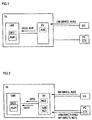
- FIGS. 1 and 2 the same telecommunication system TK is shown schematically, to which a terminal EG and a personal computer PC are connected, for example, each via a so-called S 0 interface.
- a CTI application CTI installed there runs on the personal computer PC, for example to support a call center operation.
- the CTI application CTI is logically coupled to the telecommunications system TK via a so-called TAPI interface (TAPI: Telephony Application Programming Interface) or a so-called CSTA interface (CSTA: Computer Supported Telecommunication Application).
- TAPI Telephony Application Programming Interface
- CSTA Computer Supported Telecommunication Application
- the control device EG and the CTI application CTI transmit control messages provided for this purpose, for example in accordance with the CoreNet, QSIG or DSS1 protocol or another layer 3 protocol, to the telecommunications system TK.
- the telecommunications system TK has as a control device a feature control LMS and an associated with it Input processing device EV on.
- the LMS feature control essentially serves to Control of performance features based on transmitted tax usage data, such as. Connection data, feature control information, User data and / or dialing digits, which as such have no source information.
- the feature control LMS is preferably a software procedure realized.
- the input processing device EV essentially serves for collecting and processing incoming tax reports.
- the input processing device EV also so-called converter functions, such as to forward of B-channelless SETUP messages or for conversion of CTI reports.
- the input processing facility EV continues to have a variety of customizations Input ports (not shown), each are assigned to an individual user. Because the terminal EG and the CTI application CTI assigned to the same user your tax reports meet on the same input port on.
- the terminal EG and the CTI application CTI assigned to the same user are operated by the same user.
- the one at the telecommunication system TK from the terminal EG and the CTI application CTI incoming tax reports are therefore considered to be from the same user originating recognized and interpreted.
- the feature control message LSM contains an origin-specific message code MKEG in the message header.
- MKEG origin-specific message code
- the LSM feature control message comes from a terminal device, here an EG, and not from a CTI application.
- the feature control message LSM also contains information elements AUIE as control payload data, which specify the call forwarding to be set up.
- the feature control message LSM becomes the input processing device EV transmitted and processed there.
- the MKEG message code becomes source information QIEG derived that the terminal EG as the source of the feature control message LSM identified. Furthermore the tax payload data from the LSM feature control message AUIE extracted and in the input processing device EV - as indicated in FIG. 1 by a dotted rectangle - cached. The derived source information QIEG will continue to be transmitted to the LMS feature control.
- the Feature control causes LMS to check whether an open, performance-specific tax or information framework is present, which is due to the source information QIEG is assigned to the identified terminal EG. Under there is an open tax or information framework in this Relationship between an activated by a previous tax report, to understand performance-specific tax status, in which at least one more tax report is expected becomes.
- LSM cached Information elements
- AUIE cached Information elements
- the open information frame AUIR is the source information QIEG - how indicated by a dotted rectangle in FIG.
- the opened information frame represents one Tax status, in which there is additional tax information required to activate call forwarding are expected become.
- the opened information frame AUIR still a phone number of that Terminal expects the call forwarding to be set up should lead there.
- the CTI application CTI first transmits a control message sequence, which includes a connection setup message VAM and an information message IM1, for establishing a connection to the telecommunications system TK.
- the establishment of the connection is independent of the call forwarding initiated by the terminal EG.
- the information frame AUIR for the call forwarding to be set up is still open.
- connection establishment message VAM e.g. a so-called SETUP message according to layer 3 protocol DSS1
- the connection establishment message VAM contains as tax usage content a connection establishment information element VAIE as well as a message code MKCTI of the CTI application in the message header CTI.
- the connection establishment information element VAIE can, for example, connection and / or transmission properties specify the connection to be established.
- the information message IM1 e.g. a so-called INFO message according to the DSS1 protocol, contains as tax payload information Dialing digits WZ1, which is a call number of the connection destination represent, as well as in the message header the message code MKCTI of the CTI application CTI.
- Dialing digits WZ1 could also be other in such information messages
- Information elements such as Display information Feature information, B-channel selection information, Charge information and / or key codes be included.
- connection establishment message VAM and the information message IM1 are transmitted to the input processing device EV. Since the CTI application CTI and the terminal EG the same Users who are assigned meet the connection setup message VAM and the information message IM1 on the same user-specific Input port of the input processing device EV a like the feature control message LSM. Out the control message sequence are processed by the input processing device EV the message code MKCTI and the information elements VAIE and WZ1 extracted. From the message code MKCTI is then derived a source information QICTI, which the CTI application CTI as the source of the tax reporting sequence identified. While the source information QICTI is transmitted to the feature control LMS, the extracted information elements VAIE and WZ1 in the input processing device EV - as in Fig. 2 by a dotted one Rectangle indicated - temporarily stored.
- the feature control checks LMS whether one by a previous one Current tax or information frame currently open is active.
- the opened information frame AUIR recognized as activated.
- LMS the source information assigned to the opened information frame AUIR, here QIEG, with the incoming source information, here QICTI, compared. By the comparison be determined whether the newly arriving tax reporting sequence comes from the same source as the previous one Tax report LSM, which opens the information frame AUIR Has.
- the feature control LMS recognized that the newly arriving Tax return sequence does not come from the source that the Has opened the information frame AUIR.
- the feature control LMS can thus recognize that the Source information associated with QICTI information elements VAIE and WZ1 are not within the AUIR information framework are processed. According to the invention, the cached are therefore Information elements VAIE and WZ1 through the feature control LMS either rejected or processed only after closing the AUIR control frame. The result of the collision of the CTI control message sequence with the This creates a collision situation caused by user input adjusted.
- the decision about whether the newly arrived information elements, here VAIE and WZ1, rejected or processed can be, for example, by default be specified or depending on the transmitted source information, here QICTI, the information elements and / or the activated tax status. For example be specified in the event of conflicting tax reporting sequences a CTI application and a user always the user input or alternatively always the Control message sequence of the CTI application is prioritized and so that it is processed further. The other, not prioritized Tax reporting sequence is rejected accordingly.
- rejecting a newly arriving tax reporting sequence is preferably an error message with the help of the source information identified origin of the tax reporting sequence transmitted.
- the expected tax report consists of an information report IM2, the dialing digits to be entered by the user WZ2 contains.
- the dialing digits WZ2 are in the present exemplary embodiment entered by the user only after the Control message sequence of the CTI application CTI to the telecommunications system TK was transmitted.
- the information message IM2 After entering the WZ2 digits on the terminal EG the information message IM2 to the input processing device EV transmitted where the dialing digits WZ2 from the information message IM2 extracted and cached. Farther is entered from the message header of the information message IM2 it contains the origin-specific message code, here the message code MKEG of the terminal EG, extracted. From the The extracted message code MKEG becomes a terminal device that identifies the EG Source information derived from QIEG and for Feature control LMS transmitted. The transmitted Source information QIEG is then used by the feature control LMS with open tax or information frames associated source information compared.
- the information frame becomes wise AUIR determined as responsible for the dialing digits WZ2, since it is the source device EG through the source information QIEG is assigned, from which the dialed digits WZ2 come.
- the dialing digits WZ2 from the input processing device EV accessed and within the responsible Information frame AUIR processed.
- The is through the call digits WZ2 specified call forwarding set up and activated.
- the information frame AUIR will then closed as part of activating call forwarding no further tax reports are expected.
- the Further processing of those from the CTI application CTI Information elements VAIE and WZ1 causes.
- the above Information elements VAIE and WZ1 are used for this purpose the input processing device EV retrieved and Feature control LMS transmitted.
- Through the feature control LMS is consequently transmitted according to the Connection establishment information element VAIE one Connection to the one specified by the dialing digits WZ1 Connection target established.
- the conflicting control messages LSM, IM2, VAM and IM1 of the terminal EG and the CTI application CTI processed one after the other without conflict.
- the opened information frames AUIR before arrival in this Tax status expected tax report IM2 through the feature control LMS to be closed.
- After closing of the information frame AUIR can in the input processing device EV cached information items VAIE accessed by the LMS feature control and processed immediately.
- the user initiated call forwarding is canceled and instead whose connection according to the connection establishment information element VAIE built.
- the one arriving later Information message IM2 is rejected accordingly because in the feature control LMS no information frame is more active, the control messages from the terminal EG or tax reporting sequences.
Landscapes
- Engineering & Computer Science (AREA)
- Signal Processing (AREA)
- Telephonic Communication Services (AREA)
Abstract
Description
Claims (6)
- Verfahren für eine Telekommunikationsanlage (TK) zum Verarbeiten von kollidierenden, durch eine CTI-Anwendung (CTI) und eine Benutzereingabe erzeugten Steuermeldungssequenzen, bei dema) durch die Telekommunikationsanlage (TK) aus einer eintreffenden Steuermeldungssequenz (VAM, IM1) eine Quelleninformation (QICTI) abgeleitet wird, anhand der unterscheidbar ist, ob die eintreffende Steuermeldungssequenz (VAM, IM1) von einer CTI-Anwendung (CTI) oder von einem Benutzerendgerät (EG) stammt,b) die Quelleninformation (QICTI) zu einer Steuereinrichtung (LMS) der Telekommunikationsanlage (TK) übermittelt wird,c) durch die Steuereinrichtung (LMS) bei Vorliegen eines durch eine vorangegangene Steuermeldung (LSM) aktivierten Steuerstatus, in dem mindestens eine weitere Steuermeldung (IM2) erwartet wird, anhand der übermittelten Quelleninformation (QICTI) geprüft wird, ob die vorangegangene Steuermeldung (LSM) und die eintreffende Steuermeldungssequenz (VAM, IM1) unterschiedlicher Herkunft sind, undd) bei unterschiedlicher Herkunft aus der eintreffenden Steuermeldungssequenz (VAM, IM1) extrahierte und zur Steuereinrichtung (LMS) übertragene Steuernutzdaten (VAIE, WZ1) durch die Steuereinrichtung (LMS) entweder abgewiesen oder nach Beenden des aktiven Steuerstatus weiterverarbeitet werden.
- Verfahren nach Anspruch 1,
dadurch gekennzeichnet, dass die Steuereinrichtung (LMS) vor der Weiterverarbeitung der Steuernutzdaten (VAIE, WZ1) wartet, bis der aktive Steuerstatus durch ein Eintreffen mindestens einer weiteren Steuermeldung (IM2) regulär beendet wird. - Verfahren nach Anspruch 1,
dadurch gekennzeichnet, dass die Steuereinrichtung (LMS) vor der Weiterverarbeitung der Steuernutzdaten (VAIE, WZ1) von sich aus das Beenden des aktiven Steuerstatus veranlaßt. - Verfahren nach Anspruch 3,
dadurch gekennzeichnet, dass nach dem Beenden des aktiven Steuerstatus eine Abbruchmeldung zum Ursprung (EG) der vorangegangenen Steuermeldung (LSM) übermittelt wird. - Verfahren nach Anspruch 1,
dadurch gekennzeichnet, dass nach Abweisen der Steuernutzdaten (VAIE, WZ1) eine Fehlermeldung zum mit Hilfe der Quelleninformation (QIEG, QICTI) identifizierten Ursprung (PC) der Steuermeldungssequenz (VAM, IM1) übermittelt wird. - Verfahren nach einem der vorhergehenden Ansprüche,
dadurch gekennzeichnet, dass anhand der übermittelten Quelleninformation (QIEG, QICTI) entschieden wird, ob die übertragenen Steuernutzdaten (VAIE, WZ1) abgewiesen oder weiterverarbeitet werden.
Applications Claiming Priority (2)
| Application Number | Priority Date | Filing Date | Title |
|---|---|---|---|
| DE10064109 | 2000-12-21 | ||
| DE2000164109 DE10064109A1 (de) | 2000-12-21 | 2000-12-21 | Verfahren für eine Telekommnikationsanlage zum Verarbeiten von kollidierenden Steuermeldungssequenzen |
Publications (2)
| Publication Number | Publication Date |
|---|---|
| EP1217812A1 true EP1217812A1 (de) | 2002-06-26 |
| EP1217812B1 EP1217812B1 (de) | 2011-12-14 |
Family
ID=7668336
Family Applications (1)
| Application Number | Title | Priority Date | Filing Date |
|---|---|---|---|
| EP20010125644 Expired - Lifetime EP1217812B1 (de) | 2000-12-21 | 2001-10-26 | Verfahren für eine Telekommunikationsanlage zum Verarbeiten von kollidierenden Steuermeldungssequenzen |
Country Status (2)
| Country | Link |
|---|---|
| EP (1) | EP1217812B1 (de) |
| DE (1) | DE10064109A1 (de) |
Citations (3)
| Publication number | Priority date | Publication date | Assignee | Title |
|---|---|---|---|---|
| US4748656A (en) * | 1986-03-21 | 1988-05-31 | American Telephone And Telegraph Company | Personal computer--as an interface between a telephone station set and a business communication system |
| EP0840490A2 (de) * | 1996-10-31 | 1998-05-06 | Lucent Technologies Inc. | Telekommunikationsmerkmal zum Austausch von Information zwischen einem Computer und einem Telekommunikationsschaltsystem |
| US5898772A (en) * | 1997-05-29 | 1999-04-27 | Lucent Technologies Inc. | Logical PC agent |
-
2000
- 2000-12-21 DE DE2000164109 patent/DE10064109A1/de not_active Withdrawn
-
2001
- 2001-10-26 EP EP20010125644 patent/EP1217812B1/de not_active Expired - Lifetime
Patent Citations (3)
| Publication number | Priority date | Publication date | Assignee | Title |
|---|---|---|---|---|
| US4748656A (en) * | 1986-03-21 | 1988-05-31 | American Telephone And Telegraph Company | Personal computer--as an interface between a telephone station set and a business communication system |
| EP0840490A2 (de) * | 1996-10-31 | 1998-05-06 | Lucent Technologies Inc. | Telekommunikationsmerkmal zum Austausch von Information zwischen einem Computer und einem Telekommunikationsschaltsystem |
| US5898772A (en) * | 1997-05-29 | 1999-04-27 | Lucent Technologies Inc. | Logical PC agent |
Also Published As
| Publication number | Publication date |
|---|---|
| DE10064109A1 (de) | 2002-07-18 |
| EP1217812B1 (de) | 2011-12-14 |
Similar Documents
| Publication | Publication Date | Title |
|---|---|---|
| EP0664635A2 (de) | Automatisches Bestellsystem in Kommunikations-Vermittlungsanlagen | |
| EP0749228A2 (de) | Schaltungsanordnung zur Steuerung der Verarbeitung eines ankommenden Anrufs | |
| EP0456128A2 (de) | Verfahren zur Rufumleitung oder Rufweiterleitung in Kommunikations-Vermittlungsanlagen | |
| EP1217812A1 (de) | Verfahren für eine Telekommunikationsanlage zum Verarbeiten von kollidierenden Steuermeldungssequenzen | |
| EP0655870A2 (de) | Ausführung von Diensten in einem Kommunikationssystem | |
| DE10111495A1 (de) | Vorrichtung und Verfahren zum Vermitteln von ankommenden Anrufen an Teilnehmer eines Telekommunikationsnetzes | |
| EP0765580B1 (de) | Kommunikationsvermittlungssystem mit einem leistungsmerkmalsystem und einem basisvermittlungssystem | |
| EP0663753A2 (de) | Verfahren zum automatischen Steuern von Anrufbeantworterfunktionen in Vermittlungssystemen | |
| EP0535601A2 (de) | Verfahren zur Herstellung von Konferenzverbindungen in einer rechnergesteuerten Kommunikationsanlage | |
| DE19526981C2 (de) | Mit einem Personalcomputer kombinierte Telefoneinheit | |
| DE4209041C2 (de) | Periphere Einrichtung für besondere Dienste | |
| DE19630968C2 (de) | Verfahren zur Durchführung einer Rufweiterleitung in einem Kommunikationssystem bzw. Kommunikationsnetz | |
| DE10138151A1 (de) | Telefonkonferenzsystem und Verfahren zum Authentifizieren eines Teilnehmers einer Telefonkonferenz | |
| DE3807358C2 (de) | ||
| EP1225753B1 (de) | Verteiltes automatisches Anrufverteilsystem mit Notfall-Betriebsart | |
| DE69219630T2 (de) | Schnurloses Telefonsystem und Verbindungsverfahren dazu | |
| EP1034666A1 (de) | Verfahren und vorrichtung zum austausch anwendungsspezifischer daten in einem intelligenten netz | |
| DE19818513B4 (de) | Verfahren zum Aufbau einer Verbindung durch ein an ein Kommunikationssystem angeschlossenes Endgerät | |
| EP0352700B1 (de) | Verfahren zur Durchführung einer leistungsmerkmalsbezogenen Steuerprozedur in einem rechnergesteuerten Kommunikationssystem insbesondere einem Key-Kommunikationssystem, mit der Möglichkeit des sogenannten "Anklopfens" | |
| DE2608972C2 (de) | ||
| DE19948090B4 (de) | Verfahren zum Anschliessen eines Endgerätes an eine Telekommunikationsanlage sowie zugehörige elektronische Baueinheiten | |
| DE1940502C (de) | Verfahren für die Abwicklung von Vermittlungsaufträgern in zentral gesteuerten Vermittlungs-, insbesondere Fernsprechanlagen | |
| EP1046268B1 (de) | Benutzungsoberfläche für class-funktionen in einem fernsprecher | |
| EP1282293A1 (de) | Verfahren zur Rufbearbeitung in einem Telekommunikationsnetz sowie zugehörige Einheiten | |
| DE2819434C3 (de) | Fernmelde-, insbesondere Betriebsfernsprechanlagen, mit Bedienungsplätzen und über zentralgesteuerte Anschalteeinrichtungen verbindbaren Übertragungseinrichtungen (Übertragungseinrichtungszustandsmarkierungen) |
Legal Events
| Date | Code | Title | Description |
|---|---|---|---|
| PUAI | Public reference made under article 153(3) epc to a published international application that has entered the european phase |
Free format text: ORIGINAL CODE: 0009012 |
|
| AK | Designated contracting states |
Kind code of ref document: A1 Designated state(s): AT BE CH CY DE DK ES FI FR GB GR IE IT LI LU MC NL PT SE TR |
|
| AX | Request for extension of the european patent |
Free format text: AL;LT;LV;MK;RO;SI |
|
| 17P | Request for examination filed |
Effective date: 20020722 |
|
| AKX | Designation fees paid |
Designated state(s): DE FR GB IT |
|
| 17Q | First examination report despatched |
Effective date: 20071218 |
|
| RAP1 | Party data changed (applicant data changed or rights of an application transferred) |
Owner name: SIEMENS ENTERPRISE COMMUNICATIONS GMBH & CO. KG |
|
| GRAP | Despatch of communication of intention to grant a patent |
Free format text: ORIGINAL CODE: EPIDOSNIGR1 |
|
| RTI1 | Title (correction) |
Free format text: METHOD FOR TREATING COLLIDING CONTROL MESSAGES IN A TELECOMMUNICATIONS APPARATUS |
|
| GRAS | Grant fee paid |
Free format text: ORIGINAL CODE: EPIDOSNIGR3 |
|
| GRAA | (expected) grant |
Free format text: ORIGINAL CODE: 0009210 |
|
| AK | Designated contracting states |
Kind code of ref document: B1 Designated state(s): DE FR GB IT |
|
| REG | Reference to a national code |
Ref country code: GB Ref legal event code: FG4D Free format text: NOT ENGLISH |
|
| REG | Reference to a national code |
Ref country code: DE Ref legal event code: R096 Ref document number: 50116018 Country of ref document: DE Effective date: 20120308 |
|
| PLBE | No opposition filed within time limit |
Free format text: ORIGINAL CODE: 0009261 |
|
| STAA | Information on the status of an ep patent application or granted ep patent |
Free format text: STATUS: NO OPPOSITION FILED WITHIN TIME LIMIT |
|
| 26N | No opposition filed |
Effective date: 20120917 |
|
| REG | Reference to a national code |
Ref country code: DE Ref legal event code: R097 Ref document number: 50116018 Country of ref document: DE Effective date: 20120917 |
|
| REG | Reference to a national code |
Ref country code: DE Ref legal event code: R082 Ref document number: 50116018 Country of ref document: DE Representative=s name: FRITZSCHE PATENT, DE |
|
| REG | Reference to a national code |
Ref country code: DE Ref legal event code: R081 Ref document number: 50116018 Country of ref document: DE Owner name: UNIFY GMBH & CO. KG, DE Free format text: FORMER OWNER: SIEMENS ENTERPRISE COMMUNICATIONS GMBH & CO. KG, 81379 MUENCHEN, DE Effective date: 20131112 Ref country code: DE Ref legal event code: R082 Ref document number: 50116018 Country of ref document: DE Representative=s name: FRITZSCHE PATENT, DE Effective date: 20131112 Ref country code: DE Ref legal event code: R081 Ref document number: 50116018 Country of ref document: DE Owner name: UNIFY GMBH & CO. KG, DE Free format text: FORMER OWNER: SIEMENS AKTIENGESELLSCHAFT, 80333 MUENCHEN, DE Effective date: 20120116 Ref country code: DE Ref legal event code: R082 Ref document number: 50116018 Country of ref document: DE Representative=s name: FRITZSCHE PATENTANWAELTE, DE Effective date: 20131112 |
|
| REG | Reference to a national code |
Ref country code: FR Ref legal event code: CD Owner name: UNIFY GMBH & CO. KG, DE Effective date: 20150209 |
|
| REG | Reference to a national code |
Ref country code: FR Ref legal event code: PLFP Year of fee payment: 15 |
|
| PGFP | Annual fee paid to national office [announced via postgrant information from national office to epo] |
Ref country code: IT Payment date: 20151026 Year of fee payment: 15 |
|
| REG | Reference to a national code |
Ref country code: DE Ref legal event code: R082 Ref document number: 50116018 Country of ref document: DE Representative=s name: FRITZSCHE PATENTANWAELTE, DE Ref country code: DE Ref legal event code: R081 Ref document number: 50116018 Country of ref document: DE Owner name: UNIFY GMBH & CO. KG, DE Free format text: FORMER OWNER: UNIFY GMBH & CO. KG, 81379 MUENCHEN, DE |
|
| REG | Reference to a national code |
Ref country code: FR Ref legal event code: PLFP Year of fee payment: 16 |
|
| REG | Reference to a national code |
Ref country code: FR Ref legal event code: PLFP Year of fee payment: 17 |
|
| PG25 | Lapsed in a contracting state [announced via postgrant information from national office to epo] |
Ref country code: IT Free format text: LAPSE BECAUSE OF NON-PAYMENT OF DUE FEES Effective date: 20161026 |
|
| PGFP | Annual fee paid to national office [announced via postgrant information from national office to epo] |
Ref country code: FR Payment date: 20171023 Year of fee payment: 17 Ref country code: DE Payment date: 20171023 Year of fee payment: 17 |
|
| PGFP | Annual fee paid to national office [announced via postgrant information from national office to epo] |
Ref country code: GB Payment date: 20171024 Year of fee payment: 17 |
|
| REG | Reference to a national code |
Ref country code: DE Ref legal event code: R119 Ref document number: 50116018 Country of ref document: DE |
|
| GBPC | Gb: european patent ceased through non-payment of renewal fee |
Effective date: 20181026 |
|
| PG25 | Lapsed in a contracting state [announced via postgrant information from national office to epo] |
Ref country code: DE Free format text: LAPSE BECAUSE OF NON-PAYMENT OF DUE FEES Effective date: 20190501 |
|
| PG25 | Lapsed in a contracting state [announced via postgrant information from national office to epo] |
Ref country code: FR Free format text: LAPSE BECAUSE OF NON-PAYMENT OF DUE FEES Effective date: 20181031 |
|
| PG25 | Lapsed in a contracting state [announced via postgrant information from national office to epo] |
Ref country code: GB Free format text: LAPSE BECAUSE OF NON-PAYMENT OF DUE FEES Effective date: 20181026 |