EP1216305B1 - Souche de lactobacillus delbrueckii et son utilisation pour le criblage de plasmides - Google Patents
Souche de lactobacillus delbrueckii et son utilisation pour le criblage de plasmides Download PDFInfo
- Publication number
- EP1216305B1 EP1216305B1 EP00964296A EP00964296A EP1216305B1 EP 1216305 B1 EP1216305 B1 EP 1216305B1 EP 00964296 A EP00964296 A EP 00964296A EP 00964296 A EP00964296 A EP 00964296A EP 1216305 B1 EP1216305 B1 EP 1216305B1
- Authority
- EP
- European Patent Office
- Prior art keywords
- plasmid
- strain
- transformants
- delbrueckii
- plasmids
- Prior art date
- Legal status (The legal status is an assumption and is not a legal conclusion. Google has not performed a legal analysis and makes no representation as to the accuracy of the status listed.)
- Expired - Lifetime
Links
Images


Classifications
-
- C—CHEMISTRY; METALLURGY
- C12—BIOCHEMISTRY; BEER; SPIRITS; WINE; VINEGAR; MICROBIOLOGY; ENZYMOLOGY; MUTATION OR GENETIC ENGINEERING
- C12N—MICROORGANISMS OR ENZYMES; COMPOSITIONS THEREOF; PROPAGATING, PRESERVING, OR MAINTAINING MICROORGANISMS; MUTATION OR GENETIC ENGINEERING; CULTURE MEDIA
- C12N15/00—Mutation or genetic engineering; DNA or RNA concerning genetic engineering, vectors, e.g. plasmids, or their isolation, preparation or purification; Use of hosts therefor
- C12N15/09—Recombinant DNA-technology
- C12N15/63—Introduction of foreign genetic material using vectors; Vectors; Use of hosts therefor; Regulation of expression
- C12N15/74—Vectors or expression systems specially adapted for prokaryotic hosts other than E. coli, e.g. Lactobacillus, Micromonospora
- C12N15/746—Vectors or expression systems specially adapted for prokaryotic hosts other than E. coli, e.g. Lactobacillus, Micromonospora for lactic acid bacteria (Streptococcus; Lactococcus; Lactobacillus; Pediococcus; Enterococcus; Leuconostoc; Propionibacterium; Bifidobacterium; Sporolactobacillus)
-
- C—CHEMISTRY; METALLURGY
- C12—BIOCHEMISTRY; BEER; SPIRITS; WINE; VINEGAR; MICROBIOLOGY; ENZYMOLOGY; MUTATION OR GENETIC ENGINEERING
- C12N—MICROORGANISMS OR ENZYMES; COMPOSITIONS THEREOF; PROPAGATING, PRESERVING, OR MAINTAINING MICROORGANISMS; MUTATION OR GENETIC ENGINEERING; CULTURE MEDIA
- C12N1/00—Microorganisms; Compositions thereof; Processes of propagating, maintaining or preserving microorganisms or compositions thereof; Processes of preparing or isolating a composition containing a microorganism; Culture media therefor
- C12N1/20—Bacteria; Culture media therefor
- C12N1/205—Bacterial isolates
-
- C—CHEMISTRY; METALLURGY
- C12—BIOCHEMISTRY; BEER; SPIRITS; WINE; VINEGAR; MICROBIOLOGY; ENZYMOLOGY; MUTATION OR GENETIC ENGINEERING
- C12R—INDEXING SCHEME ASSOCIATED WITH SUBCLASSES C12C - C12Q, RELATING TO MICROORGANISMS
- C12R2001/00—Microorganisms ; Processes using microorganisms
- C12R2001/01—Bacteria or Actinomycetales ; using bacteria or Actinomycetales
- C12R2001/225—Lactobacillus
Definitions
- the present invention relates to the introduction of plasmids into Lactobacillus delbrueckii.
- Lactobacillus delbrueckii which includes in particular the subspecies Lb. delbrueckii subsp. bulgaricus, Lb. delbrueckii subsp. lactis, and Lb. delbrueckii subsp. delbrueckii.
- LANGELLA and CHOPIN [FEMS Microbiol. Lett., 51, 149-52, (1989) )] described the introduction by conjugation of foreign DNA (conjugative plasmid pIP501 of Streptococcus agalactiae) in Lb. delbruckii subsp. bulgaricus; the PCT Application WO 93/18164 describes the introduction at Lb. delbruckii subsp.
- plasmid bulgaricus which include the replication system of mutant replicon pVE6002 (CNCM I-1179) also referred to as pG + host, thermosensitive derivative (Ts) of plasmid pWVO1 the Request EP 0603416 in the name of MEIJI MILK PRODUCTS CO LTD describes the use of the plasmid pAM ⁇ 1 conjugate to integrate a heterologous gene into the chromosome of Lb. delbruckii. BOIZET et al. [Appl. About. Microbiol., 54, 3014-3018 (1984) )], Have described the introduction bacteriophage DNA by protoplast transfection Lb. delbrueckii subsp. bulgaricus.
- Zink et al. In the case of transformation with naked plasmid DNA, Zink et al. (FEMS Microbiology Letters., 78, 207-212, (1991) ) report the first transformation by electroporation of a strain of Lb. Delbschreibii subsp. Lactis (strain WS97); however, this strain later became a strain of LB. Casei ( Klein et al. System. Appl. Microbiol. 18, 493-503, (1995) ); Tannock et al. (Plasmid., 31, 60-71, (1994) )) describe obtaining Lb transformants. Delbschreibii 100-14 after electroporation of this strain with plasmid pGT633 from Lb.
- delbrueckii by electroporation, using plasmids derived from pBUL1, or plasmid pSYE originating from Lactococcus lactis ; electroporation is performed after an intermediate Lb culture step.
- delbrueckii at 42 ° C for 2 to 3 hours in LCMG medium having an initial pH of 5 to 5.5 and containing formic acid (5 to 5.5 mg / ml). This step is followed washes and a heat treatment at temperatures ranging from 0 to 50 ° C, for 10 minutes to 24 hours.
- the object of the present invention is therefore to obtain Lb strains. delbrueckii more easily transformable, to use them as hosts for the replication and expression of foreign DNA, as well as as models, to test plasmids for the purpose of then using them to transform other strains of Lb. delbrueckii, especially industrial strains.
- a single strain of Lb. bulgaricus is currently known to allow high transformation rates using plasmid DNA whose preparation has not been made from Lb. delbrueckii; it is the mutant strain T-11 mentioned above, which is deficient in a restriction / modification system.
- Such a strain is not a good model for testing plasmids for introduction into strains possessing an intact restriction / modification system.
- the inventors managed to obtain from a representative strain of Lb. delbrueckii subsp. bulgaricus, strain ATCC11842, a mutant strain whose restriction / modification systems appear similar to those of the wild strain ATCC11842 and can be transformed much more easily and more reproducibly than this.
- the use of this mutant strain allowed them to identify potentially usable plasmids to transform Lb. delbrueckii.
- the subject of the present invention is the strain of Lb. delbrueckii subsp. bulgaricus , hereinafter referred to as VI104, deposited under the Budapest Treaty on 17 September 1999, under number I-2316, at the CNCM (National Collection of Microorganism Cultures), 25 rue du Dondel Roux, Paris.
- the present invention also relates to a method for screening plasmids capable of transforming bacteria of the species Lb. delbrueckii, characterized in that one proceeds to the electroporation of the VI104 strain in the presence of a plasmid to be tested, and the detection of transformed bacteria.
- the plasmid may be present in free form, in the case of a replicative plasmid, or in integrated form in the case of an integrative plasmid.
- copies of said plasmid can be recovered from said transformed bacteria, to be used to transform VI104 or other strains of Lb. delbrueckii , especially strains whose restriction systems are barriers to processing.
- strain VI104 can be carried out according to the techniques known from the prior art for the electroporation of Lb. delbrueckii, for example that described in the Application JP 5-176777 .
- the inventors have observed that a better transformation yield is obtained if the intermediate step of culture implemented in this method is eliminated, and if the electroporation is carried out on cultures at the beginning of the stationary phase, and after a heat treatment at 45 ° C between 10 and 30 min.
- the VI104 bacteria are cultured in MRS medium, 0.1% glycine (DIFCO) until the beginning of the stationary phase. They are then centrifuged and washed in electroporation buffer (0.4 M sucrose, 1 mM MgCl 2 , 5 mM KH 2 PO 4 , pH 6.0) and suspended in this same buffer at a concentration corresponding to one OD 600 of approximately 50. The suspension is incubated for 20 min at 45 ° C. and then cooled on ice. An aliquot of 80 ⁇ l of the suspension is mixed with the plasmid DNA ( ⁇ 1.5 ⁇ g) and the mixture is transferred to a 0.2 cm electroporation vat. Electroporation is performed at 1 kV, 800 ⁇ , and 25 ⁇ F.
- electroporation buffer 0.4 M sucrose, 1 mM MgCl 2 , 5 mM KH 2 PO 4 , pH 6.0
- the mixture is diluted in 2 ml of expression medium (0.2 M sucrose, 5% skimmed milk powder, 0.1% yeast extract, 1% casamino acids, 25 mM MgCl 2 ).
- expression medium 0.2 M sucrose, 5% skimmed milk powder, 0.1% yeast extract, 1% casamino acids, 25 mM MgCl 2 .
- the cells are plated on selective medium plates (MRS Agar with 10 ⁇ g / ml of erythromycin or 10 ⁇ g / ml of chloramphenicol according to the selection marker carried by the plasmid to test) ; the dishes are incubated in anaerobiosis jar at 37 ° C for 48 h, and colonies resistant to erythromycin or chloramphenicol are selected to confirm the presence of plasmid DNA.
- VI104 by different types of plasmids was carried out according to the protocol described in Example 2 above.
- Representative DNA of the one used for the transformation is analyzed in parallel and makes it possible to confirm the size identity of the plasmids.
- the plasmid pJK650 (8.96 kb, KLEIN et al., System. Appl. Microbiol. 18, 493-503, 1995 ) is a derivative of plasmid pWS58 isolated from a strain of Lb. delbrueckii subsp. lactis. This plasmid which carries the erythromycin resistance gene of pE194 [ HORINOUCHI and WEISBLUM, J. Bacteriol., 150, 804-814, (1982) )], transforms strain VI104. The presence of free forms of the plasmid in the transformants indicates that this plasmid is replicative in VI104 ( Figure 1A ).
- Theta replication plasmids Theta replication plasmids.
- Plasmid pMC1 contains the attP attachment site (overlapping the tRNA ser gene ) and the integrase ( int ) gene of bacteriophage mv4 of L. delbrueckii [ DUPONT et al., J. Bacteriol., 177, 586-595, (1995). )].
- This vector fits into the tRNA gene ser a wide variety of lactic acid bacteria such as L. plantarum, L. casei, L. lactis, E. faecalis and Streptococcus pneumonia [ AUVRAY et al., J. Bacteriol., 179, 1837-1845, (1997). )].
- VI104 integrants are obtained; structural analysis of their chromosomal DNA shows that pMC1 specifically integrates.
- transformants of pJK650 and pGB305 ⁇ are obtained with strains ATCC11842 and CNRZ327
- transformants of pLEM415 are obtained with the strain CNRZ327.
Landscapes
- Health & Medical Sciences (AREA)
- Genetics & Genomics (AREA)
- Life Sciences & Earth Sciences (AREA)
- Engineering & Computer Science (AREA)
- Chemical & Material Sciences (AREA)
- Organic Chemistry (AREA)
- Biotechnology (AREA)
- Zoology (AREA)
- Wood Science & Technology (AREA)
- Bioinformatics & Cheminformatics (AREA)
- Biomedical Technology (AREA)
- General Engineering & Computer Science (AREA)
- Microbiology (AREA)
- Biochemistry (AREA)
- General Health & Medical Sciences (AREA)
- Plant Pathology (AREA)
- Molecular Biology (AREA)
- Biophysics (AREA)
- Physics & Mathematics (AREA)
- Medicinal Chemistry (AREA)
- Tropical Medicine & Parasitology (AREA)
- Virology (AREA)
- Micro-Organisms Or Cultivation Processes Thereof (AREA)
- Measuring Or Testing Involving Enzymes Or Micro-Organisms (AREA)
Description
- La présente invention est relative à l'introduction de plasmides dans Lactobacillus delbrueckii.
- La transformation de bactéries lactiques pour leur permettre d'exprimer des gènes d'intérêt, notamment dans le but d'améliorer les propriétés de ces bactéries dans le cadre de leurs utilisations agroalimentaires, ou de leur conférer la capacité de produire des substances d'intérêt thérapeutique, fait l'objet de nombreuses recherches.
- Cependant, les résultats obtenus varient largement selon l'espèce bactérienne concernée. Certaines espèces sont en effet dites « réfractaires » à la transformation, ce qui limite considérablement les possibilités d'introduction et d'expression d'ADN étranger. Parmi les bactéries lactiques réfractaires à la transformation, on mentionnera l'espèce Lactobacillus delbrueckii, qui comprend notamment les sous-espèces Lb. delbrueckii subsp. bulgaricus, Lb. delbrueckii subsp. lactis, et Lb. delbrueckii subsp. delbrueckii.
- Jusqu'à présent, les essais de transfert de gènes chez Lb. delbrueckii n'ont donné que peu de résultats ; seuls quelques plasmides capables de s'établir dans cette espèce ont été identifiés. LANGELLA et CHOPIN, [FEMS Microbiol. Lett., 51, 149-52, (1989)] ont décrit l'introduction par conjugaison d'ADN étranger (plasmide conjugatif pIP501 de Streptococcus agalactiae) chez Lb. delbruckii subsp. bulgaricus ; la Demande PCT
WO 93/18164 EP 0603416 au nom de MEIJI MILK PRODUCTS CO LTD décrit l'utilisation du plasmide conjugatif pAMβ1 pour intégrer un gène hétérologue dans le chromosome de Lb. delbruckii. BOIZET et al. [Appl. Environ. Microbiol., 54, 3014-3018 (1984)], ont décrit l'introduction d'ADN de bactériophages par transfection de protoplastes de Lb. delbrueckii subsp. bulgaricus. Dans le cas de la transformation par de l'ADN plasmidique nu, Zink et al. (FEMS Microbiology Letters., 78, 207-212, (1991)) rapportent la première transformation par électroporation d'une souche de Lb. Delbrückii subsp. Lactis (souche WS97) ; cependant cette souche s'avéra par la suite être une souche de LB. Casei (Klein et al. System. Appl. Microbiol. 18, 493-503, (1995); Tannock et al. (Plasmid., 31, 60-71, (1994)) décrivent l'obtention de transformants Lb. Delbrückii 100-14 après électroporation de cette souche à l'aide du plasmide pGT633 issu de Lb. reuteri ; la fréquence de transformation observée est de 20 transformants par µg d'ADN plasmidique ; Klein et al. (System. Appl. Microbiol. 18, 493-503, (1995)) rapportent la transformation par électroporation de la souche DSM7290 de Lb. Delbrückii subsp. Lactis par le plasmide vecteur pCU1882 dérivé d'un plamside de Lb. Curvatus ; la fréquence de transformation rapportée est de 10 par µg d'ADN plasmidique ; la DemandeEP 529088 JP 5-176777 JP 5-176777 - L'identification d'autres plasmides utilisables pour transformer Lb. delbrueckii est entravée par le caractère « réfractaire » de cette espèce ; en effet, même dans le cas des plasmides capables de transformer Lb. delbrueckii qui sont mentionnés ci-dessus, le taux de transformation demeure généralement faible et la reproductibilité des résultats est irrégulière.
- Pour tester la capacité d'autres plasmides à se maintenir sous forme libre ou intégrée chez Lb. delbrueckii, il est donc souhaitable de disposer d'une souche transformable, et d'une procédure de préparation de cellules compétentes permettant de limiter les échecs dus au caractère réfractaire de Lb. delbrueckii.
- La présente invention s'est donc fixé pour but l'obtention de souches de Lb. delbrueckii plus facilement transformables, afin de les utiliser comme hôtes permettant la réplication et l'expression d'ADN étranger, ainsi que comme modèles, pour tester des plasmides dans le but de les utiliser ensuite pour transformer d'autres souches de Lb. delbrueckii, notamment des souches industrielles.
- Une seule souche de Lb. bulgaricus est actuellement connue pour permettre des taux de transformation élevés en utilisant de l'ADN plasmidique dont la préparation n'a pas été effectuée à partir de Lb. delbrueckii ; il s'agit de la souche mutante T-11 mentionnée ci-dessus, qui est déficiente dans un système de restriction/modification. Une telle souche ne constitue toutefois pas un bon modèle pour tester des plasmides destinés à être introduits dans des souches possédant un système de restriction/modification intact.
- Les Inventeurs sont parvenus à obtenir, à partir d'une souche représentative de Lb. delbrueckii subsp. bulgaricus, la souche ATCC11842, une souche mutante dont les systèmes de restriction/modification apparaissent similaires à ceux de la souche sauvage ATCC11842 et qui peut être transformée beaucoup plus facilement et de manière plus reproductible que celle-ci. L'utilisation de cette souche mutante leur a permis d'identifier des plasmides potentiellement utilisables pour transformer Lb. delbrueckii.
- La présente invention a pour objet la souche de Lb. delbrueckii subsp. bulgaricus, dénommée ci-après VI104, déposée selon le Traité de Budapest le 17 septembre 1999, sous le numéro I-2316, auprès de la CNCM (Collection Nationale de Cultures de Microorganismes), 25 rue du Docteur Roux, à Paris.
- La présente invention a également pour objet un procédé de criblage de plasmides capables de transformer des bactéries de l'espèce Lb. delbrueckii, caractérisé en ce que l'on procède à l'électroporation de la souche VI104 en présence d'un plasmide à tester, et à la détection de bactéries transformées.
- Dans les bactéries transformées, le plasmide peut être présent sous forme libre, dans le cas d'un plasmide réplicatif, ou sous forme intégrée dans le cas d'un plasmide intégratif.
- Avantageusement, des copies dudit plasmide peuvent être récupérées à partir desdites bactéries transformées, afin d'être utilisées pour transformer VI104 ou d'autres souches de Lb. delbrueckii, notamment des souches dont les systèmes de restriction sont des barrières à la transformation.
- L'électroporation de la souche VI104 peut être effectuée selon les techniques connues de l'art antérieur pour l'électroporation de Lb. delbrueckii, par exemple celle décrite dans la Demande
JP 5-176777 - La présente invention sera mieux comprise à l'aide du complément de description qui va suivre, qui se réfère à des exemples non-limitatifs d'utilisation de la souche VI104 pour la sélection de plasmides utilisables pour transformer d'autres souches de Lb. delbrueckii.
- Le tableau I ci-dessous montre que les souches ATCC11842 et VI104 restreignent de manière équivalente 3 phages (C5h2, C5, 11) propagés sur les souches CNRZ448 ou CNRZ327.
TABLEAU I stock phage(souche) ATCC11842 (pfu/ml) VI104 (pfu/ml) Souche propagatrice (pfu/ml) C5h2 (448) 7,00E+06 1,00E+07 2,50E+08 C5h2 (448) 1.00E+07 1,20E+07 3,00E+08 C5h2 (448) 7,70E+05 1,40E+06 4,00E+07 C5 (448) 1,50E+03 1,10E+05 4,20E+07 11 (327) 4,50E+06 8,00E+06 9,00E+07 - D'autre part, aucune restriction de la part de ATCC11842 ou de VI104 n'est observée pour les phages propagés sur ces souches. Ces résultats indiquent que les systèmes de restriction et de modification mis en jeu dans ces expériences sont comparables dans les deux souches ATCC11842 et VI104.
- Les bactéries VI104 sont cultivées en milieu MRS, 0,1% glycine (DIFCO) jusqu'en début de phase stationnaire. Elles sont ensuite centrifugées et lavées dans du tampon d'électroporation (0,4 M sucrose, 1 mM MgCl2, 5 mM KH2PO4, pH 6,0) et mises en suspension dans ce même tampon à une concentration correspondant à une DO600 d'environ 50. La suspension est incubée 20 min à 45°C puis refroidie sur de la glace. Une aliquote de 80 µl de la suspension est mélangée avec l'ADN plasmidique (~1,5 µg) et le mélange est transféré dans une cuve d'électroporation de 0,2 cm. L'électroporation est effectuée à 1 kV, 800 Ω, et 25 µF.
- Immédiatement après l'électroporation, le mélange est dilué dans 2 ml de milieu d'expression (0,2 M sucrose, 5% lait écrémé en poudre, 0,1% extrait de levure, 1% casaminoacides, 25 mM MgCl2). Après incubation pendant 3 h à 37°C dans ce milieu, les cellules sont étalées sur des boites de milieu sélectif (MRS Agar avec 10 µg/ml d'érythromycine ou 10 µg/ml de chloramphénicol selon le marqueur de sélection porté par le plasmide à tester) ; les boites sont incubées en jarre d'anaérobiose à 37°C pendant 48 h, et les colonies résistantes à l'érythromycine ou au chloramphénicol sont sélectionnées pour confirmer la présence d'ADN plasmidique.
- La transformation de VI104 par différents types de plasmides a été effectuée selon le protocole décrit à l'exemple 2 ci-dessus. La présence de formes plasmidiques libres dans les transformants a été établie par extraction d'ADN total [FOUET et SONENSHEIN, J. Bacteriol., 172, 835-44, (1990)], électrophorèse et éventuellement, hybridation de SOUTHERN avec une sonde plasmidique. De l'ADN représentatif de celui utilisé pour la transformation est analysé en parallèle et permet de confirmer l'identité de taille des plasmides.
- Les résultats sont illustrés par les
Figures 1 à 4 : - Légendes des figures :
-
Figure 1 : Résultats de l'analyse électrophorétique d'ADN total de transformants de L. bulgaricus VI104. L'ADN total a été préparé à partir des transformants de pJK650 (A), de pLEM415 (B) et de pGT633 (C). Dans chaque cas, les puits 1 et 2 correspondent, respectivement, à l'ADN plasmidique représentatif de celui utilisé lors de la transformation et à l'ADN total d'un transformant. -
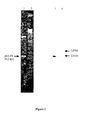
Figure 2 : Résultats de l'analyse d'ADN total d'un transformant de L. bulgaricus VI104 par pULP8.
Les puits 1 et 2 correspondent, respectivement, à l'analyse électrophorétique de l'ADN plasmidique représentatif de celui utilisé lors de la transformation et à l'ADN total d'un transformant. Les puits 4 et 5 correspondent, respectivement, à l'hybridation d'une sonde pULP8 contre l'ADN plasmidique représentatif de celui utilisé lors de la transformation et contre l'ADN total d'un transformant après digestions par l'enzyme EcoRI. -
Figure 3 : Résultats d'hybridation de l'ADN total des transformants de L. bulgaricus VI104 par pCU1882.
L'ADN total a été préparé à partir des transformants de pCU1882. Les puits 1 et 3 contiennent l'ADN plasmidique représentatif de celui utilisé lors de la transformation et les puits 2 et 4 contiennent l'ADN total d'un transformant. L'ADN est sous forme native dans les puits 1 et 2, et digéré par l'enzyme SalI dans les puits 3 et 4. La sonde utilisée est pCU1882. -
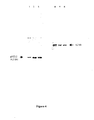
Figure 4 : Résultats d'hybridation de l'ADN total de deux transformants de L. bulgaricus VI104 par pNZ12.
Les puits 1 et 4 contiennent l'ADN plasmidique représentatif de celui utilisé lors de la transformation et les puits 2, 3, 5 et 6 contiennent l'ADN total des transformants. L'ADN est sous forme native dans les puits 1 à 3, et digéré par l'enzyme Nco I dans les puits 4 à 6. La sonde utilisée est pNZ12.
-
- Le plasmide pJK650 (8,96 kb, KLEIN et al., System. Appl. Microbiol. 18, 493-503, 1995) est un dérivé du plasmide pWS58 isolé d'une souche de Lb. delbrueckii subsp. lactis. Ce plasmide qui porte le gène de résistance à l'érythromycine de pE194 [HORINOUCHI et WEISBLUM, J. Bacteriol., 150, 804-814, (1982)], transforme la souche VI104. La présence de formes libres du plasmide dans les transformants indique que ce plasmide est réplicatif dans VI104 (
Figure 1A ). - Différents plasmides dérivés de réplicons « cercle roulant » ont été testés pour leur capacité à transformer et à se maintenir dans VI104.
- Aucun transformant n'a été observé avec les plasmides suivants :
- pE194, plasmide naturellement EryR originaire de S. aureus [HORINOUCHI et WEISBLUM, 1982, publication précitée].
- En revanche, des transformants ont été obtenus avec les plasmides suivants :
- pLEM7 [FONS et al., Plasmid, 37, 199-203, (1997)] naturellement EryR et son dérivé pLEM415 (
Fig. 1B ). - pULP8 (6,6 kb) [BRINGEL et al., Plasmid, 22, 193-202, (1989)], dérivés EryR (gène de pVA891, [MACRINA et al., Gene, 25, 145-50, (1983)] du plasmide pLPl de Lactobacillus plantarum [BOUIA et al., Plasmid, 22, 185-192, (1989)], donnent des transformants avec VI104.L'analyse de transformants de pULP8 (
Fig. 2 ) a permis de visualiser de formes libres par hybridation avec une sonde radioactive spécifique de pULP8. - Le plasmide pCU1882 (6,7 kb), dérivé CmR (gène de pC194) de pLC2 de L. curvatus LTH683 [KLEIN et al., 1993, publication précitée] a conduit à l'obtention de transformants CmR dans VI104.
- L'analyse des transformants a permis de visualiser des formes libres par hybridation avec une sonde radioactive spécifique de pCU1882 (
Fig. 3 ). - Le plasmide pGT633 (9,8 kb), isolé de Lactobacillus reuteri, est naturellement EryR [TANNOCK et al., Plasmid., 31, 60-71, (1994)]. L'analyse des transformants a permis la détection de molécules libres (
Fig. 1C ). - pNZ12 et pNZ121, dérivés CmR (gène CmR de pC194) du plasmide pSH71 de L. lactis [DE VOS, FEMS Microbiol. Rev., 46, 281-295, (1987)] transforment VI104. L'analyse de transformants de chaque plasmide permet la détection de molécules libres. La
Figure 4 illustre les résultats de l'analyse pour pNZ12. - LANGELLA et CHOPIN [1989, publication précitée] ont montré que le plasmide conjugatif pIP501 (30 kb, originaire de Streptococcus agalactiae) se réplique à très faible nombre de copies dans L. bulgaricus (CNRZ431). Du fait de la grande taille de ce plasmide, il n'est pas envisageable de l'utiliser pour électrotransformer VI104. Les Inventeurs ont testé des dérivés de pIP501 non-conjugatifs et de plus petite taille dont pGB305Δ (EryR, [LE CHATELIER et al., Plasmid, 29, 50-56, (1995)]). Ce plasmide transforme VI104 et se retrouve sous forme libre détectable par analyse de l'ADN total.
- pIL253 (EryR) est un dérivé non-conjugatif de pAMβ1 [SIMON et CHOPIN, Biochimie, 70, 559-566, (1988)]. Plusieurs transformants ont été obtenus avec VI104. L'extraction d'ADN plasmidique permet de déceler du plasmide libre à faible nombre de copies.
- Le plasmide pMCl contient le site d'attachement attP (chevauchant le gène tRNAser) et le gène de l'intégrase (int) du bactériophage mv4 de L. delbrueckii [DUPONT et al., J. Bacteriol., 177, 586-595, (1995)]. Ce vecteur s'intègre dans le gène tRNAser d'une grande variété de bactéries lactiques telles que L. plantarum, L. casei, L. lactis, E. faecalis et Streptococcus pneumonia [AUVRAY et al., J. Bacteriol., 179, 1837-1845, (1997)]. Avec VI104, des intégrants sont obtenus ; l'analyse structurale de leur ADN chromosomique montre que pMC1 s'intègre de manière spécifique.
- Ces résultats montrent que divers types de plasmides réplicatifs (plasmides d'origine homologue, plasmides d'origine hétérologue à réplication cercle roulant, plasmides d'origine hétérologue à réplication thêta), ainsi qu'un vecteur intégratif peuvent transformer VI104.
- Les plasmides pJK650, pGB305Δ,et pLEM415, qui transforment VI104, ont également été utilisés pour transformer la souche ATCC11842 de L. delbrueckii subsp. bulgaricus et la souche CNRZ327 de L. delbrueckii subsp. lactis, selon le protocole décrit à l'exemple 2 ci-dessus.
- Dans ces conditions, des transformants de pJK650 et de pGB305Δ sont obtenus avec les souches ATCC11842 et CNRZ327, des transformants de pLEM415 sont obtenus avec la souche CNRZ327.
Claims (3)
- Souche de Lb. delbrueckii subsp. bulgaricus, dénommée VI104, déposée le 17 septembre 1999, sous le numéro I-2316, auprès de la CNCM.
- Procédé de criblage de plasmides capables de transformer des bactéries de l'espèce Lb. delbrueckii, caractérisé en ce que l'on procède à l'électroporation de la souche VI104 selon la revendication 1, en présence du plasmide à tester, et à la détection de bactéries transformées comprenant ledit plasmide.
- Procédé selon la revendication 2, caractérisé en ce qu'il comprend en outre la récupération de copies dudit plasmide à partir desdites bactéries.
Applications Claiming Priority (3)
| Application Number | Priority Date | Filing Date | Title |
|---|---|---|---|
| FR9911683 | 1999-09-17 | ||
| FR9911683A FR2798669B1 (fr) | 1999-09-17 | 1999-09-17 | Souche de lactobacillus delbrueckii et son utilisation pour le criblage de plasmides |
| PCT/FR2000/002564 WO2001021818A1 (fr) | 1999-09-17 | 2000-09-15 | Souche de lactobacillus delbrueckii et son utilisation pour le criblage de plasmides |
Publications (2)
| Publication Number | Publication Date |
|---|---|
| EP1216305A1 EP1216305A1 (fr) | 2002-06-26 |
| EP1216305B1 true EP1216305B1 (fr) | 2008-07-30 |
Family
ID=9549995
Family Applications (1)
| Application Number | Title | Priority Date | Filing Date |
|---|---|---|---|
| EP00964296A Expired - Lifetime EP1216305B1 (fr) | 1999-09-17 | 2000-09-15 | Souche de lactobacillus delbrueckii et son utilisation pour le criblage de plasmides |
Country Status (8)
| Country | Link |
|---|---|
| EP (1) | EP1216305B1 (fr) |
| AT (1) | ATE403003T1 (fr) |
| AU (1) | AU7526400A (fr) |
| DE (1) | DE60039703D1 (fr) |
| DK (1) | DK1216305T3 (fr) |
| ES (1) | ES2311471T3 (fr) |
| FR (1) | FR2798669B1 (fr) |
| WO (1) | WO2001021818A1 (fr) |
Family Cites Families (5)
| Publication number | Priority date | Publication date | Assignee | Title |
|---|---|---|---|---|
| FI77056C (fi) * | 1986-06-24 | 1989-01-10 | Valio Meijerien | Vektorplasmid som laempar sig foer syrningsmedel, speciellt foer mejerisyrningsmedel. |
| JP3294288B2 (ja) * | 1991-02-22 | 2002-06-24 | 明治乳業株式会社 | 乳酸桿菌由来の新規なプラスミドpBUL1 及びその誘導体 |
| JPH05176777A (ja) * | 1991-12-27 | 1993-07-20 | Meiji Milk Prod Co Ltd | ラクトバチルス属乳酸桿菌の形質転換方法 及びその形質転換体 |
| FR2688515B1 (fr) * | 1992-03-13 | 1995-03-31 | Institut Rech Agronomique | Plasmide thermosensible. |
| JP2931939B2 (ja) * | 1992-07-10 | 1999-08-09 | 明治乳業株式会社 | Lactobacillus delbrueckii 種染色体への遺伝子組込み方法及び遺伝子組込み体 |
-
1999
- 1999-09-17 FR FR9911683A patent/FR2798669B1/fr not_active Expired - Fee Related
-
2000
- 2000-09-15 ES ES00964296T patent/ES2311471T3/es not_active Expired - Lifetime
- 2000-09-15 EP EP00964296A patent/EP1216305B1/fr not_active Expired - Lifetime
- 2000-09-15 DK DK00964296T patent/DK1216305T3/da active
- 2000-09-15 AT AT00964296T patent/ATE403003T1/de not_active IP Right Cessation
- 2000-09-15 AU AU75264/00A patent/AU7526400A/en not_active Abandoned
- 2000-09-15 DE DE60039703T patent/DE60039703D1/de not_active Expired - Lifetime
- 2000-09-15 WO PCT/FR2000/002564 patent/WO2001021818A1/fr not_active Ceased
Also Published As
| Publication number | Publication date |
|---|---|
| DK1216305T3 (da) | 2008-12-01 |
| ATE403003T1 (de) | 2008-08-15 |
| FR2798669B1 (fr) | 2004-02-20 |
| EP1216305A1 (fr) | 2002-06-26 |
| DE60039703D1 (de) | 2008-09-11 |
| WO2001021818A1 (fr) | 2001-03-29 |
| AU7526400A (en) | 2001-04-24 |
| FR2798669A1 (fr) | 2001-03-23 |
| ES2311471T3 (es) | 2009-02-16 |
Similar Documents
| Publication | Publication Date | Title |
|---|---|---|
| Fasoli et al. | Bacterial composition of commercial probiotic products as evaluated by PCR-DGGE analysis | |
| Masco et al. | Culture-dependent and culture-independent qualitative analysis of probiotic products claimed to contain bifidobacteria | |
| EP3116994B1 (fr) | Streptococcus thermophilus insensible aux bactériophages | |
| Ercolini et al. | Behavior of variable V3 region from 16S rDNA of lactic acid bacteria in denaturing gradient gel electrophoresis | |
| Bron et al. | Use of the alr gene as a food-grade selection marker in lactic acid bacteria | |
| Gueimonde et al. | Viability and diversity of probiotic Lactobacillus and Bifidobacterium populations included in commercial fermented milks | |
| Mason et al. | Modified electroporation protocol for Lactobacilli isolated from the chicken crop facilitates transformation and the use of a genetic tool | |
| Todorov et al. | Effect of medium components on bacteriocin production by Lactobacillus plantarum strains ST23LD and ST341LD, isolated from spoiled olive brine | |
| Johansen et al. | Characterization of Leuconostoc isolates from commercial mixed strain mesophilic starter cultures | |
| Bringel et al. | Extent of genetic lesions of the arginine and pyrimidine biosynthetic pathways in Lactobacillus plantarum, L. paraplantarum, L. pentosus, and L. casei: prevalence of CO2-dependent auxotrophs and characterization of deficient arg genes in L. plantarum | |
| Devirgiliis et al. | Characterization of the Tn 916 conjugative transposon in a food-borne strain of Lactobacillus paracasei | |
| Rhee et al. | Development of plasmid vector and electroporation condition for gene transfer in sporogenic lactic acid bacterium, Bacillus coagulans | |
| Andersen et al. | Sequence analysis and identification of the pyrKDbF operon from Lactococcus lactis including a novel gene, pyrK, involved in pyrimidine biosynthesis | |
| Foster | Insertion of the tetracycline resistance translocation unit Tn10 in the lac operon of Escherichia coli K12 | |
| Whitehead et al. | Sequence analyses of a broad host-range plasmid containing erm T from a tylosin-resistant Lactobacillus sp. isolated from swine feces | |
| Simpson et al. | Enumeration and identification of pediococci in powder-based products using selective media and rapid PFGE | |
| EP0812918A2 (fr) | Procédé pour sélectioner des mutants d'exchanges alléliques | |
| Dorella et al. | An improved protocol for electrotransformation of Corynebacterium pseudotuberculosis | |
| Hespell et al. | Conjugal transfer of Tn916, Tn916 delta E, and pAM beta 1 from Enterococcus faecalis to Butyrivibrio fibrisolvens strains | |
| Park et al. | Heterologous expression of cholesterol oxidase in Bifidobacterium longum under the control of 16S rRNA gene promoter of bifidobacteria | |
| Álvarez-Martín et al. | Improved cloning vectors for bifidobacteria, based on the Bifidobacterium catenulatum pBC1 replicon | |
| Reysset et al. | Conjugal transfer of plasmid-mediated antibiotic resistance from streptococci to Clostridium acetobutylicum | |
| Ninane et al. | Identification of lactic acid bacteria within the consortium of a kefir grain by sequencing 16S rDNA variable regions | |
| KR100319463B1 (ko) | 락토바실러스델브루엑키종염색체로서유전자삽입및그의삽입체 | |
| Cocconcelli et al. | Single-stranded DNA plasmid, vector construction and cloning of Bacillus stearothermophilus α-amilase in Lactobacillus |
Legal Events
| Date | Code | Title | Description |
|---|---|---|---|
| PUAI | Public reference made under article 153(3) epc to a published international application that has entered the european phase |
Free format text: ORIGINAL CODE: 0009012 |
|
| 17P | Request for examination filed |
Effective date: 20020417 |
|
| AK | Designated contracting states |
Kind code of ref document: A1 Designated state(s): AT BE CH CY DE DK ES FI FR GB GR IE IT LI LU MC NL |
|
| AX | Request for extension of the european patent |
Free format text: AL;LT;LV;MK;RO;SI |
|
| 17Q | First examination report despatched |
Effective date: 20040917 |
|
| 17Q | First examination report despatched |
Effective date: 20040917 |
|
| RAP1 | Party data changed (applicant data changed or rights of an application transferred) |
Owner name: RHODIA FOOD S.A. Owner name: INSTITUT NATIONAL DE LA RECHERCHE AGRONOMIQUE (INR Owner name: COMPAGNIE GERVAIS DANONE |
|
| GRAP | Despatch of communication of intention to grant a patent |
Free format text: ORIGINAL CODE: EPIDOSNIGR1 |
|
| GRAS | Grant fee paid |
Free format text: ORIGINAL CODE: EPIDOSNIGR3 |
|
| GRAA | (expected) grant |
Free format text: ORIGINAL CODE: 0009210 |
|
| AK | Designated contracting states |
Kind code of ref document: B1 Designated state(s): AT BE CH CY DE DK ES FI FR GB GR IE IT LI LU MC NL PT SE |
|
| REG | Reference to a national code |
Ref country code: GB Ref legal event code: FG4D Free format text: NOT ENGLISH |
|
| REG | Reference to a national code |
Ref country code: CH Ref legal event code: EP |
|
| RAP2 | Party data changed (patent owner data changed or rights of a patent transferred) |
Owner name: COMPAGNIE GERVAIS DANONE Owner name: INSTITUT NATIONAL DE LA RECHERCHE AGRONOMIQUE (INR |
|
| REF | Corresponds to: |
Ref document number: 60039703 Country of ref document: DE Date of ref document: 20080911 Kind code of ref document: P |
|
| REG | Reference to a national code |
Ref country code: IE Ref legal event code: FG4D Free format text: LANGUAGE OF EP DOCUMENT: FRENCH |
|
| REG | Reference to a national code |
Ref country code: CH Ref legal event code: NV Representative=s name: ISLER & PEDRAZZINI AG |
|
| NLT2 | Nl: modifications (of names), taken from the european patent patent bulletin |
Owner name: INSTITUT NATIONAL DE LA EN COMPAGNIE GERVAIS DANON Effective date: 20080903 |
|
| REG | Reference to a national code |
Ref country code: SE Ref legal event code: TRGR |
|
| REG | Reference to a national code |
Ref country code: DK Ref legal event code: T3 |
|
| REG | Reference to a national code |
Ref country code: GB Ref legal event code: 732E |
|
| REG | Reference to a national code |
Ref country code: ES Ref legal event code: FG2A Ref document number: 2311471 Country of ref document: ES Kind code of ref document: T3 |
|
| PG25 | Lapsed in a contracting state [announced via postgrant information from national office to epo] |
Ref country code: AT Free format text: LAPSE BECAUSE OF FAILURE TO SUBMIT A TRANSLATION OF THE DESCRIPTION OR TO PAY THE FEE WITHIN THE PRESCRIBED TIME-LIMIT Effective date: 20080730 |
|
| PG25 | Lapsed in a contracting state [announced via postgrant information from national office to epo] |
Ref country code: MC Free format text: LAPSE BECAUSE OF NON-PAYMENT OF DUE FEES Effective date: 20080930 |
|
| PLBE | No opposition filed within time limit |
Free format text: ORIGINAL CODE: 0009261 |
|
| STAA | Information on the status of an ep patent application or granted ep patent |
Free format text: STATUS: NO OPPOSITION FILED WITHIN TIME LIMIT |
|
| 26N | No opposition filed |
Effective date: 20090506 |
|
| PG25 | Lapsed in a contracting state [announced via postgrant information from national office to epo] |
Ref country code: CY Free format text: LAPSE BECAUSE OF FAILURE TO SUBMIT A TRANSLATION OF THE DESCRIPTION OR TO PAY THE FEE WITHIN THE PRESCRIBED TIME-LIMIT Effective date: 20080730 Ref country code: LU Free format text: LAPSE BECAUSE OF NON-PAYMENT OF DUE FEES Effective date: 20080915 |
|
| PG25 | Lapsed in a contracting state [announced via postgrant information from national office to epo] |
Ref country code: GR Free format text: LAPSE BECAUSE OF FAILURE TO SUBMIT A TRANSLATION OF THE DESCRIPTION OR TO PAY THE FEE WITHIN THE PRESCRIBED TIME-LIMIT Effective date: 20081031 |
|
| PGFP | Annual fee paid to national office [announced via postgrant information from national office to epo] |
Ref country code: IE Payment date: 20100922 Year of fee payment: 11 Ref country code: CH Payment date: 20100923 Year of fee payment: 11 |
|
| PGFP | Annual fee paid to national office [announced via postgrant information from national office to epo] |
Ref country code: FR Payment date: 20100909 Year of fee payment: 11 Ref country code: SE Payment date: 20100922 Year of fee payment: 11 Ref country code: FI Payment date: 20100914 Year of fee payment: 11 Ref country code: IT Payment date: 20100914 Year of fee payment: 11 |
|
| PGFP | Annual fee paid to national office [announced via postgrant information from national office to epo] |
Ref country code: GB Payment date: 20100831 Year of fee payment: 11 |
|
| PGFP | Annual fee paid to national office [announced via postgrant information from national office to epo] |
Ref country code: NL Payment date: 20100916 Year of fee payment: 11 Ref country code: DK Payment date: 20100927 Year of fee payment: 11 |
|
| PGFP | Annual fee paid to national office [announced via postgrant information from national office to epo] |
Ref country code: DE Payment date: 20100922 Year of fee payment: 11 Ref country code: BE Payment date: 20100913 Year of fee payment: 11 |
|
| PGFP | Annual fee paid to national office [announced via postgrant information from national office to epo] |
Ref country code: ES Payment date: 20110330 Year of fee payment: 11 |
|
| PG25 | Lapsed in a contracting state [announced via postgrant information from national office to epo] |
Ref country code: PT Free format text: LAPSE BECAUSE OF FAILURE TO SUBMIT A TRANSLATION OF THE DESCRIPTION OR TO PAY THE FEE WITHIN THE PRESCRIBED TIME-LIMIT Effective date: 20080730 |
|
| BERE | Be: lapsed |
Owner name: INSTITUT NATIONAL DE LA RECHERCHE AGRONOMIQUE (IN Effective date: 20110930 Owner name: CIE GERVAIS DANONE Effective date: 20110930 |
|
| REG | Reference to a national code |
Ref country code: NL Ref legal event code: V1 Effective date: 20120401 |
|
| REG | Reference to a national code |
Ref country code: DK Ref legal event code: EBP Ref country code: CH Ref legal event code: PL |
|
| GBPC | Gb: european patent ceased through non-payment of renewal fee |
Effective date: 20110915 |
|
| PG25 | Lapsed in a contracting state [announced via postgrant information from national office to epo] |
Ref country code: IT Free format text: LAPSE BECAUSE OF NON-PAYMENT OF DUE FEES Effective date: 20110915 Ref country code: FI Free format text: LAPSE BECAUSE OF NON-PAYMENT OF DUE FEES Effective date: 20110915 |
|
| REG | Reference to a national code |
Ref country code: IE Ref legal event code: MM4A |
|
| REG | Reference to a national code |
Ref country code: FR Ref legal event code: ST Effective date: 20120531 |
|
| PG25 | Lapsed in a contracting state [announced via postgrant information from national office to epo] |
Ref country code: BE Free format text: LAPSE BECAUSE OF NON-PAYMENT OF DUE FEES Effective date: 20110930 |
|
| REG | Reference to a national code |
Ref country code: SE Ref legal event code: EUG |
|
| REG | Reference to a national code |
Ref country code: DE Ref legal event code: R119 Ref document number: 60039703 Country of ref document: DE Effective date: 20120403 |
|
| PG25 | Lapsed in a contracting state [announced via postgrant information from national office to epo] |
Ref country code: DE Free format text: LAPSE BECAUSE OF NON-PAYMENT OF DUE FEES Effective date: 20120403 Ref country code: CH Free format text: LAPSE BECAUSE OF NON-PAYMENT OF DUE FEES Effective date: 20110930 Ref country code: NL Free format text: LAPSE BECAUSE OF NON-PAYMENT OF DUE FEES Effective date: 20120401 Ref country code: IE Free format text: LAPSE BECAUSE OF NON-PAYMENT OF DUE FEES Effective date: 20110915 Ref country code: LI Free format text: LAPSE BECAUSE OF NON-PAYMENT OF DUE FEES Effective date: 20110930 |
|
| PG25 | Lapsed in a contracting state [announced via postgrant information from national office to epo] |
Ref country code: GB Free format text: LAPSE BECAUSE OF NON-PAYMENT OF DUE FEES Effective date: 20110915 Ref country code: FR Free format text: LAPSE BECAUSE OF NON-PAYMENT OF DUE FEES Effective date: 20110930 |
|
| PG25 | Lapsed in a contracting state [announced via postgrant information from national office to epo] |
Ref country code: DK Free format text: LAPSE BECAUSE OF NON-PAYMENT OF DUE FEES Effective date: 20110930 |
|
| PG25 | Lapsed in a contracting state [announced via postgrant information from national office to epo] |
Ref country code: SE Free format text: LAPSE BECAUSE OF NON-PAYMENT OF DUE FEES Effective date: 20110916 |
|
| REG | Reference to a national code |
Ref country code: ES Ref legal event code: FD2A Effective date: 20130605 |
|
| PG25 | Lapsed in a contracting state [announced via postgrant information from national office to epo] |
Ref country code: ES Free format text: LAPSE BECAUSE OF NON-PAYMENT OF DUE FEES Effective date: 20110916 |