EP1214812B1 - Verfahren zum schutz von daten - Google Patents
Verfahren zum schutz von daten Download PDFInfo
- Publication number
- EP1214812B1 EP1214812B1 EP00960396A EP00960396A EP1214812B1 EP 1214812 B1 EP1214812 B1 EP 1214812B1 EP 00960396 A EP00960396 A EP 00960396A EP 00960396 A EP00960396 A EP 00960396A EP 1214812 B1 EP1214812 B1 EP 1214812B1
- Authority
- EP
- European Patent Office
- Prior art keywords
- data
- biometric feature
- secret
- biometric
- feature
- Prior art date
- Legal status (The legal status is an assumption and is not a legal conclusion. Google has not performed a legal analysis and makes no representation as to the accuracy of the status listed.)
- Expired - Lifetime
Links
Images



Classifications
-
- G—PHYSICS
- G06—COMPUTING OR CALCULATING; COUNTING
- G06F—ELECTRIC DIGITAL DATA PROCESSING
- G06F21/00—Security arrangements for protecting computers, components thereof, programs or data against unauthorised activity
- G06F21/10—Protecting distributed programs or content, e.g. vending or licensing of copyrighted material ; Digital rights management [DRM]
- G06F21/109—Protecting distributed programs or content, e.g. vending or licensing of copyrighted material ; Digital rights management [DRM] by using specially-adapted hardware at the client
-
- H—ELECTRICITY
- H04—ELECTRIC COMMUNICATION TECHNIQUE
- H04L—TRANSMISSION OF DIGITAL INFORMATION, e.g. TELEGRAPHIC COMMUNICATION
- H04L63/00—Network architectures or network communication protocols for network security
- H04L63/04—Network architectures or network communication protocols for network security for providing a confidential data exchange among entities communicating through data packet networks
- H04L63/0428—Network architectures or network communication protocols for network security for providing a confidential data exchange among entities communicating through data packet networks wherein the data content is protected, e.g. by encrypting or encapsulating the payload
- H04L63/0442—Network architectures or network communication protocols for network security for providing a confidential data exchange among entities communicating through data packet networks wherein the data content is protected, e.g. by encrypting or encapsulating the payload wherein the sending and receiving network entities apply asymmetric encryption, i.e. different keys for encryption and decryption
-
- G—PHYSICS
- G06—COMPUTING OR CALCULATING; COUNTING
- G06F—ELECTRIC DIGITAL DATA PROCESSING
- G06F21/00—Security arrangements for protecting computers, components thereof, programs or data against unauthorised activity
- G06F21/30—Authentication, i.e. establishing the identity or authorisation of security principals
- G06F21/31—User authentication
- G06F21/32—User authentication using biometric data, e.g. fingerprints, iris scans or voiceprints
-
- G—PHYSICS
- G06—COMPUTING OR CALCULATING; COUNTING
- G06F—ELECTRIC DIGITAL DATA PROCESSING
- G06F21/00—Security arrangements for protecting computers, components thereof, programs or data against unauthorised activity
- G06F21/50—Monitoring users, programs or devices to maintain the integrity of platforms, e.g. of processors, firmware or operating systems
- G06F21/55—Detecting local intrusion or implementing counter-measures
- G06F21/556—Detecting local intrusion or implementing counter-measures involving covert channels, i.e. data leakage between processes
-
- G—PHYSICS
- G06—COMPUTING OR CALCULATING; COUNTING
- G06F—ELECTRIC DIGITAL DATA PROCESSING
- G06F21/00—Security arrangements for protecting computers, components thereof, programs or data against unauthorised activity
- G06F21/70—Protecting specific internal or peripheral components, in which the protection of a component leads to protection of the entire computer
- G06F21/82—Protecting input, output or interconnection devices
- G06F21/83—Protecting input, output or interconnection devices input devices, e.g. keyboards, mice or controllers thereof
-
- G—PHYSICS
- G07—CHECKING-DEVICES
- G07C—TIME OR ATTENDANCE REGISTERS; REGISTERING OR INDICATING THE WORKING OF MACHINES; GENERATING RANDOM NUMBERS; VOTING OR LOTTERY APPARATUS; ARRANGEMENTS, SYSTEMS OR APPARATUS FOR CHECKING NOT PROVIDED FOR ELSEWHERE
- G07C9/00—Individual registration on entry or exit
- G07C9/20—Individual registration on entry or exit involving the use of a pass
- G07C9/22—Individual registration on entry or exit involving the use of a pass in combination with an identity check of the pass holder
- G07C9/25—Individual registration on entry or exit involving the use of a pass in combination with an identity check of the pass holder using biometric data, e.g. fingerprints, iris scans or voice recognition
- G07C9/257—Individual registration on entry or exit involving the use of a pass in combination with an identity check of the pass holder using biometric data, e.g. fingerprints, iris scans or voice recognition electronically
-
- H—ELECTRICITY
- H04—ELECTRIC COMMUNICATION TECHNIQUE
- H04L—TRANSMISSION OF DIGITAL INFORMATION, e.g. TELEGRAPHIC COMMUNICATION
- H04L63/00—Network architectures or network communication protocols for network security
- H04L63/08—Network architectures or network communication protocols for network security for authentication of entities
- H04L63/0861—Network architectures or network communication protocols for network security for authentication of entities using biometrical features, e.g. fingerprint, retina-scan
-
- H—ELECTRICITY
- H04—ELECTRIC COMMUNICATION TECHNIQUE
- H04L—TRANSMISSION OF DIGITAL INFORMATION, e.g. TELEGRAPHIC COMMUNICATION
- H04L63/00—Network architectures or network communication protocols for network security
- H04L63/12—Applying verification of the received information
-
- H—ELECTRICITY
- H04—ELECTRIC COMMUNICATION TECHNIQUE
- H04L—TRANSMISSION OF DIGITAL INFORMATION, e.g. TELEGRAPHIC COMMUNICATION
- H04L69/00—Network arrangements, protocols or services independent of the application payload and not provided for in the other groups of this subclass
- H04L69/04—Protocols for data compression, e.g. ROHC
-
- H—ELECTRICITY
- H04—ELECTRIC COMMUNICATION TECHNIQUE
- H04L—TRANSMISSION OF DIGITAL INFORMATION, e.g. TELEGRAPHIC COMMUNICATION
- H04L9/00—Cryptographic mechanisms or cryptographic arrangements for secret or secure communications; Network security protocols
- H04L9/32—Cryptographic mechanisms or cryptographic arrangements for secret or secure communications; Network security protocols including means for verifying the identity or authority of a user of the system or for message authentication, e.g. authorization, entity authentication, data integrity or data verification, non-repudiation, key authentication or verification of credentials
- H04L9/3226—Cryptographic mechanisms or cryptographic arrangements for secret or secure communications; Network security protocols including means for verifying the identity or authority of a user of the system or for message authentication, e.g. authorization, entity authentication, data integrity or data verification, non-repudiation, key authentication or verification of credentials using a predetermined code, e.g. password, passphrase or PIN
- H04L9/3231—Biological data, e.g. fingerprint, voice or retina
-
- G—PHYSICS
- G06—COMPUTING OR CALCULATING; COUNTING
- G06F—ELECTRIC DIGITAL DATA PROCESSING
- G06F2221/00—Indexing scheme relating to security arrangements for protecting computers, components thereof, programs or data against unauthorised activity
- G06F2221/21—Indexing scheme relating to G06F21/00 and subgroups addressing additional information or applications relating to security arrangements for protecting computers, components thereof, programs or data against unauthorised activity
- G06F2221/2153—Using hardware token as a secondary aspect
-
- H—ELECTRICITY
- H04—ELECTRIC COMMUNICATION TECHNIQUE
- H04L—TRANSMISSION OF DIGITAL INFORMATION, e.g. TELEGRAPHIC COMMUNICATION
- H04L2209/00—Additional information or applications relating to cryptographic mechanisms or cryptographic arrangements for secret or secure communication H04L9/00
- H04L2209/56—Financial cryptography, e.g. electronic payment or e-cash
Definitions
- the invention relates to the protection of data, in particular a method for ensuring the authenticity and integrity of digitized data based on biometric features.
- a key pair is generated in this case, for example, a secret and a public key, which are in a certain mathematical relationship to each other.
- the sender uses his secret key, usually as a special signature feature.
- the document to be signed is first compressed using a so-called hash method, the resulting compressed report is linked to the secret key according to a predetermined algorithm and the result is attached as a digital signature to the document to be transmitted.
- the recipient now also compresses the document and compares this comprimate with the compressed signature contained in the digital signature, which results from decrypting the signature with the sender's public key. If there is a match, it is clear that the text sent and received is the same, i. E.
- RSA asymmetric encryption method
- the RSA method was named after those of its developers: Ronald L. Rivest, Adi Shamir, and Leonard Adleman, who used the 1977 On Digital Signatures and Public Key Cryptosystems (MIT) Laboratory for Computer Science Technical Memorandum 82, April 1977 ) and 1978 ("A Method for Obtaining Digital Signatures and Public-Key Cryptosystems", Communications of the ACM 2/1978).
- the basis of RSA are number theory considerations, where it is assumed that large numbers are difficult to factorize, ie can be decomposed into prime factors. It is the so-called factorization problem. The suspected Calculation effort is so great that the encryption is practically unbreakable with suitably chosen keys by a brute-force attack. Cryptanalytic attacks have not been published.
- a signed document can be uniquely assigned to a signature key.
- assigning a signed document to a person or organization remains problematic. In order for it to succeed, the following requirements must be met, that is, first, that only the rightful owner obtains access to his private signature key and, secondly, that each public key is uniquely associated with the rightful owner of the associated private key.
- trusted third parties third parties that are not directly involved in the transaction and whose trustworthiness can be considered secured.
- the system of mutual trust and controls is often referred to as a "trust" model.
- Examples of the use of signature methods for authentication and verification of data integrity are: contracts concluded electronically over the Internet or other data network; Electronic transactions (keyword: e-commerce); Access control to resources (such as data links or external storage systems); Process control data that is exported and imported into manufacturing facilities; Personal data management (such as patient data management or authorities)
- Known signature systems are, for example, so-called smart card systems.
- Many smart card-based systems offer good protection against attacks on the key itself (cryptanalytic attacks), against brute-force attacks (BFAs), and against attacks on the hardware on which the key is stored.
- BFAs brute-force attacks
- RA replay and fake-terminal attacks
- smart card systems pose a security risk with respect to these attacks.
- TMA Trust model
- Both the private signature key of the customer and a pattern or prototype (the so-called template) of the digital representation of the measured biometric feature are stored in stored form.
- the following authentication measures are taken: The user identifies himself - for example by entering a PIN or by reading a biometric feature.
- the biometric data is validated by comparing it to a template. If the distance of the measured feature to the prototype is less than a threshold, the transaction is released. This comparison takes place in readers or in a central clearing house. In the latter case, the biometric data - encrypted or in plain text - is transmitted over networks.
- the private signature key is released.
- the user identifies himself by digitally signing the document. Usually the RSA method or another asymmetric encryption method is implemented. Often this is implemented on a smart card or other tamper-resistant hardware.
- the signed document is transmitted over a network.
- the cryptographic operation is validated using the user's public signature key.
- the WO 09850875 describes a so-called biometric identification method which uses a digital signature method and biometry. This method prevents the template from being exchanged for the digital representation of the measured biometric feature (STX) by storing it in a so-called biometric certificate.
- the template, as well as user data associated therewith, are validated by a certification authority and digitally signed. This prevents the user data associated with the template from being exchanged.
- the disadvantage is that it does not exclude the possibility of replay attacks.
- the WO 98/52317 also describes a digital signature method.
- the method according to WO 98/52317 Attempts to thwart attacks STT and STX by doing without storing the digital representation (template) of the biometric feature (BM).
- BM biometric feature
- a so-called instance, ie representative or concrete example of a class, of a problem whose solution represents the BM is generated from the BM.
- the digital representation is thus not explicitly stored, but hidden in the instance of the problem.
- WO 98/52317 Proposes that the problem should be arranged in such a way that the digital representation is hidden in a mass of similar data (camouflage).
- biometric feature for further computer-aided processing requires an analog-to-digital conversion, which will often yield rounding errors in the digitized measured values due to a finite, albeit very precise resolution capability.
- analog-to-digital conversion it is not realistic to assume, for example, when recording biometric features, that the user will always assume exactly the same positions with regard to the measurement sensor system.
- Measurements of behavioral biometric features pose the additional problem that the user is not expected to accurately replicate his behavior twice.
- the purpose of using biometric features is precisely their absolutely unique association with a human being (eg fingerprint, retina, etc.). Therefore, information about the necessary fault tolerance or information as to how to make a clear assignment from the varying measured values is essential.
- a biometric feature ABM is measured.
- the biometric feature ABM is digitized.
- IW is calculated from the digital representation of the biometric feature.
- SK (A) the private signature key of the sender is calculated.
- the message is encrypted using this key SK (A).
- WO 99/33219 discloses that in a public key cryptosystem, the users' private keys are stored at the server alongside the respective public keys of the users, since they are encrypted with a symmetric algorithm using individual user identification keys.
- the server uses an ID of a user transmitted to it by the user equipment to read the stored encrypted private key and the public key of the user.
- the encrypted private key is then transmitted over the network to the user equipment and then locally decrypted in the user equipment the received encrypted private key using the user identification key.
- the user identification key may be determined at the user equipment by using the user entered password or the biometric information of the user (fingerprint, speech, retinal scan, or face scan).
- the private key is sent to the user device only when needed, and after use, the private key and the user identification key are deleted on the user device.
- the invention has for its object to provide a method for protecting data, which has an over the prior art methods increased security.
- Another object of the invention is to provide a way of quantifying cryptographic protection by biometry in such a method.
- the invention uses a signature method in which the private or secret key (signature key) is encrypted with data obtained from a biometric feature of the owner of the private key. Encryption can provide a guarantee that the person who gave his digital signature using the signature key is also the rightful owner.
- a biometric feature of the owner of the signature key preferably its handwritten signature
- measurement data are obtained from the biometric feature.
- his measurement data are digitized to capture and further process the biometric feature.
- the signature key is restored.
- the signature key is first decrypted on the basis of the biometric feature measured in the authentication phase and then restored using a coding-theoretical method.
- the biometric feature measured in the initialization phase can also first be restored from the biometric feature measured in the authentication phase by means of a coding-theoretical method. This then decrypts the signature key.
- the correction capacity of the error correction method is arbitrary, d. that is, the original error-tolerant coded value is restored only if the input of the error correction method does not deviate too far.
- Claim 2 represents an advantageous embodiment of an initialization phase (enrollment) for the authentication phase of the method according to the application.
- the relevant biometric feature is digitized in a single step.
- secret data is provided.
- the key generation necessary for an asymmetric signature procedure i. H. the generation of a signature key.
- the secret data is coded fault-tolerant on the basis of a coding-theoretical method and encrypted on the basis of the biometric feature.
- Claim 3 represents an advantageous embodiment of the initialization phase. Initially, the secret data is encoded error-tolerant. The resulting codeword is longer than the original message; the redundant information is used to decode a message in which some bits have fallen over. Subsequently, the codeword is encrypted using the biometric feature.
- Claim 4 represents an advantageous embodiment of the method described in claim 3.
- the code word is generated by multiplying the secret data by a generating matrix. For example, this is an efficient way to represent the space of allowed codewords.
- Claim 5 represents a variant of the initialization phase.
- the secret data (the message) is not changed by the coding. Instead, separate correction data is created. These describe the space of allowed codewords.
- Claim 6 represents an advantageous embodiment of the authentication phase.
- the encrypted codeword is decrypted on the basis of the biometric feature.
- the encryption method should have the property that individual bits that have fallen over have no influence on other bits.
- One suitable encryption method is the application of the bitwise exclusive OR rule (XOR).
- Claim 7 represents a further variant of the initialization phase. In this case, separate correction data are created depending on the biometric feature.
- Claim 8 represents a variant of the authentication phase.
- separate correction data are first created as a function of the biometric feature.
- the biometric feature measured in the initialization phase is restored. This is done on the basis of this correction data, namely the correction data created in the initialization phase and the biometric feature measured in the authentication phase.
- the secret data is decrypted based on the recovered biometric feature data.
- Claim 9 represents a variant of the method described in claim 7.
- the correction data are created modulo n by calculation of parameters obtained from the biometric feature. On the basis of these data, values whose deviation from the true value is less than or equal to n are mapped to the true value, while values whose deviation is greater than n are mapped to a random value.
- Claim 10 represents a variant of the method described in claim 8.
- the authentication correction data analogous to the method described in claim 9, calculation of paramters obtained from the biometric authentication feature, modulo n created.
- the restoration of the biometric feature data is done by determining the difference of the residues. This is just the difference of the values, if the deviation is smaller n.
- Claim 11 describes an embodiment in which the correction method is user-specific. In this way, the correction capacity can be adapted to the variance of the biometric features within a user.
- a hash value is preferably created from the digitized biometric feature data or from the non-public portion thereof by means of a hash function for the coding of the private key or signature key.
- a hash value is preferably created from the digitized biometric feature data created in the authentication phase by means of a hash function which is compared with already stored hash values of preceding authentications. Since the hash function represents a special form of so-called one-way functions, it has the property of collision freedom. Collision freedom is understood in cryptography to mean that similar but not identical texts should produce completely different checksums. Each bit of the text must influence the checksum. That simply means that the function with identical input values, always delivers exactly one identical output value of fixed bit length. This feature makes use of the method according to the application in this case, since it is nearly impossible, as already mentioned, for the repeated acquisition of the same biometric feature to obtain exactly two identical measurement data records. Therefore, if the comparison between the current and the saved hash values leads to a positive result, this is a strong indication of the possibility of being exposed to a replay attack. As a result, security can be ensured by aborting the authentication.
- biometric characteristics of the behavioral biometry which are suitable for the method are preferably used. These have the advantage that they are difficult to imitate. A simple copying of patterns or features is almost impossible.
- the method according to the application uses as characteristic of the behavioral biometrics the handwritten signature, since this can be easily decomposed into dynamic and static parts, which in turn serve the decomposition of the biometric feature into secret and public parts.
- the handwritten signature is divided into a public and a secret part such that the secret part of the signature is a true subset of the dynamic information, thereby enabling or still allowing for quantification.
- the candidate biometric feature is measured and digitized multiple times to improve its error tolerance or variance determination in the digital capture of the biometric feature data.
- a conventional public-key method is preferably proposed for the key generation, since this is widespread and reliable.
- a device is proposed with which the application according to the method can be carried out in a simple manner.
- the method according to the application thus makes it possible to protect data in a higher scale than the prior art.
- the method according to the application enables the coding or encryption of the signature key, without thereby creating new attack points for attacks against the signature process by storing secret data.
- the application according to the method and the device according to the application further enables the secure authentication of persons or groups.
- the method according to the application furthermore makes it possible to determine a reproducible value from a biometric feature which can be used as input for a cryptographic method, such as, for example, PIN or RSA.
- the method or apparatus is basically a quantification for protection by biometry, i. estimating the expense of a brute-force attack.
- the identification is done by a shared secret; in practice mostly password, passphrase or PIN, when identifying by possession Identification takes place via the signature key, identity card, etc. and identification by biometrics through fingerprint, retina image.
- Some authentication methods can not meet higher security requirements. For example, knowledge identification always runs the risk of users writing down the passphrase or PIN.
- passphrase or PIN can be crypto-analytically determined from stored data.
- digital signatures have another advantage: they also ensure the integrity of the signed data: signature and data are inextricably interwoven.
- Digital signatures that are stored on a smart card or on another portable medium are only a special case of "identification by knowledge”. Therefore, it is often additionally protected by a PIN or biometrics.
- Fig. 2 represents a conventional transaction using digital signatures.
- the transaction comprises the following steps: A certification authority issues certificates and maintains directories that assign a legitimate owner to each digital signature. The signer signs a contract. The payee validates the signature based on the signer's public key. If necessary, the creditor consults the directory maintained by the certification body.
- This form of transaction has several disadvantages, namely that the payee relies on knowing the signer's public key, that ultimately only an allocation of the payment to a private signature key occurs, ie, whether the rightful owner of the key is actually the one who signed the contract, initially unclear, and that the customer and the payee must agree on a format.
- Fig. 1 For example, data that exists only temporarily is framed by broken lines, and data that exists over an extended period of time is surrounded by solid lines.
- Fig. 3 A conventional digital signature and authentication transaction is illustrated. The authentication can be done by measuring a biometric feature. The payee is dependent on knowing the public key of the signer and a pattern of the feature. It should be noted that a digital representation of the measured biometric feature is transmitted over a data network. The vendor side then compares the measured biometric feature to a stored template. In this regard, attacks are possible, namely MMA, RA, STT, STX.
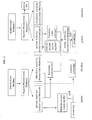
- Fig. 5 shows the application according to the signature method in a basic flow chart.
- the two independent methods of the initialization and authentication phase are displayed together. It involves the following steps: First, in an initialization phase, the biometric feature of the user is measured and digitized. This is called the prototype P of the feature. Optionally, the biometric feature is measured multiple times. In this case, the prototype P is determined from a plurality of measured values and used for the initialization of the device. Ideally, the prototype P is then split into a public and a secret part. In no case will a complete biometric feature, secret parts of a feature or a prototype thereof be stored.
- correction data is calculated from the prototype P, which allows the reconstruction of measured biometric features if they lie within a freely selectable tolerance interval.
- the data necessary for carrying out the cryptographic method are calculated.
- the private data of the cryptographic method is suitably linked to the prototype P or parts of P.
- the user's biometric feature is again measured and digitized.
- this is biometric feature is the signature of the user, whereby dynamic characteristics of the signature are recorded. The signature can be made on the display of the device. It should be noted that the user is not asked to leave his biometric feature to "foreign" devices.
- the biometric feature is decomposed sixth into a "classification part” and a “verification part".
- the "classification part” only includes publicly available information. If the tentative assignment of the biometric feature to a user fails based on the information of the "classification part", the user is rejected.
- the "verification part” includes only non-public information. In the preferred embodiment, these may be signature dynamic characteristics. Seventh, the "verification part” or other information accessible only to the legitimate owner of the secret key reconstructs the prototype P, or a value calculated therefrom, which is uniquely assigned to the user. The collision freedom of the assignment rule in relation to different users is required.
- a fixed length value is generated.
- MD5 Message Digest 5
- This value serves as the initial value to determine the private signature key.
- the private signature key is determined directly from the value P.
- the device ninthly signs the bill or parts of the bill. Subsequently, the signature key is deleted immediately.
- mapping to the value P an algorithm is used that has the following properties: a) It reliably maps legitimate input values, such as digitized biometric features, to a value W. In the present case this is the prototype P; b) It does not map illegitimate input values to the value W; c) it is scalable with respect to the allowed variance of legitimate values; d) The mapping function is discontinuous outside the interval in which the legitimate input values lie. That is, gradient methods are not applicable; e) It does not allow conclusions about properties of legitimate input values.
- the properties a), b) and c) describe the reliability of the process.
- the properties d) and e) state that an analysis of the method for calculating the value W offers no advantages to an attacker. This means that the effort of attacking the system equals the effort of a brute-force attack. However, this only applies if the input values - for example, parts of the biometric data - are not public.
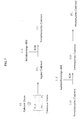
- Fig. 7 shows the transmission of the coding and decoding stage of a coding-theoretical method to the correction of erroneous biometric features.
- the initialization phase is shown in the upper line.
- the bottom line shows the authentication phase.
- the secret data eg the private key in a public-key method
- the digitized biometric feature encrypts this codeword by the bitwise XOR operation.
- the encrypted codeword is decrypted by a biometric feature measured at a later time (the Authentication BM). Since the biometric authentication feature does not exactly match the biometric feature measured in the initialization phase, an erroneous codeword results. This can be reconstructed by the decoding stage of the coding-theoretical method.
Landscapes
- Engineering & Computer Science (AREA)
- Computer Security & Cryptography (AREA)
- Computer Hardware Design (AREA)
- Theoretical Computer Science (AREA)
- General Engineering & Computer Science (AREA)
- Software Systems (AREA)
- Computer Networks & Wireless Communication (AREA)
- Signal Processing (AREA)
- Physics & Mathematics (AREA)
- General Physics & Mathematics (AREA)
- Computing Systems (AREA)
- Health & Medical Sciences (AREA)
- Biomedical Technology (AREA)
- General Health & Medical Sciences (AREA)
- Human Computer Interaction (AREA)
- Life Sciences & Earth Sciences (AREA)
- Biodiversity & Conservation Biology (AREA)
- Multimedia (AREA)
- Technology Law (AREA)
- Collating Specific Patterns (AREA)
- Emergency Protection Circuit Devices (AREA)
- Storage Device Security (AREA)
- Reverberation, Karaoke And Other Acoustics (AREA)
Applications Claiming Priority (3)
| Application Number | Priority Date | Filing Date | Title |
|---|---|---|---|
| DE19940341 | 1999-08-25 | ||
| DE19940341A DE19940341A1 (de) | 1999-08-25 | 1999-08-25 | Verfahren zum Schutz von Daten |
| PCT/EP2000/007597 WO2001015378A1 (de) | 1999-08-25 | 2000-08-04 | Verfahren zum schutz von daten |
Publications (2)
| Publication Number | Publication Date |
|---|---|
| EP1214812A1 EP1214812A1 (de) | 2002-06-19 |
| EP1214812B1 true EP1214812B1 (de) | 2010-01-20 |
Family
ID=7919577
Family Applications (1)
| Application Number | Title | Priority Date | Filing Date |
|---|---|---|---|
| EP00960396A Expired - Lifetime EP1214812B1 (de) | 1999-08-25 | 2000-08-04 | Verfahren zum schutz von daten |
Country Status (13)
| Country | Link |
|---|---|
| US (1) | US7526653B1 (enExample) |
| EP (1) | EP1214812B1 (enExample) |
| JP (1) | JP4819269B2 (enExample) |
| KR (1) | KR100757350B1 (enExample) |
| CN (1) | CN100399737C (enExample) |
| AT (1) | ATE456211T1 (enExample) |
| AU (1) | AU7272400A (enExample) |
| DE (2) | DE19940341A1 (enExample) |
| ES (1) | ES2335642T3 (enExample) |
| HK (1) | HK1048031B (enExample) |
| RU (1) | RU2263407C2 (enExample) |
| WO (1) | WO2001015378A1 (enExample) |
| ZA (1) | ZA200201303B (enExample) |
Families Citing this family (41)
| Publication number | Priority date | Publication date | Assignee | Title |
|---|---|---|---|---|
| GB0113255D0 (en) * | 2001-05-31 | 2001-07-25 | Scient Generics Ltd | Number generator |
| US20040111625A1 (en) * | 2001-02-14 | 2004-06-10 | Duffy Dominic Gavan | Data processing apparatus and method |
| EP1258795A1 (de) * | 2001-05-15 | 2002-11-20 | Siemens Aktiengesellschaft | Anordnung zur sicheren Erzeugung von Signaturen für Personal-computer und Mobiltelefone. |
| US7006673B2 (en) | 2001-07-25 | 2006-02-28 | Activcard Ireland Limited | Method of hash string extraction |
| NO316489B1 (no) * | 2001-10-01 | 2004-01-26 | Genkey As | System, b¶rbar anordning og fremgangsmåte for digital autentisering, kryptering og signering ved generering av flyktige, men konsistente ogrepeterbare kryptonökler |
| FR2830395A1 (fr) * | 2001-10-02 | 2003-04-04 | Guedevanichvili Michel | Systeme de controle d'une signature electronique |
| DE10207056A1 (de) * | 2002-02-20 | 2003-09-04 | Giesecke & Devrient Gmbh | Verfahren zum Nachweis der Berechtigung einer Person zur Nutzung eines tragbaren Datenträgers |
| GB0228434D0 (en) * | 2002-12-05 | 2003-01-08 | Scient Generics Ltd | Error correction |
| DE60309176T2 (de) * | 2002-05-31 | 2007-09-06 | Scientific Generics Ltd., Harston | Biometrisches authentifizierungssystem |
| DE102004001855A1 (de) * | 2004-01-13 | 2005-08-04 | Giesecke & Devrient Gmbh | Biometrische Authentisierung |
| GB2413672B (en) * | 2004-04-28 | 2006-08-16 | Motorola Inc | Access control system and method |
| CN1965529B (zh) * | 2004-06-08 | 2014-07-30 | 日本电气株式会社 | 数据通信方法和系统 |
| GB0413034D0 (en) | 2004-06-10 | 2004-07-14 | Scient Generics Ltd | Secure workflow engine |
| DE102004049998A1 (de) * | 2004-10-14 | 2006-04-20 | Giesecke & Devrient Gmbh | Vorrichtung und Verfahren zur visuellen Darstellung von Meßwerten |
| US7773784B2 (en) * | 2004-10-15 | 2010-08-10 | University Of Colorado Board Of Regents | Revocable biometrics with robust distance metrics |
| US7620818B2 (en) * | 2004-12-07 | 2009-11-17 | Mitsubishi Electric Research Laboratories, Inc. | Biometric based user authentication and data encryption |
| DE102005008257A1 (de) * | 2005-02-23 | 2006-08-24 | Giesecke & Devrient Gmbh | Authentisieren mit Chipkarte |
| US8363837B2 (en) * | 2005-02-28 | 2013-01-29 | HGST Netherlands B.V. | Data storage device with data transformation capability |
| DE102005018561A1 (de) | 2005-04-21 | 2006-11-02 | Giesecke & Devrient Gmbh | Verfahren zum Betreiben eines Systems mit einem tragbaren Datenträger und einem Endgerät |
| US8433983B2 (en) | 2005-09-29 | 2013-04-30 | Koninklijke Philips Electronics N.V. | Secure protection of biometric templates |
| RU2435218C2 (ru) * | 2005-12-19 | 2011-11-27 | Интернэшнл Фронтьер Текнолоджи Лэборетери, Инк. | Карта с возможностью аутентификации |
| EP1965341A4 (en) * | 2005-12-19 | 2010-04-28 | Internat Frontier Technology Ltd | CARD WITH THE ABILITY TO AUTHENTICATE |
| US9112705B2 (en) | 2006-02-15 | 2015-08-18 | Nec Corporation | ID system and program, and ID method |
| FR2899357B1 (fr) * | 2006-03-29 | 2008-06-20 | Sagem Defense Securite | Traitement de donnees biometriques dans un referentiel multi dimensionnel. |
| RU2346397C1 (ru) * | 2007-06-26 | 2009-02-10 | Александр Иванович Иванов | Способ защиты персональных данных биометрической идентификации и аутентификации |
| CN101459514B (zh) * | 2007-12-11 | 2013-01-30 | 财团法人工业技术研究院 | 生物辨识方法与装置及其生物特征数据的加密方法 |
| RU2371765C2 (ru) * | 2008-01-14 | 2009-10-27 | Александр Иванович Иванов | Способ анонимной биометрической регистрации человека |
| US8170212B2 (en) * | 2008-03-17 | 2012-05-01 | Intel Corporation | Device, system, and method of establishing secure wireless communication |
| RU2438239C2 (ru) * | 2009-11-02 | 2011-12-27 | Владимир Иванович Винокуров | Способ передачи и приема информации |
| ES2572159T3 (es) | 2009-11-12 | 2016-05-30 | Morpho Cards Gmbh | Un método de asignación de un secreto a un testigo de seguridad, un método de operación de un testigo de seguridad, un medio de almacenamiento y un testigo de seguridad |
| DE102009055947A1 (de) * | 2009-11-30 | 2011-06-01 | Christoph Busch | Authentisierte Übertragung von Daten |
| US8745405B2 (en) * | 2010-02-17 | 2014-06-03 | Ceelox Patents, LLC | Dynamic seed and key generation from biometric indicia |
| FR2967322B1 (fr) * | 2010-11-08 | 2012-12-28 | Morpho | Protection contre les ecoutes passives |
| FR3019672B1 (fr) * | 2014-04-02 | 2018-06-22 | Idemia France | Procede de realisation d'un dispositif de securite |
| US10860739B2 (en) * | 2014-12-12 | 2020-12-08 | Lenovo (Singapore) Pte. Ltd. | Encryption of media based on content |
| DE102016204055B4 (de) * | 2016-03-11 | 2019-04-04 | Universität Ulm | Verfahren und Vorrichtung zur Erzeugung einer digitalen Signatur |
| FR3054905B1 (fr) * | 2016-08-04 | 2019-10-18 | Safran Identity & Security | Procede de generation de cle et procede de controle d'acces |
| EP4002179B1 (en) * | 2020-11-17 | 2025-01-01 | ABB Schweiz AG | Protecting the integrity of measurement data acquired by a sensor device |
| IT202100008489A1 (it) * | 2021-04-06 | 2021-07-06 | Dna10 Tech Srls | Sistema di memorizzazione del dato biometrico di una persona con metodo di protezione ed autorizzazione per l’utilizzo lato utente |
| CN114338134A (zh) * | 2021-12-27 | 2022-04-12 | 新疆航天信息有限公司 | 一种基于国密数据采集管理方法 |
| WO2026101414A1 (ru) * | 2024-11-08 | 2026-05-15 | Артем Владимирович ЕРЕМИН | Способ защиты информации |
Family Cites Families (43)
| Publication number | Priority date | Publication date | Assignee | Title |
|---|---|---|---|---|
| US4202626A (en) * | 1978-02-24 | 1980-05-13 | A Patent Partnership | Signature verification and authentication systems |
| JPH01161938A (ja) * | 1987-12-18 | 1989-06-26 | Secom Co Ltd | 暗号化情報通信システム |
| US4879747A (en) * | 1988-03-21 | 1989-11-07 | Leighton Frank T | Method and system for personal identification |
| JPH0373633A (ja) * | 1989-08-14 | 1991-03-28 | Nippon Telegr & Teleph Corp <Ntt> | 暗号通信方式 |
| JPH03104338A (ja) * | 1989-09-19 | 1991-05-01 | Toshiba Corp | 暗号装置 |
| US5131038A (en) * | 1990-11-07 | 1992-07-14 | Motorola, Inc. | Portable authentification system |
| FR2671210A1 (fr) | 1990-12-28 | 1992-07-03 | Villa Pierre | Procede d'identification et d'authentification d'informations caracterisant un individu. |
| WO1994010658A1 (en) * | 1992-11-05 | 1994-05-11 | Coms21 Limited | Secure access control system |
| DE4243908C2 (de) | 1992-12-23 | 2001-06-07 | Gao Ges Automation Org | Verfahren zur Erzeugung einer digitalen Signatur mit Hilfe eines biometrischen Merkmals |
| JP2905368B2 (ja) | 1993-08-10 | 1999-06-14 | 富士通株式会社 | 誤り検出・訂正方法 |
| DE4413678C1 (de) * | 1994-04-20 | 1995-05-04 | Siemens Ag | Elektronisches Einschreibeverfahren bei der Datenübertragung |
| EP0772929B1 (en) * | 1994-07-26 | 2006-09-06 | Siemens Energy and Automation, Inc. | Methods and systems for creating and authenticating unalterable self-verifying articles |
| US5541994A (en) | 1994-09-07 | 1996-07-30 | Mytec Technologies Inc. | Fingerprint controlled public key cryptographic system |
| RU2093890C1 (ru) * | 1995-09-08 | 1997-10-20 | Серебренников Олег Александрович | Способ распознавания личности и система для его осуществления |
| EP0763802A3 (de) * | 1995-09-19 | 1997-05-21 | Sc Info & Inno Technologie Inf | Verfahren zur psychometrischen Authentierung |
| JP3564673B2 (ja) * | 1995-11-21 | 2004-09-15 | 日本電信電話株式会社 | 個人認証システム、個人認証カードおよびセンタ装置 |
| DE19631484C1 (de) * | 1996-08-03 | 1998-03-05 | Dieter Bartmann | Verfahren zur Verifizierung der Identität eines Benutzers einer mit einer Tastatur zur Erzeugung alphanumerischer Zeichen zu bedienenden Datenverarbeitungsanlage |
| GB9621274D0 (en) * | 1996-10-11 | 1996-11-27 | Certicom Corp | Signature protocol for mail delivery |
| DE19702049C1 (de) * | 1997-01-22 | 1998-05-14 | Ibm | Zertifizierung kryptografischer Schlüssel für Chipkarten |
| JPH10262951A (ja) * | 1997-01-23 | 1998-10-06 | Toshiba Corp | 指照合システム |
| JPH10261082A (ja) | 1997-03-19 | 1998-09-29 | Kiyadeitsukusu:Kk | コンピュータ署名照合方式における登録署名データ作成方法 |
| DE19715644A1 (de) * | 1997-04-15 | 1998-10-22 | Iks Gmbh Information Kommunika | Verfahren zur Identitätsprüfung |
| JP4531140B2 (ja) | 1997-05-09 | 2010-08-25 | ジーティーイー サイバートラスト ソルーションズ インコーポレイテッド | 生物測定学的証明書 |
| US5991408A (en) * | 1997-05-16 | 1999-11-23 | Veridicom, Inc. | Identification and security using biometric measurements |
| JPH1173103A (ja) * | 1997-08-30 | 1999-03-16 | Nec Corp | 暗号化制御方法及びプログラムを記録した機械読み取り可能な記録媒体 |
| EP1030282A1 (en) | 1997-09-02 | 2000-08-23 | Cadix Inc. | Digital signature generating server and digital signature generating method |
| US6185316B1 (en) * | 1997-11-12 | 2001-02-06 | Unisys Corporation | Self-authentication apparatus and method |
| US6035398A (en) * | 1997-11-14 | 2000-03-07 | Digitalpersona, Inc. | Cryptographic key generation using biometric data |
| US6330345B1 (en) * | 1997-11-17 | 2001-12-11 | Veridicom, Inc. | Automatic adjustment processing for sensor devices |
| JPH11149453A (ja) * | 1997-11-18 | 1999-06-02 | Canon Inc | 情報処理装置及び方法 |
| JPH11187007A (ja) * | 1997-12-17 | 1999-07-09 | Casio Comput Co Ltd | 暗号化・復号化装置およびその方法 |
| US6925182B1 (en) * | 1997-12-19 | 2005-08-02 | Koninklijke Philips Electronics N.V. | Administration and utilization of private keys in a networked environment |
| US6038666A (en) * | 1997-12-22 | 2000-03-14 | Trw Inc. | Remote identity verification technique using a personal identification device |
| US6314519B1 (en) | 1997-12-22 | 2001-11-06 | Motorola, Inc. | Secure messaging system overlay for a selective call signaling system |
| US6151676A (en) * | 1997-12-24 | 2000-11-21 | Philips Electronics North America Corporation | Administration and utilization of secret fresh random numbers in a networked environment |
| US6279133B1 (en) * | 1997-12-31 | 2001-08-21 | Kawasaki Steel Corporation | Method and apparatus for significantly improving the reliability of multilevel memory architecture |
| JP3819608B2 (ja) * | 1998-01-06 | 2006-09-13 | 株式会社東芝 | 電子文書の改竄防止システム及び記録媒体 |
| US6075987A (en) * | 1998-02-27 | 2000-06-13 | Ericsson Inc. | Stand alone global positioning system (GPS) and method with high sensitivity |
| US20020124176A1 (en) * | 1998-12-14 | 2002-09-05 | Michael Epstein | Biometric identification mechanism that preserves the integrity of the biometric information |
| DE60006935T2 (de) * | 1999-02-11 | 2004-11-04 | Rsa Security Inc., Bedford | Ein fuzzy engagement schema |
| US6560741B1 (en) * | 1999-02-24 | 2003-05-06 | Datastrip (Iom) Limited | Two-dimensional printed code for storing biometric information and integrated off-line apparatus for reading same |
| US6697947B1 (en) * | 1999-06-17 | 2004-02-24 | International Business Machines Corporation | Biometric based multi-party authentication |
| JP4519963B2 (ja) * | 1999-06-21 | 2010-08-04 | 富士通株式会社 | 生体情報の暗号化・復号化方法および装置並びに、生体情報を利用した本人認証システム |
-
1999
- 1999-08-25 DE DE19940341A patent/DE19940341A1/de not_active Withdrawn
-
2000
- 2000-08-04 ES ES00960396T patent/ES2335642T3/es not_active Expired - Lifetime
- 2000-08-04 HK HK03100120.0A patent/HK1048031B/zh not_active IP Right Cessation
- 2000-08-04 US US10/049,632 patent/US7526653B1/en not_active Expired - Fee Related
- 2000-08-04 KR KR1020027002437A patent/KR100757350B1/ko not_active Expired - Fee Related
- 2000-08-04 AT AT00960396T patent/ATE456211T1/de active
- 2000-08-04 EP EP00960396A patent/EP1214812B1/de not_active Expired - Lifetime
- 2000-08-04 JP JP2001518980A patent/JP4819269B2/ja not_active Expired - Fee Related
- 2000-08-04 DE DE50015853T patent/DE50015853D1/de not_active Expired - Lifetime
- 2000-08-04 CN CNB008148198A patent/CN100399737C/zh not_active Expired - Fee Related
- 2000-08-04 RU RU2002106746/09A patent/RU2263407C2/ru not_active IP Right Cessation
- 2000-08-04 WO PCT/EP2000/007597 patent/WO2001015378A1/de not_active Ceased
- 2000-08-04 AU AU72724/00A patent/AU7272400A/en not_active Abandoned
-
2002
- 2002-02-15 ZA ZA200201303A patent/ZA200201303B/xx unknown
Also Published As
| Publication number | Publication date |
|---|---|
| KR100757350B1 (ko) | 2007-09-10 |
| RU2263407C2 (ru) | 2005-10-27 |
| JP2003507964A (ja) | 2003-02-25 |
| EP1214812A1 (de) | 2002-06-19 |
| HK1048031A1 (zh) | 2003-03-14 |
| AU7272400A (en) | 2001-03-19 |
| ES2335642T3 (es) | 2010-03-31 |
| CN1382332A (zh) | 2002-11-27 |
| DE50015853D1 (de) | 2010-03-11 |
| JP4819269B2 (ja) | 2011-11-24 |
| WO2001015378A1 (de) | 2001-03-01 |
| US7526653B1 (en) | 2009-04-28 |
| DE19940341A1 (de) | 2001-03-01 |
| KR20020047131A (ko) | 2002-06-21 |
| HK1048031B (zh) | 2008-08-29 |
| CN100399737C (zh) | 2008-07-02 |
| ZA200201303B (en) | 2002-12-24 |
| ATE456211T1 (de) | 2010-02-15 |
Similar Documents
| Publication | Publication Date | Title |
|---|---|---|
| WO2001015378A1 (de) | Verfahren zum schutz von daten | |
| DE102016002792B4 (de) | Biometrie-Geheimnis-Bindungsschema mit verbessertem Datenschutz | |
| DE60021183T2 (de) | Hochsicherheits-biometrische authentifizierung mittels privatem und öffentlichem schlüsselpaares | |
| DE60029390T2 (de) | Verfahren und Vorrichtung zur Verschlüsselung/Entschlüsselung sowie Identifikationssysteme | |
| DE102009001718B4 (de) | Verfahren zur Bereitstellung von kryptografischen Schlüsselpaaren | |
| DE102018127126A1 (de) | Erneute Registrierung von physikalisch unklonbaren Funktionen aus der Ferne | |
| EP2368207B1 (de) | Authentisierte übertragung von daten | |
| DE60102490T2 (de) | Infrastruktur für öffentliche Schlüssel | |
| DE112011100182B4 (de) | Datensicherheitsvorrichtung, Rechenprogramm, Endgerät und System für Transaktionsprüfung | |
| EP2340502B1 (de) | Datenverarbeitungssystem zur bereitstellung von berechtigungsschlüsseln | |
| EP1946481B1 (de) | Verfahren zur erzeugung einer fortgeschrittenen elektronischen signatur eines elektronischen dokuments | |
| DE19959764A1 (de) | Verbesserte digitale Signatur | |
| DE69720971T2 (de) | Computersystem und Verfahren zum Schutz von Software | |
| EP1706957B1 (de) | Biometrische authentisierung | |
| DE60027838T2 (de) | Beglaubigungsvorrichtung and Verfahren, die anatomische Informationen verwenden | |
| EP3629516A1 (de) | Dezentralisierte identitätsmanagement-lösung | |
| DE102020118716A1 (de) | Verfahren zur sicheren Durchführung einer Fernsignatur sowie Sicherheitssystem | |
| WO1998026537A1 (de) | Verfahren zur elektronisch gesicherten speicherung von daten in einer datenbank | |
| DE102017106855A1 (de) | Biometrie-gestützte Objektbindung | |
| EP1054364A2 (de) | Verfahren zur Erhöhung der Sicherheit bei digitalen Unterschriften | |
| DE102007014971B4 (de) | Versteckte Sicherheitsmerkmale in digitalen Signaturen | |
| DE102015123001B4 (de) | Zugriffsgesicherte Ablage von Informationen in einem Speichermodul | |
| WO2018146133A1 (de) | Verfahren zum erkennen von unberechtigten kopien digitaler sicherheits-token | |
| EP1715617B1 (de) | Verfahren zum Betreiben eines Systems mit einem tragbaren Datenträger und einem Endgerät | |
| WO2021213862A1 (de) | Verfahren und vorrichtung zur erkennung von schädlichen diensten in einem netz |
Legal Events
| Date | Code | Title | Description |
|---|---|---|---|
| PUAI | Public reference made under article 153(3) epc to a published international application that has entered the european phase |
Free format text: ORIGINAL CODE: 0009012 |
|
| 17P | Request for examination filed |
Effective date: 20020325 |
|
| AK | Designated contracting states |
Kind code of ref document: A1 Designated state(s): AT BE CH CY DE DK ES FI FR GB GR IE IT LI LU MC NL PT SE |
|
| AX | Request for extension of the european patent |
Free format text: AL;LT;LV;MK;RO;SI |
|
| RIN1 | Information on inventor provided before grant (corrected) |
Inventor name: BEINLICH, STEPHAN Inventor name: VOGEL, KOLJA Inventor name: MARTINI, ULLRICH |
|
| 17Q | First examination report despatched |
Effective date: 20071221 |
|
| GRAP | Despatch of communication of intention to grant a patent |
Free format text: ORIGINAL CODE: EPIDOSNIGR1 |
|
| GRAS | Grant fee paid |
Free format text: ORIGINAL CODE: EPIDOSNIGR3 |
|
| GRAA | (expected) grant |
Free format text: ORIGINAL CODE: 0009210 |
|
| AK | Designated contracting states |
Kind code of ref document: B1 Designated state(s): AT BE CH CY DE DK ES FI FR GB GR IE IT LI LU MC NL PT SE |
|
| REG | Reference to a national code |
Ref country code: GB Ref legal event code: FG4D Free format text: NOT ENGLISH |
|
| REG | Reference to a national code |
Ref country code: CH Ref legal event code: EP |
|
| REG | Reference to a national code |
Ref country code: IE Ref legal event code: FG4D |
|
| REF | Corresponds to: |
Ref document number: 50015853 Country of ref document: DE Date of ref document: 20100311 Kind code of ref document: P |
|
| REG | Reference to a national code |
Ref country code: ES Ref legal event code: FG2A Ref document number: 2335642 Country of ref document: ES Kind code of ref document: T3 |
|
| REG | Reference to a national code |
Ref country code: NL Ref legal event code: VDEP Effective date: 20100120 |
|
| PG25 | Lapsed in a contracting state [announced via postgrant information from national office to epo] |
Ref country code: NL Free format text: LAPSE BECAUSE OF FAILURE TO SUBMIT A TRANSLATION OF THE DESCRIPTION OR TO PAY THE FEE WITHIN THE PRESCRIBED TIME-LIMIT Effective date: 20100120 Ref country code: PT Free format text: LAPSE BECAUSE OF FAILURE TO SUBMIT A TRANSLATION OF THE DESCRIPTION OR TO PAY THE FEE WITHIN THE PRESCRIBED TIME-LIMIT Effective date: 20100520 |
|
| REG | Reference to a national code |
Ref country code: IE Ref legal event code: FD4D |
|
| PG25 | Lapsed in a contracting state [announced via postgrant information from national office to epo] |
Ref country code: FI Free format text: LAPSE BECAUSE OF FAILURE TO SUBMIT A TRANSLATION OF THE DESCRIPTION OR TO PAY THE FEE WITHIN THE PRESCRIBED TIME-LIMIT Effective date: 20100120 |
|
| PG25 | Lapsed in a contracting state [announced via postgrant information from national office to epo] |
Ref country code: GR Free format text: LAPSE BECAUSE OF FAILURE TO SUBMIT A TRANSLATION OF THE DESCRIPTION OR TO PAY THE FEE WITHIN THE PRESCRIBED TIME-LIMIT Effective date: 20100421 Ref country code: CY Free format text: LAPSE BECAUSE OF FAILURE TO SUBMIT A TRANSLATION OF THE DESCRIPTION OR TO PAY THE FEE WITHIN THE PRESCRIBED TIME-LIMIT Effective date: 20100120 Ref country code: SE Free format text: LAPSE BECAUSE OF FAILURE TO SUBMIT A TRANSLATION OF THE DESCRIPTION OR TO PAY THE FEE WITHIN THE PRESCRIBED TIME-LIMIT Effective date: 20100120 Ref country code: IE Free format text: LAPSE BECAUSE OF FAILURE TO SUBMIT A TRANSLATION OF THE DESCRIPTION OR TO PAY THE FEE WITHIN THE PRESCRIBED TIME-LIMIT Effective date: 20100120 |
|
| PLBE | No opposition filed within time limit |
Free format text: ORIGINAL CODE: 0009261 |
|
| STAA | Information on the status of an ep patent application or granted ep patent |
Free format text: STATUS: NO OPPOSITION FILED WITHIN TIME LIMIT |
|
| PGFP | Annual fee paid to national office [announced via postgrant information from national office to epo] |
Ref country code: IT Payment date: 20100826 Year of fee payment: 11 Ref country code: AT Payment date: 20100820 Year of fee payment: 11 |
|
| 26N | No opposition filed |
Effective date: 20101021 |
|
| PG25 | Lapsed in a contracting state [announced via postgrant information from national office to epo] |
Ref country code: DK Free format text: LAPSE BECAUSE OF FAILURE TO SUBMIT A TRANSLATION OF THE DESCRIPTION OR TO PAY THE FEE WITHIN THE PRESCRIBED TIME-LIMIT Effective date: 20100120 |
|
| BERE | Be: lapsed |
Owner name: GIESECKE & DEVRIENT G.M.B.H. Effective date: 20100831 |
|
| PG25 | Lapsed in a contracting state [announced via postgrant information from national office to epo] |
Ref country code: MC Free format text: LAPSE BECAUSE OF NON-PAYMENT OF DUE FEES Effective date: 20100831 |
|
| REG | Reference to a national code |
Ref country code: CH Ref legal event code: PL |
|
| PG25 | Lapsed in a contracting state [announced via postgrant information from national office to epo] |
Ref country code: LI Free format text: LAPSE BECAUSE OF NON-PAYMENT OF DUE FEES Effective date: 20100831 Ref country code: CH Free format text: LAPSE BECAUSE OF NON-PAYMENT OF DUE FEES Effective date: 20100831 |
|
| PG25 | Lapsed in a contracting state [announced via postgrant information from national office to epo] |
Ref country code: BE Free format text: LAPSE BECAUSE OF NON-PAYMENT OF DUE FEES Effective date: 20100831 |
|
| PG25 | Lapsed in a contracting state [announced via postgrant information from national office to epo] |
Ref country code: IT Free format text: LAPSE BECAUSE OF NON-PAYMENT OF DUE FEES Effective date: 20110804 |
|
| PG25 | Lapsed in a contracting state [announced via postgrant information from national office to epo] |
Ref country code: LU Free format text: LAPSE BECAUSE OF NON-PAYMENT OF DUE FEES Effective date: 20100804 |
|
| REG | Reference to a national code |
Ref country code: AT Ref legal event code: MM01 Ref document number: 456211 Country of ref document: AT Kind code of ref document: T Effective date: 20110804 |
|
| PG25 | Lapsed in a contracting state [announced via postgrant information from national office to epo] |
Ref country code: AT Free format text: LAPSE BECAUSE OF NON-PAYMENT OF DUE FEES Effective date: 20110804 |
|
| PGFP | Annual fee paid to national office [announced via postgrant information from national office to epo] |
Ref country code: ES Payment date: 20130828 Year of fee payment: 14 |
|
| REG | Reference to a national code |
Ref country code: DE Ref legal event code: R082 Ref document number: 50015853 Country of ref document: DE |
|
| REG | Reference to a national code |
Ref country code: ES Ref legal event code: FD2A Effective date: 20150928 |
|
| PG25 | Lapsed in a contracting state [announced via postgrant information from national office to epo] |
Ref country code: ES Free format text: LAPSE BECAUSE OF NON-PAYMENT OF DUE FEES Effective date: 20140805 |
|
| REG | Reference to a national code |
Ref country code: FR Ref legal event code: PLFP Year of fee payment: 17 |
|
| REG | Reference to a national code |
Ref country code: FR Ref legal event code: PLFP Year of fee payment: 18 |
|
| REG | Reference to a national code |
Ref country code: DE Ref legal event code: R081 Ref document number: 50015853 Country of ref document: DE Owner name: GIESECKE+DEVRIENT MOBILE SECURITY GMBH, DE Free format text: FORMER OWNER: GIESECKE & DEVRIENT GMBH, 81677 MUENCHEN, DE |
|
| PGFP | Annual fee paid to national office [announced via postgrant information from national office to epo] |
Ref country code: DE Payment date: 20170831 Year of fee payment: 18 Ref country code: GB Payment date: 20170824 Year of fee payment: 18 Ref country code: FR Payment date: 20170823 Year of fee payment: 18 |
|
| REG | Reference to a national code |
Ref country code: GB Ref legal event code: 732E Free format text: REGISTERED BETWEEN 20180118 AND 20180124 |
|
| REG | Reference to a national code |
Ref country code: FR Ref legal event code: TP Owner name: GIESECKE+DEVRIENT MOBILE SECURITY GMBH, DE Effective date: 20180619 |
|
| REG | Reference to a national code |
Ref country code: DE Ref legal event code: R119 Ref document number: 50015853 Country of ref document: DE |
|
| GBPC | Gb: european patent ceased through non-payment of renewal fee |
Effective date: 20180804 |
|
| PG25 | Lapsed in a contracting state [announced via postgrant information from national office to epo] |
Ref country code: DE Free format text: LAPSE BECAUSE OF NON-PAYMENT OF DUE FEES Effective date: 20190301 |
|
| PG25 | Lapsed in a contracting state [announced via postgrant information from national office to epo] |
Ref country code: FR Free format text: LAPSE BECAUSE OF NON-PAYMENT OF DUE FEES Effective date: 20180831 |
|
| PG25 | Lapsed in a contracting state [announced via postgrant information from national office to epo] |
Ref country code: GB Free format text: LAPSE BECAUSE OF NON-PAYMENT OF DUE FEES Effective date: 20180804 |