EP1205743A1 - Indicator for plasma sterilization - Google Patents
Indicator for plasma sterilization Download PDFInfo
- Publication number
- EP1205743A1 EP1205743A1 EP01941057A EP01941057A EP1205743A1 EP 1205743 A1 EP1205743 A1 EP 1205743A1 EP 01941057 A EP01941057 A EP 01941057A EP 01941057 A EP01941057 A EP 01941057A EP 1205743 A1 EP1205743 A1 EP 1205743A1
- Authority
- EP
- European Patent Office
- Prior art keywords
- indicator
- sterilization
- pigment
- plasma
- colorless
- Prior art date
- Legal status (The legal status is an assumption and is not a legal conclusion. Google has not performed a legal analysis and makes no representation as to the accuracy of the status listed.)
- Granted
Links
Images







Classifications
-
- G—PHYSICS
- G01—MEASURING; TESTING
- G01N—INVESTIGATING OR ANALYSING MATERIALS BY DETERMINING THEIR CHEMICAL OR PHYSICAL PROPERTIES
- G01N21/00—Investigating or analysing materials by the use of optical means, i.e. using sub-millimetre waves, infrared, visible or ultraviolet light
- G01N21/75—Systems in which material is subjected to a chemical reaction, the progress or the result of the reaction being investigated
- G01N21/77—Systems in which material is subjected to a chemical reaction, the progress or the result of the reaction being investigated by observing the effect on a chemical indicator
- G01N21/78—Systems in which material is subjected to a chemical reaction, the progress or the result of the reaction being investigated by observing the effect on a chemical indicator producing a change of colour
-
- A—HUMAN NECESSITIES
- A61—MEDICAL OR VETERINARY SCIENCE; HYGIENE
- A61L—METHODS OR APPARATUS FOR STERILISING MATERIALS OR OBJECTS IN GENERAL; DISINFECTION, STERILISATION OR DEODORISATION OF AIR; CHEMICAL ASPECTS OF BANDAGES, DRESSINGS, ABSORBENT PADS OR SURGICAL ARTICLES; MATERIALS FOR BANDAGES, DRESSINGS, ABSORBENT PADS OR SURGICAL ARTICLES
- A61L2/00—Disinfection or sterilisation of materials or objects, in general; Accessories therefor
- A61L2/26—Accessories
- A61L2/28—Devices for testing the effectiveness or completeness of sterilisation or disinfection, e.g. indicators which change colour
-
- G—PHYSICS
- G01—MEASURING; TESTING
- G01N—INVESTIGATING OR ANALYSING MATERIALS BY DETERMINING THEIR CHEMICAL OR PHYSICAL PROPERTIES
- G01N31/00—Investigating or analysing non-biological materials by the use of the chemical methods specified in the subgroup; Apparatus specially adapted for such methods
- G01N31/22—Investigating or analysing non-biological materials by the use of the chemical methods specified in the subgroup; Apparatus specially adapted for such methods using chemical indicators
- G01N31/226—Investigating or analysing non-biological materials by the use of the chemical methods specified in the subgroup; Apparatus specially adapted for such methods using chemical indicators for investigating the degree of sterilisation
Definitions
- the present invention relates to an indicator for plasma sterilization that is used to determine whether instruments and other products to be sterilized have experienced a sterilization treatment process, or to confirm whether sterilization has been efficiently performed, by the color tone change of the indicator, when sterilizing medical instruments and other products and the like by a hydrogen peroxide low temperature plasma sterilizing method.
- a chemical indicator for sterilization whose color tone is changed by sterilization has been used, however, as the indicator for sterilization, a dedicated indicator for each sterilization method should be used.
- the high pressure vapor sterilization method which has been conventionally used can be applied to only instruments which are resistant to high temperature and high pressure.
- the ethylene oxide gas sterilization method can be performed under relatively low temperature (40 to 60°C) so that this method is often employed for sterilization of an endoscope, a plastic instrument which is heat-sensitive or the like.
- this method since strongly poisonous ethylene oxide is adsorbed onto the instruments after sterilization so as to tend to remain, this method has the disadvantage of requiring removal of the ethylene oxide which has adhered to the instruments after sterilization.
- a plasma is generated from the hydrogen peroxide gas so as to contain many free radicals such as highly reactive ⁇ O radicals, ⁇ OH radicals or ⁇ OOH radicals, thereby providing an noticeable improvement in an sterilization effect compared to sterilization performed merely in hydrogen peroxide (for example, United States Patent No. 4,169,123), and as a result thereof, sterilization can be performed at a temperature as low as about 45°C, and beside, can be realized for a short time as mentioned above.
- the plasma state When the plasma generation step, when stopping applying high frequency energy, the plasma state ceases instantaneously so that highly reactive free radicals and the like recombine to form oxygen and water thereby allowing hazardous substances not to remain.
- an indicator including a basic pigment such as triphenylmethanes and the like and a certain color change assistant is discolored colorless by oxidizing power of a plasma formed from hydrogen peroxide or a hydrogen peroxide vapor.
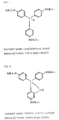
- leucocrystal violet (a structural formula shown in Fig. 1) obtained by reduction of crystal violet which is a triphenylmethane pigment is easy to color by oxidation.
- leucocrystal violet has neither good stability in air nor good stability to light so that an ink including leucocrystal violet which is applied onto a base material has a strong tendency to be colored by oxidation of the pigment during storage in air.
- triphenylmethane lactone type colorless dye (triphenylmethane phthalide) as presently used in pressure-sensitive copying papers or thermosensitive recording papers which has one lactone ring in a molecule of a triphenylmethane compound
- for example Crystal Violet lactone (CVL, a structural formula shown in Fig. 2) is much stabler than the leucocrystal violet as mentioned above and has good stability in air, however, an ink including such a pigment which is applied onto a base material is hardly colored when subjected to a hydrogen peroxide low temperature plasma sterilization treatment.
- colorless pigments such as; Crystal Violet lactone (a structural formula shown in Fig. 2) which is a typical example of triphenylmethane phthalide as presently used for manufacturing pressure-sensitive copying papers or thermosensitive recording papers; a phthalide (a structural formula shown in Fig. 3) in which one benzene ring of triphenylmethane phthalide is substituted with an indole ring; a phthalide (a structural formula shown in Fig. 4) with a structure in which another benzene ring of the phthalide is further substituted with a pyridine ring; a phthalide (a structural formula shown in Fig.
- pigments with a chemical structure other than the two types as mentioned above are combined with compounds having a dithiocarbamyl group or compounds having a mercapto group which are two systems of coloring assistants so as to prepare indicators, on which hydrogen peroxide low temperature plasma sterilization process tests are conducted so that it was confirmed that clear coloration occurs in all the indicators.
- an indicator wherein an ink including a colorless fluoran pigment and a compound having a dithiocarbamyl group or mercapto group as an additive (a coloring assistant) is applied to a base material, a color tone of the indicator is almost colorless before sterilization.
- the indicator also has a stable coloration property during a hydrogen peroxide low temperature plasma sterilization process and finally reaches a constant color tone and color density.
- stability (discoloration property) of color (color density) of an indicator at high humidity after sterilization treatment is related to:
- mixing of polyphenol compounds with the indicators is effective in improving or further enhancing stability of a color tone or color density of the indicators at high humidity after sterilization treatment as mentioned above.
- the mixing amount of polyphenol compounds should be in the range wherein the color tone of the indicators, to be colored, prior to sterilization is not significantly affected by the mixing amount.
- the indicators of the present invention comprising a colorless fluoran pigment, compounds having a mercapto group or compounds having a dithiocarbamyl group as coloring assistants and a binder, it was found the types of the colorless fluoran pigments to be used and the types and the mixing amounts of the coloring assistants are the most influential factors.
- the mixing amount be small. Moreover, comparing coloration by light of an indicator mixed with a compound having a dithiocarbamil group as a coloring assistant to that of an indicator mixed with a compound having a mercapto group, the former's coloration is less than the latter's coloration and the former is preferable.
- the present invention is an indicator for plasma sterilization wherein an ink, including (a) a colorless fluoran pigment, (b) a compound having a dithiocarbamyl group (a coloring assistant) or a compound having a mercapto group (a coloring assistant) and (c) a binder (a binding agent), and (d) a polyphenol compound for the purpose of preventing discoloration of the indicator in highly humid surroundings after sterilization treatment, when necessary, is printed on or applied to a base material.
- an ink including (a) a colorless fluoran pigment, (b) a compound having a dithiocarbamyl group (a coloring assistant) or a compound having a mercapto group (a coloring assistant) and (c) a binder (a binding agent), and (d) a polyphenol compound for the purpose of preventing discoloration of the indicator in highly humid surroundings after sterilization treatment, when necessary, is printed on or applied to a base material.
- the colorless fluoran pigment which is mixed in the above mentioned indicator for plasma sterilization changes color (is colored) into a color tone typical of the pigment by hydrogen peroxide low temperature sterilization.
- indicators for sterilization are classified roughly into two types: process indicators and indicators for detecting sterilization effects.
- the former process indicators are applied to or printed on conspicuous areas of the surface of packaging materials for sterilization so as to determine whether objects to be sterilized have experienced a sterilization process (being used as signs in order to avoid confusion between articles having been sterilized and yet-to-be sterilized articles), while the latter indicators for detecting sterilization effects are used for determining whether sterilization effects applied to objects are appropriate (whether sterilizing conditions sufficient for microorganisms to be extinct are obtained or not) on the basis of the degree of color tone change of the indicators, which have been printed on cards and the like, being sterilized along with objects to be sterilized.
- the process indicators indicators which cause a clear color difference (a color tone change or a change of color density) between before and after sterilization treatment process, is sufficient for the process indicators, while, with regard to the indicators for detecting sterilization effects, there is a necessity to be able to determine sterilization effects (which is gradually enhanced during the sterilization process) based on color tone or color density.
- the type and the mixing amount of a compound having a dithiocarbamyl group or a compound having a mercapto group as a coloring assistant have a noticeable effect on the speed of coloration during sterilization. It was found that among coloring assistants, compounds having a mercapto group generally have a strong coloration promoting property in a hydrogen peroxide vapor, and also have a high coloration promoting property in a hydrogen peroxide vapor, for example, in tests at about room temperature.
- the compounds having a dithiocarbamyl group have the property of promoting coloration in a hydrogen peroxide vapor which varies depending on the types of the compounds having a dithiocarbamyl group and that some compounds having a dithiocarbamyl group are as high in the property as the compounds having a mercapto group and other compounds having a dithiocarbamyl group are lower in the property than the compounds having a mercapto group.
- the indicators for plasma sterilization of the present invention it is possible to mix a pigment which is discolored (loses color) by hydrogen peroxide low temperature plasma sterilization in the presence of compounds having a dithiocarbamyl group or a mercapto group, as a pigment other than the colorless fluoran pigment being an essential ingredient, so as to allow the color tone of the indicator before the sterilization not to be colorless but to be colored.
- cyanine basic pigments or triphenylmethane basic pigments as described in the above-mentioned Japanese Patent Application Laid-Open No. H 11-178904 filed by the applicant of the present invention can be used.
- a pigment as an ingredient necessary to prepare an indicator for plasma sterilization of the present invention is a pigment which is colored during a hydrogen peroxide low temperature plasma sterilization step, and a colorless fluoran pigment is used as the pigment.
- colorless fluoran pigment examples include 3,6-dimethoxyfluoran, 3-diethylamino-7-chlorofluoran, 3-diethylamino-benzo[a]fluoran, 4-amnio-8-diethylamino-benzo(a)fluoran, 4-benzylamino-8-diethylamino-benzo[a]fluoran, 2-amino-8-diethylamino-benzo[a]fluoran, 2-mesidino-8-diethylamino-benzo[c]fluoran, 3-(N,N-diethylamino)-7-(N,N-dibenzylamino)fluoran, 3-diethylamino-7-alkyl(C8)aminofluoran, 2-(N-methyl-N-phenylamino)-6-(N-p-tolyl-N-ethylamino)fluoran, 3-pyrrolidino-7-(N,N-dibenzyl
- a coloring assistant as an ingredient being essential to preparing an indicator for plasma sterilization of the present invention is a compound having a dithiocarbamyl group (Fig. 30) or a compound having a mercapto group (Fig. 31).
- Examples of the above-mentioned compounds (coloring assistants) having a dithiocarbamyl group include tetramethylthiuram monosulfide, tetramethylthiuram disulfide, tetraethylthiuram disulfide, tetra-n-butylthiuram disulfide, N,N'-dimethyl-N,N'-diphenylthiuram disulfide, dipentamethylenethiuram monosulfide, dipentamethylenethiuram disulfide, dipentamethylenethiuram tetrasulfide, p-xylylene bis(N,N-diethyldithiocarbamate), 2-benzothiazolyl diethyldithiocarbamate, 4-dimethylaminobenzylideneRhodamine and the like.
- Examples of the compounds having a dithiocarbamyl group (Fig.30) used as a coloring assistant in the indicator for plasma sterilization of the present invention, that provide the indicator which is slowly colored in a hydrogen peroxide vapor and is completely colored by a hydrogen peroxide low temperature plasma sterilization treatment, include tetra-n-butylthiuram disulfide and 2 ⁇ benzothiazolyl diethyldithiocarbamate.
- examples of the compounds (coloring assistants) having a mercapto group include 2-mercaptobenzothiazole, 2-mercaptobenzoimidazole, 2-mercaptobenzoxazole, 3-mercapto-1,2,4-triazole, 3-mercapto-4-methyl-4H-1,2,4-triazole, 2-mercaptothiazoline, 5-methyl-1,3,4-thiadiazole-2-thiol, 1-phenyl-5-mercapto-1H-tetrazole, 2-amino-5-mercapto-1,3,4-thiadiazole, 2,5-dimercapto-1,3,4-thiadiazole, 5-mercapto-1-methyltetrazole, mercaptosuccinic acid and the like.
- a binder as an ingredient being essential to preparing an indicator for plasma sterilization of the present invention, it is necessary to select a binder which not only dissolves well in a solvent used for dissolving a coloring assistant, a colorless pigment and the like that are mixing ingredients of an ink, but also is well compatible with the above-mentioned pigment, coloring assistant and the like, in order to enhance stability in long term storage and clearness of color tone of the indicator.
- cellulose derivatives such as cellulose acetate, cellulose butyrate, cellulose nitrate, ethyl cellulose, hydroxypropyl cellulose and the like
- vinyl polymers such as poly(vinyl acetate), a vinyl acetate/vinyl pyrrolidone copolymer, poly(vinyl butyral), a styrene/acrylonitrile copolymer and the like.
- polyphenol compounds which are not ingredients being essential to preparing an indicator for plasma sterilization of the present invention, but, in many instances, ingredients being effective in preventing discoloration of the indicator in highly humid surroundings after sterilization treatment and in further enhancing coloring density of the indicator during sterilization treatment process, include diphenol acid, phenolphthalein, bis(4-hydroxyphenyl)propane, 1,1-bis(4-hydroxyphenyl)cyclohexane, bis(4-hydroxyphenyl) sulfone, bis(4-hydroxyphenyl) sulfide, 9,9-bis(4-hydroxyphenyl)fluorene, 4,4'-(1- ⁇ -methylbenzylidene)bisphenol, ⁇ , ⁇ '-bis(4-hydroxyphenyl)-1,4-diisopropylbenzene, 4,4'-bisbutylidenebis(3-methyl-6-tertbutylphenol), ⁇ , ⁇ , ⁇ '-tris(4-hydroxyphenyl)
- Mixing amounts of a colorless pigment, a coloring assistant, a binder (a binding agent) and a solvent as essential ingredients for mixing to form an ink in order to prepare an indicator for plasma sterilization of the present invention are not necessarily within the following range because the amounts vary depending on the types and properties of the respective ingredients, however, the mixing amounts are approximately in the order of the following:
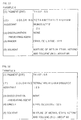
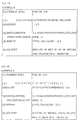
- Example 1 In order to perform a comparison with the above-mentioned Example 1 (Fig. 8), Example 2 (Fig 9) and Example 3 (Fig 10), inks having the ingredients used in the above-mentioned Examples except that the coloring assistants are not mixed were prepared (Comparative Examples 1 to 3), and then, each of the inks was applied onto Tyvek by hand, and indicators for plasma sterilization were prepared.
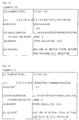
- Inks were prepared in a manner similar to that of the above-mentioned Example 1 to Example 3 except that as a pigment, 0.5 parts by weight of TH-107 (produced by Hodogaya Chemical Industry, Fig. 7) which is a colorless fluoran pigment was used, and then, each of the inks was applied onto Tyvek produced by Du Pont, with a 0.25m/m wire bar by hand, and indicators for plasma sterilization of Example 4 (Fig. 11), Example 5 (Fig 12) and Example 6 (Fig 13) were prepared.
- TH-107 produced by Hodogaya Chemical Industry, Fig. 7
- Tyvek produced by Du Pont
- each of the indicators for plasma sterilization of the above-mentioned Example 4 (Fig. 11), Example 5 (Fig 12) and Example 6 (Fig 13) was colorless, and when subjected to sterilization treatment in a manner similar to that of the above-mentioned Example 1 (Fig. 8), Example 2 (Fig 9) and Example 3 (Fig 10) with the plasma sterilizer manufactured by Johnson & Johnson Medical under the standard condition, each of the indicators changed color in black (were colored black).
- Inks having the compositions of the above-mentioned Example 1 to Example 6 and further being mixed with 5 parts by weight of 1,1-bis(4-hydroxyphenyl)cyclohexane as a polyphenol compound which has a discoloration preventing effect in highly humid surroundings after sterilization and a coloration promoting effect during plasma sterilization were prepared respectively, and then these inks were applied onto Tyvek by hand, and indicators for plasma sterilization of Example 7 (Fig. 14), Example 8 (Fig 15), Example 9 (Fig 16), Example 10 (Fig. 17), Example 11 (Fig 18), and Example 12 (Fig 19) were prepared.
- Example 7 to Example 12 were slightly of color respectively because the colorless pigments of them were only partly colored due to mixing of 1,1-bis(4-hydroxyphenyl)cyclohexane that is a polyphenol compound, and when these were subjected to sterilization treatment under the same condition as in Example 1 to Example 6 with the plasma sterilizer manufactured by Johnson & Johnson Medical, the samples of Comparative Examples changed color somewhat deeper than the samples of Example 1 to Example 6 respectively.
- Comparative Examples 7 to 12 were not completely colorless respectively because in coloration fogging in them was only slightly caused due to mixing of 1,1-bis(4-hydroxyphenyl)cyclohexane which is a polyphenol compound, and when these were subjected to sterilization treatment under the same condition as Examples 7 to 12 with the plasma sterilizer manufactured by Johnson & Johnson Medical, the samples of Comparative Examples were just slightly colored.
- NC-Blue-5 produced by Hodogaya Chemical Industry
- a coloring assistant 2.0 parts by weight of 2-mercaptobenzothiazole
- a binder 12.5 parts by weight of ethyl cellulose (Ethocell No. 4 produced by Dow Chemical)
- a solvent about 85 parts by weight of methyl ethyl ketone
- This indicator was almost colorless, and when this indicator was subjected to sterilization treatment as in the case of Examples 1 to 12 with STERRAD 100 manufactured by Johnson & Johnson Medical under the standard condition, the sample changed color in blue (was colored blue).
- Example 13 An Ink having the composition of Example 13 (Fig. 20) and further being mixed with 3.0 parts by weight of 4,4'-(1- ⁇ -methylbenzylidene)bisphenol as a polyphenol compound which has an effect of preventing discoloration of a sample in highly humid surroundings after sterilization treatment and also has an effect of somewhat enhancing coloration during plasma sterilization was prepared, and then this ink was applied onto YUPO (polypropylene synthetic paper) and Tyvek by hand, and an indicator for plasma sterilization (Example 14 (Fig. 21)) was prepared.
- YUPO polypropylene synthetic paper
- Tyvek an indicator for plasma sterilization
- This indicator was slightly of color in contrast to the indicator of Example 13 (Fig. 20) due to mixing of 4,4'-(1- ⁇ -methylbenzylidene)bisphenol which is a polyphenol compound, and when this indicator was subjected to sterilization treatment with the plasma sterilizer manufactured by Johnson & Johnson Medical, the samples of this indicator changed color in blue with somewhat higher color density than the sample of Example 13 (Fig. 20).
- a pigment 0.5 parts by weight of PSD-3G (produced by Nippon Soda) which is a colorless fluoran pigment; as a coloring assistant, 0.4 parts by weight of 2-amino-5-mercapto-1,3,4-thiadiazole; as a binder, 12.5 parts by weight of vinyl butyral resin (Esrek BM ⁇ 5 produced by Sekisui Chemical); and as a solvent, about 85 parts by weight of methyl ethyl ketone, an ink was prepared, and then, the ink was applied onto a base material made of Tyvek (polyethylene synthetic paper) with a 0.25m/m wire bar by hand, and an indicator for plasma sterilization of Example 15 (Fig. 22) was prepared.
- PSD-3G produced by Nippon Soda
- a coloring assistant 0.4 parts by weight of 2-amino-5-mercapto-1,3,4-thiadiazole
- a binder 12.5 parts by weight of vinyl butyral resin (Esrek BM ⁇ 5 produced
- This indicator was almost colorless, and when this indicator was subjected to sterilization treatment with the plasma sterilizer manufactured by Johnson & Johnson Medical under the standard condition, the sample was colored dark green.
- TH-107 produced by Hodogaya Chemical Industry, Fig. 7 which is a colorless fluoran pigment
- a coloring assistant 1.6 parts by weight of tetraethylthiuram disulfide which is a compound having a dithiocarbamyl group in Example 16 (Fig. 23), 1.6 parts by weight of tetra-n-butylthiuram disulfide which is a compound having a dithiocarbamyl group in Example 17 (Fig. 24), 1.6 parts by weight of 2-benzothiazolyl diethyldithiocarbamate which is a compound having a dithiocarbamyl group in Example 18 (Fig.
- a discoloration preventing agent for a colored pigment by sterilization treatment 4.0 parts by weight of 1,1-bis(4-hydroxyphenyl)cyclohexane which is a polyphenol compound; as a binder, 12.5 parts by weight of ethyl cellulose (Ethocell No. 4 produced by Dow Chemical); and as a solvent, about 85 parts by weight of a mixture of methyl ethyl ketone and toluene (9:1), inks were prepared, and then, each of the inks was applied onto a base material made of polyethylene synthetic paper (Tyvek produced by Du Pont) with a 0.25m/m wire bar by hand, and indicators for plasma sterilization were prepared.
- polyethylene synthetic paper Tyvek produced by Du Pont
- Example 16 Fig. 23
- Example 17 Fig. 24
- Example 18 Fig. 25
- each of the samples changed color in black (were colored black).
- the color density of the sample of Example 16 (Fig. 23) was enhanced after about 20 min, and after 1 hour, was colored black of almost saturated color density (almost the same level as color density after plasma sterilization treatment as mentioned above), and from then on, the color density remained unchanged. Furthermore, with regard to the samples of Example 17 (Fig. 24) and Example 18 (Fig. 25), a coloration rise was slow, and the coloration hardly proceeded for nearly 3 hours, and the coloration proceeded approximately after 3 hours passed, and after 4 hours, it was colored black of almost saturated color density, and from then, the color density remained constant.
- Example 19 An Ink having the composition of Example 19 (Fig. 26) and in addition, being mixed with 5.0 parts by weight of 4,4'-(1- ⁇ -methylbenzylidene)bisphenol as a polyphenol compound which has an effect of allowing a sample in highly humid surroundings after sterilization treatment to be resistant to discoloration and also has an effect of somewhat increasing coloration during plasma sterilization was prepared, and then this ink was applied onto Tyvek by hand, and an indicator for plasma sterilization of Example 20 (Fig. 27) was prepared.
- This indicator was pinkish red with somewhat higher color density than the indicator of Example 19 (Fig. 26), and when this indicator was subjected to sterilization treatment with the plasma sterilizer manufactured by Johnson & Johnson Medical under the standard condition, the sample of this indicator changed color in blue with further somewhat higher color density than the indicator of Example 19 (Fig. 26).
- This indicator showed light blue, and when this indicator was subjected to sterilization treatment with the plasma sterilizer manufactured by Johnson & Johnson Medical under the standard condition, the sample changed color in red.
- An Ink having the above-mentioned composition and in addition, being mixed with 5.0 parts by weight of 1,1'-bis(4-hydroxyphenyl)cyclohexane as a polyphenol compound which has an effect of allowing a sample in highly humid surroundings after sterilization treatment to be resistant to discoloration and an effect of somewhat increasing coloration during plasma sterilization was prepared, and then this ink was applied onto Tyvek by hand, and an indicator for plasma sterilization of Example 22 (Fig. 29) was prepared.
- This indicator was somewhat deeper light blue than the indicator of Example 21 (Fig. 28), and when this indicator was subjected to sterilization treatment with the plasma sterilizer manufactured by Johnson & Johnson Medical under a condition similar to in Example 21 (Fig. 28), the sample of this indicator changed color in red with somewhat higher color density than the indicator of Example 18 (Fig. 25).
- Indicators (Comparative Example 13 to Comparative Example 16) were prepared using, as a pigment, colorless pigments other than fluoran pigments.
- Comparative Example 1 to Comparative Example 20 were as follows.
- inks have the compositions used in Example 1 to Example 12 except that the coloring assistants are not mixed.
- ingredients a pigment, a discoloration preventing agent, a binder and a solvent
- the inks have the similar compositions.
- Comparative Example 1 is equivalent to Example 1 with the exception of a coloring assistant.
- Comparative Example 2 is equivalent to Example 2 with the exception of a coloring assistant.
- Comparative Example 3 is equivalent to Example 3 with the exception of a coloring assistant.
- Comparative Example 4 is equivalent to Example 4 with the exception of a coloring assistant.
- Comparative Example 5 is equivalent to Example 5 with the exception of a coloring assistant.
- Comparative Example 6 is equivalent to Example 6 with the exception of a coloring assistant.
- Comparative Example 7 is equivalent to Example 7 with the exception of a coloring assistant.
- Comparative Example 8 is equivalent to Example 8 with the exception of a coloring assistant.
- Comparative Example 9 is equivalent to Example 9 with the exception of a coloring assistant.
- Comparative Example 10 is equivalent to Example 10 with the exception of a coloring assistant.
- Comparative Example 11 is equivalent to Example 11 with the exception of a coloring assistant.
- Comparative Example 12 is equivalent to Example 12 with the exception of a coloring assistant.
- compositions of inks are different from those used in Example 2 only with regard to a pigment, and are similar to those of Example 2 except a pigment.
- Pigments used here are pigments other than fluoran pigments and inks were prepared by mixing respectively, 0.3 parts by weight of 3,3-bis(p-dimethylaminophenyl)-6-dimethylaminophthalide (Crystal Violet lactone) in Comparative Example 13, 0.4 parts by weight of Blue-200 in Comparative Example 14, 0.4 parts by weight of Blue-63 in Comparative Example 15, and 0.5 parts by weight of G-118 in Comparative Example 16.
- Inks have the compositions similar to those of Comparative Example 13 to Comparative Example 16 and in addition, being further mixed with 5 parts by weight of 1,1-bis(4-hydroxyphenyl)cyclohexane as a discoloration preventing agent.
- Inks were prepared by mixing:
- an indicator for plasma sterilization prepared by applying the present invention has the following effects.
- an indicator which has the following features in quality can be prepared. Namely, (1) since colorless fluoran pigments include pigments which are colored in various color tones, an indicator which changes color in an arbitrary color tone can be prepared by selecting the pigments. Moreover, (2) by changing types and mixing amounts of the coloring assistants, indicators which have different speeds of color change (coloration) during sterilization treatment can be also prepared.
- an appropriate amount of a compound having a dithiocarbamyl, which has a low coloration promoting property in a hydrogen peroxide vapor it is possible to prepare an indicator which slowly changes color (is slowly colored) in a diffusion step of diffusing a hydrogen peroxide vapor in a plasma sterilization process, and which rapidly changes color (is colored rapidly) in a plasma generation step (an indicator which changes color in proportion to the sterilization effect).
Landscapes
- Life Sciences & Earth Sciences (AREA)
- Health & Medical Sciences (AREA)
- General Health & Medical Sciences (AREA)
- Physics & Mathematics (AREA)
- Chemical & Material Sciences (AREA)
- Analytical Chemistry (AREA)
- Pathology (AREA)
- Immunology (AREA)
- General Physics & Mathematics (AREA)
- Biochemistry (AREA)
- Public Health (AREA)
- Plasma & Fusion (AREA)
- Chemical Kinetics & Catalysis (AREA)
- Engineering & Computer Science (AREA)
- Veterinary Medicine (AREA)
- Animal Behavior & Ethology (AREA)
- Epidemiology (AREA)
- Biophysics (AREA)
- Molecular Biology (AREA)
- Apparatus For Disinfection Or Sterilisation (AREA)
- Investigating Or Analyzing Non-Biological Materials By The Use Of Chemical Means (AREA)
- Photometry And Measurement Of Optical Pulse Characteristics (AREA)
Abstract
Description
0.5 parts by weight of PSD-HR (produced by Nippon Soda, Fig. 6) which is a colorless fluoran pigment;
2.5 parts by weight of tetramethylthiuram monosulfide in Example 1,
2.5 parts by weight of tetraethylthiuram disulfide in Example 2, and
2.5 parts by weight of 2-benzothiazolyl diethyldithiocarbamate in Example 3;
12.5 parts by weight of ethyl cellulose (Ethocell No. 4 produced by Dow Chemical); and
about 85 parts by weight of a mixture of methyl ethyl ketone and toluene (9:1),
inks were prepared, and then, each of the inks was applied onto a base material made of polyethylene synthetic paper (Tyvek produced by Du Pont) with a 0.25m/m wire bar by hand, and indicators for plasma sterilization of Example 1 (Fig. 8), Example 2 (Fig 9) and Example 3 (Fig 10) were prepared.
2.5 parts by weight of tetraethylthiuram disulfide;
12.5 parts by weight of ethyl cellulose (Ethocell No. 4 produced by Dow Chemical); and
about 85 parts by weight of a methyl ethyl ketone,
an ink was prepared, and then, the ink was applied onto a base material of Tyvek (polyethylene synthetic paper) with a 0.25 m/m wire bar by hand, and
an indicator for plasma sterilization of Example 19 (Fig. 26) was prepared.
2.5 parts by weight of tetraethylthiuram disulfide;
12.5 parts by weight of ethyl cellulose (Ethocell No. 4 produced by Dow Chemical); and
about 85 parts by weight of a methyl ethyl ketone,
an ink was prepared, and then, the ink was applied onto a base material of Tyvek with a 0.25 m/m wire bar by hand, and an indicator for plasma sterilization of Example 21 (Fig. 28) was prepared.
0.3 parts by weight of 3,3-bis(p-dimethylaminophenyl)-6-dimethylaminophthalide (Crystal Violet lactone) in Comparative Example 13,
0.4 parts by weight of Blue-200 in Comparative Example 14,
0.4 parts by weight of Blue-63 in Comparative Example 15, and
0.5 parts by weight of G-118 in Comparative Example 16.
Claims (6)
- An indicator for plasma sterilization comprising a colorless chromogenic pigment, a coloring assistant, and a binder (a binding agent), wherein the color tone change of the indicator occurs by a hydrogen peroxide low temperature plasma sterilization method.
- An indicator for plasma sterilization according to claim 1, wherein the colorless chromogenic pigment is a colorless fluoran pigment.
- An indicator for plasma sterilization according to claim 1 or 2, wherein the colorless chromogenic pigment is at least one type of a colorless fluoran pigment.
- An indicator for plasma sterilization according to any of claims 1 to 3, wherein the colorless chromogenic pigment is at least one type of a colorless fluoran pigment, and wherein the coloring assistant is at least one type of a compound having a mercapto group.
- An indicator for plasma sterilization according to any of claims 1 to 4, wherein a polyphenol compound is used as a discoloration preventing agent for a pigment colored by a hydrogen peroxide sterilization method.
- An indicator for plasma sterilization according to any of claims 1 to 5, wherein a compound which has a low coloration promoting property in a hydrogen peroxide vapor is used as a compound having a ditiocarbamyl group which is the coloring assistant.
Applications Claiming Priority (3)
| Application Number | Priority Date | Filing Date | Title |
|---|---|---|---|
| JP2000197166A JP3418937B2 (en) | 2000-06-29 | 2000-06-29 | Indicator for plasma sterilization |
| JP2000197166 | 2000-06-29 | ||
| PCT/JP2001/005104 WO2002001205A1 (en) | 2000-06-29 | 2001-06-15 | Indicator for plasma sterilization |
Publications (3)
| Publication Number | Publication Date |
|---|---|
| EP1205743A1 true EP1205743A1 (en) | 2002-05-15 |
| EP1205743A4 EP1205743A4 (en) | 2003-02-05 |
| EP1205743B1 EP1205743B1 (en) | 2010-02-17 |
Family
ID=18695535
Family Applications (1)
| Application Number | Title | Priority Date | Filing Date |
|---|---|---|---|
| EP01941057A Expired - Lifetime EP1205743B1 (en) | 2000-06-29 | 2001-06-15 | Indicator for plasma sterilization |
Country Status (5)
| Country | Link |
|---|---|
| US (1) | US7189355B2 (en) |
| EP (1) | EP1205743B1 (en) |
| JP (1) | JP3418937B2 (en) |
| DE (1) | DE60141316D1 (en) |
| WO (1) | WO2002001205A1 (en) |
Cited By (11)
| Publication number | Priority date | Publication date | Assignee | Title |
|---|---|---|---|---|
| US5817102A (en) * | 1992-05-08 | 1998-10-06 | Schneider (Usa) Inc. | Apparatus for delivering and deploying a stent |
| US6051021A (en) * | 1997-05-27 | 2000-04-18 | Medicorp, S.A. | Self-expanding endoprosthesis |
| US6059809A (en) * | 1998-02-16 | 2000-05-09 | Medicorp, S.A. | Protective angioplasty device |
| US6149682A (en) * | 1997-01-16 | 2000-11-21 | Medicorp R & D Benelux S.A. | Luminal endoprosthesis for ramification |
| US6159228A (en) * | 1997-05-20 | 2000-12-12 | Frid; Noureddine | Applicator for luminal endoprostheses |
| US6231573B1 (en) | 1998-04-21 | 2001-05-15 | Medicorp, S.A. | Device for treating aneurysms |
| US8191220B2 (en) | 2006-12-04 | 2012-06-05 | Cook Medical Technologies Llc | Method for loading a medical device into a delivery system |
| RU2468822C2 (en) * | 2008-03-10 | 2012-12-10 | Хоуджи Медикал Ко., Лтд. | Plasma sterilisation indicator |
| CN103060391A (en) * | 2013-01-15 | 2013-04-24 | 熊鹏 | Low-temperature sterilization method suitable for cellulosic ethanol production |
| US8888835B2 (en) | 2008-04-23 | 2014-11-18 | Cook Medical Technologies Llc | Method of loading a medical device into a delivery system |
| CN109125773A (en) * | 2018-08-30 | 2019-01-04 | 广州梵康材料科技有限公司 | A kind of plasma sterilization indicator |
Families Citing this family (19)
| Publication number | Priority date | Publication date | Assignee | Title |
|---|---|---|---|---|
| US8267576B2 (en) | 2004-11-08 | 2012-09-18 | Freshpoint Holdings Sa | Time-temperature indicating device |
| US20060228801A1 (en) * | 2005-03-30 | 2006-10-12 | Ben Fryer | Integator system and method for rapidly determining effectiveness of a germicidal treatment |
| JP4606964B2 (en) | 2005-08-02 | 2011-01-05 | 株式会社サクラクレパス | Hydrogen peroxide gas detection ink composition and hydrogen peroxide gas detection indicator |
| US8858887B2 (en) * | 2007-07-19 | 2014-10-14 | Steris, Inc. | Integrated chemical indicator device |
| EP2288879B1 (en) | 2008-06-04 | 2018-01-24 | G Patel | A monitoring system based on etching of metals |
| CN102077060B (en) | 2008-06-04 | 2014-10-29 | G·帕特尔 | A monitoring system based on corroded metal |
| US8628968B2 (en) * | 2011-03-30 | 2014-01-14 | La-Co Industries, Inc. | Ethylene oxide sterilization indicator compositions |
| JP6168767B2 (en) * | 2012-12-25 | 2017-07-26 | 株式会社サクラクレパス | Hydrogen peroxide gas detection ink composition and hydrogen peroxide gas detection indicator |
| TWI624890B (en) | 2013-08-22 | 2018-05-21 | 櫻花彩色筆股份有限公司 | Indicator for electronic component manufacturing apparatus, and design and/or management method of the same |
| US10451595B2 (en) | 2014-01-27 | 2019-10-22 | Jp Laboratories, Inc | Indicating devices based on lateral diffusion of a mobile phase through a non-porous stationary phase |
| WO2015122425A1 (en) | 2014-02-14 | 2015-08-20 | 株式会社サクラクレパス | Plasma processing detection indicator |
| JP6325315B2 (en) * | 2014-04-07 | 2018-05-16 | 株式会社Fuji | Atmospheric pressure plasma treatment judgment sheet |
| JP2015205995A (en) * | 2014-04-21 | 2015-11-19 | 株式会社サクラクレパス | Ink composition for detecting plasma treatment and indicator for detecting plasma treatment |
| WO2015170592A1 (en) | 2014-05-09 | 2015-11-12 | 株式会社サクラクレパス | Plasma processing detection indicator using inorganic substance as a color-change layer |
| JP6567863B2 (en) | 2014-09-16 | 2019-08-28 | 株式会社サクラクレパス | Ink composition for detecting plasma treatment and indicator for detecting plasma treatment |
| JP6567817B2 (en) | 2014-12-02 | 2019-08-28 | 株式会社サクラクレパス | Plasma treatment detection ink composition and plasma treatment detection indicator using the same |
| US10823715B2 (en) * | 2017-07-19 | 2020-11-03 | American Sterilizer Company | Chemical indicator for monitoring hydrogen peroxide sterilization and disinfection processes |
| CN108956597B (en) * | 2018-08-30 | 2021-12-17 | 广州市默孚材料科技有限公司 | Plasma sterilization indicator paper |
| JP2023064733A (en) * | 2021-10-26 | 2023-05-11 | 株式会社サクラクレパス | Ink composition for plasma treatment detection, plasma treatment detection indicator, and plasma treatment method |
Family Cites Families (9)
| Publication number | Priority date | Publication date | Assignee | Title |
|---|---|---|---|---|
| US4169123A (en) | 1975-12-11 | 1979-09-25 | Moore-Perk Corporation | Hydrogen peroxide vapor sterilization method |
| JPS6316073A (en) * | 1986-07-09 | 1988-01-23 | Fuji Photo Film Co Ltd | Method for confirming sufficiency of plasma treatment |
| JP3104396B2 (en) * | 1992-05-18 | 2000-10-30 | 住友化学工業株式会社 | Resin composition for detecting electron-accepting substance and molded product thereof |
| US5340537A (en) * | 1993-04-16 | 1994-08-23 | Big Three Industries, Inc. | Temperature indicating compositions |
| JP3706202B2 (en) * | 1996-07-12 | 2005-10-12 | エステー化学株式会社 | Gaseous substance detector and gaseous substance detection method using the same |
| ES2244058T3 (en) * | 1997-04-17 | 2005-12-01 | Ethicon, Inc. | CHEMICAL INDICATOR AND ITS USE. |
| US6287518B1 (en) * | 1997-06-25 | 2001-09-11 | 3M Innovative Properties Company | Sterilization monitors |
| JP3435505B2 (en) | 1997-12-22 | 2003-08-11 | 株式会社ホギメディカル | Indicator for plasma sterilization |
| JP4151932B2 (en) | 1999-12-15 | 2008-09-17 | 株式会社サクラクレパス | Ink composition for plasma sterilization detection and plasma sterilization detection indicator using the same |
-
2000
- 2000-06-29 JP JP2000197166A patent/JP3418937B2/en not_active Expired - Lifetime
-
2001
- 2001-06-15 EP EP01941057A patent/EP1205743B1/en not_active Expired - Lifetime
- 2001-06-15 DE DE60141316T patent/DE60141316D1/en not_active Expired - Lifetime
- 2001-06-15 US US10/069,848 patent/US7189355B2/en not_active Expired - Lifetime
- 2001-06-15 WO PCT/JP2001/005104 patent/WO2002001205A1/en not_active Ceased
Cited By (15)
| Publication number | Priority date | Publication date | Assignee | Title |
|---|---|---|---|---|
| US6136006A (en) * | 1992-05-08 | 2000-10-24 | Boston Scientific Corporation | Apparatus for deliver and deployment of a stent |
| US5817102A (en) * | 1992-05-08 | 1998-10-06 | Schneider (Usa) Inc. | Apparatus for delivering and deploying a stent |
| US6389946B1 (en) | 1997-01-16 | 2002-05-21 | Medicorp R & D Benelux S.A. | Method for manufacturing braided multifilament structures for an endoprosthesis for ramification of an anatomical conduit |
| US6149682A (en) * | 1997-01-16 | 2000-11-21 | Medicorp R & D Benelux S.A. | Luminal endoprosthesis for ramification |
| US6159228A (en) * | 1997-05-20 | 2000-12-12 | Frid; Noureddine | Applicator for luminal endoprostheses |
| US6051021A (en) * | 1997-05-27 | 2000-04-18 | Medicorp, S.A. | Self-expanding endoprosthesis |
| US6059809A (en) * | 1998-02-16 | 2000-05-09 | Medicorp, S.A. | Protective angioplasty device |
| US6231573B1 (en) | 1998-04-21 | 2001-05-15 | Medicorp, S.A. | Device for treating aneurysms |
| US8191220B2 (en) | 2006-12-04 | 2012-06-05 | Cook Medical Technologies Llc | Method for loading a medical device into a delivery system |
| RU2468822C2 (en) * | 2008-03-10 | 2012-12-10 | Хоуджи Медикал Ко., Лтд. | Plasma sterilisation indicator |
| US8888835B2 (en) | 2008-04-23 | 2014-11-18 | Cook Medical Technologies Llc | Method of loading a medical device into a delivery system |
| CN103060391A (en) * | 2013-01-15 | 2013-04-24 | 熊鹏 | Low-temperature sterilization method suitable for cellulosic ethanol production |
| CN103060391B (en) * | 2013-01-15 | 2014-12-17 | 熊鹏 | Low-temperature sterilization method suitable for cellulosic ethanol production |
| CN109125773A (en) * | 2018-08-30 | 2019-01-04 | 广州梵康材料科技有限公司 | A kind of plasma sterilization indicator |
| CN109125773B (en) * | 2018-08-30 | 2020-09-15 | 广州市默孚材料科技有限公司 | Plasma sterilization indicator |
Also Published As
| Publication number | Publication date |
|---|---|
| DE60141316D1 (en) | 2010-04-01 |
| EP1205743A4 (en) | 2003-02-05 |
| US7189355B2 (en) | 2007-03-13 |
| JP3418937B2 (en) | 2003-06-23 |
| US20020121629A1 (en) | 2002-09-05 |
| WO2002001205A1 (en) | 2002-01-03 |
| EP1205743B1 (en) | 2010-02-17 |
| JP2002011081A (en) | 2002-01-15 |
Similar Documents
| Publication | Publication Date | Title |
|---|---|---|
| EP1205743B1 (en) | Indicator for plasma sterilization | |
| US8697003B2 (en) | Aqueous-triggered color-appearing inks | |
| RU2468822C2 (en) | Plasma sterilisation indicator | |
| US5955025A (en) | Chemical vapor sterilization indicating materials | |
| AU739082B2 (en) | Chemical indicator and its use | |
| WO2011163028A1 (en) | Indicator for sterilization process | |
| KR20010029714A (en) | Chemical indicator | |
| JPWO2013129473A1 (en) | Peroxide detection indicator | |
| CN103917209A (en) | Non-tacky wetness indicator composition for application on a polymeric substrate | |
| US4769335A (en) | Method and apparatus for transporting photosensitive fluids | |
| JPH11178904A (en) | Indicator for plasma sterilization | |
| JP2022514066A (en) | Sterilization chemistry indicator | |
| GB2423360A (en) | Time/Temperature Indicator, Preparation and Use | |
| RU2237872C1 (en) | Time temperature indicator | |
| JP2002071570A (en) | Indicators for plasma sterilization and packaging materials for sterilization | |
| US12405256B2 (en) | Chemical hydrogen peroxide indicator | |
| GB2423361A (en) | Time/Temperature Indicator | |
| JPH03199964A (en) | Time-elapsed discoloring paint film |
Legal Events
| Date | Code | Title | Description |
|---|---|---|---|
| PUAI | Public reference made under article 153(3) epc to a published international application that has entered the european phase |
Free format text: ORIGINAL CODE: 0009012 |
|
| 17P | Request for examination filed |
Effective date: 20020228 |
|
| AK | Designated contracting states |
Kind code of ref document: A1 Designated state(s): DE FR GB |
|
| A4 | Supplementary search report drawn up and despatched |
Effective date: 20021227 |
|
| RIC1 | Information provided on ipc code assigned before grant |
Ipc: 7A 61L 2/28 A Ipc: 7C 09B 11/28 B Ipc: 7C 09B 11/24 B Ipc: 7G 01N 31/22 B Ipc: 7G 01N 21/78 B |
|
| 17Q | First examination report despatched |
Effective date: 20090401 |
|
| GRAP | Despatch of communication of intention to grant a patent |
Free format text: ORIGINAL CODE: EPIDOSNIGR1 |
|
| GRAS | Grant fee paid |
Free format text: ORIGINAL CODE: EPIDOSNIGR3 |
|
| GRAA | (expected) grant |
Free format text: ORIGINAL CODE: 0009210 |
|
| AK | Designated contracting states |
Kind code of ref document: B1 Designated state(s): DE FR GB |
|
| REG | Reference to a national code |
Ref country code: GB Ref legal event code: FG4D |
|
| REF | Corresponds to: |
Ref document number: 60141316 Country of ref document: DE Date of ref document: 20100401 Kind code of ref document: P |
|
| PLBE | No opposition filed within time limit |
Free format text: ORIGINAL CODE: 0009261 |
|
| STAA | Information on the status of an ep patent application or granted ep patent |
Free format text: STATUS: NO OPPOSITION FILED WITHIN TIME LIMIT |
|
| 26N | No opposition filed |
Effective date: 20101118 |
|
| REG | Reference to a national code |
Ref country code: FR Ref legal event code: PLFP Year of fee payment: 16 |
|
| REG | Reference to a national code |
Ref country code: FR Ref legal event code: PLFP Year of fee payment: 17 |
|
| REG | Reference to a national code |
Ref country code: FR Ref legal event code: PLFP Year of fee payment: 18 |
|
| PGFP | Annual fee paid to national office [announced via postgrant information from national office to epo] |
Ref country code: DE Payment date: 20200618 Year of fee payment: 20 Ref country code: FR Payment date: 20200619 Year of fee payment: 20 |
|
| PGFP | Annual fee paid to national office [announced via postgrant information from national office to epo] |
Ref country code: GB Payment date: 20200421 Year of fee payment: 20 |
|
| REG | Reference to a national code |
Ref country code: DE Ref legal event code: R071 Ref document number: 60141316 Country of ref document: DE |
|
| REG | Reference to a national code |
Ref country code: GB Ref legal event code: PE20 Expiry date: 20210614 |
|
| PG25 | Lapsed in a contracting state [announced via postgrant information from national office to epo] |
Ref country code: GB Free format text: LAPSE BECAUSE OF EXPIRATION OF PROTECTION Effective date: 20210614 |