EP1194042B1 - Preparation of sugar-free hard candy - Google Patents
Preparation of sugar-free hard candy Download PDFInfo
- Publication number
- EP1194042B1 EP1194042B1 EP00945841A EP00945841A EP1194042B1 EP 1194042 B1 EP1194042 B1 EP 1194042B1 EP 00945841 A EP00945841 A EP 00945841A EP 00945841 A EP00945841 A EP 00945841A EP 1194042 B1 EP1194042 B1 EP 1194042B1
- Authority
- EP
- European Patent Office
- Prior art keywords
- syrup
- dry substance
- starch hydrolysate
- glucopyranosyl
- isomalt
- Prior art date
- Legal status (The legal status is an assumption and is not a legal conclusion. Google has not performed a legal analysis and makes no representation as to the accuracy of the status listed.)
- Revoked
Links
- 235000009508 confectionery Nutrition 0.000 title claims abstract description 115
- 238000002360 preparation method Methods 0.000 title description 5
- 239000006188 syrup Substances 0.000 claims abstract description 116
- 235000020357 syrup Nutrition 0.000 claims abstract description 116
- 239000000126 substance Substances 0.000 claims abstract description 92
- 229920001908 Hydrogenated starch hydrolysate Polymers 0.000 claims abstract description 60
- SERLAGPUMNYUCK-DCUALPFSSA-N 1-O-alpha-D-glucopyranosyl-D-mannitol Chemical compound OC[C@@H](O)[C@@H](O)[C@H](O)[C@H](O)CO[C@H]1O[C@H](CO)[C@@H](O)[C@H](O)[C@H]1O SERLAGPUMNYUCK-DCUALPFSSA-N 0.000 claims abstract description 59
- 235000010439 isomalt Nutrition 0.000 claims abstract description 58
- 239000000203 mixture Substances 0.000 claims abstract description 43
- 239000000905 isomalt Substances 0.000 claims abstract description 42
- HPIGCVXMBGOWTF-UHFFFAOYSA-N isomaltol Natural products CC(=O)C=1OC=CC=1O HPIGCVXMBGOWTF-UHFFFAOYSA-N 0.000 claims abstract description 42
- 238000000034 method Methods 0.000 claims abstract description 38
- 229920005862 polyol Polymers 0.000 claims abstract description 38
- 150000003077 polyols Chemical class 0.000 claims abstract description 38
- 239000000843 powder Substances 0.000 claims abstract description 25
- 230000001013 cariogenic effect Effects 0.000 claims abstract description 18
- 239000000845 maltitol Substances 0.000 claims description 25
- 235000010449 maltitol Nutrition 0.000 claims description 25
- VQHSOMBJVWLPSR-WUJBLJFYSA-N maltitol Chemical compound OC[C@H](O)[C@@H](O)[C@@H]([C@H](O)CO)O[C@H]1O[C@H](CO)[C@@H](O)[C@H](O)[C@H]1O VQHSOMBJVWLPSR-WUJBLJFYSA-N 0.000 claims description 24
- 229940035436 maltitol Drugs 0.000 claims description 24
- SERLAGPUMNYUCK-YJOKQAJESA-N 6-O-alpha-D-glucopyranosyl-D-glucitol Chemical compound OC[C@H](O)[C@@H](O)[C@H](O)[C@H](O)CO[C@H]1O[C@H](CO)[C@@H](O)[C@H](O)[C@H]1O SERLAGPUMNYUCK-YJOKQAJESA-N 0.000 claims description 16
- 238000007493 shaping process Methods 0.000 claims description 16
- XLYOFNOQVPJJNP-UHFFFAOYSA-N water Substances O XLYOFNOQVPJJNP-UHFFFAOYSA-N 0.000 claims description 15
- SERLAGPUMNYUCK-OQPGPFOOSA-N (2r,3r,4r,5s)-6-[(2s,3r,4s,5s,6r)-3,4,5-trihydroxy-6-(hydroxymethyl)oxan-2-yl]oxyhexane-1,2,3,4,5-pentol Chemical compound OC[C@@H](O)[C@@H](O)[C@H](O)[C@@H](O)CO[C@H]1O[C@H](CO)[C@@H](O)[C@H](O)[C@H]1O SERLAGPUMNYUCK-OQPGPFOOSA-N 0.000 claims description 13
- 229960002920 sorbitol Drugs 0.000 claims description 13
- FBPFZTCFMRRESA-FSIIMWSLSA-N D-Glucitol Natural products OC[C@H](O)[C@H](O)[C@@H](O)[C@H](O)CO FBPFZTCFMRRESA-FSIIMWSLSA-N 0.000 claims description 12
- XJCCHWKNFMUJFE-CGQAXDJHSA-N Maltotriitol Chemical compound O[C@@H]1[C@@H](O)[C@@H](O[C@@H]([C@H](O)[C@@H](O)CO)[C@H](O)CO)O[C@H](CO)[C@H]1O[C@@H]1[C@H](O)[C@@H](O)[C@H](O)[C@@H](CO)O1 XJCCHWKNFMUJFE-CGQAXDJHSA-N 0.000 claims description 12
- 238000010411 cooking Methods 0.000 claims description 12
- 239000000600 sorbitol Substances 0.000 claims description 12
- 238000004519 manufacturing process Methods 0.000 claims description 10
- 239000000796 flavoring agent Substances 0.000 claims description 9
- 235000019634 flavors Nutrition 0.000 claims description 9
- 238000004040 coloring Methods 0.000 claims description 4
- SERLAGPUMNYUCK-BLEZHGCXSA-N (2xi)-6-O-alpha-D-glucopyranosyl-D-arabino-hexitol Chemical compound OCC(O)[C@@H](O)[C@H](O)[C@H](O)CO[C@H]1O[C@H](CO)[C@@H](O)[C@H](O)[C@H]1O SERLAGPUMNYUCK-BLEZHGCXSA-N 0.000 description 28
- CZMRCDWAGMRECN-UGDNZRGBSA-N Sucrose Chemical compound O[C@H]1[C@H](O)[C@@H](CO)O[C@@]1(CO)O[C@@H]1[C@H](O)[C@@H](O)[C@H](O)[C@@H](CO)O1 CZMRCDWAGMRECN-UGDNZRGBSA-N 0.000 description 21
- 229930006000 Sucrose Natural products 0.000 description 21
- 238000001816 cooling Methods 0.000 description 21
- 229960004793 sucrose Drugs 0.000 description 21
- 229920002472 Starch Polymers 0.000 description 17
- 235000013681 dietary sucrose Nutrition 0.000 description 17
- 239000008107 starch Substances 0.000 description 17
- 235000019698 starch Nutrition 0.000 description 17
- 238000005984 hydrogenation reaction Methods 0.000 description 11
- 239000000413 hydrolysate Substances 0.000 description 11
- FBPFZTCFMRRESA-JGWLITMVSA-N D-glucitol Chemical compound OC[C@H](O)[C@@H](O)[C@H](O)[C@H](O)CO FBPFZTCFMRRESA-JGWLITMVSA-N 0.000 description 10
- 238000012545 processing Methods 0.000 description 10
- PVXPPJIGRGXGCY-TZLCEDOOSA-N 6-O-alpha-D-glucopyranosyl-D-fructofuranose Chemical compound O[C@@H]1[C@@H](O)[C@H](O)[C@@H](CO)O[C@@H]1OC[C@@H]1[C@@H](O)[C@H](O)C(O)(CO)O1 PVXPPJIGRGXGCY-TZLCEDOOSA-N 0.000 description 8
- 239000008101 lactose Substances 0.000 description 7
- 235000013336 milk Nutrition 0.000 description 7
- 239000008267 milk Substances 0.000 description 7
- 210000004080 milk Anatomy 0.000 description 7
- 230000000052 comparative effect Effects 0.000 description 5
- 238000005259 measurement Methods 0.000 description 4
- 239000000047 product Substances 0.000 description 4
- 239000005720 sucrose Substances 0.000 description 4
- WQZGKKKJIJFFOK-GASJEMHNSA-N Glucose Natural products OC[C@H]1OC(O)[C@H](O)[C@@H](O)[C@@H]1O WQZGKKKJIJFFOK-GASJEMHNSA-N 0.000 description 3
- AYRXSINWFIIFAE-SCLMCMATSA-N Isomaltose Natural products OC[C@H]1O[C@H](OC[C@@H](O)[C@@H](O)[C@H](O)[C@@H](O)C=O)[C@@H](O)[C@@H](O)[C@@H]1O AYRXSINWFIIFAE-SCLMCMATSA-N 0.000 description 3
- 239000002253 acid Substances 0.000 description 3
- 239000000853 adhesive Substances 0.000 description 3
- 230000001070 adhesive effect Effects 0.000 description 3
- WQZGKKKJIJFFOK-VFUOTHLCSA-N beta-D-glucose Chemical compound OC[C@H]1O[C@@H](O)[C@H](O)[C@@H](O)[C@@H]1O WQZGKKKJIJFFOK-VFUOTHLCSA-N 0.000 description 3
- 238000000151 deposition Methods 0.000 description 3
- 235000013305 food Nutrition 0.000 description 3
- 235000003599 food sweetener Nutrition 0.000 description 3
- 239000008103 glucose Substances 0.000 description 3
- 238000010438 heat treatment Methods 0.000 description 3
- DLRVVLDZNNYCBX-RTPHMHGBSA-N isomaltose Chemical compound O[C@@H]1[C@@H](O)[C@H](O)[C@@H](CO)O[C@@H]1OC[C@@H]1[C@@H](O)[C@H](O)[C@@H](O)C(O)O1 DLRVVLDZNNYCBX-RTPHMHGBSA-N 0.000 description 3
- 150000005846 sugar alcohols Chemical class 0.000 description 3
- 239000003765 sweetening agent Substances 0.000 description 3
- 238000012360 testing method Methods 0.000 description 3
- OWEGMIWEEQEYGQ-UHFFFAOYSA-N 100676-05-9 Natural products OC1C(O)C(O)C(CO)OC1OCC1C(O)C(O)C(O)C(OC2C(OC(O)C(O)C2O)CO)O1 OWEGMIWEEQEYGQ-UHFFFAOYSA-N 0.000 description 2
- DBTMGCOVALSLOR-UHFFFAOYSA-N 32-alpha-galactosyl-3-alpha-galactosyl-galactose Natural products OC1C(O)C(O)C(CO)OC1OC1C(O)C(OC2C(C(CO)OC(O)C2O)O)OC(CO)C1O DBTMGCOVALSLOR-UHFFFAOYSA-N 0.000 description 2
- RXVWSYJTUUKTEA-UHFFFAOYSA-N D-maltotriose Natural products OC1C(O)C(OC(C(O)CO)C(O)C(O)C=O)OC(CO)C1OC1C(O)C(O)C(O)C(CO)O1 RXVWSYJTUUKTEA-UHFFFAOYSA-N 0.000 description 2
- LFQSCWFLJHTTHZ-UHFFFAOYSA-N Ethanol Chemical compound CCO LFQSCWFLJHTTHZ-UHFFFAOYSA-N 0.000 description 2
- 239000001329 FEMA 3811 Substances 0.000 description 2
- GUBGYTABKSRVRQ-PICCSMPSSA-N Maltose Natural products O[C@@H]1[C@@H](O)[C@H](O)[C@@H](CO)O[C@@H]1O[C@@H]1[C@@H](CO)OC(O)[C@H](O)[C@H]1O GUBGYTABKSRVRQ-PICCSMPSSA-N 0.000 description 2
- 241001622809 Serratia plymuthica Species 0.000 description 2
- 239000004480 active ingredient Substances 0.000 description 2
- GUBGYTABKSRVRQ-QUYVBRFLSA-N beta-maltose Chemical compound OC[C@H]1O[C@H](O[C@H]2[C@H](O)[C@@H](O)[C@H](O)O[C@@H]2CO)[C@H](O)[C@@H](O)[C@@H]1O GUBGYTABKSRVRQ-QUYVBRFLSA-N 0.000 description 2
- 235000013736 caramel Nutrition 0.000 description 2
- 238000002425 crystallisation Methods 0.000 description 2
- 150000002016 disaccharides Chemical class 0.000 description 2
- 230000002255 enzymatic effect Effects 0.000 description 2
- 238000011156 evaluation Methods 0.000 description 2
- 238000009472 formulation Methods 0.000 description 2
- 239000011521 glass Substances 0.000 description 2
- 238000001727 in vivo Methods 0.000 description 2
- FYGDTMLNYKFZSV-UHFFFAOYSA-N mannotriose Natural products OC1C(O)C(O)C(CO)OC1OC1C(CO)OC(OC2C(OC(O)C(O)C2O)CO)C(O)C1O FYGDTMLNYKFZSV-UHFFFAOYSA-N 0.000 description 2
- ITVGXXMINPYUHD-CUVHLRMHSA-N neohesperidin dihydrochalcone Chemical compound C1=C(O)C(OC)=CC=C1CCC(=O)C(C(=C1)O)=C(O)C=C1O[C@H]1[C@H](O[C@H]2[C@@H]([C@H](O)[C@@H](O)[C@H](C)O2)O)[C@@H](O)[C@H](O)[C@@H](CO)O1 ITVGXXMINPYUHD-CUVHLRMHSA-N 0.000 description 2
- 229940089953 neohesperidin dihydrochalcone Drugs 0.000 description 2
- 235000010434 neohesperidine DC Nutrition 0.000 description 2
- 235000000346 sugar Nutrition 0.000 description 2
- FYGDTMLNYKFZSV-BYLHFPJWSA-N β-1,4-galactotrioside Chemical compound O[C@@H]1[C@@H](O)[C@H](O)[C@@H](CO)O[C@H]1O[C@@H]1[C@H](CO)O[C@@H](O[C@@H]2[C@@H](O[C@@H](O)[C@H](O)[C@H]2O)CO)[C@H](O)[C@H]1O FYGDTMLNYKFZSV-BYLHFPJWSA-N 0.000 description 2
- SVBWNHOBPFJIRU-UHFFFAOYSA-N 1-O-alpha-D-Glucopyranosyl-D-fructose Natural products OC1C(O)C(O)C(CO)OC1OCC1(O)C(O)C(O)C(O)CO1 SVBWNHOBPFJIRU-UHFFFAOYSA-N 0.000 description 1
- 102000004190 Enzymes Human genes 0.000 description 1
- 108090000790 Enzymes Proteins 0.000 description 1
- 241000556426 Erwinia rhapontici Species 0.000 description 1
- 239000004386 Erythritol Substances 0.000 description 1
- UNXHWFMMPAWVPI-UHFFFAOYSA-N Erythritol Natural products OCC(O)C(O)CO UNXHWFMMPAWVPI-UHFFFAOYSA-N 0.000 description 1
- GUBGYTABKSRVRQ-QKKXKWKRSA-N Lactose Natural products OC[C@H]1O[C@@H](O[C@H]2[C@H](O)[C@@H](O)C(O)O[C@@H]2CO)[C@H](O)[C@@H](O)[C@H]1O GUBGYTABKSRVRQ-QKKXKWKRSA-N 0.000 description 1
- 102000014171 Milk Proteins Human genes 0.000 description 1
- 108010011756 Milk Proteins Proteins 0.000 description 1
- 239000004809 Teflon Substances 0.000 description 1
- 229920006362 Teflon® Polymers 0.000 description 1
- TVXBFESIOXBWNM-UHFFFAOYSA-N Xylitol Natural products OCCC(O)C(O)C(O)CCO TVXBFESIOXBWNM-UHFFFAOYSA-N 0.000 description 1
- 238000005903 acid hydrolysis reaction Methods 0.000 description 1
- 239000000654 additive Substances 0.000 description 1
- 230000000996 additive effect Effects 0.000 description 1
- XAGFODPZIPBFFR-UHFFFAOYSA-N aluminium Chemical compound [Al] XAGFODPZIPBFFR-UHFFFAOYSA-N 0.000 description 1
- 229910052782 aluminium Inorganic materials 0.000 description 1
- 239000004411 aluminium Substances 0.000 description 1
- 230000001580 bacterial effect Effects 0.000 description 1
- 235000013361 beverage Nutrition 0.000 description 1
- 239000004067 bulking agent Substances 0.000 description 1
- 150000001720 carbohydrates Chemical class 0.000 description 1
- 238000012512 characterization method Methods 0.000 description 1
- 238000006243 chemical reaction Methods 0.000 description 1
- 239000003795 chemical substances by application Substances 0.000 description 1
- 230000001143 conditioned effect Effects 0.000 description 1
- 208000002925 dental caries Diseases 0.000 description 1
- 238000011161 development Methods 0.000 description 1
- 230000018109 developmental process Effects 0.000 description 1
- 230000007613 environmental effect Effects 0.000 description 1
- 238000006047 enzymatic hydrolysis reaction Methods 0.000 description 1
- UNXHWFMMPAWVPI-ZXZARUISSA-N erythritol Chemical compound OC[C@H](O)[C@H](O)CO UNXHWFMMPAWVPI-ZXZARUISSA-N 0.000 description 1
- 235000019414 erythritol Nutrition 0.000 description 1
- 229940009714 erythritol Drugs 0.000 description 1
- 239000003925 fat Substances 0.000 description 1
- 239000011888 foil Substances 0.000 description 1
- 238000002347 injection Methods 0.000 description 1
- 239000007924 injection Substances 0.000 description 1
- 239000000832 lactitol Substances 0.000 description 1
- 235000010448 lactitol Nutrition 0.000 description 1
- VQHSOMBJVWLPSR-JVCRWLNRSA-N lactitol Chemical compound OC[C@H](O)[C@@H](O)[C@@H]([C@H](O)CO)O[C@@H]1O[C@H](CO)[C@H](O)[C@H](O)[C@H]1O VQHSOMBJVWLPSR-JVCRWLNRSA-N 0.000 description 1
- 229960003451 lactitol Drugs 0.000 description 1
- 239000007788 liquid Substances 0.000 description 1
- HEBKCHPVOIAQTA-UHFFFAOYSA-N meso ribitol Natural products OCC(O)C(O)C(O)CO HEBKCHPVOIAQTA-UHFFFAOYSA-N 0.000 description 1
- 235000021239 milk protein Nutrition 0.000 description 1
- 238000002156 mixing Methods 0.000 description 1
- 238000000465 moulding Methods 0.000 description 1
- 238000004806 packaging method and process Methods 0.000 description 1
- 238000012856 packing Methods 0.000 description 1
- 238000011084 recovery Methods 0.000 description 1
- 238000009877 rendering Methods 0.000 description 1
- 229910001220 stainless steel Inorganic materials 0.000 description 1
- 239000010935 stainless steel Substances 0.000 description 1
- 238000003860 storage Methods 0.000 description 1
- NMXLJRHBJVMYPD-IPFGBZKGSA-N trehalulose Chemical compound O[C@H]1[C@H](O)[C@@H](CO)O[C@]1(O)CO[C@@H]1[C@H](O)[C@@H](O)[C@H](O)[C@@H](CO)O1 NMXLJRHBJVMYPD-IPFGBZKGSA-N 0.000 description 1
- 239000000811 xylitol Substances 0.000 description 1
- 235000010447 xylitol Nutrition 0.000 description 1
- HEBKCHPVOIAQTA-SCDXWVJYSA-N xylitol Chemical compound OC[C@H](O)[C@@H](O)[C@H](O)CO HEBKCHPVOIAQTA-SCDXWVJYSA-N 0.000 description 1
- 229960002675 xylitol Drugs 0.000 description 1
Images

Classifications
-
- A—HUMAN NECESSITIES
- A23—FOODS OR FOODSTUFFS; TREATMENT THEREOF, NOT COVERED BY OTHER CLASSES
- A23G—COCOA; COCOA PRODUCTS, e.g. CHOCOLATE; SUBSTITUTES FOR COCOA OR COCOA PRODUCTS; CONFECTIONERY; CHEWING GUM; ICE-CREAM; PREPARATION THEREOF
- A23G3/00—Sweetmeats; Confectionery; Marzipan; Coated or filled products
- A23G3/34—Sweetmeats, confectionery or marzipan; Processes for the preparation thereof
- A23G3/36—Sweetmeats, confectionery or marzipan; Processes for the preparation thereof characterised by the composition containing organic or inorganic compounds
- A23G3/42—Sweetmeats, confectionery or marzipan; Processes for the preparation thereof characterised by the composition containing organic or inorganic compounds characterised by the carbohydrates used, e.g. polysaccharides
-
- A—HUMAN NECESSITIES
- A23—FOODS OR FOODSTUFFS; TREATMENT THEREOF, NOT COVERED BY OTHER CLASSES
- A23G—COCOA; COCOA PRODUCTS, e.g. CHOCOLATE; SUBSTITUTES FOR COCOA OR COCOA PRODUCTS; CONFECTIONERY; CHEWING GUM; ICE-CREAM; PREPARATION THEREOF
- A23G3/00—Sweetmeats; Confectionery; Marzipan; Coated or filled products
- A23G3/02—Apparatus specially adapted for manufacture or treatment of sweetmeats or confectionery; Accessories therefor
- A23G3/0205—Manufacture or treatment of liquids, pastes, creams, granules, shred or powder
- A23G3/0226—Apparatus for conditioning, e.g. tempering, cooking, heating, cooling, boiling down, evaporating, degassing, liquefying mass before shaping
-
- A—HUMAN NECESSITIES
- A23—FOODS OR FOODSTUFFS; TREATMENT THEREOF, NOT COVERED BY OTHER CLASSES
- A23G—COCOA; COCOA PRODUCTS, e.g. CHOCOLATE; SUBSTITUTES FOR COCOA OR COCOA PRODUCTS; CONFECTIONERY; CHEWING GUM; ICE-CREAM; PREPARATION THEREOF
- A23G3/00—Sweetmeats; Confectionery; Marzipan; Coated or filled products
- A23G3/34—Sweetmeats, confectionery or marzipan; Processes for the preparation thereof
- A23G3/346—Finished or semi-finished products in the form of powders, paste or liquids
-
- A—HUMAN NECESSITIES
- A23—FOODS OR FOODSTUFFS; TREATMENT THEREOF, NOT COVERED BY OTHER CLASSES
- A23G—COCOA; COCOA PRODUCTS, e.g. CHOCOLATE; SUBSTITUTES FOR COCOA OR COCOA PRODUCTS; CONFECTIONERY; CHEWING GUM; ICE-CREAM; PREPARATION THEREOF
- A23G3/00—Sweetmeats; Confectionery; Marzipan; Coated or filled products
- A23G3/34—Sweetmeats, confectionery or marzipan; Processes for the preparation thereof
- A23G3/36—Sweetmeats, confectionery or marzipan; Processes for the preparation thereof characterised by the composition containing organic or inorganic compounds
- A23G3/38—Sucrose-free products
-
- A—HUMAN NECESSITIES
- A23—FOODS OR FOODSTUFFS; TREATMENT THEREOF, NOT COVERED BY OTHER CLASSES
- A23L—FOODS, FOODSTUFFS OR NON-ALCOHOLIC BEVERAGES, NOT OTHERWISE PROVIDED FOR; PREPARATION OR TREATMENT THEREOF
- A23L27/00—Spices; Flavouring agents or condiments; Artificial sweetening agents; Table salts; Dietetic salt substitutes; Preparation or treatment thereof
- A23L27/30—Artificial sweetening agents
- A23L27/33—Artificial sweetening agents containing sugars or derivatives
- A23L27/34—Sugar alcohols
-
- A—HUMAN NECESSITIES
- A23—FOODS OR FOODSTUFFS; TREATMENT THEREOF, NOT COVERED BY OTHER CLASSES
- A23G—COCOA; COCOA PRODUCTS, e.g. CHOCOLATE; SUBSTITUTES FOR COCOA OR COCOA PRODUCTS; CONFECTIONERY; CHEWING GUM; ICE-CREAM; PREPARATION THEREOF
- A23G2200/00—COCOA; COCOA PRODUCTS, e.g. CHOCOLATE; SUBSTITUTES FOR COCOA OR COCOA PRODUCTS; CONFECTIONERY; CHEWING GUM; ICE-CREAM; PREPARATION THEREOF containing organic compounds, e.g. synthetic flavouring agents
- A23G2200/06—COCOA; COCOA PRODUCTS, e.g. CHOCOLATE; SUBSTITUTES FOR COCOA OR COCOA PRODUCTS; CONFECTIONERY; CHEWING GUM; ICE-CREAM; PREPARATION THEREOF containing organic compounds, e.g. synthetic flavouring agents containing beet sugar or cane sugar if specifically mentioned or containing other carbohydrates, e.g. starches, gums, alcohol sugar, polysaccharides, dextrin or containing high or low amount of carbohydrate
Definitions
- the present invention relates to mixtures consisting of hydrogenated starch hydrolysate syrup and isomalt powder or isomalt syrup.
- the dry substance of the hydrogenated starch hydrolysate syrup comprises between 22% w/w and 55% w/w higher polyols.
- the present invention is as defined by the claims and discloses a process for producing sugar-free hard candies.
- a new type of sugar-free hard candies is disclosed.
- the candies are non-hygroscopic, non-sticky, non-cariogenic and show excellent mass viscosity.
- EP 0 533 334 describes a process for the production of hard candy characterised in that the maltitol content of the sugar alcohol mixture is more than 77% but less than 86% by weight based on dry substance.
- the mixture contains 77% or less maltitol the resultant candies become increasingly hygroscopic and sticky, while when the mixture contains 86% and higher maltitol the candies rapidly become opaque as a result of the maltitol crystallisation.
- EP 0 611 527 describes a controlled propagation of crystallisation of maltitol in hard candies by applying molecules of molecular weight greater than 1,300 Dalton, preferably greater than 2,000 Dalton and more preferably greater than 3,000 Dalton. Preferably syrups comprising more than 78% maltitol are applied, since syrups comprising less than 60% maltitol give unsatisfactory results in respect to hygroscopicity, cariogenicity and unsuitable application.
- hard candies based on hydrogenated isomaltulose are non-hygroscopic but the mass viscosity of hard candies based on hydrogenated isomaltulose is low.
- WO 97/30598 describes a sweetener consisting of especially 6-O- ⁇ -D-glucopyranosyl-D-sorbitol (1,6 GPS), 1-O- ⁇ -D-glucopyranosyl-D-sorbitol (1,1 GPS) and 1-O- ⁇ -D-glucopyranosyl-D-mannitol (1,1 GPM), and the use of this sweetener in hard and soft caramels, especially pharmaceutically active caramels.
- the sugar-free fondant comprises 75 to 90% w/w disaccharide alcohol and 10 to 25% w/w of water.
- the fondant is used in particular as icing agent, and for fillings of pralines.
- the disaccharide alcohol can be isomalt, maltitol and the like.
- EP 0500977 relates to body and mouthfeel potentiated foods and beverages containing neohesperidin dihydrochalcone and a process for preparing them. It describes the flavour and sweetness profile when applying neohesperidin dihydrochalcone.
- EP 0788744 relates to de-lactose milk and de-lactose milk powder which are reconstructed with milk proteins and milk fats as major components free or almost free of lactose. Furthermore, the invention relates to foodstuffs containing de-lactose milk and/or de-lactose milk powder. When the de-lactose milk and the de-lactose milk powder are used for the sugar-less foodstuffs, one or more sugar alcohols selected from the group consisting of lactitol, palatinit and maltitol may preferably be used as a sweetener.
- a process for producing hard candies comprises preparation of syrups, cooking at elevated temperature and shaping including a cooling phase.
- the mass viscosity of the hot (temperature > 90°C) syrups is determining the workability and the processing time of the cooling phase. Applying low viscous syrups results during the cooling phase of the shaping of hard candies in a very liquid mass, which needs a considerably long processing time before the mass can be shaped in moulds.
- the present invention discloses a syrup (1) having a dry substance of from 60% to 80% consisting of a mixture of hydrogenated starch hydrolysate syrup (2) and isomalt powder or isomalt syrup (3) characterised in that:
- the present invention further relates to a syrup having the aforementioned composition and having a dry substance of 70%.
- the present invention further relates to a sugar-free non-cariogenic hard candy with a mass viscosity of at least 25,000 mPa.s, and a candy surface stickiness below 180g (50% RH, 22-23°C) and a moisture pick-up (hygroscopicity at 70% RH and 25°C) after 14 days below 1.5%.
- the current invention relates to a process for the production of a sugar-free non-cariogenic hard candy comprising the following steps:
- the current invention further relates to a process wherein flavour and/or colouring matter is added during shaping.
- the current invention discloses a process wherein the syrup comprises between 10 to 35% by weight water.
- the current invention further relates to a process wherein the water content of the hard candy is less than 4% by weight, preferably less than 2% by weight or less, based upon the weight of the hard candy.
- Non-sticky, non-hygroscopic and non-cariogenic sugar-free hard candies are obtained.
- hydrogenated isomaltulose C Maltidex C16500, - ⁇ -
- hydrogenated starch hydrolysate syrup C Maltidex M16311,-o-
- C Maltidex C16510 which
- the present invention discloses a syrup (1) having a dry substance of from 60% to 80%, and preferably a dry substance of about 70%, consisting of a mixture of hydrogenated starch hydrolysate syrup (2) and isomalt powder or isomalt syrup (3) characterised in that:
- the syrups can be obtained by hydrogenating mixtures of starch hydrolysates and isomaltulose or 'isomerised' saccharose, or by mixing the hydrogenated products, which are obtained by hydrogenation of starch hydrolysate and isomaltulose and 'isomerised' saccharose, respectively, until the aforementioned composition is obtained.
- a suitable starch hydrolysate comprises between 22% w/w and 55% w/w higher oligomers, preferably between 25% w/w and 50% w/w higher oligomers.
- the dry substance of a typical suitable starch hydrolysate syrup consists of: glucose: 1-5% w/w maltose: 20-55% w/w maltotriose: 11-16.6% w/w higher oligomers: 22-54% w/w
- Isomaltulose or 6-O- ⁇ -D-glucopyranosyl-D-fructofuranose is synthesised from sucrose by the action of an enzyme present in bacterial strains like Protaminobacter rubrum, Erwinia rhapontici and Serratia plymuthica.
- 'Isomerised' saccharose is obtained by enzymatic conversion of saccharose (i.e. sucrose) into a saccharide mixture, which contains trehalulose and isomaltulose.
- Hydrogenation of the mixtures of starch hydrolysate and isomaltulose or 'isomerised' saccharose results in mixtures comprising sorbitol, maltitol, maltotriitol, and hydrogenated oligomers (higher polyols), 6-O- ⁇ -D-glucopyranosyl-D-sorbitol (1,6 GPS), and 1-O- ⁇ -D-glucopyranosyl-D-mannitol (1,1 GPM), and 1-O- ⁇ -D-glucopyranosyl-D-sorbitol (1,1 GPS).
- the components such as sorbitol, maltitol, maltotriitol, and hydrogenated oligomers (higher polyols) are obtained by the hydrogenation of starch hydrolysate syrups.
- the other components such as 6-O- ⁇ -D-glucopyranosyl-D-sorbitol (1,6 GPS), and 1-O- ⁇ -D-glucopyranosyl-D-mannitol (1,1 GPM), and 1-O- ⁇ -D-glucopyranosyl-D-sorbitol (1,1 GPS) are obtained by hydrogenation of isomaltulose and 'isomerised' saccharose.
- Hydrogenation of a starch hydrolysate syrup can give a typical composition wherein the dry substance consists of 52.3-53.6% w/w maltitol, 3.3-3.9% w/w sorbitol, 15.6-16.6 w/w (maltotriitol) and 26.4-28.1% w/w higher polyols (hydrogenated oligomers) and the dry substance is 70%. Whenever the dry substance of the syrup contains at least 50% w/w DP2, the syrup is defined as a maltitol syrup.
- Isomalt powder is hydrogenated isomaltulose powder and can be obtained by the hydrogenation of isomaltulose which results in a quasi-equimolar mixture of 6-O- ⁇ -D-glucopyranosyl-D-sorbitol (1,6 GPS), and 1-O- ⁇ -D-glucopyranosyl-D-mannitol (1,1 GPM).
- a more typical composition consists of 52.6 -53.6% w/w 6-O- ⁇ -D-glucopyranosyl-D-sorbitol (1,6 GPS), and 44.7 - 46.6% w/w 1-O- ⁇ -D-glucopyranosyl-D-mannitol (1,1 GPM).
- Isomalt syrup is hydrogenated 'isomerised' saccharose which can be prepared according to a method as is described in EP 0 625 578, and the dry substance of the syrup comprises a mixture of 10% w/w to 50% w/w 6-O- ⁇ -D-glucopyranosyl-D-sorbitol (1,6 GPS), 35% w/w to 60% w/w 1-O- ⁇ -D-glucopyranosyl-D-mannitol (1,1 GPM) and 2% w/w to 60% w/w 1-O- ⁇ -D-glucopyranosyl-D-sorbitol (1,1 GPS).
- the dry substance of a more typical composition obtained after the hydrogenation of 'isomerised' saccharose, comprises 43.6% w/w 6-O- ⁇ -D-glucopyranosyl-D-sorbitol (1,6 GPS), 49.2% w/w 1-O- ⁇ -D-glucopyranosyl-D-mannitol (1,1 GPM) and 3.1% w/w 1-O- ⁇ -D-glucopyranosyl-D-sorbitol (1,1 GPS).
- the dry substance of C Maltidex C16510 has the following composition: DP 1 0.7-1.0% w/w DP 2 10-12% w/w DP 3 2.4-4.4% w/w DP n 4.6 - 6.6% w/w 1,6 GPS 41.5 - 42.3% w/w 1,1 GPM 35.3- 36.8% w/w
- the current invention relates to a process for the production of a sugar-free non-cariogenic hard candy comprising the following steps:
- Production of the hard candies may be carried out in batch evaporators or in continuous cookers and the process time at elevated temperature generally being up to 15 minutes, preferably in the range 5 to 10 minutes.
- the process used to produce hard candies from maltitol containing syrups customarily operates at a temperature between 145°C and 170°C, preferably between 150°C and 160°C. At these temperatures it is preferable to apply a low vacuum, suitably 0.6 to 0.8 bar at the end of the heating period to facilitate water removal.
- the shaping of the hard candies is performed according to either one of the classically applied methods, being the 'stamping' method and the 'depositing' method, respectively. In the 'stamping' method the cooked mass is cooled to 90°C or 100°C, and eventually colour, flavour and acid are mixed in. Then the mass is further cooled to 60°C or 70°C for shaping. After further cooling the candies are wrapped.
- the cooked mass is cooled to 110°C or 120°C, and eventually colour, flavour and acid are mixed in.
- the hot mass is dosed in moulds, further cooled and demoulded afterwards.
- the current invention further relates to a process wherein flavour and/or colouring matter can be added during shaping.
- the hard candies After further cooling, the hard candies can be wrapped.
- the obtained sugar-free hard candies, which are transparent, non-hygroscopic, non-cariogenic can be loose packed in boxes due to their non-stickiness.
- the heating phase is followed by a cooling phase and by applying more viscous mixtures (i.e. high mass viscosity) the workability is improved, the processing time of the cooling phase is shortened, and the final viscosity is reached sooner.
- the processing time of the cooling phase is easily reduced with one quarter of the total time compared to the processing time required to cool the mass consisting of syrups based on hydrogenated isomaltulose alone.
- the cooling phase can easily be shortened with about 10 to 15 minutes compared to the cooling phase where hydrogenated isomaltulose syrups are applied solely.
- the processing time of the cooling phase of 4 kg syrup consisting of hydrogenated isomaltulose is about 40 to 60 minutes, while with the syrups of the current invention the processing time is shortened with 10 to 15 minutes.
- the mass viscosity is measured directly after cooking with an oscillating shear-disc viscometer. The measurement is started at 135°C and the sample is cooled with constant rate of 2.8°C/ minute to 94°C and the measured values are recorded by means of a potentiometric line recorder.
- the mass viscosity of hard candies prepared with hydrogenated isomaltulose is around 20,000 mPa.s at 94°C and hard candies prepared with hydrogenated isomerised saccharose have a mass viscosity of about 15,000 mPa.s.
- This increased mass viscosity results in improved workability and the cooling time is reduced with 10 to 15 minutes when working in a lab cooker of 4 kg scale.
- syrups which are obtained by the hydrogenation of starch hydrolysates and isomaltose or 'isomerised' saccharose wherein the dry substance of starch hydrolysate contains less than 22% w/w higher oligomers, results in hard candies having a mass viscosity below 25,000 mPa.s, namely about 23,600 mPa.s.
- Hard candies with a mass viscosity of at least 25,000 mPa.s, preferably higher than 27,000 give good workability and significant reduction of the processing time of the cooling phase.
- the time to reach the appropriate viscosity before moulding, is shortened with one quarter of the total cooling time of syrups based on hydrogenated isomaltulose alone.
- the syrups of the current invention not only the mass viscosity but also the plasticity of the mass is improved during processing.
- the feedstock for preparing hard candies of the present invention may comprise between 10 to 35 % by weight of water based on the weight of the mixture, most often about 30% by weight water. This feedstock is heated to an elevated temperature until a product is obtained which preferably contains less than 5% by weight water, more preferably less than 4%, more preferably less than 2% by weight or less, based upon the weight of the candy.
- polyol-containing feedstock of the present invention also may include flavour and/or colouring matter or any other additive commonly found in hard candy products.
- the candy stickiness test is performed with the Texture Analyser TA-XT2 from Stable Micro Systems.
- the stickiness measurement can be done by storing the candy several minutes to hours at specific conditions of humidity and temperature and the more sticky the candy the higher the adhesive force becomes.
- the confectionery hygroscopicity is measured in a microclimate chamber with an accurate regulation system having the possibility to create conditions of temperature from 10°C to 98°C and relative humidity from 10 to 95%.
- the moisture pick-up of the samples placed in the microclimate chamber stored under specific conditions of temperature and humidity is calculated from the difference in weight of the samples after a specific storage time.
- syrups which are obtained by the hydrogenation of starch hydrolysates and isomaltose or 'isomerised' saccharose wherein the dry substance of starch hydrolysate contains less than 22% w/w higher oligomers, gives hard candies with surface stickiness (21°C at 52% RH after 10 minutes cooling) of 215 g.
- Stickiness of hard candies prepared from hydrogenated isomerised saccharose is determined as being 173 g at 21°C (10 minutes cooling) and 49% RH.
- the surface stickiness of hard candies prepared with C Maltidex C16510 is at least as low as the candy surface stickiness of hard candies prepared with hydrogenated isomaltulose and is even better than surface stickiness of hard candies prepared with hydrogenated isomerised saccharose.
- syrups which are obtained by the hydrogenation of mixtures comprising starch hydrolysate with less than 22% w/w higher oligomers, results in more sticky hard candies.
- the telemetry technique is used to determine cariogenicity and continuously records plaque pH changes in vivo at the enamel-plaque interface and the plaque accumulates on the inserted glass electrode. If the plaque pH stays on the "alkaline side" of 5.7 within 30 minutes after consumption, the food can be labelled 'safe for teeth', or non-cariogenic. Hard candies prepared with C Maltidex C16510 have pH 6 in the telemetric method and are thus non-cariogenic.
- the present invention results in non-hygroscopic, non-sticky, non-cariogenic hard candies with mass viscosity of at least 25,000 mPa.s, a candy surface stickiness below 180 g (50% RH, 22-23°C) and moisture pick-up (hygroscopicity at 70% R.H and 25°C) below 1.5%. Moreover as is well known the presence of maltitol improves the flavour release.
- the cooked mass was cooled to 110-120°C and colour, flavour and acid were mixed in.
- the hot mass was dosed in Teflon coated aluminium moulds and allowed cooling further, followed by demoulding. After further cooling the hard candies were wrapped.
- the oscillating shear-disc viscosimeter consists of two discs, which are vertically installed and face each other in parallel.
- the shear-disc which is arranged above the oscillating sample disc, is connected with a torque-measuring device.
- the lower disc is connected with the drive and it oscillates at an adjustable frequency and with a constant oscillating angle.
- a digital temperature control is done for both discs by means of a circulation thermostat with heating capacity up to 210°C and cooling coil with a capacity up to 20°C.
- a small sample of the mass was brought directly after cooking on the shear disc, both discs were tilted together, and oscillating was started. The measurement was started at 135°C and cooled with constant rate of 2.8°C/ minute to 94°C, and the measured values were recorded by means of a potentiometric line recorder.
- the microclimate chamber is made from a stainless steel interior, with conditioned air and diffused moisture injection microprocessor controlled.
- the door opening gives access to the total working space in which the samples are placed.
- the microprocessor achieves precise environmental control and the distinct advantage of rapid recovery after each door opening. By means of a fan and air guide walls, a forced but moderated air circulation ensures an even airflow over the samples.
- the moisture pick-up of the samples placed in the microclimate chamber stored at 70% relative humidity and at 25°C was calculated from the difference in weight of the samples after 14 days.
- the candy stickiness test is performed with the Texture Analyser TA-XT2 from Stable Micro Systems.
- a moulded candy having a diameter of 40 mm and 5 mm thickness was fitted at the lower jaw of the texture analyser base.
- a transparent foil loop of specific dimensions (100 mm length and 12 mm width) was fitted into the upper jaw and brought on the candy surface with a force of 40 g. The loop was then pulled away from the candy surface at high speed (10 mm/sec) and the adhesive force was measured.
- the stickiness measurements were done at 52% relative humidity at 21°C or at 49% relative humidity and 21°C.
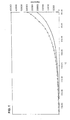
- the viscosity is shown in Figure 1.
- the confectionery hygroscopicity is displayed in Figure 2.
- the hard candies have high mass viscosity, and are non-hygroscopic and non-sticky.
- the cariogenicity of hard candies prepared with C Maltidex C16510 is determined with the telemetric method.
- the telemetry technique continuously records plaque pH changes in vivo at the enamel-plaque interface and the plaque accumulates on the inserted glass electrode. If the plaque pH stays on the "alkaline side" of 5.7 within 30 minutes after consumption, the food can be labelled 'safe for teeth', or non-cariogenic.
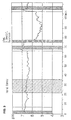
- Figure 3 shows the telemetric evaluation of hard candies prepared with C Maltidex C 16510, followed by sucrose intake. After consumption of hard candies prepared with C Maltidex C16510 pH stays above 6 and the hard candies are thus non-cariogenic.
- Shaping of the hard candies was similar as in example 1.
- the hard candies were characterised by measuring the mass viscosity, hygroscopicity, and stickiness according to the methods described in example 1.
- the hard candies have high mass viscosity, and are non-hygroscopic and non-sticky.
- Shaping of the hard candies was similar as in example 1.
- the hard candies were characterised by measuring the mass viscosity, hygroscopicity, and stickiness according to the methods described in example 1.
- the hard candies are non-hygroscopic, non-sticky but the mass viscosity is too low.
- Shaping of the hard candies was similar as in example 1.
- the hard candies were characterised by measuring the mass viscosity, hygroscopicity, and stickiness according to the methods described in example 1.
- the hard candies are very hygroscopic.
- Shaping of the hard candies was similar as in example 1.
- the hard candies were characterised by measuring the mass viscosity, hygroscopicity, and stickiness according to the methods described in example 1.
- the hard candies are non-hygroscopic, but sticky and the mass viscosity is too low.
- Shaping of the hard candies was similar as in example 1.
- the hard candies were characterised by measuring the mass viscosity, hygroscopicity, and stickiness according to the methods described in example 1.
- the hard candies are non-hygroscopic, non-sticky, but the mass viscosity is too low.
Landscapes
- Chemical & Material Sciences (AREA)
- Life Sciences & Earth Sciences (AREA)
- Food Science & Technology (AREA)
- Engineering & Computer Science (AREA)
- Polymers & Plastics (AREA)
- Inorganic Chemistry (AREA)
- Health & Medical Sciences (AREA)
- Molecular Biology (AREA)
- Proteomics, Peptides & Aminoacids (AREA)
- Nutrition Science (AREA)
- Confectionery (AREA)
- Jellies, Jams, And Syrups (AREA)
- Medicinal Preparation (AREA)
- Saccharide Compounds (AREA)
Abstract
Description
- The present invention relates to mixtures consisting of hydrogenated starch hydrolysate syrup and isomalt powder or isomalt syrup. The dry substance of the hydrogenated starch hydrolysate syrup comprises between 22% w/w and 55% w/w higher polyols. The present invention is as defined by the claims and discloses a process for producing sugar-free hard candies. In addition, a new type of sugar-free hard candies is disclosed. The candies are non-hygroscopic, non-sticky, non-cariogenic and show excellent mass viscosity.
- Recent developments in hard candy manufacture have been the replacement of part or all of the sugar by a sugar alcohol (polyol) in the interest of providing a product having a reduced calorie content and a lower tendency to cause tooth decay. Among the polyols, which have been proposed for the manufacture of hard candy, are isomalt, maltitol, xylitol, erythritol and others.
-
EP 0 533 334 describes a process for the production of hard candy characterised in that the maltitol content of the sugar alcohol mixture is more than 77% but less than 86% by weight based on dry substance. When the mixture contains 77% or less maltitol the resultant candies become increasingly hygroscopic and sticky, while when the mixture contains 86% and higher maltitol the candies rapidly become opaque as a result of the maltitol crystallisation. -
EP 0 611 527 describes a controlled propagation of crystallisation of maltitol in hard candies by applying molecules of molecular weight greater than 1,300 Dalton, preferably greater than 2,000 Dalton and more preferably greater than 3,000 Dalton. Preferably syrups comprising more than 78% maltitol are applied, since syrups comprising less than 60% maltitol give unsatisfactory results in respect to hygroscopicity, cariogenicity and unsuitable application. - US 4,971,798 describes a hydrogenated isomaltulose based hard confection which contains, in addition to the hydrogenated isomaltulose, a medicinal active ingredient. Such a formulation has been found to dissolve more slowly than similar formulations based on sugar, rendering them suitable for dispensing the active ingredient over an extended period time.
- Furthermore, it is common general knowledge that hard candies based on hydrogenated isomaltulose are non-hygroscopic but the mass viscosity of hard candies based on hydrogenated isomaltulose is low.
- WO 97/30598 describes a sweetener consisting of especially 6-O-α-D-glucopyranosyl-D-sorbitol (1,6 GPS), 1-O-α-D-glucopyranosyl-D-sorbitol (1,1 GPS) and 1-O-α-D-glucopyranosyl-D-mannitol (1,1 GPM), and the use of this sweetener in hard and soft caramels, especially pharmaceutically active caramels. The presence of 1-O-α-D-glucopyranosyl-D-sorbitol (1,1 GPS) results in candies with improved solubility, higher sweetness and lower ability to crystallise, but hard candies based on these hydrogenated isomerised saccharose syrups have even lower mass viscosity than the hard candies based on hydrogenated isomaltulose.
- Fritzsching, in The Manufacturing Confectioner Vol 75, No. 11, 1995, pages 65 - 73, describes isomalt in hard candy applications. He demonstrates that the hard candies prepared with 80% isomalt and 20% of a hygroscopic polyol have a higher hygroscopicity than hard candies prepared with pure isomalt. If isomalt is blended with hygroscopic polyols or bulking agents a more excessive packaging like twist wrapping is required. Due to their slight stickiness, loose packing in boxes is not possible.
- DE 4228278 discloses a fondant and its production process. The sugar-free fondant comprises 75 to 90% w/w disaccharide alcohol and 10 to 25% w/w of water. The fondant is used in particular as icing agent, and for fillings of pralines. The disaccharide alcohol can be isomalt, maltitol and the like.
- EP 0500977 relates to body and mouthfeel potentiated foods and beverages containing neohesperidin dihydrochalcone and a process for preparing them. It describes the flavour and sweetness profile when applying neohesperidin dihydrochalcone.
- EP 0788744 relates to de-lactose milk and de-lactose milk powder which are reconstructed with milk proteins and milk fats as major components free or almost free of lactose. Furthermore, the invention relates to foodstuffs containing de-lactose milk and/or de-lactose milk powder. When the de-lactose milk and the de-lactose milk powder are used for the sugar-less foodstuffs, one or more sugar alcohols selected from the group consisting of lactitol, palatinit and maltitol may preferably be used as a sweetener.
- A process for producing hard candies comprises preparation of syrups, cooking at elevated temperature and shaping including a cooling phase. The mass viscosity of the hot (temperature > 90°C) syrups is determining the workability and the processing time of the cooling phase. Applying low viscous syrups results during the cooling phase of the shaping of hard candies in a very liquid mass, which needs a considerably long processing time before the mass can be shaped in moulds.
- Accordingly, there is a need for highly viscous syrups which are non-hygroscopic and which can be used for the preparation of i.e. sugar-free non-hygroscopic, non-sticky and non-cariogenic hard candies. Applying high viscous syrups shortens the processing time of the cooling phase considerably and it results in an economical advantageous process.
- The present invention discloses a syrup (1) having a dry substance of from 60% to 80% consisting of a mixture of hydrogenated starch hydrolysate syrup (2) and isomalt powder or isomalt syrup (3) characterised in that:
- a) the dry substance of the syrup (1) consists of from 14 to 25% w/w hydrogenated starch hydrolysate syrup (2) (dry substance) wherein the dry substance of said hydrogenated starch hydrolysate syrup (2) comprises between 22% w/w and 55% w/w higher polyols, and
- b) the dry substance of the syrup (1) consists of from 75 to 86% w/w isomalt, and
- c) the dry substance of the syrup (1) consists of:
- 7% w/w to 52% w/w 6-O-α-D-glucopyranosyl-D-sorbitol (1,6 GPS),
- 24.5% w/w to 52% w/w 1-O-α-D-glucopyranosyl-D-mannitol (1,1 GPM),
- 0% w/w to 52% w/w 1-O-α-D-glucopyranosyl-D-sorbitol (1,1 GPS),
- 0% w/w to 1.3% w/w sorbitol(DP1),
- 2.8% w/w to 13.8% w/w maltitol (DP2),
- 1.5% to 4.2% w/w maltotriitol (DP3),
- 3.0% w/w to 13.5% w/w higher polyols (DPn).
-
- The present invention further relates to a syrup having the aforementioned composition and having a dry substance of 70%.
- These syrups are used for the preparation of sugar-free hard candies, which are transparent, non-hygroscopic, non-cariogenic and non-sticky.
- The present invention further relates to a sugar-free non-cariogenic hard candy with a mass viscosity of at least 25,000 mPa.s, and a candy surface stickiness below 180g (50% RH, 22-23°C) and a moisture pick-up (hygroscopicity at 70% RH and 25°C) after 14 days below 1.5%.
- The current invention relates to a process for the production of a sugar-free non-cariogenic hard candy comprising the following steps:
- a) preparing a syrup (1) having a dry substance of from 60% to 80% consisting of a mixture of hydrogenated starch hydrolysate syrup (2) and isomalt powder or isomalt syrup (3) characterised in that the dry substance of the syrup (1) consists of from 14 to 25% w/w hydrogenated starch hydrolysate syrup (2) (dry substance) wherein the dry substance of said hydrogenated starch hydrolysate syrup (2) comprises between 22% w/w and 55% w/w higher polyols, and the dry substance of the syrup (1) consists of from 75 to 86% w/w isomalt, and the dry substance of the syrup (1) consists of 7% w/w to 52% w/w 6-O-α-D-glucopyranosyl-D-sorbitol (1,6 GPS), 24.5% w/w to 52% w/w 1-O-a-D-glucopyranosyl-D-mannitol (1,1 GPM), 0% w/w to 52% w/w 1-O-α-D-glucopyranosyl-D-sorbitol (1,1 GPS), 0% w/w to 1.3% w/w sorbitol (DP1), 2.8% w/w to 13.8% w/w maltitol (DP2), 1.5% w/w to 4.2% w/w maltotriitol (DP3), 3.0% w/w to 13.5% w/w higher polyols (DPn),
- b) cooking at a temperature between 145°C and 170°C and low vacuum, and
- c) shaping according to stamping or deposit method.
-
- The current invention further relates to a process wherein flavour and/or colouring matter is added during shaping.
- The current invention discloses a process wherein the syrup comprises between 10 to 35% by weight water.
- The current invention further relates to a process wherein the water content of the hard candy is less than 4% by weight, preferably less than 2% by weight or less, based upon the weight of the hard candy.
- Non-sticky, non-hygroscopic and non-cariogenic sugar-free hard candies are obtained.
- Figure 1 shows the mass viscosity profile of the hard candies prepared with CMaltidex C16510, which is a syrup at 70% dry substance and consisting of 70/30 isomalt/hydrogenated starch hydrolysate mixture (= 70% hydrogenated isomaltulose powder (C

- Figure 2 shows the hygroscopicity (at 70% relative humidity, and 25°C) of hard candies prepared with hydrogenated isomaltulose (C
- Figure 3 shows the telemetric evaluation of hard candies prepared with C
- The present invention discloses a syrup (1) having a dry substance of from 60% to 80%, and preferably a dry substance of about 70%, consisting of a mixture of hydrogenated starch hydrolysate syrup (2) and isomalt powder or isomalt syrup (3) characterised in that:
- a) the dry substance of the syrup (1) consists of from 14 to 25% w/w hydrogenated starch hydrolysate syrup (2) (dry substance) wherein the dry substance of said hydrogenated starch hydrolysate syrup (2) comprises between 22% w/w and 55% w/w higher polyols, and
- b) the dry substance of the syrup (1) consists of from 75 to 86% w/w isomalt, and
- c) the dry substance of the syrup (1) consists of :
- 7% w/w to 52% w/w 6-O-α-D-glucopyranosyl-D-sorbitol (1,6 GPS),
- 24.5% w/w to 52% w/w 1-O-α-D-glucopyranosyl-D-mannitol (1,1 GPM),
- 0% w/w to 52% w/w 1-O-α-D-glucopyranosyl-D-sorbitol (1,1 GPS),
- 0% w/w to 1.3% w/w sorbitol (DP1),
- 2.8% w/w to 13.8% w/w maltitol (DP2),
- 1.5% w/w to 4.2% w/w maltotriitol (DP3),
- 3.0% w/w to 13.5% w/w higher polyols (DPn)
-
- The syrups can be obtained by hydrogenating mixtures of starch hydrolysates and isomaltulose or 'isomerised' saccharose, or by mixing the hydrogenated products, which are obtained by hydrogenation of starch hydrolysate and isomaltulose and 'isomerised' saccharose, respectively, until the aforementioned composition is obtained.
- Starch hydrolysates are obtained by the enzymatic or acidic hydrolysis of starch and the starch hydrolysate comprises glucose, maltose, maltotriose, and higher glucose oligomers (DPn where n = >3). A suitable starch hydrolysate comprises between 22% w/w and 55% w/w higher oligomers, preferably between 25% w/w and 50% w/w higher oligomers.
- The dry substance of a typical suitable starch hydrolysate syrup consists of:
glucose: 1-5% w/w maltose: 20-55% w/w maltotriose: 11-16.6% w/w higher oligomers: 22-54% w/w - Isomaltulose or 6-O-α-D-glucopyranosyl-D-fructofuranose is synthesised from sucrose by the action of an enzyme present in bacterial strains like Protaminobacter rubrum, Erwinia rhapontici and Serratia plymuthica.
- 'Isomerised' saccharose is obtained by enzymatic conversion of saccharose (i.e. sucrose) into a saccharide mixture, which contains trehalulose and isomaltulose.
- Hydrogenation of the mixtures of starch hydrolysate and isomaltulose or 'isomerised' saccharose results in mixtures comprising sorbitol, maltitol, maltotriitol, and hydrogenated oligomers (higher polyols), 6-O-α-D-glucopyranosyl-D-sorbitol (1,6 GPS), and 1-O-α-D-glucopyranosyl-D-mannitol (1,1 GPM), and 1-O-α-D-glucopyranosyl-D-sorbitol (1,1 GPS).
- The components such as sorbitol, maltitol, maltotriitol, and hydrogenated oligomers (higher polyols) are obtained by the hydrogenation of starch hydrolysate syrups. The other components such as 6-O-α-D-glucopyranosyl-D-sorbitol (1,6 GPS), and 1-O-α-D-glucopyranosyl-D-mannitol (1,1 GPM), and 1-O-α-D-glucopyranosyl-D-sorbitol (1,1 GPS) are obtained by hydrogenation of isomaltulose and 'isomerised' saccharose.
- Hydrogenation of a starch hydrolysate syrup can give a typical composition wherein the dry substance consists of 52.3-53.6% w/w maltitol, 3.3-3.9% w/w sorbitol, 15.6-16.6 w/w (maltotriitol) and 26.4-28.1% w/w higher polyols (hydrogenated oligomers) and the dry substance is 70%. Whenever the dry substance of the syrup contains at least 50% w/w DP2, the syrup is defined as a maltitol syrup.
- Isomalt powder is hydrogenated isomaltulose powder and can be obtained by the hydrogenation of isomaltulose which results in a quasi-equimolar mixture of 6-O-α-D-glucopyranosyl-D-sorbitol (1,6 GPS), and 1-O-α-D-glucopyranosyl-D-mannitol (1,1 GPM). A more typical composition consists of 52.6 -53.6% w/w 6-O-α-D-glucopyranosyl-D-sorbitol (1,6 GPS), and 44.7 - 46.6% w/w 1-O-α-D-glucopyranosyl-D-mannitol (1,1 GPM).
- Isomalt syrup is hydrogenated 'isomerised' saccharose which can be prepared according to a method as is described in
EP 0 625 578, and the dry substance of the syrup comprises a mixture of 10% w/w to 50% w/w 6-O-α-D-glucopyranosyl-D-sorbitol (1,6 GPS), 35% w/w to 60% w/w 1-O-α-D-glucopyranosyl-D-mannitol (1,1 GPM) and 2% w/w to 60% w/w 1-O-α-D-glucopyranosyl-D-sorbitol (1,1 GPS). - The dry substance of a more typical composition, obtained after the hydrogenation of 'isomerised' saccharose, comprises 43.6% w/w 6-O-α-D-glucopyranosyl-D-sorbitol (1,6 GPS), 49.2% w/w 1-O-α-D-glucopyranosyl-D-mannitol (1,1 GPM) and 3.1% w/w 1-O-α-D-glucopyranosyl-D-sorbitol (1,1 GPS).
- A typical composition of the current invention, i.e C
DP1 0.7-1.0% w/w DP2 10-12% w/w DP3 2.4-4.4% w/w DPn 4.6 - 6.6% w/ w 1,6 GPS 41.5 - 42.3% w/w 1,1 GPM 35.3- 36.8% w/w - These syrups are used for the preparation of sugar-free hard candies, which are transparent, non-hygroscopic, non-cariogenic and non-sticky.
- The current invention relates to a process for the production of a sugar-free non-cariogenic hard candy comprising the following steps:
- a) preparing a syrup (1) having a dry substance of from 60% to 80% consisting of a mixture of hydrogenated starch hydrolysate syrup (2) and isomalt powder or isomalt syrup (3) characterised in that the dry substance of the syrup (1) consists of from 14 to 25% w/w hydrogenated starch hydrolysate syrup (2) (dry substance) wherein the dry substance of said hydrogenated starch hydrolysate syrup (2) comprises between 22% w/w and 55% w/w higher polyols, and the dry substance of the syrup (1) consists of from 75 to 86% w/w isomalt, and the dry substance of the syrup (1) consists of 7% w/w to 52% w/w 6-O-a-D-glucopyranosyl-D-sorbitol (1,6 GPS), 24.5% w/w to 52% w/w 1-O-α-D-glucopyranosyl-D-mannitol (1,1 GPM), 0% w/w to 52% w/w 1-O-α-D-glucopyranosyl-D-sorbitol (1,1 GPS), 0% w/w to 1.3% w/w sorbitol (DP1), 2.8% w/w to 13.8% w/w maltitol (DP2), 1.5% w/w to 4.2% w/w maltotriitol (DP3), 3.0% w/w to 13.5% w/w higher polyols (DPn),
- b) cooking at a temperature between 145°C and 170°C and low vacuum, and
- c) shaping according to stamping or deposit method.
-
- Production of the hard candies may be carried out in batch evaporators or in continuous cookers and the process time at elevated temperature generally being up to 15 minutes, preferably in the
range 5 to 10 minutes. - The process used to produce hard candies from maltitol containing syrups customarily operates at a temperature between 145°C and 170°C, preferably between 150°C and 160°C. At these temperatures it is preferable to apply a low vacuum, suitably 0.6 to 0.8 bar at the end of the heating period to facilitate water removal. The shaping of the hard candies is performed according to either one of the classically applied methods, being the 'stamping' method and the 'depositing' method, respectively. In the 'stamping' method the cooked mass is cooled to 90°C or 100°C, and eventually colour, flavour and acid are mixed in. Then the mass is further cooled to 60°C or 70°C for shaping. After further cooling the candies are wrapped. In the 'depositing' method the cooked mass is cooled to 110°C or 120°C, and eventually colour, flavour and acid are mixed in. The hot mass is dosed in moulds, further cooled and demoulded afterwards. The current invention further relates to a process wherein flavour and/or colouring matter can be added during shaping.
- After further cooling, the hard candies can be wrapped. The obtained sugar-free hard candies, which are transparent, non-hygroscopic, non-cariogenic can be loose packed in boxes due to their non-stickiness.
- In each method, the heating phase is followed by a cooling phase and by applying more viscous mixtures (i.e. high mass viscosity) the workability is improved, the processing time of the cooling phase is shortened, and the final viscosity is reached sooner. In principle the processing time of the cooling phase is easily reduced with one quarter of the total time compared to the processing time required to cool the mass consisting of syrups based on hydrogenated isomaltulose alone. When working with a lab cooker on quantities of about 4 kg syrup, the cooling phase can easily be shortened with about 10 to 15 minutes compared to the cooling phase where hydrogenated isomaltulose syrups are applied solely. The processing time of the cooling phase of 4 kg syrup consisting of hydrogenated isomaltulose is about 40 to 60 minutes, while with the syrups of the current invention the processing time is shortened with 10 to 15 minutes.
- The mass viscosity is measured directly after cooking with an oscillating shear-disc viscometer. The measurement is started at 135°C and the sample is cooled with constant rate of 2.8°C/ minute to 94°C and the measured values are recorded by means of a potentiometric line recorder.
- The mass viscosity of hard candies prepared with hydrogenated isomaltulose is around 20,000 mPa.s at 94°C and hard candies prepared with hydrogenated isomerised saccharose have a mass viscosity of about 15,000 mPa.s. In comparison, the mass viscosity of C
- Applying syrups, which are obtained by the hydrogenation of starch hydrolysates and isomaltose or 'isomerised' saccharose wherein the dry substance of starch hydrolysate contains less than 22% w/w higher oligomers, results in hard candies having a mass viscosity below 25,000 mPa.s, namely about 23,600 mPa.s.
- Hard candies with a mass viscosity of at least 25,000 mPa.s, preferably higher than 27,000 give good workability and significant reduction of the processing time of the cooling phase. The time to reach the appropriate viscosity before moulding, is shortened with one quarter of the total cooling time of syrups based on hydrogenated isomaltulose alone. Furthermore, by applying the syrups of the current invention not only the mass viscosity but also the plasticity of the mass is improved during processing.
- The feedstock for preparing hard candies of the present invention may comprise between 10 to 35 % by weight of water based on the weight of the mixture, most often about 30% by weight water. This feedstock is heated to an elevated temperature until a product is obtained which preferably contains less than 5% by weight water, more preferably less than 4%, more preferably less than 2% by weight or less, based upon the weight of the candy.
- Furthermore the polyol-containing feedstock of the present invention also may include flavour and/or colouring matter or any other additive commonly found in hard candy products.
- The candy stickiness test is performed with the Texture Analyser TA-XT2 from Stable Micro Systems. The stickiness measurement can be done by storing the candy several minutes to hours at specific conditions of humidity and temperature and the more sticky the candy the higher the adhesive force becomes. The confectionery hygroscopicity is measured in a microclimate chamber with an accurate regulation system having the possibility to create conditions of temperature from 10°C to 98°C and relative humidity from 10 to 95%. The moisture pick-up of the samples placed in the microclimate chamber stored under specific conditions of temperature and humidity is calculated from the difference in weight of the samples after a specific storage time.
- Hard candies prepared with hydrogenated isomaltulose give a stickiness of 175 g (after 10 minutes cooling) at 21°C and 52% relative humidity (RH), while hard candies prepared with C
- Applying syrups, which are obtained by the hydrogenation of starch hydrolysates and isomaltose or 'isomerised' saccharose wherein the dry substance of starch hydrolysate contains less than 22% w/w higher oligomers, gives hard candies with surface stickiness (21°C at 52% RH after 10 minutes cooling) of 215 g.
- Stickiness of hard candies prepared from hydrogenated isomerised saccharose is determined as being 173 g at 21°C (10 minutes cooling) and 49% RH. Under the same conditions, hard candies prepared with C
- Surprisingly the surface stickiness of hard candies prepared with C
- Relative humidity below 50% and 22-23°C are ideal conditions to store demoulded hard candies prepared with C
- The corresponding hygroscopicity (moisture pick-up) is slightly increased from 0.48% to 1.2% (after 14 days at 70% RH and 25°C) for hard candies prepared with hydrogenated isomaltulose and hard candies prepared with C
- Due to the low hygroscopicity of the hard candies prepared with C
- The telemetry technique is used to determine cariogenicity and continuously records plaque pH changes in vivo at the enamel-plaque interface and the plaque accumulates on the inserted glass electrode. If the plaque pH stays on the "alkaline side" of 5.7 within 30 minutes after consumption, the food can be labelled 'safe for teeth', or non-cariogenic. Hard candies prepared with C
pH 6 in the telemetric method and are thus non-cariogenic. - The present invention results in non-hygroscopic, non-sticky, non-cariogenic hard candies with mass viscosity of at least 25,000 mPa.s, a candy surface stickiness below 180 g (50% RH, 22-23°C) and moisture pick-up (hygroscopicity at 70% R.H and 25°C) below 1.5%. Moreover as is well known the presence of maltitol improves the flavour release.
- The present invention is illustrated by way of the following examples.
- 4 kg C
- The cooked mass was cooled to 110-120°C and colour, flavour and acid were mixed in. The hot mass was dosed in Teflon coated aluminium moulds and allowed cooling further, followed by demoulding. After further cooling the hard candies were wrapped.
- The oscillating shear-disc viscosimeter consists of two discs, which are vertically installed and face each other in parallel.
The shear-disc, which is arranged above the oscillating sample disc, is connected with a torque-measuring device. The lower disc is connected with the drive and it oscillates at an adjustable frequency and with a constant oscillating angle. A digital temperature control is done for both discs by means of a circulation thermostat with heating capacity up to 210°C and cooling coil with a capacity up to 20°C.
A small sample of the mass was brought directly after cooking on the shear disc, both discs were tilted together, and oscillating was started. The measurement was started at 135°C and cooled with constant rate of 2.8°C/ minute to 94°C, and the measured values were recorded by means of a potentiometric line recorder. - The results are displayed in Table 1.
- The microclimate chamber is made from a stainless steel interior, with conditioned air and diffused moisture injection microprocessor controlled. The door opening gives access to the total working space in which the samples are placed. The microprocessor achieves precise environmental control and the distinct advantage of rapid recovery after each door opening. By means of a fan and air guide walls, a forced but moderated air circulation ensures an even airflow over the samples.
- The moisture pick-up of the samples placed in the microclimate chamber stored at 70% relative humidity and at 25°C was calculated from the difference in weight of the samples after 14 days.
- The results are displayed in table 1.
- The candy stickiness test is performed with the Texture Analyser TA-XT2 from Stable Micro Systems.
A moulded candy having a diameter of 40 mm and 5 mm thickness was fitted at the lower jaw of the texture analyser base. A transparent foil loop of specific dimensions (100 mm length and 12 mm width) was fitted into the upper jaw and brought on the candy surface with a force of 40 g. The loop was then pulled away from the candy surface at high speed (10 mm/sec) and the adhesive force was measured. The stickiness measurements were done at 52% relative humidity at 21°C or at 49% relative humidity and 21°C. - The results are displayed in table 1.

- The viscosity is shown in Figure 1.
The confectionery hygroscopicity is displayed in Figure 2.
The more sticky the candy the higher the adhesive force (here expressed in g).
The hard candies have high mass viscosity, and are non-hygroscopic and non-sticky. - The cariogenicity of hard candies prepared with C
- The telemetry technique continuously records plaque pH changes in vivo at the enamel-plaque interface and the plaque accumulates on the inserted glass electrode. If the plaque pH stays on the "alkaline side" of 5.7 within 30 minutes after consumption, the food can be labelled 'safe for teeth', or non-cariogenic.
- Figure 3 shows the telemetric evaluation of hard candies prepared with C
After consumption of hard candies prepared with C - 4 kg syrup (d.s. = 70% and wherein the composition of dry substance is: 0.3-0.7 % w/w sorbitol, 6.3-8.4% w/w maltitol, 1.3 - 3.4% w/w maltotriitol, 2.7 - 4.7 % w/w higher polyols, 45.2 - 46.1 % w/w 6-O-α-D-glucopyranosyl-D-sorbitol (1,6 GPS), 38.4 - 40.1 % w/w 1-O-α-D-glucopyranosyl-D-mannitol (1,1 GPM)) was placed in the lab cooker without water addition. It was cooked under vacuum at 155°C during 5 minutes to reach an end-moisture of max. 1.5%.
- Shaping of the hard candies was similar as in example 1. The hard candies were characterised by measuring the mass viscosity, hygroscopicity, and stickiness according to the methods described in example 1.
- The obtained results are displayed in Table 2.
Hard candy with syrup of example 2 Mass viscosity at 94°C (mPa.s): 25,000 Hygroscopicity (70% R.H, 25°C. after 14 days) 0.96% Stickiness (at 52% RH, 21°C) 176 g - The hard candies have high mass viscosity, and are non-hygroscopic and non-sticky.
- 4 kg hydrogenated isomaltulose powder (C
- Shaping of the hard candies was similar as in example 1. The hard candies were characterised by measuring the mass viscosity, hygroscopicity, and stickiness according to the methods described in example 1.
- The obtained results are displayed in Table 3.

- The hard candies are non-hygroscopic, non-sticky but the mass viscosity is too low.
- 4 kg hydrogenated starch hydrolysate syrup at 70% dry substance (C
- Shaping of the hard candies was similar as in example 1. The hard candies were characterised by measuring the mass viscosity, hygroscopicity, and stickiness according to the methods described in example 1.
- The obtained results are displayed in Table 4.
Hard candy with hydrogenated starch hydrolysate syrup Mass viscosity at 94°C (mPa.s): 533,029 Hygroscopicity (70% R.H, 25°C. after 14 days) 11% - The hard candies are very hygroscopic.
- 4 kg isomalt/hydrogenated starch hydrolysate syrup wherein the dry substance comprises below 22% w/w higher polyols (d.s. = 70% and dry substance consists of between 41.5-42.3% w/w 6-O-α-D-glucopyranosyl-D-sorbitol (1,6 GPS), between 35.3 - 36.8% w/w 1-O-α-D-glucopyranosyl-D-mannitol (1,1 GPM), between 0.8 - 1.0% w/w sorbitol, between 10.5 - 12.5% w/w maltitol, between 3.3 - 5.3% w/w maltotriitol, and between 3.1 - 5.1% w/w higher polyols) was placed in the lab cooker without water addition. It was cooked under vacuum at 155°C during 5 minutes to reach an end-moisture of max. 1.6%.
- Shaping of the hard candies was similar as in example 1. The hard candies were characterised by measuring the mass viscosity, hygroscopicity, and stickiness according to the methods described in example 1.
- The obtained results are displayed in Table 5.
Hard candy with syrup of comparative example 3 Mass viscosity at 94°C (mPa.s): 23,600 Hygroscopicity (70% R.H. 25°C. after 14 days) 1.15% Stickiness (at 52% RH, 21°C) 215 g - The hard candies are non-hygroscopic, but sticky and the mass viscosity is too low.
- 4 kg hydrogenated isomerised saccharose syrup (d.s. = 70% and dry substance comprises 43.6% 6-O-α-D-glucopyranosyl-D-sorbitol (1,6 GPS), 49.2% 1-O-α-D-glucopyranosyl-D-mannitol (1,1 GPM) and 3.1% 1-O-α-D-glucopyranosyl-D-sorbitol (1,1 GPS)) was placed in the lab cooker without water addition. It was cooked under vacuum at 155°C during 5 minutes to reach an end-moisture of max. 1.6%.
- Shaping of the hard candies was similar as in example 1. The hard candies were characterised by measuring the mass viscosity, hygroscopicity, and stickiness according to the methods described in example 1.
- The obtained results are displayed in Table 6.
Hard candy with hydrogenated 'isomerised' saccharose Mass viscosity at 94°C (mPa.s): 15,000 Hygroscopicity (70% R.H. 25°C, after 11 days) 0.96% Stickiness (at 49% RH, 21°C) 173 g - The hard candies are non-hygroscopic, non-sticky, but the mass viscosity is too low.
Claims (8)
- A syrup (1) having a dry substance of from 60 to 80% consisting of a mixture of hydrogenated starch hydrolysate syrup (2) and isomalt powder or isomalt syrup (3) characterised in that:a) the dry substance of the syrup (1) consists of from 14 to 25% w/w hydrogenated starch hydrolysate syrup (2) (dry substance) wherein the dry substance of said hydrogenated starch hydrolysate syrup (2) comprises between 22 and 55% w/w higher polyols, andb) the dry substance of the syrup (1) consists of from 75 to 86% w/w isomalt, andc) the dry substance of the syrup (1) consists of:7 to 52% w/w 6-O-α-D-glucopyranosyl-D-sorbitol (1,6 GPS)24.5 to 52% w/w 1-O-α-D-glucopyranosyl-D-mannitol (1,1 GPM)0 to 52% w/w 1-O-α-D-glucopyranosyl-D-sorbitol (1,1 GPS)0 to 1.3% w/w sorbitol (DP1)2.8 to 13.8% w/w maltitol (DP2)1.5 to 4.2% w/w maltotriitol (DP3)3.0 to 13.5% w/w higher polyols (DPn)
- A syrup according to claim 1 characterised in that said syrup has a dry substance of 70%.
- A sugar-free non-cariogenic hard candy comprising a syrup according to claims 1 or 2.
- A sugar-free non-cariogenic hard candy according to claim 3 characterised in that the mass viscosity is at least 25,000 mPa.s, and that the candy surface stickiness is below 180g (50% RH, 22-23°C) and the moisture pick-up (hygroscopicity at 70% RH and 25°C) after 14 days is below 1.5%.
- A process for the production of a sugar-free non-cariogenic hard candy comprising the following steps:a) preparing a syrup (1) having a dry substance of from 60 to 80% consisting of a mixture of hydrogenated starch hydrolysate syrup (2) and isomalt powder or isomalt syrup (3) characterised in that the dry substance of the syrup (1) consists of from 14 to 25% w/w hydrogenated starch hydrolysate syrup (2) (dry substance) wherein the dry substance of said hydrogenated starch hydrolysate syrup (2) comprises between 22 and 55% w/w higher polyols, and the dry substance of the syrup (1) consists of from 75 to 86% w/w isomalt, and the dry substance of the syrup (1) consists of 7 to 52% w/w 6-O-α-D-glucopyranosyl-D-sorbitol (1,6 GPS), 24.5 to 52% w/w 1-O-α-D-glucopyranosyl-D-mannitol (1,1 GPM), 0 to 52% w/w 1-O-α-glucopyranosyl-D-sorbitol (1,1 GPS), 0 to 1.3% w/w sorbitol (DP1), 2.8 to 13.8% w/w maltitol (DP2), 1.5 to 4.2% w/w maltotriitol (DP3), 3.0 to 13.5% w/w higher polyols (DPn),b) cooking at a temperature between 145 and 170°C and low vacuum, andc) shaping according to stamping or deposit method.
- A process according to claim 5 characterised in that flavour and/or colouring matter is added during shaping.
- A process according to claims 5 or 6 characterised in that the syrup comprises between 10 to 35% by weight water.
- A process according to any one of claims 5 to 7 characterised in that the water content of the hard candy is less than 4% by weight, preferably less than 2% by weight or less, based upon the weight of the hard candy.
Applications Claiming Priority (3)
| Application Number | Priority Date | Filing Date | Title |
|---|---|---|---|
| GBGB9915883.4A GB9915883D0 (en) | 1999-07-08 | 1999-07-08 | Preparation of sugar-free hard candy |
| GB9915883 | 1999-07-08 | ||
| PCT/EP2000/006016 WO2001003513A1 (en) | 1999-07-08 | 2000-06-28 | Preparation of sugar-free hard candy |
Publications (2)
| Publication Number | Publication Date |
|---|---|
| EP1194042A1 EP1194042A1 (en) | 2002-04-10 |
| EP1194042B1 true EP1194042B1 (en) | 2003-02-26 |
Family
ID=10856797
Family Applications (1)
| Application Number | Title | Priority Date | Filing Date |
|---|---|---|---|
| EP00945841A Revoked EP1194042B1 (en) | 1999-07-08 | 2000-06-28 | Preparation of sugar-free hard candy |
Country Status (12)
| Country | Link |
|---|---|
| EP (1) | EP1194042B1 (en) |
| JP (1) | JP2003504041A (en) |
| AT (1) | ATE233055T1 (en) |
| AU (1) | AU5979500A (en) |
| CA (1) | CA2375566A1 (en) |
| DE (1) | DE60001503T2 (en) |
| DK (1) | DK1194042T3 (en) |
| ES (1) | ES2188562T3 (en) |
| GB (1) | GB9915883D0 (en) |
| PL (1) | PL354258A1 (en) |
| RU (1) | RU2002103160A (en) |
| WO (1) | WO2001003513A1 (en) |
Cited By (1)
| Publication number | Priority date | Publication date | Assignee | Title |
|---|---|---|---|---|
| US8703228B2 (en) | 2005-05-23 | 2014-04-22 | Intercontinental Great Brands Llc | Confectionery composition including an elastomeric component, a cooked saccharide component, and a modified release component |
Families Citing this family (11)
| Publication number | Priority date | Publication date | Assignee | Title |
|---|---|---|---|---|
| FR2846518A1 (en) * | 2002-10-30 | 2004-05-07 | Roquette Freres | Sugar-free boiled sweets, optionally containing a pharmaceutical, consist of a mixture of branched maltodextrin and isomalt and have excellent storage stability |
| DE102004038689A1 (en) * | 2004-08-10 | 2006-03-02 | Südzucker AG Mannheim/Ochsenfurt | Organoleptically improved particularly storage-stable hard caramels |
| DE102005022601A1 (en) * | 2005-05-11 | 2006-11-23 | Südzucker AG Mannheim/Ochsenfurt | Hard caramels with isomaltulose |
| WO2008025809A1 (en) * | 2006-09-01 | 2008-03-06 | Cargill, Incorporated | Polyol syrups useful in the manufacture of sugar-free chewable confectionery |
| DE102007008056A1 (en) * | 2007-02-15 | 2008-08-21 | Mabea International Transport Expressservice Thelen Gmbh | Process for the production of substitute sugar syrups |
| ES2552642T3 (en) * | 2008-05-02 | 2015-12-01 | Intercontinental Great Brands Llc | Sugar-free mannitol confectionery products and methods for their production |
| CN102438463A (en) | 2009-01-22 | 2012-05-02 | 卡夫食品环球品牌有限责任公司 | Confectionery processing |
| US8920856B2 (en) | 2009-10-08 | 2014-12-30 | Intercontinental Great Brands Llc | Co-extruded layered candy and gum apparatus and methods |
| ES2441738T3 (en) | 2009-10-30 | 2014-02-06 | Intercontinental Great Brands Llc | Sugar-free sweets, methods for their preparation and use in the preparation of multilayer confectionery products |
| CN103635096B (en) | 2011-04-29 | 2016-08-17 | 洲际大品牌有限责任公司 | Encapsulated acid, method for its preparation and chewing gum comprising said encapsulated acid |
| DE102012202193A1 (en) | 2012-02-14 | 2013-08-14 | Evonik Degussa Gmbh | pH-adjusted sweetener |
Family Cites Families (6)
| Publication number | Priority date | Publication date | Assignee | Title |
|---|---|---|---|---|
| JP3084530B2 (en) * | 1989-03-30 | 2000-09-04 | 東和化成工業株式会社 | Method for producing low-fat food containing maltitol as fat substitute |
| EP0500977B1 (en) * | 1991-02-26 | 1995-07-05 | Zoster, S.A. | Use of neohesperidin dihydrochalcone for potentiating body and mouthfeel of foods and beverages |
| JPH05262782A (en) * | 1991-03-22 | 1993-10-12 | Hoechst Ag | Production of polycondensate of glucose and/or maltose and polyhydric alcohol |
| CH684148A5 (en) * | 1992-07-16 | 1994-07-29 | Sigrist E Ag | Fondant and method for its production. |
| DE9321600U1 (en) * | 1993-05-06 | 2000-04-06 | Südzucker Aktiengesellschaft Mannheim/Ochsenfurt, 68165 Mannheim | Sweeteners |
| JP3426440B2 (en) * | 1996-01-18 | 2003-07-14 | 株式会社ロッテ | Novel lactose-free lactose-free lactose-free milk powder, food and drink containing the same, and method for producing lactose-free lactose-free milk and de-lactose-free milk powder |
-
1999
- 1999-07-08 GB GBGB9915883.4A patent/GB9915883D0/en not_active Ceased
-
2000
- 2000-06-28 AU AU59795/00A patent/AU5979500A/en not_active Abandoned
- 2000-06-28 CA CA002375566A patent/CA2375566A1/en not_active Abandoned
- 2000-06-28 AT AT00945841T patent/ATE233055T1/en not_active IP Right Cessation
- 2000-06-28 EP EP00945841A patent/EP1194042B1/en not_active Revoked
- 2000-06-28 PL PL00354258A patent/PL354258A1/en not_active Application Discontinuation
- 2000-06-28 RU RU2002103160/13A patent/RU2002103160A/en not_active Application Discontinuation
- 2000-06-28 ES ES00945841T patent/ES2188562T3/en not_active Expired - Lifetime
- 2000-06-28 DE DE60001503T patent/DE60001503T2/en not_active Expired - Fee Related
- 2000-06-28 WO PCT/EP2000/006016 patent/WO2001003513A1/en not_active Ceased
- 2000-06-28 JP JP2001508821A patent/JP2003504041A/en not_active Withdrawn
- 2000-06-28 DK DK00945841T patent/DK1194042T3/en active
Cited By (2)
| Publication number | Priority date | Publication date | Assignee | Title |
|---|---|---|---|---|
| US8703228B2 (en) | 2005-05-23 | 2014-04-22 | Intercontinental Great Brands Llc | Confectionery composition including an elastomeric component, a cooked saccharide component, and a modified release component |
| US9486002B2 (en) | 2005-05-23 | 2016-11-08 | Intercontinental Great Brands Llc | Confectionery composition including an elastomeric component, a cooked saccharine component, and a functional ingredient |
Also Published As
| Publication number | Publication date |
|---|---|
| RU2002103160A (en) | 2003-09-27 |
| WO2001003513A1 (en) | 2001-01-18 |
| EP1194042A1 (en) | 2002-04-10 |
| AU5979500A (en) | 2001-01-30 |
| GB9915883D0 (en) | 1999-09-08 |
| DE60001503D1 (en) | 2003-04-03 |
| DK1194042T3 (en) | 2003-06-23 |
| DE60001503T2 (en) | 2003-09-25 |
| ES2188562T3 (en) | 2003-07-01 |
| PL354258A1 (en) | 2003-12-29 |
| JP2003504041A (en) | 2003-02-04 |
| CA2375566A1 (en) | 2001-01-18 |
| ATE233055T1 (en) | 2003-03-15 |
Similar Documents
| Publication | Publication Date | Title |
|---|---|---|
| EP1194042B1 (en) | Preparation of sugar-free hard candy | |
| EP0390299B1 (en) | Foodstuffs containing maltitol as sweetener or fat replacement | |
| JP4361737B2 (en) | How to prepare a low calorie food | |
| US6177064B1 (en) | Anti-cariogenic activity of erythritol | |
| JPS626580B2 (en) | ||
| CZ2000331A3 (en) | Chewing confectionery product | |
| JPS63301745A (en) | Calorie and fat reduced chocolate confectionery composition | |
| KR100296762B1 (en) | Use of maltitol-based sweet syrup, sugar used syrup, and crystallization propagation control agent in the manufacture of this product | |
| EP0601964A2 (en) | A controlled melting point matrix formed with admixtures of a shearform matrix material and an oleaginous material | |
| CN104918500B (en) | Non- cariogenicity jelly candy | |
| KR101685214B1 (en) | Confectionery product | |
| JPH10210939A (en) | Gummy candy composition | |
| US5314708A (en) | Process for the production of hard candy | |
| McGill et al. | Water relations in confections | |
| EP3928629B1 (en) | Composition for preparing candy | |
| KR101260876B1 (en) | Starch syrup for candy, composition for preparing candy, and candy | |
| WO2008071797A1 (en) | A confectionery product containing water, crystallizing bulk sweetener and betaine, a process for producing a confectionery product and the use of betaine in a confectionery product | |
| EP4413865A1 (en) | Water-containing chocolate composition and production method thereof | |
| US6090429A (en) | Process for the manufacture of a lactitol syrup | |
| WO2008025809A1 (en) | Polyol syrups useful in the manufacture of sugar-free chewable confectionery | |
| JP2000316479A (en) | Hardened sugar coating layer and method for producing the same | |
| JP5507253B2 (en) | "Naki" suppressed lactosucrose-containing hard candy and method for producing the same | |
| CN105230903B (en) | The caramel precursor for having specific rear thickening properties | |
| Le Bot et al. | Polyols from starch | |
| US20230036378A1 (en) | Process for preparing a hard caramel containing a trehalulose-containing composition |
Legal Events
| Date | Code | Title | Description |
|---|---|---|---|
| PUAI | Public reference made under article 153(3) epc to a published international application that has entered the european phase |
Free format text: ORIGINAL CODE: 0009012 |
|
| 17P | Request for examination filed |
Effective date: 20020114 |
|
| AK | Designated contracting states |
Kind code of ref document: A1 Designated state(s): AT BE CH CY DE DK ES FI FR GB GR IE IT LI LU MC NL PT SE |
|
| AX | Request for extension of the european patent |
Free format text: AL;LT;LV;MK;RO;SI |
|
| GRAH | Despatch of communication of intention to grant a patent |
Free format text: ORIGINAL CODE: EPIDOS IGRA |
|
| GRAH | Despatch of communication of intention to grant a patent |
Free format text: ORIGINAL CODE: EPIDOS IGRA |
|
| GRAA | (expected) grant |
Free format text: ORIGINAL CODE: 0009210 |
|
| RAP1 | Party data changed (applicant data changed or rights of an application transferred) |
Owner name: CERESTAR HOLDING B.V. |
|
| AK | Designated contracting states |
Designated state(s): AT BE CH CY DE DK ES FI FR GB GR IE IT LI LU MC NL PT SE |
|
| PG25 | Lapsed in a contracting state [announced via postgrant information from national office to epo] |
Ref country code: GR Free format text: LAPSE BECAUSE OF FAILURE TO SUBMIT A TRANSLATION OF THE DESCRIPTION OR TO PAY THE FEE WITHIN THE PRESCRIBED TIME-LIMIT Effective date: 20030226 Ref country code: AT Free format text: LAPSE BECAUSE OF FAILURE TO SUBMIT A TRANSLATION OF THE DESCRIPTION OR TO PAY THE FEE WITHIN THE PRESCRIBED TIME-LIMIT Effective date: 20030226 |
|
| REG | Reference to a national code |
Ref country code: GB Ref legal event code: FG4D |
|
| REG | Reference to a national code |
Ref country code: CH Ref legal event code: EP |
|
| REG | Reference to a national code |
Ref country code: CH Ref legal event code: NV Representative=s name: ISLER & PEDRAZZINI AG |
|
| REG | Reference to a national code |
Ref country code: IE Ref legal event code: FG4D |
|
| REF | Corresponds to: |
Ref document number: 60001503 Country of ref document: DE Date of ref document: 20030403 Kind code of ref document: P |
|
| PG25 | Lapsed in a contracting state [announced via postgrant information from national office to epo] |
Ref country code: PT Free format text: LAPSE BECAUSE OF FAILURE TO SUBMIT A TRANSLATION OF THE DESCRIPTION OR TO PAY THE FEE WITHIN THE PRESCRIBED TIME-LIMIT Effective date: 20030526 |
|
| REG | Reference to a national code |
Ref country code: SE Ref legal event code: TRGR |
|
| PGFP | Annual fee paid to national office [announced via postgrant information from national office to epo] |
Ref country code: SE Payment date: 20030604 Year of fee payment: 4 |
|
| PGFP | Annual fee paid to national office [announced via postgrant information from national office to epo] |
Ref country code: FR Payment date: 20030610 Year of fee payment: 4 |
|
| PGFP | Annual fee paid to national office [announced via postgrant information from national office to epo] |
Ref country code: FI Payment date: 20030612 Year of fee payment: 4 |
|
| PGFP | Annual fee paid to national office [announced via postgrant information from national office to epo] |
Ref country code: DK Payment date: 20030613 Year of fee payment: 4 |
|
| PGFP | Annual fee paid to national office [announced via postgrant information from national office to epo] |
Ref country code: ES Payment date: 20030619 Year of fee payment: 4 |
|
| REG | Reference to a national code |
Ref country code: DK Ref legal event code: T3 |
|
| PG25 | Lapsed in a contracting state [announced via postgrant information from national office to epo] |
Ref country code: LU Free format text: LAPSE BECAUSE OF NON-PAYMENT OF DUE FEES Effective date: 20030628 Ref country code: CY Free format text: LAPSE BECAUSE OF FAILURE TO SUBMIT A TRANSLATION OF THE DESCRIPTION OR TO PAY THE FEE WITHIN THE PRESCRIBED TIME-LIMIT Effective date: 20030628 |
|
| PG25 | Lapsed in a contracting state [announced via postgrant information from national office to epo] |
Ref country code: MC Free format text: LAPSE BECAUSE OF NON-PAYMENT OF DUE FEES Effective date: 20030630 Ref country code: IE Free format text: LAPSE BECAUSE OF NON-PAYMENT OF DUE FEES Effective date: 20030630 |
|
| REG | Reference to a national code |
Ref country code: ES Ref legal event code: FG2A Ref document number: 2188562 Country of ref document: ES Kind code of ref document: T3 |
|
| PGFP | Annual fee paid to national office [announced via postgrant information from national office to epo] |
Ref country code: DE Payment date: 20030710 Year of fee payment: 4 |
|
| ET | Fr: translation filed | ||
| LTIE | Lt: invalidation of european patent or patent extension |
Effective date: 20030226 |
|
| PGFP | Annual fee paid to national office [announced via postgrant information from national office to epo] |
Ref country code: BE Payment date: 20030903 Year of fee payment: 4 |
|
| PLAQ | Examination of admissibility of opposition: information related to despatch of communication + time limit deleted |
Free format text: ORIGINAL CODE: EPIDOSDOPE2 |
|
| PLBQ | Unpublished change to opponent data |
Free format text: ORIGINAL CODE: EPIDOS OPPO |
|
| PLBI | Opposition filed |
Free format text: ORIGINAL CODE: 0009260 |
|
| PLAX | Notice of opposition and request to file observation + time limit sent |
Free format text: ORIGINAL CODE: EPIDOSNOBS2 |
|
| 26 | Opposition filed |
Opponent name: ROQUETTE FRERES, S.A. Effective date: 20031126 Opponent name: SUEDZUCKER AKTIENGESELLSCHAFTMANNHEIM/OCHSENFURT Effective date: 20031126 |
|
| NLR1 | Nl: opposition has been filed with the epo |
Opponent name: ROQUETTE FRERES, S.A. Opponent name: SUEDZUCKER AKTIENGESELLSCHAFT MANNHEIM/OCHSENFURT |
|
| REG | Reference to a national code |
Ref country code: IE Ref legal event code: MM4A |
|
| PLAX | Notice of opposition and request to file observation + time limit sent |
Free format text: ORIGINAL CODE: EPIDOSNOBS2 |
|
| PG25 | Lapsed in a contracting state [announced via postgrant information from national office to epo] |
Ref country code: GB Free format text: LAPSE BECAUSE OF NON-PAYMENT OF DUE FEES Effective date: 20040628 Ref country code: FI Free format text: LAPSE BECAUSE OF NON-PAYMENT OF DUE FEES Effective date: 20040628 |
|
| PG25 | Lapsed in a contracting state [announced via postgrant information from national office to epo] |
Ref country code: SE Free format text: LAPSE BECAUSE OF NON-PAYMENT OF DUE FEES Effective date: 20040629 Ref country code: ES Free format text: LAPSE BECAUSE OF NON-PAYMENT OF DUE FEES Effective date: 20040629 |
|
| PG25 | Lapsed in a contracting state [announced via postgrant information from national office to epo] |
Ref country code: LI Free format text: LAPSE BECAUSE OF NON-PAYMENT OF DUE FEES Effective date: 20040630 Ref country code: DK Free format text: LAPSE BECAUSE OF NON-PAYMENT OF DUE FEES Effective date: 20040630 Ref country code: CH Free format text: LAPSE BECAUSE OF NON-PAYMENT OF DUE FEES Effective date: 20040630 Ref country code: BE Free format text: LAPSE BECAUSE OF NON-PAYMENT OF DUE FEES Effective date: 20040630 |
|
| PLAX | Notice of opposition and request to file observation + time limit sent |
Free format text: ORIGINAL CODE: EPIDOSNOBS2 |
|
| PLBB | Reply of patent proprietor to notice(s) of opposition received |
Free format text: ORIGINAL CODE: EPIDOSNOBS3 |
|
| BERE | Be: lapsed |
Owner name: *CERESTAR HOLDING B.V. Effective date: 20040630 |
|
| PG25 | Lapsed in a contracting state [announced via postgrant information from national office to epo] |
Ref country code: NL Free format text: LAPSE BECAUSE OF NON-PAYMENT OF DUE FEES Effective date: 20050101 Ref country code: DE Free format text: LAPSE BECAUSE OF NON-PAYMENT OF DUE FEES Effective date: 20050101 |
|
| REG | Reference to a national code |
Ref country code: DK Ref legal event code: EBP |
|
| EUG | Se: european patent has lapsed | ||
| EUG | Se: european patent has lapsed | ||
| REG | Reference to a national code |
Ref country code: CH Ref legal event code: PL |
|
| GBPC | Gb: european patent ceased through non-payment of renewal fee |
Effective date: 20040628 |
|
| PG25 | Lapsed in a contracting state [announced via postgrant information from national office to epo] |
Ref country code: FR Free format text: LAPSE BECAUSE OF NON-PAYMENT OF DUE FEES Effective date: 20050228 |
|
| NLV4 | Nl: lapsed or anulled due to non-payment of the annual fee |
Effective date: 20050101 |
|
| REG | Reference to a national code |
Ref country code: FR Ref legal event code: ST |
|
| PG25 | Lapsed in a contracting state [announced via postgrant information from national office to epo] |
Ref country code: IT Free format text: LAPSE BECAUSE OF NON-PAYMENT OF DUE FEES Effective date: 20050628 |
|
| REG | Reference to a national code |
Ref country code: ES Ref legal event code: FD2A Effective date: 20040629 |
|
| RDAF | Communication despatched that patent is revoked |
Free format text: ORIGINAL CODE: EPIDOSNREV1 |
|
| RDAG | Patent revoked |
Free format text: ORIGINAL CODE: 0009271 |
|
| STAA | Information on the status of an ep patent application or granted ep patent |
Free format text: STATUS: PATENT REVOKED |
|
| 27W | Patent revoked |
Effective date: 20061014 |
|
| PLAB | Opposition data, opponent's data or that of the opponent's representative modified |
Free format text: ORIGINAL CODE: 0009299OPPO |