EP1191125A1 - Procédé de réalisation d'un revêtement de barrière thermique - Google Patents
Procédé de réalisation d'un revêtement de barrière thermique Download PDFInfo
- Publication number
- EP1191125A1 EP1191125A1 EP01402411A EP01402411A EP1191125A1 EP 1191125 A1 EP1191125 A1 EP 1191125A1 EP 01402411 A EP01402411 A EP 01402411A EP 01402411 A EP01402411 A EP 01402411A EP 1191125 A1 EP1191125 A1 EP 1191125A1
- Authority
- EP
- European Patent Office
- Prior art keywords
- layers
- aluminum
- bonding
- platinum
- layer
- Prior art date
- Legal status (The legal status is an assumption and is not a legal conclusion. Google has not performed a legal analysis and makes no representation as to the accuracy of the status listed.)
- Granted
Links
- 238000000034 method Methods 0.000 title claims description 49
- 239000012720 thermal barrier coating Substances 0.000 title 1
- BASFCYQUMIYNBI-UHFFFAOYSA-N platinum Chemical group [Pt] BASFCYQUMIYNBI-UHFFFAOYSA-N 0.000 claims abstract description 160
- 229910052782 aluminium Inorganic materials 0.000 claims abstract description 80
- XAGFODPZIPBFFR-UHFFFAOYSA-N aluminium Chemical compound [Al] XAGFODPZIPBFFR-UHFFFAOYSA-N 0.000 claims abstract description 80
- 239000000758 substrate Substances 0.000 claims abstract description 70
- 229910052751 metal Inorganic materials 0.000 claims abstract description 57
- 239000002184 metal Substances 0.000 claims abstract description 57
- 229910000765 intermetallic Inorganic materials 0.000 claims abstract description 28
- 229910000601 superalloy Inorganic materials 0.000 claims abstract description 24
- PNEYBMLMFCGWSK-UHFFFAOYSA-N aluminium oxide Inorganic materials [O-2].[O-2].[O-2].[Al+3].[Al+3] PNEYBMLMFCGWSK-UHFFFAOYSA-N 0.000 claims abstract description 22
- 230000015572 biosynthetic process Effects 0.000 claims abstract description 15
- 239000000919 ceramic Substances 0.000 claims abstract description 15
- 230000004888 barrier function Effects 0.000 claims abstract description 12
- 239000011253 protective coating Substances 0.000 claims abstract description 12
- 238000006243 chemical reaction Methods 0.000 claims abstract description 9
- 150000002739 metals Chemical class 0.000 claims abstract description 6
- 229910052697 platinum Inorganic materials 0.000 claims description 70
- 238000010438 heat treatment Methods 0.000 claims description 22
- 230000008569 process Effects 0.000 claims description 19
- 238000000151 deposition Methods 0.000 claims description 18
- 239000000203 mixture Substances 0.000 claims description 16
- 230000008021 deposition Effects 0.000 claims description 12
- 238000004544 sputter deposition Methods 0.000 claims description 10
- 238000005240 physical vapour deposition Methods 0.000 claims description 8
- 229910052735 hafnium Inorganic materials 0.000 claims description 5
- VBJZVLUMGGDVMO-UHFFFAOYSA-N hafnium atom Chemical compound [Hf] VBJZVLUMGGDVMO-UHFFFAOYSA-N 0.000 claims description 5
- 229910052747 lanthanoid Inorganic materials 0.000 claims description 5
- 150000002602 lanthanoids Chemical class 0.000 claims description 5
- 229910052727 yttrium Inorganic materials 0.000 claims description 5
- VWQVUPCCIRVNHF-UHFFFAOYSA-N yttrium atom Chemical compound [Y] VWQVUPCCIRVNHF-UHFFFAOYSA-N 0.000 claims description 5
- QCWXUUIWCKQGHC-UHFFFAOYSA-N Zirconium Chemical compound [Zr] QCWXUUIWCKQGHC-UHFFFAOYSA-N 0.000 claims description 4
- 229910052726 zirconium Inorganic materials 0.000 claims description 4
- 239000002313 adhesive film Substances 0.000 claims description 3
- 238000005524 ceramic coating Methods 0.000 claims description 3
- 239000012808 vapor phase Substances 0.000 abstract description 7
- 238000004519 manufacturing process Methods 0.000 abstract description 3
- 238000005289 physical deposition Methods 0.000 abstract description 2
- 239000010410 layer Substances 0.000 description 128
- PXHVJJICTQNCMI-UHFFFAOYSA-N Nickel Chemical compound [Ni] PXHVJJICTQNCMI-UHFFFAOYSA-N 0.000 description 24
- 239000010408 film Substances 0.000 description 17
- 229910052759 nickel Inorganic materials 0.000 description 13
- 238000009792 diffusion process Methods 0.000 description 12
- 239000012071 phase Substances 0.000 description 12
- 150000001875 compounds Chemical class 0.000 description 10
- XKRFYHLGVUSROY-UHFFFAOYSA-N Argon Chemical compound [Ar] XKRFYHLGVUSROY-UHFFFAOYSA-N 0.000 description 9
- MCMNRKCIXSYSNV-UHFFFAOYSA-N Zirconium dioxide Chemical compound O=[Zr]=O MCMNRKCIXSYSNV-UHFFFAOYSA-N 0.000 description 8
- 239000012298 atmosphere Substances 0.000 description 8
- 229910052786 argon Inorganic materials 0.000 description 5
- 238000005137 deposition process Methods 0.000 description 5
- 230000008020 evaporation Effects 0.000 description 5
- 238000001704 evaporation Methods 0.000 description 5
- 239000007789 gas Substances 0.000 description 5
- 238000007254 oxidation reaction Methods 0.000 description 5
- KDLHZDBZIXYQEI-UHFFFAOYSA-N Palladium Chemical compound [Pd] KDLHZDBZIXYQEI-UHFFFAOYSA-N 0.000 description 4
- 239000000853 adhesive Substances 0.000 description 4
- 230000001070 adhesive effect Effects 0.000 description 4
- 239000003153 chemical reaction reagent Substances 0.000 description 4
- 230000006870 function Effects 0.000 description 4
- 238000009434 installation Methods 0.000 description 4
- 230000003647 oxidation Effects 0.000 description 4
- 229910052702 rhenium Inorganic materials 0.000 description 4
- 239000011248 coating agent Substances 0.000 description 3
- 238000000576 coating method Methods 0.000 description 3
- 230000007797 corrosion Effects 0.000 description 3
- 238000005260 corrosion Methods 0.000 description 3
- 230000001590 oxidative effect Effects 0.000 description 3
- 230000002688 persistence Effects 0.000 description 3
- -1 platinum group metals Chemical class 0.000 description 3
- WUAPFZMCVAUBPE-UHFFFAOYSA-N rhenium atom Chemical compound [Re] WUAPFZMCVAUBPE-UHFFFAOYSA-N 0.000 description 3
- RUDFQVOCFDJEEF-UHFFFAOYSA-N yttrium(III) oxide Inorganic materials [O-2].[O-2].[O-2].[Y+3].[Y+3] RUDFQVOCFDJEEF-UHFFFAOYSA-N 0.000 description 3
- KJTLSVCANCCWHF-UHFFFAOYSA-N Ruthenium Chemical compound [Ru] KJTLSVCANCCWHF-UHFFFAOYSA-N 0.000 description 2
- 229910045601 alloy Inorganic materials 0.000 description 2
- 239000000956 alloy Substances 0.000 description 2
- HIGRAKVNKLCVCA-UHFFFAOYSA-N alumine Chemical compound C1=CC=[Al]C=C1 HIGRAKVNKLCVCA-UHFFFAOYSA-N 0.000 description 2
- 238000004458 analytical method Methods 0.000 description 2
- QVGXLLKOCUKJST-UHFFFAOYSA-N atomic oxygen Chemical compound [O] QVGXLLKOCUKJST-UHFFFAOYSA-N 0.000 description 2
- 229910017052 cobalt Inorganic materials 0.000 description 2
- 239000010941 cobalt Substances 0.000 description 2
- GUTLYIVDDKVIGB-UHFFFAOYSA-N cobalt atom Chemical compound [Co] GUTLYIVDDKVIGB-UHFFFAOYSA-N 0.000 description 2
- 230000000052 comparative effect Effects 0.000 description 2
- 239000000470 constituent Substances 0.000 description 2
- 238000004070 electrodeposition Methods 0.000 description 2
- 230000004927 fusion Effects 0.000 description 2
- 230000003993 interaction Effects 0.000 description 2
- 229910052741 iridium Inorganic materials 0.000 description 2
- GKOZUEZYRPOHIO-UHFFFAOYSA-N iridium atom Chemical compound [Ir] GKOZUEZYRPOHIO-UHFFFAOYSA-N 0.000 description 2
- 230000007935 neutral effect Effects 0.000 description 2
- 229910052762 osmium Inorganic materials 0.000 description 2
- SYQBFIAQOQZEGI-UHFFFAOYSA-N osmium atom Chemical compound [Os] SYQBFIAQOQZEGI-UHFFFAOYSA-N 0.000 description 2
- 239000001301 oxygen Substances 0.000 description 2
- 229910052760 oxygen Inorganic materials 0.000 description 2
- 229910052763 palladium Inorganic materials 0.000 description 2
- 229910052707 ruthenium Inorganic materials 0.000 description 2
- YZSCPLGKKMSBMV-UHFFFAOYSA-N 5-fluoro-4-(8-fluoro-4-propan-2-yl-2,3-dihydro-1,4-benzoxazin-6-yl)-N-[5-(1-methylpiperidin-4-yl)pyridin-2-yl]pyrimidin-2-amine Chemical compound FC=1C(=NC(=NC=1)NC1=NC=C(C=C1)C1CCN(CC1)C)C1=CC2=C(OCCN2C(C)C)C(=C1)F YZSCPLGKKMSBMV-UHFFFAOYSA-N 0.000 description 1
- 229910052684 Cerium Inorganic materials 0.000 description 1
- VYZAMTAEIAYCRO-UHFFFAOYSA-N Chromium Chemical compound [Cr] VYZAMTAEIAYCRO-UHFFFAOYSA-N 0.000 description 1
- ZOKXTWBITQBERF-UHFFFAOYSA-N Molybdenum Chemical compound [Mo] ZOKXTWBITQBERF-UHFFFAOYSA-N 0.000 description 1
- 229910001260 Pt alloy Inorganic materials 0.000 description 1
- NINIDFKCEFEMDL-UHFFFAOYSA-N Sulfur Chemical compound [S] NINIDFKCEFEMDL-UHFFFAOYSA-N 0.000 description 1
- RTAQQCXQSZGOHL-UHFFFAOYSA-N Titanium Chemical compound [Ti] RTAQQCXQSZGOHL-UHFFFAOYSA-N 0.000 description 1
- 239000002390 adhesive tape Substances 0.000 description 1
- AZDRQVAHHNSJOQ-UHFFFAOYSA-N alumane Chemical group [AlH3] AZDRQVAHHNSJOQ-UHFFFAOYSA-N 0.000 description 1
- 239000004411 aluminium Substances 0.000 description 1
- 230000009286 beneficial effect Effects 0.000 description 1
- 239000007767 bonding agent Substances 0.000 description 1
- ZMIGMASIKSOYAM-UHFFFAOYSA-N cerium Chemical compound [Ce][Ce][Ce][Ce][Ce][Ce][Ce][Ce][Ce][Ce][Ce][Ce][Ce][Ce][Ce][Ce][Ce][Ce][Ce][Ce][Ce][Ce][Ce][Ce][Ce][Ce][Ce][Ce][Ce][Ce][Ce][Ce][Ce][Ce][Ce][Ce][Ce][Ce] ZMIGMASIKSOYAM-UHFFFAOYSA-N 0.000 description 1
- 238000005234 chemical deposition Methods 0.000 description 1
- 229910052804 chromium Inorganic materials 0.000 description 1
- 239000011651 chromium Substances 0.000 description 1
- 230000007547 defect Effects 0.000 description 1
- 238000006477 desulfuration reaction Methods 0.000 description 1
- 230000023556 desulfurization Effects 0.000 description 1
- 230000001627 detrimental effect Effects 0.000 description 1
- 239000006185 dispersion Substances 0.000 description 1
- 230000000694 effects Effects 0.000 description 1
- 238000005328 electron beam physical vapour deposition Methods 0.000 description 1
- 230000005284 excitation Effects 0.000 description 1
- 239000000945 filler Substances 0.000 description 1
- 150000004820 halides Chemical class 0.000 description 1
- 238000009413 insulation Methods 0.000 description 1
- 239000011229 interlayer Substances 0.000 description 1
- 229910052742 iron Inorganic materials 0.000 description 1
- 230000008018 melting Effects 0.000 description 1
- 238000002844 melting Methods 0.000 description 1
- 230000005012 migration Effects 0.000 description 1
- 238000013508 migration Methods 0.000 description 1
- 229910052750 molybdenum Inorganic materials 0.000 description 1
- 239000011733 molybdenum Substances 0.000 description 1
- SIWVEOZUMHYXCS-UHFFFAOYSA-N oxo(oxoyttriooxy)yttrium Chemical compound O=[Y]O[Y]=O SIWVEOZUMHYXCS-UHFFFAOYSA-N 0.000 description 1
- 230000002085 persistent effect Effects 0.000 description 1
- 230000010287 polarization Effects 0.000 description 1
- 239000002244 precipitate Substances 0.000 description 1
- 230000009993 protective function Effects 0.000 description 1
- 238000004445 quantitative analysis Methods 0.000 description 1
- 238000004611 spectroscopical analysis Methods 0.000 description 1
- 239000000126 substance Substances 0.000 description 1
- 229910052717 sulfur Inorganic materials 0.000 description 1
- 239000011593 sulfur Substances 0.000 description 1
- 229910052715 tantalum Inorganic materials 0.000 description 1
- GUVRBAGPIYLISA-UHFFFAOYSA-N tantalum atom Chemical compound [Ta] GUVRBAGPIYLISA-UHFFFAOYSA-N 0.000 description 1
- 239000010409 thin film Substances 0.000 description 1
- 229910052719 titanium Inorganic materials 0.000 description 1
- 239000010936 titanium Substances 0.000 description 1
- 238000009834 vaporization Methods 0.000 description 1
- 230000008016 vaporization Effects 0.000 description 1
Images

Classifications
-
- C—CHEMISTRY; METALLURGY
- C23—COATING METALLIC MATERIAL; COATING MATERIAL WITH METALLIC MATERIAL; CHEMICAL SURFACE TREATMENT; DIFFUSION TREATMENT OF METALLIC MATERIAL; COATING BY VACUUM EVAPORATION, BY SPUTTERING, BY ION IMPLANTATION OR BY CHEMICAL VAPOUR DEPOSITION, IN GENERAL; INHIBITING CORROSION OF METALLIC MATERIAL OR INCRUSTATION IN GENERAL
- C23C—COATING METALLIC MATERIAL; COATING MATERIAL WITH METALLIC MATERIAL; SURFACE TREATMENT OF METALLIC MATERIAL BY DIFFUSION INTO THE SURFACE, BY CHEMICAL CONVERSION OR SUBSTITUTION; COATING BY VACUUM EVAPORATION, BY SPUTTERING, BY ION IMPLANTATION OR BY CHEMICAL VAPOUR DEPOSITION, IN GENERAL
- C23C14/00—Coating by vacuum evaporation, by sputtering or by ion implantation of the coating forming material
- C23C14/06—Coating by vacuum evaporation, by sputtering or by ion implantation of the coating forming material characterised by the coating material
- C23C14/14—Metallic material, boron or silicon
- C23C14/16—Metallic material, boron or silicon on metallic substrates or on substrates of boron or silicon
- C23C14/165—Metallic material, boron or silicon on metallic substrates or on substrates of boron or silicon by cathodic sputtering
-
- C—CHEMISTRY; METALLURGY
- C23—COATING METALLIC MATERIAL; COATING MATERIAL WITH METALLIC MATERIAL; CHEMICAL SURFACE TREATMENT; DIFFUSION TREATMENT OF METALLIC MATERIAL; COATING BY VACUUM EVAPORATION, BY SPUTTERING, BY ION IMPLANTATION OR BY CHEMICAL VAPOUR DEPOSITION, IN GENERAL; INHIBITING CORROSION OF METALLIC MATERIAL OR INCRUSTATION IN GENERAL
- C23C—COATING METALLIC MATERIAL; COATING MATERIAL WITH METALLIC MATERIAL; SURFACE TREATMENT OF METALLIC MATERIAL BY DIFFUSION INTO THE SURFACE, BY CHEMICAL CONVERSION OR SUBSTITUTION; COATING BY VACUUM EVAPORATION, BY SPUTTERING, BY ION IMPLANTATION OR BY CHEMICAL VAPOUR DEPOSITION, IN GENERAL
- C23C14/00—Coating by vacuum evaporation, by sputtering or by ion implantation of the coating forming material
- C23C14/22—Coating by vacuum evaporation, by sputtering or by ion implantation of the coating forming material characterised by the process of coating
- C23C14/34—Sputtering
- C23C14/3464—Sputtering using more than one target
-
- C—CHEMISTRY; METALLURGY
- C23—COATING METALLIC MATERIAL; COATING MATERIAL WITH METALLIC MATERIAL; CHEMICAL SURFACE TREATMENT; DIFFUSION TREATMENT OF METALLIC MATERIAL; COATING BY VACUUM EVAPORATION, BY SPUTTERING, BY ION IMPLANTATION OR BY CHEMICAL VAPOUR DEPOSITION, IN GENERAL; INHIBITING CORROSION OF METALLIC MATERIAL OR INCRUSTATION IN GENERAL
- C23C—COATING METALLIC MATERIAL; COATING MATERIAL WITH METALLIC MATERIAL; SURFACE TREATMENT OF METALLIC MATERIAL BY DIFFUSION INTO THE SURFACE, BY CHEMICAL CONVERSION OR SUBSTITUTION; COATING BY VACUUM EVAPORATION, BY SPUTTERING, BY ION IMPLANTATION OR BY CHEMICAL VAPOUR DEPOSITION, IN GENERAL
- C23C28/00—Coating for obtaining at least two superposed coatings either by methods not provided for in a single one of groups C23C2/00 - C23C26/00 or by combinations of methods provided for in subclasses C23C and C25C or C25D
- C23C28/30—Coatings combining at least one metallic layer and at least one inorganic non-metallic layer
- C23C28/32—Coatings combining at least one metallic layer and at least one inorganic non-metallic layer including at least one pure metallic layer
- C23C28/321—Coatings combining at least one metallic layer and at least one inorganic non-metallic layer including at least one pure metallic layer with at least one metal alloy layer
-
- C—CHEMISTRY; METALLURGY
- C23—COATING METALLIC MATERIAL; COATING MATERIAL WITH METALLIC MATERIAL; CHEMICAL SURFACE TREATMENT; DIFFUSION TREATMENT OF METALLIC MATERIAL; COATING BY VACUUM EVAPORATION, BY SPUTTERING, BY ION IMPLANTATION OR BY CHEMICAL VAPOUR DEPOSITION, IN GENERAL; INHIBITING CORROSION OF METALLIC MATERIAL OR INCRUSTATION IN GENERAL
- C23C—COATING METALLIC MATERIAL; COATING MATERIAL WITH METALLIC MATERIAL; SURFACE TREATMENT OF METALLIC MATERIAL BY DIFFUSION INTO THE SURFACE, BY CHEMICAL CONVERSION OR SUBSTITUTION; COATING BY VACUUM EVAPORATION, BY SPUTTERING, BY ION IMPLANTATION OR BY CHEMICAL VAPOUR DEPOSITION, IN GENERAL
- C23C28/00—Coating for obtaining at least two superposed coatings either by methods not provided for in a single one of groups C23C2/00 - C23C26/00 or by combinations of methods provided for in subclasses C23C and C25C or C25D
- C23C28/30—Coatings combining at least one metallic layer and at least one inorganic non-metallic layer
- C23C28/32—Coatings combining at least one metallic layer and at least one inorganic non-metallic layer including at least one pure metallic layer
- C23C28/322—Coatings combining at least one metallic layer and at least one inorganic non-metallic layer including at least one pure metallic layer only coatings of metal elements only
-
- C—CHEMISTRY; METALLURGY
- C23—COATING METALLIC MATERIAL; COATING MATERIAL WITH METALLIC MATERIAL; CHEMICAL SURFACE TREATMENT; DIFFUSION TREATMENT OF METALLIC MATERIAL; COATING BY VACUUM EVAPORATION, BY SPUTTERING, BY ION IMPLANTATION OR BY CHEMICAL VAPOUR DEPOSITION, IN GENERAL; INHIBITING CORROSION OF METALLIC MATERIAL OR INCRUSTATION IN GENERAL
- C23C—COATING METALLIC MATERIAL; COATING MATERIAL WITH METALLIC MATERIAL; SURFACE TREATMENT OF METALLIC MATERIAL BY DIFFUSION INTO THE SURFACE, BY CHEMICAL CONVERSION OR SUBSTITUTION; COATING BY VACUUM EVAPORATION, BY SPUTTERING, BY ION IMPLANTATION OR BY CHEMICAL VAPOUR DEPOSITION, IN GENERAL
- C23C28/00—Coating for obtaining at least two superposed coatings either by methods not provided for in a single one of groups C23C2/00 - C23C26/00 or by combinations of methods provided for in subclasses C23C and C25C or C25D
- C23C28/30—Coatings combining at least one metallic layer and at least one inorganic non-metallic layer
- C23C28/34—Coatings combining at least one metallic layer and at least one inorganic non-metallic layer including at least one inorganic non-metallic material layer, e.g. metal carbide, nitride, boride, silicide layer and their mixtures, enamels, phosphates and sulphates
- C23C28/345—Coatings combining at least one metallic layer and at least one inorganic non-metallic layer including at least one inorganic non-metallic material layer, e.g. metal carbide, nitride, boride, silicide layer and their mixtures, enamels, phosphates and sulphates with at least one oxide layer
-
- C—CHEMISTRY; METALLURGY
- C23—COATING METALLIC MATERIAL; COATING MATERIAL WITH METALLIC MATERIAL; CHEMICAL SURFACE TREATMENT; DIFFUSION TREATMENT OF METALLIC MATERIAL; COATING BY VACUUM EVAPORATION, BY SPUTTERING, BY ION IMPLANTATION OR BY CHEMICAL VAPOUR DEPOSITION, IN GENERAL; INHIBITING CORROSION OF METALLIC MATERIAL OR INCRUSTATION IN GENERAL
- C23C—COATING METALLIC MATERIAL; COATING MATERIAL WITH METALLIC MATERIAL; SURFACE TREATMENT OF METALLIC MATERIAL BY DIFFUSION INTO THE SURFACE, BY CHEMICAL CONVERSION OR SUBSTITUTION; COATING BY VACUUM EVAPORATION, BY SPUTTERING, BY ION IMPLANTATION OR BY CHEMICAL VAPOUR DEPOSITION, IN GENERAL
- C23C28/00—Coating for obtaining at least two superposed coatings either by methods not provided for in a single one of groups C23C2/00 - C23C26/00 or by combinations of methods provided for in subclasses C23C and C25C or C25D
- C23C28/30—Coatings combining at least one metallic layer and at least one inorganic non-metallic layer
- C23C28/34—Coatings combining at least one metallic layer and at least one inorganic non-metallic layer including at least one inorganic non-metallic material layer, e.g. metal carbide, nitride, boride, silicide layer and their mixtures, enamels, phosphates and sulphates
- C23C28/345—Coatings combining at least one metallic layer and at least one inorganic non-metallic layer including at least one inorganic non-metallic material layer, e.g. metal carbide, nitride, boride, silicide layer and their mixtures, enamels, phosphates and sulphates with at least one oxide layer
- C23C28/3455—Coatings combining at least one metallic layer and at least one inorganic non-metallic layer including at least one inorganic non-metallic material layer, e.g. metal carbide, nitride, boride, silicide layer and their mixtures, enamels, phosphates and sulphates with at least one oxide layer with a refractory ceramic layer, e.g. refractory metal oxide, ZrO2, rare earth oxides or a thermal barrier system comprising at least one refractory oxide layer
-
- C—CHEMISTRY; METALLURGY
- C23—COATING METALLIC MATERIAL; COATING MATERIAL WITH METALLIC MATERIAL; CHEMICAL SURFACE TREATMENT; DIFFUSION TREATMENT OF METALLIC MATERIAL; COATING BY VACUUM EVAPORATION, BY SPUTTERING, BY ION IMPLANTATION OR BY CHEMICAL VAPOUR DEPOSITION, IN GENERAL; INHIBITING CORROSION OF METALLIC MATERIAL OR INCRUSTATION IN GENERAL
- C23C—COATING METALLIC MATERIAL; COATING MATERIAL WITH METALLIC MATERIAL; SURFACE TREATMENT OF METALLIC MATERIAL BY DIFFUSION INTO THE SURFACE, BY CHEMICAL CONVERSION OR SUBSTITUTION; COATING BY VACUUM EVAPORATION, BY SPUTTERING, BY ION IMPLANTATION OR BY CHEMICAL VAPOUR DEPOSITION, IN GENERAL
- C23C28/00—Coating for obtaining at least two superposed coatings either by methods not provided for in a single one of groups C23C2/00 - C23C26/00 or by combinations of methods provided for in subclasses C23C and C25C or C25D
- C23C28/40—Coatings including alternating layers following a pattern, a periodic or defined repetition
- C23C28/42—Coatings including alternating layers following a pattern, a periodic or defined repetition characterized by the composition of the alternating layers
-
- Y—GENERAL TAGGING OF NEW TECHNOLOGICAL DEVELOPMENTS; GENERAL TAGGING OF CROSS-SECTIONAL TECHNOLOGIES SPANNING OVER SEVERAL SECTIONS OF THE IPC; TECHNICAL SUBJECTS COVERED BY FORMER USPC CROSS-REFERENCE ART COLLECTIONS [XRACs] AND DIGESTS
- Y02—TECHNOLOGIES OR APPLICATIONS FOR MITIGATION OR ADAPTATION AGAINST CLIMATE CHANGE
- Y02T—CLIMATE CHANGE MITIGATION TECHNOLOGIES RELATED TO TRANSPORTATION
- Y02T50/00—Aeronautics or air transport
- Y02T50/60—Efficient propulsion technologies, e.g. for aircraft
-
- Y—GENERAL TAGGING OF NEW TECHNOLOGICAL DEVELOPMENTS; GENERAL TAGGING OF CROSS-SECTIONAL TECHNOLOGIES SPANNING OVER SEVERAL SECTIONS OF THE IPC; TECHNICAL SUBJECTS COVERED BY FORMER USPC CROSS-REFERENCE ART COLLECTIONS [XRACs] AND DIGESTS
- Y10—TECHNICAL SUBJECTS COVERED BY FORMER USPC
- Y10T—TECHNICAL SUBJECTS COVERED BY FORMER US CLASSIFICATION
- Y10T428/00—Stock material or miscellaneous articles
- Y10T428/12—All metal or with adjacent metals
- Y10T428/12493—Composite; i.e., plural, adjacent, spatially distinct metal components [e.g., layers, joint, etc.]
- Y10T428/12535—Composite; i.e., plural, adjacent, spatially distinct metal components [e.g., layers, joint, etc.] with additional, spatially distinct nonmetal component
- Y10T428/12611—Oxide-containing component
-
- Y—GENERAL TAGGING OF NEW TECHNOLOGICAL DEVELOPMENTS; GENERAL TAGGING OF CROSS-SECTIONAL TECHNOLOGIES SPANNING OVER SEVERAL SECTIONS OF THE IPC; TECHNICAL SUBJECTS COVERED BY FORMER USPC CROSS-REFERENCE ART COLLECTIONS [XRACs] AND DIGESTS
- Y10—TECHNICAL SUBJECTS COVERED BY FORMER USPC
- Y10T—TECHNICAL SUBJECTS COVERED BY FORMER US CLASSIFICATION
- Y10T428/00—Stock material or miscellaneous articles
- Y10T428/12—All metal or with adjacent metals
- Y10T428/12493—Composite; i.e., plural, adjacent, spatially distinct metal components [e.g., layers, joint, etc.]
- Y10T428/12736—Al-base component
-
- Y—GENERAL TAGGING OF NEW TECHNOLOGICAL DEVELOPMENTS; GENERAL TAGGING OF CROSS-SECTIONAL TECHNOLOGIES SPANNING OVER SEVERAL SECTIONS OF THE IPC; TECHNICAL SUBJECTS COVERED BY FORMER USPC CROSS-REFERENCE ART COLLECTIONS [XRACs] AND DIGESTS
- Y10—TECHNICAL SUBJECTS COVERED BY FORMER USPC
- Y10T—TECHNICAL SUBJECTS COVERED BY FORMER US CLASSIFICATION
- Y10T428/00—Stock material or miscellaneous articles
- Y10T428/12—All metal or with adjacent metals
- Y10T428/12493—Composite; i.e., plural, adjacent, spatially distinct metal components [e.g., layers, joint, etc.]
- Y10T428/12771—Transition metal-base component
- Y10T428/12861—Group VIII or IB metal-base component
- Y10T428/12875—Platinum group metal-base component
-
- Y—GENERAL TAGGING OF NEW TECHNOLOGICAL DEVELOPMENTS; GENERAL TAGGING OF CROSS-SECTIONAL TECHNOLOGIES SPANNING OVER SEVERAL SECTIONS OF THE IPC; TECHNICAL SUBJECTS COVERED BY FORMER USPC CROSS-REFERENCE ART COLLECTIONS [XRACs] AND DIGESTS
- Y10—TECHNICAL SUBJECTS COVERED BY FORMER USPC
- Y10T—TECHNICAL SUBJECTS COVERED BY FORMER US CLASSIFICATION
- Y10T428/00—Stock material or miscellaneous articles
- Y10T428/12—All metal or with adjacent metals
- Y10T428/12493—Composite; i.e., plural, adjacent, spatially distinct metal components [e.g., layers, joint, etc.]
- Y10T428/12771—Transition metal-base component
- Y10T428/12861—Group VIII or IB metal-base component
- Y10T428/12944—Ni-base component
-
- Y—GENERAL TAGGING OF NEW TECHNOLOGICAL DEVELOPMENTS; GENERAL TAGGING OF CROSS-SECTIONAL TECHNOLOGIES SPANNING OVER SEVERAL SECTIONS OF THE IPC; TECHNICAL SUBJECTS COVERED BY FORMER USPC CROSS-REFERENCE ART COLLECTIONS [XRACs] AND DIGESTS
- Y10—TECHNICAL SUBJECTS COVERED BY FORMER USPC
- Y10T—TECHNICAL SUBJECTS COVERED BY FORMER US CLASSIFICATION
- Y10T428/00—Stock material or miscellaneous articles
- Y10T428/26—Web or sheet containing structurally defined element or component, the element or component having a specified physical dimension
- Y10T428/263—Coating layer not in excess of 5 mils thick or equivalent
- Y10T428/264—Up to 3 mils
- Y10T428/265—1 mil or less
Definitions
- the invention relates to the production of parts comprising a metal substrate provided with a protective coating forming a barrier thermal.
- the field of application of the invention is the realization of parts capable of retaining their mechanical properties at temperatures particularly of gas turbine parts, such as turbine blades, in particular for turbojets.
- An additional increase in operating temperature is made possible by providing the metal substrate with parts of a protective coating forming a thermal barrier.
- a protective coating multilayer comprising an outer ceramic layer and an underlay of metallic bond, in particular a sub-layer comprising aluminum and another metal such as platinum.
- Introducing elements within the bonding sub-layer reagents such as yttrium, cerium, hafnium or lanthanides, reinforces diffusion barrier function and promotes film persistence "alumina adhesive".
- US Pat. No. 5,716,720 describes a method consisting in electrolytically form a platinum layer on a substrate nickel-based superalloy and then perform aluminization in vapor phase at a temperature above 1000 ° C. Nickel from the diffuse substrate within the bonding sublayer.
- a alumina film is formed by heat treatment on the surface of the underlay bond before forming an external ceramic layer by example in yttria zirconia obtained by physical vapor deposition.
- a reactive element can be introduced into the bonding underlay during of the vaporization stage of aluminization.
- US Patent 5,238,752 describes another method consisting in forming a bonding sub-layer on a superalloy substrate intermetallic compound, especially a compound of aluminum and platinum.
- the bonding sub-layer is produced by case hardening in a pack a temperature greater than 985 ° C and has a thickness greater than 25 ⁇ m.
- An alumina film is formed by oxidation on the surface of the underlay bond before the formation of an external ceramic layer, by example in yttria zirconia by physical vapor deposition.
- Patent application EP 0 985 744 describes yet another process comprising forming a platinum layer on a substrate nickel-based superalloy by electrodeposition or chemical deposition in the vapor phase and the deposition of a layer of aluminum which is formed at from a gaseous halide which diffuses into the platinum layer.
- Desulfurization is carried out after each deposition by treatment thermal at a temperature above 1050 ° C and peeling superficial, in order to remove sulfur harmful to the adhesion of the film alumina developed on the surface of the bonding sublayer obtained. AT this temperature above 1050 ° C., a diffusion of elements from the substrate in the bonding sublayer is inevitable.
- a method of forming a bonding sublayer comprising platinum and aluminum is also described in the patent US 5,856,027.
- a platinum layer is formed on the substrate in superalloy by electrodeposition, before deposition of aluminum by deposition chemical in vapor phase with possible introduction of elements reagents.
- the underlay obtained has an internal diffusion zone with the presence of nickel diffused from the substrate.
- the mode of formation of the sublayer bonding causes interaction with the substrate.
- the Applicant found that various elements of the superalloy substrate, by diffusing within the bonding sublayer, can form precipitates there undesirable, in particular likely to affect the behavior of the alumina film developed on the surface of the bonding underlay.
- the precise composition of the bonding underlay is difficult controllable.
- the invention aims to provide a method for form a protective coating on a superalloy substrate forming a thermal barrier and having a bonding underlay in one chemically stable intermetallic compound comprising at least one platinum group metal and aluminum, the bonding sublayer being of controllable composition, possibly having a thickness relatively weak, being carried out substantially without interaction with the substrate likely to cause diffusion of elements of the substrate in the bonding sublayer, and having the ability to form its surface of a thin adhesive and persistent alumina film allowing the attachment of an external ceramic layer.
- the bonding sublayer is formed by physical vapor deposition of a plurality of elementary layers alternately of a metal of platinum and aluminum group, and by exothermic reaction between metals of the layers formed.
- platinum group is used here to mean the group consisting of platinum, palladium, rhenium, ruthenium, osmium and iridium.
- the substrate In a physical vapor deposition process, the substrate is heated by contact with a vapor cloud containing the item to be dropped.
- the temperature of the substrate is therefore relatively low, since it does not in practice exceed 700 ° C.
- the substrate therefore remains at a temperature much lower than that from which elements of the substrate are likely to diffuse in the deposit formed.
- the physical phase deposition processes steam allow to control the thicknesses of the elementary layers which, combined with the absence or near-absence of elements disseminated of the substrate, allows the formation of a bonding sublayer of precisely controlled composition, determined by the ratio between thicknesses of the platinum and aluminum layers deposited.
- a heat treatment is carried out in order to cause the formation of the intermetallic compound by reaction between the metals of layers deposited.
- the heat treatment is carried out at a temperature at most equal to 900 ° C., to avoid the diffusion of elements from the substrate.
- the heat treatment is carried out under non-oxidizing atmosphere, for example under vacuum or under atmosphere neutral.
- the sub-layer of bond has a total thickness of less than 50 ⁇ m, typically included between 3 and 30 ⁇ m. This thickness is very significantly less than that of prior art undercoats.
- the elementary layers have, at least for aluminum, a thickness less than 2000 nm, preferably at most equal to 1500 nm, but which can be at most equal to 200 nm.
- the number of elementary layers can vary between a few, typically at least 3, and several tens, or even several hundred.
- the underlay of bond retains a laminated appearance in the coating obtained, without, however, the adhesion thereof being significantly affected.
- each elementary platinum layer such that deposited may be constant during the entire deposit process, or may be variable. It is the same for the thickness of the layers aluminum elementals as deposited.
- the compound intermetallic finally obtained may have a fixed composition or variable in the thickness of the bonding sub-layer.
- the elementary layers are formed by physical deposition in vapor phase, for example by evaporation under bombardment electronic or arc evaporation with or without assistance from a plasma, or by sputtering using at least one first target constituting a source of the platinum group metal and a second target constituting a source of aluminum.
- At least a reactive element chosen for example from yttrium, zirconium, hafnium and lanthanides is deposited in addition to the group metal platinum and aluminum, to be introduced into the undercoat of link.
- the reactive element can be co-deposited with the metal of the group of platinum and / or with aluminum, for example using an alloy source.
- At minus one metal other than aluminum and platinum can be deposited, to further improve thermal stability, for example a metal chosen from Re, Ni, Co.
- This additional metal can be layered separated, or be co-deposited with the possible reactive element.
- the invention also relates to a gas turbine part such that it can be obtained by the above process, and more particularly relates to a gas turbine part comprising a metal substrate in superalloy, a bonding sub-layer formed on the substrate and made of an intermetallic compound comprising a group metal platinum and aluminum, an alumina adhesive film formed on the surface of the bonding underlay and an external ceramic coating formed on the alumina film, part in which the bonding underlay has a thickness of less than 50 ⁇ m, preferably less than 30 ⁇ m.
- the bonding sub-layer is free of diffused elements from the substrate.
- the presence of substrate elements was not detected by the methods usual analysis available.
- a part comprising a superalloy metal substrate and a coating protection including a bonding underlayment in a compound intermetallic formed essentially of platinum and aluminum, and a ceramic outer layer fixed on an alumina adhesive film developed at the surface of the bonding underlayment.
- the invention is not limited to the formation of intermetallic compounds consisting essentially of platinum and aluminum, and also includes compounds in which platinum is replaced by another platinum group metal, or by an alloy of platinum group metals.
- metal of platinum group here we mean a metal chosen from platinum, palladium, rhenium, ruthenium, osmium and iridium.
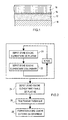
- Figure 1 shows very schematically in section a part of part comprising a metal substrate 10 made of superalloy provided with a protective coating.
- the protective coating comprises, from the surface of the substrate, a bonding underlay 12, an alumina film 14 covering the bonding underlay and an outer ceramic layer 16 hung on the alumina film.
- the bonding sublayer 12 which, with the alumina film 14, provides the bond between the substrate and the ceramic external layer, is formed essentially in an intermetallic compound of aluminum and platinum, such as Pt 8 Al 21 , PtAl 2 , Pt 2 Al 3 , PtAl, Pt 5 Al 3 , or a mixture thereof.
- Other elements can be added, including reactive elements chosen from yttrium, zirconium, hafnium and lanthanides which enhance the diffusion barrier function vis-à-vis of elements of the substrate likely to be detrimental to the holding of the protective coating, and which promote the persistence of the alumina film 14.
- Other metals can also be added which have a beneficial effect, for example rhenium or nickel and / or cobalt which improve the thermal stability of the coating.
- the alumina film 14 is produced by oxidation of the aluminum of the diffusion barrier. It provides a protective function against the corrosion by oxidation. It also ensures, by its "adhesive" character, the attachment of the external ceramic covering 16.
- the external ceramic coating 16 essentially provides a thermal insulation function. It is made of refractory oxide, such as zirconia, yttrium oxide or yttria zirconia. It can be formed by deposit vapor phase physics, for example by beam evaporation electronically or by plasma assisted evaporation, as is well known in itself.
- the method according to the invention relates mainly to the formation of the bonding underlayer 12.
- the bonding sublayer is formed by a plurality of elementary layers which are, alternatively, essentially constituted of platinum and aluminum.
- the first elementary layer deposited on the substrate is a layer consisting essentially of platinum, which is less likely to diffuse into the metal substrate than aluminum.
- the last elementary layer is also preferably a layer essentially consisting of platinum because it is not likely to oxidize in air or under partial pressure of oxygen at the end of the development of the bonding sub-layer.
- the total number of layers deposited is therefore equal to 2N + 1, N being an integer equal or greater at 1.
- a heat treatment phase 26 is carried out of so as to form an intermetallic compound by exothermic reaction between platinum and aluminum of the elementary layers formed.
- the heat treatment is carried out at moderate temperature, at most equal to 900 ° C, for example of the order of 700 ° C, so that a diffusion of elements metal substrate in the adjacent part of the compound intermetallic is not favored.
- Heat treatment is carried out under a non-oxidizing atmosphere, for example under vacuum or atmosphere neutral for a period of between 0.5 and 3 h, for example approximately 2 hrs.
- a thin film of alumina develops at the surface of the bonding undercoat thus obtained during an exposure subsequent to an oxidizing medium.
- An outer ceramic layer is then formed on the bonding undercoat obtained (phase 28), with film growth alumina.
- the elementary layers are made with a thickness individual, at least for aluminum, less than 2000 nm, of preferably at most equal to 1500 nm. This thickness can be chosen significantly below this threshold, for example at most equal to 200 nm. A such a relatively small thickness will be chosen if, after treatment thermal, we want to obtain a homogeneous structure, i.e. leaving no trace of the realization of the underlayment of bond in superimposed layers.
- the number N of sequences is determined according to the thicknesses of the elementary layers and of the desired total thickness for the bonding sub-layer.
- This total thickness is advantageously less than 50 ⁇ m, typically between 3 ⁇ m and 30 ⁇ m, so that the number 2N + 1 of elementary layers can vary from several units to several tens, or even several hundreds.
- the elementary platinum layers and those aluminum, as deposited may have thicknesses different, the ratio between the total thickness of the platinum layers and the total thickness of the aluminum layers being a function of the stoichiometry of the desired intermetallic compound.
- the relationship between thicknesses of platinum and aluminum layers can be maintained constant, or vary in a controlled manner during the deposition process. In the latter case, after heat treatment, an undercoat is obtained of connection with variation of the composition of the compound intermetallic in the thickness of the underlay.
- the thickness may vary during the deposition process, for a given ratio between the thicknesses of the platinum layers and aluminum.
- the deposition of elementary layers of platinum and aluminum is achieved by cathode sputtering, this process allowing enough control precisely the quantity of metal deposited, therefore the thickness of the layers elementary.
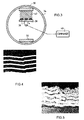
- Figure 3 is a very schematic view of a mode of realization of a cathode sputtering installation usable for the implementation of the process.
- Targets constituting sources of platinum and aluminum in the form of bulk samples 30, 32 are fixed on two sides opposite of the internal wall of a sealed chamber 34.
- Parts 36, or metallic substrates in superalloy to be coated, are fixed on a support of rotating parts 38 inside the chamber 34.
- the movement of the support 38 is controlled by a unit of programmed control 40 acting on a motor (not shown) driving the support 38 so as to bring the substrates 36 alternately opposite targets 30 and 32.
- the chamber 34 having been placed under vacuum, argon is introduced into the chamber through a pipe and the pressure in the chamber is adjusted to a value of approximately 1 Pa (10 -2 mbar).
- the gas contained in the chamber is ionized, creating a plasma 42.
- Argon ions are accelerated towards the target and dislodge metallic atoms under the effect of impact energy.
- the dislodged metal atoms are deposited on the substrates.
- the excitation of the target can be achieved by applying a continuous voltage to the target for example between -250 V and -350 V.
- the polarization of the substrates 36 and of the targets 30, 32 and the durations of the elementary deposition phases are controlled by the unit control 40 according to a preset program to obtain a bonding underlayment of desired composition and total thickness.
- the deposition of at least one additional metal and / or at least a reactive element within the bonding sub-layer can be produced using one or more additional targets.
- elementary layers can then be formed at regular intervals in all platinum and aluminum layers by order appropriate positioning of the substrates.
- Physical vapor deposition methods other than sputtering can be used which also allow to form very thin elementary layers with precise control of their composition. These other processes are by example physical vapor deposition by electron bombardment (EBPVD) or arc evaporation, with or without the assistance of a plasma.
- EBPVD electron bombardment
- arc evaporation with or without the assistance of a plasma.
- a high pressure turbine blade metal substrate of turbojet engine made of nickel-based superalloy, has an undercoat of bonding into an intermetallic compound as follows:
- Figure 4 shows the basic platinum layers (color clear) and aluminum (dark color) as obtained after deposit.
- a heat treatment under an inert atmosphere (argon) at 700 ° C for 2 ha was then carried out.
- a bonding sublayer of total thickness equal to approximately 7.8 microns and of an intermetallic compound of the PtAl 2 type was obtained.
- FIG. 5 shows in section the structure of the underlay of link. It is noted that the aluminum has diffused within the layers of platinum and the laminated nature remains apparent.
- a conventional type adhesion test was carried out on the bonding underlayment by fixing an adhesive tape to its surface and uprooting of it. Despite the laminated structure of the underlay bonding, good adhesion to the substrate and inter-layers elementary is observed.
- EDS dispersion spectroscopy of energy
- a bonding underlay having substantially the same total thickness and same composition as that of Example 1 was formed on the same substrate as that of Example 1 and in analogous conditions, except that it was made by depositing 3 layers elementary platinum thickness equal to 833 nm alternating with 2 elementary layers of aluminum with a thickness equal to 2650 nm.
- the adhesion tests carried out under the same conditions as in Example 1 showed poor adhesion to the substrate.
- Furthermore the external surface of the underlay has defects (depressions) revealing localized aluminum fusions.
- Example 1 An analysis carried out as in Example 1 reveals that the underlay consists only of filler elements (aluminum and platinum) and does not contain traces of the elements of the substrate.
- Example 2 On a superalloy substrate identical to that of the example 3, two elementary layers of thick platinum have been deposited equal to approximately 450 nm and an intermediate layer of aluminum of a thickness approximately equal to 2000 nm. After heat treatment, the still laminated structure is brittle and the external appearance reveals local fusions of the aluminum layer, as in Example 2.
- Examples 2 and 4 show that during the heat treatment, aluminum is produced which, due to the excessively large layer thickness, cannot diffuse completely and sufficiently quickly in platinum to form an intermetallic compound having a higher melting temperature. It is therefore desirable to limit the thickness of the elementary layers, in particular the layers aluminum, to promote the rapid formation of a compound intermetallic.
- the maximum thickness must be less than 2000 nm, preferably less than 1500 nm.
- a high pressure turbine blade metal substrate of turbojet engine made of nickel-based superalloy, has an undercoat bonding to an intermetallic compound under the conditions following.
- a heat treatment under an inert atmosphere (argon) for 2 ha was then carried out.
- a bonding sublayer of total thickness approximately equal to 7.8 microns and in an intermetallic compound of the PtAl 2 type was obtained.
- Figure 6 shows in section the structure of the underlay of connection obtained. We see that the structure is homogeneous and does not retains no laminated appearance.
- a high pressure turbine blade metal substrate of turbojet engine made of nickel-based superalloy, has an undercoat bonding to an intermetallic compound under the conditions following:
- 40 elementary platinum layers with a thickness of approximately 70 nm have been deposited alternately with 40 elementary layers of aluminum approximately 130 nm thick and 40 layers elementary nickel with a thickness of approximately 50 nm.
- an undercoat of total thickness approximately equal to 10 ⁇ m is obtained by exothermic reaction between the deposited layers.
- the sublayer obtained is made of an intermetallic compound NiPtAl 2 and its structure is homogeneous.
- a multilayer bonding underlayment of compositions was formed on a nickel-based superalloy substrate using the installation in Figure 3.
- Each floor, or phase has been formed by depositing a total of 50 alternately layers of platinum and of relatively thin aluminum, and the floors were separated by a pair of additional platinum and aluminum layers large thicknesses.
- the ratio between the thicknesses of the layers of platinum and aluminum in the stages, or phases worth not uniform, so as to obtain a layered underlay, or multiphase, with intermetallic compounds having compositions different at different levels of the underlay.
- each elementary layer of platinum had a thickness of approximately 13 nm and each elementary layer of aluminum had a thickness of approximately 27 nm in order to obtain, after heat treatment, an intermetallic compound of PtAl 2 .
- each elementary layer of platinum had a thickness of 20 nm and each elementary layer of aluminum had a thickness of approximately 20 nm in order to obtain this times the intermetallic compound PtAl.
- each elementary layer of platinum had a thickness of approximately 10 nm and each elementary layer of aluminum had a thickness of approximately 30 nm.
- a heat treatment at 700 ° C for 2 h was then performed to trigger an exothermic reaction between the layers elementary.
- the structure of the underlay obtained after heat treatment was laminated at thicker and more homogeneous layers at the level of the more fines.
- the deposition of the sublayer was carried out continuously through controlled and automatic programming of the installation of the figure 3.
- the realization of a bonding sub-layer with staging of the composition of the intermetallic compound allows assigning special functions at different levels of the underlay.
- An element reagent and / or additional metal can be added in one or several floors of the underlay.
- Such a laminated macrostructure could also be adopted in the case where the composition of the intermetallic compound is the same in each floor, i.e. with a constant relationship between the thicknesses of the layers in the floors (which does not mean necessarily a constant thickness for the platinum layers and for aluminum layers).
- composition of the compound intermetallic can be performed without periodically depositing thicker bi-layers, the sub-layer can then have an appearance globally homogeneous.
Landscapes
- Chemical & Material Sciences (AREA)
- Engineering & Computer Science (AREA)
- Chemical Kinetics & Catalysis (AREA)
- Materials Engineering (AREA)
- Mechanical Engineering (AREA)
- Metallurgy (AREA)
- Organic Chemistry (AREA)
- Inorganic Chemistry (AREA)
- Ceramic Engineering (AREA)
- Physical Vapour Deposition (AREA)
- Turbine Rotor Nozzle Sealing (AREA)
- Other Surface Treatments For Metallic Materials (AREA)
Abstract
Description
- de permettre la formation et la persistance à sa surface d'un film d'alumine ayant des propriétés "adhésives" pour favoriser l'accrochage de la couche céramique externe,
- de protéger le substrat de la corrosion par oxydation par de l'oxygène du milieu ambiant ayant pu traverser la couche céramique externe, et
- de constituer une barrière de diffusion vis-à-vis d'éléments du substrat métallique qui seraient susceptibles de contaminer le film d'alumine et, par voie de conséquence, d'affecter l'interface entre la sous-couche de liaison et la couche céramique externe, donc d'affecter l'adhérence de cette dernière.
- la figure 1 est une vue partielle à échelle agrandie d'un substrat métallique en superalliage muni d'un revêtement de protection,
- la figure 2 montre les étapes successives d'un mode de mise en oeuvre du procédé selon l'invention ;
- la figure 3 est une vue très schématique d'une installation de dépôt physique en phase vapeur utilisable lors de la mise en oeuvre d'un procédé selon l'invention ;
- les figures 4 et 5 sont des microphotographies qui montrent la structure d'une sous-couche de liaison d'un revêtement de protection obtenue suivant un exemple de mise en oeuvre d'un procédé selon l'invention, avant et après traitement thermique ; et
- les figures 6 et 7 sont des microphotographies qui montrent la structure de sous-couches de liaison obtenues suivant d'autres exemples de mise en oeuvre d'un procédé selon l'invention.
Claims (32)
- Procédé de réalisation d'un revêtement de protection formant barrière thermique sur un substrat métallique en superalliage, comprenant la formation, sur le substrat, d'une sous-couche de liaison en un composé intermétallique comprenant au moins de l'aluminium et un métal du groupe du platine, et la formation d'une couche externe en céramique qui s'ancre sur un film d'alumine présent à la surface de la sous-couche de liaison,
caractérisé en ce que la sous-couche de liaison est formée par dépôt physique en phase vapeur d'une pluralité de couches élémentaires alternativement en un métal du groupe du platine et en aluminium, et par réaction exothermique entre les métaux des couches formées. - Procédé selon la revendication 1, caractérisé en ce que, après dépôt des couches élémentaires, on réalise un traitement thermique afin de provoquer la formation du composé intermétallique par réaction entre les métaux des couches déposées.
- Procédé selon la revendication 2, caractérisé en ce que le traitement thermique est réalisé à une température au plus égale à 900°C.
- Procédé selon l'une quelconque des revendications 1 à 3, caractérisé en ce que l'on forme une sous-couche de liaison ayant une épaisseur totale inférieure à 50 µm.
- Procédé selon la revendication 4, caractérisé en ce que l'on forme une sous-couche de liaison ayant une épaisseur totale comprise entre 3 et 30 µm.
- Procédé selon l'une quelconque des revendications 1 à 5, caractérisé en ce que l'on forme des couches élémentaires ayant chacune, au moins pour l'aluminium, une épaisseur inférieure à 2 000 nm, de préférence au plus égale à 1 500 nm.
- Procédé selon la revendication 6, caractérisé en ce que l'on forme des couches élémentaires ayant chacune une épaisseur au plus égale à 200 nm.
- Procédé selon l'une quelconque des revendications 1 à 7, caractérisé en ce que la première et la dernière couche élémentaire déposées sont des couches comprenant le métal du groupe du platine.
- Procédé selon l'une quelconque des revendications 1 à 8, caractérisé en ce qu'au moins un élément réactif est déposé en plus du métal du groupe du platine et de l'aluminium, pour être introduit dans la sous-couche de liaison.
- Procédé selon la revendication 9, caractérisé en ce que l'élément réactif est choisi parmi l'yttrium, le zirconium, l'hafnium et les lanthanides.
- Procédé selon l'une quelconque des revendications 9 et 10, caractérisé en ce que l'élément réactif est codéposé avec le métal du groupe du platine et/ou avec l'aluminium.
- Procédé selon l'une quelconque des revendications 1 à 11, caractérisé en ce qu'au moins un métal autre que le platine et l'aluminium est déposé pour être introduit dans la sous-couche de liaison.
- Procédé selon l'une quelconque des revendications 1 à 12, caractérisé en ce que les couches élémentaires sont formées par pulvérisation cathodique au moyen d'au moins une première cible constituant une source du métal du groupe du platine et une deuxième cible constituant une source d'aluminium.
- Procédé selon la revendication 13, caractérisé en ce que l'on monte un substrat métallique en superalliage sur un support et l'on commande automatiquement un déplacement relatif entre les cibles et le support pour former les couches élémentaires par exposition du substrat alternativement à la première et à la deuxième cible pendant des durées prédéterminées.
- Procédé selon l'une quelconque des revendications 13 et 14, caractérisé en ce que l'on utilise au moins une cible constituant une source d'élément réactif.
- Procédé selon la revendication 15, caractérisé en ce que l'une au moins des première et deuxième cibles comprend l'élément réactif sous forme alliée.
- Procédé selon l'une quelconque des revendications 13 à 16, caractérisé en ce que l'on utilise au moins une cible constituant une source de métal supplémentaire autre que le platine et l'aluminium.
- Procédé selon l'une quelconque des revendications 1 à 17, caractérisé en ce que l'épaisseur des couches élémentaires de platine telles que déposées est variable.
- Procédé selon l'une quelconque des revendications 1 à 18, caractérisé en ce que l'épaisseur des couches élémentaires d'aluminium telles que déposées est variable.
- Procédé selon l'une quelconque des revendications 1 à 19, caractérisé en ce que l'on fait varier le rapport entre les épaisseurs des couches de platine et des couches d'aluminium, telles que déposées, de façon contrôlée.
- Procédé selon l'une quelconque des revendications 1 à 20, caractérisé en ce que l'on réalise la sous-couche de liaison sous forme étagée, la formation de chaque étage comprenant le dépôt d'une pluralité de couches de platine alternant avec des couches d'aluminium.
- Procédé selon la revendication 21, caractérisé en ce que le rapport entre les épaisseurs des couches de platine et des couches d'aluminium prend des valeurs différentes pour différents étages.
- Pièce de turbine à gaz comprenant un substrat métallique en superalliage, une sous-couche de liaison formée sur le substrat et réalisée en un composé intermétallique comprenant un métal du groupe du platine et de l'aluminium, un film adhésif d'alumine formé à la surface de la sous-couche de liaison et un revêtement externe en céramique ancré sur le film d'alumine,
caractérisée en ce que la sous-couche de liaison a une épaisseur inférieure à 50 µm. - Pièce de turbine à gaz selon la revendication 23, caractérisée en ce que la sous-couche de liaison a une épaisseur comprise entre 3 et 30 µm.
- Pièce de turbine à gaz selon l'une quelconque des revendications 23 et 24, caractérisée en ce que la sous-couche de liaison est exempte d'éléments diffusés du substrat.
- Pièce de turbine à gaz selon l'une quelconque des revendications 23 à 25, caractérisée en ce que la sous-couche de liaison comprend en outre au moins un élément réactif choisi parmi le groupe constitué par l'yttrium, le zirconium, l'hafnium et les lanthanides.
- Pièce de turbine à gaz selon l'une quelconque des revendications 23 à 26, caractérisée en ce que la sous-couche de liaison comprend en outre au moins un métal supplémentaire autre que le platine et l'aluminium.
- Pièce de turbine à gaz selon l'une quelconque des revendications 23 à 27, caractérisée en ce que la sous-couche de liaison présente une structure sensiblement homogène.
- Pièce de turbine à gaz selon l'une quelconque des revendications 23 à 27, caractérisée en ce que la sous-couche de liaison présente une structure feuilletée.
- Pièce de turbine à gaz selon l'une quelconque des revendications 23 à 29, caractérisée en ce que la sous-couche de liaison a une composition variable contrôlée dans son épaisseur.
- Pièce de turbine à gaz selon l'une quelconque des revendications 23 à 30, caractérisée en ce que la sous-couche de liaison présente plusieurs étages, ou phases, superposés distincts.
- Pièce de turbine à gaz selon la revendication 31, caractérisée en ce que la sous-couche de liaison présente des étages de compositions différentes.
Applications Claiming Priority (2)
| Application Number | Priority Date | Filing Date | Title |
|---|---|---|---|
| FR0012145 | 2000-09-25 | ||
| FR0012145A FR2814473B1 (fr) | 2000-09-25 | 2000-09-25 | Procede de realisation d'un revetement de protection formant barriere thermique avec sous-couche de liaison sur un substrat en superalliage et piece obtenue |
Publications (2)
| Publication Number | Publication Date |
|---|---|
| EP1191125A1 true EP1191125A1 (fr) | 2002-03-27 |
| EP1191125B1 EP1191125B1 (fr) | 2010-07-28 |
Family
ID=8854620
Family Applications (1)
| Application Number | Title | Priority Date | Filing Date |
|---|---|---|---|
| EP01402411A Expired - Lifetime EP1191125B1 (fr) | 2000-09-25 | 2001-09-20 | Procédé de réalisation d'un revêtement de barrière thermique |
Country Status (8)
| Country | Link |
|---|---|
| US (2) | US6645351B2 (fr) |
| EP (1) | EP1191125B1 (fr) |
| JP (1) | JP4971567B2 (fr) |
| CA (1) | CA2357583C (fr) |
| DE (1) | DE60142673D1 (fr) |
| FR (1) | FR2814473B1 (fr) |
| RU (1) | RU2287609C2 (fr) |
| UA (1) | UA73116C2 (fr) |
Cited By (3)
| Publication number | Priority date | Publication date | Assignee | Title |
|---|---|---|---|---|
| EP1944387A1 (fr) * | 2006-12-29 | 2008-07-16 | General Electric Company | Système et procédé pour rétablir ou régénérer un article |
| CN100457441C (zh) * | 2003-10-10 | 2009-02-04 | 通用电气公司 | 纳米多层结构、部件以及相关的生产方法 |
| WO2018078246A1 (fr) * | 2016-10-27 | 2018-05-03 | Safran | Pièce comprenant un substrat en superalliage monocristallin à base de nickel et son procédé de fabrication |
Families Citing this family (30)
| Publication number | Priority date | Publication date | Assignee | Title |
|---|---|---|---|---|
| US6884515B2 (en) * | 2002-12-20 | 2005-04-26 | General Electric Company | Afterburner seals with heat rejection coats |
| FR2860790B1 (fr) | 2003-10-09 | 2006-07-28 | Snecma Moteurs | Cible destinee a etre evaporee sous faisceau d'electrons, son procede de fabrication, barriere thermique et revetement obtenus a partir d'une cible, et piece mecanique comportant un tel revetement |
| FR2861423B1 (fr) * | 2003-10-28 | 2008-05-30 | Snecma Moteurs | Piece de turbine a gaz muni d'un revetement de protection et procede de realisation d'un revetement de protection sur un substrat metallique en superalliage |
| DE10355036A1 (de) * | 2003-11-25 | 2005-06-23 | Mtu Aero Engines Gmbh | Verfahren zur Herstellung einer Schutzschicht, Schutzschicht und Bauteil mit einer solchen Schutzschicht |
| SG127768A1 (en) * | 2005-05-27 | 2006-12-29 | Turbine Overhaul Services Priv | Thermal barrier coating |
| CA2564539C (fr) * | 2005-11-14 | 2014-05-06 | Sulzer Metco Coatings B.V. | Procede de revetement d'un corps de base avec de l'aluminure modifie parle platine de type ptma1 au moyen d'un depot physique hors de la phase vapeur |
| US7531220B2 (en) * | 2006-02-07 | 2009-05-12 | Honeywell International Inc. | Method for forming thick quasi-single phase and single phase platinum nickel aluminide coatings |
| US7527877B2 (en) * | 2006-10-27 | 2009-05-05 | General Electric Company | Platinum group bond coat modified for diffusion control |
| US20100254820A1 (en) * | 2006-12-29 | 2010-10-07 | Michael Patrick Maly | Article with restored or regenerated structure |
| KR20100015732A (ko) * | 2007-04-17 | 2010-02-12 | 슐저메트코(유에스)아이엔씨 | 보호 코팅 및 그것의 형성 방법 |
| US20090075115A1 (en) * | 2007-04-30 | 2009-03-19 | Tryon Brian S | Multi-layered thermal barrier coating |
| SG155778A1 (en) * | 2008-03-10 | 2009-10-29 | Turbine Overhaul Services Pte | Method for diffusion bonding metallic components with nanoparticle foil |
| EP2128306B1 (fr) * | 2008-05-26 | 2015-04-29 | Siemens Aktiengesellschaft | Système de revêtement de barrière thermique en céramique avec deux couches de céramique |
| US20100243464A1 (en) * | 2009-03-26 | 2010-09-30 | Honeywell International Inc. | Methods of forming coatings on substrates |
| RU2423551C2 (ru) * | 2009-09-23 | 2011-07-10 | Общество с ограниченной ответственностью "Производственное предприятие Турбинаспецсервис" | Способ формирования теплозащитного покрытия |
| FR2959244B1 (fr) | 2010-04-23 | 2012-06-29 | Commissariat Energie Atomique | Procede de preparation d'un revetement multicouche sur une surface d'un substrat par projection thermique. |
| US20120189778A1 (en) * | 2011-01-26 | 2012-07-26 | Riewe Curtis H | Coating method using ionic liquid |
| US8807955B2 (en) * | 2011-06-30 | 2014-08-19 | United Technologies Corporation | Abrasive airfoil tip |
| CN102994954A (zh) * | 2011-09-09 | 2013-03-27 | 鸿富锦精密工业(深圳)有限公司 | 镀膜件及其制备方法 |
| GB2501247A (en) * | 2012-04-11 | 2013-10-23 | Univ Swansea | Counter Electrode for a Dye-Sensitised Solar Cell |
| EP2662474A1 (fr) * | 2012-05-07 | 2013-11-13 | Siemens Aktiengesellschaft | Procédé destiné à lýapplication dýune couche de protection sur un composant de turbine |
| EP2662529A1 (fr) * | 2012-05-09 | 2013-11-13 | Siemens Aktiengesellschaft | Profil d'aube avec revêtement d'adhérence en MCrAlY et bouclier thermique, agencement d'aubes et procédé de fabrication associés |
| RU2516366C2 (ru) * | 2012-09-10 | 2014-05-20 | Федеральное государственное бюджетное образовательное учреждение высшего профессионального образования "Северо-Осетинский государственный университет имени Коста Левановича Хетагурова" (СОГУ) | СПОСОБ ОСАЖДЕНИЯ НАНОРАЗМЕРНОЙ ПЛЕНКИ АЛЬФА-Al2O3 (0001) НА МЕТАЛЛИЧЕСКИЕ ПОДЛОЖКИ |
| ES2932411T3 (es) * | 2013-11-03 | 2023-01-18 | Oerlikon Surface Solutions Ag Pfaeffikon | Capa de barrera a la oxidación |
| RU2704949C2 (ru) * | 2014-12-19 | 2019-10-31 | Сандвик Интеллекчуал Проперти Аб | Режущий инструмент с хогф-покрытием |
| FR3052464B1 (fr) * | 2016-06-10 | 2018-05-18 | Safran | Procede de protection contre la corrosion et l'oxydation d'une piece en superalliage monocristallin a base de nickel exempt d'hafnium |
| CN111765033B (zh) * | 2019-04-02 | 2021-12-17 | 南京华电节能环保设备有限公司 | 一种高温熔渣回收发电用叶轮 |
| CA3043564C (fr) * | 2019-05-15 | 2026-02-10 | Safran | Procede de formation d'une couche d'alumine a la surface d'un substrat metallique |
| CN113122844A (zh) * | 2021-04-27 | 2021-07-16 | 南昌航空大学 | 一种在镍基合金表面微弧氧化-等离子溅射制备复合涂层的方法 |
| US20240229244A9 (en) * | 2022-10-24 | 2024-07-11 | General Electric Company | Coating system for components in need of repair |
Citations (4)
| Publication number | Priority date | Publication date | Assignee | Title |
|---|---|---|---|---|
| US5292594A (en) * | 1990-08-27 | 1994-03-08 | Liburdi Engineering, Ltd. | Transition metal aluminum/aluminide coatings |
| US5490911A (en) * | 1993-11-26 | 1996-02-13 | The United States Of America As Represented By The Department Of Energy | Reactive multilayer synthesis of hard ceramic foils and films |
| US5856027A (en) * | 1995-03-21 | 1999-01-05 | Howmet Research Corporation | Thermal barrier coating system with intermediate phase bondcoat |
| EP0985744A1 (fr) * | 1998-09-08 | 2000-03-15 | General Electric Company | Préparation de couches de platine à faible teneur en soufre et de couches d'aluminures de platine dans des revêtements de barrière thermique |
Family Cites Families (6)
| Publication number | Priority date | Publication date | Assignee | Title |
|---|---|---|---|---|
| US4346137A (en) * | 1979-12-19 | 1982-08-24 | United Technologies Corporation | High temperature fatigue oxidation resistant coating on superalloy substrate |
| US5824423A (en) * | 1996-02-07 | 1998-10-20 | N.V. Interturbine | Thermal barrier coating system and methods |
| GB9612811D0 (en) * | 1996-06-19 | 1996-08-21 | Rolls Royce Plc | A thermal barrier coating for a superalloy article and a method of application thereof |
| DE69708541T2 (de) * | 1996-07-23 | 2002-05-08 | Chromalloy United Kingdom Ltd., Eastwood | Verfahren zur Aluminisierung einer Superlegierung |
| US6485845B1 (en) * | 2000-01-24 | 2002-11-26 | General Electric Company | Thermal barrier coating system with improved bond coat |
| US6485844B1 (en) * | 2000-04-04 | 2002-11-26 | Honeywell International, Inc. | Thermal barrier coating having a thin, high strength bond coat |
-
2000
- 2000-09-25 FR FR0012145A patent/FR2814473B1/fr not_active Expired - Fee Related
-
2001
- 2001-09-20 DE DE60142673T patent/DE60142673D1/de not_active Expired - Lifetime
- 2001-09-20 CA CA002357583A patent/CA2357583C/fr not_active Expired - Lifetime
- 2001-09-20 EP EP01402411A patent/EP1191125B1/fr not_active Expired - Lifetime
- 2001-09-20 RU RU2001125702/02A patent/RU2287609C2/ru active
- 2001-09-21 JP JP2001288404A patent/JP4971567B2/ja not_active Expired - Lifetime
- 2001-09-24 UA UA2001096532A patent/UA73116C2/uk unknown
- 2001-09-24 US US09/960,353 patent/US6645351B2/en not_active Expired - Lifetime
-
2003
- 2003-06-05 US US10/454,684 patent/US7011894B2/en not_active Expired - Lifetime
Patent Citations (4)
| Publication number | Priority date | Publication date | Assignee | Title |
|---|---|---|---|---|
| US5292594A (en) * | 1990-08-27 | 1994-03-08 | Liburdi Engineering, Ltd. | Transition metal aluminum/aluminide coatings |
| US5490911A (en) * | 1993-11-26 | 1996-02-13 | The United States Of America As Represented By The Department Of Energy | Reactive multilayer synthesis of hard ceramic foils and films |
| US5856027A (en) * | 1995-03-21 | 1999-01-05 | Howmet Research Corporation | Thermal barrier coating system with intermediate phase bondcoat |
| EP0985744A1 (fr) * | 1998-09-08 | 2000-03-15 | General Electric Company | Préparation de couches de platine à faible teneur en soufre et de couches d'aluminures de platine dans des revêtements de barrière thermique |
Non-Patent Citations (2)
| Title |
|---|
| DATABASE COMPENDEX [online] ENGINEERING INFORMATION, INC., NEW YORK, NY, US; NICHOLLS J R ET AL: "Platinum aluminide diffusion barrier for the oxidation protection of titanium and titanium intermetallic alloys", XP002170022, Database accession no. EIX96433304466 * |
| PROCEEDINGS OF THE 1996 125TH TMS ANNUAL MEETING;ANAHEIM, CA, USA FEB 4-8 1996, 1996, Warrendale, PA, USA, pages 199 - 208 * |
Cited By (7)
| Publication number | Priority date | Publication date | Assignee | Title |
|---|---|---|---|---|
| CN100457441C (zh) * | 2003-10-10 | 2009-02-04 | 通用电气公司 | 纳米多层结构、部件以及相关的生产方法 |
| EP1944387A1 (fr) * | 2006-12-29 | 2008-07-16 | General Electric Company | Système et procédé pour rétablir ou régénérer un article |
| WO2018078246A1 (fr) * | 2016-10-27 | 2018-05-03 | Safran | Pièce comprenant un substrat en superalliage monocristallin à base de nickel et son procédé de fabrication |
| FR3058164A1 (fr) * | 2016-10-27 | 2018-05-04 | Safran | Piece comprenant un substrat en superalliage monocristallin a base de nickel et son procede de fabrication. |
| CN109891001A (zh) * | 2016-10-27 | 2019-06-14 | 赛峰集团 | 包括镍基单晶超合金基板的部件及其制造方法 |
| RU2738628C2 (ru) * | 2016-10-27 | 2020-12-15 | Сафран | Деталь с подложкой из монокристаллического суперсплава на основе никеля и способ её изготовления |
| US10982333B2 (en) | 2016-10-27 | 2021-04-20 | Safran | Part comprising a nickel-based monocrystalline superalloy substrate and method for manufacturing same |
Also Published As
| Publication number | Publication date |
|---|---|
| JP4971567B2 (ja) | 2012-07-11 |
| US20020037220A1 (en) | 2002-03-28 |
| CA2357583C (fr) | 2009-02-17 |
| JP2002194531A (ja) | 2002-07-10 |
| US7011894B2 (en) | 2006-03-14 |
| US6645351B2 (en) | 2003-11-11 |
| UA73116C2 (uk) | 2005-06-15 |
| DE60142673D1 (de) | 2010-09-09 |
| EP1191125B1 (fr) | 2010-07-28 |
| US20040028938A1 (en) | 2004-02-12 |
| FR2814473A1 (fr) | 2002-03-29 |
| FR2814473B1 (fr) | 2003-06-27 |
| CA2357583A1 (fr) | 2002-03-25 |
| RU2287609C2 (ru) | 2006-11-20 |
Similar Documents
| Publication | Publication Date | Title |
|---|---|---|
| EP1191125B1 (fr) | Procédé de réalisation d'un revêtement de barrière thermique | |
| EP1528118A2 (fr) | Pièce de turbine à gaz muni d'un revêtement de protection et procédé de sa réalisation | |
| CA2196744C (fr) | Revetement de barriere thermique a sous-couche amelioree et pieces revetues par une telle barriere thermique | |
| EP3538500B1 (fr) | Piece de turbomachine revetue d'une barriere thermique et procede pour l'obtenir. | |
| EP1277854A1 (fr) | Procede de réparation locale de pièces revétues barrière thermique | |
| CA2868953C (fr) | Procede d'obtention d'un revetement d'aluminiure de nickel de type .beta.-nia1 sur un substrat metallique, et piece munie d'un tel revetement | |
| FR2757181A1 (fr) | Procede de realisation d'un revetement protecteur a haute efficacite contre la corrosion a haute temperature pour superalliages, revetement protecteur obtenu par ce procede et pieces protegees par ce revetement | |
| EP0905281B1 (fr) | Procédé pour améliorer la résistance à l'oxydation et à la corrosion d'une pièce en superalliage et pièce en superalliage obtenue par ce procédé | |
| CA2769196C (fr) | Piece comportant un substrat portant une couche de revetement ceramique | |
| EP1141442B1 (fr) | PROCEDE POUR PRODUIRE UNE POUDRE D'ALLIAGE METALLIQUE DE TYPE MCrAlY ET REVETEMENTS OBTENUS AVEC CETTE POUDRE | |
| CA2626908C (fr) | Barriere thermique deposee directement sur superalliages monocristallins | |
| EP3469112A1 (fr) | Procédé de protection contre la corrosion et l'oxydation d'une pièce en superalliage monocristallin à base de nickel exempt d'hafnium | |
| FR2813318A1 (fr) | Formation d'un revetement aluminiure incorporant un element reactif, sur un substrat metallique | |
| WO2012146864A1 (fr) | Pièce comportant un revêtement sur un substrat métallique en superalliaae, le revêtement comprenant une sous-couche métallique | |
| FR3053076A1 (fr) | Piece de turbomachine revetue d'une barriere thermique et d'un revetement de protection contre les cmas et procede pour l'obtenir | |
| FR2941967A1 (fr) | Methode de fabrication d'une barriere thermique recouvrant une piece realisee dans un substrat metallique en superalliage et piece thermomecanique resultant de cette methode de traitement | |
| FR3141473A1 (fr) | Revêtement comprenant de l’hafnium | |
| FR3053075A1 (fr) | Piece de turbomachine revetue d'une barriere thermique et d'un revetement de protection contre les cmas et procede pour l'obtenir | |
| EP1600525A1 (fr) | Procédé de fabrication ou de réparation d'un revêtement sur un substrat métallique | |
| FR2999611A1 (fr) | Procede de fabrication d'un revetement et piece thermomecanique en superalliage comprenant un revetement obtenu selon ce procede |
Legal Events
| Date | Code | Title | Description |
|---|---|---|---|
| PUAI | Public reference made under article 153(3) epc to a published international application that has entered the european phase |
Free format text: ORIGINAL CODE: 0009012 |
|
| AK | Designated contracting states |
Kind code of ref document: A1 Designated state(s): AT BE CH CY DE DK ES FI FR GB GR IE IT LI LU MC NL PT SE TR Kind code of ref document: A1 Designated state(s): DE FR GB |
|
| AX | Request for extension of the european patent |
Free format text: AL;LT;LV;MK;RO;SI |
|
| 17P | Request for examination filed |
Effective date: 20020503 |
|
| AKX | Designation fees paid |
Free format text: DE FR GB |
|
| RAP1 | Party data changed (applicant data changed or rights of an application transferred) |
Owner name: SNECMA |
|
| 17Q | First examination report despatched |
Effective date: 20090820 |
|
| GRAP | Despatch of communication of intention to grant a patent |
Free format text: ORIGINAL CODE: EPIDOSNIGR1 |
|
| GRAS | Grant fee paid |
Free format text: ORIGINAL CODE: EPIDOSNIGR3 |
|
| GRAA | (expected) grant |
Free format text: ORIGINAL CODE: 0009210 |
|
| AK | Designated contracting states |
Kind code of ref document: B1 Designated state(s): DE FR GB |
|
| REG | Reference to a national code |
Ref country code: GB Ref legal event code: FG4D Free format text: NOT ENGLISH |
|
| REF | Corresponds to: |
Ref document number: 60142673 Country of ref document: DE Date of ref document: 20100909 Kind code of ref document: P |
|
| PLBE | No opposition filed within time limit |
Free format text: ORIGINAL CODE: 0009261 |
|
| STAA | Information on the status of an ep patent application or granted ep patent |
Free format text: STATUS: NO OPPOSITION FILED WITHIN TIME LIMIT |
|
| 26N | No opposition filed |
Effective date: 20110429 |
|
| REG | Reference to a national code |
Ref country code: DE Ref legal event code: R097 Ref document number: 60142673 Country of ref document: DE Effective date: 20110429 |
|
| REG | Reference to a national code |
Ref country code: FR Ref legal event code: PLFP Year of fee payment: 16 |
|
| REG | Reference to a national code |
Ref country code: FR Ref legal event code: PLFP Year of fee payment: 17 |
|
| REG | Reference to a national code |
Ref country code: FR Ref legal event code: CD Owner name: SAFRAN AIRCRAFT ENGINES, FR Effective date: 20170719 |
|
| REG | Reference to a national code |
Ref country code: FR Ref legal event code: PLFP Year of fee payment: 18 |
|
| PGFP | Annual fee paid to national office [announced via postgrant information from national office to epo] |
Ref country code: FR Payment date: 20200819 Year of fee payment: 20 Ref country code: GB Payment date: 20200819 Year of fee payment: 20 Ref country code: DE Payment date: 20200819 Year of fee payment: 20 |
|
| REG | Reference to a national code |
Ref country code: DE Ref legal event code: R071 Ref document number: 60142673 Country of ref document: DE |
|
| REG | Reference to a national code |
Ref country code: GB Ref legal event code: PE20 Expiry date: 20210919 |
|
| PG25 | Lapsed in a contracting state [announced via postgrant information from national office to epo] |
Ref country code: GB Free format text: LAPSE BECAUSE OF EXPIRATION OF PROTECTION Effective date: 20210919 |