EP1190087B1 - Hydroxylation of compactin to pravastatin by micromonospora - Google Patents
Hydroxylation of compactin to pravastatin by micromonospora Download PDFInfo
- Publication number
- EP1190087B1 EP1190087B1 EP00944121A EP00944121A EP1190087B1 EP 1190087 B1 EP1190087 B1 EP 1190087B1 EP 00944121 A EP00944121 A EP 00944121A EP 00944121 A EP00944121 A EP 00944121A EP 1190087 B1 EP1190087 B1 EP 1190087B1
- Authority
- EP
- European Patent Office
- Prior art keywords
- micromonospora
- compound
- strain
- pravastatin
- idr
- Prior art date
- Legal status (The legal status is an assumption and is not a legal conclusion. Google has not performed a legal analysis and makes no representation as to the accuracy of the status listed.)
- Expired - Lifetime
Links
Classifications
-
- C—CHEMISTRY; METALLURGY
- C12—BIOCHEMISTRY; BEER; SPIRITS; WINE; VINEGAR; MICROBIOLOGY; ENZYMOLOGY; MUTATION OR GENETIC ENGINEERING
- C12P—FERMENTATION OR ENZYME-USING PROCESSES TO SYNTHESISE A DESIRED CHEMICAL COMPOUND OR COMPOSITION OR TO SEPARATE OPTICAL ISOMERS FROM A RACEMIC MIXTURE
- C12P7/00—Preparation of oxygen-containing organic compounds
- C12P7/40—Preparation of oxygen-containing organic compounds containing a carboxyl group including Peroxycarboxylic acids
- C12P7/42—Hydroxy-carboxylic acids
-
- C—CHEMISTRY; METALLURGY
- C12—BIOCHEMISTRY; BEER; SPIRITS; WINE; VINEGAR; MICROBIOLOGY; ENZYMOLOGY; MUTATION OR GENETIC ENGINEERING
- C12N—MICROORGANISMS OR ENZYMES; COMPOSITIONS THEREOF; PROPAGATING, PRESERVING, OR MAINTAINING MICROORGANISMS; MUTATION OR GENETIC ENGINEERING; CULTURE MEDIA
- C12N1/00—Microorganisms; Compositions thereof; Processes of propagating, maintaining or preserving microorganisms or compositions thereof; Processes of preparing or isolating a composition containing a microorganism; Culture media therefor
- C12N1/20—Bacteria; Culture media therefor
- C12N1/205—Bacterial isolates
-
- C—CHEMISTRY; METALLURGY
- C12—BIOCHEMISTRY; BEER; SPIRITS; WINE; VINEGAR; MICROBIOLOGY; ENZYMOLOGY; MUTATION OR GENETIC ENGINEERING
- C12P—FERMENTATION OR ENZYME-USING PROCESSES TO SYNTHESISE A DESIRED CHEMICAL COMPOUND OR COMPOSITION OR TO SEPARATE OPTICAL ISOMERS FROM A RACEMIC MIXTURE
- C12P17/00—Preparation of heterocyclic carbon compounds with only O, N, S, Se or Te as ring hetero atoms
- C12P17/02—Oxygen as only ring hetero atoms
- C12P17/06—Oxygen as only ring hetero atoms containing a six-membered hetero ring, e.g. fluorescein
-
- C—CHEMISTRY; METALLURGY
- C12—BIOCHEMISTRY; BEER; SPIRITS; WINE; VINEGAR; MICROBIOLOGY; ENZYMOLOGY; MUTATION OR GENETIC ENGINEERING
- C12R—INDEXING SCHEME ASSOCIATED WITH SUBCLASSES C12C - C12Q, RELATING TO MICROORGANISMS
- C12R2001/00—Microorganisms ; Processes using microorganisms
- C12R2001/01—Bacteria or Actinomycetales ; using bacteria or Actinomycetales
- C12R2001/29—Micromonospora
Definitions
- the present invention relates to a new microbial process for the preparation of pravastatin.
- this invention relates to a microbial process for the preparation of pravastatin of formula (I) from a compound of the general formula (II) wherein R stands for an alkali metal or ammonium ion, with a microorganism, wherein said microorganism is a prokaryote from genus Micromonospora , which is able to hydroxylate a compound of the general formula (II) at the 6 ⁇ -position.
- the hypercholesterolaemia has been recognized as a major risk factor for atherosclerotic disease, specifically for coronary heart disease.
- 3-hydroxy-3-methylglutaryl-coenzyme A reductase HMG-CoA reductase EC. 1.1.1.34
- Mevinolin and related compounds biosynthesised by selected strains of different fungal species were found to be competitive inhibitors of this enzyme [Endo, A. et al., J. Antibiotics 29, 1346-1348 (1976); Endo, A. et al., FEBS Lett. 72 , 323-326 (1976): Kuo, C.H. et al., J. Org. Chem. 48, 1991-1998 (1983)].
- Pravastatin is also a member of the family of HMG-CoA reductase inhibitors. At first, pravastatin was found as a minor urinary metabolite of compactin in dog (Tanaka, M. et al., unpublished) in the course of metabolic studies of compactin [Arai, M. et al. Sankyo Kenkyusho Nempo, 40, 1-38 (1988)].
- pravastatin as the hydroxylated product of compactin is its tissue selectivity. This drug strongly inhibits sterol synthesis in liver and in intestine, but weakly in other organs. It is advantageous that pravastatin possesses lower toxicity than the other HMG-CoA reductase inhibitors.
- strains produced well developed mycelia, composed of branched hyphae of about 0.4-0.7 ⁇ m in diameter.
- Aerial mycelium is absent or occurs only in traces.
- Nonmotile spores are borne on sporophores singly.
- Hyphae of the substrate mycelium are Gram-positive and not acid-fast.
- Strains Nos. IDR P 3 -P 7 are aerobic, chemo-organotrophic and sensitive to pH below 6.0. Walls contain meso-diaminopimelic acid.
- the above listed diagnostic properties - as key characters - clearly demonstrate, that these monosporic actinomycete strains are typical members of the genus Micromonospora .
- Substrate mycelium is composed of well developed, more curved than straight, monopodially branching filaments. Spores on the sporophores are single, spherical approximately 1.8 ⁇ m in diameter and dispersing more or less evenly on hyphal filaments. Spores are either sessile or on the end of short sporaphores. In broth cultures spores were not observed on the hyphae presumably because the release of mature spores is very quick.
- This strain No. IDR-P 3 of Micromonospora sp. was isolated from a mud sample of Lake Balaton (Hungary).
- This strain produces mostly solitary sporophores and sphaerical dark brown to black spores (0.8-1.5 ⁇ m in diameter) which adhere firmly to the sporophores until maturation. According to our electronmicroscopic observations, on the surface of these spores warty structures or outgrowths ("blunt spines" according to the Vol. 4 of Bergey's Manual of Syst. Bact. 1989, pages 2448) can be observed, which is very characteristic of the spores of Micromonospora echinosora. Otherwise, the cultural-morphological and physiological diagnostic properties of this strain are also very similar to those of the M. echinospora . The colour of the well developed colonies on the standard diagnostic media is orange-brown or dark purple.
- the sporulating layer is black or purplish black, waxy.
- Aerial mycelium absent. Melanin pigment not produced. Milk digested. Good growth on D-xylose, D-arabinose, D-glucose, and sucrose, but no growth with L-rhamnose, raffinose, D-galactose, D-fructose, D-melibiose and glycerol.
- This strain as a typical member of Micromonospora echinospora .
- the orange or orange red colonies consist of long branched filaments (appr. 0.6 ⁇ m in diameter) and a limited number of solitary, sphaerical, dark coloured spores (0.6-1.0 ⁇ m in diameter). Does not produce aerial mycelium. In certain media weak reddish or rose coloured soluble pigments are formed. On tyrosine agar melanoid pigments were not produced.
- strain No. IDR-P 7 is a typical member of Micromonospora rosaria (Horan and Brodsky, 1986).
- the invention relates to a new microbial process for the preparation of pravastatin of formula (I) from a compound of general formula (II), wherein R stands for an alkali metal or ammonium ion, by the submerged cultivation of a strain which is able to 6 ⁇ -hydroxylate a compound of formula (II) in aerobic fermentation and by the separation and purification of the compound of formula (I) formed in the course of the bioconversion comprising the steps of
- the scope of the invention extends to the wild strains and any mutants of species belonging to the genus Micromonospora which are able to hydroxylate the sodium salt of the acid form of compactin to pravastatin.
- pravastatin is produced with a Micromonospora strain selected from the group consisting of Micromonospora sp. IDR-P 3 [NCAIM (P) B 001268], Micromonospora purpurea IDR-P 4 [NCAIM (P) B 001271], Micromonospora echinospora IDR-P 5 (NCAIM (P) B 001272], Micromonospora megalomicea IDR-P 6 [NCAIM (P) B 001273] and Micromonospora rosaria IDR-P 7 [NCAIM (P) B 001274].
- a Micromonospora strain selected from the group consisting of Micromonospora sp. IDR-P 3 [NCAIM (P) B 001268], Micromonospora purpurea IDR-P 4 [NCAIM (P) B 001271], Micromonospora echinospora IDR-P 5 (NCAIM (P) B
- pravastatin is produced with Micromonospora sp. strain IDR-P 3 [NCAIM (P) B 001268].
- the present invention can be carried out by in situ fermentation method, that is when, hydroxylation is accomplished with the participation of an actively growing Micromonospora culture.
- the hydroxylation may be conducted by employing agitation as shake-flask culture or aeration and agitation in fermentors, when the compound of the formula (II) is added to the growing cultures.
- an anti-foaming agent may be employed.
- the adequate density of culture of this strain could be achieved by the use of an appropriate medium containing available carbon and nitrogen sources, inorganic salts as well as trace elements.
- glucose, glycerol, dextrin, starch, rhamnose, xylose, sucrose and soluble starch proved to be assimilable carbon sources while soybean meal, corn steep liquor, peptone, yeast extract, meat extract, ammonium citrate and ammonium sulfate as good nitrogen sources.
- Inorganic salts such as calcium carbonate, sodium phosphates, potassium phosphates etc., may be added to the culture medium.
- Preferred media for the growth of this selected strain are those described in the examples.
- the bioconversion of compactin to pravastatin can be done by different fermentation techniques, e.g., batch culture, fed-batch culture.
- a agitated liquid submerged culture is used.
- the preferred temperature is about 25°C to 37°C, most preferably about 25°C to 32°C.
- the preferred pH is about 6,0 to 9.0, most preferably about 7.0 to 8.5.
- the preferred shaking condition is about 200 rpm to 400 rpm, most preferably about 250 rpm.
- the invention provides a method for converting compactin acid sodium salt to pravastatin.
- Compactin acid sodium salt can be used in this invention at any concentration which will result in production of pravastatin.
- the compactin concentration is between 0.1 and 10 g/liter, more preferably is between about 0.3 and 3.0 g/liter.
- the invention is meant to cover any percentage of conversion of compactin to pravastatin by the strains of Micromonospora spp., at least 30% and most preferably at least about 90%.
- composition of the culture broth is controlled by a high performance liquid chromatographic (HPLC) method.
- HPLC high performance liquid chromatographic
- pravastatin any known method can be used for the isolation of pravastatin, e.g., extraction-reextraction, anion exchange chromatography, precipitation.
- pravastatin is formed in its acidic form, thus it can be isolated from the filtrate of the broth by its adsorption on an anion exchange resin column.
- a strongly basic anion exchange resin which is a polystyrene-divinylbenzene polymer carrying quaternary ammonium active groups e.g. Dowex Al 400 (OH - ), Dowex 1x2 (OH - ), Dowex 2x4 (OH - ), Amberlite IRA 900 (OH - ) resins.
- the product adsorbed on the ion exchange resin can be eluted from the column by aqueous acetic acid or a sodium chloride containing acetone - water mixture, preferably by 1% sodium chloride containing acetone - water (1:1) mixture.
- Pravastatin containing fractions are combined and the acetone being in the eluate is distilled off in vacuum.
- the pH of the concentrate is adjusted with 15% sulphuric acid into the range of 3.5-4.0 and the acidified aqueous solution is extracted by ethyl acetate. From the ethyl acetate extract pravastatin can be extracted by 1/10 and 1/20 volume ratio of 5% sodium hydrogen carbonate or weakly alkaline water (pH 7.5-8.0).
- pravastatin can be recovered in a pure form from the above obtained alkaline aqueous extract by column chromatography on a non-ionic adsorption resin.
- An advantageous method is, that first of all the ethyl acetate dissolved in the aqueous phase is removed by vacuum distillation from the alkaline aqueous extract and then the aqueous extract is loaded on a Diaion HP-20 column. Pravastatin adsorbed on the column is purified by elution with aqueous acetone in which the acetone content is gradually increased, then the chromatographic fractions containing pravastatin as a single component are combined and concentrated in vacuum. The concentrate is clarified with charcoal and lyophilized, then crystallized from an ethanol - ethyl acetate mixture, affording pravastatin in a quality acceptable for pharmaceutical application.
- pravastatin can be extracted either from the fermentation broth or from the filtrate obtained after the separation of the micelium mass.
- the latter can be removed either by filtration or centrifugation, however, it is advantageous especially in an industrial scale to make a whole broth extraction.
- the pH of either the fermentation broth or the filtrate of the broth is adjusted to 3.5-3.7 with a mineral acid preferably with diluted sulphuric acid.
- the extraction is done with acetic acid ester with a 2-4 carbon atom containing aliphatic alcohol preferably with ethyl acetate or isobutyl acetate.
- the ethyl acetate extract is washed with water and dried with anhydrous sodium sulphate.
- the lactone derivative is prepared from pravastatin.
- the lactone ring closure is carried out in dried ethyl acetate solution at room temperature, under continuous stirring by inducing the lactone formation with catalytic amount of trifluoro-acetic acid.
- the lactone ring closure is checked by thin layer chromatographic analysis (TLC). After finishing the lactone formation the ethyl acetate solution is washed at first with 5% aqueous sodium hydrogen carbonate solution and then with water, and it is dried with anhydrous sodium sulphate and evaporated in vacuum.
- TLC thin layer chromatographic analysis
- Pravastatin is prepared from the pravastatin lactone by hydrolysis at room temperature in acetone with equivalent quantity of sodium hydroxide.
- the pravastatin sodium salt formation has been completed, the pravastatin is precipitated with acetone. Then the precipitate is filtered and washed with acetone and n-hexane and dried in vacuum, then crystallized from an ethanol - ethyl acetate mixture.
- pravastatin can be precipitated as a crystalline salt with secondary amines. Further it was found, that for the salt formation several secondary amines containing alkyl-, cycloalkyl-, aralkyl- or aryl-substituents are appropriate.
- non-toxic secondary amines were selected among them, e.g., dioctylamine, dicyclohexylamine, dibenzylamine.
- the isolation of the organic secondary amine salt intermediates, e.g., the dibenzylamine salt was carried out by adding dibenzytamine in 1.5 equivalent quantity related to the pravastatin content of the extract, then the extract is concentrated by vacuum distillation to 5% of its original volume, then another quantity of dibenzylamine is added into the concentrate in 0.2 equivalent ratio.
- the crystalline dibenzylamine salt is precipitated from the concentrate.
- the crystalline crude product is filtered and dried in vacuum, and it is clarified with charcoal in methanol or acetone solution. Then with recrystallization of the clarified product from acetone chromatographically pure pravastatin dibenzylamine salt intermediate can be obtained.
- Pravastatin organic secondary amine salts can be transformed to pravastatin by sodium hydroxide or a sodium alkoxide preferably sodium ethoxide.
- pravastatin via a secondary amine salt intermediate is a simpler procedure than any of the ever known isolation procedures. During the procedure artefacts are not formed, and the separation of pravastatin from the by-products of the bioconversion and from the various metabolic products biosynthesized by the hydroxylating microorganism can be advantageously solved.
- SM soluble starch agar
- IDR-P 3 [NCAIM (P) B 001268] strain and suspended in 5 ml of sterile distilled water. This suspension was then used to inoculate 100 ml of sterile Tl inoculum medium in a 500 ml Erlenmeyer flask.
- Agar 15.0g in 1000 ml of distilled water
- the pH of the medium was adjusted to 7.0 before sterilization and the mixture was sterilized at 121°C for 25 minutes.
- the pH was adjusted to 7.0 before sterilization and heat treated at 121°C for 25 minutes.
- the developing culture was shaken on a rotary shaker (250 r.p.m.; and amplitude: 2.5 cm) for 3 days, at 32°C, then 5 ml aliquots from it were used to inoculate 10 Erlenmeyer flasks of 500 ml volume each containing 100 ml of TT medium sterilized at 121°C for 25 minutes.
- Composition of TT medium Potato starch 30.0 g Soybean meal 30.0 g CaCO 3 5.0 g CoCl 2 x6H 2 O 2.0 mg Palm oil 2.0 g in 1000 ml of tap water
- the pH was adjusted to 7.0 before heat sterilization.
- the incubation was carried out at 32°C for 72 hours then 50 mg of compactin acid sodium salt was added to each flask in distilled water, and the cultivation was carried out for 96 hours.
- the conversion rate of compactin acid sodium salt into pravastatin measured by HPLC was 82%.
- the fermentation broth was centrifuged at 2500 r.p.m. for 20 min. The supernatant of the broth and the mycelial mass were separated, then the latter was resuspended in 250 ml of water and the obtained suspension was stirred for one hour and filtered. The pH of the combined centrifuged broth and the filtrate was adjusted by 15% sulphuric acid to 4.0, then the acidic filtrate was extracted with 3x300 ml of ethyl acetate.
- pravastatin lactone was prepared from pravastatin by adding trifluoroacetic acid in catatytical amount at room temperature under continuous stirring. Formation of pravastatin lactone was controlled by TLC method: adsorbent: Kieselgel 60 F 254 DC (Merck) aluminium foil; developing solvent: acetone - benzene - acetic acid (50:50:1.5) mixture; detection: with phospho-molybdic acid reagent. The R f value of pravastatin lactone was 0.7.
- Pravastatin lactone was eluted from the column with the mixture of 60% ethyl acetate - 40% n-hexane. The fractions containing pravastatin lactone were combined and evaporated in vacuum. The residue obtained, which contained 230 mg of pravastatin lactone, was dissolved in 5 ml of acetone and then under stirring 110 mole% of sodium hydroxide was added in 1M ethanolic solution. Stirring of the solution was continued for half an hour at room temperature. Subsequently, the solution was concentrated to 2 ml volume and 4 ml of acetone was added to the concentrate. The mixture was kept at +5°C overnight.
- the pH of the bioconversion medium was adjusted to 7.0 before sterilization.
- the mixture was sterilized at 121°C for 25 minutes.
- the united broth, which contained 750 mg of pravastatin according to the HPLC assay was centrifuged at 2500 r.p.m. for 20 min.
- the separated micelium mass was stirred with 250 ml of water for an hour, then filtered.
- the centrifuged broth and the filtrate were combined and the pH of the resulting solution was adjusted to a 3.5-4.0 value, with 15% sulphuric acid, then the solution was extracted with 3x300 ml of ethyl acetate. Then 150 mole% of dibenzylamine-calculated for the pravastatin content - was added to the ethyl acetate extract.
- the ethyl acetate extract was evaporated to about 30 ml volume and the suspension was kept overnight at 0-5°C.
- the precipitated pravastatin acid dibenzylamine salt was filtered and washed on the filter with cooled ethyl acetate and n-hexane, finally dried in vacuum.
- the 1.1 g of crude pravastatin acid dibenzylamine salt was dissolved in 33 ml of acetone at 62-66°C temperature, and the solution was clarified with 0.1 g of charcoal for half an hour. Then the charcoal was removed by filtration from the solution. Crystals precipitated from the clarified solution were dissolved again at the above temperature, then the solution was kept at +5°C overnight.
- the precipitate was filtered, washed with cooled acetone and n-hexane and dried in vacuum.
- Pravastatin acid dibenzylamine salt obtained (0.7 g) was suspended in 10 ml of ethanol, then 110 mole% of sodium hydroxide was added to the solution by feeding 1M aqueous solution. Stirring of the alkaline solution was continued for half an hour at room temperature. After the completion of the sodium salt formation 30 ml of water was added and the pH of the solution was neutralized, then ethanol was distilled off in vacuum.
- the aqueous concentrate was chromatographed on a column filled with 50 ml of Diaion HP 20 resin (diameter of the column: 1.5 cm, height of the resin bed: 28 cm).
- the column was eluted with acetone-deionized water mixtures, where the concentration of the acetone was increased in 5% steps.
- Pravastatin could be eluted from the column by a 15% acetone containing acetone-deionized water mixture.
- Fractions were analysed by TLC method given in the Example 1.
- the R f value of pravastatin was 0.5.
- Fractions containing pravastatin were combined and the acetone content was evaporated in vacuum. By the lyophilization of the aqueous residue 390 mg of chromatographically pure pravastatin was obtained.
- the conversion rate of compactin acid sodium salt into pravastatin was about 90% in the bioconversion process.
- Composition of TT/2 bioconversion medium Glucose 75.0 g Soluble starch 50.0 g Soybean meal 50.0 g Yeast extract 50.0 g Pepton 5.0 g NaNO 3 20.0 g CaCO 3 25.0 g in 4500 ml of tap water
- composition of TT/1 bioconversion medium Glucose 125.0 g Potato starch 25.0 g Soybean meal 50.0 g Yeast extract (Gistex) 50.0 g Pepton 50.0 g CoCl 2 x6H 2 O 10.0 mg Sunflower oil 10.0 g in 4500 ml of tap water The pH of the bioconversion medium was adjusted to 7.0 before sterilization.
- the pravastatin formed in the concentration of 1800 ⁇ g/ml was isolated as follows: 5 litres of culture broth were centrifuged at 2500 r.p.m. for 20 min. Then 2 litres of water were added to the separated mycelial mass and the suspension was stirred for one hour and filtered. These two filtrates were united and passed through with a flow rate of 500 ml/hour on a column containing 300 g (540 ml) of Dowex Al 400 (OH - ) resin (diameter of the column: 4 cm, height of the resin bed: 43 cm), then the resin bed was washed with 1 litre of deionized water.
- the column was washed with 600 ml of deionized water, then eluted with acetone - deionized water mixtures, where the concentration of acetone was increased in 5% steps, collecting 50 ml fractions.
- the eluate was analysed by TLC method given in the Example 1.
- Pravastatin was eluted from the column by an acetone - deionized water mixture containing 15% of aceton. Fractions containing pravastatin as single component were combined and the solution was concentrated in vacuum to 150 ml volume. Subsequently, 0.6 g of charcoal was added to the concentrated aqueous solution and pravastatin was clarified at room temperature for 1 hour.
- a spore suspension was prepared with 5 ml of sterile distilled water from the surface of a 10 days old, soluble starch agar slant culture, as described in Example 1, of Micromonospora echinospora ssp. echinospora IDR-P 5 [NCAIM (P) B 001272] strain - being able for the 6 ⁇ -hydroxylation of compactin acid sodium salt - and the obtained spore suspension was used to inoculate 100 ml of inoculum medium TI sterilized in a 500 ml Erlenmeyer flask. Composition of the medium TI was also described in Example 1.
- the inoculated medium was shaken on a rotary shaker (250 r.p.m., 2.5 cm amplitude) for 3 days at 28°C, then 5 ml aliquots of the developed culture were transferred into 100-100 ml of bioconversion medium TT/1 sterilized in 500 ml Erlenmeyer flasks for 25 min at 121°C. Composition of the medium TT/1 is described in Example 4. Flasks were shaken on a rotary shaker (250 r.p.m., 2.5 cm amplitude) for 3 days at 25°C, then 10-10 mg of compactin substrate (compactin acid sodium salt) was added in sterile filtered aqueous solution into the cultures, then the fermentation was continued for 168 hours.
- compactin substrate compactin acid sodium salt
- the pravastatin content of the fermentation broth was determined by an HPLC method. At this time the average pravastatin concentration was 40 ⁇ g/ml.
- the fermentation, substrate feeding and bioconversion were carried out with strain IDR-P 6 , [NCAIM (P) B 001273] of Micromonospora megalomicea ssp. nigra as it was written in Example 5.
- the pravastatin content of the fermentation broth was determined by an HPLC method. At the end of the bioconversion the pravastatin content of the broth was 50 ⁇ g/ml.
- Flasks were shaken on a rotary shaker (250 r.p.m., 2.5 cm amplitude) for 3 days.
- the substrate feeding, the bioconversion and determination of the pravastatin content were carried out as described in Example 5.
- the pravastatin content of the fermentation broth was 40 ⁇ g/ml.
Landscapes
- Chemical & Material Sciences (AREA)
- Organic Chemistry (AREA)
- Engineering & Computer Science (AREA)
- Life Sciences & Earth Sciences (AREA)
- Zoology (AREA)
- Wood Science & Technology (AREA)
- Health & Medical Sciences (AREA)
- Genetics & Genomics (AREA)
- Bioinformatics & Cheminformatics (AREA)
- Biotechnology (AREA)
- General Health & Medical Sciences (AREA)
- Biochemistry (AREA)
- General Engineering & Computer Science (AREA)
- Microbiology (AREA)
- Chemical Kinetics & Catalysis (AREA)
- General Chemical & Material Sciences (AREA)
- Medicinal Chemistry (AREA)
- Tropical Medicine & Parasitology (AREA)
- Virology (AREA)
- Biomedical Technology (AREA)
- Preparation Of Compounds By Using Micro-Organisms (AREA)
- Micro-Organisms Or Cultivation Processes Thereof (AREA)
Description


| Micromonospora sp. IDR-P3 | NCAIM (P) B 001268 |
| Micromonospora purpurea IDR-P4 | NCAIM (P) B 001271 |
| Micromonospora echinospora ssp. echinospora IDR-P5. | NCAIM (P) B 001272 |
| Micromonospora megalomicea ssp. nigra IDR-P6, | NCAIM (P) B 001273 |
| Micromonospora rosaria IDR-P7. | NCAIM (P) B 001274 |

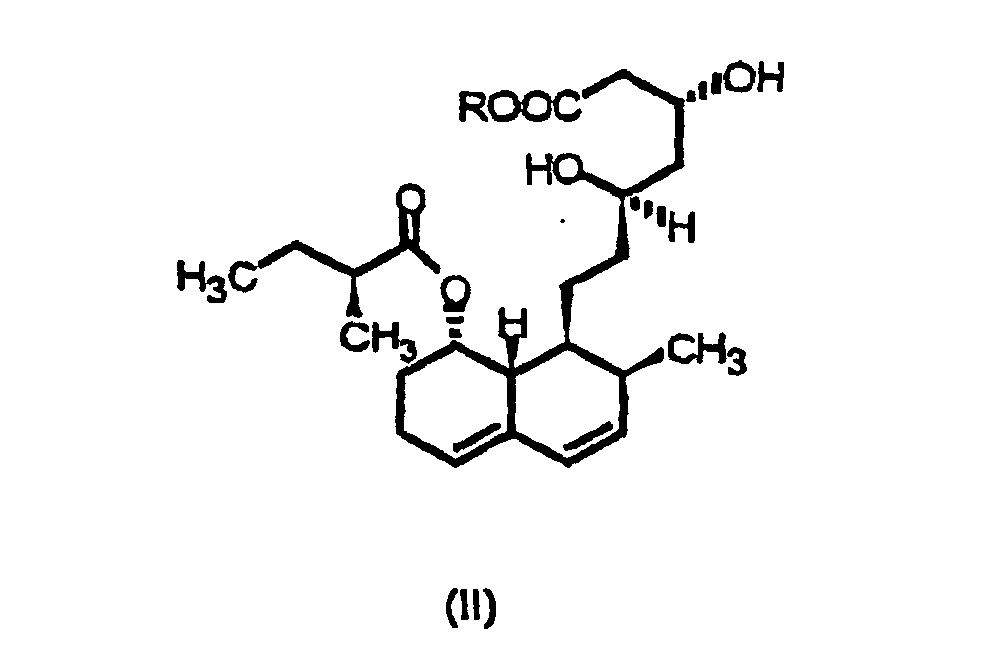
by the submerged cultivation of a strain which is able to 6β-hydroxylate a compound of formula (II) in aerobic fermentation and by the separation and purification of the compound of formula (I) formed in the course of the bioconversion comprising the steps of
| Time (min) | Flow rate (ml/min) | Eluent A (%) | Eluent B (%) |
| 0 | 0.6 | 100 | 0 |
| 2 | 0.7 | 100 | 0 |
| 12 | 0.9 | 0 | 100 |
| 21 | 0.9 | 0 | 100 |
| 22 | 0.9 | 100 | 0 |
| 27 | 0.7 | 100 | 0 |
| Composition of SM medium | |
| Soluble starch | 10.0 g |
| Na2HPO4 | 1.15g |
| KH2PO4 | 0.25 g |
| KCI | 0.2 g |
| MgSO4x7H2O | 0.2g |
| Agar | 15.0g |
| in 1000 ml of distilled water |
| ComDosition of TI medium | |
| Soluble starch | 20.0 g |
| Yeast extract | 10.0g |
| in 1000 ml of tap water |
| Composition of TT medium | |
| Potato starch | 30.0 g |
| Soybean meal | 30.0 g |
| CaCO3 | 5.0 g |
| CoCl2x6H2O | 2.0 mg |
| Palm oil | 2.0 g |
| in 1000 ml of tap water |
[α] 2 / D = + 156° (c = 0,5, in water).
Ultraviolet absorption spectrum (20 µg/ml, in methanol): λmax = 231, 237, 245 nm (log ε = 4.263; 4.311; 4.136).
Infrared absorption spectrum (KBr): νOH 3415, νCH 2965, νC=0 1730, νCOO-1575 cm-1.
1H-NMR spectrum (D2O, δ, ppm): 0.86. d, 3H (2-CH3); 5.92, dd, J = 10.0 and 5.4 Hz, 1H (3-H); 5.99, d, J = 10.0 Hz, 1H (4-H); 5.52, br, 1H (5-H); 4.24, m, 1H (6-H); 5.34, br, 1H (8-H); 4.06, m, 1H (β-H), 3.65, m, 1H (δ-H); 1.05, d, 3H (2'-CH3); 0.82, t, 3H (4'-H3).
Positive FAB mass spectrum (characteristic ions): [M+Na]+ 469; [M+H]+ 447.
Negative FAB mass spectrum (characteristic ions): [M-H]- 445, [M-Na]- 423, m / z 101 [2-methyl-butyric acid-H]-.
| Composition of MT1 bioconversion medium | |
| Potato starch | 10.0 g |
| Dextrose | 20.0 g |
| Soybean meal | 10.0 g |
| Yeast extract | 10.0 g |
| CaCO3 | 5.0 g |
| Sunflower oil | 2.0 g |
| in 1000 ml of tap water |
| Composition of TT/2 bioconversion medium | |
| Glucose | 75.0 g |
| Soluble starch | 50.0 g |
| Soybean meal | 50.0 g |
| Yeast extract | 50.0 g |
| Pepton | 5.0 g |
| NaNO3 | 20.0 g |
| CaCO3 | 25.0 g |
| in 4500 ml of tap water |
| Composition of TT/1 bioconversion medium | |
| Glucose | 125.0 g |
| Potato starch | 25.0 g |
| Soybean meal | 50.0 g |
| Yeast extract (Gistex) | 50.0 g |
| Pepton | 50.0 g |
| CoCl2x6H2O | 10.0 mg |
| Sunflower oil | 10.0 g |
| in 4500 ml of tap water |
5 litres of culture broth were centrifuged at 2500 r.p.m. for 20 min. Then 2 litres of water were added to the separated mycelial mass and the suspension was stirred for one hour and filtered. These two filtrates were united and passed through with a flow rate of 500 ml/hour on a column containing 300 g (540 ml) of Dowex Al 400 (OH-) resin (diameter of the column: 4 cm, height of the resin bed: 43 cm), then the resin bed was washed with 1 litre of deionized water. Thereafter the column was eluted with 1 litre of acetone - water (1:1) mixture containing 10 g of sodium chloride by collecting 50 ml fractions. The fractions were analysed by the TLC method given in the Example 1. Fractions containing the product were combined and the acetone was distilled off in vacuum. The pH of the concentrate was adjusted to 3.5-4.0 value by 15% sulphuric acid, then it was extracted 3x250 ml of ethyl acetate. 40 ml of deionized water was added to the combined ethyl acetate extract, then the pH was adjusted to 7.5-8.0 value by 1M sodium hydroxide, After 15 min stirring the aqueous and ethyl acetate phases were separated, then the ethyl acetate solution was extracted with 2x40 ml of deionized water as it was written before. Then the combined alkaline aqueous solution was concentrated to 50 ml volume and chromatographed on a column filled with 600 ml of Diaion HP20 (Mitsubishi Co., Japan) non ionic adsorbent resin (diameter of the column: 3.8 cm, height of the resin bed: 53 cm). The column was washed with 600 ml of deionized water, then eluted with acetone - deionized water mixtures, where the concentration of acetone was increased in 5% steps, collecting 50 ml fractions.The eluate was analysed by TLC method given in the Example 1. Pravastatin was eluted from the column by an acetone - deionized water mixture containing 15% of aceton. Fractions containing pravastatin as single component were combined and the solution was concentrated in vacuum to 150 ml volume. Subsequently, 0.6 g of charcoal was added to the concentrated aqueous solution and pravastatin was clarified at room temperature for 1 hour. Then the charcoal was filtered and the filtrate was lyophilised. The resulting 6.5 g of lyophilised pravastatin was crystallized twice from a mixture of ethanol and ethyl acetate. The precipitate was filtered and washed with 20 ml of ethyl acetate and 20 ml of n-hexane, and dried in vacuum at room temperature. Thus 4.6 g of chromatographically pure pravastatin was obtained.
| Composition of medium TT/14 | |
| Potato starch | 5.0 g |
| Glucose | 25.0 g |
| Yeast extract (GISTEX) | 15.0 g |
| Pepton | 15.0 g |
| CaCO3 | 1.0 g |
| in 1000 ml of tap water |
Claims (7)
- A microbial process for the preparation of the compound of formula (I)from a compound of the general formula (II)
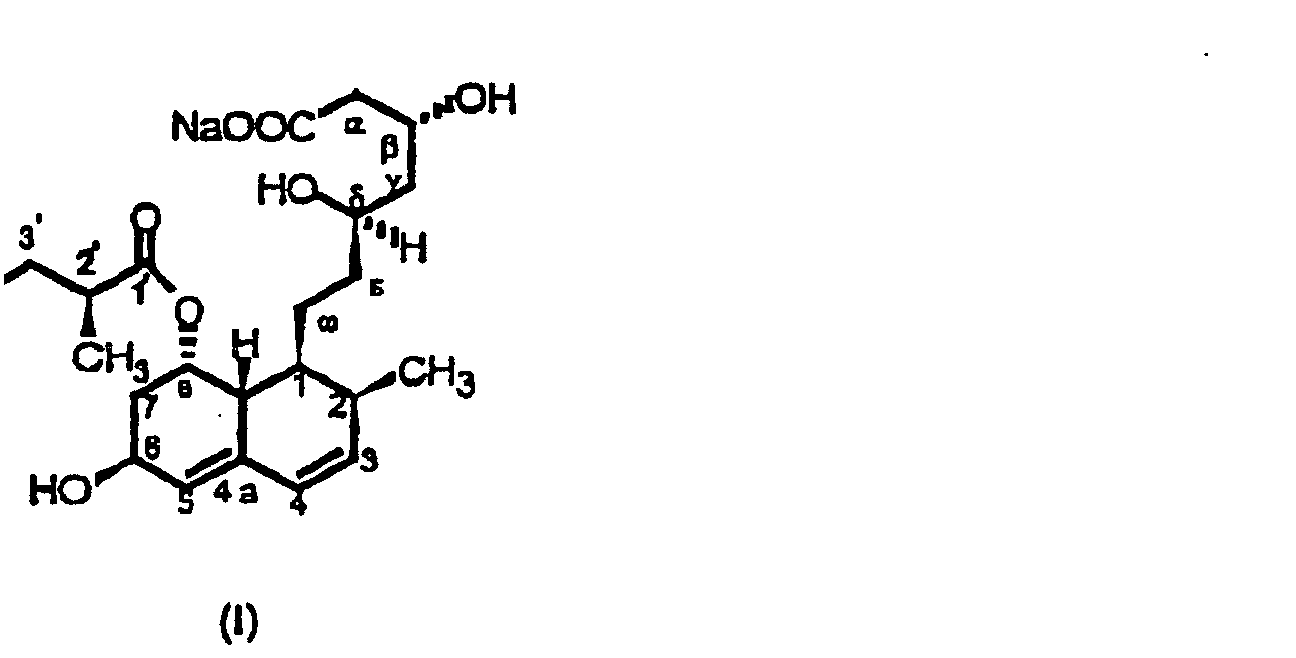 wherein R stands for an alkali metal or ammonium ion,
by the submerged culture of a Micromonospora strain which is able to 6β-hydroxylate a compound of formula (II) under aerobic conditions and by the separation and purification of the compound of formula (I) formed in the course of the bioconversion comprising the steps ofa) cultivating a Micromonospora strain which is able to 6β-hydroxylate a compound of formula (II) - wherein R is as defined above - at 25-32°C on a nutrient medium containing available carbon- and nitrogen sources and mineral salts, thereafterb) feeding the substrate to be transformed into a developing culture, thenc) hydroxylating the substrate until finishing of the bioconversion, thend) separating the compound of formula (I) from the culture broth and, if desired, purifying the same. - A process as claimed in Claim 1, wherein the Micromonospora sp. IDR-P3 strain deposited at the National Collection of Agricultural and Industrial Microorganisms, Budapest, Hungary under the number NCAIM (P) B 001268 or a mutant strain thereof which is able to 6β-hydroxylate a compound of general formula (II) is applied.
- A process as claimed in Claim 1, wherein the Micromonospora purpurea IDR-P4 strain deposited at the National Collection of Agricultural and Industrial Microorganisms, Budapest, Hungary under the number NCAIM (P) B 001271 or a mutant strain thereof which is able to 6β-hydroxylate a compound of general formula (II) is applied.
- A process as claimed in Claim 1, wherein the Micromonospora echinospora ssp. echinospora IDR-P5 strain deposited at the National Collection of Agricultural and Industrial Microorganisms, Budapest, Hungary under the number NCAIM (P) B 001272 or a mutant strain thereof which is able to 6β-hydroxylate a compound of general formula (II) is applied.
- A process as claimed in Claim 1, wherein the Micromonospora megalomicea ssp. nigra IDR-P6 strain deposited at the National Collection of Agricultural and Industrial Microorganisms, Budapest, Hungary under the number NCAIM (P) B 001273 or a mutant strain thereof which is able to 6β-hydroxylate a compound of general formula (II) is applied.
- A process as claimed in Claim 1. wherein the Micromonospora rosaria IDR-P7 strain deposited at the National Collection of Agricultural and Industrial Microorganisms, Budapest, Hungary under the number NCAIM (P) B 001274 or a mutant strain thereof which is able to 6β-hydroxylate a compound of general formula (II) is applied.
- A process as claimed in anyone of Claim 1 to 6, wherein the compound of formula (I) formed during the fermentation is separated from the culture broth by adsorption on an anionic ion exchange resin or by extraction with a water immiscible organic solvent, followed by the preparation of its lactone derivative or its secondary amine salt as an intermediate, or by purification of the alkaline aqueous extract obtained from the organic solvent extract of the fermentation broth with chromatography on a non-ionic adsorbing resin.
Priority Applications (1)
| Application Number | Priority Date | Filing Date | Title |
|---|---|---|---|
| EP03075550A EP1327689A1 (en) | 1999-07-12 | 2000-06-29 | Hydroxylation of compactin to pravastatin by Micromonospora |
Applications Claiming Priority (3)
| Application Number | Priority Date | Filing Date | Title |
|---|---|---|---|
| HU9902352 | 1999-07-12 | ||
| HU9902352A HUP9902352A1 (en) | 1999-07-12 | 1999-07-12 | Process for producing pravastatin by microbiological way |
| PCT/HU2000/000066 WO2001004340A1 (en) | 1999-07-12 | 2000-06-29 | Hydroxylation of compactin to pravastatin by micromonospora |
Related Child Applications (1)
| Application Number | Title | Priority Date | Filing Date |
|---|---|---|---|
| EP03075550A Division EP1327689A1 (en) | 1999-07-12 | 2000-06-29 | Hydroxylation of compactin to pravastatin by Micromonospora |
Publications (2)
| Publication Number | Publication Date |
|---|---|
| EP1190087A1 EP1190087A1 (en) | 2002-03-27 |
| EP1190087B1 true EP1190087B1 (en) | 2003-06-18 |
Family
ID=89998701
Family Applications (3)
| Application Number | Title | Priority Date | Filing Date |
|---|---|---|---|
| EP03075550A Withdrawn EP1327689A1 (en) | 1999-07-12 | 2000-06-29 | Hydroxylation of compactin to pravastatin by Micromonospora |
| EP00944121A Expired - Lifetime EP1190087B1 (en) | 1999-07-12 | 2000-06-29 | Hydroxylation of compactin to pravastatin by micromonospora |
| EP00950379A Withdrawn EP1198448A4 (en) | 1999-07-12 | 2000-07-11 | Microbial process for preparing pravastatin |
Family Applications Before (1)
| Application Number | Title | Priority Date | Filing Date |
|---|---|---|---|
| EP03075550A Withdrawn EP1327689A1 (en) | 1999-07-12 | 2000-06-29 | Hydroxylation of compactin to pravastatin by Micromonospora |
Family Applications After (1)
| Application Number | Title | Priority Date | Filing Date |
|---|---|---|---|
| EP00950379A Withdrawn EP1198448A4 (en) | 1999-07-12 | 2000-07-11 | Microbial process for preparing pravastatin |
Country Status (32)
| Country | Link |
|---|---|
| US (2) | US6905851B1 (en) |
| EP (3) | EP1327689A1 (en) |
| JP (2) | JP4531315B2 (en) |
| KR (2) | KR100479837B1 (en) |
| CN (2) | CN1399686A (en) |
| AP (1) | AP1405A (en) |
| AT (1) | ATE243262T1 (en) |
| AU (2) | AU773633B2 (en) |
| BG (1) | BG65109B1 (en) |
| BR (1) | BR0013156A (en) |
| CA (2) | CA2379015A1 (en) |
| CZ (2) | CZ297009B6 (en) |
| DE (1) | DE60003424T2 (en) |
| DK (1) | DK1190087T3 (en) |
| ES (1) | ES2200891T3 (en) |
| HR (1) | HRP20020028B1 (en) |
| HU (1) | HUP9902352A1 (en) |
| IL (2) | IL147583A0 (en) |
| IS (1) | IS2138B (en) |
| MX (1) | MXPA02000356A (en) |
| NO (1) | NO20020119L (en) |
| NZ (1) | NZ516563A (en) |
| OA (1) | OA12150A (en) |
| PL (2) | PL353493A1 (en) |
| PT (1) | PT1190087E (en) |
| RU (2) | RU2235780C2 (en) |
| SK (2) | SK285726B6 (en) |
| TR (1) | TR200200726T2 (en) |
| UA (1) | UA67854C2 (en) |
| WO (2) | WO2001004340A1 (en) |
| YU (1) | YU2002A (en) |
| ZA (1) | ZA200200273B (en) |
Families Citing this family (20)
| Publication number | Priority date | Publication date | Assignee | Title |
|---|---|---|---|---|
| SI9800046A (en) | 1998-02-18 | 1999-08-31 | LEK, tovarna farmacevtskih in kemi�nih izdelkov, d.d. | Process for obtaining of HMG-CoA reductase inhibitors of high purity |
| HUP9902352A1 (en) * | 1999-07-12 | 2000-09-28 | Gyógyszerkutató Intézet Kft. | Process for producing pravastatin by microbiological way |
| US6444452B1 (en) | 1999-11-30 | 2002-09-03 | Biogal Gyogyszergyar Rt. | Process for recovering statin compounds from a fermentation broth |
| CZ20021998A3 (en) | 1999-12-14 | 2003-02-12 | Biogal Gyogyszergyar Rt. | Novel forms of pravastatin sodium salt |
| JP3737801B2 (en) * | 2000-10-05 | 2006-01-25 | テバ ジョジセルジャール レースベニュタールシャシャーグ | Pravastatin sodium substantially free of pravastatin lactone and epipravastatin, and a composition comprising the same |
| JP3236282B1 (en) * | 2000-10-16 | 2001-12-10 | 三共株式会社 | How to purify pravastatin |
| WO2002064809A2 (en) * | 2001-02-09 | 2002-08-22 | Unilever N.V. | Process for the preparation of one or more statins by fermentation |
| JP2003026634A (en) * | 2001-07-17 | 2003-01-29 | Mercian Corp | Method for producing pravastatin sodium salt |
| US6716615B2 (en) | 2002-02-27 | 2004-04-06 | Yung Shin Pharmaceutical Ind. Co., Ltd. | Strains of saccharaothrix, process for producing pravastatin using the strains and isolation process of (HMG)-CoA reductase |
| JP3422791B2 (en) | 2002-08-06 | 2003-06-30 | 三共株式会社 | Method for isolation and purification of pravastatin |
| EP1452602A1 (en) * | 2003-02-25 | 2004-09-01 | Antibiotic Co., | Method for production of pravastatin by fermentation |
| CN1244688C (en) * | 2003-07-09 | 2006-03-08 | 上海天伟生物制药有限公司 | Microbe and process for preparing pravastatin sodium |
| EP1641447B1 (en) | 2003-11-24 | 2008-10-29 | TEVA Gyógyszergyár Zártkörüen Müködö Részvénytársaság | Method of purifying pravastatin |
| WO2009113099A2 (en) * | 2008-02-06 | 2009-09-17 | Biocon Limited | Fermentation medias and processes thereof |
| RU2522806C1 (en) * | 2012-11-27 | 2014-07-20 | Федеральное государственное бюджетное учреждение науки Центр "Биоинженерия" Российской академии наук | Improved method of purification of pravastatin |
| JP6441599B2 (en) * | 2014-07-14 | 2018-12-19 | 合同酒精株式会社 | Production method of pravastatin |
| GB2574048B (en) | 2018-05-24 | 2021-06-16 | Oxford Nanopore Tech Ltd | Nanopore sensor component with electrostatic discharge protection |
| CN114031496B (en) * | 2021-11-30 | 2024-09-27 | 广东蓝宝制药有限公司 | A method for preparing high-purity pravastatin 1,1,3,3-tetramethylbutylamine |
| CN114133331A (en) * | 2021-12-10 | 2022-03-04 | 广东蓝宝制药有限公司 | A kind of method for recovering and obtaining high-purity pravastatin ester |
| CN119330849A (en) * | 2022-12-25 | 2025-01-21 | 塔里木大学 | A compound ABAGG and its use |
Family Cites Families (16)
| Publication number | Priority date | Publication date | Assignee | Title |
|---|---|---|---|---|
| MX7065E (en) | 1980-06-06 | 1987-04-10 | Sankyo Co | A MICROBIOLOGICAL PROCEDURE FOR PREPARING DERIVATIVES OF ML-236B |
| JPS5810572A (en) | 1981-07-07 | 1983-01-21 | Sankyo Co Ltd | Ml-236b derivative and its preparation |
| JPS5889191A (en) | 1981-11-20 | 1983-05-27 | Sankyo Co Ltd | Preparation of 3-hydroxy-ml-236b derivative |
| JPS59175450A (en) * | 1983-03-24 | 1984-10-04 | Sankyo Co Ltd | Ml-236b derivative |
| US5179013A (en) * | 1987-02-02 | 1993-01-12 | Sankyo Company, Limited | Cytochrome P-450 enzymes |
| NZ250609A (en) * | 1992-12-28 | 1995-07-26 | Sankyo Co | Hexahydronaphthalene esters and ring closed lactones; preparation and medicaments |
| IL108432A (en) * | 1993-01-29 | 1997-09-30 | Sankyo Co | DERIVATIVES OF 3, 5-DIHYDROXY-7- £1, 2, 6, 7, 8, 8a-HEXAHYDRO-2- METHYL-8- (SUBSTITUTED ALKANOYLOXY)-1-NAPHTHYL| HEPTANOIC ACID AND THEIR LACTONES, THEIR PREPARATION, AND PHARMACEUTICAL COMPOSITIONS CONTAINING THEM |
| JPH06253853A (en) * | 1993-03-09 | 1994-09-13 | Asahi Chem Ind Co Ltd | Modified dna containing macrolide antibiotic substance biosynthetic gene |
| US6043064A (en) * | 1993-10-22 | 2000-03-28 | Bristol-Myers Squibb Company | Enzymatic hydroxylation process for the preparation of HMG-CoA reductase inhibitors and intermediates thereof |
| JPH0889277A (en) * | 1994-09-28 | 1996-04-09 | Taisho Pharmaceut Co Ltd | Process for producing 12-hydroxy-6-O-alkylerythromycin and its analogs |
| JPH08149986A (en) * | 1994-09-28 | 1996-06-11 | Taisho Pharmaceut Co Ltd | Process for producing 12-hydroxy-6-O-alkylerythromycin and its analogs |
| US5942423A (en) * | 1995-06-07 | 1999-08-24 | Massachusetts Institute Of Technology | Conversion of compactin to pravastatin by actinomadura |
| SI20072A (en) * | 1998-09-18 | 2000-04-30 | LEK, tovarna farmacevtskih in kemi�nih izdelkov, d.d. | PROCEDURE OF PREPARATION OF INHIBITORS OF HMG-CoA REDUCTASE |
| US6682913B1 (en) * | 1999-02-03 | 2004-01-27 | Institute For Drug Research Ltd. | Microbial process for preparing pravastatin |
| HUP9902352A1 (en) * | 1999-07-12 | 2000-09-28 | Gyógyszerkutató Intézet Kft. | Process for producing pravastatin by microbiological way |
| IN191580B (en) * | 1999-12-17 | 2003-12-06 | Ranbaxy Lab Ltd |
-
1999
- 1999-07-12 HU HU9902352A patent/HUP9902352A1/en unknown
-
2000
- 2000-06-29 PL PL00353493A patent/PL353493A1/en not_active Application Discontinuation
- 2000-06-29 UA UA2002010326A patent/UA67854C2/en unknown
- 2000-06-29 OA OA1200200015A patent/OA12150A/en unknown
- 2000-06-29 NZ NZ516563A patent/NZ516563A/en unknown
- 2000-06-29 AP APAP/P/2002/002404A patent/AP1405A/en active
- 2000-06-29 CN CN00811127A patent/CN1399686A/en active Pending
- 2000-06-29 DK DK00944121T patent/DK1190087T3/en active
- 2000-06-29 EP EP03075550A patent/EP1327689A1/en not_active Withdrawn
- 2000-06-29 BR BR0013156-3A patent/BR0013156A/en not_active Application Discontinuation
- 2000-06-29 HR HR20020028A patent/HRP20020028B1/en not_active IP Right Cessation
- 2000-06-29 EP EP00944121A patent/EP1190087B1/en not_active Expired - Lifetime
- 2000-06-29 ES ES00944121T patent/ES2200891T3/en not_active Expired - Lifetime
- 2000-06-29 TR TR2002/00726T patent/TR200200726T2/en unknown
- 2000-06-29 CN CNA2004100493556A patent/CN1590555A/en active Pending
- 2000-06-29 CZ CZ20020119A patent/CZ297009B6/en not_active IP Right Cessation
- 2000-06-29 SK SK49-2002A patent/SK285726B6/en unknown
- 2000-06-29 CA CA002379015A patent/CA2379015A1/en not_active Abandoned
- 2000-06-29 DE DE60003424T patent/DE60003424T2/en not_active Expired - Fee Related
- 2000-06-29 US US10/030,726 patent/US6905851B1/en not_active Expired - Fee Related
- 2000-06-29 AT AT00944121T patent/ATE243262T1/en not_active IP Right Cessation
- 2000-06-29 YU YU2002A patent/YU2002A/en unknown
- 2000-06-29 RU RU2002103376/13A patent/RU2235780C2/en not_active IP Right Cessation
- 2000-06-29 KR KR10-2002-7000475A patent/KR100479837B1/en not_active Expired - Fee Related
- 2000-06-29 PT PT00944121T patent/PT1190087E/en unknown
- 2000-06-29 JP JP2001509543A patent/JP4531315B2/en not_active Expired - Fee Related
- 2000-06-29 AU AU58355/00A patent/AU773633B2/en not_active Ceased
- 2000-06-29 WO PCT/HU2000/000066 patent/WO2001004340A1/en not_active Ceased
- 2000-06-29 MX MXPA02000356A patent/MXPA02000356A/en active IP Right Grant
- 2000-06-29 IL IL14758300A patent/IL147583A0/en not_active IP Right Cessation
- 2000-07-11 SK SK61-2002A patent/SK612002A3/en unknown
- 2000-07-11 AU AU63492/00A patent/AU6349200A/en not_active Abandoned
- 2000-07-11 CZ CZ2002127A patent/CZ2002127A3/en unknown
- 2000-07-11 PL PL00364872A patent/PL364872A1/en unknown
- 2000-07-11 WO PCT/US2000/019384 patent/WO2001003647A2/en not_active Ceased
- 2000-07-11 KR KR1020027000486A patent/KR20020060150A/en not_active Withdrawn
- 2000-07-11 EP EP00950379A patent/EP1198448A4/en not_active Withdrawn
- 2000-07-11 JP JP2001508931A patent/JP2003528576A/en active Pending
- 2000-07-11 IL IL14758800A patent/IL147588A0/en unknown
- 2000-07-11 CA CA002373544A patent/CA2373544A1/en not_active Abandoned
-
2002
- 2002-01-10 NO NO20020119A patent/NO20020119L/en not_active Application Discontinuation
- 2002-01-11 IS IS6227A patent/IS2138B/en unknown
- 2002-01-11 ZA ZA200200273A patent/ZA200200273B/en unknown
- 2002-01-14 BG BG106302A patent/BG65109B1/en unknown
-
2004
- 2004-05-13 RU RU2004114667/13A patent/RU2004114667A/en not_active Application Discontinuation
- 2004-12-16 US US11/014,658 patent/US20050124051A1/en not_active Abandoned
Also Published As
Similar Documents
| Publication | Publication Date | Title |
|---|---|---|
| US6905851B1 (en) | Hydroxylation of compactin pravastatin by micromonospora | |
| JP2003528576A5 (en) | ||
| CA2361701C (en) | Microbial process for preparing pravastatin | |
| US5153124A (en) | Hydroxyl-ml-236b derivatives, their preparation and use | |
| JPH1171323A (en) | Novel phosphoglycolipid antibiotic degradation product and method for producing the same | |
| CA1210350A (en) | Antibiotic complex producing bacterial culture | |
| US5272174A (en) | Hydroxy-ML-236B derivatives, their preparation and use | |
| HU225936B1 (en) | Hydroxylation of compactin to pravastatin by micromonospora | |
| ZA200106359B (en) | Microbial process for preparing pravastatin. | |
| HK1073132A (en) | Hydroxylation of compactin to pravastatin by micromonospora | |
| HK1053854A (en) | Hydroxylation of compactin to pravastatin by micromonospora | |
| JPH0463677B2 (en) | ||
| JPH0771480B2 (en) | New microorganism | |
| CA1121814A (en) | Antibiotic c-15003 |
Legal Events
| Date | Code | Title | Description |
|---|---|---|---|
| PUAI | Public reference made under article 153(3) epc to a published international application that has entered the european phase |
Free format text: ORIGINAL CODE: 0009012 |
|
| 17P | Request for examination filed |
Effective date: 20020116 |
|
| AK | Designated contracting states |
Kind code of ref document: A1 Designated state(s): AT BE CH CY DE DK ES FI FR GB GR IE IT LI LU MC NL PT SE |
|
| AX | Request for extension of the european patent |
Free format text: AL;LT;LV;MK;RO PAYMENT 20020116;SI |
|
| GRAH | Despatch of communication of intention to grant a patent |
Free format text: ORIGINAL CODE: EPIDOS IGRA |
|
| GRAH | Despatch of communication of intention to grant a patent |
Free format text: ORIGINAL CODE: EPIDOS IGRA |
|
| RAP1 | Party data changed (applicant data changed or rights of an application transferred) |
Owner name: IVAX DRUG RESEARCH INSTITUTE LTD. |
|
| GRAA | (expected) grant |
Free format text: ORIGINAL CODE: 0009210 |
|
| AK | Designated contracting states |
Designated state(s): AT BE CH CY DE DK ES FI FR GB GR IE IT LI LU MC NL PT SE |
|
| AX | Request for extension of the european patent |
Extension state: AL LT LV MK RO SI |
|
| REG | Reference to a national code |
Ref country code: GB Ref legal event code: FG4D |
|
| REG | Reference to a national code |
Ref country code: CH Ref legal event code: EP |
|
| REG | Reference to a national code |
Ref country code: IE Ref legal event code: FG4D |
|
| REF | Corresponds to: |
Ref document number: 60003424 Country of ref document: DE Date of ref document: 20030724 Kind code of ref document: P |
|
| REG | Reference to a national code |
Ref country code: SE Ref legal event code: TRGR |
|
| REG | Reference to a national code |
Ref country code: GR Ref legal event code: EP Ref document number: 20030403458 Country of ref document: GR |
|
| LTIE | Lt: invalidation of european patent or patent extension |
Effective date: 20030618 |
|
| REG | Reference to a national code |
Ref country code: CH Ref legal event code: NV Representative=s name: E. BLUM & CO. PATENTANWAELTE |
|
| REG | Reference to a national code |
Ref country code: ES Ref legal event code: FG2A Ref document number: 2200891 Country of ref document: ES Kind code of ref document: T3 |
|
| ET | Fr: translation filed | ||
| PLBE | No opposition filed within time limit |
Free format text: ORIGINAL CODE: 0009261 |
|
| STAA | Information on the status of an ep patent application or granted ep patent |
Free format text: STATUS: NO OPPOSITION FILED WITHIN TIME LIMIT |
|
| 26N | No opposition filed |
Effective date: 20040319 |
|
| PGFP | Annual fee paid to national office [announced via postgrant information from national office to epo] |
Ref country code: DK Payment date: 20070614 Year of fee payment: 8 Ref country code: MC Payment date: 20070614 Year of fee payment: 8 Ref country code: SE Payment date: 20070614 Year of fee payment: 8 |
|
| PGFP | Annual fee paid to national office [announced via postgrant information from national office to epo] |
Ref country code: CH Payment date: 20070615 Year of fee payment: 8 Ref country code: FI Payment date: 20070615 Year of fee payment: 8 Ref country code: NL Payment date: 20070615 Year of fee payment: 8 |
|
| PGFP | Annual fee paid to national office [announced via postgrant information from national office to epo] |
Ref country code: AT Payment date: 20070618 Year of fee payment: 8 |
|
| PGFP | Annual fee paid to national office [announced via postgrant information from national office to epo] |
Ref country code: LU Payment date: 20070621 Year of fee payment: 8 Ref country code: PT Payment date: 20070621 Year of fee payment: 8 |
|
| PGFP | Annual fee paid to national office [announced via postgrant information from national office to epo] |
Ref country code: DE Payment date: 20070622 Year of fee payment: 8 |
|
| PGFP | Annual fee paid to national office [announced via postgrant information from national office to epo] |
Ref country code: ES Payment date: 20070628 Year of fee payment: 8 Ref country code: IE Payment date: 20070628 Year of fee payment: 8 |
|
| REG | Reference to a national code |
Ref country code: CH Ref legal event code: PFA Owner name: IVAX DRUG RESEARCH INSTITUTE LTD. Free format text: IVAX DRUG RESEARCH INSTITUTE LTD.#BERLINI UTCA 47-49#1045 BUDAPEST (HU) -TRANSFER TO- IVAX DRUG RESEARCH INSTITUTE LTD.#BERLINI UTCA 47-49#1045 BUDAPEST (HU) |
|
| PGFP | Annual fee paid to national office [announced via postgrant information from national office to epo] |
Ref country code: GB Payment date: 20070621 Year of fee payment: 8 |
|
| PGFP | Annual fee paid to national office [announced via postgrant information from national office to epo] |
Ref country code: IT Payment date: 20070622 Year of fee payment: 8 |
|
| PGFP | Annual fee paid to national office [announced via postgrant information from national office to epo] |
Ref country code: BE Payment date: 20070711 Year of fee payment: 8 |
|
| PGFP | Annual fee paid to national office [announced via postgrant information from national office to epo] |
Ref country code: FR Payment date: 20070615 Year of fee payment: 8 |
|
| PGFP | Annual fee paid to national office [announced via postgrant information from national office to epo] |
Ref country code: CY Payment date: 20070601 Year of fee payment: 8 Ref country code: GR Payment date: 20070626 Year of fee payment: 8 |
|
| BERE | Be: lapsed |
Owner name: *IVAX DRUG RESEARCH INSTITUTE LTD Effective date: 20080630 |
|
| REG | Reference to a national code |
Ref country code: PT Ref legal event code: MM4A Free format text: LAPSE DUE TO NON-PAYMENT OF FEES Effective date: 20081229 |
|
| PG25 | Lapsed in a contracting state [announced via postgrant information from national office to epo] |
Ref country code: PT Free format text: LAPSE BECAUSE OF NON-PAYMENT OF DUE FEES Effective date: 20081229 Ref country code: MC Free format text: LAPSE BECAUSE OF NON-PAYMENT OF DUE FEES Effective date: 20080630 |
|
| REG | Reference to a national code |
Ref country code: CH Ref legal event code: PL |
|
| REG | Reference to a national code |
Ref country code: DK Ref legal event code: EBP |
|
| EUG | Se: european patent has lapsed | ||
| GBPC | Gb: european patent ceased through non-payment of renewal fee |
Effective date: 20080629 |
|
| PG25 | Lapsed in a contracting state [announced via postgrant information from national office to epo] |
Ref country code: FI Free format text: LAPSE BECAUSE OF NON-PAYMENT OF DUE FEES Effective date: 20080629 |
|
| NLV4 | Nl: lapsed or anulled due to non-payment of the annual fee |
Effective date: 20090101 |
|
| PG25 | Lapsed in a contracting state [announced via postgrant information from national office to epo] |
Ref country code: CY Free format text: LAPSE BECAUSE OF NON-PAYMENT OF DUE FEES Effective date: 20080629 Ref country code: BE Free format text: LAPSE BECAUSE OF NON-PAYMENT OF DUE FEES Effective date: 20080630 |
|
| REG | Reference to a national code |
Ref country code: IE Ref legal event code: MM4A |
|
| REG | Reference to a national code |
Ref country code: FR Ref legal event code: ST Effective date: 20090228 |
|
| PG25 | Lapsed in a contracting state [announced via postgrant information from national office to epo] |
Ref country code: IE Free format text: LAPSE BECAUSE OF NON-PAYMENT OF DUE FEES Effective date: 20080630 Ref country code: AT Free format text: LAPSE BECAUSE OF NON-PAYMENT OF DUE FEES Effective date: 20080629 Ref country code: DE Free format text: LAPSE BECAUSE OF NON-PAYMENT OF DUE FEES Effective date: 20090101 |
|
| PG25 | Lapsed in a contracting state [announced via postgrant information from national office to epo] |
Ref country code: NL Free format text: LAPSE BECAUSE OF NON-PAYMENT OF DUE FEES Effective date: 20090101 |
|
| PG25 | Lapsed in a contracting state [announced via postgrant information from national office to epo] |
Ref country code: GR Free format text: LAPSE BECAUSE OF NON-PAYMENT OF DUE FEES Effective date: 20090107 Ref country code: LI Free format text: LAPSE BECAUSE OF NON-PAYMENT OF DUE FEES Effective date: 20080630 Ref country code: GB Free format text: LAPSE BECAUSE OF NON-PAYMENT OF DUE FEES Effective date: 20080629 Ref country code: CH Free format text: LAPSE BECAUSE OF NON-PAYMENT OF DUE FEES Effective date: 20080630 |
|
| REG | Reference to a national code |
Ref country code: ES Ref legal event code: FD2A Effective date: 20080630 |
|
| PG25 | Lapsed in a contracting state [announced via postgrant information from national office to epo] |
Ref country code: FR Free format text: LAPSE BECAUSE OF NON-PAYMENT OF DUE FEES Effective date: 20080630 Ref country code: IT Free format text: LAPSE BECAUSE OF NON-PAYMENT OF DUE FEES Effective date: 20080629 |
|
| PG25 | Lapsed in a contracting state [announced via postgrant information from national office to epo] |
Ref country code: ES Free format text: LAPSE BECAUSE OF NON-PAYMENT OF DUE FEES Effective date: 20080630 |
|
| PG25 | Lapsed in a contracting state [announced via postgrant information from national office to epo] |
Ref country code: DK Free format text: LAPSE BECAUSE OF NON-PAYMENT OF DUE FEES Effective date: 20090106 |
|
| PG25 | Lapsed in a contracting state [announced via postgrant information from national office to epo] |
Ref country code: DK Free format text: LAPSE BECAUSE OF NON-PAYMENT OF DUE FEES Effective date: 20080630 |
|
| PG25 | Lapsed in a contracting state [announced via postgrant information from national office to epo] |
Ref country code: LU Free format text: LAPSE BECAUSE OF NON-PAYMENT OF DUE FEES Effective date: 20080629 Ref country code: SE Free format text: LAPSE BECAUSE OF NON-PAYMENT OF DUE FEES Effective date: 20080630 |