EP1189428A2 - Image forming apparatus - Google Patents
Image forming apparatus Download PDFInfo
- Publication number
- EP1189428A2 EP1189428A2 EP01122135A EP01122135A EP1189428A2 EP 1189428 A2 EP1189428 A2 EP 1189428A2 EP 01122135 A EP01122135 A EP 01122135A EP 01122135 A EP01122135 A EP 01122135A EP 1189428 A2 EP1189428 A2 EP 1189428A2
- Authority
- EP
- European Patent Office
- Prior art keywords
- image forming
- forming apparatus
- job
- reserving
- image
- Prior art date
- Legal status (The legal status is an assumption and is not a legal conclusion. Google has not performed a legal analysis and makes no representation as to the accuracy of the status listed.)
- Withdrawn
Links
Images




Classifications
-
- H—ELECTRICITY
- H04—ELECTRIC COMMUNICATION TECHNIQUE
- H04N—PICTORIAL COMMUNICATION, e.g. TELEVISION
- H04N1/00—Scanning, transmission or reproduction of documents or the like, e.g. facsimile transmission; Details thereof
- H04N1/32—Circuits or arrangements for control or supervision between transmitter and receiver or between image input and image output device, e.g. between a still-image camera and its memory or between a still-image camera and a printer device
- H04N1/32502—Circuits or arrangements for control or supervision between transmitter and receiver or between image input and image output device, e.g. between a still-image camera and its memory or between a still-image camera and a printer device in systems having a plurality of input or output devices
- H04N1/32523—Circuits or arrangements for control or supervision between transmitter and receiver or between image input and image output device, e.g. between a still-image camera and its memory or between a still-image camera and a printer device in systems having a plurality of input or output devices a plurality of output devices
-
- H—ELECTRICITY
- H04—ELECTRIC COMMUNICATION TECHNIQUE
- H04N—PICTORIAL COMMUNICATION, e.g. TELEVISION
- H04N1/00—Scanning, transmission or reproduction of documents or the like, e.g. facsimile transmission; Details thereof
- H04N1/32—Circuits or arrangements for control or supervision between transmitter and receiver or between image input and image output device, e.g. between a still-image camera and its memory or between a still-image camera and a printer device
- H04N1/32502—Circuits or arrangements for control or supervision between transmitter and receiver or between image input and image output device, e.g. between a still-image camera and its memory or between a still-image camera and a printer device in systems having a plurality of input or output devices
-
- H—ELECTRICITY
- H04—ELECTRIC COMMUNICATION TECHNIQUE
- H04N—PICTORIAL COMMUNICATION, e.g. TELEVISION
- H04N1/00—Scanning, transmission or reproduction of documents or the like, e.g. facsimile transmission; Details thereof
- H04N1/32—Circuits or arrangements for control or supervision between transmitter and receiver or between image input and image output device, e.g. between a still-image camera and its memory or between a still-image camera and a printer device
- H04N1/32502—Circuits or arrangements for control or supervision between transmitter and receiver or between image input and image output device, e.g. between a still-image camera and its memory or between a still-image camera and a printer device in systems having a plurality of input or output devices
- H04N1/32545—Distributing a job or task among a plurality of input devices or a plurality of output devices
-
- H—ELECTRICITY
- H04—ELECTRIC COMMUNICATION TECHNIQUE
- H04N—PICTORIAL COMMUNICATION, e.g. TELEVISION
- H04N1/00—Scanning, transmission or reproduction of documents or the like, e.g. facsimile transmission; Details thereof
- H04N1/32—Circuits or arrangements for control or supervision between transmitter and receiver or between image input and image output device, e.g. between a still-image camera and its memory or between a still-image camera and a printer device
- H04N1/32502—Circuits or arrangements for control or supervision between transmitter and receiver or between image input and image output device, e.g. between a still-image camera and its memory or between a still-image camera and a printer device in systems having a plurality of input or output devices
- H04N1/32545—Distributing a job or task among a plurality of input devices or a plurality of output devices
- H04N1/32555—Large jobs, i.e. performing identical parts of the same job on different devices
-
- H—ELECTRICITY
- H04—ELECTRIC COMMUNICATION TECHNIQUE
- H04N—PICTORIAL COMMUNICATION, e.g. TELEVISION
- H04N2201/00—Indexing scheme relating to scanning, transmission or reproduction of documents or the like, and to details thereof
- H04N2201/0077—Types of the still picture apparatus
- H04N2201/0081—Image reader
-
- H—ELECTRICITY
- H04—ELECTRIC COMMUNICATION TECHNIQUE
- H04N—PICTORIAL COMMUNICATION, e.g. TELEVISION
- H04N2201/00—Indexing scheme relating to scanning, transmission or reproduction of documents or the like, and to details thereof
- H04N2201/0077—Types of the still picture apparatus
- H04N2201/0082—Image hardcopy reproducer
-
- H—ELECTRICITY
- H04—ELECTRIC COMMUNICATION TECHNIQUE
- H04N—PICTORIAL COMMUNICATION, e.g. TELEVISION
- H04N2201/00—Indexing scheme relating to scanning, transmission or reproduction of documents or the like, and to details thereof
- H04N2201/32—Circuits or arrangements for control or supervision between transmitter and receiver or between image input and image output device, e.g. between a still-image camera and its memory or between a still-image camera and a printer device
- H04N2201/3285—Circuits or arrangements for control or supervision between transmitter and receiver or between image input and image output device, e.g. between a still-image camera and its memory or between a still-image camera and a printer device using picture signal storage, e.g. at transmitter
- H04N2201/3288—Storage of two or more complete document pages or image frames
-
- H—ELECTRICITY
- H04—ELECTRIC COMMUNICATION TECHNIQUE
- H04N—PICTORIAL COMMUNICATION, e.g. TELEVISION
- H04N2201/00—Indexing scheme relating to scanning, transmission or reproduction of documents or the like, and to details thereof
- H04N2201/32—Circuits or arrangements for control or supervision between transmitter and receiver or between image input and image output device, e.g. between a still-image camera and its memory or between a still-image camera and a printer device
- H04N2201/3285—Circuits or arrangements for control or supervision between transmitter and receiver or between image input and image output device, e.g. between a still-image camera and its memory or between a still-image camera and a printer device using picture signal storage, e.g. at transmitter
- H04N2201/3297—Simultaneous use of a single memory for different image storage purposes
Definitions
- the present invention relates to an image forming apparatus, and more particularly, to an image forming apparatus in which a plurality of main bodies of the image forming apparatus are connected each other and the image formation is performed on the recording materials from image data by a plurality of the main bodies of the image forming apparatus.
- a conventional tandem type image forming apparatus is, for example, proposed in TOKUGANHEI No. 7-204493, and is in practical use in the name of the copying machine "KONICA 7060" (the registered trade mark), as a copying machine representing an example of the image forming apparatus.
- the tandem type image forming apparatus is highly estimated in terms of usefulness as a copying machine having high speed copying power, and it is expected to have various uses in the future, because a plurality of the copying machines (the main bodies of the image forming apparatus) perform copying simultaneously.
- a tandem mode (the mode of performing the tandem movement) is designated on an operation panel, the numeral one hundred as the number of the sets of copies is set, and a copy button is pressed, then, in this case, the image data obtained through reading of ten sheets of the documents are stored in both of image memories via selectors.
- a copy quantity is, automatically allocated to the copying machines A and B so that 50 sets may be allocated to each of them, then each copying machine copy them, and as a result, it becomes possible to copy two times faster than the case of the single copying machine.
- the copying machine A which read the image becomes a master machine, and a reservation is also inputted on the master machine.
- the reservation cannot be done on the copying machine B, and a user must move to the other place to reserve a copying job. If the user wants to reserve on the copying machine B, the user must wait until the copying machine A finishes its work.
- an object of the invention is to provide an image forming apparatus wherein the job can be reserved from every main body of the image forming apparatus so that convenience is improved for the job reservation.
- the invention is constructed as the following structures:
- An image forming system for connecting a plurality of image forming apparatus and being capable of conducting a tandem operation such that an image inputted by one of the plurality of image forming apparatus is outputted by the plurality of image forming apparatus, the system comprises; job reserving sections provided on each of the image forming apparatus, for reserving an image forming job, wherein while conducting said tandem operation, any of the job reserving sections on said image forming apparatus is capable of reserving a job.
- (Structure 1) An image forming apparatus in which a plurality of the main bodies of the image forming apparatus are electrically connected each other, and the image inputted from the one set of the main body of the image forming apparatus can be outputted from a plurality of the main bodies of the image forming apparatus, wherein a job can be reserved while the job to output from a plurality of the main bodies of the image forming apparatus is conducted, and there is provided a control means which makes any of the job to output from a plurality of the main bodies of the image forming apparatus and the job to output from the one set of the main body of the image forming apparatus to be possible.
- intermingled jobs can be reserved, while the job is in operation to output from a plurality of the main bodies of the image forming apparatus, and the job is freely selected without being restricted by carrying out of the job operating previously, a degree of freedom for use is high and production efficiency is improved.
- (Structure 2) An image forming apparatus in which a plurality of the main bodies of the image forming apparatus are electrically connected each other, and the image inputted from the one set of the main body of the image forming apparatus can be outputted from a plurality of the main bodies of the image forming apparatus, wherein a job can be reserved while the job to output from the one set of the main body of the image forming apparatus is conducted, and there is provided a control means which makes any of both the job to output from a plurality of the main bodies of the image forming apparatus and the job to output from the one set of the main body of the image forming apparatus to be possible.
- intermingled jobs can be reserved, while the job to output from the one set of the main body of the image forming apparatus is conducted, and the job is freely selected without being restricted by carrying out of the job operating previously, a degree of freedom in use is high and production efficiency is improved.
- the jobs can be reserved from every connected main body of the image forming apparatus, while the job to output from a plurality of the main bodies of the image forming apparatus is conducted, and the job is freely reserved without being restricted by the main bodies of the image forming apparatus operating previously, a degree of freedom for use is high and production efficiency is improved.
- the job reservation can be performed for both the job to output from a plurality of the main bodies of the image forming apparatus and the job to output from one set of the main body of the image forming apparatus, a degree of freedom for use is high and production efficiency is improved.
- a job can be reserved from the other main body of the image forming apparatus, while the job to output from the one set of the main body of the image forming apparatus is conducted, and the job can be freely reserved, without being districted by the job reservation from the main body of the image forming apparatus which is in operation of the job, a degree of freedom for use is high and production efficiency is improved.
- the job reservation can be performed for both the job which outputs from the copying machine that can output the image that is inputted from the external apparatus, and the job which outputs from the printer, and the structure can be used for various kinds of the apparatus, a degree of freedom for use is high and production efficiency is improved.
- Fig. 1 is a block diagram of the read image data processing system of the image forming apparatus.
- Fig. 2 is a sectional view of the image forming apparatus.
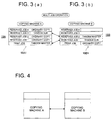
- Fig. 3 is a drawing showing the display panel of the image forming apparatus.
- Fig. 4 is a drawing showing the conventional tandem type image forming apparatus.
- Fig. 5 is a drawing showing a file to store the reserved jobs in the memories of the copying machines A and B.
- Fig. 6 is a drawing showing the display panel of the image forming apparatus in detail.
- Fig. 1 is a block diagram of the image data processing system of the image forming apparatus.
- two sets of the copying machines representing copying machine A and copying machine B are connected each other in the construction of the tandem type, and constitute the image forming apparatus of the present invention. Further, they are the copying machines which can output the image inputted from the external device such as the personal computer.
- Fig. 1 is an example of simultaneous copying carried out by two sets of copying machines representing the first copying machine A and the second copying machine B, and there are shown the block diagrams which show from the reading process to the writing process in the operations of the copying machines A and B.
- the symbol 101A and the symbol 101B are scanners which output the read image signals
- the symbol 102A and the symbol 102B are image processing circuits which process the image process such as variable magnification and the like
- symbol 103A and the symbol 103B are compression/extension circuits of the image data.
- the symbol 105A and the symbol 105B are selectors which select whether a direct writing of the image data or a temporary storage of the image data in the memory
- the symbol 106A and the symbol 106B are writing control circuits which respectively drive writing means 107A and 107B
- the writing means 107A and the writing means 107B perform the writing to photoconductors by light-emitting elements representing semiconductor lasers.
- selector 108A is the one that selects whether to input the image data from the scanner 101A to the image processing circuit 102A or to input the image from the scanner 101B to the image processing circuit 102A.
- Selector 108B is the one that selects whether to input the image data from the scanner 101A in the image processing circuit 102A or to input the image data from the scanner 101B in the image processing circuit 102B.
- a tandem mode (the mode of performing the tandem movement) is designated on the unillustrated operation panel, the numeral one hundred as the number of the sets of copies is set, and a copy button is pressed, then, in this case, the image data obtained by the scanner 101A through reading of ten sheets of the documents are stored in both of the image memories 104A and 104B via the selectors 108A and 108B.
- the numbers of copying set are, for example, automatically allocated to the copying machine A for fifty sets and the copying machine B for fifty sets, then each copying machine copy them, and as a result, it becomes possible to copy two times faster than the case of the single copying machine.
- Fig. 2 is a sectional view of the image forming apparatus shown in Fig. 1.
- Fig. 2 is sectional views of the copying machine A and the copying machine B both of which can perform the tandem mode, and the copying machine A is provided with an image forming section (image forming means) 10A, an image reading section (image reading means) 20A and a recording materials stacking section 30A, while the copying machine B is provided with image forming section (image forming means) 10B, image reading section (image reading means) 20B and recording materials stacking section 30B.
- the symbols 11A and 11B are electrophotographic photoconductors (hereafter referred to as photoconductor), and, image forming sections 12A and 12B are arranged around the photoconductors 11A and 11B. Performing the electrostatic charge, the exposure and the development on the photoconductors 11A and 11B, the image forming sections 12A and 12B form toner images on the surface of the photoconductors 11A and 11B.
- the image forming sections 12A and 12B have cleaning devices which remove toner remaining on the photoconductors 11A and 11B after the transfer process.
- the symbols 13A and 13B are fixing units which fix the toner images on the recording materials.
- the copying machines A and B have sheet feeding sections 15A - 17A having therein various sizes of recording sheets and sheet feeding sections 15B - 17B, respectively. Further, the copying machines A and B have respectively sheet feeding sections 14A and 14B for duplex image formations which reverse the recording sheets having images formed on their surfaces and supply them again to the image forming sections.
- the recording sheet which is supplied from either one of the sheet feeding sections 15A - 17A, is subjected to transfer of the toner image from the photoconductor 11A, and then, it passes through the fixing device 13A to be fixed, and is ejected to the recording material stacking section 30A.
- the recording sheet which is supplied from either one of the sheet feeding sections 15B - 17B, is subjected to transfer of the toner image from the photoconductor 11B, and is fixed to be ejected to the stacking section 30B.
- the image reading sections 20A and 20B are the image scanners which have platens 21A and 21B on which the documents G having images to be read are placed, and have ejected sheet stacking sections 22A and 22B on which the image-read documents are stacked.
- the stacking sections 30A and 30B have respectively trays 31A and 31B on which the non-bound recording sheets are stacked, and have respectively trays 32A and 32B on which the bound recording materials are stacked.
- SA1 and SB1 represent recording sheet detecting sensors which are located at the positions where the recording sheets are separated from the photoconductors 11A and 11B. When the recording sheets jam at the separating positions, SA1 and SB1 output jamming signals.
- SA2 and SB2 are the sensors which detect the jams of the recording sheets at the fixing units 13A and 13B.
- SA4 - SA6 and SB4 - SB6 are the sensors which detect the existence of the recording materials at the sheet feeding sections 15A - 17A, and 15B- 17B, respectively.
- SA3 and SB3 are the sensors which detect the jams of the recording sheets at the sheets feeding sections 14A and 14B of the duplex image formations, respectively.
- SA7 and AB7 are the sensors which detect the fixing temperature of the fixing devices 13A and 13B, respectively.
- control section CPUA The output of the various sensors from SA1 to SA7 in the copying machine A stated above are inputted in control section CPUA, while the output of the various sensors from SB1 to SB7 in the copying machine B are inputted in control section CPUB.
- control sections CPUA and CPUB there are inputted not only the output of the above-mentioned various sensors but also the signals from operation panels 18A and 18B, and the control sections CPUA and CPUB control respectively the contents which are displayed on display sections of display panel 19A and display panel 19B. Further, the control section CPUA and the control section CPUB are connected each other by a cable C1 that transmits control signals.
- the image forming apparatus composed of the copying machine A and the copying machine B, being connected in the way of the tandem mode, perform image forming under the following tandem mode, in addition to the independent mode which forms the image independently in each of the image forming sections, based on image data obtained through reading by an image reading section of each copying machine.
- a user sets ten sheets of the documents on the platen 21A of the copying machine A, further, selects the tandem mode on the operation panel 18A, sets the copy quantity of numeral 100, and presses a copy button, then the image data of ten sheets of the documents which are obtained at the image reading section 20A are stored in both of image memory 104A and image memory 104B. Further for example, the copy quantity is automatically allocated to copying machines A and B so that 50 sets may be allotted to each of them, and each of the copying machines performs the copying.
- control signals generated by these operations are not only used for the control by the control section CPUA in the copying machine A, but also used for control of the copying machine B by the control section CPUB by being transmitted from cable C1 to the control section CPUB.
- the recording sheet of the designated size is used up in the sheet feeding sections 15B - 17B
- the emptiness of the recording sheet is detected by either one of the sensors SB4 - SB6, and is transmitted to the control section CPUA via the control section CPUB and the cable C1, and the abnormality is displayed on the display panel 19A.
- Fig. 3 is a diagram that shows a display panel of the image forming apparatus shown in Fig. 2.
- Fig. 3 shows job control display sections 19A1 and 19B1 respectively of the display panels 19A and 19B
- Fig. 3 (a) shows the job control display section 19A1 of the copying machine A
- Fig. 3 (b) shows the job control display section 19B1 of the copying machine B.
- Fig.3 shows the following condition.
- the copying machine B is on operation of copying for the ordinary copy of the print job of the single mode, and in the course of this job, the copying machine A is set to the tandem mode, and the copying machine A is on operation of copying for the print job as the master machine.
- the copying machine A is set to be the tandem mode to be on copying operation as the print job
- the reservation of the tandem job is made on the copying machine B as the sub machine.
- control means is constituted with the selectors 108A and 108B,and the control sections CPUA and CPUB.
- the ordinary copy of the single job as the reservation job 1 and the ordinary copy of the single job as the reservation job 2 are reserved in sequence.
- the tandem mode is set on the copying machine B, and the copying machine B becomes the master machine, to reserve the tandem job as the reservation job 2.
- the copying machine A becomes the sub machine to reserve the tandem job of the reservation job 3.
- the reservation can be made freely, and the reservation job can be either the tandem type or the single type (ordinary copy).
- Fig. 5 shows the files which store the reservation job in the memories of the copying machines A and B.
- the image data, the image forming condition data, and the data showing the master machine or the sub machine for the tandem mode and the ordinary copy (single mode) are corresponding to each job.
- Each copying machine can store the jobs in the memory independently.
- the job is stored in the memory independently in the invention, and the job (reservation JOB 2) next to the job of tandem sub (reservation JOB 1) can be stored in the memory.
- the tandem movement is selected in a plurality of the copying machines, users can reserve the job, irrespective of the master or the sub of the tandem.
- the reservation of the single movement is also possible. It can be performed by doing the way that the information of each job are stored to be controlled commonly in the memory without separating them into the tandem mode and the ordinary copy (single mode), and are subjected to be controlled as the next job continuously.
- the tandem job and the single job are freely selectable in whichever the copying machine A or the copying machine B which are connected in tandem. Further, even in the case that the job becomes the reservation job in not only the master copying machines A and B but also in the other sub copying machines A and B, the tandem job and the single job are also selectable, having the high degrees of freedom and the high production efficiency.
- a job can naturally be reserved, and the job can be any of the job to output from a plurality of the copying machines A and B, and the job to output from one set of the copying machine A or the copying machine B. Further, the intermingled reservations of the jobs are selectable freely, without being limited by the performance of the preceding operating job.
- Fig. 6 minutely shows a display panel of the image forming apparatus shown in Fig. 2.
- Fig. 6 shows a job control display section of the display panel 19A and 19B.
- this display panel there exist introducing section 40 of the display contents, display section 41 displaying the first priority job, display section 42 displaying the second priority job, and display section 43 displaying the condition of the engaged machine (that is, for the copying machine A, the condition of the copying machine B, and for the copying machine B, the condition of the copying machine A) connected by the cable C1.
- Fig. 6 shows the following condition.
- the copying machine A is established to the tandem mode, and is on operation of copying, and 230 sheets out of 500 sheets of copies have already been made, and the remaining number of the copies to be made is 270. The time required for making the remaining sheets is 5.4 min. Further, there is reserved next copying which is displayed on the display section 42 as the second priority job.
- the copying machine B has no designated sheet in the sheet feeding section.
- a control means that transmits the remaining number of output to one set of the copying machine via the cable C1, conducts re-allocation for the remaining number of output on the one copying machine, depending on circumstances, and further performs the re-allocation until all of the remaining output numbers are completely outputted, when the other copying machine has the remaining number of output of the copies, at the end of the job to output from one set of copying machine, based on the allocation of the output number of the copies, and this control means is composed of the selectors 108A and 108B, and the control sections CPUA and CPUB.
- the re-allocation is performed for the improvement of the productivity in the tandem mode.
- the remaining numbers to be outputted are sent to the one set of the copying machine, and are allocated again by the control means.
- the remaining numbers to be outputted are allocated again and are outputted by the operation finished copying machine.
- There is no limit for the number of times of the re-allocation that is, the re-allocation will be repeated by the control means until the preset output numbers are completely outputted.
- the re-allocation is performed by the unit of set copies, and no re-allocation is performed for the set on-the-way of output.
- operation panels 18A and 18B are provided with means for establishing the re-allocation, and by using the means for establishing the re-allocation, it is possible to use in accordance with the conditions by switching the way to perform the re-allocation or not.
- copying machine F When one of the copying machines (copying machine F) normally finishes the job (the completion of the output of the allocated job including the re-allocation), the condition of the other copying machine is checked. The re-allocation is performed in accordance with the condition of the subjected job of the other copying machine obtained from the checked results.
- the copying machine F outputs all the remaining output of the other copying machine.
- the copy quantity of the copying machine which gave all of the copying work becomes "0" setting, however, the job clearing is not performed, and when the start timing of the job comes, the re-allocation is checked, and if there is remaining re-allocated work to be done, the copying machine receives it to output.
- the job of the sub copying machine ends during the data receiving. In case of the copying stopped condition, all of the remaining outputs are allocated to the other copying machine.
- the desired set of copies can be obtained without recovering the abnormal condition of the troubled copying machine, because the remaining outputs of the stopped copying machine are re-allocated to the other copying machine which has finished the output of the designated job, in case of the abnormal condition.
- the copying machine F receives the re-allocation of a half of the remaining outputs and outputs them. Fractions are to be cut away. In case of raising to a unit for fractions, the re-allocation is performed even though the remaining output is "1 set", resulting in decrease of productivity, on the contrary.
- the other copying machine is on the output operation, it is possible to obtain the output results within the shortest time, by allocating the remaining output set numbers to a plurality of the copying machines equally.
- the copying machine F receives all of the remaining output and outputs them. That is, while the disable condition of the copying machine, by allocating all of the remaining output to the other copying machine, all the assigned output can be obtained, even if the service person calling error happens, after the abnormal condition happened.
- the system realizes that well-balanced control is performed complementarily and independently, without the substantial distinction of the main copying machine and the sub copying machine, when a plurality of the copying machines independently receive the job reservation and perform the printing process independently, based on the reserved job including the tandem movement.
- each copying machine conducts checking of the job end of the other machine and conduct the routine of the re-allocation, in consequence, there is no influence of the above-mentioned trouble.
- the re-allocation can be performed repeatedly by the routine stated above. In consequence, it becomes possible to obtain the higher printing speed of the total system.
Landscapes
- Engineering & Computer Science (AREA)
- Multimedia (AREA)
- Signal Processing (AREA)
- Control Or Security For Electrophotography (AREA)
- Facsimiles In General (AREA)
- Accessory Devices And Overall Control Thereof (AREA)
- Counters In Electrophotography And Two-Sided Copying (AREA)
- Printers Characterized By Their Purpose (AREA)
Abstract
job reserving sections provided on each of the image forming apparatus, for reserving an image forming job, wherein while conducting said tandem operation, any of the job reserving sections on said image forming apparatus is capable of reserving a job.
Description
In consequence, it becomes possible to obtain the higher printing speed of the total system.
Claims (24)
- An image forming system for connecting a plurality of image forming apparatus and being capable of conducting a tandem operation such that an image inputted by one of the plurality of image forming apparatus is outputted by the plurality of image forming apparatus, the system comprising:
job reserving sections provided on each of the plurality of image forming apparatus, for reserving an image forming job,
wherein while conducting said tandem operation, any of the job reserving sections on said plurality of image forming apparatus is capable of reserving a job. - An image forming system for connecting a plurality of image forming apparatus and being capable of conducting a tandem operation such that an image inputted by one of the plurality of image forming apparatus is outputted by the plurality of image forming apparatus, the system comprising:
job reserving sections provided on each of the plurality of image forming apparatus, for reserving an image forming job,
wherein, the job reserving sections are capable of reserving both of a job outputting images by a single operation of a single image forming apparatus, and a job outputting images by the tandem operation. - An image forming system for connecting a plurality of image forming apparatus and being capable of conducting a tandem operation such that an image inputted by one of the plurality of image forming apparatus is outputted by the plurality of image forming apparatus, the system comprising:
job reserving section provided on each of the plurality of image forming apparatus, for reserving an image forming job,
wherein, while a certain image forming apparatus in said plurality of image forming apparatus is performing an image outputting job with a single operation of a single image forming apparatus, said certain image forming apparatus is capable of reserving a job of the tandem operation with a reserving section of the other image forming apparatus. - An image forming system of claim 1, 2 or 3, wherein each of the plurality of image forming apparatus comprises a memory for storing a reserved job set by each reserving section, and wherein each job reserving section is capable of independently and sequentially storing each reserved job into the memory.
- An image forming system of claim 4, wherein each reserved job of the tandem operation and/or a reserved job of the single operation are administered commonly in said memory.
- An image forming system of claim 5, wherein, if the job of tandem operation is not finished, each of the plurality of image forming apparatus transmits a residual output set number to an image forming apparatus where the job of tandem operation is finished, and the image forming apparatus, where said job is finished, reallocates output set numbers based on the transmitted residual output set numbers, and each of the plurality of image forming apparatus in the image forming system repeats the above operation until all of the residual output sets are outputted.
- An image forming system of claim 1, wherein each of the plurality of image forming apparatus comprises an allocating section for allocating a set number of output images while conducting the tandem operation, and
wherein, when any of the plurality of image forming apparatus finishes a job of the tandem operation, the image forming apparatus independently checks if a job of tandem operation is finished in the other image forming apparatus, and allocates with said allocating section. - An image forming system of any of claims 1 to 7, wherein the plurality of image forming apparatus are connected via a network, and capable of mutually communicating image data and job information.
- An image forming system of claim 2, wherein while performing the tandem operation, any of the job reserving sections on the plurality of image forming apparatus is capable of reserving a job.
- An image forming system of claim 2, wherein, while conducting a job of outputting images by a single operation of a single image forming apparatus, a reservation of the image forming job is possible.
- An image forming apparatus for connecting with other image forming apparatus and being capable of conducting a tandem operation such that an inputted image is outputted by a plurality of image forming apparatus, the apparatus comprising:
a job reserving section for reserving an image forming job,
wherein, while performing the tandem operation, the job reserving section is always capable of reserving a job. - An image forming apparatus for connecting with other image forming apparatus and being capable of conducting a tandem operation such that an inputted image is outputted by a plurality of image forming apparatus, the apparatus comprising:
a job reserving section for reserving an image forming job,
wherein, the job reserving sections are capable of reserving both of a job outputting images by a single operation of a single image forming apparatus, and a job outputting images by the tandem operation. - An image forming apparatus for connecting with other image forming apparatus and being capable of conducting a tandem operation such that an inputted image is outputted by a plurality of image forming apparatus, the apparatus comprising:
a job reserving section for reserving an image forming job,
wherein while conducting a job outputting images by a single operation of a single image forming apparatus,
reserving a job of the tandem operation by the reserving section of the other image forming apparatus is possible. - An image forming apparatus of claim 11, 12 or 13,
wherein a reserved job of the tandem operation and/or a reserved job of the single operation are administered commonly in the memory. - An image forming apparatus of claim 11 or 12, wherein the job reserving section accepts a job reservation even while conducting the tandem operation based on an image inputted by the other image forming apparatus.
- An image forming apparatus of claim 11, 12 or 13, further comprising a memory for storing a reserved job set by the job reserving section,
wherein the job reserving section is capable of independently and sequentially storing the reserved job into the memory. - An image forming apparatus of claim 11, wherein, the job reserving section is capable of reserving both of a job outputting images with a plurality of the image forming apparatus, and a job outputting images with a single image forming apparatus.
- An image forming apparatus of claim 11 or 12, wherein the image forming apparatus is a copying machine or a printer, and the job is capable of setting an output by any of the copying machine or the printer.
- An image forming apparatus of claim 11, further comprising an allocating section for allocating a set number of output images while conducting the tandem operation, and
wherein, every time when the image forming apparatus finishes a job of the tandem operation, the allocating section checks if a corresponding job of the tandem operation is finished in the other image forming apparatus, and reallocates a job based on the checking result. - An image forming apparatus of claim 19, wherein when the other image forming apparatus is conducting an output operation, the allocating section allocates a residual output set numbers equally to the image forming apparatus.
- An image forming apparatus of claim 19, wherein when the other image forming apparatus is inoperable or stopping condition, the allocating section allocates all the residual output sets to the operable image forming apparatus.
- An image forming apparatus of claim 19, wherein a reallocating setting section for selecting a setting to conduct a reallocation or a setting not to conduct the reallocation.
- An image forming apparatus of claim 11, 12 or13, wherein the image forming apparatus is connected to the other image forming apparatus via a network, and capable of mutually communicating image data and job information.
- An image forming apparatus of claim 12, wherein, while conducting a job of outputting images by a single operation of a single image forming apparatus, a reservation of the image forming job is possible.
Applications Claiming Priority (4)
| Application Number | Priority Date | Filing Date | Title |
|---|---|---|---|
| JP2000279516 | 2000-09-14 | ||
| JP2000280111 | 2000-09-14 | ||
| JP2000280111 | 2000-09-14 | ||
| JP2000279516 | 2000-09-14 |
Publications (2)
| Publication Number | Publication Date |
|---|---|
| EP1189428A2 true EP1189428A2 (en) | 2002-03-20 |
| EP1189428A3 EP1189428A3 (en) | 2004-04-07 |
Family
ID=26599968
Family Applications (1)
| Application Number | Title | Priority Date | Filing Date |
|---|---|---|---|
| EP01122135A Withdrawn EP1189428A3 (en) | 2000-09-14 | 2001-09-14 | Image forming apparatus |
Country Status (2)
| Country | Link |
|---|---|
| US (1) | US6625406B2 (en) |
| EP (1) | EP1189428A3 (en) |
Families Citing this family (24)
| Publication number | Priority date | Publication date | Assignee | Title |
|---|---|---|---|---|
| US20030084208A1 (en) * | 2001-10-31 | 2003-05-01 | Toshiba Tec Kabushiki Kaisha | Dispersed input and output system |
| JP3756856B2 (en) * | 2002-08-19 | 2006-03-15 | 株式会社リコー | Image forming apparatus and image forming system |
| JP3798349B2 (en) * | 2002-08-20 | 2006-07-19 | 株式会社リコー | Image forming apparatus |
| JP2005024729A (en) * | 2003-06-30 | 2005-01-27 | Konica Minolta Business Technologies Inc | Image forming apparatus, and control method of image forming apparatus |
| US7890629B2 (en) | 2004-03-13 | 2011-02-15 | Adaptive Computing Enterprises, Inc. | System and method of providing reservation masks within a compute environment |
| US8782654B2 (en) | 2004-03-13 | 2014-07-15 | Adaptive Computing Enterprises, Inc. | Co-allocating a reservation spanning different compute resources types |
| WO2005089239A2 (en) | 2004-03-13 | 2005-09-29 | Cluster Resources, Inc. | System and method of providing a self-optimizing reservation in space of compute resources |
| WO2005089245A2 (en) | 2004-03-13 | 2005-09-29 | Cluster Resources, Inc. | System and method of co-allocating a reservation spanning different compute resources types |
| CA2559603A1 (en) * | 2004-03-13 | 2005-09-29 | Cluster Resources, Inc. | System and method for providing advanced reservations in a compute environment |
| US20070266388A1 (en) | 2004-06-18 | 2007-11-15 | Cluster Resources, Inc. | System and method for providing advanced reservations in a compute environment |
| US8176490B1 (en) | 2004-08-20 | 2012-05-08 | Adaptive Computing Enterprises, Inc. | System and method of interfacing a workload manager and scheduler with an identity manager |
| US8271980B2 (en) | 2004-11-08 | 2012-09-18 | Adaptive Computing Enterprises, Inc. | System and method of providing system jobs within a compute environment |
| JP4135720B2 (en) * | 2005-02-28 | 2008-08-20 | コニカミノルタビジネステクノロジーズ株式会社 | Image processing system |
| US9075657B2 (en) | 2005-04-07 | 2015-07-07 | Adaptive Computing Enterprises, Inc. | On-demand access to compute resources |
| US7996455B2 (en) * | 2005-06-17 | 2011-08-09 | Adaptive Computing Enterprises, Inc. | System and method for providing dynamic roll-back reservations in time |
| US8863143B2 (en) | 2006-03-16 | 2014-10-14 | Adaptive Computing Enterprises, Inc. | System and method for managing a hybrid compute environment |
| EP1866767B1 (en) | 2005-03-16 | 2018-04-18 | III Holdings 12, LLC | Automatic workload transfer to an on-demand center |
| US9231886B2 (en) | 2005-03-16 | 2016-01-05 | Adaptive Computing Enterprises, Inc. | Simple integration of an on-demand compute environment |
| JP2008003235A (en) * | 2006-06-21 | 2008-01-10 | Canon Inc | Image forming system, image forming apparatus, and control method thereof |
| US8041773B2 (en) | 2007-09-24 | 2011-10-18 | The Research Foundation Of State University Of New York | Automatic clustering for self-organizing grids |
| KR101182285B1 (en) * | 2007-12-10 | 2012-09-14 | 삼성전자주식회사 | Image forming apparatus, image processing system employing the same, and method for performing reservation job of the image forming apparatus |
| US10877695B2 (en) | 2009-10-30 | 2020-12-29 | Iii Holdings 2, Llc | Memcached server functionality in a cluster of data processing nodes |
| US11720290B2 (en) | 2009-10-30 | 2023-08-08 | Iii Holdings 2, Llc | Memcached server functionality in a cluster of data processing nodes |
| JP5680492B2 (en) * | 2011-06-30 | 2015-03-04 | 京セラドキュメントソリューションズ株式会社 | Image forming apparatus |
Family Cites Families (11)
| Publication number | Priority date | Publication date | Assignee | Title |
|---|---|---|---|---|
| EP0239845B1 (en) * | 1986-03-14 | 1990-10-10 | Siemens Aktiengesellschaft | Arrangement for controlling several non-mechanical printers operating in tandem |
| US5287194A (en) * | 1992-11-25 | 1994-02-15 | Xerox Corporation | Distributed printing |
| JPH07147639A (en) * | 1993-11-22 | 1995-06-06 | Canon Inc | Image forming apparatus and system |
| US5596416A (en) * | 1994-01-13 | 1997-01-21 | T/R Systems | Multiple printer module electrophotographic printing device |
| US5689755A (en) * | 1994-04-21 | 1997-11-18 | Sharp Kabushiki Kaisha | Distributed interconnected image forming system |
| JPH08251319A (en) * | 1995-03-15 | 1996-09-27 | Canon Inc | Image forming apparatus and system |
| JP3195190B2 (en) * | 1995-05-10 | 2001-08-06 | シャープ株式会社 | Print output control device and network having the same |
| JPH0955820A (en) | 1995-08-10 | 1997-02-25 | Konica Corp | Image formation device |
| JPH11202698A (en) * | 1998-01-14 | 1999-07-30 | Konica Corp | Copying system |
| JP2000151892A (en) * | 1998-11-06 | 2000-05-30 | Konica Corp | System and method for forming tandem image |
| US6192202B1 (en) * | 2000-02-16 | 2001-02-20 | Toshiba Tec Kabushiki Kaisha | Image forming system using plural copying apparatus to perform one copy job |
-
2001
- 2001-09-13 US US09/951,118 patent/US6625406B2/en not_active Expired - Fee Related
- 2001-09-14 EP EP01122135A patent/EP1189428A3/en not_active Withdrawn
Also Published As
| Publication number | Publication date |
|---|---|
| US6625406B2 (en) | 2003-09-23 |
| EP1189428A3 (en) | 2004-04-07 |
| US20020031364A1 (en) | 2002-03-14 |
Similar Documents
| Publication | Publication Date | Title |
|---|---|---|
| US6625406B2 (en) | Image forming system wherein an image input to one of the plurality of image forming apparatus is output by the plurality of image forming apparatus | |
| EP0774710B1 (en) | Image forming apparatus with network connection | |
| US6480297B1 (en) | Image forming apparatus | |
| EP0998118B1 (en) | Image storage apparatus | |
| JPH09321921A (en) | Digital copier | |
| US5734482A (en) | Image processing apparatus and its control method | |
| JP3486478B2 (en) | Image forming apparatus and control method thereof | |
| US7133625B2 (en) | Image forming apparatus | |
| JP3461364B2 (en) | Digital copier system | |
| JP3798349B2 (en) | Image forming apparatus | |
| JP4217356B2 (en) | Image storage device, control method, and storage medium | |
| JP4612752B2 (en) | Image storage device, control method, and storage medium | |
| JPH11313181A (en) | Copying device | |
| JP3737330B2 (en) | Image forming apparatus | |
| JP3675233B2 (en) | Image forming apparatus | |
| JP3703320B2 (en) | Image processing device | |
| JP2002218130A (en) | Image forming system | |
| JP2002214979A (en) | Image forming device | |
| JP2001002310A (en) | Image forming apparatus with sorting function | |
| JP2605009B2 (en) | Information processing device | |
| JPH0826586A (en) | Image forming device | |
| JP2002314751A (en) | Imaging system and imaging device | |
| JPH11125996A (en) | Image forming apparatus and control method of image forming apparatus | |
| JP2000022876A (en) | Network system for image forming device | |
| JP4015672B2 (en) | Image forming apparatus |
Legal Events
| Date | Code | Title | Description |
|---|---|---|---|
| PUAI | Public reference made under article 153(3) epc to a published international application that has entered the european phase |
Free format text: ORIGINAL CODE: 0009012 |
|
| AK | Designated contracting states |
Kind code of ref document: A2 Designated state(s): AT BE CH CY DE DK ES FI FR GB GR IE IT LI LU MC NL PT SE TR |
|
| AX | Request for extension of the european patent |
Free format text: AL;LT;LV;MK;RO;SI |
|
| PUAL | Search report despatched |
Free format text: ORIGINAL CODE: 0009013 |
|
| AK | Designated contracting states |
Kind code of ref document: A3 Designated state(s): AT BE CH CY DE DK ES FI FR GB GR IE IT LI LU MC NL PT SE TR |
|
| AX | Request for extension of the european patent |
Extension state: AL LT LV MK RO SI |
|
| 17P | Request for examination filed |
Effective date: 20041007 |
|
| AKX | Designation fees paid |
Designated state(s): DE FR GB |
|
| STAA | Information on the status of an ep patent application or granted ep patent |
Free format text: STATUS: THE APPLICATION IS DEEMED TO BE WITHDRAWN |
|
| 18D | Application deemed to be withdrawn |
Effective date: 20060613 |