EP1186775A2 - Method for detecting leakage in a fuel rail - Google Patents
Method for detecting leakage in a fuel rail Download PDFInfo
- Publication number
- EP1186775A2 EP1186775A2 EP01203296A EP01203296A EP1186775A2 EP 1186775 A2 EP1186775 A2 EP 1186775A2 EP 01203296 A EP01203296 A EP 01203296A EP 01203296 A EP01203296 A EP 01203296A EP 1186775 A2 EP1186775 A2 EP 1186775A2
- Authority
- EP
- European Patent Office
- Prior art keywords
- fuel
- pressure
- surge
- engine
- reference value
- Prior art date
- Legal status (The legal status is an assumption and is not a legal conclusion. Google has not performed a legal analysis and makes no representation as to the accuracy of the status listed.)
- Granted
Links
- 239000000446 fuel Substances 0.000 title claims abstract description 72
- 238000000034 method Methods 0.000 title claims abstract description 17
- 230000007704 transition Effects 0.000 claims abstract description 7
- 238000012544 monitoring process Methods 0.000 claims description 4
- 239000002826 coolant Substances 0.000 claims 1
- 230000000694 effects Effects 0.000 description 2
- 230000006978 adaptation Effects 0.000 description 1
- 238000002485 combustion reaction Methods 0.000 description 1
- 238000001514 detection method Methods 0.000 description 1
- 238000005259 measurement Methods 0.000 description 1
Images

Classifications
-
- F—MECHANICAL ENGINEERING; LIGHTING; HEATING; WEAPONS; BLASTING
- F02—COMBUSTION ENGINES; HOT-GAS OR COMBUSTION-PRODUCT ENGINE PLANTS
- F02M—SUPPLYING COMBUSTION ENGINES IN GENERAL WITH COMBUSTIBLE MIXTURES OR CONSTITUENTS THEREOF
- F02M65/00—Testing fuel-injection apparatus, e.g. testing injection timing ; Cleaning of fuel-injection apparatus
-
- F—MECHANICAL ENGINEERING; LIGHTING; HEATING; WEAPONS; BLASTING
- F02—COMBUSTION ENGINES; HOT-GAS OR COMBUSTION-PRODUCT ENGINE PLANTS
- F02D—CONTROLLING COMBUSTION ENGINES
- F02D41/00—Electrical control of supply of combustible mixture or its constituents
- F02D41/30—Controlling fuel injection
- F02D41/38—Controlling fuel injection of the high pressure type
- F02D41/3809—Common rail control systems
- F02D41/3836—Controlling the fuel pressure
-
- F—MECHANICAL ENGINEERING; LIGHTING; HEATING; WEAPONS; BLASTING
- F02—COMBUSTION ENGINES; HOT-GAS OR COMBUSTION-PRODUCT ENGINE PLANTS
- F02D—CONTROLLING COMBUSTION ENGINES
- F02D41/00—Electrical control of supply of combustible mixture or its constituents
- F02D41/22—Safety or indicating devices for abnormal conditions
- F02D2041/224—Diagnosis of the fuel system
-
- F—MECHANICAL ENGINEERING; LIGHTING; HEATING; WEAPONS; BLASTING
- F02—COMBUSTION ENGINES; HOT-GAS OR COMBUSTION-PRODUCT ENGINE PLANTS
- F02D—CONTROLLING COMBUSTION ENGINES
- F02D41/00—Electrical control of supply of combustible mixture or its constituents
- F02D41/22—Safety or indicating devices for abnormal conditions
- F02D2041/224—Diagnosis of the fuel system
- F02D2041/225—Leakage detection
-
- F—MECHANICAL ENGINEERING; LIGHTING; HEATING; WEAPONS; BLASTING
- F02—COMBUSTION ENGINES; HOT-GAS OR COMBUSTION-PRODUCT ENGINE PLANTS
- F02D—CONTROLLING COMBUSTION ENGINES
- F02D2200/00—Input parameters for engine control
- F02D2200/02—Input parameters for engine control the parameters being related to the engine
- F02D2200/06—Fuel or fuel supply system parameters
- F02D2200/0602—Fuel pressure
-
- F—MECHANICAL ENGINEERING; LIGHTING; HEATING; WEAPONS; BLASTING
- F02—COMBUSTION ENGINES; HOT-GAS OR COMBUSTION-PRODUCT ENGINE PLANTS
- F02D—CONTROLLING COMBUSTION ENGINES
- F02D41/00—Electrical control of supply of combustible mixture or its constituents
- F02D41/02—Circuit arrangements for generating control signals
- F02D41/04—Introducing corrections for particular operating conditions
- F02D41/12—Introducing corrections for particular operating conditions for deceleration
- F02D41/123—Introducing corrections for particular operating conditions for deceleration the fuel injection being cut-off
Definitions
- the present invention is concerned with an engine in which individual injectors connected to a common fuel supply rail are used to inject fuel directly into the combustion chambers of the engine.
- the fuel rail needs to be maintained under high pressure by a fuel pump and the present invention seeks to provide a method and apparatus for detecting fuel leakage from the fuel rail and the pipes connected to it.
- JP-A-10.089.1305 a method for detecting fuel leakage is proposed which compares an expected pressure drop at a given time with a measured pressure drop. In practice, such a method may give rise to inaccurate measurements as it requires a very strict observation of the time-pressure relation.
- a method of detecting leakage in the fuel supply to the injectors of an engine in which the individual injectors are connected to a fuel supply rail to which fuel from a reservoir is supplied under pressure by a fuel pump, the method comprising the steps of monitoring the pressure within the fuel rail and determining when a parameter of a pressure surge in the fuel supply rail resulting from a rapid transition from high to low engine load fails to reach a reference value.
- an apparatus for detecting leakage in the fuel supply to the injectors of an engine in which the individual injectors are connected to a fuel supply rail to which fuel from a reservoir is supplied under pressure by a fuel pump, the apparatus comprising means for measuring the pressure within the fuel rail and means for determining when a parameter of a measured pressure surge in the fuel supply rail resulting from a rapid transition from high to low engine load fails to reach a reference value.
- the surge can be measured on such occasions when the accelerator is released suddenly, preferably when the engine is operating at or near full load, as the surge then will be at its maximum level.
- the peak pressure and decay time of the surge that should occur under these circumstances will depend on the engine speed.
- the algorithm can be made more efficient by allowing the calibration to learn the characteristics of the particular fuel system during the first few hours of operation. As long as the measured values prove to be within an expected range, then they may serve as a baseline from which changes should be measured.
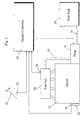
- FIG. 1 shows a diesel engine 10 having a fuel pump 12 that draws fuel from a tank 14 by way of a pipe 16 and supplies fuel under pressure to a fuel rail 20 by way of a pipe 18. From the fuel rail 20, fuel flows to the individual injectors (not shown).
- the pump 12 is controlled by an engine controller 30 which receives inputs from various sensors, amongst them a pressure sensor 24 detecting the pressure in the fuel rail 20, an engine speed/position sensor 32 associated with the crankshaft 22 of the engine 10 and a position sensor 26 sensitive to the position of the accelerator or demand pedal 28.
- the controller may additionally include a clock to enable it to predict wear in the system.
- the curve A shows the pressure variation in the fuel rail when the accelerator pedal is released with the engine running at 2500 rpm while the curve B shows the pressure variation if the release of the accelerator pedal occurs with the engine running at 700 rpm.
- the engine controller 30 which is itself a micro-computer serving several other functions, may be used to store or calculate tables of expected pressure surge magnitude and duration occurring at different speeds (or other engine control parameters affecting the fuel rail pressure surge) and to compare the expected values with actual values sensed by the sensor 24. When the difference between expected and measured surge peaks and/or surge durations drops below a threshold, then the controller 30 can issue a warning of a suspected leak in the fuel rail.
- the values of surge pressure and duration may vary between fuel systems and it is possible to compensate for such variation by adopting a self-learning algorithm in the controller 30.
- the time integral of the pressure during the surge also may be used as the decisive parameter.
Landscapes
- Engineering & Computer Science (AREA)
- Chemical & Material Sciences (AREA)
- Combustion & Propulsion (AREA)
- Mechanical Engineering (AREA)
- General Engineering & Computer Science (AREA)
- Fuel-Injection Apparatus (AREA)
- Electrical Control Of Air Or Fuel Supplied To Internal-Combustion Engine (AREA)
- Combined Controls Of Internal Combustion Engines (AREA)
- Examining Or Testing Airtightness (AREA)
- Testing Of Devices, Machine Parts, Or Other Structures Thereof (AREA)
Abstract
Description
- The present invention is concerned with an engine in which individual injectors connected to a common fuel supply rail are used to inject fuel directly into the combustion chambers of the engine.
- In such engines, and especially in diesel engines, the fuel rail needs to be maintained under high pressure by a fuel pump and the present invention seeks to provide a method and apparatus for detecting fuel leakage from the fuel rail and the pipes connected to it.
- In JP-A-10.089.135, a method for detecting fuel leakage is proposed which compares an expected pressure drop at a given time with a measured pressure drop. In practice, such a method may give rise to inaccurate measurements as it requires a very strict observation of the time-pressure relation.
- It is therefore an object of the present invention to overcome the above disadvantages of the prior art by providing a method and means for detecting fuel leakage from a fuel rail in a more reliable and less complicated manner.
- According to a first aspect of the present invention, there is provided a method of detecting leakage in the fuel supply to the injectors of an engine in which the individual injectors are connected to a fuel supply rail to which fuel from a reservoir is supplied under pressure by a fuel pump, the method comprising the steps of monitoring the pressure within the fuel rail and determining when a parameter of a pressure surge in the fuel supply rail resulting from a rapid transition from high to low engine load fails to reach a reference value.
- According to a second aspect of the invention, there is provided an apparatus for detecting leakage in the fuel supply to the injectors of an engine in which the individual injectors are connected to a fuel supply rail to which fuel from a reservoir is supplied under pressure by a fuel pump, the apparatus comprising means for measuring the pressure within the fuel rail and means for determining when a parameter of a measured pressure surge in the fuel supply rail resulting from a rapid transition from high to low engine load fails to reach a reference value.
- In common fuel rail systems, when the load on the engine is reduced (by release of the accelerator pedal), the injectors are immediately turned off and the fuel pump supplying the fuel rail is also commanded to close down. However, because some of the pump chambers will already contain fuel that will be delivered to the rail even after the pump has been commanded to close down, the pressure in the fuel rail increases for a short time and then slowly decays. The invention is predicated on the realisation that this unavoidable pressure surge, which has hitherto been regarded as a nuisance, advantageously can be used to monitor the integrity of the fuel rail. This is because the effect of a leak in the fuel rail of the high pressure lines would be not only to reduce the peak pressure of the surge, but also to reduce the time that it takes to decay.
- The surge can be measured on such occasions when the accelerator is released suddenly, preferably when the engine is operating at or near full load, as the surge then will be at its maximum level. The peak pressure and decay time of the surge that should occur under these circumstances will depend on the engine speed. By storing the appropriate values of peak pressure and/or decay time, or alternatively the time integral of the pressure surge, in a look-up table, or calculating such reference pressures using a suitable algorithm, it is possible to detect leakage by comparing the respective measured parameter with that stored or calculated for the current engine speed.
- It is possible to build-in self-learning or adaptation features in the leakage detection algorithm to take into account such factors as variation in the output of the fuel pump. In particular, the algorithm can be made more efficient by allowing the calibration to learn the characteristics of the particular fuel system during the first few hours of operation. As long as the measured values prove to be within an expected range, then they may serve as a baseline from which changes should be measured.
- The invention will now be described further, by way of example, with reference to the accompanying drawings, in which:
- Figure 1 shows a schematic representation of an engine control system, embodying the present invention;
- Figure 2 shows a graph of measured rail pressure against time before and after a change in throttle command; and
- Figure 3 shows part of the graph shown in Figure 2 to an enlarged scale and illustrating the effect of engine speed on the pressure surge in the fuel rail.
-
- Figure 1 shows a
diesel engine 10 having afuel pump 12 that draws fuel from atank 14 by way of apipe 16 and supplies fuel under pressure to afuel rail 20 by way of apipe 18. From thefuel rail 20, fuel flows to the individual injectors (not shown). Thepump 12 is controlled by anengine controller 30 which receives inputs from various sensors, amongst them apressure sensor 24 detecting the pressure in thefuel rail 20, an engine speed/position sensor 32 associated with thecrankshaft 22 of theengine 10 and aposition sensor 26 sensitive to the position of the accelerator ordemand pedal 28. The controller may additionally include a clock to enable it to predict wear in the system. - As shown by the graphs in Figures 2 and 3, when the driver suddenly reduces the engine load by removing his foot from the
demand pedal 28, that is when there is a step change in the throttle command, thecontroller 30 after a slight delay sends a signal to thefuel pump 12 to reduce its output. However, when the fuel system has no leaks, there is a temporary surge in the pressure in thefuel rail 20 as sensed by thesensor 24 before the pressure drops to the value corresponding to the reduced engine load condition. The reason for this pressure surge, as earlier explained, is that some of the pump chambers will still contain fuel that is delivered to the fuel rail after the injectors have been shut off. The present invention makes use of this unavoidable pressure surge, to monitor the integrity of the fuel rail because its peak and/or duration would be reduced in the event of a leak in the fuel rail. - To avoid errors, it is important to ensure that surge monitoring only takes place when a transition from above a first value of engine load to below a second value of engine load occurs within a predetermined time. In other words, one must ensure that a significant and sudden drop in engine load has occurred.
- In Figure 3, the curve A shows the pressure variation in the fuel rail when the accelerator pedal is released with the engine running at 2500 rpm while the curve B shows the pressure variation if the release of the accelerator pedal occurs with the engine running at 700 rpm. Because of these variations, it is not possible to specify a fixed limit for the magnitude and/or duration of these pressure surges as they will depend on other operating parameters such as engine speed. Instead, therefore, the
engine controller 30, which is itself a micro-computer serving several other functions, may be used to store or calculate tables of expected pressure surge magnitude and duration occurring at different speeds (or other engine control parameters affecting the fuel rail pressure surge) and to compare the expected values with actual values sensed by thesensor 24. When the difference between expected and measured surge peaks and/or surge durations drops below a threshold, then thecontroller 30 can issue a warning of a suspected leak in the fuel rail. - The values of surge pressure and duration may vary between fuel systems and it is possible to compensate for such variation by adopting a self-learning algorithm in the
controller 30. - To further improve the accuracy and reliability of the fuel leak control, the time integral of the pressure during the surge also may be used as the decisive parameter.
Claims (12)
- A method of detecting leakage in the fuel supply to the injectors (-) of an engine (10) in which the individual injectors are connected to a fuel supply rail (20) to which fuel from a reservoir (14) is supplied under pressure by a fuel pump (12), the method comprising the step of monitoring the pressure within the fuel rail (20); and
characterized in that the method further comprises the step of determining when a parameter of a pressure surge in the fuel supply rail (20) resulting from a rapid transition from high to low engine load fails to reach a reference value. - A method according to claim 1, characterized in that the monitored parameter of the pressure surge is the maximum pressure reached during the surge.
- A method according to claim 1, characterized in that the monitored parameter of the pressure surge is the duration of the surge.
- A method according to claim 1, characterized in that the monitored parameter is the time integral of the pressure during the surge.
- A method according to any of the preceding claims, characterized in that surge monitoring takes place only when a transition from above a first value of engine load to below a second value of engine load occurs within a predetermined time.
- A method according to any of the preceding claims, characterized in that the reference value is varied as a function of the engine speed during the pressure surge.
- A method according to claim 6, characterized in that a correction factor is applied to the reference value to compensate for variations in fuel system production.
- Apparatus for detecting leakage in the fuel supply to the injectors (-) of an engine (10) in which the individual injectors are connected to a fuel supply rail (20) to which fuel from a reservoir (14) is supplied under pressure by a fuel pump (12), the apparatus comprising means (24) for measuring the pressure within the fuel rail (20); and
characterized in that the apparatus further comprises means (30) for determining when a parameter of a measured pressure surge in the fuel supply rail (20) resulting from a rapid transition from high to low engine load fails to reach a reference value. - Apparatus according to claim 8, characterized in that the monitored parameter of the pressure surge is the maximum pressure reached during the surge, the duration of the surge or the time integral of the pressure during the surge.
- Apparatus according to claim 8 or 9, characterized in that if further comprises means for varying the reference value as a function of an operating condition of the engine (10) such as engine speed, coolant temperature, ambient temperature and fuel temperature during the pressure surge.
- Apparatus according to claim 10, characterized in that it further comprises means for calculating or looking up from a stored table a reference value appropriate to the prevailing engine operating conditions.
- Apparatus according to claims 8 to 11, characterized in that means are provided for applying a correction to the reference value to compensate for variations in the output of the fuel pump (12).
Applications Claiming Priority (2)
| Application Number | Priority Date | Filing Date | Title |
|---|---|---|---|
| GB0021923A GB2366598A (en) | 2000-09-07 | 2000-09-07 | Detecting leakage in the fuel rail of an i.c. engine |
| GB0021923 | 2000-09-07 |
Publications (3)
| Publication Number | Publication Date |
|---|---|
| EP1186775A2 true EP1186775A2 (en) | 2002-03-13 |
| EP1186775A3 EP1186775A3 (en) | 2004-01-02 |
| EP1186775B1 EP1186775B1 (en) | 2005-10-26 |
Family
ID=9898998
Family Applications (1)
| Application Number | Title | Priority Date | Filing Date |
|---|---|---|---|
| EP01203296A Expired - Lifetime EP1186775B1 (en) | 2000-09-07 | 2001-08-31 | Method for detecting leakage in a fuel rail |
Country Status (6)
| Country | Link |
|---|---|
| US (1) | US20030172720A1 (en) |
| EP (1) | EP1186775B1 (en) |
| JP (1) | JP4750978B2 (en) |
| AT (1) | ATE307973T1 (en) |
| DE (1) | DE60114336T2 (en) |
| GB (1) | GB2366598A (en) |
Cited By (6)
| Publication number | Priority date | Publication date | Assignee | Title |
|---|---|---|---|---|
| DE102004005851A1 (en) * | 2004-02-06 | 2005-09-08 | Audi Ag | Fuel pumping and injection monitoring system for internal combustion engine has circuit with fuel supply pressure sensor and diagnosis value calculating circuit |
| FR2919678A1 (en) * | 2007-08-02 | 2009-02-06 | Renault Sas | METHOD AND DEVICE FOR DIAGNOSING INJECTOR LEAKAGE IN AN INTERNAL COMBUSTION ENGINE |
| DE102008024545A1 (en) * | 2008-05-21 | 2009-11-26 | Continental Automotive Gmbh | Method for determining cause of defect in low pressure area of fuel injection system of internal combustion engine of motor vehicle, involves determining actual cause of defect by monitoring reaction of injection system to load step |
| DE102011005527A1 (en) | 2011-03-15 | 2012-09-20 | Robert Bosch Gmbh | Method for checking the fuel quantity balance in a common rail system, corresponding engine control and corresponding diagnostic device |
| CN103868659A (en) * | 2013-12-31 | 2014-06-18 | 广西玉柴机器股份有限公司 | Leakage testing method for sealing property of cylinder cover oil atomizer copper bush |
| CN105033637A (en) * | 2015-08-21 | 2015-11-11 | 广西淞森车用部件有限公司 | Fuel distributor assembly assembling device and assembling use method thereof |
Families Citing this family (9)
| Publication number | Priority date | Publication date | Assignee | Title |
|---|---|---|---|---|
| DE102004044450B3 (en) * | 2004-09-14 | 2006-04-06 | Siemens Ag | Method and device for idle detection of injectors |
| EP1829726A1 (en) * | 2006-03-03 | 2007-09-05 | Inergy Automotive Systems Research (SA) | Method for recovering vapor during an onboard refueling operation |
| IT1398227B1 (en) * | 2009-06-09 | 2013-02-22 | Magneti Marelli Spa | METHOD FOR CARS LEARNING THE VARIATION OF A NOMINAL OPERATING CHARACTERISTIC OF A HIGH-PRESSURE PUMP WITH A VARIABLE FLOW IN AN INTERNAL COMBUSTION ENGINE |
| WO2012053055A1 (en) * | 2010-10-19 | 2012-04-26 | トヨタ自動車 株式会社 | Leak mechanism diagnosing system in internal combustion engine |
| JP6184756B2 (en) * | 2013-05-31 | 2017-08-23 | 東日本旅客鉄道株式会社 | Fuel leak detection device |
| CN104748915A (en) * | 2013-12-26 | 2015-07-01 | 上海众源燃油分配器制造有限公司 | High-pressure fuel pipe low-pressure leak detection tool |
| DE102019200978B4 (en) * | 2019-01-25 | 2020-11-12 | Vitesco Technologies GmbH | Method and device for checking the functionality of a crankcase ventilation system of an internal combustion engine |
| US11286874B2 (en) * | 2019-08-26 | 2022-03-29 | GM Global Technology Operations LLC | Method for fuel injector characterization |
| US11459970B2 (en) | 2021-02-24 | 2022-10-04 | Caterpillar Inc. | Fuel leak detection system |
Citations (1)
| Publication number | Priority date | Publication date | Assignee | Title |
|---|---|---|---|---|
| JPH1089135A (en) | 1996-09-20 | 1998-04-07 | Toyota Motor Corp | Fuel supply device |
Family Cites Families (15)
| Publication number | Priority date | Publication date | Assignee | Title |
|---|---|---|---|---|
| JPH07122422B2 (en) * | 1986-05-02 | 1995-12-25 | 日本電装株式会社 | Fuel injector |
| DE3714697A1 (en) * | 1987-05-02 | 1988-11-10 | Vdo Schindling | DEVICE FOR DETERMINING AND / OR INFLUENCING OPERATING DATA OF MOTOR VEHICLES WITH INTERNAL COMBUSTION ENGINE |
| US5133323A (en) * | 1991-06-25 | 1992-07-28 | Siemens Automotive L.P. | Intake manifold pressure compensation for the closed-loop pressure regulation of a fuel pump |
| JP2956302B2 (en) * | 1991-09-06 | 1999-10-04 | 株式会社デンソー | Abnormality diagnosis device for internal combustion engine |
| DE19520300A1 (en) * | 1995-06-02 | 1996-12-05 | Bosch Gmbh Robert | Device for detecting a leak in a fuel supply system |
| JPH0942105A (en) * | 1995-08-02 | 1997-02-10 | Hino Motors Ltd | Fuel leakage detector |
| JPH09170512A (en) * | 1995-12-21 | 1997-06-30 | Nippon Soken Inc | Pressure control device in accumulator fuel injection device |
| JP3995118B2 (en) * | 1995-11-09 | 2007-10-24 | ローベルト ボツシユ ゲゼルシヤフト ミツト ベシユレンクテル ハフツング | Leak identification method and apparatus for fuel supply system in internal combustion engine with high pressure fuel injection device |
| EP0785358B1 (en) * | 1996-01-19 | 2002-03-27 | C.R.F. Società Consortile per Azioni | Method and unit for diagnosing leakage of an internal combustion engine high-pressure injection system |
| JP3750754B2 (en) * | 1996-05-14 | 2006-03-01 | 株式会社デンソー | Fuel supply device for internal combustion engine |
| US5685268A (en) * | 1996-05-20 | 1997-11-11 | Siemens Automotive Corporation | Fuel leakage detector system |
| DE19634982C2 (en) * | 1996-08-29 | 2002-10-10 | Siemens Ag | Method for monitoring a fuel pressure |
| JP3713918B2 (en) * | 1997-08-29 | 2005-11-09 | いすゞ自動車株式会社 | Engine fuel injection method and apparatus |
| DE19856203C2 (en) * | 1998-12-05 | 2001-12-06 | Bosch Gmbh Robert | Fuel supply system for an internal combustion engine, in particular of a motor vehicle |
| JP3909480B2 (en) * | 1999-02-03 | 2007-04-25 | 株式会社ケーヒン | Fuel pressure control device in fuel injection device |
-
2000
- 2000-09-07 GB GB0021923A patent/GB2366598A/en not_active Withdrawn
-
2001
- 2001-08-31 AT AT01203296T patent/ATE307973T1/en not_active IP Right Cessation
- 2001-08-31 DE DE60114336T patent/DE60114336T2/en not_active Expired - Lifetime
- 2001-08-31 EP EP01203296A patent/EP1186775B1/en not_active Expired - Lifetime
- 2001-09-05 JP JP2001268249A patent/JP4750978B2/en not_active Expired - Fee Related
- 2001-09-05 US US09/946,314 patent/US20030172720A1/en not_active Abandoned
Patent Citations (1)
| Publication number | Priority date | Publication date | Assignee | Title |
|---|---|---|---|---|
| JPH1089135A (en) | 1996-09-20 | 1998-04-07 | Toyota Motor Corp | Fuel supply device |
Cited By (9)
| Publication number | Priority date | Publication date | Assignee | Title |
|---|---|---|---|---|
| DE102004005851A1 (en) * | 2004-02-06 | 2005-09-08 | Audi Ag | Fuel pumping and injection monitoring system for internal combustion engine has circuit with fuel supply pressure sensor and diagnosis value calculating circuit |
| FR2919678A1 (en) * | 2007-08-02 | 2009-02-06 | Renault Sas | METHOD AND DEVICE FOR DIAGNOSING INJECTOR LEAKAGE IN AN INTERNAL COMBUSTION ENGINE |
| WO2009019345A1 (en) * | 2007-08-02 | 2009-02-12 | Renault S.A.S. | Method and device for diagonosing a leaky injector in an internal combustion engine |
| DE102008024545A1 (en) * | 2008-05-21 | 2009-11-26 | Continental Automotive Gmbh | Method for determining cause of defect in low pressure area of fuel injection system of internal combustion engine of motor vehicle, involves determining actual cause of defect by monitoring reaction of injection system to load step |
| DE102011005527A1 (en) | 2011-03-15 | 2012-09-20 | Robert Bosch Gmbh | Method for checking the fuel quantity balance in a common rail system, corresponding engine control and corresponding diagnostic device |
| US8849547B2 (en) | 2011-03-15 | 2014-09-30 | Robert Bosch Gmbh | Method for testing the fuel quantity balance in a common rail system, corresponding engine control system, and corresponding diagnostic device |
| CN103868659A (en) * | 2013-12-31 | 2014-06-18 | 广西玉柴机器股份有限公司 | Leakage testing method for sealing property of cylinder cover oil atomizer copper bush |
| CN103868659B (en) * | 2013-12-31 | 2016-05-25 | 广西玉柴机器股份有限公司 | A kind of cylinder cap fuel injector copper sheathing sealing leak testing process |
| CN105033637A (en) * | 2015-08-21 | 2015-11-11 | 广西淞森车用部件有限公司 | Fuel distributor assembly assembling device and assembling use method thereof |
Also Published As
| Publication number | Publication date |
|---|---|
| ATE307973T1 (en) | 2005-11-15 |
| EP1186775B1 (en) | 2005-10-26 |
| DE60114336D1 (en) | 2005-12-01 |
| JP4750978B2 (en) | 2011-08-17 |
| DE60114336T2 (en) | 2006-04-20 |
| US20030172720A1 (en) | 2003-09-18 |
| JP2002130033A (en) | 2002-05-09 |
| GB2366598A (en) | 2002-03-13 |
| EP1186775A3 (en) | 2004-01-02 |
| GB0021923D0 (en) | 2000-10-25 |
Similar Documents
| Publication | Publication Date | Title |
|---|---|---|
| US11459970B2 (en) | Fuel leak detection system | |
| EP1186775B1 (en) | Method for detecting leakage in a fuel rail | |
| US5708202A (en) | Method of recognizing operating errors in a fuel injection system of an internal combustion engine | |
| US6467466B1 (en) | Gas leakage detection and fail-safe control method for gas-fueled internal combustion engine and apparatus for implementing the same | |
| US6234148B1 (en) | Method and device for monitoring a pressure sensor | |
| US5715786A (en) | Device for detecting leakage in a fuel supply | |
| KR100669293B1 (en) | System for operating the engine, especially the engine of the car | |
| US6382017B1 (en) | Evaporative emission leak detection method with vapor generation compensation | |
| US8738218B2 (en) | Pressure sensor diagnostic method and common rail fuel injection control device | |
| JP5807953B2 (en) | Pressure sensor diagnosis method and common rail fuel injection control device | |
| JPH10325352A (en) | In particular, a method for inspecting a pressure sensor of a fuel supply device for an internal combustion engine of an automobile and a fuel supply device | |
| US9732692B2 (en) | Apparatus for diagnosing fuel pressure sensor characteristic fault | |
| US6539921B1 (en) | Fuel injection system with fuel pressure sensor | |
| US10837393B2 (en) | Method for operating a diesel engine | |
| US7966864B2 (en) | Method for ascertaining an ethanol content of a fuel | |
| CN105257417A (en) | Fault detecting method for rail pressure sensor in common rail system | |
| US8583347B2 (en) | Method for determining at least one rail pressure/closing current value pair for a pressure control valve of a common rail injection system | |
| KR100772853B1 (en) | Sensor monitoring method and device | |
| KR20020035893A (en) | Method for controlling an internal combustion engine | |
| US20110077842A1 (en) | Method for testing a pressure sensor of a fuel accumulator device | |
| US20080209992A1 (en) | Pressure sensor and pressure control system | |
| US6829555B2 (en) | Method and arrangement for monitoring the emissions during operation of a supply vessel for supplying a volatile medium including a fuel supply tank of a motor vehicle | |
| JP2000227053A (en) | Evaporative fuel treatment system for internal combustion engine | |
| US20090112446A1 (en) | Oxygen sensor monitoring | |
| KR20040037397A (en) | method for deciding breakdown of fuel tank level sensor |
Legal Events
| Date | Code | Title | Description |
|---|---|---|---|
| PUAI | Public reference made under article 153(3) epc to a published international application that has entered the european phase |
Free format text: ORIGINAL CODE: 0009012 |
|
| AK | Designated contracting states |
Kind code of ref document: A2 Designated state(s): AT BE CH CY DE DK ES FI FR GB GR IE IT LI LU MC NL PT SE TR |
|
| AX | Request for extension of the european patent |
Free format text: AL;LT;LV;MK;RO;SI |
|
| RAP1 | Party data changed (applicant data changed or rights of an application transferred) |
Owner name: IVECO (UK) LTD. Owner name: CUMMINS ENGINE COMPANY, LTD. Owner name: CNH U.K. LIMITED |
|
| PUAL | Search report despatched |
Free format text: ORIGINAL CODE: 0009013 |
|
| AK | Designated contracting states |
Kind code of ref document: A3 Designated state(s): AT BE CH CY DE DK ES FI FR GB GR IE IT LI LU MC NL PT SE TR |
|
| AX | Request for extension of the european patent |
Extension state: AL LT LV MK RO SI |
|
| RIC1 | Information provided on ipc code assigned before grant |
Ipc: 7F 02M 63/02 B Ipc: 7F 02M 65/00 A Ipc: 7F 02D 41/38 B |
|
| 17P | Request for examination filed |
Effective date: 20040618 |
|
| AKX | Designation fees paid |
Designated state(s): AT BE CH CY DE DK ES FI FR GB GR IE IT LI LU MC NL PT SE TR |
|
| 17Q | First examination report despatched |
Effective date: 20040901 |
|
| GRAP | Despatch of communication of intention to grant a patent |
Free format text: ORIGINAL CODE: EPIDOSNIGR1 |
|
| GRAS | Grant fee paid |
Free format text: ORIGINAL CODE: EPIDOSNIGR3 |
|
| GRAA | (expected) grant |
Free format text: ORIGINAL CODE: 0009210 |
|
| AK | Designated contracting states |
Kind code of ref document: B1 Designated state(s): AT BE CH CY DE DK ES FI FR GB GR IE IT LI LU MC NL PT SE TR |
|
| PG25 | Lapsed in a contracting state [announced via postgrant information from national office to epo] |
Ref country code: AT Free format text: LAPSE BECAUSE OF FAILURE TO SUBMIT A TRANSLATION OF THE DESCRIPTION OR TO PAY THE FEE WITHIN THE PRESCRIBED TIME-LIMIT Effective date: 20051026 Ref country code: BE Free format text: LAPSE BECAUSE OF FAILURE TO SUBMIT A TRANSLATION OF THE DESCRIPTION OR TO PAY THE FEE WITHIN THE PRESCRIBED TIME-LIMIT Effective date: 20051026 Ref country code: CH Free format text: LAPSE BECAUSE OF FAILURE TO SUBMIT A TRANSLATION OF THE DESCRIPTION OR TO PAY THE FEE WITHIN THE PRESCRIBED TIME-LIMIT Effective date: 20051026 Ref country code: FI Free format text: LAPSE BECAUSE OF FAILURE TO SUBMIT A TRANSLATION OF THE DESCRIPTION OR TO PAY THE FEE WITHIN THE PRESCRIBED TIME-LIMIT Effective date: 20051026 Ref country code: LI Free format text: LAPSE BECAUSE OF FAILURE TO SUBMIT A TRANSLATION OF THE DESCRIPTION OR TO PAY THE FEE WITHIN THE PRESCRIBED TIME-LIMIT Effective date: 20051026 Ref country code: NL Free format text: LAPSE BECAUSE OF FAILURE TO SUBMIT A TRANSLATION OF THE DESCRIPTION OR TO PAY THE FEE WITHIN THE PRESCRIBED TIME-LIMIT Effective date: 20051026 |
|
| REG | Reference to a national code |
Ref country code: GB Ref legal event code: FG4D |
|
| REG | Reference to a national code |
Ref country code: CH Ref legal event code: EP |
|
| REG | Reference to a national code |
Ref country code: IE Ref legal event code: FG4D |
|
| REF | Corresponds to: |
Ref document number: 60114336 Country of ref document: DE Date of ref document: 20051201 Kind code of ref document: P |
|
| PG25 | Lapsed in a contracting state [announced via postgrant information from national office to epo] |
Ref country code: DK Free format text: LAPSE BECAUSE OF FAILURE TO SUBMIT A TRANSLATION OF THE DESCRIPTION OR TO PAY THE FEE WITHIN THE PRESCRIBED TIME-LIMIT Effective date: 20060126 Ref country code: GR Free format text: LAPSE BECAUSE OF FAILURE TO SUBMIT A TRANSLATION OF THE DESCRIPTION OR TO PAY THE FEE WITHIN THE PRESCRIBED TIME-LIMIT Effective date: 20060126 Ref country code: SE Free format text: LAPSE BECAUSE OF FAILURE TO SUBMIT A TRANSLATION OF THE DESCRIPTION OR TO PAY THE FEE WITHIN THE PRESCRIBED TIME-LIMIT Effective date: 20060126 |
|
| PG25 | Lapsed in a contracting state [announced via postgrant information from national office to epo] |
Ref country code: ES Free format text: LAPSE BECAUSE OF FAILURE TO SUBMIT A TRANSLATION OF THE DESCRIPTION OR TO PAY THE FEE WITHIN THE PRESCRIBED TIME-LIMIT Effective date: 20060206 |
|
| PG25 | Lapsed in a contracting state [announced via postgrant information from national office to epo] |
Ref country code: PT Free format text: LAPSE BECAUSE OF FAILURE TO SUBMIT A TRANSLATION OF THE DESCRIPTION OR TO PAY THE FEE WITHIN THE PRESCRIBED TIME-LIMIT Effective date: 20060327 |
|
| NLV1 | Nl: lapsed or annulled due to failure to fulfill the requirements of art. 29p and 29m of the patents act | ||
| REG | Reference to a national code |
Ref country code: CH Ref legal event code: PL |
|
| ET | Fr: translation filed | ||
| PG25 | Lapsed in a contracting state [announced via postgrant information from national office to epo] |
Ref country code: IE Free format text: LAPSE BECAUSE OF NON-PAYMENT OF DUE FEES Effective date: 20060831 Ref country code: MC Free format text: LAPSE BECAUSE OF NON-PAYMENT OF DUE FEES Effective date: 20060831 |
|
| PLBE | No opposition filed within time limit |
Free format text: ORIGINAL CODE: 0009261 |
|
| STAA | Information on the status of an ep patent application or granted ep patent |
Free format text: STATUS: NO OPPOSITION FILED WITHIN TIME LIMIT |
|
| 26N | No opposition filed |
Effective date: 20060727 |
|
| REG | Reference to a national code |
Ref country code: IE Ref legal event code: MM4A |
|
| PG25 | Lapsed in a contracting state [announced via postgrant information from national office to epo] |
Ref country code: TR Free format text: LAPSE BECAUSE OF FAILURE TO SUBMIT A TRANSLATION OF THE DESCRIPTION OR TO PAY THE FEE WITHIN THE PRESCRIBED TIME-LIMIT Effective date: 20051026 Ref country code: LU Free format text: LAPSE BECAUSE OF NON-PAYMENT OF DUE FEES Effective date: 20060831 |
|
| PG25 | Lapsed in a contracting state [announced via postgrant information from national office to epo] |
Ref country code: CY Free format text: LAPSE BECAUSE OF FAILURE TO SUBMIT A TRANSLATION OF THE DESCRIPTION OR TO PAY THE FEE WITHIN THE PRESCRIBED TIME-LIMIT Effective date: 20051026 |
|
| REG | Reference to a national code |
Ref country code: FR Ref legal event code: PLFP Year of fee payment: 16 |
|
| REG | Reference to a national code |
Ref country code: FR Ref legal event code: PLFP Year of fee payment: 17 |
|
| PGFP | Annual fee paid to national office [announced via postgrant information from national office to epo] |
Ref country code: FR Payment date: 20170628 Year of fee payment: 17 |
|
| PGFP | Annual fee paid to national office [announced via postgrant information from national office to epo] |
Ref country code: GB Payment date: 20170703 Year of fee payment: 17 Ref country code: DE Payment date: 20170706 Year of fee payment: 17 |
|
| REG | Reference to a national code |
Ref country code: DE Ref legal event code: R119 Ref document number: 60114336 Country of ref document: DE |
|
| GBPC | Gb: european patent ceased through non-payment of renewal fee |
Effective date: 20180831 |
|
| PG25 | Lapsed in a contracting state [announced via postgrant information from national office to epo] |
Ref country code: DE Free format text: LAPSE BECAUSE OF NON-PAYMENT OF DUE FEES Effective date: 20190301 |
|
| PG25 | Lapsed in a contracting state [announced via postgrant information from national office to epo] |
Ref country code: FR Free format text: LAPSE BECAUSE OF NON-PAYMENT OF DUE FEES Effective date: 20180831 |
|
| PG25 | Lapsed in a contracting state [announced via postgrant information from national office to epo] |
Ref country code: GB Free format text: LAPSE BECAUSE OF NON-PAYMENT OF DUE FEES Effective date: 20180831 |
|
| PGFP | Annual fee paid to national office [announced via postgrant information from national office to epo] |
Ref country code: IT Payment date: 20190807 Year of fee payment: 19 |
|
| PG25 | Lapsed in a contracting state [announced via postgrant information from national office to epo] |
Ref country code: IT Free format text: LAPSE BECAUSE OF NON-PAYMENT OF DUE FEES Effective date: 20200831 |