EP1183270B1 - Novel organic anion transport proteins - Google Patents
Novel organic anion transport proteins Download PDFInfo
- Publication number
- EP1183270B1 EP1183270B1 EP00937636A EP00937636A EP1183270B1 EP 1183270 B1 EP1183270 B1 EP 1183270B1 EP 00937636 A EP00937636 A EP 00937636A EP 00937636 A EP00937636 A EP 00937636A EP 1183270 B1 EP1183270 B1 EP 1183270B1
- Authority
- EP
- European Patent Office
- Prior art keywords
- oatp2
- oatp
- nucleic acid
- acid sequence
- substrate
- Prior art date
- Legal status (The legal status is an assumption and is not a legal conclusion. Google has not performed a legal analysis and makes no representation as to the accuracy of the status listed.)
- Expired - Lifetime
Links
Images




Classifications
-
- C—CHEMISTRY; METALLURGY
- C07—ORGANIC CHEMISTRY
- C07K—PEPTIDES
- C07K14/00—Peptides having more than 20 amino acids; Gastrins; Somatostatins; Melanotropins; Derivatives thereof
- C07K14/435—Peptides having more than 20 amino acids; Gastrins; Somatostatins; Melanotropins; Derivatives thereof from animals; from humans
- C07K14/46—Peptides having more than 20 amino acids; Gastrins; Somatostatins; Melanotropins; Derivatives thereof from animals; from humans from vertebrates
- C07K14/47—Peptides having more than 20 amino acids; Gastrins; Somatostatins; Melanotropins; Derivatives thereof from animals; from humans from vertebrates from mammals
Definitions
- the invention claims isolated nucleic acid encoding all or a portion of novel member of the organic anion transport protein (“OATP”) designated OATP2.
- vectors containing the nucleic acid sequences are also claimed.
- Tissue expression of the transporter is described as well as some of its substrates. Also claimed are uses for this novel OATP, including for targeting drugs to specific tissues, for modulating the concentration of endogenous substrates, and for identifying a substrate capable of being transported by the novel OATP of the invention.
- the liver functions in the clearance of a large variety of metabolic products, drugs and other xenobiotics by transporting them across the sinusoidal membrane into the hepatocyte.
- Several classes of transport systems have been described that mediate these processes including the Na+/taurocholate cotransporter polypeptide, NTCP, in rat and human liver ( Hagenbuch, B., et al. (1991) Proc. Natl. Acad. Sci. USA 88:10629-33 ; Hagenbuch, B. et al., (1994) J. Clin. Invest.
- OATP isoforms in the rat: roatp1 ( Jacquemin, E., et al., (1994) Proc. Natl. Acad. Sci. USA 91:133-37 ); roatp2 ( Noe, B.A., et al., (1997) Proc. Natl. Acad. Sci. USA 94:10346-50 ; and roatp3 ( Abe, T., et al., (1998) J. Biol. Chem. 273:11395-401 ).
- OATPs are known to transport a variety of other compounds.
- Substrate specificities of rat oatp1 are discussed in Kullak-Ublick, G.A. et al., (1994) Hepatology, 20:411-416 , while substrate specificities of human OATP are discussed in Bossuyt, X., et al., (1996) J. Hepatol., 25:733-738 .
- the present invention encompasses a novel organic anion transport protein ("OATP") and polynucleotides encoding said OATP.
- OATP organic anion transport protein
- the OATP disclosed herein is designated OATP2.
- a polynucleotide sequence of the OATP is disclosed herein, along with the deduced amino acid sequence.
- the cDNA encoding the OATP of the present invention has been deposited with the American Type Culture Collection and given Accession Numbers ATCC 207213 (OATP2).
- the present inventors sequenced the cDNA encoding the novel OATP and determined the primary sequence of the deduced protein. Disclosed herein are the nucleic acid sequence (SEQ ID NO:1) and amino acid sequence (SEQ ID NO:2) of OATP2;
- the OATP of the present invention can be produced by: (1) inserting the cDNA of a disclosed OATP into an appropriate expression vector; (2) transfecting the expression vector into an appropriate transfection host(s); (3) growing the transfected host(s) in appropriate culture media; and (4) assaying the transport activity in the transfected cells.
- the present invention therefore provides a purified and isolated nucleic acid molecule, preferably a DNA molecule, having a sequence which codes for an OATP, or an oligonucleotide fragment of the nucleic acid molecule which is unique to an OATP of the invention.
- the purified and isolated nucleic acid molecule has the sequence as shown in SEQ ID NO:1 (OATP2).
- the invention also contemplates a double stranded nucleic acid molecule comprising a nucleic acid molecule of the invention or an oligonucleotide fragment thereof hydrogen bonded to a complementary nucleotide base sequence.
- isolated and purified nucleic acid refers to a nucleic acid molecule which is one or both of the following: (1) not immediately contiguous with either one or both of the sequences, e.g., coding sequences, with which it is immediately contiguous (i.e., one at the 5' end and one at the 3'end) in the naturally occurring genome of the organism from which the nucleic acid is derived; or (2) which is substantially free of a nucleic acid sequence with which it occurs in the organism from which the nucleic acid is derived.
- the term includes, for example, a recombinant DNA which is incorporated into a vector, e.g., into an autonomously replicating plasmid or virus, or into the genomic DNA of a prokaryote or eukaryote, or which exists as a separate molecule (e.g., a cDNA or a genomic DNA fragment produced by PCR or restriction endonuclease treatment) independent of other DNA sequences.
- Substantially pure or isolated and purified DNA also includes a recombinant DNA which is part of a hybrid gene encoding additional OATP sequence.
- nucleic acid molecule comprising a sequence encoding all or a portion of a protein having the amino acid sequence as shown in SEQ ID NO:2 (OATP2); (b) nucleic acid sequences complimentary to (a); (c) nucleic acid sequences which exhibit at least 80%, at least 90%, at least 95%, and at least 98% sequence identity to (a); or (d) a fragment of (a) or (b) that is at least 18 bases and which will hybridize to (a) or (b) under stringent conditions.
- OATP2 amino acid sequence as shown in SEQ ID NO:2
- the degree of homology (percent sequence identity) between two sequences may be determined, for example, by comparing the two sequences using computer programs commonly employed for this purpose.
- One suitable program is the GAP computer program described by Devereux et al., (1984) Nucl. Acids Res. 12:387 .
- the GAP program utilizes the alignment method of Needleman and Wunsch (1970) J. Mol. Biol. 48:433 , as revised by Smith and Waterman (1981) Adv. Appl. Math. 2:482 . Briefly, the GAP program defines percent identity as the number of aligned symbols (i.e., nucleotides or amino acids) which are identical, divided by the total number of symbols in the shorter of the two sequences.
- stringent conditions encompasses conditions known in the art under which a nucleotide sequence will hybridize to: (a) an isolated and purified nucleic acid molecule comprising a sequence encoding a protein having the amino acid sequence as shown herein, or to (b) a nucleic acid sequence complementary to (a). Screening polynucleotides under stringent conditions may be carried out according to the method described in Nature, 313:402-404 (1985 ). Polynucleotide sequences capable of hybridizing under stringent conditions with the polynucleotides of the present invention may be, for example, allelic variants of the disclosed DNA sequences, or may be derived from other sources.
- polynucleotides and amino acid sequences having one or more structural mutations including replacement, deletion or insertion mutations.
- a signal peptide may be deleted, or conservative amino acid substitutions may be made to generate a protein that is still biologically competent or active.
- the invention further contemplates a recombinant molecule comprising a nucleic acid molecule of the present invention or an oligonucleotide fragment thereof and an expression control sequence operatively linked to the nucleic acid molecule or oligonucleotide fragment.
- a transformant host cell including a recombinant molecule of the invention is also provided.
- the invention features a cell or purified preparation of cells which include a novel gene encoding an OATP of the present invention, or which otherwise misexpresses a gene encoding an OATP of the present invention.
- the cell preparation can consist of human or non-human cells, e.g., rodent cells, e.g., mouse or rat cells, rabbit cells, non-human primate cells, or pig cells.
- the cell or cells include an OATP transgene, e.g., a heterologous form of an OATP gene, e.g., a gene derived from humans (in the case of a non-human cell).
- the OATP transgene can be misexpressed, e.g., overexpressed or underexpressed.
- the cell or cells include a gene which misexpresses an endogenous OATP gene, e.g., a gene that expression of which is disrupted, e.g., a knockout.
- a gene which misexpresses an endogenous OATP gene e.g., a gene that expression of which is disrupted, e.g., a knockout.
- Such cells can serve as a model for studying disorders which are related to mutated or misexpressed OATP alleles for use in drug screening.
- the invention provides plasmids which comprise the nucleic acid molecules of the invention. Also encompassed within the invention are vectors comprising the nucleic acid sequences disclosed herein, as well as host cells comprising said vectors.
- the present invention also includes a novel OATP of the present invention, or an active part thereof.
- a biologically competent or active form of the protein or part thereof is also referred to herein as an "active OATP or part thereof".
- the invention further contemplates antibodies having specificity against an epitope of an OATP of the present invention or part of the protein.
- These antibodies may be polyclonal or monoclonal.
- the antibodies may be labeled with a detectable substance and they may be used, for example, to detect a novel OATP of the invention in tissue and cells.
- the antibodies of the present invention, or portions thereof may be used to make targeted antibodies that destroy OATP expressing cells (e.g., antibody-toxin fusion proteins, or radiolabelled antibodies).
- the invention also permits the construction of nucleotide probes which encode part or all of a novel OATP protein of the invention or a part of the protein.
- the invention also relates to a probe comprising a nucleotide sequence coding for a protein, which displays the properties of a novel OATP of the invention or a peptide unique to the protein.
- the probe may be labeled, for example, with a detectable (e.g., radioactive) substance and it may be used to select from a mixture of nucleotide sequences a nucleotide sequence coding for a protein which displays the properties of a novel OATP of the invention.
- the present invention also provides a transgenic non-human animal (e.g., a rodent, e.g., a mouse or a rat, a rabbit or a pig) or embryo all of whose germ cells and somatic cells contain a recombinant molecule of the invention, preferably a recombinant molecule comprising a nucleic acid molecule of the present invention encoding an OATP of the invention or part thereof.
- the recombinant molecule may comprise a nucleic acid sequence encoding an OATP of the present invention with a structural mutation, or may comprise a nucleic acid sequence encoding an OATP of the invention or part thereof and one or more regulatory elements which differ from the regulatory elements that drive expression of the native protein.
- the animal has an OATP gene which is misexpressed or not expressed, e.g., a knockout.
- OATP gene which is misexpressed or not expressed, e.g., a knockout.
- the invention still further provides a method for identifying a substance which is capable of binding a novel OATP of the invention, comprising reacting a novel OATP of the invention or part of the protein under conditions which permit the formation of a complex between the substance and a novel OATP protein or part of the protein, and assaying for substance-OATP complexes, for free substance, for non-complexed OATP, or for activation of an OATP.
- An embodiment of the invention provides a method for identifying substrates which are capable of binding to a novel OATP protein of the invention, isoforms thereof, or part of the protein, said method comprising reacting a novel OATP protein of the invention, isoforms thereof, or part of the protein, with at least one substrate which potentially is capable of binding to the protein, isoform, or part of the protein, under conditions which permit the formation of substrate-transporter protein complexes, and assaying for substrate-transporter protein complexes, for free substrate, for non-complexed OATP protein, or for activation of an OATP.
- substrates are identified which are capable of binding to and being transported by a novel OATP protein of the invention, isoforms thereof, or part of the protein.
- the method comprises testing potential agents by adding the agent to be tested to a cell expressing a novel OATP of the present invention in the presence of a compound known to be transported by an OATP of the invention, and measuring the augmentation or inhibition of transport of the known compound.
- An OATP of the present invention is also useful to identify compounds that may be transported into an organ, e.g., the liver. Compounds that are found to be actively transported into the liver are useful as carriers for other therapeutics targeting the liver.
- composition which may include an OATP of the present invention, a fragment thereof (or a nucleic acid encoding said OATP or fragment thereof) and one or more additional components, e.g., a carrier, diluent or solvent.
- additional component can be one that renders the composition useful for in vitro, in vivo, pharmaceutical or veterinary use.
- agonists and antagonists of an OATP of the present invention are useful to increase or decrease the flow of compounds transported by an OATP of the present invention.
- Said agonists and/or antagonists are preferably administered with an acceptable carrier, diluent or solvent.
- Another aspect relates to a method of treating a mammal, e.g., a human, at risk for a disorder, e.g., a disorder characterized by aberrant or unwanted level or biological activity of an OATP of the present invention and to a method of treating a mammal, e.g., a human, at risk for disorders of the liver.
- a mammal e.g., a human
- OATP2 is expressed exclusively in the liver
- compounds that are optimized for OATP2 are useful to target hepatic delivery. These compounds in themselves may be useful therapeutics, or may be useful to chaperone other therapeutic compounds to the liver.
- blocking OATP2-compound interactions could provide benefit by decreasing its first-pass extraction by the liver and, thus, increasing plasma concentrations and prolonging the systemic half-life of a drug.
- fusion proteins comprising all or a portion of an OATP of the present invention.
- the primary object of the present invention is the identification of a new human OATP, as identified by the nucleic acid and amino acid sequences disclosed herein. Additional objects of the invention are the methods of using the cDNA, the OATP protein, monoclonal antibodies specific for the novel OATPs, a fusion protein comprising a portion of the OATP protein of the present invention.
- amino acid sequences of the novel organic anion transport proteins of the present invention are aligned with known transporters of this family in Figure 3 .
- the degree of sequence homology between the sequences of the present invention and known organic anion transporters indicates that the proteins of the present invention are organic anion transporters.
- OATP proteins may be involved in the transport of compounds into the liver.
- Persons of ordinary skill in the art can use the OATP proteins of the present invention to assay for agents that may increase or decrease the rate of transport of compounds into the liver, or for compounds that are transported by the OATPs of the present invention that are useful as carriers for other compounds that are desired to be carried to a specific organ (e.g., the liver).
- agents that increase or decrease the rate of substrate transport by the OATPs of the present invention, or agents identified as carriers, are useful in the treatment of liver disease.
- OATPs are organ specific/selective (e.g., OATP2 - liver; OATP-RP4 - heart and skeletal muscle, and OATP-RP5 - brain and testis), compound specificity is built into any specific substrate of these OATPs and into molecular carriers transported by these OATPs.
- An agent transported by the above OATPs of the present invention would thus be delivered to the tissues in which they are expressed and not to tissues lacking the above OATPs, thereby achieving tissue specific targeting.
- the OATP nucleic acids of the present invention may be useful therapeutic or diagnostic agents.
- the nucleic acids may be incorporated into vectors and/or formulated as described below and in further detail in the art.
- the present invention also provides a basis for diagnostic genetic screens for predicting response to drugs.
- At least one of the transporters disclosed and claimed herein is a transporter of a known drug (i.e., OATP2 transports pravastatin into hepatocytes).
- Other transporters disclosed herein may similarly transport additional drugs into tissues.
- Persons skilled in the art can: (1) screen the transporter genes for allelic variants (genotypes) in the general population by various sequencing methods; and (2) determine the association of these transporter genotypes in patients with response to the transported drug in clinical trials.
- Particular allelic variants may be more or less effective in transporting a drug, which would be related to drug efficacy.
- genotyping of the claimed transporters could form the basis of a clinical diagnostic test to predict a patient's response to drug therapy.
- polypeptides and nucleic acids of this invention can be used to prepare vectors, cells or cell lines, and antibodies. All of these are useful in assays for identification of OATP positive and negative modulators (i.e., agonists and/or antagonists) and OATP carriers.
- the term "positive modulator” as used herein refers to an agent or compound that increases the rate or amount of transport of a compound into an organ, e.g., the liver, or an agent or compound that decreases the rate or amount of transport of a compound into an organ.
- negative modulator refers to a compound that is joined to a second compound to prevent the second compounds transport into or out of cells.
- carrier refers to an agent or compound that is transported by an OATP of the present invention and that is capable of being joined to or associated with another compound to chaperone that other compound into an organ, e.g., the liver.
- a carrier includes an agent that is used to transport a compound into an organ that is otherwise not transported into said organ, and includes an agent that increases the transport of a compound into an organ that is capable of being transported by an OATP.
- OATP modulators and carriers can be administered to various mammalian species, such as monkeys, dogs, cats, mice, rats, humans, etc.
- persons skilled in the pharmaceutical art can incorporate OATP modulators and carriers in a conventional systemic dosage form, such as a tablet, capsule, elixir or injectable formulation.
- the above dosage forms will also include any necessary physiologically acceptable carrier material, excipient, lubricant, buffer, antibacterial, bulking agent (such as mannitol), anti-oxidants (ascorbic acid or sodium bisulfite) or the like.
- This specification describes the cloning and functional expression of the full-length human cDNA clones of OATP2, i.e. the nucleic acid sequence of OATP2 (SEQ ID NO:1) and, the amino acid sequence of OATP2 (SEQ ID NO:2).
- DNA clones comprising nucleotide sequences encoding the OATP described above were deposited with the American Type Culture Collection ("ATCC") (10801 University Boulevard.. Manassas. VA 20110-2209) on April 20, 1999, and given the following ATCC Accession Numbers: 207209 (OATP-RP3), 207210 (OATP-RP4), 207211 (OATP-RP5). 207212 (OATP-RP2), 207213 (OATP2), and 207214 (OATP-RP1).
- ATCC American Type Culture Collection
- OATP nucleic acids of this invention can obtain OATP nucleic acids of this invention by known methods. Such methods include: (1) Southern and Northern blotting; (2) Western immunoblotting; (3) chemical synthesis; (4) synthesis by polymerase chain reaction (PCR) from primers; (5) expression cloning; and (6) subtractive cDNA cloning.
- PCR polymerase chain reaction
- Preferred nucleic acid sequences of the present invention include the following (preferably the coding sequences as shown below):
- OATP2 (SEQ ID NOS:1 and 2):
- nucleic acid coding for the OATP of the present invention can also modify the nucleic acid coding for the OATP of the present invention to prepare useful mutations. For example, one may modify the sequence to provide additional restriction endonuclease recognition sites in the nucleic acid. Such mutations may be silent or may change the amino acid encoded by the mutated codon.
- One can prepare these modified nucleic acids for example, by mutating the nucleic acid coding for an OATP of the present invention to result in deletion, substitution, insertion, inversion or addition of one or more amino acids in the encoded polypeptide.
- site-directed mutagenesis see Taylor, J. W. et al. (1985), Nucl. Acids Res. 13, 8749-64 and Kunkel, J. A.
- kits for site-directed mutagenesis are available from commercial vendors (e.g., BioRad Laboratories, Richmond, CA; Amersham Corp., Arlington Heights, IL).
- For disruption, deletion and truncation methods see Sayers, J. R. et al. (1988), Nucl. Acids Res. 16: 791-800 .
- modified nucleic acids including (1) alternative splice exon variants; (2) allelic variants; and (3) chimeric proteins in which the fusion construct comprises an OATP or fragment thereof.
- modified nucleic acids can be obtained by persons of ordinary skill in the art when armed with the present disclosure.
- This invention further concerns expression vectors comprising a nucleotide sequence encoding an OATP of the present invention.
- the expression vectors comprise all or a portion of the nucleic acid sequence as shown in SEQ ID NO:1; preferred is a nucleotide sequence encoding an OATP as shown above (i.e., the coding region).
- Expression vectors are usually plasmids, but the invention includes other vector forms that serve equivalent functions and become known in the art subsequently hereto. A person skilled in the art might also stably integrate a sequence encoding an OATP into the chromosome of an appropriate host cell.
- Expression vectors typically contain regulatory elements capable of affecting expression of an OATP. These regulatory elements can be heterologous or native OATP elements.
- a vector contains an origin of replication, a promoter, and a transcription termination sequence.
- the vector may also include other regulatory sequences, including mRNA stability sequences, which provide for stability of the expression product; secretory leader sequences, which provide for secretion of the expression product; environmental feedback sequences, which allow expression of the structural gene to be modulated (e.g., by the presence or absence of nutrients or other inducers in the growth medium); marking sequences, which are capable of providing phenotypic selection in transformed host cells; restriction sites, which provide sites for cleavage by restriction endonucleases; and sequences which allow expression in various types of hosts, including prokaryotes, yeasts, fungi, plants and higher eukaryotes.
- An expression vector of this invention is at least capable of directing the replication, and preferably the expression, of the nucleic acids and protein of this invention.
- Suitable origins of replication include, for example, the Col E1, the SV4O viral, Epstein Barr viral, and the M13 origins of replication.
- Suitable promoters include, for example, the cytomegalovirus promoter, the lac Z promoter, the gal 10 promoter and the Autographa californica multiple nuclear polyhedrosis virus (AcMNPV) polyhedral promoter.
- Suitable termination sequences include, for example, the bovine growth hormone, SV40, lac Z and AcMNPV polyhedral polyadenylation signals. Examples of selectable markers include neomycin, ampicillin, and hygromycin resistance and the like.
- DNA encoding an OATP of the present invention into several commercially available vectors.
- examples include vectors compatible with mammalian cells, such as pcDNA3 or pCEP4; baculovirus vectors such as pBlueBac; prokaryotic vectors such as pcDNA2; and yeast vectors such as pYes2.
- vector modification techniques see Sambrook et al. (1989), Molecular Cloning: A Laboratory Manual, Second Edition, Cold Spring Harbor Laboratory, Cold Spring Harbor, NY .
- This invention additionally concerns host cells containing an expression vector that comprises a sequence encoding OATP2, of the present invention.
- the host cells preferably contain an expression vector which comprises all or part of the DNA sequence having the nucleotide sequence substantially as shown in SEQ ID NO:1 particularly the coding regions thereof.
- Suitable host cells include both prokaryotic cells (e.g., E . coli strains HB101, DH5a, XL1 Blue, Y1090 and JM101) and eukaryotic cells (e.g., Spodoptera frugiperda insect cells.
- prokaryotic cells e.g., E . coli strains HB101, DH5a, XL1 Blue, Y1090 and JM101
- eukaryotic cells e.g., Spodoptera frugiperda insect cells.
- exemplary methods are transfection by calcium phosphate precipitation, electroporation, liposomal fusion, nuclear injection, and viral or phage infection.
- One may then culture the host cell under conditions permitting expression of large amounts of OATP.
- DNA sequences may be determined by various known methods. See, for example, the dideoxy chain termination method in Sanger et al. (1977), Proc. Natl. Acad. Sci. USA 74: 5463-7 and the Maxam-Gilbert method in Maxam-Gilbert (1977), Proc. Natl. Acad. Sci. USA 74: 560-4 .
- This invention further concerns polypeptides comprising all or a portion of the amino acid sequences of the OATP of the present invention.
- the inventors prefer polypeptides comprising all or a portion of the amino acid sequences shown as in SEQ ID NO:2 (OATP2).
- the portion preferably the portion exhibits the same biological activity of the OATP from which the portion is derived.
- the portion preferably the portion exhibits the same biological activity of the OATP from which the portion is derived.
- polypeptides that comprise all or a portion of OATP2 that exhibit transport activity.
- the portions may contain one or more mutations so that the protein(s) fail(s) to exhibit transport activity, but that can be used to screen for compounds that will modulate or bind to the protein or portion thereof.
- polypeptides may be prepared by methods known in the art. For example, one may use chemical synthesis, such as the solid phase procedure described by Houghton et al. (1985), Proc. Natl. Acad. Sci. 82: 5131-5 . Another method is in vitro translation of mRNA. One may also produce the polypeptides in the above-described host cells, which is the preferred method. For example, one may synthesize DNA comprising all or a portion of SEQ ID NO:1 by PCR as described above, insert the synthesized DNA into an expression vector, transform a host cell with the expression vector, and culture the host cell to produce the desired polypeptides.
- polypeptides of the invention can be used in a wide variety of ways. For example, one may use them to generate polyclonal or monoclonal antibodies. One may then use such antibodies for immunodetection (e.g., radioimmunoassay, enzyme immunoassay, or immunocytochemistry), immunopurification (e.g., affinity chromatography) of polypeptides from various sources, or immunotherapy.
- immunodetection e.g., radioimmunoassay, enzyme immunoassay, or immunocytochemistry
- immunopurification e.g., affinity chromatography
- modified OATP polypeptides may cause higher or lower activity, permit higher levels of protein production, or simplify purification of the protein. Such modifications may help identify specific OATP amino acids involved in binding, which in turn may help rational drug design of OATP modulators.
- negatively charged amino acids include aspartic acid and glutamic acid; positively charged amino acids include lysine and arginine; amino acids with uncharged polar head groups or nonpolar head groups having similar hydrophilicity values include the following: leucine, isoleucine, valine, glycine, alanine; asparagine, glutamine; serine, threonine; phenylalanine, tyrosine.
- Analogs may include proteins that differ from the novel OATPs of the present invention (or biologically active fragments thereof) by one or more conservative amino acid substitutions or by one or more non-conservative amino acid substitutions, deletions or insertions which do not abolish the biological activity of the analog.
- Conservative substitutions typically include the substitution of one amino acid for another with similar characteristics, e.g., substitutions within the following groups: valine, glycine; glycine, alanine; valine, isoleucine, leucine; aspartic acid, glutamic acid; asparagine, glutamine; serine, threonine; lysine, arginine; and phenylalanine, tyrosine.
- D-Met Lysine K D-Lys, Arg, D-Arg, homo-Arg, D-homo-Arg, Met, D-Met, Ile, D-Ile, Orn, D-Orn Methionine M D-Met, S-Me-Cys, Ile, D-Ile, Leu, D-Leu, Val, D-Val Phenylalanine F D-Phe, Tyr, D-Thr, L-Dopa, His, D-His, Trp, D-Trp, Trans-3,4, or 5-phenylproline, cis-3,4, or 5-phenylproline Proline P D-Pro, L-1-thioazolidine-4-carboxylic acid, D- or L-1-oxazolidine-4-carboxylic acid Serine S D-Ser, Thr, D-Thr, allo-Thr, Met, D-Met, Met(O), D-Met(O), L-Cys, D-Cys Threonine T D-Thr, Ser
- analogs are those with modifications which increase protein or peptide stability; such analogs may contain, for example, one or more non-peptide bonds (which replace the peptide bonds) in the protein or peptide sequence.
- Further analogs include residues other than naturally occurring L-amino acids. e.g., D-amino acids or non-naturally occurring or synthetic amino acids, e.g., B or ⁇ amino acids.
- the inventors contemplate a number of other variations of the above-described polypeptides.
- Such variations include salts and esters of the polypeptides, as well as precursors of the aforementioned polypeptides (e.g., having N-terminal substituents such as methionine, N-formylmethionine and leader sequences).
- the present invention further concerns a method for detecting nucleic acids encoding the OATP protein.
- a person of ordinary skill in the art (a) contacts nucleic acids of unknown sequence with a nucleic acid having a sequence complementary to a known coding sequence (e.g., a sequence of at least about 10 nucleotides from, e.g., SEQ ID NO:1, particularly the coding regions thereof), wherein the latter nucleic acid has a detectable marker; and (b) determines the presence of marker bound to any of the nucleic acids of unknown sequence. The presence of bound marker indicates the presence of the desired nucleic acids.
- a known coding sequence e.g., a sequence of at least about 10 nucleotides from, e.g., SEQ ID NO:1, particularly the coding regions thereof
- the presence of bound marker indicates the presence of the desired nucleic acids.
- RNA For RNA, one can lyse cultured cells in 4M guanidinium solution, draw the lysate through a 20-gauge needle, pellet the RNA through a cesium chloride step gradient, and remove the supernatant. The pellet should contain purified RNA.
- the detectable marker may be a radioactive ion linked to one of the nucleotides of the complementary nucleic acid.
- Common radioactive labels are 32 P and 35 S, although one may also use other labels such as biotin. Persons skilled in the art are aware of various methods to attach the labels to the complementary nucleic acid (e.g., the random primer method for attachment of 32 P or 35 S).
- Persons of ordinary skill in the art generally know how to carry out such a method of detecting nucleic acids. For example, one may perform a Southern or northern blot using a radiolabeled OATP complementary oligonucleotide probe. One can then detect hybridization by autoradiography. Depending on the marker, one may also use other detection methods (e.g., spectrophotometry).
- This invention further concerns methods for detecting modulators of the OATP of the present invention, as well as methods for detecting compounds that are transported by the OATP of the present invention (e.g., compounds that are transported into the liver that may be used as carriers for other compounds).
- a screen for OATP modulators entails detecting binding of molecules (e.g., polypeptides, natural products, synthetic compounds) in cells expressing OATP protein.
- a screen for OATP positive modulators and/or negative modulators entails detecting the augmentation and/or inhibition of transport of a known compound.
- a screen for OATP-transported compounds entails detecting the transport of molecules (e.g., polypeptides, natural products, synthetic compounds) by an OATP.
- Cloning and sequencing of the OATP of the present invention enables construction of cells useful in screening for natural products and synthetic compounds that bind to, modulate, and/or are transported by OATP activity.
- a process for detecting OATP modulators requires transforming a suitable vector into compatible host cells as described previously herein.
- One treats such transformed cells with test substances (e.g., synthetic compounds or natural products), and then measures activity in the presence and absence of the test substance.
- tissue expression of an OATP of the present invention is also included within the present invention.
- the OATPs of the present invention are also useful for targeting drugs to certain organs that express an OATP described herein (e.g., the liver), and for modulating the concentration of endogenous substrates.
- the novel organic anion transporter disclosed herein, OATP2 represents a potential therapeutic target due to its ability to modulate the cellular uptake and potential secretion of a several biologically important organic anions, including bile acids and the androgen hormone dehydroepiandrosterone sulfate (“DHEAS").
- DHEAS dehydroepiandrosterone sulfate
- OATP2 transports at least one drug (i.e. pravastatin), and other members of this family are known to transport a variety of other xenobiotics, this transporter could be exploited to optimize the delivery of drugs into liver and away from other tissues.
- OATP2 is unique among the OATP family, in that it is the only known organic anion transporter that is expressed exclusively in the liver. Thus, drugs optimized for this transporter could be targeted for hepatic delivery with greater selectivity than with any other known transporter. To generalize this approach, it may be possible to identify a small molecule "adaptor" that is efficiently recognized and transported by OATP2 (an OATP2-transported compound) that could be appended to other drugs for hepatic targeting even if the parent compound is not transported by OATP2.
- a therapeutic compound is taken up into the liver entirely or substantially by OATP2, one could inhibit hepatic clearance and thereby elevate circulating concentrations, or increase the compounds half-life in the periphery, by adding a functionality to said compound that disallows transport by OATP2.
- an endogenous substance utilizes OATP2 for liver uptake and clearance from the circulation, a competitive or non-competitive OATP2 inhibitor could elevate plasma levels of said substance.
- DHEAS is an adrenal androgen that declines with age and on the basis of some animal data, it has been suggested that replacement of DHEAS deficiency may stimulate age-related immune deficiencies, increase cognitive function and insulin sensitivity, and maintain bone mass. Inhibiting the hepatic clearance of endogenous DHEAS through blocking its interactions with OATP2 could result in elevated hormone levels in the absence of hormone supplementation.
- OATPs as a class generally exhibit broad substrate specificity ("polyspecific" transporters). Thus, it is anticipated that many additional substrates of these transporters will be identified.
- antisense molecules include antisense oligodeoxyribonucleotides, oligoribonucleotides, oligonucleotide analogues, and the like, and may comprise at least about 15 to 25 bases.
- Antisense molecules may bind noncovalently or covalently to the OATP DNA or RNA. Such binding could, for example, cleave or facilitate cleavage of OATP DNA or RNA, increase degradation of nuclear or cytoplasmic mRNA, or inhibit transcription, translation, binding of transactivating factors, or pre-mRNA splicing or processing. Antisense molecules may also contain additional functionalities that increase stability, transport into and out of cells, binding affinity, cleavage of the target molecule, and the like. All of these effects would decrease expression of OATP protein and thus make the antisense molecules useful as OATP modulators.
- Hybrids between the biotinylated oligonucleotides and single-stranded cDNA were captured on streptavidin-coated paramagnetic beads. After washing, the captured single-stranded cDNA targets was released from the biotinylated oligonucleotides and converted to dsDNA by DNA polymerase using the corresponding unbiotinylated oligonucleotide. Following transformation and plating, several positive clones for each gene were identified by PCR analysis. Full-length cDNA clones were identified by sequencing. In the case of OATP-RP1, a partial cDNA was obtained by the above technique (pSP-RP1A).
- nucleotide number 713 of SEQ ID NO: 7 can be either a C, encoding Leu in SEQ ID NO:8, or a T, encoding a Phe in SEQ ID NO:8.
- nucleotide number 2397 of SEQ ID NO: 7 can be either a G, encoding a Gly in SEQ ID NO:8 , or a T, encoding a Val in SEQ ID NO:8.
- OATP2 cDNA was cloned into the expression vector pCEP4 ⁇ R, a modified form of pCEP4 (Invitrogen, Inc.) in which the CMV promoter-driven expression cassette has been inverted, and used in transient transfections.
- OATP2 cDNA in pCMVSport2, correponding to nucleotides 59 through 2361 of SEQ ID NO:1 was excised by digestion with KpnI and NotI. This fragment was cloned into KpnI-NotI digested pCEP4 ⁇ R. This clone, pCEP-OATP2 was used for transient transfection expression studies.
- OATP2, OATP-RP1, OATP-RP2, OATP-RP4, and OATP-RP5 expression was determined by Northern blotting of poly A+ RNA from a variety of human tissues ( Figure 1 ).
- Transporters of this family previously described in the literature namely human OATP, rat oatp1, rat oatp2 and rat oatp3, are all expressed in liver, kidney and brain. All of the above transport bile acids as well as a variety of other substrates that are specific for subsets of these transporters.
- OATP2 which also transports bile acids, is very hepato-specific; a major 3.2 kb and several minor hybridizing bands were observed only in RNA from liver and no other tissue.
- OATP-RP1 is expressed in nearly all tissues tested with highest abundance in skeletal muscle, lung, placenta, and heart. OATP-RP2 is ubiquitously expressed in all tissues tested. OATP-RP4 has a much more restricted pattern of expression with abundant transcipts in skeletal muscle and heart and much less in prostate and thymus. The expression of OATP-RP5 is likewise tissue specific, with brain and testes being the only sites where transcripts were detected.
- 293EBNA cells (Invitrogen, Inc.), an HEK293 cell derivative, were transiently transfected with the OATP2 expression vector pCEP-OATP2, or the pCEP4 vector alone (MOCK) and the transport of [ 3 H]-labeled substrates was determined 24 hours later.
- Figure 2A shows specific uptake of [ 3 H]-pravastatin and [ 3 H]-DHEAS.
- Figures 2B and 2C show the specific uptake of [ 3 H]-taurocholate and [125I]-thyroid hormone (T4), repsectively.
- OATP2 is a liver specific human transporter of at least some HMG CoA reductase inhibitors, bile acids, adrenal steroids, and thyroid hormone.
Landscapes
- Chemical & Material Sciences (AREA)
- Health & Medical Sciences (AREA)
- Life Sciences & Earth Sciences (AREA)
- Organic Chemistry (AREA)
- Medicinal Chemistry (AREA)
- Toxicology (AREA)
- Biochemistry (AREA)
- Biophysics (AREA)
- General Health & Medical Sciences (AREA)
- Genetics & Genomics (AREA)
- Zoology (AREA)
- Molecular Biology (AREA)
- Proteomics, Peptides & Aminoacids (AREA)
- Gastroenterology & Hepatology (AREA)
- Peptides Or Proteins (AREA)
- Micro-Organisms Or Cultivation Processes Thereof (AREA)
- Measuring Or Testing Involving Enzymes Or Micro-Organisms (AREA)
- Organic Low-Molecular-Weight Compounds And Preparation Thereof (AREA)
- Investigating Or Analysing Biological Materials (AREA)
- Preparation Of Compounds By Using Micro-Organisms (AREA)
- Medicinal Preparation (AREA)
Abstract
Description
- The invention claims isolated nucleic acid encoding all or a portion of novel member of the organic anion transport protein ("OATP") designated OATP2.
- Also claimed are vectors containing the nucleic acid sequences, host cells containing the vectors and polypeptides having all or part of the amino acid sequence of OATP2.
- Tissue expression of the transporter is described as well as some of its substrates. Also claimed are uses for this novel OATP, including for targeting drugs to specific tissues, for modulating the concentration of endogenous substrates, and for identifying a substrate capable of being transported by the novel OATP of the invention.
- The liver functions in the clearance of a large variety of metabolic products, drugs and other xenobiotics by transporting them across the sinusoidal membrane into the hepatocyte. Several classes of transport systems have been described that mediate these processes including the Na+/taurocholate cotransporter polypeptide, NTCP, in rat and human liver (Hagenbuch, B., et al. (1991) Proc. Natl. Acad. Sci. USA 88:10629-33; Hagenbuch, B. et al., (1994) J. Clin. Invest. 93:1326-31) and a family of organic anion transporting polypeptides (OATPs) that are principally expressed in liver, kidney and brain, and transport a broad spectrum of substrates in a sodium-independent manner (Meier, P.J., et al., (1997) Hepatology 26:1667-77; Wolkoff, A.W., (1996) Semin. Liver Dis. 16:121-127). The distribution of this latter family of transporters in liver, kidney and choroid plexus in the brain is thought to reflect common physiological requirements of these organs for the clearance of a multitide of organic anions. There are three OATP isoforms in the rat: roatp1 (Jacquemin, E., et al., (1994) Proc. Natl. Acad. Sci. USA 91:133-37); roatp2 (Noe, B.A., et al., (1997) Proc. Natl. Acad. Sci. USA 94:10346-50; and roatp3 (Abe, T., et al., (1998) J. Biol. Chem. 273:11395-401). In addition to bile acids, OATPs are known to transport a variety of other compounds. These include, depending on the transporter, unconjugated and conjugated steroids such as estrone sulfate, estradiol-17B-glucuronide, aldosterone, and cardiac glycosides (Boussuyt, X., et al., (1996) J. Pharmacol. Exp. Ther. 276:891-6; Boussuyt, X. (1996) J. Hepatol. 25:733-8; Kanai, N., et al., (1996) Am. J. Physiol. 270:F319-F325; Kanai, N., et al., (1996) Am. J. Physiol. 270:F326-F331; Noe, B.A., et al., (1997) Proc. Natl. Acad Sci. USA 94:10346-50). Bromosulfophthalien (Jacquemin, E., et al., (1994) Proc. Natl. Acad. Sci. USA 91:133-7); mycotoxin (Kontaxi, M., et al., (1996) J. Pharmacol. Exp. Ther. 279:1507-13); leukotriene C4 (Li, L., et al., (1998) J. Biol. Chem. 273:16184-91); and thyroid hormone (Abe, T., et al., (1998) J. Biol. Chem. 273:11395) are additional substrates.
- Several proteins have been identified. Jacquemin,E., et al., (1994) Proc. Natl. Acad. Sci. U.S.A., 91:133-137 reported the first cloning and identification of a member of the OATP transporter family, namely the rat oatp1. The first cloning and identification of a human OATP was reported in Kullak-Ublick, G.A., et al., (1995) Gastroenterology, 109:1274-1282. Its expression was found in liver, kidney brain and other organs. The authors concluded, based on substrate specificities, that it was not the human orthologue of rat oatp1.
- Substrate specificities of rat oatp1 are discussed in Kullak-Ublick, G.A. et al., (1994) Hepatology, 20:411-416, while substrate specificities of human OATP are discussed in Bossuyt, X., et al., (1996) J. Hepatol., 25:733-738.
- Data was later discovered showing that rat oatp1 is involved in the transport of steroids (Bossuyt, X., et al., (1996) J. Pharmacol. Exp. Ther., 276:891-896), and that human OATP acts as a transporter for the psychoactive hormone DHEAS (Kullak-Ublick, G.A., et al., (1998) FEBS Lett., 424:173-176). For a review of the OATP family and organic anoin transport in the liver, see Wolkoff, A.W., (1996) Semin. LiverDis., 16:121-127 .
- A third rat OATP isoform that was shown to transport thyroid hormones T3 and T4 was cloned and reported in Abe,T., et al., (1998) J. Biol. Chem., 273:22395-22401.
- The present invention encompasses a novel organic anion transport protein ("OATP") and polynucleotides encoding said OATP. The OATP disclosed herein is designated OATP2. A polynucleotide sequence of the OATP is disclosed herein, along with the deduced amino acid sequence. The cDNA encoding the OATP of the present invention has been deposited with the American Type Culture Collection and given Accession Numbers ATCC 207213 (OATP2).
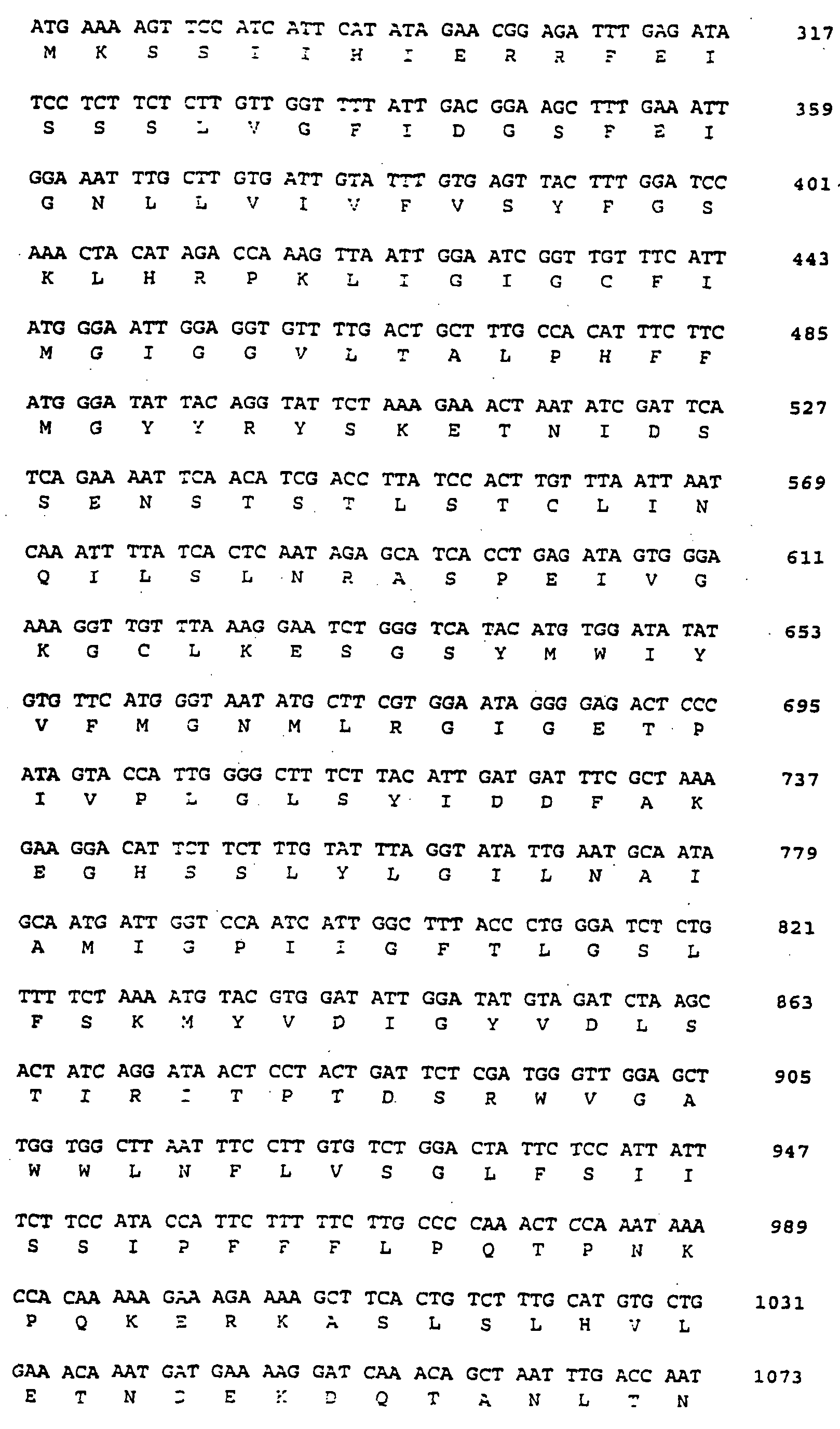
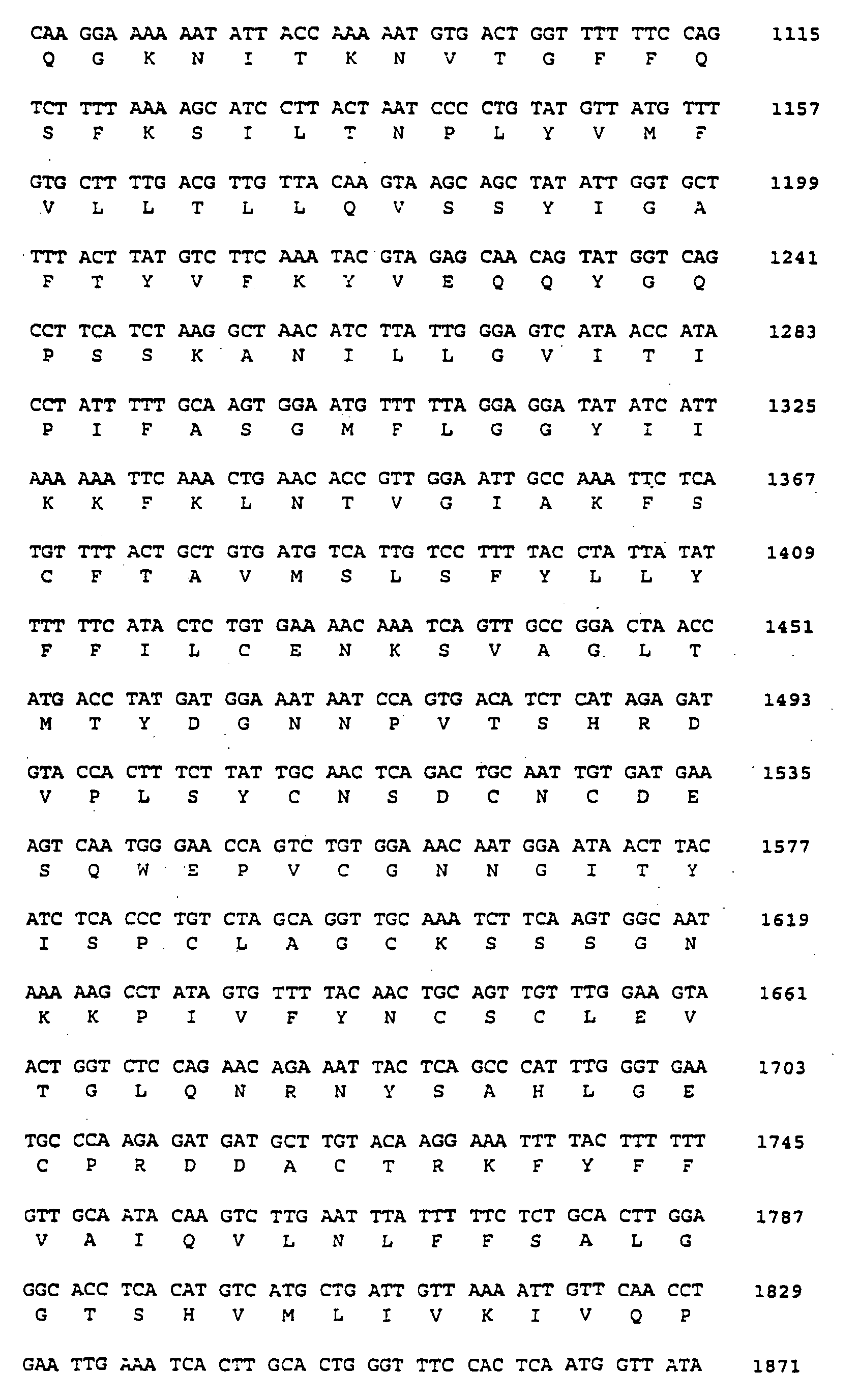
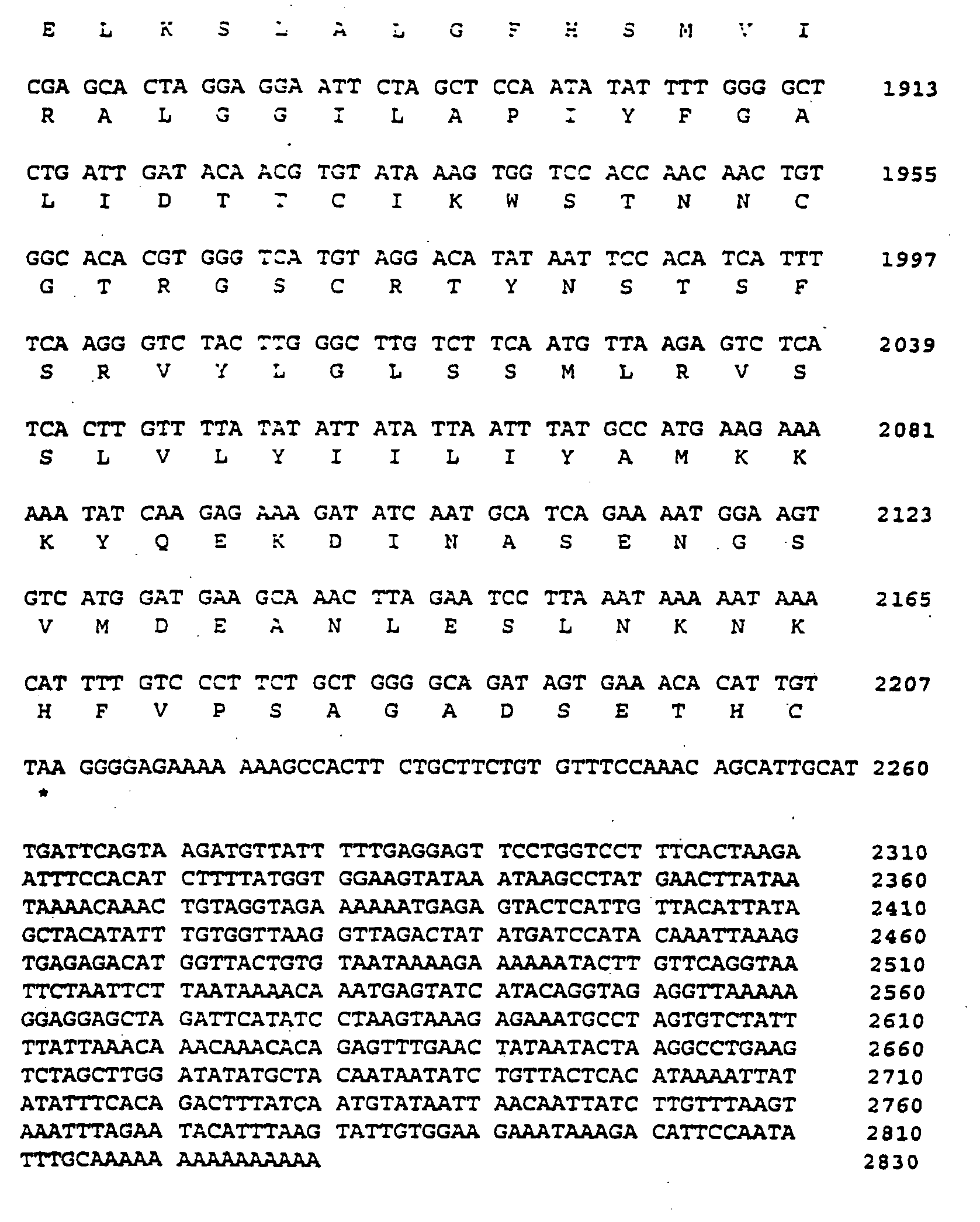
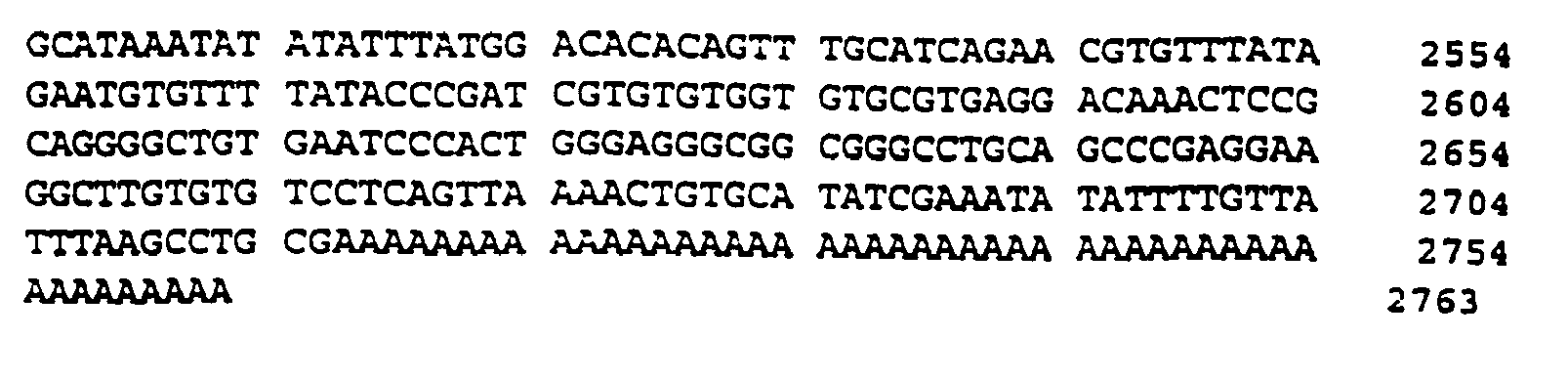
- The present inventors sequenced the cDNA encoding the novel OATP and determined the primary sequence of the deduced protein. Disclosed herein are the nucleic acid sequence (SEQ ID NO:1) and amino acid sequence (SEQ ID NO:2) of OATP2;
- The OATP of the present invention can be produced by: (1) inserting the cDNA of a disclosed OATP into an appropriate expression vector; (2) transfecting the expression vector into an appropriate transfection host(s); (3) growing the transfected host(s) in appropriate culture media; and (4) assaying the transport activity in the transfected cells.
- The present invention therefore provides a purified and isolated nucleic acid molecule, preferably a DNA molecule, having a sequence which codes for an OATP, or an oligonucleotide fragment of the nucleic acid molecule which is unique to an OATP of the invention. The purified and isolated nucleic acid molecule has the sequence as shown in SEQ ID NO:1 (OATP2).
- The invention also contemplates a double stranded nucleic acid molecule comprising a nucleic acid molecule of the invention or an oligonucleotide fragment thereof hydrogen bonded to a complementary nucleotide base sequence.
- The terms "isolated and purified nucleic acid", "isolated and purified polynucleotide", "substantially pure nucleic acid", and "substantially pure polynucleotide", e.g., substantially pure DNA, refer to a nucleic acid molecule which is one or both of the following: (1) not immediately contiguous with either one or both of the sequences, e.g., coding sequences, with which it is immediately contiguous (i.e., one at the 5' end and one at the 3'end) in the naturally occurring genome of the organism from which the nucleic acid is derived; or (2) which is substantially free of a nucleic acid sequence with which it occurs in the organism from which the nucleic acid is derived. The term includes, for example, a recombinant DNA which is incorporated into a vector, e.g., into an autonomously replicating plasmid or virus, or into the genomic DNA of a prokaryote or eukaryote, or which exists as a separate molecule (e.g., a cDNA or a genomic DNA fragment produced by PCR or restriction endonuclease treatment) independent of other DNA sequences. Substantially pure or isolated and purified DNA also includes a recombinant DNA which is part of a hybrid gene encoding additional OATP sequence.
- Further described is (a) an isolated and purified nucleic acid molecule comprising a sequence encoding all or a portion of a protein having the amino acid sequence as shown in SEQ ID NO:2 (OATP2); (b) nucleic acid sequences complimentary to (a); (c) nucleic acid sequences which exhibit at least 80%, at least 90%, at least 95%, and at least 98% sequence identity to (a); or (d) a fragment of (a) or (b) that is at least 18 bases and which will hybridize to (a) or (b) under stringent conditions.
- The degree of homology (percent sequence identity) between two sequences may be determined, for example, by comparing the two sequences using computer programs commonly employed for this purpose. One suitable program is the GAP computer program described by Devereux et al., (1984) Nucl. Acids Res. 12:387. The GAP program utilizes the alignment method of Needleman and Wunsch (1970) J. Mol. Biol. 48:433, as revised by Smith and Waterman (1981) Adv. Appl. Math. 2:482. Briefly, the GAP program defines percent identity as the number of aligned symbols (i.e., nucleotides or amino acids) which are identical, divided by the total number of symbols in the shorter of the two sequences.
- As used herein the term "stringent conditions" encompasses conditions known in the art under which a nucleotide sequence will hybridize to: (a) an isolated and purified nucleic acid molecule comprising a sequence encoding a protein having the amino acid sequence as shown herein, or to (b) a nucleic acid sequence complementary to (a). Screening polynucleotides under stringent conditions may be carried out according to the method described in Nature, 313:402-404 (1985). Polynucleotide sequences capable of hybridizing under stringent conditions with the polynucleotides of the present invention may be, for example, allelic variants of the disclosed DNA sequences, or may be derived from other sources. General techniques of nucleic acid hybridization are disclosed by Sambrook et al., "Molecular Cloning: A Laboratory Manual", 2nd Ed., Cold Spring Harbor Laboratory, Cold Spring Harbor, New York (1984); and by Haymes et al., "Nucleic Acid Hybridization: A Practical Approach", IRL Press, Washington, D.C. (1985).
- Further described are polynucleotides and amino acid sequences having one or more structural mutations including replacement, deletion or insertion mutations. For example, a signal peptide may be deleted, or conservative amino acid substitutions may be made to generate a protein that is still biologically competent or active.
- The invention further contemplates a recombinant molecule comprising a nucleic acid molecule of the present invention or an oligonucleotide fragment thereof and an expression control sequence operatively linked to the nucleic acid molecule or oligonucleotide fragment. A transformant host cell including a recombinant molecule of the invention is also provided.
- In another aspect, the invention features a cell or purified preparation of cells which include a novel gene encoding an OATP of the present invention, or which otherwise misexpresses a gene encoding an OATP of the present invention. The cell preparation can consist of human or non-human cells, e.g., rodent cells, e.g., mouse or rat cells, rabbit cells, non-human primate cells, or pig cells. In preferred embodiments, the cell or cells include an OATP transgene, e.g., a heterologous form of an OATP gene, e.g., a gene derived from humans (in the case of a non-human cell). The OATP transgene can be misexpressed, e.g., overexpressed or underexpressed. In other preferred embodiments, the cell or cells include a gene which misexpresses an endogenous OATP gene, e.g., a gene that expression of which is disrupted, e.g., a knockout. Such cells can serve as a model for studying disorders which are related to mutated or misexpressed OATP alleles for use in drug screening.
- Still further, the invention provides plasmids which comprise the nucleic acid molecules of the invention. Also encompassed within the invention are vectors comprising the nucleic acid sequences disclosed herein, as well as host cells comprising said vectors.
- The present invention also includes a novel OATP of the present invention, or an active part thereof. A biologically competent or active form of the protein or part thereof is also referred to herein as an "active OATP or part thereof".
- The invention further contemplates antibodies having specificity against an epitope of an OATP of the present invention or part of the protein. These antibodies may be polyclonal or monoclonal. The antibodies may be labeled with a detectable substance and they may be used, for example, to detect a novel OATP of the invention in tissue and cells. Additionally, the antibodies of the present invention, or portions thereof, may be used to make targeted antibodies that destroy OATP expressing cells (e.g., antibody-toxin fusion proteins, or radiolabelled antibodies).
- The invention also permits the construction of nucleotide probes which encode part or all of a novel OATP protein of the invention or a part of the protein. Thus, the invention also relates to a probe comprising a nucleotide sequence coding for a protein, which displays the properties of a novel OATP of the invention or a peptide unique to the protein. The probe may be labeled, for example, with a detectable (e.g., radioactive) substance and it may be used to select from a mixture of nucleotide sequences a nucleotide sequence coding for a protein which displays the properties of a novel OATP of the invention.
- The present invention also provides a transgenic non-human animal (e.g., a rodent, e.g., a mouse or a rat, a rabbit or a pig) or embryo all of whose germ cells and somatic cells contain a recombinant molecule of the invention, preferably a recombinant molecule comprising a nucleic acid molecule of the present invention encoding an OATP of the invention or part thereof. The recombinant molecule may comprise a nucleic acid sequence encoding an OATP of the present invention with a structural mutation, or may comprise a nucleic acid sequence encoding an OATP of the invention or part thereof and one or more regulatory elements which differ from the regulatory elements that drive expression of the native protein. In another preferred embodiment, the animal has an OATP gene which is misexpressed or not expressed, e.g., a knockout. Such transgenic animals can serve as a model for studying disorders that are related to mutated or misexpressed OATPs of the present invention.
- The invention still further provides a method for identifying a substance which is capable of binding a novel OATP of the invention, comprising reacting a novel OATP of the invention or part of the protein under conditions which permit the formation of a complex between the substance and a novel OATP protein or part of the protein, and assaying for substance-OATP complexes, for free substance, for non-complexed OATP, or for activation of an OATP.
- An embodiment of the invention provides a method for identifying substrates which are capable of binding to a novel OATP protein of the invention, isoforms thereof, or part of the protein, said method comprising reacting a novel OATP protein of the invention, isoforms thereof, or part of the protein, with at least one substrate which potentially is capable of binding to the protein, isoform, or part of the protein, under conditions which permit the formation of substrate-transporter protein complexes, and assaying for substrate-transporter protein complexes, for free substrate, for non-complexed OATP protein, or for activation of an OATP. In a preferred embodiment of the method, substrates are identified which are capable of binding to and being transported by a novel OATP protein of the invention, isoforms thereof, or part of the protein.
- Further described are methods for screening potentially useful pharmacological agonists or antagonists of the OATPs of the present invention. The method comprises testing potential agents by adding the agent to be tested to a cell expressing a novel OATP of the present invention in the presence of a compound known to be transported by an OATP of the invention, and measuring the augmentation or inhibition of transport of the known compound.
- An OATP of the present invention is also useful to identify compounds that may be transported into an organ, e.g., the liver. Compounds that are found to be actively transported into the liver are useful as carriers for other therapeutics targeting the liver.
- Further described is a composition which may include an OATP of the present invention, a fragment thereof (or a nucleic acid encoding said OATP or fragment thereof) and one or more additional components, e.g., a carrier, diluent or solvent. The additional component can be one that renders the composition useful for in vitro, in vivo, pharmaceutical or veterinary use.
- Further described are agonists and antagonists of an OATP of the present invention. Pharmacological agonists or antagonists are useful to increase or decrease the flow of compounds transported by an OATP of the present invention. Said agonists and/or antagonists are preferably administered with an acceptable carrier, diluent or solvent.
- Another aspect relates to a method of treating a mammal, e.g., a human, at risk for a disorder, e.g., a disorder characterized by aberrant or unwanted level or biological activity of an OATP of the present invention and to a method of treating a mammal, e.g., a human, at risk for disorders of the liver. Since OATP2 is expressed exclusively in the liver, compounds that are optimized for OATP2 are useful to target hepatic delivery. These compounds in themselves may be useful therapeutics, or may be useful to chaperone other therapeutic compounds to the liver. In addition, blocking OATP2-compound interactions could provide benefit by decreasing its first-pass extraction by the liver and, thus, increasing plasma concentrations and prolonging the systemic half-life of a drug.
- Also within the scope of the present invention are fusion proteins comprising all or a portion of an OATP of the present invention.
- The primary object of the present invention is the identification of a new human OATP, as identified by the nucleic acid and amino acid sequences disclosed herein. Additional objects of the invention are the methods of using the cDNA, the OATP protein, monoclonal antibodies specific for the novel OATPs, a fusion protein comprising a portion of the OATP protein of the present invention.
-
-
Figure 1 is a Northern blot showing the mRNA tissue distribution of OATP2, OATP-RP1, OATP-RP2, OATP-RP4, and OATP-RP5. The tissues corresponding to the abbreviations above the lanes are indicated below. -
Figure 2 shows that OATP2 transports pravastatin, dehydroepiandosterone sulfate (DHEAS), taurocholate and thyroid hormone (T ).Figure 2A shows specific uptake of [3H]-pravastatin and [3H]-DHEAS.Figure 2B shows specific uptake of [3H]-taurocholate. Panel 2C shows specific uptake of [125I]-thyroid hormone (T4). The uptake of radiolabeled substrate for 5 minutes into cells transfected with pCEPOATP-RP1 or empty vector (MOCK) was determined in the absence (solid bars) and presence (open bars) of excess unlabeled substrate. -
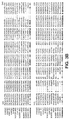
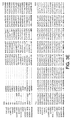
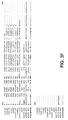
Figure 3 shows a sequence alignment of OATP family members. The protein sequences of human OATP2, OATP-RP1, OATP-RP2, OATP-RP3, OATP-RP4, and OATP-RP5 are aligned with the other known OATP family members. Also shown is a consensus sequence in bold. A consensus is indicated if at least 6 out of the 12 sequences are identical at a given position. A residue is capitalized if it agrees with the consensus. - The following definitions apply to the terms used throughout this specification, unless otherwise defined in specific instances:
- "cloning" - isolation of a particular gene from genetic material, for example a genome, genomic library, or cDNA library into a plasmid or other vector;
- "coding region" - the region of a nucleic acid sequence that codes for an active protein;
- "OATP" - organic anion transport protein;
- "stringent conditions" (as used concerning nucleic acid hybridization)-Southern blotting washed in 0.1 X SSC and 0.1 % SDS at a temperature of at least about 65° C. See Maniatis et al., Molecular Cloning: A Laboratory Manual, Cold Spring Harbor Laboratory, Cold Spring Harbor, NY (1982); one skilled in the relevant art would recognize that less stringent conditions (e.g., 1X or 2X SSC, 0.1%SDS) may be employed in using the novel sequences disclosed herein to identify nucleic acid sequences encoding novel OATPs.
- "Northern blotting"-a method of identifying particular RNA fragments by hybridization with a complementary nucleic acid, typically a cDNA or an oligonucleotide;
- "open reading frame" or "ORF"-a DNA sequence containing a series of nucleotide triplets coding for amino acids and lacking any termination codes;
- "plasmid"-cytoplasmic, autonomously replicating DNA elements found in microorganisms;
- "promoter"-a region on DNA at which RNA polymerase binds and initiates transcription; and
- "Southern blotting"-a method of identifying particular DNA fragments by hybridization with a complementary nucleic acid, typically a cDNA or an oligonucleotide;
- "transport" - the movement of a substance across a biological membrane as determined by measuring the redistribution of such a substance across the membrane upon exposure to a transporter.
- For definitions of other terms in this specification, see F. Sherman et al., Laboratory Course Manual for Methods in Yeast Genetics, Cold Spring Harbor Laboratory, Cold Spring Harbor, NY (1987) and Lewin, B., Genes IV, Oxford University Press, Oxford (1990). For the definitions of abbreviations, see Aldrichimica Acta, Vol. 17, No. 1 (1984).
- The amino acid sequences of the novel organic anion transport proteins of the present invention are aligned with known transporters of this family in
Figure 3 . The degree of sequence homology between the sequences of the present invention and known organic anion transporters indicates that the proteins of the present invention are organic anion transporters. - It is believed by those skilled in the art that OATP proteins may be involved in the transport of compounds into the liver. Persons of ordinary skill in the art can use the OATP proteins of the present invention to assay for agents that may increase or decrease the rate of transport of compounds into the liver, or for compounds that are transported by the OATPs of the present invention that are useful as carriers for other compounds that are desired to be carried to a specific organ (e.g., the liver).
- Therefore, agents that increase or decrease the rate of substrate transport by the OATPs of the present invention, or agents identified as carriers, are useful in the treatment of liver disease.
- Because some of the OATPs are organ specific/selective (e.g., OATP2 - liver; OATP-RP4 - heart and skeletal muscle, and OATP-RP5 - brain and testis), compound specificity is built into any specific substrate of these OATPs and into molecular carriers transported by these OATPs. An agent transported by the above OATPs of the present invention would thus be delivered to the tissues in which they are expressed and not to tissues lacking the above OATPs, thereby achieving tissue specific targeting.
- The OATP nucleic acids of the present invention, or antisense nucleic acids, may be useful therapeutic or diagnostic agents. For such gene therapy, the nucleic acids may be incorporated into vectors and/or formulated as described below and in further detail in the art.
- The present invention also provides a basis for diagnostic genetic screens for predicting response to drugs. At least one of the transporters disclosed and claimed herein is a transporter of a known drug (i.e., OATP2 transports pravastatin into hepatocytes). Other transporters disclosed herein may similarly transport additional drugs into tissues. Persons skilled in the art can: (1) screen the transporter genes for allelic variants (genotypes) in the general population by various sequencing methods; and (2) determine the association of these transporter genotypes in patients with response to the transported drug in clinical trials. Particular allelic variants may be more or less effective in transporting a drug, which would be related to drug efficacy. Thus, genotyping of the claimed transporters could form the basis of a clinical diagnostic test to predict a patient's response to drug therapy.
- Persons skilled in the art can use the polypeptides and nucleic acids of this invention to prepare vectors, cells or cell lines, and antibodies. All of these are useful in assays for identification of OATP positive and negative modulators (i.e., agonists and/or antagonists) and OATP carriers. The term "positive modulator" as used herein refers to an agent or compound that increases the rate or amount of transport of a compound into an organ, e.g., the liver, or an agent or compound that decreases the rate or amount of transport of a compound into an organ. The term "negative modulator" refers to a compound that is joined to a second compound to prevent the second compounds transport into or out of cells. The term "carrier" as used herein refers to an agent or compound that is transported by an OATP of the present invention and that is capable of being joined to or associated with another compound to chaperone that other compound into an organ, e.g., the liver. A carrier includes an agent that is used to transport a compound into an organ that is otherwise not transported into said organ, and includes an agent that increases the transport of a compound into an organ that is capable of being transported by an OATP.
- One can administer OATP modulators and carriers to various mammalian species, such as monkeys, dogs, cats, mice, rats, humans, etc. By known methods, persons skilled in the pharmaceutical art can incorporate OATP modulators and carriers in a conventional systemic dosage form, such as a tablet, capsule, elixir or injectable formulation. The above dosage forms will also include any necessary physiologically acceptable carrier material, excipient, lubricant, buffer, antibacterial, bulking agent (such as mannitol), anti-oxidants (ascorbic acid or sodium bisulfite) or the like.
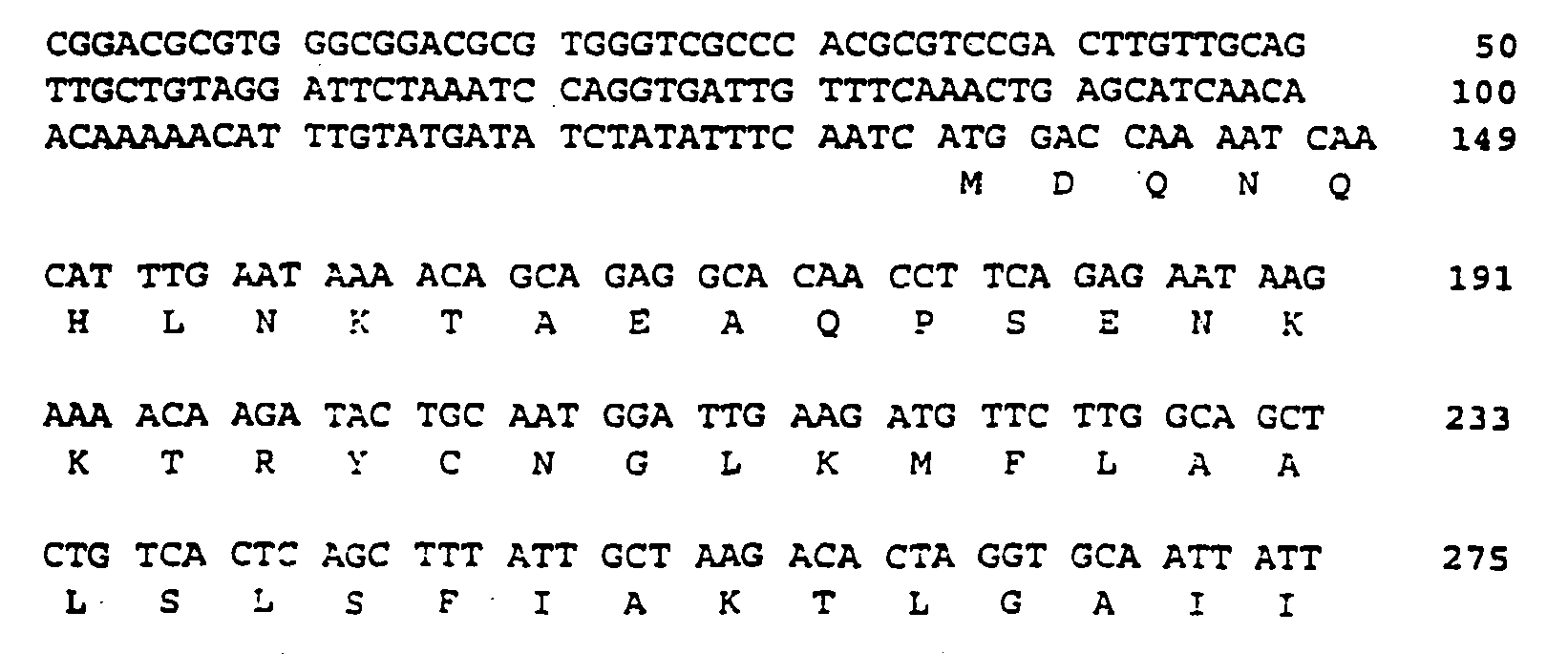
- This specification describes the cloning and functional expression of the full-length human cDNA clones of OATP2, i.e. the nucleic acid sequence of OATP2 (SEQ ID NO:1) and, the amino acid sequence of OATP2 (SEQ ID NO:2).
- DNA clones comprising nucleotide sequences encoding the OATP described above were deposited with the American Type Culture Collection ("ATCC") (10801 University Blvd.. Manassas. VA 20110-2209) on April 20, 1999, and given the following ATCC Accession Numbers: 207209 (OATP-RP3), 207210 (OATP-RP4), 207211 (OATP-RP5). 207212 (OATP-RP2), 207213 (OATP2), and 207214 (OATP-RP1). The deposit(s) referred to herein will be maintained under the terms of the Budapest Treaty on the International Recognition of the Deposit of Microorganisms for purposes of Patent Procedure. These deposits are provided merely as convenience to those of skill in the art and are not an admission that a deposit is required under 35 U.S.C. §112. The sequence of the polynucleotides contained in the deposited materials, as well as the amino acid sequence of the of the polypeptides encoded thereby, are incorporated herein by reference and are controlling in the event of any conflict with any description of sequences herein. A license may be required to make, use or sell the deposited materials, and no such license is hereby granted.
- With the disclosed OATP gene sequences in hand, one skilled in the art can obtain OATP nucleic acids of this invention by known methods. Such methods include: (1) Southern and Northern blotting; (2) Western immunoblotting; (3) chemical synthesis; (4) synthesis by polymerase chain reaction (PCR) from primers; (5) expression cloning; and (6) subtractive cDNA cloning.
- Preferred nucleic acid sequences of the present invention include the following (preferably the coding sequences as shown below):
- OATP2 (SEQ ID NOS:1 and 2):
- Persons skilled in the art can also modify the nucleic acid coding for the OATP of the present invention to prepare useful mutations. For example, one may modify the sequence to provide additional restriction endonuclease recognition sites in the nucleic acid. Such mutations may be silent or may change the amino acid encoded by the mutated codon. One can prepare these modified nucleic acids, for example, by mutating the nucleic acid coding for an OATP of the present invention to result in deletion, substitution, insertion, inversion or addition of one or more amino acids in the encoded polypeptide. For methods of site-directed mutagenesis, see Taylor, J. W. et al. (1985), Nucl. Acids Res. 13, 8749-64 and Kunkel, J. A. (1985), Proc. Natl. Acad. Sci. USA 82: 482-92. In addition, kits for site-directed mutagenesis are available from commercial vendors (e.g., BioRad Laboratories, Richmond, CA; Amersham Corp., Arlington Heights, IL). For disruption, deletion and truncation methods, see Sayers, J. R. et al. (1988), Nucl. Acids Res. 16: 791-800.
- Also described are modified nucleic acids, including (1) alternative splice exon variants; (2) allelic variants; and (3) chimeric proteins in which the fusion construct comprises an OATP or fragment thereof. Such modified nucleic acids can be obtained by persons of ordinary skill in the art when armed with the present disclosure.
- This invention further concerns expression vectors comprising a nucleotide sequence encoding an OATP of the present invention. Preferably, the expression vectors comprise all or a portion of the nucleic acid sequence as shown in SEQ ID NO:1; preferred is a nucleotide sequence encoding an OATP as shown above (i.e., the coding region).
- Expression vectors are usually plasmids, but the invention includes other vector forms that serve equivalent functions and become known in the art subsequently hereto. A person skilled in the art might also stably integrate a sequence encoding an OATP into the chromosome of an appropriate host cell.
- Expression vectors typically contain regulatory elements capable of affecting expression of an OATP. These regulatory elements can be heterologous or native OATP elements. Typically, a vector contains an origin of replication, a promoter, and a transcription termination sequence. The vector may also include other regulatory sequences, including mRNA stability sequences, which provide for stability of the expression product; secretory leader sequences, which provide for secretion of the expression product; environmental feedback sequences, which allow expression of the structural gene to be modulated (e.g., by the presence or absence of nutrients or other inducers in the growth medium); marking sequences, which are capable of providing phenotypic selection in transformed host cells; restriction sites, which provide sites for cleavage by restriction endonucleases; and sequences which allow expression in various types of hosts, including prokaryotes, yeasts, fungi, plants and higher eukaryotes.
- An expression vector of this invention is at least capable of directing the replication, and preferably the expression, of the nucleic acids and protein of this invention. Suitable origins of replication include, for example, the Col E1, the SV4O viral, Epstein Barr viral, and the M13 origins of replication. Suitable promoters include, for example, the cytomegalovirus promoter, the lacZ promoter, the gal10 promoter and the Autographa californica multiple nuclear polyhedrosis virus (AcMNPV) polyhedral promoter. Suitable termination sequences include, for example, the bovine growth hormone, SV40, lacZ and AcMNPV polyhedral polyadenylation signals. Examples of selectable markers include neomycin, ampicillin, and hygromycin resistance and the like.
- Persons skilled in the art may insert DNA encoding an OATP of the present invention into several commercially available vectors. Examples include vectors compatible with mammalian cells, such as pcDNA3 or pCEP4; baculovirus vectors such as pBlueBac; prokaryotic vectors such as pcDNA2; and yeast vectors such as pYes2. For vector modification techniques, see Sambrook et al. (1989), Molecular Cloning: A Laboratory Manual, Second Edition, Cold Spring Harbor Laboratory, Cold Spring Harbor, NY.
- This invention additionally concerns host cells containing an expression vector that comprises a sequence encoding OATP2, of the present invention. The host cells preferably contain an expression vector which comprises all or part of the DNA sequence having the nucleotide sequence substantially as shown in SEQ ID NO:1 particularly the coding regions thereof. Suitable host cells include both prokaryotic cells (e.g., E. coli strains HB101, DH5a, XL1 Blue, Y1090 and JM101) and eukaryotic cells (e.g., Spodoptera frugiperda insect cells. CHO cells, COS-7 cells, HEK 293 cells, human skin fibroblasts, and S. cerevisiae cells).
- Persons skilled in the art may introduce expression vectors into host cells by various methods known in the art. Exemplary methods are transfection by calcium phosphate precipitation, electroporation, liposomal fusion, nuclear injection, and viral or phage infection. One may then culture the host cell under conditions permitting expression of large amounts of OATP.
- One may identify such modified host cells by any of five general approaches:
- (a) DNA-DNA hybridization with probes complementary to the sequence encoding an OATP (Southern blotting).
- (b) detection of marker gene functions, such as thymidine kinase activity, resistance to antibiotics, and the like. A marker gene can be placed in the same plasmid as an OATP sequence under the regulation of the same or a different promoter.
- (c) detection of mRNA transcripts by hybridization assays (e.g., Northern blotting or a nuclease protection assay using a probe complementary to the RNA sequence).
- (d) immunodetection of gene expression (e.g., by Western blotting with antibody to OATP).
- (e) PCR with primers homologous to expression vector sequences or sequences encoding OATP. The PCR produces a DNA fragment of predicted length, indicating incorporation of the expression system in the host cell.
- Persons skilled in the art may determine DNA sequences by various known methods. See, for example, the dideoxy chain termination method in Sanger et al. (1977), Proc. Natl. Acad. Sci. USA 74: 5463-7 and the Maxam-Gilbert method in Maxam-Gilbert (1977), Proc. Natl. Acad. Sci. USA 74: 560-4.
- One may use the host cells of this invention in a variety of ways that are now apparent. One may use the cells to screen for compounds that bind to or otherwise modulate or regulate the function of an OATP of the present invention, which would be useful for modulation, for example activation or inactivation, of OATP2, OATP-RP2, OATP-RP3, OATP-RP4, OATP-RP5 or OATP-RP1 activity; to study signal transduction mechanisms and protein-protein interactions; and to prepare OATP for the uses described below.
- Not all expression vectors and DNA regulatory sequences will function equally well to express the DNA sequences of this invention. Neither will all host cells function equally well with the same expression system. However, one of ordinary skill in the art may make a selection among expression vectors, DNA regulatory sequences, and host cells using the guidance provided herein without undue experimentation and without departing from the scope of the invention.
- This invention further concerns polypeptides comprising all or a portion of the amino acid sequences of the OATP of the present invention. The inventors prefer polypeptides comprising all or a portion of the amino acid sequences shown as in SEQ ID NO:2 (OATP2).
- Where a portion of an OATP of the present invention is used, preferably the portion exhibits the same biological activity of the OATP from which the portion is derived. For example, and within the scope of the invention, are polypeptides that comprise all or a portion of OATP2 that exhibit transport activity. The portions may contain one or more mutations so that the protein(s) fail(s) to exhibit transport activity, but that can be used to screen for compounds that will modulate or bind to the protein or portion thereof.
- Persons having ordinary skill in the art may prepare these polypeptides by methods known in the art. For example, one may use chemical synthesis, such as the solid phase procedure described by Houghton et al. (1985), Proc. Natl. Acad. Sci. 82: 5131-5. Another method is in vitro translation of mRNA. One may also produce the polypeptides in the above-described host cells, which is the preferred method. For example, one may synthesize DNA comprising all or a portion of SEQ ID NO:1 by PCR as described above, insert the synthesized DNA into an expression vector, transform a host cell with the expression vector, and culture the host cell to produce the desired polypeptides.
- Persons skilled in the art can isolate and purify such polypeptides by any one of several known techniques: for example, ion exchange chromatography, gel filtration chromatography and affinity chromatography. Such techniques may require modification of the protein. For example, one may add a histidine tag to the protein to enable purification on a nickel column.
- Persons skilled in the art can use the polypeptides of the invention in a wide variety of ways. For example, one may use them to generate polyclonal or monoclonal antibodies. One may then use such antibodies for immunodetection (e.g., radioimmunoassay, enzyme immunoassay, or immunocytochemistry), immunopurification (e.g., affinity chromatography) of polypeptides from various sources, or immunotherapy.
- Persons skilled in the art may make modified OATP polypeptides by known techniques. Such modifications may cause higher or lower activity, permit higher levels of protein production, or simplify purification of the protein. Such modifications may help identify specific OATP amino acids involved in binding, which in turn may help rational drug design of OATP modulators. One can make amino acid substitutions based on similarity in polarity, charge, solubility, hydrophobicity, hydrophilicity and/or the amphipathic nature of the residues involved. For example, negatively charged amino acids include aspartic acid and glutamic acid; positively charged amino acids include lysine and arginine; amino acids with uncharged polar head groups or nonpolar head groups having similar hydrophilicity values include the following: leucine, isoleucine, valine, glycine, alanine; asparagine, glutamine; serine, threonine; phenylalanine, tyrosine.
- Analogs may include proteins that differ from the novel OATPs of the present invention (or biologically active fragments thereof) by one or more conservative amino acid substitutions or by one or more non-conservative amino acid substitutions, deletions or insertions which do not abolish the biological activity of the analog. Conservative substitutions typically include the substitution of one amino acid for another with similar characteristics, e.g., substitutions within the following groups: valine, glycine; glycine, alanine; valine, isoleucine, leucine; aspartic acid, glutamic acid; asparagine, glutamine; serine, threonine; lysine, arginine; and phenylalanine, tyrosine. Other conservative amino acid substitutions can be taken from the table below.
Table 1 Conservative amino acid replacements For Amino Acid Code Replace with any of: Alanine A D-Ala, Gly, beta-Ala, L-Cys, D-Cys Arginine R D-Arg, Lys, D-Lys, homo-Arg, D-homo-Arg, Met, Ile, D-Met, D-Ile, Om, D-Orn Asparagine N D-Asn, Asp, D-Asp, Glu, D-Glu, Gln, D-Gln Aspartic Acid D D-Asp, D-Asn, Asn, Glu, D-Glu, Gln, D-Gln Cysteine C D-Cys, S-Me-Cys, Met, D-Met, Thr, D-Thr Glutamine Q D-Gln, Asn, D-Asn, Glu, D-Glu, Asp, D-Asp Glutamic Acid E D-Glu, D-Asp, Asp, Asn, D-Asn, Gln, D-Gln Glycine G Ala, D-Ala, Pro, D-Pro, β-Ala, Acp Isoleucine I D-Ile, Val, D-Val, Leu, D-Leu, Met, D-Met Leucine L D-Leu, Val, D-Val, Met. D-Met Lysine K D-Lys, Arg, D-Arg, homo-Arg, D-homo-Arg, Met, D-Met, Ile, D-Ile, Orn, D-Orn Methionine M D-Met, S-Me-Cys, Ile, D-Ile, Leu, D-Leu, Val, D-Val Phenylalanine F D-Phe, Tyr, D-Thr, L-Dopa, His, D-His, Trp, D-Trp, Trans-3,4, or 5-phenylproline, cis-3,4, or 5-phenylproline Proline P D-Pro, L-1-thioazolidine-4-carboxylic acid, D- or L-1-oxazolidine-4-carboxylic acid Serine S D-Ser, Thr, D-Thr, allo-Thr, Met, D-Met, Met(O), D-Met(O), L-Cys, D-Cys Threonine T D-Thr, Ser, D-Ser, allo-Thr, Met, D-Met, Met(O), D-Met(O), Val, D-Val Tyrosine Y D-Tyr, Phe, D-Phe, L-Dopa. His, D-His Valine V D-Val, Leu, D-Leu, Ile, D-Ile, Met, D-Met - Other analogs are those with modifications which increase protein or peptide stability; such analogs may contain, for example, one or more non-peptide bonds (which replace the peptide bonds) in the protein or peptide sequence. Further analogs include residues other than naturally occurring L-amino acids. e.g., D-amino acids or non-naturally occurring or synthetic amino acids, e.g., B or γ amino acids.
- The inventors contemplate a number of other variations of the above-described polypeptides. Such variations include salts and esters of the polypeptides, as well as precursors of the aforementioned polypeptides (e.g., having N-terminal substituents such as methionine, N-formylmethionine and leader sequences).
- The present invention further concerns a method for detecting nucleic acids encoding the OATP protein. In this method, a person of ordinary skill in the art (a) contacts nucleic acids of unknown sequence with a nucleic acid having a sequence complementary to a known coding sequence (e.g., a sequence of at least about 10 nucleotides from, e.g., SEQ ID NO:1, particularly the coding regions thereof), wherein the latter nucleic acid has a detectable marker; and (b) determines the presence of marker bound to any of the nucleic acids of unknown sequence. The presence of bound marker indicates the presence of the desired nucleic acids. One can apply this method to detect OATP nucleic acids from other tissues (which may have different regulatory elements) and nucleic acids from other species (e.g., monkey).
- Persons of ordinary skill in the art generally know how to obtain nucleic acids to be analyzed in this method. For genomic DNA, one can rapidly freeze tissue, crush the tissue into readily digestible pieces, and incubate the crushed tissue in proteinase K and SDS to degrade most cellular proteins. One can then deproteinize the genomic DNA by successive phenol/chloroformiisoamyl alcohol extractions, recover DNA by ethanol precipitation, dry it and resuspend it in buffer. For RNA, one can lyse cultured cells in 4M guanidinium solution, draw the lysate through a 20-gauge needle, pellet the RNA through a cesium chloride step gradient, and remove the supernatant. The pellet should contain purified RNA.
- The detectable marker may be a radioactive ion linked to one of the nucleotides of the complementary nucleic acid. Common radioactive labels are 32P and 35S, although one may also use other labels such as biotin. Persons skilled in the art are aware of various methods to attach the labels to the complementary nucleic acid (e.g., the random primer method for attachment of 32P or 35S).
- Persons of ordinary skill in the art generally know how to carry out such a method of detecting nucleic acids. For example, one may perform a Southern or northern blot using a radiolabeled OATP complementary oligonucleotide probe. One can then detect hybridization by autoradiography. Depending on the marker, one may also use other detection methods (e.g., spectrophotometry).
- This invention further concerns methods for detecting modulators of the OATP of the present invention, as well as methods for detecting compounds that are transported by the OATP of the present invention (e.g., compounds that are transported into the liver that may be used as carriers for other compounds). A screen for OATP modulators entails detecting binding of molecules (e.g., polypeptides, natural products, synthetic compounds) in cells expressing OATP protein. Alternatively, a screen for OATP positive modulators and/or negative modulators entails detecting the augmentation and/or inhibition of transport of a known compound. A screen for OATP-transported compounds entails detecting the transport of molecules (e.g., polypeptides, natural products, synthetic compounds) by an OATP.
- Cloning and sequencing of the OATP of the present invention enables construction of cells useful in screening for natural products and synthetic compounds that bind to, modulate, and/or are transported by OATP activity. A process for detecting OATP modulators requires transforming a suitable vector into compatible host cells as described previously herein. One treats such transformed cells with test substances (e.g., synthetic compounds or natural products), and then measures activity in the presence and absence of the test substance.
- An assay for the measurement of OATP activity is performed as follows:
- HEK293 cells are plated in Dulbeccos Modified Eagles Medium (DMEM) plus 10% fetal bovine serum plus penecillin and streptomycin, in poly-d-lysine coated dishes and co-transfected with OATP transporter expression plasmids using Lipofectamine Plus (Life Technologies. Inc.). The cells and media are assayed for substrate transport 24 hours later. Alternatively, cell lines engineered to stably express OATPs could be plated and assayed directly without transfection. To measure transport, media is removed and monolayers are assayed in triplicate by washing once in serum-free DMEM and adding the same medium containing [3H]-substrate alone or in the presence of various concentrations of unlabeled test compounds. For OATP2, the [3H]-substrate could be [3H]-pravastatin, [3H]-taurocholate, or [3H]-dehydroepiandrosterone sulfate, or [125I]-thyroid hormone (T4). Monolayers are incubated at room temperature for 5 to 10 minutes depending on the transporter.
Then the cells are rapidly washed once with ice cold DMEM containing 5% BSA, twice with DMEM plus 0.1 % BSA and once with DMEM alone. Cells are lysed in 0.1 N NaOH and a fraction of the lysate is used to determine radiolabel incorporation by liquid scintillation counting, and another is used to determine protein concentration in the lysate using the Bradford assay with BSA as a standard. The transport activity is expressed as moles of substrate transported into cells/mg of cell protein/minute. - Also included within the present invention is tissue expression of an OATP of the present invention. The OATPs of the present invention are also useful for targeting drugs to certain organs that express an OATP described herein (e.g., the liver), and for modulating the concentration of endogenous substrates.
- For example, the novel organic anion transporter disclosed herein, OATP2, represents a potential therapeutic target due to its ability to modulate the cellular uptake and potential secretion of a several biologically important organic anions, including bile acids and the androgen hormone dehydroepiandrosterone sulfate ("DHEAS"). Furthermore, since OATP2 transports at least one drug (i.e. pravastatin), and other members of this family are known to transport a variety of other xenobiotics, this transporter could be exploited to optimize the delivery of drugs into liver and away from other tissues.
- OATP2 is unique among the OATP family, in that it is the only known organic anion transporter that is expressed exclusively in the liver. Thus, drugs optimized for this transporter could be targeted for hepatic delivery with greater selectivity than with any other known transporter. To generalize this approach, it may be possible to identify a small molecule "adaptor" that is efficiently recognized and transported by OATP2 (an OATP2-transported compound) that could be appended to other drugs for hepatic targeting even if the parent compound is not transported by OATP2.
- Alternatively, if a therapeutic compound is taken up into the liver entirely or substantially by OATP2, one could inhibit hepatic clearance and thereby elevate circulating concentrations, or increase the compounds half-life in the periphery, by adding a functionality to said compound that disallows transport by OATP2. Likewise, if an endogenous substance utilizes OATP2 for liver uptake and clearance from the circulation, a competitive or non-competitive OATP2 inhibitor could elevate plasma levels of said substance. As an example, DHEAS is an adrenal androgen that declines with age and on the basis of some animal data, it has been suggested that replacement of DHEAS deficiency may stimulate age-related immune deficiencies, increase cognitive function and insulin sensitivity, and maintain bone mass. Inhibiting the hepatic clearance of endogenous DHEAS through blocking its interactions with OATP2 could result in elevated hormone levels in the absence of hormone supplementation.
- With the information provided herein, one skilled in the art is able to identify molecules, both naturally occurring and synthetic (including therapeutic drugs), that are transported by the OATP2 disclosed herein. OATPs as a class generally exhibit broad substrate specificity ("polyspecific" transporters). Thus, it is anticipated that many additional substrates of these transporters will be identified.
- Persons skilled in the art can also use sense and antisense nucleic acid molecules as therapeutic agents for OATP-related indications. One may construct vectors that direct the synthesis of the desired DNA or RNA or formulate the nucleic acid as described in the art.
- Several references describe the usefulness of antisense molecule. See Toulme and Helene (1988), Gene 72: 51-8; Inouye (1988), Gene, 72: 25-34; Uhlmann and Peyman (1990), Chemical Reviews 90: 543-584; Biotechnology Newswatch (January 15, 1996), p. 4: Robertson. Nature Biotechnology 15: 209 (1997); Gibbons and Dzau (1996), Science 272: 689-93. One can design them based on genomic DNA and/or cDNA, 5' and 3' flanking control regions, other flanking sequences, intron sequences, and nonclassic Watson and Crick base pairing sequences used in formation of triplex DNA. Such antisense molecules include antisense oligodeoxyribonucleotides, oligoribonucleotides, oligonucleotide analogues, and the like, and may comprise at least about 15 to 25 bases.
- Antisense molecules may bind noncovalently or covalently to the OATP DNA or RNA. Such binding could, for example, cleave or facilitate cleavage of OATP DNA or RNA, increase degradation of nuclear or cytoplasmic mRNA, or inhibit transcription, translation, binding of transactivating factors, or pre-mRNA splicing or processing. Antisense molecules may also contain additional functionalities that increase stability, transport into and out of cells, binding affinity, cleavage of the target molecule, and the like. All of these effects would decrease expression of OATP protein and thus make the antisense molecules useful as OATP modulators.
- Full length clones for each of the above genes were obtained using the Gene Trapper cDNA Positive Selection System (LifeTechnologies, Inc.). In this procedure, a single or multiple oligonucleotides complementary to each of the EST contigs or individual EST sequences, were biotinylated at the 3'-end and used to hybridize to a single-stranded human cDNA library constructed in pCMVSport2 (LifeTechnologies, Inc.). The sequence of oligonucleotides used for each gene as well as the tissue source of the libraries screened are shown in Table 2.
Table 2 Oligonucleotides used to screen for OATP Full length cDNAs using Gene-Trapper Selection Gene Biotinylated capture oligonucleotide(s) used Seq ID number of oligonucleotide Human cDNA library screened OATP2 5'-ACCCTGTCTAGCAGGTTGCA-3' 13 liver OATP-RP1 5'-CTGTCGGAGTCTTCAGATG-3' 14 brain OATP-RP2 5'-TCCATCACAGCCTCCTACGC-3' 15 liver OATP-RP3 5'-TGCCTCTACTCTGACCCTAG-3' 16 heart OATP-RP4 5'-GGAGCAGTCATTGACACCAC-3' 17 heart 5'-TGCTGGGAGTACAACGTGACG-3' 18 5'-ACAAGGAGGATGGACrGCAG-3' 19 OATP-RP5 5'-CAGGAATCCCAGCTCCAGTG-3' 20 brain 5'-GCTACAACCCAACTACTGGC-3' 21 5'-GGGAcrAACTGTGATACTGG-3' 22 - Hybrids between the biotinylated oligonucleotides and single-stranded cDNA were captured on streptavidin-coated paramagnetic beads. After washing, the captured single-stranded cDNA targets was released from the biotinylated oligonucleotides and converted to dsDNA by DNA polymerase using the corresponding unbiotinylated oligonucleotide. Following transformation and plating, several positive clones for each gene were identified by PCR analysis. Full-length cDNA clones were identified by sequencing. In the case of OATP-RP1, a partial cDNA was obtained by the above technique (pSP-RP1A). Another cDNA clone that was part of the OATP-RP1 contig was identified by searching the public EST databases (Genbank accession number AI027850). An EcoRI-NotI fragment of this clone containing the first 477 nucleotides of OATP-RP1 (SEQ ID NO: 11) (obtained from Research Genetics, Inc.) was ligated to EcoRI-Not I digested pSP-RP1A to generate the full length sequence.
- Two polymorphic positions were identified when sequencing multiple OATP-RP4 cDNA clones. Thus, nucleotide number 713 of SEQ ID NO: 7 can be either a C, encoding Leu in SEQ ID NO:8, or a T, encoding a Phe in SEQ ID NO:8. Similarly, nucleotide number 2397 of SEQ ID NO: 7 can be either a G, encoding a Gly in SEQ ID NO:8 , or a T, encoding a Val in SEQ ID NO:8.
- For expression studies, OATP2 cDNA was cloned into the expression vector pCEP4βR, a modified form of pCEP4 (Invitrogen, Inc.) in which the CMV promoter-driven expression cassette has been inverted, and used in transient transfections. To accomplish this, OATP2 cDNA in pCMVSport2, correponding to nucleotides 59 through 2361 of SEQ ID NO:1, was excised by digestion with KpnI and NotI. This fragment was cloned into KpnI-NotI digested pCEP4βR. This clone, pCEP-OATP2 was used for transient transfection expression studies.
- The tissue distribution of OATP2, OATP-RP1, OATP-RP2, OATP-RP4, and OATP-RP5 expression was determined by Northern blotting of poly A+ RNA from a variety of human tissues (
Figure 1 ). Transporters of this family previously described in the literature, namely human OATP, rat oatp1, rat oatp2 and rat oatp3, are all expressed in liver, kidney and brain. All of the above transport bile acids as well as a variety of other substrates that are specific for subsets of these transporters. In contrast, the expression of OATP2, which also transports bile acids, is very hepato-specific; a major 3.2 kb and several minor hybridizing bands were observed only in RNA from liver and no other tissue. The specific cell types that express this transporter were examined by in situ hybridization of OATP2 riboprobe to human liver samples. Strong hybridization signal was seen localized to hepatocytes throughout the liver lobule with no significant difference in signal intensity among centrilobular, midzonal or periportal regions. No signal was observed in bile ducts, Kupffer cells, or blood vessels, nor in any cell types from human lung (data not shown). - OATP-RP1 is expressed in nearly all tissues tested with highest abundance in skeletal muscle, lung, placenta, and heart. OATP-RP2 is ubiquitously expressed in all tissues tested. OATP-RP4 has a much more restricted pattern of expression with abundant transcipts in skeletal muscle and heart and much less in prostate and thymus. The expression of OATP-RP5 is likewise tissue specific, with brain and testes being the only sites where transcripts were detected.
- 293EBNA cells (Invitrogen, Inc.), an HEK293 cell derivative, were transiently transfected with the OATP2 expression vector pCEP-OATP2, or the pCEP4 vector alone (MOCK) and the transport of [3H]-labeled substrates was determined 24 hours later.
Figure 2A shows specific uptake of [3H]-pravastatin and [3H]-DHEAS.Figures 2B and 2C show the specific uptake of [3H]-taurocholate and [125I]-thyroid hormone (T4), repsectively. The uptake of radiolabeled substrate for 5 minutes into cells transfected with pCEP-OATP2 or empty vector (MOCK) was determined in the absence (solid bars) and presence (open bars) of excess unlabeled substrate. Thus, OATP2 is a liver specific human transporter of at least some HMG CoA reductase inhibitors, bile acids, adrenal steroids, and thyroid hormone.
Claims (11)
- A nucleic acid sequence encoding all or a portion of the organic anion transport protein OATP2, said nucleic acid sequence being selected from the group consisting of:(a) a nucleic acid sequence comprising the nucleic acid sequence shown in SEQ ID NO: 1;(b) a nucleic acid sequence encoding all or a portion of the amino acid sequence shown in SEQ ID NO: 2, wherein the portion transports pravastatin into hepatocytes;(c) a nucleic acid sequence comprising the coding region of (a);(d) a nucleotide sequence comprising the nucleic acid sequence of any one of (a) to (c) that differs due to the degeneracy of the genetic code;(e) a nucleic acid sequence comprising the sequence encoding OATP2 deposited with the American Type Culture collection under Accession Number 207213; or(f) a nucleotide sequence comprising the complement of the nucleotide sequence of any one of (a), (c) or (e).
- An expression vector comprising a nucleic acid sequence of claim 1 and an expression control sequence operatively linked to the nucleic acid molecule.
- A host cell including in an expressible manner the nucleic acid sequence of claim 1 or the vector of claim 2.
- A method of producing OATP2, said methods comprising the steps of:(a) inserting a nucleic acid sequence according to claim 1, encoding said OATP2 protein, into an appropriate expression vector;(b) introducing said expression vector into an appropriate transfection host cell;(c) growing said transfected host cells in an appropriate culture media; and(d) purifying the OATP2 protein from said culture media.
- An OATP2 encoded by the nucleotide sequence of claim 1 or obtainable by the method of claim 4.
- An antibody specific for the OATP2 of claim 5.
- The antibody of claim 7 wherein said antibody is a monoclonal antibody.
- A fusion protein comprising the OATP2 of claim 5, attached to a second polypeptide.
- A method for identifying a ligand which is capable of binding to the OATP2 of claim 5, said method comprising the steps of:(a) reacting said OATP2 with said ligand which potentially is capable of binding to the OATP2 under conditions which permit the formation of ligand-OATP2 complexes; and(b) assaying for ligand-OATP2 complexes, for free ligand, or for non-complexed OATP2.
- A method for identifying a substrate which is capable of being transported by the OATP2 of claim 5 said method comprising the steps of:(a) reacting said OATP2 with said substrate which is potentially capable of being transported by the said OATP2 under conditions which permit the movement of said substrate across a membrane; and(b) assaying for the movement of said substrate across the membrane.
- A method for identifying a modulator which is capable of augmenting or inhibiting the transport of a substrate by the OATP2 of claim 5 said method comprising the steps of:(a) reacting said OATP2 with said substrate and said modulator which potentially is capable of augmenting or inhibiting the transport of a substrate under conditions which permit the movement of said substrate across a membrane;
and(b) measuring the augmentation or inhibition of transport of said compound by said modulator.
Applications Claiming Priority (3)
| Application Number | Priority Date | Filing Date | Title |
|---|---|---|---|
| US13508199P | 1999-05-20 | 1999-05-20 | |
| US135081P | 1999-05-20 | ||
| PCT/US2000/013939 WO2000071566A2 (en) | 1999-05-20 | 2000-05-19 | Novel organic anion transport proteins |
Publications (3)
| Publication Number | Publication Date |
|---|---|
| EP1183270A2 EP1183270A2 (en) | 2002-03-06 |
| EP1183270A4 EP1183270A4 (en) | 2005-10-19 |
| EP1183270B1 true EP1183270B1 (en) | 2010-05-19 |
Family
ID=22466450
Family Applications (1)
| Application Number | Title | Priority Date | Filing Date |
|---|---|---|---|
| EP00937636A Expired - Lifetime EP1183270B1 (en) | 1999-05-20 | 2000-05-19 | Novel organic anion transport proteins |
Country Status (13)
| Country | Link |
|---|---|
| EP (1) | EP1183270B1 (en) |
| JP (1) | JP4071442B2 (en) |
| CN (1) | CN1351612A (en) |
| AT (1) | ATE468354T1 (en) |
| AU (1) | AU769361B2 (en) |
| BR (1) | BR0010552A (en) |
| CA (1) | CA2374729C (en) |
| DE (1) | DE60044433D1 (en) |
| ES (1) | ES2343672T3 (en) |
| HU (1) | HU228779B1 (en) |
| IL (2) | IL145866A0 (en) |
| PL (1) | PL201687B1 (en) |
| WO (1) | WO2000071566A2 (en) |
Cited By (1)
| Publication number | Priority date | Publication date | Assignee | Title |
|---|---|---|---|---|
| US9771409B2 (en) | 2012-09-11 | 2017-09-26 | Corning Incorporated | Consumable cryopreserved cells transiently overexpressing gene(s) encoding drug transporter protein(s) and/or drug metabolizing enzyme(s) |
Families Citing this family (10)
| Publication number | Priority date | Publication date | Assignee | Title |
|---|---|---|---|---|
| EP2316848A1 (en) * | 1999-09-21 | 2011-05-04 | Chugai Seiyaku Kabushiki Kaisha | Transporter genes OATP-B, C, D and E |
| US20020165357A1 (en) * | 2001-03-12 | 2002-11-07 | Millennium Pharmaceuticals, Inc. | 38554, 57301 and 58324, human organic ion transporters and uses therefor |
| AU2001263814A1 (en) * | 2000-03-27 | 2001-10-08 | Bayer Aktiengesellschaft | Regulation of human oatp2-related protein |
| GB0013105D0 (en) * | 2000-05-30 | 2000-07-19 | Univ Bristol | Therapeutic compounds |
| AU2002219083A1 (en) * | 2000-11-09 | 2002-05-21 | Bayer Aktiengesellschaft | Regulation of human oat-like protein |
| WO2002095069A2 (en) * | 2001-05-18 | 2002-11-28 | Astrazeneca Ab | Methods |
| GB0213580D0 (en) * | 2002-06-13 | 2002-07-24 | Astrazeneca Ab | Methods |
| WO2004042035A2 (en) * | 2002-11-05 | 2004-05-21 | Roskamp Research Llc | Organic anion transport polypeptide related protein-4 (oatprp4) gene in tourette syndrome and related disorders |
| CN102373231A (en) * | 2010-08-13 | 2012-03-14 | 中南大学 | Recombinant plasmid containing OATP1B1 promoter and reporter gene and method for screening OATP1B1 inducer |
| HUE052420T2 (en) * | 2013-09-12 | 2021-04-28 | Smartdyelivery Gmbh | Cell-specific targeting by nanostructured carrier systems |
Family Cites Families (2)
| Publication number | Priority date | Publication date | Assignee | Title |
|---|---|---|---|---|
| US5589358A (en) * | 1993-12-29 | 1996-12-31 | Univ Wake Forest | Ileal bile acid transporter compositions and methods |
| AU1736697A (en) * | 1996-02-22 | 1997-09-10 | Academisch Medisch Centrum Amsterdam | A family of organic anion transporters, nucleic acids encoding them, cells comprising them and methods for using them |
-
2000
- 2000-05-19 DE DE60044433T patent/DE60044433D1/en not_active Expired - Lifetime
- 2000-05-19 AU AU52780/00A patent/AU769361B2/en not_active Expired
- 2000-05-19 IL IL14586600A patent/IL145866A0/en active IP Right Grant
- 2000-05-19 BR BR0010552-0A patent/BR0010552A/en not_active Application Discontinuation
- 2000-05-19 JP JP2000619821A patent/JP4071442B2/en not_active Expired - Lifetime
- 2000-05-19 AT AT00937636T patent/ATE468354T1/en not_active IP Right Cessation
- 2000-05-19 WO PCT/US2000/013939 patent/WO2000071566A2/en not_active Ceased
- 2000-05-19 ES ES00937636T patent/ES2343672T3/en not_active Expired - Lifetime
- 2000-05-19 CN CN00807838.6A patent/CN1351612A/en active Pending
- 2000-05-19 EP EP00937636A patent/EP1183270B1/en not_active Expired - Lifetime
- 2000-05-19 HU HU0201303A patent/HU228779B1/en unknown
- 2000-05-19 PL PL351652A patent/PL201687B1/en unknown
- 2000-05-19 CA CA002374729A patent/CA2374729C/en not_active Expired - Lifetime
-
2001
- 2001-10-11 IL IL145866A patent/IL145866A/en not_active IP Right Cessation
Non-Patent Citations (2)
| Title |
|---|
| KIM, R.B., EUR. J. CLINICAL INVESTIGATION, vol. 33, 2003, pages 1 - 5 * |
| MARZOLINI, C. ET AL., PHARMACOGENOMICS, vol. 5, 2004, pages 273 - 282 * |
Cited By (7)
| Publication number | Priority date | Publication date | Assignee | Title |
|---|---|---|---|---|
| US9771409B2 (en) | 2012-09-11 | 2017-09-26 | Corning Incorporated | Consumable cryopreserved cells transiently overexpressing gene(s) encoding drug transporter protein(s) and/or drug metabolizing enzyme(s) |
| US9822160B2 (en) | 2012-09-11 | 2017-11-21 | Corning Incorporated | Consumable cryopreserved cells transiently overexpressing gene(s) encoding drug transporter protein(s) and/or drug metabolizing enzyme(s) |
| US10017558B2 (en) | 2012-09-11 | 2018-07-10 | Corning Incorporation | Consumable cryopreserved cells transiently overexpressing gene(s) encoding drug transporter protein(s) |
| US10047136B2 (en) | 2012-09-11 | 2018-08-14 | Corning Incorporated | Consumable cryopreserved cells transiently overexpressing gene(s) encoding drug transporter protein(s) |
| US10336806B2 (en) | 2012-09-11 | 2019-07-02 | Corning Incorporated | Consumable cryopreserved cells transiently overexpressing gene(s) encoding drug transporter protein(s) and/or drug metabolizing enzyme(s) |
| US10336805B2 (en) | 2012-09-11 | 2019-07-02 | Corning Incorporated | Consumable cryopreserved cells transiently overexpressing gene(s) encoding drug transporter protein(s) and/or drug metabolizing enzyme(s) |
| US10629064B2 (en) | 2012-09-11 | 2020-04-21 | Corning Incorporated | Consumable cryopreserved cells transiently overexpressing gene(s) encoding drug transporter protein(s) and/or drug metabolizing enzyme(s) |
Also Published As
| Publication number | Publication date |
|---|---|
| PL351652A1 (en) | 2003-05-19 |
| CN1351612A (en) | 2002-05-29 |
| HUP0201303A2 (en) | 2002-08-28 |
| CA2374729C (en) | 2009-01-13 |
| HU228779B1 (en) | 2013-05-28 |
| PL201687B1 (en) | 2009-04-30 |
| WO2000071566A2 (en) | 2000-11-30 |
| BR0010552A (en) | 2002-02-13 |
| HUP0201303A3 (en) | 2004-12-28 |
| EP1183270A4 (en) | 2005-10-19 |
| DE60044433D1 (en) | 2010-07-01 |
| ES2343672T3 (en) | 2010-08-06 |
| CA2374729A1 (en) | 2000-11-30 |
| ATE468354T1 (en) | 2010-06-15 |
| IL145866A0 (en) | 2002-07-25 |
| AU5278000A (en) | 2000-12-12 |
| EP1183270A2 (en) | 2002-03-06 |
| WO2000071566A3 (en) | 2001-01-25 |
| IL145866A (en) | 2008-11-26 |
| AU769361B2 (en) | 2004-01-22 |
| JP2003500039A (en) | 2003-01-07 |
| JP4071442B2 (en) | 2008-04-02 |
Similar Documents
| Publication | Publication Date | Title |
|---|---|---|
| US20030224454A1 (en) | Human solute carrier family 7, member 11 (hSLC7A11) | |
| US20010047090A1 (en) | VANILREP1 polynucleotides and VANILREP1 polypeptides | |
| EP1009752B1 (en) | Novel molecules of the tango-77 related protein family and uses thereof | |
| US6627425B1 (en) | Human glucose-6-phosphatase molecules and uses thereof | |
| CA2374729C (en) | Novel organic anion transport proteins | |
| JP2002511233A (en) | TREK1-like two-hole potassium channel | |
| US7795392B2 (en) | Organic anion transport proteins | |
| JP2002523078A (en) | Novel IRAP-BP polypeptides and nucleic acid molecules and uses thereof | |
| US20080248009A1 (en) | Regulation of acheron expression | |
| US6455683B1 (en) | DNA molecules encoding human CLAX proteins and their soluble fusion proteins | |
| WO1998046748A1 (en) | Therapeutic compositions and diagnostic assays for diseases involving trbp | |
| US6169166B1 (en) | Polynucleotide and polypeptide sequences encoding rat mdr1b2 and screening methods thereof | |
| JP2002534114A (en) | Novel LRSG protein and nucleic acid molecules and uses therefor | |
| JPH1198989A (en) | Novel compound | |
| US20050196753A1 (en) | Human coactivator-associated arginine methyltransferase 1 (hCARM1) | |
| MX2007001543A (en) | Cell surface glycoprotein. | |
| US6420544B1 (en) | Polynucleotide and polypeptide sequences encoding murine organic anion transporter 5 (mOATP5) | |
| JP2003520577A (en) | EPO primary response gene 1, EPRG1 | |
| AU2708000A (en) | Tumor necrosis factor receptor homologue-1 ("trh1") | |
| WO2001085908A2 (en) | Clasp-1 transmembrane protein | |
| MXPA00005354A (en) | Polypeptides and nucleic acids encoding the same | |
| JP2003245088A (en) | Epo primary response gene 1, eprg1 |
Legal Events
| Date | Code | Title | Description |
|---|---|---|---|
| PUAI | Public reference made under article 153(3) epc to a published international application that has entered the european phase |
Free format text: ORIGINAL CODE: 0009012 |
|
| 17P | Request for examination filed |
Effective date: 20011220 |
|
| AK | Designated contracting states |
Kind code of ref document: A2 Designated state(s): AT BE CH CY DE DK ES FI FR GB GR IE IT LI LU MC NL PT SE |
|
| AX | Request for extension of the european patent |
Free format text: AL;LT;LV;MK;RO;SI |
|
| RIN1 | Information on inventor provided before grant (corrected) |
Inventor name: YANG, WEN-PIN Inventor name: LYNCH, JEAN, S. Inventor name: HUANG, XIN Inventor name: ZHU, YINGJIE Inventor name: WANG, ZHAOQING Inventor name: WU, YULI Inventor name: KIRCHGESSNER, TODD, G. Inventor name: HSIANG, BONNIE |
|
| A4 | Supplementary search report drawn up and despatched |
Effective date: 20050901 |
|
| 17Q | First examination report despatched |
Effective date: 20080207 |
|
| GRAP | Despatch of communication of intention to grant a patent |
Free format text: ORIGINAL CODE: EPIDOSNIGR1 |
|
| GRAC | Information related to communication of intention to grant a patent modified |
Free format text: ORIGINAL CODE: EPIDOSCIGR1 |
|
| GRAS | Grant fee paid |
Free format text: ORIGINAL CODE: EPIDOSNIGR3 |
|
| GRAA | (expected) grant |
Free format text: ORIGINAL CODE: 0009210 |
|
| AK | Designated contracting states |
Kind code of ref document: B1 Designated state(s): AT BE CH CY DE DK ES FI FR GB GR IE IT LI LU MC NL PT SE |
|
| REG | Reference to a national code |
Ref country code: GB Ref legal event code: FG4D |
|
| REG | Reference to a national code |
Ref country code: CH Ref legal event code: EP |
|
| REG | Reference to a national code |
Ref country code: IE Ref legal event code: FG4D |
|
| REF | Corresponds to: |
Ref document number: 60044433 Country of ref document: DE Date of ref document: 20100701 Kind code of ref document: P |
|
| REG | Reference to a national code |
Ref country code: ES Ref legal event code: FG2A Ref document number: 2343672 Country of ref document: ES Kind code of ref document: T3 |
|
| REG | Reference to a national code |
Ref country code: NL Ref legal event code: VDEP Effective date: 20100519 |
|
| PG25 | Lapsed in a contracting state [announced via postgrant information from national office to epo] |
Ref country code: SE Free format text: LAPSE BECAUSE OF FAILURE TO SUBMIT A TRANSLATION OF THE DESCRIPTION OR TO PAY THE FEE WITHIN THE PRESCRIBED TIME-LIMIT Effective date: 20100519 |
|
| PG25 | Lapsed in a contracting state [announced via postgrant information from national office to epo] |
Ref country code: FI Free format text: LAPSE BECAUSE OF FAILURE TO SUBMIT A TRANSLATION OF THE DESCRIPTION OR TO PAY THE FEE WITHIN THE PRESCRIBED TIME-LIMIT Effective date: 20100519 Ref country code: AT Free format text: LAPSE BECAUSE OF FAILURE TO SUBMIT A TRANSLATION OF THE DESCRIPTION OR TO PAY THE FEE WITHIN THE PRESCRIBED TIME-LIMIT Effective date: 20100519 |
|
| PG25 | Lapsed in a contracting state [announced via postgrant information from national office to epo] |
Ref country code: GR Free format text: LAPSE BECAUSE OF FAILURE TO SUBMIT A TRANSLATION OF THE DESCRIPTION OR TO PAY THE FEE WITHIN THE PRESCRIBED TIME-LIMIT Effective date: 20100820 Ref country code: CY Free format text: LAPSE BECAUSE OF FAILURE TO SUBMIT A TRANSLATION OF THE DESCRIPTION OR TO PAY THE FEE WITHIN THE PRESCRIBED TIME-LIMIT Effective date: 20100519 Ref country code: MC Free format text: LAPSE BECAUSE OF NON-PAYMENT OF DUE FEES Effective date: 20100531 |
|
| REG | Reference to a national code |
Ref country code: CH Ref legal event code: PL |
|
| PG25 | Lapsed in a contracting state [announced via postgrant information from national office to epo] |
Ref country code: DK Free format text: LAPSE BECAUSE OF FAILURE TO SUBMIT A TRANSLATION OF THE DESCRIPTION OR TO PAY THE FEE WITHIN THE PRESCRIBED TIME-LIMIT Effective date: 20100519 Ref country code: NL Free format text: LAPSE BECAUSE OF FAILURE TO SUBMIT A TRANSLATION OF THE DESCRIPTION OR TO PAY THE FEE WITHIN THE PRESCRIBED TIME-LIMIT Effective date: 20100519 Ref country code: PT Free format text: LAPSE BECAUSE OF FAILURE TO SUBMIT A TRANSLATION OF THE DESCRIPTION OR TO PAY THE FEE WITHIN THE PRESCRIBED TIME-LIMIT Effective date: 20100920 |
|
| PLBI | Opposition filed |
Free format text: ORIGINAL CODE: 0009260 |
|
| PG25 | Lapsed in a contracting state [announced via postgrant information from national office to epo] |
Ref country code: CH Free format text: LAPSE BECAUSE OF NON-PAYMENT OF DUE FEES Effective date: 20100531 Ref country code: LI Free format text: LAPSE BECAUSE OF NON-PAYMENT OF DUE FEES Effective date: 20100531 Ref country code: BE Free format text: LAPSE BECAUSE OF FAILURE TO SUBMIT A TRANSLATION OF THE DESCRIPTION OR TO PAY THE FEE WITHIN THE PRESCRIBED TIME-LIMIT Effective date: 20100519 |
|
| PLAX | Notice of opposition and request to file observation + time limit sent |
Free format text: ORIGINAL CODE: EPIDOSNOBS2 |
|
| 26 | Opposition filed |
Opponent name: SANOFI-AVENTIS DEUTSCHLAND GMBH Effective date: 20110218 |
|
| PG25 | Lapsed in a contracting state [announced via postgrant information from national office to epo] |
Ref country code: IE Free format text: LAPSE BECAUSE OF NON-PAYMENT OF DUE FEES Effective date: 20100519 |
|
| REG | Reference to a national code |
Ref country code: DE Ref legal event code: R026 Ref document number: 60044433 Country of ref document: DE Effective date: 20110218 |
|
| PLAF | Information modified related to communication of a notice of opposition and request to file observations + time limit |
Free format text: ORIGINAL CODE: EPIDOSCOBS2 |
|
| PLBP | Opposition withdrawn |
Free format text: ORIGINAL CODE: 0009264 |
|
| PLBB | Reply of patent proprietor to notice(s) of opposition received |
Free format text: ORIGINAL CODE: EPIDOSNOBS3 |
|
| PLBD | Termination of opposition procedure: decision despatched |
Free format text: ORIGINAL CODE: EPIDOSNOPC1 |
|
| PLBM | Termination of opposition procedure: date of legal effect published |
Free format text: ORIGINAL CODE: 0009276 |
|
| STAA | Information on the status of an ep patent application or granted ep patent |
Free format text: STATUS: OPPOSITION PROCEDURE CLOSED |
|
| 27C | Opposition proceedings terminated |
Effective date: 20111219 |
|
| PG25 | Lapsed in a contracting state [announced via postgrant information from national office to epo] |
Ref country code: LU Free format text: LAPSE BECAUSE OF NON-PAYMENT OF DUE FEES Effective date: 20100519 |
|
| REG | Reference to a national code |
Ref country code: FR Ref legal event code: PLFP Year of fee payment: 17 |
|
| REG | Reference to a national code |
Ref country code: FR Ref legal event code: PLFP Year of fee payment: 18 |
|
| REG | Reference to a national code |
Ref country code: FR Ref legal event code: PLFP Year of fee payment: 19 |
|
| PGFP | Annual fee paid to national office [announced via postgrant information from national office to epo] |
Ref country code: DE Payment date: 20190508 Year of fee payment: 20 Ref country code: ES Payment date: 20190603 Year of fee payment: 20 Ref country code: IT Payment date: 20190527 Year of fee payment: 20 |
|
| PGFP | Annual fee paid to national office [announced via postgrant information from national office to epo] |
Ref country code: FR Payment date: 20190410 Year of fee payment: 20 |
|
| PGFP | Annual fee paid to national office [announced via postgrant information from national office to epo] |
Ref country code: GB Payment date: 20190515 Year of fee payment: 20 |
|
| REG | Reference to a national code |
Ref country code: DE Ref legal event code: R071 Ref document number: 60044433 Country of ref document: DE |
|
| REG | Reference to a national code |
Ref country code: GB Ref legal event code: PE20 Expiry date: 20200518 |
|
| PG25 | Lapsed in a contracting state [announced via postgrant information from national office to epo] |
Ref country code: GB Free format text: LAPSE BECAUSE OF EXPIRATION OF PROTECTION Effective date: 20200518 |
|
| REG | Reference to a national code |
Ref country code: ES Ref legal event code: FD2A Effective date: 20201106 |
|
| PG25 | Lapsed in a contracting state [announced via postgrant information from national office to epo] |
Ref country code: ES Free format text: LAPSE BECAUSE OF EXPIRATION OF PROTECTION Effective date: 20200520 |