EP1176617A2 - Activated carbon, process for producing the same, polarizable electrode, and electric double layer capacitor - Google Patents
Activated carbon, process for producing the same, polarizable electrode, and electric double layer capacitor Download PDFInfo
- Publication number
- EP1176617A2 EP1176617A2 EP01117645A EP01117645A EP1176617A2 EP 1176617 A2 EP1176617 A2 EP 1176617A2 EP 01117645 A EP01117645 A EP 01117645A EP 01117645 A EP01117645 A EP 01117645A EP 1176617 A2 EP1176617 A2 EP 1176617A2
- Authority
- EP
- European Patent Office
- Prior art keywords
- activated carbon
- pitch
- producing
- chemical agent
- isotropic pitch
- Prior art date
- Legal status (The legal status is an assumption and is not a legal conclusion. Google has not performed a legal analysis and makes no representation as to the accuracy of the status listed.)
- Granted
Links
Images

Classifications
-
- C—CHEMISTRY; METALLURGY
- C01—INORGANIC CHEMISTRY
- C01B—NON-METALLIC ELEMENTS; COMPOUNDS THEREOF; METALLOIDS OR COMPOUNDS THEREOF NOT COVERED BY SUBCLASS C01C
- C01B32/00—Carbon; Compounds thereof
- C01B32/30—Active carbon
- C01B32/312—Preparation
- C01B32/318—Preparation characterised by the starting materials
- C01B32/33—Preparation characterised by the starting materials from distillation residues of coal or petroleum; from petroleum acid sludge
-
- H—ELECTRICITY
- H01—ELECTRIC ELEMENTS
- H01G—CAPACITORS; CAPACITORS, RECTIFIERS, DETECTORS, SWITCHING DEVICES, LIGHT-SENSITIVE OR TEMPERATURE-SENSITIVE DEVICES OF THE ELECTROLYTIC TYPE
- H01G11/00—Hybrid capacitors, i.e. capacitors having different positive and negative electrodes; Electric double-layer [EDL] capacitors; Processes for the manufacture thereof or of parts thereof
- H01G11/22—Electrodes
- H01G11/30—Electrodes characterised by their material
- H01G11/32—Carbon-based
- H01G11/34—Carbon-based characterised by carbonisation or activation of carbon
-
- H—ELECTRICITY
- H01—ELECTRIC ELEMENTS
- H01G—CAPACITORS; CAPACITORS, RECTIFIERS, DETECTORS, SWITCHING DEVICES, LIGHT-SENSITIVE OR TEMPERATURE-SENSITIVE DEVICES OF THE ELECTROLYTIC TYPE
- H01G11/00—Hybrid capacitors, i.e. capacitors having different positive and negative electrodes; Electric double-layer [EDL] capacitors; Processes for the manufacture thereof or of parts thereof
- H01G11/84—Processes for the manufacture of hybrid or EDL capacitors, or components thereof
- H01G11/86—Processes for the manufacture of hybrid or EDL capacitors, or components thereof specially adapted for electrodes
-
- C—CHEMISTRY; METALLURGY
- C01—INORGANIC CHEMISTRY
- C01P—INDEXING SCHEME RELATING TO STRUCTURAL AND PHYSICAL ASPECTS OF SOLID INORGANIC COMPOUNDS
- C01P2002/00—Crystal-structural characteristics
- C01P2002/80—Crystal-structural characteristics defined by measured data other than those specified in group C01P2002/70
- C01P2002/82—Crystal-structural characteristics defined by measured data other than those specified in group C01P2002/70 by IR- or Raman-data
-
- C—CHEMISTRY; METALLURGY
- C01—INORGANIC CHEMISTRY
- C01P—INDEXING SCHEME RELATING TO STRUCTURAL AND PHYSICAL ASPECTS OF SOLID INORGANIC COMPOUNDS
- C01P2006/00—Physical properties of inorganic compounds
- C01P2006/12—Surface area
-
- Y—GENERAL TAGGING OF NEW TECHNOLOGICAL DEVELOPMENTS; GENERAL TAGGING OF CROSS-SECTIONAL TECHNOLOGIES SPANNING OVER SEVERAL SECTIONS OF THE IPC; TECHNICAL SUBJECTS COVERED BY FORMER USPC CROSS-REFERENCE ART COLLECTIONS [XRACs] AND DIGESTS
- Y02—TECHNOLOGIES OR APPLICATIONS FOR MITIGATION OR ADAPTATION AGAINST CLIMATE CHANGE
- Y02E—REDUCTION OF GREENHOUSE GAS [GHG] EMISSIONS, RELATED TO ENERGY GENERATION, TRANSMISSION OR DISTRIBUTION
- Y02E60/00—Enabling technologies; Technologies with a potential or indirect contribution to GHG emissions mitigation
- Y02E60/13—Energy storage using capacitors
Definitions
- the present invention relates to activated carbon, which is made from granular isotropic pitch; a process for producing the same; a polarizable electrode; and an electric double layer capacitor.
- an electric double layer capacitor e.g. as a backup power source or an auxiliary power source.
- a solid electrode and an electrolyte solution When different two layers, for example, a solid electrode and an electrolyte solution are brought in contact with each other, positive and negative charges are arranged and distributed in the interface thereof at a very short interval.
- an voltage is applied between such electrodes so that the electrodes are charged, ions are arranged in the electrolyte solution to compensate for electric charges.
- Such an ion-arranged or dispersed layer is an electric double layer.
- the device in which the capacitance of the electrode interface, resulting from the formation of the electric double layer, is used is an electric double layer capacitor.
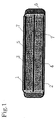
- FIG. 1 schematically illustrates an electric double layer capacitor having the coin-type structure.
- reference numbers 1 and 2 indicate current collectors made e.g. of aluminum mesh; 3 and 4, polarizable electrodes; 5, a separator made of e.g. polypropylene nonwoven fabric; 6, a gasket made of e.g. polypropylene; and 7, a case made of aluminium or stainless steel.
- an electric double layer capacitor has, in a case, a pair of polarizable electrodes made of activated carbon powder or fiber and a separator therebetween, which is porous and has ion-permeability.
- the polarizable electrodes and the separator get wet with an electrolyte solution. If necessary, current collectors are inserted between the polarizable electrodes and the case or deposited on the electrodes. Concerning the case, an opening between an upper lid and a lower case is sealed up with a sealing member so that the electrolyte solution does not leak out.
- An electric double layer capacitor is generally better in instantaneous charge and discharge ability than batteries, and causes a small deterioration in repetition charge and discharge ability, and does not give overvoltage at the time of charge and discharge. Therefore, the electric double layer capacitor has such a feature that an electric circuit can be made simple. Moreover, the remaining capacitance of the electric double layer capacitor can easily be known and the endurance temperature thereof is wide. It has been investigated that such an electric double layer capacitor is used as a memory of a microcomputer or an IC, a backup power source in a timer section or other control sections, a power source of electrical equipment, a power source used when electricity is cut off or a power source adapting for car. Such use has been partially made practicable.
- the electric double layer capacitor has been required to be light or compact. That is, an improvement in the capacitance of its electric double layer, per unit volume and per unit weight, has been demanded.
- JP-A-11-135380 discloses a process for producing activated carbon, the material of which is different from that of the above-mentioned activated carbon, wherein a meso phase resin obtained by cooling and solidifying a meso phase extracted from petroleum pitch is used; and a polarizable electrode and an electric double layer capacitor which are made of the activated carbon.
- JP-A-10-199767 suggests a process of carbonizing a material comprising petroleum coke or coal pitch coke in the atmosphere of an inert gas and then activating the carbonized material with an alkali metal hydroxide to produce carbon material for an electric double layer capacitor having a high electrostatic capacitance.
- High-capacitance activated carbon obtained by heat-treating petroleum coke, meso phase carbon fiber (MCF) or infusible vinyl chloride beforehand at about 600-900°C and activating the treated material with potassium hydroxide is described on pages 82-84 of "Electric Double Layer Capacitor and Electricity Storing System" published by Nikkan Kogyo Newspaper Publishing Company (1999).
- JP-A-11-317333 discloses a material exhibiting a large electrostatic capacitance as an electric double layer capacitor electrode and states that the thickness of the electrode expands in the same way as above when a voltage is applied thereto.
- the activated carbons disclosed in these publications are activated carbons made from anisotropic pitch, that is, meso phase and,pitch, phenol resin, or petroleum pitch, and the activated carbons are different from the activated carbon of the present invention, which is made from isotropic pitch, in raw material.
- the electrostatic capacitance of activated carbon used in an electric double layer capacitor is in proportion to its specific surface area.
- development has been made with efforts for increasing the specific surface area.
- recent researches suggest that in order to increase the electrostatic capacitance, it is important to investigate factors other than the specific surface area (see, for example, "DENKI KAGAKU” Vol. 66, No. 12, pages 1311-1317(1998)). For this purpose, it is important that the specific surface area is improved and further used materials or production conditions are studied.
- JP-A-11-293527 discloses that isotropic pitch is used as material of activated carbon.
- This publication states that an electric double layer capacitor having a large electrostatic capacitance is made using activated carbon fiber obtained by pulverizing optically isotropic pitch type infused fiber into pieces having an average particle diameter of 5-50 ⁇ m and activating the resultant pieces of the fiber with an alkali.
- it is necessary to suppress the generation of over-polymerized materials or volatile substances, which result in a drop in the spinnability of the optically isotropic pitch as raw material of the activated carbon, or to control the softening point minutely, as described in "TANSO" No. 193, pages 180-185 (2000). It is also necessary to keep strength required for the step of winding the fiber or the nonwoven fabric, the step being subsequent to the spinning step.
- the fiber has an anisotropic shape and it also has orientation when it is spun, so that the reactivities of the major axis and the short axis of the fiber are different from each other.
- the amount of oxygen introduced from the surface of the fiber along the short axis direction of the fiber may be different from such an amount along the major axis direction of the fiber.
- the fiber-activated degrees (for example, structural changes) when the fiber is activated may be different in the short axis direction of the fiber and in the major axis direction of the fiber.
- the fiber may be poor in workability since the fiber has an anisotropic shape.
- the capacitor By the expansion of an electrode made of a material which expands largely at the time of charge, the capacitor may be deformed so that the electrolyte solution may leak from the sealed opening. Therefore, it is necessary to consider a capacitor structure for suppressing the expansion or a surplus volume for the expansion of the electrode.
- a first object of the present invention is to provide activated carbon having a large electrostatic capacitance and causing only small expansion of an electrode, and a process for producing activated carbon which requires neither a fiber-forming step nor complicated processing.
- a second object of the present invention is to provide a polarizable electrode and an electric double layer capacitor which are made using such activated carbon.
- the present invention relates to activated carbon, which is made from granular isotropic pitch.
- Another aspect of the present invention is a process for producing activated carbon, wherein granular isotropic pitch is activated with a chemical agent.
- a further aspect of the present invention is a polarizable electrode produced by mixing the above-mentioned activated carbon with at least a binder and an electroconductive filler.
- a still further aspect of the present invention is an electric double layer capacitor composed essentially of a pair of polarizable electrodes, a current collector set onto each of the polarizable electrodes, and an electrolyte solution, wherein at least one of the polarizable electrode is the above-mentioned polarizable electrode.
- FIG. 1 is a schematic view illustrating an example in which the activated carbon of the present invention is applied to an electrode of a capacitor.
- FIG. 2 is a schematic view illustrating another example in which the activated carbon of the present invention is applied to an electrode of a capacitor.
- the activated carbon of the present invention needs to be made from granular isotropic pitch.
- Such isotropic pitch can be obtained from natural pitch or synthetic pitch.
- the natural pitch include cokes such as petroleum coke, coal coke and pitch coke; pitches such as petroleum pitch and coal pitch; and heavy oils such as petroleum distillation residue, naphtha thermal-decomposition residue, ethylene bottom oil, liquefied coal oil, and coal tar.
- the synthetic pitch include polymers obtained from an aromatic compound such as naphthalene or anthracene.
- the following methods may be used: a method of heat-treating coal tar pitch or decomposition residue oil of petroleum at 350-500 °C until small spheres of a meso phase are produced, using a solvent to extract and remove solvent-insoluble components comprising the meso phase, and then heat-treating the resultant at 350-500 °C; and a method of using a nitro compound as a softening point raising agent or a polymerization promoter; and a method of adding a nitro compound as a polymerization promoter to tar or pitch, and heat-treating the resultant product at 100-400 °C while blowing gas comprising oxygen or ozone therein.
- coal pitch coke, petroleum coke or the like is heat-treated while gas comprising oxygen and an optional polymerization promoter are introduced therein.
- the thus produced isotropic pitch usually has a softening point of 200 °C or higher.
- the greatest characteristic of the present invention is that granular isotropic pitch is used as raw material of activated carbon.
- the granular isotropic pitch is solid isotropic pitch having an average particle diameter of 10 mm or less, preferably 5 mm or less.
- the word "granular" in the present invention also includes the meaning of fine powder having an average particle of e.g. 400 ⁇ m or less, 20 ⁇ m or less or 10 ⁇ m or less, To make isotropic pitch into such a granular form, it is advisable to use a method of passing isotropic pitch, when produced, through nozzles, a method of taking out isotropic pitch in a lump form and then pulverizing the pitch, or the like method.
- the process for producing activated carbon is made simple, and costs for the production are reduced. Moreover, the activated carbon can be caused to exhibit a high electrostatic capacitance and made good in workability into an electrode, and low-expansibility.
- the step may be carried out before conversion into a infusible state, which will be described after, before heat-treatment, before activation, or after the activation. Preferably, the step is carried out before conversion into a infusible state, or before activation.
- the specific surface area of the activated carbon is preferably set to 50-4000 m 2 /g since the activated carbon exhibits a high electrostatic capacitance, and is more preferably 100-2500 m 2 /g.
- This specific surface area can be measured, for example, by a known BET method based on nitrogen adsorption.
- the total amount of functional groups of the surface of the activated carbon is preferably set to 2.5 meq/g or less. If the total amount is 2.5 meq/g or more, the endurance of the capacitor may drop.
- the total amount of functional groups of the surface of the activated carbon can easily be obtained by titration with hydrochloric acid.
- the half band width of a peak indicating the D band (near 1250 cm -1 ) of amorphous carbon in Raman spectra is preferably 1-4 times larger than the half band width of a peak indicating the D band (near 1300 cm -1 ) of graphite carbon.
- the peak of the D band of amorphous carbon and the peak of the D band of graphite carbon can be obtained by subjecting each of peaks near 1550 cm -1 and near 1350 cm -1 to curve-fitting treatment, using a Gaussian function, and thus dividing them into 4 pieces, that is, a peak indicating the D band of amorphous carbon, a peak indicating the D band of graphite carbon, a peak indicating the G band of amorphous carbon, and a peak indicating the G band of graphite carbon.
- the half band width of the peak indicating the D band of amorphous carbon is more preferably 1-3.5 times larger than that of the peak indicating the D band of graphite carbon.
- the activated carbon of the present invention which is made from granular isotropic pitch, it is sufficient to activate granular isotropic pitch.
- the amount of oxygen contained in the pitch depends on the fineness (granularity) of the isotropic pitch, and is desirably set to 1.5-10% by weight. If the amount of oxygen is 10% or more by weight, the yield of the pitch at the time of the conversion into the infusible state may be largely lowered. If the oxygen amount is less than 1.5% by weight, the grains may be adhered to each other.
- the manner for the conversion into the infusible state is not particularly limited, and may be, for example, a manner of heating the pitch in the presence of gas containing oxygen.
- the conditions for the conversion into the infusible state depend on the needed amount of introduced oxygen, the amount of the isotropic pitch, the partial pressure ratio of oxygen gas, the flow rate of the gas, the temperature and so on.
- the temperature of the pitch is raised up to a temperature below 800 °C, preferably a temperature within the range of 250-600 °C in the presence of gas containing oxygen, for example, air, and then the temperature is kept from 5 minutes to 15 hours. If the temperature is over 600 °C, the yield of the pitch after the conversion into the infusible state, which depends on conditions such as the partial pressure of oxygen gas, may be lowered.
- the infusible granular isotropic pitch may be activated as it is, but the pitch may be heat-treated within the range of 600-1000 °C, in the atmosphere of an inert gas in order to remove volatile substances or improve the capacitance per volume. If the heat-treating temperature is higher, the expansion of the electrodes gets large at the time of charge or the activation does not advance easily.
- the granular isotropic pitch is made infusible under the above-mentioned conditions and further after heat-treatment under the above-mentioned conditions the pitch is activated with a chemical agent to produce activated carbon.
- Examples of the manner of the activation include a manner of performing activation with oxidizing gas, for example, steam, CO 2 gas, air, gas generated when combustion gas such as LPG is burned, or a mixed gas thereof; and a manner of performing activation by adding a chemical agent such as zinc chloride, potassium hydroxide, sodium hydroxide, phosphoric acid, calcium chloride, potassium sulfide, or sulfuric acid.
- the activation is preferably performed in the current of an inert gas, CO 2 gas, or an inert gas containing steam.
- the activation in the current of an inert gas is preferred from the viewpoint of safety. This is because such activation can prevent explosion or concurrence of reactions such as combustion.
- the activating temperature is preferably 600-950 °C, and is more preferably 600-850 °C.
- a preferred example of activating conditions which depend on the kind of the used gas or the partial pressure ratio thereof, is a condition that the pitch is heated at 500-1000 °C in the atmosphere of the oxidizing gas for 1-8 hours for example. If the activating temperature is below 500 °C, the electrostatic capacitance which can be substantially taken out may be low because of insufficient electroconductivity, which would resulting from insufficient aromatization of the pitch. On the other hand, if the activating temperature is over 1000 °C, the control of the activation may be difficult so that homogeneous activated carbon may not be obtained.
- the pitch is activated with a chemical agent
- the chemical agent include metal chlorides such as zinc chloride, calcium chloride and magnesium chloride; mineral acids such as phosphoric acid, sulfuric acid, and hydrochloric acid; hydrogen salts of mineral acids such as potassium hydrogensulfate, sodium hydrogensulfate, ammonium hydrogensulfate, disodium hydrogenphosphate, dipottasium hydrogenphosphate, diammonium hydrogenphosphate, potassium hydrogenphosphate, sodium hydrogenphosphate, and ammonium hydrogenphosphate; salts such as potassium sulfate, sodium sulfate, ammonium sulfate, potassium phosphate, sodium phosphate, and ammonium phosphate; carbonates such as sodium carbonate, potassium carbonate, calcium carbonate, and magnesium carbonate; and salts such as potassium sulfide, potassium thiocyanate, potassium hydroxide and sodium hydroxide.
- the activation with a chemical agent it is preferred for giving a high electrostatic capacitance to use a chemical agent at least one part of which is a compound comprising an alkali metal element, a compound comprising an alkali earth metal element, zinc chloride, sulfuric acid, or phosphoric acid. It is more preferred to use, as the chemical agent, potassium hydroxide or sodium hydroxide.
- the activation with a chemical agent is performed preferably at a temperature of 500-900 °C, more preferably at a temperature of 600-800 °C. If the amount of the used chemical agent is too small, the degree of the activation is low so that the electrostatic capacitance trends to be small.
- the amount of the chemical agent is preferably 100-400 parts by weight, more preferably 110-240 parts by weight in relative to 100 parts by weight of the isotropic pitch.
- the agent in a solid form may be mixed, as it is, with the activated carbon, or the agent in the state of an aqueous solution may be added to the activated carbon. Needless to say, in the case of the addition of the agent in the state of an aqueous solution, the same effects as in the case of the addition of the solid agent can be exhibited.
- the chemical agent is positively mixed with the activated carbon while the chemical agent is dissolved. Such operation makes it possible to make the degree that the activated carbon is activated uniform, so that a drop in the electrostatic capacitance can be prevented.
- the time when the activating temperature is maintained is set to 20 hours or less, preferably 10 hours or less.
- the activating step in the present invention is performed through a pitch-moistening step of making at least the surface of a granular mixture of isotropic pitch and a chemical agent into a moisture state at a temperature of 200°C or lower, a pitch-solidifying step of canceling the moisture state at a temperature of 400 °C or lower into a solid state, and a pitch-heat-treating step of heat-treating the solid at a temperature over 400 °C keeping the solid state, corrosion of the production machine can be reduced. Thus, such a case is preferred. It is more preferred to cancel the moisture state at a temperature of 250 °C or lower.
- the wording "the surface of the pitch is in a moisture state” or any similar wording, referred to in the present invention, means that the surface of the mixture of the pitch and the chemical agent is kept in a solid state but looks wet when the surface is observed with naked eyes.
- the wording "the moisture state is cancelled into a solid state” or any similar wording means that the surface of the solid is in a dry state.
- E.g. CO 2 gas, CO 2 gas containing water vapor gas or an inert gas is introduced into the resultant activated carbon, and subsequently the activated carbon is supplied to a refining step of performing washing with water, washing with an acid, washing with an alkali, pulverization, granulation or drying, or a secondary working step.
- the amount of heavy metals is set to 100 ppm or less, preferably 50 ppm or less. If the amount of remaining metals is large, the metals may unfavorably cause short circuits.
- the thus obtained activated carbon is mixed with an electroconductive filler such as carbon black, and a binder so as to be in a paste state, and then this paste is applied to a current collector.
- the resultant is pressed to make a coat electrode.
- the paste or the materials kneaded in a dry state are formed into a sheet.
- the resultant sheet is used as a sheet electrode.
- an organic solvent such as alcohol or N-methylpyrrolidone, a solvent such as water, a dispersing agent, any one of various additives, and so on may be used if necessary.
- Such an electrode is used suitably for at least one polarizable electrode of an electric double layer capacitor.
- the electrode density thereof is preferably set to 0.3 g/m 3 or more, and is more preferably set to 0.5 g/m 3 .
- binder examples include polyvinylidene fluoride, polytetrafluoro ethylene, vinylidene fluoride-hexafluoropropylene copolymer, polytrifluorochloro ethylene, isoprene rubber, butadiene rubber, ethylene-propylene rubber, nitrile rubber, chloroprene rubber, acrylonitrile-butadiene-styrene copolymer, polyester, polyamide, and polycarbonate.
- the binder may be added in a powdery state or in an emulsion state.
- Examples of a solvent for the electrolyte used in the present invention include carbonates such as dimethyl carbonate, diethyl carbonate, ethylene carbonate, and propylene carbonate; nitriles such as acetonitrile, and propionitrile; lactones such as ⁇ -butyrolactone, ⁇ -methyl- ⁇ -butyrolactone, ⁇ -methyl- ⁇ -butyrolactone, ⁇ -valerolactone, and 3-methyl- ⁇ -valerolactone; sulfoxides such as dimethylsulfoxide, and diethylsulfoxide; amides such as dimethylformamide, and diethylformamide; ethers such as tetrahydrofuran, and dimethoxyethane; and sulfolanes such as dimethyl sulfolane, and sulfolane. These organic solvents may be used alone, or a mixed solvent comprising two or more selected from these solvents may be used.
- electrolyte dissolved in these organic solvents examples include ammonium tetrafluoroborates such as tetraethyl ammonium tetrafluoroborate, tetramethyl ammonium tetrafluoroborate, tetrapropyl ammonium tetrafluoroborate, tetrabutyl ammonium tetrafluoroborate, trimethylethyl ammonium tetrafluoroborate, triethylmethyl ammonium tetrafluoroborate, diethyldimethyl ammonium tetrafluoroborate, N-ethyl-N-methylpyrrolidinium tetrafluoroborate, N,N-tetramethylenepyrrolidium tetrafluoroborate, and 1-ethyl-3-methyl imidazolium tetrafluoroborate; ammonium perchlorates such as tetraethyl ammonium perchlorate, t
- the concentration of the electrolyte is preferably from 0.5 to 5 moles/liter (M/L), and is particularly preferably from 1 to 2.5 M/L. If the concentration of the electrolyte is below 0.5 M/L, the electrostatic capacitance may drop.
- the activated carbon of the present invention can be used by mixing a binder and an electroconductive filler in a solvent and making the resultant solution into a polarizable electrode such as a coat electrode or a sheet electrode by any known method.
- An electric double layer capacitor can be composed of a pair of such polarizable electrodes, a current collector set onto each of the polarizable electrodes, and an electrolyte solution, and the coat electrode or the sheet electrode can be used as at least one of the polarizable electrodes.
- the electric double layer capacitor it is desired from the viewpoint of mechanical strength that the expansion coefficient of its polarizable electrodes after charge and discharge is as low as possible.
- the expansion coefficient of its polarizable electrodes after charge and discharge is preferably 40% or below, more preferably 0-20%.
- the electric double layer capacitor is superior in low-expansibility.
- FIG. 2 illustrates another example of the electric double layer capacitor of the present invention.
- Reference numbers 8 and 9 represent a pressure adjusting spring and a pressure plate, respectively.
- the present invention will be specifically described by way of Examples. However, the present invention is never limited to these Examples.
- Isotropic pitch (softening point: 297 °C) which had an oxygen concentration of 1.5% and was obtained from coal pitch coke was made infusible and pulverized to give isotropic pitch powder having an average particle size of 20 ⁇ m.
- the temperature of the system was raised from 200 °C to 700 °C at a rate of 200 °C/hour in the current of nitrogen (flow rate: 300 mL/minute). Thereafter, the raised temperature was kept for 1 hour to activate the isotropic pitch.
- the solution was stirred for 16 hours and subsequently this solution was filtrated and titrated with a 0.1 N hydrochloric acid.
- the amount of all function groups of the surface of the activated carbon was calculated per unit weight of the activated carbon. As a result, it was 1.9 meq/g.
- the Raman spectrum of the activated carbon was measured with a Raman spectroscopic photometer Holoprobe 532 product by Kaiser (exciting light: Nd 3+ : YAG laser having a wavelength of 532 nm, detector: charge coupled device, and laser power: 4-10 mW). Peak-division was performed, using a Gaussin function.
- the half band width of the peak indicating the D band of amorphous carbon was divided by that of the peak indicating the D band of graphite carbon.
- the resultant value (abbreviated to the D ratio hereinafter) was 2.8.
- An electrolytic solution for use was a 1 M/L solution of tetraethyl ammonium tetrafluoroborate in propylene carbonate.
- the polarizable electrodes were immersed in the electrolytic solution in vacuum for 30 minutes.
- separators two glass filters ["GB100R" (trade name; product by Toyo Roshi Kaisha, Ltd.)], each diameter of which was made to 13 mm by punching-out, were used.
- These members and an HS cell product by Hohsen Corp. were used to fabricate a capacitor. The fabricated capacitor was charged at a charge voltage of 2.7 V and a charge current of 3 mA.
- the capacitor was charged at a constant voltage of 2.7 V until a current of 1 mA was given. Subsequently, the capacitor was discharged at a constant current of 3 mA. This process was repeated. From the inclination from 1.2 V to 1.0 V in a sixth cycle thereof, the electrostatic capacitance of the capacitor was obtained. The result is shown in Table 1. After the charge and discharge, the electrodes were taken out, and then the expansion coefficient of the electrodes was calculated from the following equation: (electrode thickness after the charge and the discharge - electrode thickness before the immersion into the electrolytic solution)/(electrode thickness before the immersion into the electrolytic solution)
- Activated carbon was prepared in the same manner as Example 1 except that the temperature of the system was raised from 200 to 800 °C over 3 hours and then the raised temperature was kept for 2 hours(yield: 74%). Results about the electrode density, the electrostatic capacitance, the specific surface area and the total amount of functions groups, and the D ratio are shown in Table 1.
- Activated carbon was prepared in the same manner as in Example 1 except that isotropic pitch which was made infusible and had an oxygen concentration of 5%, a softening point of 262 °C and an average particle diameter of 12 ⁇ m was used. Results about the above-mentioned items are shown in Table 1.
- the isotropic pitch used in Example 3 was put on a quartz glass boat, and the boat was introduced into a tubular reaction furnace having an inner diameter of 4.7 cm. The temperature of the furnace was raised up to 700 °C at a rate of 200 °C/hour in the current of nitrogen (flow rate: 500 mL/minute), and the raised temperature was kept for 2 hours. Thereafter, the pitch was cooled and pulverized into powder having an average diameter of 6 ⁇ m. Thus, isotropic pitch subjected to the heat-treatment was obtained (yield: 80%). Activation was performed in the same way as in Example 1, to give activated carbon. Results about the above-mentioned items are shown in Table 1.
- Activated carbon was prepared in the same manner as in Example 1 except that the temperature of the heat-treated isotropic pitch given in Example 4 was raised from 200 to 650 °C at a rate of 200 °C /hour, and was then kept for 2 hours to perform activation(yield: 73%). Results about the above-mentioned items are shown in Table 1.
- Example 4 The same manner as in Example 4 was carried out except that the temperature of the isotropic pitch used in Example 1 was raised to 600 °C at a rate of 200 °C/hour, so as to give heat-treated isotropic pitch (yield: 84%). This material was activated in the same way as in Example 1, to prepare activated carbon(yield: 65%). Results about the above-mentioned items are shown in Table 1.
- Example 4 The same manner as in Example 4 was carried out except that the temperature of the materials used in Example 1 was raised to 800 °C at a rate of 200 °C/hour, so as to give heat-treated isotropic pitch (yield: 79%). This material was activated in the same way as in Example 1, to prepare activated carbon(yield: 79%). Results about the above-mentioned items are shown in Table 1.
- Example 4 The same manner as in Example 4 was carried out except that the temperature of isotropic pitch which was made infusible and had an oxygen concentration of 3% and a softening point of 297 °C was raised to 950 °C at a rate of 200 °C/hour, so as to give heat-treated isotropic pitch (yield: 74%).
- This material was activated in the same way as in Example 1, to prepare activated carbon. Results about the above-mentioned items are shown in Table 1.
- Example 1 The same matter as in Example 1 was carried out except that isotropic pitch (oxygen concentration: 1.5%) which was not made infusible was used, to prepare activated carbon (yield: 75%). Results about the above-mentioned items are shown in Table 1.
- the temperature of isotropic pitch (oxygen concentration: 1.5%) which was not made infusible was raised to 700 °C at a rate of 200 °C/hour, and the raised temperature was kept for 2 hours, so as to give heat-treated isotropic pitch.
- This material was activated in the same way as in Example 1, to prepare activated carbon. Results about the above-mentioned items are shown in Table 1.
- Example 2 To 5 g of the isotropic pitch of Example 1 was added 10 g of pulverized potassium hydroxide, and then the temperature of the pitch was raised to 160 °C at a temperature-raising rate of 2 °C/minute while the pitch was stirred in the current of nitrogen (flow rate: 300 mL/minute). Thus, the surface of the pitch was made into a moisture state. The pitch was then kept at 160 °C for 2 hours to cancel the moisture state, thereby making the pitch into a solid state. The sample in a lump form was put on a plate made of SUS304 in the current of nitrogen (flow rate: 50 mL/minute). The temperature of the pitch was raised to 700 °C at a rate of 200 °C/hour.
- the raised temperature was then kept for 1 hour to complete the activation. Up to the end of the activation, the form of the pitch was solid. After the activation, the pitch was cooled and CO 2 gas was introduced into the tubular reaction furnace. Next, nitrogen gas was passed in an air-washing bottle in which pure water was put, and the nitrogen gas containing water vapor was introduced in the reaction tube. Washing with an aqueous alkali, washing with water and washing with 0.1 N hydrochloric acid solution were performed, and subsequently washing with water was repeated. Thereafter, the washed product was dried by a hot-wind drier and a vacuum drier, to give activated carbon. Results about the above-mentioned items are shown in Table 1.
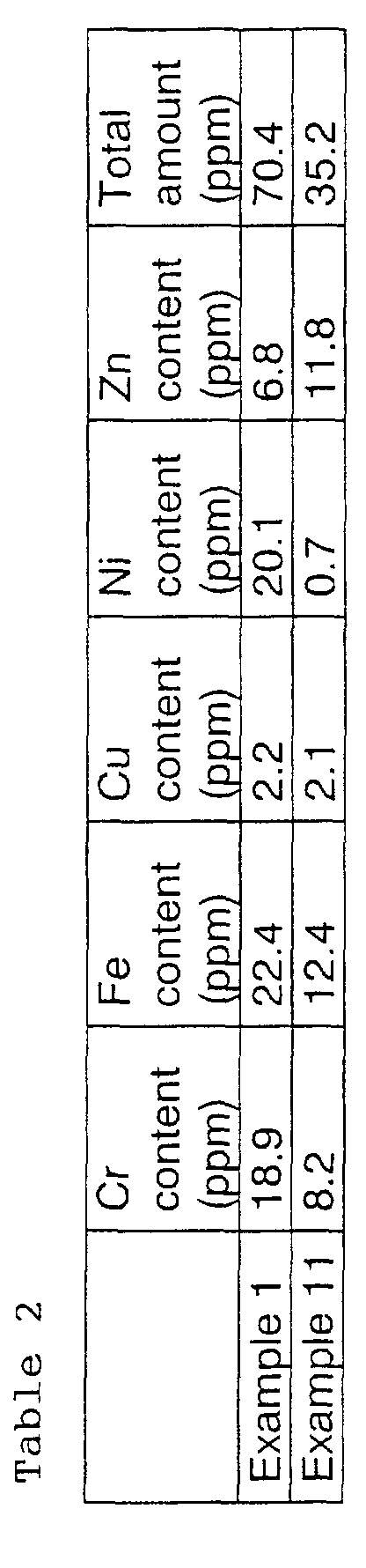
- the activated carbon was subjected to wet decomposition to measure the amounts of metals contained in the activated carbon and the amounts of metals contained in the activated carbon of Example 1 by means of an inductivity coupled plasma (ICP) measuring apparatus (ICP optical emission spectrometer IRISAP product by Jarrell Ash). The results are shown in Table 2.
- ICP inductivity coupled plasma
- Activated carbon was prepared in the same way as in Example 4 except that the temperature of the isotropic pitch used in Example 4 was raised from 200 to 600 °C at a rate of 200 °C/hour and the pitch was kept at 600 °C for 5 hours to activate the pitch(yield: 82%). Results about the above-mentioned items are shown in Table 1.
- Activated carbon was prepared in the same way as in Example 1 except that 12 g (200 parts by weight in relative to 100 parts of the isotropic pitch) of pulverized sodium hydroxide was added, as an activating agent, to the material used in Example 4 and the temperature of the resultant mixture was raised from 200 to 600 °C over 2 hours and the raised temperature was kept for 2 hours(yield: 91%). Results about the above-mentioned items are shown in Table 1.
- Activated carbon was prepared in the same way as in Example 1 except that 6 g of isotropic pitch (oxygen concentration: 1.5%) having an average particle diameter of 10 mm was used. Results about the above-mentioned items are shown in Table 1.
- Activated carbon was prepared in the same way as in Example 4 except that the amount of used potassium hydroxide was set to 6 g (100 parts by weight in relative to 100 parts by weight of the isotropic pitch) (yield: 85%). Results about the above-mentioned items are shown in Table 1.
- Activated carbon was prepared in the same way as in Example 4 except that the amount of used potassium hydroxide was set to 9 g (150 parts by weight in relative to 100 parts by weight of the isotropic pitch) (yield: 71%). Results about the above-mentioned items are shown in Table 1.
- Activated carbon was prepared in the same way as in Example 1 except that 6 g of the isotropic pitch of Example 1 was used and 24 g (400 parts by weight in relative to 100 parts by weight of the isotropic pitch) of potassium hydroxide was used(yield: 48%). Results about the above-mentioned items are shown in Table 1.
- Activated carbon was prepared in the same way as in Example 4 except that the temperature of the isotropic pitch used in Example 4 was raised from 200 to 500 °C at a rate of 200 °C/hour to reach 500 °C and immediately thereafter the pitch was cooled to activate the pitch(yield: 87%). Results about the above-mentioned items are shown in Table 1.
- Example 4 5 g of isotropic pitch used in Example 4 was put on a quartz glass boat and the boat was introduced into a tubular reaction furnace having a diameter of 4 cm. The system was kept at 850 °C for 4 hours in the current of a mixed gas of water vapor and nitrogen. The flow rates of water vapor and nitrogen were adjusted to 0.15 mL/minute and 100 mL/minute (which were converted values at 25 °C), respectively(yield: 48%). The resultant product was cooled, washed with water, and dried to give activated carbon. Results about the above-mentioned items are shown in Table 1.
- the present invention it is possible to provide activated carbon which is made from granular isotropic pitch, and a process for producing the same.
- the activated carbon of the present invention into polarizable electrodes and combing the electrodes with current electrodes and an electrolyte solution, a capacitor which has a large electrostatic capacitance and is superior in low-expansibility of the electrodes at the time of charge can be made.
Landscapes
- Engineering & Computer Science (AREA)
- Chemical & Material Sciences (AREA)
- Power Engineering (AREA)
- Organic Chemistry (AREA)
- Microelectronics & Electronic Packaging (AREA)
- Materials Engineering (AREA)
- General Chemical & Material Sciences (AREA)
- Inorganic Chemistry (AREA)
- Manufacturing & Machinery (AREA)
- Oil, Petroleum & Natural Gas (AREA)
- Chemical Kinetics & Catalysis (AREA)
- Electric Double-Layer Capacitors Or The Like (AREA)
- Carbon And Carbon Compounds (AREA)
Abstract
Description

Claims (21)
- Activated carbon, which is made from granular isotropic pitch.
- The activated carbon according to claim 1, wherein the granular isotropic pitch has an average particle diameter of 10 mm or less.
- The activated carbon according to claim 1 or 2, which has a specific surface area of 100 to 4000 m2/g.
- The activated carbon according to any one of claims 1-3, wherein the total amount of surface functional groups is 2.5 meq/g or less.
- The activated carbon according to any one of claims 1-4, wherein the half band width of a peak indicating the D band of amorphous carbon is 1-4 times larger than that of a peak indicating the D band of graphite carbon in Raman spectra.
- A process for producing activated carbon, wherein granular isotropic pitch is activated with a chemical agent.
- A process for producing activated carbon, wherein granular isotropic pitch is made infusible and subsequently the pitch is activated with a chemical agent.
- A process for producing activated carbon, wherein granular isotropic pitch is heat-treated and subsequently the pitch is activated with a chemical agent.
- A process for producing activated carbon, wherein granular isotropic pitch is made infusible and heat-treated and subsequently the pitch is activated with a chemical agent.
- The process for producing the activated carbon according to claim 8 or 9, wherein the temperature of the heat-treatment is from 600 to 1000 °C.
- The process for producing the activated carbon according to any one of claims 6-10, wherein at least one part of the chemical agent is a compound comprising an alkali metal element, a compound comprising an alkali earth metal element, zinc chloride, sulfuric acid, or phosphoric acid.
- The process for producing the activated carbon according to any one of claims 6-11, wherein the chemical agent is potassium hydroxide or sodium hydroxide.
- The process for producing the activated carbon according to any one of claims 6-12, wherein the temperature of the activation with the chemical agent is from 500 to 900 °C.
- The process for producing the activated carbon according to any one of claims 6-13, wherein the amount of the used chemical agent is from 100 to 400 parts by weight in relative to 100 parts by weight of the isotropic pitch.
- The process for producing the activated carbon according to any one of claims 6-14, wherein the activating step comprises a pitch-moistening step of making at least the surface of the isotropic pitch into a moisture state at a temperature of 200 °C or lower, a pitch-solidifying step of cancelling the moisture state at a temperature of 400 °C or lower into a solid state, and a pitch-heat-treating step of heat-treating the solid at a temperature over 400 °C with keeping solid state.
- A polarizable electrode, which is produced by mixing the activated carbon according to any one of claims 1-15 with at least a binder and an electroconductive filler.
- The polarizable electrode according to claim 16, which is a coat electrode obtained by applying a paste mixture.
- The polarizable electrode according to claim 16, which is a sheet electrode obtained by forming a mixture into a sheet.
- The polarizable electrode according to any one of claims 16-18, which has an electrode density of 0.3 g/cm3 or more.
- An electric double layer capacitor composed essentially of a pair of polarizable electrodes, a current collector set onto each of the polarizable electrodes, and an electrolyte solution, wherein at least one of the polarizable electrodes is the polarizable electrode according to any one of claims 16-19.
- The electric double layer capacitor according to claim 20, wherein the expansion ratio of the polarizable electrodes is 40% or less after charge and discharge.
Applications Claiming Priority (2)
| Application Number | Priority Date | Filing Date | Title |
|---|---|---|---|
| JP2000223680 | 2000-07-25 | ||
| JP2000223680 | 2000-07-25 |
Publications (3)
| Publication Number | Publication Date |
|---|---|
| EP1176617A2 true EP1176617A2 (en) | 2002-01-30 |
| EP1176617A3 EP1176617A3 (en) | 2006-08-16 |
| EP1176617B1 EP1176617B1 (en) | 2010-09-22 |
Family
ID=18717737
Family Applications (1)
| Application Number | Title | Priority Date | Filing Date |
|---|---|---|---|
| EP01117645A Expired - Lifetime EP1176617B1 (en) | 2000-07-25 | 2001-07-24 | Activated carbon, process for producing the same, polarizable electrode, and electric double layer capacitor |
Country Status (7)
| Country | Link |
|---|---|
| US (2) | US20020048144A1 (en) |
| EP (1) | EP1176617B1 (en) |
| KR (1) | KR100841587B1 (en) |
| CN (1) | CN1200875C (en) |
| AU (1) | AU774448B2 (en) |
| CA (1) | CA2353770C (en) |
| DE (1) | DE60143107D1 (en) |
Cited By (6)
| Publication number | Priority date | Publication date | Assignee | Title |
|---|---|---|---|---|
| WO2003089371A1 (en) * | 2002-04-22 | 2003-10-30 | Kuraray Chemical Co.,Ltd. | Process for producing active carbon, polarizable electrode and electric double layer capacitor |
| WO2004043859A3 (en) * | 2002-11-13 | 2004-10-21 | Showa Denko Kk | Active carbon, production method thereof and polarizable electrode |
| WO2006012890A1 (en) * | 2004-08-03 | 2006-02-09 | Basf Aktiengesellschaft | Electrolyte solution for double-layered capacitors and double-layered capacitor containing said electrolyte solution |
| US7209342B2 (en) * | 2004-10-22 | 2007-04-24 | Matsushita Electric Industrial Co., Ltd. | Electric double layer capacitor |
| EP1855298A4 (en) * | 2005-03-04 | 2010-09-22 | Panasonic Corp | ELECTROCHEMICAL ELECTRICAL ACCUMULATOR AND NONAQUEOUS ELECTROLYTE THEREFOR |
| WO2014160597A1 (en) * | 2013-03-27 | 2014-10-02 | Corning Incorporated | Chemical activation of carbon via a gas atomization method |
Families Citing this family (61)
| Publication number | Priority date | Publication date | Assignee | Title |
|---|---|---|---|---|
| CA2453968A1 (en) * | 2001-09-11 | 2003-03-27 | Showa Denko K.K. | Activated carbon material, and production method and use thereof |
| CN101239717A (en) * | 2002-07-30 | 2008-08-13 | 可乐丽化学株式会社 | Activated carbon, its production method, polarizable electrode, and electric double layer capacitor |
| US7759289B2 (en) * | 2002-07-30 | 2010-07-20 | Kuraray Chemical Co., Ltd. | Activated carbon, method for production thereof, polarizing electrode and electrical double layer capacitor |
| WO2004051680A1 (en) * | 2002-11-29 | 2004-06-17 | Honda Motor Co., Ltd. | Polarizable electrode for electric double-layer capacitor, process for producing the polarizable electrode and process for producing the electric double-layer capacitor |
| US7442352B2 (en) * | 2003-06-20 | 2008-10-28 | Gore Enterprise Holdings, Inc. | Flue gas purification process using a sorbent polymer composite material |
| JPWO2005008700A1 (en) * | 2003-07-17 | 2006-11-02 | 旭硝子株式会社 | Electric double layer capacitor |
| JP4662730B2 (en) * | 2003-09-12 | 2011-03-30 | ローム アンド ハース カンパニー | Macroreticular carbonaceous materials useful in energy storage devices |
| EP1518825B1 (en) * | 2003-09-25 | 2015-02-18 | Kureha Corporation | Process for producing spherical activated carbon |
| US20060018073A1 (en) * | 2004-07-23 | 2006-01-26 | Maxwell Technologies, Inc. | Active protection against transients |
| FR2886045B1 (en) * | 2005-05-23 | 2007-07-13 | Ceca Sa Sa | ELECTRODE FOR ENERGY STORAGE SYSTEMS, METHOD FOR MANUFACTURING SAME, AND ENERGY STORAGE SYSTEM COMPRISING SAME |
| JP4092344B2 (en) * | 2005-06-21 | 2008-05-28 | 新日本石油株式会社 | Raw material composition of carbon material for electric double layer capacitor electrode |
| RU2381586C2 (en) | 2005-06-24 | 2010-02-10 | ЮНИВЕРСАЛ СУПЕРКАПАСИТОРЗ ЭлЭлСи | Electrode and current collector for electrochemical capacitor with double electric layer, and electrochemical capacitor with double electric layer made thereof |
| JP2008544544A (en) * | 2005-06-24 | 2008-12-04 | ユニバーサル・スーパーキャパシターズ・エルエルシー | Current collector for electric double layer electrochemical capacitor and method for producing the current collector |
| EP1897104A1 (en) | 2005-06-24 | 2008-03-12 | Universal Supercapacitors Llc. | Heterogeneous electrochemical supercapacitor and method of manufacture |
| US8194394B2 (en) * | 2005-09-22 | 2012-06-05 | Honda Motor Co., Ltd. | Polarized electrode and electric double-layer capacitor |
| JP2007153639A (en) * | 2005-12-01 | 2007-06-21 | Kuraray Co Ltd | Activated carbon precursor, activated carbon and method for producing the same, polarizable electrode and electric double layer capacitor |
| EP1964137A1 (en) * | 2005-12-21 | 2008-09-03 | Showa Denko Kabushiki Kaisha | Electric double layer capacitor |
| JP2009529227A (en) * | 2006-03-08 | 2009-08-13 | キャップ−エックス・エックス・リミテッド | Electrolytes |
| US7919014B2 (en) | 2006-11-27 | 2011-04-05 | Universal Supercapacitors Llc | Electrode for use with double electric layer electrochemical capacitors having high specific parameters |
| JP5473282B2 (en) * | 2008-09-16 | 2014-04-16 | Jx日鉱日石エネルギー株式会社 | Carbon material for electric double layer capacitor and manufacturing method thereof |
| US8252716B2 (en) * | 2008-11-04 | 2012-08-28 | Corning Incorporated | Process for making porous activated carbon |
| US8784764B2 (en) * | 2008-12-15 | 2014-07-22 | Corning Incorporated | Methods for forming activated carbon material for high energy density ultracapacitors |
| CN101556868B (en) * | 2009-05-20 | 2011-05-04 | 河南理工大学 | Method for preparing carbon electrode material of oxygen-enriched super-capacitor |
| JP5599186B2 (en) | 2009-12-28 | 2014-10-01 | Jx日鉱日石エネルギー株式会社 | Activated carbon for electric double layer capacitor electrode and manufacturing method thereof |
| US8524632B2 (en) * | 2010-01-22 | 2013-09-03 | Corning Incorporated | High-capacitance and low-oxygen porous carbon for EDLCs |
| US8482901B2 (en) * | 2010-01-22 | 2013-07-09 | Corning Incorporated | Microporous activated carbon for EDLCS |
| CN101847516A (en) * | 2010-02-26 | 2010-09-29 | 上海奥威科技开发有限公司 | Capacitor battery of high-specific-energy organic system |
| WO2011114470A1 (en) * | 2010-03-17 | 2011-09-22 | 電気化学工業株式会社 | Hyaluronic acid purification method and production method |
| US8198210B2 (en) * | 2010-05-27 | 2012-06-12 | Corning Incorporated | Halogenated activated carbon materials for high energy density ultracapacitors |
| US9388046B2 (en) | 2011-04-15 | 2016-07-12 | Biogenic Reagents Ventures, Llc | Systems and apparatus for production of high-carbon biogenic reagents |
| US8842417B2 (en) | 2011-09-23 | 2014-09-23 | Corning Incorporated | High voltage electro-chemical double layer capacitor |
| US8809231B2 (en) | 2011-09-28 | 2014-08-19 | Corning Incorporated | Method for making alkali activated carbon |
| JP2013128066A (en) * | 2011-12-19 | 2013-06-27 | Seiko Instruments Inc | Electrochemical cell |
| EP2847127B1 (en) | 2012-05-07 | 2020-10-14 | Carbon Technology Holdings, LLC | Continuous process for producing biogenic activated carbon |
| CN103011156A (en) * | 2012-11-28 | 2013-04-03 | 吉林市道特化工科技有限责任公司 | Preparation method of active carbon for supercapacitor |
| CN105122407B (en) * | 2013-03-07 | 2018-12-25 | 鲍尔卡本技术有限公司 | Activated carbon for electric double layer capacitor electrode and manufacturing method thereof |
| US12350648B2 (en) | 2013-10-24 | 2025-07-08 | Carbon Technology Holdings, LLC | Methods and apparatus for producing activated carbon from biomass through carbonized ash intermediates |
| MX2016009270A (en) | 2014-01-16 | 2017-05-04 | Biogenic Reagents Ventures Llc | CARBON MICROPLANTA. |
| WO2015127460A1 (en) | 2014-02-24 | 2015-08-27 | Biogenic Reagent Ventures, Llc | Highly mesoporous activated carbon |
| TWI604655B (en) | 2014-08-08 | 2017-11-01 | Kureha Corp | Non-aqueous electrolyte secondary battery negative carbonaceous material |
| TWI565654B (en) | 2014-08-08 | 2017-01-11 | Kureha Corp | Production method of carbonaceous material for negative electrode of nonaqueous electrolyte secondary battery and carbonaceous material for negative electrode of nonaqueous electrolyte secondary battery |
| TWI599092B (en) | 2014-08-08 | 2017-09-11 | Kureha Corp | Non-Aqueous Electrolyte Secondary Battery Negative Carbonaceous Material |
| WO2016065357A1 (en) * | 2014-10-24 | 2016-04-28 | Biogenic Reagent Ventures, Llc | Halogenated activated carbon compositions and methods of making and using same |
| EP3530619B1 (en) * | 2016-10-21 | 2026-04-08 | Kuraray Co., Ltd. | Carbonaceous material and method for producing same |
| CN107256806B (en) * | 2017-06-23 | 2019-09-24 | 中国科学院宁波材料技术与工程研究所 | A kind of electrode material and supercapacitor |
| EP3806997A4 (en) | 2018-06-14 | 2022-03-09 | Carbon Technology Holdings, LLC | BIOGENIC POROUS CARBON SILICON DIOXIDE COMPOSITIONS AND PROCESSES FOR THEIR PREPARATION AND USE |
| CN111509197B (en) * | 2019-01-31 | 2021-11-19 | 山东欧铂新材料有限公司 | Modified activated carbon composite material for negative electrode of lead-carbon battery, preparation method of modified activated carbon composite material and lead-carbon battery |
| CN110648856B (en) * | 2019-09-29 | 2022-03-22 | 广东电网有限责任公司 | A kind of graphene material and its preparation method and super capacitor |
| CA3195363A1 (en) | 2020-09-25 | 2022-03-31 | Carbon Technology Holdings, LLC | Bio-reduction of metal ores integrated with biomass pyrolysis |
| CN112174137A (en) * | 2020-10-26 | 2021-01-05 | 济宁碳素集团有限公司 | Method for preparing primary active carbon by activating shot coke through combination method |
| KR102544657B1 (en) * | 2020-12-15 | 2023-06-20 | 한국화학연구원 | The Method of Producing Active Carbon by Using Physical Activation and the Active Carbon Produced by the Same |
| AU2022221681A1 (en) | 2021-02-18 | 2023-10-05 | Carbon Technology Holdings, LLC | Carbon-negative metallurgical products |
| KR102579778B1 (en) * | 2021-02-26 | 2023-09-19 | 재단법인 한국탄소산업진흥원 | Pitch-based activated carbon for canister and manufacturing method thereof |
| KR102580274B1 (en) * | 2021-03-25 | 2023-09-19 | 한국에너지기술연구원 | manufacturing method of ACTIVATED CARBON to improve TO IMPROVE MESOPORE RATIO AND SPECIFC SURFACE AREA by SURFACE OXIDATION OF PETROLEUM RESIDUE PITCH OR COAL TAR PITCH and activated carbon manufactured thereby |
| US11932814B2 (en) | 2021-04-27 | 2024-03-19 | Carbon Technology Holdings, LLC | Biocarbon blends with optimized fixed carbon content, and methods for making and using the same |
| KR20240034210A (en) | 2021-07-09 | 2024-03-13 | 카본 테크놀로지 홀딩스, 엘엘씨 | Process for producing biocarbon pellets with high fixed-carbon content and optimized reactivity, and biocarbon pellets obtained therefrom |
| AU2022323092A1 (en) | 2021-08-02 | 2024-03-21 | Carbon Technology Holdings, LLC | Processes and systems for recapturing carbon from biomass pyrolysis liquids |
| EP4430018A4 (en) | 2021-11-12 | 2026-02-11 | Carbon Tech Holdings Llc | Biocarbon compositions with optimized composition parameters and methods for their production |
| TWI904528B (en) * | 2022-12-26 | 2025-11-11 | 南韓商韓華思路信公司 | Manufacturing method for porous carbon support and porous carbon support manufactured by the same |
| CN117342554A (en) * | 2023-11-09 | 2024-01-05 | 山西新华防化装备研究院有限公司 | Coal pitch-based activated carbon and preparation method thereof |
| CN118221114A (en) * | 2024-04-28 | 2024-06-21 | 中国石油化工股份有限公司 | A method for preparing hollow mesoporous activated carbon |
Family Cites Families (11)
| Publication number | Priority date | Publication date | Assignee | Title |
|---|---|---|---|---|
| US1383085A (en) * | 1917-06-14 | 1921-06-28 | Dominguez Salvador | Automobile-wheel |
| JPS5018879B2 (en) * | 1971-08-27 | 1975-07-02 | ||
| JPS5910930B2 (en) * | 1979-11-02 | 1984-03-12 | 呉羽化学工業株式会社 | Method for manufacturing spherical carbon molded bodies |
| JPH04309596A (en) * | 1991-04-04 | 1992-11-02 | Petoca:Kk | Production of optically isotropic pitch |
| EP0519483B1 (en) * | 1991-06-19 | 2001-04-18 | Morinobu Endo | A pitch-based activated carbon fiber |
| JPH05155673A (en) * | 1991-12-04 | 1993-06-22 | Kawasaki Steel Corp | Porous carbon material and its production |
| JPH0632609A (en) * | 1992-07-16 | 1994-02-08 | Nippon Steel Corp | Method for producing powdered activated carbon |
| JPH06232006A (en) * | 1993-02-08 | 1994-08-19 | Matsushita Electric Ind Co Ltd | Electric double-layer capacitor |
| EP0927778B1 (en) * | 1997-12-04 | 2003-07-02 | Kashima Oil Co., Ltd. | Activated carbon fibers and use in double layer capacitor |
| JPH11293527A (en) * | 1998-04-07 | 1999-10-26 | Petoca Ltd | Optically isotropic pitch-based activated carbon fiber and electric double layer capacitor using the same |
| KR100744984B1 (en) * | 1999-11-16 | 2007-08-02 | 혼다 기켄 고교 가부시키가이샤 | Electrode for electric double layer capacitor and manufacturing method thereof |
-
2001
- 2001-07-24 CA CA002353770A patent/CA2353770C/en not_active Expired - Fee Related
- 2001-07-24 DE DE60143107T patent/DE60143107D1/en not_active Expired - Lifetime
- 2001-07-24 CN CNB011230959A patent/CN1200875C/en not_active Expired - Lifetime
- 2001-07-24 EP EP01117645A patent/EP1176617B1/en not_active Expired - Lifetime
- 2001-07-25 US US09/911,483 patent/US20020048144A1/en not_active Abandoned
- 2001-07-25 AU AU55961/01A patent/AU774448B2/en not_active Ceased
- 2001-07-25 KR KR1020010044905A patent/KR100841587B1/en not_active Expired - Lifetime
-
2004
- 2004-10-13 US US10/962,434 patent/US20050047061A1/en not_active Abandoned
Cited By (12)
| Publication number | Priority date | Publication date | Assignee | Title |
|---|---|---|---|---|
| WO2003089371A1 (en) * | 2002-04-22 | 2003-10-30 | Kuraray Chemical Co.,Ltd. | Process for producing active carbon, polarizable electrode and electric double layer capacitor |
| AU2003227354B2 (en) * | 2002-04-22 | 2008-07-10 | Honda Giken Kogyo Kabushiki Kaisha | Process for producing active carbon, polarizable electrode and electric double layer capacitor |
| US7709415B2 (en) | 2002-04-22 | 2010-05-04 | Kuraray Chemical Co., Ltd. | Method for manufacturing activated carbon, polarizable electrode, and electric double-layered capacitor |
| EP1498389A4 (en) * | 2002-04-22 | 2010-10-20 | Kuraray Chemical Kk | PROCESS FOR PRODUCING ACTIVE CHARCOAL, POLARIZABLE ELECTRODE AND CAPACITOR WITH DOUBLE ELECTRIC LAYER |
| WO2004043859A3 (en) * | 2002-11-13 | 2004-10-21 | Showa Denko Kk | Active carbon, production method thereof and polarizable electrode |
| US7691782B2 (en) | 2002-11-13 | 2010-04-06 | Showa Denko K.K. | Active carbon, production method thereof and polarizable electrode |
| US8273683B2 (en) | 2002-11-13 | 2012-09-25 | Showa Denko K.K. | Active carbon, production method thereof and polarizable electrode |
| WO2006012890A1 (en) * | 2004-08-03 | 2006-02-09 | Basf Aktiengesellschaft | Electrolyte solution for double-layered capacitors and double-layered capacitor containing said electrolyte solution |
| US7719820B2 (en) | 2004-08-03 | 2010-05-18 | Basf Aktiengesellschaft | Electrolyte solution for double-layered capacitors and double-layered capacitor containing said electrolyte solution |
| US7209342B2 (en) * | 2004-10-22 | 2007-04-24 | Matsushita Electric Industrial Co., Ltd. | Electric double layer capacitor |
| EP1855298A4 (en) * | 2005-03-04 | 2010-09-22 | Panasonic Corp | ELECTROCHEMICAL ELECTRICAL ACCUMULATOR AND NONAQUEOUS ELECTROLYTE THEREFOR |
| WO2014160597A1 (en) * | 2013-03-27 | 2014-10-02 | Corning Incorporated | Chemical activation of carbon via a gas atomization method |
Also Published As
| Publication number | Publication date |
|---|---|
| CA2353770A1 (en) | 2002-01-25 |
| KR20020009514A (en) | 2002-02-01 |
| US20020048144A1 (en) | 2002-04-25 |
| DE60143107D1 (en) | 2010-11-04 |
| US20050047061A1 (en) | 2005-03-03 |
| KR100841587B1 (en) | 2008-06-26 |
| CN1200875C (en) | 2005-05-11 |
| AU774448B2 (en) | 2004-06-24 |
| EP1176617B1 (en) | 2010-09-22 |
| CN1334237A (en) | 2002-02-06 |
| AU5596101A (en) | 2002-01-31 |
| EP1176617A3 (en) | 2006-08-16 |
| CA2353770C (en) | 2009-09-08 |
Similar Documents
| Publication | Publication Date | Title |
|---|---|---|
| EP1176617B1 (en) | Activated carbon, process for producing the same, polarizable electrode, and electric double layer capacitor | |
| US7691782B2 (en) | Active carbon, production method thereof and polarizable electrode | |
| US7582902B2 (en) | Raw material carbon composition for carbon material for electrode in electric double layer capacitor | |
| JP4877441B2 (en) | Activated carbon, manufacturing method thereof, polarizable electrode, and electric double layer capacitor | |
| KR101470050B1 (en) | Process for producing activated carbon for electric double layer capacitor electrode | |
| Poochai et al. | Waste coffee grounds derived nanoporous carbon incorporated with carbon nanotubes composites for electrochemical double-layer capacitors in organic electrolyte | |
| Padilla-Martínez et al. | Electrochemical energy storage from spent coffee grounds-derived carbon by KOH activation | |
| KR20110137388A (en) | Carbon material for electric double layer capacitor electrode and manufacturing method thereof | |
| Kayode et al. | Oxidative calcination of brewery bagasse and in-situ preparation of activated carbon-PEDOT composite for hybrid supercapacitor application | |
| JP2006024747A (en) | Carbon material for electric double layer capacitor electrode and manufacturing method thereof | |
| Yadav et al. | Zinc Oxide‐Enhanced Porous Activated Carbon From Waste Walnut Shells for Supercapacitor Electrodes | |
| JP2006059923A (en) | Raw carbon composition of carbon material for electrode of electric double layer capacitor | |
| JP2004149399A (en) | Activated carbon, its manufacturing method and its use | |
| JP4576374B2 (en) | Activated carbon, its production method and its use | |
| JPH11297577A (en) | Electric double layer capacitor and carbonaceous material used for it | |
| JP2005142439A (en) | Method for producing activated carbon for electric double layer capacitor electrode and carbon material thereof | |
| JP2004247433A (en) | Raw carbon composition of carbon material for electrode of electric double layer capacitor | |
| Lu et al. | Solvent-free preparation and multiscale regulation with a single additive for high-voltage supercapacitive porous carbon materials | |
| JP2001319837A (en) | Activated carbon for electric double layer capacitors | |
| JP2005333003A (en) | Carbon material for electric double layer capacitor electrode, method for producing the same, and electric double layer capacitor | |
| JP2007153639A (en) | Activated carbon precursor, activated carbon and method for producing the same, polarizable electrode and electric double layer capacitor | |
| JP2001332454A (en) | Non-aqueous electrolyte for electrochemical capacitor and electrochemical capacitor using the same | |
| JP2004311790A (en) | Activated carbon, method for producing the same, polarizable electrode and electric double layer capacitor | |
| JPH11121286A (en) | Electric double layer capacitor |
Legal Events
| Date | Code | Title | Description |
|---|---|---|---|
| PUAI | Public reference made under article 153(3) epc to a published international application that has entered the european phase |
Free format text: ORIGINAL CODE: 0009012 |
|
| AK | Designated contracting states |
Kind code of ref document: A2 Designated state(s): AT BE CH CY DE DK ES FI FR GB GR IE IT LI LU MC NL PT SE TR |
|
| AX | Request for extension of the european patent |
Free format text: AL;LT;LV;MK;RO;SI |
|
| RAP1 | Party data changed (applicant data changed or rights of an application transferred) |
Owner name: HONDA GIKEN KOGYO KABUSHIKI KAISHA Owner name: KURARAY CO., LTD. |
|
| PUAL | Search report despatched |
Free format text: ORIGINAL CODE: 0009013 |
|
| AK | Designated contracting states |
Kind code of ref document: A3 Designated state(s): AT BE CH CY DE DK ES FI FR GB GR IE IT LI LU MC NL PT SE TR |
|
| AX | Request for extension of the european patent |
Extension state: AL LT LV MK RO SI |
|
| RIC1 | Information provided on ipc code assigned before grant |
Ipc: C01B 31/08 20060101ALI20060711BHEP Ipc: H01G 9/058 20060101AFI20011004BHEP |
|
| 17P | Request for examination filed |
Effective date: 20060921 |
|
| AKX | Designation fees paid |
Designated state(s): DE FR GB IT |
|
| 17Q | First examination report despatched |
Effective date: 20080114 |
|
| GRAP | Despatch of communication of intention to grant a patent |
Free format text: ORIGINAL CODE: EPIDOSNIGR1 |
|
| GRAS | Grant fee paid |
Free format text: ORIGINAL CODE: EPIDOSNIGR3 |
|
| GRAA | (expected) grant |
Free format text: ORIGINAL CODE: 0009210 |
|
| AK | Designated contracting states |
Kind code of ref document: B1 Designated state(s): DE FR GB IT |
|
| REG | Reference to a national code |
Ref country code: GB Ref legal event code: FG4D |
|
| REF | Corresponds to: |
Ref document number: 60143107 Country of ref document: DE Date of ref document: 20101104 Kind code of ref document: P |
|
| PG25 | Lapsed in a contracting state [announced via postgrant information from national office to epo] |
Ref country code: IT Free format text: LAPSE BECAUSE OF FAILURE TO SUBMIT A TRANSLATION OF THE DESCRIPTION OR TO PAY THE FEE WITHIN THE PRESCRIBED TIME-LIMIT Effective date: 20100922 |
|
| PLBE | No opposition filed within time limit |
Free format text: ORIGINAL CODE: 0009261 |
|
| STAA | Information on the status of an ep patent application or granted ep patent |
Free format text: STATUS: NO OPPOSITION FILED WITHIN TIME LIMIT |
|
| 26N | No opposition filed |
Effective date: 20110623 |
|
| REG | Reference to a national code |
Ref country code: DE Ref legal event code: R097 Ref document number: 60143107 Country of ref document: DE Effective date: 20110623 |
|
| PGFP | Annual fee paid to national office [announced via postgrant information from national office to epo] |
Ref country code: DE Payment date: 20110831 Year of fee payment: 11 |
|
| GBPC | Gb: european patent ceased through non-payment of renewal fee |
Effective date: 20110724 |
|
| REG | Reference to a national code |
Ref country code: FR Ref legal event code: ST Effective date: 20120330 |
|
| PG25 | Lapsed in a contracting state [announced via postgrant information from national office to epo] |
Ref country code: FR Free format text: LAPSE BECAUSE OF NON-PAYMENT OF DUE FEES Effective date: 20110801 |
|
| PG25 | Lapsed in a contracting state [announced via postgrant information from national office to epo] |
Ref country code: GB Free format text: LAPSE BECAUSE OF NON-PAYMENT OF DUE FEES Effective date: 20110724 |
|
| PG25 | Lapsed in a contracting state [announced via postgrant information from national office to epo] |
Ref country code: DE Free format text: LAPSE BECAUSE OF NON-PAYMENT OF DUE FEES Effective date: 20130201 |
|
| REG | Reference to a national code |
Ref country code: DE Ref legal event code: R119 Ref document number: 60143107 Country of ref document: DE Effective date: 20130201 |