EP1173771B1 - Testmethode für einen prokoagulationsfaktor - Google Patents
Testmethode für einen prokoagulationsfaktor Download PDFInfo
- Publication number
- EP1173771B1 EP1173771B1 EP00915041A EP00915041A EP1173771B1 EP 1173771 B1 EP1173771 B1 EP 1173771B1 EP 00915041 A EP00915041 A EP 00915041A EP 00915041 A EP00915041 A EP 00915041A EP 1173771 B1 EP1173771 B1 EP 1173771B1
- Authority
- EP
- European Patent Office
- Prior art keywords
- thrombin
- plasma
- defibrinated
- test
- thrombin generation
- Prior art date
- Legal status (The legal status is an assumption and is not a legal conclusion. Google has not performed a legal analysis and makes no representation as to the accuracy of the status listed.)
- Expired - Lifetime
Links
- 238000003556 assay Methods 0.000 title description 26
- 239000003805 procoagulant Substances 0.000 title description 5
- 108090000190 Thrombin Proteins 0.000 claims abstract description 74
- 229960004072 thrombin Drugs 0.000 claims abstract description 74
- 238000012360 testing method Methods 0.000 claims abstract description 37
- 238000000034 method Methods 0.000 claims abstract description 29
- 230000005856 abnormality Effects 0.000 claims abstract description 17
- 230000015271 coagulation Effects 0.000 claims abstract description 14
- 238000005345 coagulation Methods 0.000 claims abstract description 14
- 239000012190 activator Substances 0.000 claims abstract description 13
- 108010000499 Thromboplastin Proteins 0.000 claims description 24
- 102000002262 Thromboplastin Human genes 0.000 claims description 24
- PGOHTUIFYSHAQG-LJSDBVFPSA-N (2S)-6-amino-2-[[(2S)-5-amino-2-[[(2S)-2-[[(2S)-2-[[(2S)-2-[[(2S)-4-amino-2-[[(2S)-2-[[(2S)-2-[[(2S)-2-[[(2S)-2-[[(2S)-5-amino-2-[[(2S)-5-amino-2-[[(2S)-2-[[(2S)-2-[[(2S)-2-[[(2S,3R)-2-[[(2S)-5-amino-2-[[(2S)-2-[[(2S)-2-[[(2S,3R)-2-[[(2S)-2-[[(2S)-2-[[(2S)-2-[[(2S)-2-[[(2S)-5-amino-2-[[(2S)-1-[(2S,3R)-2-[[(2S)-2-[[(2S)-2-[[(2R)-2-[[(2S)-2-[[(2S)-2-[[2-[[(2S)-2-[[(2S)-2-[[(2S)-2-[[(2S)-1-[(2S)-2-[[(2S)-2-[[(2S)-2-[[(2S)-2-amino-4-methylsulfanylbutanoyl]amino]-3-(1H-indol-3-yl)propanoyl]amino]-5-carbamimidamidopentanoyl]amino]propanoyl]pyrrolidine-2-carbonyl]amino]-3-methylbutanoyl]amino]-4-methylpentanoyl]amino]-4-methylpentanoyl]amino]acetyl]amino]-3-hydroxypropanoyl]amino]-4-methylpentanoyl]amino]-3-sulfanylpropanoyl]amino]-4-methylsulfanylbutanoyl]amino]-5-carbamimidamidopentanoyl]amino]-3-hydroxybutanoyl]pyrrolidine-2-carbonyl]amino]-5-oxopentanoyl]amino]-3-hydroxypropanoyl]amino]-3-hydroxypropanoyl]amino]-3-(1H-imidazol-5-yl)propanoyl]amino]-4-methylpentanoyl]amino]-3-hydroxybutanoyl]amino]-3-(1H-indol-3-yl)propanoyl]amino]-5-carbamimidamidopentanoyl]amino]-5-oxopentanoyl]amino]-3-hydroxybutanoyl]amino]-3-hydroxypropanoyl]amino]-3-carboxypropanoyl]amino]-3-hydroxypropanoyl]amino]-5-oxopentanoyl]amino]-5-oxopentanoyl]amino]-3-phenylpropanoyl]amino]-5-carbamimidamidopentanoyl]amino]-3-methylbutanoyl]amino]-4-methylpentanoyl]amino]-4-oxobutanoyl]amino]-5-carbamimidamidopentanoyl]amino]-3-(1H-indol-3-yl)propanoyl]amino]-4-carboxybutanoyl]amino]-5-oxopentanoyl]amino]hexanoic acid Chemical compound CSCC[C@H](N)C(=O)N[C@@H](Cc1c[nH]c2ccccc12)C(=O)N[C@@H](CCCNC(N)=N)C(=O)N[C@@H](C)C(=O)N1CCC[C@H]1C(=O)N[C@@H](C(C)C)C(=O)N[C@@H](CC(C)C)C(=O)N[C@@H](CC(C)C)C(=O)NCC(=O)N[C@@H](CO)C(=O)N[C@@H](CC(C)C)C(=O)N[C@@H](CS)C(=O)N[C@@H](CCSC)C(=O)N[C@@H](CCCNC(N)=N)C(=O)N[C@@H]([C@@H](C)O)C(=O)N1CCC[C@H]1C(=O)N[C@@H](CCC(N)=O)C(=O)N[C@@H](CO)C(=O)N[C@@H](CO)C(=O)N[C@@H](Cc1cnc[nH]1)C(=O)N[C@@H](CC(C)C)C(=O)N[C@@H]([C@@H](C)O)C(=O)N[C@@H](Cc1c[nH]c2ccccc12)C(=O)N[C@@H](CCCNC(N)=N)C(=O)N[C@@H](CCC(N)=O)C(=O)N[C@@H]([C@@H](C)O)C(=O)N[C@@H](CO)C(=O)N[C@@H](CC(O)=O)C(=O)N[C@@H](CO)C(=O)N[C@@H](CCC(N)=O)C(=O)N[C@@H](CCC(N)=O)C(=O)N[C@@H](Cc1ccccc1)C(=O)N[C@@H](CCCNC(N)=N)C(=O)N[C@@H](C(C)C)C(=O)N[C@@H](CC(C)C)C(=O)N[C@@H](CC(N)=O)C(=O)N[C@@H](CCCNC(N)=N)C(=O)N[C@@H](Cc1c[nH]c2ccccc12)C(=O)N[C@@H](CCC(O)=O)C(=O)N[C@@H](CCC(N)=O)C(=O)N[C@@H](CCCCN)C(O)=O PGOHTUIFYSHAQG-LJSDBVFPSA-N 0.000 claims description 23
- 206010053567 Coagulopathies Diseases 0.000 claims description 16
- 230000035602 clotting Effects 0.000 claims description 14
- 239000000758 substrate Substances 0.000 claims description 11
- 230000001363 autoimmune Effects 0.000 claims description 8
- 230000015572 biosynthetic process Effects 0.000 claims description 7
- 230000005764 inhibitory process Effects 0.000 claims description 6
- 230000003287 optical effect Effects 0.000 claims description 5
- 108010054964 H-hexahydrotyrosyl-alanyl-arginine-4-nitroanilide Proteins 0.000 claims description 4
- 108010094028 Prothrombin Proteins 0.000 claims description 4
- 102100027378 Prothrombin Human genes 0.000 claims description 4
- VYPSYNLAJGMNEJ-UHFFFAOYSA-N Silicium dioxide Chemical compound O=[Si]=O VYPSYNLAJGMNEJ-UHFFFAOYSA-N 0.000 claims description 4
- 230000003247 decreasing effect Effects 0.000 claims description 4
- 206010025135 lupus erythematosus Diseases 0.000 claims description 4
- 229940039716 prothrombin Drugs 0.000 claims description 4
- 239000005995 Aluminium silicate Substances 0.000 claims description 2
- 206010040047 Sepsis Diseases 0.000 claims description 2
- 235000012211 aluminium silicate Nutrition 0.000 claims description 2
- 239000000427 antigen Substances 0.000 claims description 2
- 102000036639 antigens Human genes 0.000 claims description 2
- 108091007433 antigens Proteins 0.000 claims description 2
- 208000014674 injury Diseases 0.000 claims description 2
- 238000002955 isolation Methods 0.000 claims description 2
- NLYAJNPCOHFWQQ-UHFFFAOYSA-N kaolin Chemical compound O.O.O=[Al]O[Si](=O)O[Si](=O)O[Al]=O NLYAJNPCOHFWQQ-UHFFFAOYSA-N 0.000 claims description 2
- 239000000377 silicon dioxide Substances 0.000 claims description 2
- 230000008733 trauma Effects 0.000 claims description 2
- 239000002821 viper venom Substances 0.000 claims description 2
- 210000002381 plasma Anatomy 0.000 description 54
- 230000000694 effects Effects 0.000 description 15
- FAPWRFPIFSIZLT-UHFFFAOYSA-M Sodium chloride Chemical compound [Na+].[Cl-] FAPWRFPIFSIZLT-UHFFFAOYSA-M 0.000 description 11
- 230000003429 anti-cardiolipin effect Effects 0.000 description 11
- 208000007536 Thrombosis Diseases 0.000 description 8
- 150000003904 phospholipids Chemical class 0.000 description 8
- 239000000523 sample Substances 0.000 description 8
- 208000003343 Antiphospholipid Syndrome Diseases 0.000 description 7
- 231100000673 dose–response relationship Toxicity 0.000 description 6
- 238000002965 ELISA Methods 0.000 description 5
- 230000023555 blood coagulation Effects 0.000 description 5
- 238000000338 in vitro Methods 0.000 description 5
- 102100030802 Beta-2-glycoprotein 1 Human genes 0.000 description 3
- 208000015181 infectious disease Diseases 0.000 description 3
- 238000004519 manufacturing process Methods 0.000 description 3
- 238000002360 preparation method Methods 0.000 description 3
- 239000011780 sodium chloride Substances 0.000 description 3
- XLYOFNOQVPJJNP-UHFFFAOYSA-N water Substances O XLYOFNOQVPJJNP-UHFFFAOYSA-N 0.000 description 3
- 101710180007 Beta-2-glycoprotein 1 Proteins 0.000 description 2
- 238000010171 animal model Methods 0.000 description 2
- 239000003146 anticoagulant agent Substances 0.000 description 2
- 229940127219 anticoagulant drug Drugs 0.000 description 2
- 239000004019 antithrombin Substances 0.000 description 2
- 238000006243 chemical reaction Methods 0.000 description 2
- 239000003593 chromogenic compound Substances 0.000 description 2
- 208000035850 clinical syndrome Diseases 0.000 description 2
- 230000001419 dependent effect Effects 0.000 description 2
- 238000011161 development Methods 0.000 description 2
- ZGSPNIOCEDOHGS-UHFFFAOYSA-L disodium [3-[2,3-di(octadeca-9,12-dienoyloxy)propoxy-oxidophosphoryl]oxy-2-hydroxypropyl] 2,3-di(octadeca-9,12-dienoyloxy)propyl phosphate Chemical compound [Na+].[Na+].CCCCCC=CCC=CCCCCCCCC(=O)OCC(OC(=O)CCCCCCCC=CCC=CCCCCC)COP([O-])(=O)OCC(O)COP([O-])(=O)OCC(OC(=O)CCCCCCCC=CCC=CCCCCC)COC(=O)CCCCCCCC=CCC=CCCCCC ZGSPNIOCEDOHGS-UHFFFAOYSA-L 0.000 description 2
- 230000023597 hemostasis Effects 0.000 description 2
- 230000001900 immune effect Effects 0.000 description 2
- 238000000099 in vitro assay Methods 0.000 description 2
- 230000001524 infective effect Effects 0.000 description 2
- 210000005105 peripheral blood lymphocyte Anatomy 0.000 description 2
- 239000000843 powder Substances 0.000 description 2
- 150000003839 salts Chemical class 0.000 description 2
- 210000002966 serum Anatomy 0.000 description 2
- 108010001779 Ancrod Proteins 0.000 description 1
- 102000015081 Blood Coagulation Factors Human genes 0.000 description 1
- 108010039209 Blood Coagulation Factors Proteins 0.000 description 1
- 102000004506 Blood Proteins Human genes 0.000 description 1
- 108010017384 Blood Proteins Proteins 0.000 description 1
- OYPRJOBELJOOCE-UHFFFAOYSA-N Calcium Chemical compound [Ca] OYPRJOBELJOOCE-UHFFFAOYSA-N 0.000 description 1
- UXVMQQNJUSDDNG-UHFFFAOYSA-L Calcium chloride Chemical compound [Cl-].[Cl-].[Ca+2] UXVMQQNJUSDDNG-UHFFFAOYSA-L 0.000 description 1
- KRKNYBCHXYNGOX-UHFFFAOYSA-K Citrate Chemical compound [O-]C(=O)CC(O)(CC([O-])=O)C([O-])=O KRKNYBCHXYNGOX-UHFFFAOYSA-K 0.000 description 1
- 208000035473 Communicable disease Diseases 0.000 description 1
- 108090000790 Enzymes Proteins 0.000 description 1
- 102000004190 Enzymes Human genes 0.000 description 1
- 108060003951 Immunoglobulin Proteins 0.000 description 1
- 206010024229 Leprosy Diseases 0.000 description 1
- 241000699666 Mus <mouse, genus> Species 0.000 description 1
- 241000699670 Mus sp. Species 0.000 description 1
- 208000037386 Typhoid Diseases 0.000 description 1
- 241000700605 Viruses Species 0.000 description 1
- 238000002835 absorbance Methods 0.000 description 1
- 230000002411 adverse Effects 0.000 description 1
- 229960004233 ancrod Drugs 0.000 description 1
- 108010023562 beta 2-Glycoprotein I Proteins 0.000 description 1
- 210000004369 blood Anatomy 0.000 description 1
- 239000008280 blood Substances 0.000 description 1
- 239000003114 blood coagulation factor Substances 0.000 description 1
- 239000003130 blood coagulation factor inhibitor Substances 0.000 description 1
- 239000000872 buffer Substances 0.000 description 1
- 229910052791 calcium Inorganic materials 0.000 description 1
- 239000011575 calcium Substances 0.000 description 1
- 239000001110 calcium chloride Substances 0.000 description 1
- 229910001628 calcium chloride Inorganic materials 0.000 description 1
- 239000003153 chemical reaction reagent Substances 0.000 description 1
- 238000007820 coagulation assay Methods 0.000 description 1
- 150000001875 compounds Chemical class 0.000 description 1
- 239000008367 deionised water Substances 0.000 description 1
- 238000001514 detection method Methods 0.000 description 1
- 238000010790 dilution Methods 0.000 description 1
- 239000012895 dilution Substances 0.000 description 1
- 201000010099 disease Diseases 0.000 description 1
- 208000037265 diseases, disorders, signs and symptoms Diseases 0.000 description 1
- 229940088598 enzyme Drugs 0.000 description 1
- 230000007717 exclusion Effects 0.000 description 1
- 238000002474 experimental method Methods 0.000 description 1
- 238000010438 heat treatment Methods 0.000 description 1
- 102000018358 immunoglobulin Human genes 0.000 description 1
- 238000001727 in vivo Methods 0.000 description 1
- 201000004792 malaria Diseases 0.000 description 1
- 238000005259 measurement Methods 0.000 description 1
- 230000010807 negative regulation of binding Effects 0.000 description 1
- 230000003950 pathogenic mechanism Effects 0.000 description 1
- 230000036470 plasma concentration Effects 0.000 description 1
- 230000003389 potentiating effect Effects 0.000 description 1
- 239000000047 product Substances 0.000 description 1
- 230000000750 progressive effect Effects 0.000 description 1
- 102000004169 proteins and genes Human genes 0.000 description 1
- 108090000623 proteins and genes Proteins 0.000 description 1
- 230000009257 reactivity Effects 0.000 description 1
- 238000011160 research Methods 0.000 description 1
- 238000012216 screening Methods 0.000 description 1
- 239000000126 substance Substances 0.000 description 1
- 239000006228 supernatant Substances 0.000 description 1
- 208000024891 symptom Diseases 0.000 description 1
- 208000006379 syphilis Diseases 0.000 description 1
- 230000009466 transformation Effects 0.000 description 1
- 201000008827 tuberculosis Diseases 0.000 description 1
- 201000008297 typhoid fever Diseases 0.000 description 1
Images



Classifications
-
- G—PHYSICS
- G01—MEASURING; TESTING
- G01N—INVESTIGATING OR ANALYSING MATERIALS BY DETERMINING THEIR CHEMICAL OR PHYSICAL PROPERTIES
- G01N33/00—Investigating or analysing materials by specific methods not covered by groups G01N1/00 - G01N31/00
- G01N33/48—Biological material, e.g. blood, urine; Haemocytometers
- G01N33/50—Chemical analysis of biological material, e.g. blood, urine; Testing involving biospecific ligand binding methods; Immunological testing
- G01N33/86—Chemical analysis of biological material, e.g. blood, urine; Testing involving biospecific ligand binding methods; Immunological testing involving blood coagulating time or factors, or their receptors
Definitions
- the present invention relates generally to blood coagulation assays and in particular to a method of detecting blood coagulation/clotting abnormalities in individuals.
- Antiphospholipid antibodies are a heterogeneous group of circulating autoantibodies that were originally thought to bind negatively-charged phospholipids. These autoantibodies have been associated with a range of clinical associations, in particular thrombotic events. Despite extensive literature in the pathogenic mechanisms, which explain the association between aPA and the major clinical manifestations of the antiphospholipid syndrome, mainly thrombosis, are unknown. These autoantibodies were originally thought to bind negatively-charged phospholipids and could be demonstrated in a variety of other clinical syndromes. However, in 1990 the present inventor demonstrated for the first time that these autoantibodies in fact bind ⁇ 2-glycoprotein I ( ⁇ 32-GPI), a phospholipid binding plasma protein whose physiological role is unknown.
- ⁇ 2-glycoprotein I ⁇ 32-GPI
- the first assay uses the negatively-charged phospholipid most commonly cardiolipin to coat microtitre wells and antibodies detected in this assay are known as anticardiolipin (ACL) antibodies.
- ACL anticardiolipin
- This assay system detects anticardiolipin antibodies in autoimmune patients and also in a variety of infections which are not associated with thrombotic events. It appears now that the autoimmune ACL antibodies detected in the ELISA system are directed against ⁇ 2-GPI, which is captured on the negatively charged surface.
- anticardiolipin antibodies occurring in infections like malaria, syphilis, leprosy, tuberculosis are not associated with clinical thrombotic events are now known not to bind ⁇ 2-GPI but in fact are directed against negatively-charged phospholipids and are thus true phospholipid antibodies.
- These antibodies are usually of low affinity and are dependent on charge as high salt concentrations eliminate their binding to cardiolipin.
- the second type of assay used is one that looks at the prolongation of in-vitro clotting assays.
- Autoantibodies that prolong phospholipid-dependent clotting tests which are not corrected by adding normal plasma and are neutralised by the addition of phospholipid are defined as lupus anticoagulants (LA).
- LA lupus anticoagulants
- Patients may have either of these antibody subtypes or both activities.
- ⁇ 2-GPI in an ELISA identifies the autoimmune ACL antibodies since the infective ACL antibodies do not bind in this assay system.
- both assays have to be utilised as patients with the antiphospholipid syndrome may be missed if only one assay system is used.
- ETP represents the amount of thrombin transiently presents during plasma-serum conversion.
- the total amount of thrombin formed is measured as the net result of pro- and anti-coagulant factors present in plasma.
- the assay utilises enzyme defibrinated plasma.
- the present inventor has now developed an in-vitro assay system which is simple, will identify both ACL and LA type antibodies, would discriminate between infective and autoimmune type ACL auto antibodies and may be used to identify patients at risk of clinical thrombotic events.
- the present invention consists in a method of detecting coagulation abnormalities in a plasma sample, the method comprising:
- the activator of thrombin is selected from thromboplastin, kaolin, Russell Viper venom, silica, or other similar reagents.
- the activator is thromboplastin. It will be appreciated, however, that other activators that cause the generation of thrombin from defibrinated plasma would also be suitable for the present invention.
- normal plasma is used to define the use of a standard supply of defibrinated plasma as the source for thrombin generation in steps (a) and (b). Normal plasma may be any defibrinated plasma as long that it is a suitable source for thrombin generation by the thrombin activator used in the test.
- the present inventor has found that the presence of antibodies to ⁇ 2-GPI in a plasma sample, which are known to inhibit or lower blood coagulation in vivo, will adversely effect the rate of thrombin production or generation from defibrinated plasma in a procoagulant in vitro assay. Therefore, defibrinated plasma from patients with antibodies to ⁇ 2-GPI, when tested by the present invention, will lower the rate of thrombin production compared to the control test (step (b)). It will also be appreciated that enhanced clotting ability in plasma samples will also be detected by the present invention by causing an increase in the rate of thrombin generation as compared to the control test.
- the time interval is about 20 minutes. It will be appreciated, however, that the time interval is discretionary but should be long enough to allow at least some generation of thrombin from the plasma to be induced by the thrombin activator used in the assay.
- the thrombin generation is measured by adding a substrate which is converted by the generated thrombin to a detectable product.
- a substrate which is converted by the generated thrombin is a detectable product.
- One suitable substrate which can be detected photometrically is spectrozyme. It will be appreciated, however, that other substrates would also be suitable.
- a chromogenic assay originally described by Lando et al, (1986) Journal of Immunological Methods 89: 131-139 has been found to be particularly suitable to determine the rate of thrombin generation in the assay. In essence, this is a measure of in vitro thrombin generation over a twenty minute period detected by a chromogenic substrate.
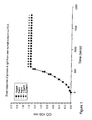
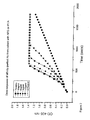
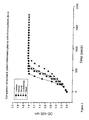
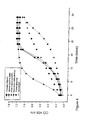
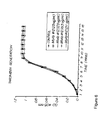
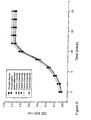
- thrombin formation measured in optical density units on the Y axis is plotted over time measured in minutes on the X axis, a sigmoidal curve is derived. A shift in the curve to the left indicates accelerated thrombin generation and a shift to the right indicates inhibition of thrombin formation.
- Such changes can be quantified by expressing the results as a ratio of the ratio of the normal curve using the mean of three data points on the linear portion of the curve.
- thrombin is generated by thromboplastin in the presence of defibrinated normal plasma. Thrombin then converts a colourless substrate to yellow whose generation can be followed as a time course on an ELISA plate reader.
- thrombin formation in steps (a) and (b) is measured in optical density units, the units obtained placed on a Y axis and plotted over time measured in minutes on an X axis such that a sigmoidal curve is derived.
- the method according to the present invention detects a coagulation abnormality which indicates a decreased clotting potential.
- the decreased clotting potential can arise from clinical situations where there is consumption of coagulation factors. Examples of such clinical situations include sepsis, severe trauma and autoimmune conditions.
- the method according to the present invention detects a coagulation abnormality which indicates an increased clotting potential.
- the increased clotting potential can arise from autoantibodies to ⁇ 2-GPI, prothrombin or other antigens that induce antiphospholipid antibodies to occur, lupus or other autoimmune conditions, or in isolation.
- the present invention consists in a method of detecting coagulation abnormalities in a plasma sample, the method comprising:
- the present invention allows the detection of both ACL and LA type antibodies in the one test by utilising thrombin generation from normal defibrinated serum.
- the present invention arises in part form the surprising finding that testing or screening for clotting abnormalities can be achieved by using defibrinated plasma.
- the present invention has the potential to greatly simplify clinical testing for clotting abnormalities in patients and in individuals that may not have clinical symptoms.
- the present invention results in only one test being required to determine whether a serum sample has ACL and/or LA type antibodies.
- PCA In vitro procoagulant assay
- the present inventor has used this assay system to look at a number of antibody populations:
- thrombin is generated from thromboplastin in the presence of defibrinated plasma. Thrombin then converts a colourless substrate to yellow whose generation can be followed as a time course on an ELISA plate reader.
- Thromboplastin (THP)
- Spectrozyme (American Diagnostica #238L) 50 uMole/bottle. Add 10 ml water to powder to obtain 5 mM. Store stock @-20°C and aliquots in use at 4°C for up to 1 week.
- An advanced plate reader (eg Molecular Devices Spectro Max 250) is advantageous as it avoids tedious number crunching when transferring data from paper to a graphics program.
Landscapes
- Health & Medical Sciences (AREA)
- Life Sciences & Earth Sciences (AREA)
- Hematology (AREA)
- Engineering & Computer Science (AREA)
- Molecular Biology (AREA)
- Biomedical Technology (AREA)
- Chemical & Material Sciences (AREA)
- Immunology (AREA)
- Urology & Nephrology (AREA)
- Food Science & Technology (AREA)
- Biochemistry (AREA)
- Cell Biology (AREA)
- Biotechnology (AREA)
- Medicinal Chemistry (AREA)
- Physics & Mathematics (AREA)
- Analytical Chemistry (AREA)
- Microbiology (AREA)
- General Health & Medical Sciences (AREA)
- General Physics & Mathematics (AREA)
- Pathology (AREA)
- Investigating Or Analysing Biological Materials (AREA)
- Measuring Or Testing Involving Enzymes Or Micro-Organisms (AREA)
- Medicines That Contain Protein Lipid Enzymes And Other Medicines (AREA)
- Peptides Or Proteins (AREA)
Claims (14)
- Verfahren zum Ermitteln von Koagulationsanormalitäten in einer Plasmaprobe, welches Verfahren aufweist:(a) Bestimmen der Testrate der Thrombinbildung über ein gegebenes Zeitintervall durch Reagieren eines Thrombin-Aktivators mit defibriniertem normalen Plasma in der Gegenwart einer Wärme-defibrinierten Testplasmaprobe;(b) Bestimmen einer Kontrollrate der Thrombinbildung über im Wesentlichen das gleiche Zeitintervall wie im Schritt (a) durch Reagieren desgleichen Throminaktivators mit defibriniertem normalem Plasma in der Abwesenheit von jeglichem defibriniertem Testplasma; und(c) Vergleichen der Raten der Thrombinbildung zwischen Testschritt (a) und Kontrollschritt (b), so dass jeder signifikante Unterschied zwischen den zwei Thrombinbildungsraten auf eine Koagulationsanormalität in dem Testplasma hinweist.
- Verfahren nach Anspruch 1, wobei der Thrombinaktivator ausgewählt ist aus der Gruppe bestehend aus Thromboplastin, Kaolin, Gift der Russell-Viper, und Silica.
- Verfahren nach Anspruch 2, wobei der Aktivator Thromboplastin ist.
- Verfahren nach einem der Ansprüche 1 bis 3, wobei das Zeitintervall 20 Minuten ist.
- Verfahren nach einem der Ansprüche 1 bis 4, wobei die Thrombinbildung durch Hinzufügen eines Substrates gemessen wird, welches durch das gebildete Thrombin in ein nachweisbares Produkt umgewandelt wird.
- Verfahren nach Anspruch 5, wobei das Substrat, welches photometrisch ermittelt werden kann, Spektrozym ist.
- Verfahren nach Anspruch 5 oder 6, wobei die Thrombinbildung in Schritt (a) und (b) in optischen Dichteeinheiten gemessen wird, wobei die erhaltenen Einheiten auf der Y-Achse aufgetragen werden und über die gemessene Zeit in Minuten auf der X-Achse graphisch dargestellt werden, sodass eine sigmoidale Kurve erlangt wird.
- Verfahren nach Anspruch 7, wobei eine Verschiebung in der Kurve nach Links auf eine beschleunigte Thrombinbildung hinweist und eine Verschiebung nach Rechts auf eine Hemmung der Thrombinbildung in der Testplasmaprobe hinweist.
- Verfahren nach Anspruch 8, wobei Veränderungen quantifiziert werden, indem die Ergebnisse als ein Verhältnis der Verhältnisse der normalen Kurve unter Verwendung des Mittelwertes von drei Datenpunkten auf dem linearen Abschnitt der Kurve ausgedrückt werden.
- Verfahren nach einem der Ansprüche 1 bis 9, wobei die Koagulationsanormalität ein verringertes Gerinnungspotential ist.
- Verfahren nach Anspruch 10, wobei das verringerte Gerinnungspotential von klinischen Umständen herrührt, einschließlich Sepsis, schweres Trauma, und Autoimmunzuständen.
- Verfahren nach einem der Ansprüche 1 bis 9, wobei die Koagulationsanormalität ein erhöhtes Gerinnungspotential darstellt.
- Verfahren nach Anspruch 12, wobei das erhöhte Gerinnungspotential von Autoantikörper zu β2-GPI, Prothrombin oder anderen Antigenen herrührt, die das Auftreten von Antiphospholipid-Antikörpern, Lupus oder anderen Autoimmunzuständen oder in Isolation auslösen.
- Verfahren zum Ermitteln von Koagulationsanormalitäten in einer Plasmaprobe, wobei das Verfahren aufweist:(a) Bestimmen der Testrate der Thrombinbildung über ein gegebenes Zeitintervall durch Reagieren eines Thromboplastin mit defibriniertem normalen Plasma in der Gegenwart einer Wärme-defibrinierten Testplasmaprobe.(b) Bestimmen einer Kontrollrate der Thrombinbildung über im Wesentlichen das gleiche Zeitintervall wie im Schritt (a) durch Reagieren von Thromboplastin mit defibriniertem normalem Plasma in der Abwesenheit von jeglichem defibriniertem Testplasma; und(c) Vergleichen der Raten der Thrombinbildung zwischen Testschritt (a) und Kontrollschritt (b), so dass jeder signifikante Unterschied zwischen den zwei Thrombinbildungsraten auf eine Koagulationsanormalität in dem Testplasma hinweist.
Applications Claiming Priority (3)
| Application Number | Priority Date | Filing Date | Title |
|---|---|---|---|
| AUPP9712A AUPP971299A0 (en) | 1999-04-12 | 1999-04-12 | Procoagulant assay |
| AUPP971299 | 1999-04-12 | ||
| PCT/AU2000/000309 WO2000062077A1 (en) | 1999-04-12 | 2000-04-12 | Procoagulant assay |
Publications (3)
| Publication Number | Publication Date |
|---|---|
| EP1173771A1 EP1173771A1 (de) | 2002-01-23 |
| EP1173771A4 EP1173771A4 (de) | 2003-01-22 |
| EP1173771B1 true EP1173771B1 (de) | 2006-11-29 |
Family
ID=3813911
Family Applications (1)
| Application Number | Title | Priority Date | Filing Date |
|---|---|---|---|
| EP00915041A Expired - Lifetime EP1173771B1 (de) | 1999-04-12 | 2000-04-12 | Testmethode für einen prokoagulationsfaktor |
Country Status (7)
| Country | Link |
|---|---|
| US (1) | US6936430B1 (de) |
| EP (1) | EP1173771B1 (de) |
| JP (1) | JP2002541484A (de) |
| AT (1) | ATE347107T1 (de) |
| AU (1) | AUPP971299A0 (de) |
| DE (1) | DE60032130D1 (de) |
| WO (1) | WO2000062077A1 (de) |
Families Citing this family (3)
| Publication number | Priority date | Publication date | Assignee | Title |
|---|---|---|---|---|
| EP1436628A2 (de) * | 2001-06-29 | 2004-07-14 | BioMerieux, Inc. | Verfahren zur vorhersage einer erhöhten wahrscheinlichkeit für antiphospholipidsyndrom in einem patienten |
| US7932021B2 (en) * | 2005-07-28 | 2011-04-26 | American Diagnostica, Inc. | Lupus anticoagulant testing |
| US8293493B2 (en) * | 2010-01-27 | 2012-10-23 | Adventist Health System/Sunbelt, Inc. | Thrombin generation determination method |
Family Cites Families (10)
| Publication number | Priority date | Publication date | Assignee | Title |
|---|---|---|---|---|
| SU1492287A1 (ru) * | 1987-01-30 | 1989-07-07 | Алтайский государственный медицинский институт им.Ленинского комсомола | Способ определени состо ни фибринолитической системы крови |
| DE3901917A1 (de) * | 1989-01-24 | 1990-07-26 | Behringwerke Ag | Mutanten von humanem antithrombin iii |
| WO1991001383A1 (en) | 1989-07-14 | 1991-02-07 | Michigan State University | Method for diagnosing blood clotting disorders |
| JP2811799B2 (ja) * | 1989-09-11 | 1998-10-15 | 三菱化学株式会社 | プロトロンビンの測定方法 |
| NL8902406A (nl) | 1989-09-27 | 1991-04-16 | Hendrik Coenraad Hemker Prof D | Werkwijze voor het bepalen van de endogene trombinepotentiaal van plasma, en bloed alsmede een bij deze werkwijze te gebruiken kit. |
| CA2070813C (en) | 1990-11-05 | 1996-10-29 | Hendrik Coenraad Hemker | A method to determine the concentration of anticoagulants |
| EP0585504A1 (de) | 1992-09-04 | 1994-03-09 | Pentapharm A.G. | Phospholipidabhängiger Prothrombinaktivator und seine Anwendung in Lupusantikoagulanttesten |
| JPH06331628A (ja) | 1993-05-27 | 1994-12-02 | Sekisui Chem Co Ltd | 抗リン脂質抗体の測定方法 |
| US6429017B1 (en) * | 1999-02-04 | 2002-08-06 | Biomerieux | Method for predicting the presence of haemostatic dysfunction in a patient sample |
| AU2002220255A1 (en) * | 2000-12-05 | 2002-06-18 | The Penn State Research Foundation | A monoclonal antibody-based diagnostic assay for gamma fibrinogen |
-
1999
- 1999-04-12 AU AUPP9712A patent/AUPP971299A0/en not_active Abandoned
-
2000
- 2000-04-12 JP JP2000611088A patent/JP2002541484A/ja active Pending
- 2000-04-12 DE DE60032130T patent/DE60032130D1/de not_active Expired - Lifetime
- 2000-04-12 WO PCT/AU2000/000309 patent/WO2000062077A1/en not_active Ceased
- 2000-04-12 AT AT00915041T patent/ATE347107T1/de not_active IP Right Cessation
- 2000-04-12 US US09/958,667 patent/US6936430B1/en not_active Expired - Fee Related
- 2000-04-12 EP EP00915041A patent/EP1173771B1/de not_active Expired - Lifetime
Also Published As
| Publication number | Publication date |
|---|---|
| EP1173771A4 (de) | 2003-01-22 |
| WO2000062077A1 (en) | 2000-10-19 |
| AUPP971299A0 (en) | 1999-05-06 |
| ATE347107T1 (de) | 2006-12-15 |
| US6936430B1 (en) | 2005-08-30 |
| EP1173771A1 (de) | 2002-01-23 |
| JP2002541484A (ja) | 2002-12-03 |
| DE60032130D1 (de) | 2007-01-11 |
Similar Documents
| Publication | Publication Date | Title |
|---|---|---|
| Otomo et al. | Efficacy of the antiphospholipid score for the diagnosis of antiphospholipid syndrome and its predictive value for thrombotic events | |
| Permpikul et al. | Functional and binding studies of the roles of prothrombin and beta 2-glycoprotein I in the expression of lupus anticoagulant activity | |
| Kurantsin‐Mills et al. | Plasma factor VII and thrombin–antithrombin III levels indicate increased tissue factor activity in sickle cell patients | |
| Hoek et al. | Laboratory and clinical evaluation of an assay of thrombin-antithrombin III complexes in plasma. | |
| Rao et al. | Mechanism and effects of the binding of lupus anticoagulant IgG and prothrombin to surface phospholipid | |
| Triplett et al. | The Textarin/Ecarin ratio: a confirmatory test for lupus anticoagulants | |
| Hunt et al. | A phospholipid-β2-glycoprotein I complex is an antigen for anticardiolipin antibodies occurring in autoimmune disease but not with infection | |
| Katona et al. | A simple, quick one-step ELISA assay for the determination of complex plasma factor XIII (A2B2) | |
| Arnout et al. | Optimization of the dilute prothrombin time for the detection of the lupus anticoagulant by use of a recombinant tissue thromboplastin | |
| US20110201017A1 (en) | Lupus anticoagulent testing | |
| JP2005519267A (ja) | 止血機能不全、重症感染及び全身性炎症反応症候群を診断し、監視するための方法 | |
| WO1991001383A1 (en) | Method for diagnosing blood clotting disorders | |
| Nielsen | Circulating microparticles in systemic lupus erythematosus | |
| Passam et al. | Laboratory tests for the antiphospholipid syndrome: current concepts | |
| Aznar et al. | Activated protein C resistance phenotype in patients with antiphospholipid antibodies | |
| US5716795A (en) | Thrombomodulin-based coagulometric assay of the protein C system | |
| Exner et al. | Lupus anticoagulants: characteristics, methods of laboratory detection and some clinical associations | |
| Bick et al. | Antiphospholipid-thrombosis syndromes | |
| McDuffie et al. | Prothrombin, thrombin and prothrombin fragments in plasma of normal individuals and of patients with laboratory evidence of disseminated intravascular coagulation | |
| Mirshahi et al. | A latex immunoassay of fibrin/fibrinogen degradation products in plasma using a monoclonal antibody | |
| Falcon et al. | Clinical significance of various ELISA assays for detecting antiphospholipid antibodies | |
| US6936430B1 (en) | Procoagulant assay | |
| Laffan et al. | 17 Investigation of a thrombotic tendency | |
| Ferro et al. | Methods for detecting lupus anticoagulants and their relation to thrombosis and miscarriage in patients with systemic lupus erythematosus. | |
| AU768038B2 (en) | Procoagulant assay |
Legal Events
| Date | Code | Title | Description |
|---|---|---|---|
| PUAI | Public reference made under article 153(3) epc to a published international application that has entered the european phase |
Free format text: ORIGINAL CODE: 0009012 |
|
| 17P | Request for examination filed |
Effective date: 20011012 |
|
| AK | Designated contracting states |
Kind code of ref document: A1 Designated state(s): AT BE CH CY DE DK ES FI FR GB GR IE IT LI LU MC NL PT SE |
|
| AX | Request for extension of the european patent |
Free format text: AL;LT;LV;MK;RO;SI |
|
| RIC1 | Information provided on ipc code assigned before grant |
Free format text: 7G 01N 33/86 A, 7C 12Q 1/56 B |
|
| A4 | Supplementary search report drawn up and despatched |
Effective date: 20021209 |
|
| AK | Designated contracting states |
Kind code of ref document: A4 Designated state(s): AT BE CH CY DE DK ES FI FR GB GR IE IT LI LU MC NL PT SE |
|
| 17Q | First examination report despatched |
Effective date: 20050428 |
|
| GRAP | Despatch of communication of intention to grant a patent |
Free format text: ORIGINAL CODE: EPIDOSNIGR1 |
|
| GRAS | Grant fee paid |
Free format text: ORIGINAL CODE: EPIDOSNIGR3 |
|
| GRAA | (expected) grant |
Free format text: ORIGINAL CODE: 0009210 |
|
| AK | Designated contracting states |
Kind code of ref document: B1 Designated state(s): AT BE CH CY DE DK ES FI FR GB GR IE IT LI LU MC NL PT SE |
|
| PG25 | Lapsed in a contracting state [announced via postgrant information from national office to epo] |
Ref country code: IT Free format text: LAPSE BECAUSE OF FAILURE TO SUBMIT A TRANSLATION OF THE DESCRIPTION OR TO PAY THE FEE WITHIN THE PRESCRIBED TIME-LIMIT;WARNING: LAPSES OF ITALIAN PATENTS WITH EFFECTIVE DATE BEFORE 2007 MAY HAVE OCCURRED AT ANY TIME BEFORE 2007. THE CORRECT EFFECTIVE DATE MAY BE DIFFERENT FROM THE ONE RECORDED. Effective date: 20061129 Ref country code: BE Free format text: LAPSE BECAUSE OF FAILURE TO SUBMIT A TRANSLATION OF THE DESCRIPTION OR TO PAY THE FEE WITHIN THE PRESCRIBED TIME-LIMIT Effective date: 20061129 Ref country code: LI Free format text: LAPSE BECAUSE OF FAILURE TO SUBMIT A TRANSLATION OF THE DESCRIPTION OR TO PAY THE FEE WITHIN THE PRESCRIBED TIME-LIMIT Effective date: 20061129 Ref country code: AT Free format text: LAPSE BECAUSE OF FAILURE TO SUBMIT A TRANSLATION OF THE DESCRIPTION OR TO PAY THE FEE WITHIN THE PRESCRIBED TIME-LIMIT Effective date: 20061129 Ref country code: CH Free format text: LAPSE BECAUSE OF FAILURE TO SUBMIT A TRANSLATION OF THE DESCRIPTION OR TO PAY THE FEE WITHIN THE PRESCRIBED TIME-LIMIT Effective date: 20061129 Ref country code: FI Free format text: LAPSE BECAUSE OF FAILURE TO SUBMIT A TRANSLATION OF THE DESCRIPTION OR TO PAY THE FEE WITHIN THE PRESCRIBED TIME-LIMIT Effective date: 20061129 Ref country code: NL Free format text: LAPSE BECAUSE OF FAILURE TO SUBMIT A TRANSLATION OF THE DESCRIPTION OR TO PAY THE FEE WITHIN THE PRESCRIBED TIME-LIMIT Effective date: 20061129 |
|
| REG | Reference to a national code |
Ref country code: GB Ref legal event code: FG4D |
|
| REG | Reference to a national code |
Ref country code: CH Ref legal event code: EP Ref country code: IE Ref legal event code: FG4D |
|
| REG | Reference to a national code |
Ref country code: IE Ref legal event code: FG4D |
|
| REF | Corresponds to: |
Ref document number: 60032130 Country of ref document: DE Date of ref document: 20070111 Kind code of ref document: P |
|
| PG25 | Lapsed in a contracting state [announced via postgrant information from national office to epo] |
Ref country code: DK Free format text: LAPSE BECAUSE OF FAILURE TO SUBMIT A TRANSLATION OF THE DESCRIPTION OR TO PAY THE FEE WITHIN THE PRESCRIBED TIME-LIMIT Effective date: 20070228 Ref country code: SE Free format text: LAPSE BECAUSE OF FAILURE TO SUBMIT A TRANSLATION OF THE DESCRIPTION OR TO PAY THE FEE WITHIN THE PRESCRIBED TIME-LIMIT Effective date: 20070228 |
|
| PG25 | Lapsed in a contracting state [announced via postgrant information from national office to epo] |
Ref country code: DE Free format text: LAPSE BECAUSE OF FAILURE TO SUBMIT A TRANSLATION OF THE DESCRIPTION OR TO PAY THE FEE WITHIN THE PRESCRIBED TIME-LIMIT Effective date: 20070301 |
|
| PG25 | Lapsed in a contracting state [announced via postgrant information from national office to epo] |
Ref country code: ES Free format text: LAPSE BECAUSE OF FAILURE TO SUBMIT A TRANSLATION OF THE DESCRIPTION OR TO PAY THE FEE WITHIN THE PRESCRIBED TIME-LIMIT Effective date: 20070312 |
|
| PG25 | Lapsed in a contracting state [announced via postgrant information from national office to epo] |
Ref country code: PT Free format text: LAPSE BECAUSE OF FAILURE TO SUBMIT A TRANSLATION OF THE DESCRIPTION OR TO PAY THE FEE WITHIN THE PRESCRIBED TIME-LIMIT Effective date: 20070430 |
|
| NLV1 | Nl: lapsed or annulled due to failure to fulfill the requirements of art. 29p and 29m of the patents act | ||
| REG | Reference to a national code |
Ref country code: CH Ref legal event code: PL |
|
| EN | Fr: translation not filed | ||
| PLBE | No opposition filed within time limit |
Free format text: ORIGINAL CODE: 0009261 |
|
| STAA | Information on the status of an ep patent application or granted ep patent |
Free format text: STATUS: NO OPPOSITION FILED WITHIN TIME LIMIT |
|
| 26N | No opposition filed |
Effective date: 20070830 |
|
| PG25 | Lapsed in a contracting state [announced via postgrant information from national office to epo] |
Ref country code: FR Free format text: LAPSE BECAUSE OF FAILURE TO SUBMIT A TRANSLATION OF THE DESCRIPTION OR TO PAY THE FEE WITHIN THE PRESCRIBED TIME-LIMIT Effective date: 20070720 Ref country code: GR Free format text: LAPSE BECAUSE OF FAILURE TO SUBMIT A TRANSLATION OF THE DESCRIPTION OR TO PAY THE FEE WITHIN THE PRESCRIBED TIME-LIMIT Effective date: 20070301 |
|
| PG25 | Lapsed in a contracting state [announced via postgrant information from national office to epo] |
Ref country code: IE Free format text: LAPSE BECAUSE OF NON-PAYMENT OF DUE FEES Effective date: 20070412 |
|
| PG25 | Lapsed in a contracting state [announced via postgrant information from national office to epo] |
Ref country code: FR Free format text: LAPSE BECAUSE OF FAILURE TO SUBMIT A TRANSLATION OF THE DESCRIPTION OR TO PAY THE FEE WITHIN THE PRESCRIBED TIME-LIMIT Effective date: 20061129 |
|
| PG25 | Lapsed in a contracting state [announced via postgrant information from national office to epo] |
Ref country code: MC Free format text: LAPSE BECAUSE OF NON-PAYMENT OF DUE FEES Effective date: 20070430 |
|
| PG25 | Lapsed in a contracting state [announced via postgrant information from national office to epo] |
Ref country code: CY Free format text: LAPSE BECAUSE OF FAILURE TO SUBMIT A TRANSLATION OF THE DESCRIPTION OR TO PAY THE FEE WITHIN THE PRESCRIBED TIME-LIMIT Effective date: 20061129 Ref country code: LU Free format text: LAPSE BECAUSE OF NON-PAYMENT OF DUE FEES Effective date: 20070412 |
|
| PGFP | Annual fee paid to national office [announced via postgrant information from national office to epo] |
Ref country code: GB Payment date: 20100414 Year of fee payment: 11 |
|
| GBPC | Gb: european patent ceased through non-payment of renewal fee |
Effective date: 20110412 |
|
| PG25 | Lapsed in a contracting state [announced via postgrant information from national office to epo] |
Ref country code: GB Free format text: LAPSE BECAUSE OF NON-PAYMENT OF DUE FEES Effective date: 20110412 |