EP1168951B1 - Aromaschutz für heisse getränke - Google Patents
Aromaschutz für heisse getränke Download PDFInfo
- Publication number
- EP1168951B1 EP1168951B1 EP00921820A EP00921820A EP1168951B1 EP 1168951 B1 EP1168951 B1 EP 1168951B1 EP 00921820 A EP00921820 A EP 00921820A EP 00921820 A EP00921820 A EP 00921820A EP 1168951 B1 EP1168951 B1 EP 1168951B1
- Authority
- EP
- European Patent Office
- Prior art keywords
- disk
- fabric
- coffee
- aramid
- hot plate
- Prior art date
- Legal status (The legal status is an assumption and is not a legal conclusion. Google has not performed a legal analysis and makes no representation as to the accuracy of the status listed.)
- Expired - Lifetime
Links
Images

Classifications
-
- A—HUMAN NECESSITIES
- A47—FURNITURE; DOMESTIC ARTICLES OR APPLIANCES; COFFEE MILLS; SPICE MILLS; SUCTION CLEANERS IN GENERAL
- A47J—KITCHEN EQUIPMENT; COFFEE MILLS; SPICE MILLS; APPARATUS FOR MAKING BEVERAGES
- A47J31/00—Apparatus for making beverages
- A47J31/44—Parts or details or accessories of beverage-making apparatus
-
- A—HUMAN NECESSITIES
- A47—FURNITURE; DOMESTIC ARTICLES OR APPLIANCES; COFFEE MILLS; SPICE MILLS; SUCTION CLEANERS IN GENERAL
- A47J—KITCHEN EQUIPMENT; COFFEE MILLS; SPICE MILLS; APPARATUS FOR MAKING BEVERAGES
- A47J31/00—Apparatus for making beverages
- A47J31/44—Parts or details or accessories of beverage-making apparatus
- A47J31/4403—Constructional details
- A47J31/441—Warming devices or supports for beverage containers
- A47J31/4425—Supports for beverage containers when filled or while being filled
- A47J31/4453—Supports for beverage containers when filled or while being filled interposed between means for keeping the beverage warm and the beverage container, e.g. spacers for raising the beverage container from the heated support plate in order to reduce heat transfer
-
- D—TEXTILES; PAPER
- D10—INDEXING SCHEME ASSOCIATED WITH SUBLASSES OF SECTION D, RELATING TO TEXTILES
- D10B—INDEXING SCHEME ASSOCIATED WITH SUBLASSES OF SECTION D, RELATING TO TEXTILES
- D10B2331/00—Fibres made from polymers obtained otherwise than by reactions only involving carbon-to-carbon unsaturated bonds, e.g. polycondensation products
- D10B2331/02—Fibres made from polymers obtained otherwise than by reactions only involving carbon-to-carbon unsaturated bonds, e.g. polycondensation products polyamides
- D10B2331/021—Fibres made from polymers obtained otherwise than by reactions only involving carbon-to-carbon unsaturated bonds, e.g. polycondensation products polyamides aromatic polyamides, e.g. aramides
Definitions
- the enjoyment of a hot beverage such as coffee or tea is dependent on the flavor experienced by the consumer.
- the flavor sensation for beverages that are served hot is a combination of the actual taste of the beverage and the temperature of the beverage.
- automatic devices for making coffee or hot tea are designed to hold the beverage at a temperature (holding temperature) at which the consumer will experience a desirable flavor sensation, the flavor of the beverage deteriorates if the beverage is maintained at the holding temperature for a period of time, often not more than one hour. The longer the coffee or tea is kept at the holding temperature, the greater the risk that the flavor may become bitter, burned or scorched.
- One solution to this problem practiced by food service industry is to periodically brew a fresh batch of the beverage. This solution to the flavor problem costs the food service industry time and money since a worker must throw out any beverage not yet consumed and must take the time and use materials to set up and make a "new pot".
- U.S. Patent 4,798,937 teaches a plastic covered hot plate having concentric grooves about the center of the hot plate. These groves form open areas through which air can circulate to moderate the temperature of the beverage.
- U.S. Patent 5,196,677 teaches a coffee maker having a metal spacer which separates the coffee pot from the hot plate in combination with heat sensing alarms that provides a warning if the level of fluid in the coffee pot is below a set level.
- the metal spacer has a central opening which provides an air space between the coffee pot and the hot plate to lower the temperature of the coffee.
- U.S. Patent 4, 994, 649 teaches a circular spacer having openings that attenuate the heat that is applied to the coffee pot by the hot plate.
- This attenuator ring may be attached to the pot or to the hot plate.
- the attenuator ring works to create an air space between the hot plate and the coffee pot to lower the temperature of the coffee.
- DE 3938578 A1 discloses a buff for use in a rotary buffing tool.
- the buff comprises aramid fibers. There is no suggestion that such a buff could be used to protect the flavour of coffee or tea.
- the inventors of the present invention wanted to provide a means to keep the flavor of coffee or tea fresh while at the same time maintaining the temperature of the beverage at a high holding temperature which results in the preferred flavor experience for a vast majority of coffee drinkers.
- the present invention provides a fabric disk for protecting the flavor of coffee or tea wherein the disk is placed between a container in which the beverage is stored and a hot plate which supports the container and also keeps the beverage hot, the fabric disk comprising heat resistant fibers wherein the heat resistant fiber contains at least 5% by weight p-aramid fibers.
- the disk has a thickness of less than about 12 mils (305 micrometres) and a density of less than about 2oz/yd 2 (68g/m 2 ).
- the disk may be a woven or non-woven fabric.
- the woven disk may be formed from heat resistant fibers 60% by weight m-aramid fibers and 40% by weight p-aramid fibers.
- the m-aramid and p-aramid fibers form yarns and the yarns are woven in a rip-stop weave. It is preferred that the edge of the fabric disk is stabilized from raveling by the addition of a binder or by fusing.
- the present invention also provides a brewing apparatus for brewing coffee or tea, the apparatus having a hot plate and a movable beverage container and a fabric disk comprising heat resistant fibers wherein the disk has a thickness of less than about 12 mils (305 micrometres) and a density of less than about 2oz/yd 2 (68g/m 2 ) and wherein the disk is sized to cover the hot plate and is positioned between the container bottom and the hot plate.
- the disk formed from a woven or non-woven fabric may be treated with a water repellent or stain repellent coating.
- a woven fabric disk it is preferred that the disk is treated with an adhesive that is stable at the holding temperature and temporary in nature.
- the disk may be formed from spun laced fabrics, spun bonded fabrics, melt blown fabrics or woven fabrics.
- the preferred fabric for the present invention is a spun laced fabric. Preferably these non-woven fabrics are patterned, resulting in uniform thick and thin regions throughout the fabric.
- the heat resistant fibers of these fabrics are preferred to be m-aramid or a mixture of m-aramid and p-aramid fibers. It is also preferred that the disk have at least one surface treated to increase friction between the disk and the hot plate. The most preferred treatment is a thin, discontinuous coating of silicon material. The preferred method by which thin, discontinuous coating is applied to the disk is by a printing process.
- the present invention also provides method of brewing coffee or tea wherein heated water is passed through grounds of coffee or leaves of tea into a container supported on a hot surface designed to maintain the coffee or tea at a holding temperature above room temperature, method comprising placing between the container and the hot surface a fabric disk comprising heat resistant fibers wherein the disk has a thickness of less than about 12 mils (305 micrometres) and a density of less than about 2oz/yd 2 (68g/m 2 ).
- the heat resistant fibers are m-aramid or a mixture of m-aramid and p-aramid fibers.
- at least one surface of the disk is treated to increase friction between the disk and the hot plate. It is most preferred that the treatment is a thin, discontinuous coating of silicon material. Such coating is preferred to be applied by a printing process.
- the disk of the present invention and in any of its embodiments is preferred to have a generally round symmetrical shape such as a circle or a polygon.
- the present invention provides a fabric disk for protecting the flavor of a coffee or tea wherein the disk is placed between a container (carafe) in which the beverage is stored and a hot plate which supports the container and also keeps the coffee or tea at the desired holding temperature, the fabric disk comprising heat resistant fibers.
- the disk may be formed as a non-woven or woven fabric.
- heat resistant fibers means fibers that do not melt, shrink or burn at temperatures of from about 40 to about 100°C. Such fibers may be in the form of cut fibers, staple yarns or filament or multifilament yarns.
- the length and denier of fibers and yarns useful in the present invention is not critical although for thinner disks it is preferable to use fibers of low denier. Also it is preferable to make thin disks from non-woven fabrics for the ease of manufacture. Cut fiber lengths and deniers used in higher performance textile applications are suitable, but it is recommended that cut fibers be nominally 0.25 to 2 inches (about 0.64 to about 5cm) in length, and filaments be about 1.5 denier (1.7dtex). For a woven fabric recommended yarns are 2 ply, and the recommended weave is 16/2's cotton count (27/2 Nm). Various types of microdenier fibers resulting from melt-blown or spunbonded processes may also be used.
- fibers or yarns having a modulus in the range of from 150g per denier (1.1dtex) or more in constructing the disk helps in maintaining the shape and flatness of the disk even at low fabric weight.
- a fabric containing at least 5% by weight p-aramid fibers is preferred.
- the p-aramid fibers may be incorporated into the fabric in a blend of staple yarns, as individual staple yarns or as individual filament yarns.
- p-aramid yarns or yarns containing higher concentrations of p-aramid fibers may be used as the rip-stop yarns.
- a woven disk of the present invention it is desirable to stabilize the edges of the disk against raveling by adding a binder or by fusing the edges to provide a thin non raveling edge and allow the disk to contact the surfaces of the hot plate and the beverage container.
- a woven fabric disk may also be treated with a suitable adhesive that is stable at the holding temperature and temporary in nature. Temporary in nature means that the adhesive is not permanent so that disk can be removed once soiled.
- placement of the p-aramid containing yarns in a geometry that provides contact across the face of the heating surface have proved to be of particular value.
- Useful woven fabric include plain, twill, satin, basket or rip-stop weaves.
- the most preferred form of the present invention is a non-woven fabric disk having a density of not more than 2oz/yd 2 (68g/m 2 ) and a total thickness of not more than 12 mils (305 micrometres).
- This non-woven disk provides optimum flavor protection at optimum holding temperature. That is, the temperature necessary to maintain the coffee at the desired sipping temperature (>170 F (77°C)).
- Fibers useful in construction of such a disk include p-aramid, m-aramid, polybenzimidazole, polybenoxazole, poly(phenylene sulfide), polybenzothiazole, polyimide and mixtures of these fibers.
- Aramid fibers include those fibers containing at least 85% by weight aramid polymer.
- the p-aramid fibers may be in whole or in part formed from sulfonated p-aramid polymer units.
- the disk may be constructed as a background fabric where p-aramid yarns or yarns containing higher concentrations of p-aramid fibers may be attached to the background fabric as a grid.
- This grid may be attached on one or both sides of the background fabric. If it is to be attached on only one side of the background fabric, it is preferred that the grid side of the disk be used in contact with the heating surface of the brewing apparatus. Attachment of the grid may be by weaving-in for a woven background fabric, stitched on, or attached a layer in a layered construction. In the case of a non-woven background fabric, the grid may be attached by stitching, as a web on which the non-woven fabric is formed, or as layer in a layered construction. There may be other suitable means by which the grid can be placed on the background fabric known to those of skill in this art.
- the disk of the present invention eliminates development of hot spots or zones of higher temperature in the liquid and produces a more uniform, even heating of the liquid.
- the shape of the disk is preferred to be that of a circle or a polygon. For a polygon shape one having 5 or more sides is preferred.
- the present invention also provides an improved brewing apparatus for brewing coffee or tea, the apparatus having a hot plate and a movable beverage container the bottom of which is in contact with the hot plate, a fabric disk comprising heat resistant fibers wherein the disk has a thickness of less than about 12 mils (305 micrometres) and a density of less than about 2oz/yd 2 (68g/m 2 ) and wherein the disk is sized to cover the hot plate and is positioned between the container bottom and the hot plate.
- cover the hot plate it is meant the disk has a size large enough so that the bottom of the container does not touch the hot plate directly.
- the disk is formed from a non-woven fabric.
- the disk may be formed from spun laced fabrics, spun bonded fabrics, melt blown fabrics or woven fabrics.
- Preferred heat resistant fibers include m-aramid or a mixture of m-aramid and p-aramid fibers.
- the disk is preferably has a patterned or embossed surface which can be created in the manufacture of the non-woven sheet as disclosed in US 3,485,706 or by calendering the sheet. This disk may be treated for stain and water repellency and may also be treated with a non-slip treatment to increase friction between the warming plate and the disk.
- the disk of the present invention may be treated for stain and water repellency and may also be treated with a non-slip treatment to increase friction.
- a non-slip treatment is preferred to be a thin, discontinuous coating of a silicon resin on at least one side of the disk.
- the preferred method of applying such a coating is by a printing process.
- the present invention also provides a method of brewing coffee or tea wherein heated water is passed through grounds of coffee or leaves of tea into a container supported on a hot surface designed to maintain the coffee or tea at a temperature above room temperature, method comprising placing between the container and the hot surface a fabric disk comprising heat resistant fibers wherein the disk has a thickness of less than about 12 mils (305 micrometres) and a density of less than about 2oz/yd 2 (68g/m m ).
- the general technique used to brew coffee is the drip method in which heated water of a temperature more than 180 to 205°F (82 to 96°C) is passed through a bed of ground, roasted coffee beans to extract the coffee oils.
- heated water of a temperature more than 180 to 205°F (82 to 96°C) is passed through a bed of ground, roasted coffee beans to extract the coffee oils.
- the coffee once brewed must be held at in a temperature range of 170 to 180°F (77 to 82°C).
- the preferred temperature for drinking coffee is about 140-170°F (60-77°C) with the most popular sipping temperature being 160°F (71°C).
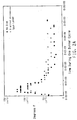
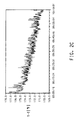
- FIGS 2a, 2b, 2c and Example 3 show the variations in temperature of the heating plate and the coffee with and without the use of the disk of the present invention. These charts illustrate the uniformity in temperature in the coffee liquid and the moderation of both hot spots and loss of heat at the hot plate surface achieved by the present invention.
- the present invention provides a thin, non-woven disk which, placed between the coffee container and the hot plate, evens out the coffee holding temperature while not appreciably reducing the holding temperature below 170°C (77°C).
- the disk aids in maintaining the coffee at optimum holding temperature while at the same time delays and reduces the formation of bitter favor bodies and the loss of aromatics.
- the disk provides this optimum distribution of temperature without causing loss of heat so as to reduce the coffee temperature below the optimum holding temperature.
- the form of the present invention providing the greatest level of performance is a non-woven disk having a thickness of less than about 12 mils (305 micrometres) and a density of less than about 2oz/yd 2 (68g/m 2 ).
- Total thickness means that the sum of the thickness of the non-woven fabric and any surface treatment such as a non-slip, discontinuous friction coating or a combination of a non-slip and stain or water repellency coating is less than 12 mils (305 micrometres). It is generally preferred that this non-woven fabric thickness be about 1 to 10 mils (25.4 to 254 micrometres) and the treatment layer be from 2 to 5 mils (50.8 to 127 micrometres).
- the following example illustrates a woven disk of the present invention.
- the evaluation of flavor in the following tests was subjective and bases on the coffee consumer's sensation and taste during and after the time the coffee was tasted.
- the color of the coffee as a function of time kept at temperature was a visual comparison of the color of the coffee at the time to the color of the coffee when initially brewed.
- Coffee was prepared in a MR. COFFEE brand home coffee maker. The coffee used was a typical regular grind coffee available at grocery stores or super markets.
- Table I provides a summary of fiber material tested and the time after brewing that each material provided flavor protection. Without the disk, the flavor began to deteriorate after less than one hour after brewing.
- the weights are fabric weights in oz/yd 2 (34g/m 2 ) .
- the fabrics are all woven fabrics.
- Fabric 1 is a m-aramid fabric containing 5% by weight p-aramid fiber
- fabric 2 and 3 are a woven fabric of 100% polybenzimidazole, each at a different weight
- fabric 4 is 100% m-aramid fabric
- fabric 5 is a knitted m-aramid fabric
- fabric 6 is a rip-stop weave of staple yarns made from an intimate blend of 60% by weight m-aramid fibers and 40% by weight p-aramid fibers.
- Fabric 6 is available from Southern Mills as NOMEX Advance brand fabric. (NOMEX is a trademark of the E.I. DuPont de Nemours Company of Wilmington, DE.).
- the knitted fabric provided no protection of the flavor.
- the coffee flavor deteriorated as if no disk were present.
- Weight Fabric Taste Time Color 7.5oz (213g) 1 Bitter 4hrs Dark 7.5 (213g) 2 Bitter 3hrs Dark 6.5 (184g) 3 Bad 3hrs Dark Black 9.5 (269g) 4 Bad 2.5hrs Dark 6.0 (170g) 5 Bad 3.5hrs Black 7.5 (213g) 60/40 Good 5hrs Dark
- TABLE II shows the evaluation of the coffee flavor and color at the time noted after brewing, but in this case the disks were tested for a series of days to determine if there were any loss in flavor protection as a function of cycles in heating and cooling of the disk.
- the days used are the number of cycles and the hours are hours after brewing. The hours reported are the hour after brewing at which the observation was made on the last cycle day. For example, after 3 total cycle days and after 3. hours of remaining at holding temperature on the third day, the coffee protected by fabric disk 1 had acceptable flavor and good color.
- Fabric 7 was a 100% m-aramid fabric in a waffle weave. Days Used Total Fabric Weight Taste Color 3 3 1 8.5oz. (241g) OK Good 5 6 4 9.5 (269g) Bitter Good 2 6 7 8.0 (227g) Bitter Dark 25 8 6 7.5 (213g) Good Good Good
- Tables I and II show that the woven fabric having the best performance in flavor protection for both the extent of time the coffee can be maintained at temperature and the number of cycles was fabric 6.
- Table III shows the coffee temperature that was maintained with the use of fabric 6. The temperature maintained when fabric 6 is used is surprisingly similar to that maintained when no disk was used. Fabric 6 with Coffee Time Temp.
- Table III illustrates the flavor protection provided by disk 6. After almost 4 hours of maintaining the coffee at the holding temperature, the flavor of the coffee was still as good as the initial brew although the color of the coffee had darkened.
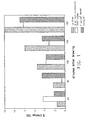
- the total dissolved solids in coffee as a function of the minutes after brewing was measured using a woven and a non-woven fabric disk. The results are shown in Figure 1. To determine the total dissolved solids, conductivity of a sample of coffee was measured using standard analytical practices.
- the disk of the present invention was made form a NOMEX brand non-woven fabric trademarked E89 and was 1.8 oz/yd 2 (61g/m 2 ). This fabric was calendered and has a 13 mesh pattern. It was 9 mil (229 micrometres) in thickness. This non-woven fabric is 70% by weight m-aramid and 30% by weight p-aramid fiber.
- a drip coffeemaker hot plate typically operates by a thermostat located on the hot plate heating unit itself. This thermostat turns the heating element on and off approximately every 3 to 6 minutes in order to maintain coffee at the holding temperature. The typical on time for the heating element is about 1 minute. During this on time the heating unit can exceed a temperature of 200°C. Since the hot plate surface is in direct contact with the heating element, high temperatures of the element result in a hot spot on the hot plate. These hot spots result in higher temperatures in the coffee liquid that degrade the coffee flavor.
- Figure 2a shows the temperature effects of the heating cycle on the hot plate temperature as measured by infrared videograph.
- Figure 2b and 2c show the affect of the heating cycle on the temperature of the liquid coffee measured at the bottom and the top of the coffee carafe.
- the disk used in the test data presented in these figures was a disk made according to Example 2. For comparison and as a control, data was measured with no disk in place over the hot plate surface. Data for the performance of the present invention was measured using the disk of Example 2.
- Figures 2b and 2c show how the spiking of the temperature influences the temperature of the liquid coffee measured in the carafe.
- the Figure 2b shows that the disk of the present invention dampens the very hot temperature spikes but at the same time moderates the heat flow across the pad to provide a uniform holding temperature.
- Figure 2c shows the variations in the liquid coffee temperature when no disk is present and the carafe is in direct contact with the hot plate.
- This example illustrates consumer approval for coffee flavor protected by the disk according to the present invention.
- the disk used in this test was prepared according to Example 2 except that a non-slip discontinuous silicon coating was applied to the face of the disk that was in direct contact with the hot plate.
- a sheet of the NOMEX brand fabric trademarked E89 (available form E.I. DuPont of Wilmington, DE) was masked by a metal sheet having holes of 0.09 inches (2.3 mm) in diameter and spaced 0.25 inches (6.4 mm) apart in a diamond grid pattern.
- the metal mask was placed over the fabric and liquid polydimethylsiloxane resin was spread over the surface of the mask. The mask was removed leaving the dot pattern of resin on the fabric.
- This coated fabric was cured for 2 minutes sec at 350 F (177°C) so that the siloxane resin became hard. The fabric was then cut in a circular shape to make the disk.
- This disk was placed on the hot plate of a drip coffee maker between the hot plate and the carafe to make test coffee.
- Control coffee was made without using the disk of the present invention but using the same ground coffee, same type coffee maker so that the brewed coffees would be equivalent except for the use of the disk in the test coffee.
- the test and the control coffees were held at the coffee maker holding temperature for 30, 60 and 120 minutes.
- the flavor of the coffee was rated by consumers.
- the flavor test was done by a professional coffee testing service using standard statistical coffee tasting methods.
- consumers selected the test coffee at approximately 9 to 1 over the control coffee as having the preferred flavor.
Landscapes
- Engineering & Computer Science (AREA)
- Food Science & Technology (AREA)
- Physics & Mathematics (AREA)
- Thermal Sciences (AREA)
- Apparatus For Making Beverages (AREA)
- Packages (AREA)
- Treatments For Attaching Organic Compounds To Fibrous Goods (AREA)
- Nonwoven Fabrics (AREA)
- Woven Fabrics (AREA)
- Tea And Coffee (AREA)
- Professional, Industrial, Or Sporting Protective Garments (AREA)
- Food Preservation Except Freezing, Refrigeration, And Drying (AREA)
Claims (19)
- Stoffscheibe zum Schützen des Aromas von Kaffee oder Tee, wobei die Stoffscheibe hitzebeständige Fasern umfasst und wobei die hitzebeständige Faser mindestens 5 Gew.-% an p-Aramidfasern enthält, dadurch gekennzeichnet, dass die Scheibe eine Dicke von weniger als etwa 12 mils (305 Mikrometer) und eine Dichte von weniger als etwa 2 oz/yd2 (68 g/m2) aufweist.
- Stoffscheibe gemäß Anspruch 1, bei welcher der Stoff ausgewählt wird aus der Gruppe bestehend aus den Spunlaced-Stoffen, aus den Spinnvliesstoffen, aus den aus der Schmelze heraus geblasenen Stoffen und aus den gewebten Stoffen.
- Stoffscheibe gemäß Anspruch 1, bei welcher die Scheibe hergestellt ist aus einem nicht gewebtem Stoff.
- Scheibe gemäß irgendeinem der Ansprüche 1 bis 3, bei welcher die hitzebeständige Faser mindestens 30 Gew.-% an p-Aramidfasern enthält.
- Stoffscheibe gemäß Anspruch 1, bei welcher die p-Aramidfasern oder -game, welche mindestens 30 Gew.-% an p-Aramidfasern enthalten, ein Gittergewebe bilden, welches an einem Hintergrundstoff befestigt ist.
- Stoffscheibe gemäß irgendeinem der Ansprüche 1 bis 3, bei welcher die hitzebeständigen Fasern aus einer Mischung aus m-Aramid und p-Aramidfasern bestehen.
- Stoffscheibe gemäß Anspruch 6, bei welcher die hitzebeständigen Fasern aus 60 Gew.-% m-Aramidfasern und 40 Gew.-% p-Aramidfasern bestehen.
- Stoffscheibe gemäß Anspruch 6 oder Anspruch 7, bei welcher die m-Aramidfasern und die p-Aramidfasern Garne bilden und die Garne nach einer das Reißen stoppenden Webart gewebt werden.
- Stoffscheibe gemäß irgendeinem der Ansprüche 1 bis 8, bei welcher die Kante der Stoffscheibe gegen die Ausfaserung stabilisiert wird durch die Zugabe eines Bindemittels oder durch Schmelzen.
- Stoffscheibe gemäß irgendeinem der Ansprüche 1 bis 9, bei welcher die Scheibe mit einer das Wasser abweisenden oder mit einer die Schmutzflecken abweisenden Beschichtung behandelt wird.
- Scheibe gemäß irgendeinem der Ansprüche 1 bis 10, bei welcher mindestens eine Oberfläche der Scheibe behandelt wird, um die Reibung zwischen der Scheibe und einer heißen Platte zu erhöhen.
- Scheibe gemäß Anspruch 11, bei welcher die Behandlung aus einer dünnen, diskontinuierlichen Beschichtung aus Siliziummaterial besteht.
- Scheibe gemäß Anspruch 12, bei welcher das Siliziummaterial durch ein Druckverfahren auf die Scheibe aufgetragen wird.
- Scheibe gemäß irgendeinem der Ansprüche 1 bis 13 mit einer im Allgemeinen runden symmetrischen Form.
- Scheibe gemäß irgendeinem der Ansprüche 1 bis 13, bei welcher die Form der Scheibe diejenige eines Kreises oder eines Polygons ist.
- Zubereitungsvorrichtung zum Zubereiten bzw. Kochen von Kaffee oder Tee, wobei diese Vorrichtung eine heiße Platte und einen beweglichen Getränkebehälter aufweist, dadurch gekennzeichnet, dass die Vorrichtung eine hitzebeständige Fasern enthaltende Stoffscheibe umfasst, wobei die Scheibe eine Dicke von weniger als etwa 12 mils (305 Mikrometer) und eine Dichte von weniger als etwa 2 oz/yd2 (68 g/m2) aufweist und wobei die Scheibe so dimensioniert ist, dass sie die heiße Platte bedeckt und dass sie zwischen der Bodenfläche des Getränkebehälters und der heißen Platte angeordnet wird.
- Zubereitungsvorrichtung gemäß Anspruch 16, bei welcher die Scheibe um etwa 1/8 bis 1 Inch (3 bis 25 mm) größer ist als die heiße Platte.
- Zubereitungsvorrichtung gemäß Anspruch 16 oder Anspruch 17, bei welcher die Stoffscheibe aus einer Scheibe gemäß irgendeinem der Ansprüche 1 bis 15 besteht.
- Verwendung der Stoffscheibe gemäß irgendeinem der Ansprüche 1 bis 15 zum Schutz des Aromas von Tee oder Kaffee.
Applications Claiming Priority (5)
| Application Number | Priority Date | Filing Date | Title |
|---|---|---|---|
| US29178399A | 1999-04-14 | 1999-04-14 | |
| US291783 | 1999-04-14 | ||
| US540468 | 2000-03-31 | ||
| US09/540,468 US6246032B1 (en) | 1990-04-14 | 2000-03-31 | Hot beverage flavor protector |
| PCT/US2000/009226 WO2000060986A1 (en) | 1999-04-14 | 2000-04-07 | Hot beverage flavor protector |
Publications (2)
| Publication Number | Publication Date |
|---|---|
| EP1168951A1 EP1168951A1 (de) | 2002-01-09 |
| EP1168951B1 true EP1168951B1 (de) | 2004-07-07 |
Family
ID=26966968
Family Applications (1)
| Application Number | Title | Priority Date | Filing Date |
|---|---|---|---|
| EP00921820A Expired - Lifetime EP1168951B1 (de) | 1999-04-14 | 2000-04-07 | Aromaschutz für heisse getränke |
Country Status (12)
| Country | Link |
|---|---|
| EP (1) | EP1168951B1 (de) |
| JP (1) | JP4446607B2 (de) |
| KR (1) | KR100612163B1 (de) |
| CN (1) | CN1145724C (de) |
| AU (1) | AU772681B2 (de) |
| BR (1) | BR0011163A (de) |
| CA (1) | CA2362021C (de) |
| DE (1) | DE60012002T2 (de) |
| ES (1) | ES2222899T3 (de) |
| MX (1) | MXPA01010356A (de) |
| RU (1) | RU2001130692A (de) |
| WO (1) | WO2000060986A1 (de) |
Families Citing this family (1)
| Publication number | Priority date | Publication date | Assignee | Title |
|---|---|---|---|---|
| NL2000441C2 (nl) * | 2007-01-18 | 2008-07-22 | Bravilor Holding Bv | Warmhoudplaat alsmede samenstel omvattende een dergelijke warmhoudplaat. |
Family Cites Families (5)
| Publication number | Priority date | Publication date | Assignee | Title |
|---|---|---|---|---|
| US3485706A (en) | 1968-01-18 | 1969-12-23 | Du Pont | Textile-like patterned nonwoven fabrics and their production |
| US4798937A (en) | 1987-03-09 | 1989-01-17 | Raul Guerrero | Warmer plate cover |
| DE3938578A1 (de) * | 1988-12-05 | 1990-06-07 | Jason Inc | Drehbares schwabbelwerkzeug |
| US4994694A (en) | 1989-08-23 | 1991-02-19 | Tektronix, Inc. | Complementary composite PNP transistor |
| US5196677A (en) | 1991-11-21 | 1993-03-23 | Stasyshyn John G | In a coffee pot apparatus |
-
2000
- 2000-04-07 RU RU2001130692/12A patent/RU2001130692A/ru unknown
- 2000-04-07 JP JP2000610334A patent/JP4446607B2/ja not_active Expired - Fee Related
- 2000-04-07 KR KR1020017013075A patent/KR100612163B1/ko not_active Expired - Fee Related
- 2000-04-07 DE DE60012002T patent/DE60012002T2/de not_active Expired - Lifetime
- 2000-04-07 CA CA002362021A patent/CA2362021C/en not_active Expired - Fee Related
- 2000-04-07 AU AU42087/00A patent/AU772681B2/en not_active Ceased
- 2000-04-07 MX MXPA01010356A patent/MXPA01010356A/es active IP Right Grant
- 2000-04-07 ES ES00921820T patent/ES2222899T3/es not_active Expired - Lifetime
- 2000-04-07 EP EP00921820A patent/EP1168951B1/de not_active Expired - Lifetime
- 2000-04-07 WO PCT/US2000/009226 patent/WO2000060986A1/en not_active Ceased
- 2000-04-07 BR BR0011163-5A patent/BR0011163A/pt active Search and Examination
- 2000-04-07 CN CNB008062056A patent/CN1145724C/zh not_active Expired - Fee Related
Also Published As
| Publication number | Publication date |
|---|---|
| EP1168951A1 (de) | 2002-01-09 |
| DE60012002T2 (de) | 2005-07-21 |
| CN1145724C (zh) | 2004-04-14 |
| RU2001130692A (ru) | 2004-01-27 |
| MXPA01010356A (es) | 2002-05-06 |
| DE60012002D1 (de) | 2004-08-12 |
| ES2222899T3 (es) | 2005-02-16 |
| KR100612163B1 (ko) | 2006-08-14 |
| KR20010110753A (ko) | 2001-12-13 |
| CA2362021C (en) | 2008-06-17 |
| WO2000060986A1 (en) | 2000-10-19 |
| AU4208700A (en) | 2000-11-14 |
| JP4446607B2 (ja) | 2010-04-07 |
| BR0011163A (pt) | 2002-02-19 |
| AU772681B2 (en) | 2004-05-06 |
| CA2362021A1 (en) | 2000-10-19 |
| JP2003503088A (ja) | 2003-01-28 |
| CN1347291A (zh) | 2002-05-01 |
Similar Documents
| Publication | Publication Date | Title |
|---|---|---|
| US6506471B2 (en) | Method of covering a hot outdoor grills | |
| EP2020890B1 (de) | Verfahren zur zubereitung von espresso, besonders aus einer patrone mit einer crema-erzeugenden zwischenwand, und mit diesem verfahren erhältliches getränk | |
| US7217908B2 (en) | Microwavable beverage maker | |
| CA1253733A (en) | Coffee bag brewing by microwave | |
| CA2362021C (en) | Hot beverage flavor protector | |
| CA2251884C (en) | Microwavable beverage maker | |
| WO2005012617A1 (en) | Single layer fireblocking fabric for a mattress or mattress set and process to fireblock same | |
| AU2017207369A1 (en) | Improved flame resistant thermal liners and garments made with same | |
| US6246032B1 (en) | Hot beverage flavor protector | |
| US20150267323A1 (en) | Decorative mattress border fabric with inherent flame barrier | |
| EP0446302A4 (en) | Temperature attenuator to control heating of the contents of a container and method of using the same | |
| CN111041702B (zh) | 一种多组分舒适弹性抗静电功能经编面料的制备方法 | |
| JP2018111898A (ja) | 上着 | |
| CN114750474A (zh) | 一种舒适保暖卫衣面料及其制备方法和染色装置 | |
| JP3203459U (ja) | コーヒー抽出器 | |
| KR20260050001A (ko) | 인덕션 보호 커버 | |
| JP3588342B2 (ja) | 飲用珈琲の製法 | |
| Weber | Facts about drip coffee makers | |
| JPWO2018092737A1 (ja) | ナイロン混繊交絡糸、織編物、ナイロン混繊交絡糸の製造方法、及び積層生地 | |
| Weber | Drip-filter coffee makers | |
| TR202014063U5 (tr) | Sütlü sıcak içecek ile sütlü/sütsüz türk kahvesi hazırlama makinesi | |
| BATH | UNITED STATES DISTRICT COURT SOUTHERN DISTRICT OF FLORIDA Case No. _ | |
| TR2022015336U5 (tr) | Sıcaklık Kontrollü Türk Kahvesi Makinesi Yapılanması | |
| Ferguson | Domestic Carpeting: What do Buyers and the Public Want? | |
| JPH10323282A (ja) | コーヒー沸し器、もしくはホットプレートによる加熱コーヒーの適温及び香りの継続的保持法及びその保持具。 |
Legal Events
| Date | Code | Title | Description |
|---|---|---|---|
| PUAI | Public reference made under article 153(3) epc to a published international application that has entered the european phase |
Free format text: ORIGINAL CODE: 0009012 |
|
| 17P | Request for examination filed |
Effective date: 20011001 |
|
| AK | Designated contracting states |
Kind code of ref document: A1 Designated state(s): AT BE CH CY DE DK ES FI FR GB GR IE IT LI LU MC NL PT SE |
|
| 17Q | First examination report despatched |
Effective date: 20021203 |
|
| GRAP | Despatch of communication of intention to grant a patent |
Free format text: ORIGINAL CODE: EPIDOSNIGR1 |
|
| GRAS | Grant fee paid |
Free format text: ORIGINAL CODE: EPIDOSNIGR3 |
|
| GRAA | (expected) grant |
Free format text: ORIGINAL CODE: 0009210 |
|
| AK | Designated contracting states |
Kind code of ref document: B1 Designated state(s): DE ES FR GB IT SE |
|
| REG | Reference to a national code |
Ref country code: GB Ref legal event code: FG4D |
|
| REG | Reference to a national code |
Ref country code: SE Ref legal event code: TRGR |
|
| REG | Reference to a national code |
Ref country code: IE Ref legal event code: FG4D |
|
| REF | Corresponds to: |
Ref document number: 60012002 Country of ref document: DE Date of ref document: 20040812 Kind code of ref document: P |
|
| ET | Fr: translation filed | ||
| REG | Reference to a national code |
Ref country code: ES Ref legal event code: FG2A Ref document number: 2222899 Country of ref document: ES Kind code of ref document: T3 |
|
| PLBE | No opposition filed within time limit |
Free format text: ORIGINAL CODE: 0009261 |
|
| STAA | Information on the status of an ep patent application or granted ep patent |
Free format text: STATUS: NO OPPOSITION FILED WITHIN TIME LIMIT |
|
| 26N | No opposition filed |
Effective date: 20050408 |
|
| PGFP | Annual fee paid to national office [announced via postgrant information from national office to epo] |
Ref country code: ES Payment date: 20080520 Year of fee payment: 9 |
|
| PGFP | Annual fee paid to national office [announced via postgrant information from national office to epo] |
Ref country code: IT Payment date: 20080428 Year of fee payment: 9 |
|
| PGFP | Annual fee paid to national office [announced via postgrant information from national office to epo] |
Ref country code: SE Payment date: 20080408 Year of fee payment: 9 |
|
| EUG | Se: european patent has lapsed | ||
| REG | Reference to a national code |
Ref country code: ES Ref legal event code: FD2A Effective date: 20090408 |
|
| PG25 | Lapsed in a contracting state [announced via postgrant information from national office to epo] |
Ref country code: ES Free format text: LAPSE BECAUSE OF NON-PAYMENT OF DUE FEES Effective date: 20090408 |
|
| PG25 | Lapsed in a contracting state [announced via postgrant information from national office to epo] |
Ref country code: IT Free format text: LAPSE BECAUSE OF NON-PAYMENT OF DUE FEES Effective date: 20090407 |
|
| PG25 | Lapsed in a contracting state [announced via postgrant information from national office to epo] |
Ref country code: SE Free format text: LAPSE BECAUSE OF NON-PAYMENT OF DUE FEES Effective date: 20090408 |
|
| PGFP | Annual fee paid to national office [announced via postgrant information from national office to epo] |
Ref country code: DE Payment date: 20120419 Year of fee payment: 13 |
|
| PGFP | Annual fee paid to national office [announced via postgrant information from national office to epo] |
Ref country code: GB Payment date: 20120404 Year of fee payment: 13 Ref country code: FR Payment date: 20120504 Year of fee payment: 13 |
|
| GBPC | Gb: european patent ceased through non-payment of renewal fee |
Effective date: 20130407 |
|
| PG25 | Lapsed in a contracting state [announced via postgrant information from national office to epo] |
Ref country code: GB Free format text: LAPSE BECAUSE OF NON-PAYMENT OF DUE FEES Effective date: 20130407 Ref country code: DE Free format text: LAPSE BECAUSE OF NON-PAYMENT OF DUE FEES Effective date: 20131101 |
|
| REG | Reference to a national code |
Ref country code: FR Ref legal event code: ST Effective date: 20131231 |
|
| REG | Reference to a national code |
Ref country code: DE Ref legal event code: R119 Ref document number: 60012002 Country of ref document: DE Effective date: 20131101 |
|
| PG25 | Lapsed in a contracting state [announced via postgrant information from national office to epo] |
Ref country code: FR Free format text: LAPSE BECAUSE OF NON-PAYMENT OF DUE FEES Effective date: 20130430 |