EP1164178A1 - Electroluminescent devices having arylamine polymers - Google Patents
Electroluminescent devices having arylamine polymers Download PDFInfo
- Publication number
- EP1164178A1 EP1164178A1 EP01202101A EP01202101A EP1164178A1 EP 1164178 A1 EP1164178 A1 EP 1164178A1 EP 01202101 A EP01202101 A EP 01202101A EP 01202101 A EP01202101 A EP 01202101A EP 1164178 A1 EP1164178 A1 EP 1164178A1
- Authority
- EP
- European Patent Office
- Prior art keywords
- group
- carbon atoms
- heteroaryl
- aryl
- mol
- Prior art date
- Legal status (The legal status is an assumption and is not a legal conclusion. Google has not performed a legal analysis and makes no representation as to the accuracy of the status listed.)
- Granted
Links
- 0 CCC(CC)(c(cc1)cc-2c1-c(cccc1)c1-c1ccccc1-c1ccc(C3(C4)c5c4cc(C4(C6)*(C)C4C)c6c5C3)cc-21)C1=CC2=*3C2(CC)C(*)C(C)C3C=C1 Chemical compound CCC(CC)(c(cc1)cc-2c1-c(cccc1)c1-c1ccccc1-c1ccc(C3(C4)c5c4cc(C4(C6)*(C)C4C)c6c5C3)cc-21)C1=CC2=*3C2(CC)C(*)C(C)C3C=C1 0.000 description 8
- ZNHIFSDHZQZHJM-UHFFFAOYSA-N CC(C)(C)c(cc1)ccc1Nc1cc(cccc2)c2cc1 Chemical compound CC(C)(C)c(cc1)ccc1Nc1cc(cccc2)c2cc1 ZNHIFSDHZQZHJM-UHFFFAOYSA-N 0.000 description 1
Images


Classifications
-
- H—ELECTRICITY
- H10—SEMICONDUCTOR DEVICES; ELECTRIC SOLID-STATE DEVICES NOT OTHERWISE PROVIDED FOR
- H10K—ORGANIC ELECTRIC SOLID-STATE DEVICES
- H10K85/00—Organic materials used in the body or electrodes of devices covered by this subclass
- H10K85/10—Organic polymers or oligomers
- H10K85/111—Organic polymers or oligomers comprising aromatic, heteroaromatic, or aryl chains, e.g. polyaniline, polyphenylene or polyphenylene vinylene
- H10K85/114—Poly-phenylenevinylene; Derivatives thereof
-
- C—CHEMISTRY; METALLURGY
- C09—DYES; PAINTS; POLISHES; NATURAL RESINS; ADHESIVES; COMPOSITIONS NOT OTHERWISE PROVIDED FOR; APPLICATIONS OF MATERIALS NOT OTHERWISE PROVIDED FOR
- C09K—MATERIALS FOR MISCELLANEOUS APPLICATIONS, NOT PROVIDED FOR ELSEWHERE
- C09K11/00—Luminescent materials, e.g. electroluminescent or chemiluminescent
- C09K11/06—Luminescent materials, e.g. electroluminescent or chemiluminescent containing organic luminescent materials
-
- H—ELECTRICITY
- H01—ELECTRIC ELEMENTS
- H01B—CABLES; CONDUCTORS; INSULATORS; SELECTION OF MATERIALS FOR THEIR CONDUCTIVE, INSULATING OR DIELECTRIC PROPERTIES
- H01B1/00—Conductors or conductive bodies characterised by the conductive materials; Selection of materials as conductors
- H01B1/06—Conductors or conductive bodies characterised by the conductive materials; Selection of materials as conductors mainly consisting of other non-metallic substances
- H01B1/12—Conductors or conductive bodies characterised by the conductive materials; Selection of materials as conductors mainly consisting of other non-metallic substances organic substances
-
- H—ELECTRICITY
- H05—ELECTRIC TECHNIQUES NOT OTHERWISE PROVIDED FOR
- H05B—ELECTRIC HEATING; ELECTRIC LIGHT SOURCES NOT OTHERWISE PROVIDED FOR; CIRCUIT ARRANGEMENTS FOR ELECTRIC LIGHT SOURCES, IN GENERAL
- H05B33/00—Electroluminescent light sources
- H05B33/12—Light sources with substantially two-dimensional [2D] radiating surfaces
- H05B33/14—Light sources with substantially two-dimensional [2D] radiating surfaces characterised by the chemical or physical composition or the arrangement of the electroluminescent material, or by the simultaneous addition of the electroluminescent material in or onto the light source
-
- H—ELECTRICITY
- H10—SEMICONDUCTOR DEVICES; ELECTRIC SOLID-STATE DEVICES NOT OTHERWISE PROVIDED FOR
- H10K—ORGANIC ELECTRIC SOLID-STATE DEVICES
- H10K50/00—Organic light-emitting devices
- H10K50/10—OLEDs or polymer light-emitting diodes [PLED]
- H10K50/11—OLEDs or polymer light-emitting diodes [PLED] characterised by the electroluminescent [EL] layers
-
- H—ELECTRICITY
- H10—SEMICONDUCTOR DEVICES; ELECTRIC SOLID-STATE DEVICES NOT OTHERWISE PROVIDED FOR
- H10K—ORGANIC ELECTRIC SOLID-STATE DEVICES
- H10K85/00—Organic materials used in the body or electrodes of devices covered by this subclass
- H10K85/10—Organic polymers or oligomers
- H10K85/111—Organic polymers or oligomers comprising aromatic, heteroaromatic, or aryl chains, e.g. polyaniline, polyphenylene or polyphenylene vinylene
-
- H—ELECTRICITY
- H10—SEMICONDUCTOR DEVICES; ELECTRIC SOLID-STATE DEVICES NOT OTHERWISE PROVIDED FOR
- H10K—ORGANIC ELECTRIC SOLID-STATE DEVICES
- H10K85/00—Organic materials used in the body or electrodes of devices covered by this subclass
- H10K85/10—Organic polymers or oligomers
- H10K85/151—Copolymers
-
- H—ELECTRICITY
- H10—SEMICONDUCTOR DEVICES; ELECTRIC SOLID-STATE DEVICES NOT OTHERWISE PROVIDED FOR
- H10K—ORGANIC ELECTRIC SOLID-STATE DEVICES
- H10K85/00—Organic materials used in the body or electrodes of devices covered by this subclass
- H10K85/60—Organic compounds having low molecular weight
- H10K85/615—Polycyclic condensed aromatic hydrocarbons, e.g. anthracene
-
- H—ELECTRICITY
- H10—SEMICONDUCTOR DEVICES; ELECTRIC SOLID-STATE DEVICES NOT OTHERWISE PROVIDED FOR
- H10K—ORGANIC ELECTRIC SOLID-STATE DEVICES
- H10K85/00—Organic materials used in the body or electrodes of devices covered by this subclass
- H10K85/60—Organic compounds having low molecular weight
- H10K85/631—Amine compounds having at least two aryl rest on at least one amine-nitrogen atom, e.g. triphenylamine
-
- C—CHEMISTRY; METALLURGY
- C09—DYES; PAINTS; POLISHES; NATURAL RESINS; ADHESIVES; COMPOSITIONS NOT OTHERWISE PROVIDED FOR; APPLICATIONS OF MATERIALS NOT OTHERWISE PROVIDED FOR
- C09K—MATERIALS FOR MISCELLANEOUS APPLICATIONS, NOT PROVIDED FOR ELSEWHERE
- C09K2211/00—Chemical nature of organic luminescent or tenebrescent compounds
- C09K2211/14—Macromolecular compounds
- C09K2211/1408—Carbocyclic compounds
- C09K2211/1416—Condensed systems
-
- C—CHEMISTRY; METALLURGY
- C09—DYES; PAINTS; POLISHES; NATURAL RESINS; ADHESIVES; COMPOSITIONS NOT OTHERWISE PROVIDED FOR; APPLICATIONS OF MATERIALS NOT OTHERWISE PROVIDED FOR
- C09K—MATERIALS FOR MISCELLANEOUS APPLICATIONS, NOT PROVIDED FOR ELSEWHERE
- C09K2211/00—Chemical nature of organic luminescent or tenebrescent compounds
- C09K2211/14—Macromolecular compounds
- C09K2211/1408—Carbocyclic compounds
- C09K2211/1433—Carbocyclic compounds bridged by heteroatoms, e.g. N, P, Si or B
-
- H—ELECTRICITY
- H10—SEMICONDUCTOR DEVICES; ELECTRIC SOLID-STATE DEVICES NOT OTHERWISE PROVIDED FOR
- H10K—ORGANIC ELECTRIC SOLID-STATE DEVICES
- H10K2102/00—Constructional details relating to the organic devices covered by this subclass
- H10K2102/10—Transparent electrodes, e.g. using graphene
- H10K2102/101—Transparent electrodes, e.g. using graphene comprising transparent conductive oxides [TCO]
- H10K2102/103—Transparent electrodes, e.g. using graphene comprising transparent conductive oxides [TCO] comprising indium oxides, e.g. ITO
-
- Y—GENERAL TAGGING OF NEW TECHNOLOGICAL DEVELOPMENTS; GENERAL TAGGING OF CROSS-SECTIONAL TECHNOLOGIES SPANNING OVER SEVERAL SECTIONS OF THE IPC; TECHNICAL SUBJECTS COVERED BY FORMER USPC CROSS-REFERENCE ART COLLECTIONS [XRACs] AND DIGESTS
- Y10—TECHNICAL SUBJECTS COVERED BY FORMER USPC
- Y10S—TECHNICAL SUBJECTS COVERED BY FORMER USPC CROSS-REFERENCE ART COLLECTIONS [XRACs] AND DIGESTS
- Y10S428/00—Stock material or miscellaneous articles
- Y10S428/917—Electroluminescent
Definitions
- the present invention relates to electroluminescent (EL) devices having arylamine polymers.
- Electroluminescent (EL) devices such as light emitting diode (LED) are opto-electronic devices which radiate light on the application of an electrical field.
- Organic materials including both polymers and small molecules have been used to fabricate LEDs. LEDs fabricated from these materials offer several advantages over other technologies, such as simpler manufacturing, low operating voltages, and the possibility of producing large area and full-color displays.
- Organic polymers generally offer significant processing advantages over small molecules especially for large area EL display because polymer films can be easily produced by casting from solutions.
- Conjugated polymers such as poly(phenylvinylene) (PPV) were first introduced as EL materials by Burroughes and others in 1990 (Burroughes, J. H. Nature 1990, 347 , 539-41).
- Other conjugated polymers include polydialkylfluorene (PF) (Ohmori, Y. and others Jpn. J. Appl. Phys. Part 2 1991, 20, L1941-L1943), poly(p-phenylene) (PPP) (Grem, G. and others Adv. Mater. 1992, 4 , 36-7), and poly(thiophene).
- PPVs and their derivatives are among the most studied conjugated polymers because of their great potential applications in various areas including LED, photodiodes, organic transistors, and solid state laser materials. Electron donor such as alkoxy substituted PPVs show higher efficiencies than unsubstituted ones in LED applications. Amine groups are stronger electron donors than alkoxy groups, and amino-substituted PPVs have also been prepared to investigate the effect of amino groups on the LED efficiencies. However, only dialkylamines have been incorporated into PPV as substitutents (Stenger-Smith, J. D. and others Macromolecules 1998, 31, 7566-7569). It is known that dialkylamino groups are susceptible to oxidation.
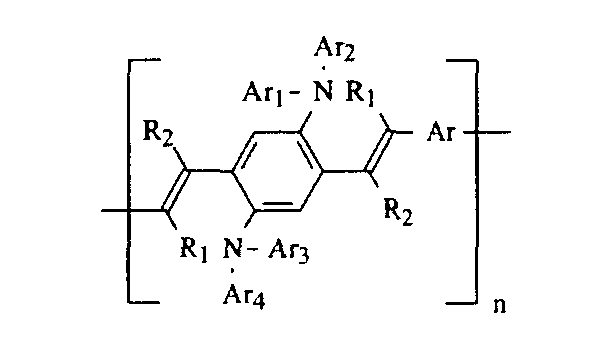
- an electroluminescent device which comprises an anode, a cathode, and a polymer luminescent material disposed between the anode and cathode, the polymeric luminescent material having arylamine moiety has the molecular formula: wherein:
- the present invention provides light-emitting materials with a number of advantages that include good solubility, efficiency and stability.
- the emitting color of the polymer can be easily tuned by the incorporation of desired Ar group.
- other electro-optical properties can also be tuned with Ar group.
- the present invention provides light-emitting polymers containing arylamine moieties with good solubility, efficiency and stability.
- Arylamine as a hole transport material in organic light-emitting devices was studied intensively due to its high hole transporting mobility, chemical and electronic stability.
- Arylamine moieties are strong electron donors that will improve the hole injection and transporting mobility of light-emitting polymer.
- incorporating arylamine moieties into light-emitting polymer can enhance the solubility, improve polymer conductivity, and adjust polymer oxidation sensitivity.
- Incorporation of Ar in the light-emitting polymer have the following features:
- the present invention provides light-emitting polymers containing arylamine moieties having following molecular formulae: wherein:
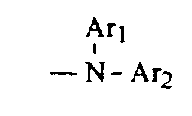
- Ar 1 , Ar 2 , Ar 3 , and Ar 4 represent or wherein: R is a substituent, and can be hydrogen, alkyl group of from 1 to 24 carbon atoms, or aryl or substituted aryl of from 6 to 28 carbon atoms, or heteroaryl or substituted heteroaryl of from 4 to 40 carbons, or a cyano group, a nitro group, a chlorine, bromine, or a fluorine atom; Or Ar 1 and Ar 2 , Ar 3 and Ar 4 can be connected through a chemical bond, and Ar 1 and Ar 2 together, Ar 3 and Ar 4 together can contain 12 to 40 carbon atoms.
- R is a substituent, and can be hydrogen, alkyl group of from 1 to 24 carbon atoms, or aryl or substituted aryl of from 6 to 28 carbon atoms, or heteroaryl or substituted heteroaryl of from 4 to 40 carbons, or a cyano group, a nitro group, a chlorine, bromine, or a fluorine
- Ar 1 and Ar 2 are connected by a chemical bond to form a first group and Ar 3 and Ar 4 are connected by a chemical bond to form a second group and wherein the first and second groups are respectively given by the following formulas: and include following carbazole and carbazole derivatives: or
- Ar represents the following groups:
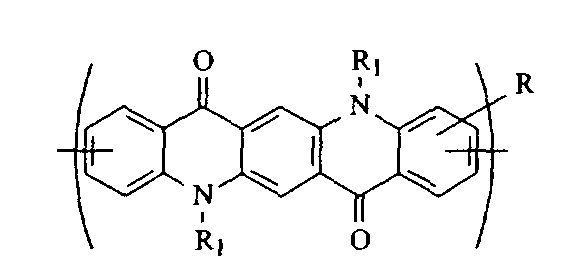
- R is a substituent, and can be hydrogen, alkyl group of from 1 to 24 carbon atoms, or aryl or substituted aryl of from 6 to 28 carbon atoms, or heteroaryl or substituted heteroaryl of from 4 to 40 carbons, or a cyano group, a nitro group, a chlorine, bromine, or a fluorine atom; and m is an integer from 1 to 3;
- X is an O or S atom
- p is an integer from 0 to 2;
- X is an O or S atom, and p is an integer from 0 to 2;
- X 1 is an O atom or two cyano groups
- R 1 is a substituent, and can be hydrogen, alkyl group of from 1 to 24 carbon atoms, or aryl or substituted aryl of from 6 to 28 carbon atoms, or heteroaryl or substituted heteroaryl of from 4 to 40 carbons;
- R 1 is defined as above, and X 2 is a nitrogen or carbon atom;
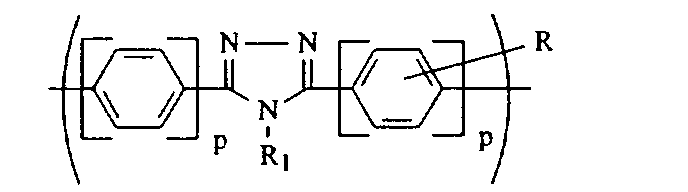
- R 1 is defined as above, and p is an integer from 0 to 2.
- X is an O or S atom
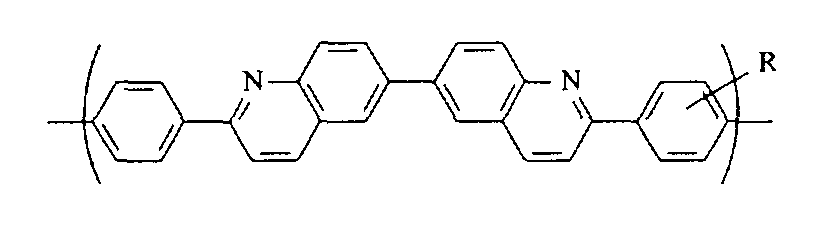
- p is an integer from 0 to 2;
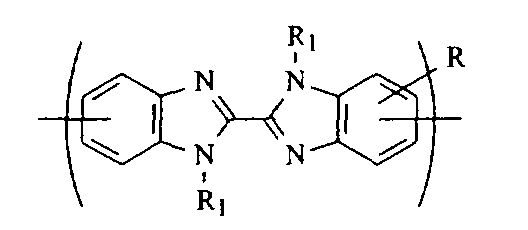
- R 1 is defined as above, and p is an integer from 0 to 2.
- Ar can be one or the combination of more than one of the above divided groups.
- the specific molecular structures can be the combination of any of the above drawn structures.
- the polymerization method and the molecular weights of the resulting polymers used in the present invention are illustrative only.
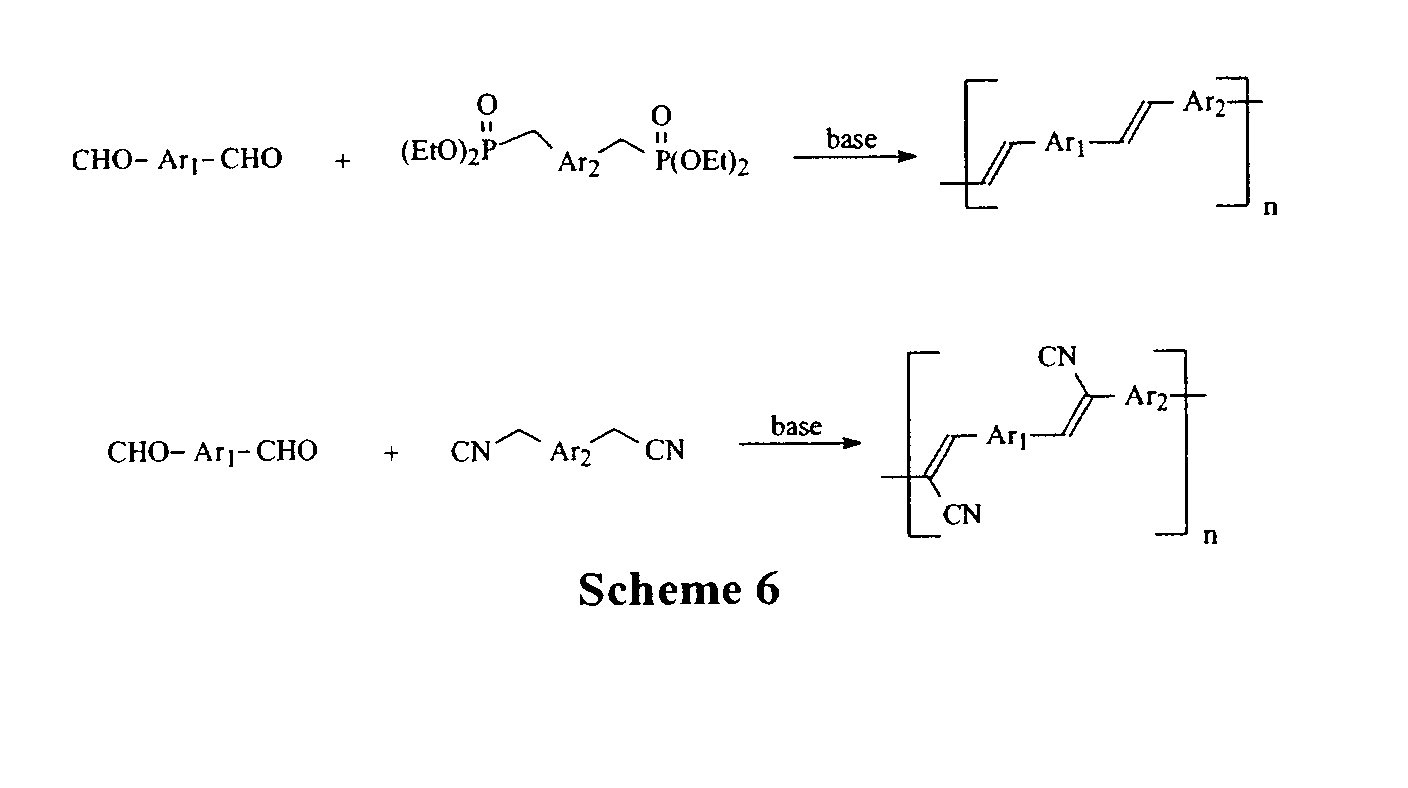
- the polymers may be prepared by condensation polymerizations such as Wittig reaction, Horner-Emmons reaction, Knoevenagel condensation, Heck reaction, or a precursor method (Science, 1995, 269 , 376), preferably by a Horner-Emmons reaction or a Knoevenagel reaction.
- the above mentioned polymers were prepared by a Horner-Emmons reaction between an aromatic dicarboxyaldehyde and a diphosphate, or a Knoevenagel reaction using an aromatic dicarboxyaldehyde and a dicyano compound in the presence of a strong base such as potassium t-butoxide or sodium hydride.
- a strong base such as potassium t-butoxide or sodium hydride.
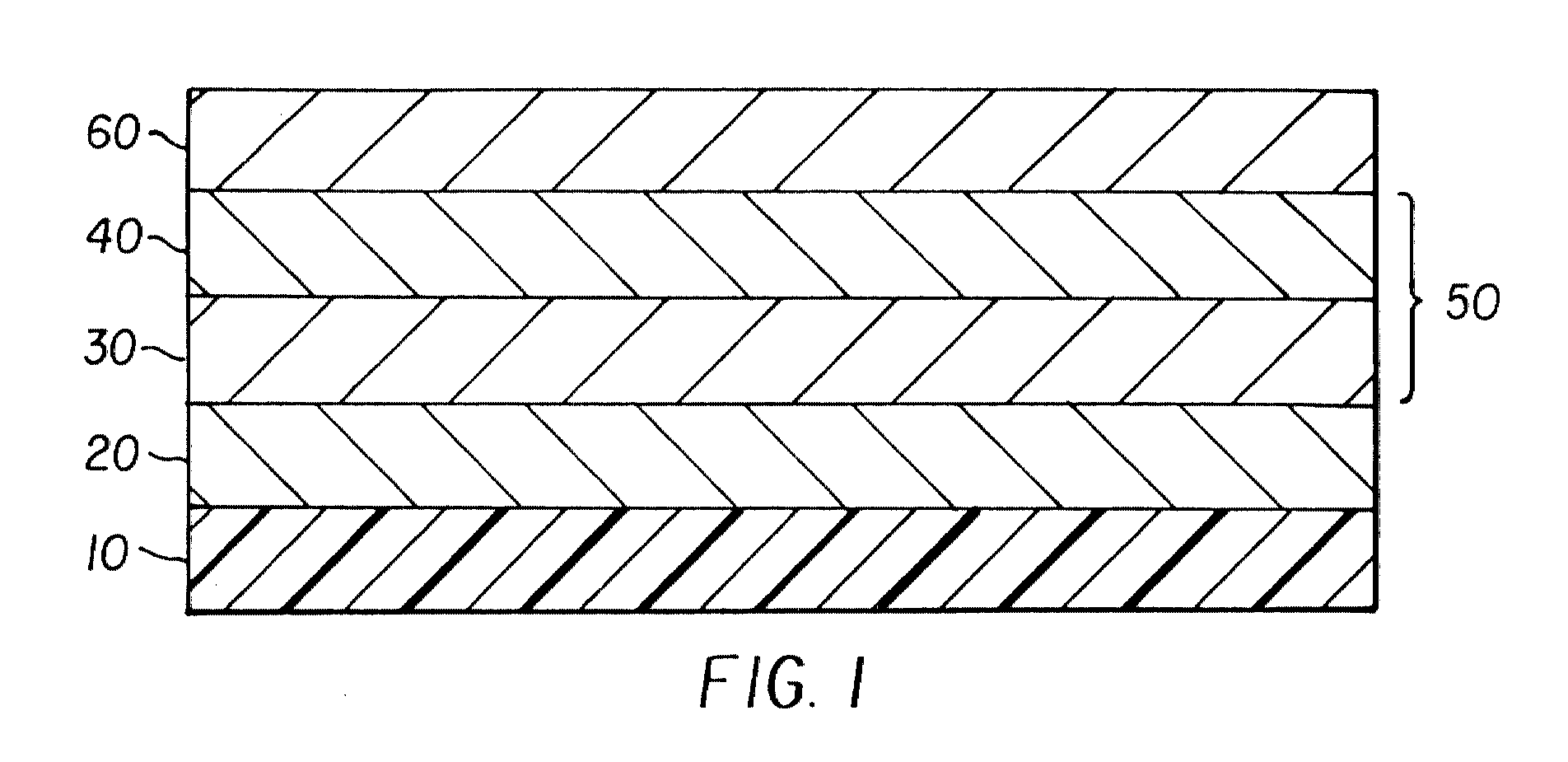
- FIG. 1 illustrates the basic structure used to construct organic EL devices. It is a bi-layer structure including a hole transport layer 30 and an electron transport layer 40.
- the electron transport layer 40 is also the emissive layer from which electroluminescence originates. Together they form the EL medium 50.
- the anode layer 20 is adjacent to the hole transport layer 30 and the cathode 60 is adjacent to the electron transport layer 40.
- the substrate is layer 10. This figure is for illustration only and the individual layer thickness is not scaled according to the actual thickness.
- FIG. 2 illustrates an alternative construction of the EL device. It is a modified bi-layer structure.
- the EL medium contains an emissive layer between the hole transport layer and the electron transport layer. This emissive layer is the layer where electroluminescence originates.
- layer 300 is the hole transport layer
- layer 400 is the emissive layer
- layer 500 is the electron transport layer
- the substrate is layer 100. This figure is for illustration only and the individual layer thickness is not scaled according to the actual thickness.
- the bi-layer EL devices are the basic structure providing high luminous efficiency and low operating voltage.
- Alternative EL device structures have been demonstrated to provide improved device performance.
- These alternative structures include features in addition to the basic bi-layer structure such as the following structure A) hole injection layer as disclosed in commonly-assigned US-A-4,356,429; B) cathode modification with alkaline or alkaline halides as disclosed in commonly-assigned US-A-5,776,622; C) anode modification with plasma-deposited fluorocarbons; and D) doped emitter layer inserted between the hole transport and electron transport layer as disclosed in commonly-assigned US-A-4,769,292.
- FIG. 3 illustrates another alternative construction of an EL device. It is a single-layer structure comprising an emitting layer 3000, sandwiched between an anode 2000 and cathode 4000. The emitting layer 3000 also acts as a charge carrier layer. Thus, single layer 3000 is the electroluminescent medium.
- the substrate is layer 1000. This figure is for illustration only and the individual layer thickness is not scaled according to the actual thickness.
- a preferred EL device structure of this invention is a single-layer structure including an anode, a cathode, and single layer of electroluminescent medium.
- This electroluminescent layer is the emissive layer, and is also capable of transporting electrons as well as holes.
- the principle function of this layer is to provide efficient emissive centers for electroluminescence.
- This layer can include one of the above mentioned polymers or the blend of two or more polymers, or polymers doped with one or more fluorescent dyes (FD) or other light-emitting material.
- the fluorescent dye is usually present in an amount on the order of a few molar percent or less of the host polymer and it is sufficient to cause the EL emission to be predominantly that of the fluorescent dye.
- EL devices can be constructed. Simultaneously, the color of the EL devices can be tuned using fluorescent dyes of different emission wavelengths. By using a mixture of fluorescent dyes, EL color characteristics of the combined spectra of the individual fluorescent dyes are produced.
- This dopant scheme has been described in considerable detail for EL devices in commonly-assigned US-A-4,769,292.
- An important criterion for choosing a fluorescent dye as a dopant capable of modifying the hue of light emission when present in a host material is a comparison of their energy bandgap. For efficient energy transfer from the host to the dopant molecule, a necessary condition is that the energy bandgap of the dopant is smaller than that of the host polymer.
- Preferred fluorescent dyes used as the dopant in the emissive layer include but are not limited to coumarins, stilbenes, distrylstibenes, anthracene derivatives, tetracene, perlenes, rhodamines, and arylamines.
- the molecular structures of the preferred fluorescent dyes for the emissive layer in the EL device are listed as follows:
- the above mentioned polymers can be deposited as high quality transparent thin films by spin-coating or inkjet printing the polymer solutions.
- the spin-coating technique is used to form layer 3000, and preferably, only one polymer is deposited as single layer of electroluminescent medium.
- Preferred materials for use in forming the cathode of the EL devices of this invention are Mg, Li, or alloys of these materials as disclosed in US-A-5,429,884 and commonly-assigned US-A-5,776,622.
- Monomers to be used in the present invention are illustrative only. Any monomers can be used as long as the polymer formed satisfies the general formula: Typical monomer and polymer synthesis is illustrated in Schemes 1-6.
- the reaction was warmed up slightly and HI solution (57% in water, 145 g, 0.65 mol) was added slowly to quench the reaction and to de-protect the TBDMS group.
- the deep brown reaction was heated at reflux for 10 min. and most of the solvent was removed under reduced pressure.
- the reaction mixture was then extracted with methylene chloride three times.
- the combined organic phase was washed with saturated sodium metabisulfate solution, water, and brine, and dried over MgSO 4 .
- the crude product was obtained as brown viscous oil and was purified by column chromatography on silica gel with 20:80 ether:hexane as eluent.
- the pure product was obtained as light green-yellow solid 20.2 g (48% yield).
- DMSS Dimethyl succinylo succinate
- Aniline 100 ml
- EtOH EtOH
- the product was collected by vacuum filtration.
- the crude product was washed with additional EtOH until washings were almost colorless.
- the product was oven dried to give an orange solid 82 g (quantitative yield).
- LiAlH 4 (6.4 g, 0.17 mol) was placed under N 2 in a round-bottomed flask equipped with a reflux condenser. The flask was charged with anhydrous THF (400 ml) and the suspension was cooled to 0° C. Compound 9 (40 g, 0.076 mol) was added in portions over 60 min. The mixture was warmed to room temperature for 15 min. and then refluxed for 45 min. TLC (CH 2 Cl 2 :hexane/1:1) the completion of the reaction. The reaction was cooled to 0° C and quenched carefully with water. After stirring for 30 minutes, ether was added. The aqueous layer was extracted 4 times with ether.
- 1,5-Dihydroxynaphthalene (20.0 g, 0.125 mol) was dissolved in 400 mL of acetic acid and cooled to 0 °C. To this solution was added bromine (40.1 g, 0.250 mol) dropwise. The reaction was stirred at room temperature for an hour after addition and cooled in ice bath. The crystals were collected by filtration, washed with water, and dried to give light gray solid 2,6-dibromo-1,5-dihydroxynaphthalene 36.1 g (90% yield).
- the product (36.0 g, 0.114 mol) was mixed with sodium methoxide (13.0 g, 0.24 mol), and iodohexane (50.0 g, 0.24 mol) in 320 mL of methanol. The mixture was refluxed overnight and cooled to room temperature. The dark solid was collected, washed with water and methanol, and dried. The crude product was dissolved in methylene chloride and then passed through a short pad of silica gel to remove the dark polar impurities. The product was then recrystallized from methanol to give white flaky crystals 25.5 g (60% yield).
- Dialcohol compound 20 (2.90 g, 7.5 mmol) was dissolved in 15 mL of anhydrous THF and cooled to 0 °C. To this solution was added PBr 3 (1.7 mL, 18 mmol) in 5 mL of THF. The reaction was stirred at room temperature overnight, quenched with water, and extracted with ether. The crude product was purified by column chromatography on silica gel using 5:95 ether:hexane as an eluent to give light yellow crystal 2.61 g (68% yield).
- Fluorene (23.0 g, 0.14 mol) was dissolved in 200 mL of anhydrous THF and cooled to -78 °C. To this solution was added slowly n-BuLi (2.5 M in hexane, 65 mL, 0.16 mol) and the red solution was stirred at low temperature for an hour. n-Hexyl bromide (27.4 g, 0.17 mol) dissolved in 20 mL of THF was added to the above solution. The reaction was stirred at low temperature for 2 hours and n-BuLi (2.5 M in hexane, 65 mL, 0.16 mol) was added again and the reaction was stirred for an hour.
- the organic EL medium has single layer of polymer thin film.
- the above sequence completed the deposition of the EL device.
- the device was then hermetically packaged in a dry glove box for protection against ambient environment.
- Table 1 summarizes the characterization of the polymers prepared in the present invention.
- the synthesized polymers show high T g and T d .
- Absorption and emission spectra were obtained from dilute solutions, photoluminescence (PL) spectra from solid thin films of the polymers, and EL spectra were obtained from ITO/polymer/Mg:Ag EL devices.
- the fabrication of EL devices was illustrated in example 31.
- FIGS. 4 and 5 show the absorption, emission, PL and EL spectra of polymers 22 and 17 respectively.
- the voltage-current characteristics of the EL device of polymer 22 is shown in FIG 6. Characterization of polymers according to Examples.
Landscapes
- Chemical & Material Sciences (AREA)
- Engineering & Computer Science (AREA)
- Materials Engineering (AREA)
- Physics & Mathematics (AREA)
- Spectroscopy & Molecular Physics (AREA)
- Organic Chemistry (AREA)
- Optics & Photonics (AREA)
- Organic Low-Molecular-Weight Compounds And Preparation Thereof (AREA)
- Polyoxymethylene Polymers And Polymers With Carbon-To-Carbon Bonds (AREA)
- Electroluminescent Light Sources (AREA)
Abstract
Description
- The present invention relates to electroluminescent (EL) devices having arylamine polymers.
- Electroluminescent (EL) devices such as light emitting diode (LED) are opto-electronic devices which radiate light on the application of an electrical field. Organic materials including both polymers and small molecules have been used to fabricate LEDs. LEDs fabricated from these materials offer several advantages over other technologies, such as simpler manufacturing, low operating voltages, and the possibility of producing large area and full-color displays. Organic polymers generally offer significant processing advantages over small molecules especially for large area EL display because polymer films can be easily produced by casting from solutions.
- Conjugated polymers such as poly(phenylvinylene) (PPV) were first introduced as EL materials by Burroughes and others in 1990 (Burroughes, J. H. Nature 1990, 347, 539-41). Other conjugated polymers include polydialkylfluorene (PF) (Ohmori, Y. and others Jpn. J. Appl. Phys.
Part 2 1991, 20, L1941-L1943), poly(p-phenylene) (PPP) (Grem, G. and others Adv. Mater. 1992, 4, 36-7), and poly(thiophene). However, PPVs and their derivatives are among the most studied conjugated polymers because of their great potential applications in various areas including LED, photodiodes, organic transistors, and solid state laser materials. Electron donor such as alkoxy substituted PPVs show higher efficiencies than unsubstituted ones in LED applications. Amine groups are stronger electron donors than alkoxy groups, and amino-substituted PPVs have also been prepared to investigate the effect of amino groups on the LED efficiencies. However, only dialkylamines have been incorporated into PPV as substitutents (Stenger-Smith, J. D. and others Macromolecules 1998, 31, 7566-7569). It is known that dialkylamino groups are susceptible to oxidation. - It is an object of the present invention to provide luminescent polymeric materials useful for polymer EL devices.
- It is a further object of the present invention to provide various energy bandgap luminescent polymers which emit broad range of color.
- These objects are achieved in an electroluminescent device which comprises an anode, a cathode, and a polymer luminescent material disposed between the anode and cathode, the polymeric luminescent material having arylamine moiety has the molecular formula:wherein:
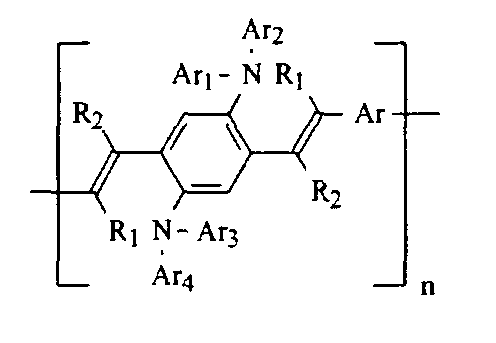
- R1 and R2 are independently hydrogen, alkyl group of from 1 to 24 carbon atoms, or aryl or substituted aryl of from 6 to 40 carbon atoms, or heteroaryl or substituted heteroaryl of from 4 to 40 carbons, or a cyano group;
- Ar1, Ar2, Ar3, Ar4, and Ar are each individually aryl or substituted aryl of from 6 to 40 carbon atoms; or a heteroaryl or substituted heteroaryl of from 4 to 40 carbons, or combinations thereof.
-
- The present invention provides light-emitting materials with a number of advantages that include good solubility, efficiency and stability. The emitting color of the polymer can be easily tuned by the incorporation of desired Ar group. Furthermore, other electro-optical properties can also be tuned with Ar group.
- FIG. 1 illustrates in cross-section a bi-layer EL device which can use a polymer in accordance with the present invention;
- FIG. 2 illustrates a cross-section of a modified bi-layer EL device which can use a polymer in accordance with the present invention;
- FIG. 3 illustrates a cross-section of a single-layer EL device which can use a polymer in accordance with the present invention;
- FIG. 4 illustrates the absorption, emission, and photoluminescence spectra of polymer 22 and electroluminescence spectrum of single-layer EL device fabricated from polymer 22;
- FIG. 5 illustrates the absorption, emission, and photoluminescence spectra of polymer 17 and electroluminescence spectrum of single-layer EL device fabricated from polymer 17; and
- FIG. 6 illustrates the voltage-current density and luminance characteristics of a single-layer EL device fabricated from polymer 22.
-
- The present invention provides light-emitting polymers containing arylamine moieties with good solubility, efficiency and stability. Arylamine as a hole transport material in organic light-emitting devices was studied intensively due to its high hole transporting mobility, chemical and electronic stability. Arylamine moieties are strong electron donors that will improve the hole injection and transporting mobility of light-emitting polymer. Moreover, incorporating arylamine moieties into light-emitting polymer can enhance the solubility, improve polymer conductivity, and adjust polymer oxidation sensitivity. Incorporation of Ar in the light-emitting polymer have the following features:
- 1) to improve EL efficiency by achieving good balanced electron-hole injection and recombination of the charge carriers;
- 2) to further improve solubility of the polymer; and
- 3) to tune the emissive color of the polymer.
-
- The present invention provides light-emitting polymers containing arylamine moieties having following molecular formulae:wherein:
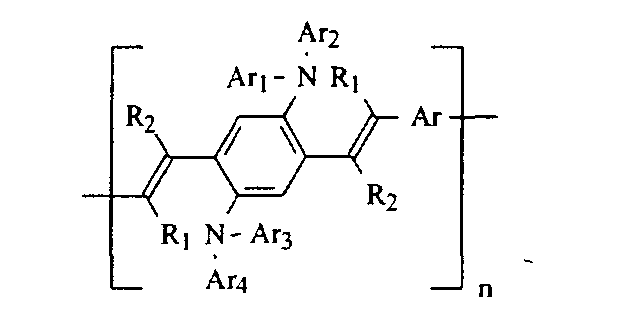
- R1 and R2 are independently hydrogen, alkyl group of from 1 to 24 carbon atoms, or aryl or substituted aryl of from 6 to 28 carbon atoms, or heteroaryl or substituted heteroaryl of from 4 to 40 carbons, or a cyano group. Preferably, R1 and R2 are hydrogen, or a cyano group.
- Ar1, Ar2, Ar3, Ar4, and Ar are each individually aryl or substituted aryl of from 6 to 40 carbon atoms; or
- Ar1, Ar2, Ar3, Ar4, and Ar are each individually substituted heteroaryl or unsubstituted heteroaryl having 4 to 40 carbons;
-
- For example, Ar1, Ar2, Ar3, and Ar4 represent
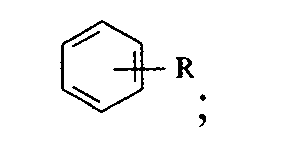
 or
or wherein: R is a substituent, and can be hydrogen, alkyl group of from 1 to 24 carbon atoms, or aryl or substituted aryl of from 6 to 28 carbon atoms, or heteroaryl or substituted heteroaryl of from 4 to 40 carbons, or a cyano group, a nitro group, a chlorine, bromine, or a fluorine atom;
Or Ar1 and Ar2, Ar3 and Ar4 can be connected through a chemical bond, and Ar1 and Ar2 together, Ar3 and Ar4 together can contain 12 to 40 carbon atoms. For example, Ar1 and Ar2, are connected by a chemical bond to form a first group and Ar3 and Ar4 are connected by a chemical bond to form a second group and wherein the first and second groups are respectively given by the following formulas:and include following carbazole and carbazole derivatives: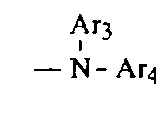
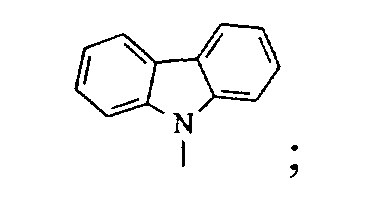
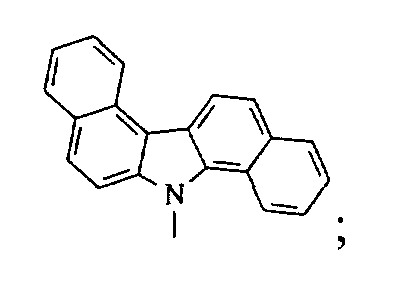

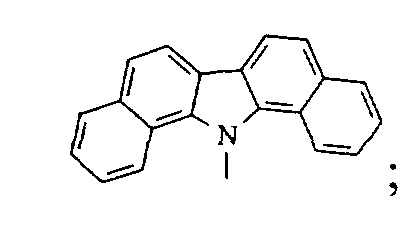 or
or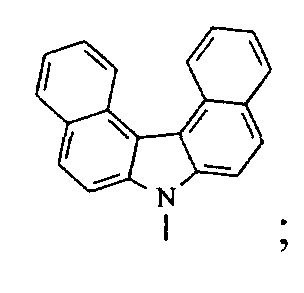

- Ar represents the following groups:
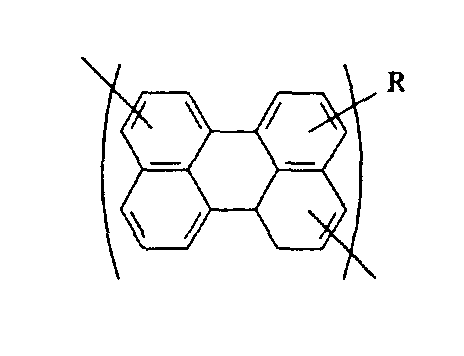
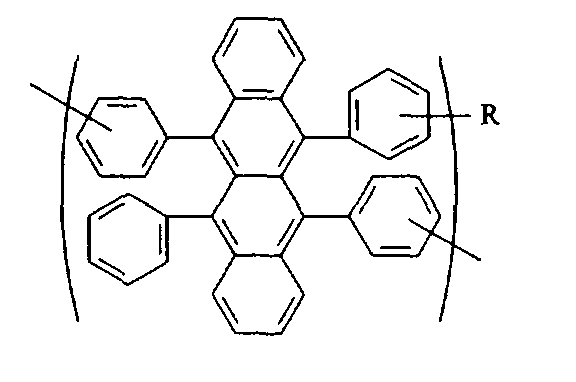
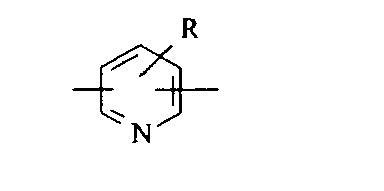
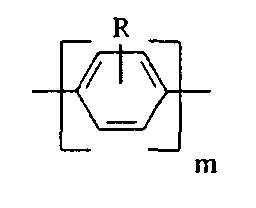
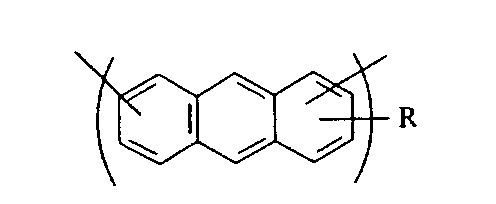
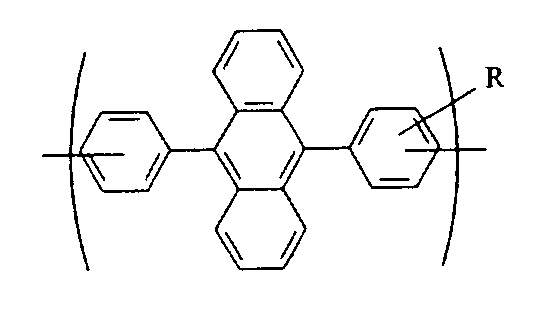
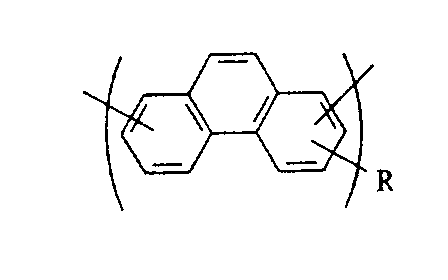
- wherein: R is a substituent, and can be hydrogen, alkyl group of from 1 to 24 carbon atoms, or aryl or substituted aryl of from 6 to 28 carbon atoms, or heteroaryl or substituted heteroaryl of from 4 to 40 carbons, or a cyano group, a nitro group, a chlorine, bromine, or a fluorine atom; and m is an integer from 1 to 3;
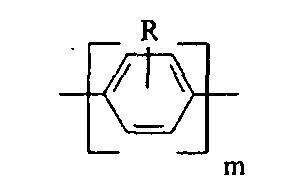
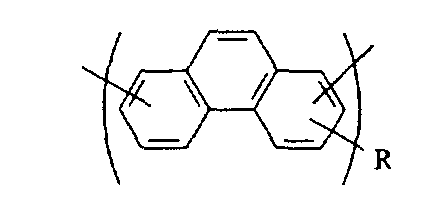
- In the following Groups 2-24 R is the same substituent as for
Group 1. -

-

-

-
-
-

-

-
- wherein: X is an O or S atom;

- wherein: p is an integer from 0 to 2;
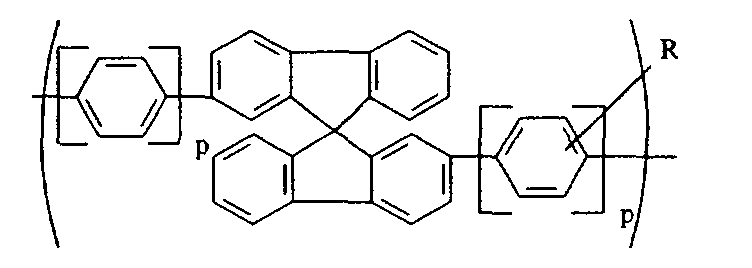
- wherein: X is an O or S atom, and p is an integer from 0 to 2;

-
-
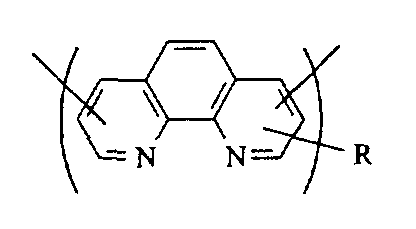
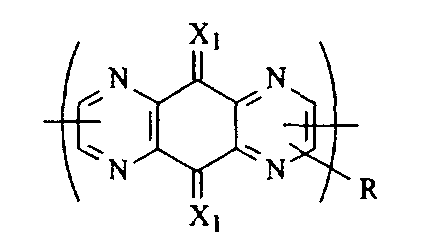
- wherein: X1 is an O atom or two cyano groups;
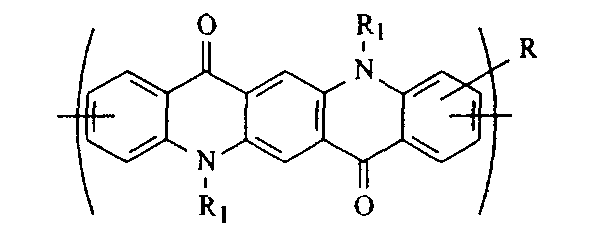
- wherein: R1 is a substituent, and can be hydrogen, alkyl group of from 1 to 24 carbon atoms, or aryl or substituted aryl of from 6 to 28 carbon atoms, or heteroaryl or substituted heteroaryl of from 4 to 40 carbons;
- wherein: R1 is defined as above, and X2 is a nitrogen or carbon atom;

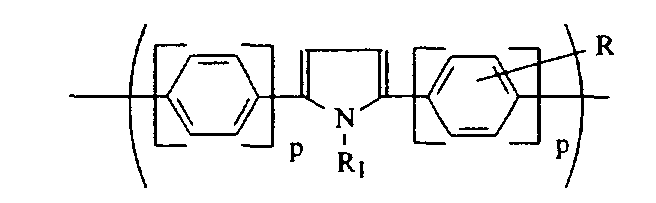
- wherein: R1 is defined as above, and p is an integer from 0 to 2.
-

-

-

-

- wherein: X is an O or S atom, p is an integer from 0 to 2;

- wherein: R1 is defined as above, and p is an integer from 0 to 2.
- The following molecular structures constitute specific examples of preferred polymers satisfying the requirement of this invention:
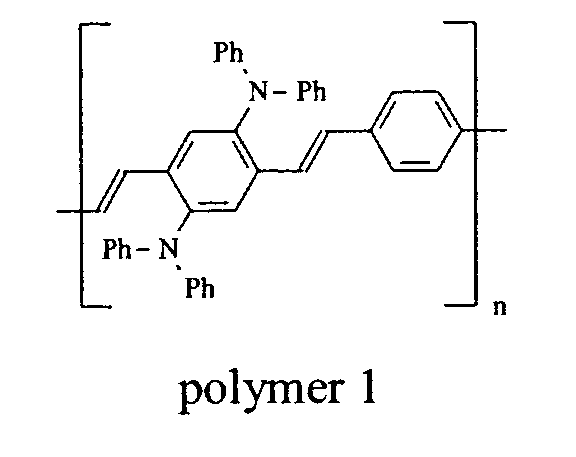
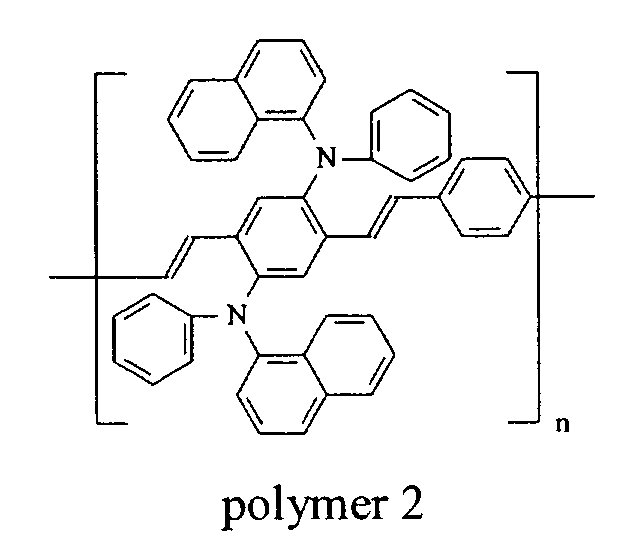


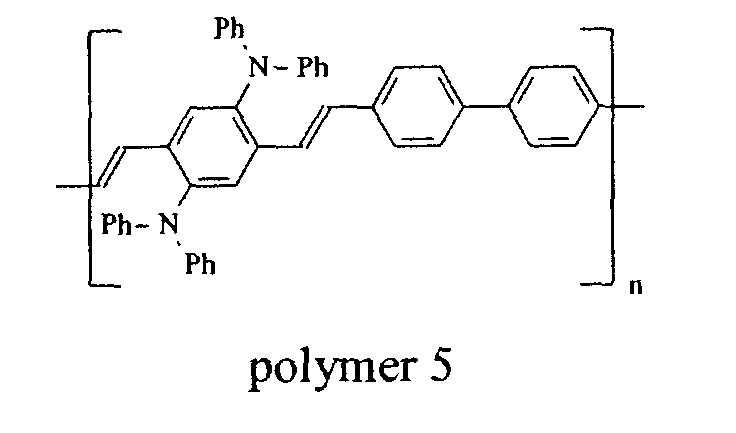


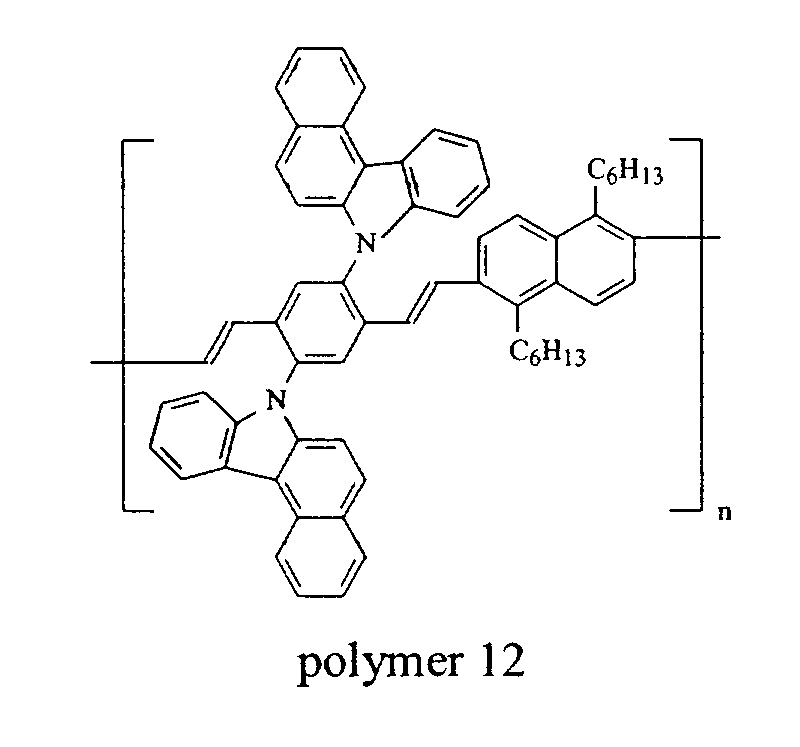

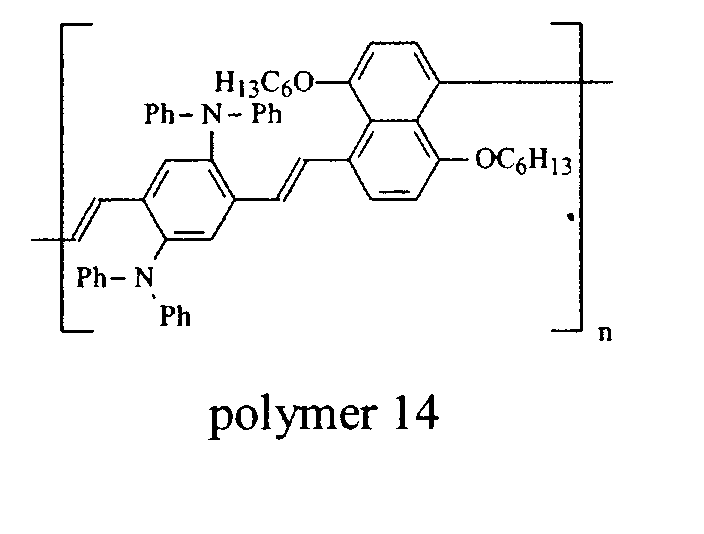


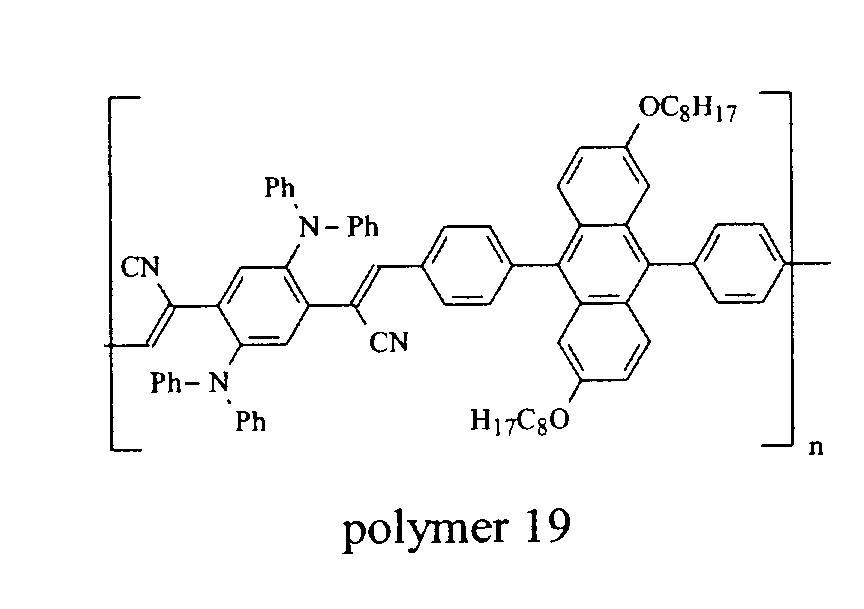


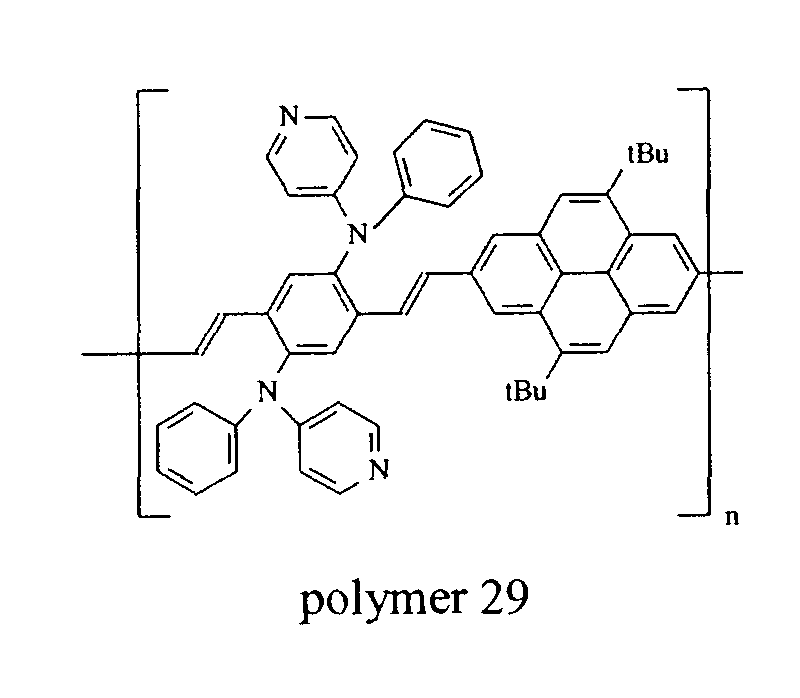


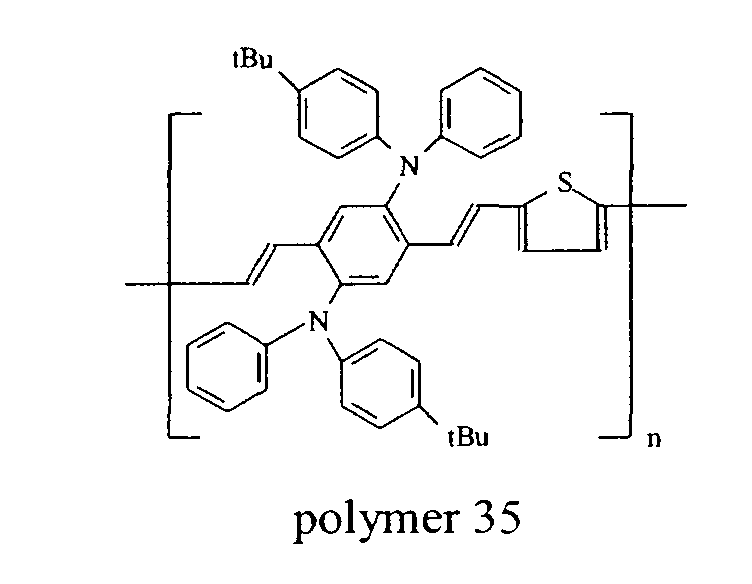

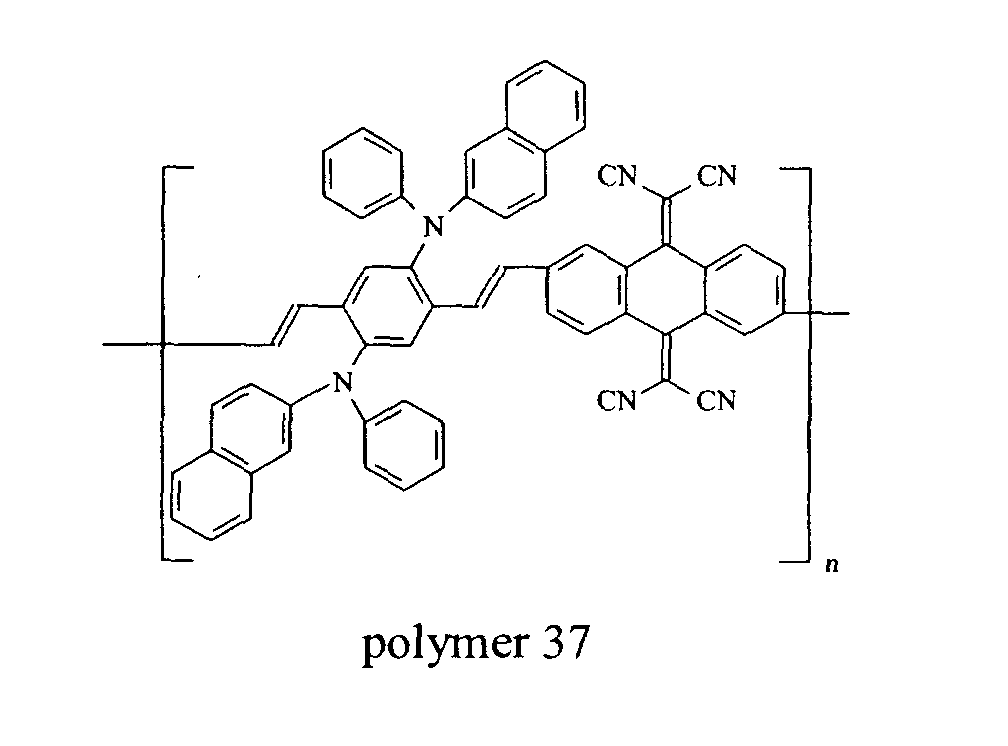
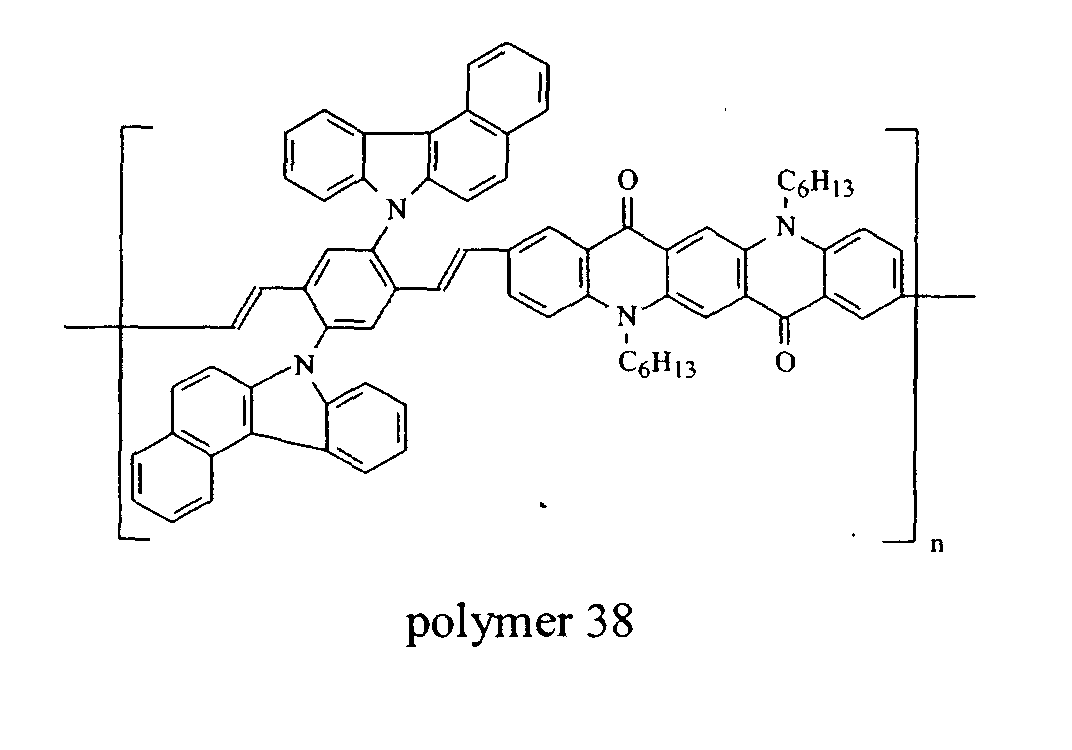
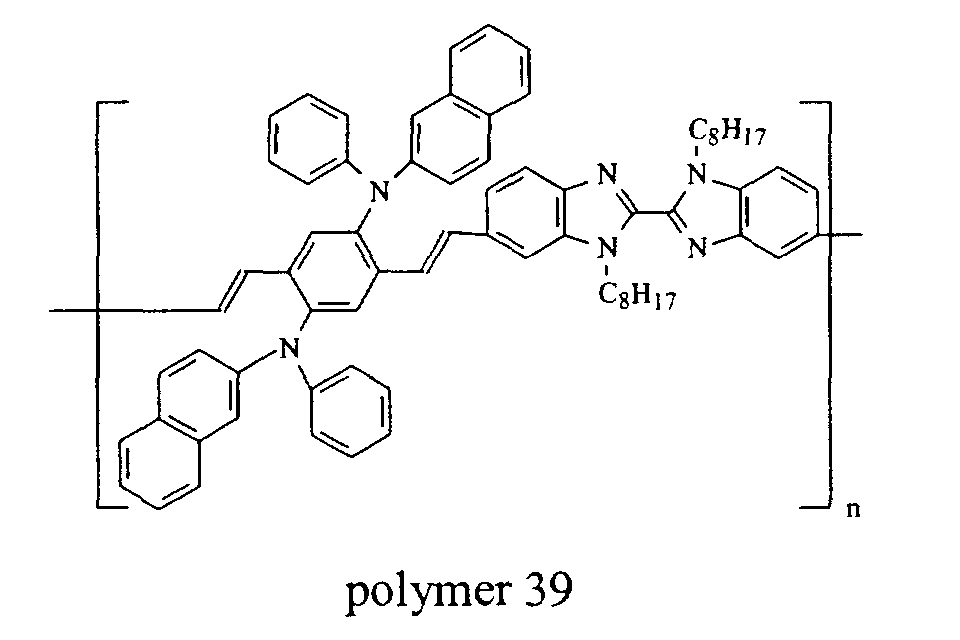


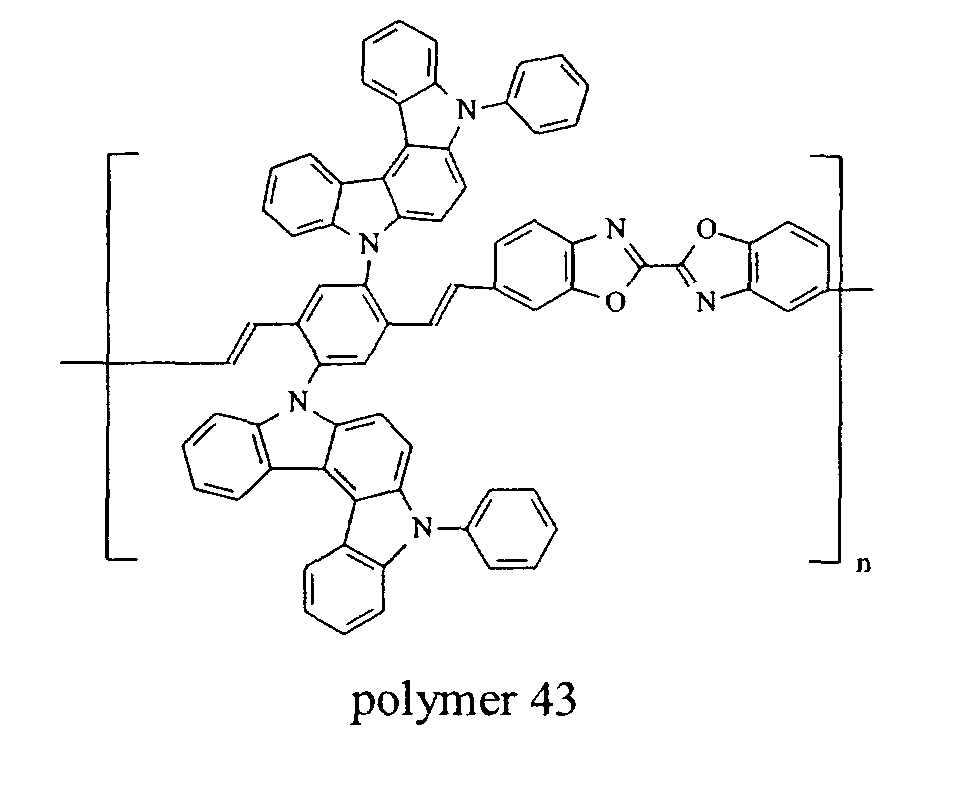

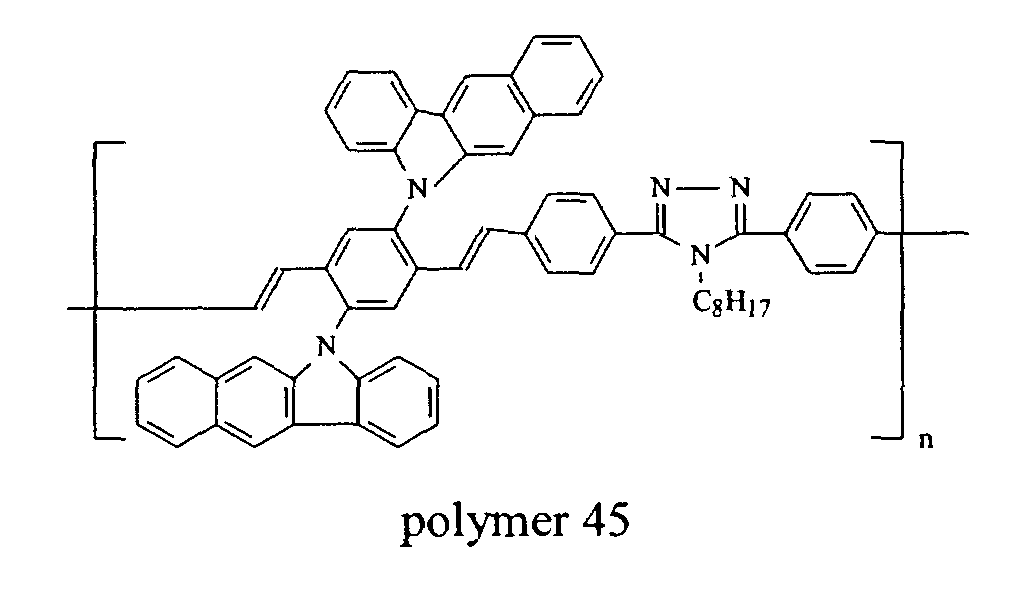

- In the formula:Ar can be one or the combination of more than one of the above divided groups. The specific molecular structures can be the combination of any of the above drawn structures.

- The polymerization method and the molecular weights of the resulting polymers used in the present invention are illustrative only. The polymers may be prepared by condensation polymerizations such as Wittig reaction, Horner-Emmons reaction, Knoevenagel condensation, Heck reaction, or a precursor method (Science, 1995, 269, 376), preferably by a Horner-Emmons reaction or a Knoevenagel reaction. According to the present invention, the above mentioned polymers were prepared by a Horner-Emmons reaction between an aromatic dicarboxyaldehyde and a diphosphate, or a Knoevenagel reaction using an aromatic dicarboxyaldehyde and a dicyano compound in the presence of a strong base such as potassium t-butoxide or sodium hydride. The synthetic schemes for polymers and monomers are illustrated in Schemes 1-6.
- FIG. 1 illustrates the basic structure used to construct organic EL devices. It is a bi-layer structure including a
hole transport layer 30 and anelectron transport layer 40. Theelectron transport layer 40 is also the emissive layer from which electroluminescence originates. Together they form theEL medium 50. Theanode layer 20 is adjacent to thehole transport layer 30 and thecathode 60 is adjacent to theelectron transport layer 40. The substrate islayer 10. This figure is for illustration only and the individual layer thickness is not scaled according to the actual thickness. - FIG. 2 illustrates an alternative construction of the EL device. It is a modified bi-layer structure. The EL medium contains an emissive layer between the hole transport layer and the electron transport layer. This emissive layer is the layer where electroluminescence originates. Thus,
layer 300 is the hole transport layer,layer 400 is the emissive layer,layer 500 is the electron transport layer, and together they form theelectroluminescent medium 600.Layer 200 is the anode andlayer 700 is the cathode. The substrate islayer 100. This figure is for illustration only and the individual layer thickness is not scaled according to the actual thickness. - The bi-layer EL devices are the basic structure providing high luminous efficiency and low operating voltage. Alternative EL device structures have been demonstrated to provide improved device performance. These alternative structures include features in addition to the basic bi-layer structure such as the following structure A) hole injection layer as disclosed in commonly-assigned US-A-4,356,429; B) cathode modification with alkaline or alkaline halides as disclosed in commonly-assigned US-A-5,776,622; C) anode modification with plasma-deposited fluorocarbons; and D) doped emitter layer inserted between the hole transport and electron transport layer as disclosed in commonly-assigned US-A-4,769,292.
- FIG. 3 illustrates another alternative construction of an EL device. It is a single-layer structure comprising an emitting
layer 3000, sandwiched between ananode 2000 andcathode 4000. The emittinglayer 3000 also acts as a charge carrier layer. Thus,single layer 3000 is the electroluminescent medium. The substrate islayer 1000. This figure is for illustration only and the individual layer thickness is not scaled according to the actual thickness. - A preferred EL device structure of this invention is a single-layer structure including an anode, a cathode, and single layer of electroluminescent medium. This electroluminescent layer is the emissive layer, and is also capable of transporting electrons as well as holes. The principle function of this layer is to provide efficient emissive centers for electroluminescence. This layer can include one of the above mentioned polymers or the blend of two or more polymers, or polymers doped with one or more fluorescent dyes (FD) or other light-emitting material. The fluorescent dye is usually present in an amount on the order of a few molar percent or less of the host polymer and it is sufficient to cause the EL emission to be predominantly that of the fluorescent dye. Using this method, highly efficient EL devices can be constructed. Simultaneously, the color of the EL devices can be tuned using fluorescent dyes of different emission wavelengths. By using a mixture of fluorescent dyes, EL color characteristics of the combined spectra of the individual fluorescent dyes are produced. This dopant scheme has been described in considerable detail for EL devices in commonly-assigned US-A-4,769,292. An important criterion for choosing a fluorescent dye as a dopant capable of modifying the hue of light emission when present in a host material is a comparison of their energy bandgap. For efficient energy transfer from the host to the dopant molecule, a necessary condition is that the energy bandgap of the dopant is smaller than that of the host polymer. Preferred fluorescent dyes used as the dopant in the emissive layer include but are not limited to coumarins, stilbenes, distrylstibenes, anthracene derivatives, tetracene, perlenes, rhodamines, and arylamines.
- The molecular structures of the preferred fluorescent dyes for the emissive layer in the EL device are listed as follows:

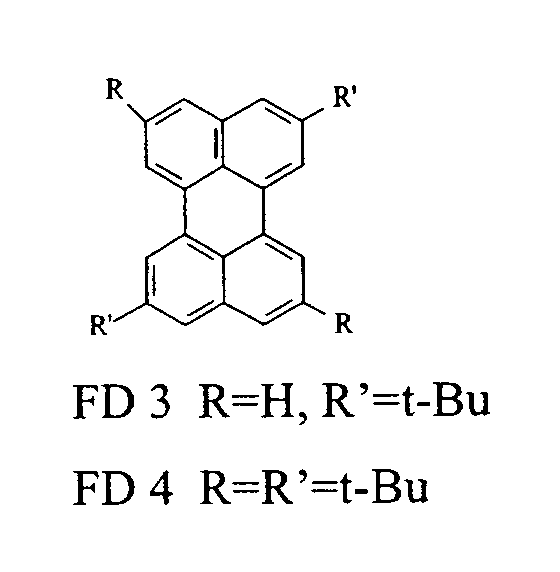

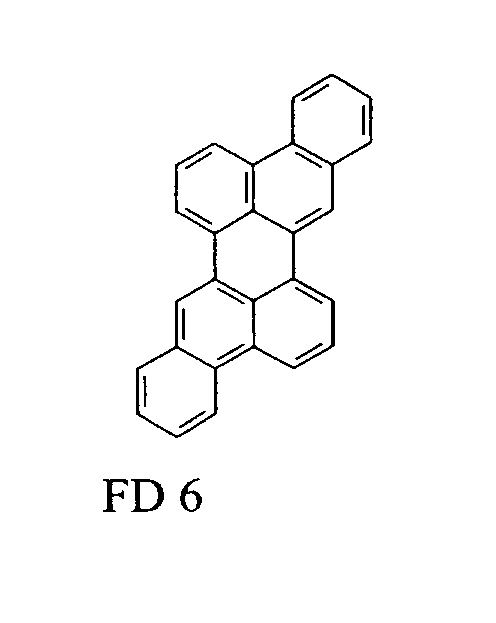
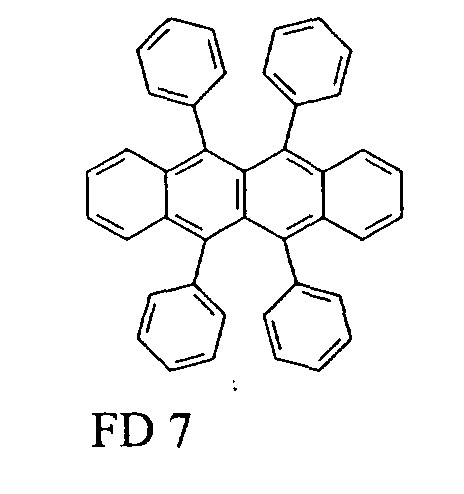


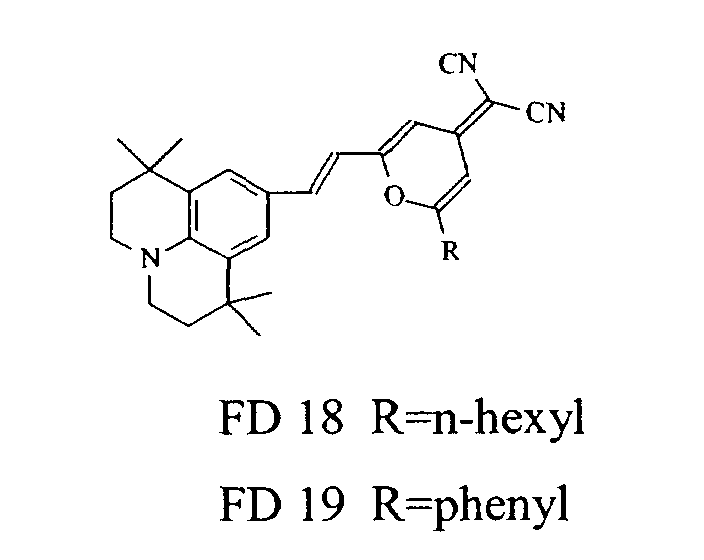
- The above mentioned polymers can be deposited as high quality transparent thin films by spin-coating or inkjet printing the polymer solutions. Preferably, the spin-coating technique is used to form
layer 3000, and preferably, only one polymer is deposited as single layer of electroluminescent medium. - Preferred materials for use in forming the cathode of the EL devices of this invention are Mg, Li, or alloys of these materials as disclosed in US-A-5,429,884 and commonly-assigned US-A-5,776,622.
- The invention and its advantages are further illustrated by the following specific examples:
- Monomers to be used in the present invention are illustrative only. Any monomers can be used as long as the polymer formed satisfies the general formula:Typical monomer and polymer synthesis is illustrated in Schemes 1-6.


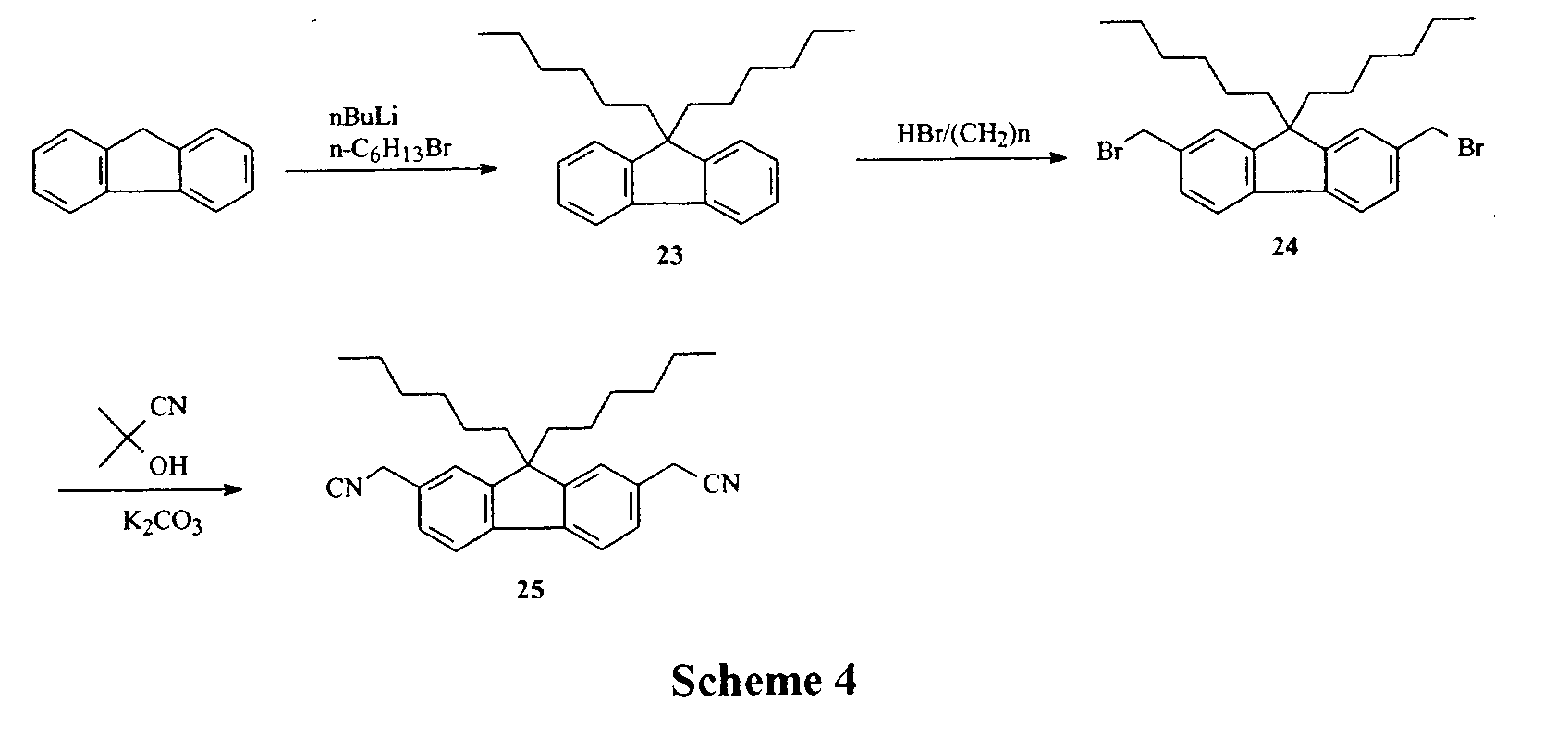

- 2,6-Dihydroxyanthraquinone (100.0 g, 0.42 mol) and 2-ethylhexyl bromide (165.0 g, 0.86 mol) were dissolved in 1 L of DMF. To this solution was added anhydrous K2CO3 (120.0 g, 0.87 mol). The reaction was heated at 90 °C overnight. Most of DMF was removed and 500 mL of water was added. The reaction was extracted with ether (3x400 mL), washed with brine (1x200 mL), and dried over MgSO4. Solvent was removed and the crude product was recrystallized from methanol to give yellow powdery product 125.21 g (65% yield). 1H NMR (CDCl3) δ (ppm): 0.92-0.98 (m, 12H, CH3), 1.34-1.54 (m, 16H), 1.75-1.81 (m, 2H, CH(CH3)), 4.02 (d, J = 5.5 Hz, 4H, OCH2), 7.19 (d, J = 8.4 Hz, 2H), 7.70 (s, 2H), 8.19 (d, J = 8.5 Hz, 2H); 13C NMR (CDCl3): 11.12, 14.06, 23.04, 23.88, 29.08, 30.51, 39.34, 71.34, 110.64, 120.84, 127.00, 129.62, 135.88, 164.29, 182.27. M.p. 49-51 °C; FD-MS: m/z 464 (M+).
- To a 1-L round-bottomed flask were added 4-bromobenzyl alcohol (100.0 g, 0.53 mol), imidazole (91.0 g, 1.34 mol), t-butyldimethylsilyl chloride (TBDMS-Cl) (96.5 g, 0.64 mol), and
DMF 100 mL. The reaction mixture was stirred at room temperature under nitrogen overnight. The reaction was poured into water and extracted with ether three times and the combined organic phase was washed with water three times and dried over MgSO4. After solvent was removed, the product was obtained as light yellow liquid 154 g (62% yield). 1H NMR (CDCl3) δ (ppm): 0.07 (s, 9H), 0.91 (s, 6H), 4.65 (s, 2H), 7.17 (d, J = 8.2 Hz, 2H), 7.42 (s, J = 8.3 Hz, 2H); 13C NMR (CDCl3): -1.71, 21.93, 29.48, 67.89, 124.13, 131.27, 134.82, 144.02; FD-MS: m/z 301 (M+). - Compound 2 (67.2 g, 0.22 mol) was dissolved in 300 mL of anhydrous THF and cooled to -78 °C. To this solution was added n-BuLi (2.5 M in hexane, 86 mL, 0.22 mol) slowly to maintain the temperature lower than -60 °C. After addition, the orange-yellow solution was stirred at-78 °C for an hour. Compound 1 (30.0 g, 0.065 mol) was dissolved in 200 mL of anhydrous THF and added dropwise to the above cooled solution. TLC analysis indicated the completion of the reaction. The reaction was warmed up slightly and HI solution (57% in water, 145 g, 0.65 mol) was added slowly to quench the reaction and to de-protect the TBDMS group. The deep brown reaction was heated at reflux for 10 min. and most of the solvent was removed under reduced pressure. The reaction mixture was then extracted with methylene chloride three times. The combined organic phase was washed with saturated sodium metabisulfate solution, water, and brine, and dried over MgSO4. The crude product was obtained as brown viscous oil and was purified by column chromatography on silica gel with 20:80 ether:hexane as eluent. The pure product was obtained as light green-yellow solid 20.2 g (48% yield). 1H NMR (CDCl3) δ (ppm): 0.82-0.89 (m, 12H, CH3), 1.26-1.43 (m, 16H), 1.60-1.66 (m, 2H), 1.85 (s, br, 2H, OH), 3.72 (d, J = 5.5 Hz, 2H, OCH2), 4.89 (s, 4H, benzylic), 6.84 (d, J = 2.0 Hz, 2H), 7.00 (dd, J1 = 9.3 Hz, J2 = 2.2 Hz, 2H), 7.47 (d, J = 7.9 Hz, 4H, phenyl ring), 7.52 (d, J = 9.7 Hz, 2H), 7.61 (d, J = 7.8 Hz, 4 H, phenyl ring); 13C NMR (CDCl3): 11.17, 14.03, 23.00, 23.89, 29.08, 30.64, 39.16, 65.37, 70.17, 103.90, 120.07, 126.98, 127.13, 128.07, 129.56, 131.46, 134.74, 138.95, 139.85, 155.71; M.p. 110-112 °C; FD-MS: m/z 646 (M+).
- Compound 3 (4.40 g, 6.8 mmol) was dissolved in 25 mL of anhydrous THF and cooled to 0 °C. PBr3 (1.3 mL, 17 mmol) was added dropwise. The reaction was stirred at room temperature overnight and then quenched with water, extracted with methylene chloride. The combined organic phase was washed with brine and dried over MgSO4. The crude product was purified by column chromatography on silica gel using 15:85 CH2Cl2:hexane as eluent to give 3.90 g of yellow crystals (74% yield). 1H NMR (CDCl3) δ (ppm): 0.82-0.88 (m, 12H, CH3), 1.23-1.42 (m, 16H), 1.61-1.69 (m, 2H), 3.71 (d, J = 5.7 Hz, OCH2), 4.67 (s, 4H, benzylic), 6.78 (d, J = 2.4 Hz, 2H), 7.00 (dd, J1 = 9.5 Hz, J2=2.4 Hz, 2H), 7.43 (d, J = 8.0 Hz, 4H, phenyl ring), 7.49 (d, J = 9.5 Hz, 2H), 7.62 (d, J = 8.0 Hz, 4H, phenyl ring); 13C NMR (CDCl3): 11.15, 14.06, 23.04, 23.88, 29.03, 30.62, 33.46, 39.06, 70.36, 103.83, 120.29, 126.81, 127.98, 129.27, 129.53, 131.68, 134.40, 136.91, 139.84, 155.80; M.p. 105-107 °C; FD-MS: m/z 772 (M+).
- Compound 4 (3.80 g, 4.9 mmol) and triethyl phosphite 95 mL, 29 mmol) were placed in a 50-mL round-bottomed flask and heated to 100 °C for 4 hours. After cooled to room temperature, the product was recrystallized from hexane to give 3.94 g of cream color fine needle crystals (90% yield). 1H NMR (CDCl3) δ (ppm): 0.83-0.89 (m, 12H, CH3), 1.27-1.43 (m, 28H), 1.59-1.66 (m, 2H), 3.34 (d, J = 41.7 Hz, 4H, benzylic), 3.71 (d, J = 5.3 Hz, 4H, OCH2), 4.08-4.18 (m, P(O)OCH2, 8H), 6.84 (d, J = 2.3 Hz, 2H), 6.99 (dd, J1 = 9.5 Hz, J2=2.4 Hz, 2H), 7.42 (d, J = 7.8 Hz, 4H, phenyl ring), 7.48 (d, J = 9.5 Hz, 2H), 7.55 (dd, J1 = 8.0 Hz, J2 = 2.2Hz, 4H, phenyl ring); 13C NMR (CDCl3): 11.21, 14.04, 16.46, 16.54, 23.01, 23.92, 29.14, 30.66, 32.89, 34.72, 39.37, 62.20, 62.29, 70.02, 103.95, 120.00, 127.00, 128.06, 129.56, 129.99, 130.08, 130.71, 130.83, 131.44, 131.47, 134.67, 138.12, 138.17, 155.76; M.p. 94-96 °C; FD-MS: m/z 886 (M+).
- Compound 3 (10.0 g, 0.015 mol) was dissolved in 180 mL of methylene chloride and pyridinium chlorochromate (PCC) (8.0 g, 0.037 mol) was added. The reaction was stirred at room temperature overnight. The reaction was quenched with 100 mL of water and stirred for 1 h. The deep brown reaction mixture was filtered through a pad of celite and was extracted with methylene chloride three times. The combined organic phase was washed with dilute HCl, water, and brine, and dried over MgSO4. The crude product was purified by column chromatography on silica gel with 1:1 CH2Cl2:hexane as eluent to give pure product as bright yellow crystals 7.0 g (70% yield). 1H NMR (CDCl3) δ (ppm): 0.82-0.88 (m, 12H, CH3), 1.20-1.43 (m, 16H), 1.60-1.68 (m, 2H), 3.70 (d, J = 5.5 Hz, OCH2), 6.73 (d, J = 2.2 Hz, 2H), 7.04 (dd, J1 = 9.5 Hz, J2=2.4 Hz, 2H), 7.44 (d, J = 9.5Hz, 2H), 7.67 (d, J = 8.0 Hz, 4H, phenyl ring), 8.15 (d, J = 8.0 Hz, 4H, phenyl ring), 10.21 (s, 2H, aldehyde); 13C NMR (CDCl3): 11.13, 14.02, 22.97, 23.87, 29.07, 30.59, 39.12, 70.22, 103.37, 120.80, 127.59, 129.12, 130.00, 132.03, 134.01, 135.69, 146.38, 156.10, 192.00; M.p. 125-127 °C; FD-MS: m/z 642 (M+).
- Dimethyl succinylo succinate (DMSS, 50 g, 0.22 mol) is placed into a round-bottomed flask. Aniline (100 ml) is used in excess as a solvent and the reaction mixture is heated to 100° C for 2 hours during which a solid precipitated out of solution. TLC analysis (CH2Cl2:Hexane/1:1) showed the presence of DMSS so the reaction temperature was increased to 120° C and stirred for additional 4 hours. The reaction was cooled, and EtOH was added. The product was collected by vacuum filtration. The crude product was washed with additional EtOH until washings were almost colorless. The product was oven dried to give an orange solid 82 g (quantitative yield). 1H NMR (CDCl3) δ (ppm): 3.39 (s, 4H), 3.65 (s, 6H, COOCH3), 7.09-7.38 (m, 10H, aromatics), 10.62 (s, 2H, NH); 13C NMR (CDCl3): 27.65, 50.84, 88.71, 124.63, 124.75, 129.12, 139.35, 156.74, 169.31; M.p. 236-238 °C; FD-MS: m/z 378 (M+).
- Compound 7 (80 g, 0.21 mol) was dissolved in CH2Cl2 and heated gently during which the solution turned dark red in color. TLC (CH2Cl2:hexane/1:1) was used to monitor the reaction. Once all starting material was gone, CH2Cl2 was partially removed by rotary evaporation and replaced with EtOH. Once all the CH2Cl2 was removed, the red solid was collected by vacuum filtration while hot and washed with EtOH until washings are almost colorless.
- Product was collected and oven dried to give 73 g red solid (92 % yield). ). 1H NMR (CDCl3) δ (ppm): 3.83 (s, 6H, COOCH3), 7.00-7.34 (m, 10H, aromatics), 8.00 (s, 2H, aromatics), 8.56 (s, br, 2H, NH); 13C NMR (CDCl3): 52.20, 118.58, 118.96, 119.71, 122.06, 129.38, 137.71, 141.88, 167.78; M.p. 164-166 °C; FD-MS: m/z 376 (M+).
- Compound 8 (40 g, 0.11 mol), iodobenzene (200 ml, 1.79 mol), K2CO3 (20 g, 0.14 mol), and copper (1.4 g, 0.022mol) were all placed in a round-bottomed flask under N2. The mixture was heated at 185° C for 24 hours. TLC (CH2Cl2:hexane/1:1) indicated the completion of the reaction. The reaction was cooled and CH2Cl2 was added. After filtering and washing with CH2Cl2, the filtrate was concentrated to give a suspension. EtOH was added and the resulting precipitate was collected by filtration and washed with EtOH. The product was oven dried to give a yellow solid 45 g (80 % yield). 1H NMR (CDCl3) δ (ppm): 3.35 (s, 6H, COOCH3), 6.96 -7.28 (m, 20H, aromatics), 8.44 (s, 2H, aromatics); 13C NMR (CDCl3): 51.94, 122.69, 123.00,129.18, 131.00, 132.47, 142.17, 147.32, 166.76; M.p. 249-251 °C; FD-MS: m/z 528 (M+).
- LiAlH4 (6.4 g, 0.17 mol) was placed under N2 in a round-bottomed flask equipped with a reflux condenser. The flask was charged with anhydrous THF (400 ml) and the suspension was cooled to 0° C. Compound 9 (40 g, 0.076 mol) was added in portions over 60 min. The mixture was warmed to room temperature for 15 min. and then refluxed for 45 min. TLC (CH2Cl2:hexane/1:1) the completion of the reaction. The reaction was cooled to 0° C and quenched carefully with water. After stirring for 30 minutes, ether was added. The aqueous layer was extracted 4 times with ether. The combined organic phase was dried over Na2SO4 and concentrated to give a brown solid. This solid was recrystallized from toluene to give a yellow solid 34 g (95% yield). AA8790-138). 4.36 (s, 4H, benzylic), 7.00-7.50 (m, 22H, aromatics); M.p. 208-210 °C; FD-MS: m/z 472 (M+).
- Pyridinium Chlorochromate (PCC, 30 g, 0.064 mol) and anhydrous CH2Cl2 (350 ml) are placed in a flask under N2. Compound 10 was added in portions during which time the mixture turns black. TLC (CH2Cl2:hexane/1:1) indicated the disappearance of the starting material after 90 minutes while a new red spot appeared. The entire reaction mixture was filtered over a pad of celite on a fritted funnel. The funnel is washed thoroughly with CH2Cl2 until the washings are almost colorless. The filtrate was concentrated and purified using column chromatagraphy (CH2Cl2:hexane/1:1). After concentrating the pure fractions from the column, hexane was added and the product was collected by vacuum filtration and washed with additional hexane. The product was oven dried to give a dark red crystalline solid 21.5 g (72 % yield). 1H NMR (CDCl3) δ (ppm): 7.01-7.06 (m, 12H), 7.24-7.29 (m, 8H), 7.61 (s, 2H), 10.13 (s, 2H); ); 13C NMR (CDCl3): 123.13, 123.53, 129.10, 129.80, 136.49, 146.49, 148.34, 189.51; M.p. 260-262 °C; FD-MS: m/z 468 (M+).
- To a 500 mL round-bottomed flask were added 1,5-dihydroxynaphthalene (15.0 g, 0.094 mol), potassium carbonate (27.2 g, 0.2 mol), n-hexylbromide (32.5 g, 0.2 mol), and 200 mL of DMF. The reaction was heated to 90 °C overnight, cooled to room temperature, and poured into 700 mL of water. The dark brown precipitate was filtered and washed with methanol. The crude product was refluxed in methanol and then filtered to give light green solid 25.2 g (80% yield). 1H NMR (CDCl3) δ (ppm): 0.92 (t, J = 6.5 Hz, 6H), 1.35-1.41 (m, 8H), 1.52-1.57 (m, 4H), 1.85-1.92 (m, 4H), 4.10 (t, J = 6.4 Hz, 4H), 6.81 (d, J = 7.6 Hz, 2H), 7.30-7.36 (m, 2H), 7.84 (d, J = 8.3 Hz); M.p. 92-93 °C.
- Compound 12 (10.0 g, 0.030 mol) and paraformaldehyde (1.92 g, 0.064 mol) were dissolved in 10 mL of acetic acid and HBr in acetic acid solution (33% in acetic acid,12.3 mL, 0.064 mol). The reaction was heated at 50 °C for 5 h and cooled to room temperature. The greenish precipitate was filtered, washed with water, methanol, and dried. The crude product was recrystallized from hexane to yield off-white needle like crystal 14.7g (94% yield). ). 1H NMR (CDCl3) δ (ppm): 0.92 (t, J = 6.5 Hz, 6H), 1.36-1.41 (m, 8H), 1.51-1.57 (m, 4H), 1.99-2.09 (m, 4H), 4.13 (t, J = 6.4 Hz, 4H), 5.31 (s, 4H), 6.84 (d, J = 8.2 Hz, 2H), 7.37 (d, J = 8.2 Hz, 2H); M.p. 105-107 °C.
- To a 50 mL round-bottomed flask were added compound 13 (9.0 g, 0.017 mol) and triethyl phosphite (7.5 mL, 0.044 mol). The mixture was heated to 100 °C for 4 hours and cooled to room temperature. The crude product was purified by column chromatography on silica gel using 10:90 acetone:methylene chloride as an eluent to give light brown solid which was recrystallized from hexane to give pure product as off-white needle like crystals 6.5 g (59% yield). 1H NMR (CDCl3) δ (ppm): 0.92 (t, J = 6.8 Hz), 1.08 (t, J = 7.1 Hz), 1.36-1.41 (m, 8H), 1.47-1.54 (m, 4H), 1.95-2.05 (m, 4H), 3.75-3.91 (m, 8H), 4.06-4.14(d and t overlap, 8H, benzylic and OCH2), 4.14 (s, 4H), 6.80 (d, J = 8.2 Hz, 2H), 7.23-7.27 (m, 2H); 13C NMR (CDCl3): 13.94, 16.23, 16.31, 22.52, 25.94, 28.84, 31.60, 33.92, 35.76, 61.34, 61.43, 68.84, 106.28, 106.29, 119.77, 119.92, 130.14, 130.24, 156.04; M.p. 80-82 °C; FD-MS: m/z 628 (M+).
- 2,6-Dihydroxynaphthalene (30.0 g, 0.19 mol) reacted with n-hexylbromide (97.5 g, 0.59 mol) in the presence of potassium carbonate (81.6 g, 0.59 mol) in 400 mL of DMF at 90 °C overnight. The reaction was poured into 700 mL of water and the precipitate was filtered, washed with water and methanol, and dried. The crude product was recrystallized from methanol to give light gray solid 41.3 g (67% yield). 1H NMR CDCl3) δ (ppm): 0.91 (t, J = 6.9 Hz, 6H), 1.32-1.40 (m, 8H), 1.44-1.54 (m, 4H), 1.77-2.86 (m, 4H), 4.02 (t, J = 6.6 Hz, 4H), 7.06-7.12 (m, 4H), 7.60 (d, J = 8.8 Hz, 2H); M.p. 78-79 °C.
- Compound 15 (9.0 g, 0.030 mol) and paraformaldehyde (1.87 g, 0.062 mol) were dissolved in 40 mL of acetic acid and HBr in acetic acid solution (30% in acetic acid,12.4 mL, 0.062 mol). The reaction was heated at 50 °C for 5 h and cooled to room temperature. The light purple precipitate was filtered, washed with water, methanol, and dried. The crude product was recrystallized from hexane to yield off-white needle like crystal 9.0 g (58% yield). ). 1H NMR (CDCl3) δ (ppm): 0.93 (t, J = 6.9 Hz, 6H), 1.37-1.42 (m, 8H), 1.51-1.61 (m, 4H), 1.84-1.93 (m, 4H), 4.18 (t, J= 6.4 Hz, 4H), 5.07 (s, 4H), 7.35 (d, J = 9.3 Hz, 2H), 8.03 (d, J = 9.3 Hz, 2H); M.p. 110-112 °C.
- To a 50 mL round-bottomed flask were added compound 16 (8.0 g, 0.16 mol) and triethyl phosphite (13 mL, 0.078 mol). The mixture was heated to 100 °C for 4 hours. Excess of tiethyl phosphite was distilled off. The crude product was purified by column chromatography on silica gel using 10:90 acetone:methylene chloride as an eluent to give light orange solid which was recrystallized from hexane to give pure product as off-white needle like crystals 5.0 g (51% yield). 1H NMR (CDCl3) δ (ppm): 0.92 (t, J = 7.0 Hz, 6H), 1.15 (t, J = 7.0 Hz, 12H), 1.34-1.53 (m, 12H), 1.79-1.89 (m, 4H), 3.71 (d, J = 22.0 Hz, 2H), 3.91-3.96 (m, 8H), 4.10 (t, J= 6.6 Hz, 4H), 7.28 (d, J = 9.5 Hz, 2H), 8.02 (d, J = 9.5 Hz, 2H); 13C NMR (CDCl3): 13.99, 16.25, 16.33, 22.60, 25.78, 29.68, 31.64, 61.75, 61.84, 69.41, 113.73, 113.88, 114.66, 114.70, 125.12, 125.20, 128.78, 152.81; M.p.101-102°C; FD-MS: m/z 628 (M+).
- 1,5-Dihydroxynaphthalene (20.0 g, 0.125 mol) was dissolved in 400 mL of acetic acid and cooled to 0 °C. To this solution was added bromine (40.1 g, 0.250 mol) dropwise. The reaction was stirred at room temperature for an hour after addition and cooled in ice bath. The crystals were collected by filtration, washed with water, and dried to give light gray solid 2,6-dibromo-1,5-dihydroxynaphthalene 36.1 g (90% yield). The product (36.0 g, 0.114 mol) was mixed with sodium methoxide (13.0 g, 0.24 mol), and iodohexane (50.0 g, 0.24 mol) in 320 mL of methanol. The mixture was refluxed overnight and cooled to room temperature. The dark solid was collected, washed with water and methanol, and dried. The crude product was dissolved in methylene chloride and then passed through a short pad of silica gel to remove the dark polar impurities. The product was then recrystallized from methanol to give white flaky crystals 25.5 g (60% yield). 1H NMR (CDCl3) δ (ppm): 1H NMR (CDCl3) δ (ppm): 0.93 (t, J = 6.8 Hz, 6H), 1.36-1.41 (m, 8H), 1.55-1.60 (m, 4H), 1.88-1.98 )m, 4H), 4.06 (t, J = 6.6 Hz, 4H), 7.58 (d, J = 9.0 Hz, 2H), 7.73 (J = 9.0 Hz, 2H); 13C NMR (CDCl3): 14.03, 22.61, 25.69, 30.23, 31.69, 74.62, 113.73, 119.31, 130.11, 131.03, 148.04, 152.86; M.p. 41-43 °C; FD-MS: m/z 486 (M+).
- Compound 18 (13.0 g, 0.027 mol) was dissolved in 110 mL of anhydrous THF and cooled to -78 °C under dry nitrogen. To this solution was added slowly nBuLi solution (2.5 M in hexane, 32 mL, 0.080 mol) via a syringe to maintain the temperature lower than -60 °C. After addition the solution was stirred at -78 °C for lh. Anhydrous DMF (17 mL, 0.21 mol) was added via a syringe. The reaction was stirred at room temperature overnight. The reaction was quenched with water and extracted with ether (3x100 mL). The organic phase was washed with brine and dried over MgSO4. After removal of the solvent the crude product was recrystallized from hexane to give 6.72 g of product as light yellow powder (65% yield). 1H NMR (CDCl3) δ (ppm): 0.93 (t, J = 6.7 Hz, 6H, CH3), 1.37- 1.42 (m, 8H, alkyl), 1.55 - 1.60 (m, 4H, alkyl), 1.95 -2.00 (m, 4H, alkyl), 4.15 (t, J = 6.7 Hz, 4H, OCH2), 7.92 (d, J = 8.8 Hz, 2H, naphthyl), 7.89 (d, J = 8.8 Hz, 2H, naphthyl), 10.60 (s, 2H, CHO); 13C NMR (CDCl3): 14.01, 22.59, 25.65, 30.25, 31.63, 79.50, 119.53, 123.69, 127.51, 133.19, 161.56, 189.51; M.p. 50-52 °C; FD-MS: m/z 384 (M+).
- To 30 mL of methanol and 20 mL of methylene chloride was added sodium boron hydride (1.90 g, 50 mmol) at 0 °C. The mixture was stirred for 10 min and dialdehyde compound 19 (3.25 g, 8.4 mmol) dissolved in 10 mL of methylene chloride was added slowly through an additional funnel. The reaction was stirred at room temperature overnight and quenched with 30 mL of 1M KOH and stirred for 30 min. The reaction was extracted with
methylene chloride 3 times, washed with water, and dried over MgSO4. The crude product was an off-white solid and was pure enough for next step, 2.91 g (88% yield). 1H NMR (CDCl3) 6 (ppm): 0.93 (t, J = 6.8 Hz, 6H, CH3), 1.37-1.42 (m, 8H, alkyl), 1.51-1.58 (m, 4H, alkyl), 1.87-1.97 (m, 4H, alkyl), 2.19 (s, br, 2H, OH), 4.00 (t, J = 6.7 Hz, 4H, OCH2), 4.88 (s, 4H, benzylic), 7.50 (d, J = 8.6 Hz, 2H, naphthyl), 7.84 (d, J = 8.6 Hz, 2H, naphthyl). - Dialcohol compound 20 (2.90 g, 7.5 mmol) was dissolved in 15 mL of anhydrous THF and cooled to 0 °C. To this solution was added PBr3 (1.7 mL, 18 mmol) in 5 mL of THF. The reaction was stirred at room temperature overnight, quenched with water, and extracted with ether. The crude product was purified by column chromatography on silica gel using 5:95 ether:hexane as an eluent to give light yellow crystal 2.61 g (68% yield). 1H NMR (CDCl3) δ (ppm): 0.94 (t, J = 6.8 Hz, 6H, CH3), 1.39-1.44 (m, 8H, alkyl), 1.55-1.62 (m, 4H, alkyl), 1.92-2.01 (m, 4H, alkyl), 4.10 (t, J = 6.6 Hz, 4H, OCH2), 4.73 (s, benzylic, 4H), 7.49 (d, J = 8.7 Hz, 2H, naphthyl), 7.84 (d, J = 8.7 Hz, 2H, naphthyl). M.p. 58-60 °C.
- Dibromo compound 21 (2.50 g, 4.9 mmol) and triethyl phosphite (2 mL, 12 mmol) were mixed and heated at 100 °C for 4 h. The crude product was recrystallized from hexane to give white crystals and the mother liquor was purified by column chromatography on silica gel using 20:80 acetone:hexane as an eluent. Total yield 2.34 g (76 % yield). 1H NMR (CDCl3) δ (ppm): 0.94 (t, J = 6.8 Hz, 6H, CH3), 1.26 (t, J = 7.1 Hz, 12H, CH3), 1.38-1.43 (m, 8H, alkyl), 1.53-1.63 (m, 4H, alkyl), 1.88-1.98 (m, 4H, alkyl), 3.39 (d, J = 21.7 Hz, 4H, OCH2), 3.99-4.12 (m, 8H, POCH2), 7.55 (d, J = 8.8 Hz, 2H, naphthyl), 7.79 (d, J = 8.8 Hz, 2H, naphthyl); 13C NMR (CDCl3): 13.98, 16.28, 16.35, 22.59, 25.77, 26.14, 27.99, 30.40, 31.72, 61.97, 62.06, 75.09, 118.14, 120.62, 120.72, 128.30, 128.30, 129.12, 153.51, 153.53, 153.64; M.p. 48-50 °C; FD-MS: m/z 628 (M+).
- Fluorene (23.0 g, 0.14 mol) was dissolved in 200 mL of anhydrous THF and cooled to -78 °C. To this solution was added slowly n-BuLi (2.5 M in hexane, 65 mL, 0.16 mol) and the red solution was stirred at low temperature for an hour. n-Hexyl bromide (27.4 g, 0.17 mol) dissolved in 20 mL of THF was added to the above solution. The reaction was stirred at low temperature for 2 hours and n-BuLi (2.5 M in hexane, 65 mL, 0.16 mol) was added again and the reaction was stirred for an hour. After that, n-hexyl bromide (27.4 g, 0.17 mol) was added and the reaction was left stirring overnight. The green reaction was quenched with water, and the yellow solution was extracted with ether. The combined organic phase was dried over MgSO4. The crude product was purified by vacuum distillation to yield pure product 42.3 g (93% yield) as clear viscous oil. 1H NMR (CDCl3) δ (ppm): 0.57-0.66 (m, 4H), 0.75 (t, J = 6.7 Hz, 6H), 0.86-0.90 (m, 4H), 1.02-1.11 (m, 8H), 1.91-1.97 (m, 4H), 7.28-7.34 (m, 6H), 7.67-7.69 (m, 2H); 13C NMR (CDCl3): 13.97, 22.57, 23.74, 29.73, 31.50, 40.42, 55.02, 119.62, 122.83, 126.67, 126.96, 141.13, 150.69.
- Compound 23 (15.0 g, 0.045 mol) and paraformaldehyde (13.5 g, 0.45 mol) were dissolved in 90 mL of 30% HBr in acetic acid. The reaction was stirred at 70 °C overnight. The mixture was poured into 200 mL of water and extracted with methylene chloride. The crude product was purified by column chromatography on silica gel using hexane as an eluent to yield 11.2 g of pale yellow viscous oil. 1H NMR (CDCl3) δ (ppm): 0.58-0.65 (m, 4H), 0.75 (t, J = 6.7 Hz, 6H), 1.03-1.11 (m, 12H), 1.92-1.98 (m, 4H), 4.57 (s, 4H), 7.32-7.35 (m, 4H), 7.61 (d, J = 7.7 Hz, 2H); 13C NMR (CDCl3): 13.96, 22.45, 23.65, 29.51, 31.34, 34.32, 40.07, 55.14, 120.02, 123.66, 127.98, 136.91, 140.74, 151.66.
- Compound 24 (6.85 g, 0.013 mol) was dissolved in 50 mL of acetonitrile. To this solution was added potassium carbonate (4.55 g, 0.033 mol), dimethylcyano hydrine (3.0 mL, 0.033 mol), and 0.15 g of crown-18-6. The reaction was stirred at room temperature overnight. The reaction was diluted with water, and extracted with ether. The crude product was purified by column chromatography on silica gel using 10:90 ethyl acetate:hexane as an eluent to yield pure product as white crystals 2.8 g (51% yield). 1H NMR (CDCl3) δ (ppm): 0.58-0.65 (m, 4H), 0.75 (t, J = 6.7 Hz, 6H), 1.05-1.15 (m, 12H), 1.93-1.99 (m, 4H), 3.84 (s, 4H), 7.28-7.32 (m, 4H), 7.68 (d, J = 7.7 Hz, 2H); 13C NMR (CDCl3): 13.96, 22.54, 23.73, 23.91, 29.58, 31.46, 40.23, 55.46, 120.43, 122.42, 126.81, 128.93, 140.32, 151.97; M.p. 70-72 °C; FD-MS: m/z 412 (M+).
- Dry magnesium turnings (10.2 g, 0.42 mol) and 40 mL of anhydrous THF were placed in a three-necked round-bottomed flask. A crystal of iodine was added to initiate the Grignard reaction. 2-Ethylhexyl bromide (79.0 g, 0.41 mol) in 100 mL of anhydrous THF was then added dropwise to magnesium turnings. After the addition, the reaction was heated to reflux for 1 h, then cooled down to room temperature, and diluted with 100 mL of THF. In another flask were added 3-bromothiophene (50.0 g, 0.31 mol), [1,3-bis(diphenylphosphino)propane]dichloronickel (1.7 g, 0.003 mol), and 100 mL of THF and the flask was cooled in an ice-bath. The Grignard reagent was added to the above solution via a cannula. After stirring at room temperature overnight, the reaction was quenched with 2N HCl, extracted with ethyl ether. The combined organic phase was washed with brine and dried over MgSO4. The crude product was purified by column chromatography on silica gel using hexane as an eluent to give 27.5 g pure product as light yellow liquid (46% yield). 1H NMR (CDCl3) δ (ppm): 0.84-0.89 (m, 6H), 1.19-1.33 (m, 8H), 1.53-1.57 (m, 1H), 2.56 (d, J = 6.8 Hz, 2H), 6.87-6.90 (m, 2H), 7.19-7.23 (m, 2H); 13C NMR (CDCl3): 10.86, 14.12, 23.05, 25.70, 28.95, 32.58, .34, 40.46, 120.64, 124.79, 128.80, 141.93; FD-MS: m/z 196 (M+).
- Compound 26 (7.0 g, 0.036 mol) and paraformaldehyde (2.57 g, 0.086 mol) were dissolved in 3 mL of acetic acid and HBr solution (30% in acetic acid, 0.088 mol, 18 mL). The reaction was stirred at room temperature under nitrogen overnight. The reaction was diluted with 200 mL of ethyl ether, washed with water, saturated NaHCO3 solution and brine. After the solvent was removed, 9.6 g of light brown oil was obtained (70% yield) which was almost pure and used for next step reaction with further purification. 1H NMR (CDCl3) δ (ppm): 0.84-0.91 (m, 6H), 1.19-1.33 (m, 8H), 1.53-1.61 (m, 1H), 2.45 (d, J = 7.2 Hz, 2H), 4.63 (s, 4H), 6.81 (s, 1H); 13C NMR (CDCl3): 10.89, 14.09, 23.01, 25.33, 25.89, 26.66, 28.90, 32.73, 40.25, 130.49, 135.51, 140.00, 141.96; FD-MS: m/z 380 (M+).
- Compound 27 (9.6 g, 0.025 mol) and triethyl phosphite (10.8 mL, 0.063 mol) were placed in a 100-mL round-bottomed flask and heated to 100 °C for 4 hours. The crude product was purified by column chromatography on silica gel using 25:75 acetone:hexane as an eluent to give 9.0 g of light yellow oil (72% yield). 1H NMR (CDCl3) δ (ppm): 0.82-0.89 (m, 6H), 1.25-1.31 (m, 20H), 1.47-1.55 (m, 1H), 2.42 (d, J = 7.1 Hz, 2H), 3.19-3.29 (m, 4H), 4.01-4.11 (m, 8H), 6.70 (s, 1H); 13C NMR (CDCl3): 10.90, 14.10, 16.38, 16.45, 16.46, 23.08, 25.70, 28.98, 32.66, 32.69, 32.70, 40.48, 40.48, 125.63, 129.37, 129.47, 139.91; FD-MS: m/z 496 (M+).
- Equimolar dicarboxyaldehyde and diphosphate monomers were dissolved in anhydrous THF under nitrogen. To this solution was added 2.5 equivalent of NaH. The reaction was stirred at room temperature overnight under nitrogen. Small amount of benzaldehyde was added to endcap phosphate endgroup. The polymer was precipitated into methanol, filtered, re-dissolved in chloroform and precipitated twice from methanol. The resulting polymer was dried under vacuum at 45 °C overnight.
- Equimolar dicarboxyaldehyde and dicyano monomers were dissolved in a mixed solvent of 1:1 anhydrous THF and t-butyl alcohol under nitrogen. To this solution was added catalytic amount of potassium t-butoxide. The reaction was stirred at room temperature overnight under nitrogen. The polymer was precipitated into methanol, filtered, re-dissolved in chloroform and precipitated twice from methanol. The resulting polymer was dried under vacuum at 45 °C overnight.
- An EL device satisfying the requirements of the invention was constructed in the following manner. The organic EL medium has single layer of polymer thin film.
- a) An indium-tin-oxide (ITO) coated glass substrate was sequentially ultra-sonicated in a commercial detergent, rinsed with deionized water, degreased in toluene vapor and exposed to ultraviolet light and ozone for a few minutes.
- b) A toluene solution of a polymer (30 mg in 30 mL of solvent) was filtered through a 2 µm Teflon filter. The polymer solution was then spin-coated onto ITO under a controlled spinning speed. The thickness of the polymer film was between 500-700 Angstroms.
- c) On the top of the polymer film was deposited a cathode layer of 2000 Angstroms thick consisting of a 10:1 atomic ratio of Mg and Ag.
-
- The above sequence completed the deposition of the EL device. The device was then hermetically packaged in a dry glove box for protection against ambient environment.
- Table 1 summarizes the characterization of the polymers prepared in the present invention. The synthesized polymers show high Tg and Td. Absorption and emission spectra were obtained from dilute solutions, photoluminescence (PL) spectra from solid thin films of the polymers, and EL spectra were obtained from ITO/polymer/Mg:Ag EL devices. The fabrication of EL devices was illustrated in example 31. FIGS. 4 and 5 show the absorption, emission, PL and EL spectra of polymers 22 and 17 respectively. The voltage-current characteristics of the EL device of polymer 22 is shown in FIG 6.
Characterization of polymers according to Examples. Polymer Mw Tg(°C) Td(°C) Absorption (λmaxnm)b Emission (λmaxnm) EL (λmaxnm) 4 32000 121 412 509 555 556 1 67200 225 448 362 562 ND 5 34700 237 454 403 521 ND 30 2580 210 420 421 577 ND 18 204000 175 390 430 530 572 22 31100 149 395 404 664 668 34 5710 120 388 515 591 620 14 2740 105 290 408 506 572 9 36300 123 351 449 543 ND 17 2180 79 321 421 527 572
Claims (6)
- An electroluminescent device which comprises an anode, a cathode, and a polymer luminescent material disposed between the anode and cathode, the polymer luminescent material having arylamine moiety has the molecular formula:wherein:
 R1 and R2 are independently hydrogen, alkyl group of from 1 to 24 carbon atoms, or aryl or substituted aryl of from 6 to 40 carbon atoms, or heteroaryl or substituted heteroaryl of from 4 to 40 carbons, or a cyano group;Ar1, Ar2, Ar3, Ar4, and Ar are each individually aryl or substituted aryl of from 6 to 40 carbon atoms; or a heteroaryl or substituted heteroaryl of from 4 to 40 carbons, or combinations thereof.
 - The electroluminescent device of claim 1 wherein Ar1 and Ar2 are connected by a chemical bond to form a first group and Ar3 and Ar4 are connected by a chemical bond to form a second group.
- The electroluminescent device of claim 1 wherein Ar1 and Ar2 are connected by a chemical bond to form a first group and Ar3 and Ar4 are connected by a chemical bond to form a second group and wherein the first and second groups are respectively given by the following formulas:and
 include following carbazole and carbazole derivatives:

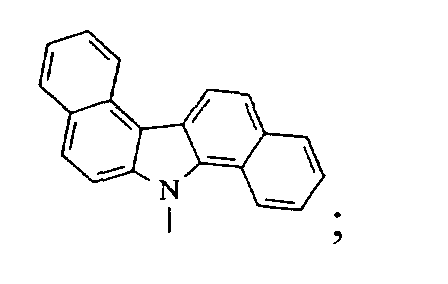

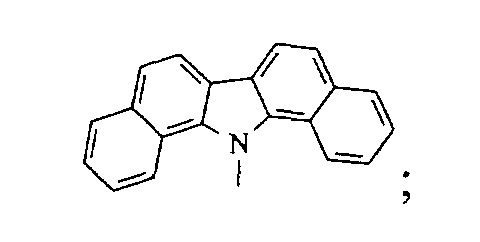 or
or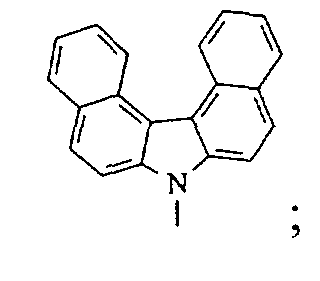

- The electroluminescent device of claim 1 wherein Ar includes more than one Ar group.
- The electroluminescent device of claim 1 wherein Ar includes the following formulas and wherein R in each formula is a substituent, and can be hydrogen, alkyl group of from 1 to 24 carbon atoms, or aryl or substituted aryl of from 6 to 28 carbon atoms, or heteroaryl or substituted heteroaryl of from 4 to 40 carbons, or a cyano group, a nitro group, a chlorine, bromine, or a fluorine atom; and m is an integer from 1 to 3.

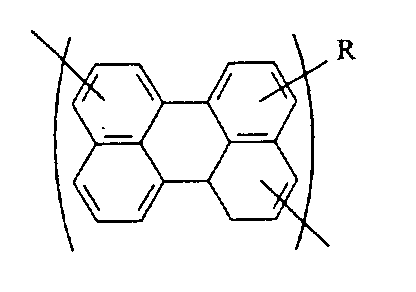


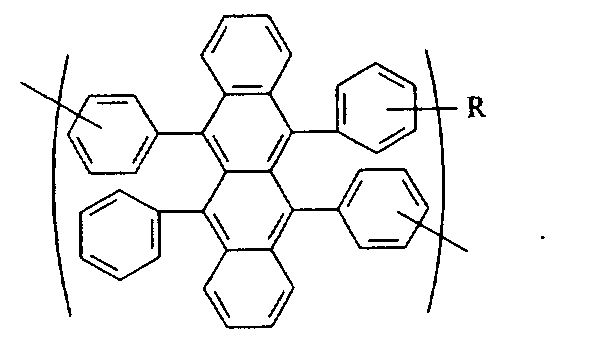 wherein: X is an O or S atom;
 wherein: p is an integer from 0 to 2;
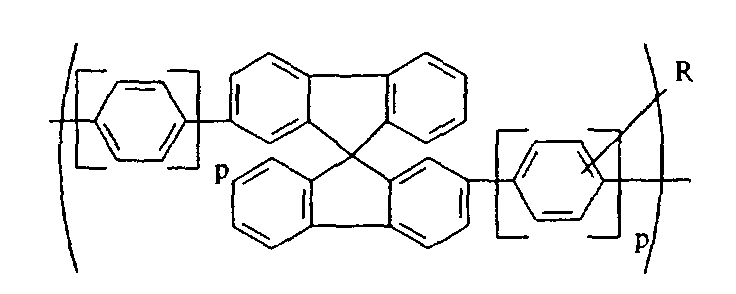 wherein: X is an O or S atom, and p is an integer from 0 to 2;

 wherein: X1 is an O atom or two cyano groups;
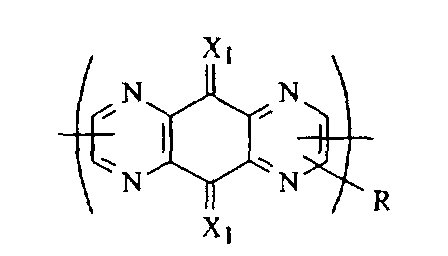 wherein: R1 is a substituent, and can be hydrogen, alkyl group of from 1 to 24 carbon atoms, or aryl or substituted aryl of from 6 to 28 carbon atoms, or heteroaryl or substituted heteroaryl of from 4 to 40 carbons;
 wherein: R1 is defined as above, and X2 is a nitrogen or carbon atom;
 wherein: R1 is defined as above, and p is an integer from 0 to 2.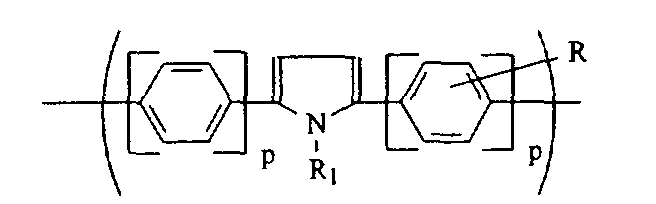

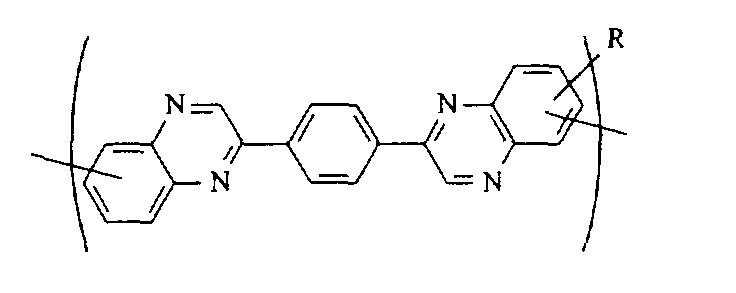 wherein: X is an O or S atom, p is an integer from 0 to 2;
 wherein: R1 is defined as above, and p is an integer from 0 to 2.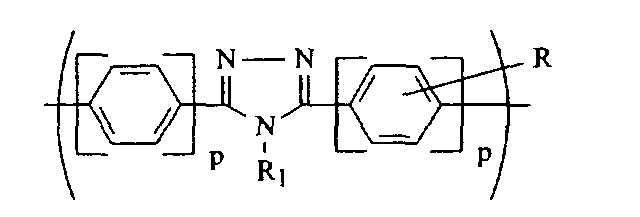
- An electroluminescent device which comprises an anode, a cathode, and a polymer luminescent material disposed between the anode and cathode, the polymer luminescent material being doped with one or more fluorescent dyes or other light emitting materials, the polymer luminescent material including arylamine moiety has the molecular formula:wherein:
 R1 and R2 are independently hydrogen, alkyl group of from 1 to 24 carbon atoms, or aryl or substituted aryl of from 6 to 40 carbon atoms, or heteroaryl or substituted heteroaryl of from 4 to 40 carbons, or a cyano group;Ar1, Ar2, Ar3, Ar4, and Ar are each individually aryl or substituted aryl of from 6 to 40 carbon atoms; or a heteroaryl or substituted heteroaryl of from 4 to 40 carbons, or combinations thereof.
Applications Claiming Priority (2)
| Application Number | Priority Date | Filing Date | Title |
|---|---|---|---|
| US593127 | 2000-06-13 | ||
| US09/593,127 US6329086B1 (en) | 2000-06-13 | 2000-06-13 | Electroluminescent devices having arylamine polymers |
Publications (2)
| Publication Number | Publication Date |
|---|---|
| EP1164178A1 true EP1164178A1 (en) | 2001-12-19 |
| EP1164178B1 EP1164178B1 (en) | 2003-09-03 |
Family
ID=24373494
Family Applications (1)
| Application Number | Title | Priority Date | Filing Date |
|---|---|---|---|
| EP01202101A Expired - Lifetime EP1164178B1 (en) | 2000-06-13 | 2001-06-01 | Electroluminescent devices having arylamine polymers |
Country Status (6)
| Country | Link |
|---|---|
| US (1) | US6329086B1 (en) |
| EP (1) | EP1164178B1 (en) |
| JP (2) | JP2002083683A (en) |
| KR (1) | KR100802756B1 (en) |
| DE (1) | DE60100688T2 (en) |
| TW (1) | TW530076B (en) |
Cited By (2)
| Publication number | Priority date | Publication date | Assignee | Title |
|---|---|---|---|---|
| WO2003076390A1 (en) * | 2002-02-27 | 2003-09-18 | Hirose Engineering Co., Ltd. | Yellow-emitting compounds, process for the production thereof, yellow-emitting devices and white-emitting devices |
| WO2007095062A3 (en) * | 2006-02-09 | 2008-03-06 | Celanese Int Corp | Melt-extruded polyvinyl alcohol with improved optical and olfactory properties |
Families Citing this family (20)
| Publication number | Priority date | Publication date | Assignee | Title |
|---|---|---|---|---|
| TW511394B (en) * | 2000-08-21 | 2002-11-21 | Sumitomo Chemical Co | Polymeric fluorescent substance and polymer light emitting device |
| JP2002155274A (en) * | 2000-08-21 | 2002-05-28 | Sumitomo Chem Co Ltd | Polymer phosphor and polymer light emitting device |
| US6998181B2 (en) * | 2000-09-26 | 2006-02-14 | Cambridge Display Technology Limited | Polymer and uses thereof |
| SG100772A1 (en) | 2000-12-06 | 2003-12-26 | Sumitomo Chemical Co | Polymeric fluorescent substance and polymer light-emiting device using the same |
| US6844089B2 (en) | 2002-05-10 | 2005-01-18 | Sensient Imaging Technologies Gmbh | Organic red electro-luminescent device and dopant |
| US6869696B2 (en) | 2002-05-10 | 2005-03-22 | Sensient Imaging Technologies Gmbh | Organic red electro-luminescent device including a heterocyclic emitter |
| US6723828B2 (en) * | 2001-05-23 | 2004-04-20 | Sri International | Conjugated electroluminescent polymers and associated methods of preparation and use |
| DE10141266A1 (en) * | 2001-08-21 | 2003-03-06 | Syntec Ges Fuer Chemie Und Tec | Electroluminescent derivatives of 2,5-diamino-terephthalic acid and their use in organic light-emitting diodes |
| KR100478521B1 (en) * | 2001-10-29 | 2005-03-28 | 삼성에스디아이 주식회사 | Emitting composition mixture polymer and electroluminescence device using the same |
| US6818919B2 (en) * | 2002-09-23 | 2004-11-16 | Air Products And Chemicals, Inc. | Light emitting layers for LED devices based on high Tg polymer matrix compositions |
| CN1791656A (en) | 2003-05-21 | 2006-06-21 | 陶氏环球技术公司 | Blend of viscosity modifier and luminescent compound |
| US6899963B1 (en) * | 2004-02-25 | 2005-05-31 | Eastman Kodak Company | Electroluminescent devices having pendant naphthylanthracene-based polymers |
| US20050186444A1 (en) * | 2004-02-25 | 2005-08-25 | Eastman Kodak Company | Electroluminescent devices having conjugated arylamine polymers |
| KR102173046B1 (en) * | 2013-12-06 | 2020-11-03 | 삼성디스플레이 주식회사 | Condensed compound and organic light emitting diode comprising the same |
| WO2015117100A1 (en) | 2014-02-02 | 2015-08-06 | Molaire Consulting Llc | Noncrystallizable sensitized layers for oled and oeds |
| WO2015152277A1 (en) * | 2014-03-31 | 2015-10-08 | 積水化学工業株式会社 | Interlayer for laminated glass, interlayer for luminescent laminated glass, and laminated glass |
| US10749118B2 (en) | 2014-06-26 | 2020-08-18 | Samsung Display Co., Ltd. | Heterocyclic compound and organic light-emitting device including the same |
| CN111066167A (en) * | 2017-08-24 | 2020-04-24 | 国立大学法人九州大学 | Host material, film and organic light-emitting element |
| CN108084407B (en) * | 2017-12-13 | 2019-12-03 | 华南协同创新研究院 | Polymer containing 9,9,10, 10-tetraoxy-thianthrene seven-membered fused ring unit and preparation method and application thereof |
| CN114751837A (en) * | 2022-03-22 | 2022-07-15 | 唐继勇 | Preparation method of intermediate 2, 5-diarylamine-terephthalic acid |
Citations (4)
| Publication number | Priority date | Publication date | Assignee | Title |
|---|---|---|---|---|
| WO1997009394A1 (en) * | 1995-09-04 | 1997-03-13 | Hoechst Research & Technology Deutschland Gmbh & Co. Kg | Polymers containing triarylamine units for use as electroluminescent materials |
| EP0765106A2 (en) * | 1995-09-25 | 1997-03-26 | Toyo Ink Manufacturing Co., Ltd. | Light-emitting material for organic electroluminescence device, and organic electroluminescence device for which the light-emitting material is adapted |
| EP0827366A2 (en) * | 1996-08-27 | 1998-03-04 | Hewlett-Packard Company | Heat-resistant organic electroluminescent device |
| WO1999054385A1 (en) * | 1998-04-21 | 1999-10-28 | The Dow Chemical Company | Fluorene-containing polymers and electroluminescent devices therefrom |
Family Cites Families (10)
| Publication number | Priority date | Publication date | Assignee | Title |
|---|---|---|---|---|
| US4356429A (en) | 1980-07-17 | 1982-10-26 | Eastman Kodak Company | Organic electroluminescent cell |
| US4769292A (en) | 1987-03-02 | 1988-09-06 | Eastman Kodak Company | Electroluminescent device with modified thin film luminescent zone |
| US5429884A (en) | 1992-01-17 | 1995-07-04 | Pioneer Electronic Corporation | Organic electroluminescent element |
| US5776622A (en) | 1996-07-29 | 1998-07-07 | Eastman Kodak Company | Bilayer eletron-injeting electrode for use in an electroluminescent device |
| US5817430A (en) * | 1996-11-13 | 1998-10-06 | Xerox Corporation | Electroluminescent polymer compositions and processes thereof |
| US5904990A (en) * | 1997-05-28 | 1999-05-18 | The United States Of America As Represented By The Secretary Of The Navy | Amino functional poly (para-phenylene vinylene)s as protective coatings |
| GB2328212B (en) * | 1997-08-12 | 2000-11-29 | Samsung Display Devices Co Ltd | Organic electroluminescent polymer for light emitting diode |
| US5935721A (en) | 1998-03-20 | 1999-08-10 | Eastman Kodak Company | Organic electroluminescent elements for stable electroluminescent |
| US5972247A (en) | 1998-03-20 | 1999-10-26 | Eastman Kodak Company | Organic electroluminescent elements for stable blue electroluminescent devices |
| KR20010112634A (en) * | 2000-06-13 | 2001-12-20 | 로버트 디. 크루그 | Electroluminescent device including diphenylanthracene- based conjugated polymers |
-
2000
- 2000-06-13 US US09/593,127 patent/US6329086B1/en not_active Expired - Lifetime
-
2001
- 2001-04-27 TW TW090110070A patent/TW530076B/en not_active IP Right Cessation
- 2001-06-01 DE DE60100688T patent/DE60100688T2/en not_active Expired - Fee Related
- 2001-06-01 EP EP01202101A patent/EP1164178B1/en not_active Expired - Lifetime
- 2001-06-12 KR KR1020010032909A patent/KR100802756B1/en not_active Expired - Lifetime
- 2001-06-12 JP JP2001176991A patent/JP2002083683A/en active Pending
-
2012
- 2012-10-18 JP JP2012230439A patent/JP5662403B2/en not_active Expired - Lifetime
Patent Citations (4)
| Publication number | Priority date | Publication date | Assignee | Title |
|---|---|---|---|---|
| WO1997009394A1 (en) * | 1995-09-04 | 1997-03-13 | Hoechst Research & Technology Deutschland Gmbh & Co. Kg | Polymers containing triarylamine units for use as electroluminescent materials |
| EP0765106A2 (en) * | 1995-09-25 | 1997-03-26 | Toyo Ink Manufacturing Co., Ltd. | Light-emitting material for organic electroluminescence device, and organic electroluminescence device for which the light-emitting material is adapted |
| EP0827366A2 (en) * | 1996-08-27 | 1998-03-04 | Hewlett-Packard Company | Heat-resistant organic electroluminescent device |
| WO1999054385A1 (en) * | 1998-04-21 | 1999-10-28 | The Dow Chemical Company | Fluorene-containing polymers and electroluminescent devices therefrom |
Non-Patent Citations (1)
| Title |
|---|
| STENGER-SMITH J D ET AL: "SYNTHESIS AND CHARACTERIZATION OF POLY(2,5-BIS(N-METHYL-N- HEXYLAMINO)PHENYLENE VINYLENE), A CONJUGATED POLYMER FOR LIGHT- EMITTING DIODES", MACROMOLECULES, AMERICAN CHEMICAL SOCIETY. EASTON, US, vol. 31, no. 21, 20 October 1998 (1998-10-20), pages 7566 - 7569, XP000779763, ISSN: 0024-9297 * |
Cited By (2)
| Publication number | Priority date | Publication date | Assignee | Title |
|---|---|---|---|---|
| WO2003076390A1 (en) * | 2002-02-27 | 2003-09-18 | Hirose Engineering Co., Ltd. | Yellow-emitting compounds, process for the production thereof, yellow-emitting devices and white-emitting devices |
| WO2007095062A3 (en) * | 2006-02-09 | 2008-03-06 | Celanese Int Corp | Melt-extruded polyvinyl alcohol with improved optical and olfactory properties |
Also Published As
| Publication number | Publication date |
|---|---|
| JP2013051427A (en) | 2013-03-14 |
| JP5662403B2 (en) | 2015-01-28 |
| KR20010112635A (en) | 2001-12-20 |
| DE60100688D1 (en) | 2003-10-09 |
| EP1164178B1 (en) | 2003-09-03 |
| DE60100688T2 (en) | 2004-07-22 |
| US6329086B1 (en) | 2001-12-11 |
| TW530076B (en) | 2003-05-01 |
| JP2002083683A (en) | 2002-03-22 |
| KR100802756B1 (en) | 2008-02-12 |
Similar Documents
| Publication | Publication Date | Title |
|---|---|---|
| EP1164178B1 (en) | Electroluminescent devices having arylamine polymers | |
| EP1088875B1 (en) | Electroluminescent devices having phenylanthracene-based polymers | |
| EP1791926B1 (en) | New compound and organic light emitting device using the same(10) | |
| US6638644B2 (en) | Electroluminescent devices having diarylanthracene polymers | |
| US7682708B2 (en) | Dendrimers | |
| EP1094101B1 (en) | Electroluminescent devices having naphthylanthracene-based polymers | |
| US6824890B2 (en) | Soluble tetrahedral compounds for use in electroluminescent devices | |
| EP2162415B1 (en) | Benzo[a]fluoranthene compound and organic light emitting device using the same | |
| KR20060051609A (en) | New organic light emitting device material and organic light emitting device using same (4) | |
| JPH10509996A (en) | Heterospiro compounds and their use as electroluminescent substances | |
| KR20130096647A (en) | Organic light compound and organic light device using the same | |
| JP2008231051A (en) | Fluorene-benzothiadiazole compound and organic electroluminescence device using the same | |
| US6613457B2 (en) | Electroluminescent devices having diarylanthracene ladder polymers in emissive layers | |
| CN101547878B (en) | Benzo [a] fluoranthene compound and organic light emitting device using the same | |
| KR20010112634A (en) | Electroluminescent device including diphenylanthracene- based conjugated polymers | |
| JP2003261471A (en) | Organic compounds, electroluminescent elements and display devices | |
| WO2003040255A1 (en) | Blue light-emitting polymer containing 9,10-diphenylanthracene moiety and electroluminescent device using the same | |
| KR20130046632A (en) | Electriluminescent polymer containing benzothiadiazole derivatives and organoelectriluminescent device emloying the same | |
| Cirpan et al. | New conjugated materials containing cyano substituents for light-emitting diodes | |
| KR100619356B1 (en) | Florenylene-vinyl-based light emitting polymer and electroluminescent device using the same | |
| KR100394509B1 (en) | High Functional Light Emitting Polymers Containing Tetra-substituted Phenylene unit for Use in Electroluminescent Devices | |
| KR100710985B1 (en) | Poly (phenylenevinylene) derivative substituted with styryl group including aryl group and electroluminescent device using same | |
| KR20040026542A (en) | Novel arylphosphine compounds and organic electroluminescent devices |
Legal Events
| Date | Code | Title | Description |
|---|---|---|---|
| PUAI | Public reference made under article 153(3) epc to a published international application that has entered the european phase |
Free format text: ORIGINAL CODE: 0009012 |
|
| AK | Designated contracting states |
Kind code of ref document: A1 Designated state(s): AT BE CH CY DE DK ES FI FR GB GR IE IT LI LU MC NL PT SE TR Kind code of ref document: A1 Designated state(s): DE FR GB |
|
| AX | Request for extension of the european patent |
Free format text: AL;LT;LV;MK;RO;SI |
|
| 17P | Request for examination filed |
Effective date: 20020531 |
|
| AKX | Designation fees paid |
Free format text: DE FR GB |
|
| GRAH | Despatch of communication of intention to grant a patent |
Free format text: ORIGINAL CODE: EPIDOS IGRA |
|
| GRAH | Despatch of communication of intention to grant a patent |
Free format text: ORIGINAL CODE: EPIDOS IGRA |
|
| GRAA | (expected) grant |
Free format text: ORIGINAL CODE: 0009210 |
|
| AK | Designated contracting states |
Kind code of ref document: B1 Designated state(s): DE FR GB |
|
| REG | Reference to a national code |
Ref country code: GB Ref legal event code: FG4D |
|
| REF | Corresponds to: |
Ref document number: 60100688 Country of ref document: DE Date of ref document: 20031009 Kind code of ref document: P |
|
| REG | Reference to a national code |
Ref country code: IE Ref legal event code: FG4D |
|
| ET | Fr: translation filed | ||
| PLBE | No opposition filed within time limit |
Free format text: ORIGINAL CODE: 0009261 |
|
| STAA | Information on the status of an ep patent application or granted ep patent |
Free format text: STATUS: NO OPPOSITION FILED WITHIN TIME LIMIT |
|
| 26N | No opposition filed |
Effective date: 20040604 |
|
| REG | Reference to a national code |
Ref country code: IE Ref legal event code: MM4A |
|
| PGFP | Annual fee paid to national office [announced via postgrant information from national office to epo] |
Ref country code: DE Payment date: 20080630 Year of fee payment: 8 |
|
| PGFP | Annual fee paid to national office [announced via postgrant information from national office to epo] |
Ref country code: GB Payment date: 20080506 Year of fee payment: 8 |
|
| GBPC | Gb: european patent ceased through non-payment of renewal fee |
Effective date: 20090601 |
|
| REG | Reference to a national code |
Ref country code: FR Ref legal event code: ST Effective date: 20100226 |
|
| PG25 | Lapsed in a contracting state [announced via postgrant information from national office to epo] |
Ref country code: FR Free format text: LAPSE BECAUSE OF NON-PAYMENT OF DUE FEES Effective date: 20090630 |
|
| PGFP | Annual fee paid to national office [announced via postgrant information from national office to epo] |
Ref country code: FR Payment date: 20080424 Year of fee payment: 8 |
|
| PG25 | Lapsed in a contracting state [announced via postgrant information from national office to epo] |
Ref country code: GB Free format text: LAPSE BECAUSE OF NON-PAYMENT OF DUE FEES Effective date: 20090601 |
|
| PG25 | Lapsed in a contracting state [announced via postgrant information from national office to epo] |
Ref country code: DE Free format text: LAPSE BECAUSE OF NON-PAYMENT OF DUE FEES Effective date: 20100101 |