EP1094101B1 - Electroluminescent devices having naphthylanthracene-based polymers - Google Patents
Electroluminescent devices having naphthylanthracene-based polymers Download PDFInfo
- Publication number
- EP1094101B1 EP1094101B1 EP00203504A EP00203504A EP1094101B1 EP 1094101 B1 EP1094101 B1 EP 1094101B1 EP 00203504 A EP00203504 A EP 00203504A EP 00203504 A EP00203504 A EP 00203504A EP 1094101 B1 EP1094101 B1 EP 1094101B1
- Authority
- EP
- European Patent Office
- Prior art keywords
- ethylhexyloxy
- hexyl
- butyl
- hexyloxy
- polymer
- Prior art date
- Legal status (The legal status is an assumption and is not a legal conclusion. Google has not performed a legal analysis and makes no representation as to the accuracy of the status listed.)
- Expired - Lifetime
Links
- 0 CCC(C)(CC)c1cc(ccc(-c2c(ccc(*)c3)c3c(-c(cc3)cc(cc4*)c3cc4OC(*)=O)c3c2cc(C)cc3)c2)c2c(*)c1 Chemical compound CCC(C)(CC)c1cc(ccc(-c2c(ccc(*)c3)c3c(-c(cc3)cc(cc4*)c3cc4OC(*)=O)c3c2cc(C)cc3)c2)c2c(*)c1 0.000 description 24
- RWGFKTVRMDUZSP-UHFFFAOYSA-N CC(C)c1ccccc1 Chemical compound CC(C)c1ccccc1 RWGFKTVRMDUZSP-UHFFFAOYSA-N 0.000 description 1
- SJDMOIROJQBUKH-UHFFFAOYSA-N CCC(C)(CC)C(OC(C)(C)C1=CCC(C)C=C1)=O Chemical compound CCC(C)(CC)C(OC(C)(C)C1=CCC(C)C=C1)=O SJDMOIROJQBUKH-UHFFFAOYSA-N 0.000 description 1
Images


Classifications
-
- H—ELECTRICITY
- H05—ELECTRIC TECHNIQUES NOT OTHERWISE PROVIDED FOR
- H05B—ELECTRIC HEATING; ELECTRIC LIGHT SOURCES NOT OTHERWISE PROVIDED FOR; CIRCUIT ARRANGEMENTS FOR ELECTRIC LIGHT SOURCES, IN GENERAL
- H05B33/00—Electroluminescent light sources
- H05B33/12—Light sources with substantially two-dimensional [2D] radiating surfaces
- H05B33/14—Light sources with substantially two-dimensional [2D] radiating surfaces characterised by the chemical or physical composition or the arrangement of the electroluminescent material, or by the simultaneous addition of the electroluminescent material in or onto the light source
-
- C—CHEMISTRY; METALLURGY
- C09—DYES; PAINTS; POLISHES; NATURAL RESINS; ADHESIVES; COMPOSITIONS NOT OTHERWISE PROVIDED FOR; APPLICATIONS OF MATERIALS NOT OTHERWISE PROVIDED FOR
- C09K—MATERIALS FOR MISCELLANEOUS APPLICATIONS, NOT PROVIDED FOR ELSEWHERE
- C09K11/00—Luminescent materials, e.g. electroluminescent or chemiluminescent
- C09K11/06—Luminescent materials, e.g. electroluminescent or chemiluminescent containing organic luminescent materials
-
- C—CHEMISTRY; METALLURGY
- C08—ORGANIC MACROMOLECULAR COMPOUNDS; THEIR PREPARATION OR CHEMICAL WORKING-UP; COMPOSITIONS BASED THEREON
- C08G—MACROMOLECULAR COMPOUNDS OBTAINED OTHERWISE THAN BY REACTIONS ONLY INVOLVING UNSATURATED CARBON-TO-CARBON BONDS
- C08G65/00—Macromolecular compounds obtained by reactions forming an ether link in the main chain of the macromolecule
- C08G65/34—Macromolecular compounds obtained by reactions forming an ether link in the main chain of the macromolecule from hydroxy compounds or their metallic derivatives
- C08G65/38—Macromolecular compounds obtained by reactions forming an ether link in the main chain of the macromolecule from hydroxy compounds or their metallic derivatives derived from phenols
- C08G65/40—Macromolecular compounds obtained by reactions forming an ether link in the main chain of the macromolecule from hydroxy compounds or their metallic derivatives derived from phenols from phenols (I) and other compounds (II), e.g. OH-Ar-OH + X-Ar-X, where X is halogen atom, i.e. leaving group
-
- C—CHEMISTRY; METALLURGY
- C08—ORGANIC MACROMOLECULAR COMPOUNDS; THEIR PREPARATION OR CHEMICAL WORKING-UP; COMPOSITIONS BASED THEREON
- C08G—MACROMOLECULAR COMPOUNDS OBTAINED OTHERWISE THAN BY REACTIONS ONLY INVOLVING UNSATURATED CARBON-TO-CARBON BONDS
- C08G69/00—Macromolecular compounds obtained by reactions forming a carboxylic amide link in the main chain of the macromolecule
- C08G69/02—Polyamides derived from amino-carboxylic acids or from polyamines and polycarboxylic acids
- C08G69/26—Polyamides derived from amino-carboxylic acids or from polyamines and polycarboxylic acids derived from polyamines and polycarboxylic acids
- C08G69/32—Polyamides derived from amino-carboxylic acids or from polyamines and polycarboxylic acids derived from polyamines and polycarboxylic acids from aromatic diamines and aromatic dicarboxylic acids with both amino and carboxylic groups aromatically bound
-
- C—CHEMISTRY; METALLURGY
- C08—ORGANIC MACROMOLECULAR COMPOUNDS; THEIR PREPARATION OR CHEMICAL WORKING-UP; COMPOSITIONS BASED THEREON
- C08G—MACROMOLECULAR COMPOUNDS OBTAINED OTHERWISE THAN BY REACTIONS ONLY INVOLVING UNSATURATED CARBON-TO-CARBON BONDS
- C08G73/00—Macromolecular compounds obtained by reactions forming a linkage containing nitrogen with or without oxygen or carbon in the main chain of the macromolecule, not provided for in groups C08G12/00 - C08G71/00
- C08G73/02—Polyamines
-
- C—CHEMISTRY; METALLURGY
- C08—ORGANIC MACROMOLECULAR COMPOUNDS; THEIR PREPARATION OR CHEMICAL WORKING-UP; COMPOSITIONS BASED THEREON
- C08G—MACROMOLECULAR COMPOUNDS OBTAINED OTHERWISE THAN BY REACTIONS ONLY INVOLVING UNSATURATED CARBON-TO-CARBON BONDS
- C08G73/00—Macromolecular compounds obtained by reactions forming a linkage containing nitrogen with or without oxygen or carbon in the main chain of the macromolecule, not provided for in groups C08G12/00 - C08G71/00
- C08G73/02—Polyamines
- C08G73/024—Polyamines containing oxygen in the form of ether bonds in the main chain
-
- C—CHEMISTRY; METALLURGY
- C08—ORGANIC MACROMOLECULAR COMPOUNDS; THEIR PREPARATION OR CHEMICAL WORKING-UP; COMPOSITIONS BASED THEREON
- C08G—MACROMOLECULAR COMPOUNDS OBTAINED OTHERWISE THAN BY REACTIONS ONLY INVOLVING UNSATURATED CARBON-TO-CARBON BONDS
- C08G75/00—Macromolecular compounds obtained by reactions forming a linkage containing sulfur with or without nitrogen, oxygen, or carbon in the main chain of the macromolecule
- C08G75/02—Polythioethers
-
- H—ELECTRICITY
- H10—SEMICONDUCTOR DEVICES; ELECTRIC SOLID-STATE DEVICES NOT OTHERWISE PROVIDED FOR
- H10K—ORGANIC ELECTRIC SOLID-STATE DEVICES
- H10K85/00—Organic materials used in the body or electrodes of devices covered by this subclass
- H10K85/10—Organic polymers or oligomers
- H10K85/111—Organic polymers or oligomers comprising aromatic, heteroaromatic, or aryl chains, e.g. polyaniline, polyphenylene or polyphenylene vinylene
-
- C—CHEMISTRY; METALLURGY
- C08—ORGANIC MACROMOLECULAR COMPOUNDS; THEIR PREPARATION OR CHEMICAL WORKING-UP; COMPOSITIONS BASED THEREON
- C08G—MACROMOLECULAR COMPOUNDS OBTAINED OTHERWISE THAN BY REACTIONS ONLY INVOLVING UNSATURATED CARBON-TO-CARBON BONDS
- C08G63/00—Macromolecular compounds obtained by reactions forming a carboxylic ester link in the main chain of the macromolecule
- C08G63/02—Polyesters derived from hydroxycarboxylic acids or from polycarboxylic acids and polyhydroxy compounds
- C08G63/12—Polyesters derived from hydroxycarboxylic acids or from polycarboxylic acids and polyhydroxy compounds derived from polycarboxylic acids and polyhydroxy compounds
- C08G63/16—Dicarboxylic acids and dihydroxy compounds
- C08G63/18—Dicarboxylic acids and dihydroxy compounds the acids or hydroxy compounds containing carbocyclic rings
- C08G63/19—Hydroxy compounds containing aromatic rings
- C08G63/193—Hydroxy compounds containing aromatic rings containing two or more aromatic rings
- C08G63/197—Hydroxy compounds containing aromatic rings containing two or more aromatic rings containing condensed aromatic rings
-
- C—CHEMISTRY; METALLURGY
- C08—ORGANIC MACROMOLECULAR COMPOUNDS; THEIR PREPARATION OR CHEMICAL WORKING-UP; COMPOSITIONS BASED THEREON
- C08G—MACROMOLECULAR COMPOUNDS OBTAINED OTHERWISE THAN BY REACTIONS ONLY INVOLVING UNSATURATED CARBON-TO-CARBON BONDS
- C08G63/00—Macromolecular compounds obtained by reactions forming a carboxylic ester link in the main chain of the macromolecule
- C08G63/68—Polyesters containing atoms other than carbon, hydrogen and oxygen
- C08G63/685—Polyesters containing atoms other than carbon, hydrogen and oxygen containing nitrogen
- C08G63/6854—Polyesters containing atoms other than carbon, hydrogen and oxygen containing nitrogen derived from polycarboxylic acids and polyhydroxy compounds
- C08G63/6856—Dicarboxylic acids and dihydroxy compounds
-
- C—CHEMISTRY; METALLURGY
- C08—ORGANIC MACROMOLECULAR COMPOUNDS; THEIR PREPARATION OR CHEMICAL WORKING-UP; COMPOSITIONS BASED THEREON
- C08G—MACROMOLECULAR COMPOUNDS OBTAINED OTHERWISE THAN BY REACTIONS ONLY INVOLVING UNSATURATED CARBON-TO-CARBON BONDS
- C08G63/00—Macromolecular compounds obtained by reactions forming a carboxylic ester link in the main chain of the macromolecule
- C08G63/68—Polyesters containing atoms other than carbon, hydrogen and oxygen
- C08G63/688—Polyesters containing atoms other than carbon, hydrogen and oxygen containing sulfur
- C08G63/6884—Polyesters containing atoms other than carbon, hydrogen and oxygen containing sulfur derived from polycarboxylic acids and polyhydroxy compounds
- C08G63/6886—Dicarboxylic acids and dihydroxy compounds
-
- C—CHEMISTRY; METALLURGY
- C08—ORGANIC MACROMOLECULAR COMPOUNDS; THEIR PREPARATION OR CHEMICAL WORKING-UP; COMPOSITIONS BASED THEREON
- C08G—MACROMOLECULAR COMPOUNDS OBTAINED OTHERWISE THAN BY REACTIONS ONLY INVOLVING UNSATURATED CARBON-TO-CARBON BONDS
- C08G64/00—Macromolecular compounds obtained by reactions forming a carbonic ester link in the main chain of the macromolecule
- C08G64/04—Aromatic polycarbonates
- C08G64/06—Aromatic polycarbonates not containing aliphatic unsaturation
-
- C—CHEMISTRY; METALLURGY
- C08—ORGANIC MACROMOLECULAR COMPOUNDS; THEIR PREPARATION OR CHEMICAL WORKING-UP; COMPOSITIONS BASED THEREON
- C08L—COMPOSITIONS OF MACROMOLECULAR COMPOUNDS
- C08L2203/00—Applications
- C08L2203/20—Applications use in electrical or conductive gadgets
-
- H—ELECTRICITY
- H10—SEMICONDUCTOR DEVICES; ELECTRIC SOLID-STATE DEVICES NOT OTHERWISE PROVIDED FOR
- H10K—ORGANIC ELECTRIC SOLID-STATE DEVICES
- H10K50/00—Organic light-emitting devices
- H10K50/10—OLEDs or polymer light-emitting diodes [PLED]
- H10K50/11—OLEDs or polymer light-emitting diodes [PLED] characterised by the electroluminescent [EL] layers
-
- H—ELECTRICITY
- H10—SEMICONDUCTOR DEVICES; ELECTRIC SOLID-STATE DEVICES NOT OTHERWISE PROVIDED FOR
- H10K—ORGANIC ELECTRIC SOLID-STATE DEVICES
- H10K85/00—Organic materials used in the body or electrodes of devices covered by this subclass
- H10K85/10—Organic polymers or oligomers
- H10K85/151—Copolymers
-
- H—ELECTRICITY
- H10—SEMICONDUCTOR DEVICES; ELECTRIC SOLID-STATE DEVICES NOT OTHERWISE PROVIDED FOR
- H10K—ORGANIC ELECTRIC SOLID-STATE DEVICES
- H10K85/00—Organic materials used in the body or electrodes of devices covered by this subclass
- H10K85/60—Organic compounds having low molecular weight
- H10K85/615—Polycyclic condensed aromatic hydrocarbons, e.g. anthracene
-
- Y—GENERAL TAGGING OF NEW TECHNOLOGICAL DEVELOPMENTS; GENERAL TAGGING OF CROSS-SECTIONAL TECHNOLOGIES SPANNING OVER SEVERAL SECTIONS OF THE IPC; TECHNICAL SUBJECTS COVERED BY FORMER USPC CROSS-REFERENCE ART COLLECTIONS [XRACs] AND DIGESTS
- Y10—TECHNICAL SUBJECTS COVERED BY FORMER USPC
- Y10S—TECHNICAL SUBJECTS COVERED BY FORMER USPC CROSS-REFERENCE ART COLLECTIONS [XRACs] AND DIGESTS
- Y10S428/00—Stock material or miscellaneous articles
- Y10S428/917—Electroluminescent
Definitions
- the present invention relates to electroluminescent (EL) devices. More specifically, naphthylanthracene-based polymers used as luminescent materials in polymer EL devices.
- Electroluminescent devices are opto-electronic devices where light emission is produced in response to an electrical current through the device.
- the physical model for EL is the radiative recombination of electrons and holes.
- the term light emitting diode (LED) is commonly used to describe an EL device where the current-voltage behavior is non-linear, meaning that the current through the EL device is dependent on the polarity of the voltage applied to the EL device.
- LED light emitting diode
- Both organic and inorganic materials have been used for the fabrication of LEDs. Inorganic materials such as ZnS/Sn, Ga/Bs, Ga/As have been used in semiconductor lasers, small area displays, LED lamps, and so forth.
- the drawbacks of inorganic materials include difficulties to process and to obtain large surface areas and efficient blue light.
- Organic polymers used as light-emitting materials in EL devices offer several advantages over inorganic materials, such as simpler manufacturing, low operating voltages, the possibility of producing large area and full-color displays.
- Conjugated polymers such as poly(phenylvinylene) (PPV) were first introduced as EL materials by Burroughes and others in 1990 (Burroughes, J. H. Nature 1990, 347, 539-41). Considerable progress has been made since then to improve the stability, efficiency, and durability of polymeric LEDs (Sheats, J. R. and others Science 1996, 273 , 884-888; Berggren, M. and others Nature 1994, 372 , 444-6; Holmes, A. B. and others WO 94/29883 (1994); and Spreitzer.
- PSV poly(phenylvinylene)
- Polymers with wide energy bandgap to emit blue light are important materials because stable, efficient blue-light-emitting materials with high brightness are desirable for full color EL display applications. With these primary materials, it is possible to produce other colors by a downhill energy transfer process. For instance, a green or red EL emission can be obtained by doping a blue EL host material with a small amount of green or red luminescent material.
- an electroluminescent device comprises an anode, a cathode, and polymer luminescent materials disposed between the anode and cathode, the polymeric luminescent materials includes 9,10-di-(2-naphthyl)anthracene-based polymers of formula (I). wherein:
- the present invention provides polymeric luminescent materials with a number of advantages which include good solubility and better thermal stability.
- the primary wide energy bandgap chromophore, 9,10-di-(2-naphthyl)anthracene other color emitting luminescent copolymers can be easily designed and produced by introducing the narrow energy bandgap chromorphores into the polymeric chain.
- the present invention provides light-emitting polymers containing 9,10-di-(2-naphthyl)anthracene with good solubility and thermal stability as shown in formula I.
- the chromophore 9,10-di-(2-naphthyl)anthracene has been shown to be particularly useful for the fabrication of efficient and stable EL devices as disclosed in commonly-assigned US-A-5,935,721 by Shi and others.
- 9,10-di-(2-naphthyl)anthracene chromophore has a wide energy bandgap.
- the energy bandgap is the energy difference between the energy level of the highest occupied molecular orbital (HOMO) and the lowest unoccupied molecular orbital (LUMO).
- Incorporation of the second comonomer unit Y can serve several purposes:
- the second comonomer unit Y can be the groups to improve solubility, or electron or hole transporting mobility, or emissive moiety with narrow energy bandgap.
- the green- or red-light-emitting polymer can be obtained through intramolecular energy downhill transfer.
- the polymer shown in formula I is a polymer containing a 9,10-di-(2-naphthy)anthracene, wherein:
- X represents a linking group and include but not limited to the following groups:
- X is a carbon-carbon bond linking group: or ⁇ C ⁇ C ⁇ wherein R is hydrogen, or alkyl group containing 1 to 24 carbon atoms; aryl or substituted aryl of containing 6 to 28 carbon atoms; or heteroaryl or substituted heteroaryl containing 4 to 40 carbons; or F, Cl, or Br; or a cyano group;
- X is an ether or thioether linking group: ⁇ O ⁇ ; or ⁇ S ⁇
- X is an ester linking group:
- X is an anhydride linking group:
- X is a carbonate linking group:
- X is a sulfone or sulfine linking group:
- X is an amine linking group: wherein R is hydrogen, or alkyl group containing 1 to 24 carbon atoms; aryl or substituted aryl of containing 6 to 28 carbon atoms; or heteroaryl or substituted heteroaryl containing 4 to 40 carbons;
- X is an amide linking group: or wherein R is hydrogen, or alkyl group containing 1 to 24 carbon atoms; aryl or substituted aryl of containing 6 to 28 carbon atoms; or heteroaryl or substituted heteroaryl containing 4 to 40 carbons;
- X is a urea linking group: wherein R is hydrogen, or alkyl group containing 1 to 24 carbon atoms; aryl or substituted aryl of containing 6 to 28 carbon atoms; or heteroaryl or substituted heteroaryl containing 4 to 40 carbons;
- X is an aryl linking group: wherein Ar is an aryl or substituted aryl group containing 6 to 28 carbon atoms; or heteroaryl or substituted heteroaryl containing 4 to 40 carbons; n is an integer of from 1 to 6.
- Y represents one or more second comonomer unit, and is a substituted or unsubstituted alkyl, alkenyl, aryl, heteroaryl or other conjugated groups. When more than one group is included the groups can be different.
- Alkyl groups contain 1 to 28 carbon atoms; Substituted or unsubstituted aryl groups contain 6-28 carbon atoms which include phenyl, biphenyl, naphthyl, anthracene, fluorene, phenanthrene, spirophenyl, perylene, or pyrene groups; Substituted or unsubstituted heteroaryl groups contain 4-40 carbon atoms which include pyridine, thiophene, pyrrole, bithiophene, furan, benzofuran, benzimidazole, benzoxazole, quinoxaline, phenylquinoline, dipheyloxadizaole, or carbazole; All the substituents mentioned above include alkyl or alkoxy groups containing 1 to 24 carbon atoms, aryl or substituted aryl containing 6 to 28 carbon atoms; or heteroaryl or substituted heteroaryl containing 4 to 28 carbons; or F, Cl, or Br;
- Y can be divided into the following groups.
- Y are alkyl groups of formula (II): -R- (II) wherein:
- Y are two aryl groups connected by a linking group Z of formula (III): ⁇ (Ar 1 ) ⁇ Z ⁇ (Ar 2 ) ⁇ (III) wherein:
- Y are aromatic hydrocarbons of formula (IV): ( ⁇ Ar) ⁇ (IV) wherein:
- Y are aromatic hydrocarbons linked by a double bond of formula (V) wherein:
- Y are heteroaromatics of formula (VI) ( ⁇ W) ⁇ (VI) wherein:
- Y can be one or the combination of more than one of the above groups.
- the specific molecular structures can be the combination of any of the above drawn structures.
- the polymerization method and the molecular weights of the resulting polymers used in the present invention are not necessary to be particularly restricted.
- the molecular weights of polymers are at least 1000, and preferably at least 3000.
- the polymers may be prepared by condensation polymerizations, preferably by cross-coupling reactions such as Pd-catalyzed Suzuki coupling (Miyaura, N. and others Chem. Rev. 1995, 95 , 2457), or by condensation reaction between di-(acid chloride)s with di-amines, di-alcohols or di-phenols in the presence of bases.
- Suzuki coupling reaction was first reported by Miyaura and others on the coupling of aromatic boronic acid derivatives with aromatic halides Miyaura and others Synthetic Comm. 1981, 11 (7) , 513). Since then, this reaction has been widely used to prepared polymers for various applications (Ranger, M. and others Macromolecules 1997, 30, 7686-7691; Kim, S. and others Macromolecules 1998, 31 , 964-974; and Ng, P. K Macromol. Rapid Commun. 1997, 18 , 1009-1016). A modified process was reported by Inbasekaran and others to prepare conjugated polymers for EL devices (US-A-5,777,070).
- the above mentioned polymers were prepared by Suzuki coupling reaction of an aromatic diboronic acid ester with an aromatic dibromide.
- the aromatic diboronic acid esters were prepared from the corresponding dihalide treated with nBuLi and trimethylborate followed by esterification with a di-alcohol.
- the synthetic schemes for polymers and monomers are illustrated in Schemes 1-6.
- FIG. 1 illustrates the basic structure used to construct organic EL devices. It is a bi-layer structure comprising a hole transport layer 30 and an electron transport layer 40.
- the electron transport layer is also the emissive layer from which electroluminescence originates. Together they form the EL medium 50.
- the anode is adjacent to the hole transport layer and the cathode 60 is adjacent to the electron transport layer.
- the substrate is layer 10. This figure is for illustration only and the individual layer thickness is not scaled according to the actual thickness.
- FIG. 2 illustrates an alternative construction of the EL device. It is a modified bi-layer structure.
- the EL medium contains an emissive layer between the hole transport layer and the electron transport layer. This emissive layer is the layer where electroluminescence originates.
- layer 300 is the hole transport layer
- layer 400 is the emissive layer
- layer 500 is the electron transport layer
- the substrate is layer 100. This figure is for illustration only and the individual layer thickness is not scaled according to the actual thickness.
- the bi-layer EL devices are the basic structure providing high luminous efficiency and low operating voltage.
- Alternative EL device structures have been demonstrated to provide improved device performance.
- These alternative structures include features in addition to the basic bi-layer structure such as the following structure (a) hole injection layer as disclosed in US-A-4,356,429; (b) cathode modification with alkaline or alkaline halides as disclosed in US-A-5,776,622; and (c) doped emitter layer inserted between the hole transport and electron transport layer as disclosed in US-A-4,769,292.
- FIG. 3 illustrates another alternative construction of an EL device. It is a single-layer structure comprising an emitting layer 3000, sandwiched between an anode 2000 and cathode 4000. The emitting layer 3000 also acts as a charge carrier layer. Thus, single layer 3000 is the electroluminescent medium.
- the substrate is layer 1000. This figure is for illustration only and the individual layer thickness is not scaled according to the actual thickness.
- a preferred EL device structure of this invention is a single-layer structure comprising an anode, a cathode, and single layer of electroluminescent medium.
- This electroluminescent layer is the emissive layer, and is also capable of transporting electrons as well as holes.
- the principle function of this layer is to provide efficient emissive centers for electroluminescence.
- This layer can comprise one of the above mentioned polymers or the blend of two or more polymers, or polymers doped with one or more fluorescent dyes (FD).
- the fluorescent dye is usually present in an amount on the order of a few molar percent or less of the host polymer and it is sufficient to cause the EL emission to be predominantly that of the fluorescent dye. Using this method, highly efficient EL devices can be constructed.
- the color of the EL devices can be tuned using fluorescent dyes of different emission wavelengths.
- fluorescent dyes of different emission wavelengths By using a mixture of fluorescent dyes, EL color characteristics of the combined spectra of the individual fluorescent dyes are produced.
- This dopant scheme has been described in considerable detail for EL devices in US-A-4,769,292.
- An important criterion for choosing a fluorescent dye as a dopant capable of modifying the hue of light emission when present in a host material is a comparison of their bandgap. For efficient energy transfer from the host to the dopant molecule, a necessary condition is that the energy bandgap of the dopant is smaller than that of the host polymer.
- Preferred fluorescent dyes used as the dopant in the emissive layer include but are not limited to coumarins, stilbenes, distrylstibenes, anthracene derivatives, tetracene, perlenes, rhodamines, and arylamines.
- the above mentioned polymers can be deposited as high quality transparent thin films by spin-coating or inkjet printing the polymer solutions.
- the spin-coating technique is used to form layer 3000, and preferably, only one polymer is deposited as single layer of electroluminescent medium.
- Preferred materials for use in forming the cathode of the EL devices of this invention are Mg, Li, or alloys of these materials as disclosed in US-A-5,429,884 and US-A-5,776,622.
- Monomers to be used in the present invention are not necessary to be particularly restricted. Any monomers can be used as long as the polymer formed is a polymer which satisfies the general formula (I). Typical monomer and polymer synthesis is illustrated in Schemes 1-6.
- 6-Bromo-2-hydroxy-naphthalene (66.7 g, 0.299 mol) and NaOH (7.4 g, 0.185 mol) were suspended in 500 mL of dioxane and heated for half hour until the reaction became homogeneous.
- Epichlorohydrin (11.5 g, 0.124 mol) was added dropwise and the reaction was heated at reflux for 20 h.
- the brown reaction mixture was poured into 1 L of water and the gray precipitated was filtered, washed with water and methanol, and dried under vacuum. The crude product was then recrystallized from acetone to give 41.3 g of pure product (67% yield).
- 2,6-Di-t-butyl-anthraquinone 5 (10.0 g, 313 mmol), tin (18.0 g, 151 mmol), and 50 mL of glacial acetic acid were added to a round-bottom flask and heated to reflux. During heating, the anthraquinone 5 went into solution and a new solid started to precipitate out. After 3 h, TLC showed all starting material 5 disappeared. After cooling to room temperature, the mixture was poured into ice and stirred for 30 minutes. CH 2 Cl 2 was added and after separation, the aqueous layer was extracted with CH 2 Cl 2 (3x). The combined organic layers were dried over Na 2 SO 4 and concentrated to yield a sticky, oily solid. This was used without further purification in the subsequent reaction.
- 2,6-Di-t-butyl-anthracene 6 (4.0 g, 13.8 mmol) was dissolved in 150 mL CCl 4 and then bromine (1.42 mL; 27.6 mmol) was added dropwise. After stirring at room temperature overnight, TLC indicated the completion of the reaction. The reaction mixture was poured into water and a concentrated solution of sodium thiosulfate was added. After stirring for 60 minutes, the layers were separated, the aqueous layer was extracted with CH 2 Cl 2 (3x) and the combined organic layer was dried over Na 2 SO 4 and concentrated to give a yellow solid. This solid was recrystallized from EtOH to give pure product 6.0 g (97% yield).
- 9,10-Dibromoanthracene (23.63 g, 70.3 mmol), 300 mL of THF and a catalytic amount of dichlorobis(triphenylphosphine)palladium (II) were all placed under nitrogen in a round bottomed flask.
- the Grignard reagent prepared above was then added via a double-end needle transfer while still warm. After the addition, the reaction mixture was allowed to reflux overnight. After cooling to room temperature, the precipitated solid was collected by vacuum filtration and washed with ether, THF, and water. The collected solid was placed into a beaker and HCI (6M) was added followed by ethanol. This mixture is stirred for 60 minutes and the solid is again collected by vacuum filtration.
- the yellow solid was dissolved in 200 mL of isopropanol and added dropwise to a solution of NaBH 4 (6.5 g, 0.17 mol) in 300 mL of isopropanol. The reaction was heated at reflux overnight. After cooled to room temperature, the reaction was quenched with dilute HCl solution and then poured into water. The yellow precipitate was collected by filtration, washed with water and ethanol and dried to give pure product was yellow powder 55.2 g (78% yield in two steps).
- 2,6-Di(2-ethylhexyloxy)anthracene 11 (13.50 g, 0.031 mol) was added to 150 mL of DMF and cooled down to 0 °C. To this suspension was added NBS (11.60 g, 0.065 mol) in 60 mL of DMF. Upon the addition of NBS, the reaction became clear and turned to dark green color. The reaction was stirred at room temperature under nitrogen overnight. The reaction was poured into 200 mL of water, and extracted with methylene chloride (3x300 mL). The combined organic phase was washed thoroughly with water (3x100 mL) and brine (1x100 mL), and dried over MgSO 4 .
- 2,2-Dimethyltrimethylene diboronate 3 (1.50 g, 2.0 mmol), 9,10-dibromoanthracene (0.68 g, 2.0 mmol), and Aliquat® 336 (0.11 g, 0.25 mmol) were dissolved in 8.6 mL of toluene.
- 2 M Na 2 CO 3 aqueous solution 3.3 mL, 6.6 mmol.
- the reaction mixture was bubbled with dry nitrogen for 15 min and catalyst tetrakis(triphenylphosphine)palladium (71 mg, 3mol%) was added.
- the reaction was heated under vigorous reflux for 24 h, and small amount of phenylboronic acid was added for end-capping of bromo group.
- Di-naphthanol 9 0.72 g (1.6 mmol) was dissolved in 12 mL of anhydrous pyridine and the mixture was cooled to 0 °C in an ice bath and stirred for 30 minutes.
- Di-acid chloride of 3-(4-carboxyphenyl)-2,3-dihydro-1,1,3-trimethyl-1H-Indene-5-carboxylic acid (0.56 g, 1.6 mmol) was added as solid and the reaction was stirred at room temperature for 3 hours, during which time the reaction became very viscous and formed gel like solid. The reaction was poured into 100 mL of 10% HCl aqueous solution and the precipitated polymer was filtered, washed with water and methanol.
- the polymer was re-dissolved in 70:30 (v/v) of methylene chloride and hexafluoroisopropanol (HFIP) mixed solvent and precipitated into ethanol.
- HFIP hexafluoroisopropanol
- Di-naphthanol 9 (0.66 g, 1.4 mmol) was dissolved in 12 mL of anhydrous NMP and triethyamine (0.32 g, 3.2 mmol) was added. The mixture was cooled to 0 °C and stirred for 30 minutes. 4,4-(Hexafluoroisopropylidene)bis(benzoyl chloride) (0.61 g, 1.4 mmol) was added as solid. The reaction became viscous and was stirred at room temperature overnight. The mixture was poured into 150 mL of water. The precipitated polymer was filtered and re-dissolved in 3/7 HFIP/methylene chloride and precipitated into methanol. After two more precipitation, the polymer was collected and dried as off-white solid, yield 1.00 g (88%).
- the organic EL medium has single layer of polymer thin film.
- the above sequence completed the deposition of the EL device.
- the device was then hermetically packaged in a dry glove box for protection against ambient environment.
- the blue light output from EL device was about 50 cd/m 2 at about 10 V.
- Table 1 summarizes the characterization of the polymers prepared in the present invention.
- Polymers have reasonable molecular weights and show high onset thermal decomposition temperature T d .
- UV and photoluminescence (PL) spectra were obtained from dilute solutions and solid thin films of the polymers and EL spectra were obtained from ITO/polymer/Mg:Ag EL devices. The fabrication of EL devices was illustrated in example 21.
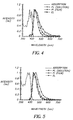
- FIGS. 4 and 5 show the UV, PL and El spectra of polymers 26 and 28 respectively.
- the voltage-current characteristics of the EL device of polymer 28 is shown in FIG 6. Table 1. Characterization of polymers according to Examples.
- Y are aryl groups having the following structures connected by a linking group Z ⁇ (Ar 1 ) ⁇ Z ⁇ (Ar 2 ) ⁇ wherein:
- Z contains N, Si, O, Cl, F, Br, or S atoms.
- An electroluminescent device comprises an anode, a cathode, and polymer luminescent materials disposed between the anode and cathode, the polymeric luminescent materials includes 9,10-di-(2-naphthyl)anthracene-based polymers of the following formula: wherein:
- the electroluminescent device wherein the carbon-carbon linking group includes: or ⁇ C ⁇ C ⁇ wherein R is hydrogen, or alkyl group containing 1 to 24 carbon atoms; aryl or substituted aryl of containing 6 to 28 carbon atoms; or heteroaryl or substituted heteroaryl containing 4 to 40 carbons; or F, Cl, or Br; or a cyano group.
- the electroluminescent device wherein the ester linking group includes: or
- the electroluminescent device wherein the anhydride linking group includes:
- the electroluminescent device wherein the carbonate linking group includes:
- the electroluminescent device wherein the sulfonyl or sulfinyl linking group includes: or
- the electroluminescent device wherein the amine linking group includes: wherein R is hydrogen, or alkyl group containing 1 to 24 carbon atoms; aryl or substituted aryl of containing 6 to 28 carbon atoms; or heteroaryl or substituted heteroaryl containing 4 to 40 carbons.
- the electroluminescent device wherein the amide linking group includes: or wherein R is hydrogen, or alkyl group containing 1 to 24 carbon atoms; aryl or substituted aryl of containing 6 to 28 carbon atoms; or heteroaryl or substituted heteroaryl containing 4 to 40 carbons.
- the electroluminescent device wherein the urea linking group includes: wherein R is hydrogen, or alkyl group containing 1 to 24 carbon atoms; aryl or substituted aryl of containing 6 to 28 carbon atoms; or heteroaryl or substituted heteroaryl containing 4 to 40 carbons.
- the electroluminescent device wherein the aryl linking group includes: wherein Ar is an aryl or substituted aryl group of containing 6 to 28 carbon atoms; or heteroaryl or substituted heteroaryl containing 4 to 40 carbons; n is an integer of from 1 to 6.
Landscapes
- Chemical & Material Sciences (AREA)
- Organic Chemistry (AREA)
- Health & Medical Sciences (AREA)
- Chemical Kinetics & Catalysis (AREA)
- Medicinal Chemistry (AREA)
- Polymers & Plastics (AREA)
- Engineering & Computer Science (AREA)
- Materials Engineering (AREA)
- Electroluminescent Light Sources (AREA)
- Paper (AREA)
- Polyurethanes Or Polyureas (AREA)
- Macromolecular Compounds Obtained By Forming Nitrogen-Containing Linkages In General (AREA)
- Polyamides (AREA)
- Polyesters Or Polycarbonates (AREA)
- Polymers With Sulfur, Phosphorus Or Metals In The Main Chain (AREA)
- Polyoxymethylene Polymers And Polymers With Carbon-To-Carbon Bonds (AREA)
Description
- The present invention relates to electroluminescent (EL) devices. More specifically, naphthylanthracene-based polymers used as luminescent materials in polymer EL devices.
- Electroluminescent devices are opto-electronic devices where light emission is produced in response to an electrical current through the device. The physical model for EL is the radiative recombination of electrons and holes. The term light emitting diode (LED) is commonly used to describe an EL device where the current-voltage behavior is non-linear, meaning that the current through the EL device is dependent on the polarity of the voltage applied to the EL device. Both organic and inorganic materials have been used for the fabrication of LEDs. Inorganic materials such as ZnS/Sn, Ga/Bs, Ga/As have been used in semiconductor lasers, small area displays, LED lamps, and so forth. However, the drawbacks of inorganic materials include difficulties to process and to obtain large surface areas and efficient blue light.
- Organic polymers used as light-emitting materials in EL devices offer several advantages over inorganic materials, such as simpler manufacturing, low operating voltages, the possibility of producing large area and full-color displays. Conjugated polymers such as poly(phenylvinylene) (PPV) were first introduced as EL materials by Burroughes and others in 1990 (Burroughes, J. H. Nature 1990, 347, 539-41). Considerable progress has been made since then to improve the stability, efficiency, and durability of polymeric LEDs (Sheats, J. R. and others Science 1996, 273, 884-888; Berggren, M. and others Nature 1994, 372, 444-6; Holmes, A. B. and others WO 94/29883 (1994); and Spreitzer. and others, Adv. Mater. 1998, 10(16), 1340). Polymers with wide energy bandgap to emit blue light are important materials because stable, efficient blue-light-emitting materials with high brightness are desirable for full color EL display applications. With these primary materials, it is possible to produce other colors by a downhill energy transfer process. For instance, a green or red EL emission can be obtained by doping a blue EL host material with a small amount of green or red luminescent material.
- Incorporating non-conjugated spacer groups into a conjugated polymer backbone is an effective approach to break conjugation thus increasing energy bandgap in order to emit blue light. These spacer groups usually prevent the extended conjugation and contribute to the solubility and film-forming properties of the polymer. Blue-light-emitting PPV (Aguiar, M and others Macromolecules 1995, 28, 4598-602), polythiophene (Andersson, M. R. and others Macromolecules 1995, 28, 7525-9), and PPP (Hilberer, A and others Macromolecules 1995, 28, 4525-9) have been prepared by this approach. However, such spacer group can act as a barrier to the injection and mobility of the charge carriers which leads to high threshold voltages and operating voltages. Thus, it is desirable to develop processable new blue-light-emitting polymers with low driving voltages for full color display.
- It is an object of the present invention to provide wide energy bandgap luminescent polymeric materials useful for polymer EL devices.
- It is a further object of the present invention to provide wide energy bandgap luminescent polymers which emit blue light.
- These objects are achieved in an electroluminescent device comprises an anode, a cathode, and polymer luminescent materials disposed between the anode and cathode, the polymeric luminescent materials includes 9,10-di-(2-naphthyl)anthracene-based polymers of formula (I).

wherein: - R1, R2, R3, and R4 are each individually hydrogen, or alkyl, or alkoxy of from 1 to 24 carbon atoms; aryl or substituted aryl of from 6 to 28 carbon atoms; or heteroaryl or substituted heteroaryl of from 4 to 40 carbons; or F, Cl, or Br; or a cyano group; or a nitro group;
- X is a linking group; and
- Y includes one or more comonomer units that are a substituted or unsubstituted alkyl, alkenyl, aryl, or heteroaryl or a conjugated group.
- The present invention provides polymeric luminescent materials with a number of advantages which include good solubility and better thermal stability. With the primary wide energy bandgap chromophore, 9,10-di-(2-naphthyl)anthracene, other color emitting luminescent copolymers can be easily designed and produced by introducing the narrow energy bandgap chromorphores into the polymeric chain.
- FIG. 1 illustrates in cross-section a bi-layer EL device which can use a polymer in accordance with the present invention;
- FIG. 2 illustrates a cross-section of a modified bi-layer EL device which can use a polymer in accordance with the present invention;
- FIG. 3 illustrates a cross-section of a single-layer EL device which can use a polymer in accordance with the present invention;
- FIG. 4 illustrates the absorption and photoluminescence spectra of polymer 26 and eletroluminescence spectrum of single-layer EL device fabricated from polymer 26;
- FIG. 5 illustrates the absorption and photoluminescence spectra of polymer 28 and eletroluminescence spectrum of single-layer EL device fabricated from polymer 28; and
- FIG. 6 illustrates the voltage-current density and luminance characteristics of a single-layer EL device fabricated from polymer 28.
- The present invention provides light-emitting polymers containing 9,10-di-(2-naphthyl)anthracene with good solubility and thermal stability as shown in formula I. The chromophore 9,10-di-(2-naphthyl)anthracene has been shown to be particularly useful for the fabrication of efficient and stable EL devices as disclosed in commonly-assigned US-A-5,935,721 by Shi and others. Furthermore, 9,10-di-(2-naphthyl)anthracene chromophore has a wide energy bandgap. The energy bandgap is the energy difference between the energy level of the highest occupied molecular orbital (HOMO) and the lowest unoccupied molecular orbital (LUMO). Incorporation of the second comonomer unit Y can serve several purposes:
- (1) to further improve solubility of the polymer;
- (2) to improve electron or hole transporting ability; and
- (3) to tune the emissive color of the polymer.
- Therefore, the second comonomer unit Y can be the groups to improve solubility, or electron or hole transporting mobility, or emissive moiety with narrow energy bandgap. The green- or red-light-emitting polymer can be obtained through intramolecular energy downhill transfer.
- The polymer shown in formula I is a polymer containing a 9,10-di-(2-naphthy)anthracene, wherein:
- R1, R2, R3, and R4 are each individually hydrogen, or alkyl or alkoxy containing 1 to 24 carbon atoms; aryl or substituted aryl of containing 6 to 28 carbon atoms; or heteroaryl or substituted heteroaryl containing 4 to 40 carbons; or F, Cl, or Br; or a cyano group; or a nitro group. For example, R1, R2, R3, and R4 may represent hydrogen, methyl, ethyl, propyl, isopropyl, butyl, isobutyl, tbutyl, pentyl, hexyl, ethylhexyl, heptyl, octyl, nonyl, decyl, dodecyl, hexyadecyl, cyclohexyl, cyclopentyl, methoxy, ethoxy, butoxy, hexyloxy, ethylhexyloxy, methoxyethoxyethyl, methoxyethyloxyethoxyethyl, phenyl, tolyl, nathphyl, xylene, anthracene, phenanthrene, phenylmethylenephenyl, benzyl, phenoxy, pyridyl, thiophenyl. Preferably, R1, R2, R3, and R4 are hydrogen, t-butyl, phenyl, 2-ethylhexyloxy, or 4-methoxypheny.
- X represents a linking group and include but not limited to the following groups:
- X is a carbon-carbon bond linking group:


―C≡C―
wherein R is hydrogen, or alkyl group containing 1 to 24 carbon atoms; aryl or substituted aryl of containing 6 to 28 carbon atoms; or heteroaryl or substituted heteroaryl containing 4 to 40 carbons; or F, Cl, or Br; or a cyano group; - X is an ether or thioether linking group:
―O―;
or
―S―
- X is an ester linking group:


- X is an anhydride linking group:

- X is a carbonate linking group:

- X is a sulfone or sulfine linking group:


- X is an amine linking group:

wherein R is hydrogen, or alkyl group containing 1 to 24 carbon atoms; aryl or substituted aryl of containing 6 to 28 carbon atoms; or heteroaryl or substituted heteroaryl containing 4 to 40 carbons; - X is an amide linking group:


wherein R is hydrogen, or alkyl group containing 1 to 24 carbon atoms; aryl or substituted aryl of containing 6 to 28 carbon atoms; or heteroaryl or substituted heteroaryl containing 4 to 40 carbons; - X is a urea linking group:

wherein R is hydrogen, or alkyl group containing 1 to 24 carbon atoms; aryl or substituted aryl of containing 6 to 28 carbon atoms; or heteroaryl or substituted heteroaryl containing 4 to 40 carbons; - X is an aryl linking group:

wherein Ar is an aryl or substituted aryl group containing 6 to 28 carbon atoms; or heteroaryl or substituted heteroaryl containing 4 to 40 carbons; n is an integer of from 1 to 6. - Y represents one or more second comonomer unit, and is a substituted or unsubstituted alkyl, alkenyl, aryl, heteroaryl or other conjugated groups. When more than one group is included the groups can be different.
- Alkyl groups contain 1 to 28 carbon atoms;
Substituted or unsubstituted aryl groups contain 6-28 carbon atoms which include phenyl, biphenyl, naphthyl, anthracene, fluorene, phenanthrene, spirophenyl, perylene, or pyrene groups;
Substituted or unsubstituted heteroaryl groups contain 4-40 carbon atoms which include pyridine, thiophene, pyrrole, bithiophene, furan, benzofuran, benzimidazole, benzoxazole, quinoxaline, phenylquinoline, dipheyloxadizaole, or carbazole;
All the substituents mentioned above include alkyl or alkoxy groups containing 1 to 24 carbon atoms, aryl or substituted aryl containing 6 to 28 carbon atoms; or heteroaryl or substituted heteroaryl containing 4 to 28 carbons; or F, Cl, or Br; or a cyano group; or a nitro group. - Y can be divided into the following groups.
- Y are alkyl groups of formula (II):
-R- (II)
wherein: - R contains 1 to 24 carbon atoms, may also contains N, S, F, CI, or Br, or Si atoms.
- The following molecular structures constitute specific examples of alkyl groups

polymer 1 R1=2-ethylhexyloxy, R2=H, m=6
polymer 2 R1=n-hexyl, R2=n-hexyloxy, m=4
polymer 3 R1=t-butyl, R2=n-hexyloxy, m=6
polymer 4 R1=2-ethylhexyloxy, R2=H, m=6
polymer 5 R1=n-hexyl, R2=n-hexyloxy, m=4
polymer 6 R1=t-butyl, R2=n-hexyloxy, m=6
polymer 7 R1=R2=n-hexyl, m=8
polymer 8 R1=R2=H, m=12
polymer 9 R1=H, R2=2-ethylhexyloxy, p=4, q=3
polymer 10 R1=n-hexyl, R2=t-butyl, p=4, q=3
polymer 11 R1=n-hexyl, R2=t-butyl, p=4, q=5
polymer 12 R1=H, R2=2-ethylhexyloxy, X=O, p=6
polymer 13 R1=n-hexyl, R2=2-ethylhexyloxy, X=O, p=4
polymer 14 R1=2-ethylhexyl, R2=t-butyl, X=S, p=4
polymer 15 R1=n-hexyoxy, R2=t-butyl, X=S, p=4
polymer 16 R1=H, R2=2-ethylhexyloxy, p=6
polymer 17 R1=n-hexyl, R2=2-ethylhexyloxy, p=4
polymer 18 R1=2-ethylhexyl, R2=t-butyl, p=4
polymer 19 R1=2-ethylhexyloxy, R2=H, p=4
polymer 20 R1=2-ethylhexyloxy, R2=H, p=4, q=3
polymer 21 R1=t-butyl, R2=2-ethylhexyl, p=4, q=5
polymer 22 R1=n-hexyl, R2=2-ethylhexyloxy, p=4, q=5
polymer 23 R1=2-ethylhexyloxy, R2=H, m=8
polymer 24 R1=t-butyl, R2=2-ethylhexyl, m=4
polymer 25 R1=n-hexyl, R2=2-ethylhexyloxy, m=2
polymer 26 R1=R2=H,m=11
polymer 27 R1=t-butyl, R2=2-ethylhexyl, m=7
polymer 28 R1=t-butyl, R2=H, m=1
polymer 29 R1=n-hexyl, R2=2-ethylhexyloxy, m=5
polymer 30 R1=2-ethylhexyloxy, R2=H, m=11 - Y are two aryl groups connected by a linking group Z of formula (III):
―(Ar1)―Z―(Ar2)― (III)
wherein: - Ar1 and Ar2 are substituted or unsubstituted aromatic groups containing 6-28 carbon atoms,
- Z is a divalent linking groups containing 0 to 12 carbon atoms, can contain N, Si, O, Cl, F, Br, or S atoms.
- The following molecular structures constitute specific examples of above mentioned groups with formula III:

polymer 31 R1=2-ethylhexyloxy, R2=R3=H, p=6
polymer 32 R1=R3=H, R2=2-ethylhexyloxy, p=12
polymer 33 R1=n-hexyl, R2=R3=H, p=12
polymer 34 R1=t-butyl, R2=R3=n-hexyl, p=6
polymer 35 R1=2-ethylhexyloxy, R2=R3=H, R4=CH3, X=C
polymer 36 R1=2-ethylhexyloxy, R2=R3=H, R4=CF3, X=C
polymer 37 R1=t-butyl, R2=2-ethylhexyloxy, R4=CF3, R3=H, X=C
polymer 38 R1=n-hexyl, R2=n-hexyloxy, R3=H, R4=CF3, X=C
polymer 39 R1=t-butyl, R2=2-ethylhexyloxy, R3=H, R4=CF3, X=Si
polymer 40 R1=H, R2=2-ethylhexyloxy, R3=H, R4=CF3, X=Si
polymer 41 R1=2-ethylhexyloxy, R2=R3=H, R4=CH3, X=C
polymer 42 R1=2-ethylhexyloxy, R2=R3=H, R4=CF3, X=C
polymer 43 R1=t-butyl, R2=2-ethylhexyloxy, R3=H, R4=CF3, X=Si
polymer 44 R1=R2=R3=H, R4=CH3, X=C
polymer 45 R1=H, R2=2-ethylhexyloxy, R3=H, R4=CF3, X=Si
polymer 46 R1=2-ethylhexyloxy, R2=H, R3=R4=CH3
polymer 47 R1=R2=H, R3=R4=CH3
polymer 48 R1=H, R2=2-ethylhexyloxy, R3=n-butyl, R4=CH3
polymer 49 R1=2-ethylhexyloxy, R2=H, R3=CH3, R4=H, X=C
polymer 50 R1=t-butyl, R2=n-hexyloxy, R3=CH3, R4=H, X=C
polymer 51 R1=t-butyl, R2=n-hexyloxy, R3=n-butyl, R4=H,
X=Si
polymer 52 R1=R2=R4=H, R3=CF3, X=C
polymer 53 R1=H, R2=2-ethylhexyloxy, R3= CH3, R4=n-butyl, X=Si
polymer 54 R1=2-ethylhexyloxy, R2=n-butyl, R3=phenyl
polymer 55 R1=t-butyl, R2=n-hexyloxy, R3=phenyl
polymer 56 R1=2-ethylhexyloxy, R2=H, R3=n-butyl
polymer 57 R1=n-hexyl, R2=2-ethylhexyloxy, R3=phenyl
polymer 58 R1=2-ethylhexyloxy, R2=H, R3=n-hexyl
polymer 59 R1=2-ethylhexyloxy, R2=H, R3=n-hexyl
polymer 60 R1=2-ethylhexyloxy, R2=H, R3=n-hexyl
polymer 61 R1=t-butyl, R2=H, R3=2-ethylhexyl
polymer 62 R1=H, R2=n-hexyloxy, R3=n-hexyl
polymer 63 R1=2-ethylhexyloxy, R2=H, R3=4-methyloxyphenyl
polymer 64 R1=2-ethylhexyloxy, R2=H, X=O
polymer 65 R1=2-ethylhexyloxy, R2=H, X=S
polymer 66 R1=t-butyl, R2=n-hexyloxy, X=O
polymer 67 R1=2-ethylhexyloxy, R2=n-hexyl, X=O
polymer 68 R1=2-ethylhexyloxy, R2=H, R3=R4=n-hexyl
polymer 69 R1=n-hexyl, R2=H, R3=R4=n-hexyl
polymer 70 R1=t-butyl, R2=n-hexyl,
R3=R4=4-methyloxyphenyl
polymer 71 R1=R2=n-hexyloxy, R3=R4=n-hexyl
polymer 72 R1=2-ethylhexyloxy, R2=H
polymer 73 R1=t-butyl, R2=n-hexyloxy
polymer 74 R1=R2=n-hexyl
polymer 75 R1=2-ethylhexyloxy, R2=t-butyl
polymer 76 R1=2-ethylhexyloxy, R2=R3=H
polymer 77 R1=R2=n-hexyl, R3=H
polymer 78 R1=t-butyl, R2=n-hexyloxy, R3=H
polymer 79 R1=t-butyl, R2=R3=n-hexyloxy
polymer 80 R1=2-ethylhexyloxy, R2=R3=H
polymer 81 R1=t-butyl, R2=n-hexyl, R3=n-hexyloxy
polymer 82 R1=t-butyl, R2=n-hexyloxy, R3=H
polymer 83 R1=2-ethylhexyloxy, R2=H, R3=n-hekyloxy - Y are aromatic hydrocarbons of formula (IV):
(̵Ar)̵ (IV)
wherein: - Ar is substituted or unsubstituted aryl groups with 6 to 28 carbon atoms.
- The following molecular structures constitute specific examples of above mentioned groups with formula IV:

polymer 84 R1=2-ethylhexyloxy, R2=R3=H, p=0
polymer 85 R1=R2=n-hexyl, R3=H, p=1
polymer 86 R1=t-butyl, R2=n-hexyloxy, R3=H, p=2
polymer 87 R1=t-butyl, R2=R3=n-hexyloxy, p=1
polymer 88 R1=2-ethylhexyloxy, R2=H, m=5
polymer 89 R1=n-hexyl, R2=H, m=17
polymer 90 R1=t-butyl, R2=n-hexyloxy, m=7
polymer 91 R1=t-butyl, R2=R3=n-hexyloxy, m=9
polymer 92 R1=2-ethylhexyloxy, R2=R3=H
polymer 93 R1=R2=n-hexyl, R3=H
polymer 94 R1=t-butyl, R2=R3=n-hexyloxy
polymer 95 R1=t-butyl, R2= n-hexyloxy, R3=H
polymer 96 R1=t-butyl, R2=n-hexyloxy, R3=R4=H
polymer 97 R1=2-ethylhexyl, R2=R4=H, R3=n-hexyloxy
polymer 98 R1=2-ethylhexyloxy, R2=R3=n-hexyloxy, R4=H
polymer 99 R1=n-hexyl, R2=R3=n-hexyloxy, R3=R4=H
polymer 100 R1=t-butyl, R2=n-hexyloxy, R3=R4=H, p=q=1
polymer 101 R1=2-ethylhexyl, R2=R4=H, R3=n-hexyloxy, p=q=1
polymer 102 R1=2-ethylhexyloxy, R2=R3=n-hexyloxy, R4=H, p=q=2
polymer 103 R1=n-hexyl, R2=R3=n-hexyloxy, R4=H, p=q=2
polymer 104 R1=2-ethylhexyloxy, R2=R3=H, R4=n-hexyl, p=q=2
polymer 105 R1=n-hexyl, R2=R4=n-hexyloxy, R3=H, p=q=2
polymer 106 R1=t-butyl, R2=n-hexyloxy, R3=R4=H
polymer 107 R1=2-ethylhexyl, R2=R4=H, R3=n-hexyloxy
polymer 108 R1=2-ethylhexyloxy, R2=R3=n-hexyloxy, R4=H
polymer 109 R1=n-hexyl, R2=R3=n-hexyloxy, R3=R4=H
polymer 110 R1=2-ethylhexyloxy, R2=R3=H
polymer 111 R1=R2=n-hexyl, R3=H
polymer 112 R1=t-butyl, R2=R3=n-hexyloxy
polymer 113 R1=2-ethylhexyloxy, R2=H, R3=n-hexyloxy
polymer 114 R1=2-ethylhexyloxy, R2=R3=H
polymer 115 R1=2-ethylhexyloxy, R2=n-hexyl, R3=H
polymer 116 R1=t-butyl, R2=R3=n-hexyl
polymer 117 R1=2-ethylhexyloxy, R2=R3=H
polymer 118 R1=2-ethylhexyloxy, R2=n-hexyl, R3=H
polymer 119 R1=t-butyl, R2=R3=n-hexyl
polymer 120 R1=2-ethylhexyloxy, R2=H, R3=n-hexyl
polymer 121 R1=2-ethylhexyloxy, R2=n-hexyl, R3=H
polymer 122 R1=R2=R3=n-hexyl
polymer 123 R1=R3=2-ethylhexyloxy, R2=H
polymer 124 R1=2-ethylhexyloxy, R2=n-hexyl, R3=H
polymer 125 R1=R2=R3=n-hexyl
polymer 126 R1=R3=2-ethylhexyloxy, R2=H
polymer 127 R1=2-ethylhexyloxy, R2=R3=H - Y are aromatic hydrocarbons linked by a double bond of formula (V)

wherein: - Ar1 and Ar2 are substituted or unsubstituted aryl groups with 6 to 28 carbon atoms;
- R' and R" are hydrogen, or alkyl group containing 1 to 12 carbon atoms, or Cl, Br, F, or a cyano group; and
- p is an integer from 1 to 3.
- The following molecular structures constitute specific examples of above mentioned groups with formula IV:

polymer 128 R1=2-ethylhexyloxy, R2=R3=R4=R5=H
polymer 129 R1=2-ethylhexyloxy, R2=n-hexyl, R3=R4=R5=H
polymer 130 R1=t-butyl, R2=n-hexyl, R3=R5=H, R4=n-hexyloxy
polymer 131 R1=2-ethylhexyloxy, R2=R4=R5=H, R3=CN
polymer 132 R1=2-ethylhexyloxy, R2=n-hexyl, R3=CN, R4=R5=H
polymer 133 R1=2-ethylhexyloxy, R2=R3=R4=R5=H
polymer 134 R1=2-ethylhexyloxy, R2=n-hexyl, R3=R4=R5=H
polymer 135 R1=t-butyl, R2=n-hexyl, R3=R5=H, R4=n-hexyloxy
polymer 136 R1=2-ethylhexyloxy, R2=R4=R5=H, R3=CN
polymer 137 R1=2-ethylhexyloxy, R2=n-hexyl, R3=CN, R4=R5=H
polymer 138 R1=2-ethylhexyloxy, R2=R3=R4=R5=H
polymer 139 R1=2-ethylhexyloxy, R2=n-hexyl, R3=R4=R5=H
polymer 140 R1=t-butyl, R2=n-hexyl, R3=R5=H, R4=n-hexyloxy
polymer 141 R1=2-ethylhexyloxy, R2=R4=R5=H, R3=CN
polymer 142 R1=2-ethylhexyloxy, R2=n-hexyl, R3=CN, R4=R5=H
polymer 143 R1=2-ethylhexyloxy, R2=R3=R4=R5=H
polymer 144 R1=2-ethylhexyloxy, R2=n-hexyl, R3=R4=R5=H
polymer 145 R1=t-butyl, R2=n-hexyl, R3=R5=H, R4=n-hexyloxy
polymer 146 R1=2-ethylhexyloxy, R2=R4=R5=H, R3=CN
polymer 147 R1=2-ethylhexyloxy, R2=n-hexyl, R3=CN, R4=R5=H
polymer 148 R1=2-ethylhexyloxy, R2=R3=R4=R5=H, p=q=r=1
polymer 149 R1=2-ethylhexyloxy, R2=n-hexyl, R3=R4=R5==H, p=q=r=1
polymer 150 R1=t-butyl, R2=n-hexyl, R3=R5=H, R4=n-hexyloxy, p=q=2, r=1
polymer 151 R1=2-ethylhexyloxy, R2=R4=R5=H, R3=CN, p=q=r=1
polymer 152 R1=2-ethylhexyloxy, R2=n-hexyl, R3=CN, R4=R5=H, p=q=r=2
polymer 153 R1=2-ethylhexyloxy, R2=R3=R4=R5=H, p=q=r=1
polymer 154 R1=2-ethylhexyloxy, R2=n-hexyl, R3=R4=R5=H, p=q=r=1
polymer 155 R1=t-butyl, R2=n-hexyl, R3=R5=H, R4=n-hexyloxy, p=q=2, r=1
polymer 156 R1=2-ethylhexyloxy, R2=R4=R5=H, R3=CN, p=q=r=1
polymer 157 R1=2-ethylhexyloxy, R2=n-hexyl, R3=CN, R4=R5=H, p=q=r=2 - Y are heteroaromatics of formula (VI)
(̵W)̵ (VI)
wherein: - W is substituted or unsubstituted heteroaryl groups with 4-40 carbon atoms, and at least one or more N, S, or O atoms.
- The following molecular structures constitute specific examples of above mentioned groups with formula VI:

polymer 158 R1=2-ethylhexyloxy, R2=R3=H, p=1
polymer 159 R1=2-ethylhexyloxy, R2=R3=H, p=2
polymer 160 R1=2-ethylhexyloxy, R2=H, R3=n-hexyl, p=1
polymer 161 R1=t-butyl, R2=n-hexyloxy, R3=H, p=1
polymer 162 R1=2-ethylhexyloxy, R2=R3=H, R4=n-hexyl, p=1
polymer 163 R1=t-butyl, R2=n-hexyl, R3=H, R4=2-ethylhexyl, p=2
polymer 164 R1=2-ethylhexyloxy, R2=H, R3=n-hexyl, R4=2-ethylhexyl, p=2
polymer 165 R1=2-ethylhexyloxy, R2=R3=n-hexyl, R4=2-ethylhexyl, p=3
polymer 166 R1=2-ethylhexyloxy, R2=R3=R4=H, p=r=0, q=1
polymer 167 R1=t-butyl, R2=n-hexyl, R3=R4=2-ethylhexyl, p=r=1, q=2
polymer 168 R1=R4=2-ethylhexyloxy, R2=R3=H, p=r=q=1
polymer 169 R1=R2=2-ethylhexyloxy, R3=R4=H, p=r=1, q=2
polymer 170 R1=t-butyl, R2=R3=2-ethylhexyloxy, R4=H, p=r=1, q=2
polymer 171 R1=2-ethylhexyloxy, R2=H,, p=q=1, X=O
polymer 172 R1=2-ethylhexyloxy, R2=H,, p=q=1, X=S
polymer 173 R1=2-ethylhexyloxy, R2=H,, p=q=1, X=n-hexyl
polymer 174 R1=2-ethylhexyloxy, R2=n-hexyl, p=q=2, X=O
polymer 175 R1=2-ethylhexyloxy, R2=n-hexyl, p=q=2, X=S
polymer 176 R1=2-ethylhexyloxy, R2=n-hexyl, p=q=2, X=N-hexyl
polymer 177 R1=2-ethylhexyloxy, R2=R3=H
polymer 178 R1=2-ethylhexyloxy, R2=H, R3=phenyl
polymer 179 R1=t-butyl, R2=R3=n-hexyl
polymer 180 R1=2-ethylhexyloxy, R2=H, R3=n-hexyloxy
polymer 181 R1=2-ethylhexyloxy, R2=n-hexyloxy,R3=H
polymer 182 R1=2-ethylhexyloxy, R2=R3=H
polymer 183 R1=2-ethylhexyloxy, R2=H, R3=phenyl
polymer 184 R1=t-butyl, R2=R3=n-hexyl
polymer 185 R1=2-ethylhexyloxy, R2=H, R3=n-hexyloxy
polymer 186 R1=2-ethylhexyloxy, R2=n-hexyloxy,R3=H
polymer 187 R1=2-ethylhexyloxy, R2=R3=H
polymer 188 R1=2-ethylhexyloxy, R2=H, R3=phenyl
polymer 189 R1=t-butyl, R2=R3=n-hexyl
polymer 190 R1=2-ethylhexyloxy, R2=H, R3=n-hexyl
polymer 191 R1=2-ethylhexyloxy, R2=R3=H
polymer 192 R1=2-ethylhexyloxy, R2=H, R3=phenyl
polymer 193 R1=t-butyl, R2=R3=n-hexyl
polymer 194 R1=2-ethylhexyloxy, R2=H, R3=n-hexyl
polymer 195 R1=2-ethylhexyloxy, R2=H, R3=methyl
polymer 196 R1=2-ethylhexyloxy, R2=H, R3=phenyl
polymer 197 R1=t-butyl, R2=R3=n-hexyl
polymer 198 R1=2-ethylhexyloxy, R2=H, R3=n-hexyl - In formula (I), Y can be one or the combination of more than one of the above groups. The specific molecular structures can be the combination of any of the above drawn structures.
- The polymerization method and the molecular weights of the resulting polymers used in the present invention are not necessary to be particularly restricted. The molecular weights of polymers are at least 1000, and preferably at least 3000. The polymers may be prepared by condensation polymerizations, preferably by cross-coupling reactions such as Pd-catalyzed Suzuki coupling (Miyaura, N. and others Chem. Rev. 1995, 95, 2457), or by condensation reaction between di-(acid chloride)s with di-amines, di-alcohols or di-phenols in the presence of bases.
- Suzuki coupling reaction was first reported by Miyaura and others on the coupling of aromatic boronic acid derivatives with aromatic halides Miyaura and others Synthetic Comm. 1981, 11 (7), 513). Since then, this reaction has been widely used to prepared polymers for various applications (Ranger, M. and
others Macromolecules 1997, 30, 7686-7691; Kim, S. and others Macromolecules 1998, 31, 964-974; and Ng, P. K Macromol. Rapid Commun. 1997, 18, 1009-1016). A modified process was reported by Inbasekaran and others to prepare conjugated polymers for EL devices (US-A-5,777,070). According to the present invention, the above mentioned polymers were prepared by Suzuki coupling reaction of an aromatic diboronic acid ester with an aromatic dibromide. The aromatic diboronic acid esters were prepared from the corresponding dihalide treated with nBuLi and trimethylborate followed by esterification with a di-alcohol. The synthetic schemes for polymers and monomers are illustrated in Schemes 1-6. - FIG. 1 illustrates the basic structure used to construct organic EL devices. It is a bi-layer structure comprising a
hole transport layer 30 and anelectron transport layer 40. The electron transport layer is also the emissive layer from which electroluminescence originates. Together they form theEL medium 50. The anode is adjacent to the hole transport layer and thecathode 60 is adjacent to the electron transport layer. The substrate islayer 10. This figure is for illustration only and the individual layer thickness is not scaled according to the actual thickness. - FIG. 2 illustrates an alternative construction of the EL device. It is a modified bi-layer structure. The EL medium contains an emissive layer between the hole transport layer and the electron transport layer. This emissive layer is the layer where electroluminescence originates. Thus,
layer 300 is the hole transport layer,layer 400 is the emissive layer,layer 500 is the electron transport layer, and together they form theelectroluminescent medium 600.Layer 200 is the anode andlayer 700 is the cathode. The substrate islayer 100. This figure is for illustration only and the individual layer thickness is not scaled according to the actual thickness. - The bi-layer EL devices are the basic structure providing high luminous efficiency and low operating voltage. Alternative EL device structures have been demonstrated to provide improved device performance. These alternative structures include features in addition to the basic bi-layer structure such as the following structure (a) hole injection layer as disclosed in US-A-4,356,429; (b) cathode modification with alkaline or alkaline halides as disclosed in US-A-5,776,622; and (c) doped emitter layer inserted between the hole transport and electron transport layer as disclosed in US-A-4,769,292.
- FIG. 3 illustrates another alternative construction of an EL device. It is a single-layer structure comprising an emitting
layer 3000, sandwiched between ananode 2000 andcathode 4000. The emittinglayer 3000 also acts as a charge carrier layer. Thus,single layer 3000 is the electroluminescent medium. The substrate islayer 1000. This figure is for illustration only and the individual layer thickness is not scaled according to the actual thickness. - A preferred EL device structure of this invention is a single-layer structure comprising an anode, a cathode, and single layer of electroluminescent medium. This electroluminescent layer is the emissive layer, and is also capable of transporting electrons as well as holes. The principle function of this layer is to provide efficient emissive centers for electroluminescence. This layer can comprise one of the above mentioned polymers or the blend of two or more polymers, or polymers doped with one or more fluorescent dyes (FD). The fluorescent dye is usually present in an amount on the order of a few molar percent or less of the host polymer and it is sufficient to cause the EL emission to be predominantly that of the fluorescent dye. Using this method, highly efficient EL devices can be constructed. Simultaneously, the color of the EL devices can be tuned using fluorescent dyes of different emission wavelengths. By using a mixture of fluorescent dyes, EL color characteristics of the combined spectra of the individual fluorescent dyes are produced. This dopant scheme has been described in considerable detail for EL devices in US-A-4,769,292. An important criterion for choosing a fluorescent dye as a dopant capable of modifying the hue of light emission when present in a host material is a comparison of their bandgap. For efficient energy transfer from the host to the dopant molecule, a necessary condition is that the energy bandgap of the dopant is smaller than that of the host polymer. Preferred fluorescent dyes used as the dopant in the emissive layer include but are not limited to coumarins, stilbenes, distrylstibenes, anthracene derivatives, tetracene, perlenes, rhodamines, and arylamines.
- The molecular structures of the preferred fluorescent dyes for the emissive layer in the EL device are listed as follows:

FD 1 R=H
FD 2 R=CO2Pr-i
FD 3 R=H, R'=t-Bu
FD 4 R=R'=t-Bu
FD 5
FD 6
FD 7
FD 8 R=H
FD 9 R=Me
FD 10 R=Pr-i
FD11 R=2-ethylhexyl
FD 12 R1=R2=Me, X=O
FD 13 R1=R2=hexyl, X=O
FD 14 R1=R2=phenyl, X=O
FD 15 R1=R2=Me, X=S
FD 16 R1=R2=hexyl, X=S
FD 17 R1=R2=phenyl, X=S
FD 18 R=n-hexyl
FD 19 R=phenyl - The above mentioned polymers can be deposited as high quality transparent thin films by spin-coating or inkjet printing the polymer solutions. Preferably, the spin-coating technique is used to form
layer 3000, and preferably, only one polymer is deposited as single layer of electroluminescent medium. - Preferred materials for use in forming the cathode of the EL devices of this invention are Mg, Li, or alloys of these materials as disclosed in US-A-5,429,884 and US-A-5,776,622.
- The invention and its advantages are further illustrated by the following specific examples:
- Monomers to be used in the present invention are not necessary to be particularly restricted. Any monomers can be used as long as the polymer formed is a polymer which satisfies the general formula (I). Typical monomer and polymer synthesis is illustrated in Schemes 1-6.


- 6-Bromo-2-hydroxy-naphthalene (66.7 g, 0.299 mol) and NaOH (7.4 g, 0.185 mol) were suspended in 500 mL of dioxane and heated for half hour until the reaction became homogeneous. Epichlorohydrin (11.5 g, 0.124 mol) was added dropwise and the reaction was heated at reflux for 20 h. The brown reaction mixture was poured into 1 L of water and the gray precipitated was filtered, washed with water and methanol, and dried under vacuum. The crude product was then recrystallized from acetone to give 41.3 g of pure product (67% yield). 1H NMR (CDCl3) δ (ppm): 4.28-4.35 (m, 5H), 4.50-4.55 (m, 1H), 7.15 (d, J = 2.2 Hz, 2H), 7.18 (dd, J1 = 8.9 Hz, J2 = 2.4 Hz, 2H), 7.48 (dd, J1 = 8.7 Hz, J2 = 1.8 Hz, 2H), 7.56 (d, J = 8.8 Hz, 2H), 7.64 (d, J = 8.9 Hz, 2H), 7.91 (d, J = 1.1 Hz, 2H); 13C NMR (CDCl3): 66.07, 67.87, 105.32, 115.04, 118.36, 126.84, 127.04, 127.70, 127.76, 128.24, 131.32, 155.40; M.p. 148-150 °C; FD-MS: m/z 500 (M+).
- To a 500 mL round-bottomed flask were added 1,3-di(2-(6-bromonaphthoxy))-2-propanol compound 1 (30.0 g, 0.060 mol), NaOH (7.2 g, 0.18 mol), NaHSO4 (20.4 g, 0.060 mol), 1-bromododecane (44.9 g, 0.18 mol),
water 30 mL, and THF 160 mL. The reaction was heated under reflux for two days. After cooling to room temperature, 250 mL of water was added, and the reaction was extracted with ether (6x200 mL). The organic phase was combined, dried over MgSO4, and concentrated. The crude product was purified by column chromatography on silica gel using CH2Cl2/hexane (15/85) as eluent to give pure product as white powder 25.2 g (63% yield). 1H NMR (CDCl3) δ (ppm): 0.87 (t, J = 6.9 Hz, 3H), 1.25 - 1.39 (m, 18H), 1.60 - 1.70 (m, 2H), 3.73 (t, J = 6.6 Hz, 2H), 4.13 -4.18 (m, 1H), 4.26 -4.37 (m, 4H), 7.16 (d, J = 2.2 Hz, 2H), 7.19 (dd, J1 = 8.9 Hz, J2 = 1.8 Hz, 2H), 7.48 (dd, J1 = 8.8 Hz, J2 = 1.8 Hz, 2H), 7.57 (d, J = 8.8 Hz, 2H), 7.63 (d, J = 8.9 Hz, 2H), 7.91 (d, J = 1.4 Hz, 2H); 13C NMR (CDCl3): 14.10, 22.67, 26.05, 29.33, 29.44, 29.61, 29.65, 30.03, 31.90, 67.76, 71.16, 76.40, 106.95, 117.22, 119.85, 128.35, 128.51, 129.64, 130.13, 132.94, 156.92. M.p. 99-101 °C; FD-MS: m/z 668 (M+). -
- Step 1: synthesis of diboronic acid: Bisbromide compound 2 (12.0 g, 0.018 mol) was dissolved in 150 mL of anhydrous THF and cooled to -78 °C. To this solution was added slowly nBuLi solution (33.8 mL, 1.6 M in hexane, 0.054 mol) to keep temperature lower than -60 °C. The mixture was stirred at -78 °C for 1 h and trimethyl borate (8.1 mL, 0.072 mol) was added slowly. The reaction mixture was slowly warmed up to room temperature and stirred at room temperature overnight. The reaction was quenched with dilute HCl solution and stirred under nitrogen for 1 h. The reaction mixture was then extracted with ether 5 times and dried over MgSO4. Solvent was evaporated and the crude product was used for preparation of diboranate without purification.
- Step 2: Synthesis of bis-2,2-dimethyltrimethylene diboranate. The crude diboronic acid and 2,2-dimethylporpane-1,3-diol (neopentyl glycol) (3.8 g, 0.037 mol) were dissolved in toluene and heated under vigorous reflux under a Dean-Stark trap. After the completion of the reaction, toluene was evaporated and the crude product was recrystallized from hexane as off-white needle-like crystals, 7.7 g (57% yield). 1H NMR (CDCl3) δ (ppm): 0.85 (t, J = 6.9 Hz, 3H), 1.02 (s, 12H), 1.24 - 1.34 (m, 18H), 1.58 - 1.65 (m, 2H), 3.71 (t, J = 6.6 Hz, 2H), 3.79 (s, 8H), 4.11 - 4.16 (m, 1H), 4.24 -4.36 (m, 4H), 7.17 (s, 2H), 7.14 (d, J = 8.5 Hz, 2H), 7.67 (dd, J = 8.2 Hz, 2H), 7.75 (d, J = 8.8 Hz, 2H), 7.8 (d, J = 8.3 Hz, 2H), 7.91 (s, 2H); 13C NMR (CDCl3): 14.11, 21.93, 22.68, 26.07, 29.35, 29.47, 29.63, 29.66, 30.06, 31.92, 67.83, 71.15, 72.37, 76.47, 106.77, 118.61, 125.77, 128.62, 130.26, 130.66, 134.80, 136.13, 157.38. M.p. 59-61 °C; FD-MS: m/z 726 (M+).
- 4-t-Butyl-phthalic anhydride (36.0 g, 176 mmol) and t-butyl benzene were placed under nitrogen in a 3-neck round-bottom flask equipped with a condenser. The condenser was attached to a water-gas trap for HCl released during the reaction. AlCl3 (56.0 g, 420 mmol) was added in portions during which time the mixture turned dark brown. Stirring became difficult in the thick mixture. The reaction was heated at 70 °C for 1 h and then cooled to room temperature. Ice was added slowly to the flask followed by concentrated HCl solution. A large clump of solid stuck to the bottom of the flask. This was washed multiple times with water and then dissolved in CH2Cl2, washed with water, dried over Na2SO4 and concentrated to give an oily solid. Hexane was added and after sonication, a blue-white solid was collected by filtration. Drying gave product as white solid 32.0 g (54% yield). 1H NMR (CDCl3) δ (ppm): 1.33 (s, 18 H), 7.30 (d, J= 8.0 Hz, 1H), 7.43 (d, J = 8.3 Hz, 2H), 7.63-7.70 (m, 3H), 8.08 (s, 1H); 13C NMR (CDCl3): 30.98, 34.92, 125.36, 125.41, 127.78, 127.84, 128.02, 129.51, 129.60, 129.81, 134.56, 139.83, 152.94, 156.80, 170.80, 196.89.
- 4-t-Butyl-2-benzoylbenzoic acid 4 (32.0 g, 95 mmol) was placed into a round-bottom flask and oleum (30%, 290 mL) was then added. The reaction mixture turned black and the reaction temperature was increased to 120 ° C and stirred for 3 h. The mixture was then poured into ice. The aqueous mixture was extracted using CH2Cl2 (5x), dried over Na2SO4 and concentrated to give a dark solid. This solid was passed through a silica gel column using CH2Cl2 as eluent. After concentrating, the yellow-brown solid was recrystallized from hexane to give product as yellow crystals 21.0 g (69% yield). 1H NMR (CDCl3) δ (ppm): 1.42 (s, 18H), 7.80 (d, J = 8.2 Hz, 1H), 7.81 (d, J = 8.2 Hz), 8.20 (d, J = 8.2 Hz, 1H),), 8.22 (d, J = 8.2 Hz, 1H), 8.31 (s, 2H); 13C NMR (CDCl3): 31.01, 35.58, 123.83, 123.90, 127.17, 127.28, 131.08, 131.15, 131.34, 131.42, 133.40, 133.49, 157.94, 158.05, 182.76, 183.28,183.78
- 2,6-Di-t-butyl-anthraquinone 5 (10.0 g, 313 mmol), tin (18.0 g, 151 mmol), and 50 mL of glacial acetic acid were added to a round-bottom flask and heated to reflux. During heating, the anthraquinone 5 went into solution and a new solid started to precipitate out. After 3 h, TLC showed all starting material 5 disappeared. After cooling to room temperature, the mixture was poured into ice and stirred for 30 minutes. CH2Cl2 was added and after separation, the aqueous layer was extracted with CH2Cl2 (3x). The combined organic layers were dried over Na2SO4 and concentrated to yield a sticky, oily solid. This was used without further purification in the subsequent reaction.
- The oily solid was dissolved in 110 mL of isopropyl alcohol and of NaBH4 (13.0 g, 333 mmol) was added in portions. The reaction was refluxed overnight. TLC indicated the completion of the reaction. After cooling to room temperature and the reaction was neutralized with HCl (6 M) solution during which time a solid precipitated out of solution. Additional water was added and the product was collected by vacuum filtration, washed thoroughly with water and dried in an oven to give 8.8 g product (97% yield).). 1H NMR (CDCl3) δ (ppm): 1.43 (s, 18H), 7.48-7.53 (m, 2H), 7.85-7.91 (m, 2H), 8.26-8.30 (m, 2H); 13C NMR(CDCl3): 30.98, 34.89, 122.17, 122.25, 124.51, 124.70, 124.91, 125.36, 125.80, 127.71, 127.77, 130.05, 130.45, 131.55, 131.96, 147.23, 147.43.
- 2,6-Di-t-butyl-anthracene 6 (4.0 g, 13.8 mmol) was dissolved in 150 mL CCl4 and then bromine (1.42 mL; 27.6 mmol) was added dropwise. After stirring at room temperature overnight, TLC indicated the completion of the reaction. The reaction mixture was poured into water and a concentrated solution of sodium thiosulfate was added. After stirring for 60 minutes, the layers were separated, the aqueous layer was extracted with CH2Cl2 (3x) and the combined organic layer was dried over Na2SO4 and concentrated to give a yellow solid. This solid was recrystallized from EtOH to give pure product 6.0 g (97% yield). 1H NMR (CDCl3) δ (ppm): 1.48 (s, 18H), 7.69-7.71(m, 2H), 8.45-8.51 (m, 4H); 13C NMR (CDCl3): 30.88, 35.28, 122.59, 122.93, 126.87, 128.00, 128.08, 129.88, 130.64, 149.77; M.p. 150-152 °C; FD-MS: m/z 368 (M+).
- Magnesium turnings (5.55 g, 231 mmol), 30 mL THF, and two crystals of iodine were placed into a round-bottomed flask under nitrogen. The flask was heated to 50 °C and dibromoethane was used to help initiate the Grignard reaction. 2-Bromo-6-methoxy naphthalene (50.0 g, 211 mmol) in 400 mL of THF was added dropwise over 90 minutes during which time heat was increased to allow for gentle reflux. After addition, the reaction mixture was allowed to reflux for an additional 2 hours.
- 9,10-Dibromoanthracene (23.63 g, 70.3 mmol), 300 mL of THF and a catalytic amount of dichlorobis(triphenylphosphine)palladium (II) were all placed under nitrogen in a round bottomed flask. The Grignard reagent prepared above was then added via a double-end needle transfer while still warm. After the addition, the reaction mixture was allowed to reflux overnight. After cooling to room temperature, the precipitated solid was collected by vacuum filtration and washed with ether, THF, and water. The collected solid was placed into a beaker and HCI (6M) was added followed by ethanol. This mixture is stirred for 60 minutes and the solid is again collected by vacuum filtration. The product was washed until the washings are neutral. After drying, the solid is refluxed gently in CH2Cl2 for 60 minutes. The pure product was filtered and dried to give 85.2 g solid (82% yield) (AA8790-34). 1H NMR (CDCl3) δ (ppm): 3.97 (s, 6H), 7.29 (dd, J1 = 8.9 Hz, J2 = 2.4 Hz, 2H), 7.40 (d, J = 6.9 Hz 2H), 7.41 (d, J = 6.9 Hz, 2H), 7.53 (d, J = 2.2 Hz, 2H), 7.57 (d, J = 8.0 Hz, 2H), 7.64 (d; J = 6.8 Hz, 2H), 7.65 (d, J = 6.8 Hz, 2H), 7.94 (d, J = 9 Hz, 2H), 7.97 (s, 2H), 8.10 (d, J = 8.4 Hz, 2H);. FD-MS: m/z 490 (M+).
- Starting material (35.0 g, 71.4 mmol), pyridine hydrochloride (72.0 g, 682 mmol), and 105 mL of phenyl ether-biphenyl eutectic were placed under nitrogen in a round bottomed flask equipped with a condenser. The reaction was refluxed for 2 days and then cooled slightly. Hexane was added to prevent the mixture from solidifying and the mixture was stirred for 30 minutes. The solid was collected by vacuum filtration. The solid product was added to an Erlenmeyer with ethanol and heated at 70 °C for 2 hours. After cooling, the solid was collected by filtration and dried in an oven to give pure product 28.5 g (86% yield). The product was sublimed prior to polymerization. Elemental analysis: calcd. for C34H22O2: C 88.30%, H, 4.80%; found: C 88.02%, H 4.91%.
- 2,6-Dihydroxyanthraquinone (100.0g, 0.42 mol) and 2-ethylhexyl bromide (165.0 g, 0.86 mol) were dissolved in 1 L of DMF. To this solution was added anhydrous K2CO3 (120.0g, 0.87 mol). The reaction was heated at 90 °C overnight. Most of DMF was removed and 500 mL of water was added. The reaction was extracted with ether (3x400 mL), washed with brine (1x200 mL), and dried over MgSO4. Solvent was removed and the crude product was recrystallized from methanol to give yellow powdery product 125.2 g (65% yield). 1H NMR (CDCl3) δ (ppm): 0.92 - 0.98 (m, 12H, CH3), 1.34 - 1.54 (m, 16H), 1.75 - 1.81 (m, 2H, CH(CH3)), 4.02 (d, J = 5.5 Hz, 4H, OCH2), 7.19 (d, J = 8.4 Hz, 2H), 7.70 (s, 2H), 8.19 (d, J = 8.5 Hz, 2H); 13C NMR (CDCl3): 11.12, 14.06, 23.04, 23.88, 29.08, 30.51, 39.34, 71.34, 110.64, 120.84, 127.00, 129.62, 135.88, 164.29, 182.27. M.p. 49-51 °C; FD-MS: m/z 464 (M+).
- To a 1 L round bottom flask was added tin (80.0 g, 0.67 mol), 2,6-di(2-ethylhexyloxy)anthraquinone 10 (75.0 g, 0.16 mol), and 375 mL of acetic acid. The reaction was refluxed for 2 h during which the reaction became a slurry. The reaction was cooled to room temperature and the top layer was decanted. The solid was washed with CH2Cl2. The combined organic phase was washed with water, saturated NaHCO3 solution, and brine and dried over MgSO4. Solvent was removed to yield 72.0 g of yellow solid. The yellow solid was dissolved in 200 mL of isopropanol and added dropwise to a solution of NaBH4 (6.5 g, 0.17 mol) in 300 mL of isopropanol. The reaction was heated at reflux overnight. After cooled to room temperature, the reaction was quenched with dilute HCl solution and then poured into water. The yellow precipitate was collected by filtration, washed with water and ethanol and dried to give pure product was yellow powder 55.2 g (78% yield in two steps). 1H NMR (CDCl3) δ (ppm): 0.92 - 1.62 (m, 14H, alkyl), 1.79 - 1.87 (m, 1 H, alkyl), 3.99 (d, J = 5.7 Hz, 2H, OCH2), 7.14 (d, J = 9.4 Hz, 2H), 7.17 (s,2H, 1 and 5 of anthracene), 8.17 (s, 2H, 9 and 10 of anthracene); 13C NMR (CDCl3): 11.19, 14.10, 23.10, 24.07, 29.18, 30.72, 39.44, 70.48, 104.58, 120.85, 124.09, 128.71, 129.06, 131.30, 156.22. M.p. 60-62 °C; FD-MS: m/z 436 (M+).
- 2,6-Di(2-ethylhexyloxy)anthracene 11 (13.50 g, 0.031 mol) was added to 150 mL of DMF and cooled down to 0 °C. To this suspension was added NBS (11.60 g, 0.065 mol) in 60 mL of DMF. Upon the addition of NBS, the reaction became clear and turned to dark green color. The reaction was stirred at room temperature under nitrogen overnight. The reaction was poured into 200 mL of water, and extracted with methylene chloride (3x300 mL). The combined organic phase was washed thoroughly with water (3x100 mL) and brine (1x100 mL), and dried over MgSO4. After removal of the solvent, the dark brown residue was washed with hexane to collect greenish yellow crystals. The crude crystals were recrystallized from acetone to give flake like greenish yellow fluorescent product. The filtrates were combined and purified by chromatography on silica gel with hexane as eluent. Total yield: 5.5 g (30% yield). 1H NMR (CDCl3) δ (ppm): 0.93 - 1.70 (m, 14H, alkyl), 1.81 - 1.89 (m, 1 H, alkyl), 3.12 (d, J = 5.4 Hz, 2H, OCH2), 7.34 (d, J = 9.2Hz, 2H), 8.00 (d, J = 9.2 Hz, 2H), 8.71 (s, 2H, 1 and 5 of anthracene); 13C NMR (CDCl3): 11.12, 14.10, 23.08, 23.93, 29.15, 30.52, 39.88, 72.76, 107.74, 117.02, 125.27, 129.51, 129.75, 130.12, 152.87. M.p. 103-105 °C; FD-MS: m/z 590 (M+).
- 2,2-Dimethyltrimethylene diboronate 3 (1.50 g, 2.0 mmol), 9,10-dibromoanthracene (0.68 g, 2.0 mmol), and Aliquat® 336 (0.11 g, 0.25 mmol) were dissolved in 8.6 mL of toluene. To this solution was added 2 M Na2CO3 aqueous solution (3.3 mL, 6.6 mmol). The reaction mixture was bubbled with dry nitrogen for 15 min and catalyst tetrakis(triphenylphosphine)palladium (71 mg, 3mol%) was added. The reaction was heated under vigorous reflux for 24 h, and small amount of phenylboronic acid was added for end-capping of bromo group. The reaction was heated for 13 h and bromobenzene was added to end-cap boronate group. The reaction was heated for another 6 h and then poured into 200 mL of methanol. The precipitated polymer was washed with methanol, diluted HCl solution, and dried to give light yellow powdery polymer. The polymer was then extracted with acetone with a Sohxlet setup overnight to removed oligomer and residual catalyst. Polymer was re-precipitated from THF into methanol three times to give final polymer 1.00 g (71% yield).
- The procedure used to prepare polymer 26 was followed. 2,2-Dimethyltrimethylene diboronate 3 (1.50 g, 2.0 mmol), 9,10-dibromo-2,6/2,7-di(t-butyl)anthracene 7 (0.91 g, 2.0 mmol), and Aliquat® 336 (0.11 g, 0.25 mmol) were dissolved in 8.6 mL of toluene. To this solution were added 2 M Na2CO3 aqueous solution (3.3 mL, 6.6 mmol) and palladium catalyst (71 mg, 3mol%). After polymerization and purification 1.15 g of off-white polymer was obtained.
- The procedure used to prepare polymer 26 was followed. 2,2-Dimethyltrimethylene diboronate 3 (1.50 g, 2.0 mmol), 9,10-dibromo-2,6-di(2-ethylhexyloxyl)anthracene 12 (1.21 g, 2.0 mmol), and Aliquat® 336 (0.11 g, 0.25 mmol) were dissolved in 8.6 mL of toluene. To this solution were added 2 M Na2CO3 aqueous solution (3.3 mL, 6.6 mmol) and palladium catalyst (71 mg, 3mol%). After polymerization and purification polymer was obtained as greenish yellow solid.
- Di-naphthanol 9 0.72 g (1.6 mmol) was dissolved in 12 mL of anhydrous pyridine and the mixture was cooled to 0 °C in an ice bath and stirred for 30 minutes. Di-acid chloride of 3-(4-carboxyphenyl)-2,3-dihydro-1,1,3-trimethyl-1H-Indene-5-carboxylic acid (0.56 g, 1.6 mmol) was added as solid and the reaction was stirred at room temperature for 3 hours, during which time the reaction became very viscous and formed gel like solid. The reaction was poured into 100 mL of 10% HCl aqueous solution and the precipitated polymer was filtered, washed with water and methanol. The polymer was re-dissolved in 70:30 (v/v) of methylene chloride and hexafluoroisopropanol (HFIP) mixed solvent and precipitated into ethanol. The off-white polymer was collected and dried, yield 1.00 g (86%).
- The procedure used to prepare polymer 47 was followed. Di-naphthanol 9 (1.15 g, 2.5 mmol) reacted with dodecanedioyl dichloride (0.66 g, 2.5 mmol) in 16 mL of anhydrous pyridine to give 1.5 g of polymer as off-white solid (92% yield)
- The procedure used to prepare polymer 47 was followed. Di-naphthanol 9 (0.99 g, 2.1 mmol) reacted with 5-(octadecyloxy)isophthaloyl dichloride (1.02 g, 2.1 mmol) in 16 mL of anhydrous pyridine to give 1.6 g of polymer as off-white solid (87% yield).
- Di-naphthanol 9 (0.66 g, 1.4 mmol) was dissolved in 12 mL of anhydrous NMP and triethyamine (0.32 g, 3.2 mmol) was added. The mixture was cooled to 0 °C and stirred for 30 minutes. 4,4-(Hexafluoroisopropylidene)bis(benzoyl chloride) (0.61 g, 1.4 mmol) was added as solid. The reaction became viscous and was stirred at room temperature overnight. The mixture was poured into 150 mL of water. The precipitated polymer was filtered and re-dissolved in 3/7 HFIP/methylene chloride and precipitated into methanol. After two more precipitation, the polymer was collected and dried as off-white solid, yield 1.00 g (88%).
- The procedure used to prepare polymer 52 was followed. Di-naphthanol 9 (1.00 g, 2.2 mmol) reacted with bisphenol A bis(chloroformate) (0.78 g, 2.2 mmol) in 20 mL of anhydrous NMP in the presence of triethylamine (0.48 g, 0.47 mmol) to give 1.3 g of polymer as off-white solid (90% yield).
- An EL device satisfying the requirements of the invention was constructed in the following manner. The organic EL medium has single layer of polymer thin film.
- (a) An indium-tin-oxide (ITO) coated glass substrate was sequentially ultra-sonicated in a commercial detergent, rinsed with deionized water, degreased in toluene vapor and exposed to ultraviolet light and ozone for a few minutes.
- (b) A polymer solution (30 mg in 30 mL of solvent) was filtered through a 2 µm PTFE filter. The polymer solution was then spin-coated onto ITO under a controlled spinning speed. The thickness of the polymer film was between 500-700 Angstroms.
- (c) On top of the polymer film was deposited a
cathode layer 2000 Angstroms thick consisting of a 10:1 atomic ratio of Mg and Ag. - The above sequence completed the deposition of the EL device. The device was then hermetically packaged in a dry glove box for protection against ambient environment.
- The blue light output from EL device was about 50 cd/m2 at about 10 V.
- Table 1 summarizes the characterization of the polymers prepared in the present invention. Polymers have reasonable molecular weights and show high onset thermal decomposition temperature Td. UV and photoluminescence (PL) spectra were obtained from dilute solutions and solid thin films of the polymers and EL spectra were obtained from ITO/polymer/Mg:Ag EL devices. The fabrication of EL devices was illustrated in example 21. FIGS. 4 and 5 show the UV, PL and El spectra of polymers 26 and 28 respectively. The voltage-current characteristics of the EL device of polymer 28 is shown in FIG 6.
Table 1. Characterization of polymers according to Examples. Polymer Mw Td(°C) Tg (°C) UV (λmax nm) PL (λmax nm) EL (λmax nm) 26 9,680 a 353 86 379 441 468 28 10,000 a 412 112 379 449 468 30 17,600 a 390 46 416 464 d --- 8 10,800 b 400 98 378 449 --- 44 9,270 b 425 137 378 448 --- 47 27,400 b 428 NO c 378 448 --- 52 23,900 b 500 232 378 448 --- 89 52,800 b 415 135 379 448 --- a weight average molecular weight, determined by size exclusion chromatography in THF using polystyrene standard. b weight average molecular weight, determined by size exclusion chromatography in 20/80 dichloroacetic acid/dichloromethane containing 0.41 M tetrabutylammonium acetate using polystyrene standard. c not observed d excited at 400 nm, the rest of polymer films were excited at 370 nm; both UV and PL are measured in dilute toluene solution. - Other features of the invention are included below.
- The electroluminescent device wherein Y are aryl groups having the following structures connected by a linking group Z
―(Ar1)―Z―(Ar2)―
wherein: - Ar1 and Ar2 are substituted or unsubstituted aromatic groups containing 6 to 28 carbon atoms,
- Z is a divalent linking groups containing 0 to 12 carbon atoms.
- The electroluminescent device wherein Z contains N, Si, O, Cl, F, Br, or S atoms.
- The electroluminescent device wherein Y are aryl hydrocarbons:
(̵Ar)̵
- Ar is substituted or unsubstituted aryl groups with 6 to 28 carbon atoms.
- An electroluminescent device comprises an anode, a cathode, and polymer luminescent materials disposed between the anode and cathode, the polymeric luminescent materials includes 9,10-di-(2-naphthyl)anthracene-based polymers of the following formula:

wherein: - R, R1, R2, R3, and R4 are each individually hydrogen, or alkyl, or alkoxy of from 1 to 24 carbon atoms; aryl or substituted aryl of from 6 to 28 carbon atoms; or heteroaryl or substituted heteroaryl of from 4 to 40 carbons; or F, Cl, or Br; or a cyano group; or a nitro group.
- X includes a linking group of one or more carbon-carbon, ether or thioether, or ester anhydride, carbonate, sulfonyl, or sulfinyl, amine, amide, or urea; and
- Y includes one or more comonomer units that are a substituted or unsubstituted alkyl, aryl, heteroaryl, or a conjugated group.
- The electroluminescent device wherein the carbon-carbon linking group includes:


―C≡C―
wherein R is hydrogen, or alkyl group containing 1 to 24 carbon atoms; aryl or substituted aryl of containing 6 to 28 carbon atoms; or heteroaryl or substituted heteroaryl containing 4 to 40 carbons; or F, Cl, or Br; or a cyano group. - The electroluminescent device wherein the ester linking group includes:


- The electroluminescent device wherein the anhydride linking group includes:

- The electroluminescent device wherein the carbonate linking group includes:

- The electroluminescent device wherein the sulfonyl or sulfinyl linking group includes:


- The electroluminescent device wherein the amine linking group includes:

wherein R is hydrogen, or alkyl group containing 1 to 24 carbon atoms; aryl or substituted aryl of containing 6 to 28 carbon atoms; or heteroaryl or substituted heteroaryl containing 4 to 40 carbons. - The electroluminescent device wherein the amide linking group includes:


wherein R is hydrogen, or alkyl group containing 1 to 24 carbon atoms; aryl or substituted aryl of containing 6 to 28 carbon atoms; or heteroaryl or substituted heteroaryl containing 4 to 40 carbons. - The electroluminescent device wherein the urea linking group includes:

wherein R is hydrogen, or alkyl group containing 1 to 24 carbon atoms; aryl or substituted aryl of containing 6 to 28 carbon atoms; or heteroaryl or substituted heteroaryl containing 4 to 40 carbons. - The electroluminescent device wherein the aryl linking group includes:

wherein Ar is an aryl or substituted aryl group of containing 6 to 28 carbon atoms; or heteroaryl or substituted heteroaryl containing 4 to 40 carbons; n is an integer of from 1 to 6. -
- 10
- substrate
- 30
- hole transport layer
- 40
- electron transport layer
- 50
- electroluminescent medium
- 60
- cathode
- 100
- substrate
- 200
- anode
- 300
- hole transport layer
- 400
- emissive layer
- 500
- electron transport layer
- 600
- electroluminescent medium
- 700
- cathode
- 1000
- substrate
- 2000
- anode
- 3000
- emitting layer
- 4000
- cathode
Claims (10)
- An electroluminescent device comprises an anode, a cathode, and polymer luminescent materials disposed between the anode and cathode, the polymeric luminescent materials includes 9,10-di-(2-naphthyl)anthracene-based polymers of the following formula:

wherein:R1, R2, R3, and R4 are each individually hydrogen, or alkyl, or alkoxy of from 1 to 24 carbon atoms; aryl or substituted aryl of from 6 to 28 carbon atoms; or heteroaryl or substituted heteroaryl of from 4 to 40 carbons; or F, Cl, or Br; or a cyano group; or a nitro group;X is a linking group; andY includes one or more comonomer units that are a substituted or unsubstituted alkyl, alkenyl, aryl, or heteroaryl or a conjugated group. - The electroluminescent device of claim 1 wherein when Y is alkyl it includes from 1 to 24 carbon atoms.
- The electroluminescent device of claim 2 further including N,S,F,Cl, Br or Si atoms.
- The electroluminescent device of claim 1 wherein Y are alkyl groups having the following structures:

R1=2-ethylhexyloxy, R2=H, m=6
R1=n-hexyl, R2=n-hexyloxy, m=4
R1=t-butyl, R2=n-hexyloxy, m=6;
R1=2-ethylhexyloxy, R2=H, m=6
R1=n-hexyl, R2=n-hexyloxy; m=4
R1=t-butyl, R2=n-hexyloxy, m=6
R1=R2=n-hexyl, m=8
R1=R2=H, m=12;
R1=H, R2=2-ethylhexyloxy, p=4, q=3
R1=n-hexyl, R2=t-butyl, p=4, q=3
R1=n-hexyl, R2=t-butyl, p=4, q=5;
R1=H, R2=2-ethylhexyloxy, X=O, p=6
R1=n-hexyl, R2=2-ethylhexyloxy, X=O, p=4
R1=2-ethylhexyl, R2=t-butyl, X=S, p=4
R1=n-hexyoxy, R2=t-butyl, X=S, p=4;
R1=H, R2=2-ethylhexyloxy, p=6
R1=n-hexyl, R2=2-ethylhexyloxy, p=4
R1=2-ethylhexyl, R2=t-butyl, p=4
R1=2-ethylhexyloxy, R2=H, p=4;
R1=2-ethylhexyloxy, R2=H, p=4, q=3
R1=t-butyl, R2=2-ethylhexyl, p=4, q=5
R1=n-hexyl, R2=2-ethylhexyloxy, p=4, q=5;
R1=2-ethylhexyloxy, R2=H, m=8
R1=t-butyl, R2=2-ethylhexyl, m=4
R1=n-hexyl, R2=2-ethylhexyloxy, m=2; or
R1=R2=H, m=11
R1=t-butyl, R2=2-ethylhexyl, m=7
R1=t-butyl, R2=H, m=11
R1=n-hexyl, R2=2-ethylhexyloxy, m=5
R1=2-ethylhexyloxy, R2=H, m=11. - An electroluminescent device comprises an anode, a cathode, and polymer luminescent materials disposed between the anode and cathode, the polymeric luminescent materials includes 9,10-di-(2-naphthyl)anthracene-based polymers having the following formulas:

R1=2-ethylhexyloxy, R2=R3=H, p=6
R1=R3=H, R2=2-ethylhexyloxy, p=12
R1=n-hexyl, R2=R3=H, p=12
R1=t-butyl, R2=R3=n-hexyl, p=6;
R1=2-ethylhexyloxy, R2=R3=H, R4=CH3, X=C
R1=2-ethylhexyloxy, R2=R3=H, R4=CF3, X=C
R1=t-butyl, R2=2-ethylhexyloxy, R4=CF3, R3=H, X=C
R1=n-hexyl, R2=n-hexyloxy, R3=H, R4=CF3, X=C
R1=t-butyl, R2=2-ethylhexyloxy, R3=H, R4=CF3, X=Si
R1=H, R2=2-ethylhexyloxy, R3=H, R4=CF3, X=Si;
R1=2-ethylhexyloxy, R2=R3=H, R4=CH3, X=C
R1=2-ethylhexyloxy, R2=R3=H, R4=CF3, X=C
R1=t-butyl, R2=2-ethylhexyloxy, R3=H, R4=CF3, X=Si
R1=R2=R3=H, R4=CH3, X=C
polyR1=H, R2=2-ethylhexyloxy, R3=H, R4=CF3, X=Si;
R1=2-ethylhexyloxy, R2=H, R3=R4=CH3
R1=R2=H, R3=R4=CH3
R1=H, R2=2-ethylhexyloxy, R3=n-butyl, R4=CH3,
R1=2-ethylhexyloxy, R2=H, R3=CH3, R4=H, X=C
R1=t-butyl, R2=n-hexyloxy, R3=CH3, R4=H, X=C
R1=t-butyl, R2=n-hexyloxy, R3=n-butyl, R4=H, X=Si
R1=R2=R4=H, R3=CF3, X=C
R1=H, R2=2-ethylhexyloxy, R3= CH3, R4=n-butyl, X=Si;
R1=2-ethylhexyloxy, R2=n-butyl, R3=phenyl
R1=t-butyl, R2=n-hexyloxy, R3=phenyl
polyR1=2-ethylhexyloxy, R2=H, R3=n-butyl
R1=n-hexyl, R2=2-ethylhexyloxy, R3=phenyl;
R1=2-ethylhexyloxy, R2=H, R3=n-hexyl
R1=2-ethylhexyloxy, R2=H, R3=n-hexyl
R1=2-ethylhexyloxy, R2=H, R3=n-hexyl
R1=t-butyl, R2=H, R3=2-ethylhexyl
R1=H, R2=n-hexyloxy, R3=n-hexyl
R1=2-ethylhexyloxy, R2=H, R3=4-methyloxyphenyl;
R1=2-ethylhexyloxy, R2=H, X=O
R1=2-ethylhexyloxy, R2=H, X=S
R1=t-butyl, R2=n-hexyloxy, X=O
R1=2-ethylhexyloxy, R2=n-hexyl, X=O;
R1=2-ethylhexyloxy, R2=H, R3=R4=n-hexyl
R1=n-hexyl, R2=H, R3=R4=n-hexyl
R1=t-butyl, R2=n-hexyl, R3=R4=4-methyloxyphenyl
R1=R2=n-hexyloxy, R3=R4=n-hexyl;
R1=2-ethylhexyloxy, R2=H
R1=t-butyl, R2=n-hexyloxy
R1=R2=n-hexyl
R1=2-ethylhexyloxy, R2=t-butyl;
R1=2-ethylhexyloxy, R2=R3=H
R1=R2=n-hexyl, R3=H
R1=t-butyl, R2=n-hexyloxy, R3=H
R1=t-butyl, R2=R3=n-hexyloxy; or
R1=2-ethylhexyloxy, R2=R3=H
R1=t-butyl, R2=n-hexyl, R3=n-hexyloxy
R1=t-butyl, R2=n-hexyloxy, R3=H
R1=2-ethylhexyloxy, R2=H, R3=n-hexyloxy. - An electroluminescent device comprises an anode cathode, and polymer luminescent materials disposed between the anode and cathode, the polymeric luminescent materials includes 9,10-di-(2-naphtyl)anthracene-based polymers having the following formulas:

R1=2-ethylhexyloxy, R2=R3=H, p=0
R1=R2=n-hexyl, R3=H, p=1
R1=t-butyl, R2=n-hexyloxy, R3=H, p=2
R1=t-butyl, R2=R3=n-hexyloxy, p=1
R1=2-ethylhexyloxy, R2=H, m=5
R1=n-hexyl, R2=H, m=17
R1=t-butyl, R2=n-hexyloxy, m=7
R1=t-butyl, R2=R3=n-hexyloxy, m=9
R1=2-ethylhexyloxy, R2=R3=H
R1=R2=n-hexyl, R3=H
R1=t-butyl, R2=R3=n-hexyloxy
R1=t-butyl, R2= n-hexyloxy, R3=H
R1=t-butyl, R2=n-hexyloxy, R3=R4=H
R1=2-ethylhexyl, R2=R4=H, R3=n-hexyloxy
R1=2-ethylhexyloxy, R2=R3=n-hexyloxy, R4=H
R1=n-hexyl, R2=R3=n-hexyloxy, R3=R4=H
R1=t-butyl, R2=n-hexyloxy, R3=R4=H, p=q=1
R1=2-ethylhexyl, R2=R4=H, R3=n-hexyloxy, p=q=1
R1=2-ethylhexyloxy, R2=R3=n-hexyloxy, R4=H, p=q=2
R1=n-hexyl, R2=R3=n-hexyloxy, R4=H, p=q=2
R1=2-ethylhexyloxy, R2=R3=H, R4=n-hexyl, p=q=2
R1=n-hexyl, R2=R4=n-hexyloxy, R3=H, p=q=2
R1=t-butyl, R2=n-hexyloxy, R3=R4=H
R1=2-ethylhexyl, R2=R4=H, R3=n-hexyloxy
R1=2-ethylhexyloxy, R2=R3=n-hexyloxy, R4=H
R1=n-hexyl, R2=R3=n-hexyloxy, R3=R4=H
R1=2-ethylhexyloxy, R2=R3=H
R1=R2=n-hexyl, R3=H
R1=t-butyl, R2=R3=n-hexyloxy
R1=2-ethylhexyloxy, R2=H, R3=n-hexyloxy
R1=2-ethylhexyloxy, R2=R3=H
R1=2-ethylhexyloxy, R2=n-hexyl, R3=H
R1=t-butyl, R2=R3=n-hexyl
R1=2-ethylhexyloxy, R2=R3=H
R1=2-ethylhexyloxy, R2=n-hexyl, R3=H
R1=t-butyl, R2=R3=n-hexyl
R1=2-ethylhexyloxy, R2=H, R3=n-hexyl
R1=2-ethylhexyloxy, R2=n-hexyl, R3=H
R1=R2=R3=n-hexyl
R1=R3=2-ethylhexyloxy, R2=H
R1=2-ethylhexyloxy, R2=n-hexyl, R3=H
R1=R2=R3=n-hexyl
R1=R3=2-ethylhexyloxy, R2=H
R1=2-ethylhexyloxy, R2=R3=H - An electroluminescent device comprises an anode, a cathode, and polymer luminescent materials disposed between the anode and cathode, the polymeric luminescent materials includes 9,10-di-(2-naphthyl)anthracene-based polymers of the following formula:
 R1, R2, R3, and R4 are each individually hydrogen, or alkyl, or alkoxy of from 1 to 24 carbon atoms; aryl or substituted aryl of from 6 to 28 carbon atoms; or heteroaryl or substituted heteroaryl of from 4 to 40 carbons; or F, Cl, or Br; or a cyano group; or a nitro group.X is a linking group; andY includes the following formula
wherein:Ar1 and Ar2 are substituted or unsubstituted aryl groups with 6 to 28 carbon atoms;R' and R'' are hydrogen, or alkyl group containing 1 to 12 carbon atoms, or Cl, Br, or F, or a cyano group; andp is an integer from 1 to 3. - An electroluminescent device comprises an anode, a cathode, and polymer luminescent materials disposed between the anode and cathode, the polymeric luminescent materials includes 9,10-di-(2-naphthyl)anthracene-based polymers having the following formulas:

R1=2-ethylhexyloxy, R2=R3=R4=R5=H
R1=2-ethylhexyloxy, R2=n-hexyl, R3=R4=R5=H
R1=t-butyl, R2=n-hexyl, R3=R5=H, R4=-n-hexyloxy
R1=2-ethylhexyloxy, R2=R4=R5=H, R3=CN
R1=2-ethylhexyloxy, R2=n-hexyl, R3=CN, R4=R5=H;
R1=2-ethylhexyloxy, R2=R3=R4=RS=H
R1=2-ethylhexyloxy, R2=n-hexyl, R3=R4=R5=H
R1=t-butyl, R2=n-hexyl, R3=R5=H, R4=n-hexyloxy
R1=2-ethylhexyloxy, R2=R4=R5=H, R3=CN
R1=2-ethylhexyloxy, R2=n-hexyl, R3=CN, R4=R5=H;
R1=2-ethylhexyloxy, R2=R3=R4=R5=H
R1=2-ethylhexyloxy, R2=n-hexyl, R3=R4=R5=H
R1=t-butyl, R2=n-hexyl, R3=R5=H, R4=n-hexyloxy
R1=2-ethylhexyloxy, R2=R4=R5=H, R3=CN
R1=2-ethylhexyloxy, R2=n-hexyl, R3=CN, R4=R5=H;
R1=2-ethylhexyloxy, R2=R3=R4=R5=H
R1=2-ethylhexyloxy, R2=n-hexyl, R3=R4=R5=H
R1=t-butyl, R2=n-hexyl, R3=R5=H, R4=n-hexyloxy
R1=2-ethylhexyloxy, R2=R4=R5=H, R3=CN
R1=2-ethylhexyloxy, R2=n-hexyl, R3=CN, R4=R5=H;
R1=2-ethylhexyloxy, R2=R3=R4=R5=H, p=q=r=1
R1=2-ethylhexyloxy, R2=n-hexyl, R3=R4=R5=H, p=q=r=1
R1=t-butyl, R2=n-hexyl, R3=R5=H, R4=n-hexyloxy, p=q=2, r=1
R1=2-ethylhexyloxy, R2=R4=R5=H, R3=CN, p=q=r=1
R1=2-ethylhexyloxy, R2=n-hexyl, R3=CN, R4=R5=H, p=q=r=2; or
R1=2-ethylhexyloxy, R2=R3=R4=R5=H, p=q=r=1
R1=2-ethylhexyloxy, R2=n-hexyl, R3=R4=R5=H, p=q=r=1
R1=t-butyl, R2=n-hexyl, R3=R5=H, R4=n-hexyloxy, p=q=2, r=1
R1=2-ethylhexyloxy, R2=R4=R5=H, R3=CN, p=q=r=1
R1=2-ethylhexyloxy, R2=n-hexyl, R3=CN, R4=R5=H, p=q=r=2. - An electroluminescent device comprises an anode, a cathode, and polymer luminescent materials disposed between the anode and cathode, the polymeric luminescent materials includes 9,10-di-(2-naphthyl)anthracene-based polymers of the following formula:

wherein:R1, R2, R3, and R4 are each individually hydrogen, or alkyl, or alkoxy of from 1 to 24 carbon atoms; aryl or substituted aryl of from 6 to 28 carbon atoms; or heteroaryl or substituted heteroaryl of from 4 to 40 carbons; or F, Cl, or Br; or a cyano group; or a nitro group.X is a linking group; andY includes substituted or unsubstituted heteroaryl groups having from 4 to 40 carbon atoms and at least one or more of N, S, or O atoms. - An electroluminescent device comprises an anode, a cathode, and polymer luminescent materials disposed between the anode and cathode, the polymeric luminescent materials includes 9,10-di-(2-naphthyl)anthracene-based polymers having the following formulas:

R1=2-ethylhexyloxy, R2=R3=H, p=1
R1=2-ethylhexyloxy, R2=R3=H, p=2
R1=2-ethylhexyloxy, R2=H, R3=n-hexyl, p=1
R1=t-butyl, R2=n-hexyloxy, R3=H, p=1;
R1=2-ethylhexyloxy, R2=R3=H, R4=n-hexyl, p=1
R1=t-butyl, R2=n-hexyl, R3=H, R4=2-ethylhexyl, p=2
R1=2-ethylhexyloxy, R2=H, R3=n-hexyl, R4=2-ethylhexyl, p=2
R1=2-ethylhexyloxy, R2=R3=n-hexyl, R4=2-ethylhexyl, p=3;
R1=2-ethylhexyloxy, R2=R3=R4=H, p=r=0, q=1
R1=t-butyl, R2=n-hexyl, R3=R4=2-ethylhexyl, p=r=1, q=2
R1=R4=2-ethylhexyloxy, R2=R3=H, p=r=q=1
R1=R2=2-ethylhexyloxy, R3=R4=H, p=r=1, q=2
R1=t-butyl, R2=R3=2-ethylhexyloxy, R4=H, p=r=1, q=2;
R1=2-ethylhexyloxy, R2=H,, p=q=1, X=O
R1=2-ethylhexyloxy, R2=H,, p=q=1, X=S
R1=2-ethylhexyloxy, R2=H,, p=q=1, X=n-hexyl
R1=2-ethylhexyloxy, R2=n-hexyl, p=q=2, X=O
R1=2-ethylhexyloxy, R2=n-hexyl, p=q=2, X=S
R1=2-ethylhexyloxy, R2=n-hexyl, p=q=2, X=N-hexyl;
R1=2-ethylhexyloxy, R2=R3=H
R1=2-ethylhexyloxy, R2=H, R3=phenyl
R1=t-butyl, R2=R3=n-hexyl
R1=2-ethylhexyloxy, R2=H, R3=n-hexyloxy
R1=2-ethylhexyloxy, R2=n-hexyloxy,R3=H;
R1=2-ethylhexyloxy, R2=R3=H
R1=2-ethylhexyloxy, R2=H, R3=phenyl
R1=t-butyl, R2=R3=n-hexyl
R1=2-ethylhexyloxy, R2=H, R3=n-hexyloxy
R1=2-ethylhexyloxy, R2=n-hexyloxy,R3=H;
R1=2-ethylhexyloxy, R2=R3=H
R1=2-ethylhexyloxy, R2=H, R3=phenyl
R1=t-butyl, R2=R3=n-hexyl
R1=2-ethylhexyloxy, R2=H, R3=n-hexyl;
R1=2-ethylhexyloxy, R2=R3=H
R1=2-ethylhexyloxy, R2=H, R3=phenyl
R1=t-butyl, R2=R3=n-hexyl
R1=2-ethylhexyloxy, R2=H, R3=n-hexyl; or
R1=2-ethylhexyloxy, R2=H, R3=methyl
R1=2-ethylhexyloxy, R2=H, R3=phenyl
R1=t-butyl, R2=R3=n-hexyl
R1=2-ethylhexyloxy, R2=H, R3=n-hexyl.
Applications Claiming Priority (2)
| Application Number | Priority Date | Filing Date | Title |
|---|---|---|---|
| US09/421,980 US6361887B1 (en) | 1999-10-20 | 1999-10-20 | Electroluminescent devices having naphthylanthracene-based polymers |
| US421980 | 1999-10-20 |
Publications (3)
| Publication Number | Publication Date |
|---|---|
| EP1094101A2 EP1094101A2 (en) | 2001-04-25 |
| EP1094101A3 EP1094101A3 (en) | 2004-03-31 |
| EP1094101B1 true EP1094101B1 (en) | 2006-01-11 |
Family
ID=23672877
Family Applications (1)
| Application Number | Title | Priority Date | Filing Date |
|---|---|---|---|
| EP00203504A Expired - Lifetime EP1094101B1 (en) | 1999-10-20 | 2000-10-09 | Electroluminescent devices having naphthylanthracene-based polymers |
Country Status (6)
| Country | Link |
|---|---|
| US (1) | US6361887B1 (en) |
| EP (1) | EP1094101B1 (en) |
| JP (1) | JP2001181619A (en) |
| KR (1) | KR100660672B1 (en) |
| DE (1) | DE60025434T2 (en) |
| TW (1) | TWI270572B (en) |
Families Citing this family (34)
| Publication number | Priority date | Publication date | Assignee | Title |
|---|---|---|---|---|
| SG100772A1 (en) * | 2000-12-06 | 2003-12-26 | Sumitomo Chemical Co | Polymeric fluorescent substance and polymer light-emiting device using the same |
| US6638644B2 (en) * | 2001-08-28 | 2003-10-28 | Eastman Kodak Company | Electroluminescent devices having diarylanthracene polymers |
| KR100482276B1 (en) * | 2002-08-12 | 2005-04-13 | 한국과학기술연구원 | Pyrrole compounds, polymers thereof and el element using the same |
| US6828044B2 (en) * | 2002-10-25 | 2004-12-07 | Eastman Kodak Company | Dopant in an electroluminescent device |
| TW200418898A (en) * | 2003-03-17 | 2004-10-01 | Idemitsu Kosan Co | Aromatic ring polymer and low-dielectric material |
| US6852429B1 (en) | 2003-08-06 | 2005-02-08 | Canon Kabushiki Kaisha | Organic electroluminescent device based on pyrene derivatives |
| US7267892B2 (en) * | 2004-02-25 | 2007-09-11 | Eastman Kodak Company | Electroluminescent devices having pendant naphthylanthracene-based polymers |
| US6899963B1 (en) * | 2004-02-25 | 2005-05-31 | Eastman Kodak Company | Electroluminescent devices having pendant naphthylanthracene-based polymers |
| US7326371B2 (en) * | 2004-03-25 | 2008-02-05 | Eastman Kodak Company | Electroluminescent device with anthracene derivative host |
| US7234498B2 (en) * | 2004-04-06 | 2007-06-26 | The Goodyear Tire & Rubber Company | Self-luminescent pneumatic tire |
| US20060019116A1 (en) * | 2004-07-22 | 2006-01-26 | Eastman Kodak Company | White electroluminescent device with anthracene derivative host |
| JP2006059878A (en) * | 2004-08-17 | 2006-03-02 | Tdk Corp | Organic el element and its fabrication process, and organic el display |
| DE102004043497A1 (en) * | 2004-09-06 | 2006-03-09 | Basf Ag | Synthesis of polynaphthalenes and their use |
| US7315042B2 (en) | 2004-11-18 | 2008-01-01 | 3M Innovative Properties Company | Semiconductors containing trans-1,2-bis(acenyl)ethylene compounds |
| US20060105199A1 (en) * | 2004-11-18 | 2006-05-18 | 3M Innovative Properties Company | Electroluminescent devices containing trans-1,2-bis(acenyl)ethylene compounds |
| WO2006070911A1 (en) * | 2004-12-27 | 2006-07-06 | Sumitomo Chemical Company, Limited | Polymer and polymeric luminescent element employing the same |
| JP4904805B2 (en) * | 2004-12-27 | 2012-03-28 | 住友化学株式会社 | Polymer compound and polymer light emitting device using the same |
| US20060204783A1 (en) * | 2005-03-10 | 2006-09-14 | Conley Scott R | Organic electroluminescent device |
| JP2007091715A (en) * | 2005-08-29 | 2007-04-12 | Semiconductor Energy Lab Co Ltd | Anthracene derivative, positive hole-transporting material by using the same, light-emitting element, light-emitting device and electronic device |
| US7808177B2 (en) * | 2006-01-16 | 2010-10-05 | Samsung Electronics Co., Ltd. | Display device and method of manufacturing |
| JP5358962B2 (en) * | 2007-02-06 | 2013-12-04 | 住友化学株式会社 | Composition and light-emitting device using the composition |
| US20090004485A1 (en) * | 2007-06-27 | 2009-01-01 | Shiying Zheng | 6-member ring structure used in electroluminescent devices |
| KR100885519B1 (en) * | 2007-09-21 | 2009-02-26 | 제일모직주식회사 | Polymer polymer, and organic photoelectric device comprising the same |
| GB2484537A (en) * | 2010-10-15 | 2012-04-18 | Cambridge Display Tech Ltd | Light-emitting composition |
| US20130264562A1 (en) * | 2010-12-21 | 2013-10-10 | Sumitomo Chemical Company, Limited | Polymer compound and organic el device using same |
| CN103547611B (en) * | 2011-03-25 | 2016-06-08 | 住友化学株式会社 | Polymer compound and light emitting device formed using same |
| CN103450883B (en) * | 2012-05-30 | 2016-03-02 | 京东方科技集团股份有限公司 | Organic electronic material |
| JP6046389B2 (en) * | 2012-06-20 | 2016-12-14 | 住友化学株式会社 | Organic electroluminescence device |
| JP6335705B2 (en) * | 2014-07-28 | 2018-05-30 | 出光興産株式会社 | Polycarbonate resin, coating liquid, molded product, and laminate |
| JP6498026B2 (en) * | 2015-05-11 | 2019-04-10 | 国立大学法人 筑波大学 | Light emitting material, light emitting element |
| WO2019176971A1 (en) * | 2018-03-13 | 2019-09-19 | 国立大学法人九州大学 | Charge transport material, compound, and organic light-emitting element |
| KR102601116B1 (en) * | 2018-09-11 | 2023-11-09 | 주식회사 엘지화학 | Novel compound and organic light emitting device comprising the same |
| CN114105815B (en) * | 2020-08-26 | 2023-11-21 | 河北华清光电材料有限公司 | An organic compound with a symmetrical structure and its application, an organic electroluminescent device |
| CN120329543B (en) * | 2025-02-05 | 2026-01-27 | 北京理工大学 | Sulfonated polyquinoxaline, its preparation method, proton exchange membrane and fuel cell |
Family Cites Families (8)
| Publication number | Priority date | Publication date | Assignee | Title |
|---|---|---|---|---|
| US4356429A (en) | 1980-07-17 | 1982-10-26 | Eastman Kodak Company | Organic electroluminescent cell |
| US4769292A (en) | 1987-03-02 | 1988-09-06 | Eastman Kodak Company | Electroluminescent device with modified thin film luminescent zone |
| US5429884A (en) | 1992-01-17 | 1995-07-04 | Pioneer Electronic Corporation | Organic electroluminescent element |
| AU6729194A (en) | 1993-06-10 | 1995-01-03 | Cambridge Display Technology Limited | Polymers for optical devices |
| DE69511755T2 (en) * | 1994-04-26 | 2000-01-13 | Tdk Corp | Phenylanthracene derivative and organic EL element |
| US5770070A (en) | 1994-10-03 | 1998-06-23 | Genomyx Corporation | Radioactive waste disposal cartridge |
| US5776622A (en) | 1996-07-29 | 1998-07-07 | Eastman Kodak Company | Bilayer eletron-injeting electrode for use in an electroluminescent device |
| US5935721A (en) | 1998-03-20 | 1999-08-10 | Eastman Kodak Company | Organic electroluminescent elements for stable electroluminescent |
-
1999
- 1999-10-20 US US09/421,980 patent/US6361887B1/en not_active Expired - Lifetime
-
2000
- 2000-08-25 TW TW089117219A patent/TWI270572B/en not_active IP Right Cessation
- 2000-10-09 DE DE60025434T patent/DE60025434T2/en not_active Expired - Fee Related
- 2000-10-09 EP EP00203504A patent/EP1094101B1/en not_active Expired - Lifetime
- 2000-10-19 KR KR1020000061675A patent/KR100660672B1/en not_active Expired - Lifetime
- 2000-10-20 JP JP2000320865A patent/JP2001181619A/en active Pending
Also Published As
| Publication number | Publication date |
|---|---|
| US6361887B1 (en) | 2002-03-26 |
| KR100660672B1 (en) | 2007-02-28 |
| TWI270572B (en) | 2007-01-11 |
| EP1094101A3 (en) | 2004-03-31 |
| DE60025434T2 (en) | 2006-08-31 |
| DE60025434D1 (en) | 2006-04-06 |
| JP2001181619A (en) | 2001-07-03 |
| KR20010040134A (en) | 2001-05-15 |
| EP1094101A2 (en) | 2001-04-25 |
Similar Documents
| Publication | Publication Date | Title |
|---|---|---|
| EP1094101B1 (en) | Electroluminescent devices having naphthylanthracene-based polymers | |
| EP1088875B1 (en) | Electroluminescent devices having phenylanthracene-based polymers | |
| US6638644B2 (en) | Electroluminescent devices having diarylanthracene polymers | |
| EP1274760B1 (en) | Soluble poly(aryl-oxadiazole) conjugated polymers | |
| KR101041766B1 (en) | Conjugated polymers and combinations containing carbazole, methods of making and uses thereof | |
| EP1385918B1 (en) | Substituted fluorene polymers, their preparation and use in optical devices | |
| KR0176336B1 (en) | Floren-based Alternating Copolymer Containing Acetylene Group and Electroluminescent Device Using the Same | |
| US6887972B2 (en) | Blue electroluminescent materials for polymer light-emitting diodes | |
| JP2004536896A (en) | Conjugated polymers containing spirobifluorene units and fluorene units and uses thereof | |
| US20040077824A1 (en) | (Partially) conjugated polymer process for its preparation and use in electroluminescent devices | |
| US6613457B2 (en) | Electroluminescent devices having diarylanthracene ladder polymers in emissive layers | |
| JP2007119785A (en) | Method for controlling glass transition temperature of polymer and polymer using the same | |
| KR20080111968A (en) | Electroluminescent molecule containing fluorine group and electroluminescent device using same | |
| KR100528323B1 (en) | Blue Electroluminescent Polymer And Organo-electroluminescent Device Manufactured By Using The Same | |
| KR100730454B1 (en) | Blue light emitting polymers containing 9,10-diphenylanthracene moiety and the electroluminescent device prepared using the same | |
| WO2006049579A1 (en) | Poly(arylenevinylene) and poly(heteroarylenevinylene) light emitting polymers and polymer light-emitting devices | |
| KR101179321B1 (en) | Electroluminescent Polymer having 9-fluoren-2-yl-2,7-fluorenyl Units and the Electroluminescent Device Prepared Using the Same | |
| KR100451440B1 (en) | Tin-based electroluminescent polymer | |
| HK1062832B (en) | Substituted fluorene polymers, their preparation and use in optical devices |
Legal Events
| Date | Code | Title | Description |
|---|---|---|---|
| PUAI | Public reference made under article 153(3) epc to a published international application that has entered the european phase |
Free format text: ORIGINAL CODE: 0009012 |
|
| AK | Designated contracting states |
Kind code of ref document: A2 Designated state(s): AT BE CH CY DE DK ES FI FR GB GR IE IT LI LU MC NL PT SE |
|
| AX | Request for extension of the european patent |
Free format text: AL;LT;LV;MK;RO;SI |
|
| PUAL | Search report despatched |
Free format text: ORIGINAL CODE: 0009013 |
|
| AK | Designated contracting states |
Kind code of ref document: A3 Designated state(s): AT BE CH CY DE DK ES FI FR GB GR IE IT LI LU MC NL PT SE |
|
| AX | Request for extension of the european patent |
Extension state: AL LT LV MK RO SI |
|
| 17P | Request for examination filed |
Effective date: 20040901 |
|
| AKX | Designation fees paid |
Designated state(s): DE FR GB |
|
| GRAP | Despatch of communication of intention to grant a patent |
Free format text: ORIGINAL CODE: EPIDOSNIGR1 |
|
| GRAS | Grant fee paid |
Free format text: ORIGINAL CODE: EPIDOSNIGR3 |
|
| GRAA | (expected) grant |
Free format text: ORIGINAL CODE: 0009210 |
|
| AK | Designated contracting states |
Kind code of ref document: B1 Designated state(s): DE FR GB |
|
| REF | Corresponds to: |
Ref document number: 60025434 Country of ref document: DE Date of ref document: 20060406 Kind code of ref document: P |
|
| ET | Fr: translation filed | ||
| PLBE | No opposition filed within time limit |
Free format text: ORIGINAL CODE: 0009261 |
|
| STAA | Information on the status of an ep patent application or granted ep patent |
Free format text: STATUS: NO OPPOSITION FILED WITHIN TIME LIMIT |
|
| 26N | No opposition filed |
Effective date: 20061012 |
|
| PGFP | Annual fee paid to national office [announced via postgrant information from national office to epo] |
Ref country code: GB Payment date: 20080915 Year of fee payment: 9 |
|
| PGFP | Annual fee paid to national office [announced via postgrant information from national office to epo] |
Ref country code: DE Payment date: 20081031 Year of fee payment: 9 |
|
| PGFP | Annual fee paid to national office [announced via postgrant information from national office to epo] |
Ref country code: FR Payment date: 20081006 Year of fee payment: 9 |
|
| REG | Reference to a national code |
Ref country code: FR Ref legal event code: ST Effective date: 20100630 |
|
| PG25 | Lapsed in a contracting state [announced via postgrant information from national office to epo] |
Ref country code: FR Free format text: LAPSE BECAUSE OF NON-PAYMENT OF DUE FEES Effective date: 20091102 Ref country code: DE Free format text: LAPSE BECAUSE OF NON-PAYMENT OF DUE FEES Effective date: 20100501 |
|
| PG25 | Lapsed in a contracting state [announced via postgrant information from national office to epo] |
Ref country code: GB Free format text: LAPSE BECAUSE OF NON-PAYMENT OF DUE FEES Effective date: 20091009 |