EP1149837A2 - Organosilicon compounds - Google Patents
Organosilicon compounds Download PDFInfo
- Publication number
- EP1149837A2 EP1149837A2 EP01303656A EP01303656A EP1149837A2 EP 1149837 A2 EP1149837 A2 EP 1149837A2 EP 01303656 A EP01303656 A EP 01303656A EP 01303656 A EP01303656 A EP 01303656A EP 1149837 A2 EP1149837 A2 EP 1149837A2
- Authority
- EP
- European Patent Office
- Prior art keywords
- group
- compound
- organosilicon compound
- formula
- integer
- Prior art date
- Legal status (The legal status is an assumption and is not a legal conclusion. Google has not performed a legal analysis and makes no representation as to the accuracy of the status listed.)
- Granted
Links
Images


Classifications
-
- C—CHEMISTRY; METALLURGY
- C07—ORGANIC CHEMISTRY
- C07F—ACYCLIC, CARBOCYCLIC OR HETEROCYCLIC COMPOUNDS CONTAINING ELEMENTS OTHER THAN CARBON, HYDROGEN, HALOGEN, OXYGEN, NITROGEN, SULFUR, SELENIUM OR TELLURIUM
- C07F7/00—Compounds containing elements of Groups 4 or 14 of the Periodic Table
- C07F7/02—Silicon compounds
- C07F7/08—Compounds having one or more C—Si linkages
- C07F7/0896—Compounds with a Si-H linkage
Definitions
- This invention relates to novel organosilicon compounds which are useful as an addition reaction crosslinking agent.
- Rubber compositions of the addition reaction curing type generally contain base polymers having alkenyl groups such as vinyl groups, compounds having hydrogen atoms directly attached to silicon atoms (i.e., SiH groups), and addition reaction catalysts such as platinum group catalysts. Curing takes place through the mechanism that the SiH groups add to alkenyl groups on the base polymer.
- organosilicon compounds having SiH groups are known.
- One typical compound described in JP-A 3-197484 has the structure in which a SiH group is bonded through an oxygen atom to a silicon atom having a fluoroalkyl substituent as shown below.
- This compound is capable of hydrosilylation reaction with another compound having a vinyl group and useful as a starting material from which various derivatives are synthesized.
- modifiers, resin or rubber crosslinking agents, surfactants and additives can be synthesized.
- this compound has an Si-O-Si linkage of the siloxane type in its molecule, this compound suffers from the likelihood of cleavage of the siloxane bond under such rigorous conditions as exposure to elevated temperature in the presence of acids or basic materials.
- an organosilicon compound obtained by introducing an alkylene group or analogue instead of the oxygen atom in an Si-O-Si linkage is capable of hydrosilylation reaction with another compound having a vinyl group to form a hydrosilylated derivative which can be less prone to decomposition under acidic or basic conditions than the Si-O-Si linked analogue.
- the invention provides an organosilicon compound of the following general formula (1).
- "a” and “b” each are 0 or 1, "a” and “b” are not 0 at the same time.
- Z is hydrogen, -R, -M or -Q-Rf when either one of "a” and “b” is 0, and Z is -Q-, -Rf'- or -Q-Rf'-Q-when both "a” and “b” are 1.
- R is a monovalent hydrocarbon group of 1 to 6 carbon atoms and may be the same or different.
- M is a group of the following formula (2): wherein m is an integer of 1 to 4 and R is as defined above.
- Q is a divalent hydrocarbon group of 1 to 15 carbon atoms, optionally with ether linkage(s).
- Rf is a monovalent perfluoroalkyl or perfluorooxyalkyl group.
- Rf' is a divalent perfluoroalkylene or perfluorooxyalkylene group.
- the letter s is 1, 2 or 3, and t is 0, 1, 2 or 3.
- R which may be the same or different, stands for monovalent hydrocarbon groups of 1 to 6 carbon atoms, for example, alkyl groups such as methyl, ethyl, propyl, isopropyl, butyl, isobutyl, tert-butyl, pentyl, neopentyl and hexyl, alkenyl groups such as vinyl and allyl, and phenyl. Methyl and phenyl are preferred among others.
- M is a group of the formula (2) wherein m is an integer of 1 to 4 and R is as defined above.
- Q stands for divalent hydrocarbon groups of 1 to 15 carbon atoms, preferably 1 to 12 carbon atoms, more preferably 1 to 10 carbon atoms, which may contain ether bond (-O-).
- alkylene groups such as methylene, ethylene, propylene, methylethylene, butylene and hexamethylene, cycloalkylene groups such as cyclohexylene, arylene groups such as phenylene, tolylene, xylylene, naphthylene and biphenylene, and combinations of any.
- Q are divalent groups having an oxygen atom in their backbone structure. Herein one or more oxygen atoms intervene in the form of -O-.
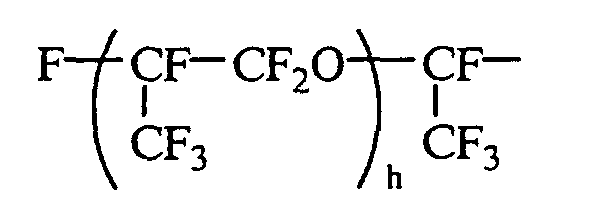
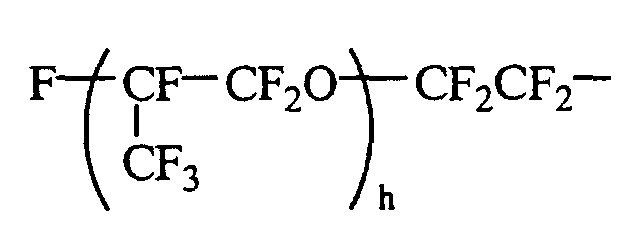
- Rf is a monovalent perfluoroalkyl or perfluorooxyalkyl group
- Rf' is a divalent perfluoroalkylene or perfluorooxyalkylene group.
- the preferred monovalent perfluoroalkyl groups are those of the formula: C g F 2g+1 - wherein g is an integer of 1 to 20, preferably 2 to 10.
- the preferred divalent perfluoroalkylene groups are those of the formula: -C g F 2g - wherein g is an integer of 1 to 20, preferably 2 to 10.
- the preferred monovalent perfluorooxyalkyl groups are those of 1 to 500 carbon atoms, more preferably 1 to 300 carbon atoms, even more preferably 1 to 200 carbon atoms. Suitable examples are given below. CF 3 CF 2 CF 2 O(CF 2 CF 2 CF 2 O) h CF 2 CF 2 -
- Letter h is an integer of 1 to 5.
- the preferred divalent perfluorooxyalkylene groups are those of 1 to 500 carbon atoms, more preferably 1 to 300 carbon atoms, even more preferably 1 to 200 carbon atoms. Suitable examples are given below.
- i+j is an integer of 2 to 100. - (CF 2 O) e -(CF 2 CF 2 O) f -CF 2 -
- Letters e and f each are an integer of 1 to 50.
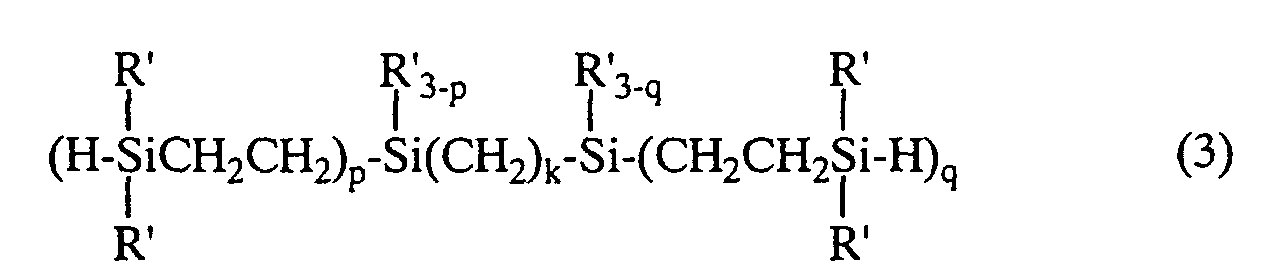
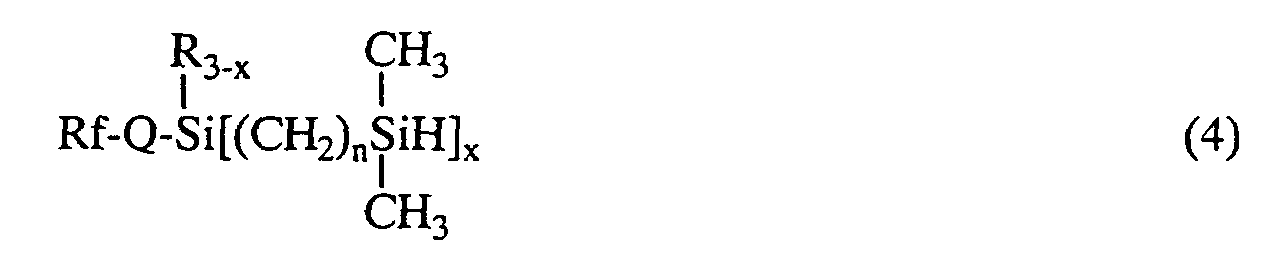
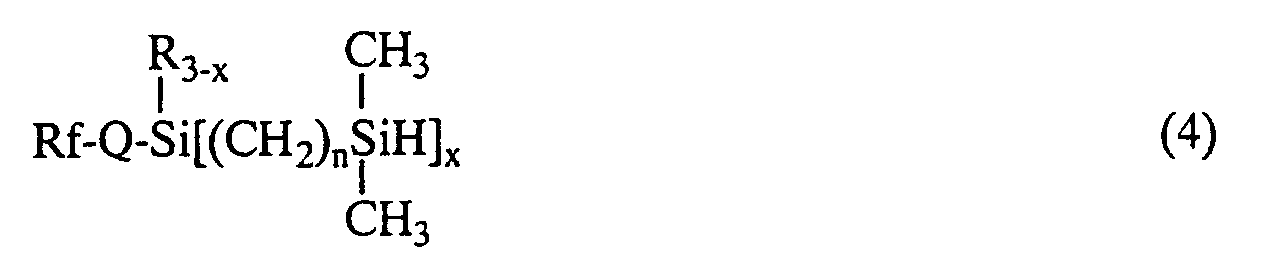
- organosilicon compound are those of the following general formulas (3) and (4).
- R' is a lower (e.g. C 1-6 or C 1-4 ) alkyl or phenyl group
- k is an integer of 1 to 8
- p and q are 1, 2 or 3.
- R, Rf and Q are as defined above
- n is an integer of 1 to 4
- x is an integer of 1 to 3.
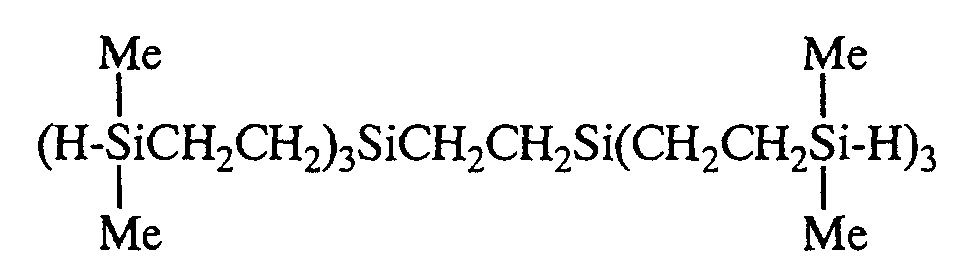
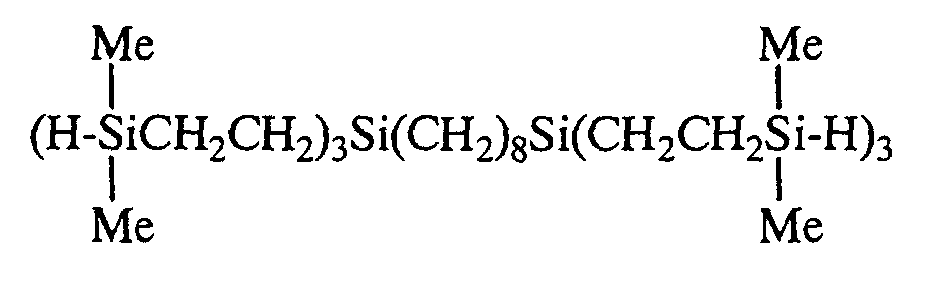
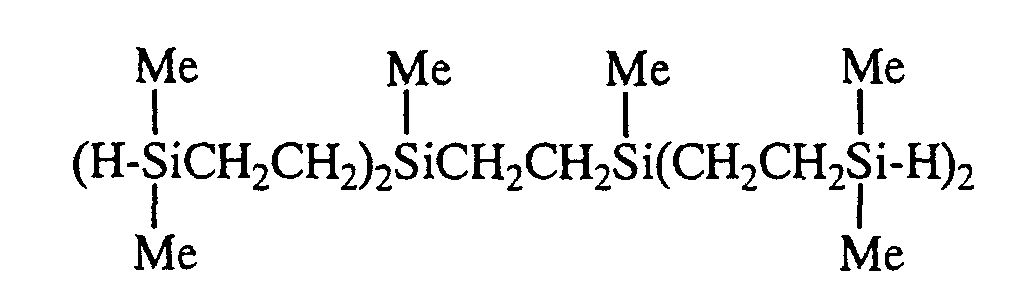
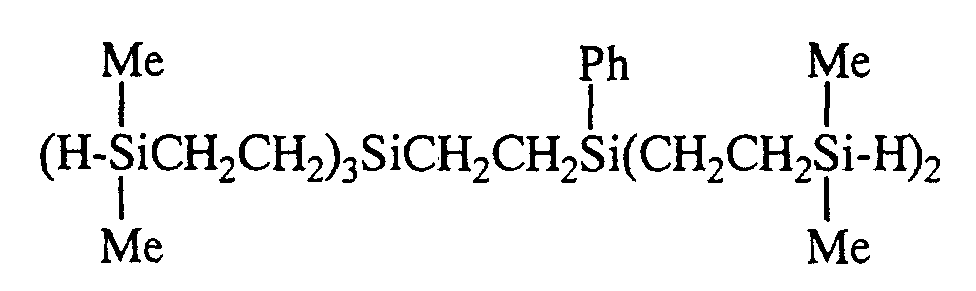
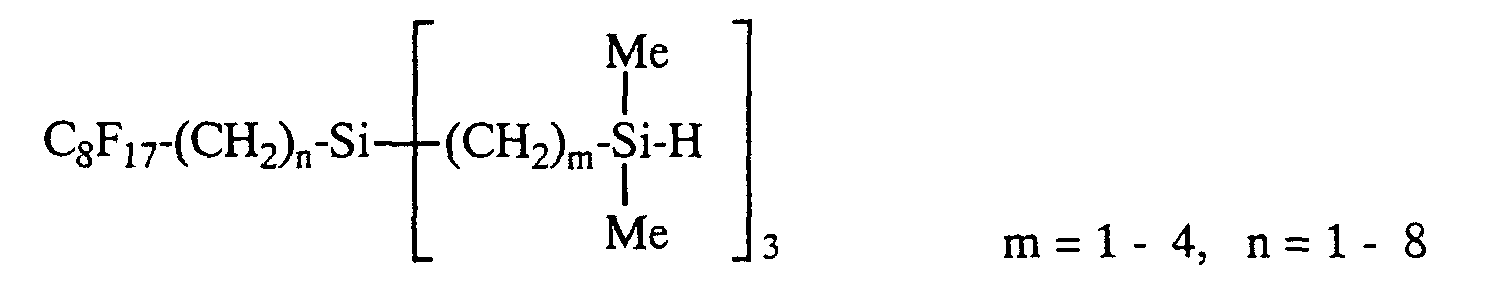
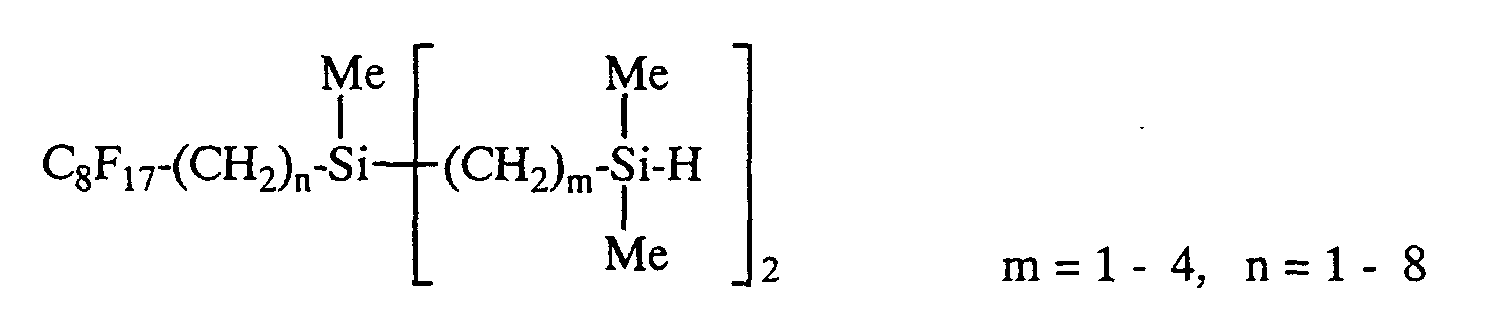
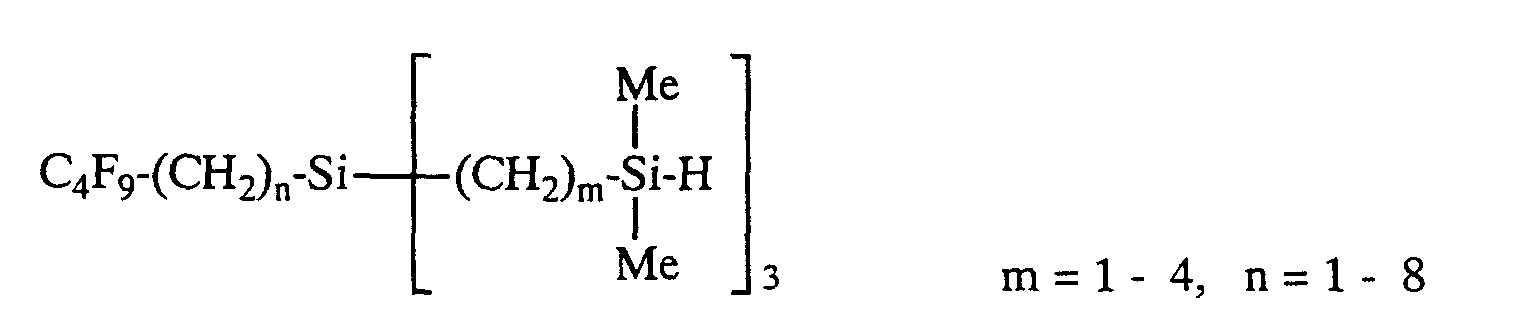
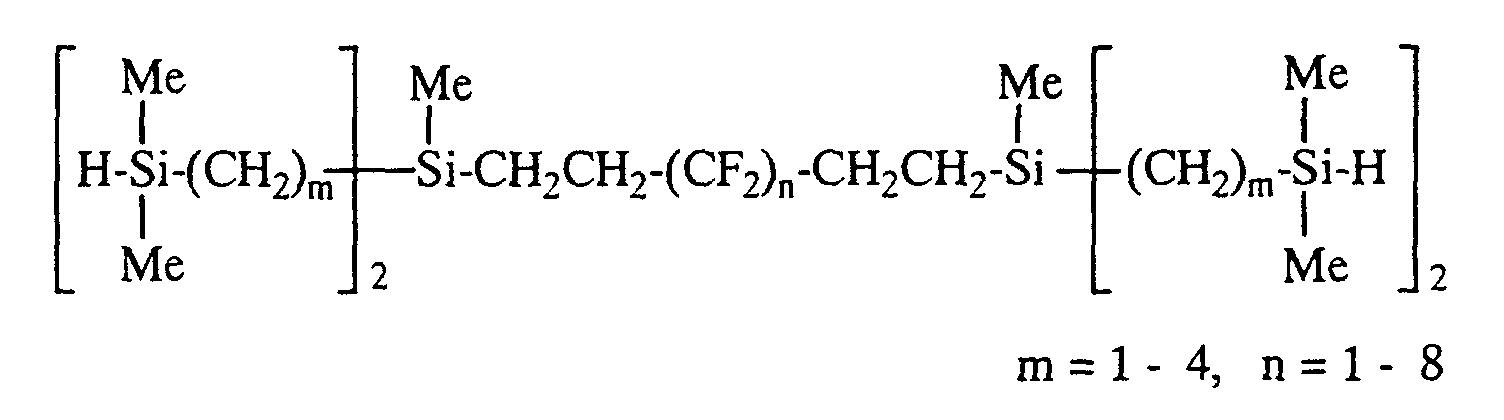
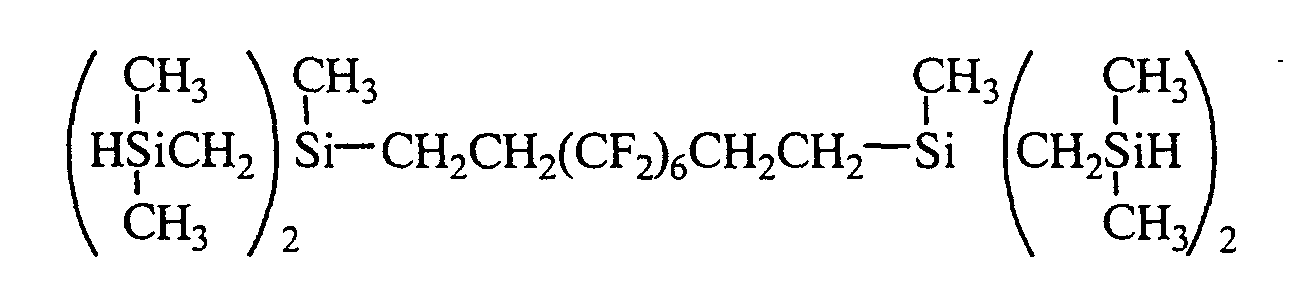
- organosilicon compound examples are given below. These examples are typical, although the invention is not limited thereto.
- Me is methyl and Ph is phenyl.
- R, Z, s and t are as defined above.
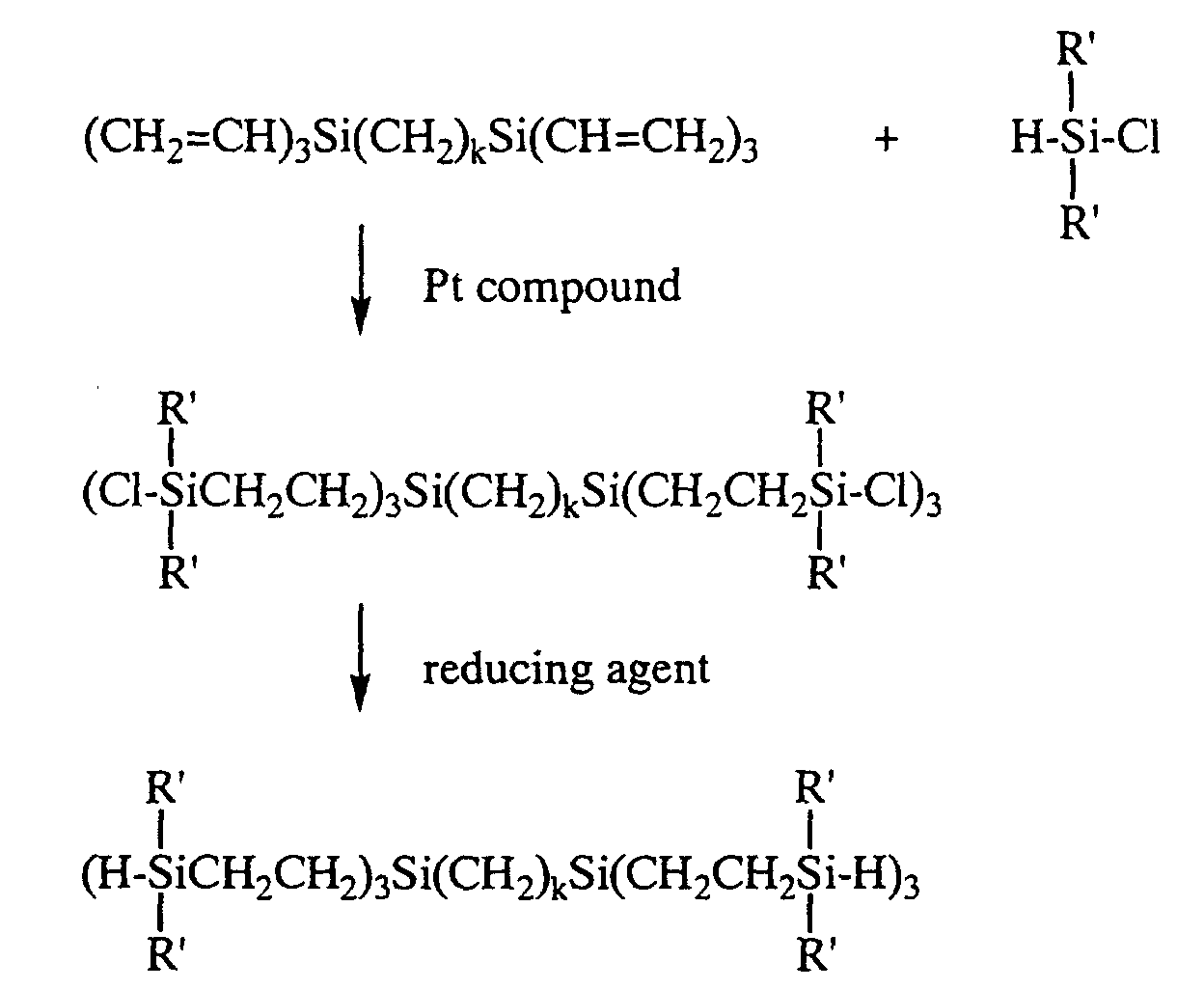
- a polyfunctional vinyl compound of the following general formula (5a) and a monochlorosilane of the following general formula (6a) are useful.
- R', k, p and q are as defined above.
- the addition reaction using the platinum compound can be conducted by a conventional technique under well-known conditions.
- LiAlH 4 and the like may be used as the reducing agent.
- the reducing reaction can be conducted by a conventional technique under well-known conditions.
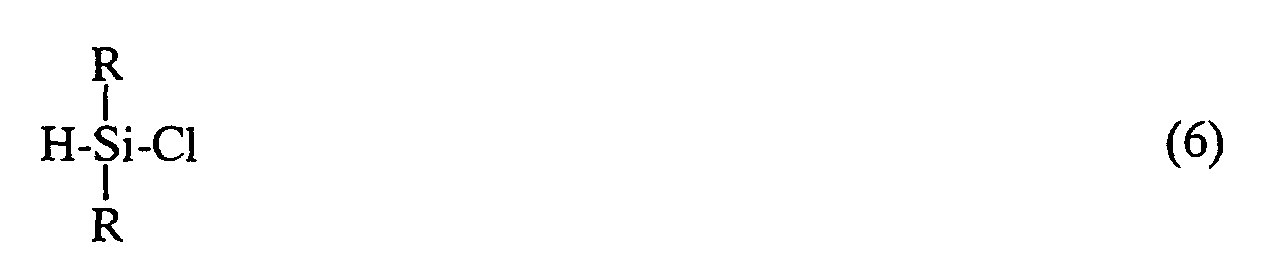
- R, Z and s are as defined above.
- chlorosilane of formula (7a) used herein are those of the following structural formulas.
- the reaction of the chlorosilane of formula (7a) with the Grignard reagent of chloromethyldimethylsilane may be effected at about 30 to 70°C for about 1 to 20 hours.
- the reaction mixture is admitted into dilute hydrochloric acid, in which the magnesium salt is dissolved, and an organic phase containing the end product is separated from an aqueous phase.
- An excess amount of hydrochloric acid is preferably used so that the aqueous phase is maintained acidic.
- the reaction of the chlorosilane of formula (7a) with the vinyl Grignard reagent may be effected by adding the chlorosilane to the THF solution of the vinyl Grignard reagent as prepared.
- the chlorosilane of formula (7a) is used in an amount of 0.80 to 0.95 equivalent per equivalent of the Grignard reagent.
- the above-exemplified chlorosilanes may be used as well.
- the reaction of the chlorosilane of formula (7a) with the vinyl Grignard reagent may be effected at about 30 to 70°C for about 10 minutes to about 2 hours.
- the reaction mixture is admitted into dilute hydrochloric acid, in which the magnesium salt is dissolved, and an organic phase containing the end product is separated from an aqueous phase. By distilling the thus separated organic phase, the intermediate (a) having a vinyl group introduced therein is obtained.
- Chlorodimethylsilane is then added to the intermediate (a) to form an intermediate (b).
- This reaction can be effected by adding chlorodimethylsilane to a mixture of the intermediate (a) and a chloroplatinic acid catalyst. The reaction may be effected at about 50 to 80°C for about 10 minutes to about 2 hours.
- a solvent may be used in the above reaction.
- Suitable solvents include hexane, toluene, xylene, butyl ether, THF, and bistrifluoromethylbenzene.
- an end organosilicon compound is obtained.
- the preferred reducing agent is LiAlH 4 .
- This reaction is effected by adding the intermediate (b) dropwise to a THF solution of LiAlH 4 . The rate of addition is desirably adjusted such that the reaction mixture remains at a temperature of 20 to 50°C. Following the dropwise addition, the reaction mixture is admitted into dilute hydrochloric acid, from which an organic phase containing the end compound is separated. Distillation yields the end organosilicon compound of the invention.
- organosilicon compounds of the invention are useful in a variety of applications as crosslinking agents, modifying intermediates, etc. These uses are further aspects of the invention, as are methods of making the compounds.
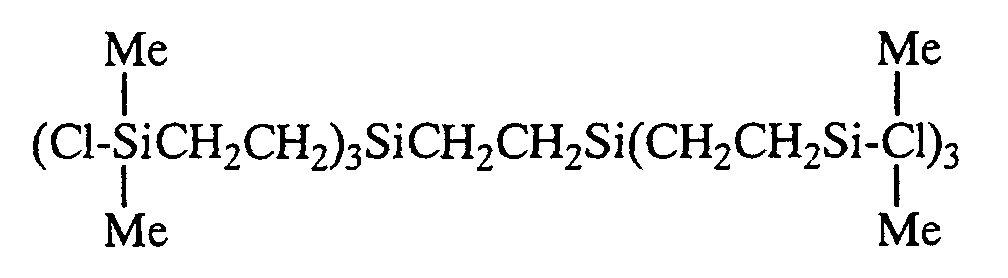
- a 1000-ml four-necked flask equipped with a stirrer, thermometer, Dimroth condenser and dropping funnel was charged with 98.4 g (0.4 mol) of bis(trivinylsilyl)ethane and 1.0 g of a toluene solution containing a diivinyltetramethyldisiloxane complex of chloroplatinic acid (Pt concentration 0.5 wt%). With stirring, the solution was heated to 90°C. From the dropping funnel, 249.5 g (2.64 mol) of dimethylchlorosilane was added dropwise at 90 to 100°C over 2 hours. The reaction mixture was ripened at 90 to 100°C for 3 hours.
- reaction mixture was then admitted into 3 liters of 1N hydrochloric acid, which was washed with water. Only the upper layer was taken out by separation, dried over sodium sulfate and filtered. The filtrate was distilled in vacuum, collecting 187.3 g (yield 87.8%) of a fraction having a boiling point of 186 to 189°C under 2.5x10 -4 Torr. The fraction was analyzed by 1 H-NMR and infrared absorption spectroscopy, with the results shown below.
- the functional group equivalent of the compound was quantitated, finding 9.94x10 -3 mol/g. Accordingly, the compound was identified to be an organosilicon compound of the following structural formula.
- the reaction mixture was admitted into 500 ml of a 2N hydrochloric acid aqueous solution.
- the organic phase was further washed with 500 ml of a 1N hydrochloric acid aqueous solution.
- organosilicon compounds which are capable of hydrosilylation reaction with other compounds having a vinyl group and thus useful as intermediates. Since the inventive compounds are free of an Si-O-Si linkage of the siloxane type, hydrosilylated derivatives thereof are not readily decomposable under acidic or basic conditions.
Landscapes
- Chemical & Material Sciences (AREA)
- Organic Chemistry (AREA)
Abstract
Description
















1H-NMR analysis (TMS standard, ppm)
2,109 cm-1 υ Si-H



Claims (5)
- An organosilicon compound of the following general formula (1):wherein "a" and "b" each are 0 or 1, "a" and "b" are not 0 at the same time,
 Z is hydrogen, -R, -M or -Q-Rf when either one of "a" and "b" is 0,Z is -Q-, -Rf'- or -Q-Rf'-Q- when both "a" and "b" are 1,R are monovalent hydrocarbon groups of 1 to 6 carbon atoms and may be the same or different,M is any group of the following formula (2):wherein m is an integer of 1 to 4 and R is as defined above,
 Q is a divalent hydrocarbon group of 1 to 15 carbon atoms which may contain ether bond,Rf is a monovalent perfluoroalkyl or perfluorooxyalkyl group,Rf' is a divalent perfluoroalkylene or perfluorooxyalkylene group,s is 1, 2 or 3, and t is 0, 1, 2 or 3.
 - The organosilicon compound of claim 1 having the following general formula (3):wherein R' is a lower alkyl or phenyl group, k is an integer of 1 to 8, and p and q each are 1, 2 or 3.

- The organosilicon compound of claim 1 having the following general formula (4):wherein R, Rf and Q are as defined above, n is an integer of 1 to 4, and x is an integer of 1 to 3.
- A method comprising the preparation of an organosilicon compound according to any one of claims 1 to 3.
- Use of an organosilicon compound according to any one of claims 1 to 3 for hydrosilylation reaction with another compound having an alkenyl e.g. vinyl group.
Applications Claiming Priority (2)
| Application Number | Priority Date | Filing Date | Title |
|---|---|---|---|
| JP2000124108 | 2000-04-25 | ||
| JP2000124108 | 2000-04-25 |
Publications (3)
| Publication Number | Publication Date |
|---|---|
| EP1149837A2 true EP1149837A2 (en) | 2001-10-31 |
| EP1149837A3 EP1149837A3 (en) | 2003-09-17 |
| EP1149837B1 EP1149837B1 (en) | 2007-03-14 |
Family
ID=18634288
Family Applications (1)
| Application Number | Title | Priority Date | Filing Date |
|---|---|---|---|
| EP01303656A Expired - Lifetime EP1149837B1 (en) | 2000-04-25 | 2001-04-20 | Organosilicon compounds |
Country Status (3)
| Country | Link |
|---|---|
| US (1) | US6521774B2 (en) |
| EP (1) | EP1149837B1 (en) |
| DE (1) | DE60127202T2 (en) |
Cited By (1)
| Publication number | Priority date | Publication date | Assignee | Title |
|---|---|---|---|---|
| FR2900928A1 (en) * | 2006-05-12 | 2007-11-16 | Saint Gobain | HYDROPHOBIC COMPOUND, LAYER AND GLAZING OBTAINED THEREFROM |
Families Citing this family (7)
| Publication number | Priority date | Publication date | Assignee | Title |
|---|---|---|---|---|
| DE60203655T2 (en) * | 2001-02-20 | 2006-03-02 | Shin-Etsu Chemical Co., Ltd. | Fluorinated organosilicon compounds |
| DE102007004838A1 (en) * | 2007-01-31 | 2008-08-07 | Wacker Chemie Ag | Process for the preparation of organopolysiloxanes |
| US7995465B2 (en) * | 2007-05-18 | 2011-08-09 | Nvidia Corporation | Intelligent load balancing and failover of network traffic |
| US9446958B2 (en) | 2011-10-07 | 2016-09-20 | L'Air Liquide Societe Anonyme L'Etude Et L'Exploitation Des Procedes Georges Claude | Apparatus and method for the condensed phase production of trisilylamine |
| US9701540B2 (en) | 2011-10-07 | 2017-07-11 | L'Air Liquide, Société Anonyme pour l'Etude et l'Exploitation des Procédés Georges Claude | Apparatus and method for the condensed phase production of trisilylamine |
| US8859797B1 (en) * | 2012-04-27 | 2014-10-14 | Air Liquide Electronics U.S. Lp | Synthesis methods for carbosilanes |
| US9073952B1 (en) * | 2012-04-27 | 2015-07-07 | L'Air Liquide, Société Anonyme pour l'Etude et l'Exploitation des Procédés Georges Claude | Synthesis method for carbosilanes |
Family Cites Families (13)
| Publication number | Priority date | Publication date | Assignee | Title |
|---|---|---|---|---|
| USRE23270E (en) * | 1949-02-23 | 1950-09-26 | X-dimethyl-z | |
| BE630246A (en) * | 1962-03-29 | |||
| US3496206A (en) * | 1967-06-01 | 1970-02-17 | Gen Electric | Method for making silicon hydrides |
| JPH06792B2 (en) | 1989-12-27 | 1994-01-05 | 信越化学工業株式会社 | Method for producing hydrogen siloxane |
| JP2598340B2 (en) * | 1991-01-24 | 1997-04-09 | 信越化学工業株式会社 | Method for producing hydrogen siloxane |
| US5399740A (en) * | 1993-12-10 | 1995-03-21 | Korea Institute Of Science And Technology | Tris(silyl)methanes and their preparation methods |
| US5391794A (en) * | 1994-01-27 | 1995-02-21 | Korea Institute Of Science And Technology | Three-legged silane coupling agents and their preparation methods |
| FR2720744A1 (en) * | 1994-06-01 | 1995-12-08 | Dow Corning | Process for the preparation of inert fluorinated silanes |
| IT1273505B (en) * | 1995-04-06 | 1997-07-08 | Dow Corning | METHOD FOR PREPARING A TELECHELIC HYBRID ORGAN-DISILANOL AND ITS POLYMERS |
| US6087521A (en) * | 1999-05-17 | 2000-07-11 | Jung; Il Nam | Silicon compounds containing silamethylene bonds and method for their preparation |
| US6278011B1 (en) * | 1999-08-30 | 2001-08-21 | The University Of Dayton | Polysilahydrocarbons as lubricants for aerospace application |
| JP3666575B2 (en) * | 2000-06-29 | 2005-06-29 | 信越化学工業株式会社 | Curable fluoropolyether rubber composition |
| JP3743495B2 (en) * | 2000-07-10 | 2006-02-08 | 信越化学工業株式会社 | Curable fluoropolyether rubber composition |
-
2001
- 2001-04-20 EP EP01303656A patent/EP1149837B1/en not_active Expired - Lifetime
- 2001-04-20 DE DE60127202T patent/DE60127202T2/en not_active Expired - Lifetime
- 2001-04-25 US US09/841,047 patent/US6521774B2/en not_active Expired - Fee Related
Cited By (2)
| Publication number | Priority date | Publication date | Assignee | Title |
|---|---|---|---|---|
| FR2900928A1 (en) * | 2006-05-12 | 2007-11-16 | Saint Gobain | HYDROPHOBIC COMPOUND, LAYER AND GLAZING OBTAINED THEREFROM |
| WO2007135315A1 (en) * | 2006-05-12 | 2007-11-29 | Saint-Gobain Glass France | Hydrophobic compound, coat and glazing obtained from this compound |
Also Published As
| Publication number | Publication date |
|---|---|
| EP1149837A3 (en) | 2003-09-17 |
| DE60127202D1 (en) | 2007-04-26 |
| US20010044495A1 (en) | 2001-11-22 |
| DE60127202T2 (en) | 2008-01-10 |
| US6521774B2 (en) | 2003-02-18 |
| EP1149837B1 (en) | 2007-03-14 |
Similar Documents
| Publication | Publication Date | Title |
|---|---|---|
| US5300613A (en) | Fluorine-containing organosilicon compounds | |
| EP1149837B1 (en) | Organosilicon compounds | |
| FR2645155A1 (en) | ORGANOSILIC COMPOUND WITH GLYCIDOXY GROUPS | |
| CN107922442B (en) | Organosilicon compounds having (meth) acrylate groups and method for producing the same | |
| JPH054995A (en) | Organosilicon compound and production thereof | |
| JP3881424B2 (en) | Alkoxysilane compounds containing organosilyl groups and carbamate bonds | |
| EP0499409A1 (en) | Olefinic and acetylenic azasilacyclopentanes | |
| JP3915883B2 (en) | Organosilicon compound | |
| JPH01132591A (en) | Dimerized vinylcycloheptyl group-containing silicon compound and its production | |
| EP0586241B1 (en) | Azasilacycloalkyl functional alkoxysilanes and azasilacycloalkyl functional tetramethyldisiloxanes | |
| JP3279148B2 (en) | Method for producing 2-allyloxymethyl-1,4-dioxane | |
| US5196558A (en) | Siloxane compounds | |
| JPH082911B2 (en) | 1,3-Bis (p-hydroxybenzyl) -1,1,3,3-tetramethyldisiloxane and method for producing the same | |
| EP1233020B1 (en) | Fluorinated organosilicon compounds | |
| JPH0717981A (en) | Organosilicon compound and method for producing the same | |
| US5233068A (en) | Organic silicon compounds and method for making | |
| JP7350253B2 (en) | Bishaloalkylsiloxane compound and method for producing the same, and method for producing a siloxane compound having both terminal functionalities | |
| JP3124910B2 (en) | Cyclotrisiloxane and method for producing the same | |
| JP2519601B2 (en) | Organic silicon compounds | |
| US5162560A (en) | Olefinic and acetylenic azasilacyclopentanes | |
| JP2862977B2 (en) | Method for producing siloxane compound having diaminoalkyl group | |
| JPS61207391A (en) | Production of trisilylethane derivative compound | |
| JPH07309879A (en) | Heat-resistant silicon-based polymer, its production and organic silicon compound to be used in the production of the polymer | |
| JP3029691B2 (en) | Organocyclosiloxane and method for producing the same | |
| JPH085903B2 (en) | Epoxy group-containing alkoxysiloxane and method for producing the same |
Legal Events
| Date | Code | Title | Description |
|---|---|---|---|
| PUAI | Public reference made under article 153(3) epc to a published international application that has entered the european phase |
Free format text: ORIGINAL CODE: 0009012 |
|
| AK | Designated contracting states |
Kind code of ref document: A2 Designated state(s): AT BE CH CY DE DK ES FI FR GB GR IE IT LI LU MC NL PT SE TR |
|
| AX | Request for extension of the european patent |
Free format text: AL;LT;LV;MK;RO;SI |
|
| PUAL | Search report despatched |
Free format text: ORIGINAL CODE: 0009013 |
|
| AK | Designated contracting states |
Kind code of ref document: A3 Designated state(s): AT BE CH CY DE DK ES FI FR GB GR IE IT LI LU MC NL PT SE TR |
|
| AX | Request for extension of the european patent |
Extension state: AL LT LV MK RO SI |
|
| 17P | Request for examination filed |
Effective date: 20040121 |
|
| AKX | Designation fees paid |
Designated state(s): DE FR GB |
|
| 17Q | First examination report despatched |
Effective date: 20050621 |
|
| GRAP | Despatch of communication of intention to grant a patent |
Free format text: ORIGINAL CODE: EPIDOSNIGR1 |
|
| GRAS | Grant fee paid |
Free format text: ORIGINAL CODE: EPIDOSNIGR3 |
|
| GRAA | (expected) grant |
Free format text: ORIGINAL CODE: 0009210 |
|
| AK | Designated contracting states |
Kind code of ref document: B1 Designated state(s): DE FR GB |
|
| REG | Reference to a national code |
Ref country code: GB Ref legal event code: FG4D |
|
| REF | Corresponds to: |
Ref document number: 60127202 Country of ref document: DE Date of ref document: 20070426 Kind code of ref document: P |
|
| ET | Fr: translation filed | ||
| PLBE | No opposition filed within time limit |
Free format text: ORIGINAL CODE: 0009261 |
|
| STAA | Information on the status of an ep patent application or granted ep patent |
Free format text: STATUS: NO OPPOSITION FILED WITHIN TIME LIMIT |
|
| 26N | No opposition filed |
Effective date: 20071217 |
|
| PGFP | Annual fee paid to national office [announced via postgrant information from national office to epo] |
Ref country code: DE Payment date: 20130508 Year of fee payment: 13 Ref country code: GB Payment date: 20130417 Year of fee payment: 13 |
|
| PGFP | Annual fee paid to national office [announced via postgrant information from national office to epo] |
Ref country code: FR Payment date: 20130625 Year of fee payment: 13 |
|
| REG | Reference to a national code |
Ref country code: DE Ref legal event code: R119 Ref document number: 60127202 Country of ref document: DE |
|
| GBPC | Gb: european patent ceased through non-payment of renewal fee |
Effective date: 20140420 |
|
| REG | Reference to a national code |
Ref country code: FR Ref legal event code: ST Effective date: 20141231 |
|
| REG | Reference to a national code |
Ref country code: DE Ref legal event code: R119 Ref document number: 60127202 Country of ref document: DE Effective date: 20141101 |
|
| PG25 | Lapsed in a contracting state [announced via postgrant information from national office to epo] |
Ref country code: GB Free format text: LAPSE BECAUSE OF NON-PAYMENT OF DUE FEES Effective date: 20140420 Ref country code: DE Free format text: LAPSE BECAUSE OF NON-PAYMENT OF DUE FEES Effective date: 20141101 |
|
| PG25 | Lapsed in a contracting state [announced via postgrant information from national office to epo] |
Ref country code: FR Free format text: LAPSE BECAUSE OF NON-PAYMENT OF DUE FEES Effective date: 20140430 |