EP1129915A2 - Verfahren zur Verbesserung der Verfügbarkeit einer Antriebsmaschine und Steuer- und/ oder Regelvorrichtung - Google Patents
Verfahren zur Verbesserung der Verfügbarkeit einer Antriebsmaschine und Steuer- und/ oder Regelvorrichtung Download PDFInfo
- Publication number
- EP1129915A2 EP1129915A2 EP00128399A EP00128399A EP1129915A2 EP 1129915 A2 EP1129915 A2 EP 1129915A2 EP 00128399 A EP00128399 A EP 00128399A EP 00128399 A EP00128399 A EP 00128399A EP 1129915 A2 EP1129915 A2 EP 1129915A2
- Authority
- EP
- European Patent Office
- Prior art keywords
- coolant
- braking device
- temperature
- indirectly
- braking
- Prior art date
- Legal status (The legal status is an assumption and is not a legal conclusion. Google has not performed a legal analysis and makes no representation as to the accuracy of the status listed.)
- Granted
Links
- 238000000034 method Methods 0.000 title claims abstract description 16
- 239000002826 coolant Substances 0.000 claims abstract description 158
- 238000001816 cooling Methods 0.000 claims abstract description 21
- 239000007788 liquid Substances 0.000 claims abstract description 5
- 230000001105 regulatory effect Effects 0.000 claims abstract description 5
- 238000004891 communication Methods 0.000 claims description 10
- XLYOFNOQVPJJNP-UHFFFAOYSA-N water Substances O XLYOFNOQVPJJNP-UHFFFAOYSA-N 0.000 claims description 9
- 238000001514 detection method Methods 0.000 claims description 6
- 230000001276 controlling effect Effects 0.000 claims description 4
- 238000002485 combustion reaction Methods 0.000 description 38
- 239000000498 cooling water Substances 0.000 description 13
- 230000008878 coupling Effects 0.000 description 8
- 238000010168 coupling process Methods 0.000 description 8
- 238000005859 coupling reaction Methods 0.000 description 8
- 238000013021 overheating Methods 0.000 description 8
- 230000001419 dependent effect Effects 0.000 description 2
- 238000013461 design Methods 0.000 description 2
- 238000010586 diagram Methods 0.000 description 2
- 230000000694 effects Effects 0.000 description 2
- 230000008569 process Effects 0.000 description 2
- 238000012546 transfer Methods 0.000 description 2
- 230000008901 benefit Effects 0.000 description 1
- 238000006243 chemical reaction Methods 0.000 description 1
- 238000005265 energy consumption Methods 0.000 description 1
- 238000005516 engineering process Methods 0.000 description 1
- 230000006855 networking Effects 0.000 description 1
- 238000012545 processing Methods 0.000 description 1
- 230000009467 reduction Effects 0.000 description 1
Images

Classifications
-
- B—PERFORMING OPERATIONS; TRANSPORTING
- B60—VEHICLES IN GENERAL
- B60T—VEHICLE BRAKE CONTROL SYSTEMS OR PARTS THEREOF; BRAKE CONTROL SYSTEMS OR PARTS THEREOF, IN GENERAL; ARRANGEMENT OF BRAKING ELEMENTS ON VEHICLES IN GENERAL; PORTABLE DEVICES FOR PREVENTING UNWANTED MOVEMENT OF VEHICLES; VEHICLE MODIFICATIONS TO FACILITATE COOLING OF BRAKES
- B60T10/00—Control or regulation for continuous braking making use of fluid or powdered medium, e.g. for use when descending a long slope
- B60T10/02—Control or regulation for continuous braking making use of fluid or powdered medium, e.g. for use when descending a long slope with hydrodynamic brake
-
- B—PERFORMING OPERATIONS; TRANSPORTING
- B60—VEHICLES IN GENERAL
- B60T—VEHICLE BRAKE CONTROL SYSTEMS OR PARTS THEREOF; BRAKE CONTROL SYSTEMS OR PARTS THEREOF, IN GENERAL; ARRANGEMENT OF BRAKING ELEMENTS ON VEHICLES IN GENERAL; PORTABLE DEVICES FOR PREVENTING UNWANTED MOVEMENT OF VEHICLES; VEHICLE MODIFICATIONS TO FACILITATE COOLING OF BRAKES
- B60T1/00—Arrangements of braking elements, i.e. of those parts where braking effect occurs specially for vehicles
- B60T1/02—Arrangements of braking elements, i.e. of those parts where braking effect occurs specially for vehicles acting by retarding wheels
- B60T1/08—Arrangements of braking elements, i.e. of those parts where braking effect occurs specially for vehicles acting by retarding wheels using fluid or powdered medium
- B60T1/087—Arrangements of braking elements, i.e. of those parts where braking effect occurs specially for vehicles acting by retarding wheels using fluid or powdered medium in hydrodynamic, i.e. non-positive displacement, retarders
-
- F—MECHANICAL ENGINEERING; LIGHTING; HEATING; WEAPONS; BLASTING
- F01—MACHINES OR ENGINES IN GENERAL; ENGINE PLANTS IN GENERAL; STEAM ENGINES
- F01P—COOLING OF MACHINES OR ENGINES IN GENERAL; COOLING OF INTERNAL-COMBUSTION ENGINES
- F01P3/00—Liquid cooling
- F01P3/20—Cooling circuits not specific to a single part of engine or machine
-
- F—MECHANICAL ENGINEERING; LIGHTING; HEATING; WEAPONS; BLASTING
- F01—MACHINES OR ENGINES IN GENERAL; ENGINE PLANTS IN GENERAL; STEAM ENGINES
- F01P—COOLING OF MACHINES OR ENGINES IN GENERAL; COOLING OF INTERNAL-COMBUSTION ENGINES
- F01P2060/00—Cooling circuits using auxiliaries
- F01P2060/06—Retarder
Definitions
- the invention relates to a method for improving the availability of a Drive machine in drive trains of vehicles with a retarder, the coolant circuits of the engine and the retarder are at least indirectly thermally coupled to one another, in particular a Procedure for protection against overloading the drive machine in detail the features from the preamble of claim 1; also a tax and / or control device.
- coolant circuits In drive trains of vehicles with a retarder, preferably one hydrodynamic retarder and a prime mover, each of which a separate coolant circuit is assigned to the two and the So far, coolant circuits have been thermally coupled to one another Protection of the internal combustion engine against overheating the temperature at Leaving the coolant liquid in the coolant circuit of the hydrodynamic Retarders, which are also known as coolants or Water return temperature is referred to with a facility for example in the form of a sensor, detected and according to the size of the Coolant or water return temperature, if necessary, the braking power of the hydrodynamic retarder reduced to an excessive release of the Power losses in the form of thermal energy to the coolant circuit Avoid internal combustion engine.
- a retarder preferably one hydrodynamic retarder and a prime mover, each of which a separate coolant circuit is assigned to the two and the So far
- each additional sensor is a component represents which can fail, which under certain circumstances is a safe functioning of the drive machine is no longer guaranteed can be.
- the provision of this sensor is also included associated costs.
- Methods for controlling the braking effect of a are also known Retarder, in particular the limitation of the braking effect of a retarder, in which the heat generated during braking using a Cooling medium of a cooling system is dissipated to overheat the Prevent coolant.
- Representative is the publication DE 197 16 919 A1. This is the cooling capacity of the cooling circuit of the retarder determined and the braking power as a function of Cooling capacity of the cooling system set. It can be Coolant circuit around the coolant circuit of the internal combustion engine act. The setpoint of the cooling capacity or the maximum permissible cooling capacity can depend on a number of parameters his.
- the parameters to be considered are, for example Ambient temperature, the housing temperature, the position of the Thermostats in the coolant circuit, the pressure in the coolant circuit, the Vehicle speed, the rear axle ratio, the capacitive Energy consumption of the entire cooling system, the gear position, the Coupling condition etc.
- the cooling capacity is determined, for example, by the Detection of the coolant throughput determined, which in turn at least by absorbing the retarder braking power from the speed and Braking torque and the recording of the temperature difference of the coolant is determined. This procedure only serves to increase the Retarder availability. Taking other components of the Drive system is not provided.
- the invention is therefore based on the object of a method for Improving the availability of a prime mover, especially for Protection of the engine against overheating and a control or Control device to develop such that the disadvantages mentioned be avoided.
- the constructive design should be characterized by a Mark small number of components.
- the control technology To keep the effort as low as possible.
- a drive system for vehicles with a braking device preferably in the form of a hydrodynamic Retarders and a drive machine, preferably in the form of a Internal combustion engine, in which two components Coolant circuit is assigned, and the coolant circuits at least are indirectly thermally coupled with each other, which are used as an input variable Control of the retarder, in particular to control the braking power used or to be processed size of the return temperature of the coolant from the retarder, the flow temperature of the coolant to the retarder at least indirectly characterizing size and that of Retarder during operation in the coolant liquid Determine coolant circuit introduced energy. Under The flow temperature is therefore the temperature in the coolant circuit Understand braking device, which in the supply of the coolant Brake device is present. The return temperature is the temperature of the Coolant after absorbing the heat of the braking device in the Coolant circuit of the braking device.
- the flow temperature of the coolant to the braking device especially to the retarder and / or a the flow temperature of the Coolant for the braking device, in particular for the retarder at least indirectly characterizing size from one, in the drive system existing data network and / or another control and / or Control system removed from the drive system.
- the device-based implementation of the control or regulating device no separate sensor for recording the flow temperature is provided must become.
- the calculation of the coolant return temperature from the braking device, especially from the retarder or in the coolant circuit of the engine takes place from the coolant flow temperature of the braking device or Retarders and the temperature increase by the braking device, in particular energy introduced into the coolant by the retarder.
- the braking, in particular retarder torque and / or the Vehicle speed at least indirectly characterizing size and one that at least indirectly characterizes the coolant flow rate Size calculated,
- the solution according to the invention has the advantage that on a separate Sensor for detecting the coolant return temperature in the coolant circuit of the retarder can be dispensed with, so that the number of those prone to failure Components can be minimized, resulting in a reduction in costs and a Increases the availability of the entire surveillance system.
- the solution according to the invention is for any type of drive system, regardless of the type of engine used and retarder used.
- Each of the elements - retarder or prime mover - can do one Coolant circuit must be assigned.
- the thermal coupling takes place via at least one device for realizing the heat transfer from the coolant circuit of the retarder to the coolant circuit of the Prime mover.
- the retarder is as hydrodynamic retarder designed as water as its resource or the coolant of the coolant circuit of the internal combustion engine acts.
- the retarder is then in the coolant circuit of the engine arranged and is constantly flowed through by coolant, this for example, by varying the inlet and outlet cross sections of the Retarders or a pivotability of the stator in braking mode certain braking torque is generated and in non-braking operation as Coolant circulation pump for the coolant circuit of the drive machine acts.
- Coolant flow temperature in the coolant circuit of the retarder exists Variety of possibilities.
- the flow temperature can directly or indirectly from others, at least the flow temperature indirectly descriptive quantities can be determined.
- a Device for recording the temperature in the supply line to Braking device in particular for hydrodynamic retarder, for example in the form of a temperature sensor.
- hydrodynamic retarder for example in the form of a temperature sensor.
- a temperature sensor on a the coolant flow thermally connected carrier plate or for example the arrangement of a temperature sensor in the feed line to the heat exchanger in the coolant circuit of the engine or Internal combustion engine. This size can, for example, directly from one arranged in the feed line to the heat exchanger Temperature sensor can be generated.
- a particularly advantageous further possibility is this size or sizes via a communication system in the vehicle to provide, which is particularly important if this size is already used in other control processes.
- the control device to protect the Internal combustion engine against overheating the size of the temperature in the Inlet to the heat exchanger in a central communication system in the Vehicle provided or this size only from the Communication system can be queried.
- the retarder torque can be taken directly from the Stored characteristic curves or tables are taken from retarder control, while the vehicle speed either via a device for Detection of a, the vehicle speed at least indirectly characterizing size determined or via a anyway in the vehicle existing communication system from other control devices can be provided.
- the vehicle speed is either from the speed at the output, especially the wheels of the vehicle determined, there being a device for detecting this speed can be.
- the calculation is then carried out by means of a calculation device Vehicle speed determined.
- the determination of Vehicle speed can either be in the retarder control, another control device which can be coupled to the retarder control and / or the device for protecting the drive machine against Overheating can be determined.
- the determination of the cooling water flow rate can also vary This can be done because it is directly linear depending on the engine speed is, for example based on a characteristic curve in the control device for Protection of the internal combustion engine against overheating or but with this control device via the communication interfaces another control device.
- a first input is provided with a device for detecting a Temperature of the coolant in the feed line to the hydrodynamic Retarder at least indirectly descriptive size can be coupled.
- the device can be used as a temperature sensor for the direct determination of the Coolant temperature in the feed line of the hydrodynamic retarder or for indirect determination when arranged in the supply line to Heat exchanger in the coolant circuit of the engine or Arrangement of a temperature sensor on one, with the coolant flow carrier plate connected in a heat-conducting manner can be determined.
- Another Possibility is information about the size of the Coolant temperature in the flow of the hydrodynamic retarder from other control devices via a communication system, for example to determine a so-called CAN bus in the vehicle.
- the CAN bus functions then as a means for at least indirectly capturing one Temperature in the coolant circuit of the hydrodynamic retarder at least indirectly descriptive size.
- Signals are present at the second and third inputs of the control device, which the in the coolant when starting the hydrodynamic Retarders bring in energy, which is determined by the size of the power loss Form of thermal energy is determined, describe.
- the braking power of the hydrodynamic retarder fed at least indirectly descriptive size, while on the third Input a signal for the size of the cooling water flow rate docks.
- the size of the retarder braking power is determined by the size of the Retarder moment and the driving speed of the vehicle.
- the Retarder torque can be directly from the control device of the retarder can be determined, for example in the form of stored characteristic curves or Tables.
- the type of recording of the individual sizes or the provision of the Variables for determining the coolant return temperature from the Coolant flow temperature to the hydrodynamic retarder and the of the hydrodynamic retarder can be introduced into the coolant circuit Energy is not limited to the explanations given. This depends depending on the specific circumstances of the individual case, however preferably the control device is designed such that all sizes processed directly by her.
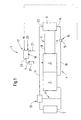
- Figure 1 illustrates in a schematically simplified representation using a Section of a drive system 1 for vehicles thermal Coupling the coolant circuits of a drive machine in the form of a Internal combustion engine 2 and a hydrodynamic retarder 3.
- a separate coolant circuit is assigned to each.
- the Coolant circuit of the internal combustion engine is designated 4 and the coolant circuit of the retarder with 5.
- the coolant circuits 4 of Internal combustion engine 2 and 5 of the hydrodynamic retarder 3 are thermally coupled to one another via at least one heat exchanger 6.
- At least one of the two coolant circuits 4 or 5, preferably the Coolant circuit 4 of the internal combustion engine 2 has at least one Device for cooling the coolant 7.
- the thermal coupling between the coolant circuits 4 of the internal combustion engine and 5 of the hydrodynamic retarder 3 via the heat exchanger 6 requires that when commissioning the hydrodynamic retarder 3, i.e. at generation a certain defined braking torque, which is used to heat the Operating resources of the hydrodynamic retarder 3 leads that power loss in the form of heat via the coolant circuit 5 to the coolant circuit 4 of the internal combustion engine by means of the Heat exchanger 6 can be delivered. Cooling the coolant in the Coolant circuit 5 of the hydrodynamic retarder 3 thus takes place indirectly via the device for cooling the coolant in the coolant circuit 4 Internal combustion engine 2.
- the coolant circuit 5 des hydrodynamic retarder 3 comprises at least one return line 8 from the retarder 3 to the heat exchanger and an inlet line 9, which the Coolants indirectly cooled by the heat exchanger hydrodynamic retarder 3 feeds again.
- the coolant circuit 4 of the Internal combustion engine 2 also comprises at least one inlet line 10 from the internal combustion engine 2 to the heat exchanger 6 and one Connection line in the form of a return line 11 from the heat exchanger 6 to the internal combustion engine 2.
- In the connecting line 11 is the Integrated device for cooling the coolant 7.
- these means comprise a bypass 31, which flows through the coolant in the coolant circuit 4 Internal combustion engine 2 via the device for cooling the Coolant 7 enables or bypassing the device for cooling of coolant 7.
- the device for detecting at least one that Coolant temperature in the feed line 9 of the hydrodynamic retarder includes at least indirectly characterizing size in the case shown for this purpose at least one temperature sensor 15 in the connecting line between the internal combustion engine 2 and the heat exchanger 6.
- the heat transfer in the heat exchanger is taken into account in the Inlet line on the internal combustion engine 2 to the heat exchanger 6
- the coolant temperature determined is directly proportional to that in the feed line 9 to the hydrodynamic retarder 3.
- that in the feed line 9 present temperature of the coolant temperature 14 of the heat exchanger 6 correspond.
- the coolant temperature at the inlet of the Retarders at least indirectly characterizing size, especially the Flow temperature of the hydrodynamic retarder the corresponding Return temperature, which in the connecting line between the Heat exchanger and the internal combustion engine 2 in the coolant circuit 4 the internal combustion engine 2 is present, calculated and according to the Result controlled the braking power of the hydrodynamic retarder.
- a corresponding control device 17 is provided for this purpose. This comprises at least one control device 18 which has at least two inputs, has a first input 19 and a second input 20, the first input 19 with the device for detecting at least one the coolant temperature in the inlet line of the hydrodynamic Retarder 3 is connected at least indirectly characterizing size 13.
- a signal for the actual value is supplied via the second input 20, one of the energy brought into the cooling water by the retarder at least indirectly descriptive size.
- Via another entrance 21 is a signal for a, the flow of coolant in the coolant circuit 5th of the hydrodynamic retarder 3 at least indirectly characterizing Size for calculating the retarder return temperature, i.e. especially the Temperature in the discharge line 8 or at the outlet 22 of the heat exchanger 6 determined.
- the size of the determined return temperature determines the Control variable y, which is output at the output 23 of the control device 18 and which of the control of an actuating device 37 for influencing of the power that can be generated by means of the hydrodynamic retarder.
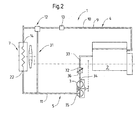
- FIG. 2 An alternative embodiment for the use of the solution according to the invention the thermal coupling of the coolant circuits Internal combustion engine 2 and the hydrodynamic retarder 3 is shown by way of example in FIG. 2.
- the hydrodynamic retarder 3 is here arranged in the coolant circuit 4 of the internal combustion engine 2 and the coolant acts simultaneously as the operating medium of the retarder 3 and as Coolant of it, means 32 are provided which are in traction operation, i.e. in non-braking operation the function of the retarder 3 as a circulation pump for enable the coolant and the generation of the braking operation Braking torque.
- the means 32 are in the connecting line 33 between Retarder 3 and internal combustion engine 2 arranged and generate in Braking operation has a smaller flow cross-section at the outlet 34 of the Retarders and in the non-braking mode a much larger Flow cross-section at outlet 34 opposite inlet 35 to the retarder and preferably comprise at least one valve device 36 Arrangement of the cooling device 7 and the device 13 for detecting the Coolant flow temperature, especially the temperature sensor, corresponds that described in Figure 1. For the same elements, therefore used the same reference numerals and with respect to the description on figure 1 referenced.
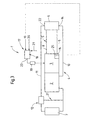
- FIG. 3 illustrates using a coolant circuit design according to FIG. 1 another in a schematically highly simplified representation Possibility of arranging the device 13 for detecting the Coolant flow temperature.
- the hydrodynamic retarder 3 an integrated electronic control unit has, which is connected to the cooling water flow Carrier plate is thermally mounted, a corresponding Mount the temperature sensor 16 directly on the electronics plate in order to mount the To measure the cooling water flow temperature of the hydrodynamic retarder 3.
- the mode of operation of the control device 17 is shown in FIG Block diagram explained.
- the control device 17 comprises, as already executed a control device 18, which at least three Input signals processed. These can either of the control device 18 can be fed in series or in parallel.
- the parallel signal supply is provided with at least three inputs - one first input 19, a second input 20 and a third input 21.
- Der first input 19 is at least with a device for detection one, the coolant temperature in the feed line 9 to the hydrodynamic Retarder 3 at least indirectly characterizing size indirectly coupled.
- This device 13 can be one Sensor 15, which is located directly at the input 14 of the heat exchanger 6 Coolant circuit 4 is arranged act. Another option is there in that the information about the size of the water inlet temperature, i.e.
- the coolant return temperature from the hydrodynamic retarder 3 results from the water inlet temperature, for which a signal is present at the input 19 of the control device 18, and the energy introduced into the coolant in the coolant circuit 5 by the hydrodynamic retarder. This is determined, inter alia, from the braking power P brake generated, which can be supplied as a signal to the control device 18 at the input 20.
- the retarder braking power is determined at least from a variable that characterizes the retarder torque M at least indirectly and the speed of the vehicle v.
- the signal for the retarder braking power at the control device 18 present at the input 20 can be determined via a control device of the hydrodynamic retarder 25.
- Characteristics for the retarder torque can be stored in the control device 25 of the hydrodynamic retarder, which are controlled by the hydrodynamic retarder 3 and which can be used to determine the retarder braking power.
- the control device 25 of the hydrodynamic retarder has at least one output, which is connected to the input 20 of the control device 18.
- the control device 25 has, for example, a further input 26, which is coupled to a device 27 for at least indirectly detecting a variable that at least indirectly characterizes the current driving speed.
- the device 27 can be, for example, a sensor for determining individual speeds, wherein different speeds can be taken into account, but always taking into account the speed / torque conversion still carried out in the following drive train.
- the information about the variable that at least indirectly characterizes the current driving speed can also be provided at the input 26 via another control device, wherein this information can be supplied to the control device 25 via the networking by means of a so-called CAN bus.
- Another possibility, not shown here, is to supply the individual variables for the braking power P brake achieved directly to corresponding inputs of the control device 18, the braking power P brake being determined by the control device 18.
- a quantity for the at least indirect description of the cooling water flow rate is also required for the calculation. This variable is fed to the control device 18 at the third input 21.
- this signal can be generated, for example, by means of a device for detecting the speed of the internal combustion engine 28, the speed being processed at the control device 18.
- a further possibility is to supply a signal for a variable which describes the flow rate of the coolant at least indirectly, at input 21, the flow rate having already been determined from the speed of the internal combustion engine.
- Another option is to set the speed of rotation parameter Internal combustion engine n as information from a CAN bus record so that the flow rate is then from the stored characteristic results.
- At least one is then output via the output 23 of the control device Control signal y to control a device for changing the Coolant temperature in the coolant circuit 4 by controlling the Braking performance of the hydrodynamic retarder is output, where it this actuating device is the device 30 which can be designed, for example, as a pressure valve device.
Landscapes
- Engineering & Computer Science (AREA)
- Mechanical Engineering (AREA)
- Physics & Mathematics (AREA)
- Fluid Mechanics (AREA)
- Transportation (AREA)
- Combustion & Propulsion (AREA)
- Chemical & Material Sciences (AREA)
- General Engineering & Computer Science (AREA)
- Braking Arrangements (AREA)
- Transmission Of Braking Force In Braking Systems (AREA)
- Electrical Control Of Air Or Fuel Supplied To Internal-Combustion Engine (AREA)
- Control Of Multiple Motors (AREA)
- Combined Controls Of Internal Combustion Engines (AREA)
- Control Of Vehicle Engines Or Engines For Specific Uses (AREA)
- Air-Conditioning For Vehicles (AREA)
Abstract
- bei welchem die Bremsleistung der Bremseinrichtung als Funktion der Kühlleistung des Kühlmittelkreislaufes der Antriebsmaschine steuer- und/oder regelbar ist, wobei die Steuer- und/oder Regelung in Abhängigkeit einer, die Rücklauftemperatur des Kühlmittels im Bereich des Austrittes aus der Bremseinrichtung wenigstens mittelbar charakterisierenden Größe erfolgt;
- die Rücklauftemperatur des Kühlmittels im Bereich des Austrittes aus der Bremseinrichtung wird aus einer, die Vorlauftemperatur wenigstens mittelbar charakterisierenden Größe des Kühlmittels zur Bremseinrichtung und der während des Betriebes in die Kühlmittelflüssigkeit der Bremseinrichtung eingebrachten Energie berechnet.
Description
- Vorlauftemperatur
- Fahrzeuggeschwindigkeit
- Drehzahl der Antriebsmaschine
- Bremsmoment
- Figur 1
- verdeutlicht in schematisch vereinfachter Darstellung anhand eines Ausschnitts aus einem Antriebssystem mit thermisch gekoppelten Kühlmittelkreisläufen von Verbrennungskraftmaschinen und hydrodynamischen Retarder eine Möglichkeit der Anordnung des Temperatursensors zur Erfassung der Kühlmittelvorlauftemperatur und die Ausführung einer Vorrichtung zur Ermittlung der Kühlmittelrücklauftemperatur;
- Figur 2
- verdeutlicht in schematisch vereinfachter Darstellung eine alternative Ausführung eines Kühlmittelsystems zur thermischen Koppelung der Kühlmittelkreisläufe von Verbrennungskraftmaschine und hydrodynamischen Retarder;
- Figur 3
- verdeutlicht anhand einer Ausführung gemäß Figur 1 eine alternative Möglichkeit der Anordnung eines Temperatursensors;
- Figur 4
- verdeutlicht anhand eines Blockschaltbildes die Funktionsweise der Steuervorrichtung zum Schutz der Antriebsmaschine vor Überhitzung.
- 1
- Antriebssystem
- 2
- Verbrennungskraftmaschine
- 3
- hydrodynamischer Retarder
- 4
- Kühlmittelkreislauf der Verbrennungskraftmaschine
- 5
- Kühlmittelkreislauf des hydrodynamischen Retarders
- 6
- Wärmetauscher
- 7
- Einrichtung zur Kühlung des Kühlmittels im Kühlmittelkreislauf der Verbrennungskraftmaschine
- 8
- Rücklaufleitung
- 9
- Zulaufleitung
- 10
- Zulaufleitung
- 11
- Verbindungsleitung
- 12
- Mittel zur wahlweisen Inbetriebnahme der Einrichtung zur Kühlung des Kühlmittels 7
- 13
- Einrichtung zur Erfassung wenigstens einer die Kühlmitteltemperatur in der Zulaufleitung des hydrodynamischen Retarders wenigstens mittelbar charakterisierenden Größe
- 14
- Eingang des Wärmetauschers
- 15
- Temperatursensor
- 16
- Temperatursensor
- 17
- Steuervorrichtung
- 18
- Steuereinrichtung
- 19
- erster Eingang
- 20
- zweiter Eingang
- 21
- dritter Eingang
- 22
- Ausgang des Wärmetauschers
- 23
- Ausgang der Steuereinrichtung
- 25
- Steuereinrichtung des hydrodynamischen Retarders
- 26
- Eingang des hydrodynamischen Retarders
- 27
- Einrichtung zur Erfassung der aktuellen Fahrgeschwindigkeit
- 29
- Ausgang der Steuereinrichtung
- 30
- Stelleinrichtung
- 31
- Bypass
- 32
- Mittel
- 33
- Verbindungsleitung
- 34
- Ablauf
- 35
- Zulauf
- 36
- Ventileinrichtung
- 37
- Stelleinrichtung Retarder
Claims (8)
- Verfahren zur Verbesserung der Verfügbarkeit einer Antriebsmaschine (2), insbesondere zum Schutz einer Antriebsmaschine vor Überlastung in Antriebssystemen (1) mit einer Bremseinrichtung (3), insbesondere einem hydrodynamischen Retarder, wobei der Antriebsmaschine (2) und der Bremseinrichtung (3) ein Kühlmittelkreislauf (4, 5) zugeordnet ist und die Kühlmittelkreisläufe (4, 5) thermisch miteinander wenigstens mittelbar gekoppelt sind;
1.1 bei welchem die Bremsleistung der Bremseinrichtung (3) als Funktion der Kühlleistung des Kühlmittelkreislaufes (4) der Antriebsmaschine (2) steuer- und/oder regelbar ist, wobei die Steuer- und/oder Regelung in Abhängigkeit einer, die Rücklauftemperatur des Kühlmittels im Bereich des Austrittes aus der Bremseinrichtung (3) wenigstens mittelbar charakterisierenden Größe erfolgt;
gekennzeichnet durch die folgenden Merkmale:
1.2 die Rücklauftemperatur des Kühlmittels im Bereich des Austrittes aus der Bremseinrichtung (3) wird aus einer, die Vorlauftemperatur wenigstens mittelbar charakterisierenden Größe des Kühlmittels zur Bremseinrichtung (3) und der während des Betriebes der Bremseinrichtung in die Kühlmittelflüssigkeit der Bremseinrichtung (3) eingebrachten Energie berechnet. - Verfahren nach Anspruch 1, dadurch gekennzeichnet, daß die Vorlauftemperatur des Kühlmittels im Kühlmittelkreislauf (5) zur Bremseinrichtung (3) ermittelt wird und/oder eine, diese wenigstens mittelbar charakterisierende Größe aus einem Kommunikationsnetzwerk im Antriebssystem (1) und/oder einer einer anderen Komponente zugeordneten Steuer- und/oder Regelvorrichtung übernommen wird.
- Verfahren nach einem der Ansprüche 1 oder 2, dadurch gekennzeichnet, daß die in die Kühlmittelflüssigkeit des Kühlmittelkreislaufes (5) eingebrachte Energie aus der Differenz der zwischen dem Eingang Bremseinrichtung und dem Ausgang der Bremseinrichtung (3) vorliegenden Temperaturen des Kühlmittels ermittelt wird.
- Verfahren nach Anspruch 3, dadurch gekennzeichnet, daß die Ermittlung der Temperaturdifferenz aus dem Bremsmoment und einer, die Fahrzeuggeschwindigkeit wenigstens mittelbar charakterisierenden Größe und der Kühlmitteldurchflußmenge im Kühlmittelkreislauf (5) der Bremseinrichtung (3) ermittelt wird.
- Verfahren nach Anspruch 4, dadurch gekennzeichnet, daß die Kühlmitteldurchflußmenge in Abhängigkeit von der Drehzahl der Antriebsmaschine (3) ermittelt wird.
- Steuer- und/oder Regelsystem (17) für ein Antriebssystem (1) mit einer Antriebsmaschine (2) und wenigstens einer Bremseinrichtung (3), wobei der Antriebsmaschine (2) und der Bremseinrichtung (3) ein Kühlmittelkreislauf (4, 5) zugeordnet ist und diese wenigstens mittelbar miteinander thermisch gekoppelt sind;6.1 mit wenigstens einem Eingang (19, 20, 21) und einem Ausgang (23);6.2 der Eingang ist mit Mitteln zur wenigstens mittelbaren Erfassung der Vorlauftemperatur im Kühlmittelkreislauf der Bremseinrichtung koppelbar;6.3 der Ausgang ist mit einer Stelleinrichtung zur Steuerung des Bremsmomentes der Bremseinrichtung (3) koppelbar;6.4 mit einer Berechnungseinrichtung zur Ermittlung der von der Bremseinrichtung (3) während des Betriebes in das Kühlmittel eingebrachten Energie.
- Vorrichtung nach Anspruch 6, dadurch gekennzeichnet, daß sie eine weitere Berechnungseinrichtung zur Berechnung der Wasservorlauftemperatur aufweist.
- Vorrichtung nach einem der Ansprüche 6 oder 7, dadurch gekennzeichnet, daß der Eingang mit einem Datennetzwerk verbunden ist, über welches die nachfolgend genannten Größen bereitgestellt werden:Drehzahl der AntriebsmaschineTemperatur im Kühlmittelkreislauf der Antriebsmaschine.
Applications Claiming Priority (2)
| Application Number | Priority Date | Filing Date | Title |
|---|---|---|---|
| DE10009959A DE10009959B4 (de) | 2000-03-02 | 2000-03-02 | Verfahren zum Schutz einer Antriebsmaschine vor Überhitzung und Steuer-und/oder Regelvorrichtung dafür |
| DE10009959 | 2000-03-02 |
Publications (3)
| Publication Number | Publication Date |
|---|---|
| EP1129915A2 true EP1129915A2 (de) | 2001-09-05 |
| EP1129915A3 EP1129915A3 (de) | 2003-01-02 |
| EP1129915B1 EP1129915B1 (de) | 2005-10-05 |
Family
ID=7633101
Family Applications (1)
| Application Number | Title | Priority Date | Filing Date |
|---|---|---|---|
| EP00128399A Expired - Lifetime EP1129915B1 (de) | 2000-03-02 | 2000-12-22 | Verfahren zur Verbesserung der Verfügbarkeit einer Antriebsmaschine und Steuer- und/ oder Regelvorrichtung |
Country Status (3)
| Country | Link |
|---|---|
| EP (1) | EP1129915B1 (de) |
| AT (1) | ATE305866T1 (de) |
| DE (2) | DE10009959B4 (de) |
Families Citing this family (10)
| Publication number | Priority date | Publication date | Assignee | Title |
|---|---|---|---|---|
| DE10057089A1 (de) * | 2000-11-17 | 2002-05-23 | Zahnradfabrik Friedrichshafen | Verfahren zur Erhöhung der Bremswirkung |
| DE10231610A1 (de) * | 2002-07-12 | 2004-02-12 | Zf Friedrichshafen Ag | Verfahren zur Begrenzung der Bremswirkung eines Retarders in Abhängigkeit von der Temperatur |
| DE102004034734A1 (de) * | 2004-07-17 | 2006-02-16 | Zf Friedrichshafen Ag | Anordnung der elektronischen Retardersteuerung (ECU) |
| DE102005037640A1 (de) * | 2005-08-05 | 2007-02-08 | Voith Turbo Gmbh & Co. Kg | Antriebsstrang |
| DE102007029462A1 (de) | 2007-06-26 | 2009-01-08 | Zf Friedrichshafen Ag | Verfahren zur Regelung eines Retarders eines Kraftfahrzeugs |
| DE102008002439A1 (de) | 2008-06-16 | 2009-12-17 | Zf Friedrichshafen Ag | Verfahren zum Erkennen von Kavitation in einem Kühlmittelkreislauf |
| DE102008040283A1 (de) | 2008-07-09 | 2010-01-14 | Zf Friedrichshafen Ag | Kühlsystem für ein Fahrzeug |
| DE102009037057A1 (de) * | 2009-08-13 | 2011-02-17 | Voith Patent Gmbh | Verfahren zum Steuern der Leistungsübertragung eines hydrodynamischen Retarders |
| DE102010010222A1 (de) * | 2010-03-03 | 2011-09-08 | Voith Patent Gmbh | Hydrodynamischer Retarder und Verfahren zum Betreiben eines hydrodynamischen Retarders |
| CN107781330B (zh) * | 2017-11-17 | 2024-02-20 | 潍柴动力股份有限公司 | 整车匹配液力缓速器的散热系统及汽车 |
Family Cites Families (5)
| Publication number | Priority date | Publication date | Assignee | Title |
|---|---|---|---|---|
| SE393881B (sv) * | 1975-09-24 | 1977-05-23 | Volvo Ab | Hydrodynamisk bromsanordning for motorfordon |
| DE3030494C2 (de) * | 1980-08-12 | 1988-07-07 | Zahnradfabrik Friedrichshafen Ag, 7990 Friedrichshafen | Vorrichtung zum Überwachen und Regeln der Bremsleistung eines hydraulischen Retarders |
| WO1994027845A1 (en) * | 1992-05-22 | 1994-12-08 | Scania Cv Aktiebolag | Process and control system for limiting the braking effect which may be utilised from a hydrodynamic auxiliary brake in a motor vehicle |
| DE19716919C2 (de) * | 1997-04-23 | 2001-07-12 | Voith Turbo Kg | Verfahren und Vorrichtung zur maximalen Ausnutzung der Bremswirkung eines Retarders |
| DE19716922C2 (de) * | 1997-04-23 | 2001-08-02 | Voith Turbo Kg | Verfahren und Vorrichtung zur geregelten Begrenzung der Bremswirkung eines Retarders |
-
2000
- 2000-03-02 DE DE10009959A patent/DE10009959B4/de not_active Expired - Fee Related
- 2000-12-22 DE DE50011293T patent/DE50011293D1/de not_active Expired - Lifetime
- 2000-12-22 EP EP00128399A patent/EP1129915B1/de not_active Expired - Lifetime
- 2000-12-22 AT AT00128399T patent/ATE305866T1/de not_active IP Right Cessation
Also Published As
| Publication number | Publication date |
|---|---|
| ATE305866T1 (de) | 2005-10-15 |
| DE50011293D1 (de) | 2006-02-16 |
| EP1129915B1 (de) | 2005-10-05 |
| DE10009959B4 (de) | 2005-04-28 |
| DE10009959A1 (de) | 2000-08-31 |
| EP1129915A3 (de) | 2003-01-02 |
Similar Documents
| Publication | Publication Date | Title |
|---|---|---|
| DE10123444B4 (de) | Regelanlage zum Regeln der Kühlmitteltemperatur einer Brennkraftmaschine | |
| DE102005039314A1 (de) | Rekuperation von Energie bei einem Hybrid-Fahrzeug mit einer hydraulischen oder pneumatischen Bremsanlage | |
| DE19716919C2 (de) | Verfahren und Vorrichtung zur maximalen Ausnutzung der Bremswirkung eines Retarders | |
| EP2983928A1 (de) | Heizsystem und verfahren zum heizen eines fahrzeuginnenraums eines eine brennkraftmaschine aufweisenden fahrzeugs | |
| WO2021052785A1 (de) | Verfahren zur überwachung eines ölflusses in einem ölkühlkreis | |
| EP1129915A2 (de) | Verfahren zur Verbesserung der Verfügbarkeit einer Antriebsmaschine und Steuer- und/ oder Regelvorrichtung | |
| DE102019105604B3 (de) | Verfahren zur aktiven Reibwertänderung einer in einem Antriebsstrang eines Fahrzeuges verbauten Hybridtrennkupplung | |
| EP0873926B1 (de) | Verfahren und Vorrichtung zur maximalen Ausnutzung der Bremswirkung eines Retarders | |
| DE102015116567B4 (de) | Verfahren zum Betrieb einer Kupplung | |
| DE69326025T2 (de) | Verfahren und steuerungssystem zur begrenzung des bremseffectes, welcher bei einer hydrodynamischen hilfsbremse eines kraftfahrzeuges benutzt werden kann | |
| DE102020124574A1 (de) | Verfahren zur Verifizierung einer Ventilstellung eines Hybridantriebsstranges mit einer Parksperre und mindestens einem Elektromotor | |
| EP1380485B1 (de) | Verfahren zur Begrenzung der Bremswirkung eines Retarders in Abhängigkeit von der Temperatur | |
| EP1586754B1 (de) | Kühlsystem | |
| DE102013013452A1 (de) | Temperaturabhängige Aktivierung eines Retarders | |
| DE102017108473A1 (de) | Verfahren zur Kontrolle eines elektrischen Antriebs eines Fahrzeugs | |
| EP2039903A2 (de) | Verfahren zur Bestimmung einer Leistungsfähigkeit eines Kühlsystems | |
| DE102012205141A1 (de) | Fluidversorgungsanordnung für ein Hybridfahrzeug | |
| DE10196800B4 (de) | Verfahren und Vorrichtung zum Steuern des Bremsens einer hydraulischen Hilfsbremse in einem Fahrzeug | |
| DE29707304U1 (de) | Vorrichtung zur maximalen Ausnutzung der Bremswirkung eines Retarders | |
| DE102019134552A1 (de) | Verfahren zur Bestimmung einer Nachkühlzeit für einen ein Fahrzeug antreibenden Elektro-Traktionsmotor | |
| DE102024117990A1 (de) | Verfahren zum Ermitteln einer Kühlmitteltemperatur in einem Kühlkreislauf und Kraftfahrzeug mit einem Kühlkreislauf | |
| DE102020205497A1 (de) | Getriebeanordnung für ein Kraftfahrzeug | |
| DE102004057123B4 (de) | Verfahren zur Erhöhung der Bremsleistung eines Retarders | |
| DE102023202373A1 (de) | Verfahren zum Kühlen eines Antriebssystems | |
| DE102019206299A1 (de) | Verfahren und Vorrichtung zum Betreiben eines Kraftfahrzeugs, Kraftfahrzeug |
Legal Events
| Date | Code | Title | Description |
|---|---|---|---|
| PUAI | Public reference made under article 153(3) epc to a published international application that has entered the european phase |
Free format text: ORIGINAL CODE: 0009012 |
|
| AK | Designated contracting states |
Kind code of ref document: A2 Designated state(s): AT BE CH CY DE DK ES FI FR GB GR IE IT LI LU MC NL PT SE TR |
|
| AX | Request for extension of the european patent |
Free format text: AL;LT;LV;MK;RO;SI |
|
| PUAL | Search report despatched |
Free format text: ORIGINAL CODE: 0009013 |
|
| AK | Designated contracting states |
Kind code of ref document: A3 Designated state(s): AT BE CH CY DE DK ES FI FR GB GR IE IT LI LU MC NL PT SE TR |
|
| AX | Request for extension of the european patent |
Free format text: AL;LT;LV;MK;RO;SI |
|
| 17P | Request for examination filed |
Effective date: 20030514 |
|
| 17Q | First examination report despatched |
Effective date: 20030710 |
|
| AKX | Designation fees paid |
Designated state(s): AT BE CH CY DE DK ES FI FR GB GR IE IT LI LU MC NL PT SE TR |
|
| GRAP | Despatch of communication of intention to grant a patent |
Free format text: ORIGINAL CODE: EPIDOSNIGR1 |
|
| GRAS | Grant fee paid |
Free format text: ORIGINAL CODE: EPIDOSNIGR3 |
|
| GRAA | (expected) grant |
Free format text: ORIGINAL CODE: 0009210 |
|
| AK | Designated contracting states |
Kind code of ref document: B1 Designated state(s): AT BE CH CY DE DK ES FI FR GB GR IE IT LI LU MC NL PT SE TR |
|
| PG25 | Lapsed in a contracting state [announced via postgrant information from national office to epo] |
Ref country code: FI Free format text: LAPSE BECAUSE OF FAILURE TO SUBMIT A TRANSLATION OF THE DESCRIPTION OR TO PAY THE FEE WITHIN THE PRESCRIBED TIME-LIMIT Effective date: 20051005 Ref country code: TR Free format text: LAPSE BECAUSE OF FAILURE TO SUBMIT A TRANSLATION OF THE DESCRIPTION OR TO PAY THE FEE WITHIN THE PRESCRIBED TIME-LIMIT Effective date: 20051005 Ref country code: NL Free format text: LAPSE BECAUSE OF FAILURE TO SUBMIT A TRANSLATION OF THE DESCRIPTION OR TO PAY THE FEE WITHIN THE PRESCRIBED TIME-LIMIT Effective date: 20051005 Ref country code: IE Free format text: LAPSE BECAUSE OF FAILURE TO SUBMIT A TRANSLATION OF THE DESCRIPTION OR TO PAY THE FEE WITHIN THE PRESCRIBED TIME-LIMIT Effective date: 20051005 Ref country code: GB Free format text: LAPSE BECAUSE OF FAILURE TO SUBMIT A TRANSLATION OF THE DESCRIPTION OR TO PAY THE FEE WITHIN THE PRESCRIBED TIME-LIMIT Effective date: 20051005 Ref country code: IT Free format text: LAPSE BECAUSE OF FAILURE TO SUBMIT A TRANSLATION OF THE DESCRIPTION OR TO PAY THE FEE WITHIN THE PRESCRIBED TIME-LIMIT;WARNING: LAPSES OF ITALIAN PATENTS WITH EFFECTIVE DATE BEFORE 2007 MAY HAVE OCCURRED AT ANY TIME BEFORE 2007. THE CORRECT EFFECTIVE DATE MAY BE DIFFERENT FROM THE ONE RECORDED. Effective date: 20051005 |
|
| REG | Reference to a national code |
Ref country code: GB Ref legal event code: FG4D Free format text: NOT ENGLISH |
|
| REG | Reference to a national code |
Ref country code: CH Ref legal event code: EP |
|
| REG | Reference to a national code |
Ref country code: IE Ref legal event code: FG4D Free format text: LANGUAGE OF EP DOCUMENT: GERMAN |
|
| PG25 | Lapsed in a contracting state [announced via postgrant information from national office to epo] |
Ref country code: CY Free format text: LAPSE BECAUSE OF FAILURE TO SUBMIT A TRANSLATION OF THE DESCRIPTION OR TO PAY THE FEE WITHIN THE PRESCRIBED TIME-LIMIT Effective date: 20051222 Ref country code: AT Free format text: LAPSE BECAUSE OF NON-PAYMENT OF DUE FEES Effective date: 20051222 |
|
| PG25 | Lapsed in a contracting state [announced via postgrant information from national office to epo] |
Ref country code: LU Free format text: LAPSE BECAUSE OF NON-PAYMENT OF DUE FEES Effective date: 20051231 Ref country code: LI Free format text: LAPSE BECAUSE OF NON-PAYMENT OF DUE FEES Effective date: 20051231 Ref country code: BE Free format text: LAPSE BECAUSE OF NON-PAYMENT OF DUE FEES Effective date: 20051231 Ref country code: CH Free format text: LAPSE BECAUSE OF NON-PAYMENT OF DUE FEES Effective date: 20051231 Ref country code: MC Free format text: LAPSE BECAUSE OF NON-PAYMENT OF DUE FEES Effective date: 20051231 |
|
| PG25 | Lapsed in a contracting state [announced via postgrant information from national office to epo] |
Ref country code: SE Free format text: LAPSE BECAUSE OF FAILURE TO SUBMIT A TRANSLATION OF THE DESCRIPTION OR TO PAY THE FEE WITHIN THE PRESCRIBED TIME-LIMIT Effective date: 20060105 Ref country code: DK Free format text: LAPSE BECAUSE OF FAILURE TO SUBMIT A TRANSLATION OF THE DESCRIPTION OR TO PAY THE FEE WITHIN THE PRESCRIBED TIME-LIMIT Effective date: 20060105 Ref country code: GR Free format text: LAPSE BECAUSE OF FAILURE TO SUBMIT A TRANSLATION OF THE DESCRIPTION OR TO PAY THE FEE WITHIN THE PRESCRIBED TIME-LIMIT Effective date: 20060105 |
|
| PG25 | Lapsed in a contracting state [announced via postgrant information from national office to epo] |
Ref country code: ES Free format text: LAPSE BECAUSE OF FAILURE TO SUBMIT A TRANSLATION OF THE DESCRIPTION OR TO PAY THE FEE WITHIN THE PRESCRIBED TIME-LIMIT Effective date: 20060116 |
|
| REF | Corresponds to: |
Ref document number: 50011293 Country of ref document: DE Date of ref document: 20060216 Kind code of ref document: P |
|
| NLV1 | Nl: lapsed or annulled due to failure to fulfill the requirements of art. 29p and 29m of the patents act | ||
| PG25 | Lapsed in a contracting state [announced via postgrant information from national office to epo] |
Ref country code: PT Free format text: LAPSE BECAUSE OF FAILURE TO SUBMIT A TRANSLATION OF THE DESCRIPTION OR TO PAY THE FEE WITHIN THE PRESCRIBED TIME-LIMIT Effective date: 20060306 |
|
| GBV | Gb: ep patent (uk) treated as always having been void in accordance with gb section 77(7)/1977 [no translation filed] |
Effective date: 20051005 |
|
| REG | Reference to a national code |
Ref country code: IE Ref legal event code: FD4D |
|
| PLBE | No opposition filed within time limit |
Free format text: ORIGINAL CODE: 0009261 |
|
| STAA | Information on the status of an ep patent application or granted ep patent |
Free format text: STATUS: NO OPPOSITION FILED WITHIN TIME LIMIT |
|
| REG | Reference to a national code |
Ref country code: CH Ref legal event code: PL |
|
| 26N | No opposition filed |
Effective date: 20060706 |
|
| PG25 | Lapsed in a contracting state [announced via postgrant information from national office to epo] |
Ref country code: FR Free format text: LAPSE BECAUSE OF FAILURE TO SUBMIT A TRANSLATION OF THE DESCRIPTION OR TO PAY THE FEE WITHIN THE PRESCRIBED TIME-LIMIT Effective date: 20061020 |
|
| EN | Fr: translation not filed | ||
| BERE | Be: lapsed |
Owner name: VOITH TURBO G.M.B.H. & CO. KG Effective date: 20051231 |
|
| PG25 | Lapsed in a contracting state [announced via postgrant information from national office to epo] |
Ref country code: FR Free format text: LAPSE BECAUSE OF FAILURE TO SUBMIT A TRANSLATION OF THE DESCRIPTION OR TO PAY THE FEE WITHIN THE PRESCRIBED TIME-LIMIT Effective date: 20051231 |
|
| PG25 | Lapsed in a contracting state [announced via postgrant information from national office to epo] |
Ref country code: FR Free format text: LAPSE BECAUSE OF FAILURE TO SUBMIT A TRANSLATION OF THE DESCRIPTION OR TO PAY THE FEE WITHIN THE PRESCRIBED TIME-LIMIT Effective date: 20051005 |
|
| PGFP | Annual fee paid to national office [announced via postgrant information from national office to epo] |
Ref country code: DE Payment date: 20151210 Year of fee payment: 16 |
|
| REG | Reference to a national code |
Ref country code: DE Ref legal event code: R119 Ref document number: 50011293 Country of ref document: DE |
|
| PG25 | Lapsed in a contracting state [announced via postgrant information from national office to epo] |
Ref country code: DE Free format text: LAPSE BECAUSE OF NON-PAYMENT OF DUE FEES Effective date: 20170701 |