-
The present invention relates to a method of bundle-drawing in
which a composite wire, containing a plurality of metallic filaments
continuous in longitudinal direction and embedded in a matrix, is reduced in
sectional area into a predetermined size, and a method for producing
metallic fibers applying a method of bundle-drawing. Particularly, the
present invention relates to a method for producing fine metallic fibers
having sectional area not more than 700 µ m (not more than about 30 µ m in
equivalent diameter) by reduction in sectional area of a composite wire
containing a plurality of metallic filaments continuous in longitudinal
direction and embedded in a matrix into a predetermined size and removal of
the matrix.
-
Bundle-drawing, in which a composite wire, containing a plurality of
metallic filaments continuous in longitudinal direction and embedded in a
matrix, is reduced in sectional area into a predetermined size, is used for
production of such products as structural composite wires, super-conductive
wires and fine metallic fibers. Particularly, fine metallic fibers are used as a
material of such products as filter media, anti-static materials and
electromagnetic insulators, owing to their good processability for making
felts, threads, textiles and the like.
-
Fine metallic fibers can be produced by single-wire-drawing in which
a single material wire is progressively reduced until the sectional area
reaches a desired size. But this method is very low in productivity. Therefore,
bundle-drawing, in which a plurality of metallic filaments are
simultaneously reduced in sectional area, is widely applied.
-
In a method of producing metallic fibers applying bundle-drawing, a
composite wire, which contains a plurality of metallic filaments continuously
embedded in a matrix to the longitudinal direction, is firstly prepared. For
example, one of following methods can be applied for forming a composite
wire.
- (1) A method in which a bundle of metallic filaments having a cladding layer
or a plating on the surface is inserted into a tubular armor, and then
tightened. In this case, a composite wire wherein the cladding layer or
plating and the tubular armor correspond to a matrix can be obtained.
- (2) A method in which a metallic matrix is bored to make many holes
extending in the longitudinal direction of the metallic matrix, and then a
metallic filament is inserted in each of the holes.
-
-
The composite wire formed by such method is reduced in sectional area to
obtain a composite filament containing many metallic filaments having
desired sectional area. Further, the matrix of the composite filament is
selectively removed to obtain a bundle of metallic fibers.
-
As a means for reducing a composite wire in sectional area, hot
extrusion, hot rolling , cold drawing and the like are generally used.
-
As a means for selective removal of the matrix, dissolution in acid
solution or electrolysis is used. It is advantageous for selective removal of the
matrix to use a material having higher corrosion resistance as a material of
metallic fibers. For example, stainless steels, nickel or nickel alloys, titanium
or titanium alloys and the like are advantageously used.
-
More concretely, such techniques as follows are disclosed.
-
In a process disclosed in JP-A 47-22856, a set of lead patenting and
cold drawing is repeatedly applied 6 times on a composite wire formed by
covering a bundle of 300 stainless steel filaments of 0.1 mm in diameter
having copper plating previously formed on the surface with an armor of
middle carbon steel, and then the armor and the copper plating is removed to
obtain metallic fibers of 7 µ m in diameter. The flow chart of this process is
shown in Fig.6.
-
In a process disclosed in JP-A 47-26367 as an example using
extremely ductile components, 97 nickel filaments each having an aluminum
cladding layer on the surface are inserted into an aluminum tube of 15.9 mm
in outer diameter and 14.1 mm in inner diameter to form a composite wire,
then the composite wire is reduced to 0.72 mm in diameter by cold drawing,
and then two sets of stress relieving heat treatment and cold drawing are
applied on the composite wire to form a composite filament of 0.18 mm in
diameter, and after that, the matrix of aluminum is dissolved to obtain
metallic fibers of 13 µ m in diameter.
-
Further, in a process disclosed in JP-A 62-259612, 200 stainless steel
filaments covered with carbon steel are placed parallel with each other in a
carbon steel tube, and hot rolling is applied thereon to form a composite wire
of 5.5 mm in diameter, and then the composite wire is reduced to 1.0 mm in
diameter by one stage of cold drawing, and after that, the matrix of carbon
steel is dissolved in an acid solution to obtain metallic fibers of about 20 µ m
in diameter. The flow chart of this process is shown in Fig.7.
-
Though a method of producing metallic fibers applying bundle-drawing
is higher in productivity than that applying single-wire-drawing
alone, processing with large reduction is necessary in any case. For example,
in case of producing metallic fibers of not more than 700 µ m2 in diameter
using a metallic wire of 5.5mm in diameter as a starting material, the total
reduction in sectional area, which is sum of reductions by single-wire-drawing
and bundle-drawing, is equivalent to a reduction in which sectional
area is reduced to about 1/34000 of its original value. Therefore, when the
reduction is performed by cold drawing, it is necessary to insert many heat
treatments on the way of cold drawing. In addition, in order to produce
metallic fibers applying bundle-drawing with high efficiency, it is preferable
to increase ratio of reduction applied on a composite wire to the total
reduction, thereby increasing number of heat treatment on the composite
wire. For example, the number of heat treatment in the method disclosed in
JP-A 47-22356 is six times and two times in JP-A 47-26367, and reduction in
sectional area by final cold drawing is small in both method.
-
Therefore, there are following problems in methods for producing
metallic fibers applying bundle-drawing according to prior arts
- (1) Many steps are necessary because many heat treatments should be
inserted on the way of reduction.
- (2) Sectional area of metallic filaments contained in the composite wire is
very small when heat treatment is performed on the composite wire before
final cold drawing, causing such problems as degradation of corrosion
resistance and decrease in yield of metallic fibers obtained after removal of
the matrix, due to effect of diffusion between the matrix and the metallic
filaments.
- (3) Metallic fibers of high strength cannot be obtained because degree of
work hardening is small due to small reduction in final cold drawing.
-
-
On the other hand, in a process disclosed in JP-A 62-259612, hot
rolling is applied and one step of cold drawing is applied only for final
drawing, attempting decrease in number of steps. However, the amount of
reduction by the cold drawing is as small as that makes sectional area of the
metallic filaments reduced to 1/30. Therefore, it is necessary for production
of metallic fibers of smaller diameter to add further heat treatment and cold
drawing or to decrease in sectional area of the metallic filaments before cold
drawing by increase in amount of hot rolling. And the problems (1) to(3)
mentioned above has not been fundamentally solved.
-
Therefore, an objective of the present invention is to provide a
method of bundle-drawing by which a composite wire containing metallic
filaments having good accuracy in size and no degradation in property is
produced and a method for producing metallic fibers by which metallic fibers
highly strengthened by work hardening are produced.
-
The inventors devoted themselves tc solving the above problems of
prior arts and found followings and achieved the invention.
- (1) Composite wires even containing hard metal, such as stainless steel or
industrial titanium alloys, as the metallic filaments can be reduced in
sectional area by cold drawing with large reduction that makes the sectional
area of the metallic filaments not more than 1/35 of their original sectional
area without intermediate heat treatment inserted into the way of the cold
drawing. And problems of prior arts can be solved by application of cold
drawing with such a large reduction
- (2) There exists a preferred condition for cold drawing with such a large
reduction.
-
-
A method of bundle-drawing according to the invention comprises a
step of reduction in sectional area of a composite wire into a predetermined
size, the composite wire being comprised of ε plurality of metallic filaments
continuous in longitudinal direction and a matrix made of metallic material
different from that of said metallic filaments,
wherein said metallic filaments are made of hard metallic material, and said
step of reduction in area of a composite wire comprises a cold drawing of said
composite wire in which sectional area of the metallic filaments in said
composite wire is reduced into not more than 1/35 of their original sectional
area without intermediate heat treatment.
-
In the above method of bundle-drawing, hard metallic material used
for the metallic filament is defined as metallic material having Vickers
hardness of not less than 100 when it is heat treated with standard
condition.
-
Another method for producing metallic fibers comprises a step of
making a composite filament containing a plurality of steel filaments each
having sectional area not more than 700 µ m2 (not more than 30 µ m in
equivalent diameter) by reduction in sectional area of a composite wire being
comprised of a plurality of metallic filaments continuous in longitudinal
direction and a matrix made of metallic material different from that of said
metallic filaments, and a step of obtaining metallic fibers by removing the
matrix of said composite filament,
wherein, in the step of making a composite filament, at least the final stage
of reduction in sectional area of said composite wire is performed by cold
drawing in which sectional area of the metallic filaments in said composite
wire is reduced into not more than 1/35 of their original sectional area
without intermediate heat treatment, and no heat treatment is applied on
the composite wire or the composite filament; when the sectional area of the
metallic filaments contained in the composite wire or the composite filament
has become less than 2000 µ m2 (less thin about 50 µ m in equivalent
diameter).
-
The method for producing metallic fibers according to the present
invention is suitable for production of very fine metallic filaments having
sectional area of not more than 80 µ m2 (not more than 10 µ m in equivalent
diameter). And very fine metallic filaments of high quality can be produced
with less steps owing to applying cold processing with large reduction which
makes sectional area of each metallic in a composite wire not more than 80
µ m2.
-
In a method for producing metallic fibers according to the present
invention, it is preferable that the composite wire has no internal voids when
the composite wire is provided for the cold drawing which makes the
sectional area of the metallic filaments in the composite wire not more than
1/35 without intermediate heat treatment. Further, it is preferable that the
cold drawing which makes the sectional area of metallic filaments in a
composite wire not more than 1/35 without intermediate heat treatment is
applied on a composite wire which has been heat treated or hot processed
and contains metallic filaments each having sectional area of not less than
2000 µ m2.
-
Furthermore, it is preferable that the ratio of matrix in a composite
wire for the processing is not more than 60vol%.
-
Another method for producing metallic fibers according to the
present invention is characterized by that a composite filament having
predetermined size is produced by a bundle-drawing according to the present
invention and the matrix is removed by dissolution to obtain metallic fibers.
In this process, it is particularly preferable to use ferrous alloys containing
chromium of not less than 10wt% or industrial titanium alloys as the
metallic filaments, and mild steel as the matrix.
Brief Description of Drawings
-
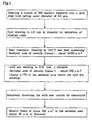
Fig.1 is a flow chart of a method for producing metallic fibers
according to the Example 1.
-
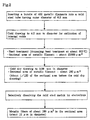
Fig.2 is a flow chart of a methoc. for producing metallic fibers
according to the Example 2.
-
Fig.3 is a flow chart of a method of bundle-drawing and a method for
producing metallic fibers according to the Example 3.
-
Fig.4 is a flow chart of a method for producing metallic fibers
according to the Example 4.
-
Fig.5 is a flow chart of a method for producing metallic fibers
according to the Comparative example.
-
Fig.6 is a flow chart of a method of bundle-drawing and a method for
producing metallic fibers according to a prior art.
-
Fig.7 is a flow chart of a method of bundle-drawing and a method for
producing metallic fibers according to another prior art.
-
The present invention will be explained in detail as follows.
-
One method of bundle-drawing according to the present invention is
intended to process a composite wire containing hard metallic filaments
which has not been processed by cold working with large reduction in
conventional methods. A hard metallic filament is defined as a filament
made of metallic material having Vickers hardness of not less than 100 when
it is treated by standard heat treatment. Examples of such material are
ferrous alloys such as stainless steels, heat resisting steels or non magnetic
steels, nickel alloys such as Monel, Inconel or Hastelloy, or industrial
titanium alloys as α titanium alloys, β titanium alloys, α / β titanium
alloys or pure titanium of JIS2 and JIS3.
-
The method of bundle-drawing according to the present invention is
characterized by that a composite wire containing hard metallic filaments
described above is reduced by a cold drawing with large reduction and
without intermediate heat treatment which makes the sectional area of the
metallic filaments in the composite wire not more than 1/35, preferably not
more than 1/55, more preferably 1/90-1/3000, of the original diameter. By
this method, a composite filament containing metallic filaments of good
accuracy in size and no degradation in property can be produced with less
steps.
-
Another method for producing metallic fibers according to the
present invention is characterized by that at least the final step of reduction
of a composite wire to make a composite filament is performed by a cold
drawing with large reduction and without intermediate heat treatment
which makes the sectional area of the metallic filaments in the composite
wire not more than 1/35, preferably not more than 1/55, more preferably
1/90-1/3000, of the original diameter, and that no heat treatment is applied
on a composite wire or a composite filament when the sectional area of each
metallic filament has become less than 2000 µ m2. The objective of above cold
drawing with large reduction and without intermediate heat treatment are
to decrease number of processing steps and to achieve higher strength of
metallic fibers.
-
As a means for cold drawing with large reduction to make the
sectional area of metallic filaments in a composite wire not more than 1/35,
drawing with hole dies, drawing with roller (lies or cold rolling can be applied.
However, it is preferable to use drawing with hole dies which is
advantageous in uniform deformation and accuracy in size. Particularly, in
this case, it is preferable to select approach angle of dies and reduction per
die considering uniformity of deformation in first priority, needless to say
proper setting of drawing conditions such as lubrication and pass schedule to
perform successful cold drawing with hole dies. More concretely, in case of
using hole dies having approach angle of 8 to 12 degrees, it is preferable to
set average reduction per die not less than 20% at least in the first half of the
cold drawing.
-
The cold drawing with large reduction in the present invention is not
always performed by one stage of continuous drawing and can be divided into
plural stages of continuous drawing. For example, the cold drawing can be
divided into a stage of continuous dry drawing as the first half and
continuous wet drawing as the last half. It is important to keep good
lubrication during the cold drawing with large reduction, and, if necessary,
formation of a lubricating film may be inserted in the way of cold drawing. As
a lubricating film for continuous dry drawing, for example, borax film can be
applied. And in this case, it is preferable to form a uniformly thick film of
about 4-7g/mm2. This treatment enables cold drawing with large reduction
even in one stage by one treatment for forming a lubricating film. And it is
preferable to perform continuous wet drawing after formation of copper
plating, brass plating and the like.
-
In one method for producing metallic fibers according to the
invention, the reason why no heat treatment is performed on a composite
wire or composite filament when the sectional area of the metallic filaments
has become less than 2000 µ m2 is that, if a heat treatment or hot working is
performed on a composite wire containing metallic filaments of less than
2000 µ m2 in sectional area, it apt to cause such problems as decrease in yield
of metallic fibers obtained after removal of the matrix due to remarkable
effect of diffusion between the matrix and the metallic filaments. Preferably,
by setting the sectional area of metallic filaments in the composite wire not
less than 5000 µ m2, the effect of diffusion by heating between the matrix and
the metallic filaments can be made negligibly small when a heat treatment
or hot working is performed on the composite wire.
-
Further, limitation in heat treatment condition on a composite wire
can be largely relaxed by setting the sectional area of metallic filaments in
the composite wire not less than 2000 µ m2, preferably not less than 5000 µ
m2 (not less than 80 µ m in equivalent diameter) when heat treatment or hot
working is performed on the composite wire. For example, though standard
solution heat treatment temperature for austenitic stainless steel is 1000°C-1100°C,
in case of producing fine metallic fibers by applying a plurality of
heat treatment and cold drawing on a composite wire containing austenitic
stainless steel filaments, it is necessary to limit temperature in each heat
treatment to less than about 950°C to control the effect of diffusion between
the matrix and the metallic filaments, considering total heat quantity of the
heat treatments and the sectional area of the metallic filaments on and after
the second heat treatment. On the other hand, in case of that a heat
treatment is performed on a composite wire containing austenite stainless
steel filaments of not less than 2000 µ m2, preferably not less than 5000 µ m2,
and no heat treatment is inserted in the way of reduction thereafter, there is
no problem of diffusion between the matrix and the metallic filaments even
when the heat treatment temperature is 1000°C-1100°C Therefore, corrosion
resistance of cold worked austenitic stainless steel is not degraded and good
processability in cold drawing with large reduction is also achieved.
-
Preferably, a composite wire provided for the cold drawing with large
reduction in the present invention has a construction which enables the
metallic filaments and the matrix processed like one body, considering
uniform distribution of deformation.
-
Preferable construction of a composite wire is as follows;
- (1) Metallic filaments are disposed continuously to the longitudinal direction
of a composite wire.
- (2) Metallic filaments are disposed substantially parallel to the longitudinal
direction of a composite wire.
- (3) Metallic filaments are distributed in the cross section of a composite wire
nearly uniformly and axially symmetrically.
- (4) Ratio of matrix in a composite wire is preferably not more than 60vol%,
more preferably not more than 50vol%.
- (5) There exist no voids within a composite wire.
If ratio of matrix is too high and the thickness of the matrix of different
material between metallic filaments is increased, necking deformation of the
metallic filaments is apt to occur due to uneven deformation. Furhter, in case
of applying the bundle-drawing for production of metallic fibers, ratio of
matrix is preferably set not less than 10vol%, more preferably not less than
20vol% in order to facilitate separation of metallic fibers by dissolution of the
matrix. Further, if there exist some voids within a composite wire, efficiency
of reduction is decreased because part of the reduction is spent for extinction
of the voids. In case of forming a composite wire by inserting a bundle of
metallic filaments into a tubular armor, there can be some voids within the
composite wire. In this case, the voids can be become disappeared by hot
working, slight cold drawing and the like. When the voids are made
disappeared by slight cold drawing, it is preferable to apply heat treatment
before cold drawing with large reduction in order to decrease in strain
induced by the slight cold drawing for extinction of the voids.
-
-
In this case, the sectional area of metallic filaments is also set not
less than 2000 µ m2, preferably not less than 5000 µ m2 when heat treatment
or hot working is performed on the composite wire.
-
In a method for producing metallic fibers according to the present
invention, it is preferable to select material of the matrix more easily
dissolved by dissolution in acid or electrolysis than the material of the
metallic filaments in order to obtain metallie fibers by removal of the matrix
in a composite filament. For example, mild steel is preferable for the
material of the matrix for production of metallic fibers when the material of
the metallic filament is ferrous alloys such as stainless steels containing
chromium of not less than 10wt% or heat resisting steels, pure titanium,
industrial titanium alloys, nickel or nickel alloys. A mild steel containing less
than 0.12wt% of carbon is more preferable and metallic fibers of good quality
can be obtained without effect of diffusion of carbon from the matrix.
-
As a means for selective dissolution of the matrix, dissolution in
nitric acid solution, selective dissolution by electrolysis and the like can be
applied. In particular, in case of using mild steel as matrix, the matrix can be
selectively dissolved by electrolysis using sulfuric acid solution as a
electrolytic solution. This means is advantageous in view of safety or
working environment.
-
A method for producing metallic fibers according to the invention is
particularly suitable for production of very fine metallic fibers having
sectional area of not more than 80 µ m2 (not more than about 10 µ m in
equivalent diameter), especially not more than 20 µ m2 (not more than about
5 µ m in equivalent diameter). And very fine metallic fibers of high quality
can be produced by considerably decreased number of processing steps. In
case of applying the invention for production of very fine metallic fibers
having sectional area of not more than 20 µ m2 (not more than about 5 µ m in
equivalent diameter), no heat treatment or hot working is performed on a
composite wire when the sectional area of each metallic filament has become
less than 2000 µ m2, and last stage of reduction should be performed by cold
drawing with very large reduction in which the sectional area of the metallic
filaments in the composite wire is reduced to not more than 1/100. However,
the process can be performed successfully by proper application of the
preferable conditions described above.
-
Conventionally, for production of very fine metallic fibers having
sectional area of not more than 80 µ m2 (not more than about 10 µ m in
equivalent diameter), there is a method in which a plurality of composite
wire is bundled after reduction in some degree to form a double-composite
wire, and then, the double-composite wire is further reduced. However, this
method is not preferable because the number of processing step is rather
increased. When a method of producing metallic fibers according to the
invention is applied for production of very fine metallic fibers, it is preferable
to increase the reduction of cold drawing in the last stage, reducing the size
to a predetermined value without formation of a double composite wire.
-
As explained above, in a method for producing metallic fibers
according to the invention, a composite wire containing hard metallic
filaments of good size accuracy and no degradation in property can be
produced with less number of processing steps, because at least the last
stage of reduction is performed by cold drawing with large reduction in
which the sectional area of the metallic filament in the composite wire is
reduced to not more than 1/35 of its original value without intermediate heat
treatment, and in particular, no heat treatment is applied on the composite
wire or composite filament when the sectional area of each metallic filament
has become less than 2000 µ m2. This effect is particularly remarkable in
case of production of very fine metallic fibers which conventionally needs
great many processing steps, and the number of processing steps necessary
for the production can be remarkably decreased.
-
Further, by a method for producing metallic fibers according to the
invention, hard metallic fibers of good accuracy in size and less degradation
in property can be produced by less processing steps.
-
Furthermore, by applying cold drawing with large reduction for the
last stage of reduction, metallic fibers remarkably strengthened by work
hardening can be produced.
-
Following is explanation of the present invention with some
examples. However, the present invention should not be limited within the
examples.
Example 1
-
A cladding of mild steel was formed on the surface of a austenitic
stainless steel wire containing about 18wt% of chromium and about 8wt% of
nickel, and, by heat treatment and cold drawing, metallic filaments having
mild steel cladding of 18 µ m in thickness and outer diameter of 0.23mm
were formed. And a composite wire was formed by inserting a bundle of 300
metallic filaments into a mild steel tube having outer diameter of 6.0mm and
thickness of 0.4mm.
-
Then, after cold drawing with roller dies to 4.3mm in outer diameter
for extinction of internal voids, the composite wire was applied to a heat
treatment of heating to about 1050°C and quenching. At this point, the
sectional area of each metallic filament was about 24000 µ m2 (about 175 µ m
in equivalent diameter), and ratio of matrix was about 50vol%. And Vickers
hardness of the metallic fiber was about 160
-
The composite wire was reduced to 0.50mm in diameter by cold dry
drawing with 15 dies using a multi head dry drawing machine without
intermediate heat treatment. The sectional area of each metallic filament in
this composite wire was about 320 µ m2 (about 20 µ m in equivalent
diameter) and was about 1/75 of the sectional area before the cold dry
drawing. In the cold dry drawing, uniform deformation was intended by
using hole dies having approach angle of about 10 degree and setting
average reduction per die about 25%. The cold dry drawing was performed
after forming borax film of about 5g/m2 to obtain good lubrication. As the
result, no wire breakage was occurred during the cold dry drawing.
-
Then, the matrix (the part corresponding to mild steel cladding and
mild steel tube) was selectively dissolved by electrolysis in sulfuric acid
solution, and a bundle of stainless steel fibers of about 20 µ m in diameter
was obtained. The stainless steel fibers were continuous in the longitudinal
direction and had good accuracy in size with no necking and no degradation
in property by diffusion of the matrix was observed. The process of this
Example 1 is shown in Fig.1.
Example 2
-
A cladding of mild steel was formed on the surface of a nickel wire,
and, by heat treatment and cold drawing, metallic filaments having mild
steel cladding of about 15 µ m in thickness and outer diameter of 0.20mm
were formed. And a composite wire was formed by inserting a bundle of 400
metallic filaments into a mild steel tube having outer diameter of 6.0mm and
thickness of 0.4mm.
-
Then, after cold drawing with roller dies to 4.3mm in outer diameter
for extinction of internal voids, the composite wire was applied to a
annealing heat treatment at about 900°C. At. this point, the sectional area of
each metallic filament was about 21000 µ m2 (about 165 µ m in equivalent
diameter), and ratio of matrix was about 40vol%.
-
The composite wire was reduced to 0.39mm in diameter by cold dry
drawing with 17 dies (average reduction per die being 25%) using a multi
head dry drawing machine without intermediate heat treatment. The
sectional area of each metallic filament in this composite wire was about 180
µ m2 (about 15 µ m in equivalent diameter) and was about 1/120 of the
sectional area before the cold dry drawing. The cold dry drawing was
performed in same condition as Example 1 using hole dies having approach
angle of about 10 degree after forming borax film of about 5g/m2 to obtain
good lubrication. As the result, no wire breakage was occurred during the
cold dry drawing.
-
Then, the matrix (the part corresponding to mild steel cladding and
mild steel tube) was selectively dissolved by electrolysis in sulfuric acid
solution and a bundle of nickel fibers of about 15 µ m in diameter was
obtained. The nickel fibers were continuouson the longitudinal direction and
had good accuracy in size with no necking and no degradation in property by
diffusion of the matrix was observed. The process of this Example 2 is shown
in Fig.2.
Example 3
-
A composite billet, comprising austenitic stainless steel wires
containing about 16wt% of chromium, about 10wt% of nickel and about 2wt%
of molybdenum embedded in a mild steel matrix, was hot rolled to prepare a
composite wire of 5.5mm in diameter. The composite wire contained 1700
metallic filaments disposed continuously and substantially parallel to the
longitudinal direction of the composite wire, Sectional area of each metallic
filament was about 5700 µ m2, and Vickers hardness of each metallic
filament was about 190. And ratio of the matrix in the composite wire was
about 59vol%.
-
The composite wire was reduced to 0.52mm in diameter by cold dry
drawing with 17 dies (average reduction per die being 25%) using a multi
head dry drawing machine without intermediate heat treatment. The
sectional area of each metallic filaments in this composite wire was about 50
µ m2 (about 8 µ m in equivalent diameter) and was about 1/114 of the
sectional area before the cold dry drawing. The cold dry drawing was
performed in same condition as Example 1 using hole dies having approach
angle of about 10 degree after forming borax film of about 5g/m2 to obtain
good lubrication. As the result, no wire breakage was occurred during the
cold dry drawing.
-
Further, copper plating was formed on the composite wire of 0.52mm
in diameter. Then, the composite wire was reduced to 0.13mm in diameter by
cold wet drawing with 13 dies using a multi head wet drawing machine
without intermediate heat treatment. The sectional area of each metallic
filament in this composite wire was about 3 µ m2 (about 2 µ m in equivalent
diameter) and was about 1/1800 of the sectional area before the cold dry
drawing and the cold wet drawing. The cold wet drawing was performed
using hole dies having approach angle of about 10 degrees, and reduction per
die was set not less than 20% at some dies successively arranged in the first
half of the cold wet drawing to obtain uniform deformation. As the result, no
wire breakage was occurred during the cold wet drawing.
-
Then, the mild steel matrix was selectively dissolved by electrolysis
in sulfuric acid solution, and a bundle of metallic fibers of about 2 µ m in
diameter was obtained. The metallic fibers were continuous in the
longitudinal direction, and no degradation in property by diffusion of the
matrix was observed. The process of this Example 3 is shown in Fig.3.
Example 4
-
A composite billet, comprising austenitic stainless steel wires
containing about 16wt% of chromium, about 10wt% of nickel and about 2wt%
of molybdenum embedded in a mild steel matrix, was hot rolled to prepare a
composite wire of 5.5mm in diameter. The composite wire contained 1700
metallic filaments disposed continuously and substantially parallel to the
longitudinal direction of the composite wire. Sectional area of each metallic
filament was about 5700 µ m2, and Vickers hardness of each metallic
filament was about 190. And ratio of the matrix in the composite wire was
about 59vol%.
-
The composite wire was reduced to 1.5mm in diameter by cold dry
drawing with 9 dies (average reduction per die being 25%) using a multi
head dry drawing machine without intermediate heat treatment. The
sectional area of each metallic filaments in this composite wire was about
420 µ m2 (about 23 µ m in equivalent diameter). The cold dry drawing was
performed in same condition as Example 1 and 2 using hole dies having
approach angle of about 10 degree after forming borax film of about 5g/m2. As
the result, no wire breakage was occurred during the cold dry drawing.
-
Further, copper plating was formed on the composite wire of 1.5mm
in diameter without heat treatment before formation of the copper plating.
Then, the composite wire was reduced to 0.13mm in diameter by cold wet
drawing with 25 dies using a multi head wet drawing machine without
intermediate heat treatment. The sectional area of each metallic filament in
this composite wire was about 3 µ m2 (about 2 µ m in equivalent diameter)
and was about 1/1800 of the sectional area before the cold dry drawing and
the cold wet drawing. The cold wet drawing was performed using hole dies
having approach angle of about 10 degrees, and reduction per die was set not
less than 20% at some dies successively arranged in the first half of the cold
wet drawing to obtain uniform deformation. As the result, no wire breakage
was occurred during the cold wet drawing.
-
Then, the mild steel matrix was selectively dissolved by electrolysis
in sulfuric acid solution, and a bundle of metallic fibers of about 2 µ m in
diameter was obtained. The metallic fibers were continuous in the
longitudinal direction, and no degradation in property by diffusion of the
matrix was observed. The process of this Example 4 is shown in Fig.4.
Comparative example
-
A composite wire of 1.5mm in diameter produced by the same process
as in Example 4 was applied to a heat treatment of heating to about 1050°C
and quenching. At this point, sectional area of each metallic filament in the
composite wire was about 420 µ m2 (about 23 µ m in equivalent diameter).
-
Then, copper plating was formed on the composite wire. And the
composite wire was reduced to produce a composite filament of 0.13mm in
diameter by cold wet drawing with the same condition as Example 4.
However, wire breakage was frequently occurred during the cold wet
drawing.
-
Further, selective removal of the mild steel matrix was tried by
electrolysis in sulfuric acid solution. But the bundle of stainless steel fibers
could not be separated completely even after electrolysis for about 1 hour.
The process of this Comparative example is shown in Fig.5.