EP1127148B1 - Varianten des humanisierten monoklonalen anti-krebs antikörpers cc49 - Google Patents
Varianten des humanisierten monoklonalen anti-krebs antikörpers cc49 Download PDFInfo
- Publication number
- EP1127148B1 EP1127148B1 EP99960178A EP99960178A EP1127148B1 EP 1127148 B1 EP1127148 B1 EP 1127148B1 EP 99960178 A EP99960178 A EP 99960178A EP 99960178 A EP99960178 A EP 99960178A EP 1127148 B1 EP1127148 B1 EP 1127148B1
- Authority
- EP
- European Patent Office
- Prior art keywords
- seq
- cdr2
- antibody
- amino acid
- cdr1
- Prior art date
- Legal status (The legal status is an assumption and is not a legal conclusion. Google has not performed a legal analysis and makes no representation as to the accuracy of the status listed.)
- Expired - Lifetime
Links
- 230000001093 anti-cancer Effects 0.000 title 1
- 108010047041 Complementarity Determining Regions Proteins 0.000 claims abstract description 46
- 241001529936 Murinae Species 0.000 claims abstract description 38
- 230000027455 binding Effects 0.000 claims description 90
- 206010028980 Neoplasm Diseases 0.000 claims description 49
- 150000001413 amino acids Chemical group 0.000 claims description 40
- 238000000034 method Methods 0.000 claims description 36
- 201000011510 cancer Diseases 0.000 claims description 33
- 230000005847 immunogenicity Effects 0.000 claims description 26
- 239000012634 fragment Substances 0.000 claims description 24
- NFGXHKASABOEEW-UHFFFAOYSA-N 1-methylethyl 11-methoxy-3,7,11-trimethyl-2,4-dodecadienoate Chemical group COC(C)(C)CCCC(C)CC=CC(C)=CC(=O)OC(C)C NFGXHKASABOEEW-UHFFFAOYSA-N 0.000 claims description 16
- 239000000203 mixture Substances 0.000 claims description 16
- 230000002829 reductive effect Effects 0.000 claims description 11
- 108090000765 processed proteins & peptides Proteins 0.000 claims description 10
- 102000004196 processed proteins & peptides Human genes 0.000 claims description 10
- FWMNVWWHGCHHJJ-SKKKGAJSSA-N 4-amino-1-[(2r)-6-amino-2-[[(2r)-2-[[(2r)-2-[[(2r)-2-amino-3-phenylpropanoyl]amino]-3-phenylpropanoyl]amino]-4-methylpentanoyl]amino]hexanoyl]piperidine-4-carboxylic acid Chemical compound C([C@H](C(=O)N[C@H](CC(C)C)C(=O)N[C@H](CCCCN)C(=O)N1CCC(N)(CC1)C(O)=O)NC(=O)[C@H](N)CC=1C=CC=CC=1)C1=CC=CC=C1 FWMNVWWHGCHHJJ-SKKKGAJSSA-N 0.000 claims description 9
- 239000000872 buffer Substances 0.000 claims description 9
- 229920001184 polypeptide Polymers 0.000 claims description 9
- 239000013598 vector Substances 0.000 claims description 8
- 238000004519 manufacturing process Methods 0.000 claims description 6
- 108091028043 Nucleic acid sequence Proteins 0.000 claims description 5
- 238000000338 in vitro Methods 0.000 claims description 5
- 101150047061 tag-72 gene Proteins 0.000 claims description 4
- 239000003814 drug Substances 0.000 claims description 3
- 150000007523 nucleic acids Chemical group 0.000 claims description 3
- 239000003937 drug carrier Substances 0.000 claims description 2
- 235000001014 amino acid Nutrition 0.000 claims 6
- 229940024606 amino acid Drugs 0.000 claims 6
- 239000004472 Lysine Substances 0.000 claims 4
- KDXKERNSBIXSRK-UHFFFAOYSA-N Lysine Natural products NCCCCC(N)C(O)=O KDXKERNSBIXSRK-UHFFFAOYSA-N 0.000 claims 4
- MTCFGRXMJLQNBG-UHFFFAOYSA-N Serine Natural products OCC(N)C(O)=O MTCFGRXMJLQNBG-UHFFFAOYSA-N 0.000 claims 4
- ZDXPYRJPNDTMRX-UHFFFAOYSA-N glutamine Natural products OC(=O)C(N)CCC(N)=O ZDXPYRJPNDTMRX-UHFFFAOYSA-N 0.000 claims 4
- 125000000404 glutamine group Chemical group N[C@@H](CCC(N)=O)C(=O)* 0.000 claims 4
- 125000003607 serino group Chemical group [H]N([H])[C@]([H])(C(=O)[*])C(O[H])([H])[H] 0.000 claims 3
- 239000004475 Arginine Substances 0.000 claims 2
- DCXYFEDJOCDNAF-UHFFFAOYSA-N Asparagine Natural products OC(=O)C(N)CC(N)=O DCXYFEDJOCDNAF-UHFFFAOYSA-N 0.000 claims 2
- WHUUTDBJXJRKMK-UHFFFAOYSA-N Glutamic acid Natural products OC(=O)C(N)CCC(O)=O WHUUTDBJXJRKMK-UHFFFAOYSA-N 0.000 claims 2
- DCXYFEDJOCDNAF-REOHCLBHSA-N L-asparagine Chemical compound OC(=O)[C@@H](N)CC(N)=O DCXYFEDJOCDNAF-REOHCLBHSA-N 0.000 claims 2
- AYFVYJQAPQTCCC-UHFFFAOYSA-N Threonine Natural products CC(O)C(N)C(O)=O AYFVYJQAPQTCCC-UHFFFAOYSA-N 0.000 claims 2
- 239000004473 Threonine Substances 0.000 claims 2
- ODKSFYDXXFIFQN-UHFFFAOYSA-N arginine Natural products OC(=O)C(N)CCCNC(N)=N ODKSFYDXXFIFQN-UHFFFAOYSA-N 0.000 claims 2
- 229960001230 asparagine Drugs 0.000 claims 2
- 235000009582 asparagine Nutrition 0.000 claims 2
- 235000013922 glutamic acid Nutrition 0.000 claims 2
- 239000004220 glutamic acid Substances 0.000 claims 2
- 125000003588 lysine group Chemical group [H]N([H])C([H])([H])C([H])([H])C([H])([H])C([H])([H])C([H])(N([H])[H])C(*)=O 0.000 claims 2
- 125000000341 threoninyl group Chemical group [H]OC([H])(C([H])([H])[H])C([H])(N([H])[H])C(*)=O 0.000 claims 1
- 238000010352 biotechnological method Methods 0.000 abstract description 2
- 238000002560 therapeutic procedure Methods 0.000 abstract description 2
- 239000000427 antigen Substances 0.000 description 54
- 102000036639 antigens Human genes 0.000 description 54
- 108091007433 antigens Proteins 0.000 description 54
- 108090000623 proteins and genes Proteins 0.000 description 45
- 230000009918 complex formation Effects 0.000 description 37
- 108060003951 Immunoglobulin Proteins 0.000 description 34
- 102000018358 immunoglobulin Human genes 0.000 description 34
- 210000004027 cell Anatomy 0.000 description 30
- 230000004044 response Effects 0.000 description 30
- 230000009257 reactivity Effects 0.000 description 29
- 108700043183 Bos taurus BSM1 Proteins 0.000 description 26
- 210000004408 hybridoma Anatomy 0.000 description 22
- 239000013615 primer Substances 0.000 description 22
- 238000004128 high performance liquid chromatography Methods 0.000 description 20
- 238000003127 radioimmunoassay Methods 0.000 description 17
- 102000004169 proteins and genes Human genes 0.000 description 16
- 238000006467 substitution reaction Methods 0.000 description 16
- 108020004414 DNA Proteins 0.000 description 14
- 229940072221 immunoglobulins Drugs 0.000 description 13
- 230000005764 inhibitory process Effects 0.000 description 13
- 239000003446 ligand Substances 0.000 description 13
- 239000000047 product Substances 0.000 description 13
- 241000701447 unidentified baculovirus Species 0.000 description 13
- 210000004369 blood Anatomy 0.000 description 12
- 239000008280 blood Substances 0.000 description 12
- 230000014759 maintenance of location Effects 0.000 description 11
- LOKCTEFSRHRXRJ-UHFFFAOYSA-I dipotassium trisodium dihydrogen phosphate hydrogen phosphate dichloride Chemical compound P(=O)(O)(O)[O-].[K+].P(=O)(O)([O-])[O-].[Na+].[Na+].[Cl-].[K+].[Cl-].[Na+] LOKCTEFSRHRXRJ-UHFFFAOYSA-I 0.000 description 10
- 230000002163 immunogen Effects 0.000 description 10
- 239000002953 phosphate buffered saline Substances 0.000 description 10
- 239000008186 active pharmaceutical agent Substances 0.000 description 9
- 239000013256 coordination polymer Substances 0.000 description 9
- 239000002773 nucleotide Substances 0.000 description 9
- 125000003729 nucleotide group Chemical group 0.000 description 9
- 238000004458 analytical method Methods 0.000 description 8
- 238000003556 assay Methods 0.000 description 8
- 238000013207 serial dilution Methods 0.000 description 8
- 210000002966 serum Anatomy 0.000 description 8
- 241000699666 Mus <mouse, genus> Species 0.000 description 7
- 241000699670 Mus sp. Species 0.000 description 7
- 239000013604 expression vector Substances 0.000 description 7
- 208000015181 infectious disease Diseases 0.000 description 7
- 231100000219 mutagenic Toxicity 0.000 description 7
- 230000003505 mutagenic effect Effects 0.000 description 7
- 230000009467 reduction Effects 0.000 description 7
- 239000006228 supernatant Substances 0.000 description 7
- 102000004190 Enzymes Human genes 0.000 description 6
- 108090000790 Enzymes Proteins 0.000 description 6
- 125000000539 amino acid group Chemical group 0.000 description 6
- 230000005875 antibody response Effects 0.000 description 6
- 210000000481 breast Anatomy 0.000 description 6
- 239000012636 effector Substances 0.000 description 6
- 230000000694 effects Effects 0.000 description 6
- 238000011534 incubation Methods 0.000 description 6
- 238000010253 intravenous injection Methods 0.000 description 6
- 230000004048 modification Effects 0.000 description 6
- 238000012986 modification Methods 0.000 description 6
- 230000036961 partial effect Effects 0.000 description 6
- 108091003079 Bovine Serum Albumin Proteins 0.000 description 5
- 230000015572 biosynthetic process Effects 0.000 description 5
- 229940098773 bovine serum albumin Drugs 0.000 description 5
- 210000001072 colon Anatomy 0.000 description 5
- 239000012228 culture supernatant Substances 0.000 description 5
- 230000008348 humoral response Effects 0.000 description 5
- 238000002347 injection Methods 0.000 description 5
- 239000007924 injection Substances 0.000 description 5
- OHSVLFRHMCKCQY-NJFSPNSNSA-N lutetium-177 Chemical compound [177Lu] OHSVLFRHMCKCQY-NJFSPNSNSA-N 0.000 description 5
- 238000002360 preparation method Methods 0.000 description 5
- 238000001890 transfection Methods 0.000 description 5
- 230000003612 virological effect Effects 0.000 description 5
- 241000238631 Hexapoda Species 0.000 description 4
- 241000282412 Homo Species 0.000 description 4
- 241001465754 Metazoa Species 0.000 description 4
- 108091034117 Oligonucleotide Proteins 0.000 description 4
- 101710182846 Polyhedrin Proteins 0.000 description 4
- 101710120037 Toxin CcdB Proteins 0.000 description 4
- 206010053614 Type III immune complex mediated reaction Diseases 0.000 description 4
- JLCPHMBAVCMARE-UHFFFAOYSA-N [3-[[3-[[3-[[3-[[3-[[3-[[3-[[3-[[3-[[3-[[3-[[5-(2-amino-6-oxo-1H-purin-9-yl)-3-[[3-[[3-[[3-[[3-[[3-[[5-(2-amino-6-oxo-1H-purin-9-yl)-3-[[5-(2-amino-6-oxo-1H-purin-9-yl)-3-hydroxyoxolan-2-yl]methoxy-hydroxyphosphoryl]oxyoxolan-2-yl]methoxy-hydroxyphosphoryl]oxy-5-(5-methyl-2,4-dioxopyrimidin-1-yl)oxolan-2-yl]methoxy-hydroxyphosphoryl]oxy-5-(6-aminopurin-9-yl)oxolan-2-yl]methoxy-hydroxyphosphoryl]oxy-5-(6-aminopurin-9-yl)oxolan-2-yl]methoxy-hydroxyphosphoryl]oxy-5-(6-aminopurin-9-yl)oxolan-2-yl]methoxy-hydroxyphosphoryl]oxy-5-(6-aminopurin-9-yl)oxolan-2-yl]methoxy-hydroxyphosphoryl]oxyoxolan-2-yl]methoxy-hydroxyphosphoryl]oxy-5-(5-methyl-2,4-dioxopyrimidin-1-yl)oxolan-2-yl]methoxy-hydroxyphosphoryl]oxy-5-(4-amino-2-oxopyrimidin-1-yl)oxolan-2-yl]methoxy-hydroxyphosphoryl]oxy-5-(5-methyl-2,4-dioxopyrimidin-1-yl)oxolan-2-yl]methoxy-hydroxyphosphoryl]oxy-5-(5-methyl-2,4-dioxopyrimidin-1-yl)oxolan-2-yl]methoxy-hydroxyphosphoryl]oxy-5-(6-aminopurin-9-yl)oxolan-2-yl]methoxy-hydroxyphosphoryl]oxy-5-(6-aminopurin-9-yl)oxolan-2-yl]methoxy-hydroxyphosphoryl]oxy-5-(4-amino-2-oxopyrimidin-1-yl)oxolan-2-yl]methoxy-hydroxyphosphoryl]oxy-5-(4-amino-2-oxopyrimidin-1-yl)oxolan-2-yl]methoxy-hydroxyphosphoryl]oxy-5-(4-amino-2-oxopyrimidin-1-yl)oxolan-2-yl]methoxy-hydroxyphosphoryl]oxy-5-(6-aminopurin-9-yl)oxolan-2-yl]methoxy-hydroxyphosphoryl]oxy-5-(4-amino-2-oxopyrimidin-1-yl)oxolan-2-yl]methyl [5-(6-aminopurin-9-yl)-2-(hydroxymethyl)oxolan-3-yl] hydrogen phosphate Polymers Cc1cn(C2CC(OP(O)(=O)OCC3OC(CC3OP(O)(=O)OCC3OC(CC3O)n3cnc4c3nc(N)[nH]c4=O)n3cnc4c3nc(N)[nH]c4=O)C(COP(O)(=O)OC3CC(OC3COP(O)(=O)OC3CC(OC3COP(O)(=O)OC3CC(OC3COP(O)(=O)OC3CC(OC3COP(O)(=O)OC3CC(OC3COP(O)(=O)OC3CC(OC3COP(O)(=O)OC3CC(OC3COP(O)(=O)OC3CC(OC3COP(O)(=O)OC3CC(OC3COP(O)(=O)OC3CC(OC3COP(O)(=O)OC3CC(OC3COP(O)(=O)OC3CC(OC3COP(O)(=O)OC3CC(OC3COP(O)(=O)OC3CC(OC3COP(O)(=O)OC3CC(OC3COP(O)(=O)OC3CC(OC3COP(O)(=O)OC3CC(OC3CO)n3cnc4c(N)ncnc34)n3ccc(N)nc3=O)n3cnc4c(N)ncnc34)n3ccc(N)nc3=O)n3ccc(N)nc3=O)n3ccc(N)nc3=O)n3cnc4c(N)ncnc34)n3cnc4c(N)ncnc34)n3cc(C)c(=O)[nH]c3=O)n3cc(C)c(=O)[nH]c3=O)n3ccc(N)nc3=O)n3cc(C)c(=O)[nH]c3=O)n3cnc4c3nc(N)[nH]c4=O)n3cnc4c(N)ncnc34)n3cnc4c(N)ncnc34)n3cnc4c(N)ncnc34)n3cnc4c(N)ncnc34)O2)c(=O)[nH]c1=O JLCPHMBAVCMARE-UHFFFAOYSA-N 0.000 description 4
- 230000000890 antigenic effect Effects 0.000 description 4
- 230000006870 function Effects 0.000 description 4
- 230000016178 immune complex formation Effects 0.000 description 4
- 230000002458 infectious effect Effects 0.000 description 4
- 101150030901 mab-21 gene Proteins 0.000 description 4
- 239000000463 material Substances 0.000 description 4
- 230000035772 mutation Effects 0.000 description 4
- 108091008146 restriction endonucleases Proteins 0.000 description 4
- 238000001542 size-exclusion chromatography Methods 0.000 description 4
- 238000002415 sodium dodecyl sulfate polyacrylamide gel electrophoresis Methods 0.000 description 4
- 239000007787 solid Substances 0.000 description 4
- 238000003786 synthesis reaction Methods 0.000 description 4
- 210000001519 tissue Anatomy 0.000 description 4
- 230000002103 transcriptional effect Effects 0.000 description 4
- 210000003462 vein Anatomy 0.000 description 4
- 206010009944 Colon cancer Diseases 0.000 description 3
- 108010017826 DNA Polymerase I Proteins 0.000 description 3
- 102000004594 DNA Polymerase I Human genes 0.000 description 3
- 238000002965 ELISA Methods 0.000 description 3
- 238000012286 ELISA Assay Methods 0.000 description 3
- 239000007983 Tris buffer Substances 0.000 description 3
- 208000009956 adenocarcinoma Diseases 0.000 description 3
- 238000010171 animal model Methods 0.000 description 3
- 238000000137 annealing Methods 0.000 description 3
- 238000005119 centrifugation Methods 0.000 description 3
- 230000009977 dual effect Effects 0.000 description 3
- 230000001900 immune effect Effects 0.000 description 3
- 230000016784 immunoglobulin production Effects 0.000 description 3
- 238000001802 infusion Methods 0.000 description 3
- 239000007788 liquid Substances 0.000 description 3
- 230000037230 mobility Effects 0.000 description 3
- 210000000056 organ Anatomy 0.000 description 3
- 239000011734 sodium Substances 0.000 description 3
- 239000001488 sodium phosphate Substances 0.000 description 3
- 229910000162 sodium phosphate Inorganic materials 0.000 description 3
- 239000000243 solution Substances 0.000 description 3
- 230000008685 targeting Effects 0.000 description 3
- 238000012360 testing method Methods 0.000 description 3
- 230000001225 therapeutic effect Effects 0.000 description 3
- LENZDBCJOHFCAS-UHFFFAOYSA-N tris Chemical compound OCC(N)(CO)CO LENZDBCJOHFCAS-UHFFFAOYSA-N 0.000 description 3
- RYFMWSXOAZQYPI-UHFFFAOYSA-K trisodium phosphate Chemical compound [Na+].[Na+].[Na+].[O-]P([O-])([O-])=O RYFMWSXOAZQYPI-UHFFFAOYSA-K 0.000 description 3
- FJQZXCPWAGYPSD-UHFFFAOYSA-N 1,3,4,6-tetrachloro-3a,6a-diphenylimidazo[4,5-d]imidazole-2,5-dione Chemical compound ClN1C(=O)N(Cl)C2(C=3C=CC=CC=3)N(Cl)C(=O)N(Cl)C12C1=CC=CC=C1 FJQZXCPWAGYPSD-UHFFFAOYSA-N 0.000 description 2
- KSXTUUUQYQYKCR-LQDDAWAPSA-M 2,3-bis[[(z)-octadec-9-enoyl]oxy]propyl-trimethylazanium;chloride Chemical compound [Cl-].CCCCCCCC\C=C/CCCCCCCC(=O)OCC(C[N+](C)(C)C)OC(=O)CCCCCCC\C=C/CCCCCCCC KSXTUUUQYQYKCR-LQDDAWAPSA-M 0.000 description 2
- IVLXQGJVBGMLRR-UHFFFAOYSA-N 2-aminoacetic acid;hydron;chloride Chemical compound Cl.NCC(O)=O IVLXQGJVBGMLRR-UHFFFAOYSA-N 0.000 description 2
- 229920000936 Agarose Polymers 0.000 description 2
- 241000283707 Capra Species 0.000 description 2
- HEDRZPFGACZZDS-UHFFFAOYSA-N Chloroform Chemical compound ClC(Cl)Cl HEDRZPFGACZZDS-UHFFFAOYSA-N 0.000 description 2
- 108020004705 Codon Proteins 0.000 description 2
- 108010014303 DNA-directed DNA polymerase Proteins 0.000 description 2
- 102000016928 DNA-directed DNA polymerase Human genes 0.000 description 2
- YQYJSBFKSSDGFO-UHFFFAOYSA-N Epihygromycin Natural products OC1C(O)C(C(=O)C)OC1OC(C(=C1)O)=CC=C1C=C(C)C(=O)NC1C(O)C(O)C2OCOC2C1O YQYJSBFKSSDGFO-UHFFFAOYSA-N 0.000 description 2
- LFQSCWFLJHTTHZ-UHFFFAOYSA-N Ethanol Chemical compound CCO LFQSCWFLJHTTHZ-UHFFFAOYSA-N 0.000 description 2
- 108090000288 Glycoproteins Proteins 0.000 description 2
- 102000003886 Glycoproteins Human genes 0.000 description 2
- 101000690301 Homo sapiens Aldo-keto reductase family 1 member C4 Proteins 0.000 description 2
- 101001116548 Homo sapiens Protein CBFA2T1 Proteins 0.000 description 2
- 108091006905 Human Serum Albumin Proteins 0.000 description 2
- 102000008100 Human Serum Albumin Human genes 0.000 description 2
- 241000701024 Human betaherpesvirus 5 Species 0.000 description 2
- 206010020751 Hypersensitivity Diseases 0.000 description 2
- 108010054477 Immunoglobulin Fab Fragments Proteins 0.000 description 2
- 102000001706 Immunoglobulin Fab Fragments Human genes 0.000 description 2
- 108010021625 Immunoglobulin Fragments Proteins 0.000 description 2
- 102000008394 Immunoglobulin Fragments Human genes 0.000 description 2
- 108010067060 Immunoglobulin Variable Region Proteins 0.000 description 2
- 102000017727 Immunoglobulin Variable Region Human genes 0.000 description 2
- 241000124008 Mammalia Species 0.000 description 2
- 229930193140 Neomycin Natural products 0.000 description 2
- 108010076504 Protein Sorting Signals Proteins 0.000 description 2
- 108010006785 Taq Polymerase Proteins 0.000 description 2
- 241000251539 Vertebrata <Metazoa> Species 0.000 description 2
- 238000001042 affinity chromatography Methods 0.000 description 2
- 210000000628 antibody-producing cell Anatomy 0.000 description 2
- 125000004429 atom Chemical group 0.000 description 2
- 210000003719 b-lymphocyte Anatomy 0.000 description 2
- 230000004071 biological effect Effects 0.000 description 2
- 238000001815 biotherapy Methods 0.000 description 2
- 125000002091 cationic group Chemical group 0.000 description 2
- 230000001413 cellular effect Effects 0.000 description 2
- 230000008859 change Effects 0.000 description 2
- 239000003795 chemical substances by application Substances 0.000 description 2
- 238000004925 denaturation Methods 0.000 description 2
- 230000036425 denaturation Effects 0.000 description 2
- 238000001514 detection method Methods 0.000 description 2
- 238000011161 development Methods 0.000 description 2
- 210000004602 germ cell Anatomy 0.000 description 2
- 229960001269 glycine hydrochloride Drugs 0.000 description 2
- 230000036541 health Effects 0.000 description 2
- 102000054751 human RUNX1T1 Human genes 0.000 description 2
- 210000005260 human cell Anatomy 0.000 description 2
- 230000028996 humoral immune response Effects 0.000 description 2
- 238000001727 in vivo Methods 0.000 description 2
- 238000011065 in-situ storage Methods 0.000 description 2
- 239000002054 inoculum Substances 0.000 description 2
- 230000003993 interaction Effects 0.000 description 2
- 239000002502 liposome Substances 0.000 description 2
- 230000001404 mediated effect Effects 0.000 description 2
- HPNSFSBZBAHARI-UHFFFAOYSA-N micophenolic acid Natural products OC1=C(CC=C(C)CCC(O)=O)C(OC)=C(C)C2=C1C(=O)OC2 HPNSFSBZBAHARI-UHFFFAOYSA-N 0.000 description 2
- 229960000951 mycophenolic acid Drugs 0.000 description 2
- HPNSFSBZBAHARI-RUDMXATFSA-N mycophenolic acid Chemical compound OC1=C(C\C=C(/C)CCC(O)=O)C(OC)=C(C)C2=C1C(=O)OC2 HPNSFSBZBAHARI-RUDMXATFSA-N 0.000 description 2
- 229960004927 neomycin Drugs 0.000 description 2
- 239000013612 plasmid Substances 0.000 description 2
- 238000003752 polymerase chain reaction Methods 0.000 description 2
- 125000002924 primary amino group Chemical group [H]N([H])* 0.000 description 2
- 238000000746 purification Methods 0.000 description 2
- 238000000163 radioactive labelling Methods 0.000 description 2
- 230000010076 replication Effects 0.000 description 2
- 230000001177 retroviral effect Effects 0.000 description 2
- 239000000523 sample Substances 0.000 description 2
- 230000028327 secretion Effects 0.000 description 2
- 238000012163 sequencing technique Methods 0.000 description 2
- 238000002741 site-directed mutagenesis Methods 0.000 description 2
- 239000000725 suspension Substances 0.000 description 2
- 238000013518 transcription Methods 0.000 description 2
- 230000035897 transcription Effects 0.000 description 2
- 210000004881 tumor cell Anatomy 0.000 description 2
- AXAVXPMQTGXXJZ-UHFFFAOYSA-N 2-aminoacetic acid;2-amino-2-(hydroxymethyl)propane-1,3-diol Chemical compound NCC(O)=O.OCC(N)(CO)CO AXAVXPMQTGXXJZ-UHFFFAOYSA-N 0.000 description 1
- QFVHZQCOUORWEI-UHFFFAOYSA-N 4-[(4-anilino-5-sulfonaphthalen-1-yl)diazenyl]-5-hydroxynaphthalene-2,7-disulfonic acid Chemical compound C=12C(O)=CC(S(O)(=O)=O)=CC2=CC(S(O)(=O)=O)=CC=1N=NC(C1=CC=CC(=C11)S(O)(=O)=O)=CC=C1NC1=CC=CC=C1 QFVHZQCOUORWEI-UHFFFAOYSA-N 0.000 description 1
- 102220556912 ATPase WRNIP1_V18A_mutation Human genes 0.000 description 1
- 101710117290 Aldo-keto reductase family 1 member C4 Proteins 0.000 description 1
- 241000304886 Bacilli Species 0.000 description 1
- 244000063299 Bacillus subtilis Species 0.000 description 1
- 101000583086 Bunodosoma granuliferum Delta-actitoxin-Bgr2b Proteins 0.000 description 1
- 101100022187 Caenorhabditis elegans mab-10 gene Proteins 0.000 description 1
- UXVMQQNJUSDDNG-UHFFFAOYSA-L Calcium chloride Chemical compound [Cl-].[Cl-].[Ca+2] UXVMQQNJUSDDNG-UHFFFAOYSA-L 0.000 description 1
- 201000009030 Carcinoma Diseases 0.000 description 1
- 238000011537 Coomassie blue staining Methods 0.000 description 1
- 241000699802 Cricetulus griseus Species 0.000 description 1
- 102000004127 Cytokines Human genes 0.000 description 1
- 108090000695 Cytokines Proteins 0.000 description 1
- 230000004544 DNA amplification Effects 0.000 description 1
- 239000003155 DNA primer Substances 0.000 description 1
- 108090000204 Dipeptidase 1 Proteins 0.000 description 1
- 206010013142 Disinhibition Diseases 0.000 description 1
- 241000588724 Escherichia coli Species 0.000 description 1
- 241000701959 Escherichia virus Lambda Species 0.000 description 1
- 102000009109 Fc receptors Human genes 0.000 description 1
- 108010087819 Fc receptors Proteins 0.000 description 1
- 206010056740 Genital discharge Diseases 0.000 description 1
- CEAZRRDELHUEMR-URQXQFDESA-N Gentamicin Chemical compound O1[C@H](C(C)NC)CC[C@@H](N)[C@H]1O[C@H]1[C@H](O)[C@@H](O[C@@H]2[C@@H]([C@@H](NC)[C@@](C)(O)CO2)O)[C@H](N)C[C@@H]1N CEAZRRDELHUEMR-URQXQFDESA-N 0.000 description 1
- 229930182566 Gentamicin Natural products 0.000 description 1
- 102100032812 HIG1 domain family member 1A, mitochondrial Human genes 0.000 description 1
- 101001066429 Homo sapiens HIG1 domain family member 1A, mitochondrial Proteins 0.000 description 1
- 102000009786 Immunoglobulin Constant Regions Human genes 0.000 description 1
- 108010009817 Immunoglobulin Constant Regions Proteins 0.000 description 1
- 241000235058 Komagataella pastoris Species 0.000 description 1
- QIVBCDIJIAJPQS-VIFPVBQESA-N L-tryptophane Chemical compound C1=CC=C2C(C[C@H](N)C(O)=O)=CNC2=C1 QIVBCDIJIAJPQS-VIFPVBQESA-N 0.000 description 1
- GUBGYTABKSRVRQ-QKKXKWKRSA-N Lactose Natural products OC[C@H]1O[C@@H](O[C@H]2[C@H](O)[C@@H](O)C(O)O[C@@H]2CO)[C@H](O)[C@@H](O)[C@H]1O GUBGYTABKSRVRQ-QKKXKWKRSA-N 0.000 description 1
- 102000005717 Myeloma Proteins Human genes 0.000 description 1
- 108010045503 Myeloma Proteins Proteins 0.000 description 1
- 241000283973 Oryctolagus cuniculus Species 0.000 description 1
- ISWSIDIOOBJBQZ-UHFFFAOYSA-N Phenol Chemical compound OC1=CC=CC=C1 ISWSIDIOOBJBQZ-UHFFFAOYSA-N 0.000 description 1
- 241000288906 Primates Species 0.000 description 1
- 108020004511 Recombinant DNA Proteins 0.000 description 1
- 241000235070 Saccharomyces Species 0.000 description 1
- 240000004808 Saccharomyces cerevisiae Species 0.000 description 1
- 241000607142 Salmonella Species 0.000 description 1
- 241000607720 Serratia Species 0.000 description 1
- QIVBCDIJIAJPQS-UHFFFAOYSA-N Tryptophan Natural products C1=CC=C2C(CC(N)C(O)=O)=CNC2=C1 QIVBCDIJIAJPQS-UHFFFAOYSA-N 0.000 description 1
- 241000700605 Viruses Species 0.000 description 1
- 238000002835 absorbance Methods 0.000 description 1
- 230000002411 adverse Effects 0.000 description 1
- 230000004075 alteration Effects 0.000 description 1
- 238000012870 ammonium sulfate precipitation Methods 0.000 description 1
- 229960000723 ampicillin Drugs 0.000 description 1
- AVKUERGKIZMTKX-NJBDSQKTSA-N ampicillin Chemical compound C1([C@@H](N)C(=O)N[C@H]2[C@H]3SC([C@@H](N3C2=O)C(O)=O)(C)C)=CC=CC=C1 AVKUERGKIZMTKX-NJBDSQKTSA-N 0.000 description 1
- 230000001028 anti-proliverative effect Effects 0.000 description 1
- 230000009830 antibody antigen interaction Effects 0.000 description 1
- 230000009833 antibody interaction Effects 0.000 description 1
- 239000002246 antineoplastic agent Substances 0.000 description 1
- 230000009286 beneficial effect Effects 0.000 description 1
- 230000008901 benefit Effects 0.000 description 1
- 102000006635 beta-lactamase Human genes 0.000 description 1
- 230000003115 biocidal effect Effects 0.000 description 1
- 230000000903 blocking effect Effects 0.000 description 1
- 239000001110 calcium chloride Substances 0.000 description 1
- 229910001628 calcium chloride Inorganic materials 0.000 description 1
- 239000001506 calcium phosphate Substances 0.000 description 1
- 229910000389 calcium phosphate Inorganic materials 0.000 description 1
- 235000011010 calcium phosphates Nutrition 0.000 description 1
- 238000004113 cell culture Methods 0.000 description 1
- 238000012512 characterization method Methods 0.000 description 1
- 238000006243 chemical reaction Methods 0.000 description 1
- 230000000973 chemotherapeutic effect Effects 0.000 description 1
- 239000013611 chromosomal DNA Substances 0.000 description 1
- 238000003776 cleavage reaction Methods 0.000 description 1
- 239000011248 coating agent Substances 0.000 description 1
- 238000000576 coating method Methods 0.000 description 1
- 208000029742 colonic neoplasm Diseases 0.000 description 1
- 238000004440 column chromatography Methods 0.000 description 1
- 230000002860 competitive effect Effects 0.000 description 1
- 230000000295 complement effect Effects 0.000 description 1
- 229940127089 cytotoxic agent Drugs 0.000 description 1
- 231100000599 cytotoxic agent Toxicity 0.000 description 1
- 239000002619 cytotoxin Substances 0.000 description 1
- 230000001627 detrimental effect Effects 0.000 description 1
- 238000002059 diagnostic imaging Methods 0.000 description 1
- 238000002405 diagnostic procedure Methods 0.000 description 1
- 230000029087 digestion Effects 0.000 description 1
- 238000010790 dilution Methods 0.000 description 1
- 239000012895 dilution Substances 0.000 description 1
- 201000010099 disease Diseases 0.000 description 1
- 208000037265 diseases, disorders, signs and symptoms Diseases 0.000 description 1
- 229940079593 drug Drugs 0.000 description 1
- 238000001962 electrophoresis Methods 0.000 description 1
- 238000004520 electroporation Methods 0.000 description 1
- 238000010828 elution Methods 0.000 description 1
- 239000012149 elution buffer Substances 0.000 description 1
- 238000005516 engineering process Methods 0.000 description 1
- 239000002532 enzyme inhibitor Substances 0.000 description 1
- 230000007717 exclusion Effects 0.000 description 1
- 238000002474 experimental method Methods 0.000 description 1
- 238000009472 formulation Methods 0.000 description 1
- 230000005714 functional activity Effects 0.000 description 1
- 102000037865 fusion proteins Human genes 0.000 description 1
- 108020001507 fusion proteins Proteins 0.000 description 1
- 238000001502 gel electrophoresis Methods 0.000 description 1
- 238000010353 genetic engineering Methods 0.000 description 1
- 229960002518 gentamicin Drugs 0.000 description 1
- 125000005842 heteroatom Chemical group 0.000 description 1
- 230000028993 immune response Effects 0.000 description 1
- 210000000987 immune system Anatomy 0.000 description 1
- 238000003018 immunoassay Methods 0.000 description 1
- 230000009851 immunogenic response Effects 0.000 description 1
- 239000002955 immunomodulating agent Substances 0.000 description 1
- 229940121354 immunomodulator Drugs 0.000 description 1
- 239000003018 immunosuppressive agent Substances 0.000 description 1
- 229940125721 immunosuppressive agent Drugs 0.000 description 1
- 238000009169 immunotherapy Methods 0.000 description 1
- 230000000977 initiatory effect Effects 0.000 description 1
- 238000003780 insertion Methods 0.000 description 1
- 230000037431 insertion Effects 0.000 description 1
- 238000005342 ion exchange Methods 0.000 description 1
- 238000002372 labelling Methods 0.000 description 1
- 239000008101 lactose Substances 0.000 description 1
- 230000004807 localization Effects 0.000 description 1
- 210000004072 lung Anatomy 0.000 description 1
- 230000003211 malignant effect Effects 0.000 description 1
- 210000005075 mammary gland Anatomy 0.000 description 1
- 239000003550 marker Substances 0.000 description 1
- 230000001394 metastastic effect Effects 0.000 description 1
- 206010061289 metastatic neoplasm Diseases 0.000 description 1
- 230000005012 migration Effects 0.000 description 1
- 238000013508 migration Methods 0.000 description 1
- 239000008267 milk Substances 0.000 description 1
- 210000004080 milk Anatomy 0.000 description 1
- 235000013336 milk Nutrition 0.000 description 1
- 238000012544 monitoring process Methods 0.000 description 1
- 231100000350 mutagenesis Toxicity 0.000 description 1
- 238000002703 mutagenesis Methods 0.000 description 1
- 238000007857 nested PCR Methods 0.000 description 1
- 231100000252 nontoxic Toxicity 0.000 description 1
- 230000003000 nontoxic effect Effects 0.000 description 1
- 108020004707 nucleic acids Proteins 0.000 description 1
- 102000039446 nucleic acids Human genes 0.000 description 1
- 210000001672 ovary Anatomy 0.000 description 1
- 239000008194 pharmaceutical composition Substances 0.000 description 1
- 238000009520 phase I clinical trial Methods 0.000 description 1
- 229920002401 polyacrylamide Polymers 0.000 description 1
- 229920000915 polyvinyl chloride Polymers 0.000 description 1
- 239000004800 polyvinyl chloride Substances 0.000 description 1
- 239000013641 positive control Substances 0.000 description 1
- 230000035755 proliferation Effects 0.000 description 1
- 125000006239 protecting group Chemical group 0.000 description 1
- 238000000159 protein binding assay Methods 0.000 description 1
- 230000006337 proteolytic cleavage Effects 0.000 description 1
- 230000005180 public health Effects 0.000 description 1
- 238000011363 radioimmunotherapy Methods 0.000 description 1
- 102000005962 receptors Human genes 0.000 description 1
- 108020003175 receptors Proteins 0.000 description 1
- 230000000306 recurrent effect Effects 0.000 description 1
- 230000000717 retained effect Effects 0.000 description 1
- 102200128674 rs1059047 Human genes 0.000 description 1
- 238000013391 scatchard analysis Methods 0.000 description 1
- 238000013390 scatchard method Methods 0.000 description 1
- 230000007017 scission Effects 0.000 description 1
- 239000002356 single layer Substances 0.000 description 1
- 238000003998 size exclusion chromatography high performance liquid chromatography Methods 0.000 description 1
- 238000001179 sorption measurement Methods 0.000 description 1
- 241000894007 species Species 0.000 description 1
- 238000010186 staining Methods 0.000 description 1
- 238000010561 standard procedure Methods 0.000 description 1
- 239000000126 substance Substances 0.000 description 1
- 239000000758 substrate Substances 0.000 description 1
- 239000013589 supplement Substances 0.000 description 1
- 238000001356 surgical procedure Methods 0.000 description 1
- 238000010257 thawing Methods 0.000 description 1
- 230000001052 transient effect Effects 0.000 description 1
- 238000013519 translation Methods 0.000 description 1
- 230000001296 transplacental effect Effects 0.000 description 1
- 238000002054 transplantation Methods 0.000 description 1
- QORWJWZARLRLPR-UHFFFAOYSA-H tricalcium bis(phosphate) Chemical compound [Ca+2].[Ca+2].[Ca+2].[O-]P([O-])([O-])=O.[O-]P([O-])([O-])=O QORWJWZARLRLPR-UHFFFAOYSA-H 0.000 description 1
- 239000003981 vehicle Substances 0.000 description 1
- 229920002554 vinyl polymer Polymers 0.000 description 1
Images




Classifications
-
- A—HUMAN NECESSITIES
- A61—MEDICAL OR VETERINARY SCIENCE; HYGIENE
- A61K—PREPARATIONS FOR MEDICAL, DENTAL OR TOILETRY PURPOSES
- A61K51/00—Preparations containing radioactive substances for use in therapy or testing in vivo
- A61K51/02—Preparations containing radioactive substances for use in therapy or testing in vivo characterised by the carrier, i.e. characterised by the agent or material covalently linked or complexing the radioactive nucleus
- A61K51/04—Organic compounds
- A61K51/08—Peptides, e.g. proteins, carriers being peptides, polyamino acids, proteins
- A61K51/10—Antibodies or immunoglobulins; Fragments thereof, the carrier being an antibody, an immunoglobulin or a fragment thereof, e.g. a camelised human single domain antibody or the Fc fragment of an antibody
- A61K51/1045—Antibodies or immunoglobulins; Fragments thereof, the carrier being an antibody, an immunoglobulin or a fragment thereof, e.g. a camelised human single domain antibody or the Fc fragment of an antibody against animal or human tumor cells or tumor cell determinants
-
- A—HUMAN NECESSITIES
- A61—MEDICAL OR VETERINARY SCIENCE; HYGIENE
- A61P—SPECIFIC THERAPEUTIC ACTIVITY OF CHEMICAL COMPOUNDS OR MEDICINAL PREPARATIONS
- A61P35/00—Antineoplastic agents
-
- C—CHEMISTRY; METALLURGY
- C07—ORGANIC CHEMISTRY
- C07K—PEPTIDES
- C07K16/00—Immunoglobulins [IGs], e.g. monoclonal or polyclonal antibodies
- C07K16/18—Immunoglobulins [IGs], e.g. monoclonal or polyclonal antibodies against material from animals or humans
- C07K16/28—Immunoglobulins [IGs], e.g. monoclonal or polyclonal antibodies against material from animals or humans against receptors, cell surface antigens or cell surface determinants
- C07K16/30—Immunoglobulins [IGs], e.g. monoclonal or polyclonal antibodies against material from animals or humans against receptors, cell surface antigens or cell surface determinants from tumour cells
-
- A—HUMAN NECESSITIES
- A61—MEDICAL OR VETERINARY SCIENCE; HYGIENE
- A61K—PREPARATIONS FOR MEDICAL, DENTAL OR TOILETRY PURPOSES
- A61K38/00—Medicinal preparations containing peptides
-
- C—CHEMISTRY; METALLURGY
- C07—ORGANIC CHEMISTRY
- C07K—PEPTIDES
- C07K2317/00—Immunoglobulins specific features
- C07K2317/20—Immunoglobulins specific features characterized by taxonomic origin
- C07K2317/24—Immunoglobulins specific features characterized by taxonomic origin containing regions, domains or residues from different species, e.g. chimeric, humanized or veneered
-
- C—CHEMISTRY; METALLURGY
- C07—ORGANIC CHEMISTRY
- C07K—PEPTIDES
- C07K2317/00—Immunoglobulins specific features
- C07K2317/50—Immunoglobulins specific features characterized by immunoglobulin fragments
- C07K2317/56—Immunoglobulins specific features characterized by immunoglobulin fragments variable (Fv) region, i.e. VH and/or VL
- C07K2317/565—Complementarity determining region [CDR]
-
- C—CHEMISTRY; METALLURGY
- C12—BIOCHEMISTRY; BEER; SPIRITS; WINE; VINEGAR; MICROBIOLOGY; ENZYMOLOGY; MUTATION OR GENETIC ENGINEERING
- C12N—MICROORGANISMS OR ENZYMES; COMPOSITIONS THEREOF; PROPAGATING, PRESERVING, OR MAINTAINING MICROORGANISMS; MUTATION OR GENETIC ENGINEERING; CULTURE MEDIA
- C12N2799/00—Uses of viruses
- C12N2799/02—Uses of viruses as vector
- C12N2799/021—Uses of viruses as vector for the expression of a heterologous nucleic acid
- C12N2799/026—Uses of viruses as vector for the expression of a heterologous nucleic acid where the vector is derived from a baculovirus
Definitions
- Antibodies are specific immunoglobulin (Ig) polypeptides produced by the vertebrate immune system in response to challenges by foreign proteins, glycoproteins, cells, or other antigenic foreign substances.
- the binding specificity of such polypeptides to a particular antigen is highly refined, with each antibody being almost exclusively directed to the particular antigen which elicited it. This specificity resides in the structural complementarity between the antibody combining site and the antigenic determinant.
- Antibody combining sites are made up of residues that are primarily from the hypervariable or complementarity determining regions (CDRs). Occasionally, residues from nonhypervariable or framework regions do influence the overall domain structure and hence the combining site.
- CDRs hypervariable or complementarity determining regions
- an animal such as a mouse or rabbit
- an antigen such as a human or rabbit
- blood is drawn from the animal and centrifuged.
- the resulting serum contains antibodies against the injected antigen.
- the resulting antibodies are polyclonal antibodies because they are products of many different populations of antibody producing cells and hence differ somewhat in their precise specificity and affinity for the antigen.
- Monoclonal antibodies are produced using hybridoma technology in which an antibody producing cell is fused with a tumor cell that has the capacity for unlimited proliferation.
- monoclonal antibodies are homogeneous because they are synthesized by a population of identical cells that are derived from a single hybridoma cell.
- chimeric antibodies can be formed by grafting non-human variable regions to human constant regions.
- CDRs complementarity determining regions
- FRs human framework regions
- humanized monoclonal antibodies are formed by grafting all six (three light chain and three heavy chain) CDRs from a non-human antibody into Framework Regions (FRs) of a human antibody.
- Fv antibodies See United States Patent 4,642,334
- SCFV single chain Fv antibodies
- the modified antibodies still retain various non-human light and heavy chain variable regions: the chimeric, Fv and single chain Fv antibodies retain entire non-human variable regions and CDR-grafted antibodies retain CDR of non-human origin. Such non-human regions can elicit an immunogenic reaction when administered to a human patient.
- many humanized MAbs remain immunogenic in both subhuman primates and in humans, with the humoral response of the host directed towards the variable region of these MAb ( Hakimi et al. (1991), J. Immunol., 147:1352-1359 ; Stephens et al. (1995), Immunology, 85:668-674 ; Singer et al. (1993), J. Immunol., 150:2844-2857 ; and Sharkey et al. (1995), Cancer Res. 55:5935s-5945s ).
- TAG-72 tumor associated glycoprotein-72
- monoclonal antibody B72.3 See Thor et al., (1986) Cancer Res., 46:3118-3124 ; and Johnson et al., (1986), Cancer Res., 46:850-85 ).
- TAG-72 is associated with the surface of certain tumor cells of human origin.
- CC49 is a second-generation antibody of B72.3 that reacts with the pancarcinoma tumor-associated antigen, TAG-72. Radiolabeled MAb CC49 has been shown to target tumor in both animal models and in ongoing radioimmunotherapeutic and raiodimmunodiagnostic clinical trials.
- a humanized monoclonal antibody has been formed by grafting hypervariable regions from monoclonal antibody CC49 into variable light (V L ) and variable heavy (V H ) frameworks of human monoclonal antibodies LEN and 21/28' CL, respectively, while retaining murine framework residues required for integrity of the antigen combining-site structure.
- V L variable light
- V H variable heavy framework residues required for integrity of the antigen combining-site structure.
- a heavy-chain humanized anti-TAG72 antibody was constructed by transplantation of CDRs from the murine V H of the ccM4 antibody into Frs of the human myeloma protein NEWM.
- the humanized antibody retained into binding activity for the TAG72 antigen, though with less than the original chimeric antibody ( Sha and Xiang, Cancer Biotherapy, Vol. 9, No. 4, pp.341-349, 1994 ). Therein, it was demonstrated that murine anti-TAG72 can be grafted to a human immunoglobulin.
- Engineered antibodies having CDRs derived from non-human donor immunoglobulins, the remaining immunoglobulin-derived parts of the antibody being derived from human immunoglobulins are known in the art, such as in WO 97/26010 .
- Modification of the tryrosine residue in the V H CDR3 region of a mouse/human chimeric anti-TAG72 antibody resulted in lowering of the binding affinity, suggesting the relevance of tyrosine-97 in the immunological interaction ( Xiang, Cancer Biotherapy, Vol. 8, No. 3, pp.253-262, 1993 ). It has been shown that not all residues of CDRs are critical in the complementarity of antigen/antibody surfaces.
- the invention is directed towards mouse-human chimeric variants of CC49 monoclonal antibodies with minimal murine content which elicit minimal adverse responses when administered to a human patient.
- the invention is also directed towards biotechnological methods of making the variants and therapeutic methods of using the variants.
- a first aspect of the invention is directed to a variant of a humanized CC49 anti-TAG-72 antibody comprising: light chain Complementarity Determining Regions (L-CDRs), comprising L-CDR1, L-CDR2 and L-CDR3; and heavy chain Complementarity Determining Regions (H-CDRs), comprising H-CDR1, H-CDR2 and H-CDR3, wherein L-CDR3, H-CDR1, H-CDR2 and H-CDR3 are from a murine monoclonal CC49 antibody comprising amino acid sequences set forth as SEQ ID NO: 3, SEQ ID NO: 4, SEQ ID NO: 5, and SEQ ID NO: 6, respectively, and wherein (i) L-CDR1 is the human LEN amino acid sequence set forth as SEQ ID NO: 7 and L-CDR2 is the murine CC49 amino acid sequence set forth as SEQ ID NO: 2; (ii) L-CDR1 is the murine CC49 amino acid sequence set forth as S
- the L-CDR3, H-CDR1, H-CDR2 and H-CDR3 are from a murine monoclonal CC49 antibody comprising amino acid sequences set forth as SEQ ID NO: 3, SEQ ID NO: 4, SEQ ID NO: 5, and SEQ ID NO: 6, respectively, and L-CDR1 and L-CDR2 are (i) the murine CC49 amino acid sequences set forth as SEQ ID NO: 1 and SEQ ID NO: 2, respectively; or (ii) the human LEN amino acid sequences set forth as SEQ ID NO: 7 and SEQ ID NO: 8, respectively,and at least one amino acid at Kabat positions 60, 61, 62, or 64 in H-CDR2 is replaced with a corresponding amino acid from a human monoclonal antibody 21/28'CL H-CDR-2 having an amino acid sequence set forth as SEQ ID NO: 11.
- the L-CDR3, H-CDR1, H-CDR2 and H-CDR3 are from a murine monoclonal CC49 antibody comprising amino acid sequences set forth as SEQ ID NO: 3, SEQ ID NO: 4, SEQ ID NO: 5, and SEQ ID NO: 6, respectively, and L-CDR1 and L-CDR2 are (i) the murine CC49 amino acid sequences set forth as SEQ ID NO: 1 and SEQ ID NO: 2, respectively, or (ii) the human LEN amino acid sequences set forth as SEQ ID NO: 7 and SEQ ID NO: 8, respectively, and an amino acid at Kabat position 97 of L-CDR3 is replaced with a corresponding amino acid from a human monoclonal antibody LEN L-CDR3 having an amino acid sequence set forth as SEQ ID NO: 9.
- the invention is furthermore directed to a method of detecting cancer cells, comprising contacting cells in vitro with said humanized antibody.
- the method of detecting cancer cells comprises contacting cells in vitro with a composition comprising a polypeptide capable of specifically binding TAG-72, said polypeptide comprising a functional fragment of the humanized antibody described supra.
- compositions comprising the humanized antibody as described supra and a pharmaceutically acceptable carrier; to the use of the humanized antibody for the manufacture of a medicament for the treatment of cancer; and to a kit comprising the humanized antibody, a carrier or buffer, and instructions for using the humanized antibody.
- Still further aspects of the invention are directed to a nucleic acid sequence expressing the humanized antibody; and to a vector sequence expressing the humanized antibody.
- Antibodies also referred to as immunoglobulins
- the two heavy chains are linked to each other by disulfide bonds and each heavy chain is linked to a light chain by a disulfide bond.
- Each chain contains distinct sequence domains.
- the light chain includes two domains, a variable domain (V L ) and a constant domain (C L ).
- the heavy chain includes four domains, a variable domain (V H ) and three constant domains (C H 1, C H 2 and C H 3, collectively referred to as C H )
- the variable regions of both light (V L ) and heavy (V H ) chains determine binding recognition and specificity to the antigen.
- the constant region domains of the light (C L ) and heavy (C H ) chains confer important biological properties such as antibody chain association, secretion, transplacental mobility, complement binding, and binding to Fc receptors.
- the Fv fragment is the N-terminal part of the Fab fragment of an immunoglobulin consisting of the variable portions of one light chain and one heavy chain.
- the specificity of the antibody resides in the structural complementarity between the antibody combining site and the antigenic determinant.
- Antibody combining sites are made up of residues that are primarily from the hypervariable or complementarity determining regions (CDRs). Occasionally, residues from nonhypervariable or framework regions (FR) influence the overall domain structure and hence the combining site.
- the variants of the invention are derived from a humanized CC49 (referred to as "parental HuCC49").
- Parental HuCC49 is formed by grafting all six (three heavy chain and three light chain) MAb CC49 hypervariable regions onto the variable light (V L ) and variable heavy (V H ) frameworks of the human MAbs LEN and 21/28'CL, respectively, while retaining murine framework residues that may be required for the integrity of the antigen combining site structure ( Figure 11 ). (skyi et al., (1995) Hybridoma, 14:461-473 ).
- the variants of the invention contain a reduced murine content, and consequently, reduced immunogenicity, when compared to HuCC49.
- the variants of the invention retain a binding affinity that is substantially similar to that of HuCC49.
- the binding affinity is at least about 10 8 M -1 .
- HuCC49 refers to the humanized antibody formed by Kashmiri et al.
- the terms "variant HuCC49" or “variant” refer to the immunoglobulins of the invention.
- a first aspect of the invention provides CDR variants of humanized monoclonal antibody (HuCC49) in which less than all six (three heavy chain and three light chain) Complementarity Determining Regions (CDRs) of CC49 are present.
- a second aspect of the invention provides SDR variants of humanized monoclonal antibody (HuCC49) in which only Specificity Determining Regions (SDRs) of at least one CDR from CC49 are present.
- CDR variants are formed by replacing at least one CDR of CC49 in HuCC49 with a corresponding CDR from a human antibody.
- the L-CDR1 or L-CDR2, or both, from CC49 are replaced by a corresponding CDR from a human antibody.
- the inventors have found that a variant in which any of L-CDR3, H-CDR1, H-CDR2 or H-CDR3 of CC49 are replaced by a corresponding CDR from a human antibody do not retain significant binding affinity.
- CDR variants in which L-CDR1 or L-CDR2 of CC49, or both, are replaced by a corresponding CDR from a human antibody retain biological activity that is substantially similar to the binding affinity of the parental CC49.
- the CDR variants of the invention have a binding affinity that is about 25% to about 50% if the binding affinity of the parental CC49, more preferably about 50% to about 75%, most preferably, about 75% to about 100%.
- CDR variants in which H-CDR2 is replaced by a corresponding CDR from a human antibody that is only slightly immunoreactive with TAG-72 have a relative binding affinity that is about 300 fold less than that of CC49.
- the CDR variants that have a reduced immunogenicity when compared to HuCC49 formed by grafting all six (three heavy chain and three light chain) CDR from CC49 onto the variable light (V L ) and variable heavy (V H ) frameworks of the human MAbs LEN and 21/28'CL, respectively. That is, the CDR variants of the invention are less likely to elicit an anti-idiotypic or HAMA response.
- Immunogenicity can be characterized using competition radioimmunoassays known in the art in which an "anti-CC49" antibody that recognizes the parental CC49 is exposed to both the parental MAb and the variant. Generally, a reduction in immunogenicity is reflected by a reduction in binding of the variant by the anti-CC49 antibody.
- CDR variants in which L-CDR1 or L-CDR2, or both, of CC49 are replaced by a corresponding CDR from a human antibody show a slight reduction in immunogenicity, that is, the variants do not bind to the anti-CC49 antibody as well as HuCC49.
- CDR variants in which L-CDR3 or H-CDR2 of CC49, is replaced by a corresponding CDR from a human antibody show a substantial reduction in immunogenicity.
- the inventors have found that such variants also show a substantial reduction in immunoreactivity.
- SDRs Specificity Determining Residues
- L-CDR1 and L-CDR2 of CC49 do not have any SDRs. Therefore, in one variant of the invention, L-CDR1 and L-CDR2 are replaced entirely with human CDRs.
- SDR variants can be formed by replacing residues within these CDRS with a corresponding human residue.
- L-CDR1 from CC49 and LEN differ at three positions, 27b, 27f and 29. Because residues 27b, 27f, 29 are not important for the binding affinity of CC49, a suitable SDR variant can include a corresponding human residue at any of these position, or at any combination of these positions.
- L-CDR2 from CC49 and LEN differ at position 53 only. Residue 53 is not considered important for the binding affinity of CC49. Thus, a suitable variant can include a corresponding human residue at position 53.
- L-CDR3 of CC49 differs from LEN at three positions, 94, 96 and 97.
- the partially buried residue at position 97 is not important for the antigen binding activity of CC49.
- a suitable SDR variant can include a corresponding human residue at position 97.
- positions 94 and 96 of L-CDR3 are involved in ligand contact. and should not be replaced to generate a functional SDR variant.
- H-CDR1 of CC49 and 21128'CL differ at three positions, 31, 32 and 34.
- SDR variants which include a corresponding human residue at positions 32 and 24 demonstrate no antigen binding affinity.
- a functional SDR variant should not include a corresponding human residue at either of these positions.
- H-CDR2 of CC49 differs from human MAb 21128'CL at eleven positions.
- the residues at positions 60, 61, 62 and 64 are not required for antigen binding activity. Therefore, a SDR variant of the invention can include a corresponding human residue at any of positions 60, 61, 62 and 64, or any combinations thereof.
- H-CDR3 does not need to be considered when designing an SDR variant, because it does not show any reactivity to patients' sera.
- the variant includes a combination of CDR and/or SDR substitutions to generate a variant having reduced immunogenicity and a binding affinity that is substantially similar to that of parental CC49.
- Suitable combinations include CDR variants in which both L-CDR1 and L-CDR2 of CC49 are replaced by a corresponding CDR from a human antibody.
- Other suitable variants include a combination of SDR and CDR substitutions.
- a suitable variant can include corresponding human residues at position 97 of the light chain in addition to a substitution of L-CDR1 and/or L-CDR2 from CC49 with the corresponding CDRs from a human antibody.
- the variant includes a substitution at position 97 on the light chain in combination with substitutions at positions 60, 61, 62 and 64 on the heavy chain. In yet another embodiment, the variant includes a substitution at position 97 on the light chain in addition to a substitution of L-CDR1 and/or L-CDR2 from CC49 with the corresponding CDRs from a human antibody in combination with substitutions at positions 60, 61, 62 and 64 on the heavy chain.
- substantially homologous modified immunoglobulins can be readily designed and manufactured using various recombinant DNA techniques well known to those skilled in the art.
- the framework regions can be varied at the primary structure level.
- a variety of different human framework regions may be used singly or in combination as a basis for the variant.
- modifications of the genes may be readily accomplished by a variety of well-known techniques, such as site-directed mutagenesis.
- polypeptide fragments comprising only a portion of the primary antibody structure may be produced wherein the fragment substantially retains the immunoreactive properties of the variant.
- polypeptide fragments include fragments produced by proteolytic cleavage of intact antibodies by methods well known in the art, or fragments produced by inserting stop codons at the desired locations nucleotide sequence using site-directed mutagenesis. For example, a stop codon can be inserted after C H 1 to produce Fab fragments or after the hinge region to produce F(ab') 2 fragments.
- Single chain antibodies and fusion proteins which includes at least an immunoreactive fragment of the variant are also included within the scope of the invention.
- the variants may be directly or indirectly attached to effector moieties having therapeutic activity. Suitable effector moieties include cytokines, cytotoxins, radionuclides, drugs, immunomodulators, therapeutic enzymes, anti-proliferative agents, etc. Methods for attaching antibodies to such effectors are well known in the art.
- L-CDR1 from CC49 and LEN differ at three positions, 27b, 27f and 29. Since L-CDR1 of CC49 can be replaced with the corresponding CDR from LEN without any significant loss of antigen binding reactivity, residues 27b, 27f, 29 are not considered important for the binding affinity of CC49. Thus, a variant of the invention can include a corresponding human residue at any of these three positions, or any combination thereof, and retain a binding affinity that is substantially similar to that of the parent HuCC49.
- CC49 and LEN differ at position 53 only. Since L-CDR2 of CC49 can be replaced with the corresponding CDR from LEN without any significant loss of antigen binding reactivity, residue 53 is not considered important for the binding affinity of CC49.
- the humanized antibody of the invention can include a corresponding human residue at residue 53 and retain a binding affinity that is substantially similar to that of the parent HuCC49.
- L-CDR3 of CC49 differs from LEN at three positions, 94, 96 and 97.
- the partially buried residue at position 97 is not important for the antigen binding activity of CC49.
- the humanized antibody of the invention can include a corresponding human residue at position 97 and retain a relative binding affinity that is substantially similar to that of CC49.
- positions 94 and 96 of L-CDR3 appear to be involved in ligand contact. Therefore, an SDR variant which includes a corresponding human residue at either position 94 or 96, or both will generally suffer total or near total loss of antigen binding reactivity.
- H-CDR1 of CC49 and 21/28'CL differ at three positions, 31, 32 and 34.
- SDR variants which include a corresponding human residues at positions 32 and 24 demonstrate no antigen binding affinity.
- H-CDR2 of CC49 differs from human MAb 21/28'CL at eleven positions.
- the residues at positions 60, 61, 62 and 64 do not appear to be required for antigen binding activity. Therefore the humanized antibody of the invention can include a corresponding human residue at any of positions 60, 61, 62 and 64, or any combinations thereof, and the variant will retain a binding affinity that is substantially similar to that of CC49.
- SDR variants are particularly beneficial because some CDRs that are important for immunoreactivity are also immunogenic (e.g., L-CDR3 and H-CDR2). Thus, the immunogenicity of various SDR replacements within L-CDR3 and H-CDR2 were examined.
- L-CDR3 consists of residues 89-97 and H-CDR2 consists of residues 50-65.
- SDR variants which include a corresponding human residue in positions 32 and 34 are still immunogenic.
- SDR variants which include a corresponding human residue in positions 60, 61, 62, and 64 (found within H-CDR2) or at position 94 (found within L-CDR3) show a reduction in immunogenicity.
- SDR variants which include a corresponding human residue in position 96 (found within L-CDR3) do not appear to be immunogenic.
- the residues found in H-CDR3 does not need to be considered when designing SDR variants, because it does not show any reactivity to patients' sera.
- Suitable human antibodies include, but are not limited to: ROY, AU, REI, HAU, HK101'CL, SCW, WEA, HK137'CL, HK134'CL, DAUDI'CL, WALKER'CL, GAL(1), LAY, WES, Vb'CL, HK102'CL, EU, DEN, AMYLOID BAN, MEV, Vd'CL, Va'CL, KUE, Ve'CL, V13'CL, V18A'CL, V19A'CL, V19B'CL, V18C'CL, NIM, CUM, GM603CL, FR, RP M1-6410'CL, TI, WOL, SIE, NG9'CL, NEU, GOT, PAY, SON.
- human antibody has a sequence that is identical or substantially similar (containing as few mutations as possible) to the human germ line sequences.
- the light chain CDR of CC49 in HuCC49 can be replaced with the corresponding CDR from LEN (Kabat et al., 1991) and the heavy chain CDR can be replaced with the corresponding CDR from 21/28'CL (Kabat et al., 1991).
- the variants of the invention can be produced by expressing the appropriate DNA sequence in a host after the sequence has been operably linked to (i.e., positioned to ensure the functioning of) an expression control sequence.
- expression vectors are typically replicable in a host organism either as episomes or as an integral part of the host chromosomal DNA.
- the expression vectors typically contain expression control sequences compatible with the host cell, such as an origin of replication.
- the expression vector will typically include a promoter. Suitable promoters include the polyhedrin promoter, lactose promoter system, a tryptophan promoter system, a beta-lactamase promoter system, or a promoter system from phage lambda.
- Promoters typically control expression of the gene, optionally, with operator sequences, and have ribosome binding site sequences and the like for initiating and completing transcription and translation.
- expression vectors will contain selection markers. DNA sequences encoding the light chain and heavy chain of the antibody may be inserted into separate expression vectors, or into the same expression vector.
- Suitable hosts include prokaryotic strains such as E. coli; Bacilli, including Bacillus subtilus; enterobacteriacae, including Salmonella, Serratia and Psuedomonas. Suitable hosts also include eukaryotic hosts such as yeast, including Saccharomyces; Pichia pastoris; Sf9 insect cells; Sp2/0, VERO and HeLa cells, Chinese hamster ovary (CHO) cell lines; W138, BHK, COS-7 and MDCK cell lines.
- prokaryotic strains such as E. coli; Bacilli, including Bacillus subtilus
- enterobacteriacae including Salmonella, Serratia and Psuedomonas.
- Suitable hosts also include eukaryotic hosts such as yeast, including Saccharomyces; Pichia pastoris; Sf9 insect cells; Sp2/0, VERO and HeLa cells, Chinese hamster ovary (CHO) cell lines; W138, BHK, COS-7 and MDCK cell lines.
- the vectors containing the DNA segments of interest can be transferred into the host cell by well-known methods, which vary depending on the type of cellular host. For example, calcium chloride transfection, calcium phosphate treatment, electroporation or cationic liposome mediated transfection (such as DOTAP). Successfully transformed cells, can be identified by a variety of techniques well known in the art for detecting the binding of a receptor to a ligand.
- the gene products can be purified according to standard procedures of the art, including ammonium sulfate precipitation, affinity columns, column chromatography, and gel electrophoresis.
- Substantially pure immunoglobulins of at least about 90% to about 95% homogeneity are preferred, and 98% to 99% or more homogeneity most preferred for pharmaceutical uses.
- the variants of the invention may be used therapeutically, or in developing and performing assays, in vivo or in vitro diagnostic procedures, and imaging.
- the variants of the invention are particularly useful for the treatment of diseases such as cancer, in particular for treating or detecting cancer.
- the variants can be administered to a patient alone or in combination with a pharmaceutical formulation.
- the variants are incorporated into a pharmaceutically acceptable, non-toxic, sterile carrier as a suspension or solution.
- the antibodies of the invention can be used as separately administered compositions or given in conjunction with chemotherapeutic or immunosuppressive agents.
- the variants provide unique benefits when used for the treatment of cancer. In addition to the ability to bind specifically to malignant cells and localize tumors without binding to non-cancerous cells, the variants have a reduced immunogenicity when compared to HuCC49.
- the antibodies may either be labeled or unlabeled.
- Unlabeled antibodies can be used in combination with other labeled antibodies (second antibodies) that are reactive with the humanized antibody, such as antibodies specific for human immunoglobulin constant regions.
- second antibodies labeled antibodies
- the antibodies can be directly labeled.
- labels can be employed, such as radionuclides, fluors, enzymes, enzyme substrates, enzyme cofactors, enzyme inhibitors, ligands (particularly haptens), etc. Numerous types of immunoassays are available and are well known to those of skill in the art.
- Kits according to the present invention include frozen or lyophilized variant to be reconstituted by thawing or by suspension in a liquid vehicle.
- the kits may also include a carrier or buffer.
- the kit also comprises instructions for reconstituting and using the variant antibody.
- HuCC49 was prepared by grafting MAb CC49 CDRs onto the V L and V H frameworks of the human MAbs LEN and 21/28' CL, respectively, as described by Kashmiri et al., (1995) Hybridoma, 14:461-473 .
- Six CDR variants were constructed by replacing a single CC49 CDR of either the light or heavy chain with the corresponding human antibody CDR (LEN and 21/28'CL, respectively). Variants were denoted as L-1, L-2, L-3, H-1, H-2 or H-3.
- a seventh variant, L-1,2 was made by replacing two CC49 light chain CDRs (L-CDR1 and L-CDR2) with the corresponding CDRs of the human antibody LEN.
- SDR heavy chain and light variants were constructed by substituting mutagenic nucleotides in or near the CDRs.
- CDR variants are formed by replacing at least one CDR of CC49 in HuCC49 with a corresponding CDR from a human antibody.
- the CDR variants of the invention include:
- PCR was carried out by three cycles of a denaturing step at 94°C for 1 minute, a primer annealing step at 55 °C for 2 minutes, and an extension step at 70°C for 2 minutes, followed by 17 additional cycles of denaturation (94°C, 1 minute), primer annealing (55°C, 2 minutes), and extension (72°C, 1 minute). All polymerase chain reactions (PCRs) were carried out in a final volume of 100 ⁇ l of PCR buffer containing 100 ⁇ M of dNTPs, 5 units of Taq DNA polymerase (Boehringer Mannheim) and 20 pmol of each end primer.
- the three variant V L genes were generated using 30-43 base oligonucleotides as a mutagenic primer.
- the oligonucleotides contained the desired base changes in the targeted CDR.
- the mutagenic primers for the V L genes were synthesized using a Model 8700 DNA synthesizer (Miligen/Bioresearch, Burlington, VT).
- Figure 12 A Primer induced mutagenesis was carried out by a two-step PCR method, as described by Landt et al., (1990) Gene, 96:125-128 .
- pLNXCHuCC49HuK (skyi et al, (1995) Hybridoma 14:461-473 ) ( Figure 2 ) was used as a template in both steps.
- the mutagenic primer was used as a 3' primer while a 20 nucleotide long end primer served as a 5' primer.
- the product of the first PCR was gel purified and utilized as a 5' primer for the second PCR in which a 20 nucleotide long end primer was used as a 3' primer.
- the 20 nucleotide long end primers used for DNA amplification were supplied by Midland Certified Reagent Co. (Midland, TX). The sequences for these primers are reported by Shini et al., (1995) Hybridoma 14:461-473 and are as follows:
- the first PCR was carried out in a final volume of 100 ⁇ l containing 10 ng of the template DNA, 20 pmol each of the 3' and 5' primers, 100 ⁇ M dNTPs and 5 units of Taq DNA polymerase (Boehringer Mannheim, Indianapolis, IN). Each step of the PCR consisted of 25 cycles of denaturation (94°C, 1 minute), primer annealing (45°C, 2 minutes), and extension (72°C, 2 minutes). The PCR product was extracted with phenol/chloroform, precipitated with ethanol and gel purified prior to insertion into a vector.
- the PCR products encoding the V H were treated with Hind II/ Apa I.
- the PCR products were subcloned for sequencing in pBluescript S/K+ (Stratagene, La Jolla, CA) at a Hind III/ Apa I site after the plasmid was linearized using the appropriate restriction endonucleases. Inserts were sequenced to check their fidelity to their templates.
- the PCR products encoding the V L were treated with Hind III/ Sac II.
- the PCR products were subcloned for sequencing in pBluescript S/K+ (Stratagene, La Jolla, CA) at a Hind III/ Sac II site after the plasmid was linearized using the appropriate restriction endonucleases. Inserts were sequenced to check their fidelity to their templates.
- the Hind III/ Sac II insert was released from the pBluescript construct.
- a DNA fragment encoding the human kappa constant region was excised from pLNCXHuCC49HuK (skyi et al, (1995) Hybridoma 14:461-473 ), ( Figure 2 ) by Sac II/ Cla I treatment.
- the Hind III/ Sac I fragments were joined to the Hind III/ Cla I linearized pBluescript by three way ligation.
- the entire light chain was cleaved from pBluescript using Eco RI.
- the Eco RI fragment was inserted into the baculovirus expression vector pAcUW51 (Pharmingen, San Diego, CA) at the Eco RI site located downstream from the p10 promoter.
- the baculovirus expression construct of the parental HuCC49 was generated using DNA fragments encoding HuCC49 heavy and light chains obtained from PLNCXHuCC49HuK and pLgpCXHuCC49HuG1.
- PLNCXHuCC49HuK was cleaved with Hind III.
- the resulting ⁇ 1.0 Kb DNA fragment encoding HuCC49Huk was subcloned in pBluescript at the Hind III site.
- the resulting construct was then cleaved with Bam HI and the fragment was cloned in the baculovirus vector pAcUW51 at the Bam HI site, downstream from the polyhedrin promoter.
- a ⁇ 1.4 Kb DNA fragment encoding HuCC49HuG1 was cloned from pLgpCXHuCC49HuG1 using Hind III/ Cla I. The DNA fragment was filled using the Klenow fragment of DNA polymerase. pAcUW51 was linearized with Bg I II and its ends blunted using the Klenow fragment. The DNA fragment was then inserted in the pAcUW51 expression construct of HuCC49HuK, downstream from the p10 promoter.
- Serum free adapted Sf9 insect cells (Gibco BRL, Gaithersburg, MD) were cultured at 28°C in Sf900-II medium (Gibco BRL) without supplements as described by Salgaller et al, (1993) Cancer Res., 53:2154-2161 .
- baculovirus 1x10 6 Sf9 cells in a 35 mm dish were co-transfected with 0.5 ml pAcUW51 derived baculovirus expression construct of the CDR substituted light chain gene and the HuCC49 heavy chain gene along with linearized BACULOGOLD wild type baculovirus DNA (Pharmingen), using a cationic liposome mediated transfection system, DOTAP (Boehringer Mannheim) according to the suggested protocol.
- variant antibodies containing CDR substituted heavy chain were produced by co-transfecting Sf9 cells with BACULOGOLD baculovirus DNA and baculovirus dual expression constructs carrying CDR substituted heavy chain and HuCC49 light chain genes.
- Baculovirus recombinant HuCC49 (hereafter referred to as HuCC49) was used as a control antibody.
- HuCC49 was produced by transfecting insect cells with pAcUW51 carrying HuCC49 light and heavy chains.
- the putative recombinant viral plaques were purified and isolated in 1 ml of Sf900 media. If necessary, viruses were further amplified by infecting cells at an Multiplicity of Infection (MOI) of 0.1. To produce the recombinant antibodies, 6.0x10 8 Sf9 cells were infected with the infectious supernatant at an MOI of 5.
- MOI Multiplicity of Infection
- the culture supernatant was clarified by pelleting cell debris at 10,000xg, and was applied to an ion-exchange column (DE52; Whatman, Hillsboro, OR) at pH 7.2 to remove extraneous proteins.
- the unbound protein fraction was subjected to protein G (Gibco BRL) affinity chromatography.
- the material bound to protein G was eluted from the column using 0.1 M glycine hydrochloride buffer, pH 2.6 and the pH of the eluted material was immediately adjusted to 7.4 using 1.0 M Tris buffer, pH 8.0.
- the buffer was replaced by phosphate buffered saline and the eluted material was concentrated using a Centricon 30 micro concentrator (Amicon, Beverly, MA).
- Protein concentration was determined by the method of Lowry et al., (1951) J. Biol. Chem. 193:265-275 .
- the purity of the antibody preparation was analyzed using a precast continuous 4-15% SDS-polyacrylamide Tris-glycine gel (Novex Systems, San Diego, CA) and visualized by Coomassie blue staining as described by Kashmiri et al., (1995) Hybridoma 14:461-473 .
- the murine MAb CC49 and HuCC49 were labeled with Na 125 I using the iodogen (Pierce, Rockford, IL) method as described by Fraker (1978) Biochem. Biophys. Res. Commun., 80:849-857 and Colcher (1988) Cancer Res., 48:4597-4603 .
- the protocol routinely resulted in specific activities at 5-I10 ⁇ Ci/ ⁇ g.
- the titer of the transfectants and the putative viral plaques were assayed for immunoglobulin production by enzyme-linked immunosorbent assay (ELISA) based on reactivity of the test aliquot with goat anti-human Fc ( ⁇ 1) and goat anti-human kappa antibodies as described by Bei et al., (1995) J. Immunol. Methods, 186:245-255 .
- Transfectants and viral plaques derived from each of the expression constructs were positive for immunoglobulin production.
- BSM bovine submaxillary mucin
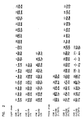
- the variant antibodies under reducing conditions, the variant antibodies, like the HuCC49 MAb, yielded two protein bands of approximately 25-28 kDa and 50-55 kDa ( Figure 6 ). These mobilities are in conformity with the molecular masses of the immunoglobulin heavy and light chains. More importantly, it is evident that regardless of their BSM reactivity, clones derived from each of the constructs encoding CDR-substituted heavy or light chain produce as much immunoglobulin as the clone derived from the constructs encoding the parental humanized heavy and light chains.
- the relative binding affinity of the HuCC49 and the CDR substituted variant antibodies to TAG-72 was determined using the competition radioimmunoassay (RIA) described by Milenic et al., (1991) Cancer Res., 51:6363-6371 .
- Serial dilutions of the purified variant MAbs, as well as the parental HuCC49, were prepared in phosphate buffered saline (PBS) containing 1 % bovine serum albumin (BSA). 25 ⁇ l was added to the wells of microtiter plates containing 10 ng BSM.
- 125 I-labeled HuCC49 (50,000 cpm in 25 ⁇ l) was then added to each well. The plates were incubated overnight at 4°C and then washed and counted in a ⁇ -scintillation counter.
- Unlabeled HuCC49 or its variants were used to compete for the binding of 125 I-HuCC49 to TAG-72 positive BSM.
- the variants, L-1, L-2 and L-1,2 were found to completely inhibit the binding of the 125 I-labeled HuCC49 to TAG-72, while L-3 did not compete at all ( Figure 7 ).
- the relative affinity constants were calculated by the modification of the Scatchard method described by Frankel et al., (1979) Mol. Immunol., 16:101-106 .
- An approximation of the specific activity of the 125 I-HuCC49 was made and used to determine the final concentration for each of the dilutions of the variant MAbs. The calculations were performed as described by Milenic et al., (1991) Cancer Res., 51:6363-6371 .
- the variant MAbs were also characterized in the competition radioimmunoassay RIA described by Irvine et al., (1993) Cancer Immunol. Immunother., 36:281-292 using mouse anti-idiotypic MAb generated against MAb CC49. Three anti-idiotypic (AI49-8, AI49-3 and AI49-1) were selected, representing each of the anti-idiotypic subsets, ⁇ , ⁇ , and ⁇ , respectively.
- 100 ng of MAb AI49-3 ( ⁇ -subset), AI49-1 ( ⁇ -subset) or AI49-8 ( ⁇ -subset) were adsorbed to each well of a 96-well microtiter plate.
- 25 ⁇ l of the serially diluted variant MAbs or HuCC49 was added to each well along with 25 ⁇ l of 125 I-murine CC49. The plates were washed and counted after an overnight incubation at 4°C.
- H-CDR1 and H-CDR3 do not appear to be involved in binding of HuCC49 to AI49-3, while H-CDR2 appears to be important for recognition of CC49 by AI49-3 (approximately 4-15 times more competitor is required for 50 % inhibition by H-2 as compared to HuCC49).
- H-CDR1 and H-CDR3 do not appear to be involved in binding of HuCC49 to As49-1, while H-CDR2 appears to be important for recognition of CC49 by AI49-1 (approximately 4-15 times more competitor is required for 50 % inhibition by H-2 as compared to HuCC49).
- H-CDR1 and H-CDR3 do not appear to be involved in binding of HuCC49 to AI49-8, while H-CDR2 appears to be important for recognition of CC49 by AI49-8 (there is a complete loss of inhibition by the variant).
- L-CDR2, H-CDR1 and H-CDR3 are the immunodominant CDR recognized by the patient.
- L-CDR3 is immunodominant in mice as well (AI49-1 and AI49-3, the two anti-idiotypic antibodies that inhibit antigen binding of HuCC49, require L-CDR3 for recognition of HuCC49).
- the CDR variants were further characterized using the serum from a patient that had received 177 Lu-CC49 in a phase 1 radioimmunotherapy clinical trial ( Mulligan et al., (1995) Clin. Cancer Res., 1:1447-1454 . Several of the patients in this study were found to have anti-idiotypic antibodies to MAb CC49. One patient was selected to perform a preliminary study to identify whether any of the CC49 CDRs were immunodominant.
- the variant contained the CDR recognized by the patient, then the variant would compete with the radiolabeled HuCC49 and complex formation would not occur and there would not be an alteration in the retention time of the 125 I-HuCC49. If the variant no longer contained a CDR recognized by the patient, then complex formation would result. Thus, the ability of the CDR variants to inhibit complex formation of the patient sera with the radiolabeled HuCC49 was determined by the retention time of the 125 I-HuCC49. The percent inhibition of complex formation was calculated and plotted versus concentration of each competitor to evaluate the degree of the patient's reactivity with the individual CDR variants. Figure 15 shows a comparison of patient reactivity with HuCC49 and CDR variants.
- Padlan et al., (1995) FASEB J., 9:133-139 disclose that the SDRs of light chain are bounded by positions 27d and 34; 50 and 55; and 89 and 96.
- the heavy chain SDRs are contained within positions 31 and 35b; 50 and 58; and 95 and 101.
- Figure 2 shows the differences between the amino acid residues of the light chain CDRs of CC49 and LEN, and the heavy chain CDRs of CC49 and 21/28'CL.
- CC49 and LEN differ in three residues; at positions 27b, 27f and 29.
- the residues at positions 27b (a buried residue) and 27f were found not to be directly involved in ligand contact, while the one at position 29 was found to interact with ligand in two complexes; in one only by main chain atoms.
- Residue 27b is located outside the suggested SDR boundaries.
- Residues 27f and 29 are well within the suggested SDR boundaries.
- CC49 and LEN differ at position 53 only, and this position was found to be involved in ligand contact in only three of the 31 complexes of known structure. Residue 53 is well within the suggested SDR boundaries.
- L-CDR1 and 2 of CC49 were replaced with their counterparts from LEN without any significant loss of antigen binding reactivity (above), it was concluded that residues 27b, 27f, 29 and 53 were not important for binding of CC49 to its antigen.
- L-CDR1 and L-CDR2 of CC49 were not considered for the mutation experiments because they were replaced with the corresponding CDRs of the human MAb LEN without significant loss of antigen binding reactivity.
- the immunodominant L-CDR3 of CC49 differs from LEN at three positions, 94, 96 and 97. Each of the three residues of CC49 L-CDR3 was replaced with the residue present at the corresponding position in the LEN CDR to generate light chain variants 94 L, 96 L and 97 L, respectively. Another light chain variant, 94,97 L was generated carrying two substitutions, one at position 94 and the other at 97. Two additional variants were derived from the HuCC49 light chain variant L 1,2 , in which the L-CDR1 and L-CDR2 of CC49 were earlier replaced with their counterparts from the human MAb LEN. One variant, 97 L 1,2 , carried a single substitution at position 97. The other, 94,97 L 1,2 , had substitutions at two positions, 94 and 97.
- variant 97 L did not show any loss in antigen binding activity.
- variant 97 L 1,2 showed only an insignificant loss of antigen binding activity.
- Positions 94 and 96 of L-CDR3 are involved in ligand contact in 19 and 22 known antibody:antigen complexes, respectively. Thus it was consistent that variants 96 L and 94 L suffered total and near total loss of antigen binding reactivity. When the mutation at position 94 was imposed on the variants 97 L and 97 L 1,2 , it destroyed their antigen binding function.
- H-CDR1 of CC49 and 21/28'CL differ at three positions, 31, 32 and 34.
- the residue at position 31 is directly involved in ligand binding in 12 of the 31 complexes; in five of those, only main chain atoms were involved.
- the residue at position 32 is ligand contacting in eight of the 31 complexes of known structure.
- the residue at position 34 is involved in ligand contact in none of the 31 complexes of known structure.
- Residues at positions 32 and 24 of the CC49 H-CDR1 were replaced with the corresponding residues of 21/28'CL MAb ( 32,34 H) to test whether position 32 is important for ligand contact and in eliciting anti-idiotypic response.
- H-CDR2 of CC49 differs from human MAb 21/28'CL at eleven positions.
- the residues at positions 60, 61, 62 and 64 were not ligand contacting in any of the complexes of known structure. Therefore, these residues of CC49 were prime candidates for replacement. Accordingly, a heavy chain variant of HuCC49, 60-62,64 H, was generated by replacing these residues of HuCC49 with their counterparts in human MAb 21/28'CL.
- H-CDR3 was not considered for mutations, because it did not show any reactivity to patient's sera (above).
- the oligomers were produced essentially as described in Example 1.
- pLgpCXHuCC49Hu ⁇ l the expression construct for parental HuCC49 heavy chain genes was used as the template for heavy ( 32,34 H and 60-62,64 H) chain variant gene synthesis.
- pLNCXHuCC49HuK the expression construct of the parental HuCC49 light chain gene was used as a template for the light ( 94 L, 96 L, 97 L and 94,97 L) chain variant gene synthesis.
- Variants L 1 and L 1,2 were developed by replacing only the L-CDR1 or both L-CDR1 and L-CDR2 of CC49, respectively, with their LEN counterparts.
- an expression construct of the L 1,2 variant in a baculoviral expression construct was used as a template.
- Mutagenic oligonucleotide primers ranging in size from 37 to 56 nucleotides, were synthesized using a Model 8700 DNA synthesizer (Milligen/Bioresearch, Burlington, VT). They were purified on oligo-Pak columns (Milligen/Bioresearch) according to the supplier's recommendation.
- the sequences of the mutagenic primers were as follows, where the mutagenic changes are underlined:
- the PCR products were assembled and sequenced as described in Example II.
- the 425 base pair (bp) PCR product obtained using the HuCC49 light chain construct as a template carried sequences encoding the leader peptide, the CC49 V L domain and the amino terminus of the kappa (k) constant region, terminating in a Sac II site located 10 bp downstream of the V L .
- the 432 base pair (bp) PCR product from the heavy chain template encompassed sequences encoding the leader, the V H and the amino terminus of the C H 1 domain, extending to the Apa I site, which is located 17 bp downstream from the start of the C H 1 domain.
- SDR substituted variants were generated essentially as described Example III, except for the following.
- the Sf900-II medium included 50 ⁇ g/ml of antibiotic, gentamicin and the infectious supernatants were harvested six days after transfection.
- tissue culture supernatant was harvested and clarified by centrifugation at 2000xg for 10 minutes. Tris buffer was added to the supernatant to a final concentration of 20 mM. Following incubation at 4°C for 2-3 hours, any contaminating proteins were pelleted by centrifugation at 10,000xg for 15 minutes. The supernatant was applied to a protein G agarose column (Gibco BRL) and the bound protein was eluted from the column, using 0.1 M glycine hydrochloride, pH 2.5. The pH of the eluted material was immediately adjusted to 7.0 with 1.0 M Tris buffer, pH 8.0.
- the protein was concentrated using a Centriplus 30 microconcentrator (Amicon, Beverly, MA), centrifuged at 3000xg for 80 minutes.
- the concentrated protein was recovered in phosphate-buffered saline (PBS).
- PBS phosphate-buffered saline
- the protein concentration was determined by the as described in Example III.
- the purity of the antibody preparation was evaluated by electrophoresis on 4-12% SDS-PAGE, under reducing and non-reducing conditions.
- the proteins were visualized by staining with Coomassie blue, as described in Example III.
- variants The ability of the variants to express immunoglobulin molecules and their antigen reactivity of the heavy ( 32,34 H and 60-62,64 H) or variant light ( 94 L, 96 L, 97 L, 94,97 L, 97 L 1,2 and 94,97 L 1,2 ) chain variants was evaluated using ELISA assays.
- ELISA assays were carried out by coating individual wells of a 96-well polyvinyl microtiter plates with 1 ⁇ g/well of TAG-72 positive bovine submaxillary mucin (BSM) (Sigma Chem. Co., St. Louis, MO), and following the procedure described by Bei et al., (1995) J. Immunol. Methods, 186:245-255 .
- BSM bovine submaxillary mucin
- variant immunoglobulins A partial or complete loss of antigen binding activity of the variant immunoglobulins might be attributed to the detrimental effect of the SDR substitutions on the combining site of HuCC49.
- the plaques may show lower or no antigen binding reactivity because some of the expression constructs failed to express, were expressing at significantly lower level, or producing antibodies that were not physically normal.
- variant antibodies were produced and purified from a larger batch of cells that were freshly infected with inoculum derived from the highest producing clone for each of the constructs. The concentration of the secreted variant antibodies in culture supernatants ranged between 2-3 ⁇ g/ml. Purified immunoglobulin molecules were characterized by SDS-PAGE.
- RIAs Competition radioimmunoassays
- the relative affinity constants were calculated as described in Example IV.
- the relative affinity constants (Ka) of the variants were calculated from the linear parts of the competition curves.
- the Ka of 97 L and 60-62,64 H MAbs were 3.6x10 8 M -1 and 2.2x10 8 M -1 , respectively. These values are comparable to 3.2x10 8 M -1 , the Ka of the parental HuCC49.
- the variant 97 L 1,2 was found to have a Ka of 1.4x10 8 M -1 , which is approximately 2- to 3-fold less than the Ka of HuCC49 MAb.
- any free TAG-72 and human anti-murine antibodies other than anti-idiotypic antibodies to CC49 present in the sera were absorbed out using MAb CC92 conjugated to a solid support.
- MAb CC92 is a murine anti-TAG-72 antibody which as the same isotype as CC49 and recognizes an epitope of TAG-72 other than that recognized by CC49.
- Patient sera was then incubated with 125 I-labeled HuCC49 (approximately 500,000 cpm) and 5 ⁇ g of the cold competitor; either HuCC49 or one of the variant MAbs.
- the competition assay is described in Example V. Briefly, patient sera was mixed with ⁇ 0.3 ⁇ Ci of 121 I-HuCC49 and serial dilutions of purified HuCC49 or its variants. Prior to the assay, the amount of sera required in half-maximal immune complex formation was determined. The mixture was brought to a final volume of 50 ⁇ l. 25 ⁇ l of the final solution was applied to a 7.8 mm x 30 cm TSK3000 analytical column (Tosohaas, Montgomeryville, PA) and eluted at 0.5 ml/min with elution buffer (100 mM KCl in 67 mM sodium phosphate, pH 6.8). Radioactivity was monitored using a flow-through Model 170 ⁇ -scintillation detector (Beckman).
- the variant 97 L/ 60-62,64 H whose antigen binding activity was comparable to that of parental HuCC49, inhibited sera of three patients (DG, CP and DS) only partially, but completely inhibited the sera from EA patient to form complexes with HuCC49. More importantly, the variant 97 L 1,2 / 60-62,64 H did not compete with HuCC49 to form complex with anti-idiotypic antibodies present in sera from two patients (CP and DS) while showing only partial competition with sera from two other patients (DG and DS).
- Figure 16 is a graph showing the immunoreactivity of variant 97 L 1,2 / 60-62,64 H to human sera containing anti-murine CC49 variable region antibodies as assessed by HPLC analysis. The percent inhibition of the complex formation was calculated and plotted versus ng of the competitors. The competitors were HuCC49 ( ⁇ ) and variant ( ⁇ ).
- mice bearing TAG-72 positive LS-174T tumors were injected intravenously in the tail vein with a mixture containing 1.4 ⁇ Ci 131 I-labeled HuCC49 and 4.4 ⁇ Ci 125 I-labeled variant MAb 97 L 1,2 / 60-62,64 H.
- Blood samples were collected at various time points via the tail vein into 10 ⁇ l heparinized capillary tubes (Drummond, Broomall, PA). The amounts of 131 I and 125 I in the plasma were determined and corrected for the respective rates of the decay of the two radionuclides.
- the amount of 131 I and 125 I were determined in blood samples collected via tail vein at specified times. For each time point, 5 mice were sacrificed to collect and weigh tumor, blood and all other major organs. Radioactivity was measured in a ⁇ -scintillation counter and it was corrected for the decay. The percentage of the injected dose per gram (%ID/gm) for each organ was determined.
- a clone producing humanized CC49 was grown in protein free hybridoma medium PFHM-II (GIBCO-BRL, Gaithersburg, MD) as described by Kashmiri (1995), Hybridoma, 14:461-473 .
- the humanized CC49 monoclonal antibody (MAb) was purified from the tissue culture supernatant by Protein G affinity chromatography as described by Kashmiri (1995), Hybridoma, 14:461-473 .
- MAb HuCC49, BL-3 and the CDR-replacement variants of HuCC49 were labeled with Na 125 I using the iodogen method (Pierce, Rockford, IL) as described by Fraker et al. (1978), Biochem. Biophys. Res. Commun. 80:849-857 ; and Colcher et al. (1988), Cancer Res., 48:4597-4603 .
- BL-3 is an isotype-matched control for CC49 (described by Colcher et al. (1987), Cancer Res., 47:4218-4224 ).
- the labeling procedure typically resulted in specific activities of 5-10 ⁇ Ci/ ⁇ g.
- adenocarcinoma patients were given a test dose of 0.1 mg (i.v. bolus) of MAb CC49 and observed for 30 minutes prior to administration of the 177 Lu-labeled MAb CC49.
- the radiolabeled MAb was given as a 1 hour i.v. infusion. Blood samples were collected prior to and at the end of the infusion, and 0.5, 1 and 2 hours after the infusion, and afterward, daily for 7 days. Patients returned for a follow-up examination at 3, 6 or 8 weeks, at which time blood samples were collected. Sera was separated and stored at -20°C until analyzed. Sera from these patients provided a resource for assessing the humoral response of patients to the murine MAb CC49.
- Table 1 Patient Characteristics Dose a Dose Level Patient Age Sex Tumor mCi mg MAb 10 mCi/m 2 DS 52 F Breast 16.0 20 LW 45 F Breast 19.0 20 JJ 61 F Breast 17.2 20 25 mCi/m 2 DG 45 F Breast 41.0 20 LJ 45 F Breast 40.3 20 JM 42 F Breast 45.4 20 15mCi/m 2 JG 61 M Colon 29.8 44 RW 46 F Lung 24.2 20 TD 50 M Colon 31.5 47 EA b 53 F Colon 24.2 20 CP b 53 F Colon 26.0 20 LQ b 45 F Colon 29.7 20 a Patients were administered 177 Lu-PA-DOTA-CC49 by intravenous injection. b Patient received new formulation of 177 Lu-PA-DOTA-CC49 that was labeled using a modification of the method described by Mulligan et al. (1995), Clin. Cancer Res. 1:1447-1454 .
- PA-DOTA was conjugated to human serum albumin (HSA), radiolabeled with Na 125 I, incubated with the patient sera and analyzed for immune complex formation by size-exclusion HPLC. None of the sera showed detectable reactivity with the PA-DOTA-HSA conjugate (Data not shown).
- HSA human serum albumin
- the sera from the twelve patients was evaluated for the presence of human anti-murine antibodies (HAMA) in response to MAb CC49 using high performance liquid chromatograph (HPLC) as described by Mulligan et al. (1996) Clin. Cancer Res., 1:1447-1454 .
- HPLC high performance liquid chromatograph
- the analysis was performed by adding about 500,000 cpm (0.4 ⁇ Ci) of 125 I-BL-3 to 50 ⁇ l of patient sera. Following a 60 minute incubation at 37°C, 25 ⁇ l of the mixture was applied to a size-exclusion column (TSK 3000SW; TosoHaas, Montgomeryville, PA) equilibrated in 67 mM sodium phosphate (pH 6.8) containing 100 mM KCI.
- TSK 3000SW size-exclusion column
- the sera samples were eluted at a flow rate of 0.5 ml/min.
- the protein was detected by absorbance at 280 nm and the radioactivity was measured using a flow-through ⁇ -scintillation counter (Model 170, Beckman Instruments, Inc., Berkeley, CA).
- the presence of HAMA was indicated by a shift in the elution profile of the 125 I-BL-3 because the formation of immune complexes with the radiolabeled BL-3 results in a shorter retention time.
- the patients' pre-study sera, normal human sera and phosphate buffered saline with 125 I-BL-3 were used as controls.
- a patient with a known HAMA response from a previous study ( Colcher et al. (1990), J. Nucl. Med., 31:1133-1142 ) served as a positive control.
- the patients' sera were demonstrated to have antibodies against the variable region of the murine CC49.
- Figure 19 shows an HPLC analysis of patient HAMA following intravenous injection of 177 Lu-CC49.
- Serum samples from LQ were analyzed for the presence of HAMA at various timepoints before and after injection with 20 mg of 177 Lu-labeled CC49.
- Pre-study sera (A), sera collected at 7 days (B), 3 weeks (C), and 6 weeks (D) were mixed with 125 I-BL-3 and applied to a size exclusion column. Reduction in retention time of the radiolabeled BL-3 as compared to migration of the 125 I-BL-3 in buffer (E) were indicative of immune complex formation and therefore the presence of HAMA.
- FIG. 19A Lack of complex formation is evident ( FIG. 19A ) when the pre-study sera of Patient LQ is incubated with the 125 I-BL-3. All of the radioactivity is associated with the peak at about 18.5 minutes, the same retention time for 125 I-BL-3 in buffer ( FIG. 19E ). Complex formation is also absent when the sera collected at seven days is incubated with 125 I-BL-3 ( FIG. 19B ). With sera collected at 3 weeks ( FIG. 19C ), however, there is an indication of complex formation (46%) with the appearance of two peaks with a shorter retention time (i.e., 14 and 16 minutes). The peaks at a shorter retention time indicate the development of a higher molecular weight species in the sera. At 6 weeks ( FIG. 19D ), the HAMA response has increased, the amount of radioactivity bound in complexes is now 66%.
- Figure 20 shows an HPLC analysis of patients' humoral response to the variable region of MAb CC49.
- the percent complex formation has been plotted versus time for (solid lines) patients DS ( ⁇ ), LW ( ⁇ ), JJ ( ⁇ ), DG ( ⁇ ), LJ ( ⁇ ), TD( ⁇ ); (dotted lines) JG ( ⁇ ), RW (D), JM ( ⁇ ), EA ( ⁇ ), CP ( ⁇ ), LQ ( ⁇ );
- HAMA-HAVRA Three patterns of HAMA-HAVRA response are evident.
- Patients DG, LW, LQ and CP developed HAVRA simultaneously with HAMA.
- Patients DS and JM appear to have a strong HAVRA, while HAMA response is modest.
- the HAVRA level is lower than HAMA at 3 weeks, followed by HAMA and HAVRA attaining high levels at later timepoints. In no patient was there a HAVRA response without the development of HAMA..
- Table 2 HPLC Analysis of Patients' Anti-mouse immunoglobulin response after i.v. injection of 177 Lu-CC49 Days Post-Injection of 177 Lu-CC49
- Patient 7 21 42 56 DS 0 a 1 16 27 LW 3 6 81 NA JJ 0 12 3 4 DG 0 24 84 NA LJ 0 42 NA NA JM 0 8 47 NA JG 4 83 83 NA RW 0 1 2 NA TD 0 95 100 NA EA 0 27 100 100 CP3 0 33 27 NA LQ 0 46 66 100 a
- the values are the percent of 125 I-BL-3 detected in complexes after a brief incubation with the patient sera and resolved by size-exclusion chromatography. The timepoints of each patient are background corrected using the patients' pre-study sera.
- HAMA responses are varied and are consistent with previous findings by Colcher et al. (1990), J. Nucl. Med. 31:1133-1142 .
- Ten out of the twelve patients (83%) demonstrate a HAMA response at 3 weeks following a single intravenous injection of 20 mg 177 Lu-labeled CC49, two patients (LW and JG) have minimal responses evident at 7 days with complexes of 3% and 4%, respectively.
- One patient (RW) may be considered a nonresponder. Some of the patients show an escalating HAMA response, while others plateau. Yet another (JJ) peaks at 3 weeks, followed by an apparent decrease in the HAMA level. Overall, at 3 weeks, 8 of 12 patients (57%) at and 6 weeks, 9 of 11 (82%) were HAMA positive.
- the specificity of the patients' antibody response to CC49 was assessed using 121 I-labeled HuCC49 and HuCC49 CDR-replacement variants to determine whether or not any of the responses were directed against the variable region of CC49.
- the HPLC methodology was employed using 125 I-HuCC49 as the probe (See, Kashmiri et al. (1995), Hybridoma, 14:461-473 ).
- MAb CC92 is a second-generation monoclonal antibody that reacts with TAG-72, but with an epitope distinct from the one recognized by CC49.
- MAb B72.3 is an anti-TAG-72 MAb that has been shown to form complexes with TAG-72 in patient sera ( Colcher et al. (1990), J. Nucl. Med., 31:1133-1142 ).
- Panel A is the profile of the 125 HuCC49 in buffer only.
- Panel B is the profile showing complex formation (42.9%) resulting from patient sera (LQ) incubated with 125 I-HuCC49.
- HuCC49 is added as a competitor, there is competition for the 125 I-HuCC49 and a loss or absence of complexes is observed (Panel C).
- anel D the same is true of a variant which still contains an immunogenic CDR (e.g., light chain CDR2 as the competitor)
- there is either a partial (Panel F) or total retention of the complexes (Panel E) when light chain CDR1 or CDR3 variants, respectively, are the competitors.
- Partial recognition with the heavy chain CDR2 variant with two patients may be due to a loss of part but not all of the cognizant epitope, a change in the conformation or conformational epitope, or loss of amino acid residues that might stabilize the antibody:antibody interaction.
- Quantitation of the HAMA or anti-variable region antibody levels in four patients was performed using HPLC analysis.
- the quantitation study was performed by adding either 500 ng of unlabeled BL-3 or 250 ng of HuCC49, respectively, to the mixture of patient serum and 125 I-HuCC49 and calculating the amount of BL-3 or HuCC49 bound in complexes.
- HAMA As shown in Table 4, below, at 6 weeks, the amount of HAMA varies from patient to patient by 43-fold, while the variability of HAVRA is within 4-fold. Furthermore, the HAMA versus HAVRA levels may vary from 10 to 145-fold. Clearly, HAVRA can be detected at 3 weeks, and, not surprisingly, it does not appear to attain the same levels as HAMA. In patient EA, there is a dramatic 10-fold increase in the level of HAVRA from 6 to 8 weeks that is noteworthy.
- Table 4 Quantitation of anti-CC49 variable region and anti-murine response of patients administered 177 Lu-CC49 ⁇ g of Ab/ml Sera Patient Post-Mab Injection BL-3 a HuCC49 b EA 0 0 0 3 weeks 4.1 0.3 6 weeks 289.0 2.3 8 weeks 314.4 21.6 CP 0 0 0 3 weeks 16.0 0.8 5 weeks 25.2 0.7 6 weeks 23.2 0.7 LQ 0 0 ND 3 weeks 4.61 0.4 6 weeks 6.64 0.7 8 weeks ND 1.7 JG 0 0 0 3 weeks 58.6 0.7 6 weeks 47.8 2.6
- the sera from one patient (EA) was selected and assessed for blocking of the binding of 125 I-HuCC49 to BSM in a radioimmunoassay.
- bovine submaxillary mucin (BSM) immobilized on a solid support (Reacti-Gel HW65, Pierce) as a modification of the method reported by Heam et al. (1979), J. Chromatog., 185:463-470 and Schott (1992) Cancer Res., 52:6413-6417 .
- BSM bovine submaxillary mucin
- TAG-72 positive bovine submaxillary mucin
- FIG. 22 shows the detection of patient (EA) anti-idiotypic antibody response to murine CC49: pre-study sera from patient EA ( ⁇ ); sera collected at 3 weeks (A), 6 weeks (B), and 8 weeks (C).
Landscapes
- Health & Medical Sciences (AREA)
- Life Sciences & Earth Sciences (AREA)
- Chemical & Material Sciences (AREA)
- Organic Chemistry (AREA)
- Immunology (AREA)
- General Health & Medical Sciences (AREA)
- Medicinal Chemistry (AREA)
- Proteomics, Peptides & Aminoacids (AREA)
- Veterinary Medicine (AREA)
- Public Health (AREA)
- Animal Behavior & Ethology (AREA)
- Pharmacology & Pharmacy (AREA)
- General Chemical & Material Sciences (AREA)
- Cell Biology (AREA)
- Molecular Biology (AREA)
- Nuclear Medicine, Radiotherapy & Molecular Imaging (AREA)
- Genetics & Genomics (AREA)
- Biophysics (AREA)
- Biochemistry (AREA)
- Chemical Kinetics & Catalysis (AREA)
- Oncology (AREA)
- Physics & Mathematics (AREA)
- Optics & Photonics (AREA)
- Epidemiology (AREA)
- Peptides Or Proteins (AREA)
- Preparation Of Compounds By Using Micro-Organisms (AREA)
- Medicines Containing Antibodies Or Antigens For Use As Internal Diagnostic Agents (AREA)
- Measuring Or Testing Involving Enzymes Or Micro-Organisms (AREA)
Claims (29)
- Humanisierter CC49-Anti-TAG-72-Antikörper, umfassend:komplementäre Erkennungsregionen der leichten Kette (L-CDRs), umfassend L-CDR1, L-CDR2 und L-CDR3; undkomplementäre Erkennungsregionen der schweren Kette (H-CDRs), umfassend H-CDR1, H-CDR2 und H-CDR3,wobei L-CDR3, H-CDR1, H-CDR2 und H-CDR3 von einem murinen monoklonalen CC49-Antikörper stammen, der Aminosäuresequenzen gemäß SEQ ID NR. 3, SEQ ID NR. 4, SEQ ID NR. 5 bzw. SEQ ID NR. 6 umfasst, und wobei (i) L-CDR1 die humane LEN-Aminosäuresequenz gemäß SEQ ID NR. 7 und L-CDR2 die murine CC49-Aminosäuresequenz gemäß SEQ ID NR. 2 ist; (ii) L-CDR1 die murine CC49-Aminosäuresequenz gemäß SEQ ID NR. 1 und L-CDR2 die humane LEN-Aminosäuresequenz gemäß SEQ ID NR. 8 ist; oder (iii) L-CDR1 und L-CDR2 SEQ ID NR. 7 bzw. SEQ ID NR. 8 sind.
- Humanisierter Antikörper nach Anspruch 1, wobei L-CDR1 SEQ ID NR. 7 und L-CDR2 SEQ ID NR. 2 ist.
- Humanisierter Antikörper nach Anspruch 1, wobei L-CDR1 SEQ ID NR. 1 und L-CDR2 SEQ ID NR. 8 ist.
- Humanisierter CC49-Anti-TAG-72-Antikörper, umfassend:komplementäre Erkennungsregionen der leichten Kette (L-CDRs), umfassend L-CDR1, L-CDR2 und L-CDR3; undkomplementäre Erkennungsregionen der schweren Kette (H-CDRs), umfassend H-CDR1, H-CDR2 und H-CDR3,wobei L-CDR3, H-CDR1, H-CDR2 und H-CDR3 von einem murinen monoklonalen CC49-Antikörper stammen, der Aminosäuresequenzen gemäß SEQ ID NR. 3, SEQ ID NR. 4, SEQ ID NR. 5 bzw. SEQ ID NR. 6 umfasst, und wobei L-CDR1 und L-CDR2 (i) die murinen CC49-Aminosäuresequenzen gemäß SEQ ID NR. 1 bzw. SEQ ID NR. 2 sind; oder (ii) die humanen LEN-Aminosäuresequenzen gemäß SEQ ID NR. 7 bzw. SEQ ID NR. 8 sind und wobei mindestens eine Aminosäure an den Kabat-Positionen 60, 61, 62 oder 64 von H-CDR2 durch eine entsprechende Aminosäure eines humanen monoklonalen Antikörpers 21/28'CL H-CDR2 mit einer Aminosäuresequenz gemäß SEQ ID NR. 11 ersetzt ist.
- Humanisierter Antikörper nach Anspruch 4, wobei ein Asparagin an Kabat-Position 60 von H-CDR2 durch ein Serin ersetzt ist, eine Glutaminsäure an Kabat-Position 61 von H-CDR2 durch ein Glutamin ersetzt ist, ein Arginin an Kabat-Position 62 von H-CDR2 durch ein Lysin ersetzt ist und ein Lysin an Kabat-Position 64 von H-CDR2 durch ein Glutamin ersetzt ist.
- Humanisierter Antikörper nach Anspruch 4 oder 5, wobei ein Threonin an Position 97 von L-CDR3 durch ein Serin ersetzt ist.
- Humanisierter Antikörper nach einem der Ansprüche 4-6, wobei L-CDR1 und L-CDR2 die Aminosäuresequenzen gemäß SEQ ID NR. 7 bzw. SEQ ID NR. 8 sind.
- Humanisierter Antikörper nach einem der Ansprüche 4-7, wobei L-CDR1 und L-CDR2 die Aminosäuresequenzen gemäß SEQ ID NR. 1 bzw. SEQ ID NR. 2 sind.
- Humanisierter CC49-Anti-TAG-72-Antikörper, umfassend:komplementäre Erkennungsregionen der leichten Kette (L-CDRs), umfassend L-CDR1, L-CDR2 und L-CDR3; undkomplementäre Erkennungsregionen der schweren Kette (H-CDRs), umfassend H-CDR1, H-CDR2 und H-CDR3,wobei L-CDR3, H-CDR1, H-CDR2 und H-CDR3 von einem murinen monoklonalen CC49-Antikörper stammen, der Aminosäuresequenzen gemäß SEQ ID NR. 3, SEQ ID NR. 4, SEQ ID NR. 5 bzw. SEQ ID NR. 6 umfasst, und wobei L-CDR1 und L-CDR2 (i) die murinen CC49-Aminosäuresequenzen gemäß SEQ ID NR. 1 bzw. SEQ ID NR. 2 sind; oder (ii) die humanen LEN-Aminosäuresequenzen gemäß SEQ ID NR. 7 bzw. SEQ ID NR. 8 sind und wobei mindestens eine Aminosäure an Kabat-Position 97 von L-CDR3 durch eine entsprechende Aminosäure eines humanen monoklonalen Antikörpers LEN L-CDR3 mit einer Aminosäuresequenz gemäß SEQ ID NR. 9 ersetzt ist.
- Humanisierter Antikörper nach Anspruch 9, wobei mindestens eine Aminosäure an den Kabat-Positionen 60, 61, 62 oder 64 von H-CDR2 durch eine entsprechende Aminosäure eines humanen monoklonalen Antikörpers 21/28'CL H-CDR2 mit einer Aminosäuresequenz gemäß SEQ ID NR. 11 ersetzt ist.
- Humanisierter Antikörper nach Anspruch 9 oder 10, wobei ein Asparagin an Kabat-Position 60 von H-CDR2 durch ein Serin ersetzt ist.
- Humanisierter Antikörper nach einem der Ansprüche 9-11, wobei eine Glutaminsäure an Kabat-Position 61 von H-CDR2 durch ein Glutamin ersetzt ist.
- Humanisierter Antikörper nach einem der Ansprüche 9-12, wobei ein Arginin an Kabat-Position 62 von H-CDR2 durch ein Lysin ersetzt ist.
- Humanisierter Antikörper nach einem der Ansprüche 9-13, wobei ein Lysin an Kabat-Position 64 von H-CDR2 durch ein Glutamin ersetzt ist.
- Humanisierter Antikörper nach einem der Ansprüche 9-14, wobei L-CDR1 und L-CDR2 die Aminosäuresequenzen gemäß SEQ ID NR. 1 bzw. SEQ ID NR. 2 sind.
- Humanisierter Antikörper nach einem der Ansprüche 9-15, wobei L-CDR1 und L-CDR2 die Aminosäuresequenzen gemäß SEQ ID NR. 7 bzw. SEQ ID NR. 8 sind.
- Humanisierter Antikörper nach Anspruch 9, wobei die Kabat-Position 94 von L-CDR3 ein Threonin und/oder die Kabat-Position 97 von L-CDR3 ein Serin enthält.
- Humanisierter Antikörper nach einem der vorhergehenden Ansprüche, wobei der humanisierte CC49-Antikörper Bindungsaffinität für TAG-72 behält und eine im Vergleich zu einem parentalen humanisierten CC49-Antikörper geringere Immunogenität aufweist.
- Humanisierter Antikörper nach einem der Ansprüchel-18, wobei der humanisierte Antikörper eine Variante eines parentalen HuCC49-Antikörpers ist, der die Aminosäuresequenz gemäß SEQ ID NR. 13 und die Aminosäuresequenz gemäß SEQ ID NR.14 umfasst.
- Kit umfassend den humanisierten Antikörper nach einem der vorhergehenden Ansprüche, einen Träger oder Puffer und Anweisungen zur Verwendung des humanisierten Antikörpers.
- Nukleinsäuresequenz, die den humanisierten Antikörper nach einem der Ansprüche 1-19 exprimiert.
- Vektorsequenz, die den humanisierten Antikörper nach einem der Ansprüche 1-19 exprimiert.
- Zusammensetzung, die den humanisierten Antikörper nach einem der Ansprüche 1-19 und einen pharmazeutisch unbedenklichen Träger umfasst.
- Fragment eines Antikörpers nach einem der Ansprüche 1-19, wobei das Fragment in der Lage ist, TAG-72-spezifisch zu binden und wobei das Fragment ausgewählt ist aus der Gruppe, bestehend aus Fv, Fab und F(ab')2.
- Verwendung des humanisierten Antikörpers nach einem der Ansprüche 1-19 zur Herstellung eines Arzneimittels zur Behandlung von Krebs.
- Verfahren zum Nachweis von Krebszellen, umfassend das Kontaktieren der Zellen in vitro mit dem humanisierten Antikörper nach einem der Ansprüche 1-19.
- Verfahren nach Anspruch 26, wobei der humanisierte Antikörper markiert ist.
- Verfahren nach Anspruch 26, wobei der humanisierte Antikörper unter Verwendung eines markierten zweiten Antikörpers nachgewiesen wird.
- Verfahren zum Nachweis von Krebszellen, umfassend das Kontaktieren der Zellen in vitro mit einer Zusammensetzung, umfassend ein Polypeptid, das in der Lage ist, TAG-72-spezifisch zu binden, und wobei das Polypeptid ein Fragment des humanisierten Antikörpers nach einem der Ansprüche 1-19 umfasst, wobei das Fragment ausgewählt ist aus der Gruppe, bestehend aus Fv, Fab und F(ab')2.
Applications Claiming Priority (5)
| Application Number | Priority Date | Filing Date | Title |
|---|---|---|---|
| US10653498P | 1998-10-31 | 1998-10-31 | |
| US106534P | 1998-10-31 | ||
| US10675798P | 1998-11-02 | 1998-11-02 | |
| US106757P | 1998-11-02 | ||
| PCT/US1999/025552 WO2000026394A1 (en) | 1998-10-31 | 1999-10-29 | Variants of humanized anti-carcinoma monoclonal antibody cc49 |
Publications (2)
| Publication Number | Publication Date |
|---|---|
| EP1127148A1 EP1127148A1 (de) | 2001-08-29 |
| EP1127148B1 true EP1127148B1 (de) | 2012-08-08 |
Family
ID=26803777
Family Applications (1)
| Application Number | Title | Priority Date | Filing Date |
|---|---|---|---|
| EP99960178A Expired - Lifetime EP1127148B1 (de) | 1998-10-31 | 1999-10-29 | Varianten des humanisierten monoklonalen anti-krebs antikörpers cc49 |
Country Status (5)
| Country | Link |
|---|---|
| EP (1) | EP1127148B1 (de) |
| JP (1) | JP4803879B2 (de) |
| AU (1) | AU766149B2 (de) |
| CA (1) | CA2348698C (de) |
| WO (1) | WO2000026394A1 (de) |
Families Citing this family (10)
| Publication number | Priority date | Publication date | Assignee | Title |
|---|---|---|---|---|
| US6818749B1 (en) | 1998-10-31 | 2004-11-16 | The United States Of America As Represented By The Department Of Health And Human Services | Variants of humanized anti carcinoma monoclonal antibody cc49 |
| AU2002327164A1 (en) | 2001-01-29 | 2002-12-09 | Idec Pharmaceuticals Corporation | Engineered tetravalent antibodies and methods of use |
| WO2003048357A1 (fr) * | 2001-12-04 | 2003-06-12 | Mitsubishi Pharma Corporation | Procede d'activation de proteine |
| KR100708398B1 (ko) * | 2002-03-22 | 2007-04-18 | (주) 에이프로젠 | 인간화 항체 및 이의 제조방법 |
| AU2003248744C1 (en) | 2002-06-28 | 2009-12-24 | The Government Of The United States Of America As Represented By The Secretary Of The Department Of Health And Human Services | Humanized anti-TAG-72 CC49 for diagnosis and therapy of human tumors |
| US7589181B2 (en) | 2003-08-29 | 2009-09-15 | The United States Of America As Represented By The Secretary Of The Department Of Health And Human Services | Minimally immunogenic variants of SDR-grafted humanized antibody CC49 and their use |
| WO2005112564A2 (en) * | 2004-04-15 | 2005-12-01 | The Government Of The United States Of America As Represented By The Secretary Of The Department Of Health And Human Services | Germline and sequence variants of humanized antibodies and methods of making and using them |
| KR100620554B1 (ko) | 2004-06-05 | 2006-09-06 | 한국생명공학연구원 | Tag-72에 대한 인간화 항체 |
| CA2593693A1 (en) | 2004-12-30 | 2006-07-13 | The Government Of The United States Of America As Represented By The Sec Retary Of The Department Of Health And Human Services | Framework residue substituted humanized col-1 antibodies and their use |
| KR101761541B1 (ko) * | 2009-10-26 | 2017-07-26 | 네스텍 소시에테아노님 | 항-tnf 약물 및 자가항체의 검출을 위한 검정법 |
Family Cites Families (3)
| Publication number | Priority date | Publication date | Assignee | Title |
|---|---|---|---|---|
| CA2203236A1 (en) * | 1994-10-28 | 1996-05-09 | Ira Pastan | Tumor-specific antibody fragments, fusion proteins, and uses thereof |
| MA24512A1 (fr) * | 1996-01-17 | 1998-12-31 | Univ Vermont And State Agrienl | Procede pour la preparation d'agents anticoagulants utiles dans le traitement de la thrombose |
| WO1999043816A1 (en) * | 1998-02-25 | 1999-09-02 | The Dow Chemical Company | High affinity humanized anti-tag-72 monoclonal antibodies |
-
1999
- 1999-10-29 JP JP2000579766A patent/JP4803879B2/ja not_active Expired - Lifetime
- 1999-10-29 EP EP99960178A patent/EP1127148B1/de not_active Expired - Lifetime
- 1999-10-29 AU AU17105/00A patent/AU766149B2/en not_active Expired
- 1999-10-29 WO PCT/US1999/025552 patent/WO2000026394A1/en not_active Ceased
- 1999-10-29 CA CA2348698A patent/CA2348698C/en not_active Expired - Lifetime
Also Published As
| Publication number | Publication date |
|---|---|
| AU1710500A (en) | 2000-05-22 |
| AU766149B2 (en) | 2003-10-09 |
| WO2000026394A9 (en) | 2000-09-28 |
| CA2348698C (en) | 2012-01-03 |
| JP2002528127A (ja) | 2002-09-03 |
| JP4803879B2 (ja) | 2011-10-26 |
| WO2000026394A1 (en) | 2000-05-11 |
| EP1127148A1 (de) | 2001-08-29 |
| CA2348698A1 (en) | 2000-05-11 |
Similar Documents
| Publication | Publication Date | Title |
|---|---|---|
| US7256004B2 (en) | Variants of humanized anti-carcinoma monoclonal antibody CC49 | |
| KR100620554B1 (ko) | Tag-72에 대한 인간화 항체 | |
| Tamura et al. | Structural correlates of an anticarcinoma antibody: identification of specificity-determining residues (SDRs) and development of a minimally immunogenic antibody variant by retention of SDRs only | |
| EP0721470B1 (de) | Monoklonale antikörper zur diagnose und behandlung von kolorektalkrebs | |
| EP2567982B1 (de) | Antikörper gegen das carcinoembryonale antigen und verwendungen davon | |
| US20020165387A1 (en) | High affinity humanized anti-CEA monoclonal antibodies | |
| US20060269557A1 (en) | Humanized anti-prostate stem cell antigen monoclonal antibody | |
| US20040265930A1 (en) | Monoclonal antibody 7H11 reactive with human cancer | |
| JP2935520B2 (ja) | ガン治療に用いられる新規高親和性改変抗体系統群 | |
| WO2005112564A2 (en) | Germline and sequence variants of humanized antibodies and methods of making and using them | |
| EP4279507A1 (de) | Cd73-bindendes protein und verwendung davon | |
| Iwahashi et al. | CDR substitutions of a humanized monoclonal antibody (CC49): contributions of individual CDRs to antigen binding and immunogenicity | |
| EP1127148B1 (de) | Varianten des humanisierten monoklonalen anti-krebs antikörpers cc49 | |
| US20030013854A1 (en) | High affinity humanized anti-TAG-72 monoclonalantibodies | |
| US6207815B1 (en) | Family of high affinity, modified antibodies for cancer treatment | |
| EP0723663B1 (de) | Hybridom und humanisierter monoklonaler anti-kc-4-antikörper, dafür kodierende dnas und rnas, kit und diagnostische verfahren | |
| JP2002504372A (ja) | 高親和性ヒト型化抗−ceaモノクロ−ナル抗体 | |
| JP2002504371A (ja) | 高親和性ヒト型化抗−tag−72モノクローナル抗体 | |
| CA2571743A1 (en) | Humanized monoclonal antibody 31.1 as an anticancer agent | |
| CA2978399A1 (en) | Anti-human membrane-type adam28 antibody | |
| WO2004020574A2 (en) | Scfv fragment to human cathepsin l and methods of use | |
| MXPA00008390A (en) | High affinity humanized anti-tag-72 monoclonal antibodies |
Legal Events
| Date | Code | Title | Description |
|---|---|---|---|
| PUAI | Public reference made under article 153(3) epc to a published international application that has entered the european phase |
Free format text: ORIGINAL CODE: 0009012 |
|
| 17P | Request for examination filed |
Effective date: 20010531 |
|
| AK | Designated contracting states |
Kind code of ref document: A1 Designated state(s): AT BE CH CY DE DK ES FI FR GB GR IE IT LI LU |
|
| AX | Request for extension of the european patent |
Free format text: AL;LT;LV;MK;RO;SI |
|
| 17Q | First examination report despatched |
Effective date: 20040119 |
|
| 17Q | First examination report despatched |
Effective date: 20040119 |
|
| GRAP | Despatch of communication of intention to grant a patent |
Free format text: ORIGINAL CODE: EPIDOSNIGR1 |
|
| RBV | Designated contracting states (corrected) |
Designated state(s): AT BE CH CY DE DK ES FI FR GB GR IE IT LI LU MC NL PT SE |
|
| RAP1 | Party data changed (applicant data changed or rights of an application transferred) |
Owner name: THE GOVERNMENT OF THE UNITED STATES OF AMERICA, AS |
|
| GRAS | Grant fee paid |
Free format text: ORIGINAL CODE: EPIDOSNIGR3 |
|
| GRAA | (expected) grant |
Free format text: ORIGINAL CODE: 0009210 |
|
| AK | Designated contracting states |
Kind code of ref document: B1 Designated state(s): AT BE CH CY DE DK ES FI FR GB GR IE IT LI LU MC NL PT SE |
|
| REG | Reference to a national code |
Ref country code: GB Ref legal event code: FG4D |
|
| REG | Reference to a national code |
Ref country code: AT Ref legal event code: REF Ref document number: 569824 Country of ref document: AT Kind code of ref document: T Effective date: 20120815 Ref country code: CH Ref legal event code: EP |
|
| REG | Reference to a national code |
Ref country code: IE Ref legal event code: FG4D |
|
| REG | Reference to a national code |
Ref country code: DE Ref legal event code: R096 Ref document number: 69944342 Country of ref document: DE Effective date: 20121011 |
|
| REG | Reference to a national code |
Ref country code: NL Ref legal event code: VDEP Effective date: 20120808 |
|
| REG | Reference to a national code |
Ref country code: AT Ref legal event code: MK05 Ref document number: 569824 Country of ref document: AT Kind code of ref document: T Effective date: 20120808 |
|
| PG25 | Lapsed in a contracting state [announced via postgrant information from national office to epo] |
Ref country code: CY Free format text: LAPSE BECAUSE OF FAILURE TO SUBMIT A TRANSLATION OF THE DESCRIPTION OR TO PAY THE FEE WITHIN THE PRESCRIBED TIME-LIMIT Effective date: 20120808 Ref country code: AT Free format text: LAPSE BECAUSE OF FAILURE TO SUBMIT A TRANSLATION OF THE DESCRIPTION OR TO PAY THE FEE WITHIN THE PRESCRIBED TIME-LIMIT Effective date: 20120808 Ref country code: FI Free format text: LAPSE BECAUSE OF FAILURE TO SUBMIT A TRANSLATION OF THE DESCRIPTION OR TO PAY THE FEE WITHIN THE PRESCRIBED TIME-LIMIT Effective date: 20120808 |
|
| PG25 | Lapsed in a contracting state [announced via postgrant information from national office to epo] |
Ref country code: BE Free format text: LAPSE BECAUSE OF FAILURE TO SUBMIT A TRANSLATION OF THE DESCRIPTION OR TO PAY THE FEE WITHIN THE PRESCRIBED TIME-LIMIT Effective date: 20120808 Ref country code: SE Free format text: LAPSE BECAUSE OF FAILURE TO SUBMIT A TRANSLATION OF THE DESCRIPTION OR TO PAY THE FEE WITHIN THE PRESCRIBED TIME-LIMIT Effective date: 20120808 Ref country code: GR Free format text: LAPSE BECAUSE OF FAILURE TO SUBMIT A TRANSLATION OF THE DESCRIPTION OR TO PAY THE FEE WITHIN THE PRESCRIBED TIME-LIMIT Effective date: 20121109 |
|
| PG25 | Lapsed in a contracting state [announced via postgrant information from national office to epo] |
Ref country code: NL Free format text: LAPSE BECAUSE OF FAILURE TO SUBMIT A TRANSLATION OF THE DESCRIPTION OR TO PAY THE FEE WITHIN THE PRESCRIBED TIME-LIMIT Effective date: 20120808 |
|
| PG25 | Lapsed in a contracting state [announced via postgrant information from national office to epo] |
Ref country code: ES Free format text: LAPSE BECAUSE OF FAILURE TO SUBMIT A TRANSLATION OF THE DESCRIPTION OR TO PAY THE FEE WITHIN THE PRESCRIBED TIME-LIMIT Effective date: 20121119 Ref country code: DK Free format text: LAPSE BECAUSE OF FAILURE TO SUBMIT A TRANSLATION OF THE DESCRIPTION OR TO PAY THE FEE WITHIN THE PRESCRIBED TIME-LIMIT Effective date: 20120808 |
|
| PG25 | Lapsed in a contracting state [announced via postgrant information from national office to epo] |
Ref country code: MC Free format text: LAPSE BECAUSE OF NON-PAYMENT OF DUE FEES Effective date: 20121031 Ref country code: IT Free format text: LAPSE BECAUSE OF FAILURE TO SUBMIT A TRANSLATION OF THE DESCRIPTION OR TO PAY THE FEE WITHIN THE PRESCRIBED TIME-LIMIT Effective date: 20120808 |
|
| REG | Reference to a national code |
Ref country code: CH Ref legal event code: PL |
|
| PLBE | No opposition filed within time limit |
Free format text: ORIGINAL CODE: 0009261 |
|
| STAA | Information on the status of an ep patent application or granted ep patent |
Free format text: STATUS: NO OPPOSITION FILED WITHIN TIME LIMIT |
|
| 26N | No opposition filed |
Effective date: 20130510 |
|
| PG25 | Lapsed in a contracting state [announced via postgrant information from national office to epo] |
Ref country code: LI Free format text: LAPSE BECAUSE OF NON-PAYMENT OF DUE FEES Effective date: 20121031 Ref country code: CH Free format text: LAPSE BECAUSE OF NON-PAYMENT OF DUE FEES Effective date: 20121031 |
|
| REG | Reference to a national code |
Ref country code: IE Ref legal event code: MM4A |
|
| REG | Reference to a national code |
Ref country code: DE Ref legal event code: R097 Ref document number: 69944342 Country of ref document: DE Effective date: 20130510 |
|
| PG25 | Lapsed in a contracting state [announced via postgrant information from national office to epo] |
Ref country code: IE Free format text: LAPSE BECAUSE OF NON-PAYMENT OF DUE FEES Effective date: 20121029 |
|
| PG25 | Lapsed in a contracting state [announced via postgrant information from national office to epo] |
Ref country code: LU Free format text: LAPSE BECAUSE OF NON-PAYMENT OF DUE FEES Effective date: 20121029 |
|
| PG25 | Lapsed in a contracting state [announced via postgrant information from national office to epo] |
Ref country code: PT Free format text: LAPSE BECAUSE OF FAILURE TO SUBMIT A TRANSLATION OF THE DESCRIPTION OR TO PAY THE FEE WITHIN THE PRESCRIBED TIME-LIMIT Effective date: 20120808 |
|
| REG | Reference to a national code |
Ref country code: FR Ref legal event code: PLFP Year of fee payment: 17 |
|
| REG | Reference to a national code |
Ref country code: FR Ref legal event code: PLFP Year of fee payment: 18 |
|
| REG | Reference to a national code |
Ref country code: FR Ref legal event code: PLFP Year of fee payment: 19 |
|
| REG | Reference to a national code |
Ref country code: FR Ref legal event code: PLFP Year of fee payment: 20 |
|
| PGFP | Annual fee paid to national office [announced via postgrant information from national office to epo] |
Ref country code: DE Payment date: 20181029 Year of fee payment: 20 |
|
| PGFP | Annual fee paid to national office [announced via postgrant information from national office to epo] |
Ref country code: GB Payment date: 20181029 Year of fee payment: 20 Ref country code: FR Payment date: 20181025 Year of fee payment: 20 |
|
| REG | Reference to a national code |
Ref country code: DE Ref legal event code: R071 Ref document number: 69944342 Country of ref document: DE |
|
| REG | Reference to a national code |
Ref country code: GB Ref legal event code: PE20 Expiry date: 20191028 |
|
| PG25 | Lapsed in a contracting state [announced via postgrant information from national office to epo] |
Ref country code: GB Free format text: LAPSE BECAUSE OF EXPIRATION OF PROTECTION Effective date: 20191028 |