EP1120405A2 - Nouvelles bases d'oxydation à chaíne guanidine, leur procédé de préparation, leur utilisation pour la teinture d'oxydation des fibres kératiniques, compositions tinctoriales et procédés de teinture - Google Patents
Nouvelles bases d'oxydation à chaíne guanidine, leur procédé de préparation, leur utilisation pour la teinture d'oxydation des fibres kératiniques, compositions tinctoriales et procédés de teinture Download PDFInfo
- Publication number
- EP1120405A2 EP1120405A2 EP01400112A EP01400112A EP1120405A2 EP 1120405 A2 EP1120405 A2 EP 1120405A2 EP 01400112 A EP01400112 A EP 01400112A EP 01400112 A EP01400112 A EP 01400112A EP 1120405 A2 EP1120405 A2 EP 1120405A2
- Authority
- EP
- European Patent Office
- Prior art keywords
- amino
- paraphenylenediamine
- guanidine
- bis
- methyl
- Prior art date
- Legal status (The legal status is an assumption and is not a legal conclusion. Google has not performed a legal analysis and makes no representation as to the accuracy of the status listed.)
- Granted
Links
Classifications
-
- A—HUMAN NECESSITIES
- A61—MEDICAL OR VETERINARY SCIENCE; HYGIENE
- A61K—PREPARATIONS FOR MEDICAL, DENTAL OR TOILETRY PURPOSES
- A61K8/00—Cosmetics or similar toiletry preparations
- A61K8/18—Cosmetics or similar toiletry preparations characterised by the composition
- A61K8/30—Cosmetics or similar toiletry preparations characterised by the composition containing organic compounds
- A61K8/40—Cosmetics or similar toiletry preparations characterised by the composition containing organic compounds containing nitrogen
- A61K8/43—Guanidines
-
- A—HUMAN NECESSITIES
- A61—MEDICAL OR VETERINARY SCIENCE; HYGIENE
- A61Q—SPECIFIC USE OF COSMETICS OR SIMILAR TOILETRY PREPARATIONS
- A61Q5/00—Preparations for care of the hair
- A61Q5/10—Preparations for permanently dyeing the hair
-
- C—CHEMISTRY; METALLURGY
- C07—ORGANIC CHEMISTRY
- C07C—ACYCLIC OR CARBOCYCLIC COMPOUNDS
- C07C281/00—Derivatives of carbonic acid containing functional groups covered by groups C07C269/00 - C07C279/00 in which at least one nitrogen atom of these functional groups is further bound to another nitrogen atom not being part of a nitro or nitroso group
- C07C281/16—Compounds containing any of the groups, e.g. aminoguanidine
-
- C—CHEMISTRY; METALLURGY
- C07—ORGANIC CHEMISTRY
- C07C—ACYCLIC OR CARBOCYCLIC COMPOUNDS
- C07C281/00—Derivatives of carbonic acid containing functional groups covered by groups C07C269/00 - C07C279/00 in which at least one nitrogen atom of these functional groups is further bound to another nitrogen atom not being part of a nitro or nitroso group
- C07C281/16—Compounds containing any of the groups, e.g. aminoguanidine
- C07C281/18—Compounds containing any of the groups, e.g. aminoguanidine the other nitrogen atom being further doubly-bound to a carbon atom, e.g. guanylhydrazones
Definitions
- the subject of the invention is new oxidation bases with a benzene nucleus and comprising a guanidine chain, their preparation process, their use for the oxidation dyeing of keratin fibers, the dye compositions containing them, as well as the oxidation dyeing processes using them artwork.
- oxidation bases It is known to dye keratin fibers and in particular the hair humans with dye compositions containing precursors of oxidation dye, in particular ortho or paraphenylenediamines, ortho or paraaminophenols, or even heterocyclic compounds, generally called oxidation bases.
- precursors of dyes oxidation, or oxidation bases are colorless or weakly composed colored which, combined with oxidizing products, can give rise to a oxidative condensation process to colored and coloring compounds.
- couplers or modifiers of coloring the latter being chosen in particular from metadiamines aromatics, metaaminophenols, metadiphenols and certain compounds heterocyclic.
- the dyes should also cover white hair, and Finally, be the least selective possible, that is to say allow to obtain differences the lowest possible coloring throughout the same keratin fiber, which can be sensitized differently (i.e. damaged) between its tip and its root.
- the colorings obtained with the compounds of formula (I) according to the invention are powerful and allow achieve a wide palette of colors. They also have excellent resistance properties with respect to the action of different external agents (light, bad weather, washing, permanent waving, perspiration, friction).
- alkyl radicals can be linear or branched.
- R 1 and R 2 when R 1 and R 2 form, together with the nitrogen atom to which they are linked, a 4, 5 or 6-chain ring, or when R 1 and / or R 2 represent a cycle with 4, 5 or 6 chains, or when Z represents an aromatic cycle or not with 4, 5 or 6 chains, then said cycles can carry one or more substituents which can for example be chosen from the following groups: a hydroxyl radical , an amido radical, a halogen atom, a cyano radical, a C 1 -C 8 alkyl radical, an aromatic or non-C 4 , C 5 or C 6 ring.
- substituents which can for example be chosen from the following groups: a hydroxyl radical , an amido radical, a halogen atom, a cyano radical, a C 1 -C 8 alkyl radical, an aromatic or non-C 4 , C 5 or C 6 ring.
- the addition salts with an acid of the compounds of formula (I) in accordance with the invention, (mono- or salification), are preferably chosen from the salts inorganic or organic such as hydrochlorides, hydrobromides, sulfates, citrates, succinates, tartrates, lactates and acetates.
- the hydrochlorides are particularly preferred.
- a subject of the invention is also the process for preparing the compounds of formula (I) in accordance with the invention consisting in carrying out a direct coupling of the amino guanidine on a benzaldehyde derivative whose substituents correspond to the compound of formula (I) which it is desired to obtain, in a organic solvent such as an alcohol such as ethanol at a temperature included between 10 ° C and the reflux temperature of said solvent.
- Said coupling can be followed by other reactions, in particular a classic reduction of a group nitro or a reduction of an imine function, leading to the compounds of formula (I) expected. Details will be given in the experimental part below.
- the compounds of formula (I) in accordance with the invention can, if necessary, be recovered by well-defined methods known from the state of the art such as crystallization, distillation.
- Another subject of the invention is the use of the compounds of formulas (I) in accordance with the invention as an oxidation base for the oxidation dye keratin fibers, and in particular human fibers such as hair.
- the subject of the invention is also a composition for the oxidation dyeing.
- keratin fibers and in particular human keratin fibers such hair characterized by the fact that it comprises as a basis oxidation, in a medium suitable for dyeing, at least one compound of formula (I) according to the invention.
- the compound (s) of formula (I) in accordance with the invention represent preferably from 0.0005 to 12% by weight approximately of the total weight of the composition dye, and even more preferably from 0.005 to 6% by weight approximately this weight.
- the medium suitable for dyeing generally consists of water or a mixture of water and at least one organic solvent to dissolve the compounds which are not sufficiently soluble in water.
- organic solvent mention may, for example, be made of lower C 1 -C 4 alkanols, such as ethanol and isopropanol; glycerol; glycols and glycol ethers such as 2-butoxyethanol, propylene glycol, propylene glycol monomethyl ether, monoethyl ether and diethylene glycol monomethyl ether, as well as aromatic alcohols such as benzyl alcohol or phenoxyethanol, analogous products and mixtures thereof.
- the solvents may be present in proportions preferably between 1 and 40% by weight approximately relative to the total weight of the dye composition, and even more preferably between 5 and 30% by weight approx.
- the pH of the dye composition in accordance with the invention is generally between 3 and 12 approximately, and preferably between 5 and 11 approximately. He can be adjusted to the desired value using acidifying or basifying agents usually used in dyeing keratin fibers.
- acidifying agents there may be mentioned, by way of example, mineral acids or organic like hydrochloric acid, orthophosphoric acid, acid sulfuric, carboxylic acids like acetic acid, tartaric acid, citric acid, lactic acid, sulfonic acids.
- basifying agents there may be mentioned, by way of example, ammonia, alkali carbonates, alkanolamines such as mono-, di- and triethanolamines as well as their derivatives, sodium or potassium hydroxides and compounds of formula (II) below: in which W is a propylene residue optionally substituted by a hydroxyl group or a C 1 -C 6 alkyl radical; R 4, R 5, R 6 and R 7, identical or different, represent a hydrogen atom, an alkyl radical C 1 -C 6 alkyl or hydroxy C 1 -C 6.
- the dye composition in accordance with the invention may also contain, in addition of the compound (s) of formula (I) defined above, at least one base additional oxidation which can be chosen from oxidation bases conventionally used in oxidation dyeing and among which we can in particular mention the paraphenylenediamines different from the compounds of formula (I), bis-phenylalkylenediamines, different para-aminophenols compounds of formula (I), ortho-aminophenols and bases heterocyclic.
- at least one base additional oxidation which can be chosen from oxidation bases conventionally used in oxidation dyeing and among which we can in particular mention the paraphenylenediamines different from the compounds of formula (I), bis-phenylalkylenediamines, different para-aminophenols compounds of formula (I), ortho-aminophenols and bases heterocyclic.
- paraphenylenediamines there may be mentioned more particularly as example, paraphenylenediamine, paratoluylenediamine, 2-chloro paraphenylenediamine, 2,3-dimethyl paraphenylenediamine, 2,6-dimethyl paraphenylenediamine, 2,6-diethyl paraphenylenediamine, 2,5-dimethyl paraphenylenediamine, N, N-dimethyl paraphenylenediamine, N, N-diethyl paraphenylenediamine, N, N-dipropyl paraphenylenediamine, 4-amino N, N-diethyl 3-methyl aniline, N, N-bis- ( ⁇ -hydroxyethyl) paraphenylenediamine, 4-N, N-bis- ( ⁇ -hydroxyethyl) amino 2-methyl aniline, 4-N, N-bis- ( ⁇ -hydroxyethyl) amino 2-chloro aniline, 2- ⁇ -hydroxyethyl paraphenylenediamine,
- paraphenylenediamines all are preferred particularly paraphenylenediamine, paratoluylenediamine, 2-isopropyl paraphenylenediamine, 2- ⁇ -hydroxyethyl paraphenylenediamine, 2- ⁇ -hydroxyethyloxy paraphenylenediamine, 2,6-dimethyl paraphenylenediamine, 2,6-diethyl paraphenylenediamine, 2,3-dimethyl paraphenylenediamine, N, N-bis- ( ⁇ -hydroxyethyl) paraphenylenediamine, 2-chloro paraphenylenediamine, 2- ⁇ -acetylaminoethyloxy paraphenylenediamine, and their addition salts with an acid.
- the bis-phenylalkylenediamines there may be mentioned more particularly as for example, N, N'-bis- ( ⁇ -hydroxyethyl) N, N'-bis- (4'-aminophenyl) 1,3-diamino propanol, N, N'-bis- ( ⁇ -hydroxyethyl) N, N'-bis- (4'-aminophenyl) ethylenediamine, N, N'-bis- (4-aminophenyl) tetramethylenediamine, N, N'-bis- ( ⁇ -hydroxyethyl) N, N'-bis- (4-aminophenyl) tetramethylenediamine, the N, N'-bis- (4-methyl-aminophenyl) tetramethylenediamine, N, N'-bis- (ethyl) N, N'-bis- (4'-amino, 3'-methylphenyl) ethylenediamine, 1,8-bis- (2,5-bis-
- para-aminophenol there may be mentioned more particularly as example, para-aminophenol, 4-amino 3-methyl phenol, 4-amino 3-fluoro phenol, 4-amino 3-hydroxymethyl phenol, 4-amino 2-methyl phenol, 4-amino 2-hydroxymethyl phenol, 4-amino 2-methoxymethyl phenol, 4-amino 2-aminomethyl phenol, 4-amino 2- ( ⁇ -hydroxyethyl aminomethyl) phenol, 4-amino 2-fluoro phenol, and their addition salts with a acid.
- ortho-aminophenols there may be mentioned more particularly as for example, 2-amino phenol, 2-amino 5-methyl phenol, 2-amino 6-methyl phenol, 5-acetamido 2-amino phenol, and their acid addition salts.
- heterocyclic bases there may be more particularly mentioned as for example, pyridine derivatives, pyrimidine derivatives and derivatives pyrazolics.
- pyridine derivatives mention may be made more particularly of the compounds described for example in patents GB 1,026,978 and GB 1,153,196, as the 2,5-diamino pyridine, 2- (4-methoxyphenyl) amino 3-amino pyridine, 2,3-diamino 6-methoxy pyridine, 2- ( ⁇ -methoxyethyl) amino 3-amino 6-methoxy pyridine, 3,4-diamino pyridine, and their acid addition salts.
- pyrimidine derivatives mention may be made more particularly of compounds described for example in patents DE 2,359,399; JP 88-169,571; JP 05 163 124; EP 0 770 375 or patent application WO 96/15765 as 2,4,5,6-tetra-aminopyrimidine, 4-hydroxy 2,5,6-triaminopyrimidine, 2-hydroxy 4,5,6-triaminopyrimidine, 2,4-dihydroxy 5,6-diaminopyrimidine, 2,5,6-triaminopyrimidine, and pyrazolo-pyrimidine derivatives such as those mentioned in patent application FR-A-2 750 048 and among which are may include pyrazolo- [1,5-a] -pyrimidine-3,7-diamine; 2,5-dimethyl pyrazolo- [1,5-a] -pyrimidine-3,7-diamine; pyrazolo- [1,5-a] -pyrimidine-3,5-
- these additional oxidation bases represent preferably from 0.0005 to 12% by weight approximately of the total weight of the composition dye, and even more preferably from 0.005 to 6% by weight approximately this weight.
- the oxidation dye compositions according to the invention can also contain at least one coupler and / or at least one direct dye, especially to modify the nuances or enrich them with reflections.
- Couplers usable in oxidation dye compositions according to the invention can be chosen from the couplers used classic way in oxidation dye and among which we can in particular cite metaphenylenediamines, meta-aminophenols, metadiphenols and heterocyclic couplers such as, for example, indole derivatives, indolinic derivatives, pyridine derivatives and pyrazolones, and their salts addition with an acid.
- couplers are more particularly chosen from 2-methyl 5-amino phenol, 5-N- ( ⁇ -hydroxyethyl) amino 2-methyl phenol, 3-amino phenol, 1,3-dihydroxy benzene, 1,3-dihydroxy 2-methyl benzene, 4-chloro 1,3-dihydroxy benzene, 2,4-diamino 1- ( ⁇ -hydroxyethyloxy) benzene, 2-amino 4- ( ⁇ -hydroxyethylamino) 1-methoxy benzene, 1,3-diamino benzene, 1,3-bis- (2,4-diaminophenoxy) propane, sesamol, ⁇ -naphthol, 2-methyl-1-naphthol, 6-hydroxy indole, 4-hydroxy indole, 4-hydroxy N-methyl indole, 6-hydroxy indoline, 6-hydroxybenzomorpholine, 2,6-dihydroxy 4-methyl pyridine, 1-H 3-methyl pyrazole 5-one, 1-phenyl 3-
- the coupler (s) preferably represent 0.0001 to 10% by weight approximately of the total weight of the dye composition and even more preferably from 0.005 to 5% by weight approximately of this weight.
- the acid addition salts usable in the framework of the dye compositions of the invention are chosen in particular from hydrochlorides, hydrobromides, sulfates, citrates, succinates, tartrates, lactates and acetates.
- the dye composition according to the invention may also contain various adjuvants conventionally used in compositions for dyeing hair, such as anionic, cationic, nonionic surfactants, amphoteric, zwitterionic or mixtures thereof, polymers anionic, cationic, nonionic, amphoteric, zwitterionic or their mixtures, mineral or organic thickening agents, agents antioxidants, penetration agents, sequestering agents, fragrances, buffers, dispersing agents, conditioning agents such as for example silicones, film-forming agents, preserving agents, opacifying agents.
- adjuvants conventionally used in compositions for dyeing hair, such as anionic, cationic, nonionic surfactants, amphoteric, zwitterionic or mixtures thereof, polymers anionic, cationic, nonionic, amphoteric, zwitterionic or their mixtures, mineral or organic thickening agents, agents antioxidants, penetration agents, sequestering agents, fragrances, buffers, dispersing agents, conditioning agents such as for
- the dye composition according to the invention can be in forms various, such as liquids, creams, gels, or any another suitable form for dyeing keratin fibers, and especially human hair.
- the invention also relates to a process for dyeing fibers. keratin and in particular human keratin fibers such as hair using the dye composition as defined previously.
- At least one composition is applied to the fibers dye as defined above, the color being revealed at acidic pH, neutral or alkaline using an oxidizing agent which is added just when use in the dye composition or which is present in a composition oxidant applied separately, simultaneously or sequentially.
- the composition is preferably mixed, at the time of use, dye described above with an oxidizing composition containing, in a medium suitable for dyeing, at least one oxidizing agent present in a enough to develop a color.
- the mixture obtained is then applied to the keratin fibers and left to stand for 3 to 50 minutes approximately, preferably 5 to 30 minutes approximately, after which one rinses, one wash with shampoo, rinse again and dry.
- the oxidizing agent can be chosen from conventionally oxidizing agents used for the oxidation dyeing of keratin fibers, and among which are may include hydrogen peroxide, urea peroxide, metal bromates alkalies, persalts such as perborates and persulfates, peracids, and enzymes among which mention may be made of peroxidases, oxidoreductases with 2 electrons such as uricases and 4-electron oxygenases such as laccases. Hydrogen peroxide is particularly preferred.
- the pH of the oxidizing composition containing the oxidizing agent as defined above is such that after mixing with the dye composition, the pH of the resulting composition applied to keratin fibers preferably varies between 3 and 12 approximately, and even more preferably between 5 and 11. It is adjusted to the desired value using acidifying or basifying agents usually used in dyeing keratin fibers and as defined previously.
- the oxidizing composition as defined above can also contain various adjuvants conventionally used in dyeing compositions hair and as defined above.
- composition which is finally applied to the keratin fibers can be present in various forms, such as in the form of liquids, creams, gels, or in any other form suitable for making a tincture keratin fibers, and in particular human hair.
- Another object of the invention is a device with several compartments or "kit” dye or any other multi-compartment packaging system a first compartment of which contains the dye composition such that defined above and a second compartment contains the oxidizing composition as defined above.
- These devices can be equipped with a means allowing the desired mixture to be delivered to the hair, such as devices described in patent FR-2,586,913 in the name of the applicant.
- the mixture obtained was applied to locks of natural gray hair to 90% white for 30 minutes.
- the locks were then rinsed, washed with a standard shampoo, rinsed again and then dried.
Landscapes
- Chemical & Material Sciences (AREA)
- Organic Chemistry (AREA)
- Life Sciences & Earth Sciences (AREA)
- Health & Medical Sciences (AREA)
- General Health & Medical Sciences (AREA)
- Veterinary Medicine (AREA)
- Public Health (AREA)
- Animal Behavior & Ethology (AREA)
- Birds (AREA)
- Epidemiology (AREA)
- Cosmetics (AREA)
- Organic Low-Molecular-Weight Compounds And Preparation Thereof (AREA)
- Coloring (AREA)
Abstract
Description

- X1 et X2 représentent un radical hydroxyle, un radical -NHR1 ou -NR1R2, étant entendu que X1 et X2 ne peuvent pas représenter simultanément un radical hydroxyle ;
- R1 et R2, identiques ou différents, représentent un atome d'hydrogène, un radical alkyle en C1-C8, monohydroxyalkyle en C1-C8, polyhydroxyalkyle en C2-C8, aminoalkyle en C2-C8, monoalkyl(C1-C4)aminoalkyle en C1-C4, dialkyl(C1-C4)aminoalkyle en C1-C4, ou halogénoalkyle en C1-C8 ; lorsque X1 et/ou X2 représente(nt) un radical -NR1R2, alors R1 et R2 peuvent également former ensemble, conjointement avec l'atome d'azote auquel ils sont liés, un cycle à 4, 5 ou 6 chaínons, aromatique ou non ;
- R1 et R2, indépendamment l'un de l'autre, peuvent également représenter un cycle à 4, 5 ou 6 chaínons, aromatique ou non, ledit cycle pouvant renfermer un ou plusieurs hétéroatomes ;
- A représente un radical divalent choisi parmi -CH=N- et -CH2-NH- ;
- Z représente un atome d'hydrogène, un atome d'halogène, un cycle
aromatique ou non ayant 4, 5 ou 6 chaínons, un radical alkyle en C1-C8,
monohydroxyalkyle en C1-C8, polyhydroxyalkyle en C2-C8, aminoalkyle en
C2-C8, monoalkyl(C1-C4)aminoalkyle en C1-C4, dialkyl(C1-C4)aminoalkyle en
C1-C4, ou halogénoalkyle en C1-C8, cyano, ou un groupement ―BR3 dans lequel
B représente un radical divalent choisi parmi les radicaux suivants :
et dans lequel R3 représente un radical alkyle en C1-C8, monohydroxyalkyle en C1-C8, polyhydroxyalkyle en C2-C8, aminoalkyle en C2-C8, monoalkyl(C1-C4)aminoalkyle en C1-C4, dialkyl(C1-C4)aminoalkyle en C1-C4, ou halogénoalkyle en C1-C8.

- la 5-amino-2-hydroxy-benzylidèneamino-guanidine,
- la 2-amino-5-hydroxy-benzylidèneamino-guanidine,
- la 2,5-diamino-benzylidèneamino-guanidine,
- la 5-dihydroxyéthylamino-2-hydroxy-benzylidèneamino-guanidine,
- la 5-diméthylamino-2-hydroxy-benzylidèneamino-guanidine,
- la 2-dihydroxyéthylamino-5-hydroxy-benzylidèneamino-guanidine,
- la 2-diméthylamino-5-hydroxy-benzylidèneamino-guanidine,
- la 2-dihydroxyéthylamino-5-amino-benzylidèneamino-guanidine,
- la 5-dihydroxyéthylamino-2-amino-benzylidèneamino-guanidine,
- la 5-diméthylamino-2-amino-benzylidèneamino-guanidine,
- la 2-diméthylamino-5-amino-benzylidèneamino-guanidine,
- la 2-N-pyrrolidinyl-5-amino-benzylidèneamino-guanidine,
- la 5-N-pyrrolidinyl-2-amino-benzylidèneamino-guanidine,


Point de fusion : supérieur à 140°C
| % | C | H | N | O |
| Calculé | 39,80 | 4,56 | 29,02 | 26,53 |
| Trouvé | 39,51 | 4,82 | 28,38 | 25,15 |
| % | C | H | N | O | Cl |
| Calculé | 33,79 | 5,27 | 24,64 | 11,26 | 24,99 |
| Trouvé | 34,35 | 5,24 | 24,88 | 10,06 | 25,38 |

| % | C | H | N | O |
| Calculé | 43,05 | 4,06 | 31,38 | 21,51 |
| Trouvé | 42,64 | 3,91 | 30,67 | 21,82 |
| % | C | H | N | O | Cl |
| Calculé | 36,11 | 4,92 | 26,32 | 6,01 | 26,64 |
| Trouvé | 35,86 | 4,94 | 26,05 | 7,62 | 26,37 |


| EXEMPLE | pH de TEINTURE | Nuance sur cheveux naturels |
| 1 | 10 ± 0,2 | Blond foncé doré acajou |
| 2 | 10 ± 0,2 | Châtain cendré irisé |
| 3 | 10 ± 0,2 | Blond foncé doré mat |
| 4 | 10 ± 0,2 | Blond acajou cendré |
| 5 | 10 ± 0,2 | Acajou |
| 6 | 10 ± 0,2 | Blond foncé cuivré |
Claims (25)
- Composés de formule (I) suivante, et leurs sels d'addition avec un acide :dans laquelle :
 X1 et X2 représentent un radical hydroxyle, un radical -NHR1 ou -NR1R2, étant entendu que X1 et X2 ne peuvent pas représenter simultanément un radical hydroxyle ;R1 et R2, identiques ou différents, représentent un atome d'hydrogène, un radical alkyle en C1-C8, monohydroxyalkyle en C1-C8, polyhydroxyalkyle en C2-C8, aminoalkyle en C2-C8, monoalkyl(C1-C4)aminoalkyle en C1-C4, dialkyl(C1-C4)aminoalkyle en C1-C4, ou halogénoalkyle en C1-C8 ; lorsque X1 et/ou X2 représente(nt) un radical -NR1R2, alors R1 et R2 peuvent également former ensemble, conjointement avec l'atome d'azote auquel ils sont liés, un cycle à 4, 5 ou 6 chaínons, aromatique ou non ;R1 et R2, indépendamment l'un de l'autre, peuvent également représenter un cycle à 4, 5 ou 6 chaínons, aromatique ou non, ledit cycle pouvant renfermer un ou plusieurs hétéroatomes ;A représente un radical divalent choisi parmi -CH=N- et -CH2-NH- ;Z représente un atome d'hydrogène, un atome d'halogène, un cycle aromatique ou non ayant 4, 5 ou 6 chaínons, un radical alkyle en C1-C8, monohydroxyalkyle en C1-C8, polyhydroxyalkyle en C2-C8, aminoalkyle en C2-C8, monoalkyl(C1-C4)aminoalkyle en C1-C4, dialkyl(C1-C4)aminoalkyle en C1-C4, ou halogénoalkyle en C1-C8, cyano, ou un groupement ―BR3 dans lequel B représente un radical divalent choisi parmi les radicaux suivants :et dans lequel R3 représente un radical alkyle en C1-C8, monohydroxyalkyle en C1-C8, polyhydroxyalkyle en C2-C8, aminoalkyle en C2-C8, monoalkyl(C1-C4)aminoalkyle en C1-C4, dialkyl(C1-C4)aminoalkyle en C1-C4, ou halogénoalkyle en C1-C8.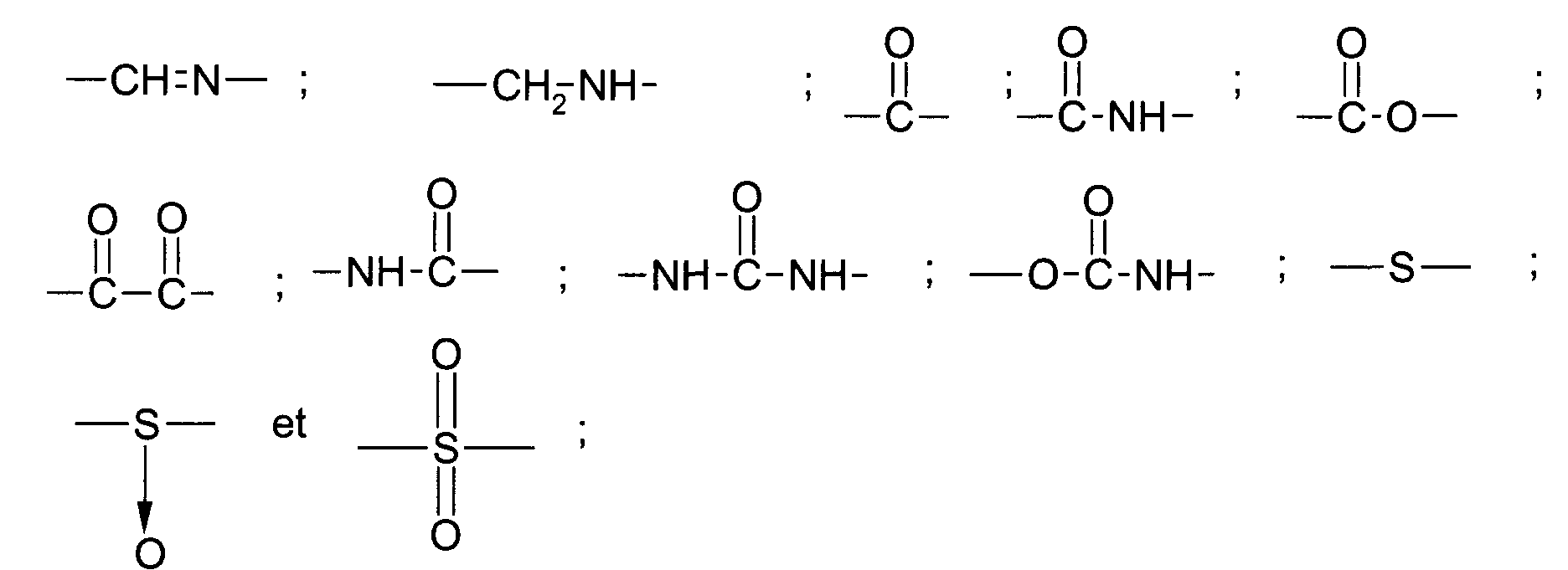
- Composés selon la revendication 1, caractérisés par le fait que lorsque R1 et R2 forment, conjointement avec l'atome d'azote auquel ils sont liés, un cycle à 4, 5 ou 6 chaínons, ou lorsque R1 et/ou R2 représentent un cycle à 4, 5 ou 6 chaínons, ou lorsque Z représente un cycle aromatique ou non à 4, 5 ou 6 chaínons, alors lesdits cycles peuvent porter un ou plusieurs substituants choisis parmi les groupements suivants : un radical hydroxyle, un radical amido, un atome d'halogène, un radical cyano, un radical alkyle en C1-C8, un cycle aromatique ou non en C4, C5 ou C6.
- Composés selon la revendication 1 ou 2, caractérisés par le fait qu'ils sont choisis parmi :et leurs sels d'addition avec un acide.la 5-amino-2-hydroxy-benzylidèneamino-guanidine,la 2-amino-5-hydroxy-benzylidèneamino-guanidine,la 2,5-diamino-benzylidèneamino-guanidine,la 5-dihydroxyéthylamino-2-hydroxy-benzylidèneamino-guanidine,la 5-diméthylamino-2-hydroxy-benzylidèneamino-guanidine,la 2-dihydroxyéthylamino-5-hydroxy-benzylidèneamino-guanidine,la 2-diméthylamino-5-hydroxy-benzylidèneamino-guanidine,la 2-dihydroxyéthylamino-5-amino-benzylidèneamino-guanidine,la 5-dihydroxyéthylamino-2-amino-benzylidèneamino-guanidine,la 5-diméthylamino-2-amino-benzylidèneamino-guanidine,la 2-diméthylamino-5-amino-benzylidèneamino-guanidine,la 2-N-pyrrolidinyl-5-amino-benzylidèneamino-guanidine,la 5-N-pyrrolidinyl-2-amino-benzylidèneamino-guanidine,
- Composés selon l'une quelconque des revendications précédentes, caractérisés par le fait que les sels d'addition avec un acide des composés de formule (I) sont choisis parmi les chlorhydrates, les bromhydrates, les sulfates, les citrates, les succinates, les tartrates, les lactates et les acétates.
- Procédé de préparation des composés de formule (I) tels que définis à l'une quelconque des revendications 1 à 4, consistant à réaliser un couplage direct de l'amino guanidine sur un dérivé benzaldéhyde dont les substituants correspondent au composé de formule (I) que l'on souhaite obtenir, dans un solvant organique, à une température comprise entre 10°C et la température de reflux dudit solvant.
- Utilisation des composés de formules (I) tels que définis à l'une quelconque des revendications 1 à 4, à titre de base d'oxydation pour la teinture d'oxydation des fibres kératiniques et en particulier des fibres humaines telles que les cheveux.
- Composition pour la teinture d'oxydation des fibres kératiniques et en particulier des fibres kératiniques humaines telles que les cheveux, caractérisée par le fait qu'elle comprend, à titre de base d'oxydation, dans un milieu approprié pour la teinture, au moins un composé de formule (I) tel que défini à l'une quelconque des revendications 1 à 4.
- Composition selon la revendication 7, caractérisée par le fait que le ou les composés de formule (I) représentent de 0,0005 à 12 % en poids du poids total de la composition tinctoriale.
- Composition selon la revendication 8, caractérisée par le fait que le ou les composés de formule (I) représentent de 0,005 à 6 % en poids du poids total de la composition tinctoriale.
- Composition selon l'une quelconque des revendications 7 à 9, caractérisée par le fait qu'elle contient, en plus du ou des composés de formule (I), au moins une base d'oxydation additionnelle choisie parmi les paraphénylènediamines différentes des composés de formule (I), les bis-phénylalkylènediamines, les para-aminophénols différents des composés de formule (I), les ortho-aminophénols et les bases hétérocycliques.
- Composition selon la revendication 10, caractérisée par le fait que les paraphénylènediamines sont choisies parmi la paraphénylènediamine, la paratoluylènediamine, la 2-chloro paraphénylènediamine, la 2,3-diméthyl paraphénylènediamine, la 2,6-diméthyl paraphénylènediamine, la 2,6-diéthyl paraphénylènediamine, la 2,5-diméthyl paraphénylènediamine, la N,N-diméthyl paraphénylènediamine, la N,N-diéthyl paraphénylènediamine, la N,N-dipropyl paraphénylènediamine, la 4-amino N,N-diéthyl 3-méthyl aniline, la N,N-bis-(β-hydroxyéthyl) paraphénylènediamine, la 4-N,N-bis-(β-hydroxyéthyl) amino 2-méthyl aniline, la 4-N,N-bis-(β-hydroxyéthyl)amino 2-chloro aniline, la 2-β-hydroxyéthyl paraphénylènediamine, la 2-fluoro paraphénylènediamine, la 2-isopropyl paraphénylènediamine, la N-(β-hydroxypropyl) paraphénylènediamine, la 2-hydroxyméthyl paraphénylènediamine, la N,N-diméthyl 3-méthyl paraphénylènediamine, la N,N-(éthyl, β-hydroxyéthyl) paraphénylènediamine, la N-(β,γ-dihydroxypropyl) paraphénylènediamine, la N-(4'-aminophényl) paraphénylènediamine, la N-phényl paraphénylènediamine, la 2-β-hydroxyéthyloxy paraphénylènediamine, la 2-β-acétylaminoéthyloxy paraphénylènediamine, la N-(β-méthoxyéthyl) paraphénylènediamine, et leurs sels d'addition avec un acide.
- Composition selon la revendication 10, caractérisée par le fait que les bis-phénylalkylènediamines sont choisies parmi le N,N'-bis-(β-hydroxyéthyl) N,N'-bis-(4'-aminophényl) 1,3-diamino propanol, la N,N'-bis-(β-hydroxyéthyl) N,N'-bis-(4'-aminophényl) éthylènediamine, la N,N'-bis-(4-aminophényl) tétraméthylènediamine, la N,N'-bis-(β-hydroxyéthyl) N,N'-bis-(4-aminophényl) tétraméthylènediamine, la N,N'-bis-(4-méthyl-aminophényl) tétraméthylènediamine, la N,N'-bis-(éthyl) N,N'-bis-(4'-amino, 3'-méthylphényl) éthylènediamine, le 1,8-bis-(2,5-diamino phénoxy)-3,5-dioxaoctane, et leurs sels d'addition avec un acide.
- Composition selon la revendication 10, caractérisée par le fait que les para-aminophénols sont choisis parmi le para-aminophénol, le 4-amino 3-méthyl phénol, le 4-amino 3-fluoro phénol, le 4-amino 3-hydroxyméthyl phénol, le 4-amino 2-méthyl phénol, le 4-amino 2-hydroxyméthyl phénol, le 4-amino 2-méthoxyméthyl phénol, le 4-amino 2-aminométhyl phénol, le 4-amino 2-(β-hydroxyéthyl aminométhyl) phénol, le 4-amino 2-fluoro phénol, et leurs sels d'addition avec un acide.
- Composition selon la revendication 10, caractérisée par le fait que les bases hétérocycliques sont choisies parmi les dérivés pyridiniques, les dérivés pyrimidiniques et les dérivés pyrazoliques.
- Composition selon l'une quelconque des revendications 7 à 14, caractérisée par le fait que la ou les bases d'oxydation additionnelles représentent de 0,0005 à 12 % en poids du poids total de la composition tinctoriale.
- Composition selon la revendication 15, caractérisée par le fait que la ou les bases d'oxydation additionnelles représentent de 0,005 à 6 % en poids du poids total de la composition tinctoriale.
- Composition selon l'une quelconque des revendications 7 à 16, caractérisée par le fait qu'elle renferme au moins un coupleur et/ou au moins un colorant direct.
- Composition selon la revendication 17, caractérisée par le fait que les coupleurs sont choisis parmi les métaphénylènediamines, les métaaminophénols, les métadiphénols et les coupleurs hétérocycliques.
- Composition selon la revendication 18, caractérisée par le fait que les coupleurs sont choisis parmi le 2-méthyl 5-amino phénol, le 5-N-(β-hydroxyéthyl)amino 2-méthyl phénol, le 3-amino phénol, le 1,3-dihydroxy benzène, le 1,3-dihydroxy 2-méthyl benzène, le 4-chloro 1,3-dihydroxy benzène, le 2,4-diamino 1-(β-hydroxyéthyloxy) benzène, le 2-amino 4-(β-hydroxyéthylamino) 1-méthoxy benzène, le 1,3-diamino benzène, le 1,3-bis-(2,4-diaminophénoxy) propane, le sésamol, l'α-naphtol, le 2-méthyl-1-naphtol, le 6-hydroxy indole, le 4-hydroxy indole, le 4-hydroxy N-méthyl indole, la 6-hydroxy indoline, 6-hydroxybenzomorpholine, la 2,6-dihydroxy 4-méthyl pyridine, le 1-H 3-méthyl pyrazole 5-one, le 1-phényl 3-méthyl pyrazole 5-one, et leurs sels d'addition avec un acide.
- Composition selon l'une quelconque des revendications 17 à 19, caractérisée par le fait que le ou les coupleurs représentent de 0,0001 à 10 % en poids du poids total de la composition tinctoriale.
- Composition selon la revendication 20, caractérisée par le fait que le ou les coupleurs représentent de 0,005 à 5 % en poids du poids total de la composition tinctoriale.
- Composition selon l'une quelconque des revendications 7 à 21, caractérisée par le fait que les sels d'addition avec un acide sont choisis parmi les chlorhydrates, les bromhydrates, les sulfates, les citrates, les succinates, les tartrates, les lactates et les acétates.
- Procédé de teinture d'oxydation des fibres kératiniques et en particulier des fibres kératiniques humaines telles que les cheveux, caractérisé par le fait qu'on applique sur lesdites fibres au moins une composition tinctoriale telle que définie à l'une quelconque des revendications 7 à 22, et que l'on révèle la couleur à pH acide, neutre ou alcalin à l'aide d'un agent oxydant qui est ajouté juste au moment de l'emploi à la composition tinctoriale ou qui est présent dans une composition oxydante appliquée séparément, simultanément ou séquentiellement.
- Procédé selon la revendication 23, caractérisé par le fait que l'agent oxydant est choisi parmi le peroxyde d'hydrogène, le peroxyde d'urée, les bromates de métaux alcalins, les persels, les peracides, et les enzymes.
- Dispositif à plusieurs compartiments, ou "kit" de teinture à plusieurs compartiments, dont un premier compartiment renferme une composition tinctoriale telle que définie à l'une quelconque des revendications 7 à 22 et un second compartiment renferme une composition oxydante.
Applications Claiming Priority (2)
| Application Number | Priority Date | Filing Date | Title |
|---|---|---|---|
| FR0001055A FR2804428B1 (fr) | 2000-01-27 | 2000-01-27 | Nouvelles bases d'oxydation a chaine guanidine, leur procede de preparation, leur utilisation pour la teinture d'oxydation des fibres keratiniques, compositions tinctoriales et procedes de teinture |
| FR0001055 | 2000-01-27 |
Publications (3)
| Publication Number | Publication Date |
|---|---|
| EP1120405A2 true EP1120405A2 (fr) | 2001-08-01 |
| EP1120405A3 EP1120405A3 (fr) | 2002-11-27 |
| EP1120405B1 EP1120405B1 (fr) | 2004-10-27 |
Family
ID=8846377
Family Applications (1)
| Application Number | Title | Priority Date | Filing Date |
|---|---|---|---|
| EP20010400112 Expired - Lifetime EP1120405B1 (fr) | 2000-01-27 | 2001-01-16 | Nouvelles bases d'oxydation à chaíne guanidine, leur procédé de préparation, leur utilisation pour la teinture d'oxydation des fibres kératiniques, compositions tinctoriales et procédés de teinture |
Country Status (8)
| Country | Link |
|---|---|
| US (1) | US6652600B2 (fr) |
| EP (1) | EP1120405B1 (fr) |
| JP (1) | JP3696096B2 (fr) |
| AT (1) | ATE280754T1 (fr) |
| CA (1) | CA2332506C (fr) |
| DE (1) | DE60106650T2 (fr) |
| ES (1) | ES2231395T3 (fr) |
| FR (1) | FR2804428B1 (fr) |
Family Cites Families (4)
| Publication number | Priority date | Publication date | Assignee | Title |
|---|---|---|---|---|
| US2185154A (en) * | 1939-12-26 | Hans z | ||
| HU190639B (en) * | 1983-12-12 | 1986-09-29 | Gyogyszerkutato Intezet Kv,Hu | Process for production of new aminoguanidin derivatives |
| FR2771409B1 (fr) * | 1997-11-21 | 2000-01-14 | Oreal | Nouveaux composes azoiques, utilisation pour la teinture, compositions les contenant et procedes de teinture |
| DE19812059C1 (de) * | 1998-03-19 | 1999-09-23 | Wella Ag | Diaminobenzol-Derivate sowie diese Diaminobenzol-Derivate enthaltende Haarfärbemittel |
-
2000
- 2000-01-27 FR FR0001055A patent/FR2804428B1/fr not_active Expired - Fee Related
-
2001
- 2001-01-16 AT AT01400112T patent/ATE280754T1/de not_active IP Right Cessation
- 2001-01-16 ES ES01400112T patent/ES2231395T3/es not_active Expired - Lifetime
- 2001-01-16 DE DE60106650T patent/DE60106650T2/de not_active Expired - Fee Related
- 2001-01-16 EP EP20010400112 patent/EP1120405B1/fr not_active Expired - Lifetime
- 2001-01-25 CA CA002332506A patent/CA2332506C/fr not_active Expired - Fee Related
- 2001-01-26 JP JP2001018269A patent/JP3696096B2/ja not_active Expired - Fee Related
- 2001-01-29 US US09/770,471 patent/US6652600B2/en not_active Expired - Fee Related
Also Published As
| Publication number | Publication date |
|---|---|
| ES2231395T3 (es) | 2005-05-16 |
| US20010034913A1 (en) | 2001-11-01 |
| JP2001240587A (ja) | 2001-09-04 |
| DE60106650T2 (de) | 2005-12-01 |
| EP1120405B1 (fr) | 2004-10-27 |
| JP3696096B2 (ja) | 2005-09-14 |
| US6652600B2 (en) | 2003-11-25 |
| CA2332506C (fr) | 2005-11-15 |
| CA2332506A1 (fr) | 2001-07-27 |
| FR2804428B1 (fr) | 2002-03-22 |
| ATE280754T1 (de) | 2004-11-15 |
| FR2804428A1 (fr) | 2001-08-03 |
| DE60106650D1 (de) | 2004-12-02 |
| EP1120405A3 (fr) | 2002-11-27 |
Similar Documents
| Publication | Publication Date | Title |
|---|---|---|
| EP0926149A1 (fr) | Compositions de teinture des fibres kératinques contenant des 3-aminopyrazolo-[1,5-a]-pyrimidines, procédé de teinture, nouvelles 3-aminopyrazolo-[1,5-a]-pyrimidines et leur procédé de préparation | |
| CA2391980A1 (fr) | Compositions de teinture des fibres keratiniques contenant des 3-amino pyrazolo-[1,5-a]-pyridines, procede de teinture, nouvelles 3-amino pyrazolo-[1,5-a]-pyridines | |
| EP0989128A1 (fr) | 4-Hydroxyindoles cationiques et leur utilisation pour la teinture d'oxydation des fibres kératiniques | |
| WO2002045669A1 (fr) | Composition de teinture a base de 1-(4-aminophenyl) pyrrolidines substituees au moins en position 2 et 3 | |
| EP1147109B1 (fr) | Nouvelles bases d'oxydation cationiques, leur utilisation pour la teinture d'oxydation des fibres keratiniques, compositions tinctoriales et procedes de teinture | |
| WO2002045672A1 (fr) | Composition de teinture d'oxydation a base de 1-(4-aminophenyl)pyrrolidines substituees en position 2 et 4 | |
| WO2002045670A1 (fr) | Composition de teinture d'oxydation a base de 1-(4-aminophenyl) pyrrolidines substituees en position 2 | |
| EP1417184A1 (fr) | Composition pour la teinture de fibre keratiniques contenant une paraphenylenediamine substituee par un radical diazacycloheptane | |
| EP1341507A1 (fr) | Composition de teinture d'oxydation a base de 1-(4-aminophenyl) pyrrolidines substituees en positions 2 et 5 | |
| WO2002045671A1 (fr) | Composition de teinture d'oxydation a base de 1-(4-aminophenyl)pyrrolidines substituees en position 3 et 4, et procede de teinture de mise en oeuvre | |
| WO2000043388A1 (fr) | Methylenedioxy-benzenes cationiques, leur utilisation pour la teinture d'oxydation des fibres keratiniques, compositions et procede de teinture | |
| EP1066263B1 (fr) | Nouveaux 2-acylaminophenols cationiques, leur utilisation a titre de coupleur pour la teinture d'oxydation, compositions les comprenant, et procedes de teinture | |
| EP1066264B1 (fr) | 2-sulfonylaminophenols cationiques, leur utilisation a titre de coupleur pour la teinture d'oxydation, compositions les comprenant, et procedes de teinture | |
| EP1066021A1 (fr) | Coupleur naphtalenique cationique pour la teinture d'oxydation de fibres keratiniques | |
| EP1066282B1 (fr) | Nouveaux di-methylenedioxy-benzenes cationiques, leur utilisation pour la teinture d'oxydation des fibres keratiniques | |
| EP1022271A1 (fr) | Nouveaux colorants mono-benzéniques cationiques, leur utilisation pour la teinture d'oxydation des fibres kératiniques, compositions tinctoriales et procédés de teinture | |
| EP1120405B1 (fr) | Nouvelles bases d'oxydation à chaíne guanidine, leur procédé de préparation, leur utilisation pour la teinture d'oxydation des fibres kératiniques, compositions tinctoriales et procédés de teinture | |
| EP1129690A2 (fr) | Compositions de teinture des fibres keratiniques contenant des derives d'indolizine cationiques et procede de teinture | |
| EP1484049A1 (fr) | Nouveaux composés imidazoles et utilisation de ces composés pour la teinture de fibres kératiniques | |
| EP1093792A1 (fr) | Composition de teinture d'oxydation des fibres kératiniques et procédé de teinture mettant en oeuvre cette composition | |
| FR2779948A1 (fr) | Composition tinctoriale contenant du 1,8-bis- (2,5-diaminophenoxy)-3,5-dioxaoctane, une base d'oxydation additionnelle et un coupleur, et procedes de teinture | |
| FR2822374A1 (fr) | Compositions pour la teinture des fibres keratiniques contenant des derives de paraphenylenediamine a groupement pyrrolidinyle | |
| WO2004031152A1 (fr) | Coupleurs 6-alcoxy- 2,3-diaminopyridine et utilisation de ces coupleurs pour la teinture des fibres keratiniques | |
| WO2001041724A2 (fr) | Compositions pour la teinture des fibres keratiniques contenant des derives de paraphenylenediamine a groupement azetidinyle |
Legal Events
| Date | Code | Title | Description |
|---|---|---|---|
| PUAI | Public reference made under article 153(3) epc to a published international application that has entered the european phase |
Free format text: ORIGINAL CODE: 0009012 |
|
| AK | Designated contracting states |
Kind code of ref document: A2 Designated state(s): AT BE CH CY DE DK ES FI FR GB GR IE IT LI LU MC NL PT SE TR |
|
| AX | Request for extension of the european patent |
Free format text: AL;LT;LV;MK;RO;SI |
|
| PUAL | Search report despatched |
Free format text: ORIGINAL CODE: 0009013 |
|
| AK | Designated contracting states |
Kind code of ref document: A3 Designated state(s): AT BE CH CY DE DK ES FI FR GB GR IE IT LI LU MC NL PT SE TR |
|
| AX | Request for extension of the european patent |
Free format text: AL;LT;LV;MK;RO;SI |
|
| 17P | Request for examination filed |
Effective date: 20030527 |
|
| AKX | Designation fees paid |
Designated state(s): AT BE CH CY DE DK ES FI FR GB GR IE IT LI LU MC NL PT SE TR |
|
| GRAP | Despatch of communication of intention to grant a patent |
Free format text: ORIGINAL CODE: EPIDOSNIGR1 |
|
| GRAS | Grant fee paid |
Free format text: ORIGINAL CODE: EPIDOSNIGR3 |
|
| GRAA | (expected) grant |
Free format text: ORIGINAL CODE: 0009210 |
|
| AK | Designated contracting states |
Kind code of ref document: B1 Designated state(s): AT BE CH CY DE DK ES FI FR GB GR IE IT LI LU MC NL PT SE TR |
|
| PG25 | Lapsed in a contracting state [announced via postgrant information from national office to epo] |
Ref country code: NL Free format text: LAPSE BECAUSE OF FAILURE TO SUBMIT A TRANSLATION OF THE DESCRIPTION OR TO PAY THE FEE WITHIN THE PRESCRIBED TIME-LIMIT Effective date: 20041027 Ref country code: IE Free format text: LAPSE BECAUSE OF FAILURE TO SUBMIT A TRANSLATION OF THE DESCRIPTION OR TO PAY THE FEE WITHIN THE PRESCRIBED TIME-LIMIT Effective date: 20041027 Ref country code: AT Free format text: LAPSE BECAUSE OF FAILURE TO SUBMIT A TRANSLATION OF THE DESCRIPTION OR TO PAY THE FEE WITHIN THE PRESCRIBED TIME-LIMIT Effective date: 20041027 Ref country code: FI Free format text: LAPSE BECAUSE OF FAILURE TO SUBMIT A TRANSLATION OF THE DESCRIPTION OR TO PAY THE FEE WITHIN THE PRESCRIBED TIME-LIMIT Effective date: 20041027 Ref country code: TR Free format text: LAPSE BECAUSE OF FAILURE TO SUBMIT A TRANSLATION OF THE DESCRIPTION OR TO PAY THE FEE WITHIN THE PRESCRIBED TIME-LIMIT Effective date: 20041027 |
|
| REG | Reference to a national code |
Ref country code: GB Ref legal event code: FG4D Free format text: NOT ENGLISH |
|
| REG | Reference to a national code |
Ref country code: CH Ref legal event code: EP |
|
| REG | Reference to a national code |
Ref country code: IE Ref legal event code: FG4D Free format text: FRENCH |
|
| REF | Corresponds to: |
Ref document number: 60106650 Country of ref document: DE Date of ref document: 20041202 Kind code of ref document: P |
|
| PG25 | Lapsed in a contracting state [announced via postgrant information from national office to epo] |
Ref country code: CY Free format text: LAPSE BECAUSE OF FAILURE TO SUBMIT A TRANSLATION OF THE DESCRIPTION OR TO PAY THE FEE WITHIN THE PRESCRIBED TIME-LIMIT Effective date: 20050116 Ref country code: LU Free format text: LAPSE BECAUSE OF NON-PAYMENT OF DUE FEES Effective date: 20050116 |
|
| PG25 | Lapsed in a contracting state [announced via postgrant information from national office to epo] |
Ref country code: GR Free format text: LAPSE BECAUSE OF FAILURE TO SUBMIT A TRANSLATION OF THE DESCRIPTION OR TO PAY THE FEE WITHIN THE PRESCRIBED TIME-LIMIT Effective date: 20050127 Ref country code: DK Free format text: LAPSE BECAUSE OF FAILURE TO SUBMIT A TRANSLATION OF THE DESCRIPTION OR TO PAY THE FEE WITHIN THE PRESCRIBED TIME-LIMIT Effective date: 20050127 Ref country code: SE Free format text: LAPSE BECAUSE OF FAILURE TO SUBMIT A TRANSLATION OF THE DESCRIPTION OR TO PAY THE FEE WITHIN THE PRESCRIBED TIME-LIMIT Effective date: 20050127 |
|
| PG25 | Lapsed in a contracting state [announced via postgrant information from national office to epo] |
Ref country code: MC Free format text: LAPSE BECAUSE OF NON-PAYMENT OF DUE FEES Effective date: 20050131 Ref country code: LI Free format text: LAPSE BECAUSE OF NON-PAYMENT OF DUE FEES Effective date: 20050131 Ref country code: CH Free format text: LAPSE BECAUSE OF NON-PAYMENT OF DUE FEES Effective date: 20050131 Ref country code: BE Free format text: LAPSE BECAUSE OF NON-PAYMENT OF DUE FEES Effective date: 20050131 |
|
| GBT | Gb: translation of ep patent filed (gb section 77(6)(a)/1977) |
Effective date: 20050126 |
|
| NLV1 | Nl: lapsed or annulled due to failure to fulfill the requirements of art. 29p and 29m of the patents act | ||
| REG | Reference to a national code |
Ref country code: ES Ref legal event code: FG2A Ref document number: 2231395 Country of ref document: ES Kind code of ref document: T3 |
|
| REG | Reference to a national code |
Ref country code: IE Ref legal event code: FD4D |
|
| BERE | Be: lapsed |
Owner name: L'OREAL Effective date: 20050131 |
|
| PLBE | No opposition filed within time limit |
Free format text: ORIGINAL CODE: 0009261 |
|
| STAA | Information on the status of an ep patent application or granted ep patent |
Free format text: STATUS: NO OPPOSITION FILED WITHIN TIME LIMIT |
|
| REG | Reference to a national code |
Ref country code: CH Ref legal event code: PL |
|
| 26N | No opposition filed |
Effective date: 20050728 |
|
| BERE | Be: lapsed |
Owner name: L'*OREAL Effective date: 20050131 |
|
| PG25 | Lapsed in a contracting state [announced via postgrant information from national office to epo] |
Ref country code: PT Free format text: LAPSE BECAUSE OF NON-PAYMENT OF DUE FEES Effective date: 20050327 |
|
| PGFP | Annual fee paid to national office [announced via postgrant information from national office to epo] |
Ref country code: ES Payment date: 20080218 Year of fee payment: 8 |
|
| PGFP | Annual fee paid to national office [announced via postgrant information from national office to epo] |
Ref country code: DE Payment date: 20080110 Year of fee payment: 8 Ref country code: GB Payment date: 20080116 Year of fee payment: 8 Ref country code: IT Payment date: 20080131 Year of fee payment: 8 |
|
| PGFP | Annual fee paid to national office [announced via postgrant information from national office to epo] |
Ref country code: FR Payment date: 20080108 Year of fee payment: 8 |
|
| GBPC | Gb: european patent ceased through non-payment of renewal fee |
Effective date: 20090116 |
|
| PG25 | Lapsed in a contracting state [announced via postgrant information from national office to epo] |
Ref country code: DE Free format text: LAPSE BECAUSE OF NON-PAYMENT OF DUE FEES Effective date: 20090801 |
|
| REG | Reference to a national code |
Ref country code: FR Ref legal event code: ST Effective date: 20091030 |
|
| PG25 | Lapsed in a contracting state [announced via postgrant information from national office to epo] |
Ref country code: GB Free format text: LAPSE BECAUSE OF NON-PAYMENT OF DUE FEES Effective date: 20090116 |
|
| REG | Reference to a national code |
Ref country code: ES Ref legal event code: FD2A Effective date: 20090117 |
|
| PG25 | Lapsed in a contracting state [announced via postgrant information from national office to epo] |
Ref country code: FR Free format text: LAPSE BECAUSE OF NON-PAYMENT OF DUE FEES Effective date: 20090202 Ref country code: ES Free format text: LAPSE BECAUSE OF NON-PAYMENT OF DUE FEES Effective date: 20090117 |
|
| PG25 | Lapsed in a contracting state [announced via postgrant information from national office to epo] |
Ref country code: IT Free format text: LAPSE BECAUSE OF NON-PAYMENT OF DUE FEES Effective date: 20090116 |