EP1113682A1 - Procédé d'établissement de mode de fonctionnement sans double transcodage dans un système cellulaire de radiocommunications mobiles - Google Patents
Procédé d'établissement de mode de fonctionnement sans double transcodage dans un système cellulaire de radiocommunications mobiles Download PDFInfo
- Publication number
- EP1113682A1 EP1113682A1 EP00403626A EP00403626A EP1113682A1 EP 1113682 A1 EP1113682 A1 EP 1113682A1 EP 00403626 A EP00403626 A EP 00403626A EP 00403626 A EP00403626 A EP 00403626A EP 1113682 A1 EP1113682 A1 EP 1113682A1
- Authority
- EP
- European Patent Office
- Prior art keywords
- mode
- coding
- mobile
- mobiles
- coding modes
- Prior art date
- Legal status (The legal status is an assumption and is not a legal conclusion. Google has not performed a legal analysis and makes no representation as to the accuracy of the status listed.)
- Granted
Links
- 238000000034 method Methods 0.000 title claims abstract description 49
- 230000001413 cellular effect Effects 0.000 title claims abstract description 7
- 238000004891 communication Methods 0.000 title description 3
- 230000011664 signaling Effects 0.000 description 9
- 230000005540 biological transmission Effects 0.000 description 7
- 230000008569 process Effects 0.000 description 7
- 230000008859 change Effects 0.000 description 3
- 238000005457 optimization Methods 0.000 description 3
- 230000015556 catabolic process Effects 0.000 description 2
- 238000006731 degradation reaction Methods 0.000 description 2
- 238000007796 conventional method Methods 0.000 description 1
- 238000001514 detection method Methods 0.000 description 1
- 230000006872 improvement Effects 0.000 description 1
- 238000010295 mobile communication Methods 0.000 description 1
Images


Classifications
-
- H—ELECTRICITY
- H04—ELECTRIC COMMUNICATION TECHNIQUE
- H04W—WIRELESS COMMUNICATION NETWORKS
- H04W88/00—Devices specially adapted for wireless communication networks, e.g. terminals, base stations or access point devices
- H04W88/18—Service support devices; Network management devices
- H04W88/181—Transcoding devices; Rate adaptation devices
Definitions
- the present invention relates generally to systems mobile radio communications.
- the present invention relates more particularly to speech services, and the techniques used in these systems to optimize the quality of service.
- HR mode is thus the least resource consuming mode; he ... not requires only a half time interval (or "time-slot" in English) instead one for FR mode.
- HR mode thus allows an increase in capacity by compared to FR or EFR modes; in return, the quality obtained with the HR mode is generally reduced compared to that obtained with the FR or EFR modes, especially in the case of poor transmission conditions.
- the choice of a mode of coding can be performed, fixedly or adaptively, among all of the coding modes supported for this mobile (i.e. supported by this mobile and by the entities of the system in charge of a call for this mobile, as it will be heard in all that follows), and according to predetermined criteria, adapted to needs.
- transcoders are also provided for switching from coding mode thus used for transmission over the radio interface, to a transmission mode standard coding such as PCM mode (for "Pulse Code Modulation” in English), generally used in wired networks and corresponding to a speed of 64kbit / s.
- PCM mode for "Pulse Code Modulation” in English
- transcoder is also called “TRAU”, for "Transcoder Rate Adapter Unit” in English.
- the establishment of the TFO mode generally requires a dialogue or exchange signaling between peer entities of the system in charge of the call for each of the mobiles concerned.
- One of the aims of this signaling exchange is to ensure that the two transcoders concerned are capable of operating depending on the TFO mode.
- the coding mode being generally selected independently for each of the mobiles concerned, another goal of this signaling exchange is to make sure that a common coding mode is selected for TFO mode, and therefore possibly only a mode change coding is performed for at least one of these mobiles, in case the mode of coding initially selected for this mobile would be different from this mode of common coding selected for TFO mode.
- the criterion for selecting a common coding mode is, in compliance with the objective sought with the TFO mode, a criterion for optimizing quality.
- the coding mode initially selected for the mobile located in the cell A being the HR mode
- the coding mode initially selected for the mobile located in cell B being one of the FR and EFR modes, for example the EFR.
- each BSS communicates to the associated TC transcoder (according to specific signaling techniques not recalled here) the coding mode initially selected for the mobile concerned, and the list of coding modes supported for this mobile.
- each TC transcoder communicate this information to the other transcoder (also according to specific signaling techniques not mentioned here).
- each of the transcoders selects, based on lists of supported coding modes corresponding to each of these mobiles, and according to the same criterion, a mode of common coding for TFO mode.
- the criterion conventionally used for such a selection of coding mode common being, as mentioned above, that of quality optimization, from when one of the FR or EFR modes is supported in common, it is selected as common mode for TFO mode.
- the common coding mode selected in step 3 is the EFR mode (initially selected for the mobile located in cell B).
- each BSS is informed by the associated transcoder TC, of the common coding mode thus selected for the mode TFO.
- a change of coding mode is then carried out (according to techniques known and not recalled here) for the mobile located in cell A, HR mode to EFR mode.
- the object of the present invention is in particular to avoid, to the extent of the possible, such disadvantages, while retaining the advantages of the mode TFO.
- the present invention thus relates to a method for establishing operating mode without double transcoding for a mobile call to mobile, and cell-to-cell, in a cellular radio communications system mobile, said method comprising a step of selecting a coding mode common for each of said mobiles, and being essentially characterized in that said selection of a common coding mode takes into account the traffic load in at least one of said cells.
- said common coding mode being selected based on lists of supported coding modes for each of said mobile, a list of supported coding modes is reduced in order to eliminate the most resource-intensive coding methods, if the mobile correspondent is located in a charged cell.
- a common coding mode is then selected on the base of lists of supported coding modes not reduced.
- the criterion for selecting a mode of common coding based on lists of coding modes supported for each of said mobiles is a quality optimization criterion.
- coding modes being initially selected independently of each other for each of said mobiles, a list of coding modes supported is reduced only if, in addition, the coding mode initially selected for the corresponding mobile is one of the coding modes the least resource consumers.
- said method comprises at least one step during which, for each of said mobiles, an entity of said system in call charge for this mobile communicates a list of coding modes supported for this mobile to a peer entity in charge of the call for the other mobile, and a next step during which each of said entities selects, based on the lists of coding modes supported for each of said mobiles, and according to the same criterion, a common coding mode.
- said method further comprises a step during which, for each of said mobiles, an entity of said system in call charge for this mobile communicates the coding mode initially selected for this mobile to a peer entity in charge of the call for the other mobile, and a next step during which each of said entities determines whether the coding modes initially selected for each of said coding modes mobiles are identical.
- said system is a GSM type system.
- one of said least coding modes resource consuming is the half speed mode.
- one of said most coding modes resource consuming is full flow mode.
- one of said most coding modes resource consuming is the improved full speed mode.
- the present invention also relates to a cellular system for mobile radiocommunications, for the implementation of such a method, said system thus essentially comprising, for the establishment of operating mode without double transcoding for a call from mobile to mobile, and from cell to cell, means for selecting a common coding mode for each of said mobile, said selection of a common coding mode taking account of the load traffic in at least one of said cells.
- each BSS begins by determining if, in the example considered, the coding mode initially selected for the mobile concerned is HR mode, and if the corresponding cell is loaded. Typically, a cell can be considered charged if the amount of resources allocated in this cell during a given period is greater than a given threshold.
- the list of supported coding modes is reduced so as to eliminate the FR and EFR coding modes (which consume more resources), and therefore keep only HR mode.
- the list of supported coding modes is not reduced, and therefore includes all of the possible supported coding modes, namely in this example HR, FR and EFR.
- the common coding mode selected at step 3 'for TFO mode is HR mode. Therefore, and unlike the Figure 1, the mobile located in cell A retains the HR mode initially selected, and a change in coding mode is made for the mobile located in cell B, from FR mode to HR mode.
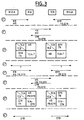
- the steps corresponding here being marked 1 "', 2"', 3 “'and 4"' (note that exchanges of signaling between BSSB and TCB during steps 4 "and 1" ", as illustrated in the figure 3, may possibly not be provided).
- the list of coding modes supported for the mobile located in cell A is then an unreduced list (in this case including HR, FR and EFR modes), the list of coding modes supported for the mobile located in cell B being always an unreduced list (in this case including the FR and EFR modes).
- the common coding mode selected at step 3 "' is the EFR mode (initially selected for the mobile located in the cell B).
- a common coding mode is selected on the base of unreduced lists. This allows less strict account to be taken of the traffic load in the loaded cell, starting by favoring the establishment of the TFO mode with a mode that consumes fewer resources, then, if this is not possible, by agreeing to establish it with a more resource consumer.
- the process could be a conventional process as recalled in FIG. 1.
- the method according to the invention could however be used in the case where, although the coding mode initially selected for each mobile is the HR mode, a specific step of selecting a common coding mode would be additionally provided, on the basis of the lists of supported coding modes, and according to a criterion quality optimization.
- the present invention also relates, in addition to such a method, to a cellular mobile radio system comprising means for setting using such a method.
- such a system would include means for carry out the steps described above.
- such a system essentially comprises, for establishment of operating mode without double transcoding for a call from mobile to mobile and from cell to cell, means for selecting a mode of common coding for each of said mobiles, said selection of a coding mode common taking into account the traffic load for at least one of said cells.
Landscapes
- Engineering & Computer Science (AREA)
- Computer Networks & Wireless Communication (AREA)
- Signal Processing (AREA)
- Mobile Radio Communication Systems (AREA)
- Communication Control (AREA)
Abstract
Description
- un mode plein débit (ou FR, pour "Full Rate" en anglais), correspondant à un débit de 13 kbit/s,
- un mode plein débit amélioré (ou EFR, pour "Enhanced Full Rate" en anglais) correspondant à un débit de 12,2 kbit/s,
- un mode demi-débit (ou HR, pour "Half Rate" en anglais), correspondant à un débit de 5,6 kbit/s.
- BSSA et BSSB pour ce qui concerne les fonctions liées à la transmission sur l'interface radio (BSS étant ici utilisé pour "Base Station Sub-system" en anglais, et incluant les entités communément appelées BTS, pour "Base Transceiver Station" en anglais, et BSC, pour "Base Station Controller" en anglais),
- TCA et TCB pour ce qui concerne la fonction transcodage.
- si oui, le mode de codage correspondant constitue ledit mode de codage commun,
- sinon, ledit mode de codage commun est sélectionné sur la base desdites listes de modes de codage supportés pour chacun desdits mobiles.
- la figure 1 est destinée à illustrer, sur un exemple, un procédé classique pour l'établissement du mode TFO,
- la figure 2 est destinée à illustrer, sur un exemple, un procédé suivant l'invention, pour l'établissement du mode TFO, suivant un premier exemple de réalisation,
- la figure 3 est destinée à illustrer, sur un exemple, un procédé suivant l'invention, pour l'établissement du mode TFO, suivant un deuxième exemple de réalisation.
- une étape notée 1', au cours de laquelle chaque BSS communique au transcodeur associé TC (suivant des techniques de signalisation spécifiques non rappelées ici) le mode de codage initialement sélectionné pour le mobile concerné, et la liste des modes de codage supportés ainsi obtenue,
- une étape notée 2', au cours de laquelle chaque transcodeur TC communique ces informations à l'autre transcodeur (également suivant des techniques de signalisation spécifiques non rappelées ici),
- une étape notée 3', au cours de laquelle, les modes de codage initialement sélectionnés pour chacun des mobiles étant différents, chaque transcodeur sélectionne, sur la base des listes de modes de codage supportés ainsi obtenues, et selon un même critère, un mode de codage commun pour le mode TFO,
- une étape notée 4', au cours de laquelle chaque transcodeur TC informe le BSS associé du mode de codage commun sélectionné pour le mode TFO.
- les modes de codage HR d'une part, et FR et EFR d'autre part, ne sont qu'un exemple possible de modes de codage moins, respectivement plus, consommateurs de ressources,
- les entités homologues qui se communiquent la liste des modes de codage supportés et qui effectuent sur cette base la sélection d'un mode de codage commun pourraient être des entités autres que des transcodeurs,
- la sélection de mode de codage commun pourrait aussi, au lieu d'être effectuée séparément, et selon un même critère, dans deux entités homologues distinctes, être effectuée de manière centralisée dans une même entité.
Claims (13)
- Procédé d'établissement de mode de fonctionnement sans double transcodage pour un appel de mobile à mobile, et de cellule à cellule, dans un système cellulaire de radiocommunications mobiles, ledit procédé comportant une étape de sélection d'un mode de codage commun pour chacun desdits mobiles, et. étant caractérisé en ce que ladite sélection d'un mode de codage commun tient compte de la charge de trafic dans au moins une desdites cellules.
- Procédé selon la revendication 1, caractérisé en ce que, ledit mode de codage commun étant sélectionné sur la base de listes de modes de codage supportés pour chacun desdits mobiles, une liste de modes de codage supportés est réduite de manière à en éliminer les modes de codage les plus consommateurs de ressources, si le mobile correspondant est situé dans une cellule chargée.
- Procédé selon la revendication 2, caractérisé en ce que, si aucun mode de codage commun ne peut être sélectionné sur la base de listes de mode de codage supportés dont au moins une est une liste réduite, un mode de codage commun est alors sélectionné sur la base de listes de modes de codage supportés non réduites.
- Procédé selon l'une des revendications 2 et 3, caractérisé en ce que le critère de sélection d'un mode de codage commun sur la base de listes de modes de codage supportés pour chacun desdits mobiles est un critère d'optimisation de qualité.
- Procédé selon l'une des revendications 2 à 4, caractérisé en ce que, des modes de codage étant initialement sélectionnés indépendamment l'un de l'autre pour chacun desdits mobiles, une liste de modes de codage supportés n'est réduite que si, en outre, le mode de codage initialement sélectionné pour le mobile correspondant est un des modes de codage les moins consommateurs de ressources.
- Procédé selon l'une des revendications 2 à 5, caractérisé en ce que, des modes de codage étant initialement sélectionnés indépendamment l'un de l'autre pour chacun desdits mobiles, il est en outre déterminé si les modes de codage sélectionnés initialement pour chacun desdits mobiles sont identiques:si oui, le mode de codage correspondant constitue ledit mode de codage commun,sinon, ledit mode de codage commun est sélectionné sur la base desdites listes de modes de codage supportés pour chacun desdits mobiles.
- Procédé selon l'une des revendications 2 à 6, caractérisé en ce qu'il comporte au moins une étape (1', 2') au cours de laquelle, pour chacun desdits mobiles, une entité dudit système en charge de l'appel pour ce mobile communique une liste de modes de codage supportés pour ce mobile à une entité homologue en charge de l'appel pour l'autre mobile, et une étape suivante (3') au cours de laquelle chacune desdites entités sélectionne, sur la base des listes de modes de codage supportées pour chacun desdits mobiles, et selon un même critère, un mode de codage commun.
- Procédé selon les revendications 6 et 7, caractérisé en ce qu'il comporte en outre une étape (1', 2') au cours de laquelle, pour chacun desdits mobiles, une entité dudit système en charge de l'appel pour ce mobile communique le mode de codage initialement sélectionné pour ce mobile à une entité homologue en charge de l'appel pour l'autre mobile, et une étape suivante (3') au cours de laquelle chacune desdites entités détermine si les modes de codage initialement sélectionnés pour chacun desdits mobiles sont identiques.
- Procédé selon l'une des revendications 1 à 8, caractérisé en ce que ledit système est un système de type GSM.
- Procédé selon l'une des revndications 1 à 9, caractérisé en ce qu'un desdits modes de codage les moins consommateurs de ressources est le mode demi-débit.
- Procédé selon l'une des revendications 1 à 10, caractérisé en ce qu'un desdits modes de codage les plus consommateurs de ressources est le mode plein débit.
- Procédé selon l'une des revendications 1 à 11, caractérisé en ce qu'un desdits modes de codage les plus consommateurs de ressources est le mode plein débit amélioré.
- Système cellulaire de radiocommunications mobiles, pour la mise en oeuvre d'un procédé selon l'une des revendications 1 à 12, caractérisé en ce qu'il comporte, pour l'établissement de mode de fonctionnement sans double transcodage pour un appel de mobile à mobile, et de cellule à cellule, des moyens pour sélectionner un mode de codage commun pour chacun desdits mobiles, ladite sélection d'un mode de codage commun tenant compte de la charge de trafic dans au moins une desdites cellules.
Applications Claiming Priority (2)
| Application Number | Priority Date | Filing Date | Title |
|---|---|---|---|
| FR9916822A FR2803476B1 (fr) | 1999-12-31 | 1999-12-31 | Procede d'etablissement de mode de fonctionnement sans double transcodage dans un systeme cellulaire de radiocommunications mobiles |
| FR9916822 | 1999-12-31 |
Publications (2)
| Publication Number | Publication Date |
|---|---|
| EP1113682A1 true EP1113682A1 (fr) | 2001-07-04 |
| EP1113682B1 EP1113682B1 (fr) | 2007-01-31 |
Family
ID=9554125
Family Applications (1)
| Application Number | Title | Priority Date | Filing Date |
|---|---|---|---|
| EP00403626A Expired - Lifetime EP1113682B1 (fr) | 1999-12-31 | 2000-12-21 | Procédé d'établissement de mode de fonctionnement sans double transcodage dans un système cellulaire de radiocommunications mobiles |
Country Status (6)
| Country | Link |
|---|---|
| US (1) | US20010006895A1 (fr) |
| EP (1) | EP1113682B1 (fr) |
| CN (1) | CN1304260A (fr) |
| AT (1) | ATE353183T1 (fr) |
| DE (1) | DE60033226T2 (fr) |
| FR (1) | FR2803476B1 (fr) |
Families Citing this family (8)
| Publication number | Priority date | Publication date | Assignee | Title |
|---|---|---|---|---|
| AU2003213931A1 (en) * | 2002-04-09 | 2003-10-27 | Nortel Networks Limited | Tandem-free operation (tfo) capable communication apparatus |
| US7933258B2 (en) * | 2002-04-24 | 2011-04-26 | Telefonaktiebolaget L M Ericsson (Publ) | Bypassing transcoding operations in a communication network |
| US20030210659A1 (en) * | 2002-05-02 | 2003-11-13 | Chu Chung Cheung C. | TFO communication apparatus with codec mismatch resolution and/or optimization logic |
| US6879833B2 (en) * | 2002-07-11 | 2005-04-12 | Sprint Spectrum L.P. | Method and system for vocoder bypass using differentiated telephone numbers |
| US20040203802A1 (en) * | 2002-12-23 | 2004-10-14 | Mccormick Mark Alan | Process for optimizing speech coding as a function of end user device characteristics |
| US7328027B1 (en) * | 2004-05-11 | 2008-02-05 | Sprint Spectrum L.P. | Method for vocoder selection based on loads in coverage areas of a wireless wide area network |
| US8209187B2 (en) * | 2006-12-05 | 2012-06-26 | Nokia Corporation | Speech coding arrangement for communication networks |
| CN101316376B (zh) * | 2007-05-31 | 2012-08-08 | 华为技术有限公司 | 一种基于检测的编码切换方法及通讯系统以及媒体网关 |
Citations (3)
| Publication number | Priority date | Publication date | Assignee | Title |
|---|---|---|---|---|
| WO1996018272A1 (fr) * | 1994-12-07 | 1996-06-13 | Detemobil Deutsche Telekom Mobilnet Gmbh | Procede de transmission de signaux vocaux codes dans au moins un reseau de telecommunications |
| US5649299A (en) * | 1993-10-27 | 1997-07-15 | Motorola, Inc. | Apparatus and method for adapting a digital radiotelephone system to increased subscriber traffic |
| EP0863682A1 (fr) * | 1996-07-01 | 1998-09-09 | Oki Electric Industry Company, Limited | Systeme de communication mobile |
Family Cites Families (31)
| Publication number | Priority date | Publication date | Assignee | Title |
|---|---|---|---|---|
| US4924480A (en) * | 1988-03-11 | 1990-05-08 | American Telephone And Telegraph Company | Codecs with suppression of multiple encoding/decodings across a connection |
| JPH0783315B2 (ja) * | 1988-09-26 | 1995-09-06 | 富士通株式会社 | 可変レート音声信号符号化方式 |
| US4890316A (en) * | 1988-10-28 | 1989-12-26 | Walsh Dale M | Modem for communicating at high speed over voice-grade telephone circuits |
| MX9307243A (es) * | 1992-11-24 | 1994-05-31 | Ericsson Telefon Ab L M | Reintento analogico. |
| US5638412A (en) * | 1994-06-15 | 1997-06-10 | Qualcomm Incorporated | Method for providing service and rate negotiation in a mobile communication system |
| WO1996022003A1 (fr) * | 1995-01-10 | 1996-07-18 | Ntt Mobile Communications Network Inc. | Systeme de telecommunications mobiles |
| EP1802135A3 (fr) * | 1995-03-15 | 2008-11-12 | Kabushiki Kaisha Toshiba | Systèmes de codage et/ou de décodage d'images mobiles |
| DE19544367A1 (de) * | 1995-11-29 | 1997-06-05 | Bosch Gmbh Robert | Verfahren zum Übertragen von Daten, insbesondere von GSM-Daten |
| FI102445B (fi) * | 1996-02-08 | 1998-11-30 | Nokia Telecommunications Oy | Transmissiolaitteisto keskusten väliselle yhteydelle |
| US5818826A (en) * | 1996-06-17 | 1998-10-06 | International Business Machines Corporation | Media access control protocols in a wireless communication network supporting multiple transmission rates |
| US5812968A (en) * | 1996-08-28 | 1998-09-22 | Ericsson, Inc. | Vocoder apparatus using the link margin |
| US5987327A (en) * | 1996-09-16 | 1999-11-16 | Motorola, Inc. | Method for establishing communications in wireless communication systems having multiple switching centers |
| GB2320166A (en) * | 1996-12-09 | 1998-06-10 | Motorola Ltd | method of reverting to tandem operation between transcoders of a communication system |
| FI105864B (fi) * | 1997-04-18 | 2000-10-13 | Nokia Networks Oy | Kaiunpoistomekanismi |
| US5883897A (en) * | 1997-04-25 | 1999-03-16 | Motorola, Inc. | Method and apparatus for providing synchronization during transcoder switching in a communication system |
| FI105372B (fi) * | 1997-07-22 | 2000-07-31 | Nokia Networks Oy | TRAU-kehyksen tunnistaminen matkapuhelinjärjestelmässä |
| US6108560A (en) * | 1997-09-26 | 2000-08-22 | Nortel Networks Corporation | Wireless communications system |
| US6172974B1 (en) * | 1997-10-31 | 2001-01-09 | Nortel Networks Limited | Network element having tandem free operation capabilities |
| DE19804581C2 (de) * | 1998-02-05 | 2000-08-17 | Siemens Ag | Verfahren und Funk-Kommunikationssystem zur Übertragung von Sprachinformation |
| FI105436B (fi) * | 1998-02-11 | 2000-08-15 | Nokia Networks Oy | Menetelmä tietoliikennekanavan vaihtamiseksi matkaviestinjärjestelmässä |
| US6295302B1 (en) * | 1998-04-24 | 2001-09-25 | Telefonaktiebolaget L M Ericsson (Publ) | Alternating speech and data transmission in digital communications systems |
| US6421527B1 (en) * | 1998-05-21 | 2002-07-16 | Texas Instruments Incorporated | System for dynamic adaptation of data/channel coding in wireless communications |
| US6272358B1 (en) * | 1998-06-04 | 2001-08-07 | Lucent Technologies Inc. | Vocoder by-pass for digital mobile-to-mobile calls |
| JP3109594B2 (ja) * | 1998-08-18 | 2000-11-20 | 日本電気株式会社 | 移動通信システムおよび移動端末接続方法 |
| US6091969A (en) * | 1998-08-21 | 2000-07-18 | Motorola, Inc. | Method and apparatus for inband signaling control of vocoder bypass |
| US6452941B1 (en) * | 1998-09-16 | 2002-09-17 | Telefonaktiebolaget Lm Ericsson (Publ) | Method and system for alternating transmission of codec mode information |
| US6721707B1 (en) * | 1999-05-14 | 2004-04-13 | Nortel Networks Limited | Method and apparatus for controlling the transition of an audio converter between two operative modes in the presence of link impairments in a data communication channel |
| US6832088B1 (en) * | 1999-07-19 | 2004-12-14 | Telefonaktiebolaget Lm Ericsson | Implementation of basic call setup transporting layer address and logical point in backward direction in cellular networks with separation of call control and bearer control |
| US6625226B1 (en) * | 1999-12-03 | 2003-09-23 | Allen Gersho | Variable bit rate coder, and associated method, for a communication station operable in a communication system |
| US6574469B1 (en) * | 2000-05-09 | 2003-06-03 | Telefonaktiebolaget L M Ericsson (Publ) | System and method of minimizing the number of voice transcodings during a conference call in a packet-switched network |
| US6865391B1 (en) * | 2002-07-11 | 2005-03-08 | Sprint Spectrum L.P. | Method and system for vocoder bypass using electronic serial numbers |
-
1999
- 1999-12-31 FR FR9916822A patent/FR2803476B1/fr not_active Expired - Fee Related
-
2000
- 2000-12-21 AT AT00403626T patent/ATE353183T1/de not_active IP Right Cessation
- 2000-12-21 EP EP00403626A patent/EP1113682B1/fr not_active Expired - Lifetime
- 2000-12-21 DE DE60033226T patent/DE60033226T2/de not_active Expired - Lifetime
- 2000-12-28 US US09/749,656 patent/US20010006895A1/en not_active Abandoned
- 2000-12-29 CN CN00137606A patent/CN1304260A/zh active Pending
Patent Citations (3)
| Publication number | Priority date | Publication date | Assignee | Title |
|---|---|---|---|---|
| US5649299A (en) * | 1993-10-27 | 1997-07-15 | Motorola, Inc. | Apparatus and method for adapting a digital radiotelephone system to increased subscriber traffic |
| WO1996018272A1 (fr) * | 1994-12-07 | 1996-06-13 | Detemobil Deutsche Telekom Mobilnet Gmbh | Procede de transmission de signaux vocaux codes dans au moins un reseau de telecommunications |
| EP0863682A1 (fr) * | 1996-07-01 | 1998-09-09 | Oki Electric Industry Company, Limited | Systeme de communication mobile |
Also Published As
| Publication number | Publication date |
|---|---|
| EP1113682B1 (fr) | 2007-01-31 |
| FR2803476A1 (fr) | 2001-07-06 |
| FR2803476B1 (fr) | 2003-01-10 |
| US20010006895A1 (en) | 2001-07-05 |
| ATE353183T1 (de) | 2007-02-15 |
| DE60033226T2 (de) | 2007-11-15 |
| CN1304260A (zh) | 2001-07-18 |
| DE60033226D1 (de) | 2007-03-22 |
Similar Documents
| Publication | Publication Date | Title |
|---|---|---|
| CA2258352C (fr) | Procede de selection de cellule dans un systeme cellulaire de radiocommunications mobiles | |
| EP0605311B1 (fr) | Procédé de transmission de données entre des équipements de communication connectés à une infrastructure de communication | |
| EP1565030B1 (fr) | Procédé de sélection d'un réseau de communications, à partir d'informations sur des points d'accès de réseau local sans fil, transmises par un réseau cellulaire | |
| FR2822320A1 (fr) | Procede pour le controle de session d'appel multimedia dans un systeme cellulaire de radiocommunications mobiles | |
| WO2002080607A1 (fr) | Procédé pour l'établissement d'une liste de cellules voisines dans un système de radiocommunications mobiles | |
| CA2303263A1 (fr) | Selection de synthetiseur vocal dependant de l'endroit ou se trouve l'abonne | |
| EP1113682B1 (fr) | Procédé d'établissement de mode de fonctionnement sans double transcodage dans un système cellulaire de radiocommunications mobiles | |
| EP1137297A1 (fr) | Procédé pour améliorer la qualité de parole dans un système de radiocommunications mobiles | |
| WO2001074098A1 (fr) | Reseau de radiotelephonie mobile etendu et publiphone pour la mise en oeuvre d'un tel reseau | |
| WO2006100405A1 (fr) | Procede pour le controle de mesures radio dans un systeme cellulaire de radiocommunications mobiles | |
| EP1603351B1 (fr) | Dispositif de routage local de trafics locaux au sein d'un reseau de communication radio | |
| CA2187814A1 (fr) | Dispositif de commande de changement de niveau de cellule pour reseau cellulaire de radiocommunications mobiles a plusieurs niveaux de cellules | |
| EP1037490B1 (fr) | Procédé de sélection de cellule dans un système cellulaire de radiocommunication mobiles | |
| EP1156595B1 (fr) | Procédé d'ajustement de puissance d'émission par des stations de base transmettant en macro-diversité | |
| EP0935402A1 (fr) | Procédé de coopération entre entités d'un réseau cellulaire de radiocommunications mobiles, lors de transferts de communications inter-cellulaires | |
| EP1271980A1 (fr) | Procédé de gestion de resources de traitement dans un système de radiocommunications mobiles | |
| EP1004173B1 (fr) | Procede de communication d'un terminal de communication radio cellulaire et satellitaire, et terminal pour la mise en oeuvre du procede | |
| EP3756390B1 (fr) | Gestion de l'itinérance d'un terminal mobile par adaptation dynamique de la période de recherche de réseaux de radiocommunication | |
| EP0987911B1 (fr) | Procédé de transmission d'informations système à une station mobile dans un système cellulaire de radiocommunications mobiles | |
| CA2353312A1 (fr) | Outils de test pour reseau de radio-telephonie cellulaire et notamment pour reseau gsm ou gprs et reseau dcs, pcs, gsm-r | |
| EP0680162A1 (fr) | Procédé de synchronisation accélérée d'un terminal mobile dans un réseau de radiocommunication | |
| EP0957652A1 (fr) | Interruption de service dans un réseau téléphonique mobile | |
| WO2009004212A1 (fr) | Modification de quantite de ressource equivalente lors de controle d'admission | |
| FR2877801A1 (fr) | Procede pour optimiser les performances de services de localisation dans un systeme de communications mobiles |
Legal Events
| Date | Code | Title | Description |
|---|---|---|---|
| PUAI | Public reference made under article 153(3) epc to a published international application that has entered the european phase |
Free format text: ORIGINAL CODE: 0009012 |
|
| AK | Designated contracting states |
Kind code of ref document: A1 Designated state(s): AT BE CH CY DE DK ES FI FR GB GR IE IT LI LU MC NL PT SE TR |
|
| AX | Request for extension of the european patent |
Free format text: AL;LT;LV;MK;RO;SI |
|
| 17P | Request for examination filed |
Effective date: 20020104 |
|
| AKX | Designation fees paid |
Free format text: AT BE CH CY DE DK ES FI FR GB GR IE IT LI LU MC NL PT SE TR |
|
| 17Q | First examination report despatched |
Effective date: 20040804 |
|
| GRAP | Despatch of communication of intention to grant a patent |
Free format text: ORIGINAL CODE: EPIDOSNIGR1 |
|
| GRAS | Grant fee paid |
Free format text: ORIGINAL CODE: EPIDOSNIGR3 |
|
| GRAA | (expected) grant |
Free format text: ORIGINAL CODE: 0009210 |
|
| AK | Designated contracting states |
Kind code of ref document: B1 Designated state(s): AT BE CH CY DE DK ES FI FR GB GR IE IT LI LU MC NL PT SE TR |
|
| PG25 | Lapsed in a contracting state [announced via postgrant information from national office to epo] |
Ref country code: FI Free format text: LAPSE BECAUSE OF FAILURE TO SUBMIT A TRANSLATION OF THE DESCRIPTION OR TO PAY THE FEE WITHIN THE PRESCRIBED TIME-LIMIT Effective date: 20070131 Ref country code: IE Free format text: LAPSE BECAUSE OF FAILURE TO SUBMIT A TRANSLATION OF THE DESCRIPTION OR TO PAY THE FEE WITHIN THE PRESCRIBED TIME-LIMIT Effective date: 20070131 Ref country code: AT Free format text: LAPSE BECAUSE OF FAILURE TO SUBMIT A TRANSLATION OF THE DESCRIPTION OR TO PAY THE FEE WITHIN THE PRESCRIBED TIME-LIMIT Effective date: 20070131 Ref country code: DK Free format text: LAPSE BECAUSE OF FAILURE TO SUBMIT A TRANSLATION OF THE DESCRIPTION OR TO PAY THE FEE WITHIN THE PRESCRIBED TIME-LIMIT Effective date: 20070131 Ref country code: NL Free format text: LAPSE BECAUSE OF FAILURE TO SUBMIT A TRANSLATION OF THE DESCRIPTION OR TO PAY THE FEE WITHIN THE PRESCRIBED TIME-LIMIT Effective date: 20070131 |
|
| REG | Reference to a national code |
Ref country code: GB Ref legal event code: FG4D Free format text: NOT ENGLISH |
|
| REG | Reference to a national code |
Ref country code: CH Ref legal event code: EP |
|
| REG | Reference to a national code |
Ref country code: IE Ref legal event code: FG4D Free format text: LANGUAGE OF EP DOCUMENT: FRENCH |
|
| REF | Corresponds to: |
Ref document number: 60033226 Country of ref document: DE Date of ref document: 20070322 Kind code of ref document: P |
|
| RAP2 | Party data changed (patent owner data changed or rights of a patent transferred) |
Owner name: ALCATEL LUCENT |
|
| PG25 | Lapsed in a contracting state [announced via postgrant information from national office to epo] |
Ref country code: SE Free format text: LAPSE BECAUSE OF FAILURE TO SUBMIT A TRANSLATION OF THE DESCRIPTION OR TO PAY THE FEE WITHIN THE PRESCRIBED TIME-LIMIT Effective date: 20070430 |
|
| PG25 | Lapsed in a contracting state [announced via postgrant information from national office to epo] |
Ref country code: ES Free format text: LAPSE BECAUSE OF FAILURE TO SUBMIT A TRANSLATION OF THE DESCRIPTION OR TO PAY THE FEE WITHIN THE PRESCRIBED TIME-LIMIT Effective date: 20070512 |
|
| NLT2 | Nl: modifications (of names), taken from the european patent patent bulletin |
Owner name: ALCATEL LUCENT Effective date: 20070404 |
|
| PG25 | Lapsed in a contracting state [announced via postgrant information from national office to epo] |
Ref country code: PT Free format text: LAPSE BECAUSE OF FAILURE TO SUBMIT A TRANSLATION OF THE DESCRIPTION OR TO PAY THE FEE WITHIN THE PRESCRIBED TIME-LIMIT Effective date: 20070702 |
|
| NLV1 | Nl: lapsed or annulled due to failure to fulfill the requirements of art. 29p and 29m of the patents act | ||
| REG | Reference to a national code |
Ref country code: FR Ref legal event code: CD |
|
| REG | Reference to a national code |
Ref country code: IE Ref legal event code: FD4D |
|
| PLBE | No opposition filed within time limit |
Free format text: ORIGINAL CODE: 0009261 |
|
| STAA | Information on the status of an ep patent application or granted ep patent |
Free format text: STATUS: NO OPPOSITION FILED WITHIN TIME LIMIT |
|
| 26N | No opposition filed |
Effective date: 20071101 |
|
| PG25 | Lapsed in a contracting state [announced via postgrant information from national office to epo] |
Ref country code: GR Free format text: LAPSE BECAUSE OF FAILURE TO SUBMIT A TRANSLATION OF THE DESCRIPTION OR TO PAY THE FEE WITHIN THE PRESCRIBED TIME-LIMIT Effective date: 20070501 |
|
| BERE | Be: lapsed |
Owner name: ALCATEL Effective date: 20071231 |
|
| PG25 | Lapsed in a contracting state [announced via postgrant information from national office to epo] |
Ref country code: MC Free format text: LAPSE BECAUSE OF NON-PAYMENT OF DUE FEES Effective date: 20071231 |
|
| REG | Reference to a national code |
Ref country code: CH Ref legal event code: PL |
|
| PG25 | Lapsed in a contracting state [announced via postgrant information from national office to epo] |
Ref country code: BE Free format text: LAPSE BECAUSE OF NON-PAYMENT OF DUE FEES Effective date: 20071231 |
|
| PG25 | Lapsed in a contracting state [announced via postgrant information from national office to epo] |
Ref country code: CH Free format text: LAPSE BECAUSE OF NON-PAYMENT OF DUE FEES Effective date: 20071231 Ref country code: LI Free format text: LAPSE BECAUSE OF NON-PAYMENT OF DUE FEES Effective date: 20071231 |
|
| PG25 | Lapsed in a contracting state [announced via postgrant information from national office to epo] |
Ref country code: CY Free format text: LAPSE BECAUSE OF FAILURE TO SUBMIT A TRANSLATION OF THE DESCRIPTION OR TO PAY THE FEE WITHIN THE PRESCRIBED TIME-LIMIT Effective date: 20070131 |
|
| PG25 | Lapsed in a contracting state [announced via postgrant information from national office to epo] |
Ref country code: LU Free format text: LAPSE BECAUSE OF NON-PAYMENT OF DUE FEES Effective date: 20071221 |
|
| PG25 | Lapsed in a contracting state [announced via postgrant information from national office to epo] |
Ref country code: TR Free format text: LAPSE BECAUSE OF FAILURE TO SUBMIT A TRANSLATION OF THE DESCRIPTION OR TO PAY THE FEE WITHIN THE PRESCRIBED TIME-LIMIT Effective date: 20070131 |
|
| PGFP | Annual fee paid to national office [announced via postgrant information from national office to epo] |
Ref country code: IT Payment date: 20101227 Year of fee payment: 11 |
|
| PG25 | Lapsed in a contracting state [announced via postgrant information from national office to epo] |
Ref country code: IT Free format text: LAPSE BECAUSE OF NON-PAYMENT OF DUE FEES Effective date: 20111221 |
|
| REG | Reference to a national code |
Ref country code: FR Ref legal event code: GC Effective date: 20140717 |
|
| REG | Reference to a national code |
Ref country code: FR Ref legal event code: RG Effective date: 20141016 |
|
| REG | Reference to a national code |
Ref country code: FR Ref legal event code: CA Effective date: 20150521 |
|
| REG | Reference to a national code |
Ref country code: FR Ref legal event code: CA Effective date: 20150521 |
|
| REG | Reference to a national code |
Ref country code: FR Ref legal event code: PLFP Year of fee payment: 16 |
|
| REG | Reference to a national code |
Ref country code: FR Ref legal event code: PLFP Year of fee payment: 17 |
|
| PGFP | Annual fee paid to national office [announced via postgrant information from national office to epo] |
Ref country code: DE Payment date: 20161213 Year of fee payment: 17 Ref country code: GB Payment date: 20161222 Year of fee payment: 17 |
|
| PGFP | Annual fee paid to national office [announced via postgrant information from national office to epo] |
Ref country code: FR Payment date: 20161222 Year of fee payment: 17 |
|
| REG | Reference to a national code |
Ref country code: DE Ref legal event code: R119 Ref document number: 60033226 Country of ref document: DE |
|
| GBPC | Gb: european patent ceased through non-payment of renewal fee |
Effective date: 20171221 |
|
| REG | Reference to a national code |
Ref country code: FR Ref legal event code: ST Effective date: 20180831 |
|
| PG25 | Lapsed in a contracting state [announced via postgrant information from national office to epo] |
Ref country code: FR Free format text: LAPSE BECAUSE OF NON-PAYMENT OF DUE FEES Effective date: 20180102 Ref country code: DE Free format text: LAPSE BECAUSE OF NON-PAYMENT OF DUE FEES Effective date: 20180703 |
|
| PG25 | Lapsed in a contracting state [announced via postgrant information from national office to epo] |
Ref country code: GB Free format text: LAPSE BECAUSE OF NON-PAYMENT OF DUE FEES Effective date: 20171221 |
|
| REG | Reference to a national code |
Ref country code: DE Ref legal event code: R081 Ref document number: 60033226 Country of ref document: DE Owner name: WSOU INVESTMENTS, LLC, LOS ANGELES, US Free format text: FORMER OWNER: ALCATEL LUCENT, PARIS, FR Ref country code: DE Ref legal event code: R082 Ref document number: 60033226 Country of ref document: DE Representative=s name: BARKHOFF REIMANN VOSSIUS, DE |
|
| REG | Reference to a national code |
Ref country code: GB Ref legal event code: 732E Free format text: REGISTERED BETWEEN 20200820 AND 20200826 |