EP1100528B1 - Verwendung von neuen zelltod inducierenden mitteln im synergismus mit interferon - Google Patents
Verwendung von neuen zelltod inducierenden mitteln im synergismus mit interferon Download PDFInfo
- Publication number
- EP1100528B1 EP1100528B1 EP99936659A EP99936659A EP1100528B1 EP 1100528 B1 EP1100528 B1 EP 1100528B1 EP 99936659 A EP99936659 A EP 99936659A EP 99936659 A EP99936659 A EP 99936659A EP 1100528 B1 EP1100528 B1 EP 1100528B1
- Authority
- EP
- European Patent Office
- Prior art keywords
- arsenic
- pml
- compounds
- cells
- protein pml
- Prior art date
- Legal status (The legal status is an assumption and is not a legal conclusion. Google has not performed a legal analysis and makes no representation as to the accuracy of the status listed.)
- Expired - Lifetime
Links
- 102000014150 Interferons Human genes 0.000 title claims abstract description 40
- 108010050904 Interferons Proteins 0.000 title claims abstract description 40
- 230000001939 inductive effect Effects 0.000 title claims description 18
- 230000030833 cell death Effects 0.000 title abstract description 44
- 229940047124 interferons Drugs 0.000 title abstract description 16
- 230000002018 overexpression Effects 0.000 claims abstract description 27
- 102100026375 Protein PML Human genes 0.000 claims abstract description 26
- 230000034994 death Effects 0.000 claims abstract description 25
- 230000008105 immune reaction Effects 0.000 claims abstract description 9
- 210000004027 cell Anatomy 0.000 claims description 97
- 229910052785 arsenic Inorganic materials 0.000 claims description 42
- 102000011727 Caspases Human genes 0.000 claims description 33
- 108010076667 Caspases Proteins 0.000 claims description 33
- RQNWIZPPADIBDY-UHFFFAOYSA-N arsenic atom Chemical compound [As] RQNWIZPPADIBDY-UHFFFAOYSA-N 0.000 claims description 33
- MIFGOLAMNLSLGH-QOKNQOGYSA-N Z-Val-Ala-Asp(OMe)-CH2F Chemical group COC(=O)C[C@@H](C(=O)CF)NC(=O)[C@H](C)NC(=O)[C@H](C(C)C)NC(=O)OCC1=CC=CC=C1 MIFGOLAMNLSLGH-QOKNQOGYSA-N 0.000 claims description 31
- 150000001495 arsenic compounds Chemical class 0.000 claims description 27
- 239000003795 chemical substances by application Substances 0.000 claims description 27
- 150000001875 compounds Chemical class 0.000 claims description 27
- 101710182402 Protein PML Proteins 0.000 claims description 25
- 229940079322 interferon Drugs 0.000 claims description 24
- 239000000126 substance Substances 0.000 claims description 23
- 239000000758 substrate Substances 0.000 claims description 23
- 239000003112 inhibitor Substances 0.000 claims description 18
- 229940093920 gynecological arsenic compound Drugs 0.000 claims description 17
- 206010028980 Neoplasm Diseases 0.000 claims description 16
- 230000004071 biological effect Effects 0.000 claims description 16
- 239000003814 drug Substances 0.000 claims description 15
- 239000008194 pharmaceutical composition Substances 0.000 claims description 12
- 102000006992 Interferon-alpha Human genes 0.000 claims description 11
- 108010047761 Interferon-alpha Proteins 0.000 claims description 11
- 230000006641 stabilisation Effects 0.000 claims description 9
- 239000003937 drug carrier Substances 0.000 claims description 7
- 238000004519 manufacturing process Methods 0.000 claims description 7
- 238000000034 method Methods 0.000 claims description 7
- 230000008685 targeting Effects 0.000 claims description 7
- -1 arsenic sulphide compound Chemical class 0.000 claims description 4
- GOLCXWYRSKYTSP-UHFFFAOYSA-N arsenic trioxide Inorganic materials O1[As]2O[As]1O2 GOLCXWYRSKYTSP-UHFFFAOYSA-N 0.000 claims description 4
- 102000003996 Interferon-beta Human genes 0.000 claims description 3
- 108090000467 Interferon-beta Proteins 0.000 claims description 3
- 102000008070 Interferon-gamma Human genes 0.000 claims description 3
- 108010074328 Interferon-gamma Proteins 0.000 claims description 3
- 238000000338 in vitro Methods 0.000 claims description 3
- 208000032839 leukemia Diseases 0.000 claims description 3
- 230000008569 process Effects 0.000 claims description 3
- 241000894006 Bacteria Species 0.000 claims description 2
- 208000028018 Lymphocytic leukaemia Diseases 0.000 claims description 2
- 206010025323 Lymphomas Diseases 0.000 claims description 2
- JCYZMTMYPZHVBF-UHFFFAOYSA-N Melarsoprol Chemical group NC1=NC(N)=NC(NC=2C=CC(=CC=2)[As]2SC(CO)CS2)=N1 JCYZMTMYPZHVBF-UHFFFAOYSA-N 0.000 claims description 2
- 241000700605 Viruses Species 0.000 claims description 2
- 210000002865 immune cell Anatomy 0.000 claims description 2
- 201000001441 melanoma Diseases 0.000 claims description 2
- 229960001728 melarsoprol Drugs 0.000 claims description 2
- 244000045947 parasite Species 0.000 claims description 2
- 239000007787 solid Substances 0.000 claims description 2
- UKUVVAMSXXBMRX-UHFFFAOYSA-N 2,4,5-trithia-1,3-diarsabicyclo[1.1.1]pentane Chemical class S1[As]2S[As]1S2 UKUVVAMSXXBMRX-UHFFFAOYSA-N 0.000 claims 4
- HJTAZXHBEBIQQX-UHFFFAOYSA-N 1,5-bis(chloromethyl)naphthalene Chemical group C1=CC=C2C(CCl)=CC=CC2=C1CCl HJTAZXHBEBIQQX-UHFFFAOYSA-N 0.000 claims 1
- 230000032683 aging Effects 0.000 claims 1
- 229960003130 interferon gamma Drugs 0.000 claims 1
- 229960001388 interferon-beta Drugs 0.000 claims 1
- 101000573199 Homo sapiens Protein PML Proteins 0.000 abstract description 3
- 108090000623 proteins and genes Proteins 0.000 description 43
- 102000004169 proteins and genes Human genes 0.000 description 39
- 230000006907 apoptotic process Effects 0.000 description 20
- 230000006698 induction Effects 0.000 description 15
- 230000014509 gene expression Effects 0.000 description 10
- 201000011510 cancer Diseases 0.000 description 8
- 108020004414 DNA Proteins 0.000 description 7
- 229940079593 drug Drugs 0.000 description 7
- VJJPUSNTGOMMGY-MRVIYFEKSA-N etoposide Chemical compound COC1=C(O)C(OC)=CC([C@@H]2C3=CC=4OCOC=4C=C3[C@@H](O[C@H]3[C@@H]([C@@H](O)[C@@H]4O[C@H](C)OC[C@H]4O3)O)[C@@H]3[C@@H]2C(OC3)=O)=C1 VJJPUSNTGOMMGY-MRVIYFEKSA-N 0.000 description 7
- 229960005420 etoposide Drugs 0.000 description 7
- 229940123169 Caspase inhibitor Drugs 0.000 description 6
- 238000003776 cleavage reaction Methods 0.000 description 6
- 230000007246 mechanism Effects 0.000 description 6
- 239000000203 mixture Substances 0.000 description 6
- 239000013612 plasmid Substances 0.000 description 6
- 230000007017 scission Effects 0.000 description 6
- 238000012360 testing method Methods 0.000 description 6
- XPDICGYEJXYUDW-UHFFFAOYSA-N tetraarsenic tetrasulfide Chemical compound S1[As]2S[As]3[As]1S[As]2S3 XPDICGYEJXYUDW-UHFFFAOYSA-N 0.000 description 6
- 239000003981 vehicle Substances 0.000 description 6
- 208000036762 Acute promyelocytic leukaemia Diseases 0.000 description 5
- 238000006243 chemical reaction Methods 0.000 description 5
- 230000028993 immune response Effects 0.000 description 5
- 238000011105 stabilization Methods 0.000 description 5
- 241000699666 Mus <mouse, genus> Species 0.000 description 4
- 229920000776 Poly(Adenosine diphosphate-ribose) polymerase Polymers 0.000 description 4
- 208000033826 Promyelocytic Acute Leukemia Diseases 0.000 description 4
- 241000700159 Rattus Species 0.000 description 4
- IKWTVSLWAPBBKU-UHFFFAOYSA-N a1010_sial Chemical compound O=[As]O[As]=O IKWTVSLWAPBBKU-UHFFFAOYSA-N 0.000 description 4
- 230000001640 apoptogenic effect Effects 0.000 description 4
- 229960002594 arsenic trioxide Drugs 0.000 description 4
- 230000000694 effects Effects 0.000 description 4
- 238000002474 experimental method Methods 0.000 description 4
- 210000002950 fibroblast Anatomy 0.000 description 4
- 230000004807 localization Effects 0.000 description 4
- 238000002360 preparation method Methods 0.000 description 4
- 230000001960 triggered effect Effects 0.000 description 4
- 239000013598 vector Substances 0.000 description 4
- WSFSSNUMVMOOMR-UHFFFAOYSA-N Formaldehyde Chemical compound O=C WSFSSNUMVMOOMR-UHFFFAOYSA-N 0.000 description 3
- PEDCQBHIVMGVHV-UHFFFAOYSA-N Glycerine Chemical compound OCC(O)CO PEDCQBHIVMGVHV-UHFFFAOYSA-N 0.000 description 3
- 230000004913 activation Effects 0.000 description 3
- 108010078837 aspartyl-glutamyl-valyl-aspartyl-p-nitroanilide Proteins 0.000 description 3
- 239000012634 fragment Substances 0.000 description 3
- 238000013467 fragmentation Methods 0.000 description 3
- 238000006062 fragmentation reaction Methods 0.000 description 3
- 230000003211 malignant effect Effects 0.000 description 3
- 230000001404 mediated effect Effects 0.000 description 3
- 108020004999 messenger RNA Proteins 0.000 description 3
- 238000012986 modification Methods 0.000 description 3
- 230000004048 modification Effects 0.000 description 3
- 210000001616 monocyte Anatomy 0.000 description 3
- 230000000877 morphologic effect Effects 0.000 description 3
- 108700011008 rat Pml Proteins 0.000 description 3
- 238000011160 research Methods 0.000 description 3
- 238000001262 western blot Methods 0.000 description 3
- DIGQNXIGRZPYDK-WKSCXVIASA-N (2R)-6-amino-2-[[2-[[(2S)-2-[[2-[[(2R)-2-[[(2S)-2-[[(2R,3S)-2-[[2-[[(2S)-2-[[2-[[(2S)-2-[[(2S)-2-[[(2R)-2-[[(2S,3S)-2-[[(2R)-2-[[(2S)-2-[[(2S)-2-[[(2S)-2-[[2-[[(2S)-2-[[(2R)-2-[[2-[[2-[[2-[(2-amino-1-hydroxyethylidene)amino]-3-carboxy-1-hydroxypropylidene]amino]-1-hydroxy-3-sulfanylpropylidene]amino]-1-hydroxyethylidene]amino]-1-hydroxy-3-sulfanylpropylidene]amino]-1,3-dihydroxypropylidene]amino]-1-hydroxyethylidene]amino]-1-hydroxypropylidene]amino]-1,3-dihydroxypropylidene]amino]-1,3-dihydroxypropylidene]amino]-1-hydroxy-3-sulfanylpropylidene]amino]-1,3-dihydroxybutylidene]amino]-1-hydroxy-3-sulfanylpropylidene]amino]-1-hydroxypropylidene]amino]-1,3-dihydroxypropylidene]amino]-1-hydroxyethylidene]amino]-1,5-dihydroxy-5-iminopentylidene]amino]-1-hydroxy-3-sulfanylpropylidene]amino]-1,3-dihydroxybutylidene]amino]-1-hydroxy-3-sulfanylpropylidene]amino]-1,3-dihydroxypropylidene]amino]-1-hydroxyethylidene]amino]-1-hydroxy-3-sulfanylpropylidene]amino]-1-hydroxyethylidene]amino]hexanoic acid Chemical compound C[C@@H]([C@@H](C(=N[C@@H](CS)C(=N[C@@H](C)C(=N[C@@H](CO)C(=NCC(=N[C@@H](CCC(=N)O)C(=NC(CS)C(=N[C@H]([C@H](C)O)C(=N[C@H](CS)C(=N[C@H](CO)C(=NCC(=N[C@H](CS)C(=NCC(=N[C@H](CCCCN)C(=O)O)O)O)O)O)O)O)O)O)O)O)O)O)O)N=C([C@H](CS)N=C([C@H](CO)N=C([C@H](CO)N=C([C@H](C)N=C(CN=C([C@H](CO)N=C([C@H](CS)N=C(CN=C(C(CS)N=C(C(CC(=O)O)N=C(CN)O)O)O)O)O)O)O)O)O)O)O)O DIGQNXIGRZPYDK-WKSCXVIASA-N 0.000 description 2
- TZCPCKNHXULUIY-RGULYWFUSA-N 1,2-distearoyl-sn-glycero-3-phosphoserine Chemical compound CCCCCCCCCCCCCCCCCC(=O)OC[C@H](COP(O)(=O)OC[C@H](N)C(O)=O)OC(=O)CCCCCCCCCCCCCCCCC TZCPCKNHXULUIY-RGULYWFUSA-N 0.000 description 2
- JKMHFZQWWAIEOD-UHFFFAOYSA-N 2-[4-(2-hydroxyethyl)piperazin-1-yl]ethanesulfonic acid Chemical compound OCC[NH+]1CCN(CCS([O-])(=O)=O)CC1 JKMHFZQWWAIEOD-UHFFFAOYSA-N 0.000 description 2
- KCXVZYZYPLLWCC-UHFFFAOYSA-N EDTA Chemical compound OC(=O)CN(CC(O)=O)CCN(CC(O)=O)CC(O)=O KCXVZYZYPLLWCC-UHFFFAOYSA-N 0.000 description 2
- ZWZWYGMENQVNFU-UHFFFAOYSA-N Glycerophosphorylserin Natural products OC(=O)C(N)COP(O)(=O)OCC(O)CO ZWZWYGMENQVNFU-UHFFFAOYSA-N 0.000 description 2
- 101000793880 Homo sapiens Caspase-3 Proteins 0.000 description 2
- 102000003792 Metallothionein Human genes 0.000 description 2
- 108090000157 Metallothionein Proteins 0.000 description 2
- 108700020796 Oncogene Proteins 0.000 description 2
- 102000051619 SUMO-1 Human genes 0.000 description 2
- 238000002835 absorbance Methods 0.000 description 2
- 230000001133 acceleration Effects 0.000 description 2
- RJURFGZVJUQBHK-UHFFFAOYSA-N actinomycin D Natural products CC1OC(=O)C(C(C)C)N(C)C(=O)CN(C)C(=O)C2CCCN2C(=O)C(C(C)C)NC(=O)C1NC(=O)C1=C(N)C(=O)C(C)=C2OC(C(C)=CC=C3C(=O)NC4C(=O)NC(C(N5CCCC5C(=O)N(C)CC(=O)N(C)C(C(C)C)C(=O)OC4C)=O)C(C)C)=C3N=C21 RJURFGZVJUQBHK-UHFFFAOYSA-N 0.000 description 2
- 238000004458 analytical method Methods 0.000 description 2
- 230000015572 biosynthetic process Effects 0.000 description 2
- 210000005056 cell body Anatomy 0.000 description 2
- 230000022131 cell cycle Effects 0.000 description 2
- 210000004978 chinese hamster ovary cell Anatomy 0.000 description 2
- 230000010428 chromatin condensation Effects 0.000 description 2
- 239000002299 complementary DNA Substances 0.000 description 2
- YPHMISFOHDHNIV-FSZOTQKASA-N cycloheximide Chemical compound C1[C@@H](C)C[C@H](C)C(=O)[C@@H]1[C@H](O)CC1CC(=O)NC(=O)C1 YPHMISFOHDHNIV-FSZOTQKASA-N 0.000 description 2
- 230000001086 cytosolic effect Effects 0.000 description 2
- 239000013604 expression vector Substances 0.000 description 2
- 230000004927 fusion Effects 0.000 description 2
- 102000054896 human PML Human genes 0.000 description 2
- 238000011534 incubation Methods 0.000 description 2
- 238000007918 intramuscular administration Methods 0.000 description 2
- 238000002372 labelling Methods 0.000 description 2
- 230000000670 limiting effect Effects 0.000 description 2
- 230000002438 mitochondrial effect Effects 0.000 description 2
- 230000001737 promoting effect Effects 0.000 description 2
- TUFFYSFVSYUHPA-UHFFFAOYSA-M rhodamine 123 Chemical compound [Cl-].COC(=O)C1=CC=CC=C1C1=C(C=CC(N)=C2)C2=[O+]C2=C1C=CC(N)=C2 TUFFYSFVSYUHPA-UHFFFAOYSA-M 0.000 description 2
- 238000007920 subcutaneous administration Methods 0.000 description 2
- 230000004083 survival effect Effects 0.000 description 2
- 238000013518 transcription Methods 0.000 description 2
- 230000035897 transcription Effects 0.000 description 2
- 238000013519 translation Methods 0.000 description 2
- AOUOVFRSCMDPFA-QSDJMHMYSA-N (2s)-2-[[(2s)-2-[[(2s)-2-[[(2s)-2-amino-3-carboxypropanoyl]amino]-4-carboxybutanoyl]amino]-3-methylbutanoyl]amino]butanedioic acid Chemical compound OC(=O)C[C@@H](C(O)=O)NC(=O)[C@H](C(C)C)NC(=O)[C@H](CCC(O)=O)NC(=O)[C@@H](N)CC(O)=O AOUOVFRSCMDPFA-QSDJMHMYSA-N 0.000 description 1
- SUUHZYLYARUNIA-YEWWUXTCSA-N (3s)-5-fluoro-3-[[(2s)-2-[[(2s)-3-methyl-2-(phenylmethoxycarbonylamino)butanoyl]amino]propanoyl]amino]-4-oxopentanoic acid Chemical compound OC(=O)C[C@@H](C(=O)CF)NC(=O)[C@H](C)NC(=O)[C@H](C(C)C)NC(=O)OCC1=CC=CC=C1 SUUHZYLYARUNIA-YEWWUXTCSA-N 0.000 description 1
- BDLWRIAFNYVGTC-UHFFFAOYSA-N 2-[bis(2-chloroethyl)amino]ethyl 3-(acridin-9-ylamino)propanoate Chemical compound C1=CC=C2C(NCCC(=O)OCCN(CCCl)CCCl)=C(C=CC=C3)C3=NC2=C1 BDLWRIAFNYVGTC-UHFFFAOYSA-N 0.000 description 1
- UMCMPZBLKLEWAF-BCTGSCMUSA-N 3-[(3-cholamidopropyl)dimethylammonio]propane-1-sulfonate Chemical compound C([C@H]1C[C@H]2O)[C@H](O)CC[C@]1(C)[C@@H]1[C@@H]2[C@@H]2CC[C@H]([C@@H](CCC(=O)NCCC[N+](C)(C)CCCS([O-])(=O)=O)C)[C@@]2(C)[C@@H](O)C1 UMCMPZBLKLEWAF-BCTGSCMUSA-N 0.000 description 1
- WOVKYSAHUYNSMH-RRKCRQDMSA-N 5-bromodeoxyuridine Chemical compound C1[C@H](O)[C@@H](CO)O[C@H]1N1C(=O)NC(=O)C(Br)=C1 WOVKYSAHUYNSMH-RRKCRQDMSA-N 0.000 description 1
- 208000032791 BCR-ABL1 positive chronic myelogenous leukemia Diseases 0.000 description 1
- 108091003079 Bovine Serum Albumin Proteins 0.000 description 1
- 108090000397 Caspase 3 Proteins 0.000 description 1
- 102000003952 Caspase 3 Human genes 0.000 description 1
- 102100029855 Caspase-3 Human genes 0.000 description 1
- 108010077544 Chromatin Proteins 0.000 description 1
- 208000010833 Chronic myeloid leukaemia Diseases 0.000 description 1
- 230000004543 DNA replication Effects 0.000 description 1
- 108010092160 Dactinomycin Proteins 0.000 description 1
- 108010054576 Deoxyribonuclease EcoRI Proteins 0.000 description 1
- YQYJSBFKSSDGFO-UHFFFAOYSA-N Epihygromycin Natural products OC1C(O)C(C(=O)C)OC1OC(C(=C1)O)=CC=C1C=C(C)C(=O)NC1C(O)C(O)C2OCOC2C1O YQYJSBFKSSDGFO-UHFFFAOYSA-N 0.000 description 1
- 102000008016 Eukaryotic Initiation Factor-3 Human genes 0.000 description 1
- 108010089790 Eukaryotic Initiation Factor-3 Proteins 0.000 description 1
- 108010040476 FITC-annexin A5 Proteins 0.000 description 1
- 238000012413 Fluorescence activated cell sorting analysis Methods 0.000 description 1
- 101001057504 Homo sapiens Interferon-stimulated gene 20 kDa protein Proteins 0.000 description 1
- 101100377226 Homo sapiens ZBTB16 gene Proteins 0.000 description 1
- 102100027268 Interferon-stimulated gene 20 kDa protein Human genes 0.000 description 1
- 241000699670 Mus sp. Species 0.000 description 1
- 208000033761 Myelogenous Chronic BCR-ABL Positive Leukemia Diseases 0.000 description 1
- 229930193140 Neomycin Natural products 0.000 description 1
- 102000008297 Nuclear Matrix-Associated Proteins Human genes 0.000 description 1
- 108010035916 Nuclear Matrix-Associated Proteins Proteins 0.000 description 1
- 102000007399 Nuclear hormone receptor Human genes 0.000 description 1
- 108020005497 Nuclear hormone receptor Proteins 0.000 description 1
- 102000035195 Peptidases Human genes 0.000 description 1
- 108091005804 Peptidases Proteins 0.000 description 1
- 102000004160 Phosphoric Monoester Hydrolases Human genes 0.000 description 1
- 108090000608 Phosphoric Monoester Hydrolases Proteins 0.000 description 1
- 101150016155 Pml gene Proteins 0.000 description 1
- 102000012338 Poly(ADP-ribose) Polymerases Human genes 0.000 description 1
- 108010061844 Poly(ADP-ribose) Polymerases Proteins 0.000 description 1
- 108700003766 Promyelocytic Leukemia Zinc Finger Proteins 0.000 description 1
- 239000004365 Protease Substances 0.000 description 1
- 102000001708 Protein Isoforms Human genes 0.000 description 1
- 108010029485 Protein Isoforms Proteins 0.000 description 1
- 102000002278 Ribosomal Proteins Human genes 0.000 description 1
- 108010000605 Ribosomal Proteins Proteins 0.000 description 1
- 108700038981 SUMO-1 Proteins 0.000 description 1
- 101710081623 Small ubiquitin-related modifier 1 Proteins 0.000 description 1
- 101150021239 Sp100 gene Proteins 0.000 description 1
- 101100289792 Squirrel monkey polyomavirus large T gene Proteins 0.000 description 1
- 230000024932 T cell mediated immunity Effects 0.000 description 1
- 210000001744 T-lymphocyte Anatomy 0.000 description 1
- GLNADSQYFUSGOU-GPTZEZBUSA-J Trypan blue Chemical compound [Na+].[Na+].[Na+].[Na+].C1=C(S([O-])(=O)=O)C=C2C=C(S([O-])(=O)=O)C(/N=N/C3=CC=C(C=C3C)C=3C=C(C(=CC=3)\N=N\C=3C(=CC4=CC(=CC(N)=C4C=3O)S([O-])(=O)=O)S([O-])(=O)=O)C)=C(O)C2=C1N GLNADSQYFUSGOU-GPTZEZBUSA-J 0.000 description 1
- 206010053613 Type IV hypersensitivity reaction Diseases 0.000 description 1
- 102100040314 Zinc finger and BTB domain-containing protein 16 Human genes 0.000 description 1
- RJURFGZVJUQBHK-IIXSONLDSA-N actinomycin D Chemical compound C[C@H]1OC(=O)[C@H](C(C)C)N(C)C(=O)CN(C)C(=O)[C@@H]2CCCN2C(=O)[C@@H](C(C)C)NC(=O)[C@H]1NC(=O)C1=C(N)C(=O)C(C)=C2OC(C(C)=CC=C3C(=O)N[C@@H]4C(=O)N[C@@H](C(N5CCC[C@H]5C(=O)N(C)CC(=O)N(C)[C@@H](C(C)C)C(=O)O[C@@H]4C)=O)C(C)C)=C3N=C21 RJURFGZVJUQBHK-IIXSONLDSA-N 0.000 description 1
- 230000002776 aggregation Effects 0.000 description 1
- 238000004220 aggregation Methods 0.000 description 1
- SHGAZHPCJJPHSC-YCNIQYBTSA-N all-trans-retinoic acid Chemical compound OC(=O)\C=C(/C)\C=C\C=C(/C)\C=C\C1=C(C)CCCC1(C)C SHGAZHPCJJPHSC-YCNIQYBTSA-N 0.000 description 1
- 210000002159 anterior chamber Anatomy 0.000 description 1
- 238000003782 apoptosis assay Methods 0.000 description 1
- 229910000413 arsenic oxide Inorganic materials 0.000 description 1
- 230000037396 body weight Effects 0.000 description 1
- 210000001185 bone marrow Anatomy 0.000 description 1
- 239000000872 buffer Substances 0.000 description 1
- 230000015556 catabolic process Effects 0.000 description 1
- 238000004113 cell culture Methods 0.000 description 1
- 230000018486 cell cycle phase Effects 0.000 description 1
- 210000000170 cell membrane Anatomy 0.000 description 1
- 230000004663 cell proliferation Effects 0.000 description 1
- 108091092356 cellular DNA Proteins 0.000 description 1
- 238000005119 centrifugation Methods 0.000 description 1
- 210000003483 chromatin Anatomy 0.000 description 1
- 238000010367 cloning Methods 0.000 description 1
- 238000011278 co-treatment Methods 0.000 description 1
- 238000009833 condensation Methods 0.000 description 1
- 230000005494 condensation Effects 0.000 description 1
- 238000010276 construction Methods 0.000 description 1
- 238000005520 cutting process Methods 0.000 description 1
- 230000009089 cytolysis Effects 0.000 description 1
- 210000000805 cytoplasm Anatomy 0.000 description 1
- 229960000640 dactinomycin Drugs 0.000 description 1
- 230000003247 decreasing effect Effects 0.000 description 1
- 238000006731 degradation reaction Methods 0.000 description 1
- 230000003111 delayed effect Effects 0.000 description 1
- 238000011161 development Methods 0.000 description 1
- 238000010790 dilution Methods 0.000 description 1
- 239000012895 dilution Substances 0.000 description 1
- 230000008034 disappearance Effects 0.000 description 1
- 201000010099 disease Diseases 0.000 description 1
- 208000037265 diseases, disorders, signs and symptoms Diseases 0.000 description 1
- 150000004662 dithiols Chemical group 0.000 description 1
- 230000008030 elimination Effects 0.000 description 1
- 238000003379 elimination reaction Methods 0.000 description 1
- 238000011156 evaluation Methods 0.000 description 1
- 239000012894 fetal calf serum Substances 0.000 description 1
- 238000009472 formulation Methods 0.000 description 1
- 108020001507 fusion proteins Proteins 0.000 description 1
- 102000037865 fusion proteins Human genes 0.000 description 1
- 231100000024 genotoxic Toxicity 0.000 description 1
- 230000001738 genotoxic effect Effects 0.000 description 1
- 230000012010 growth Effects 0.000 description 1
- 206010020718 hyperplasia Diseases 0.000 description 1
- 230000002390 hyperplastic effect Effects 0.000 description 1
- 210000000987 immune system Anatomy 0.000 description 1
- 230000006058 immune tolerance Effects 0.000 description 1
- 230000036039 immunity Effects 0.000 description 1
- 238000009169 immunotherapy Methods 0.000 description 1
- 238000001727 in vivo Methods 0.000 description 1
- 238000011065 in-situ storage Methods 0.000 description 1
- 239000000411 inducer Substances 0.000 description 1
- 239000012678 infectious agent Substances 0.000 description 1
- 230000002401 inhibitory effect Effects 0.000 description 1
- 230000005764 inhibitory process Effects 0.000 description 1
- 238000003780 insertion Methods 0.000 description 1
- 230000037431 insertion Effects 0.000 description 1
- 230000003834 intracellular effect Effects 0.000 description 1
- 238000001990 intravenous administration Methods 0.000 description 1
- 208000003747 lymphoid leukemia Diseases 0.000 description 1
- 239000012139 lysis buffer Substances 0.000 description 1
- 210000001161 mammalian embryo Anatomy 0.000 description 1
- 239000000463 material Substances 0.000 description 1
- 239000012528 membrane Substances 0.000 description 1
- 239000003068 molecular probe Substances 0.000 description 1
- 230000004660 morphological change Effects 0.000 description 1
- 229960004927 neomycin Drugs 0.000 description 1
- 210000000299 nuclear matrix Anatomy 0.000 description 1
- 108020004017 nuclear receptors Proteins 0.000 description 1
- 230000037361 pathway Effects 0.000 description 1
- 239000008363 phosphate buffer Substances 0.000 description 1
- 239000013641 positive control Substances 0.000 description 1
- 230000003389 potentiating effect Effects 0.000 description 1
- 230000005522 programmed cell death Effects 0.000 description 1
- 230000000750 progressive effect Effects 0.000 description 1
- 108010006693 promyelocytic leukemia-retinoic acid receptor alpha fusion oncoprotein Proteins 0.000 description 1
- XJMOSONTPMZWPB-UHFFFAOYSA-M propidium iodide Chemical compound [I-].[I-].C12=CC(N)=CC=C2C2=CC=C(N)C=C2[N+](CCC[N+](C)(CC)CC)=C1C1=CC=CC=C1 XJMOSONTPMZWPB-UHFFFAOYSA-M 0.000 description 1
- 230000002797 proteolythic effect Effects 0.000 description 1
- 239000011535 reaction buffer Substances 0.000 description 1
- 230000002829 reductive effect Effects 0.000 description 1
- 229930002330 retinoic acid Natural products 0.000 description 1
- 230000001177 retroviral effect Effects 0.000 description 1
- 230000028327 secretion Effects 0.000 description 1
- 239000006228 supernatant Substances 0.000 description 1
- 230000001360 synchronised effect Effects 0.000 description 1
- 230000002195 synergetic effect Effects 0.000 description 1
- 238000003786 synthesis reaction Methods 0.000 description 1
- 238000001890 transfection Methods 0.000 description 1
- 230000007704 transition Effects 0.000 description 1
- 230000005945 translocation Effects 0.000 description 1
- 229960001727 tretinoin Drugs 0.000 description 1
- 230000005951 type IV hypersensitivity Effects 0.000 description 1
- 208000027930 type IV hypersensitivity disease Diseases 0.000 description 1
- 238000002255 vaccination Methods 0.000 description 1
Images

Classifications
-
- A—HUMAN NECESSITIES
- A61—MEDICAL OR VETERINARY SCIENCE; HYGIENE
- A61K—PREPARATIONS FOR MEDICAL, DENTAL OR TOILETRY PURPOSES
- A61K33/00—Medicinal preparations containing inorganic active ingredients
- A61K33/24—Heavy metals; Compounds thereof
- A61K33/36—Arsenic; Compounds thereof
-
- A—HUMAN NECESSITIES
- A61—MEDICAL OR VETERINARY SCIENCE; HYGIENE
- A61K—PREPARATIONS FOR MEDICAL, DENTAL OR TOILETRY PURPOSES
- A61K38/00—Medicinal preparations containing peptides
- A61K38/16—Peptides having more than 20 amino acids; Gastrins; Somatostatins; Melanotropins; Derivatives thereof
- A61K38/17—Peptides having more than 20 amino acids; Gastrins; Somatostatins; Melanotropins; Derivatives thereof from animals; from humans
- A61K38/19—Cytokines; Lymphokines; Interferons
- A61K38/21—Interferons [IFN]
-
- A—HUMAN NECESSITIES
- A61—MEDICAL OR VETERINARY SCIENCE; HYGIENE
- A61P—SPECIFIC THERAPEUTIC ACTIVITY OF CHEMICAL COMPOUNDS OR MEDICINAL PREPARATIONS
- A61P35/00—Antineoplastic agents
-
- A—HUMAN NECESSITIES
- A61—MEDICAL OR VETERINARY SCIENCE; HYGIENE
- A61P—SPECIFIC THERAPEUTIC ACTIVITY OF CHEMICAL COMPOUNDS OR MEDICINAL PREPARATIONS
- A61P35/00—Antineoplastic agents
- A61P35/02—Antineoplastic agents specific for leukemia
-
- A—HUMAN NECESSITIES
- A61—MEDICAL OR VETERINARY SCIENCE; HYGIENE
- A61P—SPECIFIC THERAPEUTIC ACTIVITY OF CHEMICAL COMPOUNDS OR MEDICINAL PREPARATIONS
- A61P37/00—Drugs for immunological or allergic disorders
- A61P37/02—Immunomodulators
- A61P37/04—Immunostimulants
-
- A—HUMAN NECESSITIES
- A61—MEDICAL OR VETERINARY SCIENCE; HYGIENE
- A61P—SPECIFIC THERAPEUTIC ACTIVITY OF CHEMICAL COMPOUNDS OR MEDICINAL PREPARATIONS
- A61P43/00—Drugs for specific purposes, not provided for in groups A61P1/00-A61P41/00
Definitions
- the present invention relates to the use of new agents inducers of cell death, and in particular of an agent allowing the overexpression of the PML protein on nuclear bodies, in combination with interferons, to induce the death of unwanted cells.
- Nuclear bodies are structures associated with the nuclear matrix, of unknown function, and which contain a number of proteins including PML, Sp100, ISG20, PIC-1 / SUMO-1, lysp100, PLZF, Int-6, CBP, Rb , RFP and ribosomal protein P (Lamond et al, 1998).
- PML for "ProMyelocytic Leukemia”
- RAR ⁇ nuclear receptor for retinoic acid
- This PML gene is a target gene for interferons, and its overexpression causes arrest of the growth of certain cell lines (Koken et al, 1995).
- the PML protein In APL malignant cells, the PML protein is not localized on nuclear bodies but delocalized due to the expression of PML-RAR ⁇ .
- Arsenic oxide induces the return of PML to its normal location and the death of the cell.
- arsenic In normal non-APL cells, where the localization of PML is normal, arsenic induces the aggregation of PML towards large modified bodies, but the phenomenon is not accompanied by cell death (Zhu et al, 1997).
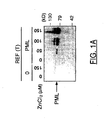
- Said substances which induce the addressing of the PML protein towards nuclear bodies and / or its stabilization can be identified by standard tests known to those skilled in the art, measuring intracellular transit between the cytoplasmic and nucleoplasmic fractions and the associated fraction to nuclear bodies and the stabilization of the PML protein which can be in particular produced by Western Blot.
- Said undesirable cells can in particular be cells of a tumor, cells infected with a virus, parasite or bacteria, immune cells involved in an immune response inappropriate, genetically altered cells, senescent cells or hyperplastic
- tumor any unwanted cell proliferation, benign or malignant, including in particular solid cancers and leukemias and lymphomas.
- malignant tumors mention may be made in particular of Chronic myeloid leukemia and adult T lymphoid leukemia (ATL) and melanomas.
- ATL adult T lymphoid leukemia
- the present invention therefore relates to the use of at least a substance that promotes the targeting of the PML protein to the body nuclear and / or its stabilization for the manufacture of a medicament intended for induce the death of unwanted cells.
- zVAD benzyloxycarbonyl-Val-Ala-Asp (O-methyl) -fluoromethylketone
- zVAD is initially known as an inhibitor of caspases, proteases involved in the process of apoptosis (Salvesen et al, 1997). Studies (Mc Carthy et al, 1997) have also shown that zVAD greatly prevented or delayed cell death. The authors' discovery of the present invention, that zVAD does not block death induced by interferons but on the contrary accelerates it, therefore goes to against the results that a person skilled in the art could expect.
- the present invention more particularly relates to the use of a caspase inhibitor and / or substrate, such as zVAD, for the manufacture of a medicament intended to induce the death of undesirable cells.
- a caspase inhibitor and / or substrate such as zVAD
- the acceleration of cell death observed may be a consequence of stabilization of PML but may also involve other mechanisms, which remain within the scope of the present invention.
- caspase substrate any compound capable to bind to the caspases.
- arsenic and more particularly arsenic trioxide, on the one hand promotes addressing the PML protein to cell bodies and secondly accelerates cell death induced by interferons.
- the present invention more particularly relates to the use of an arsenic compound, provided that the arsenic compound is not a compound of arsenic sulfide, or a compound having the same biological properties that arsenic for the manufacture of a drug intended to induce the death of unwanted cells, in combination with at least an interferon.
- arsenic compounds mention may be made in particular of arsenic trioxide or melarsoprol.
- compound having the same biological properties as arsenic means any compound which, like arsenic, is an inhibitor of phosphatase and / or is capable of creating covalent adducts by bonding with dithiol groups.
- Caspase inhibitors and / or substrates or compounds of arsenic or compounds with the same biological properties as arsenic are preferably used to induce cell death undesirable, in combination with the PML protein, and / or with an agent inducing overexpression of the PML protein.
- an interferon such as as interferon ⁇ , ⁇ or ⁇ .
- the authors of the present invention have more particularly discovered that the substrates of caspases, and in particular the zVAD, as well as arsenic compounds, in particular arsenic trioxide, acted synergistically with interferons to induce and accelerate cell death.
- Simultaneous or sequential administration of PML or of an agent inducing the overexpression of the PML protein, such as interferons may be unnecessary if the amount of PML or overexpression of the PML protein, such as interferons, of endogenous origin, is sufficient.
- administration of a substance selected from arsenic compounds other than arsenic sulfide compounds, compounds with the same biological properties as arsenic and caspase inhibitors and / or substrates is associated with administration simultaneous or sequential PML protein, and / or an agent inducing overexpression of the PML protein, such as interferons.
- Part of the invention is the use of a substance chosen from arsenic compounds other than arsenic sulfide compounds, compounds having the same properties biological as arsenic and the inhibitors and / or substrates of caspases, in combination with an interferon, to induce the death of unwanted cells, whether this is mediated by the PML protein induced by said interferon or by another mechanism also induced by said interferon.
- the present invention also relates to the use as a medicament at least one substance selected from arsenic compounds other than arsenic sulfide compounds, compounds having the same biological properties as arsenic and inhibitors and / or substrates caspases, in combination with a pharmaceutical vehicle acceptable.
- the patient can also be administered a therapeutically effective amount of PML protein, and / or an agent inducing overexpression of the PML protein, such as an interferon, so simultaneous or sequential.
- a therapeutically effective amount of PML protein and / or an agent inducing overexpression of the PML protein, such as an interferon, so simultaneous or sequential.
- the method of administration and the dosage depend on the condition treated and its stage of advancement, as well as weight, age and sex of the patient.
- the formulation of the drugs of the invention allows administration in particular by oral, anal, nasal route, intramuscular, intra-dermal, subcutaneous, or intravenous.
- the administration dose envisaged can be for example from 1 to 50 mg per day, preferably intravenously, for the compounds of arsenic, from 1 to 250 mg per kg of body weight of caspase substrates such that zVAD, and from 1 to 20 million international units (M IU), preferably 3 to 5 M IU, preferably by intramuscular or subcutaneous route, daily or every other day, for interferon.
- M IU international units
- the inventors further discovered that death cell induced by overexpression of the PML protein localized on nuclear bodies have different characteristics of induced apoptosis by the caspases. In the case of PML-induced cell death, in particular does not observe nuclear morphological characteristics typical of apoptosis, such as chromatin condensation and nuclear fragmentation.
- This property makes it particularly interesting to use of a substance chosen from arsenic compounds other than arsenic sulfide compounds, the compounds having the same biological properties as arsenic, and the inhibitors and / or caspase substrates, preferably in combination with an interferon, to induce the death of unwanted cells, and / or induce a reaction immune.
- these drugs will allow a form immunotherapy, or "vaccination”, causing a reaction of the system immune system that removes surviving unwanted cells, whether it's cancer cells, infected cells, or any other unwanted cell which participates in the development of a disease.
- This property is related to the fact that these drugs, in particularly the combination of interferon and zVAD or zVAD alone, are involved in unwanted cells a death phenomenon that doesn't have all the characteristics of apoptosis, which is the most physiological phenotype frequent cell suicide.
- the zVAD caspase inhibitor prevents the appearance most manifestations of apoptosis, which depend on activation, in the dying cell, certain caspases. Indeed, if the caspases do not are not essential for the execution of cell suicide, they appear however essential during cell suicide phenomena, the execution of an apoptotic death phenotype (Xiang J. et al. PNAS 1996, 93 : 14559; Quumble F. et al. Nature Genetics 1998, 20: 259; Vercammen D. and al, J. Exp. Med. 1998, 187: 1477).
- This property can also be used to treat ex vivo a set of cells capable of containing undesirable cells, before administration to a patient, for example a bone marrow preparation intended for a transplant in a leukemia patient, such a preparation generally containing some residual malignant cells.
- a patient for example a bone marrow preparation intended for a transplant in a leukemia patient, such a preparation generally containing some residual malignant cells.
- Such treatment makes it possible not only to induce the death of the undesirable cells contained in the preparation, but also to cause an immune reaction directed against the undesirable cells present in the body of the patient to whom the treated cell preparation is administered.
- the present invention therefore also relates to an in vitro method for inducing the death of undesirable cells comprising bringing undesirable cells into contact with a substance chosen from arsenic compounds other than arsenic sulfide compounds, the compounds having the same biological properties as arsenic, and the caspase inhibitors and / or substrates, said substance possibly being associated with the PML protein and / or with an agent inducing the overexpression of the PML protein, preferably an interferon.
- a SacI-Bgll I fragment (- 69, + 55 base pairs) of the mouse metallothionein promoter was inserted into a pKS plasmid and was fused with a Bgl II- Bam HI fragment of a PML cDNA leading to the plasmid pKSmMT-PML.
- the same PML fragment was inserted into the Bgl II site of the vector pEGFP-1 (Clontech).
- a retroviral vector expressing PML was also constructed by insertion of a full-length cDNA of PML (from Thé et al, 1991) at the Eco RI site of SR ⁇ tkneo (Muller et al, 1991).
- REF (T) and MEF (T) cells are embryonic fibroblasts of rats and mice immortalized by an SV40T expression vector.
- the REF (K1) cells are immortalized by an SV40T mutant which does not bind Rb, and the F111 cells are spontaneously immortalized rat fibroblasts 3T3.
- the cells were transfected with 10 ⁇ g of SR ⁇ tkneo-PML or SR ⁇ tkneo on culture dishes 10 cm in diameter and selected with neomycin (500 ⁇ g / ml).
- a pool of REF (T) cells was co-transfected with the plasmid pKSmMt-PML and a hygromycin resistance vector (DSP-Hygro). Resistant colonies were examined for the expression of PML after four hours of treatment with ZnCl 2 (150 ⁇ M) and subjected to a second cloning cycle by limiting dilution. Inducible CHO clones were similarly constructed. The monocytes were prepared according to the method of Estaquier et al, 1997.
- Etoposide (used at 100 ⁇ M for 16 to 24 hours) was obtained from Biomol Research Laboratories, zVAD (benzyloxycarbonyl-Val-Ala-Asp fluoromethyl ketone , used at 250 ⁇ g / ml) is sold by Bachem and the rat IFN ⁇ by Access BioMedical. Human interferon ⁇ was supplied by Schering-Plow. The antibodies against the human PML protein are described in the article by Daniel et al, 1993. The Western Blot experiments with the endogenous rat PML protein were carried out with the monoclonal antibody 5E10 which detects both rat PML and human PML.
- the cells were treated for 2 hours with 150 ⁇ M of ZnCl 2 (unless otherwise indicated) in the presence or absence of heat-inactivated fetal calf serum, then the cells were washed and incubated in a medium without ZnCl 2 .
- the TUNEL test was carried out according to the manufacturer's instructions (Boehringer Mannheim, kit for detecting cell death in situ), with the exception of the fixing step (4% formaldehyde in EBS phosphate buffer for 10 minutes) .
- the cellular DNA content was evaluated by an incubation of 10 minutes in propidium iodide at 50 ⁇ g / ml, in the presence of Rnase A at 100 ⁇ g / ml at 4 ° C.
- reaction buffer 100 mM Hepes, pH 7.4, 2% glycerol, 5 mM DTT, 0.5 mM EDTA, 50 ⁇ M DEVD-pNA (Biomol Research Laboratories)
- reaction buffer 100 mM Hepes, pH 7.4, 2% glycerol, 5 mM DTT, 0.5 mM EDTA, 50 ⁇ M DEVD-pNA (Biomol Research Laboratories)
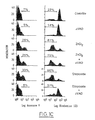
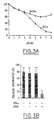
- PML-induced cell death is not associated with nuclear morphological characteristics typical of apoptosis such as chromatin condensation and nuclear fragmentation, even late in the cell death process .
- PML-induced cell death is not associated with an internucleosomal DNA scale, in accordance with the weak positive signal from the TUNEL ( Figure 1B).
- Induction of cell death may require de novo transcription or may reflect the triggering of preexisting pathways.
- the REF (T) PML cells were first incubated with ZnCl 2 and with cycloheximide for two hours, thus allowing the synthesis of PML mRNA, and not its translation. The cells were then washed and incubated with actinomycin D alone to allow translation of the PML mRNA but not the mRNA neosynthesis. In this experiment, cell death was observed as well as in the absence of an inhibitor, showing that de novo transcription is not required. PML-induced death does not require and does not induce the transition to phase S of the cell cycle.
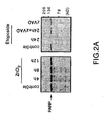
- Arsenic promotes cell death triggered by PML.
- CPP32 caspase 3
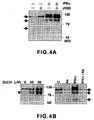
- the main caspase involved in apoptosis appears not to be activated during cell death induced by PML, since one of its substrates, PARP (poly (ADP- ribose) polymerase) remains uncleaved (FIG. 2A).
- PARP poly (ADP- ribose) polymerase
- YVAD-pNa class 1 caspase, Boeringher Mannheim
- DEVD-pNA class 3 caspase, Boeringher Mannheim
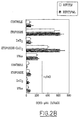
- Arsenic and zVAD potentiate induced cell death by PML and interferons.
- the table below represents the cell death evaluated by tunnel of REF (T) PML cells treated for two days with 1000 U / ml of IFN ⁇ and 10 -6 M of As 2 O 3 or of zVAD.
Landscapes
- Health & Medical Sciences (AREA)
- Life Sciences & Earth Sciences (AREA)
- Veterinary Medicine (AREA)
- Chemical & Material Sciences (AREA)
- Public Health (AREA)
- General Health & Medical Sciences (AREA)
- Medicinal Chemistry (AREA)
- Animal Behavior & Ethology (AREA)
- Pharmacology & Pharmacy (AREA)
- Immunology (AREA)
- Nuclear Medicine, Radiotherapy & Molecular Imaging (AREA)
- General Chemical & Material Sciences (AREA)
- Chemical Kinetics & Catalysis (AREA)
- Epidemiology (AREA)
- Engineering & Computer Science (AREA)
- Bioinformatics & Cheminformatics (AREA)
- Organic Chemistry (AREA)
- Gastroenterology & Hepatology (AREA)
- Proteomics, Peptides & Aminoacids (AREA)
- Inorganic Chemistry (AREA)
- Zoology (AREA)
- Hematology (AREA)
- Oncology (AREA)
- Medicines That Contain Protein Lipid Enzymes And Other Medicines (AREA)
- Pharmaceuticals Containing Other Organic And Inorganic Compounds (AREA)
- Coils Or Transformers For Communication (AREA)
- Inorganic Fibers (AREA)
- Filters And Equalizers (AREA)
- Peptides Or Proteins (AREA)
Claims (20)
- Kombination aus mindestens einer Substanz:mit dem PML-Protein und/oder einem Mittel, das die Überexpression des PML-Proteins induziert, zur Verwendung als Medikament.welche die Adressierung des PML-Proteins zu den Kernkörperchen und/oder seine Stabilisierung fördert und/oderwelche aus Arsenverbindungen, mit der Maßgabe, daß die Arsenverbindungen keine Arsensulfidverbindungen sind, Verbindungen, welche die gleichen biologischen Eigenschaften wie Arsen aufweisen, und Inhibitoren und/oder Substraten von Caspasen ausgewählt ist,
- Verwendung mindestens einer Substanz:in Kombination mit dem PML-Protein und/oder einem Mittel, das die Überexpression des PML-Proteins induziert,welche die Adressierung des PML-Proteins zu den Kernkörperchen und/oder seine Stabilisierung fordert, und/oderwelche aus Arsenverbindungen, mit der Maßgabe, daß die Arsenverbindungen keine Arsensulfidverbindungen sind, Verbindungen, welche die gleichen biologischen Eigenschaften wie Arsen aufweisen, und Inhibitoren und/oder Substraten von Caspasen ausgewählt ist,
zur Herstellung eines Medikaments zur Induzierung des Todes von unerwünschten Zellen und/oder zur Stimulierung einer Immunreaktion, wobei die Verabreichung der Substanz und die Verabreichung des PML-Proteins und/oder des die Überexpression des PML-Proteins induzierenden Mittels gleichzeitig oder aufeinanderfolgend erfolgt. - Verwendung nach Anspruch 2, wobei die unerwünschten Zellen aus Zellen eines Tumors, Zellen, die durch einen Virus, einen Parasiten oder ein Bakterium infiziert sind, Immunzellen, die an einer unangemessenen Immunreaktion teilhaben, genetisch veränderten Zellen, gealterten oder hyperplastischen Zellen ausgewählt sind.
- Verwendung mindestens einer Substanz:in Kombination mit dem PML-Protein und/oder einem Mittel, das die Überexpression des PML-Proteins induziert,welche die Adressierung des PML-Proteins zu den Kernkörperchen und/oder seine Stabilisierung fördert, und/oderwelche aus Arsenverbindungen, mit der Maßgabe, daß die Arsenverbindungen keine Arsensulfidverbindungen sind, Verbindungen, welche die gleichen biologischen Eigenschaften wie Arsen aufweisen, und Inhibitoren und/oder Substraten von Caspasen ausgewählt ist,
zur Herstellung eines Medikaments zur Behandlung eines Tumors. - Verwendung nach Anspruch 4, wobei der Tumor aus soliden Tumoren, Leukämien und Lymphomen ausgewählt ist.
- Verwendung nach Anspruch 4 oder 5, wobei der Tumor aus Lymphoid-T-Leukämien der Erwachsenen (ALT) und Melanomen ausgewählt ist.
- Verwendung nach einem der Ansprüche 1 bis 6, wobei die Substanz Arsentrioxid ist.
- Verwendung nach einem der Ansprüche 1 bis 6, wobei die Substanz Melarsoprol ist.
- Verwendung nach einem der Ansprüche 1 bis 6, wobei die Substanz zVAD ist.
- Verwendung nach einem der Ansprüche 1 bis 9, wobei das die Überexpression des PML-Proteins induzierende Mittel ein Interferon, wie Interferon-α, -β oder -γ ist.
- Verwendung nach Anspruch 10, wobei das die Überexpression des PML-Proteins induzierende Mittel Interferon-α ist.
- Verwendung nach Anspruch 10, wobei das die Überexpression des PML-Proteins induzierende Mittel Interferon-β ist.
- Verwendung nach Anspruch 10, wobei das die Überexpression des Proteins PML induzierende Mittel Interferon-γ ist.
- Verwendung mindestens einer Substanz, ausgewählt aus Arsenverbindungen, mit der Maßgabe, daß die Arsenverbindungen keine Arsensulfidverbindungen sind, Verbindungen, welche die gleichen biologischen Eigenschaften wie Arsen aufweisen, und Inhibitoren und/oder Substraten von Caspasen, in Kombination mit einem Interferon zur Herstellung eines Medikaments zur Induzierung des Todes von unerwünschten Zellen und/oder zur Stimulierung einer Immunreaktion, wobei die Verabreichung der Substanz und die Verabreichung des Interferons gleichzeitig oder aufeinanderfolgend erfolgt.
- In vitro-Verfahren zur Induzierung des Todes von unerwünschten Zellen, umfassend das Inkontaktbringen von unerwünschten Zellen mit einer Substanz, ausgewählt aus Arsenverbindungen, Verbindungen, welche die gleichen biologischen Eigenschaften wie Arsen aufweisen, und Inhibitoren und/oder Substraten von Caspasen, wobei die Substanz mit dem PML-Protein und/oder einem die Überexpression des PML-Proteins induzierenden Mittel, vorzugsweise einem Interferon, assoziiert ist.
- Pharmazeutische Zusammensetzung, enthaltenda) entweder mindestens einen Inhibitor und/oder ein Substrat von Caspasen, assoziiert mit:in Gegenwart eines pharmazeutisch verträglichen Vehikels,mindestens einer Arsenverbindung oder einer Verbindung, welche die gleichen biologischen Eigenschaften wie Arsen aufweist,und/oder dem PML-Protein,und/oder mindestens einem die Überexpression des PML-Proteins induzierenden Mittel, wie Interferon,b) oder mindestens eine Arsenverbindung, mit der Maßgabe, daß die Arsenverbindung keine Arsensulfidverbindung ist, oder eine Verbindung, welche die gleichen biologischen Eigenschaften wie Arsen aufweist, assoziiert mit dem PML-Protein und/oder mit mindestens einem die Überexpression des PML-Proteins induzierenden Mittel, wie Interferon, in Gegenwart eines pharmazeutisch verträgliche Vehikels.
- Kit, enthaltenda)eine pharmazeutische Zusammensetzung (1), enthaltend mindestens einen Inhibitor und/oder ein Substrat von Caspasen, in Verbindung mit einem pharmazeutisch verträglichen Vehikel,und/oder eine pharmazeutische Zusammensetzung (2), enthaltend mindestens eine Arsenverbindung, mit der Maßgabe, daß die Arsenverbindung keine Arsensulfidverbindung ist, oder eine Verbindung, welche die gleichen Eigenschaften wie Arsen aufweist, in Verbindung mit einem pharmazeuisch verträglichen Vehikel, undb)wobei die pharmazeutischen Zusammensetzungen zur gleichzeitigen oder aufeinanderfolgenden Verabreichung bestimmt sind.eine pharmazeutische Zusammensetzung (3), enthaltend das PML-Protein in Verbindung mit einem pharmazeutisch verträglichen Vehikel,und/oder eine pharmazeutische Zusammensetzung (4), enthaltend mindestens ein die Überexpression des PML-Proteins induzierendes Mittel, wie Interferon, in Verbindung mit einem pharmazeutisch verträglichen Vehikel,
- Verwendung mindestens einer Substanz, die keine Arsenverbindung ist, welche die Adressierung des PML-Proteins zu den Kernkörperchen und/oder seine Stabilisierung fördert, zur Herstellung eines Medikaments zur Induzierung des Todes unerwünschter Zellen und/oder zur Stimulierung einer Immunreaktion.
- Verwendung nach Anspruch 18, wobei die Substanz aus Inhibitoren und/oder Substraten von Caspasen ausgewählt ist.
- Verwendung nach Anspruch 15, wobei die Substanz zVAD ist.
Priority Applications (1)
| Application Number | Priority Date | Filing Date | Title |
|---|---|---|---|
| SI9930133T SI1100528T1 (en) | 1998-07-31 | 1999-07-30 | Use of novel agents inducing cell death in synergy with interferons |
Applications Claiming Priority (3)
| Application Number | Priority Date | Filing Date | Title |
|---|---|---|---|
| FR9809886A FR2781674B1 (fr) | 1998-07-31 | 1998-07-31 | Utilisation de nouveaux agents inducteurs de mort cellulaire en synergie avec les interferons |
| FR9809886 | 1998-07-31 | ||
| PCT/FR1999/001901 WO2000007616A2 (fr) | 1998-07-31 | 1999-07-30 | Utilisation de nouveaux agents inducteurs de mort cellulaire en synergie avec les interferons |
Publications (2)
| Publication Number | Publication Date |
|---|---|
| EP1100528A2 EP1100528A2 (de) | 2001-05-23 |
| EP1100528B1 true EP1100528B1 (de) | 2002-10-16 |
Family
ID=9529292
Family Applications (1)
| Application Number | Title | Priority Date | Filing Date |
|---|---|---|---|
| EP99936659A Expired - Lifetime EP1100528B1 (de) | 1998-07-31 | 1999-07-30 | Verwendung von neuen zelltod inducierenden mitteln im synergismus mit interferon |
Country Status (11)
| Country | Link |
|---|---|
| US (1) | US7217413B1 (de) |
| EP (1) | EP1100528B1 (de) |
| JP (3) | JP2002522395A (de) |
| AT (1) | ATE226087T1 (de) |
| AU (1) | AU5168099A (de) |
| DE (1) | DE69903559T2 (de) |
| DK (1) | DK1100528T3 (de) |
| ES (1) | ES2181461T3 (de) |
| FR (1) | FR2781674B1 (de) |
| PT (1) | PT1100528E (de) |
| WO (1) | WO2000007616A2 (de) |
Families Citing this family (11)
| Publication number | Priority date | Publication date | Assignee | Title |
|---|---|---|---|---|
| AUPQ296799A0 (en) | 1999-09-20 | 1999-10-14 | Unisearch Limited | A cell-membrane impermeable trivalent organoarsenical derivative and use thereof |
| AUPR379801A0 (en) | 2001-03-19 | 2001-04-12 | Unisearch Limited | Use of a substantially cell membrane impermeable compound for treating arthritis |
| AUPR874601A0 (en) | 2001-11-08 | 2001-11-29 | Unisearch Limited | Selective targeting of apoptotic cells |
| US8394422B2 (en) | 2002-04-26 | 2013-03-12 | Centre National De La Recherche Scientifique (Cnrs) | Arsenic therapy for autoimmune and/or inflammatory diseases in mice and humans |
| FR2838965B1 (fr) | 2002-04-26 | 2004-06-25 | Centre Nat Rech Scient | Therapie par l'arsenic du syndrome autoimmunlymphoproliferatif de type apls chez la souris comme chez l'homme |
| JP2006503852A (ja) * | 2002-09-25 | 2006-02-02 | ユニバーシティー オブ ロチェスター | 抗癌薬としてのカスパーゼインヒビター |
| EP2088206B1 (de) | 2002-11-07 | 2013-07-03 | Newsouth Innovations Pty Limited | Induktion des Mitochondrienpermeabilitätsübergangs |
| JP2010222289A (ja) * | 2009-03-23 | 2010-10-07 | Tokyoto Igaku Kenkyu Kiko | 細胞死を予防するための医薬剤 |
| WO2011073739A1 (en) | 2009-12-15 | 2011-06-23 | INSERM (Institut National de la Santé et de la Recherche Médicale) | Methods, pharmaceutical compositions and kits for use in the treatment of adult t-cell leukemia/lymphoma |
| JP7189399B2 (ja) * | 2017-01-18 | 2022-12-14 | アンスティチュ ナショナル ドゥ ラ サンテ エ ドゥ ラ ルシェルシュ メディカル | 骨髄増殖性障害を患う患者の処置のための方法及び医薬組成物 |
| JP7336359B2 (ja) * | 2019-03-13 | 2023-08-31 | 株式会社明電舎 | 配電系統制御装置 |
Citations (1)
| Publication number | Priority date | Publication date | Assignee | Title |
|---|---|---|---|---|
| WO1999055344A1 (en) * | 1998-04-24 | 1999-11-04 | Daopei Lu | Arsenic sulfide compounds and derivatives thereof for the treatment of malignancies |
Family Cites Families (2)
| Publication number | Priority date | Publication date | Assignee | Title |
|---|---|---|---|---|
| US20020001841A1 (en) * | 1998-06-26 | 2002-01-03 | Keld Kaltoft | Continuous t-cell lines |
| AU8524901A (en) * | 2000-08-25 | 2002-03-13 | Aventis Pharma Inc | Membrane penetrating peptides and uses thereof |
-
1998
- 1998-07-31 FR FR9809886A patent/FR2781674B1/fr not_active Expired - Fee Related
-
1999
- 1999-07-30 ES ES99936659T patent/ES2181461T3/es not_active Expired - Lifetime
- 1999-07-30 PT PT99936659T patent/PT1100528E/pt unknown
- 1999-07-30 AU AU51680/99A patent/AU5168099A/en not_active Abandoned
- 1999-07-30 AT AT99936659T patent/ATE226087T1/de not_active IP Right Cessation
- 1999-07-30 DK DK99936659T patent/DK1100528T3/da active
- 1999-07-30 EP EP99936659A patent/EP1100528B1/de not_active Expired - Lifetime
- 1999-07-30 JP JP2000563299A patent/JP2002522395A/ja not_active Withdrawn
- 1999-07-30 WO PCT/FR1999/001901 patent/WO2000007616A2/fr not_active Ceased
- 1999-07-30 DE DE69903559T patent/DE69903559T2/de not_active Expired - Lifetime
- 1999-07-30 US US09/744,605 patent/US7217413B1/en not_active Expired - Fee Related
-
2011
- 2011-06-22 JP JP2011138614A patent/JP2011190280A/ja active Pending
-
2014
- 2014-03-05 JP JP2014042962A patent/JP2014129404A/ja not_active Withdrawn
Patent Citations (1)
| Publication number | Priority date | Publication date | Assignee | Title |
|---|---|---|---|---|
| WO1999055344A1 (en) * | 1998-04-24 | 1999-11-04 | Daopei Lu | Arsenic sulfide compounds and derivatives thereof for the treatment of malignancies |
Also Published As
| Publication number | Publication date |
|---|---|
| US7217413B1 (en) | 2007-05-15 |
| JP2011190280A (ja) | 2011-09-29 |
| PT1100528E (pt) | 2002-12-31 |
| FR2781674B1 (fr) | 2002-06-28 |
| DK1100528T3 (da) | 2002-11-04 |
| AU5168099A (en) | 2000-02-28 |
| FR2781674A1 (fr) | 2000-02-04 |
| ATE226087T1 (de) | 2002-11-15 |
| DE69903559D1 (de) | 2002-11-21 |
| ES2181461T3 (es) | 2003-02-16 |
| JP2014129404A (ja) | 2014-07-10 |
| EP1100528A2 (de) | 2001-05-23 |
| WO2000007616A2 (fr) | 2000-02-17 |
| DE69903559T2 (de) | 2003-02-27 |
| WO2000007616A3 (fr) | 2000-04-20 |
| JP2002522395A (ja) | 2002-07-23 |
Similar Documents
| Publication | Publication Date | Title |
|---|---|---|
| Chen et al. | BRD4770 functions as a novel ferroptosis inhibitor to protect against aortic dissection | |
| Paech et al. | Hepatocellular toxicity associated with tyrosine kinase inhibitors: mitochondrial damage and inhibition of glycolysis | |
| Nzeako et al. | COX‐2 inhibits Fas‐mediated apoptosis in cholangiocarcinoma cells | |
| US11559522B2 (en) | Methods for enhancing liver regeneration | |
| Jeong et al. | Hippo-mediated suppression of IRS2/AKT signaling prevents hepatic steatosis and liver cancer | |
| Zhuang et al. | Metformin induces both caspase-dependent and poly (ADP-ribose) polymerase-dependent cell death in breast cancer cells | |
| Nabissi et al. | TRPV2 channel negatively controls glioma cell proliferation and resistance to Fas-induced apoptosis in ERK-dependent manner | |
| Jang et al. | β-Amyloid-induced apoptosis is associated with cyclooxygenase-2 up-regulation via the mitogen-activated protein kinase–NF-κB signaling pathway | |
| Zha et al. | HIV protease inhibitors disrupt lipid metabolism by activating endoplasmic reticulum stress and inhibiting autophagy activity in adipocytes | |
| EP1100528B1 (de) | Verwendung von neuen zelltod inducierenden mitteln im synergismus mit interferon | |
| Wang et al. | Sitagliptin, an anti-diabetic drug, suppresses estrogen deficiency-induced osteoporosis in vivo and inhibits RANKL-induced osteoclast formation and bone resorption in vitro | |
| Wang et al. | Cycloastragenol attenuates Osteoclastogenesis and bone loss by targeting RANKL-induced Nrf2/Keap1/ARE, NF-κB, calcium, and NFATc1 pathways | |
| Cheng et al. | Combination of the dipeptidyl peptidase IV inhibitor LAF237 [(S)-1-[(3-hydroxy-1-adamantyl) ammo] acetyl-2-cyanopyrrolidine] with the angiotensin II type 1 receptor antagonist valsartan [N-(1-oxopentyl)-N-[[2′-(1 H-tetrazol-5-yl)-[1, 1′-biphenyl]-4-yl] methyl]-l-valine] enhances pancreatic islet morphology and function in a mouse model of type 2 diabetes | |
| Wang et al. | Kinsenoside mitigates myocardial ischemia/reperfusion-induced ferroptosis via activation of the Akt/Nrf2/HO-1 pathway | |
| Lu et al. | Ginsenoside Rk1 regulates glutamine metabolism in hepatocellular carcinoma through inhibition of the ERK/c-Myc pathway | |
| CA2839102A1 (en) | Compositions, methods and kits for treating leukemia | |
| Li et al. | Granulocyte colony-stimulating factor improves left ventricular function of doxorubicin-induced cardiomyopathy | |
| Lee et al. | LNS8801 inhibits acute myeloid leukemia by inducing the production of reactive oxygen species and activating the endoplasmic reticulum stress pathway | |
| Bussolati et al. | Renal CD133+/CD73+ progenitors produce erythropoietin under hypoxia and prolyl hydroxylase inhibition | |
| Zhang et al. | Inhibition of (pro) renin receptor contributes to renoprotective effects of angiotensin II type 1 receptor blockade in diabetic nephropathy | |
| Kang et al. | 17β-estradiol protects against glucosamine-induced pancreatic β-cell dysfunction | |
| Kanatani et al. | Role of CD14 expression in the differentiation-apoptosis switch in human monocytic leukemia cells treated with 1α, 25-dihydroxyvitamin D3 or dexamethasone in the presence of transforming growth factor β | |
| Song et al. | Mesenchymal stromal cells ameliorate mitochondrial dysfunction in α cells and hyperglucagonemia in type 2 diabetes via SIRT1/FoxO3a signaling | |
| Shi et al. | 3-HAA Metabolic Pathway Regulates HCC Growth | |
| Wilson | The Role of Adipocyte-Induced Stress in Metastatic Prostate Cancer Progression in Bone |
Legal Events
| Date | Code | Title | Description |
|---|---|---|---|
| PUAI | Public reference made under article 153(3) epc to a published international application that has entered the european phase |
Free format text: ORIGINAL CODE: 0009012 |
|
| 17P | Request for examination filed |
Effective date: 20010215 |
|
| AK | Designated contracting states |
Kind code of ref document: A2 Designated state(s): AT BE CH CY DE DK ES FI FR GB GR IE IT LI LU MC NL PT SE |
|
| AX | Request for extension of the european patent |
Free format text: AL PAYMENT 20010215;LT PAYMENT 20010215;LV PAYMENT 20010215;MK PAYMENT 20010215;RO PAYMENT 20010215;SI PAYMENT 20010215 |
|
| 17Q | First examination report despatched |
Effective date: 20010626 |
|
| GRAG | Despatch of communication of intention to grant |
Free format text: ORIGINAL CODE: EPIDOS AGRA |
|
| RIC1 | Information provided on ipc code assigned before grant |
Free format text: 7A 61K 38/21 A, 7A 61K 33/36 B, 7A 61K 38/06 B, 7A 61K 31/285 B, 7A 61P 35/00 B |
|
| RIC1 | Information provided on ipc code assigned before grant |
Free format text: 7A 61K 38/21 A, 7A 61K 33/36 B, 7A 61K 38/06 B, 7A 61K 31/285 B, 7A 61P 35/00 B |
|
| GRAG | Despatch of communication of intention to grant |
Free format text: ORIGINAL CODE: EPIDOS AGRA |
|
| GRAH | Despatch of communication of intention to grant a patent |
Free format text: ORIGINAL CODE: EPIDOS IGRA |
|
| GRAH | Despatch of communication of intention to grant a patent |
Free format text: ORIGINAL CODE: EPIDOS IGRA |
|
| GRAA | (expected) grant |
Free format text: ORIGINAL CODE: 0009210 |
|
| AK | Designated contracting states |
Kind code of ref document: B1 Designated state(s): AT BE CH CY DE DK ES FI FR GB GR IE IT LI LU MC NL PT SE |
|
| AX | Request for extension of the european patent |
Free format text: AL PAYMENT 20010215;LT PAYMENT 20010215;LV PAYMENT 20010215;MK PAYMENT 20010215;RO PAYMENT 20010215;SI PAYMENT 20010215 |
|
| REF | Corresponds to: |
Ref document number: 226087 Country of ref document: AT Date of ref document: 20021115 Kind code of ref document: T |
|
| REG | Reference to a national code |
Ref country code: GB Ref legal event code: FG4D Free format text: NOT ENGLISH |
|
| REG | Reference to a national code |
Ref country code: CH Ref legal event code: EP |
|
| GBT | Gb: translation of ep patent filed (gb section 77(6)(a)/1977) |
Effective date: 20021016 |
|
| REG | Reference to a national code |
Ref country code: IE Ref legal event code: FG4D Free format text: FRENCH |
|
| REF | Corresponds to: |
Ref document number: 69903559 Country of ref document: DE Date of ref document: 20021121 |
|
| REG | Reference to a national code |
Ref country code: CH Ref legal event code: NV Representative=s name: CHARLOTTE RETZLER |
|
| REG | Reference to a national code |
Ref country code: GR Ref legal event code: EP Ref document number: 20020403256 Country of ref document: GR |
|
| REG | Reference to a national code |
Ref country code: PT Ref legal event code: SC4A Free format text: AVAILABILITY OF NATIONAL TRANSLATION Effective date: 20021030 |
|
| REG | Reference to a national code |
Ref country code: ES Ref legal event code: FG2A Ref document number: 2181461 Country of ref document: ES Kind code of ref document: T3 |
|
| PLBE | No opposition filed within time limit |
Free format text: ORIGINAL CODE: 0009261 |
|
| STAA | Information on the status of an ep patent application or granted ep patent |
Free format text: STATUS: NO OPPOSITION FILED WITHIN TIME LIMIT |
|
| 26N | No opposition filed |
Effective date: 20030717 |
|
| REG | Reference to a national code |
Ref country code: SI Ref legal event code: IF |
|
| REG | Reference to a national code |
Ref country code: CH Ref legal event code: PCAR Free format text: CHARLOTTE RETZLER C/O MERCK SERONO INTERNATIONAL S.A. CORPORATE IP DEPARTMENT;9, CHEMIN DES MINES;1202 GENF (CH) |
|
| REG | Reference to a national code |
Ref country code: CH Ref legal event code: PFA Owner name: INSTITUT NATIONAL DE LA SANTE ET DE LA RECHERCHE Free format text: INSTITUT NATIONAL DE LA SANTE ET DE LA RECHERCHE MEDICALE (INSERM)#101, RUE DE TOLBIAC#75654 PARIS CEDEX 13 (FR) $ CENTRE NATIONAL DE LA RECHERCHE SCIENTIFIQUE (CNRS)#3, RUE MICHEL ANGE#75016 PARIS (FR) -TRANSFER TO- INSTITUT NATIONAL DE LA SANTE ET DE LA RECHERCHE MEDICALE (INSERM)#101, RUE DE TOLBIAC#75654 PARIS CEDEX 13 (FR) $ CENTRE NATIONAL DE LA RECHERCHE SCIENTIFIQUE (CNRS)#3, RUE MICHEL ANGE#75016 PARIS (FR) |
|
| PGFP | Annual fee paid to national office [announced via postgrant information from national office to epo] |
Ref country code: MC Payment date: 20090629 Year of fee payment: 11 |
|
| PGFP | Annual fee paid to national office [announced via postgrant information from national office to epo] |
Ref country code: IE Payment date: 20090717 Year of fee payment: 11 Ref country code: DK Payment date: 20090714 Year of fee payment: 11 |
|
| PGFP | Annual fee paid to national office [announced via postgrant information from national office to epo] |
Ref country code: SE Payment date: 20090708 Year of fee payment: 11 Ref country code: PT Payment date: 20090703 Year of fee payment: 11 Ref country code: NL Payment date: 20090705 Year of fee payment: 11 Ref country code: LU Payment date: 20090804 Year of fee payment: 11 Ref country code: GR Payment date: 20090619 Year of fee payment: 11 Ref country code: FI Payment date: 20090716 Year of fee payment: 11 Ref country code: CH Payment date: 20090721 Year of fee payment: 11 Ref country code: AT Payment date: 20090715 Year of fee payment: 11 |
|
| PGFP | Annual fee paid to national office [announced via postgrant information from national office to epo] |
Ref country code: CY Payment date: 20090703 Year of fee payment: 11 |
|
| PGFP | Annual fee paid to national office [announced via postgrant information from national office to epo] |
Ref country code: BE Payment date: 20090805 Year of fee payment: 11 |
|
| BERE | Be: lapsed |
Owner name: CENTRE NATIONAL DE LA RECHERCHE SCIENTIFIQUE *CNRS Effective date: 20100731 Owner name: INSTITUT NATIONAL DE LA SANTE ET DE LA RECHERCHE M Effective date: 20100731 |
|
| REG | Reference to a national code |
Ref country code: PT Ref legal event code: MM4A Free format text: LAPSE DUE TO NON-PAYMENT OF FEES Effective date: 20110131 |
|
| REG | Reference to a national code |
Ref country code: NL Ref legal event code: V1 Effective date: 20110201 |
|
| PG25 | Lapsed in a contracting state [announced via postgrant information from national office to epo] |
Ref country code: MC Free format text: LAPSE BECAUSE OF NON-PAYMENT OF DUE FEES Effective date: 20100731 |
|
| REG | Reference to a national code |
Ref country code: CH Ref legal event code: PL |
|
| LTLA | Lt: lapse of european patent or patent extension |
Effective date: 20100730 |
|
| REG | Reference to a national code |
Ref country code: IE Ref legal event code: MM4A |
|
| PG25 | Lapsed in a contracting state [announced via postgrant information from national office to epo] |
Ref country code: LI Free format text: LAPSE BECAUSE OF NON-PAYMENT OF DUE FEES Effective date: 20100731 Ref country code: CH Free format text: LAPSE BECAUSE OF NON-PAYMENT OF DUE FEES Effective date: 20100731 |
|
| REG | Reference to a national code |
Ref country code: SI Ref legal event code: KO00 Effective date: 20110303 |
|
| PG25 | Lapsed in a contracting state [announced via postgrant information from national office to epo] |
Ref country code: CY Free format text: LAPSE BECAUSE OF NON-PAYMENT OF DUE FEES Effective date: 20100730 Ref country code: NL Free format text: LAPSE BECAUSE OF NON-PAYMENT OF DUE FEES Effective date: 20110201 Ref country code: AT Free format text: LAPSE BECAUSE OF NON-PAYMENT OF DUE FEES Effective date: 20100730 Ref country code: FI Free format text: LAPSE BECAUSE OF NON-PAYMENT OF DUE FEES Effective date: 20100730 Ref country code: PT Free format text: LAPSE BECAUSE OF NON-PAYMENT OF DUE FEES Effective date: 20110131 |
|
| PG25 | Lapsed in a contracting state [announced via postgrant information from national office to epo] |
Ref country code: BE Free format text: LAPSE BECAUSE OF NON-PAYMENT OF DUE FEES Effective date: 20100731 Ref country code: GR Free format text: LAPSE BECAUSE OF NON-PAYMENT OF DUE FEES Effective date: 20110202 |
|
| PG25 | Lapsed in a contracting state [announced via postgrant information from national office to epo] |
Ref country code: IE Free format text: LAPSE BECAUSE OF NON-PAYMENT OF DUE FEES Effective date: 20100730 |
|
| REG | Reference to a national code |
Ref country code: DK Ref legal event code: EBP |
|
| PG25 | Lapsed in a contracting state [announced via postgrant information from national office to epo] |
Ref country code: DK Free format text: LAPSE BECAUSE OF NON-PAYMENT OF DUE FEES Effective date: 20100802 |
|
| PG25 | Lapsed in a contracting state [announced via postgrant information from national office to epo] |
Ref country code: SE Free format text: LAPSE BECAUSE OF NON-PAYMENT OF DUE FEES Effective date: 20100731 Ref country code: LU Free format text: LAPSE BECAUSE OF NON-PAYMENT OF DUE FEES Effective date: 20100730 |
|
| PGFP | Annual fee paid to national office [announced via postgrant information from national office to epo] |
Ref country code: GB Payment date: 20140624 Year of fee payment: 16 |
|
| PGFP | Annual fee paid to national office [announced via postgrant information from national office to epo] |
Ref country code: DE Payment date: 20140620 Year of fee payment: 16 |
|
| PGFP | Annual fee paid to national office [announced via postgrant information from national office to epo] |
Ref country code: FR Payment date: 20140721 Year of fee payment: 16 Ref country code: ES Payment date: 20140703 Year of fee payment: 16 |
|
| PGFP | Annual fee paid to national office [announced via postgrant information from national office to epo] |
Ref country code: IT Payment date: 20140626 Year of fee payment: 16 |
|
| REG | Reference to a national code |
Ref country code: DE Ref legal event code: R119 Ref document number: 69903559 Country of ref document: DE |
|
| REG | Reference to a national code |
Ref country code: GR Ref legal event code: ML Ref document number: 20020403256 Country of ref document: GR Effective date: 20110202 |
|
| GBPC | Gb: european patent ceased through non-payment of renewal fee |
Effective date: 20150730 |
|
| PG25 | Lapsed in a contracting state [announced via postgrant information from national office to epo] |
Ref country code: IT Free format text: LAPSE BECAUSE OF NON-PAYMENT OF DUE FEES Effective date: 20150730 Ref country code: GB Free format text: LAPSE BECAUSE OF NON-PAYMENT OF DUE FEES Effective date: 20150730 Ref country code: DE Free format text: LAPSE BECAUSE OF NON-PAYMENT OF DUE FEES Effective date: 20160202 |
|
| REG | Reference to a national code |
Ref country code: FR Ref legal event code: ST Effective date: 20160331 |
|
| PG25 | Lapsed in a contracting state [announced via postgrant information from national office to epo] |
Ref country code: FR Free format text: LAPSE BECAUSE OF NON-PAYMENT OF DUE FEES Effective date: 20150731 |
|
| REG | Reference to a national code |
Ref country code: ES Ref legal event code: FD2A Effective date: 20170303 |
|
| PG25 | Lapsed in a contracting state [announced via postgrant information from national office to epo] |
Ref country code: ES Free format text: LAPSE BECAUSE OF NON-PAYMENT OF DUE FEES Effective date: 20150731 |