EP1100141A1 - Nickel-metal hydride storage battery - Google Patents
Nickel-metal hydride storage battery Download PDFInfo
- Publication number
- EP1100141A1 EP1100141A1 EP00124536A EP00124536A EP1100141A1 EP 1100141 A1 EP1100141 A1 EP 1100141A1 EP 00124536 A EP00124536 A EP 00124536A EP 00124536 A EP00124536 A EP 00124536A EP 1100141 A1 EP1100141 A1 EP 1100141A1
- Authority
- EP
- European Patent Office
- Prior art keywords
- nickel
- zinc
- rare earth
- hydroxide
- storage battery
- Prior art date
- Legal status (The legal status is an assumption and is not a legal conclusion. Google has not performed a legal analysis and makes no representation as to the accuracy of the status listed.)
- Withdrawn
Links
Images



Classifications
-
- H—ELECTRICITY
- H01—ELECTRIC ELEMENTS
- H01M—PROCESSES OR MEANS, e.g. BATTERIES, FOR THE DIRECT CONVERSION OF CHEMICAL ENERGY INTO ELECTRICAL ENERGY
- H01M6/00—Primary cells; Manufacture thereof
- H01M6/04—Cells with aqueous electrolyte
- H01M6/045—Cells with aqueous electrolyte characterised by aqueous electrolyte
-
- H—ELECTRICITY
- H01—ELECTRIC ELEMENTS
- H01M—PROCESSES OR MEANS, e.g. BATTERIES, FOR THE DIRECT CONVERSION OF CHEMICAL ENERGY INTO ELECTRICAL ENERGY
- H01M10/00—Secondary cells; Manufacture thereof
- H01M10/24—Alkaline accumulators
- H01M10/30—Nickel accumulators
-
- H—ELECTRICITY
- H01—ELECTRIC ELEMENTS
- H01M—PROCESSES OR MEANS, e.g. BATTERIES, FOR THE DIRECT CONVERSION OF CHEMICAL ENERGY INTO ELECTRICAL ENERGY
- H01M10/00—Secondary cells; Manufacture thereof
- H01M10/34—Gastight accumulators
- H01M10/345—Gastight metal hydride accumulators
-
- H—ELECTRICITY
- H01—ELECTRIC ELEMENTS
- H01M—PROCESSES OR MEANS, e.g. BATTERIES, FOR THE DIRECT CONVERSION OF CHEMICAL ENERGY INTO ELECTRICAL ENERGY
- H01M4/00—Electrodes
- H01M4/02—Electrodes composed of, or comprising, active material
- H01M4/24—Electrodes for alkaline accumulators
- H01M4/242—Hydrogen storage electrodes
-
- H—ELECTRICITY
- H01—ELECTRIC ELEMENTS
- H01M—PROCESSES OR MEANS, e.g. BATTERIES, FOR THE DIRECT CONVERSION OF CHEMICAL ENERGY INTO ELECTRICAL ENERGY
- H01M4/00—Electrodes
- H01M4/02—Electrodes composed of, or comprising, active material
- H01M4/24—Electrodes for alkaline accumulators
- H01M4/32—Nickel oxide or hydroxide electrodes
-
- H—ELECTRICITY
- H01—ELECTRIC ELEMENTS
- H01M—PROCESSES OR MEANS, e.g. BATTERIES, FOR THE DIRECT CONVERSION OF CHEMICAL ENERGY INTO ELECTRICAL ENERGY
- H01M4/00—Electrodes
- H01M4/02—Electrodes composed of, or comprising, active material
- H01M4/36—Selection of substances as active materials, active masses, active liquids
- H01M4/48—Selection of substances as active materials, active masses, active liquids of inorganic oxides or hydroxides
- H01M4/52—Selection of substances as active materials, active masses, active liquids of inorganic oxides or hydroxides of nickel, cobalt or iron
-
- Y—GENERAL TAGGING OF NEW TECHNOLOGICAL DEVELOPMENTS; GENERAL TAGGING OF CROSS-SECTIONAL TECHNOLOGIES SPANNING OVER SEVERAL SECTIONS OF THE IPC; TECHNICAL SUBJECTS COVERED BY FORMER USPC CROSS-REFERENCE ART COLLECTIONS [XRACs] AND DIGESTS
- Y02—TECHNOLOGIES OR APPLICATIONS FOR MITIGATION OR ADAPTATION AGAINST CLIMATE CHANGE
- Y02E—REDUCTION OF GREENHOUSE GAS [GHG] EMISSIONS, RELATED TO ENERGY GENERATION, TRANSMISSION OR DISTRIBUTION
- Y02E60/00—Enabling technologies; Technologies with a potential or indirect contribution to GHG emissions mitigation
- Y02E60/10—Energy storage using batteries
Definitions
- This invention relates to improvements of a nickel-metal hydride storage battery.
- the cause of this problem is that oxide generation reaction tends to occur concurrently with the charging reaction at a high ambient temperature in which nickel hydroxide is converted to nickel oxyhydroxide during charging. That is, the oxide generation reaction at the positive electrode prevents nickel hydroxide to be sufficiently converted to nickel oxyhydroxide, thereby reducing the utilization rate of nickel-metal hydride.
- the utilization rate of nickel hydroxide is 80% or so at a high ambient temperature; therefore, in order to further improve the utilization rate of nickel hydroxide at a high ambient temperature, it is necessary to increase the amount of cadmium oxide to be added inside nickel hydroxide or in a nickel positive electrode.
- the utilization rate of nickel hydroxide can be increased up to 90% or so at a high ambient temperature. However, it reduces the utilization rate of nickel hydroxide at around an ordinary temperature.
- the above method (3) is aimed at improving the utilization rate of nickel hydroxide at a high ambient temperature by adsorbing a compound of yttrium, indium, antimony or the like on the surface of a nickel hydroxide active material to increase the overvoltage of oxygen generation, which is a competitive reaction during charging at a high ambient temperature, and thereby improving the charge efficiency of nickel hydroxide to nickel oxyhydroxide.
- the inventors of the present invention focused their attentions to the additive which might achieve an even higher capacity and a longer service life. They have found that the concurrent use of the additives of zinc and rare earth is effective and have completed the present invention.
- an object of the present invention is to provide a nickel-metal hydride storage battery which is useful in improving charge efficiency at a high ambient temperature, also effective in suppressing deterioration of the negative electrode due to oxidation, and have achieved a longer service life.
- the present invention relates to a nickel-metal hydride storage battery comprising a positive electrode mainly composed of nickel hydroxide, a negative electrode mainly composed of a hydrogen storage alloy powder electrochemically absorbing and desorbing hydrogen, a separator, and an alkaline electrolyte, wherein at least one selected from the group consisting of the positive electrode, the separator and the electrolyte contains zinc element and rare earth element.
- the zinc is preferably contained in at least one state selected from the group consisting of metallic zinc, zinc hydroxide, zinc oxide, zinc sulfate, zinc carbonate and zincate ion.
- the content of the zinc calculated as in the state of oxide thereof is preferably 0.01 to 10% by weight of the nickel hydroxide.
- the rare earth element is preferably contained in at least one state selected from the group consisting of rare earth metal, rare earth oxide and rare earth hydroxide.
- the content of the rare earth element calculated as in the state of oxide thereof is preferably 0.01 to 10% by weight of the nickel hydroxide.
- the rare earth metal is preferably yttrium, erbium or ytterbium.
- the electrolyte preferably contains potassium hydroxide, sodium hydroxide and lithium hydroxide.
- the present invention also relates to a nickel-metal hydride storage battery comprising a positive electrode mainly composed of nickel hydroxide, a negative electrode mainly composed of a hydrogen storage alloy powder electrochemically absorbing and desorbing hydrogen, a separator, and an alkaline electrolyte, wherein at least one selected from the group consisting of metallic zinc, zinc hydroxide, zinc oxide, zinc sulfate and zinc carbonate; and one selected from the group consisting of rare earth metal, rare earth oxide and rare earth hydroxide is added to the negative electrode.
- the content of the zinc calculated as in the state of oxide thereof is preferably 0.01 to 10% by weight of the hydrogen storage alloy.
- the content of the rare earth element calculated as in the state of oxide thereof is also preferably 0.01 to 10% by weight of the hydrogen storage alloy.
- the rare earth metal is preferably yttrium, erbium or ytterbium.
- the separator is preferably composed of sulfonated polypropylene.
- Fig. 1 is a perspective view, partly in section. of the battery produced in an example of the present invention.
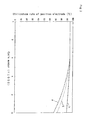
- Fig. 2 is a graph illustrating the relation between each of the addition amounts of zinc and yttrium to the positive electrode, and the utilization rate of the nickel positive electrode at each temperature.
- Fig. 3 is a graph illustrating the relation between each of the addition amounts of zinc and yttrium to the negative electrode, and the utilization rate of the nickel positive electrode at each temperature.
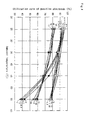
- Fig. 4 is a graph illustrating the utilization rate of the positive electrode at the second charge/discharge cycle at each ambient temperature of each battery charged and discharged in Example 3.
- Fig. 5 is a graph illustrating the utilization rate of the positive electrode at the second charge/discharge cycle at each ambient temperature of each battery charged and discharged in Example 4.
- the present invention relates to a nickel-metal hydride storage battery comprising a positive electrode mainly composed of nickel hydroxide, a negative electrode mainly composed of a hydrogen storage alloy powder electrochemically absorbing and desorbing hydrogen, a separator, and an alkaline electrolyte, wherein at least one selected from the group consisting of the positive electrode, the separator and the electrolyte contains zinc and rare earth element.
- Zinc may be contained in at least one state selected from the group consisting of metallic zinc, zinc hydroxide, zinc oxide, zinc sulfate, zinc carbonate and zincate ion.
- rare earth element may be contained in at least one state selected from the group consisting of rare earth metal, rare earth oxide and rare earth hydroxide.
- rare earth element may be yttrium. erbium or ytterbium, for example.
- At least one selected from the group consisting of the positive electrode, the separator and the electrolyte contains zinc and rare earth element.
- zinc and rare earth element are contained in one or all of the positive electrode, the separator and the electrolyte.
- the present invention also relates to a nickel-metal hydride storage battery wherein at least one selected from the group consisting of metallic zinc, zinc hydroxide, zinc oxide, zinc sulfate and zinc carbonate; and at least one selected from the group consisting of metallic zinc, zinc oxide and zinc hydroxide are contained in the separator or the electrolyte in the aforementioned nickel-metal hydride storage battery.
- the total content of the zinc and the rare earth element in the nickel-metal hydride storage battery in accordance with the present invention (which is calculated as in the state of oxide thereof) is preferably 0.01 to 10% by weight of the nickel hydroxide contained in the positive electrode.
- They are also preferably 0.1 to 2% by weight of the nickel oxide in the positive electrode since such amount enables the stable production of battery with high performance at lower material cost.
- the separator in the nickel-metal hydride storage battery in accordance with the present invention is not particularly specified, it is preferably composed of sulfonated polypropylene.
- the electrolyte in the nickel-metal hydride storage battery in accordance with the present invention is not particularly specified, it preferably contains potassium hydroxide, sodium hydroxide and lithium hydroxide.
- a spherical powder of nickel hydroxide 5 parts by weight of a cobalt powder, 5 parts by weight of a cobalt hydroxide powder, 1 part by weight of a zinc oxide powder and 1 part by weight of a yttrium oxide powder were mixed. Namely, the content of the zinc compound and the yttrium compound was 2% by weight of the nickel hydroxide. And, the obtained mixture was kneaded with water to give a paste. The paste thus obtained was filled into a foamed nickel porous substrate, which was a support having a porosity of 95% and a surface density of 450g/cm 2 . After being dried and compressed, it was cut into a predetermined size of 0.5 mm thickness, 35 mm width and 110 mm length, thereby preparing a nickel positive electrode having a theoretical capacity of 1,000 mAh.
- a hydrogen storage alloy MmNi 3.6 Co 0.7 Mn 0.4 Al 0.3 , wherein M is Mish metal
- binder polyvinyl alcohol
- the paste thus formed was applied onto a punched metal sheet. After being dried and compressed, it was cut into a predetermined size of 0.4 mm thickness, 35 mm width, 160 mm length, thereby forming a hydrogen storage alloy negative electrode having a theoretical capacity of 1,600 mAh.
- the positive electrode prepared as described above was combined with a hydrogen storage alloy negative electrode as described above to produce a battery as shown in Fig. 1 by using a separator made of a sulfonated polypropylene having a thickness of 0.2 mm.
- This battery is an AA-size sealed nickel-metal hydride storage battery having a theoretical capacity of 1,000 mAh of which electric capacity is regulated by the positive electrode.
- a positive electrode 1, a negative electrode 2 and a separator 3 were laminated and rolled up together, and inserted into a case 4, which also served as a negative terminal.
- a positive electrode lead 5 provided at the positive electrode 1 was connected to a sealing plate 6, which also served as a positive terminal, and a safety valve 7 was provided at the sealing plate 6.
- Battery B A battery produced in the same manner except that only zinc was contained in the positive electrode was named Battery B. And, a battery produced in the same manner except that no zinc and yttrium were contained in the positive electrode was named Battery C.
- the utilization rate (capacity ratio) of the positive electrode were measured for each battery at an ambient temperature of -25 °C to 50 °C. First. after charging was conducted with a current of 0.1 C, which theoretically could completed the charging in 10 hours, for 15 hours, discharging was conducted with a current of 0.2 C, which theoretically could completed the discharging in 5 hours, until the voltage dropped to 1.0 V.
- the utilization ratio of the positive electrode was obtained as a ratio of discharge capacity (mAh)/theoretical capacity of the positive electrode (mAh).
- the negative electrode obtained as described above was combined with the nickel positive electrode having a theoretical capacity of 1,600, which was prepared by adding 5 parts by weight of a cobalt powder and 5 parts by weight a cobalt hydroxide powder to 100 parts by weight of a spherical powder of nickel hydroxide, kneading the obtained mixture with water to give a paste, filling the paste to a foamed nickel porous substrate having a porosity of 95% and a surface density of 450g/cm 2 , and cutting it into a predetermined size of 0.5 mm thickness, 35 mm width and 110 mm length after being dried and compressed, thereby preparing a similar battery as in Example 1 by using a separator made of a sulfonated polypropylene having a thickness of 0.2 mm.
- This battery was named Battery D.
- Battery E A battery prepared in the same manner except that only zinc was contained in the positive electrode was named Battery E. And, a battery prepared in the same manner except that no zinc and yttrium were contained in the negative electrode was named Battery F.
- a cycle life test by charging was conducted with a current of 1 C for 1.3 hours and discharging was conducted with a current of 1 C until the voltage dropped to 1.0 V at an ambient temperature of 25 °C.
- the discharge capacity is shown in Fig. 3 as a capacity ratio to theoretical capacity.
- the positive electrode used in this example was prepared in the following manner. To 100 parts by weight of a nickel hydroxide powder, 7 parts by weight of a cobalt powder and 5 parts by weight of cobalt hydroxide were mixed. And, the obtained mixture was kneaded with water to give a paste. The paste thus obtained was filled to a foamed nickel porous substrate having a porosity of 95% and a surface density of 450g/cm 2 . After being dried and compressed, it was cut into a predetermined size of 0.5 mm thickness-, 35 mm width and 110 mm length, thereby preparing nickel positive electrodes having a theoretical capacity of 1,000 mAh.
- the hydrogen storage alloy negative electrode used in this example was prepared in the following manner. To 100 parts by weight of hydrogen storage alloy (MmNi 3.6 Co 0.7 Mn 0.4 Al 0.3 ), water and 5 parts by weight of a binder (polyvinyl alcohol) were mixed to form a paste and the paste was applied onto a punched metal sheet. After being dried and compressed, it was cut into a predetermined size of 0.4 mm thickness, 35 mm width, and 160 mm length, thereby preparing a hydrogen storage alloy negative electrode having a theoretical capacity of 1,600 mAh.
- hydrogen storage alloy MmNi 3.6 Co 0.7 Mn 0.4 Al 0.3
- a binder polyvinyl alcohol
- the separator used in this example was prepared in the following manner.
- a separator made of sulfonated polypropylene having a thickness of 0.2 mm was immersed into a saturated aqueous solution in which zinc sulfate and yttrium hydroxide were dissolved.
- zinc ion and yttrium ion were substituted for hydrogen ion in sulfon group or impregnated in a hole in the separator, and thus zinc and yttrium were carried on the separator.
- Various amounts of zinc and yttrium were carried by varying the period of time for impregnation. The amounts of zinc and yttrium thus carried were determined by ICP emission spectrometry.
- a similar battery as in Example 1 was prepared by combining the positive electrode, the negative electrode and the separator prepared as above.
- the utilization rate at the second charge/discharge cycle at each ambient temperature of each battery charged and discharged under the above-mentioned conditions is shown in Fig. 4.
- the utilization rates can be obtained from the following formula:
- Utilization rate (%) discharge capacity (mAh)/theoretical capacity of positive electrode (mAh)
- the utilization rate of the positive electrode starts to decrease at room temperature if each of the amounts of zinc element and yttrium element carried in the separator is more than 10% by weight of the nickel hydroxide in the positive electrode.
- the battery can be used at a high utilization rate in a wide range of ambient temperatures.
- the batteries with the optimal carrying amounts of zinc and yttrium exhibited stable utilization rates of the positive electrode until the 800th cycle, and the utilization rates are 60% or so even after about 1,000 cycles had elapsed.
- the batteries with the insufficient carrying amounts of the addition showed low utilization rates and early deterioration.
- the electrolyte used in this example was prepared in the following manner:
- an alkaline electrolyte was prepared by dissolving lithium hydroxide of 20 g/liter in an aqueous solution of potassium hydroxide having a specific gravity of 1.3. Then, zinc sulfate and yttrium hydroxide were dissolved into the electrolyte such that the electrolyte contained zinc element and rare earth element each in a concentration shown in Table 2. The amounts of zinc and the yttrium dissolved in the electrolyte were determined by ICP emission spectrometry. It is noted that the concentrations in Table 2 are calculated as in the state of oxide thereof to the weight of nickel hydroxide. Battery No. Zn (wt%) Y (wt%) 19 0.005 0.005 20 0.005 0.01 21 0.01 0.005 22 1 0.01 23 1 0.05 24 1 0.1 25 1 1 26 1 0.01 27 10 0.01 28 11 0.01 29 11 0.005
- Test batteries were prepared in the same manner as in Example 1 except for the electrolyte by combining the same positive electrode and negative electrode as in Example 3 and using a separator made of sulfonated polypropylene having a thickness of 0.2 mm, and a similar test was conducted.
- the charge efficiency decreases at a high temperature if each of the amounts of zinc element and yttrium element in the electrode is less than 0.01% by weight of the nickel hydroxide in the positive electrode.
- the utilization rate of the positive electrode starts to decrease at room temperature if the amount of zinc element is more than 10% by weight of the nickel hydroxide in the positive electrode.
- a battery can be used in a wide range of ambient temperatures if 0.01 to 10% by weight of zinc element and 0.01% by weight or more of yttrium element by weight of the nickel hydroxide in the electrolyte were concurrently added to the negative electrode plate.
- Zinc oxide and zinc sulfate were used as zinc compound, and yttrium oxide and yttrium hydroxide were used as the rare earth compound in the above example. The similar effect was observed even in the case where metallic zinc, zinc hydroxide, zinc carbonate and zincate ion were used as zinc compound, and erbium compound and ytterbium were used as rare earth compound.
- the present invention can provide a nickel-metal hydride storage battery with an excellent cycle life which can achieve a high capacity in a wide temperature range.
- the present invention is to provide a nickel-metal hydride storage battery comprising a positive electrode mainly composed of nickel hydroxide, a negative electrode mainly composed of a hydrogen storage alloy powder electrochemically absorbing and desorbing hydrogen. a separator and an alkaline electrolyte, wherein zinc and rare earth clement are contained in at least one selected from the group consisting of the positive electrode, the separator and the electrolyte.
- the charge efficiency of nickel hydroxide can bo improved at a high ambient temperature, and furthermore, the deterioration of the negative electrode due to oxidation can be suppressed, thereby enabling a provision of a nickel-metal hydride storage battery with a longer cycle life.
Landscapes
- Chemical & Material Sciences (AREA)
- Chemical Kinetics & Catalysis (AREA)
- Electrochemistry (AREA)
- General Chemical & Material Sciences (AREA)
- Engineering & Computer Science (AREA)
- Manufacturing & Machinery (AREA)
- Secondary Cells (AREA)
- Battery Electrode And Active Subsutance (AREA)
- Cell Separators (AREA)
Abstract
The present invention is to provide a nickel-metal hydride storage battery comprising a positive electrode (1) mainly composed of nickel hydroxide, a negative electrode (2) mainly composed of a hydrogen storage alloy powder electrochemically absorbing and desorbing hydrogen. a separator (3) and an alkaline electrolyte, wherein zinc and rare earth element are contained in at least one selected from the group consisting of the positive electrode, the separator and the electrolyte. Hence, the charge efficiency of nickel hydroxide can be improved at a high ambient temperature, and furthermore, the deterioration of the negative electrode due to oxidation can be suppressed, thereby enabling a provision of a nickel-metal hydride storage battery with a longer cycle life. <IMAGE>
Description
This invention relates to improvements of a
nickel-metal hydride storage battery.
With the recent explosive spread of portable
information equipment such as a cellular phone, a PHS and
a notebook computer, a small and lightweight secondary
battery with a high-added value has been under
development. Since such a secondary battery has a high
energy density, there has been a strong demand for one
which exhibits excellent performance as a battery even at
a high ambient temperature due to heat generation by
these appliances. There has been another demand for the
development of a novel secondary battery with a high
energy density as a power source for electric vehicles.
Therefore, it is assumed that such battery will be used
in a wide range of ambient temperatures.
In order to meet such demands, use of a nickel-metal
hydride storage battery for electric vehicles has
been investigated from the viewpoints of high energy
density, great output power and safety.
However, there is a problem with a nickel-metal
hydride storage battery that, during charging at a high
ambient temperature, the charge capacity is drastically
reduced because oxygen overvoltage at the positive
electrode is extremely decreased to generate oxygen,
causing charging reaction competitively to the oxygen
generation reaction. Moreover, since it is difficult to
exchange a battery in electric vehicles, the battery is
expected to have a longer life, and it also needs to have
excellent storage characteristics as it is supposed to be
used outdoor. In addition, there is a problem which is
common to all nickel positive electrodes that, although
the energy density is high at around room temperature, it
becomes low at a high ambient temperature.
The cause of this problem is that oxide
generation reaction tends to occur concurrently with the
charging reaction at a high ambient temperature in which
nickel hydroxide is converted to nickel oxyhydroxide
during charging. That is, the oxide generation reaction
at the positive electrode prevents nickel hydroxide to be
sufficiently converted to nickel oxyhydroxide, thereby
reducing the utilization rate of nickel-metal hydride.
In order to solve these problems, the following
methods have been suggested:
The above-mentioned methods (1) and (2) that have
been proposed conventionally improve the utilization rate
of nickel hydroxide at a high ambient temperature by the
presence of cadmium oxide inside or with a nickel
hydroxide powder.
However, even in the case where cadmium oxide is
added, the utilization rate of nickel hydroxide is 80% or
so at a high ambient temperature; therefore, in order to
further improve the utilization rate of nickel hydroxide
at a high ambient temperature, it is necessary to
increase the amount of cadmium oxide to be added inside
nickel hydroxide or in a nickel positive electrode.
By increasing the amount of cadmium oxide to be
added, the utilization rate of nickel hydroxide can be
increased up to 90% or so at a high ambient temperature.
However, it reduces the utilization rate of nickel
hydroxide at around an ordinary temperature.
Meanwhile, from an environmental standpoint,
attention has been given to a nickel-metal hydride
storage battery containing no cadmium, which is one of
heavy metals. However, by removing cadmium oxide from
nickel hydroxide or a positive electrode, the utilization
rate of nickel hydroxide is decreased to around 50 to 60%
at a high ambient temperature. If a sealed nickel-metal
hydride storage battery in which the capacity of the
positive electrode is regulated by a reduced amount of
the electrolyte is constituted, there is a problem that
the cycle life becomes shorter due to the poisoning of
the hydrogen storage alloy by cadmium.
The above method (3) is aimed at improving the
utilization rate of nickel hydroxide at a high ambient
temperature by adsorbing a compound of yttrium, indium,
antimony or the like on the surface of a nickel hydroxide
active material to increase the overvoltage of oxygen
generation, which is a competitive reaction during
charging at a high ambient temperature, and thereby
improving the charge efficiency of nickel hydroxide to
nickel oxyhydroxide.
However, mere use of this method would cause a
nonuniform distribution of additives in a paste or an
insufficient solving of the additives; therefore the
effect which can meet the above-mentioned expectations
cannot be sufficiently achieved. There has been a
problem that a large amount of additive is required for
obtaining an evident effect, which prevents a battery to
have a higher capacity.
As to the above-mentioned methods (4) and (5), no
sufficient improvements in characteristics were observed
at a high ambient temperature in recent years as
mentioned above (particularly at a temperature of 60 °C or
higher). For this reason, even if the amount of each
component was increased aimlessly, improvement in the
characteristics was not observed in proportion to the
increase; instead the capacity was decreased. Thus the
actually usable capacity was not improved.
Therefore, in order to solve these problems, the
inventors of the present invention focused their
attentions to the additive which might achieve an even
higher capacity and a longer service life. They have
found that the concurrent use of the additives of zinc
and rare earth is effective and have completed the
present invention.
That is, an object of the present invention is to
provide a nickel-metal hydride storage battery which is
useful in improving charge efficiency at a high ambient
temperature, also effective in suppressing deterioration
of the negative electrode due to oxidation, and have
achieved a longer service life.
The present invention relates to a nickel-metal
hydride storage battery comprising a positive electrode
mainly composed of nickel hydroxide, a negative electrode
mainly composed of a hydrogen storage alloy powder
electrochemically absorbing and desorbing hydrogen, a
separator, and an alkaline electrolyte, wherein at least
one selected from the group consisting of the positive
electrode, the separator and the electrolyte contains
zinc element and rare earth element.
Herein, the zinc is preferably contained in at
least one state selected from the group consisting of
metallic zinc, zinc hydroxide, zinc oxide, zinc sulfate,
zinc carbonate and zincate ion.
The content of the zinc calculated as in the
state of oxide thereof is preferably 0.01 to 10% by
weight of the nickel hydroxide.
The rare earth element is preferably contained in
at least one state selected from the group consisting of
rare earth metal, rare earth oxide and rare earth
hydroxide.
The content of the rare earth element calculated
as in the state of oxide thereof is preferably 0.01 to
10% by weight of the nickel hydroxide.
The rare earth metal is preferably yttrium,
erbium or ytterbium.
The electrolyte preferably contains potassium
hydroxide, sodium hydroxide and lithium hydroxide.
Furthermore, the present invention also relates
to a nickel-metal hydride storage battery comprising a
positive electrode mainly composed of nickel hydroxide, a
negative electrode mainly composed of a hydrogen storage
alloy powder electrochemically absorbing and desorbing
hydrogen, a separator, and an alkaline electrolyte,
wherein at least one selected from the group consisting
of metallic zinc, zinc hydroxide, zinc oxide, zinc
sulfate and zinc carbonate; and one selected from the
group consisting of rare earth metal, rare earth oxide
and rare earth hydroxide is added to the negative
electrode.
The content of the zinc calculated as in the
state of oxide thereof is preferably 0.01 to 10% by
weight of the hydrogen storage alloy.
Herein, the content of the rare earth element
calculated as in the state of oxide thereof is also
preferably 0.01 to 10% by weight of the hydrogen storage
alloy.
The rare earth metal is preferably yttrium,
erbium or ytterbium.
The separator is preferably composed of
sulfonated polypropylene.
While the novel features of the invention are set
forth particularly in the appended claims, the invention,
both as to organization and content, will be better
understood and appreciated, along with other objects and
features thereof, from the following detailed description
taken in conjunction with the drawings.
Fig. 1 is a perspective view, partly in section.
of the battery produced in an example of the present
invention.
Fig. 2 is a graph illustrating the relation
between each of the addition amounts of zinc and yttrium
to the positive electrode, and the utilization rate of
the nickel positive electrode at each temperature.
Fig. 3 is a graph illustrating the relation
between each of the addition amounts of zinc and yttrium
to the negative electrode, and the utilization rate of
the nickel positive electrode at each temperature.
Fig. 4 is a graph illustrating the utilization
rate of the positive electrode at the second
charge/discharge cycle at each ambient temperature of
each battery charged and discharged in Example 3.
Fig. 5 is a graph illustrating the utilization
rate of the positive electrode at the second
charge/discharge cycle at each ambient temperature of
each battery charged and discharged in Example 4.
It has been known from the past that zinc and
rare earth element have a function to improve oxygen
overvoltage and each of them is added alone to the nickel
positive electrode. On the other hand, according to the
present invention, further effect can be obtained by
concurrently adding both of zinc and rare earth element
each in a less amount than that has been required in the
past.
It was found that a similar effect could be
achieved by adding zinc and rare earth element to a
separator and/or an electrolyte. Moreover, by adding
zinc and rare earth element to a hydrogen storage alloy
negative electrode, a separator and an electrolyte, it is
possible to coat the surface of the hydrogen storage
alloy negative electrode with an oxide film of zinc and
rare earth element, thereby also preventing deterioration
of the hydrogen storage alloy itself due to oxidation:
therefore, the cycle life of the alkaline storage battery
was improved.
In addition, it was found that, even in the case
where zinc and rare earth element were added to the
nickel positive electrode, deterioration of the hydrogen
storage alloy negative electrode was also prevented under
the influence of zinc and rare earth element dissolved in
the electrolyte, and swelling of the nickel positive
electrode was suppressed to improve the cycle life.
As such, according to the present invention, it
is possible to provide a nickel-metal hydride storage
battery with a longer service life which can be used in a
wider range of temperatures.
The present invention relates to a nickel-metal
hydride storage battery comprising a positive electrode
mainly composed of nickel hydroxide, a negative electrode
mainly composed of a hydrogen storage alloy powder
electrochemically absorbing and desorbing hydrogen, a
separator, and an alkaline electrolyte, wherein at least
one selected from the group consisting of the positive
electrode, the separator and the electrolyte contains
zinc and rare earth element.
First, a description will be made on zinc and
rare earth element which are the most outstanding
characteristics of the present invention.
Zinc may be contained in at least one state
selected from the group consisting of metallic zinc, zinc
hydroxide, zinc oxide, zinc sulfate, zinc carbonate and
zincate ion.
Meanwhile, rare earth element may be contained in
at least one state selected from the group consisting of
rare earth metal, rare earth oxide and rare earth
hydroxide.
Further, rare earth element may be yttrium.
erbium or ytterbium, for example.
As such, in the present invention, at least one
selected from the group consisting of the positive
electrode, the separator and the electrolyte contains
zinc and rare earth element. In other words, zinc and
rare earth element are contained in one or all of the
positive electrode, the separator and the electrolyte.
Therefore, the present invention also relates to
a nickel-metal hydride storage battery wherein at least
one selected from the group consisting of metallic zinc,
zinc hydroxide, zinc oxide, zinc sulfate and zinc
carbonate; and at least one selected from the group
consisting of metallic zinc, zinc oxide and zinc
hydroxide are contained in the separator or the
electrolyte in the aforementioned nickel-metal hydride
storage battery.
The total content of the zinc and the rare earth
element in the nickel-metal hydride storage battery in
accordance with the present invention (which is
calculated as in the state of oxide thereof) is
preferably 0.01 to 10% by weight of the nickel hydroxide
contained in the positive electrode.
They are also preferably 0.1 to 2% by weight of
the nickel oxide in the positive electrode since such
amount enables the stable production of battery with high
performance at lower material cost.
Although the separator in the nickel-metal
hydride storage battery in accordance with the present
invention is not particularly specified, it is preferably
composed of sulfonated polypropylene.
Although the electrolyte in the nickel-metal
hydride storage battery in accordance with the present
invention is not particularly specified, it preferably
contains potassium hydroxide, sodium hydroxide and
lithium hydroxide.
Hereinafter, although the present invention will
be described more specifically with examples, the present
invention is not limited thereto.
To 100 parts by weight of a spherical powder of
nickel hydroxide, 5 parts by weight of a cobalt powder, 5
parts by weight of a cobalt hydroxide powder, 1 part by
weight of a zinc oxide powder and 1 part by weight of a
yttrium oxide powder were mixed. Namely, the content of
the zinc compound and the yttrium compound was 2% by
weight of the nickel hydroxide. And, the obtained
mixture was kneaded with water to give a paste. The
paste thus obtained was filled into a foamed nickel
porous substrate, which was a support having a porosity
of 95% and a surface density of 450g/cm2. After being
dried and compressed, it was cut into a predetermined
size of 0.5 mm thickness, 35 mm width and 110 mm length,
thereby preparing a nickel positive electrode having a
theoretical capacity of 1,000 mAh.
To 100 parts by weight of a hydrogen storage
alloy (MmNi3.6Co0.7Mn0.4Al0.3, wherein M is Mish metal), 5
parts by weight of binder (polyvinyl alcohol) was mixed.
And, the obtained mixture was kneaded with water to give
a paste. The paste thus formed was applied onto a
punched metal sheet. After being dried and compressed,
it was cut into a predetermined size of 0.4 mm thickness,
35 mm width, 160 mm length, thereby forming a hydrogen
storage alloy negative electrode having a theoretical
capacity of 1,600 mAh.
The positive electrode prepared as described
above was combined with a hydrogen storage alloy negative
electrode as described above to produce a battery as
shown in Fig. 1 by using a separator made of a sulfonated
polypropylene having a thickness of 0.2 mm. This battery
is an AA-size sealed nickel-metal hydride storage battery
having a theoretical capacity of 1,000 mAh of which
electric capacity is regulated by the positive electrode.
A positive electrode 1, a negative electrode 2
and a separator 3 were laminated and rolled up together,
and inserted into a case 4, which also served as a
negative terminal. A positive electrode lead 5 provided
at the positive electrode 1 was connected to a sealing
plate 6, which also served as a positive terminal, and a
safety valve 7 was provided at the sealing plate 6.
Into the storage battery, 2.0 cm3 of an alkaline
electrolyte (an aqueous solution of KOH having a specific
gravity of 1.3) was introduced, and the case 4 was sealed
with the sealing plate 6. The battery thus produced was
named Battery A.
A battery produced in the same manner except that
only zinc was contained in the positive electrode was
named Battery B. And, a battery produced in the same
manner except that no zinc and yttrium were contained in
the positive electrode was named Battery C.
The utilization rate (capacity ratio) of the
positive electrode were measured for each battery at an
ambient temperature of -25 °C to 50 °C. First. after
charging was conducted with a current of 0.1 C, which
theoretically could completed the charging in 10 hours,
for 15 hours, discharging was conducted with a current of
0.2 C, which theoretically could completed the
discharging in 5 hours, until the voltage dropped to 1.0
V. The utilization ratio of the positive electrode was
obtained as a ratio of discharge capacity
(mAh)/theoretical capacity of the positive electrode
(mAh).
The result is shown in Fig 2. From Fig. 2, it
was found that the utilization rate was remarkably
improved at a high temperature compared to the case where
zinc or yttrium was used in the positive electrode alone
according to the present invention. Since the result
obtained by using yttrium alone was mostly identical to
that obtained by using zinc alone, Battery B was shown as
the representative.
To 100 parts by weight of hydrogen storage alloy
(MmNi3.6Co0.7Mn0.4Al0.3), 5 parts by weight of binder
(polyvinyl alcohol), 1 part by weight of a zinc oxide
powder and 1 part by weight of an yttrium oxide powder
were mixed. And, the obtained mixture was kneaded with
water to give a paste. The paste thus formed was applied
onto a punched metal sheet. After being dried and
compressed, it was cut into a predetermined size of 0.4
mm thickness, 35 mm width and 160 mm length, thereby
preparing a hydrogen storage alloy negative electrode
having a theoretical capacity of 1,600 mAh.
The negative electrode obtained as described
above was combined with the nickel positive electrode
having a theoretical capacity of 1,600, which was
prepared by adding 5 parts by weight of a cobalt powder
and 5 parts by weight a cobalt hydroxide powder to 100
parts by weight of a spherical powder of nickel hydroxide,
kneading the obtained mixture with water to give a paste,
filling the paste to a foamed nickel porous substrate
having a porosity of 95% and a surface density of
450g/cm2, and cutting it into a predetermined size of 0.5
mm thickness, 35 mm width and 110 mm length after being
dried and compressed, thereby preparing a similar battery
as in Example 1 by using a separator made of a sulfonated
polypropylene having a thickness of 0.2 mm. This battery
was named Battery D.
A battery prepared in the same manner except that
only zinc was contained in the positive electrode was
named Battery E. And, a battery prepared in the same
manner except that no zinc and yttrium were contained in
the negative electrode was named Battery F.
For these batteries, a cycle life test by
charging was conducted with a current of 1 C for 1.3
hours and discharging was conducted with a current of 1 C
until the voltage dropped to 1.0 V at an ambient
temperature of 25 °C. The discharge capacity is shown in
Fig. 3 as a capacity ratio to theoretical capacity.
As a result, it was found that the cycle life was
remarkably improved compared to the case where zinc or
yttrium was used in the negative electrode alone
according to the present invention. Since the result
obtained by using yttrium alone was mostly identical to
that obtained by using zinc alone, Battery E was shown as
the representative.
The positive electrode used in this example was
prepared in the following manner. To 100 parts by weight
of a nickel hydroxide powder, 7 parts by weight of a
cobalt powder and 5 parts by weight of cobalt hydroxide
were mixed. And, the obtained mixture was kneaded with
water to give a paste. The paste thus obtained was
filled to a foamed nickel porous substrate having a
porosity of 95% and a surface density of 450g/cm2. After
being dried and compressed, it was cut into a
predetermined size of 0.5 mm thickness-, 35 mm width and
110 mm length, thereby preparing nickel positive
electrodes having a theoretical capacity of 1,000 mAh.
Next, the hydrogen storage alloy negative
electrode used in this example was prepared in the
following manner. To 100 parts by weight of hydrogen
storage alloy (MmNi3.6Co0.7Mn0.4Al0.3), water and 5 parts by
weight of a binder (polyvinyl alcohol) were mixed to form
a paste and the paste was applied onto a punched metal
sheet. After being dried and compressed, it was cut into
a predetermined size of 0.4 mm thickness, 35 mm width,
and 160 mm length, thereby preparing a hydrogen storage
alloy negative electrode having a theoretical capacity of
1,600 mAh.
Next, the separator used in this example was
prepared in the following manner. A separator made of
sulfonated polypropylene having a thickness of 0.2 mm was
immersed into a saturated aqueous solution in which zinc
sulfate and yttrium hydroxide were dissolved. As a
result, zinc ion and yttrium ion were substituted for
hydrogen ion in sulfon group or impregnated in a hole in
the separator, and thus zinc and yttrium were carried on
the separator. Various amounts of zinc and yttrium were
carried by varying the period of time for impregnation.
The amounts of zinc and yttrium thus carried were
determined by ICP emission spectrometry.
The amounts of zinc and yttrium carried on the
separator, which are calculated in the state of oxide
thereof to the weight of nickel hydroxide, are shown in
Table 1.
| Battery No. | Zn (wt%) | Y (wt%) |
| 1 | 0 | 1 |
| 2 | 0.005 | 0.005 |
| 3 | 0.005 | 1 |
| 4 | 0.01 | 0.01 |
| 5 | 0.01 | 1 |
| 6 | 1 | 0 |
| 7 | 1 | 0.005 |
| 8 | 1 | 0.01 |
| 9 | 1 | 1 |
| 10 | 1 | 5 |
| 11 | 1 | 10 |
| 12 | 1 | 11 |
| 13 | 5 | 1 |
| 14 | 10 | 1 |
| 15 | 10 | 10 |
| 16 | 11 | 1 |
| 17 | 11 | 0 |
| 18 | 0 | 11 |
A similar battery as in Example 1 was prepared by
combining the positive electrode, the negative electrode
and the separator prepared as above.
The utilization rate of the various batteries
prepared as above was examined.
After charging was conducted with a current of
0.1 C for 15 hours at an ambient temperature of 25, 35,
45 or 55 °C, each of the batteries was stood still for 3
hours in an ambient temperature of 25 °C. Then,
discharging was conducted with a current of 0.2 C until
the voltage dropped to 1.0 V.
The utilization rate at the second
charge/discharge cycle at each ambient temperature of
each battery charged and discharged under the above-mentioned
conditions is shown in Fig. 4. The utilization
rates can be obtained from the following formula:
Utilization rate (%) = discharge capacity
(mAh)/theoretical capacity of positive electrode (mAh)
As shown in Fig. 4, it is apparent that the
charge efficiency decreases at a high temperature if each
of the total amount of zinc element and yttrium element
carried in the separator is less than 0.01% by weight of
the nickel hydroxide in the positive electrode.
Meanwhile, the utilization rate of the positive
electrode starts to decrease at room temperature if each
of the amounts of zinc element and yttrium element
carried in the separator is more than 10% by weight of
the nickel hydroxide in the positive electrode.
As such, by concurrently carrying each of zinc
element and yttrium element in the separator within the
range from 0.01 to 10% by weight of the nickel hydroxide
in the positive electrode, the battery can be used at a
high utilization rate in a wide range of ambient
temperatures.
After charging was conducted with a current of
0.2 C for 5 hours, a cycle life test was conducted by
discharging with a current of 0.5 C until the voltage
dropped to 1.0 V.
The batteries with the optimal carrying amounts
of zinc and yttrium exhibited stable utilization rates of
the positive electrode until the 800th cycle, and the
utilization rates are 60% or so even after about 1,000
cycles had elapsed. However, the batteries with the
insufficient carrying amounts of the addition showed low
utilization rates and early deterioration.
The electrolyte used in this example was prepared
in the following manner:
First, an alkaline electrolyte was prepared by
dissolving lithium hydroxide of 20 g/liter in an aqueous
solution of potassium hydroxide having a specific gravity
of 1.3. Then, zinc sulfate and yttrium hydroxide were
dissolved into the electrolyte such that the electrolyte
contained zinc element and rare earth element each in a
concentration shown in Table 2. The amounts of zinc and
the yttrium dissolved in the electrolyte were determined
by ICP emission spectrometry. It is noted that the
concentrations in Table 2 are calculated as in the state
of oxide thereof to the weight of nickel hydroxide.
| Battery No. | Zn (wt%) | Y (wt%) |
| 19 | 0.005 | 0.005 |
| 20 | 0.005 | 0.01 |
| 21 | 0.01 | 0.005 |
| 22 | 1 | 0.01 |
| 23 | 1 | 0.05 |
| 24 | 1 | 0.1 |
| 25 | 1 | 1 |
| 26 | 1 | 0.01 |
| 27 | 10 | 0.01 |
| 28 | 11 | 0.01 |
| 29 | 11 | 0.005 |
Test batteries were prepared in the same manner
as in Example 1 except for the electrolyte by combining
the same positive electrode and negative electrode as in
Example 3 and using a separator made of sulfonated
polypropylene having a thickness of 0.2 mm, and a similar
test was conducted.
As shown in Fig. 5, it can be found that the
charge efficiency decreases at a high temperature if each
of the amounts of zinc element and yttrium element in the
electrode is less than 0.01% by weight of the nickel
hydroxide in the positive electrode. On the other hand,
the utilization rate of the positive electrode starts to
decrease at room temperature if the amount of zinc
element is more than 10% by weight of the nickel
hydroxide in the positive electrode.
As such, a battery can be used in a wide range of
ambient temperatures if 0.01 to 10% by weight of zinc
element and 0.01% by weight or more of yttrium element by
weight of the nickel hydroxide in the electrolyte were
concurrently added to the negative electrode plate.
A life cycle test was conducted at an ambient
temperature of 45 °C in the same manner as in Example 3
and the similar results were obtained.
Zinc oxide and zinc sulfate were used as zinc
compound, and yttrium oxide and yttrium hydroxide were
used as the rare earth compound in the above example.
The similar effect was observed even in the case where
metallic zinc, zinc hydroxide, zinc carbonate and zincate
ion were used as zinc compound, and erbium compound and
ytterbium were used as rare earth compound.
As described hereinabove, the present invention
can provide a nickel-metal hydride storage battery with
an excellent cycle life which can achieve a high capacity
in a wide temperature range.
Although the present invention has been described
in terms of the presently preferred embodiments, it is to
be understood that such disclosure is not to be
interpreted as limiting. Various alterations and
modifications will no doubt become apparent to those
skilled in the art to which the present invention
pertains, after having read the above disclosure.
Accordingly, it is intended that the appended claims be
interpreted as covering all alterations and modifications
as fall within the true spirit and scope of the invention.
The present invention is to provide a nickel-metal
hydride storage battery comprising a positive
electrode mainly composed of nickel hydroxide, a negative
electrode mainly composed of a hydrogen storage alloy
powder electrochemically absorbing and desorbing hydrogen.
a separator and an alkaline electrolyte, wherein zinc and
rare earth clement are contained in at least one selected
from the group consisting of the positive electrode, the
separator and the electrolyte. Hence, the charge
efficiency of nickel hydroxide can bo improved at a high
ambient temperature, and furthermore, the deterioration
of the negative electrode due to oxidation can be
suppressed, thereby enabling a provision of a nickel-metal
hydride storage battery with a longer cycle life.
Claims (10)
- A nickel-metal hydride storage battery comprising a positive electrode mainly composed of nickel hydroxide, a negative electrode mainly composed of a hydrogen storage alloy powder electrochemically absorbing and desorbing hydrogen, a separator and an alkaline electrolyte,
wherein zinc element and rare earth element are contained in at least one selected from the group consisting of said positive electrode, said separator and said electrolyte. - The nickel-metal hydride storage battery in accordance with claim 1,
wherein said zinc is contained in at least one state selected from the group consisting of metallic zinc, zinc hydroxide, zinc oxide, zinc sulfate, zinc carbonate and zincate ion. - The nickel-metal hydride storage battery in accordance with claim 1,
wherein said rare earth element is contained in at least one state selected from the group consisting of rare earth metal, rare earth oxide and rare earth hydroxide. - The nickel-metal hydride storage battery in accordance with claim 1,
wherein said rare earth metal is yttrium, erbium or ytterbium. - The nickel-metal hydride storage battery in accordance with claim 1,
wherein the content of said zinc and said rare earth element, which is calculated in the state of oxide thereof, are 0.01 to 10% by weight of said nickel hydroxide in said positive electrode. - The nickel-metal hydride storage battery in accordance with claim 1,
wherein said separator is composed of sulfonated polypropylene. - The nickel-metal hydride storage battery in accordance with claim 1,
wherein said electrolyte contains potassium hydroxide, sodium hydroxide and lithium hydroxide. - A nickel-metal hydride storage battery comprising a positive electrode mainly composed of nickel hydroxide, a negative electrode mainly composed of a hydrogen storage alloy powder electrochemically absorbing and desorbing hydrogen, a separator and an alkaline electrolyte,
wherein at least one selected from the group consisting of metallic zinc, zinc hydroxide, zinc oxide, zinc sulfate and zinc carbonate; and one selected from the group consisting of rare earth metal, rare earth oxide and rare earth hydroxide is added to said negative electrode. - The nickel-metal hydride storage battery in accordance with claim 8,
wherein the amount of addition of said zinc and said rare earth element, which is calculated in the state of oxide thereof, are 0.01 to 10% by weight of said nickel hydroxide in said positive electrode. - The nickel-metal hydride storage battery in accordance with claim 8,
wherein said rare earth element is yttrium, erbium or ytterbium.
Applications Claiming Priority (2)
| Application Number | Priority Date | Filing Date | Title |
|---|---|---|---|
| JP32271699 | 1999-11-12 | ||
| JP32271699A JP2001143745A (en) | 1999-11-12 | 1999-11-12 | Nickel-metal hydride battery |
Publications (1)
| Publication Number | Publication Date |
|---|---|
| EP1100141A1 true EP1100141A1 (en) | 2001-05-16 |
Family
ID=18146836
Family Applications (1)
| Application Number | Title | Priority Date | Filing Date |
|---|---|---|---|
| EP00124536A Withdrawn EP1100141A1 (en) | 1999-11-12 | 2000-11-09 | Nickel-metal hydride storage battery |
Country Status (4)
| Country | Link |
|---|---|
| EP (1) | EP1100141A1 (en) |
| JP (1) | JP2001143745A (en) |
| KR (1) | KR20010051593A (en) |
| CN (1) | CN1296304A (en) |
Cited By (11)
| Publication number | Priority date | Publication date | Assignee | Title |
|---|---|---|---|---|
| WO2003050898A1 (en) * | 2001-12-12 | 2003-06-19 | Sanyo Electric Co., Ltd. | Nickel-hydrogen cell |
| WO2005019097A1 (en) * | 2003-08-19 | 2005-03-03 | Gkss-Forschungszentrum Geesthacht Gmbh | Metal-containing, hydrogen-storing material and method for producing the same |
| WO2007069852A1 (en) * | 2005-12-14 | 2007-06-21 | Lg Chem, Ltd. | Non-aqueous electrolyte and secondary battery comprising the same |
| EP2645457A1 (en) * | 2012-03-29 | 2013-10-02 | FDK Twicell Co., Ltd. | Nickel hydrogen rechargeable battery |
| CN103460498A (en) * | 2011-06-10 | 2013-12-18 | 朴力美电动车辆活力株式会社 | Alkaline storage cell and method for manufacturing alkaline storage cell |
| EP2701222A4 (en) * | 2011-04-18 | 2014-10-08 | Primearth Ev Energy Co Ltd | Alkaline storage battery cathode, method for producing alkaline storage battery cathode, alkaline storage battery, method for producing alkaline storage battery, cathode active material for alkaline storage battery, method for producing cathode active material for alkaline storage battery |
| EP2966709A1 (en) * | 2014-07-09 | 2016-01-13 | VARTA Microbattery GmbH | Secondary electrochemical element |
| WO2016005528A3 (en) * | 2014-07-09 | 2016-03-31 | Varta Microbattery Gmbh | Secondary electrochemical cell and charging method |
| WO2016077303A1 (en) * | 2014-11-13 | 2016-05-19 | Basf Corporation | Electrolytes and metal hydride batteries |
| US9490477B2 (en) | 2012-09-27 | 2016-11-08 | Gs Yuasa International Ltd. | Nickel-metal hydride storage battery including negative electrode containing yttrium substituted hydrogen storage alloy and electrolyte solution containing sodium hydroxide |
| US10243240B2 (en) | 2014-11-13 | 2019-03-26 | Basf Corporation | Electrolytes and metal hydride batteries |
Families Citing this family (6)
| Publication number | Priority date | Publication date | Assignee | Title |
|---|---|---|---|---|
| KR100472928B1 (en) * | 2002-11-22 | 2005-03-10 | 학교법인 한양학원 | Electrolyte for Nickel-Metal Hydride Secondary Battery and Nickel-Metal Hydride Secondary Battery Having the Electrolyte |
| CN101645505B (en) * | 2008-11-03 | 2011-06-22 | 成都和能科技有限公司 | High-capacity iron electrode material |
| CN101699640B (en) * | 2009-10-26 | 2012-04-25 | 湖南大学 | Fe/FeO composite negative electrode material of power lithium ion battery and preparation method thereof |
| JP5733859B2 (en) * | 2011-07-28 | 2015-06-10 | Fdk株式会社 | Nickel metal hydride secondary battery |
| CN107275582A (en) * | 2017-06-27 | 2017-10-20 | 淄博君行电源技术有限公司 | Capacitor type nickel-hydrogen power battery cathode sheet, its preparation method and battery prepared therefrom |
| CN107331860A (en) * | 2017-06-27 | 2017-11-07 | 淄博君行电源技术有限公司 | Capacitor type nickel-hydrogen power battery anode pole piece, its preparation method and battery prepared therefrom |
Citations (6)
| Publication number | Priority date | Publication date | Assignee | Title |
|---|---|---|---|---|
| EP0477461A2 (en) * | 1990-09-26 | 1992-04-01 | Matsushita Electric Industrial Co., Ltd. | Nickel/hydrogen storage battery and method of manufacturing the same |
| JPH05314972A (en) * | 1992-05-06 | 1993-11-26 | Matsushita Electric Ind Co Ltd | Manufacturing method of sealed nickel-metal hydride storage battery |
| JPH06103973A (en) * | 1992-09-18 | 1994-04-15 | Matsushita Electric Ind Co Ltd | Nickel positive electrode for alkaline storage battery and nickel-hydrogen storage battery using the same |
| EP0607806A2 (en) * | 1993-01-18 | 1994-07-27 | Matsushita Electric Industrial Co., Ltd. | Alkaline storage battery and method for producing the same |
| EP0794584A1 (en) * | 1995-09-28 | 1997-09-10 | Yuasa Corporation | Hydrogen storage electrode, nickel electrode, and alkaline storage battery |
| JPH1021908A (en) * | 1996-07-05 | 1998-01-23 | Yuasa Corp | Active material for battery, and battery |
Family Cites Families (4)
| Publication number | Priority date | Publication date | Assignee | Title |
|---|---|---|---|---|
| JPH0883623A (en) * | 1994-09-13 | 1996-03-26 | Furukawa Battery Co Ltd:The | Nickel-hydrogen secondary battery |
| JP3846602B2 (en) * | 1996-08-30 | 2006-11-15 | 株式会社ユアサ開発 | Sealed nickel-hydrogen storage battery |
| JP3579545B2 (en) * | 1996-09-20 | 2004-10-20 | 株式会社田中化学研究所 | Nickel hydroxide for alkaline storage batteries and method for producing the same |
| JP3805876B2 (en) * | 1997-11-28 | 2006-08-09 | 株式会社東芝 | Nickel metal hydride battery |
-
1999
- 1999-11-12 JP JP32271699A patent/JP2001143745A/en active Pending
-
2000
- 2000-11-09 EP EP00124536A patent/EP1100141A1/en not_active Withdrawn
- 2000-11-10 KR KR1020000066668A patent/KR20010051593A/en not_active Ceased
- 2000-11-10 CN CN00128307A patent/CN1296304A/en active Pending
Patent Citations (8)
| Publication number | Priority date | Publication date | Assignee | Title |
|---|---|---|---|---|
| EP0477461A2 (en) * | 1990-09-26 | 1992-04-01 | Matsushita Electric Industrial Co., Ltd. | Nickel/hydrogen storage battery and method of manufacturing the same |
| JPH04137368A (en) * | 1990-09-26 | 1992-05-12 | Matsushita Electric Ind Co Ltd | Nickel-hydrogen storage battery and its manufacture |
| JPH05314972A (en) * | 1992-05-06 | 1993-11-26 | Matsushita Electric Ind Co Ltd | Manufacturing method of sealed nickel-metal hydride storage battery |
| JPH06103973A (en) * | 1992-09-18 | 1994-04-15 | Matsushita Electric Ind Co Ltd | Nickel positive electrode for alkaline storage battery and nickel-hydrogen storage battery using the same |
| EP0607806A2 (en) * | 1993-01-18 | 1994-07-27 | Matsushita Electric Industrial Co., Ltd. | Alkaline storage battery and method for producing the same |
| JPH06215765A (en) * | 1993-01-18 | 1994-08-05 | Matsushita Electric Ind Co Ltd | Alkaline storage battery and manufacture thereof |
| EP0794584A1 (en) * | 1995-09-28 | 1997-09-10 | Yuasa Corporation | Hydrogen storage electrode, nickel electrode, and alkaline storage battery |
| JPH1021908A (en) * | 1996-07-05 | 1998-01-23 | Yuasa Corp | Active material for battery, and battery |
Non-Patent Citations (5)
| Title |
|---|
| PATENT ABSTRACTS OF JAPAN vol. 016, no. 408 (E - 1255) 28 August 1992 (1992-08-28) * |
| PATENT ABSTRACTS OF JAPAN vol. 018, no. 116 (E - 1515) 24 February 1994 (1994-02-24) * |
| PATENT ABSTRACTS OF JAPAN vol. 018, no. 372 (E - 1577) 13 July 1994 (1994-07-13) * |
| PATENT ABSTRACTS OF JAPAN vol. 018, no. 573 (E - 1624) 2 November 1994 (1994-11-02) * |
| PATENT ABSTRACTS OF JAPAN vol. 1998, no. 05 30 April 1998 (1998-04-30) * |
Cited By (19)
| Publication number | Priority date | Publication date | Assignee | Title |
|---|---|---|---|---|
| WO2003050898A1 (en) * | 2001-12-12 | 2003-06-19 | Sanyo Electric Co., Ltd. | Nickel-hydrogen cell |
| WO2005019097A1 (en) * | 2003-08-19 | 2005-03-03 | Gkss-Forschungszentrum Geesthacht Gmbh | Metal-containing, hydrogen-storing material and method for producing the same |
| US7833928B2 (en) | 2003-08-19 | 2010-11-16 | Gkss-Forschungszentrum Geesthacht Gmbh | Metalliferous, hydrogen-storing material and process for its production |
| WO2007069852A1 (en) * | 2005-12-14 | 2007-06-21 | Lg Chem, Ltd. | Non-aqueous electrolyte and secondary battery comprising the same |
| US9093720B2 (en) | 2005-12-14 | 2015-07-28 | Lg Chem, Ltd. | Non-aqueous electrolyte and secondary battery comprising the same |
| EP2701222A4 (en) * | 2011-04-18 | 2014-10-08 | Primearth Ev Energy Co Ltd | Alkaline storage battery cathode, method for producing alkaline storage battery cathode, alkaline storage battery, method for producing alkaline storage battery, cathode active material for alkaline storage battery, method for producing cathode active material for alkaline storage battery |
| CN103460498B (en) * | 2011-06-10 | 2015-10-07 | 朴力美电动车辆活力株式会社 | The manufacture method of alkaline battery and alkaline battery |
| US9225017B2 (en) | 2011-06-10 | 2015-12-29 | Primearth Ev Energy Co., Ltd. | Alkaline storage cell and method for manufacturing alkaline storage cell |
| CN103460498A (en) * | 2011-06-10 | 2013-12-18 | 朴力美电动车辆活力株式会社 | Alkaline storage cell and method for manufacturing alkaline storage cell |
| EP2720308A4 (en) * | 2011-06-10 | 2014-12-10 | Primearth Ev Energy Co Ltd | ALKALINE STORAGE CELL AND MANUFACTURING METHOD FOR ALKALINE STORAGE CELL |
| US8951666B2 (en) | 2012-03-29 | 2015-02-10 | Fdk Twicell Co., Ltd. | Nickel hydrogen rechargeable battery with rare earth-Mg-Ni based hydrogen storage |
| EP2645457A1 (en) * | 2012-03-29 | 2013-10-02 | FDK Twicell Co., Ltd. | Nickel hydrogen rechargeable battery |
| US9490477B2 (en) | 2012-09-27 | 2016-11-08 | Gs Yuasa International Ltd. | Nickel-metal hydride storage battery including negative electrode containing yttrium substituted hydrogen storage alloy and electrolyte solution containing sodium hydroxide |
| EP2966709A1 (en) * | 2014-07-09 | 2016-01-13 | VARTA Microbattery GmbH | Secondary electrochemical element |
| WO2016005528A3 (en) * | 2014-07-09 | 2016-03-31 | Varta Microbattery Gmbh | Secondary electrochemical cell and charging method |
| EP3435449A1 (en) * | 2014-07-09 | 2019-01-30 | VARTA Microbattery GmbH | Secondary electrochemical cell |
| US10516282B2 (en) | 2014-07-09 | 2019-12-24 | Varta Microbattery Gmbh | Secondary electrochemical cell and charging method |
| WO2016077303A1 (en) * | 2014-11-13 | 2016-05-19 | Basf Corporation | Electrolytes and metal hydride batteries |
| US10243240B2 (en) | 2014-11-13 | 2019-03-26 | Basf Corporation | Electrolytes and metal hydride batteries |
Also Published As
| Publication number | Publication date |
|---|---|
| KR20010051593A (en) | 2001-06-25 |
| JP2001143745A (en) | 2001-05-25 |
| CN1296304A (en) | 2001-05-23 |
Similar Documents
| Publication | Publication Date | Title |
|---|---|---|
| US5466543A (en) | Nickel positive electrode for use in alkaline storage battery and nickel-hydrogen storage battery using the same | |
| KR100281729B1 (en) | Nickel positive electrode and alkaline storage battery using the same | |
| JP3246345B2 (en) | Nickel positive electrode for alkaline storage battery and nickel-hydrogen storage battery using the same | |
| JP3923157B2 (en) | Alkaline storage battery | |
| EP1100141A1 (en) | Nickel-metal hydride storage battery | |
| EP0477461B2 (en) | Nickel/hydrogen storage battery and method of manufacturing the same | |
| JP3042043B2 (en) | Nickel positive electrode for alkaline storage battery and nickel-hydrogen storage battery using the same | |
| US7063915B1 (en) | Nickel electrode for alkali storage battery, method of producing nickel electrode for alkali storage battery, and alkali storage battery | |
| JP3505953B2 (en) | Active material for nickel electrode and nickel positive electrode for alkaline storage battery using the same | |
| JPH11238508A (en) | Nickel positive electrode for alkaline storage battery and manufacturing method | |
| US6489059B2 (en) | Alkaline storage battery and positive electrode used for the alkaline storage battery | |
| JP3314611B2 (en) | Nickel electrode for alkaline storage battery | |
| US20010044050A1 (en) | Active material for positive electrode of alkaline storage battery and method for producing the same, and alkaline storage battery using the same | |
| US6608465B2 (en) | Positive electrode for alkaline storage battery and alkaline storage battery using the same | |
| JPH0714578A (en) | Nickel positive electrode for alkaline storage battery and sealed nickel-hydrogen storage battery | |
| JP3429684B2 (en) | Hydrogen storage electrode | |
| JPH0322365A (en) | Formation for sealed alkaline storage battery using hydrogen storage alloy negative electrode | |
| KR19980059082A (en) | Anode Active Material Composition of Nickel-Based Battery and Manufacturing Method Thereof | |
| KR19980059080A (en) | Anode Active Material Composition of Nickel-Based Battery and Manufacturing Method Thereof | |
| JPH11354151A (en) | Nickel-hydrogen battery | |
| JP2001085049A (en) | Nickel hydrogen storage battery | |
| JP2001085050A (en) | Nickel hydrogen storage battery |
Legal Events
| Date | Code | Title | Description |
|---|---|---|---|
| PUAI | Public reference made under article 153(3) epc to a published international application that has entered the european phase |
Free format text: ORIGINAL CODE: 0009012 |
|
| AK | Designated contracting states |
Kind code of ref document: A1 Designated state(s): DE FR GB |
|
| AX | Request for extension of the european patent |
Free format text: AL;LT;LV;MK;RO;SI |
|
| 17P | Request for examination filed |
Effective date: 20010803 |
|
| AKX | Designation fees paid |
Free format text: DE FR GB |
|
| STAA | Information on the status of an ep patent application or granted ep patent |
Free format text: STATUS: THE APPLICATION HAS BEEN WITHDRAWN |
|
| 18W | Application withdrawn |
Effective date: 20060718 |