EP1091771B1 - Apertured film covers with localized wettability and method for making the same - Google Patents
Apertured film covers with localized wettability and method for making the same Download PDFInfo
- Publication number
- EP1091771B1 EP1091771B1 EP99930242A EP99930242A EP1091771B1 EP 1091771 B1 EP1091771 B1 EP 1091771B1 EP 99930242 A EP99930242 A EP 99930242A EP 99930242 A EP99930242 A EP 99930242A EP 1091771 B1 EP1091771 B1 EP 1091771B1
- Authority
- EP
- European Patent Office
- Prior art keywords
- accordance
- surfactant
- apertures
- polymeric film
- film
- Prior art date
- Legal status (The legal status is an assumption and is not a legal conclusion. Google has not performed a legal analysis and makes no representation as to the accuracy of the status listed.)
- Revoked
Links
- 238000000034 method Methods 0.000 title claims description 42
- 239000000463 material Substances 0.000 claims description 75
- 239000012530 fluid Substances 0.000 claims description 74
- 239000004094 surface-active agent Substances 0.000 claims description 65
- 230000002745 absorbent Effects 0.000 claims description 54
- 239000002250 absorbent Substances 0.000 claims description 54
- 229920000642 polymer Polymers 0.000 claims description 32
- 230000002093 peripheral effect Effects 0.000 claims description 17
- 239000000203 mixture Substances 0.000 claims description 15
- 239000008188 pellet Substances 0.000 claims description 10
- 239000000835 fiber Substances 0.000 claims description 9
- 239000000654 additive Substances 0.000 claims description 6
- 229920001577 copolymer Polymers 0.000 claims description 6
- 239000000945 filler Substances 0.000 claims description 6
- 238000004519 manufacturing process Methods 0.000 claims description 6
- 229920002959 polymer blend Polymers 0.000 claims description 6
- 238000010030 laminating Methods 0.000 claims description 5
- 239000007788 liquid Substances 0.000 claims description 5
- 239000002952 polymeric resin Substances 0.000 claims description 5
- 229920003002 synthetic resin Polymers 0.000 claims description 5
- 238000000576 coating method Methods 0.000 claims description 3
- 238000013329 compounding Methods 0.000 claims description 2
- 238000009877 rendering Methods 0.000 claims description 2
- 239000011358 absorbing material Substances 0.000 claims 1
- 238000003851 corona treatment Methods 0.000 claims 1
- 238000007646 gravure printing Methods 0.000 claims 1
- HLWRUJAIJJEZDL-UHFFFAOYSA-M sodium;2-[2-[bis(carboxymethyl)amino]ethyl-(carboxymethyl)amino]acetate Chemical compound [Na+].OC(=O)CN(CC(O)=O)CCN(CC(O)=O)CC([O-])=O HLWRUJAIJJEZDL-UHFFFAOYSA-M 0.000 description 22
- 229920013665 Ampacet Polymers 0.000 description 16
- SMEGJBVQLJJKKX-HOTMZDKISA-N [(2R,3S,4S,5R,6R)-5-acetyloxy-3,4,6-trihydroxyoxan-2-yl]methyl acetate Chemical compound CC(=O)OC[C@@H]1[C@H]([C@@H]([C@H]([C@@H](O1)O)OC(=O)C)O)O SMEGJBVQLJJKKX-HOTMZDKISA-N 0.000 description 16
- 238000012360 testing method Methods 0.000 description 14
- 238000011282 treatment Methods 0.000 description 14
- 229920013683 Celanese Polymers 0.000 description 10
- 239000011230 binding agent Substances 0.000 description 10
- 210000004914 menses Anatomy 0.000 description 10
- 239000011148 porous material Substances 0.000 description 10
- 230000008569 process Effects 0.000 description 10
- 239000012141 concentrate Substances 0.000 description 9
- 238000010186 staining Methods 0.000 description 8
- QCVGEOXPDFCNHA-UHFFFAOYSA-N 5,5-dimethyl-2,4-dioxo-1,3-oxazolidine-3-carboxamide Chemical compound CC1(C)OC(=O)N(C(N)=O)C1=O QCVGEOXPDFCNHA-UHFFFAOYSA-N 0.000 description 6
- 108010000912 Egg Proteins Proteins 0.000 description 6
- 102000002322 Egg Proteins Human genes 0.000 description 6
- 235000014103 egg white Nutrition 0.000 description 6
- 210000000969 egg white Anatomy 0.000 description 6
- -1 polyethylene Polymers 0.000 description 6
- 239000004698 Polyethylene Substances 0.000 description 5
- 230000003247 decreasing effect Effects 0.000 description 5
- 238000010191 image analysis Methods 0.000 description 5
- 238000005259 measurement Methods 0.000 description 5
- 229920000573 polyethylene Polymers 0.000 description 5
- 238000012546 transfer Methods 0.000 description 5
- NIXOWILDQLNWCW-UHFFFAOYSA-N acrylic acid group Chemical group C(C=C)(=O)O NIXOWILDQLNWCW-UHFFFAOYSA-N 0.000 description 4
- 241000282898 Sus scrofa Species 0.000 description 3
- 230000004888 barrier function Effects 0.000 description 3
- 238000010586 diagram Methods 0.000 description 3
- 238000009826 distribution Methods 0.000 description 3
- 210000003743 erythrocyte Anatomy 0.000 description 3
- 230000002209 hydrophobic effect Effects 0.000 description 3
- 230000002175 menstrual effect Effects 0.000 description 3
- 239000004745 nonwoven fabric Substances 0.000 description 3
- 230000002787 reinforcement Effects 0.000 description 3
- 229910000831 Steel Inorganic materials 0.000 description 2
- 238000010521 absorption reaction Methods 0.000 description 2
- 210000004369 blood Anatomy 0.000 description 2
- 239000008280 blood Substances 0.000 description 2
- 210000001124 body fluid Anatomy 0.000 description 2
- 239000011248 coating agent Substances 0.000 description 2
- 239000002131 composite material Substances 0.000 description 2
- 230000008021 deposition Effects 0.000 description 2
- 230000000694 effects Effects 0.000 description 2
- 235000013601 eggs Nutrition 0.000 description 2
- 238000009472 formulation Methods 0.000 description 2
- 230000036571 hydration Effects 0.000 description 2
- 238000006703 hydration reaction Methods 0.000 description 2
- 229920001684 low density polyethylene Polymers 0.000 description 2
- 239000004702 low-density polyethylene Substances 0.000 description 2
- 239000011159 matrix material Substances 0.000 description 2
- 235000013372 meat Nutrition 0.000 description 2
- 239000000155 melt Substances 0.000 description 2
- 239000002985 plastic film Substances 0.000 description 2
- 229920006255 plastic film Polymers 0.000 description 2
- 238000012545 processing Methods 0.000 description 2
- 108090000623 proteins and genes Proteins 0.000 description 2
- 102000004169 proteins and genes Human genes 0.000 description 2
- 229920005989 resin Polymers 0.000 description 2
- 239000011347 resin Substances 0.000 description 2
- 230000000717 retained effect Effects 0.000 description 2
- 229910001220 stainless steel Inorganic materials 0.000 description 2
- 239000010935 stainless steel Substances 0.000 description 2
- 239000010959 steel Substances 0.000 description 2
- 239000000126 substance Substances 0.000 description 2
- 239000000080 wetting agent Substances 0.000 description 2
- 241000287828 Gallus gallus Species 0.000 description 1
- 206010021639 Incontinence Diseases 0.000 description 1
- 239000004677 Nylon Substances 0.000 description 1
- 108010064983 Ovomucin Proteins 0.000 description 1
- 239000004743 Polypropylene Substances 0.000 description 1
- 230000008901 benefit Effects 0.000 description 1
- 230000003749 cleanliness Effects 0.000 description 1
- 238000003795 desorption Methods 0.000 description 1
- 238000009792 diffusion process Methods 0.000 description 1
- 238000004049 embossing Methods 0.000 description 1
- 230000029142 excretion Effects 0.000 description 1
- 238000002474 experimental method Methods 0.000 description 1
- 238000001125 extrusion Methods 0.000 description 1
- 230000002349 favourable effect Effects 0.000 description 1
- 210000003608 fece Anatomy 0.000 description 1
- 239000011521 glass Substances 0.000 description 1
- 238000000265 homogenisation Methods 0.000 description 1
- 238000004898 kneading Methods 0.000 description 1
- 244000005700 microbiome Species 0.000 description 1
- 239000003094 microcapsule Substances 0.000 description 1
- 229920001778 nylon Polymers 0.000 description 1
- 230000000149 penetrating effect Effects 0.000 description 1
- 230000035699 permeability Effects 0.000 description 1
- 229920013716 polyethylene resin Polymers 0.000 description 1
- 229920000098 polyolefin Polymers 0.000 description 1
- 229920001155 polypropylene Polymers 0.000 description 1
- 238000002360 preparation method Methods 0.000 description 1
- 238000003825 pressing Methods 0.000 description 1
- 230000001681 protective effect Effects 0.000 description 1
- 230000001172 regenerating effect Effects 0.000 description 1
- 238000000518 rheometry Methods 0.000 description 1
- 150000003384 small molecules Chemical class 0.000 description 1
- 239000007790 solid phase Substances 0.000 description 1
- 238000004381 surface treatment Methods 0.000 description 1
- 238000010998 test method Methods 0.000 description 1
- 238000012549 training Methods 0.000 description 1
- 210000002700 urine Anatomy 0.000 description 1
- 230000000007 visual effect Effects 0.000 description 1
- XLYOFNOQVPJJNP-UHFFFAOYSA-N water Chemical compound O XLYOFNOQVPJJNP-UHFFFAOYSA-N 0.000 description 1
- 230000037303 wrinkles Effects 0.000 description 1
Images
Classifications
-
- A—HUMAN NECESSITIES
- A61—MEDICAL OR VETERINARY SCIENCE; HYGIENE
- A61L—METHODS OR APPARATUS FOR STERILISING MATERIALS OR OBJECTS IN GENERAL; DISINFECTION, STERILISATION OR DEODORISATION OF AIR; CHEMICAL ASPECTS OF BANDAGES, DRESSINGS, ABSORBENT PADS OR SURGICAL ARTICLES; MATERIALS FOR BANDAGES, DRESSINGS, ABSORBENT PADS OR SURGICAL ARTICLES
- A61L15/00—Chemical aspects of, or use of materials for, bandages, dressings or absorbent pads
- A61L15/16—Bandages, dressings or absorbent pads for physiological fluids such as urine or blood, e.g. sanitary towels, tampons
- A61L15/42—Use of materials characterised by their function or physical properties
- A61L15/48—Surfactants
-
- A—HUMAN NECESSITIES
- A61—MEDICAL OR VETERINARY SCIENCE; HYGIENE
- A61F—FILTERS IMPLANTABLE INTO BLOOD VESSELS; PROSTHESES; DEVICES PROVIDING PATENCY TO, OR PREVENTING COLLAPSING OF, TUBULAR STRUCTURES OF THE BODY, e.g. STENTS; ORTHOPAEDIC, NURSING OR CONTRACEPTIVE DEVICES; FOMENTATION; TREATMENT OR PROTECTION OF EYES OR EARS; BANDAGES, DRESSINGS OR ABSORBENT PADS; FIRST-AID KITS
- A61F13/00—Bandages or dressings; Absorbent pads
- A61F13/15—Absorbent pads, e.g. sanitary towels, swabs or tampons for external or internal application to the body; Supporting or fastening means therefor; Tampon applicators
- A61F13/15577—Apparatus or processes for manufacturing
- A61F13/15707—Mechanical treatment, e.g. notching, twisting, compressing, shaping
-
- A—HUMAN NECESSITIES
- A61—MEDICAL OR VETERINARY SCIENCE; HYGIENE
- A61F—FILTERS IMPLANTABLE INTO BLOOD VESSELS; PROSTHESES; DEVICES PROVIDING PATENCY TO, OR PREVENTING COLLAPSING OF, TUBULAR STRUCTURES OF THE BODY, e.g. STENTS; ORTHOPAEDIC, NURSING OR CONTRACEPTIVE DEVICES; FOMENTATION; TREATMENT OR PROTECTION OF EYES OR EARS; BANDAGES, DRESSINGS OR ABSORBENT PADS; FIRST-AID KITS
- A61F13/00—Bandages or dressings; Absorbent pads
- A61F13/15—Absorbent pads, e.g. sanitary towels, swabs or tampons for external or internal application to the body; Supporting or fastening means therefor; Tampon applicators
- A61F13/51—Absorbent pads, e.g. sanitary towels, swabs or tampons for external or internal application to the body; Supporting or fastening means therefor; Tampon applicators characterised by the outer layers of the pads
- A61F13/511—Topsheet, i.e. the permeable cover or layer facing the skin
- A61F13/51113—Topsheet, i.e. the permeable cover or layer facing the skin comprising an additive, e.g. lotion or odour control
-
- A—HUMAN NECESSITIES
- A61—MEDICAL OR VETERINARY SCIENCE; HYGIENE
- A61F—FILTERS IMPLANTABLE INTO BLOOD VESSELS; PROSTHESES; DEVICES PROVIDING PATENCY TO, OR PREVENTING COLLAPSING OF, TUBULAR STRUCTURES OF THE BODY, e.g. STENTS; ORTHOPAEDIC, NURSING OR CONTRACEPTIVE DEVICES; FOMENTATION; TREATMENT OR PROTECTION OF EYES OR EARS; BANDAGES, DRESSINGS OR ABSORBENT PADS; FIRST-AID KITS
- A61F13/00—Bandages or dressings; Absorbent pads
- A61F13/15—Absorbent pads, e.g. sanitary towels, swabs or tampons for external or internal application to the body; Supporting or fastening means therefor; Tampon applicators
- A61F13/51—Absorbent pads, e.g. sanitary towels, swabs or tampons for external or internal application to the body; Supporting or fastening means therefor; Tampon applicators characterised by the outer layers of the pads
- A61F13/511—Topsheet, i.e. the permeable cover or layer facing the skin
- A61F13/5116—Topsheet, i.e. the permeable cover or layer facing the skin being formed of multiple layers
-
- A—HUMAN NECESSITIES
- A61—MEDICAL OR VETERINARY SCIENCE; HYGIENE
- A61F—FILTERS IMPLANTABLE INTO BLOOD VESSELS; PROSTHESES; DEVICES PROVIDING PATENCY TO, OR PREVENTING COLLAPSING OF, TUBULAR STRUCTURES OF THE BODY, e.g. STENTS; ORTHOPAEDIC, NURSING OR CONTRACEPTIVE DEVICES; FOMENTATION; TREATMENT OR PROTECTION OF EYES OR EARS; BANDAGES, DRESSINGS OR ABSORBENT PADS; FIRST-AID KITS
- A61F13/00—Bandages or dressings; Absorbent pads
- A61F13/15—Absorbent pads, e.g. sanitary towels, swabs or tampons for external or internal application to the body; Supporting or fastening means therefor; Tampon applicators
- A61F13/51—Absorbent pads, e.g. sanitary towels, swabs or tampons for external or internal application to the body; Supporting or fastening means therefor; Tampon applicators characterised by the outer layers of the pads
- A61F13/511—Topsheet, i.e. the permeable cover or layer facing the skin
- A61F13/512—Topsheet, i.e. the permeable cover or layer facing the skin characterised by its apertures, e.g. perforations
- A61F13/5123—Topsheet, i.e. the permeable cover or layer facing the skin characterised by its apertures, e.g. perforations the apertures being formed on a multilayer top sheet
-
- A—HUMAN NECESSITIES
- A61—MEDICAL OR VETERINARY SCIENCE; HYGIENE
- A61F—FILTERS IMPLANTABLE INTO BLOOD VESSELS; PROSTHESES; DEVICES PROVIDING PATENCY TO, OR PREVENTING COLLAPSING OF, TUBULAR STRUCTURES OF THE BODY, e.g. STENTS; ORTHOPAEDIC, NURSING OR CONTRACEPTIVE DEVICES; FOMENTATION; TREATMENT OR PROTECTION OF EYES OR EARS; BANDAGES, DRESSINGS OR ABSORBENT PADS; FIRST-AID KITS
- A61F13/00—Bandages or dressings; Absorbent pads
- A61F13/15—Absorbent pads, e.g. sanitary towels, swabs or tampons for external or internal application to the body; Supporting or fastening means therefor; Tampon applicators
- A61F13/51—Absorbent pads, e.g. sanitary towels, swabs or tampons for external or internal application to the body; Supporting or fastening means therefor; Tampon applicators characterised by the outer layers of the pads
- A61F13/511—Topsheet, i.e. the permeable cover or layer facing the skin
- A61F13/513—Topsheet, i.e. the permeable cover or layer facing the skin characterised by its function or properties, e.g. stretchability, breathability, rewet, visual effect; having areas of different permeability
- A61F13/51305—Topsheet, i.e. the permeable cover or layer facing the skin characterised by its function or properties, e.g. stretchability, breathability, rewet, visual effect; having areas of different permeability having areas of different permeability
-
- A—HUMAN NECESSITIES
- A61—MEDICAL OR VETERINARY SCIENCE; HYGIENE
- A61F—FILTERS IMPLANTABLE INTO BLOOD VESSELS; PROSTHESES; DEVICES PROVIDING PATENCY TO, OR PREVENTING COLLAPSING OF, TUBULAR STRUCTURES OF THE BODY, e.g. STENTS; ORTHOPAEDIC, NURSING OR CONTRACEPTIVE DEVICES; FOMENTATION; TREATMENT OR PROTECTION OF EYES OR EARS; BANDAGES, DRESSINGS OR ABSORBENT PADS; FIRST-AID KITS
- A61F13/00—Bandages or dressings; Absorbent pads
- A61F13/15—Absorbent pads, e.g. sanitary towels, swabs or tampons for external or internal application to the body; Supporting or fastening means therefor; Tampon applicators
- A61F13/84—Accessories, not otherwise provided for, for absorbent pads
- A61F13/8405—Additives, e.g. for odour, disinfectant or pH control
Definitions
- This invention relates to a topsheet or cover material for absorbent articles or materials, for example, feminine care products such as sanitary pads or napkins, and the like, surgical drapes, fenestration reinforcement, absorbent pads and similar materials. More particularly, this invention relates to apertured film covers which provide rapid fluid intake and low cover staining compared to conventional cover materials.
- Films have been traditionally used to provide barrier properties in limited use or disposable items.
- limited use or disposable we mean that the product and/or component is used only a small number of times, or possibly only once, before being discarded.
- examples of such products include, but are not limited to, surgical and healthcare related products such as surgical drapes and gowns, disposable absorbent pads used, for example in the meat industry, and personal care absorbent products such as diapers, training pants, incontinence garments, sanitary napkins, bandages, wipes and the like.
- films are used to prevent cross exchange of microorganisms between the wearer and the patient. Although these films are generally effective barriers with respect to water vapor and the like, they are not aesthetically pleasing because their surfaces are smooth and either feel slick or tacky, and they are visually unappealing, making them less desirable in apparel applications and other uses where they are in contact with human skin.
- a primary purpose of the film in such laminates is to provide barrier properties.
- such laminates be fluid transmissive so that they can transmit fluids in a direction away from the fluid source. Similar requirements exist for absorbent materials such as absorbent pads used, for example, in the meat industry and absorbent materials used for fenestration reinforcement.
- Most absorbent articles include a cover material, an absorbent core, and some type of backing material which is generally liquid impervious to help prevent leakage.
- Types of cover materials generally fall into two main groups based, at least in part, upon performance and aesthetic preferences.
- the market is polarized into two segments, women who prefer clean and dry apertured film covers and women who prefer soft, cloth-like nonwoven covers.
- the advantage of apertured film covers for sanitary napkins is that they provide a relatively clean and dry surface as menses or menstrual discharge tends to pass through the apertured film layer and into the interior of the absorbent product.
- a drawback, however, is that such apertured film layers do not provide the degree of softness and comfort that a nonwoven cover material can provide.
- Nonwoven-based cover materials are very soft and cloth-like in feel but tend to retain more of the menses at or just below the surface of the cover material which, in turn, makes the product suffer from the standpoint of properties such as cleanliness and dryness.
- the difference in functionality is a direct result of the structure of nonwovens, including small average pore size and non-uniform pore size distribution.
- Cover sheet materials are utilized for the transport of bodily fluids into the absorbent core of personal care absorbent articles and, thus, materials used for cover sheet applications must manage distinctly different body excretions, depending upon the application and the product type. Some products must manage fluids, such as urine, while others must manage viscoelastic fluids, such as menstrual discharge and fecal matter. The management of viscoelastic menstrual discharge by cover sheet materials for feminine care products is exacerbated by the variations in composition and rheology over a broad range of elasticity. Fluid management in feminine care applications requires control of absorption of bodily fluids, control of fluid retention in the cover, control of stain size and intensity, control of rewet of fluid back to the surface, and control of the release of fluid to the absorbent core.
- cover systems There are basically three major classes of cover systems which have been developed to manage these fluids: nonwovens, apertured films, and composites of films and/or nonwovens.
- the characteristics of an ideal cover system include the capability of immediate fluid intake, no rewet of fluid back to the surface, no fluid retention in the cover, non-staining, and complete desorption of the fluid to the absorbent core.
- Apertured film covers have been defined in the art for use in feminine care applications. Much of the art teaches the use of hydrophobic polyolefin film covers comprised of polyethylene as the base sheet.
- hydrophobic polyolefin film covers comprised of polyethylene as the base sheet.
- One drawback of these covers is that they tend to have poor fluid intake unless the pore diameter is large. However, as the pore size increases, the cover will have a tendency towards higher rewet and may detract from visual signal to the consumer.
- hydrophilic treatments which are topically applied to the surface to promote rapid fluid intake. However, these cover materials tend to display high rewet, high fluid retention, and a lot of staining. Thus, an optimal cover is one that has rapid fluid intake coupled with low cover staining and fluid retention.
- One means for attaining this feature is an apertured film having wettable apertures and a hydrophobic top surface. Numerous means for attaining this feature are described in the prior art, but most of these means are unfeasible to process commercially, fugitive in nature, not regenerative, lacking control as to surfactant location, or limited to surfactant types. See, for example, U.S. Patent 4,755,413 and U.S. Patent 4,820,294 to Morris which teach an apertured plastic film wherein the edges of the apertures are coated with a hydrophilic material and a method of manufacture in which the apertures are formed by pin aperturing and the hydrophilic material is applied to the edges of the apertures as the pins are withdrawn.
- a fluid absorbent material such as feminine care products, surgical drapes, fenestration reinforcement, absorbent pads and the like having aperture regions having a higher wettability than at least a portion of the top surface thereof.
- a method for producing a film cover for use in a fluid absorbent material comprising the steps of forming a polymeric film having a surfactant reservoir, a top planar surface and a bottom planar surface and forming a plurality of apertures in the polymeric film whereby at least a portion of the apertures have an aperture region having a higher surface energy or wettability than at least a portion of the top planar surface of the polymeric film.
- the polymeric film comprises a plurality of layers, at least one of which comprises a polymer selected from the group consisting of virgin polymer, polymer blends, copolymers, polymers with fillers, polymers with additives, and mixtures thereof and another of which comprises a blend of a polymer selected from the group consisting of virgin polymer, polymer blends, copolymers, polymers with fillers, polymers with additives, and mixtures thereof and a plurality of pellets, which plurality of pellets are formed by internally compounding at least one surfactant into a polymeric resin and extruding the polymeric resin into pellets.
- the polymeric film comprises a plurality of layers, at least one of which comprises a polymer selected from the group consisting of virgin polymer, polymer blends, copolymers, polymers with fillers, polymers with additives, and mixtures thereof and another of which comprises a polymer selected from the group consisting of virgin polymer, polymer blends, copolymers, polymers with fillers, polymers with additives, and mixtures thereof and at least one surfactant, which is added by direct addition to a melt during processing.
- Suitable means for aperturing of the polymeric film include pin aperturing, slitting and stretching of the polymeric film, and vacuum aperturing.
- Aperturing in accordance with the method of this invention produces a plurality of apertures, each of which comprises a peripheral wall, or flap, around at least a portion of a periphery of each aperture, which peripheral wall extends from a bottom surface of the polymeric film.
- the polymeric film is formed from a polymeric material comprising a plurality of spheres, or microcapsules, of a surfactant and the apertures are formed by electric discharge means or mechanical means whereby the spheres of surfactant are ruptured, thereby rendering edges of the apertures wettable.
- a critical element in the fluid handling properties of materials used in fluid absorbent materials such as personal care absorbent products is surface wettability.
- Wettability is a gauge of the surface free energy of the solid phase.
- a classic method for measuring the wettability of the surface is the contact angle technique in which a droplet of fluid is placed on a flat surface and the angle at which the droplet intercepts the surface is measured.
- Wettability of the surface is governed by the chemical structure and condition of the surface.
- the fluid contacts a "dry" surface with wettability controlled by the inherent chemical structure of the surface.
- the effect of advancing and receding contact angles on fluid movement are often complicated by the fact that these surfaces are altered by the fluid contact.
- changes in the receding contact angle, ⁇ REC can be caused by the removal of fugitive surface treatments responsible for wettability (which could decrease wettability and increase the contact angle) or by responses of the surface to the insult fluid, such as surface hydration and protein deposition (both of which would increase wettability and decrease the contact angle).
- a film cover for use in a fluid absorbent material in accordance with this invention comprises a polymeric film having a surfactant reservoir, a top planar surface and a bottom planar surface, and forming a plurality of apertures, at least a portion of which have an aperture region having a higher surface energy or wettability than at least a portion of the top planar surface.
- aperture region we mean the peripheral wall of the aperture, a portion of the top planar surface immediately surrounding the aperture, and any portions of the peripheral wall extending below the bottom planar surface.
- the surfactant reservoir within the polymeric film can be produced in any manner which enables the higher surface energy of the aperture regions to be maintained, even after being subjected to multiple fluid insults.
- the apertures in accordance with one embodiment, comprise a peripheral wall surrounding at least a portion of each of the apertures and extending from the bottom planar surface of the polymeric film.
- the polymeric film comprises a plurality of layers, at least one of which comprises a surfactant disposed therein.
- a surfactant, or wetting agent is applied to at least a portion of the bottom planar surface of the polymeric film in order to promote wettability.
- the surfactant is present in an amount in an add-on range of about 0.1 to about 3.0 weight percent.
- Apertured film covers produced in accordance with the method of this invention have an open area in the range of about 10% to about 35% and a pore size in the range of about 100 to about 700 microns equivalent circular diameter (ECD).
- ECD microns equivalent circular diameter
- the layer comprising the surfactant has a thickness in the range of about 10% to about 90% of the total thickness of the apertured film.
- surfactants are internally compounded at a given level into a polymer resin and extruded into pellets.
- ABA cast films are prepared with a polymer in the A layers and blends of polymer and pellets with internal surfactants in the B layer. In this manner, a film is prepared with an internal surfactant in the middle layer.
- the surfactant can be positioned in the top layer or in a number of other positions within a multilayer polymeric film using two layers (AB films), five layers (ABCBA films), etc.
- films can be prepared with surfactant in a given layer through a number of other means. For example, surfactant can be added to a layer by direct addition to the melt during processing.
- the film is apertured by any number of means including pin aperturing, slitting and stretching, and vacuum aperturing.
- the film is pin apertured by passing it through a heated nip where the differential speeds between the pattern roll and the anvil roll create apertures as defined by the process conditions and the embossing pattern.
- the process of aperturing the film using a heated roll causes a portion of the B layer containing the internal surfactant to be exposed.
- heat from the pins on the pattern roll causes the internal surfactant to diffuse from the bulk to the aperture surface from a point of higher concentration to a point of lower concentration.
- wettable apertures are attained.
- the level of wettability in and around the aperture is controllable by three means: (1) surfactant chemistry, (2) thickness of the layer containing the internal surfactant (for example, the B layer), and (3) the concentration of the surfactant within the given layer.
- surfactant chemistry that is, the size and shape of the molecule comprising the surfactant as well as the structure of the polymer into which the surfactant is internally compounded can control the diffusion of the surfactant through the polymer matrix.
- a small molecule will diffuse more easily through a polymer matrix than a larger molecule, resulting in an aperture having more treatment along its length.
- a surfactant which is at a higher concentration will tend to diffuse more readily to the surface than one at lower concentrations, producing a large number of surfactant molecules at the aperture surface.
- the treatment may cause the aperture to be wettable (hydrophilic) and may even migrate to regions of the top surface immediately surrounding the aperture while still maintaining the remaining portions of the top surface between apertures hydrophobic.
- the B layer thickness may also be controlled to control wettability within the aperture or around the aperture on the surface.
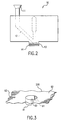
- Another method for producing apertured film covers having higher surface energy on and around the apertures as compared to the top surface of the film cover in accordance with one embodiment of this invention comprises mechanically aperturing a polyethylene film so as to produce an apertured film 200 as shown in Fig. 3 comprising a top surface 92 containing the top opening of the mechanical aperture 90 and a connected trailing flap 91, or peripheral wall, around the periphery of the aperture and extending from the bottom planar surface 93 of the polymeric film.
- a surfactant, or wetting agent is applied to the bottom side of the film by means of a transfer coating.
- the preferred treatment add-on range is in the range of about 0.1 to about 3.0% by weight.
- the amount and placement of the surfactant can be varied by varying the process conditions. In accordance with one embodiment, only the flap portion is treated with the surfactant. In accordance with another embodiment, the surfactant is applied such that the inner wall of the aperture also becomes coated and wettable.
- the polymeric film comprises a plurality of spheres containing an appropriate surfactant.
- the polymeric film is then perforated using electrical discharge or mechanical means.
- the edges of the apertures are rendered wettable when the electrical discharge or mechanical means rupture the microencapsulated surfactant in the film.
- Discontinuous regions of wettability may be produced as defined in claims 26-29.
- Cast films were prepared based upon the following formulations using conventional melt extrusion, cast film techniques. Control 94% Rexene 1058, 6% Ampacet 110359 Atmer Low 30% Layer A - (94% Rexene 1058, 6% Ampacet 110359); 40% Layer B - (93.5% Rexene 1058, 0.5% Atmer 8174 Concentrate (20% in polyethylene), 6% Ampacet 110359); 30% Layer A - (94% Rexene 1058, 6% Ampacet 110359) Atmer High 30% Layer A - (94% Rexene 1058, 6% Ampacet 110359); 40% Layer B - (91.5% Rexene 1058, 2.5% Atmer 8174 Concentrate (20% in polyethylene), 6% Ampacet 110359); 30% Layer A - (94% Rexene 1058, 6% Ampacet 110359) MAPEG Low 30% Layer A
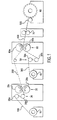
- the aperturing process comprises controlling the feed rate of the film 100 separate from the aperturing rate.
- the feed and the aperturing rate are controlled by the drive system 20.
- the aperturing rate is controlled by the rotation rate of the rolls in the aperturing nip 30, pattern roll 30a and anvil roll 30b.
- the speed of the film 100 is slower than the peripheral speed of pattern roll 30a and faster than the peripheral speed of anvil roll 30b.
- Film 100 is apertured under tension to minimize wrinkling of the film from a driven unwind 10 slower than the speed that drive system 20 and idler rolls (not shown) pull the film 100.
- the drive unit comprises "S" wrapping the film 100 between a driven rubber roll 20a and a steel roll 20b to control the entrance speed of the film into aperturing nip 30.
- Pattern roll 30a and anvil roll 30b contact one another and form nip 30 therebetween.
- Pattern roll 30a and anvil roll 30b rotate in opposite directions.
- Peripheral speed of pattern roll 30a is set at about 1.3-1.4 times the peripheral speed of anvil roll 30b.
- film 100 was apertured at a speed of 100 feet per minute.
- pattern roll 30a and anvil roll 30b was made from stainless steel and had an outside diameter of about 24 inches. The rolls were maintained at different temperatures using an internal hot oil system, pattern roll 30a being maintained at a temperature of about 255°F and anvil roll 30b being maintained at a temperature of about 228°F.
- Anvil roll 30b had a smooth finish while pattern roll 30a had a plurality of pins positioned to give a desired pattern.
- the desired pattern had a density of about 93.5 pins per square centimeter (580-603 pins/inches 2 ) and a total contact area of about 37-46%.
- Each pin had a height of about 0.48 millimeters (0.01-0.022 inches), was tapered about 10°, and was circular in cross section. Because the pins had an apex diameter of about 0.73 millimeters (0.0286 inches), the surface area of the apex was about 0.40 millimeters 2 (0.00066 inches 2 ).
- film 100 As film 100 enters nip 30, it is apertured through the application of heat, shear and pressure by penetrating pins which extend completely through the thickness of film 100. Shear is created by running the pattern roll 30a faster than the anvil roll 30b. The apertured film 200 exits nip 30 under tension and can be directed around an idler roll (not shown) to keep the apertured film 200 from wrinkling as it is separated from pattern roll 30a. These process conditions produce an apertured film having an open area of approximately 28% with an equivalent-circular diameter (ECD) of approximately 600 microns.
- ECD equivalent-circular diameter
- the apertured films of Example 1 were thermally bonded to a nonwoven web to form apertured films/nonwoven laminates.
- the nonwoven web used in this example was produced by through-air bonding a carded web. It will, however, be apparent to those skilled in the art that other nonwoven materials may also be employed.
- This particular nonwoven web was made of bicomponent fibers from Chisso Corporation. Chisso applies a proprietary finish, known as "HR6" on the fiber which renders the fiber wettable.
- the fibers were in a sheath core configuration.
- the core of the fiber was polypropylene, which constituted about 50% by weight of the fiber, and the sheath was low density polyethylene (LDPE), which constituted the remaining 50% by weight of the fiber. These fibers were about 51 millimeters (2.00 inches) in length and 10 denier.
- this nonwoven web described as a TABCW, had a density of about 0.0182 g/cc and a permeability of 15,000 Darcys.
- the laminate was formed by thermomechanically point bonding the apertured film to the nonwoven TABCW.
- the bonding took place inside a nip which consisted of two heated bonding rolls rotating in opposite directions.
- laminating nip 60 was comprised of a pattern roll 60a and an anvil roll 60b. The two rolls contact one another to form nip 60 therebetween. Each of the rolls was driven separately such that the peripheral speed of pattern roll 60a matched the peripheral speed of anvil roll 60b.
- Pattern roll 60a and anvil roll 60b were made from stainless steel and had an outside diameter of about 24 inches (70 cm). The rolls were maintained at different temperatures by internal hot oil.
- Anvil roll 60b had a smooth finish, while pattern roll 60a had a plurality of pins which were positioned to give a desired pattern.
- the desired pattern had a density of about 5.2 pins per square centimeter (33.6 pins/inches 2 ) and a total contact area of about 8-12%.
- Each pin had a height of about 2.4 mm (0.095 inches), was tapered about 20°, and was circular in cross section.
- the pins had an apex diameter of about 1.6 mm (0.065 inches).
- Both film 200 and nonwoven web 300 enter laminating nip 60 under tension. While nonwoven web 300 is under tension, it stretches approximately 3-12% relative to film 200.
- Tension in nonwoven web 300 is maintained by unwinding nonwoven web 300 from unwind 40 slower than the speed that drive system unit 50 and idler rolls (not shown) pull nonwoven web 300.
- Drive unit 50 comprises "S” wrapping a film between driven rubber roll 50a and steel roll 50b for the purpose of controlling entrance speed of nonwoven web 300 into laminating nip 60.
- Tension in apertured film 200 is maintained by laminating nip 60 and idler rolls (not shown).
- Bonding takes place as film 200 and nonwoven web 300 passes between the rolls in nip 60.
- Nonwoven web 300 and film 200 speed matches the peripheral speeds of pattern roll 60a and anvil roll 60b. In particular, this speed did not exceed 100 feet per minute.
- film 200 and nonwoven web 300 passed through nip 60 film 200 was laminated through the application of heat and pressure.
- Fluid intake time, rewet value, and stain size were measured for apertured films with wettability gradients as a function of treatment type and concentration and were compared to an apertured film with no wettability gradients.
- the apertured film covers were evaluated over a standard two layer absorbent core.
- the top layer of the absorbent core (closest to the cover) was a 90% Coosa 0054/10% Hoechst-Celanese T-255 binder, 100 gsm (grams per square meter), 0.1 g/cc airlaid web, and the bottom layer of the absorbent core was a 90% Coosa 0054/10% Hoechst-Celanese T-255 binder, 200 gsm, 0.2 g/cc airlaid web.
- Table 1 hereinbelow.
- the fluid intake time for the apertured film covers produced in accordance with the method of this invention decreased with the addition of a surfactant treatment primarily in and/or around the apertures compared to the control film cover.
- fluid intake time decreased only modestly.
- Stain size decreased significantly with decreased surfactant treatment level due to better fluid intake and less fluid retention and wicking on the film cover.
- the treatment migrates to the top surface and provides high fluid retention and wicking as noted by the large stain size for Atmer-High and MAPEG-High.
- Covers with low levels of treatment in and/or around the apertures demonstrated lower levels of staining compared to the control film cover.
- rewet properties generally increased, but can be minimized with treatment type and concentration as seen for the MAPEG-low sample apertured film cover. Rewet in this case is similar to the control film cover.
- Table 2 shows fluid intake time and rewet values for apertured film/nonwoven laminates produced in accordance with the method of this invention compared to a control laminate.
- the control laminate with no treatment is compared to an apertured film/nonwoven laminate having high wettability localized in and/or around the apertures.
- the apertured film covers were evaluated over a standard two layer absorbent core.
- the top layer of the absorbent core (closest to the cover) was a 90% Coosa 0054/10% Hoechst-Celanese T-255 binder, 100 gsm, 0.1 g/cc airlaid web, and the bottom layer of the absorbent core was a 90% Coosa 0054/10% Hoechst-Celanese T-255 binder, 200 gsm, 0.2 g/cc airlaid web.
- Table 2 the presence of a surfactant treatment in and/or around the apertures has limited impact on the fluid intake and rewet properties of the material.
- a piece of apertured film (approximately 4 inches by 6 inches) is laid flat onto an auto-stage, for example, Mertzshauser, Inc., of a microscope, for example, Olympus Model BH-2.
- the film is normally laid such that the "cone" or “flap” surface is face down on the stage.
- a 1/4 inch thick glass plate is placed on top of the film.
- a 1X or 2X objective lens is then positioned in place. Transmitted light is used with a substage condenser to illuminate the apertures in the film.
- a video camera that is interfaced to an image analysis (IA) system is mounted on top of the microscope.
- IA image analysis
- the image analysis system is then used to acquire images and make measurements from multiple regions on the film.
- the image analysis system uses software that is uniquely written to move the microscope's auto-stage, acquire images, process images, and make open area and pore size measurements. Often, the stage is moved over a rectangular grid to perform measurements on multiple fields-of-view. Non-apertured areas normally appear nearly "black” for opaque film while detected open areas will normally appear nearly “white”.
- the measurement of percent open area is defined as the percentage of area detected where transmitted light passes unhindered through the apertures. There is 1% open value obtained per field-of-view.
- ECD equivalent-circular diameter
- the test apparatus consists of a rate block 10 as shown in Fig. 2. A 4" x 4" piece of each of the absorbents 14 and cover 13 are die cut. The specific covers are described in the specific examples.
- the absorbent used for these studies was standard and consisted of a top piece (closest to the cover) of a 90% Coosa 0054/10% Hoechst-Celanese T-255 binder, 100 gsm, 0.1 g/cc airlaid web and a bottom piece which was a 90% Coosa/10% Hoechst-Celanese T-255 binder, 200 gsm, 0.2 g/cc airlaid web.
- the cover 13 was placed over the two pieces of absorbent 14 and the rate block 10 was placed on top of the two materials. 2 mL of a menses simulant was delivered into the test apparatus funnel 11 and a timer started.
- the fluid moved from the funnel 11 into a channel 12 where it was delivered to the material or material system.
- the timer was stopped when all the fluid was absorbed into the material or material system as observed from the chamber in the test apparatus.
- the intake time for a known quantity of known fluid was recorded for a given material or material system. This value is a measure of a material or material systems absorbency. Typically, five to ten repetitions were performed, and average intake time was determined.
- This test is used to determine the amount of fluid that will come back to the surface when a load is applied.
- the amount of fluid that comes back through the surface is called the "rewet” value.
- the more fluid that comes to the surface the larger the "rewet” value.
- Lower rewet values are associated with a dryer material and, thus, a dryer product.
- three properties are important: (1) intake, if the material/system does not have good intake then fluid can rewet, (2) ability of absorbent to hold fluid (the more the absorbent holds on to the fluid, the less is available for rewet), and (3) flowback, the more the cover prohibits fluid from coming back through the cover, the lower the rewet.
- a 4" x 4" piece of absorbent and cover was die cut.
- the absorbent used for these studies was standard and consisted of a top piece (closest to the cover) of a 90% Coosa 0054/10% Hoechst-Celanese T-255 binder, 100 gsm, 0.1 g/cc airlaid web and a bottom piece which was a 90% Coosa/10% Hoechst-Celanese T-255 binder, 200 gsm, 0.2 g/cc airlaid web.
- the cover was placed over the two pieces of absorbent and the rate block was placed on top of the two materials.
- the pressure is held fixed for three minutes, after which the pressure is removed and the blotter paper is weighed.
- the blotter paper retains any fluid that was transferred to it from the cover/absorbent system.
- the difference in weight between the original blotter and the blotter after the experiment is known as the "rewet" value. Typically, five to ten repetitions of this test were performed, and average rewet was determined.
- An intake/staining test was developed which enables the stain size, intensity, and fluid retention in components to be observed with fluid flow rate and pressure. Menses simulant was used as the test fluid.
- a 4" x 4" piece of absorbent and cover were die cut.
- the absorbent used for these tests was standard and consisted of a top piece (closest to the cover) of a 90% Coosa/10% Hoechst-Celanese T-255 binder, 100 gsm 0.1 g/cc airlaid web and a bottom of a 90% Coosa/10% Hoechst-Celanese T-255 binder, 200 gsm, 0.2 g/cc airlaid web.
- the stain size for the cover materials was measured manually, and the amount of fluid in each component of the system was measured by weight before and after absorption of the fluid. The stain was evaluated qualitatively by comparison of samples. Staining information was recorded using a digital camera and could be further analyzed with image analysis.
- “Menses simulant” is a material which simulates the viscoelastic and other properties of menses.
- blood such as defibrinated swine blood
- the plasma is separated and stored separately, the buffy coat removed and discarded, and the packed red blood cells stored separately as well.
- Eggs such as jumbo chicken eggs, are separated, the yoke and chalazae discarded, and the egg white retained.
- the egg white is separated into thick and thin portions by straining the white through a 1000 micron nylon mesh for about three minutes, and the thinner portion discarded.
- the thick homogenized egg white which contains ovomucin
- 80 mL of the thick homogenized egg white which contains ovomucin
- 60 cc of the swine plasma is added to the transfer pack.
- the transfer pack is clamped, all air bubbles removed, and placed in a Stomacher lab blender in which it is blended at normal (or medium) speed for about two minutes.
- the transfer pack is then removed from the blender, 60 cc of swine red blood cells are added, and the contents mixed by hand kneading for about two minutes, or until the contents appear homogeneous.
- the final mixture has a red blood cell content of about 30 volume percent and generally is at least within the range of 28-32 volume percent for artificial menses.
- the amount of egg white is about 40 weight percent.
Landscapes
- Health & Medical Sciences (AREA)
- Engineering & Computer Science (AREA)
- Life Sciences & Earth Sciences (AREA)
- Veterinary Medicine (AREA)
- Public Health (AREA)
- Epidemiology (AREA)
- General Health & Medical Sciences (AREA)
- Animal Behavior & Ethology (AREA)
- Biomedical Technology (AREA)
- Vascular Medicine (AREA)
- Heart & Thoracic Surgery (AREA)
- Manufacturing & Machinery (AREA)
- Mechanical Engineering (AREA)
- Hematology (AREA)
- Chemical & Material Sciences (AREA)
- Materials Engineering (AREA)
- Absorbent Articles And Supports Therefor (AREA)
- Orthopedics, Nursing, And Contraception (AREA)
- Laminated Bodies (AREA)
- Materials For Medical Uses (AREA)
- Application Of Or Painting With Fluid Materials (AREA)
Applications Claiming Priority (3)
| Application Number | Priority Date | Filing Date | Title |
|---|---|---|---|
| US108096 | 1998-06-30 | ||
| US09/108,096 US6410823B1 (en) | 1998-06-30 | 1998-06-30 | Apertured film covers with localized wettability and method for making the same |
| PCT/US1999/013386 WO2000000231A1 (en) | 1998-06-30 | 1999-06-14 | Apertured film covers with localized wettability and method for making the same |
Publications (2)
| Publication Number | Publication Date |
|---|---|
| EP1091771A1 EP1091771A1 (en) | 2001-04-18 |
| EP1091771B1 true EP1091771B1 (en) | 2004-03-24 |
Family
ID=22320276
Family Applications (1)
| Application Number | Title | Priority Date | Filing Date |
|---|---|---|---|
| EP99930242A Revoked EP1091771B1 (en) | 1998-06-30 | 1999-06-14 | Apertured film covers with localized wettability and method for making the same |
Country Status (11)
| Country | Link |
|---|---|
| US (1) | US6410823B1 (https=) |
| EP (1) | EP1091771B1 (https=) |
| JP (1) | JP2002519117A (https=) |
| KR (1) | KR100577137B1 (https=) |
| CN (1) | CN1225289C (https=) |
| AU (1) | AU755420B2 (https=) |
| BR (1) | BR9911669B1 (https=) |
| DE (1) | DE69915831T2 (https=) |
| RU (1) | RU2219885C2 (https=) |
| WO (1) | WO2000000231A1 (https=) |
| ZA (1) | ZA200007589B (https=) |
Families Citing this family (62)
| Publication number | Priority date | Publication date | Assignee | Title |
|---|---|---|---|---|
| US6461716B1 (en) | 1999-06-24 | 2002-10-08 | The Procter & Gamble Company | Apertured webs having permanent hydrophilicity and absorbent articles using such webs |
| JP5122052B2 (ja) † | 2000-04-07 | 2013-01-16 | ザ プロクター アンド ギャンブル カンパニー | 開孔ポリマーフィルムウエブおよびかかるウエブを使用した吸収性物品 |
| US7326747B2 (en) * | 2000-10-31 | 2008-02-05 | Polymer Group, Inc. | Internal wetting agent for use in manufacture of polymeric films and fabrics for disposable absorbent articles |
| US6727196B2 (en) * | 2000-12-08 | 2004-04-27 | Kimberly-Clark Worldwide, Inc. | Surfactant systems for personal care products |
| US20040019340A1 (en) * | 2002-07-23 | 2004-01-29 | Tredegar Film Products Corporation | Absorbent article having a surface energy gradient between the topsheet and the acquisition distribution layer |
| MXPA05005748A (es) | 2002-12-20 | 2005-08-16 | Procter & Gamble | Trama laminada con crestas. |
| US7732657B2 (en) | 2002-12-20 | 2010-06-08 | The Procter & Gamble Company | Absorbent article with lotion-containing topsheet |
| BR0317609B1 (pt) * | 2002-12-20 | 2013-10-08 | Textura laminada com tufos | |
| MXPA05005755A (es) * | 2002-12-20 | 2005-08-16 | Procter & Gamble | Trama fibrosa de hilos en bucle. |
| US7838099B2 (en) | 2002-12-20 | 2010-11-23 | The Procter & Gamble Company | Looped nonwoven web |
| US7682686B2 (en) * | 2002-12-20 | 2010-03-23 | The Procter & Gamble Company | Tufted fibrous web |
| US7507459B2 (en) * | 2002-12-20 | 2009-03-24 | The Procter & Gamble Company | Compression resistant nonwovens |
| US7270861B2 (en) * | 2002-12-20 | 2007-09-18 | The Procter & Gamble Company | Laminated structurally elastic-like film web substrate |
| US7919666B2 (en) * | 2002-12-31 | 2011-04-05 | Kimberly-Clark Worldwide, Inc. | Personal care articles with fragrance delivery system |
| US7004313B2 (en) * | 2002-12-31 | 2006-02-28 | Kimberly-Clark Worldwide, Inc. | Disposable dispenser with fragrance delivery system |
| US8211815B2 (en) * | 2003-06-13 | 2012-07-03 | Kimberly-Clark Worldwide, Inc. | Absorbent structure having three-dimensional topography on upper and lower surfaces |
| EP1651155B1 (en) * | 2003-08-07 | 2013-04-24 | The Procter and Gamble Company | Method for making an apertured film |
| US8241543B2 (en) | 2003-08-07 | 2012-08-14 | The Procter & Gamble Company | Method and apparatus for making an apertured web |
| US7910195B2 (en) | 2003-12-16 | 2011-03-22 | The Procter & Gamble Company | Absorbent article with lotion-containing topsheet |
| US8211078B2 (en) | 2005-02-17 | 2012-07-03 | The Procter And Gamble Company | Sanitary napkins capable of taking complex three-dimensional shape in use |
| US9579238B2 (en) | 2005-02-17 | 2017-02-28 | The Procter & Gamble Company | Sanitary napkins capable of taking complex three-dimensional shape in use |
| KR100784357B1 (ko) * | 2006-12-06 | 2007-12-13 | 주식회사 한스인테크 | 천공필름의 제조방법 |
| US7935207B2 (en) | 2007-03-05 | 2011-05-03 | Procter And Gamble Company | Absorbent core for disposable absorbent article |
| US8502013B2 (en) | 2007-03-05 | 2013-08-06 | The Procter And Gamble Company | Disposable absorbent article |
| WO2009062998A1 (en) * | 2007-11-13 | 2009-05-22 | Tesalca-99, S.A. | Perforated and treated material |
| US20090233046A1 (en) * | 2008-03-11 | 2009-09-17 | Tredegar Film Products Corporation | Apertured nonwoven webs with lined apertures |
| US8158043B2 (en) | 2009-02-06 | 2012-04-17 | The Procter & Gamble Company | Method for making an apertured web |
| WO2010096601A1 (en) * | 2009-02-20 | 2010-08-26 | Tredegar Film Products Corporation | Hydrophilic apertured formed film |
| US8153226B2 (en) | 2009-03-31 | 2012-04-10 | The Procter & Gamble Company | Capped tufted laminate web |
| KR101651675B1 (ko) | 2009-10-30 | 2016-08-29 | 유한킴벌리 주식회사 | 환형의 흡수부재를 구비하는 흡수제품 |
| US20120148796A1 (en) * | 2010-12-14 | 2012-06-14 | Welch Howard M | Nonwoven Composite Including an Apertured Elastic Film and Method of Making |
| US20110160687A1 (en) * | 2009-12-30 | 2011-06-30 | Welch Howard M | Nonwoven composite including an apertured elastic film and method of making |
| US9724245B2 (en) * | 2011-04-26 | 2017-08-08 | The Procter & Gamble Company | Formed web comprising chads |
| US9242406B2 (en) | 2011-04-26 | 2016-01-26 | The Procter & Gamble Company | Apparatus and process for aperturing and stretching a web |
| US8708687B2 (en) | 2011-04-26 | 2014-04-29 | The Procter & Gamble Company | Apparatus for making a micro-textured web |
| US8657596B2 (en) | 2011-04-26 | 2014-02-25 | The Procter & Gamble Company | Method and apparatus for deforming a web |
| US9044353B2 (en) | 2011-04-26 | 2015-06-02 | The Procter & Gamble Company | Process for making a micro-textured web |
| US9925731B2 (en) | 2011-04-26 | 2018-03-27 | The Procter & Gamble Company | Corrugated and apertured web |
| US9993374B2 (en) | 2011-11-10 | 2018-06-12 | Kimberly-Clark Worldwide, Inc. | Absorbent personal care article having intermeshing flaps |
| US8986273B2 (en) | 2011-11-10 | 2015-03-24 | Kimberly-Clark Worldwide, Inc. | Absorbent personal care article having intermeshing flaps |
| US9237973B2 (en) | 2012-01-31 | 2016-01-19 | Kimberly-Clark Worldwide, Inc. | Treated apertures |
| RU2605893C2 (ru) | 2012-04-25 | 2016-12-27 | Кимберли-Кларк Ворлдвайд, Инк. | Впитывающее изделие личной гигиены, имеющее продольно ориентированные слои с обособленными участками |
| EP2928433B1 (en) | 2012-12-04 | 2020-03-18 | Kimberly-Clark Worldwide, Inc. | An absorbent article with a multi-layered topsheet |
| US9173782B2 (en) | 2013-03-28 | 2015-11-03 | Kimberly-Clark Worldwide, Inc. | Coordinated apertured and embossed topsheet layer materials, and absorbent articles containing such |
| US9861533B2 (en) | 2013-05-08 | 2018-01-09 | The Procter & Gamble Company | Apertured nonwoven materials and methods for forming the same |
| US10258516B2 (en) | 2013-07-31 | 2019-04-16 | Kimberly-Clark Worldwide, Inc. | Treated three-dimensional apertured liners |
| US10238553B2 (en) | 2013-07-31 | 2019-03-26 | Kimberly-Clark Worldwide, Inc. | Treated three-dimensional apertured surge |
| WO2016073727A1 (en) | 2014-11-06 | 2016-05-12 | The Procter & Gamble Company | Absorbent articles comprising garment-facing laminates |
| EP3215088A1 (en) | 2014-11-06 | 2017-09-13 | The Procter and Gamble Company | Absorbent article with color effects |
| US20160167334A1 (en) | 2014-11-06 | 2016-06-16 | The Procter & Gamble Company | Crimped Fiber Spunbond Nonwoven Webs/Laminates |
| US20170239093A1 (en) * | 2014-11-12 | 2017-08-24 | Asahi Kasei Kabushiki Kaisha | Perforated Plastic Film |
| MX2017011772A (es) | 2015-03-30 | 2017-12-04 | Kimberly Clark Co | Articulo absorbente con estructura de retencion de forma tridimensional. |
| WO2017079169A1 (en) | 2015-11-03 | 2017-05-11 | Kimberly-Clark Worldwide, Inc. | Paper tissue with high bulk and low lint |
| BR112018008633B1 (pt) | 2015-11-03 | 2022-11-29 | Kimberly-Clark Worldwide, Inc | Espuma compósita absorvente, laminado multicamadas, produto de limpeza embalado e artigo absorvente de cuidado pessoal |
| KR102551688B1 (ko) | 2016-10-31 | 2023-07-06 | 킴벌리-클라크 월드와이드, 인크. | 잠재 탄성 올레핀 필름 적층체 및 이를 포함하는 흡수 용품 제조 방법 |
| WO2018152272A1 (en) | 2017-02-16 | 2018-08-23 | The Procter & Gamble Company | Absorbent articles with substrates having repeating patterns of apertures comprising a plurality of repeat units |
| EP3595601B1 (en) * | 2017-03-13 | 2024-07-31 | Fitesa Film Products LLC | Activated composite web for absorptive devices |
| JP2020535896A (ja) * | 2017-10-11 | 2020-12-10 | ザ プロクター アンド ギャンブル カンパニーThe Procter & Gamble Company | 有孔三次元材料を有する吸収性物品及びその製造方法 |
| US12127925B2 (en) | 2018-04-17 | 2024-10-29 | The Procter & Gamble Company | Webs for absorbent articles and methods of making the same |
| CN112533567A (zh) | 2018-08-22 | 2021-03-19 | 宝洁公司 | 一次性吸收制品 |
| WO2020219414A1 (en) | 2019-04-24 | 2020-10-29 | The Procter & Gamble Company | Highly extensible nonwoven webs and absorbent articles having such webs |
| CN113682017A (zh) * | 2021-08-26 | 2021-11-23 | 浙江大汇新材料有限公司 | 一种可视易撕食品包装膜及其制备工艺 |
Family Cites Families (23)
| Publication number | Priority date | Publication date | Assignee | Title |
|---|---|---|---|---|
| US3730184A (en) | 1971-10-07 | 1973-05-01 | Johnson & Johnson | Disposable diaper |
| US4073852A (en) | 1971-10-07 | 1978-02-14 | Johnson & Johnson | Method of manufacture for a fabric useful in a disposable diaper |
| US3837343A (en) | 1971-10-07 | 1974-09-24 | Johnson & Johnson | Disposable diaper, fabric useful therein, and method of manufacture |
| US4324246A (en) | 1980-05-12 | 1982-04-13 | The Procter & Gamble Company | Disposable absorbent article having a stain resistant topsheet |
| US4351784A (en) | 1980-12-15 | 1982-09-28 | Ethyl Corporation | Corona treatment of perforated film |
| US4456570A (en) | 1982-07-26 | 1984-06-26 | Ethyl Corporation | Treatment of perforated film |
| US4535020A (en) | 1982-07-26 | 1985-08-13 | Ethyl Corporation | Perforated film |
| US4820294A (en) | 1986-05-22 | 1989-04-11 | Chicopee | Apertured film facing and method of making the same |
| US4755413A (en) | 1986-05-22 | 1988-07-05 | Chicopee | Apertured film facing and method of making the same |
| US4758297A (en) | 1986-06-03 | 1988-07-19 | Fmc Corporation | Hot pin laminated fabric |
| US4735843A (en) | 1986-12-18 | 1988-04-05 | The Procter & Gamble Company | Selectively surface-hydrophilic porous or perforated sheets |
| AU4114189A (en) | 1988-09-12 | 1990-03-15 | Johnson & Johnson Inc. | Unitized sanitary napkin |
| BR9106528A (pt) * | 1990-06-05 | 1993-05-25 | Procter & Gamble | Absorvente ferminino |
| EP0613359A1 (en) | 1991-11-19 | 1994-09-07 | The Procter & Gamble Company | Absorbent article having a nonwoven and apertured film coversheet |
| WO1995023571A1 (en) * | 1994-03-01 | 1995-09-08 | The Procter & Gamble Company | Process for producing a surfactant treated, formed, polymeric web |
| ES2164751T3 (es) | 1995-06-19 | 2002-03-01 | Procter & Gamble | Hojas superiores dobles perforadas para articulos absorbentes. |
| EP0761189B1 (en) | 1995-09-06 | 2000-12-20 | The Procter & Gamble Company | Sanitary articles with multi aperture size film topsheets |
| US5658639A (en) | 1995-09-29 | 1997-08-19 | The Proctor & Gamble Company | Method for selectively aperturing a nonwoven web exhibiting surface energy gradients |
| US5648142A (en) | 1995-10-19 | 1997-07-15 | Eastman Chemical Company | Perforated films having channels with cutout portions capable of spontaneous fluid inversion |
| US5792412A (en) | 1996-09-13 | 1998-08-11 | The Procter & Gamble Company | Apertured films having durable wettability and processes for marking them |
| US5735840A (en) | 1996-09-20 | 1998-04-07 | The Procter & Gamble Company | Disposable diaper with integral backsheet landing zone |
| US5820973A (en) | 1996-11-22 | 1998-10-13 | Kimberly-Clark Worldwide, Inc. | Heterogeneous surge material for absorbent articles |
| US5700872A (en) | 1996-12-31 | 1997-12-23 | Kimberly Clark Worlwide, Inc. | Process for making blends of polyolefin and poly(ethylene oxide) |
-
1998
- 1998-06-30 US US09/108,096 patent/US6410823B1/en not_active Expired - Lifetime
-
1999
- 1999-06-14 AU AU46820/99A patent/AU755420B2/en not_active Ceased
- 1999-06-14 DE DE69915831T patent/DE69915831T2/de not_active Revoked
- 1999-06-14 BR BRPI9911669-3A patent/BR9911669B1/pt not_active IP Right Cessation
- 1999-06-14 CN CNB998104418A patent/CN1225289C/zh not_active Expired - Fee Related
- 1999-06-14 JP JP2000556816A patent/JP2002519117A/ja not_active Abandoned
- 1999-06-14 WO PCT/US1999/013386 patent/WO2000000231A1/en not_active Ceased
- 1999-06-14 EP EP99930242A patent/EP1091771B1/en not_active Revoked
- 1999-06-14 KR KR1020007015049A patent/KR100577137B1/ko not_active Expired - Fee Related
- 1999-06-14 RU RU2001102772/15A patent/RU2219885C2/ru not_active IP Right Cessation
-
2000
- 2000-12-18 ZA ZA200007589A patent/ZA200007589B/xx unknown
Also Published As
| Publication number | Publication date |
|---|---|
| KR20010053318A (ko) | 2001-06-25 |
| BR9911669B1 (pt) | 2012-02-22 |
| JP2002519117A (ja) | 2002-07-02 |
| DE69915831T2 (de) | 2004-08-12 |
| CN1335782A (zh) | 2002-02-13 |
| CN1225289C (zh) | 2005-11-02 |
| EP1091771A1 (en) | 2001-04-18 |
| US6410823B1 (en) | 2002-06-25 |
| AU4682099A (en) | 2000-01-17 |
| WO2000000231A1 (en) | 2000-01-06 |
| KR100577137B1 (ko) | 2006-05-10 |
| BR9911669A (pt) | 2002-06-11 |
| AU755420B2 (en) | 2002-12-12 |
| DE69915831D1 (de) | 2004-04-29 |
| RU2219885C2 (ru) | 2003-12-27 |
| ZA200007589B (en) | 2001-12-18 |
Similar Documents
| Publication | Publication Date | Title |
|---|---|---|
| EP1091771B1 (en) | Apertured film covers with localized wettability and method for making the same | |
| AU748532C (en) | Multilayer cover system and method for producing same | |
| CN1731964B (zh) | 再润湿、吸入和污迹遮掩性能增强的吸收产品 | |
| EP0767648B1 (en) | Fluid transport webs exhibiting surface energy gradients | |
| US6613028B1 (en) | Transfer delay for increased access fluff capacity | |
| JP3330956B2 (ja) | 恒久的な湿潤性を有する開口されたフィルム、及びそれらを製造するための方法 | |
| KR20010104384A (ko) | 기본 중량이 감소된 부직포를 포함하는 향상된 통기성배면시이트를 갖는 흡수 제품 | |
| WO2000074740A1 (en) | Personal care products with improved fluid handling properties | |
| AU772138B2 (en) | Personal care products with improved fluid handling properties | |
| MXPA01000566A (en) | Apertured film covers with localized wettability and method for making the same | |
| AU764971B2 (en) | Multilayer cover system and method for producing same | |
| EP1183057A1 (en) | Personal care products with improved fluid handling properties | |
| MXPA98002483A (en) | A method to selectively open a noteful frame that exhibits energy gradients in the superfi | |
| MXPA00004694A (en) | Multilayer cover system and method for producing same |
Legal Events
| Date | Code | Title | Description |
|---|---|---|---|
| PUAI | Public reference made under article 153(3) epc to a published international application that has entered the european phase |
Free format text: ORIGINAL CODE: 0009012 |
|
| 17P | Request for examination filed |
Effective date: 20010129 |
|
| AK | Designated contracting states |
Kind code of ref document: A1 Designated state(s): DE FR GB |
|
| 17Q | First examination report despatched |
Effective date: 20020711 |
|
| GRAP | Despatch of communication of intention to grant a patent |
Free format text: ORIGINAL CODE: EPIDOSNIGR1 |
|
| GRAS | Grant fee paid |
Free format text: ORIGINAL CODE: EPIDOSNIGR3 |
|
| GRAA | (expected) grant |
Free format text: ORIGINAL CODE: 0009210 |
|
| RIN1 | Information on inventor provided before grant (corrected) |
Inventor name: BRAVERMAN, JAIME Inventor name: TINSLEY, JON, EDWARD Inventor name: ZELAZOSKI, GREGORY, ALAN Inventor name: KOLLIN, NANCY, DONALDSON Inventor name: MACE, TAMARA, LEE Inventor name: PRIMM, DAVID, WAYNE Inventor name: POWERS, MICHAEL, DAVID Inventor name: GARAVAGLIA, ARTHUR, EDWARD Inventor name: YAHIAOUI, ALI Inventor name: MAJORS, MARK, BRUCE Inventor name: DALEY, MICHAEL, ALLEN |
|
| AK | Designated contracting states |
Kind code of ref document: B1 Designated state(s): DE FR GB |
|
| REG | Reference to a national code |
Ref country code: GB Ref legal event code: FG4D |
|
| REF | Corresponds to: |
Ref document number: 69915831 Country of ref document: DE Date of ref document: 20040429 Kind code of ref document: P |
|
| PLBQ | Unpublished change to opponent data |
Free format text: ORIGINAL CODE: EPIDOS OPPO |
|
| ET | Fr: translation filed | ||
| PLBI | Opposition filed |
Free format text: ORIGINAL CODE: 0009260 |
|
| PLAX | Notice of opposition and request to file observation + time limit sent |
Free format text: ORIGINAL CODE: EPIDOSNOBS2 |
|
| 26 | Opposition filed |
Opponent name: THE PROCTER & GAMBLE COMPANY Effective date: 20041220 |
|
| PLAX | Notice of opposition and request to file observation + time limit sent |
Free format text: ORIGINAL CODE: EPIDOSNOBS2 |
|
| PLBB | Reply of patent proprietor to notice(s) of opposition received |
Free format text: ORIGINAL CODE: EPIDOSNOBS3 |
|
| PLAB | Opposition data, opponent's data or that of the opponent's representative modified |
Free format text: ORIGINAL CODE: 0009299OPPO |
|
| R26 | Opposition filed (corrected) |
Opponent name: THE PROCTER & GAMBLE COMPANY Effective date: 20041220 |
|
| PLAB | Opposition data, opponent's data or that of the opponent's representative modified |
Free format text: ORIGINAL CODE: 0009299OPPO |
|
| R26 | Opposition filed (corrected) |
Opponent name: THE PROCTER & GAMBLE COMPANY Effective date: 20041220 |
|
| APBP | Date of receipt of notice of appeal recorded |
Free format text: ORIGINAL CODE: EPIDOSNNOA2O |
|
| APAH | Appeal reference modified |
Free format text: ORIGINAL CODE: EPIDOSCREFNO |
|
| APBQ | Date of receipt of statement of grounds of appeal recorded |
Free format text: ORIGINAL CODE: EPIDOSNNOA3O |
|
| PLAB | Opposition data, opponent's data or that of the opponent's representative modified |
Free format text: ORIGINAL CODE: 0009299OPPO |
|
| R26 | Opposition filed (corrected) |
Opponent name: THE PROCTER & GAMBLE COMPANY Effective date: 20041220 |
|
| PGFP | Annual fee paid to national office [announced via postgrant information from national office to epo] |
Ref country code: DE Payment date: 20080731 Year of fee payment: 10 |
|
| APBU | Appeal procedure closed |
Free format text: ORIGINAL CODE: EPIDOSNNOA9O |
|
| RDAF | Communication despatched that patent is revoked |
Free format text: ORIGINAL CODE: EPIDOSNREV1 |
|
| RDAG | Patent revoked |
Free format text: ORIGINAL CODE: 0009271 |
|
| STAA | Information on the status of an ep patent application or granted ep patent |
Free format text: STATUS: PATENT REVOKED |
|
| 27W | Patent revoked |
Effective date: 20090416 |
|
| GBPR | Gb: patent revoked under art. 102 of the ep convention designating the uk as contracting state |
Effective date: 20090416 |
|
| PGFP | Annual fee paid to national office [announced via postgrant information from national office to epo] |
Ref country code: FR Payment date: 20090617 Year of fee payment: 11 |
|
| PGFP | Annual fee paid to national office [announced via postgrant information from national office to epo] |
Ref country code: GB Payment date: 20090625 Year of fee payment: 11 |