EP1077680B1 - Method of fabricating a banded prolonged release active agent dosage form - Google Patents
Method of fabricating a banded prolonged release active agent dosage form Download PDFInfo
- Publication number
- EP1077680B1 EP1077680B1 EP99920262A EP99920262A EP1077680B1 EP 1077680 B1 EP1077680 B1 EP 1077680B1 EP 99920262 A EP99920262 A EP 99920262A EP 99920262 A EP99920262 A EP 99920262A EP 1077680 B1 EP1077680 B1 EP 1077680B1
- Authority
- EP
- European Patent Office
- Prior art keywords
- active agent
- groove
- dosage form
- blank
- band
- Prior art date
- Legal status (The legal status is an assumption and is not a legal conclusion. Google has not performed a legal analysis and makes no representation as to the accuracy of the status listed.)
- Expired - Lifetime
Links
Images



Classifications
-
- A—HUMAN NECESSITIES
- A61—MEDICAL OR VETERINARY SCIENCE; HYGIENE
- A61K—PREPARATIONS FOR MEDICAL, DENTAL OR TOILETRY PURPOSES
- A61K9/00—Medicinal preparations characterised by special physical form
- A61K9/20—Pills, tablets, discs, rods
- A61K9/2072—Pills, tablets, discs, rods characterised by shape, structure or size; Tablets with holes, special break lines or identification marks; Partially coated tablets; Disintegrating flat shaped forms
-
- A—HUMAN NECESSITIES
- A61—MEDICAL OR VETERINARY SCIENCE; HYGIENE
- A61K—PREPARATIONS FOR MEDICAL, DENTAL OR TOILETRY PURPOSES
- A61K9/00—Medicinal preparations characterised by special physical form
- A61K9/20—Pills, tablets, discs, rods
- A61K9/2095—Tabletting processes
-
- A—HUMAN NECESSITIES
- A61—MEDICAL OR VETERINARY SCIENCE; HYGIENE
- A61K—PREPARATIONS FOR MEDICAL, DENTAL OR TOILETRY PURPOSES
- A61K9/00—Medicinal preparations characterised by special physical form
- A61K9/20—Pills, tablets, discs, rods
- A61K9/28—Dragees; Coated pills or tablets, e.g. with film or compression coating
- A61K9/2893—Tablet coating processes
Definitions
- the present invention is related to the prolonged delivery of an active agent. More particularly, it is directed to an improved method of making a banded active agent dosage form which is useful for delivering a beneficial agent to a fluid environment of use.
- Tablets, capsules, caplets and many other types of devices have been used for dispensing a beneficial agent to a fluid environment of use. Easy manufacture of a device that provides for prolonged delivery of an active agent in a controlled and predictable manner continues to be a goal, especially in the area of drug delivery.
- U.S. Patent No. 4,290,426 to Luschen et al describes a cylindrical dispenser for releasing a beneficial agent into a fluid environment at a rate that is governed by the fluid-induced relaxation of a polymeric agent contained within the dispenser.
- the cylindrical dispenser includes an impermeable container that has within it a reservoir and a passageway from the reservoir to the exterior of the container.
- the reservoir contains a polymer and a beneficial agent.
- the polymer imbibes fluid from the environment and thereby undergoes relaxation, releasing the beneficial agent from the device.
- the amount of agent released is dependent on the rate of relaxation of the polymer over time.
- Coated dosage forms have also been suggested for delivery of a controlled amount of a beneficial agent over a prolonged period of time.
- U.S. Patent No. 5,256,440 describes a process for producing a film coated dosage form. A continuous groove is inscribed in a dosage form core. A latex film is coated onto the core, the groove defining a fixed zone and a detachable zone for the film. The detachable portion of the latex film detaches when it is exposed to the environment of use, thereby exposing a discrete portion of the dosage form core surface. The remainder of the film remains attached to the dosage form core. T he exposed portion of the dosage form surface erodes and releases active agent to the environment of use.
- U.S. Patent No. 5,534,263 describes a banded dosage form which is useful for the sustained delivery of an active agent formulation to a fluid environment of use.
- the active agent dosage form is a matrix that has on its surface two or more insoluble bands.
- the dosage form described provides significant advantages over other prior art devices for the sustained delivery of an active agent.
- banded devices such as those described in U.S. Pat. No. 5,534,263 ('263 patent) have significant advantages for prolonged delivery of an active agent formulation to a fluid environment of use. It has now been discovered that if the active agent formulation matrix is provided with at least one groove, prior to the banding process described in the '263 patent, the groove can be used as a register to orient the dosage form during the banding process. Additionally, the groove allows for more uniform deposition of the banding material. In that manner, improved dosage forms are provided and savings and manufacturing advantages are achieved.
- the present invention is directed to an improved method and system for manufacturing banded dispensing devices, to improved articles of manufacture, and to components that facilitate manufacture of the devices.
- the invention provides a method of preparing an active agent dosage form for the prolonged delivery of the active agent, comprising: forming a blank from an active agent formulation matrix so that the blank has a groove circumscribing a portion of the external surface of the blank; and depositing insoluble material in the groove to form a band.
- the invention provides a method for fabricating an active agent dosage form for the prolonged delivery of the active agent, comprising: providing a blank, the blank comprising an active agent formulation matrix having a groove circumscribing a portion of the external surface of the blank; orienting the blank with respect to a forming means for forming a band of insoluble material in the groove; and forming the band in the groove using the forming means.
- the invention provides an active agent dosage form for the prolonged delivery of an active agent formulation to a fluid environment of use, comprising an active agent formulation matrix having a groove circumscribing a portion of the external surface thereof; and an insoluble band positioned in said groove.
- the invention provides a system for fabricating an active agent dosage form for the prolonged delivery of the active agent, comprising:
- the invention provides a system for fabricating an active agent dosage form for the prolonged delivery of the active agent, comprising: a source of blanks, each of said blanks having a groove circumscribing a portion of the external surface of the blank; and a banding station that forms a band of insoluble material in the groove, the banding station comprising a banding wheel that registers with the groove.
- the invention comprises a banding system for fabricating an active agent dosage form comprising means for orienting a blank having a groove and means for forming a band in the groove.
- the invention comprises the following characteristics and features, either alone or in combination with one or more of each other.
- An active agent dosage form for the prolonged delivery of an active agent formulation to a fluid environment of use comprising an active agent formulation matrix having at least one groove circumscribing a portion of the surface thereof and an insoluble band located in the groove; the dosage form wherein the groove has the shape of a notch; the dosage form wherein the groove has a continuous concave shape; the dosage form wherein the depth of the groove is between 0.1 and 3 mm; the dosage form wherein the width of the groove is between 0.5 and 10 mm; the dosage form wherein the outer surface and bands are coated to form a smooth, exterior surface; and the dosage form having more than one groove circumscribing a portion of the surface thereof and an insoluble band located in each groove.
- a method of preparing an active agent dosage form for the prolonged delivery of an active agent formulation to a fluid environment of use comprising an active agent formulation matrix having at least one groove circumscribing a portion of the surface thereof and a band of insoluble material positioned in the groove, the method comprising forming a blank having a groove corresponding to a desired location of the insoluble band, and coating the groove with the insoluble material.
- the present invention provides a delivery device and articles of manufacture and systems and methods for fabrication of the device, the device being useful for the prolonged delivery of an active agent formulation to a fluid environment of use.
- Prolonged defivery intends a period of delivery that lasts for several hours to about 24 hours, usually up to about 20 hours, and often between about 3 and 16 hours.
- insoluble is intended a material that will not dissolve, degrade or erode in the environment of use during the delivery period.
- “apply” or “applied” or “application” is intended the deposition of insoluble material, in liquid or in molten form, onto the active agent formulation matrix.
- a variety of techniques may be used to apply the insoluble material, including but not limited to Gravure-type printing, extrusion coating, screen coating, brush coating, spraying, painting, and the Capsealer process developed by TAIT Design & Machine Co., Manheim, PA and the system developed and sold by Shionogi Qualicaps of Indianapolis, Indiana, commonly referred to as the Quali-seal TM process.
- These systems can be used with modification of their usual capsule feed systems to accommodate the compressed tablet blanks typically used in the present invention.
- active agent formulation intends the active agent or drug optionally in combination with pharmaceutically acceptable carriers and additional inert ingredients.
- active agent formulation matrix comprises the active agent formulation in combination with a hydrophilic polymeric material.
- the “active agent dosage form” intends the active agent formulation matrix as defined above with one or more bands of an insoluble material applied onto its surface.
- blank means an active agent formulation matrix formed without any band but with at least one groove circumscribing a portion of its surface.
- a blank may have more than one groove to facilitate placement of a plurality of bands contemplated herein.
- the terms "therapeutically effective" amount or rate refer to the amount or rate of the active agent needed to effect the desired pharmacologic, often beneficial, result.
- the dispensing devices of the invention embody improvements over the dispensing devices described in U.S. Patent 5,534,263 ("263 patent").
- the dispensing devices of the invention find use, for example, in humans or other animals.
- the environment of use is a fluid environment and can comprise the stomach, the intestinal tract, or a body cavity such as the peritoneum or vagina.
- a single dispensing device or several dispensing devices can be administered to a subject during a therapeutic program.
- the dispensing devices of the invention are fabricated by methods and with systems improved over that described in the '263 patent and the prior art.
- the dispensing devices were produced from cylindrical tablets having a uniformly continuous external surface without any grooves.
- unhanded tablets were rotated at a printing station as banding material was applied to the external surface of the unbanded tablets. Bands were thus applied to the external surface and the band thickness resulted in a finished banded device having a non-uniform external surface as can be seen from the illustrations in the figures of the '263 patent.
- the unhanded tablets were rotated independently of the printing means and had the tendency to wobble as the bands were applied.
- the banding means can be configured to cooperate with the indexing or register means to locate the unhanded device accurately at the location at which the insoluble band material is placed on the unbanded device during the banding operation.
- the indexing or register means may be provided by one or more grooves, formed on a portion of the external surface of the unbanded device, that cooperate with the banding means. Accordingly, bands can be applied with greater uniformity in location, width and thickness. This results in rejection of fewer dispensing devices for being out of specifications and also provides dispensing devices having optimal surface characteristics and active agent release profiles.
- the indexing or register means cooperates with the banding means to align the unhanded dispensing device during the banding operation.
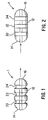
- FIG. 1 depicts, in side elevational view, one embodiment of the unhanded dispensing device, which henceforth will be referred to as a "blank".
- the blank is shown in prepared form prior to placement of the bands.
- Blank 1 is shown in FIG. 1 to comprise a cylindrically shaped active agent formulation matrix 12.
- the ends 14 and 16 of the matrix are preferably rounded and convex in shape in order to ensure ease of insertion into the environment of use.
- Grooves 20, 22 and 24 are formed in and circumscribe the exterior surface of the active agent formulation matrix 12. Multiple grooves are illustrated. However, it will be appreciated that the blank may be formed with only one groove or with more than one groove.
- FIG. 2 shows blank 1 after the banding operation has been completed and bands 30, 32, and 34 have been formed in grooves 20, 22, and 24, respectively. That operation results in a delivery device that is suitable to be placed in the fluid environment of use and operate as described in the '263 patent. Because the bands have been placed in the grooves and generally will be configured to extend only to the outer surface of the blank, the outer surface of the delivery device will be quite smooth. Optionally, however, the completed device may be coated with a water-soluble film as described in the '263 patent. The active agent formulation matrix 12 between bands 30, 32 and 34 and at its ends 14 and 16 will erode when the delivery device is placed in the environment of use, thereby releasing active agent to the fluid environment of use.
- FIG. 3 shows a blank 1 having a single groove 44, shaped as a concave surface, in the outer surface of active agent formulation matrix 42. While a single groove is illustrated, more than one groove may be provided depending on the number of bands that will be placed on the completed delivery device.
- FIG. 4 shows blank 1 after the banding operation has been completed to form a completed delivery device.
- Groove 44 has been imprinted with band 46, which, as illustrated, has to some extent assumed the concave shape of groove 44.
- band 46 may be formed with additional material to fill groove 44 to provide an external surface in the area of the groove that is level with the external surface of the active agent formulation matrix 42 outside of the banded area.
- the banded dispensing device may be used in that configuration, or it may be optionally over-coated with a water-soluble film as described in the '263 patent.
- any optional over-coated water soluble film When placed in the environment of use, any optional over-coated water soluble film will dissolve, and the external surface of active agent matrix 42 not covered by band 46 will erode and release active agent. Erosion will continue and the exposed ends will separate from the banded portion of the device. Upon continued erosion, band 46 will separate from any remaining active agent formulation matrix and will thereafter be expelled from the fluid environment of use.
- FIG. 5 shows another embodiment of a blank 1 of the invention having a notched groove 54 formed with sloping sides 56. It is to be appreciated that sides 56 could be formed at other angles to the longitudinal axis of the active agent formulation matrix 52. For example, sides 56 could be at right angles to the longitudinal axis. The particular choice of shape will be made by one skilled in the art depending on application for which the dispensing device is intended to be used.
- FIG. 6 shows the blank of FIG. 5 after the banding operation has been completed and a band 58 has been located in groove 54.
- the notched shape facilitates the application of a uniform thickness of material forming band 58, and may provide an external surface that is level with the surface of the active agent formulation matrix 52. More than one groove 54 can be provided as desired.
- the blank and delivery device can be utilized as described herein and in accordance with the teachings of the '263 patent.
- the number, size, and placement of the insoluble bands that are applied onto the active agent formulation matrix may be varied to provide a desired drug delivery profile, in conjunction with design of the active agent formulation.
- grooves of from about 0.1 mm to about 12 mm in width, preferably between about 0.5 and 10 mm, and most preferably between about 0.5 and 8 mm, may be formed into the blank, resulting in bands of approximately that width on the active agent formulation matrix surface.
- the grooves will be formed with a maximum depth of 0.1 mm to 3 mm, preferably 0.1 mm to 2 mm.
- the depth of the groove may be greater to accommodate bands of increased thickness and strength.
- bands may be used, but generally between about 1 and 6 are affixed to the matrix.
- the bands may be placed close together (i.e., within about 0.5 mm of each other) or may be placed at opposite ends of the matrix (i.e., spaced about 8 to 12 mm apart).
- the insoluble material may be any material that is nontoxic, biologically inert, nonallergenic and nonirritating to body tissue, and that maintains its physical and chemical integrity; that is, the bands do not erode or degrade in the environment of use during the dispensing period.
- Insoluble materials from which the bands may be prepared include, for example, polyethylene, polystyrene, ethylene-vinyl acetate copolymers, polycaprolactone and Hytrel® polyester elastomers (Du Pont).
- Additional banding materials include but are not limited to polysaccharides, cellulosics, powdered cellulose, microcrystalline cellulose, cellulose acetate, cellulose acetate pseudolatex (such as described in U.S.
- Patent 5,024,842 cellulose acetate propionate, cellulose acetate butyrate, ethyl cellulose, ethyl cellulose pseudolatex (such as Surelease® as supplied by Colorcon, West Point, PA or Aquacoat TM as supplied by FMC Corporation, Philadelphia, PA), nitrocellulose, polylactic acid, poly- glycolic acid, polylactide glycolide copolymers, collagen, polycaprofactone, polyvinyl alcohol, polyvinyl acetate, polyethylene vinylacetate, polyethylene teraphthatate, polybutadiene styrene, polyisobutylene, polyisobutylene isoprene copolymer, polyvinyl chloride, polyvinylidene chloride-vinyl chloride copolymer, copolymers of acrylic acid and methacrylic acid esters, copolymers of methylmethacrylate and ethylacrylate, latex of acrylate esters (such as Eudragit® supplied by Röh
- Preferred banding materials include copolymers of acrylic acid and methacrylic acid esters, copolymers of methylmethacrylate and ethylacrylate, and latex of acrylate esters.
- Preferred copolymers include poly (butyl methacrylate, (2-dimethylaminoethyl)methacrylate, methyl methacrylate) 1:2:1, 150,000, sold under the trademark EUDRAGIT E; poly (ethyl acrylate, methyl methacrylate) 2:1, 800,000, sold under the trademark EUDRAGIT NE 30 D; poly (methacrylic acid, methyl methacrylate) 1:1, 135, 000, sold under the trademark EUDRAGIT L; poly (methacrylic acid, ethyl acrylate) 1:1, 250,000, sold under the trademark EUDRAGIT L; poly (methacrylic acid, methyl methacrylate) 1:2, 135,000, sold under the trademark EUDRAGIT S; poly (ethyl acrylate, methyl me
- the ratio x:y:z indicates the molar proportions of the monomer units and the last number is the number average molecular weight of the polymer.
- An ethylacrylate methylmethylacrylate 2:1 copolymer latex is especially preferred.
- the banding materials often are also formulated with plasticizers, and optionally with wetting agents, surfactants, opacifiers, colorants, flavorants, taste-masking agents, and the like.
- plasticizers are as follows: polyhydric alcohols, triacetin, polyethylene glycol, glycerol, propylene glycol, acetate esters, glycerol triacetate, triethyl citrate, acetyl triethyl citrate, glycerides; acetylated monoglycerides, oils, mineral oil, castor oil and the like. Triacetin presently is a preferred plasticizer.
- the plasticizers may be blended into the latex in amounts of 10-50 weight percent based on the weight of the latex. Preferably, 20 - 40 weight percent of plasticizer, based on the weight of the latex, may be utilized.
- Tablets formed of the active agent formulation matrix are made by standard granulation and tabletting methods.
- the tablet tooling however is of particular design; it is made for use in the horizontal compression mode ("HCT"), such as described, for example, in Remington's Pharmaceutical Sciences, 14th Edition, pages 1660-1666. Tableting design is described in Pharmaceutical Dosage Forms: Tablets, Volume 2, Chapter 7, published by Marcel Dekker, Inc. Tooling is designed with embossment to form one or more grooves in the active agent formulation matrix as it is tabletted.
- HCT horizontal compression mode
- the HCT tablets are compressed such that at least one continuous groove is embossed which lies in a plane perpendicular to the longitudinal axis of the tablet and circumscribes a portion of the external surface of the tablet Dies and punches are fabricated with ridges that are located, shaped and sized to form the grooves in the blanks as the active agent formulation matrix is tabletted.
- Fabrication of the completed delivery devices by banding the blanks of the invention may take place on tablet or caplet banding systems and in accordance with known banding processes as described generally below.
- the grooved tablets formed in the tabletting operation are fed to a banding machine (Tait or Shinonogi capsealer).
- the tablets roll on the machine and when they reach the banding station, the printing wheel(s) transfers coating material (e.g., ethylacrylate methylmethacrylate 2:1 copolymer latex) into the groove(s).
- coating material e.g., ethylacrylate methylmethacrylate 2:1 copolymer latex
- the width of the wheels is smaller than the width of the grooves so that the printing surface of the wheel rotates within the confines of the groove.
- the system continues to rotate while the water of the latex is subsequently dried in a current of warm air.
- the bands form within the grooves as the water is removed and the latex coalesces.
- the system is optionally given a final film overcoat to complete fabrication, as is described in the '263 patent.
- Bands of the resulting systems have clean, straight borders, defined by the borders of the embossed grooves and uniform thickness. Typically, the band edges will meet, or at least do not extend above, the external surface of the active agent formulation matrix, thus providing a smooth, continuous outer surface. While the invention is described with the printing means comprising a printing wheel for application of the banding material to the groove surface, it is understood that other printing apparatus known to those skilled in the art, such as jet-droplet printing, offset Gravure equipment, spray curtain printing, and the like, may be used as well.
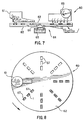
- the banding system comprises a source of blanks, typically a vibratory or rotary feed hopper 61; a transport mechanism to move blanks to the printing station, typically comprising a rotating transport table 62, or alternatively a linear conveyer, and a stationary table 63 upon which the blanks roll during processing; and one or more banding stations 64 having a printing means, typically including a source of banding material 65 and a printing wheel 66.
- a source of blanks typically a vibratory or rotary feed hopper 61
- a transport mechanism to move blanks to the printing station typically comprising a rotating transport table 62, or alternatively a linear conveyer, and a stationary table 63 upon which the blanks roll during processing
- one or more banding stations 64 having a printing means, typically including a source of banding material 65 and a printing wheel 66.
- the feed hopper 61 is positioned over table 62 that is adapted to rotate horizontally over stationary table 63.
- Table 62 is formed with a plurality of slots or openings 67 that are positioned linearly on respective radii of table 62 and are adapted to receive blanks from the feed hopper.
- Table 63 forms a stationary surface that supports the blanks as the blanks are transported to banding station 64.
- Openings 68 shown in FIGS. 9 and 10, in stationary table 63 are sized to be slightly smaller than openings 67 so that the blanks continue to be supported at the banding station.
- Openings 68 are sized to accommodate the printing means so that banding material can be applied to the grooves of the blank.
- Drying apparatus 69 may be of conventional design, including, for example, a fan for forcing ambient air over a heater element to warm the air, which is then directed with appropriate ducting to the area of table 62 in which banded tablets are located. The banded tablets will continue to rotate because of the rotation of table 62 over stationary table 63 and be dried as they pass through the warm-air environment provided by the drying apparatus 69. While a single drying apparatus at a single drying station is shown, it will be understood that multiple units may be used if necessary to complete the drying of the banded tablets in a single cycle of rotation of table 62.
- a first drying apparatus may provide an initial amount of drying at a lower temperature to prevent too rapid drying of the banding material, and one or more additional drying apparatuses may provide additional drying cycles at a higher temperature to complete final drying of the banded tablets.
- Table 63 is formed with a second set of openings or a continuous slot (not shown) extending along a radius of table 63 through which banded tablets may be released from the slots 67 into a collection apparatus.
- each of the blanks positioned within openings 67 along a particular radius of table 62 may be banded at the same time.
- a similar banding station may be positioned at another set of openings 67 in table 63 along other radii, thus providing the opportunity to apply additional banding material to the banded blanks if thicker coatings or coatings of different compositions are desired.
- the grooves formed on the blanks of the invention act as an indexing or register means to cooperate with the printing means in the fabrication system and at the same time provide dispensing devices having the desired release profile of active agent.
- blank 1 is shown at a location above a printing wheel 66.
- Groove 20 is indexed by and registers with banding wheel 66.
- the outer circumferential surface of banding wheel 66 may be a generally planar surface 71 as shown in FIG. 9, or it may be a concave surface 72 as shown in FIG. 10.
- the concave surface is usually employed if thicker bands are required to obtain the desired release profile of the active agent, since the concave surface permits the application of a greater mass of banding material in a single application than is possible with the flat surface.
- the printing surface of printing wheel 66 may optionally be smooth or rough depending upon the application intended.
- a rough surface can consist of a knurled surface, a sandblasted or pebbled surface, or a matte finish.
- the purpose of the roughened printing surface is to promote frictional contact to the blank as the blank rotates over printing wheel 66 to enhance rotation with improved traction.
- Another purpose of the roughened surface is to increase the application rate of banding material 65 by increasing the amount of banding material transferred from the band feed source per each rotation of the printing wheel.
- the printing surface of the printing wheel can also be configured with one or more channels to facilitate efficient transfer of the banding material from the feed source to the blank.
- An end-on view of such a printing wheel with a single channel 72 is illustrated in FIG. 10.
- the edges 73 and 74 forming the channel may be smooth or roughed as discussed previously with respect to the planar surface of printing wheel 66.
- printing wheel 66 rotates through the banding material, it picks up banding material on its circumferential surface and deposits it onto the surface of groove 20.
- the rate of rotation of table 62 is adjusted to provide a residence time for the blanks at the banding station that is adequate to allow for application of the desired amount of banding material.
- table 62 will rotate in a range of 0.25 to 2.1 revolutions per minute (rpm) and printing wheel 66 will rotate in a range of 15 to 120 rpm.
- table 62 preferably rotates between 0.5 and 0.75 rpm, most preferably between 0.6 and 0.7 rpm, and printing wheel 66 preferably rotates between 30 and 60 rpm, most preferably between 40-50 rpm.
- the grooves in the blanks additionally act as templates for the formation of bands on the dosage forms, thus facilitating control of the width, depth, location and edge characteristics of the bands.
- banded dosage forms having a smooth, outer surface can be produced with or without coating of an overlayer on the banded tablet.
- the groove which circumscribes the tablet may be either shallow or deep.
- the dosage form is intended to expand significantly from uptake of fluid (e.g. 100% to 500% of its dry volume)
- deeper grooves usually will be employed.
- the shape of the groove can be in the form of a notch or a saddle point ( Figures 3-6).
- the diameter of the tablet at these deep-grooved areas is smaller than the tablet diameter overall. Therefore, when this core is banded at a fixed wheel rotation speed and fixed dwell time, a thicker band can form within the groove than would be formed without the groove.
- Thick, robust rings are needed when the gastric retention system is in operation to withstand the pressure generated by high-swelling fibers and hydrogels of the core as the system enlarges to dimensions larger than the pylorus.
- deep-grooved rings will have a maximum depth of from about 0.5 mm to about 3 mm, although it is understood that.the thickness may be less or greater as selected by one skilled in the art for the particular application at hand.
- FIG. 11 illustrates a typical blank 1 formed with a groove 20 from horizontal compression of the bulk active agent formulation.
- a horizontally compressed blank may have a number of surfaces, such as the land area designated 75 and surfaces 76 and 77, that impart some non-circular irregularity to the cross-section of the tablet.
- Application of the banding material according to the process of the present invention typically will cover those surfaces with banding material to provide a smooth surface after banding.
- the banded tablet may be overcoated as described previously to provide for a smooth, outer surface.
- the active agent of the active agent formulation may be in liquid, solid or semisolid form.
- the active agent formulation may contain additional materials and may be designed in a multitude of ways to provide a specific drug delivery profile.
- One embodiment comprises a formulation that contains a biologically acceptable hydrophilic polymer which is capable of slow dispersion in the environmental fluid.
- the formulation may contain a hydrophilic polymer and a surfactant so that the formulation is susceptible to erosion in the environment.
- the formulation may include a solid surfactant so that the formulation is susceptible to erosion in the environment.
- the formulation may include a solid surfactant and provide drug delivery in a finely dispersed form.
- the formulation may include coated microspheres of an active agent and an adjuvant.
- the active agent and adjuvant can be delivered simultaneously from the microspheres either by diffusion or by osmosis.
- Suitable materials useful as active agent carriers and excipients are known in the art and are disclosed in U.S. Patent Nos. 4,595,583 and 4,874,388, for example.
- active agent and “drug” are used interchangeably herein and refer to an agent, drug, compound, composition of matter or mixture thereof which provides some pharmacologic, often beneficial, effect.
- the terms further include any physiologically or pharmacologically active substance that produces a localized or systemic effect or effects in animals, including warm blooded mammals, humans and primates; avians; domestic household or farm animals such as cats, dogs, sheep, goats, cattle, horses and pigs; laboratory animals such as mice, rats and guinea pigs; fish; reptiles; zoo and wild animals; and the like.
- the active drug that can be delivered includes inorganic and organic compounds, including, without limitation, drugs which act on the peripheral nerves, adrenergic receptors, cholinergic receptors, the skeletal muscles, the cardiovascular system, smooth muscles, the blood circulatory system, synoptic sites, neuroeffector junctional sites, endocrine and hormone systems, the immune system, the reproductive system, the skeletal system, autacoid systems, the alimentary and excretory systems, the histamine system and the central nervous system.
- Suitable agents may be selected from, for example, proteins, enzymes, hormones, polynucleotides, nucleoproteins, polysaccharides, glycoproteins, lipoproteins, polypeptides, steroids, hypnotics and sedatives, psychic energizers, tranquilizers, anticonvulsants, muscle relaxants, antiparkinson agents, analgesics, antiepileptics, antibiotics, anti-inflammatories, focal anesthetics, muscle contractants, antimicrobials, antivirals, antimatarials, hormonal agents including contraceptives, sympathomimetics, polypeptides and proteins capable of eliciting physiological effects, diuretics, lipid regulating agents, antiandrogenic agents, antiparasitics, neoplastics, antineoplastics, hypoglycemics, nutrional agents and supplements, growth supplements, fats, ophthalmics, antienteritis agents, electrolytes and diagnostic agents.
- beneficial agents useful in this invention include prochlorperazine edisylate, ferrous sulfate, aminocaproic acid, mecamylamine hydrochloride, procainamide hydrochloride, amphetamine sulfate, methamphetamine hydrochloride, benzphetamine hydrochloride, isoproterenol sulfate, phenmetrazine hydrochloride, bethanechol chloride, methacholine chloride, pilocarpine hydrochloride, atropine sulfate, scopolamine bromide, isopropamide iodide, tridihexethyl chloride, phenformin hydrochloride, methylphenidate hydrochloride, theophylline cholinate, cephalexin hydrochloride, diphenidol, meclizine hydrochloride, prochlorperazine maleate, phenoxybenzamine, thiethylperazine maleate
- proteins and peptides which include, but are not limited to, insulin, colchicine, glucagon, thyroid stimulating hormone, parathyroid and pituitary hormones, calcitonin, renin, prolactin, corticotrophin, thyrotropic hormone, follicle stimulating hormone, chorionic gonadotropin, gonadotropin releasing hormone, bovine somatotropin, porcine somatropin, oxytocin, vasopressin, prolactin, somatostatin, lypressin, pancreazymin, luteinizing hormone, LHRH, interferons, interleukins, growth hormones such as human growth hormone, bovine growth hormone and porcine growth hormone, fertility inhibitors such as the prostaglandins, fertility promoters, growth factors, and human pancreas hormone releasing factor.
- active agent may be incorporated into the active agent formulation in a device of this invention, and that the use of the term "agent” or “drug” in no way excludes the use of two or more such agents or drugs.
- the agents can be in various forms, such as uncharged molecules, components of molecular complexes or nonirritating, pharmacologically acceptable salts. Also, simple derivatives of the agents (such as ethers, esters, amides, etc) which are easily hydrolyzed by body pH, enzymes, etc, can be employed.
- the amount of active agent employed in the delivery device will be that amount necessary to deliver a therapeutically effective amount of the agent to achieve the desired result at the site of delivery. In practice, this will vary widely depending upon the particular agent, the site of delivery, the severity of the condition, and the desired therapeutic effect. Thus, it is not practical to define a particular range for the therapeutically effective amount of active agent incorporated into the device.
- the hydrophilic polymeric material useful herein may comprise, polysaccharides, methyl cellulose, sodium or calcium carboxymethyl cellulose, nitrocellulose, carboxymethyl cellulose and other cellulose ethers, and polyethylene oxides (e.g., Polyox®, Union Carbide).
- hydrophilic polymeric material examples include but are not limited to hydroxypropyl cellulose, low-substituted hydroxypropyl cellulose, hydroxypropyl methyl cellulose, hydroxyethyl cellulose, methyl ethyl cellulose, ethylhydroxy ethylcellulose, cellulose acetate, cellulose butyrate, cellulose propionate, cellulose fibers, gelatin, collagen, starch, maltodextrin, pullulan, polyvinyl pyrrolidone, polyvinyl alcohol, polyvinyl acetate, glycerol fatty acid esters, polyacrylamide, polyacrylic acid, sodium and potassium salts of polyacrylic acid, copolymers of ethacrylic acid or methacrylic acid (Eudragit TM ) or other acrylic acid derivatives, sorbitan esters, natural gums, lecithins, pectin, alginates, ammonia alginate, sodium or potassium alginate, calcium al
- the pharmaceutically acceptable carrier useful herein may comprise more than one ingredient, such as, for example, a buffer, a viscosity regulating vehicle, a surfactant, a dye, a permeation enhancer, a proteinase inhibitor, or other formulation ingredients and additives, as are known in the art.
- the rate of release of the active agent from the active agent dosage forms is predominantly controlled by erosion of the aqueous gel formed by contacting the matrix with the fluid environment of use.
- the rate of active agent released from a cylindrical dosage form without bands versus time will continuously decrease with time.
- the diameter of the cylinder as well as the area of erosion decreases.
- the polymeric core of the banded cylinder of this invention shrinks, new surface area is created and exposed to the environment of use as described in greater detail in the '263 patent.
- the amount of active agent released over time may remain constant or may increase with time depending on the rate of the new surface area being generated.
- the bands may be placed onto the surface of the matrix such that, as the matrix erodes, the bands become loose and drop off the matrix. These bands are easily excreted from the gastrointestinal tract. As the number of bands remaining on the surface of the matrix decreases, more matrix surface area will be exposed. The matrix will therefore erode in a fashion that approaches zero order rate.
- the active agent formulation is first prepared and formed into a blank of the desired size and shape and having the desired number of grooves with the desired groove shape.
- the matrix in its initial prepared form is about the size and dimensions of a size "5" to size "000" hard gelatin capsule.
- the cross-sectional shape of the matrix may be circular or may be oval or other shapes that are able to be manipulated by the banding system, indexed by means of the grooves acting as registers and printed. Generally, shapes that are easily rotated by the printing wheel of the systems described herein, e.g., circular and oval, will be most preferred.
- a delivery device is prepared as follows. 580 grams of the analgesic drug, ibuprofen, 250 grams of hydroxypropyl methylcellulose having a number average molecular weight of 9,200 grams per mole, and 150 grams of hydroxypropyl methylcellulose having a molecular weight of 242,000 grams per mole, is passed through a screen having a mesh size of 40 wires per inch. The cellulose each have an average hydroxyl content of 8 weight percent and an average methoxyl content of 22 weight percent. The resulting sized powders are tumble mixed. Anhydrous ethyl alcohol is added slowly to the mixed powders with stirring until a dough consistency is produced. The damp mass is then extruded through a 20 mesh screen and air dried overnight.
- the resulting dried material is re-screened through a 20 mesh screen to form the final granules. 2 grams of the tabletting lubricant, magnesium stearate, which has been sized through an 80 mesh screen, is then tumbled into the granules.
- 690 mg of the resulting granulation is placed in a die cavity formed with three, uniformly spaced convex ridges, each having a semi-circular cross-sectional shape and a height of 0.7 mm.
- the inside dimensions of the die, not including the ridged areas, are 15 mm by 9 mm.
- the granulation is horizontally compressed with deep concave punch tooling using a punch formed with ridges on its interior surface that correspond to the ridges in the die to form complementary groove when the compression operation is completed. Compression takes place at a pressure head of 2 tons. This forms a longitudinal blank having an overall length, including the rounded ends, of 15 mm and a concave groove with a depth of 0.7 mm.
- the cylindrical body of the blank spans a distance of 9 mm.
- Each blank contains a unit dose of drug of 400 mg.
- the capsules are fed into a Tait Capsealer Machine (Tait Design and Machine Co., Manheim, PA), modified as described herein, where the rotating printing wheels engage the grooves and align the blank for the printing operation.
- Three bands are printed onto each capsule.
- the material forming the bands is a mixture of 50 wt% ethylcellulose dispersion (Surelease®, Colorcon, West Point, PA) and 50 wt% ethyl acrylate methylmethacrylate (Eudragit® NE 30D, RöhmPharma,mannstadt, Germany).
- the bands are applied as an aqueous dispersion and the excess water is driven off in a current of warm air.
- the diameter of the bands is 2 millimeters.
- the finished dosage form has a smooth outer surface and delivers ibuprofen over a prolonged period of time.
- Drug release studies are performed by placing the dosage forms in a slotted basket.
- the inside diameter of the basket is 14 mm and the length is 50 mm.
- the basket is attached to a reciprocating motor.
- the basket is then immersed in 50 ml of simulated intestinal fluid at 37°C, and shaken vertically in the media with a amplitude of 3.8 cm and a frequency of 99-101 cycles per minute.
- the basket is transferred to a fresh 50 ml volume of the test media. This procedure is continued, hour by hour, for nine hours.
- the systems then are allowed to release continuously for another 13 hours to complete a 24 hour test duration.
- the release receptor solutions are then analyzed for drug content by ultraviolet spectroscopy.
- the release rate as a function of time and cumulative release as a function of time are computed.
- the delivery devices of the invention release active agent over a prolonged period of time.
- a blank with the ibuprofen matrix formulation described in Example 1 is formed with one notched groove having sloping side wall at an angle of 30 degrees with the longitudinal axis of the tablet and banded with one band.
- the resulting dosage form has a substantially smooth outer surface, with the edges and thickness of the bands being substantially uniform.
- the dosage form delivers ibuprofen over a prolonged period.
- a fast-release drug granulation is prepared as follows; 870 grams of ibuprofen, 100 grams of hydroxypropyl cellulose having a hydroxypropoxyl content of 11 weight percent, and 10 grams of hydroxypropyl methyl cellulose having a hydroxypropoxyl content of 8 weight percent and a methoxy content of 22 weight percent and having a number average molecular weight of 9,200 grams per mole, are screened through a 40 mesh sieve. The sized powders are mixed and anhydrous ethanol is added with stirring until a uniform, damp mass is produced. The mixture is extruded through a 20 mesh sieve. The elongated granules produced are air dried. The dried granules are re-screened through a 20 mesh sieve. 20 Grams of stearic acid which has been passed through an 80 mesh sieve are tumble mixed into the granules for 3 minutes.
- 690 mg of the granulation of Example 1 is filled into a die cavity having two semicircular ridges with sides at an angle of 30 degrees with the longitudinal axis of the die and an inside diameter in an area not including the ridges of 6 mm and horizontally lightly compressed with deep concave punch tooling.
- the upper punch is removed and 230 mg of the fast-release granulation is placed on the lightly compressed core.
- Two rings are printed onto the dosage form according to the procedures herein.
- An abrasion resistant, protective coating is applied to the banded, two-layered tablet as follows.
- a coating solution is prepared by dissolving 63 grams of hydroxypropyl methylcellulose having a hydroxypropoxyl content of 10 weight percent and a methoxy content of 29 weight percent with a number average molecular weight of 11,900 grams per mole, and 7 grams of polyethylene glycol having a molecular weight of 3,350 grams per mole, in 930 grams of water.
- the banded dosage form is then placed in a pan coating machine.
- the coating solution is sprayed onto the banded tablet in a current of warmed air until 40 mg of film are deposited on each tablet.
- the resulting two-layer, film coated system releases a portion of ibuprofen rapidly and a portion of ibuprofen over a prolonged period.
Landscapes
- Health & Medical Sciences (AREA)
- Chemical & Material Sciences (AREA)
- Medicinal Chemistry (AREA)
- Pharmacology & Pharmacy (AREA)
- Epidemiology (AREA)
- Life Sciences & Earth Sciences (AREA)
- Animal Behavior & Ethology (AREA)
- General Health & Medical Sciences (AREA)
- Public Health (AREA)
- Veterinary Medicine (AREA)
- Medicinal Preparation (AREA)
- Agricultural Chemicals And Associated Chemicals (AREA)
Priority Applications (1)
| Application Number | Priority Date | Filing Date | Title |
|---|---|---|---|
| EP20030079066 EP1413296A1 (en) | 1998-05-07 | 1999-05-03 | Method of fabricating a banded prolonged release active agent dosage form |
Applications Claiming Priority (5)
| Application Number | Priority Date | Filing Date | Title |
|---|---|---|---|
| US8464698P | 1998-05-07 | 1998-05-07 | |
| US84646P | 1998-05-07 | ||
| US274648 | 1999-03-23 | ||
| US09/274,648 US6365183B1 (en) | 1998-05-07 | 1999-03-23 | Method of fabricating a banded prolonged release active agent dosage form |
| PCT/US1999/009575 WO1999056730A1 (en) | 1998-05-07 | 1999-05-03 | Method of fabricating a banded prolonged release active agent dosage form |
Publications (2)
| Publication Number | Publication Date |
|---|---|
| EP1077680A1 EP1077680A1 (en) | 2001-02-28 |
| EP1077680B1 true EP1077680B1 (en) | 2004-01-21 |
Family
ID=26771245
Family Applications (1)
| Application Number | Title | Priority Date | Filing Date |
|---|---|---|---|
| EP99920262A Expired - Lifetime EP1077680B1 (en) | 1998-05-07 | 1999-05-03 | Method of fabricating a banded prolonged release active agent dosage form |
Country Status (11)
| Country | Link |
|---|---|
| US (3) | US6365183B1 (da) |
| EP (1) | EP1077680B1 (da) |
| JP (1) | JP2002513751A (da) |
| AT (1) | ATE258044T1 (da) |
| AU (1) | AU751429B2 (da) |
| CA (1) | CA2328998C (da) |
| DE (1) | DE69914320T2 (da) |
| DK (1) | DK1077680T3 (da) |
| ES (1) | ES2215381T3 (da) |
| PT (1) | PT1077680E (da) |
| WO (1) | WO1999056730A1 (da) |
Families Citing this family (31)
| Publication number | Priority date | Publication date | Assignee | Title |
|---|---|---|---|---|
| US6365183B1 (en) * | 1998-05-07 | 2002-04-02 | Alza Corporation | Method of fabricating a banded prolonged release active agent dosage form |
| NZ532096A (en) | 2001-09-28 | 2006-10-27 | Mcneil Ppc Inc | Dosage forms having an inner core and outer shell with different shapes |
| US6982094B2 (en) | 2001-09-28 | 2006-01-03 | Mcneil-Ppc, Inc. | Systems, methods and apparatuses for manufacturing dosage forms |
| US6837696B2 (en) | 2001-09-28 | 2005-01-04 | Mcneil-Ppc, Inc. | Apparatus for manufacturing dosage forms |
| US7838026B2 (en) | 2001-09-28 | 2010-11-23 | Mcneil-Ppc, Inc. | Burst-release polymer composition and dosage forms comprising the same |
| US7122143B2 (en) | 2001-09-28 | 2006-10-17 | Mcneil-Ppc, Inc. | Methods for manufacturing dosage forms |
| US7217381B2 (en) | 2001-09-28 | 2007-05-15 | Mcneil-Ppc, Inc. | Systems, methods and apparatuses for manufacturing dosage forms |
| US7323192B2 (en) | 2001-09-28 | 2008-01-29 | Mcneil-Ppc, Inc. | Immediate release tablet |
| USD481456S1 (en) | 2002-01-30 | 2003-10-28 | Smithkline Beecham P.L.C. | Capsule |
| US7807197B2 (en) | 2002-09-28 | 2010-10-05 | Mcneil-Ppc, Inc. | Composite dosage forms having an inlaid portion |
| JP3811127B2 (ja) * | 2003-01-30 | 2006-08-16 | 株式会社東芝 | 情報記録装置及び情報記録方法 |
| USD530814S1 (en) | 2003-09-16 | 2006-10-24 | Novartis Ag | Combined capsule and tablets |
| USD520635S1 (en) * | 2003-09-16 | 2006-05-09 | Novartis Ag | Combine capsule and tablets |
| CA2540308C (en) | 2003-09-26 | 2013-08-06 | Alza Corporation | Drug coating providing high drug loading and methods for providing the same |
| NZ546183A (en) * | 2003-09-26 | 2011-04-29 | Alza Corp | Controlled release formulations exhibiting an ascending rate of release |
| MXPA06003453A (es) * | 2003-09-26 | 2006-08-31 | Johnson & Johnson | Barra de empuje oros para el suministro controlado de agentes activos. |
| US20050186273A1 (en) * | 2003-09-26 | 2005-08-25 | Si-Hong Yum | Controlled release dosage form including a banded engine |
| CN102697704A (zh) * | 2003-09-26 | 2012-10-03 | 阿尔扎公司 | 阿片类与非阿片类镇痛药的控释制剂 |
| US8541026B2 (en) | 2004-09-24 | 2013-09-24 | Abbvie Inc. | Sustained release formulations of opioid and nonopioid analgesics |
| US8673352B2 (en) | 2005-04-15 | 2014-03-18 | Mcneil-Ppc, Inc. | Modified release dosage form |
| USD543272S1 (en) * | 2005-05-19 | 2007-05-22 | Given-Imaging, Ltd. | Imaging device |
| US7985419B1 (en) | 2006-12-22 | 2011-07-26 | Watson Laboratories, Inc. | Divisible tablet and associated methods |
| EP2303125B1 (en) * | 2008-07-18 | 2019-10-30 | Koninklijke Philips N.V. | Spectral imaging |
| EP2605760B1 (en) * | 2010-08-18 | 2017-01-11 | Johnson & Johnson Consumer Inc. | Tablet sleeve for improved performance |
| US8383135B2 (en) * | 2010-12-03 | 2013-02-26 | Richard C. Fuisz | Solid dosage form that promotes reliable oral, esophageal and GI transit |
| US20130143867A1 (en) | 2011-12-02 | 2013-06-06 | Sychroneuron Inc. | Acamprosate formulations, methods of using the same, and combinations comprising the same |
| WO2014197744A1 (en) | 2013-06-05 | 2014-12-11 | Synchroneuron, Inc. | Acamprosate formulations, methods of using the same, and combinations comprising the same |
| GB201519128D0 (en) | 2015-10-29 | 2015-12-16 | Univ Central Lancashire | Solid forms and methods of preparing the same |
| CA3242369A1 (en) * | 2016-07-19 | 2018-01-25 | Johnson & Johnson Consumer Inc. (A Delaware Corporation) | Tablets having discontinuous coated regions |
| US10583089B2 (en) | 2016-07-19 | 2020-03-10 | Johnson & Johnson Consumer Inc. | Tablets having discontinuous coated regions |
| USD921217S1 (en) * | 2019-12-06 | 2021-06-01 | Dentsply Sirona Inc. | Mixing capsule |
Family Cites Families (23)
| Publication number | Priority date | Publication date | Assignee | Title |
|---|---|---|---|---|
| US2052376A (en) | 1933-05-18 | 1936-08-25 | Edgar G Zellers | Insoluble pill or tablet for internal medicinal uses |
| US2962851A (en) | 1957-10-14 | 1960-12-06 | Snyder Tool & Engineerong Co | Capsule handling machine |
| US4290426A (en) | 1978-05-04 | 1981-09-22 | Alza Corporation | Dispenser for dispensing beneficial agent |
| US4327725A (en) | 1980-11-25 | 1982-05-04 | Alza Corporation | Osmotic device with hydrogel driving member |
| JPS58152813A (ja) | 1982-03-08 | 1983-09-10 | Sumitomo Chem Co Ltd | 鮮明な刻印を有する錠剤およびその製法 |
| US4503031A (en) | 1982-12-17 | 1985-03-05 | Glassman Jacob A | Super-fast-starting-sustained release tablet |
| US4595583A (en) * | 1984-03-19 | 1986-06-17 | Alza Corporation | Delivery system controlled administration of beneficial agent to ruminants |
| IT1188212B (it) | 1985-12-20 | 1988-01-07 | Paolo Colombo | Sistema per il rilascio a velocita' controllata di sostanze attive |
| US4824677A (en) * | 1986-12-18 | 1989-04-25 | The Unjohn Company | Grooved tablet for fractional dosing of sustained release medication |
| US4792448A (en) | 1987-06-11 | 1988-12-20 | Pfizer Inc. | Generic zero order controlled drug delivery system |
| US4874388A (en) * | 1987-06-25 | 1989-10-17 | Alza Corporation | Multi-layer delivery system |
| US5023088A (en) | 1987-06-25 | 1991-06-11 | Alza Corporation | Multi-unit delivery system |
| US4915950A (en) | 1988-02-12 | 1990-04-10 | Cygnus Research Corporation | Printed transdermal drug delivery device |
| US5024842A (en) * | 1988-04-28 | 1991-06-18 | Alza Corporation | Annealed coats |
| JP2675142B2 (ja) | 1989-06-12 | 1997-11-12 | 日本エランコ株式会社 | カプセルの封緘機 |
| IT1237904B (it) | 1989-12-14 | 1993-06-18 | Ubaldo Conte | Compresse a rilascio a velocita' controllata delle sostanze attive |
| US5326570A (en) | 1991-07-23 | 1994-07-05 | Pharmavene, Inc. | Advanced drug delivery system and method of treating psychiatric, neurological and other disorders with carbamazepine |
| DE69228457T2 (de) * | 1991-09-10 | 1999-06-17 | Takeda Chemical Industries, Ltd., Osaka | Teilbare Tablette |
| US5266332A (en) | 1991-12-06 | 1993-11-30 | Alza Corporation | Method for administering anti-Parkinson drug |
| US5256440A (en) | 1992-06-22 | 1993-10-26 | Merck & Co., Inc. | Process for producing a tablet core aperture |
| DE4341548A1 (de) | 1993-12-07 | 1995-06-08 | Frank Brenner | Stabtablette |
| US5534263A (en) | 1995-02-24 | 1996-07-09 | Alza Corporation | Active agent dosage form comprising a matrix and at least two insoluble bands |
| US6365183B1 (en) * | 1998-05-07 | 2002-04-02 | Alza Corporation | Method of fabricating a banded prolonged release active agent dosage form |
-
1999
- 1999-03-23 US US09/274,648 patent/US6365183B1/en not_active Expired - Fee Related
- 1999-05-03 CA CA002328998A patent/CA2328998C/en not_active Expired - Fee Related
- 1999-05-03 AT AT99920262T patent/ATE258044T1/de not_active IP Right Cessation
- 1999-05-03 ES ES99920262T patent/ES2215381T3/es not_active Expired - Lifetime
- 1999-05-03 EP EP99920262A patent/EP1077680B1/en not_active Expired - Lifetime
- 1999-05-03 PT PT99920262T patent/PT1077680E/pt unknown
- 1999-05-03 JP JP2000546757A patent/JP2002513751A/ja active Pending
- 1999-05-03 DE DE69914320T patent/DE69914320T2/de not_active Expired - Fee Related
- 1999-05-03 AU AU37803/99A patent/AU751429B2/en not_active Ceased
- 1999-05-03 WO PCT/US1999/009575 patent/WO1999056730A1/en not_active Ceased
- 1999-05-03 DK DK99920262T patent/DK1077680T3/da active
-
2002
- 2002-02-15 US US10/076,096 patent/US20020155155A1/en not_active Abandoned
-
2003
- 2003-09-26 US US10/672,791 patent/US20040067300A1/en not_active Abandoned
Also Published As
| Publication number | Publication date |
|---|---|
| PT1077680E (pt) | 2004-06-30 |
| DE69914320D1 (de) | 2004-02-26 |
| US20020155155A1 (en) | 2002-10-24 |
| ATE258044T1 (de) | 2004-02-15 |
| CA2328998C (en) | 2009-03-10 |
| JP2002513751A (ja) | 2002-05-14 |
| EP1077680A1 (en) | 2001-02-28 |
| ES2215381T3 (es) | 2004-10-01 |
| DK1077680T3 (da) | 2004-06-01 |
| US6365183B1 (en) | 2002-04-02 |
| WO1999056730A1 (en) | 1999-11-11 |
| AU3780399A (en) | 1999-11-23 |
| US20040067300A1 (en) | 2004-04-08 |
| DE69914320T2 (de) | 2004-10-21 |
| AU751429B2 (en) | 2002-08-15 |
| CA2328998A1 (en) | 1999-11-11 |
Similar Documents
| Publication | Publication Date | Title |
|---|---|---|
| EP1077680B1 (en) | Method of fabricating a banded prolonged release active agent dosage form | |
| AU703681B2 (en) | Banded prolonged release active agent dosage form | |
| EP1003476B1 (en) | Prolonged release active agent dosage form adapted for gastric retention | |
| US6797283B1 (en) | Gastric retention dosage form having multiple layers | |
| US6719751B2 (en) | Osmotic dosage form composed of an extruded polymer tube form | |
| WO2000038650A1 (en) | Gastric retention dosage form having multiple layers | |
| US20100158997A1 (en) | Blow-molded thin-walled drug delivery capsules | |
| EP1413296A1 (en) | Method of fabricating a banded prolonged release active agent dosage form | |
| WO2007041079A2 (en) | Banded controlled release nanoparticle active agent formulation dosage forms and methods | |
| CA2207098C (en) | Banded prolonged release active agent dosage form | |
| HK1005794B (en) | Banded prolonged release active agent dosage form | |
| MXPA97006484A (en) | Form of dose of active agent of prolonged release with ban | |
| HK1028196B (en) | Prolonged release active agent dosage form adapted for gastric retention | |
| HK1159673A (en) | Blow-molded thin-walled drug delivery capsules |
Legal Events
| Date | Code | Title | Description |
|---|---|---|---|
| PUAI | Public reference made under article 153(3) epc to a published international application that has entered the european phase |
Free format text: ORIGINAL CODE: 0009012 |
|
| 17P | Request for examination filed |
Effective date: 20001012 |
|
| AK | Designated contracting states |
Kind code of ref document: A1 Designated state(s): AT BE CH CY DE DK ES FI FR GB GR IE IT LI LU MC NL PT SE |
|
| GRAH | Despatch of communication of intention to grant a patent |
Free format text: ORIGINAL CODE: EPIDOS IGRA |
|
| GRAS | Grant fee paid |
Free format text: ORIGINAL CODE: EPIDOSNIGR3 |
|
| GRAA | (expected) grant |
Free format text: ORIGINAL CODE: 0009210 |
|
| AK | Designated contracting states |
Kind code of ref document: B1 Designated state(s): AT BE CH CY DE DK ES FI FR GB GR IE IT LI LU MC NL PT SE |
|
| PG25 | Lapsed in a contracting state [announced via postgrant information from national office to epo] |
Ref country code: CY Free format text: LAPSE BECAUSE OF FAILURE TO SUBMIT A TRANSLATION OF THE DESCRIPTION OR TO PAY THE FEE WITHIN THE PRESCRIBED TIME-LIMIT Effective date: 20040121 |
|
| REG | Reference to a national code |
Ref country code: GB Ref legal event code: FG4D |
|
| REG | Reference to a national code |
Ref country code: CH Ref legal event code: EP |
|
| REG | Reference to a national code |
Ref country code: IE Ref legal event code: FG4D |
|
| REF | Corresponds to: |
Ref document number: 69914320 Country of ref document: DE Date of ref document: 20040226 Kind code of ref document: P |
|
| REG | Reference to a national code |
Ref country code: GR Ref legal event code: EP Ref document number: 20040400701 Country of ref document: GR |
|
| REG | Reference to a national code |
Ref country code: CH Ref legal event code: NV Representative=s name: KIRKER & CIE SA |
|
| PG25 | Lapsed in a contracting state [announced via postgrant information from national office to epo] |
Ref country code: LU Free format text: LAPSE BECAUSE OF NON-PAYMENT OF DUE FEES Effective date: 20040503 |
|
| REG | Reference to a national code |
Ref country code: SE Ref legal event code: TRGR |
|
| PG25 | Lapsed in a contracting state [announced via postgrant information from national office to epo] |
Ref country code: MC Free format text: LAPSE BECAUSE OF NON-PAYMENT OF DUE FEES Effective date: 20040531 |
|
| REG | Reference to a national code |
Ref country code: DK Ref legal event code: T3 |
|
| REG | Reference to a national code |
Ref country code: PT Ref legal event code: SC4A Free format text: AVAILABILITY OF NATIONAL TRANSLATION Effective date: 20040415 |
|
| REG | Reference to a national code |
Ref country code: ES Ref legal event code: FG2A Ref document number: 2215381 Country of ref document: ES Kind code of ref document: T3 |
|
| ET | Fr: translation filed | ||
| PLBE | No opposition filed within time limit |
Free format text: ORIGINAL CODE: 0009261 |
|
| STAA | Information on the status of an ep patent application or granted ep patent |
Free format text: STATUS: NO OPPOSITION FILED WITHIN TIME LIMIT |
|
| 26N | No opposition filed |
Effective date: 20041022 |
|
| PGFP | Annual fee paid to national office [announced via postgrant information from national office to epo] |
Ref country code: ES Payment date: 20080619 Year of fee payment: 10 Ref country code: DK Payment date: 20080515 Year of fee payment: 10 Ref country code: DE Payment date: 20080508 Year of fee payment: 10 Ref country code: CH Payment date: 20080616 Year of fee payment: 10 |
|
| PGFP | Annual fee paid to national office [announced via postgrant information from national office to epo] |
Ref country code: AT Payment date: 20080514 Year of fee payment: 10 |
|
| PGFP | Annual fee paid to national office [announced via postgrant information from national office to epo] |
Ref country code: FI Payment date: 20080515 Year of fee payment: 10 Ref country code: PT Payment date: 20080417 Year of fee payment: 10 Ref country code: IT Payment date: 20080529 Year of fee payment: 10 |
|
| PGFP | Annual fee paid to national office [announced via postgrant information from national office to epo] |
Ref country code: SE Payment date: 20080509 Year of fee payment: 10 Ref country code: NL Payment date: 20080501 Year of fee payment: 10 Ref country code: IE Payment date: 20080515 Year of fee payment: 10 |
|
| PGFP | Annual fee paid to national office [announced via postgrant information from national office to epo] |
Ref country code: GB Payment date: 20080507 Year of fee payment: 10 |
|
| PGFP | Annual fee paid to national office [announced via postgrant information from national office to epo] |
Ref country code: BE Payment date: 20081127 Year of fee payment: 10 |
|
| PGFP | Annual fee paid to national office [announced via postgrant information from national office to epo] |
Ref country code: GR Payment date: 20080410 Year of fee payment: 10 |
|
| REG | Reference to a national code |
Ref country code: PT Ref legal event code: MM4A Free format text: LAPSE DUE TO NON-PAYMENT OF FEES Effective date: 20091103 |
|
| BERE | Be: lapsed |
Owner name: *ALZA CORP. Effective date: 20090531 |
|
| REG | Reference to a national code |
Ref country code: CH Ref legal event code: PL |
|
| REG | Reference to a national code |
Ref country code: DK Ref legal event code: EBP |
|
| GBPC | Gb: european patent ceased through non-payment of renewal fee |
Effective date: 20090503 |
|
| PG25 | Lapsed in a contracting state [announced via postgrant information from national office to epo] |
Ref country code: LI Free format text: LAPSE BECAUSE OF NON-PAYMENT OF DUE FEES Effective date: 20090531 Ref country code: FI Free format text: LAPSE BECAUSE OF NON-PAYMENT OF DUE FEES Effective date: 20090503 Ref country code: CH Free format text: LAPSE BECAUSE OF NON-PAYMENT OF DUE FEES Effective date: 20090531 Ref country code: AT Free format text: LAPSE BECAUSE OF NON-PAYMENT OF DUE FEES Effective date: 20090503 |
|
| NLV4 | Nl: lapsed or anulled due to non-payment of the annual fee |
Effective date: 20091201 |
|
| PG25 | Lapsed in a contracting state [announced via postgrant information from national office to epo] |
Ref country code: NL Free format text: LAPSE BECAUSE OF NON-PAYMENT OF DUE FEES Effective date: 20091201 |
|
| REG | Reference to a national code |
Ref country code: FR Ref legal event code: ST Effective date: 20100129 |
|
| REG | Reference to a national code |
Ref country code: IE Ref legal event code: MM4A |
|
| PG25 | Lapsed in a contracting state [announced via postgrant information from national office to epo] |
Ref country code: PT Free format text: LAPSE BECAUSE OF NON-PAYMENT OF DUE FEES Effective date: 20091103 |
|
| PG25 | Lapsed in a contracting state [announced via postgrant information from national office to epo] |
Ref country code: IE Free format text: LAPSE BECAUSE OF NON-PAYMENT OF DUE FEES Effective date: 20090504 Ref country code: FR Free format text: LAPSE BECAUSE OF NON-PAYMENT OF DUE FEES Effective date: 20090602 Ref country code: DK Free format text: LAPSE BECAUSE OF NON-PAYMENT OF DUE FEES Effective date: 20090531 |
|
| PGFP | Annual fee paid to national office [announced via postgrant information from national office to epo] |
Ref country code: FR Payment date: 20080514 Year of fee payment: 10 |
|
| PG25 | Lapsed in a contracting state [announced via postgrant information from national office to epo] |
Ref country code: GB Free format text: LAPSE BECAUSE OF NON-PAYMENT OF DUE FEES Effective date: 20090503 |
|
| PG25 | Lapsed in a contracting state [announced via postgrant information from national office to epo] |
Ref country code: GR Free format text: LAPSE BECAUSE OF NON-PAYMENT OF DUE FEES Effective date: 20091202 Ref country code: DE Free format text: LAPSE BECAUSE OF NON-PAYMENT OF DUE FEES Effective date: 20091201 Ref country code: BE Free format text: LAPSE BECAUSE OF NON-PAYMENT OF DUE FEES Effective date: 20090531 |
|
| REG | Reference to a national code |
Ref country code: ES Ref legal event code: FD2A Effective date: 20090504 |
|
| PG25 | Lapsed in a contracting state [announced via postgrant information from national office to epo] |
Ref country code: ES Free format text: LAPSE BECAUSE OF NON-PAYMENT OF DUE FEES Effective date: 20090504 |
|
| PG25 | Lapsed in a contracting state [announced via postgrant information from national office to epo] |
Ref country code: IT Free format text: LAPSE BECAUSE OF NON-PAYMENT OF DUE FEES Effective date: 20090503 |
|
| PG25 | Lapsed in a contracting state [announced via postgrant information from national office to epo] |
Ref country code: SE Free format text: LAPSE BECAUSE OF NON-PAYMENT OF DUE FEES Effective date: 20090504 |