EP1070256B1 - Fixation d'une molecule biologique sur une surface d'un support - Google Patents
Fixation d'une molecule biologique sur une surface d'un support Download PDFInfo
- Publication number
- EP1070256B1 EP1070256B1 EP99913389A EP99913389A EP1070256B1 EP 1070256 B1 EP1070256 B1 EP 1070256B1 EP 99913389 A EP99913389 A EP 99913389A EP 99913389 A EP99913389 A EP 99913389A EP 1070256 B1 EP1070256 B1 EP 1070256B1
- Authority
- EP
- European Patent Office
- Prior art keywords
- support
- biological molecule
- specific binding
- protein
- binding site
- Prior art date
- Legal status (The legal status is an assumption and is not a legal conclusion. Google has not performed a legal analysis and makes no representation as to the accuracy of the status listed.)
- Expired - Lifetime
Links
- 238000000034 method Methods 0.000 title claims abstract description 45
- VYPSYNLAJGMNEJ-UHFFFAOYSA-N Silicium dioxide Chemical compound O=[Si]=O VYPSYNLAJGMNEJ-UHFFFAOYSA-N 0.000 claims abstract description 93
- 239000000377 silicon dioxide Substances 0.000 claims abstract description 46
- 230000009870 specific binding Effects 0.000 claims abstract description 19
- 230000008569 process Effects 0.000 claims abstract description 8
- 125000003158 alcohol group Chemical group 0.000 claims abstract description 7
- 229910044991 metal oxide Inorganic materials 0.000 claims abstract description 6
- 150000004706 metal oxides Chemical class 0.000 claims abstract description 6
- 238000004140 cleaning Methods 0.000 claims abstract description 4
- 239000001301 oxygen Substances 0.000 claims abstract description 4
- 229910052760 oxygen Inorganic materials 0.000 claims abstract description 4
- 239000002904 solvent Substances 0.000 claims abstract description 4
- QVGXLLKOCUKJST-UHFFFAOYSA-N atomic oxygen Chemical compound [O] QVGXLLKOCUKJST-UHFFFAOYSA-N 0.000 claims abstract description 3
- 101100087422 Arabidopsis thaliana RH24 gene Proteins 0.000 claims description 47
- 235000018102 proteins Nutrition 0.000 claims description 36
- 102000004169 proteins and genes Human genes 0.000 claims description 36
- 108090000623 proteins and genes Proteins 0.000 claims description 36
- 235000014304 histidine Nutrition 0.000 claims description 19
- 102000007056 Recombinant Fusion Proteins Human genes 0.000 claims description 14
- 108010008281 Recombinant Fusion Proteins Proteins 0.000 claims description 14
- 239000000203 mixture Substances 0.000 claims description 12
- 239000011324 bead Substances 0.000 claims description 7
- 238000007654 immersion Methods 0.000 claims description 6
- 210000004899 c-terminal region Anatomy 0.000 claims description 4
- 239000007788 liquid Substances 0.000 claims description 4
- 239000001257 hydrogen Substances 0.000 claims description 3
- 229910052739 hydrogen Inorganic materials 0.000 claims description 3
- 230000009257 reactivity Effects 0.000 claims description 3
- UFHFLCQGNIYNRP-UHFFFAOYSA-N Hydrogen Chemical compound [H][H] UFHFLCQGNIYNRP-UHFFFAOYSA-N 0.000 claims description 2
- 238000010324 immunological assay Methods 0.000 claims description 2
- 150000002411 histidines Chemical class 0.000 claims 5
- 125000003275 alpha amino acid group Chemical group 0.000 claims 1
- 238000003556 assay Methods 0.000 claims 1
- 230000003100 immobilizing effect Effects 0.000 claims 1
- 238000003745 diagnosis Methods 0.000 abstract 1
- 238000001179 sorption measurement Methods 0.000 description 17
- 230000003993 interaction Effects 0.000 description 16
- 125000000487 histidyl group Chemical class [H]N([H])C(C(=O)O*)C([H])([H])C1=C([H])N([H])C([H])=N1 0.000 description 14
- 230000002209 hydrophobic effect Effects 0.000 description 14
- 239000000243 solution Substances 0.000 description 14
- 150000001413 amino acids Chemical class 0.000 description 10
- 108090000765 processed proteins & peptides Proteins 0.000 description 10
- 150000004819 silanols Chemical class 0.000 description 10
- 238000012360 testing method Methods 0.000 description 9
- 235000001014 amino acid Nutrition 0.000 description 8
- 238000004630 atomic force microscopy Methods 0.000 description 8
- 238000003018 immunoassay Methods 0.000 description 8
- 239000003446 ligand Substances 0.000 description 8
- 102000004196 processed proteins & peptides Human genes 0.000 description 8
- 238000002965 ELISA Methods 0.000 description 7
- 108091093037 Peptide nucleic acid Proteins 0.000 description 7
- 230000027455 binding Effects 0.000 description 7
- JUJWROOIHBZHMG-UHFFFAOYSA-N Pyridine Chemical compound C1=CC=NC=C1 JUJWROOIHBZHMG-UHFFFAOYSA-N 0.000 description 6
- YXFVVABEGXRONW-UHFFFAOYSA-N Toluene Chemical compound CC1=CC=CC=C1 YXFVVABEGXRONW-UHFFFAOYSA-N 0.000 description 6
- RAXXELZNTBOGNW-UHFFFAOYSA-N imidazole Natural products C1=CNC=N1 RAXXELZNTBOGNW-UHFFFAOYSA-N 0.000 description 6
- 239000000463 material Substances 0.000 description 6
- 229920000136 polysorbate Polymers 0.000 description 6
- XLYOFNOQVPJJNP-UHFFFAOYSA-N water Substances O XLYOFNOQVPJJNP-UHFFFAOYSA-N 0.000 description 6
- 102000004190 Enzymes Human genes 0.000 description 5
- 108090000790 Enzymes Proteins 0.000 description 5
- XUIMIQQOPSSXEZ-UHFFFAOYSA-N Silicon Chemical compound [Si] XUIMIQQOPSSXEZ-UHFFFAOYSA-N 0.000 description 5
- 150000001875 compounds Chemical class 0.000 description 5
- 230000000694 effects Effects 0.000 description 5
- 230000035945 sensitivity Effects 0.000 description 5
- CSCPPACGZOOCGX-UHFFFAOYSA-N Acetone Chemical compound CC(C)=O CSCPPACGZOOCGX-UHFFFAOYSA-N 0.000 description 4
- YMWUJEATGCHHMB-UHFFFAOYSA-N Dichloromethane Chemical compound ClCCl YMWUJEATGCHHMB-UHFFFAOYSA-N 0.000 description 4
- 238000004458 analytical method Methods 0.000 description 4
- 239000000427 antigen Substances 0.000 description 4
- 102000036639 antigens Human genes 0.000 description 4
- 108091007433 antigens Proteins 0.000 description 4
- 230000009920 chelation Effects 0.000 description 4
- 229920001184 polypeptide Polymers 0.000 description 4
- 229910052710 silicon Inorganic materials 0.000 description 4
- 239000010703 silicon Substances 0.000 description 4
- IJGRMHOSHXDMSA-UHFFFAOYSA-N Atomic nitrogen Chemical compound N#N IJGRMHOSHXDMSA-UHFFFAOYSA-N 0.000 description 3
- LFQSCWFLJHTTHZ-UHFFFAOYSA-N Ethanol Chemical compound CCO LFQSCWFLJHTTHZ-UHFFFAOYSA-N 0.000 description 3
- 241000713772 Human immunodeficiency virus 1 Species 0.000 description 3
- QAOWNCQODCNURD-UHFFFAOYSA-N Sulfuric acid Chemical compound OS(O)(=O)=O QAOWNCQODCNURD-UHFFFAOYSA-N 0.000 description 3
- 125000000217 alkyl group Chemical group 0.000 description 3
- 238000013459 approach Methods 0.000 description 3
- 238000006243 chemical reaction Methods 0.000 description 3
- 238000010168 coupling process Methods 0.000 description 3
- 238000001514 detection method Methods 0.000 description 3
- RUFRLNPHRPYBLF-UHFFFAOYSA-N methoxy-dimethyl-octadecylsilane Chemical compound CCCCCCCCCCCCCCCCCC[Si](C)(C)OC RUFRLNPHRPYBLF-UHFFFAOYSA-N 0.000 description 3
- UMJSCPRVCHMLSP-UHFFFAOYSA-N pyridine Natural products COC1=CC=CN=C1 UMJSCPRVCHMLSP-UHFFFAOYSA-N 0.000 description 3
- 238000002444 silanisation Methods 0.000 description 3
- VYZAMTAEIAYCRO-UHFFFAOYSA-N Chromium Chemical compound [Cr] VYZAMTAEIAYCRO-UHFFFAOYSA-N 0.000 description 2
- 238000000018 DNA microarray Methods 0.000 description 2
- 208000031886 HIV Infections Diseases 0.000 description 2
- HNDVDQJCIGZPNO-YFKPBYRVSA-N L-histidine Chemical compound OC(=O)[C@@H](N)CC1=CN=CN1 HNDVDQJCIGZPNO-YFKPBYRVSA-N 0.000 description 2
- 241000283973 Oryctolagus cuniculus Species 0.000 description 2
- WGLPBDUCMAPZCE-UHFFFAOYSA-N Trioxochromium Chemical compound O=[Cr](=O)=O WGLPBDUCMAPZCE-UHFFFAOYSA-N 0.000 description 2
- 238000001042 affinity chromatography Methods 0.000 description 2
- 230000015572 biosynthetic process Effects 0.000 description 2
- 210000000234 capsid Anatomy 0.000 description 2
- 230000000052 comparative effect Effects 0.000 description 2
- 238000010668 complexation reaction Methods 0.000 description 2
- 230000008878 coupling Effects 0.000 description 2
- 238000005859 coupling reaction Methods 0.000 description 2
- -1 des histidines Chemical class 0.000 description 2
- 230000002255 enzymatic effect Effects 0.000 description 2
- HNDVDQJCIGZPNO-UHFFFAOYSA-N histidine Natural products OC(=O)C(N)CC1=CN=CN1 HNDVDQJCIGZPNO-UHFFFAOYSA-N 0.000 description 2
- 230000007062 hydrolysis Effects 0.000 description 2
- 238000006460 hydrolysis reaction Methods 0.000 description 2
- 150000002500 ions Chemical class 0.000 description 2
- 229910052751 metal Inorganic materials 0.000 description 2
- 239000002184 metal Substances 0.000 description 2
- 238000000386 microscopy Methods 0.000 description 2
- 230000003287 optical effect Effects 0.000 description 2
- 239000002245 particle Substances 0.000 description 2
- 239000012460 protein solution Substances 0.000 description 2
- 238000000746 purification Methods 0.000 description 2
- 239000000758 substrate Substances 0.000 description 2
- 102000002260 Alkaline Phosphatase Human genes 0.000 description 1
- 108020004774 Alkaline Phosphatase Proteins 0.000 description 1
- 241000937413 Axia Species 0.000 description 1
- 239000004593 Epoxy Substances 0.000 description 1
- 241000725303 Human immunodeficiency virus Species 0.000 description 1
- 206010061598 Immunodeficiency Diseases 0.000 description 1
- 208000029462 Immunodeficiency disease Diseases 0.000 description 1
- KDXKERNSBIXSRK-UHFFFAOYSA-N Lysine Natural products NCCCCC(N)C(O)=O KDXKERNSBIXSRK-UHFFFAOYSA-N 0.000 description 1
- 239000004472 Lysine Substances 0.000 description 1
- 229910019142 PO4 Inorganic materials 0.000 description 1
- 239000004793 Polystyrene Substances 0.000 description 1
- BLRPTPMANUNPDV-UHFFFAOYSA-N Silane Chemical compound [SiH4] BLRPTPMANUNPDV-UHFFFAOYSA-N 0.000 description 1
- CDBYLPFSWZWCQE-UHFFFAOYSA-L Sodium Carbonate Chemical compound [Na+].[Na+].[O-]C([O-])=O CDBYLPFSWZWCQE-UHFFFAOYSA-L 0.000 description 1
- 241000700605 Viruses Species 0.000 description 1
- 238000010521 absorption reaction Methods 0.000 description 1
- 230000004913 activation Effects 0.000 description 1
- 150000001412 amines Chemical class 0.000 description 1
- 230000003321 amplification Effects 0.000 description 1
- 125000003118 aryl group Chemical group 0.000 description 1
- 230000008901 benefit Effects 0.000 description 1
- 239000012620 biological material Substances 0.000 description 1
- 239000000872 buffer Substances 0.000 description 1
- 239000013522 chelant Substances 0.000 description 1
- 238000007398 colorimetric assay Methods 0.000 description 1
- 239000008139 complexing agent Substances 0.000 description 1
- 239000000356 contaminant Substances 0.000 description 1
- 230000002079 cooperative effect Effects 0.000 description 1
- 150000004696 coordination complex Chemical class 0.000 description 1
- 239000007822 coupling agent Substances 0.000 description 1
- ATDGTVJJHBUTRL-UHFFFAOYSA-N cyanogen bromide Chemical compound BrC#N ATDGTVJJHBUTRL-UHFFFAOYSA-N 0.000 description 1
- 230000007423 decrease Effects 0.000 description 1
- 238000005516 engineering process Methods 0.000 description 1
- 238000007824 enzymatic assay Methods 0.000 description 1
- 238000002474 experimental method Methods 0.000 description 1
- 239000000835 fiber Substances 0.000 description 1
- 238000007306 functionalization reaction Methods 0.000 description 1
- 230000005660 hydrophilic surface Effects 0.000 description 1
- 230000005661 hydrophobic surface Effects 0.000 description 1
- 230000001900 immune effect Effects 0.000 description 1
- 230000007813 immunodeficiency Effects 0.000 description 1
- 230000002163 immunogen Effects 0.000 description 1
- 230000005847 immunogenicity Effects 0.000 description 1
- 230000005764 inhibitory process Effects 0.000 description 1
- 230000002427 irreversible effect Effects 0.000 description 1
- 239000006249 magnetic particle Substances 0.000 description 1
- 238000004519 manufacturing process Methods 0.000 description 1
- 239000003550 marker Substances 0.000 description 1
- 238000004377 microelectronic Methods 0.000 description 1
- 229910052757 nitrogen Inorganic materials 0.000 description 1
- 238000003199 nucleic acid amplification method Methods 0.000 description 1
- NBIIXXVUZAFLBC-UHFFFAOYSA-K phosphate Chemical compound [O-]P([O-])([O-])=O NBIIXXVUZAFLBC-UHFFFAOYSA-K 0.000 description 1
- 239000010452 phosphate Substances 0.000 description 1
- 239000008363 phosphate buffer Substances 0.000 description 1
- 229920002704 polyhistidine Polymers 0.000 description 1
- 229920000642 polymer Polymers 0.000 description 1
- 229920002223 polystyrene Polymers 0.000 description 1
- 238000012545 processing Methods 0.000 description 1
- 229910052761 rare earth metal Inorganic materials 0.000 description 1
- 150000002910 rare earth metals Chemical class 0.000 description 1
- 230000035484 reaction time Effects 0.000 description 1
- 238000011084 recovery Methods 0.000 description 1
- 238000011160 research Methods 0.000 description 1
- 229920005989 resin Polymers 0.000 description 1
- 239000011347 resin Substances 0.000 description 1
- 230000000717 retained effect Effects 0.000 description 1
- 229920006395 saturated elastomer Polymers 0.000 description 1
- 238000010517 secondary reaction Methods 0.000 description 1
- 238000011896 sensitive detection Methods 0.000 description 1
- 229910000077 silane Inorganic materials 0.000 description 1
- 150000004756 silanes Chemical class 0.000 description 1
- 229910052814 silicon oxide Inorganic materials 0.000 description 1
- 238000006557 surface reaction Methods 0.000 description 1
- 230000009897 systematic effect Effects 0.000 description 1
- 150000003573 thiols Chemical class 0.000 description 1
- 238000002604 ultrasonography Methods 0.000 description 1
- 241001430294 unidentified retrovirus Species 0.000 description 1
Images
Classifications
-
- G—PHYSICS
- G01—MEASURING; TESTING
- G01N—INVESTIGATING OR ANALYSING MATERIALS BY DETERMINING THEIR CHEMICAL OR PHYSICAL PROPERTIES
- G01N33/00—Investigating or analysing materials by specific methods not covered by groups G01N1/00 - G01N31/00
- G01N33/48—Biological material, e.g. blood, urine; Haemocytometers
- G01N33/50—Chemical analysis of biological material, e.g. blood, urine; Testing involving biospecific ligand binding methods; Immunological testing
- G01N33/53—Immunoassay; Biospecific binding assay; Materials therefor
- G01N33/543—Immunoassay; Biospecific binding assay; Materials therefor with an insoluble carrier for immobilising immunochemicals
- G01N33/551—Immunoassay; Biospecific binding assay; Materials therefor with an insoluble carrier for immobilising immunochemicals the carrier being inorganic
- G01N33/552—Glass or silica
-
- Y—GENERAL TAGGING OF NEW TECHNOLOGICAL DEVELOPMENTS; GENERAL TAGGING OF CROSS-SECTIONAL TECHNOLOGIES SPANNING OVER SEVERAL SECTIONS OF THE IPC; TECHNICAL SUBJECTS COVERED BY FORMER USPC CROSS-REFERENCE ART COLLECTIONS [XRACs] AND DIGESTS
- Y10—TECHNICAL SUBJECTS COVERED BY FORMER USPC
- Y10S—TECHNICAL SUBJECTS COVERED BY FORMER USPC CROSS-REFERENCE ART COLLECTIONS [XRACs] AND DIGESTS
- Y10S977/00—Nanotechnology
- Y10S977/902—Specified use of nanostructure
- Y10S977/932—Specified use of nanostructure for electronic or optoelectronic application
- Y10S977/953—Detector using nanostructure
Definitions
- the present invention relates to a method of fixing a molecule biological, such as a recombinant protein derived from an antigen, an antibody, a enzyme, but also synthetic peptides and PNA (peptide nucleic acids), on the surface of a support made of silica or metal oxides; they also relate to the supports thus produced and the uses which may be make such support.
- a molecule biological such as a recombinant protein derived from an antigen, an antibody, a enzyme, but also synthetic peptides and PNA (peptide nucleic acids)
- proteins can be adsorbed on a support by several routes. interactions (1).
- the main ones are hydrophobic, polar and Ionic. These interactions are a function of the support, the protein and the environment considered.
- Hydrophobic adsorption takes place using a support adsorption method of flat silica used in the laboratory (2) which uses the interactions between a surface silanized with long alkyl chains and one or more hydrophobic zones of the protein.
- the binding of protein on a support by covalence is irreversible and is generally carried out on several accessible functions of a protein. It sometimes results from an inhibition of the activity of the molecule.
- patent application EP-A-0.874.242 relates to silanization a support (silica oxide) on which can be fixed completely random biological molecules.
- the fixing is carried out in several stages. First, the activation of silanols by hydrolysis of the oxygen bridges. Second, the bond between the silanols and an intermediate binding molecule, which can receive a ligand.
- Patent application EP-A-0,272,792 has substantially the same drawbacks as the application described above, since it proposes to fix, always in a random manner, antigens on particles.
- a second intermediate step which consists in the supply of cyanogen bromide which, by covalent bonds, will indirectly associate the particles and the antigens.
- a method of fixing biological material optimizes the complexation of this material with a metallic complex, while by reducing, or even eliminating, any secondary reaction of adsorption of said material on the metal complex.
- the method of fixing a material biological, of the invention uses a ligand coordination compound, or a compound complex obtained from the latter, said ligand compound being in the form microparticulate or in linear form and consisting of at least one polymer particulate or linear, with an apparent hydrophilic surface, and groups free complexing agents, fixed covalently.
- the object of the present invention is to allow the attachment of a molecule biological, such as a recombinant protein derived from an antigen, an antibody, a enzyme, but also synthetic peptides and PNA (peptide nucleic acids) on silica or metal oxide supports.
- a molecule biological such as a recombinant protein derived from an antigen, an antibody, a enzyme, but also synthetic peptides and PNA (peptide nucleic acids) on silica or metal oxide supports.
- This asset uses interactions between silanols in silica or alcohol functions of oxides and a specific area of the protein.
- the special properties of biospecific support thus created are mainly a good orientation of biological molecules or ligands on the surface and a support generating very good signal to background noise ratios.
- this type of immobilization is simple and stable over time.
- the method comprises, before the implementation contact, a step of immersion of the functionalized surface in a mixture sulphochromic.
- the specific binding site of the biological molecule is a site rich in histidines and its derivatives, such as a site containing a sufficient density of histidines, in particular greater than or equal to 25%, and preferably greater than or equal to 33%).
- the molecule biological and the specific binding site constitute a recombinant protein comprising at least two adjacent histidines, called “tags”.
- the specific site of binding of the biological molecule comprises at least four histidines, and preferably six adjacent histidines.
- the specific site is located within the protein recombinant or preferably at its N-terminal or C-terminal end.
- the contacting takes place for 30 to 60 minutes.
- the contacting takes place for 45 minutes.
- the immersion step is carried out for 5 to 30 minutes.
- the immersion step is carried out for 15 minutes.
- the process is carried out at an optimal hydrogen potential (pH) depending on the physicochemical characteristics of the biological molecule and of the specific site of bond, preferably between 6 and 7.5.
- the present invention also relates to a surface of a support functionalized by the process described above.
- the surface is flat.
- the surface is constituted by a ball.
- the present invention also relates to the use of a surface functionalized with a support, as described above, or manufactured by the process, described above, characterized in that it consists in carrying out tests to detect, in a liquid to be analyzed, the presence of any biological molecule capable of fix, by a specific binding site, on the support.
- a functionalized surface of a support is used to perform immunoassays to detect, in a liquid analyze, the presence of antibodies specific to a natural protein, for example the protein P24, by specific binding, in the same way as with protein natural, on at least one recombinant protein, for example the RH24 protein or R24.
- This protein P24 is a recombinant protein of the capsid of the virus of human immunodeficiency type 1 (HIV-1).
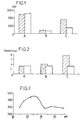
- Figure 1 shows a comparative graph of optical density (OD) obtained on an ELISA test of RH24 and R24 absorbed on different supports.
- FIG. 2 represents a comparative graph of the signal / noise coefficient of the protein system absorbed RH24 and R24 on different supports.
- FIG. 3 represents a curve of the effect of pH on the absorption of RH24 on silica.
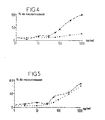
- FIG. 4 represents a dosage curve for the monoclonal antibodies 15F8C7 by SFMIA (Scanning Force Microscopic ImmunoAssay).
- FIG. 5 represents a dosage curve for polyclonal antibodies rabbit by SFMIA.
- a plane support of silicon or silica oxide and a recombinant protein capsid of human immunodeficiency virus type 1 (HIV-1) are used as a model.
- This system allows the operation of atomic force microscopy (AFM) as a method of immunological analysis or SFMIA (2).
- AFM atomic force microscopy
- the protein considered here is RH24. It is obtained using the classical methods of molecular biology and eukaryotic expression (5). This one is almost similar to R24 (identical immunogenicity) but is much more easily purified by the presence of a small sequence of amino acids additional. This series of amino acids, called "tag”, contains in particular six consecutive histidines. The affinity of such a molecular motif for certain ions metal is extremely strong. This property allows easy purification with the IMAC technique (metal-chelate affinity chromatography). Protein control without the "tag” is R24. It is obtained in the same way as the RH24 but it is purified by immunoaffinity.
- Specific link sites can be in the form of suites said amino acids, identical or different, contiguous or not, but neighboring.
- said binding site comprises from three to ten amino acids, contiguous or non-contiguous, for an ordered primary structure of the protein material comprising at least thirty amino acids.
- it consists of at least two, preferably at least three, and preferably at least six histidine residues, more particularly, these residues are contiguous.
- the site (s) described above may be located anywhere the primary structure of the protein material. Preferably, it is located on the end N-terminal or C-terminal of protein material.
- Silica available in many forms (flat surfaces, beads, fibers, etc.), is a compound widely used in microelectronics. Now, the research in medical diagnostics is increasingly interested in so-called systems "Integrated" (DNA chips, biochips, ...) including chips sensitive to biological molecules. Such technologies would combine sensitivity, speed and miniaturization.
- RH24 has a natural affinity for the supports of silica. This property comes from a strong direct interaction between the surface of a support and the poly (histidine) sequence.
- the present invention therefore aims to fix a recombinant protein on silica through its histidine sequence. This technique also allows to orient such a protein on the surface. Indeed, if the exposed area of the molecule is a recognition site, so this is all the more reactive (active site immunodominant enzyme or epitope for example).
- the invention relates to the oriented fixation of the RH24 and any recombinant protein on silica. It therefore fits into this trend. of the complete information on the R24 protein and its RH24 and RH24K recombinants can be found in the applicant's previous patent application, filed June 20, 1997 under number FR97 / 08055. The content of this request is incorporated in the present invention.
- the invention relates to a direct fixing route, without silanization of the silica, to allow the bond between the silica and the recombinant protein.
- Example 1 Manufacturing of the biospecific support :
- the supports used here are silicon discs (4 "polished disc of at ACM (France), type N doped P, thickness 525 micrometers ( ⁇ m), orientation ⁇ 100>)
- the cleaved plates have on their surface a layer of silicon oxide, native or obtained by the various methods known to those skilled in the art.
- This the oxide layer has, among other things, hydrophobic siloxane bridges and it can be polluted by air contaminants.
- Silica of this type is partially hydrophobic.
- the main characteristic of a clean silica is its high hydrophilicity. This can be checked by measuring the contact angle (angle between the tangent at edge of the drop of water and the surface of the support) which must be less than or equal to 10 °.
- the plates are cleaned as described above (paragraph 2).
- the silica is made hydrophobic by bringing n-octadecyl-dimethylmethoxysilane into contact, silane carrying a long alkyl chain, 2% in the toluene for three hours at room temperature.
- the plates are then washed abundantly with water, cleaned with ultrasound and stabilized for two hours at 120 ° C.
- R24 or RH24 it is possible to carry out an adsorption on a hydrophilic support (support described in paragraph 2) or hydrophobic support (supports described in paragraphs 1 and 3).
- Presence and orientation of R24 and RH24 are revealed by two types of immunoassays: ELISA and SFMIA.
- R24 or RH24 on the surface of the support is evaluated at antibody means.
- Polyclonal or monoclonal solutions are used.
- a drop of 40 ⁇ l of antibody in solution in the PBS-TWEEN-BSA mixture [0.05% of BSA (w / w) in PBS-TWEEN] of desired concentration is deposited for 1 hour at 37 ° C on a plate.
- BSA like TWEEN, limits interactions not specific.
- the silicon square is then washed with PBS-TWEEN-BSA to eliminate as much as possible the antibodies adsorbed on the support and not fixed on the protein.
- the plates are dried with compressed air.
- the amount of biotinylated antibodies captured by the recombinant protein is evaluated by an enzymatic test.
- An alkaline phosphatase (PAL) -Streptavidin complex is set first. For this, we react at 37 ° C for 45 minutes, 40 ⁇ l of a solution of Streptavidin-PAL at 4 g / ml in PBS-TWEEN-BSA.
- pnPP p-nitophenyl phosphate
- the colorimetric assay at 405 nm is carried out on 100 ⁇ l of solution in microplates for AXIA reader.
- the OD obtained is linked to the concentration of protein on the surface.
- this support provides an excellent signal-to-noise coefficient. This is probably due to fact that the adsorption of antibodies takes place little on a hydrophilic support (the Fc of antibody is rather hydrophobic).
- RH24 for silica is remarkable because it is very little sensitive to the ionic strength of the surrounding environment. Thus, rinses with water or with a 9 M NaI solution has no effect on the surface. The RH24 once fixed is therefore strongly linked to the support.
- RH24 was diluted to 1 ⁇ g / ml in different phosphate buffers including pH vary between 4 and 11. Then it is adsorbed and revealed by a standard ELISA test at polyclonal rabbit at 1 ⁇ g / ml.-The optimal adsorption conditions obtained are between 6 and 7 (see Figure 3).
- the signal decreases by more than 85% in the presence of the polypeptide, which suggests that the sequence, occupying the binding sites prevents RH24 from binding to its support.
- the sensitivity of the RH24 detection system on silica support is assessed using an SFMIA.
- a 10 ⁇ g / ml protein solution is incubated on plates. These plates are revealed by SFMIA using polyclonal and monoclonal antibodies (15F8C7) marked with magnetic particles. The quantity of magnetic beads covering the surface is evaluated using the image processing system. The curves percentage recovery based on the concentration of antibodies used are thus plotted in FIGS. 4 and 5.
- Results obtained in SFMIA show a significant difference in signal between R24 and RH24 when a monoclonal antibody is used.
- RH24 Since the monoclonals used are not directed against the “tag”, they have intrinsically the same reactivity towards R24 and RH24. increasing signal concerning RH24 can come from two phenomena. The RH24 is more concentrated superficially as the R24, or the RH24 is oriented on its support.
- RH24 is partially oriented on its support, then the epitope of monoclonal antibody binding is accessible more frequently.
- the effect is due to the surface concentration, it necessarily comes of a specific interaction generated by the "tag". This interaction being geographically localized on the protein, it is therefore inseparable from an effect orientation.
- the immobilization obtained is not very sensitive to variations in ionic strength and retains its immunogenic properties over a long period.
- this support gives much better signal-to-noise ratios than an adsorption system on a hydrophobic support.
- planar support used lends itself to the use of microscopy at atomic force.
- SFMIA tests performed with magnetic beads as described in patent application FR97 / 01313 filed on January 30, 1997 in the name of the Applicant, allow to perform high sensitivity immunoassays.
- RH24 and R24 for immunoassays have showed a similarity of behavior towards a polyclonal and a sensitive difference from monoclonal antibodies.
- RH24 orientation on the surface is the best explanation.
Landscapes
- Health & Medical Sciences (AREA)
- Immunology (AREA)
- Life Sciences & Earth Sciences (AREA)
- Engineering & Computer Science (AREA)
- Chemical & Material Sciences (AREA)
- Urology & Nephrology (AREA)
- Hematology (AREA)
- Biomedical Technology (AREA)
- Molecular Biology (AREA)
- Analytical Chemistry (AREA)
- General Health & Medical Sciences (AREA)
- Cell Biology (AREA)
- Inorganic Chemistry (AREA)
- Food Science & Technology (AREA)
- Medicinal Chemistry (AREA)
- Physics & Mathematics (AREA)
- Biotechnology (AREA)
- Biochemistry (AREA)
- Microbiology (AREA)
- General Physics & Mathematics (AREA)
- Pathology (AREA)
- Peptides Or Proteins (AREA)
- Immobilizing And Processing Of Enzymes And Microorganisms (AREA)
- Materials For Medical Uses (AREA)
- Solid-Sorbent Or Filter-Aiding Compositions (AREA)
- Dental Preparations (AREA)
Description
- fonctionnaliser la surface du support en nettoyant, par l'intermédiaire d'au moins un solvant ou un plasma d'oxygène ou tout autre procédé permettant la formation de groupements alcool au niveau de la surface du support, pour la rendre hydrophile,
- mettre en contact la molécule biologique directement sur ladite surface, et
- fonctionnaliser ledit support par la fixation du site spécifique de liaison de la molécule biologique sur au moins l'un des groupements alcool porté par la surface du support, ce qui permet l'orientation de la molécule pour une meilleure réactivité.
- il s'agit d'une séquence en acides aminés rapportée, c'est-à-dire ajoutée à la séquence originale de la molécule biologique,
- cette séquence est introduite en un lieu privilégié de la séquence originale où elle est exposée de façon pertinente vis-à-vis de sa fonction ou de ses propriétés, et
- elle contient notamment des acides aminés d'intérêt vis-à-vis de la fonction recherchée.
- une silice nue partiellement hydrophobe car non nettoyée et non hydrolysée par le mélange sulfochromique,
- une silice très hydrophile car nettoyée et hydrolysée par le mélange sulfochromique, et
- une silice très hydrophobe fonctionnalisée avec du n-octadécyldiméthylméthoxysilane.
- nettoyage de la surface : les plaques de silicium sont lavées avec divers solvants ; dans l'ordre sont utilisés : eau, éthanol, acétone, dichlorométhane, toluène, et
- hydrolyse des ponts siloxanes en silanols : les supports de silice sont immergés pendant 15 minutes dans un mélange sulfochromique (solution PROLABO saturée en Chrome (VI) oxyde dans l'acide sulfurique à 95%). Ces surfaces sont abondamment rincées à l'eau et passées au bain à ultrasons ; une fois les plaques séchées à l'azote, elles sont utilisées rapidement pour limiter une rapide recontamination.
- 40 microlitres de RH24 (ou de R24 comme témoin) diluée dans le PBS, sont incubés pendant 45 minutes à température ambiante sur silice hydrophile. La RH24 possède une forte affinité pour la silice. L'intérêt de cette affinité est sa spécificité envers la RH24 par comparaison avec la R24. A partir de ce point, l'analyse qui suit tente de mieux comprendre le rôle du « tag ».
- 40 microlitres de solution de protéine dans le PBS sont incubés durant 2 heures à température ambiante sur les plaques silanisées. Puis elles sont rincées par le PBS-Tween (Tween à 0,05 % dans le PBS).
- 40 µl d'une solution à 5% (V/V) de billes magnétiques couvertes de streptavidines et d'un diamètre de 50 nm sont déposés durant 1 heure sur le support. Afin d'aider la réaction de surface, les supports sont placés sur des aimants puissants en terres rares. Puis les plaques sont rincées à l'eau et séchées à l'air comprimé.
| Densité obtenue pour un mélange « tag »-RH24 | |
| Réaction | Densité optique (bruit de fond soustrait) |
| Mélange polypeptide-RH24 | 110 |
| Protéine seule | 780 |
Claims (16)
- Procédé de fixation d'une molécule biologique sur la surface d'un support constitué de silice ou d'oxyde métallique, la molécule comportant un site spécifique de liaison, caractérisé en qu'il consiste à :ledit site spécifique de liaison de la molécule biologique comportant les caractéristiques suivantes :fonctionnaliser la surface du support en nettoyant, par l'intermédiaire d'au moins un solvant ou un plasma d'oxygène ou tout autre procédé permettant la formation de groupements alcool au niveau de la surface du support, pour la rendre hydrophile,mettre en contact la molécule biologique directement sur ladite surface, etimmobiliser sur ledit support la molécule biologique, au niveau de son site spécifique de liaison, par sa fixation sur au moins l'un des groupements alcool porté par la surface du support, ce qui permet l'orientation de la molécule pour une meilleure réactivité,il s'agit d'une séquence en acides aminés rapportée, c'est-à-dire ajoutée à la séquence originale de la molécule biologique, etcette séquence est introduite au niveau de la séquence originale en un emplacement où elle est exposée de façon à permettre son immobilisation sur un support.
- Procédé, selon la revendication 1, caractérisé en ce qu'il comporte, avant la mise en contact, une étape d'immersion de la surface fonctionnalisée dans un mélange sulfochromique.
- Procédé, selon l'une quelconque des revendications 1 et 2, caractérisé en ce que le site spécifique de liaison de la molécule biologique est un site riche en histidines et ses dérivés, tel qu'un site contenant une densité d'histidines, supérieure ou égale à 25%, et préférentiellement supérieure ou égale à 33%.
- Procédé, selon l'une quelconque des revendications 1 à 3, caractérisé en ce que la molécule biologique et le site spécifique de liaison constituent une protéine recombinante comportant au moins deux histidines adjacentes, appelées "tag".
- Procédé, selon l'une quelconque des revendications 1 à 4, caractérisé en ce que le site spécifique de liaison de la molécule biologique comporte au moins quatre histidines et préférentiellement six histidines adjacentes.
- Procédé, selon la revendication 5, caractérisé en ce que le site spécifique est situé au sein de la protéine recombinante ou préférentiellement à son extrémité N-terminale ou C-terminale.
- Procédé, selon l'une quelconque des revendications 1 à 6, caractérisé en ce que la mise en contact s'effectue pendant 30 à 60 minutes.
- Procédé, selon l'une quelconque des revendications 1 à 7, caractérisé en ce que la mise en contact s'effectue pendant 45 minutes.
- Procédé, selon la revendication 2, caractérisé en ce que l'étape d'immersion s'effectue pendant 5 à 30 minutes.
- Procédé, selon l'une quelconque des revendications 2 ou 9, caractérisé en ce que l'étape d'immersion s'effectue pendant 15 minutes.
- Procédé, selon l'une quelconque des revendications 1 à 10, caractérisé en ce qu'il s'effectue à un potentiel hydrogène (pH) permettant l'immobilisation orientée de la molécule biologique par fixation de son site spécifique de liaison au niveau du support, préférentiellement ce pH est compris entre 6 et 7,5.
- Utilisation d'une surface d'un support fonctionnalisée par le procédé selon l'une quelconque des revendications 1 ou 11 pour la fixation orientée d'une molécule biologique.
- Utilisation selon la revendication 12, caractérisée par le fait que ladite surface est plane.
- Utilisation selon la revendication 12, caractérisée par le fait que ladite surface est constituée par une bille.
- Utilisation selon la revendication 12, caractérisée en ce qu' elle consiste à effectuer des tests pour détecter, dans un liquide à analyser, la présence de toute molécule biologique capable de se fixer, par un site spécifique de liaison, sur le support.
- Utilisation selon la revendication 12, caractérisée en ce qu' elle consiste à effectuer des tests immunologiques pour détecter, dans un liquide à analyser, la présence d'anticorps spécifiques d'une protéine naturelle, par exemple la protéine P24, par liaison spécifique, de la même manière qu'avec la protéine naturelle, sur au moins une protéine recombinante, par exemple la protéine RH24 ou R24.
Applications Claiming Priority (3)
| Application Number | Priority Date | Filing Date | Title |
|---|---|---|---|
| FR9804879A FR2777355B1 (fr) | 1998-04-10 | 1998-04-10 | Procede de fixation d'une molecule biologique sur la surface d'un support constitue de silice ou d'oxyde metallique |
| FR9804879 | 1998-04-10 | ||
| PCT/FR1999/000848 WO1999053321A1 (fr) | 1998-04-10 | 1999-04-12 | Fixation d'une molecule biologique sur une surface d'un support |
Publications (2)
| Publication Number | Publication Date |
|---|---|
| EP1070256A1 EP1070256A1 (fr) | 2001-01-24 |
| EP1070256B1 true EP1070256B1 (fr) | 2004-09-22 |
Family
ID=9525404
Family Applications (1)
| Application Number | Title | Priority Date | Filing Date |
|---|---|---|---|
| EP99913389A Expired - Lifetime EP1070256B1 (fr) | 1998-04-10 | 1999-04-12 | Fixation d'une molecule biologique sur une surface d'un support |
Country Status (9)
| Country | Link |
|---|---|
| US (1) | US6660533B2 (fr) |
| EP (1) | EP1070256B1 (fr) |
| JP (1) | JP4443764B2 (fr) |
| AT (1) | ATE277350T1 (fr) |
| AU (1) | AU758648B2 (fr) |
| CA (1) | CA2328302A1 (fr) |
| DE (1) | DE69920427T2 (fr) |
| FR (1) | FR2777355B1 (fr) |
| WO (1) | WO1999053321A1 (fr) |
Families Citing this family (17)
| Publication number | Priority date | Publication date | Assignee | Title |
|---|---|---|---|---|
| GB9425138D0 (en) | 1994-12-12 | 1995-02-08 | Dynal As | Isolation of nucleic acid |
| EP1207207B1 (fr) * | 2000-11-20 | 2004-10-27 | Sony International (Europe) GmbH | Procédé d'immobilisation des acides nucléiques sur un support solide |
| FR2827799A1 (fr) * | 2001-07-27 | 2003-01-31 | Sofradim Production | Endoprothese vasculaire recouverte d'un derive fonctionnalise de dextrane et son procede de preparation |
| US6802966B2 (en) * | 2001-08-14 | 2004-10-12 | W. R. Grace & Co. Conn. | Solid compositions for selective adsorption from complex mixtures |
| US6987079B2 (en) * | 2001-08-14 | 2006-01-17 | W.R. Grace & Co.-Conn. | Supported catalyst systems |
| CA2473376A1 (fr) | 2002-01-16 | 2003-07-31 | Invitrogen Dynal As | Methode permettant d'isoler des acides nucleiques et des proteines contenus dans un echantillon unique |
| GB0229287D0 (en) * | 2002-12-16 | 2003-01-22 | Dna Res Innovations Ltd | Polyfunctional reagents |
| US7488607B2 (en) * | 2003-09-30 | 2009-02-10 | Agilent Technologies, Inc. | Electronically readable microarray with electronic addressing function |
| WO2005097673A1 (fr) * | 2004-03-30 | 2005-10-20 | Toyo Advanced Technologies Co., Ltd. | Procede de traitement de surface de base, base traitee en surface, materiau pour utilisation medicale et instrument pour utilisation medicale |
| US7217428B2 (en) * | 2004-05-28 | 2007-05-15 | Technology Innovations Llc | Drug delivery apparatus utilizing cantilever |
| US7960312B2 (en) * | 2005-11-10 | 2011-06-14 | National University Of Corporation Hiroshima University | Method and agent for immobilizing protein via protein bound to silicon oxide-containing substance |
| DE102006051482A1 (de) * | 2006-07-31 | 2008-02-14 | Nikolaus Bartels | Anordnung zum Erfassen von Substanzen, Herstellung der Anordnung und ihre Verwendung |
| EP2069789A2 (fr) * | 2006-11-21 | 2009-06-17 | Applied Biosystems, LLC | Intermédiaires et procédés de formation de surfaces passivées sur des couches d'oxyde et articles produits correspondants |
| US8173198B2 (en) * | 2008-07-23 | 2012-05-08 | Life Technologies Corporation | Deposition of metal oxides onto surfaces as an immobilization vehicle for carboxylated or phophated particles or polymers |
| RU2530716C2 (ru) * | 2008-12-22 | 2014-10-10 | Конинклейке Филипс Электроникс Н.В. | Анализ тропонина i с применением магнитных меток |
| US20110206578A1 (en) * | 2010-02-23 | 2011-08-25 | Life Technologies Corporation | Treatment of metal oxide surfaces |
| JP2020124129A (ja) * | 2019-02-01 | 2020-08-20 | 積水化学工業株式会社 | 核酸の単離方法及び核酸単離用デバイス |
Family Cites Families (14)
| Publication number | Priority date | Publication date | Assignee | Title |
|---|---|---|---|---|
| JPS6035263A (ja) * | 1983-08-05 | 1985-02-23 | Wako Pure Chem Ind Ltd | 不溶性担体に固定化された免疫活性物質の安定化法及び該物質を構成単位として含む生理活性物質測定用試薬 |
| ATE111358T1 (de) * | 1986-11-21 | 1994-09-15 | Imre Corp | Antigen-spezifisches entfernen von zirkulierenden immunokomplexen. |
| GB2221466A (en) * | 1988-03-09 | 1990-02-07 | Aluminum Co Of America | Biologically reactive particles with biological, therapeutic and chromatographic applications |
| JPH0754322B2 (ja) | 1988-11-07 | 1995-06-07 | 三洋化成工業株式会社 | 免疫学的定量法および検査用試薬 |
| US5627079A (en) * | 1989-03-27 | 1997-05-06 | The Research Foundation Of State University Of New York | Refunctionalized oxyfluorinated surfaces |
| AU6406390A (en) | 1989-08-24 | 1991-04-03 | Ramsey Foundation | Method and apparatus for the measurement of organic antigens |
| IL98744A0 (en) * | 1990-07-06 | 1992-07-15 | Gen Hospital Corp | Method of studying biological tissue using monocrystalline particles |
| AU649725B2 (en) | 1990-10-22 | 1994-06-02 | Sumitomo Electric Industries, Ltd. | Assay of substances using flow cytometry |
| US6020026A (en) * | 1997-01-17 | 2000-02-01 | Corning Incorporated | Process for the production of a coating of molecular thickness on a substrate |
| FR2758884B1 (fr) | 1997-01-30 | 1999-04-02 | Bio Merieux | Procede pour isoler, notamment detecter ou quantifier un analyte dans un milieu |
| FR2762394B1 (fr) | 1997-04-16 | 1999-05-28 | Bio Merieux | Compose ligand de coordination et utilisation pour fixer un materiel biologique |
| EP0874242B2 (fr) * | 1997-04-21 | 2009-06-03 | Randox Laboratories Ltd. | Dispositif et appareil pour la détection simultanée de plusieurs analytes |
| FR2764988B1 (fr) | 1997-06-20 | 1999-07-23 | Bio Merieux | Compose conjugue, reactif et kit le contenant, et utilisations dans un procede de fixation d'un materiel biologique |
| US6207391B1 (en) * | 1998-03-31 | 2001-03-27 | Tularik Inc. | High-throughput screening assays for modulators of STAT4 and STAT6 activity |
-
1998
- 1998-04-10 FR FR9804879A patent/FR2777355B1/fr not_active Expired - Lifetime
-
1999
- 1999-04-12 EP EP99913389A patent/EP1070256B1/fr not_active Expired - Lifetime
- 1999-04-12 DE DE69920427T patent/DE69920427T2/de not_active Expired - Lifetime
- 1999-04-12 US US09/647,983 patent/US6660533B2/en not_active Expired - Lifetime
- 1999-04-12 CA CA002328302A patent/CA2328302A1/fr not_active Abandoned
- 1999-04-12 WO PCT/FR1999/000848 patent/WO1999053321A1/fr not_active Ceased
- 1999-04-12 JP JP2000543832A patent/JP4443764B2/ja not_active Expired - Fee Related
- 1999-04-12 AU AU31528/99A patent/AU758648B2/en not_active Ceased
- 1999-04-12 AT AT99913389T patent/ATE277350T1/de not_active IP Right Cessation
Also Published As
| Publication number | Publication date |
|---|---|
| ATE277350T1 (de) | 2004-10-15 |
| FR2777355B1 (fr) | 2000-05-12 |
| AU3152899A (en) | 1999-11-01 |
| FR2777355A1 (fr) | 1999-10-15 |
| DE69920427D1 (de) | 2004-10-28 |
| EP1070256A1 (fr) | 2001-01-24 |
| CA2328302A1 (fr) | 1999-10-21 |
| DE69920427T2 (de) | 2006-02-09 |
| JP2002511587A (ja) | 2002-04-16 |
| US6660533B2 (en) | 2003-12-09 |
| AU758648B2 (en) | 2003-03-27 |
| JP4443764B2 (ja) | 2010-03-31 |
| US20030082658A1 (en) | 2003-05-01 |
| WO1999053321A1 (fr) | 1999-10-21 |
Similar Documents
| Publication | Publication Date | Title |
|---|---|---|
| EP1070256A1 (fr) | Fixation d'une molecule biologique sur une surface d'un support | |
| EP2901160B1 (fr) | Méthode pour détecter spécifiquement dans un echantillon une métalloprotéase matricielle (mmp) d'intérêt uniquement dans sa forme active | |
| EP0609144B1 (fr) | Dosage immunométrique d'un antigène ou d'un haptène | |
| JP5388462B2 (ja) | 担体及びその製造方法 | |
| EP2470907B1 (fr) | Proteines utilisees pour le diagnostic d'une borreliose de lyme | |
| WO2022243548A1 (fr) | Proteines de liaison au recepteur d'un bacteriophage et leurs utilisations | |
| CA3015711A1 (fr) | Procede de determination des concentrations actives et/ou des constantes cinetiques d'interaction dans des echantillons biologiques complexes en resonance plasmonique de surface | |
| EP0667897B1 (fr) | Methode d'immunodosage specifique de la glutathion peroxydase plasmatique humaine | |
| WO2009115756A2 (fr) | Procede de detection directe de l'albumine modifiee de l'ischemie par utilisation d'un partenaire de liaison a un derive aldehyde issu de la peroxydation de lipides sous forme liee | |
| KR101971246B1 (ko) | 폴리도파민과 단백질 g의 혼합용액으로 개질된 코팅층을 포함하는 바이오센서 및 상기 바이오센서를 이용한 생물시료의 검출 방법 | |
| EP2470908B1 (fr) | Proteines utilisees pour le diagnostic d'une borreliose de lyme | |
| Falipou et al. | New use of cyanosilane coupling agent for direct binding of antibodies to silica supports. Physicochemical characterization of molecularly bioengineered layers | |
| WO2001051927A1 (fr) | Procede d'immobilisation de reactif(s) affin(s) sur phase solide hydrophobe | |
| EP0008245A1 (fr) | Système physico-biochimique pour la détection, le dosage et l'isolement de substances à activité antigénique | |
| Turner et al. | Enzymatic hydrolysis of a chemisorbed peptide film using beads activated with covalently bound chymotrypsin | |
| BE1028465B1 (fr) | Test de detection rapide serologique de l'infection covid-19 | |
| CA2487483C (fr) | Dispositif de presentation de peptides ou de proteines, son procede de preparation et ses utilisations | |
| EP2705368B1 (fr) | Utilisation de ef-1 et de ses homologues, pour detecter une proteine retrovirale p24 ou un homologue de celle-ci | |
| EP0122833A1 (fr) | Procédé de dosage en phase hétérogène de substances biologiques antigéniques, mettant en oeuvre des conjugués hybrides d'anticorps et réactifs pour sa mise en oeuvre | |
| FR2826124A1 (fr) | Procede de detection d'auto-anticorps specifiques de la polyarthrite rhumatoide | |
| WO2017144830A1 (fr) | Peptides immunogenes et leur utilisation | |
| WO2003044533A2 (fr) | Phase de capture et de detection d'un materiel biologique cible pour des tests elisa | |
| FR2847983A1 (fr) | Dispositif miniature de detection electrique d'interactions de type ligand-recepteur, preparation et utilisations. | |
| WO2004083370A2 (fr) | Methode de detection et d'analyse d'organelles immobilises sur biopuce et leurs applications | |
| FR2857453A1 (fr) | Procede de detection serologique de la maladie coeliaque et necessaire de diagnostic associe |
Legal Events
| Date | Code | Title | Description |
|---|---|---|---|
| PUAI | Public reference made under article 153(3) epc to a published international application that has entered the european phase |
Free format text: ORIGINAL CODE: 0009012 |
|
| 17P | Request for examination filed |
Effective date: 20001009 |
|
| AK | Designated contracting states |
Kind code of ref document: A1 Designated state(s): AT BE CH CY DE DK ES FI FR GB GR IE IT LI LU MC NL PT SE |
|
| 17Q | First examination report despatched |
Effective date: 20030730 |
|
| GRAP | Despatch of communication of intention to grant a patent |
Free format text: ORIGINAL CODE: EPIDOSNIGR1 |
|
| GRAS | Grant fee paid |
Free format text: ORIGINAL CODE: EPIDOSNIGR3 |
|
| GRAA | (expected) grant |
Free format text: ORIGINAL CODE: 0009210 |
|
| AK | Designated contracting states |
Kind code of ref document: B1 Designated state(s): AT BE CH CY DE DK ES FI FR GB GR IE IT LI LU MC NL PT SE |
|
| PG25 | Lapsed in a contracting state [announced via postgrant information from national office to epo] |
Ref country code: NL Free format text: LAPSE BECAUSE OF FAILURE TO SUBMIT A TRANSLATION OF THE DESCRIPTION OR TO PAY THE FEE WITHIN THE PRESCRIBED TIME-LIMIT Effective date: 20040922 Ref country code: IT Free format text: LAPSE BECAUSE OF FAILURE TO SUBMIT A TRANSLATION OF THE DESCRIPTION OR TO PAY THE FEE WITHIN THE PRESCRIBED TIME-LIMIT;WARNING: LAPSES OF ITALIAN PATENTS WITH EFFECTIVE DATE BEFORE 2007 MAY HAVE OCCURRED AT ANY TIME BEFORE 2007. THE CORRECT EFFECTIVE DATE MAY BE DIFFERENT FROM THE ONE RECORDED. Effective date: 20040922 Ref country code: IE Free format text: LAPSE BECAUSE OF FAILURE TO SUBMIT A TRANSLATION OF THE DESCRIPTION OR TO PAY THE FEE WITHIN THE PRESCRIBED TIME-LIMIT Effective date: 20040922 Ref country code: FI Free format text: LAPSE BECAUSE OF FAILURE TO SUBMIT A TRANSLATION OF THE DESCRIPTION OR TO PAY THE FEE WITHIN THE PRESCRIBED TIME-LIMIT Effective date: 20040922 Ref country code: ES Free format text: LAPSE BECAUSE OF FAILURE TO SUBMIT A TRANSLATION OF THE DESCRIPTION OR TO PAY THE FEE WITHIN THE PRESCRIBED TIME-LIMIT Effective date: 20040922 Ref country code: AT Free format text: LAPSE BECAUSE OF FAILURE TO SUBMIT A TRANSLATION OF THE DESCRIPTION OR TO PAY THE FEE WITHIN THE PRESCRIBED TIME-LIMIT Effective date: 20040922 |
|
| REG | Reference to a national code |
Ref country code: GB Ref legal event code: FG4D Free format text: NOT ENGLISH |
|
| REG | Reference to a national code |
Ref country code: CH Ref legal event code: EP |
|
| REG | Reference to a national code |
Ref country code: IE Ref legal event code: FG4D Free format text: FRENCH |
|
| REF | Corresponds to: |
Ref document number: 69920427 Country of ref document: DE Date of ref document: 20041028 Kind code of ref document: P |
|
| PG25 | Lapsed in a contracting state [announced via postgrant information from national office to epo] |
Ref country code: SE Free format text: LAPSE BECAUSE OF FAILURE TO SUBMIT A TRANSLATION OF THE DESCRIPTION OR TO PAY THE FEE WITHIN THE PRESCRIBED TIME-LIMIT Effective date: 20041222 Ref country code: GR Free format text: LAPSE BECAUSE OF FAILURE TO SUBMIT A TRANSLATION OF THE DESCRIPTION OR TO PAY THE FEE WITHIN THE PRESCRIBED TIME-LIMIT Effective date: 20041222 Ref country code: DK Free format text: LAPSE BECAUSE OF FAILURE TO SUBMIT A TRANSLATION OF THE DESCRIPTION OR TO PAY THE FEE WITHIN THE PRESCRIBED TIME-LIMIT Effective date: 20041222 |
|
| GBT | Gb: translation of ep patent filed (gb section 77(6)(a)/1977) |
Effective date: 20041206 |
|
| NLV1 | Nl: lapsed or annulled due to failure to fulfill the requirements of art. 29p and 29m of the patents act | ||
| PG25 | Lapsed in a contracting state [announced via postgrant information from national office to epo] |
Ref country code: LU Free format text: LAPSE BECAUSE OF NON-PAYMENT OF DUE FEES Effective date: 20050412 Ref country code: CY Free format text: LAPSE BECAUSE OF FAILURE TO SUBMIT A TRANSLATION OF THE DESCRIPTION OR TO PAY THE FEE WITHIN THE PRESCRIBED TIME-LIMIT Effective date: 20050412 |
|
| REG | Reference to a national code |
Ref country code: IE Ref legal event code: FD4D |
|
| PG25 | Lapsed in a contracting state [announced via postgrant information from national office to epo] |
Ref country code: MC Free format text: LAPSE BECAUSE OF NON-PAYMENT OF DUE FEES Effective date: 20050430 Ref country code: LI Free format text: LAPSE BECAUSE OF NON-PAYMENT OF DUE FEES Effective date: 20050430 Ref country code: CH Free format text: LAPSE BECAUSE OF NON-PAYMENT OF DUE FEES Effective date: 20050430 Ref country code: BE Free format text: LAPSE BECAUSE OF NON-PAYMENT OF DUE FEES Effective date: 20050430 |
|
| PLBE | No opposition filed within time limit |
Free format text: ORIGINAL CODE: 0009261 |
|
| STAA | Information on the status of an ep patent application or granted ep patent |
Free format text: STATUS: NO OPPOSITION FILED WITHIN TIME LIMIT |
|
| 26N | No opposition filed |
Effective date: 20050623 |
|
| BERE | Be: lapsed |
Owner name: *BIO MERIEUX Effective date: 20050430 |
|
| REG | Reference to a national code |
Ref country code: CH Ref legal event code: PL |
|
| BERE | Be: lapsed |
Owner name: *BIO MERIEUX Effective date: 20050430 |
|
| PG25 | Lapsed in a contracting state [announced via postgrant information from national office to epo] |
Ref country code: PT Free format text: LAPSE BECAUSE OF NON-PAYMENT OF DUE FEES Effective date: 20050222 |
|
| REG | Reference to a national code |
Ref country code: FR Ref legal event code: PLFP Year of fee payment: 18 |
|
| REG | Reference to a national code |
Ref country code: FR Ref legal event code: PLFP Year of fee payment: 19 |
|
| PGFP | Annual fee paid to national office [announced via postgrant information from national office to epo] |
Ref country code: DE Payment date: 20170427 Year of fee payment: 19 Ref country code: FR Payment date: 20170426 Year of fee payment: 19 Ref country code: GB Payment date: 20170427 Year of fee payment: 19 |
|
| REG | Reference to a national code |
Ref country code: DE Ref legal event code: R119 Ref document number: 69920427 Country of ref document: DE |
|
| GBPC | Gb: european patent ceased through non-payment of renewal fee |
Effective date: 20180412 |
|
| PG25 | Lapsed in a contracting state [announced via postgrant information from national office to epo] |
Ref country code: DE Free format text: LAPSE BECAUSE OF NON-PAYMENT OF DUE FEES Effective date: 20181101 |
|
| PG25 | Lapsed in a contracting state [announced via postgrant information from national office to epo] |
Ref country code: GB Free format text: LAPSE BECAUSE OF NON-PAYMENT OF DUE FEES Effective date: 20180412 |
|
| PG25 | Lapsed in a contracting state [announced via postgrant information from national office to epo] |
Ref country code: FR Free format text: LAPSE BECAUSE OF NON-PAYMENT OF DUE FEES Effective date: 20180430 |