EP1069771A2 - Method and apparatus for automatically setting time information in a multi-format digital television product - Google Patents
Method and apparatus for automatically setting time information in a multi-format digital television product Download PDFInfo
- Publication number
- EP1069771A2 EP1069771A2 EP00115106A EP00115106A EP1069771A2 EP 1069771 A2 EP1069771 A2 EP 1069771A2 EP 00115106 A EP00115106 A EP 00115106A EP 00115106 A EP00115106 A EP 00115106A EP 1069771 A2 EP1069771 A2 EP 1069771A2
- Authority
- EP
- European Patent Office
- Prior art keywords
- clock
- time
- temporal information
- television
- user
- Prior art date
- Legal status (The legal status is an assumption and is not a legal conclusion. Google has not performed a legal analysis and makes no representation as to the accuracy of the status listed.)
- Withdrawn
Links
Images

Classifications
-
- H—ELECTRICITY
- H04—ELECTRIC COMMUNICATION TECHNIQUE
- H04N—PICTORIAL COMMUNICATION, e.g. TELEVISION
- H04N7/00—Television systems
- H04N7/01—Conversion of standards, e.g. involving analogue television standards or digital television standards processed at pixel level
-
- H—ELECTRICITY
- H04—ELECTRIC COMMUNICATION TECHNIQUE
- H04N—PICTORIAL COMMUNICATION, e.g. TELEVISION
- H04N5/00—Details of television systems
- H04N5/44—Receiver circuitry for the reception of television signals according to analogue transmission standards
- H04N5/46—Receiver circuitry for the reception of television signals according to analogue transmission standards for receiving on more than one standard at will
-
- H—ELECTRICITY
- H04—ELECTRIC COMMUNICATION TECHNIQUE
- H04N—PICTORIAL COMMUNICATION, e.g. TELEVISION
- H04N21/00—Selective content distribution, e.g. interactive television or video on demand [VOD]
- H04N21/40—Client devices specifically adapted for the reception of or interaction with content, e.g. set-top-box [STB]; Operations thereof
- H04N21/43—Processing of content or additional data, e.g. demultiplexing additional data from a digital video stream; Elementary client operations, e.g. monitoring of home network or synchronising decoder's clock; Client middleware
- H04N21/435—Processing of additional data, e.g. decrypting of additional data, reconstructing software from modules extracted from the transport stream
-
- H—ELECTRICITY
- H04—ELECTRIC COMMUNICATION TECHNIQUE
- H04N—PICTORIAL COMMUNICATION, e.g. TELEVISION
- H04N21/00—Selective content distribution, e.g. interactive television or video on demand [VOD]
- H04N21/40—Client devices specifically adapted for the reception of or interaction with content, e.g. set-top-box [STB]; Operations thereof
- H04N21/45—Management operations performed by the client for facilitating the reception of or the interaction with the content or administrating data related to the end-user or to the client device itself, e.g. learning user preferences for recommending movies, resolving scheduling conflicts
- H04N21/458—Scheduling content for creating a personalised stream, e.g. by combining a locally stored advertisement with an incoming stream; Updating operations, e.g. for OS modules ; time-related management operations
- H04N21/4586—Content update operation triggered locally, e.g. by comparing the version of software modules in a DVB carousel to the version stored locally
-
- H—ELECTRICITY
- H04—ELECTRIC COMMUNICATION TECHNIQUE
- H04N—PICTORIAL COMMUNICATION, e.g. TELEVISION
- H04N21/00—Selective content distribution, e.g. interactive television or video on demand [VOD]
- H04N21/40—Client devices specifically adapted for the reception of or interaction with content, e.g. set-top-box [STB]; Operations thereof
- H04N21/45—Management operations performed by the client for facilitating the reception of or the interaction with the content or administrating data related to the end-user or to the client device itself, e.g. learning user preferences for recommending movies, resolving scheduling conflicts
- H04N21/462—Content or additional data management e.g. creating a master electronic programme guide from data received from the Internet and a Head-end or controlling the complexity of a video stream by scaling the resolution or bit-rate based on the client capabilities
- H04N21/4622—Retrieving content or additional data from different sources, e.g. from a broadcast channel and the Internet
-
- H—ELECTRICITY
- H04—ELECTRIC COMMUNICATION TECHNIQUE
- H04N—PICTORIAL COMMUNICATION, e.g. TELEVISION
- H04N21/00—Selective content distribution, e.g. interactive television or video on demand [VOD]
- H04N21/40—Client devices specifically adapted for the reception of or interaction with content, e.g. set-top-box [STB]; Operations thereof
- H04N21/47—End-user applications
- H04N21/485—End-user interface for client configuration
-
- H—ELECTRICITY
- H04—ELECTRIC COMMUNICATION TECHNIQUE
- H04N—PICTORIAL COMMUNICATION, e.g. TELEVISION
- H04N21/00—Selective content distribution, e.g. interactive television or video on demand [VOD]
- H04N21/40—Client devices specifically adapted for the reception of or interaction with content, e.g. set-top-box [STB]; Operations thereof
- H04N21/41—Structure of client; Structure of client peripherals
- H04N21/426—Internal components of the client ; Characteristics thereof
- H04N21/42607—Internal components of the client ; Characteristics thereof for processing the incoming bitstream
- H04N21/4263—Internal components of the client ; Characteristics thereof for processing the incoming bitstream involving specific tuning arrangements, e.g. two tuners
- H04N21/42638—Internal components of the client ; Characteristics thereof for processing the incoming bitstream involving specific tuning arrangements, e.g. two tuners involving a hybrid front-end, e.g. analog and digital tuners
-
- H—ELECTRICITY
- H04—ELECTRIC COMMUNICATION TECHNIQUE
- H04N—PICTORIAL COMMUNICATION, e.g. TELEVISION
- H04N21/00—Selective content distribution, e.g. interactive television or video on demand [VOD]
- H04N21/40—Client devices specifically adapted for the reception of or interaction with content, e.g. set-top-box [STB]; Operations thereof
- H04N21/43—Processing of content or additional data, e.g. demultiplexing additional data from a digital video stream; Elementary client operations, e.g. monitoring of home network or synchronising decoder's clock; Client middleware
- H04N21/434—Disassembling of a multiplex stream, e.g. demultiplexing audio and video streams, extraction of additional data from a video stream; Remultiplexing of multiplex streams; Extraction or processing of SI; Disassembling of packetised elementary stream
- H04N21/4345—Extraction or processing of SI, e.g. extracting service information from an MPEG stream
Definitions
- the present invention relates to television receivers in general and, more particularly, the invention relates to a method and apparatus for setting the time of day information that is stored in a television receiver clock.
- television receivers will be able to receive television signals from multiple sources, such as satellite, cable, and terrestrial broadcast. Moreover, such television receivers will be able to accommodate television signals including both analog and digital television formats.
- Present analog television formats comprise those promulgated by the National Television Standards Committee (NTSC), Sequential Technique and Memory Storage (SECAM) and Phase Alternation by Line (PAL).
- Current digital formats comprise those promulgated by Direct Broadcast Satellite (DBS) such as DirectTV, and the digital terrestrial broadcasts such as High Definition Television (HDTV), in accordance with the American Television Standards Committee (ATSC) and the Movie Pictures Expert Group (MPEG) standards.
- DBS Direct Broadcast Satellite
- HDTV High Definition Television
- ATSC American Television Standards Committee
- MPEG Movie Pictures Expert Group
- DBS receivers do not allow the user to set their own time, date, daylight savings time, or time zone information.
- each format may, have temporal information transmitted along with the video and audio information.
- Broadcasts from digital terrestrial sources usually include temporal components, however, the temporal components may differ from channel to channel.
- a channel for NBC may provide a digital temporal component having a time value of 2:06 p.m.
- a channel for ABC may have a temporal component having a value of 2:09 p.m.
- digital broadcasts from satellites may transmit temporal information that differs from the digital terrestrial broadcasts, e.g., 2:07 p.m.
- typical broadcasts from analog terrestrial sources do not include temporal components.
- the clock in the IRD of a television receiver is set by extracting the temporal components from the digitally transmitted television system.
- the source for receiving the television signal e.g., DBS to analog terrestrial broadcast
- the user is prohibited from manually changing the clock time of the television. Therefore, the values of the temporal components in a television signal will subsequently be the time the clock of the television receiver maintains, until another digital broadcast source with temporal information is selected by the user.
- the DBS temporal information is out of synchronization with the HDTV broadcasted temporal signal, lagging by five minutes. Five minutes later, when the clock displays 8:00 p.m., the recorder will begin to record the selected station, CBS. However, the first five minutes of the CBS programming will not be recorded, since the CBS channel time is five minutes faster than the HDTV broadcasted channel.
- the disadvantages heretofore associated with the prior art are overcome by the present invention of a method and apparatus for allowing a user to manually set a clock in a multi-format television receiver capable of receiving a plurality of television signals.
- the method comprises the steps of selecting a television signal from one of a plurality of television signals and then detecting temporal information in the television signal. Upon detecting such temporal information, components of the temporal information are extracted and used to set at least one clock to count time. Once the clock is set based upon the extracted temporal components, the values of the temporal components prevail over any manually set time, and the user is precluded from manually setting a time value or date value on the clock.
- the television receiver continues to update the clock based upon the latest periodic temporal information sent with the television signal. The user is permitted to manually set the time on a clock only in an instance where the updated temporal information has not been detected past a specified period of time (e.g., 1-hour).
- a user may manually set the time zone value or daylight savings time value on the clock at any time.
- the manual clock settings must match the values of the temporal components.
- a default device is provided to set the time zone value or daylight savings time value on the clock, in an instance that it is desirable to utilize such temporal information in the television signal.
- a user may manually set the clock in a timely manner without interfering with broadcasted television signal having temporal information.
- the user may prohibit other users from manually setting the clock for a specified interval of time, so as to preclude an unwanted change in time (e.g. a child attempting to watch or record a program not suitable for child viewing).
- the invention will be primarily described within the context of a television receiver adapted to receive television signals including temporal information.
- the temporal information may comprise temporal components such as, time, date, time zone, and daylight savings time.
- time of day information may be updated in response to received time of day information, or in response to locally provided (e.g., manually entered) time of day information.
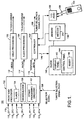
- FIG. 1 depicts a block diagram of a multiple format television receiver 100.
- the television receiver 100 tunes, demodulates, and processes audio, video, and temporal information from various multiple format television signals selected by a user.
- the multiple format television signals include direct broadcast satellite signals (DBS) such as DirectTV, digital terrestrial broadcasts, such as high definition television (HDTV), and analog terrestrial broadcasts, in accordance to the National Television Standards Committee (NTSC).
- DBS direct broadcast satellite signals
- DBS direct broadcast satellite signals
- HDMI high definition television
- NTSC National Television Standards Committee
- the audio components, video components, and temporal components are then sent to their respective output devices such as a speaker, display, and clock, respectively.
- the television receiver 100 may comprise a television set-top box, a video cassette recorder (VCR), a computer, or any other device capable of receiving television signals having temporal information.
- VCR video cassette recorder
- the television receiver 100 comprises a front-end processor 102 having at least one tuner 104, at least one demodulator 106 and other processing circuitry 107.
- the receiver 100 selectively tunes, demodulates or otherwise "receives" at least one of a plurality of television signals 110 1 through 110 n (collectively television signals 110) in response to a selection signal via a tuner selection signal path 108.
- the television signals 110 are transmitted in either analog or digital formats (e.g., AF-1 through AF-m, or DF-1 through DF-n).
- the circuitry used to implement the front-end processor 102 is adapted to receive television signals 110 of the desired format types.
- the analog formats include those used by conventional analog broadcasting or cable transmission systems, illustratively the NTSC, SECAM, or PAL transmission standards.
- the digital formats include satellite broadcast formats such as Digital Broadcast Satellite (DBS), as well as terrestrial broadcast and cable transmission systems, such as high definition television (HDTV) and cable formats, each conforming to the ATSC and MPEG transmission standards.
- DBS Digital Broadcast Satellite
- HDTV high definition television
- the front-end processor 102 is capable of processing television signals according to each of a plurality of standard television formats.
- a controller assembly 130 is coupled to the front-end processor 102 through the tuner selection path 108 to permit a user to select and tune the front-end processor 102 to any one of the multi-format television signals 110.
- the user makes a selection through an input device 133 such as a remote control, and sends a channel select signal 109 from the input device 133 to an I/O port 132 coupled to the controller assembly 130.
- the controller 130 then sends the selection signal to the tuner 104 of the front-end processor 102 through the tuner selection signal path 108.
- the front-end processor 102 in response to the selection signal provided by the controller 130, operates to tune a selected television signal 110, demodulate video and audio information within the selected television signal, and provide the video and audio information to, respectively, a video processor 122 (via signal path 112) and an audio processor 124 (via signal path 114).
- the video processor 122 and audio processor 124 process the video and audio information and then send the video and audio information to their respective output devices, such as a monitor and speaker. Additionally, any temporal information included with the tuned television signal 110 is provided to the controller 130 via signal path 116.
- temporal information When temporal information is provided from a television signal source, the temporal components, i.e., time, date, time zone, and daylight savings time are extracted from the television signal. Thereafter, the values of the extracted temporal components are stored in a memory device 136.
- temporal information is periodically transmitted by the television broadcaster along with the program information, e.g., every 15 or 30 minutes.
- the temporal information may be transmitted through an electronic program guide (EPG), such as program specific information protocols (PSIP) for digital transmissions complying with the ATSC standard.
- EPG electronic program guide
- PSIP program specific information protocols
- At least one clock 140 is provided in the television receiver 100 (one clock shown in FIG. 1).
- the clock comprises a display 142, a control panel 144, and support circuitry (not shown).
- the clock 140 is also coupled to the memory device 136 of the controller 130.
- a clock signal path 148 allows the controller to periodically update the clock 140 with the temporal information extracted from the television signal 110, (e.g., EPG). At each periodic update, the updated time information is stored in the memory 136. Thereafter, the clock continues to count internally until the next transmission of temporal information is sent via the EPG.
- Other embodiments may include television receivers having a plurality of clocks wherein each clock corresponds to each channel or most popular channels of a television source having temporal information.
- the clock 140 serves multiple functions, such as displaying temporal information including the time of day, date, daylight savings time, and time zone.
- the display may illustratively be an LED display panel or a graphic user interface (GUI), accessible through a control panel 144 or the remote control device 133.
- Additional clock capabilities may include allowing a user to preset the time or date on the clock 140 when the user, illustratively, desires to record a television program on a specific channel, or prohibit channel selection based upon the time of day. Such channel prohibition may be desirable for the purpose of disallowing children from watching discretional or inappropriate video programs.
- the control panel 144 is used for manually setting the clock's temporal information. Furthermore, the control panel 144 may be accessible through an on-screen GUI or the remote control device 133.
- a default device 146 is coupled to the clock 140.
- the default device may illustratively be a button on a control panel or remote control device, or a GUI accessible on the display screen of the television set.
- the default device 146 allows a user to reset the clock to count time based upon the time zone and daylight savings time components residing in the temporal information included in the television signal 110. After the user has set the time on the time zone or daylight savings values 140 manually, or changes from a television signal format not containing temporal information to a television signal format having temporal information, the user will not know the exact time components that were sent via the EPG. Therefore, such default device resets the clock 146 based upon whatever temporal information is sent via the television signal 110.
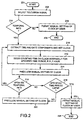
- FIG. 2 depicts a flow diagram of a first method 200 for setting time on a clock of a television receiver.
- the first method 200 pertains to temporal information including time and date components such as hours, minutes, and seconds, as well as, year, month, and day, respectively.
- Such first method 200 is implemented by the cooperation between the controller 130 and circuitry of the clock 140.
- the first method 200 permits a user to modify the time on a clock manually and without interfering with a television signal providing the temporal information.
- this first method 200 may be used to preclude a user from manually changing the clock settings for a specified period, illustratively, to prevent a child from resetting the clock in order to watch an inappropriate television program.
- the first method 200 begins at step 201, and proceeds to step 202 where a user selects, via an input device (e.g., remote control), the television signal of their choice.
- the selected television signal is received by a front-end processor, demodulated, down-converted and then sent to video and audio processors for processing.
- the video and audio processors produce video and audio signals containing information that is then sent to the television set's respective output devices, such as a monitor and speaker.
- the first method 200 queries whether there is temporal information in the selected television signal. If in step 204, the query is negatively answered (i.e., the user selected a conventional analog broadcast station or a digital terrestrial broadcast without a program specific information protocol (PSIP) guide), then the clock will not be set by the selected television signal. However, in step 206, a user may manually set the clock, and the clock will thereafter count time internally based upon the user defined settings. At step 208, the method ends, and will not start again until the user selects another program.
- the first method 200 is that the user may manually set the clock to any time, as long as temporal information from a television signal has not been received and stored by the clock.
- step 204 If, in step 204, the query is affirmatively answered, i.e., there is temporal information (i.e., time and date components) detected in the television signal (e.g., from a DBS system), then the method proceeds to step 210.
- each of the time components (i.e., hours, minutes, and seconds) and date components (i.e., year, month, and day) are extracted from the television signal, stored in the memory, and then displayed on the clock display.
- the clock After the clock receives the transmitted temporal information, in step 212, the clock continues to count internally based upon the received time and date components.
- the time and date settings i.e., hours, minutes, seconds, year, month and day
- some specified period e.g., 1-hour
- the digital broadcaster will periodically transmit updated temporal information during the course of program broadcasting, i.e., every 15, or 30 minutes.
- the first method 200 queries whether there is updated temporal information in the television signal. If, in step 216, the query is affirmatively answered, then the first method 200 returns to step 210, where the time and date components are again extracted and stored in the memory device of the controller.
- the clock counts internally based upon the updated time component, and in step 214, the user remains precluded from manually setting the clock.
- step 216 the query is negatively answered, and then the first method 200 proceeds to step 218.
- step 218 the first method 200 queries whether a specified time period (e.g., 1-hour) has lapsed.
- the specified time period is utilized as a timing mechanism for the purpose of providing a reasonable assumption that the user has terminated the television source. The assumption is confirmed if the clock has not been updated with temporal information within the specified time period (e.g., 1-hour).
- the user selects a television channel having date and time components that sets the clock to November 24, 1999, at 3:04 p.m.
- the clock will continue to count internally thereafter, and the television receiver queries for periodic updates of temporal information from the electronic program guide due every 15 or 30 minutes, as depicted in the loop defined by steps 210 through 216. If, however, there is no update within the next hour, then at 4:04 p.m. the query at step 218 (referring back to FIG. 2) is affirmatively answered (i.e., the specified time period has lapsed) and the first method 200 proceeds to step 222. In step 222, the user may henceforth manually set the clock.
- the first method 200 proceeds to step 224, where the method ends, until another television signal is selected having temporal information, and the method begins again.
- the first method 200 allows the manual changing of a clock setting in a television receiver prior to receiving any temporal information in a television signal and after receiving a television signal having temporal information, but only after a specified period of time has elapsed. In this manner, a person (e.g., child) may be precluded from tampering with the time of the television receiver in order to watch programs deemed undesirable for viewing, illustratively, by a guardian.
- FIG. 3 depicts a flow diagram of a second method 300 for setting a television receiver clock.
- the second method 300 pertains to temporal information having time zone, and daylight savings components. These two temporal elements may be manually changed by a user at any time, unlike the time and date components (i.e., hours, minutes, seconds, year, month and day) that may not be manually changed, except as provided for in the first method 200 depicted in FIG. 2.
- auxiliary temporal information i.e., time zone and daylight savings time
- time zone and daylight savings time is based upon the time and date components, and displayed on the clock by either adding or subtracting time values as an offset to the time and date components.
- the electronic program guides are typically based on Greenwich Mean Time.
- Greenwich Mean Time While the user is prohibited from changing the physical time and date components (hours, minutes, seconds, year, month, and day), the time zone and daylight savings time values may be changed, since these values are either a positive or negative offset from the current time and date.
- a user may manually change the time zone value of their clock to 4:07 p.m. Eastern Standard Time (EST) in New York, where the television receiver is receiving a television signal program containing date and time values of December, 25, 1999, at 9:07 p.m. GMT.
- the second method 300 similarly applies for the daylight savings time components.
- the second method 300 begins at step 301 and proceeds to step 302, where a user selects a television signal carrying a desired program.
- the television signal is received by the front-end processor, demodulated, down-converted, and processed to extract the video, audio, and temporal (if any) components.
- the extracted video, audio and temporal components are then sent to their respective television set outputs, such as a monitor, speaker and clock.
- step 304 the second method 300 queries whether there is temporal information in the television signal. If the query of step 304 is negatively answered, then the clock may not be updated by the incoming television signal (e.g., an analog terrestrial broadcast). However, in step 306, the clock may then be manually set by a user, and in step 320, the method ends.
- Manual clock settings are hereinafter defined as clock values selectively changed by a user, or the present clock values that are not based upon temporal components from a television signal. Thus, in the instance where the television receiver does not receive temporal information, the user may manually set the clock for the time of day, date, time zone and daylight savings time.
- step 304 the query is affirmatively answered, i.e., temporal information is received by the television receiver, then the second method 300 proceeds to step 308.
- the front-end processor extracts any temporal components, including time zone and/or daylight saving components that may be present.
- the television receiver does not permit the user to utilize the temporal values of the time zone and daylight savings components sent in the television signal, unless the user manually changes the time zone and daylight savings time settings to exactly match the temporal values in the television signal. Since the temporal components are embedded with the broadcasted television signal, the user will not know the temporal values for the time zone and/or daylight savings components.
- a broadcaster transmits the video and temporal information including time zone and daylight savings components based upon the zip code of the user. Furthermore, the user resides in a city on the cusp of the Eastern and Central Time Zones of the United States. In this instance, the zip code places the user in the Eastern Time Zone, however the user's location is actually in the Central Time Zone. Thus, the user is sent incorrect temporal information based on Eastern Standard Time (EST).
- EST Eastern Standard Time
- the user may manually change the clock setting. Any new temporal components transmitted by the broadcaster is stored internally, however the values of such temporal components are not displayed on the clock. Thus, if the user later decides to set the clock based upon the broadcaster temporal information, the subscriber will not know the values of the temporal components.
- the second method 300 provides a default device to set the clock based upon the temporal information in the television signal.
- step 310 if the user affirmatively decides to utilize the default device, then the second method 300 proceeds to step 312, where the temporal components from the television signal are used for setting and sequentially updating the clock, thereby overriding the previous manual settings for the time zone and/or daylight savings time.
- the clock will continue to count time internally and receive periodic updates of the temporal information.
- step 310 if the query is negative, i.e., the user decides that the clock settings for time zone and/or daylight savings are not going to be based upon the values of the temporal components in the television signal, then the second method 300 proceeds to step 306.
- step 306 the previous time zone and/or daylight savings values, which were not updated by temporal components from a television signal are maintained, and at step 320, the method 300 ends.
- the second method 300 permits a user to manually set the clock on a television receiver at any given time for the time zone and/or daylight savings time.
- the default device provides a user with a feature to set the clock based upon the values of the temporal components transmitted in a television signal, instead of the previous manual settings. In this manner, a user may adjust the clock settings to satisfy their requirements.
Landscapes
- Engineering & Computer Science (AREA)
- Multimedia (AREA)
- Signal Processing (AREA)
- Databases & Information Systems (AREA)
- Human Computer Interaction (AREA)
- Electric Clocks (AREA)
- Television Systems (AREA)
Abstract
Description
- The present invention relates to television receivers in general and, more particularly, the invention relates to a method and apparatus for setting the time of day information that is stored in a television receiver clock.
- It is anticipated that future television receivers will be able to receive television signals from multiple sources, such as satellite, cable, and terrestrial broadcast. Moreover, such television receivers will be able to accommodate television signals including both analog and digital television formats.
- Present analog television formats comprise those promulgated by the National Television Standards Committee (NTSC), Sequential Technique and Memory Storage (SECAM) and Phase Alternation by Line (PAL). Current digital formats comprise those promulgated by Direct Broadcast Satellite (DBS) such as DirectTV, and the digital terrestrial broadcasts such as High Definition Television (HDTV), in accordance with the American Television Standards Committee (ATSC) and the Movie Pictures Expert Group (MPEG) standards.
- A problem has been identified in setting an integrated receiver and decoder (IRD) digital clock when multi-format sources are received by a television. Specifically, DBS receivers do not allow the user to set their own time, date, daylight savings time, or time zone information.
- Furthermore, each format may, have temporal information transmitted along with the video and audio information. Broadcasts from digital terrestrial sources usually include temporal components, however, the temporal components may differ from channel to channel. For example, a channel for NBC may provide a digital temporal component having a time value of 2:06 p.m., while a channel for ABC may have a temporal component having a value of 2:09 p.m. Moreover, digital broadcasts from satellites may transmit temporal information that differs from the digital terrestrial broadcasts, e.g., 2:07 p.m. Conversely, typical broadcasts from analog terrestrial sources do not include temporal components.
- Thus, the clock in the IRD of a television receiver is set by extracting the temporal components from the digitally transmitted television system. As a user changes the source for receiving the television signal, e.g., DBS to analog terrestrial broadcast, the user is prohibited from manually changing the clock time of the television. Therefore, the values of the temporal components in a television signal will subsequently be the time the clock of the television receiver maintains, until another digital broadcast source with temporal information is selected by the user.
- A problem arises from the inability of a user to manually set time illustratively, when the user desires to record a specific program on a channel from one source (e.g., CBS broadcasted via an HDTV transmission, at 8:00 p.m.), but the television's internal clock was previously set by another source (e.g., DBS at 7:55 p.m.). in this instance, a clock in the user's television is set by the DBS temporal signal, and will display 7:55 p.m. The DBS temporal information is out of synchronization with the HDTV broadcasted temporal signal, lagging by five minutes. Five minutes later, when the clock displays 8:00 p.m., the recorder will begin to record the selected station, CBS. However, the first five minutes of the CBS programming will not be recorded, since the CBS channel time is five minutes faster than the HDTV broadcasted channel.
- Additionally, there is a need to prohibit the user from manually setting the clock for a specified interval of time, so as to preclude an unwanted change in time. For example, a child may change the time of the television clock in order to record a program not suitable for child viewing. In this instance, the mere manipulation of the clock settings will allow the child to circumvent parental control.
- Therefore, there is a need in the art for a method and apparatus that permit a user to selectively set the clock on their television receiver to adjust for time differences between the multi-formatted sources of television signals, without interfering with the temporal time transmitted by one of the multi-formatted television signals.
- The disadvantages heretofore associated with the prior art are overcome by the present invention of a method and apparatus for allowing a user to manually set a clock in a multi-format television receiver capable of receiving a plurality of television signals. The method comprises the steps of selecting a television signal from one of a plurality of television signals and then detecting temporal information in the television signal. Upon detecting such temporal information, components of the temporal information are extracted and used to set at least one clock to count time. Once the clock is set based upon the extracted temporal components, the values of the temporal components prevail over any manually set time, and the user is precluded from manually setting a time value or date value on the clock. The television receiver continues to update the clock based upon the latest periodic temporal information sent with the television signal. The user is permitted to manually set the time on a clock only in an instance where the updated temporal information has not been detected past a specified period of time (e.g., 1-hour).
- Additionally, a user may manually set the time zone value or daylight savings time value on the clock at any time. In order to count time based upon the temporal components detected in the television signal, the manual clock settings must match the values of the temporal components. A default device is provided to set the time zone value or daylight savings time value on the clock, in an instance that it is desirable to utilize such temporal information in the television signal.
- Thus, a user may manually set the clock in a timely manner without interfering with broadcasted television signal having temporal information. In addition, the user may prohibit other users from manually setting the clock for a specified interval of time, so as to preclude an unwanted change in time (e.g. a child attempting to watch or record a program not suitable for child viewing).
- The teachings of the present invention can be readily understood by considering the following detailed description in conjunction with the accompanying drawings, in which:
- FIG. 1 depicts a block diagram of a multiple format television receiver;
- FIG.2 depicts a flow diagram of a first method for setting a clock on a television receiver; and
- FIG.3 depicts a flow diagram of a second method for setting a television receiver clock.
-
- The invention will be primarily described within the context of a television receiver adapted to receive television signals including temporal information. The temporal information may comprise temporal components such as, time, date, time zone, and daylight savings time. However, it will be appreciated by those skilled in the art that the invention is well suited to any system in which time of day information may be updated in response to received time of day information, or in response to locally provided (e.g., manually entered) time of day information.
- FIG. 1 depicts a block diagram of a multiple
format television receiver 100. Thetelevision receiver 100 tunes, demodulates, and processes audio, video, and temporal information from various multiple format television signals selected by a user. The multiple format television signals include direct broadcast satellite signals (DBS) such as DirectTV, digital terrestrial broadcasts, such as high definition television (HDTV), and analog terrestrial broadcasts, in accordance to the National Television Standards Committee (NTSC). - The audio components, video components, and temporal components (if present) are then sent to their respective output devices such as a speaker, display, and clock, respectively. The
television receiver 100, in the preferred embodiment, may comprise a television set-top box, a video cassette recorder (VCR), a computer, or any other device capable of receiving television signals having temporal information. - The
television receiver 100 comprises a front-end processor 102 having at least onetuner 104, at least onedemodulator 106 andother processing circuitry 107. Thereceiver 100 selectively tunes, demodulates or otherwise "receives" at least one of a plurality oftelevision signals 1101 through 110n (collectively television signals 110) in response to a selection signal via a tunerselection signal path 108. Thetelevision signals 110 are transmitted in either analog or digital formats (e.g., AF-1 through AF-m, or DF-1 through DF-n). The circuitry used to implement the front-end processor 102 is adapted to receivetelevision signals 110 of the desired format types. The analog formats include those used by conventional analog broadcasting or cable transmission systems, illustratively the NTSC, SECAM, or PAL transmission standards. The digital formats include satellite broadcast formats such as Digital Broadcast Satellite (DBS), as well as terrestrial broadcast and cable transmission systems, such as high definition television (HDTV) and cable formats, each conforming to the ATSC and MPEG transmission standards. Thus, the front-end processor 102 is capable of processing television signals according to each of a plurality of standard television formats. - A
controller assembly 130 is coupled to the front-end processor 102 through thetuner selection path 108 to permit a user to select and tune the front-end processor 102 to any one of themulti-format television signals 110. The user makes a selection through aninput device 133 such as a remote control, and sends a channelselect signal 109 from theinput device 133 to an I/O port 132 coupled to thecontroller assembly 130. Thecontroller 130 then sends the selection signal to thetuner 104 of the front-end processor 102 through the tunerselection signal path 108. - The front-
end processor 102, in response to the selection signal provided by thecontroller 130, operates to tune a selectedtelevision signal 110, demodulate video and audio information within the selected television signal, and provide the video and audio information to, respectively, a video processor 122 (via signal path 112) and an audio processor 124 (via signal path 114). Thevideo processor 122 andaudio processor 124 process the video and audio information and then send the video and audio information to their respective output devices, such as a monitor and speaker. Additionally, any temporal information included with the tunedtelevision signal 110 is provided to thecontroller 130 viasignal path 116. - When temporal information is provided from a television signal source, the temporal components, i.e., time, date, time zone, and daylight savings time are extracted from the television signal. Thereafter, the values of the extracted temporal components are stored in a
memory device 136. Typically, temporal information is periodically transmitted by the television broadcaster along with the program information, e.g., every 15 or 30 minutes. The temporal information may be transmitted through an electronic program guide (EPG), such as program specific information protocols (PSIP) for digital transmissions complying with the ATSC standard. - At least one
clock 140 is provided in the television receiver 100 (one clock shown in FIG. 1). The clock comprises adisplay 142, acontrol panel 144, and support circuitry (not shown). Theclock 140 is also coupled to thememory device 136 of thecontroller 130. Aclock signal path 148 allows the controller to periodically update theclock 140 with the temporal information extracted from thetelevision signal 110, (e.g., EPG). At each periodic update, the updated time information is stored in thememory 136. Thereafter, the clock continues to count internally until the next transmission of temporal information is sent via the EPG. - In a preferred embodiment, there is a corresponding clock for each television format that contains temporal information. For example, there is a clock for each terrestrial digital broadcast source or digital broadcast satellite source. Other embodiments may include television receivers having a plurality of clocks wherein each clock corresponds to each channel or most popular channels of a television source having temporal information.
- The
clock 140 serves multiple functions, such as displaying temporal information including the time of day, date, daylight savings time, and time zone. The display may illustratively be an LED display panel or a graphic user interface (GUI), accessible through acontrol panel 144 or theremote control device 133. Additional clock capabilities may include allowing a user to preset the time or date on theclock 140 when the user, illustratively, desires to record a television program on a specific channel, or prohibit channel selection based upon the time of day. Such channel prohibition may be desirable for the purpose of disallowing children from watching discretional or inappropriate video programs. - The
control panel 144 is used for manually setting the clock's temporal information. Furthermore, thecontrol panel 144 may be accessible through an on-screen GUI or theremote control device 133. - Additionally, a
default device 146 is coupled to theclock 140. The default device may illustratively be a button on a control panel or remote control device, or a GUI accessible on the display screen of the television set. Thedefault device 146 allows a user to reset the clock to count time based upon the time zone and daylight savings time components residing in the temporal information included in thetelevision signal 110. After the user has set the time on the time zone or daylight savings values 140 manually, or changes from a television signal format not containing temporal information to a television signal format having temporal information, the user will not know the exact time components that were sent via the EPG. Therefore, such default device resets theclock 146 based upon whatever temporal information is sent via thetelevision signal 110. - FIG. 2 depicts a flow diagram of a
first method 200 for setting time on a clock of a television receiver. Thefirst method 200 pertains to temporal information including time and date components such as hours, minutes, and seconds, as well as, year, month, and day, respectively. Suchfirst method 200 is implemented by the cooperation between thecontroller 130 and circuitry of theclock 140. Furthermore, thefirst method 200 permits a user to modify the time on a clock manually and without interfering with a television signal providing the temporal information. Additionally, thisfirst method 200 may be used to preclude a user from manually changing the clock settings for a specified period, illustratively, to prevent a child from resetting the clock in order to watch an inappropriate television program. - The
first method 200 begins atstep 201, and proceeds to step 202 where a user selects, via an input device (e.g., remote control), the television signal of their choice. The selected television signal is received by a front-end processor, demodulated, down-converted and then sent to video and audio processors for processing. The video and audio processors produce video and audio signals containing information that is then sent to the television set's respective output devices, such as a monitor and speaker. - In
step 204, thefirst method 200 queries whether there is temporal information in the selected television signal. If instep 204, the query is negatively answered (i.e., the user selected a conventional analog broadcast station or a digital terrestrial broadcast without a program specific information protocol (PSIP) guide), then the clock will not be set by the selected television signal. However, instep 206, a user may manually set the clock, and the clock will thereafter count time internally based upon the user defined settings. Atstep 208, the method ends, and will not start again until the user selects another program. Thus, one aspect of thefirst method 200 is that the user may manually set the clock to any time, as long as temporal information from a television signal has not been received and stored by the clock. - If, in
step 204, the query is affirmatively answered, i.e., there is temporal information (i.e., time and date components) detected in the television signal (e.g., from a DBS system), then the method proceeds to step 210. Instep 210, each of the time components (i.e., hours, minutes, and seconds) and date components (i.e., year, month, and day) are extracted from the television signal, stored in the memory, and then displayed on the clock display. - After the clock receives the transmitted temporal information, in
step 212, the clock continues to count internally based upon the received time and date components. Upon receiving temporal information from the television signal, atstep 214, the user is precluded from manually changing the time and date settings (i.e., hours, minutes, seconds, year, month and day) for some specified period, e.g., 1-hour, regardless of whether the user changes television programs. - During a typical digital broadcast format, such as DBS, the digital broadcaster will periodically transmit updated temporal information during the course of program broadcasting, i.e., every 15, or 30 minutes. In
step 216, thefirst method 200 queries whether there is updated temporal information in the television signal. If, instep 216, the query is affirmatively answered, then thefirst method 200 returns to step 210, where the time and date components are again extracted and stored in the memory device of the controller. Instep 212, the clock counts internally based upon the updated time component, and instep 214, the user remains precluded from manually setting the clock. - This subroutine loop within
first method 200 proceeds in this manner until instep 216, the query is negatively answered, and then thefirst method 200 proceeds to step 218. Instep 218, thefirst method 200 queries whether a specified time period (e.g., 1-hour) has lapsed. The specified time period is utilized as a timing mechanism for the purpose of providing a reasonable assumption that the user has terminated the television source. The assumption is confirmed if the clock has not been updated with temporal information within the specified time period (e.g., 1-hour). - For example, the user selects a television channel having date and time components that sets the clock to November 24, 1999, at 3:04 p.m. The clock will continue to count internally thereafter, and the television receiver queries for periodic updates of temporal information from the electronic program guide due every 15 or 30 minutes, as depicted in the loop defined by
steps 210 through 216. If, however, there is no update within the next hour, then at 4:04 p.m. the query at step 218 (referring back to FIG. 2) is affirmatively answered (i.e., the specified time period has lapsed) and thefirst method 200 proceeds to step 222. Instep 222, the user may henceforth manually set the clock. Thefirst method 200 proceeds to step 224, where the method ends, until another television signal is selected having temporal information, and the method begins again. - Thus, the
first method 200 allows the manual changing of a clock setting in a television receiver prior to receiving any temporal information in a television signal and after receiving a television signal having temporal information, but only after a specified period of time has elapsed. In this manner, a person (e.g., child) may be precluded from tampering with the time of the television receiver in order to watch programs deemed undesirable for viewing, illustratively, by a guardian. - FIG. 3 depicts a flow diagram of a
second method 300 for setting a television receiver clock. Thesecond method 300 pertains to temporal information having time zone, and daylight savings components. These two temporal elements may be manually changed by a user at any time, unlike the time and date components (i.e., hours, minutes, seconds, year, month and day) that may not be manually changed, except as provided for in thefirst method 200 depicted in FIG. 2. - Any manual changes by the user to the time zone or daylight savings time do not affect the values of the time or date (i.e., hours, minutes, seconds, year, month, and day) components received from the television signals. Such auxiliary temporal information (i.e., time zone and daylight savings time) is based upon the time and date components, and displayed on the clock by either adding or subtracting time values as an offset to the time and date components.
- The electronic program guides are typically based on Greenwich Mean Time. Thus, while the user is prohibited from changing the physical time and date components (hours, minutes, seconds, year, month, and day), the time zone and daylight savings time values may be changed, since these values are either a positive or negative offset from the current time and date.
- For example, a user may manually change the time zone value of their clock to 4:07 p.m. Eastern Standard Time (EST) in New York, where the television receiver is receiving a television signal program containing date and time values of December, 25, 1999, at 9:07 p.m. GMT. The
second method 300 similarly applies for the daylight savings time components. - The
second method 300 begins atstep 301 and proceeds to step 302, where a user selects a television signal carrying a desired program. The television signal is received by the front-end processor, demodulated, down-converted, and processed to extract the video, audio, and temporal (if any) components. The extracted video, audio and temporal components are then sent to their respective television set outputs, such as a monitor, speaker and clock. - In
step 304, thesecond method 300 queries whether there is temporal information in the television signal. If the query ofstep 304 is negatively answered, then the clock may not be updated by the incoming television signal (e.g., an analog terrestrial broadcast). However, instep 306, the clock may then be manually set by a user, and instep 320, the method ends. Manual clock settings are hereinafter defined as clock values selectively changed by a user, or the present clock values that are not based upon temporal components from a television signal. Thus, in the instance where the television receiver does not receive temporal information, the user may manually set the clock for the time of day, date, time zone and daylight savings time. - If, at
step 304, the query is affirmatively answered, i.e., temporal information is received by the television receiver, then thesecond method 300 proceeds to step 308. Instep 308, the front-end processor extracts any temporal components, including time zone and/or daylight saving components that may be present. However, in this instance, the television receiver does not permit the user to utilize the temporal values of the time zone and daylight savings components sent in the television signal, unless the user manually changes the time zone and daylight savings time settings to exactly match the temporal values in the television signal. Since the temporal components are embedded with the broadcasted television signal, the user will not know the temporal values for the time zone and/or daylight savings components. - For example, a broadcaster transmits the video and temporal information including time zone and daylight savings components based upon the zip code of the user. Furthermore, the user resides in a city on the cusp of the Eastern and Central Time Zones of the United States. In this instance, the zip code places the user in the Eastern Time Zone, however the user's location is actually in the Central Time Zone. Thus, the user is sent incorrect temporal information based on Eastern Standard Time (EST).
- If the user wishes to correct their time zone and/or daylight savings clock settings from EST to Central Standard Time then, the user may manually change the clock setting. Any new temporal components transmitted by the broadcaster is stored internally, however the values of such temporal components are not displayed on the clock. Thus, if the user later decides to set the clock based upon the broadcaster temporal information, the subscriber will not know the values of the temporal components.
- As such, the
second method 300, atstep 310, provides a default device to set the clock based upon the temporal information in the television signal. Instep 310, if the user affirmatively decides to utilize the default device, then thesecond method 300 proceeds to step 312, where the temporal components from the television signal are used for setting and sequentially updating the clock, thereby overriding the previous manual settings for the time zone and/or daylight savings time. Once the television receiver has defaulted to count based upon the temporal information in the television signal, the clock will continue to count time internally and receive periodic updates of the temporal information. - Alternately, in
step 310, if the query is negative, i.e., the user decides that the clock settings for time zone and/or daylight savings are not going to be based upon the values of the temporal components in the television signal, then thesecond method 300 proceeds to step 306. Instep 306, the previous time zone and/or daylight savings values, which were not updated by temporal components from a television signal are maintained, and atstep 320, themethod 300 ends. - Thus the
second method 300 permits a user to manually set the clock on a television receiver at any given time for the time zone and/or daylight savings time. In addition the default device provides a user with a feature to set the clock based upon the values of the temporal components transmitted in a television signal, instead of the previous manual settings. In this manner, a user may adjust the clock settings to satisfy their requirements. - It should be apparent to those skilled in the art that a novel system for setting a clock in a multi-format receiver has been provided. The method described herein overcomes the disadvantages associated with the prior art. Although various embodiments that incorporate the teachings of the present invention have been shown and described in detail herein, those skilled in the art can readily devise many other varied embodiments that still incorporate these teachings.
Claims (8)
- A method for allowing a user to manually set a clock in a multi-format television system capable of receiving a plurality of television signals comprising the steps of:selecting a television signal from one of said plurality of television signals;detecting temporal information in said selected television signal;extracting from said temporal information, a time component or a date component;setting at least one clock from said extracted temporal information and counting time, wherein said extracted time or date components prevail over any manually set time;precluding said user from manually setting a time value or a date value on said clock;setting said at least one clock and counting time based upon periodic temporal information updates from said television signal; andallowing said user to manually set said clock in an instance where said updated temporal information has not been detected past a specified period of time.
- The method of claim 1, further comprising the step of:manually setting said clock prior to receiving said temporal information in said television signal.
- The method of claim 1, comprising the step of:precluding said user from manually setting said clock in an instance where said updated temporal information has been detected within said specified period of time.
- The method of claim 1, comprising the step of:setting a time zone value or a daylight savings time value manually on said clock.
- The method of claim 4, comprising the steps of:extracting from said temporal information, a time zone component or a daylight savings time component; anddetermining whether to set said clock based upon said temporal information via a default device.
- The method of claim 5, comprising the steps of:selecting said default device to set said time zone value or said daylight savings time value on said clock to match said time zone component or said daylight savings time component of said extracted temporal information, in an instance that it is desirable to set said clock based upon said temporal information; andupdating said clock based upon updated temporal information received in said television signal.
- The method of claim 5, comprising the step of:retaining said time zone value or said daylight savings value manually set by said user in an instance that it is not desirable to set said clock based upon said temporal information.
- Apparatus for allowing a user to manually set a clock in a multi-format television receiver capable of receiving a plurality of television signals comprising:means for selecting a television signal from one of said plurality of television signals;means for detecting temporal information in said selected television signal;means for extracting from said temporal information, a time component or a date component;means for setting at least one clock from said extracted temporal information and counting time, wherein said extracted time or date components prevail over any manually set time;means for precluding said user from manually setting a time value or a date value on said clock;means for setting said at least one clock and counting time based upon periodic temporal information updates from said television signal; andallowing said user to manually set said clock in an instance where said updated temporal information has not been detected past a specified period of time.
Applications Claiming Priority (4)
| Application Number | Priority Date | Filing Date | Title |
|---|---|---|---|
| US14442499P | 1999-07-16 | 1999-07-16 | |
| US144424P | 1999-07-16 | ||
| US475446 | 1999-12-30 | ||
| US09/475,446 US6433831B1 (en) | 1999-07-16 | 1999-12-30 | Method and apparatus for automatically setting time information in a multi-format digital television product |
Publications (2)
| Publication Number | Publication Date |
|---|---|
| EP1069771A2 true EP1069771A2 (en) | 2001-01-17 |
| EP1069771A3 EP1069771A3 (en) | 2005-11-23 |
Family
ID=26841987
Family Applications (1)
| Application Number | Title | Priority Date | Filing Date |
|---|---|---|---|
| EP00115106A Withdrawn EP1069771A3 (en) | 1999-07-16 | 2000-07-12 | Method and apparatus for automatically setting time information in a multi-format digital television product |
Country Status (9)
| Country | Link |
|---|---|
| US (1) | US6433831B1 (en) |
| EP (1) | EP1069771A3 (en) |
| JP (1) | JP4679697B2 (en) |
| KR (1) | KR100663776B1 (en) |
| CN (1) | CN1157056C (en) |
| AU (1) | AU762263B2 (en) |
| BR (1) | BRPI0002802B1 (en) |
| MX (1) | MXPA00006969A (en) |
| RU (1) | RU2216119C2 (en) |
Cited By (1)
| Publication number | Priority date | Publication date | Assignee | Title |
|---|---|---|---|---|
| WO2007086866A1 (en) * | 2006-01-26 | 2007-08-02 | Thomson Licensing | Time setting in a digital television processing device |
Families Citing this family (46)
| Publication number | Priority date | Publication date | Assignee | Title |
|---|---|---|---|---|
| JP2002071852A (en) * | 2000-08-31 | 2002-03-12 | Matsushita Electric Ind Co Ltd | Recording and playback device |
| US6744789B1 (en) * | 2000-09-26 | 2004-06-01 | The Directv Group, Inc. | System and method for translating MPEG packets which include PCR data into DIRECTV packets which include RTS data |
| US6870570B1 (en) * | 2000-10-31 | 2005-03-22 | Matsushita Electric Industrial Co., Ltd. | Television receiver with shared data port and control software |
| JP2002228779A (en) * | 2001-01-31 | 2002-08-14 | Mitsubishi Electric Corp | Information processing apparatus and time management method |
| US7034890B2 (en) * | 2001-04-13 | 2006-04-25 | Ati Technologies, Inc. | Method and apparatus for updating a computer system clock from a real time television signal |
| US7162733B2 (en) * | 2001-10-02 | 2007-01-09 | General Instrument Corporation | Method and apparatus for automatic set-up of electronic devices |
| JP3857979B2 (en) * | 2002-12-25 | 2006-12-13 | 三洋電機株式会社 | Content receiving device |
| US9715678B2 (en) | 2003-06-26 | 2017-07-25 | Microsoft Technology Licensing, Llc | Side-by-side shared calendars |
| US7707255B2 (en) * | 2003-07-01 | 2010-04-27 | Microsoft Corporation | Automatic grouping of electronic mail |
| US8799808B2 (en) | 2003-07-01 | 2014-08-05 | Microsoft Corporation | Adaptive multi-line view user interface |
| US20050071872A1 (en) * | 2003-09-30 | 2005-03-31 | Case Michael L. | Encoded video time-of-day information resolution and correction |
| KR20050103393A (en) * | 2004-04-26 | 2005-10-31 | 삼성전자주식회사 | Time information processing device and method thereof |
| US8117542B2 (en) | 2004-08-16 | 2012-02-14 | Microsoft Corporation | User interface for displaying selectable software functionality controls that are contextually relevant to a selected object |
| US9015621B2 (en) | 2004-08-16 | 2015-04-21 | Microsoft Technology Licensing, Llc | Command user interface for displaying multiple sections of software functionality controls |
| US7703036B2 (en) | 2004-08-16 | 2010-04-20 | Microsoft Corporation | User interface for displaying selectable software functionality controls that are relevant to a selected object |
| US7895531B2 (en) * | 2004-08-16 | 2011-02-22 | Microsoft Corporation | Floating command object |
| US8146016B2 (en) | 2004-08-16 | 2012-03-27 | Microsoft Corporation | User interface for displaying a gallery of formatting options applicable to a selected object |
| US8255828B2 (en) | 2004-08-16 | 2012-08-28 | Microsoft Corporation | Command user interface for displaying selectable software functionality controls |
| JP2006094357A (en) * | 2004-09-27 | 2006-04-06 | Toshiba Corp | Broadcast receiving apparatus and clock display method |
| JP2006094358A (en) * | 2004-09-27 | 2006-04-06 | Toshiba Corp | Broadcast receiving apparatus and clock display method |
| US7747966B2 (en) | 2004-09-30 | 2010-06-29 | Microsoft Corporation | User interface for providing task management and calendar information |
| KR100605168B1 (en) * | 2004-11-23 | 2006-07-31 | 삼성전자주식회사 | Automatic time setting method and digital broadcasting receiver |
| US7154380B1 (en) | 2004-11-24 | 2006-12-26 | Tarrab Jr George | Power distribution and timing device |
| KR100772375B1 (en) * | 2005-05-31 | 2007-11-01 | 삼성전자주식회사 | Method for setting time of the clock in the digital broadcast receiver using information included in the transport stream and digital broadcast receiver device therefor |
| WO2006129937A1 (en) * | 2005-05-31 | 2006-12-07 | Samsung Electronics Co., Ltd. | Method and apparatus for setting rtc time of digital broadcast receiver using time information contained in transport stream |
| US8239882B2 (en) * | 2005-08-30 | 2012-08-07 | Microsoft Corporation | Markup based extensibility for user interfaces |
| US8689137B2 (en) | 2005-09-07 | 2014-04-01 | Microsoft Corporation | Command user interface for displaying selectable functionality controls in a database application |
| US9542667B2 (en) | 2005-09-09 | 2017-01-10 | Microsoft Technology Licensing, Llc | Navigating messages within a thread |
| US8627222B2 (en) | 2005-09-12 | 2014-01-07 | Microsoft Corporation | Expanded search and find user interface |
| JP4348550B2 (en) * | 2005-10-19 | 2009-10-21 | ソニー株式会社 | Front-end module and television receiver |
| US20070223392A1 (en) * | 2006-03-21 | 2007-09-27 | Samsung Electronics Co., Ltd. | Method and device for checking validity period of certificate and method and device for displaying content information |
| US7558021B2 (en) * | 2006-04-21 | 2009-07-07 | Quantum Corporation | Hub lock/head cleaning dual purpose mechanism |
| US8605090B2 (en) | 2006-06-01 | 2013-12-10 | Microsoft Corporation | Modifying and formatting a chart using pictorially provided chart elements |
| US9727989B2 (en) | 2006-06-01 | 2017-08-08 | Microsoft Technology Licensing, Llc | Modifying and formatting a chart using pictorially provided chart elements |
| US8484578B2 (en) | 2007-06-29 | 2013-07-09 | Microsoft Corporation | Communication between a document editor in-space user interface and a document editor out-space user interface |
| US8201103B2 (en) | 2007-06-29 | 2012-06-12 | Microsoft Corporation | Accessing an out-space user interface for a document editor program |
| US8762880B2 (en) | 2007-06-29 | 2014-06-24 | Microsoft Corporation | Exposing non-authoring features through document status information in an out-space user interface |
| US9588781B2 (en) | 2008-03-31 | 2017-03-07 | Microsoft Technology Licensing, Llc | Associating command surfaces with multiple active components |
| US9665850B2 (en) | 2008-06-20 | 2017-05-30 | Microsoft Technology Licensing, Llc | Synchronized conversation-centric message list and message reading pane |
| US8402096B2 (en) | 2008-06-24 | 2013-03-19 | Microsoft Corporation | Automatic conversation techniques |
| RU2405245C2 (en) * | 2009-01-20 | 2010-11-27 | Тсе Хсинг ЧЕН | Double-sided remote control unit |
| WO2010107476A1 (en) * | 2009-03-19 | 2010-09-23 | Duke University | Inhibiting gsnor |
| US8799353B2 (en) | 2009-03-30 | 2014-08-05 | Josef Larsson | Scope-based extensibility for control surfaces |
| US9046983B2 (en) | 2009-05-12 | 2015-06-02 | Microsoft Technology Licensing, Llc | Hierarchically-organized control galleries |
| US8302014B2 (en) | 2010-06-11 | 2012-10-30 | Microsoft Corporation | Merging modifications to user interface components while preserving user customizations |
| CN105243827A (en) * | 2014-07-10 | 2016-01-13 | 冠捷投资有限公司 | Display devices using ultrasound |
Family Cites Families (18)
| Publication number | Priority date | Publication date | Assignee | Title |
|---|---|---|---|---|
| US3833779A (en) * | 1973-05-18 | 1974-09-03 | L Leone | Television timer to regulate television viewing time |
| DE3827837A1 (en) | 1988-08-17 | 1990-02-22 | Thomson Brandt Gmbh | METHOD FOR CORRECTING DATE AND TIME |
| JP3041822B2 (en) * | 1989-07-11 | 2000-05-15 | サン―ゴバン ヒトラージュ アンテルナショナル | Electrochromic device and method of use |
| US5331353A (en) * | 1992-03-10 | 1994-07-19 | Mindmaster Inc. | Device for limiting the amount of time an electrical appliance such as a television may be used |
| EP0562410B1 (en) | 1992-03-25 | 1997-05-28 | THOMSON multimedia | Method and apparatus for synchronizing a real time clock |
| US5559549A (en) * | 1992-12-09 | 1996-09-24 | Discovery Communications, Inc. | Television program delivery system |
| KR950009210B1 (en) | 1993-02-18 | 1995-08-16 | 주식회사금성사 | Time auto setting apparatus |
| US5557585A (en) | 1993-08-25 | 1996-09-17 | Sony Corp. | Broadcast signal receiver which automatically sets an internal clock |
| GB9414446D0 (en) | 1994-07-18 | 1994-09-07 | Thomson Consumer Electronics | Method and apparatus for controlling updates of extended data services (eds) data |
| GB9414447D0 (en) | 1994-07-18 | 1994-09-07 | Thomson Consumer Electronics | Method and apparatus for accurate setting of time of day clock in a video receiver |
| JP3108292B2 (en) * | 1994-10-31 | 2000-11-13 | 三洋電機株式会社 | Automatic time setting device |
| JP3551567B2 (en) * | 1995-08-03 | 2004-08-11 | カシオ計算機株式会社 | Time data receiving device |
| JP3666093B2 (en) * | 1995-12-25 | 2005-06-29 | ソニー株式会社 | Digital signal processor |
| JP2918033B2 (en) * | 1996-12-18 | 1999-07-12 | 日本電気株式会社 | Radio selective call receiver with automatic time adjustment function |
| KR100231942B1 (en) * | 1997-02-03 | 1999-12-01 | 구자홍 | Local time difference automatic correction method |
| JPH11316294A (en) * | 1998-05-01 | 1999-11-16 | Noboru Masaoka | Clock provided with function adjusting time |
| JP3056943U (en) * | 1998-08-06 | 1999-03-09 | 船井電機株式会社 | Automatic time setting device for electronic equipment |
| JP2000174649A (en) * | 1998-12-09 | 2000-06-23 | Toshiba Corp | Digital broadcast receiver |
-
1999
- 1999-12-30 US US09/475,446 patent/US6433831B1/en not_active Expired - Lifetime
-
2000
- 2000-07-11 KR KR1020000039510A patent/KR100663776B1/en not_active Expired - Fee Related
- 2000-07-12 EP EP00115106A patent/EP1069771A3/en not_active Withdrawn
- 2000-07-12 AU AU47178/00A patent/AU762263B2/en not_active Ceased
- 2000-07-14 BR BRPI0002802-9A patent/BRPI0002802B1/en not_active IP Right Cessation
- 2000-07-14 MX MXPA00006969A patent/MXPA00006969A/en unknown
- 2000-07-14 RU RU2000118556/09A patent/RU2216119C2/en not_active IP Right Cessation
- 2000-07-16 CN CNB001240293A patent/CN1157056C/en not_active Expired - Fee Related
- 2000-07-17 JP JP2000215792A patent/JP4679697B2/en not_active Expired - Fee Related
Non-Patent Citations (1)
| Title |
|---|
| None * |
Cited By (1)
| Publication number | Priority date | Publication date | Assignee | Title |
|---|---|---|---|---|
| WO2007086866A1 (en) * | 2006-01-26 | 2007-08-02 | Thomson Licensing | Time setting in a digital television processing device |
Also Published As
| Publication number | Publication date |
|---|---|
| MXPA00006969A (en) | 2003-12-12 |
| CN1289205A (en) | 2001-03-28 |
| RU2216119C2 (en) | 2003-11-10 |
| KR100663776B1 (en) | 2007-01-03 |
| BR0002802A (en) | 2001-03-13 |
| KR20010015276A (en) | 2001-02-26 |
| BRPI0002802B1 (en) | 2015-03-31 |
| CN1157056C (en) | 2004-07-07 |
| JP4679697B2 (en) | 2011-04-27 |
| AU762263B2 (en) | 2003-06-19 |
| AU4717800A (en) | 2001-01-18 |
| US6433831B1 (en) | 2002-08-13 |
| JP2001069412A (en) | 2001-03-16 |
| EP1069771A3 (en) | 2005-11-23 |
Similar Documents
| Publication | Publication Date | Title |
|---|---|---|
| US6433831B1 (en) | Method and apparatus for automatically setting time information in a multi-format digital television product | |
| EP1001614A1 (en) | A system for processing programs and parameter information derived from multiple broadcast sources | |
| JPH11261906A (en) | TV broadcast receiving apparatus, TV broadcast receiving method, and TV broadcast method | |
| JP2010252403A (en) | System for processing programs and system timing information derived from multiple broadcast sources | |
| US5561461A (en) | Apparatus and method for accurate setting of time of day clock in a video receiver | |
| KR20040099628A (en) | Method for managing electronic program guide, and multimedia device using the same | |
| JPH09139655A (en) | Tuning method and tuning device | |
| EP1303138A2 (en) | Method and system for enabling program blocking | |
| EP0945014B1 (en) | A television apparatus control system | |
| JP2004080677A (en) | Digital broadcasting/analog broadcasting receiving apparatus | |
| US20110234915A1 (en) | Digital broadcast reproducer and digital broadcast reproducing method | |
| JP5111487B2 (en) | Terminal that can be turned on for EPG download | |
| KR100793777B1 (en) | Image apparatus and its broadcasting information display method | |
| JP2000354209A (en) | Television receiver with parental control function | |
| KR0169305B1 (en) | Sub-screen position automatic conversion device according to current calculation and control method | |
| KR100252349B1 (en) | Method for updating program guide information with the change of stream for use in a satellite broadcasting receiver | |
| KR100197196B1 (en) | Screen color level option adjusting apparatus of tv receiver | |
| JP2009117936A (en) | Program information notice apparatus and program information notice method | |
| KR100685994B1 (en) | Video equipment and channel operation method by country | |
| KR970057371A (en) | Preferred Channel Automatic Selection Device and Method Using KBPS Signal | |
| JP2001028719A (en) | Program information output device and program information output method | |
| KR19990080993A (en) | User's Viewing Mode Setting and Operation Method in Satellite Broadcasting Receiver | |
| JPH0851608A (en) | Equipment and method for setting clock in video receiver correctly | |
| JPH0451683A (en) | Timer setting method for television receiver | |
| JPH11168677A (en) | Television broadcasting receiver |
Legal Events
| Date | Code | Title | Description |
|---|---|---|---|
| PUAI | Public reference made under article 153(3) epc to a published international application that has entered the european phase |
Free format text: ORIGINAL CODE: 0009012 |
|
| AK | Designated contracting states |
Kind code of ref document: A2 Designated state(s): AT BE CH CY DE DK ES FI FR GB GR IE IT LI LU MC NL PT SE |
|
| AX | Request for extension of the european patent |
Free format text: AL;LT;LV;MK;RO;SI |
|
| RAP1 | Party data changed (applicant data changed or rights of an application transferred) |
Owner name: THOMSON LICENSING |
|
| PUAL | Search report despatched |
Free format text: ORIGINAL CODE: 0009013 |
|
| AK | Designated contracting states |
Kind code of ref document: A3 Designated state(s): AT BE CH CY DE DK ES FI FR GB GR IE IT LI LU MC NL PT SE |
|
| AX | Request for extension of the european patent |
Extension state: AL LT LV MK RO SI |
|
| 17P | Request for examination filed |
Effective date: 20060421 |
|
| AKX | Designation fees paid |
Designated state(s): DE FR GB IT |
|
| 17Q | First examination report despatched |
Effective date: 20090128 |
|
| RAP1 | Party data changed (applicant data changed or rights of an application transferred) |
Owner name: THOMSON LICENSING |
|
| GRAP | Despatch of communication of intention to grant a patent |
Free format text: ORIGINAL CODE: EPIDOSNIGR1 |
|
| INTG | Intention to grant announced |
Effective date: 20170208 |
|
| STAA | Information on the status of an ep patent application or granted ep patent |
Free format text: STATUS: THE APPLICATION IS DEEMED TO BE WITHDRAWN |
|
| 18D | Application deemed to be withdrawn |
Effective date: 20170620 |