EP1069458A2 - Manufacturing method for reflection type liquid crystal display - Google Patents
Manufacturing method for reflection type liquid crystal display Download PDFInfo
- Publication number
- EP1069458A2 EP1069458A2 EP00305867A EP00305867A EP1069458A2 EP 1069458 A2 EP1069458 A2 EP 1069458A2 EP 00305867 A EP00305867 A EP 00305867A EP 00305867 A EP00305867 A EP 00305867A EP 1069458 A2 EP1069458 A2 EP 1069458A2
- Authority
- EP
- European Patent Office
- Prior art keywords
- film
- photosensitive resin
- reflection
- insulating film
- mask
- Prior art date
- Legal status (The legal status is an assumption and is not a legal conclusion. Google has not performed a legal analysis and makes no representation as to the accuracy of the status listed.)
- Withdrawn
Links
Images


Classifications
-
- G—PHYSICS
- G02—OPTICS
- G02F—OPTICAL DEVICES OR ARRANGEMENTS FOR THE CONTROL OF LIGHT BY MODIFICATION OF THE OPTICAL PROPERTIES OF THE MEDIA OF THE ELEMENTS INVOLVED THEREIN; NON-LINEAR OPTICS; FREQUENCY-CHANGING OF LIGHT; OPTICAL LOGIC ELEMENTS; OPTICAL ANALOGUE/DIGITAL CONVERTERS
- G02F1/00—Devices or arrangements for the control of the intensity, colour, phase, polarisation or direction of light arriving from an independent light source, e.g. switching, gating or modulating; Non-linear optics
- G02F1/01—Devices or arrangements for the control of the intensity, colour, phase, polarisation or direction of light arriving from an independent light source, e.g. switching, gating or modulating; Non-linear optics for the control of the intensity, phase, polarisation or colour
- G02F1/13—Devices or arrangements for the control of the intensity, colour, phase, polarisation or direction of light arriving from an independent light source, e.g. switching, gating or modulating; Non-linear optics for the control of the intensity, phase, polarisation or colour based on liquid crystals, e.g. single liquid crystal display cells
- G02F1/133—Constructional arrangements; Operation of liquid crystal cells; Circuit arrangements
- G02F1/136—Liquid crystal cells structurally associated with a semi-conducting layer or substrate, e.g. cells forming part of an integrated circuit
-
- G—PHYSICS
- G02—OPTICS
- G02F—OPTICAL DEVICES OR ARRANGEMENTS FOR THE CONTROL OF LIGHT BY MODIFICATION OF THE OPTICAL PROPERTIES OF THE MEDIA OF THE ELEMENTS INVOLVED THEREIN; NON-LINEAR OPTICS; FREQUENCY-CHANGING OF LIGHT; OPTICAL LOGIC ELEMENTS; OPTICAL ANALOGUE/DIGITAL CONVERTERS
- G02F1/00—Devices or arrangements for the control of the intensity, colour, phase, polarisation or direction of light arriving from an independent light source, e.g. switching, gating or modulating; Non-linear optics
- G02F1/01—Devices or arrangements for the control of the intensity, colour, phase, polarisation or direction of light arriving from an independent light source, e.g. switching, gating or modulating; Non-linear optics for the control of the intensity, phase, polarisation or colour
- G02F1/13—Devices or arrangements for the control of the intensity, colour, phase, polarisation or direction of light arriving from an independent light source, e.g. switching, gating or modulating; Non-linear optics for the control of the intensity, phase, polarisation or colour based on liquid crystals, e.g. single liquid crystal display cells
- G02F1/133—Constructional arrangements; Operation of liquid crystal cells; Circuit arrangements
- G02F1/1333—Constructional arrangements; Manufacturing methods
- G02F1/1335—Structural association of cells with optical devices, e.g. polarisers or reflectors
- G02F1/133553—Reflecting elements
-
- G—PHYSICS
- G02—OPTICS
- G02F—OPTICAL DEVICES OR ARRANGEMENTS FOR THE CONTROL OF LIGHT BY MODIFICATION OF THE OPTICAL PROPERTIES OF THE MEDIA OF THE ELEMENTS INVOLVED THEREIN; NON-LINEAR OPTICS; FREQUENCY-CHANGING OF LIGHT; OPTICAL LOGIC ELEMENTS; OPTICAL ANALOGUE/DIGITAL CONVERTERS
- G02F1/00—Devices or arrangements for the control of the intensity, colour, phase, polarisation or direction of light arriving from an independent light source, e.g. switching, gating or modulating; Non-linear optics
- G02F1/01—Devices or arrangements for the control of the intensity, colour, phase, polarisation or direction of light arriving from an independent light source, e.g. switching, gating or modulating; Non-linear optics for the control of the intensity, phase, polarisation or colour
- G02F1/13—Devices or arrangements for the control of the intensity, colour, phase, polarisation or direction of light arriving from an independent light source, e.g. switching, gating or modulating; Non-linear optics for the control of the intensity, phase, polarisation or colour based on liquid crystals, e.g. single liquid crystal display cells
- G02F1/133—Constructional arrangements; Operation of liquid crystal cells; Circuit arrangements
- G02F1/136—Liquid crystal cells structurally associated with a semi-conducting layer or substrate, e.g. cells forming part of an integrated circuit
- G02F1/1362—Active matrix addressed cells
- G02F1/136227—Through-hole connection of the pixel electrode to the active element through an insulation layer
Definitions
- the present invention relates to a reflection type liquid crystal display.
- LCD reflection type liquid crystal display
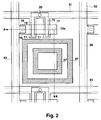
- Fig. 2 is a plan view showing a display pixel and nearby area of an example of the above mentioned reflective type LCD.
- Fig. 3 is a cross sectional view, along the line A-A in Fig. 2, showing manufacturing steps.
- a TFT is formed in an area close to a crossing point between a gate signal line 51 and a drain signal line 52.
- the gate signal line 51 includes a gate electrode 11 and supplies a gate signal to a gate
- the drain signal line 52 includes a drain electrode 16 and supplies a drain signal to a drain.
- the gate 11 of the TFT is connected to the gate signal line 51.
- the drain 13d is connected to the drain signal line 52, while the source 13s is connected to a reflection display electrode 28.
- the reflection display electrode 28 preferably has an uneven surface, rather than an even surface, so that incident light can be reflected in multiple directions. With such an arrangement, the display of the reflection type LCD (Liquid Crystal Display) can be observed from a larger area, so that a larger viewing angle can be ensured.
- LCD Liquid Crystal Display
- Step 1 (Fig. 3(a)): on an insulating substrate 10, there are sequentially formed a first gate electrode 11, a gate insulating film 12, and an active layer 13, wherein the insulating substrate 10 comprises a quartz glass, a non-alkali glass, and so on, the first gate electrode 11 comprises a refractory metal (Cr, Mo, and so on), the gate insulating film 12 comprises a SiN film and a SiO 2 film, and the active layer 13 comprises an island-shaped polycrystalline silicon film.
- the insulating substrate 10 comprises a quartz glass, a non-alkali glass, and so on
- the first gate electrode 11 comprises a refractory metal (Cr, Mo, and so on)
- the gate insulating film 12 comprises a SiN film and a SiO 2 film
- the active layer 13 comprises an island-shaped polycrystalline silicon film.
- the active layer 13 there are formed a channel 13c above the first gate electrode 11, and a source 13s and a drain 13d at the respective sides of the channel 13c, wherein the source 13s and the drain 13d are formed through ion implantation.
- a stopper insulating film 14 comprising a SiO 2 film, as a mask covering the channel 13c for preventing ion intrusion at the time of ion implantation.
- an interlayer insulating film 15 comprising laminated SiO 2 film, SiN film and SiO 2 film.
- contact holes 16, 17 are made in the interlayer insulating film 15 at respective positions corresponding to the drain 13d and the source 13s.
- the contact hole 16, corresponding to the drain 13d is filled by metal, specifically, by a single Al layer or sequentially laminated Mo and Al layers, thereby forming a drain electrode 18.
- a second gate electrode 19 is formed on the interlayer insulating film 15 above the channel 13c using metal, specifically, a single Al layer or sequentially laminated Mo and Al layers. Note that nothing is filled in the contact hole 17.
- the second gate electrode 19 is connected to the gate signal line 51 on the insulating substrate 10, via a contact hole 20, formed in the gate insulating film 12 and the interlayer insulating film 15 as shown in Fig. 1.
- a drain signal line 52 is formed on the interlayer insulating film 15.
- Step 2 (Fig. 3(b)): a first planarization insulating film 21, made of organic resin, and so on, is formed over the layers formed at Step 1, and a first resist film 22 is applied thereon. Thereafter, exposure and development processes are applied using a first mask 23, which has an opening at a position corresponding to the contact hole 17, followed by etching the first planarization insulating film 21, thereby forming a contact hole 24 corresponding to the contact hole 17.
- Step 3 a second planarization insulating film 25 is formed on the semiconductor film 13 in the contact hole 24 and the exposed first planarization insulating film 21.
- a second resist film 26 is then applied on the film 25.
- exposure and development processes are applied using a second mask 32, which has an opening at a position corresponding to a recess 27 (29) which is to be formed on an area, on the second planarization insulating film 25, where a reflection display electrode 28 is to be formed, and the second planarization insulating film 25 is thereafter etched whereby a concave 29 (27) is formed (Fig. 3(d)).
- the reflection display electrode 28 With the second resist film 26 subsequently removed, a contact hole 24, where the reflection display electrode 28 contacts the source 13s, is formed, and so are concaves 29 (27) in the reflection display electrode formation area.
- the reflection display electrode 28 resultantly has an uneven surface. As a result, incident light can be reflected in multiple directions, and a wider viewing angle can thus be achieved.
- the above described manufacturing method of a reflection type LCD may result in increased costs and labor as it initially requires formation of a contact hole 24 in the first planarization insulating film 21, and then formation of a second planarization insulating film 25 in a different manufacturing step for subsequent formation of a concave 29 (27) therein.
- the present invention aims to provide an efficient method for manufacturing a reflection type LCD having a concave in a reflection film.
- two exposures are applied to a photosensitive resin, using two different masks, before development, whereby two types of concaves each having different depths are formed. This enables reduction of the number of steps in formation of concave with two different depths.
- a concave with one of the two depths is used to constitute a contact hole for connection between a TFT transistor and a reflection film (a reflection electrode) having a size corresponding to a pixel, and a concave with another depth is used as a concave in the reflection electrode.
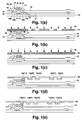
- Figs. 1(a) to 1(e) are cross sectional views, along the line A-A in Fig. 2, showing manufacturing steps for a reflection type LCD of the present invention.
- a TFT is formed in an area close to a crossing point between a gate signal line 51 and a drain signal line 52.
- the gate signal line 51 includes a first gate electrode 11, while the drain signal line 52 includes a drain electrode 16.
- a reflection display electrode 28, which comprises reflection material, is connected to the TFT.
- the reflection display electrode 28 is provided extending above the TFT, and has a surface with concaves 27 formed thereon.
- Step 1 on an insulating substrate 10, there are sequentially formed a first gate electrode 11, a gate insulating film 12, and an active layer 13, wherein the insulating substrate 10 comprises a quartz glass, a non-alkali glass, and so on, the first gate electrode 11 constitutes a part of the gate signal line 51 and comprises refractory metal (Cr, Mo, and so on), the gate insulating film 12 comprises a SiN film and a SiO 2 film, and the active layer 13 comprises a polycrystalline silicon film.
- the insulating substrate 10 comprises a quartz glass, a non-alkali glass, and so on
- the first gate electrode 11 constitutes a part of the gate signal line 51 and comprises refractory metal (Cr, Mo, and so on)
- the gate insulating film 12 comprises a SiN film and a SiO 2 film
- the active layer 13 comprises a polycrystalline silicon film.
- the active layer 13 there are formed a channel 13c above the first gate electrode 11, and a source 13s and a drain 13d at the respective sides of the channel 13c.
- the source 13s and the drain 13d are formed through ion implantation.
- a stopper insulating film 14 comprising a SiO 2 film, as a mask covering the channel 13c for preventing ion intrusion at the time of ion implantation.
- interlayer insulating film 15 which comprises laminated SiO 2 film, SiN film and SiO 2 film.
- the interlayer insulating film 15 may be formed of either a single layer of organic material such as SiO, SiN, acrylic, and so on, or multiple layers of combinations of any thereof.
- contact holes 16, 17 are formed in the interlayer insulating film 15 at respective positions corresponding to the drain 13d and the source 13s.
- the contact hole 16, corresponding to the drain 13d is filled by metal, specifically, by a single Al layer or sequentially laminated Mo and Al layers, thereby forming a drain electrode 18.
- a second gate electrode 19 is formed on the interlayer insulating film 15 above the channel 13c. That is, a second gate electrode 19 is formed using metal such as a single Al layer or laminated Mo and Al layers.
- the second gate electrode 19 is connected to the gate signal line 51 on the insulating substrate 10, via a contact hole 20, formed in the gate insulating film 12 and the interlayer insulating film 15.
- a drain signal line 52 is formed on the interlayer insulating film 15 at the same time as formation of the drain electrode 18, which constitutes a part of the drain signal line 52.
- Step 2 a photosensitive resin film 70, made of insulating resin having photosensitivity and an even surface, is formed over the entire surface of the interlayer insulating film 15, including the contact hole 17, the drain signal line 52, the drain electrode 18, and the second gate electrode 19. Thereafter, a first mask 71 having an opening at a position corresponding to a recess 27 to be formed on an area where a reflection display electrode 28 is to be formed, is placed before first exposure 75 is applied.
- the amount of exposure is determined such that the light reaches a point at a shallow depth below the surface of the photosensitive resin 70, specifically, 20 mJ/cm 2 to 60 mJ/cm 2 , preferably 25 mJ/cm 2 to 50 mJ/cm 2 , and more preferably 30 mJ/cm 2 to 40 mJ/cm 2 .
- photosensitive resin may be acrylic resin or polyimide.
- Step 3 the first mask 71 is removed, and a second mask 72 is placed instead.
- the second mask 72 has an opening at a position corresponding to a place where a contact hole 73 for connection between the source 13s of the active layer 13 and the reflection display electrode 28 is to be formed.
- second exposure 76 is applied.
- the amount of the second exposure is larger than that for the first exposure so that a deeper contact hole 73 than the concave 74 can be formed. That is, in order for the exposure light to reach deeper, specifically, deep enough to form a contact hole 73 reaching the source 13s, the amount of second exposure 76 must be large enough, specifically, 200 mJ/cm 2 to 600 mJ/cm 2 , preferably 250 mJ/cm 2 to 500 mJ/cm 2 , more preferably, 300 mJ/cm 2 to 400 mJ/cm 2 .
- Step 4 after the second mask 72 is removed, the photosensitive resin film 70 is developed whereby a concave 74 and a contact hole 73 are formed.
- the contact hole 17 (corresponding to 73 in Fig. 1) and the concave 27 (corresponding to 74 in Fig. 1) are completed.
- an alignment layer for aligning liquid crystal is formed on the reflection display electrode 28. Formation of the alignment film completes a TFT substrate. Then, opposing the TFT substrate, an opposing electrode substrate is formed, which has an opposing electrode and an alignment layer formed on the side thereof having liquid crystal, and a retardation film and a polarizer formed on the other side thereof without liquid crystal (i.e., on the observer side). The TFT substrate and the opposing electrode substrate are attached to each other along the edges thereof and liquid crystal is filled into the space between them, so that a reflection type LCD is completed.
- the opposing electrode substrate is substantially transparent, and is not segmented for every pixel.
- the use of photosensitive resin and exposure with the photosensitive resin using different amounts of light for formation of a desired contact hole and a concave readily enable formation of a contact hole and a concave without the need of two formations of a planarization insulating film, as is conventionally needed. Therefore, the manufacturing process can be simplified, and costs can be reduced.
- the present invention is not limited to the above embodiment, in which a concave and a contact hole are formed by development. Moreover, heating at, e.g., about 220 °C after the development would make more gently slanting edges of the concave 74, as shown in Fig. 1 (e), so that a brighter display with incident light reflected in many more different directions can be obtained.
- the present invention is not limited to the above embodiment, in which concaves 27 are formed as two analogous rectangles formed in a reflection display electrode formation area, and the concave 27 may rather be formed in a circle or in two or more different shapes instead.
- the number of the concave 27 is not limited to two, as described above, and a single concave 27 or three or more concaves 27 may be formed instead.
- the area where the concave 27 is formed is not limited to an area enclosed by the gate signal line 51 and the drain signal line 52, and the concave 27 may rather be formed in an area overlapping the gate signal line 51 or the drain signal line 52.
- the present invention is not limited to the above embodiment, in which the circumferential edges of adjacent reflection display electrodes 28 overlap the gate signal line 51 and the drain signal line 52, and the edge may rather overlap either one of the gate signal line 51 and the drain signal line 52 or may even not overlap the signal line. Yet further, the reflection display electrode 28 may not extend over the TFT.
- the insulating film between the second gate electrode 17 and the active layer 13, i.e., the stopper insulating film 14, the interlayer insulating film 15, and the planarization insulating film 19 in this embodiment may each be constituted of a single SiO, SiN, or any organic film, or a laminated combination thereof.
- TFT having a double gate electrode structure, having two gates
- a single gate structure, having one gate, or a multiple gate structure, having two or more gates may be similarly applicable.
- Figs. 4(a), 4(d), 4(e) are identical to Figs. 1(a), 1(d), 1(e)
- Fig. 4(b) is identical to Fig. 1(c)
- Fig. 4(c) is identical to Fig. 1(b).
- the number of formation steps may be reduced to readily attain contact between the reflection display electrode and the source, while a recess can be formed in a reflection display electrode formation area.
Landscapes
- Physics & Mathematics (AREA)
- Nonlinear Science (AREA)
- Mathematical Physics (AREA)
- Chemical & Material Sciences (AREA)
- Crystallography & Structural Chemistry (AREA)
- General Physics & Mathematics (AREA)
- Optics & Photonics (AREA)
- Liquid Crystal (AREA)
- Engineering & Computer Science (AREA)
- Microelectronics & Electronic Packaging (AREA)
- Devices For Indicating Variable Information By Combining Individual Elements (AREA)
Abstract


Description
Claims (5)
- A manufacturing method for a reflection type liquid crystal display having a reflection film for reflecting light having passed through a liquid crystal layer, comprising the steps of:forming a photosensitive resin film on a substrate;exposing the photosensitive resin film with a first amount of light via a first mask;exposing the photosensitive resin film with a second amount of light via a second mask;developing the photosensitive resin film subjected to two exposures thereby forming two types of concaves having different depths; andforming a film using reflective material on the photosensitive resin developed to have two types of concaves, thereby forming the reflection film.
- A manufacturing method according to claim 1, further comprising the step of forming a thin film transistor on the substrate so that the photosensitive resin film is formed thereon,
whereinthe photosensitive resin film constitutes an insulating film,the reflection film is a reflection electrode having a size corresponding to a pixel, andthe reflection electrode is electrically connected to the thin film transistor. - A manufacturing method according to claim 2, whereinthe first amount of light is larger than the second amount of light,the concave formed using the first mask constitutes a contact hole for electrically connecting the reflection electrode and the thin film transistor, andthe concave formed using the second mask constitutes a concave formed on a surface of the reflection electrode.
- A manufacturing method according to claim 2, whereinthe second amount of light is larger than the first amount of light,the concave formed using the first mask constitutes a concave formed on a surface of the reflection electrode, andthe concave formed using the second mask constitutes a contact hole for electrically connecting the reflection electrode and the thin film transistor.
- A manufacturing method according to any one of claims 1 to 4, further comprising
after the step of developing the photosensitive resin film, a step of heating to give edges of the concave a gentler slope.
Applications Claiming Priority (2)
| Application Number | Priority Date | Filing Date | Title |
|---|---|---|---|
| JP20060099 | 1999-07-14 | ||
| JP20060099 | 1999-07-14 |
Publications (2)
| Publication Number | Publication Date |
|---|---|
| EP1069458A2 true EP1069458A2 (en) | 2001-01-17 |
| EP1069458A3 EP1069458A3 (en) | 2004-03-10 |
Family
ID=16427068
Family Applications (1)
| Application Number | Title | Priority Date | Filing Date |
|---|---|---|---|
| EP00305867A Withdrawn EP1069458A3 (en) | 1999-07-14 | 2000-07-12 | Manufacturing method for reflection type liquid crystal display |
Country Status (5)
| Country | Link |
|---|---|
| US (1) | US6410358B1 (en) |
| EP (1) | EP1069458A3 (en) |
| JP (1) | JP2001083506A (en) |
| KR (1) | KR100385762B1 (en) |
| TW (1) | TWI224227B (en) |
Cited By (3)
| Publication number | Priority date | Publication date | Assignee | Title |
|---|---|---|---|---|
| US6274886B1 (en) * | 1998-08-31 | 2001-08-14 | Lg. Philips Lcd Co., Ltd. | Thin-film-transistor-array substrate and liquid-crystal display device |
| GB2362509A (en) * | 1999-11-16 | 2001-11-21 | Nec Corp | Thin film transistor (TFT) with front and back channel gates connected together |
| US7692740B2 (en) | 2002-05-30 | 2010-04-06 | Sharp Kabushiki Kaisha | Liquid crystal display having a reflective electrode formed on an organic resin film |
Families Citing this family (11)
| Publication number | Priority date | Publication date | Assignee | Title |
|---|---|---|---|---|
| KR100306546B1 (en) * | 1998-09-28 | 2001-11-02 | 마찌다 가쯔히꼬 | Method of manufacturing liquid crystal display apparatus |
| AUPQ385899A0 (en) * | 1999-11-04 | 1999-11-25 | Pacific Solar Pty Limited | Formation of contacts on thin films |
| JP2002333608A (en) * | 2001-05-09 | 2002-11-22 | Toshiba Corp | Liquid crystal display device and manufacturing method thereof |
| US20020177079A1 (en) * | 2001-05-23 | 2002-11-28 | Chung-Yuan Liu | Method of manufacturing a reflector |
| KR100635039B1 (en) * | 2001-08-17 | 2006-10-17 | 삼성에스디아이 주식회사 | Thial element and method for manufacturing the thial element |
| KR100813027B1 (en) * | 2001-08-18 | 2008-03-14 | 삼성전자주식회사 | Method for forming irregularities of photosensitive insulating film and reflective electrode and manufacturing method of liquid crystal display having reflective electrode of uneven structure using the same |
| KR20030044518A (en) * | 2001-11-30 | 2003-06-09 | 에이유 오프트로닉스 코퍼레이션 | A process for manufacturing reflective tft-lcd with rough diffuser |
| KR100987711B1 (en) * | 2003-11-18 | 2010-10-13 | 삼성전자주식회사 | LCD and Manufacturing Method |
| JP4693781B2 (en) * | 2004-11-17 | 2011-06-01 | シャープ株式会社 | Active matrix substrate and display device |
| JP4987987B2 (en) | 2007-11-16 | 2012-08-01 | シャープ株式会社 | Liquid crystal display |
| KR101534008B1 (en) | 2008-08-12 | 2015-07-07 | 삼성디스플레이 주식회사 | Thin film transistor display panel and manufacturing method thereof |
Family Cites Families (14)
| Publication number | Priority date | Publication date | Assignee | Title |
|---|---|---|---|---|
| EP0112417A1 (en) | 1982-12-22 | 1984-07-04 | International Business Machines Corporation | Semiconductor integrated display and method of making same |
| DE69321523T2 (en) | 1992-06-26 | 1999-05-06 | Sharp K.K., Osaka | Reflective liquid crystal display device |
| JP2530990B2 (en) * | 1992-10-15 | 1996-09-04 | 富士通株式会社 | Method of manufacturing thin film transistor matrix |
| JPH0736030A (en) * | 1993-07-23 | 1995-02-07 | Sharp Corp | Reflective liquid crystal display |
| US5691791A (en) | 1993-07-30 | 1997-11-25 | Sharp Kabushiki Kaisha | Reflective liquid crystal display device and reflector |
| JP3097945B2 (en) | 1994-10-03 | 2000-10-10 | シャープ株式会社 | Method for manufacturing reflective liquid crystal display device |
| JP2768313B2 (en) | 1995-06-13 | 1998-06-25 | 日本電気株式会社 | Reflective liquid crystal display |
| JP3209317B2 (en) * | 1995-10-31 | 2001-09-17 | シャープ株式会社 | Transmissive liquid crystal display device and method of manufacturing the same |
| JP3167605B2 (en) | 1995-12-25 | 2001-05-21 | シャープ株式会社 | Liquid crystal display device |
| JPH10221704A (en) * | 1997-02-07 | 1998-08-21 | Sharp Corp | Reflective liquid crystal display device and method of manufacturing the same |
| JP3898293B2 (en) * | 1997-07-30 | 2007-03-28 | シチズン時計株式会社 | Manufacturing method of liquid crystal device |
| JP3522517B2 (en) * | 1997-12-22 | 2004-04-26 | シャープ株式会社 | Manufacturing method of reflector |
| US6037084A (en) * | 1998-08-12 | 2000-03-14 | Industrial Technology Research Institute | Method of making a color filter plate with multi-gap for LCD |
| US6163405A (en) * | 1999-04-15 | 2000-12-19 | Industrial Technology Research Institute | Structure of a reflection-type light diffuser in a LCD |
-
2000
- 2000-06-28 TW TW089112675A patent/TWI224227B/en not_active IP Right Cessation
- 2000-07-12 EP EP00305867A patent/EP1069458A3/en not_active Withdrawn
- 2000-07-13 JP JP2000212881A patent/JP2001083506A/en active Pending
- 2000-07-13 KR KR10-2000-0040061A patent/KR100385762B1/en not_active Expired - Fee Related
- 2000-07-14 US US09/615,608 patent/US6410358B1/en not_active Expired - Lifetime
Cited By (4)
| Publication number | Priority date | Publication date | Assignee | Title |
|---|---|---|---|---|
| US6274886B1 (en) * | 1998-08-31 | 2001-08-14 | Lg. Philips Lcd Co., Ltd. | Thin-film-transistor-array substrate and liquid-crystal display device |
| GB2362509A (en) * | 1999-11-16 | 2001-11-21 | Nec Corp | Thin film transistor (TFT) with front and back channel gates connected together |
| GB2362509B (en) * | 1999-11-16 | 2002-10-09 | Nec Corp | Thin film transistor and fabrication method of the same |
| US7692740B2 (en) | 2002-05-30 | 2010-04-06 | Sharp Kabushiki Kaisha | Liquid crystal display having a reflective electrode formed on an organic resin film |
Also Published As
| Publication number | Publication date |
|---|---|
| TWI224227B (en) | 2004-11-21 |
| EP1069458A3 (en) | 2004-03-10 |
| US6410358B1 (en) | 2002-06-25 |
| JP2001083506A (en) | 2001-03-30 |
| KR100385762B1 (en) | 2003-05-28 |
| KR20010015312A (en) | 2001-02-26 |
Similar Documents
| Publication | Publication Date | Title |
|---|---|---|
| CN105514125B (en) | A kind of array substrate, preparation method and display panel | |
| KR100239778B1 (en) | LCD and its manufacturing method | |
| US6410358B1 (en) | Manufacturing method for reflection type liquid crystal display | |
| US6970209B2 (en) | Thin film transistor array substrate for a liquid crystal display and method for fabricating the same | |
| JP2004110054A (en) | Thin film transistor substrate for liquid crystal display device, method of manufacturing the same, and liquid crystal display device | |
| JP2002090742A (en) | Liquid crystal display | |
| US20030043309A1 (en) | Active matrix substrate and manufacturing method thereof | |
| EP1396019B1 (en) | Thin film transistor self-aligned to a light-shield layer | |
| US6521474B2 (en) | Manufacturing method for reflection type liquid crystal display | |
| KR101085138B1 (en) | Method of manufacturing thin film transistor substrate | |
| JP2000305114A (en) | Liquid crystal display device and method of manufacturing the same | |
| EP1462843B1 (en) | Transflective Display | |
| KR20020087372A (en) | Active matrix addressing liquid-crystal display device and method of fabricating same | |
| JP2005331675A (en) | Liquid crystal display device and method of manufacturing liquid crystal display device | |
| KR19990026576A (en) | Liquid crystal display using organic insulating film and manufacturing method thereof | |
| JP6758208B2 (en) | Manufacturing method of liquid crystal display device and TFT array substrate | |
| JPH0961811A (en) | LCD panel | |
| EP3654093B1 (en) | Display device including a patterned conductive layer | |
| KR101022291B1 (en) | Array substrate, manufacturing method thereof and liquid crystal display device having same | |
| KR100876587B1 (en) | Array substrate for liquid crystal display device including thin film transistor and manufacturing method thereof | |
| KR101297357B1 (en) | Vertical alignment mode liquid crystal display device | |
| KR100483525B1 (en) | Manufacturing method of liquid crystal display device using organic insulating film | |
| US10714513B2 (en) | Array substrate and manufacturing method thereof, liquid crystal display device and manufacturing method thereof | |
| KR100996213B1 (en) | Liquid Crystal Display and Manufacturing Method Thereof | |
| CN118033951A (en) | Array substrate, liquid crystal display panel and preparation method |
Legal Events
| Date | Code | Title | Description |
|---|---|---|---|
| PUAI | Public reference made under article 153(3) epc to a published international application that has entered the european phase |
Free format text: ORIGINAL CODE: 0009012 |
|
| AK | Designated contracting states |
Kind code of ref document: A2 Designated state(s): AT BE CH CY DE DK ES FI FR GB GR IE IT LI LU MC NL PT SE |
|
| AX | Request for extension of the european patent |
Free format text: AL;LT;LV;MK;RO;SI |
|
| PUAL | Search report despatched |
Free format text: ORIGINAL CODE: 0009013 |
|
| AK | Designated contracting states |
Kind code of ref document: A3 Designated state(s): AT BE CH CY DE DK ES FI FR GB GR IE IT LI LU MC NL PT SE |
|
| AX | Request for extension of the european patent |
Extension state: AL LT LV MK RO SI |
|
| 17P | Request for examination filed |
Effective date: 20040907 |
|
| 17Q | First examination report despatched |
Effective date: 20041004 |
|
| AKX | Designation fees paid |
Designated state(s): DE FR GB |
|
| STAA | Information on the status of an ep patent application or granted ep patent |
Free format text: STATUS: THE APPLICATION HAS BEEN WITHDRAWN |
|
| 18W | Application withdrawn |
Effective date: 20060920 |