EP1061484A2 - Verfahren und System zur Steuerung von bescheinigungsgestützten offenen Zahlungstransaktionen - Google Patents
Verfahren und System zur Steuerung von bescheinigungsgestützten offenen Zahlungstransaktionen Download PDFInfo
- Publication number
- EP1061484A2 EP1061484A2 EP00202037A EP00202037A EP1061484A2 EP 1061484 A2 EP1061484 A2 EP 1061484A2 EP 00202037 A EP00202037 A EP 00202037A EP 00202037 A EP00202037 A EP 00202037A EP 1061484 A2 EP1061484 A2 EP 1061484A2
- Authority
- EP
- European Patent Office
- Prior art keywords
- customer
- memory device
- user
- payment
- programmable memory
- Prior art date
- Legal status (The legal status is an assumption and is not a legal conclusion. Google has not performed a legal analysis and makes no representation as to the accuracy of the status listed.)
- Withdrawn
Links
Images


Classifications
-
- G—PHYSICS
- G06—COMPUTING OR CALCULATING; COUNTING
- G06Q—INFORMATION AND COMMUNICATION TECHNOLOGY [ICT] SPECIALLY ADAPTED FOR ADMINISTRATIVE, COMMERCIAL, FINANCIAL, MANAGERIAL OR SUPERVISORY PURPOSES; SYSTEMS OR METHODS SPECIALLY ADAPTED FOR ADMINISTRATIVE, COMMERCIAL, FINANCIAL, MANAGERIAL OR SUPERVISORY PURPOSES, NOT OTHERWISE PROVIDED FOR
- G06Q20/00—Payment architectures, schemes or protocols
- G06Q20/08—Payment architectures
- G06Q20/14—Payment architectures specially adapted for billing systems
- G06Q20/145—Payments according to the detected use or quantity
-
- G—PHYSICS
- G06—COMPUTING OR CALCULATING; COUNTING
- G06F—ELECTRIC DIGITAL DATA PROCESSING
- G06F21/00—Security arrangements for protecting computers, components thereof, programs or data against unauthorised activity
- G06F21/10—Protecting distributed programs or content, e.g. vending or licensing of copyrighted material ; Digital rights management [DRM]
- G06F21/105—Arrangements for software license management or administration, e.g. for managing licenses at corporate level
-
- G—PHYSICS
- G06—COMPUTING OR CALCULATING; COUNTING
- G06F—ELECTRIC DIGITAL DATA PROCESSING
- G06F21/00—Security arrangements for protecting computers, components thereof, programs or data against unauthorised activity
- G06F21/10—Protecting distributed programs or content, e.g. vending or licensing of copyrighted material ; Digital rights management [DRM]
- G06F21/12—Protecting executable software
- G06F21/121—Restricting unauthorised execution of programs
-
- G—PHYSICS
- G06—COMPUTING OR CALCULATING; COUNTING
- G06Q—INFORMATION AND COMMUNICATION TECHNOLOGY [ICT] SPECIALLY ADAPTED FOR ADMINISTRATIVE, COMMERCIAL, FINANCIAL, MANAGERIAL OR SUPERVISORY PURPOSES; SYSTEMS OR METHODS SPECIALLY ADAPTED FOR ADMINISTRATIVE, COMMERCIAL, FINANCIAL, MANAGERIAL OR SUPERVISORY PURPOSES, NOT OTHERWISE PROVIDED FOR
- G06Q20/00—Payment architectures, schemes or protocols
- G06Q20/02—Payment architectures, schemes or protocols involving a neutral party, e.g. certification authority, notary or trusted third party [TTP]
-
- G—PHYSICS
- G06—COMPUTING OR CALCULATING; COUNTING
- G06Q—INFORMATION AND COMMUNICATION TECHNOLOGY [ICT] SPECIALLY ADAPTED FOR ADMINISTRATIVE, COMMERCIAL, FINANCIAL, MANAGERIAL OR SUPERVISORY PURPOSES; SYSTEMS OR METHODS SPECIALLY ADAPTED FOR ADMINISTRATIVE, COMMERCIAL, FINANCIAL, MANAGERIAL OR SUPERVISORY PURPOSES, NOT OTHERWISE PROVIDED FOR
- G06Q20/00—Payment architectures, schemes or protocols
- G06Q20/04—Payment circuits
-
- G—PHYSICS
- G06—COMPUTING OR CALCULATING; COUNTING
- G06Q—INFORMATION AND COMMUNICATION TECHNOLOGY [ICT] SPECIALLY ADAPTED FOR ADMINISTRATIVE, COMMERCIAL, FINANCIAL, MANAGERIAL OR SUPERVISORY PURPOSES; SYSTEMS OR METHODS SPECIALLY ADAPTED FOR ADMINISTRATIVE, COMMERCIAL, FINANCIAL, MANAGERIAL OR SUPERVISORY PURPOSES, NOT OTHERWISE PROVIDED FOR
- G06Q20/00—Payment architectures, schemes or protocols
- G06Q20/08—Payment architectures
- G06Q20/10—Payment architectures specially adapted for electronic funds transfer [EFT] systems; specially adapted for home banking systems
-
- G—PHYSICS
- G06—COMPUTING OR CALCULATING; COUNTING
- G06Q—INFORMATION AND COMMUNICATION TECHNOLOGY [ICT] SPECIALLY ADAPTED FOR ADMINISTRATIVE, COMMERCIAL, FINANCIAL, MANAGERIAL OR SUPERVISORY PURPOSES; SYSTEMS OR METHODS SPECIALLY ADAPTED FOR ADMINISTRATIVE, COMMERCIAL, FINANCIAL, MANAGERIAL OR SUPERVISORY PURPOSES, NOT OTHERWISE PROVIDED FOR
- G06Q20/00—Payment architectures, schemes or protocols
- G06Q20/08—Payment architectures
- G06Q20/10—Payment architectures specially adapted for electronic funds transfer [EFT] systems; specially adapted for home banking systems
- G06Q20/102—Bill distribution or payments
-
- G—PHYSICS
- G06—COMPUTING OR CALCULATING; COUNTING
- G06Q—INFORMATION AND COMMUNICATION TECHNOLOGY [ICT] SPECIALLY ADAPTED FOR ADMINISTRATIVE, COMMERCIAL, FINANCIAL, MANAGERIAL OR SUPERVISORY PURPOSES; SYSTEMS OR METHODS SPECIALLY ADAPTED FOR ADMINISTRATIVE, COMMERCIAL, FINANCIAL, MANAGERIAL OR SUPERVISORY PURPOSES, NOT OTHERWISE PROVIDED FOR
- G06Q20/00—Payment architectures, schemes or protocols
- G06Q20/08—Payment architectures
- G06Q20/12—Payment architectures specially adapted for electronic shopping systems
-
- G—PHYSICS
- G06—COMPUTING OR CALCULATING; COUNTING
- G06Q—INFORMATION AND COMMUNICATION TECHNOLOGY [ICT] SPECIALLY ADAPTED FOR ADMINISTRATIVE, COMMERCIAL, FINANCIAL, MANAGERIAL OR SUPERVISORY PURPOSES; SYSTEMS OR METHODS SPECIALLY ADAPTED FOR ADMINISTRATIVE, COMMERCIAL, FINANCIAL, MANAGERIAL OR SUPERVISORY PURPOSES, NOT OTHERWISE PROVIDED FOR
- G06Q20/00—Payment architectures, schemes or protocols
- G06Q20/38—Payment protocols; Details thereof
- G06Q20/382—Payment protocols; Details thereof insuring higher security of transaction
- G06Q20/3821—Electronic credentials
- G06Q20/38215—Use of certificates or encrypted proofs of transaction rights
-
- G—PHYSICS
- G06—COMPUTING OR CALCULATING; COUNTING
- G06Q—INFORMATION AND COMMUNICATION TECHNOLOGY [ICT] SPECIALLY ADAPTED FOR ADMINISTRATIVE, COMMERCIAL, FINANCIAL, MANAGERIAL OR SUPERVISORY PURPOSES; SYSTEMS OR METHODS SPECIALLY ADAPTED FOR ADMINISTRATIVE, COMMERCIAL, FINANCIAL, MANAGERIAL OR SUPERVISORY PURPOSES, NOT OTHERWISE PROVIDED FOR
- G06Q20/00—Payment architectures, schemes or protocols
- G06Q20/38—Payment protocols; Details thereof
- G06Q20/382—Payment protocols; Details thereof insuring higher security of transaction
- G06Q20/3829—Payment protocols; Details thereof insuring higher security of transaction involving key management
-
- G—PHYSICS
- G06—COMPUTING OR CALCULATING; COUNTING
- G06Q—INFORMATION AND COMMUNICATION TECHNOLOGY [ICT] SPECIALLY ADAPTED FOR ADMINISTRATIVE, COMMERCIAL, FINANCIAL, MANAGERIAL OR SUPERVISORY PURPOSES; SYSTEMS OR METHODS SPECIALLY ADAPTED FOR ADMINISTRATIVE, COMMERCIAL, FINANCIAL, MANAGERIAL OR SUPERVISORY PURPOSES, NOT OTHERWISE PROVIDED FOR
- G06Q20/00—Payment architectures, schemes or protocols
- G06Q20/38—Payment protocols; Details thereof
- G06Q20/40—Authorisation, e.g. identification of payer or payee, verification of customer or shop credentials; Review and approval of payers, e.g. check credit lines or negative lists
- G06Q20/405—Establishing or using transaction specific rules
-
- G—PHYSICS
- G06—COMPUTING OR CALCULATING; COUNTING
- G06Q—INFORMATION AND COMMUNICATION TECHNOLOGY [ICT] SPECIALLY ADAPTED FOR ADMINISTRATIVE, COMMERCIAL, FINANCIAL, MANAGERIAL OR SUPERVISORY PURPOSES; SYSTEMS OR METHODS SPECIALLY ADAPTED FOR ADMINISTRATIVE, COMMERCIAL, FINANCIAL, MANAGERIAL OR SUPERVISORY PURPOSES, NOT OTHERWISE PROVIDED FOR
- G06Q40/00—Finance; Insurance; Tax strategies; Processing of corporate or income taxes
-
- G—PHYSICS
- G06—COMPUTING OR CALCULATING; COUNTING
- G06F—ELECTRIC DIGITAL DATA PROCESSING
- G06F21/00—Security arrangements for protecting computers, components thereof, programs or data against unauthorised activity
- G06F21/10—Protecting distributed programs or content, e.g. vending or licensing of copyrighted material ; Digital rights management [DRM]
- G06F21/107—License processing; Key processing
-
- G—PHYSICS
- G06—COMPUTING OR CALCULATING; COUNTING
- G06Q—INFORMATION AND COMMUNICATION TECHNOLOGY [ICT] SPECIALLY ADAPTED FOR ADMINISTRATIVE, COMMERCIAL, FINANCIAL, MANAGERIAL OR SUPERVISORY PURPOSES; SYSTEMS OR METHODS SPECIALLY ADAPTED FOR ADMINISTRATIVE, COMMERCIAL, FINANCIAL, MANAGERIAL OR SUPERVISORY PURPOSES, NOT OTHERWISE PROVIDED FOR
- G06Q2220/00—Business processing using cryptography
- G06Q2220/10—Usage protection of distributed data files
- G06Q2220/18—Licensing
Definitions
- a first conventional method of transacting business over the public networks involves a merchant, a customer, and an account servicer.
- the account servicer provides hardware and/or software to the customer that includes credit or debit information and a public key encryption file.
- the customer then may use the hardware or software, to make a purchase over an unsecured network, such as the Internet.
- the customer inserts the hardware into an appropriate reader or runs the software, the customer's purchase information is encrypted with a public key from the public key file and is sent to the merchant.
- the merchant is not in possession of the private key and consequently, cannot read the encrypted file information, such as the customer's credit card number.
- the merchant adds his own purchase information and forwards the entire encrypted message to the account servicer for authorization to proceed with the transaction.
- the account servicer then decrypts the message with the appropriate private key and informs the merchant as to whether or not to proceed with the transaction.
- This method of transacting still uses the existing credit card verification infrastructure.
- a second conventional method of doing business between a customer and a merchant requires multiple parties including at least the merchant, a merchant acquirer, a credit card account issuer, a merchant bank and of course, the consumer.
- another bank a customer's bank, separate from the credit card account issuer, is also a party.
- a customer would, for example, enter a website for a product that the customer wishes to purchase and enters name, address, product information, and credit card number and expiration. This information will go through a merchant acquirer who the merchant pays to handle the authorization of credit card transactions.
- This merchant acquirer probably represents hundreds of merchants and handles all of their transactions by just sorting through the purchase requests from customers, finding which credit card issuers need to be contacted for authorization and performing the authorization. For example, there are a number of different credit cards available to consumers such as MasterCardTM, VisaTM, DiscoverTM, and Diners ClubTM, each one of which may require a separate line for authorization.
- the merchant acquirer gets paid by the merchant to handle all of the sorting and sending through the conventional credit authorization lines. After the credit card transaction is authorized, the merchant must further deal with the settlement network in order to actually see his account credited while the credit card holder's account is debited.
- There are many transaction costs involved in this method of transacting electronically Each of these transactions, in addition to the assumptions of liability, are reflected in the prices charged to customers. Further, there is still a security issue involved since there are multiple parties who are dealing with the customer's credit card information.
- a third method of making a purchase over a network involves the use of electronic funds transfer instruments, commonly referred to as electronic checks.
- electronic funds transfer instruments commonly referred to as electronic checks.
- the customer obtains software which allows him to create an electronic check either in response to the receipt of an authenticated payment request from a merchant or on his own volition.
- the parties involved hold the necessary public keys to decrypt the private key encrypted digital signatures and certificates of each of the other parties. So, when the customer sends the digitally signed electronic check to the merchant, along with a certificate issued by the customer's bank and appropriate account, the merchant utilizes a public key to decrypt the information.
- the merchant digitally endorses the electronic check and appends his own banking information to the check and deposits the check with his own bank.
- the merchant's bank must then institute conventional clearing procedures and eventually return the processed electronic check to the customer's bank, for further settlement procedures on that end.
- this method of electronic check payment while adding an element of convenience, still requires the same clearing and settlement procedures as are necessary for the processing of "paper checks.”
- the customer's personal financial information is bounced around among a number of parties, along multiple private and public networks, the latter being quite susceptible to "electronic break-ins" resulting in increased occurrences of fraud.
- the preferred embodiments of the present invention comprise methods and systems for controlling certificate-based open payment transactions involving a merchant and a customer utilizing various types of networks and terminals.
- a customer prior to accessing a merchant POS terminal or, for example, a merchant website, a customer obtains a certificate from a service provider (SP), such as a bank, certifying his identification (ID) and his relevant financial information, in a form that is understandable by the SP.
- SP service provider
- the SP is capable of performing multiple functions.
- the SP is capable of acting as a certificate authority when it issues the customer's certificates, an authenticator when it receives private-key encrypted certificates from the customers to be decrypted using the corresponding public-key, and an authorizing authority when it checks the value available in a customer' chosen payment account against the requested purchase or transfer amount.
- the SP does not perform the authorization but instead consults with an outside authorization authority (e.g., a customer's financial institution).
- the certificate issued by the SP is located on a piece of hardware, generically referred to as a smart card.
- a smart card When this certificate is accessed by the customer at the POS terminal or through a PC, PDA or wireless device (e.g., telephone, set-top box) in response to a payment request by a participating merchant, the SP recognizes the information originally certified by them as well as additional purchase information and merchant ID information. The SP then authenticates the certificate and merchant ID information (e.g., payment method and amount) and either performs the authorization itself or obtains authorization from the appropriate financial institution and notifies the merchant that the payment amount will be deposited into the merchant's specified account.
- merchant ID information e.g., payment method and amount
- the merchant is able to validate the SP's promise to pay and release the goods since the merchant possesses the SP's public key and is thus able to unlock messages from the SP that are signed with SP's private key. Additionally, the certifying authority may request some form of merchant response to the notification prior to performing the deposit.
- a first particular embodiment described in further detail below is a method for facilitating a financial transaction over a first network.
- the method includes issuing a programmable memory device to a first user.
- the programmable memory device contains at least the following for formulating payment instructions network address instructions for an issuer of the programmable memory device, a first user's digital certificate, a first user's financial account information, and an encryption program.
- the method also includes issuing software to a second user.
- the software includes payment information of the second user including a second user's financial account information.
- the software is capable of interacting with the programmable memory device over the first network.
- a connection is formed between the programmable memory device and the software and the payment instructions are received via the connection.
- the second user's payment information is added to the payment instructions.
- the payment information and the payment instructions are routed to the issuer utilizing the network address instructions and the issuer is capable of accessing at least one of the first user's financial account information and a second user's financial
- a customer's account selection is received and the a customer's memo balance is checked for the selected account to determine if funds therein are sufficient to pay the amount due.
- the payment information from the programmable memory device is downloaded to a memory portion of the terminal and stored for future processing of the financial transaction.
- the selected product is released to the customer and the payment information is uploaded to the issuer of the programmable memory device for further processing and settlement of the financial transaction.
- a fourth particular embodiment described in detail below is a system for performing a financial transaction.
- the system includes means for presenting a customer with an amount due in response to a customer's product selection, means for accepting a customer's programmable memory device within a reader portion of a terminal to facilitate payment of the amount due, and means for accessing a portion of the customer's programmable memory device containing payment information.
- the payment information includes at least network address instructions for an issuer of the customer's programmable memory device, a digital certificate for identifying the customer, the customer's financial account information, an encryption program, and a customer memo balance containing updated customer account balances.
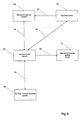
- a customer requests a certificate from a service provider (SP) S(A) , that is embodied in a piece of hardware, such as a smart card (discussed below).
- SP service provider
- the SP may be the customer's own financial institution (e.g., bank) or it may be subscribed to by the customer's third party financial institution.
- the certificate is used by the customer when away from his financial institution, to identify himself to the financial institution when he is making a purchase at a compatible terminal S(B) . Consequently, the certificate represents identifying information about the customer.
- the identifying information represents the financial relationship between the SP and the customer in the case where the SP is also the holder of the customer's accounts.
- the certificate may represent identifying information about the financial relationship between a third-party financial institution and the customer and the payment preferences of the customer.
- all relevant purchase information is sent directly to the SP for authentication, with little or no actual merchant intervention S(C) .
- all merchant information is generally added automatically, without the need for the merchant to intervene. This is accomplished via a software program within the terminal. Alternatively, the merchant information may already be part of the payment vehicle at the time the customer adds his/her payment information as in the case of, for example, a web-based transaction.
- the SP authenticates and authorizes the information
- a message regarding the authentication/authorization is transmitted to the merchant, allowing the merchant to proceed or cancel the transaction S(D) . If authentication and authorization are positive, the merchant releases the goods and/or services to the customer, without delay S(E) .
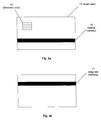
- the electronic memory 23 is capable of storing other large files/programs 24 such as biometric identifying information 36 , a digital signature generation program 30 , and memo balances 38 as well as the on-card generated encryption keys 28 used to encrypt any or all of these files for security.
- the memo balances 38 may represent multiple transactions for multiple accounts tracked by the smart card. Review of these memo balances 38 prior to making a purchase or transferring value allows the customer to make an informed decision regarding which account to use in which situation.
- the smart card 10 is capable of the smart card 10 to retain in at least one of its multiple memories, particular dialing numbers (e.g.
- the customer is in possession of the appropriate hardware, i.e., the smart card, containing all relevant customer data, he can make a purchase with the smart card over a variety of networks, terminals and servers.
- the appropriate hardware i.e., the smart card, containing all relevant customer data
- the SP uses the automated clearing house (ACH) lines 68 to transmit and receive clearing and settlement communications to and from the merchant's financial institution 70 .
- the merchant's financial institution is equipped with a server that is capable of receiving and transmitting information along at least the ACH lines 68 .
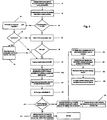
- a customer obtains a smart card encrypted with a certificate from the SP, S1 and attempts to make a purchase at a POS merchant terminal.
- the customer's smart card contains an identification certificate which includes the SP's digital signature that is secured on a first-level by encryption via public key cryptography (PKC) and is further secured on a second-level by a PIN lock.
- PDC public key cryptography
- a smart card could be programmed to individually lock any number of applications within the smart card with a PIN.
- the smart card itself may be secured by a PIN lock and/or biometric lock, adding a third and possibly, fourth level of security.
- the smart card could be programmed to require biometric authentication only when the customer attempts to make a purchase for value exceeding a set amount, for example $1,000. Additionally, the smart card contains the dialing number and URL for the SP, a menu for selecting which account he wishes to debit, and memo balances for informing the customer or merchant of the value amounts in each of his available accounts.
- the merchant subscribes to the certificate-based open payment transaction system and has loaded the appropriate software and/or hardware into the POS terminal.
- This software is not complicated and in most cases need only consist of a file containing the public keys of the SP so as to be capable of decrypting, authenticating, and authorizing messages received from the SP under a PKC security system.
- the POS terminal may be fixed or stationary, as in the case where it is located at an actual retail location or it may be portable, as in the case where merchants are selling concessions at say, a sporting event. Further, the POS terminal may be currently on-line or off-line.
- the merchant When the customer attempts to pay through a stationary, on-line terminal using his smart card, the merchant requests payment and the customer inserts his smart card into the smart card reader portion of the merchant terminal S2 .
- the reader recognizes the certificate and other purchase facilitating data in the memory or memories of the smart card. If the purchase price exceeds $1,000, biometric authentication is required and the customer will be asked to provide such information, e.g., a fingerprint S3-S5 . Similarly, once the biometric authentication has been performed, if in addition there is a PIN lock on the smart card as in this specific example, the customer is prompted or requested to enter such information through, for example, a graphical user interface (GUI) S7-S8 .
- GUI graphical user interface
- the customer decides which account he wishes to use for the purchase S9 .
- the customer is able to review the memo balance file to aid in the selection of an account to be debited.
- the representations of individual accounts such as MasterCardTM, VisaTM, and Diners ClubTM, or various checking and savings accounts shown to the customer, need not represent the actual account numbers for these payment vehicles. Instead, the representations are only account identifiers and are only readable by the holder of the customer's respective accounts. Whether the account holder is the SP or a third party financial institution is irrelevant at this stage.
- One advantage of having the same financial institution holding each of the accounts of the customer is that it is possible for the customer to split up the payment for a particularly large purchase and utilize more than one account for the same payment.
- the merchant never sees the selected payment method and this is not his concern since he is assured through the digital signatures attached to the authorizations from the SP that he will receive payment for the full amount.
- the method contemplated by the invention allows this to occur without any interaction from the merchant and of course, since there is no need to pay a merchant acquirer to sort and send the payment requests, there are no added transaction costs.
- the SP uses the third party financial institutions dialing number or URL, which is found in the smart card and sent with the certificate from the POS terminal, to access the customer's third party financial institution and obtain authorization to proceed with the transaction S13, S15 .
- the SP Upon obtaining authorization from the third party financial institution or based on its own authorization process, the SP will send a digitally signed response to the merchant, indicating the result of the comparison S16 . If the SP approves the purchase, prior to debiting the account of the customer and causing the payment to be deposited into the merchants deposit account, it will await a digitally signed confirmation from the merchant (if desired) and will proceed with the clearing and settlement procedures S18 . Either upon receiving the signed authorization from the SP or upon sending their digital confirmation, the merchant will release the purchased goods to the customer, knowing that the payment will be deposited into their account by the SP S17 .
- This release of goods may be, inter alia, electronic as in the case of Internet services, shipped in the case of tangible products, or the products may be released directly to the customer in the case of a POS transaction.
- the SP will pay the merchant and post the debit to the customer's account either with the SP or with the third party financial institution S19.
- the payment and posting steps may be accomplished through the traditional automated clearing house (ACH) channels.
- ACH automated clearing house
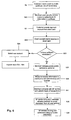
- the POS terminal is either stationary or portable but is not "on-line" in the traditional sense, such that it is connected to the SP during the transaction with the customer. Instead of using the SP to authenticate the information stored in the customer's certificate(s), the merchant does his own off-line authentication.
- the merchant uses a security access module (SAM) in order to decrypt the secure certificates and access the information on the customer's smart card S20 .
- SAM security access module
- the customer selects which account he wishes to use in the transaction S21 and if necessary, the merchant is able to view the memo balances and determine the availability of funds within the customer's chosen account S22-S24 .
- the merchant releases the purchased goods and/or services to the customer S25 .
- the merchant may utilize his own terminal and smart card for storing these off-line transactions, an audit copy of the transactions, his own identification certificates containing, for example, merchant digital signatures, and dialing numbers and URLs for appropriate financial institutions and/or SPs S26 .
- the merchant may store the transactions from, for example, a single day, in aggregate or summarized form on his smart card, and in transaction specific form in the merchant terminal memory.
- the merchant goes on-line (e.g. , direct dial or Internet) and utilizes his smart card and/or terminal to up-load batches of transactions to the SPs S27 .
- the SP returns a completion message, allowing the merchant to purge the stored information from the smart card and the merchant terminal S28 .
- the SP then may proceed with the clearing and settlement procedures S29.
- the customer digitally signs the purchasing information with his private key and attaches the certificate from the smart card to the purchasing information and executes the transmit step (e.g., selecting "send"), resulting in the form being sent over the network to the SP.
- the SP authorizes the customer's purchase, either through a comparison with its' own account records or by contacting the third party financial institution holding the customer's accounts and receiving authorization.
- the SP digitally signs the order and sends it to the merchant, who decrypts the SP's signature and sends confirmation back to the SP and the customer, attaching the merchant's digital signature.
- the SP proceeds to pay the merchant and post the debit to the customer's chosen account and generally institute clearing and settlement procedures.
- a customer uses his SP issued smart card to make a purchase through a telephone, either conventional or wireless, where the telephone is equipped with a smart card reader.
- the conventional alphanumeric keypad may be used to enter data or verbal data may be entered where an appropriate voice response unit (VRU) and/or voice recognition unit is available.
- VRU voice response unit
- the entrance of the purchase data through either the keypad or vocally, combined with the electronic data from the smart card, allows the customer to make purchases with virtually the same ease as if he were sitting at his PC and filling in a webpage or standing at a POS terminal providing information through a keypad or touchscreen.
- the certificate issued by the service provider may include multiple types of identifiers, for use with the server of the service provider as well as the customer's third party financial institution.
- the certificate might include a first identification number, used by the service provider to identify the individual, and a second identification number, such as an encrypted PIN, for use with the customer's third party financial institution during the authorization process.
- the SP can use the encrypted PIN found in the certificate to access the third party financial institution over the conventional authorization channels, such as the ATM lines.
- the encrypted PIN is part of the certificate issued by the SP to the third party financial institution's customer on behalf of the third party financial institution. All of this identifying information and transaction facilitating information is secure since it is part of the encrypted message identified by the certificate, readable only by the SP who holds the matching public key. Further, if the card itself is PIN-locked or biometrically locked, there is an added level of security.
- the customer generates his/her own key pair off of the issued smart card, instead of receiving the generated keys with the smart card.
- the SP issues the smart card to the customer having a standard PIN thereon for unlocking the card, but the encryption key pairs and the certificate have yet to be generated.
- the customer receives the card and unlocks the card with the PIN, using the software supplied by the SP the customer is able to generate his/her own key pair and a profile to be encrypted with a digital signature based on the private key and forwarded to the SP along with the attached public key for formation of a service provider-backed certificate.
- a profile contains information such as name, address, social security number, birthdate, etc.
- This customer-key generation embodiment limits the number of entities who are privy to the both the public and private key and consequently this embodiment provides the maximum amount of security.
- the key pair is generated by the SP and provided with the customer profile based certificate loaded onto the smart card.
- the SP issue a certified smart card, having, in addition to the electronic memory, a magnetic memory wherein, there is a one-time use amount of credit or debit attached thereto.
- a description of a multi-technology smart card may be found in the commonly assigned co-pending application serial number 09/274,462 entitled “METHOD AND SYSTEM FOR REMOTE BANKING WITH A MULTI-MEMORY TECHNOLOGY SMART CARD" filed March 22, 1999.
- the customer can instruct the SP to put into the magnetic memory of the smart card, an amount of credit related to say, the customer's MasterCardTM account held by the SP or a customer's third party financial institution.
- the smart card may be programmed to automatically erase the particular track of the magnetic memory which housed the credit information, after it has been selected by the customer for use in a purchasing transaction. Consequently, there is limited risk that someone could tap into the network or that a trusted party could misuse this erasable information since the smart card does not allow for repeat uses of the information, once it has been transmitted into a network.
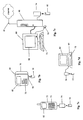
- FIG. 7a is a cellular phone 72 having thereon a display/output component 82 for viewing information that is retrieved from the smart card 10 and a keypad/input component 73 for entering information.
- the cellular phone 72 may be used for wireless transactions.
- a smart card reader plug-in 74 that is compatible with, for example, the docking port 71 of the cellular phone 72 .
- the smart card reader may be either a compatible plug-in component for use with an existing port or the reader may be an internal component of the terminal.
- FIG. 7b illustrates a generic POS terminal 76 which may be used for either off-line or on-line transactions.
- the POS terminal 76 has a display/output component 82 and a keypad/input component 73 . Further, in this example, the POS terminal 76 has both a swipe reader component 80 and an internal smart card reader 78 .
- an Internet or telephone connection may be provided through an appropriate cable 81 .
- FIG. 7c illustrates a PC 86 which is connected to the Internet via cable 81 such that a user may browse through merchant websites via the display 82 .
- the PC 86 is compatible with a smart card reader plug-in 74 (or alternately, as discussed above, the PC could have a separate internal device for reading smart cards).
- the input/keyboard component 73 or a conventional mouse 75 may be used to provide transaction data to an order form on the website and to send the information to the SP.
- FIG. 7d a generic PDA 90 is illustrated, having a display/output component 82 and an input/keypad component 73 , in addition to a smart card reader plug-in 74 for use with smart card 10 .
- the examples above limit the number of necessary parties as well as the number of transactions that are the responsibility of each of the interacting parties.
- the invention allows the merchant to disregard entirely the choice of payment method by the customer since the customer's accounts are each certified by the SP. There is no need for the merchant to hire a merchant acquirer to sort through numerous transactions and contact the appropriate credit card verification line for each transaction. In fact, the invention does not require use of the conventional credit transaction network at all.
- the SP or the SP via the customer's third party financial institution does all of the authenticating, authorizing, crediting and debiting.
- the merchant need only acquire the SP's public key. In the case of non payment, the merchant has recourse due to the SP signed transaction.
- the SP proceeds to do both the ID authentication as well as the authorization, without first consulting the third party financial institution.
- the SP may settle with the third party financial institution at some later time but, the nature of a second level relationship is that the SP is authorized and indemnified by the third party financial institution in proceeding with transaction authorization based on the customer's account information garnered from the smart card certificate.
Landscapes
- Business, Economics & Management (AREA)
- Accounting & Taxation (AREA)
- Engineering & Computer Science (AREA)
- Theoretical Computer Science (AREA)
- Finance (AREA)
- General Physics & Mathematics (AREA)
- Physics & Mathematics (AREA)
- General Business, Economics & Management (AREA)
- Strategic Management (AREA)
- Computer Security & Cryptography (AREA)
- Economics (AREA)
- Development Economics (AREA)
- Software Systems (AREA)
- Technology Law (AREA)
- Multimedia (AREA)
- Computer Hardware Design (AREA)
- General Engineering & Computer Science (AREA)
- Marketing (AREA)
- Financial Or Insurance-Related Operations Such As Payment And Settlement (AREA)
- Cash Registers Or Receiving Machines (AREA)
Applications Claiming Priority (2)
| Application Number | Priority Date | Filing Date | Title |
|---|---|---|---|
| US13860799P | 1999-06-11 | 1999-06-11 | |
| US138607P | 1999-06-11 |
Publications (2)
| Publication Number | Publication Date |
|---|---|
| EP1061484A2 true EP1061484A2 (de) | 2000-12-20 |
| EP1061484A3 EP1061484A3 (de) | 2004-01-07 |
Family
ID=22482791
Family Applications (1)
| Application Number | Title | Priority Date | Filing Date |
|---|---|---|---|
| EP00202037A Withdrawn EP1061484A3 (de) | 1999-06-11 | 2000-06-09 | Verfahren und System zur Steuerung von bescheinigungsgestützten offenen Zahlungstransaktionen |
Country Status (2)
| Country | Link |
|---|---|
| US (5) | US8117125B1 (de) |
| EP (1) | EP1061484A3 (de) |
Cited By (11)
| Publication number | Priority date | Publication date | Assignee | Title |
|---|---|---|---|---|
| WO2003010721A3 (fr) * | 2001-07-25 | 2003-11-27 | Credit Lyonnais | Procede et systeme permettant de garantir formellement un paiement, en mettant en oeuvre un telephone portable |
| WO2004109610A1 (en) * | 2003-06-04 | 2004-12-16 | Zingtech Limited | Transaction processing |
| EP1221682A3 (de) * | 2001-01-04 | 2004-12-29 | G M & P S.r.l. | Methode und Speichermedium für ein Programm zur Kontrolle besagter Methode zur sicheren Durchführung von kommerziellen und Banktransaktionen in einem Telekommunikations- und Computernetzwerk |
| EP1550066A4 (de) * | 2002-10-10 | 2006-09-13 | Intercomp Corp | Sicheres elektronisches bezahlungsnachrichtenübermittlungssystem mit überbrückbarer finalität |
| EP1237134A3 (de) * | 2001-03-02 | 2006-12-06 | Nokia Corporation | Elektronische Transaktionen |
| GR20070100592A (el) * | 2007-09-27 | 2009-04-30 | Νικος Παντελη Τσαγκαρης | Συστηματα και μεθοδοι διεκπεραιωσης διαδικτυακων συναλλαγων με διαφανως προσφερομενη ασφαλεια |
| US7533065B2 (en) * | 2001-06-20 | 2009-05-12 | Nokia Corporation | Advanced method and arrangement for performing electronic payment transactions |
| WO2011010319A1 (en) * | 2009-07-24 | 2011-01-27 | Vasanta Madhavi Chakravartula | Selecting and routing of different event websites from one source website |
| RU2451398C2 (ru) * | 2006-04-07 | 2012-05-20 | Груп Де Эколь Де Телекоммуникасьонс - Эколь Националь Сьюпериор Де Телекоммуникасьонс | Способы аутентификации, шифрования и декодирования идентификатора клиентского терминала и устройства для их реализации |
| CN103714455A (zh) * | 2013-12-20 | 2014-04-09 | 江苏大学 | 一种c2c电子交易平台的个人信息保护方法 |
| CN106997530A (zh) * | 2016-01-25 | 2017-08-01 | 阿里巴巴集团控股有限公司 | 基于移动终端卡模拟的信用支付方法及装置 |
Families Citing this family (30)
| Publication number | Priority date | Publication date | Assignee | Title |
|---|---|---|---|---|
| CA2369081C (en) | 1999-04-30 | 2012-02-07 | X.Com Corporation | System and method for electronically exchanging value among distributed users |
| EP1061484A3 (de) | 1999-06-11 | 2004-01-07 | Citicorp Development Center, Inc. | Verfahren und System zur Steuerung von bescheinigungsgestützten offenen Zahlungstransaktionen |
| HK1047169A1 (zh) * | 1999-06-18 | 2003-02-07 | Echarge Corporation | 使用虚拟支付帐户在因特网上定购产品、服务和内容的方法和装置 |
| US7979347B1 (en) * | 2000-03-16 | 2011-07-12 | Goldman Sachs & Co. | Automated online sales risk management |
| US20080147564A1 (en) * | 2001-06-26 | 2008-06-19 | Tara Chand Singhal | Security in use of bankcards that protects bankcard data from merchant systems in a payment card system |
| US7979057B2 (en) * | 2000-10-06 | 2011-07-12 | S.F. Ip Properties 62 Llc | Third-party provider method and system |
| US9020854B2 (en) | 2004-03-08 | 2015-04-28 | Proxense, Llc | Linked account system using personal digital key (PDK-LAS) |
| EP1725977B1 (de) | 2004-03-19 | 2009-04-15 | Nokia Corporation | Detektorlogik und funkidentifikationseinrichtung und verfahren zur verbesserung des terminal-betriebs |
| US11206664B2 (en) | 2006-01-06 | 2021-12-21 | Proxense, Llc | Wireless network synchronization of cells and client devices on a network |
| US8412949B2 (en) | 2006-05-05 | 2013-04-02 | Proxense, Llc | Personal digital key initialization and registration for secure transactions |
| US20110208659A1 (en) * | 2006-08-15 | 2011-08-25 | Last Mile Technologies, Llc | Method and apparatus for making secure transactions using an internet accessible device and application |
| US9269221B2 (en) | 2006-11-13 | 2016-02-23 | John J. Gobbi | Configuration of interfaces for a location detection system and application |
| WO2009062194A1 (en) | 2007-11-09 | 2009-05-14 | Proxense, Llc | Proximity-sensor supporting multiple application services |
| US9251332B2 (en) | 2007-12-19 | 2016-02-02 | Proxense, Llc | Security system and method for controlling access to computing resources |
| WO2009102979A2 (en) | 2008-02-14 | 2009-08-20 | Proxense, Llc | Proximity-based healthcare management system with automatic access to private information |
| US20100052853A1 (en) * | 2008-09-03 | 2010-03-04 | Eldon Technology Limited | Controlling an electronic device by way of a control device |
| US9418205B2 (en) | 2010-03-15 | 2016-08-16 | Proxense, Llc | Proximity-based system for automatic application or data access and item tracking |
| US8857716B1 (en) | 2011-02-21 | 2014-10-14 | Proxense, Llc | Implementation of a proximity-based system for object tracking and automatic application initialization |
| US9858560B2 (en) * | 2012-06-28 | 2018-01-02 | Maxim Integrated Products, Inc. | Secure payments with untrusted devices |
| CN103237005A (zh) * | 2013-03-15 | 2013-08-07 | 福建联迪商用设备有限公司 | 密钥管理方法及系统 |
| US9405898B2 (en) | 2013-05-10 | 2016-08-02 | Proxense, Llc | Secure element as a digital pocket |
| US9324065B2 (en) | 2014-06-11 | 2016-04-26 | Square, Inc. | Determining languages for a multilingual interface |
| US11080674B1 (en) | 2014-09-19 | 2021-08-03 | Square, Inc. | Point of sale system |
| US11080675B1 (en) * | 2015-09-08 | 2021-08-03 | Square, Inc. | Point-of-sale system having a secure touch mode |
| WO2017056309A1 (ja) * | 2015-10-02 | 2017-04-06 | 株式会社野村総合研究所 | 情報処理装置および情報処理方法 |
| WO2017106472A1 (en) * | 2015-12-17 | 2017-06-22 | Mastercard International Incorporated | Method and system for distribution, use and validation of electronic entitlement certificates |
| US10621568B1 (en) * | 2016-11-16 | 2020-04-14 | Worldpay, Llc | Systems and methods for direct electronic communication of consumer information |
| US11204914B2 (en) * | 2018-10-10 | 2021-12-21 | First Data Corporation | Systems and methods for a federated directory service |
| US11682008B2 (en) * | 2020-09-28 | 2023-06-20 | Vadim Nikolaevich ALEKSANDROV | Method of authenticating a customer, method of carrying out a payment transaction and payment system implementing the specified methods |
| WO2022076525A1 (en) * | 2020-10-07 | 2022-04-14 | Mastercard International Incorporated | Systems and methods for use in biometric-enabled network interactions |
Citations (1)
| Publication number | Priority date | Publication date | Assignee | Title |
|---|---|---|---|---|
| US5796832A (en) | 1995-11-13 | 1998-08-18 | Transaction Technology, Inc. | Wireless transaction and information system |
Family Cites Families (31)
| Publication number | Priority date | Publication date | Assignee | Title |
|---|---|---|---|---|
| US4736094A (en) | 1984-04-03 | 1988-04-05 | Omron Tateisi Electronics Co. | Financial transaction processing system using an integrated circuit card device |
| JPS63313288A (ja) | 1987-06-16 | 1988-12-21 | Tomoo Yamada | Icカ−ドの本人識別方法及びそのicカ−ド |
| US4891503A (en) | 1988-03-29 | 1990-01-02 | Gascard, Inc. | Distributed authorization system |
| US5036461A (en) | 1990-05-16 | 1991-07-30 | Elliott John C | Two-way authentication system between user's smart card and issuer-specific plug-in application modules in multi-issued transaction device |
| JPH06223041A (ja) | 1993-01-22 | 1994-08-12 | Fujitsu Ltd | 広域環境利用者認証方式 |
| US5649118A (en) | 1993-08-27 | 1997-07-15 | Lucent Technologies Inc. | Smart card with multiple charge accounts and product item tables designating the account to debit |
| US5511121A (en) | 1994-02-23 | 1996-04-23 | Bell Communications Research, Inc. | Efficient electronic money |
| US5577121A (en) | 1994-06-09 | 1996-11-19 | Electronic Payment Services, Inc. | Transaction system for integrated circuit cards |
| EP0690399A3 (de) | 1994-06-30 | 1997-05-02 | Tandem Computers Inc | System für fernbediente finanzielle Transaktionen |
| US5677955A (en) * | 1995-04-07 | 1997-10-14 | Financial Services Technology Consortium | Electronic funds transfer instruments |
| US5790677A (en) | 1995-06-29 | 1998-08-04 | Microsoft Corporation | System and method for secure electronic commerce transactions |
| JPH0950465A (ja) | 1995-08-04 | 1997-02-18 | Hitachi Ltd | 電子ショッピング方法、電子ショッピングシステムおよび文書認証方法 |
| US5721781A (en) | 1995-09-13 | 1998-02-24 | Microsoft Corporation | Authentication system and method for smart card transactions |
| US5671279A (en) * | 1995-11-13 | 1997-09-23 | Netscape Communications Corporation | Electronic commerce using a secure courier system |
| EP0960402B1 (de) * | 1996-06-19 | 2007-09-26 | Behruz Vazvan | Echtzeitsystem und -verfahren für ferneinkaufs- oder fernrechnungszahlungstransaktionen und übertragung von elektronischem geld und anderen notwendigen daten |
| US5931917A (en) | 1996-09-26 | 1999-08-03 | Verifone, Inc. | System, method and article of manufacture for a gateway system architecture with system administration information accessible from a browser |
| US5933816A (en) | 1996-10-31 | 1999-08-03 | Citicorp Development Center, Inc. | System and method for delivering financial services |
| US5953422A (en) | 1996-12-31 | 1999-09-14 | Compaq Computer Corporation | Secure two-piece user authentication in a computer network |
| US6317729B1 (en) * | 1997-04-08 | 2001-11-13 | Linda J. Camp | Method for certifying delivery of secure electronic transactions |
| US6999936B2 (en) * | 1997-05-06 | 2006-02-14 | Sehr Richard P | Electronic ticketing system and methods utilizing multi-service visitor cards |
| CN1284230A (zh) * | 1997-06-13 | 2001-02-14 | 格姆普拉斯有限公司 | 用于访问和由因特网通信的智能卡、无绳电话、系统和方法 |
| CN1155919C (zh) * | 1997-06-27 | 2004-06-30 | 瑞士电信流动电话公司 | 用移动设备的事务处理方法 |
| US5974146A (en) | 1997-07-30 | 1999-10-26 | Huntington Bancshares Incorporated | Real time bank-centric universal payment system |
| US6016476A (en) * | 1997-08-11 | 2000-01-18 | International Business Machines Corporation | Portable information and transaction processing system and method utilizing biometric authorization and digital certificate security |
| US6003014A (en) | 1997-08-22 | 1999-12-14 | Visa International Service Association | Method and apparatus for acquiring access using a smart card |
| US5883810A (en) | 1997-09-24 | 1999-03-16 | Microsoft Corporation | Electronic online commerce card with transactionproxy number for online transactions |
| US6026166A (en) * | 1997-10-20 | 2000-02-15 | Cryptoworx Corporation | Digitally certifying a user identity and a computer system in combination |
| US6108644A (en) * | 1998-02-19 | 2000-08-22 | At&T Corp. | System and method for electronic transactions |
| US6081790A (en) * | 1998-03-20 | 2000-06-27 | Citibank, N.A. | System and method for secure presentment and payment over open networks |
| US6085321A (en) * | 1998-08-14 | 2000-07-04 | Omnipoint Corporation | Unique digital signature |
| EP1061484A3 (de) | 1999-06-11 | 2004-01-07 | Citicorp Development Center, Inc. | Verfahren und System zur Steuerung von bescheinigungsgestützten offenen Zahlungstransaktionen |
-
2000
- 2000-06-09 EP EP00202037A patent/EP1061484A3/de not_active Withdrawn
- 2000-06-09 US US09/588,902 patent/US8117125B1/en not_active Expired - Fee Related
-
2012
- 2012-01-12 US US13/348,748 patent/US9607292B1/en not_active Expired - Fee Related
-
2017
- 2017-02-14 US US15/432,676 patent/US9928491B1/en not_active Expired - Fee Related
-
2018
- 2018-02-13 US US15/895,934 patent/US10373141B1/en not_active Expired - Fee Related
-
2019
- 2019-07-29 US US16/525,206 patent/US10579977B1/en not_active Expired - Fee Related
Patent Citations (1)
| Publication number | Priority date | Publication date | Assignee | Title |
|---|---|---|---|---|
| US5796832A (en) | 1995-11-13 | 1998-08-18 | Transaction Technology, Inc. | Wireless transaction and information system |
Cited By (16)
| Publication number | Priority date | Publication date | Assignee | Title |
|---|---|---|---|---|
| EP1221682A3 (de) * | 2001-01-04 | 2004-12-29 | G M & P S.r.l. | Methode und Speichermedium für ein Programm zur Kontrolle besagter Methode zur sicheren Durchführung von kommerziellen und Banktransaktionen in einem Telekommunikations- und Computernetzwerk |
| US8447359B2 (en) | 2001-03-02 | 2013-05-21 | Nokia Corporation | Electronic transactions |
| EP1237134A3 (de) * | 2001-03-02 | 2006-12-06 | Nokia Corporation | Elektronische Transaktionen |
| US7885686B2 (en) | 2001-03-02 | 2011-02-08 | Nokia Corporation | Electronic transactions |
| US7533065B2 (en) * | 2001-06-20 | 2009-05-12 | Nokia Corporation | Advanced method and arrangement for performing electronic payment transactions |
| WO2003010721A3 (fr) * | 2001-07-25 | 2003-11-27 | Credit Lyonnais | Procede et systeme permettant de garantir formellement un paiement, en mettant en oeuvre un telephone portable |
| US8380622B2 (en) | 2002-10-10 | 2013-02-19 | Intercomputer Corporation | Secure electronic payment messaging system with reconcilable finality |
| EP1550066A4 (de) * | 2002-10-10 | 2006-09-13 | Intercomp Corp | Sicheres elektronisches bezahlungsnachrichtenübermittlungssystem mit überbrückbarer finalität |
| US7231373B2 (en) | 2003-06-04 | 2007-06-12 | Zingtech Limited | Transaction processing |
| WO2004109610A1 (en) * | 2003-06-04 | 2004-12-16 | Zingtech Limited | Transaction processing |
| RU2451398C2 (ru) * | 2006-04-07 | 2012-05-20 | Груп Де Эколь Де Телекоммуникасьонс - Эколь Националь Сьюпериор Де Телекоммуникасьонс | Способы аутентификации, шифрования и декодирования идентификатора клиентского терминала и устройства для их реализации |
| GR20070100592A (el) * | 2007-09-27 | 2009-04-30 | Νικος Παντελη Τσαγκαρης | Συστηματα και μεθοδοι διεκπεραιωσης διαδικτυακων συναλλαγων με διαφανως προσφερομενη ασφαλεια |
| EP2077521A1 (de) * | 2007-09-27 | 2009-07-08 | Nicos Tsangaris | Systeme und Verfahren zur Durchführung von Transaktionen im Internet mit transparenten Sicherheit |
| WO2011010319A1 (en) * | 2009-07-24 | 2011-01-27 | Vasanta Madhavi Chakravartula | Selecting and routing of different event websites from one source website |
| CN103714455A (zh) * | 2013-12-20 | 2014-04-09 | 江苏大学 | 一种c2c电子交易平台的个人信息保护方法 |
| CN106997530A (zh) * | 2016-01-25 | 2017-08-01 | 阿里巴巴集团控股有限公司 | 基于移动终端卡模拟的信用支付方法及装置 |
Also Published As
| Publication number | Publication date |
|---|---|
| US10373141B1 (en) | 2019-08-06 |
| US9607292B1 (en) | 2017-03-28 |
| US10579977B1 (en) | 2020-03-03 |
| EP1061484A3 (de) | 2004-01-07 |
| US8117125B1 (en) | 2012-02-14 |
| US9928491B1 (en) | 2018-03-27 |
Similar Documents
| Publication | Publication Date | Title |
|---|---|---|
| US10579977B1 (en) | Method and system for controlling certificate based open payment transactions | |
| US11880815B2 (en) | Device enrollment system and method | |
| US7734527B2 (en) | Method and apparatus for making secure electronic payments | |
| US20090063312A1 (en) | Method and System for Processing Secure Wireless Payment Transactions and for Providing a Virtual Terminal for Merchant Processing of Such Transactions | |
| US7280981B2 (en) | Method and system for facilitating payment transactions using access devices | |
| US6138107A (en) | Method and apparatus for providing electronic accounts over a public network | |
| US8924290B2 (en) | Method and apparatus enabling improved protection of consumer information in electronic transactions | |
| AU777762B2 (en) | Electronic transactions and payments system | |
| US6701303B1 (en) | E-commerce system and method of operation enabling a user to conduct transactions with multiple retailers without certification and/or trusted electronic paths | |
| US20140379584A1 (en) | Anti-fraud financial transaction method | |
| US20060106699A1 (en) | System and method for conducting secure commercial order transactions | |
| US20040070566A1 (en) | Card present network transactions | |
| JP2004527861A (ja) | 安全な現金を使用しない支払取引を行うための方法および現金を使用しない支払システム | |
| JP2006073022A (ja) | 私的で安全な金融取引システム及び方法 | |
| KR20100054757A (ko) | 대역밖 인증을 이용한 지불 거래 처리 | |
| JP2014075157A (ja) | 金融手段を確認するためのシステムおよび方法 | |
| CN115956252A (zh) | 快速加密货币交易处理 | |
| US20220078611A1 (en) | Secure offline mobile interactions | |
| US20020156689A1 (en) | System and method for securing transactions between buyer and credit authorizer | |
| JP2002251587A (ja) | オンライン販売システムおよびオンライン販売方法 | |
| WO2010054259A1 (en) | Intermediary service and method for processing financial transaction data with mobile device confirmation | |
| KR20060124375A (ko) | 거래 시스템 및 이 시스템을 통한 사용자 인증 방법 | |
| WO2006055002A1 (en) | System and method for conducting secure commercial order transactions | |
| AU2009201991A1 (en) | A communication method for enabling a financial transaction | |
| WO2002043337A1 (en) | System and method for secured payment and settlement in network environment |
Legal Events
| Date | Code | Title | Description |
|---|---|---|---|
| PUAI | Public reference made under article 153(3) epc to a published international application that has entered the european phase |
Free format text: ORIGINAL CODE: 0009012 |
|
| AK | Designated contracting states |
Kind code of ref document: A2 Designated state(s): AT BE CH CY DE DK ES FI FR GB GR IE IT LI LU MC NL PT SE |
|
| AX | Request for extension of the european patent |
Free format text: AL;LT;LV;MK;RO;SI |
|
| PUAL | Search report despatched |
Free format text: ORIGINAL CODE: 0009013 |
|
| AK | Designated contracting states |
Kind code of ref document: A3 Designated state(s): AT BE CH CY DE DK ES FI FR GB GR IE IT LI LU MC NL PT SE |
|
| AX | Request for extension of the european patent |
Extension state: AL LT LV MK RO SI |
|
| RIC1 | Information provided on ipc code assigned before grant |
Ipc: 7G 07F 7/10 B Ipc: 7G 07F 19/00 A |
|
| STAA | Information on the status of an ep patent application or granted ep patent |
Free format text: STATUS: THE APPLICATION IS DEEMED TO BE WITHDRAWN |
|
| 18D | Application deemed to be withdrawn |
Effective date: 20040103 |