EP1058905B1 - Procedes magnetiques de controle de l'impression de documents - Google Patents
Procedes magnetiques de controle de l'impression de documents Download PDFInfo
- Publication number
- EP1058905B1 EP1058905B1 EP98958950A EP98958950A EP1058905B1 EP 1058905 B1 EP1058905 B1 EP 1058905B1 EP 98958950 A EP98958950 A EP 98958950A EP 98958950 A EP98958950 A EP 98958950A EP 1058905 B1 EP1058905 B1 EP 1058905B1
- Authority
- EP
- European Patent Office
- Prior art keywords
- magnetic
- optical
- read
- document
- head
- Prior art date
- Legal status (The legal status is an assumption and is not a legal conclusion. Google has not performed a legal analysis and makes no representation as to the accuracy of the status listed.)
- Expired - Lifetime
Links
Images


Classifications
-
- H—ELECTRICITY
- H04—ELECTRIC COMMUNICATION TECHNIQUE
- H04N—PICTORIAL COMMUNICATION, e.g. TELEVISION
- H04N1/00—Scanning, transmission or reproduction of documents or the like, e.g. facsimile transmission; Details thereof
- H04N1/00127—Connection or combination of a still picture apparatus with another apparatus, e.g. for storage, processing or transmission of still picture signals or of information associated with a still picture
-
- B—PERFORMING OPERATIONS; TRANSPORTING
- B41—PRINTING; LINING MACHINES; TYPEWRITERS; STAMPS
- B41J—TYPEWRITERS; SELECTIVE PRINTING MECHANISMS, i.e. MECHANISMS PRINTING OTHERWISE THAN FROM A FORME; CORRECTION OF TYPOGRAPHICAL ERRORS
- B41J29/00—Details of, or accessories for, typewriters or selective printing mechanisms not otherwise provided for
- B41J29/38—Drives, motors, controls or automatic cut-off devices for the entire printing mechanism
- B41J29/393—Devices for controlling or analysing the entire machine ; Controlling or analysing mechanical parameters involving printing of test patterns
-
- G—PHYSICS
- G06—COMPUTING OR CALCULATING; COUNTING
- G06K—GRAPHICAL DATA READING; PRESENTATION OF DATA; RECORD CARRIERS; HANDLING RECORD CARRIERS
- G06K15/00—Arrangements for producing a permanent visual presentation of the output data, e.g. computer output printers
- G06K15/02—Arrangements for producing a permanent visual presentation of the output data, e.g. computer output printers using printers
-
- G—PHYSICS
- G06—COMPUTING OR CALCULATING; COUNTING
- G06K—GRAPHICAL DATA READING; PRESENTATION OF DATA; RECORD CARRIERS; HANDLING RECORD CARRIERS
- G06K5/00—Methods or arrangements for verifying the correctness of markings on a record carrier; Column detection devices
-
- H—ELECTRICITY
- H04—ELECTRIC COMMUNICATION TECHNIQUE
- H04N—PICTORIAL COMMUNICATION, e.g. TELEVISION
- H04N1/00—Scanning, transmission or reproduction of documents or the like, e.g. facsimile transmission; Details thereof
- H04N1/32—Circuits or arrangements for control or supervision between transmitter and receiver or between image input and image output device, e.g. between a still-image camera and its memory or between a still-image camera and a printer device
- H04N1/32101—Display, printing, storage or transmission of additional information, e.g. ID code, date and time or title
-
- G—PHYSICS
- G06—COMPUTING OR CALCULATING; COUNTING
- G06K—GRAPHICAL DATA READING; PRESENTATION OF DATA; RECORD CARRIERS; HANDLING RECORD CARRIERS
- G06K2215/00—Arrangements for producing a permanent visual presentation of the output data
- G06K2215/0082—Architecture adapted for a particular function
-
- H—ELECTRICITY
- H04—ELECTRIC COMMUNICATION TECHNIQUE
- H04N—PICTORIAL COMMUNICATION, e.g. TELEVISION
- H04N2201/00—Indexing scheme relating to scanning, transmission or reproduction of documents or the like, and to details thereof
- H04N2201/32—Circuits or arrangements for control or supervision between transmitter and receiver or between image input and image output device, e.g. between a still-image camera and its memory or between a still-image camera and a printer device
- H04N2201/3201—Display, printing, storage or transmission of additional information, e.g. ID code, date and time or title
- H04N2201/3212—Display, printing, storage or transmission of additional information, e.g. ID code, date and time or title of data relating to a job, e.g. communication, capture or filing of an image
- H04N2201/3218—Display, printing, storage or transmission of additional information, e.g. ID code, date and time or title of data relating to a job, e.g. communication, capture or filing of an image of a confirmation, acknowledgement or receipt
-
- H—ELECTRICITY
- H04—ELECTRIC COMMUNICATION TECHNIQUE
- H04N—PICTORIAL COMMUNICATION, e.g. TELEVISION
- H04N2201/00—Indexing scheme relating to scanning, transmission or reproduction of documents or the like, and to details thereof
- H04N2201/32—Circuits or arrangements for control or supervision between transmitter and receiver or between image input and image output device, e.g. between a still-image camera and its memory or between a still-image camera and a printer device
- H04N2201/3201—Display, printing, storage or transmission of additional information, e.g. ID code, date and time or title
- H04N2201/3225—Display, printing, storage or transmission of additional information, e.g. ID code, date and time or title of data relating to an image, a page or a document
- H04N2201/3233—Display, printing, storage or transmission of additional information, e.g. ID code, date and time or title of data relating to an image, a page or a document of authentication information, e.g. digital signature, watermark
-
- H—ELECTRICITY
- H04—ELECTRIC COMMUNICATION TECHNIQUE
- H04N—PICTORIAL COMMUNICATION, e.g. TELEVISION
- H04N2201/00—Indexing scheme relating to scanning, transmission or reproduction of documents or the like, and to details thereof
- H04N2201/32—Circuits or arrangements for control or supervision between transmitter and receiver or between image input and image output device, e.g. between a still-image camera and its memory or between a still-image camera and a printer device
- H04N2201/3201—Display, printing, storage or transmission of additional information, e.g. ID code, date and time or title
- H04N2201/3225—Display, printing, storage or transmission of additional information, e.g. ID code, date and time or title of data relating to an image, a page or a document
- H04N2201/3233—Display, printing, storage or transmission of additional information, e.g. ID code, date and time or title of data relating to an image, a page or a document of authentication information, e.g. digital signature, watermark
- H04N2201/3235—Checking or certification of the authentication information, e.g. by comparison with data stored independently
-
- H—ELECTRICITY
- H04—ELECTRIC COMMUNICATION TECHNIQUE
- H04N—PICTORIAL COMMUNICATION, e.g. TELEVISION
- H04N2201/00—Indexing scheme relating to scanning, transmission or reproduction of documents or the like, and to details thereof
- H04N2201/32—Circuits or arrangements for control or supervision between transmitter and receiver or between image input and image output device, e.g. between a still-image camera and its memory or between a still-image camera and a printer device
- H04N2201/3201—Display, printing, storage or transmission of additional information, e.g. ID code, date and time or title
- H04N2201/3271—Printing or stamping
Definitions
- the present invention relates to the use of inks and magnetic heads by printing apparatuses used in data processing and in telecommunications via telephone networks including of the Internet type. This process allows real-time control, simultaneous to printing by immediate rereading of the printing carried out with optical and magnetic ink, with retransmission, to the control unit, of the magnetic reading of the printed document.
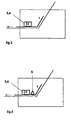
- FIGS 1 to 6 describe the variants and applications of the invention.
- FIG. 1 shows a mechanism which associates, on a document 1 during printing, a print head 2 guided by the axis 6, using a magnetic ink cartridge (dye plus magnetizable particles), and associated with a head 4 of magnetic reading, framed by 2 heads 3 of magnetization of the ink.
- the magnetic heads read the printed tape, as the paper advances, and transmit the result of the magnetic reading to the control mechanism, either in the direction of a communication line, or towards a computer.
- This mixed head can be the basic mechanism of an interactive printer that produces documents printed with visible magnetic ink. This printer can later reread these same documents to convert magnetic reading into signals that can be reprinted and therefore visible in their original version.
- FIG. 2 describes the same mechanism as FIG.
- FIG. 1 shows a side view printer using the mechanism of Figure 1.
- Figure 4 shows a telesigning device or a telework terminal seen from the side using the mechanism of Figure 2.
- FIG. 5 shows a facsimile machine using on the circuit blank documents v, a print head with magnetic ink 2, associated with a magnetization head 3 and a magnetic read head 4, situated downstream on the circuit of printed documents .
- the head 5 is a conventional bar for optical reading of the original documents o to be transmitted.
- the optical rereading by the head 4 makes it possible to send back to the sender of a received fax, a double acting as acknowledgment of receipt. This double is supplemented by an optical signature as defined above.
- Figure 6 shows a facsimile machine using the same elements as in Figure 5 but on a single document circuit, in which case it can also fulfill the same functions as the machine defined in Figure 4.
- the processes defined above can be used on all printing equipment: printers, fax machines, teleworking terminals, ... with a view to control and re-send information from a communication and to authenticate the corresponding documents.
Landscapes
- Engineering & Computer Science (AREA)
- Signal Processing (AREA)
- General Physics & Mathematics (AREA)
- Theoretical Computer Science (AREA)
- Multimedia (AREA)
- Physics & Mathematics (AREA)
- General Engineering & Computer Science (AREA)
- Facsimile Scanning Arrangements (AREA)
- Record Information Processing For Printing (AREA)
- Facsimiles In General (AREA)
- Credit Cards Or The Like (AREA)
- Inspection Of Paper Currency And Valuable Securities (AREA)
- Character Discrimination (AREA)
Description
Ce procédé permet un contrôle en temps réel, simultané à l'impression par relecture immédiate de l'impression réalisée avec de l'encre optique et magnétique, avec retransmission, à l'organe de commande, de la lecture magnétique du document imprimé.
- encres magnétiques ou électro-magnétiques
- encres fluorescentes
- encres invisibles, lisibles sous lumière ultraviolette ou infrarouge
- encres à conductivité électrique
- papiers spéciaux non photocopiables
- stylos à encre magnétique
- algorithmes de codage et de cryptage
- ...
Mais, aucun de ces moyens ne permettent de le faire en temps réel, en simultané avec l'impression, et en renvoyant immédiatement la relecture à l'émetteur ou à l'organe de commande.
La simultanéité permet des contrôles supplémentaires en particulier grâce aux références de contrôle : date et heure de l'impression et de la relecture.
- fax avec accusé de réception: FR 96 05467
- imprimante-scanner: FR 96 05943
- téléparapheur: FR 96 06892
- terminal de télétravail: FR 96 06893
- magnétique
- électrique
- ou autres procédés déjà connus.
- leur relecture immédiate par des capteurs:
magnétiques ou autres - l'impossibilité de photocopier ou de lire par scanner optique, donc impossibilité de reproduire le même document avec la possibilité de la falsifier.
- de calculer une signature de l'image non optique, qui permettra d'identifier le document, ou de compléter son impression par des signaux de contrôle, optiques et magnétiques.
- de superposer à des caractères magnétiques des signaux ou codes invisibles, en vue de la relecture ou de contrôles ultérieurs.
- l'impression optique
- l'impression magnétique
- l'impression visible en UV ou IR
- la superposition de signaux sur l'encre magnétique
- l'addition de signatures et de codes de contrôle
- les sons ou transmissions phonétiques
- le stockage dans des serveurs de contrôle avec les relectures correspondantes immédiates et retransmises.
Un original aura toujours toutes les composantes imprimées. Certains dispositifs d'impression ne permettent pas l'utilisation, par nature, d'encre magnétique.Seule la relecture optique ou l'utilisation d'autres types d'encres non magnétiques ( voir plus haut ) seront possibles.
L'encre magnétique n'est pas obligatoirement magnétisée en permanence, et peut être magnétisée qu'en vue d'une lecture magnétique immédiate, avec démagnétisation éventuelle.
La magnétisation permanente est utile pour la superposition de codes magnétiques invisibles, mais présente des problèmes de conservation dans le temps et d'interférences avec d'autres documents magnétiques.
Cet inconvénient, bien que n'excluant pas cette possibilité dans les variantes de la présente invention, peut être contourné par l'impression de codes et d'informations de contrôle, ajoutés sur les documents imprimés, avec ou sans cryptage.
Les impressions définies dans la présente invention peuvent contenir toutes les informations manipulées en informatique et en télécommunication: caractères alphanumériques, images, signatures, sons, signaux analogiques, ... même si leur transcription optique imprimée n'est pas immédiatement lisible par un être humain.
La parole peut être authentifiée par les signaux correspondant imprimés ou enregistrés, avec traduction éventuelle en caractères alphanumériques par un logiciel de reconnaissance vocale, et traitée de la même façon que l'écriture au niveau de la vérification et de l'authentification sur un document.
L'impression correspondante sur un document vérifié et authentifié peut constituer une preuve au sens juridique du terme, plus aisément manipulable que d'autres supports d'information.
L'aspect juridique des procédés envisagés par la présente invention pose plusieurs problèmes de nature juridique:
- protection de la confidentialité dans certaines circonstances,
- détermination des présomptions, donc du sens de la preuve, en cas de discordance-entre les documents échangés: originaux, copie, double accusé de réception ... Par analogie avec une lettre recommandée avec accusé de réception, c'est l'expéditeur qui est le maítre-d'oeuvre de la communication et qui doit réunir tous les éléments de preuve en cas de contestation.La présomption de bonne foi est donc du côté du destinataire qui possède ou non le document transmis et qui a émis ou non l'accusé de réception. C'est à l'émetteur de s'assurer que toutes les étapes de la communication se sont bien déroulées.A lui d'intervenir par un autre moyen si l'ensemble de la communication n'est pas correct ou incomplet.
La présente invention ne décrit que les procédés et moyens techniques nécessaires.
La relecture immédiate du document imprimé par le destinataire avec retransmission vers l'expéditeur, en utilisant une relecture non optique, réduit considérablement les possibilités de falsification.
Mais, la retransmission peut être décalée dans le temps si les moyens en communication ne répondent pas immédiatement. C'est le cas des télécopieurs avec mémoires de stockage et des ordinateurs qui stockent les messages échangés dans leurs mémoires magnétiques, sans impressions ou transmissions immédiates.
Pour les ordinateurs, les logiciels d'émulation doivent être programmés pour émuler les matériels qui communiquent.
Dans ce cas, il semble que les logiciels ( non modifiables par les utilisateurs ) devraient être certifiés par un organisme officiel qui attribuerait un code de contrôle unique inclus dans les informations de la communication. Dans tous les cas, une signature calculée sur les informations transmises et imprimées de part et d'autre, combinée avec des impressions non reproductibles facilement, retransmises pour contrôle et vérifiables ultérieurement, assurent un maximum de preuves au sens juridique du terme.Ces signatures pourront exister par ligne, par page ou par document.
Le terme "signature" utilisé dans le présent descriptif définit le résultat d'un calcul réalisé sur les signaux de la communication.De nombreux modes de calcul, avec ou sans clef de cryptage, existent dans le domaine public.
Les matériels utilisant les procédés de la présente invention pourront être utilisés suivant 2 modes utilisant les mêmes moyens:
- un mode normal de communication, impression.
- un mode de lecture de contrôle ou de recalcul de la signature d'un document pour authentification.
- un mécanisme d'impression utilisant de l'encre contenant des particules magnétiques
- un mécanisme de magnétisation
- un mécanisme de lecture magnétique.
Dans un cas incomplet, les matériels actuels, inchangés, pourront utiliser une cartouche d'encre magnétique à la place d'une cartouche d'encre normale.
Ce cas permettra au moins l'authentification à postériori, mais sans ré-émission de contrôle des composantes magnétiques de l'impression.
La lecture magnétique des points imprimés donne un signal électrique facilement cumulable pour le calcul rapide d'une signature.
La lecture magnétique nécessite une tête de magnétisation de l'encre magnétique pour permettre sa lecture par un lecteur magnétique, mais cette technologie est plus simple que celle de la lecture optique qui nécessite une source d'illumination optique.
Ainsi, simultanément à l'impression , les têtes magnétiques lisent les bandent imprimées, au fur et à mesure que le papier avance, et transmettent le résultat de la lecture magnétique au mécanisme de commande, soit en direction d'une ligne de communication, soit en direction d'un ordinateur.
Cette tête mixte peut constituer le mécanisme de base d'une imprimante interactive qui produit des documents imprimés avec de l'encre magnétique visible.Cette imprimante peut relire ultérieurement ces mêmes documents pour convertir la lecture magnétique en signaux qui peuvent être réimprimés et donc visibles dans leur version originale.
La figure 2 décrit le même mécanisme que la figure 1 mais qui associe en plus une barrette de lecture optique placée en amont.
Plusieurs dispositions physiques sont possibles pour ces différents éléments: côte à côte, en aval, avec des largeur d'une bande ou avec des largeurs correspondant à un aller et un retour, accompagnées par le même mécanisme que la tête d'impression et fixées sur des barrettes occupant toute la largeur du papier.
Cette association peut constituer le mécanisme de base d'un appareil destiné à lire optiquement un document. pour le visualiser à distance, à imprimer sur ce même document avec de l'encre magnétique, ou à le signer, et à relire magnétiquement les bandes imprimées pour les renvoyer à l'organe de commande pour contrôle ou stockage.
La figure 3 montre une imprimante vue de côté utilisant le mécanisme de la figure 1.
La figure 4 montre un appareil de télésignature ou un terminal de télétravail vu de côté utilisant le mécanisme de la figure 2.
La figure 5 montre un télécopieur utilisant sur le circuit des documents vierges v , une tête d'impression avec encre magnétique 2, associée à une tête de magnétisation 3 et à une tête de lecture magnétique 4, situées en aval sur le circuit des documents imprimés.
La tête 5 est une barrette classique de lecture optique des documents originaux o à émettre.
La relecture optique par la tête 4 permet de renvoyer vers l'expéditeur d'un fax reçu, un double faisant office d'accusé de réception.Ce double est complété par une signature optique telle que définie plus haut.
La figure 6 montre un télécopieur utilisant les mêmes éléments que sur la figure 5 mais sur un circuit unique de document.Dans ce cas, il peut remplir, en plus, les mêmes fonctionnalités que l'appareil défini dans la figure 4.
Claims (6)
- Procédé, utilisable pour les appareils de réception et d'impression de documents (1) en vue de contrôler et d'authentifier les documents imprimés, caractérisé en ce qu'il associe un mécanisme d'impression (2) alimenté en encre ayant des propriétés optiques et magnétiques, un mécanisme de magnétisation (3) et un mécanisme de lecture magnétique (4) en vue d'une relecture de contrôle.
- Procédé selon la revendication 1, caractérisé en ce qu'il associe également un mécanisme de lecture optique (5) au mécanisme de lecture magnétique (4).
- Appareil utilisant le procédé de la revendication 1 ou 2, caractérisé en ce qu'il combine, sur au moins un circuit de documents (1), un mécanisme d'impression avec de l'encre optique et magnétique (2), au moins une tête de magnétisation (3), une tête de lecture magnétique (4), et éventuellement une tète de lecture optique (5), de manière à permettre un mode d'impression optique et magnétique, ou un mode de relecture magnétique et éventuellement optique, ou un mode simultané d'impression et de lecture magnétiques et éventuellement optiques.
- Appareil selon la revendication 3, caractérisé ce qu'il consiste en une imprimante comportant un mécanisme d'impression avec de l'encre optique et magnétique (2), une ou deux têtes de magnétisation (3), une tête de lecture magnétique (4), et éventuellement une tête de lecture optique (5).
- Appareil selon la revendication 3, caractérisé ce qu'il consiste en un appareil de télésignature ou un terminal de télétravail, permettant de lire, signer, imprimer, compléter à distance un document, l'appareil ou terminal utilisant, sur un circuit de documents (1), la tête de lecture optique (5), la tête d'impression d'encre optique et magnétique (2), et les têtes de magnétisation (3) et de lecture magnétique (4).
- Appareil selon la revendication 3, caractérisé ce qu'il consiste en un télécopieur, avec un circuit de documents vierges (v) et avec un circuit de documents originaux (o) à émettre, constituant éventuellement un circuit unique, la tête d'impression à encre optique et magnétique (2), associée à la tête de magnétisation (3), ainsi que la tête de lecture magnétique (4), étant situées sur le circuit de documents vierges (v), tandis que la tête de lecture optique (5) est située sur le circuit de documents originaux (o).
Applications Claiming Priority (3)
| Application Number | Priority Date | Filing Date | Title |
|---|---|---|---|
| FR9714332 | 1997-11-10 | ||
| FR9714332A FR2770922B1 (fr) | 1997-11-10 | 1997-11-10 | Procedes magnetiques de controle de l'impression de documents |
| PCT/FR1998/002402 WO1999024931A1 (fr) | 1997-11-10 | 1998-11-10 | Procedes magnetiques de controle de l'impression de documents |
Publications (2)
| Publication Number | Publication Date |
|---|---|
| EP1058905A1 EP1058905A1 (fr) | 2000-12-13 |
| EP1058905B1 true EP1058905B1 (fr) | 2003-07-30 |
Family
ID=9513405
Family Applications (1)
| Application Number | Title | Priority Date | Filing Date |
|---|---|---|---|
| EP98958950A Expired - Lifetime EP1058905B1 (fr) | 1997-11-10 | 1998-11-10 | Procedes magnetiques de controle de l'impression de documents |
Country Status (5)
| Country | Link |
|---|---|
| EP (1) | EP1058905B1 (fr) |
| AU (1) | AU1491299A (fr) |
| DE (1) | DE69816872D1 (fr) |
| FR (1) | FR2770922B1 (fr) |
| WO (1) | WO1999024931A1 (fr) |
Family Cites Families (2)
| Publication number | Priority date | Publication date | Assignee | Title |
|---|---|---|---|---|
| NL8603173A (nl) * | 1986-12-12 | 1988-07-01 | Daisy Syst Holland | Tekstverwerkingssysteem, alsmede afdrukeenheid voor een dergelijk tekstverwerkingssysteem. |
| FR2748178B1 (fr) * | 1996-04-25 | 1998-07-17 | Girod Raoul | Telecopieur avec accuse de reception |
-
1997
- 1997-11-10 FR FR9714332A patent/FR2770922B1/fr not_active Expired - Fee Related
-
1998
- 1998-11-10 WO PCT/FR1998/002402 patent/WO1999024931A1/fr not_active Ceased
- 1998-11-10 AU AU14912/99A patent/AU1491299A/en not_active Abandoned
- 1998-11-10 EP EP98958950A patent/EP1058905B1/fr not_active Expired - Lifetime
- 1998-11-10 DE DE69816872T patent/DE69816872D1/de not_active Expired - Lifetime
Also Published As
| Publication number | Publication date |
|---|---|
| WO1999024931A1 (fr) | 1999-05-20 |
| FR2770922B1 (fr) | 1999-12-17 |
| EP1058905A1 (fr) | 2000-12-13 |
| FR2770922A1 (fr) | 1999-05-14 |
| DE69816872D1 (de) | 2003-09-04 |
| AU1491299A (en) | 1999-05-31 |
Similar Documents
| Publication | Publication Date | Title |
|---|---|---|
| US8947744B2 (en) | Spectral visible edge marking for steganography or watermarking | |
| US8867782B2 (en) | Spectral edge marking for steganography or watermarking | |
| US8941886B2 (en) | Spectral edge marking for steganography or watermarking | |
| CA2501513C (fr) | Document contenant des images de securite | |
| JP4800553B2 (ja) | 印刷対象物と関連した適用業務の為の認証用ウォータマーク | |
| KR100433590B1 (ko) | 티켓발행방법, 티켓발행시스템 및 티켓조합방법 | |
| ES2438733T3 (es) | Sistema y procedimiento para decodificar imágenes digitales codificadas | |
| US7126721B2 (en) | Protecting printed items intended for public exchange with glossmarks | |
| Thampi | Information hiding techniques: a tutorial review | |
| US20070029394A1 (en) | Covert document system | |
| FR2732532A1 (fr) | Procede securise de reproduction de documents sensibles | |
| JPH03185585A (ja) | Idカードの真偽判別方式及び真偽判別装置 | |
| JP2007505762A (ja) | アーティクル認証システム及び方法 | |
| US20050219599A1 (en) | Document containing security images | |
| US6907131B2 (en) | Method and program for producing photographs with autographed messages written in customized character fonts | |
| US8282015B2 (en) | Document with linked viewer file for correlated printing | |
| JP2003069811A (ja) | ハードコピー媒体上にユーザが指定した素材をプリントする装置及び方法 | |
| US20060053162A1 (en) | Color dot code system | |
| EP1058905B1 (fr) | Procedes magnetiques de controle de l'impression de documents | |
| JP5138904B2 (ja) | 文書に関するセキュリティを提供する方法及びシステム | |
| US7697713B1 (en) | Method and program for producing photographs with autographed messages written in customized character fonts and method for distributing, transmitting and producing a digital photograph of a celebrity figure with personalized and autographed messages | |
| JPH11215351A (ja) | 画像処理装置および画像処理システム | |
| AU2006275525A1 (en) | Covert document system | |
| KR102532965B1 (ko) | 이미지 상에 망점 삽입 방법 및 이를 실행하는 시스템 | |
| RU2287854C1 (ru) | Способ маркирования материального носителя информации и ее верификации |
Legal Events
| Date | Code | Title | Description |
|---|---|---|---|
| PUAI | Public reference made under article 153(3) epc to a published international application that has entered the european phase |
Free format text: ORIGINAL CODE: 0009012 |
|
| 17P | Request for examination filed |
Effective date: 20000828 |
|
| AK | Designated contracting states |
Kind code of ref document: A1 Designated state(s): CH DE ES FR GB IT LI |
|
| 17Q | First examination report despatched |
Effective date: 20010615 |
|
| GRAG | Despatch of communication of intention to grant |
Free format text: ORIGINAL CODE: EPIDOS AGRA |
|
| GRAG | Despatch of communication of intention to grant |
Free format text: ORIGINAL CODE: EPIDOS AGRA |
|
| GRAH | Despatch of communication of intention to grant a patent |
Free format text: ORIGINAL CODE: EPIDOS IGRA |
|
| GRAH | Despatch of communication of intention to grant a patent |
Free format text: ORIGINAL CODE: EPIDOS IGRA |
|
| GRAA | (expected) grant |
Free format text: ORIGINAL CODE: 0009210 |
|
| AK | Designated contracting states |
Designated state(s): CH DE ES FR GB IT LI |
|
| PG25 | Lapsed in a contracting state [announced via postgrant information from national office to epo] |
Ref country code: IT Free format text: LAPSE BECAUSE OF FAILURE TO SUBMIT A TRANSLATION OF THE DESCRIPTION OR TO PAY THE FEE WITHIN THE PRESCRIBED TIME-LIMIT;WARNING: LAPSES OF ITALIAN PATENTS WITH EFFECTIVE DATE BEFORE 2007 MAY HAVE OCCURRED AT ANY TIME BEFORE 2007. THE CORRECT EFFECTIVE DATE MAY BE DIFFERENT FROM THE ONE RECORDED. Effective date: 20030730 Ref country code: GB Free format text: LAPSE BECAUSE OF FAILURE TO SUBMIT A TRANSLATION OF THE DESCRIPTION OR TO PAY THE FEE WITHIN THE PRESCRIBED TIME-LIMIT Effective date: 20030730 Ref country code: ES Free format text: LAPSE BECAUSE OF FAILURE TO SUBMIT A TRANSLATION OF THE DESCRIPTION OR TO PAY THE FEE WITHIN THE PRESCRIBED TIME-LIMIT Effective date: 20030730 |
|
| REG | Reference to a national code |
Ref country code: GB Ref legal event code: FG4D Free format text: NOT ENGLISH |
|
| REG | Reference to a national code |
Ref country code: CH Ref legal event code: EP |
|
| REF | Corresponds to: |
Ref document number: 69816872 Country of ref document: DE Date of ref document: 20030904 Kind code of ref document: P |
|
| PG25 | Lapsed in a contracting state [announced via postgrant information from national office to epo] |
Ref country code: DE Free format text: LAPSE BECAUSE OF FAILURE TO SUBMIT A TRANSLATION OF THE DESCRIPTION OR TO PAY THE FEE WITHIN THE PRESCRIBED TIME-LIMIT Effective date: 20031031 |
|
| PG25 | Lapsed in a contracting state [announced via postgrant information from national office to epo] |
Ref country code: LI Free format text: LAPSE BECAUSE OF NON-PAYMENT OF DUE FEES Effective date: 20031130 Ref country code: CH Free format text: LAPSE BECAUSE OF NON-PAYMENT OF DUE FEES Effective date: 20031130 |
|
| GBV | Gb: ep patent (uk) treated as always having been void in accordance with gb section 77(7)/1977 [no translation filed] |
Effective date: 20030730 |
|
| PLBE | No opposition filed within time limit |
Free format text: ORIGINAL CODE: 0009261 |
|
| STAA | Information on the status of an ep patent application or granted ep patent |
Free format text: STATUS: NO OPPOSITION FILED WITHIN TIME LIMIT |
|
| REG | Reference to a national code |
Ref country code: CH Ref legal event code: PL |
|
| 26N | No opposition filed |
Effective date: 20040504 |
|
| PG25 | Lapsed in a contracting state [announced via postgrant information from national office to epo] |
Ref country code: FR Free format text: LAPSE BECAUSE OF NON-PAYMENT OF DUE FEES Effective date: 20040730 |
|
| REG | Reference to a national code |
Ref country code: FR Ref legal event code: ST |