EP1058728B1 - V-like domain binding molecules - Google Patents
V-like domain binding molecules Download PDFInfo
- Publication number
- EP1058728B1 EP1058728B1 EP99908689A EP99908689A EP1058728B1 EP 1058728 B1 EP1058728 B1 EP 1058728B1 EP 99908689 A EP99908689 A EP 99908689A EP 99908689 A EP99908689 A EP 99908689A EP 1058728 B1 EP1058728 B1 EP 1058728B1
- Authority
- EP
- European Patent Office
- Prior art keywords
- artificial sequence
- sequence
- description
- binding moiety
- ctla
- Prior art date
- Legal status (The legal status is an assumption and is not a legal conclusion. Google has not performed a legal analysis and makes no representation as to the accuracy of the status listed.)
- Expired - Lifetime
Links
Images








Classifications
-
- C—CHEMISTRY; METALLURGY
- C07—ORGANIC CHEMISTRY
- C07K—PEPTIDES
- C07K14/00—Peptides having more than 20 amino acids; Gastrins; Somatostatins; Melanotropins; Derivatives thereof
- C07K14/435—Peptides having more than 20 amino acids; Gastrins; Somatostatins; Melanotropins; Derivatives thereof from animals; from humans
- C07K14/705—Receptors; Cell surface antigens; Cell surface determinants
- C07K14/70503—Immunoglobulin superfamily
- C07K14/70521—CD28, CD152
-
- A—HUMAN NECESSITIES
- A61—MEDICAL OR VETERINARY SCIENCE; HYGIENE
- A61P—SPECIFIC THERAPEUTIC ACTIVITY OF CHEMICAL COMPOUNDS OR MEDICINAL PREPARATIONS
- A61P43/00—Drugs for specific purposes, not provided for in groups A61P1/00-A61P41/00
-
- C—CHEMISTRY; METALLURGY
- C07—ORGANIC CHEMISTRY
- C07K—PEPTIDES
- C07K16/00—Immunoglobulins [IG], e.g. monoclonal or polyclonal antibodies
- C07K16/18—Immunoglobulins [IG], e.g. monoclonal or polyclonal antibodies against material from animals or humans
- C07K16/28—Immunoglobulins [IG], e.g. monoclonal or polyclonal antibodies against material from animals or humans against receptors, cell surface antigens or cell surface determinants
- C07K16/30—Immunoglobulins [IG], e.g. monoclonal or polyclonal antibodies against material from animals or humans against receptors, cell surface antigens or cell surface determinants from tumour cells
- C07K16/3061—Blood cells
-
- C—CHEMISTRY; METALLURGY
- C07—ORGANIC CHEMISTRY
- C07K—PEPTIDES
- C07K16/00—Immunoglobulins [IG], e.g. monoclonal or polyclonal antibodies
- C07K16/40—Immunoglobulins [IG], e.g. monoclonal or polyclonal antibodies against enzymes
-
- A—HUMAN NECESSITIES
- A61—MEDICAL OR VETERINARY SCIENCE; HYGIENE
- A61K—PREPARATIONS FOR MEDICAL, DENTAL OR TOILETRY PURPOSES
- A61K38/00—Medicinal preparations containing peptides
-
- C—CHEMISTRY; METALLURGY
- C07—ORGANIC CHEMISTRY
- C07K—PEPTIDES
- C07K2317/00—Immunoglobulins specific features
- C07K2317/20—Immunoglobulins specific features characterized by taxonomic origin
- C07K2317/21—Immunoglobulins specific features characterized by taxonomic origin from primates, e.g. man
-
- C—CHEMISTRY; METALLURGY
- C07—ORGANIC CHEMISTRY
- C07K—PEPTIDES
- C07K2317/00—Immunoglobulins specific features
- C07K2317/20—Immunoglobulins specific features characterized by taxonomic origin
- C07K2317/22—Immunoglobulins specific features characterized by taxonomic origin from camelids, e.g. camel, llama or dromedary
-
- C—CHEMISTRY; METALLURGY
- C07—ORGANIC CHEMISTRY
- C07K—PEPTIDES
- C07K2319/00—Fusion polypeptide
-
- Y—GENERAL TAGGING OF NEW TECHNOLOGICAL DEVELOPMENTS; GENERAL TAGGING OF CROSS-SECTIONAL TECHNOLOGIES SPANNING OVER SEVERAL SECTIONS OF THE IPC; TECHNICAL SUBJECTS COVERED BY FORMER USPC CROSS-REFERENCE ART COLLECTIONS [XRACs] AND DIGESTS
- Y10—TECHNICAL SUBJECTS COVERED BY FORMER USPC
- Y10S—TECHNICAL SUBJECTS COVERED BY FORMER USPC CROSS-REFERENCE ART COLLECTIONS [XRACs] AND DIGESTS
- Y10S530/00—Chemistry: natural resins or derivatives; peptides or proteins; lignins or reaction products thereof
- Y10S530/808—Materials and products related to genetic engineering or hybrid or fused cell technology, e.g. hybridoma, monoclonal products
-
- Y—GENERAL TAGGING OF NEW TECHNOLOGICAL DEVELOPMENTS; GENERAL TAGGING OF CROSS-SECTIONAL TECHNOLOGIES SPANNING OVER SEVERAL SECTIONS OF THE IPC; TECHNICAL SUBJECTS COVERED BY FORMER USPC CROSS-REFERENCE ART COLLECTIONS [XRACs] AND DIGESTS
- Y10—TECHNICAL SUBJECTS COVERED BY FORMER USPC
- Y10S—TECHNICAL SUBJECTS COVERED BY FORMER USPC CROSS-REFERENCE ART COLLECTIONS [XRACs] AND DIGESTS
- Y10S530/00—Chemistry: natural resins or derivatives; peptides or proteins; lignins or reaction products thereof
- Y10S530/81—Carrier - bound or immobilized peptides or proteins and the preparation thereof, e.g. biological cell or cell fragment as carrier
-
- Y—GENERAL TAGGING OF NEW TECHNOLOGICAL DEVELOPMENTS; GENERAL TAGGING OF CROSS-SECTIONAL TECHNOLOGIES SPANNING OVER SEVERAL SECTIONS OF THE IPC; TECHNICAL SUBJECTS COVERED BY FORMER USPC CROSS-REFERENCE ART COLLECTIONS [XRACs] AND DIGESTS
- Y10—TECHNICAL SUBJECTS COVERED BY FORMER USPC
- Y10S—TECHNICAL SUBJECTS COVERED BY FORMER USPC CROSS-REFERENCE ART COLLECTIONS [XRACs] AND DIGESTS
- Y10S530/00—Chemistry: natural resins or derivatives; peptides or proteins; lignins or reaction products thereof
- Y10S530/81—Carrier - bound or immobilized peptides or proteins and the preparation thereof, e.g. biological cell or cell fragment as carrier
- Y10S530/812—Peptides or proteins is immobilized on, or in, an organic carrier
Definitions
- the present invention relates to V-like Domain binding molecules with affinities for target molecules.
- the present invention also relates to compositions comprising these V-like domain binding molecules.
- the present invention also relates to a method for selecting V-like Domain binding molecules with novel binding affinities and/or specificities.
- Antibodies are the paradigm of specific high-affinity binding reagents and provide an antigen binding site by interaction of variable heavy (V H ) and variable light (V L ) immunoglobulin domains.
- the binding interface is formed by six surface polypeptide loops, termed complementarity determining regions (CDRs), three from each variable domain, which are highly variable and combined provide a sufficiently large surface area for interaction with antigen.
- Specific binding reagents can be formed by association of only the V H and V L domains into an Fv module.
- Bacterial expression is enhanced by joining the V-domains with a linker polypeptide into a single-chain scFv molecule.
- "Humanisation" of recombinant antibodies by grafting murine CDR loop structures onto a human Fv framework is disclosed by Winter et al EP-239400 .
- the T-cell receptor has two V-domains that combine into a structure similar to the Fv module of an antibody that results from combination of the VH and VL domains.
- Novotny et al (1991) described how the two V-domains of the T-cell receptor (termed alpha and beta) can be fused and expressed as a single chain polypeptide and, further, how to alter surface residues to reduce the hydrophobicity directly analogous to an antibody scFv.
- Other publications describe the expression characteristics of single-chain T-cell receptors comprising two V-alpha and V-beta domains (Wulfing and Pluckthun,1994; Ward, 1991).
- non-antibody ligands which bind to specific binding partners which also comprise V-like domains. These V-like domains are distinguished from those of antibodies or T-cell receptors because they have no propensity to join together into Fv-type molecules. These non-antibody ligands provide an alternative framework for the development of novel binding moieties with high affinities for target molecules. Single domain V-like binding molecules derived from these non-antibody ligands which are soluble are therefore desirable. Examples of suitable non-antibody ligands are CTLA-4, CD28 and ICOS (Hutloff et al, 1999).
- CTLA-4 Cytotoxic T-lymphocyte associated antigen 4
- CD28 Cytotoxic T-lymphocyte associated antigen 4
- ICOS the homologous cell-surface proteins CD28 and ICOS
- CTLA-4 is a 44 kDa homodimer expressed primarily and transiently on the surface of activated T-cells, where it interacts with CD80 and CD86 surface antigens on antigen presenting cells to effect regulation of the immune response (Waterhouse et al. 1996, van der Merwe et al. 1997).
- CD28 is a 44kDa homodimer expressed predominantly on T-cells and, like CTLA-4, interacts with CD80 and CD86 surface antigens on antigen presenting cells to effect regulation of the immune response (Linsley et al.1990).
- Each CTLA-4 monomeric subunit consists of an N-terminal extracellular domain, transmembrane region and C-terminal intracellular domain.
- the extracellular domain comprises an N-terminal V-like domain (VLD; of approximately 14 kDa predicted molecular weight by homology to the immunoglobulin superfamily) and a stalk of about 10 residues connecting the VLD to the transmembrane region.
- VLD comprises surface loops corresponding to CDR-1, CDR-2 and CDR-3 of an antibody V-domain (Metzler 1997).
- AU 60590/96 describes the preferred soluble form of CTLA-4 VLDs as a recombinant CTLA-4/Ig fusion protein expressed in eukaryotic cells and does not solve the aggregation problem in prokaryote expression systems.
- EP 0757099A2 describes the use of CTLA-4 mutant molecules, for example the effect of changes on ligand binding of mutations in the CDR3-like loop.
- VLDs V-like domains
- the present invention provides a binding moiety comprising at least one monomeric non-antibody V-like domain (VLD), the at least one monomeric V-like domain being characterised in that at least one CDR loop structure or part thereof is modified or replaced such that
- the modification or replacement may involve any change to one or more physical characteristics (such as size, shape, charge, hydrophobicity etc) of the at least one CDR loop structure.
- the modification or replacement may result in a reduction in the size of the at least one CDR loop structure.
- the modification or replacement improves the solubility of the modified VLD when compared with the unmodified VLD.
- the present invention provides a binding moiety comprising at least one monomeric V-like domain (VLD) derived from a non-antibody ligand, the at least one monomeric V-like domain being characterised in that at least one CDR loop structure or part thereof is modified or replaced such that
- the size of the CDR loop structure is increased by at least two, more preferably at least three, more preferably at least six and more preferably at least nine amino acid residues.
- the modified binding moiety of the first or second aspect of the present invention also exhibits an altered binding affinity or specificity when compared with the unmodified binding moiety.
- the effect of replacing or modifying the CDR loop structure is to reduce or abolish the affinity of the VLD to one or more natural ligands of the unmodified VLD.
- the effect of replacing or modifying the CDR loop structure is also to change the binding specificity of the VLD.
- the modified VLD binds to a specific binding partner which is different to that of the unmodified VLD.
- V-like domain or “VLD” is intended to refer to a domain which has similar structural features to the variable heavy (V H ) or variable light (V L ) antibody. These similar structural features include CDR loop structures.
- CDR loop structures we mean surface polypeptide loop structures or regions like the complementarity determining regions in antibody V-domains.
- non-antibody ligand is intended to refer to any ligand which binds to a specific binding partner and which is not an antibody or a T-cell receptor.
- suitable non-antibody ligands are T-cell surface proteins such as CTLA-4, CD28 and ICOS. It will be appreciated by those skilled in the art that other non-antibody ligands which may provide V-like domains suitable for the invention are other T-cell surface proteins such as CD2.
- V-like domain derived from a non-antibody ligand is intended to encompass chimeric V-like domains which comprise at least part of a V-like domain derived from a non-antibody ligand.
- the "solubility" of modified binding moieties of the present invention correlates with the production of correctly folded, monomeric domains.
- the solubility of the modified VLDs may therefore be assesed by HPLC. For example, soluble (monomeric) VLDs will give rise to a single peak on the HPLC chromatograph, whereas insoluble (eg. multimeric and aggregated) VLDs will give rise to a plurality of peaks. A person skilled in the art will therefore be able to detect an increase in solubility of modified VLDs using routine HPLC techniques.
- binding moieties of the present invention may be coupled together, either chemically or genetically, to form multivalent or multifunctional reagents.
- C-terminal tails such as in the native CTLA-4 with Cys 120 , will result in a dimer.
- the binding moieties of the present invention may also be coupled to other molecules for various diagnostic formulations.
- the VLDs may comprise a C-terminal polypeptide tail or may be coupled to streptavidin or biotin for multi-site in vitro assays.
- the VLDs may also be coupled to radioisotopes, dye markers or other imaging reagents for in vivo detection and/or localisation of cancers, blood clots, etc.
- the VLDs may also be immobilised by coupling onto insoluble devices and platforms for diagnostic and biosensor applications.
- the V-like domain is derived from the extracellular domain of the CTLA-4 molecule or the CD28 molecule.
- one or more surface loops of the CTLA-4 V-like domain and preferably the CDR-1, CDR-2 or CDR-3 loop structures are replaced with a polypeptide which has a binding affinity for a target molecule of interest.
- Target molecules of interest comprise, but are not limited to, drugs, steroids, pesticides, antigens, growth factors, tumour markers, cell surface proteins or viral coat proteins. It will be appreciated that these VLDs may be polyspecific, having affinities directed by both their natural surfaces and modified polypeptide loops.
- the effect of replacing or modifying the CTLA-4, CD28 and ICOS V-like domain surface loops is to abolish the natural affinity to CD80 and CD86.
- one or more of the CDR loop structures of the VLD are replaced with one or more CDR loop structures derived from an antibody.
- the antibody may be derived from any species.
- the antibody is derived from a human, rat, mouse, camel, llama or shark.
- the antibody or antibodies may be selected from the camel antibody cAB-Lys3 and the human anti-melanoma antibody V86.
- one or more of the CDR loop structures are replaced with a binding determinant derived from a non-antibody polypeptide.
- one or more of the CDR loop structures may be replaced with a polypeptide hormone, such as somatostatin which is a 14 residue intra-disulphide bonded polypeptide important in cancer cell recognition, or with a viral protein such as the human influenza virus haemagglutinin protein.
- the V-like domain of the binding moiety comprises CDR loop structures homologous in character to CDR loop structures found in camelid or llama antibodies.
- the CDR loop structures may contain one or more non-conventional substitutions (eg. hydrophobic to polar in nature).
- the CDR-1 and CDR-3 loop structures may adopt non-canonical conformations which are extremely heterologous in length.
- the V-like domain may also possess a disulphide linkage interconnecting the CDR-1 and CDR-3 loop structures (as found in some camel V H H antibodies) or the CDR-2 and CDR-3 loop structures (as found in some llama V H H antibodies).
- the present invention provides a polynucleotide encoding a binding moiety of the first or second aspect of the present invention.
- the polynucleotide may be incorporated into a plasmid or expression vector.
- the present invention provides a prokaryotic or eukaryotic host cell transformed with a polynucleotide according to the third aspect of the present invention.
- the present invention provides a method of producing a binding moiety which comprises culturing a host cell according to the fourth aspect of the present invention under conditions enabling expression of the binding moiety and optionally recovering the binding moiety.
- the binding moiety is produced by expression in a bacterial host.
- the binding moiety is unglycosylated.
- the present invention provides a pharmaceutical composition
- a pharmaceutical composition comprising a binding moiety of the first or second aspect of the present invention and a pharmaceutically acceptable carrier or diluent.
- the present invention provides a binding moiety or reagent according to the first or second aspect of the present invention for use in treating a pathological condition in a subject according to the first or second aspect of the present invention.
- VLDs are homologous to the subject of treatment or diagnosis and that any possible xenoantigens are removed. Accordingly it is preferred that VLD molecules for use in clinical applications are substantially homologous to naturally occurring human immunoglobulin superfamily members.
- the present invention provides a method of selecting a binding moiety with an affinity for a target molecule which comprises screening a library of polynucleotides for expression of a binding moiety with an affinity for the target molecule, the polynucleotides encoding one or more non-antibody ligand VLDs, wherein the polynucleotides have been subjected to mutagenesis which results in a modification or replacement in at least one CDR loop structure in at least one VLD such that
- the solubility of the isolated modified VLD is improved when compared with the isolated unmodified VLD.
- any method of random or targetted mutagenesis may be used to introduce modification into the V-like domains.
- the mutagenesis is targetted mutagenesis.
- the targetted mutagenesis involves replacement of at least one sequence within at least one CDR loop structure using splice overlap PCT technology.
- polynucleotide library may contain sequences which encode VLDs comprising CDR loop structures which are substantially identical to CDR loop structures found in naturally occurring sequences which encode VLDs comprising non-naturally occurring CDR loop structures.
- the screening process involves displaying the modified V-like domains as gene III protein fusions on the surface of bacteriophage particles.
- the library may comprise bacteriophage vectors such as pHFA, fd-tet-dog or pFAB.5c containing the polynucleotides encoding the V-like domains.
- the screening process involves displaying the modified V-like domains in a ribosomal display selection system.
- the present invention relates to the design of novel soluble VLD binding molecules derived from the V-like domain of immunoglobulin superfamily members, such as the human CTLA-4 molecule.
- the preferred binding molecules of the present invention provide the following advantages (i) use of a native human protein obviates the need for subsequent humanisation of the recombinant molecule, a step often required to protect against immune system response if used in human treatment; (ii) the domain is naturally monomeric as described above (incorporation of residue Cys120 in a C-terminal tail results in production of a dimeric molecule); and (iii) structural modifications have resulted in improved E.coli expression levels.
- the V-like domain of the human CTLA-4 molecule was modified by replacement of CDR loop structures with either of two defined polypeptides.
- the two polypeptides were human somatostatin (Som) and a portion of the human influenza virus haemagglutinin protein (HA-tag).
- Somatostatin (SRIF: somatotropin release-inhibiting factor) is a 14 residue polypeptide comprising a disulphide bond that forces the central 10 residues into a loop.
- Human somatostatin is biologically widespread within the body and mediates a number of diverse physiological functions such as regulation of growth hormone secretion etc (Reisne, 1995).
- Human somatostatin binds a number of specific receptors (there are at least five subtypes) which have differing tissue specificities and affinities (Schonbrunn et al. 1995). These aspects of binding and activation are as yet poorly understood, but one salient feature is the high density of somatostatin receptors present on a number of cancerous cell lines, for example cancers of the neuro-endocrine system and small lung cancers (Reubi 1997). Artificial analogues of somatostatin have been produced for imaging of such tumours which are resistant to degradation compared with the highly labile somatostatin polypeptide.
- the haemagglutinin epitope sequence consists of the 9 residues YPYDVPDYA. A commercially produced antibody is available which specifically recognises this sequence.
- the epitope tag can be detected when randomly or directionally incorporated within the structure of proteins (Canfield et al. 1996).
- the basic framework residues of the V-like domain may be modified in accordance with structural features present in camelid antibodies.
- the camel heavy chain immunoglobulins differ from "conventional" antibody structures by consisting of only a single VH domain (Hamers-Casterman et al. 1993).
- Several unique features allow these antibodies to overcome the dual problems of solubility and inability to present a sufficiently large antigen binding surface.
- V-domains to present as soluble molecules in vivo and with sufficiently high affinity to form an effective immune response against a wide variety of target antigens.
- cell surface receptors of the Ig superfamily (such as CD4 and CD2) comprise V-like binding domains and appear to bind cognate receptors with surface features other than the CDR loops. These V-like domains bind to cognate receptors with very low affinity.
- Physiological signalling between two cells are mediated by the avidity of multi-point binding, when two cell surfaces connect and each contains multiple receptors.
- CD2 is a well-characterised example: binding to CD58 is mediated by a highly constrained set of minor electrostatic interactions generated by charged and polar residues located in the GFCC'C" face (not the antibody type CDR-1, CDR-2 or CDR-3 loops). This results in a low affinity but highly specific interaction (Bodian et al 1994).
- the present invention also relates to a method for generating and selecting single VLD molecules with novel binding affinities for target molecules.
- This method involves the application of well known molecular evolution techniques to V-like domains derived from members of the immunoglobulin superfamily.
- the method may involve the production of phage or ribosomal display libraries for screening large numbers of mutated V-like domains.
- Filamentous fd-bacteriophage genomes are engineered such that the phage display, on their surface, proteins such as the Ig-like proteins (scFv, Fabs) which are encoded by the DNA that is contained within the phage (Smith, 1985; Huse et al., 1989; McCafferty et al., 1990; Hoogenboom et al., 1991). Protein molecules can be displayed on the surface of Fd bacteriophage, covalently coupled to phage coat proteins encoded by gene III, or less commonly gene VIII. Insertion of antibody genes into the gene III coat protein gives expression of 3-5 recombinant protein molecules per phage, situated at the ends.
- proteins such as the Ig-like proteins (scFv, Fabs) which are encoded by the DNA that is contained within the phage (Smith, 1985; Huse et al., 1989; McCafferty et al., 1990; Hoogenboom et al., 1991). Protein molecules
- insertion of antibody genes into gene VIII has the potential to display about 2000 copies of the recombinant protein per phage particle, however this is a multivalent system which could mask the affinity of a single displayed protein.
- Fd phagemid vectors are also used, since they can be easily switched from the display of functional Ig-like fragments on the surface of Fd-bacteriophage to secreting soluble Ig-like fragments in E. coli.
- Phage-displayed recombinant protein fusions with the N-terminus of the gene III coat protein are made possible by an amber codon strategically positioned between the two protein genes. In amber suppressor strains of E. coli, the resulting Ig domain-gene III fusions become anchored in the phage coat.
- a selection process based on protein affinity can be applied to any high-affinity binding reagents such as antibodies, antigens, receptors and ligands (see, for example, Winter and Milstein, 1991, the entire contents of which are incorporated herein by reference).
- high-affinity binding reagents such as antibodies, antigens, receptors and ligands
- Ig-displaying phage can be affinity selected by binding to cognate binding partners covalently coupled to beads or adsorbed to plastic surfaces in a manner similar to ELISA or solid phase radioimmunoassays. While almost any plastic surface will adsorb protein antigens, some commercial products are especially formulated for this purpose, such as Nunc Immunotubes.
- Ribosomal display libraries involve polypeptides synthesised de novo in cell-free translation systems and displayed on the surface of ribosomes for selection purposes (Hanes and Pluckthun, 1997; He and Taussig, 1997).
- the "cell-free translation system” comprises ribosomes, soluble enzymes required for protein synthesis (usually from the same cell as the ribosomes), transfer RNAs, adenosine triphosphate, guanosine triphosphate, a ribonucleoside triphosphate regenerating system (such as phosphoenol pyruvate and pyruvate kinase), and the salts and buffer required to synthesize a protein encoded by an exogenous mRNA.
- polypeptides can be made to occur under conditions which maintain intact polysomes, i.e. where ribosomes, mRNA molecule and translated polypeptides are associated in a single complex. This effectively leads to "ribosome display" of the translated polypeptide.
- the translated polypeptides in association with the corresponding ribosome complex, are mixed with a target molecule which is bound to a matrix (e.g. Dynabeads).
- the target molecule may be any compound of interest (or a portion thereof) such as a DNA molecule, a protein, a receptor, a cell surface molecule, a metabolite, an antibody, a hormone or a virus.
- the ribosomes displaying the translated polypeptides will bind the target molecule and these complexes can be selected and the mRNA re-amplified using RT-PCR.
- binding molecules conforms to a pattern in which individual binding reagents are selected from display libraries by affinity to their cognate receptor.
- the genes encoding these reagents are modified by any one or combination of a number of in vivo and in vitro mutation strategies and constructed as a new gene pool for display and selection of the highest affinity binding molecules.
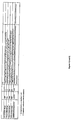
- CTLA-4 STM (STM: soluble truncated mutants of CTLA-4, used herein to describe CTLA-4 chimaeric V-like domain proteins) gene construction and cloning was by standard and well-described techniques (Polymerase chain reaction with specifically designed oligonucleotide primers, splice overlap extension, restriction enzyme digests etc). A list of oligonucleotide primers used is given in Figure 1 .
- the wild-type STM construct was amplified from cloned human CTLA-4 DNA ( Figure 2 ) (and could be similarly amplified from reverse transcribed human cDNA by a competent worker in the field) using the oligonucleotide primers #3553 and #4316, which incorporated SfiI and NotI restriction sites at the 5' and 3' ends respectively.
- terminal primers were used in all further constructions except: (i) where #4851 or #5443 was used to incorporate an ApaL1 site at the 5' end; (ii) where #4486 was used to add a C-terminal tail including residue Cys120; (iii) where #5467 was used to incorporate an EcoR1 site at the 5' end; and (iv) where the specific set of extension primers were used for ribosomal display.
- a variant technique was used for STM gene construction, where randomised oligonucleotide primers were designed which incorporated restriction sites for direct cloning into the similarly modified (with complementary restriction sites) CTLA-4 VLD framework (for example Figure 1 , #4254).
- Recombinant proteins were produced using vectors which represent different protocols for periplasmic expression systems. These vectors were (i) pGC: this vector allows high level expression of heterologous proteins by chemical (IPTG) induction, which are targeted to the periplasmic space by means of a leader sequence. The leader sequence is subsequently cleaved to produce the mature protein. In addition, this vector contains two in-frame 8 residue tag sequences (FLAG tags) which allow affinity purification of the recombinant protein. (ii) pPOW, which, like pGC, allows high level heat inducible expression of proteins targeted to the periplasmic space by means of a cleavable leader sequence and two in-frame 8 residue tag sequences (FLAG tags).
- pPOW which, like pGC, allows high level heat inducible expression of proteins targeted to the periplasmic space by means of a cleavable leader sequence and two in-frame 8 residue tag sequences (FLAG tags).
- Recombinant proteins were purified by the following methods, which are but two variations of well established techniques.
- Bacterial clones in vector pGC were grown overnight in 2YT medium/37°C /200 rpm/100mg/ml ampicillin, 1% glucose (final). Bacteria were diluted 1/100 into either 0.5 or 21 of 2YT medium supplemented with 100mg/ml ampicillin, 0.1% glucose (final), and grown at 28°C/ 200 rpm. These cultures were grown to an optical density of between 0.2-0.4, at which stage they were induced with 1mM IPTG (final). Cultures were allowed to grow for 16 hours (overnight) before harvesting.
- Bacteria were collected by centrifugation (Beckman JA-14 rotor or equivalent/6K/10min/4°C) and the periplasmic fraction collected by standard techniques. Briefly, this involved resuspension of bacterial pellets in a 1/25th volume of spheroplast forming buffer consisting of 100mM Tris-HCl/0.5M sucrose/0.5 mM EDTA (pH8.0), followed by addition of 1/500th volume of hen egg lysozyme (2mg/ml in water) and incubation for 10min. A 0.5x solution of the above spheroplasting buffer was then added to a final volume of 1/5th of the original culture, and the incubation continued for a further 20min.
- Cells were harvested by centrifugation (Beckman JA-14 /6K rpm/5 min/4°C), the cell pellet resuspended in 100 ml extraction buffer (20mM Tris pH 8.0/ 0.2mg/ml (w/v) lysozyme/0.1% (v/v) Tween-20) and incubated at 4°C overnight. Samples were sonicated for 30 seconds and cellular debris collected by centrifugation (Beckman JA-14 /14K rpm/10 min/4°C). The aqueous phase, containing the "lysozyme” wash, was retained. Cell pellets were then washed twice with ice-cold water and this "osmotic shock" wash was retained.
- Each wash consisted of resuspending the pellet in 100 ml ice-cold water followed by incubation on ice for 10 minutes in the first instance followed by 1 hour in the second instance. Following centrifugation (Beckman JA-14 /14K rpm/10 min/4°C), the pH of the aqueous phase was adjusted by addition of 10 ml 10xTBS, pH 8. The "lysozyme” and “osmotic shock” washes were pooled and constitute the soluble or "periplasmic" protein fraction.
- Periplasmic fractions were sonicated, filtered through a 0.45 ⁇ nitrocellulose membrane and processed immediately or stored at 4°C in the presence of sodium azide (0.05%), PMSF (23 ⁇ g/ml) and EDTA (50 mM).
- Recombinant proteins were purified by affinity chromatography through a divinyl sulphone activated agarose (Mini-Leak)-linked anti-FLAG antibody column. Periplasmic extracts were directly loaded onto a 10 ml anti-FLAG column which had been pre-equilibrated in TBS (pH 8) containing 0.05% (w/v) sodium azide. Bound proteins were eluted with Immunopure Gentle Ag/Ab Elution Buffer (Pierce).
- Protein concentration was determined spectrophotometrically using an extinction coefficient at A280 of 1.27 for the CTLA-4R extracellular domain, 0.92 for CTLA-4-Som1, 1.13 for CTLA-4-Som3, 1.05 for CTLA-4-Anti-Lys. All of the above protein chemistry methods are standard techniques within the field. Purified proteins were analysed by standard techniques for example polyacrylamide gel electrophoresis, western blot, dot blot etc.
- CTLA-4 STMs incorporating Somatostatin and Haemagglutinin Peptides are included in CTLA-4 STMs incorporating Somatostatin and Haemagglutinin Peptides.
- a region corresponding to CDR-2 was replaced with the 8-residue haemagglutinin (HA) tag sequence.
- HA haemagglutinin
- Use of the conformationally constrained somatostatin loop in this position was considered unsuitable as this region partially encompasses the C" beta strand running the length of the molecule.
- the HA tag could be detected upon this CTLA-4 STM by use of an anti-HA antibody.
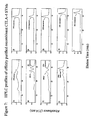
- Gel filtration experiments showed the presence of a range of protein species, from monomeric through to aggregated species suggesting that CDR-2-only substitutions were not stable ( Figures 6,7 ).
- CTLA-4 STMs retained the correct conformation since a conformationally-specific anti-CTLA-4 antibody recognised STMs with both CDR1 and -3 loop structure replacements. Interestingly, this antibody recognised the wild type monomer and the dimer (CDR1 replaced) poorly, contrasting with the strong reaction observed for the modified protein species. This suggests that in the wild type STM some form of local interaction is occurring that occludes the antibody binding site, and that this interaction is similar to the result when two CTLA-4 molecules are tethered together (presumably blocking access to the antibody).
- CTLA-4 STMs Based Upon a Camel anti-Lysozyme Antibody.
- the camel V H H antibody cAb-Lys3 isolated from immunised camels specifically binds within the active site cleft of hen egg lysozyme (Desmyter et al. 1996).
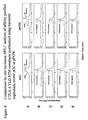
- CTLA-4 STMs To illustrate the ability of CTLA-4 STMs to function in a similar fashion, the three CDR loop structures of CTLA-4 VLD STM were replaced with the three CDR loop regions from cAb-Lys3. Positions and sequence of the substitutions are shown in figure 6 . Expression of this STM (2V8) in either pGC or pPOW based expression systems resulted in production of predominantly monomeric soluble protein ( Figures 7, 8 ). Protein solubility of this CTLA-4 STM was superior to native CTLA-4 VLD.
- CTLA-4 STMs Based Upon a Human anti-Melanoma Antibody
- the human-derived anti-melanoma antibody V86 specifically binds human melanoma cells. This antibody is unusual in that binding affinity resides entirely within the V H region, addition of a cognate V L decreases binding efficiency, and that the V H domain expressed with a small segment of the V L domain has a high degree of solubility (Cai and Garen, 1997).
- the three CDR loop structures of CTLA-4 were replaced with the three CDR loop regions from V86. Positions and sequence of the substitutions are shown in Figure 6 . Expression of this STM (3E4) in pGC again resulted in production of predominantly monomeric soluble protein ( Figure 7 ) with enhanced solubility compared to the CTLA-4 VLD.
- VLD libraries were produced containing randomised CDR1 and CDR3 loop structures.
- Oligonucleotide primers used for library construction are listed in figure 1 .
- Combinations of oligonucleotide primers used for library construction are shown in Table 3. Table 3.
- DNA constructs encoding the resultant libraries were cloned into vectors pHFA or pFAB.5c for production of fd-phagemid based libraries and into pfd-Tet-Dog for production of fd-phage based libraries (see examples 1 and 2).
- Library 1 was cloned into vector pHFA and consisted of 2.1 x 10 7 independent clones.
- Library 3 was cloned into vectors pHFA (5.7 x 10 5 independent clones) and pfd-Tet-Dog (2.2 x 10 4 independent clones).
- CTLA-4 STM Libraries Selection against Antigens on Solid Supports.
- the antigens selected were: (i) hen egg lysozyme (EC 3.2.1.17); (ii) bovine carbonic anhydrase (EC 4.2.1.1); (iii) fungal a-amylase (EC 3.2.1.1); and (iv) Streptoalloteichus hindustanis resistance protein ShBle (Gatignol et al. 1988).
- CTLA-4 STM Libraries Selection against Antigens in Solution.
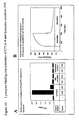
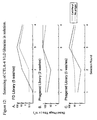
- the antigens bovine carbonic anhydrase and fungal a-amylase were biotinylated and selections performed in solution using capture by streptavidin coated magnetic beads. Throughout these experiments washes were kept constant at either 2 or 5 washes per selection round. Titres of recovered bacteriophage post-elution are shown in Figure 12 . After round 4, recovered bacteriophage titres were higher than controls. To those skilled in the art, this represents selection of specific binding moieties, and it is then a routine process to produce these selected CTLA-4 VLD STMs using expression vectors such as pGC or pPOW (as described in example 2).
- CTLA-4 STM Libraries Selection in an Alternative Display and Selection System.
- CTLA-4 STM library was ligated into a plasmid to add a downstream C-terminal spacer polypeptide (heavy constant domain).
- Upstream transcriptional and translational initiation sequences were added by PCR amplification using specific oligonucleotides ( Figure 1 ). This PCR DNA was used as a template for production of RNA followed by translation and display of the library on ribosomes in a coupled cell free translation system as described by He and Taussig (1997).
- CTLA-4 STM ribosome complexes were panned on hepatitis B surface antigen (hbsa), glycophorin (glyA) and bovine serum albumin (BSA) coated dynabeads.
- RNA from ribosome complexes bound to hbsa, glyA and BSA was recovered by RT-PCR. It is then a routine process to clone these RT-PCR products into an expression vector such as pGC or pPOW (as described in example 2) allowing production of CTLA-4 STMs.
- CTLA-4 STMs Affinity Maturation and CDR2 Mutation.
- CDR-2 randomised oligonucleotide primers were produced ( Figure 1 ).
- a variation of these primers contained conserved cysteine residues to allow construction of STMs with CDR2-CDR3 disulphide linkages mimicing those found in llama single domain antibodies.
- Splice overlap PCR allowed creation of libraries containing all three CDR loop structures randomised.
Landscapes
- Health & Medical Sciences (AREA)
- Chemical & Material Sciences (AREA)
- Life Sciences & Earth Sciences (AREA)
- Organic Chemistry (AREA)
- Immunology (AREA)
- General Health & Medical Sciences (AREA)
- Medicinal Chemistry (AREA)
- Proteomics, Peptides & Aminoacids (AREA)
- Molecular Biology (AREA)
- Genetics & Genomics (AREA)
- Biophysics (AREA)
- Biochemistry (AREA)
- Cell Biology (AREA)
- Toxicology (AREA)
- Zoology (AREA)
- Gastroenterology & Hepatology (AREA)
- Hematology (AREA)
- Pharmacology & Pharmacy (AREA)
- Public Health (AREA)
- Animal Behavior & Ethology (AREA)
- Engineering & Computer Science (AREA)
- Nuclear Medicine, Radiotherapy & Molecular Imaging (AREA)
- General Chemical & Material Sciences (AREA)
- Chemical Kinetics & Catalysis (AREA)
- Bioinformatics & Cheminformatics (AREA)
- Veterinary Medicine (AREA)
- Peptides Or Proteins (AREA)
- Micro-Organisms Or Cultivation Processes Thereof (AREA)
- Preparation Of Compounds By Using Micro-Organisms (AREA)
- Organic Low-Molecular-Weight Compounds And Preparation Thereof (AREA)
- Medicines That Contain Protein Lipid Enzymes And Other Medicines (AREA)
- Medicines Containing Antibodies Or Antigens For Use As Internal Diagnostic Agents (AREA)
- Investigating Or Analysing Biological Materials (AREA)
- Measuring Or Testing Involving Enzymes Or Micro-Organisms (AREA)
- Steroid Compounds (AREA)
- Transition And Organic Metals Composition Catalysts For Addition Polymerization (AREA)
Abstract
Description
- The present invention relates to V-like Domain binding molecules with affinities for target molecules. The present invention also relates to compositions comprising these V-like domain binding molecules.
The present invention also relates to a method for selecting V-like Domain binding molecules with novel binding affinities and/or specificities. - Antibodies are the paradigm of specific high-affinity binding reagents and provide an antigen binding site by interaction of variable heavy (VH) and variable light (VL) immunoglobulin domains. The binding interface is formed by six surface polypeptide loops, termed complementarity determining regions (CDRs), three from each variable domain, which are highly variable and combined provide a sufficiently large surface area for interaction with antigen. Specific binding reagents can be formed by association of only the VH and VL domains into an Fv module. Bacterial expression is enhanced by joining the V-domains with a linker polypeptide into a single-chain scFv molecule. "Humanisation" of recombinant antibodies by grafting murine CDR loop structures onto a human Fv framework is disclosed by
Winter et al EP-239400 - Methods to improve the expression and folding characteristics of single-chain Fv molecules were described by Nieba et al (1997). The properties of single V-domains, derived from natural mammalian antibodies, have been described by
Gussow et al in WO/90/05144 EP 0368G84B1 Davis et al in WO/91/08482 Harners et al in WO/96/34103 WO/94/25591 - Several attempts to engineer high-affinity single domain binding reagents using either the VH or VL domains alone have been unsuccessful, due to lack of binding specificity and the inherent insolubility of single domains in the absence of the hydrophobic face where the VH and VL domains interact (Kortt et al, 1995).
- The T-cell receptor has two V-domains that combine into a structure similar to the Fv module of an antibody that results from combination of the VH and VL domains. Novotny et al (1991) described how the two V-domains of the T-cell receptor (termed alpha and beta) can be fused and expressed as a single chain polypeptide and, further, how to alter surface residues to reduce the hydrophobicity directly analogous to an antibody scFv. Other publications describe the expression characteristics of single-chain T-cell receptors comprising two V-alpha and V-beta domains (Wulfing and Pluckthun,1994; Ward, 1991).
- There are a class of non-antibody ligands which bind to specific binding partners which also comprise V-like domains. These V-like domains are distinguished from those of antibodies or T-cell receptors because they have no propensity to join together into Fv-type molecules. These non-antibody ligands provide an alternative framework for the development of novel binding moieties with high affinities for target molecules. Single domain V-like binding molecules derived from these non-antibody ligands which are soluble are therefore desirable. Examples of suitable non-antibody ligands are CTLA-4, CD28 and ICOS (Hutloff et al, 1999).
- Cytotoxic T-lymphocyte associated antigen 4 (CTLA-4) and the homologous cell-surface proteins CD28 and ICOS, are involved in T-cell regulation during the immune response. CTLA-4 is a 44 kDa homodimer expressed primarily and transiently on the surface of activated T-cells, where it interacts with CD80 and CD86 surface antigens on antigen presenting cells to effect regulation of the immune response (Waterhouse et al. 1996, van der Merwe et al. 1997). CD28 is a 44kDa homodimer expressed predominantly on T-cells and, like CTLA-4, interacts with CD80 and CD86 surface antigens on antigen presenting cells to effect regulation of the immune response (Linsley et al.1990). Current theory suggests that competition between CTLA-4 and CD28 for available ligands controls the level of immune response, for example, gene deletion of CTLA-4 in knock-out mice results in a massive over-proliferation of activated T-cells (Waterhouse et al. 1995).
- Each CTLA-4 monomeric subunit consists of an N-terminal extracellular domain, transmembrane region and C-terminal intracellular domain. The extracellular domain comprises an N-terminal V-like domain (VLD; of approximately 14 kDa predicted molecular weight by homology to the immunoglobulin superfamily) and a stalk of about 10 residues connecting the VLD to the transmembrane region. The VLD comprises surface loops corresponding to CDR-1, CDR-2 and CDR-3 of an antibody V-domain (Metzler 1997). Recent structural and mutational studies on CTLA-4 suggest that binding to CD80 and CD86 occurs via the VLD surface formed from A'GFCC' V-like beta-strands and also from the highly conserved MYPPPY sequence in the CDR3-like surface loop (Peach et al. 1994; Morton et al. 1996; Metzler et al. 1997). Dimerisation between CTLA-4 monomers occurs through a disulphide bond between cysteine residues (Cys120) in the two stalks, which results in tethering of the two extracellular domains, but without any apparent direct association between V-like domains (Metzler et al. 1997). Dimerisation appears to contribute exclusively to increased avidity for the ligands.
- Neither the extracellular domains nor V-like domains (VLDs) of human CTLA-4 molecule have been successfully expressed as soluble monomers in bacterial cells, presumably due to aggregation of the expressed proteins (Linsley et al, 1995). Expression of the extracellular N-terminal domain (Met1 to Asp124, comprising Cys120) in E.coli results in production of a dimeric 28 kDa MW protein, in which two CTLA-4 V-like domains are joined by a disulphide linkage at Cys120. Truncation at Val114 removes these cysteines and was intended to enable expression of a 14 kDa VLD in soluble, monomeric form. However, the product aggregated and it was concluded that hydrophobic sites, which were normally masked by glycosylation, were now exposed and caused aggregation (Linsley et al, 1995).
- There have been some reports of successful expression of monomeric, glycosylated CTLA-4 extracellular domains in eukaryotic expression systems (ie CHO cells and the yeast Pichia pastoris; Linsley et al. 1995; Metzler et al. 1997; Gerstmayer et al. 1997). Glycosylation in these eukaryotic expression systems is presumed to occur at the two N-linked glycosylation sites in the VLD (Asn76 and Asn108). However, high yields have only been described for expression of a gene encoding a CTLA-4 VLD fused to Ig-CH2/CH3 domains which produces a dimeric recombinant protein with 2 CTLA-4 VLDs attached to an Fc subunit (
WO 95/01994 AU 16458/95 AU 60590/96 AU 60590/96 EP 0757099A2 describes the use of CTLA-4 mutant molecules, for example the effect of changes on ligand binding of mutations in the CDR3-like loop. - The present inventors have now developed novel binding molecules derived from the V-like domains (VLDs) of non-antibody ligands such as CTLA-4, CD28 and ICOS. Replacement of CDR loop structures within the VLDs results unexpectedly in the production of monomeric, correctly folded molecules with altered binding specificities and improved solubility.
- Accordingly, in a first aspect the present invention provides a binding moiety comprising at least one monomeric non-antibody V-like domain (VLD), the at least one monomeric V-like domain being characterised in that at least one CDR loop structure or part thereof is modified or replaced such that
- (i) the size of the CDR loop structure is increased when compared with corresponding CDR loop structure in the unmodified VLD; and/or
- (ii) the modification or replacement results in the formation of a disulphide bond within or between one or more of the CDR loop structures.
- Within the context of the present invention, the modification or replacement may involve any change to one or more physical characteristics (such as size, shape, charge, hydrophobicity etc) of the at least one CDR loop structure. The modification or replacement may result in a reduction in the size of the at least one CDR loop structure. The modification or replacement improves the solubility of the modified VLD when compared with the unmodified VLD.
- In a second aspect, the present invention provides a binding moiety comprising at least one monomeric V-like domain (VLD) derived from a non-antibody ligand, the at least one monomeric V-like domain being characterised in that at least one CDR loop structure or part thereof is modified or replaced such that
- (i) the size of the CDR loop structure is altered when compared with corresponding CDR loop structure in the unmodified VLD: and/or
- (ii) the modification or replacement results in the formation of a disulphide bond within or between one or more of the CDR loop structures.
- In a preferred embodiment of the second aspect, the size of the CDR loop structure is increased by at least two, more preferably at least three, more preferably at least six and more preferably at least nine amino acid residues.
- In a further preferred embodiment, the modified binding moiety of the first or second aspect of the present invention also exhibits an altered binding affinity or specificity when compared with the unmodified binding moiety. Preferably, the effect of replacing or modifying the CDR loop structure is to reduce or abolish the affinity of the VLD to one or more natural ligands of the unmodified VLD. Preferably, the effect of replacing or modifying the CDR loop structure is also to change the binding specificity of the VLD. Thus it is preferred that the modified VLD binds to a specific binding partner which is different to that of the unmodified VLD.
- The phrase "V-like domain" or "VLD" is intended to refer to a domain which has similar structural features to the variable heavy (VH) or variable light (VL) antibody. These similar structural features include CDR loop structures. By "CDR loop structures" we mean surface polypeptide loop structures or regions like the complementarity determining regions in antibody V-domains.
- The phrase "non-antibody ligand" is intended to refer to any ligand which binds to a specific binding partner and which is not an antibody or a T-cell receptor. Examples of suitable non-antibody ligands are T-cell surface proteins such as CTLA-4, CD28 and ICOS. It will be appreciated by those skilled in the art that other non-antibody ligands which may provide V-like domains suitable for the invention are other T-cell surface proteins such as CD2. CD4, CD7 and CD16; B cell surface proteins such as CD19, CD79a, CD22, CD33, CD80 and CD86; adhesion molecules such as CD48, CD541CAM and CD58. These molecules, which are listed in Table 1, provide a non-exhaustive list of structures which may form the basis for the single domain binding molecules of the present invention.
- The phrase "V-like domain derived from a non-antibody ligand" is intended to encompass chimeric V-like domains which comprise at least part of a V-like domain derived from a non-antibody ligand.
TABLE 1: NON-ANTIBODY LIGANDS Molecule Size Structure Tcell Surface Proteins CD2 45-58kDa VC1 domains CD4 55kDa V2C2 CD7 40kDa V domain CD16 50-65kDa 2x C domains B cell Surface Proteins CD19 95kDa 2x C domains CD79a 33kDa CD22 130-140kDa 1xV 6xC domains CD33 67kDa VC domain CD80 60kDa VC domain CD86 60kDa VC domain Adhesion molecules CD48 45kDa VC domain CD541CAM 85-110kDa CD58 55-70kDa VC domain 1 V = variable 1g domain, C = constant domain - The "solubility" of modified binding moieties of the present invention correlates with the production of correctly folded, monomeric domains. The solubility of the modified VLDs may therefore be assesed by HPLC. For example, soluble (monomeric) VLDs will give rise to a single peak on the HPLC chromatograph, whereas insoluble (eg. multimeric and aggregated) VLDs will give rise to a plurality of peaks. A person skilled in the art will therefore be able to detect an increase in solubility of modified VLDs using routine HPLC techniques.
- It will be appreciated that the binding moieties of the present invention may be coupled together, either chemically or genetically, to form multivalent or multifunctional reagents. For example, the addition of C-terminal tails, such as in the native CTLA-4 with Cys120, will result in a dimer.
- The binding moieties of the present invention may also be coupled to other molecules for various diagnostic formulations. For example, the VLDs may comprise a C-terminal polypeptide tail or may be coupled to streptavidin or biotin for multi-site in vitro assays. The VLDs may also be coupled to radioisotopes, dye markers or other imaging reagents for in vivo detection and/or localisation of cancers, blood clots, etc. The VLDs may also be immobilised by coupling onto insoluble devices and platforms for diagnostic and biosensor applications.
- In a most preferred embodiment of the first aspect of the present invention, the V-like domain is derived from the extracellular domain of the CTLA-4 molecule or the CD28 molecule. In a further preferred embodiment one or more surface loops of the CTLA-4 V-like domain and preferably the CDR-1, CDR-2 or CDR-3 loop structures are replaced with a polypeptide which has a binding affinity for a target molecule of interest. Target molecules of interest comprise, but are not limited to, drugs, steroids, pesticides, antigens, growth factors, tumour markers, cell surface proteins or viral coat proteins. It will be appreciated that these VLDs may be polyspecific, having affinities directed by both their natural surfaces and modified polypeptide loops.
- In a further preferred embodiment the effect of replacing or modifying the CTLA-4, CD28 and ICOS V-like domain surface loops is to abolish the natural affinity to CD80 and CD86.
- In one preferred embodiment, one or more of the CDR loop structures of the VLD are replaced with one or more CDR loop structures derived from an antibody. The antibody may be derived from any species. In a preferred embodiment, the antibody is derived from a human, rat, mouse, camel, llama or shark. The antibody or antibodies may be selected from the camel antibody cAB-Lys3 and the human anti-melanoma antibody V86.
- In a further preferred embodiment, one or more of the CDR loop structures are replaced with a binding determinant derived from a non-antibody polypeptide. For example, one or more of the CDR loop structures may be replaced with a polypeptide hormone, such as somatostatin which is a 14 residue intra-disulphide bonded polypeptide important in cancer cell recognition, or with a viral protein such as the human influenza virus haemagglutinin protein.
- In a further preferred embodiment the V-like domain of the binding moiety comprises CDR loop structures homologous in character to CDR loop structures found in camelid or llama antibodies. For example, the CDR loop structures may contain one or more non-conventional substitutions (eg. hydrophobic to polar in nature). In another preferred embodiment, the CDR-1 and CDR-3 loop structures may adopt non-canonical conformations which are extremely heterologous in length. The V-like domain may also possess a disulphide linkage interconnecting the CDR-1 and CDR-3 loop structures (as found in some camel VHH antibodies) or the CDR-2 and CDR-3 loop structures (as found in some llama VHH antibodies).
- In a third aspect the present invention provides a polynucleotide encoding a binding moiety of the first or second aspect of the present invention. The polynucleotide may be incorporated into a plasmid or expression vector.
- In a fourth aspect the present invention provides a prokaryotic or eukaryotic host cell transformed with a polynucleotide according to the third aspect of the present invention.
- In a fifth aspect the present invention provides a method of producing a binding moiety which comprises culturing a host cell according to the fourth aspect of the present invention under conditions enabling expression of the binding moiety and optionally recovering the binding moiety.
- In a preferred embodiment of the present invention the binding moiety is produced by expression in a bacterial host. Preferably, the binding moiety is unglycosylated.
- In a sixth aspect the present invention provides a pharmaceutical composition comprising a binding moiety of the first or second aspect of the present invention and a pharmaceutically acceptable carrier or diluent.
- In a seventh aspect the present invention provides a binding moiety or reagent according to the first or second aspect of the present invention for use in treating a pathological condition in a subject according to the first or second aspect of the present invention.
- For in vivo applications it is preferable that VLDs are homologous to the subject of treatment or diagnosis and that any possible xenoantigens are removed. Accordingly it is preferred that VLD molecules for use in clinical applications are substantially homologous to naturally occurring human immunoglobulin superfamily members.
- In an eighth aspect the present invention provides a method of selecting a binding moiety with an affinity for a target molecule which comprises screening a library of polynucleotides for expression of a binding moiety with an affinity for the target molecule, the polynucleotides encoding one or more non-antibody ligand VLDs, wherein the polynucleotides have been subjected to mutagenesis which results in a modification or replacement in at least one CDR loop structure in at least one VLD such that
- (i) the size of the loop structure is increased when compared with the corresponding CDR loop structure in the unmodified VLD; and/or
- (ii) the modification or replacement results in the formation of a disulphide bond within or between one or more of the CDR loop structures.
- The solubility of the isolated modified VLD is improved when compared with the isolated unmodified VLD.
- It will be appreciated by those skilled in the art that within the context of the eighth aspect of the present invention, any method of random or targetted mutagenesis may be used to introduce modification into the V-like domains. In a preferred embodiment, the mutagenesis is targetted mutagenesis. Preferably, the targetted mutagenesis involves replacement of at least one sequence within at least one CDR loop structure using splice overlap PCT technology.
- It will also be appreciated by those skilled in the art that the polynucleotide library may contain sequences which encode VLDs comprising CDR loop structures which are substantially identical to CDR loop structures found in naturally occurring sequences which encode VLDs comprising non-naturally occurring CDR loop structures.
- In a preferred embodiment of the eighth aspect of the present invention, the screening process involves displaying the modified V-like domains as gene III protein fusions on the surface of bacteriophage particles. The library may comprise bacteriophage vectors such as pHFA, fd-tet-dog or pFAB.5c containing the polynucleotides encoding the V-like domains.
- In a further preferred embodiment of the eighth aspect, the screening process involves displaying the modified V-like domains in a ribosomal display selection system.
- Throughout this specification, the word "comprise", or variations such as "comprises" or "comprising", will be understood to imply the inclusion of a stated element, integer or step, or group of elements, integers or steps, but not the exclusion of any other element, integer or step, or group of elements, integers or steps.
-
-
Figure 1 : CTLA-4 VLD-Specific Oligonucletides. -
Figure 2 : Polynucleotide sequence of complete cDNA encoding human CTLA-4 and polypeptide sequence of the VLD of human CTLA-4. -
Figure 3 : Display of CTLA-4 VLD STMs asgene 3 fusions on the surface of phage or phagemid. CTLA-4 VLD STMs are depicted as black spheroids;gene 3 protein is depicted as white spheroids; FLAG polypeptide is depicted in grey; genes are marked in a similar colour code and are depicted in an oval phage(mid) vector. -
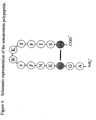
Figure 4 : Schematic representation of the somatostatin polypeptide. Somatostatin (somatotropin release-inhibiting factor SRIF) is a cyclic 14-amino acid polypeptide. The cyclic nature is provided by a disulphide linkage between the cysteine residues atpositions 3 and 14. The four residues which constitute the tip of the loop (Phe-Trp-Lys-Thr) are implicated in binding to members of the somatostatin receptor family. -
Figure 5 : Size exclusion HPLC profiles of affinity purified CTLA-4 VLD and CTLA-4-Som3 STM. Recombinant human CTLA-4 proteins were expressed in E. coli host TG1 from vector pGC, purified from periplasmic extracts by anti-FLAG affinity chromatography and subjected to size exclusion chromatography on a calibrated Superose 12 HR column. The elution profiles of purified CTLA-4 VLD and CTLA-4-Som3 STM are overlayed in this graph. CTLA-4 VLD comprises tetramer (21.86 min), dimer (26.83) and monomer (29.35 min). CTLA-4-Som3 STM comprises dimer (26.34) and monomer (29.28). Traces represent absorbance at 214 nm and are given in arbitrary units. -
Figure 6 : Schematic diagram of CTLA-4 VLD loop replacements. Construct A (CTLA-4 VLD: S2) represents the wild-type CTLA-4 extracellular V-domain, spanning residues 1-115. Constructs B (CTLA-4-Som1; PP2) and C (CTLA-4-Som1-Cys120; PP5) both contain the 14 residue somatostain polypeptide in CDR1. PP5 also carries a C-terminal extension containing Cys120. Construct D (CTLA-4-Som3; PP8) contains the 14 residue somatostatin polypeptide in place of CDR3. In construct E (CTLA-4-HA2: XX4), CDR2 has been replaced with a haemagglutinin tag. In construct F (CTLA-4-Som1-Som3: VV3), both CDR1 and CDR3 have been replaced with the somatostain polypeptide. In construct G (CTLA-4-Som-HA2-Som3: ZZ3) CDR1 and CDR3 are replaced with the somatostatin polypeptide whilst CDR2 is replaced with a haemagglutinin tag. In construct H (CTLA-4-anti-lys:2V8), all three CDR loop structures have been replaced with the CDR loops from a camel anti-lysozyme VHH molecule. Construct I (CTLA-4-anti-mel: 3E4) represents CTLA-4 VLD in which all three CDRs have been replaced by the VH CDR loops from anti-melanoma antibody V86 (Cai And Garen, 1997). PelB, cleavable pectate lyase secretion sequence (22 aa); flag, dual flag tag (AAADYKDDDDKAADYKDDDDK). -
Figure 7 : HPLC profiles of purified recombinant human CTLA-4 STMs. Recombinant CTLA-4 VLDs were expressed in E. coli host TG1 from vector pGC, purified from periplasmic extracts by anti-FLAG affinity chromatography and subjected to size exclusion chromatography on a calibrated Superose 12 HR column. The elution profiles of the purified proteins are shown. Panel A, CTLA-4 DIMER (PP5); Panel B, CTLA-4R (S2); Panel C, CTLA-4-HA2 (XX4); Panel D, CTLA-4-Som3 (PP8); Panel E, CTLA-4-Som1 (PP2); Panel F, CTLA-4-Som1-Som3 (W3); Panel G, CTLA-4-Som-HA2-Som3 (ZZ3); Panel H, CTLA-4-anti-lys (2V8); Panel I, CTLA-4-anti-mel (3E4).). Traces represent absorbance at 214 nm and are given in arbitrary units. -
Figure 8 : Comparison by size exclusion FPLC analysis of affinity purified CTLA-4 constructs synthesised using bacterial expression vector pGC or pPOW. Recombinant human CTLA-4R or its loop variants were expressed in E. coli host TOP10F', purified from periplasmic extracts by anti-FLAG affinity chromatography and subjected to size exclusion chromatography on a calibrated Superose 12 HR column. The elution profiles of proteins expressed from vector pGC are shown on the left, whilst proteins expressed from vector pPOW are shown on the right. Panel A, wild-type CTLA-4 VLD (S2); B, CTLA-4-Som1(PP2); C, CTLA-4-Som3(PP8); D, CTLA-4-Antilys(2V8); E, CTLA-4-Som1-HA2-Som3(ZZ3). -
Figure 9 : Protein stability analysis. Stability of monomer preparations of CTLA-4 VLD and loop variant constructs was analysed by size exclusion fplc chromatography on a precalibrated superose 12 hr (Pharmacia) column following several cycles of freeze/thawing. Aliquots of each protein were tested immediately after peak purification and following two cycles of freeze/thawing. A, CTLA-4 VLD (S2); B, CTLA-4-Som1 (PP2); C, CTLA-4-Som3 (PP8); D, CTLA-4-anti-lys (2V8); E, CTLA-4-Som-HA2-Som3 (ZZ3). -
Figure 10 : Lysozyme binding characteristics of CTLA-4-anti-lys construct 2V8. -
Figure 11 : Screening of CTLA-4 VLD phagemid library on immobilised Sh bleomycin. -
Figure 12 : Screening of CTLA-4 VLD libraries in solution - The present invention relates to the design of novel soluble VLD binding molecules derived from the V-like domain of immunoglobulin superfamily members, such as the human CTLA-4 molecule. The preferred binding molecules of the present invention provide the following advantages (i) use of a native human protein obviates the need for subsequent humanisation of the recombinant molecule, a step often required to protect against immune system response if used in human treatment; (ii) the domain is naturally monomeric as described above (incorporation of residue Cys120 in a C-terminal tail results in production of a dimeric molecule); and (iii) structural modifications have resulted in improved E.coli expression levels.
- Prior to publication of the first CTLA-4 structure determination, available sequence data and mutational analyses of both this molecule and CD28 were analysed. This allowed modelling and prediction of the regions corresponding to antibody CDR1, 2 and 3 regions. It was hypothesised that such areas would be susceptible to mutation or substitution without substantial effect upon the molecular framework and hence would allow expression of a correctly folded molecule. The subsequently published structure (Metzler et al. 1997) showed these predictions to be accurate, despite the unexpected separation of CDR1 from the ligand-binding site, and the extensive bending of CDR3 to form a planar surface contiguous with the ligand binding face.
- In an initial set of experiments the V-like domain of the human CTLA-4 molecule was modified by replacement of CDR loop structures with either of two defined polypeptides. The two polypeptides were human somatostatin (Som) and a portion of the human influenza virus haemagglutinin protein (HA-tag). Somatostatin (SRIF: somatotropin release-inhibiting factor) is a 14 residue polypeptide comprising a disulphide bond that forces the central 10 residues into a loop. Human somatostatin is biologically widespread within the body and mediates a number of diverse physiological functions such as regulation of growth hormone secretion etc (Reisne, 1995). Human somatostatin binds a number of specific receptors (there are at least five subtypes) which have differing tissue specificities and affinities (Schonbrunn et al. 1995). These aspects of binding and activation are as yet poorly understood, but one salient feature is the high density of somatostatin receptors present on a number of cancerous cell lines, for example cancers of the neuro-endocrine system and small lung cancers (Reubi 1997). Artificial analogues of somatostatin have been produced for imaging of such tumours which are resistant to degradation compared with the highly labile somatostatin polypeptide.
- The haemagglutinin epitope sequence consists of the 9 residues YPYDVPDYA. A commercially produced antibody is available which specifically recognises this sequence. The epitope tag can be detected when randomly or directionally incorporated within the structure of proteins (Canfield et al. 1996).
- Replacement of one or more CDR loop structures in the CTLA-4 V-like domain with somatostatin or the HA-tag resulted in the production of soluble, monomeric, unglycosylated binding molecules using different bacterial expression systems. This surprising finding shows that V-like domains provide a basic framework for constructing soluble, single domain molecules, where the binding specificity of the molecule may be engineered by modification of the CDR loop structures.
- The basic framework residues of the V-like domain may be modified in accordance with structural features present in camelid antibodies. The camel heavy chain immunoglobulins differ from "conventional" antibody structures by consisting of only a single VH domain (Hamers-Casterman et al. 1993). Several unique features allow these antibodies to overcome the dual problems of solubility and inability to present a sufficiently large antigen binding surface.
- First, several non-conventional substitutions (predominantly hydrophobic to polar in nature) at exposed framework residues reduce the hydrophobic surface, while maintaining the internal beta-sheet framework structure (Desmyter et al. 1996). Further, within the three CDR loops several structural features compensate for the loss of antigen binding-surface usually provided by the VL domain. While the CDR2 loop does not differ extensively from other VH domains, the CDR-1 and -3 loops adopt non-canonical conformations which are extremely heterologous in length. For example, the H1 loop may contain anywhere between 2-8 residues compared to the usual five in Ig molecules. However, it is the CDR3 loop which exhibits greatest variation: in 17 camel antibody sequences reported, the length of this region varies between 7 and 21 residues (Muyldermans et al. 1994). Thirdly, many camelid VH domains possess a disulphide linkage interconnecting CDRs -1 and -3 in the case of camels and interconnecting CDRs -1 and -2 in the case of llamas (Vu et al. 1997). The function of this structural feature appears to be maintenance of loop stability and providing a more contoured, as distinct from planar, loop conformation which both allows binding to pockets within the antigen and gives an increased surface area. However, not all camelid antibodies possess this disulphide bond suggesting that it is not an absolute structural requirement.
- These foregoing features have enabled camelid V-domains to present as soluble molecules in vivo and with sufficiently high affinity to form an effective immune response against a wide variety of target antigens. In contrast, cell surface receptors of the Ig superfamily (such as CD4 and CD2) comprise V-like binding domains and appear to bind cognate receptors with surface features other than the CDR loops. These V-like domains bind to cognate receptors with very low affinity. Physiological signalling between two cells are mediated by the avidity of multi-point binding, when two cell surfaces connect and each contains multiple receptors. CD2 is a well-characterised example: binding to CD58 is mediated by a highly constrained set of minor electrostatic interactions generated by charged and polar residues located in the GFCC'C" face (not the antibody type CDR-1, CDR-2 or CDR-3 loops). This results in a low affinity but highly specific interaction (Bodian et al 1994).
- The present invention also relates to a method for generating and selecting single VLD molecules with novel binding affinities for target molecules. This method involves the application of well known molecular evolution techniques to V-like domains derived from members of the immunoglobulin superfamily. The method may involve the production of phage or ribosomal display libraries for screening large numbers of mutated V-like domains.
- Filamentous fd-bacteriophage genomes are engineered such that the phage display, on their surface, proteins such as the Ig-like proteins (scFv, Fabs) which are encoded by the DNA that is contained within the phage (Smith, 1985; Huse et al., 1989; McCafferty et al., 1990; Hoogenboom et al., 1991). Protein molecules can be displayed on the surface of Fd bacteriophage, covalently coupled to phage coat proteins encoded by gene III, or less commonly gene VIII. Insertion of antibody genes into the gene III coat protein gives expression of 3-5 recombinant protein molecules per phage, situated at the ends. In contrast, insertion of antibody genes into gene VIII has the potential to display about 2000 copies of the recombinant protein per phage particle, however this is a multivalent system which could mask the affinity of a single displayed protein. Fd phagemid vectors are also used, since they can be easily switched from the display of functional Ig-like fragments on the surface of Fd-bacteriophage to secreting soluble Ig-like fragments in E. coli. Phage-displayed recombinant protein fusions with the N-terminus of the gene III coat protein are made possible by an amber codon strategically positioned between the two protein genes. In amber suppressor strains of E. coli, the resulting Ig domain-gene III fusions become anchored in the phage coat.
- A selection process based on protein affinity can be applied to any high-affinity binding reagents such as antibodies, antigens, receptors and ligands (see, for example, Winter and Milstein, 1991, the entire contents of which are incorporated herein by reference). Thus the selection of the highest affinity binding protein displayed on bacteriophage is coupled to the recovery of the gene encoding that protein. Ig-displaying phage can be affinity selected by binding to cognate binding partners covalently coupled to beads or adsorbed to plastic surfaces in a manner similar to ELISA or solid phase radioimmunoassays. While almost any plastic surface will adsorb protein antigens, some commercial products are especially formulated for this purpose, such as Nunc Immunotubes.
- Ribosomal display libraries involve polypeptides synthesised de novo in cell-free translation systems and displayed on the surface of ribosomes for selection purposes (Hanes and Pluckthun, 1997; He and Taussig, 1997). The "cell-free translation system" comprises ribosomes, soluble enzymes required for protein synthesis (usually from the same cell as the ribosomes), transfer RNAs, adenosine triphosphate, guanosine triphosphate, a ribonucleoside triphosphate regenerating system (such as phosphoenol pyruvate and pyruvate kinase), and the salts and buffer required to synthesize a protein encoded by an exogenous mRNA. The translation of polypeptides can be made to occur under conditions which maintain intact polysomes, i.e. where ribosomes, mRNA molecule and translated polypeptides are associated in a single complex. This effectively leads to "ribosome display" of the translated polypeptide.
- For selection, the translated polypeptides, in association with the corresponding ribosome complex, are mixed with a target molecule which is bound to a matrix (e.g. Dynabeads). The target molecule may be any compound of interest (or a portion thereof) such as a DNA molecule, a protein, a receptor, a cell surface molecule, a metabolite, an antibody, a hormone or a virus. The ribosomes displaying the translated polypeptides will bind the target molecule and these complexes can be selected and the mRNA re-amplified using RT-PCR.
- Although there are several alternative approaches to modify binding molecules the general approach for all displayed proteins conforms to a pattern in which individual binding reagents are selected from display libraries by affinity to their cognate receptor. The genes encoding these reagents are modified by any one or combination of a number of in vivo and in vitro mutation strategies and constructed as a new gene pool for display and selection of the highest affinity binding molecules.
- In order that the nature of the present invention may be more clearly understood preferred forms thereof will now be described with reference to the following examples.
- CTLA-4 STM (STM: soluble truncated mutants of CTLA-4, used herein to describe CTLA-4 chimaeric V-like domain proteins) gene construction and cloning was by standard and well-described techniques (Polymerase chain reaction with specifically designed oligonucleotide primers, splice overlap extension, restriction enzyme digests etc). A list of oligonucleotide primers used is given in
Figure 1 . - The wild-type STM construct was amplified from cloned human CTLA-4 DNA (
Figure 2 ) (and could be similarly amplified from reverse transcribed human cDNA by a competent worker in the field) using the oligonucleotide primers #3553 and #4316, which incorporated SfiI and NotI restriction sites at the 5' and 3' ends respectively. These terminal primers were used in all further constructions except: (i) where #4851 or #5443 was used to incorporate an ApaL1 site at the 5' end; (ii) where #4486 was used to add a C-terminal tail including residue Cys120; (iii) where #5467 was used to incorporate an EcoR1 site at the 5' end; and (iv) where the specific set of extension primers were used for ribosomal display. - A splice overlap PCR strategy using combinations of the oligonucleotides primers listed in
Figure 1 was used to produce variations of CDR-1, CDR-2 and/or CDR-3 loop structure replacements. The variations, which are described in greater detail in the following examples are listed in Table 2.TABLE 2 CDR-1 combinations CDR-1 CTLA-4 VLD S19PVCEYA.SPGKATE..... VRV... Anti-lysozyme S19FVCEYA.SGYTIGPYCMG..... VRV... Somatostatin-14 S19FVCEYA.AGCKNFFWKTFTSCATE. VRV... Anti-melanoma S19FVCEYA.SGFTFSSYAMS..... VRV... Randomisation 1 S19FVCEYA.XXXXXXXG..... VRV... Randomisation 2 S19FVCEYA.XXXXXXXXCXG..... VRV... Randomisation 3 S19FVCEYA.XXarXarXXarCXG..... VRV... Randomisation 4 S19FVCEYA.SPGXXXX..... VRV... Randomisation 5 S19FVCEYA.SPGXCXX..... VRV... Randomisation 6 S19FVCEYA.XXXXXXXXATE..... VRV... Randomisation 7 S19FVCEYA.XXXXXXCXATE..... VRV... Randomisation 8 S19FVCEYA.AGCKNXXXXXXTSCATE. VRV... CDR-2 combinations CDR-2 CTLA-4 VLD Q44VTEVCAA.TYMMGNELTF.LDDSICT... Anti-lysozyme Q44VTEVCAA.AINMGGGITF.LDDSICT... Haemagglutinin tag Q44VTEVCAA.TYPYDVPDYA.LDDSICT... Anti-melanoma Q44VTEVCAA.AISGSGGSTY.LDDSICT... Q44VTEVCAA.TYXXGXELTF.LDDSICT... Randomisation 1Randomisation 2 Q44VTEVCAA.CYXXGXELTF.LDDSICT... CDR-3 combinations CDR-3 CTLA-4 VLD C93KV.ELMYPPPYYL..... GIG... Anti-lysozyme C93KV.DSTIYASYYECGHGLSTGGYGYDS. GIG... Somatostatin-14 C93KV.EAGCKNFFWKTFTSC..... GIG... Anti-melanoma C93KV.GWGLRGEEGDYYMDV..... GIG... Randomisation 1 C93KV.XXXXXXXXXXX..... GIG... Randomisation 2 C93KV.XXXXXXXXXXXXXXX..... GIG... Randomisation 3 C93KV.XXXXXX.C.XXXX..... GIG... Randomisation 4 C93KV.XXXXXXX.C.XXXX..... GIG... Randomisation 5 C93KV.XXXXXXXX.C.XXXXX..... GIG... Randomisation 6 C93KV.XXXXXXXXXX.C.XXXXXXX..... GIG... Randomisation 7 C93KV.EXXXXXXXXX..... GIG... Randomisation 8 C93KV.EXXXXXX.C.XXXXXXX..... GIG... Randomisation 9 C93KV.EAGCKNXXXXXXTSC..... GIG... - For generation of randomised sections of the CDR loop structures, similar splice-overlap techniques were used with oligonucleotides where a given triplet(s) were encoded by the sequence NNg/T where N represents any of the four possible nucleotide bases. This combination covers all possible amino acid residues. Alternatively, randomisation was biased towards certain subsets of amino acids (for example aromatic residues,
Figure 1 , #5452). - In some instances, a variant technique was used for STM gene construction, where randomised oligonucleotide primers were designed which incorporated restriction sites for direct cloning into the similarly modified (with complementary restriction sites) CTLA-4 VLD framework (for example
Figure 1 , #4254). - Completed constructs were cut with approriate combinations of restriction enzymes (for example Sfi1,Not1, ApaL1, EcoR1) and cloned into like sites in appropriate expression vectors. These vectors comprise: (i) for production of soluble protein expression vectors pGC (Coia et al, 1996) and pPOW (Power et al, 1992; Kortt et al. 1995) (ii) for bacteriophage and phagemid display, completed STM constructs were cut with the restriction enzymes SfiI and NotI or ApaLI and NotI and cloned into the vectors pHFA, and pFAB.5c (phagemid) or pfd-Tet-DOG (phage). These vectors allow display of the STMs as gene3 protein fusions on the surface of bacteriophage in 1-2 (phagemid) or 3-5 (phage) copies per bacteriophage particle (
Figure 3 ). - All DNA constructs were verified by restriction analysis and DNA sequencing and tested for expression of recombinant protein by standard and well-understood techniques (Polyacrylamide gel electrophoresis, Western blot etc).
- Recombinant proteins were produced using vectors which represent different protocols for periplasmic expression systems. These vectors were (i) pGC: this vector allows high level expression of heterologous proteins by chemical (IPTG) induction, which are targeted to the periplasmic space by means of a leader sequence. The leader sequence is subsequently cleaved to produce the mature protein. In addition, this vector contains two in-
frame 8 residue tag sequences (FLAG tags) which allow affinity purification of the recombinant protein. (ii) pPOW, which, like pGC, allows high level heat inducible expression of proteins targeted to the periplasmic space by means of a cleavable leader sequence and two in-frame 8 residue tag sequences (FLAG tags). - Recombinant proteins were purified by the following methods, which are but two variations of well established techniques. (i) Bacterial clones in vector pGC were grown overnight in 2YT medium/37°C /200 rpm/100mg/ml ampicillin, 1% glucose (final). Bacteria were diluted 1/100 into either 0.5 or 21 of 2YT medium supplemented with 100mg/ml ampicillin, 0.1% glucose (final), and grown at 28°C/ 200 rpm. These cultures were grown to an optical density of between 0.2-0.4, at which stage they were induced with 1mM IPTG (final). Cultures were allowed to grow for 16 hours (overnight) before harvesting. Bacteria were collected by centrifugation (Beckman JA-14 rotor or equivalent/6K/10min/4°C) and the periplasmic fraction collected by standard techniques. Briefly, this involved resuspension of bacterial pellets in a 1/25th volume of spheroplast forming buffer consisting of 100mM Tris-HCl/0.5M sucrose/0.5 mM EDTA (pH8.0), followed by addition of 1/500th volume of hen egg lysozyme (2mg/ml in water) and incubation for 10min. A 0.5x solution of the above spheroplasting buffer was then added to a final volume of 1/5th of the original culture, and the incubation continued for a further 20min. The cell debris was then pelleted by centrifugation (Beckman JA-14 rotor or equivalent/9K/15min/4°C) and the supernatant containing the periplasmic fraction collected. All of the above procedures were performed at 4°C. Samples were processed immediately by sonication, filtration through a 0.45µ nitrocellulose membrane and processed immediately or stored at 4°C in the presence of sodium azide (0.05%). If freezing was required, no more than one freeze-thaw cycle was allowed. (ii) Bacterial clones in pPOW were grown overnight at 30°C in 100 ml 2xYT broth containing 100 µg/ml (w/v) ampicillin. On the following day cultures were used to inoculate 900 ml fresh 2xYT broth containing 100 µg/ml (w/v) ampicillin, to OD600nm = 0.2-0.5, and grown at 30°C with shaking (150-200 rpm) until OD600nm = 4 i.e. late log phase. To induce recombinant protein expression, the temperature was raised to 42°C for 1 hour and then dropped to 20°C for a further hour. Cells were harvested by centrifugation (Beckman JA-14 /6K rpm/5 min/4°C), the cell pellet resuspended in 100 ml extraction buffer (20mM Tris pH 8.0/ 0.2mg/ml (w/v) lysozyme/0.1% (v/v) Tween-20) and incubated at 4°C overnight. Samples were sonicated for 30 seconds and cellular debris collected by centrifugation (Beckman JA-14 /14K rpm/10 min/4°C). The aqueous phase, containing the "lysozyme" wash, was retained. Cell pellets were then washed twice with ice-cold water and this "osmotic shock" wash was retained. Each wash consisted of resuspending the pellet in 100 ml ice-cold water followed by incubation on ice for 10 minutes in the first instance followed by 1 hour in the second instance. Following centrifugation (Beckman JA-14 /14K rpm/10 min/4°C), the pH of the aqueous phase was adjusted by addition of 10 ml 10xTBS,
pH 8. The "lysozyme" and "osmotic shock" washes were pooled and constitute the soluble or "periplasmic" protein fraction. Periplasmic fractions were sonicated, filtered through a 0.45µ nitrocellulose membrane and processed immediately or stored at 4°C in the presence of sodium azide (0.05%), PMSF (23 µg/ml) and EDTA (50 mM). - Recombinant proteins were purified by affinity chromatography through a divinyl sulphone activated agarose (Mini-Leak)-linked anti-FLAG antibody column. Periplasmic extracts were directly loaded onto a 10 ml anti-FLAG column which had been pre-equilibrated in TBS (pH 8) containing 0.05% (w/v) sodium azide. Bound proteins were eluted with Immunopure Gentle Ag/Ab Elution Buffer (Pierce). Samples were then dialysed against TBS/0.05% (w/v) azide (pH 8), concentrated by ultrafiltration over a 3 kDa cut-off membrane (YM3, Diaflo), and analysed by HPLC on a pre-calibrated Superose 12 HR or
Superdex 200 HR column (Pharmacia Biotech), at a flow rate of 0.5 ml/min. Fractions corresponding to monomeric , dimeric and tetrameric species were collected, concentrated as above, and stored at 4°C prior to analysis. Protein concentration was determined spectrophotometrically using an extinction coefficient at A280 of 1.27 for the CTLA-4R extracellular domain, 0.92 for CTLA-4-Som1, 1.13 for CTLA-4-Som3, 1.05 for CTLA-4-Anti-Lys. All of the above protein chemistry methods are standard techniques within the field. Purified proteins were analysed by standard techniques for example polyacrylamide gel electrophoresis, western blot, dot blot etc. - Cloning and expression in the bacteriophage expression vectors pHFA, pFAB.5c and fd-tet dog, and subsequent production of recombinant bacteriophage, were by standard and well-established techniques. Screening of libraries of randomised CTLA-4 STMs was by standard and well-established techniques (Galanis et al 1997).
- Initially the CDR1 or the CDR3 loop structures of the CTLA-4 STM were replaced with the somatostatin polypeptide. This 14 residue polypeptide is conformationally constrained by an intra-disulphide linkage between Cys3 and Cys14 (
Figure 4 ). This was reasoned to form a discrete protein loop, analogous to the CDR loops found in antibodies, and particularly analogous to the long CDRs found in camelid antibodies which are also stabilised by a disulphide linkage. The effect of substituting CDR1 in the presence or absence of Cys120 ie. whether a dimer could be produced, was also tested. These experiments produced an unexpected and surprising result. Substitution of either CDR-1 or -3 with somatostatin significantly enhanced the production of monomeric protein. This is illustrated inFigure 5 where replacement of the CDR-3 loop structure with somatostatin significantly increased the ratio of monomeric to dimeric/tetrameric protein species. - In further experiments, simultaneous replacement of both CDR-1 and-3 loop structures by somatostatin resulted in production of high-levels of monomeric protein. This shows that extensive loop structure replacements can be accommodated by the CTLA-4 scaffolding. Structurally, one of the somatostatin loops may lie flat against the face of the molecule in a manner analogous to that of the CDR-3 loop structure of CTLA-4 VLD.
- In a further extension of the CDR loop structure-replacement strategy, a region corresponding to CDR-2 was replaced with the 8-residue haemagglutinin (HA) tag sequence. Use of the conformationally constrained somatostatin loop in this position was considered unsuitable as this region partially encompasses the C" beta strand running the length of the molecule. The HA tag could be detected upon this CTLA-4 STM by use of an anti-HA antibody. Gel filtration experiments showed the presence of a range of protein species, from monomeric through to aggregated species suggesting that CDR-2-only substitutions were not stable (
Figures 6,7 ). - Final proof of principle that the CTLA-4 CDR loop structures could be replaced with other polypeptides to produce monomeric, soluble, STMs was by simultaneous replacement of all three CDR loop structures with two somatostatin and one HA epitope respectively. This STM produced a correctly folded and monomeric protein upon gel filtration chromatography (
Figures 6,7 ). - The positions of CDR loop structure substitutions within the CTLA-4 VLD for the various STMs are shown in
figure 6 . HPLC profiles of affinity-purified STM proteins are shown infigure 7 . Identical results were obtained for proteins produced in two different protein expression systems: pGC where protein expression is chemically induced, and pPOW where protein expression is temperature induced (see Example 2)(Figure 8 ). Polyacrylamide gel electrophoresis followed by western blot analysis indicated that the CTLA-4 STMs could be reduced and ran at the expected molecular weights and absent of glycosylation. Testing of isolated monomeric STM proteins showed that they remained monomeric after zero, one, or two freeze-thaw cycles (figure 9 ). - CTLA-4 STMs retained the correct conformation since a conformationally-specific anti-CTLA-4 antibody recognised STMs with both CDR1 and -3 loop structure replacements. Interestingly, this antibody recognised the wild type monomer and the dimer (CDR1 replaced) poorly, contrasting with the strong reaction observed for the modified protein species. This suggests that in the wild type STM some form of local interaction is occurring that occludes the antibody binding site, and that this interaction is similar to the result when two CTLA-4 molecules are tethered together (presumably blocking access to the antibody).
- The camel VHH antibody cAb-Lys3 isolated from immunised camels specifically binds within the active site cleft of hen egg lysozyme (Desmyter et al. 1996). To illustrate the ability of CTLA-4 STMs to function in a similar fashion, the three CDR loop structures of CTLA-4 VLD STM were replaced with the three CDR loop regions from cAb-Lys3. Positions and sequence of the substitutions are shown in
figure 6 . Expression of this STM (2V8) in either pGC or pPOW based expression systems resulted in production of predominantly monomeric soluble protein (Figures 7, 8 ). Protein solubility of this CTLA-4 STM was superior to native CTLA-4 VLD. ELISA analysis showed that (pGC produced) purified monomeric protein specifically bound hen egg lysozyme compared to non-specific antigens and compared to the CTLA-4 STM with somatostatin substituted within the CDR1 loop structure (PP2) (Figure 10A ). Real-time binding analysis by BIAcore showed that the lysozyme specifically bound to immobilised anti-lysozyme STM (Figure 10B ). The CTLA-4 STM framework is thus folding correctly and presenting the CDR loop structures in a manner in which they can bind lysozyme antigen. To further enhance expression of the CTLA-4 VLD anti-lysozyme, the coding sequence was adjusted by splice overlap PCR to comprise codons preferential for E. coli expression. - The human-derived anti-melanoma antibody V86 specifically binds human melanoma cells. This antibody is unusual in that binding affinity resides entirely within the VH region, addition of a cognate VL decreases binding efficiency, and that the VH domain expressed with a small segment of the VL domain has a high degree of solubility (Cai and Garen, 1997). To further illustrate that replacement of CTLA-4 VLD CDR loop structures enhances solubility and that the resultant STMs can be produced in bacterial expression systems, the three CDR loop structures of CTLA-4 were replaced with the three CDR loop regions from V86. Positions and sequence of the substitutions are shown in
Figure 6 . Expression of this STM (3E4) in pGC again resulted in production of predominantly monomeric soluble protein (Figure 7 ) with enhanced solubility compared to the CTLA-4 VLD. - To select CTLA-4 STMs with novel binding specificities, VLD libraries were produced containing randomised CDR1 and CDR3 loop structures. Oligonucleotide primers used for library construction are listed in
figure 1 . Combinations of oligonucleotide primers used for library construction are shown in Table 3.Table 3. CTLA-4 STM Library Combinations CDR1 CDR3 4483* 4254 5449 5451 5452 5450 5446 4835 4482 + 1 + 1 ////////// ////////// ////////// ////////// ////////// ////////// 4275 + 1 + 1 ////////// ////////// ////////// ////////// ////////// ////////// 5470 ////////// ////////// + 2 + 2 + 2 + 2 + 2 ////////// 5474 ////////// ////////// + 2 + 2 + 2 + 2 + 2 ////////// 5471 ////////// ////////// + 2 + 2 + 2 + 2 + 2 ////////// 5472 ////////// ////////// + 2 + 2 + 2 + 2 + 2 ////////// 5475 ////////// ////////// + 2 + 2 + 2 + 2 + 2 ////////// 5473 ////////// ////////// + 2 + 2 + 2 + 2 + 2 ////////// 4836 ////////// ////////// ////////// ////////// ////////// ////////// ////////// + 3 *: oligonucleotide number.
+ : library combination.
1,2,3: describes library number. - DNA constructs encoding the resultant libraries were cloned into vectors pHFA or pFAB.5c for production of fd-phagemid based libraries and into pfd-Tet-Dog for production of fd-phage based libraries (see examples 1 and 2).
Library 1 was cloned into vector pHFA and consisted of 2.1 x 10⁷ independent clones.Library 3 was cloned into vectors pHFA (5.7 x 10⁵ independent clones) and pfd-Tet-Dog (2.2 x 10⁴ independent clones).Library 2 was cloned into pFAB.5c (1.7 x 10⁷ independent clones) and into pfd-Tet-Dog (1.6 x 10⁵ independent clones). Numbers of independent clones were determined by counting gross numbers of transformed colonies constituting the library, followed by assaying for the presence and proportion of CTLA-4 STM-specific DNA. - For
library 2, the variability of the full library was tested by sequencing of representative clones. These results are presented in Table 4. The expected heterogeneity of insert size and sequence was observed. A high proportion of UAG termination codons were observed, consistent with the oligonucleotide randomisation strategy. To prevent these codons causing premature termination of the CTLA-4 STM gene3 protein fusions, libraries were transferred into the E.coli strains Tg-1 and JM109, which suppress this termination codon by insertion of a glutamic acid residue. Cysteine residues were present in the high numbers expected from the desgn of the oligonucleotides,and were in positions capable of forming intra- and inter-CDR loop structure disulphide bonds.Table 4 CDR1 and CDR3 Inserts from a Representative Series of Library 2 ClonesCLONE CDR1 CDR3 3M-2 ND1 LPSSDTRAYS 3M-3 QESGGRPG LPRGPPLLSL 3M-5 SPGRCLN ND 3M-6 EWKR*HGG LCPGACGCVY 3M-7 NSG*NEGG ND 3M-11 DKPVTKSG ND 3M-17 SPGACP* ND 3M-18 SPGKCDQ ND 3M-19 SPGMCAR LMYPPPYYL 3M-20 ND PFLFLPC*FFF 3N-1 WTLGHHKLCEG LFTCLLALCS 3N-2 SPGECYG SWLSTTXCLSSCS 3N-3 SPG*CQD LLGSLLSCFASLS 3N-4 SPG*CQD SPGSLLSCFASXS 3N-5 SPGRCTD VICHSSVCLSD/EVC 3N-6 ND DLPSYLACSI 3N-7 SPGRCDA ALCWDVFYCSFPSY 3N-8 ELFGHARYCKG VSITSP*LCPVKVFD 3N-9 SPGKV*N LFVPFVSP 3N-12 SPGDLWV ESGLSPVSPCSLYSL 3N-13 TSANGPYG PWAYRFLAVL 3N-14 RKTREKYG ELMYPPPYYLGI 3N-15 SPGQELT ELFFLLYAPCYLFQR ND: Not Done
*: UAG termination codon - Bacteriophage particles displaying CTLA-4 STMs as
gene 3 protein fusions were rescued from E.coli cells by standard protocols and panned against antigens presented in a number of contexts as described in the following examples. - Four different antigens falling into a class of proteins with clefts or crevices within their structures were selected for screening. It was anticipated that the CTLA-4 VLD STMs, being of smaller size than antibodies, and possessing elongated CDR loop structures (especially CDR-3) would be able to access these cleft regions. The antigens selected were: (i) hen egg lysozyme (EC 3.2.1.17); (ii) bovine carbonic anhydrase (EC 4.2.1.1); (iii) fungal a-amylase (EC 3.2.1.1); and (iv) Streptoalloteichus hindustanis resistance protein ShBle (Gatignol et al. 1988). For binding to plates, antigens in coating buffer (1mg/ml in 0.1M NaHCO3 pH8.5) were bound to Costar ELISA plates by standard procedures. Rescued phage and phagemid-derived libraries were panned by standard and well-understood procedures except that lower than standard number of washes were employed to allow low affinity binding phage to be selected.
Figure 11 shows titres of libraries selected against ShBle. Afterround 4, recovered bacteriophage titres were higher than controls. To those skilled in the art, this represents selection of specific binding moieties, and it is then a routine process to produce these selected CTLA-4 VLD STMs using expression vectors such as pGC or pPOW (as described in example 2). - For selection in solution, the antigens bovine carbonic anhydrase and fungal a-amylase were biotinylated and selections performed in solution using capture by streptavidin coated magnetic beads. Throughout these experiments washes were kept constant at either 2 or 5 washes per selection round. Titres of recovered bacteriophage post-elution are shown in
Figure 12 . Afterround 4, recovered bacteriophage titres were higher than controls. To those skilled in the art, this represents selection of specific binding moieties, and it is then a routine process to produce these selected CTLA-4 VLD STMs using expression vectors such as pGC or pPOW (as described in example 2). - To allow further maturation and selection of antigen binding STMs, the CTLA-4 STM library was ligated into a plasmid to add a downstream C-terminal spacer polypeptide (heavy constant domain). Upstream transcriptional and translational initiation sequences were added by PCR amplification using specific oligonucleotides (
Figure 1 ). This PCR DNA was used as a template for production of RNA followed by translation and display of the library on ribosomes in a coupled cell free translation system as described by He and Taussig (1997). To demonstrate binding, CTLA-4 STM ribosome complexes were panned on hepatitis B surface antigen (hbsa), glycophorin (glyA) and bovine serum albumin (BSA) coated dynabeads. RNA from ribosome complexes bound to hbsa, glyA and BSA was recovered by RT-PCR. It is then a routine process to clone these RT-PCR products into an expression vector such as pGC or pPOW (as described in example 2) allowing production of CTLA-4 STMs. It will be appreciated by persons skilled in the art that numerous variations and/or modifications may be made to the invention allowing display of libraries of CTLA-4 STMs as ribosome complexes (as in this example) as well as display on the surface of live cells (which may be derived from a eukaryotic or prokaryotic background) and may include bacteria, yeast, mammalian or insect cells. - To allow further maturation and selection of antigen-binding STMs, and the construction of randomised CDR-1, -2 and -3 libraries, CDR-2 randomised oligonucleotide primers were produced (
Figure 1 ). A variation of these primers contained conserved cysteine residues to allow construction of STMs with CDR2-CDR3 disulphide linkages mimicing those found in llama single domain antibodies. Splice overlap PCR allowed creation of libraries containing all three CDR loop structures randomised. -
- Bodian DL, Jones EY, Harlos K, Stuart DI, Davis SJ (1994) Crystal structure of the extracellular region of the human cell adhesion molecule CD2 at 2.5 A resolution. Structure 2: 755-766
- Cai X and Garen A (1997) Comparison of fusion phage libraries displaying VH or single-chain Fv antibody fragments derived from the antibody repertoire of a vaccinated melanoma patient as a source of melanoma-specific targeting molecules Immunol 94: 9261-9266
- Canfield VA, Norbeck L, Levenson R (1996) Localization of cytoplasmic and extracellular domains of Na,K-ATPase by epitope tag insertion Biochem. 35: 14165-14172
- Coia, G., Hudson, P.J., Lilley, G.G. (1996) Construction of recombinant extended single-chain antibody peptide conjugates for use in the diagnosis of HIV-1 and HIV-2. J. Immunol. Meth. 192:13-23
- Davies J, Riechmann L (1994) Camelising human antibody fragments: NMR studies on VH domains FEBS Lett. 339(3):285-90
- Davies J, Riechmann L. (1996) Single antibody domains as small recognition units: design and in vitro antigen selection of camelized, human VH domains with improved protein stability Protein Eng 9(6):531-7
- Desmyter A, Transue TR, Ghahroudi MA, Thi MH, Poortmans F, Hamers R, Muyldermans S, Wyns L (1996) Crystal structure of a camel single-domain VH antibody fragment in complex with lysozyme Nat Struct Biol 3:803-811
- Galanis M, Irving RA, and Hudson PJ (1997) Current Protocols in Immunology, 17.1.1-17.1.45.
- Gatignol A, Durand H, and Tiraby G (1988) Bleomycin resistance conferred by a drug-binding protein FEBS Lett 230: 171-175
- Gerstmayer B, Pessara U, Wels W (1997) Construction and expression in the yeast Pichia pastoris of functionally active soluble forms of the human costimulatory molecules B7-1 and B7-2 and the B7 counter-receptor CTLA-4. FEBS Lett 407: 63-68
- Hamers-Casterman C, Atarhouch T, Muyldermans S, Robinson G, Hamers C, Songa EB, Bendahman N, Hamers R (1993) Naturally occurring antibodies devoid of light chains. Nature 363: 446-448
- Hanes J and Pluckthun A (1997) In vitro selection and evolution of functional proteins by using ribosome display Proc.Natl.Acad. Sci. USA. 94: 4937-4942
- He M and Taussig MJ (1997) Antibody-ribosome-mRNA (ARM) complexes as efficient selection particles for in vitro display and evolution of antibody combining sites. Nucl. Acids Res. 25: 5132-5134
- Hoogenboom, H.R., Griffiths, A.D., Johnson, K.S., Chiswell, D.J., Hudson, P., and Winter, G. 1991. Multi-subunit proteins on the surface of filamentous phage: methodologies for displaying antibody (Fab) heavy and light chains. Nucleic Acids Res. 19:4133-4137.
- Huse, W. D.,Sastry, L.,Iverson, S. A.,Kang, A. S.,Alting, M. M.,Burton, D. R.,Benkovic, S. J., & Lerner, R. A. (1989). Generation of a large combinatorial library of the immunoglobulin repertoire in phage lambda . Science, 246: 1275-81.
- Hutloff, A., Dittrich, A.M., Beier, K.C., Elijaschewitsch, B., Kraft, R., Anagnostopoulos, I. and Kroczek, R.A. (1999). ICOS is an inducible T-cell co-stimulator structurally and functionally related to CD28. Nature 397: 263-266.
- Kortt, A.A., Guthrie, R.E., Hinds, M.G., Power, B.E., Ivancic, N., Caldwell, J.B., Gruen, L.C., Norton, R.S. and Hudson, P.J. (1995) Solution properties of E. coli expressed VH domain of anti-neuraminidase antibody NC41. J. Protein Chemistry. 14, 167-178.
- Linsley, PS, Clark EA, and Ledbetter JA (1990) The T cell antigen CD28 mediates adhesion with B cells by interacting with the activation antigen, B7/BB1 Proc. Natl. Acad. Sci USA 87: 5031.
- Linsley PS, Nadler SG, Bajorath J, Peach R, Leung HT, Rogers J, Bradshaw J, Stebbins M, Leytze G, Brady W, et al (1995) Binding stoichiometry of the cytotoxic T lymphocyte-associated molecule-4 (CTLA-4). A disulfide-linked homodimer binds two CD86 molecules. J Biol Chem 270: 15417-24
- McCafferty, J.,Griffiths, A. D.,Winter, G., & Chiswell, D. J. (1990). Phage antibodies: filamentous phage displaying antibody variable domains. Nature, 348: 552-4.
- Metzler WJ, Bajorath J, Fenderson W, Shaw SY, Constantine KL, Naemura J, Leytze G, Peach RJ, Lavoie TB, Mueller L, Linsley PS (1997) Solution structure of human CTLA-4 and delineation of a CD80/CD86 binding site conserved in CD28 Nat Struct Biol 4: 527-531
- Morton PA, Fu XT, Stewart JA, Giacoletto KS, White SL, Leysath CE, Evans RJ, Shieh JJ, Karr RW (1996) Differential effects of CTLA-4 substitutions on the binding of human CD80 (B7-1) and CD86 (B7-2) J Immunol 156: 1047-1054
- Muyldermans S, Atarhouch T, Saldanha J, Barbosa JA, Hamers R (1994) Sequence and structure of VH domain from naturally occurring camel heavy chain immunoglobulins lacking light chains. Protein Eng 7: 1129-1135.
- Nieba L, Honegger A, Krebber C, Pluckthun A (1997) Disrupting the hydrophobic patches at the antibody variable/constant domain interface: improved in vivo folding and physical characterization of an engineered scFv fragment Protein Engineering (4):435-44
- Novotny J, Ganju RK, Smiley ST, Hussey RE, Luther MA, Recny MA, Siliciano RF, Reinherz EL (1991) A soluble, single-chain T-cell receptor fragment endowed with antigen-combining properties Proc Natl Acad Sci U S A 88(19):8646-8650.
- Peach RJ, Bajorath J, Brady W, Leytze G, Greene J, Naemura J, Linsley PS (1994) Complementarity determining region 1 (CDR1)- and CDR3-analogous regions in CTLA-4 and CD28 determine the binding to B7-1 J Exp Med 180: 2049-2058
- Power, B.E., Ivancic, N., Harley, V.R., Webster, R.G., Kortt, A.A, Irving, R.A. and Hudson, P.J. (1992) High-level temperature-induced synthesis of an antibody VH-domain in Esclierichia coli using the PelB secretion signal gene 113:95-99.
- Reisine, T. (1995) Somatostatin. Cell Molec. Neurobiol. 15: 597-614
- Reubi, J. C. (1997) Regulatory peptice receptors as molecular targets for cancer diagnosis and therapy. Q. J. Nucl. Med. 41: 63-70
- Schonbrunn A, Gu YZ, Brown PJ, Loose-Mitchell D (1995) Function and regulation of somatostatin receptor subtypes. Ciba Found. Symp. 190: 204-217
- Smith, G. P. (1985). Filamentous fusion phage: novel expression vectors that display cloned antigens on the virion surface. Science, 228, 1315-1317
- van der Merwe PA, Bodian DL, Daenke S, Linsley P, Davis SJ (1997) CD80 (B7-1) binds both CD28 and CTLA-4 with a low affinity and very fast kinetics. J Exp Med 185: 393-403
- Vu KB, Ghahroudi MA, Wyns L, Muyldermans S (1997) Comparison of llama VH sequences from conventional and Heavy Chain Antibodies. Molec Immunol 34: 1121-1131
- Ward ES (1991) Expression and secretion of T-cell receptor V alpha and V beta domains using Escherichia coli as a host Scand J Immunol 34(2):215-220.
- Waterhouse P, Marengere LE, Mittrücker HW, Mak TW (1996) CTLA-4, a negative regulator of T-lymphocyte activation. Immunol Rev 153: 183-207
- Waterhouse P, Penninger JM, Timms E, Wakeham A, Shahinian A, Lee KP, Thompson CB, Griesser H, Mak TW (1995) Lymphoproliferative disorders with early lethality in mice deficient in Ctla-4 Science 270: 985-988
- Winter G, Milstein C. (1991). Man-made antibodies. Nature. 349: 293-299.
- Wulfing C, Pluckthun A and in (1994) Correctly folded T-cell receptor fragments in the periplasm of Escherichia coli - Influence of folding catalysts J Mol Biol 242(5):655-69.
-
- Applicant: Diatech Pty Ltd
- Title of Invention: V-like domain binding molecules
- Prior Application Number: PP2210
Prior Application Filing Date: 1998-03-06 - Number of SEQ ID NOs: 138
- Software: PatentIn Ver. 2.1
- SEQ ID NO: 1
Length: 6
Type: PRT
Organism: Homo sapiens - Sequence: 1

- SEQ ID NO: 2
Length: 54
Type: DNA
Organism: Artificial Sequence - Feature:
Other information: Description of Artificial Sequence: Oligonucleotide PCR primer - Sequence: 2
ttattactcg cggcccagcc ggccatggcc gcaatgcacg tggcccagcc tgct 54 - SEQ ID NO: 3
Length: 60
Type: DNA
Organism: Artificial Sequence - Feature:
Other information: Description of Artificial Sequence: Oligonucleotide PCR primer - Sequence: 3
ttattactcg cggcccagcc ggccatggcc gcaatgcacg tggcccagcc tgctgtggta 60 - SEQ ID NO: 4
Length: 45
Type: DNA
Organism: Artificial Sequence - Feature:
Other information: Description of Artificial Sequence: Oligonucleotide PCR primer - Sequence: 4
tctcacagtg cacaggcaat gcacgtggcc cagcctgctg tggta 45 - SEQ ID NO: 5
Length: 39
Type: DNA
Organism: Artificial Sequence - Feature:
Other information: Description of Artificial Sequence: Oligonucleotide PCR primer - Sequence: 5
tctcacagtg cacaggcaat gcacgtggcc cagcctgct 39 - SEQ ID NO: 6
Length: 43
Type: DNA
Organism: Artificial Sequence - Feature:
Other information: Description of Artificial Sequence: Oligonucleotide PCR primer - Sequence: 6
gcccagccgg ccgaattcgc aatgcacgtg gcccagcctg ctg 43 - SEQ ID NO: 7
Length: 60
Type: DNA
Organism: Artificial Sequence - Feature:
Other information: Description of Artificial Sequence: Oligonucleotide PCR primer - Sequence: 7
gcagctaata cgactcacta taggaacaga ccaccatgga cgtggcccag cctgctgtgg 60 - SEQ ID NO: 8
Length: 42
Type: DNA
Organism: Artificial Sequence - Feature:
Other information: Description of Artificial Sequence: Oligonucleotide PCR primer - Sequence: 8
atctgcggcc gctacataaa tctgggtacc gttgccgatgcc 42 - SEQ ID NO: 9
Length: 66
Type: DNA
Organism: Artificial Sequence - Feature:
Other information: Description of Artificial Sequence: Oligonucleotide PCR primer - Sequence: 9

- SEQ ID NO: 10
Length: 51
Type: DNA
Organism: Artificial Sequence - Feature:
Other information: Description of Artificial Sequence: Oligonucleotide PCR primer - Sequence: 10
gcccttgggc cgggagatgg tctgcttcag tggcgagggc aggtctgtgtg 51 - SEQ ID NO: 11
Length: 49
Type: DNA
Organism: Artificial Sequence - Feature:
Other information: Description of Artificial Sequence: Oligonucleotide PCR primer - Sequence: 11
cgagggcagg tctgtgtggg tcacggtgca cgtgaacctc tccccggag 49 - SEQ ID NO: 12
Length: 51
Type: DNA
Organism: Artificial Sequence - Feature:
Other information: Description of Artificial Sequence: Oligonucleotide PCR primer - Sequence: 12
cgtgaacctc tccccggagt tccagtcatc ctcgcagatg ctggcctcacc 51 - SEQ ID NO: 13
Length: 84
Type: DNA
Organism: Artificial Sequence - Feature:
Other information: Description of Artificial Sequence: Oligonucleotide PCR primer - Sequence: 13

- SEQ ID NO: 14
Length: 84
Type: DNA
Organism: Artificial Sequence - Feature:
Other information: Description of Artificial Sequence: Oligonucleotide PCR primer - Sequence: 14

- SEQ ID NO: 15
Length: 75
Type: DNA
Organism: Artificial Sequence - Feature:
Other information: Description of Artificial Sequence: Oligonucleotide PCR primer - Sequence: 15

- SEQ ID NO: 16
Length: 75
Type: DNA
Organism: Artificial Sequence - Feature:
Other information: Description of Artificial Sequence: Oligonucleotide PCR primer - Sequence: 16

- SEQ ID NO: 17
Length: 21
Type: DNA
Organism: Artificial Sequence - Feature:
Other information: Description of Artificial Sequence: Oligonucleotide PCR primer - Sequence: 17
gtaggttgcc gcacagacttc 21 - SEQ ID NO: 18
Length: 66
Type: DNA
Organism: Artificial Sequence - Feature:
Other information: Description of Artificial Sequence: Oligonucleotide PCR primer - Sequence: 18

- SEQ ID NO: 19
Length: 78
Type: DNA
Organism: Artificial Sequence - Feature:
Other information: Description of Artificial Sequence: Oligonucleotide PCR primer - Sequence: 19

- SEQ ID NO: 20
Length: 60
Type: DNA
Organism: Artificial Sequence - Feature:
Other information: Description of Artificial Sequence: Oligonucleotide PCR primer - Sequence: 20
tgtgcggcag ccatcaacat gggcggtggc atcaccttcc tagatgattc catctgcacg 60 - SEQ ID NO: 21
Length: 60
Type: DNA
Organism: Artificial Sequence - Feature:
Other information: Description of Artificial Sequence: Oligonucleotide PCR primer - Sequence: 21
atctaggaag gtgatgccac cgcccatgtt gatggctgcc gcacagactt cagtcacctg 60 - SEQ ID NO: 22
Length: 69
Type: DNA
Organism: Artificial Sequence - Feature:
Other information: Description of Artificial Sequence: Oligonucleotide PCR primer - Sequence: 22

- SEQ ID NO: 23
Length: 72
Type: DNA
Organism: Artificial Sequence - Feature:
Other information: Description of Artificial Sequence: Oligonucleotide PCR primer - Sequence: 23

- SEQ ID NO: 24
Length: 78
Type: DNA
Organism: Artificial Sequence - Feature:
Other information: Description of Artificial Sequence: Oligonucleotide PCR primer - Sequence: 24

- SEQ ID NO: 25
Length: 51
Type: DNA
Organism: Artificial Sequence - Feature:
Other information: Description of Artificial Sequence: Oligonucleotide PCR primer - Sequence: 25
gccatctccg gatccggagg ctcgacctac ctagatgatt ccatctgcacg 51 - SEQ ID NO: 26
Length: 54
Type: DNA
Organism: Artificial Sequence - Feature:
Other information: Description of Artificial Sequence: Oligonucleotide PCR primer - Sequence: 26
gtaggtcgag cctccggatc cggagatggc tgccgcacag acttcagtca cctg 54 - SEQ ID NO: 27
Length: 69
Type: DNA
Organism: Artificial Sequence - Feature:
Other information: Description of Artificial Sequence: Oligonucleotide PCR primer - Sequence: 27

- SEQ ID NO: 28
Length: 51
Type: DNA
Organism: Artificial Sequence - Feature:
Other information: Description of Artificial Sequence: Oligonucleotide PCR primer - Sequence: 28
aatctgggta ccgttgccga tgcccacgtc catgtagtag tctccctcctc 51 - SEQ ID NO: 29
Length: 66
Type: DNA
Organism: Artificial Sequence - Feature:
Other information: Description of Artificial Sequence: Oligonucleotide PCR primer - Sequence: 29

- SEQ ID NO: 30
Length: 68
Type: DNA
Organism: Artificial Sequence - Feature:
Other information: Description of Artificial Sequence: Oligonucleotide PCR primer - Sequence: 30

- SEQ ID NO: 31
Length: 66
Type: DNA
Organism: Artificial Sequence - Feature:
Other information: Description of Artificial Sequence: Oligonucleotide PCR primer - Sequence: 31

- SEQ ID NO: 32
Length: 73
Type: DNA
Organism: Artificial Sequence - Feature:
Other information: Description of Artificial Sequence: Oligonucleotide PCR primer - Sequence: 32

- SEQ ID NO: 33
Length: 82
Type: DNA
Organism: Artificial Sequence - Feature:
Other information: Description of Artificial Sequence: Oligonucleotide PCR Primer - Sequence: 33

- SEQ ID NO: 34
Length: 82
Type: DNA
Organism: Artificial Sequence - Feature:
Other information: Description of Artificial Sequence: Oligonucleotide PCR Primer - Sequence: 34

- SEQ ID NO: 35
Length: 70
Type: DNA
Organism: Artificial Sequence - Feature:
Other information: Description of Artificial Sequence: Oligonucleotide PCR primer - Sequence: 35

- SEQ ID NO: 36
Length: 70
Type: DNA
Organism: Artificial Sequence - Feature:
Other information: Description of Artificial Sequence: Oligonucleotide PCR primer - Sequence: 36

- SEQ ID NO: 37
Length: 68
Type: DNA
Organism: Artificial Sequence - Feature:
Other information: Description of Artificial Sequence: Oligonucleotide PCR primer - Sequence: 37

- SEQ ID NO: 38
Length: 30
Type: DNA
Organism: Artificial Sequence - Feature:
Other information: Description of Artificial Sequence: Oligonucleotide PCR primer - Sequence: 38
gtaggttgcc gcacagactt cagtcacctg 30 - SEQ ID NO: 39
Length: 68
Type: DNA
Organism: Artificial Sequence - Feature:
Other information: Description of Artificial Sequence: Oligonucleotide PCR primer - Sequence: 39

- SEQ ID NO: 40
Length: 30
Type: DNA
Organism: Artificial Sequence - Feature:
Other information: Description of Artificial Sequence: Oligonucleotide PCR primer - Sequence: 40
gtagcatgcc gcacagactt cagtcacctg 30 - SEQ ID NO: 41
Length: 69
Type: DNA
Organism: Artificial Sequence - Feature:
Other information: Description of Artificial Sequence: Oligonucleotide PCR primer - Sequence: 41

- SEQ ID NO: 42
Length: 67
Type: DNA
Organism: Artificial Sequence - Feature:
Other information: Description of Artificial Sequence: Oligonucleotide PCR primer - Sequence: 42

- SEQ ID NO: 43
Length: 78
Type: DNA
Organism: Artificial Sequence - Feature:
Other information: Description of Artificial Sequence: Oligonucleotide PCR primer - Sequence: 43

- SEQ ID NO: 44
Length: 93
Type: DNA
Organism: Artificial Sequence - Feature:
Other information: Description of Artificial Sequence: Oligonucleotide PCR primer - Sequence: 44

- SEQ ID NO: 45
Length: 81
Type: DNA
Organism: Artificial Sequence - Feature:
Other information: Description of Artificial Sequence: Oligonucleotide PCR primer - Sequence: 45

- SEQ ID NO: 46
Length: 87
Type: DNA
Organism: Artificial Sequence - Feature:
Other information: Description of Artificial Sequence: Oligonucleotide PCR primer - Sequence: 46

- SEQ ID NO: 47
Length: 99
Type: DNA
Organism: Artificial Sequence - Feature:
Other information: Description of Artificial Sequence: Oligonucleotide PCR primer - Sequence: 47

- SEQ ID NO: 48
Length: 87
Type: DNA
Organism: Artificial Sequence - Feature:
Other information: Description of Artificial Sequence: Oligonucleotide PCR primer - Sequence: 48

- SEQ ID NO: 49
Length: 70
Type: DNA
Organism: Artificial Sequence - Feature:
Other information: Description of Artificial Sequence: Oligonucleotide PCR primer - Sequence: 49

- SEQ ID NO: 50
Length: 77
Type: DNA
Organism: Artificial Sequence - Feature:
Other information: Description of Artificial Sequence: Oligonucleotide PCR primer - Sequence: 50

- SEQ ID NO: 51
Length: 54
Type: DNA
Organism: Artificial Sequence - Feature:
Other information: Description of Artificial Sequence: Oligonucleotide PCR primer - Sequence: 51
gtgcgtgtga ccgtgctgcg tcaggcggat agccaggtga ccgaagtttg cgcg 54 - SEQ ID NO: 52
Length: 75
Type: DNA
Organism: Artificial Sequence - Feature:
Other information: Description of Artificial Sequence: Oligonucleotide PCR primer - Sequence: 52

- SEQ ID NO: 53
Length: 66
Type: DNA
Organism: Artificial Sequence - Feature:
Other information: Description of Artificial Sequence: Oligonucleotide PCR primer - Sequence: 53

- SEQ ID NO: 54
Length: 57
Type: DNA
Organism: Artificial Sequence - Feature:
Other information: Description of Artificial Sequence: Oligonucleotide PCR primer - Sequence: 54
cactttgcag atgtacagac cggtatccat ggcacgcaga ccctggatgg tcaggtt 57 - SEQ ID NO: 55
Length: 66
Type: DNA
Organism: Artificial Sequence - Feature:
Other information: Description of Artificial Sequence: Oligonucleotide PCR primer - Sequence: 55

- SEQ ID NO: 56
Length: 69
Type: DNA
Organism: Artificial Sequence - Feature:
Other information: Description of Artificial Sequence: Oligonucleotide PCR primer - Sequence: 56

- SEQ ID NO: 57
Length: 672
Type: DNA
Organism: Homo sapiens - Sequence: 57


- SEQ ID NO: 58
Length: 115
Type: PRT
Organism: Homo sapiens - Sequence: 58


- SEQ ID NO: 59
Length: 7
Type: PRT
Organism: Homo sapiens - Sequence: 59

- SEQ ID NO: 60
Length: 9
Type: PRT
Organism: Homo sapiens - Sequence: 60

- SEQ ID NO: 61
Length: 9
Type: PRT
Organism: Homo sapiens - Sequence: 61

- SEQ ID NO: 62
Length: 14
Type: PRT
Organism: Homo sapiens - Sequence: 62

- SEQ ID NO: 63
Length: 9
Type: PRT
Organism: Artificial Sequence - Feature:
Other information: Description of Artificial Sequence:Haemagglutinin tag - Sequence: 63

- SEQ ID NO: 64
Length: 11
Type: PRT
Organism: Artificial Sequence - Feature:
Other information: Description of Artificial Sequence: Sequence from anti-lysozyme antibody - Sequence: 64

- SEQ ID NO: 65
Length: 10
Type: PRT
Organism: Artificial Sequence - Feature:
Other information: Description of Artificial Sequence: Sequence from anti-lysozyme antibody - Sequence: 65

- SEQ ID NO: 66
Length: 24
Type: PRT
Organism: Artificial Sequence - Feature:
Other information: Description of Artificial Sequence: Sequence from anti-lysozyme antibody - Sequence: 66

- SEQ ID NO: 67
Length: 11
Type: PRT
Organism: Homo sapiens - Sequence: 67

- SEQ ID NO: 68
Length: 10
Type: PRT
Organism: Homo sapiens - Sequence: 68

- SEQ ID NO: 69
Length: 15
Type: PRT
Organism: Homo sapiens - Sequence: 69

- SEQ ID NO: 70
Length: 21
Type: PRT
Organism: Artificial Sequence - Feature:
Other information: Description of Artificial Sequence: Flag-tag - Sequence: 70

- SEQ ID NO: 71
Length: 14
Type: PRT
Organism: Homo sapiens - Sequence: 71

- SEQ ID NO: 72
Length: 18
Type: PRT
Organism: Artificial Sequence - Feature:
Other information: Description of Artificial Sequence:Fusion protein - Sequence: 72

- SEQ ID NO: 73
Length: 24
Type: PRT
Organism: Artificial Sequence - Feature:
Other information: Description of Artificial Sequence:Fusion protein - Sequence: 73

- SEQ ID NO: 74
Length: 18
Type: PRT
Organism: Artificial Sequence - Feature:
Other information: Description of Artificial Sequence:Fusion protein - Sequence: 74

- SEQ ID NO: 75
Length: 15
Type: PRT
Organism: Artificial Sequence - Feature:
Other information: Description of Artificial Sequence:Fusion protein containing random sequence - Sequence: 75

- SEQ ID NO: 76
Length: 18
Type: PRT
Organism: Artificial Sequence - Feature:
Other information: Description of Artificial Sequence:Fusion protein containing random sequence - Sequence: 76

- SEQ ID NO: 77
Length: 21
Type: PRT
Organism: Artificial Sequence - Feature:
Other information: Description of Artificial Sequence:Fusion protein containing random sequence - Sequence: 77
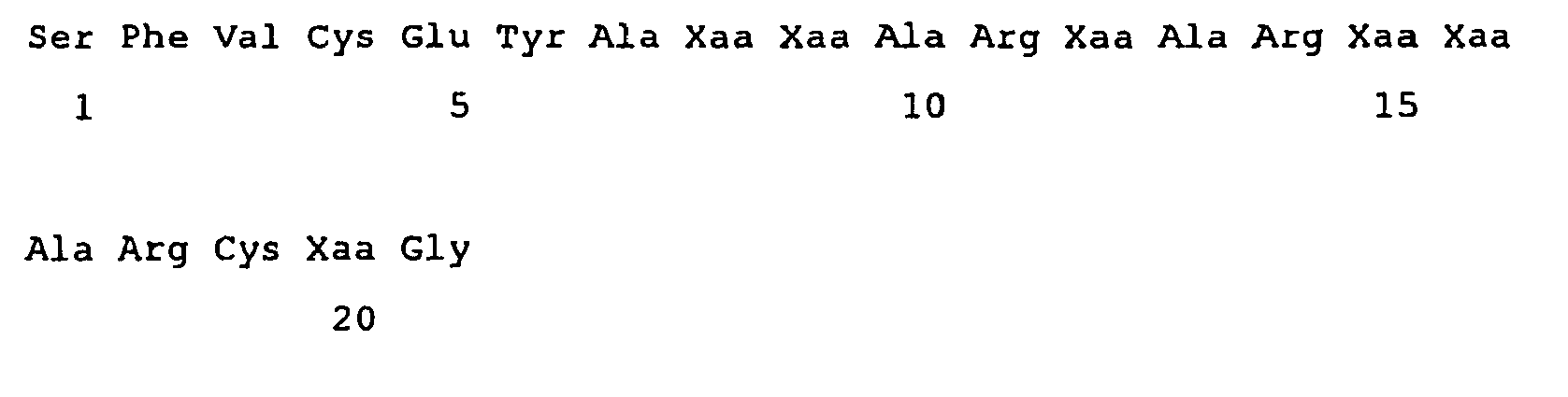
- SEQ ID NO: 78
Length: 14
Type: PRT
Organism: Artificial Sequence - Feature:
Other information: Description of Artificial Sequence:Fusion protein containing random sequence - Sequence: 78

- SEQ ID NO: 79
Length: 14
Type: PRT
Organism: Artificial Sequence - Feature:
Other information: Description of Artificial Sequence:Fusion protein containing random sequence - Sequence: 79

- SEQ ID NO: 80
Length: 18
Type: PRT
Organism: Artificial Sequence - Feature:
Other information: Description of Artificial Sequence:Fusion protein containing random sequence - Sequence: 80

- SEQ ID NO: 81
Length: 18
Type: PRT
Organism: Artificial Sequence - Feature:
Other information: Description of Artificial Sequence:Fusion protein containing random sequence - Sequence: 81

- SEQ ID NO: 82
Length: 24
Type: PRT
Organism: Artificial Sequence - Feature:
Other information: Description of Artificial Sequence:Fusion protein containing random sequence - Sequence: 82

- SEQ ID NO: 83
Length: 25
Type: PRT
Organism: Homo sapiens - Sequence: 83

- SEQ ID NO: 84
Length: 25
Type: PRT
Organism: Artificial Sequence - Feature:
Other information: Description of Artificial Sequence: Fusion protein - Sequence: 84

- SEQ ID NO: 85
Length: 25
Type: PRT
Organism: Artificial Sequence - Feature:
Other information: Description of Artificial Sequence: Fusion protein - Sequence: 85

- SEQ ID NO: 86
Length: 25
Type: PRT
Organism: Artificial Sequence - Feature:
Other information: Description of Artificial Sequence: Fusion protein - Sequence: 86

- SEQ ID NO: 87
Length: 25
Type: PRT
Organism: Artificial Sequence - Feature:
Other information: Description of Artificial Sequence: Fusion protein containing random sequence - Sequence: 87

- SEQ ID NO: 88
Length: 25
Type: PRT
Organism: Artificial Sequence - Feature:
Other information: Description of Artificial Sequence: Fusion protein containing random sequence - Sequence: 88

- SEQ ID NO: 89
Length: 13
Type: PRT
Organism: Homo sapiens - Sequence: 89

- SEQ ID NO: 90
Length: 27
Type: PRT
Organism: Artificial Sequence - Feature:
Other information: Description of Artificial Sequence: Fusion protein - Sequence: 90

- SEQ ID NO: 91
Length: 18
Type: PRT
Organism: Artificial Sequence - Feature:
Other information: Description of Artificial Sequence: Fusion protein - Sequence: 91

- SEQ ID NO: 92
Length: 18
Type: PRT
Organism: Artificial Sequence - Feature:
Other information: Description of Artificial Sequence: Fusion protein - Sequence: 92

- SEQ ID NO: 93
Length: 14
Type: PRT
Organism: Artificial Sequence - Feature:
Other information: Description of Artificial Sequence: Fusion protein containing random sequence - Sequence: 93

- SEQ ID NO: 94
Length: 18
Type: PRT
Organism: Artificial Sequence - Feature:
Other information: Description of Artificial Sequence: Fusion protein containing random sequence - Sequence: 94

- SEQ ID NO: 95
Length: 14
Type: PRT
Organism: Artificial Sequence - Feature:
Other information: Description of Artificial Sequence: Fusion protein containing random sequence - Sequence: 95

- SEQ ID NO: 96
Length: 15
Type: PRT
Organism: Artificial Sequence - Feature:
Other information: Description of Artificial Sequence: Fusion protein containing random sequence - Sequence: 96

- SEQ ID NO: 97
Length: 17
Type: PRT
Organism: Artificial Sequence - Feature:
Other information: Description of Artificial Sequence: Fusion protein containing random sequence - Sequence: 97

- SEQ ID NO: 98
Length: 21
Type: PRT
Organism: Artificial Sequence - Feature:
Other information: Description of Artificial Sequence: Fusion protein containing random sequence - Sequence: 98

- SEQ ID NO: 99
Length: 13
Type: PRT
Organism: Artificial Sequence - Feature:
Other information: Description of Artificial Sequence: Fusion protein containing random sequence - Sequence: 99

- SEQ ID NO: 100
Length: 18
Type: PRT
Organism: Artificial Sequence - Feature:
Other information: Description of Artificial Sequence: Fusion protein containing random sequence - Sequence: 100

- SEQ ID NO: 101
Length: 18
Type: PRT
Organism: Artificial Sequence - Feature:
Other information: Description of Artificial Sequence: Fusion protein containing random sequence - Sequence: 101

- SEQ ID NO: 102
Length: 10
Type: PRT
Organism: Artificial Sequence - Feature:
Other information: Description of Artificial Sequence: CDR1 and CDR3 inserts possessing randomly generated sequence - Sequence: 102

- SEQ ID NO: 103
Length: 8
Type: PRT
Organism: Artificial Sequence - Feature:
Other information: Description of Artificial Sequence: CDR1 and CDR3 inserts possessing randomly generated sequence - Sequence: 103

- SEQ ID NO: 104
Length: 10
Type: PRT
Organism: Artificial Sequence - Feature:
Other information: Description of Artificial Sequence: CDR1 and CDR3 inserts possessing randomly generated sequence - Sequence: 104

- SEQ ID NO: 105
Length: 7
Type: PRT
Organism: Artificial Sequence - Feature:
Other information: Description of Artificial Sequence: CDR1 and CDR3 inserts possessing randomly generated sequence - Sequence: 105

- SEQ ID NO: 106
Length: 8
Type: PRT
Organism: Artificial Sequence - Feature:
Name/Key: MOD_RES
Location: (5)
Other information: Stop codon but Glu when expressed in Tg-1 or JM109 strains of E.coli - Feature:
Other information: Description of Artificial Sequence: CDR1 and CDR3 inserts possessing randomly generated sequence - Sequence: 106

- SEQ ID NO: 107
Length: 10
Type: PRT
Organism: Artificial Sequence - Feature:
Other information: Description of Artificial Sequence: CDR1 and CDR3 inserts possessing randomly generated sequence - Sequence: 107

- SEQ ID NO: 108
Length: 8
Type: PRT
Organism: Artificial Sequence - Feature:
Name/Key: MOD_RES
Location: (4)
Other information: Stop codon but Glu when expressed in Tg-1 of JM109 E.coli strains - Feature:
Other information: Description of Artificial Sequence: CDR1 and CDR3 inserts possessing randomly generated sequence - Sequence: 108

- SEQ ID NO: 109
Length: 8
Type: PRT
Organism: Artificial Sequence - Feature:
Other information: Description of Artificial Sequence: CDR1 and CDR3 inserts possessing randomly generated sequence - Sequence: 109

- SEQ ID NO: 110
Length: 7
Type: PRT
Organism: Artificial Sequence - Feature:
Name/Key: MOD_RES
Location: (7)
Other information: Stop codon but Glu when expressed in Tg-1 or JM109 strains of E. coli - Feature:
Other information: Description of Artificial Sequence: CDR1 and CDR3 inserts possessing randomly generated sequence - Sequence: 110

- SEQ ID NO: 111
Length: 7
Type: PRT
Organism: Artificial Sequence - Feature:
Other information: Description of Artificial Sequence: CDR1 and CDR3 inserts possessing randomly generated sequence - Sequence: 111

- SEQ ID NO: 112
Length: 7
Type: PRT
Organism: Artificial Sequence - Feature:
Other information: Description of Artificial Sequence: CDR1 and CDR3 inserts possessing randomly generated sequence - Sequence: 112

- SEQ ID NO: 113
Length: 11
Type: PRT
Organism: Artificial Sequence - Feature:
Name/Key: MOD_RES
Location: (8)
Other information: Stop codon but Glu when expressed in Tg-1 or JM109 strains of E. coli - Feature:
Other information: Description of Artificial Sequence: CDR1 and CDR3 inserts possessing randomly generated sequence - Sequence: 113

- SEQ ID NO: 114
Length: 11
Type: PRT
Organism: Artificial Sequence - Feature:
Other information: Description of Artificial Sequence: CDR1 and CDR3 inserts possessing randomly generated sequence - Sequence: 114

- SEQ ID NO: 115
Length: 10
Type: PRT
Organism: Artificial Sequence - Feature:
Other information: Description of Artificial Sequence: CDR1 and CDR3 inserts possessing randomly generated sequence - Sequence: 115

- SEQ ID NO: 116
Length: 7
Type: PRT
Organism: Artificial Sequence - Feature:
Other information: Description of Artificial Sequence: CDR1 and CDR3 inserts possessing randomly generated sequence - Sequence: 116

- SEQ ID NO: 117
Length: 13
Type: PRT
Organism: Artificial Sequence - Feature:
Other information: Description of Artificial Sequence: CDR1 and CDR3 inserts possessing randomly generated sequence - Sequence: 117

- SEQ ID NO: 118
Length: 7
Type: PRT
Organism: Artificial Sequence - Feature:
Name/Key: MOD_RES
Location: (4)
Other information: Stop codon but Glu when expressed in Tg-1 or JM109 strains of E. coli - Feature:
Other information: Description of Artificial Sequence: CDR1 and CDR3 inserts possessing randomly generated sequence - Sequence: 118
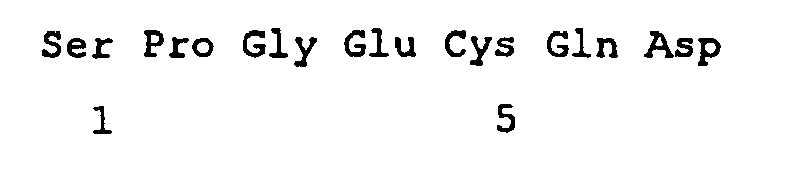
- SEQ ID NO: 119
Length: 13
Type: PRT
Organism: Artificial Sequence - Feature:
Other information: Description of Artificial Sequence: CDR1 and CDR3 inserts possessing randomly generated sequence - Sequence: 119

- SEQ ID NO: 120
Length: 13
Type: PRT
Organism: Artificial Sequence - Feature:
Other information: Description of Artificial Sequence: CDR1 and CDR3 inserts possessing randomly generated sequence - Sequence: 120

- SEQ ID NO: 121
Length: 7
Type: PRT
organism: Artificial Sequence - Feature:
Other information: Description of Artificial Sequence: CDR1 and CDR3 inserts possessing randomly generated sequence - Sequence: 121

- SEQ ID NO: 122
Length: 13
Type: PRT
Organism: Artificial Sequence - Feature:
Other information: Description of Artificial Sequence: CDR1 and CDR3 inserts possessing randomly generated sequence - Sequence: 122

- SEQ ID NO: 123
Length: 13
Type: PRT
Organism: Artificial Sequence - Feature:
Other information: Description of Artificial Sequence: CDR1 and CDR3 inserts possessing randomly generated sequence - Sequence: 123

- SEQ ID NO: 124
Length: 10
Type: PRT
Organism: Artificial Sequence - Feature:
Other information: Description of Artificial Sequence: CDR1 and CDR3 inserts possessing randomly generated sequence - Sequence: 124

- SEQ ID NO: 125
Length: 7
Type: PRT
Organism: Artificial Sequence - Feature:
Other information: Description of Artificial Sequence: CDR1 and CDR3 inserts possessing randomly generated sequence - Sequence: 125

- SEQ ID NO: 126
Length: 14
Type: PRT
Organism: Artificial Sequence - Feature:
Other information: Description of Artificial Sequence: CDR1 and CDR3 inserts possessing randomly generated sequence - Sequence: 126

- SEQ ID NO: 127
Length: 11
Type: PRT
Organism: Artificial Sequence - Feature:
Other information: Description of Artificial Sequence: CDR1 and CDR3 inserts possessing randomly generated sequence - Sequence: 127

- SEQ ID NO: 128
Length: 15
Type: PRT
Organism: Artificial Sequence - Feature:
Name/Key: MOD_RES
Location: (7)
Other information: Stop codon but Glu when expressed in Tg-1 of JM019 strains of E. coli - Feature:
Other information: Description of Artificial Sequence: CDR1 and CDR3 inserts possessing randomly generated sequence - Sequence: 128

- SEQ ID NO: 129
Length: 7
Type: PRT
Organism: Artificial Sequence - Feature:
Name/Key: MOD_RES
Location: (6)
Other information: Stop codon but Glu when expressed in Tg-1 or JM109 strains of E. coli - Feature:
Other information: Description of Artificial Sequence: CDR1 and CDR3 inserts possessing randomly generated sequence - Sequence: 129

- SEQ ID NO: 130
Length: 8
Type: PRT
Organism: Artificial Sequence - Feature:
Other information: Description of Artificial Sequence: CDR1 and CDR3 inserts possessing randomly generated sequence - Sequence: 130

- SEQ ID NO: 131
Length: 7
Type: PRT
Organism: Artificial Sequence - Feature:
Other information: Description of Artificial Sequence: CDR1 and CDR3 inserts possessing randomly generated sequence - Sequence: 131

- SEQ ID NO: 132
Length: 15
Type: PRT
Organism: Artificial Sequence - Feature:
Other information: Description of Artificial Sequence: CDR1 and CDR3 inserts possessing randomly generated sequence - Sequence: 132

- SEQ ID NO: 133
Length: 8
Type: PRT
Organism: Artificial Sequence - Feature:
Other information: Description of Artificial Sequence: CDR1 and CDR3 inserts possessing randomly generated sequence - Sequence: 133

- SEQ ID NO: 134
Length: 10
Type: PRT
Organism: Artificial Sequence - Feature:
Other information: Description of Artificial Sequence: CDR1 and CDR3 inserts possessing randomly generated sequence - Sequence: 134

- SEQ ID NO: 135
Length: 8
Type: PRT
Organism: Artificial Sequence - Feature:
Other information: Description of Artificial Sequence: CDR1 and CDR3 inserts possessing randomly generated sequence - Sequence: 135

- SEQ ID NO: 136
Length: 12
Type: PRT
Organism: Artificial Sequence - Feature:
Other information: Description of Artificial Sequence: CDR1 and CDR3 inserts possessing randomly generated sequence - Sequence: 136

- SEQ ID NO: 137
Length: 7
Type: PRT
Organism: Artificial Sequence - Feature:
Other information: Description of Artificial Sequence: CDR1 and CDR3 inserts possessing randomly generated sequence - Sequence: 137

- SEQ ID NO: 138
Length: 15
Type: PRT
Organism: Artificial Sequence - Feature:
Other information: Description of Artificial Sequence: CDR1 and CDR3 inserts possessing randomly generated sequence - Sequence: 138

-
- <110> Diatech Pty Ltd
- <120> V-like domain binding molecules
- <150> PP2210
<151> 1998-03-06 - <160> 138
- <170> PatentIn Ver. 2.1
- <210> 1
<211> 6
<212> PRT
<213> Homo sapiens - <400> 1

- <210> 2
<211> 54
<212> DNA
<213> Artificial Sequence - <220>
<223> Description of Artificial Sequence Oligonucleotide PCR primer - <400> 2
ttattactcg cggcccagcc ggccatggcc gcaatgcacg tggcccagcc tgct 54 - <210> 3
<211> 60
<212> DNA
<213> Artificial Sequence - <220>
<223> Description of Artificial Sequence Oligonucleotide PCR primer - <400> 3
ttattactcg cggcccagcc ggccatggcc gcaatgcacg tggcccagcc tgctgtggta 60 - <210> 4
<211> 45
<212> DNA
<213> Artificial Sequence - <220>
<223> Description of Artificial Sequence Oligonucleotide PCR primer - <400> 4
tctcacagtg cacaggcaat gcacgtggcc cagcctgctg tggta 45 - <210> 5
<211> 39
<212> DNA
<213> Artificial Sequence - <220>
<223> Description of Artificial Sequence Oligonucleotide PCR primer - <400> 5
tctcacagtg cacaggcaat gcacgtggcc cagcctgct 39 - <210> 6
<211> 42
<212> DNA
<213> Artificial Sequence - <220>
<223> Description of Artificial Sequence Oligonucleotide PCR primer - <400> 6
gcccagccgg ccgaattcgc aatgcacgtg gcccagcctgct 42 - <210> 7
<211> 60
<212> DNA
<213> Artificial Sequence - <220>
<223> Description of Artificial Sequence Oligonucleotide PCR primer - <400> 7
gcagctaata cgactcacta taggaacaga ccaccatgga cgtggcccag cctgctgtgg 60 - <210> 8
<211> 42
<212> DNA
<213> Artificial Sequence - <220>
<223> Description of Artificial Sequence Oligonucleotide PCR primer - <400> 8
atctgcggcc gctacataaa tctgggtacc gttgccgatgcc 42 - <210> 9
<211> 66
<212> DNA
<213> Artificial Sequence - <220>
<223> Description of Artificial Sequence Oligonucleotide PCR primer - <400> 9

- <210> 10
<211> 51
<212> DNA
<213> Artificial Sequence - <220>
<223> Description of Artificial Sequence Oligonucleotide PCR primer - <400> 10
gcccttgggc cgggagatgg tctgcttcag tggcgagggc aggtctgtgtg 51 - <210> 11
<211> 49
<212> DNA
<213> Artificial Sequence - <220>
<223> Description of Artificial Sequence Oligonucleotide PCR primer - <400> 11
cgagggcagg tctgtgtggg tcacggtgca cgtgaacctc tccccggag 49 - <210> 12
<211> 51
<212> DNA
<213> Artificial Sequence - <220>
<223> Description of Artificial Sequence Oligonucleotide PCR primer - <400> 12
cgtgaacctc tccccggagt tccagtcatc ctcgcagatg ctggcctcacc 51 - <210> 13
<211> 84
<212> DNA
<213> Artificial Sequence - <220>
<223> Description of Artificial Sequence Oligonucleotide PCR primer - <400> 13

- <210> 14
<211> 84
<212> DNA
<213> Artificial Sequence - <220>
<223> Description of Artificial Sequence Oligonucleotide PCR primer - <400> 14

- <210> 15
<211> 75
<212> DNA
<213> Artificial Sequence - <220>
<223> Description of Artificial Sequence Oligonucleotide PCR primer - <400> 15

- <210> 16
<211> 75
<212> DNA
<213> Artificial Sequence - <220>
<223> Description of Artificial Sequence Oligonucleotide PCR primer - <400> 16

- <210> 17
<211> 21
<212> DNA
<213> Artificial Sequence - <220>
<223> Description of Artificial Sequence Oligonucleotide PCR primer - <400> 17
gtaggttgcc gcacagacttc 21 - <210> 18
<211> 65
<212> DNA
<213> Artificial Sequence - <220>
<223> Description of Artificial Sequence Oligonucleotide PCR primer - <400> 18

- <210> 19
<211> 78
<212> DNA
<213> Artificial Sequence - <220>
<223> Description of Artificial Sequence Oligonucleotide PCR primer - <400> 19

- <210> 20
<211> 60
<212> DNA
<213> Artificial Sequence - <220>
<223> Description of Artificial Sequence Oligonucleotide PCR primer - <400> 20
tgtgcggcag ccatcaacat gggcggtggc atcaccttcc tagatgattc catctgcacg 60 - <210> 21
<211> 60
<212> DNA
<213> Artificial Sequence - <220>
<223> Description of Artificial Sequence Oligonucleotide PCR primer - <400> 21
atctaggaag gtgatgccac cgcccatgtt gatggctgcc gcacagactt cagtcacctg 60 - <210> 22
<211> 69
<212> DNA
<213> Artificial Sequence - <220>
<223> Description of Artificial Sequence Oligonucleotide PCR primer - <400> 22

- <210> 23
<211> 72
<212> DNA
<213> Artificial Sequence - <220>
<223> Description of Artificial Sequence Oligonucleotide PCR primer - <400> 23

- <210> 24
<211> 78
<212> DNA
<213> Artificial Sequence - <220>
- <223> Description of Artificial Sequence
Oligonucleotide PCR primer - <400> 24

- <210> 25
<211> 51
<212> DNA
<213> Artificial Sequence - <220>
<223> Description of Artificial Sequence Oligonucleotide PCR primer - <400> 25
gccatctccg gatccggagg ctcgacctac ctagatgatt ccatctgcacg 51 - <210> 26
<211> 54
<212> DNA
<213> Artificial Sequence - <220>
<223> Description of Artificial Sequence Oligonucleotide PCR primer - <400> 26
gtaggtcgag cctccggatc cggagatggc tgccgcacag acttcagtca cctg 54 - <210> 27
<211> 69
<212> DNA
<213> Artificial Sequence - <220>
<223> Description of Artificial Sequence Oligonucleotide PCR primer - <400> 27

- <210> 28
<211> 51
<212> DNA
<213> Artificial Sequence - <220>
<223> Description of Artificial Sequence Oligonucleotide PCR primer - <400> 28
aatctgggta ccgttgccga tgcccacgtc catgtagtag tctccctcctc 51 - <210> 29
<211> 66
<212> DNA
<213> Artificial Sequence - <220>
<223> Description of Artificial Sequence Oligonucleotide PCR primer - <400> 29

- <210> 30
<211> 68
<212> DNA
<213> Artificial Sequence - <220>
<223> Description of Artificial Sequence Oligonucleotide PCR primer - <400> 30

- <210> 31
<211> 66
<212> DNA
<213> Artificial Sequence - <220>
<223> Description of Artificial Sequence Oligonucleotide PCR primer - <400> 31

- <210> 32
<211> 73
<212> DNA
<213> Artificial Sequence - <220>
<223> Description of Artificial Sequence Oligonucleotide PCR primer - <400> 32

- <210> 33
<211> 82
<212> DNA
<213> Artificial Sequence - <220>
<223> Description of Artificial Sequence Oligonucleotide PCR Primer - <400> 33

- <210> 34
<211> 82
<212> DNA
<213> Artificial Sequence - <220>
<223> Description of Artificial Sequence Oligonucleotide PCR Primer - <400> 34

- <210> 35
<211> 70
<212> DNA
<213> Artificial Sequence - <220>
<223> Description of Artificial Sequence Oligonucleotide PCR primer - <400> 35

- <210> 36
<211> 70
<212> DNA
<213> Artificial Sequence - <220>
<223> Description of Artificial Sequence Oligonucleotide PCR primer - <400> 36

- <210> 37
<211> 67
<212> DNA
<213> Artificial Sequence - <220>
<223> Description of Artificial Sequence Oligonucleotide PCR primer - <400> 37

- <210> 38
<211> 30
<212> DNA
<213> Artificial Sequence - <220>
<223> Description of Artificial Sequence Oligonucleotide PCR primer - <400> 38
gtaggttgcc gcacagactt cagtcacctg 30 - <210> 39
<211> 68
<212> DNA
<213> Artificial Sequence - <220>
<223> Description of Artificial Sequence Oligonucleotide PCR primer - <400> 39

- <210> 40
<211> 29
<212> DNA
<213> Artificial Sequence - <220>
<223> Description of Artificial Sequence Oligonucleotide PCR primer - <400> 40
tagcatgccg cacagacttc agtcacctg 29 - <210> 41
<211> 69
<212> DNA
<213> Artificial Sequence - <220>
<223> Description of Artificial Sequence Oligonucleotide PCR primer - <400> 41

- <210> 42
<211> 67
<212> DNA
<213> Artificial Sequence - <22C>
<223> Description of Artificial Sequence Oligonucleotide PCR primer - <400> 42

- <210> 43
<211> 78
<212> DNA
<213> Artificial Sequence - <220>
<223> Description of Artificial Sequence Oligonucleotide PCR primer - <400> 43

- <210> 44
<211> 93
<212> DNA
<213> Artificial Sequence - <220>
<223> Description of Artificial Sequence Oligonucleotide PCR primer - <400> 44

- <210> 45
<211> 81
<212> DNA
<213> Artificial Sequence - <220>
<223> Description of Artificial Sequence Oligonucleotide PCR primer - <400> 45

- <210> 46
<211> 87
<212> DNA
<213> Artificial Sequence - <220>
<223> Description of Artificial Sequence Oligonucleotide PCR primer - <400> 46

- <210> 47
<211> 99
<212> DNA
<213> Artificial Sequence - <220>
<223> Description of Artificial Sequence Oligonucleotide PCR primer - <400> 47

- <210> 48
<211> 87
<212> DNA
<213> Artificial Sequence - <220>
<223> Description of Artificial Sequence Oligonucleotide PCR primer - <400> 48

- <210> 49
<211> 70
<212> DNA
<213> Artificial Sequence - <220>
<223> Description of Artificial Sequence Oligonucleotide PCR primer - <400> 49

- <210> 50
<211> 77
<212> DNA
<213> Artificial Sequence - <220>
<223> Description of Artificial Sequence Oligonucleotide PCR primer - <400> 50

- <210> 51
<211> 54
<212> DNA
<213> Artificial Sequence - <220>
<223> Description of Artificial Sequence Oligonucleotide PCR primer - <400> 51
gtgcgtgtga ccgtgctgcg tcaggcggat agccaggtga ccgaagtttg cgcg 54 - <210> 52
<211> 75
<212> DNA
<213> Artificial Sequence - <220>
<223> Description of Artificial Sequence Oligonucleotide PCR primer - <400> 52

- <210> 53
<211> 66
<212> DNA
<213> Artificial Sequence - <220>
<223> Description of Artificial Sequence Oligonucleotide PCR primer - <400> 53

- <210> 54
<211> 57
<212> DNA
<213> Artificial Sequence - <220>
<223> Description of Artificial Sequence Oligonucleotide PCR primer - <400> 54
cactttgcag atgtacagac cggtatccat ggcacgcaga ccctggatgg tcaggtt 57 - <210> 55
<211> 66
<212> DNA
<213> Artificial Sequence - <220>
<223> Description of Artificial Sequence Oligonucleotide PCR primer - <400> 55

- <210> 56
<211> 69
<212> DNA
<213> Artificial Sequence - <220>
<223> Description of Artificial Sequence Oligonucleotide PCR primer - <400> 56

- <210> 57
<211> 672
<212> DNA
<213> Homo sapiens - <400> 57

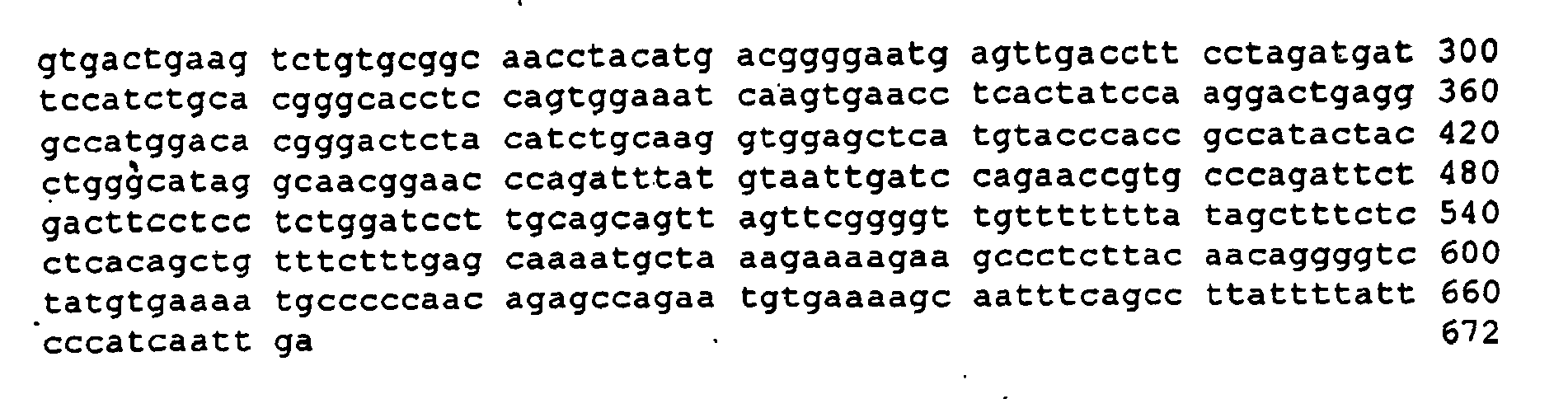
- <210> 58
<211> 115
<212> PRT
<213> Homo sapiens - <400> 58

- <210> 59
<211> 7
<212> PRT
<213> Homo sapiens - <400> 59

- <210> 60
<211> 9
<212> PRT
<213> Homo sapiens - <400> 60

- <210> 61
<211> 9
<212> PRT
<213> Homo sapiens - <400> 61

- <210> 62
<211> 14
<212> PRT
<213> Homo sapiens - <400> 62

- <210> 63
<211> 9
<212> PRT
<213> Artificial Sequence - <220>
<223> Description of Artificial Sequence Haemagglutinin tag - <400> 63

- <210> 64
<211> 11
<212> PRT
<213> Artificial Sequence - <220>
<223> Description of Artificial Sequence Sequence from anti-lysozyme antibody - <400> 64

- <210> 65
<211> 10
<212> PRT
<213> Artificial Sequence - <220>
<223> Description of Artificial Sequence Sequence from anti-lysozyme antibody - <400> 65

- <210> 66
<211> 24
<212> PRT
<213> Artificial Sequence - <220>
<223> Description of Artificial-Sequence Sequence from anti-lysozyme antibody - <400> 66

- <210> 67
<211> 11
<212> PRT
<213> Homo sapiens - <400> 67

- <210> 68
<211> 10
<212> PRT
<213> Homo sapiens - <400> 68

- <210> 69
<211> 15
<212> PRT
<213> Homo sapiens - <400> 69

- <210> 70
<211> 21
<212> PRT
<213> Artificial Sequence - <220>
<223> Description of Artificial Sequence Flag-tag - <400> 70


- <210> 71
<211> 14
<212> PRT
<213> Homo sapiens - <400> 71

- <210> 72
<211> 18
<212> PRT
<213> Artificial Sequence - <220>
<223> Description of Artificial Sequence Fusion protein - <400> 72

- <210> 73
<211> 24
<212> PRT
<213> Artificial Sequence - <220>
<223> Description of Artificial Sequence Fusion protein - <400> 73

- <210> 74
<211> 18
<212> PRT
<213> Artificial Sequence - <220>
<223> Description of Artificial Sequence Fusion protein - <400> 74


- <210> 75
<211> 15
<212> PRT
<213> Artificial Sequence - <220>
<223> Description of Artificial Sequence Fusion protein containing random sequence - <400> 75

- <210> 76
<211> 18
<212> PRT
<213> Artificial Sequence - <220>
<223> Description of Artificial Sequence Fusion protein containing random sequence - <400> 76

- <210> 77
<211> 21
<212> PRT
<213> Artificial Sequence - <220>
<223> Description of Artificial Sequence Fusion protein containing random sequence - <400> 77

- <210> 78
<211> 14
<212> PRT
<213> Artificial Sequence - <220>
<223> Description of Artificial Sequence Fusion protein containing random sequence - <400> 78

- <210> 79
<211> 14
<212> PRT
<213> Artificial Sequence - <220>
<223> Description of Artificial Sequence Fusion protein containing random sequence - <400> 79

- <210> 80
<211> 18
<212> PRT
<213> Artificial Sequence - <220>
<223> Description of Artificial Sequence Fusion protein containing random sequence - <400> 80

- <210> 81
<211> 18
<212> PRT
<213> Artificial Sequence - <220>
<223> Description of Artificial Sequence Fusion protein containing random sequence - <400> 81

- <210> 82
<211> 24
<212> PRT
<213> Artificial Sequence - <220>
<223> Description of Artificial Sequence Fusion protein containing random sequence - <400> 82

- <210> 83
<211> 25
<212> PRT
<213> Homo sapiens - <400> 83

- <210> 84
<211> 25
<212> PRT
<213> Artificial Sequence - <220>
<223> Description of Artificial Sequence Fusion protein - <400> 84

- <210> 85
<211> 25
<212> PRT
<213> Artificial Sequence - <220>
<223> Description of Artificial Sequence Fusion protein - <400> 85

- <210> 36
<211> 25
<212> PRT
<213> Artificial Sequence - <220>
<223> Description of Artificial Sequence Fusion protein - <400> 86

- <210> 87
<211> 25
<212> PRT
<213> Artificial Sequence - <220>
<223> Description of Artificial Sequence Fusion protein containing random sequence - <400> 87

- <210> 88
<211> 25
<212> PRT
<213> Artificial Sequence - <220>
<223> Description of Artificial Sequence Fusion protein containing random sequence - <400> 88

- <210> 89
<211> 13
<212> PRT
<213> Homo sapiens - <400> 89

- <210> 90
<211> 27
<212> PRT
<213> Artificial Sequence - <220>
<223> Description of Artificial Sequence Fusion protein - <400> 90

- <210> 91
<211> 18
<212> PRT
<213> Artificial Sequence - <220>
<223> Description of Artificial Sequence Fusion protein - <400> 91

- <210> 92
<211> 18
<212> PRT
<213> Artificial Sequence - <220>
<223> Description of Artificial Sequence Fusion protein - <400> 92

- <210> 93
<211> 14
<212> PRT
<213> Artificial Sequence - <220>
<223> Description of Artificial Sequence Fusion protein containing random sequence - <400> 93

- <210> 94
<211> 18
<212> PRT
<213> Artificial Sequence - <220>
<223> Description of Artificial Sequence Fusion protein containing random sequence - <400> 94

- <210> 95
<211> 14
<212> PRT
<213> Artificial Sequence - <220>
<223> Description of Artificial Sequence Fusion protein containing random sequence - <400> 95

- <210> 96
<211> 15
<212> PRT
<213> Artificial Sequence - <220>
<223> Description of Artificial Sequence Fusion protein containing random sequence - <400> 96

- <210> 97
<211> 17
<212> PRT
<213> Artificial Sequence - <220>
<223> Description of Artificial Sequence Fusion protein containing random sequence - <400> 97

- <210> 98
<211> 21
<212> PRT
<213> Artificial Sequence - <220>
<223> Description of Artificial Sequence Fusion protein containing random sequence - <400> 98

- <210> 99
<211> 13
<212> PRT
<213> Artificial Sequence - <220>
<223> Description of Artificial Sequence Fusion protein containing random sequence - <400> 99

- <210> 100
<211> 18
<212> PRT
<213> Artificial Sequence - <220>
<223> Description of Artificial Sequence Fusion protein containing random sequence - <400> 100

- <210> 101
<211> 18
<212> PRT
<213> Artificial Sequence - <220>
<223> Description of Artificial Sequence Fusion protein containing random sequence - <400> 101


- <210> 102
<211> 10
<212> PRT
<213> Artificial Sequence - <220>
<223> Description of Artificial Sequence CDR1 and CDR3 inserts possessing randomly generated sequence - <400> 102

- <210> 103
<211> 8
<212> PRT
<213> Artificial Sequence - <220>
<223> Description of Artificial Sequence CDR1 and CDR3 inserts possessing randomly generated sequence - <400> 103

- <210> 104
<211> 10
<212> PRT
<213> Artificial Sequence - <220>
<223> Description of Artificial Sequence CDR1 and CDR3 inserts possessing randomly generated sequence - <400> 104

- <210> 105
<211> 7
<212> PRT
<213> Artificial Sequence - <220>
<223> Description of Artificial Sequence CDR1 and CDR3 inserts possessing randomly generated sequence - <400> 105

- <210> 106
<211> 8
<212> PRT
<213> Artificial Sequence - <220>
<221> MOD_RES
<222> (5)
<223> Stop codon but Glu when expressed in Tg-1 or JM109 strains of E.coli - <220>
<223> Description of Artificial Sequence CDR1 and CDR3 inserts possessing randomly generated sequence - <400> 106

- <210> 107
<211> 10
<212> PRT
<213> Artificial Sequence - <220>
<223> Description of Artificial Sequence CDR1 and CDR3 inserts possessing randomly generated sequence - <400> 107

- <210> 108
<211> 8
<212> PRT
<213> Artificial Sequence - <220>
<221> MOD_RES
<222> (4)
<223> Stop codon but Glu when expressed in Tg-1 of JM109 E.coli strains - <220>
<223> Description of Artificial Sequence CDR1 and CDR3 inserts possessing randomly generated sequence - <400> 108

- <210> 109
<211> 8
<212> PRT
<213> Artificial Sequence - <220>
<223> Description of Artificial Sequence CDR1 and CDR3 inserts possessing randomly generated sequence - <400> 109

- <210> 110
<211> 7
<212> PRT
<213> Artificial Sequence - <220>
<221> MOD RES
<222> (7)
<223> Stop codon but Glu when expressed in Tg-1 or JM109 strains of E. coli - <220>
<223> Description of Artificial Sequence CDR1 and CDR3 inserts possessing randomly generated sequence - <400> 110

- <210> 111
<211> 7
<212> PRT
<213> Artificial Sequence - <220>
<223> Description of Artificial Sequence CDR1 and CDR3 inserts possessing randomly generated sequence - <400> 111

- <210> 112
<211> 7
<212> PRT
<213> Artificial Sequence - <220>
<223> Description of Artificial Sequence CDR1 and CDR3 inserts possessing randomly generated sequence - <400> 112

- <210> 113
<211> 11
<212> PRT
<213> Artificial Sequence - <220>
<221> MOD_RES
<222> (8)
<223> Stop codon but Glu when expressed in Tg-1 or JM109 strains of E. coli - <220>
<223> Description of Artificial Sequence CDR1 and CDR3 inserts possessing randomly generated sequence - <400> 113

- <210> 114
<211> 11
<212> PRT
<213> Artificial Sequence - <220>
<223> Description of Artificial Sequence CDR1 and CDR3 inserts possessing randomly generated sequence - <400> 114

- <210> 115
<211> 10
<212> PRT
<213> Artificial Sequence - <220>
<223> Description of Artificial Sequence CDR1 and CDR3 inserts possessing randomly generated sequence - <400> 115

- <210> 116
<211> 7
<212> PRT
<213> Artificial Sequence - <220>
<223> description of Artificial Sequence CDR1 and CDR3 inserts possessing randomly generated sequence - <400> 116

- <210> 117
<211> 13
<212> PRT
<213> Artificial Sequence - <220>
<223> Description of Artificial Sequence CDR1 and CDR3 inserts possessing randomly generated sequence - <400> 117

- <210> 118
<211> 7
<212> PRT
<213> Artificial Sequence - <220>
<221> MOD_RES
<222> (4)
<223> Stop codon but Glu when expressed in Tg-1 or JM109 strains of E. coli - <220>
<223> Description of Artificial Sequence CDR1 and CDR3 inserts possessing randomly generated sequence - <400> 118

- <210> 119
<211> 13
<212> PRT
<213> Artificial Sequence - <220>
<223> Description of Artificial Sequence CDR1 and CDR3 inserts possessing randomly generated sequence - <400> 119

- <210> 120
<211> 13
<212> PRT
<213> Artificial Sequence - <220>
<223> Description of Artificial Sequence CDR1 and CDR3 inserts possessing randomly generated sequence - <400> 120

- <210> 121
<211> 7
<212> PRT
<213> Artificial Sequence - <220>
<223> Description of Artificial Sequence CDR1 and CDR3 inserts possessing randomly generated sequence - <400> 121

- <210> 122
<211> 13
<212> PRT
<213> Artificial Sequence - <220>
<223> Description of Artificial Sequence CDR1 and CDR3 inserts possessing randomly generated sequence - <400> 122

- <210> 123
<211> 13
<212> PRT
<213> Artificial Sequence - <220>
<223> Description of Artificial Sequence CDR1 and CDR3 inserts possessing randomly generated sequence - <400> 123

- <210> 124
<211> 10
<212> PRT
<213> Artificial Sequence - <220>
<223> Description of Artificial Sequence CDR1 and CDR3 inserts possessing randomly generated sequence - <400> 124

- <210> 125
<211> 7
<212> PRT
<213> Artificial Sequence - <220>
<223> Description of Artificial Sequence CDR1 and CDR3 inserts possessing randomly generated sequence - <400> 125

- <210> 126
<211> 14
<212> PRT
<213> Artificial Sequence - <220>
<223> Description of Artificial Sequence CDR1 and CDR3 inserts possessing randomly generated sequence - <400> 126

- <210> 127
<211> 11
<212> PRT
<213> Artificial Sequence - <220>
<223> Description of Artificial Sequence CDR1 and CDR3 inserts possessing randomly generated sequence - <400> 127

- <210> 128
<211> 15
<212> PRT
<213> Artificial Sequence - <220>
<221> MOD RES
<222> (7)
<223> Stop codon but Glu when expressed in Tg-1 of JM019 strains of E. coli - <220>
<223> Description of Artificial Sequence CDR1 and CDR3 inserts possessing randomly generated sequence - <400> 128

- <210> 129
<211> 7
<212> PRT
<213> Artificial Sequence - <220>
<221> MOD_RES
<222> (6)
<223> Stop codon but Glu when expressed in Tg-1 or JM109 strains of E. coli - <220>
<223> Description of Artificial Sequence CDR1 and CDR3 inserts possessing randomly generated sequence - <400> 129

- <210> 130
<211> 8
<212> PRT
<213> Artificial Sequence - <220>
<223> Description of Artificial Sequence CDR1 and CDR3 inserts possessing randomly generated sequence - <400> 130

- <210> 131
<211> 7
<212> PRT
<213> Artificial Sequence - <220>
<223> Description of Artificial Sequence CDR1 and CDR3 inserts possessing randomly generated sequence - <400> 131

- <210> 132
<211> 15
<212> PRT
<213> Artificial Sequence - <220>
<223> Description of Artificial Sequence CDR1 and CDR3 inserts possessing randomly generated sequence - <400> 132

- <210> 133
<211> 8
<212> PRT
<213> Artificial Sequence - <220>
<223> Description of Artificial Sequence CDR1 and CDR3 inserts possessing randomly generated sequence - <400> 133

- <210> 134
<211> 10
<212> PRT
<213> Artificial Sequence - <220>
<223> Description of Artificial Sequence CDR1 and CDR3 inserts possessing randomly generated sequence - <400> 134

- <210> 135
<211> 8
<212> PRT
<213> Artificial Sequence - <220>
<223> Description of Artificial Sequence CDR1 and CDR3 inserts possessing randomly generated sequence - <400> 135

- <210> 136
<211> 12
<212> PRT
<213> Artificial Sequence - <220>
<223> Description of Artificial Sequence CDR1 and CDR3 inserts possessing randomly generated sequence - <400> 136

- <210> 137
<211> 7
<212> PRT
<213> Artificial Sequence - <220>
<223> Description of Artificial Sequence CDR1 and CDR3 inserts possessing randomly generated sequence - <400> 137

- <210> 138
<211> 15
<212> PRT
<213> Artificial Sequence - <220>
<223> Description of Artificial Sequence CDR1 and CDR3 inserts possessing randomly generated sequence . - <400> 138

Claims (33)
- A binding moiety comprising at least one monomeric non-antibody ligand V-like domain (VLD), the at least one monomeric V-like domain being characterised in that at least one CDR loop structure or part thereof is modified or replaced such that(i) the size of the CDR loop structure is increased when compared with the corresponding CDR loop structure in the unmodified VLD; and/or(ii) the modification or replacement results in the formation of a disulphide bond within or between one or more of the CDR loop structures.
- A binding moiety according to claim 1 in which the size of the CDR loop structure is increased by one amino acid residue.
- A binding moiety according to claim 1 in which the size of the CDR loop structure is increased by at least two amino acid structures.
- A binding moiety according to claim 1 in which the size of the CDR loop structure is increased by at least six amino acid residues.
- A binding moiety according to claim 1 in which the size of the CDR loop structure is increased by at least nine amino acid residues.
- A binding according to any one of claims 1 to 5 in which the solubility of the modified VLD is improved when compared with the unmodified VLD.
- A binding moiety according to any one of claims 1 to 6 in which the binding affinity of the modified VLD is altered when compared with the unmodified VLD.
- A binding moiety according to claim 7 in which the affinity of the modified VLD to at least one natural ligand of the unmodified VLD is reduced.
- A binding moiety according to any one of claims 1 to 8 in which the binding specificity of the modified VLD is different to that of the unmodified VLD.
- A binding moiety according to any one of claims 1 to 9 in which the non-antibody ligand is a T-cell surface protein.
- A binding moiety according to claim 10 in which the non-antibody is CTLA-4, CD28 or ICOS.
- A binding moiety according to claim 11 in which the non-antibody ligand is CTLA-4.
- A binding moiety according to any one of claims 1 to 12 in which one or more of the CDR loop structures is replaced with a binding determinant derived from a non-antibody polypeptide.
- A binding moiety according to claim 13 in which the binding determinant is derived from somatostatin or haemagglutinin.
- A binding moiety according to any one of claims 1 to 12 in which one or more of the CDR loop structures is replaced with one or more CDR loop structures derived from an antibody or antibodies.
- A binding moiety according to claim 15 in which the antibody or antibodies are derived from a rat, mouse, human, camel, llama or shark.
- A binding moiety according to claim 15 or claim 16 in which the antibody or antibodies are selected from the camel antibody cAB-Lys3 and the human anti-melanoma antibody V86.
- A binding moiety according to any one of claims 1 to 17 linked to a diagnostic reagent.
- A binding moiety according to claim 18 in which the diagnostic reagent is selected from the group consisting of streptavidin, biotin, a radioisotope, dye marker or other imaging reagent.
- A reagent comprising two or more binding moieties according to any one of the preceding claims coupled together either chemically or genetically.
- A binding moiety or reagent according to any one of claims 1 to 20 immobilised on a solid support or coupled to a biosensor surface.
- A polynucleotide encoding a binding moiety or reagent as claimed in any one of claims 1 to 20.
- A vector comprising a polynucleotide according to claim 22.
- A host cell comprising a vector as claimed in claim 23.
- A host cell according to claim 24 in which the cell is a bacterial cell.
- A method of producing a binding moiety which comprises culturing a host cell as claimed in claim 24 or claim 25 under conditions enabling expression of the binding moiety and optionally recovering the binding moiety.
- A method according to claim 26 in which the binding moiety is unglycosylated.
- A pharmaceutical composition comprising a binding moiety as claimed in any one of claims 1 to 20 and a pharmaceutically acceptable carrier or diluent.
- A binding moiety or reagent as claimed in any one of claims 1 to 20 for use in treating a pathological condition in a subject.
- A method of selecting a binding moiety with an affinity for a target molecule which comprises screening a library of polynucleotides for expression of a binding moiety with an affinity for the target molecule, the polynucleotides encoding one or more non-antibody ligand VLDs, wherein the polynucleotides have been subjected to mutagenesis which results in a modification or replacement in at least one CDR loop structure in at least one VLD such that(i) the size of the CDR loop structure is increased when compared with the corresponding CDR loop structure in the unmodified VLD; and/or(ii) the modification or replacement results in the formation of a disulphide bond within or between one or more of the CDR loop structures.
- A method according to claim 30 in which the solubility of the isolated modified VLD is improved when compared with the isolated unmodified VLD.
- A method according to claim 31 or claim 32 in which the screening process involves displaying the modified V-like domains as gene III protein fusions on the surface of bacteriophage particles.
- A method according to claim 31 or claim 32 in which the screening process involves displaying the modified V-like domains in a ribosomal display selection system.
Applications Claiming Priority (3)
| Application Number | Priority Date | Filing Date | Title |
|---|---|---|---|
| AUPP2210A AUPP221098A0 (en) | 1998-03-06 | 1998-03-06 | V-like domain binding molecules |
| AUPP221098 | 1998-03-06 | ||
| PCT/AU1999/000136 WO1999045110A1 (en) | 1998-03-06 | 1999-03-05 | V-like domain binding molecules |
Publications (3)
| Publication Number | Publication Date |
|---|---|
| EP1058728A1 EP1058728A1 (en) | 2000-12-13 |
| EP1058728A4 EP1058728A4 (en) | 2002-11-04 |
| EP1058728B1 true EP1058728B1 (en) | 2008-04-30 |
Family
ID=3806474
Family Applications (1)
| Application Number | Title | Priority Date | Filing Date |
|---|---|---|---|
| EP99908689A Expired - Lifetime EP1058728B1 (en) | 1998-03-06 | 1999-03-05 | V-like domain binding molecules |
Country Status (10)
| Country | Link |
|---|---|
| US (3) | US7166697B1 (en) |
| EP (1) | EP1058728B1 (en) |
| JP (2) | JP4813656B2 (en) |
| AT (1) | ATE393824T1 (en) |
| AU (1) | AUPP221098A0 (en) |
| CA (1) | CA2322621A1 (en) |
| DE (1) | DE69938622T2 (en) |
| DK (1) | DK1058728T3 (en) |
| ES (1) | ES2306507T3 (en) |
| WO (1) | WO1999045110A1 (en) |
Families Citing this family (212)
| Publication number | Priority date | Publication date | Assignee | Title |
|---|---|---|---|---|
| AUPP221098A0 (en) * | 1998-03-06 | 1998-04-02 | Diatech Pty Ltd | V-like domain binding molecules |
| US7153655B2 (en) | 1998-06-16 | 2006-12-26 | Alligator Bioscience Ab | Method for in vitro molecular evolution of protein function involving the use of exonuclease enzyme and two populations of parent polynucleotide sequence |
| EP1163339A1 (en) * | 1999-04-01 | 2001-12-19 | Innogenetics N.V. | A polypeptide structure for use as a scaffold |
| AU2002234001B2 (en) | 2000-12-05 | 2008-05-01 | Alexion Pharmaceuticals, Inc. | Rationally designed antibodies |
| US7396917B2 (en) | 2000-12-05 | 2008-07-08 | Alexion Pharmaceuticals, Inc. | Rationally designed antibodies |
| US6958213B2 (en) | 2000-12-12 | 2005-10-25 | Alligator Bioscience Ab | Method for in vitro molecular evolution of protein function |
| CA2485506C (en) | 2002-05-17 | 2012-02-28 | Alligator Bioscience Ab | A method for in vitro molecular evolution of protein function |
| US9321832B2 (en) | 2002-06-28 | 2016-04-26 | Domantis Limited | Ligand |
| US6974860B2 (en) * | 2002-12-30 | 2005-12-13 | Kimberly-Clark Worldwide, Inc. | Target recognizing binding agents |
| TWI353991B (en) | 2003-05-06 | 2011-12-11 | Syntonix Pharmaceuticals Inc | Immunoglobulin chimeric monomer-dimer hybrids |
| CN1946741B (en) * | 2004-03-31 | 2012-09-05 | 佳能株式会社 | Gold-binding proteins and uses thereof |
| DK2330121T3 (en) * | 2004-06-02 | 2014-12-15 | Adalta Pty Ltd | Binding moieties based on shark IgNar domains |
| US7875465B2 (en) * | 2005-05-31 | 2011-01-25 | Canon Kabushiki Kaisha | Target substance capturing molecule |
| US20100239570A1 (en) | 2007-09-13 | 2010-09-23 | Roger Nitsch | Moncolonal amyloid beta (abeta) - specific antibody and uses thereof |
| EP3281955A1 (en) | 2008-10-02 | 2018-02-14 | Aptevo Research and Development LLC | Cd86 antagonist multi-target binding proteins |
| WO2010042904A2 (en) * | 2008-10-10 | 2010-04-15 | Trubion Pharmaceuticals, Inc. | Tcr complex immunotherapeutics |
| WO2011072266A2 (en) | 2009-12-11 | 2011-06-16 | Atyr Pharma, Inc. | Aminoacyl trna synthetases for modulating hematopoiesis |
| EP2516467A2 (en) | 2009-12-23 | 2012-10-31 | Emergent Product Development Seattle, LLC | Compositions comprising tnf-alpha and il-6 antagonists and methods of use thereof |
| SI2519543T1 (en) | 2009-12-29 | 2016-08-31 | Emergent Product Development Seattle, Llc | Heterodimer binding proteins and uses thereof |
| AU2011248625B2 (en) | 2010-04-26 | 2017-01-05 | Pangu Biopharma Limited | Innovative discovery of therapeutic, diagnostic, and antibody compositions related to protein fragments of cysteinyl-tRNA synthetase |
| JP6294074B2 (en) | 2010-04-27 | 2018-03-14 | エータイアー ファーマ, インコーポレイテッド | Innovative discovery of therapeutic, diagnostic and antibody compositions related to protein fragments of isoleucyl-tRNA synthetase |
| CN103097524B (en) | 2010-04-28 | 2016-08-03 | Atyr医药公司 | The innovation for the treatment of, diagnosis and the antibody compositions relevant to the protein fragments of Alanyl-tRNA synthetase finds |
| CA2797374C (en) | 2010-04-29 | 2021-02-16 | Pangu Biopharma Limited | Innovative discovery of therapeutic, diagnostic, and antibody compositions related to protein fragments of asparaginyl trna synthetases |
| AU2011248457B2 (en) | 2010-04-29 | 2017-02-16 | Pangu Biopharma Limited | Innovative discovery of therapeutic, diagnostic, and antibody compositions related to protein fragments of valyl tRNA synthetases |
| WO2011150279A2 (en) | 2010-05-27 | 2011-12-01 | Atyr Pharma, Inc. | Innovative discovery of therapeutic, diagnostic, and antibody compositions related to protein fragments of glutaminyl-trna synthetases |
| WO2011139986A2 (en) | 2010-05-03 | 2011-11-10 | Atyr Pharma, Inc. | Innovative discovery of therapeutic, diagnostic, and antibody compositions related to protein fragments of arginyl-trna synthetases |
| WO2011140135A2 (en) | 2010-05-03 | 2011-11-10 | Atyr Pharma, Inc. | Innovative discovery of therapeutic, diagnostic, and antibody compositions related to protein fragments of methionyl-trna synthetases |
| CA2797977C (en) | 2010-05-03 | 2019-08-20 | Atyr Pharma, Inc. | Innovative discovery of therapeutic, diagnostic, and antibody compositions related to protein fragments of phenylalanyl-alpha-trna synthetases |
| CA2798139C (en) | 2010-05-04 | 2019-09-24 | Atyr Pharma, Inc. | Innovative discovery of therapeutic, diagnostic, and antibody compositions related to protein fragments of p38 multi-trna synthetase complex |
| ES2816898T3 (en) | 2010-05-13 | 2021-04-06 | Sarepta Therapeutics Inc | Compounds that modulate the signaling activity of interleukins 17 and 23 |
| CN103200953B (en) | 2010-05-14 | 2017-02-15 | Atyr 医药公司 | Innovative discovery of therapeutic, diagnostic, and antibody compositions related to protein fragments of phenylalanyl-beta-trna synthetases |
| HRP20191305T1 (en) | 2010-07-09 | 2019-10-18 | Bioverativ Therapeutics Inc. | Processable single chain molecules and polypeptides made using same |
| AU2011289831C1 (en) | 2010-07-12 | 2017-06-15 | Pangu Biopharma Limited | Innovative discovery of therapeutic, diagnostic, and antibody compositions related to protein fragments of glycyl-tRNA synthetases |
| CN103108650A (en) | 2010-08-25 | 2013-05-15 | Atyr医药公司 | Innovative discovery of therapeutic, diagnostic, and antibody compositions related to protein fragments of tyrosyl-trna synthetases |
| WO2012158818A2 (en) | 2011-05-16 | 2012-11-22 | Fabion Pharmaceuticals, Inc. | Multi-specific fab fusion proteins and methods of use |
| CA2838246C (en) | 2011-06-13 | 2018-07-10 | Csl Limited | Antibodies against g-csfr and uses thereof |
| US9518101B2 (en) | 2011-09-19 | 2016-12-13 | Axon Neuroscience Se | Protein-based therapy and diagnosis of tau-mediated pathology in alzheimer's disease |
| WO2013059885A2 (en) | 2011-10-28 | 2013-05-02 | Cephalon Australia Pty Ltd | Polypeptide constructs and uses thereof |
| AU2012327878A1 (en) | 2011-10-28 | 2014-05-29 | Patrys Limited | PAT-LM1 epitopes and methods for using same |
| US20150030602A1 (en) | 2011-12-23 | 2015-01-29 | Phenoquest Ag | Antibodies for the treatment and diagnosis of affective and anxiety disorders |
| US10774132B2 (en) | 2012-01-09 | 2020-09-15 | The Scripps Research Instittue | Ultralong complementarity determining regions and uses thereof |
| HUE039033T2 (en) | 2012-01-10 | 2018-12-28 | Biogen Ma Inc | Enhancement of transport of therapeutic molecules across the blood brain barrier |
| IN2014MN01642A (en) | 2012-02-16 | 2015-07-03 | Atyr Pharma Inc | |
| KR20150004856A (en) | 2012-04-20 | 2015-01-13 | 이머전트 프로덕트 디벨롭먼트 시애틀, 엘엘씨 | Cd3 binding polypeptides |
| CN105073781A (en) | 2013-01-11 | 2015-11-18 | 加州生物医学研究所 | Bovine fusion antibodies |
| US9944689B2 (en) * | 2013-03-07 | 2018-04-17 | The General Hospital Corporation | Human CTLA4 mutants and use thereof |
| JP6392315B2 (en) | 2013-03-14 | 2018-09-19 | イミュソフト コーポレーション | In vitro memory B cell differentiation method and transduction method using VSV-G pseudotype virus vector |
| TWI828269B (en) | 2013-03-15 | 2024-01-01 | 美商百歐維拉提夫治療公司 | Factor ix polypeptide formulations |
| CA2909952C (en) | 2013-04-29 | 2021-10-12 | Teva Pharmaceuticals Australia Pty Ltd. | Anti-cd38 antibodies and fusions to attenuated interferon alpha-2b |
| US11117975B2 (en) | 2013-04-29 | 2021-09-14 | Teva Pharmaceuticals Australia Pty Ltd | Anti-CD38 antibodies and fusions to attenuated interferon alpha-2B |
| US10208125B2 (en) | 2013-07-15 | 2019-02-19 | University of Pittsburgh—of the Commonwealth System of Higher Education | Anti-mucin 1 binding agents and uses thereof |
| EP3027204B1 (en) | 2013-07-29 | 2022-01-05 | 2seventy bio, Inc. | Multipartite signaling proteins and uses thereof |
| AU2014342020C1 (en) | 2013-10-31 | 2019-09-05 | Fred Hutchinson Cancer Research Center | Modified hematopoietic stem/progenitor and non-T effector cells, and uses thereof |
| RU2718054C2 (en) | 2013-11-28 | 2020-03-30 | СиЭсЭл ЛИМИТЕД | Method of treating nephropathy |
| CN105979965B (en) | 2013-12-18 | 2021-07-09 | 杰特有限公司 | Method of treating wounds |
| AU2014368892B2 (en) | 2013-12-20 | 2019-06-13 | Fred Hutchinson Cancer Center | Tagged chimeric effector molecules and receptors thereof |
| UA119352C2 (en) | 2014-05-01 | 2019-06-10 | Тева Фармасьютикалз Острейліа Пті Лтд | COMBINATION OF LENALIDOMIDE OR POMALIDOMIDE AND STRUCTURES OF ANTI-CD38 ANTIBODY-ATHENED INTERPHERONE ALPHA-2B AND METHOD OF TREATMENT38 |
| AU2015301491A1 (en) | 2014-08-15 | 2017-02-02 | Adynxx, Inc. | Oligonucleotide decoys for the treatment of pain |
| DE102014217793A1 (en) * | 2014-09-05 | 2016-03-10 | Jörg Labahn | Fusion protein and purification method |
| UA125637C2 (en) | 2014-10-29 | 2022-05-11 | Тева Фармасьютікалз Острейліа Пті Лтд | MERGER INTERFERON POLYPEPTIDE <font face = "Symbol"> a2 </font> b |
| MX391388B (en) | 2014-11-14 | 2025-03-21 | Hoffmann La Roche | ANTIGEN-BINDING MOLECULES THAT COMPRISE A LIGAND TRIMER FROM THE TNF FAMILY. |
| EP4177336A1 (en) | 2014-12-19 | 2023-05-10 | Immusoft Corporation | B cells for in vivo delivery of therapeutic agents |
| AU2015371265B2 (en) | 2014-12-24 | 2021-06-03 | Neximmune, Inc | Nanoparticle compositions and methods for immunotherapy |
| CN107531805A (en) | 2015-03-05 | 2018-01-02 | 弗雷德哈钦森癌症研究中心 | Immunological regulation fusion protein and application thereof |
| WO2016176652A2 (en) | 2015-04-29 | 2016-11-03 | Fred Hutchinson Cancer Research Center | Modified stem cells and uses thereof |
| JP6985934B2 (en) | 2015-04-29 | 2021-12-22 | フレッド ハッチンソン キャンサー リサーチ センター | Manipulated hematopoietic stem / progenitor cells and non-T effector cells, as well as their use |
| KR102784293B1 (en) | 2015-09-21 | 2025-03-20 | 압테보 리서치 앤드 디벨롭먼트 엘엘씨 | CD3 binding polypeptide |
| AR106188A1 (en) | 2015-10-01 | 2017-12-20 | Hoffmann La Roche | ANTI-CD19 HUMANIZED HUMAN ANTIBODIES AND METHODS OF USE |
| BR112018002570A2 (en) | 2015-10-02 | 2018-10-16 | Hoffmann La Roche | bispecific antigen binding molecule, bispecific antibody, polynucleotides, ox40-specific binding antibody, pharmaceutical composition and method for inhibiting tumor cell growth in an individual |
| DK3356411T3 (en) | 2015-10-02 | 2021-09-06 | Hoffmann La Roche | Bispecific antibodies specific for PD1 and TIM3 |
| KR20180054877A (en) | 2015-10-07 | 2018-05-24 | 에프. 호프만-라 로슈 아게 | Bispecific antibodies with tetravalent to the co-stimulated TNF receptor |
| WO2017077382A1 (en) | 2015-11-06 | 2017-05-11 | Orionis Biosciences Nv | Bi-functional chimeric proteins and uses thereof |
| MX2018006194A (en) | 2015-11-19 | 2018-12-06 | Asclepix Therapeutics Llc | Peptides with anti-angiogenic, anti-lymphangiogenic, and anti-edemic properties and nanoparticle formulations. |
| CN108368167B (en) | 2015-11-27 | 2023-09-05 | 杰特有限公司 | CD131 binding proteins and uses thereof |
| AU2016362777B2 (en) * | 2015-12-04 | 2020-01-30 | Novartis Ag | Antibody cytokine engrafted compositions and methods of use for immunoregulation |
| CN116769054A (en) | 2016-02-05 | 2023-09-19 | 奥里尼斯生物科学私人有限公司 | Bispecific signaling agents and uses thereof |
| EP3419667A4 (en) * | 2016-02-26 | 2019-10-23 | Imunexus Pty Ltd | MULTI-SPECIFIC MOLECULES |
| EP4276114A3 (en) | 2016-03-07 | 2024-02-21 | Vib Vzw | Cd20 binding single domain antibodies |
| JP7034489B2 (en) | 2016-03-15 | 2022-03-14 | アイタブメッド (エイチケイ) リミテッド | Multispecific Fab fusion protein and its use |
| JP7082604B2 (en) | 2016-03-21 | 2022-06-08 | マレンゴ・セラピューティクス,インコーポレーテッド | Multispecific and multifunctional molecules and their use |
| EP3231813A1 (en) | 2016-03-29 | 2017-10-18 | F. Hoffmann-La Roche AG | Trimeric costimulatory tnf family ligand-containing antigen binding molecules |
| SG11201808909WA (en) | 2016-04-13 | 2018-11-29 | Vivia Biotech Sl | Ex vivo bite-activated t cells |
| CN109121413A (en) | 2016-04-14 | 2019-01-01 | 弗莱德哈钦森癌症研究中心 | Use the composition and method of targeting nucleic acid nano carrier programming therapeutic cells |
| WO2017194442A1 (en) | 2016-05-11 | 2017-11-16 | F. Hoffmann-La Roche Ag | Antigen binding molecules comprising a tnf family ligand trimer and a tenascin binding moiety |
| EP3243832A1 (en) | 2016-05-13 | 2017-11-15 | F. Hoffmann-La Roche AG | Antigen binding molecules comprising a tnf family ligand trimer and pd1 binding moiety |
| US11236141B2 (en) | 2016-05-13 | 2022-02-01 | Orionis Biosciences BV | Targeted mutant interferon-beta and uses thereof |
| US11753463B2 (en) | 2016-05-13 | 2023-09-12 | Orionis Biosciences BV | Therapeutic targeting of non-cellular structures |
| CN109906232B (en) | 2016-09-23 | 2023-11-07 | 马伦戈治疗公司 | Multispecific antibody molecules containing lambda light chains and kappa light chains |
| AU2017331739A1 (en) | 2016-09-23 | 2019-03-07 | Csl Limited | Coagulation factor binding proteins and uses thereof |
| MX2019003895A (en) | 2016-10-04 | 2019-10-07 | Asclepix Therapeutics Inc | Compounds and methods for activating tie2 signaling. |
| JP7204643B2 (en) | 2016-10-24 | 2023-01-16 | オリオニス バイオサイエンシズ ビーブイ | Targeted mutant interferon-gamma and its uses |
| KR20190099527A (en) | 2017-01-03 | 2019-08-27 | 에프. 호프만-라 로슈 아게 | Bispecific antigen binding molecule comprising anti-4-1BB clone 20H4.9 |
| CN110573172A (en) | 2017-02-06 | 2019-12-13 | 奥里尼斯生物科学有限公司 | Targeted engineered interferon and uses thereof |
| MX2019009255A (en) | 2017-02-06 | 2019-11-05 | Orionis Biosciences Nv | Targeted chimeric proteins and uses thereof. |
| WO2018146074A1 (en) | 2017-02-07 | 2018-08-16 | Vib Vzw | Immune-cell targeted bispecific chimeric proteins and uses thereof |
| WO2018151820A1 (en) | 2017-02-16 | 2018-08-23 | Elstar Therapeutics, Inc. | Multifunctional molecules comprising a trimeric ligand and uses thereof |
| JP2020507605A (en) | 2017-02-17 | 2020-03-12 | フレッド ハッチンソン キャンサー リサーチ センター | Combination therapy for the treatment of BCMA-related cancers and autoimmune diseases |
| MX2019010812A (en) | 2017-03-17 | 2019-12-11 | Hutchinson Fred Cancer Res | IMMUNOMODULATING FUSION PROTEINS AND THEIR USES. |
| EP3601346A1 (en) | 2017-03-29 | 2020-02-05 | H. Hoffnabb-La Roche Ag | Bispecific antigen binding molecule for a costimulatory tnf receptor |
| WO2018178074A1 (en) | 2017-03-29 | 2018-10-04 | F. Hoffmann-La Roche Ag | Trimeric antigen binding molecules specific for a costimulatory tnf receptor |
| JP7196094B2 (en) | 2017-03-29 | 2022-12-26 | エフ・ホフマン-ラ・ロシュ・アクチェンゲゼルシャフト | Bispecific Antigen Binding Molecules for Costimulatory TNF Receptors |
| TWI704158B (en) | 2017-04-04 | 2020-09-11 | 瑞士商赫孚孟拉羅股份公司 | Novel bispecific antigen binding molecules capable of specific binding to cd40 and to fap |
| SG11201909154SA (en) | 2017-04-05 | 2019-10-30 | Hoffmann La Roche | Bispecific antibodies specifically binding to pd1 and lag3 |
| JP2020517256A (en) | 2017-04-19 | 2020-06-18 | エルスター セラピューティクス, インコーポレイテッド | Multispecific molecules and uses thereof |
| EP4328241A3 (en) | 2017-04-28 | 2024-06-05 | Marengo Therapeutics, Inc. | Multispecific molecules comprising a non-immunoglobulin heterodimerization domain and uses thereof |
| WO2018222901A1 (en) | 2017-05-31 | 2018-12-06 | Elstar Therapeutics, Inc. | Multispecific molecules that bind to myeloproliferative leukemia (mpl) protein and uses thereof |
| WO2019028427A1 (en) | 2017-08-03 | 2019-02-07 | Asclepix Therapeutics, Llc. | Methods for identifying and preparing pharmaceutical agents for activating tie2 receptor |
| WO2019035938A1 (en) | 2017-08-16 | 2019-02-21 | Elstar Therapeutics, Inc. | Multispecific molecules that bind to bcma and uses thereof |
| JP7733443B2 (en) | 2017-09-11 | 2025-09-03 | モナシュ ユニバーシティー | Binding protein for human thrombin receptor PAR4 |
| WO2019075056A1 (en) | 2017-10-10 | 2019-04-18 | The Johns Hopkins University | Biodegradable biomimetic particles |
| US11466073B2 (en) | 2017-10-18 | 2022-10-11 | Csl Limited | Human serum albumin variants and uses thereof |
| IL272747B2 (en) | 2017-11-01 | 2025-04-01 | Hoffmann La Roche | Bispecific 2 + 1 contorsbodies |
| EP3703746A1 (en) | 2017-11-01 | 2020-09-09 | F. Hoffmann-La Roche AG | Novel tnf family ligand trimer-containing antigen binding molecules |
| JP7465210B2 (en) | 2017-11-29 | 2024-04-10 | シーエスエル リミティド | Method for treating or preventing ischemia-reperfusion injury |
| EP3720881A1 (en) | 2017-12-08 | 2020-10-14 | Elstar Therapeutics, Inc. | Multispecific molecules and uses thereof |
| CN111565737A (en) | 2017-12-14 | 2020-08-21 | 蓝鸟生物公司 | DARIC Interleukin Receptor |
| EP3502140A1 (en) | 2017-12-21 | 2019-06-26 | F. Hoffmann-La Roche AG | Combination therapy of tumor targeted icos agonists with t-cell bispecific molecules |
| WO2019139987A1 (en) | 2018-01-09 | 2019-07-18 | Elstar Therapeutics, Inc. | Calreticulin binding constructs and engineered t cells for the treatment of diseases |
| WO2019148089A1 (en) | 2018-01-26 | 2019-08-01 | Orionis Biosciences Inc. | Xcr1 binding agents and uses thereof |
| CN112074267B (en) | 2018-02-05 | 2024-06-28 | 奥里尼斯生物科学公司股份有限公司 | Fibroblast binding agent and use thereof |
| WO2019157131A1 (en) | 2018-02-07 | 2019-08-15 | Dana-Farber Cancer Institute, Inc. | Cell-permeable stapled peptide modules for cellular delivery |
| EP3765516A2 (en) | 2018-03-14 | 2021-01-20 | Elstar Therapeutics, Inc. | Multifunctional molecules and uses thereof |
| US12152073B2 (en) | 2018-03-14 | 2024-11-26 | Marengo Therapeutics, Inc. | Multifunctional molecules that bind to calreticulin and uses thereof |
| US12281160B2 (en) | 2018-03-23 | 2025-04-22 | Csl Limited | Method of treating asthma |
| US11505610B2 (en) | 2018-04-06 | 2022-11-22 | Atyr Pharma, Inc. | Compositions and methods comprising anti-NRP2 antibodies |
| CA3094235A1 (en) | 2018-04-13 | 2019-10-17 | F. Hoffmann-La Roche Ag | Her2-targeting antigen binding molecules comprising 4-1bbl |
| WO2020010250A2 (en) | 2018-07-03 | 2020-01-09 | Elstar Therapeutics, Inc. | Anti-tcr antibody molecules and uses thereof |
| TW202035447A (en) | 2018-07-04 | 2020-10-01 | 瑞士商赫孚孟拉羅股份公司 | Novel bispecific agonistic 4-1bb antigen binding molecules |
| US12460000B2 (en) | 2018-09-07 | 2025-11-04 | Itabmed (Hk) Limited | Anti-CD19 and anti-CD3 bispecific antigen binding proteins and uses thereof |
| US12398402B2 (en) | 2018-09-12 | 2025-08-26 | Fred Hutchinson Cancer Center | Reducing CD33 expression to selectively protect therapeutic cells |
| CN113164777B (en) | 2018-09-27 | 2024-12-13 | 马伦戈治疗公司 | CSF1R/CCR2 multispecific antibody |
| SG11202102477QA (en) | 2018-10-01 | 2021-04-29 | Hoffmann La Roche | Bispecific antigen binding molecules comprising anti-fap clone 212 |
| EP3861025A1 (en) | 2018-10-01 | 2021-08-11 | F. Hoffmann-La Roche AG | Bispecific antigen binding molecules with trivalent binding to cd40 |
| CA3118892A1 (en) | 2018-11-08 | 2020-05-14 | Orionis Biosciences, Inc. | Modulation of dendritic cell lineages |
| WO2020123947A1 (en) | 2018-12-14 | 2020-06-18 | Bluebird Bio, Inc. | Dimerizing agent regulated immunoreceptor complexes |
| EP3895052A4 (en) | 2018-12-14 | 2022-10-26 | 2seventy bio, Inc. | DIMERIZING AGENT REGULATED IMMUNORECEPTOR COMPLEXES |
| MX2021007320A (en) | 2018-12-21 | 2021-07-07 | Hoffmann La Roche | Tumor-targeted agonistic cd28 antigen binding molecules. |
| US20200223925A1 (en) | 2018-12-21 | 2020-07-16 | Hoffmann-La Roche Inc. | Tumor-targeted superagonistic cd28 antigen binding molecules |
| WO2020132810A1 (en) | 2018-12-24 | 2020-07-02 | Generon (Shanghai) Corporation Ltd. | Multispecific antigen binding proteins capable of binding cd19 and cd3, and use thereof |
| MA54955A (en) | 2019-02-15 | 2021-12-22 | Integral Molecular Inc | ANTI-CLAUDINE 6 ANTIBODIES AND THEIR USES |
| US11254736B2 (en) | 2019-02-15 | 2022-02-22 | Integral Molecular, Inc. | Antibodies comprising a common light chain and uses thereof |
| JP7706373B2 (en) | 2019-02-21 | 2025-07-11 | マレンゴ・セラピューティクス,インコーポレーテッド | Multifunctional molecules that bind to calreticulin and uses thereof |
| AU2020226893B2 (en) | 2019-02-21 | 2025-02-27 | Marengo Therapeutics, Inc. | Multifunctional molecules that bind to T cell related cancer cells and uses thereof |
| GB2597851B (en) | 2019-02-21 | 2024-05-29 | Marengo Therapeutics Inc | Antibody molecules that bind to NKP30 and uses thereof |
| EP3927745A1 (en) | 2019-02-21 | 2021-12-29 | Marengo Therapeutics, Inc. | Multifunctional molecules that bind to t cells and uses thereof to treat autoimmune disorders |
| AU2020226904B2 (en) | 2019-02-21 | 2025-05-01 | Marengo Therapeutics, Inc. | Anti-TCR antibody molecules and uses thereof |
| JP7773372B2 (en) | 2019-03-28 | 2025-11-19 | オリオニス バイオサイエンシズ,インコーポレイテッド | Fibroblast activation protein binding substances and uses thereof |
| WO2020208049A1 (en) | 2019-04-12 | 2020-10-15 | F. Hoffmann-La Roche Ag | Bispecific antigen binding molecules comprising lipocalin muteins |
| CA3138972A1 (en) | 2019-05-04 | 2020-11-12 | Inhibrx, Inc. | Clec12a-binding polypeptides and uses thereof |
| SG11202111927QA (en) | 2019-05-08 | 2021-11-29 | 2Seventy Bio Inc | Cll-1 targeted immunotherapies |
| CA3141378A1 (en) | 2019-06-26 | 2020-12-30 | F. Hoffmann-La Roche Ag | Fusion of an antibody binding cea and 4-1bbl |
| EP3990492A1 (en) | 2019-06-27 | 2022-05-04 | F. Hoffmann-La Roche AG | Novel icos antibodies and tumor-targeted antigen binding molecules comprising them |
| JP2022539248A (en) | 2019-07-02 | 2022-09-07 | フレッド ハッチンソン キャンサー リサーチ センター | Recombinant AD35 vectors and related gene therapy improvements |
| JP7807372B2 (en) | 2019-12-20 | 2026-01-27 | ハドソン インスティチュート オブ メディカル リサーチ | CXCL10 binding proteins and uses thereof |
| AU2020416273A1 (en) | 2020-01-03 | 2022-07-28 | Marengo Therapeutics, Inc. | Anti-TCR antibody molecules and uses thereof |
| WO2021138407A2 (en) | 2020-01-03 | 2021-07-08 | Marengo Therapeutics, Inc. | Multifunctional molecules that bind to cd33 and uses thereof |
| BR102021003012A2 (en) | 2020-02-19 | 2021-11-30 | Univ Berlin Charite | Methods for diagnosing sars-cov-2 infection, kit and uses |
| GB202004514D0 (en) | 2020-03-27 | 2020-05-13 | Inst De Medicina Molecular Joaeo Lobo Antunes | Treatment of Immunosuppressive Cancer |
| AR121706A1 (en) | 2020-04-01 | 2022-06-29 | Hoffmann La Roche | OX40 AND FAP-TARGETED BSPECIFIC ANTIGEN-BINDING MOLECULES |
| KR20230028242A (en) | 2020-04-24 | 2023-02-28 | 마렝고 테라퓨틱스, 인크. | Multifunctional molecules that bind to T cell-associated cancer cells and their uses |
| IL297412A (en) | 2020-05-04 | 2022-12-01 | Immunorizon Ltd | Advance trispecific antibodies and methods for their use |
| CN115768475A (en) | 2020-06-04 | 2023-03-07 | Csl创新私人有限公司 | Methods of treating or preventing acute respiratory distress syndrome |
| MX2022015795A (en) | 2020-06-23 | 2023-01-24 | Hoffmann La Roche | Agonistic cd28 antigen binding molecules targeting her2. |
| EP4172203A1 (en) | 2020-06-25 | 2023-05-03 | F. Hoffmann-La Roche AG | Anti-cd3/anti-cd28 bispecific antigen binding molecules |
| CN116249718A (en) | 2020-08-26 | 2023-06-09 | 马伦戈治疗公司 | Multifunctional molecules binding to calreticulin and uses thereof |
| GB2616354A (en) | 2020-08-26 | 2023-09-06 | Marengo Therapeutics Inc | Methods of detecting TRBC1 or TRBC2 |
| KR20230074144A (en) | 2020-08-26 | 2023-05-26 | 마렝고 테라퓨틱스, 인크. | Antibody molecules that bind to NKp30 and uses thereof |
| TW202228775A (en) | 2020-10-14 | 2022-08-01 | 美商維里迪恩醫療股份有限公司 | Compositions and methods for treatment of thyroid eye disease |
| EP4244254A1 (en) | 2020-11-16 | 2023-09-20 | F. Hoffmann-La Roche AG | Combination therapy with fap-targeted cd40 agonists |
| WO2022106731A1 (en) | 2020-11-23 | 2022-05-27 | Ludwig-Maximilians-Universität München | Cd28-targeting chimeric antigen receptor (car) t cells, methods of generation and uses thereof |
| MX2023007846A (en) | 2021-01-06 | 2023-07-07 | Hoffmann La Roche | CO-TREATMENT USING A BISPECIFIC ANTIBODY AGAINST PD1-LAG3 AND A BISPECIFIC ANTIBODY TO CD20 T LYMPHOCYTES. |
| US12174186B2 (en) | 2021-03-29 | 2024-12-24 | Euroimmun Medizinische Labordiagnostika Ag | Method and reagents for the detection of an autoantibody |
| JP2024515591A (en) | 2021-04-08 | 2024-04-10 | マレンゴ・セラピューティクス,インコーポレーテッド | Multifunctional molecules that bind to TCRs and uses thereof |
| WO2022243261A1 (en) | 2021-05-19 | 2022-11-24 | F. Hoffmann-La Roche Ag | Agonistic cd40 antigen binding molecules targeting cea |
| AR126009A1 (en) | 2021-06-02 | 2023-08-30 | Hoffmann La Roche | CD28 ANTIGEN-BINDING AGONIST MOLECULES THAT TARGET EPCAM |
| CA3223534A1 (en) | 2021-07-02 | 2023-01-05 | Genentech, Inc. | Methods and compositions for treating cancer |
| TW202320850A (en) | 2021-08-10 | 2023-06-01 | 美商維里迪恩醫療股份有限公司 | Compositions, doses, and methods for treatment of thyroid eye disease |
| DE202022104518U1 (en) | 2021-08-10 | 2023-06-20 | Fundació Clínic Per A La Recerca Biomèdica (Fcrb) | Autoantibodies and means for detecting an autoantibody |
| WO2023034809A1 (en) | 2021-08-30 | 2023-03-09 | Lassen Therapeutics 1, Inc. | Anti-il-11rα antibodies |
| WO2023039243A2 (en) * | 2021-09-13 | 2023-03-16 | Achelois Biopharma, Inc. | Hepatitis b virus antivirus (hbv-antivirus) compositions and methods of use |
| CR20240246A (en) | 2021-12-20 | 2024-07-19 | Hoffmann La Roche | AGONIST ANTI-LTBR ANTIBODIES AND BISPECIFIC ANTIBODIES THAT INCLUDE THEM |
| WO2023186756A1 (en) | 2022-03-28 | 2023-10-05 | F. Hoffmann-La Roche Ag | Interferon gamma variants and antigen binding molecules comprising these |
| EP4299119A1 (en) | 2022-06-29 | 2024-01-03 | Max-Planck-Gesellschaft zur Förderung der Wissenschaften e.V. | Therapeutic applications based on the inhibition of g protein-coupled receptor 182 (gpr182) |
| JP2025523630A (en) | 2022-07-04 | 2025-07-23 | ブイアイビー ブイゼットダブリュ | Blood-cerebrospinal fluid barrier crossing antibodies |
| US20260078376A1 (en) | 2022-08-26 | 2026-03-19 | Core Biotherapeutics, Inc. | Oligonucleotides for the treatment of breast cancer |
| EP4587123A1 (en) | 2022-09-15 | 2025-07-23 | Avidicure IP B.V. | Multispecific antigen binding proteins for tumor-targeting of nk cells and use thereof |
| EP4626933A1 (en) | 2022-11-30 | 2025-10-08 | Integral Molecular, Inc. | Antibodies directed to claudin 6, including bispecific formats thereof |
| CN120787238A (en) | 2023-01-06 | 2025-10-14 | 拉森医疗公司 | Anti-IL-11 Rα antibodies for treating thyroid eye disease |
| TW202430560A (en) | 2023-01-06 | 2024-08-01 | 美商拉森醫療公司 | Anti-il-18bp antibodies |
| JP2026503273A (en) | 2023-01-06 | 2026-01-28 | ラッセン・セラピューティクス・インコーポレイテッド | Anti-IL-18BP antibody |
| JP2026510584A (en) | 2023-03-13 | 2026-04-08 | エフ・ホフマン-ラ・ロシュ・アクチェンゲゼルシャフト | Combination therapy using PD1-LAG3 bispecific antibody and HLA-GT T cell bispecific antibody |
| WO2024208816A1 (en) | 2023-04-03 | 2024-10-10 | Vib Vzw | Blood-brain barrier crossing antibodies |
| WO2024246086A1 (en) | 2023-06-01 | 2024-12-05 | F. Hoffmann-La Roche Ag | Immunostimulatory antigen binding molecules that specifically bind to bcma |
| WO2024246083A1 (en) | 2023-06-01 | 2024-12-05 | F. Hoffmann-La Roche Ag | Bispecific antibodies targeting bcma and cd28 |
| EP4471426A3 (en) | 2023-06-01 | 2025-04-02 | Euroimmun Medizinische Labordiagnostika AG | Method and reagents for the detection of a mammalian antibody |
| WO2024261339A1 (en) | 2023-06-23 | 2024-12-26 | Tigen Pharma Sa | Lymphocyte-stimulatory matrix (lsm) and uses thereof for expansion of lymphocyte populations |
| AU2024290964A1 (en) | 2023-07-05 | 2026-01-08 | CSL Innovation Pty Ltd | Methods of treating or preventing a complication of sickle cell disease |
| TW202509078A (en) | 2023-07-07 | 2025-03-01 | 美商維里迪恩醫療股份有限公司 | Methods of treating chronic thyroid eye disease |
| WO2025093683A1 (en) | 2023-11-03 | 2025-05-08 | Neuvasq Biotechnologies Sa | Wnt7 signaling agonists |
| WO2025136985A1 (en) | 2023-12-17 | 2025-06-26 | Viridian Therapeutics, Inc. | Compositions, doses, and methods for treatment of thyroid eye disease |
| WO2025151492A1 (en) | 2024-01-09 | 2025-07-17 | Viridian Therapeutics, Inc. | Compositions and methods for treatment of thyroid eye disease |
| WO2025151502A1 (en) | 2024-01-09 | 2025-07-17 | Viridian Therapeutics, Inc. | Modified antibodies |
| WO2025151496A1 (en) | 2024-01-09 | 2025-07-17 | Viridian Therapeutics, Inc. | Compositions and methods for treatment of thyroid eye disease |
| WO2025191136A1 (en) | 2024-03-15 | 2025-09-18 | Avidicure Ip B.V. | Muteins of 4-1bb ligand extracellular domain, fusion proteins comprising the same and uses thereof |
| WO2025191137A1 (en) | 2024-03-15 | 2025-09-18 | Avidicure Ip B.V. | Conjugates of trop2-specific antigen binding proteins and cytokines |
| WO2025191133A1 (en) | 2024-03-15 | 2025-09-18 | Avidicure Ip B.V. | Il-21 muteins, fusion proteins comprising the same and uses thereof |
| GB202408483D0 (en) * | 2024-06-13 | 2024-07-31 | Maxion Therapeutics Ltd | Receptor agonists |
| WO2026011013A1 (en) | 2024-07-02 | 2026-01-08 | Epibiologics, Inc. | Binding agents and uses thereof |
| WO2026037841A1 (en) | 2024-08-12 | 2026-02-19 | ONA Therapeutics S.L. | Anti-fgfr4 molecules and uses thereof |
| WO2026050572A2 (en) | 2024-08-29 | 2026-03-05 | Marengo Therapeutics, Inc. | Multifunctional molecules binding to tcr and uses thereof |
| WO2026087747A1 (en) | 2024-10-24 | 2026-04-30 | Avidicure Ip B.V. | Multispecific antigen binding proteins for tumor-targeting of γδ1 t cells and use thereof |
| WO2026087748A1 (en) | 2024-10-24 | 2026-04-30 | Avidicure Ip B.V. | Multispecific antigen binding proteins for the expansion of γδ t cells and use thereof |
Family Cites Families (26)
| Publication number | Priority date | Publication date | Assignee | Title |
|---|---|---|---|---|
| US5216132A (en) * | 1990-01-12 | 1993-06-01 | Protein Design Labs, Inc. | Soluble t-cell antigen receptor chimeric antigens |
| HUT60768A (en) | 1990-03-16 | 1992-10-28 | Sandoz Ag | Process for producing cd25 fixing molecules |
| GB9016299D0 (en) | 1990-07-25 | 1990-09-12 | Brien Caroline J O | Binding substances |
| US5849877A (en) | 1990-10-29 | 1998-12-15 | Chiron Corporation | Antigen-binding sites of antibody molecules specific for cancer antigens |
| JPH06505396A (en) | 1991-03-08 | 1994-06-23 | サイトメッド,インコーポレイテッド | Soluble CD28 protein and therapeutic methods using the same |
| EP0606217B2 (en) | 1991-06-27 | 2008-12-03 | Bristol-Myers Squibb Company | Ctl4a receptor, fusion proteins containing it and uses thereof |
| US5844095A (en) | 1991-06-27 | 1998-12-01 | Bristol-Myers Squibb Company | CTLA4 Ig fusion proteins |
| US5851795A (en) | 1991-06-27 | 1998-12-22 | Bristol-Myers Squibb Company | Soluble CTLA4 molecules and uses thereof |
| ZA936260B (en) | 1992-09-09 | 1994-03-18 | Smithkline Beecham Corp | Novel antibodies for conferring passive immunity against infection by a pathogen in man |
| US5792852A (en) | 1992-11-16 | 1998-08-11 | Cancer Research Fund Of Contra Costa | Polynucleotides encoding modified antibodies with human milk fat globule specificity |
| US5804187A (en) | 1992-11-16 | 1998-09-08 | Cancer Research Fund Of Contra Costa | Modified antibodies with human milk fat globule specificity |
| GB9323648D0 (en) | 1992-11-23 | 1994-01-05 | Zeneca Ltd | Proteins |
| US5773253A (en) | 1993-01-22 | 1998-06-30 | Bristol-Myers Squibb Company | MYPPPY variants of CTL A4 and uses thereof |
| US5504069A (en) * | 1993-02-11 | 1996-04-02 | Biomeasure, Inc. | Inhibition of trauma-induced tumor growth |
| JPH08506247A (en) | 1993-07-09 | 1996-07-09 | アムジェン ボールダー インコーポレイテッド | Recombinant CTLA4 polypeptide and method for producing the same |
| US5792456A (en) | 1994-08-04 | 1998-08-11 | Bristol-Myers Squibb Company | Mutant BR96 antibodies reactive with human carcinomas |
| US5728821A (en) | 1994-08-04 | 1998-03-17 | Bristol-Myers Squibb Company | Mutant BR96 antibodies reactive with human carcinomas |
| WO1996006625A1 (en) | 1994-08-26 | 1996-03-07 | Eli Lilly And Company | Antibody constructs with cdr switched variable regions |
| FR2724393A1 (en) | 1994-09-12 | 1996-03-15 | Inst Nat Sante Rech Med | OBTAINING A HUMANIZED RECOMBINANT MONOCLONAL ANTIBODY FROM A MURIN MONOCLONAL ANTIBODY, ITS PRODUCTION IN INSECT CELLS, AND USES THEREOF |
| WO1996018105A1 (en) | 1994-12-06 | 1996-06-13 | The President And Fellows Of Harvard College | Single chain t-cell receptor |
| AU5659696A (en) | 1995-05-18 | 1996-11-29 | Takara Shuzo Co., Ltd. | Nucleic acid molecule for treating b cell malignant tumor, p rocess for producing the same and utilization of the same |
| ATE288487T1 (en) | 1995-06-05 | 2005-02-15 | Univ Washington | METHOD FOR EXTENSION OF EXPRESSION OF A GENE OF INTEREST USING SOLUBLE CTLA4 MOLECULES |
| US6750334B1 (en) | 1996-02-02 | 2004-06-15 | Repligen Corporation | CTLA4-immunoglobulin fusion proteins having modified effector functions and uses therefor |
| ZA98533B (en) | 1997-01-31 | 1999-07-22 | Bristol Myers Squibb Co | Soluble CTLA4 mutant molecules and uses thereof. |
| JP3614866B2 (en) * | 1997-06-12 | 2005-01-26 | リサーチ コーポレイション テクノロジーズ,インコーポレイティド | Artificial antibody polypeptide |
| AUPP221098A0 (en) * | 1998-03-06 | 1998-04-02 | Diatech Pty Ltd | V-like domain binding molecules |
-
1998
- 1998-03-06 AU AUPP2210A patent/AUPP221098A0/en not_active Abandoned
-
1999
- 1999-03-05 DE DE69938622T patent/DE69938622T2/en not_active Expired - Lifetime
- 1999-03-05 ES ES99908689T patent/ES2306507T3/en not_active Expired - Lifetime
- 1999-03-05 US US09/623,611 patent/US7166697B1/en not_active Expired - Lifetime
- 1999-03-05 DK DK99908689T patent/DK1058728T3/en active
- 1999-03-05 EP EP99908689A patent/EP1058728B1/en not_active Expired - Lifetime
- 1999-03-05 CA CA002322621A patent/CA2322621A1/en not_active Abandoned
- 1999-03-05 AT AT99908689T patent/ATE393824T1/en active
- 1999-03-05 JP JP2000534642A patent/JP4813656B2/en not_active Expired - Fee Related
- 1999-03-05 WO PCT/AU1999/000136 patent/WO1999045110A1/en not_active Ceased
-
2006
- 2006-10-27 US US11/588,966 patent/US7405288B2/en not_active Expired - Fee Related
-
2008
- 2008-05-15 US US12/120,733 patent/US20080305988A1/en not_active Abandoned
-
2011
- 2011-02-14 JP JP2011028861A patent/JP5272257B2/en not_active Expired - Lifetime
Also Published As
| Publication number | Publication date |
|---|---|
| WO1999045110A1 (en) | 1999-09-10 |
| AUPP221098A0 (en) | 1998-04-02 |
| JP5272257B2 (en) | 2013-08-28 |
| US20080305988A1 (en) | 2008-12-11 |
| ATE393824T1 (en) | 2008-05-15 |
| DK1058728T3 (en) | 2008-08-25 |
| ES2306507T3 (en) | 2008-11-01 |
| US7166697B1 (en) | 2007-01-23 |
| US20070065431A1 (en) | 2007-03-22 |
| DE69938622T2 (en) | 2009-06-10 |
| EP1058728A1 (en) | 2000-12-13 |
| DE69938622D1 (en) | 2008-06-12 |
| US7405288B2 (en) | 2008-07-29 |
| CA2322621A1 (en) | 1999-09-10 |
| JP2002505103A (en) | 2002-02-19 |
| JP4813656B2 (en) | 2011-11-09 |
| EP1058728A4 (en) | 2002-11-04 |
| JP2011092215A (en) | 2011-05-12 |
Similar Documents
| Publication | Publication Date | Title |
|---|---|---|
| US7405288B2 (en) | V-like domain binding molecules and polynucleotides encoding therefor | |
| JP4327350B2 (en) | A novel method for the identification of binding site domains that retain the ability to bind to an epitope | |
| Kipriyanov et al. | High level production of soluble single chain antibodies in small-scale Escherichia coli cultures | |
| JP4794789B2 (en) | Generation of specific binding partners for genomic DNA fragments or (poly) peptides encoded by ESTs | |
| CA2351346C (en) | Protein scaffolds for antibody mimics and other binding proteins | |
| JP5527626B2 (en) | Highly functional bispecific antibody | |
| US6833441B2 (en) | Compositions and methods for generating chimeric heteromultimers | |
| JP7536424B2 (en) | Multispecific molecules | |
| AU643776B2 (en) | Catalytic antibody components | |
| US20130096058A1 (en) | Trail r2-specific multimeric scaffolds | |
| JPH06502762A (en) | Framework mutant antibodies and their preparations | |
| EP0656946A1 (en) | Immunoglobulins devoid of light chains | |
| JPH06508985A (en) | rich serine peptide linker | |
| US5582826A (en) | Monoclonal antibodies which bind the gamma chain of human interleukin-2 receptor | |
| CA2393847A1 (en) | Immunoglobulins devoid of light chains | |
| CN111247429A (en) | Universal reporter cell assay for specific testing of novel antigen binding modules | |
| AU747637B2 (en) | V-like domain binding molecules | |
| EP2062974A1 (en) | Method of producing fused protein | |
| JP3024311B2 (en) | Polypeptides that bind IL-2 receptor heavy chain | |
| AU2006252050A1 (en) | V-like domain binding molecules | |
| CN119998326A (en) | Ultrastable antibody fragments with novel disulfide bonds | |
| EP0947582A1 (en) | A polypeptide structure for use as a scaffold | |
| JP3844519B2 (en) | Immunosuppressant | |
| JPH11332563A (en) | Antibody and nucleic acid coding therefor |
Legal Events
| Date | Code | Title | Description |
|---|---|---|---|
| PUAI | Public reference made under article 153(3) epc to a published international application that has entered the european phase |
Free format text: ORIGINAL CODE: 0009012 |
|
| 17P | Request for examination filed |
Effective date: 20000908 |
|
| AK | Designated contracting states |
Kind code of ref document: A1 Designated state(s): AT BE CH DE DK ES FI FR GB GR IE IT LI LU NL PT SE |
|
| A4 | Supplementary search report drawn up and despatched | ||
| AK | Designated contracting states |
Kind code of ref document: A4 Designated state(s): AT BE CH DE DK ES FI FR GB GR IE IT LI LU NL PT SE |
|
| A4 | Supplementary search report drawn up and despatched |
Effective date: 20021104 |
|
| 17Q | First examination report despatched |
Effective date: 20030905 |
|
| RIN1 | Information on inventor provided before grant (corrected) |
Inventor name: NUTTALL, STEWART, DOUGLAS Inventor name: IRVING, ROBERT, ALEXANDER Inventor name: HUDSON, PETER, JOHN Inventor name: GALANIS, MARIA Inventor name: COIA, GREGORY |
|
| 17Q | First examination report despatched |
Effective date: 20030905 |
|
| GRAP | Despatch of communication of intention to grant a patent |
Free format text: ORIGINAL CODE: EPIDOSNIGR1 |
|
| GRAS | Grant fee paid |
Free format text: ORIGINAL CODE: EPIDOSNIGR3 |
|
| GRAA | (expected) grant |
Free format text: ORIGINAL CODE: 0009210 |
|
| AK | Designated contracting states |
Kind code of ref document: B1 Designated state(s): AT BE CH DE DK ES FI FR GB GR IE IT LI LU NL PT SE |
|
| REG | Reference to a national code |
Ref country code: GB Ref legal event code: FG4D |
|
| REG | Reference to a national code |
Ref country code: CH Ref legal event code: EP |
|
| REG | Reference to a national code |
Ref country code: IE Ref legal event code: FG4D Free format text: LANGUAGE OF EP DOCUMENT: FRENCH |
|
| REF | Corresponds to: |
Ref document number: 69938622 Country of ref document: DE Date of ref document: 20080612 Kind code of ref document: P |
|
| REG | Reference to a national code |
Ref country code: CH Ref legal event code: PUE Owner name: EVOGENIX LIMITED Free format text: DIATECH PTY. LTD.#GPO BOX 2434#BRISBANE, QLD 4001 (AU) -TRANSFER TO- EVOGENIX LIMITED#LEVEL 2, 37 BLIGH STREET#SYDNEY, NSW 2000 (AU) Ref country code: CH Ref legal event code: PFA Owner name: ARANA THERAPEUTICS (VIC) PTY LTD Free format text: EVOGENIX LIMITED#LEVEL 2, 37 BLIGH STREET#SYDNEY, NSW 2000 (AU) -TRANSFER TO- ARANA THERAPEUTICS (VIC) PTY LTD#LEVEL 2, 37 EPPING ROAD#MACQUARIE PARK, NSW 2113 (AU) Ref country code: CH Ref legal event code: NV Representative=s name: SERVOPATENT GMBH |
|
| REG | Reference to a national code |
Ref country code: SE Ref legal event code: TRGR |
|
| REG | Reference to a national code |
Ref country code: DK Ref legal event code: T3 |
|
| RAP2 | Party data changed (patent owner data changed or rights of a patent transferred) |
Owner name: EVOGENIX LIMITED ACN 097 483 068 |
|
| RAP2 | Party data changed (patent owner data changed or rights of a patent transferred) |
Owner name: ARANA THERAPEUTCIS (VIC) PTY LTD |
|
| PG25 | Lapsed in a contracting state [announced via postgrant information from national office to epo] |
Ref country code: PT Free format text: LAPSE BECAUSE OF FAILURE TO SUBMIT A TRANSLATION OF THE DESCRIPTION OR TO PAY THE FEE WITHIN THE PRESCRIBED TIME-LIMIT Effective date: 20080930 Ref country code: FI Free format text: LAPSE BECAUSE OF FAILURE TO SUBMIT A TRANSLATION OF THE DESCRIPTION OR TO PAY THE FEE WITHIN THE PRESCRIBED TIME-LIMIT Effective date: 20080430 |
|
| REG | Reference to a national code |
Ref country code: ES Ref legal event code: FG2A Ref document number: 2306507 Country of ref document: ES Kind code of ref document: T3 |
|
| NLT2 | Nl: modifications (of names), taken from the european patent patent bulletin |
Owner name: EVOGENIX LIMITED ACN 097 483 068 Effective date: 20080827 |
|
| RAP2 | Party data changed (patent owner data changed or rights of a patent transferred) |
Owner name: ARANA THERAPEUTICS (VIC) PTY LTD |
|
| NLT2 | Nl: modifications (of names), taken from the european patent patent bulletin |
Owner name: ARANA THERAPEUTCIS (VIC) PTY LTD Effective date: 20081029 |
|
| ET | Fr: translation filed | ||
| REG | Reference to a national code |
Ref country code: GB Ref legal event code: 732E Free format text: REGISTERED BETWEEN 20090205 AND 20090211 |
|
| PLBE | No opposition filed within time limit |
Free format text: ORIGINAL CODE: 0009261 |
|
| STAA | Information on the status of an ep patent application or granted ep patent |
Free format text: STATUS: NO OPPOSITION FILED WITHIN TIME LIMIT |
|
| NLS | Nl: assignments of ep-patents |
Owner name: EVOGENIX LIMITED ACN 097 483 068 Effective date: 20090122 |
|
| NLT1 | Nl: modifications of names registered in virtue of documents presented to the patent office pursuant to art. 16 a, paragraph 1 |
Owner name: ARANA THERAPEUTCIS (VIC) PTY LTD |
|
| 26N | No opposition filed |
Effective date: 20090202 |
|
| PG25 | Lapsed in a contracting state [announced via postgrant information from national office to epo] |
Ref country code: GR Free format text: LAPSE BECAUSE OF FAILURE TO SUBMIT A TRANSLATION OF THE DESCRIPTION OR TO PAY THE FEE WITHIN THE PRESCRIBED TIME-LIMIT Effective date: 20080731 |
|
| PGFP | Annual fee paid to national office [announced via postgrant information from national office to epo] |
Ref country code: LU Payment date: 20150324 Year of fee payment: 17 |
|
| REG | Reference to a national code |
Ref country code: FR Ref legal event code: PLFP Year of fee payment: 18 |
|
| PG25 | Lapsed in a contracting state [announced via postgrant information from national office to epo] |
Ref country code: LU Free format text: LAPSE BECAUSE OF NON-PAYMENT OF DUE FEES Effective date: 20160305 |
|
| REG | Reference to a national code |
Ref country code: FR Ref legal event code: PLFP Year of fee payment: 19 |
|
| REG | Reference to a national code |
Ref country code: FR Ref legal event code: PLFP Year of fee payment: 20 |
|
| PGFP | Annual fee paid to national office [announced via postgrant information from national office to epo] |
Ref country code: CH Payment date: 20180314 Year of fee payment: 20 Ref country code: DK Payment date: 20180312 Year of fee payment: 20 Ref country code: GB Payment date: 20180228 Year of fee payment: 20 Ref country code: DE Payment date: 20180220 Year of fee payment: 20 Ref country code: NL Payment date: 20180314 Year of fee payment: 20 |
|
| PGFP | Annual fee paid to national office [announced via postgrant information from national office to epo] |
Ref country code: IT Payment date: 20180321 Year of fee payment: 20 Ref country code: FR Payment date: 20180223 Year of fee payment: 20 Ref country code: IE Payment date: 20180312 Year of fee payment: 20 Ref country code: SE Payment date: 20180313 Year of fee payment: 20 Ref country code: BE Payment date: 20180214 Year of fee payment: 20 Ref country code: AT Payment date: 20180226 Year of fee payment: 20 |
|
| PGFP | Annual fee paid to national office [announced via postgrant information from national office to epo] |
Ref country code: ES Payment date: 20180402 Year of fee payment: 20 |
|
| REG | Reference to a national code |
Ref country code: DE Ref legal event code: R071 Ref document number: 69938622 Country of ref document: DE |
|
| REG | Reference to a national code |
Ref country code: NL Ref legal event code: MK Effective date: 20190304 |
|
| REG | Reference to a national code |
Ref country code: DK Ref legal event code: EUP Effective date: 20190305 |
|
| REG | Reference to a national code |
Ref country code: CH Ref legal event code: PL |
|
| REG | Reference to a national code |
Ref country code: GB Ref legal event code: PE20 Expiry date: 20190304 |
|
| REG | Reference to a national code |
Ref country code: BE Ref legal event code: MK Effective date: 20190305 |
|
| REG | Reference to a national code |
Ref country code: AT Ref legal event code: MK07 Ref document number: 393824 Country of ref document: AT Kind code of ref document: T Effective date: 20190305 |
|
| REG | Reference to a national code |
Ref country code: IE Ref legal event code: MK9A |
|
| PG25 | Lapsed in a contracting state [announced via postgrant information from national office to epo] |
Ref country code: IE Free format text: LAPSE BECAUSE OF EXPIRATION OF PROTECTION Effective date: 20190305 Ref country code: GB Free format text: LAPSE BECAUSE OF EXPIRATION OF PROTECTION Effective date: 20190304 |
|
| REG | Reference to a national code |
Ref country code: ES Ref legal event code: FD2A Effective date: 20201203 |
|
| PG25 | Lapsed in a contracting state [announced via postgrant information from national office to epo] |
Ref country code: ES Free format text: LAPSE BECAUSE OF EXPIRATION OF PROTECTION Effective date: 20190306 |