EP1043729A2 - Memory and data processing units, and data processing methods - Google Patents
Memory and data processing units, and data processing methods Download PDFInfo
- Publication number
- EP1043729A2 EP1043729A2 EP00302967A EP00302967A EP1043729A2 EP 1043729 A2 EP1043729 A2 EP 1043729A2 EP 00302967 A EP00302967 A EP 00302967A EP 00302967 A EP00302967 A EP 00302967A EP 1043729 A2 EP1043729 A2 EP 1043729A2
- Authority
- EP
- European Patent Office
- Prior art keywords
- data
- data processing
- memory unit
- memory card
- memory
- Prior art date
- Legal status (The legal status is an assumption and is not a legal conclusion. Google has not performed a legal analysis and makes no representation as to the accuracy of the status listed.)
- Granted
Links
Images






Classifications
-
- G—PHYSICS
- G11—INFORMATION STORAGE
- G11C—STATIC STORES
- G11C16/00—Erasable programmable read-only memories
- G11C16/02—Erasable programmable read-only memories electrically programmable
- G11C16/06—Auxiliary circuits, e.g. for writing into memory
- G11C16/22—Safety or protection circuits preventing unauthorised or accidental access to memory cells
-
- G—PHYSICS
- G06—COMPUTING OR CALCULATING; COUNTING
- G06F—ELECTRIC DIGITAL DATA PROCESSING
- G06F12/00—Accessing, addressing or allocating within memory systems or architectures
-
- G—PHYSICS
- G06—COMPUTING OR CALCULATING; COUNTING
- G06F—ELECTRIC DIGITAL DATA PROCESSING
- G06F16/00—Information retrieval; Database structures therefor; File system structures therefor
- G06F16/10—File systems; File servers
-
- G—PHYSICS
- G06—COMPUTING OR CALCULATING; COUNTING
- G06F—ELECTRIC DIGITAL DATA PROCESSING
- G06F21/00—Security arrangements for protecting computers, components thereof, programs or data against unauthorised activity
- G06F21/10—Protecting distributed programs or content, e.g. vending or licensing of copyrighted material ; Digital rights management [DRM]
-
- G—PHYSICS
- G06—COMPUTING OR CALCULATING; COUNTING
- G06F—ELECTRIC DIGITAL DATA PROCESSING
- G06F21/00—Security arrangements for protecting computers, components thereof, programs or data against unauthorised activity
- G06F21/10—Protecting distributed programs or content, e.g. vending or licensing of copyrighted material ; Digital rights management [DRM]
- G06F21/16—Program or content traceability, e.g. by watermarking
-
- G—PHYSICS
- G06—COMPUTING OR CALCULATING; COUNTING
- G06F—ELECTRIC DIGITAL DATA PROCESSING
- G06F21/00—Security arrangements for protecting computers, components thereof, programs or data against unauthorised activity
- G06F21/30—Authentication, i.e. establishing the identity or authorisation of security principals
- G06F21/31—User authentication
-
- G—PHYSICS
- G06—COMPUTING OR CALCULATING; COUNTING
- G06F—ELECTRIC DIGITAL DATA PROCESSING
- G06F21/00—Security arrangements for protecting computers, components thereof, programs or data against unauthorised activity
- G06F21/30—Authentication, i.e. establishing the identity or authorisation of security principals
- G06F21/44—Program or device authentication
- G06F21/445—Program or device authentication by mutual authentication, e.g. between devices or programs
-
- G—PHYSICS
- G06—COMPUTING OR CALCULATING; COUNTING
- G06F—ELECTRIC DIGITAL DATA PROCESSING
- G06F21/00—Security arrangements for protecting computers, components thereof, programs or data against unauthorised activity
- G06F21/60—Protecting data
- G06F21/602—Providing cryptographic facilities or services
-
- G—PHYSICS
- G06—COMPUTING OR CALCULATING; COUNTING
- G06F—ELECTRIC DIGITAL DATA PROCESSING
- G06F21/00—Security arrangements for protecting computers, components thereof, programs or data against unauthorised activity
- G06F21/70—Protecting specific internal or peripheral components, in which the protection of a component leads to protection of the entire computer
- G06F21/71—Protecting specific internal or peripheral components, in which the protection of a component leads to protection of the entire computer to assure secure computing or processing of information
- G06F21/72—Protecting specific internal or peripheral components, in which the protection of a component leads to protection of the entire computer to assure secure computing or processing of information in cryptographic circuits
-
- G—PHYSICS
- G06—COMPUTING OR CALCULATING; COUNTING
- G06F—ELECTRIC DIGITAL DATA PROCESSING
- G06F21/00—Security arrangements for protecting computers, components thereof, programs or data against unauthorised activity
- G06F21/70—Protecting specific internal or peripheral components, in which the protection of a component leads to protection of the entire computer
- G06F21/78—Protecting specific internal or peripheral components, in which the protection of a component leads to protection of the entire computer to assure secure storage of data
-
- G—PHYSICS
- G06—COMPUTING OR CALCULATING; COUNTING
- G06F—ELECTRIC DIGITAL DATA PROCESSING
- G06F21/00—Security arrangements for protecting computers, components thereof, programs or data against unauthorised activity
- G06F21/70—Protecting specific internal or peripheral components, in which the protection of a component leads to protection of the entire computer
- G06F21/78—Protecting specific internal or peripheral components, in which the protection of a component leads to protection of the entire computer to assure secure storage of data
- G06F21/79—Protecting specific internal or peripheral components, in which the protection of a component leads to protection of the entire computer to assure secure storage of data in semiconductor storage media, e.g. directly-addressable memories
-
- G—PHYSICS
- G11—INFORMATION STORAGE
- G11B—INFORMATION STORAGE BASED ON RELATIVE MOVEMENT BETWEEN RECORD CARRIER AND TRANSDUCER
- G11B20/00—Signal processing not specific to the method of recording or reproducing; Circuits therefor
- G11B20/00086—Circuits for prevention of unauthorised reproduction or copying, e.g. piracy
-
- G—PHYSICS
- G11—INFORMATION STORAGE
- G11B—INFORMATION STORAGE BASED ON RELATIVE MOVEMENT BETWEEN RECORD CARRIER AND TRANSDUCER
- G11B20/00—Signal processing not specific to the method of recording or reproducing; Circuits therefor
- G11B20/00086—Circuits for prevention of unauthorised reproduction or copying, e.g. piracy
- G11B20/0021—Circuits for prevention of unauthorised reproduction or copying, e.g. piracy involving encryption or decryption of contents recorded on or reproduced from a record carrier
-
- G—PHYSICS
- G11—INFORMATION STORAGE
- G11B—INFORMATION STORAGE BASED ON RELATIVE MOVEMENT BETWEEN RECORD CARRIER AND TRANSDUCER
- G11B20/00—Signal processing not specific to the method of recording or reproducing; Circuits therefor
- G11B20/00086—Circuits for prevention of unauthorised reproduction or copying, e.g. piracy
- G11B20/0021—Circuits for prevention of unauthorised reproduction or copying, e.g. piracy involving encryption or decryption of contents recorded on or reproduced from a record carrier
- G11B20/00217—Circuits for prevention of unauthorised reproduction or copying, e.g. piracy involving encryption or decryption of contents recorded on or reproduced from a record carrier the cryptographic key used for encryption and/or decryption of contents recorded on or reproduced from the record carrier being read from a specific source
- G11B20/00253—Circuits for prevention of unauthorised reproduction or copying, e.g. piracy involving encryption or decryption of contents recorded on or reproduced from a record carrier the cryptographic key used for encryption and/or decryption of contents recorded on or reproduced from the record carrier being read from a specific source wherein the key is stored on the record carrier
- G11B20/00333—Circuits for prevention of unauthorised reproduction or copying, e.g. piracy involving encryption or decryption of contents recorded on or reproduced from a record carrier the cryptographic key used for encryption and/or decryption of contents recorded on or reproduced from the record carrier being read from a specific source wherein the key is stored on the record carrier the key being stored in header data, e.g. in sector headers
-
- G—PHYSICS
- G11—INFORMATION STORAGE
- G11B—INFORMATION STORAGE BASED ON RELATIVE MOVEMENT BETWEEN RECORD CARRIER AND TRANSDUCER
- G11B20/00—Signal processing not specific to the method of recording or reproducing; Circuits therefor
- G11B20/00086—Circuits for prevention of unauthorised reproduction or copying, e.g. piracy
- G11B20/0021—Circuits for prevention of unauthorised reproduction or copying, e.g. piracy involving encryption or decryption of contents recorded on or reproduced from a record carrier
- G11B20/00478—Circuits for prevention of unauthorised reproduction or copying, e.g. piracy involving encryption or decryption of contents recorded on or reproduced from a record carrier wherein contents are decrypted and re-encrypted with a different key when being copied from/to a record carrier
-
- G—PHYSICS
- G11—INFORMATION STORAGE
- G11B—INFORMATION STORAGE BASED ON RELATIVE MOVEMENT BETWEEN RECORD CARRIER AND TRANSDUCER
- G11B20/00—Signal processing not specific to the method of recording or reproducing; Circuits therefor
- G11B20/00086—Circuits for prevention of unauthorised reproduction or copying, e.g. piracy
- G11B20/0021—Circuits for prevention of unauthorised reproduction or copying, e.g. piracy involving encryption or decryption of contents recorded on or reproduced from a record carrier
- G11B20/00485—Circuits for prevention of unauthorised reproduction or copying, e.g. piracy involving encryption or decryption of contents recorded on or reproduced from a record carrier characterised by a specific kind of data which is encrypted and recorded on and/or reproduced from the record carrier
- G11B20/00492—Circuits for prevention of unauthorised reproduction or copying, e.g. piracy involving encryption or decryption of contents recorded on or reproduced from a record carrier characterised by a specific kind of data which is encrypted and recorded on and/or reproduced from the record carrier wherein content or user data is encrypted
- G11B20/00507—Circuits for prevention of unauthorised reproduction or copying, e.g. piracy involving encryption or decryption of contents recorded on or reproduced from a record carrier characterised by a specific kind of data which is encrypted and recorded on and/or reproduced from the record carrier wherein content or user data is encrypted wherein consecutive physical data units of the record carrier are encrypted with separate encryption keys, e.g. the key changes on a cluster or sector basis
-
- G—PHYSICS
- G11—INFORMATION STORAGE
- G11B—INFORMATION STORAGE BASED ON RELATIVE MOVEMENT BETWEEN RECORD CARRIER AND TRANSDUCER
- G11B20/00—Signal processing not specific to the method of recording or reproducing; Circuits therefor
- G11B20/00086—Circuits for prevention of unauthorised reproduction or copying, e.g. piracy
- G11B20/0021—Circuits for prevention of unauthorised reproduction or copying, e.g. piracy involving encryption or decryption of contents recorded on or reproduced from a record carrier
- G11B20/00485—Circuits for prevention of unauthorised reproduction or copying, e.g. piracy involving encryption or decryption of contents recorded on or reproduced from a record carrier characterised by a specific kind of data which is encrypted and recorded on and/or reproduced from the record carrier
- G11B20/00492—Circuits for prevention of unauthorised reproduction or copying, e.g. piracy involving encryption or decryption of contents recorded on or reproduced from a record carrier characterised by a specific kind of data which is encrypted and recorded on and/or reproduced from the record carrier wherein content or user data is encrypted
- G11B20/00528—Circuits for prevention of unauthorised reproduction or copying, e.g. piracy involving encryption or decryption of contents recorded on or reproduced from a record carrier characterised by a specific kind of data which is encrypted and recorded on and/or reproduced from the record carrier wherein content or user data is encrypted wherein each title is encrypted with a separate encryption key for each title, e.g. title key for movie, song or data file
-
- G—PHYSICS
- G11—INFORMATION STORAGE
- G11B—INFORMATION STORAGE BASED ON RELATIVE MOVEMENT BETWEEN RECORD CARRIER AND TRANSDUCER
- G11B20/00—Signal processing not specific to the method of recording or reproducing; Circuits therefor
- G11B20/10—Digital recording or reproducing
-
- G—PHYSICS
- G11—INFORMATION STORAGE
- G11C—STATIC STORES
- G11C16/00—Erasable programmable read-only memories
- G11C16/02—Erasable programmable read-only memories electrically programmable
- G11C16/06—Auxiliary circuits, e.g. for writing into memory
- G11C16/10—Programming or data input circuits
- G11C16/20—Initialising; Data preset; Chip identification
-
- G—PHYSICS
- G06—COMPUTING OR CALCULATING; COUNTING
- G06F—ELECTRIC DIGITAL DATA PROCESSING
- G06F2221/00—Indexing scheme relating to security arrangements for protecting computers, components thereof, programs or data against unauthorised activity
- G06F2221/21—Indexing scheme relating to G06F21/00 and subgroups addressing additional information or applications relating to security arrangements for protecting computers, components thereof, programs or data against unauthorised activity
- G06F2221/2137—Time limited access, e.g. to a computer or data
-
- G—PHYSICS
- G11—INFORMATION STORAGE
- G11B—INFORMATION STORAGE BASED ON RELATIVE MOVEMENT BETWEEN RECORD CARRIER AND TRANSDUCER
- G11B20/00—Signal processing not specific to the method of recording or reproducing; Circuits therefor
- G11B20/10—Digital recording or reproducing
- G11B20/10527—Audio or video recording; Data buffering arrangements
- G11B2020/10537—Audio or video recording
- G11B2020/10546—Audio or video recording specifically adapted for audio data
-
- G—PHYSICS
- G11—INFORMATION STORAGE
- G11B—INFORMATION STORAGE BASED ON RELATIVE MOVEMENT BETWEEN RECORD CARRIER AND TRANSDUCER
- G11B2220/00—Record carriers by type
- G11B2220/60—Solid state media
-
- G—PHYSICS
- G11—INFORMATION STORAGE
- G11C—STATIC STORES
- G11C2207/00—Indexing scheme relating to arrangements for writing information into, or reading information out from, a digital store
- G11C2207/16—Solid state audio
Definitions
- the present invention relates to memory and data processing units, and data processing methods, such as those using a memory unit as a medium for recording, for example, audio data, the memory unit being attachable to the data processing unit and detachable therefrom.
- EEPROM Electrically Erasable Programmable Read-Only Memory
- flash memory capable of storing one bit with one transistor using an all-bit-erase system was developed. Flash memory may become a successor of recording media such as magnetic disks and optical discs, and may be used in memory cards that can be freely attached to an apparatus and detached therefrom. A digital audio recorder/player may use such a memory card instead of a Compact DiscTM ("CD”) or Mini DiscTM (“MD").
- CD Compact DiscTM
- MD Mini DiscTM
- an audio recorder using such a memory card employs a data compressing method that allows digital audio data to be recorded/reproduced in a relatively high quality
- copyrights on music titles which can be recorded and reproduced thereby need to be protected.
- encrypting technologies may be used to prohibit unauthorized memory cards from such recording/reproducing.
- an authorized recorder/player matched with an authorized memory card arc required to decrypt encrypted data.
- encrypting technologies may be used to protect the security of information stored in a memory card.
- memory cards may not include any encrypting function.
- the data is encrypted by the recorder/player before being recorded to the memory card.
- non-copyrighted data is sometimes recorded to a memory card and reproduced therefrom.
- an audio compressing method with a high compression ratio may be used, even though the decompressed audio quality would be relatively low. In such a case, it is not necessary to protect any copyrights on the recorded data.
- a memory card is used as a medium for recording a picture photographed by an electronic still camera, a video camera, or the like, it may likewise be unnecessary to protect any copyrights on the recorded video data.
- a security type memory card having an encrypting function may be more expensive than a non-security type memory card.
- a security type memory card and a non-security type memory card will be selectively used.
- a security type and a non-security type of recorders/players and memory cards, respectively, it may be necessary to determine whether each of a recorder/player and a memory card used is of the security type or the non-security type to ensure compatibility.
- the shape of a security type memory card may be different from that of a non-security type memory card.
- a notch may be formed on a security type memory card or a non-security type memory card to prevent it from being attached to a non-security type recorder/player or a security type recorder/player, respectively.
- An aim of at least an embodiment of the present invention is to overcome the above-described problem(s) by providing a memory unit and a data processing unit and method that can determine whether a memory unit has a predetermined function or functions that is otherwise not available.
- An embodiment of the present invention is a memory unit, which is attachable to/detachable from a data processing unit, having a non-volatile memory and an interface for communicating with the data processing unit; wherein identification information indicating whether the memory unit performs a predetermined function is recorded in a predetermined area of the non-volatile memory and is read by the data processing unit when the memory unit is attached to the data processing unit.
- Another embodiment of the present invention is a data processing unit for recording/reproducing data to/from a memory unit-the memory unit having a non-volatile memory and being attachable to/detachable from the data processing unit-having an interface for communicating with the memory unit; wherein the data processing unit determines whether the memory unit performs a predetermined function by reading identification information recorded in a predetermined area of the memory unit.
- Another embodiment of the present invention is a data processing method for use with a data processing unit for writing/reading information to/from a memory unit including: reading data from a predetermined storage area of the memory unit when the memory unit is attached to the data processing unit; and determining whether the memory unit performs a predetermined function by examining identification information stored in the predetermined area.
- a memory unit may have identification information which indicates whether or not the memory unit has a predetermined function recorded in a predetermined area of the memory unit. Upon attaching such a memory unit to a data processing unit, the data processing unit may read such information and determine whether the memory unit has the predetermined function.
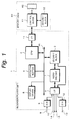
- Fig. 1 is a block diagram showing the structure of a digital audio recorder/player 1 according to a preferred embodiment of the present invention.
- Digital audio recorder/player 1 records and reproduces a digital audio signal using a detachable memory card (or a Memory StickTM) 40.
- Recorder/player 1 may be a part of an audio system along with an amplifying unit (not shown), speakers (not shown), a CD player (not shown), an MD recorder (not shown), a tuner (not shown), and so forth.
- the present invention may be applied to other audio sets.
- recorder/player 1 may be a portable device.
- the present invention may also be applied to a set top box that records digital audio data that is circulated via satellite data communication, digital broadcast, or the Internet, etc. Moreover, the present invention may be applied to a system that records/reproduces moving picture data and still picture data rather than audio data. A system according to an embodiment of the present invention may also record and reproduce additional information, such as picture and text, other than a digital audio signal.
- Recorder/player 1 has a Central Processing Unit (“CPU") 2, a security block 3, an operation button 4, and a display device 5.
- Security block 3, operation button 4, and display device 5 arc connected to CPU 2 through a bus 16.
- Security block 3 includes a Data Encryption Standard ("DES") encrypting circuit. Data such as a record command, a reproduction command, or the like corresponding to a user's operation of operation button 4 is supplied to CPU 2 through bus 16.
- Various information, the operation state of recorder/player 1, and so forth are displayed on display device 5.
- An audio interface 6 is disposed between an external input/output, which will be described in further detail below, and an internal audio encoder/decoder 7.
- memory card 40 is an IC chip having a flash memory (non-volatile memory) 42, a control block 41, a security block 52 (security block 52 may include a DES encrypting circuit), a communication interface, a register, and so forth.
- Memory card 40 is attachable to recorder/player 1 and detachable therefrom.
- recorder/player 1 is also compatible with a memory card that does not have an encrypting function (namely, security block 52).
- Audio encoder/decoder 7 encodes digital audio data in accordance with a highly efficient encoding method to be written to memory card 40. In addition, encoder/decoder 7 decodes encoded data read from memory card 40.
- the highly efficient ATRAC3 format encoding method which is a modification of the Adaptive Transform Acoustic Coding ("ATRAC") format used for MDs, may be used.
- audio data sampled at 44.1 kHz and quantized with 16 bits is encoded with high efficiency.
- the minimum data unit of audio data for processing is a sound unit ("SU").
- 1 SU contains data of 1024 samples, thus comprising (1024 x 16 bits x 2 channels) bits, that is compressed to data of several hundred bytes.
- the duration of 1 SU is approximately 23 msec.
- the size of compressed data is approximately 10 times smaller than that of the original data.
- an audio signal compressed and decompressed according to the ATRAC3 format is less deteriorated in audio quality.
- a digital input 10 supplies a digital output signal of an MD, a CD, a digital broadcast signal, or network circulated audio data to audio interface 6.
- the digital input signal is transmitted through, for example, an optical cable.
- Audio interface 6 selects an input digital audio signal from A/D converter 9 and digital input 10 and supplies the selected input digital audio signal to audio encoder/decoder 7.
- Audio encoder/decoder 7 encodes the input digital audio signal and supplies the encoded data to security block 3.
- Security block 3 encrypts the encoded data received from audio encoder/decoder7 so as to protect copyrights on the contents of said data (in this example, a digital audio signal).
- Security block 3 of recorder/player 1 may have a plurality of master keys and a unit unique storage key. In addition, security block 3 may have a random number generating circuit (not shown).
- security block 3 of recorder/player 1 determines whether or not memory card 40 is valid (namely, authenticates memory card 40). After security block 3 of recorder/player 1 has properly authenticated memory card 40, security block 3 of recorder/player I and security block 52 of memory card 40 share a session key.
- the encrypted audio data that is output from security block 3 is supplied to CPU 2.
- CPU 2 communicates with memory card 40 through a bidirectional serial interface 11.
- memory card 40 is attached to an attaching/detaching mechanism (not shown) of recorder/player 1.
- CPU 2 writes the encrypted data to flash memory 42 of memory card 40.
- the encrypted data is serially transmitted between CPU 2 and memory card 40.
- CPU 2 reads encrypted audio data from memory card 40 through memory interface 11 and supplies such data to security block 3.
- Security block 3 decrypts the encrypted audio data.
- the decrypted audio data is supplied to audio encoder/decoder 7 which decodes the decrypted audio data.
- An output signal of audio encoder/decoder 7 is supplied to a D/A converter 12 through audio interface 6.
- D/A converter 12 converts the digital audio data into an analog audio signal and transmits the same through output 13. Audio data received from audio encoder/decoder7 and decrypted data received from security block 3 may also be outputted as digital output signals through outputs 14 and 15, respectively, through interface 6.
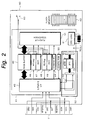
- Fig. 2 is a block diagram showing the internal structure of memory card 40.
- Memory card 40 is a one chip integrated circuit ("IC") comprising control block 41, security block 52, and flash memory 42.
- IC integrated circuit
- bidirectional serial interface 11 disposed between CPU 2 of recorder/player 1 and memory card 40 is composed of 10 lines, which include a clock line SCK for transmitting the clock signal that is transmitted along with data, a status line SBS for transmitting a status signal, a data line DIO for transmitting data, an interrupt line INT, two GND lines, two VCC lines, and two reserved lines.
- clock line SCK is used to send a clock signal to synchronize data transfer.
- Status line SBS is used to send a status signal that represents the status of memory card 40.
- Data line DIO is used to input and output a command and encrypted audio data.
- Interrupt line INT is used to send an interrupt request signal from memory card 40 issues to CPU 2 of recorder/player 1. When memory card 40 is attached to recorder/player 1, an interrupt signal is generated. In another embodiment, the interrupt signal is sent through data line DIO in which case interrupt line INT is grounded and not used.
- a serial/parallel and parallel/serial interface block (“S/P and P/S IF block”) 43 is an interface of control block 41 coupled to interface 11.
- S/P and P/S IF block 43 converts serial data received from recorder/player 1 into parallel data. It also converts parallel data of control block 41 into serial data, and supplies the serial data to recorder/player 1.
- S/P and P/S IF block 43 separates a command and data received through data line DIO into those for accessing flash memory 42 and those for performing an encrypting process.
- S/P and P/S IF block 43 determines whether the received command and data are for accessing flash memory 42 or for performing the encrypting process by the code of the received command.
- a command for accessing flash memory 42 is stored to a command register 44 and data is stored to a page buffer 45 and a write register 46.
- an error correction code encoding circuit 47 is disposed. Error correction code encoding circuit 47 generates a redundant code of an error correction code for data temporarily stored in page buffer 45.
- Output data of command register 44, page buffer 45, write register 46, and error correction code encoding circuit 47 is supplied to a flash memory interface and sequencer ("memory IF and sequencer") 51.
- Memory IF and sequencer 51 is an interface coupled to flash memory 42 and controls data exchanged between flash memory 42 and control block 41, for example, data is written to flash memory 42 through memory IF and sequencer 51.
- Data read from flash memory 42 is supplied to page buffer 45, a read register 48, and an error correcting circuit 49 through memory IF and sequencer 51.
- Error correcting circuit 49 corrects an error(s) of data stored in page buffer 45.
- Error corrected data output from page buffer 45 and data output from read register 48 are supplied to S/P and P/S IF block 43 and then supplied to CPU 2 of recorder/player 1 through serial interface 11.
- Security block 3 of recorder/player 1 and security block 52 of memory card 40 cooperate to encrypt the contents.
- Security block 52 has a buffer memory 53, a DES encrypting circuit 54, a non-volatile memory 55, and so forth.
- Configuration ROM 50 stores version information and various kinds of attribute information of memory card 40.
- Memory card 40 has a write protection switch 60 operable by a user. When switch 60 is placed in a write protection position, even if recorder/player 1 sends an erase command to flash memory 42, data stored in flash memory 42 is prohibited from being erased. When switch 60 is placed in a non-write protection position, data stored in flash memory 42 is erasable.
- An oscillator 61 generates a clock signal used as a timing reference for processes performed in memory card 40.
- Security block 52 of memory card 40 has a plurality of authentication keys and a memory card unique storage key.
- Non-volatile memory 55 stores a decryption or storage key that cannot be accessed from outside of security block 52.
- Security block 52 has a random number generating circuit.
- Security block 52 can authenticate recorder/player 1 (which may form a dedicated system that uses a predetermined data format) and share a session key therewith.
- a contents key for encrypting ATRAC3 data is encrypted with the session key and sent between recorder/player 1 and memory card 40.
- security block 3 of recorder/player 1 has a set unique storage key. When contents have been encrypted and are to be stored to flash memory 42, a corresponding contents key is encrypted using the storage key and stored with the encrypted contents.
- Fig. 3 shows a memory card 40' that does not have an encrypting function.
- memory card 40' is a non-security type memory card.
- memory card 40' does not include security block 52.
- the remaining structure of memory card 40' is substantially the same as that of memory card 40,
- the size and shape of memory card 40' may be the same as that of memory card 40. Since recorder/player 1 shown in Fig. 1 is a security type recorder, recorder/player 1 and the memory card 40 are mutually authenticated and a key is communicated therebetween. When memory card 40', shown in Fig. 3, is attached to recorder/player 1, recorder/player 1 determines that memory card 40' is a non-security type memory card and that it cannot be used with recorder/player 1.
- recorder/player I may determine the type of memory card attached thereto.
- a key is sent from recorder/player 1 to memory card 40' so as to authenticate it. Since memory card 40' does not send a correct response to recorder/player 1, recorder/player 1 determines that memory card 40' is not of the security type after a time-out period.
- identification information that represents whether or not the memory card is of the security type may be recorded in a predetermined area (boot area) of the memory card. Upon reading such identification information, recorder/player 1 can determine the type of memory card attached thereto.
- a unit that can use non-security type memory card 40' is presented according to the present invention.
- One example is a digital handy movie camera that records a picture photographed with a Charge Coupled Device ("CCD") camera to memory card 40' and reproduces the photographed picture therefrom.
- CCD Charge Coupled Device
- S/P and P/S IP block 43 has a function for separating command and data for flash memory 42 and those for security block 52.
- memory cards 40 and 40' store data using the File Allocation Table ("FAT") file system of a personal computer as with a disc shaped recording medium.
- Flash memory 42 comprises an Initial Program Load (“IPL") area, a FAT area, and a route directory.
- IPL Initial Program Load
- the IPL area stores the address of a program that is initially loaded to a memory of recorder/player 1.
- the IPL area stores various kinds of information of flash memory 42.
- the FAT area stores data with respect to memory blocks in flash memory 42. In other words, the FAT area stores values that represent non-used blocks, the next block number, bad blocks, and the last block.
- the route directory area stores a directory entry (file attribute, updated date (year, month, and day), start cluster, file size, and so forth).
- file management information for a music file may be defined.
- the track information management file is stored in flash memory 42 using a user block of memory cards 40 and 40'. Thus, even if the FAT of memory card 40 or 40' is broken, the file can be restored.
- the track information management file is created by CPU 2.
- CPU 2 determines whether or not memory card 40 or 40' has been attached to recorder/player 1.
- CPU 2 reads a boot block of flash memory 42. In accordance with the identification information of the boot block, CPU 2 determines whether or not the attached memory card is a security type memory card.
- memory card 40 If memory card 40 is attached (i.e., security type), CPU 2 performs an authenticating process. Other data read from memory card 40 is stored in a memory (not shown) managed by CPU 2. In flash memory 42 of memory card 40 or 40' that has not been used, before it is shipped, a FAT and a route direction are written. When data is recorded, the track information management file is created. After CPU 2 has authenticated memory card 40, recorder/player 1 records or reproduces an encrypted ATRAC3 data file.
- Fig. 4 is a schematic diagram showing the hierarchy of the file system processes of a computer system that uses memory card 40 or 40' as a storage medium.
- the top hierarchical level is an application process layer.
- the application process layer is followed by a file management process layer, a logical address management layer, a physical address management layer, and a flash memory access layer.
- the file management process layer is the FAT file system.
- Physical addresses are assigned to individual blocks of flash memory 42 in memory card 40 or 40'. The relationship between the blocks of flash memory 42 and the physical addresses thereof does not vary.
- Logical addresses are addresses that are logically handled on the file management process layer.
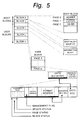
- Fig. 5 is a schematic diagram showing the physical structure of data handled in flash memory 42 of memory card 40 or 40'.
- a data unit (referred to as a segment) is divided into a predetermined number of blocks (fixed length).
- One block is divided into a predetermined number of pages (fixed length).
- data is erased one block at a time. Data is written to flash memory 42 or read therefrom one page at a time.
- the size of each block is the same.
- the size of each page is the same.
- One block is composed of page 0 to page m.
- One block may have a storage capacity of 8 KB (kilobytes) or 16 KB and one page may have a storage capacity of 512 B (bytes).
- the total storage capacity of flash memory 42 is 4 MB (512 blocks) or 8 MB (1024 blocks).
- the total storage capacity of flash memory 42 is 16 MB (1024 blocks), 32 MB (2048 blocks), or 64 MB (4096 blocks).
- One page is composed of a data portion of 512 bytes and a redundant portion of 16 bytes.
- the first three bytes of the redundant portion is an overwrite portion that is rewritten whenever data is updated.
- the first three bytes successively contain a block status area, a page status area, and an update status area.
- the remaining 13 bytes of the redundant portion are fixed data that depends on the contents of the data portion.
- the 13 bytes contain a management flag area (1 byte), a logical address area (2 bytes), a format reserve area (5 bytes), a dispersion information Error-Correcting Code (“ECC”) area (2 bytes), and a data ECC area (3 bytes).
- the dispersion information ECC area contains redundant data for an error correction process for the management flag area, the logical address area, and the format reserve area.
- the data ECC area contains redundant data for an error correction process for the data in the 512-byte data portion.
- the management flag area contains a system flag (1: user block, 0: boot block), a conversion table flag (1: invalid, 0: table block), a copy prohibition flag (1: copy allowed, 0: copy not allowed), and an access permission flag (1: free, 0: read protect).
- the first two blocks - blocks 0 and 1 are boot blocks.
- Block 1 is a backup of block 0.
- the boot blocks are top blocks that are valid in memory card 40 or 40'. When memory card 40 or 40' is attached to recorder/player 1, the boot blocks are accessed first. The remaining blocks are user blocks.
- Page 0 of a boot block contains a header area, a system entry area, and a boot and attribute information area.
- Page 1 of a boot block contains a prohibited block data area.
- Page 2 of a boot block contains a CIS (Card Information Structure)/IDI (Identify Drive Information) area.
- Fig. 6 shows the format of pages 0, 1, and 2 of a boot block.
- a header (368 bytes) of a boot block stores a boot block ID, a format version, and the number of valid entries of the boot block.
- a system entry (48 bytes) stores the start position of the prohibited block data, the data size thereof, the data type thcrco f, the data start position of CIS/IDI, the data size thereof, and the data type thereof.
- the boot and attribute information contains memory card type (read only type, rewritable type, or hybrid type), the block size, the number of blocks, the number of totalblocks, the sccurity/non-security type, the card fabrication data (date of fabrication), and so forth.
- Fig. 7 shows the structure of the boot & attribute information (96 bytes) shown in Fig. 6.
- the boot & attribute information may include the class of the memory card, the type (read only, read write enable, hybrid of both types, etc.), the block size, the number of blocks, the total number of blocks, the security type/non-security type, the production data (the date of production: year, month, day), and so forth.
- Recorder/player 1 determines whether or not a memory card is of the security type using the security type information (one byte).
- (*1) represents a data item that recorder/player 1 reads and checks when a memory card is attached thereto; and (*2) represents production/quality management data item.
- the insulation film of flash memory 42 deteriorates whenever data stored therein is rewritten.
- the service life of memory card 40 or 40' is limited by the number of times flash memory 42 is rewritten. Accordingly, it is preferable to prevent a particular storage area (block) of flash memory 42 from being repeatedly accessed. Consequently, when data stored at a particular physical address is to be rewritten, updated data is not written back to the same block. Instead, the updated data is written to a block that has not been used. Thus, after data is updated, the relationship between physical addresses and logical addresses varies. When such a process (referred to as a swapping process) is performed, the same block is prevented from being repeatedly accessed. Thus, the service life of flash memory 42 can be prolonged.
- a logical address corresponds to data written to a block, even if updated data is physically moved to another block, the same logical address may be maintained in the FAT.
- the swapping process causes the relationship between logical addresses and physical addresses to vary.
- a conversion table that converts logical addresses into physical addresses is changed accordingly when such a swapping process is performed.
- a physical address corresponding to a logical address designated by the FAT is obtained.
- the updated data can be properly accessed using the same logical address.
- the logical address - physical address conversion table is stored in a memory Random Access Memory ("RAM") by CPU 2.
- RAM memory Random Access Memory
- the logical address - physical address conversion table can be stored in flash memory 42.
- This table basically correlates logical addresses (two bytes) arranged in ascending order with physical addresses (two bytes). Since the maximum storage capacity of flash memory 42 is 128 MB (8192 blocks), with two bytes, 8192 addresses can be represented.
- the logical address - physical address conversion table is managed segment by segment. The size of the logical address - physical address conversion table is proportional to the storage capacity of flash memory 42.
- the storage capacity of flash memory 42 is 8 MB (two segments), two pages corresponding to the two segments arc used for the logical address - physical address conversion table. If the logical address - physical address conversion table is stored in flash memory 42, one bit of the management flag of the redundant portion of each page represents whether or not a relevant block has been stored in the logical address - physical address conversion table.
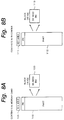
- FIG. 8A illustrates one track stored in flash memory 42.
- each track includes a key area (header) 101.
- a contents key CK created for each track (title) of encrypted audio data is encrypted with a memory card unique storage key Kstm and the resultant data is stored to key area 101.
- DES is used for an encrypting process for the contents key CK and the storage key Kstm.
- DES (Kstm, CK) represents that the contents key CK is encrypted with the storage key Kstm.
- An encoded value preferably has 64 bits composed of 56 bits of data and 8 bits of an error detection by Cyclical Redundancy Checking ("CRC").
- Each track is divided into parts 102.
- a parts key PK is recorded with each part.
- the track shown in Fig. 8A comprises only one part 102.
- Part 102 is a set of blocks 103 (16 KB each).
- Each block 103 stores a block seed BK_SEED and an initial vector INV.
- the part key PK is paired with a contents key CK so as to create a block key BK for encrypting the contents.
- BK DES (CK (+) PK, BK_SEED) (56 bits + 8 bits) (where (+) represents an exclusive-OR).
- the initial vector INV is an initial value for an encrypting/decrypting process for a block.
- Fig. 8B relates to contents data in recorder/player 1.
- a contents key CK for each track of contents is decrypted and the resultant data is re-encrypted with a recorder unique storage key Kstd.
- the re-encrypted data is stored in a key area 111.
- the decrypting process is denoted by IDES (Kstm, CK) (56 bits + 8 bits).
- the re-encrypting process is denoted by DES (Kstd, CK) (56 bits + 8 bits)
- a part key PK for creating a block key BK is recorded for each part 112 of the contents.
- Each block 113 of a part 112 may store a block seed BK-SEED and an initial vector INV.
- FIG. 9 An encrypting process which may be utilized in a recording (write) operation of recorder/player 1 will now be explained with reference to Fig. 9.
- Fig. 9 similar portions to those in Fig. 1 are denoted by similar reference numerals and their description is omitted.
- interface 11, bus 16, and control block 41 through which data and commands are transferred between the components of recorder/player 1 and memory card 40, have been omitted from Fig. 9 and the following process explanation for simplicity.
- SeK is a session key shared between recorder/player 1 and memory card 40 after they have been mutually authenticated.
- reference numeral 10' is a CD and a source of a digital audio signal inputted at digital input 10.
- recorder/player 1 determines whether or not memory card 40 is a security type memory card by use of the identification information in the boot area thereof. Since memory card 40 is a security type memory card, recorder/player 1 and memory card 40 are mutually authenticated.
- recorder/player 1 With reference to Fig. 9, recorder/player 1 generates a random number for each track of data (tune) to be written and creates a corresponding contents key CK according to each of the random numbers.
- Security block 3 of recorder/player 1 encrypts contents key CK using session key SeK.
- Recorder/player 1 outputs the encrypted contents key CK to memory card 40.
- DES encrypting/decrypting circuit 54 of security block 52 in memory card 40 decrypts the encrypted contents key CK, and re-encrypts the decrypted contents key CK using a storage key Kstm from memory 55.
- Memory card 40 outputs the re-encrypted CK to recorder/player 1 (CPU 2).
- Recorder/player 1 (CPU 2) sets the re-encrypted contents key CK in the key area 111 (as shown in Fig. 8B) of each track.
- Recorder/player 1 generates a random number for each part data area 112 (as shown in Fig. 8B) of each track, and creates a part key PK according to each random number.
- Each created part key PK is set in a corresponding part data area 112 by CPU 2.
- a temporary key TMK may be generated by performing an XOR of part key PK and contents key CK by recorder/player 1 for each part data area 112 as shown below in equation (1).
- the creation of temporary key TMK is not limited to using an XOR function. It is possible to use other functional operators, such as a simple AND operator.
- TMK PK XOR CK
- Recorder/player 1 generates a random number for each block 113 of each part data area 112 and creates block seed BK_SEED according to each random number. Further, recorder/player 1 (CPU 2) sets the created block seed BK_SEED into its proper position in each corresponding block 113. Recorder/player 1 uses the temporary key TMK and the block seed BK_SEED in equation (2) to perform a Message Authentication Code ("MAC") operation to create block key BK for each block 113.
- BK MAC (TMK, BK_SEED)
- Audio encoder/decoder 7 compresses the digital audio signal inputted to digital input 10 from CD 10' or the digital signal from A/D converter 9, which converts an analog audio signal inputted to analog input 8 into a digital signal, in accordance with the ATRAC3 format. Then, security block 3 encrypts the compressed audio data in the Cipher Block Chaining ("CBC") mode by using the block key BK, the CBC mode being a data encryption mode prescribed in Federal Information Processing Standard (“FIPS”) PUB 81 (“DES MODES OF OPERATION").
- CBC Cipher Block Chaining
- Recorder/player 1 adds headers to the encrypted audio data and outputs the results to memory card 40.
- Memory card 40 writes the encrypted audio data and headers into flash memory 42. At this point, writing of audio data from recorder/player 1 to memory card 40 is complete.
- Fig. 10 shows an authenticating process performed between recorder/player 1 (SET) and memory card 40 (MEMORY CARD).
- the random number generator of security block 52 in memory card 40 generates a random number Rm and sends the random number Rm and the serial number ID of memory card 40 to recorder/player 1.
- Recorder/player 1 generates a random number Rd and creates a message authenticator MAC A (Message Authentication Code) with the authenticationkey, namely, MAC(IKj, Rd // Rm // ID).
- recorder/player 1 generates a random number Sd and sends Rd // Sd // MAC A // j to memory card 40.
- memory card 40 receives the data RD // Sd // MAC A // j, finds an authentication key IKj from security block 52 corresponding to j, and calculates a MAC n with the authentication key IKj using Rd, Rm, and ID.
- memory card 40 determines that recorder/player 1 is valid (i.e., authorized).
- recorder/player 1 receives Sm // MAC c from memory card 40.
- Recorder/player 1 calculates MAC l , using IKj, Rm, and Rd. When the calculated MAC D is equal to the received MAC C , recorder/player 1 determines that memory card 40 is valid (i.e., authorized).
- recorder/player 1 designates MAC (IKj, Rm // Rd) as the session key SeK.
- memory card 40 designates MAC (IKj, Rm // Rd) as the session key SeK.
- the session key SeK is shared between them. The session key SeK is created whenever authentication is successful.
- Fig. 11 shows a key writing process in the case that recorder/player 1 (SET) records audio data to flash memory 42 of memory card 40 (MEMORY CARD).
- recorder/player 1 At step S11, recorder/player 1 generates a random number for each track of contents and creates a contents key CK.
- recorder/player 1 encrypts the contents key CK with the session key SeK and sends encrypted DES (SeK, CK) to memory card 40.
- memory card 40 receives the data DES (SeK, CK) from recorder/player 1 and decrypts the contents key CK with the session key SeK.
- the decrypting process is denoted by IDES (SeK, DES (SeK, CK)).
- memory card 40 re-encrypts the decrypted contents key CK with the storage key Kstm from memory 55 and sends the re-encrypted contents key DES (Kstrn, CK) to recorder/player 1.
- recorder/player 1 places the re-encrypted contents key CK in the key area 111 for managing the corresponding part data area 112 and performs a formatting process so that the re-encrypted contents key CK and the contents are recorded to flash memory 42 of memory card 40.
- the contents key CK and the part key PK are exclusive-Ored (XOR, or alternatively, AND), as illustrated in Fig. 9 and equation 11 above.
- the result of the XOR operation is the temporary key TMK.
- the temporary key TMK is stored only in security block 3. 'l'hus, the temporary key TMK is not accessible from outside of security block 3.
- a random number is generated as a block seed BK_SEED.
- the random number is stored in each part data area 112.
- Recorder/player 1 encrypts the block seed BK_SEED with the temporary key TMK to obtain a block key BK.
- BK (CK (+) PK, BK_SEED) is obtained.
- the block key BK is stored only in security block 3. Thus, the block key BK is not accessible from outside of security block 3.
- recorder/player 1 encrypts the data in each part data area 112 block by block with the block key BK and sends the encrypted data and the data in key area 111 to memory card 40.
- Memory card 40 records the encrypted data and the data in key area 111 (header data) received from recorder/player 1 to flash memory 42 at step S17.
- FIG. 12 A decrypting process for use in a reproducing (read) operation of recorder/player 1 will now be explained with reference to Fig. 12.
- Fig. 12 Similar portions to those in Fig. 1 are denoted by similar reference numerals and their description is omitted.
- a read request signal specifying a desired track of data (tune) is sent from recorder/player 1 to memory card 40.
- Recorder/player 1 and memory card 40 perform a mutual authentication operation, as above described with reference to Fig. 10. If recorder/player 1 and memory card 40 recognize each other as legitimate in accordance with the mutual identification process, a key writing process, as above described with reference to Fig. 11, is performed. Otherwise, the read operation is terminated. After the key writing process is complete, encrypted audio data is read from memory card 40 to recorder/player 1 by CPU 2.
- the encrypted contents key CK can be decrypted using the proper session key SeK only when memory card 40 and recorder/player 1 identify each other as legitimate. Therefore, illicit utilization of the audio data is easily avoided.
- Data read during the read operation had been written by the above-described write operation shown in Fig. 9.
- the setting of the contents key CK and the part key PK in each part data area 112, and the block seed BK_SEED in each block 113 is used for writing data to, and thus reading data from, the corresponding part data area 102.
- step S6 of Fig. 10 is completed, memory card 40 and recorder/player 1 share session key SeK.
- the reading of audio data from memory card 40 proceeds as follows.
- Memory card 40 specifics the data in the part data area 102 (Fig. 8A) corresponding to the read request signal and outputs the audio data in sound units SUs from the blocks 103 (Fig. 8A) in the specified part data area 102. Memory card 40 also reads the corresponding key area 101 (Fig. 8A) of the audio data and outputs it to recorder/player 1.
- Recorder/player 1 picks-up the encrypted contents key CK from the data in the key area 101 and outputs it to memory card 40.
- DES encrypting/decrypting circuit 54 of security block 52 in memory card 40 decrypts the encrypted contents key CK using storage key Kstm stored in memory 55, and re-encrypts the decrypted contents key CK using session key SeK.
- Memory card 40 outputs the re-encrypted contents key CK to recorder/player 1.
- Recorder/player 1 decrypts the re-encrypted contents key CK from memory card 40 using session key SeK.
- Recorder/player 1 uses the temporary key TMK and the block seed BK_SEED in each part data area 102 to perform the MAC operation shown in the following equation (4) so as to obtain the block key BK.
- the block key BK is found for every block 103 as follows.
- BK MAC (TMK, BK_SEED)
- Security block 3 of recorder/player 1 decrypts the audio data by using the block key BK. More specifically, the audio data is decrypted for every block 103 using the individually found block key BK. Further, decryption is carried out in the same 16KB blocks 103 as used for encryption. Audio encoder/decoder 7 expands the decrypted audio data according to the ATRAC3 system and outputs the decoded signal through digital output 14 or D/A converter 12 converts the digital audio signal into an analog signal and outputs the result through analog output 13. Alternatively, the ATRAC3 audio data from security block 3 is outputted through output 15. Audio encoder/decoder 7 expands the audio data in sound units SUs.
- Fig. 13 shows the decrypting process when recorder/player 1 reproduces an audio track stored in flash memory 42 of memory card 40.
- the session key SeK is shared between recorder/player 1 and memory card 40 after they are mutually authenticated.
- recorder/player 1 reads data from memory card 40 (MEMORY CARD) and obtains the contents key CK encrypted with the storage key Kstm (namely, DES (Kstm, CK)) and encrypted contents (part data arca(s) 102 of the desired track). Thereafter, rccorder/player 1 sends the contents key CK encrypted with the storage key Kstm to memory card 40.
- Kstm namely, DES (Kstm, CK)
- rccorder/player 1 sends the contents key CK encrypted with the storage key Kstm to memory card 40.
- memory card 40 decrypts the contents key CK with the storage key Kstm (namely, IDES (Kstm, DES (Kstm, CK)).
- memory card 40 encrypts the decrypted contents key with the session key SeK and sends DES (SeK, CK) to recorder/player 1.
- recorder/player 1 decrypts the contents key with the session key SeK.
- recorder/player 1 creates a block key BK with the decrypted contents key CK, a part key PK, and a block seed HK_SEED.
- recorder/player 1 decrypts each encrypted part data area 102 with the block key BK block by block.
- the audio encoder/decoder 7 decodes the decrypted audio data.
- Fig. 14 shows a timing chart of data being read from memory card 40.
- state 0 initial state
- a clock signal used to synchronize data is sent through clock line SCK.
- SCK clock line
- the signal level of status line SBS is low.
- An initial condition may be referred to as state or status 0 (initial state).
- recorder/player 1 causes the signal level of status line SBS to become high (state 1).
- memory card 40 When the signal level of status line SBS becomes high, memory card 40 (S/P and P/S IF block 43) determines that state 0 has changed to state 1. In state 1, recorder/player 1 sends a read command to memory card 40 through data line DIO. Thus, memory card 40 receives the read command.
- the read command is a protocol command referred to as a Transfer Protocol Command ("TPC"). As will be described later, the protocol command designates the contents of the communication and the length of data that follows.
- TPC Transfer Protocol Command
- state 1 changes to state 2.
- state 2 a process designated by a command received by memory card 40 is performed.
- data of an address designated by the read command is read from flash memory 42 to page buffer 45.
- a busy signal (high level) is sent to recorder/player 1 through data line DIO.
- a ready signal (low level) that represents that memory card 40 is ready to send data in accordance with the read command is outputted to recorder/player 1.
- recorder/player 1 When recorder/player 1 receives the ready signal from memory card 40, recorder/player 1 determines that memory card 40 is ready for processing the read command. At timing t34, recorder/player 1 causes the signal level of status line SBS to become high. In other words, state 2 changes to state 3.
- memory card 40 outputs data that has been read to page buffer 45 in state 2 to recorder/player 1 through data line DIO.
- recorder/player 1 stops sending the clock signal through clock line SCK.
- recorder/player 1 causes the signal level of status line SBS to change from high to low.
- state 3 changes to the initial state (state 0).
- memory card 40 sends an interrupt signal to recorder/player 1 through data line DIO.
- recorder/player 1 receives the interrupt signal through data line DIO from memory card 40 in state 0, recorder/player 1 determines that the signal is an interrupt signal and performs a process corresponding to the interrupt signal.
- Fig. 15 is a timing chart of an operation in which data is written to flash memory 42 of memory card 40.
- the clock signal is not sent through clock line SCK.
- recorder/player 1 causes the signal level of status line SBS to change from low to high. Thus, state 0 changes to stale 1.
- memory card 40 is ready to receive a command.
- a write command is sent to memory card 40 through data line DIO and memory card 40 receives the write command.
- recorder/player 1 causes the signal level of status line SBS to change from high to low. Thus, state 1 changes to state 2.
- recorder/player 1 sends write data to memory card 40 through data line DIO and memory card 40 stores the received write data to page buffer 45.
- recorder/player 1 causes the signal level of status line SBS to change from low to high.
- state 2 changes to state 3.
- memory card 40 writes the write data to flash memory 42
- memory card 40 sends a busy signal (high level) to recorder/player 1 through data line DIO
- recorder/player 1 sends a write command to memory card 40. Since the current state is state 3, recorder/player 1 determines that the signal received from memory card 40 is a status signal.
- memory card 40 stops outputting the busy signal and sends a ready signal (low level) to recorder/player 1.
- recorder/player 1 determines that the writing process corresponding to the write command has been completed and stops sending the clock signal. Additionally at timing t45, recorder/player 1 causes the signal level of status line SBS to change from high to low. Thus, slate 3 returns to state 0 (initial state).
- recorder/player 1 When recorder/player 1 receives a high level signal from memory card 40 through data line DIO in state 0, recorder/player 1 determines that the received signal is an interrupt signal. Recorder/player 1 performs a process corresponding to the received interrupt signal. When memory card 40 is to be detached from recorder/player 1, memory card 40 generates the interrupt signal.
- state 1 In other than the reading process and the writing process, in state 1, a command is sent. In state 2, data corresponding to the command is sent.
- serial interface disposed between recorder/player 1 and memory card 40 is not limited to interface 11 as above described. In other words, various types of serial interface may be used.
- step S200 When the power of recorder/player 1 is turned on (at step S200), it is determined whether or not memory card 40 or 40' has been attached to recorder/player 1 (at step S201). When the determined result at step S201 is Yes, data is read from a boot block of memory card 40 or 40' (at step S202).
- boot and attribute information of a boot block contains identification information that represents whether or not memory card 40 or 40' is of the security type.
- identification information it is determined whether memory card 40 or 40' is a security type memory card (40) or a non-security type memory card (40') (at step S203). If the determined result at step S203 is Yes (memory card 40), an authenticating operation is performed (at step S204). After memory card 40 has been authenticated, contents data is recorded to memory card 40 or reproduced therefrom (at step S205).
- an alarm message that represents memory card 40' cannot be used is displayed on display device 5.
- the alarm message may be issued with another method such as a sound.
- step S203 determines whether or not memory card 40 or 40' is a security type memory card (40) or a non-security type memory card (40'). Regardless of whether the determined result at step S207 is Yes or No, at step S208 or S209, a normal operation (writing operation, reading operation, erasing operation, or the like) can be performed for memory card 40 or 40'.
- the predetermined function of memory card 40 is a security function.
- the present invention is not limited to a security function.
- the present invention can be applied for the communication speed (data rate) of interface 11 disposed between recorder/player 1 and memory card 40 or 40' where the communication speed of memory card 40 is faster than the conventional speed of memory card 40'.
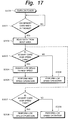
- Fig. 17 is a flow chart showing a process with respect to communication speed as a predetermined function of memory card 40.
- the power is turned on.
- data is read from a boot block of memory card 40 or 40'.
- the boot block contains identification information that represents whether or not memory card 40 or 40' is of the high speed type.
- step S303 It is determined whether or not memory card 40 or 40' is of the high-speed type with the identification information (at step S303).
- the determined result at step S303 is Yes (memory card 40)
- the communication speed (data rate) between recorder/player 1 and memory card 40 is changed from low speed to high speed (at step S304).
- high-speed operation is performed (at step S305).
- the determined result at step S303 is No (memory card 40')
- low speed operation is performed (at step S306).
- recorder/player 1 is not of the high speed type, as denoted by a dotted line shown in Fig. 17, regardless of whether or not memory card 40 or 40' is of the high speed type (at step S307), low speed operation is performed (at step S308 or S309).
Landscapes
- Engineering & Computer Science (AREA)
- Computer Security & Cryptography (AREA)
- Theoretical Computer Science (AREA)
- Computer Hardware Design (AREA)
- Software Systems (AREA)
- Physics & Mathematics (AREA)
- General Engineering & Computer Science (AREA)
- General Physics & Mathematics (AREA)
- Signal Processing (AREA)
- Multimedia (AREA)
- Technology Law (AREA)
- Bioethics (AREA)
- General Health & Medical Sciences (AREA)
- Health & Medical Sciences (AREA)
- Mathematical Physics (AREA)
- Data Mining & Analysis (AREA)
- Databases & Information Systems (AREA)
- Storage Device Security (AREA)
- Power Sources (AREA)
- Signal Processing For Digital Recording And Reproducing (AREA)
- Stored Programmes (AREA)
- Techniques For Improving Reliability Of Storages (AREA)
Abstract
Description
Claims (13)
- A memory unit attachable to a data processing unit and detachable therefrom, said memory unit comprising:wherein identification information indicating at least one of (i) whether the memory unit is of a security type or a non-security type and (ii) whether the memory unit is of a first rate type in which data is recorded in the memory unit at a first rate or a second rate type in which data is recorded in the memory unit at a second rate, the first rate being different from the second rate, is recorded in a predetermined area of the non-volatile memory, anda non-volatile memory; andinterface means for communicating with the data processing unit;
wherein the identification information is read by the data processing unit when the memory unit is attached thereto. - A data processing unit for recording/reproducing data to/from a memory unit, the memory unit having a non-volatile memory and being attachable to/detachable from the data processing unit, the data processing unit comprising:interface means for communicating with the memory unit; andmeans for determining at least one of(i) whether the memory unit is of a security type or a non-security type and (ii) whether the memory unit is of a first rate type in which data is recorded in the memory unit at a first rate or a second rate type in which data is recorded in the memory unit at a second rate, the first rate being different from the second rate when the memory unit is attached thereto.
- The data processing unit as set forth in claim 2, wherein the data processing unit performs a recording/reproducing operation after the determining means determines that the memory unit is of the security type and after performing an authenticating operation with the memory unit.
- The data processing unit as set forth in claim 2, wherein the data processing unit is one of a security type and a non-security type, and wherein the data processing unit prohibits a recording/reproducingoperation after determining that the memory unit is of the non-security type when the data processing unit is of the security type.
- The data processing unit as set forth in claim 2, wherein the data processing unit is one of a security type and a non-security type, and wherein the data processing unit outputs an error message after determining that the memory unit is of the non-security type when the data processing unit is of the security type.
- The data processing unit as set forth in claim 2, wherein the data processing unit communicates with the memory unit at the appropriate one of the first and second rates as determined by the determining means.
- The data processing unit as set forth in claim 2, wherein identification information indicating at least one of (i) whether the memory unit is of the security type or the non-security type and (ii) whether the memory unit is of the first rate type or the second rate type is recorded in a predetermined area of the non-volatile memory, and wherein the determining means includes means for reading the identification information from the predetermined area of the non-volatile memory when the memory unit is attached to the data processing unit.
- A data processing method for use with a data processing unit for writing/reading in formation to/from a memory unit having a non-volatile memory that is attachable to the data processing unit and detachable therefrom, the data processing method comprising the steps of:reading data from a predetermined storage area of the non-volatile memory of the memory unit when the memory unit is attached to the data processing unit; anddetermining at least one of(i) whether the memory unit is of a security type or a non-security type and (ii) whether the memory unit is of a first rate type in which data is recorded in the memory unit at a first rate or a second rate type in which data is recorded in the memory unit at a second rate, the first rate being different from the second rate.
- The data processing method as set forth in claim 8, further comprising the step of writing/reading data to/from the memory unit after determining that the memory unit is of the security type and after performing an authenticating operation with the memory unit.
- The data processing method as set forth in claim 8, wherein the data processing unit is one of a security type and a non-security type, further comprising the step of prohibiting writing/reading data to/from the memory unit after determining that the memory unit is of the non-security type when the data processing unit is of the security type.
- The data processing method as set forth in claim 8, wherein the data processing unit is one of a security type and a non-security type, further comprising the step of outputting an error message after determining that the memory unit is of the non-security type when the data processing unit is of the security type.
- The data processing method as set forth in claim 8, wherein the data processing unit communicates with the memory unit at the appropriate one of the first and second rates as determined at the determining step.
- The data processing method as set forth in claim 8, wherein the data read from the predetermined storage area includes identification information indicating at least one of (i) whether the memory unit is of the security type or the non-securitytype and (ii) whether the memory unit is of the first rate type or the second rate type is recorded in a predetermined area of the non-volatile memory.
Priority Applications (1)
| Application Number | Priority Date | Filing Date | Title |
|---|---|---|---|
| EP02080683A EP1313108B1 (en) | 1999-04-07 | 2000-04-07 | Memory and data processing units and data processing methods |
Applications Claiming Priority (4)
| Application Number | Priority Date | Filing Date | Title |
|---|---|---|---|
| JP9994899 | 1999-04-07 | ||
| JP9994899 | 1999-04-07 | ||
| JP17818899 | 1999-06-24 | ||
| JP17818899 | 1999-06-24 |
Related Child Applications (1)
| Application Number | Title | Priority Date | Filing Date |
|---|---|---|---|
| EP02080683A Division EP1313108B1 (en) | 1999-04-07 | 2000-04-07 | Memory and data processing units and data processing methods |
Publications (3)
| Publication Number | Publication Date |
|---|---|
| EP1043729A2 true EP1043729A2 (en) | 2000-10-11 |
| EP1043729A3 EP1043729A3 (en) | 2001-11-21 |
| EP1043729B1 EP1043729B1 (en) | 2003-03-19 |
Family
ID=26441038
Family Applications (2)
| Application Number | Title | Priority Date | Filing Date |
|---|---|---|---|
| EP02080683A Expired - Lifetime EP1313108B1 (en) | 1999-04-07 | 2000-04-07 | Memory and data processing units and data processing methods |
| EP00302967A Expired - Lifetime EP1043729B1 (en) | 1999-04-07 | 2000-04-07 | Memory and data processing units, and data processing methods |
Family Applications Before (1)
| Application Number | Title | Priority Date | Filing Date |
|---|---|---|---|
| EP02080683A Expired - Lifetime EP1313108B1 (en) | 1999-04-07 | 2000-04-07 | Memory and data processing units and data processing methods |
Country Status (6)
| Country | Link |
|---|---|
| US (1) | US6601140B1 (en) |
| EP (2) | EP1313108B1 (en) |
| KR (1) | KR100644736B1 (en) |
| CN (1) | CN1164119C (en) |
| DE (2) | DE60001681T2 (en) |
| MY (1) | MY123413A (en) |
Cited By (12)
| Publication number | Priority date | Publication date | Assignee | Title |
|---|---|---|---|---|
| GB2357354A (en) * | 1999-08-24 | 2001-06-20 | Sony Corp | Rejection of inappropriate non-secure or secure flash memory cards by terminals |
| EP1383127A3 (en) * | 2002-07-16 | 2004-03-03 | Nextway Co., Ltd. | Host processing device using external storage medium |
| EP1545131A1 (en) * | 2003-12-19 | 2005-06-22 | STMicroelectronics Limited | Semiconductor circuit for restricting data access |
| US6944703B2 (en) | 2001-06-28 | 2005-09-13 | Sony Corporation | Electronic device, information processing device, adapter device, and information exchange system |
| EP1465198A3 (en) * | 2003-04-04 | 2005-11-23 | Telechips Inc. | Media-processing device using an external storage device |
| EP1617341A1 (en) * | 2004-07-16 | 2006-01-18 | International Business Machines Corporation | File operation management device |
| WO2006006694A1 (en) * | 2004-07-12 | 2006-01-19 | Kabushiki Kaisha Toshiba | Storage device and host apparatus |
| WO2006030966A3 (en) * | 2004-09-15 | 2006-11-30 | Toshiba Kk | File storage device, host apparatus, method of formatting nonvolatile semiconductor memory, and method of writing data in nonvolatile semiconductor memory |
| US7543103B2 (en) | 2005-03-31 | 2009-06-02 | Kabushiki Kaisha Toshiba | Host apparatus |
| CN103138875A (en) * | 2011-11-28 | 2013-06-05 | 澜起科技(上海)有限公司 | Calibration method of high-speed broadcast channel |
| EP2804341A4 (en) * | 2012-01-12 | 2015-07-29 | Sony Corp | INFORMATION STORAGE DEVICE, INFORMATION PROCESSING SYSTEM, INFORMATION PROCESSING METHOD, AND PROGRAM |
| EP3961634A1 (en) * | 2020-08-28 | 2022-03-02 | Samsung Electronics Co., Ltd. | Storage device and operating method thereof |
Families Citing this family (23)
| Publication number | Priority date | Publication date | Assignee | Title |
|---|---|---|---|---|
| MY123388A (en) * | 1999-03-15 | 2006-05-31 | Sony Corp | Processing method and apparatus for encrypted data transfer |
| ID27746A (en) * | 1999-05-28 | 2001-04-26 | Matsushita Electric Industrial Co Ltd | SEMICONDUCTOR CARDS, PLAYBACK EQUIPMENT, RECORDING EQUIPMENT, PLAYBACK METHOD, RECORDING METHOD, AND RECORDING MEDIA CAN BE READ COMBUTER |
| US20020003889A1 (en) * | 2000-04-19 | 2002-01-10 | Fischer Addison M. | Headphone device with improved controls and/or removable memory |
| US6829721B2 (en) * | 2001-02-05 | 2004-12-07 | M-Systems Flash Disk Pioneers Ltd. | Method for recording and storage of system information in multi-board solid-state storage systems |
| US7421411B2 (en) | 2001-07-06 | 2008-09-02 | Nokia Corporation | Digital rights management in a mobile communications environment |
| JP3935139B2 (en) | 2002-11-29 | 2007-06-20 | 株式会社東芝 | Semiconductor memory device |
| AU2003303122A1 (en) * | 2002-12-20 | 2004-07-14 | Koninklijke Philips Electronics N.V. | Hierarchical scheme for secure multimedia distribution |
| US7536558B2 (en) | 2003-08-29 | 2009-05-19 | Tgbw Inc. | Flash memory distribution of digital content |
| EP1524586A1 (en) * | 2003-10-17 | 2005-04-20 | Sony International (Europe) GmbH | Transmitting information to a user's body |
| JP2005217842A (en) * | 2004-01-30 | 2005-08-11 | Fujitsu Ltd | Data compression method, data restoration method and program thereof |
| CN100437458C (en) * | 2004-07-12 | 2008-11-26 | 株式会社东芝 | Storage Devices and Host Devices |
| US7409623B2 (en) * | 2004-11-04 | 2008-08-05 | Sigmatel, Inc. | System and method of reading non-volatile computer memory |
| JP4548737B2 (en) * | 2005-01-24 | 2010-09-22 | パナソニック株式会社 | Signature generation apparatus and signature verification apparatus |
| KR101229493B1 (en) | 2005-10-26 | 2013-02-04 | 삼성전자주식회사 | Information recording medium, recording/reproducing apparatus and recording/reproducing method for performing effectively write protection |
| KR100877609B1 (en) * | 2007-01-29 | 2009-01-09 | 삼성전자주식회사 | Semiconductor memory system for performing data error correction using flag cell array of buffer memory and its driving method |
| US8655463B2 (en) * | 2007-05-18 | 2014-02-18 | Sandisk Technologies Inc. | Method for avoiding refreshing a database of metadata associated with digital media content |
| JP5319238B2 (en) * | 2008-10-29 | 2013-10-16 | 真二 栗本 | Information processing system, information processing apparatus, information processing method, and information processing program |
| CN104718764B (en) * | 2012-10-17 | 2018-04-27 | 索尼电脑娱乐公司 | Information processing equipment |
| US20140245021A1 (en) * | 2013-02-27 | 2014-08-28 | Kabushiki Kaisha Toshiba | Storage system in which fictitious information is prevented |
| CN103596108B (en) * | 2013-11-04 | 2017-01-04 | 北京旋极信息技术股份有限公司 | A kind of audio repeating system and device |
| JP6493417B2 (en) | 2015-01-15 | 2019-04-03 | 日本電気株式会社 | Information output device, camera, information output system, information output method and program |
| US11216209B2 (en) * | 2019-03-26 | 2022-01-04 | Western Digital Technologies, Inc. | Secure storage using a removable bridge |
| CN111811728A (en) * | 2020-06-29 | 2020-10-23 | 江苏理工学院 | a monitoring system |
Family Cites Families (18)
| Publication number | Priority date | Publication date | Assignee | Title |
|---|---|---|---|---|
| US5172338B1 (en) * | 1989-04-13 | 1997-07-08 | Sandisk Corp | Multi-state eeprom read and write circuits and techniques |
| FR2661019B1 (en) * | 1990-04-12 | 1992-10-09 | Skorski Serge | PORTABLE SCREEN BOOK. |
| EP0658863A3 (en) * | 1990-07-11 | 1995-06-28 | Hitachi, Ltd. | Memory card for use with a digital information system |
| US5887145A (en) * | 1993-09-01 | 1999-03-23 | Sandisk Corporation | Removable mother/daughter peripheral card |
| WO1995016238A1 (en) * | 1993-12-06 | 1995-06-15 | Telequip Corporation | Secure computer memory card |
| US5491827A (en) * | 1994-01-14 | 1996-02-13 | Bull Hn Information Systems Inc. | Secure application card for sharing application data and procedures among a plurality of microprocessors |
| JPH08101751A (en) * | 1994-09-30 | 1996-04-16 | Mitsubishi Electric Corp | PC card and PC card system |
| JPH08179986A (en) * | 1994-12-27 | 1996-07-12 | Olympus Optical Co Ltd | Information processor |
| US5818030A (en) | 1995-03-07 | 1998-10-06 | Reyes; Rene A. | Credit card system with key module |
| JPH08328962A (en) * | 1995-05-31 | 1996-12-13 | Mitsubishi Electric Corp | A system consisting of a terminal and a memory card connected to the terminal |
| US5852290A (en) * | 1995-08-04 | 1998-12-22 | Thomson Consumer Electronics, Inc. | Smart-card based access control system with improved security |
| US5650606A (en) | 1995-08-07 | 1997-07-22 | Magnetic Products International, Corp | Accurate read/write head for preventing credit card alteration and counterfeiting of debit cards |
| US6289102B1 (en) | 1995-10-09 | 2001-09-11 | Matsushita Electric Industrial Co., Ltd. | Apparatus and method for preventing unauthorized use of information recorded on an information recording medium |
| US5974161A (en) * | 1996-03-01 | 1999-10-26 | Hewlett-Packard Company | Detachable card for capturing graphics |
| JPH10340575A (en) * | 1997-06-04 | 1998-12-22 | Sony Corp | External storage device and its control device, data transmission / reception device |
| JP3175648B2 (en) * | 1997-07-07 | 2001-06-11 | ソニー株式会社 | Storage device and data writing method |
| JP3119214B2 (en) * | 1997-09-30 | 2000-12-18 | ソニー株式会社 | Storage device, data processing system, and data writing and reading methods |
| JP2914360B2 (en) * | 1997-09-30 | 1999-06-28 | ソニー株式会社 | External storage device and data processing method |
-
2000
- 2000-04-06 US US09/544,071 patent/US6601140B1/en not_active Expired - Lifetime
- 2000-04-07 MY MYPI20001440A patent/MY123413A/en unknown
- 2000-04-07 CN CNB001178652A patent/CN1164119C/en not_active Expired - Lifetime
- 2000-04-07 DE DE60001681T patent/DE60001681T2/en not_active Expired - Lifetime
- 2000-04-07 DE DE60017613T patent/DE60017613T2/en not_active Expired - Lifetime
- 2000-04-07 KR KR1020000018210A patent/KR100644736B1/en not_active Expired - Fee Related
- 2000-04-07 EP EP02080683A patent/EP1313108B1/en not_active Expired - Lifetime
- 2000-04-07 EP EP00302967A patent/EP1043729B1/en not_active Expired - Lifetime
Cited By (26)
| Publication number | Priority date | Publication date | Assignee | Title |
|---|---|---|---|---|
| GB2357354B (en) * | 1999-08-24 | 2004-05-19 | Sony Corp | Terminal apparatus |
| GB2357354A (en) * | 1999-08-24 | 2001-06-20 | Sony Corp | Rejection of inappropriate non-secure or secure flash memory cards by terminals |
| EP1403814A4 (en) * | 2001-06-28 | 2006-12-13 | Sony Corp | ELECTRONIC APPARATUS, INFORMATION PROCESSING APPARATUS, ADAPTER APPARATUS, AND INFORMATION EXCHANGE SYSTEM |
| US6944703B2 (en) | 2001-06-28 | 2005-09-13 | Sony Corporation | Electronic device, information processing device, adapter device, and information exchange system |
| EP1383127A3 (en) * | 2002-07-16 | 2004-03-03 | Nextway Co., Ltd. | Host processing device using external storage medium |
| EP1465198A3 (en) * | 2003-04-04 | 2005-11-23 | Telechips Inc. | Media-processing device using an external storage device |
| US7213112B2 (en) | 2003-04-04 | 2007-05-01 | Telechips Inc. | Media processing device using an external storage device |
| EP1545131A1 (en) * | 2003-12-19 | 2005-06-22 | STMicroelectronics Limited | Semiconductor circuit for restricting data access |
| US8191125B2 (en) | 2003-12-19 | 2012-05-29 | Stmicroelectronics Limited | System, apparatus and method for restricting data access |
| USRE50067E1 (en) | 2004-07-12 | 2024-07-30 | Kioxia Corporation | Storage device including flash memory and capable of predicting storage device performance based on performance parameters |
| US8832361B2 (en) | 2004-07-12 | 2014-09-09 | Kabushiki Kaisha Toshiba | Storage device including flash memory and capable of predicting storage device performance based on performance parameters |
| USRE47638E1 (en) | 2004-07-12 | 2019-10-08 | Toshiba Memory Corporation | Storage device including flash memory and capable of predicting storage device performance based on performance parameters |
| US9244620B2 (en) | 2004-07-12 | 2016-01-26 | Kabushiki Kaisha Toshiba | Storage device including flash memory and capable of predicting storage device performance based on performance parameters |
| US7953950B2 (en) | 2004-07-12 | 2011-05-31 | Kabushiki Kaisha Toshiba | Storage device including flash memory and capable of predicting storage device performance |
| WO2006006694A1 (en) * | 2004-07-12 | 2006-01-19 | Kabushiki Kaisha Toshiba | Storage device and host apparatus |
| US9026723B2 (en) | 2004-07-12 | 2015-05-05 | Kabushiki Kaisha Toshiba | Storage device including flash memory and capable of predicting storage device performance based on performance parameters |
| US8539140B2 (en) | 2004-07-12 | 2013-09-17 | Kabushiki Kaisha Toshiba | Storage device including flash memory and capable of predicting storage device performance based on performance parameters |
| EP1617341A1 (en) * | 2004-07-16 | 2006-01-18 | International Business Machines Corporation | File operation management device |
| US7822931B2 (en) | 2004-09-15 | 2010-10-26 | Kabushiki Kaisha Toshiba | File storage device, host apparatus, method for formatting nonvolatile semiconductor memory, and method of writing data in nonvolatile semiconductor memory |
| WO2006030966A3 (en) * | 2004-09-15 | 2006-11-30 | Toshiba Kk | File storage device, host apparatus, method of formatting nonvolatile semiconductor memory, and method of writing data in nonvolatile semiconductor memory |
| US7543103B2 (en) | 2005-03-31 | 2009-06-02 | Kabushiki Kaisha Toshiba | Host apparatus |
| CN103138875A (en) * | 2011-11-28 | 2013-06-05 | 澜起科技(上海)有限公司 | Calibration method of high-speed broadcast channel |
| CN103138875B (en) * | 2011-11-28 | 2015-06-10 | 澜起科技(上海)有限公司 | Calibration method of high-speed broadcast channel |
| EP2804341A4 (en) * | 2012-01-12 | 2015-07-29 | Sony Corp | INFORMATION STORAGE DEVICE, INFORMATION PROCESSING SYSTEM, INFORMATION PROCESSING METHOD, AND PROGRAM |
| EP3961634A1 (en) * | 2020-08-28 | 2022-03-02 | Samsung Electronics Co., Ltd. | Storage device and operating method thereof |
| US11625297B2 (en) | 2020-08-28 | 2023-04-11 | Samsung Electronics Co., Ltd. | Storage device and operating method thereof |
Also Published As
| Publication number | Publication date |
|---|---|
| CN1272030A (en) | 2000-11-01 |
| EP1313108A3 (en) | 2003-06-04 |
| CN1164119C (en) | 2004-08-25 |
| MY123413A (en) | 2006-05-31 |
| US6601140B1 (en) | 2003-07-29 |
| DE60001681D1 (en) | 2003-04-24 |
| DE60017613T2 (en) | 2005-12-29 |
| KR100644736B1 (en) | 2006-11-13 |
| KR20010006967A (en) | 2001-01-26 |
| DE60017613D1 (en) | 2005-02-24 |
| EP1313108A2 (en) | 2003-05-21 |
| EP1043729A3 (en) | 2001-11-21 |
| EP1313108B1 (en) | 2005-01-19 |
| DE60001681T2 (en) | 2004-03-04 |
| EP1043729B1 (en) | 2003-03-19 |
Similar Documents
| Publication | Publication Date | Title |
|---|---|---|
| EP1043729B1 (en) | Memory and data processing units, and data processing methods | |
| US6618789B1 (en) | Security memory card compatible with secure and non-secure data processing systems | |
| US6820203B1 (en) | Security unit for use in memory card | |
| US6748485B1 (en) | Recording medium, recording apparatus and recording/reproducing system for tracking use and transfer of data | |
| US8607069B2 (en) | Data processing apparatus, data processing method, terminal unit, and transmission method of data processing apparatus | |
| US6404676B2 (en) | Nonvolatile memory and nonvolatile memory reproducing apparatus | |
| US6691149B1 (en) | System for distributing music data files between a server and a client and returning the music data files back to the previous locations | |
| US6792539B1 (en) | Processing method and apparatus for encrypted data transfer | |
| US7673153B1 (en) | Data processing method, apparatus and system for encrypted data transfer | |
| US6807024B1 (en) | Reproducing apparatus and reproducing method | |
| US7155013B2 (en) | Recording apparatus, recording method, reproducing apparatus, and reproducing method | |
| US6580647B1 (en) | Editing apparatus, editing method, and non-volatile memory | |
| JP3882460B2 (en) | MEMORY DEVICE, DATA PROCESSING DEVICE, DATA PROCESSING SYSTEM, AND DATA PROCESSING METHOD | |
| JP2001077805A (en) | Security device, memory device, data processing device and method | |
| JP3882459B2 (en) | MEMORY DEVICE, DATA PROCESSING DEVICE, DATA PROCESSING SYSTEM, AND DATA PROCESSING METHOD | |
| JP2000307564A (en) | Method and device for restoring contents information and medium | |
| JP4300643B2 (en) | Copyright-compatible mobile terminals, non-copyright compatible mobile terminals | |
| KR100727799B1 (en) | Playback device and playback method | |
| JP2006229277A (en) | Recording / playback system | |
| ZA200006274B (en) | Data processing apparatus, data processing method, terminal unit, and transmission method of data processing apparatus. |
Legal Events
| Date | Code | Title | Description |
|---|---|---|---|
| PUAI | Public reference made under article 153(3) epc to a published international application that has entered the european phase |
Free format text: ORIGINAL CODE: 0009012 |
|
| AK | Designated contracting states |
Kind code of ref document: A2 Designated state(s): DE FR GB Kind code of ref document: A2 Designated state(s): AT BE CH CY DE DK ES FI FR GB GR IE IT LI LU MC NL PT SE |
|
| AX | Request for extension of the european patent |
Free format text: AL;LT;LV;MK;RO;SI |
|
| PUAL | Search report despatched |
Free format text: ORIGINAL CODE: 0009013 |
|
| AK | Designated contracting states |
Kind code of ref document: A3 Designated state(s): AT BE CH CY DE DK ES FI FR GB GR IE IT LI LU MC NL PT SE |
|
| AX | Request for extension of the european patent |
Free format text: AL;LT;LV;MK;RO;SI |
|
| RIC1 | Information provided on ipc code assigned before grant |
Free format text: 7G 11C 16/22 A, 7G 11C 16/20 B, 7G 06K 19/10 B, 7G 07F 7/10 B |
|
| 17P | Request for examination filed |
Effective date: 20020426 |
|
| GRAH | Despatch of communication of intention to grant a patent |
Free format text: ORIGINAL CODE: EPIDOS IGRA |
|
| AKX | Designation fees paid |
Free format text: DE FR GB |
|
| GRAH | Despatch of communication of intention to grant a patent |
Free format text: ORIGINAL CODE: EPIDOS IGRA |
|
| GRAA | (expected) grant |
Free format text: ORIGINAL CODE: 0009210 |
|
| AK | Designated contracting states |
Designated state(s): DE FR GB |
|
| REG | Reference to a national code |
Ref country code: GB Ref legal event code: FG4D |
|
| REF | Corresponds to: |
Ref document number: 60001681 Country of ref document: DE Date of ref document: 20030424 Kind code of ref document: P |
|
| ET | Fr: translation filed | ||
| PLBE | No opposition filed within time limit |
Free format text: ORIGINAL CODE: 0009261 |
|
| STAA | Information on the status of an ep patent application or granted ep patent |
Free format text: STATUS: NO OPPOSITION FILED WITHIN TIME LIMIT |
|
| 26N | No opposition filed |
Effective date: 20031222 |
|
| PGFP | Annual fee paid to national office [announced via postgrant information from national office to epo] |
Ref country code: GB Payment date: 20140422 Year of fee payment: 15 |
|
| PGFP | Annual fee paid to national office [announced via postgrant information from national office to epo] |
Ref country code: FR Payment date: 20140422 Year of fee payment: 15 |
|
| REG | Reference to a national code |
Ref country code: DE Ref legal event code: R084 Ref document number: 60001681 Country of ref document: DE |
|
| REG | Reference to a national code |
Ref country code: DE Ref legal event code: R084 Ref document number: 60001681 Country of ref document: DE Effective date: 20150410 |
|
| GBPC | Gb: european patent ceased through non-payment of renewal fee |
Effective date: 20150407 |
|
| PG25 | Lapsed in a contracting state [announced via postgrant information from national office to epo] |
Ref country code: GB Free format text: LAPSE BECAUSE OF NON-PAYMENT OF DUE FEES Effective date: 20150407 |
|
| REG | Reference to a national code |
Ref country code: FR Ref legal event code: ST Effective date: 20151231 |
|
| PG25 | Lapsed in a contracting state [announced via postgrant information from national office to epo] |
Ref country code: FR Free format text: LAPSE BECAUSE OF NON-PAYMENT OF DUE FEES Effective date: 20150430 |
|
| PGFP | Annual fee paid to national office [announced via postgrant information from national office to epo] |
Ref country code: DE Payment date: 20190418 Year of fee payment: 20 |
|
| REG | Reference to a national code |
Ref country code: DE Ref legal event code: R071 Ref document number: 60001681 Country of ref document: DE |