EP1041976B1 - Polyamide oligomers - Google Patents
Polyamide oligomers Download PDFInfo
- Publication number
- EP1041976B1 EP1041976B1 EP98962158A EP98962158A EP1041976B1 EP 1041976 B1 EP1041976 B1 EP 1041976B1 EP 98962158 A EP98962158 A EP 98962158A EP 98962158 A EP98962158 A EP 98962158A EP 1041976 B1 EP1041976 B1 EP 1041976B1
- Authority
- EP
- European Patent Office
- Prior art keywords
- lipid
- group
- compound
- liposome
- hydrogen
- Prior art date
- Legal status (The legal status is an assumption and is not a legal conclusion. Google has not performed a legal analysis and makes no representation as to the accuracy of the status listed.)
- Expired - Lifetime
Links
- 0 CCN(*)C(C)* Chemical compound CCN(*)C(C)* 0.000 description 1
Images






Classifications
-
- A—HUMAN NECESSITIES
- A61—MEDICAL OR VETERINARY SCIENCE; HYGIENE
- A61K—PREPARATIONS FOR MEDICAL, DENTAL OR TOILETRY PURPOSES
- A61K9/00—Medicinal preparations characterised by special physical form
- A61K9/10—Dispersions; Emulsions
- A61K9/127—Synthetic bilayered vehicles, e.g. liposomes or liposomes with cholesterol as the only non-phosphatidyl surfactant
- A61K9/1271—Non-conventional liposomes, e.g. PEGylated liposomes or liposomes coated or grafted with polymers
- A61K9/1272—Non-conventional liposomes, e.g. PEGylated liposomes or liposomes coated or grafted with polymers comprising non-phosphatidyl surfactants as bilayer-forming substances, e.g. cationic lipids or non-phosphatidyl liposomes coated or grafted with polymers
-
- C—CHEMISTRY; METALLURGY
- C07—ORGANIC CHEMISTRY
- C07C—ACYCLIC OR CARBOCYCLIC COMPOUNDS
- C07C217/00—Compounds containing amino and etherified hydroxy groups bound to the same carbon skeleton
- C07C217/02—Compounds containing amino and etherified hydroxy groups bound to the same carbon skeleton having etherified hydroxy groups and amino groups bound to acyclic carbon atoms of the same carbon skeleton
- C07C217/04—Compounds containing amino and etherified hydroxy groups bound to the same carbon skeleton having etherified hydroxy groups and amino groups bound to acyclic carbon atoms of the same carbon skeleton the carbon skeleton being acyclic and saturated
- C07C217/06—Compounds containing amino and etherified hydroxy groups bound to the same carbon skeleton having etherified hydroxy groups and amino groups bound to acyclic carbon atoms of the same carbon skeleton the carbon skeleton being acyclic and saturated having only one etherified hydroxy group and one amino group bound to the carbon skeleton, which is not further substituted
- C07C217/08—Compounds containing amino and etherified hydroxy groups bound to the same carbon skeleton having etherified hydroxy groups and amino groups bound to acyclic carbon atoms of the same carbon skeleton the carbon skeleton being acyclic and saturated having only one etherified hydroxy group and one amino group bound to the carbon skeleton, which is not further substituted the oxygen atom of the etherified hydroxy group being further bound to an acyclic carbon atom
-
- C—CHEMISTRY; METALLURGY
- C07—ORGANIC CHEMISTRY
- C07C—ACYCLIC OR CARBOCYCLIC COMPOUNDS
- C07C219/00—Compounds containing amino and esterified hydroxy groups bound to the same carbon skeleton
- C07C219/02—Compounds containing amino and esterified hydroxy groups bound to the same carbon skeleton having esterified hydroxy groups and amino groups bound to acyclic carbon atoms of the same carbon skeleton
- C07C219/04—Compounds containing amino and esterified hydroxy groups bound to the same carbon skeleton having esterified hydroxy groups and amino groups bound to acyclic carbon atoms of the same carbon skeleton the carbon skeleton being acyclic and saturated
- C07C219/06—Compounds containing amino and esterified hydroxy groups bound to the same carbon skeleton having esterified hydroxy groups and amino groups bound to acyclic carbon atoms of the same carbon skeleton the carbon skeleton being acyclic and saturated having the hydroxy groups esterified by carboxylic acids having the esterifying carboxyl groups bound to hydrogen atoms or to acyclic carbon atoms of an acyclic saturated carbon skeleton
-
- C—CHEMISTRY; METALLURGY
- C07—ORGANIC CHEMISTRY
- C07C—ACYCLIC OR CARBOCYCLIC COMPOUNDS
- C07C235/00—Carboxylic acid amides, the carbon skeleton of the acid part being further substituted by oxygen atoms
- C07C235/02—Carboxylic acid amides, the carbon skeleton of the acid part being further substituted by oxygen atoms having carbon atoms of carboxamide groups bound to acyclic carbon atoms and singly-bound oxygen atoms bound to the same carbon skeleton
- C07C235/04—Carboxylic acid amides, the carbon skeleton of the acid part being further substituted by oxygen atoms having carbon atoms of carboxamide groups bound to acyclic carbon atoms and singly-bound oxygen atoms bound to the same carbon skeleton the carbon skeleton being acyclic and saturated
- C07C235/08—Carboxylic acid amides, the carbon skeleton of the acid part being further substituted by oxygen atoms having carbon atoms of carboxamide groups bound to acyclic carbon atoms and singly-bound oxygen atoms bound to the same carbon skeleton the carbon skeleton being acyclic and saturated having the nitrogen atom of at least one of the carboxamide groups bound to an acyclic carbon atom of a hydrocarbon radical substituted by singly-bound oxygen atoms
-
- C—CHEMISTRY; METALLURGY
- C07—ORGANIC CHEMISTRY
- C07C—ACYCLIC OR CARBOCYCLIC COMPOUNDS
- C07C247/00—Compounds containing azido groups
- C07C247/02—Compounds containing azido groups with azido groups bound to acyclic carbon atoms of a carbon skeleton
- C07C247/04—Compounds containing azido groups with azido groups bound to acyclic carbon atoms of a carbon skeleton being saturated
-
- C—CHEMISTRY; METALLURGY
- C07—ORGANIC CHEMISTRY
- C07F—ACYCLIC, CARBOCYCLIC OR HETEROCYCLIC COMPOUNDS CONTAINING ELEMENTS OTHER THAN CARBON, HYDROGEN, HALOGEN, OXYGEN, NITROGEN, SULFUR, SELENIUM OR TELLURIUM
- C07F9/00—Compounds containing elements of Groups 5 or 15 of the Periodic Table
- C07F9/02—Phosphorus compounds
- C07F9/06—Phosphorus compounds without P—C bonds
- C07F9/08—Esters of oxyacids of phosphorus
- C07F9/09—Esters of phosphoric acids
- C07F9/10—Phosphatides, e.g. lecithin
-
- C—CHEMISTRY; METALLURGY
- C08—ORGANIC MACROMOLECULAR COMPOUNDS; THEIR PREPARATION OR CHEMICAL WORKING-UP; COMPOSITIONS BASED THEREON
- C08G—MACROMOLECULAR COMPOUNDS OBTAINED OTHERWISE THAN BY REACTIONS ONLY INVOLVING UNSATURATED CARBON-TO-CARBON BONDS
- C08G69/00—Macromolecular compounds obtained by reactions forming a carboxylic amide link in the main chain of the macromolecule
- C08G69/02—Polyamides derived from amino-carboxylic acids or from polyamines and polycarboxylic acids
- C08G69/08—Polyamides derived from amino-carboxylic acids or from polyamines and polycarboxylic acids derived from amino-carboxylic acids
- C08G69/10—Alpha-amino-carboxylic acids
Definitions
- the present application relates to a series of polyamide oligomers based on ⁇ -amino (oligoethyleneglycol) alkanoic acid monomers. These compounds can be used as heterobifunctional crosslinkers which can be conjugated to a variety of biomaterials which include, inter alia, proteins, nucleic acids and lipids. Oligomer-lipid conjugates of this invention can be incorporated into liposomes, micelles and other drug delivery systems for a variety of purposes.
- the pharmacokinetics of liposomal formulations can be improved if the vesicles can be maintained in circulation.
- An important mechanism for clearance of liposomal formulations is thought to involve the adsorption of proteins onto the liposome surface which mediates subsequent clearance by the cells of the reticuloendothelial system (RES).
- This clearance may be reduced by the attachment of hydrophilic polymers, such as polyethyleneglycol (PEG), to the liposome surface.
- PEG polyethyleneglycol
- These polymers may act in one or both of two ways: (i) they may inhibit or stop protein adsorption on to the liposome's surface, or (ii) they may act as a "steric barrier" to inhibit interactions between the cells involved in clearance and any proteins that might be bound to the liposome surface.
- the steric barrier effect may also be used to inhibit aggregation in some systems.
- PEG-lipid conjugates are used in some commercial liposome formulations to create a steric barrier at the liposome surfaces.
- PEG is attractive because it is cheap, readily available, non immunogenic and is soluble in all but the most apolar of solvents ( see , Torchlin, et al ., Biochim. Biophys. Acta., 1195:11-20 (1994); Parr, et al., Biochim. Biophys. Acta., 1195:11-20 (1994); and Woodle, et al., Bioconjugate Chem., 5:493 (1994)).
- the latter properties allow easy conjugation to a wide range of substrates.
- U.S. Patent No. 5.013,556 and European Patent Applications Nos. 0572 049 A2 and 0 354 855 describe liposomes bearing PEG moieties covalently linked to the external surface. As described therein, the PEG moieties are linked to amino groups in the head group of at least one phospholipid species forming the liposomes.
- U.S. Patent No. 4,426,330 describes phospholipids wherein the polar head group has been modified by covalent attachment of a PEG moiety
- European Patent Application No. 0 220 797 A2 describes a process for the preparation of liposomes.
- EP-A-0 442 372 discloses labeled hapten molecules of the formula [hapten-PEG] n -P-[label] m wherein n is from 1 to 4, the PEG group has the formula [-CO-A-CO-CH 2 -CH 2 ) x -NH-] and P is defined as a protein.
- WO-A-94/22 429 discloses liposomal compositions comprising an antibody wherein the antibody is connected to the liposomal composition through a polyethylene glycol-based linker comprising a maleimide or hydrazido terminating group.
- US-A-5 135 737 describes amplifier molecules which are based on benzamide or benzoate derivatives having branching reactive groups at the phenyl ring of the benzamide/benzoate group. Each reactive group can bind a pharmacologically active agent which will lead to the amplification of the effect of the pharmacological agent.
- EP-A-0 607 978 discloses a thiol modified phospholipid group attached to a polyethylene glycol linker having maleimide groups.
- polyethylene glycol exists as a distribution of oligomers with different molecular weights. Further, batch to batch variation can occur. Thus, the properties of the PEG-bound liposomes will vary. What is needed in the an is a specific molecular weight material of defined length to allow selective properties to be imparted to liposomes or other drug delivery systems.
- the present invention fulfills this and other needs.
- the present invention relates to an intrinsically heterobifunctional polyamide oligomer (PAO) of Formula I: wherein:
- a and B define a monomeric unit.
- n monomers in any given compound of Formula I.
- the values of m, p and q and the definitions of R 1 and R 2 can vary from monomer to monomer for any given value of "n" monomers.
- the present invention relates to intrinsically heterobifunctional polyamide oligomers that serve, inter alia , as a replacement to PEG, because they have superior properties.
- the oligomeric structures defined herein provide the following surprising advantages over PEG.
- Second, the present invention relates to biodegradable oligomeric material.
- the present oligomers are intrinsically heterobifunctional bridges that can be used without the need to activate the end groups as in PEG polymers.
- the present oligomers are hydrophilic, thereby providing a convenient way to keep other material in solution. There are other advantages of this invention which will be apparent to those skilled in the art.
- this invention relates to a liposome, a micelle, a virosome, a lipid-nucleic acid particle, or other drug delivery composition containing a lipid conjugated to the polyamide oligomer of Formula I.
- a liposome, a micelle, a virosome, a lipid-nucleic acid particle, or other drug delivery composition contains surface-bound ligand molecules, targeting vectors, antibodies or reporter molecules to bind to specific target tissues or cells.
- the compound of Formula I is a bridge, i.e., a linker molecule, with at least one ligand molecule (e.g ., an antibody) covalently attached thereto.
- the compound of Formula is a bridge with at least two ligand molecules ( e . g ., an antibody and a therapeutic peptide) covalently attached thereto.
- this invention relates to a liposome, a micelle, a virosome, a lipid-nucleic acid particle, or other drug delivery composition for administering a bioactive agent via the bloodstream.
- this invention relates to a method of enhancing the blood-circulation time of liposomes, micelles, virosomes, lipid-nucleic acid particles or other lipidized drug delivery compositions administered intravenously.
- the enhanced circulation time is achieved by adding to the liposomes, micelles, virosomes, lipid-nucleic acid particles or other drug delivery compositions an amphipathic lipid derivatized with a compound of Formula I.
- lipid refers to a group of organic compounds that are esters of fatty acids and are characterized by being insoluble in water but soluble in many organic solvents. They are usually divided in at least three classes: (1) “simple lipids” which include fats and oils as well as waxes; (2) “compound lipids” which include phospholipids and glycolipids; (3) “derived lipids” such as steroids.
- vesicle-forming lipid is intended to include any amphipathic lipid having a hydrophobic moiety and a polar head group, and which by itself can form spontaneously into bilayer vesicles in water, as exemplified by most phospholipids.
- vesicle adopting lipid is intended to include any amphipathic lipid which is stably incorporated into lipid bilayers in combination with other amphipathic lipids, with its hydrophobic moiety in contact with the interior, hydrophobic region of the bilayer membrane, and its polar head group moiety oriented toward the exterior, polar surface of the membrane.
- Vesicle adopting lipids include lipids capable of adopting a non-lamellar phase, yet which are capable of assuming a bilayer structure in the presence of a bilayer stabilizing component.
- Bilayer stabilizing components include, but are not limited to, polyamide oligomers of this invention (the compounds of Formula I), peptides, proteins, detergents, lipid-derivatives, PEG coupled to phosphatidylethanolamine and PEG conjugated to ceramides ( see US Patent No. 5,885,613).
- amphipathic lipid refers, in part, to any suitable material wherein the hydrophobic portion of the lipid material orients into a hydrophobic phase, while a hydrophilic portion orients toward the aqueous phase.
- Amphipathic lipids are usually the major component of a lipid vesicle. Hydrophilic characteristics derive from the presence of polar or charged groups such as carbohydrates, phosphato, carboxylic, sulfato, amino, sulfhydryl, nitro, hydroxy and other like groups.
- Hydrophobicity can be conferred by the inclusion of apolar groups that include, but are not limited to, long chain saturated and unsaturated aliphatic hydrocarbon groups and such groups substituted by one or more aromatic, cycloaliphatic or heterocyclic group(s).
- apolar groups that include, but are not limited to, long chain saturated and unsaturated aliphatic hydrocarbon groups and such groups substituted by one or more aromatic, cycloaliphatic or heterocyclic group(s).
- amphipathic compounds include, but are not limited to, phospholipids, aminolipids and sphingolipids.
- phospholipids include, but are not limited to, phosphatidylcholine, phosphatidylethanolamine, phosphatidylserine, phosphatidylinositol, phosphatidic acid, palmitoyloleoyl phosphatidylcholine, lysophosphatidylcholine, lysophosphatidylethanolamine, dipalmitoylphosphatidylcholine, dioleoylphosphatidylcholine, distearoylphosphatidylcholine or dilinoleoylphosphatidylcholine.
- amphipathic lipids Other compounds lacking in phosphorus, such as sphingolipid, glycosphingolipid families, diacylglycerols and ⁇ -acyloxyacids, are also within the group designated as amphipathic lipids. Additionally, the amphipathic lipids described above may be mixed with other lipids including triglycerides and sterols.
- neutral lipid refers to any of a number of lipid species which exist either in an uncharged or neutral zwitterionic form at physiological pH.
- lipids include, for example, diacylphosphatidylcholine, diacylphosphatidylethanolamine, ceramide, sphingomyelin, cephalin, cholesterol, cerebrosides and diacylglycerols.
- non-cationic lipid refers to any neutral lipid as described above as well as anionic lipids.
- anionic lipids include, but are not limited to, phosphatidylglycerol, cardiolipin, diacylphosphatidylserine, diacylphosphatidic acid, N-dodecanoyl phosphatidylethanolamines, N-succinyl phosphatidylethanolamines, N-glutaryl phosphatidylethanotamines, lysylphosphatidylglycerols, and other anionic modifying groups joined to neutral lipids.
- cationic lipid refers to any of a number of lipid species which carry a net positive charge at physiological pH.
- lipids include, but are not limited to, N,N-dioleyl-N,N-dimethylammonium chloride ("DODAC”); N-(2,3-dioleyloxy)propyl)-N,N,N-trimethylammonium chloride (“DOTMA”); N,N-distearyl-N,N-dimethylammonium bromide (“DDAB”); N-(2,3-dioleoyloxy)propyl)-N,N,N-trimethylammonium chloride (“DOTAP”); 3 ⁇ -(N-(N',N'-dimethylaminoethane)-carbamoyl)cholesterol (“DC-ChoI”) and N-(1,2-dimyristyloxyprop-3-yl)-N,N-dimethyl-N-hydroxyethyl ammonium bromide
- cationic lipids are available which can be used in the present invention. These include, for example, LIPOFECTIN® (commercially available cationic liposomes comprising DOTMA and 1,2-dioleoyl-sn-3-phosphoethanolamine ("DOPE”), from GIBCO/BRL, Grand Island, New York, USA); LIPOFECTAMINE® (commercially available cationic liposomes comprising.
- LIPOFECTIN® commercially available cationic liposomes comprising DOTMA and 1,2-dioleoyl-sn-3-phosphoethanolamine
- DOPE 1,2-dioleoyl-sn-3-phosphoethanolamine
- LIPOFECTAMINE® commercially available cationic liposomes comprising.
- DOSPA N-(1-(2,3-dioleyloxy)propyl)-N-(2-(sperminecarboxamido)ethyl)-N,N-dimethylammonium trifluoroacetate
- DOPE GIBCO/BRL
- TRANSFECTAM® commercially available cationic lipids comprising dioctadecylamidoglycyl carboxyspermine (“DOGS”) in ethanol from Promega Corp., Madison, Wisconsin, USA).
- the term "fusogenic” refers to the ability of a liposome or other drug delivery system to fuse with membranes of a cell.
- the membranes can be either the plasma membrane or membranes surrounding organelles, e.g., endosome, nucleus, etc.
- “Fusogenesis” is the fusion of a liposome to such a membrane.
- dendrimer includes reference to branched polymers which possess multiple generations. In dendrimers, each generation creates multiple branch points.
- ligand includes any molecule, compound or device with a reactive functional group and includes lipids, amphipathic lipids, carrier compounds, bioaffinity compounds, biomaterials, biopolymers, biomedical devices, analytically detectable compounds, therapeutically active compounds, enzymes, peptides, proteins, immune stimulators, radiolabels, fluorogens, biotin, drugs, haptens, DNA, RNA, polysaccharides, liposomes, virosomes, micelles, immunoglobulins, functional groups or toxins.
- lipids amphipathic lipids, carrier compounds, bioaffinity compounds, biomaterials, biopolymers, biomedical devices, analytically detectable compounds, therapeutically active compounds, enzymes, peptides, proteins, immune stimulators, radiolabels, fluorogens, biotin, drugs, haptens, DNA, RNA, polysaccharides, liposomes, virosomes, micelles, immunoglobulins, functional groups or toxins.
- alkyl denotes branched or unbranched hydrocarbon chains, such as, methyl, ethyl, n -propyl, iso -propyl, n -butyl, sec -butyl, iso -butyl, tert butyl, octa-decyl and 2-methylpentyl.
- These groups can be optionally substituted with one or more functional groups which are attached commonly to such chains, such as, hydroxyl, bromo, fluoro, chloro, iodo, mercapto or thio, cyano, alkylthio, heterocyclyl, aryl, heteroaryl, carboxyl, carbalkoyl, alkyl, alkenyl, nitro, amino, alkoxyl, amido, and the like to form alkyl groups such as trifluoromethyl, 3-hydroxyhexyl, 2-carboxypropyl, 2-fluoroethyl, carboxymethyl, cyanobutyl and the like.
- functional groups which are attached commonly to such chains, such as, hydroxyl, bromo, fluoro, chloro, iodo, mercapto or thio, cyano, alkylthio, heterocyclyl, aryl, heteroaryl, carboxyl, carbalkoyl, alkyl, alkenyl,
- alkylene refers to a divalent alkyl as defined above, such as methylene (-CH 2 -), propylene (-CH 2 CH 2 CH 2 -), chloroethylene (-CHClCH 2 -), 2-thiobutene -CH 2 CH(SH)CH 2 CH 2 , 1-bromo-3-hydroxyl-4-methylpentene (-CHHrCH 2 CH(OH)CH(CH 3 )CH 2 -), and the like.
- alkenyl denotes branched or unbranched hydrocarbon chains containing one or more carbon-carbon double bonds.
- alkynyl refers to branched or unbranched hydrocarbon chains containing one or more carbon-carbon triple bonds.
- aryl denotes a chain of carbon atoms which form at least one aromatic ring having preferably between about 6-14 carbon atoms, such as phenyl, naphthyl, indenyl, and the like, and which may be substituted with one or more functional groups which are attached commonly to such chains, such as hydroxyl, bromo, fluoro, chloro, iodo, mercapto or thio, cyano, cyanoamido, alkylthio, heterocycle, aryl, heteroaryl, carboxyl, carbalkoyl, alkyl, alkenyl, nitro, amino, alkoxyl, amido, and the like to form aryl groups such as biphenyl, iodobiphenyl, methoxybiphenyl, anthryl, bromophenyl, iodophenyl, chlorophenyl, hydroxyphenyl, methoxyphenyl, formylphenyl, acet
- acyl denotes the -C(O)R group, wherein R is alkyl or aryl as defined above, such as formyl, acetyl, propionyl, or butyryl.
- alkoxy denotes -OR-, wherein R is alkyl.
- amido denotes an amide linkage: -C(O)NR- (wherein R is hydrogen or alkyl).
- amino denotes an amine linkage: -NR-, wherein R is hydrogen or alkyl.
- carbonate indicates -OC(O)O-.
- side chain of amino acids denotes the R group bonded to the ⁇ -carbon of naturally-occurring amino acids as well as synthetic amino acids and/or or amino acid mimetics.
- This group includes, but is not limited to, hydrogen (glycine); methyl (alanine); isopropyl (valine); isobutyl (leucine); sec butyl (isoleucine); hydroxymethyl (serine); benzyl (phenylalanine); and the like.
- diacylglycerolyl denotes 2-fatty acyl chains, R 1 and R 2 having independently between 2 and 30 carbons bonded to the 1- and 2-position of glycerol by ester linkages.
- the acyl groups can be saturated or have varying degrees of unsaturation.
- Diacylglycerolyls have the following general formula:
- dialkylglycerolyl denotes two C 1 -C 30 alkyl chains bonded to the 1- and 2-position of glycerol by ether linkages. Dialkylglycerolyls have the following general formula:
- N-N-dialkylamino denotes
- 1,2-diacyloxy-3-aminopropane denotes 2-fatty acyl chains C 1- C 30 bonded to the 1- and 2-position of propane by an ester linkage.
- the acyl groups can be saturated or have varying degrees of unsaturation.
- the 3-position of the propane molecule has a -NH- group attached.
- 1,2-diacyloxy-3-aminopropanes have the following general formula:
- 1,2-dialkyl-3-aminopropane denotes 2-alkyl chains (C 1 -C 30 ) bonded to the 1- and 2-position of propane by an ether linkage. The 3-position of the propane molecule has a -NH- group attached. 1,2-dialkyl-3-aminopropanes have the following general formula:
- the present invention relates to an intrinsically heterobifunctional polyamide oligomer (PAO) of Formula I: wherein: A, R 1 R 2 , B, m, p, q and n have been previously defined.
- PAO intrinsically heterobifunctional polyamide oligomer
- Polyamide oligomers of Formula I can be prepared by the repeated dimerization of suitable monomers having the following general formula: wherein: R 6 is NH 2 , NR 7 R 8 (wherein R 7 and R 8 may be the same or different and are selected from group consisting of hydrogen, alkyl, acyl or any protecting group for an amino function). N 3 , NO 2 , CN or any other functional group which can be reduced to an amino function; R 2 is hydrogen, optionally substituted alkyl, optionally substituted aryl or the side chain of any natural or synthetic amino acid or amino acid mimetic; m is 2 to 6; p is 1 to 4; q is 0 or 1; and R 3 is hydroxy or alkoxy.
- Suitable amino protecting groups are well known to those skilled in the art and include those described in Greene, W., et al ., Protective Groups in Organic Synthesis , 2nd Edition (1991), Wiley Interscience, New York.
- a monomeric compound of Formula IA is the embodiment wherein m is 4, p is 1, q is 0, R 6 is N 3 and R 3 is OCH 2 CH 3 .
- This monomer can be activated for dimerization either by deprotection of the acyl group in which case basic hydrolysis yields the analogue in which R 3 is OH or, alternatively, by reduction of the N 3 group to a NH 2 group under conditions which do not favor hydrolysis of R 3 . Suitable conditions are well known to those skilled in the art ( see, e.g., Hudlicky, M. (1996) Reductions in Organic Chemistry , 2nd Edition, American Chemical Society, Washington, 100).
- the reduction is effected by treatment of the azide with palladium-carbon in the presence of formic acid.
- Suitably deprotected monomers with complementary reactivity can then be dimerized to form an amide bond using methods which are commonly applied to the formation of peptides and are well known to those skilled in the art (see , e.g ., Bodansky, M., et al., Principles of Peptide Synthesis, 2nd Edition (1993), Springer-Verlag Inc., New York).
- this dimerization is performed by first activating the free acid in which R 6 is N 3 and R 3 is OH using N-hydroxysuccinimide (NHS) and N,N-dicyclohexylcarbodiimide (DCC), and then adding the free base in which R 6 is NH 2 and R 3 is OEt in the presence of methylamine.
- the dimerized material thus prepared can then be used as one of the precursors in a subsequent dimerization using the same methods as described above. It will be readily apparent to those skilled in the art that repetition of this dimerization procedure using suitable precursors can be used to assemble a wide range of possible oligomers.
- monomers of Formula IA in which m is 4, p is 1, q is 0, R 6 is N 3 and R 3 is OEt, are subjected to three dimerization cycles (see, Figure 2) to produce the octamer of Formula IA, wherein n is 8, m is 4, p is 1, q is 0, R 1 is hydrogen, R 6 is N 3 and R 3 is OEt for all of the monomeric units.
- n 8
- m 4, p is 1, q is 0, R 1 is hydrogen
- R 6 is N 3 and R 3 is OEt for all of the monomeric units.
- deprotection of the amine is effected by treatment with triflouroacetic acid. Dimerization is then effected as described above. It will be clear to those skilled in the art that a great many latent amines, protected amines or protected carboxylic acid groups can be utilized for the generation of suitable monomers and still remain within the orbit of the invention.
- Monomers of Formula IA can be prepared from oligo-ethyleneglycols in a number of ways which will be readily apparent to those skilled in the art. Oligo-ethyleneglycols ranging from diethylene glycol to hexaethylene glycol are available commercially. Higher order oligo-ethyleneglycols can be synthesized by methods known in the art (see, e.g., Keegstra, et al ., Journal of Organic Chemistry, 57:6678 (1992)).
- tetraethylene glycol is used as the precursor as illustrated in Figure 1.
- Tetraethylene glycol TEG is treated with one half equivalent of dihydropyran and the mono-protected TEG (TEG-mTHP) is isolated.
- TEG-mTHP is then treated with an excess of sodium, followed by ethyl bromoacetate.
- Deprotection of the tetrahydropyran group is effected by treatment with pyridinyl p -toluenesulfonate salt in ethanol.
- TEG TEG
- ethyl bromoacetate a large excess of TEG can be treated directly with sodium, followed by ethyl bromoacetate. Subsequent manipulation would proceed by treatment with methane sulfonyl chloride, followed by methods as discussed above.
- ⁇ -amino acids as crosslinkers between some or all of the monomeric units of the oligomers of the present invention.
- This embodiment corresponds to a compound of Formula I, wherein q is I for some or all of the monomers for any given value of "n" monomers.
- Suitable amino acids include all known naturally-occurring amino acids, as well as other amino acids and amino acid mimetics which have been prepared synthetically.
- the mono-protected monomers are prepared by treating the monomer with a 1:1 mole ratio of a protecting agent. This process will generate a mixture of unprotected, mono-protected and di-protected monomers.
- the mono-protected monomer can then be isolated by conventional procedures known to those skilled in the art.
- Another method for producing a mono-protected monomer involves the selective introduction of a latent amine or carboxyl group. Such functional groups can then be converted to the amine or carboxylic acid groups by chemical means. Examples are azido ( see, Bertozzi, et. al., Journal of Organic Chemistry 56:4326 (1991)) or nitrile groups in the case of amines, and hydroxy groups in the case of carboxylic acids. Introduction and chemical conversion of such groups can be achieved using well known methods ( see. March, J., Advanced Organic Chemistry , 3rd Edition, Wiley Interscience, New York (1985)).
- the PAOs of this invention also include dendrimers.
- the branching point can occur at R 2 in Formulae I and IA. In dendrimers, each generation creates multiple branch points.
- the polyamide oligomer acts as a heterobifunctional bridge.
- this invention relates to a compound having the general formula: wherein: A, R 1 , R 2 , B, m, p, q and n have been defined above.
- a covalent ligand(s) i.e ., A or B, or A and B
- a or B covalent ligand
- a and B covalent ligands
- Suitable ligands include, but are not limited to, lipids, amphipathic lipids, carrier compounds, bioaffinity compounds, biomaterials, biopolymers, biomedical devices, analytically detectable compounds, therapeutically active compounds, enzymes, peptides, proteins, immune stimulators, radiolabels, fluorogens, biotin, drugs, haptens, DNA, RNA, polysaccharides, liposomes, micelles, immunoglobulins, functional groups or toxins. Antibodies of various classes and subclasses and various specificity can also be used as ligands.
- Suitable biomaterials include, but are not limited to, stents, catheters and other devices.
- the PAOs of this invention are suitable replacements for polymers used in other mammalian systems.
- an amphiphilic lipid is covalently attached as ligand B.
- A is a functional group such as hydrogen, alkyl or acyl or other suitable ligand ( e.g ., a targeting molecule).
- suitable amphiphilic lipids which can be covalently attached as ligand B include, but are not limited to, phospholipids with a reactive functionality such as phosphatidylethanolamines (PE), aminolipids, dialkylamines, diacylglycerols, dialkylgycerols, diacyloxypropanamines, dialkyloxypropanamines, and cholesterol.
- PE phosphatidylethanolamines
- Suitable amphipathic lipids with a reactive functionality can be found among neutral, cationic and non-cationic lipids.
- Such lipids are preferably amphipathic vesicle-forming or vesicle adopting lipids having two hydrocarbon chains, typically acyl chains and a polar head group.
- the hydrocarbon chains are typically between 8-22 carbons in length and can be saturated or unsaturated. Hydrocarbon chains having between 14-18 carbons are especially preferred.
- the PAO-lipid conjugates of the present invention are prepared by derivatization of the polar head groups of the phospholipids, such as diacylglycerophospholipids.
- a diacylglycerophospholipid which can be conjugated to PAO includes, but is not limited to, distearoyl phospatidylethanolamine (DSPE).
- DSPE distearoyl phospatidylethanolamine
- the phospholipids usually contain two acyl chains bonded to the 1- and 2-positions of glycerol by ester linkages.
- the PAO is linked to an amino group in the head group of at least one phospholipid species forming a liposome.
- N-( ⁇ -N-acetoxy-octa-(14'-amino-3',6',9',12'-tetraoxatetradecanoyl))-1,2-distearoyl- sn -glycero-3-phosphoethanolamine (herein referred to as "ATTA8-DPSE") was generated from the octamer using (NHS) and (DCC) to activate the molecule, i.e., the octamer. This activated octamer was then reacted with 1,2-distearoyl-sn-glycero-3-phosphoethanolamine to form a new amide bond. The details of this procedure are outlined in Example 1.
- Suitable linkages include, but are not limited to, amide, amine, carboxyl, carbonate, carbamate, ester and hydrazone bonds. Additional linkages, such as phosphoro and disulfide bonds, can be employed if a crosslinker is used. It will be apparent to those skilled in the art that the ligand(s) to be attached must have a complementary functional group with the PAO. The reaction of these two groups, one on the ligand and the other on the PAO, will provide the desired linkage.
- B when B is hydroxyl and is activated, for instance with NHS and DCC, to form an active ester, and is then reacted with B which contains an amino group.
- the ligand is a glycosylated protein, such as an antibody
- a primary alcohol of the glycosylated protein can be oxidized to form an aldehyde.
- a covalent attachment of a ligand (A) of the compound of Formula I can be generated by complementary reactivity of functional groups, one on the ligand and the other on the PAO.
- a and R 1 of Formula I are both hydrogen, thus forming an amine
- this functional group can be reacted with a ligand (A) with an activated carboxyl group, such as an acyl chloride or NHS ester, to form an amide.
- an activated carboxyl group such as an acyl chloride or NHS ester
- PAO-lipid conjugates After the PAO-lipid conjugates are prepared, they can be utilized in a variety of ways including, for example, in liposomes, in micelles, in virosomes, in lipid-nucleic acid particles, nucleic acid aggregates and other lipidized drug delivery systems, i . e ., compositions, which incorporate or entrap one or more bioactive agents.
- lipidized drug delivery systems i . e ., compositions, which incorporate or entrap one or more bioactive agents.
- Such delivery systems are described in greater detail in, for example, the following copending U.S. Patents Nos. 5,705,385; 5,976,567; 5,981,501, as well as U.S. Patent No. 5,703,055.
- lipid components and PAO-lipid conjugates used in forming the various drug delivery systems will depend, in part, on the type of delivery system employed.
- the lipids used in the PAO-lipid conjugate will generally be selected from a variety of vesicle-forming or vesicle adopting lipids, typically including phospholipids and sterols, such as phosphatidylenthanolamine (PE), phosphatidylserine (PS), phosphatidylinositol (PI), phosphatidylglycerol (PG), phosphatidic acid (PA), which has been suitably functionalized, and the like.
- PE phosphatidylenthanolamine
- PS phosphatidylserine
- PI phosphatidylinositol
- PG phosphatidylglycerol
- PA phosphatidic acid
- the lipids used in the PAO-lipid conjugate will generally be selected from sterylamines, alkylamines. C 8 -C 22 alkanoic acids, lysophospholipids, detergents and the like. It will be readily apparent to those of skill in the art that the acyl chains can be varied in length and can be saturated or possess varying degrees of unsaturation. The more saturated the acyl chains the more rigid the membrane. Higher degrees of unsaturation impart more fluidity into the vesicle's membrane. Similarly, the other lipid components ( e .
- lipids, cationic lipids, neutral lipids, non-cationic lipids, etc . making up the drug delivery systems of the present invention will varying depending on the drug delivery system employed. Suitable lipids for the various drug delivery systems will be readily apparent to those of skill in the art.
- cationic lipids may be included in the drug delivery system, e.g ., liposome, micelle, lipid-nucleic acid particle, etc.
- Nucleic acid is negatively charged and may be combined with a positively charged entity to form a lipid complex suitable for formulation and cellular delivery.
- Suitable cationic lipids include, but are not limited to, the following: DC-Chol, ( see, Gao, et al ., Biochem. Biophys. Res. Comm., 179:280-285 (1991); DDAB; DMRIE; DODAC; DOGS; DOSPA; DOTAP; and DOTMA.
- DC-Chol see, Gao, et al ., Biochem. Biophys. Res. Comm., 179:280-285 (1991)
- DDAB DMRIE
- DODAC DOGS
- DOSPA DOSPA
- DOTAP DOTMA
- DOTMA DOTMA
- N , N -dioleoyl- N , N -dimethylammonium chloride is used in combination with a phosphatidylethanolamine.
- a fusogenic liposome or virosome is provided. It will be readily apparent to those of skill in the art that the PAO-lipid conjugates of the present invention can advantageously be incorporated into various types of fusogenic liposomes and virosomes. Such fusogenic liposomes and virosomes can be designed to become fusogenic at the disease or target site. Those of skill in the art will readily appreciate that a number of variables can be used to control when the liposome or virosome becomes fusogenic. Such variables include, for example, the composition of the liposome or virosome, pH, temperature, enzymes, cofactors, ions, etc .
- the fusogenic liposome comprises: a lipid capable of adopting a non-lamellar phase, yet capable of assuming a bilayer structure in the presence of a PAO-lipid conjugate; and a PAO-lipid conjugate reversibly associated with the lipid to stabilize the lipid in a bilayer structure.
- the fusogenic liposome is made up of DOPE and a PAO-PE conjugate.
- the composition and concentration of the PAO-lipid conjugate by controlling the composition and concentration of the PAO-lipid conjugate, one can control the rate at which the PAO-lipid is degraded, i.e., broken down, by endogenous systems, e.g., endogenoous enzymes in the serum, and, in mm, the rate at which the liposome becomes fusogenic.
- endogenous systems e.g., endogenoous enzymes in the serum
- Cone-shaped lipids which have polar head groups that are small relative to the hydrophobic component, such as unsaturated phosphatidylethanolamines, prefer non-bilayer phases such as inverted micelles or inverse hexagonal phase (H II ). Lipids with head groups that are large relative to their hydrophobic domain, such as lysophospholipids, have an inverted cone shape and tend to form micelles in aqueous solution.
- the phase preference of a mixed lipid system depends, therefore, on the contributions of all the components to the net dynamic molecular shape.
- a combination of cone-shaped and inverted cone-shaped lipids can adopt a bilayer conformation under conditions where either lipid in isolation cannot ( see , Madden and Cullis, Biochim. Biophys. Acta, 684:149-153 (1982)).
- the lipids which can be used to form the fusogenic liposomes of the present invention are those which adopt a non-lamellar phase under physiological conditions or under specific physiological conditions, e.g., in the presence of calcium ions, but which are capable of assuming a bilayer structure in the presence of a PAO-lipid derivative.
- Such lipids include, but are not limited to, phosphatidylenthanolamines, ceramides, glycolipids, or mixtures thereof.
- Other lipids known to those of skill in the art to adopt a non-lamellar phase under physiological conditions can also be used.
- the fusogenic liposome is prepared from a phosphatidylethanolamine.
- the phosphatidylethanolamine can be saturated or unsaturated.
- the phosphatidylyethanolamine is unsaturated.
- the fusogenic liposome is prepared from a mixture of a phosphatidylethanolamine (saturated or unsaturated) and a phosphatidylserine. In another equally preferred embodiment, the fusogenic liposome is prepared from a mixture of a phosphatidylethanolamine (saturated or unsaturated) and a cationic lipid.
- lipids adopting a non-lamellar phase under physiological conditions can be stabilized in a bilayer structure by PAO-lipids which are either bilayer forming themselves, or which are of a complementary dynamic shape.
- the non-bilayer forming lipid is stabilized in the bilayer structure only when it is associated with, i.e ., in the presence of, the PAO-lipid.
- the PAO-lipid be capable of transferring out of the liposome, or of being chemically modified by endogenous systems such that, with time, it loses its ability to stabilize the lipid in a bilayer structure.
- the PAO-lipid is "reversibly associated" with the lipid and only when it is associated with the lipid is the lipid constrained to adopt the bilayer structure under conditions where it would otherwise adopt a non-lamellar phase.
- the PAO-lipids of the present invention are capable of stabilizing the lipid in a bilayer structure, yet they are capable of exchanging out of the liposome, or of being chemically modified by endogenous systems so that, with time, they lose their ability to stabilize the lipid in a bilayer structure, thereby allowing the liposome to become fusogenic.
- the PAO-lipid conjugate is present at a concentration ranging from about 0.05 mole percent to about 50 mole percent. In a presently preferred embodiment, the PAO-lipid conjugate is present at a concentration ranging from 0.05 mole percent to about 25 mole percent. In an even more preferred embodiment, the PAO-lipid conjugate is present at a concentration ranging from 0.05 mole percent to about 15 mole percent.
- concentration of the PAO-lipid conjugate can be varied depending on the PAO-lipid conjugate employed and the rate at which the liposome is to become fusogenic.
- the rate at which the PAO-lipid conjugate exchanges out of the liposome can be controlled, for example, by varying the concentration of the PAO-lipid conjugate, by varying the molecular weight or composition of the PAO, or by varying the chain length and degree of saturation of the acyl chain groups on the phosphatidylethanolamine or the ceramide.
- the liposomes contain cholesterol. It has been determined that when cholesterol-free liposomes are used in vivo, they have a tendency to absorb cholesterol from the plasma lipoproteins and cell membranes. Cholesterol, if included, is generally present at a concentration ranging from 0:2 mole percent to about 50 mole percent and, more preferably, at a concentration ranging from about 35 mole percent to about 45 mole percent.
- Suitable methods include, but are not limited to, sonication, extrusion, high pressure/homogenization, microfluidization, detergent dialysis, calcium-induced fusion of small liposome vesicles, and ether-infusion methods, all of which are well known in the art.
- One method produces multilamellar vesicles of heterogeneous sizes.
- the vesicle-forming lipids are dissolved in a suitable organic solvent or solvent system and dried under vacuum or an inert gas to form a thin lipid film.
- the film may be redissolved in a suitable solvent, such as tertiary butanol, and then lyophilized to form a more homogeneous lipid mixture which is in a more easily hydrated powder-like form.
- a suitable solvent such as tertiary butanol
- This film is covered with an aqueous buffered solution and allowed to hydrate, typically over a 15-60 minute period with agitation.
- the size distribution of the resulting multilamellar vesicles can be shifted toward smaller sizes by hydrating the lipids under more vigorous agitation conditions or by adding solubilizing detergents, such as deoxycholate.
- Unilamellar vesicles are generally prepared by sonication or extrusion. Sonication is generally performed with a tip sonifier, such as a Branson tip sonifier, in an ice bath. Typically, the suspension is subjected to severed sonication cycles. Extrusion may be carried out by biomembrane extruders, such as the Lipex Biomembrane Extruder. Defined pore size in the extrusion filters may generate unilamellar liposomal vesicles of specific sizes. The liposomes may also be formed by extrusion through an asymmetric ceramic filter, such as a Ceraflow Microfilter, commercially available from the Norton Company, Worcester MA.
- asymmetric ceramic filter such as a Ceraflow Microfilter, commercially available from the Norton Company, Worcester MA.
- the liposomes which have not been sized during formation may be sized to achieve a desired size range and relatively narrow distribution of liposome sizes.
- a size range of about 0.2-0.4 microns allows the liposome suspension to be sterilized by filtration through a conventional filter.
- the filter sterilization method can be carried out on a high through-put basis if the liposomes have been sized down to about 0.2-0.4 microns.
- the size of the liposomal vesicles may be determined by quasi-electric light scattering (QELS) as described in Bloomfield, Ann. Rev. Biophys. Bioeng., 10:421-450 (1981). Average liposome diameter may be reduced by sonication of formed liposomes. Intermittent sonication cycles may be alternated with QELS assessment to guide efficient liposome synthesis.
- QELS quasi-electric light scattering
- Extrusion of liposome through a small-pore polycarbonate membrane or an asymmetric ceramic membrane is also an effective method for reducing liposome sizes to a relatively well-defined size distribution.
- the suspension is cycled through the membrane one or more times until the desired liposome size distribution is achieved.
- the liposomes may be extruded through successively smaller-pore membranes, to achieve gradual reduction in liposome size.
- liposomes having a size ranging from about 0.05 microns to about 0.40 microns are preferred.
- the drug delivery compositions of the present invention are useful for the systemic or local delivery of therapeutic agents or bioactive agents and are also useful in diagnostic assays.
- Such delivery systems are described in greater detail in, for example, the following U.S. Patent No. 5,705,385; 5,976,567; 5,981,501.
- liposomes refers generally to liposomes; however, it will be readily apparent to those of skill in the art that this same discussion is fully applicable to the other drug delivery systems of the present invention (e.g ., micelles, virosomes, lipid nucleic acid particles, etc. ).
- the compositions can be loaded with a therapeutic agent and administered to the subject requiring treatment.
- the therapeutic agents which are administered using the present invention can be any of a variety of drugs which are selected to be an appropriate treatment for the disease to be treated. Often the drug will be an antineoplastic agent, such as vincristine, doxorubicin, mitoxantrone, camptothecin, cisplatin, bleomycin, cyclophosphamide, methotrexate, streptozotocin, and the like.
- Especially preferred antitumor agents include, for example, actinomycin D, vincristine, vinblastine, cystine arabinoside, anthracyclines, alkylative agents, platinum compounds, antimetabolites, and nucleoside analogs, such as methotrexate and purine and pyrimidine analogs. It may also be desirable to deliver anti-infective agents to specific tissues by the present methods.
- compositions of the present invention can also be used for the selective delivery of other drugs including, but not limited to, local anesthetics, e.g ., dibucaine and chlorpromazine; beta-adrenergic blockers, e.g ., propranolol, timolol and labetolol; antihypertensive agents, e.g ., clonidine and hydralazine; anti-depressants, e.g ., imipramine, amitripryline and doxepim; anti-conversants, e.g ., phenytoin; antihistamines, e.g ., diphenhydramine, chlorphenirimine and promethazine; antibiotic/antibacterial agents, e.g ., gentamycin, ciprofloxacin, and cefoxitin; antifungal agents, e.g ., miconazole, terconazole, econazole, isocon
- cationic lipids can be used in the delivery of therapeutic genes or oligonucleotides intended to induce or to block production of some protein within the cell.
- Nucleic acid is negatively charged and may be combined with a positively charged entity to form a lipid complex suitable for formulation and cellular delivery.
- antisense oligonucleotides are directed to targets such as c-myc, bcr-abl, c-myb, ICAM-1, C-erb B-2 and BCL-2.
- PAO-lipid conjugates of the present invention are also useful in the delivery of peptides, nucleic acids, plasmid DNA, minichromosomes and ribozymes.
- PAO-lipid conjugates of this invention is as an adjuvant for immunization of both animals and humans.
- Protein antigens such as diphtheria toxoid, cholera toxin, parasitic antigens, viral antigens, immunoglobulins, enzymes and histocompatibility antigens, can be incorporated into or attached onto the liposomes containing the PAO-lipid conjugates of the present invention for immunization purposes.
- Liposomes containing the PAO-lipid conjugates of the present invention are also particularly useful as carriers for vaccines that will be targeted to the appropriate lymphoid organs to stimulate an immune response.
- Liposomes containing the PAO-lipid conjugates of the present invention can also be used as a vector to deliver immunosuppressive or immunostimulatory agents selectively to macrophages.
- glucocorticoids useful to suppress macrophage activity and lymphokines that activate macrophages can be delivered using the liposomes of the present invention.
- Liposomes containing the PAO-lipid conjugates of the present invention and containing targeting molecules can be used to stimulate or suppress a cell.
- liposomes incorporating a particular antigen can be employed to stimulate the B cell population displaying surface antibody that specifically binds that antigen.
- Liposomes incorporating growth factors or lymphokines on the liposome surface can be directed to stimulate cells expressing the appropriate receptors for these factors. Using this approach, bone marrow cells can be stimulated to proliferate as part of the treatment of cancer patients.
- Liposome-encapsulated antibodies can be used to treat drug overdoses.
- the tendency of liposomes having encapsulated antibodies to be delivered to the liver has a therapeutic advantage in clearing substances, such as toxic agents, from the blood circulation. It has been demonstrated that whereas unencapsulated antibodies to digoxin caused intravascular retention of the drug, encapsulated antibodies caused increased splenic and hepatic uptake and an increased excretion rate of digoxin.
- Liposomes containing the PAO-lipid conjugates of this invention also find utility as carriers for introducing lipid or protein antigens into the plasma membrane of cells that lack the antigens.
- histocompatibility antigens or viral antigens can be introduced into the surface of viral infected or tumor cells to promote recognition and killing of these cells by the immune system.
- liposomes containing the PAO-lipid conjugates of the present invention can be used to deliver any product (e.g ., therapeutic agents, diagnostic agents, labels or other compounds) including those currently formulated in PEG-derivatized liposomes.
- product e.g ., therapeutic agents, diagnostic agents, labels or other compounds
- targeting moieties that are specific to a cell type or tissue.
- targeting moieties such as ligands, cell surface receptors, glycoproteins, vitamins ( e.g ., riboflavin) and monoclonal antibodies, has been previously described (see , e.g., U.S. Pat. Nos. 4,957,773 and 4.603.044).
- the targeting moieties can comprise the entire protein or fragments thereof.
- Targeting mechanisms generally require that the targeting agents be positioned on the surface of the liposome in such a manner that the target moiety is available for interaction with the target, for example, a cell surface receptor.
- the liposome is designed to incorporate a connector portion into the membrane at the time of liposome formation.
- the connector portion must have a lipophilic portion that is firmly embedded and anchored into the membrane. It must also have a hydrophilic portion that is chemically available on the aqueous surface of the liposome.
- the hydrophilic portion is selected so as to be chemically suitable with the targeting agent, such that the portion and agent form a stable chemical bond. Therefore, the connector portion usually extends out from the liposome's surface and is configured to correctly position the targeting agent.
- the target agent directly to the connector portion, but in many instances, it is more suitable to use a third molecule to act as a "molecular bridge.”
- the bridge links the connector portion and the target agent off of the surface of the liposome, thereby making the target agent freely available for interaction with the cellular target.
- Standard methods for coupling the target agents can be used.
- phosphatidylethanolamine which can be activated for attachment of target agents
- derivatized lipophilic compounds such as lipid-derivatized bleomycin
- Antibody-targeted liposomes can be constructed using, for instance, liposomes that incorporate protein A ( see, Renneisen, et al , J. Bio. Chem ., 265:16337-16342 (1990) and Leonetti, et al ., Proc. Natl. Acad. Sci. (USA), 87:2448-2451 (1990).
- targeting moieties can also include other proteins, specific to cellular components, including antigens associated with neoplasms or tumors. Proteins used as targeting moieties can be attached to the liposomes via covalent bonds. See, Heath, Covalent Attachment of Proteins to Liposomes, 149 Methods in Enzymology 111-119 (Academic Press, Inc. 1987). Other targeting methods include the biotin-avidin system.
- the diagnostic targeting of the liposome can subsequently be used to treat the targeted cell or tissue.
- the toxin when a toxin is coupled to a targeted liposome, the toxin can then be effective in destroying the targeted cell, such as a neoplasmic cell.
- PAO compounds of the present invention are intrinsically heterobifunctional where each end of the molecule is different.
- a lipid or other ligand can be conjugated to one end of the PAO, while an antibody or other targeting moiety can be conjugated to the other end of the PAO.
- the PAO compounds of the present invention can serve as the "connector portion" or the "molecular bridge” as described above.
- PAO compounds of the present invention can be conjugated to biomaterials, biopolymers and biomedical devices including, but not limited to, catheters and stents.
- Other uses for the PAO-compounds of the present invention will be readily apparent to those of skill in the art upon a reading of the disclosure.
- the drug delivery compositions e.g ., liposomes, prepared using the PAO-lipids of this invention can be labeled with markers that will facilitate diagnostic imaging of various disease states including tumors, inflamed joints, lesions, etc .
- these labels will be radioactive markers, although fluorescent labels can also be used.
- gamma-emitting radioisotopes is particularly advantageous as they can easily be counted in a scintillation well counter, do not require tissue homogenization prior to counting and can be imaged with gamma cameras.
- Gamma- or positron-emitting radioisotopes are typically used, such as 99 Tc, 24 Na, 51 Cr, 59 Fe, 67 Ga, 86 Rb, 111 In, 125 j, and 195 Pt as gamma-emitting; and such as 68 Ga, 82 Rb, 22 Na 75 Br, 122 I and 18 F as positron-emitting.
- the liposomes can also be labelled with a paramagnetic isotope for purposes of in vivo diagnosis, as through the use of magnetic resonance imaging (MRI) or electron spin resonance (ESR). See, for example, U.S. Pat. No. 4,728,575.
- MRI magnetic resonance imaging
- ESR electron spin resonance
- Methods of loading conventional drugs into liposomes include, for example, an encapsulation technique, loading into the bilayer and a transmembrane potential loading method.
- the drug and liposome components are dissolved in an organic solvent in which all species are miscible and concentrated to a dry film.
- a buffer is then added to the dried film and liposomes are formed having the drug incorporated into the vesicle walls.
- the drug can be placed into a buffer and added to a dried film of only lipid components. In this manner, the drug will become encapsulated in the aqueous interior of the liposome.
- the buffer which is used in the formation of the liposomes can be any biologically compatible buffer solution of, for example, isotonic saline, phosphate buffered saline, or other low ionic strength buffers.
- the drug will be present in an amount of from about 0.01 ng/mL to about 50 mg/mL.
- the resulting liposomes with the drug incorporated in the aqueous interior or in the membrane are then optionally sized as described above.
- Transmembrane potential loading has been described in detail in U.S. Patent No. 4,885,172, U.S. Patent No. 5,059,421, and U.S. Patent No. 5,171,578.
- the transmembrane potential loading method can be used with essentially any conventional drug which can exist in a charged state when dissolved in an appropriate aqueous medium.
- the drug will be relatively lipophilic so that it will partition into the liposome membranes.
- a transmembrane potential is created across the bilayers of the liposomes or protein-liposome complexes and the drug is loaded into the liposome by means of the transmembrane potential.
- the transmembrane potential is generated by creating a concentration gradient for one or more charged species (e . g ., Na + , K + and/or H + ) across the membranes.
- This concentration gradient is generated by producing liposomes having different internal and external media and has an associated proton gradient. Drug accumulation can than occur in a manner predicted by the Headerson-Hasselbach equation.
- the liposome compositions of the present invention can by administered to a subject according to standard techniques.
- pharmaceutical compositions of the liposome compositions are administered parenterally, i.e., intraperitoneally, intravenously, subcutaneously or intramuscularly. More preferably, the pharmaceutical compositions are administered intravenously by a bolus injection.
- Suitable formulations for use in the present invention are found in Remington's Pharmaceutical Sciences , Mack Publishing Company, Philadelphia, PA, 17th ed. (1985).
- the pharmaceutical compositions can be used, for example, to diagnose a variety of conditions, or treat a diseased state.
- the diseases include, but are not limited to, inflammation associated with rheumatoid arthritis, post-ischemic leukocyte-mediated tissue damage (reperfusion injury), acute leukocyte-mediated lung injury (e.g., adult respiratory distress syndrome), septic shock, and acute and chronic inflammation, including atopic dermatitis and psoriasis.
- various neoplasms and tumor metastases can be treated.
- compositions for intravenous administration which comprise a solution of the liposomes suspended in an acceptable carrier, preferably an aqueous carrier.
- an acceptable carrier preferably an aqueous carrier.
- aqueous carriers can be used, e.g., water, buffered water, 0.9% isotonic saline, and the like.
- These compositions can be sterilized by conventional, well known sterilization techniques, or may be sterile filtered.
- the resulting aqueous solutions may be packaged for use as is or lyophilized, the lyophilized preparation being combined with a sterile aqueous solution prior to administration.
- compositions may contain pharmaceutically acceptable auxiliary substances as required to approximate physiological conditions, such as pH adjusting and buffering agents, tonicity adjusting agents, wetting agents and the like, for example, sodium acetate, sodium lactate, sodium chloride, potassium chloride, calcium chloride, sorbitan monolaurate, triethanolamine oleate, etc.
- auxiliary substances such as pH adjusting and buffering agents, tonicity adjusting agents, wetting agents and the like, for example, sodium acetate, sodium lactate, sodium chloride, potassium chloride, calcium chloride, sorbitan monolaurate, triethanolamine oleate, etc.
- the concentration of liposome compositions in the pharmaceutical formulations can vary widely, i.e ., from less than about 0.05%, usually at or at least about 2-5% to as much as 10 to 30% by weight and will be selected primarily by fluid volumes, viscosities, etc., in accordance with the particular mode of administration selected.
- the amount of composition administered will depend upon the particular label used (i.e., radiolabel, fluorescence label, and the like), the disease state being diagnosed and the judgement of the clinician, but will generally be between about 1 and about 5 mg per kilogram of body weight.
- the aqueous fractions were washed with diethyl ether (100 mL) and then combined with the original aqueous extract. This extract was then washed four times with methylene chloride. The methylene chloride fractions were combined and washed with water (200 mL), which in turn was washed with methylene chloride. The combined methylene chloride fractions were dried down on a rotovap. Residual water was removed by azeotropic distillation with toluene on a rotovap (four times), yielding 1 as a colorless crude oil (390 g).
- the mixture was diluted with water (200 mL) and extracted with methylene chloride (3 x 100 mL).
- the methylene chloride fractions were washed with water (2 x 50 mL) and the aqueous fractions combined with the previous aqueous extracts.
- the combined aqueous fractions were acidified with concentrated hydrochloric acid and extracted with methylene chloride (3 x 100 mL).
- the solvent was removed from the organic fractions using a rotovap and the residue dried by addition of ethanol followed by removal of the solvent, yielding 3 as a yellow oil (77 g).
- a solution of 9 (3.86 g) in methylene chloride (50 mL) was treated with NHS (0.76 g) and DCC (0.96 g) at room temperature for one hour with stirring.
- the solution was filtered and added slowly to the solution of 7, which had immediately previously treated with triethylamine (1 mL).
- the solution was stirred for half an hour. More triethylamine (2 mL) was added and the solution stirred for a further hour.
- the mixture was diluted with water, acidified with dilute hydrochloric acid and extracted with methylene chloride (3x). The solvent was removed on a rotovap and the residue taken up in water.
- the suspension was filtered and extracted with methylene chloride (2x).
- the suspension was warmed to 60°C until most of the DSPE had dissolved. Triethylamine (0.5 mL) was added and the solution warmed until all solids had dissolved.
- the solution was stirred at room temperature for one hour, diluted with water and carefully acidified to pH 5 with dilute hydrochloric acid.
- the mixture was extracted with methylene chloride (3x).
- the solvent was removed on a rotovap.
- the residue was taken up in water, filtered and extracted with methylene chloride.
- the solvent was removed on a rotovap.
- the residue was suspended in methanol; centrifuged at 3000 rpm for one hour and the supernatant decanted. The solvent was removed on a rotovap.
- the solution was filtered and treated with DOPE (0.32 g). Triethylamine (10 drops) was added. The solution was stirred at room temperature for an hour, diluted with water and carefully acidified to pH 7 with dilute hydrochloric acid. The mixture was extracted with methylene chloride (5x). The solution was dried over anhydrous magnesium sulphate, filtered and the solvent removed on a rotovap. The residue was taken up in water, centrifuged at 3000 rpm for one hour. The supernatant was filtered through a 0.22 ⁇ m filter and lyophilized.
- Liposome preparation Liposomes were prepared as described by Hope, et al . Briefly, lipid mixtures of the appropriate composition were dissolved in chloroform and concentrated to a homogenous film under a nitrogen stream in a warm water bath. The film was then dried overnight in a lyophilizer. The dried lipid was hydrated in HBS at 45°C (approximate lipid concentration of 40 mM) and the resultant multilameliar vesicles frozen in liquid nitrogen and thawed at 45°C five times before being extruded through two stacked polycarbonate 100 nm filters (Nucleopore) using an extrusion device (Lipex Biomembranes, Inc., Vancouver, Canada) at 45°C. Lipid concentrations were determined using a phosphate assay, following which the liposomes were diluted with buffer to the desired concentration.
- Lipid assay Samples with an estimated phosphate content in the range 50-150 nmol were digested in perchloric acid (0.7 mL) at 180°C for one hour. The samples were allowed to cool. Ammonium molybdate solution (7 mL, prepared by dissolving 4.4 g in 2 1 of distilled water and 40 mL of sulfuric acid) and Fiske reagent (0.7 mL) were added and the solutions vortexed. The solutions were heated in a boiling water bath for thirty minutes, allowed to cool and assayed relative to a standard curve (0,50, 100, 200 nmol phosphate) at 815 nm. Phosphate assays were performed in triplicate.
- Liposomes comprised of stearylamine/POPC (5:95) and DOPS/POPC (20:80) were prepared in buffer (10 mM hepes, 15 mM NaCl, pH 7.4) and diluted to 1 mM. Aliquots of the DOPS vesicles (1 mL) were added to tubes (11x). Stock solutions containing MePEGA-2000-DSPE N-(2'-O-( ⁇ -monomethoxypolyethylene glycol 2000 ) hydroxyacetic acid)-1,2distearoyl-sn-glycero-3-phosphoethanolamine) and ATTA8-DOPE were prepared in ethanol or chloroform.
- DPG-S 1,2-dipalmitoyl- sn -glycero-3-succinate
- EDC 1-ethyl-3-(3-dimethylaminopropyl)-carbodiimide
- the solution is filtered.
- the filtrate is washed with dilute hydrochloric acid, is dried over magnesium sulphate and filtered.
- Octa- (14-amino-3,6,9,12-tetraoxatetradecanoic acid) (ATTA8) (2.5 g) is added, followed by triethylamine (0.5 mL).
- the solution is stirred at room temperature for one hour, is washed with dilute hydrochloric acid and then is dried over magnesium sulphate.
- the solvent is removed by a rotovap.
- the residue is subjected to column chromatography over silica gel to yield DPG-S-ATTA8 as a colorless wax.
- a solution of DPG-S-ATTA8 (170 mg) in chloroform (1 mL) is treated with NHS (12 mg) and EDC (19 mg) for one hour at room temperature.
- the solution is washed with diluted hydrochloric acid and then is dried over magnesium sulphate. Next, the solution is filtered and the solvent removed under vacuum.
- Lipid films (total of 100 mg of lipid) were prepared by dissolving appropriate quantities of individual lipids in 200 to 500 ⁇ L of chloroform, mixing the lipids, then removing the chloroform under high vacuum.
- prepared lipid films were sphingomyelin /cholesterol/PEG-PE (50/45/5 molar ratios; prepared from 53.2 mg sphingomyelin, 26 mg cholesterol and 20 mg PEG-PE) and sphingomyelin/cholesterol/ATTA8-DSPE (50/45/5 molar ratios; prepared from 53.2 mg sphingomyelin, 26 mg cholesterol and 20 mg ATTA8-DSPE) and contained 1 ⁇ Ci of 3H-cholesterylhexadecylether as a radiolabelled tracer.
- the multilamellar vesicles were converted to large unilamellar vesicles by repeated passage, typically 10 times, of the formulations through polycarbonate filters of defined pore size (either 0.2 or 0.1 ⁇ m) at 65°C in a Thermobarrel Extruder.
- mice were sacrificed after 19 hours, the blood removed by cardiac puncture and collected in microtainer tubes with EDTA. The samples were centrifuged at 1500xg for 10 minutes and the plasma isolated. Two 100 ⁇ L samples from each mouse were counted in a scintillation counter directly in 5mL of scintillation fluid. The percentage recovery was based on a plasma volume of 4.55% of individual mouse body weight (see, Figure 5). The results indicate that DSPC/chol/ATTA8-DSPE was superior to DSPC/chol/PEG-DSPE as there were more liposomes in circulation using the ATTA8-DSPE.
- the synthesis of compound 16 requires the synthesis of dimyristylamine 26.
- a solution of myristic acid (5 g) in benzene (40 mL) was treated with oxalyl chloride (2.5 mL) for 2 hours. The solvent was removed on a rotovap and the residue dissolved in benzene (20 mL).
- a solution of tetradecylamine 24 (2.5 g) in benzene was added. The solution was warmed to 60°C, stirred and treated with Et 3 N (1 mL, slow addition). The reaction mixture was then allowed to stir at room temperature overnight. The suspension was then diluted with water, acidified and extracted with methylene chloride.
- N-tert-butoxycarbonyl-1,2- rac-dimyristoyloxypropyl-3-amine 30 proceeded as follows.
- a suspension of myristic acid (3.0 g) in benzene (50 mL) was treated with oxalyl chloride (1 mL), with occasional warming, until all of the solid was dissolved and gas evolution had largely ceased.
- the solvent and excess oxalyl chloride was the removed on a rotovap.
- the residue was dissolved in benzene (50 mL) and treated with 29 (0.86g), followed by triethylamine (1 mL). The mixture was then allowed to stir at room temperature overnight.
- N-tert-butoxycarbonyl-1,2-rac-dipalmitoyloxypropyl-3-amine 31 proceeded as follows.
- a colorless powder (1.06 g) was synthesized as for 30 from palmitic acid (3.28g).
- N-tert-butoxycarbonyl-1,2- rac-distearoyloxypropyl-3-amine 32 proceeded as follows.
- a colorless powder (1.38 g) was synthesized as for 30 from stearic acid (3.00g).
- N-(rac-2',3'-diacyoloxypropyl)ammonium triflouroacetate 33-35 proceeds as follows. Compound 30-32 (-0.90 g) was treated with neat TFA (5mL) for one hour. The solvent was removed on a rotovap and the residue recrystallized from ethanol, yielding 33-35 as fine colorless needles (84 g). 30 (0.90 g), 31 (0.90 g) and 32 (0.81g) yielded 33 (0.84g), 34 (0.85) and 35 (0.74g) respectively.
- mice Female Balb/c mice (6-10 weeks old), 12 per group, were injected intravenously (i.v.) with 200 ⁇ L of 5mM lipids [HBS control; DSPC/chol (55:45); DSPE/chol/MePEGA-2000-DSPE (50:14:5); DSPC/chol/ATTA8-DSPE (50:45:5)].
- Four injections were given (at intervals of seven days) over a period of three weeks.
- a group of mice injected with 200 ⁇ L diluent over course of administration served as a base-line control.
- Three mice from each group were sacrificed 24 h after each lipid administration.
- Spleens were harvested and assayed for lipid specific clonal expansion (mitogenicity assay below) and cytokine release (ELISA assay below).
- the phenotypic profiles of the recovered.cells were analyzed by measuring the expression of differentiation (CD22, CD4, CD8, CD11b) and activation (CD25, CD54, CD86, Ly6A/F, MHC-II) markers.
- Spleen cells (1 ⁇ 106) were stained with appropriate PE-conjugated antibodies (PharMingen, CA) and phenotypic analysis was performed on FACSsort flow cytometer (Becton Dickinson, CA).
- This example illustrates a mitogenicity assay using compounds of the present invention.
- the mitogenicity of liposomes was evaluated by measuring cellular immune response following stimulation of primary immune cells in vitro.
- Splenocytes from eight weeks old Balb/c untreated mice were used in cell proliferation assay.
- Splenocytes were tested for their ability to proliferate upon in vitro stimulation with liposomes or with polyclonal activators for T (Concanavalin A; Con A) and B cells (Lipopolysaccharide, LPS).
- T Concanavalin A
- B cells Lipopolysaccharide, LPS.
- Single-cell suspensions of lymphocytes were prepared from whole spleens in complete RPMI medium, supplemented with 5% heat-inactivated fetal bovine serum (FBS). Viability of cells was examined by trypan blue dye exclusion and exceeded 95% viability.
- FBS heat-inactivated fetal bovine serum
- Cells were counted on Colter Counter and were adjusted to a density of 5x10 6 /mL. 100 ⁇ L volumes of the cell suspensions were placed into triplicate flat-bottom wells of 96-well plates along with equal volumes of the appropriate liposomes. Cells were labeled with 1 ⁇ Ci/well of [ 3 H]-thymidine for 48 h after incubation for 3 days with the test solutions (37°C, 5% CO 2 ). Cells were harvested on glass filters (Skatron harvester) and levels of incorporated radioactivity were measured in a beta scintillation counter (Beckman, LS 6500). Appropriate controls (mitogens or medium alone) were set up on each plate.
- splenocytes (1 x 10 6 cells/mL) were cultured in either the presence or absence of various concentrations of lipids in 24-well plates. The supernatants were collected at different times after culture initiation (24 h and 48 h) and the levels of cytokine release were (Interleukin-2 and Interleukin-4) determined by ELISA assays using the protocol and specific anti- interleukin antibodies provided by reagent mini-kit from Endogen (Endogen, MA.). Briefly, 96-well Immulon II plates were coated overnight with anti-IL-2, or anti-IL-4 antibody.
- This example illustrates inhibition of hemolysis of erythrocytes by cationic lipids.
- EA cells sensitized sheep red blood cells
- whole sheep blood a 50% solution in Alsever's; Cedarlane
- the cells were then washed 3 times with 10 volumes of EDTA-GVB2-.
- the washed cells were resuspended in a volume of EDTA-GVB2- that is approximately 5 times the volume of the initial aliquot.
- An aliquot of the suspended cells (100 ⁇ l) of the resuspended cells was mixed with 2.9 mL of distilled water in a cuvette and the absorbance at 541 nm measured.
- the cell suspension was warmed to 37°C in a shaking bath and rabbit anti-sheep red blood cell antibody (hemolysin) was added to give a final antibody dilution of 500 fold.
- This mixture was incubated for 30 minutes at 37°C.
- the cells were centrifuged at 1500 rpm for 5 minutes at 4°C, the supernatant removed and the cells washed with EDTA-GVB2-.
- the cells were then washed two times with DGVB2+ in order to further remove any free antibody and to introduce cations into the cell suspension.
- This example illustrates a complement activation assay.
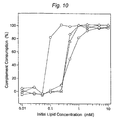
- Activation of the complement system by cationic lipid vesicles was assessed using a two step complement consumption assay previously described by Devine, D.V., Wong, K., Serrano, K., Chonn; A., and Cullis, P.R. (1994) Liposome complement interactions in rat serum : implications for liposome survival studies. Biochim. Biophys. Acta 1191 , 43-51. Briefly, liposomes containing various SBL (steric barrier lipid) were prepared in VBS (20 mM, pH 7.50) and extruded through 2 stacked 100 nm polycarbonate filters using an extrusion apparatus (Lipex Biomembranes, Vancouver, Canada).
- SBL steric barrier lipid
- DODAC/POPC inhibition of complement activation by DODAC/POPC/SBL vesicles is shown, i.e., DODAC/POPC (50:50, circles), DODAC/POPC/ATTAB-DSPE (50:40:10; squares), DODAC/POPC/MePEGA-2000-DSPE (50:40:10; triangles) and DODAC/POPC/MePEGS-2000-Mcer (50:40:10; diamonds).
- This example illustrates in vivo tolerability of polymer modified cationic liposomes.
- mice Female, ICR mice, 6-8 weeks old were used for tolerability studies. Each time group consisted of at least 4 mice. All animal studies were performed in accordance with the guidelines established by the Canadian Council of Animal Care.
- mice were anesthetized with halothane and blood was collected into EDTA tubes after cardiac puncture. Mice were then terminated by cervical dislocation. Plasma levels were determined by standard liquid scintillation techniques. Plasma volumes were estimated to by 5% of total body weight. Tolerability of increasing doses of DSPC:CHOL:AL-1 :ATTA8-DSPE (20:45:25:10) and DSPC:CHOL:AL-1 :PEG-CerC14 (20:45:25:10) was evaluated by monitoring changes in tissue weights and enzymes typically associated with liver damage. At 24 h post-injection, tissues were excised, trimmed of fat and weighed on an analytical balance.
- ALT alanine aminotransferase
- AST aspartate aminotransferase
- LDH lactate dehydrogenase
- This example illustrates a picogreen assay.
- This example illustrates an antisense formulation of a compound of the current invention.
- the liposomes were dialyzed (3500M. Wt, cutoff SpectraPor membrane) against citrate buffer (300mM citrate, pH 4.0, 4000 mL) for 1-2 hours, against HBS (pH 7.4, 4000 mL) overnight and then passed down a Sepharose CL-6B DEAE column (3mL in HBS).
- This example illustrates drug loading using compounds of the current invention.
- This example illustrates cytotoxicity of compounds of the current invention.
- This example illustrates an aggregation-disaggregation assay which is for the study of ionic membrane interactions.
- cationic and anionic liposomes are allowed to mix, resulting in an immediate aggregation event due to charge interactions.
- the ionic lipids in these liposomes then slowly (or rapidly) exchange. Disaggregation occurs, under suitable conditions, once enough of the ionic lipid has exchanged to overcome long range ionic interactions between the charged lipids associated with the inner leaflets.
- the polymer-lipids were incorporated into the anionic liposomes either by preformulation or by exchange.
Landscapes
- Chemical & Material Sciences (AREA)
- Organic Chemistry (AREA)
- Health & Medical Sciences (AREA)
- Life Sciences & Earth Sciences (AREA)
- Molecular Biology (AREA)
- General Health & Medical Sciences (AREA)
- Medicinal Chemistry (AREA)
- Pharmacology & Pharmacy (AREA)
- Public Health (AREA)
- Dispersion Chemistry (AREA)
- Polymers & Plastics (AREA)
- Epidemiology (AREA)
- Animal Behavior & Ethology (AREA)
- Chemical Kinetics & Catalysis (AREA)
- Biophysics (AREA)
- Veterinary Medicine (AREA)
- Biochemistry (AREA)
- Medicinal Preparation (AREA)
- Pharmaceuticals Containing Other Organic And Inorganic Compounds (AREA)
- Organic Low-Molecular-Weight Compounds And Preparation Thereof (AREA)
- Medicines That Contain Protein Lipid Enzymes And Other Medicines (AREA)
- Peptides Or Proteins (AREA)
- Polyamides (AREA)
Applications Claiming Priority (5)
| Application Number | Priority Date | Filing Date | Title |
|---|---|---|---|
| US11365897P | 1997-12-23 | 1997-12-23 | |
| US113658P | 1997-12-23 | ||
| US7385298P | 1998-02-02 | 1998-02-02 | |
| US73852P | 1998-02-02 | ||
| PCT/CA1998/001185 WO1999033493A1 (en) | 1997-12-23 | 1998-12-22 | Polyamide oligomers |
Publications (2)
| Publication Number | Publication Date |
|---|---|
| EP1041976A1 EP1041976A1 (en) | 2000-10-11 |
| EP1041976B1 true EP1041976B1 (en) | 2006-04-05 |
Family
ID=26754961
Family Applications (1)
| Application Number | Title | Priority Date | Filing Date |
|---|---|---|---|
| EP98962158A Expired - Lifetime EP1041976B1 (en) | 1997-12-23 | 1998-12-22 | Polyamide oligomers |
Country Status (7)
| Country | Link |
|---|---|
| EP (1) | EP1041976B1 (https=) |
| JP (1) | JP2001527052A (https=) |
| AT (1) | ATE322255T1 (https=) |
| AU (1) | AU751434B2 (https=) |
| CA (1) | CA2315695A1 (https=) |
| DE (1) | DE69834133D1 (https=) |
| WO (1) | WO1999033493A1 (https=) |
Families Citing this family (27)
| Publication number | Priority date | Publication date | Assignee | Title |
|---|---|---|---|---|
| US6207646B1 (en) | 1994-07-15 | 2001-03-27 | University Of Iowa Research Foundation | Immunostimulatory nucleic acid molecules |
| US6406705B1 (en) | 1997-03-10 | 2002-06-18 | University Of Iowa Research Foundation | Use of nucleic acids containing unmethylated CpG dinucleotide as an adjuvant |
| DE69941447D1 (de) | 1998-01-05 | 2009-11-05 | Univ Washington | Erhöhter transport unter benutzung membranzerstörender stoffe |
| WO2003000291A1 (fr) * | 2001-06-22 | 2003-01-03 | Techno Network Shikoku Co., Ltd. | Vesicules lipidiques, processus de production de vesicules lipidiques et procede d'immobilisation de gene sur ces vesicules lipidiques |
| CA2474138A1 (en) * | 2002-01-15 | 2003-07-24 | Vanderbilt University | Composition and imaging methods for pharmacokinetic and pharmacodynamic evaluation of therapeutic delivery system |
| AU2003233981A1 (en) * | 2002-04-29 | 2003-11-17 | Biotesys Gmbh | Transport system in biological systems |
| WO2003097805A2 (en) | 2002-05-15 | 2003-11-27 | California Pacific Medical Center | Delivery of nucleic acid-like compounds |
| CA2502015A1 (en) | 2002-12-11 | 2004-06-24 | Coley Pharmaceutical Group, Inc. | 5' cpg nucleic acids and methods of use |
| US7332164B2 (en) * | 2003-03-21 | 2008-02-19 | Enzon Pharmaceuticals, Inc. | Heterobifunctional polymeric bioconjugates |
| WO2007134819A1 (en) * | 2006-05-18 | 2007-11-29 | Medigene Ag | Cationic liposomal preparations for the treatment of rheumatoid arthritis |
| WO2013086354A1 (en) | 2011-12-07 | 2013-06-13 | Alnylam Pharmaceuticals, Inc. | Biodegradable lipids for the delivery of active agents |
| HUE060907T2 (hu) | 2014-06-25 | 2023-04-28 | Acuitas Therapeutics Inc | Új lipidek és lipid nanorészecske formulációk nukleinsavak bevitelére |
| PT3313829T (pt) | 2015-06-29 | 2024-07-08 | Acuitas Therapeutics Inc | Formulações de lípidos e de nanopartículas lipídicas para a administração de ácidos nucleicos |
| HRP20230209T1 (hr) | 2015-10-28 | 2023-04-14 | Acuitas Therapeutics Inc. | Novi lipidi i lipidne formulacije nanočestica za isporuku nukleinskih kiselina |
| US12491261B2 (en) | 2016-10-26 | 2025-12-09 | Acuitas Therapeutics, Inc. | Lipid nanoparticle formulations |
| WO2018191657A1 (en) | 2017-04-13 | 2018-10-18 | Acuitas Therapeutics, Inc. | Lipids for delivery of active agents |
| CN110799492B (zh) | 2017-04-28 | 2023-06-27 | 爱康泰生治疗公司 | 用于递送核酸的新型羰基脂质和脂质纳米颗粒制剂 |
| CA3073020A1 (en) | 2017-08-16 | 2019-02-21 | Acuitas Therapeutics, Inc. | Lipids for use in lipid nanoparticle formulations |
| WO2019036030A1 (en) | 2017-08-17 | 2019-02-21 | Acuitas Therapeutics, Inc. | LIPIDS FOR USE IN LIPID NANOPARTICLE FORMULATIONS |
| EP4501322A3 (en) | 2017-08-17 | 2025-04-16 | Acuitas Therapeutics, Inc. | Lipids for use in lipid nanoparticle formulations |
| WO2019036028A1 (en) | 2017-08-17 | 2019-02-21 | Acuitas Therapeutics, Inc. | LIPIDS FOR USE IN LIPID NANOPARTICULAR FORMULATIONS |
| IL281615B2 (en) | 2018-09-21 | 2026-01-01 | Acuitas Therapeutics Inc | Systems and methods for producing lipid nanoparticles and liposomes |
| CA3116576A1 (en) | 2018-10-18 | 2020-04-23 | Acuitas Therapeutics, Inc. | Lipids for lipid nanoparticle delivery of active agents |
| PT3908568T (pt) | 2019-01-11 | 2024-09-30 | Acuitas Therapeutics Inc | Lípidos para a administração de agentes ativos por nanopartículas lipídicas |
| ES3054438T3 (en) | 2020-07-16 | 2026-02-03 | Acuitas Therapeutics Inc | Cationic lipids for use in lipid nanoparticles |
| CN113636931B (zh) * | 2021-08-05 | 2024-02-13 | 康龙化成(宁波)科技发展有限公司 | 基因编码化合物库起始头片段化合物及其在基因编码化合物库合成上的应用 |
| CA3242402A1 (en) | 2021-12-16 | 2023-06-22 | Acuitas Therapeutics, Inc. | Lipids for use in lipid nanoparticle formulations |
Family Cites Families (9)
| Publication number | Priority date | Publication date | Assignee | Title |
|---|---|---|---|---|
| US4426330A (en) * | 1981-07-20 | 1984-01-17 | Lipid Specialties, Inc. | Synthetic phospholipid compounds |
| US5135737A (en) * | 1986-11-10 | 1992-08-04 | The State Of Oregon Acting By And Through The State Board Of Higher Education On Behalf Of The University Of Oregon | Amplifier molecules for enhancement of diagnosis and therapy |
| JPH0720857B2 (ja) * | 1988-08-11 | 1995-03-08 | テルモ株式会社 | リポソームおよびその製法 |
| GB8824593D0 (en) * | 1988-10-20 | 1988-11-23 | Royal Free Hosp School Med | Liposomes |
| US5324844A (en) * | 1989-04-19 | 1994-06-28 | Enzon, Inc. | Active carbonates of polyalkylene oxides for modification of polypeptides |
| US5527528A (en) * | 1989-10-20 | 1996-06-18 | Sequus Pharmaceuticals, Inc. | Solid-tumor treatment method |
| US5356633A (en) * | 1989-10-20 | 1994-10-18 | Liposome Technology, Inc. | Method of treatment of inflamed tissues |
| DE4004296A1 (de) * | 1990-02-13 | 1991-08-14 | Hoechst Ag | Verbesserte markierte haptene, verfahren zu deren herstellung sowie verwendung dieser markierten haptene in immunoassays |
| JP3351476B2 (ja) * | 1993-01-22 | 2002-11-25 | 三菱化学株式会社 | リン脂質誘導体及びそれを含有するリポソーム |
-
1998
- 1998-12-22 WO PCT/CA1998/001185 patent/WO1999033493A1/en not_active Ceased
- 1998-12-22 CA CA002315695A patent/CA2315695A1/en not_active Abandoned
- 1998-12-22 JP JP2000526243A patent/JP2001527052A/ja active Pending
- 1998-12-22 AT AT98962158T patent/ATE322255T1/de not_active IP Right Cessation
- 1998-12-22 AU AU17460/99A patent/AU751434B2/en not_active Ceased
- 1998-12-22 DE DE69834133T patent/DE69834133D1/de not_active Expired - Lifetime
- 1998-12-22 EP EP98962158A patent/EP1041976B1/en not_active Expired - Lifetime
Also Published As
| Publication number | Publication date |
|---|---|
| DE69834133D1 (de) | 2006-05-18 |
| AU1746099A (en) | 1999-07-19 |
| CA2315695A1 (en) | 1999-07-08 |
| EP1041976A1 (en) | 2000-10-11 |
| AU751434B2 (en) | 2002-08-15 |
| JP2001527052A (ja) | 2001-12-25 |
| WO1999033493A1 (en) | 1999-07-08 |
| ATE322255T1 (de) | 2006-04-15 |
Similar Documents
| Publication | Publication Date | Title |
|---|---|---|
| US6586559B2 (en) | Polyamide oligomers | |
| EP1041976B1 (en) | Polyamide oligomers | |
| AU783647B2 (en) | Cationic peg-lipids and methods of use | |
| US6852334B1 (en) | Cationic peg-lipids and methods of use | |
| EP0783297B1 (en) | Polyethylene glycol modified ceramide lipids and liposomes | |
| EP1328254B1 (en) | Lipid formulations for target delivery | |
| US8936942B2 (en) | Polyethyleneglycol-modified lipid compounds and uses thereof | |
| EP4737504A2 (en) | Cationic lipid, liposome containing cationic lipid, and nucleic-acid pharmaceutical composition containing liposome and formulation and application thereof | |
| KR100723852B1 (ko) | 핵산 및 약물 전달용 중성-양이온성 지질 | |
| WO2005120152A2 (en) | Cationic lipids and methods of use | |
| EP4321504A1 (en) | Pegylated lipid and liposome modified thereby, and pharmaceutical composition comprising liposome and preparation and use thereof | |
| EP1100834B1 (en) | Polyanionic polymers which enhance fusogenicity | |
| AU2773902A (en) | Polyamide oligomers | |
| AU8006400B2 (https=) | ||
| HK1103391B (en) | Cationic lipids and methods of use |
Legal Events
| Date | Code | Title | Description |
|---|---|---|---|
| PUAI | Public reference made under article 153(3) epc to a published international application that has entered the european phase |
Free format text: ORIGINAL CODE: 0009012 |
|
| 17P | Request for examination filed |
Effective date: 20000719 |
|
| AK | Designated contracting states |
Kind code of ref document: A1 Designated state(s): AT BE CH CY DE DK ES FI FR GB GR IE IT LI LU MC NL PT SE |
|
| 17Q | First examination report despatched |
Effective date: 20030210 |
|
| GRAP | Despatch of communication of intention to grant a patent |
Free format text: ORIGINAL CODE: EPIDOSNIGR1 |
|
| GRAS | Grant fee paid |
Free format text: ORIGINAL CODE: EPIDOSNIGR3 |
|
| GRAA | (expected) grant |
Free format text: ORIGINAL CODE: 0009210 |
|
| AK | Designated contracting states |
Kind code of ref document: B1 Designated state(s): AT BE CH CY DE DK ES FI FR GB GR IE IT LI LU MC NL PT SE |
|
| PG25 | Lapsed in a contracting state [announced via postgrant information from national office to epo] |
Ref country code: NL Free format text: LAPSE BECAUSE OF FAILURE TO SUBMIT A TRANSLATION OF THE DESCRIPTION OR TO PAY THE FEE WITHIN THE PRESCRIBED TIME-LIMIT Effective date: 20060405 Ref country code: LI Free format text: LAPSE BECAUSE OF FAILURE TO SUBMIT A TRANSLATION OF THE DESCRIPTION OR TO PAY THE FEE WITHIN THE PRESCRIBED TIME-LIMIT Effective date: 20060405 Ref country code: IT Free format text: LAPSE BECAUSE OF FAILURE TO SUBMIT A TRANSLATION OF THE DESCRIPTION OR TO PAY THE FEE WITHIN THE PRESCRIBED TIME-LIMIT;WARNING: LAPSES OF ITALIAN PATENTS WITH EFFECTIVE DATE BEFORE 2007 MAY HAVE OCCURRED AT ANY TIME BEFORE 2007. THE CORRECT EFFECTIVE DATE MAY BE DIFFERENT FROM THE ONE RECORDED. Effective date: 20060405 Ref country code: FI Free format text: LAPSE BECAUSE OF FAILURE TO SUBMIT A TRANSLATION OF THE DESCRIPTION OR TO PAY THE FEE WITHIN THE PRESCRIBED TIME-LIMIT Effective date: 20060405 Ref country code: CH Free format text: LAPSE BECAUSE OF FAILURE TO SUBMIT A TRANSLATION OF THE DESCRIPTION OR TO PAY THE FEE WITHIN THE PRESCRIBED TIME-LIMIT Effective date: 20060405 Ref country code: BE Free format text: LAPSE BECAUSE OF FAILURE TO SUBMIT A TRANSLATION OF THE DESCRIPTION OR TO PAY THE FEE WITHIN THE PRESCRIBED TIME-LIMIT Effective date: 20060405 Ref country code: AT Free format text: LAPSE BECAUSE OF FAILURE TO SUBMIT A TRANSLATION OF THE DESCRIPTION OR TO PAY THE FEE WITHIN THE PRESCRIBED TIME-LIMIT Effective date: 20060405 |
|
| REG | Reference to a national code |
Ref country code: GB Ref legal event code: FG4D |
|
| REG | Reference to a national code |
Ref country code: CH Ref legal event code: EP |
|
| REG | Reference to a national code |
Ref country code: IE Ref legal event code: FG4D |
|
| REF | Corresponds to: |
Ref document number: 69834133 Country of ref document: DE Date of ref document: 20060518 Kind code of ref document: P |
|
| PG25 | Lapsed in a contracting state [announced via postgrant information from national office to epo] |
Ref country code: SE Free format text: LAPSE BECAUSE OF FAILURE TO SUBMIT A TRANSLATION OF THE DESCRIPTION OR TO PAY THE FEE WITHIN THE PRESCRIBED TIME-LIMIT Effective date: 20060705 Ref country code: DK Free format text: LAPSE BECAUSE OF FAILURE TO SUBMIT A TRANSLATION OF THE DESCRIPTION OR TO PAY THE FEE WITHIN THE PRESCRIBED TIME-LIMIT Effective date: 20060705 |
|
| PG25 | Lapsed in a contracting state [announced via postgrant information from national office to epo] |
Ref country code: DE Free format text: LAPSE BECAUSE OF FAILURE TO SUBMIT A TRANSLATION OF THE DESCRIPTION OR TO PAY THE FEE WITHIN THE PRESCRIBED TIME-LIMIT Effective date: 20060706 |
|
| PG25 | Lapsed in a contracting state [announced via postgrant information from national office to epo] |
Ref country code: ES Free format text: LAPSE BECAUSE OF FAILURE TO SUBMIT A TRANSLATION OF THE DESCRIPTION OR TO PAY THE FEE WITHIN THE PRESCRIBED TIME-LIMIT Effective date: 20060716 |
|
| PG25 | Lapsed in a contracting state [announced via postgrant information from national office to epo] |
Ref country code: PT Free format text: LAPSE BECAUSE OF FAILURE TO SUBMIT A TRANSLATION OF THE DESCRIPTION OR TO PAY THE FEE WITHIN THE PRESCRIBED TIME-LIMIT Effective date: 20060905 |
|
| NLV1 | Nl: lapsed or annulled due to failure to fulfill the requirements of art. 29p and 29m of the patents act | ||
| REG | Reference to a national code |
Ref country code: CH Ref legal event code: PL |
|
| PG25 | Lapsed in a contracting state [announced via postgrant information from national office to epo] |
Ref country code: IE Free format text: LAPSE BECAUSE OF NON-PAYMENT OF DUE FEES Effective date: 20061222 |
|
| PG25 | Lapsed in a contracting state [announced via postgrant information from national office to epo] |
Ref country code: MC Free format text: LAPSE BECAUSE OF NON-PAYMENT OF DUE FEES Effective date: 20061231 |
|
| PLBE | No opposition filed within time limit |
Free format text: ORIGINAL CODE: 0009261 |
|
| STAA | Information on the status of an ep patent application or granted ep patent |
Free format text: STATUS: NO OPPOSITION FILED WITHIN TIME LIMIT |
|
| EN | Fr: translation not filed | ||
| 26N | No opposition filed |
Effective date: 20070108 |
|
| GBPC | Gb: european patent ceased through non-payment of renewal fee |
Effective date: 20061222 |
|
| PG25 | Lapsed in a contracting state [announced via postgrant information from national office to epo] |
Ref country code: GB Free format text: LAPSE BECAUSE OF NON-PAYMENT OF DUE FEES Effective date: 20061222 |
|
| PG25 | Lapsed in a contracting state [announced via postgrant information from national office to epo] |
Ref country code: GR Free format text: LAPSE BECAUSE OF FAILURE TO SUBMIT A TRANSLATION OF THE DESCRIPTION OR TO PAY THE FEE WITHIN THE PRESCRIBED TIME-LIMIT Effective date: 20060706 Ref country code: FR Free format text: LAPSE BECAUSE OF FAILURE TO SUBMIT A TRANSLATION OF THE DESCRIPTION OR TO PAY THE FEE WITHIN THE PRESCRIBED TIME-LIMIT Effective date: 20070309 |
|
| PG25 | Lapsed in a contracting state [announced via postgrant information from national office to epo] |
Ref country code: LU Free format text: LAPSE BECAUSE OF NON-PAYMENT OF DUE FEES Effective date: 20061222 |
|
| PG25 | Lapsed in a contracting state [announced via postgrant information from national office to epo] |
Ref country code: FR Free format text: LAPSE BECAUSE OF FAILURE TO SUBMIT A TRANSLATION OF THE DESCRIPTION OR TO PAY THE FEE WITHIN THE PRESCRIBED TIME-LIMIT Effective date: 20060405 Ref country code: CY Free format text: LAPSE BECAUSE OF FAILURE TO SUBMIT A TRANSLATION OF THE DESCRIPTION OR TO PAY THE FEE WITHIN THE PRESCRIBED TIME-LIMIT Effective date: 20060405 |